Die Before you Die

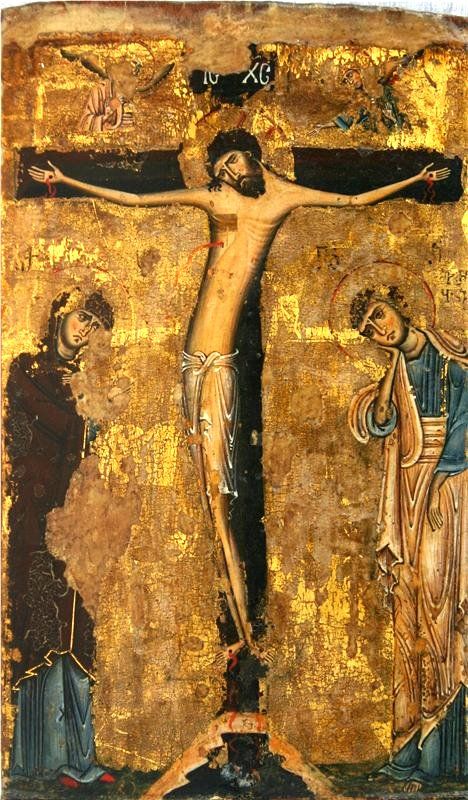
crucifixion-scene-christ-on-the-cross-with-mary-and-john-1516

“If you die before you die, you will not die when you die” (Greek Orthodox monastery)

*

“… This week, I noticed a pattern in popular music of our time that I had not noticed before. It was something I heard in song lyrics. I’ll quote some for you from a few different songs:

So cut me from the line / Dizzy, spinning endlessly / Somebody make me feel alive /
And shatter me. (Lindsey Stirling / Lzzy Hale, “Shatter Me”)

Don’t let me die here / There must be something more / Bring me to life (Evanescence, “Bring Me to Life”)

How can the only thing that’s killing me make me feel so alive? (Parachute, “She (For Liz)”)

I could lie, couldn’t I, couldn’t I? / Every thing that kills me makes me feel alive. (OneRepublic, “Counting Stars”)

Do whatever I’m yours / Do whatever I’m sure / Anything, anything, anything, anything to feel alive (Jhené Aiko, “Drinking and Driving”)

When everything feels like the movies /Yeah, you bleed just to know you’re alive (Goo Goo Dolls, “Iris”)

Those are from six different songs. I could quote lots more like this, but this sample should suffice. These are all popular songs from the radio.

So what is the pattern? There are two things here. First, there is a cry out to be made to “feel alive” or to “come alive.” I did a Google search on a large popular song lyrics website, and there were nearly 1,100 songs that mentioned wanting to “feel alive.” Almost 1,300 used the phrase “come alive.” 100 used the phrase “bring me to life.”

I started clicking around when I saw this pattern and looked at the full lyrics to a few dozen songs. And the second pattern I noticed was that this language of wanting to feel alive was often paired with language about death and/or violence. For many of these lyricists, the key to feeling “alive” was first to die, to feel the pain of violence or to commit violence.

… So what is the point of this little tour through pop music? This is just one way of taking the temperature of our culture, of getting a sense of where we are as a people. There is a sort of anesthetization of life these days. We’re always trying to feel better, to feel entertained, to feel alive. And our pop songs sing about violence—even self-violence. And the movies and TV get more graphically violent. And the consumption of pornography is nearly off the charts. And we watch wars in other countries on TV as a perverse form of entertainment. …

Compare all this violence with Apostle Paul’s words: “I bear in my body the brand-marks of the Lord Jesus.” …  Into our culture of virtual violence and screaming out for the feeling of life come these words of the Apostle Paul: “But God forbid that I should boast, except in the Cross of our Lord Jesus Christ, through Whom the world is crucified to me, and I to the world.”

It’s not clear exactly what Paul means when he says that he bears in his body “the brand-marks of the Lord Jesus.” But he is probably speaking of his own suffering, that he has been physically wounded for his confession of faith. Paul is no stranger to violence. He feels pain. He is beaten. He is thrown into prison. He will be beheaded. Paul knows about violence. He knows about death.

… Paul embraces the death of the world! And he embraces his own death. But not because he just wants to feel alive. He embraces death because he knows that in the crucifixion of Jesus Christ is life. He embraces death because he knows that he himself must be crucified with Christ so that his death can be joined with Christ’s death.

This is the paradox of our great hope as Christians—that we seek life, just like the pop songs! And we seek death and even violence, just like the pop songs! But it is not just any death or any violence that brings us life. It is the suffering and death of Jesus, to which we join our own suffering and death by repentance, by confession, by the sacraments, by love.

… The pop songs get it right, but not quite right. There is more to life than merely “feeling alive.” Life is not found in mere violence and death. Life is found in sacrifice and resurrection. Life is found in Jesus Christ, and in His Cross we therefore glory. Like Paul, we boast. Like Paul, we are crucified to the world, and the world is crucified to us. And death is slain. And we are made truly alive. And with Christ we will rise from the dead.”

Source: Road from Emmaus blog

By Fr. Andrew Stephen Damick

http://blogs.ancientfaith.com/roadsfromemmaus/2015/09/13/you-bleed-just-to-know-youre-alive/

O Isaiah, Dance for Joy

    wedding1
O Isaiah, dance for joy, for the Virgin is with child.
Composer: John Tavener

Meant to convey a series of verbal and musical impressions of a village wedding in Greece, Tavener’s music is set to a mix of texts from Angelos Sikelianos’ poem” Village Wedding” interspersed with many repetitions of the line “O Isaiah, dance for joy, for the Virgin is with child” taken from the Orthodox wedding service.

Text, by Angelos Sikelianos, translated from Greek by Philip Sherrard and Edmund Keeley

Wedding-1

To my beloved, who breaks my heart.
O Isaiah, dance for joy, for the Virgin is with child.

Do you listen within your veil, silent, God-quickened heart?
O Isaiah, dance for joy, for the Virgin is with child.

O depth and stillness of virginity! Follow your man.
O Isaiah, dance for joy, for the Virgin is with child.

Wedding-4

Let them throw white rice like a spring shower.
O Isaiah, dance for joy, for the Virgin is with child.

Like a spring cloud, let her now tenderly spread her bridal veil.
O Isaiah, dance for joy, for the Virgin is with child.

O the peace of the bridal dawn.
O Isaiah, dance for joy, for the Virgin is with child.

Wedding-2
And he listens, and he listens.
O Isaiah, dance for joy, for the Virgin is with child.And, as in front of a fount of crystal water,
Let the girls pass in front of the bride,
Observing her look from the corner of their eyes,
As though balancing pitchers on their heads.
O Isaiah, dance for joy, for the Virgin is with child.O, like Leto giving birth to Apollo,
Do you listen within your veil?
O Isaiah, dance for joy, for the Virgin is with child.

Wedding-3
When standing, her hands slight and pale,
(Let them throw white rice…)
O Isaiah, dance for joy, for the Virgin is with child.She clasped the ethereal palm tree on Delos,
Like a spring cloud.
O Isaiah, dance for joy, for the Virgin is with child.May you her mystical image…
O the peace of the bridal dawn.
O Isaiah, dance for joy, for the Virgin is with child.

Held by your husband’s strong heart,
And he listens.
O Isaiah, dance for joy, for the Virgin is with child.

Bring into the world with a single cry your child,
As the poet brings forth his creation.
O Isaiah, dance for joy, for the Virgin is with child.

wedding6

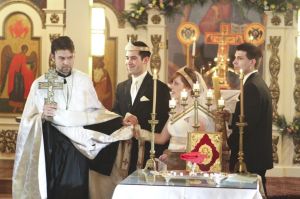
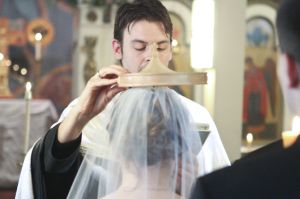
*The Dance of Isaiah is one of the integral parts of the Wedding/Crowning Service (Sacrament of Holy Matrimony) in the Orthodox Church (Byzantine Rite) and involves a the triple procession around a center table. The priest, holding the Gospel or Blessing Cross and the clasped hands of the groom and bride, and followed by the best man (or woman) who holds the newlyweds’ crowns above their heads, and the bridesmaids holding the lit white candles, walk three counterclockwise turns around the table in a celebratory “dance”. Each of the three turns is accompanied by each of the three hymns, which return once more to the theme of martyrdom and union with Christ. These are the hymns that, since ancient times, the Church has used to emphasize God’s blessings, and the same ones sung at ordinations to ecclesiastical orders. They signify that this couple has been set apart from the mundane world to live a life in Christ:

wedding7

Rejoice, O Isaiah! The Virgin is with child,

And shall bear a son Emmanuel,

Who is both God and Man,

And Orient is His Name,

Whom magnifying we call, the Virgin blessed.

O Holy Martyrs,

who fought the good fight and have received your crowns,

Entreat ye the Lord,

That He will have mercy on our souls.

Glory to Thee, O Christ God.

The Apostles boast,

The Martyrs Joy,

whose preaching was the Consubstantial Trinity.

*

To watch how the celebrant actually leads the marriage couple and the witnesses around the wedding table three times at the Orthodox Wedding/Crowning Service (Byzantine Rite), while chanting this religious hymn,  go to: https://www.youtube.com/watch?v=wyTQnV5W24A

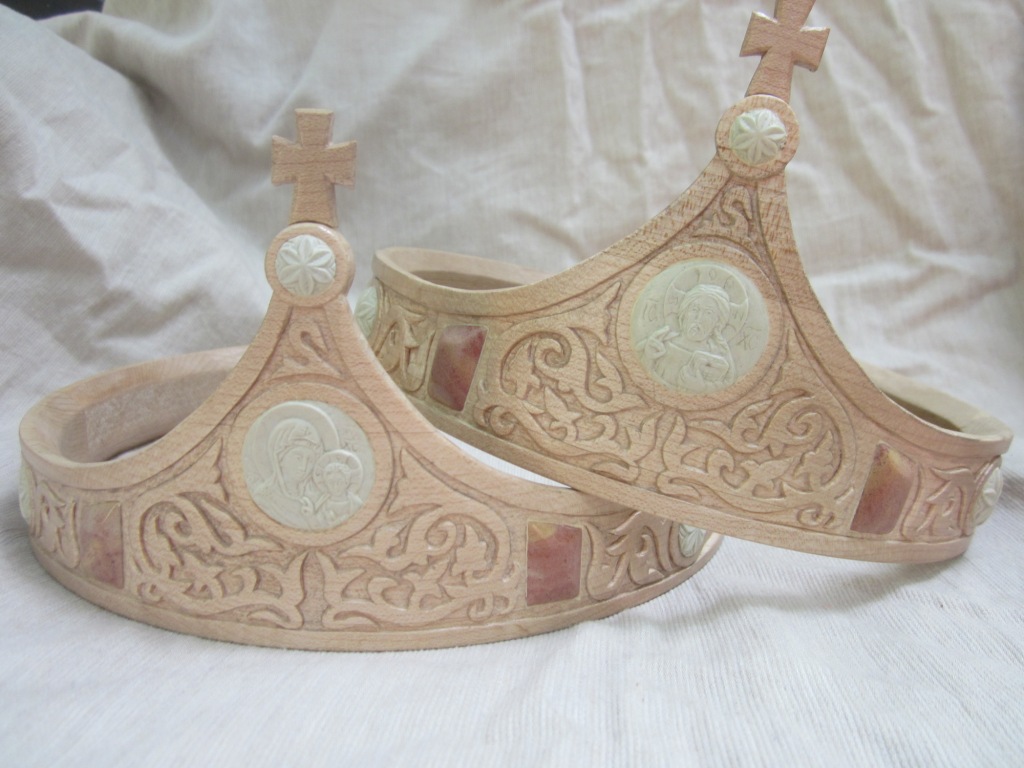
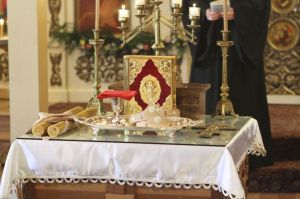
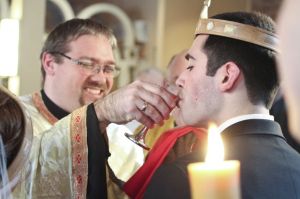
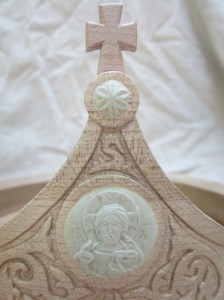
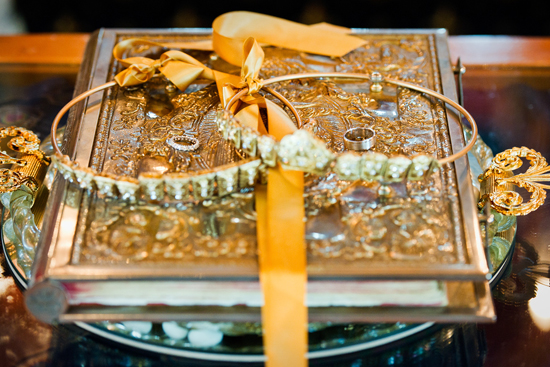
Wedding Photographs: Wedding with Carved Crowns
Source: Orthodox Arts Journal

Memento Mori

There’s something about abandonment that resonates strangely with the human spirit; and the sight of human buildings reclaimed by nature has a twofold effect. Firstly, it hints at hidden histories, at stories and perhaps lives lost – but more powerful still, is the underlying message that reminds us how all things must one day return to the earth. How interesting it is then, to contemplate the decline of our monuments to religion: more than mere function, these structures carry the weight of our beliefs, our dreams, our hope and our faith.

From time to time in my travels, I’ve come across the derelict remains of churches; some of them boarded and fenced off in city centres, others left to rot in fields or forests. I felt it was about time I shared a few of these locations … and so here are five of the most memorable religious ruins that I’ve had the opportunity to explore.

THREE ABANDONED CHURCHES AND A CELLAR FULL OF SKULLS

Derelict Church and Bell Tower, Bulgaria

I came across this first site one year ago – on Boxing Day, to be precise – nestled amongst bushes and tumbled stone walls, in the middle of a remote Balkan village.

The village was much like many others in the area; half a dozen houses clustered around a potholed road, and half of those properties most likely uninhabited. Over the past couple of decades Bulgaria has seen radical depopulation in its more rural settlements, as young people typically move to the cities – or now, increasingly to other EU nations – in search of work. As a result, many of Bulgaria’s more remote villages have begun to look a little starved of life and vitality.

From the road it didn’t look like much more than a collapsed barn; the creepers and brambles already taking a hold on the old stones, pulling them down in a deadly stranglehold. It was a war memorial in the graveyard that caught my eye, however – a peculiar, kneeling figure, sat atop the Bulgarian crest and brandishing a WWI-era rifle. The face seemed somehow twisted at first, but the more I looked the more I read a profound pathos etched into that stone mask.

I walked through the graveyard to the derelict building behind, a structure I’d barely given a second look until then. Here though, approaching from the main entrance I was greeted by the faded yet familiar symbols of the Bulgarian Orthodox Church; and stepping through an arched double doorway, for just a moment I was able to imagine the building whole.

At a guess, I’d say the church had been built sometime in the early 19th century. It wasn’t until 1878 that Bulgaria finally achieved independence from Ottoman rule, before which these people were strictly forbidden from building churches that rose taller than the invaders’ mosques. As a result, Bulgarian Orthodox churches built before that were typically dug deep into the ground, to form semi-subterranean spaces of worship that wouldn’t offend their Muslim overlords.

This building, approached by a series of three stone steps descending into a shallow, one-storey church, seemed to fit the mould perfectly.

The site also featured a bell tower, built in a more ornate style and topped with a proud cross, which would certainly have been raised post-liberation – such an unashamed statement of christianity would never have met with Ottoman approval. In fact, during those years even bells themselves were banned from churches; the subjugated Christians would rather have made do with wooden clappers, that drew less attention to their heathen practices.

It was sad to see the church, along with its more recently acquired bell tower, in such a squalid state of disrepair; the roof had long since been stripped, leaving nothing of value and only old, moss-covered stones to hint at what had once been here. Such is the nature of depopulation, however. With only a handful of elderly residents left, there was barely a congregation to be found in the village – let alone the work force required to keep the church and tower well maintained.

The sun was setting by the time I left the main body of the church. I glanced up at the stone tower as I crossed the graveyard, and at that moment I caught the reflection of sun beams glinting dully on the brass body of a bell. Immediately, I knew I wanted to climb the tower.

The bell tower wasn’t tall, perhaps little over four floors high by average building standards. What made the climb difficult however, was the state of the wooden staircase within. Some steps were missing altogether, others splintered, grown over with moss, while just a few seemed to promise the illusion of stability.

I spread my weight across as many steps as I could at any given time, taking the climb at a painfully slow rate. The structure creaked and groaned in protest, as I crawled up the rotten corkscrew.

At last, however, I made it to the top. Coming round one final corner of the warped and weathered staircase I met a square of blue above – where day’s last light was spilling in through windows in the stone to illuminate the bell ringer’s platform.

Pulling myself up and onto the larger beams that formed a floor for the tower’s topmost chamber, I caught my breath and looked out at the view – the sleepy hamlet, the lake beyond, the mountains disappearing into mist. In all the years this church and tower had suffered the onslaught of the elements, wood and stone giving way to the inevitable pull of natural decay, the view itself had likely never changed. Now that I was here, I couldn’t resist but ring the bell. It tolled a deep and dissonant sound that echoed out across the landscape … but by now there was no one left to hear it ring.

Christ the Savior Cathedral, Kosovo

In November last year I took a trip to Pristina, the capital of Kosovo. One of the sites I explored that week was an unfinished cathedral, located in a park just off George Bush Boulevard.

The building – titled the “Christ the Saviour Cathedral” – is a perfect example of the Orthodox form with its tower and dome, its simple cross placed up top. Here however, in the largely Islamic capital of Kosovo, the unfinished building stands out in sharp contrast against its surroundings.

Nowadays this building (and what it stands for) is caught at the heart of a heated political debate.

Construction began on the cathedral back in 1995, when it was intended as a place of worship for Pristina’s Serbian Orthodox population. Things would soon change however, with the outbreak of the Kosovo War in February 1998. The construction project was stalled as war ravaged the country, Albanians pitted against Serbs in a battle for independence. The following years would see attempted ethnic cleansing, bombing raids and eventual UN intervention … and by the time the Republic of Kosovo had been established as an independent nation in July 1990, the unfinished Serbian cathedral in its capital had become an uncomfortable reminder of their past oppression.

Built on the grounds of Pristina University, the Christ the Saviour Cathedral remains a brickwork shell to this day. It isn’t guarded, and the construction team never got as far as giving the building doors which might be locked to keep out trespassers; and so I sauntered in freely, to explore the vast brickwork arches and domes of a cathedral that never was.

While some Kosovo Albanians have called for the complete demolition of the building – branding it a symbol of the regime of Slobodan Milošević – there are others here who like it just the way it is. Speaking to an Albanian Muslim friend just a few days later, I was told that there are some in Pristina (and particularly amongst the younger population) who consider this ghostly shell a kind of trophy;

“Every time I look at this ruin, it reminds me of our victory against the Serbs,” my friend told me over burek and macchiatos.

Inside the cathedral I caught the scent of something foul, and turning a corner, I found that the altar space had recently been used as a public toilet. Whether this too carried a political message – or was simply the work of someone who’d been caught short in the park – I’d never know.

Abandoned Orthodox Church, Romania

Perhaps the most beautiful building featured on my list, this Romanian Orthodox church was also the most severely dilapidated.

The church lies on the edge of a tiny village, surrounded by open fields and roughly an hour’s drive from Bucharest. I never would have found the remote location on my own, but rather I made the trip with my Romanian friend Ovidiu, and co-conspirator Nate (the man from Yomadic).

Ducking beneath a lintel of jagged, severed bricks, we stepped into the church through a breach in one wall; a breach created after one large section of the building had torn away altogether, to crumble into the long grass.

Immediately I was struck by the simplistic beauty of the place. Frescoed walls and pillars in warm shades of orange, delicate arches and the most exquisite murals painted in blue, gold and red.

Unlike the building above, which I had witnessed being pulled aggressively apart by power tools and bulldozers, the ugly work of human hands and gas-fuelled vehicles of destruction, the atmosphere in this place was altogether different. Here there was a sense of balance, a serenity about the decay, as green growth sprouted out of old bricks … and vines reached in through windows to steal the minerals back from the very walls themselves.

The death of this church was a beautiful thing, a painless passing wrapped within the loving arms of mother nature.

Though the space inside was small, we spent a good long while exploring it – most of that time poring over faded frescos, admiring the painstaking detail in every scene. At one point we even climbed up onto the walls themselves … moving slowly, ever cautious not to dislodge the stones. From the broken end of the nave we looked down on the altar from above, our view level with the bell tower that somehow, against all odds, stood tall and square above the ruin even now.

Outside the church, where the graveyard bordered onto a small village square in which children chased chickens and three old women in shawls had sat on a wooden bench and watched us pass, there stood a gatehouse.

Like the church, this building too had clearly seen better days – but for now at least, it managed to maintain some structural integrity. I decided to climb it.

Stood beneath the stone archway, I ran my hand through the space where once a staircase would have been – wet chips of rotten wood now hanging in heavy cobwebs, while the chewed-off ends of steps still jutted out of slots in the wall at regular intervals. There was a square hatch above, leading to the tower room with its balcony – but 10 feet up without a ladder, I wasn’t going to get there on my own.

Using Ovidiu as a human climbing frame, I managed to get a hold on the ledge above … before pulling myself up and over the lip, rolling into a square grey chamber adjacent to the central tower.

The space inside the upper portion of the gatehouse had, apparently, long since been taken over by the pigeons. Moving through the mounds of muck and feathers, I crossed to where a wooden hatch opened onto the central tower. Above me, sunlight streamed in through a wide rent in the tin roof.

The main tower of the building had lost its floor – where once the boards had been, now only a couple of wooden planks extended from one end to the next, a delicate balancing act above a 10-foot drop.

I put my best foot forward, placing it on the wooden beam with the hope of crossing, and making it out onto the balcony beyond. It wasn’t to be, however; the moment I put weight on the wood I felt it shift beneath me, the surface crumbling to a grit with the texture and consistency of coffee grounds. I took one last look at that door opening out onto the balcony, then looked down again to the powdery mess my foot had made of the walkway.

Nope, I thought, not worth it.

Before we left, the churchyard had one more surprise in store for us.

Beneath a nearby tree there sat a heavy stone sarcophagus, its lid carved with ornate script and a sculpted wreath. At each corner, the tomb was supported on stones fashioned into the shape of feet.

I was just admiring the letters carved into the tomb, when I spotted a square hole opening up in the earth beside the sarcophagus. It was deep – too deep to make out the bottom – and suspecting I might be stood above some kind of buried crypt, I began looking around for the entrance.

We found it, sure enough; a series of slab-like steps that descended beneath the graveyard, into a deep, dark chamber filled with stones and rubble. The space wasn’t large, and felt all the more cramped for the piles of broken things which had been cast down from the opening above. There were cracked tombstones, pieces of pillar, even shards of splintered wood; presumably from coffins.

And after that we bid the church farewell. In one sense it was tragic to see such art left out to rot, and I wondered why no effort had been made to preserve it; the more time I spent in and around that building however, the more I experienced an inexplicable feeling that everything was exactly as it should be … and from then on I was simply grateful for the opportunity to admire the church before it had been swallowed back into the earth altogether.

Monastery Crypt, Bulgaria

My last location was not abandoned; neither was it a church, strictly speaking, but rather a picturesque little monastery nestled beneath a cliff in the mountains of Bulgaria.

While the monastery itself was undoubtedly beautiful – not to mention unique, at least in terms of structure and geography – my main reason for visiting the place was a small, half-buried chamber that would usually not be seen by visitors.

Stepping around the corner of a chapel, we followed the graveyard path that wound around and down; a flight of stones steps descending to the cellar door. We tried the handle and though the door was stubborn to open – the wood swollen from moisture – it had been left unlocked, as expected.

Inside the dim chamber beyond, a number of wooden boxes had been stacked in clumsy piles, a muddle of mismatched chests and caskets. “костилница,” read lettering on the wall: “Ossuary.”

Many of the boxes were labelled with names, presumably corresponding to the one-time owners of the bones that lay inside. I wondered where these bones were headed – or if these wooden boxes were indeed the final resting place of monks, martyrs, or whoever else this may have been in life.

Not all these holy bones were hidden though, and on a recessed shelf at the back corner of the crypt were arranged a series of human skulls. Following the same tradition I saw on my recent visit to a Czech ossuary, these bones had been boiled clean … but after that, the monks here had painted names and dates across each skull in delicate brushstrokes.

The effect was strangely beautiful; a repurposing of death, skulls used in place of headstones. These bones had served as vessels of information in life, why not allow them to continue to speak beyond that point?

It did trouble me a little to see the bones left open to the air … the skulls on the shelf showed signs of disintegration, while the stacked boxes were beginning to collapse under the weight of those piled above. Perhaps, though, such desire for preservation is itself an unnatural urge – maybe it’s healthier to accept the passing of time, and to embrace the inevitable decay that comes with it. These skulls seemed to serve the purpose of memento mori in every sense: both a reminder that all things must end, and also an admission that such processes can yet be beautiful.

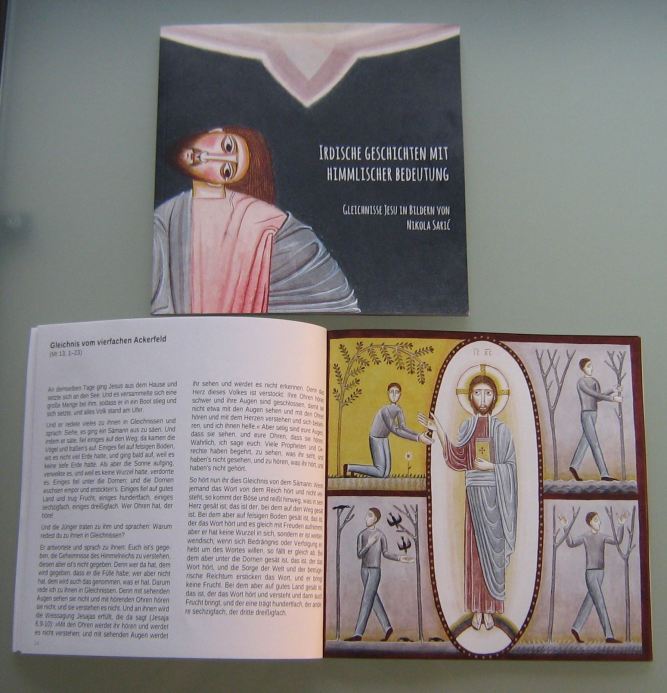
Nikola Saric’s ‘Windows’

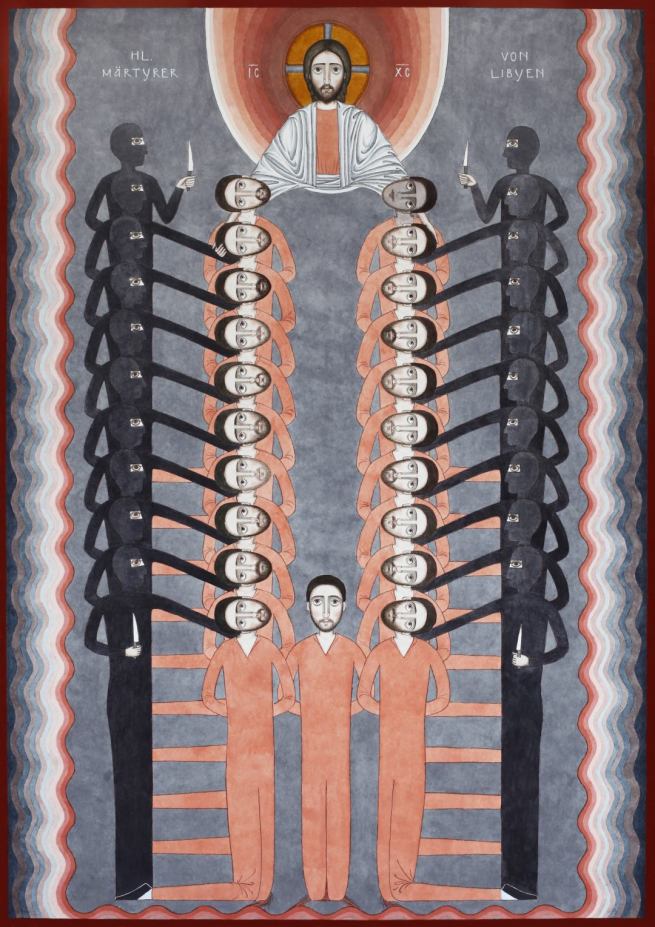
21 martyrs

Holy Martyrs of Libya (21 christians killed by IS terrorists)

*

saric3

Behold the man! The vision and the glory of God.
(Adam from the cycle “Testimonies”, detail)

*

christ

“I am the Alpha and the Omega, the First and the Last, the Beginning and the End.”
Revelation 22:13

*

saric5

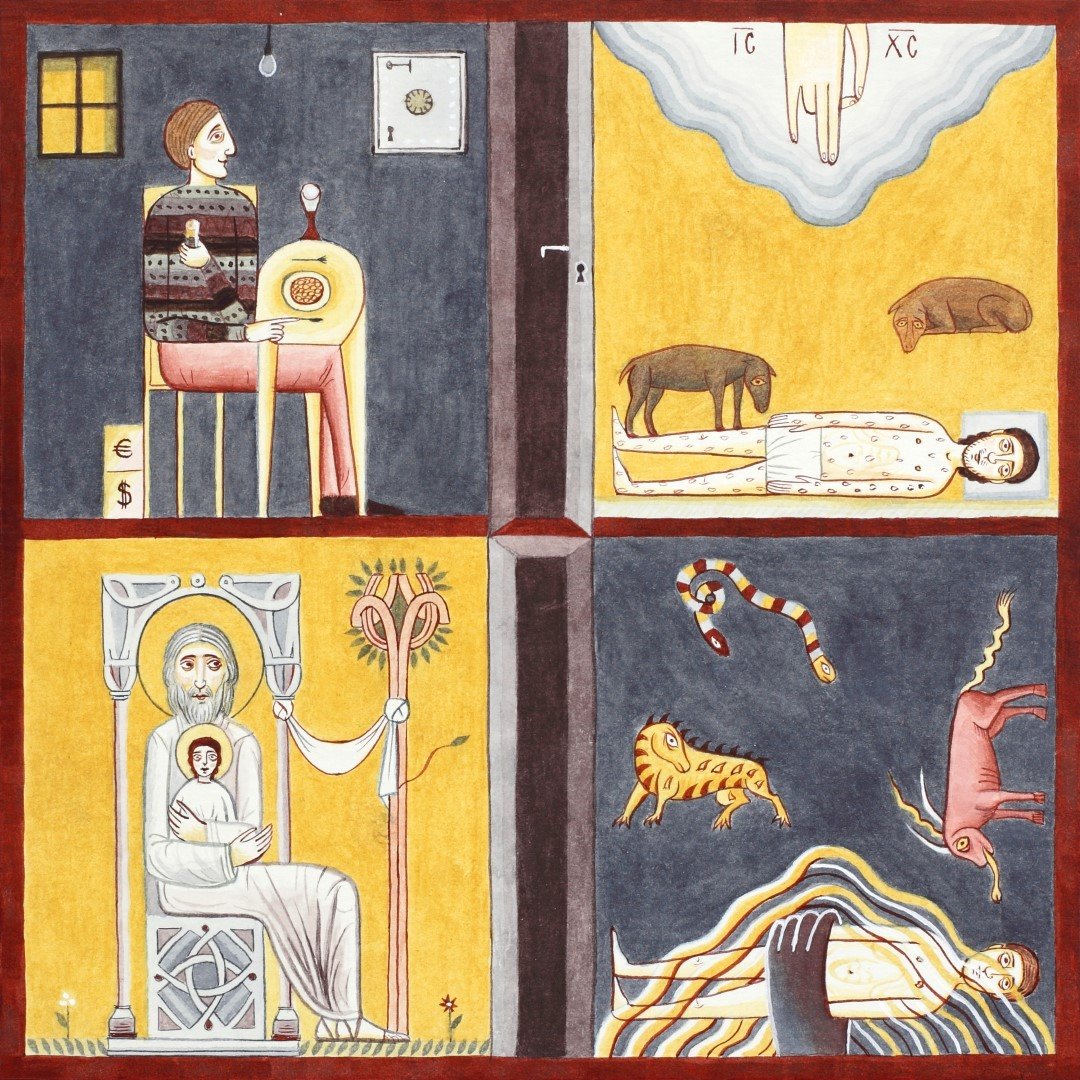
Parable of the Rich Man and Lazarus (Lk 16:19-31), from the cycle “Earthly stories with a heavenly meaning: Parables of Christ”, 2014

*

Jonah

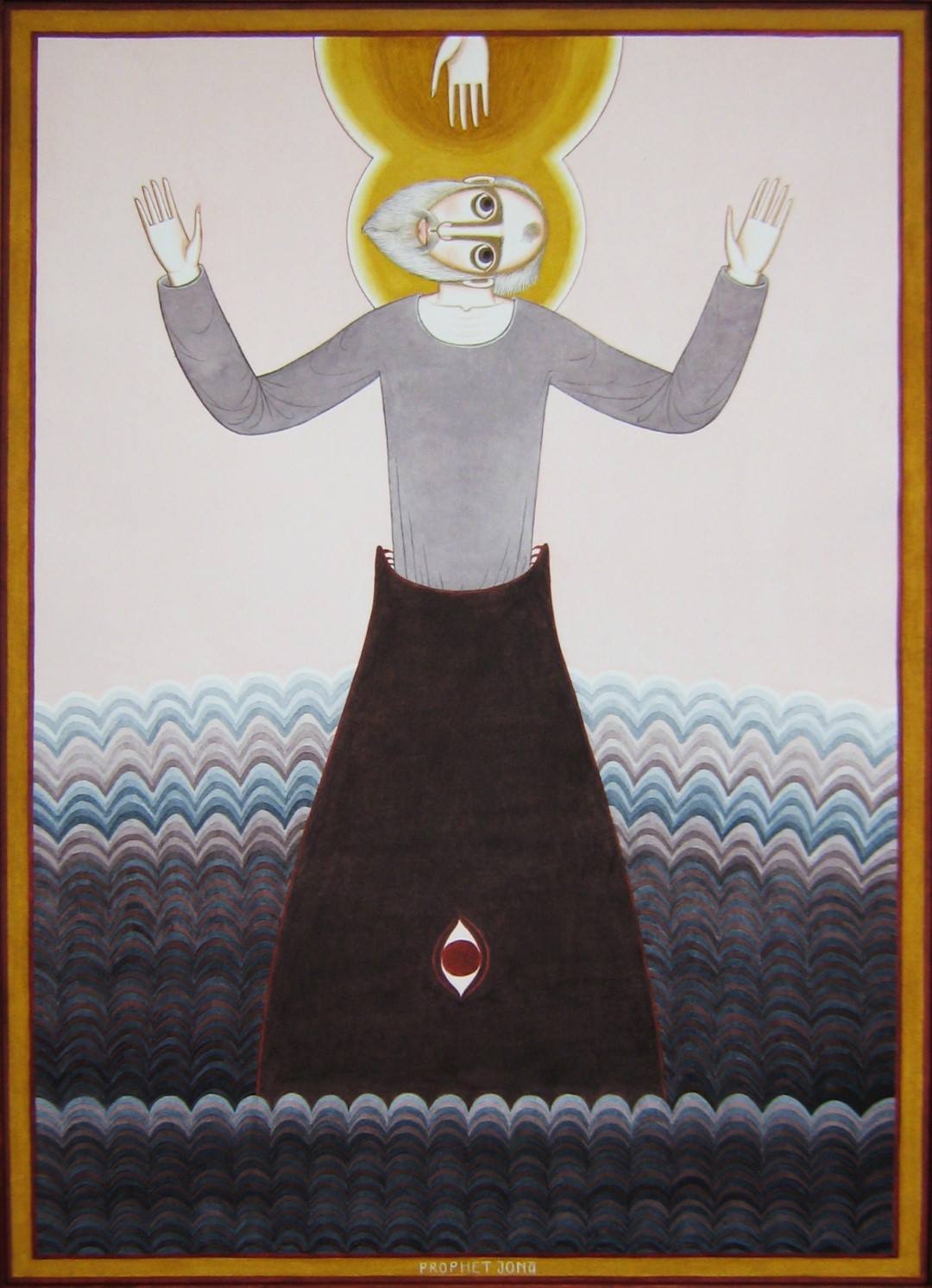
“A wicked and adulterous generation asks for a sign! But none will be given it except the sign of the prophet Jonah. For as Jonah was three days and three nights in the belly of a huge fish, so the Son of Man will be three days and three nights in the heart of the earth. (Mt 12:39-40)”

*

myrrh

Jn 12:1-11; Lk 7:36-50

*

St Demetrios

Akathist to St. Démétrios de Thessalonique, Kontakion10 / Oikos 10

*

saric10

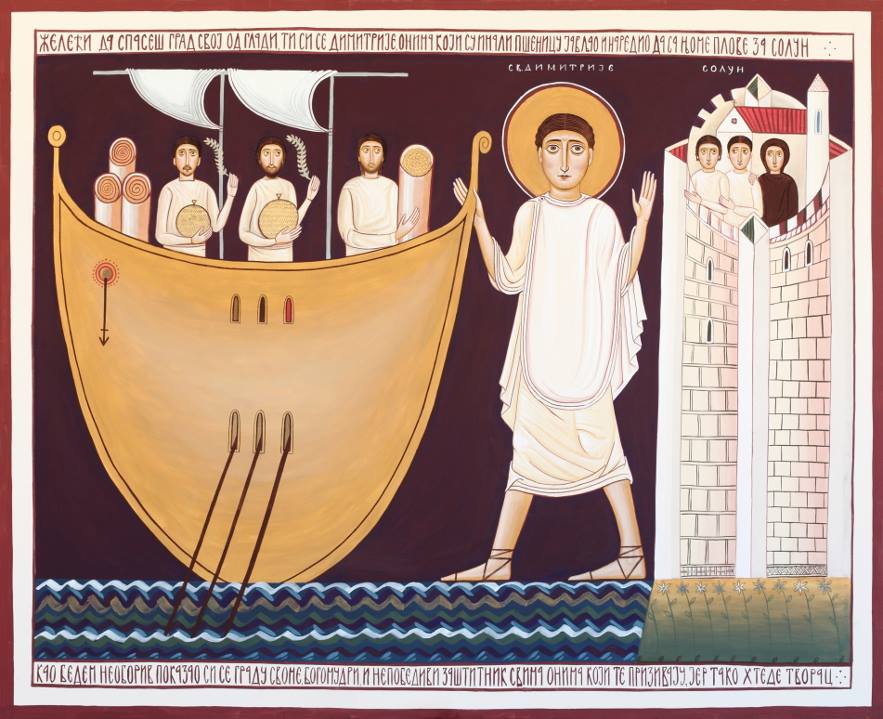
Akathist to St. Démétrios de Thessalonique– Kontakion 6/ Ikos 6, Nikola Saric, 130×160 cm, acrylic on canvas, 2009

*

banquet

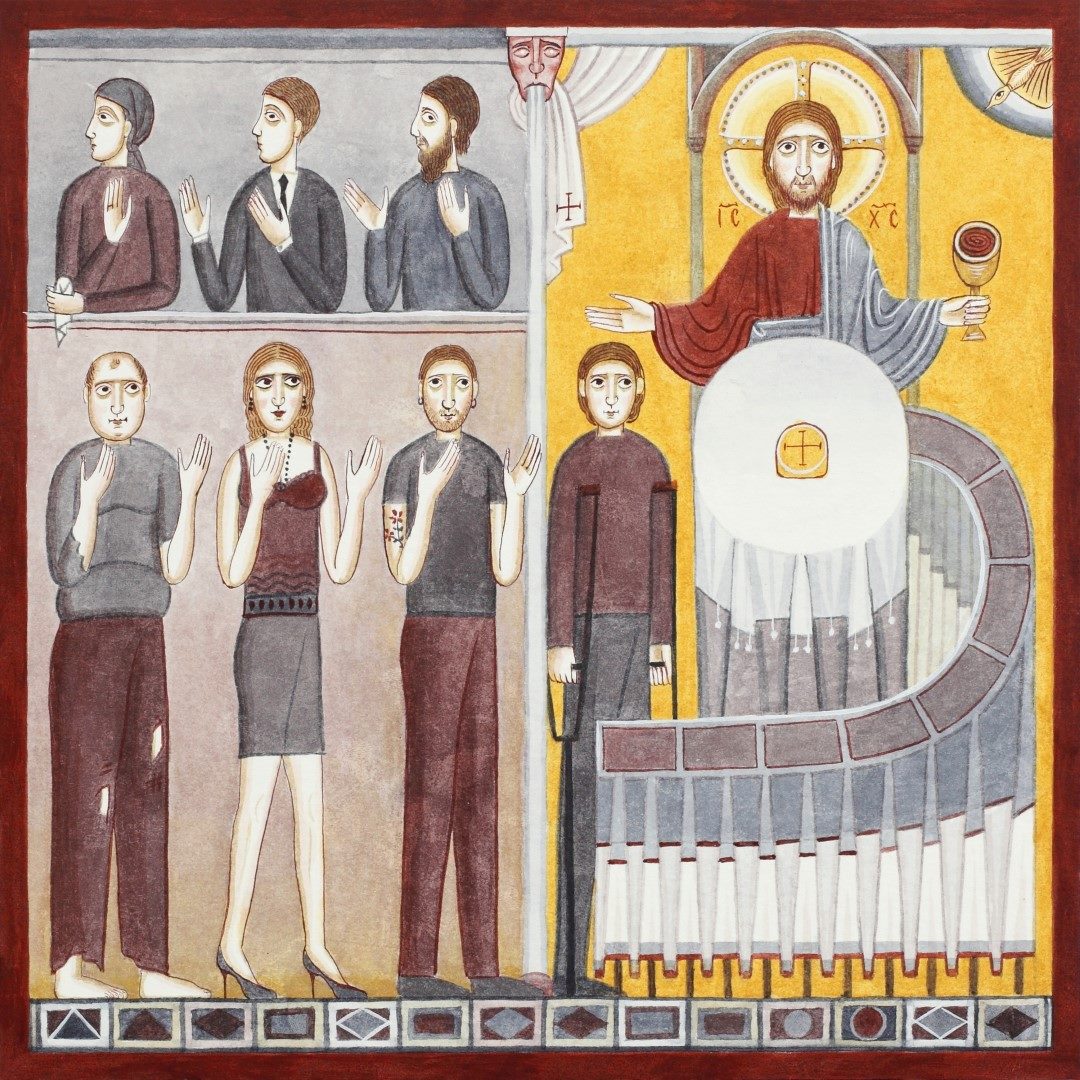
The Parable of the Great Banquet (Lk 14:15-24), from the cycle “Earthly stories with a heavenly meaning: Parables of Christ”, 2014

*

lost sheep

Parable of the Lost Sheep (Lk 15:3-7), from the cycle “Earthly stories with a heavenly meaning: Parables of Christ”, 2014

*

 saric2

Joy and happiness arose in the house of Jacob. Joseph is alive!

[Nikola Saric’s Paintings and own Captions]

*

 saric1
  • Saric’s recent publication “Earthy stories with a heavenly meaning: Parables of Christ”

Windows Into Heaven

Nikola Sarić (born 1985) studied at the TehnoArt School, the Faculty of Applied Arts (art restoration and conservation) and the Academy of Serbian Orthodox Church (fresco painting), all in Belgrade. He focuses on painting, bespoke wall design projects and producing a range of hand-made products under the label Wallsuit.

Saric, a versatile and prolific artist, specialises in sculpting, mosaic, painting, design and calligraphy. Beside working as an independent artist, he holds mosaic courses in Hannover.

Nikola_Sarić,_Installation_GAZELLE,_art-f-air_2012_in_der_Kulturetage_im_SofaLoft,_Jordanstraße_26,_30167_Hannover

Nurtured in the practice of church art, his artistic expression is deriving from sacred Greco-Roman and oriental art. In his works, through the immediacy and simplicity of visual elements, he is trying to convey the intuition of a “transfigured world” and its everlasting glow, harmony and beauty. His interpretations reflect the personal spiritual experience as well as the tradition that breathes and evolves within the concepts of contemporaries. 

For his decorative arts projects and bespoke wall design projects, go to http://www.wallsuit.de

To watch Saric at work, ‘suiting a wall’, go to https://www.youtube.com/watch?v=6FvzZBmF5nQ&feature=youtu.be

Photos from a recent church exhibition:

saric7 saric8

saric9

For more information please visit his website nikolasaric.de

Love Without Limits

burning bush13

“Whoever you are, whatever you may be, says the Lord of Love, my hand is resting upon you at this very moment. By this gesture, I am letting you know that I love you and that I call you for my own.

I have never ceased loving you, speaking to you, or calling you. Sometimes it was in silence and solitude. Sometimes it was there, where others were gathered in my name.

burning bush6

Often you did not hear this call, because you were not listening. At other times you perceived it, but in a way that was vague and confused. Occasionally you were at the point of responding with acceptance. And sometimes you gave me that response without any lasting commitment. You were deeply moved to hear me. You recoiled from the decision to follow me.

Never thereafter did you finally submit, totally and exclusively, to the calling of Love.

Yet now, once again, I come to you. I want to speak to you once more. I want you wholly for myself. Let me repeat: Love desires you, totally and exclusively.

burning bush3

I will speak to you in secret, confidentially, intimately. I will place my mouth close to your ear. Hear, then, what my lips want to speak to you in hushed tones—what they want to murmur to you.

I am your Lord, the Lord of Love. Do you want to enter into the life of Love?

This is not an invitation to some realm of tepid tenderness. It is a calling to enter into the burning flame of Love. There alone is true conversion: conversion to incandescent Love.

burning bush9

Do you wish to become someone other than you have been, someone other than you are? Do you wish to be someone who lives for others, and first of all for that Other and with that Other who calls all things into being? Do you wish to be a brother to all, a brother to the entire world?

Then hear what my Love speaks to you.

My child, you have never known who you really are. You do not yet know yourself. I mean, you have never really known yourself to be the object of my Love. As a result, you have never known who you are in me, or all the potential within yourself.

burning bush8

Awake from this sleep and its bad dreams! In certain moments of truth, you see nothing in yourself but failures and defeats, set-backs, corruption, and perhaps even crimes. But none of that is really of you. It is not your true “me,” the most profound expression of your true self.

Beneath and behind all that, deeper than all your sin, transgressions and lacks, my eyes are upon you. I see you, and I love you. It is you that I love. It’s not the evil you do—the evil that we can neither ignore nor deny nor lessen (is black actually white?). But underneath it all, at a greater depth, I see something else that is still very much alive.

The masks you wear, the disguises you adopt might well hide you from the eyes of others—and even from your own eyes. But they cannot hide you from me. I pursue you even there where no one has ever pursued you before.

burning bush11

Your deceptive expression, your feverish quest for excitement, your hard and avaricious heart—all of that I separate from you. I cut it away and cast it far off from you.

Hear me. No one truly understands you. But I understand you. I can speak about you such wonderful, marvelous things! I can say these things about you. Not about the “you” that the powers of darkness have so often led astray, but about the “you” who is as I desire you to be, the “you” who dwells in my thoughts as the object of my love. I can say these things about the “you” who can still be what I want you to be, and to be so visibly.

burning bush10

Become visibly, then, what you already are in my mind. Be the ultimate reality of yourself. Realize all the potential I have placed within you.

No man or woman is capable of realizing any inner beauty that is not equally present within you. There is no divine gift toward which you cannot aspire. Indeed, you will receive all those gifts together, if you truly love, with me and in me.

Whatever you may have done in the past, I will set you free, I will loose your bonds. And if I loose your bonds, who can prevent you from rising up and walking?

burning bush12

Love Without Limits (orig. Amour Sans Limites), 1971

By A Monk of the Eastern Church

Archimandrite Lev Gillet, who signed many of his books “A Monk of the Eastern Church,” was one of the great Orthodox spiritual guides of the last century. It is difficult to render Fr Lev’s lyrical French into English, but we hope that these efforts will provide readers with something of the spiritual richness and profound theological insight that characterized this humble monk, who was truly a modern Father of the Church.

burning bush2

Source: http://oca.org/reflections/archimandrite-lev-gillet/love-without-limits

Romanian Matrix

4_Elena Murariu, +ÿtefan cel Mare SONY DSC


Toma Chituc and Mihai Coman, two iconographers in the Romanian icon renewal.

I. Iconography, a recovered artistic language 

It would have been impossible to imagine a public conversation on icons and their veneration a quarter of a century ago in communist Romania. (…) However, in the last 25 years that have elapsed since the anti-communist revolutions in Eastern Europe, changes have been impressive. (…) In the aftermath of the atheist regime, religious life has revived in all its dimensions: art, liturgy, parish life and monastic communities. There are new parish churches, new monasteries, new canonized saints as well as new Christian martyrs of the communist persecution receiving a large popular veneration and waiting to be canonized. In this context, the icon has become a common presence in homes and offices.

Ioan Popa working on his icon of the

The most remarkable aspect of this revival is that the abundant iconographic demand and the high number of skilled iconographers gave rise to a competitive ambiance that led to an obvious advance in the quality of iconography and, subsequently, to a new iconographic movement.

598567_4005944750189_366075064_n

Our interest focuses on these latter artists who have reached an advanced aptitude of mastering the painting of icons and frescos. Socially, they are also the most visible category, knowing how to promote their creation, how to set up events and integrate their art in the larger cultural and artistic phenomenon. Their personalities are complex: in addition to working in the studio or on the scaffold, they organize symposia, open exhibitions and workshops, invite colleagues from the country and abroad, some of them teach religious art and, generally, they bring iconography to the public attention. One may observe that, over the past five to ten years, the phenomenon has become more alive and has configured a group of iconographers and church painters who are not only talented artists but also curators, theorists and project managers. Furthermore, one of the most significant aspects is that a few artistic values have been gradually assumed by the most valuable iconographers:

1. A thorough education in classical art. ( …)

2. A personal spiritual life. All of them assume, with the Orthodox tradition, that a spiritual dimension is a necessary ingredient to painting an icon. Painting an icon is not a mere artistic activity but a facet of the larger spiritual growth, both personal and part of the community in which the iconographer lives. Painting an icon, therefore, becomes a way of expressing their creativity, a spiritual search in a direct continuity with their ancestral Orthodox legacy and a way of life to which they dedicate themselves entirely. Thus, they strive to understand the icon in a theological manner, as a sacred image, and to address it from a spiritual angle. There are a few cases in which the artists even chose the monastic life; and icon painting became their main obedience in the monastery.

3. They do not imitate but innovate within the canons of tradition. (…)

II. Some iconographers and their work

Gregore Popescu. He is the oldest among the Romanian church painters and has the largest artistic oeuvre.

1_Grigore Popescu_ansamblu altar

SONY DSC

SONY DSC

Elena Murariu represents the middle generation. She worked as a fresco specialist who restored different mural assemblies of the fourteenth to eighteenth centuries and subsequently commenced painting her own icons.

4_Elena Murariu, +ÿtefan cel Mare

Elena Murariu, Holy Brancovan (Brâncoveanu) Martyrs

Gabriel Toma Chituc. Also primarily educated as a classical painter, Chituc is an original and gifted iconographer with a special artistic expressivity. In the last decade, he has become a prolific iconographer striving to find the mystery of the authentic icon inspired by the Holy Spirit.

6_Gabriel Chituc_Nasterea

7_Gabriel Chituc_Bunavestire

OLYMPUS DIGITAL CAMERA

OLYMPUS DIGITAL CAMERA

Ioan Popa. Although he is only 38, Popa has already painted in the fresco technique two churches in Bucharest and Alba Iulia, the church of a monastery in the Apuseni Mountains as well as baptisteries and small chapels in Southern Italy, Cyprus and Mount Athos.

10_Ioan Popa, capela Spital G. Alexandrescu

11_SS Redentore Church, Manfredonia, Italiy,

12_Ioan Popa, ST. GEORGE

SONY DSC

14_Perete sudic, Alba Iulia

15_Bis. Alba Iulia, detaliu

Mihai Coman. He teaches church painting techniques at the Faculty of Theology in Bucharest and studied restoration in Romania. However, in what regards his skills of painting icons and frescos, Coman affirms that he “learned the technique on Mount Athos and understood the icon with the professor and painter Georgios Kordis,” whose doctoral student he is in Greece.

16_Mihai Coman_Cina cea de taina

17_Mihai Coman_Gabriel Chituc_Schitul Brazi

18_Mihai Coman_Acoperamantul

Deacon Nicolae Bălan. After his studies in iconography at the Faculty of Theology in the Department of monumental art, he attended the Faculty of Fine Arts in order to improve his drawing and composition techniques. Bălan is a gifted draftsman and he painted the metropolitan chapel from Limours (France) and St. Trinity Church in Alba Iulia.

19_Balan Nicolae, biserica memorial¦ Alba Iulia

21_Balan Nicolae, cruce altar

20_Balan Nicolae, detaliu bolt¦ Alba Iulia

To these iconographers should be added many others, all of special talent and abundant production. We will mention here a few of them for a few particular reasons. First, some have composed new iconographic themes, like Răzvan Gâscă with his St. Maximus the Confessor with scenes from his life, painted to mark the presence of the relics of St. Maximus the Confessor to Iaşi in 2010.

22_Razvan Gasca_Sf Maxim M

Likewise, Marius Ghinescu for his St. Pachomius at St. Dimitry of Rostov, which represents a moment in the life of Venerable Pachomius of Gledin (1674-1724), a Romanian hermit and bishop who spent his last years at the Pecerska Lavra in Kiev.

23_Marius Ghinescu_Sf Pahomie +Öi Sf Dimitrie al Rostovului

Others should be mentioned for the original manner in which they reconceived certain classical themes, for example Daniela Toma Musat, St. M. George.

24_DANIELA Musat Toma_Sf. Gheorghe

Finally, we should mention some who are talented artist monks able to innovate within the canon, such as Mother Olga, St. Joachim and Anna, Monk Haralambie, The Venerable Founders of Monastery Vatopedi, and Monk Iacob, Mandylion.

25_Monahia Olga_Ioachim si Ana

26_Pr Haralambie_Sf Vatopedini

26_pr Iacov_mandylion

28_BOGDAN VERDES

29_Gabriel Chituc_MD Slava Mc Brancoveni

30_Ioan Popa_Iisus Vita de vie

31_Daniel Codrescu_Deisis cu Sf. Brancoveni

32_Elena Murariu_Sfintii Brancoveni

The last example belongs to Sorin Dumitrescu, a talented metaphysical painter of the old generation converted into an inspired and charismatic theoretician of the icon as well as an original iconographer in spite of the smaller number of icons he has realised. While in his early career as an iconographer he filtered Palaeologan tradition in a personal manner, he searches his present sources of inspiration in the times which preceded iconoclastic controversy.

33_Sorin-Dumitrescu_Modelul-iconic-al-muceniciei--Brancovenilor

With this we close our short excursion into contemporary Romanian iconography. The diversity of artists, styles, techniques, media and sources of inspiration unveils a fascinating artistic and spiritual phenomenon. It will be worth seeing in which direction Romanian iconography will evolve in the future.

*

By 

Source: http://www.orthodoxartsjournal.org/the-new-romanian-masters-innovative-iconography-in-the-matrix-of-tradition/

Solitary and Naked Before God

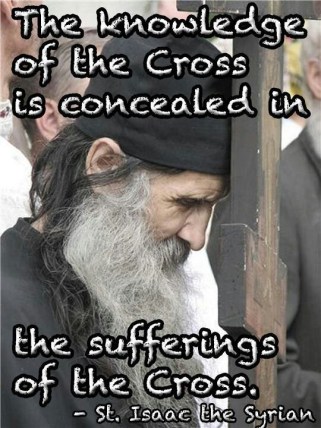
... If we decide responsibly and seriously to make the Gospel truth the standard for our human souls, we will have no doubts about how to act in any particular case of our lives: we should renounce everything we have, take up our cross, and follow Him. The only thing Christ leaves us is the path that leads after Him, and the cross which we bear on our shoulders, imitating His bearing of the cross to Golgotha.

[And that is all]

It can be generally affirmed that Christ calls us to imitate Him. That is the exhaustive meaning of all Christian morality. And however differently various peoples in various ages understand the meaning of this imitation, all ascetic teachings in Christianity finally boil down to it. Desert dwellers imitate Christ’s forty-day sojourn in the desert. Fasters fast because He fasted. Following His example, the prayerful pray, virgins observe purity, and so on. It is not by chance that Thomas Kempis entitled his book The Imitation of Christ; it is a universal precept of Christian morality, the common title, as it were, of all Christian asceticism.

001 603

El Greco – Christ Embraced the Cross (detail) (1587-96)

I will not try to characterize here the different directions this imitation has taken, and its occasional deviations, perhaps, from what determines the path of the Son of Man in the Gospel. There are as many different interpretations as there are people, and deviations are inevitable, because the human soul is sick with sin and deathly weakness.

What matters is something else. What matters is that in all these various paths Christ Himself made legitimate this solitary standing of the human soul before God, this rejection of all the rest – that is, of the whole world: father and mother, as the Gospel precisely puts it, and not only the living who are close to us, but also the recently dead – everything, in short. Naked, solitary, freed of everything, the soul sees only His image before it, takes the cross on its shoulders, following His example, and goes after him to accept its own dawnless night of Gethsemane, its own terrible Golgotha, and through it to bear its faith in the Resurrection into the undeclining joy of Easter.

[And that is all]

cross8

Here it indeed seems that everything is exhausted by the words “God and my soul.” All the rest is what He called me to renounce, and so there is nothing else: God – and my soul – and nothing.

No, not quite nothing. The human soul does not stand empty-handed before God. The fullness is this: God – and my soul – and the cross that it takes up. There is also the cross.

[And that is all]

el greco

El Greco — Christ Carrying the Cross (1587-96)

The meaning and significance of the cross are inexhaustible. The cross of Christ is the eternal tree of life, the invincible force, the union of heaven and earth, the instrument of a shameful death. But what is the cross in our path of the imitation of Christ? How should our crosses resemble the one cross of the Son of Man? For even on Golgotha there stood not one but three crosses: the cross of the God-man and the crosses of the two thieves. Are these two crosses not symbols, as it were, of all human crosses, and does it not depend on us which one we choose? For us the way of the cross is unavoidable in any case, we can only choose to freely follow either the way of the blaspheming thief and perish, or the way of the one who called upon Christ and be with Him today in paradise. For a certain length of time, the thief who chose perdition shared the destiny of the Son of Man. He was condemned and nailed to a cross in the same way; he suffered torment in the same way. But that does not mean that his cross was the imitation of Christ’s cross, that his path led him in the footsteps of Christ.

cross6

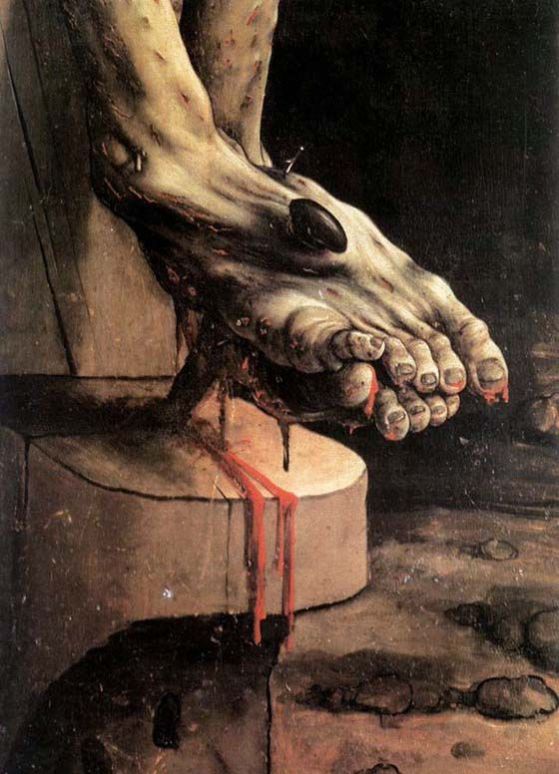
Detail from the Crucifixion from the Isenheim Altarpiece, circa 1512-16

… What is most essential, most determining in the image of the cross is the necessity of freely and voluntarily accepting it and taking it up. Christ freely, voluntarily took upon Himself the sins of the world, and raised them up on the cross, and thereby redeemed them and defeated hell and death. To accept the endeavor and the responsibility voluntarily, to freely crucify your sins – that is the meaning of the cross, when we speak of bearing it on our human paths.  … The free path to Golgotha – that is the true imitation of Christ.

[And that is all]

cross5

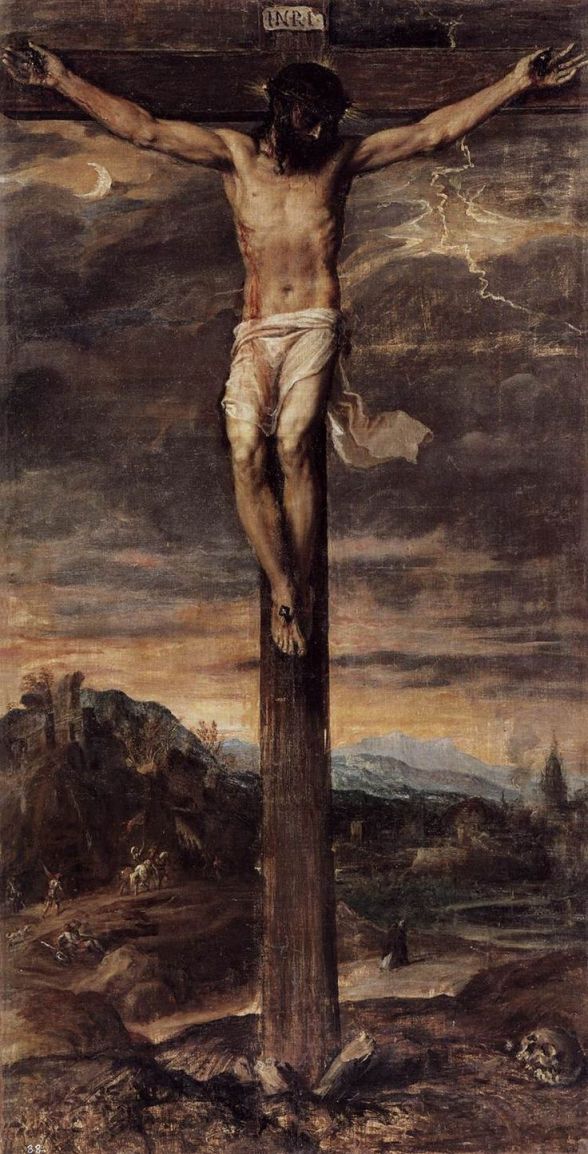
Crucifixion, by Titian, circa 1555

This would seem to exhaust all the possibilities of the Christian soul, and thus the formula “God and my soul” indeed embraces the whole world. All the rest that was renounced on the way appears only as a sort of obstacle adding weight to my cross. And heavy as it may be, whatever human sufferings it may place on my shoulders, it is all the same my cross, which determines my personal way to God, my personal following in the footsteps of Christ. My illness, my grief, my loss of dear ones, my relations to people, to my vocation, to my work – these are details of my path, not ends in themselves, but a sort of grindstone on which my soul is sharpened, certain – perhaps sometimes burdensome – exercises for my soul, the particularities of my personal path.

[And that is all]

cross1

If that is so, it certainly settles the question. It can only be endlessly varied, depending on the individual particularities of epochs, cultures, and separate persons. But essentially everything is clear. God and my soul, bearing its cross. In this an enormous spiritual freedom, activity, and responsibility are confirmed. And that is all.

cross2

… There are simply millions of people born into the world, some of whom hear Christ’s call to renounce everything, take up their cross, and follow Him, and, as far as their strength, their faith, their personal endeavor allow, they answer that call. They are saved by it, they meet Christ, as if merging their life with His. …

The cross of Golgotha is the cross of the Son of Man, the crosses of the thieves and our personal crosses are precisely personal, and as an immense forest of these personal crosses we are moving along the paths to the Kingdom of Heaven. And that is all.

*

Taking Up The Cross

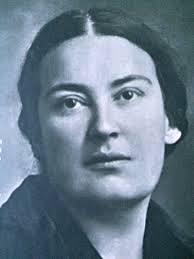
By St. Maria Skobtsova  

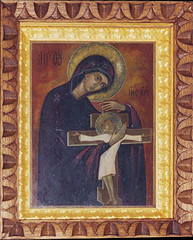
  • The first icon on the left is Cross-bearing Theotokos painted by St. Maria Skobtsova of Paris

cross10

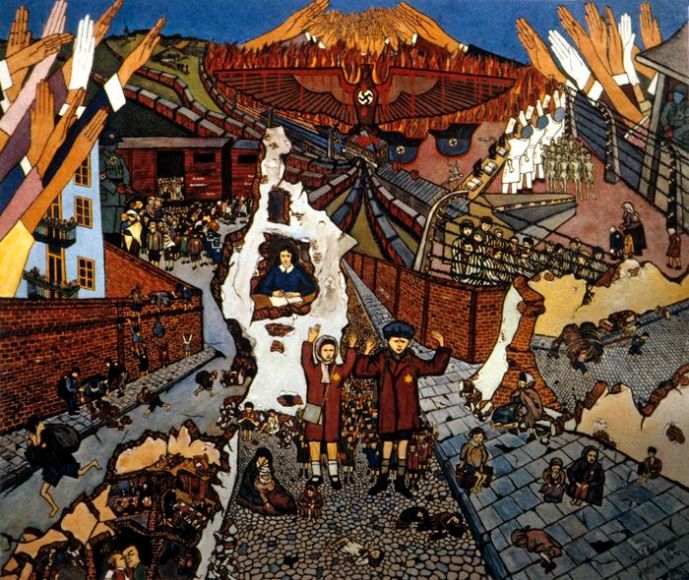
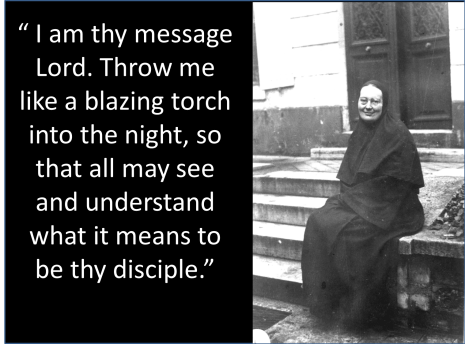
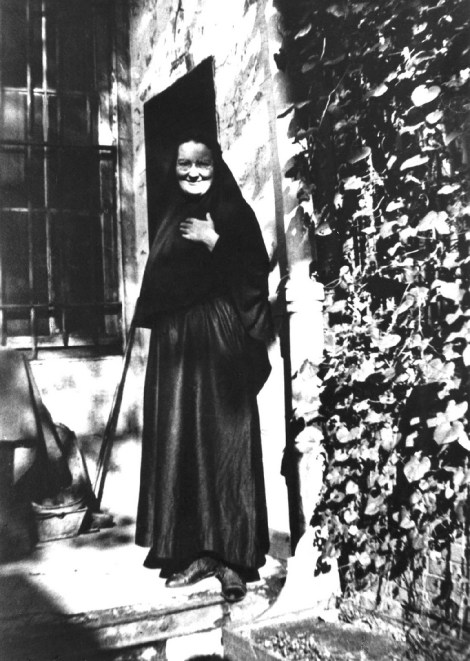
Mother Maria Skobtsova died on Good Friday, 1945, in Ravensbr ck concentration camp near Berlin. Maria’s real life is more incredible than any fiction! The “crime” of this influential painter, poet, social activist, Orthodox nun and Russian refugee was her effort to rescue Jews and others being pursued by the Nazis in her adopted city, Paris, where in 1932 she had founded a house of hospitality. … The essay reprinted here is part of a longer text included in Mother Maria Skobtsova: Essential Writings, translated by Richard Pevear and Larissa Volokhonsky and published by Orbis Books.

Source: https://incommunion.org/2007/10/27/taking-up-the-cross/

For her life, look at: https://orthodoxcityhermit.com/2015/09/23/mother-maria-of-paris-saint-of-the-open-door/

Like a Russian Novel

st maria


A very unlikely nun

For a nun, Maria’s story is more than a little unconventional. At Bishop Anthony Bloom’s first encounter with her, Maria sat at a cafe table with a beer. She was often seen shambling around the Paris market in her tattered habit, cigarette perched on her lip, haggling for deals. And she kept company with the lowest of the low.

“She was a very unusual nun in her behavior and her manners. I was simply staggered when I saw her for the first time in monastic clothes. I was walking along the Boulevard Montparnasse and I saw: in front of a café, on the pavement, there was a table, on the table was a glass of beer and behind the glass was sitting a Russian nun in full monastic robes. I looked at her and decided that I would never go near that woman. I was young then and held extreme views.”

That was her calling. Former-revolutionary, twice-married, twice divorced, cigarette-smoking, poet, painter, theologian, nun and martyr-saint, she knew the meaning of God’s mercy and desired only to share it with as many as she could muster. The number was not small.

maria1

Her backstory is the stuff of Russian novels. Born into a wealthy family in 1891, her father died when she was young, and the shock of the loss drove her to renounce her faith. Mixing with smart and fashionable of St. Petersburg, she published poetry, married a Bolshevik, and distressed over the state of the city’s beleaguered poor. But idealism couldn’t save her marriage, which ended in 1913.

russian1

The following year she moved to her family’s estate on the coast of the Black Sea with her daughter, Gaiana. Headstrong and independent, Maria was politically active and eventually became mayor of the town of Anapa as a single mom! She also rediscovered her faith, which informed her activism. “[T]he Christian,” she said, “is called to social work.”

russian4

The problem for Maria was that she was too conservative for the radicals and too radical for the conservatives. After the start of the Russian Revolution she found herself arrested and tried by the anti-Bolshevik party and only escaped conviction because of a kindly judge, Daniel Skobtsov. The two married within months of her acquittal.

With the Revolution in full swing, life in Anapa became impossible. The family fled, swelling in the sojourn. By the time they settled in Paris in 1923, Yuri and Anastasia had been born.

russian2

And now the obvious question: How did this wife of two men and mother of three children become a nun?

mother6

Not good, but revolutionary

It started when Anastasia succumbed to a wasting illness and died in 1926. The family, already strained, was devastated. Maria and Daniel separated and eventually divorced. But out of the devastation Maria’s calling to help the downtrodden was renewed.

Refugee life was terrible, especially for the Russians. Work was scarce. Despair and alcoholism was rampant. Maria saw herself as uniquely suited to help, to rescue, to comfort these victims and misfits. She would be, she said, “a mother to all.”

jews2

The proposed path was monasticism. Revealing is her conversation with her bishop, Metropolitan Evlogy. “I could never be a good nun,” she protested. “I know,” he said. “But I want you to be a revolutionary nun.”

“[S]he went to the steel foundry in Creusot, where a large number of Russian [refugees] were working. She came there and announced that she was preparing to give a series of lectures on Dostoevsky. She was met with general howling: “We do not need Dostoevsky. We need linen ironed, we need our rooms cleaned, we need our clothes mended — and you bring us Dostoevsky!” And she answered: “Fine, if that is needed, let us leave Dostoevsky alone.” And for several days she cleaned rooms, sewed, mended, ironed, cleaned. When she had finished doing all that, they asked her to talk about Dostoevsky. This made a big impression on me, because she did not say: “I did not come here to iron for you or clean your rooms. Can you not do that yourselves?” She responded immediately and in this way she won the hearts and minds of the people.”

jews4

And so she was. There would be no convent for Maria. Her monastery, as she said, was “the whole world.” Several houses and a chapel were set up to shelter and serve those in need. Maria worked tirelessly, Gaiana and Yuri aiding the effort, Father Lev Gillet serving as the ‘convent’’s chaplain for many years. In addition to painting icons and leading religious discussions, she cooked, counseled, and combed the streets looking for anyone she could help.

maria skobtsova

“[E]ach of us,” she wrote, “is faced with the demand to strain all our forces, not fearing the most difficult endeavor, in ascetic self-restraint, giving our souls for others sacrificially and lovingly, to follow in Christ’s footsteps to our appointed Golgotha.”

Maria’s appointment emerged as World War II began and the Nazis seized control of Paris. The only response was obvious.

jews3

A martyr for our own time

Maria and her associates began working with the French Resistance, hiding Jews, forging records and papers, anything to foul Nazi aims. She was brazen. “If the Germans come looking for the Jews,” she said, “I’ll show them the icon of the Mother of God.”

nazi2

* Two triangles, a star,

The shield of King David, our forefather.

This is election, not offense.

The great path and not an evil.

Once more in a term fulfilled,

Once more roars the trumpet of the end;

And the fate of a great people

Once more is by the prophet proclaimed.

Thou art persecuted again, O Israel,

But what can human malice mean to thee,

who have heard the thunder from Sinai? * 

The Gestapo knew something was afoot, but it took time to foil the plot. When they finally did, the Nazis dragged Maria and her coconspirators—including her son Yuri—off to prison.

mother4

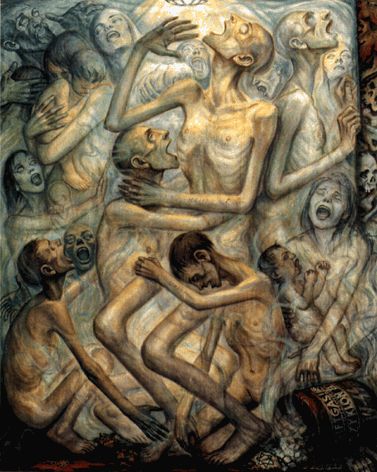
During her two-year confinement in the Ravensbrück concentration camp, she was a beacon, bringing hope to people in utter despair. She led prayers and Bible study, fed people from stores she smuggled away, and radiated hope to any and all.

But while her hope was invincible, her body was not. The trauma of the camp took its toll and she became increasingly frail. “Though she was unable to stand for roll calls, she traded some bread for thread so she could embroider one last icon.” It depicted Mary holding a crucified Christ. Before she could finish, she was taken to the gas chamber where she died on Great and Holy Saturday.

nazi4

MOTHER MARIA OF PARIS: SAINT OF THE OPEN DOOR

*

Sources: http://blogs.ancientfaith.com/joeljmiller/maria-skobtsova/

https://incommunion.org/2004/10/18/saint-of-the-open-door/

http://jimandnancyforest.com/2006/08/mothermaria/

*

*Maria’s own poem reflecting on the symbol Jews were required to wear during WWII*

*

* * If you are interested in more details about Maria’s activism, inspiration, grace, heroism, and hope-filled commitment, so needed in our world today, please visit: https://incommunion.org/2004/10/18/saint-of-the-open-door/

*

For ST. MARIA SKOBTSOVA RESOURCES, on her life and writings, please go to: https://incommunion.org/st-maria-skobtsova-resources/

Guinness Record Church in Russia

The temple of St. Andrew the Apostle. Guinness Record Church in Russia

*The temple of St. Andrew the Apostle. In the morning mist*

Away from the hustle of big cities, on the water surface of the Vuoksa, stands the temple of St. Andrew the Apostle. The temple is mentioned in Guinness Book of Records as the world’s only church built on a tiny island, the foundation of which serves the monolithic rock protruding from the water. It was built in 2000, by Andrei Rotinov, an architect (passed away by now), according to ancient canons. Nothing like this has been ever built. There is no mass pilgrimage, no pompous ceremonies (though services are held on schedule), and other things like that. This place is more for solitude with nature, to reflect on the events of your life, meditation and quiet conversation with God in a relaxed atmosphere. Around the picturesque banks of the Vuoksa, with rocks protruding from the water, and singing birds … idyll or peace.

Guinness Record Church in Russia

* The church at the dawn*

An example for the architectural solution was the oldest church of the Ascension in Kolomna. While in the world, there are other “Churches on the water,” among which the church in Volgograd, Kondopoga, Church of the Assumption in Slovenia and surprisingly similar to Priozersky temple church in the town of Kalyazin on the Volga, but St. Andrew the Apostle church on the island Vuoksa surprises all.

Guinness Record Church in Russia

*The lonely church against misty background*

The temple is named after one of the twelve disciples of Jesus Christ – according to church tradition, it was in these places people were baptized in the local waters. Andrew is the patron saint of sailors, so every ship is bound to have Andrew’s flag, and possibly surrounded by water from all sides church refers to this fact. The area of ​​the island is only 100 square meters. To get here is possible by boat or ferry, but in the near future will be built a bridge, way to the dock and the pool for baptizing.

Guinness Record Church in Russia

*The Church in the winter landscape*

The site is located near the village of Vasilevo of Priozersk District, in the suburb of St. Petersburg. From St. Petersburg the trip takes about 2 hours.

The temple of St. Andrew the Apostle

The temple of St. Andrew the Apostle

Winter landscape

Winter landscape

Panoramic view of the church at sunset

Panoramic view of the church at sunset

Guinness Record Church in Russia

The temple of St. Andrew the Apostle. Photographer Michael Vorobyev

Guinness Record Church in Russia

The temple of St. Andrew the Apostle. Photographer Michael Vorobyev

Guinness Record Church in Russia

The temple of St. Andrew the Apostle. Photographer Michael Vorobyev

Guinness Record Church in Russia

The temple of St. Andrew the Apostle. Photographer Michael Vorobyev

Photographer Michael Vorobyev

The temple of St. Andrew the Apostle. Photographer Michael Vorobyev

Pink sunset, panoramic view of the church

Pink sunset, panoramic view of the church

Absolute beauty

Absolute beauty

Autumn landscape

Autumn landscape

Beautiful sunrise

Beautiful sunrise

Beautiful sunset

Beautiful sunset

Church on the rocks

Church on the rocks

Covered with snow church

Covered with snow church

Frozen with ice river

Frozen with ice river

The sign with the name of the Church

The sign with the name of the Church

Wooden architecture, detail

Wooden architecture, detail

Wooden church, detail

Wooden church, detail

Inside the church

Inside the church

Guinness Record Church in Russia

Celestial Cadences

arvo part

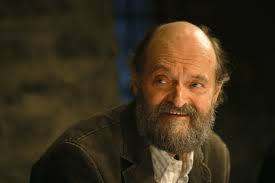
Mystical, monk-like, reclusive — those are a few words often used to describe Arvo Pärt. His music gets labeled as timeless, spiritual and meditative. The Estonian composer, born 80 years ago today, is perhaps all of these things … and maybe none of them.

Recently, Pärt allowed a film crew follow him for a year. The result is a new documentary by Günter Atteln called The Lost Paradise, an excerpt of which the producers at Accentus Music are sharing prior to its fall release. The excerpt here finds the composer at his piano, at a rehearsal of his music with his wife and musing about a healthy kind of pain in art.

Whether you are an Arvo Pärt first-timer or a fanatic, here’s a short list of things to know about this singularly fascinating artist.

Arvo-Part-Piano

He may be the most performed living composer

If you accept Bachtrack, the online database tabulating classical music events worldwide, Pärt is popular. For the fourth consecutive year he’s been named the world’s most-performed contemporary composer. Why? It may have to do with the amount of appealing vocal music he’s written. And when you consider that there are an estimated 42.6 million adults and children who sing in choirs in the U.S. alone, that can lead to many Pärt performances. Also, his slow-moving music seems to soothe an increasingly frenzied world.

His reputation as a recluse is not quite true

While he likes his private moments for composing and his walks in the Estonian forests, Pärt let these documentary filmmakers trail him for an entire year. He’s also been an eager participant in recording sessions and rehearsals of his music. And, on a more personal note, when the composer visited Washington, D.C. last year, he didn’t hesitate to invite me to his hotel for an interview.

quote1

His music, since the mid-1970s, is inspired by bells

Pärt found his current compositional voice after a period of struggle and silence. In 1968, he turned away from the complex, atonal music he was writing and nearly stopped composing for eight years. He returned with something completely different— music based on triads of notes, the simplest building blocks of Western music. The result was music of slow, spacious grace, with hints of Gregorian chant. He called his new style “tintinnabuli,” a reference to the ringing of bells.

His music isn’t always meditative and spiritual

Pärt sometimes gets labeled, along with John Tavener and Henryk Górecki, as a part of the “God Squad,” the so-called “holy minimalists” whose music is simply too simple for some tastes. But Pärt’s music wasn’t always ethereal and slow-paced. His early works were in a neo-classical style, and then came a period of atonal and serial worksthat was followed in 1971 by the compelling Symphony No. 3, a bridge between Pärt’s old and new styles.

quote-a-need-to-concentrate-on-each-sound-so-that-every-blade-of-grass-would-be-as-important-arvo-part-110-92-51

He’s often called mystic, but that’s not how he sees himself 

True, Pärt is a devout Eastern Orthodox Christian who writes a lot of spiritual music. And when he talks, his deep thoughts tend to come out as maxims for living a meaningful life. When asked about the silence in his music he told me: “Silence is like fertile soil, which, as it were, awaits our creative act, our seed.” Still, he doesn’t see himself as any kind of prophet. “A mystic!?” he said. “Well, that is the last thing I want to be.”

Source:http://www.npr.org/sections/deceptivecadence/2015/09/11/439247120/get-to-know-one-of-the-most-performed-living-composers

For a glimpse into this rare person, who strikes at my core each time, a true rarity in this world, a composer who captures people always because he radiates with light and no one can resist that,  watch the following mini-documentaries at:
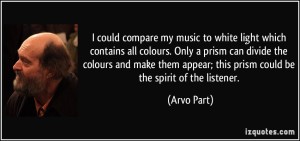
quote-i-could-compare-my-music-to-white-light-which-contains-all-colours-only-a-prism-can-divide-the-arvo-part-142066
For a taste of his celestial music, listen to
 
Or Silencio, a meditative collection of 20th-century works for string orchestra, including works by Arvo Pärt, Philip Glass, and Vladimir Martynov, https://www.youtube.com/watch?v=O_GnWMH5MAQ
Or watch the mesmerising Homemade music video for Salve Regina https://www.youtube.com/watch?v=f1CNNf9iU9Y
quote-silence-is-the-pause-in-me-when-i-am-near-to-god-arvo-part-73-34-28