A Pilgrimage from Disappointment, Doubt, Discouragement, and Despair to Hope
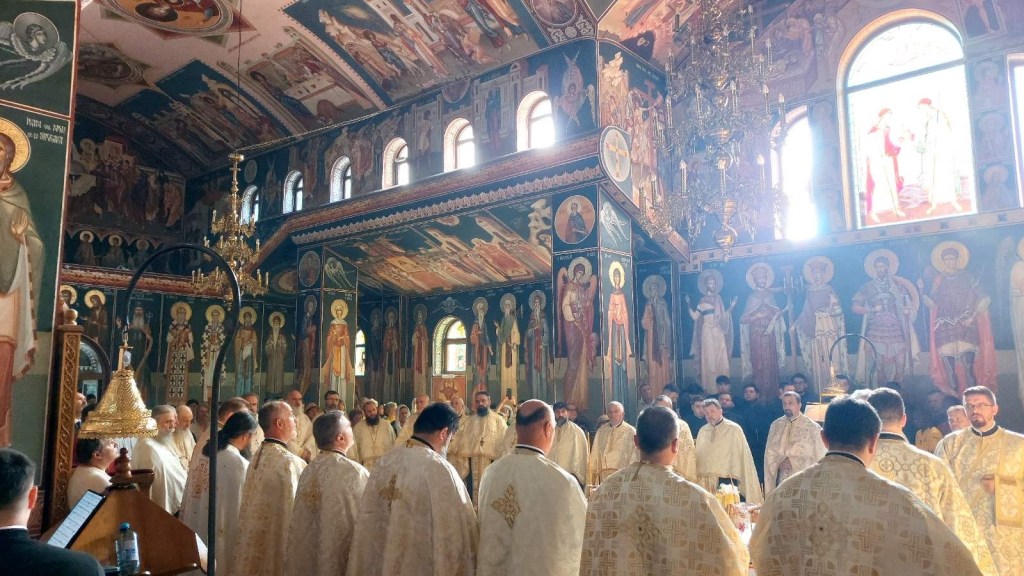
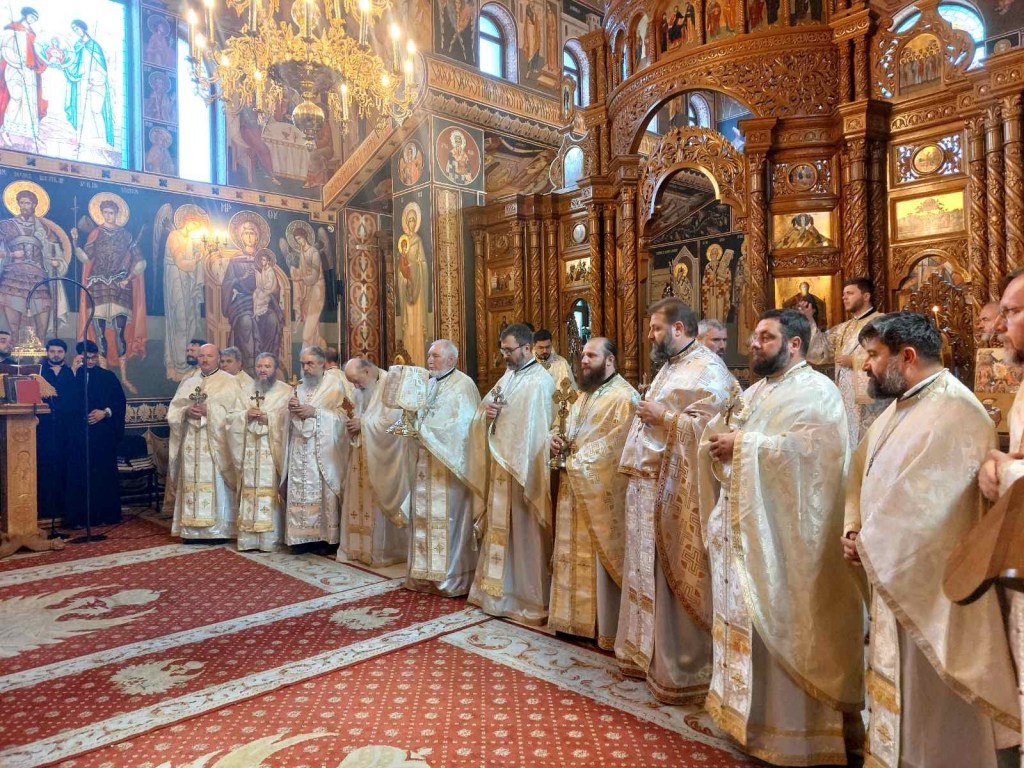
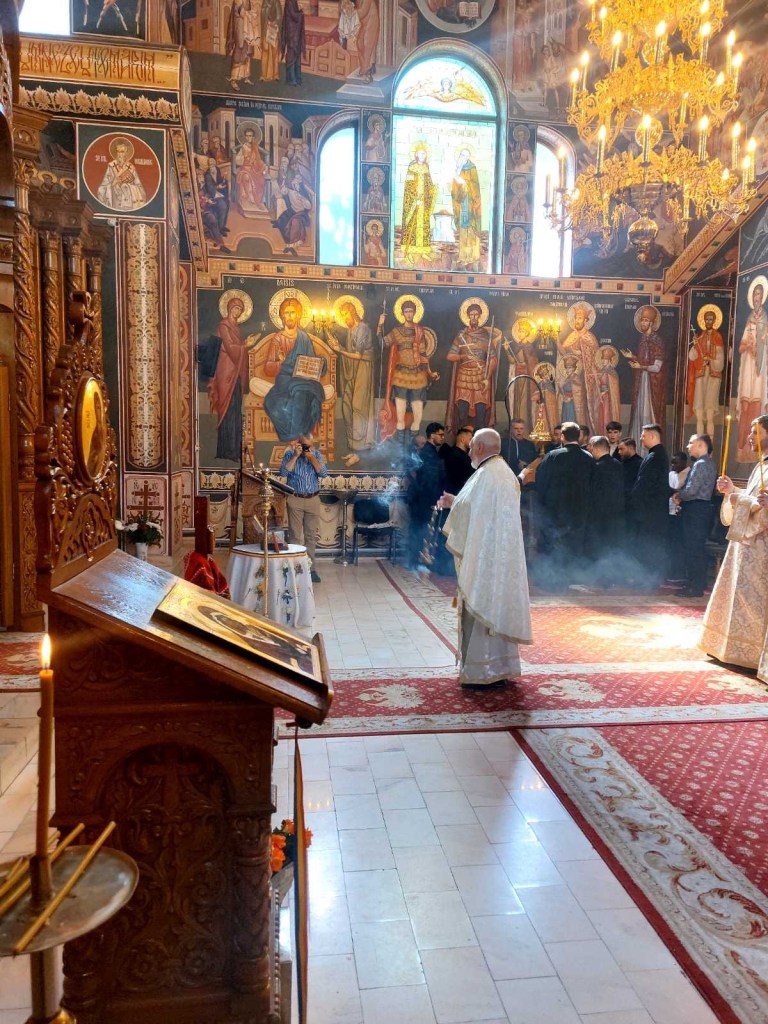
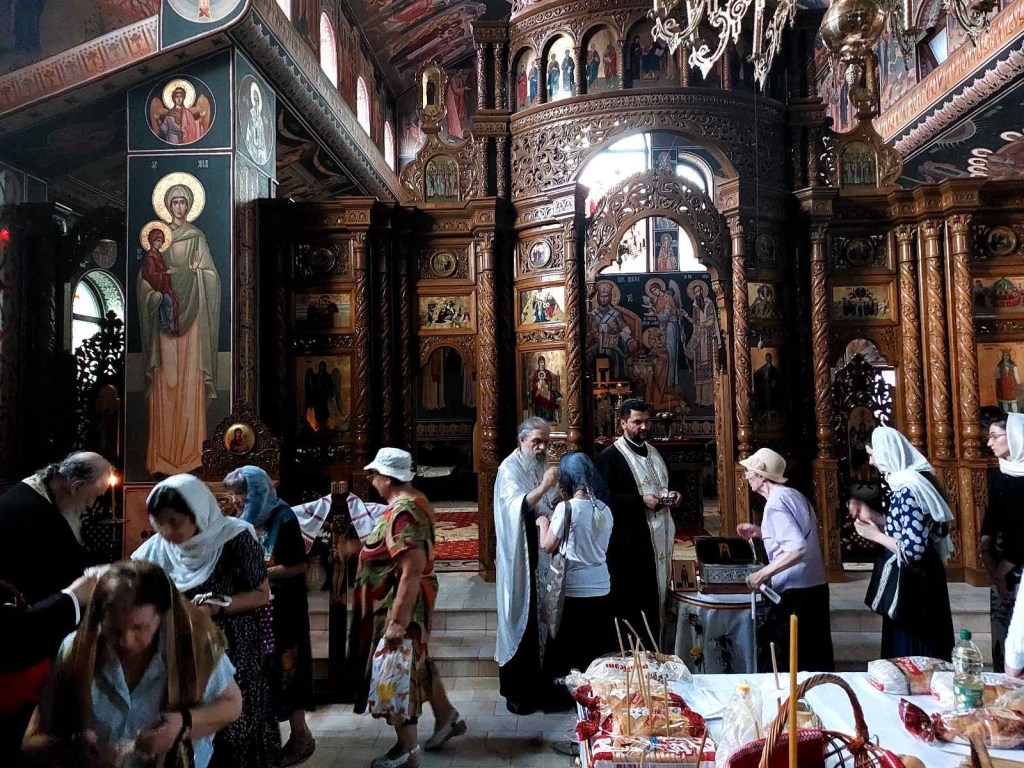
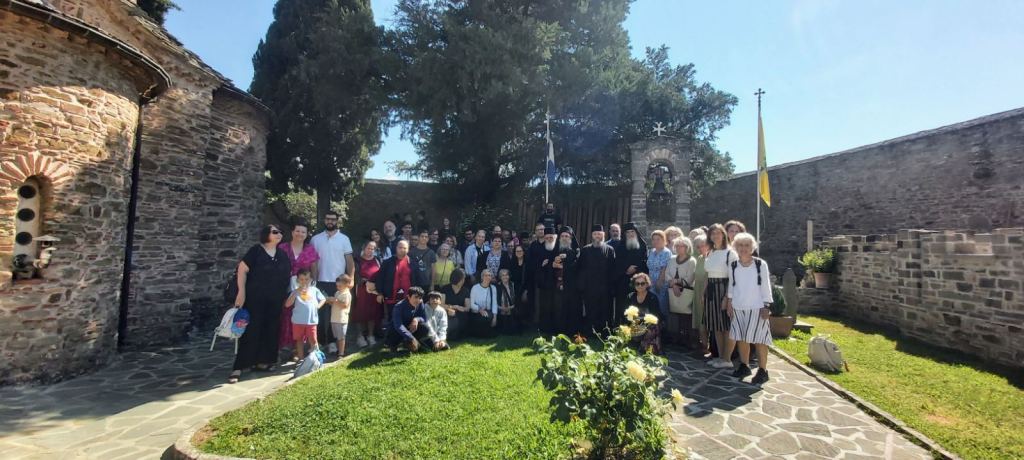
The tone of our pilgrimage through mountainous Halkidiki was set from the very beginning. On the minibus, we listened to a homily about the remembrance of death and the extraordinary faith of a bereaved mother.
As the preacher recounted it, she had watched all eight of her children perish before her eyes when their boat sank. She arrived as a refugee from Asia Minor entirely alone: a widow, now without her children. Yet she continued to thank the Lord. Her joy rested in the hope of being reunited with them in the life to come. They had been His children before they were hers, and she trusted that He knew best what was good for them.
We could only approach such suffering with reverence. Her thanksgiving did not diminish her loss; it revealed her trust in the Resurrection. Through her story, the remembrance of death became inseparable from the hope of eternal life. This testimony accompanied us to a monastery whose very name speaks of consolation.
On our way there, I also had the blessing to sit next to a lady 90 years old, yet radiant with joy, thanksgiving and unceasing tears for all mankind! She was another widow, from a very young age, left alone with her children for 30 years in a foreign land, yet she never complained once and always thanked Him for His Providence. “He certainly knew better than me what was best for our salvation”, she reassured me!
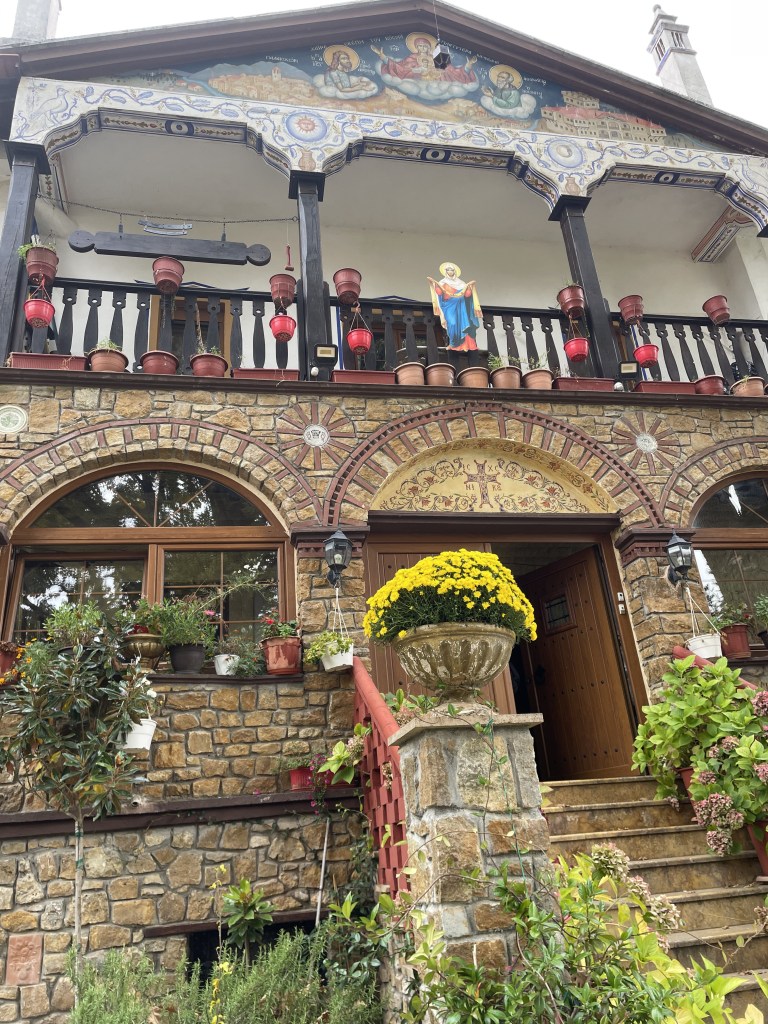
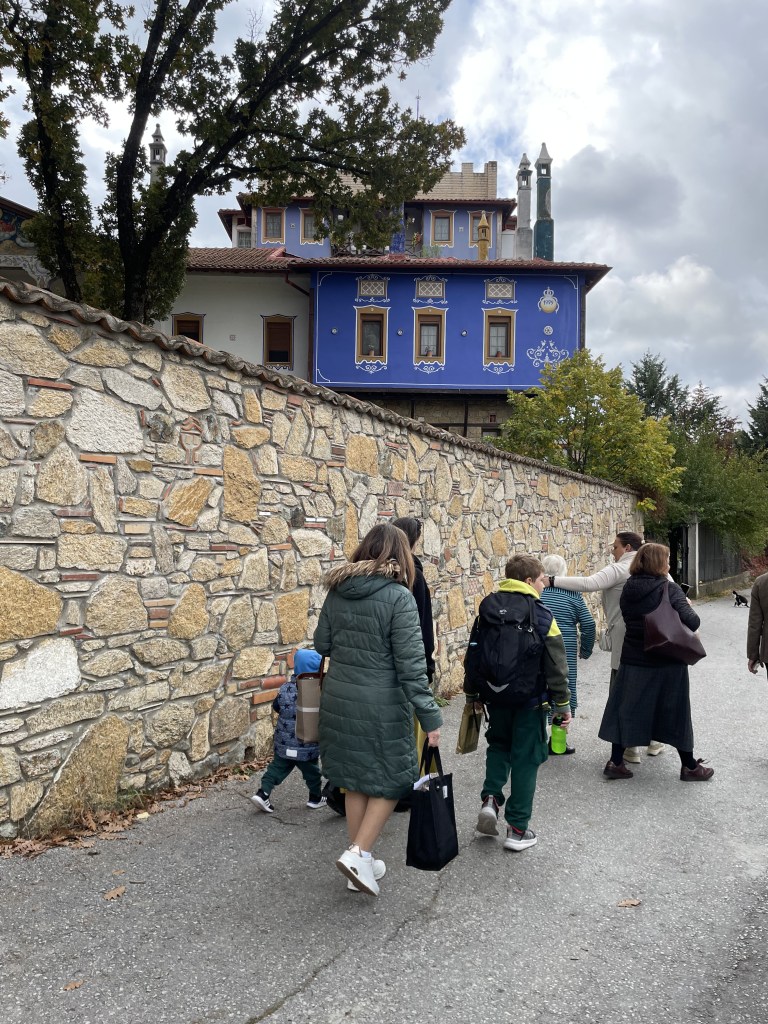
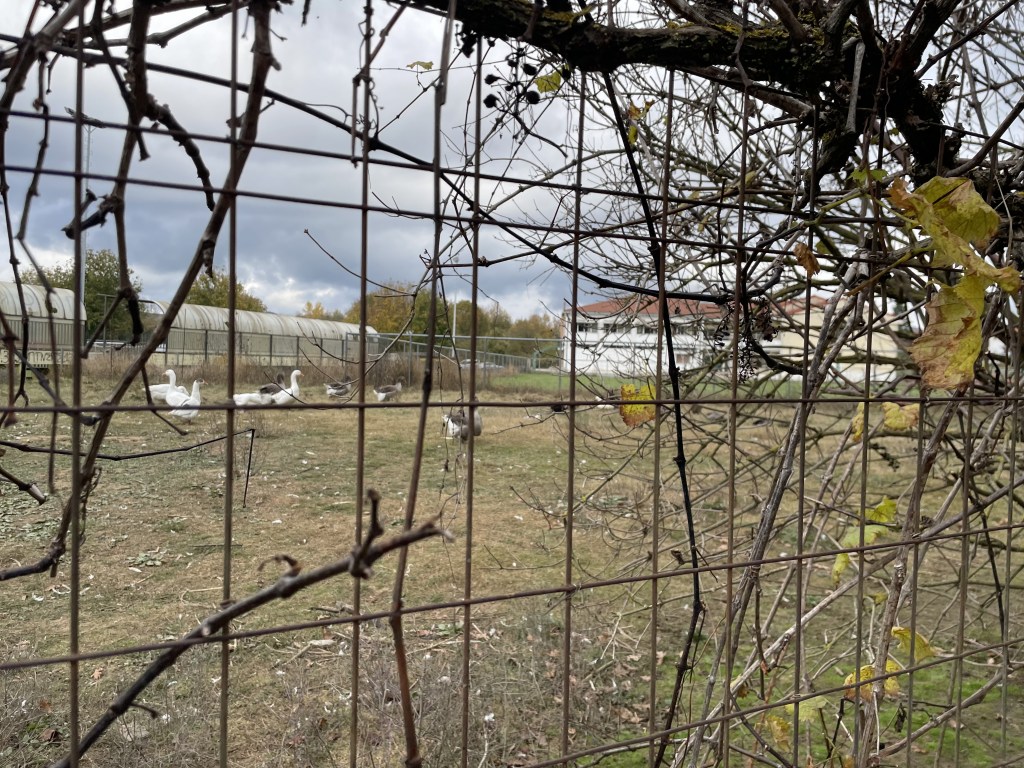
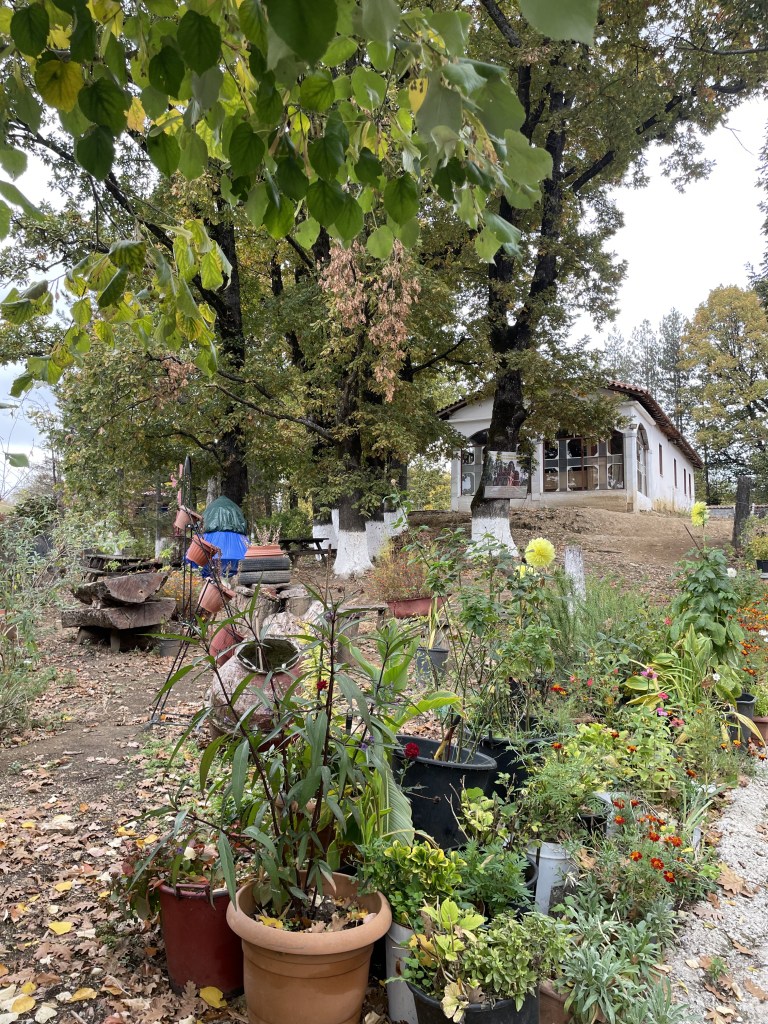
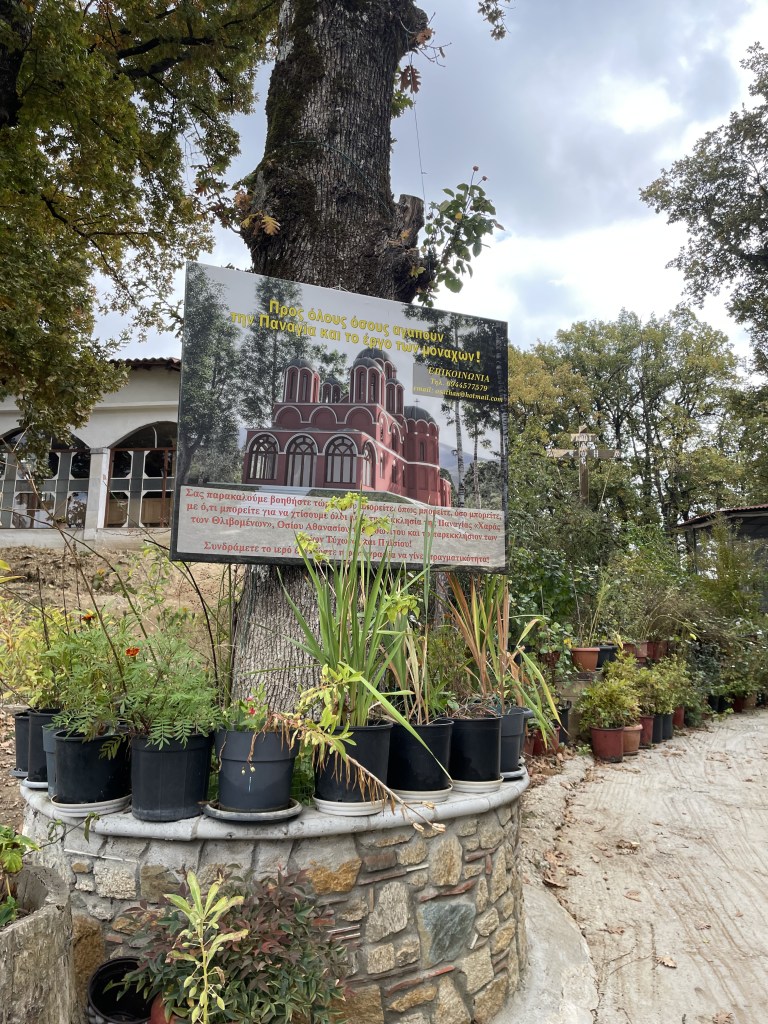
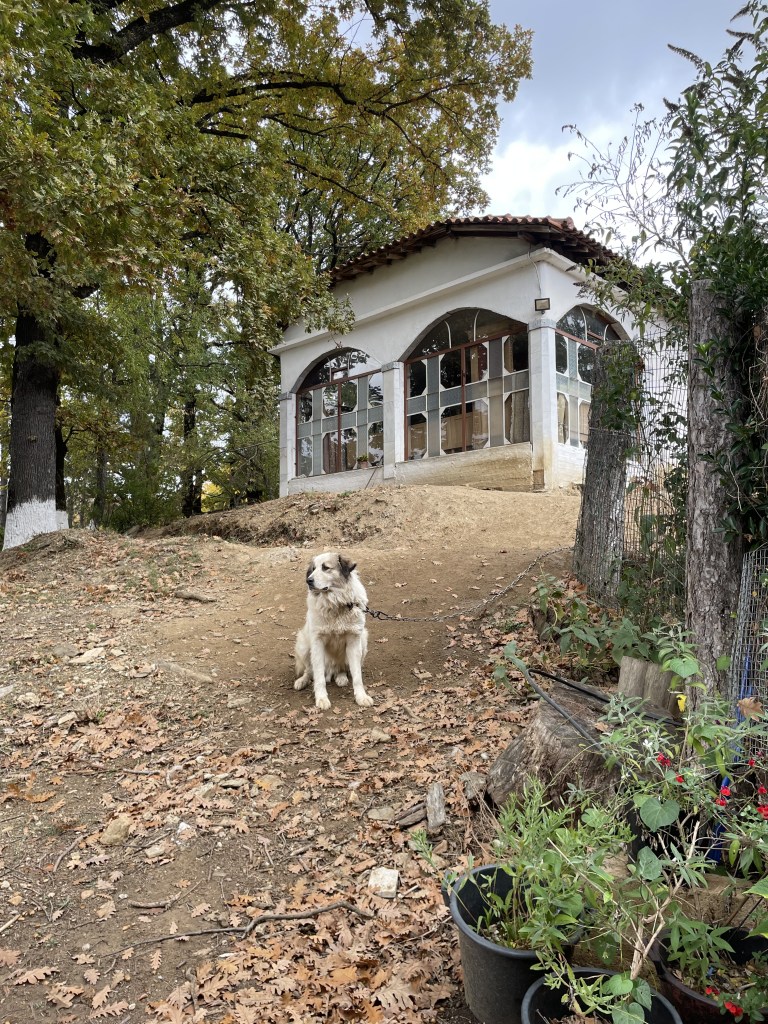
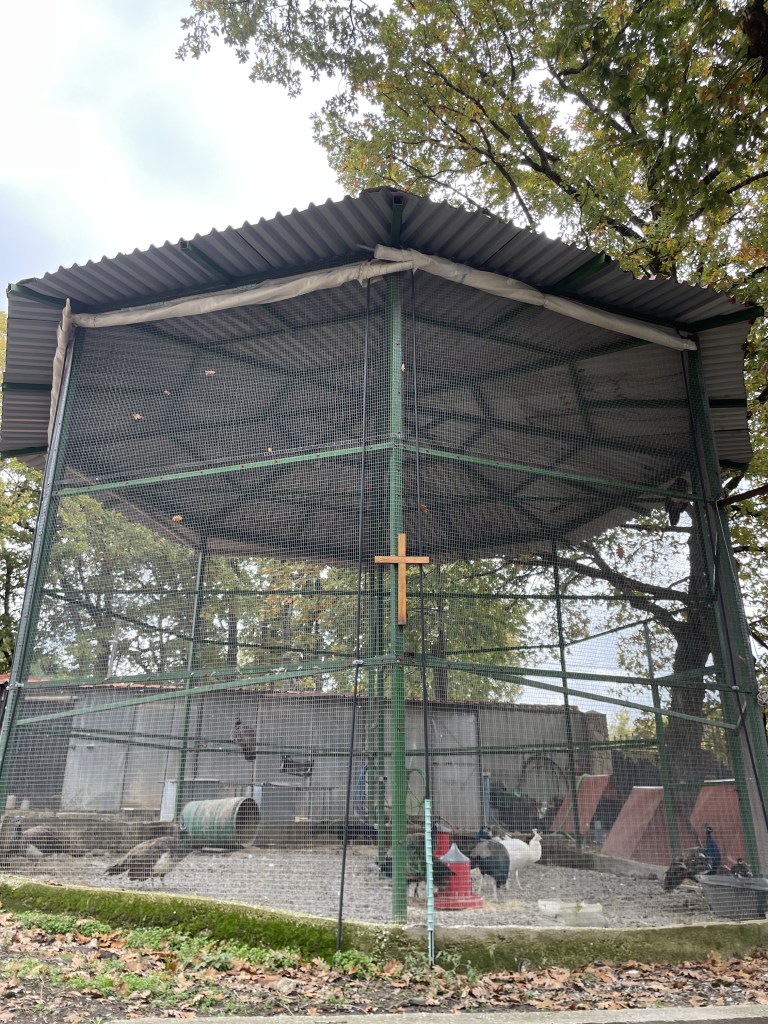
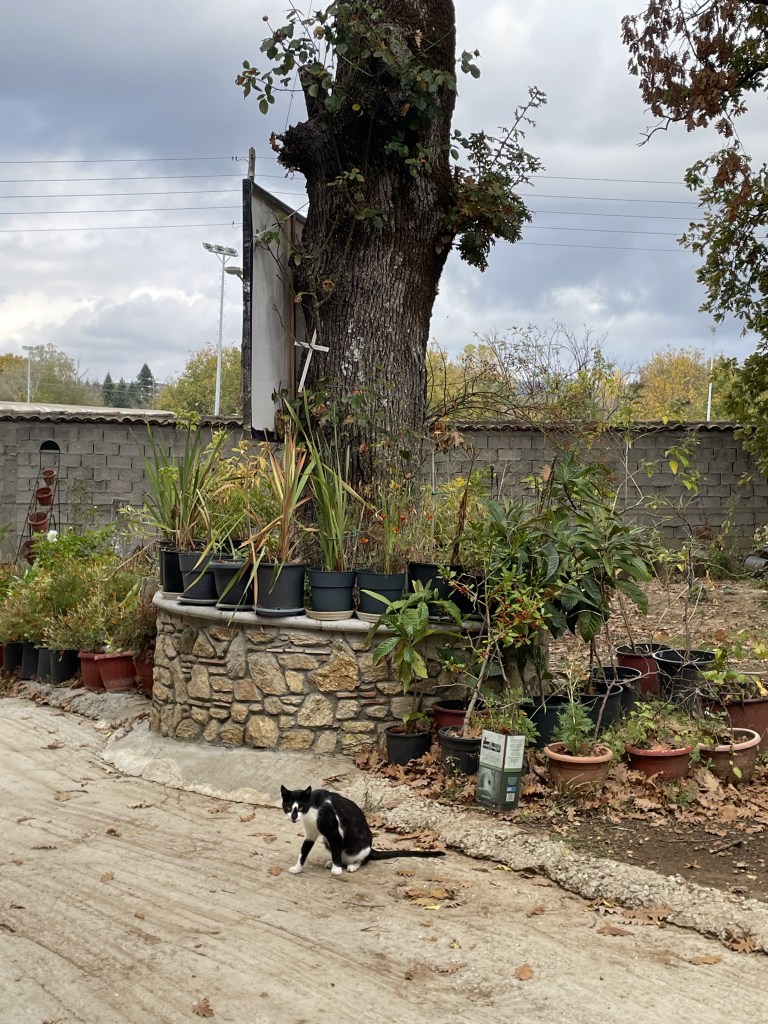
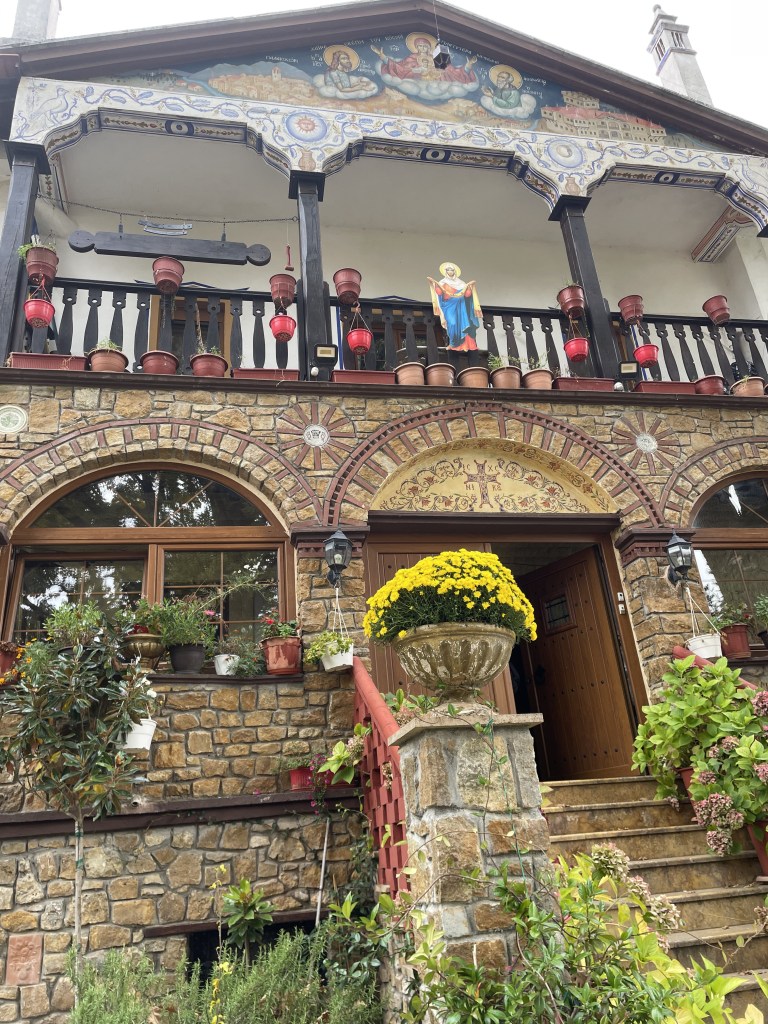
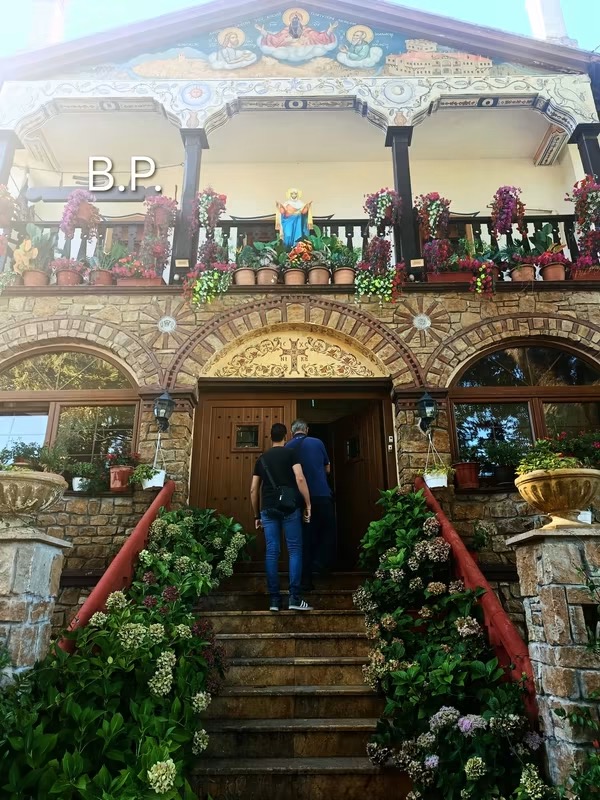
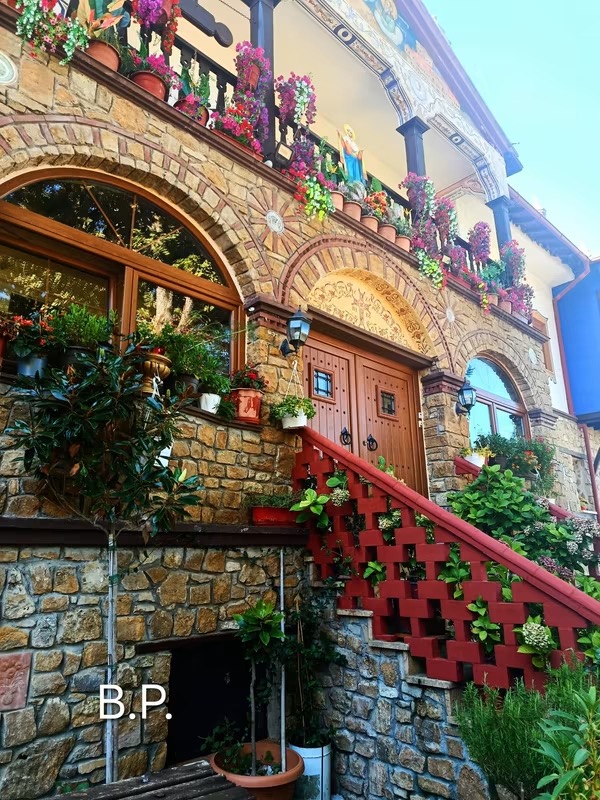
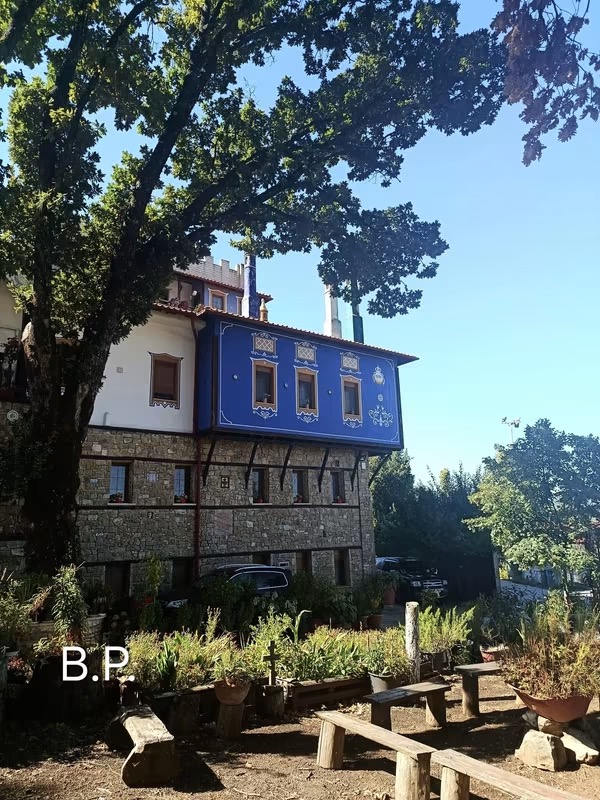
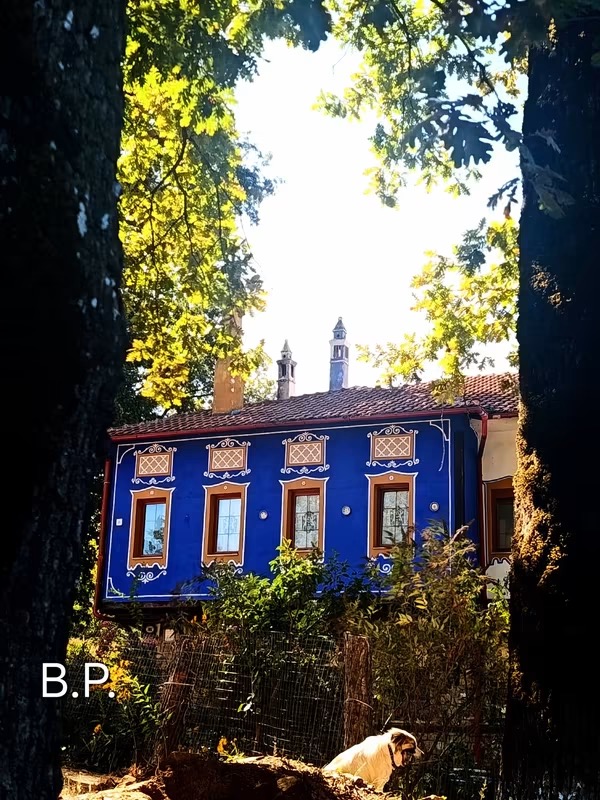
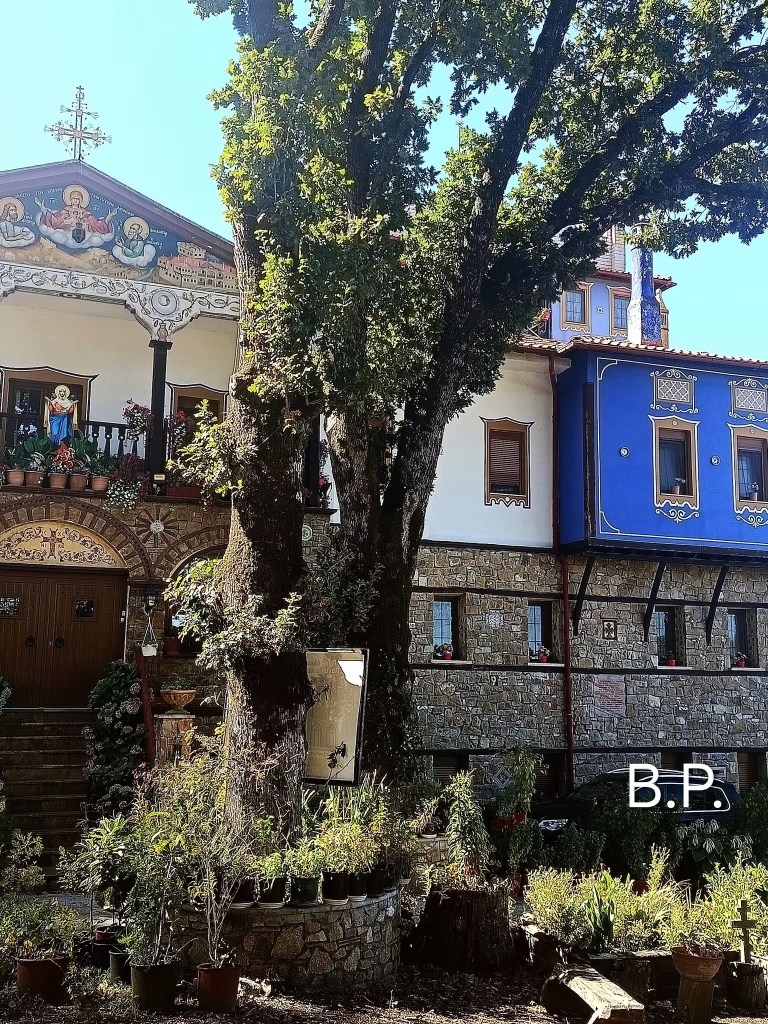
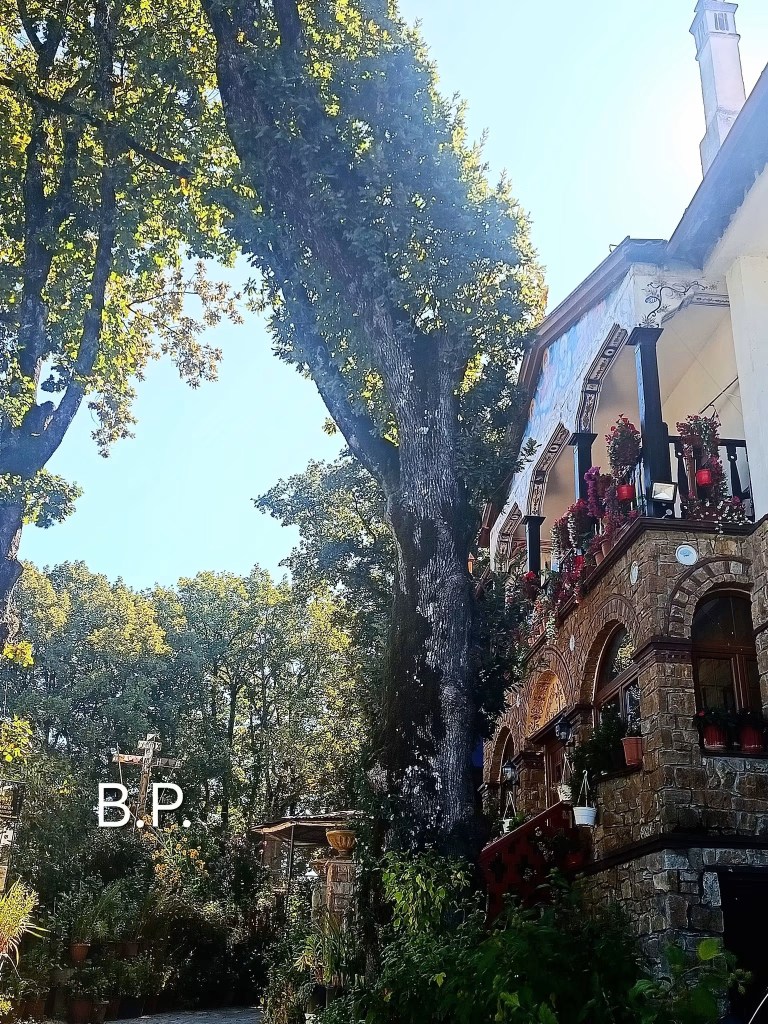
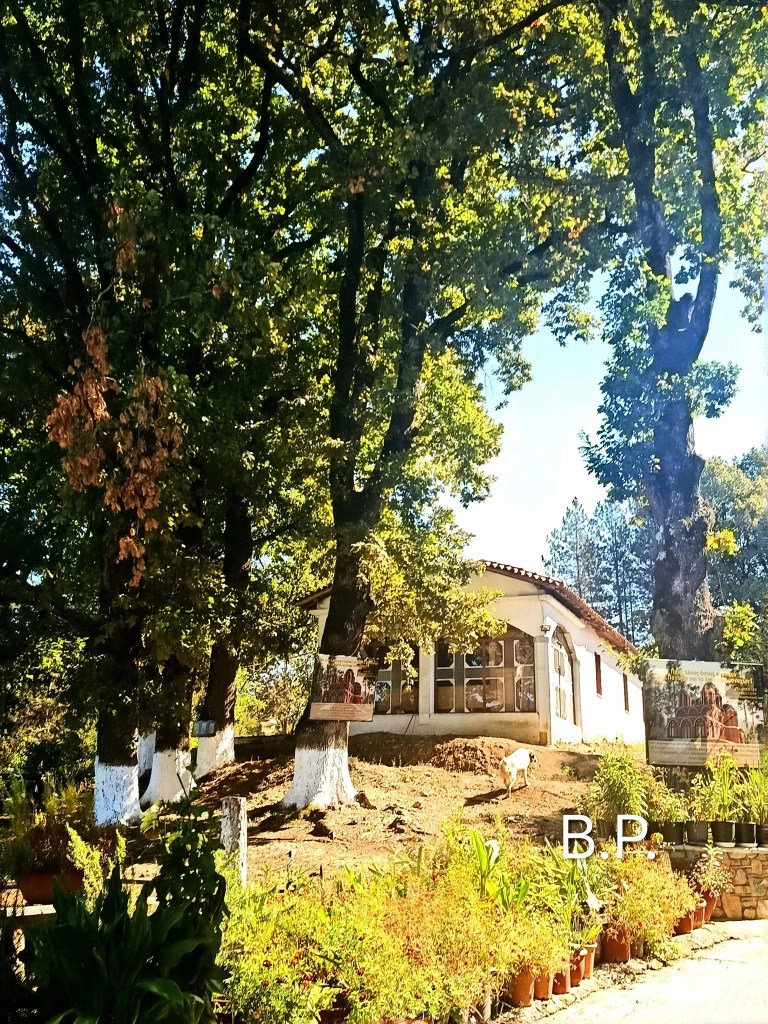
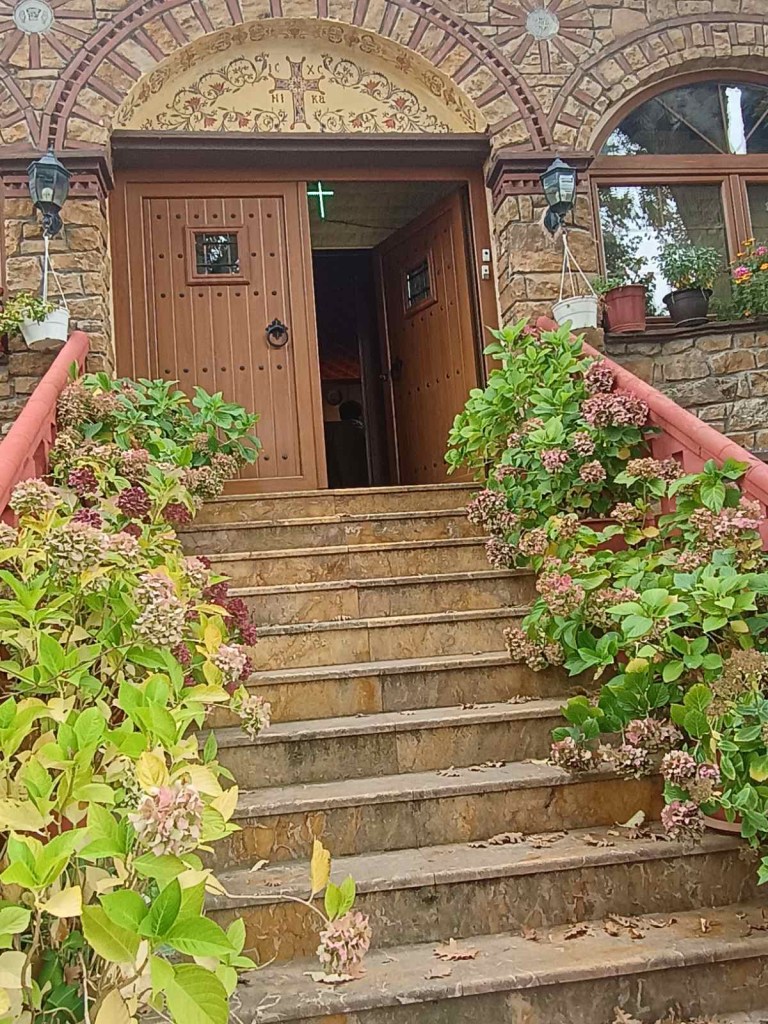
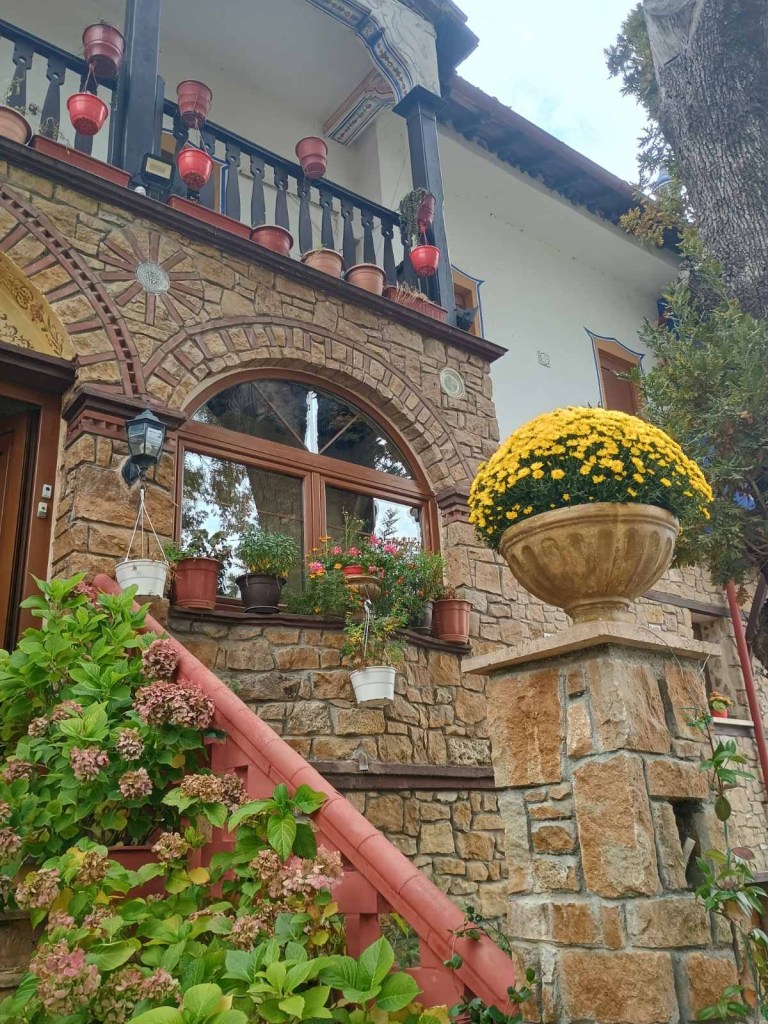
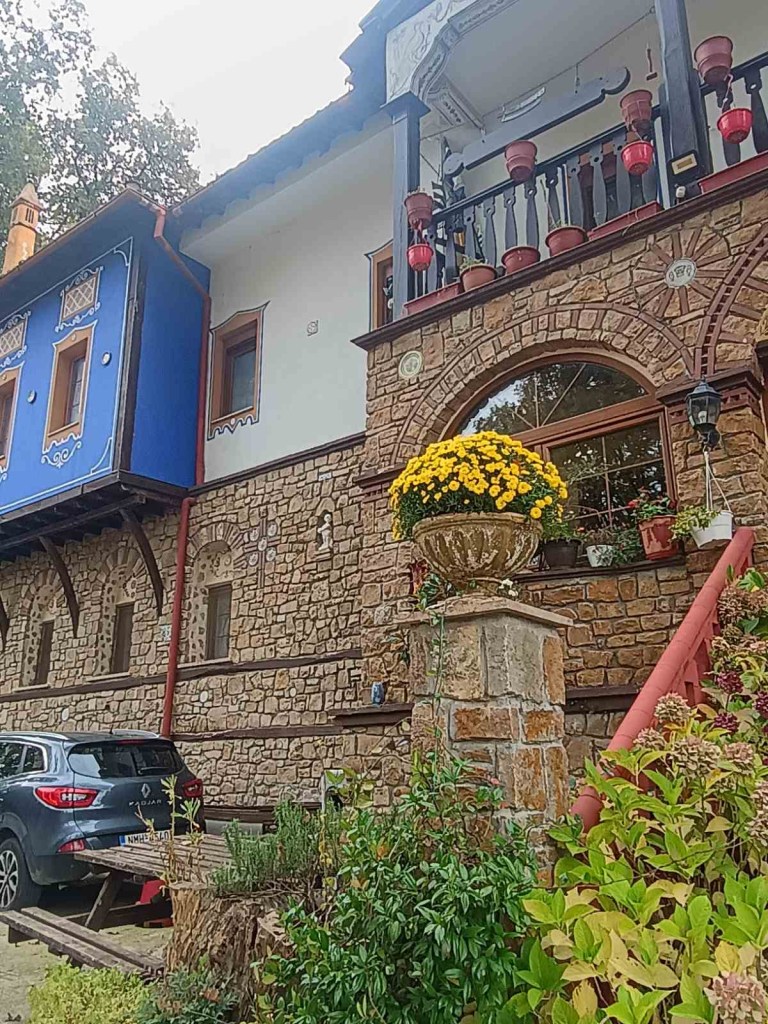
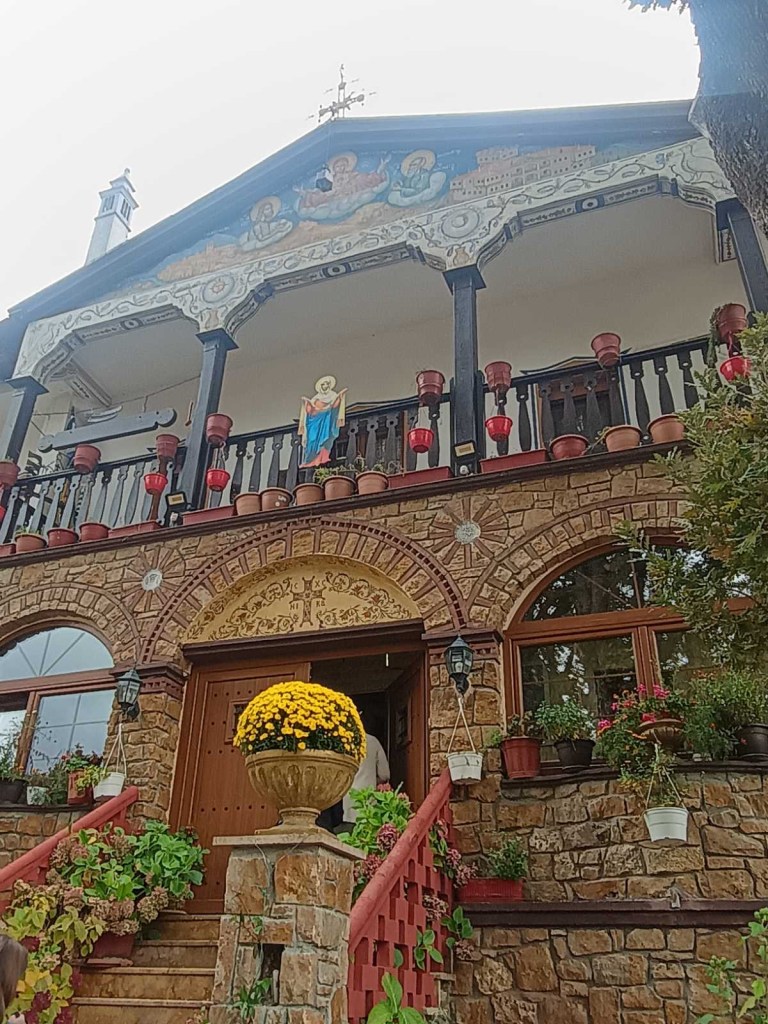
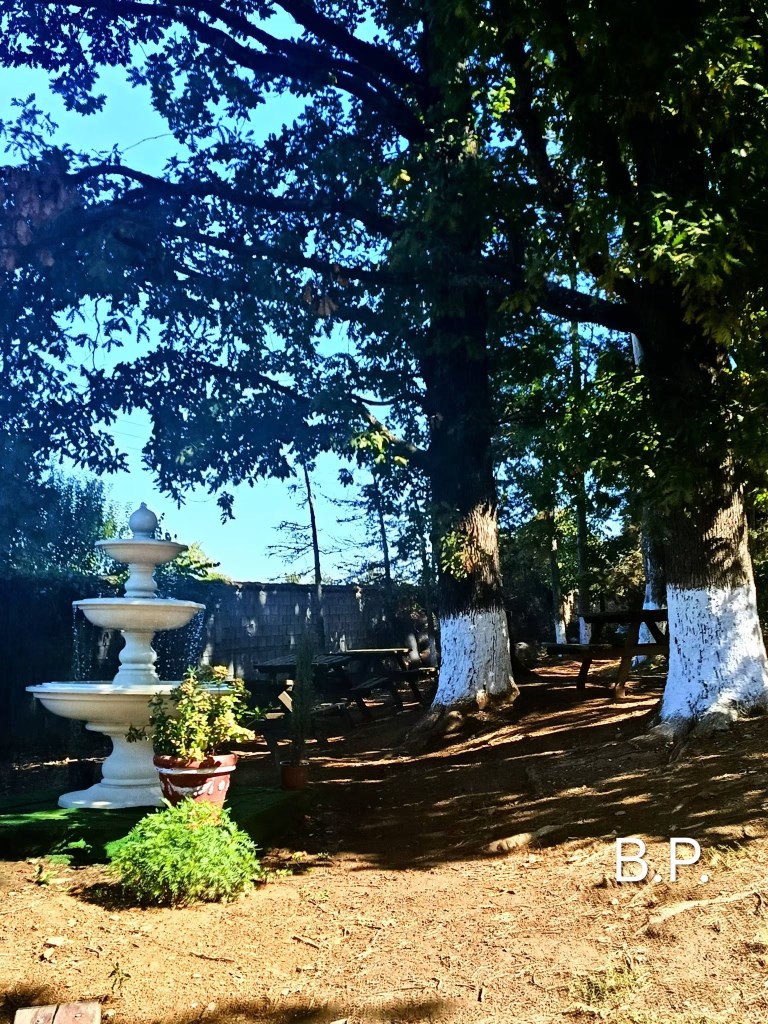
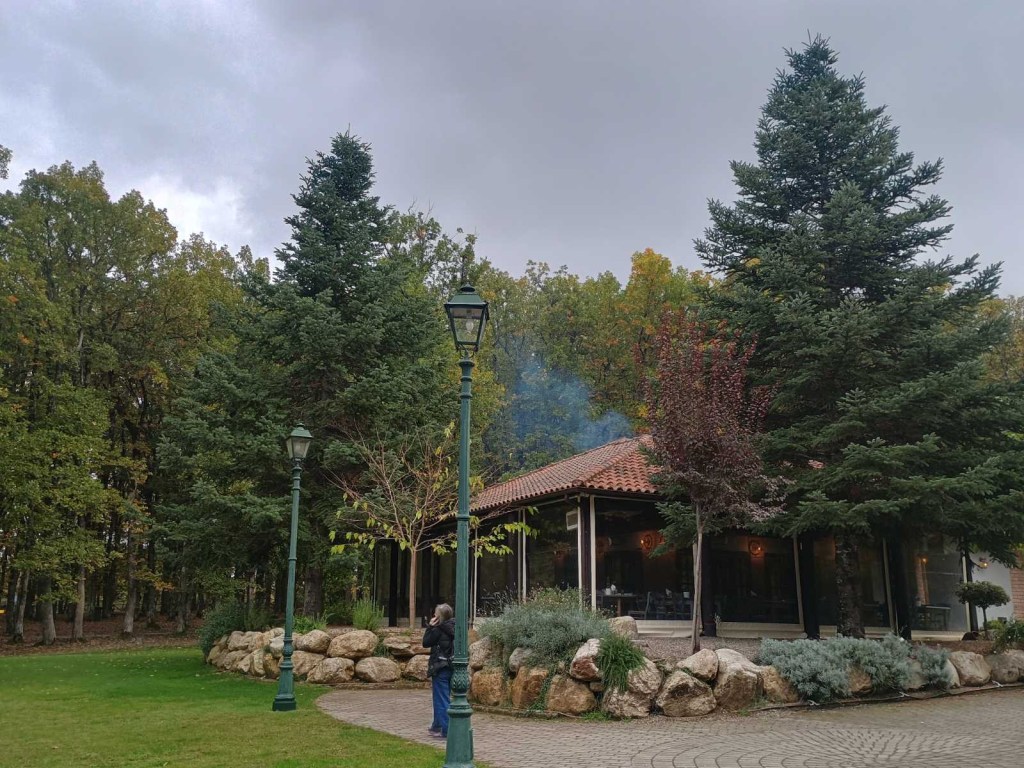
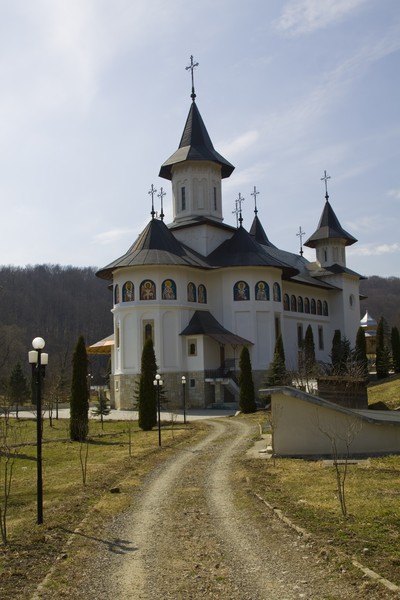
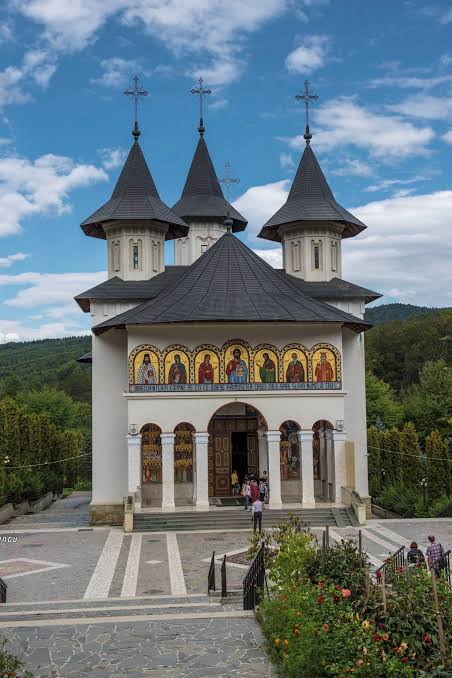
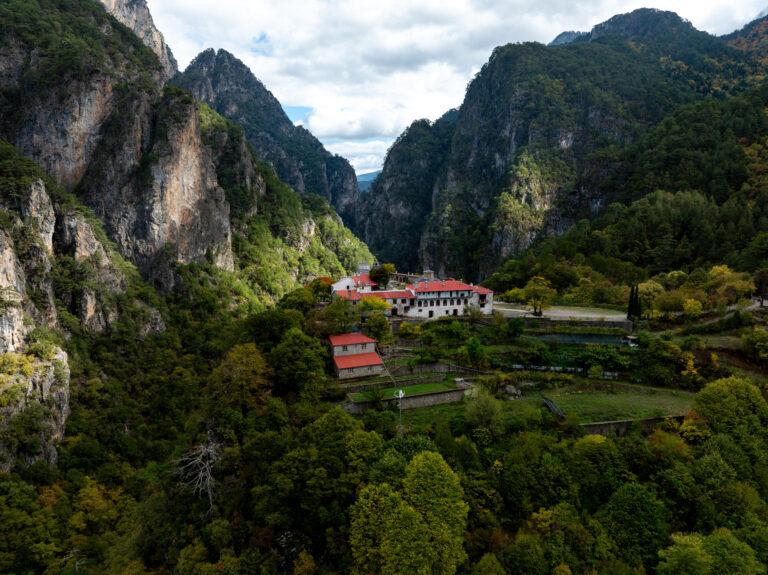
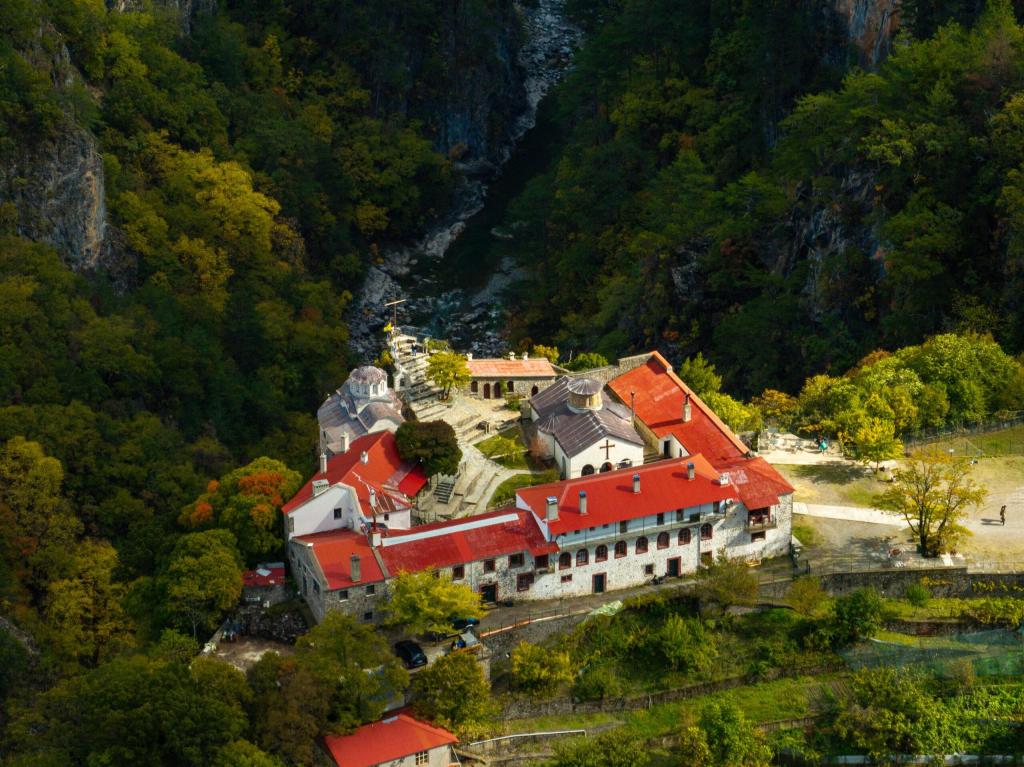
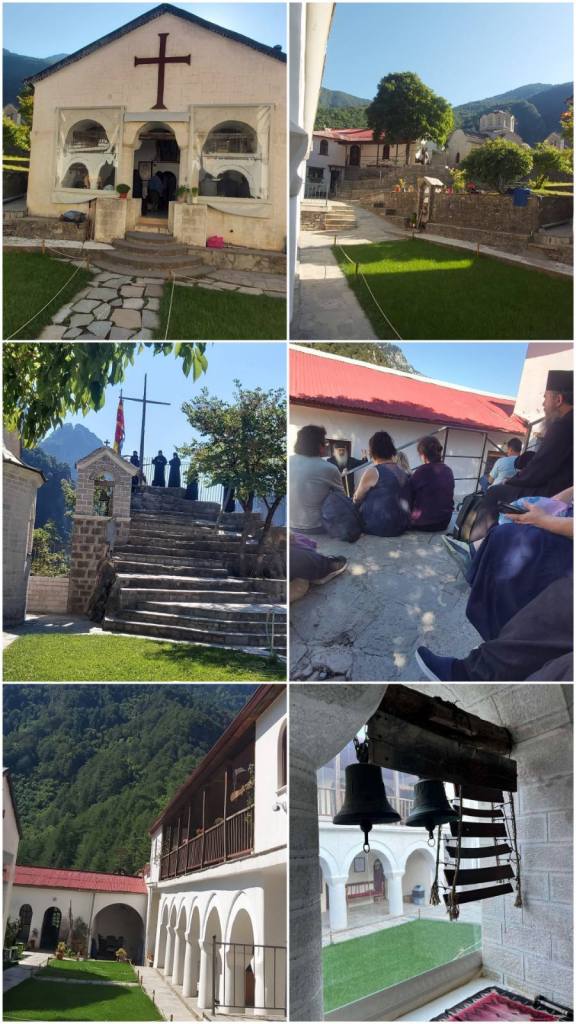
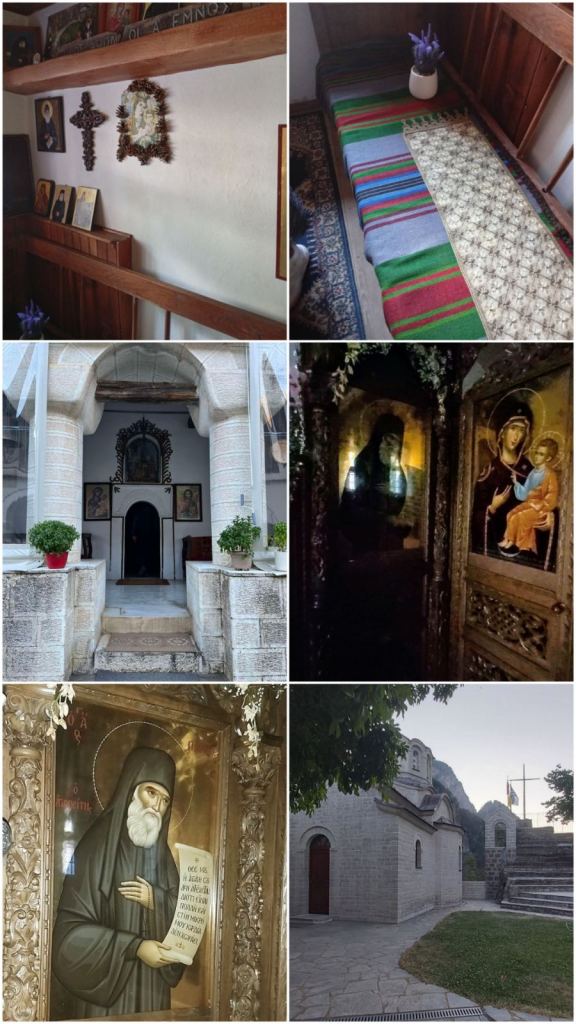
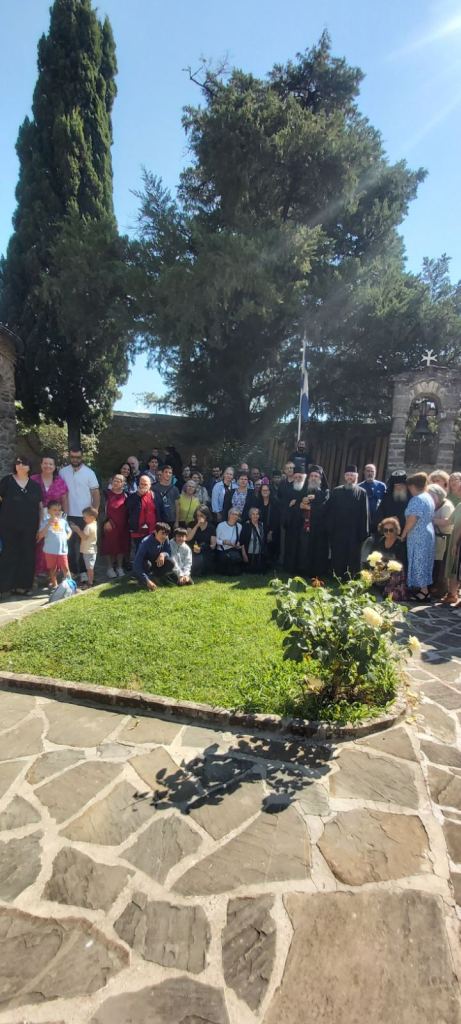
When we arrived, we were struck by the beauty of all the surrounding nature and that of the monastery buildings!Even the monastery animals greeted us with joy and love!
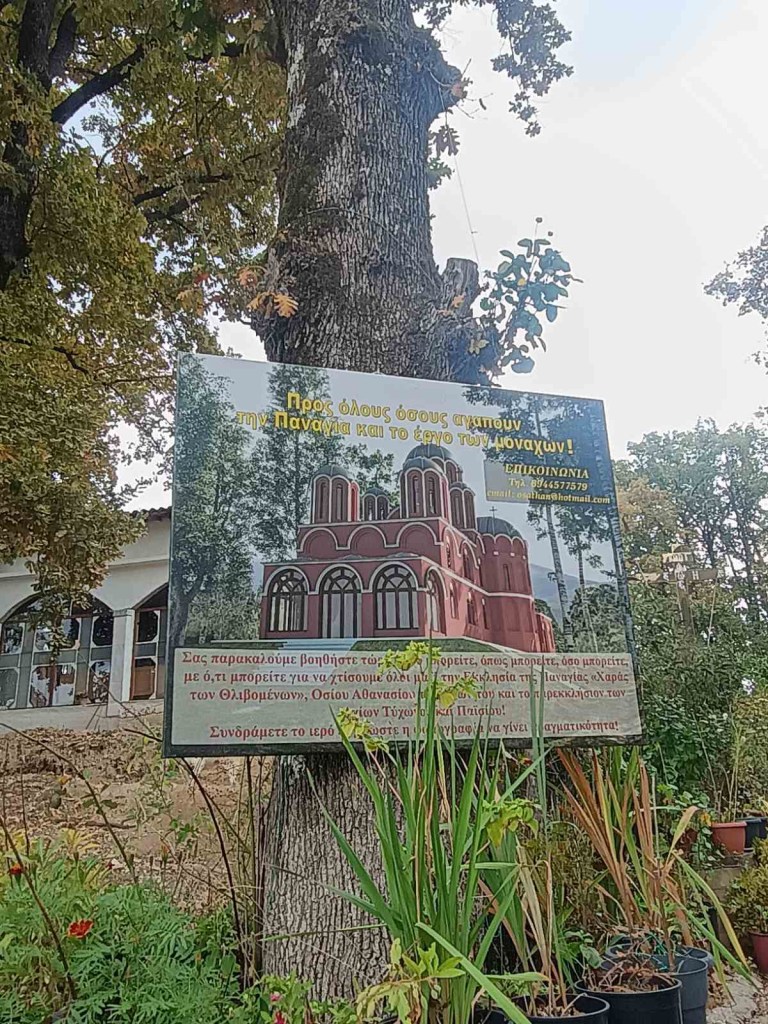
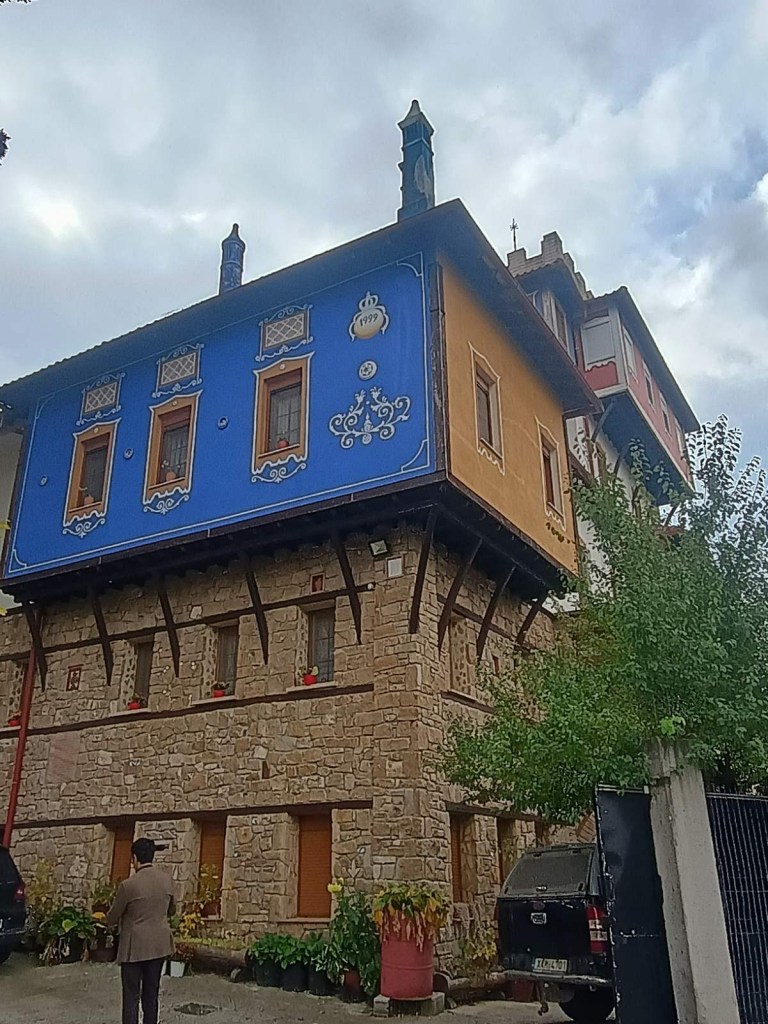
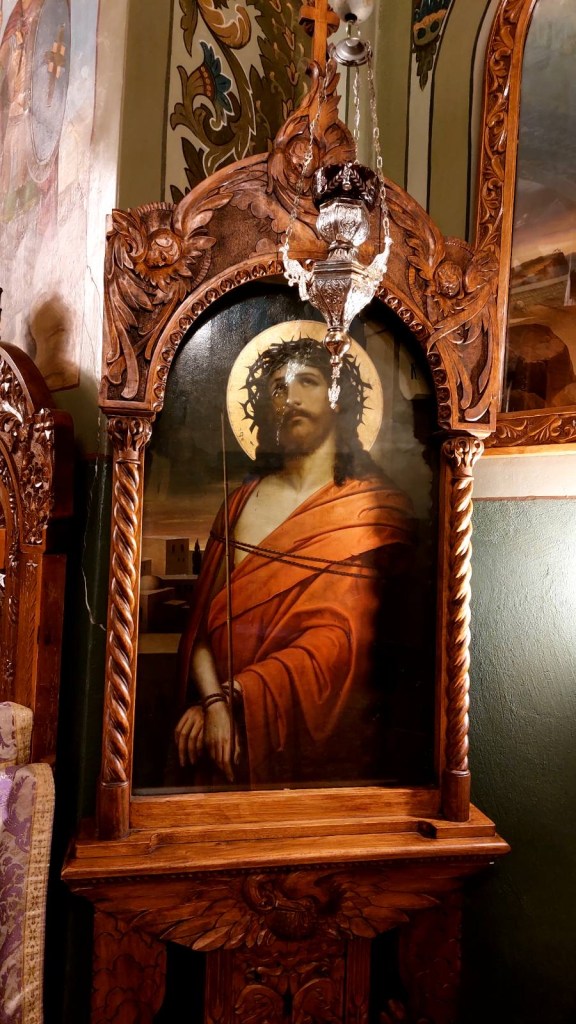
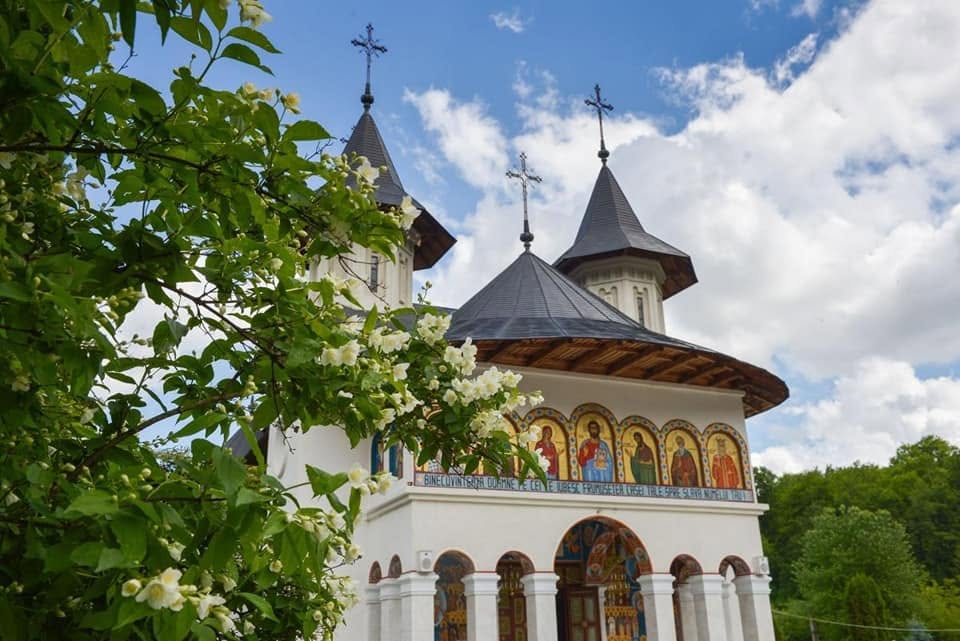
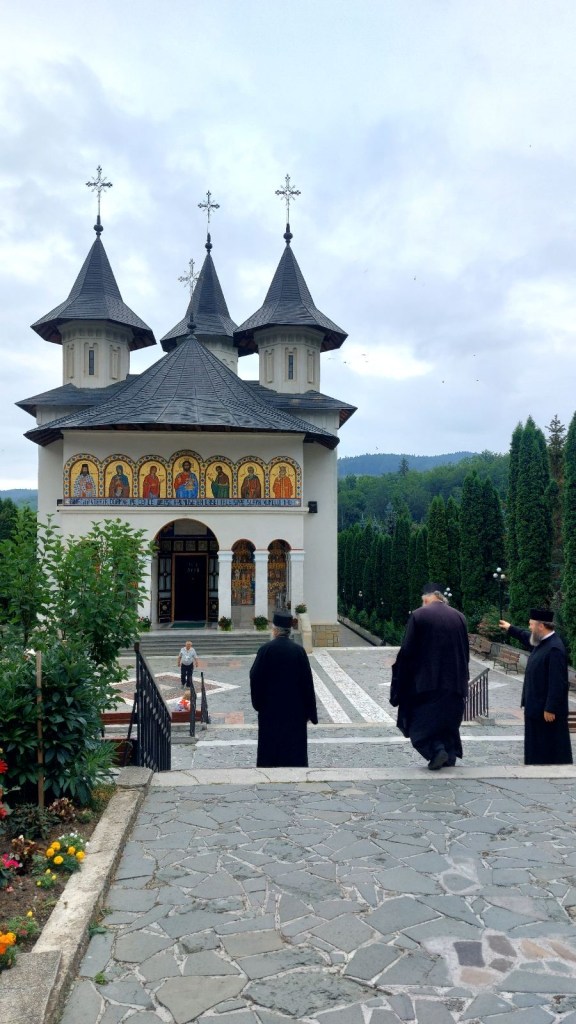
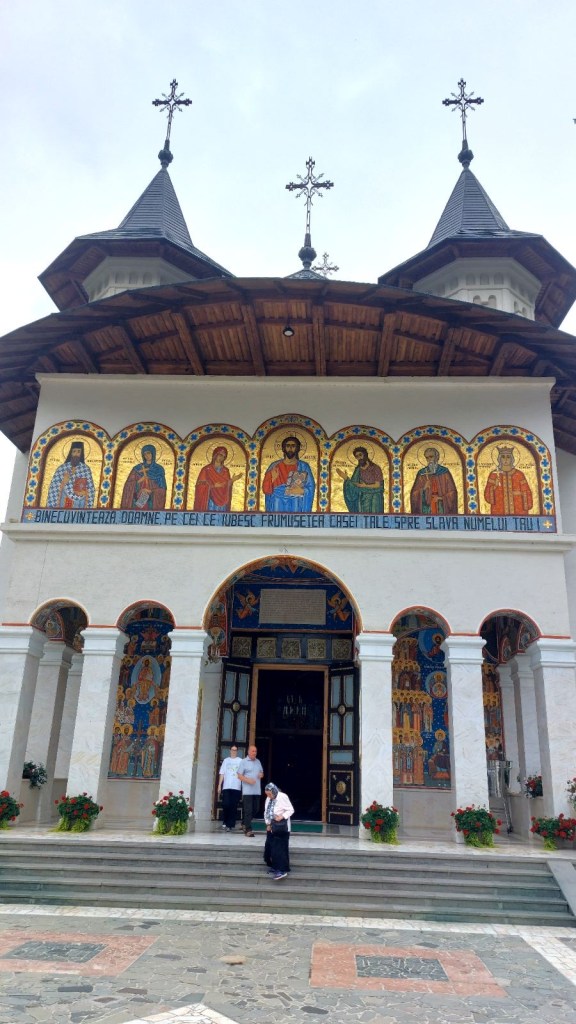
“The Monastic House of the Virgin Mary”, “The Joy of All Who Sorrow” stands at the edge of Palaiochori, near Arnaia, beside the road towards Megali Panagia. Founded in 1999 by Archimandrite Ignatios and his brotherhood, this men’s monastery grew around an existing chapel dedicated to Saint Athanasius of Athos, whose feast it celebrates on 5 July.
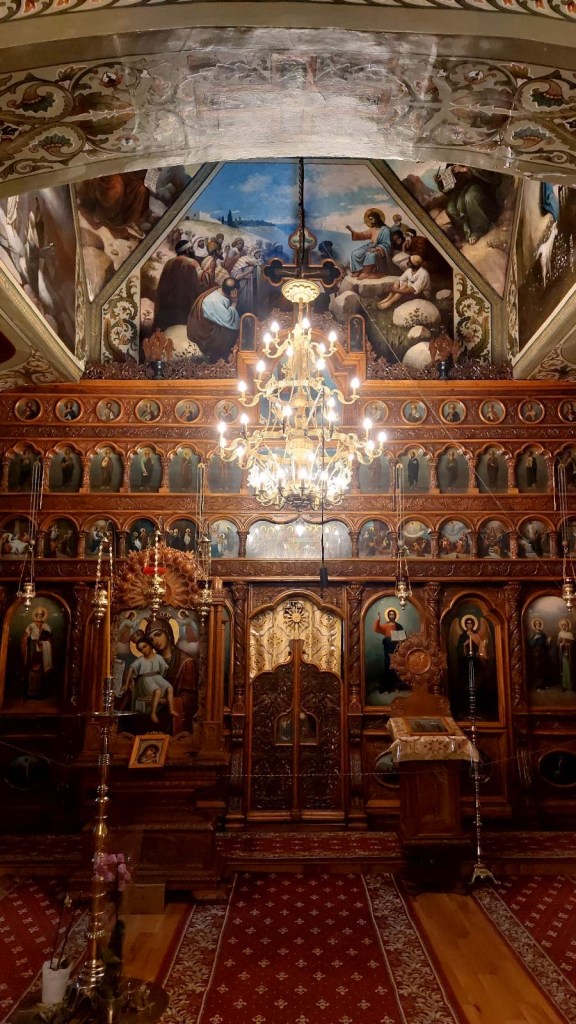
The Monastery and Its Icons
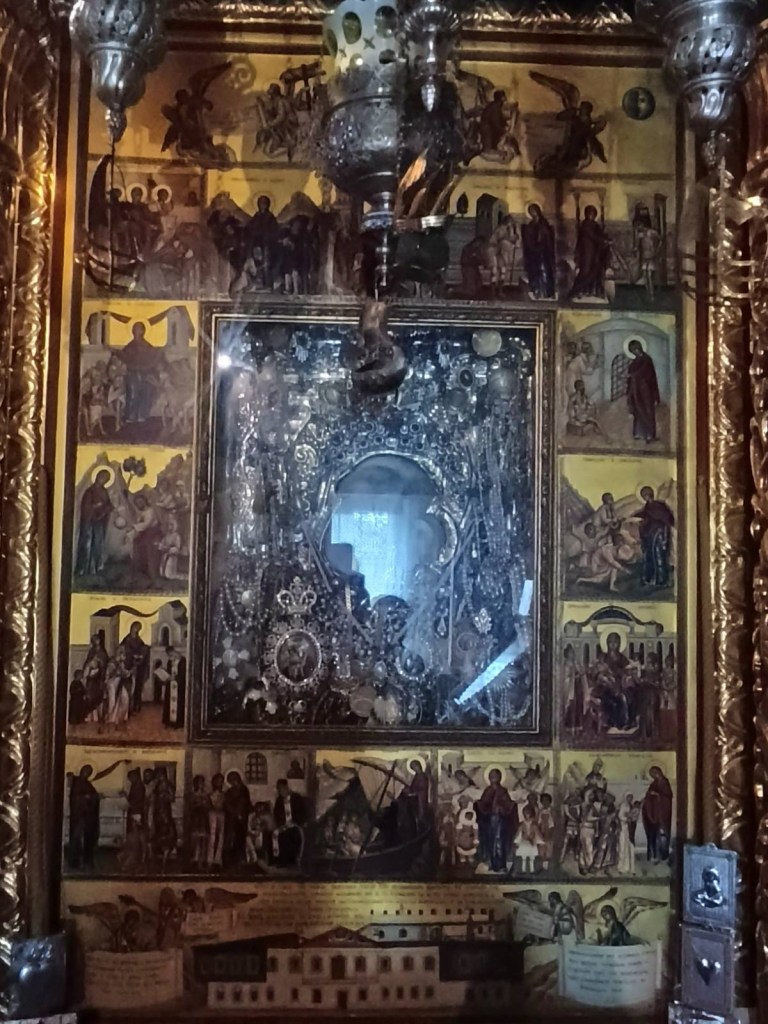
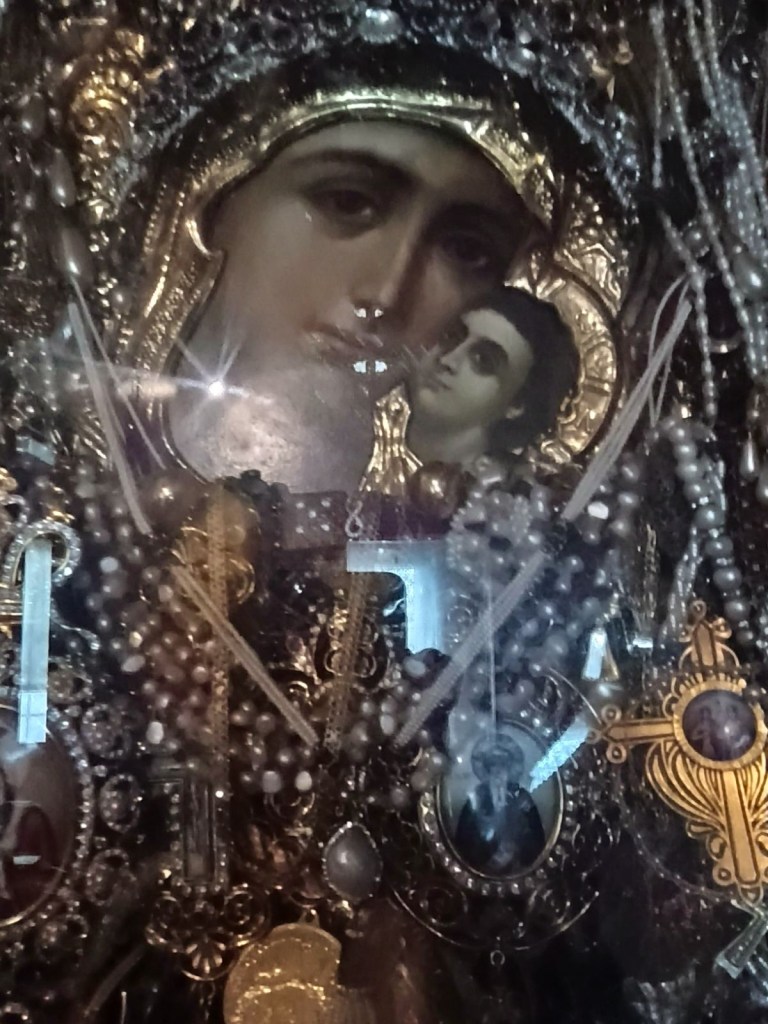
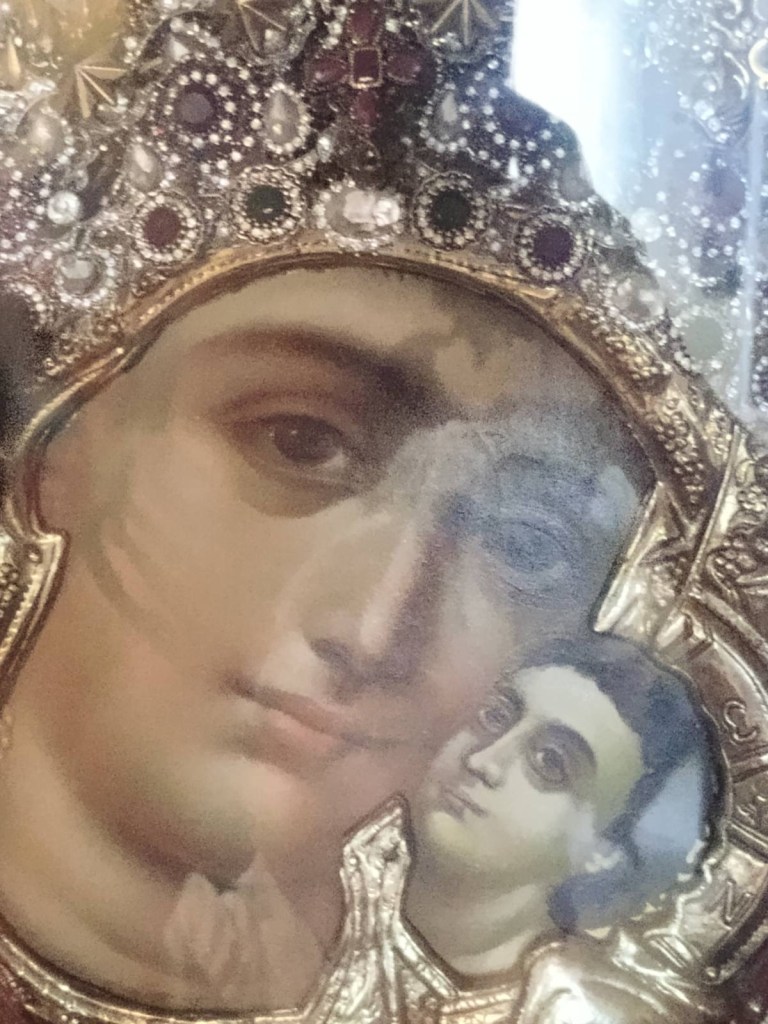
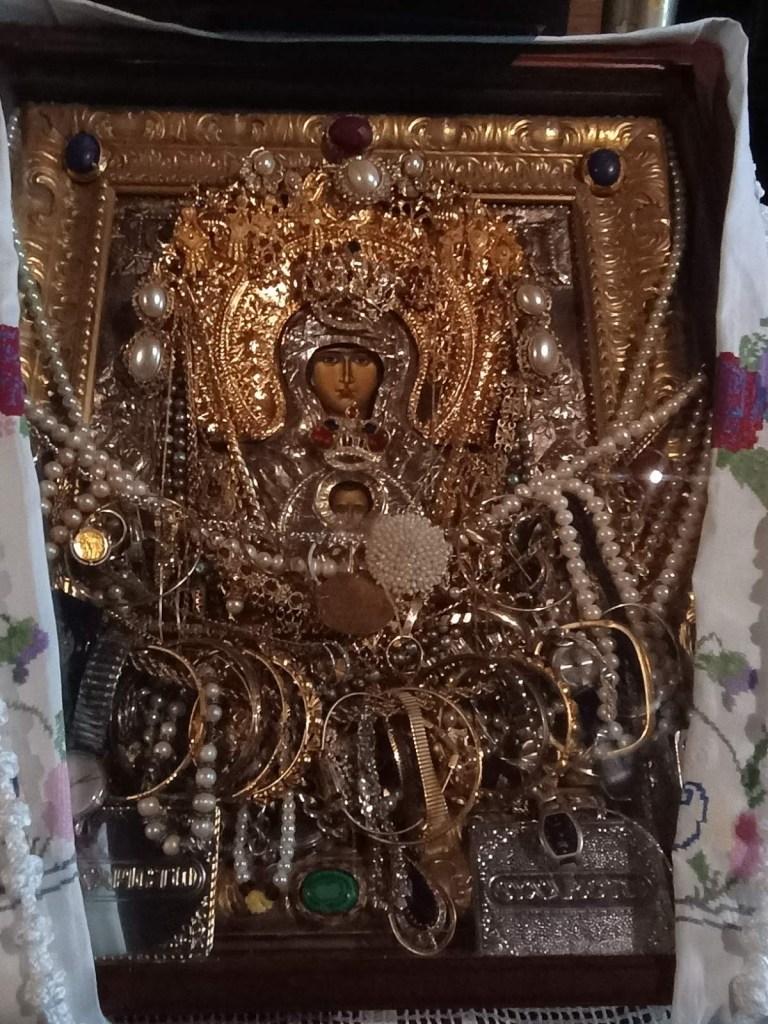
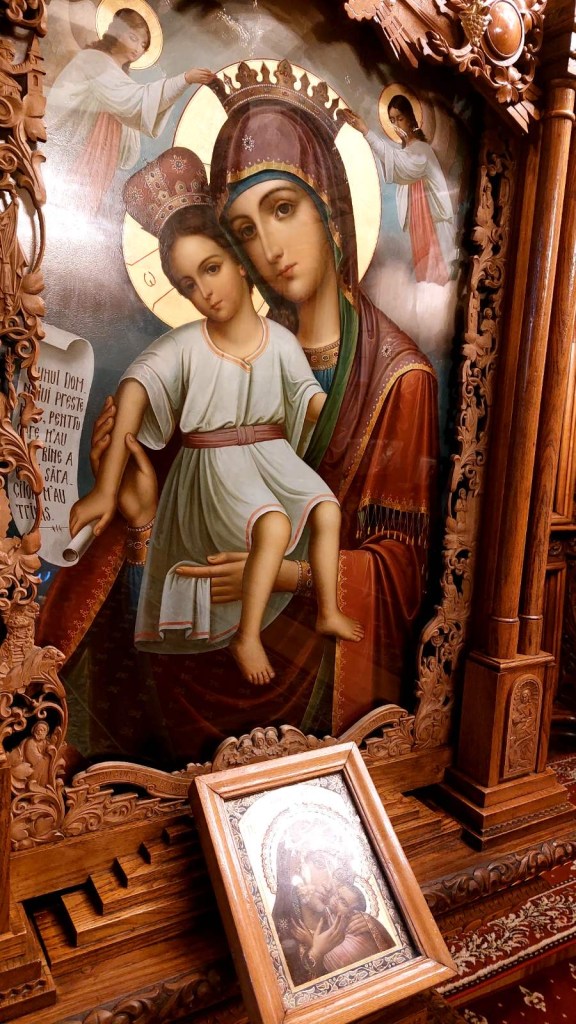
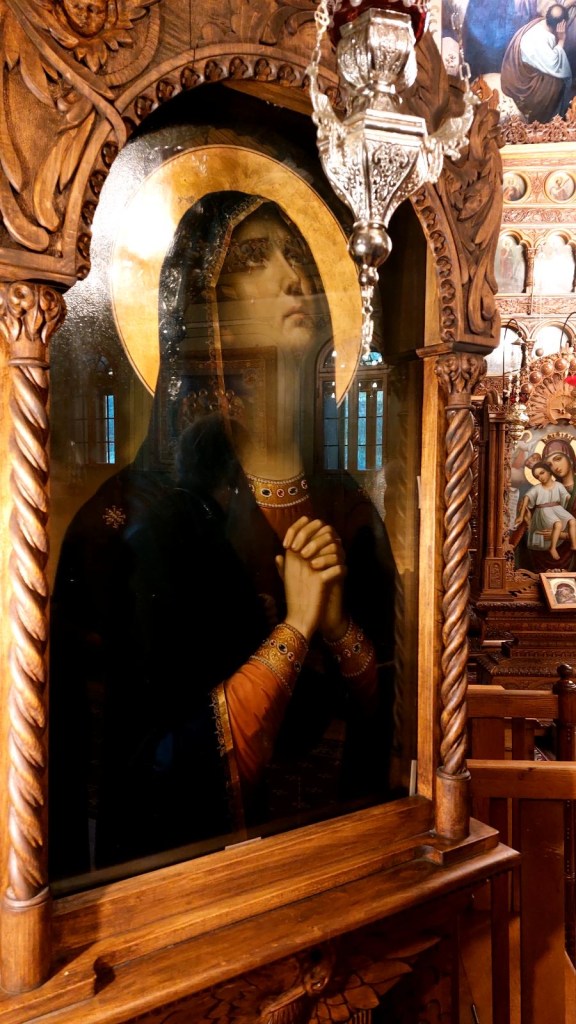
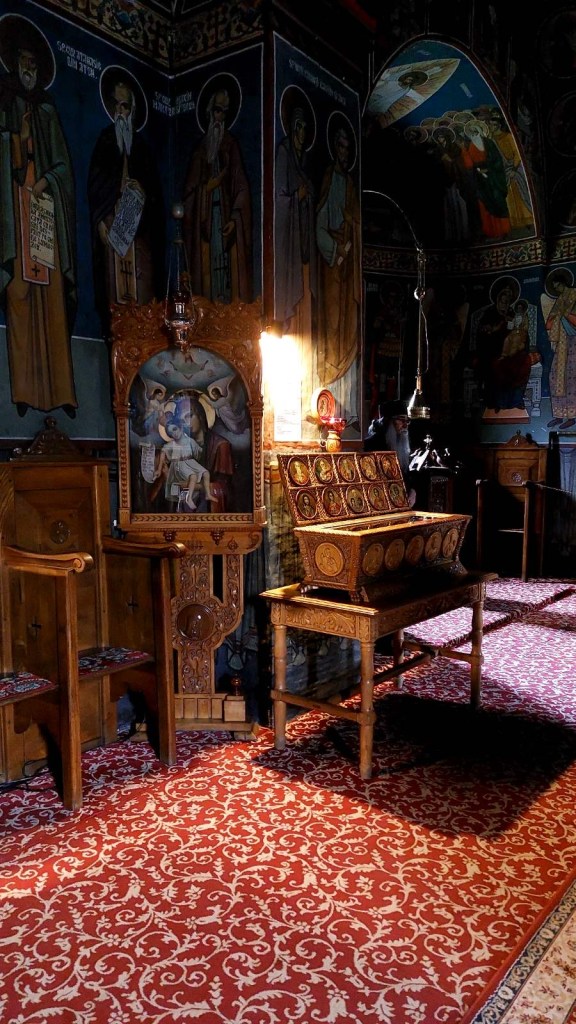
Three icons of the Mother of God are treasured here as wonderworking: the ‘main’ two icons are the Joy of All Who Sorrow and the Inexhaustible Cup. Their local celebrations take place on the Sunday of the Myrrh-Bearers, with a vigil, and on 18 May respectively. Bright Friday brings the Divine Liturgy, a procession with the icon, and the blessing of the gardens. And there is a third one of the Theotokos that is always fragrant and wonderworking too.
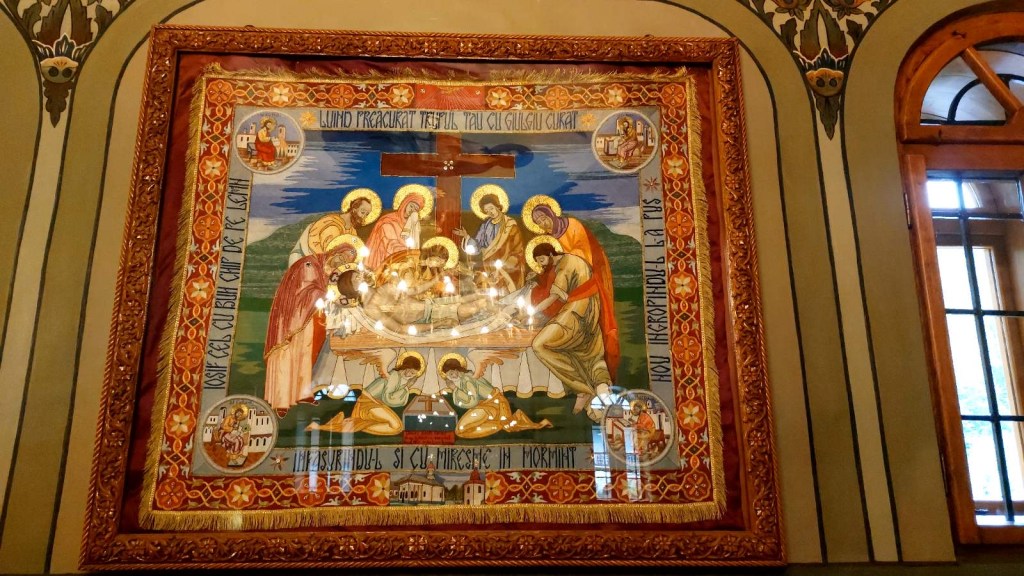
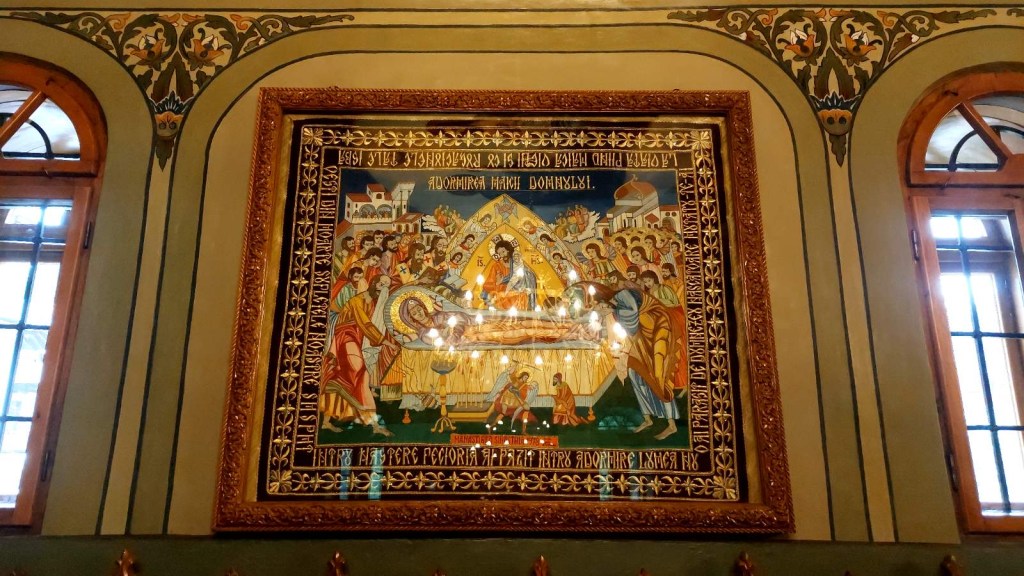
Joy of All Who SorrowVirgin Mary “The Inexhaustible Chalice” (Greek: Παναγία «το Ακένωτον Ποτήριον»)
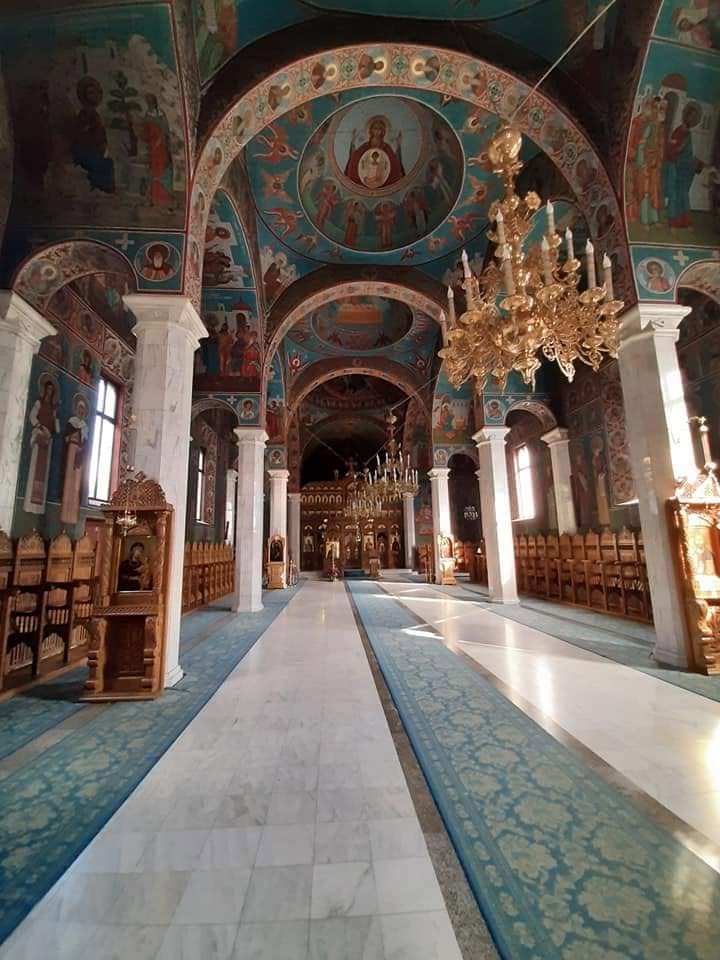
In the traditional iconography of The Joy of All Who Sorrow, the Mother of God is surrounded by people in distress, with angels ministering among them. Having stood beside her Son’s Cross, she knows the suffering of love. Her title invites us to bring our grief to her, even before we can find words to explain it. Consolation can begin with the knowledge that our sorrow has been heard and that we are held in prayer.
The Inexhaustible Cup depicts the Mother of God with her hands raised in prayer and the Christ Child standing in a chalice before her. Its Eucharistic imagery directs us to Christ, who gives Himself for the life of the world. Particularly associated with prayers for those suffering from addiction and their families, it also speaks to everyone whose strength is exhausted. Our resources may fail; His mercy does not run dry.Above the icon in the monastery, a glass-fronted cabinet held cigarette packets, bottles, and syringes, etc., left by people who had found freedom from addiction. Offered in thanksgiving to the Mother of God, these tamata—votive offerings—bore witness to their healing.
The Four Ds
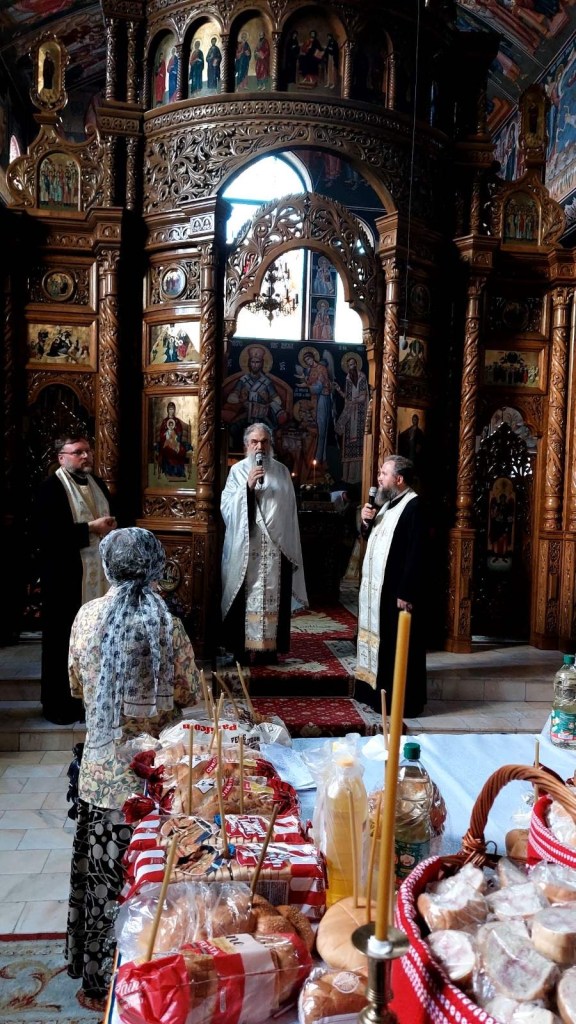
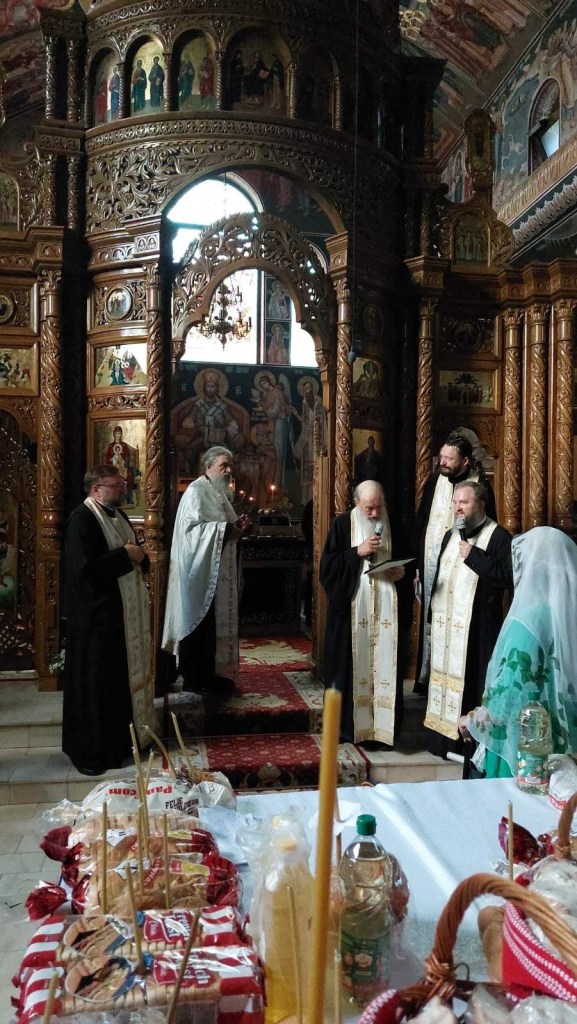
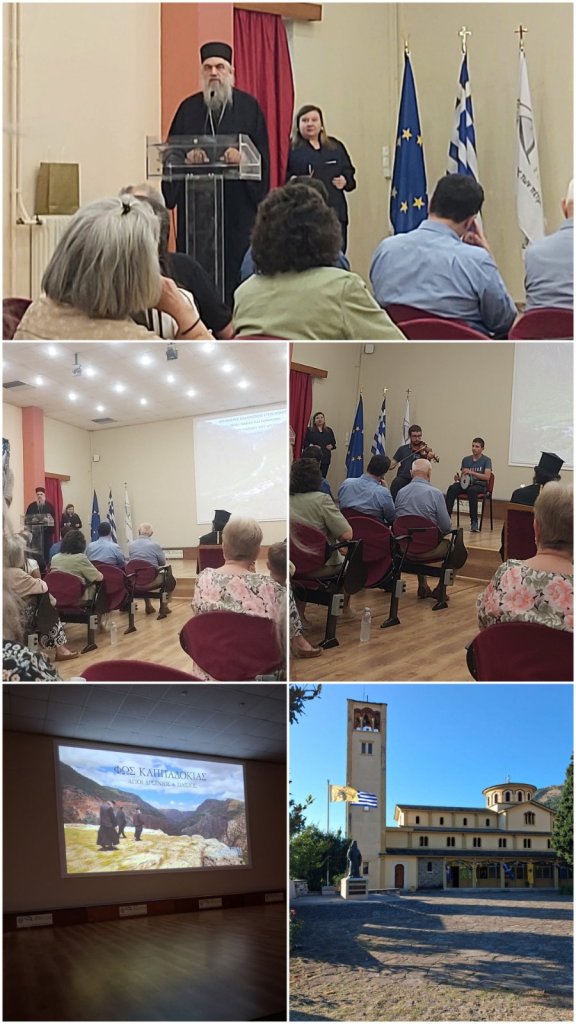
Coffee was served, and the monastery Gerondas welcomed us. We were particularly struck by his words urging us to never cease saying the Jesus prayer all the time and cautioning us against the 4 Ds! 4 D-named dangers to the heart: Disappointment, Doubt, Discouragement, and Despair. How Disappointment wounds our hopes; Doubt questions whether God hears or cares; Discouragement weakens our willingness to persevere; and Despair persuades us that no hope remains.
The two icons offered a quiet answer. Before The Joy of All Who Sorrow, we were invited to bring our wounded expectations into prayer. Before The Inexhaustible Cup, we were reminded that Christ’s help remains available when our courage has failed. We can ask again, accept support, and take the next small step in trust.
The mother in the morning homily returned to mind. We cannot know the hidden course of her grief. What we heard was that she continued to give thanks, entrusting her children to God and hoping to meet them again. Her testimony gave profound expression to the hope towards which the abbot’s words directed us.
Time for Each Soul
But this spiritual father’s love and compassion were without measure. He made time to speak privately with each of us who felt the need, allowing us to share our problems and seek his prayers and guidance.
We left long lists of names, both living and departed. Father asked us to underline those in particular need—a small, tender gesture of attention to the people whose burdens we had brought with us. Alongside those written requests, there was space for personal conversation, for concerns we could only share quietly.
His willingness to listen gave tangible expression to the monastery’s welcome. Disappointment, doubt, discouragement, and despair can isolate us. Being received with compassion and knowing that someone will pray for us can help us persevere.
Our lists also brought us back to the opening homily: we, too, were entrusting those we love to God, holding together our concern for the living and our hope for the departed.
Carrying Hope Home
We returned to our daily lives with their unanswered questions and familiar difficulties, but also with the memory of being heard and the knowledge that others were praying with us.
From the minibus to the monastery, the pilgrimage had directed our hearts towards the Resurrection. The bereaved mother’s faith, the two icons, the abbot’s warning, and his personal care all invited us to entrust ourselves and those we love to Christ.
Mother of God, Joy of All Who Sorrow, bring our grief before your Son.
Mother of God, Inexhaustible Cup, pray for us when our strength runs dry.
We may reach the limits of our strength. Even there, we can turn towards Christ—and find His Mother already praying.
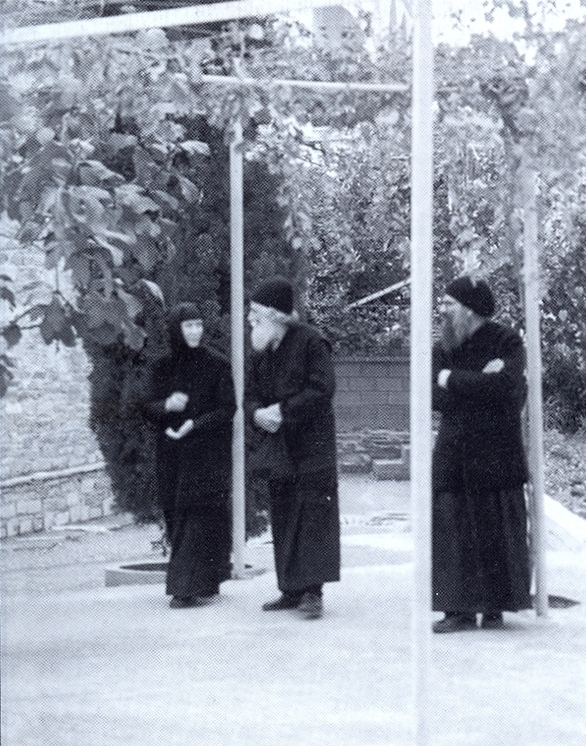
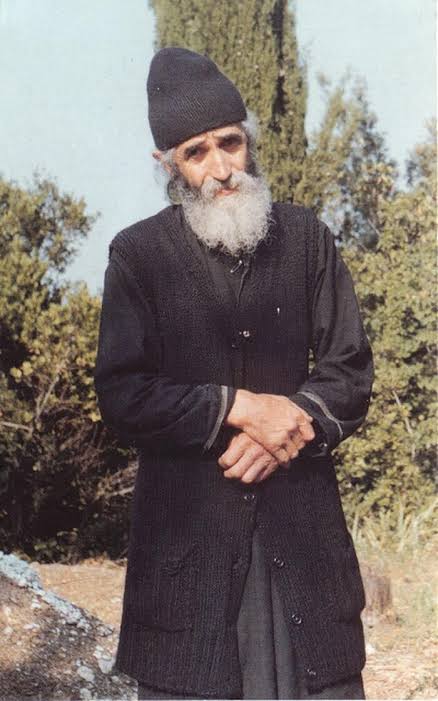
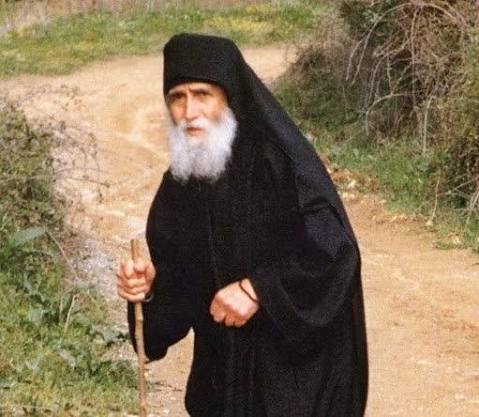
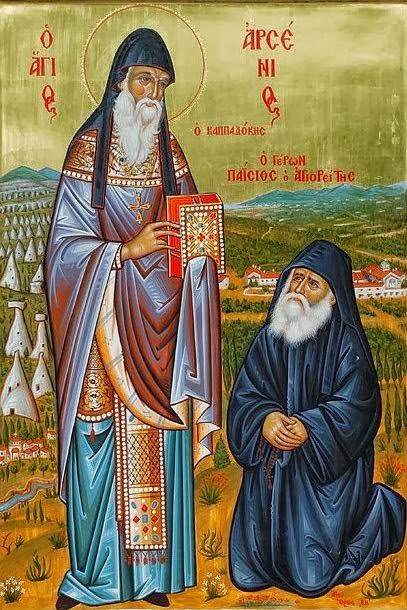
+Gerondissa Euphemia, St. Paisios in the middle and +Gerondas Gregorios, St John the Forerunner monastery, Metamorfosi, Chalkidiki
On the Priest Who Carries Us Until We Find Our Way Home
A Meditation on Priesthood with Father Lev Gillet and Elder Gregorios Papasotiriou, through Memories from My Own Life and Family
“I live for you. I belong to you, because I belong to Jesus Christ. I recognise your right to place your hand on me and to consider me as your servant. Whoever you may be, you who need me in this moment, you are, in the very instant you speak to me, the soul more important to me than any other. You have a right to my entire capacity for devotion and love. I consecrate myself to you”. (Lev Gillet, “Be My Priest,” in Serve the Lord with Gladness: Basic Reflections on the Eucharist and the Priesthood)
*
There are many ways of speaking about priesthood. We can begin with what a priest does: he celebrates the Divine Liturgy, hears confessions, teaches, baptizes, comforts the suffering, visits the sick and accompanies the dying.
Father Lev Gillet begins somewhere deeper.
InBe My Priest, his meditation on priesthood, the priest is understood first in relation to Christ. Christ is the source and model of priesthood, and the priest is called, in Him and through Him, to become what Gillet calls “a priest for all.”
This leads to three movements which seem to contain much of Gillet’s vision:
Belonging to Christ. Emptying oneself. Belonging to everyone.
They are not three independent virtues. One leads into the next. The priest belongs to Christ; because he belongs to Christ, his life is no longer something he possesses entirely for himself; and because he has ceased to guard that life as his own possession, Christ can give it to others.
When I read Gillet now, I find myself thinking of someone I knew long before I encountered these words: the late + Elder Gregorios Papasotiriou, my spiritual father in Greece and the spiritual father and confessor of the Holy Monastery of St John the Forerunner at Metamorfosi in Halkidiki.
I do not want to write his biography here. Others knew him longer and can tell much more. I want instead to place some memories of him beside Gillet’s meditation and allow each to illuminate the other.
For I think Elder Gregorios taught me something about Gillet’s priesthood before I knew that Gillet had put it into words.
I. BELONGING TO CHRIST
Whose Are You?
Gillet takes us behind the visible activity of priesthood to a more fundamental question:
Whose are you?
“Before pastoral work, before preaching, before the offering of oneself to other people, there must be what our earlier meditation called “the fundamental surrender: I am Christ’s.”
That sounds simple until it becomes concrete.
For if I am Christ’s, Christ acquires a claim not merely upon my religious activity but upon my plans, my preferences, my future — even upon the good and holy things I might have chosen for myself.
This is where the early life of Elder Gregorios becomes important.
His own desire was for hesychia. From around 1970 he lived in a small cell at the then-ruined dependency of Dionysiou Monastery at Metamorfosi. His inclination was towards prayer, solitude and the hidden life.
There was nothing spiritually inferior in that desire. Quite the contrary.
But his spiritual father was St Paisios.
And St Paisios cut off his will.
Elder Gregorios was not simply to remain in the solitude he loved. He was to go among people. He was to become a priest and spiritual father, to hear confessions, to guide souls and to carry the burdens of others. In time, and under the direction of St Paisios, the monastic community at Metamorfosi grew around him.
He obeyed.
Gillet’s question, “Whose are you?”, therefore becomes very concrete.
If the answer isI am Christ’s, then even my preferred form of holiness cannot finally belong to me.
The issue is no longer simply:
What good thing would I like to offer God?
It becomes:
What does God wish to do with the life I have already given Him?
This is why obedience is so central here. Elder Gregorios did not surrender something sinful. He surrendered something beautiful: the hidden life of prayer he genuinely desired.
And this gives greater depth to Gillet’s understanding of belonging. To belong to Christ is not merely to believe in Him, love Him or work for Him. It is to allow Him to redirect a life.
Elder Gregorios wanted hesychia.
Christ, through obedience, gave him souls.
The life he offered to God was returned to him filled with other people.
II. EMPTYING ONESELF
“A Life of Obscurity and Silence”
The second movement follows naturally from the first.
If the first question isWhose am I?, the second is:
What happens to my life because I am His?
Gillet’s answer is kenosis — self-emptying.
One counsel associated with his meditation is strikingly austere:
“Live a life of obscurity and silence; seeking no awards.”
This is important because self-emptying can itself become romanticized. A person can secretly become attached to the image of himself as sacrificial, holy or indispensable.
Gillet strips that away.
Obscurity means that much of the priest’s real work may never be seen.
Silence means that much of what he carries cannot be spoken about.
And “seeking no awards” means that even the fruits of his labour cannot become his possession.
This is the setting in which I first came to know Elder Gregorios.
Strasbourg
I was in my first year at university.
Outwardly, everything was going extremely well. I was doing very well academically, and there seemed to be a promising future ahead.
Inwardly, things were very different.
I had become strongly influenced by existentialist philosophy. The Christianity I remembered from childhood and school had become something distant rather than a living experience of God and the Church. My actual life was far removed from the life of the Church.
And despite my outward success, I was not happy.
During that first year I travelled to Strasbourg with a university choir for an international choral festival. For about a month we worked on major choral works with choirs from around the world. Between rehearsals and performances there were meals, coffee and long conversations.
Some members of the Greek group began to realise that beneath the surface something was wrong.
Eventually they said to me:
“We don’t think you are well. When we return to Greece, we want you to meet our spiritual father. He will help you find your way.”
I have never forgotten those words.
Something else happened in Strasbourg. I even discovered a beautiful French poem about a soul which wanders away from God and eventually returns to Him!
I kept it.
I did not yet know how closely its story would come to resemble my own.
When we returned to Thessaloniki, I went to the meeting that had been arranged with Elder Gregorios at Metamorfosi.
He had before him a young woman with almost no experience of the spiritual life and very little idea of where she was going.
And he understood that.
He did not try to transform everything at once.
He proceeded with extraordinary tenderness and discernment: gradually, step by step. There was guidance and correction, but also patience. There were messages when we could not meet. Above all, there was prayer.
And there were tears.
People who had known me before Strasbourg and encountered me again during my second year at university could hardly recognise the change.
But much of what produced that change was invisible to me.
This is where Gillet’s “life of obscurity and silence” ceases to be an attractive spiritual phrase.
The spiritual child remembers the conversation.
God knows what happened afterwards.
The spiritual child leaves the monastery.
The spiritual father remains.
He prays.
He remembers the name.
He carries before God a person who may not yet know how to carry herself.
That is a hidden form of kenosis. The priest gives time, attention, prayer and often tears, without being able to guarantee what the other person will eventually do with them.
And in my case, that question would become painfully real.
III. THE FREEDOM TO LEAVE
The Prodigal Daughter
After several years, I reached a point at which Elder Gregorios’s guidance seemed too difficult.
I did not want to obey.
Eventually, I chose my own way.
And he let me go.
This is perhaps one of the most important things I can say about his spiritual fatherhood.
The man who taught us the seriousness of obedience respected my freedom enough to allow me to disobey him.
He did not pursue me in order to force me back. He did not use spiritual authority to overcome my freedom.
He let me leave.
I have often thought since then of the father in the parable of the Prodigal Son.
The father does not believe that the son is making a good choice. He does not bless the departure as though all choices were equally life-giving.
But neither does he imprison his son in the house.
He allows him to go.
This helps us understand something essential in Gillet.
If the priest is becoming “a priest for all,” that does not mean that he possesses all. The person to whom he gives himself remains free.
The earlier meditation expressed the implication starkly: the priest cannot demand a particular outcome, force gratitude, guarantee fidelity or prevent departure. “The gift remains a gift.” …
That is a severe form of self-emptying.
It is one thing to give oneself to someone who responds exactly as one hopes.
It is another to give oneself, to pray and suffer for another person — and then to allow that person to walk away.
Elder Gregorios let me go.
But he did not cease being my spiritual father.
He prayed.
He waited.
I know that he suffered.
And this distinction matters enormously. Respect for my freedom did not mean indifference to what I did with that freedom.
He would not compel my return.
But he would pray for it.
IV. THE RETURN
Eventually came what I can only describe as my own return of the prodigal.
I began to understand that my earlier repentance had not gone as deeply as I had imagined.
This time I was prepared to accept that repentance might hurt.
I returned to Elder Gregorios.
But he did not simply receive me with unqualified reassurance.
He welcomed me, certainly. Yet in a sense he also “played it tough.”
There was love underneath it, but there was gravity too.
He needed me to understand that I could not simply come back because things had become difficult, receive consolation, and then begin the same cycle again.
Something far more serious was involved.
My soul.
And here I began to understand what he meant by obedience.
He was not trying to make me obedient to Elder Gregorios.
He wanted me to become obedient to God.
That distinction changes everything.
The false spiritual father needs the other person’s obedience because it confirms his own authority.
The true spiritual father can allow the person to leave because the person does not belong to him in the first place.
This brings us back to Gillet’s first question:
Whose are you?
The answer is not:
I belong to my spiritual father.
It is:
I am Christ’s.
The task of the spiritual father is therefore not to insert himself permanently between Christ and the soul. It is to help the soul offer itself freely to Christ.
Elder Gregorios could respect my freedom when I left precisely because obedience without freedom would not have been the obedience he was trying to teach me.
And when I returned, he could be demanding for precisely the same reason.
He was not interested in winning me back for himself.
He wanted my return to God to be real.
We do not play with our souls.
The years that followed were difficult. There was suffering. But I accepted it differently because I had begun to understand that repentance was not simply regret for something that had gone wrong. It meant a reorientation of life.
And alongside the suffering there was grace.
There were also experiences which I can only describe as miracles.
The spiritual father had waited.
But the destination of the journey was never the spiritual father.
It was Christ.
V. “I BELONG TO YOU”
We now reach the third movement in Gillet’s meditation.
The priest belongs to Christ. Belonging to Christ empties him of the instinct to preserve his life entirely for himself. Therefore Christ can give him to others.
At this point Gillet becomes startlingly personal:
“I live for you. I belong to you, because I belong to Jesus Christ.”
And then comes an even more daring sentence:
“I consecrate myself to you.”
These words could easily be misunderstood.
“I belong to you” does not meanyou belong to me.
That reversal would destroy Gillet’s meaning.
The priest’s belonging moves outward. He gives himself; he does not acquire the other person.
And “I consecrate myself to you” means something stronger than professional availability. Consecration is an offering. The person Christ places before the priest becomes, at that moment, someone for whom his priesthood must be spent.
This helps me understand something Elder Gregorios used to tell us.
He would say that the spiritual father carries the sins of his spiritual children and that he will have to give an account before the Judgement Seat of the Lord for the souls entrusted to him — provided that the spiritual child, on his or her part, lives in obedience.
I did not fully understand the weight of those words when I first heard them.
I understand them better now.
The spiritual father is not merely someone from whom I obtain religious advice.
A soul has been entrusted to him.
Therefore:
I live for you.
I belong to you.
I consecrate myself to you.
Not because you have become mine.
But, in Gillet’s decisive phrase:
“because I belong to Jesus Christ.”
That final clause protects the whole relationship.
The priest belongs to the spiritual child in Christ, and therefore he must never make the spiritual child belong to himself.
VI. DISCERNMENT
This also helps explain another dimension of Elder Gregorios: his discernment.
Sometimes it appeared in very small things.
I remember once travelling to the monastery during a particularly confused and busy period. I had left without my driving licence and was driving a different car. There had been delays and complications.
When I eventually arrived, the Elder was waiting.
There was something almost amused in his manner — certainly a smile — as he challenged me about what I had done.
How could I have come without my driving licence?!
Nobody had told him.
I remember incidents like this with affection because they were not dramatic. His discernment did not always announce itself solemnly. Sometimes it came with humour.
But at other times discernment carried an enormous responsibility.
And the most powerful example I remember concerns my father.
VII. MY FATHER
My father was an excellent doctor and a deeply compassionate man. He genuinely loved his patients.
Yet precisely because he had spent his life so close to illness and suffering, he struggled with questions of faith. He found it difficult to reconcile some of what he had witnessed with belief in God. Like life after death …!
He remained outside the sacramental life of the Church.
After retirement, however, he began searching more seriously. He took up Scripture and studied it systematically, volume after volume.
Still, doubts remained.
Then, as he grew older and his health deteriorated, he began experiencing terrible recurrent nightmares.
Dark figures pursued him.
The episodes became so violent that he would wake suddenly or fall from bed and injure himself. We put mattresses and cushions around the bed to protect him.
Naturally, we looked for medical explanations.
Medication? Polypharmacy? Age? Illness?
My father was not a naturally fearful man. He had been an athlete, a champion and was courageous. Yet the experiences continued.
Nobody understood what was happening.
One day at the monastery I mentioned this to one of the older sisters, + Sister Akylina, may her memory be eternal!
By then Elder Gregorios himself was seriously ill and spent most of his time secluded in his cell. Access to him was limited; only certain sisters would disturb him when something important arose.
The sister listened to me.
Suddenly she became very serious.
“Wait here.”
She went immediately to Elder Gregorios.
A short time later she returned with his message.
The dark figures pursuing my father, the Elder said, were demons.
And then came the part that left me stunned.
My father must confess.
He must receive Holy Communion.
He must return to the sacramental life of the Church.
If he did not, Elder Gregorios warned, what he was now seeing in his dreams he would encounter after death.
I was horrified at the thought of repeating this to my father.
Not because I did not believe the Elder.
Because I knew my father.
He was a highly educated physician, accustomed to scientific reasoning, and capable of questioning far less extraordinary religious claims.
How could I tell him this?
But the sisters insisted.
They would pray.
The Elder would pray.
But I had to deliver the message.
Eventually I found the courage.
I told my father.
And something happened that I had not expected.
He did not argue.
He listened carefully …
And after a few weeks … he obeyed.
He confessed.
He received Holy Communion.
He returned to the sacramental life of the Church.
And he was immediately delivered from what had been tormenting him!
VIII. “I CONSECRATE MYSELF TO YOU”
It is here that Gillet’s words acquire, for me, their greatest weight.
“I consecrate myself to you.”
If we hear this merely as affectionate language, we miss its severity.
Consecrating oneself to another soul means that the priest cannot simply offer what is pleasant.
Sometimes he must comfort.
Sometimes he must remain silent.
Sometimes he must wait for years.
Sometimes he must allow the prodigal to leave.
But if he discerns danger, love may require him to speak.
The message sent to my father was not reassuring. It was frighteningly direct.
Yet if Elder Gregorios truly believed that a soul was in danger, what would love have required?
Silence would have been easier.
But Gillet’s “I consecrate myself to you” leaves little room for the easier response.
The person before the priest — or, in this case, the person whose suffering had been brought to the door of his cell — has become his concern.
This is what makes discernment inseparable from spiritual fatherhood.
To see is not enough.
The priest must accept responsibility for what he sees.
And this returns us to Elder Gregorios’s own conviction that the spiritual father will answer before Christ for the souls entrusted to him.
His warning to my father was therefore not, as I understand it, an exercise of spiritual power.
It was an exercise of spiritual responsibility.
IX. TENDERNESS AND SEVERITY
My own story and my father’s story might at first appear very different.
In my case, Elder Gregorios let me go.
In my father’s case, he sent an uncompromising warning.
But I think the same principle lies beneath both.
Neither of us was coerced.
I was free to leave.
My father was free to reject the message.
Both of us had to choose.
This is why tenderness and severity are not necessarily opposites in a spiritual father.
There is a tenderness that comforts.
There is also a tenderness that refuses to lie.
There is a love that waits at the door for the prodigal.
And there is a love that sees someone approaching danger and cries out.
Gillet’s words help keep these forms of love in their proper order:
“I live for you. I belong to you, because I belong to Jesus Christ.”
Not:
You belong to me.
That distinction is everything.
Elder Gregorios could not force me to return because I belonged to Christ.
He could not force my father to confess because my father belonged to Christ.
But precisely because he himself belonged to Christ, he could pray, wait, warn, correct, suffer — and refuse to treat the salvation of another person as something unimportant.
X. GIVEN TO ALL
Gillet calls the priest, with Christ and through Christ, to become “a priest for all.” The phrase sounds universal, but its meaning is intensely particular.
“Everyone” never arrives all at once.
Everyone arrives as one person at a time.
A confused university student.
A spiritual child who refuses obedience.
A prodigal who eventually comes back.
A man tormented at night.
A nun carrying an urgent message into a cell.
Another confession.
Another family.
Another person asking for prayer.
Another soul.
This is how the universal priesthood of love becomes concrete.
And this is why the movement frombelonging to Christtobelonging to everyonerequires self-emptying in between.
Without self-emptying, “belonging to everyone” could become influence, popularity or spiritual power.
Gillet means something different.
The priest belongs to everyone precisely because he has ceased to make himself the center.
His task is not to gather people around himself.
It is to give himself to them in such a way that they can belong more completely to Christ.
This, I think, is what Elder Gregorios tried to do with me.
He did not want my obedience to terminate in him.
He wanted it to pass through him towards God.
XI. THE FINAL OBEDIENCE
There is one further dimension of self-emptying.
In youth and strength, sacrifice often takes the form of activity: travelling, standing, serving, hearing confessions, keeping vigil, receiving people, losing sleep.
Old age and illness demand another kind of obedience.
They demand that the person who has spent his life being available accept that he can no longer be available in the same way.
Elder Gregorios became seriously ill.
His world contracted.
The man who had received so many people became increasingly hidden in his cell.
There is something remarkable about this when placed beside Gillet’s counsel:
“Live a life of obscurity and silence; seeking no awards.”
Early in life, Elder Gregorios had desired obscurity.
Obedience brought him out of it and gave him to people.
At the end of life, illness returned him to obscurity.
But he did not cease to belong to people.
My father’s story occurred during precisely this period.
A sister entered the cell.
She carried the suffering of someone who was not even present.
The Elder listened.
He discerned.
He sent a message.
The door closed.
There was no public ministry.
No sermon.
No recognition.
Yet somewhere outside that cell, an old man changed direction and returned to Confession and Holy Communion.
Perhaps this is what “a priest for all” finally looks like.
Not necessarily a man surrounded by crowds.
Sometimes simply an old and sick priest in a cell, still allowing one more soul to make a claim upon his prayer.
XII. A LIFE GIVEN AWAY
Looking back, I see a circle which I could not have seen when I first went to Metamorfosi.
A young Gregorios wanted hesychia.
St Paisios asked him to surrender his preference.
He obeyed.
A young university student returned from Strasbourg, not knowing where she was going.
Someone had told her:
“Our spiritual father will help you find your way.”
He did.
Then she refused his guidance and left.
He respected her freedom.
He prayed.
He waited.
She returned.
And instead of making himself the object of her obedience, he tried to teach her that obedience ultimately belongs to God.
Years later her father, nearing the end of his earthly life, received another difficult message from the same spiritual father.
He too was free.
And he too obeyed.
Now Gillet’s three movements no longer seem to me like three headings.
They describe a single life:
Belonging to Christ. Emptying oneself. Belonging to everyone.
And perhaps Gillet’s most extraordinary sentence contains all three:
“I live for you. I belong to you, because I belong to Jesus Christ.” Holy_Cross_Lev_Gillet_Meditatio…
Because I belong to Jesus Christ.
Everything depends upon those words.
Because without them,I belong to youcan become possession.
Without them, obedience can become control.
Without them, spiritual fatherhood can become attachment to a personality.
But because the priest belongs first to Christ, he can give himself without possessing.
He can guide and still leave the other person free.
He can allow the prodigal to depart and still wait for the prodigal’s return.
He can welcome without trivializing repentance.
He can warn without making another person’s soul his property.
He can carry another person before God while knowing that the person belongs to God alone.
And eventually he must surrender even the fruits of his priesthood.
The earlier meditation expressed the whole movement very simply:
Christ takes the priest to Himself, empties him of himself, and gives him back to the world. Holy_Cross_Lev_Gillet_Meditatio…
That, I think, is what I witnessed.
Elder Gregorios wanted the hidden life.
He gave that desire to God.
God gave him people.
And over the years, his time, prayer, tears, discernment, strength — and eventually even his weakness — became available to those people.
Not so that they might belong to him.
But so that, through his priesthood, they might rediscover to Whom they had always belonged.
Perhaps that is what a spiritual father finally does.
It all began quite unexpectedly. Recently, during Confession, the Abbot of a monastery on Mount Athos told me that God’s will for me now was to leave everything in the hands of the Theotokos and to begin going frequently on pilgrimages — to her shrines and to those of the Saints.
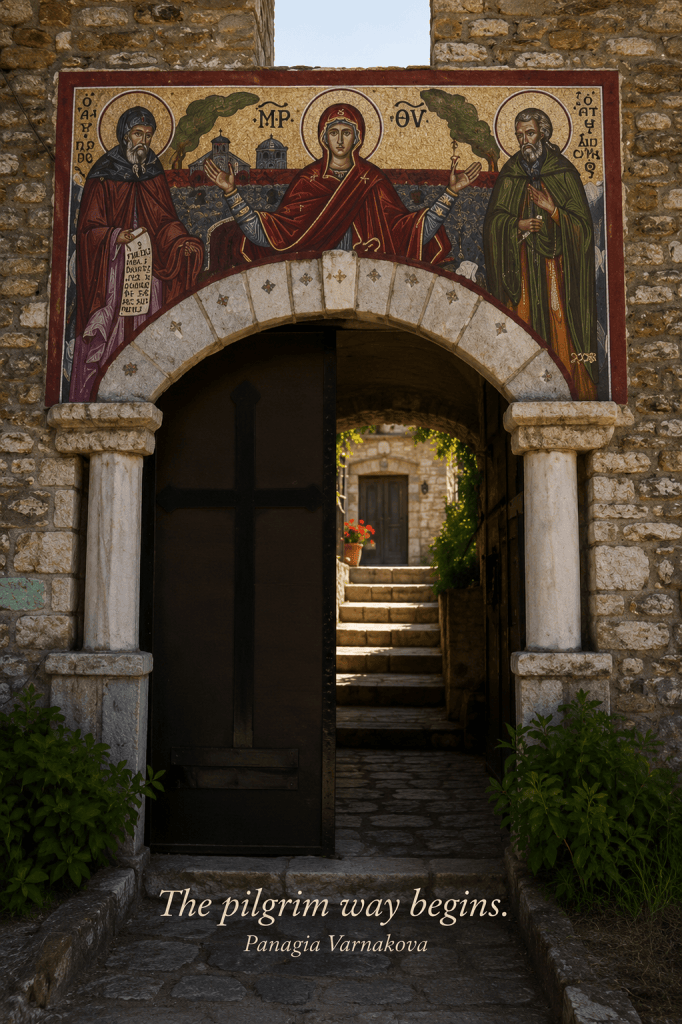
Since then, I have taken part in pilgrimages to Our Lady of Tinos, Saint Porphyrios, Saint Ephraim of Nea Makri, Panagia Malevi, Panagia Varnakova, and many more. I could not have known where that counsel would lead. But pilgrimage followed pilgrimage, and the presence of the Theotokos became increasingly — at times almost overwhelmingly — tangible. She seemed not simply to be waiting at the places toward which we travelled, but somehow to be accompanying the journey itself.
And gradually I began to notice something else: traces of the virtues we contemplate in her icons appearing, in small and very human ways, in the pilgrims travelling beside me.
A pilgrimage is a journey toward holy places, but also a journey among people. Throughout this pilgrimage, the presence of the Theotokos seemed almost overwhelming — in the monasteries, the icons, the prayers, and somehow in the journey itself. And gradually, something else became apparent: the mysteries we contemplated in her feasts seemed to find small reflections in the pilgrims walking beside us — in a word, a sacrifice, a hidden act of service, a way of enduring, believing, or praying.
The four great feasts of the Theotokos themselves seem to trace a spiritual pilgrimage: a beginning, an offering, an indwelling, and a fulfilment — images of our own journey from conversion toward theosis. Along that path, I shall also introduce some of my fellow pilgrims — real people, identified only by their initials — whose lives seemed to offer small, living reflections of that same journey.
I. AWAKENING — THE NATIVITY OF THE THEOTOKOS A Beginning Before We Know Where It Will Lead
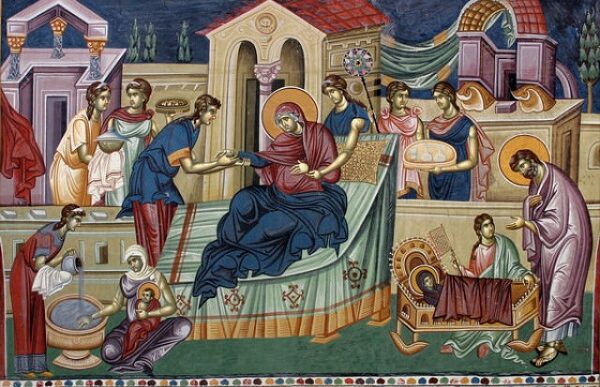
The Nativity of the Theotokos is proclaimed by the Church as “the beginning of our salvation.” Nothing spectacular has apparently happened: a child has been born. Yet within this hidden beginning lies the preparation for the Incarnation.
It is a beautiful image of the first movement of conversion: awakening, turning, beginning again. Conversion rarely begins with spiritual fulfilment. Something enters our life — sometimes joy, sometimes suffering, sometimes simply a new awareness of God — and a road begins whose destination we cannot yet see.
M. experienced such a beginning in an extraordinarily painful way. After almost forty years of marriage, during which she raised her children and sacrificed her own career, employment, income, financial independence, security, and even the prospect of a pension to work unpaid for her husband, she suddenly found herself, at almost sixty, having to begin her life again. Divorce, loss of property, eviction, legal battles and financial hardship followed. She now lives in a small social-housing apartment and undertakes seasonal work, including caring for elderly people, at times relying upon friends and her sons for financial help. Yet she continues to work, to struggle, and above all to glorify God. What appeared to be simply the destruction of one life has gradually become the beginning of another.
P., too, has recently entered an entirely new landscape through widowhood. The loss of the person with whom one has shared one’s life creates a threshold one would never willingly choose to cross. Yet she continues forward, and her response to loss has not been withdrawal but service.
A. has also recently lost his wife, while continuing to care at home for his son, who has a disability. Although approximately of retirement age, he seems to be working more than ever, offering himself with remarkable diligence both within the Church and in wider society.
Their circumstances are very different, yet each reminds us of the mystery hidden within the Nativity: God’s new beginnings may appear precisely where we thought something had ended.
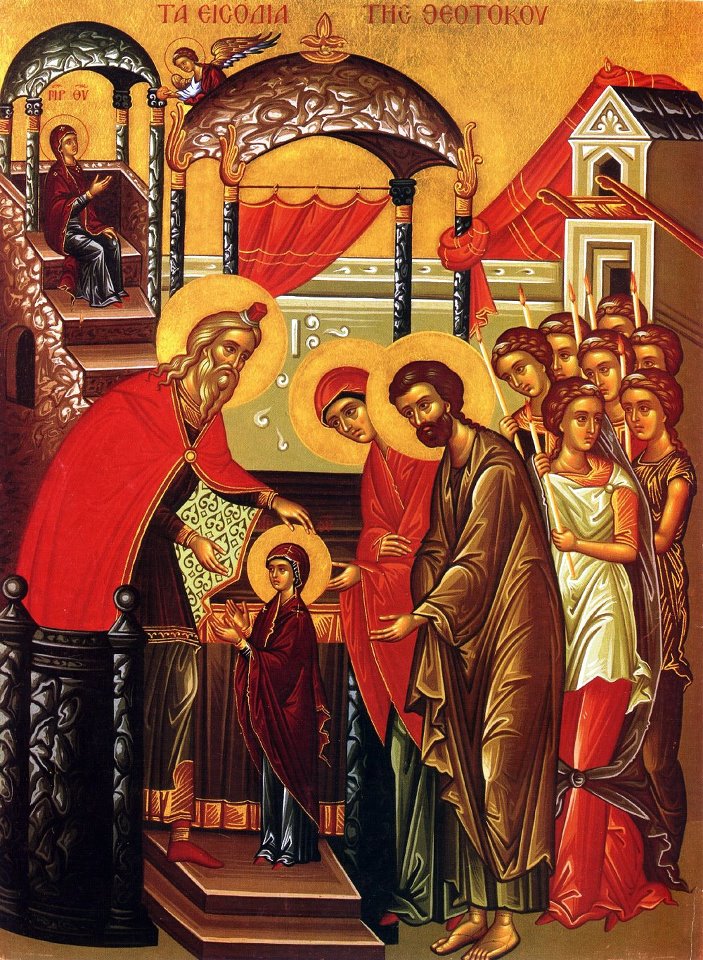
II. CONSECRATION — THE ENTRANCE OF THE THEOTOKOS INTO THE TEMPLE
Entering More Deeply into the Life of God
The Entrance of the Theotokos is not described in the canonical Gospels but belongs to the ancient tradition of the Church. The child whose birth announced a new beginning is now brought into the Temple and offered entirely to God. Beginning becomes direction. The young Mary enters the Temple and, according to the tradition of the Church, grows there in prayer, purity and communion with God.
Her Entrance can therefore express the second movement of the spiritual life: not simply turning toward God, but progressively giving one’s life to Him — through purification, obedience, prayer, service and the gradual reorientation of the whole person.
E. embodies something of this wholehearted dedication. Although she still works full-time, she participates tirelessly in one or even two pilgrimages every month, travelling throughout Greece. She readily accepts both the fatigue and the considerable financial cost involved, despite not being a person of considerable financial means. During the COVID period, while working as a nurse, she chose to follow her conscience regarding vaccination despite knowing that her decision would have serious professional consequences, and she was suspended from work. Yet her zeal is anything but disorderly. During the pilgrimage, when an elderly pilgrim suddenly developed high blood pressure and dizziness, E. immediately cared for her. She meticulously recorded names for prayer and arranged votive offerings at each monastery. Her dedication to God continually becomes practical care for others.
G., at eighty years of age (!), offers another form of consecration. A distinguished theologian with a long and eminent academic career, he remains remarkably precise in his expression of the Orthodox faith. Even at his age, he endured the extraordinary physical hardships of this demanding pilgrimage, just as he continues to participate actively in so much else. His theological precision is not merely accumulated academic knowledge; it is an ecclesial mind cultivated throughout an entire lifetime. His words rightly divide the word of truth without ambiguity or compromise, yet his firmness never becomes harshness. He treats even those of another faith, or those whose beliefs are heretical, with exceptional meekness. Truth, for him, is not simply an idea to be defended but a reality to be lived.
P. and A. reveal yet another form of offering. Both remain quietly at the side of Fr N., assisting in his many ministries: soup kitchens, hospitals, pilgrimages, and wherever else a need arises. They are precisely the kind of people one might easily fail to notice, because they are usually to be found where there is work to be done rather than where they might be seen. Like the Myrrh-bearing Women, they do not seek the central place; they are simply present whenever an offering is needed.
Thus, the Entrance marks a movement beyond the first awakening of conversion. The life that has turned toward God gradually becomes a life offered to God.
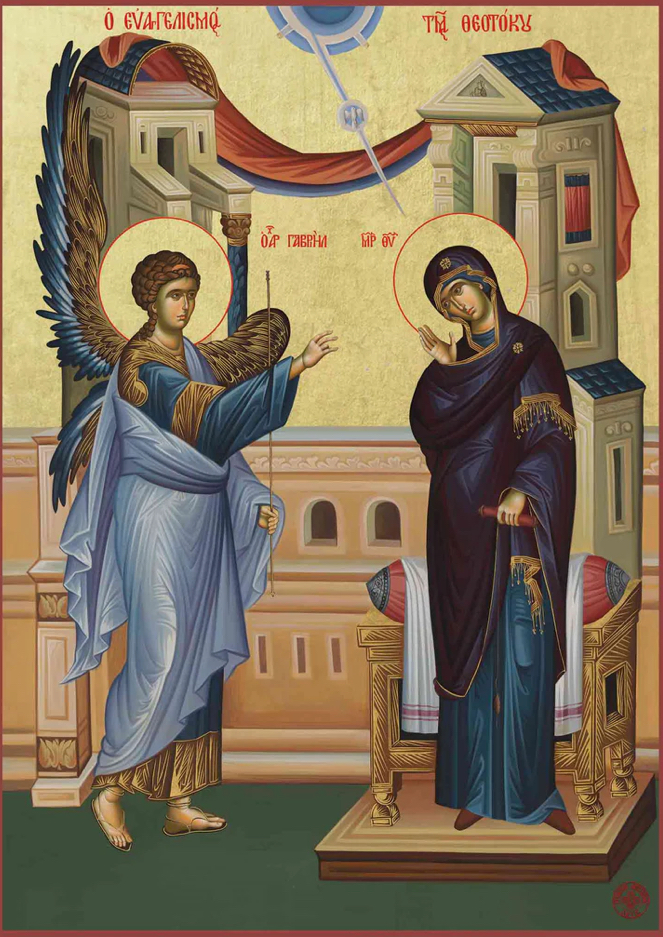
ΙII. UNION / THEOSIS — THE ANNUNCIATION God Dwelling in the Human Person
At the Annunciation, everything toward which the previous feasts have been moving reaches an unimaginable point. The Theotokos hears the word of God and freely answers: “Behold the maidservant of the Lord! Let it be to me according to your word” (Luke 1:38). And God comes to dwell within her. The Annunciation therefore reveals something at the very heart of Theosis. Human freedom is not abolished by divine grace; it opens itself to it. God acts, the human person responds, and communion becomes possible. The Christian life is no longer simply a matter of turning toward God or even offering things to Him. God Himself increasingly becomes the inner life of the human person.
Something of this mystery could be glimpsed in Fr N. As the priest accompanying more than one hundred pilgrims, he was continually surrounded by questions, conversations, confessions, practical difficulties and people seeking his attention. Yet amid this almost uninterrupted outward activity, he retained a remarkable inner stillness. And one could actually see something of its source. While speaking, listening, hearing confessions, caring for and guiding the pilgrims, his lips would repeatedly and quietly form the Jesus Prayer. Amid the visible movement of the pilgrimage there was another, almost invisible movement: the continual return of the mind and heart to Christ. Prayer was not something that began when his ministry ended. It seemed to have become the hidden inner rhythm running through everything else. His Hesychia therefore did not depend upon external silence. He carried that inner silence with him into the crowd: the gathering of mind and heart in God while remaining completely present to others.
Among the predominantly older pilgrims, M. and E.-K., two young people in their late twenties, stood out in a very different way. There was also an extraordinary coincidence in encountering them there. M. was the assistant of an electrician team working for a company of ours, while E.-K. had been a student of mine many years ago at the Experimental School of the University of Thessaloniki. Quite unexpectedly, both recognised me after all those years — each coming from an entirely different chapter of my life. What was striking in both was difficult to define: they simply seemed to shine with purity in the way they spoke, carried themselves, looked at others and related to those around them. This is not a claim about their private lives, which we cannot know, but about a visible simplicity, modesty and transparency of behaviour.
They remind us that communion with God does not erase the human person. Grace increasingly makes the person transparent to God.
What was striking in both is difficult to define: they simply seemed to shine with purity in the way they spoke, carried themselves, looked at others and related to those around them. This is not a claim about their private lives, which we cannot know, but about a visible simplicity, modesty and transparency of behaviour. They remind us that communion with God does not erase the human person. Grace increasingly makes the person transparent to God.
III. UNION / THEOSIS — FULFILMENT
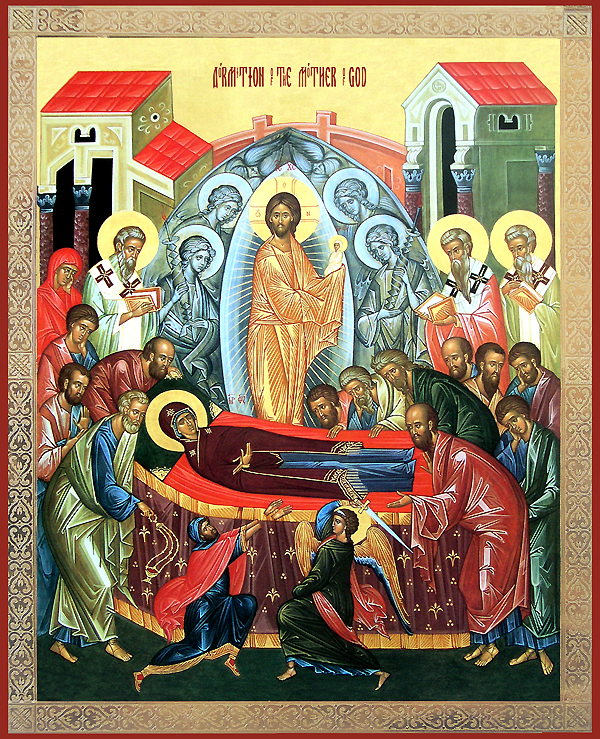
THE DORMITION OF THE THEOTOKOS The Human Person Received into the Life of God
The Dormition brings the journey to its fulfilment. And here the movement of the Annunciation is beautifully reversed. At the Annunciation, the Theotokos receives Christ within herself. At the Dormition, Christ receives the Theotokos into Himself. In the icon, Christ stands beside the body of His Mother and holds her soul, represented as a small swaddled child. She who once held Him as an infant is now held by Him. The journey that began quietly with her Nativity reaches its fulfilment in complete communion with her Son.
Perhaps here all the pilgrims return…
M.’s extraordinary patience through loss, injustice and uncertainty; her obedience to the spiritual guidance of the Athonite Elder Philotheos, Abbot of the Holy Monastery of Karakallou, which helped her carry what might otherwise have become unbearable. G.’s lifelong fidelity to the truth of the Church, still vigorous at eighty despite hardship and physical exhaustion, combined with a meekness that refuses to turn theological conviction into hostility toward another human being. E.’s restless divine zeal, expressed not only in pilgrimages but in sacrifice, meticulous care and practical service. P. and A.‘s almost hidden ministry beside Fr N., quietly appearing wherever another person needs them. A.‘s self-denial in carrying his own grief and family responsibilities while continuing to carry the burdens of others. The transparent purity of the two younger pilgrims. And Fr N.’s prayer and hesychia, the Jesus Prayer continuing quietly beneath the noise and demands of a pilgrimage of more than one hundred people.
None of these is theosis by itself. Nor does the same virtue appear in every Christian in the same way. One person’s road may be patience; another’s theological truth and meekness; another’s service; another’s self-denial; another’s purity; another’s prayer. But the destination is one: communion with God.
None of these pilgrims possesses these qualities perfectly; nor does any particular virtue belong to only one person. The Theotokos remains their incomparable image and measure. Yet perhaps this was one of the quiet revelations of the pilgrimage. We travelled to monasteries and holy places, stood before her icons, celebrated her feasts and repeatedly encountered her presence. And somehow, that presence seemed almost overwhelming — not only in the churches and shrines, but throughout the journey itself and among the people travelling beside us.
The four feasts seem gradually to trace the pilgrimage of every Christian soul: At the Nativity, the Theotokos enters the world. At the Entrance, she enters the Temple. At the Annunciation, Christ enters the Theotokos. At the Dormition, the Theotokos enters the life of Christ.
Beginning. Offering. Indwelling. Fulfilment. And perhaps the pilgrimage did not really end when we returned home. Her presence, so overwhelming along the way, seems somehow to have accompanied us beyond it, into the very different paths of our ordinary lives. We set out as pilgrims to places sanctified by Her presence; perhaps ever since, She has been accompanying each of us on the personal pilgrimage of our own life. Amen
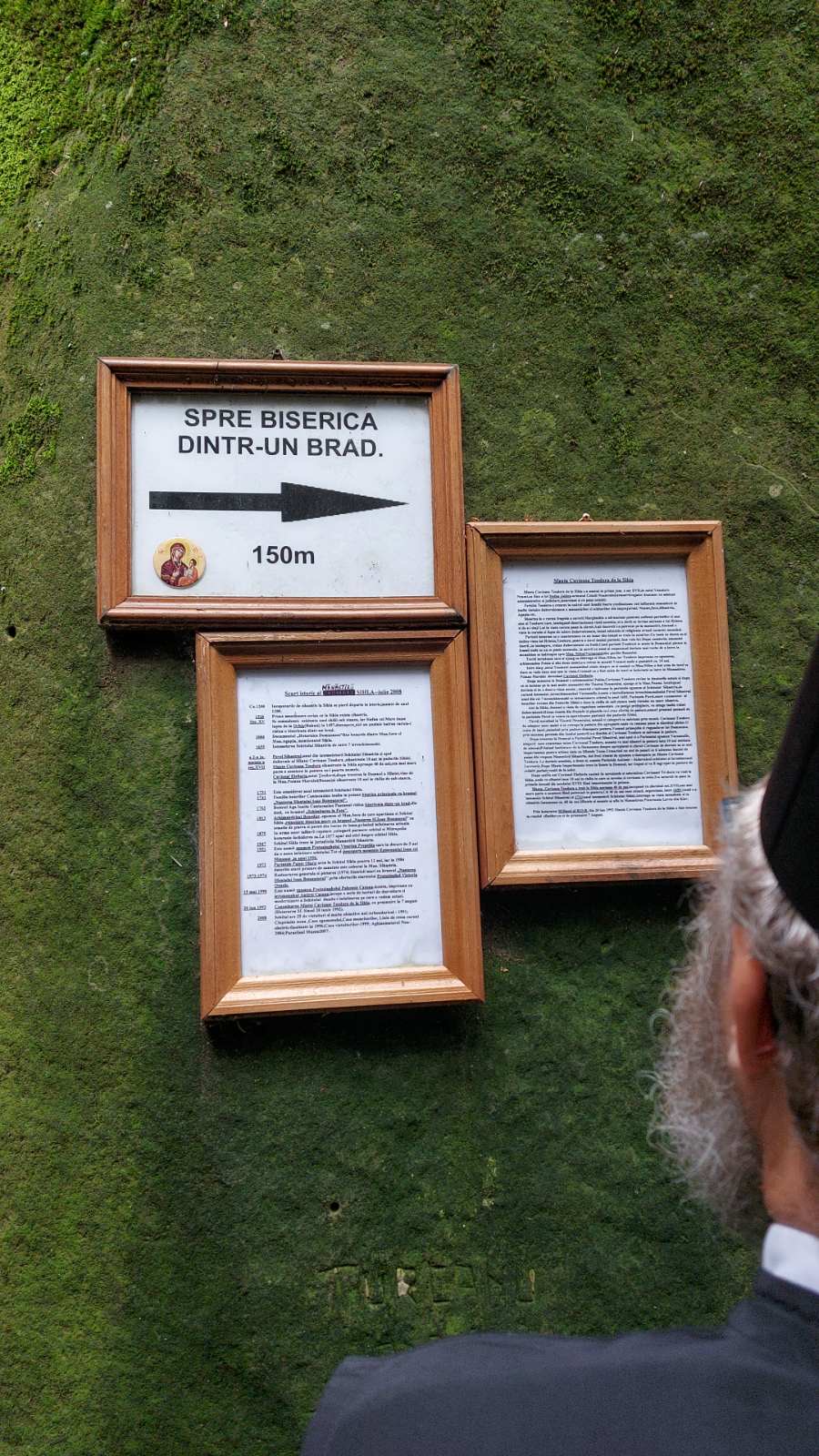
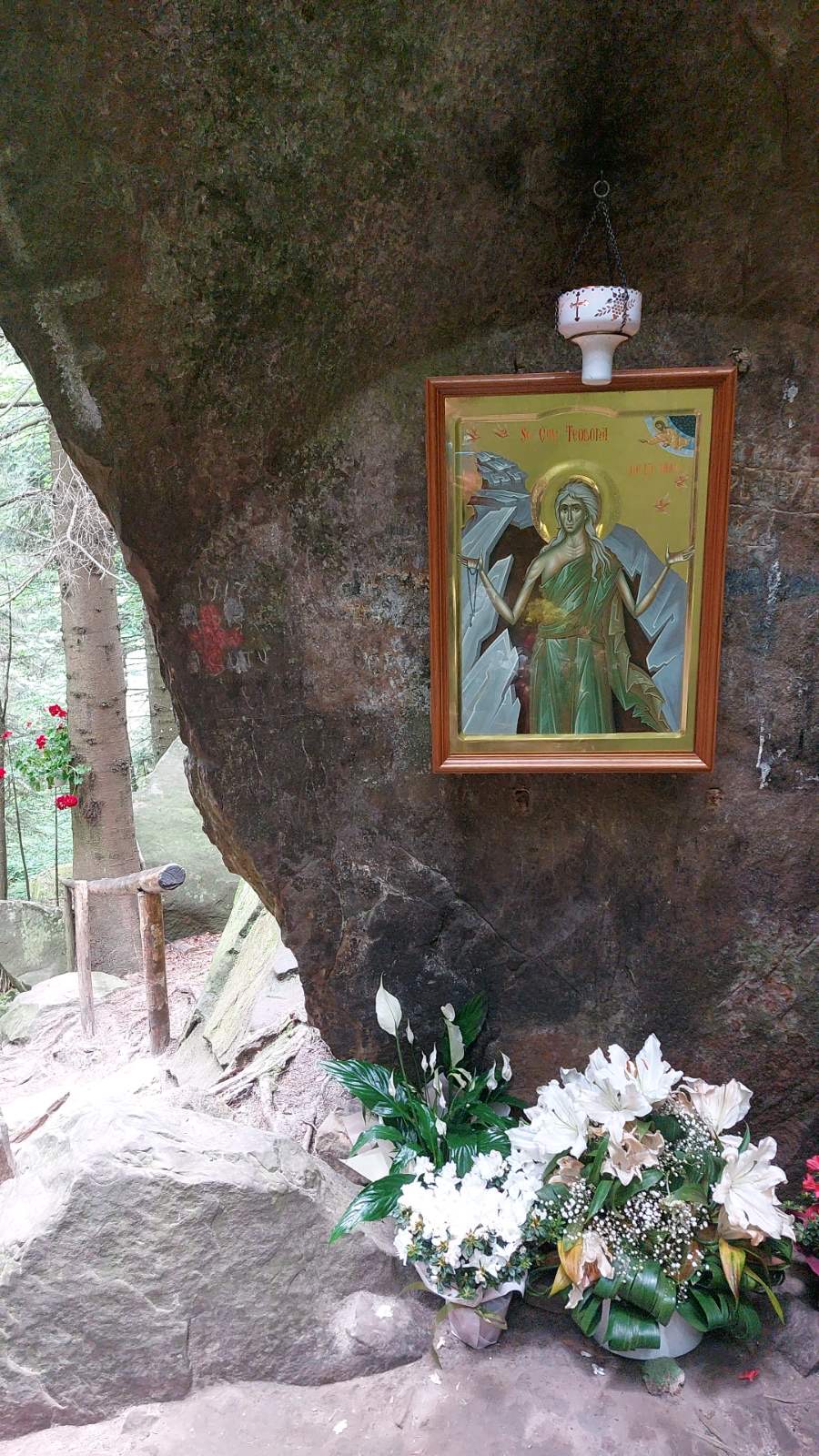
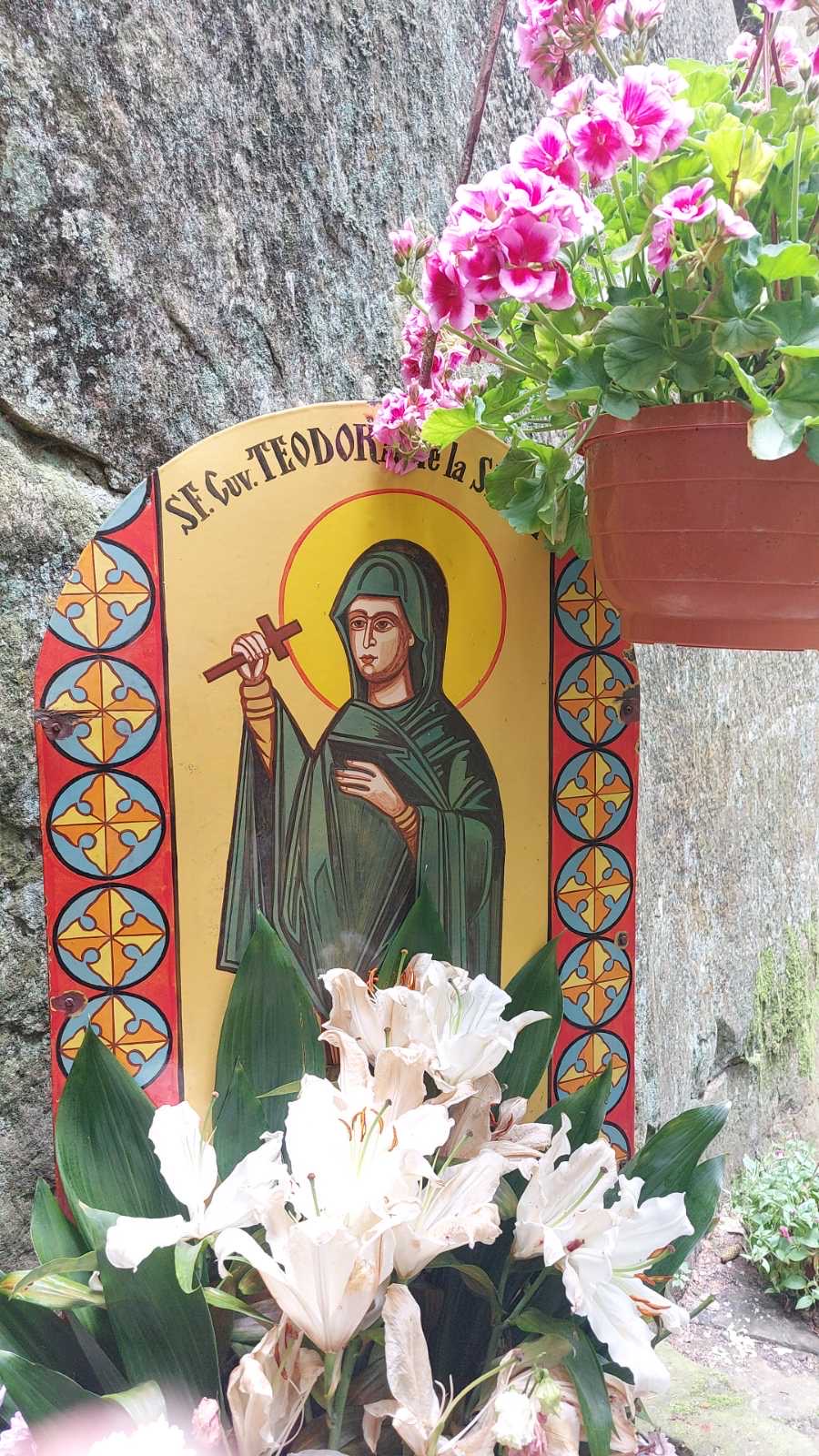
Following last Friday’s celebration of the memory of Saint Theodora of Sihla, we continue our Romanian pilgrimage through the forests and monasteries that still bear witness to her life of prayer and ascetic struggle.
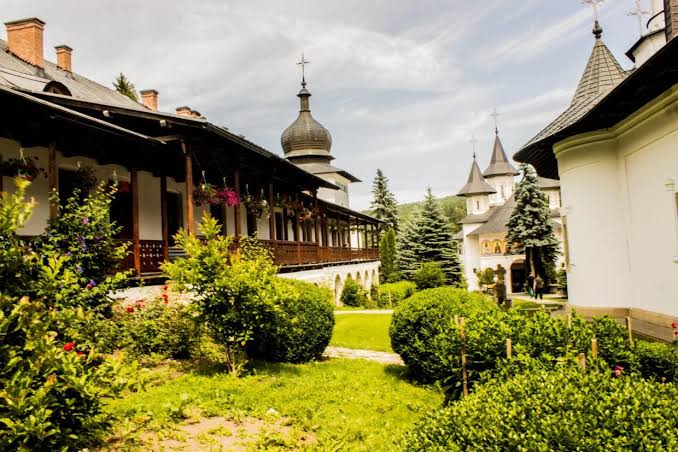
Leaving behind the holy city of Iași and the places associated with Saint Stephen the Great, our pilgrimage continued into Neamț County, one of Romania’s most remarkable monastic regions. Hidden among forests, mountains and secluded valleys lies a land that has nurtured generations of ascetics, spiritual fathers and saints, whose witness continues to inspire the Orthodox world today.
Our destination was a cluster of monasteries and hermitages closely associated with some of Romania’s most beloved saints: Saint Theodora of Sihla, Saint Elder Cleopa (Ilie) and Saint Elder Paisios (Olaru). Their lives transformed these forests into a living school of prayer, making this region one of the foremost pilgrimage destinations in Romania.
Sihăstria Monastery
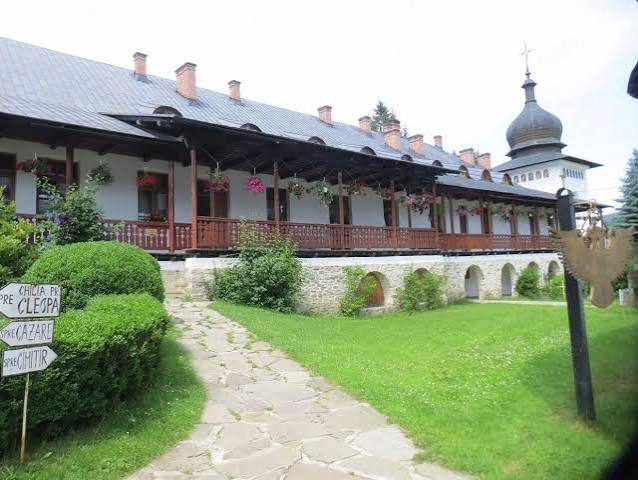
Our first stop was Sihăstria Monastery, one of the best-known monasteries in Neamț County, situated in the historical region of Moldavia. Founded in 1655, it has grown into a large monastic complex comprising the old church, the new katholikon, the monks’ cemetery, the bell tower, the winter chapel, the ecclesiastical museum, the library, accommodation for both monks and pilgrims, and a shop offering religious books and devotional items.
Surrounded by forests of remarkable natural beauty, Sihăstria has long been a place of prayer, asceticism and spiritual guidance. It is especially associated with Saint Elder Cleopa (Ilie) and Saint Elder Paisios (Olaru), two of the most revered Romanian elders of the twentieth century, whose wisdom and holiness continue to draw pilgrims from throughout Romania and beyond.
On Sundays and great feast days, thousands of faithful come to Sihăstria, continuing a deeply rooted Romanian tradition of pilgrimage to the country’s great monasteries. Even today, the monastery remains a vibrant spiritual centre where the ancient hesychast tradition is still very much alive.
The Church of Saint Theodora of Sihla
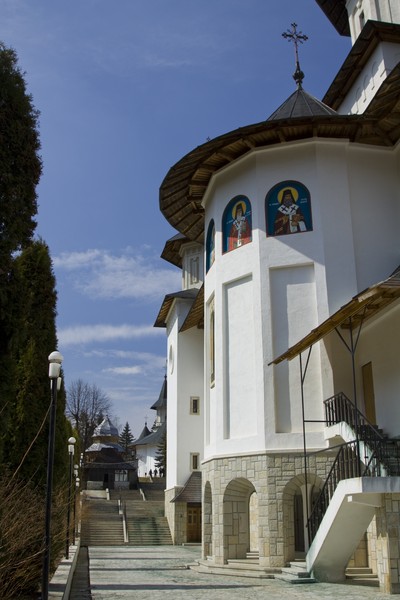
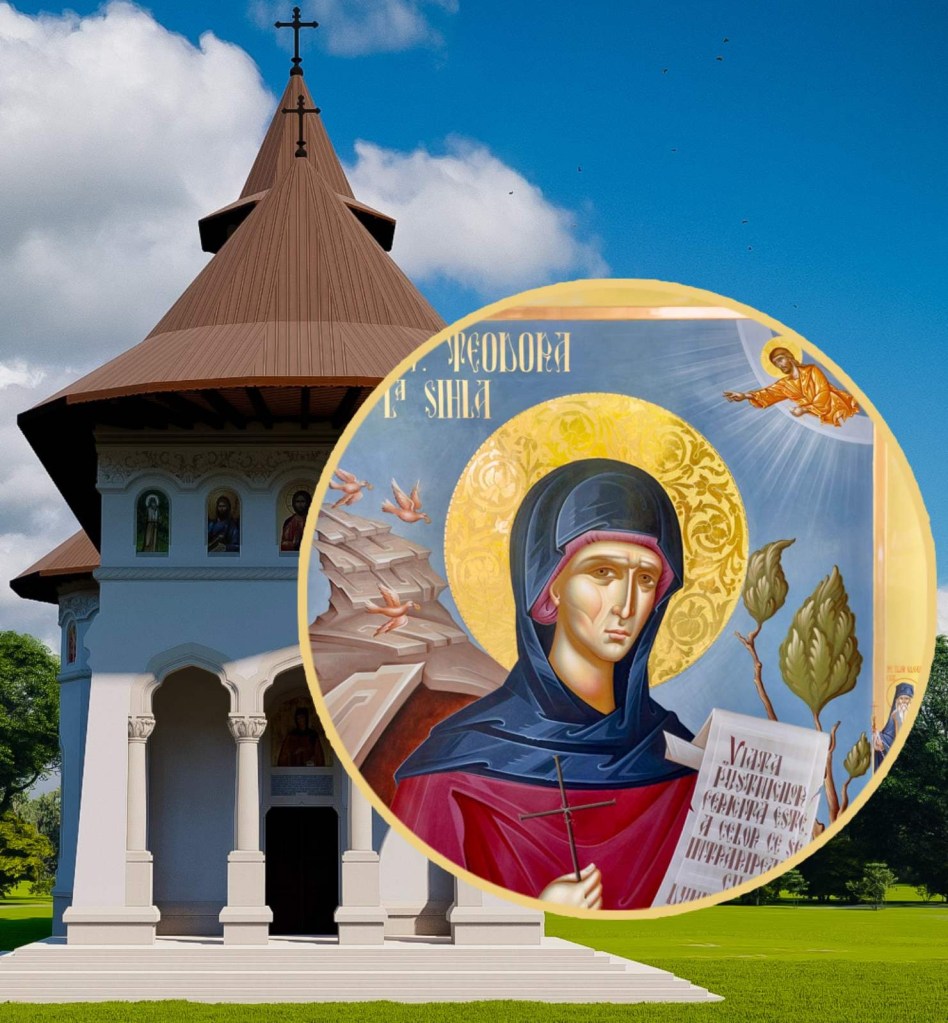
Within the grounds of Sihăstria Monastery stands the Holy Church of Saint Theodora of Sihla, dedicated to one of Romania’s most beloved women saints and greatest ascetics.
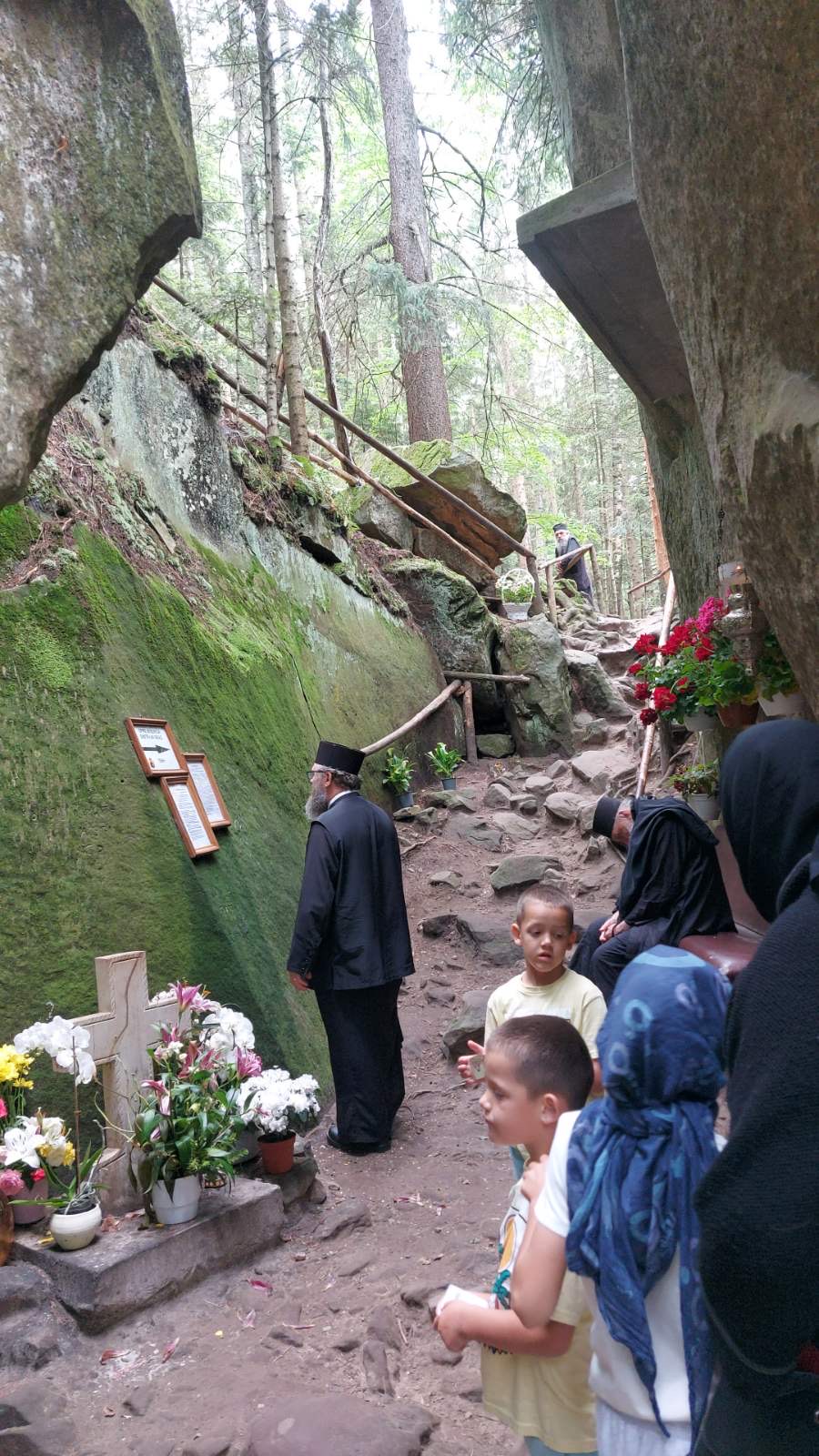
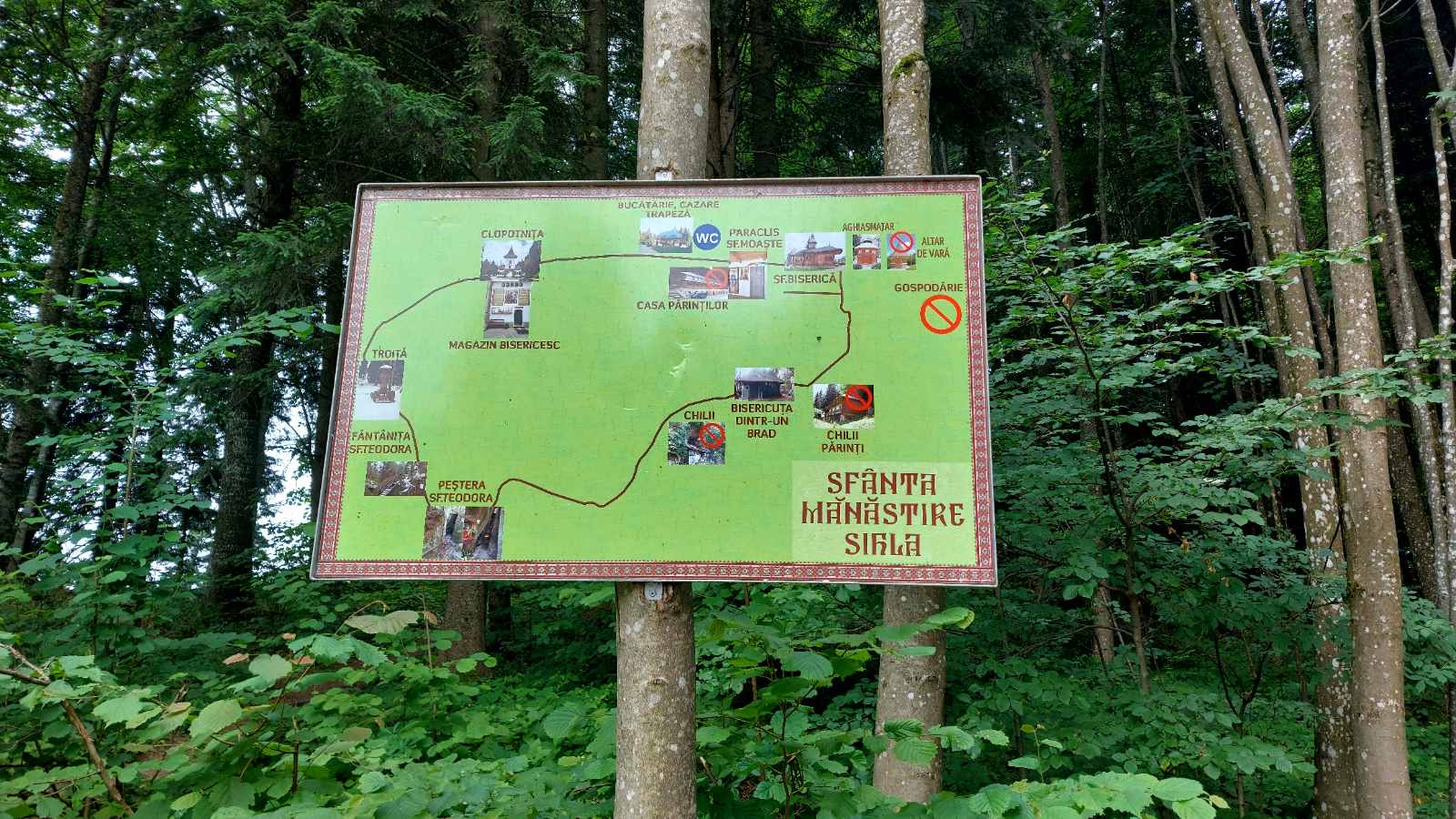
The church honours the memory of the seventeenth-century hermit who withdrew into the forests and mountains of Neamț to dedicate her life entirely to prayer, fasting and unceasing communion with God. Today, pilgrims visit this peaceful sanctuary before continuing to her nearby hermitage and the cave where she spent many years in solitude.
The simplicity and serenity of the church beautifully reflect the hidden life of the saint whose witness continues to inspire countless pilgrims seeking a deeper life of prayer.
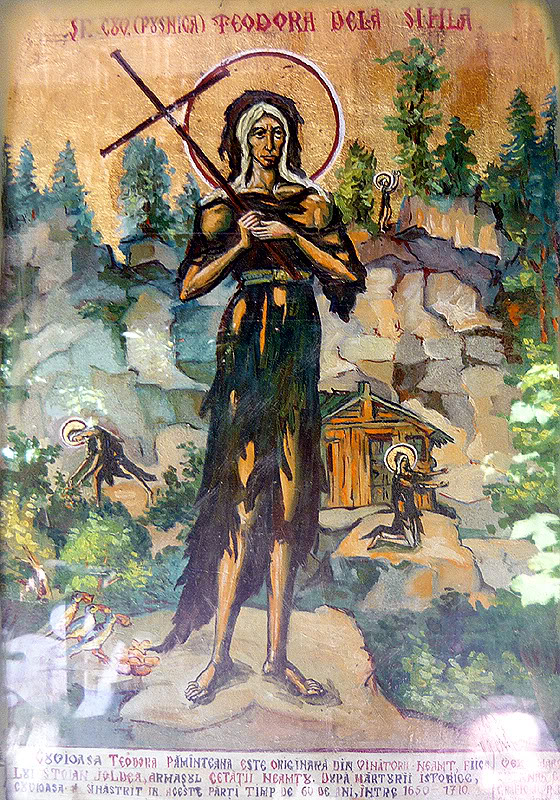
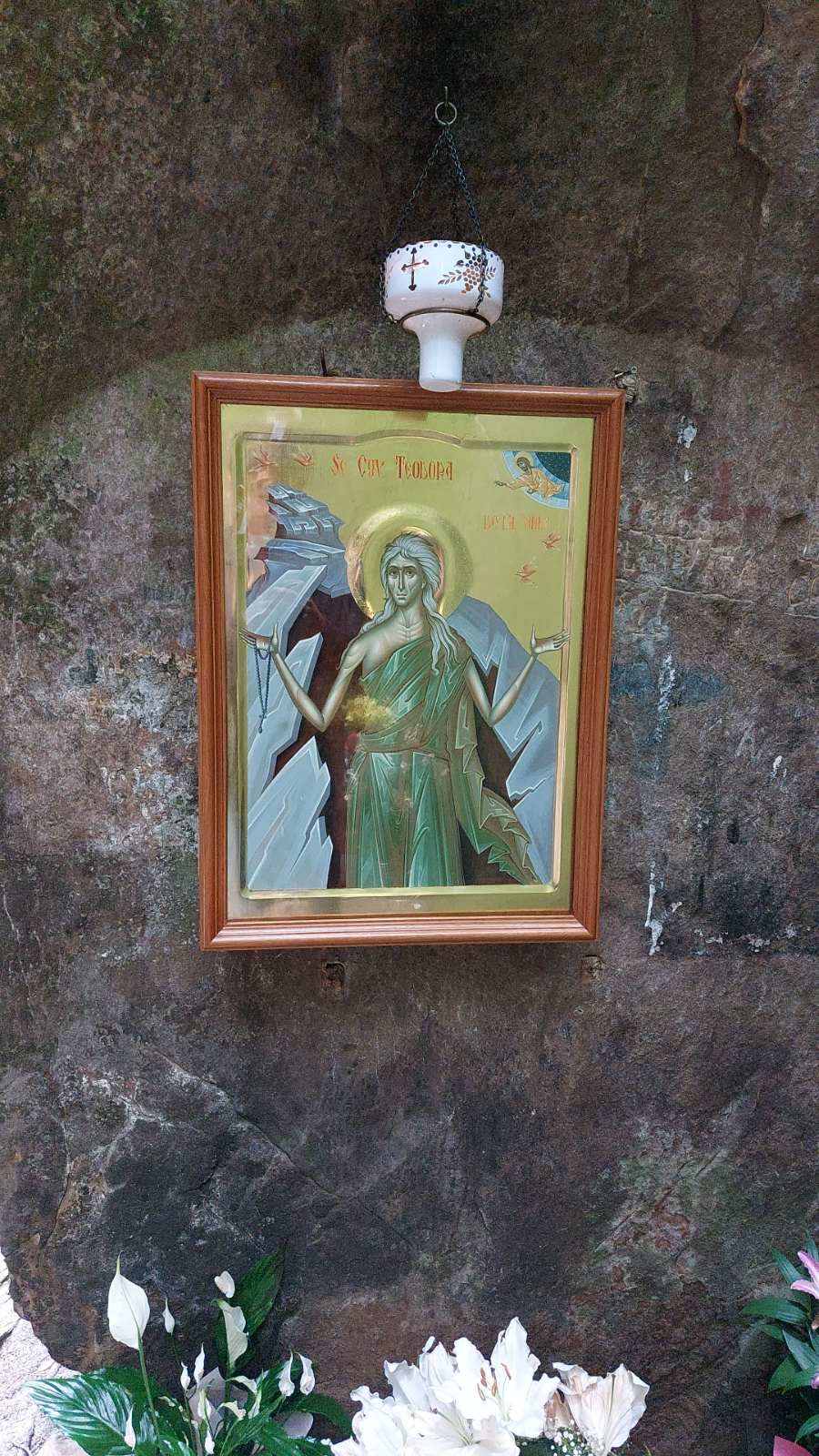
Saint Theodora of Sihla, one of Romania’s most beloved saints and greatest women ascetics, was born in the region of Neamț during the first half of the seventeenth century. After she and her husband mutually chose to embrace the monastic life, Theodora entered the Skete of Poiana Mărului, where she soon became known for her obedience, humility and deep life of prayer.
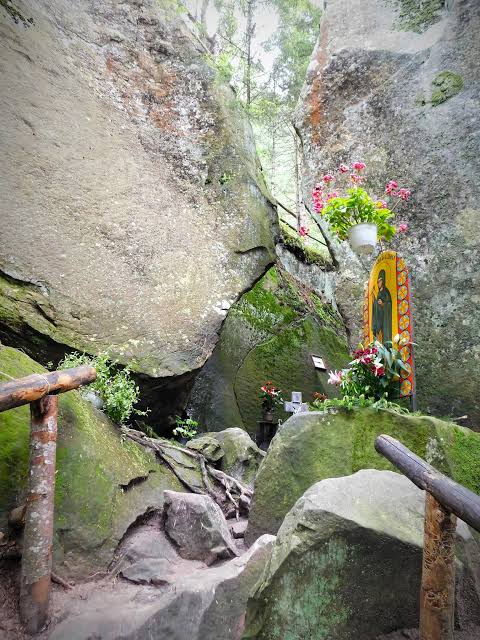
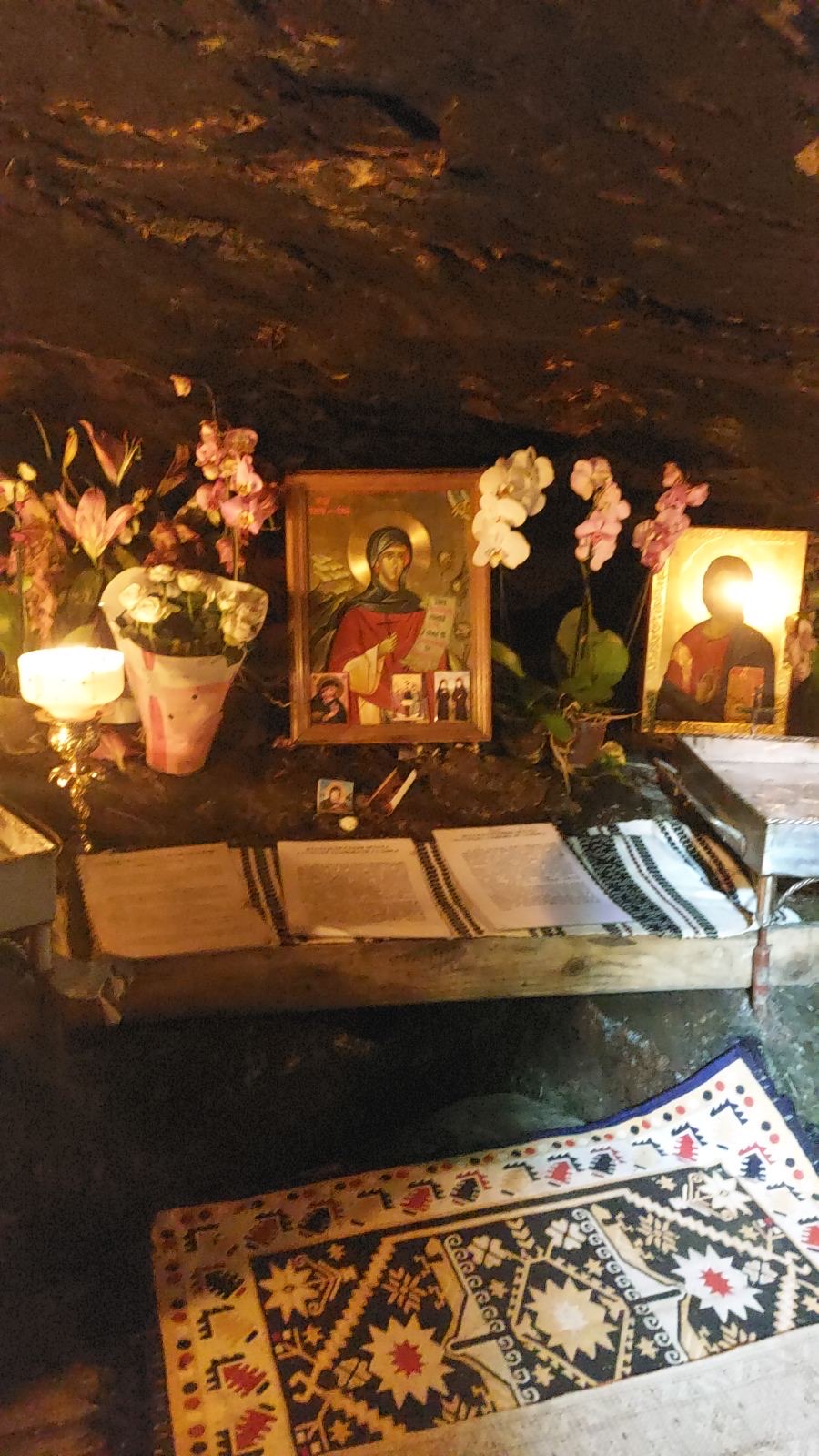
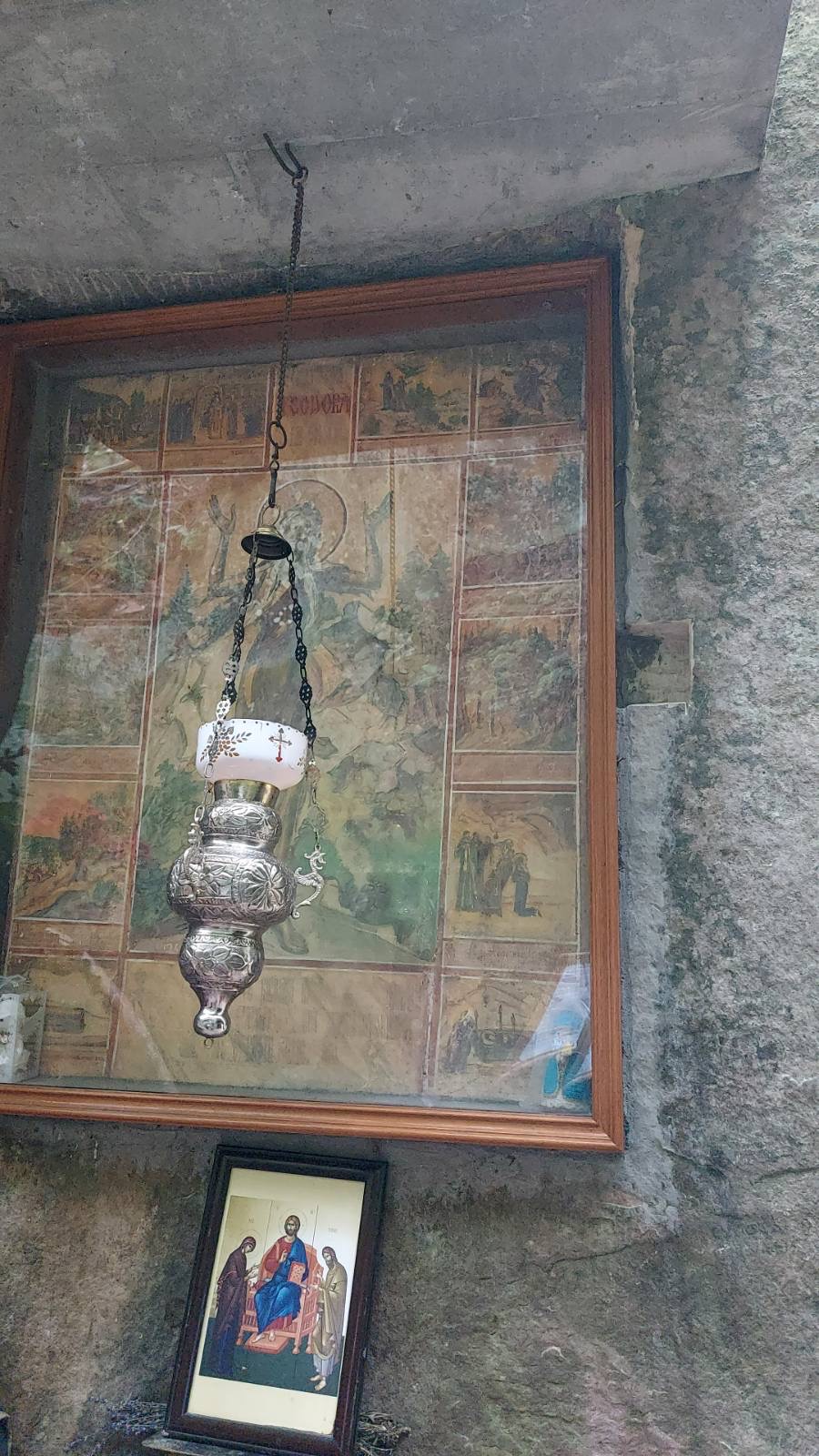
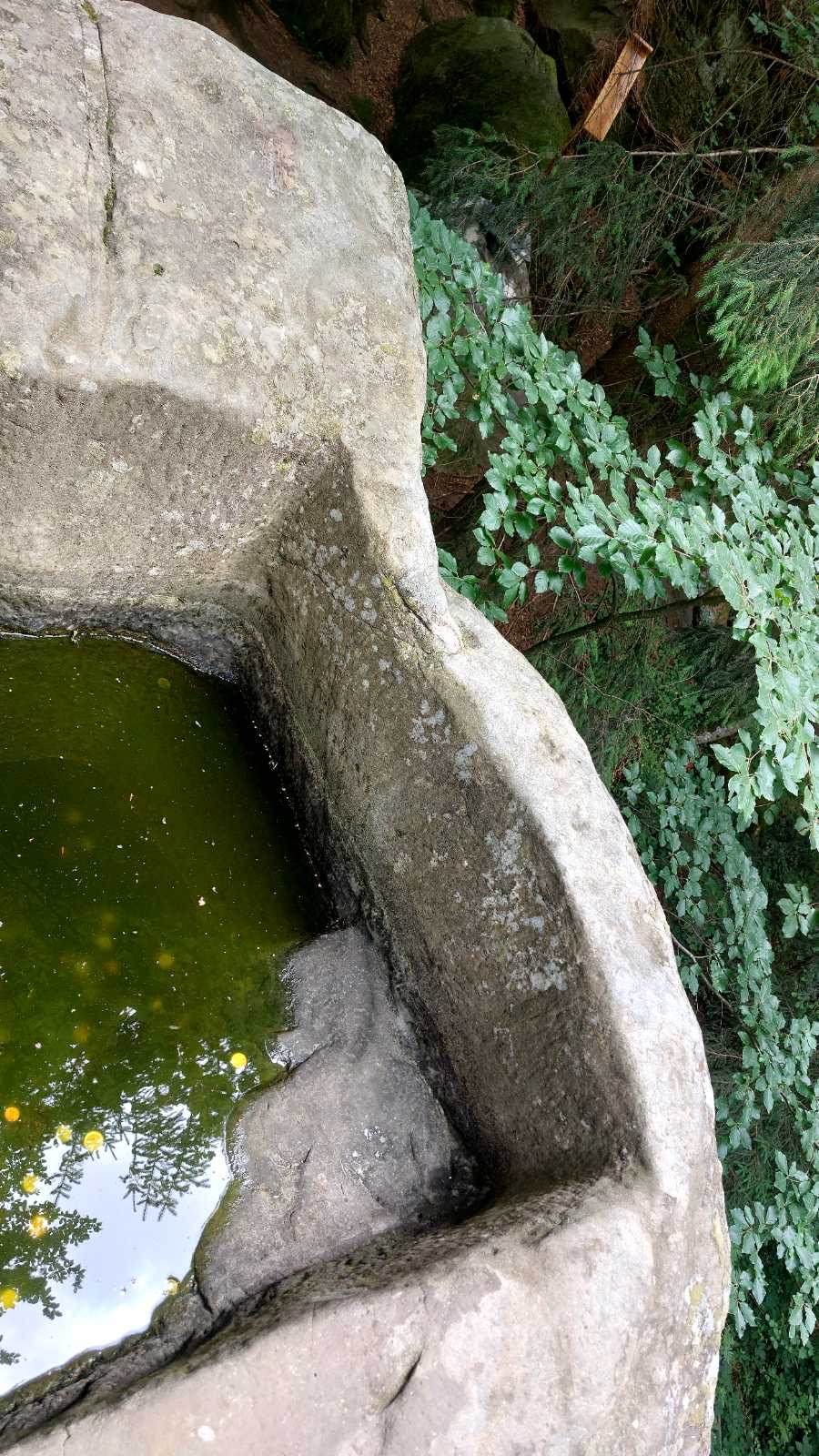
Following the destruction of her monastery during the Ottoman incursions, she withdrew into the forests and mountains of Sihla, where, with the blessing of the elders of Sihăstria, she lived as a hermit for more than thirty years. Sustained by prayer, fasting and complete trust in God’s providence, she devoted her life entirely to Christ. According to Romanian tradition, birds brought her bread, while the spring beside her cave provided her with water—a place still known today as Saint Theodora’s Spring.
Shortly before her repose, she received Holy Communion for the last time and peacefully surrendered her soul to God. She was buried beside the cave where she had spent the greater part of her ascetic life, and her tomb soon became a place of pilgrimage. Although her holy relics were later transferred to the Kyiv Caves Lavra, her hermitage, cave and spring continue to draw pilgrims from across Romania and throughout the Orthodox world.
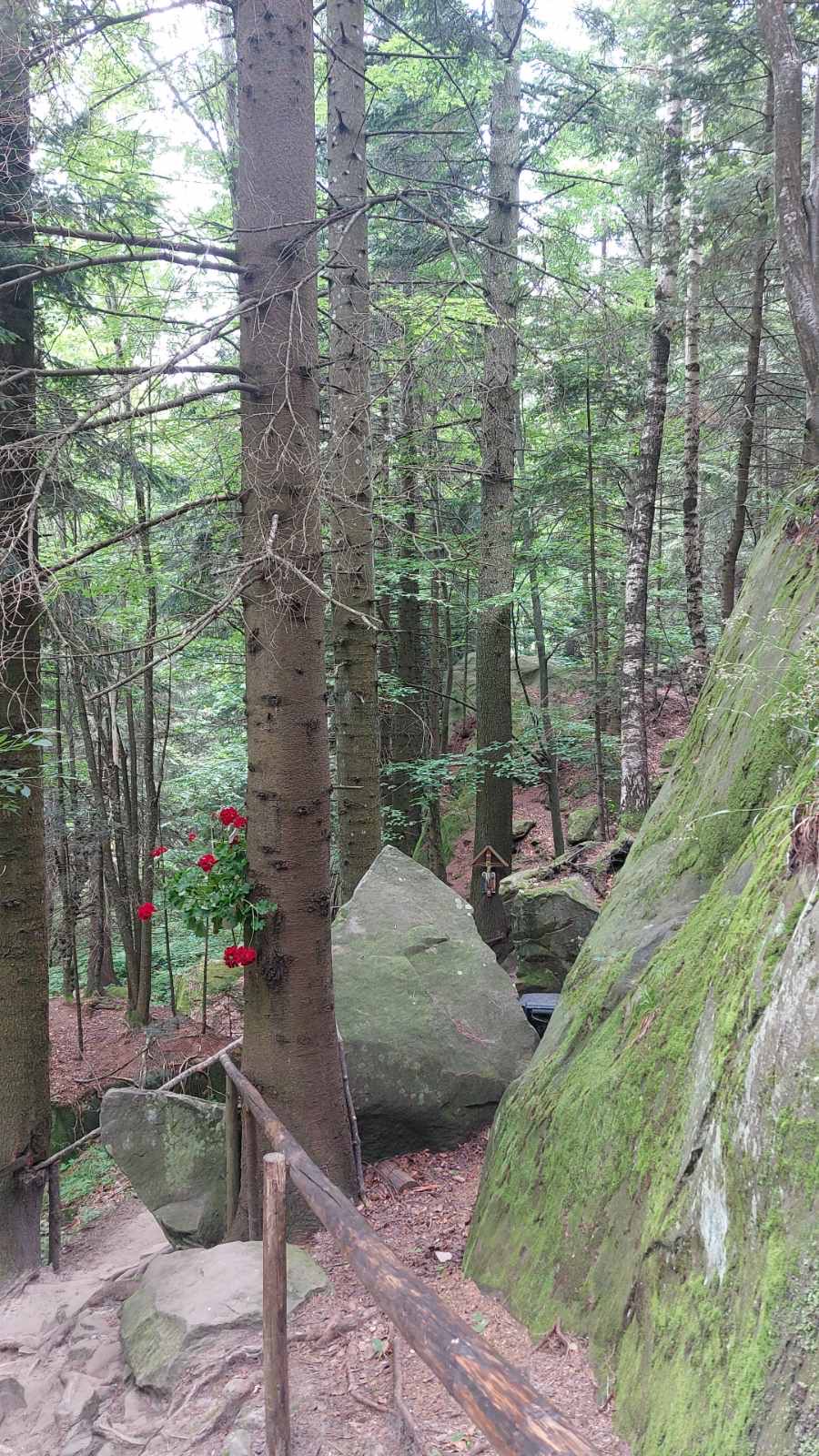
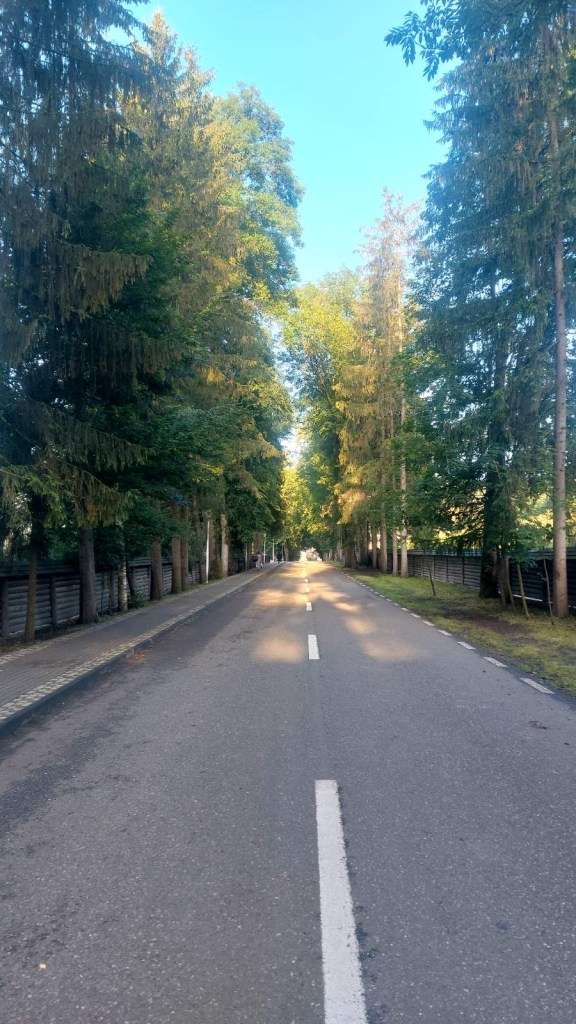
Standing in these silent forests today, one begins to understand why Saint Theodora chose this hidden wilderness. It remains a place where the stillness of nature quietly speaks of a life wholly dedicated to God.
Saints Paisios (Olaru) and Cleopa (Ilie)
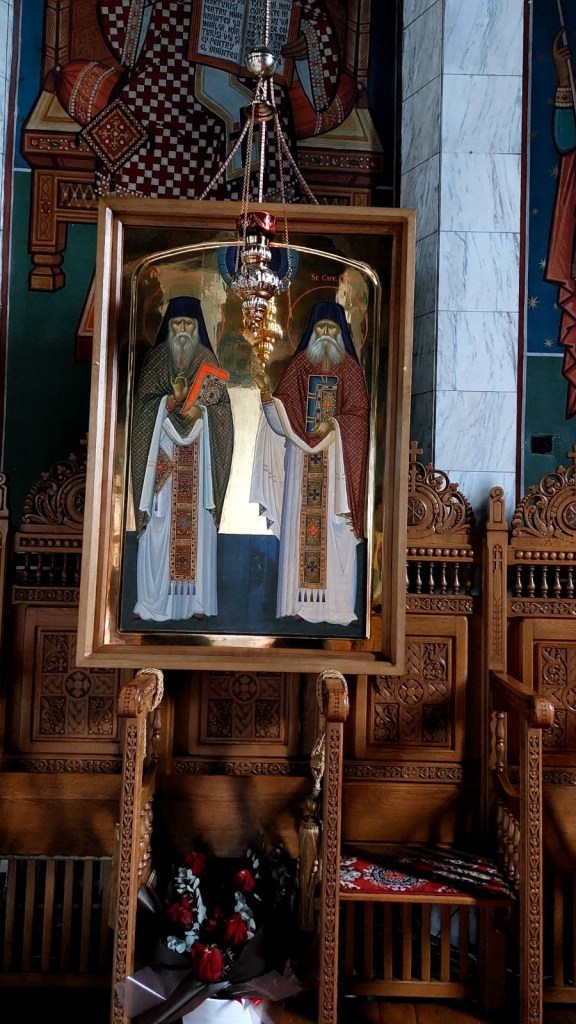
Sihăstria Monastery is inseparably linked with two of Romania’s most beloved spiritual fathers of the twentieth century: Saint Elder Paisios (Olaru) and Saint Elder Cleopa (Ilie). Through their lives of prayer, humility and wise spiritual counsel, both elders attracted countless pilgrims and became guiding lights for generations of Orthodox Christians.
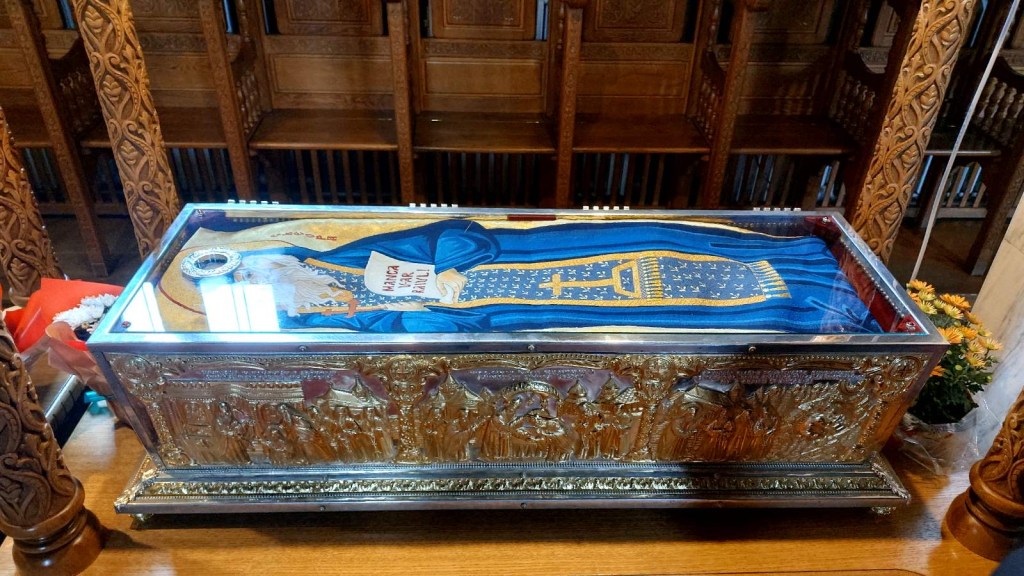
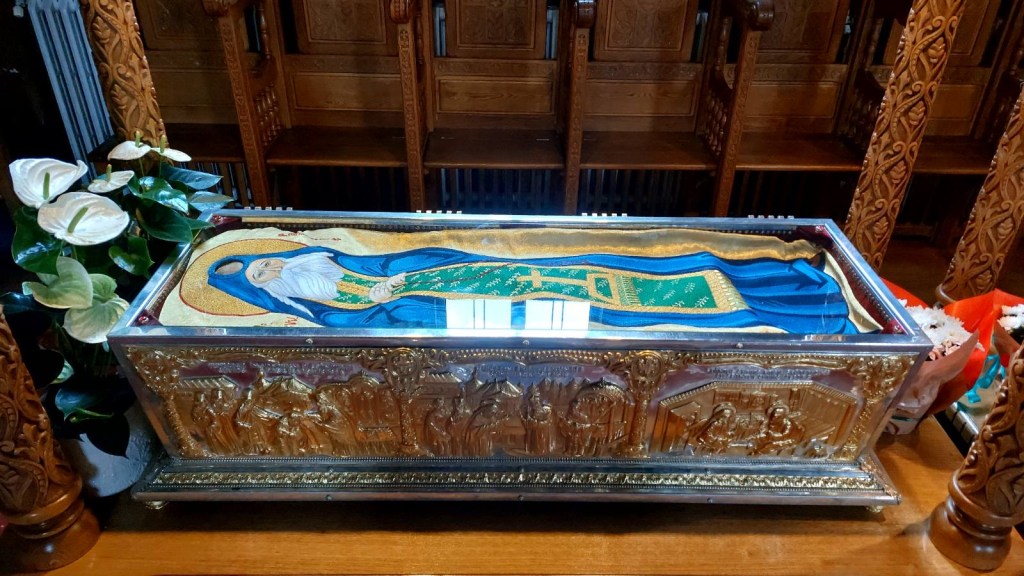
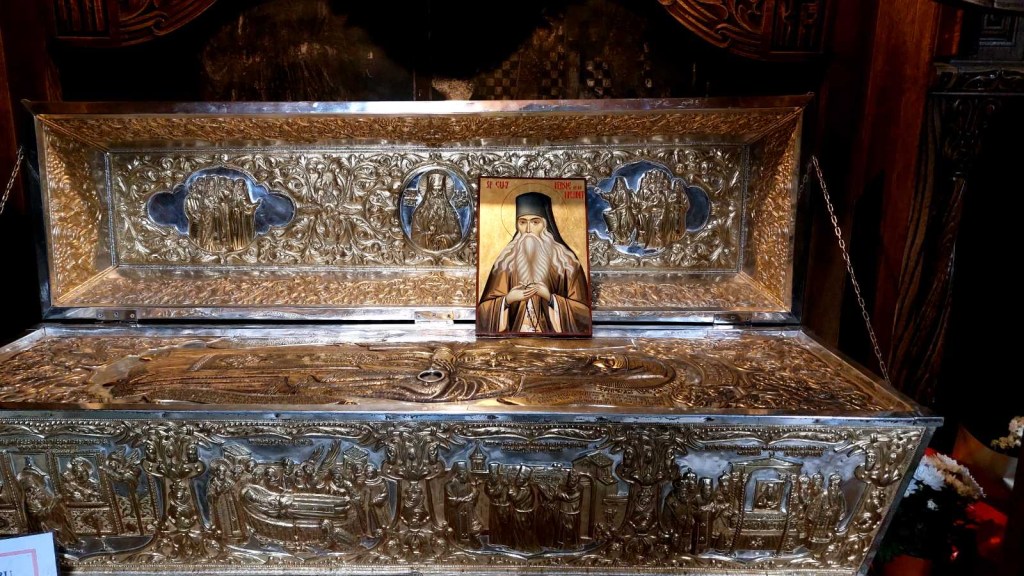
Today, their holy relics rest within the monastery, while their preserved monastic cells continue to bear silent witness to lives wholly dedicated to Christ. Pilgrims from across Romania and far beyond come to venerate their relics, visit the humble places where they lived, and seek inspiration from their enduring spiritual legacy.
Saint Paisios (Olaru)
Saint Elder Paisios (Olaru) (1897–1990) was one of Romania’s most beloved spiritual fathers and confessors. Renowned for his profound humility, gentleness and gift of spiritual discernment, he devoted his life to hearing confessions, comforting the afflicted and quietly guiding countless souls towards Christ. Although he sought no recognition, his holiness became known throughout Romania, and pilgrims travelled great distances simply to receive his blessing and fatherly counsel. His peaceful presence and unwavering trust in God’s mercy continue to inspire Orthodox Christians today.
Saint Cleopa (Ilie)
Saint Elder Cleopa (Ilie) (1912–1998) is widely regarded as one of the greatest Romanian elders of the twentieth century. A gifted preacher, theologian and spiritual father, he combined deep asceticism with remarkable pastoral wisdom, making the treasures of the Orthodox faith accessible to thousands through his sermons, writings and personal conversations. His life at Sihăstria Monastery, marked by humility, prayer and fearless witness during difficult times, has left an enduring legacy that continues to attract pilgrims from around the world.
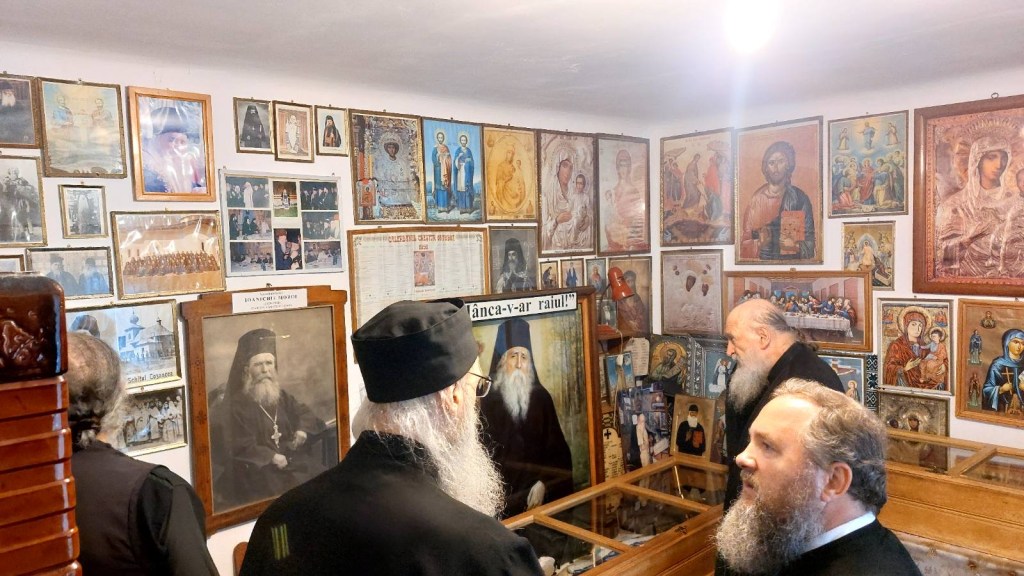
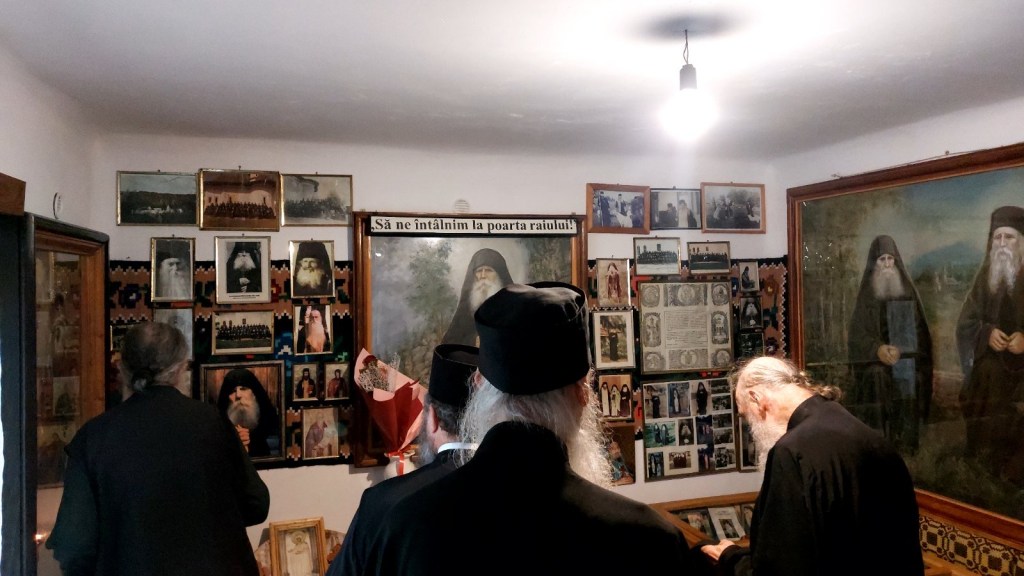
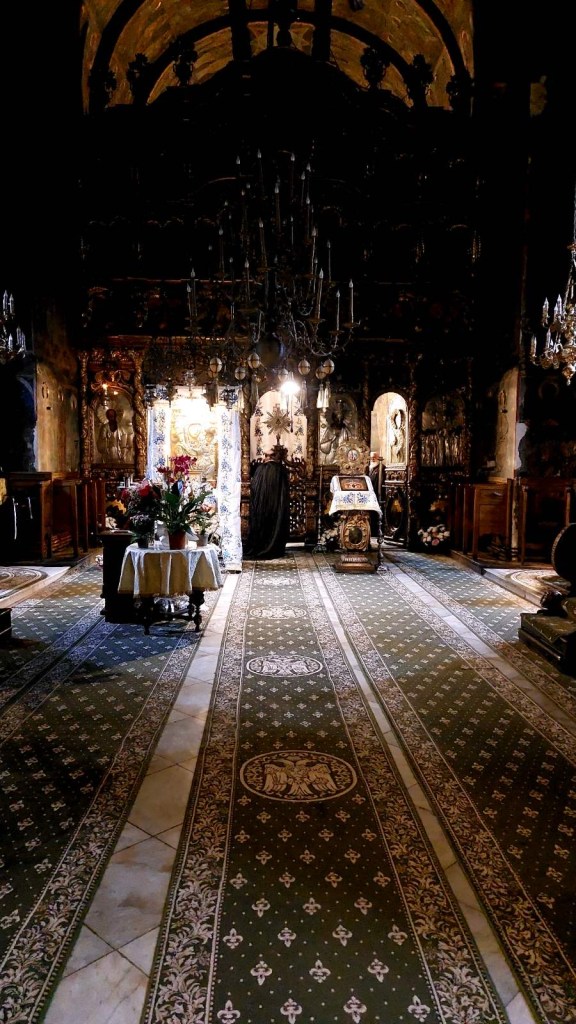
The preserved monastic cells and personal belongings of Saints Elders Paisios (Olaru) and Cleopa (Ilie).
ΓΕΡΩΝ ΘΕΟΚΛΗΤΟΣ ΣΤΗ ΡΟΥΜΑΝΙΑ ΓΙΑ ΑΓΙΟ ΠΑΙΣΙΟ
Conferință și concert bizantin și coral la Hramul Parohiei Sfântul Ștefan cel Mare, Iași” on YouTube
The Hermitage of Saint Theodora of Sihla
Leaving Sihăstria Monastery behind, our pilgrimage continued through the forests towards one of Romania’s most cherished places of prayer—the Hermitage of Saint Theodora of Sihla.
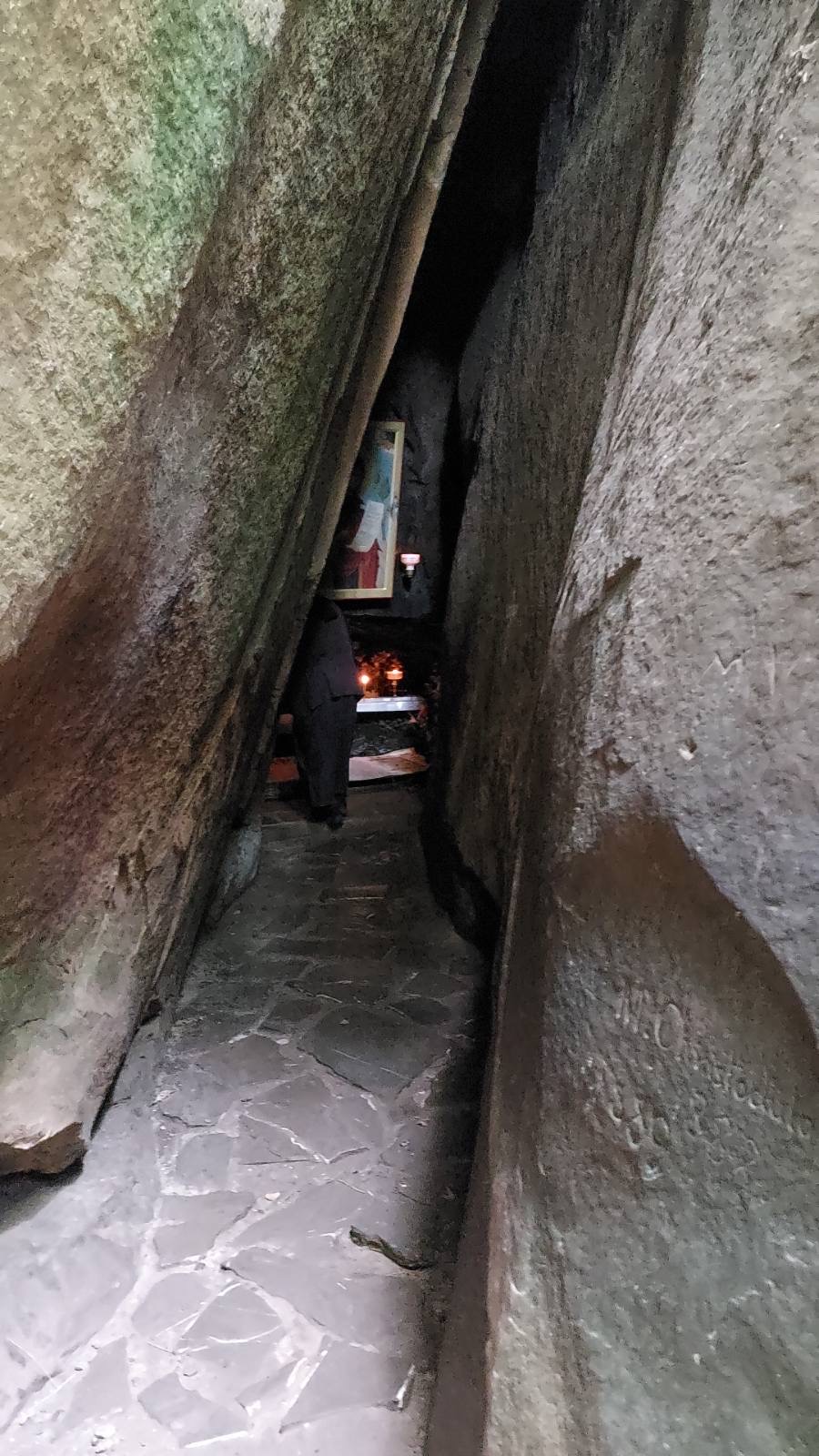
Hidden among the cliffs and dense woodland, this peaceful retreat marks the place where Saint Theodora spent the greater part of her ascetic life in solitude and unceasing prayer. Nearby are the cave where she lived and the spring that, according to tradition, sustained her throughout those many years in the wilderness.
Even today, the silence of these forests invites every pilgrim to pause, pray, and remember that holiness often blossoms far from the noise of the world.
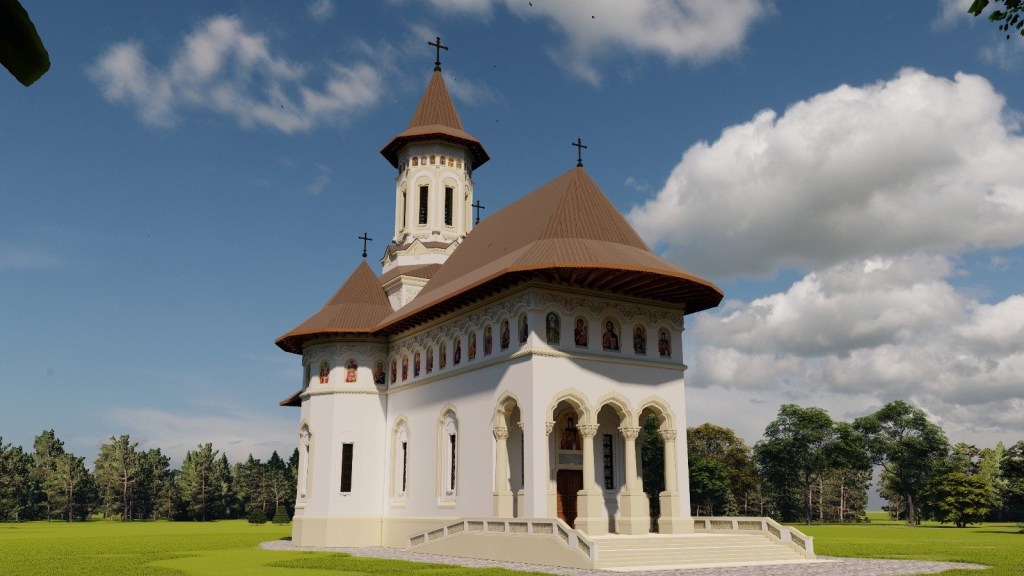
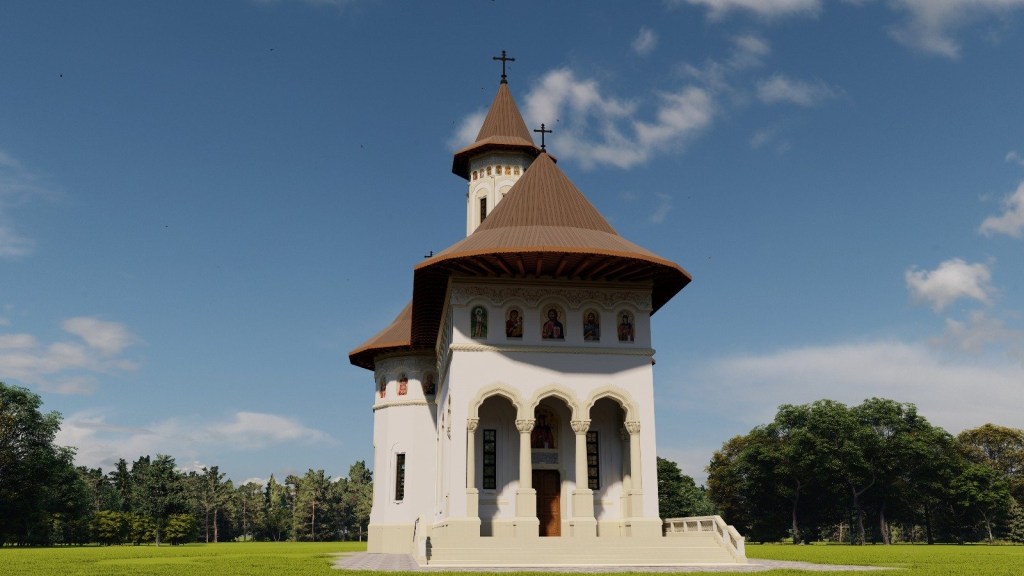
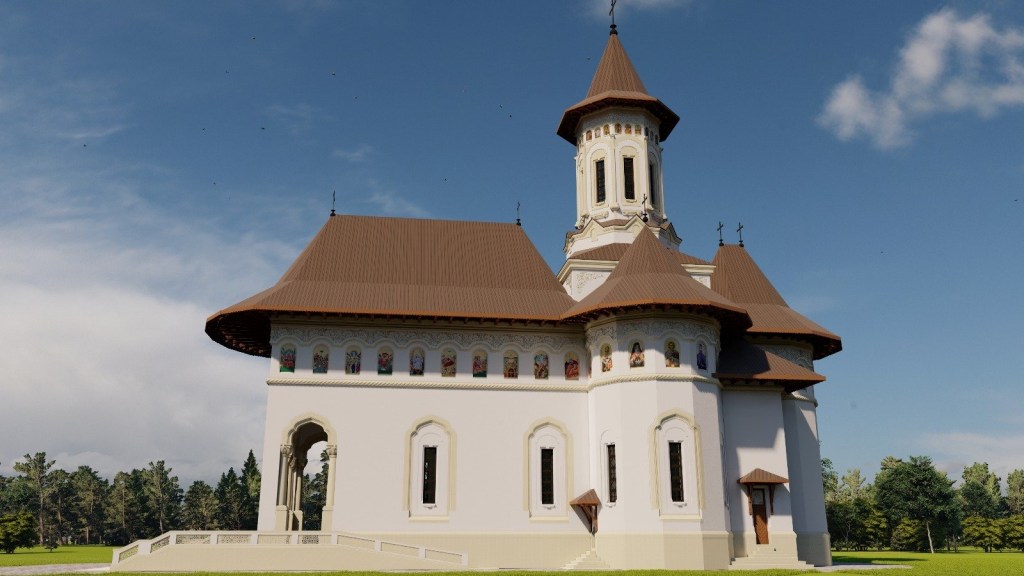
Photographs of the Church of Saint Theodora of Sihla, currently under construction at the Holy Monastery of Sihla in Romania
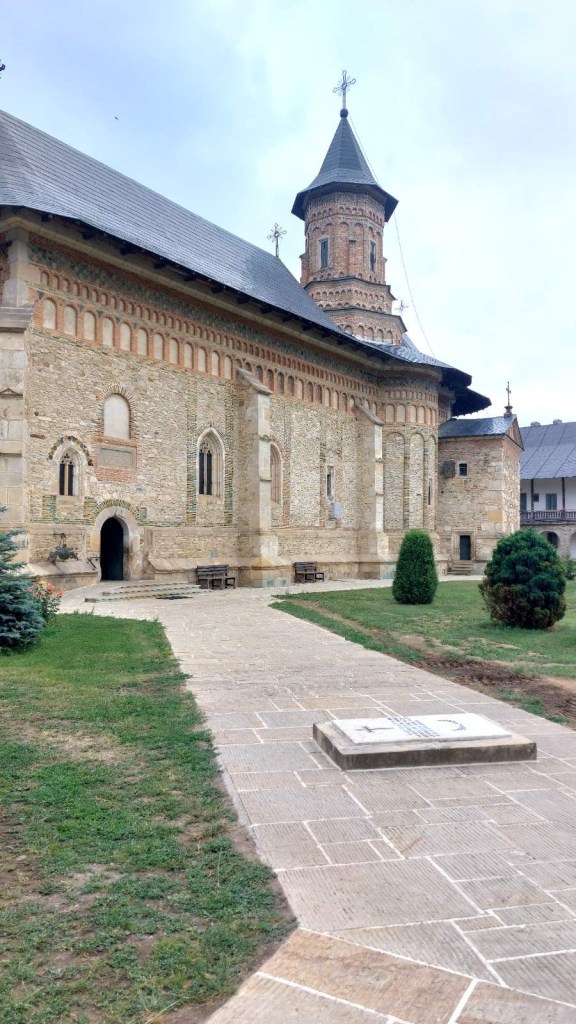
Neamț Monastery
Our pilgrimage next brought us to Neamț Monastery, the oldest and one of the most important monastic foundations in the historical region of Moldavia. Often referred to as the “Jerusalem of Romanian Orthodoxy,” it has served for centuries as a great centre of prayer, theological learning and monastic culture.
Its magnificent katholikon was built by Saint Stephen the Great in 1497, while the monastery’s renowned library—one of the oldest and richest monastic libraries in Romania, preserving more than 18,000 volumes—bears witness to its enduring contribution to the spiritual and intellectual life of the Romanian Orthodox Church.
Today, Neamț Monastery remains one of Romania’s foremost pilgrimage destinations, where centuries of prayer continue to shape the life of the monastery and all who visit it.
The Ecclesiastical School
Within the grounds of Neamț Monastery is the Ecclesiastical School, where future clergy, monastics and church workers continue to receive their theological and spiritual formation. It stands as a reminder that Romania’s great monasteries have long been centres not only of prayer, but also of learning, preserving the Orthodox faith through education as well as worship.
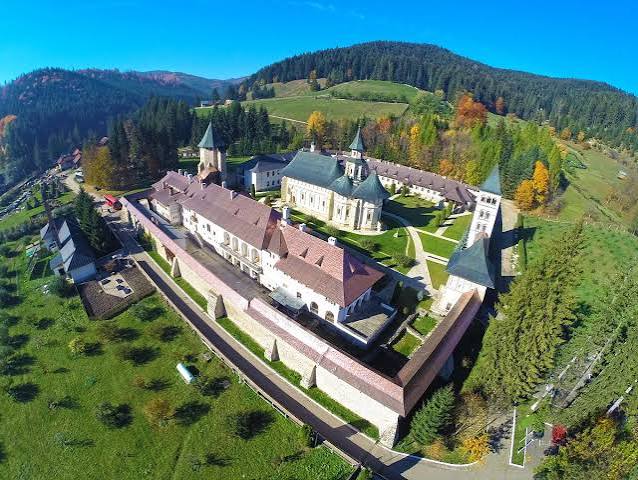
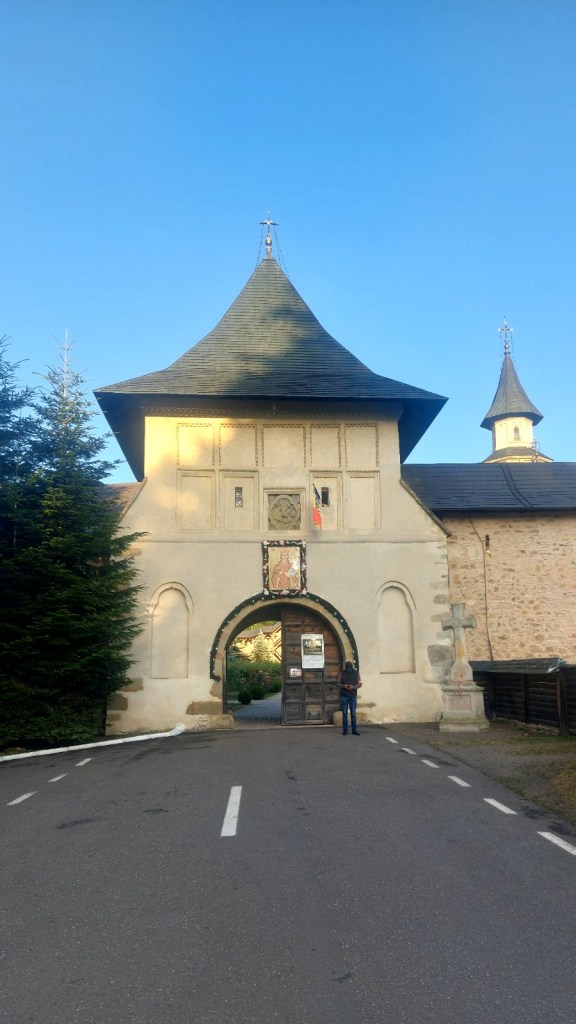
Putna Monastery
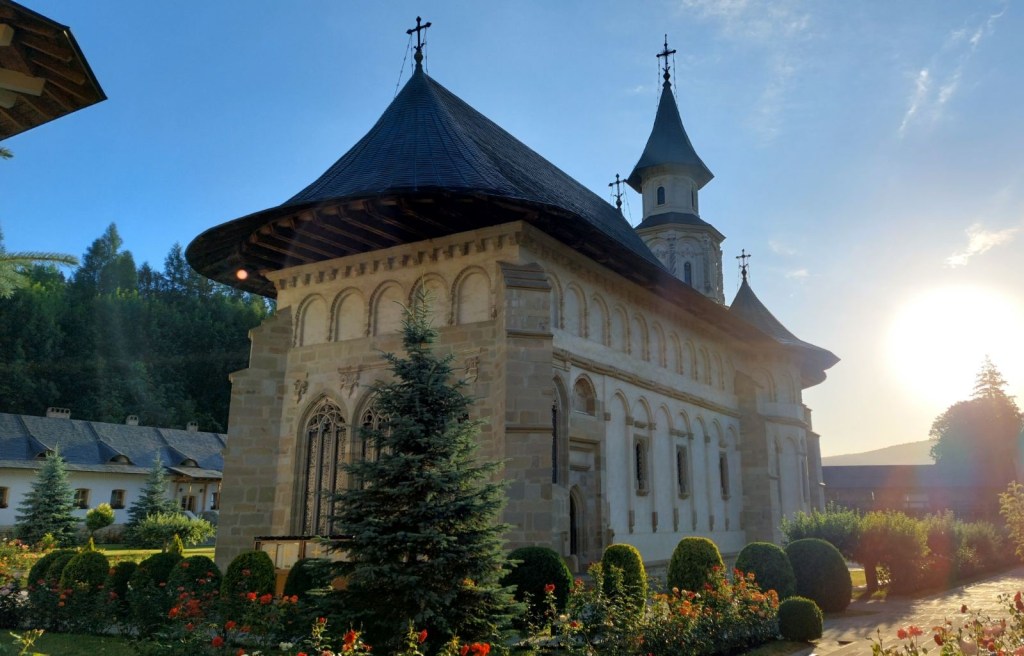
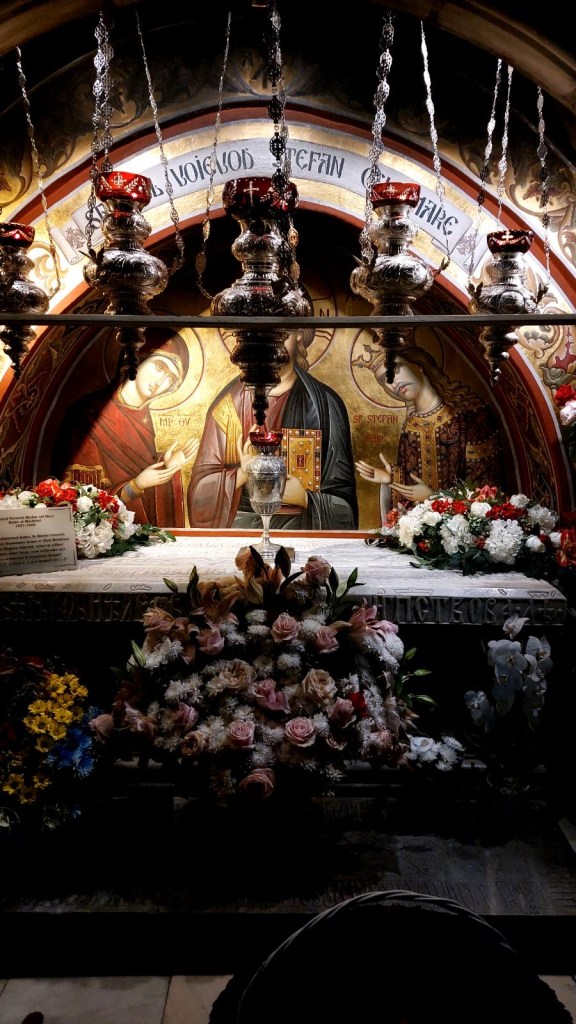
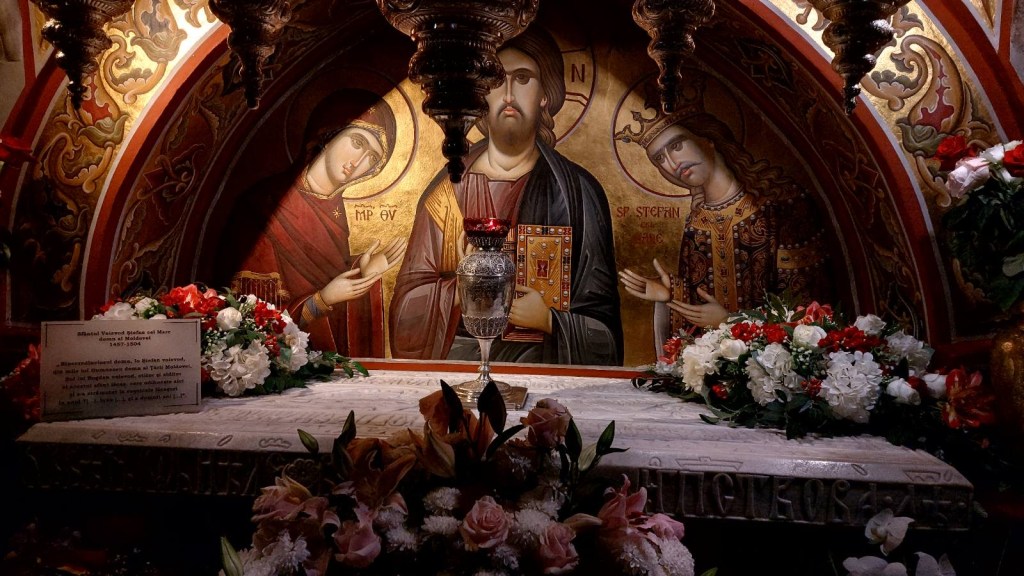
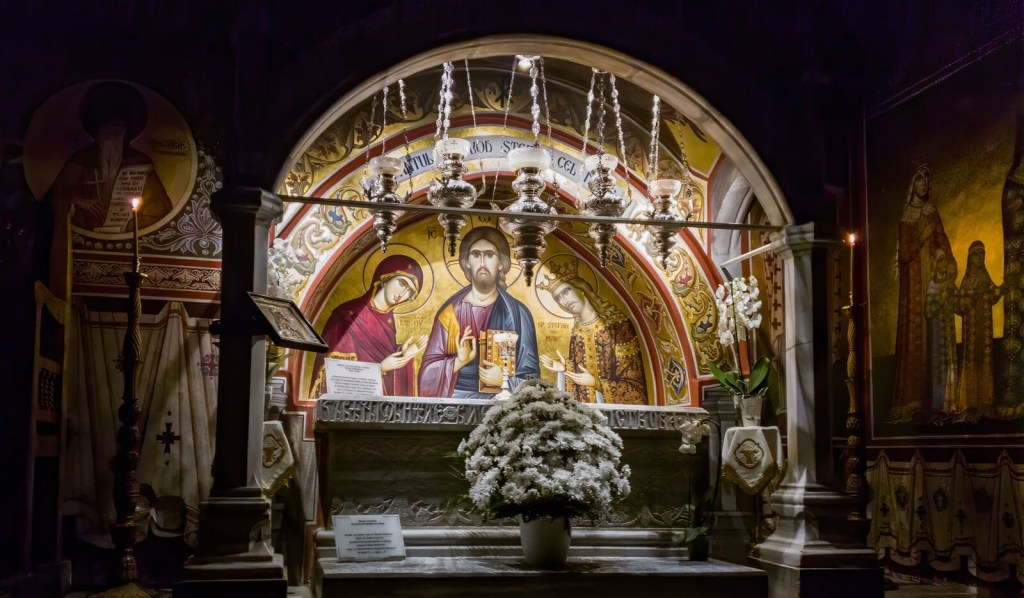
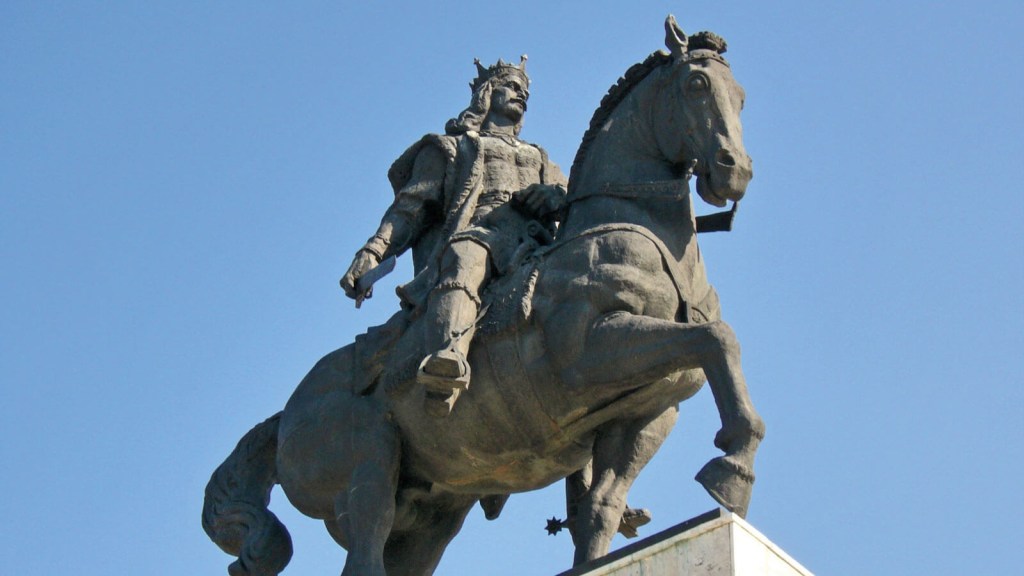
Our pilgrimage next brought us to Putna Monastery, one of Romania’s greatest spiritual treasures and the heart of Bucovina. Founded in 1466 by Saint Stephen the Great (Voivode), it became both the spiritual centre of his kingdom and the place he chose for his own burial.
More than five centuries later, Putna remains a living monastery and one of the foremost pilgrimage destinations in Romania. Surrounded by the peaceful forests of Bucovina, it continues to draw countless pilgrims who come to venerate the tomb of Saint Stephen the Great, revered not only as a remarkable ruler, but also as a saint whose life united courage, humility and profound faith in Christ.
One of the highlights of our visit was the Museum of Putna Monastery, which preserves an outstanding collection of manuscripts, icons, embroidered vestments, liturgical vessels and other treasures of medieval Moldavia. Together they bear witness to the remarkable spiritual, artistic and cultural heritage that flourished under Saint Stephen’s patronage.
Standing before his tomb, one quickly understands why Putna has remained a place of prayer, remembrance and hope for generations of Orthodox Christians. It is not simply a monument to the past, but a living witness to the enduring faith of the Romanian people.
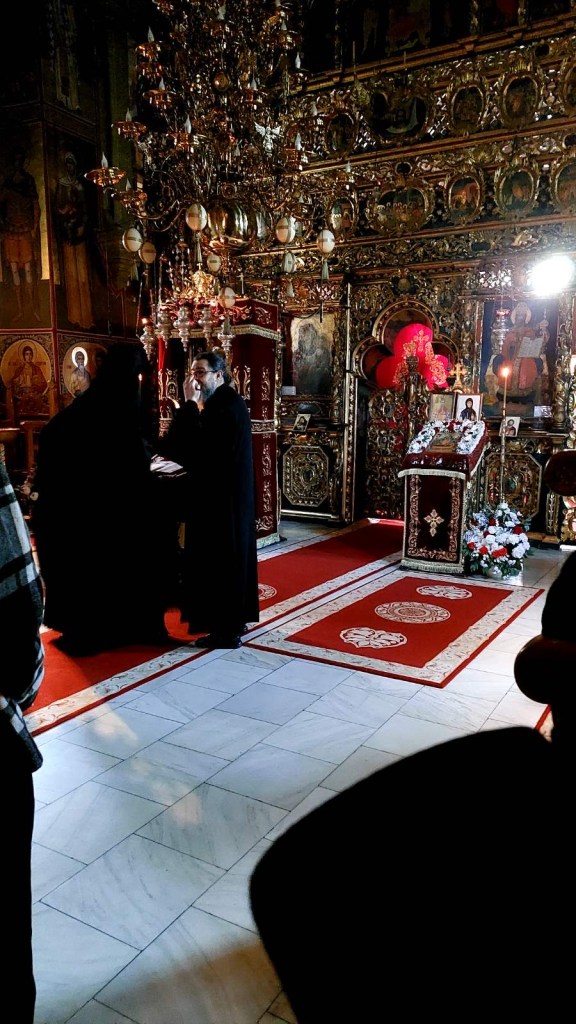
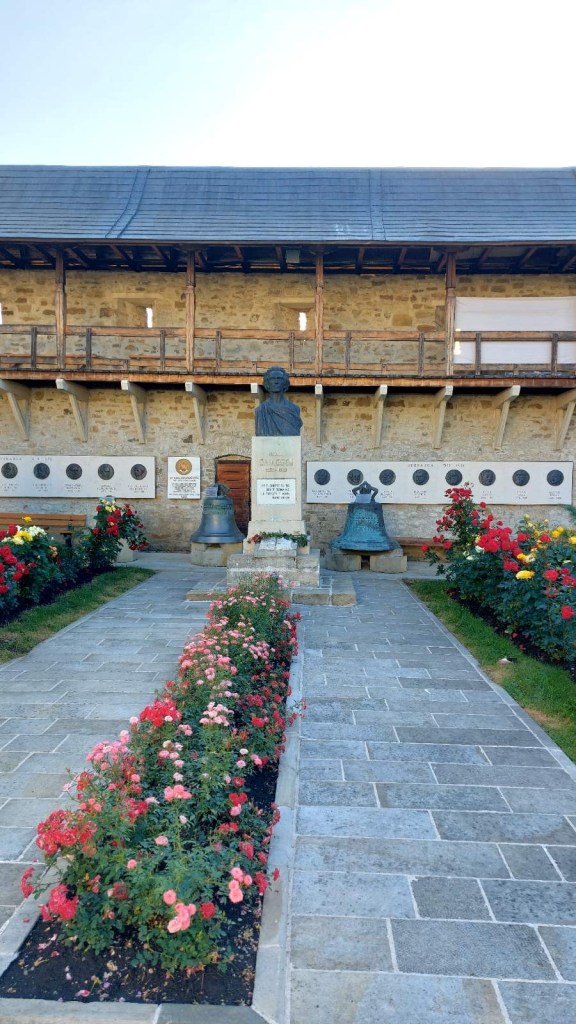
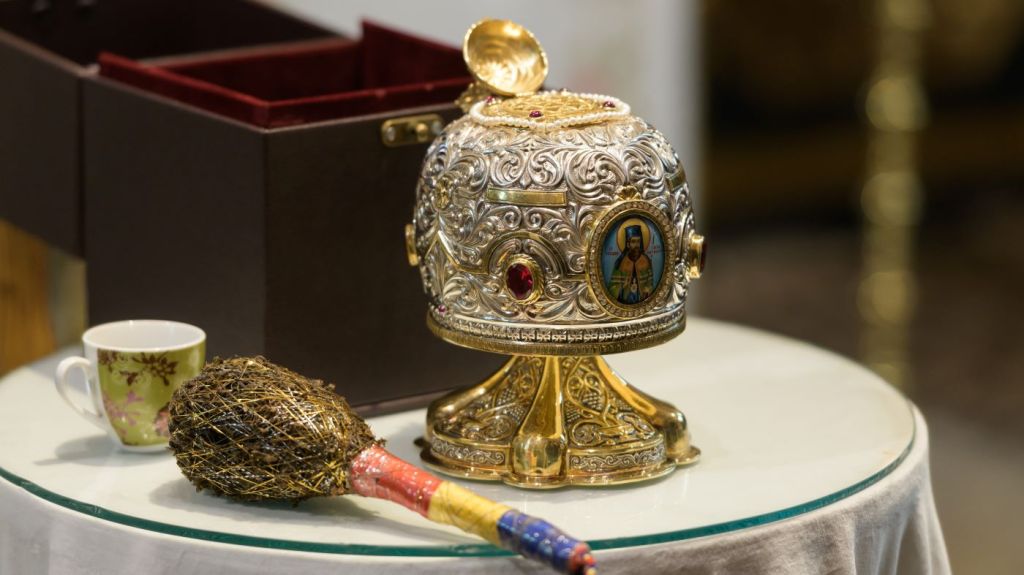
Photographs: Putna Monastery; the Tomb of Saint Stephen the Great (Voivode); the Chapel of the Holy Relics; the Holy Relics of Saint John of Trebizond; the Museum of Putna Monastery; and the monastery grounds.
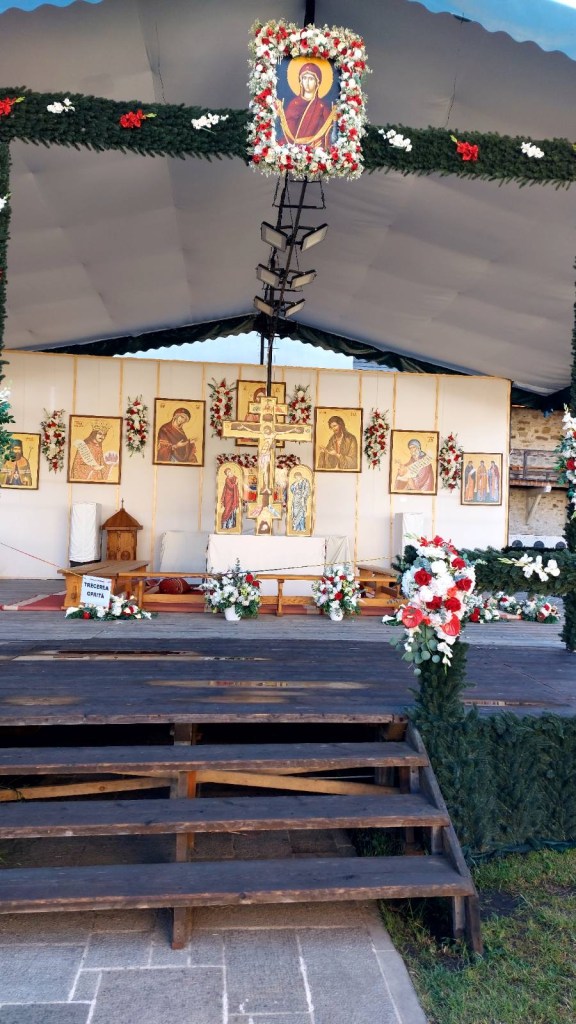
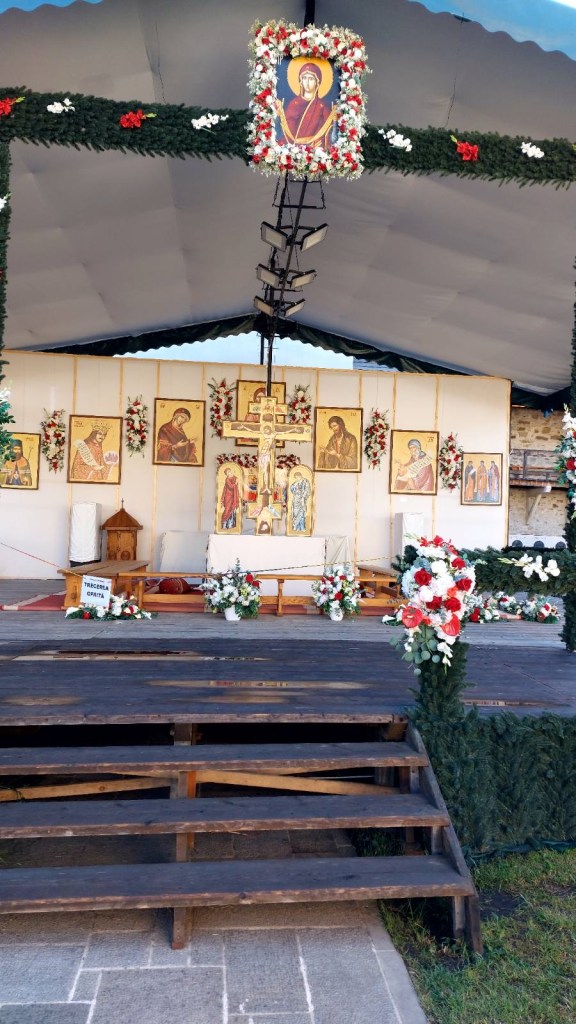
The outdoor sanctuary where the Divine Liturgy and other liturgical services are celebrated.
The Chapel of the Holy Relics at Putna Monastery.
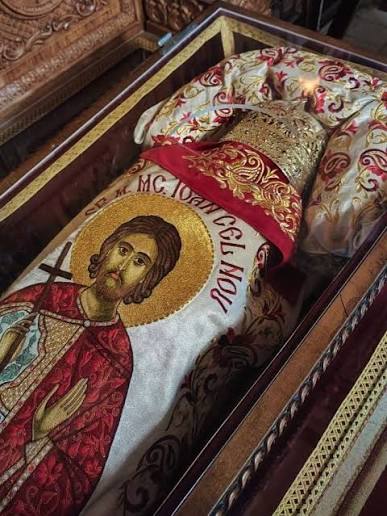
The Holy Relics of Saint John of Trebizond, whose feast we had celebrated at his monastery only a few days earlier.
As we left the forests of Neamț and Bucovina behind, one impression remained above all others. Every monastery we visited, every hermitage hidden among the trees, every saint whose relics we venerated, bore witness to the same enduring truth: holiness is born in a life centred on Christ.
From the hidden asceticism of Saint Theodora of Sihla, to the gentle wisdom of Saints Paisios (Olaru) and Cleopa (Ilie), and finally to the steadfast faith of Saint Stephen the Great, this part of our pilgrimage became far more than a journey through beautiful monasteries. It became a journey through living examples of prayer, humility, perseverance and unwavering trust in God.May their prayers accompany us, and may their lives encourage us to seek, each in our own circumstances, the same path that leads to Christ.
As our pilgrimage through Romania drew to its close, we departed with far more than photographs and memories. We left carrying the quiet witness of a land where monasteries still breathe with prayer, where the lives of the saints remain deeply woven into the life of the people, and where history continues to speak through places sanctified by faith and sacrifice.
From the holy city of Iași to the forests of Neamț and Bucovina, from the hidden cave of Saint Theodora of Sihla to the humble cells of Saints Paisios (Olaru) and Cleopa (Ilie), and finally to the tomb of Saint Stephen the Great at Putna, each step of the journey revealed another facet of Romania’s rich Orthodox heritage. Different centuries, different vocations and different circumstances, yet all bore witness to the same Gospel lived with faithfulness and love.
Perhaps that is the greatest gift of pilgrimage. It reminds us that holiness is never confined to one place or one age. The saints whom we honour were ordinary men and women who responded wholeheartedly to God’s call, and their witness continues to encourage all who seek Christ today.
As we returned home, we carried with us not only admiration for Romania’s monasteries and sacred treasures, but also gratitude for the living faith that continues to sustain them. May the prayers of all the saints of Romania strengthen our own pilgrimage, until we too reach the heavenly homeland, where every earthly pilgrimage finds its true fulfilment.
Today the Church ascends Mount Tabor. A blessed day to continue our pilgrimage*!
Prayer, Memory and Sacrifice
After the celebrations in honour of Saint Stephen the Great, our pilgrimage through Romania continued with visits to several of Iași’s most treasured holy places.
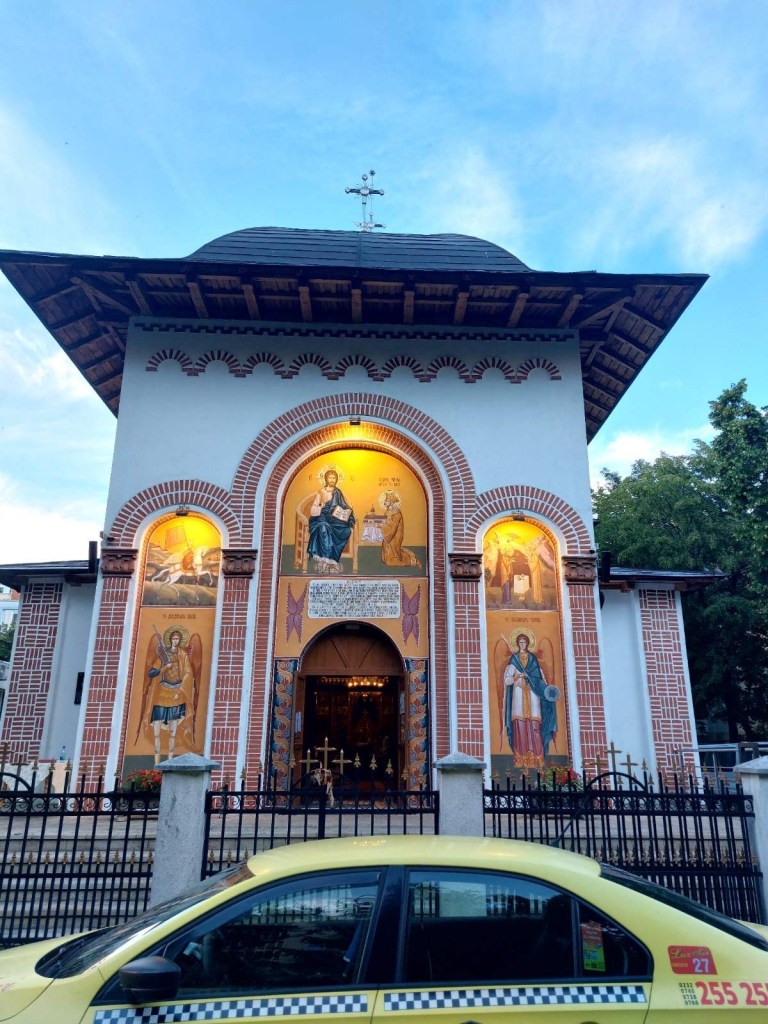
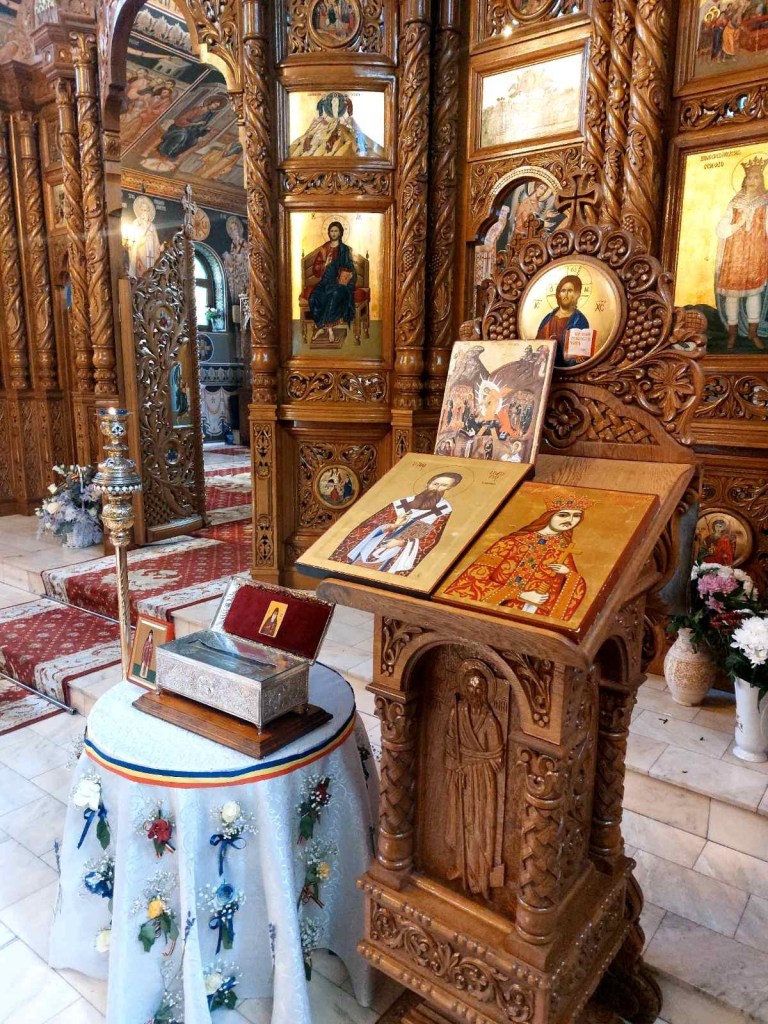
Our first stop was the Church of Saint Nektarios of Pentapolis, one of the city’s newer churches, where countless faithful gather to seek the prayers of one of the most beloved saints of the modern Orthodox world.
From there we made our way to the magnificent Church of Saint Parascheva of Epivates, the spiritual heart of Iași and the resting place of the incorrupt relics of Romania’s beloved patroness. Throughout the year, pilgrims from across Romania and far beyond come here to venerate the saint whose life of humility and holiness continues to inspire generations of Orthodox Christians.
Beneath the church lies the beautifully arranged Ecclesiastical Museum, whose collections preserve centuries of Romanian Orthodox history through manuscripts, icons, liturgical vessels, vestments and other treasures of the Church. More than a museum, it offers visitors a quiet glimpse into the rich spiritual heritage of the Romanian people.
The Church of the Holy Mandylion of Our Lord and the Holy Brâncoveanu Martyrs
Before leaving Iași, we visited one of the city’s newest Orthodox churches, the Church of the Holy Mandylion of Our Lord and the Holy Brâncoveanu Martyrs. Consecrated in 2021, it is distinguished by its magnificent mosaics, beautifully crafted stained-glass windows and harmonious architectural design.
What makes this church especially remarkable is that many of its mosaics and stained-glass windows were created on site through the dedicated work of the parish priest’s family together with volunteers from the local parish community—a beautiful expression of faith offered through craftsmanship.
The church also features an unusual architectural design. The floor slopes gently towards the sanctuary, allowing even those standing at the very back to participate fully in the Divine Services with an unobstructed view of the Holy Altar.
It is a striking example of how artistic beauty, community dedication and thoughtful pastoral care can come together in the building of a contemporary Orthodox church.
Photographs: The Church of the Holy Mandylion of Our Lord and the Holy Brâncoveanu Martyrs.
Leaving Iași behind, we travelled westward into the wooded hills of Neamț County, one of Romania’s great monastic regions. There, surrounded by forests that have sheltered generations of monks and hermits, stands the historic Secu Monastery, where prayer, history and sacrifice meet remarkably.
Nestled deep within the forests of Neamț County, Secu Monastery is one of Romania’s oldest and most beautiful monastic communities. Hidden in the quiet valley of the River Secu, it has remained a place of prayer and spiritual life for almost five centuries.
Its origins date back to the beginning of the sixteenth century, when a small group of hermits settled in this secluded valley under the guidance of Hieroschemamonk Zosima from nearby Neamț Monastery. Around 1530, they established Zosima’s Hermitage, and a few years later, the Moldavian ruler Petru Rareș built a church for the growing community. His wife, Princess Elena, later enclosed the hermitage with strong stone walls, parts of which still survive today beside the monastery cemetery.
During the following decades, the monastery steadily expanded, receiving generous support from successive rulers of Moldavia. What had begun as a tiny hermitage gradually developed into one of the most important spiritual centres of the region, preserving an unbroken tradition of Orthodox monastic life that continues to this day.
Yet Secu Monastery is remembered not only for its peaceful monastic witness, but also for one of the most moving chapters in modern Greek history.
On 3 July, a memorial service was celebrated at Secu Monastery in honour of the Greek heroes who fell here during the Greek War of Independence.
It was within these monastery walls, in September 1821, that the revolutionary leaders Georgakis Olympios and Ioannis Farmakis, together with their remaining companions, made their final stand against overwhelming Ottoman forces. Choosing death rather than surrender, they transformed the monastery into a place forever linked with both martyrdom and freedom.
The memorial service was held at the very site of their sacrifice and beside their graves. It was a deeply moving act of remembrance and gratitude towards those whose courage marked the closing chapter of the Greek struggle in the Danubian Principalities.
Standing in this quiet monastery today, it is difficult to imagine the violence that once shattered its silence. Yet perhaps that contrast itself speaks most eloquently. The same walls that once echoed with the sounds of battle now resound with prayer, reminding every pilgrim that sacrifice offered for Christ, for freedom, and for one’s neighbour is never forgotten.
Memory eternal to the heroes of Secu Monastery!
May the prayers of all the saints of Romania strengthen our own pilgrimage, until we too reach the heavenly homeland, where every earthly pilgrimage finds its true fulfilment.
May the uncreated light of the Transfigured Christ illumine our hearts, strengthen our faith, and guide us on the path of salvation. May we faithfully hear His voice, follow His Gospel, and reflect His glory in our lives. Blessed Feast of the Holy Transfiguration!
“Kali Panagia”, Καλή Παναγιά!, is a traditional Greek seasonal greeting meaning “Blessed Panagia” or “May you reach the feast of the Panagia in good health,” used in the days leading up to August 15. My love and poor prayers for all of you, and forgive the belated post.
Our pilgrimage began in Iași, where we were invited to participate in the celebrations of Saint Stephen the Great together with the fathers of the Holy Monastery of Saint Arsenios the Cappadocian. Their moving presentations on Saint Paisios the Athonite and Saint Arsenios the Cappadocian—both of whom they had personally known—gave a special spiritual character to the opening of our journey.
On this occasion, the holy relic of Saint Arsenios the Cappadocian was brought to Iași for the veneration of the faithful, while our pilgrimage also extended to the surrounding regions of Suceava, Putna and other places closely associated with the rich spiritual heritage of Moldavia.
The former abbot of the Holy Monastery of Saint Arsenios the Cappadocian, Elder Theoklitos, together with the present abbot, Elder Synesios, had been invited to Romania to participate in the celebrations of Saint Stephen the Great (Voivode), whose feast is celebrated on 2 July.
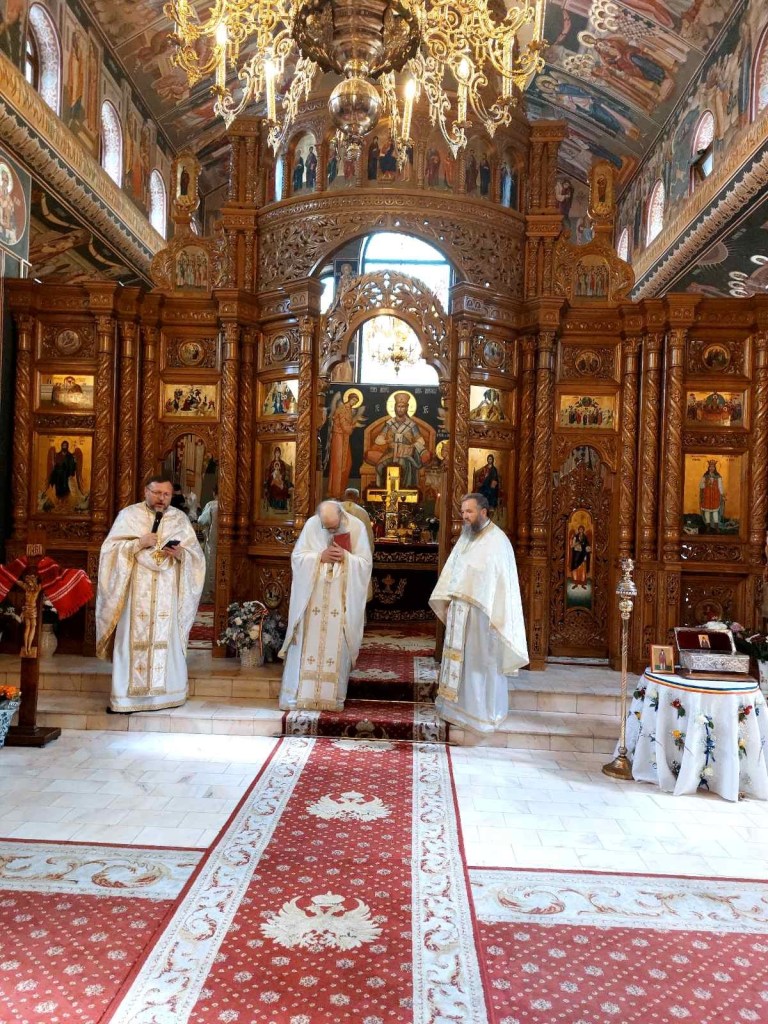
The centre of the festivities was the Holy Church of Saint Stephen the Great (Voivode) in Iași, where the Fathers took part in the festal services and the parish’s patronal celebration. At the conclusion of Great Vespers, the precious relic of Saint Arsenios the Cappadocian was solemnly brought forth for the veneration of the faithful, who gathered in great numbers to receive his blessing.
On the following afternoon, Elder Theoklitos and Elder Synesios again participated in the celebrations, which included Byzantine hymns and a joint address devoted to Saint Paisios the Athonite and Saint Arsenios the Cappadocian. Drawing upon their own personal acquaintance with Saint Paisios, they offered moving recollections of the Elder and spoke about the unique spiritual relationship between these two beloved Cappadocian saints.
The Holy Church of Saint Stephen the Great (Voivode)
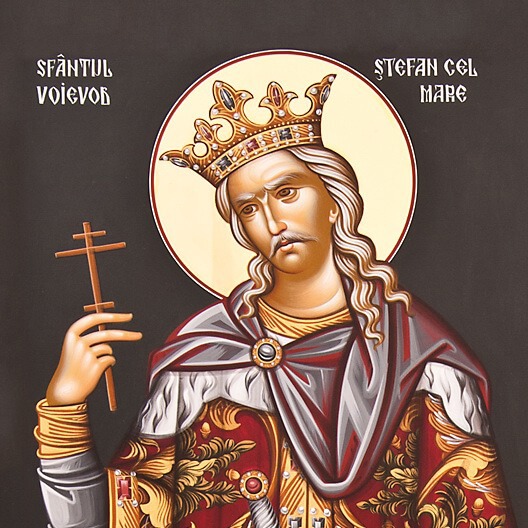
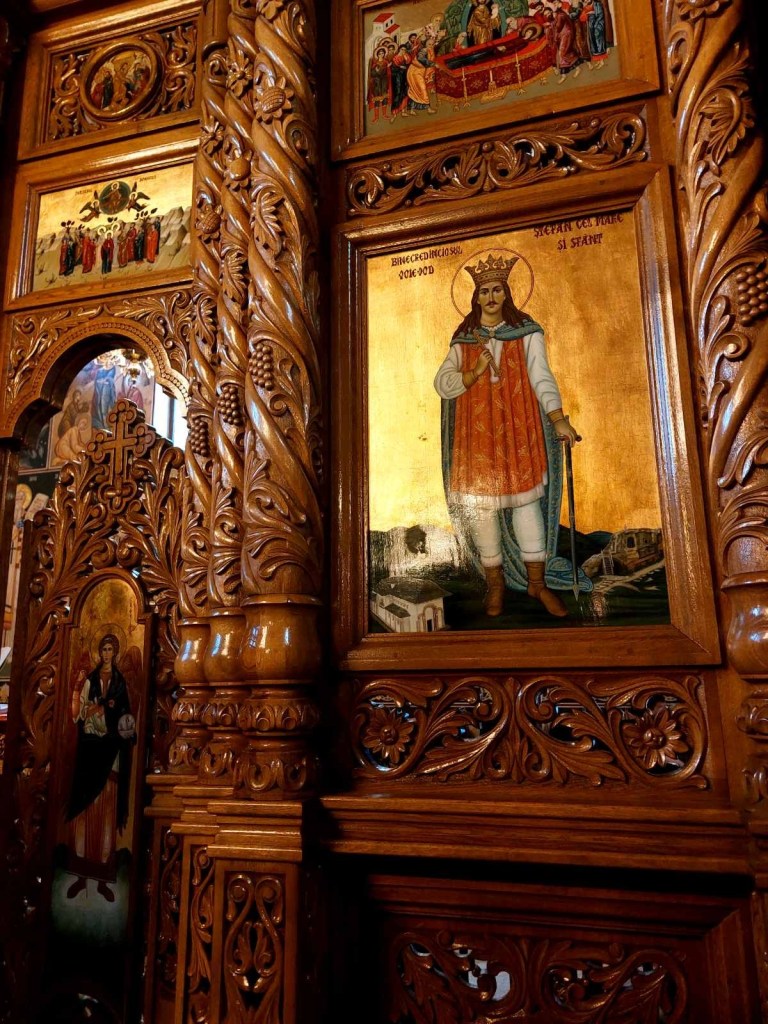
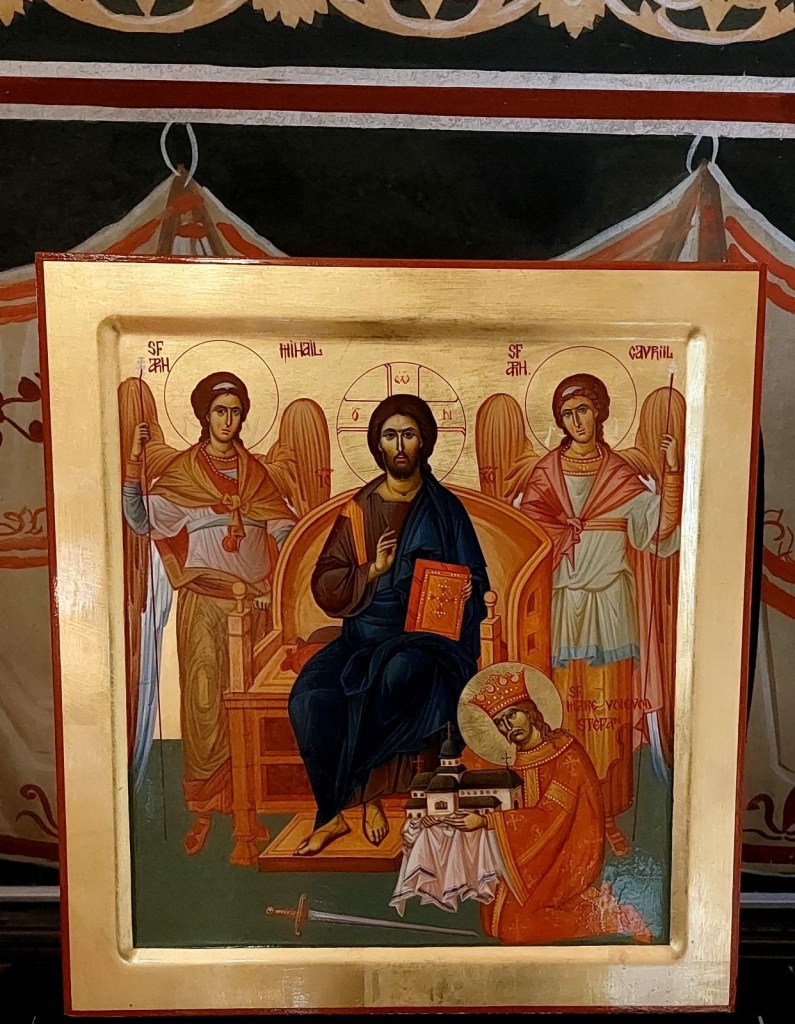
The church hosting the celebrations is dedicated to Saint Stephen the Great, the most renowned ruler of medieval Moldavia and one of the greatest saints of the Romanian Orthodox Church.
According to the Chronicles of the Land of Moldavia written by Grigore Ureche, Stephen was already honoured as a saint immediately after his repose on 2 July 1504. The chronicler simply records:
“After his death, until today, he is remembered as Holy Voivode Stephen.”
This spontaneous veneration reflected the life he had lived. Throughout his reign, Stephen regarded the defence of his homeland and of the Orthodox faith as a sacred vocation. He declared that he would rather “taste death a hundred thousand times” than surrender Moldavia to its enemies.
For almost half a century he stood as one of the principal defenders of Christian Europe against Ottoman expansion. Before the great Battle of Vaslui in 1475, he wrote:
“With all the power given to us by Almighty God, we are always ready, with all our strength and with all the zeal of our hearts, to fight for Christianity.”
His victories earned him the admiration of rulers and chroniclers throughout Europe. Venetian diplomat Matteo Muriano praised his wisdom, justice and generosity, while the Polish historian Jan Długosz considered him the most worthy Christian prince of his age. Even Pope Sixtus IV commended his defence of Christendom against the Ottoman advance.
Yet Stephen himself attributed every victory not to military skill but to the grace of God. Following his famous victory at Vaslui, he ordered that no one should praise him, but only God, and according to Jan Długosz he observed a forty-day fast of bread and water in thanksgiving.
The Holy Cross remained the guiding sign of his entire reign. Churches, monasteries and stone crosses were raised in gratitude after victories, and many of the churches he founded were dedicated on the Feast of the Exaltation of the Holy Cross. Above all, he believed that prayer was the true foundation of a nation’s strength.
His greatest legacy is therefore not only the victories he won on the battlefield, but the remarkable network of monasteries and churches he built throughout Moldavia. More than five centuries later, these holy places continue to draw countless pilgrims who find in Saint Stephen not merely a national hero, but a ruler whose courage was inseparable from humility, repentance and unwavering faith in Christ.
May Saint Stephen the Great and Saint Arsenios the Cappadocian intercede for all who seek to defend the Orthodox faith—not only through courage in times of trial, but through a life of prayer, humility and steadfast trust in God.
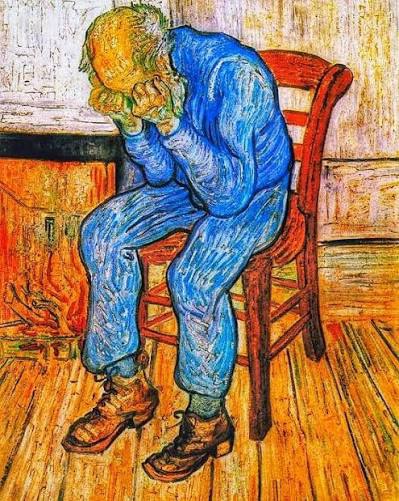
A few days spent in the company of an elderly relative living with dementia became an unexpected invitation to contemplation.
“An aged man in but a paltry thing” indeed (W. B. Yeats, “Sailing to Byzantium”). “
“The brain — is wider than the Sky … deeper than the sea … just the weight of God…” (Cf. Emily Dickinson).
What a beautiful perception of disconnection, especially when old age is combined with dementia and psychiatric disorders. The senses still perceive something even if they do not connect…
“O, let me not be mad, not mad, sweet heaven! Keep me in temper; I would not be mad!” (King Lear’s prayer beforehis descent into madness, Act I, Scene 5)
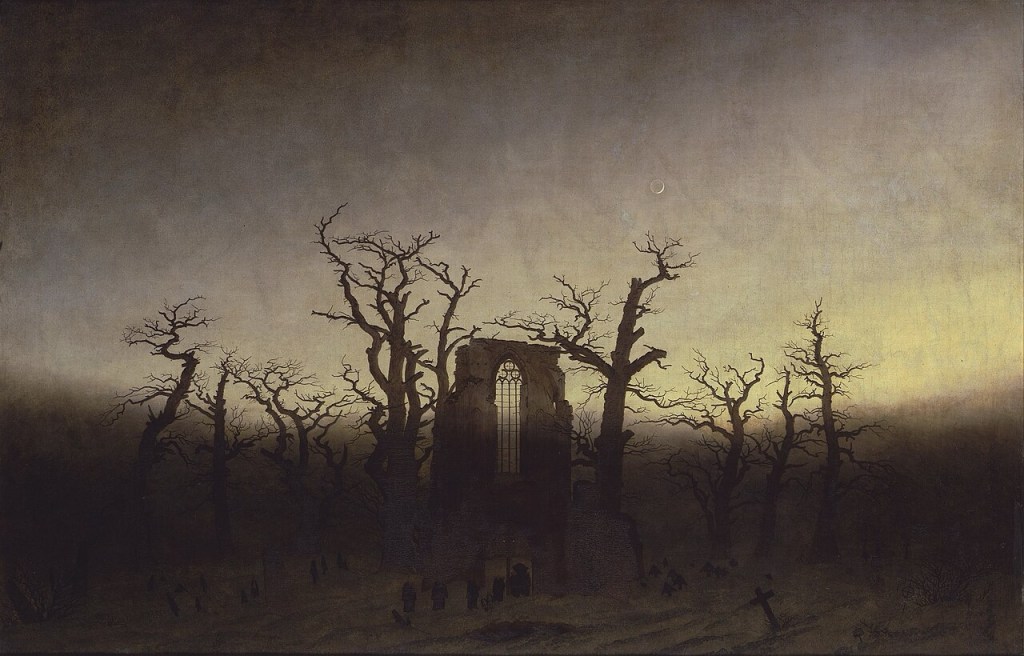
Two paintings, a piece of music, and a prayer accompanied that journey.
Vincent van Gogh – At Eternity’s Gate (1890)
*
Caspar David Friedrich – Abbey in the Oakwood
Come, O true Light.” — St Symeon the New Theologian
“… Come to us, who lie in hell,
… Come, you who have lusted and lust
my suffering soul
come, you alone
to me alone
because, as you see
I’m alone!…
Come, you who set me apart from everything
and you made me unique on earth…”
Only afterwards did I realise that those few days had become an unexpected continuation of “The Talk That Prepared Me”. It is one thing to speak about courage in the presence of suffering; it is another to discover whether one can quietly remain beneath the Cross.
Beyond the Cross, the path continues.
(*) Robert Schumann’s Geistervariationen (“Ghost Variations”) was the last work he completed. He composed it in February 1854, shortly before his suicide attempt and subsequent admission to a psychiatric asylum, where he spent the final years of his life.
The title had already been chosen for me: “Courage in Conflict: Saint Mary Magdalene the Myrrh-Bearer and Equal to the Apostles, and the Righteous Martyr Maria Skobtsova.” Their memory fell this week on this Monday 20/7 and this Wednesday 22/7 in the Antiochian calendar.
At first, I approached the task as I usually do. I gathered books, reread familiar passages, arranged notes and searched for a thread that might hold everything together. It seemed like another talk to prepare.
It was not.
The longer I lived with these two women, the less I found myself able to speak about them. Instead, I found myself becoming quietly unsettled by them.
Mary Magdalene remained beneath the Cross. (Matthew 27:55–56, Mark 15:40–41, and John 19:25)
How many times have I read those words without really stopping there?
Mary could not change anything. She could not shorten Christ’s suffering by a single moment. She simply remained.
Then, “while it was still dark” (John 20:1), she returned once more to the tomb, only to hear the risen Lord speak her name.
“Mary.” (John 20:16)
And then those mysterious words:
“Do not cling to Me.” (John 20:17)
For reasons I cannot fully explain, I found myself lingering there…
A few pages later I was walking the streets of occupied Paris with Mother Maria.
There was another darkness.
Another kind of Cross.
Another way of remaining.
A knock at the door.
Another frightened face.
Another meal.
Another act of mercy that no one would remember.
Someone once asked her whether she was afraid.
“I am afraid… but one must do what love requires.”
I had read that sentence many times.
This time I could not read past it.
Somewhere during this week I realised that I had been measuring courage far too easily.
It is one thing to admire the faithfulness of the saints.
It is another to recognise how little I know of such love in the ordinary circumstances of my own life.
Most likely I shall never stand beneath a literal Cross or walk voluntarily into a concentration camp.
Yet hidden Calvaries are closer than we imagine.
They lie behind the doors of ordinary homes, where love quietly bears what cannot easily be changed; where a husband or wife chooses patience once more; where parents continue to hope for a child who seems to have lost the way; where sons and daughters care faithfully for ageing parents; where forgiveness is offered again before yesterday’s wounds have fully healed.
As I was contemplating all this, another question slowly emerged.
What about my own hidden Calvary?
Not the heroic one I shall probably never be asked to carry.
The ordinary one.
The conversation that requires patience one more time.
The disappointment that asks not to become bitterness.
The neighbour who is difficult to love.
The quiet sacrifice that no one notices except God.
Then, this haunting question which He still asks His disciples throughout the centuries .
“Will you remain?”
Will I remain? …
If I do…I shall find Him exactly where Mary Magdalene and Mother Maria found Him. Waiting for me! For all of us.
I realised that I had spent years admiring extraordinary acts of courage while often overlooking the countless opportunities for faithfulness hidden within an ordinary day.
Now I have begun to understand that courage is not only found in great moments.
It is found in remaining.
Remaining beside a Cross.
Remaining beside another person’s suffering.
Remaining faithful when nothing seems to change.
Remaining with Christ when He appears absent.
Remaining with another human being when every instinct whispers that it would be easier to walk away.
Perhaps this is why Mary Magdalene and Mother Maria began to dwell together in my nous.
Not because their lives resembled one another.
They did not.
One stood in a garden outside Jerusalem.
The other walked the streets of occupied Paris.
Yet both discovered that love does not retreat before fear.
Both remained.
The more I reflected on them, the more another question quietly followed me.
Mary Magdalene recognised the risen Lord when He spoke her name.
Mother Maria recognised Him in every suffering face.
Most people saw strangers.
She saw Christ.
Most people saw danger.
She saw Christ.
Most people saw burdens.
She saw Christ.
I found myself wondering how often Christ has stood before me unnoticed because I was looking for someone more extraordinary.
One of my spiritual father’s sayings has come to my mind many times since giving the talk:
“Courage is the necessary ancillary of all the virtues.”
The older I become, the truer those words seem.
Without courage, forgiveness remains only an intention.
Without courage, patience soon gives way.
Without courage, generosity stays safely within the imagination.
Every virtue eventually asks us to give something of ourselves.
Perhaps that is why courage matters so much.
Not because it makes heroes of us.
But because it allows love to become real.
…
The talk has now been given.
The questions afterwards have ended.
Life has returned to its familiar rhythm.
What has remained are two women.
I cannot help wondering whether their quiet proximity in the Antiochian calendar has something to teach me.
Not because their lives were similar.
But because each, in her own way, refused to let love retreat before fear.
Long after we have finished speaking about the saints, they continue, patiently and almost imperceptibly, to speak about us.
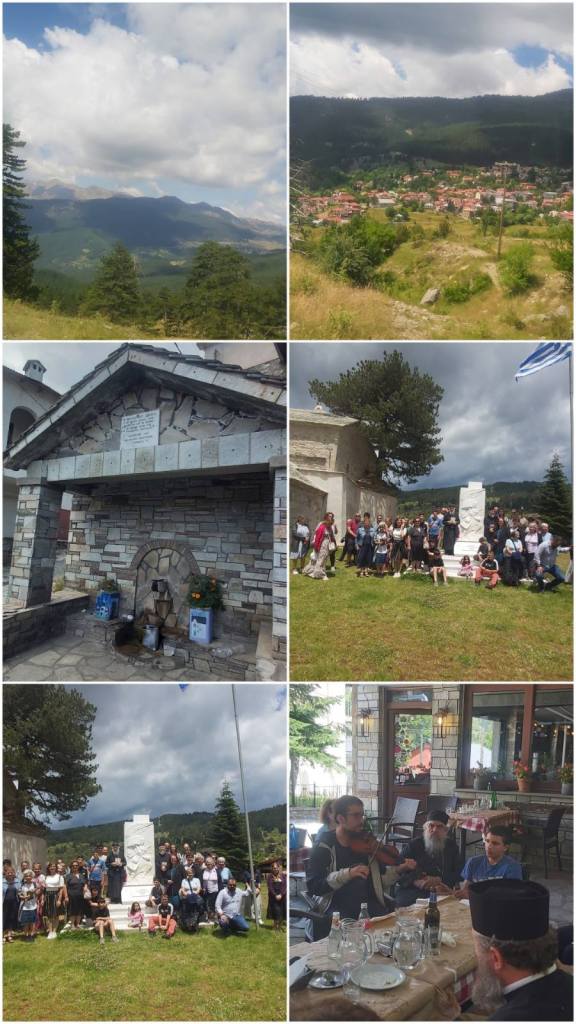
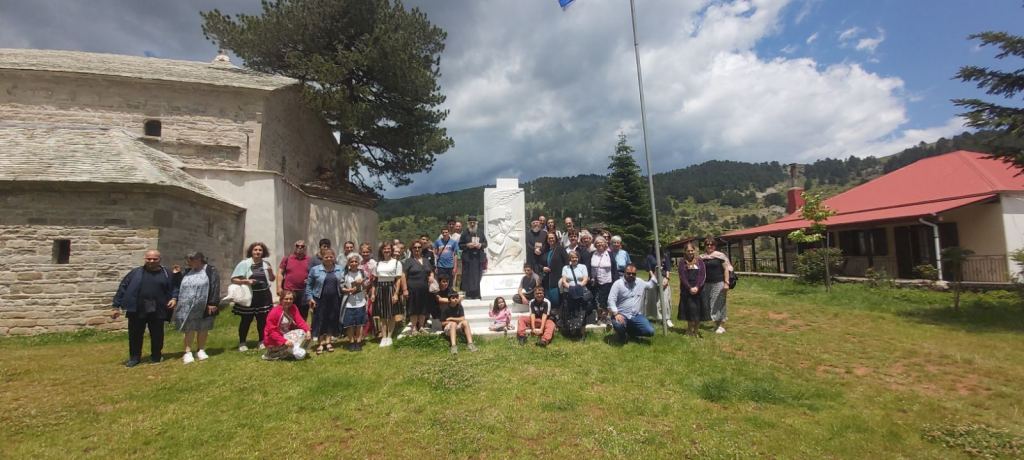
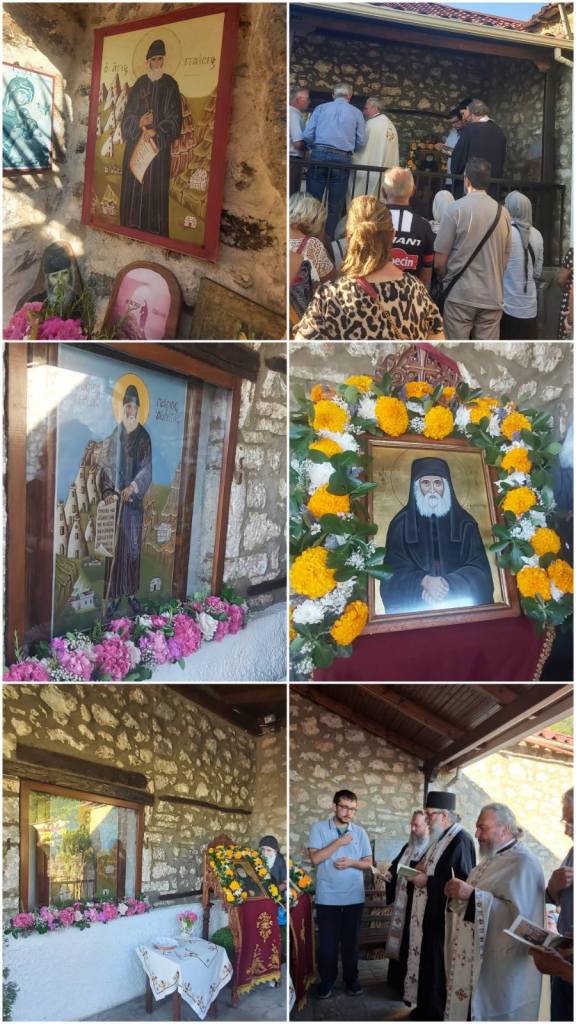
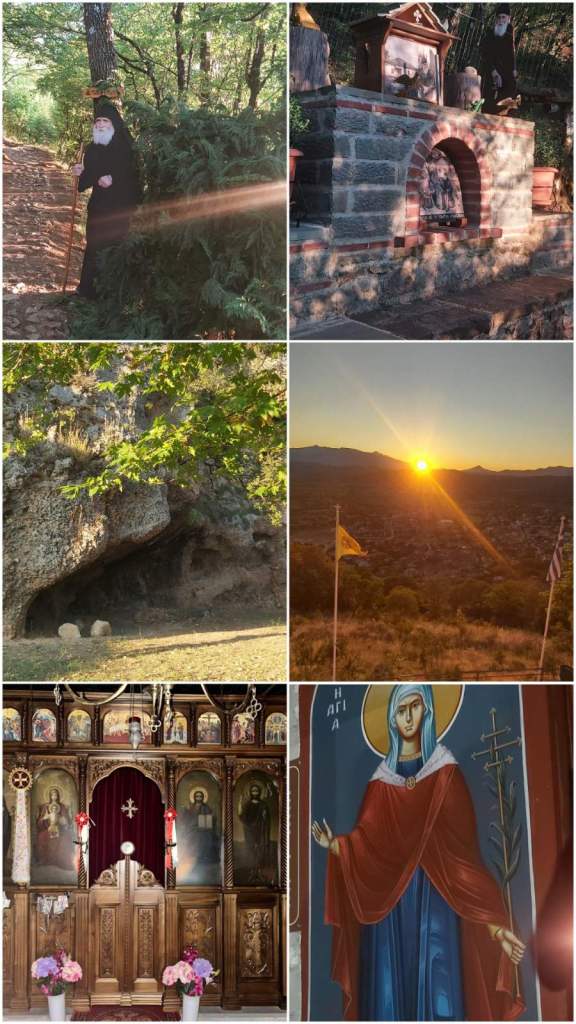
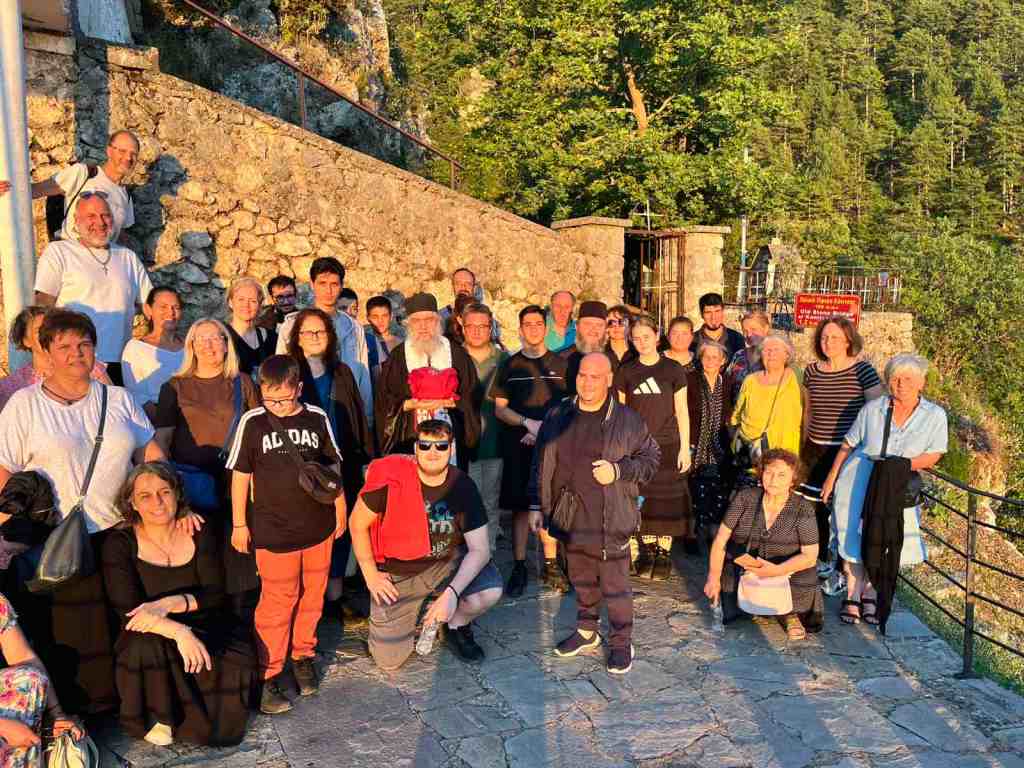
On the occasion of the three-day celebrations in honour of our beloved Saint Paisios, we undertook a pilgrimage to Konitsa and the surrounding region, combining prayer and worship with the beauty of the mountains, rivers and historic villages of Epirus and Western Macedonia.
Day One
Samarina and Konitsa
Our pilgrimage began with a visit to Samarina in the region of Grevena, one of the most beautiful mountain villages of the Pindus and one of the best-known historic Vlach villages.
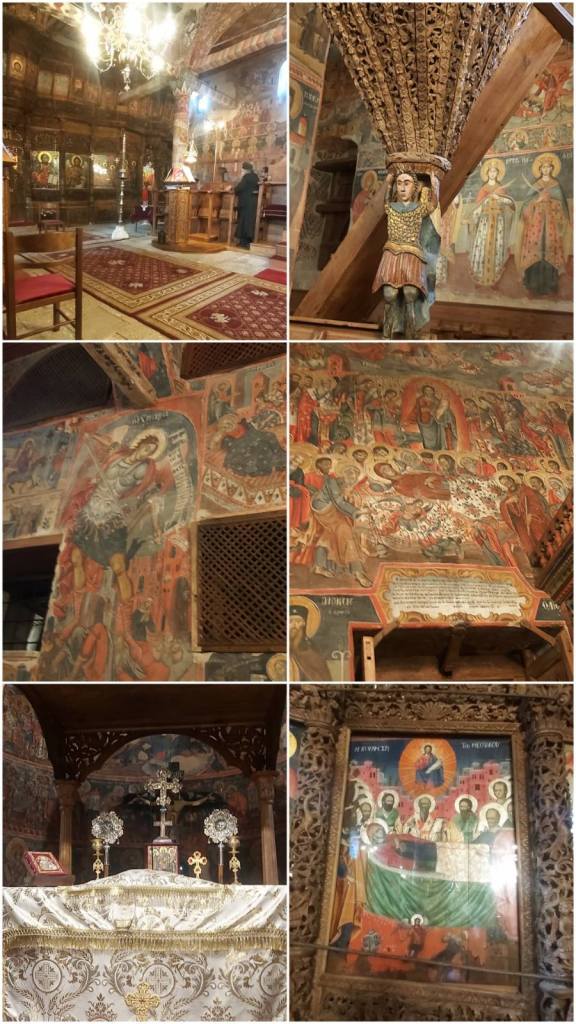
There, we visited the Church of the Nativity of the Theotokos, commonly known as the “Great Panagia,” and venerated the grace-filled presence of the Mother of God.
Reconstructed in 1819, the imposing church stands at the heart of the village. It is renowned for its magnificent carved wooden iconostasis, its remarkable frescoes painted by local iconographers, and the centuries-old pine tree that rises through the roof of the sanctuary.
The church celebrates its feast on 15 August, when Samarina welcomes the great annual gathering of the Vlachs in a vibrant atmosphere of faith, tradition and communal joy.
Interior of the Church of the Great Panagia in Samarina
Samarina
The family home of Saint Paisios and a Supplicatory Service in his honour
*
In the afternoon, we travelled to Konitsa and visited the family home of Saint Paisios. There, a Supplicatory Service was celebrated in his honour, in the very place associated with his childhood and early years.
Later that afternoon, we made our way to the Chapel of Saint Barbara, where Saint Paisios experienced a divine manifestation. In the quiet and prayerful atmosphere of the chapel, we celebrated Compline.
Chapel of Saint Barbara in Konitsa
Compline at the Chapel of Saint Barbara
*
Day Two
The Pilgrimage to the Monastery of Stomio
The walk to the Monastery of Stomio
The scenery is dramatic! The Monastery of Stomio is dwarfed by the vast Aoos Gorge. The Aoos River winds between the mountains. Look at the narrow, steep-sided gorge with its turquoise waters, and in another season, the gorge in autumn, with dramatic light, cliffs, and layered mountain peaks.
Before dawn, we departed from the historic arched bridge of Konitsa and began the five-kilometre walk to the Holy Monastery of the Nativity of the Theotokos at Stomio.
The path followed the course of the Aoos River through a landscape of exceptional natural beauty. The stillness of the early morning, the sound of the river and the surrounding mountains gave the journey the character of a true pilgrimage.
At the end of the path, we reached the monastery where Saint Paisios lived in asceticism for four years. During his time there, he laboured tirelessly to restore the monastery, which had been extensively damaged after being burned by German forces during the war.
At Stomio, we celebrated the Divine Liturgy and venerated the Saint’s humble cell, the newly built church dedicated to him, and the grave of the former abbot, Fr Kosmas.
After the traditional monastic hospitality, the new abbot of the monastery, Fr Maximos, spoke to us about Saint Paisios, his life at Stomio and the spiritual legacy he left behind.
In the afternoon, we visited the Holy Monastery of Saint Kosmas of Aetolia, where we venerated the holy relics preserved there, including the relics of Saint John of Konitsa.
That evening, we attended the presentation of the documentary Light of Cappadocia at Konitsa Town Hall. The event took place in the presence of His Eminence Metropolitan Alexios of Dryinoupolis, Pogoniani and Konitsa.
Holy Monastery of the Nativity of the Theotokos at Stomio
The Cell of Saint Paisios and the Church of Saint Paisios
The Holy Monastery of Saint Kosmas of Aetolia and the presentation of the documentary Light of Cappadocia at Konitsa Town Hall
*
Day Three
Molyvdoskepastos and Metsovo
The Holy Byzantine Monastery of Molyvdoskepastos
Veneration of the Miraculous Icon of Panagia Pogonianitissa
On Saturday morning, we attended the Divine Liturgy at the historic Byzantine Monastery of Molyvdoskepastos.
Dedicated to the Dormition of the Theotokos, the monastery stands in a place of striking beauty, only four hundred metres from the Greek–Albanian border, near the confluence of the Aoos and Sarantaporos rivers.
There, we venerated the miraculous icon of Panagia Pogonianitissa and prayed before the sacred treasures of this ancient monastery.
In the courtyard, behind the sanctuary, lies the tomb of Metropolitan Sevastianos, the renowned hierarch and tireless defender of Orthodoxy and Hellenism. Nearby is the tomb of the former abbot, Fr Theodoros, where we offered a Trisagion memorial service for the repose of his soul.
After receiving the traditional monastic hospitality, we departed for Metsovo, the beautiful fir-covered Vlach town of the Pindus.
There, surrounded by the beauty of the mountains and the distinctive character of the town, we shared a final meal before beginning our return journey.
The Holy Byzantine Monastery of Molyvdoskepastos, where we venerated the miraculous icon of Panagia Pogonianitissa.
Thus concluded three days filled with prayer, spiritual blessing, fellowship and the beauty of God’s creation.
May Saint Paisios intercede for us and help us all!
Friday the 12th, part 2. Panorama monastery is very beautiful. Set up in the hills above Thessaloniki, one can see the bay. Indeed, we can see over to the place (1) where St. Paisios rests. We venerated Elder Symeon’s tomb (2).
We had two hours of great wisdom. Followed by the blessing from the Hegumenos I. Our discussions were focused on the teachings of St. Simeon the New Theologian, sharing mystical experiences centred on humility.
The teachings of St. Simeon the New Theologian draw heavily from the Desert Fathers. Direct experience of God is something to which all Christians should aim and indeed aspire. The teachings which I read many years ago from St. Symeon the Theologian came flooding back, and the discussion made me want to revisit the books which were formative in my embrace of Orthodoxy. Indeed, the power of the Holy Spirit to change lives is real, and to change individuals, to transform them, and to transform situations in which we find ourselves sometimes feeling rather hopeless.
A theme which, at this time, post-Pentecost days, has been realised in many churches where young people are beginning to return to the church. There is a revival of hope.
The conversation echoed a previous thought about the need for solitude of one‘s self within that space where God exists. If one wants to become a channel of divine grace to others, but this is God’s grace. It is nothing to do with ourselves. It is not ours.
We are nothing, but God makes us something. It’s simply a yes to God in all circumstances. St. Simeon the Theologian emphasises the need to listen to the advice of your spiritual father.
The priest Lev Gillet, in his book, called Encounter at the Well, discusses the situation that our Lord found himself in with a Samaritan woman. Christ, wearied by his journey, asks for some water at Jacob’s well. The martyr St. Philoumenos, who was a priest at the well, was with us in the evening in the form of little prayer cards, those magnetic ones which you attach to your fridges, which we had received earlier in the week from a priest.
We were able to give these to the children. The T family came to greet us, to share their love amongst us, to take a blessing and to sing for us. It was like refreshing water on a hot day.
We Christians thirst for God, and we receive him in fellowship, amongst others who are like-minded. He gives abundantly of His life and of His life-giving spring. The evening concluded with a late meal with M, E, G or J, depending on what you wanted to call him, and A. It was a joyous conclusion to a day of deep discussion, shared experiences, and surprising connections that we made.
Although we should not be surprised by those connections, since we have the same Lord, we have the same Christ, and because in His great love and humility for us, He calls us His friends. Amen.
*
(1) Souroti, the Monastery of St. John the Theologian.