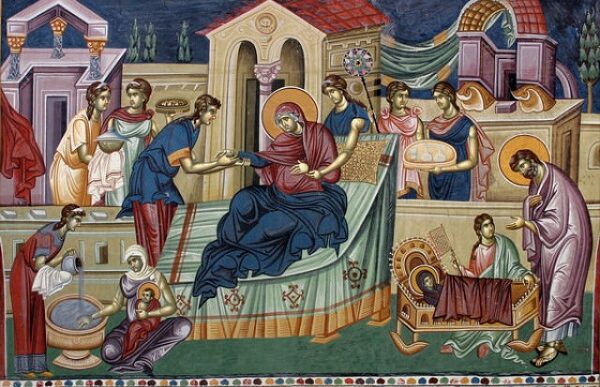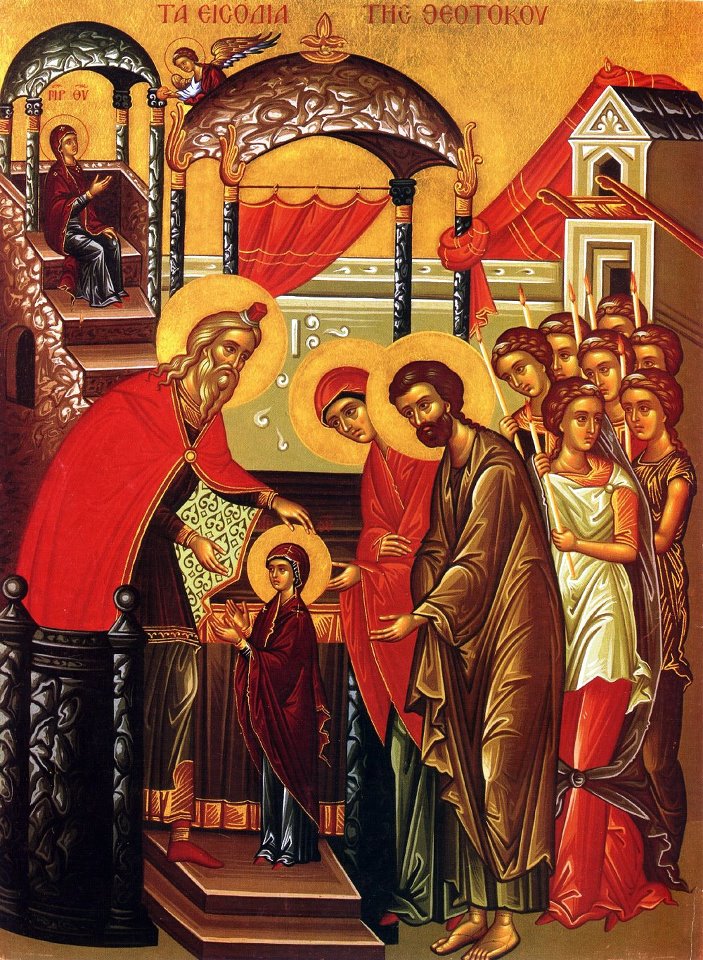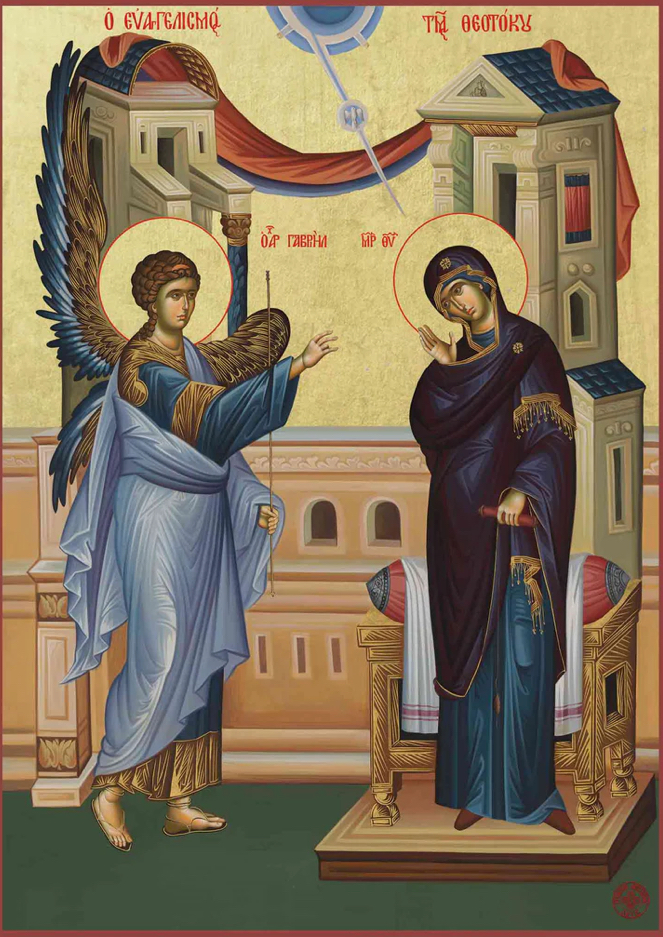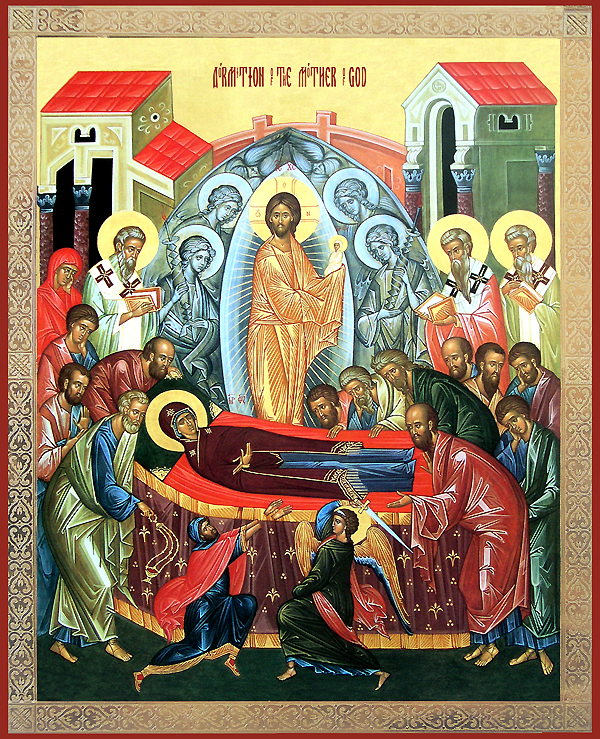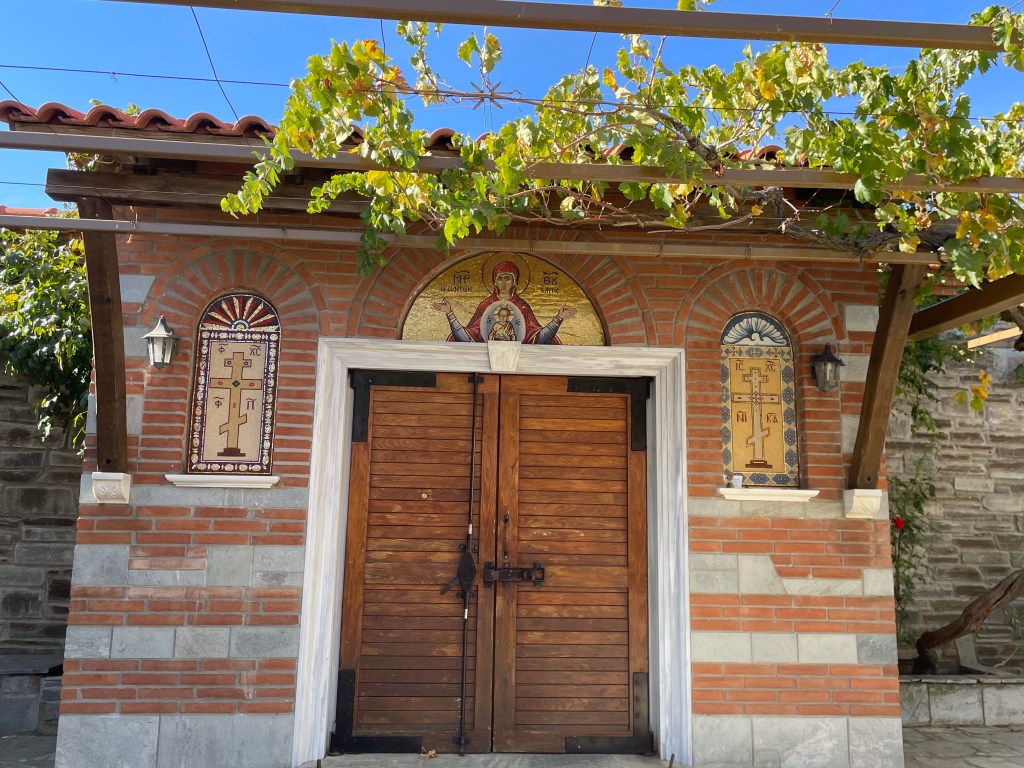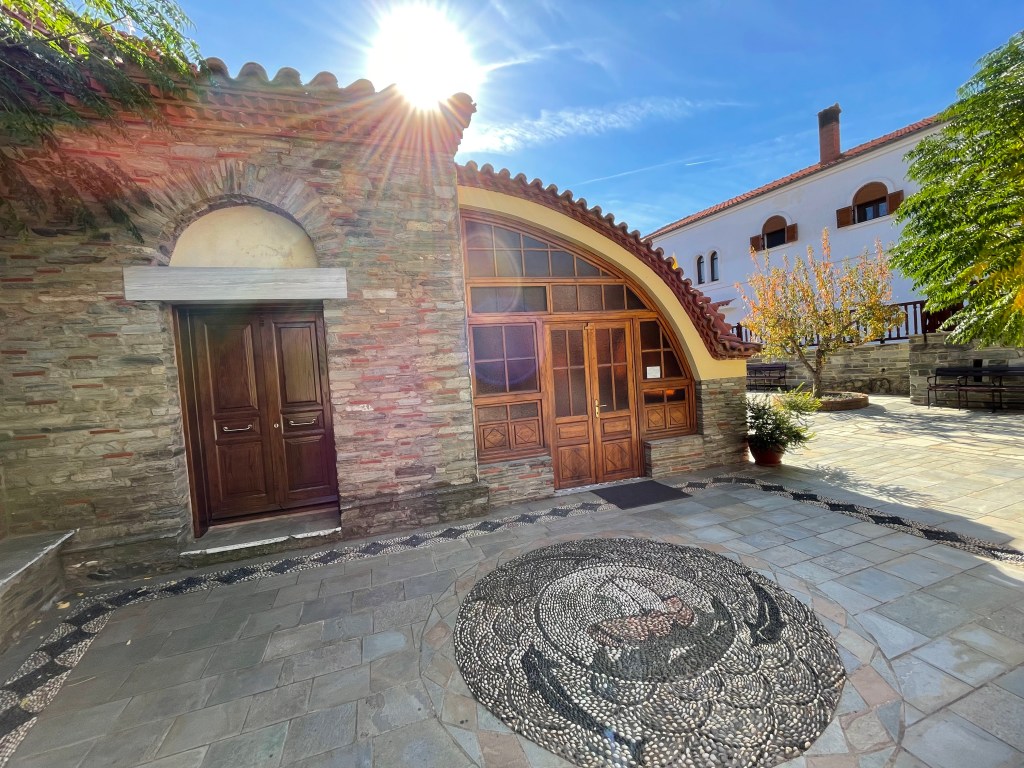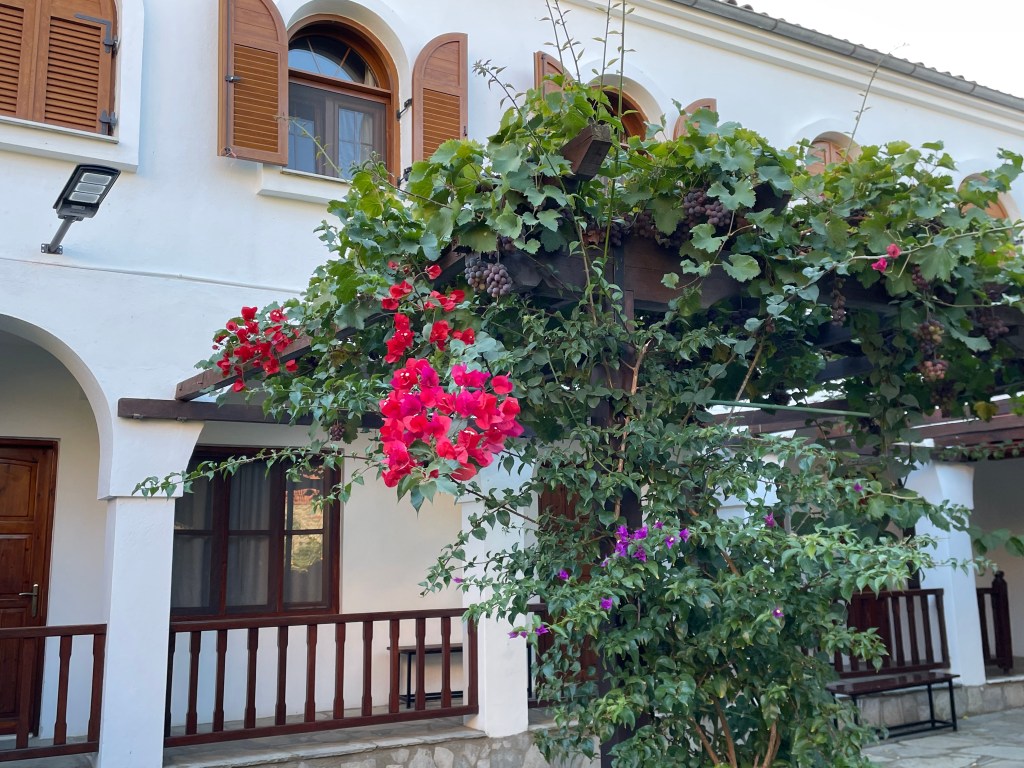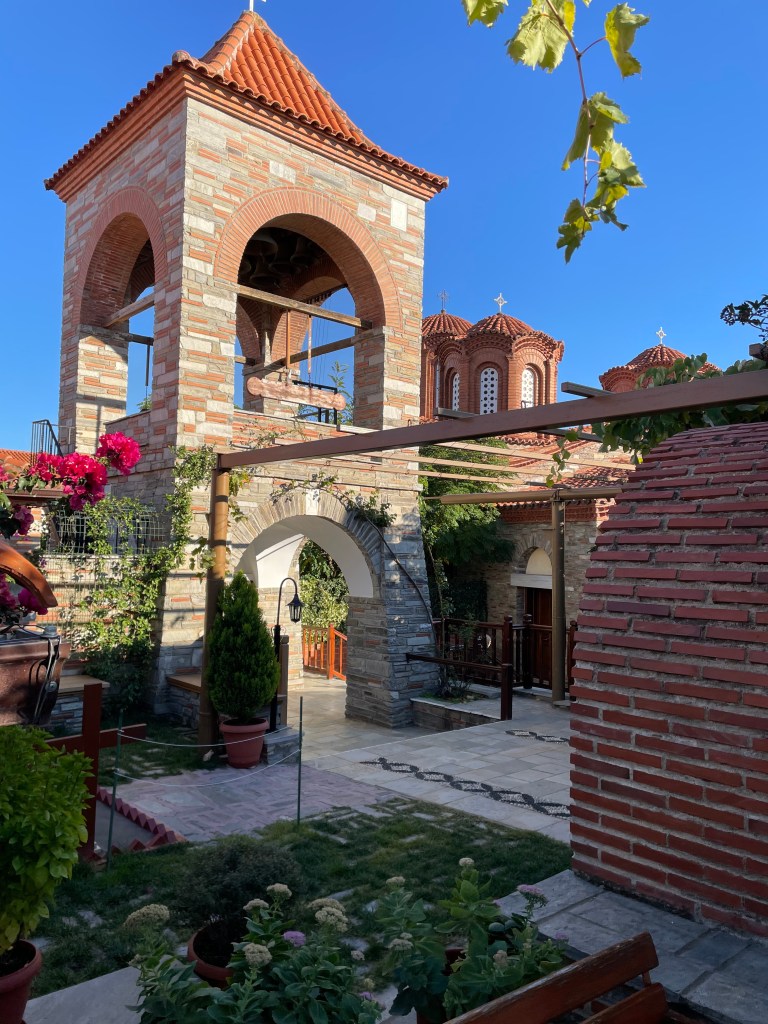
Thursday the 11th of June, the Feast of St. Luke Symferoupol and the revelation of Axion Estin by the angel Gabriel.
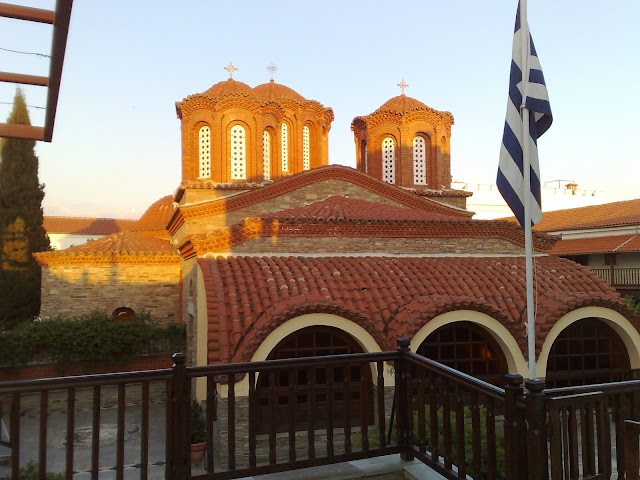
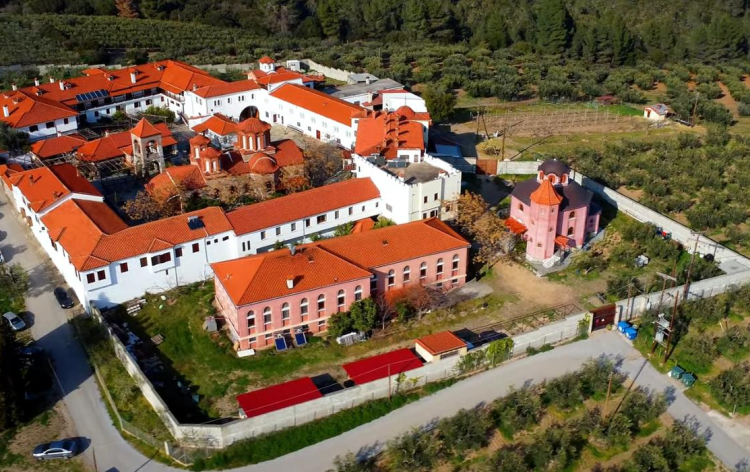
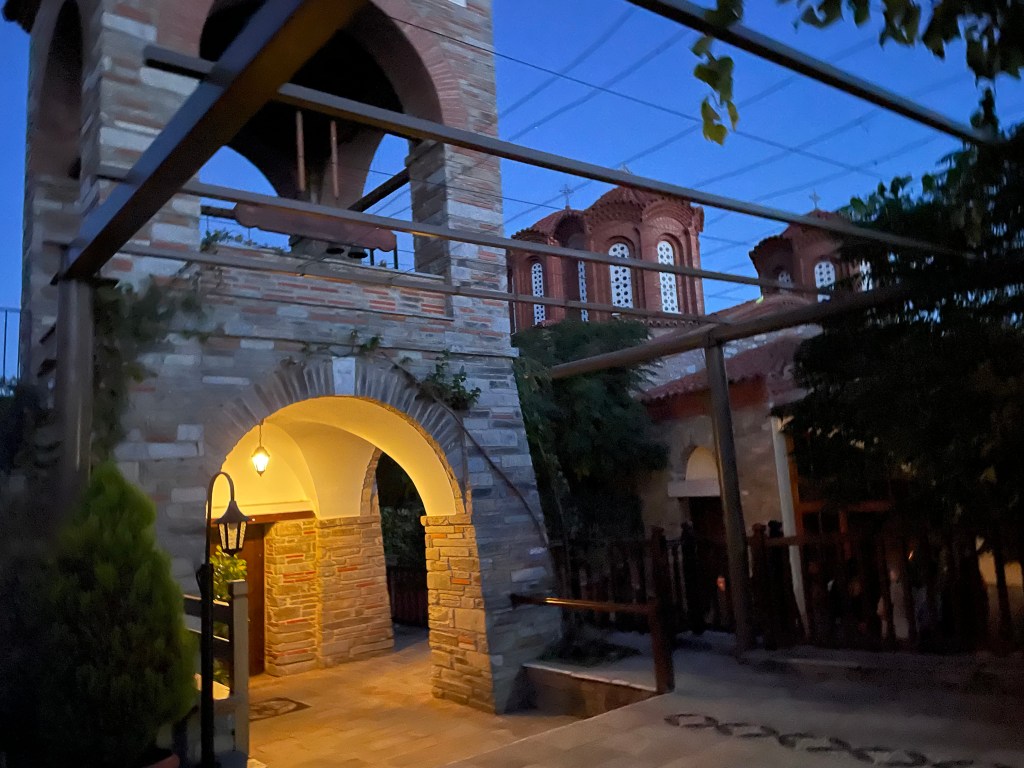
The journey to St. Kyriaki monastery was quite eventful. St. Kyriaki monastery is where a number of our Antiochian nuns found themselves.
At one point in the journey, engrossed as we were, in deep conversation and with the Paraklesis of St. Luke Symferoupol providing the background ison to our talk, we took a wrong road. My fault, I’m afraid, as I was the co-pilot, supposed to be directing the way.
The sign Local Road did not really do justice to the rather barely marked track that we found ourselves on in this huge field. However, Sat Nav came to the rescue and revealed to us the way that we should go. We needed a U-turn.
U-turns can be life-saving in a religious and a spiritual point of view, from sin and death and the roads which lead to destruction, to the way that leads to Paradise.
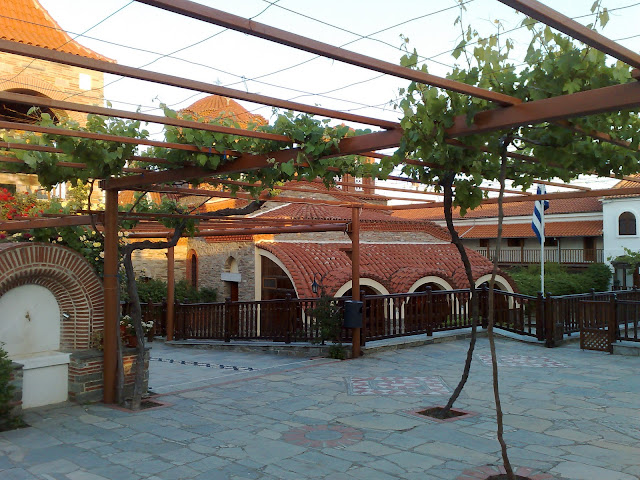
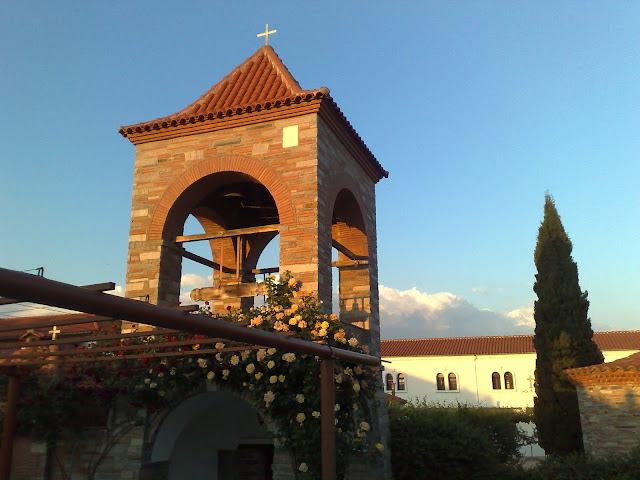
A reliable source told me how beautiful this place was, and indeed there was no hyperbole from that source.
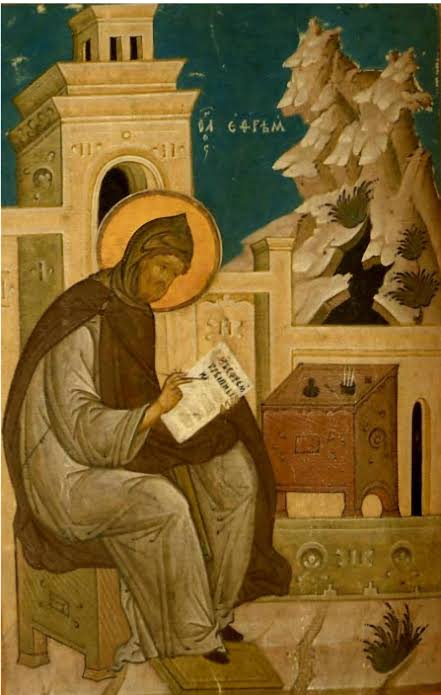
This beautiful monastery, which is really a hidden gem amidst the beautiful countryside, reminded me of the Hymns of Resurrection from St. Ephraim, also a Syrian.
In his Hymn to the Resurrection, chapter 15, verse 10, he writes this:
“Let us summon and invite the saints,
the martyrs, apostles and prophets,
whose own blossoms and flowers
shine out like themselves –
such a wealth of roses they have,
so fragrant are their lilies:
from the Garden of Delights do they pluck them,
and they bring back fair bunches
to crown our beautiful feast.
O praise to You from the saints who are blessed.”
Sister T told us how the nuns came to be there, and it reminded me of another verse from St. Ephraim the Syrian, verse 12, in the same poem:
“Receive our offering, O our King,
and in return grant us salvation;
give peace to the land that has been devastated,
rebuild the churches that were burned,
so that when deep peace has returned,
we may plait you a great wreath,
with flowers and people to plait it,
coming in from all sides
so that the Lord of Peace may be crowned.
Blessed is He who has acted and is able to act.”
*
For those of you who missed it, the story of the Sisters of War and St. Kyriaki monastery in Veria can be read here
“Dedication to Christ is the joy of life,” Mother Maria will answer me, instantly solving the questions about the smiling faces of the women in their cassocks. The thriving convent she now runs once languished with only two very old nuns.
The Sisters found refuge from the war in Syria. An old bond brought them here
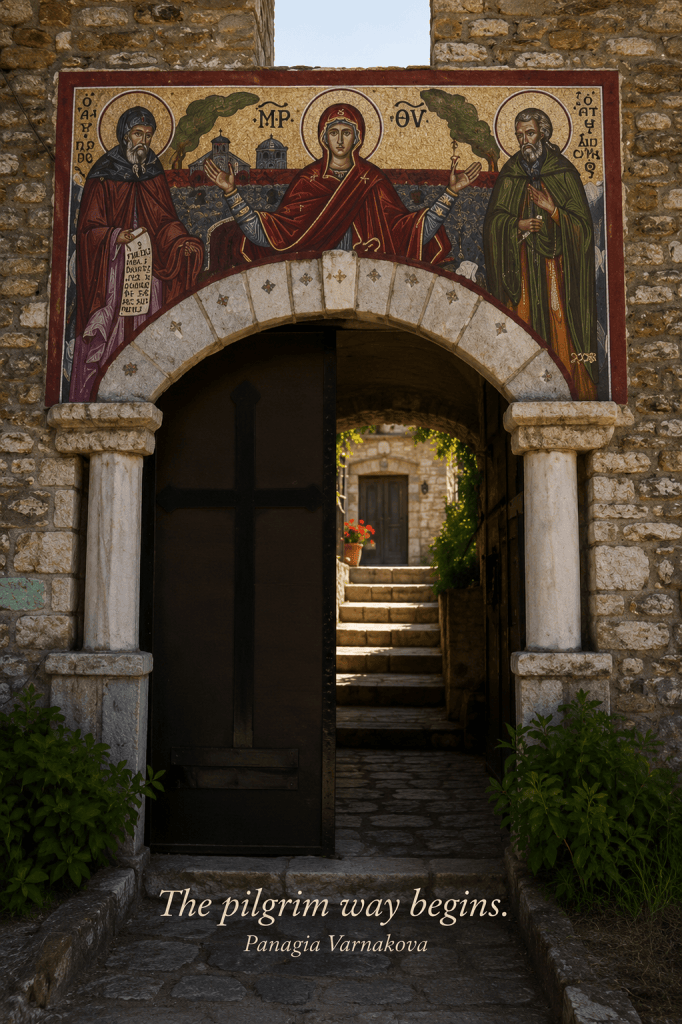
I had heard a lot, but I couldn’t separate the legend from the truth. I had to wander the plain of Veria. To forget myself for a while in the blooming peach trees – the ones that filled Instagram at the end of March – to pass, full of curiosity, the heavy iron door of the Monastery of Agia Kyriaki. And to face the truth in the bright faces of women of all ages.
In the monastery’s mansion, Arabic coffee awaited me with treats from Aleppo. Yes, from Syria. The nuns pronounce Greek with small – I would say charming – grammatical errors that testify that their mother tongue is different.
Gerasimi is a graduate of Fine Arts. She elaborately decorates the candles for the Resurrection – their sale is a significant source of income for the small monastery.
“God’s Will”
The war in Syria brought here, to Loutro Imathias, an entire sisterhood of nuns from Aleppo. Aleppo, which was also called Veria during the Byzantine Empire. Luck, fate or divine providence?
For my interlocutors, everything is “God’s will”. And one name is constantly on their lips: Paul! The missing Metropolitan of Aleppo.
On Holy Monday 2013, Paul of Aleppo, returning to Syria from Alexandretta in Turkey, decided to go to a village to try to free locals for whom the rebels were demanding ransom. He was accompanied by the Jacobite bishop Yuhanna.
On the way, the two hierarchs were ambushed. Their driver was murdered and they were kidnapped. Everyone then thought that the kidnapping was the work of ISIS jihadists. The State Department rewarded the kidnappers with 5 million dollars. After all, Paul was the fleshly brother of the Patriarch of Antioch and All the East John.Thirteen years since then, the fate of the two archpriests continues to be unknown. But back to the Monastery of Agia Kyriaki, Pavlos is so “present” in all the stories!
“Missing Father” – “He encouraged me to go to the School of Fine Arts.” “He wanted us to study first and then become a nun.” “He showed me the way to iconography.” “He insisted that we learn Greek, the language of the Fathers.” This is what the sisters say of Metropolitan Pavlos of Aleppo, whose fate has been unknown since 2013, when he was kidnapped.
Emiliani and Iliani were taught the art of needlework in Ormylia, the women’s monastery of Simonopetra. Monks from Simonopetra on Mount Athos are still their spiritual leaders today.
Ten were the first nuns – from the Monastery of the Annunciation of the Theotokos in Aleppo – who found refuge here. “Like Noah who landed his sea-swept ark on Ararat,” I will hear one evening.
All from families of old Romans, that is, citizens of the Byzantine Empire who gradually became Arabic-speaking.
Most from the Valley of the Christians, a natural valley, as large as Kos, near the border with Lebanon.
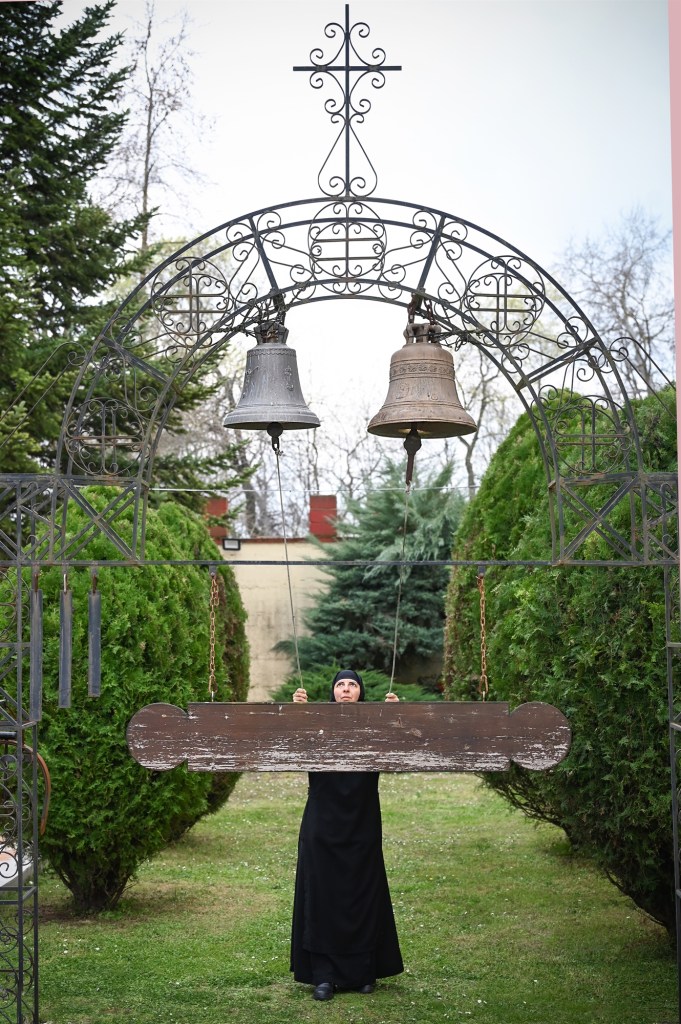
Philothei rings the monastery bells. For centuries, events in monasteries have been announced by rhythmic metal or wooden sounds that lead the brotherhoods to the Katholicon, a chapel, or the refectory.
Every time they went to distribute medicine and food, the locals would exclaim: “For the sake of Deir el Bisara” – “the nuns of the Annunciation are coming!”
A liturgy in two languages – The Arabic psalms, in the monastery church, are “married” with invocations in Greek: “Lord of Hosts, have mercy on us”. With pilgrims from Alexandria and Veria recognising the same prayer in different words and rejoicing.
But how did the nuns of war find their way to the humble and then unknown Agia Kyriaki?
The current Metropolitan of Veria Panteleimon, in the early 1990s, served as a hieromonk in Thessaloniki. And he had the Syrian Pavlos as his deacon. A graduate of the famous Theological Seminary of Balamand and the Polytechnic University of Latakia – who was then completing his doctorate in theology, while also studying Byzantine music. Paul then became a monk on Mount Athos, where he studied iconography under the most famous iconographers of Athos.
Sister Nikodimi studied Dentistry in Syria. In Greece, she obtained a master’s degree in psychological support for children with cancer and chronic diseases.
Over the years, the hieromonk became the metropolitan of Veria and the deacon the metropolitan of Aleppo. And during the war, he asked his counterpart in Veria for shelter for his spiritual daughters.
One of the photographs of the Metropolitan of Aleppo before his kidnapping in Syria
The Sisterhood
Thirteen years since then, the sisterhood has thrived and now numbers twenty nuns and four novices.
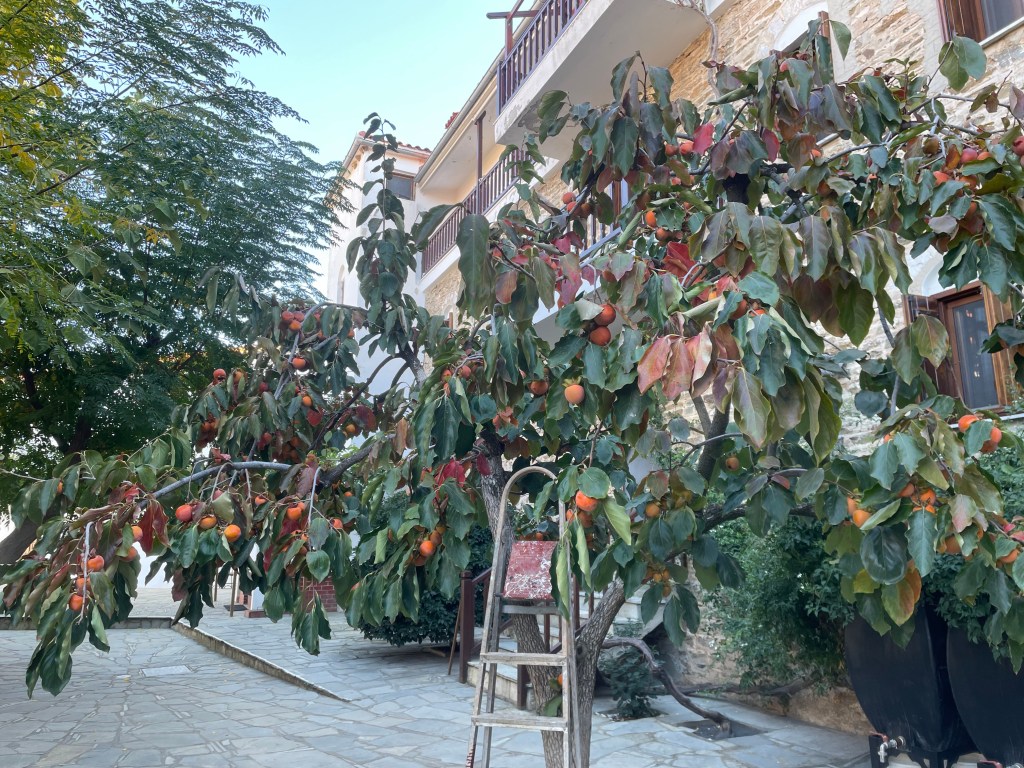
Hieronymi shows the fruits from the sisterhood orchard to Stavros Theodorakis. The monastery’s “development” plan is to create new cells for the nuns and an orchard with fruit trees and gardens with medicinal herbs. Apple, apricot, and cherry trees have already been planted, and once the cold weather passes, sage, verbena, rosemary, and oregano will follow, on terraces.
And at my Lenten table they serve makhlouta* with red lentils, cumin, and vegetables from the sisterhood’s vegetable garden.
Next to me, the reader, standing, commemorates Pavlos in the present tense.
As if he is absent for a while and they are waiting for him to return.
* Makhlouta means “mix” in Arabic, and that’s exactly what this soup is: a mix of beans and grains, simmered slowly.
Holy Monastery of the Dormition of the Theotokos, Mikrokastro: a beacon of faith and tradition, offering spiritual guidance, hospitality, and hope to the faithful from all over the world. It remains a living centre of Orthodox Christianity, linking past and present through devotion and heritage.
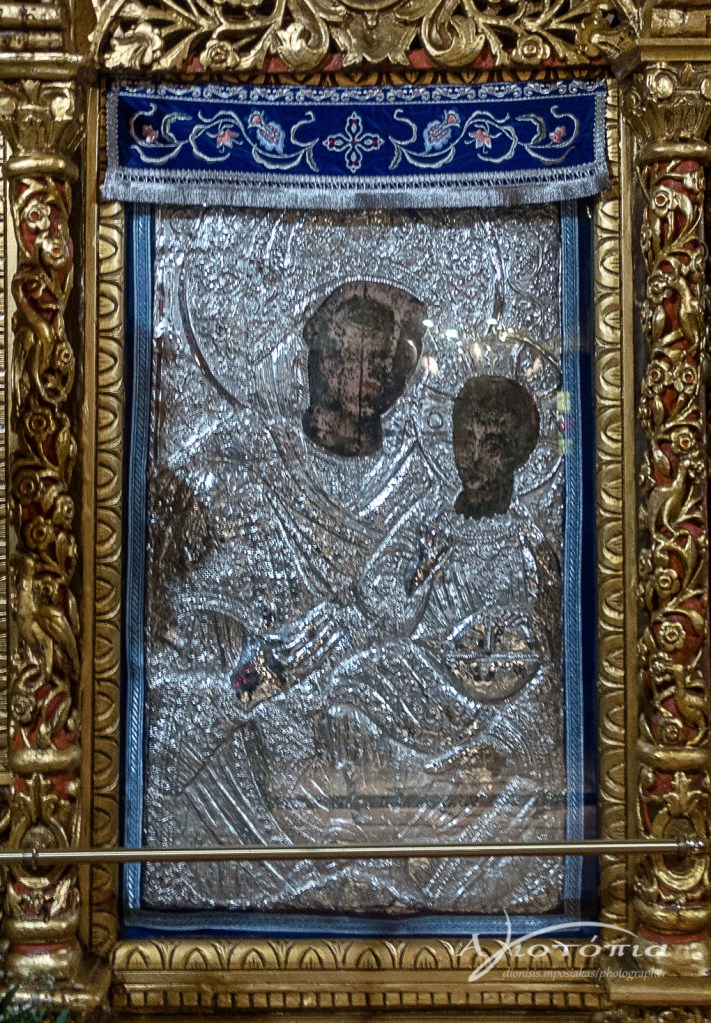
In the past, I have written several blog posts about this monastery and its blessed synodeia. This time I would like to focus on the miraculous icon of the Theotokos Panagia Eleousa, the Merciful Virgin, which possibly dates back to as early as 1200 (!), and is located in the iconostasis of the Katholikon. I would like to share with you three recent miracles of the Theotokos, shared with me during my recent monastery pilgrimage.
During a very serious operation, a man died and began to watch outside his body, the agonising efforts of the doctors in the operating room, but also the ascent of his soul, accompanied by angels. He climbed the stairs with difficulty, but the angels always helped him on each step, until he reached the last one, and there, no matter how hard he tried, he could not climb it. He saw a brightly lit space in front of him, but he could not climb it. He begged the angels, but they told him that even they could not help him and that he should ask for the intercession of his patron saint. Indeed, he prayed to Saint Nektarios, who, however, also told him that he could not help him and that he had to implore the Virgin Mary. She then appeared and told him that he could not actually climb this last step, because he lacked the virtue of charity. However, through her intercession, she would give him a second chance to prepare himself properly. And the Virgin Mary performed her miracle, and he returned to life in front of the astonished eyes of his doctors. His wife had made a vow to the Virgin Mary with many tears to give her husband a second chance, so that he would not leave unprepared for the terrible test.
Τhe miracle that follows is very similar to the previous one. It was again a case of a patient’s death during a very serious operation, and it was again a wife praying on her knees to the Virgin Mary, who heard her tama, her spiritual vow. However, it also has some differences. This husband arrived in front of a brightly lit plain, but he could not enter; a “wall” separated him. Also, he was not alone, but “outside” this plain, there were a multitude of people who were moaning, lamenting … This torment lasted for this particular man “many hours” and in the end he too was exhausted from waiting, fatigue, thirst! And he, too, began to cry. No matter how many prayers he said, they were not heard. At some point, the Virgin Mary appeared before him. He begged her to help him enter the bright plain, to give him a glass of water. And the Virgin Mary replied that he is not worthy not to enter this place of rest, but he is not worthy even for a glass of water! But because your wife begs me, I will give you a second chance to correct your life so that you can escape this place of torment. And indeed, the husband came back to life, shocked! The sister who told me about this miracle described to me that he himself came to the monastery with his wife to fulfil the vow to the Virgin Mary, and he still seemed shocked. The sister added to me that perhaps the most terrible thing in this story, but also in the previous one, was that these two men had spiritual fathers; they lived with the mysteries of the Church, yet they were not yet ready! Lord, have mercy!
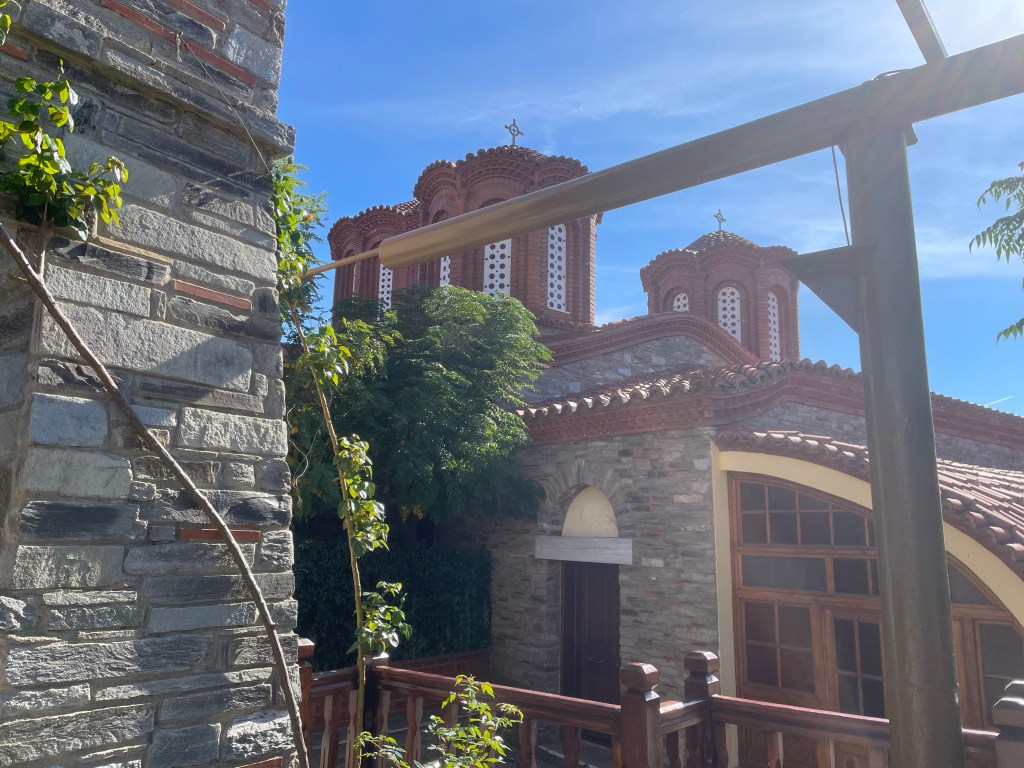
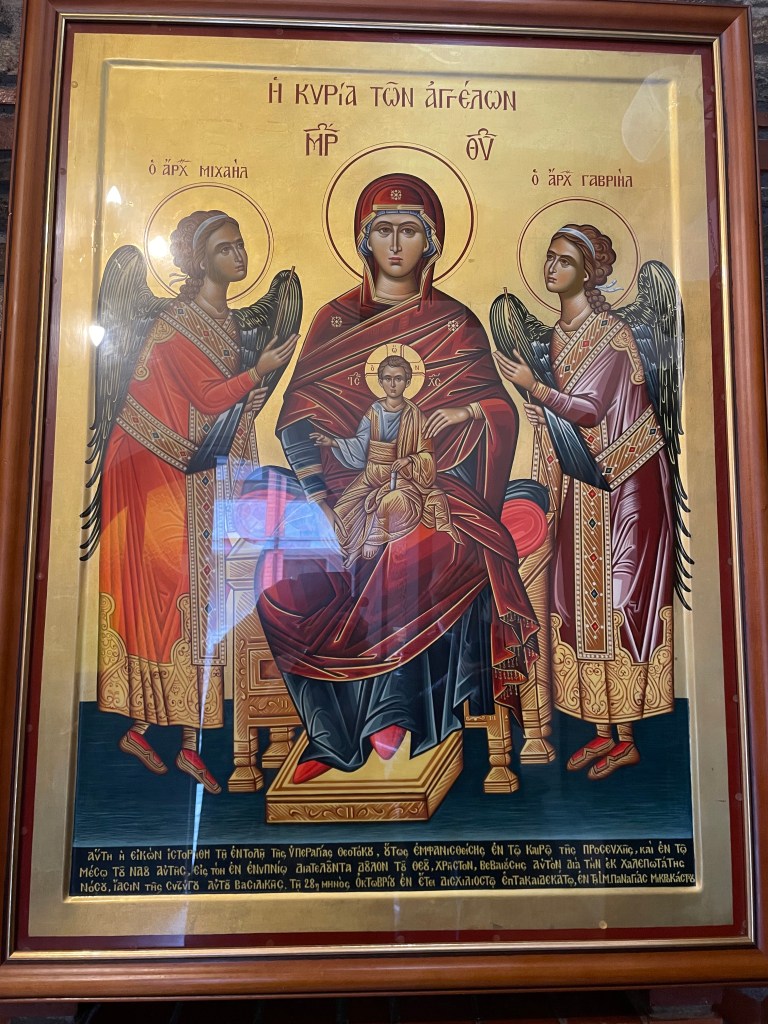
The third miracle is a little different. Here we have a husband praying, making a tama, and his wife being saved from death. She had been hospitalised for months without any hope, and while the doctors had given up, her husband begged the Virgin Mary to perform a miracle. One evening, exhausted from the hospital, he drove late at night all the way from Thessaloniki to Mikrokastro, over two hours, and found the door of the monastery open, because a vigil was being held. He entered the church and began to pray with tears to the miraculous icon of the Virgin Mary, and at some point, from exhaustion, he fell asleep inside the church. Then he saw what a dream he had. In the centre of the church, he saw the Virgin Mary sitting on a radiant throne with Her Son enthroned in Her arms and standing reverently on one side was the Archangel Gabriel and the Archangel Michael on the other side. The Virgin Mary then spoke to him, addressing him by his baptismal name, and told him not to worry about his wife; she would be fine. But the Theotokos asked him to fulfil his spiritual vow in the following way: to offer an icon of her to the monastery exactly as she had appeared to him. Then he woke up, and after thanking the Virgin Mary, he hurried back to the hospital to share the wonderful news with his wife. He found her indeed healed, healthy, and the morning medical tests also clinically proved to the astonished doctors that her health was now excellent! A miracle had occurred, and she had been healed! Then, they rushed to the monastery to tell the story of the miracle and to describe to a sister who paints icons the specific representation of the Virgin Mary. Since then, this icon has adorned the narthex of the Katholicon. The miracle and the Theotokos’ request are signed at the bottom of the icon, together with the names and the date of the miracle, October 28, 2017.
An interim to all these prophesies I have recently posted. Kindly have a look at this conclusion of a chapter I am in the process of translating for Gregoriou monastery of Mount Athos.
“Here is a beautiful summary of spiritual work left to us by Abba John the Dwarf, one of the most discerning and holy ascetics. With this we end this brief presentation.
Every morning, make a beginning with every virtue and commandment of God.
And strive
With much patience,
With fear and long-suffering,
With love of God,
With all the readiness of soul and body,
With much humility,
With patience bearing the sorrow of the heart and carefully guarding it,
With much prayer,
With prayer for others with sighs,
With purity of tongue,
With watchfulness over the eyes.
Do not be angry,
even if you are insulted,
but have peace within yourself;
Do not return evil for evil;
Do not pay attention to the mistakes of others;
Do not give value to yourself, who is below all creation;
Oppose and renounce the material world
and everything that has to do with the flesh.
Live:
With a willingness to take up your cross,
With a fighting spirit,
With poverty of spirit,
With askesis and spiritual determination,
With repentance and tears,
With a warlike struggle,
With discernment,
With purity of soul, With food as much as it should be,
Working quietly at your handiwork,
With night vigils,
Enduring hunger and thirst, cold and nakedness,
By toiling.
And above all and with all these together:
To seal yourself your coffin lid as if you have died,
Bearing in mind that death is near you every minute … ( Abba John the Dwarf, 34).
“Will modern man want to hear these messages sent to us by the ancient ascetics of Thebaid and their other peers? Will he want to?” (+ Elder Eusevios Vittis of blessed memory)
Or, my last day at Metamorfosi monastery of Saint John the Forerunner and how Gerondas Gregorios and Mother Akylina defeated the demons’ assaults and saved my father from eternal death.
The night before my departure, I had the blessing to speak to Mother Akylina. (So far all my momentous meetings at the monasteries have mysteriously taken place the last few hours before my departure…) Mother Akylina is a very old and frail sister in her nineties, bent in two, with a very sharp, illumined nous, and with beautiful, wide azure eyes staring into eternity. Until last summer, Mother Akylina was probably the first person pilgrims met upon entering the monastery, near its book store, but recently this sister has completely “disappeared” in hesychia and is now rarely seen anywhere. Yet God in His Mercy granted an exception to me.
“The just shall flourish like the palm tree, shall grow like a cedar of Lebanon. Planted in the house of the Lord, they shall flourish in the courts of our God. They shall bear fruit even in old age, always vigorous and sturdy, As they proclaim: “The Lord is just; our rock, in whom there is no wrong.” (Psalm 92:13-16)
I always smile when I think of Mother Akylina because although she is old and bent double, she is “always vigorous and sturdy“, moves like a firefly, and her knowledge and eagerness to help sweeps you up in her enthusiasm.Indeed, she “bears fruit even in old age”.
I always listen to Mother Akylina. I feel most indebted to her because she saved my father from eternal death. Together with Gerondas Gregorios of blessed memory. It was their discernment, leading to insight, and ultimately to foresight, which wrought that amazing miracle at the end of my father’s life. Oh, what a profoundly moving experience I experienced with their prayers! Let me try to put it into words, if I can.
My father was a very good person and a conscientious doctor who honoured his calling, offered wise counselling about diet and exercise to everybody, cared deeply for his patients and helped them as much as he could. I always smile when I remember his words to his patients and us, to be sure, familyand friends: “No, you do not need any medication. You should just lose weight, exercise regularly, and your test results will improve”. Or: “No, you do not need any make-up; eat lots of fruits and veggies, and their nutrient antioxidants, vitaminsand minerals will help you get glowing skin”. Or: “Feeling stressed? Having difficulty to sleep at night? No need for any medication. Just run or walk briskly for at least one hour every day, take a cold shower at the end of your training, and then come and tell me if you still feel stressed. And if this ‘dosage’ fails, repeat as often as you can, as many times in the day! ” Or: “Never take a serious decision at night! Rest, get some sound sleep, thinkabout it clearlyand calmly, and then make up your mind in the cold light of day”. And so on and so forth …
But it was not just his words and the example he set, being himself an athlete and a tennis champion. My father, God rest his soul, also had integrity, courage, resilience, cheerfulness, empathy, respect, compassion and kindness towards everybody. Each and everyone loved my father and wanted to be near him. His only difficulty was … to believe in afterlife. After retirement, he started diligently to study the Holy Bible, day after day, the whole Old and New Testament, intrigued by my life choices, underlying the passages which made the greatest impression of him. I have kept his study Bible and am still impressed by how much he had read. Years went by like this, but my father never quite made up his mind to participate in any church sacraments, especially confession to a priest.
Then, towards the end of his life, he became a patient himself who needed doctors, as he started having some horrible nightmares of ghastly dark figures chasing and attacking him. Every night, he would fall from his bed and end up on the floor ‘beaten’, injured and shivering. All his friend doctors considered these symptoms side-effects of the medication he was taking, but they could not help him, free him from that torture, night after night.
“We can ignore even pleasure. But pain insists upon being attended to. God whispers to us in our pleasures, speaks in our conscience, but shouts in our pains: it is his megaphone to rouse a deaf world.”― C.S. Lewis, The Problem of Pain
Once, back in those days, I went to St. John the Forerunner monastery and met sister Akylina as usual at the bookstore, and she asked me about our family news. When she heard this update from my father, she looked very concerned, sharply told me to “wait here” and disappeared in a haste to meet Gerondas Gregorios. At that time, Gerondas was in absolute silent seclusion, but she was one of the very few sisters who had the blessing to “interrupt” his hesychia at her discretion.
A few minutes later, she came back in a hurry and told me Gerondas’ message to my father: “Ioanni, if you do not confess to a priest, these dark figures that chase you in your nightmares, they will chase you in reality after you die, because they are demons”.
–“But Mother, how can I say such things to my father? I do not dare. He will dismiss them. He is a doctor, he has witnessed lots of deaths at his long medical career in hospitals, he does not believe in the possibility of life after death”.
–“We insist. You should say Gerondas’ message to your father. We will all pray”.
And so, a few days later, I summoned all my courage and told my father Gerondas’ words. To my surprise, he did not dismiss them but looked at me very seriously in the eyes. He told me he needed time to reflect about all this. I am sure that this martyrdom must have been a most humbling experience for my father, who had survived all life’s odds, war, poverty, even losing his father as a young child and having to support his brethren and his young, widow mother, yet was now helpless. What a humbling experience for someone so strong to feel so powerless and helpless! We all started praying and waited … God must have been shouting in my father’s nightmares: it was indeed his megaphone to rouse his skeptic child. “Then he said to Thomas, “Put your finger here; see my hands. Reach out your hand and put it into my side. Stop doubting and believe.” (John 20:27) Another megaphone was certainly + Gerondas Gregorios’ stern warning to him.
A few months passed by, and one day, my father called me and asked me to arrange for a priest to come to hear his Confession! (By that time he could not move outside the house). As you may very well guess, I promptly arranged this with our parish priest. By God’s Providence, I was also present at his Confession. My father was a simple man and wanted to make his confession in front of us (ie. my mother and I), and eventually the priest, after hearing his Confession, covered the heads of all three of us with his epitrachelion and read the absolution prayer to us all.
From that night on, after his Confession and Holy Communion, my father’s nightmares disappeared at once and his martyrdom came to an end. He radiated peace and joy! Very soon, his health sharply declined. But there was no pain, agony or anguish in any of this. Only peace and joy! In a matter of a few weeks, my father slept peacefully in the Lord, who patiently extended the life of His child just as much as needed to save him. Glory to God! Christ is Risen!
Mother Akylina’s prayers are so powerful and targeted! So are her insights. You probably understand now why I pay such close attention to every single word she is telling me. So, I did yesterday, and I paid even more attention now because she looked “bodiless”— as if her departure to Heavens was imminent. Please forgive me for not being able to share her words since they are all about most private matters.But I can share this. It is about somebody who had just started going to Church, Confession etc and he kept telling me how his life had become so much harder since. Her words were that all this is from the Evil one to discourage him and he should not pay any attention to his suggestions. It will become harder because of the spiritual battle, but he should keep his soul in hell and despair not. And when I told her, that I cannot say anything to this person about anything really, she told me “then, pray!” Also, about a very difficult situation, a Cross, her words were: “As the Lord provides. May it be blessed. Therefore, keep silence and pray!“
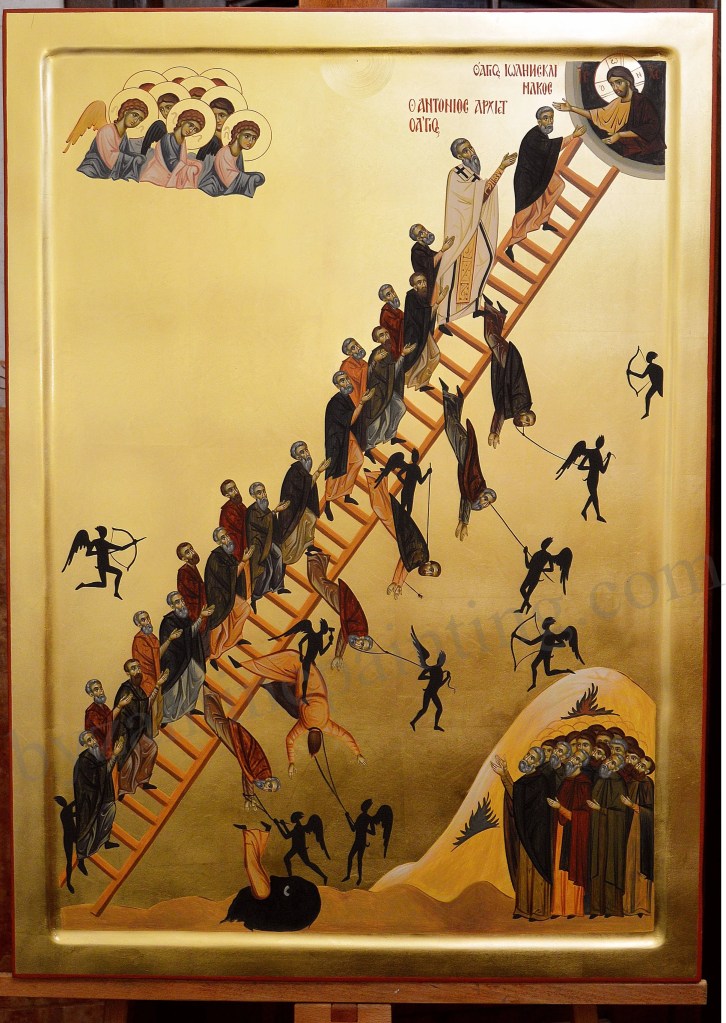
St. John Climacus, The Ladder of Divine Ascent
“Discernment in beginners is true knowledge of themselves; in intermediate souls it is a spiritual sense that faultlessly distinguishes what is truly good from what is of nature and opposed to it; and in the perfect it is the knowledge which they possess by divine illumination, and which can enlighten with its lamp what is dark in other. Or perhaps, generally speaking, discernment is, and is recognised as, the assured understanding of the divine will on all occasions, in every place and in all matter; and it is only found in those who are pure in heart, and in body, and in mouth.
The body is enlightened by its two corporeal eyes; but in visible and spiritual discernment the eyes of the heart are illumined”.
St. John of Kronstadt, My Life in Christ
“The heart is the eye of the human being. The purer it is. the quicker, farther, and clesarer it can see.”
About vigils, the Feast of the Theotokos’ Sacred Veil (Skepi) and Her Holy Protection, the power of the Psalter and the monastery’s chicken coop!
“By Fasting, Vigil and Prayer Thou didst Obtain Heavenly Gifts” (Fourth Great Lent Sunday- St. John of the Ladder , Troparion, tone 1)
Not for the faint-hearted! A most ascetic monastery, I must admit. I, for one thing, thought that I had no problem with fasting, and yet here, I realise that I am such a dainty eater! I have had enough of their plain bread, watery, fasting soups and fruit!
As to vigils, rising at ungodly [sic!] hours to chant Psalms, after two consecutive vigils, one at St Demetrios’ Feast in Thessaloniki and the other one here, at the monastery, for the Sunday Holy Liturgy, I believe that I have reached my limit. If I had any doubts (which I did not have) now I feel confident that I am not yet ready for this second step in this ladder, for this “violence” on our flesh. Not to mention the third ring, prayer …
“By Fasting, Vigil and Prayer Thou didst Obtain Heavenly Gifts”
“And from the days of John the Baptist until now the kingdom of heaven suffereth violence, and the violent take it by force.” Matthew 11:12
Oh dear! A most ascetic long weekend. I have been so food deprived, so heat deprived, and so sleep deprived—the worst part— that I cannot put it to words. I certainly need time and rest to recover from all this ascetic labour. I do feel blessed and most grateful, I am floating, but this monastery’s specifications are for angels, fleshless, holy beings. The sisters are of course lenient with us poor guests, yet even the “compromise” they bless for us is so hard for my spiritual level!I cannot even begin to imagine how it is to spend Great Lent here, with only meal a day, and what a meal …
One can”feel” their asceticism even in their etherial chanting. Indeed, an ascetic hue to the spectrum of light explored so far on my way of a pilgrim. And so “hidden”! Adding a wholly empirical dimension to the verse “our lives being hidden in Christ!” So very different to my previous two pilgrimages to Dormition monastery in Panorama and St George Karslides monastery in Sipsa. Such a humbling experience! Probably because of all this most demanding typikon, this monastery has the least pilgrims or faithful attending, even when its gates are open. As to the sisters, they humbly believe that they they are useless, lukewarm, “end of times” monastics, not honouring their calling.
Matushka Constantina is so right when she writes at her blog (Lessons from a Monastery): “Encountering monastics reminds the pilgrim that there are better Christians than himself (not that he cannot also learn this in the parish, he most certainly can, but it is an indisputable fact that one is faced with at a monastery). Hence the famous statement: “Angels are a light for monastics, and monastics are a light for the world.”[9] The monastic is simultaneously humbled and enlightened by reading the lives of the saints, just as the layman is when he compares his life with that of a monastic. … the layman makes pilgrimages to monasteries in order to draw the soul away from the distracting world and into an environment of stillness and prayer, where the atmosphere is conducive to taking stock of one’s life alongside that of a dedicated monastic, and to allow the grace of the monastery to help him see his own sinfulness.”
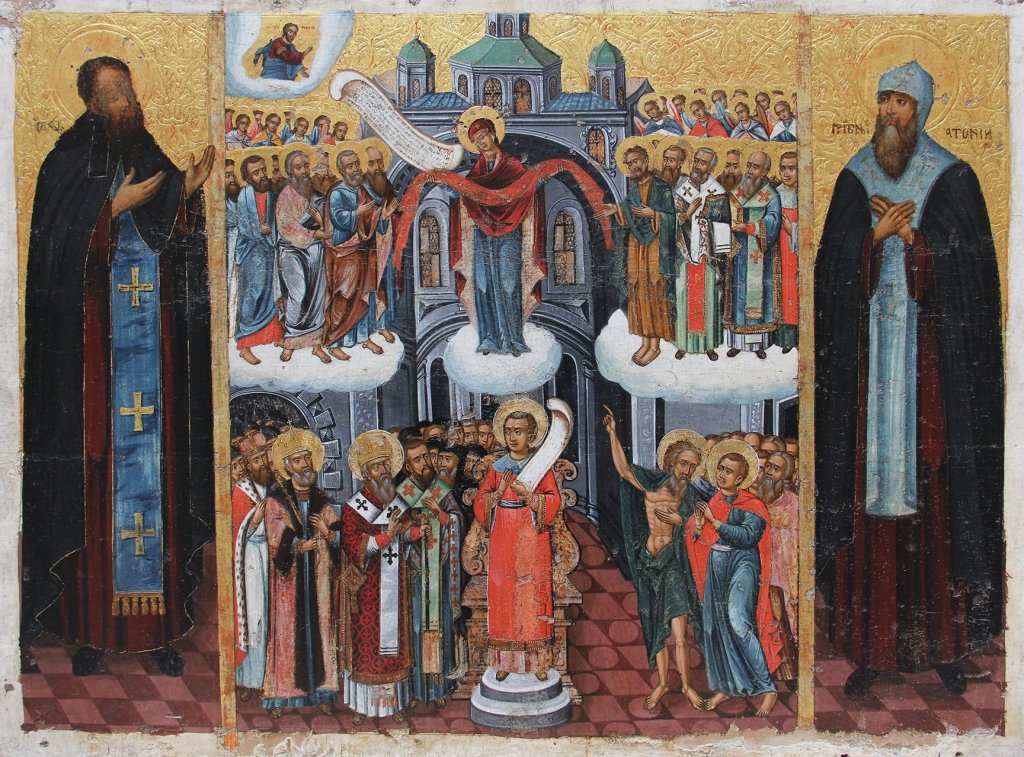
Economia is granted to me and I arrive late at the morning church service. I don’t think I could take one third consecutive vigil in a row. Today, on October 28, the Holy Orthodox Church in Greece commemorates the Holy Protection of our Most Holy Lady, the Theotokos and Ever-virgin Mary, that is, her sacred veil (skepi) kept in the treasury of the sacred temple of Blachernae; and we also remember how the righteous Andrew, the Fool for Christ’s sake, beheld it spread out above and covering all the pious.
The Feast was originally marked on October 1st, yet the Greek Orthodox church, in 1952, transferred its celebration of the Protection to October 28 in conjunction with “Okhi Day” as a testament to the rejection of European aggression and as a day of national remembrance.
Before daybreak on October 28, 1940, the Italian ambassador to Greece, representing Italian dictator Benito Mussolini, went to Greek general Ioannis Metaxas with an ultimatum. Italy wanted full control of Greece to occupy “strategic locations”; otherwise it would brutalise the country.General Metaxas shouted “Okhi!” meaning “No!” Thus, Greece was plunged into the Second World War, as Italy burst through, and then Nazi Germany eventually, wreaking havoc and horrors on the Greek people.
Both dates recognise the Ever-virgin’s constant defence for all the faithful, all over theworld, whenever we prayerfully seek her protection and shelter in distress and strife. It goes without saying that we must ask the Theotokos to extend her protection and intercession every day of our life.
A holy, sacred place, an agios topos
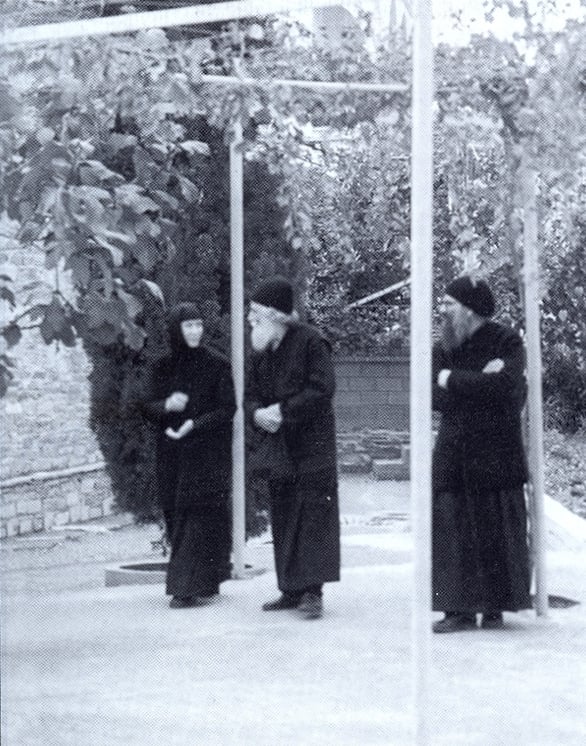
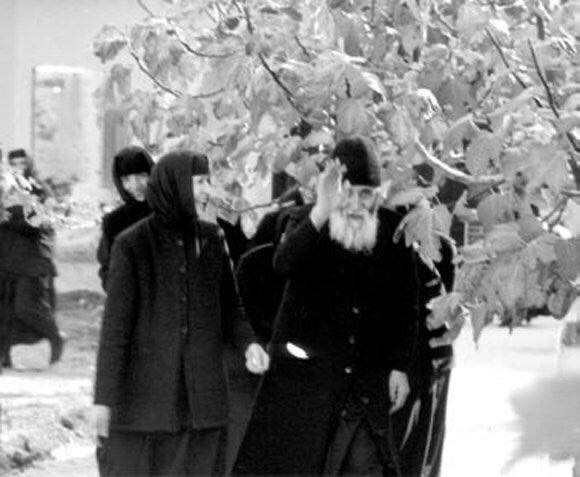
St Paisios, the spiritual founder and father of this monastery, +Gerondas Gregorios, St Paisios spiritual child, founder and spiritual father of the monastery, and +Gerondissa Euphemia
Everything is holy in the grounds of a monastery. It is an agios topos, a holy, sacred place. The prayers of the monastics, the saints that dwell within, the angels that protect it, its chapels and the temple of God in its grounds, all these sanctify the place. “And Moses said, I will go near and see this great sight, why the bush is not consumed. And when the Lord saw that he drew nigh to see, the Lord called him out of the bush, saying, Moses, Moses… loose thy sandals from off thy feet for the place whereon thou standest is holy ground” (Exodus 3: 3-5). All monasteries I have visited so far feel holy, sacred places, yet this monastery seems the most etherial, otherworldly of all.This holiness permeates all its grounds.
St Paisios, + Gerondissa Euphemia and Sister Paisia, looking at the camera behind Gerondissa. I had the privilege to spend quite some time during my stay here with Sister Paisia.
11 For He will give His angels charge over you, to guard you in all your ways. 12 Upon their hands they will lift you up, lest you strike your foot against a stone. 13 You will tread upon the lion and cobra, trample the young lion and serpent. (Psalm 91:11-13)
Let me share with you a story which a sister here told me about the power of the Psalter, transfusing holiness …
… even to their chicken coop!
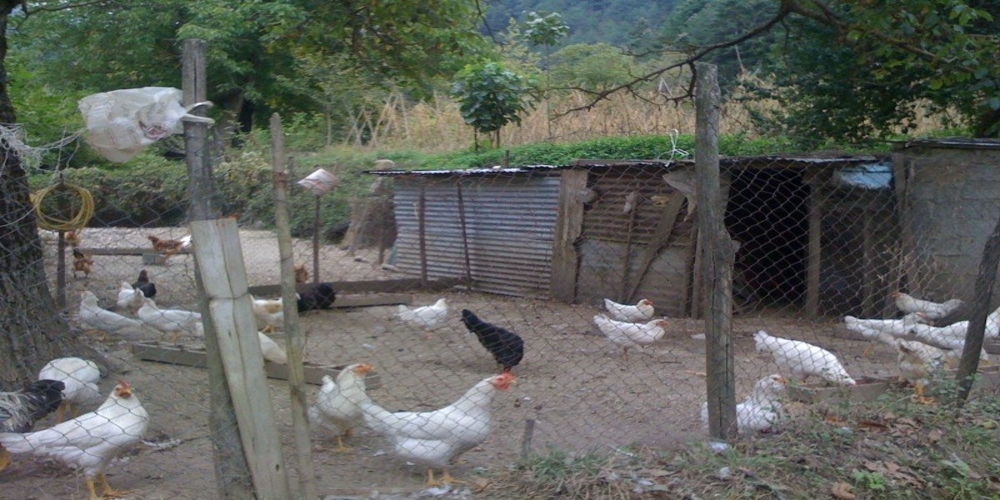
This is what the monastery’s chicken coop looks like. You can tell that it is unprotected from the top and sadly the sisters had many problems with hawks attacking and snatching their chickens. The sisters would take turns, one after another, every hour, to protect their chickens, to no avail really, until Sister T. appeared, a frail, old sister …
This sister hada particular affection for the Psalter. Rather than recite the kathismata in her cell, she got the blessing from Gerondissa to sit on her chair inside the chicken coup grounds and recite the psalter there, together with the chickens. She kept doing this every day, for two years before reposing in the Lord.
These two years, all hawk attacks suddenly ceased! Not only this, but even after her sleep in the Lord, for 16 years counting until now, no hawk has attempted a single attack on the chicken! Amazing! For 16 years going! So, the sisters have stopped guarding the chicken coop and chasing predators away. The sister who told me this story, added that Gerondas Gregorios of blessed memory, after this sister’s sleep in the Lord, wondered how long her psalter protection will last. Well, it lasted 16 years and going! This frail, old sister with the particular affection for the Psalter died a holy death on an Easter night, after receiving Holy Communion at the Pascal holy Liturgy. Glory to God for all things!
Sadly, the time for my departure has arrived, but I am not leaving alone. I have to drive two university students first to the church of St. Demetrios, and then one of them to the airport for Cyprus. Glory to God for all things! What an amazing synodeia! The family of one of these two students I am offering this drive has 10 children (!), her father is a priest and a teacher, and their mother comes from a family of … 13 children! They have all moved from Athens to Metamorfosi and build their house here to live next to the monastery, together with all their nephews, children and grandchildren.
How many stories have I heard on the way!What a joy and a privilege to be together with these young people! How fast time flies! A few decades ago, other pilgrims drove me back to Thessaloniki, to spare me the buses, the walking and the long hours of waiting. Now it is my turn to return the favour. Glory to God for all things!
Somereflections on “hiding” and “hiddeness” in God, on holy obedience, on the force of the preposition ‘in’, and lovely, amplifying words by George Herbert, my favourite metaphysical poet(1593 – 1633), in his poem‘Colossians 3:3’
Eothinon VII
Mode grave
“Ἰδοὺ σκοτία καὶ πρωΐ… Lo, darkness and early dawn. And why, Mary, are you standing by the grave, your mind full of darkness? Why do you seek where Jesus has been laid? But see the disciples running together, see how they have realised the Resurrection from the grave clothes and the napkin, and have remembered the Scripture concerning this. With whom and through whom we too have believed and sing your praise O Christ, the Giver of Life.”
*
“For you have died, and your life has been hidden with Christ in God.” (Col 3:3)
*
It is probably my first ever Sunday Holy Liturgy at about 02:00!! Other than Easter Sunday of course. Only “one worth comes to mind with the chanting,…ethereal! I meant word but indeed it is worth in the true sense of a noun … the level at which someone or something deserves to be valued or rated.”
I feel surrounded by angels, not monastics. These sisters never sleep! They pray all the time and they are hidden from the world.
I kneel to receive the blessing of Gerondissa Mariam before Holy Communion and she tells me that she has read my note and gives me her blessing to come as often as I want, unconditionally… What a gift!Such undeserved mercy and graciousness!
Inside the church, other than the sisters and the priest, it is only the five of us, fellow pilgrims. How strange for a Sunday Holy Liturgy even in a monastery, let alone a parish in the world, to be so “empty” at the Sunday Holy Liturgy!
After the dismissal of the Liturgy, silently we retire to our cells for some rest and hesychia, and then proceed to the morning common meal where we eat while listening to a sister reading Saint Gregorios Palamas’ homily on Nestor. Then Gerondissa Mariam takes the floor and offers a homily on the mystery of holy obedience to our spiritual father: (Just in case, we had missed that key point in all the sisters’ words yesterday: that Holy Obedience is the “one thing needful … that good part which shall not be taken away” ,Luke 10:41–42).
“St Nestor first received the blessing from his spiritual father, St Demetrios in the prison “bath-house” where he was chained, and then contested and defeated Lyaeus. This is so revealing of the power of holy obedience. St Demetrios blessed Nestor and in fact told him that he would be victorious but would then be martyred. Receiving the Saint’s blessing and sealing himself with the sign of the precious Cross, Nestor presented himself in the arena, and prayed, “O God of Demetrios, help me!” –“Ο Θεός του Δημητρίου βοήθει μοι”, uniting his will with that of his spiritual father, and ultimately with God’s Will.
Straightway he engaged Lyaeus in combat, and much to everyone’s surprise, the stripling novice smote Lyaeus with a mortal blow to the heart, leaving the former boaster lifeless upon the earth, and defeating the previously undefeated imperial champion. Nestor thus stroke a blow against idolatry. Many of the spectators believed that “the God of Dimitrios” had, indeed, helped him. This infuriated Galerius, who must have suffered considerable loss of face, and he ordered the decapitation of the young man. See the fruit of holy obedience? This we must all imitate!”
Our morning common meal comes to an end, prayers are said, and all nuns swiftly disappear back to their cells to pray, other than the very few ones whose obedience are the guests. No visitors yet, as the monastery gates are still closed and will open up only much later in the afternoon.
If yesterday it was the silence of the monastery which struck me, that true hesychasm, today it was the mystery of its hiddeness which permeated me.Certain experiences are so difficult to express in words.
The rest of the morning is spent in silent strolls, the Jesus prayerand quiet conversations with a few nuns around us, “pondering the mystery of “hiddeness” in our heart” (Luke 2:19). A different ‘spiritual surgical procedure’ in the “Antechambers of paradise”.
St. Paul says that “our true life is hid with Christ in God” (Col. 3:3). Such a rich verse that apophatically speaks of theosis, true mysticism!The sisters humbly admit that these lines are beyond their understanding.
It is this preposition “in” that makes all the difference. I don’t believe that there is a God, intellectually; I believe in God empirically. I believe you….or should I say …I believe in you. What force this has! “I believe in one God ….”
+ Gerondas Gregorios’ cell outside the monastery
Let us now see how George Herbert, a favourite metaphysical poet of mine, expands these Bible words ‘Our life is hid with Christ in God’, taken from St. Paul’s letter to the Colossians and how these words are themselves hidden within this poem. Pay attention also to how he personalises the words– ‘our’ is changed to ‘my’.
Colossians 3:3′
My words and thoughts do both express this notion, That Life hath with the sun a double motion. The first Is straight, and our diurnal friend, The other Hid, and doth obliquely bend. One life is wrapped In flesh, & and tends to earth: The other winds towards Him, whose happy birth Taught me to live here so, That still one eye Should aim and shoot at that which Is on high: Quitting with daily labour all My pleasure, To gain at harvest an eternal Treasure.
Isn’t this beautiful? As in many of his poems, Herbert uses pattern and shape to explore his theme. The expanded line runs diagonally through the poem, creating a tension which is only resolved in the final line. Double meanings help to create the tension. On the one hand, we live our everyday, earthly lives. On the other hand, we live our eternal, heavenly lives. Our life ‘wrapt in flesh’ pulls us down to earthly things: the upward movement ‘winds towards Him’. Christ himself experienced a double motion. Not only did he come down to earth from heaven in his human birth, but he was raised to heaven in his resurrection.
As in other poems by Herbert, ‘sun’ and ‘Son’ are punned. The movement of the sun is used to shine light on the movement of the Son of God. For the sun has a double motion – we are most familiar with its daily east to west motion, ‘our diurnal friend’. However the sun moves annually from west to east, and this pattern was illustrated by an oblique or diagonal band around the globe. ‘It doth obliquely bend’.
There is a hidden quality to the ways in which people live out their faith in God, for there is a hidden quality in the way God is active in the lives of people. We do not always recognise God’s purposes and ways of working in the world. We do not see the whole until the end, but for Herbert, the treasure to be found during earthly and eternal life is Christ.
The day is coming to a close. At long last, the monastery is full of pilgrims, even if briefly. Vespers follow, coffee, and social time for everybody. Then obediences for us in the kitchen, washing and tidying. The kitchen seems to be always the busiest area in any “home” 🙂
“Be silent, all flesh, before the Lord,” exclaims the prophet Zechariah (Zech 2:13).
Upon entrance, silence envelops me. Abruptly, I am separated from the tumult, noise, busyness and endless distractions of the outside world.
“Peace, be still!” Jesus orders the wind of noise, confusion and tumult to cease in the midst of our own storms and turmoil.
I feel separated from other people, all people, too! Is anybody here?! What a contrast to last night’s feast! There, at the vigil in St. Demetrios church, in Thessaloniki, an amazing Resurrectional experience unfolded in a packed church! So many holy chalices all around the Royal Doors! So many people receiving Holy Communion and then, at the dismissal of the holy liturgy, flooding the streets outside the church. Here, I am all alone — the silence of the heart! And what a deafening, thundering silence that is!
“When the Lamb opened the seventh seal, there was silence in heaven for about half an hour.” (Rev. 8:1)
Yet, how can it be that a monastery of more than 50 sisters plus novices and postulants look and feel so uninhabited, so “desolate”! Am I really all alone here? ...
“Let us love silence till the world is made to die in our hearts.” St. Isaac of Syrian
Sister Elizabeth approaches and welcomes me. She gently inquires about my news. This sister was coordinating my endless faxes to Gerondas when I was at the UK and sending his replies. She knows everything about me! Her question: “Have you got a spiritual father now?”
This question will become a refrain during my brief stay here, asked by all sisters who spend some time with me. In fact, a refrain addressed not only to me, but to all pilgrims and visitors here. It is not that the sisters are not concerned with/about our problems and sorrows, but our obedience to a spiritual father seems of paramount importance and the key to everything. Even if with his guidance and help, our problems are eventually not “solved”.The mystery of holy obedience. “Obedience shows love for Christ. And Christ especially loves the obedient” (St. Porphyrios,Wounded by Love, p. 25).
Saint Simeon the New Theologian wrote the following to one of his spiritual children: “We conceived you through teaching, we underwent labour pains through repentance, we delivered you with much patience and birth pangs and severe pain and daily tears” (Epistle 3, 1-3).
Barsanuph’s soul-stirring prayer makes the immense love of a spiritual father for his spiritual children more palpable: «Behold, here am I and the children that You gave to me; protect them in Your Name, shelter them with Your right hand. Lead us to the harbor of Your Will and inscribe their names in Your book… Lord, either include my children along with me in Your Kingdom, or erase me also from Your Book… » (Nicodemus of the Holy Mountain, “Book of Barsanuph and John”, Response 99).
Reciprocally, in this mystery of Christ, the spiritual child should place everything at his Father’s feet, with humility and filial trust. Saint Basil the Great urges us to “not keep any movement of the soul secret, but to bare whatever is hidden in the heart” (“Oroi Kata Platos” – Conditions breadthwise, 26, ΒΕΠΕΣ 53, 184). Nothing should be concealed from our spiritual father. That is the only way our sins are forgiven by God. We are freed of the burden of guilt. We uproot our passions. And the spiritual father thereafter guides us safely through our spiritual life.There is simply no other way!Our goal is not simply to manage/ solve all our problems here on earth, but “receive the end of your faith—the salvation of your souls”. (1 Peter 1:9)
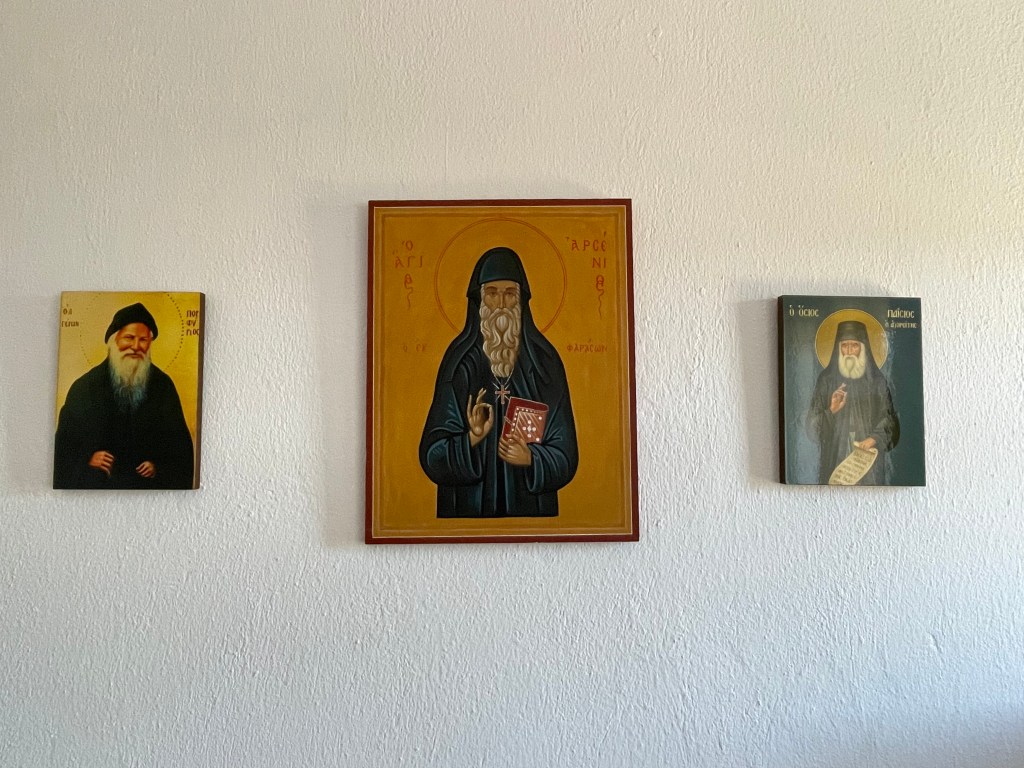
Other sisters soon join us for a minute to welcome me and hear the news about St Demetrios’ vigil in his church –it is after all his feast today– but they quickly disappear. Not a minute of idle or small talk. I am shown to my St Paisios, St Arsenios and St Porfyrios (!) cell, and there is still some free time until our common meal at 15:00 to take a quiet walk inside the monastery or … sit in my cell.
Inside my cell
“A brother came to Scetis to visit Abba Moses and asked him for a word. The old man said to him, ‘Go, sit in your cell, and your cell will teach you everything.’“
God calls each one of us in silence and invites us to go into our inner “room,” shut the door and pray to our Father in secret, assured that He will answer our prayer (Mt 6:6). It is only in this silence and stillness that we can listen to Him, hear His “still small voice” (1 Kings 19:11-13). The quiet water of Siloe flows without noise or sound, “goes softly’ (Is. 8:6).
Gradually, the guests house starts to get filled: two young ladies, university students, in their early twenties, settle in, then another one arrives, this one still in high school, with fond memories of +Elder Gregorios treating her with candies and hugs, and finally a young engineer who attended at the nearby Ormylia monastery a service of monastic tonsure.
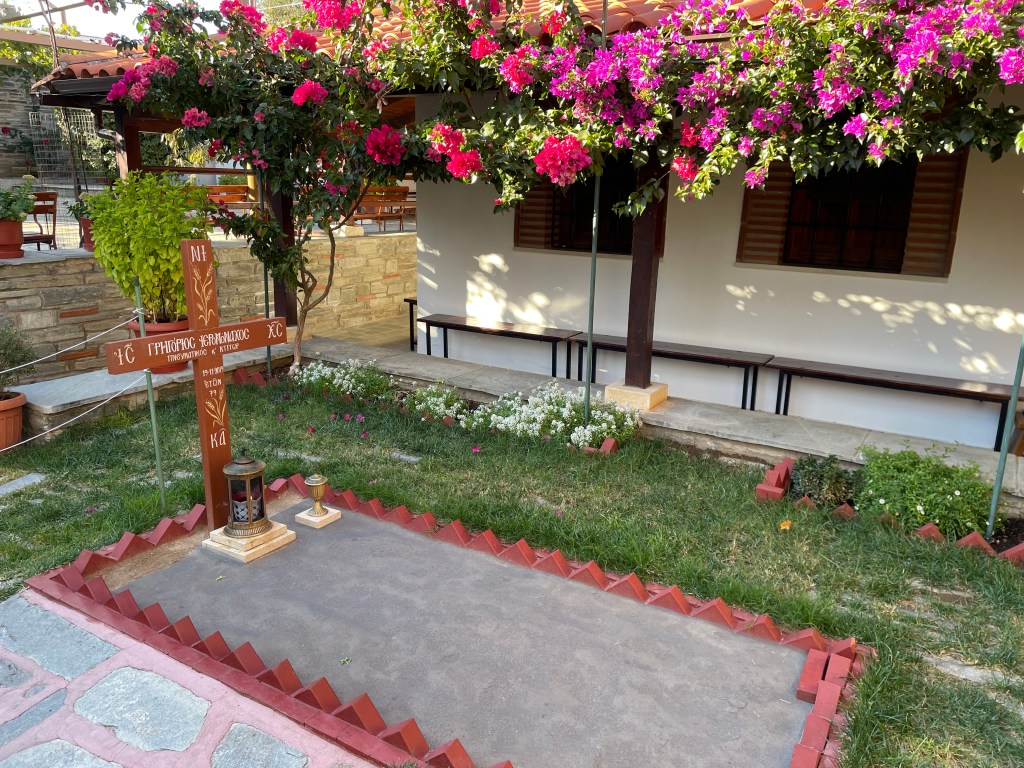
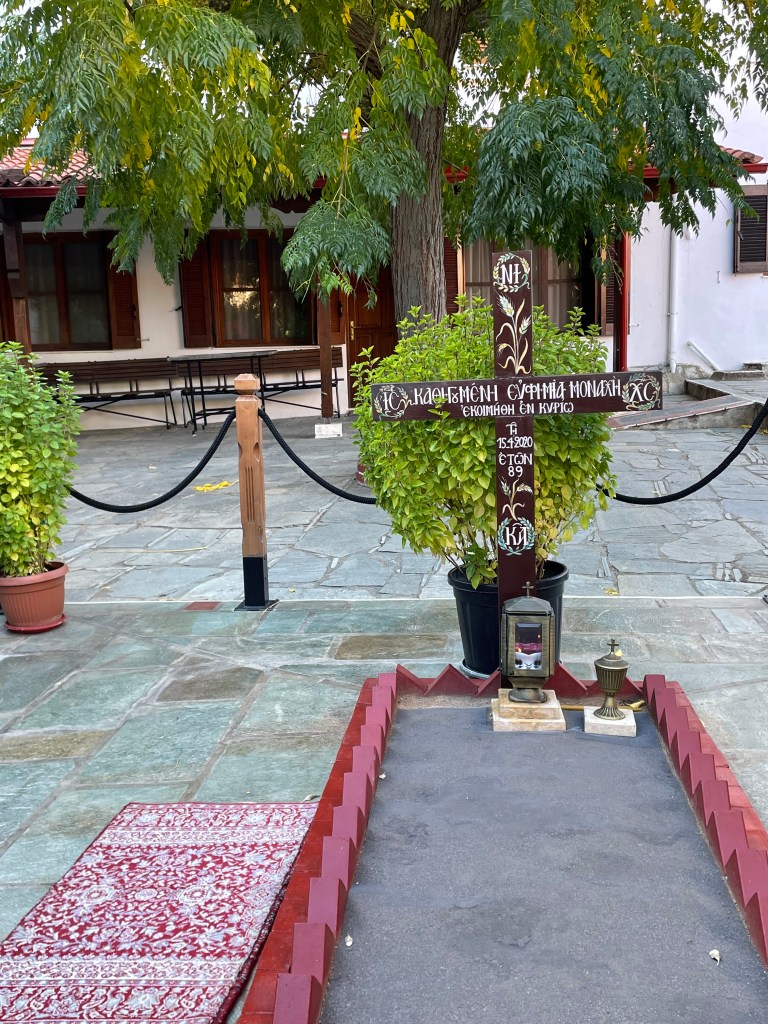
Gerondissa Euphemia’s grave (+15 April 2020, 88 years old). She was the first Abbess of the monastery and fell asleep in the Lord shortly after Gerondas Gregorios’ departure to Heaven (19 Νοεμβρίου 2019).
Bells ring and the common meal with the sisters begins, with a reading of Saint Gregory Palamas’ homily on St Demetrios. Our meal is a very ascetic one, as we are all preparing for Sunday Holy Communion.
We retire very early in our cells. The Sunday service will be a vigil from 23:00 to 03:00!
At the insistence of Sister Elisavet, I prepare a brief note for Abbess Mariam. Briefly, I share my news and ask her blessing. No questions or requests. Only her blessing to allow me to stay here longer and more often. –Which was one of the things +Gerondas Gregorios had always urged me to do, Sister Elisavet points out to me …
I give the note to the sister in charge of the guests’ house, pray and wait. After all, our vigil will begin very soon.
*
“Do not be afraid that there will be no fruit when all dies down; there will be! Not everything will die down. Energy will appear; and what energy!” St. Symeon the New Theologian
“Silence is the sacrament of the world to come” — St Isaacthe Syrian
Such silence and peace at the Monastery of St John the Forerunner, Chalkidiki! Another colour and spiritual hue in the rich tapestry of monastic visits
For years, here,Gerondas Gregorios of blessed memory offeredhis prayers with tears and his never-to-be-forgotten spiritual guidance. My rebirth in Christ ((John 3:4), my new life literally started here about 40 years ago.
Off to my next pilgrimage, then, on this year’s three-day public holiday for Thessaloniki: 26 Sat, +St. Demetrius, 27 Sun and 28 Mon: Ohi, national holiday.I can’t wait!
Back in 2019, I undertook the same pilgrimage of mine, and precisely on the same dates and days!
More recently, my own spiritual father visited this monastery just last year.
May it be a refreshing and strengthening experience in His Mercy!
At the recommendation of my spiritual father, I have been watching two exceptional documentaries on monastic life: Athos – Mount Athos Monks’ Republic Documentary and The Good Struggle: Life In A Secluded Orthodox Monastery. Interestingly enough, I found all their insights pertinent not only to monastics, but to laymen too. What truly struck a chord in my heart was their emphasis on the transience and ‘futility’ of our ‘ordinary’ lives, and a remarkable miracle entitled “Christ is Risen”, the first documentary records.
Athos,the first documentary is exceptional partly because for the first time, a filmmaker was given access to all forms of monastic life on the holy mountain (ie. cenobitic monasteries, sketes and monastic cells).
The Good Struggle, the second documentary, is about a monastic community thriving within the confines of a Greek Orthodox Christian monastery, high up in the mountains of Lebanon. The documentary offers rare insight to their almost silent way of life.
What I found most moving in both documentaries is the “school of philosophy” in the Gerondes’ own words: the insights into the monks’ burial place, their bones eventually stored in a separate charnel house, within the consecrated grounds of the cemetery (20:06–21:28 and 1:25:38—1:28:10 — first documentary), or under the church (23:35–24:36 –second documentary).
“So we can always pray for them and join them. This is due to the church’s belief that those who depart are not removed from us, but we are always connected through prayer. We don’t see them but they are connected to us through prayer. They pray for us and we pray for them. We always visit them to encourage ourselves that death is not a calamity but a meeting with the Lord Jesus Christ. We honour and greet them because they have done the good struggle and God has accepted them in His Kingdom.”
So moving and at the same time so sobering for “our [vain] affection for earthly things”! “And once again I looked with attention on the tombs, and I saw the bones therein which of flesh were naked; and I said, … Where is the pleasure in life which is unmixed with sorrow? … All things are weaker than shadow, all more illusive than dreams; comes one fell stroke, and Death in turn, prevails over all these vanities.… All is dust, all is ashes, all is shadow. … Like a blossom that wastes away, and like a dream that passes and is gone, so is every mortal into dust resolved… ” (St. John of Damascus, Orthodox Funeral Service Troparia)
*
Christ is Risen! He is Risen Indeed!
*
(*) “Sisoes, the great ascetic, before the tomb of Alexander, king of the Greeks, who was once covered in glory. Astonished, he mourns for the vicissitudes of Time and the transience of glory, and tearfully declaims thus: ‘The mere sight of your tomb, dismays me and causes my heart to shed tears, as I contemplate the debt we, all men, owe. How can I possibly stand it? Oh Death! Who can evade you?’