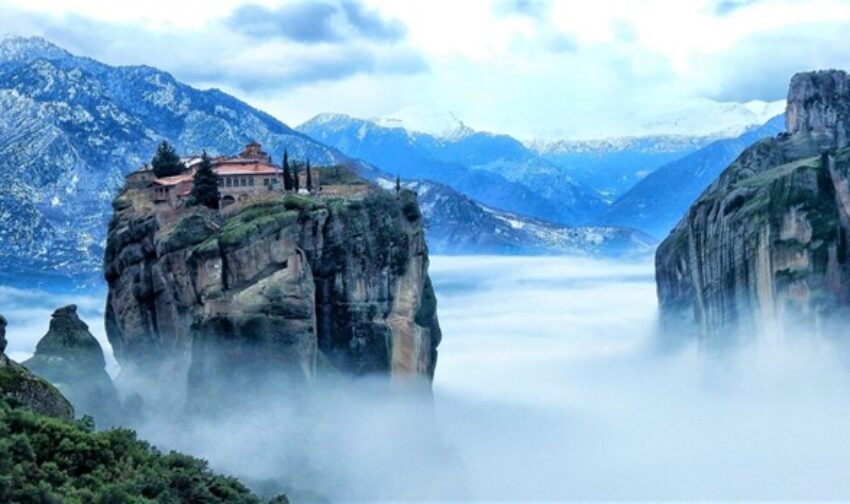
The blessings of this pilgrimage had already begun before we even started our ascent to Meteora!
On the coach, quite unexpectedly, I met a brother in Christ, and we spent much of the journey talking about our beloved Elder Gregory of the Monastery of St John the Forerunner in Metamorfosi. Only two weeks earlier, on Saturday, 14 November, the seventh annual memorial service had been held for him. How many prayers of thanksgiving have gone up to God since then for the gift of such a spiritual father!
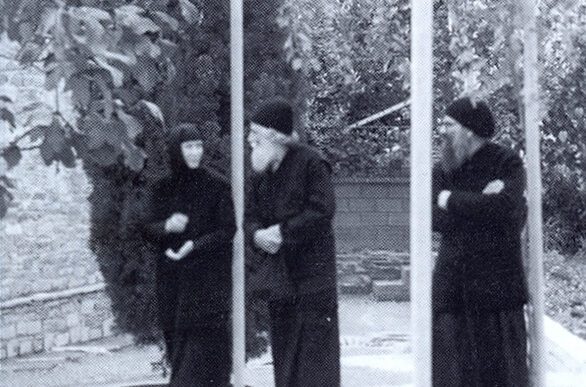
Later on, when we were shown to our rooms that evening, I discovered that I would be sharing mine with people who have long been deeply involved in Orthodox missionary work in Africa! We talked the night away… I could hear the joy in their voices as they told me about their missionary work in Africa and the blessings God has given them there. Glory to God for all things!
I had set out thinking I would be travelling on my own. By the end of that first evening, I was deeply moved by the comfort I had found in the company of my brothers and sisters in Christ. How full of love our Lord is!
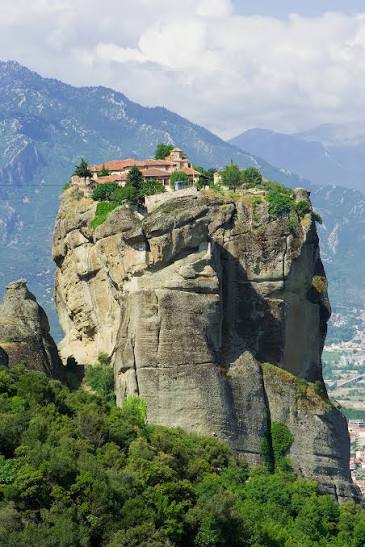
The next morning, we arrived at the foot of the rock in a fog so thick that I could barely see the path ahead. Somewhere above us stood the Monastery of the Holy Trinity. From where I stood, I could scarcely imagine the grandeur of the rock on which it was built.
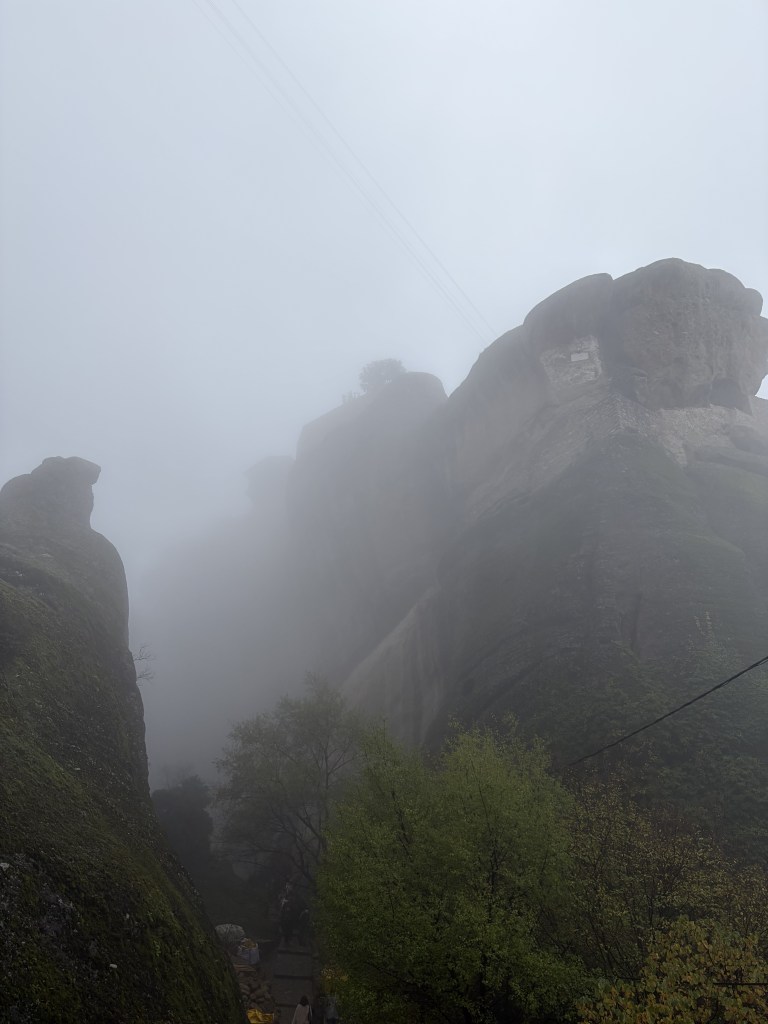
Meteora means “suspended in the air”. That morning, with the rock hidden in the fog, I could almost imagine the monastery hanging there above us.
Looking up at the Monastery of the Holy Trinity, you can see why it got its name. The walls rise from the very edge of the rock, and from below it is hard to imagine how anyone ever reached them.
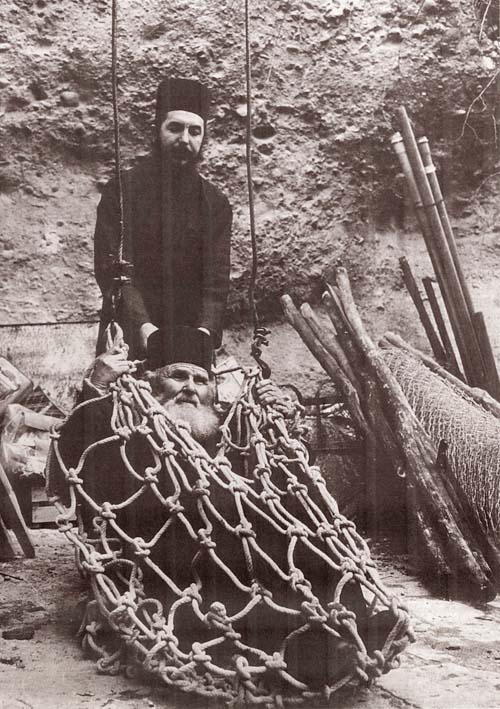
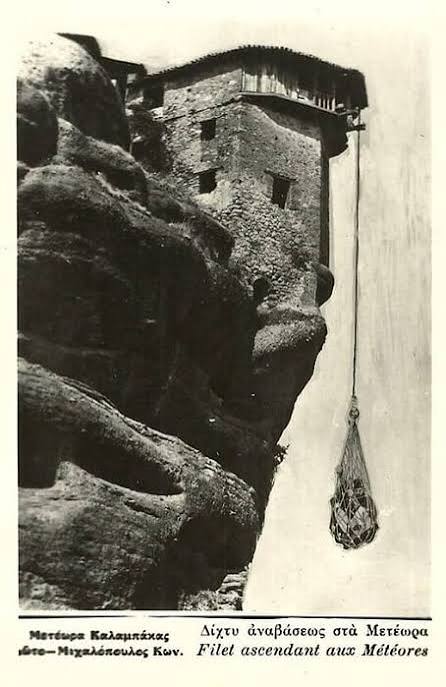
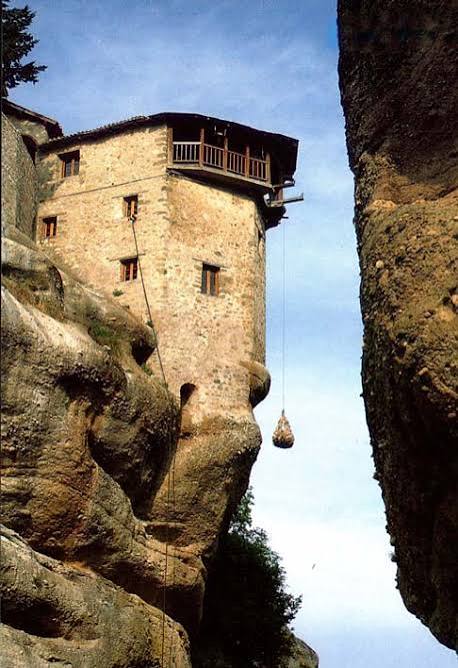
For centuries, people climbed by rope ladder, or a net hauled up the rock face. It was only in 1925 that steps were cut into the rock. There are 140 of them, and at the top the whole valley opens out.
Visiting tips for us 🙂
Allow at least 1 hour round-trip (30 minutes up, 20 minutes inside, 10 minutes down) if you’re moderately fit 🙂
The steep zigzag footpath (nearly 140 steps carved into the rock) can be slippery—hiking boots or trail runners recommended.
Far below lies Kalambaka, with the Pineios winding through the plain. Beyond it rise Mount Koziakas and the Chasia Mountains.
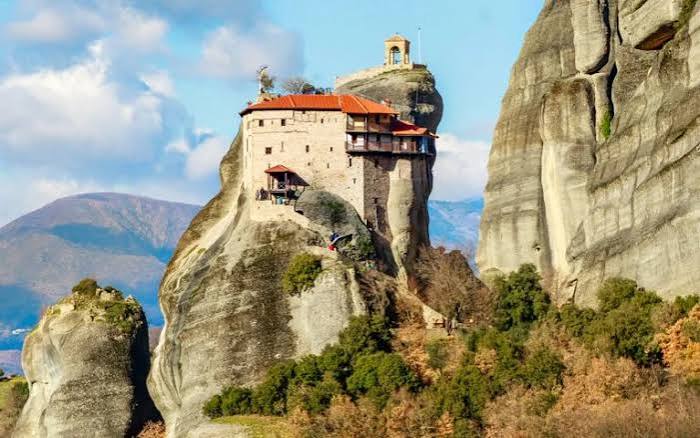
Long before there was a monastery, hermits are thought to have made their dwellings here, as early as the beginning of the fourteenth century. Tradition remembers a monk named Dometios, who is said to have founded the monastery in 1438. The rock keeps one date more plainly.
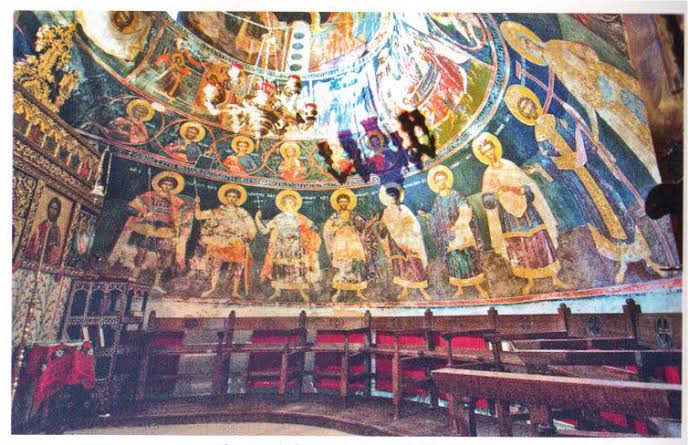
On the outer south wall of the katholikon, the monastery’s main church, an inscription dates its building to 1475–76. There is also a small chapel dedicated to St John the Forerunner.
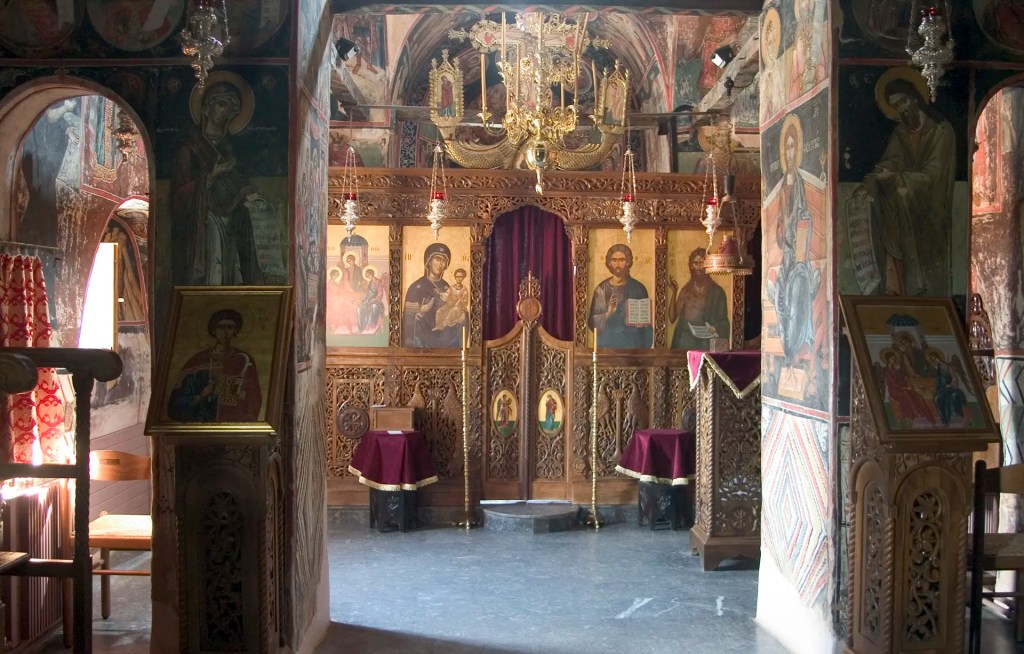
In the dim light of the katholikon of Holy Trinity, two old icons caught my eye. Both are on the iconostasis. The icon of Christ dates to 1662, and that of the Mother of God to 1718.
In 1909, forty-seven rare manuscripts were found in a hiding place. Later, during the wartime occupation, the treasury was plundered and the library burned. For nearly twenty years, the monastery stood empty. It was restored in 1972.
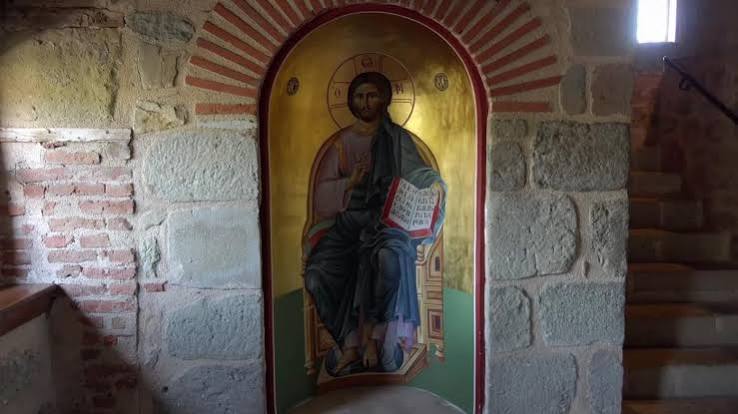
I keep coming back to the image of that net. Today we can stop on the steps, catch our breath and turn to look at the valley. What must it have been like to leave the ground in a net and feel the rock pass slowly beside you, with the monastery still somewhere above? I think of the hermits and monks who chose to make their home among those rocks and give their lives to prayer, and I am filled with awe. That sense of awe stayed with me throughout my pilgrimage to Meteora.
In the half-light, we passed through the holy places in silence.
«Σιγησάτω πᾶσα σὰρξ βροτεία.»
“Let all mortal flesh keep silence.”
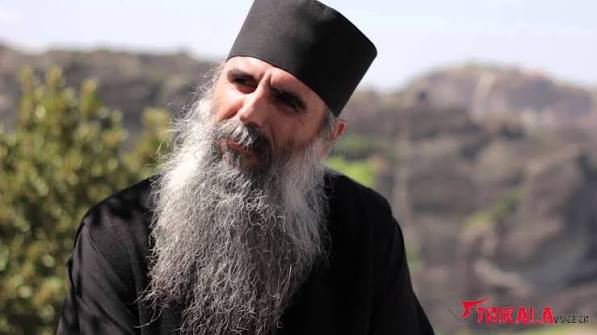
Here Fr Dometios, the abbot of the Monastery of the Holy Trinity, spoke to us with a humility and contrition that moved me deeply. He spoke of something so simple and so easily forgotten: we were born to become saints.
Fr Dometios urged us to read the Scriptures in the light of the Church Fathers and to live by them, to give ourselves to prayer, to take part in the services and sacraments of the Church, and to show charity to our neighbour, seeing in each person the image of Christ. When he spoke of humility, his counsel was simple. To learn humility, he said, we need only compare ourselves with Christ.
All this was from the first five minutes of his half-hour homily. I recorded the whole homily so I could listen to it again and reflect on his words. Afterwards, he answered the pilgrims’ questions. I could have gone away with just the memory of the Elder sitting among us, so gentle in his manner and so soft in his speech. We were all moved by his humility. More than anything he said, what stayed with me was the Light in his eyes.
“Therefore approach Him and be enlightened, and let not your faces be ashamed, being signed with the true Light.”
— St Gregory the Theologian, On the Holy Lights, §2
«Λάμψον καὶ ἡμῖν τοῖς ἁμαρτωλοῖς τὸ φῶς σου τὸ ἀΐδιον.»
“Let Your everlasting light shine upon us sinners also.”
— Apolytikion of the Transfiguration


