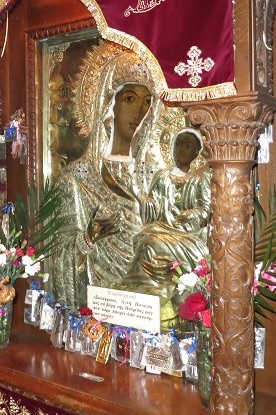
The Wonderworking Panagia of Agathonos and the Incorrupt Saint Vissarion
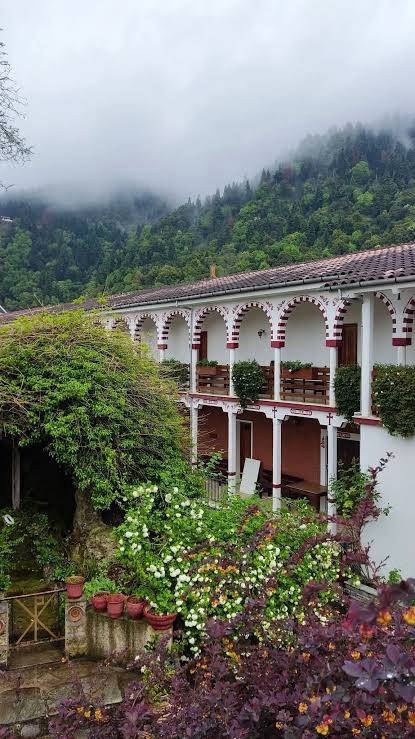
Today’s pilgrimage to the wonderworking icons of the Theotokos in Central Greece (Sterea Ellada) brought us to the Monastery of Agathonos, nestled among the wooded slopes of Mount Oiti.
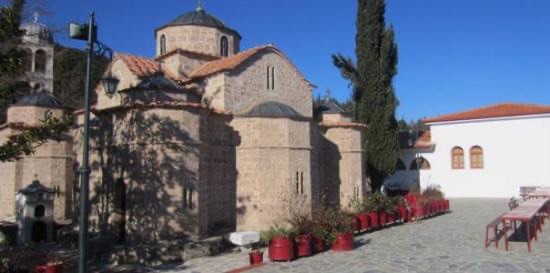
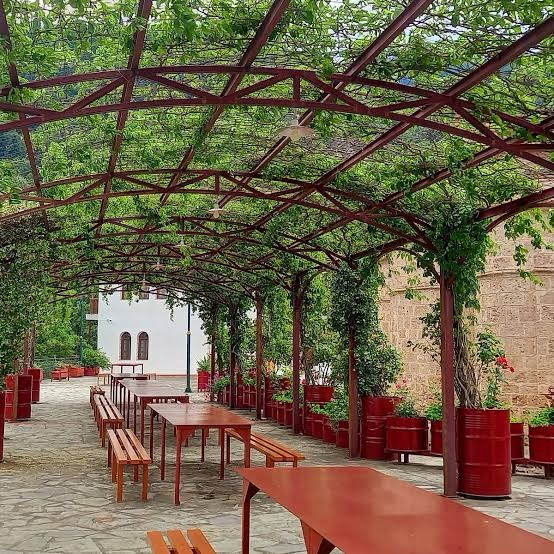
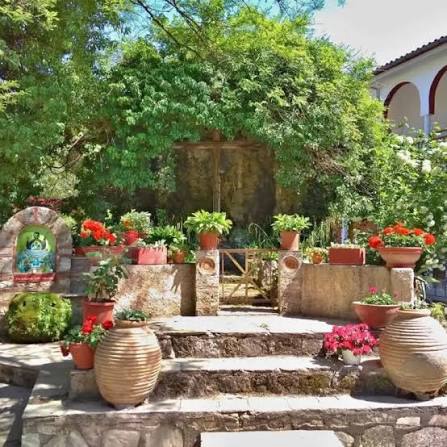
Near Ypati, the Monastery of Agathonos welcomes pilgrims into a courtyard of flowers, beneath an imposing bell tower. Beyond its walls, deer and birds inhabit the monastery grounds. Within, two beloved treasures draw the faithful: the wonderworking icon of the Mother of God and the incorrupt relics of Saint Vissarion.
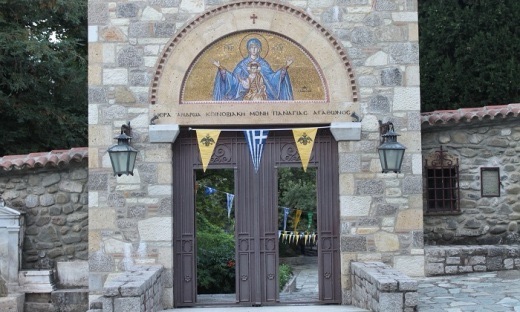
The welcome of the fathers, a small refreshment offered with love, and the quiet of the mountain allow the visitor to pause.
Beneath her gaze, the weary find shelter.
A light in the cave
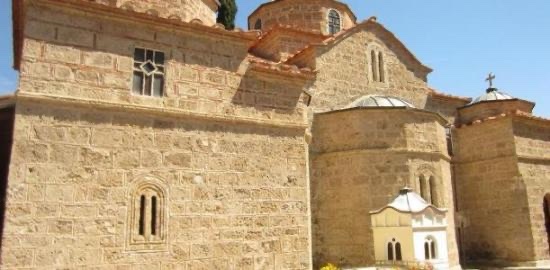
According to local tradition, Saint Agathon lived in an older monastery near the villages of Lychnos and Kastania. When the ground subsided and the buildings were damaged, its icon of the Theotokos disappeared. It was later discovered in a cave filled with light. Nearby, the saint established the present monastery, traditionally dated to the fourteenth or fifteenth century.
Another account, preserved in the monastery’s 1939 pilgrim guide, tells of two Muslim villagers who repeatedly noticed light coming from a rocky cave. Approaching it, they discovered the icon, brought it to Agathon and offered surrounding woodland to the new monastery.
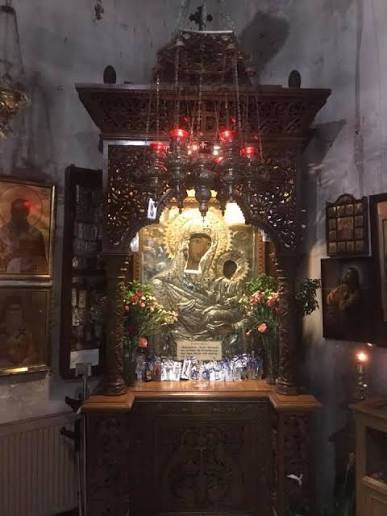
The icon belongs to the Hodegetria type: the Mother of God who points towards Christ, showing us the Way. Its silver covering leaves only the faces of the Theotokos and her Child visible. Around it, votive offerings preserve the thanksgiving of generations.
In 1822, Dramali’s forces burned the monastery. Books, frescoes and treasures were lost, but the icon survived.
A boat brought safely home
One account, preserved by Theoktistos Athanasios Lainas in his book about the monastery, recalls eight sailors caught in a violent storm in November 1918.
Their boat, the Vasiliki, was struggling in the Maliakos Gulf. Its mast broke; the captain and his seven companions clung to whatever they could grasp. Then, according to their testimony, a woman appeared beside the helm, surrounded by light. The storm subsided, and the boat reached the harbour of Stylida.
When the sailors described her, people at the harbour told them of Panagia Agathonos. Still wearing their wet clothes, they set out for the monastery, walking in silence.
Inside the church, they recognised in the icon the face they had seen at sea. Monastery tradition adds that two of them stayed and became monks.
A path illuminated
Another story tells of a young woman who had lost her sight. Years later, she dreamed of a woman dressed in white, asking why she had never visited her.
“But I am blind. I cannot see.”
“Come tomorrow to the Monastery of Agathonos, and you will see me.”
Her family accompanied her along the narrow mountain path. Suddenly, she asked them to release their hold: she could make out the path shining before her feet.
Later she collapsed, and they carried her into the church, placing her beneath the icon. On regaining consciousness, she opened her eyes and cried out that she could see. Pointing to the Theotokos, she recognised the woman of her dream.
Beneath her gaze, a light upon the path.
Through trial, towards holiness
The monastery’s history also holds memories of resistance, education and care for the poor. During the Greek War of Independence, it sheltered fighters and offered the service of its own monks. At different periods, it supported schools and children living in poverty.
Its longtime abbot, Archimandrite Germanos Dimakos, remembered as Papa-Anypomonos, ie. Father Inpatient (!), had served as a chaplain in the resistance to the Nazi occupation. His nickname, Papa-Anypomonos—“Father Impatient”—came when, eager to receive his resistance codename, he was gently scolded: “Don’t be so impatient, Father!” And there was his name!
Alongside him, another father served through confession, almsgiving and patient attention to suffering: Father Vissarion.
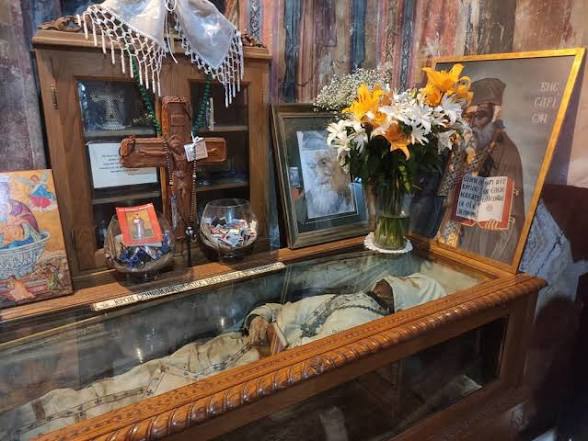
Saint Vissarion: beyond decay
Saint Vissarion the Agathonite is remembered as a compassionate spiritual father, particularly close to the poor and afflicted. People brought him their illnesses, anxieties and family troubles, finding prayer and practical kindness.
He reposed on 22 January 1991. When his tomb was opened on 3 March 2006, fifteen years later, his body was found incorrupt. The Ecumenical Patriarchate recognised his sainthood on 14 June 2022. His feast is celebrated on 22 January.
His relics rest in the monastery’s Chapel of the Holy Trinity. Some who come remember his voice and counsel; others encounter him for the first time before his reliquary.
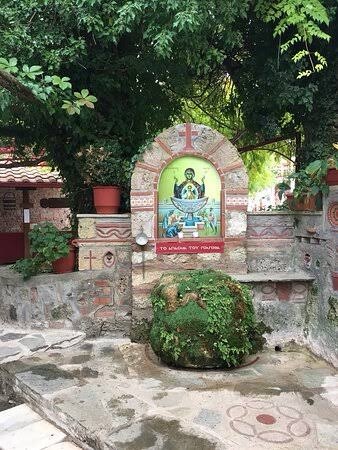
Outside, flowers grow and birds move among the trees. Within, pilgrims stand before the Mother and Child, then bow before a saint whom people of our own time knew and loved.
They bring what pilgrims have always brought: grief, gratitude, illness, hope—and prayers they can scarcely put into words.
Beneath her gaze, beyond decay.


