The Icon That Was Never Lost

Panagia Prousiotissa — A Pilgrimage in Four Parts

Part II: The Miraculous Journey of the Icon

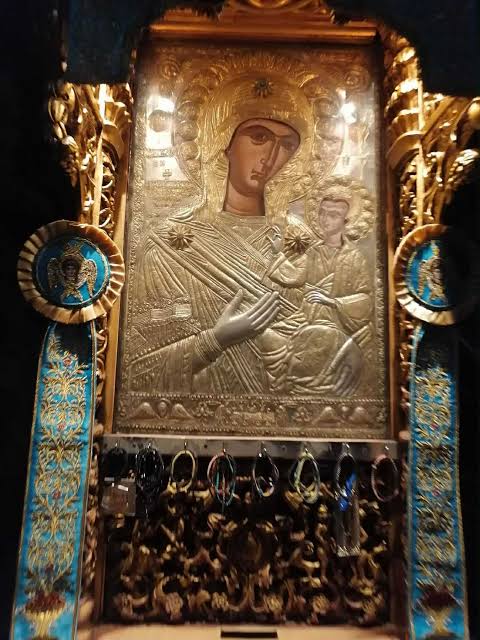
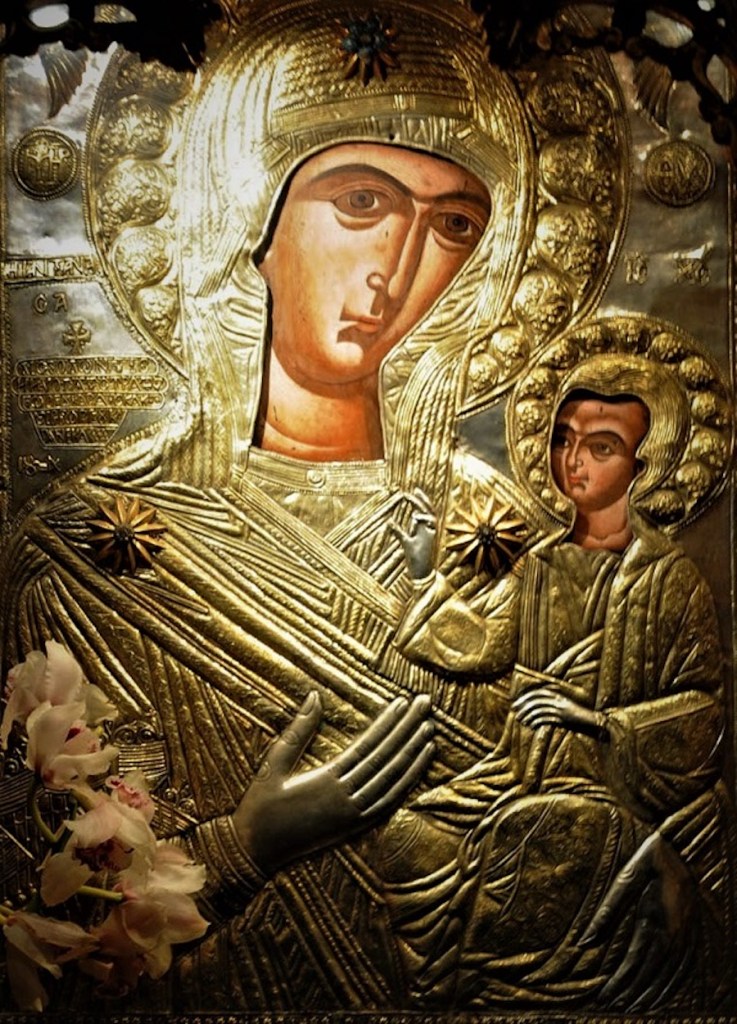
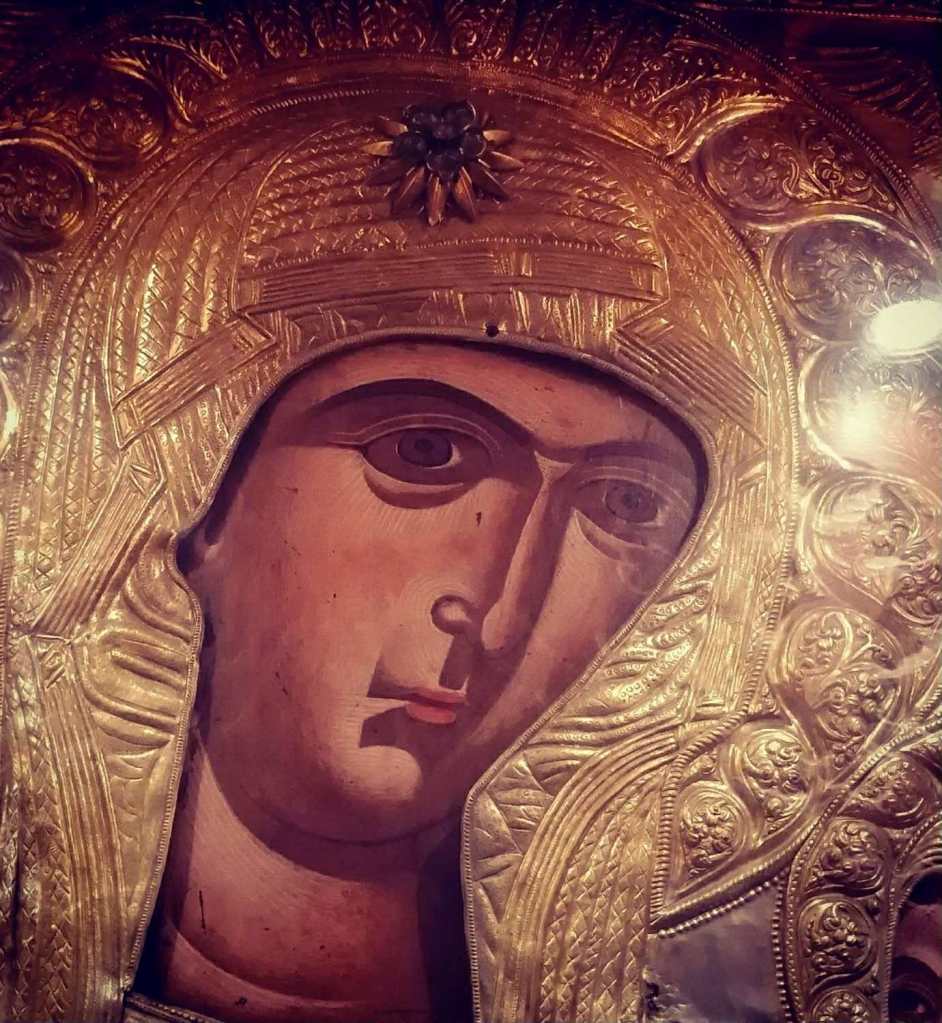
In the first part of our pilgrimage to Panagia Prousiotissa, we arrived before dawn, while Matins was already being celebrated, and stood before the miraculous icon of the Mother of God throughout the Divine Liturgy.

But how did this sacred icon come to rest in such a remote place, among the precipitous mountains of Roumeli?

According to a tradition cherished for nearly twelve centuries, the story begins far away, in Asia Minor, during one of the most troubled periods in the history of the Byzantine Church.

An Icon Saved from the Flames

The year was AD 829, during the reign of the Byzantine Emperor Theophilos, a fierce supporter of Iconoclasm — the movement that opposed the veneration of holy icons and led to their destruction.

In the city of Prusa, present-day Bursa in Turkey, there was a much-venerated icon of the Mother of God, traditionally attributed to the hand of St Luke the Evangelist.

A young nobleman, the son of a high-ranking official of the imperial court, was deeply devoted to the icon. He had witnessed, or heard of, the miracles associated with it and could not bear the thought of its destruction.

Rather than surrender it to the iconoclast authorities, he resolved to take it away from Asia Minor and carry it to safety in Greece.

He could not have imagined where his journey would end.
The Icon That Disappeared

The young man travelled westwards, carrying his precious treasure.

But when he reached Thrace, something inexplicable happened.

The icon disappeared.

Despite his efforts, he could not find it. Grieved by the loss, he continued his journey and eventually settled in Ypati, near Lamia, where he built a small chapel and tried to find consolation in prayer.

Yet the icon had not been lost.

Or rather, according to the sacred tradition, it had already reached the place where the Mother of God wished it to remain.

A Light Between Earth and Heaven

Far away, in the mountains of Evrytania, a young shepherd was tending his father’s goats.

One night, while he slept among the other shepherds, he was awakened by something extraordinary.

He heard singing.

Not the familiar voices of his companions, but sweet, gentle hymns coming from somewhere in the darkness.

Startled, he looked around and saw a great column of light rising from a cave towards the heavens.

The following morning, accompanied by his father and other shepherds, he went to investigate.

There, within the cave, they discovered the holy icon of the Mother of God, shining with an extraordinary radiance.

The news spread through the surrounding villages and eventually reached the young man who had brought the icon from Prusa.

He hurried to Evrytania.

When he saw the icon, he recognised it immediately. Falling to the ground, he venerated it with tears.

The treasure he believed he had lost had been found again — but in a place he himself would never have chosen.

Where She Wished to Remain

The young man understood the discovery as a revelation of the will of the Mother of God.

He had wished to save her icon and carry it to a place of safety. Yet she had led him, by a path he could neither foresee nor understand, to this secluded cave among the mountains.

He remained there and became a monk, taking the name Dionysios. His companion also embraced the monastic life, receiving the name Timotheos.

Thus, according to the monastery’s tradition, began the monastic community that would grow into the great sanctuary of Panagia Prousiotissa.

And so the icon, which had begun its journey in Prusa, gave its name to the monastery and to the Mother of God herself: Panagia Prousiotissa — Our Lady of Prusa.

The discovery is commemorated on 23 August, the Leavetaking of the Dormition of the Theotokos, when the monastery celebrates its principal feast.

The Footprints of the Mother of God

There is another remarkable tradition associated with the journey of the Panagia to her chosen dwelling place.

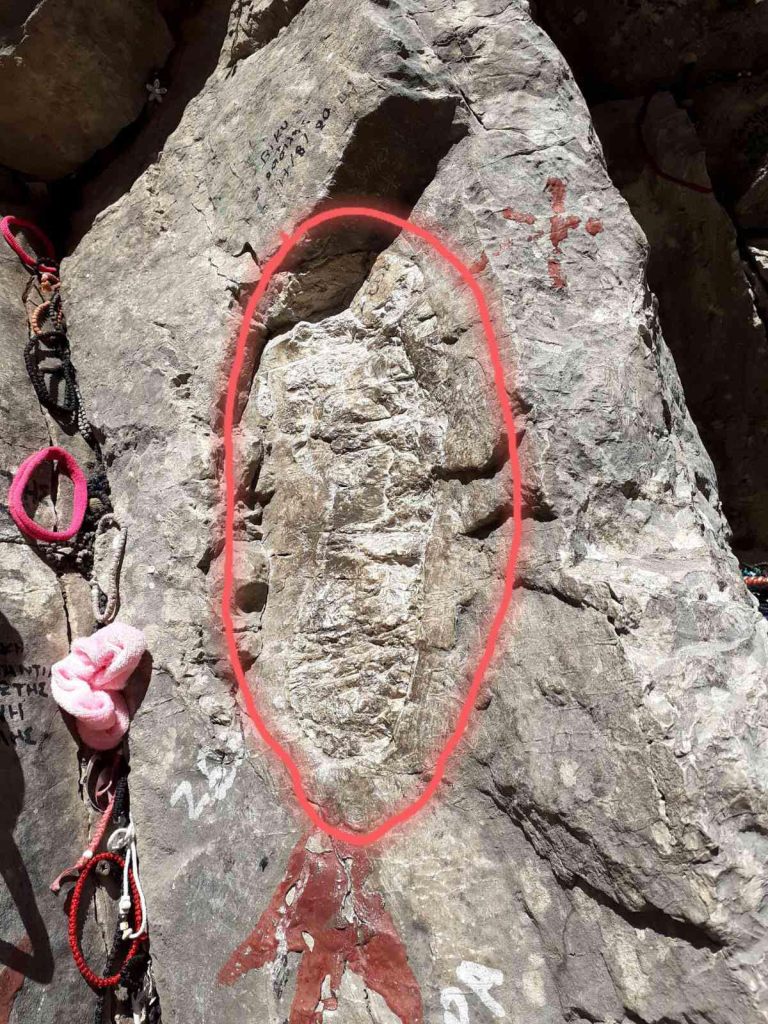
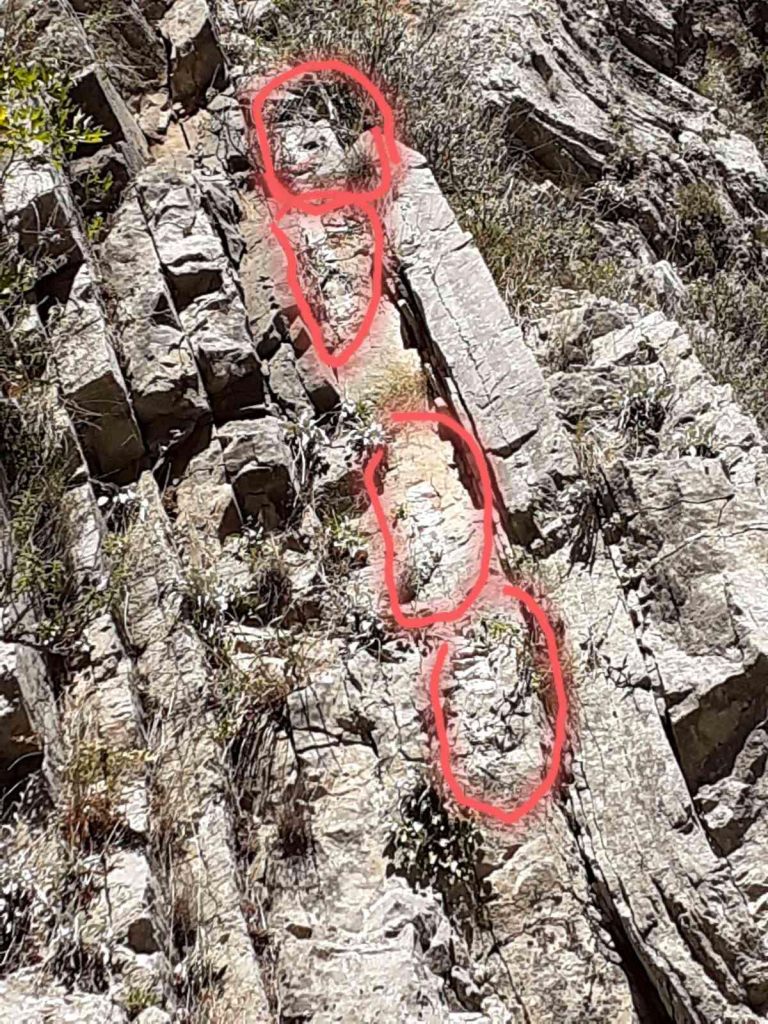
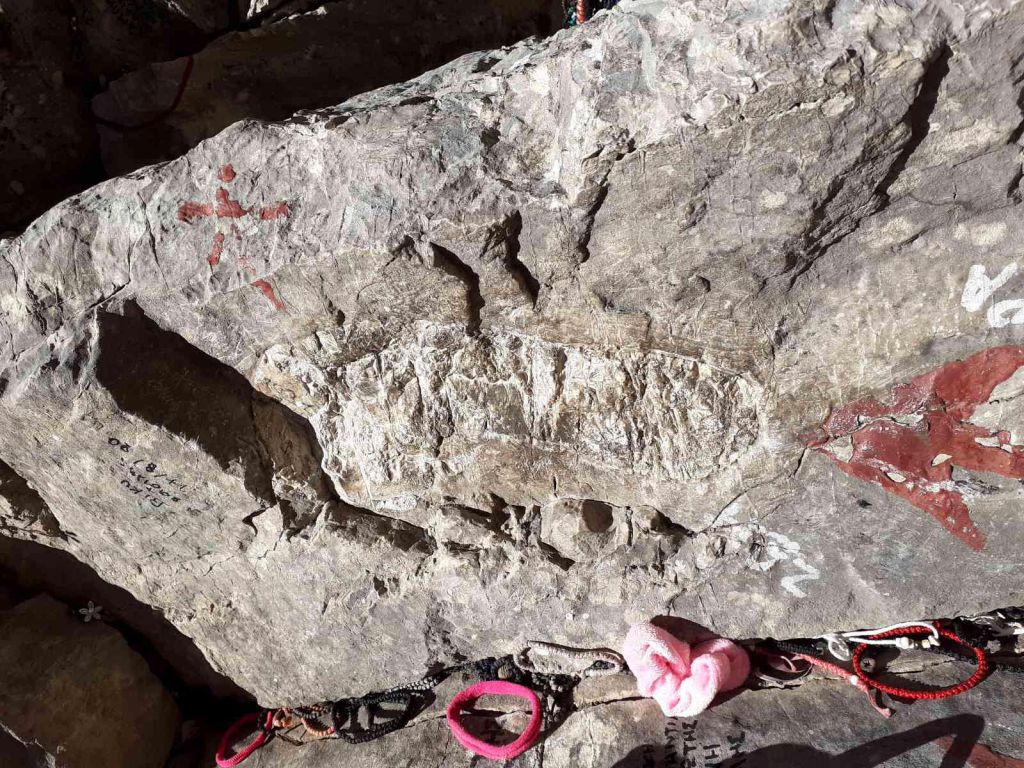
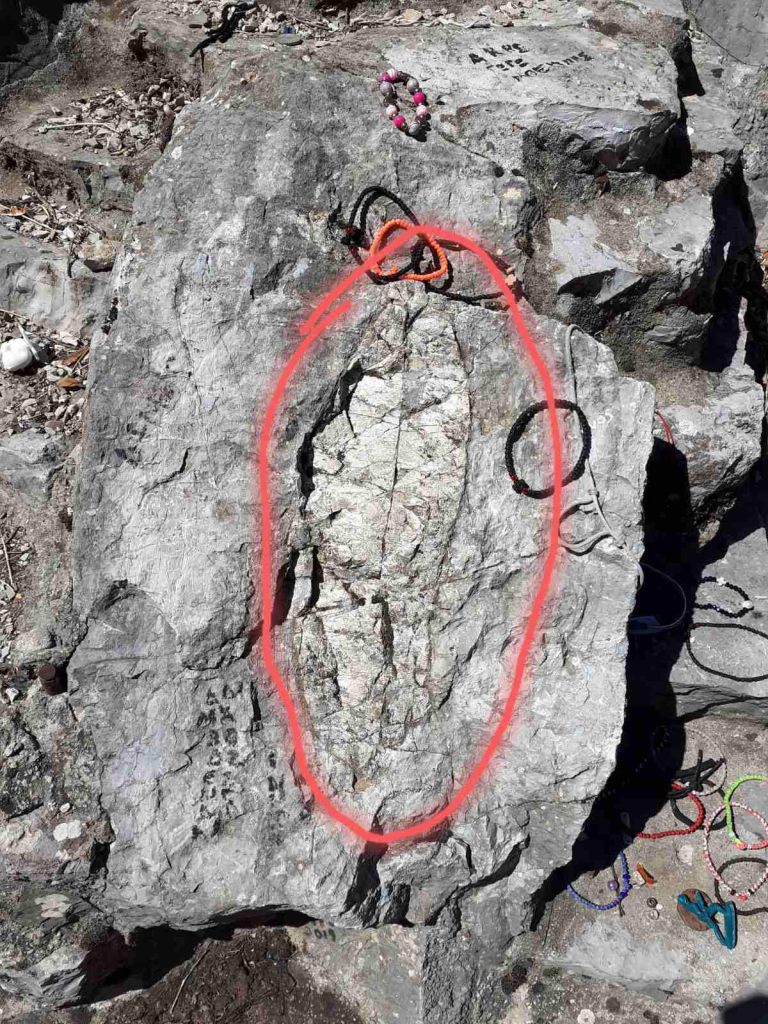
On the road leading towards the monastery, at a location known as Typoma (the Imprint), pilgrims can see what are called the Footprints of the Panagia — Ta Patimata tis Panagias.

These are seven differently coloured markings on a steep rock face which, according to local sacred tradition, were left by the Mother of God as she passed through the mountains.
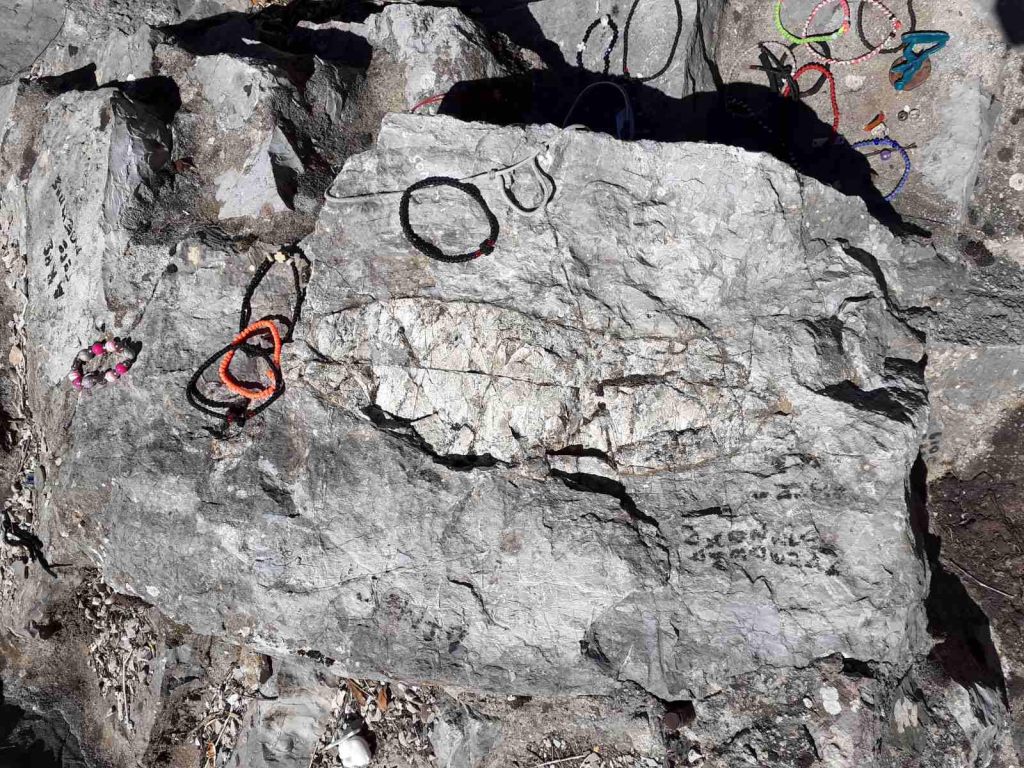
The footprints have become another cherished part of the pilgrimage, a reminder of the belief that the Mother of God herself came to these mountains and chose them as her dwelling place.
The One Who Chooses, and the Ones Who Follow

There is something particularly moving about this story.

A young man sets out to save an icon. He makes his plans, chooses his destination and undertakes a difficult journey. Then, suddenly, everything is taken out of his hands.

The icon disappears. His plans come to nothing.

Only later does he discover that what seemed to be a loss had become the beginning of something far greater.

The Mother of God had not abandoned him. She had led him somewhere he had never intended to go.

Perhaps this is why the story has spoken to so many generations of pilgrims. We too make our plans, and sometimes find ourselves led along paths we would never have chosen.

And sometimes, only much later, do we begin to understand.

For nearly twelve centuries, pilgrims have made their way to this remote sanctuary, bringing their sorrows, their gratitude, their fears and their hopes before the Mother of God.

The icon remains where, according to tradition, she chose to dwell.

And the pilgrims continue to come.

The story of Panagia Prousiotissa, however, is not confined to the distant past. Her presence is still felt in the life of the monastery, and perhaps nowhere more tenderly than in the loving ministry of its Abbot, Elder Ioannikios. In the third part of our pilgrimage, we shall return to our unforgettable encounter with him and listen to his own words.


In Part III, we shall turn to some of the extraordinary accounts of the protection of Panagia Prousiotissa through war, fire and pestilence — from the Greek War of Independence to the destruction of the monastery in 1944, and the terrible influenza epidemic of 1918.

Where the Lamp Has Never Gone Out

Panagia Prousiotissa: Twelve Centuries of Unceasing Prayer

Our pilgrimage to the wonderworking icons of the Mother of God in Central Greece continued with a second, extraordinary destination: the Monastery of Panagia Prousiotissa, the beloved Lady of Roumeli.

Panagia Prousiotissa — A Pilgrimage in Four Parts

Our pilgrimage to Panagia Prousiotissa unfolds in four parts: from our arrival in the darkness before dawn to the extraordinary journey of the miraculous icon and the holy footprints of the Mother of God; from our unforgettable encounter with Elder Ioannikios and his ministry of love to the stories of faith and divine protection that have sustained generations through war, fire and pestilence. Four glimpses into one sacred place, where the prayers of centuries are still alive.

Part I: From Darkness into Light

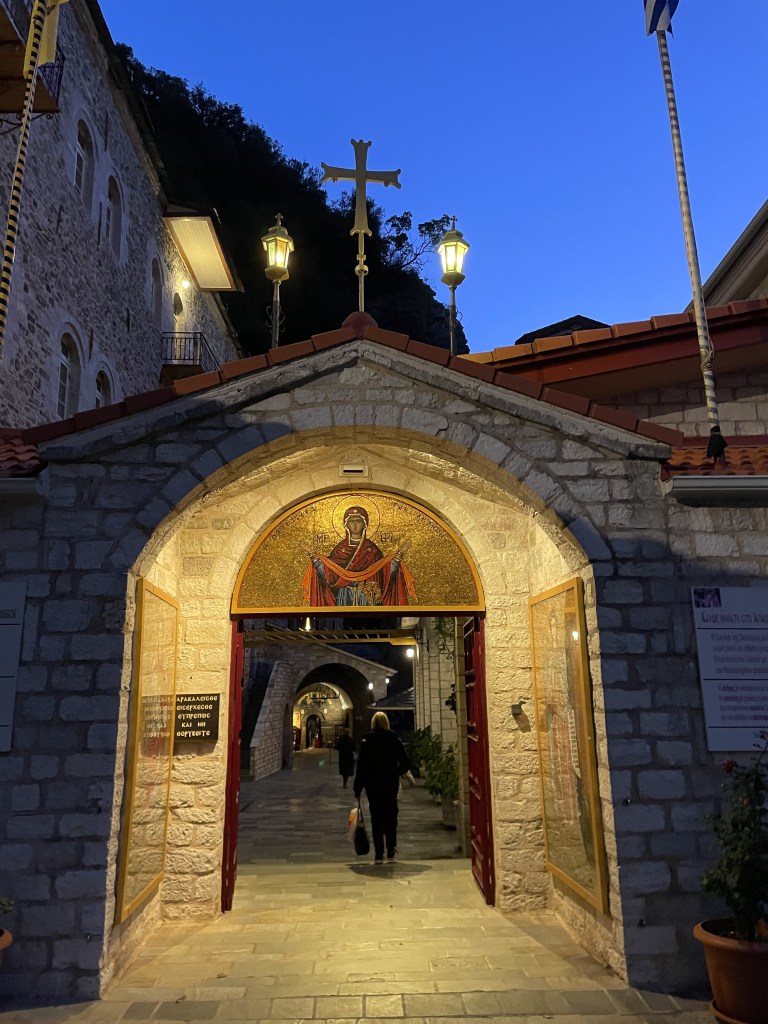
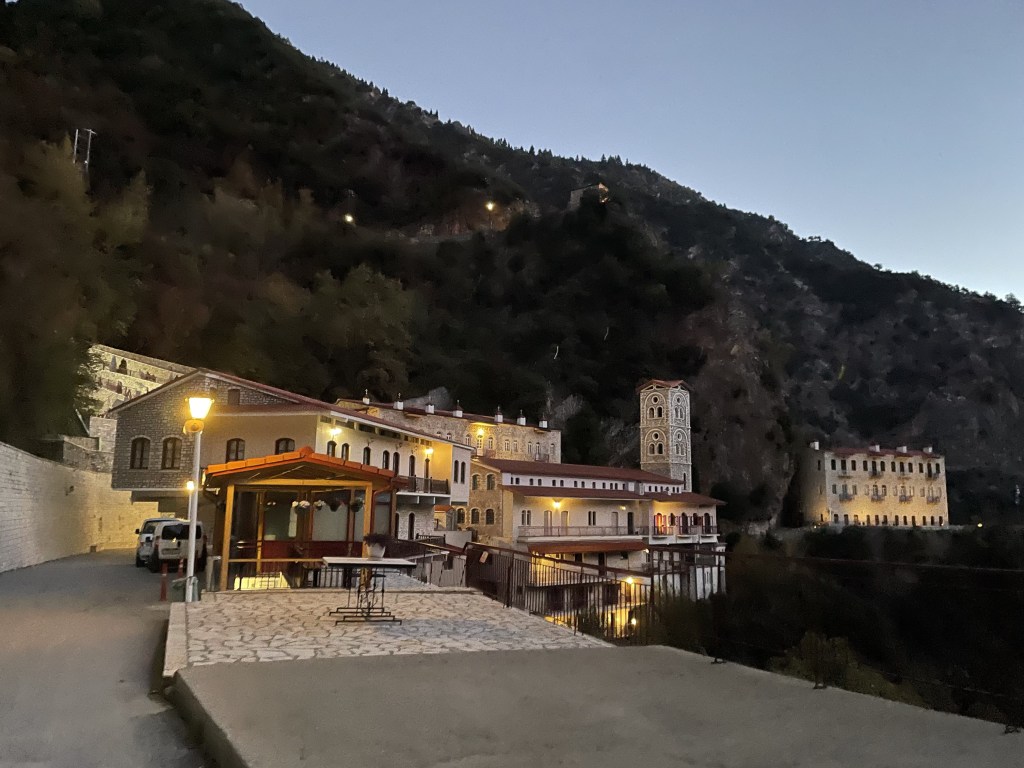
We arrived at the Monastery of Panagia Prousiotissa before dawn on Sunday morning, while Matins was already being celebrated. The mountains of Evrytania, in Central Greece, were still wrapped in darkness, and the monastery, nestled among towering cliffs, glowed softly beneath the deep blue of the early morning sky.

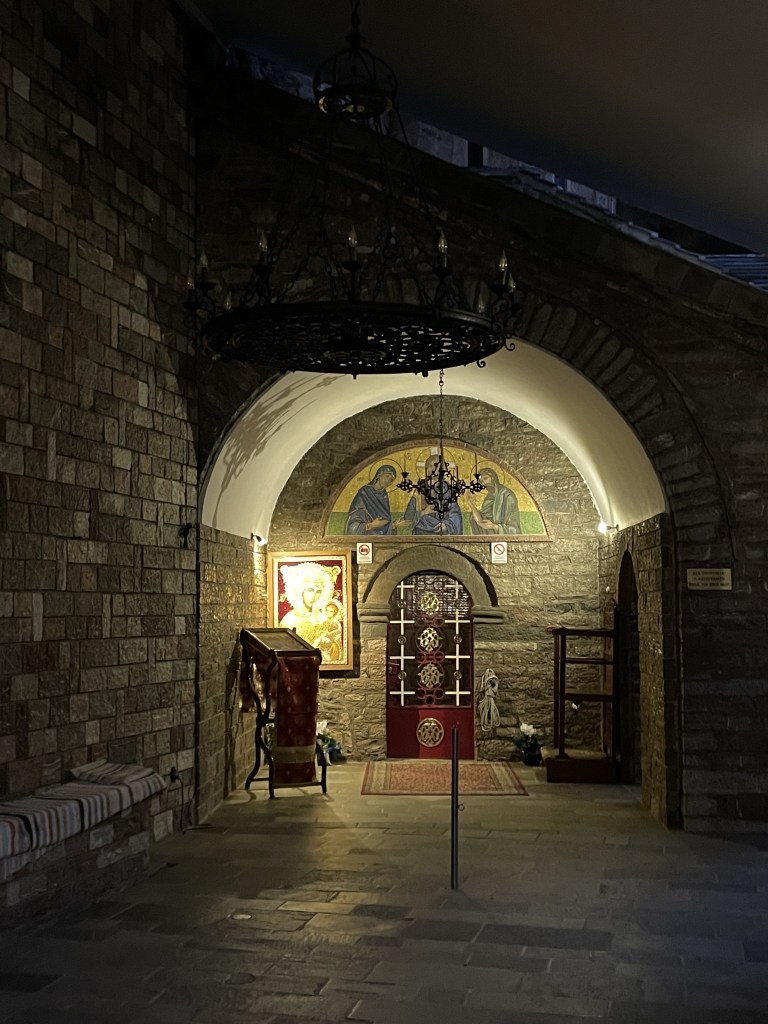
I spent the entire service — Matins and the Divine Liturgy — standing before the miraculous icon of the Mother of God. For those precious hours, there was no need to go anywhere else.

“Beneath thy compassion we take refuge, O Theotokos; do not despise our supplications in time of trouble, but deliver us from dangers, O only pure, only blessed one.”

These ancient words of prayer seemed to express everything that needed to be said. Before her icon, surrounded by the prayers of so many generations, one could simply stand, entrusting everything and everyone to her intercessions.

Only afterwards, over morning coffee in the monastery’s archontariki (guest reception room), did we have the blessing of meeting Elder Ioannikios, the Abbot, and listening to him.

His warmth, his words, and above all the love with which he received each pilgrim deserve a story of their own. God willing, we shall return to this encounter in the third part of our pilgrimage series.

And then, as daylight spread across the mountains, we went out to discover the extraordinary beauty of the place itself.

A Monastery Between Heaven and Earth

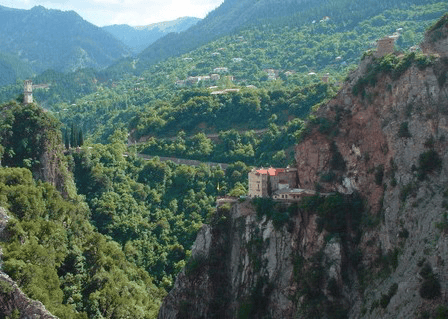
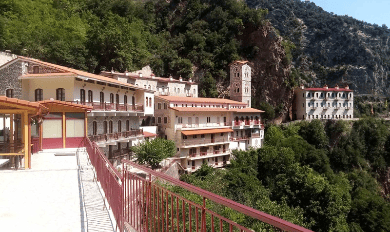
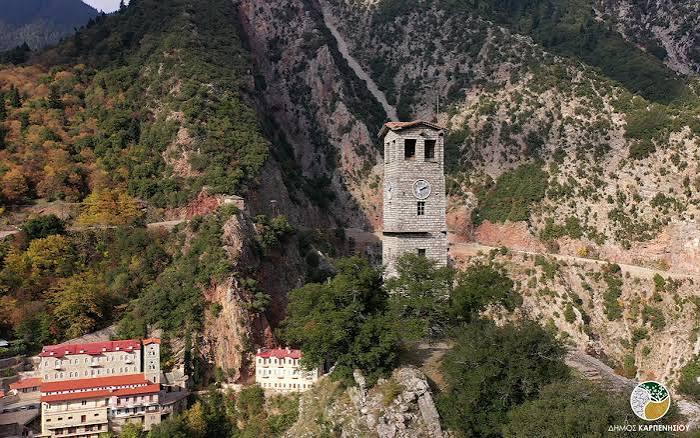
The Holy Monastery of Panagia Prousiotissa stands in one of the most dramatic landscapes of mainland Greece, approximately 35 kilometres from Karpenisi, among the mountains of Chelidona, Kaliakouda and the Panaitoliko range.

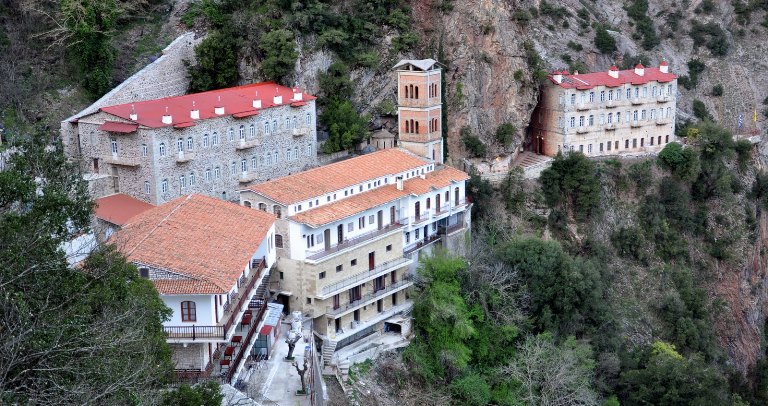
Surrounded by dense forests and steep, rocky precipices, its stone buildings seem almost to emerge from the mountainside itself. From a distance, the monastery appears suspended above the valley.

It is little wonder that generations of pilgrims have called it the House of the Mother of God, and the Panagia herself the Lady of Roumeli.

In daylight, the full beauty of the setting becomes apparent: the wooded slopes, the narrow ravines, the great walls of rock and the monastery buildings gathered beneath them.

The aerial views reveal something that cannot quite be appreciated from the courtyard below — the extraordinary isolation and grandeur of this sanctuary. For more aerial views and drone footage, go to https://youtu.be/NT70-jDqE5E?utm_source=chatgpt.com and https://youtu.be/FLb8Kkc3-Wg?utm_source=chatgpt.com

Twelve Centuries of Unceasing Prayer

According to sacred tradition, the monastery’s origins date back to AD 829, during the period of Byzantine Iconoclasm, when the miraculous icon of the Theotokos arrived from Prusa (Bursa) in Asia Minor.

The tradition tells of two young men, later known as the monks Dionysios and Timotheos, whose lives became inseparably connected with the icon and the foundation of the monastery.

The full story of the icon’s extraordinary journey, its disappearance and miraculous discovery will be the subject of Part II.

During our conversation in the monastery’s archontariki, Elder Ioannikios emphasised something truly remarkable: according to the monastery’s tradition, its life of prayer has continued without interruption for some 1,200 years, ever since its foundation in AD 829.

Even during the darkest periods of its history, when only a single monk remained, the lamp before the miraculous icon of the Mother of God was never extinguished.

The Elder described this continuity as unique in the world, drawing a comparison with the Church of the Holy Sepulchre in Jerusalem, whose sacred history (2000 years) reaches back to the time of Christ.

Twelve centuries of prayer. Twelve centuries of tears, petitions, thanksgiving and hope. And through it all, the lamp before the Mother of God still burning.

A Sanctuary Through the Centuries

Over the centuries, the monastery became not only a place of prayer and pilgrimage but also a refuge for those suffering through the upheavals of Greek history.

During Ottoman rule, it offered shelter and spiritual support to the surrounding population. It was also closely associated with the Greek War of Independence and the celebrated revolutionary commander Georgios Karaiskakis, who stayed here while suffering from illness.

Above the monastery stand the famous Karaoulia, two stone watchtowers associated with the revolutionary period, reminders of the days when these mountains were both a sanctuary and a stronghold.

Stone, Silence and Living History

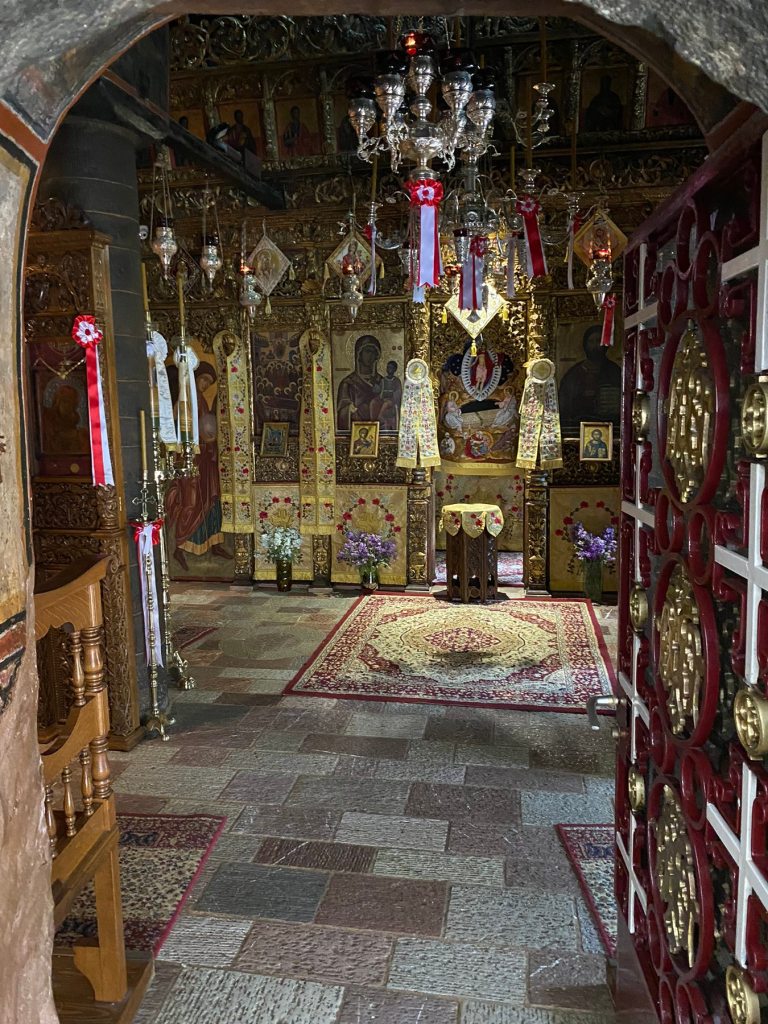
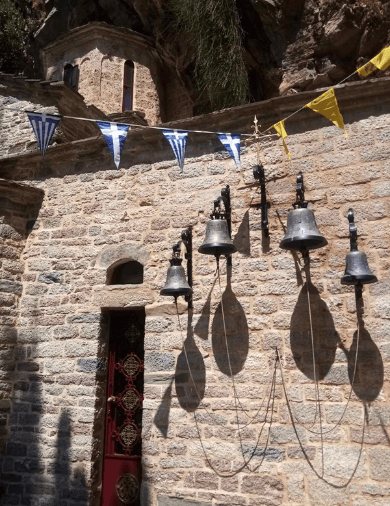
The monastery’s principal church, or katholikon, incorporates a remarkable sanctuary associated with the original cave where the miraculous icon was discovered.

The present church dates substantially from the eighteenth century, while surviving frescoes bear witness to earlier periods of its history.

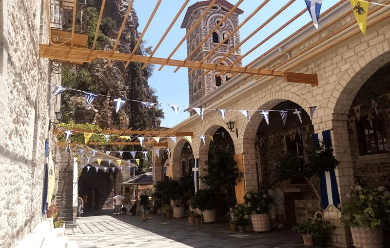
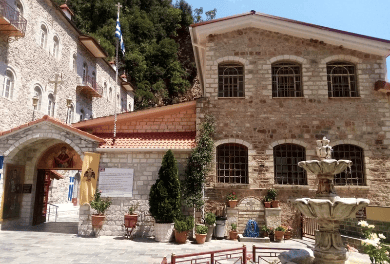
Around it, the monastic buildings, courtyards, arches and passageways form an architectural whole that seems to belong naturally to the rocky landscape.

The monastery also preserves important ecclesiastical treasures, relics and historical objects, including items associated with Karaiskakis. Its collections recall the close relationship between Orthodox monasticism, education and the history of Roumeli.

IIn 1944, during the German occupation of Greece, the monastery suffered devastating destruction. Yet, amid the flames and devastation, one place remained untouched: the chapel housing the wonderworking icon of the Mother of God. The monastery was reduced to ruins, but the sanctuary of the Panagia was spared. Yet it rose again, and its centuries-old life of worship and hospitality continued.

Today, pilgrims still arrive from Greece and abroad to venerate the miraculous icon, attend the Divine Liturgy and seek the intercessions of the Mother of God.

The monastery celebrates its principal feast on 23 August, the Leavetaking of the Dormition of the Theotokos.

The Mountains in the Morning Light

By the time we had finished our visit, the mountains were no longer hidden in darkness.

The cliffs, forests and stone buildings stood revealed in the morning light. The place that had welcomed us before dawn with the sound of prayer now opened before us in all its astonishing natural beauty.

Yet what remains most vividly with me is not the grandeur of the mountains, nor even the beauty of the monastery.

It is those early hours before the miraculous icon of the Mother of God, while Matins gave way to the Divine Liturgy.

The mountains were still in darkness when we arrived. But within the monastery, the day had already begun in prayer.


In Part II, we shall follow the extraordinary journey of the miraculous icon of Panagia Prousiotissa, from Asia Minor to the mountains of Roumeli, and discover why, according to sacred tradition, the Mother of God chose this remote sanctuary as her dwelling place.