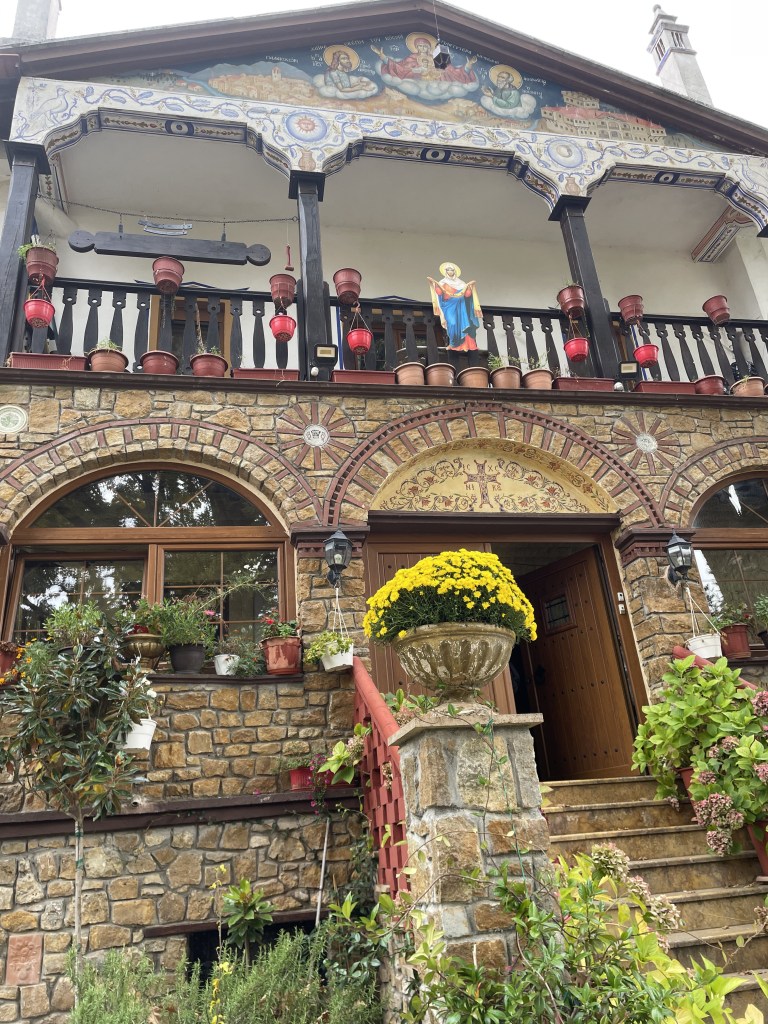
Where Sorrow Finds Joy and Mercy Never Runs Dry
A Pilgrimage from Disappointment, Doubt, Discouragement, and Despair to Hope
The tone of our pilgrimage through mountainous Halkidiki was set from the very beginning. On the minibus, we listened to a homily about the remembrance of death and the extraordinary faith of a bereaved mother.
As the preacher recounted it, she had watched all eight of her children perish before her eyes when their boat sank. She arrived as a refugee from Asia Minor entirely alone: a widow, now without her children. Yet she continued to thank the Lord. Her joy rested in the hope of being reunited with them in the life to come. They had been His children before they were hers, and she trusted that He knew best what was good for them.
We could only approach such suffering with reverence. Her thanksgiving did not diminish her loss; it revealed her trust in the Resurrection. Through her story, the remembrance of death became inseparable from the hope of eternal life. This testimony accompanied us to a monastery whose very name speaks of consolation.
On our way there, I also had the blessing to sit next to a lady 90 years old, yet radiant with joy, thanksgiving and unceasing tears for all mankind! She was another widow, from a very young age, left alone with her children for 30 years in a foreign land, yet she never complained once and always thanked Him for His Providence. “He certainly knew better than me what was best for our salvation”, she reassured me!
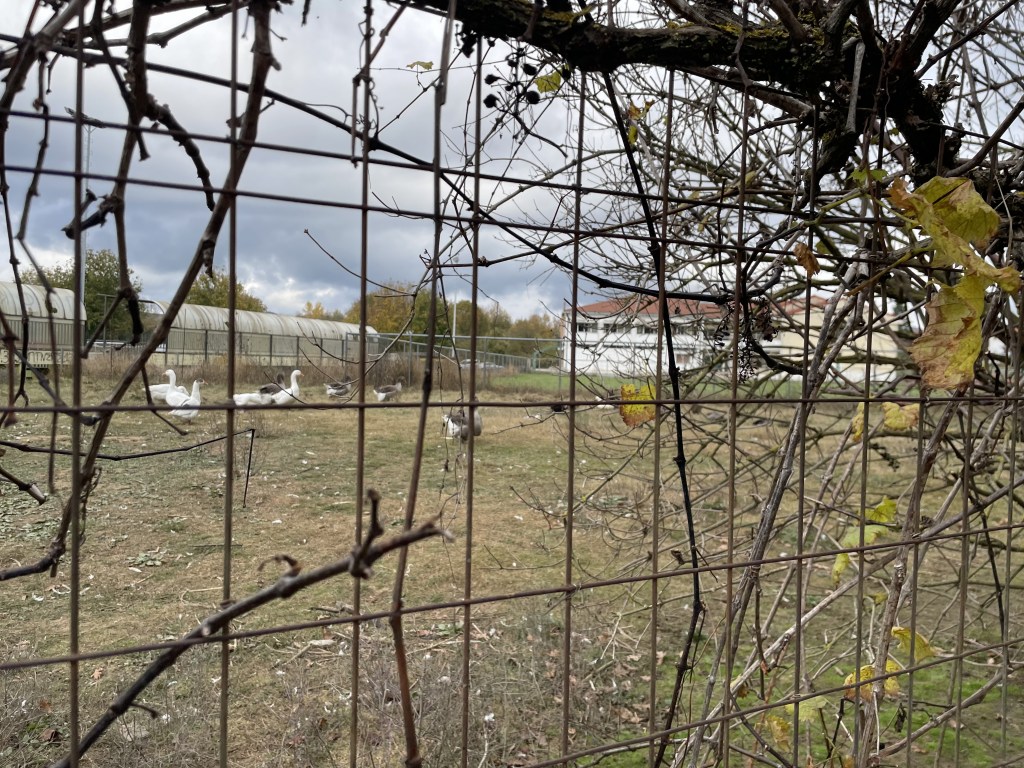
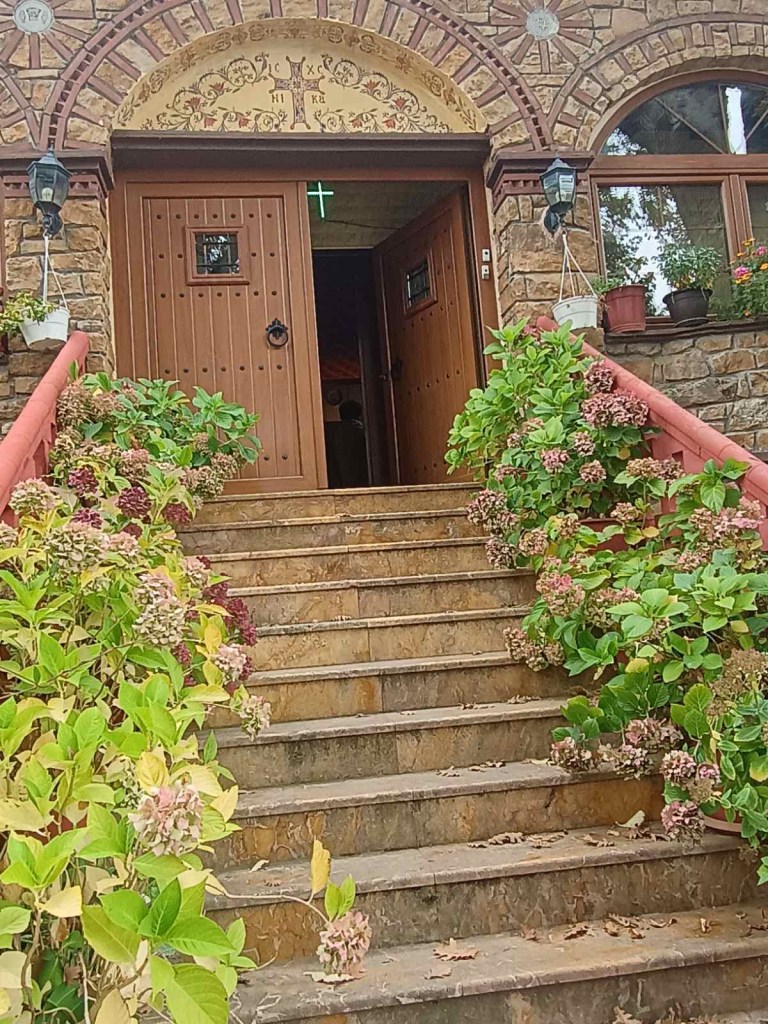
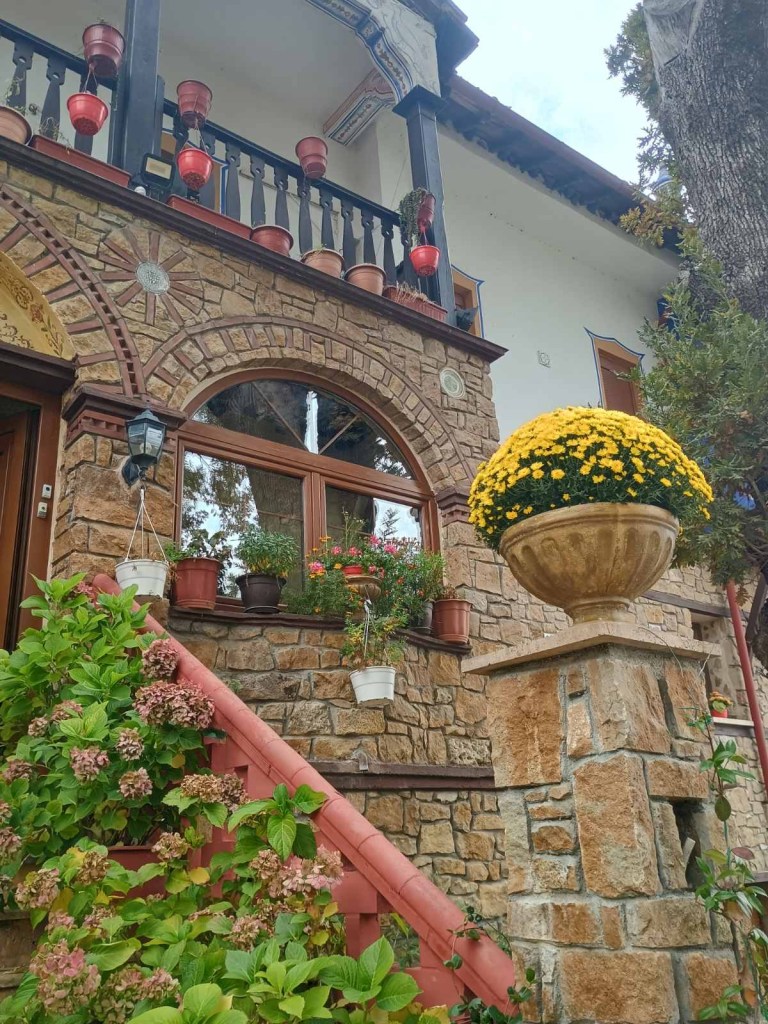
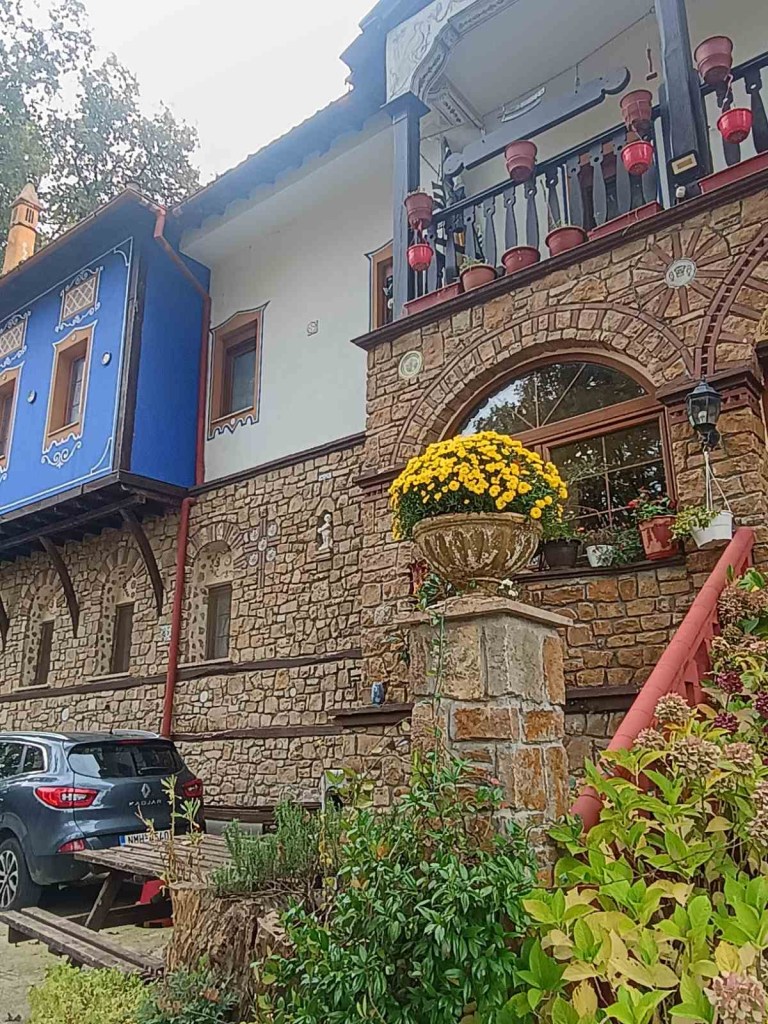
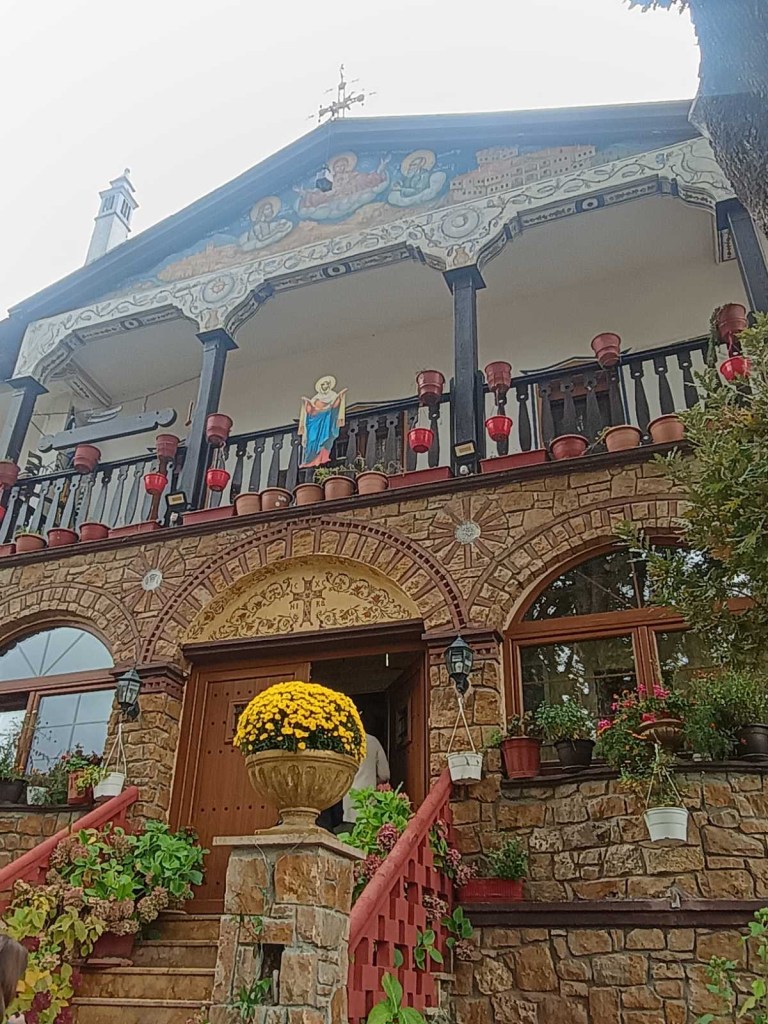
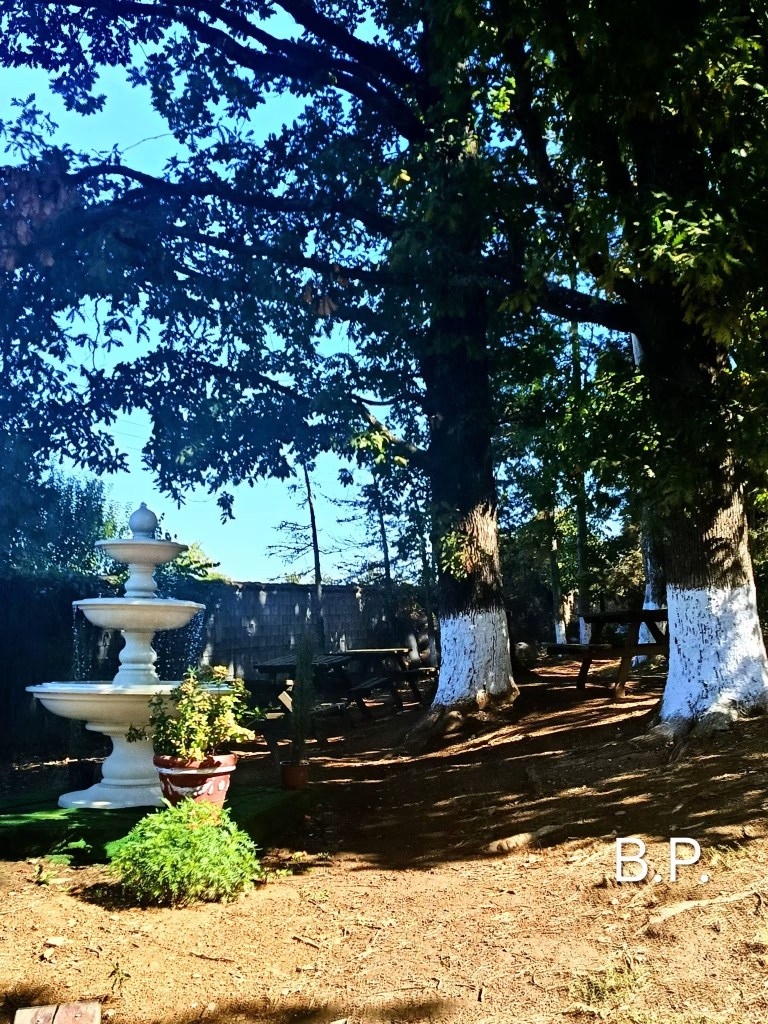
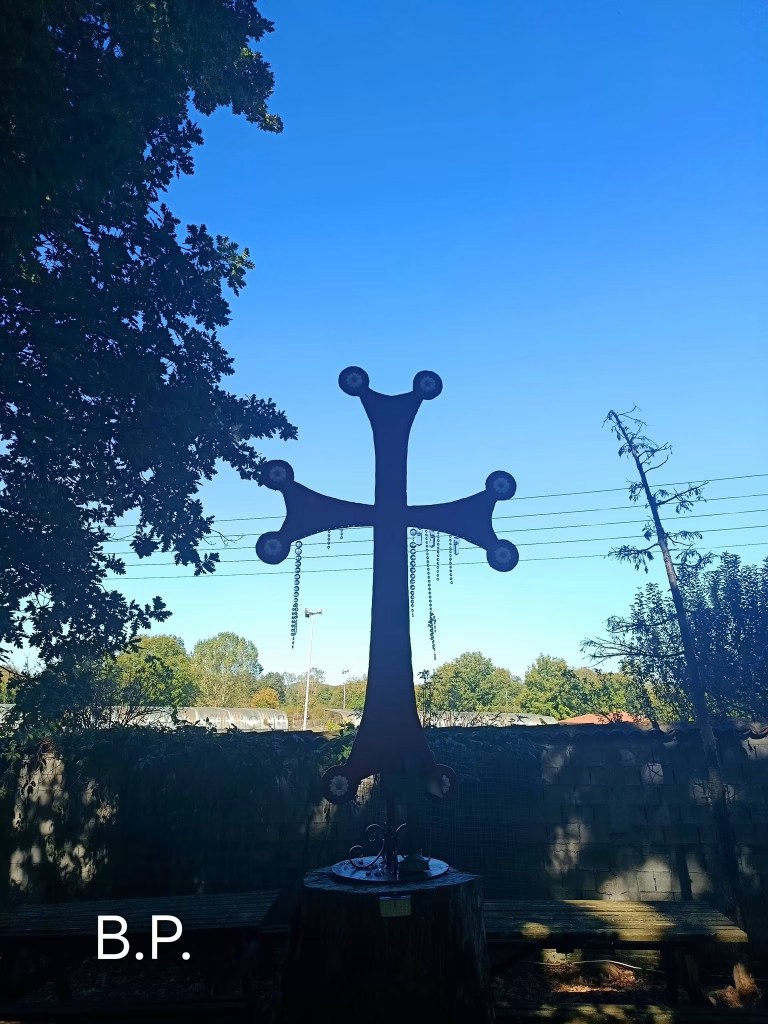
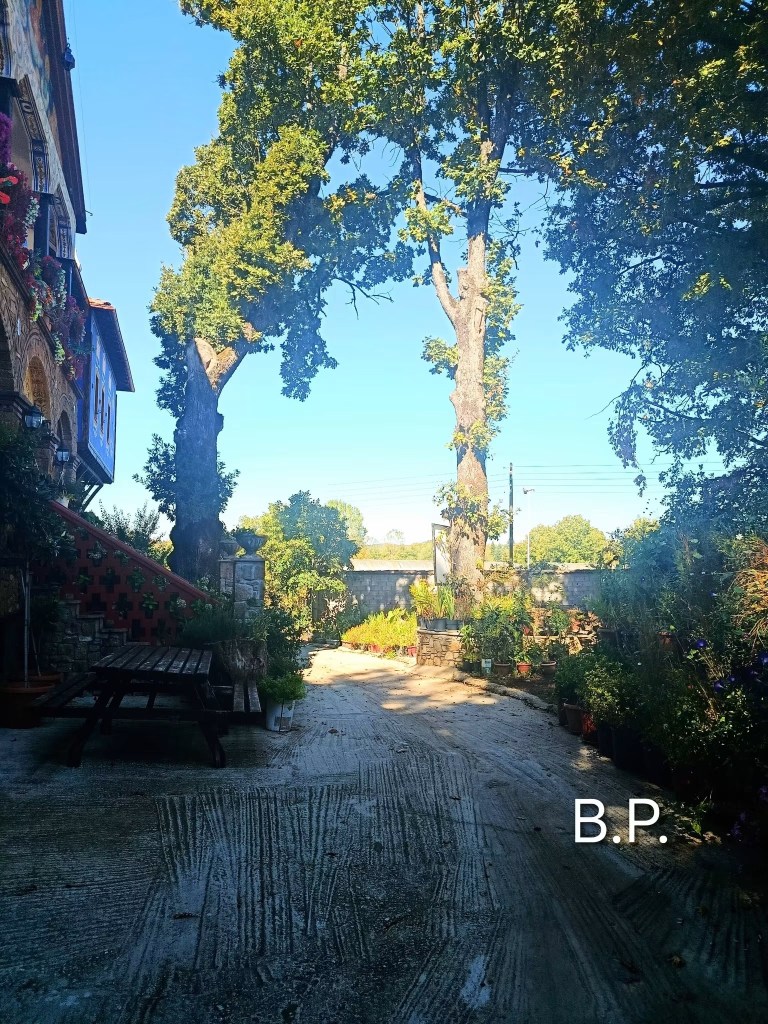
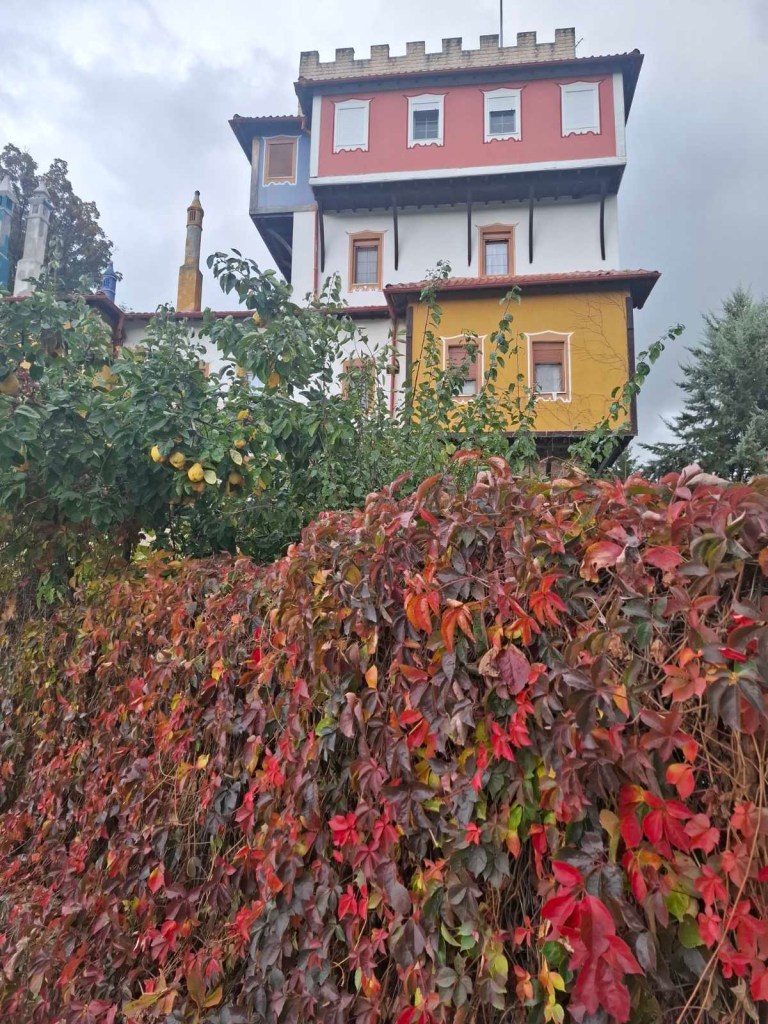
When we arrived, we were struck by the beauty of all the surrounding nature and that of the monastery buildings! Even the monastery animals greeted us with joy and love!
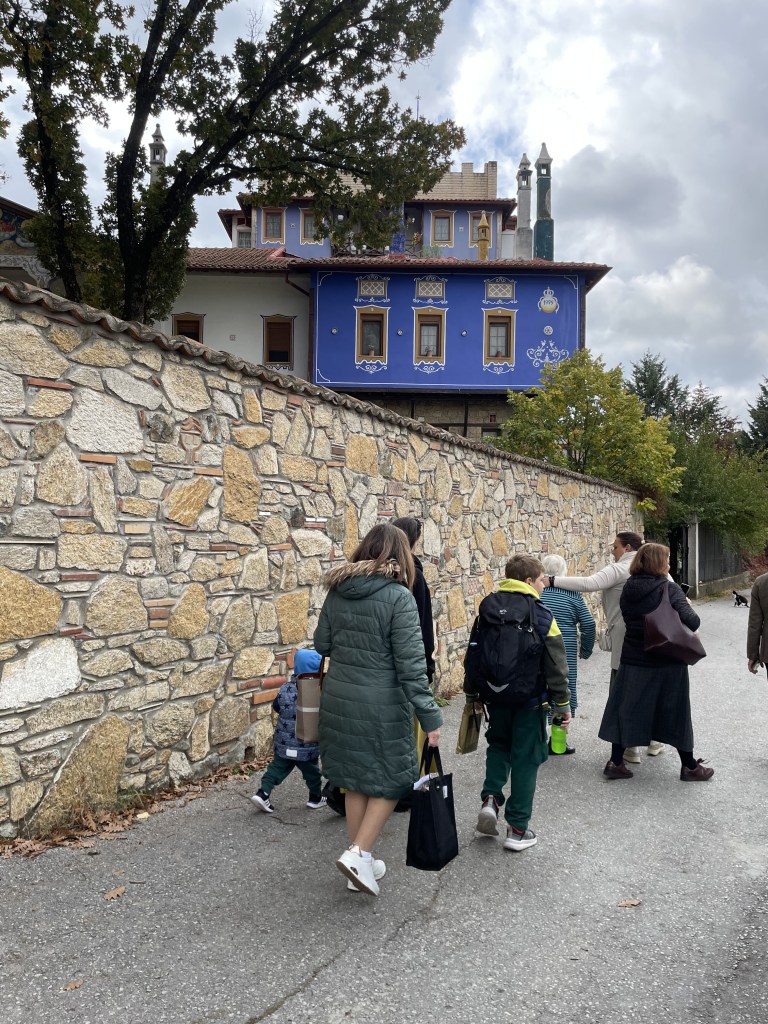
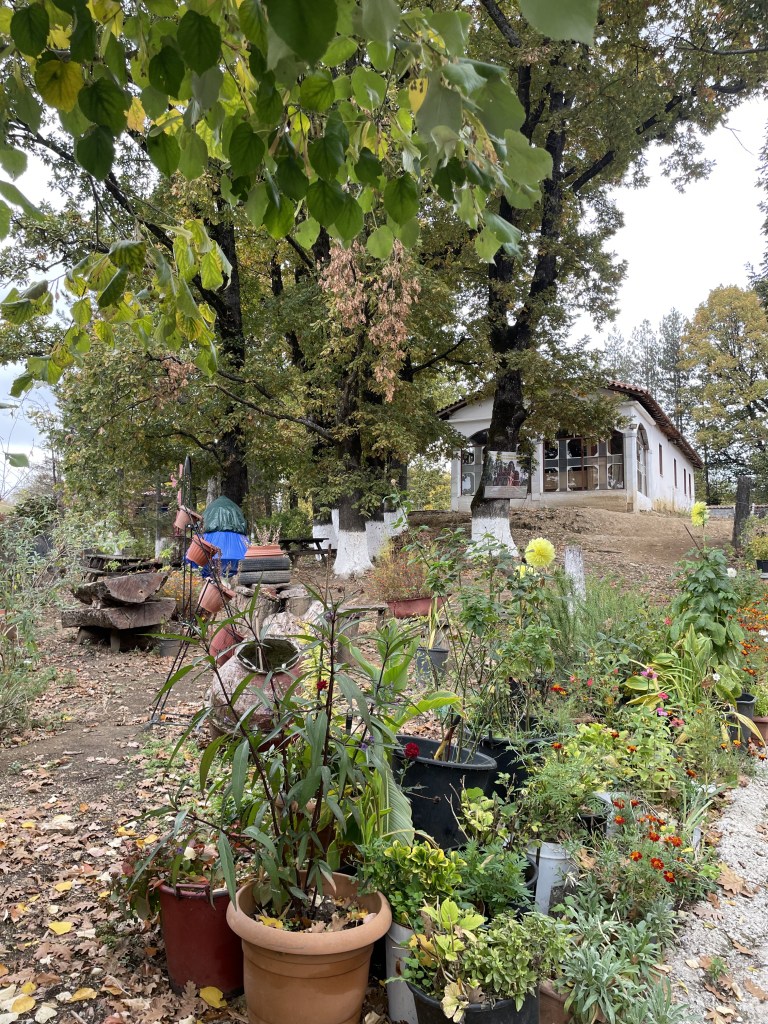
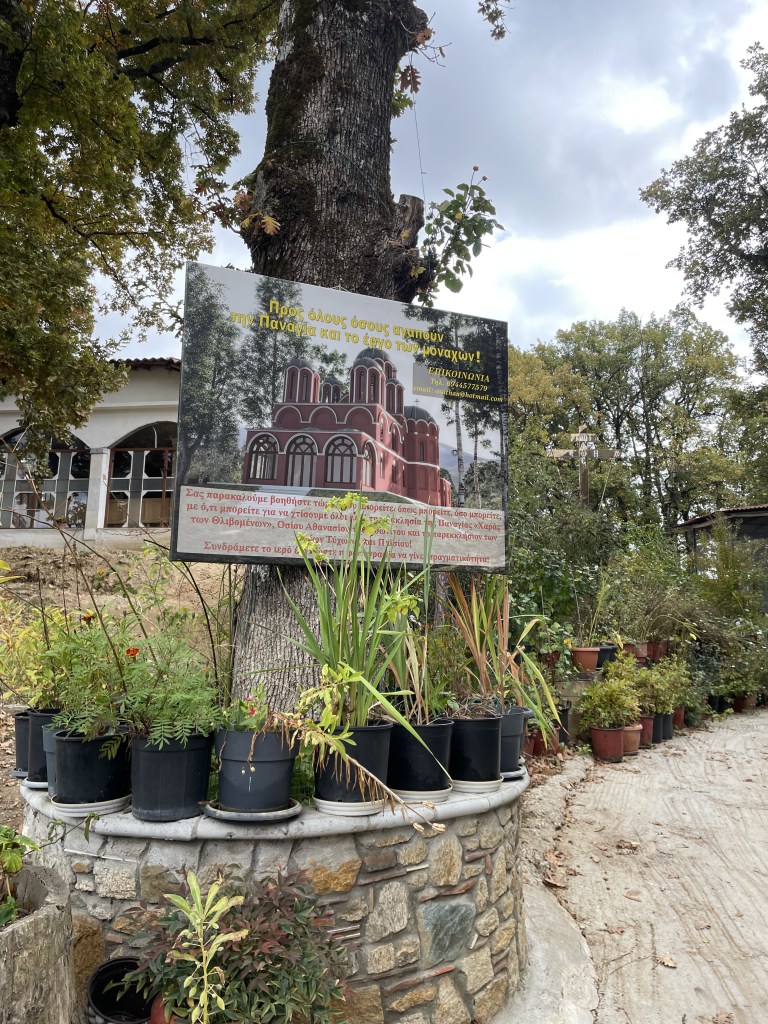
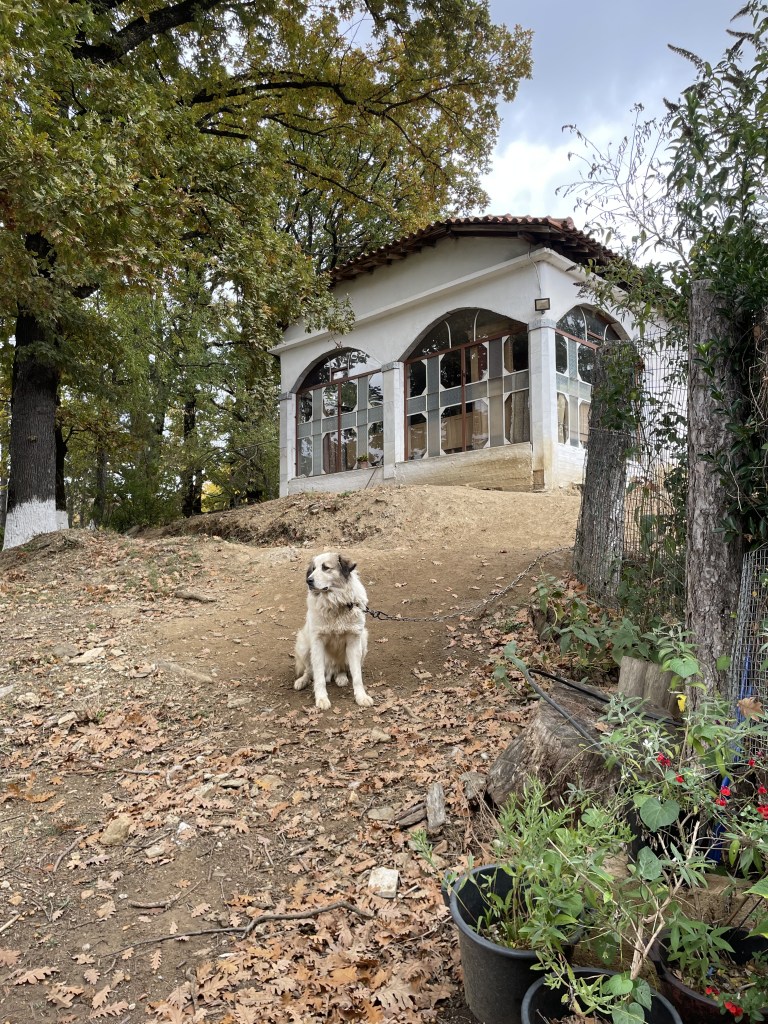
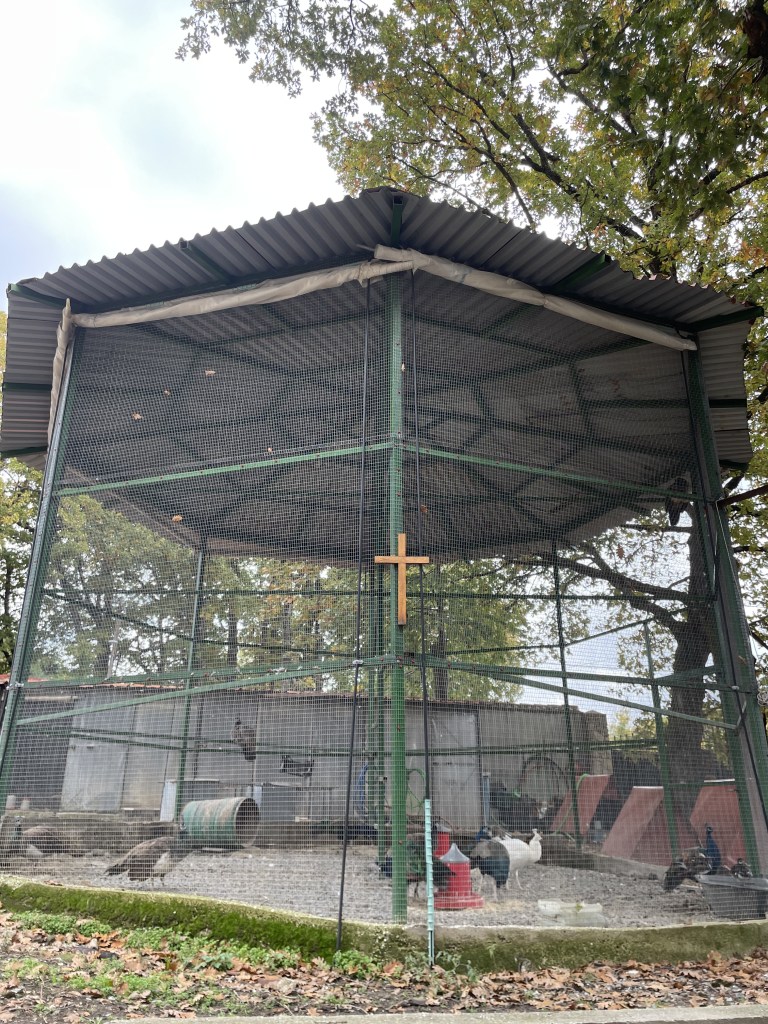
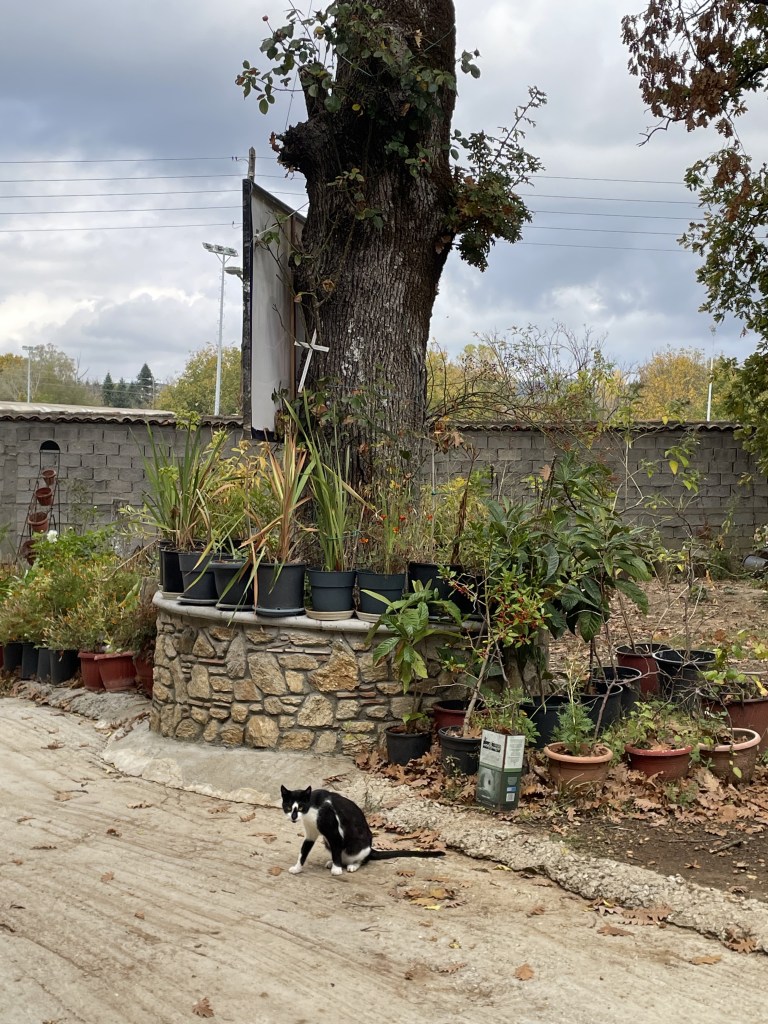
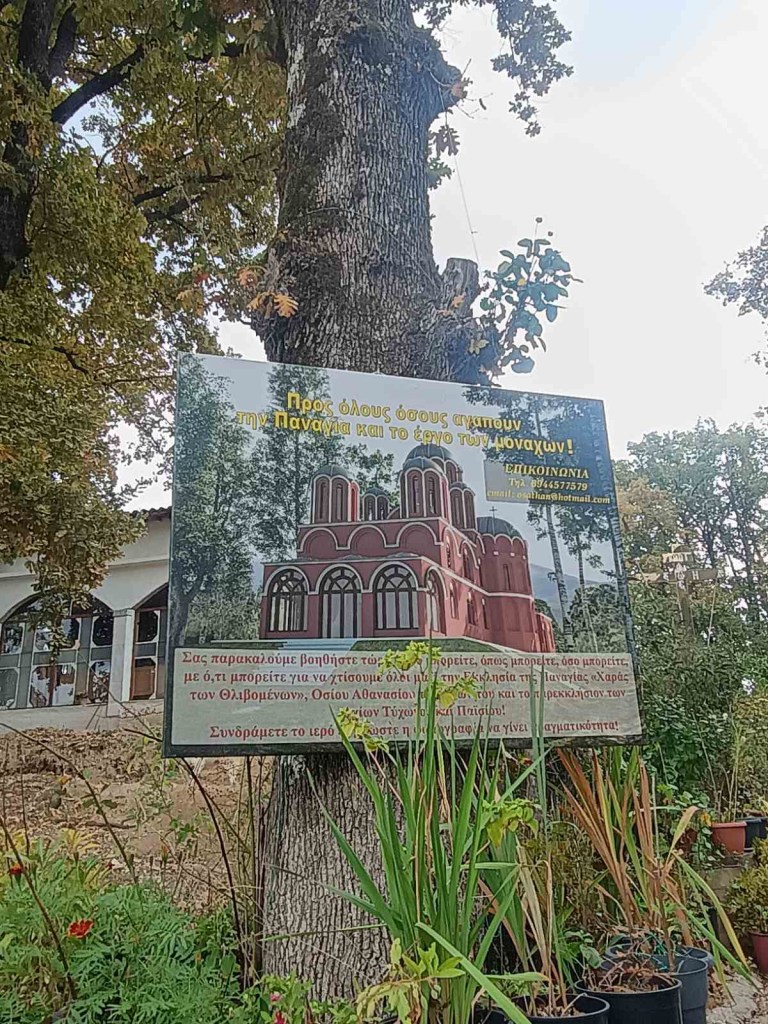
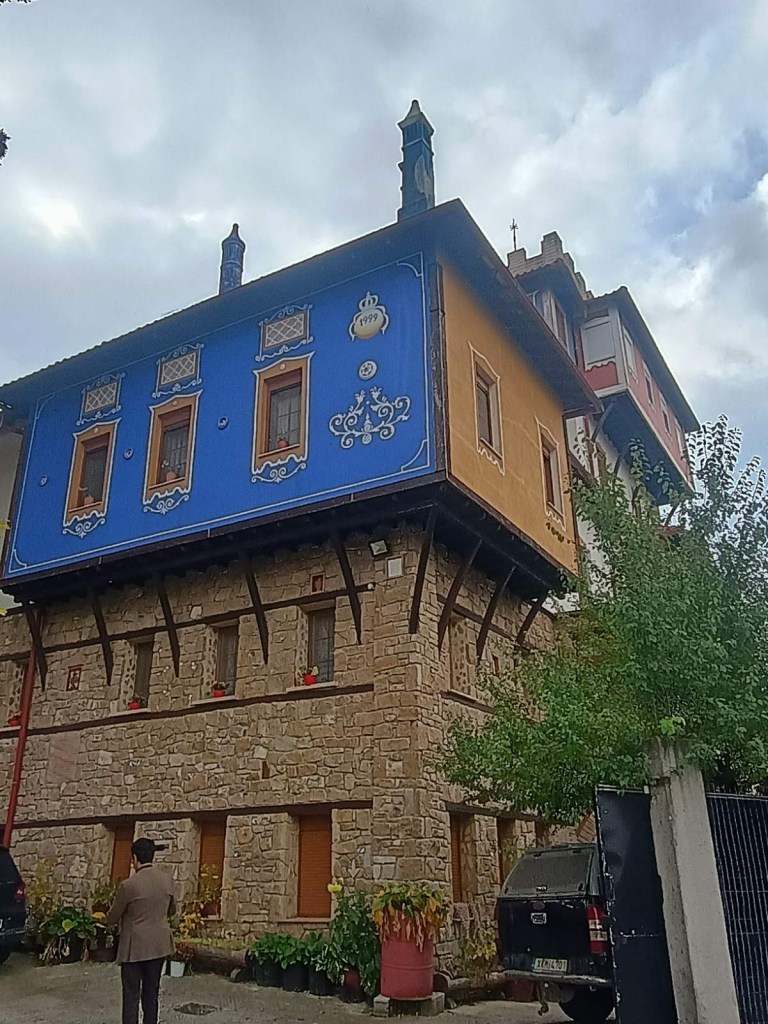
“The Monastic House of the Virgin Mary”, “The Joy of All Who Sorrow” stands at the edge of Palaiochori, near Arnaia, beside the road towards Megali Panagia. Founded in 1999 by Archimandrite Ignatios and his brotherhood, this men’s monastery grew around an existing chapel dedicated to Saint Athanasius of Athos, whose feast it celebrates on 5 July.
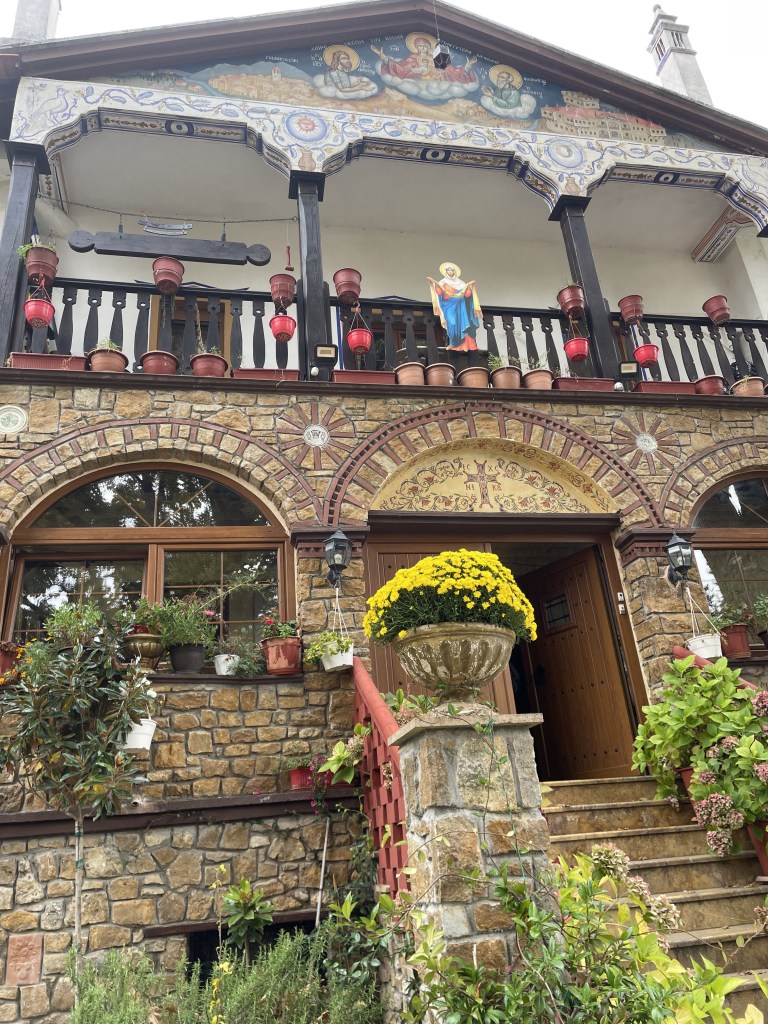
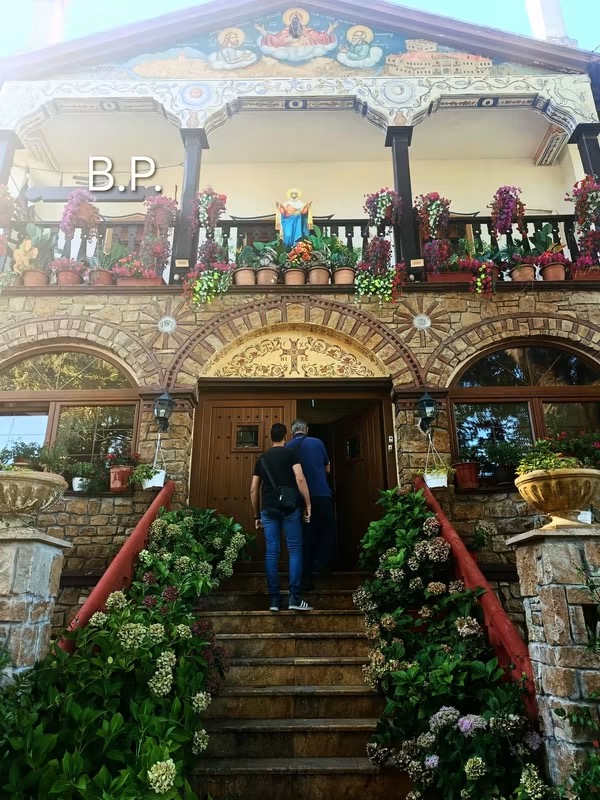
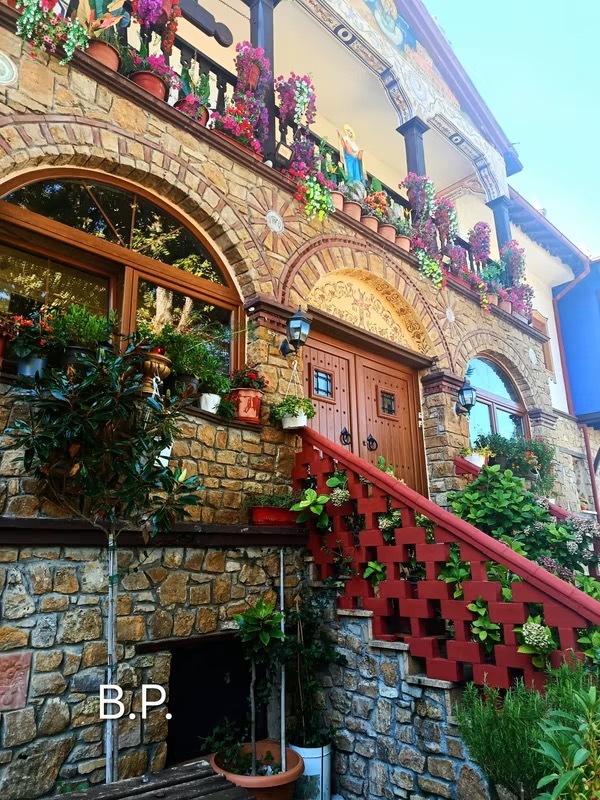


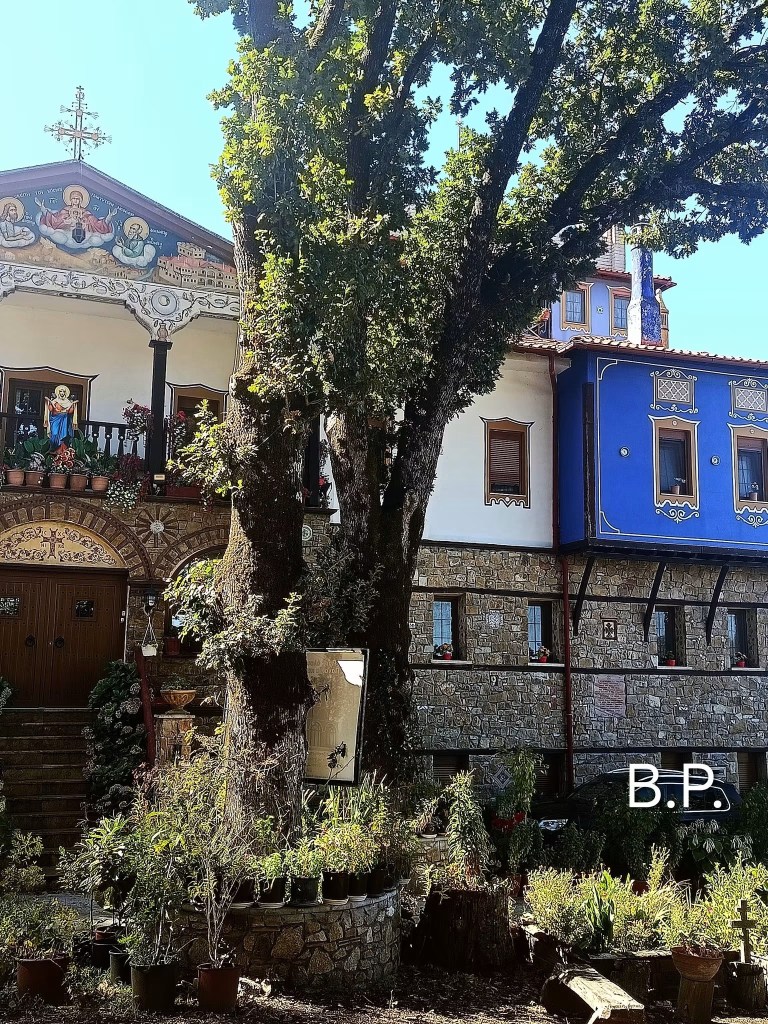
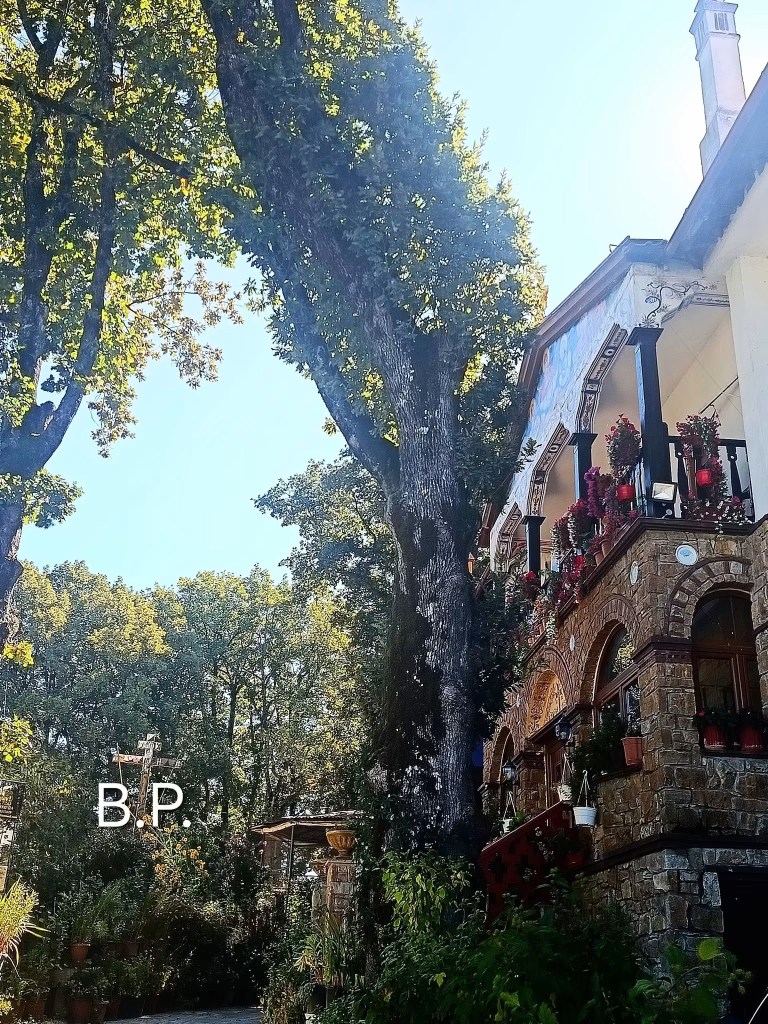



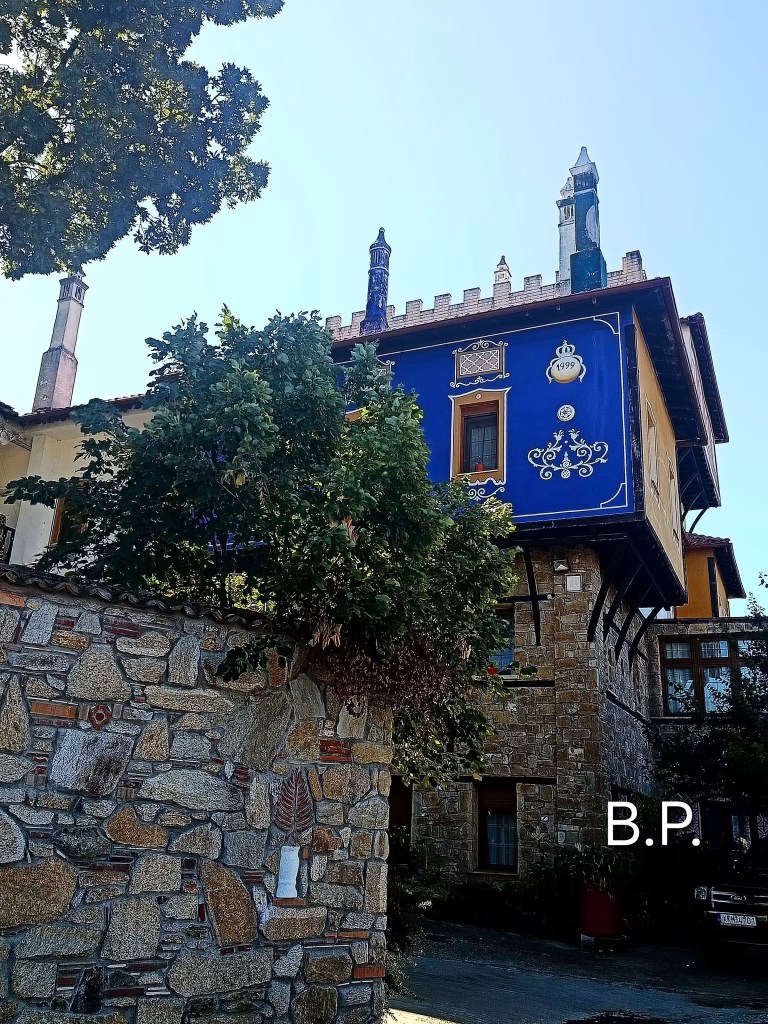
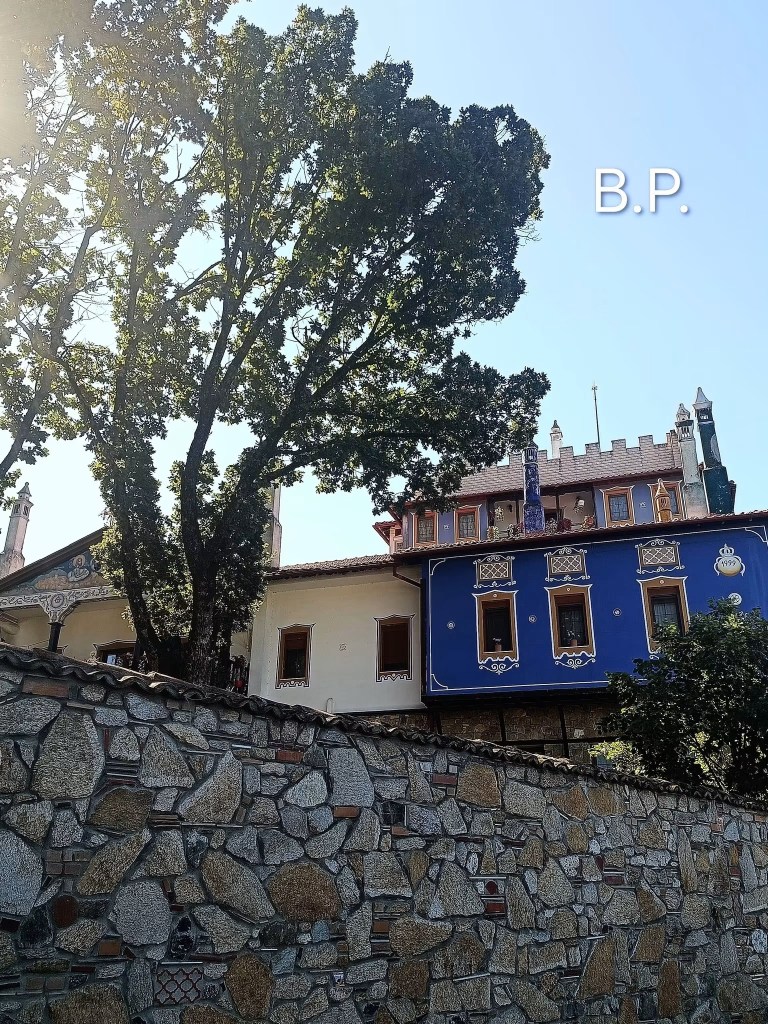
The Monastery and Its Icons
Three icons of the Mother of God are treasured here as wonderworking: the ‘main’ two icons are the Joy of All Who Sorrow and the Inexhaustible Cup. Their local celebrations take place on the Sunday of the Myrrh-Bearers, with a vigil, and on 18 May respectively. Bright Friday brings the Divine Liturgy, a procession with the icon, and the blessing of the gardens. And there is a third one of the Theotokos that is always fragrant and wonderworking too.
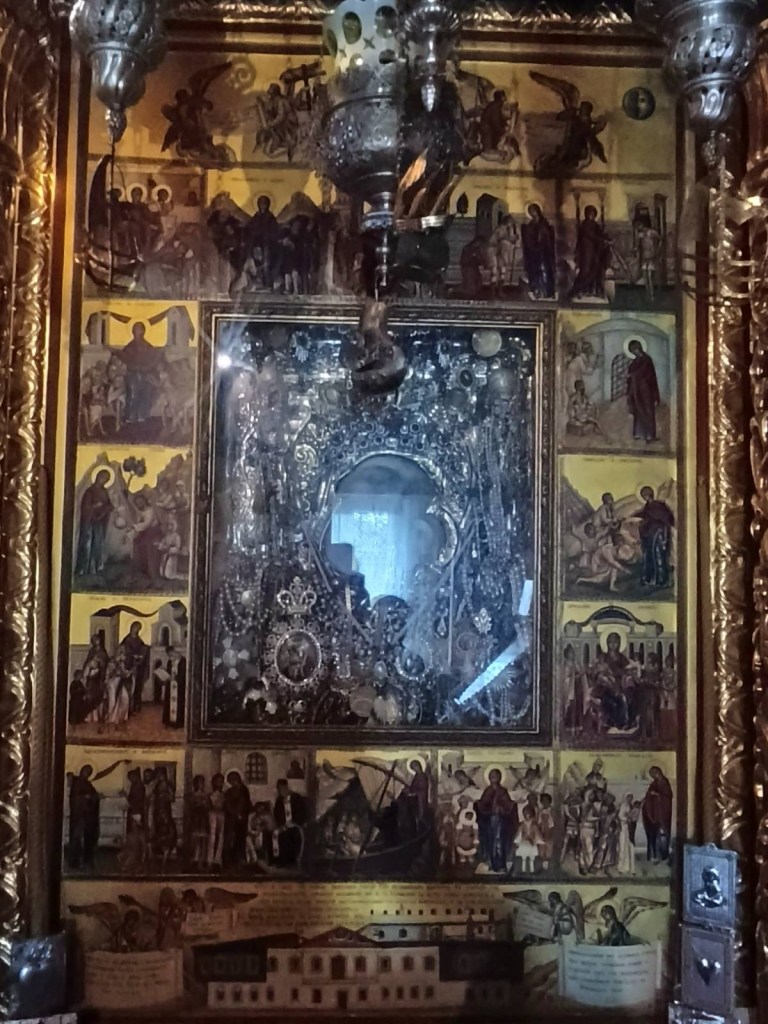
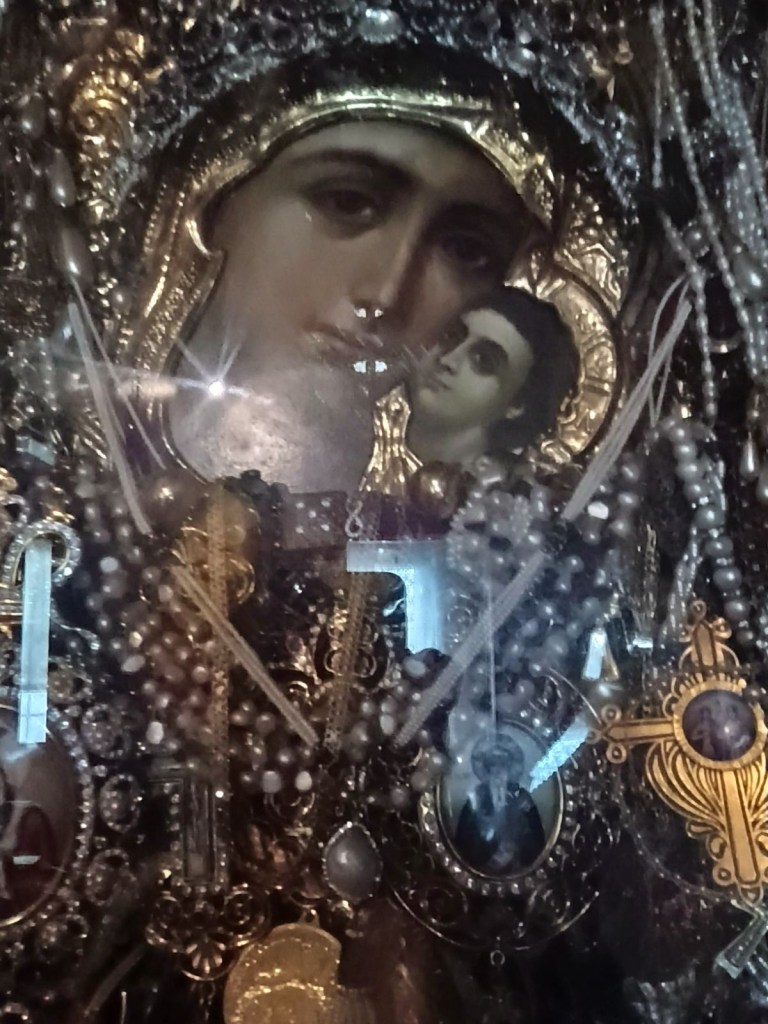
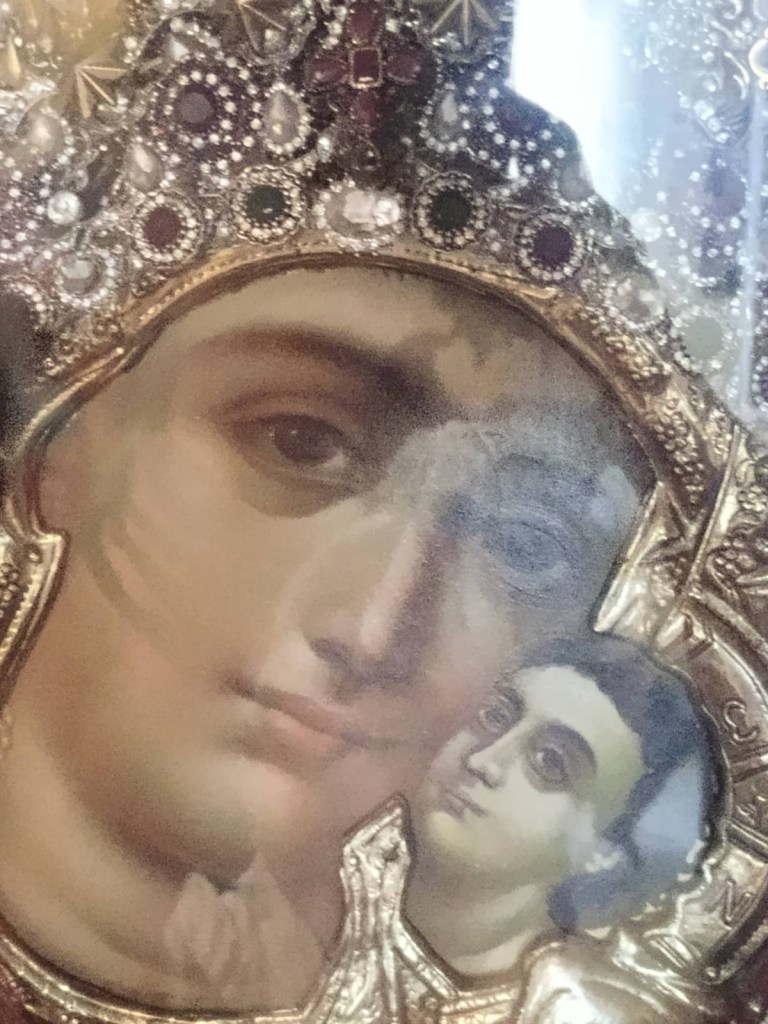
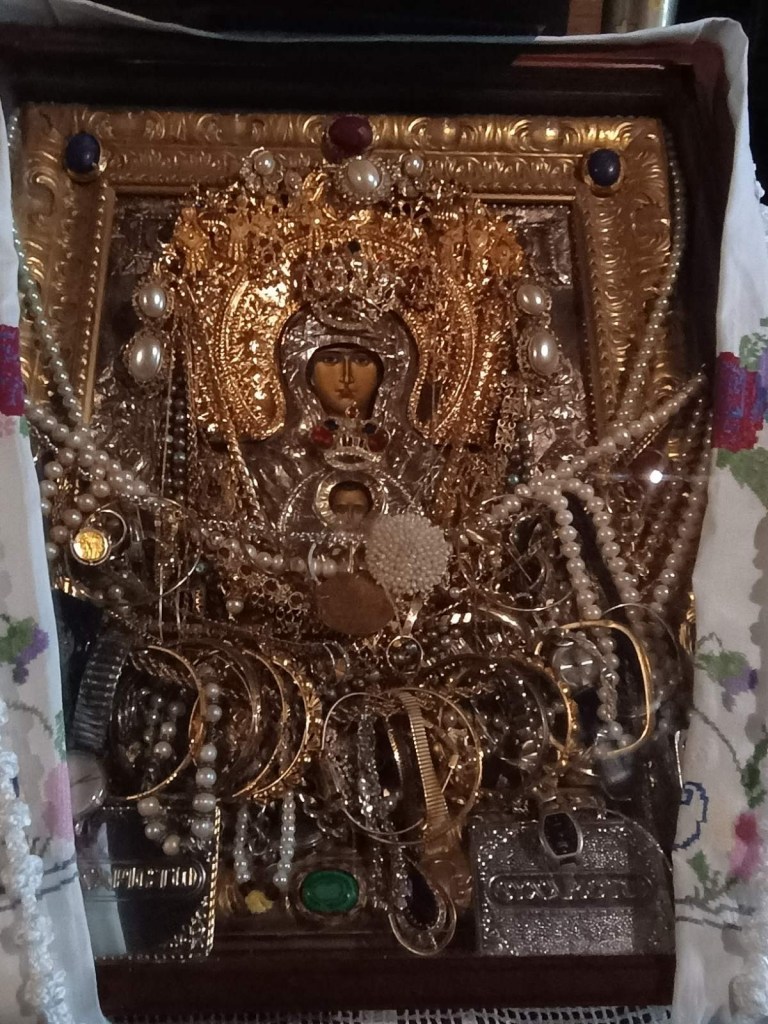
In the traditional iconography of The Joy of All Who Sorrow, the Mother of God is surrounded by people in distress, with angels ministering among them. Having stood beside her Son’s Cross, she knows the suffering of love. Her title invites us to bring our grief to her, even before we can find words to explain it. Consolation can begin with the knowledge that our sorrow has been heard and that we are held in prayer.
The Inexhaustible Cup depicts the Mother of God with her hands raised in prayer and the Christ Child standing in a chalice before her. Its Eucharistic imagery directs us to Christ, who gives Himself for the life of the world. Particularly associated with prayers for those suffering from addiction and their families, it also speaks to everyone whose strength is exhausted. Our resources may fail; His mercy does not run dry. Above the icon in the monastery, a glass-fronted cabinet held cigarette packets, bottles, and syringes, etc., left by people who had found freedom from addiction. Offered in thanksgiving to the Mother of God, these tamata—votive offerings—bore witness to their healing.
The Four Ds
Coffee was served, and the monastery Gerondas welcomed us. We were particularly struck by his words urging us to never cease saying the Jesus prayer all the time and cautioning us against the 4 Ds! 4 D-named dangers to the heart: Disappointment, Doubt, Discouragement, and Despair. How Disappointment wounds our hopes; Doubt questions whether God hears or cares; Discouragement weakens our willingness to persevere; and Despair persuades us that no hope remains.
The two icons offered a quiet answer. Before The Joy of All Who Sorrow, we were invited to bring our wounded expectations into prayer. Before The Inexhaustible Cup, we were reminded that Christ’s help remains available when our courage has failed. We can ask again, accept support, and take the next small step in trust.
The mother in the morning homily returned to mind. We cannot know the hidden course of her grief. What we heard was that she continued to give thanks, entrusting her children to God and hoping to meet them again. Her testimony gave profound expression to the hope towards which the abbot’s words directed us.
Time for Each Soul
But this spiritual father’s love and compassion were without measure. He made time to speak privately with each of us who felt the need, allowing us to share our problems and seek his prayers and guidance.
We left long lists of names, both living and departed. Father asked us to underline those in particular need—a small, tender gesture of attention to the people whose burdens we had brought with us. Alongside those written requests, there was space for personal conversation, for concerns we could only share quietly.
His willingness to listen gave tangible expression to the monastery’s welcome. Disappointment, doubt, discouragement, and despair can isolate us. Being received with compassion and knowing that someone will pray for us can help us persevere.
Our lists also brought us back to the opening homily: we, too, were entrusting those we love to God, holding together our concern for the living and our hope for the departed.

Carrying Hope Home
We returned to our daily lives with their unanswered questions and familiar difficulties, but also with the memory of being heard and the knowledge that others were praying with us.
From the minibus to the monastery, the pilgrimage had directed our hearts towards the Resurrection. The bereaved mother’s faith, the two icons, the abbot’s warning, and his personal care all invited us to entrust ourselves and those we love to Christ.
Mother of God, Joy of All Who Sorrow, bring our grief before your Son.
Mother of God, Inexhaustible Cup, pray for us when our strength runs dry.
We may reach the limits of our strength. Even there, we can turn towards Christ—and find His Mother already praying.


