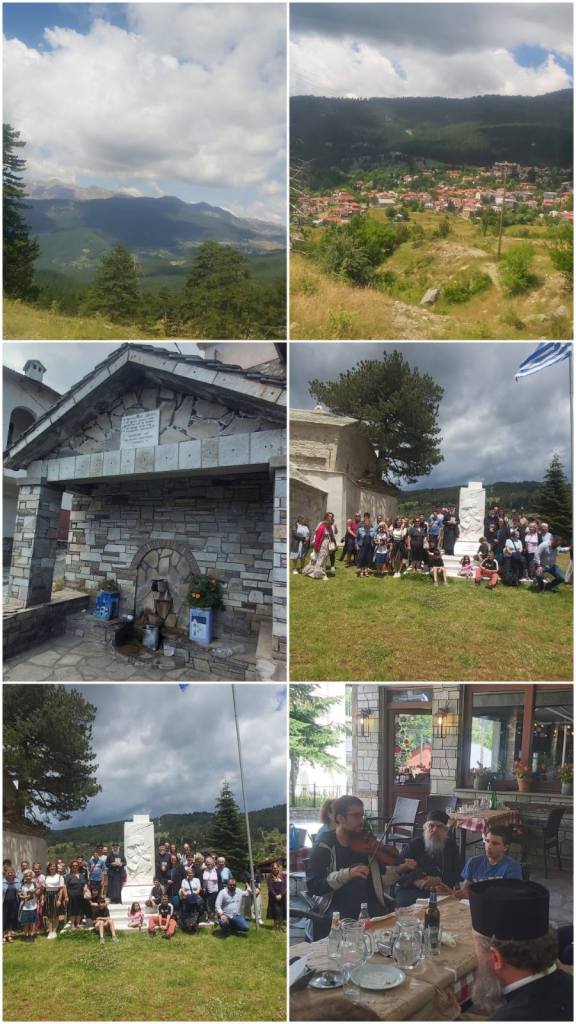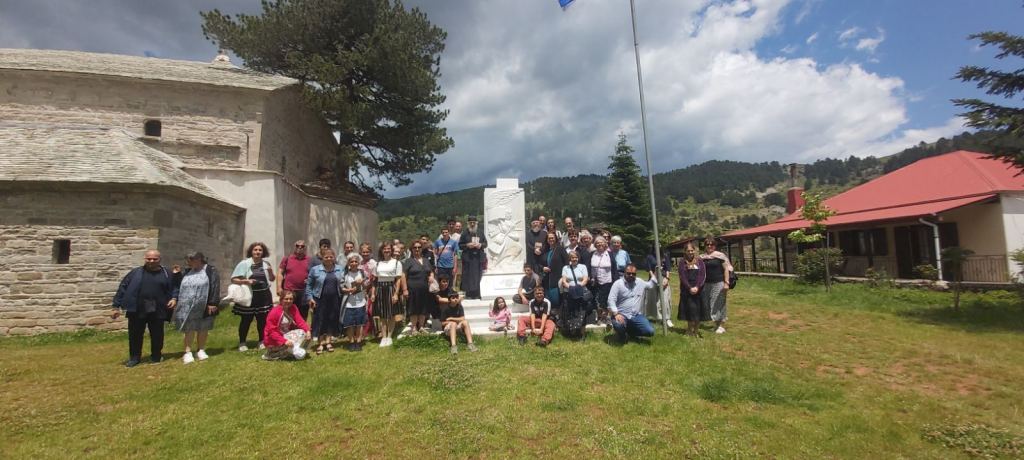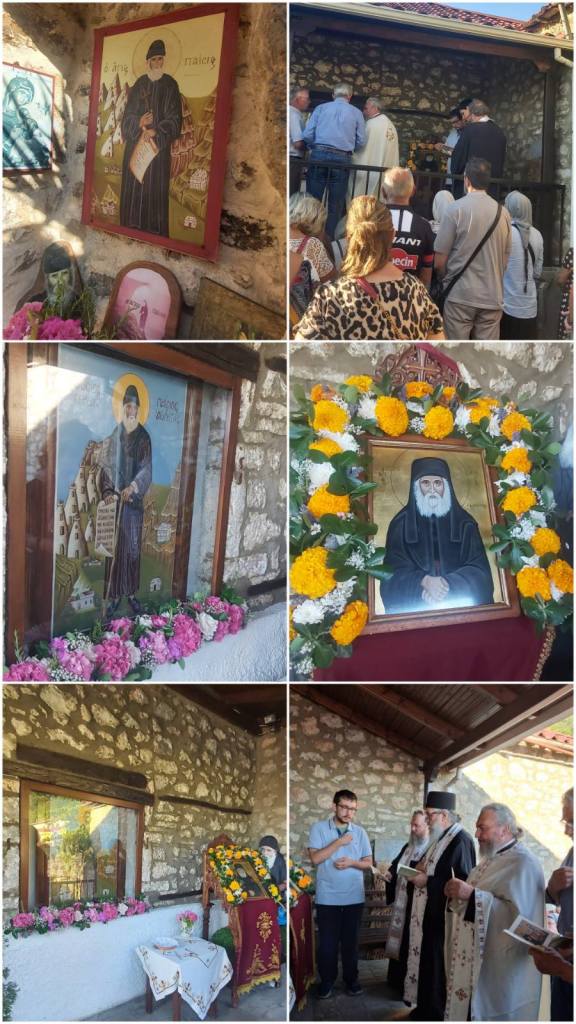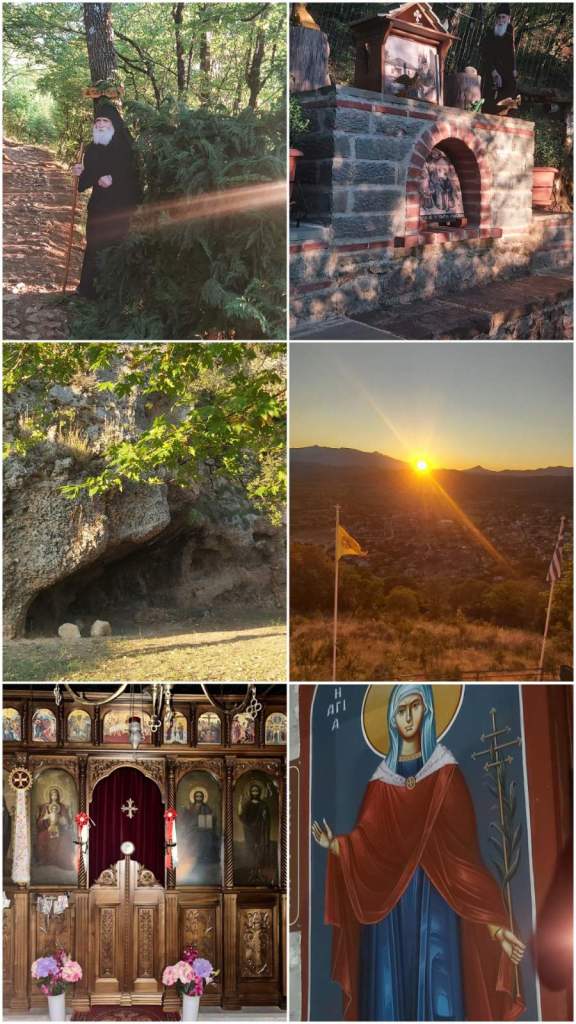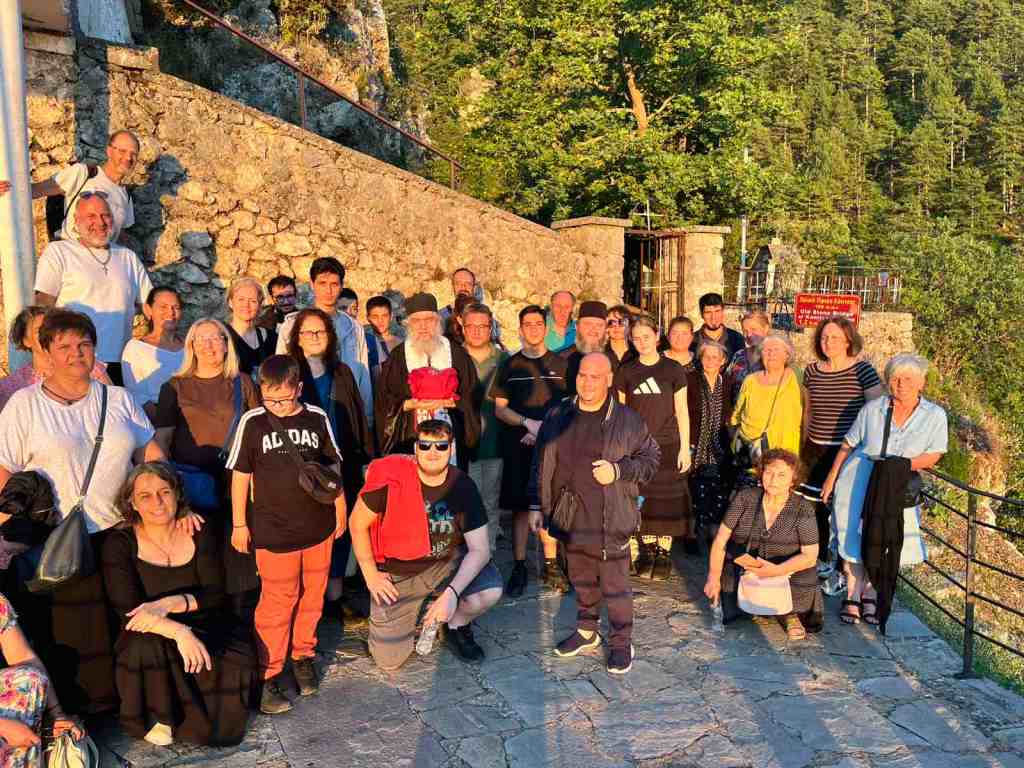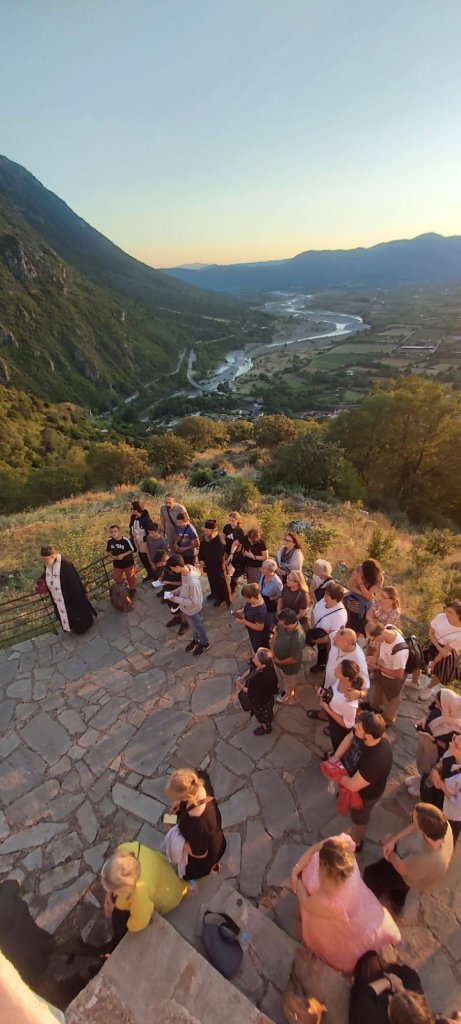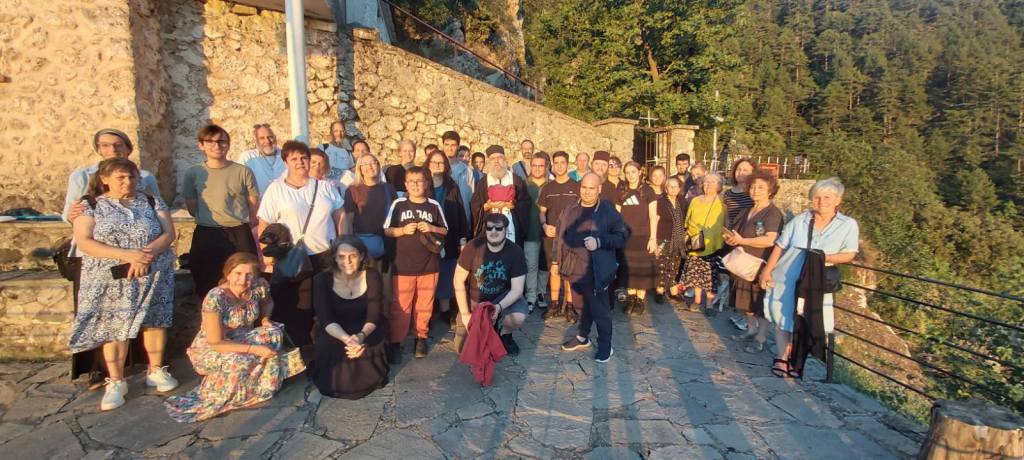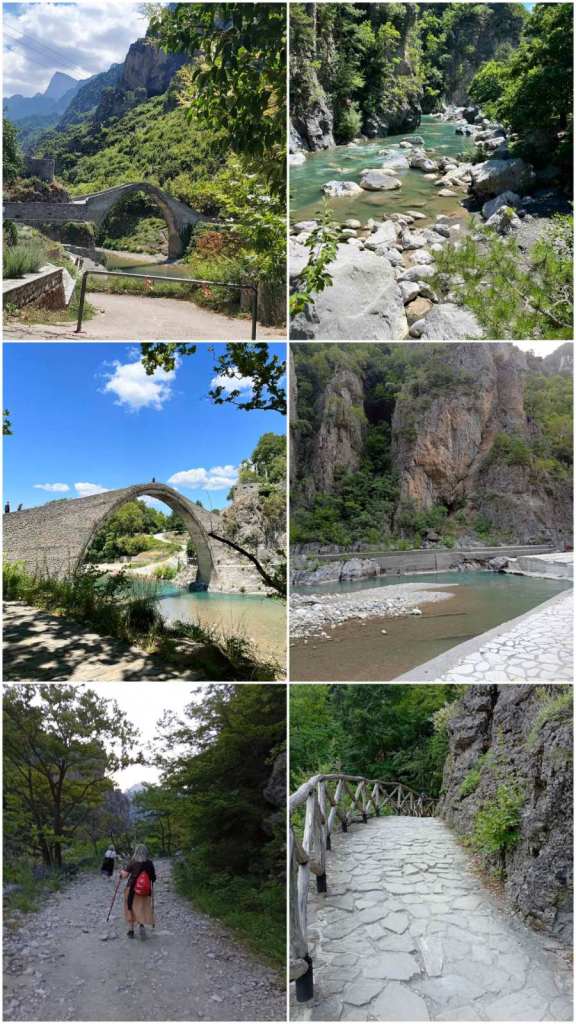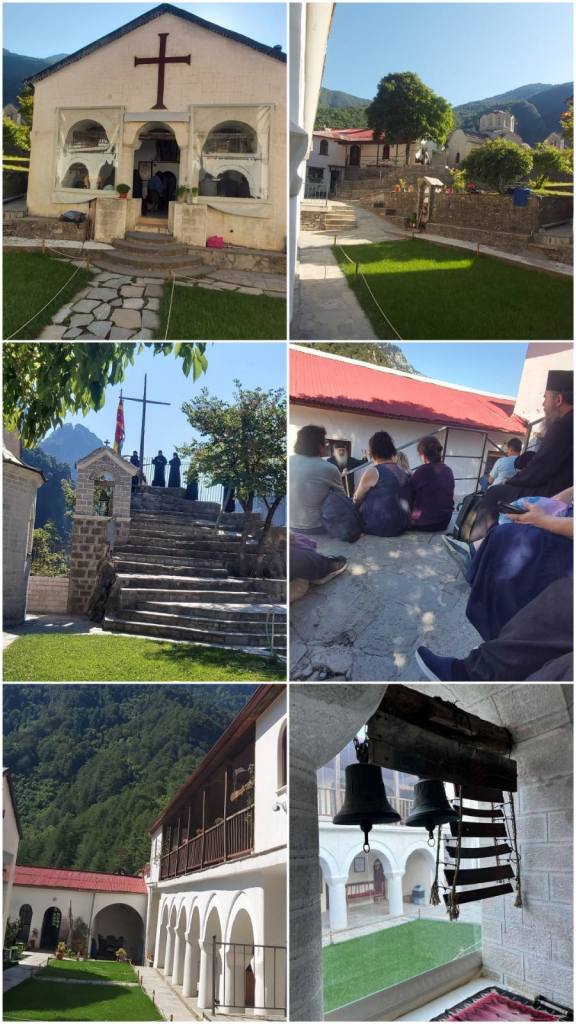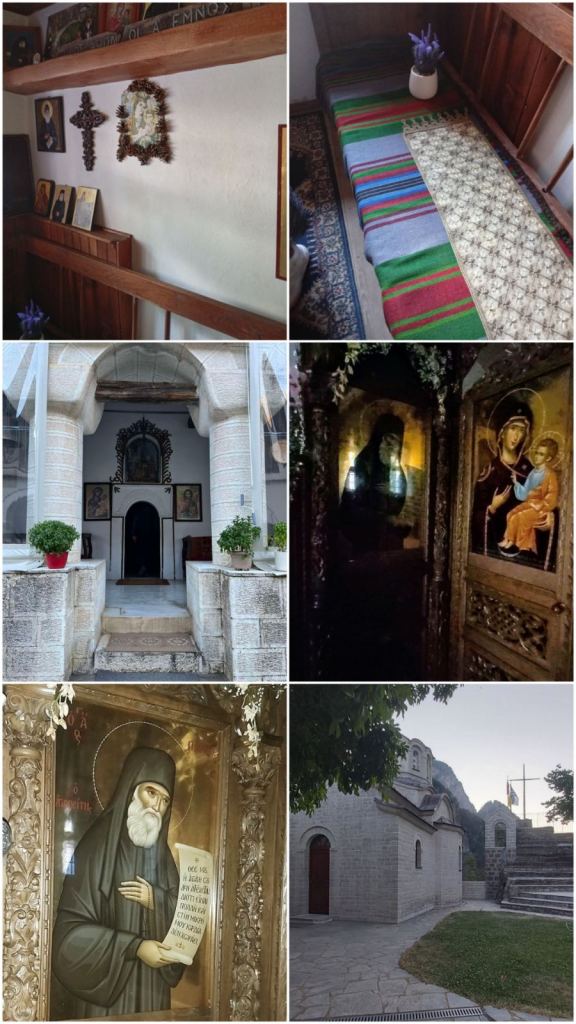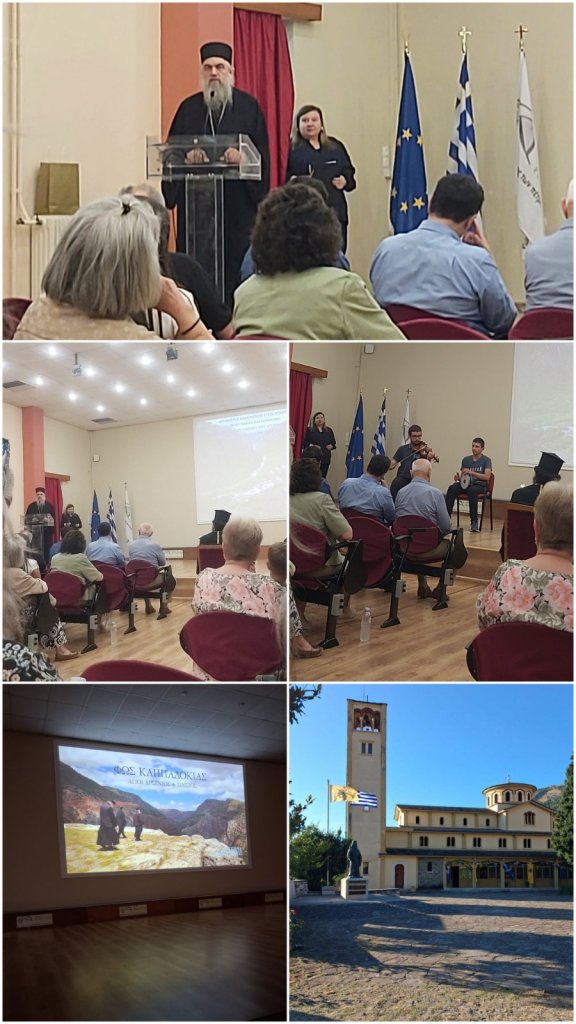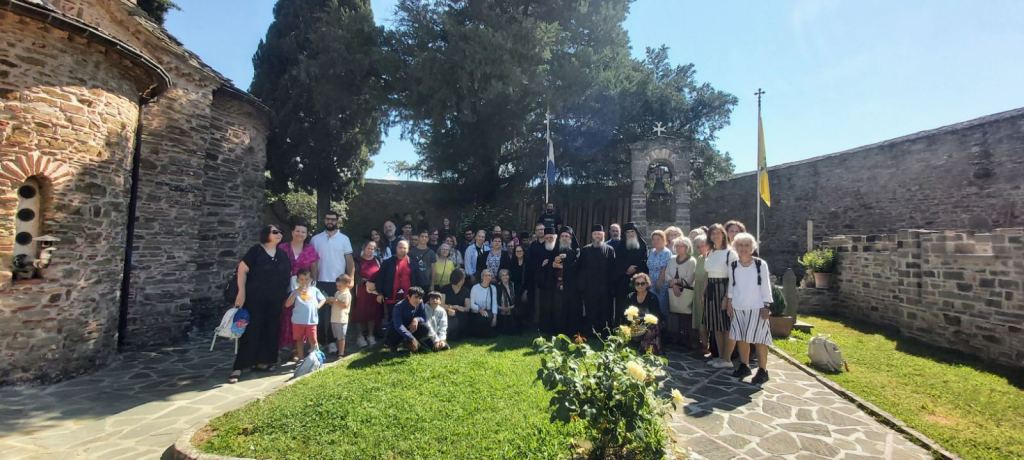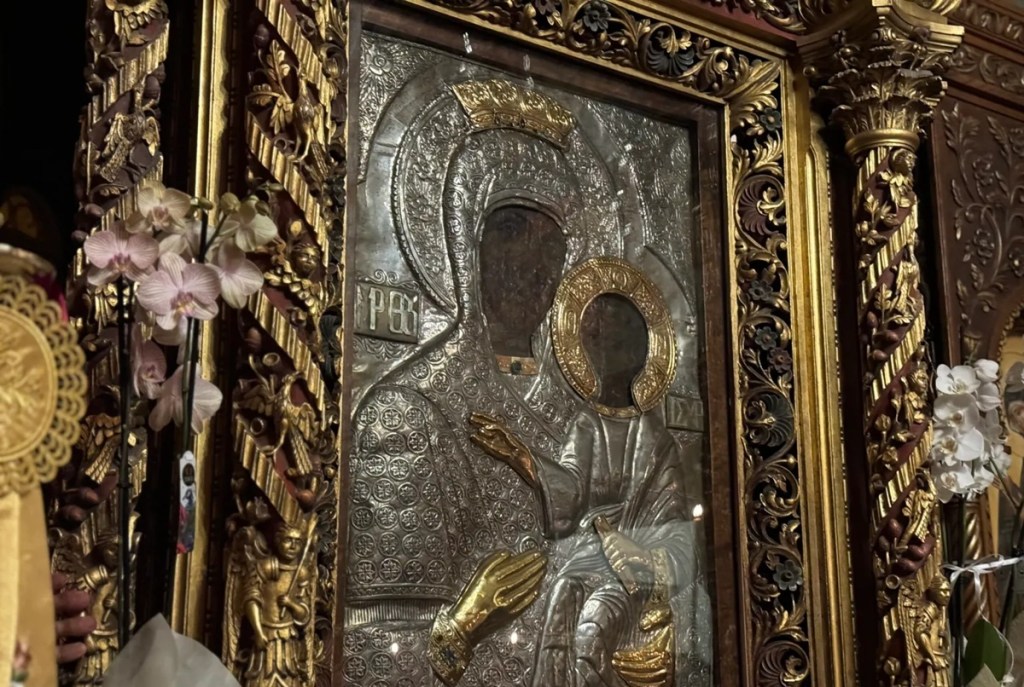
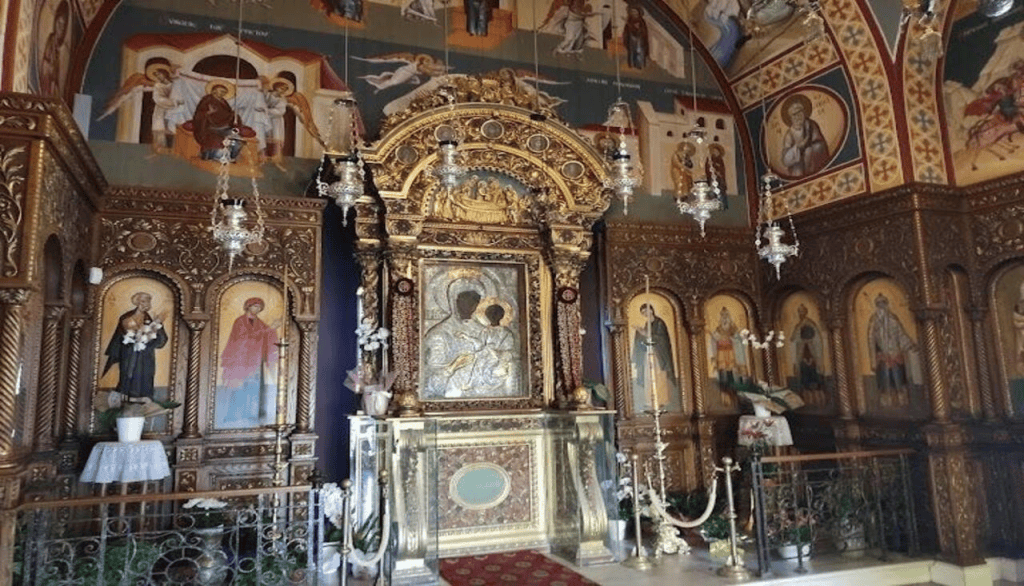
The miraculous icon of Panagia Faneromeni of Nea Michaniona, also known as Panagia Michaniotissa, is one of the most revered wonder-working icons of the Theotokos in Greece. Together with Panagia Evangelistria of Tinos and Panagia Soumela, it is counted among the country’s major Theotokos pilgrimage shrines. Today’s pilgrimage took us to Nea Michaniona, near Thessaloniki, to venerate this beloved icon of the Mother of God, whose remarkable story of survival during the Asia Minor Catastrophe of 1922 bears witness to the refugees’ deep faith and their enduring love for the Panagia, whom they could not bear to leave behind.
How the Icon of Panagia Faneromeni of Nea Michaniona Was Saved in a Quilt During the Asia Minor Catastrophe of 1922
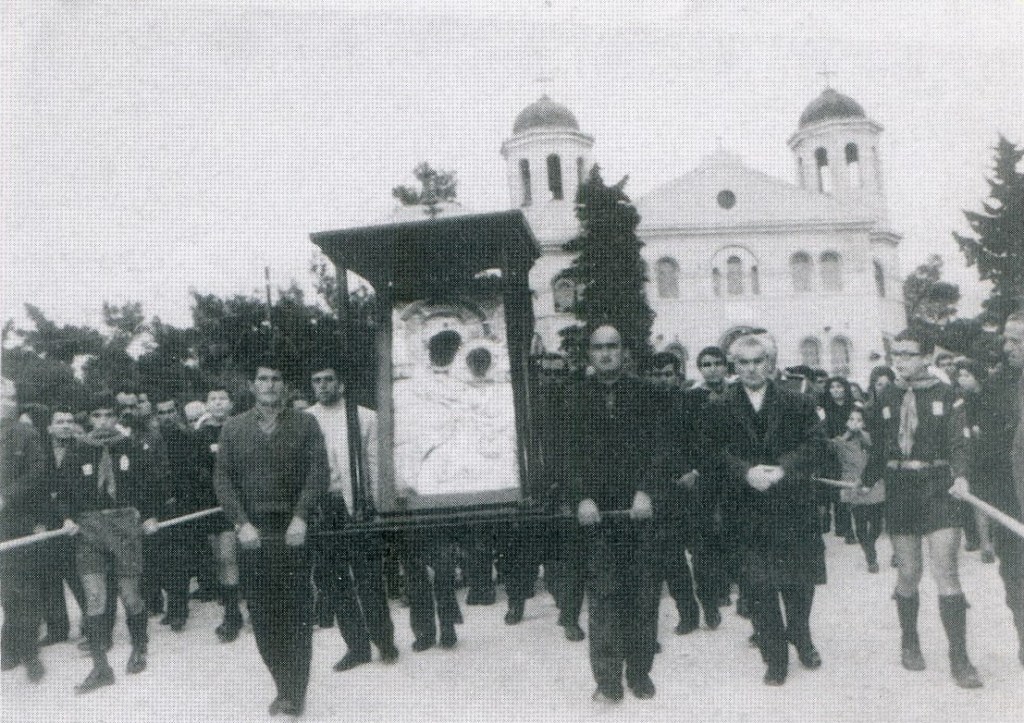
More than a century ago, the refugees from Asia Minor managed to save their beloved icon of the Mother of God by concealing it among their belongings. Today, the miraculous icon of Panagia Faneromeni, also known as Panagia Michaniotissa, continues to attract thousands of pilgrims from Northern Greece and beyond, especially during the days surrounding her feast, when the holy icon is carried in solemn procession.
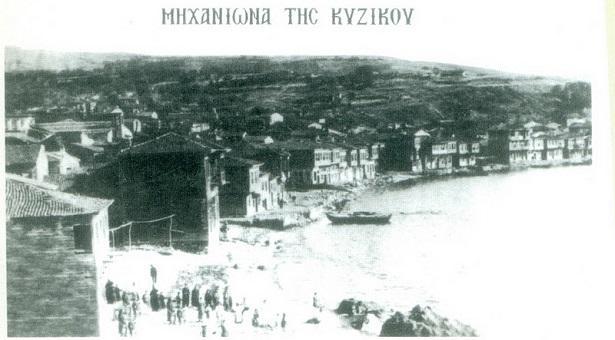
Old Michaniona on the Cyzicus Peninsula
The Old Michaniona of Cyzicus
According to the accounts handed down by the older inhabitants of Michaniona, when the great tragedy of the Asia Minor Catastrophe struck in 1922 and the Greek population was forced to abandon its ancestral homes, a woman named Katigo Maoutsa, also known as Lazarakaina, together with her granddaughters, took steps to save the precious icon of Panagia Faneromeni.
They made a protective covering from chintz, a thin cotton fabric, and reverently placed the icon inside it. They then concealed it in a large bundle of clothing, known locally as a degi. In this way, the icon was rescued and eventually brought to Greece.
As A. R. Matikas, a former headmaster of the First Primary School of Nea Michaniona, wrote, the women of Michaniona kept the miraculous icon of the Mother of God constantly with them, as their guide and protectress throughout the ordeal of their displacement, until they finally settled on the beautiful shores of the Thermaic Gulf.
At that time, the area was so desolate and overgrown that the refugees were frightened by the wilderness and the snakes emerging from the uncultivated land.
Panagia Faneromeni, the beloved Mother of God of Michaniona, was initially housed in a wooden church built by the refugees beside the makeshift tents in which they themselves lived.
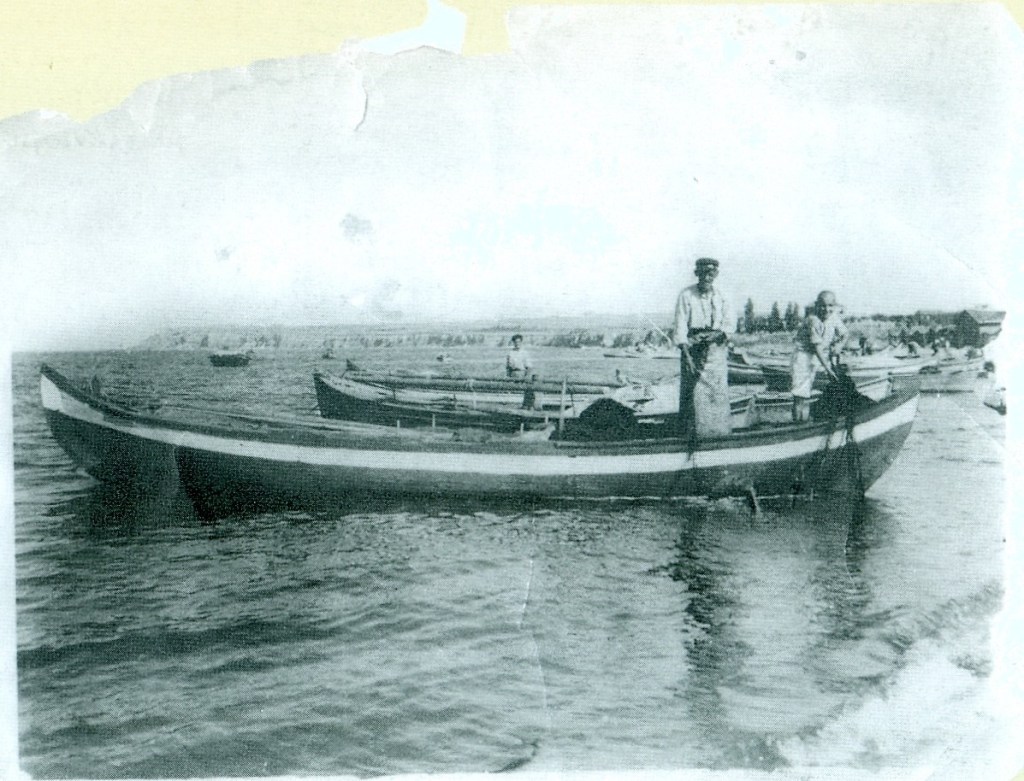
Traditional “dor-tsefte” fishing boats (1924), brought by the fishermen from Old Michaniona.
The Flight from Asia Minor: An Eyewitness Account
A particularly moving description of the rescue and transportation of the icon is preserved in Vangelis Chatzibirbilou’s popular history of Old and New Michaniona.
He describes the inhabitants as deeply religious people who built small chapels in their fields and faithfully attended church services on Sundays and feast days, even when they were away from home on fishing expeditions.
Just as their lives had begun to improve, and they had built new houses and achieved a measure of prosperity, disaster struck.
It was 22 August 1922, the eve of the great feast of Panagia Faneromeni, celebrated on the Ninth Day after the Dormition of the Mother of God. This was the most important religious festival in Michaniona.
The inhabitants had gathered at the monastery for Great Vespers when news arrived that they would have to flee their homes once again, as catastrophe was approaching.
The account continues:
“Five days later, a steamship arrived at the harbour, sent to us by the Brotherhood of Michaniona in Constantinople. On 29 August 1922, it carried us across to the village of Epivates on the opposite shore, in Eastern Thrace.
“With two journeys, we managed to take our fishing boats, nets, and a considerable number of our possessions. Our animals were transported overland through Bursa.
“The widow Katigo Maoutsidou, who tended the lamps in the Church of Panagia Faneromeni, took Kostas Kamatakis and fifteen-year-old Grigoris Bogakis with her, and together they rescued the holy icon. We carried it with us, wrapped in a quilt.
“Nikolaos Chatzigiannakis, also known as Karanikolas, rescued another valuable icon, that of St Nicholas, which had an oyster embedded in its forehead because it had originally been found in the sea.
“This icon is now kept in the Church of the Holy Unmercenaries in Loutra Edipsou, where some refugees from Michaniona settled and where their descendants still live.”
Thus, amid the confusion, grief, and terror of displacement, the refugees took extraordinary care to preserve the icon of their beloved Panagia.
They had lost their homes, their homeland, and much of what they possessed, but they would not abandon the Mother of God who had accompanied them throughout their lives.
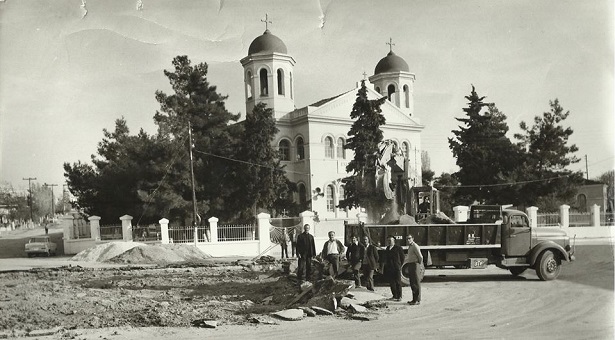
The original church of Panagia Faneromeni, following the completion of its construction in 1928.
A New Home for Panagia Faneromeni
The first church dedicated to Panagia Faneromeni in the refugees’ new settlement on the Thermaic Gulf was a simple wooden structure.
The foundations of a more permanent church were laid in 1927, and its construction was completed in 1932.
Alexandros Sarafidis, a former member of the parish council, recalled how the entire community contributed to its construction:
“Young and old, women and children, everyone worked to build the church. Whenever the bell rang, they all hurried to help, each according to their strength.
“You could see women climbing ladders, passing bricks and roof tiles from hand to hand to the builders. Children formed lines, passing building materials from one to another, all the way from the shore.”
The church was far more than a place of worship. It represented a living connection with the refugees’ ancestral homeland and became a spiritual and social centre around which the new community gradually took shape.
The construction was made possible largely through the tireless efforts of the first parish priest, Fr Ioannis Valasoglou, and was completed under his successor, Fr Georgios Vogiatzoglou.
The parish council also played an essential role. Its members included Alexandros Sarafidis, Vasilis Arapakis, Georgios Tatarakis, Emmanouil Stamidis, and Georgios Svolakis.
Raising the necessary funds was extremely difficult. The community resorted to internal loans and appeals for donations, yet the determination of the refugees never wavered.
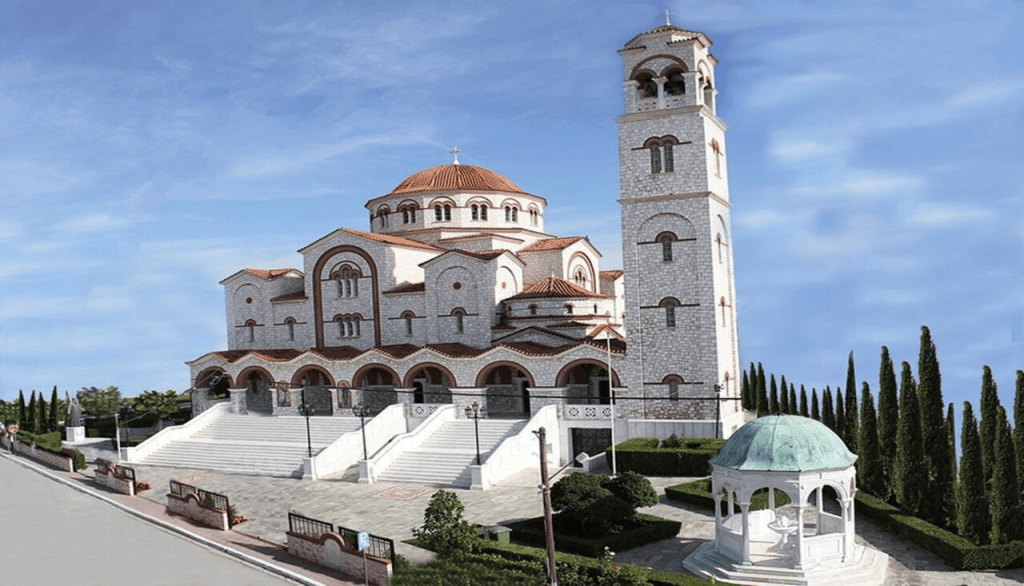
The Present Church of Panagia Faneromeni
After the Second World War, as Nea Michaniona continued to grow and prosper through the hard work of its inhabitants, most of whom were engaged in maritime occupations, the need arose for a larger church.
The new church was built during the episcopate of the late Metropolitan Prokopios of Nea Krini and Kalamaria, with generous contributions from the faithful and funds raised through numerous collections.
Its foundations were laid on 9 March 1975, and its consecration took place with great solemnity on Sunday, 27 May 1984.
The architectural plans were prepared by Georgios Axiotis, an architect specialising in church buildings, while the construction was undertaken by Vasilios Paterakis.
The church can accommodate approximately 4,000 worshippers.
Its dimensions are impressive:
- Length: 35 metres
- Width: 22 metres
- Interior height of the dome, measured from the basement floor: 26.5 metres
- Diameter of the dome: 13 metres
The church contains five chapels, two of which have been consecrated in honour of St John the Theologian and St Prokopios.
Today, this magnificent church attracts pilgrims from throughout Greece, including organised groups from the southern mainland and the islands.
The Establishment of Nea Michaniona
Nea Michaniona was founded on 14 May 1923.
The refugees initially lived in tents, before moving into the first newly constructed houses towards the end of August that year.
The settlement was established by approximately 450 refugee families, originating from Old Michaniona on the Sea of Marmara, Avdimio and Kerasia in Eastern Thrace, and Kasteli, Ambarli, and Çeşme in the Smyrna region.
Initially, Nea Michaniona was administered as part of the Community of Epanomi, which owned the land allocated for the refugees’ settlement.
In June 1926, Nea Michaniona became an independent community, incorporating the neighbouring settlements of Nea Kerasia and Angelochori.
The Long Journey to a New Homeland
For many of the refugees who eventually settled in the wider Nea Michaniona area, the Asia Minor Catastrophe marked the beginning of a long and difficult journey through various parts of Greece.
Most of the inhabitants of Old Michaniona initially found temporary refuge in Loutra Edipsou, on the island of Euboea.
Those who came from Çeşme followed a different route.
Many of the refugees were fishermen, sailors, or boat captains, and therefore possessed their own vessels. They used these boats to cross to the nearby Greek islands of Chios, Samos, and Lesbos.
Once the new settlement of Nea Michaniona had been established, they gradually made their way there.
In 1923, the steamship Thetis transported the refugees from Edipsos to Thessaloniki, from where they eventually reached their new home on the shores of the Thermaic Gulf.
The farmers settled further inland, while the fishermen established themselves along the coast, continuing the occupations and traditions they had brought from their lost homeland.
Through hardship, perseverance, and faith, the refugees gradually rebuilt their lives.
And at the heart of their new community stood the icon of Panagia Faneromeni, the Mother of God, whom they had carried with them through exile, concealed in a humble quilt.
The icon remains to this day a cherished symbol of their faith, their suffering, their survival, and their enduring connection with their ancestral homeland.
Source for its remarkable story of survival during the Asia Minor Catastrophe of 1922: Faros tou Thermaikou, drawing on historical accounts and testimonies concerning Old and New Michaniona, including the works of A. R. Matikas and Vangelis Chatzibirbilou.