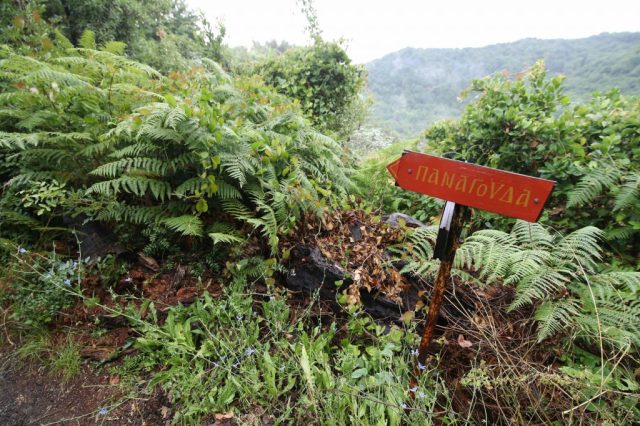
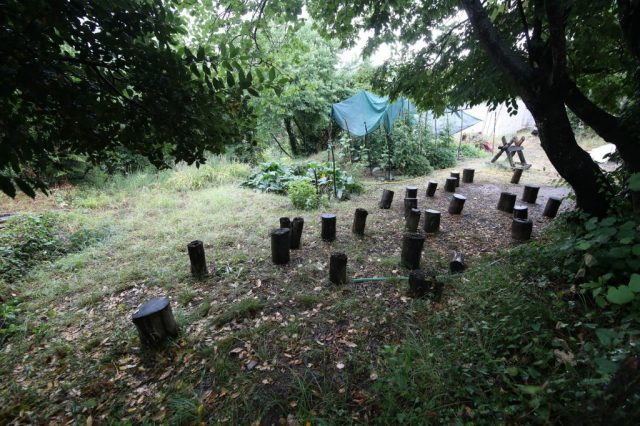
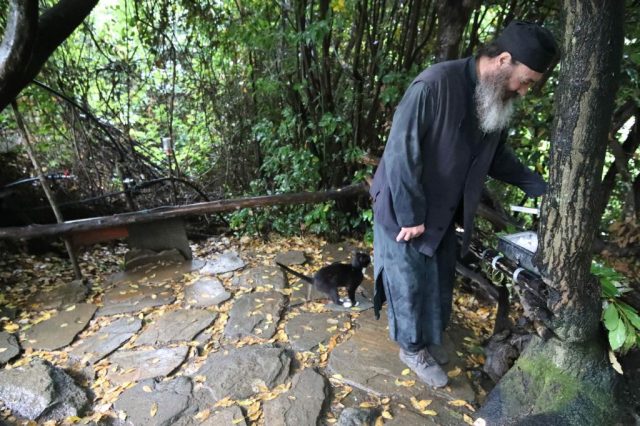
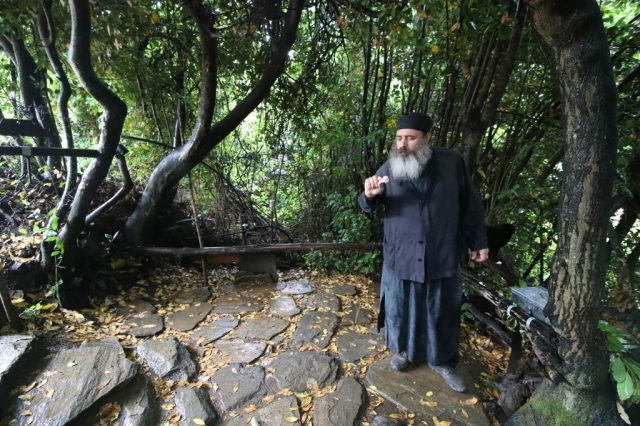
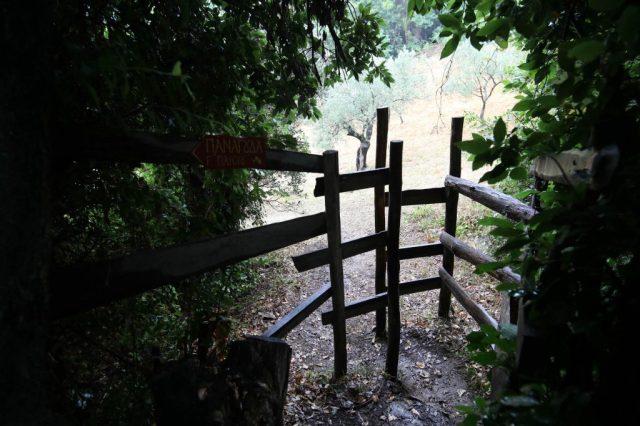
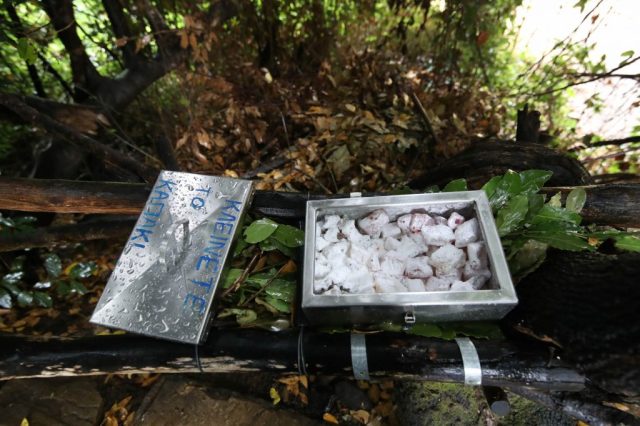
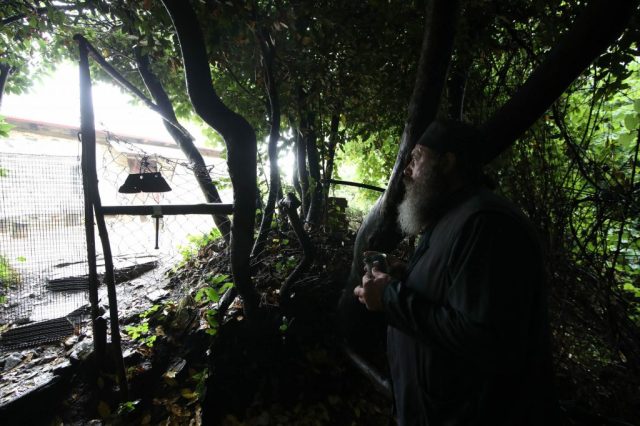
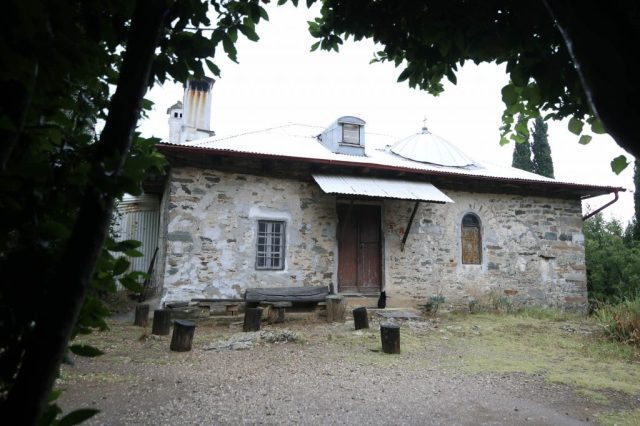
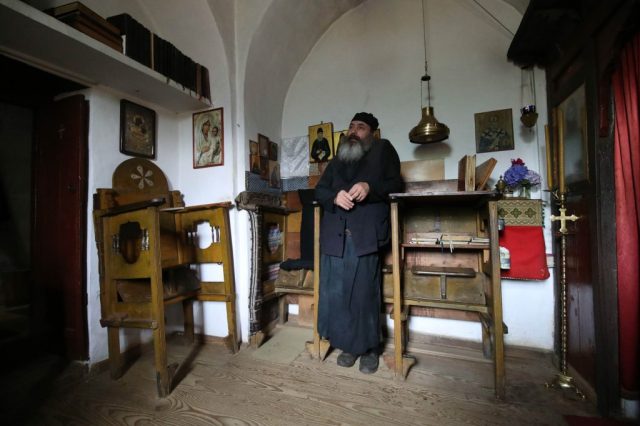
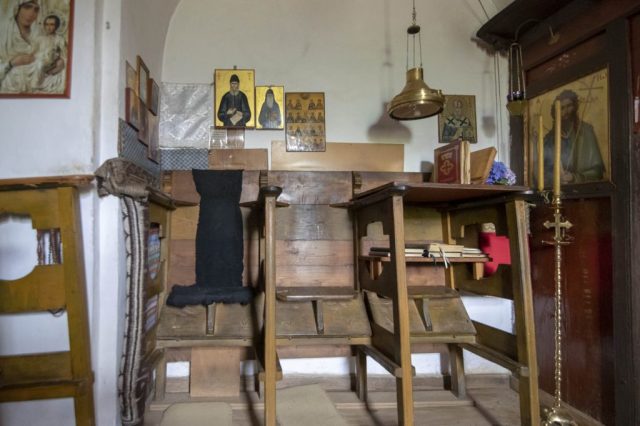
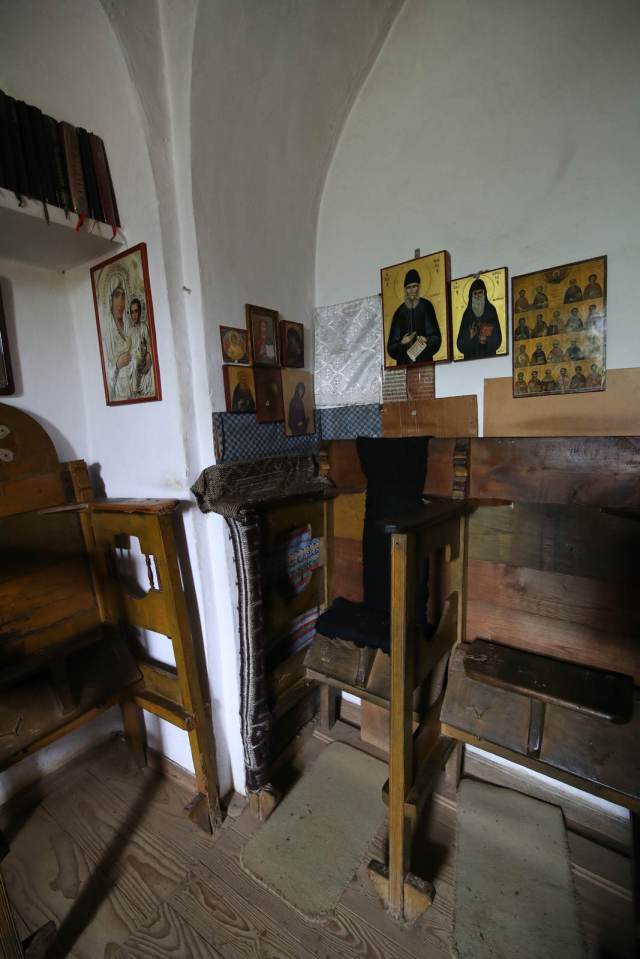
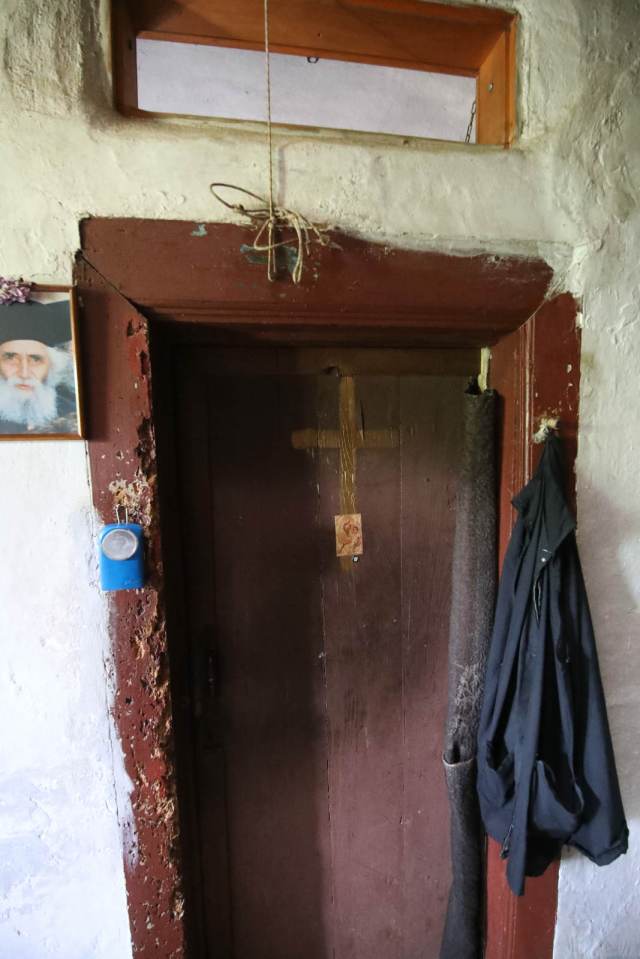
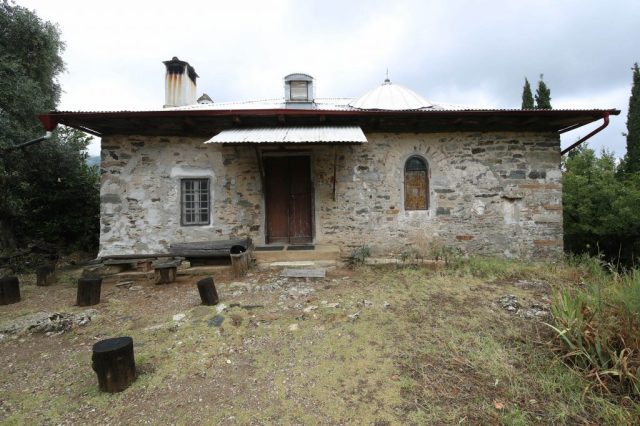
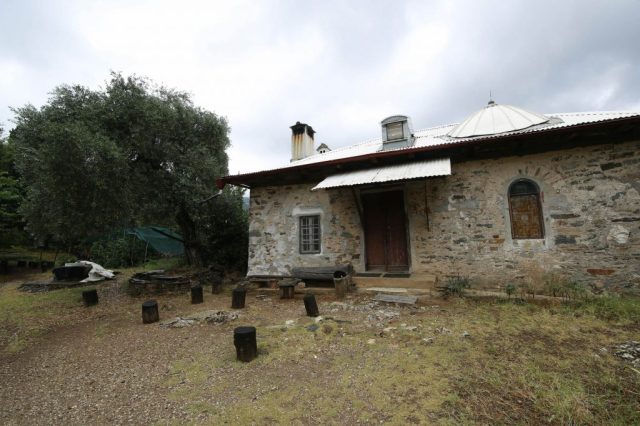
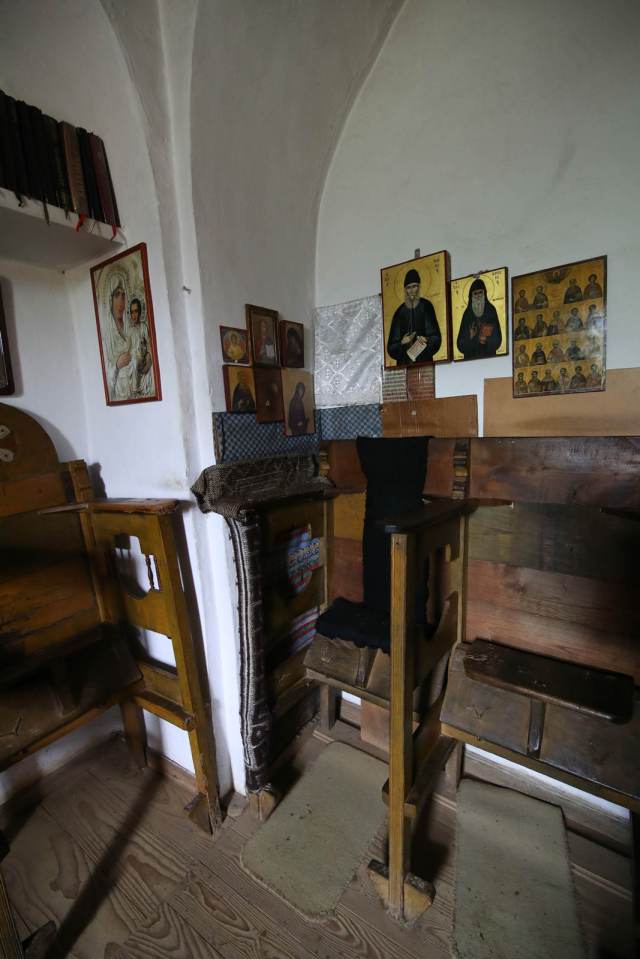
The stall (seat) in the corner with a black garment on it is the stall of the Saint.
For more photos from St Paisios’ feast, go to The Ascetic Experience.
The stall (seat) in the corner with a black garment on it is the stall of the Saint.
For more photos from St Paisios’ feast, go to The Ascetic Experience.

“On Friday July 12, Dr. Edward Hartley died in a nursing home after a week-long decline, ending a long a fruitful life in Christ. I lost a friend and parishioner, and many people lost someone who was a great gift to them from God.
Dr. Edward Hartley, with his wife Vivian, was the founder of St. Herman of Alaska mission in Surrey, B.C. He was an Anglican, born in Nova Scotia, Canada, who came out to British Columbia to begin a medical practice here. He met and eventually married Vivian Robertson, and together they had three children. More significantly, over the years they had many more spiritual children. I have lost count of their godchildren. Dr. Hartley and Vivian decided that they should join the Orthodox Church in a time when such a course of action was so difficult as to look a bit crazy. There were no English-speaking Orthodox missions in the Vancouver area in that time, and so they joined the local OCA church which worshipped in Slavonic and spoke Russian. A far-sighted bishop in the parish welcomed them, and they learned to cope with Slavonic, becoming members of the Russian OCA parish. Vivian learned to sing in Slavonic as part of the choir, and Dr. Ed (as he was known) read the Epistle in English after it had been read in Slavonic.
They had the sense and foresight to see that raising their children in a Russian church in the Vancouver area was not the path of wisdom, and so they received the blessing from their bishop to begin a mission in English, worshipping in a chapel they built in their backyard. Those were difficult years, with one step forward and one step back. I came to their little backyard mission in 1987 when there were about fifteen people there on a Sunday. They had no stipend available for a priest, and no other building. Their priest would have to find a secular job to support himself and his family while the mission grew. But they all had enthusiasm and commitment, and the parish slowly grew.
Dr. Ed was a man of humour, zeal, and effervescence. He was always ready with a joke and a smile. When I would phone his house he answered the phone often by saying, “Greetings and hallucinations—I mean greetings and salutations!” In all the years I was his parish priest I never recall him frowning or being in a bad mood. He wanted to convert absolutely everybody to Orthodoxy, and his home was an open house, a place of welcome and kindness. I may add that his wife Vivian and his children shared in his kind and zealous spirit. Vivian reposed in 2013, but his children are still faithfully serving the Lord, being wonderful chips off the old paternal block.
Dr. Hartley breathed his last at 2.28 p.m. this last Friday, and stepped into the Kingdom, doubtless escorted by a multitude of angels. The following Sunday at St. Herman’s was a busy one. We baptized an infant, a child of South Asian and East Indian-Caribbean descent. We baptized the Anglo-Canadian husband of one of our Russian ladies. We baptized another adult North European/Canadian convert. We also received by chrismation the Armenian mother-in-law of one of our Romanian immigrants. Before the baptisms, a lady who was a longtime friend of the Hartleys was finally entered into the catechumenate, joining a young Ethiopian catechumen. Dr. Hartley would have been pleased by all this, since he wanted everyone to become Orthodox, regardless of their upbringing or national identity. I would like to think that the Lord allowed him to peak down into the nave of his old parish, and rejoice in the work in which he and Vivian had been so instrumental in bringing to birth.
Dr. Ed will be missed by all who had been privileged to know him. He was one a pivotal generation who was prepared to work and sacrifice to join the Orthodox Church in a day when the cost for doing so was very high. If conversion to Orthodoxy is now somewhat easier, this owes much to Dr. Ed and those of his generation who were prepared to pay the price and hold the door open for us. Our debt of gratitude to him and those like him is very great.”
By Fr. Lawrence Farley


The bishop who told this story is still alive. It is genuine and has profound significance, because it speaks of the prayers of the living for the departed. God always hears these prayers, especially during the Divine Liturgy.
In the diocese of this bishop whom we have mentioned, there was a Papa Ioannis serving—a devout priest loved by all. He would somewhat linger during the proskomedia1 because he commemorated many names. But the priest had a terrible shortcoming: He loved to drink. As diligent as he was in the fulfillment of his priestly duties, so powerless was he before wine. Many implored him to overcome this passion, so unbecoming of a servant of God. The priest himself was aware of it, was furious with himself, and tried to quit drinking several times, although everything would start again within a few days.
Once, when this papoulis2 had again surrendered to his passion, he went to church. Half-drunk, he exclaimed, “Blessed is the Kingdom…” and he began the Divine Liturgy. By God’s allowance, the priest slipped in the altar and dropped the Precious Gifts from his hands. He froze with horror! Dropping to the floor, he began to gather the Body and Blood of Christ with his tongue. He was choked with guilt, because it happened because of his intoxication.
The priest went to the bishop and confessed his terrible sin to him. The next day, the bishop, after much thought, sat down at the table and took a pen: He had to begin the process of defrocking Fr. Ioannis. The bishop’s hand was lingering in indecision when he beheld as if in a vision how thousands of people were coming out of the walls of the room. There was a burning pain in their eyes. Passing by the bishop, they cried out, “No, Vladyka, do not punish this priest! Do not defrock him! Forgive him!”
An endless stream of people passed in front of the bishop: men, women, children, well-dressed and poor—an entire demonstration of souls! And they all stretched out their hands to the bishop and cried out, imploring, “No, Your Grace, don’t do this; don’t expel our papouli! He remembers us and helps us at every Liturgy; he truly takes pity on us; he is our friend! Don’t remove him from his dignity! No, no, no!!!”
The vision continued for a long time. The stunned bishop watched the sea of faces pleading for the drunken priest. He realized that they were the souls of the reposed whom Fr. Ioannis commemorated at the Liturgy. And this commemoration greatly alleviates their lot, like water given to the thirsty in the summer heat. “This is a clear testimony that our prayers assuage the souls of the reposed,” the bishop thought.
He called for the priest.
“Fr. Ioannis, tell me, when you serve the Liturgy, do you commemorate a lot of names at proskomedia?”
“Hundreds of names, Your Grace. I haven’t counted them.”
“Why do you remember so many names and delay the Liturgy?” the bishop asked, as if angry.
“I pity the departed: They have no other help but the prayers of the Church. Therefore, I ask the Most-High to grant them rest. I have a book where I record all the names that are given to me for commemoration. I inherited this practice from my father, who was also a priest.”
“You do well,” the bishop agreed. “Their souls need it. Continue doing this. Just be careful, and don’t drink anymore—not a drop of wine, starting tomorrow! Such is your penance! You are forgiven.”
From that day, Fr. Ioannis was truly freed completely from the passion of drunkenness. And now he stands even longer at the proskomedia, commemorating the names of the departed.
1 The service of preparation before the Liturgy—Trans.
2 An affectionate term for a priest used by Greeks—Trans.
From the book Miracles and Revelations of the Divine Liturgy,
published by Paraclete Monastery (Oropos-Attica), 2012.

Right now in Greece:
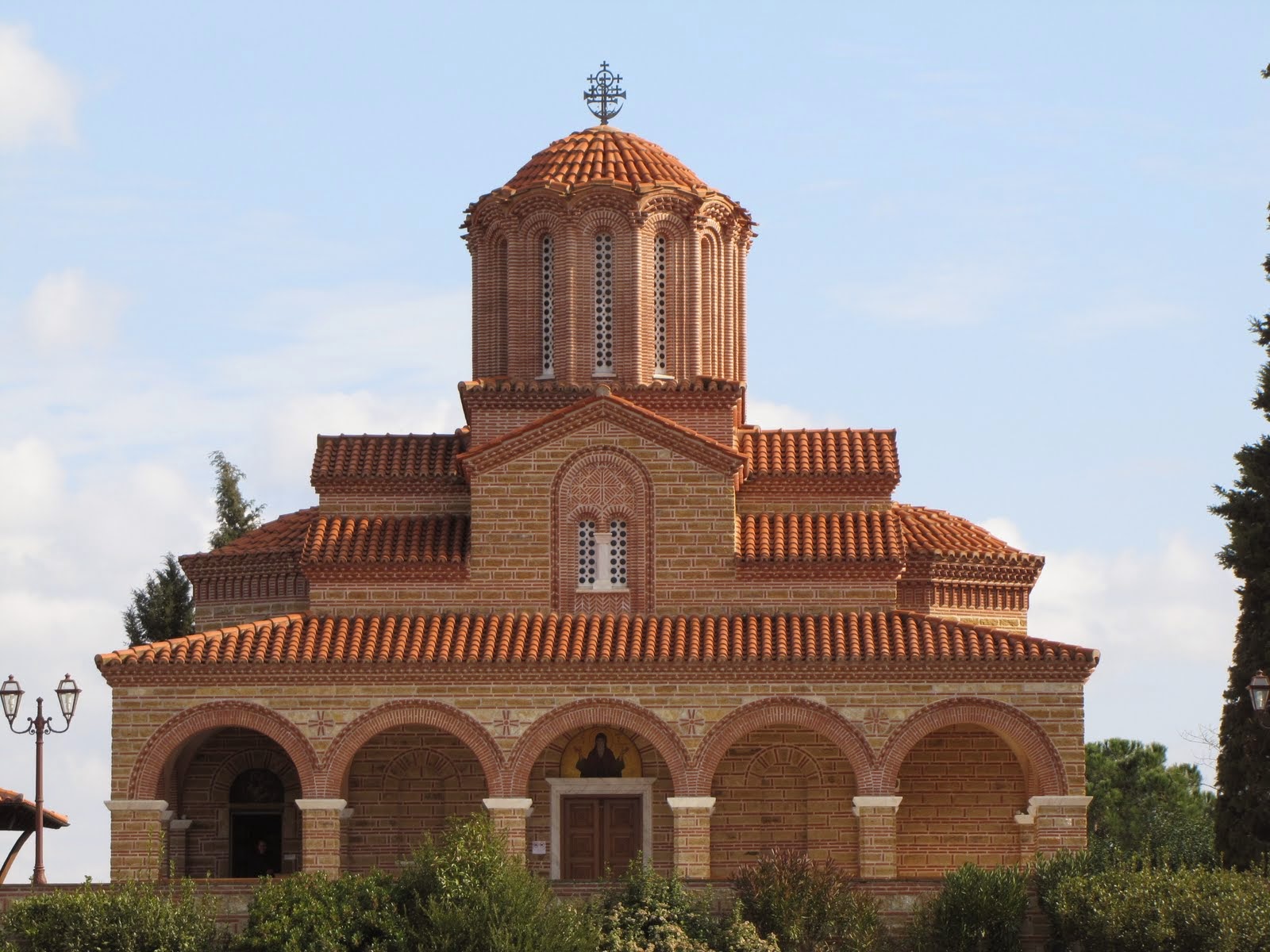
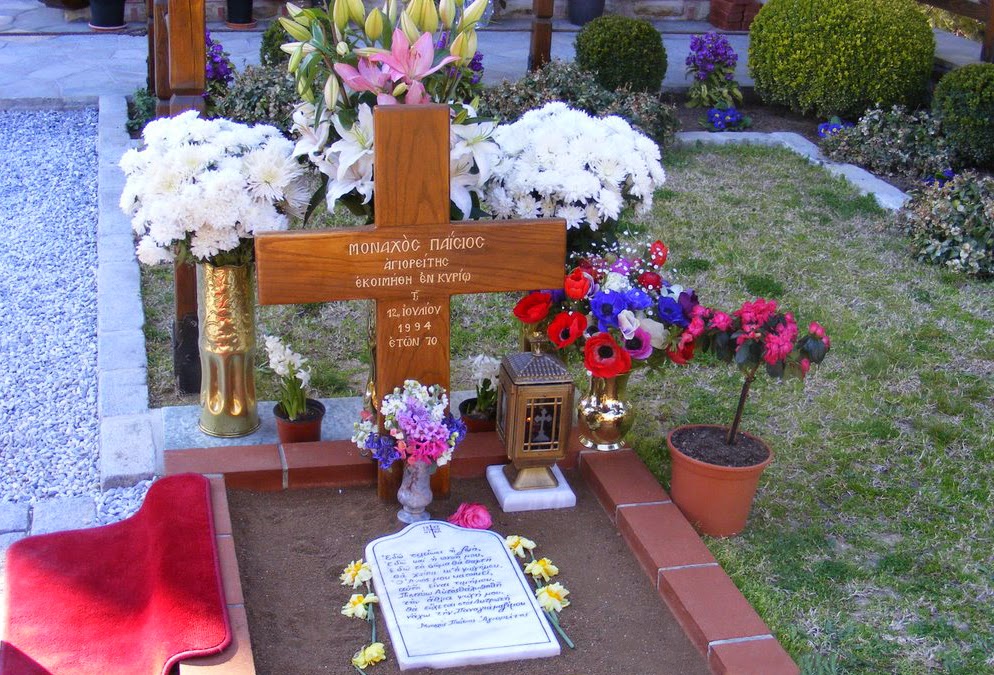
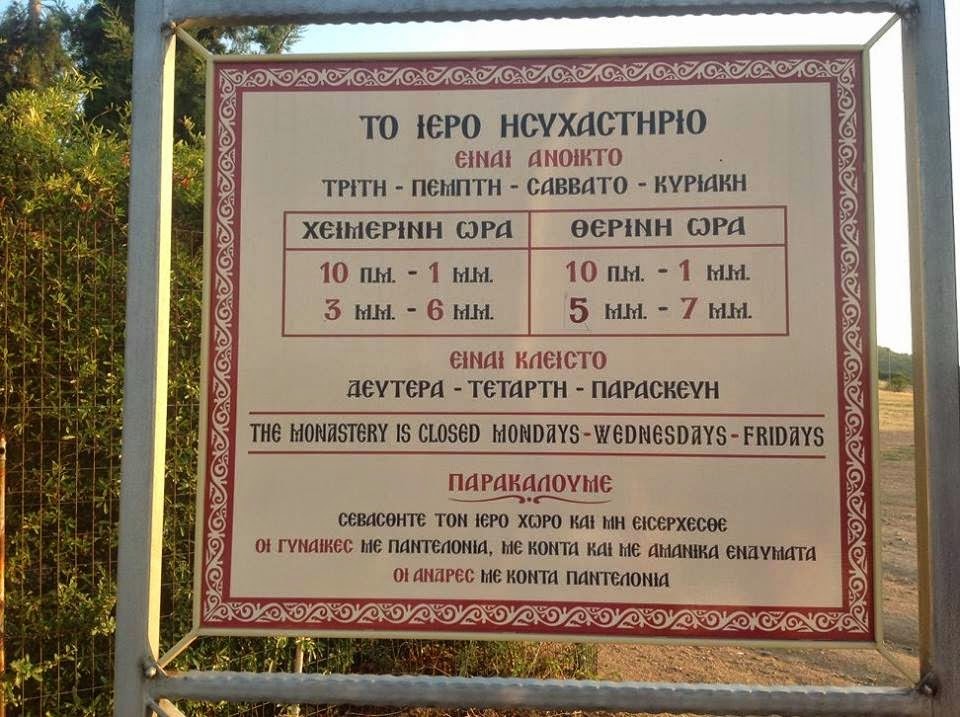
Every year, from July 11th-12th, the anniversary of the repose of the Saint, the Holy Hesychasterion serves a vigil service, with thousands of the faithful taking part. For example, on the anniversary of St. Paisios’ repose in 2014 (and before he was canonized a Saint), an estimated 120,000 people came to venerate his grave. Many miracles occur through the Saint’s intercessions and through the soil from his grave, which pilgrims often take as a blessing.
St. Paisios’ acquaintance with the Monastery
Once, the Elder sick and was in great need of blood for his surgery. He had no relatives by his side (as he himself wished) and a group of novice nuns donated as much blood as he needed. He was very grateful for their support. Wishing to express his deep gratitude, he used to say that their kind support resembled a woolen sweater embracing his bare flesh; he wished to take it off and offer it to them in return, as an expression of his heartfelt gratitude.
To have the Virgin Mary with me.”
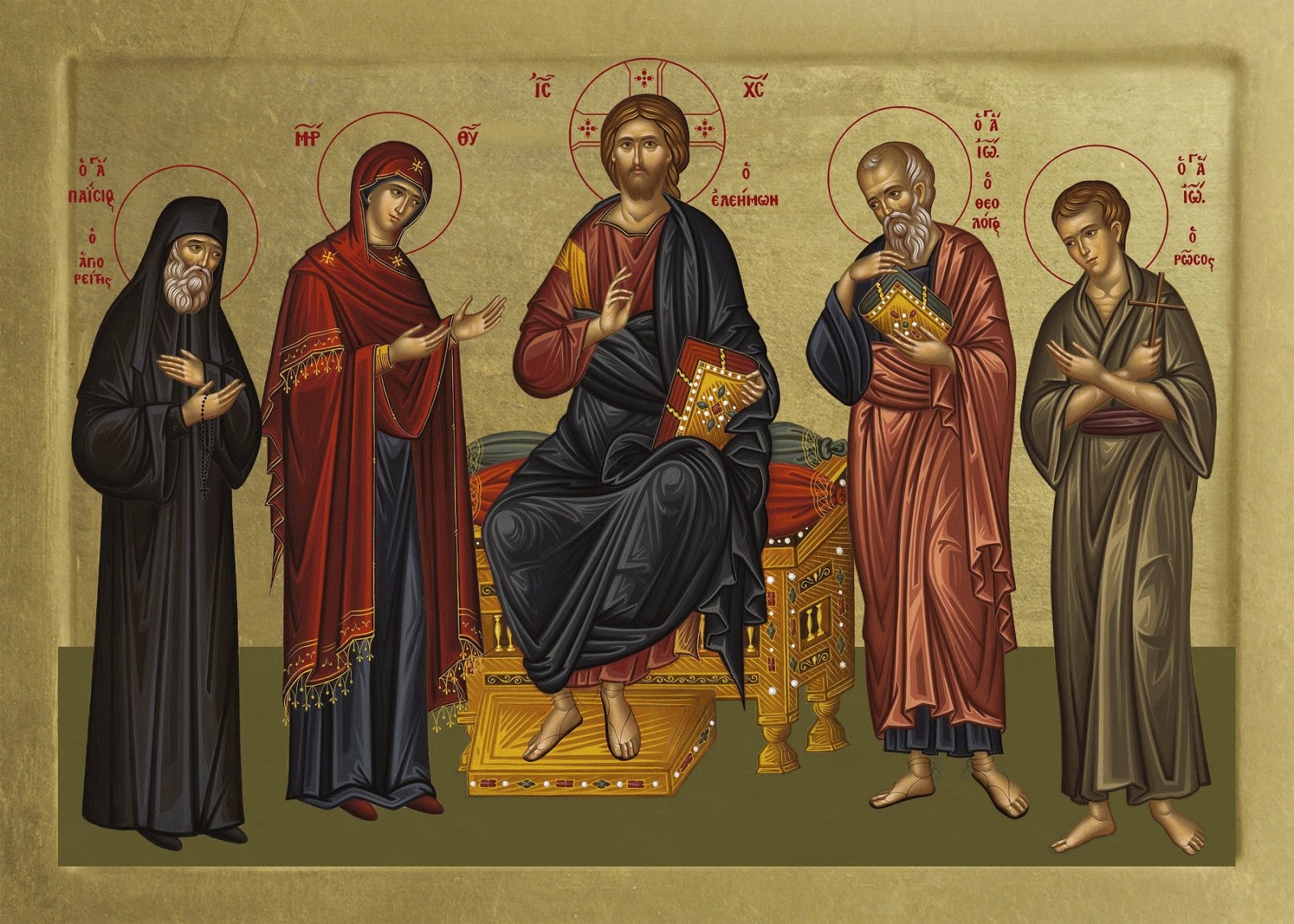
The Great Deisis: Christ, entreated by the Theotokos, St. John the Theologian, St. John the Russian and St. Paisios the Athonite
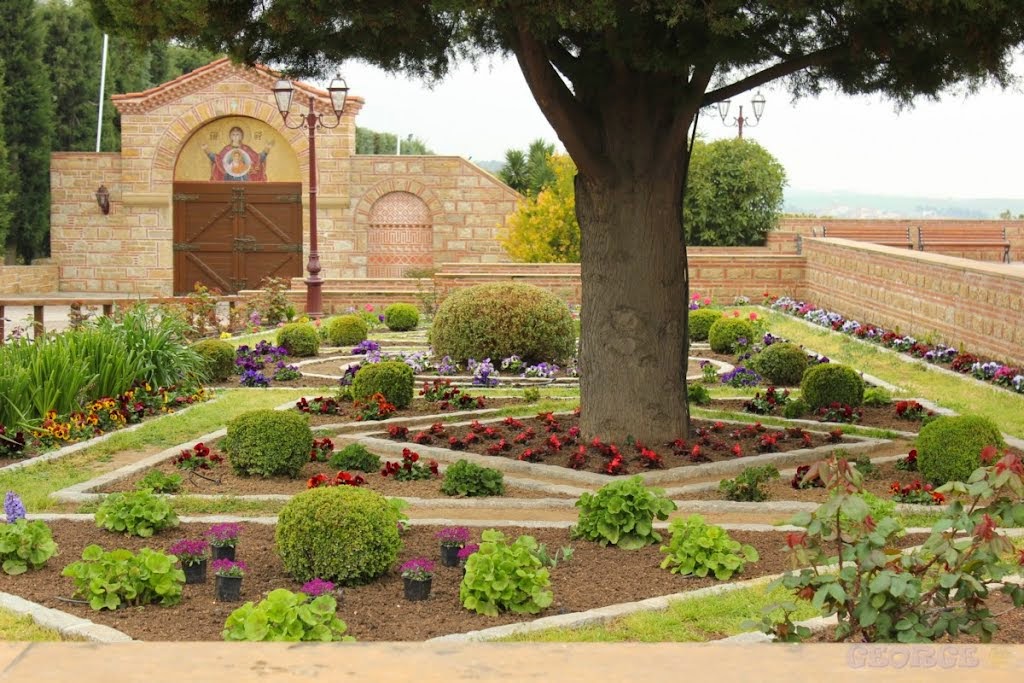
He sympathized with the nuns who were facing insuperable problems in their effort to build their convent. So, he personally took the initiative to find a suitable area for its construction. He offered his assistance in every way he could; along with the building’s foundations, he also laid its spiritual foundations by giving instructions for the proper functioning of the convent. Thus, the Elder established a strong relationship with the Convent of St. John the Theologian and remained by its side until his death.

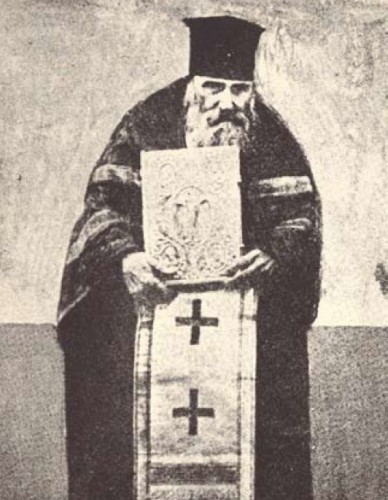
St. Nikolaos Planas
“There once lived a most devout Priest. Even though he barely knew how to read and write, he was a Priest, a clergyman of strong faith, great virtue and of many spiritual struggles. He used to stand up-right for hours during the Proskomedia, despite the fact that the veins of his feet had been affected and were bulging….standing up-right commemorating the names of numerous people. He was a man of sacrifice to his last breath.
As he barely knew how to read and write, by some misunderstanding, he did not place the portions on the Holy Diskos properly.
When we place the portion of the All-Holy Theotokos on top of the Holy Diskos, we say; The Queen stood at thy right hand…”
The Geronda (Elder) Priest was under the impression that, since he said ”at thy right hand,” the portion of the All-Holy Mother of God must be placed on the right side of the Lamb (as he was looking at the Holy Diskos). In other words, he was placing the portions backwards.
Once a Bishop visited the Holy Monastery for the Ordination of a Deacon.
During the Psalms of Praise, when the Bishop enters the Holy Altar, he vests, then later goes to the Proskomedia, which has already been prepared up to a certain point. From then on he alone is the one to continue commemorating.
Thus, the Bishop noticed that the portions had been placed backwards by the priest:
“You did not place the pieces properly, father,” he told him.
“Father, come here for a minute. The All Holy Theotokos is placed over here and the Orders are placed over there. Hasn’t anyone told you; hasn’t anyone seen how you do the Proskomedia?”
“Certainly, Your Eminence,” replied the Geronda Priest. “Everyday, when I celebrate (for a day did not go by unless he celebrated the Divine Liturgy), the Angel who serves me sees what I am doing but does not tell me anything at all. I apologize, illiterate as I am, for making such a mistake; I will be careful from now on.”
“Who did you say? Who did you say serves you here?” asked the Bishop, “Isn’t he a monk who serves you?”
“No”, answered the Priest, “an Angel of the Lord.”
The Bishop fell silent, what could he have said, anyway? He was astonished and had certainly realized that a holy priest was standing before him.
At noon, following the meal in the trapeza, the Bishop said goodbye to the Abbot as well as the rest of the monks, and departed. The following day, as it was still night, when the Geronda Priest went to the Holy Altar in order to hold the Proskomedia.
The Angel of the Lord came down. During the act of breaking the Lamb, the Angel noticed that the Priest had placed the portions properly.
“Fine father!” he told the Priest. “Now you have placed them properly!”
“Yes, you knew the mistake I have been making for so many years!”
“And why didn’t you tell me anything; why didn’t you correct me?,” he asked.
“I could see it, but I do not have the right to tell you anything. I am not worthy to correct a Priest.”
~by Fr. Stephanos K. Anagnostopoulos
This incident was narrated to the author by the blessed departed Geronda Gabriel, who for a great period of time was the abbott at the Holy Monastery of Dionysios on Mount Athos.~


A pilgrim once met a hermit.
– “I want peace.”
The hermit took a piece of stick and wrote on the ground: ‘I want peace’.
-“Now, look how simple this is!”
In one move, he crossed out ‘I’.
“My child, you need to delete first the ‘I’. It is impossible for anyone who trusts in himself to find peace on his own, away from God. The ‘I” always feels threatened by everybody and everything and drives away God and His Peace.”
In one move, the hermit crossed out ‘want’.
My child, you need to delete the ‘want’ too. ‘Want’ reveals desires, needs and worldly attachments. No matter how many of your worldly desires you fulfil, new ones, unfulfilled, will upset you and deprive you from peace.”
Then, the pilgrim looked at the ground, saw the crossed out words and understood. ‘I’ and ‘want’ had been crossed out and … Peace was there!


About four months have passed since my Elder’s last ‘words’ about my future and my life circumstances have completely changed. Indeed, problems do not merely call forth our courage and our wisdom; they create our courage and wisdom. (I have a long way to go …) How can my Elder (and God) swipe away, with just one move, all my past and present, my job, my possessions, my ‘family’, my ‘home’, my … (you name it!)?
But they can, as I was about to find out the hard way. “No buts — just do as I tell you! God has revealed all that to me (!)” The past four months I learnt first hand the blessings of an Elder’s prayers as he ‘photographed’ and ‘micromanaged’ my single step thousands of miles away.
The sea was parted; I walked on the dry ground and crossed it. And left all my past life behind. What will my future be on this ‘other’ side? I have absolutely no clue, other than I must learn to cling to God and surrender to His Will, as no one has now been left for me, other than Him and my Elder.
Abba Allois said: “Unless a man say in his heart, Only I and God are in the world, he shall not find rest.”
Asking for your prayers…

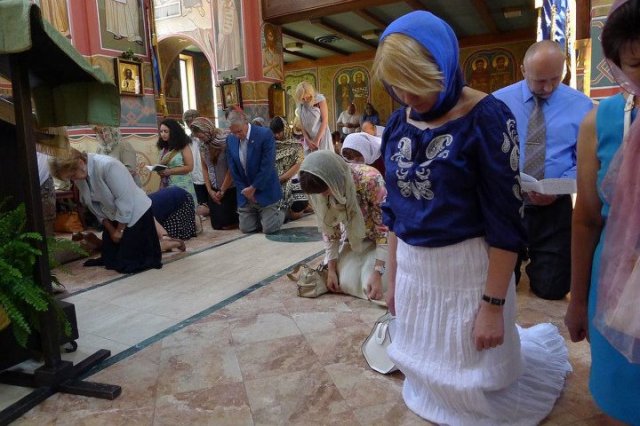
The cycle of prayers assaulting Hades reaches a climax on the day of Pentecost. On the evening of that Sunday, the faithful gather for Vespers. During that service, they kneel for the first time since Pascha. And in that kneeling, the Church teaches them the boldness of prayer, the cry of human hearts for God’s solace and relief. Three lengthy prayers are offered, the third of which completes and fulfills the prayers that began so many weeks before in the Soul Saturdays:
Priest: O Christ our God, the ever-flowing Spring, life-giving, illuminating, creative Power, coeternal with the Father, … Who also, on this all-perfect and saving feast, dost deign to receive oblations and supplications for those bound in Hades, and grantest unto us the great hope that rest and comfort will be sent down from Thee to the departed from the grief that binds them. …
…
I can recall the first time in my priesthood that I offered this prayer. I had a copy in front of me, but had not read it before the service, nor had I ever heard it. I trembled as I offered the words above…astounded by their boldness. I had never heard such boldness before the Throne of God within the walls of the Church itself.
Reblogged from Fr. Stephen Freeman’s Glory to God for All things

The moment we accept death, true life can begin. (Elder Aimilianos of Simonopetra)
The secret to his freedom does not lie in the rejection of his suffering, but in his joyful acceptance of them. He will be truly free only when he lets go of wanting to be free of his sufferings, for all freedom and all life depend on our being in right relation to God. When he accepts his death; when he allows himself to hear the sound of his footsteps descending into the grave, he will find that death no longer has a hold on him, for now he is with God. The darkness will vanish and he will see only light.
If he accepts to become an instrument of God’s will, he will emerge triumphant; but otherwise he will fail.
If “l” exist God cannot exist, for there cannot be two gods, and so it is either God or the self. When someone sees only his own suffering, God cannot answer him, for it is precisely the mistaken, negative attitude toward suffering that constitutes the separation between him and God. But if “I” cease to exist, if my relation to my suffering changes, then I can be united to God. This union depends on the denial of my self, so that God can come into my life.
I must learn to accept suffering with joy, to find joy within my suffering, to realize that even in my moments of glory, I am nothing but “dust and ashes” (Gen 18:27), a pelican in the wilderness (Ps 102:6), lost in a desert land, seeking shelter in a landscape of ruins. I must realize my sinfulness, my nakedness, my alienation from God; I must realize I am like a sparrow alone o a house top (Ps 102:7), not because I have some psychological problem, but because I have been separated from God. … In this cry, this calling out, there exists the hope that I will hear the sound of His footsteps, and these will overtake my own and lead me to salvation.

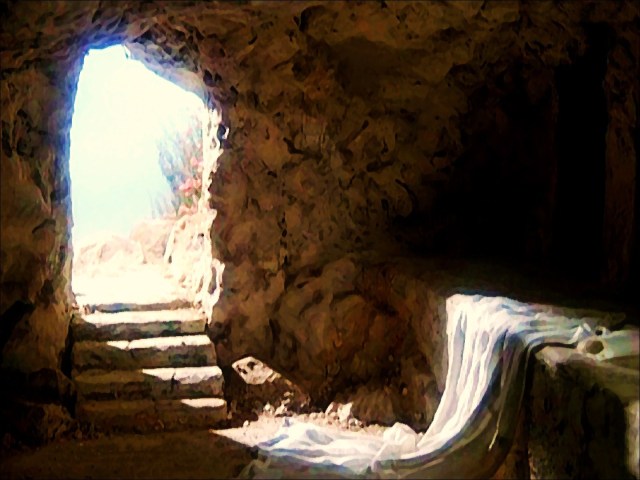
That Easter (Paschal) Vigil Father Dionysios chanted “Christ is Risen!” only once. His next words were “My child, my child!” (1) The explosion of light which followed after at midnight the church went dark and the bells rang out to proclaim the resurrection was literally an explosion. When people started cheering and letting off firework crackers, one flare rebounded on a tree and exploded on his 6 years old son’s eye. K. his neighbour, 25 years old, had shot a flare with a sailor’s gun. It was Christos’ first time to hold the Paschal banner on the platform. They took the boy immediately to the nearest hospital, to the intensive care unit. For 5 days, Father Dionysios was holding his little boy’s hand praying for a miracle to save his life. His friends were screaming “Kill the murderer! He killed your son!” Father Dionysios told them to stop. “Do not lay charges on this man! Let us punish him with our love. What would Christ have done in our place? This is what you need to ask yourselves.” For 4 days and nights, Father Dionysios pleaded on his knees. We did not know what happened on that 4th night but we saw him the following day in church exhausted but serene. Then, at 11 am, the news from the hospital came. “We did all we could …” Father Dionysios looked up to the sky, and a tear trickled down his cheek to the ground.
The following day, Bright, Resurrection Day, but for their village was Good Friday. The little coffin was white. Father Dionysios, pale, was holding his little son’s hand, just as he had done all his life and the last four days in intensive care. He was his only son.
After the funeral, they kept pressing him to lay charges against his neighbour. He refused again. The following day he went to visit him in jail. The man everybody called a murderer. When he saw him, he wept and held his hand. Both were weeping. “Don’t say anything”, he told him. “He Who gives life, He knows ..” And he forgave him.
The Tear in the Chalice
One Sunday in June was the Memorial Service. At “Thine Own of Thine Own”, Father Dionysios looked at the Cross in the altar, and saw Christakis, not Christ, on the Cross, looking at him. Tears welled up in his eyes. Then he looked up again at the Cross, and he saw his son’s “murderer” face on Christ’s. His neighbour was still in jail. More tears welled up in his eyes. When he raised his eyes again for a third time, he saw Christ’s face on the Cross, Christ weeping and a tear falling in the Chalice.
(1) This story is real, and the event took place in Drosia, Evia, in 2011. Christos Soutzios, 6 years old, the priest’s only son, got killed by a flare. That memorial service took place on June 5, 2011.
Source: https://www.egnomi.gr/article/14902/to_megaleio_tis_psyxis_toy_papa_dionysi.html
*Sent by Hieromonk Synesios, St. Arsenios Monastery

 ORTHODOX CHRISTIAN FAITH AND LIFE