The Monastery of Hosiοs Loukas

monastery of hosios loukas.jpeg

IMG_1554

From Steiri, through the prayers of Saint Luke, whose presence is tangibly felt in his monastery.With all best wishes for the forthcoming New Year, and Theophany, and to those still awaiting the celebration of the Nativity. 

*

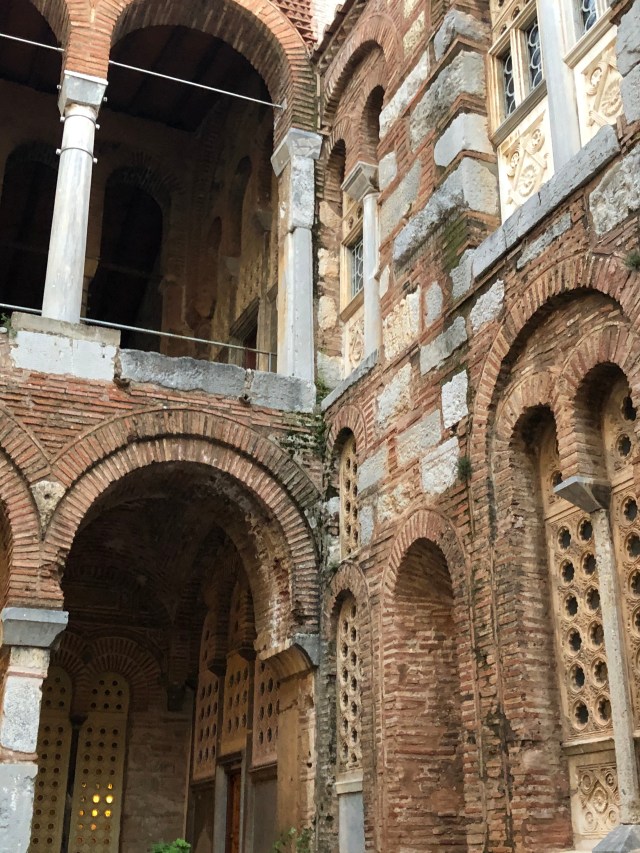
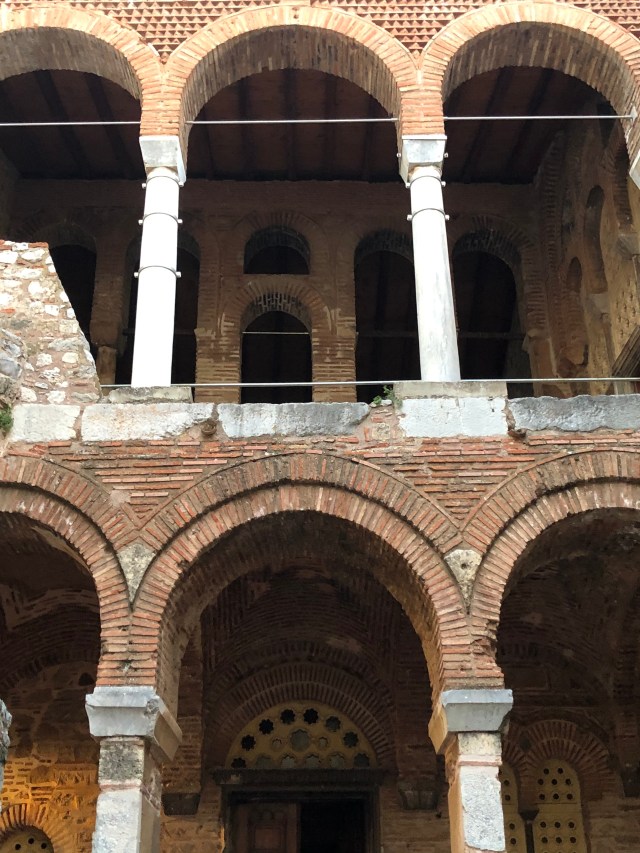
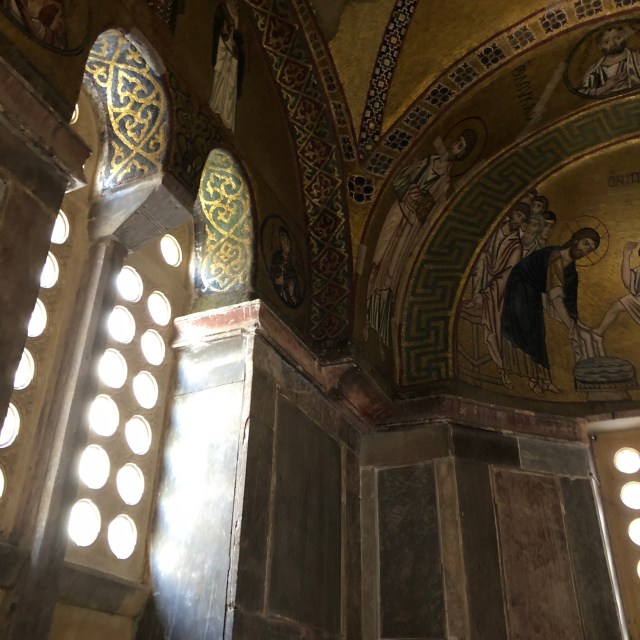
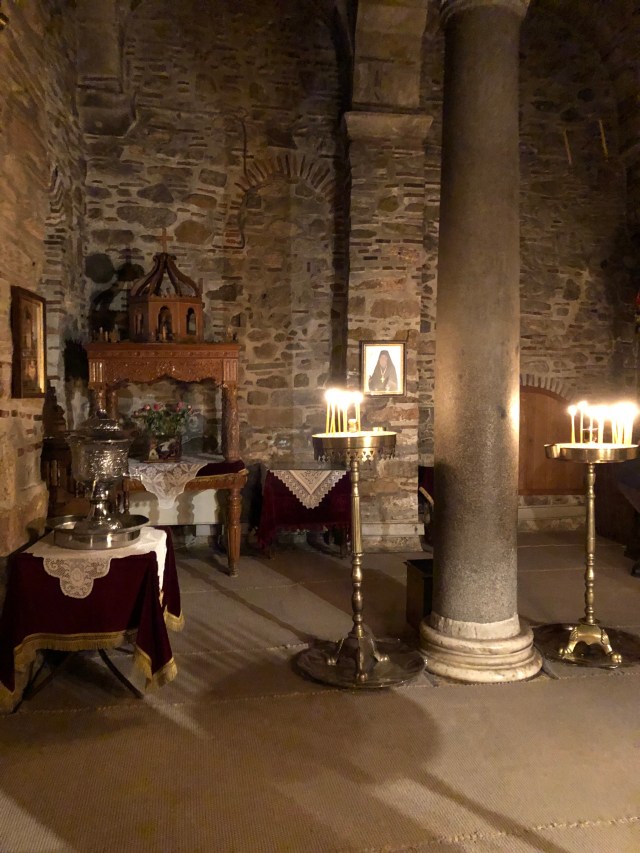
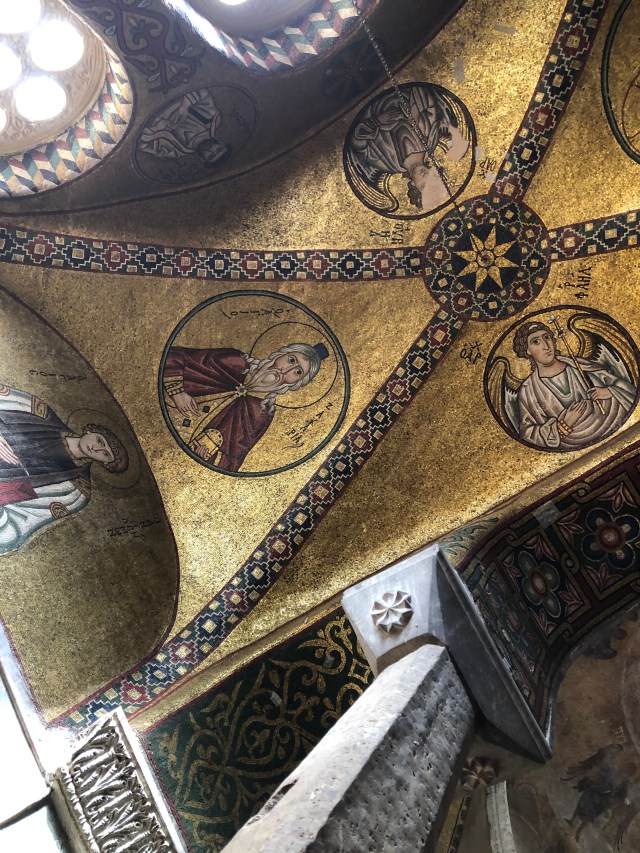
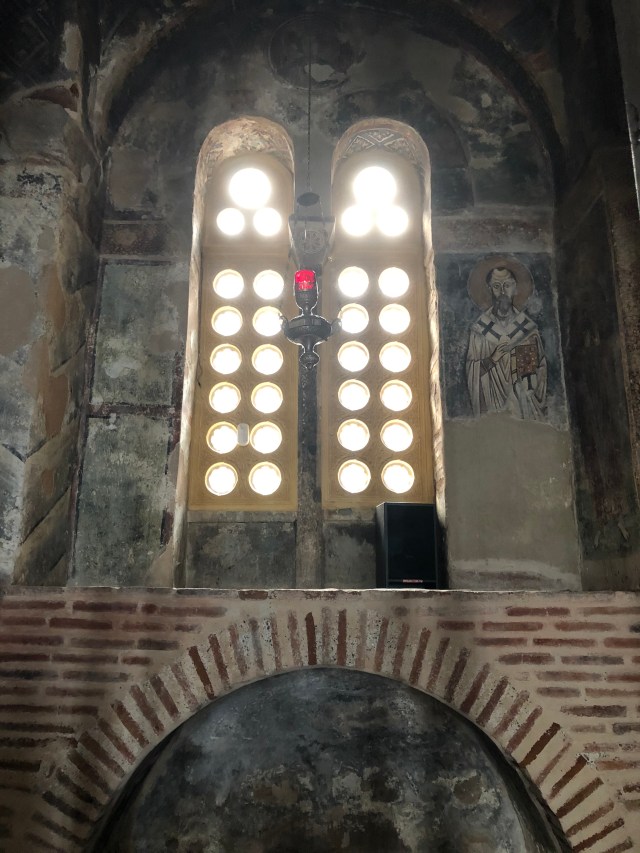
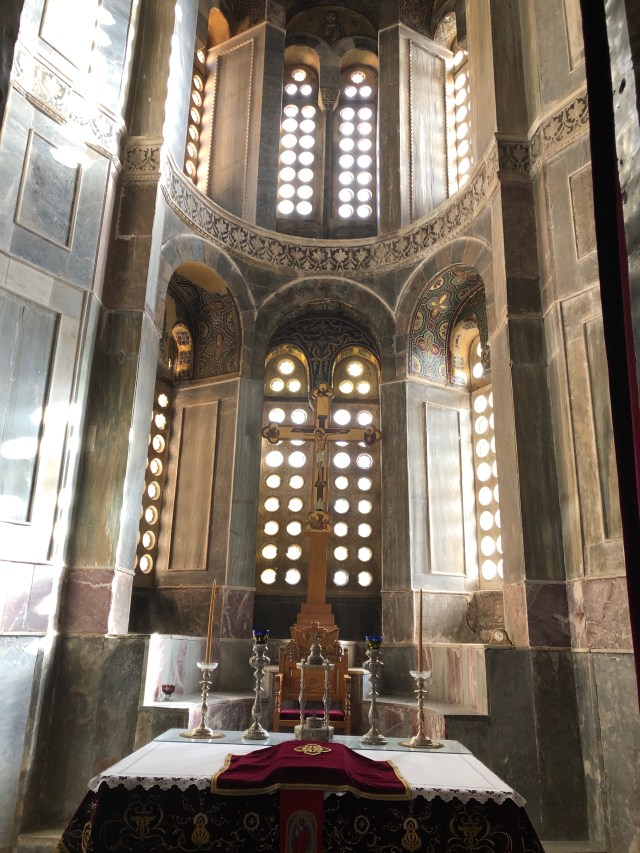
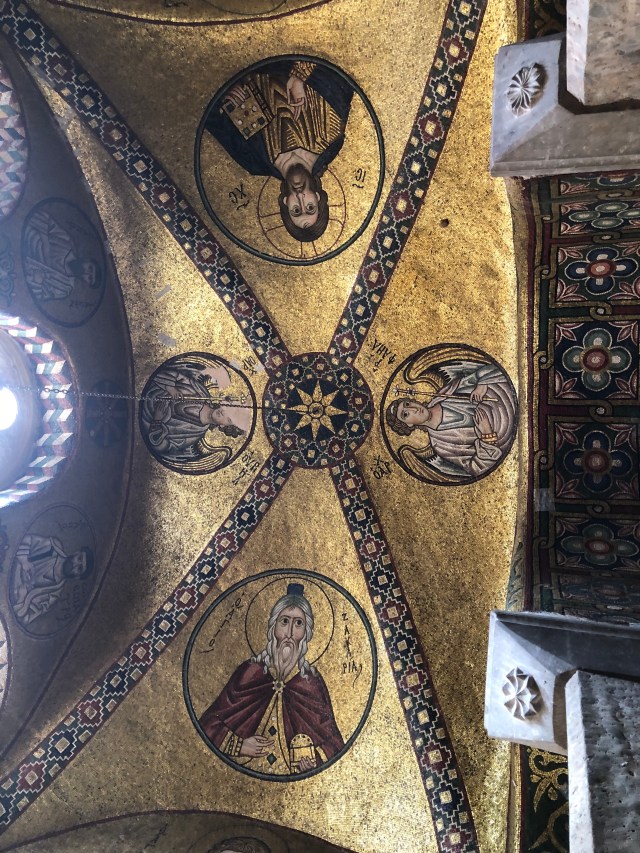
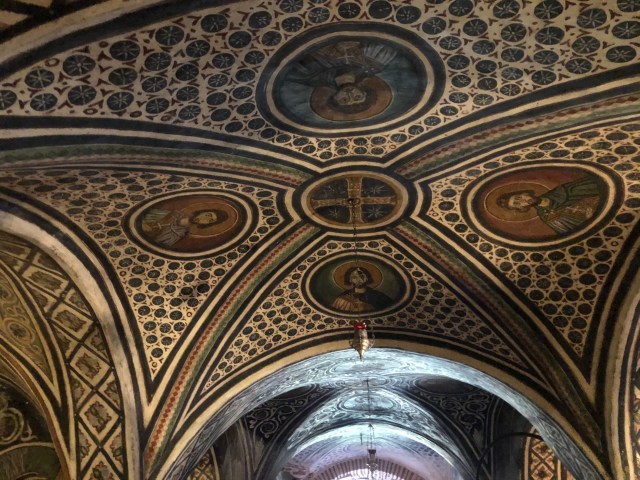
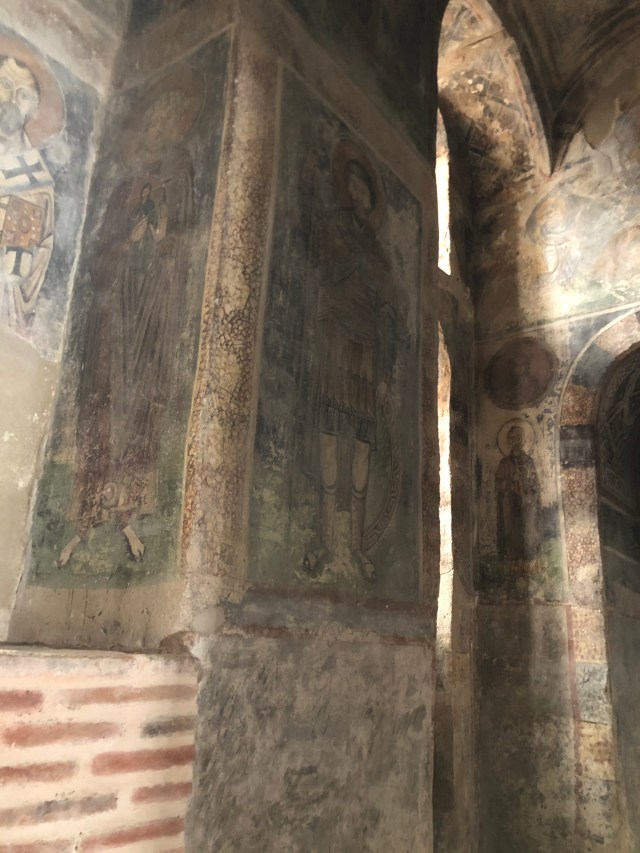
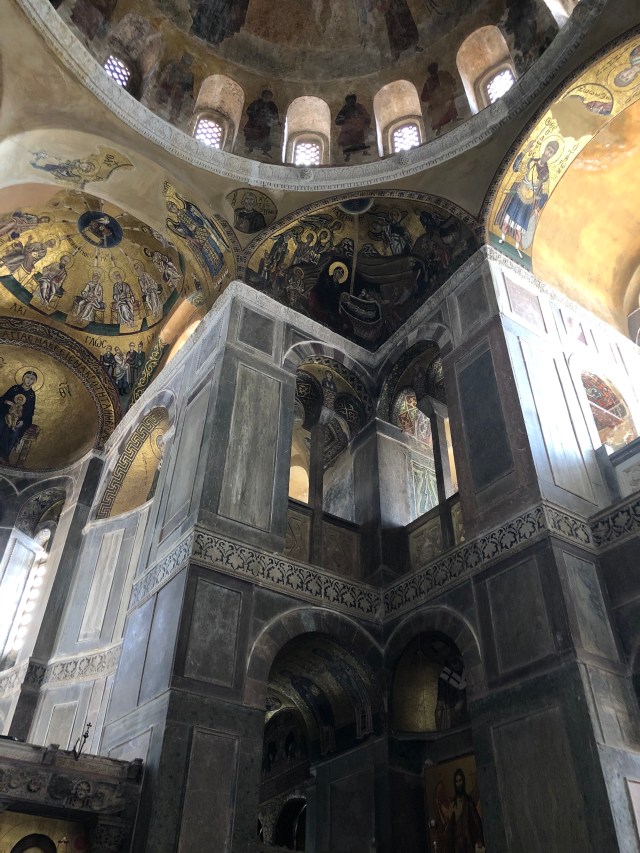
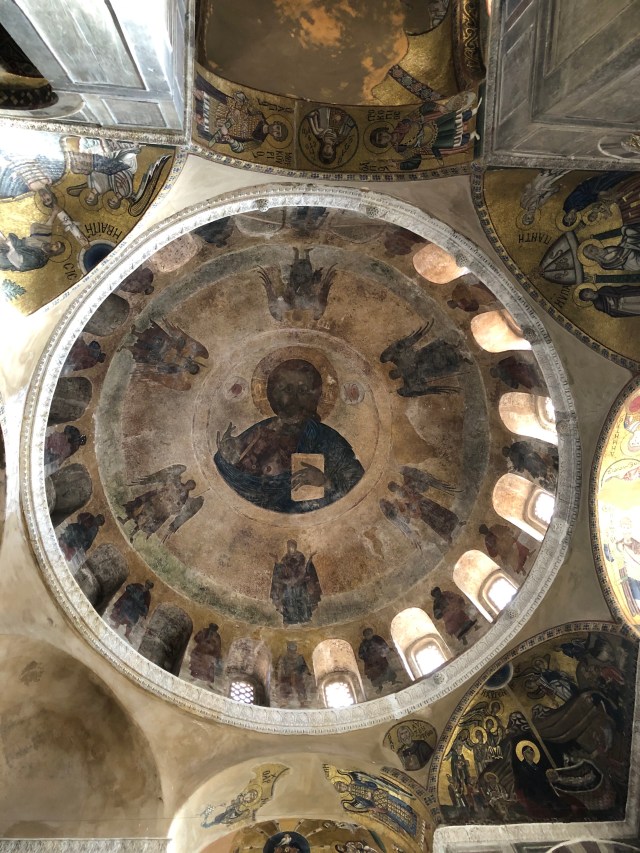
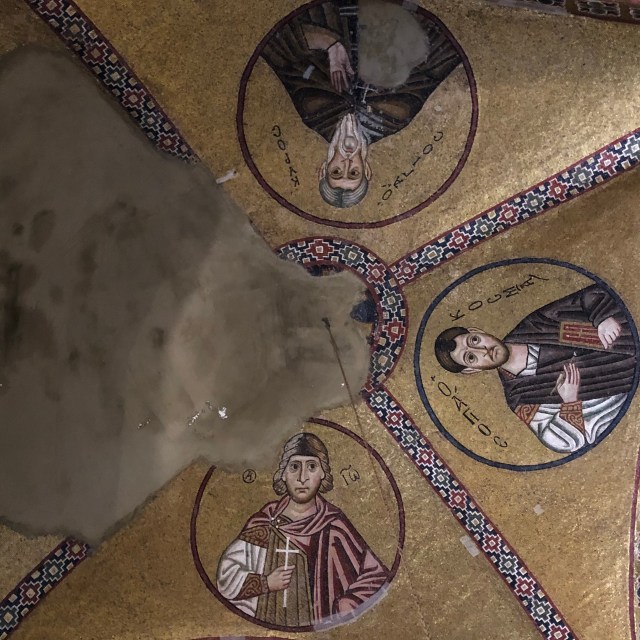
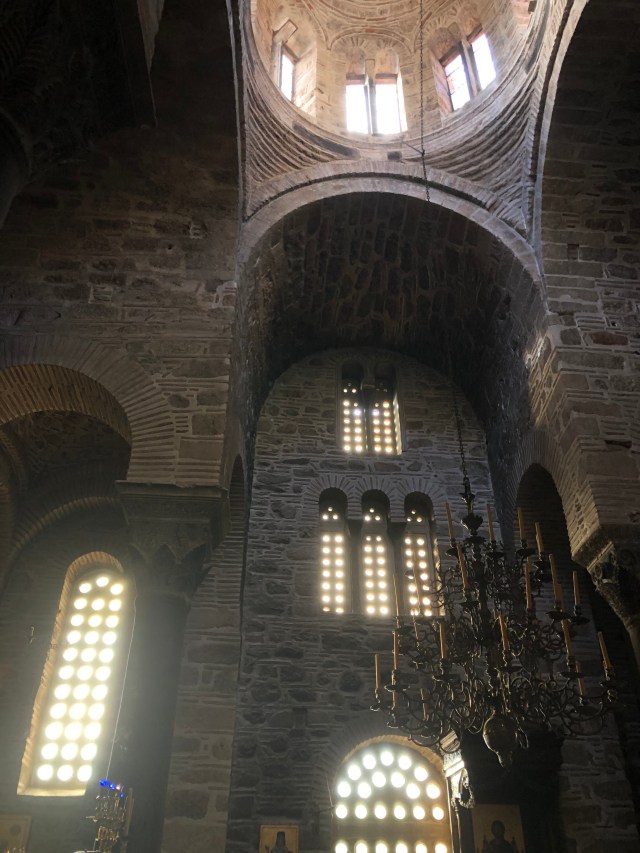
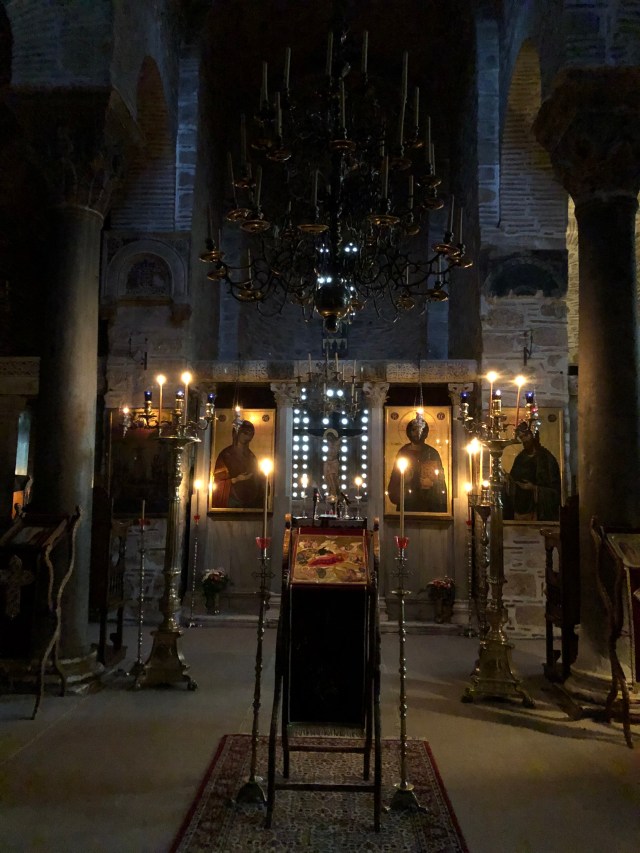
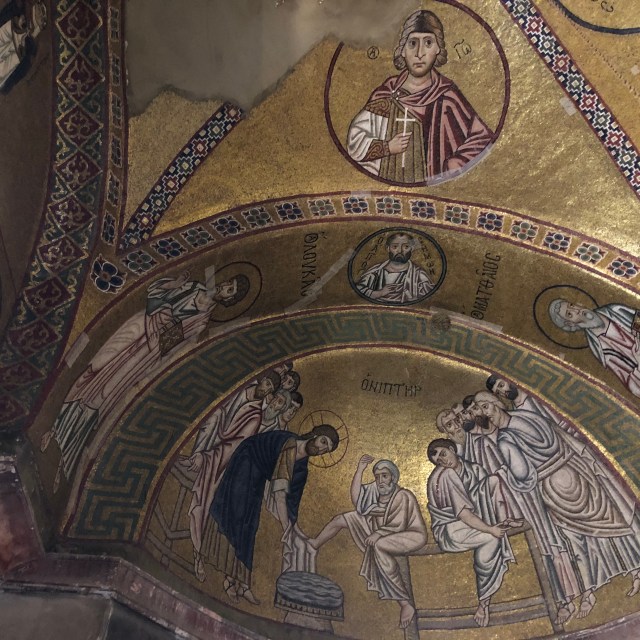
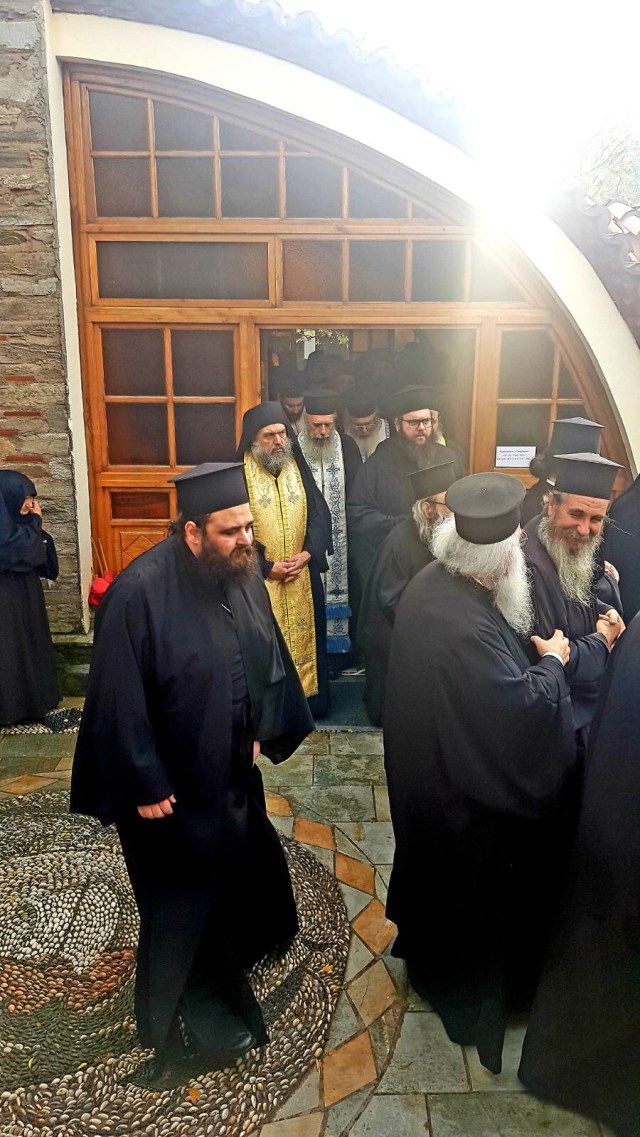
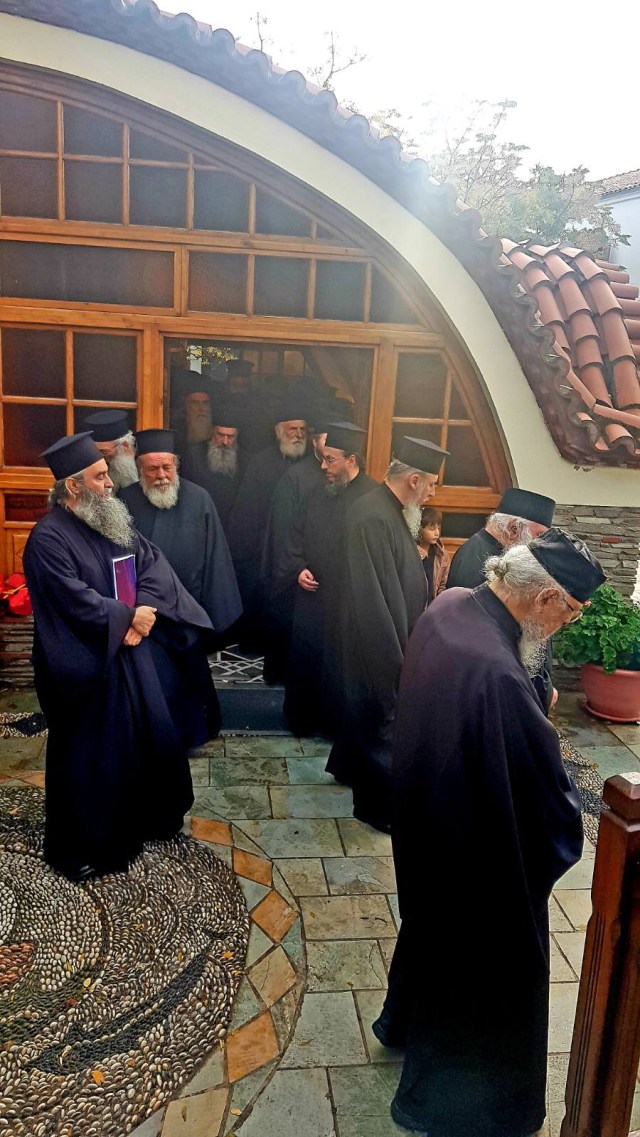
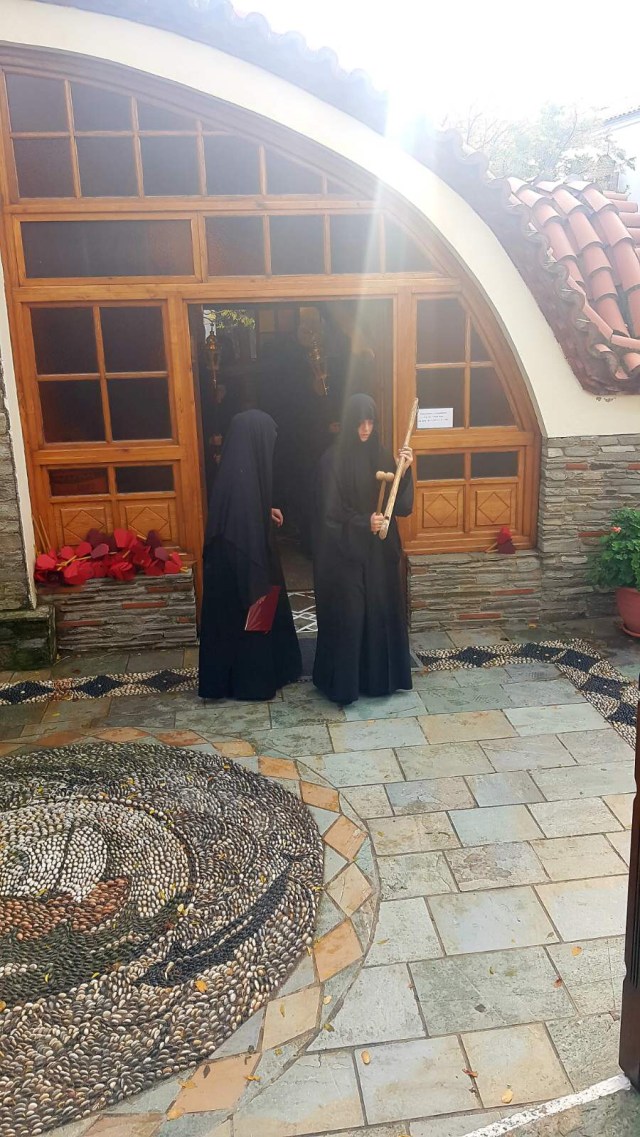
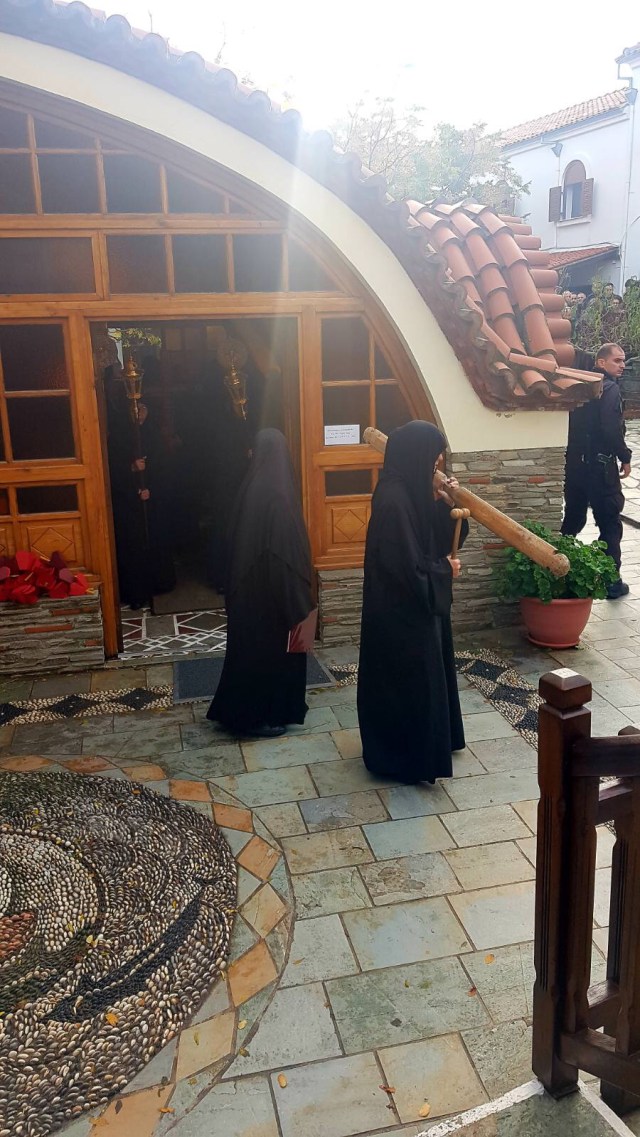
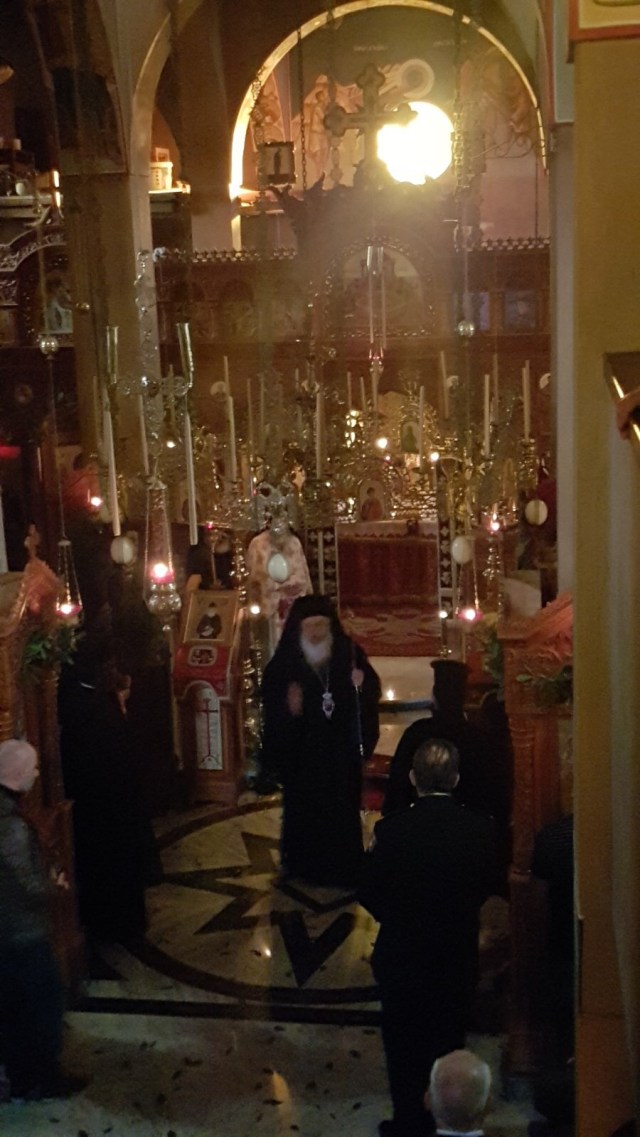
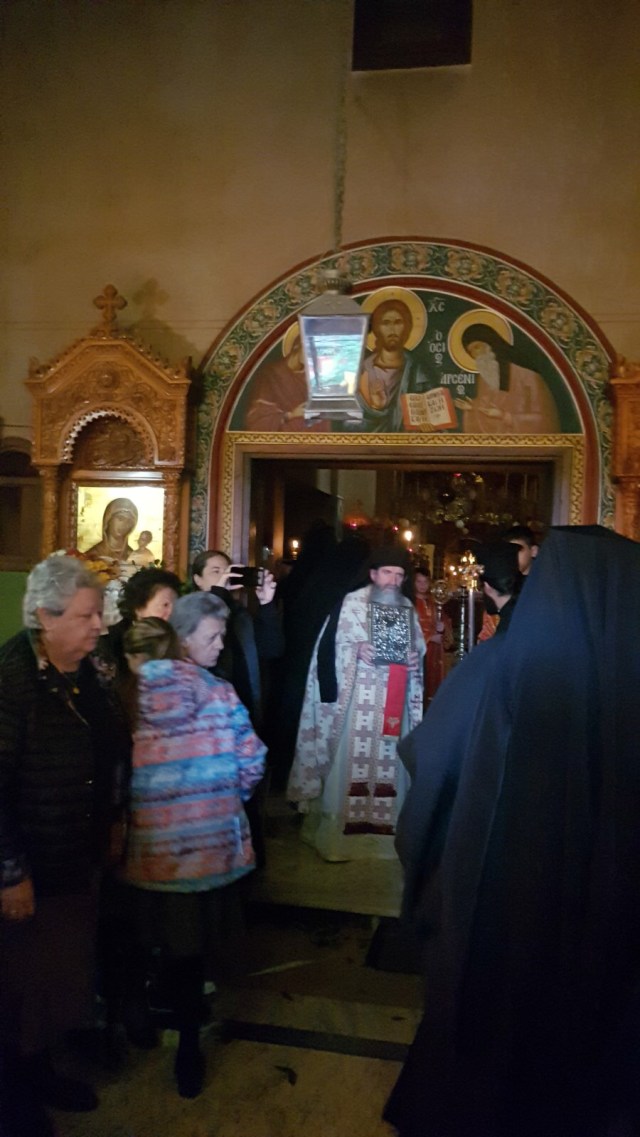
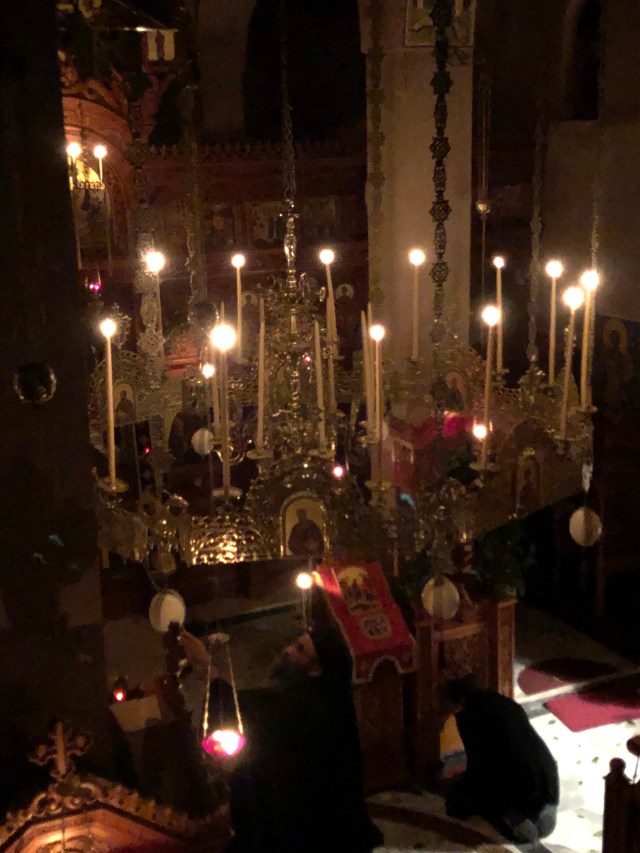
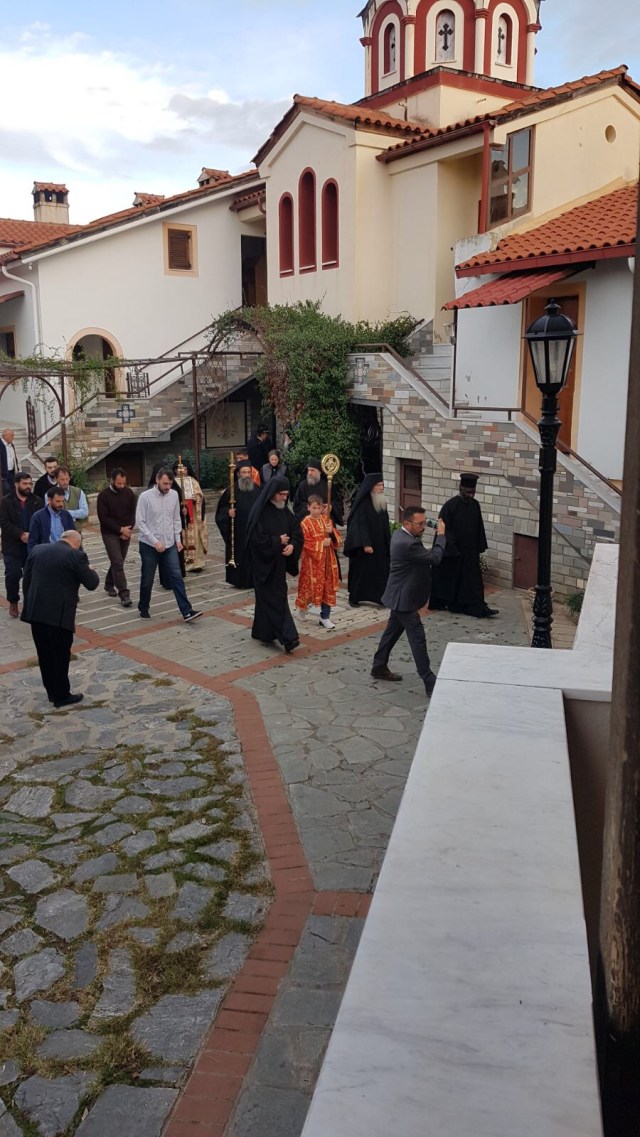
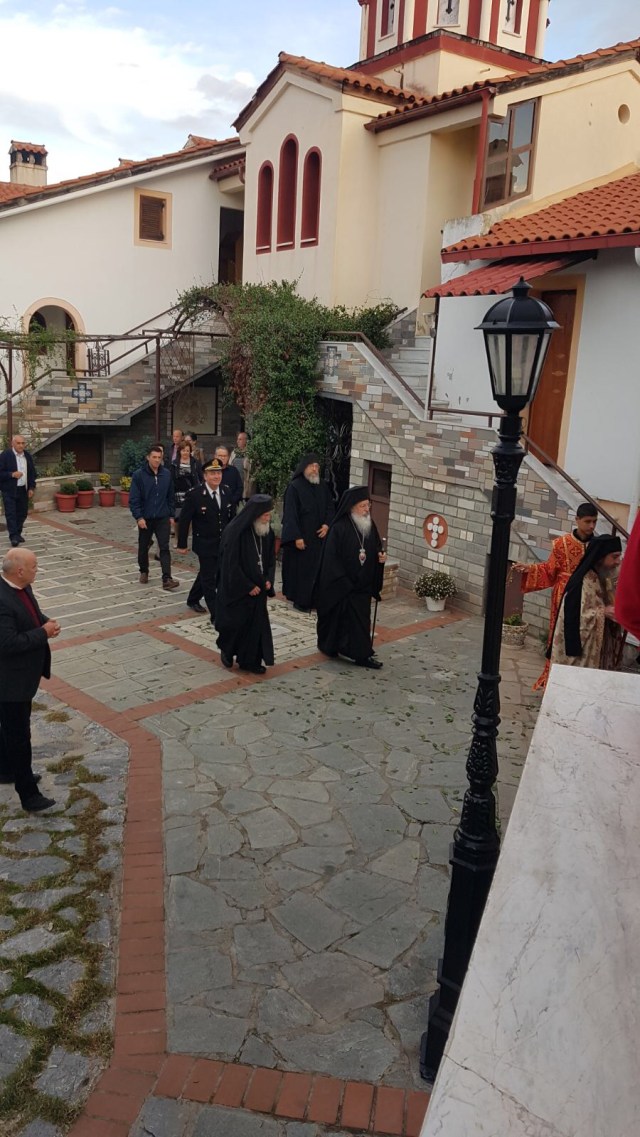
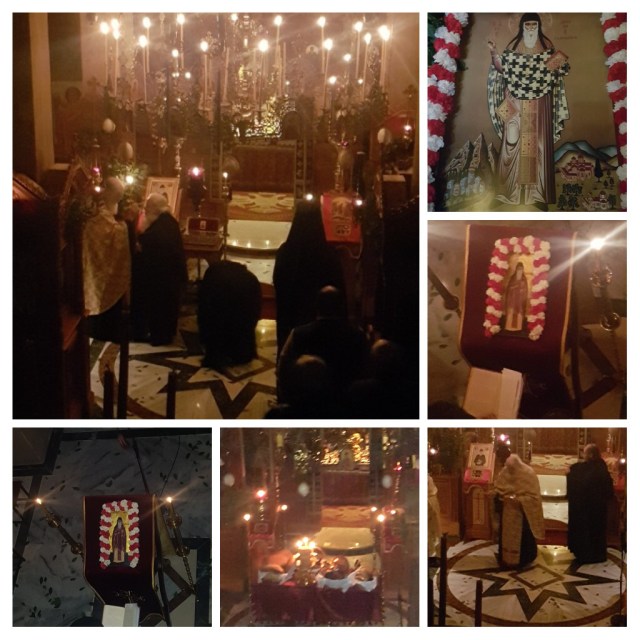
On the western slope of mount Elikonas, opposite mount Parnassus, after the village of Steiri, at a distance of approximately 30km from Livadeia, is the famous Monastery of Osios Loukas (St Luke), the largest and best-preserved monastery complex of the Middle Byzantine Period, with exceptional architecture and excellent decoration of mosaics, wall paintings and sculptures. With the Nea Moni of Chios and the Monastery of Daphni, the monastery of Osios Loukas is included in the list of world heritage monuments of UNESCO since 1990. Hosios Loukas is a breath-taking Byzantine monastery in a picturesque green and golden valley full of flowering almond and olive trees, near the town of Distomo. The landscape surrounding the Monastery of Hosios Loukas may not be as breath-taking as Meteora, but is still spectacularly blessed in beauty, even in wintertime when we visited it. As to the exquisite, stunning Beauty inside the monastery complex, and especially the katholikon, the main church, I hope these photos and videos can capture some of it.

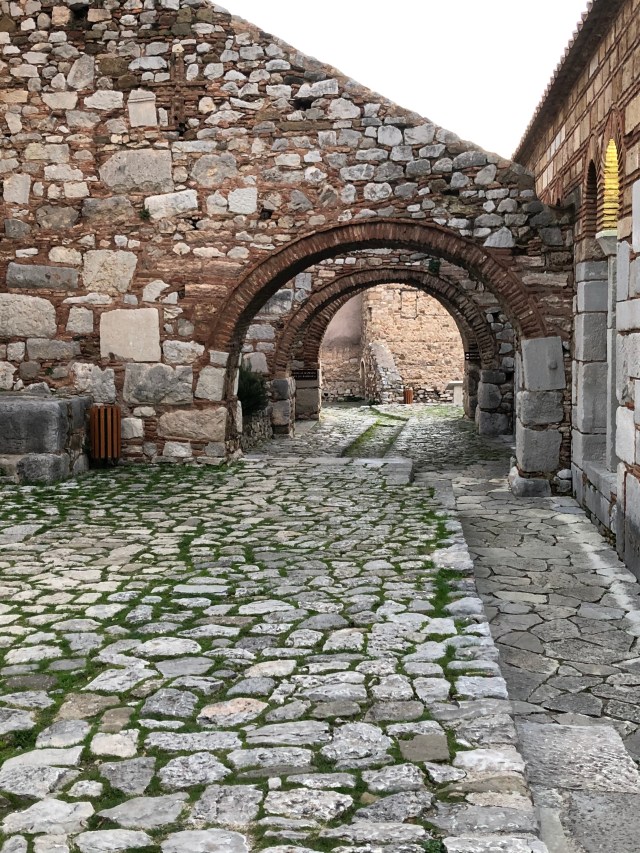
 

IMG_2713IMG_3363IMG_9700IMG_9813

IMG_0324

IMG_1109

Saint Luke

Hosios Loukas Monastery meaning “Blessed Saint Luke” was not built in honour of Luke the Evangelist, but was established by the Greek monk Loukas. He was buried in the crypt of the monastery when he died in AD 953. I am still puzzled at the spelling of the word “Hosios”, as I have never encountered it before, but that is the official English ‘translation’ and the spelling adopted by UNESCO.

Saint Luke, born in AD 896, abandoned his home when he was an adolescent in search of spirituality. In the following years, he became a healer and was renowned for healing ailments that were practically impossible to cure.

Lukas developed a great talent as a prophet and predicted that Romano II would liberate Crete from the Arabs after his death. When the emperor defeated the Saracen Arabs, he commissioned a church to be built in his honour. [For  a more detailed Life, go to the bottom of the page]
IMG_1320

IMG_9353IMG_7695IMG_1397IMG_6542

Exploring the monastery

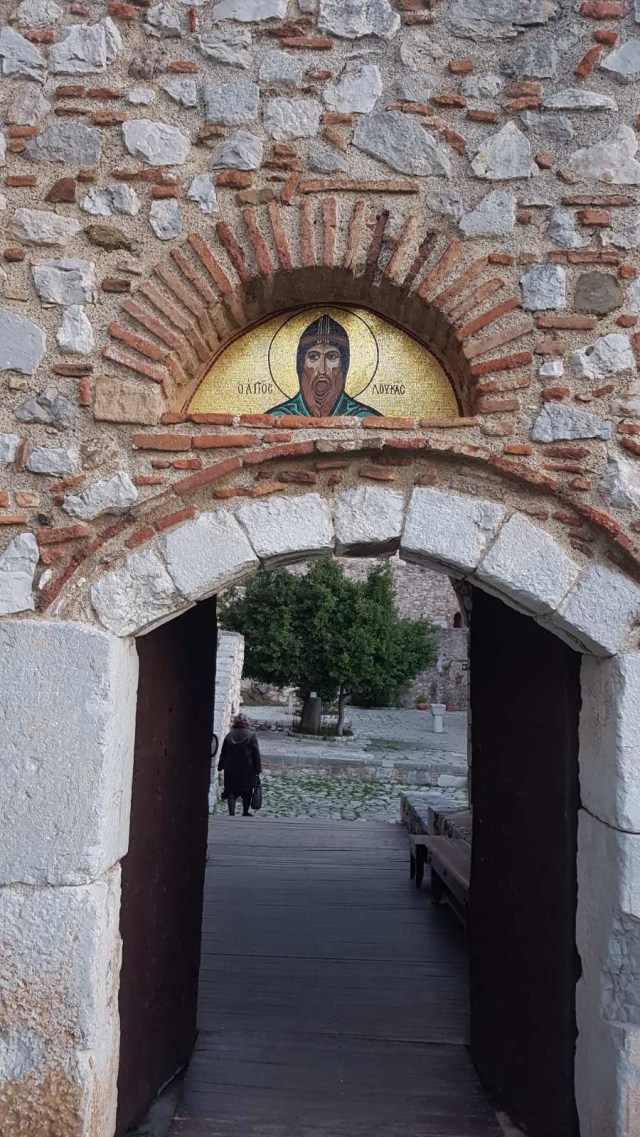
One of the most striking aspects of the monastery is found at the entrance. If you look up, you will see a spectacular gold mosaic of the saint. Attached to the abbey is a large church, Katholikon, which in its turn is attached to a smaller temple, or Theotokos, erected between 997 and 1011 to honour the Virgin Mary.

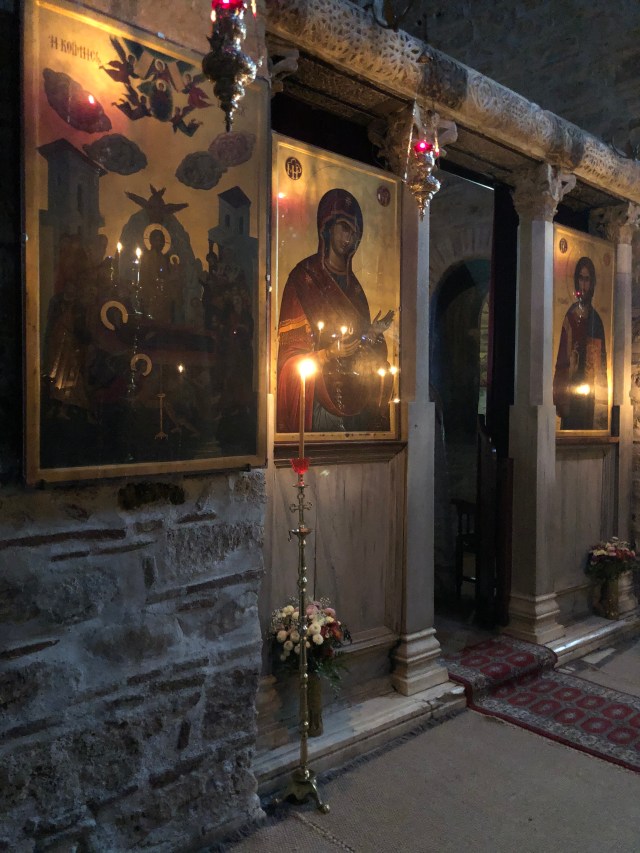
The temples are beautifully decorated with numerous frescoes and mosaics, all perfectly preserved.  Underneath the Katholikon is the crypt where the remains of the saint lie.


IMG_1399IMG_8754IMG_8752IMG_8075IMG_2910IMG_2378IMG_1167IMG_3117IMG_9637IMG_9093IMG_0640IMG_5636IMG_1396IMG_6355IMG_1197IMG_1398

Although Hosios Loukas is smaller, the building reminded us of Hagia Sophia in Istanbul or St. Mark’s Basilica in Venice.


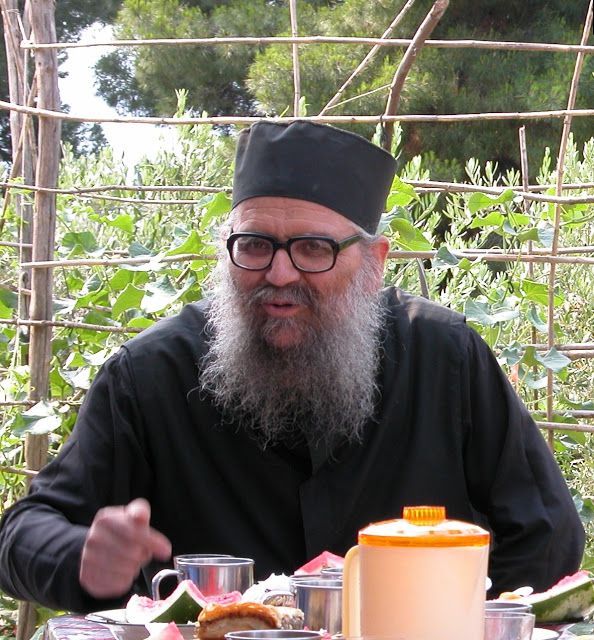
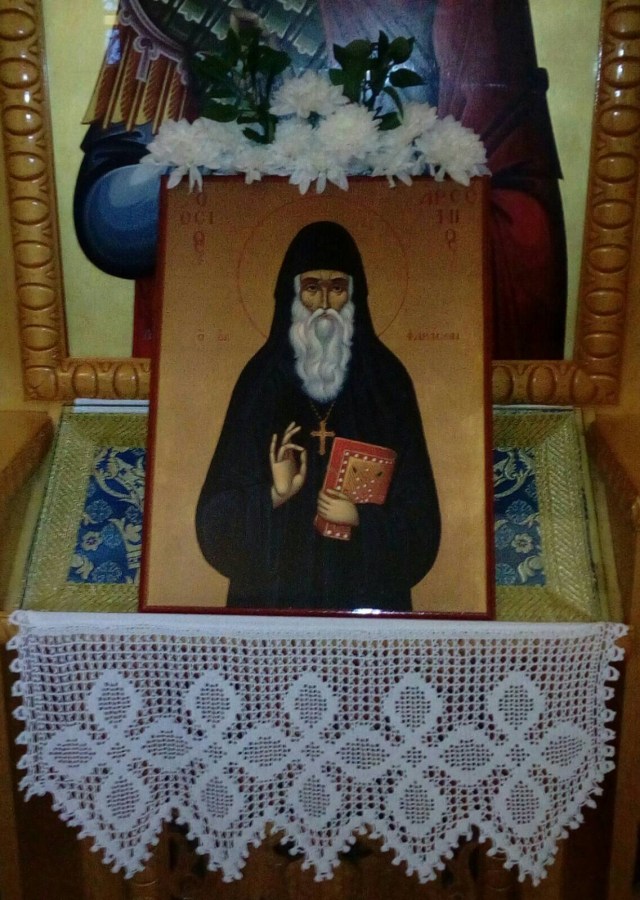
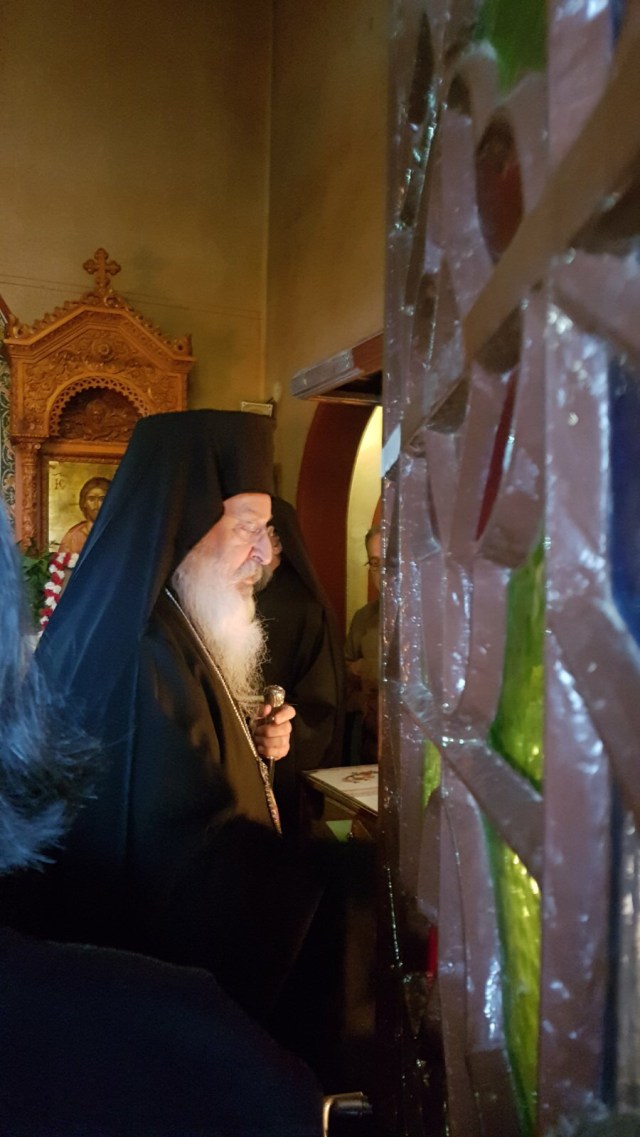
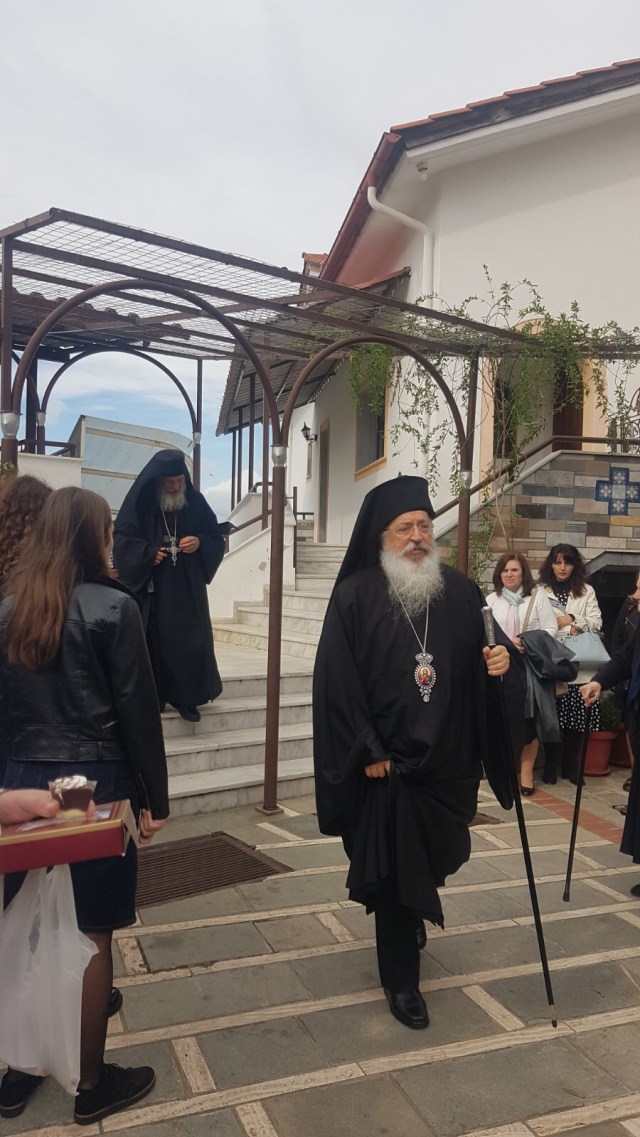
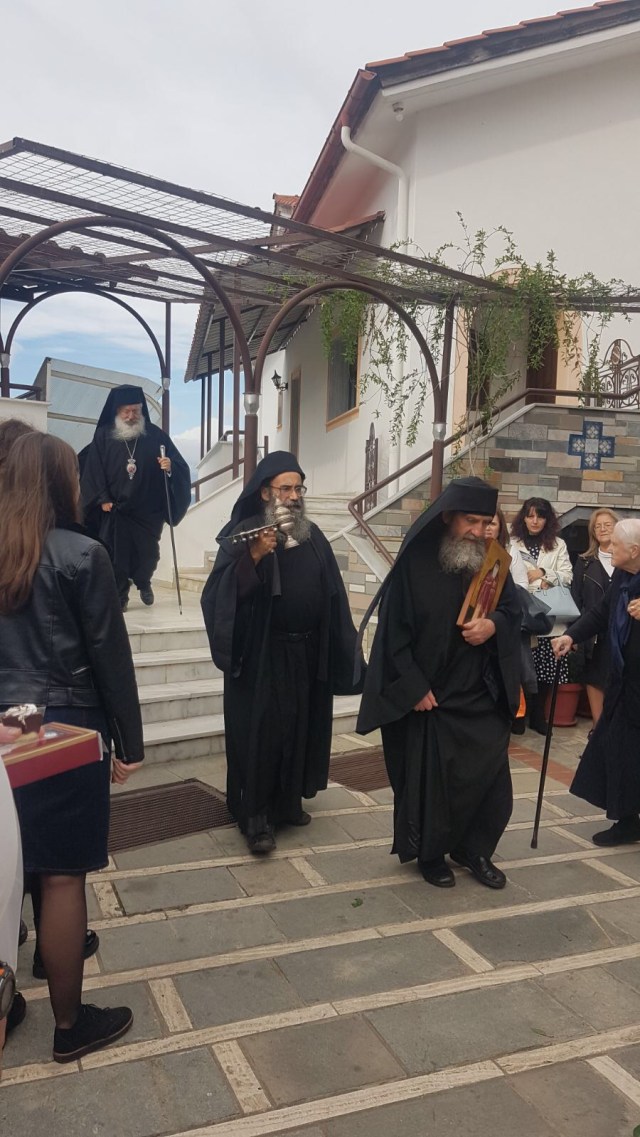
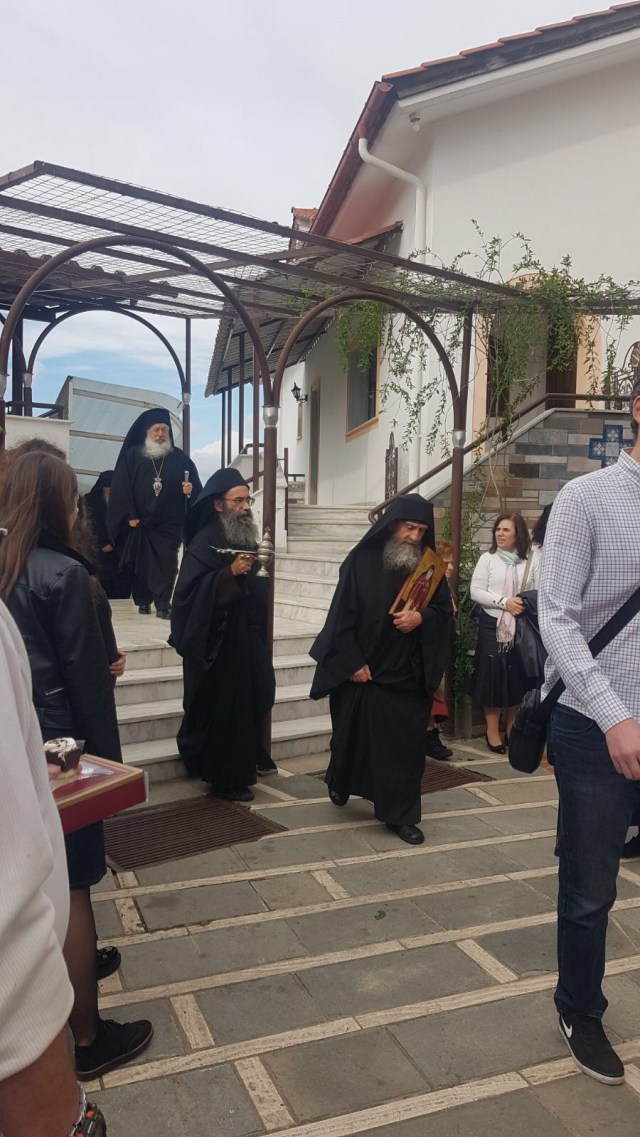
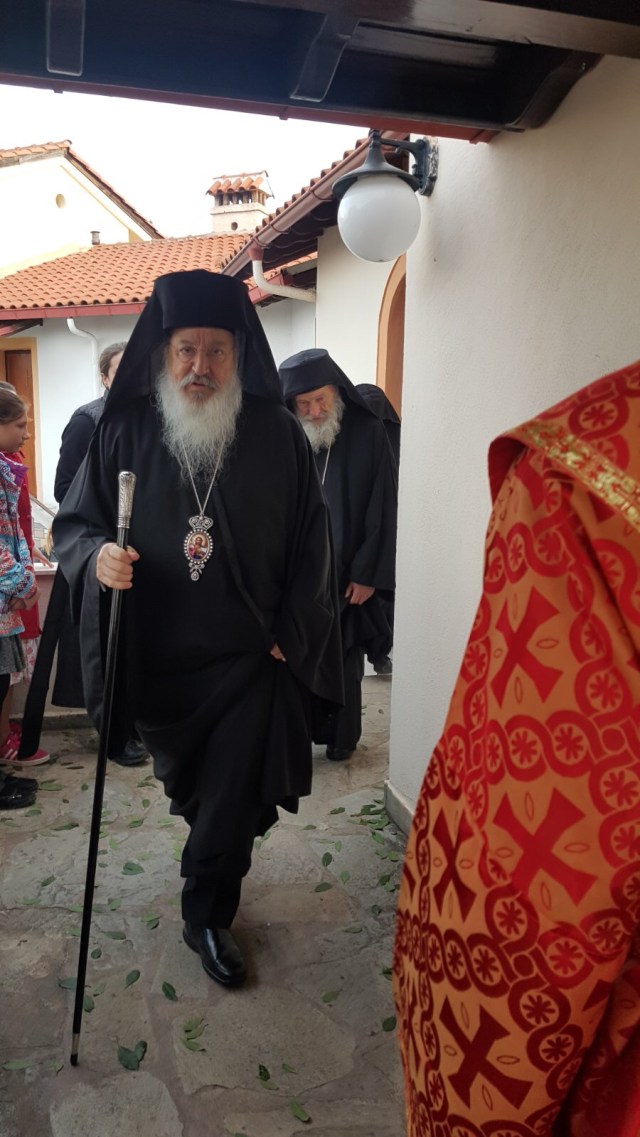
This monk is the one who did the guided tour for our group (St. Arsenios monastery, Chalkidiki). There are only three monks, all hieromonks, in this monastery complex, and they are all so full of His Grace!

Luke of Steiris, Luke Thaumaturgus, Luke the Younger, Luke of Hellas, or Luke the Wonder-worker (896 — 953 AD) was a Byzantine saint of the tenth century AD who lived in the themes (provinces) of Hellas and Peloponnese in Greece, and who founded the Monastery of Hosios Loukas (Venerable Luke) on the slopes of Mount Helicon, between Delphi and Levadia, near the coast of the Gulf of Corinth in Boeotia, Greece. 

The principal source for Luke’s life is an anonymous Life written by a monk of Hosios Loukas who had been one of Luke’s followers. His feast day is commemorated on February 7,and the translation of his relics on May 3. His relics are preserved in his monastery of Hosios Loukas.

Early Life

Saint Luke was born in 896 to pious parents who came from Aegina but were forced to settle on the Greek mainland due to Saracen raids. Luke was the third of the seven children of Stephen and Euphrosyne. From his earliest years, he showed a desire for a life of ascesis and contemplation usually only found in seasoned elders. He abstained from all flesh, cheese, eggs, and delicacies, drank only water, and kept a total fast on Wednesdays and Fridays. While herding cattle or tilling the family fields, he would often give away his food and even his clothing to the poor, returning home naked. He once gave away almost all the seed which was needed for planting in the fields. The Lord rewarded him for his charity, and the harvest gathered was greater than ever before.

When his father died, he abandoned farm work to devote himself entirely to prayer, making such progress that he was often witnessed by his mother lifted above the ground while praying.[3]

Monasticism

As a child Luke tried twice to leave home to seek a solitary life of prayer. The first time, he attempted to withdraw to Thessaly, but was captured by soldiers lying in wait for escaped slaves and was returned home.[4] The second time he had more success, meeting two monks journeying from Rome to Jerusalem[5] who took him to a monastery in Athens where he received the small habit.[6][note 3] At this point he was only fourteen years old (910 AD), and Luke’s mother who was very concerned for him, prayed for her son’s return. After seeing his mother in a dream, tearfully calling for her son, the abbot sent him home.

He returned home for four months, and then with his mother’s blessing he set out again upon the monastic life, going to a solitary place on a mountain called Ioannou (or Ioannitsa). Here there was a church dedicated to the holy Unmercenaries Cosmas and Damian, where he lived an ascetical life in constant prayer and fasting for seven years.[7] The Life records with suspicious symmetry that during this time Luke received the great habit[note 4] from two monks[note 5] travelling from Jerusalem to Rome (presumably the same two from whom he had received the small habit on their outward journey).[8] After this, St Luke redoubled his ascetic efforts, for which the Lord granted him the gift of foresight.

Luke’s fame spread and a number of miracles are ascribed to him during this period, such as revealing to two brothers the location of their dead father’s buried treasure.[9]Numerous proofs of Luke’s holiness are also given, such as sleeping in a trench to remind himself of death,[10] or being visited in a dream by an angel who let a hook down Luke’s mouth and “drew out a certain fleshly member therefrom”, freeing him from the temptations of the flesh.[11]

After a seven years on Ioannou, the saint moved to Corinth because of an invasion of the Bulgarian emperor Symeon (which Luke had predicted).[12] Hearing about a certain Stylite at Zemena (Gimenes) near Corinth, he went to see him, and remained for ten years to serve the ascetic with humility and obedience.

Afterwards, ca. 927 AD, the saint returned again to Mount Ioannou to build his own community and again pursue asceticism. Often he would be forced to move by the number of visitors who learned of his holiness, and came to him for prayer or a word of counsel or prophecy, no matter how secretly he tried to live. Luke drew so many followers that he found the distractions unbearable and decided to retreat further into the wilderness, with the blessing of his Elder Theophylactus.[13] Three years later, however, Luke was displaced again, this time by a Magyar invasion.

Luke retreated with the local villagers to the nearby island of Ampelon.[14] Once there, Luke found the desert island to be a suitable place to pursue his solitary ascetic life, and stayed for three years, enduring terrible thirsts.[15] His sister would occasionally bring him some bread, but he gave much of it away to the needy or to passing sailors.

Eventually Luke’s disciples persuaded him to leave, and he returned to the mainland and settled for the remainder of his life in the far more amenable environment of the present Hosios Loukas, where he founded his hermitage ca. 946 AD in the area of Stiris (which may be a corruption of Soterion, or place of healing).[16][note 6]

Here brethren gathered to the elder, and a small monastery grew up, the church of which was dedicated to the Great Martyr Barbara. Dwelling in the monastery, the saint performed many miracles, healing sicknesses of soul and of body.

Death

Saint Luke fell ill in his seventh year at Stirion. Foreseeing his end, the saint confined himself in a cell and for three months prepared for his departure. When asked where he was to be buried, the monk replied, “Throw my body into a ravine to be eaten by wild beasts.” When the brethren begged him to change these instructions, he commanded them to bury his body on the spot where he lay. Embracing his disciples, he asked them to pray for him, prophesying that the place where he died would someday be the site of a great church and monastery. Then raising his eyes to heaven, he said, “Into Thy hands, O Lord, I commend my spirit!” and reposed in peace and joy. St Luke fell asleep in the Lord on February 7, 953.

Myrrh flowed from his holy relics,[note 7] and many healings occurred. His tomb exuded a fragrant oil which was collected and burned in a lamp, and many miracles and healings were wrought at the tomb. The rumour that his relic worked miracles brought great numbers of believers to the monastery to be healed, and the original buildings gave way to more monumental structures.[16] As the Saint had predicted, two churches and a monastery were built there, and the monastery of Hosios Loukas became a great place of pilgrimage, as it remains to this day.[note 8]

Troparion, Kontakion

Troparion of St Luke of Mount Stirion Tone 1[17]
Let us firmly honour Luke the Godbearer with hymns and chants,
the glory of the faithful,
the boast of the righteous,
bright light of Stirion and its true inhabitant;
he brings near to Christ those who cry out in faith:
Glory to Him Who has strengthened thee;
Glory to Him Who has crowned thee;
Glory to Him Who through thee works healings for all.

Kontakion of St Luke of Mount Stirion Tone 8[17]
God in ineffable judgment chose thee before thou wast fashioned according to His good pleasure;
He took thee from thy mother’s womb,
He sanctified thee as His servant.
As the Lover of mankind,
He guided thee to Himself,
before Whom thou dost now stand rejoicing,
O Luke.

(OrthodoxWiki)
 

IMG_1438

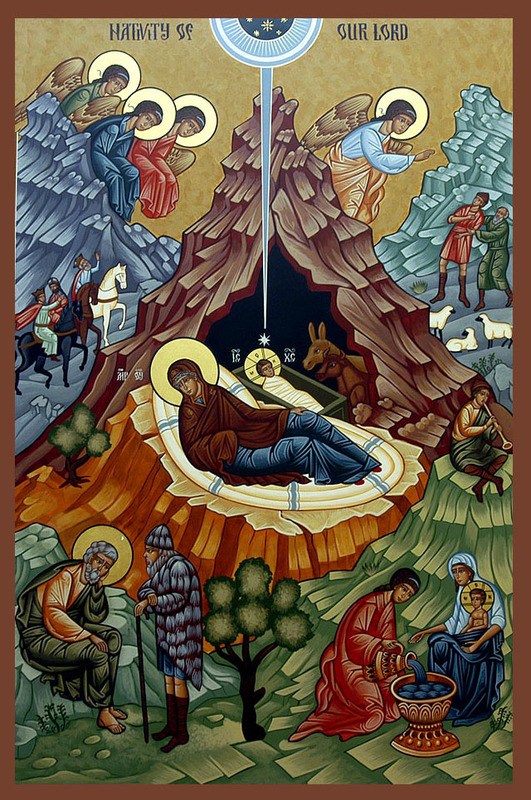
A Blessed Nativity

nativity-icon.jpg

“Dear Fathers and Friends in Christ,

On this Day of the Nativity of our Lord and Saviour Jesus Christ in the flesh, I wish you every blessing for you and your families.

May the joy of the angels be yours; may the faith of the shepherds be yours; may the wisdom of the magi be yours and may the light of Christ banish the darkness before our path as the Prince of Peace comes to reign in our hearts today.” (Fr. Jonathan H.)
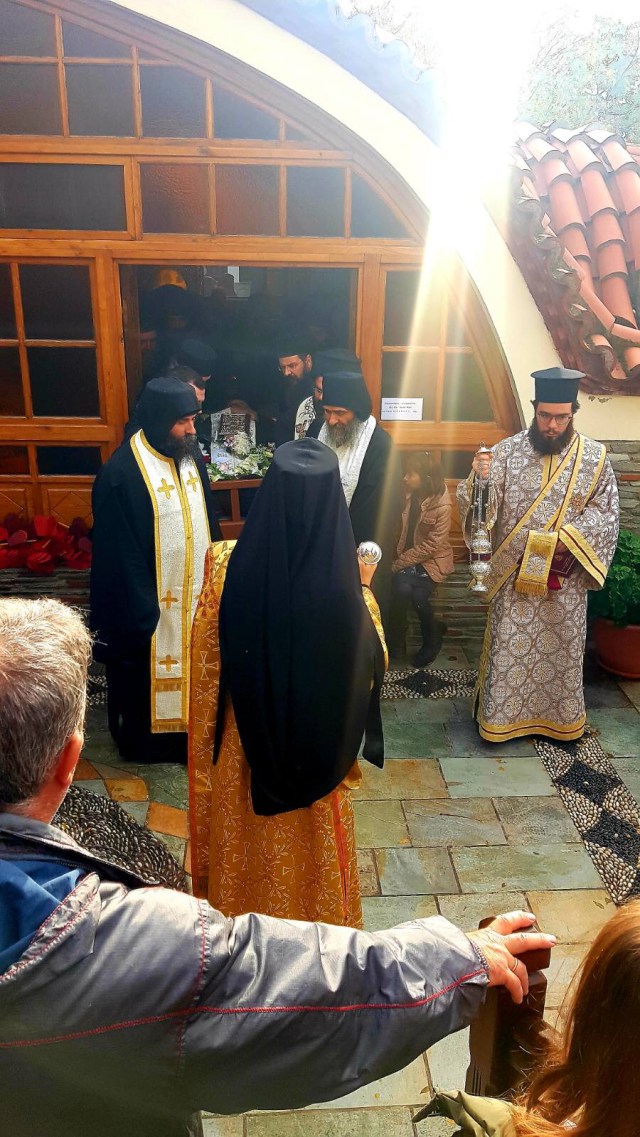
 

Elder Gregorios 40 day Memorial Service

80782350_2416154011827872_861637634340945920_n

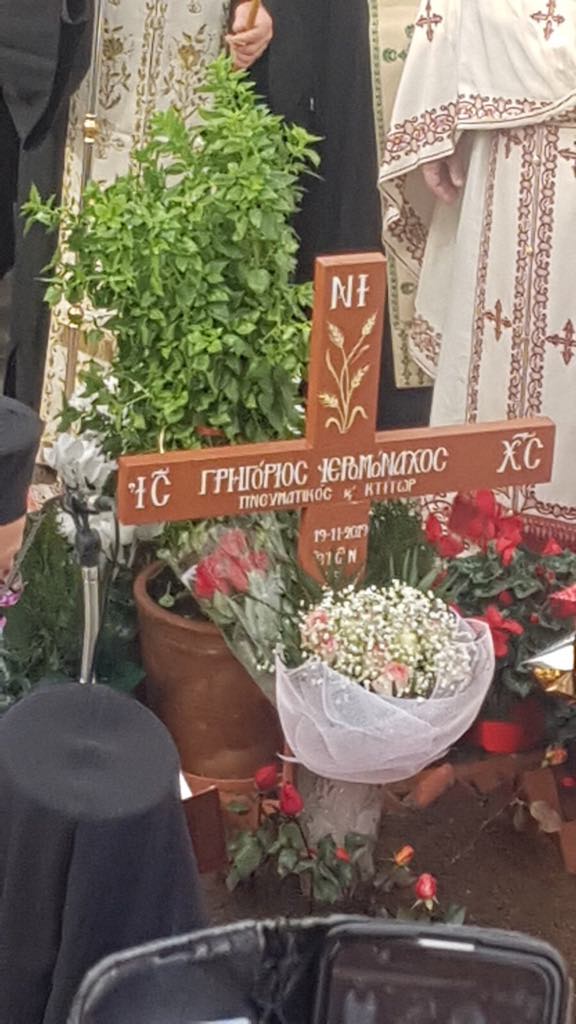
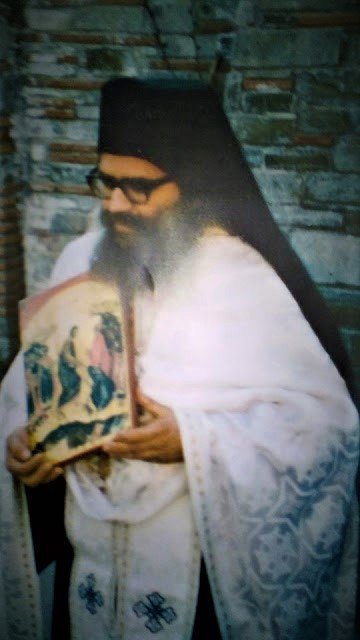
Elder Gregorios

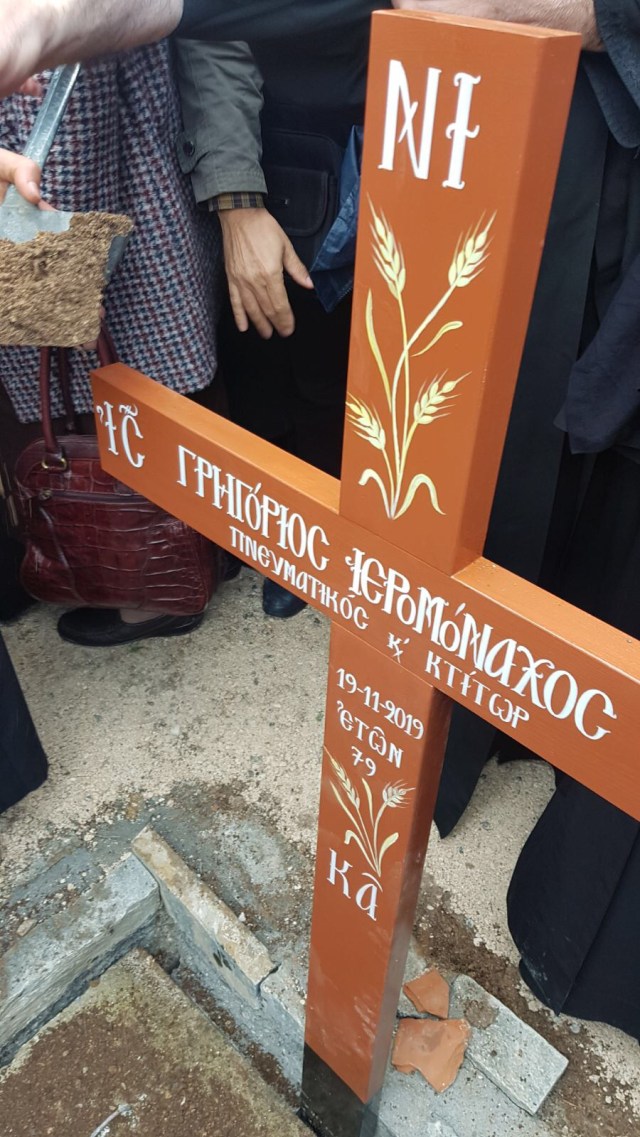
+19-11-2019

“Love in Christ is a sacrificial Love, a self-sacrificing, self-denying Love, Agape. You sacrifice everything for the person you love, “your neighbour”. By “our neighbour”, we mean every person as God’s Image, even our enemy. By “love” we do not mean that we should do whatever the other person wants us to do, but to love him with Christ’s burning and flaming Heart, for his salvation” (+ Elder Gregorios Papasotiriou)
*

This is how we have always felt and feel his love. Blessed Paradise, Elder. At long last, you will be reunited with your beloved spiritual father, Saint Paisios. “Kai sta dika mas.” “And to our own!”  May we be reunited with you in Heaven in God’s Kairos!

80395516_2564822247082250_924611471332081664_n79876452_1235423190002125_19557734877757440_n

All the faithful present experienced an urge to pray to Elder, and not for him. 

80421158_767691993747125_6627701451936235520_n79686065_1048267265513180_241326172183461888_n80315340_977067915998194_2080091569561534464_n80640184_447932872543924_1165895110454411264_n80494444_1191848591021578_2010228089631539200_n80059071_1052973311710959_8126907860173979648_n80350077_589087115198686_6912717203980681216_n

How to Deal with Someone You Can’t Stand Dealing with

The blessed eldress [our holy mother among the saints, Abbess Makrina of Portaria] always taught her sisters and those who came to her for spiritual advice to give glory to God for all things: for the so-called good and the so-called bad. Here is a story she related regarding this:

In one of the villages near her monastery there lived a pious couple who had a ten-year-old son. Their next-door neighbour was an old woman with an intolerable personality. She was constantly berating everyone, angrily and unfairly scolding her neighbours, and when their son would return from school she would throw sticks and stones at him.

One day the father turned to God with fervent prayer and decided to ask Him how to deal with that old woman’s bad temper. The Lord answered him, “She will live another thirty years!” And what was the man’s response to this news? He unmurmuringly said, “Glory to God!” He shared God’s answer with his wife and she likewise said, “Glory to God!” When the son came home from school and heard the news about God’s answer to his father’s prayer he also said, “Glory to God!”

The next day, total silence reigned in the old woman’s house. She did not go outside to pour out her wrath upon her neighbours. The father went to see how she was doing and discovered that she had apparently died in her sleep. He began to pray to God in order to understand how this could happen, and the Lord said to him, “When you answered, ‘Glory to God!’ I shortened her life by ten years. When your wife gave the same reply I took away another ten years. And when your son said the same thing and also glorified Me, I took away the final ten years of her life.”


Source: Lessons from a Monastery

Well done, thou good and faithful servant!

elder efraim arizona

elder-efraim 3.jpg

+ 8/12/2019

Father Efraim of Arizona (1928-2019) has left this world to join his fellowship (Saint Efraim Katounakiotis, Saint Joseph the Caveman, Father Joseph from Vatopedi, Father Haralampos, Father Arsenios). He is at home now in eternal rest with his spiritual father and his Heavenly Father in Heaven. Imagine the joyous welcome he received in Paradise from Christ, Panagia, his mother, Saint Joseph and from all of the Saints!!!  

elder efraim synodeia


Glory to the God who gave us Geronda Ephraim! May we always have his heavenly prayers and intercessions! Paradise rejoices in welcoming you!!! Thank you for sacrificing your entire life and bringing countless souls to Christ!!! Kalo Paradiso!!! 

Like Elder Gregorios Papasotiriou

IMG_30C7A706873B-1

γεροντασ γρηγοριοσ παπασωτηριου

Like Elder Aimilianos Simonopetra

υστατο χαιρε γεροντα αιμιλιανου

Aimilianos-igoumenos-Simonopetras3

So many “losses” in just a few months! May we, their orphans, meet them through their prayers in Heavens! Memory Eternal!


Nobody here sleeps in a bed

obedience4

“Elder Aimilianos never told anyone what to do. Never gave orders. He told us many times when the community was all together: “I can’t really tell you what to do, all I can do is strive to be an example.” He used to say, “In the Christian life, there is no ‘must’. If you tell people they ‘must do this and must do that’, something in their spirit rebels. It’s unnatural for us to be enslaved in that way, to have orders and commands imposed upon us. …
… When a certain novice arrived at Simonopetra, the cells were under construction so he was put in a guest room. It all looked normal: shelf, books, bed. He was working in the library, and one of the monks got up and said, “Ooh my back, my back: it’s killing me. I have back troubles.” “Is your bed too soft?” the novice asked. “You sleep in a bed?” “Yeah: don’t you?” “No, nobody here sleeps in a bed,” and laughed with the other monks saying, “Hey, come here. He sleeps in a bed!” When the novice was with the Abbot a couple days later, the Abbot asked, “You have a bed in your room? At some point, we’ll have to get that out of there.” The novice was terrified: he had a long history of chronic lower back problems. He had the idea: “If they take my bed away, I’ll be a cripple the rest of my life!” Every time he heard a knock on the door, he feared they were coming for it. Yet no one ever came for the bed. One day the Novice saw the cell of the Abbot. The Abbot didn’t have a bed! “This man carries the weight of the whole monastery on his shoulders, works so hard for everybody here, deals with all our nonsense, our infantile behaviour prays for us, and he doesn’t sleep in a bed. And I’m going to have a bed? I can’t do that.” He went back to his room and got rid of the bed. Had they taken it, and he had back problems, he would have cursed them forever! The Abbot taught by example.”

*

Exactly like Fr Synesios at the monastery of St Arsenios. He is always most eager to help everybody in everything, is tireless in his ministry and never judges anybody. Indeed, even when things go really wrong, he always protects the “culprit”  and prefers solutions to problems. Just a few hours together with him are life-changing. He teaches everybody by example. 

End of an era

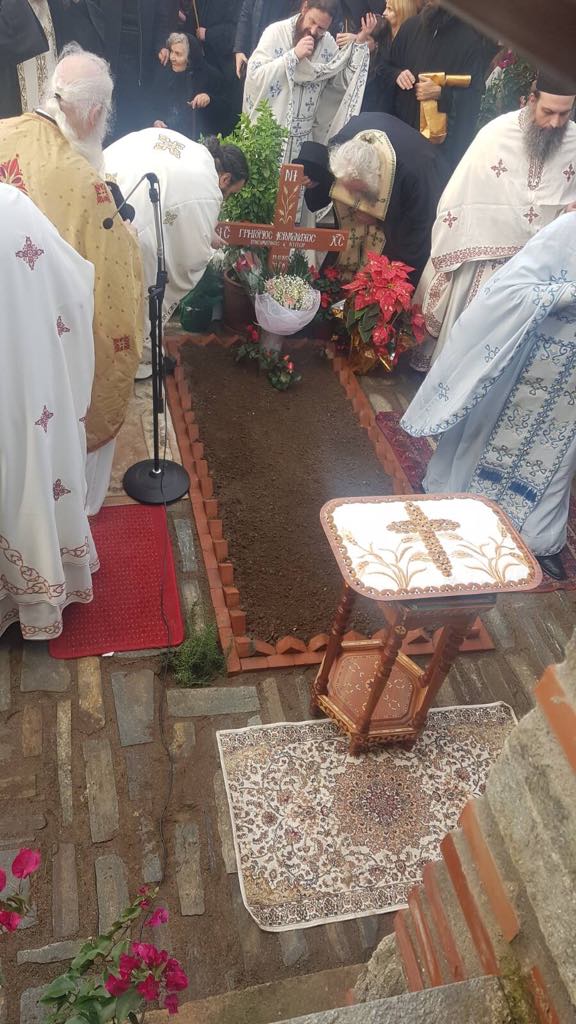
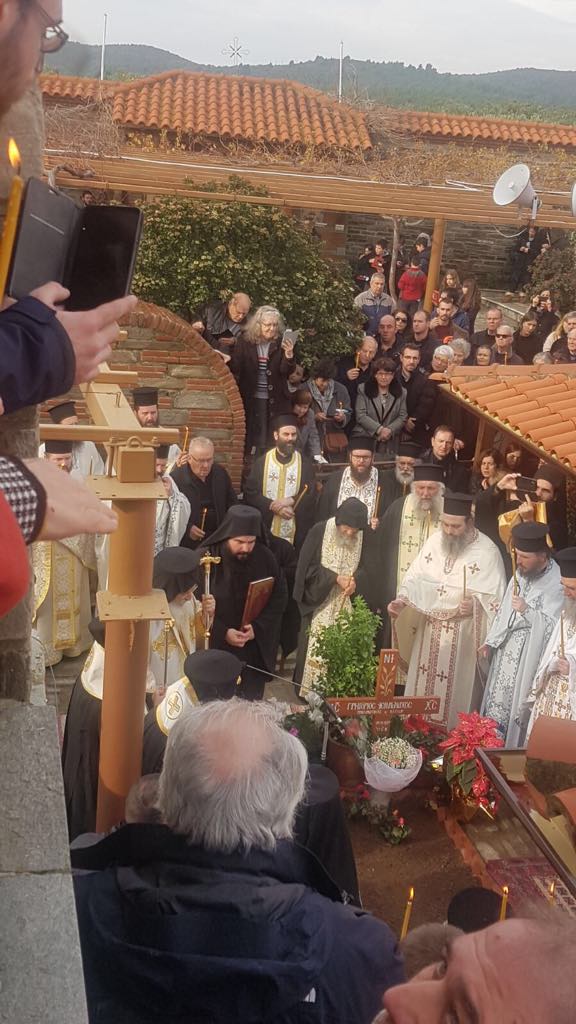
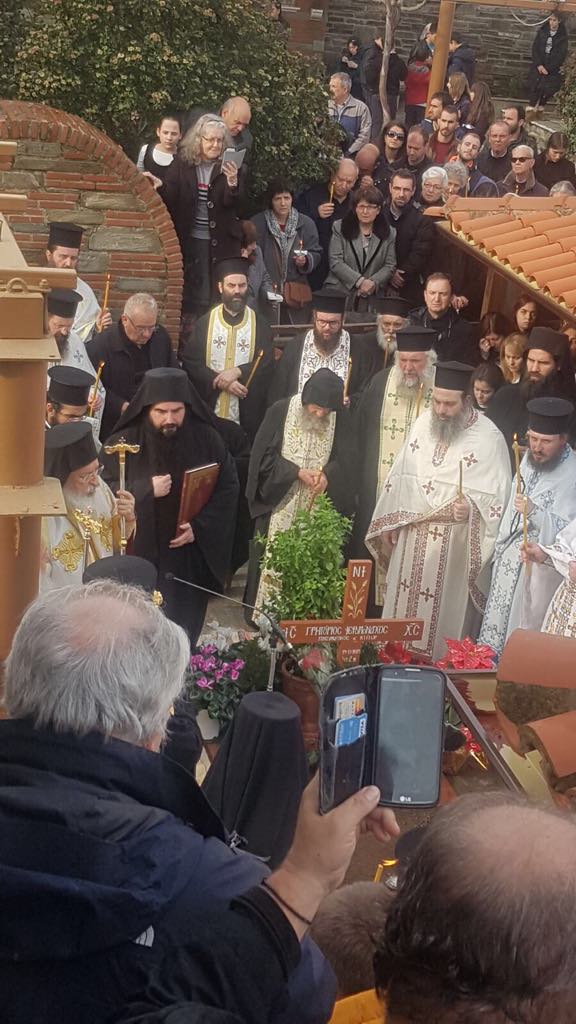
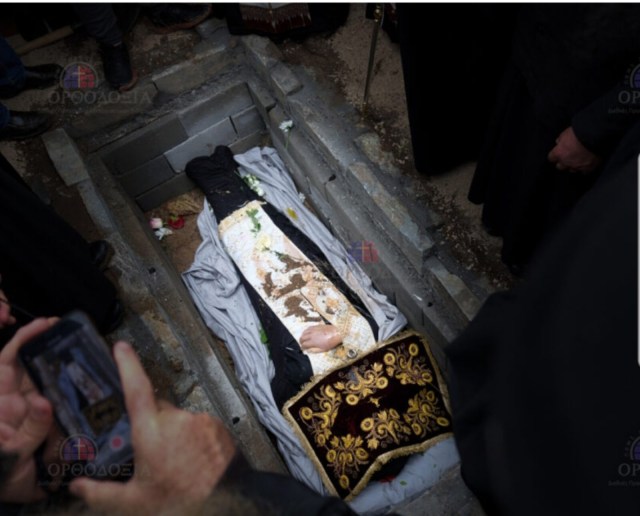
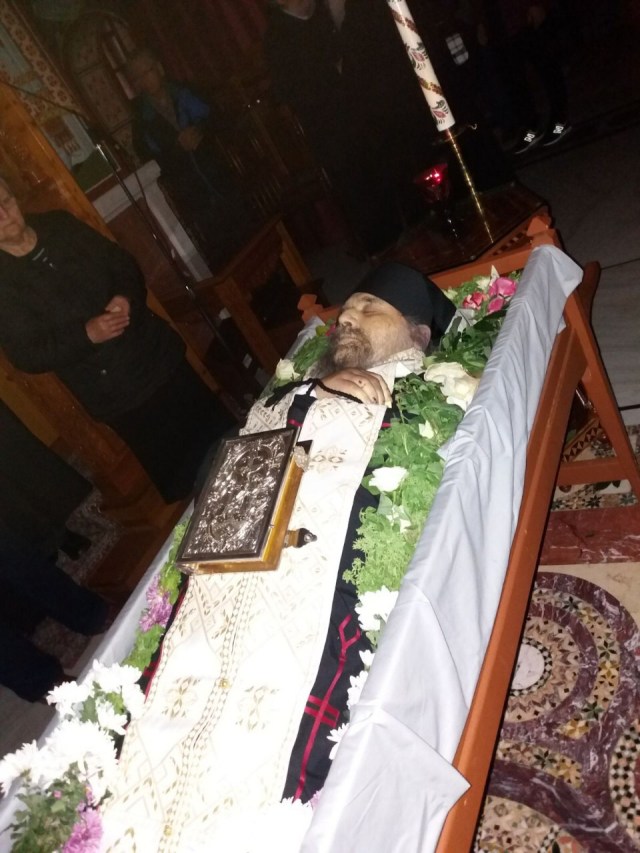
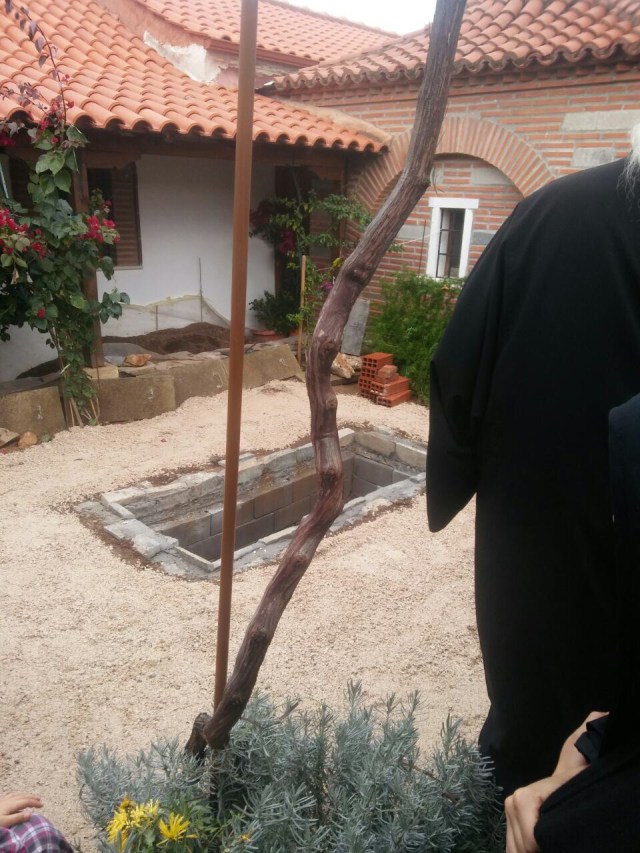
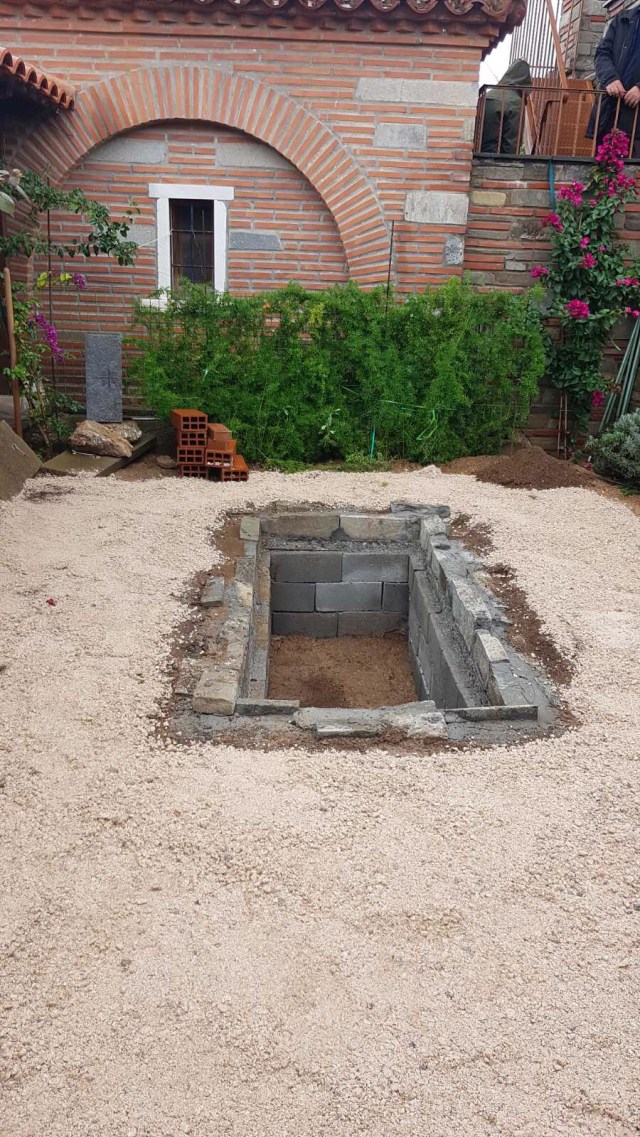
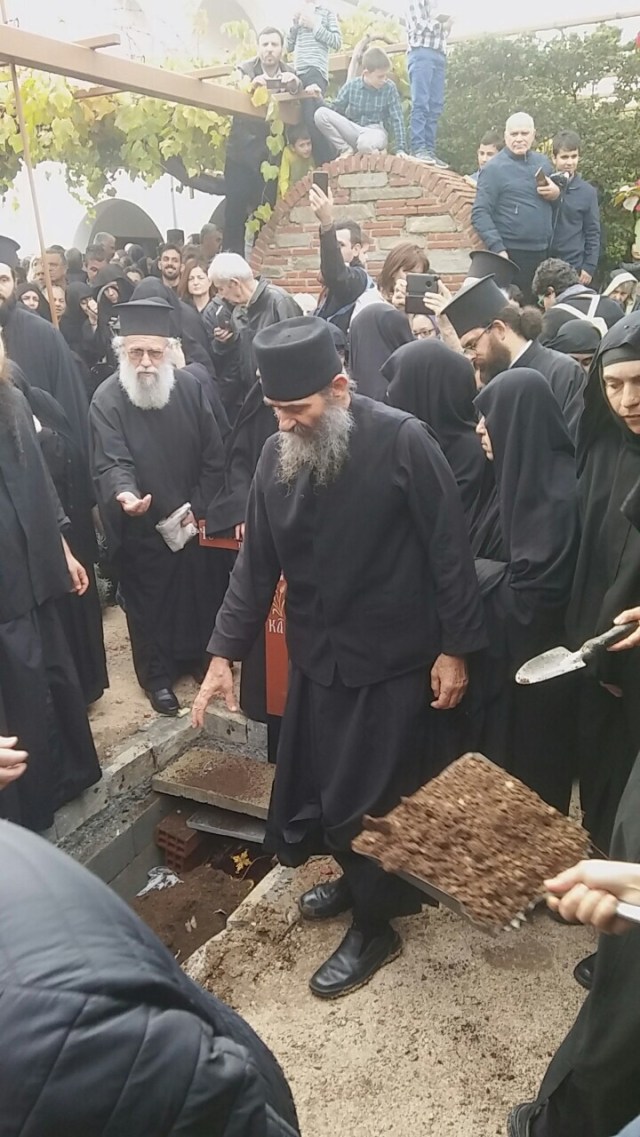
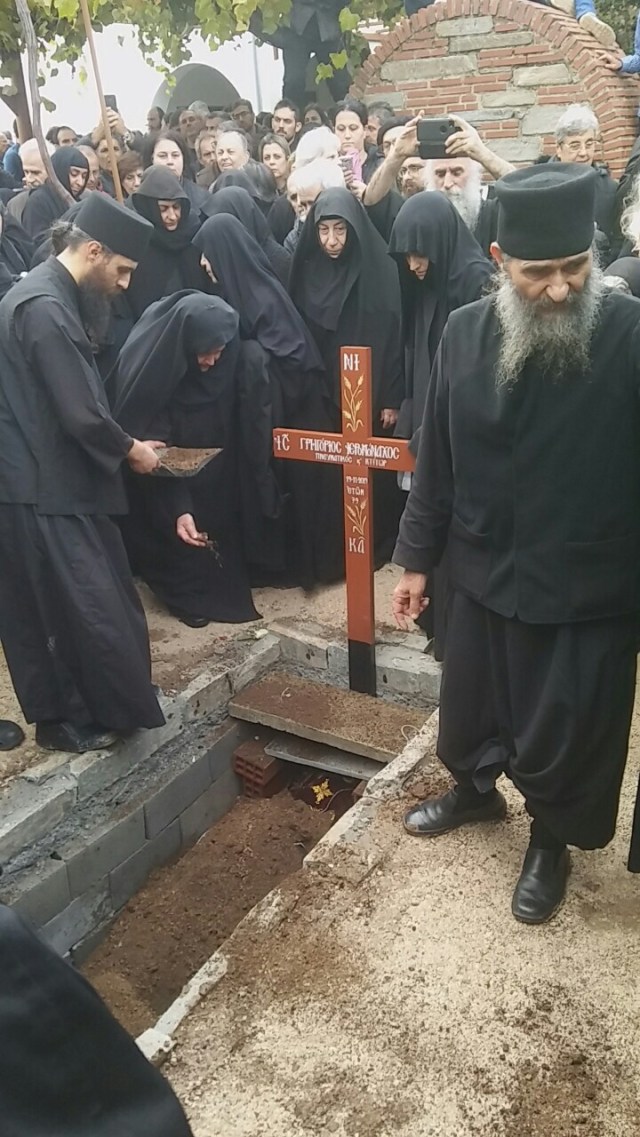
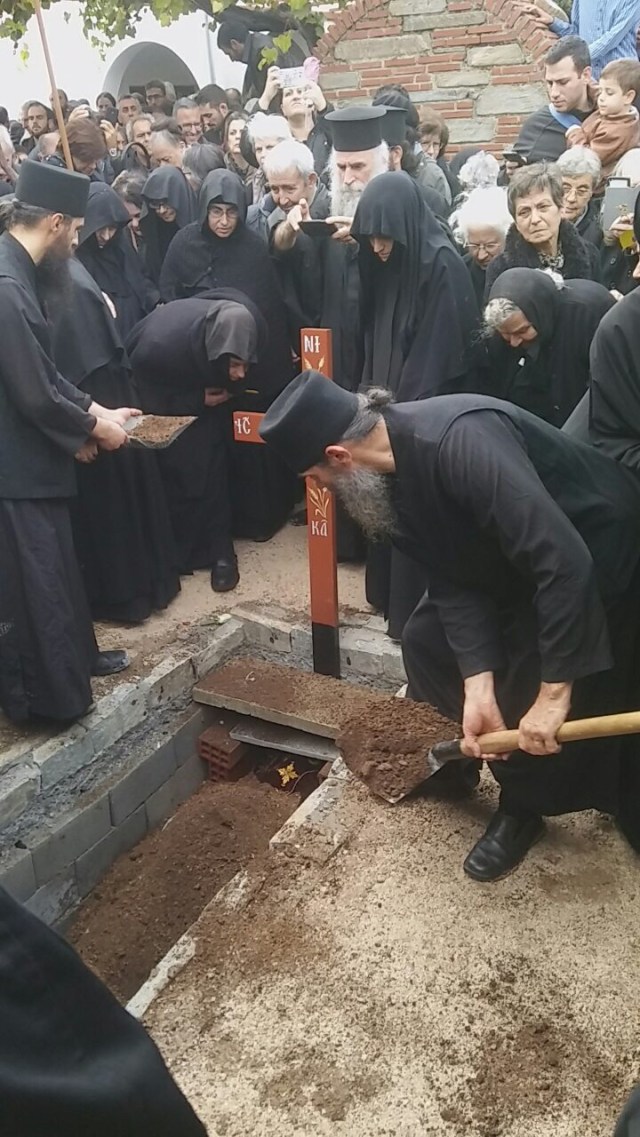
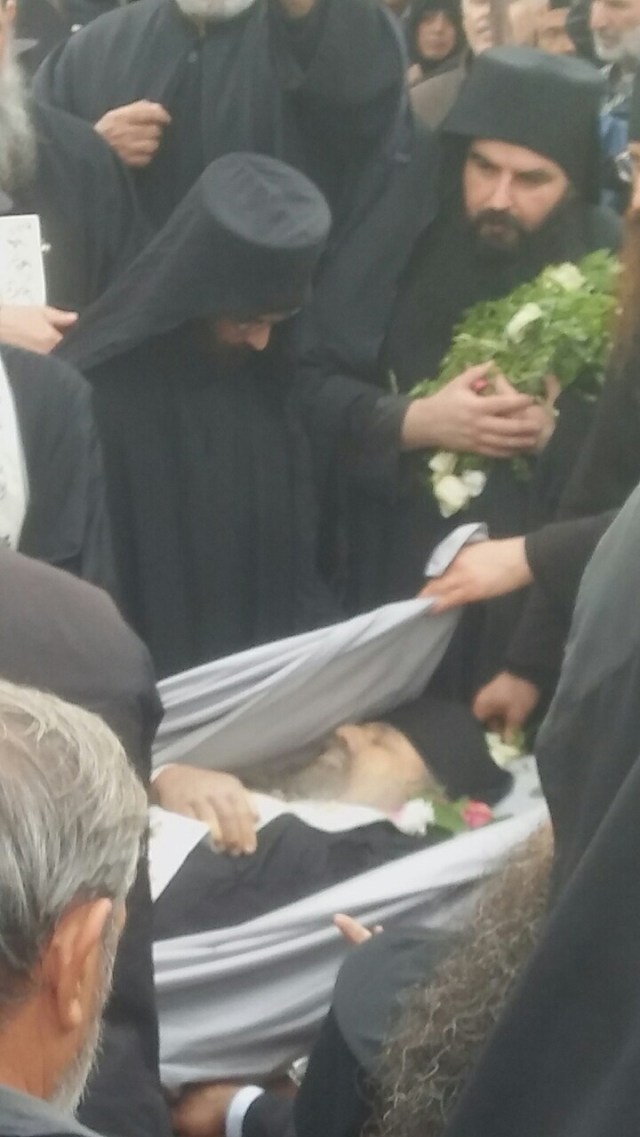
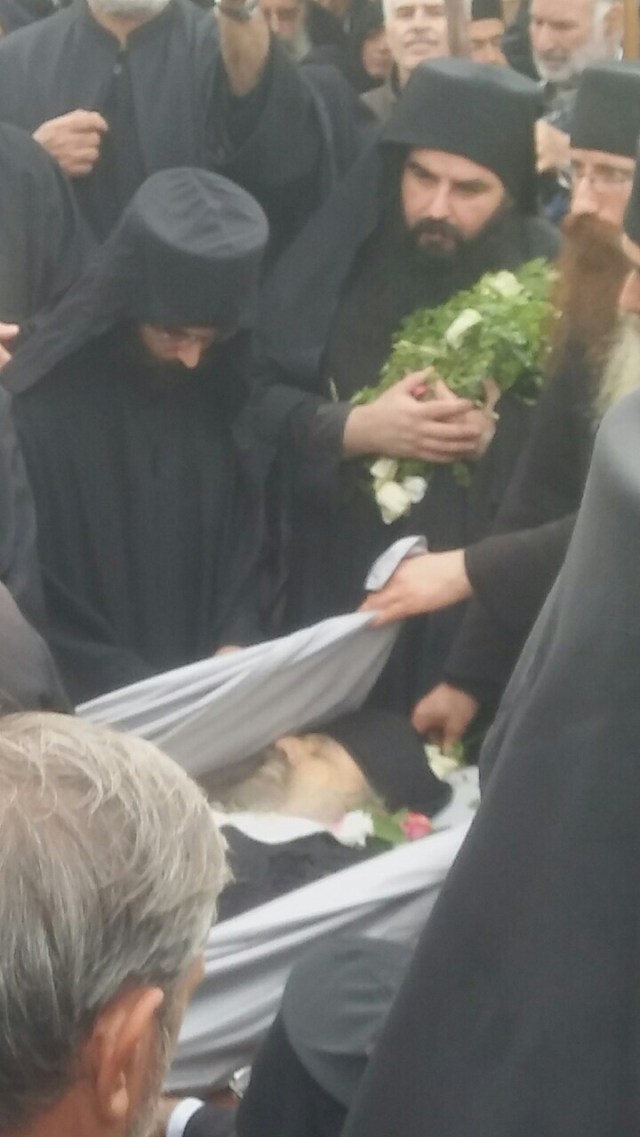
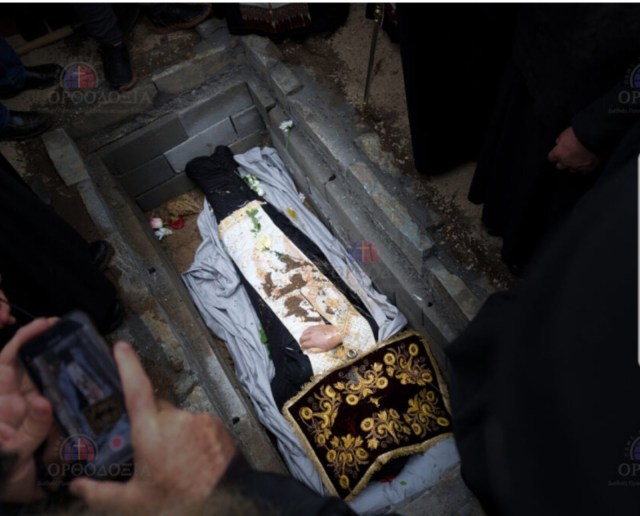
gerondas Gregorios down the grave

Christ is Risen! May Angels accompany you dear Father to your reward.

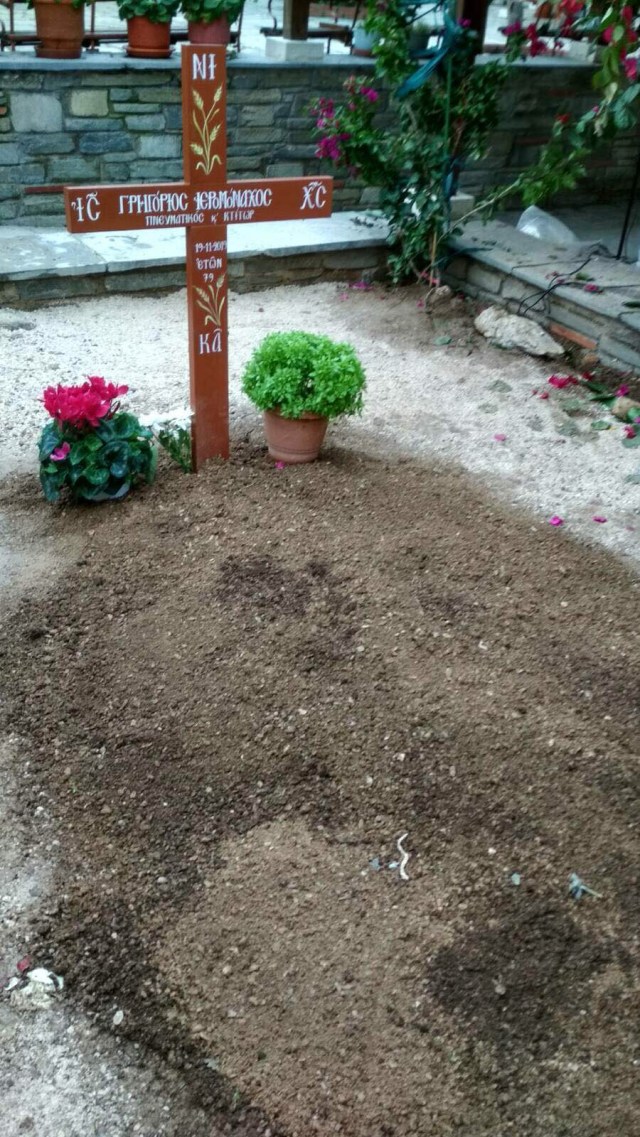
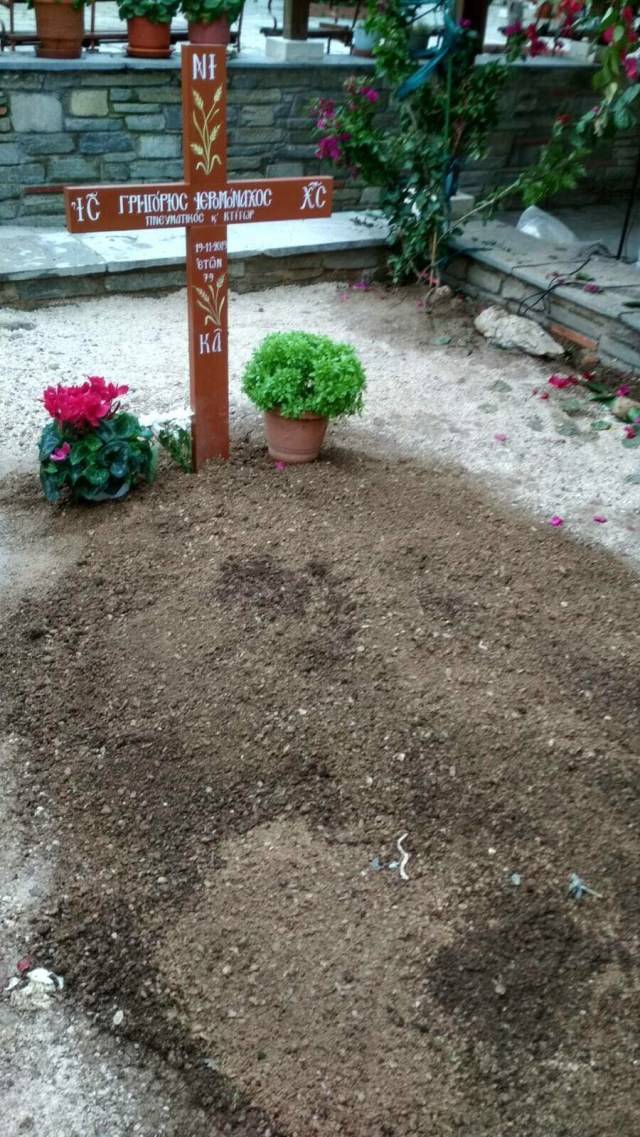
Gerondas Gregorios Tomb

The Monastery Diaries 5

A special commemoration diary and photo/video blog

GERONTAS-GRIGORIOS (1)

Dear brothers and sisters, Christ is in our midst.

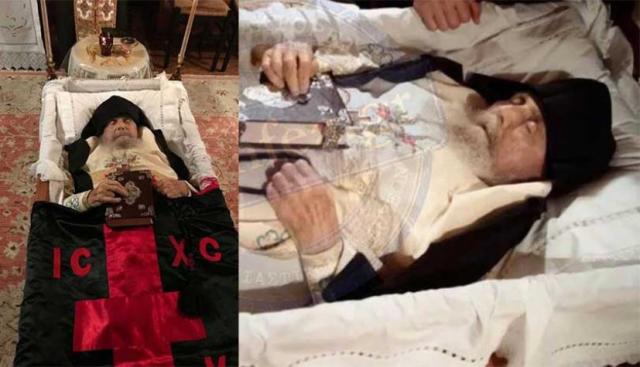
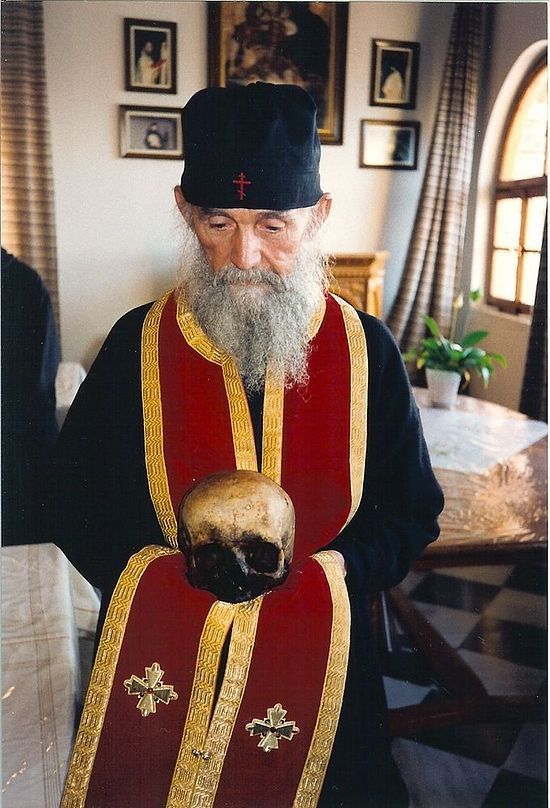
This is going to be the most difficult post I have ever attempted as it is about the repose of my spiritual father, + Elder Gregorios Papasotiriou, a spiritual child of Saint Paisios, Elder and Founder of the women’s monastery of St. John the Forerunner in Metamorphosis, Chalkidiki.

IMG_2180

Gerondissa Euphemia of St John the Forerunner Monastery, St Paisios in the middle, Elder Gregorios on the right. She was absent at the funeral, other than very briefly to pay her last respects to the Elder, as she is about 90 years old and very frail in her health

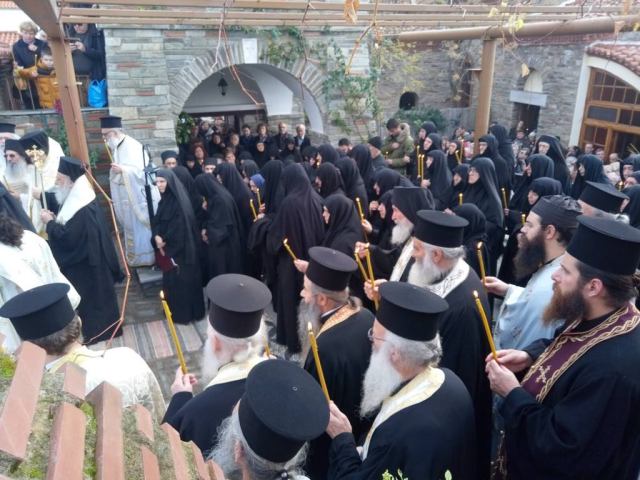
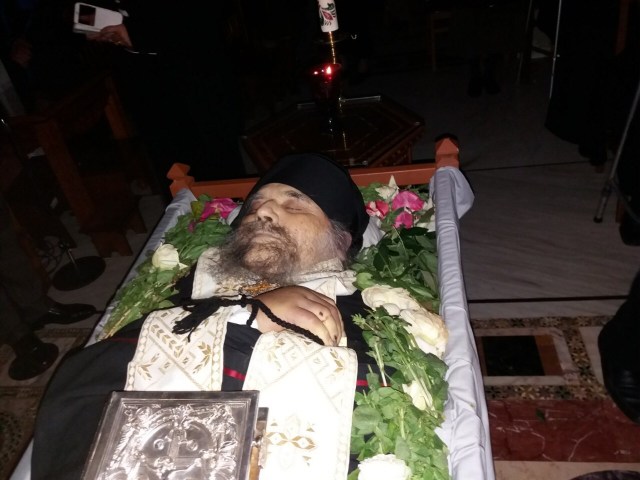
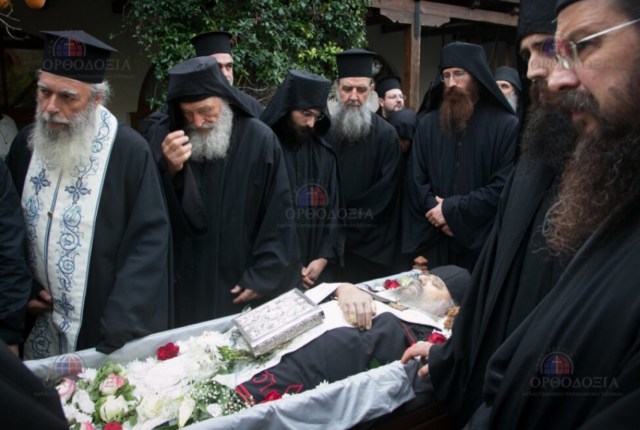
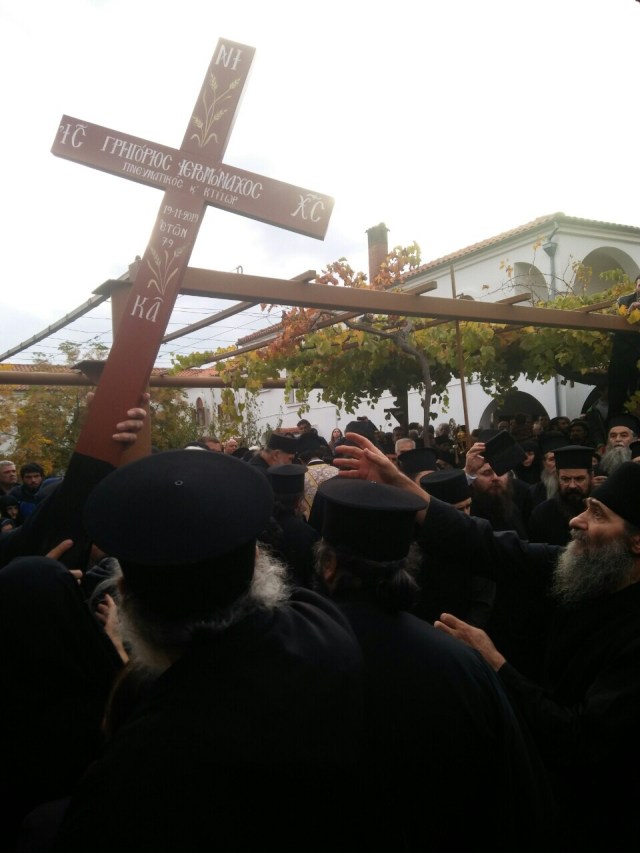
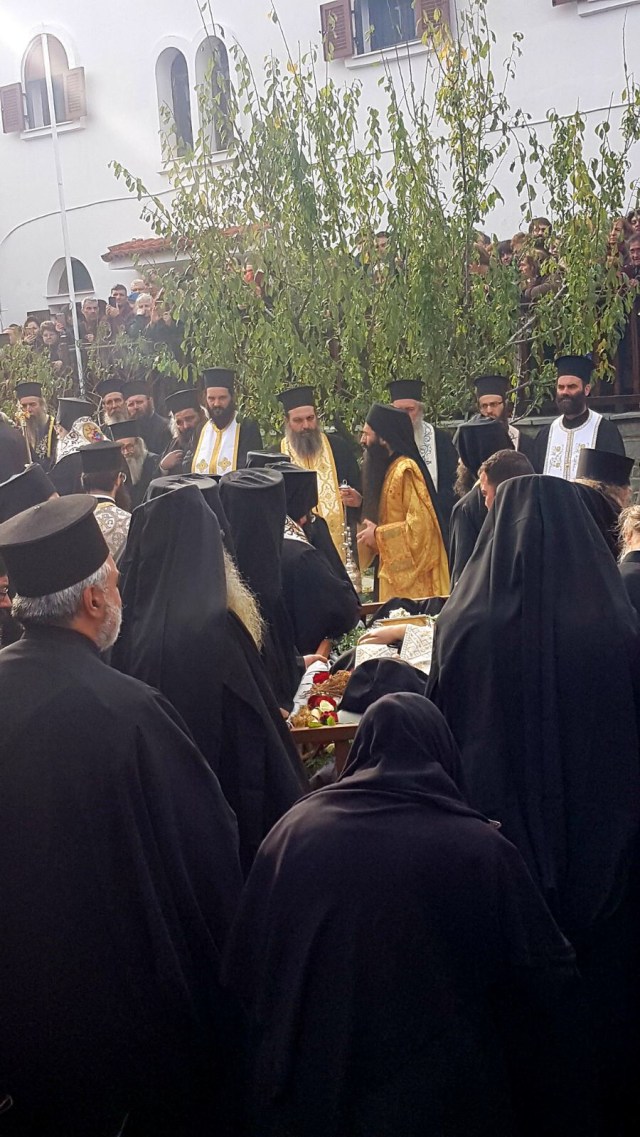
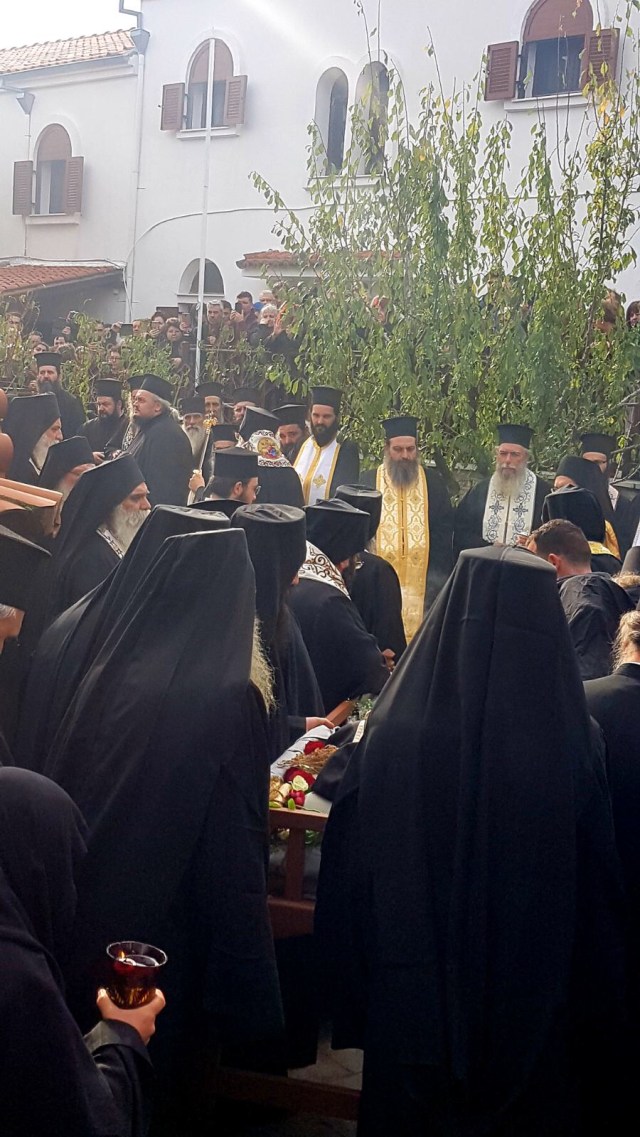
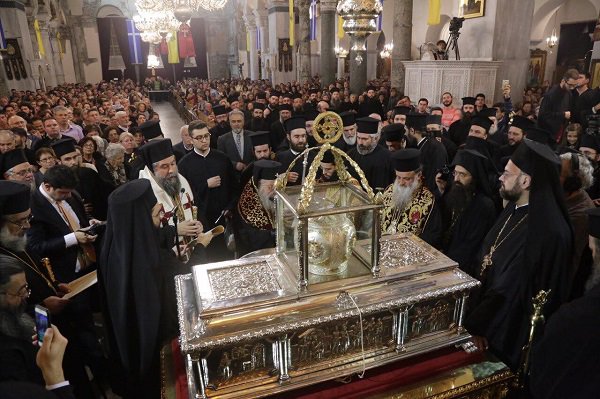
+Wednesday 20/11. The funeral service took place in the morning of the following day, after the vigil of the Entrance of the Theotokos into the Temple, such an appropriate day for our spiritual father’s departure from this life and entrance into the Heavenly sanctuary.

ΓΕΡΟΝΤΑΣ ΓΡΗΓΟΡΙΟΣ 3

St. Porphyrios, when Elder Gregorios once told him that he is well, told him “no, you are not”. “Indeed, I am”, Gerondas Gregorios insisted, but it was St Porphyrios who was right. Later, when St. Porphyrios visited him at his cell in Metamorphosis, his cell exuded a sweet fragrance for six days!

DF741702-4367-4408-A9BC-07929B918430-5475-00000B61A79B0D9F

In God’s kairos, I may write more about my memories with him. His orphans and why it feels this is an end of an era for us. I really ought to start from my University years, when I would take the bus through Polygyros [ie. etymology: lots of curves] notorious curves to the  Metamorfosi village, then walk all the way uphill through olive groves to the monastery of Saint John the Forerunner, meet Gerondas Gregorios for Confession and make absolutely no plans about my stay or who we were going to spend the day and the night together. Quite an adventure back in those days …

geronta-Grigorios-Gerondas Agathaggelos.jpg

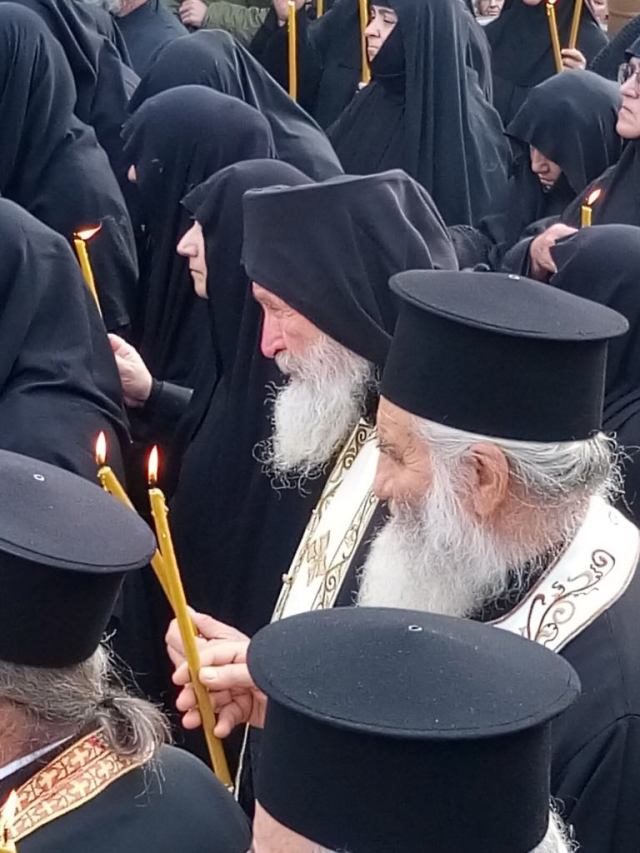
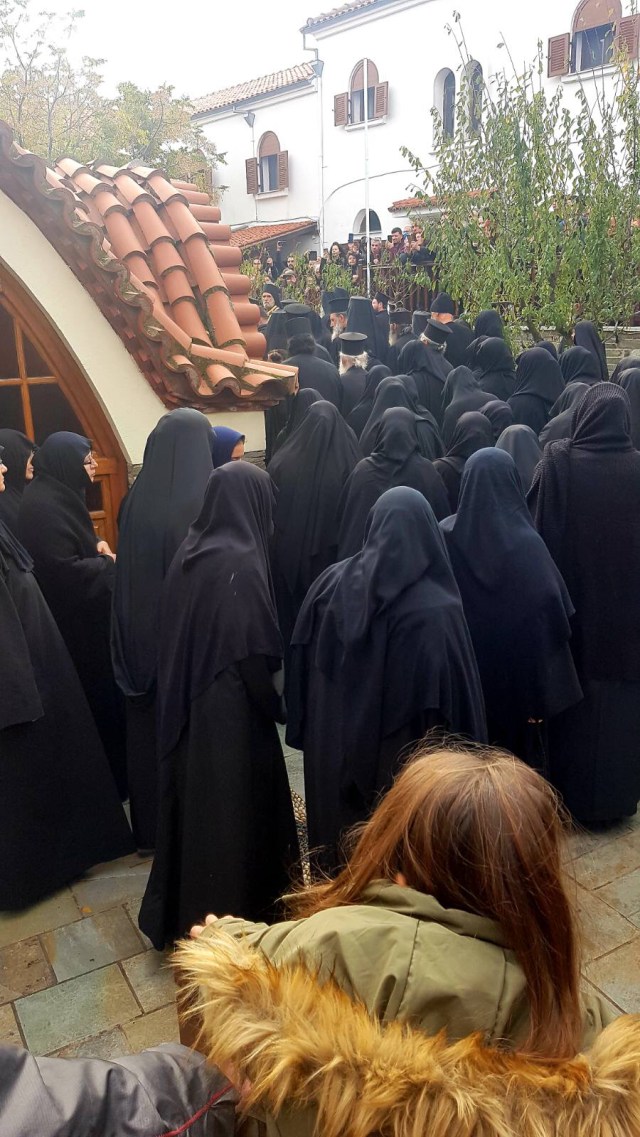
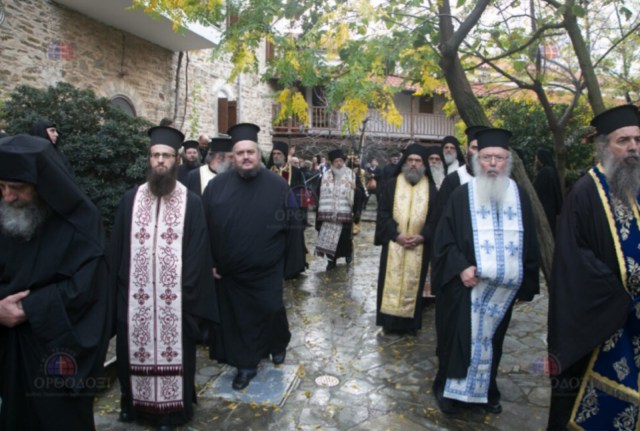
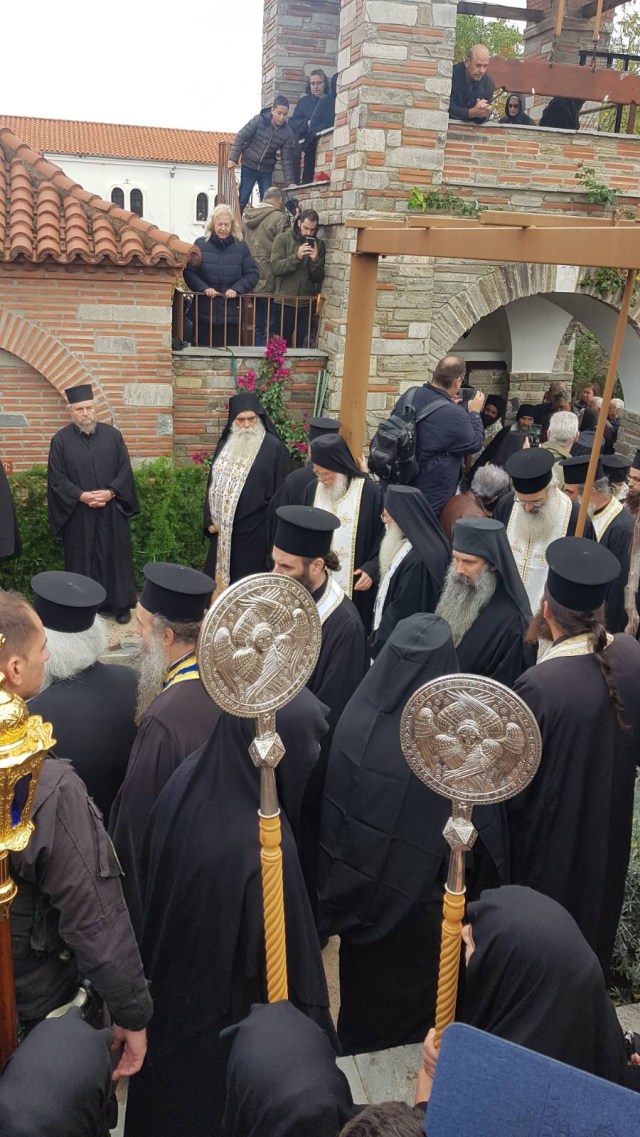
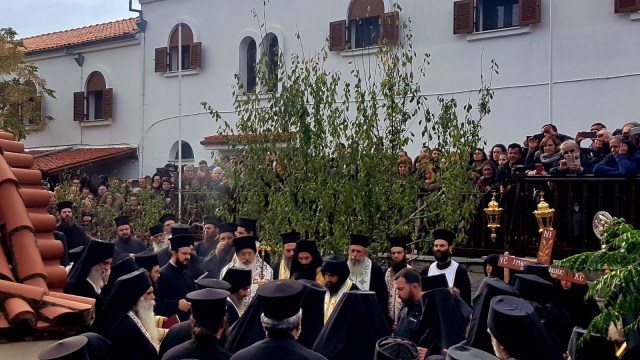
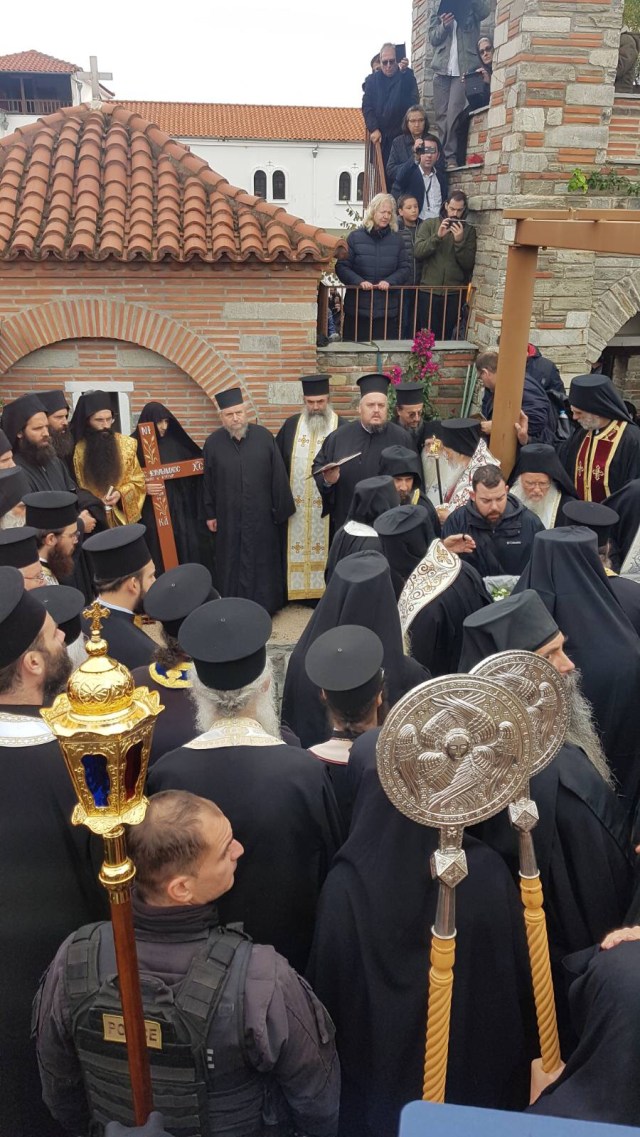
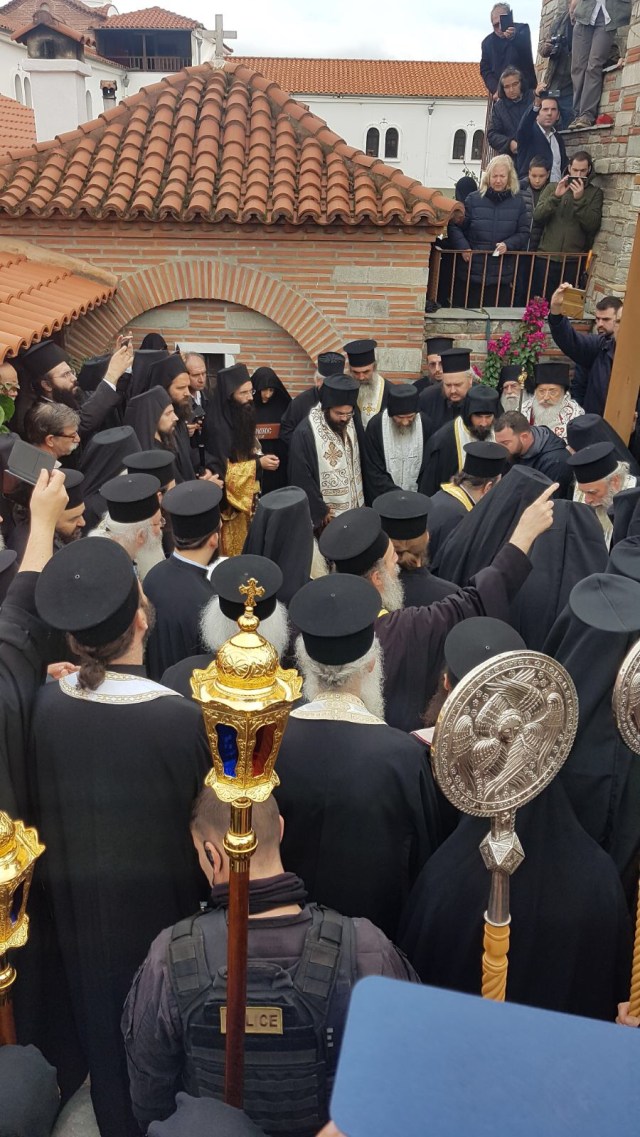
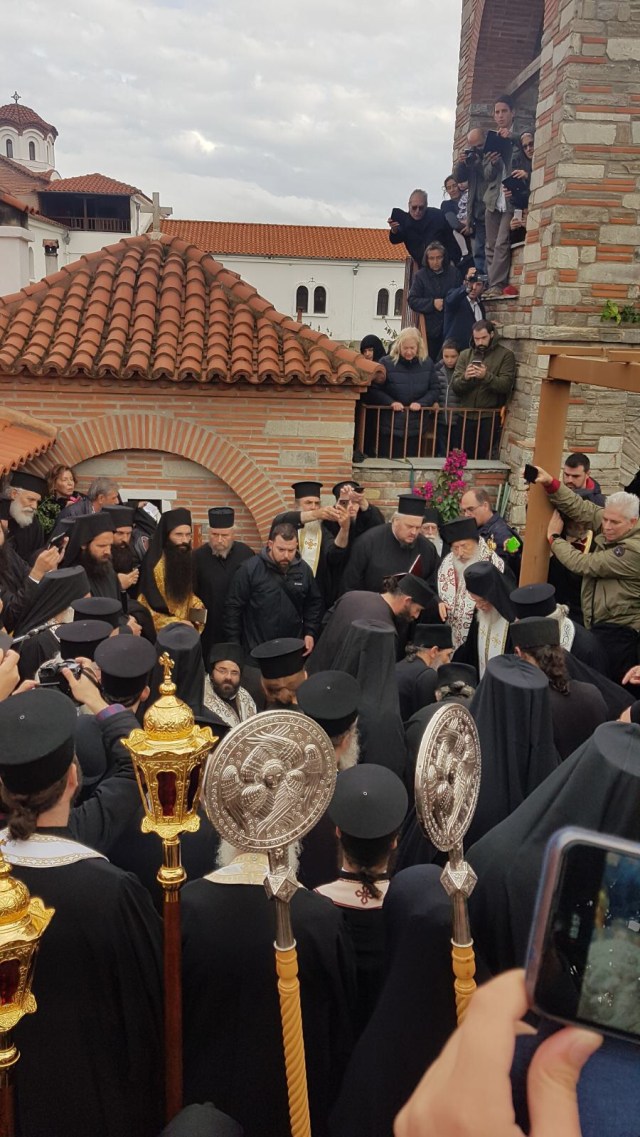
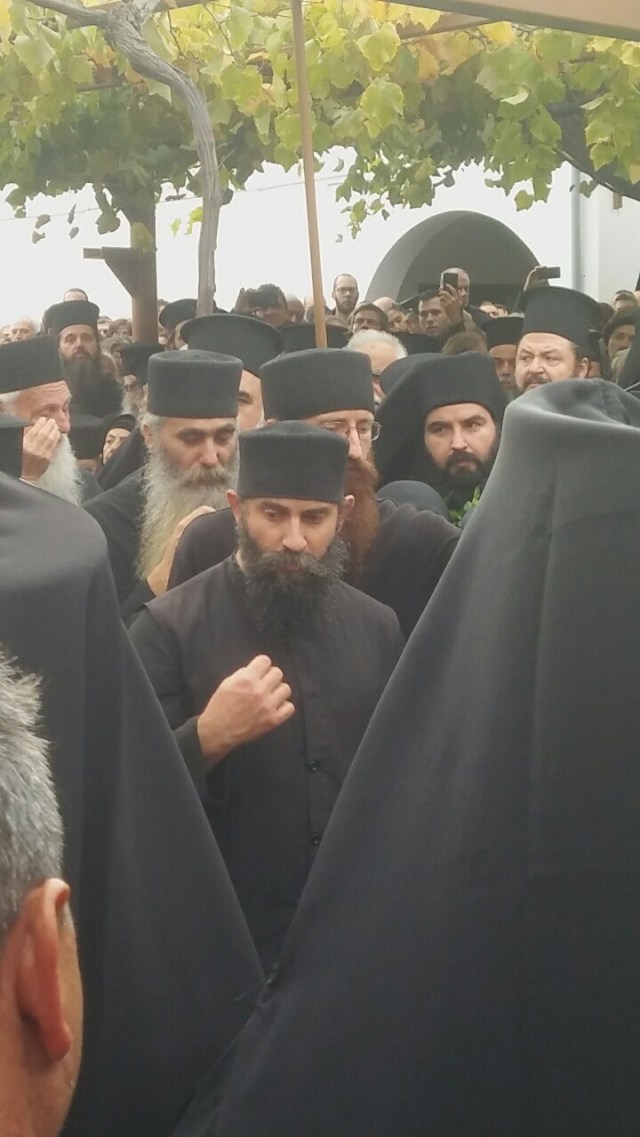
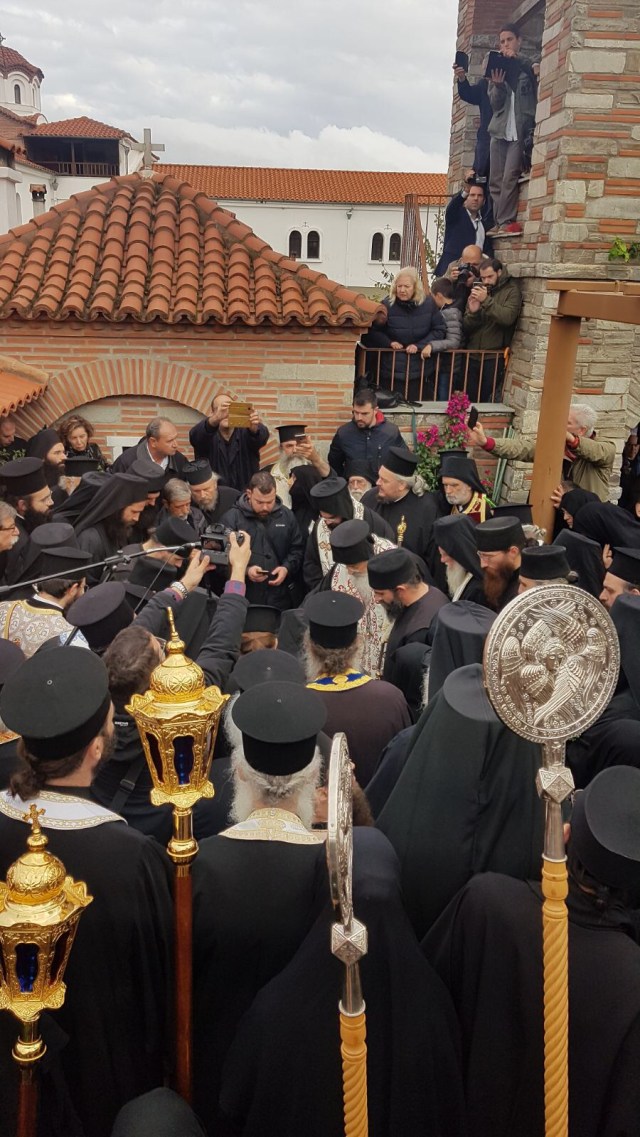
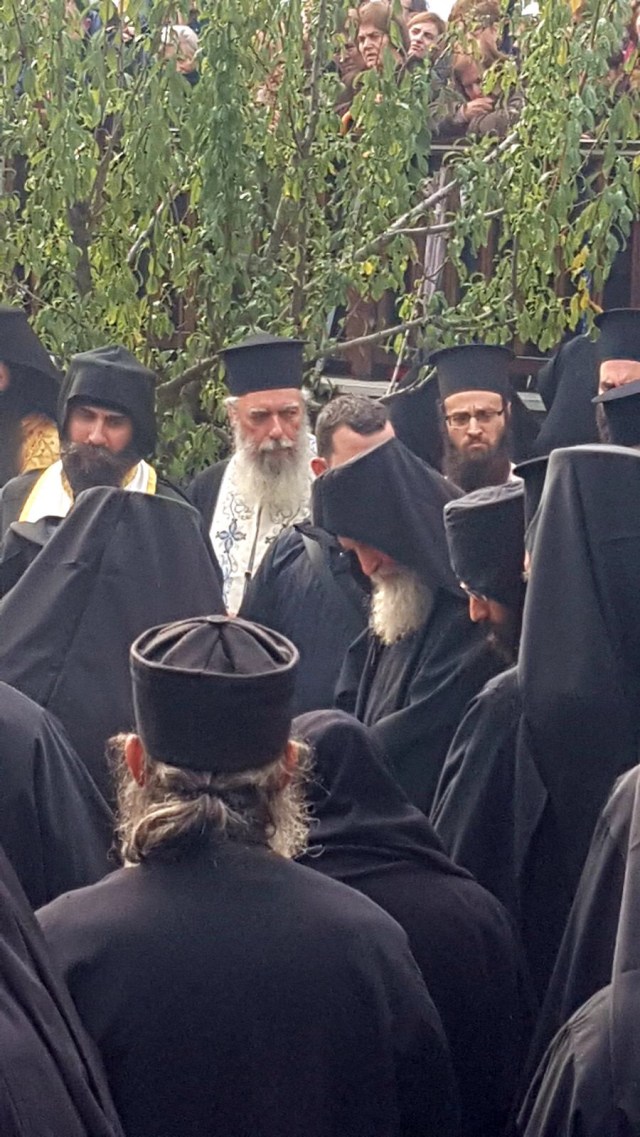
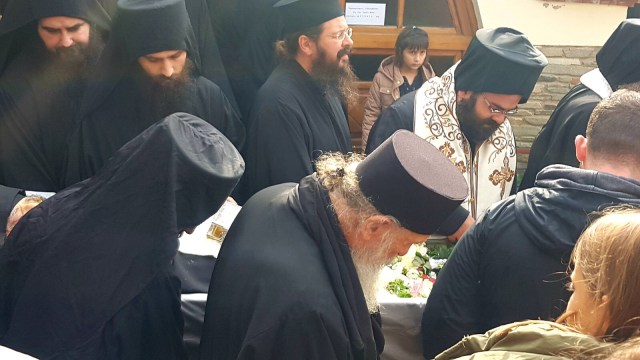
On Thursday morning, the village and the hill were packed with more people than I have ever seen in my life. People from all over the world, clergy, monastics and lay people who had come to pay their last respects to a father they owned more than their lives. And yet all this crowd were my spiritual brothers and sisters, with whom we had travelled in the past a mile or two in our pilgrimage, and we all had so many memories to share. Many of his spiritual children, when he became gravely ill, were “sent” to Gerondas Theoklitos, the Elder and founder of the monastery of St Arsenios, another spiritual child of Saint Paisios. God’s Love unites us all.

IMG_30C7A706873B-1

Such a crowd! The police were regulating the parking and the traffic, as only the priests’ and monastics’ cars were allowed all the way up to the monastery. All nearby hotels opened their rooms for free, and local people with minibuses helped people drive up and down the monastery.

The warmth of faith full of the Holy Spirit. Gerondas Gregorios was remembered in the following days at the proskomede and at the great entrance in churches and monasteries all over the world. Memory eternal.

“Christ is Risen!” What bright sorrow, χαρμολύπη! At the end of the Memorial, the nuns and monks present chanted the whole Paschal, Resurrectional Canon of St. Saint John of Damascus. 

“And now I am no more in the world, but these are in the world, and I come to thee. Holy Father, keep through thine own name those whom thou hast given me, that they may be one, as we are.” (John 17:11)

For a video of the funeral, go here

For more video footage and photos, go here and  here  

For some photos, see below

The Vigil and the Four Gospels

IMG_2437680ACE52-1IMG_106369FE0194-1IMG_6D0756F8413E-1

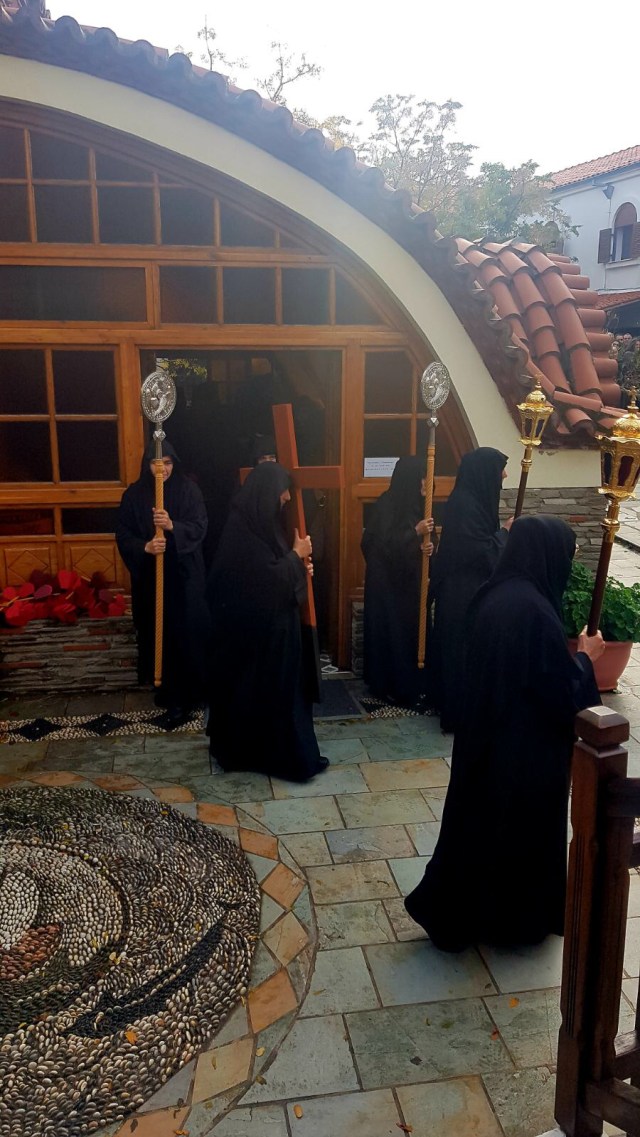
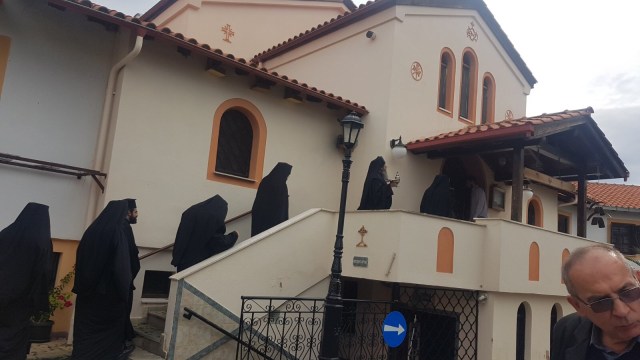
The Procession Around the Monastery Main Church (Katholikon)

IMG_940D7A666A46-1


IMG_BCB2BB624A4D-1IMG_AFCF8058DE8E-1IMG_065F475397F3-1IMG_2D86A567F1F7-1

IMG_89B298C90490-1

IMG_E01B0243AA39-1

IMG_6E3288CF30C3-1

IMG_B1B1B4B74444-1

IMG_ABCCCDF37D05-1
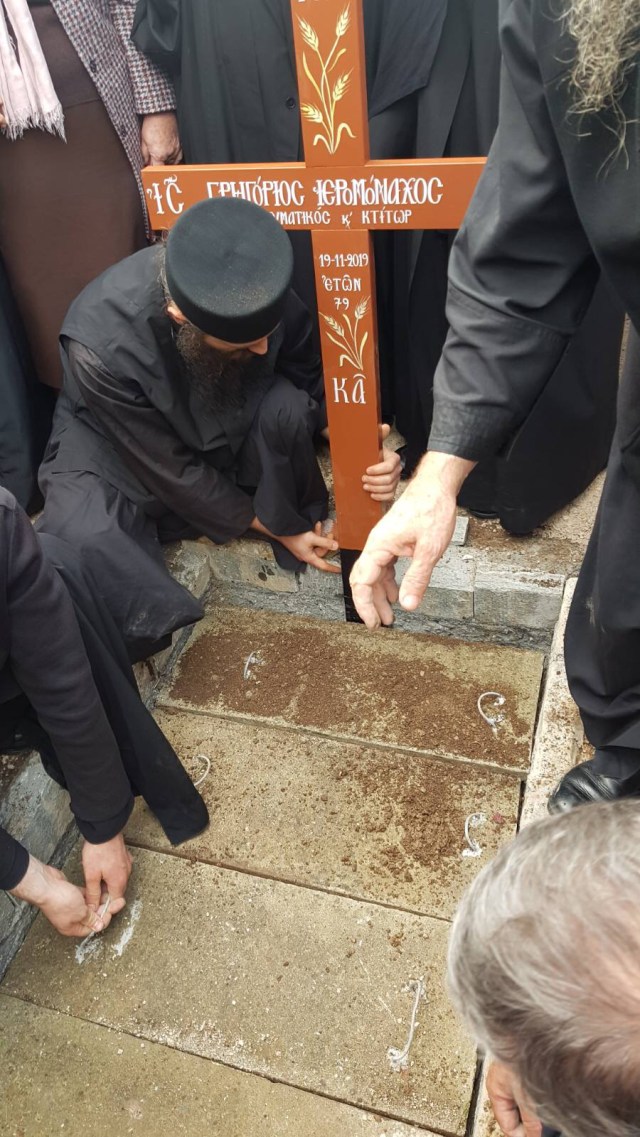
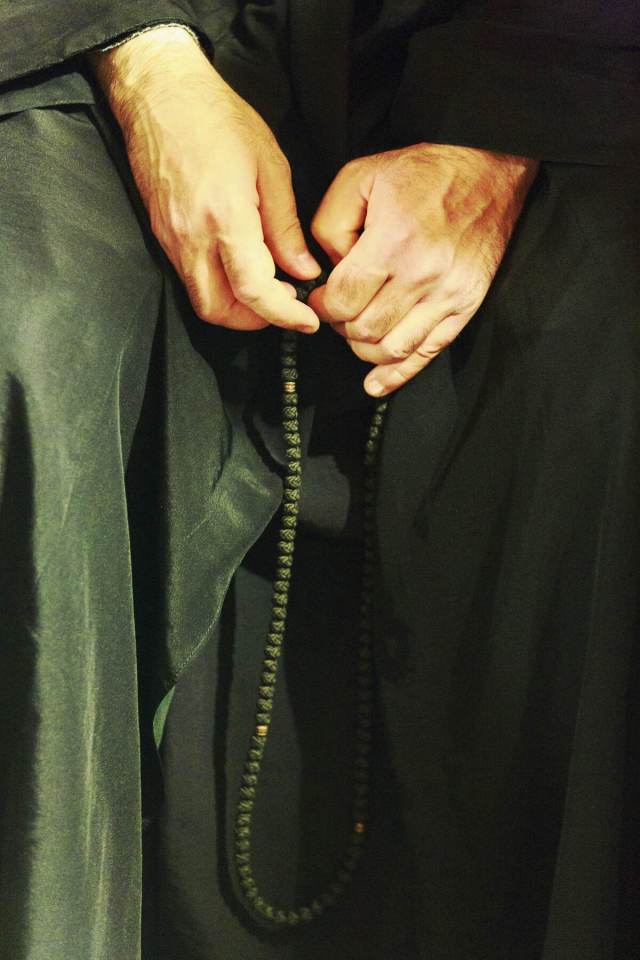
Second on the left is Gerondas Theoklitos, who prayed the traditional 100-knot rope for the departed: “Lord Jesus Christ have mercy on your servant Hieromonk Gregorios”

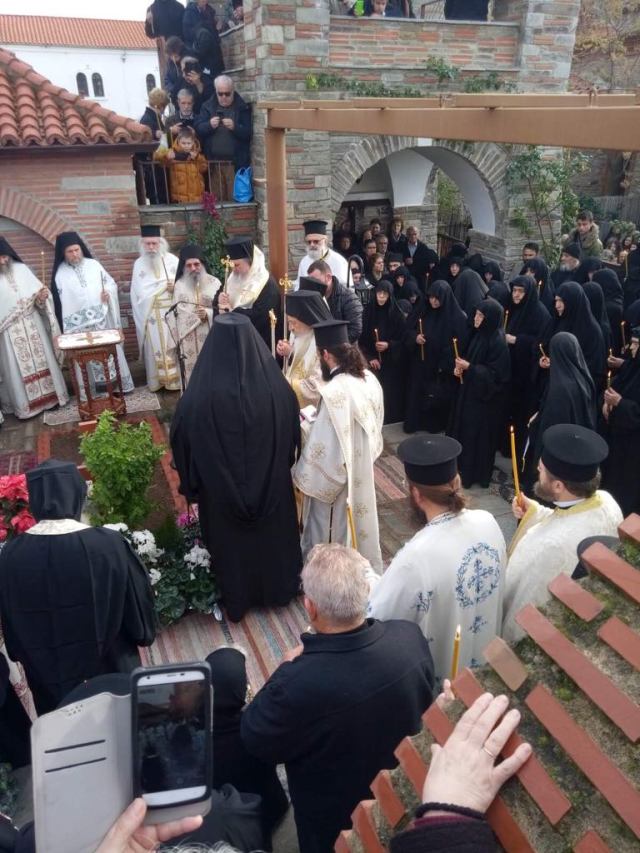
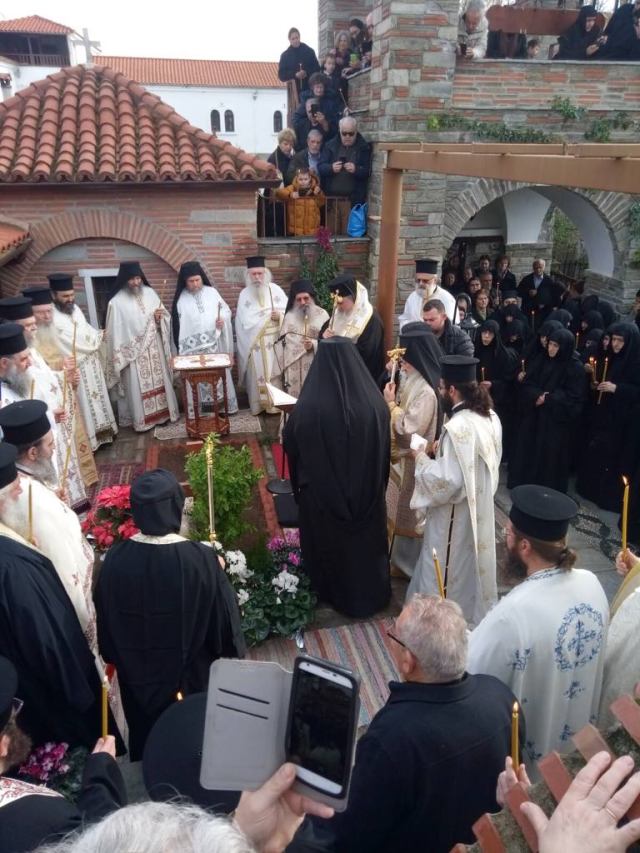
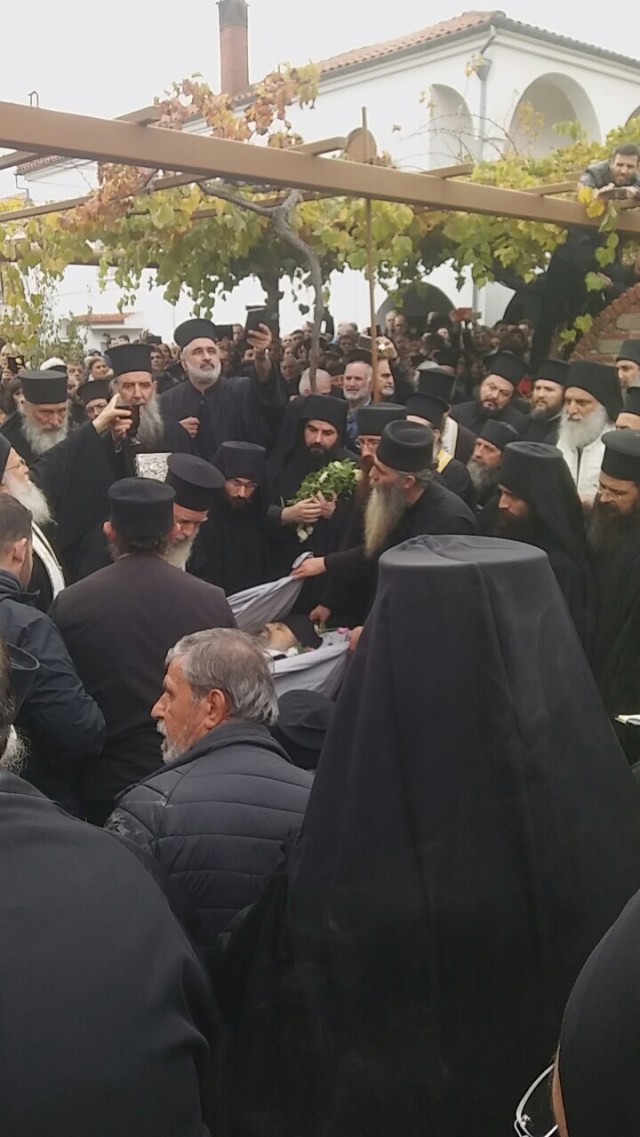
The Grave and the Burial

IMG_8FBDC657BE47-1

IMG_AA555C435EC7-1

IMG_FAAB74AAFC8B-1IMG_64291251FF1B-1

IMG_7AD797517667-1IMG_E6C744FF2EB2-1

IMG_710B90A340F2-1IMG_4EBEE2B6EE06-1

IMG_BCB251772948-1

IMG_E43EDE22CD3A-1

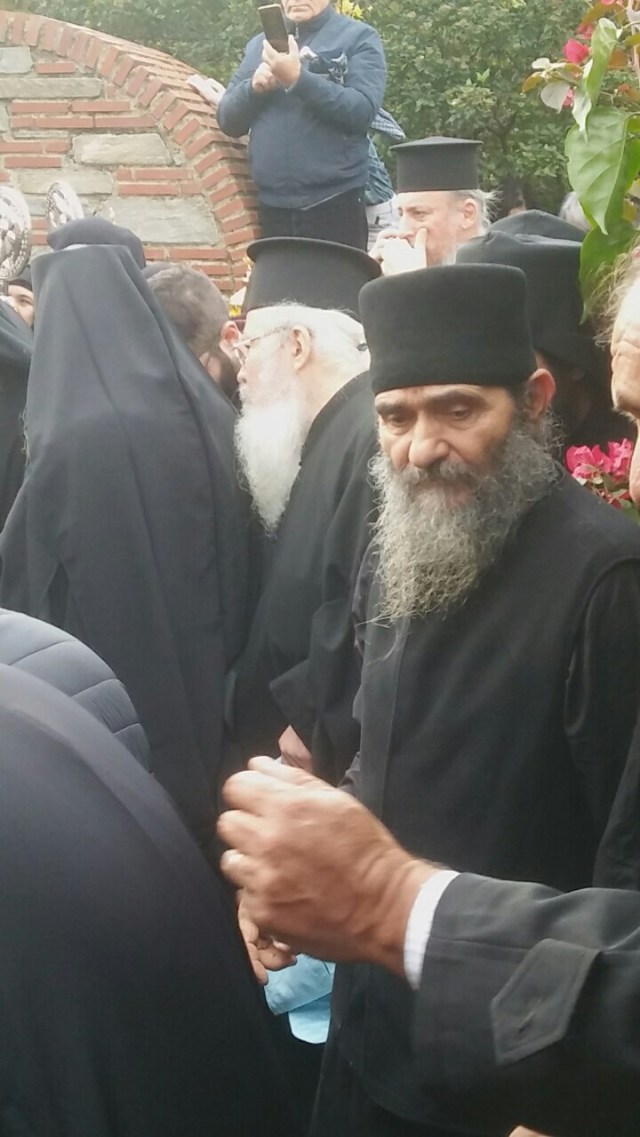
Elder Euphemius, the spiritual son of Blessed Gerondas Isaac Atallah. He is now the current Abbot of the Skete that Blessed Atallah founded on Mount Athos and the spiritual father of the nuns at St John the Forerunner Monastery.  As a dear Father pointed out to me, “I see him contemplating this holy mystery of Gerondas repose in his eyes and “being with ” Gerondas spirit and not separated from him.”

Elder Euphemios5

Elder Euthemios 3

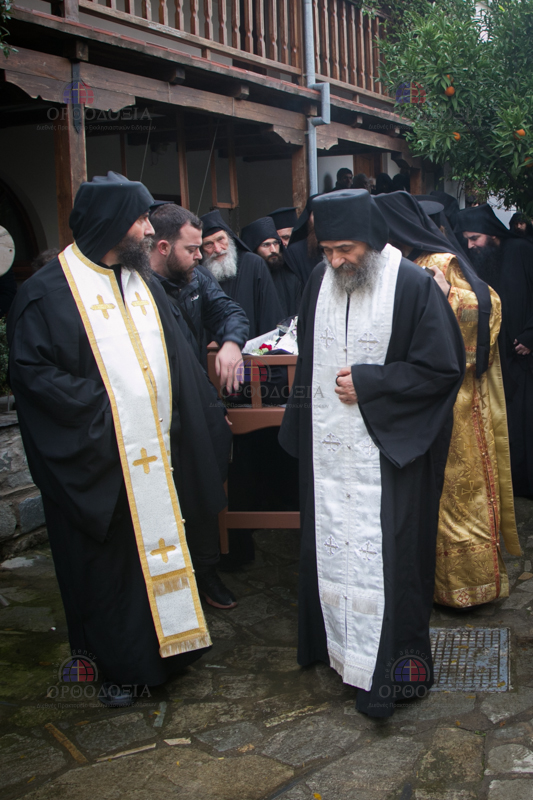
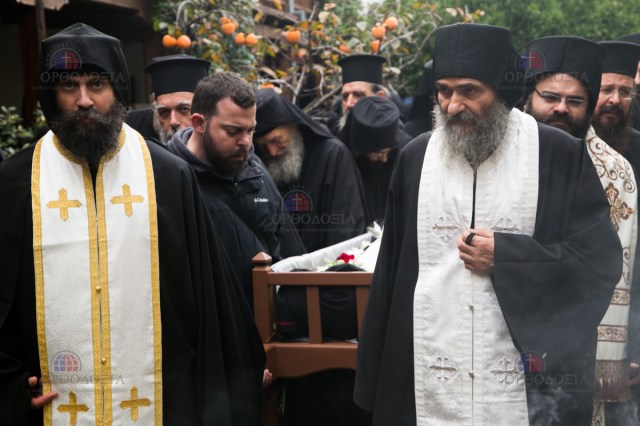
Elder Euphemios was the only hieromonk with a purely white epitrahelion and he was leading all the services.

IMG_D85E93213643-1IMG_68BE57F7F00C-1

IMG_47B40FC3BF79-1IMG_C706CE7CBA1C-1IMG_DF70E303F694-1

IMG_4775B5F50692-1IMG_7EBE0ECD0116-1IMG_080DCC6201B7-1IMG_74016289089C-1IMG_F08778564231-1IMG_DD716F9AA2D4-1IMG_5272688FBE75-1IMG_68929EEDCE4F-1

IMG_F072D95470D5-1IMG_0F1E549C0ED7-1IMG_237072286ED5-1

For more photos, go here and here


The Monastery Diaries 4

88681
A photo journal 
*
Dear brothers and sisters in Christ,
Christ is in our midst!
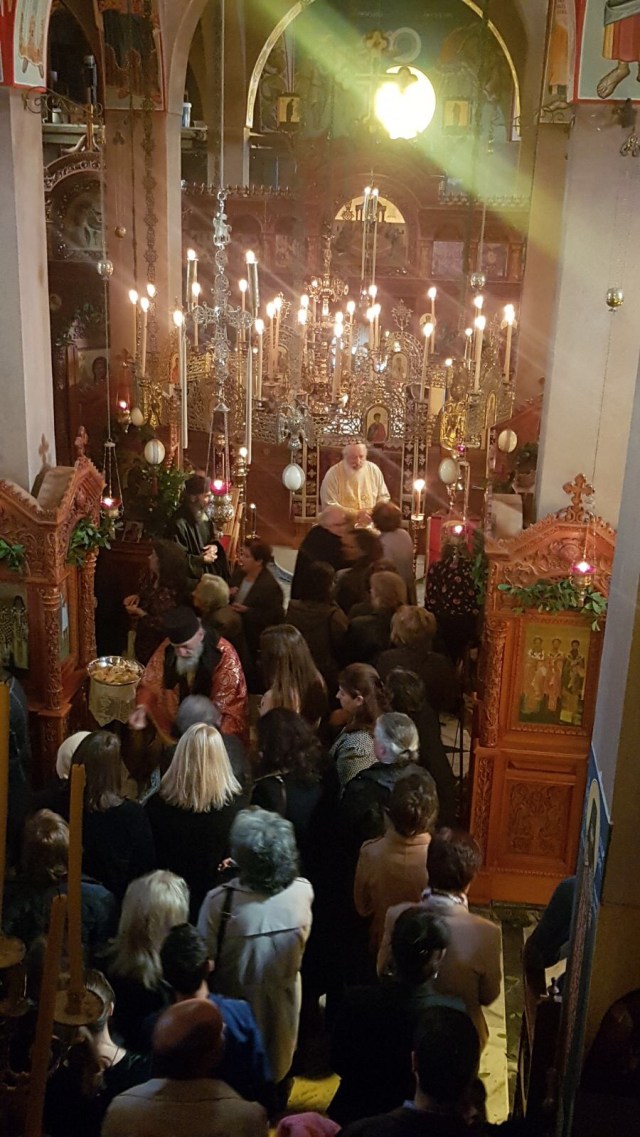
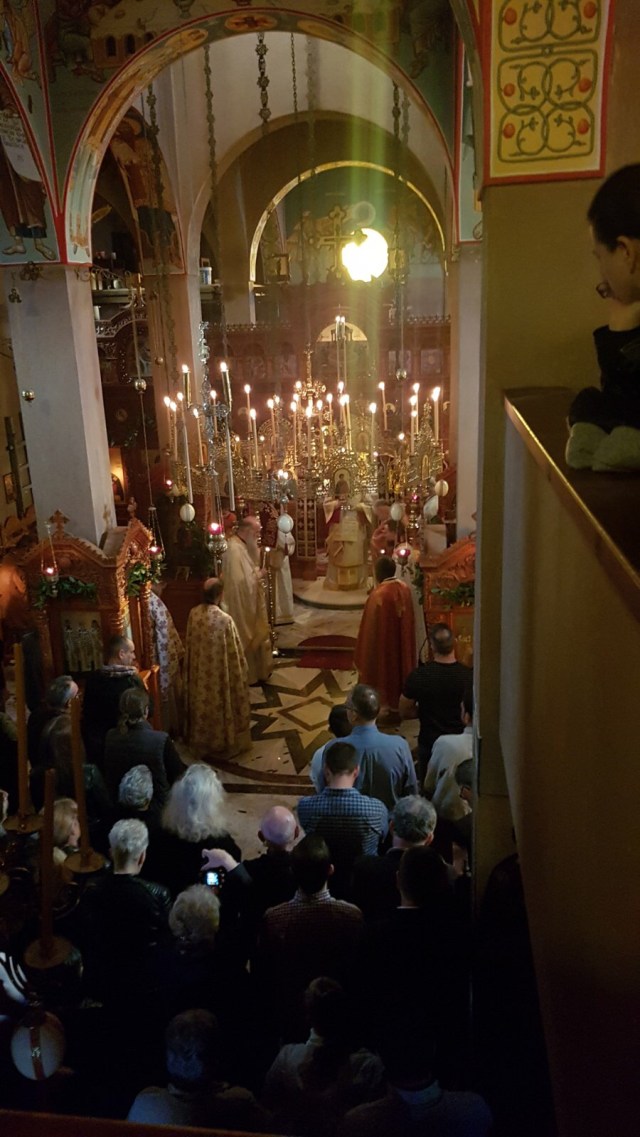
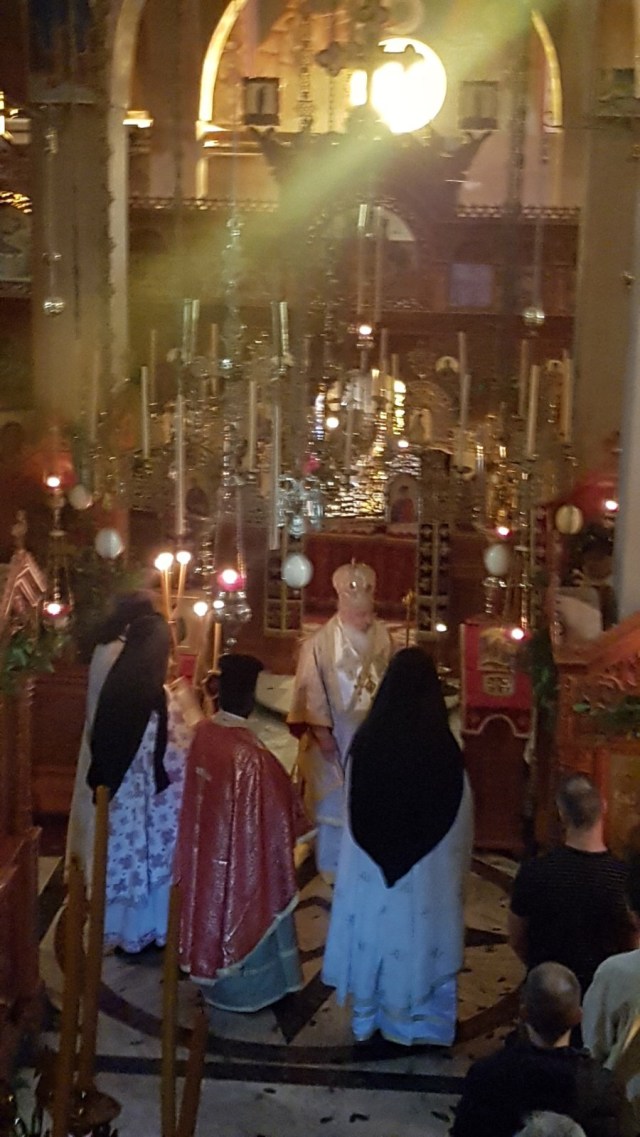
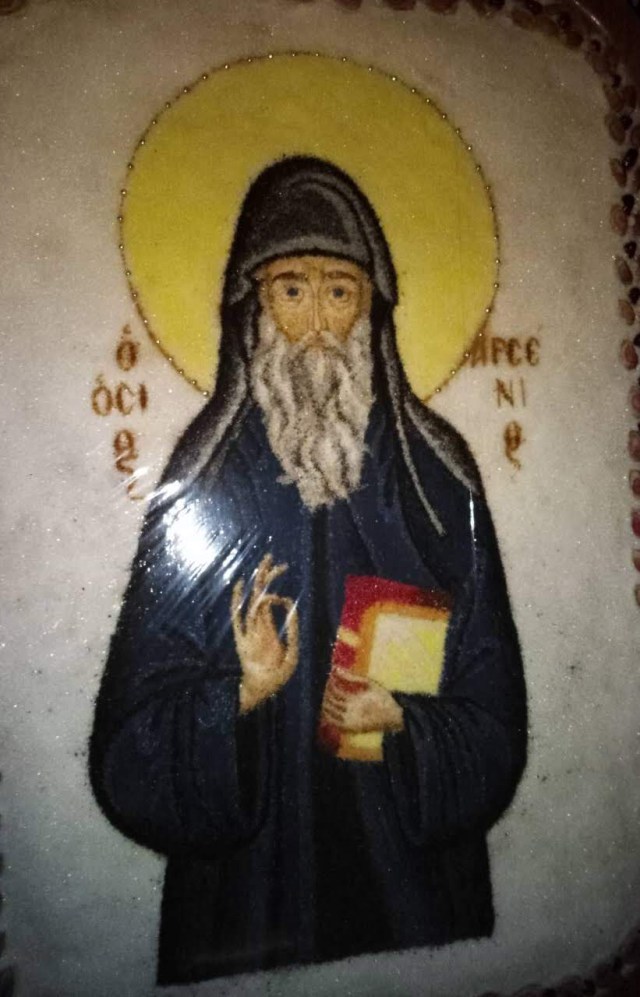
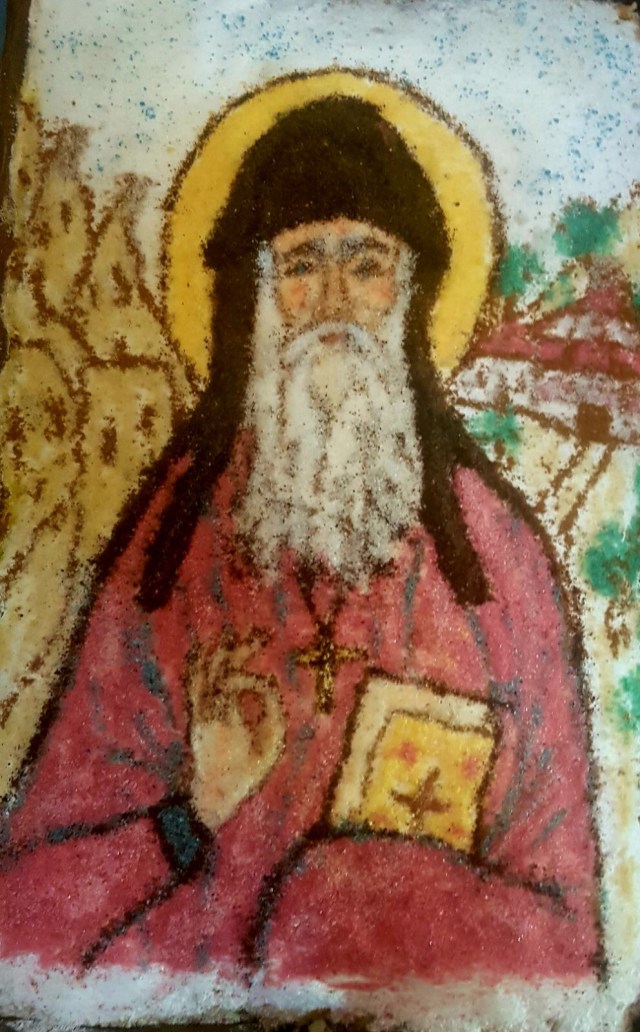
What a beautiful vigil at St Arsenios’ annual Feast (+St Arsenios of Cappadocia, Nov. 10)! I do not think any of my photos can convey the holiness conveyed through the monks’ exquisite, prayerful chanting,  the Fathers’ prayers, the censing, the tears of the faithful, the dancing chandeliers at Polyelaios…
IMG_FDFF402D104E-1
IMG_6E304B4371E5-1

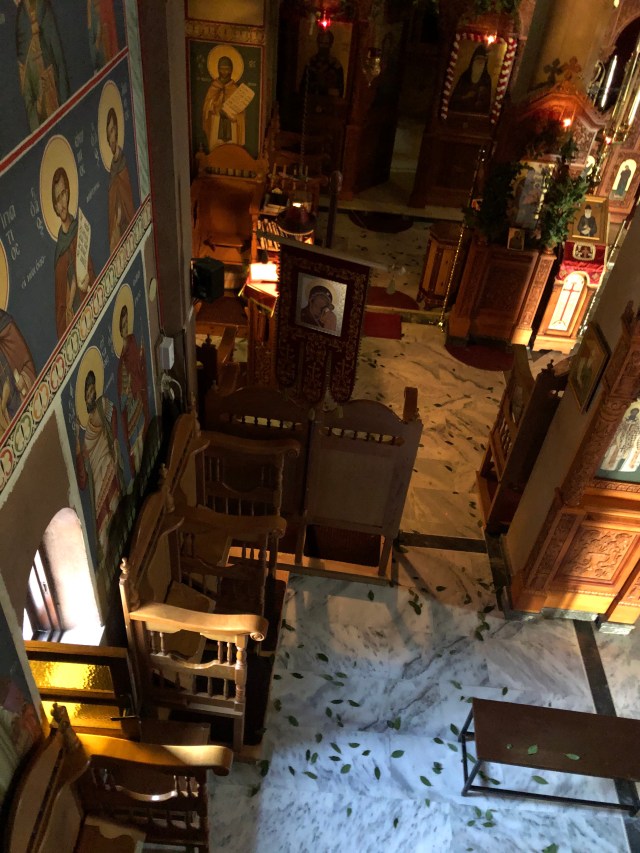
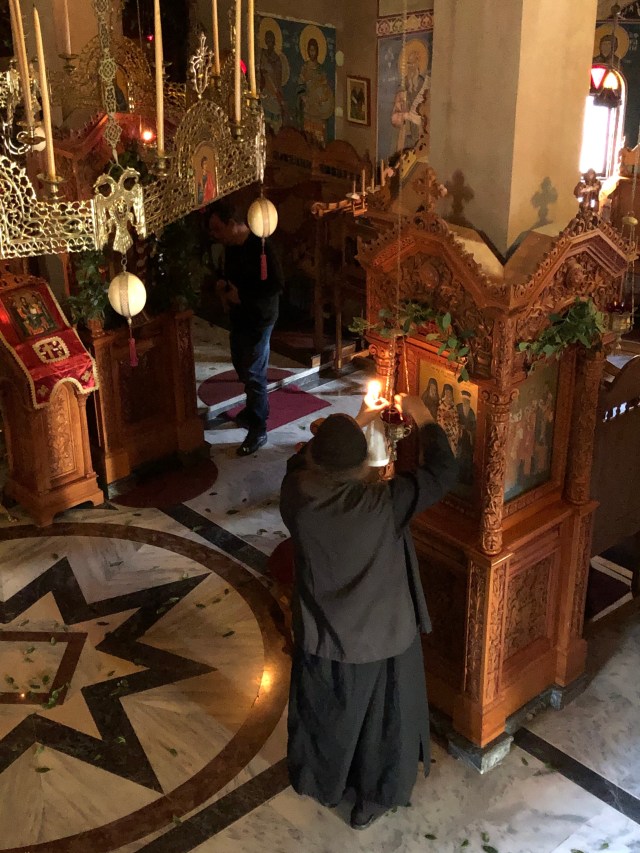
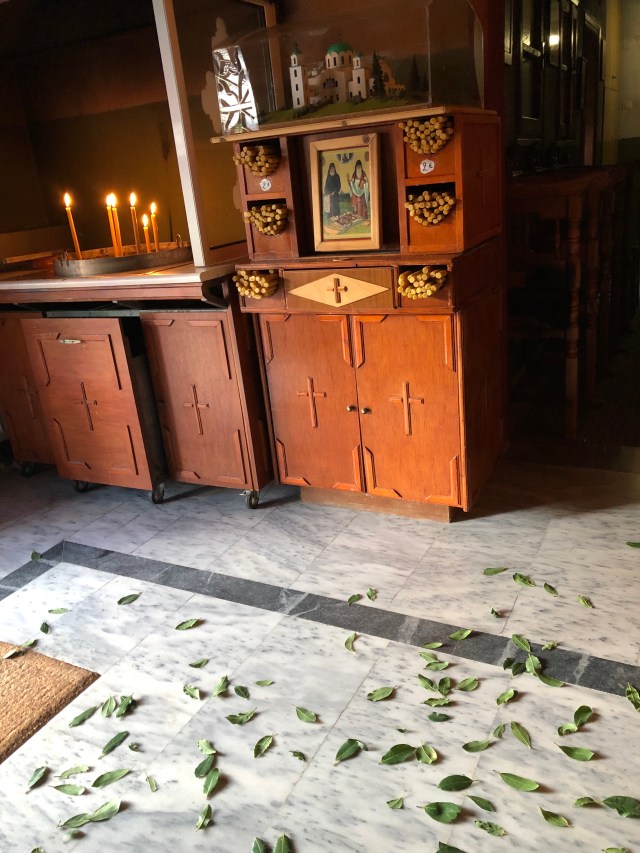
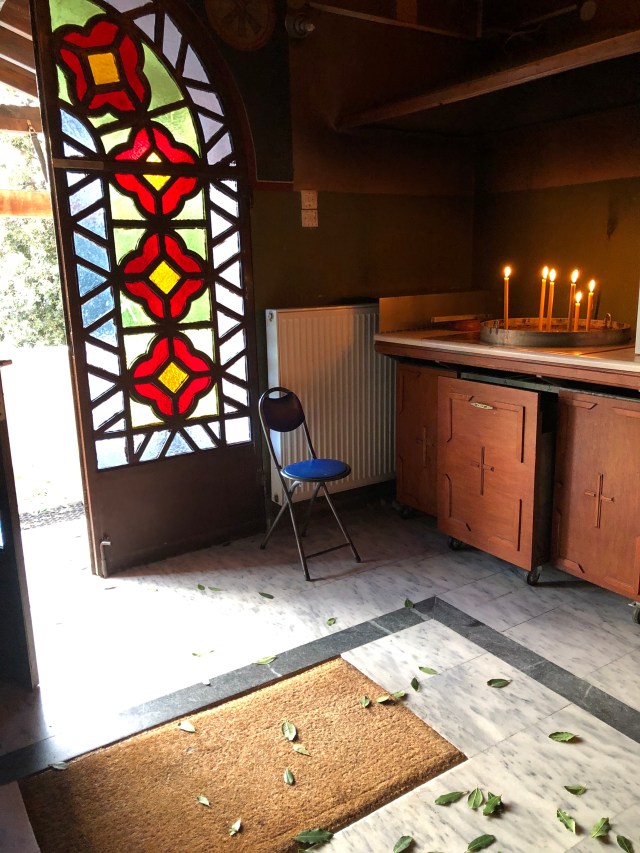
Fr Synesios was throwing bay leaves inside the church before Vespers started

IMG_0653IMG_2871IMG_2101

IMG_1558IMG_8919IMG_5297IMG_5587

There were lots of hieromonks, laymen and chanters invited to help with the chanting and the hospitality, and several priests and bishops all over the world since Saint Arsenios monastery is a very missionary-minded monastery and Gerondas Theoklitos has quietly and very discreetly founded together with several of his monks lots of monasteries all over the world.

IMG_2751

IMG_BC1C2BD18149-1

The Bishop Innokentios of Burundi and Rwanda

The Vigil was in two parts because the Feast was this year on a Sunday: on Saturday evening we had the Vespers and Matins, and on Sunday morning the Hours and the Holy Liturgy. Nonetheless, it was still too long, so long that the faithful were often seen collapsing in their stasidia and seats, and yet at the end, nobody wanted to leave. The monks though were so vigilant, like candles lit, not sitting down even for a minute during all these long hours.

IMG_68115BCA7559-1IMG_8A659EA92CA5-1IMG_300F0861531C-1IMG_173F043CC851-1IMG_1C1DF79131B7-1IMG_8C4C4A9EA4C8-1
IMG_5991

IMG_2784

Some of the kollyva prepared by the faithful and the monks.
IMG_B6DB764D2AE5-1
IMG_A4CF0C7796F4-1
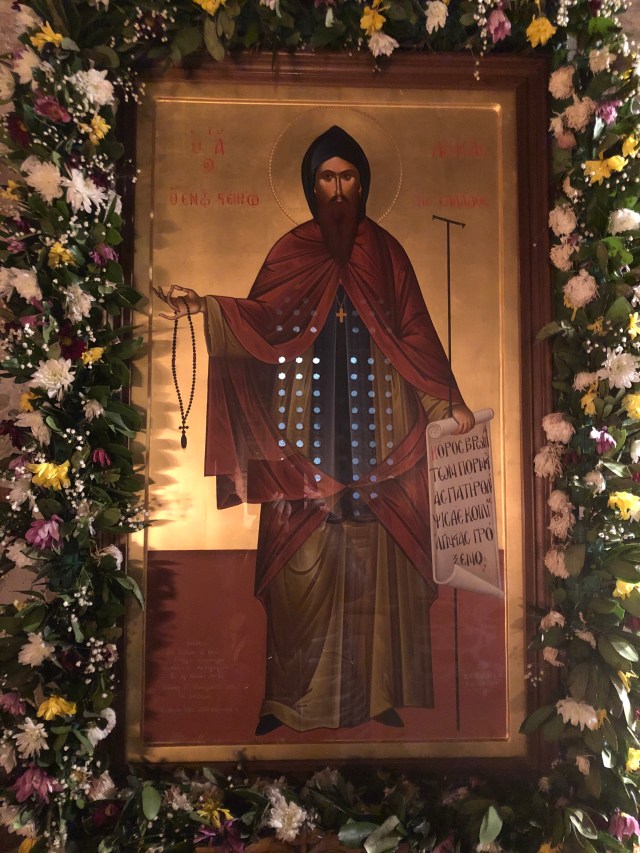
At the end of the Holy Liturgy, the kollyva of the Saint were prayed in front of his icon. These kollyva were such perfect icons “written” on the boiled wheat that we did not want to eat them! Then, all the faithful were given in the monastery yard a bit of this kollyva, artoklasia and special treats for the Feast, the Fathers briefly disappeared in the arhondarikion, and when we thought that we were done with eating and feasting, we were all invited into the monastery’s trapeza for yet for food.
IMG_5306C6226D50-1
IMG_41EAF004D336-1

During the agape meal, lots of chanters and two monks censing with a a katzion (special censer for feasts) and carrying a piece of holy bread,  a part of the proskomide’s holy bread, moved around all of us and we each picked up a very small piece. In that sense, the agape meal felt like yet one more Holy Liturgy after the Holy Liturgy in the church. Prayer seems to be seamlessly woven in all monastic activities, even in the washing-up that followed.

IMG_DBF8F7F2B930-1IMG_BB01370CCF4D-1IMG_AC8456CD3FFA-1

IMG_17CA7D9CC49B-1

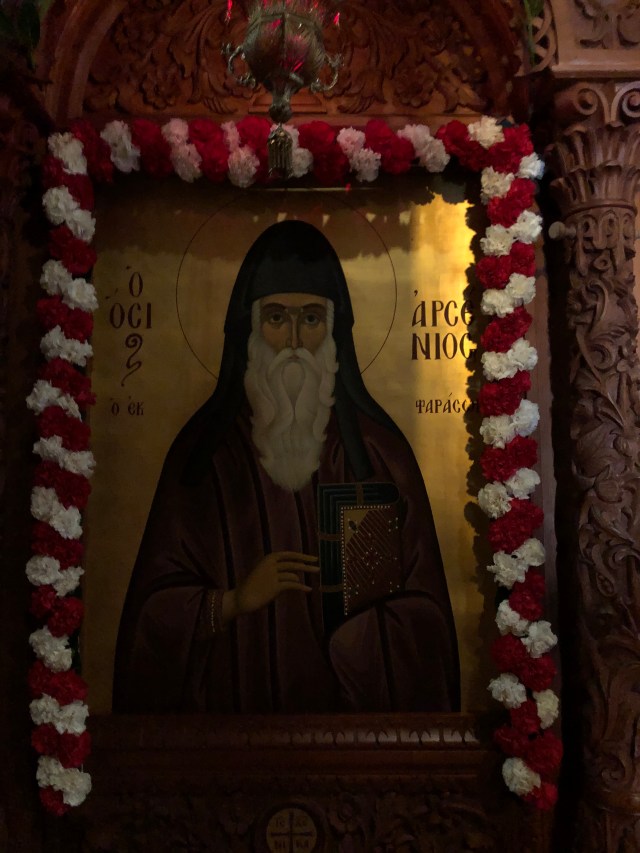
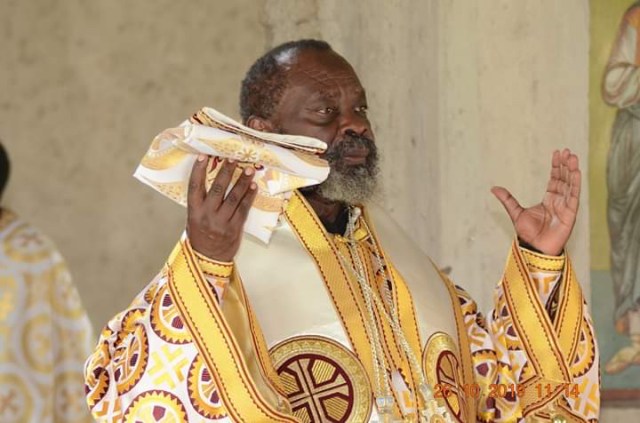
Gerondas Theoklitos is on the left, Bishop Nikodemus of Kassandreia in the middle and the monk on the right , deeply bowing his head on the right is Father Arsenios. He was shining at his Saint’s Feast throughout the Vigil and the festivities that followed. He was honoured to read the Akathist before the Saint’s icon and the Synaxarion in the church and in the agape meal that followed at the end of the Holy Liturgy where all the faithful were invited to participate in a fellowship of Love and Holiness. Father Arsenios was the first to receive Holy Communion and the last to eat anything in the agape meal. In fact, I am not sure if he ate anything at all this day as he was so full of Joy and his Saint was feeding him with Heavenly food.

IMG_CFB336D2FD6E-1

IMG_B1369987B28D-1

IMG_BDD7A63DBDCD-1

This is Father Nikodemus who greeted me the first dawn here, on his way to a village parish, and we both admired the starlit sky, the “ison” for the worship unfolding in the monastery katholikon.

IMG_194C4CDD62A4-1IMG_D0BF64E15485-1IMG_15DC9D04966E-1

Love and poor prayers,
LCH

The Monastery Diaries 3

prayer rope.jpg
3/11

This Sunday at St Arsenios monastery, after the church services, Homily, Trapeza with Gerondas Theoklitos and a few obediences together with other pilgrims, Fr Synesios gave us a guest room to rest. At 4:00 we had Vespers, Supplication and …  and eventually, we left together with Gerondas Theoklitos: we drove him to the airport. That was a most interesting drive as we spent all the time taking turns in the Jesus Prayer and its variations. We started with “Glory to God” a hundred times, then “Lord Jesus Christ have mercy on us”, “Most Holy Theotokos save us”, and some variations like “Holy, Life-Giving Cross protect us”, “Baptist of Christ help us” (for repentance), “St. John the Evangelist help us” (for love), the Saints of the day, our Saints, all a 100 times repetitions each, first for the living, then for the departed . Very soon though we started praying using the following St. Paisios’ variation (*) to the Jesus prayer:


Our Lord Jesus Christ:

Do not abandon your servants who live far away from the Church. May your love convict them and bring them back to you.

Lord have mercy on your servants who are suffering from cancer.

On your servants who suffer either from small or serious ailments.

On your servants who suffer from physical infirmities.

On your servants who suffer from spiritual infirmities.

Lord have mercy on our leaders and inspire them to govern with Christian love.

Lord have mercy on children who come from troubled homes.

On troubled families and those who have been divorced.

Lord have mercy on all the orphans of the world, on all those who are suffering pain and injustices since losing their spouses.

Lord have mercy on all those in jail, on all anarchists, on all drug abusers, on all murderers, on all abusers of people, and on all thieves. Enlighten these people and help them to straighten out their lives.

Lord have mercy on all those who have been forced to emigrate.

On all those who travel on the seas, on land, in the air, and protect them.

Lord have mercy on our Church, the bishops, the priests and the faithful of the Church.

Lord have mercy on all the monastic communities, male and female, the elders and eldresses and all the brotherhoods of Mt. Athos.

Lord have mercy on your servants who find themselves in the midst of war.

On your servants who are being pursued in the mountains and on the plains.

On your servants who are being hunted like birds of prey.

Lord have mercy on your servants who were forced to abandon their homes and their jobs and feel afflicted.

Lord have mercy on the poor, the homeless and the exiled.

Lord have mercy on the nations of the world. Keep them in your embrace and envelope them with your holy protection. Keep them safe from every evil and war. Keep our beloved Greece (the Elder’s home country; we could substitute the USA) in your protective embrace day and night. Embrace her with your holy protection defending her from all evil and war.

Lord have mercy on those who have been abandoned and have suffered injustice. Have mercy on families that are going through trying times. Pour your abundant love upon them.

Lord have mercy on your servants who suffer from spiritual and bodily problems of all kinds.

Lord have mercy on those who are despairing. Help them and grant them peace.

Lord have mercy on those that have requested that we pray for them.

Lord grant eternal rest to all those who have passed on to eternal life throughout the ages.

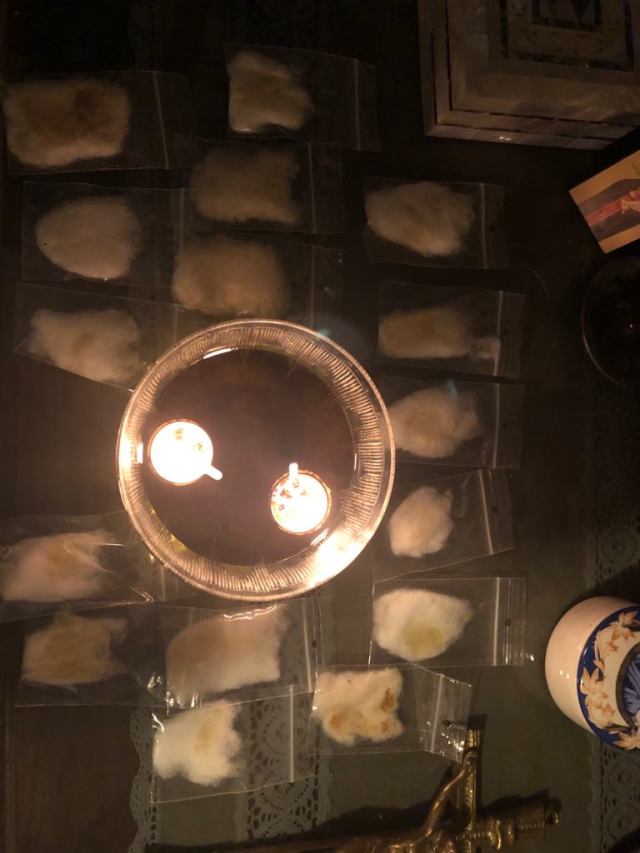
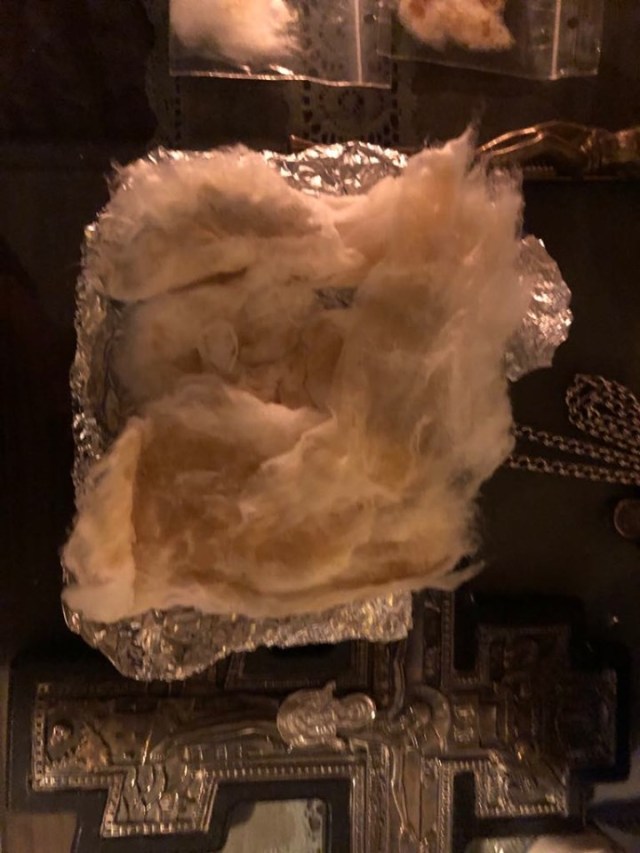
Then, back to Thessaloniki centre and straight to St Demetrios for the Myron Service. Gerondas Theoklitos was the catalyst for a most bountiful “harvest” of 15 cotton balls and an extra Myron cotton roll equivalent to 50 more! Everybody present is normally given only one piece of cotton, but we were collecting for the faithful in the UK and other countries.

75282300_677359056123308_7719495289769295872_n74828484_958058424569184_1475105942285582336_n

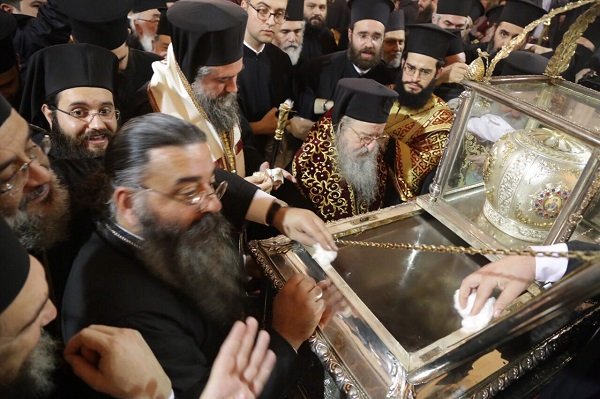
Amazing gushing myrrh leaking everywhere from his reliquary!!! God is glorified in His Saints!

myron2

myron1

Lots of love and poor prayers


* The following prayer of his was given to Souroti convent which had asked the Elder for a prayer rule that could be used by the nuns in their evening vigils. This directive was given to the nuns during the final years of his life. The main emphasis of this prayer is his profound love for all of humanity.

This prayer can be used by every Christian believer since it takes in all the issues of life that need our prayers. Even the children can understand it easily since it is expressed in simple words. It can be used by families during their evening prayers.


The Monastery Diaries 2

monk 2.jpg

Dear brothers and sisters,

Christ is in our midst.

26 — 30 October

A retreat at the monastery of Saint John the Forerunner with Gerondas Gregorios, 45 monastics and about 5 guests. This is one of the most introvert, silent, strict, otherworldly monasteries I have ever been, where the emphasis is on the lesson of repentance. Yet, Gerondas Theoklitos’ word for me upon my return was to go there, only there and not anywhere else, and that as often as I can and as long as I can.

26-28/10

A chain of feasts! St Demetrius, Resurrection Sunday and +The Holy Protection of the Theotokos (28 Oct — Greek, not Slavic calendar) 

This is the third time I am celebrating this feast this year: once at Walsingham (1st October), the second in Holy Land (old calendar) and the third here at the Monastery of St John the Forerunner.

These are all major feasts and day of rest and all monastics have disappeared to their cells for more intensive study and prayer. An atmosphere of utter stillness, silence and quiet. One could hear only the birds and the bees basking in the sunshine. Such quietness and stillness of the day proved essential for my mind. Therapeutic and healing.

29/10

Today was a regular day and after Matins and Holy Liturgy and our meal, we all engaged in various obediences. Mine was to clean both churches and after the second meal, help wash and cut lettuce.  Every day we take the blessing of Elder Gregorios who lives in a separate, remote cell in the monastery. Everything is so orderly and quiet compared to our lives! The blessings of obedience! 

This time, for the first-ever time, I am allowed access to the most ”private” wings and wards of the monastery. I am sure Gerondas Theoklitos’ request must have made a difference. I found this “privilege” very strange and became even more silent. I also felt a bit “scrutinised” by the otherworldly monastics, but maybe, I was too self-conscious. 

My biggest surprise though came after Little Compline when a monastic, Brother Philotheos asked my help in a translation matter! Our discussion soon expanded and lasted long for those very silent monastics. I think he wanted to become friends with me. I also think that I might end up with a new obedience very soon: help with the whole translation of a very long, 300-page book … This American Cypriot monastic ended up here 25 or so years ago… 

I was told that he was the nurse to another monastic I knew intimately for the last months of his life: + Brother Paisios. He spent a lot of time with him and this late brother spoke a lot about me, especially during his last months while I was away in the UK. He told Brother Philotheos that he loved me very much, suffered for my Cross, eagerly awaited my returns and prayed a lot for me, as he keeps praying now for me in Heaven. “Please pray for him as he is doing for you in Heaven.”

What a surprise! I mean I have been praying for him too and indeed was providentially present at his death and funeral (with Gerondas Gregorios by his side) at one of my very brief visits to Greece, but I knew nothing of all this! I had worked with this late brother Paisios on various publication/ translation projects but he was always so silent and immersed in prayer. He never told me anything about himself or asked me anything about myself. How very strange! How did he know things about my life?

Brother Paisios was an Oxford graduate who turned down their job offer to become a monk, a scholarly monk. How moving all this is! Our last project was + Brother Porphyrios’ 3 volume composition: monastic rule for a men’s monastery!

My stay at the monastery is becoming more «interesting » day after day … I am in tears, deeply moved by this message from the “other” side …

30/10

I am leaving early in the morning, spiritually refreshed, stronger, with a long list of errands for the monastery from Thessaloniki. It seems that I have unofficially become their “αποκρισάριος”, a Byzantine term for monasteries’ messengers, go-between, ambassadors, laypeople who undertook errands for them in the world and represented them, but I have not yet found its equivalent in English. Do you know how they call this “title” in English?

*

15/11 A reader of this blog told me that the closest word to what I am looking for “αποκρισάριος” is “envoy