Prison of Christ

prison8

prison3

prison9


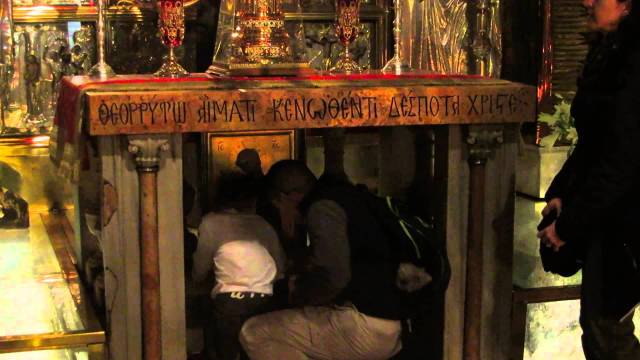
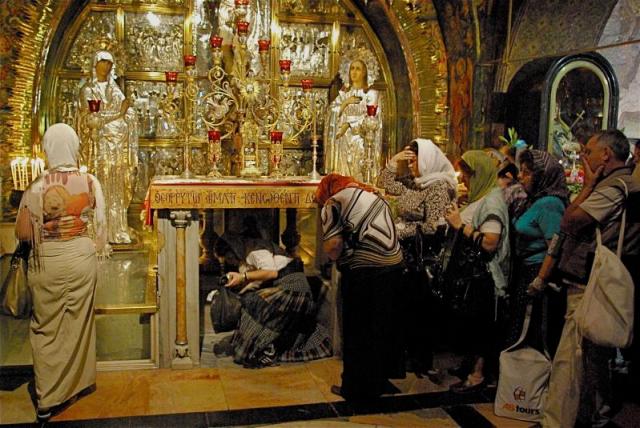
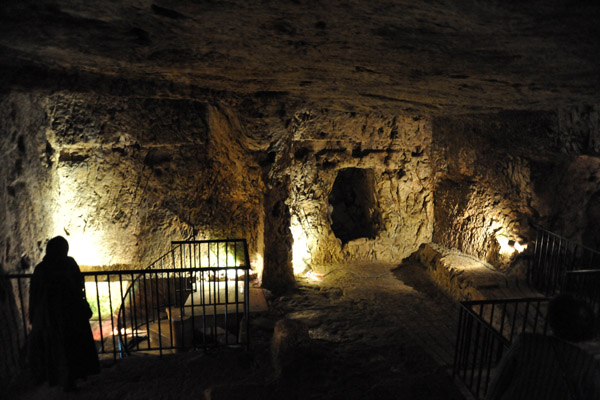
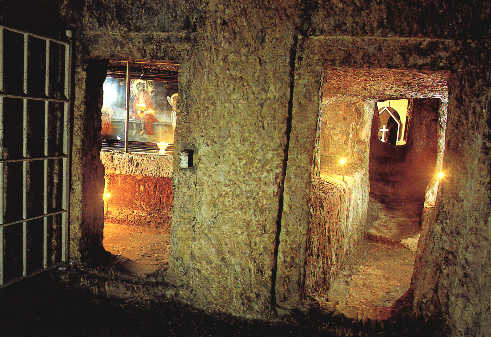
Descending to Christ’s prison was one of the most gut wrenching experiences at our pilgrimage. Matched only with The Horrendous Golgotha (John 19, 17). Here we descended, there we ascended up to the place, called “The Place of the Skull” which in Hebrew is called “Golgotha” , where the mystery of divine economy was accomplished and where the New Testament was sealed with the blood of the Theanthropos (Godman) which cleansed humanity from the evils of sin and death.


prison4


Holy Monastery of Praetorion

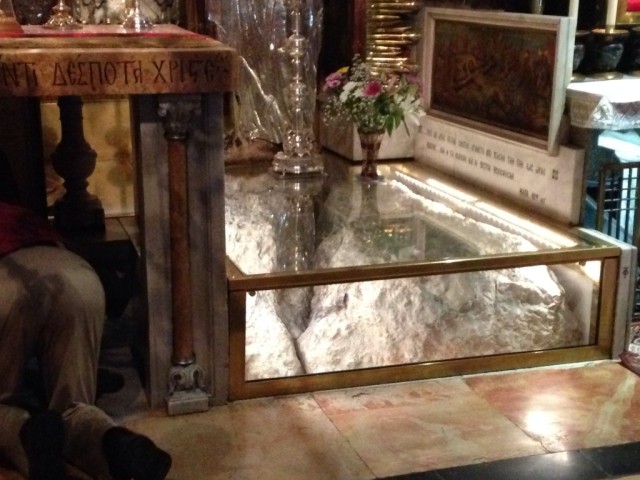
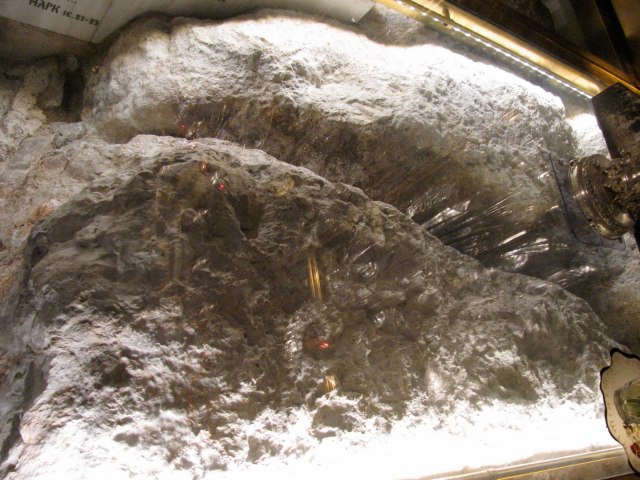
It is near the Monastery of the lentils and it served as a court at the time of Christ, the Roman Headquarters and the Roman governor Pilatus’ house.  In the courtyard of the Praetorium the ultimate sentence of Christ was passed by Pilate the Roman governor. According to the Holy Gospels, Christ was transferred here after he had been seen by Anna and Caiaphas to be judged (Matt. 27:1-31; John 18:28-40). Here began his martyrdom with the scourging, the scarlet robe, the reed, the mocking and the crown made of thorns (Matthew 27). In the Greek monastery there are ancient caves, one of which is believed to have been used as Christ’s temporary prison. The second one, which is underground, is believed to have been used as prison for Barabbas, the robber. There is also the pool of St. Helen where every Great Friday they have the service of the Great Hours. The present Praetorium was built during the 18th century and belongs to the Greek Orthodox. (The Patriarchate of Jerusalem)


prison10Jesus Christ Prisonprison1


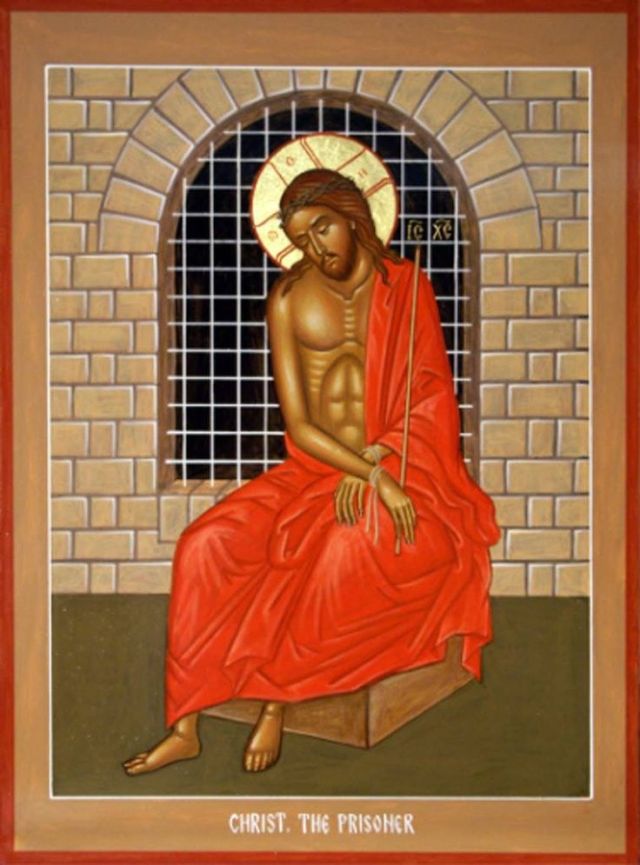
I always visualised Christ as a prisoner like this, and a bit ‘abstract’:

prison11

But no! He must have been like this: 

prison10

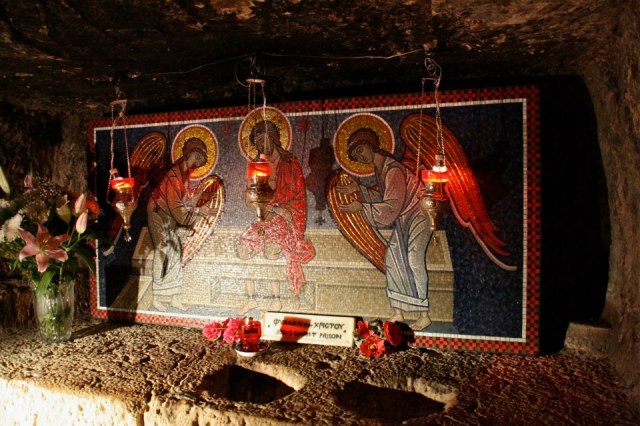
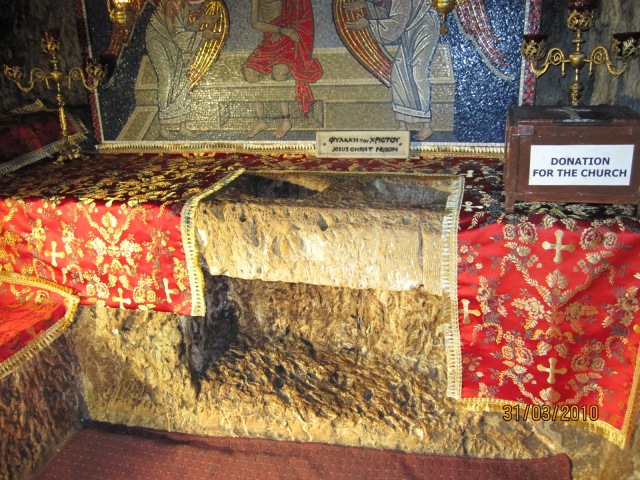
Look again, carefully at these two holes, where they must have placed His legs, and the icon above:

Jesus Christ Prison

I was stunned! Suddenly it all be too real! Such violence and injustice and hubris! And those ancient rocks were so full of Life, exuding the fragrance of Holiness and Sanctity!

Glory to Thy Forbearance, O Lord!

Lord Jesus Christ forgive us the sinners.


Monastery of St. George of George of Hozeva

Monastery of St-george-monastery2

When you first catch a glimpse of the magical St. George’s Monastery (Choziba) in the Judean desert, the Desert Fathers’ Wisdom is brought to life in its uncompromising, breathtaking asceticism. This amazing cliff-hanging monastery, one of the world’s oldest and definitely one of the most inspiring churches in the Holy Land, is a must-see for the desert / archeological fans  / devout Pilgrims.

Monastery-of-St-George

St. George Orthodox Monastery, or Monastery of St. George of Choziba is a monastery located in Wadi Qelt, in the eastern West Bank, in the occupied territories. The sixth-century cliff-hanging complex, with its ancient chapel and gardens, is active and inhabited by Eastern Orthodox monks. It is reached by a pedestrian bridge across Wadi Qelt, which many believe to be Psalm 23’s Valley of the Shadow. The valley parallels the old Roman road to Jericho, the backdrop for the parable of the Good Samaritan (Luke 10:29-37). 

Here’s some beautiful aerial video footage to give you a taste of the area around St. George’s Monastery…


St George’s Monastery can be reached via the main Jerusalem – Dead Sea highway (Road 1). Take a left at Mitzpeh Jericho (or a right if you’re coming from Jericho) and follow the brown signs for Wadi Kelt. You can hike the Wadi all the way to the monastery but it will take lots of hours of arduous trekking in the desert under the blazing sun!  Up and down, for hours, a windy path! Not so easy for seniors or people with disabilities, but there are usually plenty of locals offering their donkeys for the ride (at a cost of course).

Monastery_of_St._George_of_Choziba_13

monastery of saint george 16

Monastery_of_St._George_of_Choziba_12

Monastery_of_St._George_of_Choziba_06

Check out the clip below for a real taste of the walk to St George’s Monastery … When I look at these photographs or watch the videos, I cannot believe I did all this walking!

source

Monastery_of_St._George_of_Choziba_04

St. George’s Monastery was originally started in the fourth century by a few monks who were looking to immerse themselves in the lifestyles and desert stories of  John the Baptist and Jesus. The monks, and perhaps most notably the hermit John of Thebes, eventually settled on the spot around a cave where it is believed the prophet Elijah was fed by ravens (1 Kings 17:5-6). The traditions attached to the monastery include a visit by Elijah en route to the Sinai Peninsula, and St. Joachim, whose wife Anne was infertile, weeping here when an angel announced to him the news of Mary’s conception.


monastery of saint george15

Monastery_of_St._George_of_Choziba_26

The monastery became an important spiritual centre in the sixth century under Saint George of Choziba. Hermits living in caves in nearby cliffs would meet in the monastery for a weekly mass and communal meal.John of Thebes became a hermit and moved from Egypt to Syria Palaestina. The monastery was named St. George after the most famous monk who lived at the site. Destroyed in 614 A.D. by the Persians, the monastery was more or less abandoned after the Persians swept through the valley and massacred the fourteen monks who dwelt there. The bones and skulls of the martyred monks killed by the Persians in 614 A.D. can still be seen today in the monastery chapel. These 3000 and more martyrs’ relics are so alive that during their Supplication canon every week an exquisite fragrance and raw smell of fresh slaughtered blood are alternately exuded from them!

Monastery_of_St._George_of_Choziba_35

Monastery of Saint George

The Crusaders made some attempts at restoration in 1179. However, it fell into disuse after their expulsion. In 1878, a Greek monk, Kallinikos, settled here and restored the monastery, finishing it in 1901. Father Germanos, born Georgios Tsibouktzakis, who came from Thessaloniki, Greece, to St George’s in 1993 and lived there until he was murdered by Palestinian terrorists in 2001, was for many years the sole occupant of the monastery, he was named Abbot in 2000. Emulating the Wadi Qelt monks of late antiquity, Father Germanos offered hospitality to visitors, improved the stone path used by pilgrims to climb up to the monastery, repaired the aqueducts, and improved the gardens of shade and olive trees.

monastery of saint george 11

This is probably the most stunning discovery in the monastery: St. John Jacob (the Romanian) – a Hermit from the Holy Land with complete Incorruptible Relics! He was a great ascetic and a poet. He called himself “the child of zero” who “followed the One”. After his all night- vigils, he would briefly rest in the verandah of the monastery and write his so moving poetry, sadly not translated yet in English. In the next days I plan to translate and post here some of his most moving autobiographical poems. This Saint is famous for his miracles, from the discovery of his relics to nowadays.

This discovery was even more stunning for me personally because my spiritual father had introduced him to me the last day before flying from Lancaster to Greece and then to Tel Aviv. He also gave me a tiny piece of a secondary relic of him. What a ‘coincidence’! I knew nothing about him, other than his name, and then a brief google search, and here I found him most alive and incorruptible! 

Greek Orthodox St. George of Koziba Monastery in Wadi QeltMonastery_of_St._George_of_Choziba_27Monastery_of_St._George_of_Choziba_31


Let me close with Archimandrite Konstandinos, a holy Elder, very special in his hospitality and famous for his clairvoyance gifts.

monastery of saint geroge archimandrite 2monastery of saint george archimandrite Konstandinosmonastery of saint george archimandrite

For more photographs, go here

Monastery_of_St._George_of_Choziba_27

Monastery-of-St-George


Holy Land Pilgrimage: Bethlehem

IMG_5274

IMG_5268

Bethlehem! The birthplace of our Lord and Savior and the cradle of biblical history. Bethlehem (Hebrew: בֵּית לֶחֶםBet Lehem, [bet ˈleχem], “House of Bread”) is located five and half miles from Jerusalem. No town in the world has such a glorious history as Bethlehem. Our Elders together with a number of Holy Land Hieromonks offer a Holy Liturgy at the Church of the Nativity. 

IMG_5260

IMG_5263

IMG_5262

A Greek Orthodox Church, which has been built over the birthplace of Our Lord by the Emperor Justinian and is over 1,500 years old. It is the second oldest Orthodox Church in existence. It was not destroyed by the Persians, as they saw a mosaic of the Magi dressed in Persian wear over the front door. Words cannot communicate what we experienced in venerating and touching the actual ground where Jesus was born. A few feet away is the Holy Manger. 

IMG_5280IMG_5271IMG_5270IMG_5269IMG_5268

IMG_5300

IMG_5299

IMG_5297

IMG_5294

IMG_5293

IMG_5292

Where is Bethlehem?
 
Micah 5:
 
    2 “ But you, Bethlehem Ephrathah, 
      Though you are little among the thousands of Judah, 
      Yet out of you shall come forth to Me 
      The One to be Ruler in Israel, 
      Whose goings forth are from of old, 
      From everlasting.”
“I am the Life” Our Saviour said
 
Where is the house of Living bread?
 
Where does this birth of new life start?
 
The chamber of a loving heart
 
Is Bethlehem.
 St.Athanasius of Alexandria (On the Incarnation, 54): “For He was made man that we might be made God (divine)”
Sunday of the Righteous Forefathers 2009 JAH (Fr. Jonathan Hemmings)

An Orthodox Pilgrimage to St Cuthbert’s Cave


The Church in The British Isles will only begin to grow when she begins to again venerate her own Saints”  (Saint Arsenios of Paros †1877)

At St Lioba’s Church, Beetham

st lioba1st lioba2
st lioba5st lioba4
st lioba3
“Dear friends in Christ
 I forward photos from my little pilgrimage to St Lioba’s Church at Beetham on this her feast day. [+ 28 Sept.]  I prayed for you all in Church and later at her little “shrine.” In the Church porch I saw a little hedgehog enjoying the sun.
Through the prayers of St Lioba Lord Jesus Christ have mercy.
Εν Χριστώ”
 
Fr. J

A Spiritual Father’s Blessing


o-gerontas-paisios-me-ton-geronta-grigorio-kai-tin-gerontissa-efimia-tis-metamorfosisst paisios

Back to Greece  

Holy Monastery of the Honorable Forerunner,

Metamorfosis Village, Chalkidiki

monk-in-sun

Before the little city hermit’s  Pilgrimage to Holy Land

st john the forerunner

ΟΣΙΟΣ-ΠΑΪΣΙΟΣ.jpg

To receive the blessing (ευλογία) of 

St. John the Forerunner

St. Paisios the Athonite

Gerondas Gregorios’, St. Paisios’ tonsure

Gerondissa Eythymia

and + Sister Episteme

Memory Eternal!
22/09/2017

monastiriaB_isixastirio_prodromou_xalkidiki1

monastiriaB_isixastirio_metamorfosi_xalkidiki2


Choice (I)

sad1

“Lord, let me come and join you in that land which beckons me, in those fields that I love.”

“No, it is in this town that you must meet me.”

“Lord, I long for the sun and the wilde flowers over there.”

“I only have this black sky and these thorns to give you.”

“But Lord, there is only noise and smoke here.”

“There is something else as well; there is sin.”

“Lord, I would so like to see again the blue water that you knew!”

“Here, hearts are sick and souls are dying in darkness.”

“Lord, I could perhaps stay if you entered into my heart, if you took my hand. But when I see these streets […] my whole being revolts and escapes in thought over there. Must I therefore still stay here, with my sadness and my solitude?”

“My child, is it so difficult to decide? And to walk where I walk?”

*

Lev Gillet, “Sunday Letters”, ‘Lev Gillet, A Monk of the Eastern Church’ by Elisabeth Behr-Sigel, p231

* Specially dedicated to my spiritual father

Holy Monastery of Zavorda of Saint Nikanor

Za1.jpg


It is the Day of Resurrection! Let us be radiant, O people! Pascha! The Lord’s Pascha! For Christ our God has brought us from death to life, and from earth unto heaven, as we sing triumphant hymns!


Holy Monastery of Zavorda of Saint Nikanor

After about 80 years the Holy Monastery of Zavorda of Saint Nikanor seems that it will once again revive its old and religious and historical splendor.
 
It has been reported that 8 hieromonks, until now, have immediately expressed their interest to continue their asceticism in the historic Monastery in Grevena.
 
In this case they will re-establish the avaton, which prohibits females from entering the Monastery.
 
The avaton of Zavorda Monastery was abolished in the year 2000 by the late Metropolitan Sergios of Grevena, and from that time no hieromonks lived there in asceticism.
 
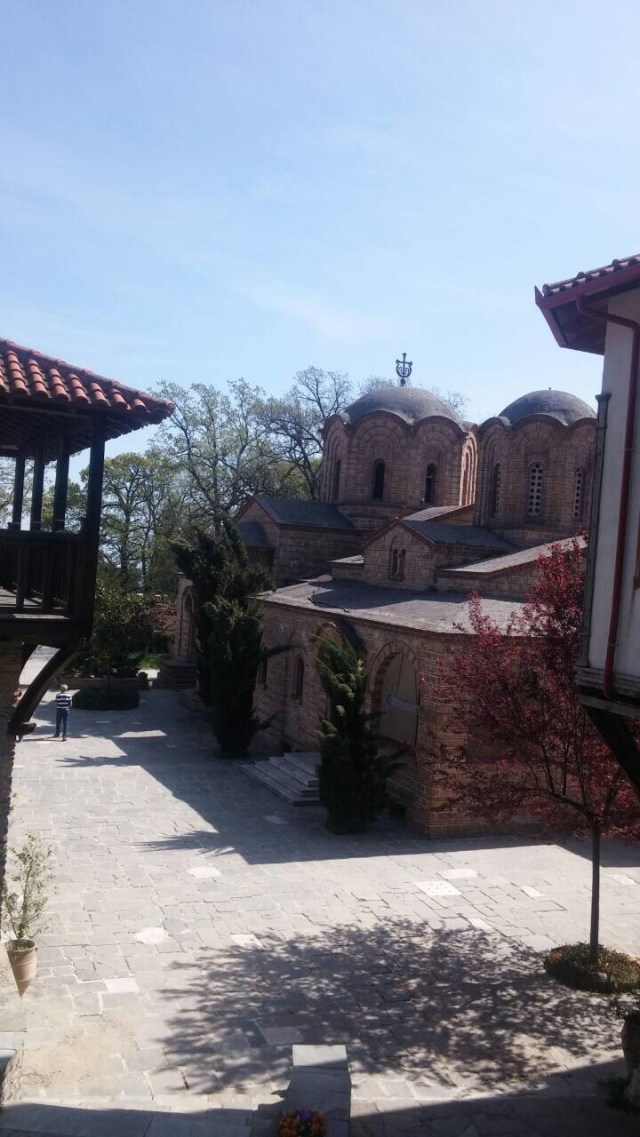
Zavorda Monastery was founded in 1534-1535 by Saint Nikanor and dedicated to the Transfiguration of Christ. It is famous for its icons of exceptional artistic quality and hosts the grave of Saint Nikanor.
 

zaborda-2

zaborda-3

zaborda-4

zaborda-5

zaborda-6

zaborda-7

zaborda-8

zaborda-9

zaborda-10

zaborda-11

zaborda-12

zaborda-13

zaborda-14

zaborda-15

zaborda-16

zaborda-17

zaborda-18

zaborda-19

zaborda-20

zaborda-21

zaborda-1

The Angel cried to her who is full of grace: Rejoice, pure Virgin! And again I say, Rejoice! Thy Son has risen on the third day from the grave. Shine, shine, O New Jerusalem, for the glory of the Lord has risen upon thee. Now dance for joy and be glad, O Zion! And thou, pure Mother of God, rejoice in the rising of Him Whom thou didst bear.

Monastic Tonsure

ΚΟΥΡΑ ΔΥΟ ΝΕΩΝ ΜΟΝΑΧΩΝ ΣΤΗΝ Ι. ΜΟΝΗ ΑΓ. ΝΙΚΑΝΟΡΟΣ ΖΑΒΟΡΔΑΣ

20170301_12393120170301_12511020170301_13135420170301_13181220170301_13200220170301_13242220170301_13270920170301_13281220170301_13355920170301_13373520170301_13531220170301_143749


*The Paschal Canon was composed by the great Saint and Father of our Church, Saint John Damascene and is described as the most glorious of all hymns in the Orthodox Church; it has been called the Queen of canons because it exclaims the richness of Orthodox theology surrounding this great and holy feast.


Christ is Risen!


Saint Winifred and her Holy Spring


Icon of St. Winifred, painted by a modern Orthodox iconographer.
+ Commemorated November 3/16 
On March 1st, St. David’s Feast, we made a pilgrimage to St. Winifred’s Holy Well
img_0730
 

St. Winifred, whose name in her own language was Gwenfrewi, was born in North Wales in the early seventh century, when Christendom was still whole, and many great saints where living on the British Isles. She was of noble lineage, a descendant of the early Welsh kings of Powys, and the only daughter of Tyfid, Lord of the townships of Abeluyc (Trefynnon, later named Holywell), Maenwen & Gwenffynnon in Tegeingl. Her mother’s brother was St. Beuno, Abbot of Clynnog Fawr in Gwynedd. After difficulties he had encountered from the local princes of Clynnog, St. Beuno sought refuge with his sister’s family, and thus received land from her husband, Tyfid. From an early age, Winifred was instructed in the spiritual life by her uncle, and her sole desire was to dedicate herself to God and become a nun. She lived under St. Beuno’s care, near a chapel he had built in her native town of Abeluyc.


One Sunday, while St. Beuno was serving the Liturgy at the church, Winifred was alone in her house. A prince named Caradog was riding by, and stopped at the house to ask for a drink of water. Winifred was very beautiful, and Caradog was stricken with the desire to have her in marriage. The maiden’s resolve to preserve her virginity and become a nun was unshakeable, however, so the prince attempted to take her by force. Winifred struggled free and ran toward the church, but Caradog soon caught up with her on his horse. Out of anger at the refusal, he struck off her head with his sword. Her severed head rolled down the hillside to the churchyard. When her uncle and the congregation—which probably included Winifred’s other kin—saw what had happened, they were horrified. The wicked Caradog fell dead on the spot. (Other historical sources say that Caradog was killed by Winifred’s brother, Owain, as an act of revenge.)

A spring of healing water sprang forth at the place where St. Winifred’s head fell. St. Beuno took Winifred’ head and replaced it to her body, then prayed to God that she be restored whole. By St. Beuno’s prayers, Winifred came back to life. The two sat on a rock which was later named, “St. Beuno’s rock,” and her uncle told her that anyone seeking help through her prayers at that spot would find it. A red mark remained around her neck, as a remnant of her miraculous restoration.

With her parents’ blessing, Winifred soon received the monastic tonsure at her uncle’s hand. St. Beuno advised Winfred to remain at that church to live the monastic life, which she did, eventually gathering around her eleven honorable virgins, and instructing them in the Christian faith. St. Beuno himself became a missionary, traveling west to Ireland.

St. Winifred made a pilgrimage to Rome, and was greatly influenced by the order of monastic life there. When she returned home, she called a synod known as the “Synod of Winifred,” attended by other Christian ascetics of Wales, Dumnonia, and the North. The common ascetic practice in Wales at the time was the eremitic life. At the synod, all agreed that the safety of the coenobitic life she led was preferable to the solitary life. Thus, after seven years in Abeluyc, Winifred decided to go out and help establish other coenobitic communities. It is said that two hermits she approached with the idea, Sts. Diheufyr and Sadwrn, were not interested in what seemed to them an innovation. It was not until she reached Gwytherin that she was welcomed by her mother’s cousin, St. Eleri. Here, Winifred was presented to his mother, St. Tenoi, and together they established a double monastery in the village.[1] Winifred eventually succeeded St. Tenoi as abbess there.

St. Winifred reposed on November 3, 660 AD, and was buried in the monastic cemetery.

Recently a fragment of an eighth-century reliquary from Gwytherin, the Arch Gwenfrewi (Winifred’s Casket), was found, witnessing her status as a recognized saint almost from the moment of her death, the earliest such surviving evidence for any Welsh saint.

Veneration of the saint was mainly limited to Wales until the late eleventh, early twelfth century, when it began spreading throughout the British Isles. Other wells have been recorded as dedicated to her, including one in Dublin, Ireland. In 1136. Her relics were translated to an ornate shrine in Shrewsbury, while her original tomb was retained at Gwytherin and a fragment at Holywell. The spring that had broken forth in Holywell on the site where her severed head fell is still active; the temperature of the water never changes, summer or winter, and the supply remains constant regardless of drought or flood in the locality. It is so clear that the pebbles at the bottom are distinctly seen to be stained as though with blood. It is lined with fragrant moss, the Jungermannia oplevoides.[2]

*   *   *

Holy springs are still a strong tradition in Orthodox countries—among them are the spring of St. Athanasius on Mt. Athos, the spring of St. Theodora of Vasta in Peloponnesus, and the many holy springs connected with saints and the Mother of God in Russia. History shows that there were also many holy springs in Britain during its pre-schism period, but the miraculous spring of St. Winifred is now one of a kind there. The following description of her spring in the town which is now named for it, Holywell, is from Source, “Holywell – Clwyd” by Roy Fry & Tristan Gray Hulse.

HOLYWELLHolywell first enters written history in 1093, when “Haliwel” was presented to St. Werburgh’s Abbey, Chester. In 1240, the Welsh prince Dafydd ap Llewelyn, once more in control of this area in Wales, gave the holy well and church to the newly-established Basingwerk Abbey; and the Cistercian monks cared for the well and its pilgrims until the Reformation.

Winifred’s fame, and with it the fame of the Well, continued to spread throughout the middle ages, but little is factually recorded about the pilgrimage. By 1415, her feast had become a major solemnity throughout Wales and England. Kings could be found among her pilgrims. Henry V came in 1416. Richard III maintained a priest at the Well. But it was during the reign of the Welsh Henry VII that devotion reached its pinnacle, with the building of the present well-shrine under the patronage of Henry’s mother, Margaret Beaufort.

saint-winifred-and-her-holy-spring1saint-winifred-and-her-holy-spring3

Such glory was short lived, though the Well’s fame was never eclipsed. The Reformation swept away shrines and pilgrimages; but no attempt ever quite succeeded in destroying devotion to St. Winifred at her Well. Through all the years of religious persecution, pilgrims, Catholic and non-Catholic alike, continued to visit Holywell. It became the centre of Catholic resistance. James II and his queen visited the Well in 1686, to pray for an heir. But James was exiled, and the persecution renewed. Through these long years, Holywell and its pilgrims were served by the Jesuits. They wrote popular Lives of the saint; and even kept inns in the town, where Mass could be said in comparative safety.

In the nineteenth century, after Catholic Emancipation, it was the Jesuits who oversaw and directed the spectacular renaissance of the pilgrimage. A church opened in the town in the 1840’s was constantly enlarged and enriched. A pilgrim’s hospice was erected shortly afterwards. And under Fr. Beauclerk in the ‘nineties, the pilgrimage underwent a revival of medieval proportions. Pilgrims came literally in thousands, necessitating a branch rail line into the town. The popular press gave account of each reported cure. And the sick reported cures in such numbers that Holywell came to be called the ‘Lourdes of Wales’. Despite the alterations to pilgrimage patterns caused by the increasing secularism of 20th-century life, and by devotional changes within Catholicism itself, the Jesuit’s heritage continues: people are still coming to Holywell on pilgrimage.

THE WELL CRYPT AND CHAPEL

Unlike Gwytherin, with the grave and other relics of the saint, or Shrewsbury Abbey, which after 1138 enshrined Winifred’s body, the Holywell pilgrimage has always centred on the Well itself. A church, almost certainly on the site of the present Anglican church of St James, over-looking the Well, has stood by the Well, certainly since 1093 and probably since Winifred’s own time. And there may perhaps have been a further small chapel, connected more directly with the Well. But we have no indication as to the form of the Well itself throughout the middle ages. Celtic holy wells take many individual forms, and it is possible that until the end of the fifteenth century there was no form of structure at all around the spring itself, which is what the medieval Welsh votive poems suggest. The sheer force of the spring would support this.

The present glorious structure was begun around 1500 and probably took ten or fifteen years to complete. It is unique, having no parallel anywhere in Europe; and is a masterpiece of late Perpendicular architecture. It takes the form of an almost square crypt, built into the steep hillside, but open to the North through a triple arcade which gives access to the Well. In the centre the spring rises in a star-shaped basin, before flowing into an oblong bath, access to which is gained at either end by steps. All around the Well, graceful columns rise to support the elaborately vaulted roof; and in the centre, directly over the source, is a large pendent boss, beautifully carved with the legend of St Winifred, but now badly worn. Originally, the spaces between the columns were filled with delicate Gothic tracery, destroyed by the Puritans. An open gallery in the west wall originally gave the pilgrim his first glimpse of the holy well as he descended from the chapel above, to enter the crypt through the now closed door.


The chapel comprises a nave and a side-aisle, and is built directly over the crypt, with which it is contemporary. At its east end an apse was built out onto the hillside to contain the altar. The well-crypt has never ceased to be used for its original purpose, but the chapel has seen many changes of use, used at times as a court-house, at others as a school. In consequence, it suffered great damage, but it was thoroughly restored and re-roofed in 1976. Both the interior and exterior of the chapel are enriched with fine, and often amusing, sculptures.

Considering the superior quality of the architecture, and the degree of technical skill required to build directly over the source of a small river, it is odd that not a single hard fact concerning its construction has survived. We do not know the name of its architect, nor the name of those who commissioned and paid for the shrine: not even the dates of its construction. The building itself yields the only clues. The emblems and coats of arms carved on the bosses of the crypt ceiling suggest the patronage of Margaret, Countess of Richmond and Derby, the pious mother of Henry VII. Margaret died in 1509. The arms of Catherine of Aragon suggest further royal patronage; and yet other badges indicate the beneficence of other noble families. Such patronage, which alone could account for the building’s splendour, is also the only real clue to dating it to the first decade of the sixteenth century.

Though its exact history will probably always remain a mystery, the shrine remains a fitting setting for the only British pilgrimage to have survived continuously for over 1300 years.

THE HOLYWELL CURE TRADITION

People have bathed in St Winifred’s Well for 1,350 years. They still do. Pilgrims today pass three times through the small inner bath, saying a decade of the Rosary; afterwards entering the outer pool to finish their prayers kneeling on St Beuno’s Stone, by the steps. Some pray for a cure; more “offer up” the discomfort of the icy waters for friends, or simply in honour of St. Winifred, or as a gesture of thanks. Pilgrimage has many reasons.

This ritual is as old as the pilgrimage itself. Maen Beuno, Beuno’s Stone, connects us directly with the time of St Winifred. The Medieval Lives say that Beuno sat on this stone when he told Winifred that anyone coming to the Well and asking something in her name, “might receive an answer to their request at least at the third time.” This was understood to mean that the petitioner should bathe three separate times. After the building of the present Well this meant three dips in the little bath. A carving opposite this bath shows how healthy pilgrims carried the sick through the waters on their backs. The stonework of the Well is covered with hundreds of graffiti, initials of hopeful or grateful pilgrims. Some inscriptions explicitly testify to cures received at the shrine.


The exterior pool formed no part of the original building, being added later; but its size witnesses to the crowds of pilgrims who came even during the times of religious persecution. Nor was their faith in vain. For 800 years there is a continuous record of cures and other favours claimed at the Well through the prayers of St Winifred—the only British shrine boasting such an uninterrupted history of pilgrimage and healing. Until the 1960s, the crypt was stacked with crutches left by cured pilgrims. Centuries of letters testify to the power of God and His saints in this place: records of cures not only of Catholics, but of Protestants; and even of those with no faith in anything. One account, touching in its simplicity, a scrap of paper left at the Well 100 years ago, can stand for all the rest:

A Protestant Father wishes to return thanks to God that through the use of St Winifred’s water, his only daughter was cured miraculously, Three years ago of a serious malady, which had resisted the efforts of several doctors & friends for the period of Three and a half years. Signed, C.T. Longley.

[1] Britannia Biographies, http://www.britannia.com/bios/ebk/winifred.html. Partly edited from Agnes Dunbar’s A Dictionary of Saintly Women (1904).

[2] Ibid.
St. Winifred’s life compiled from various sources by Pravoslavie.ru/Orthodox Christianity