Auld Reekie Sailtír

edin10

“Holiness in the Bible” Study Weekend: Highlights (II)

Orthodox Fellowship of St John the Baptist

Orthodox Community of St Andrew the Apostle in Edinburgh


edin11church1.jpg

What follows is a small antidoron (*) for all the blessings I tasted in this retreat! I have already made up my mind that I will be going back to this parish on the regular! Thanks for having us St Andrew’s parish! 

Friday 20/1/2017

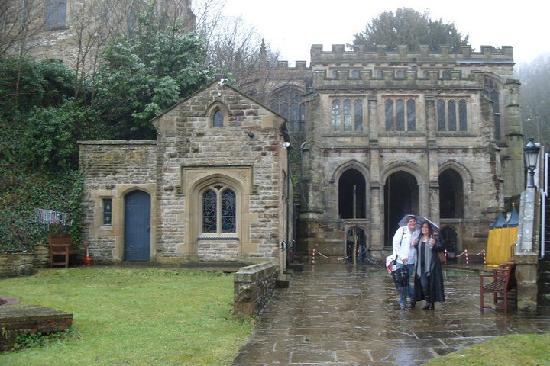
6pm arrival and registration, though I did not make it on time, as the weather was unexpectedly fair and bright, and Edinburgh sightseeing was irresistible. Famous for its medieval skyline and whisky trails, this is a city with plenty to see and do, even for a little hermit 🙂 I tried to take in as much as I could the colorful views from atop Edinburgh Castle and Arthur’s Seat, enjoyed a crisp seaside stroll along Portobello Beach, wandered the historic Royal Mile, and dashed to the parish, as I was late 🙂  Sighteseeing photos at the end of the post (*)

*

This delightful and diverse community is a Panorthodox haven, an icon of the catholicity and universality of Orthodoxy with many Greek, Cypriot, Romanian, Russian and Ukrainian immigrant families, as well as British converts and American expats. It has for its church a small but cozy house at 2 Meadow Lane. This is located right next to the Meadows, a lovely series of parks and fields roughly analogous to New York City’s Central Park. (Orthodox in the District)


meadows5

meadows1meadows4meadows3

Need exercise? Edinburgh is hillier than either Rome or San Francisco. Exploring the city even for half a day rehabilitated many long neglected muscles of mine!

church4

Friday 20/1/2017 Cont.

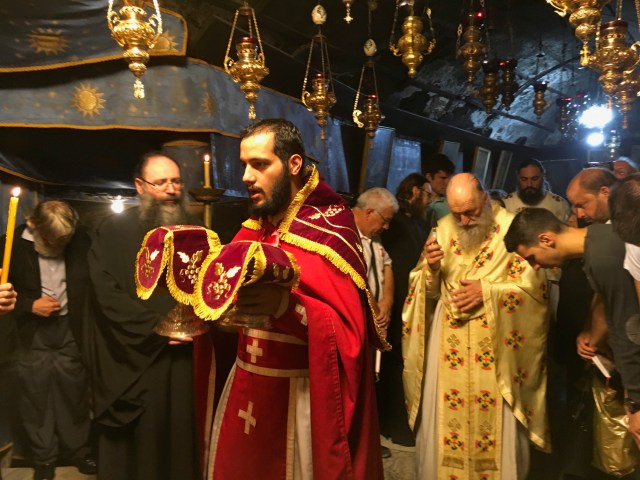
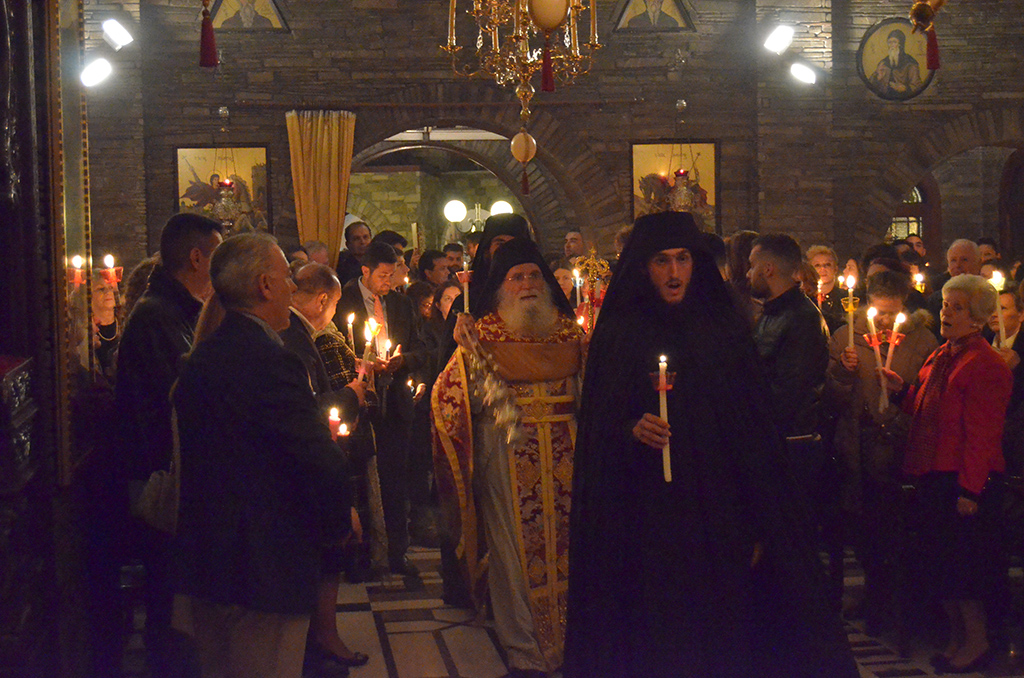
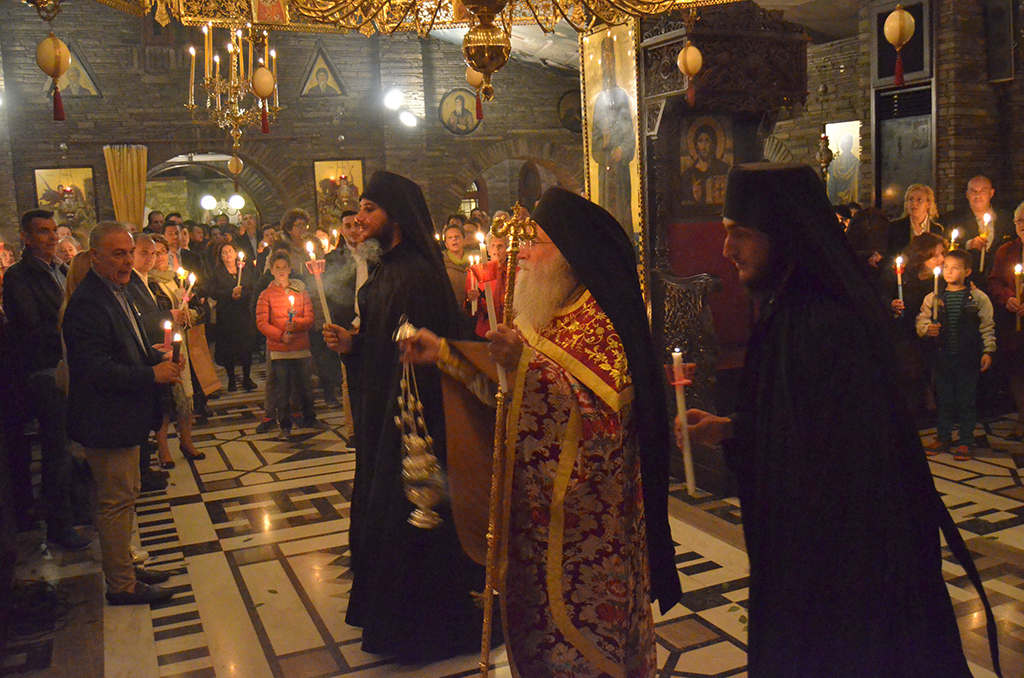
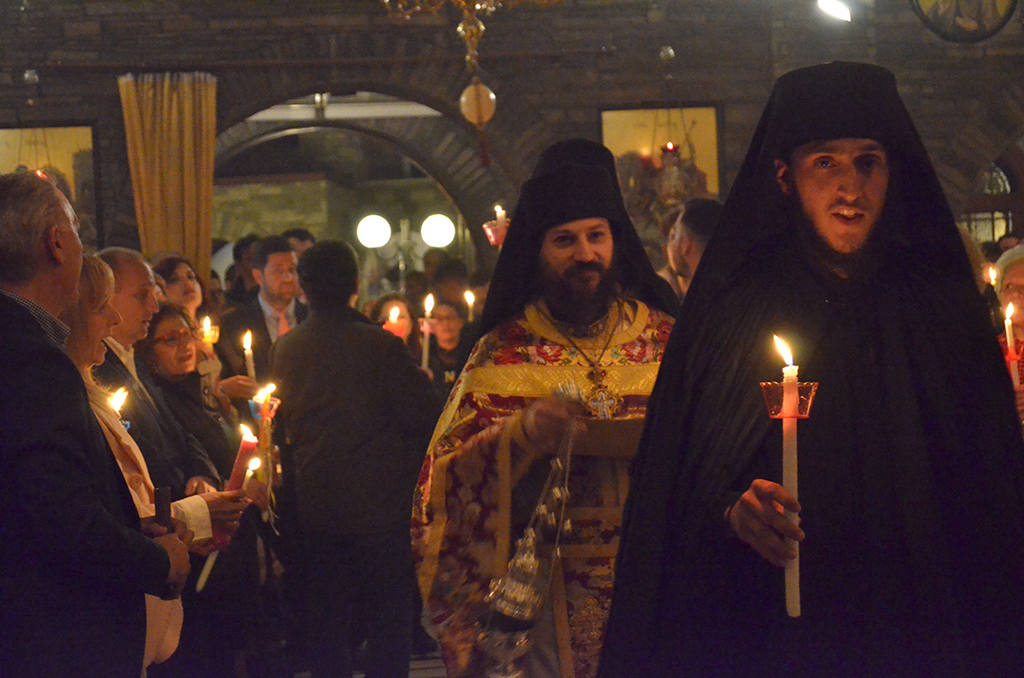
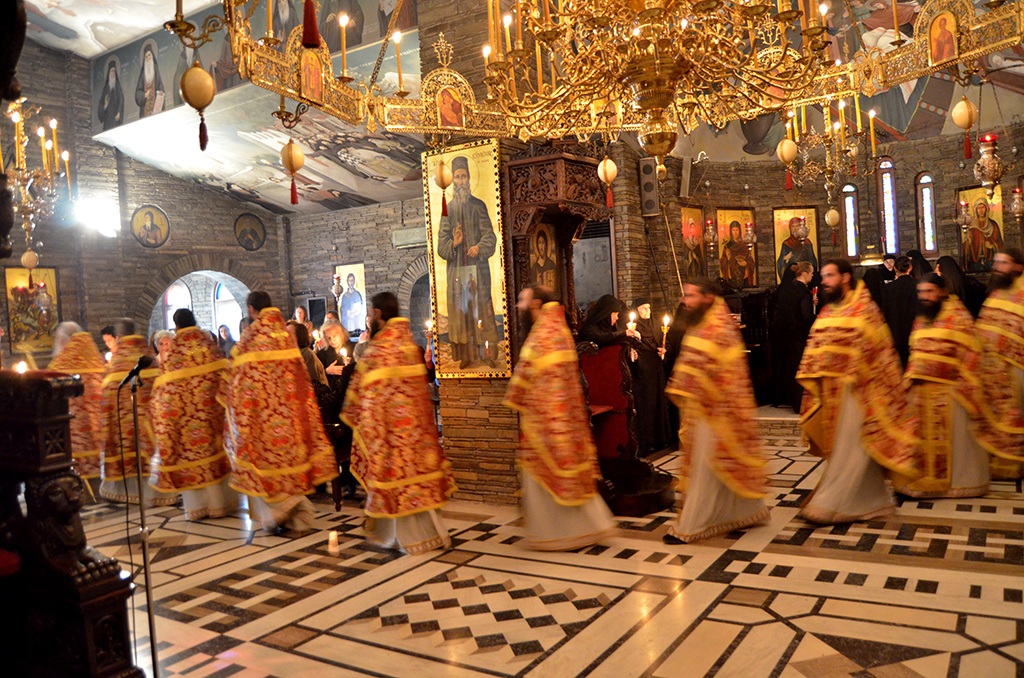
6:30pm Vespers. One immediately senses what a warm, close-knot Orthodox community this is.

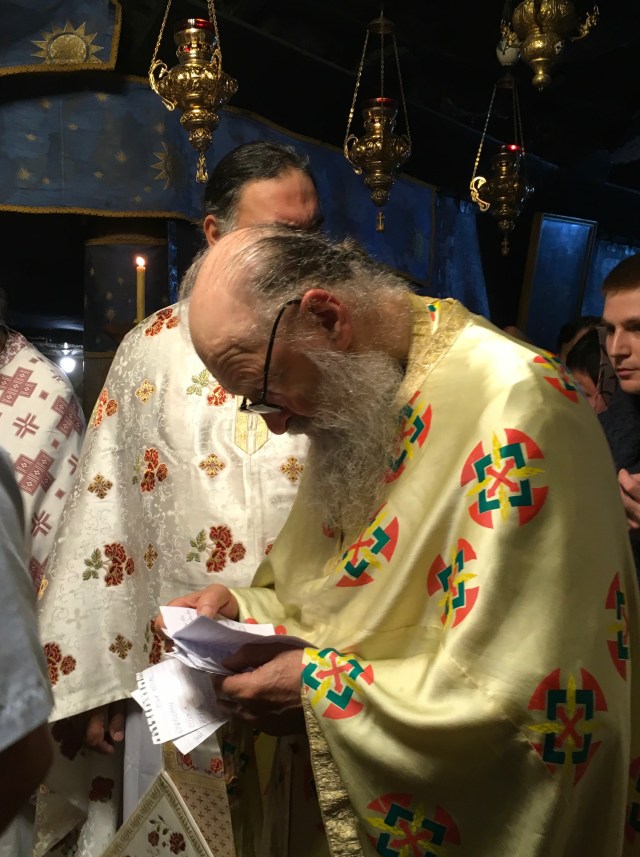
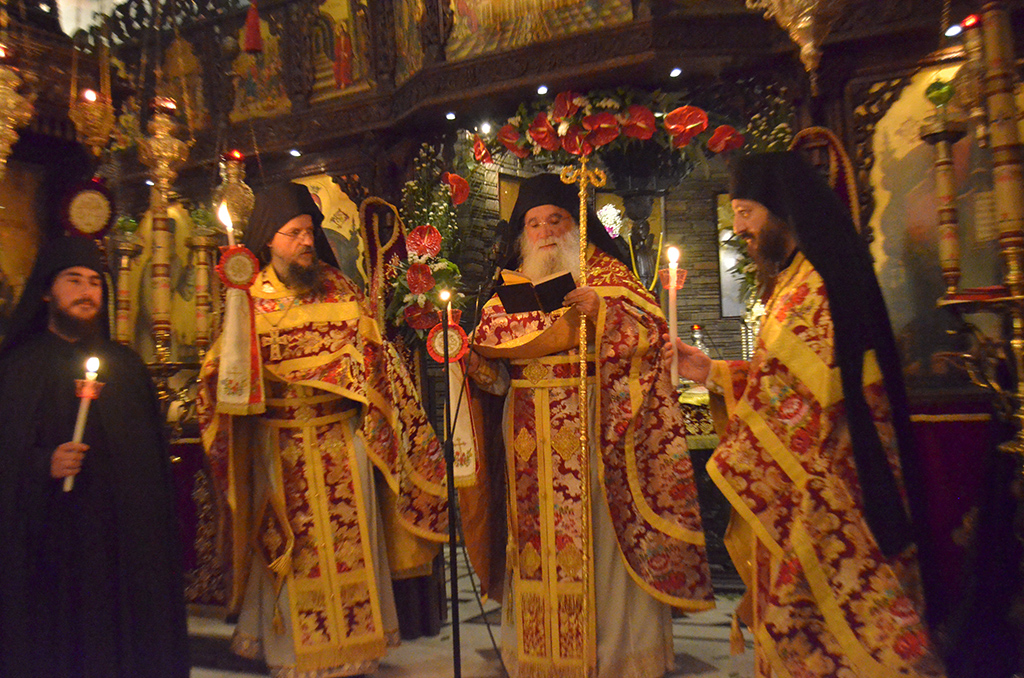
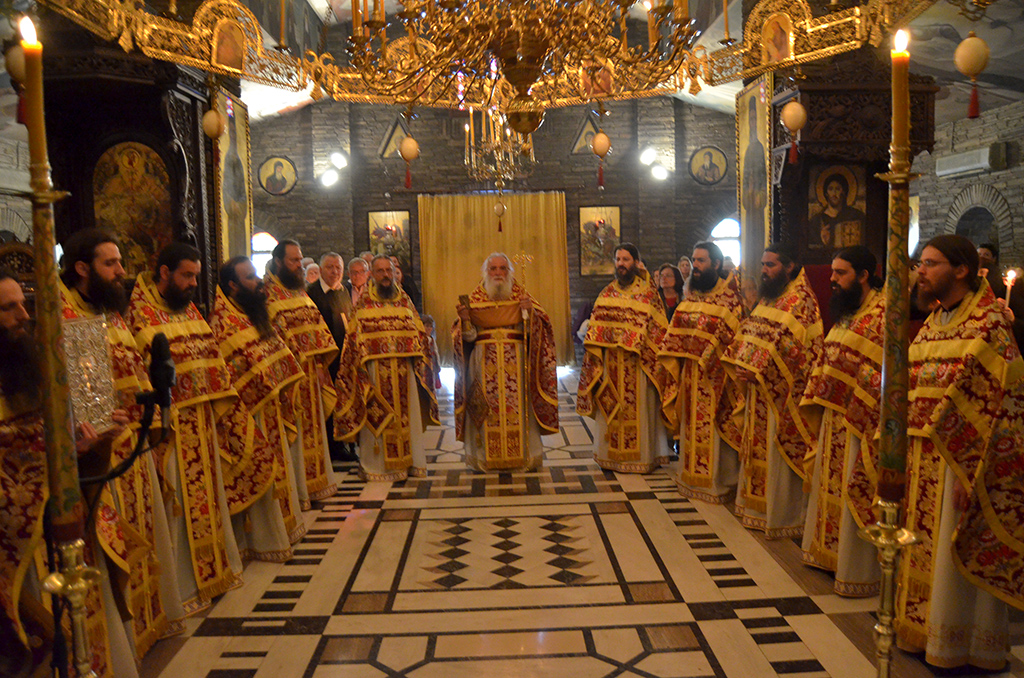
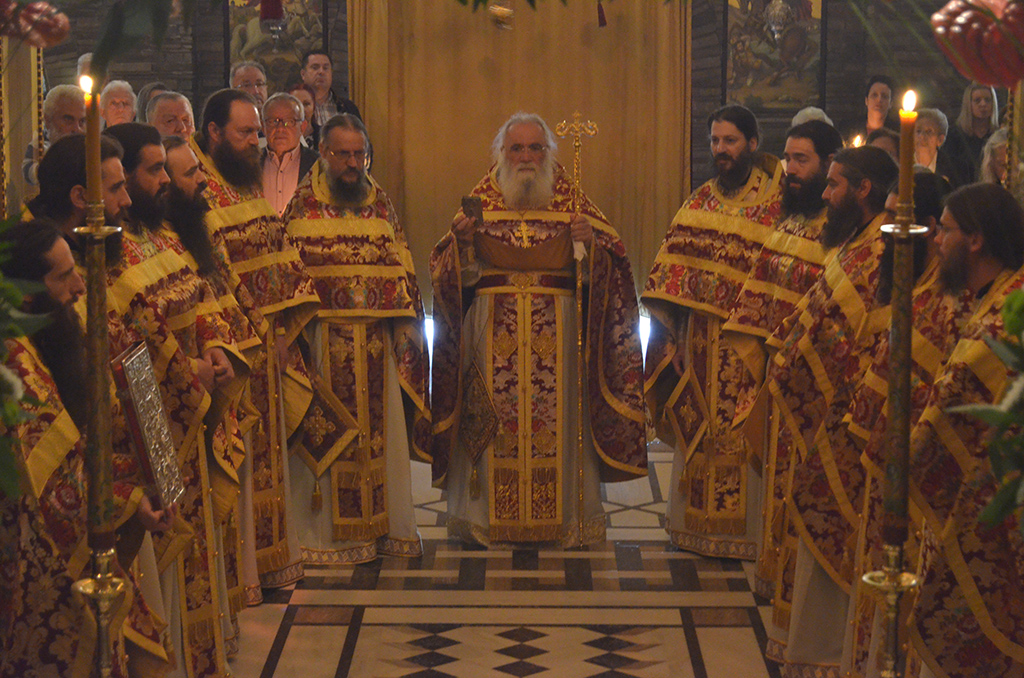
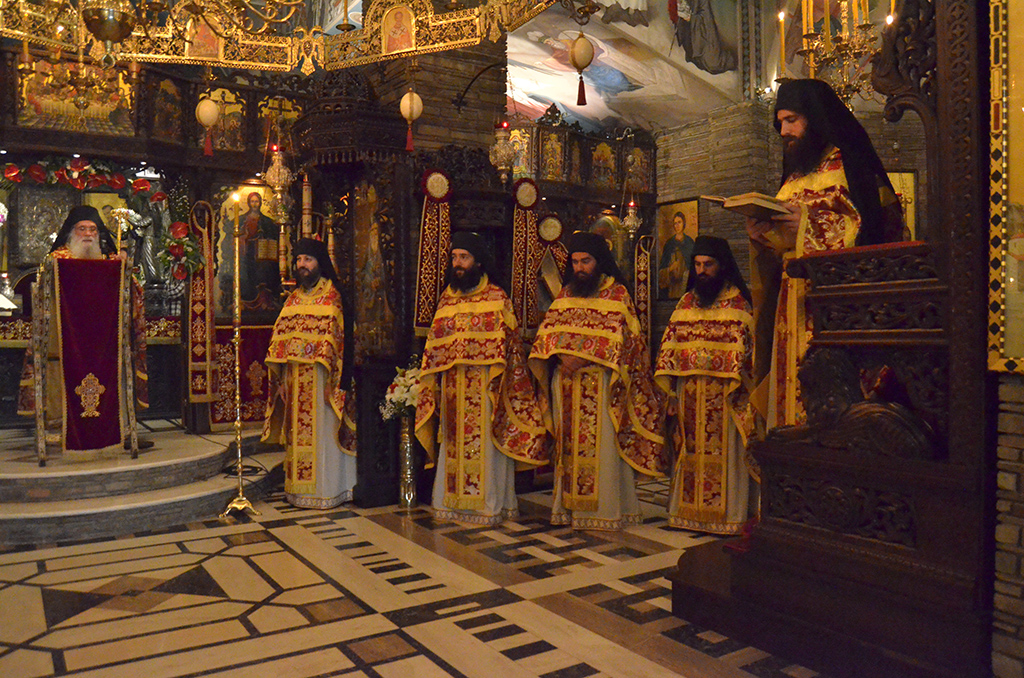
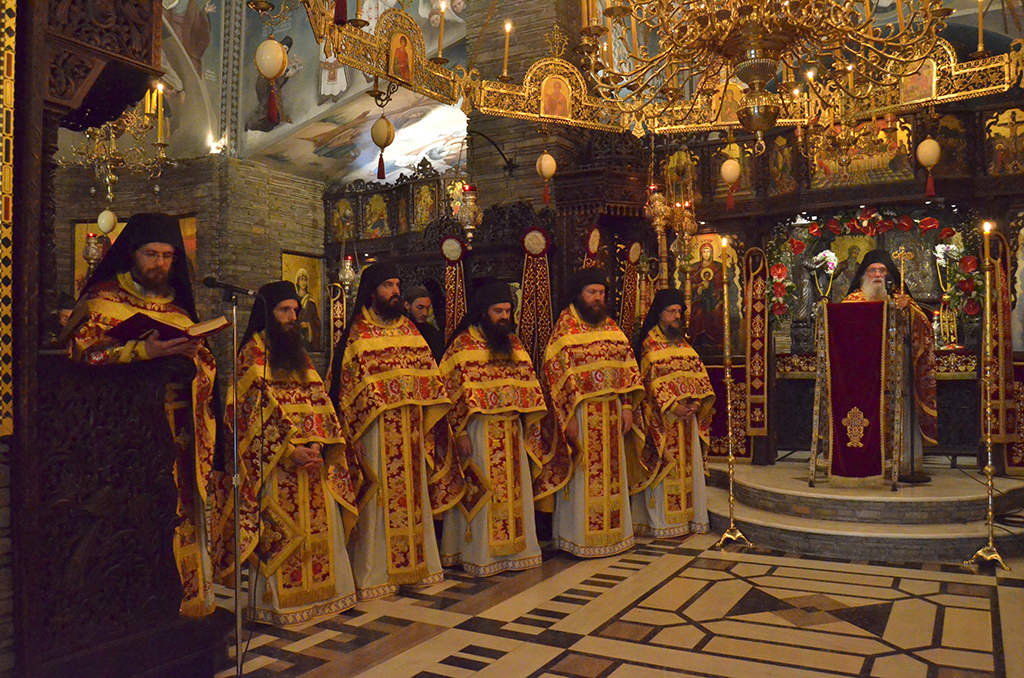
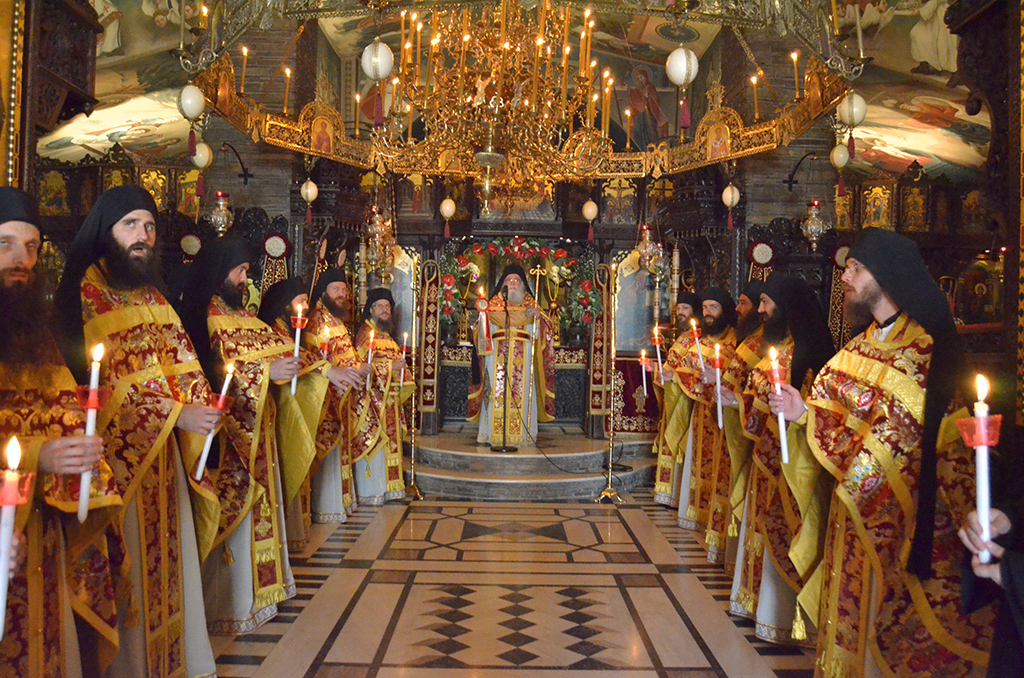
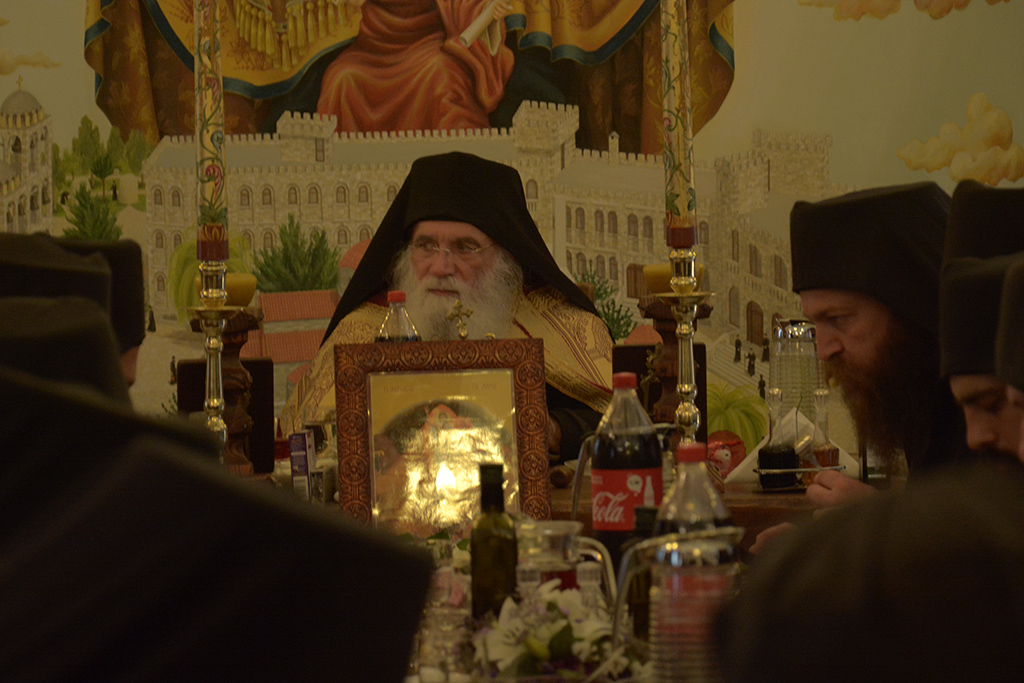
7:30pm  Archimandrite  Fr. Raphael Pavouris, , a wonderful Greek hieromonk who spent time on Mount Athos, offers a homily on Holiness in the Bible, followed by dinner and evening prayers.

Margaret: This evening at the study weekend, after Vespers for St Maximos:
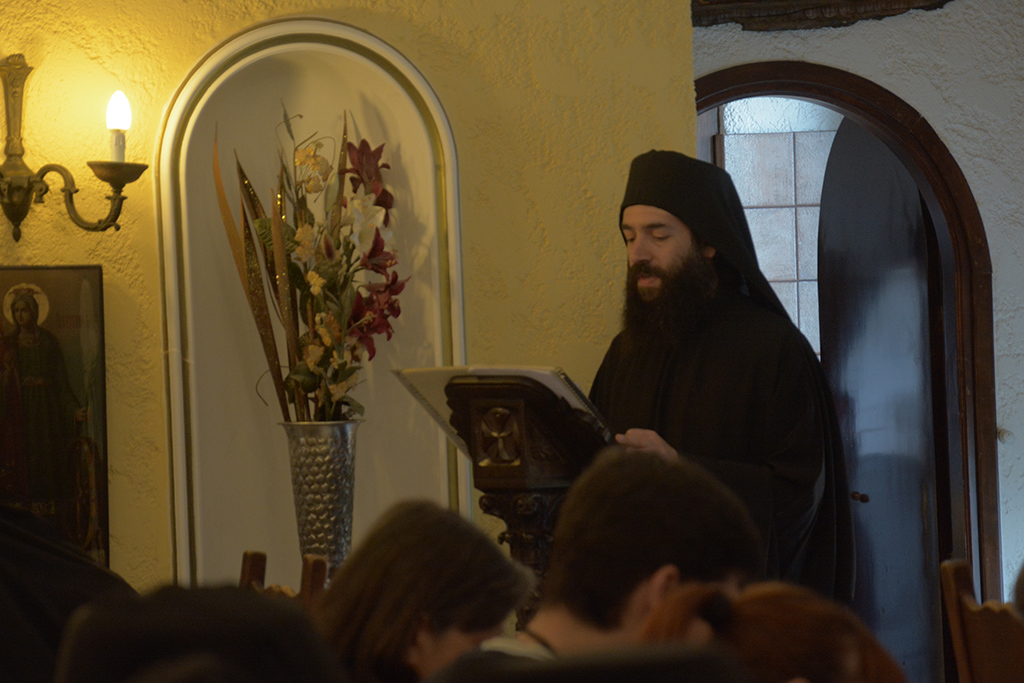
Fr Raphael gave us a talk on Holiness in the Bible. The Bible is holy in itself and was inspired by the Holy Spirit, but is also a call to holiness through examples (Elisha giving himself fully to the call), visions of holiness (Isaiah 6) and reminders that we are being sanctified through that call. 
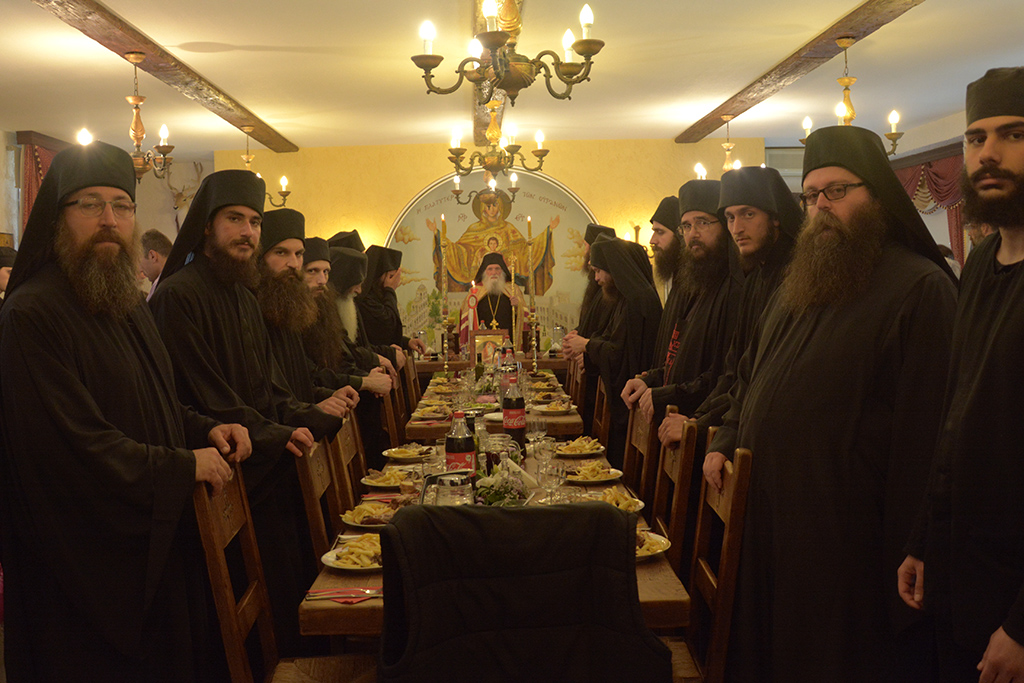
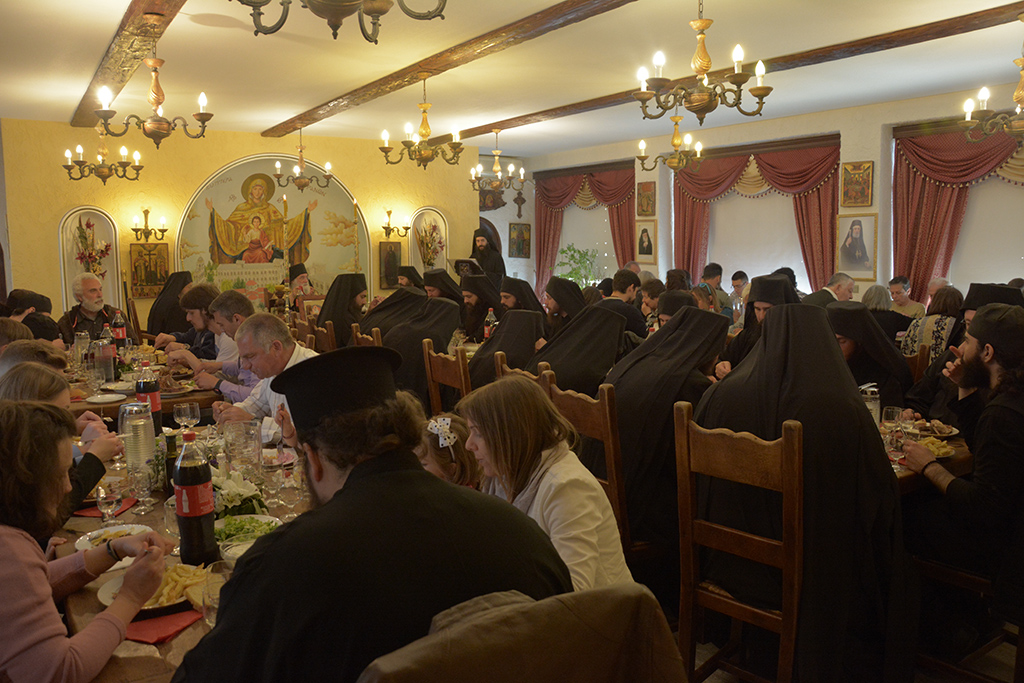
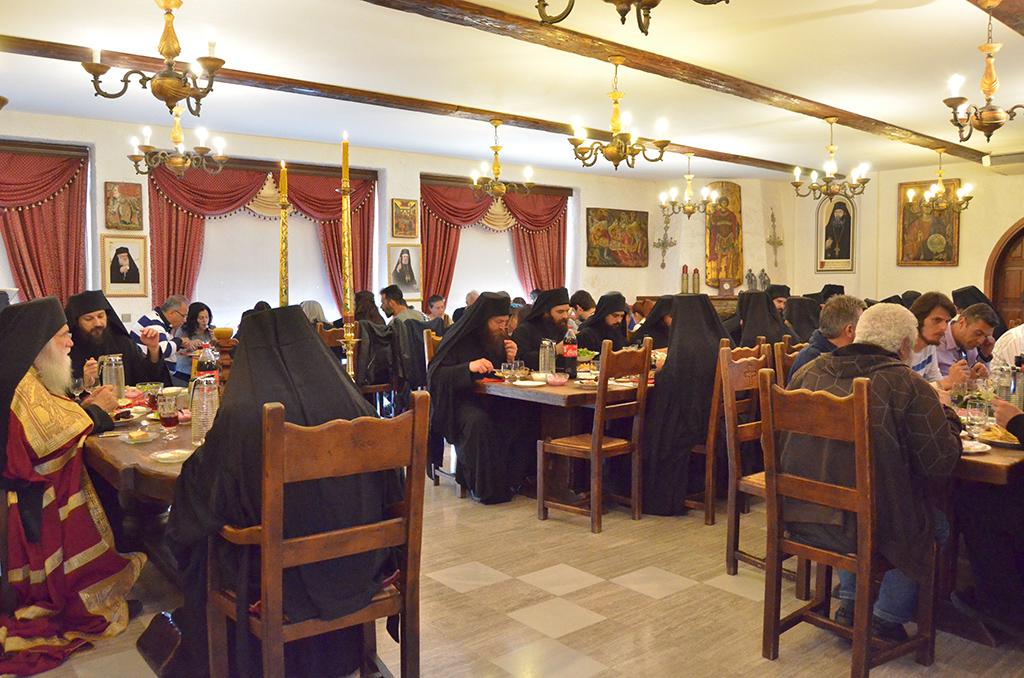
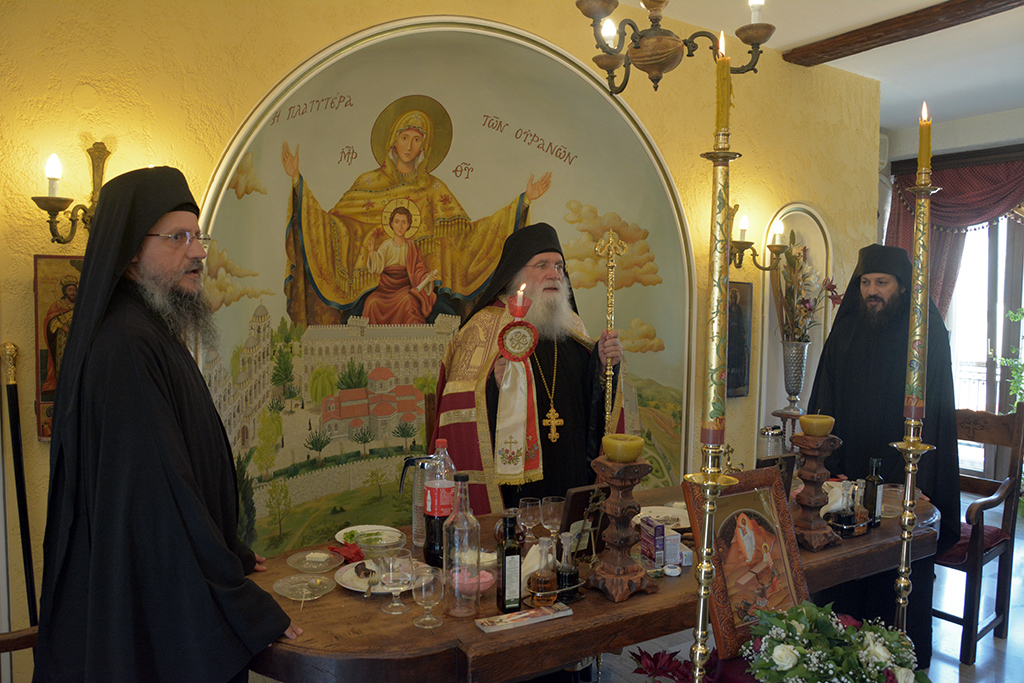
We then shared an Agape meal, both visitors for the weekend and local parishioners. A wonderful start to the Fellowship’s first study weekend in Scotland, at the Parish of St Andrew in Edinburgh.


sos-father-avraamy-and-father-raphael

Father Avraamy (Neyman), left, and Father Raphael (Pavouris), right. These exceptionally kind men are pillars of the Orthodox communities in Scotland.

fr-mark-glasgow


Saturday 21/1/2017
 

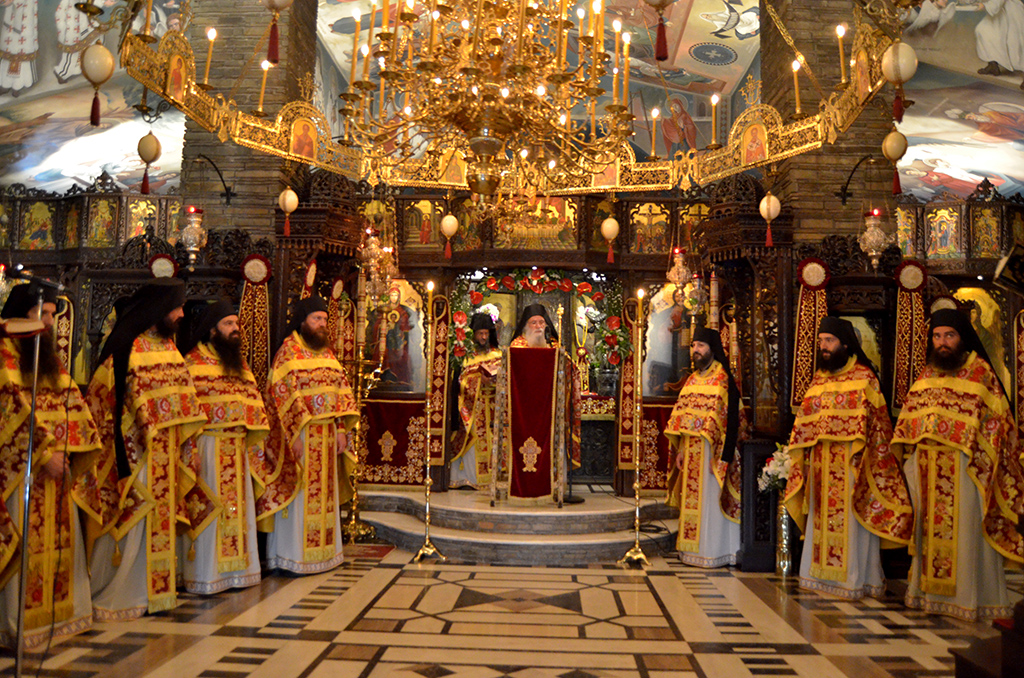
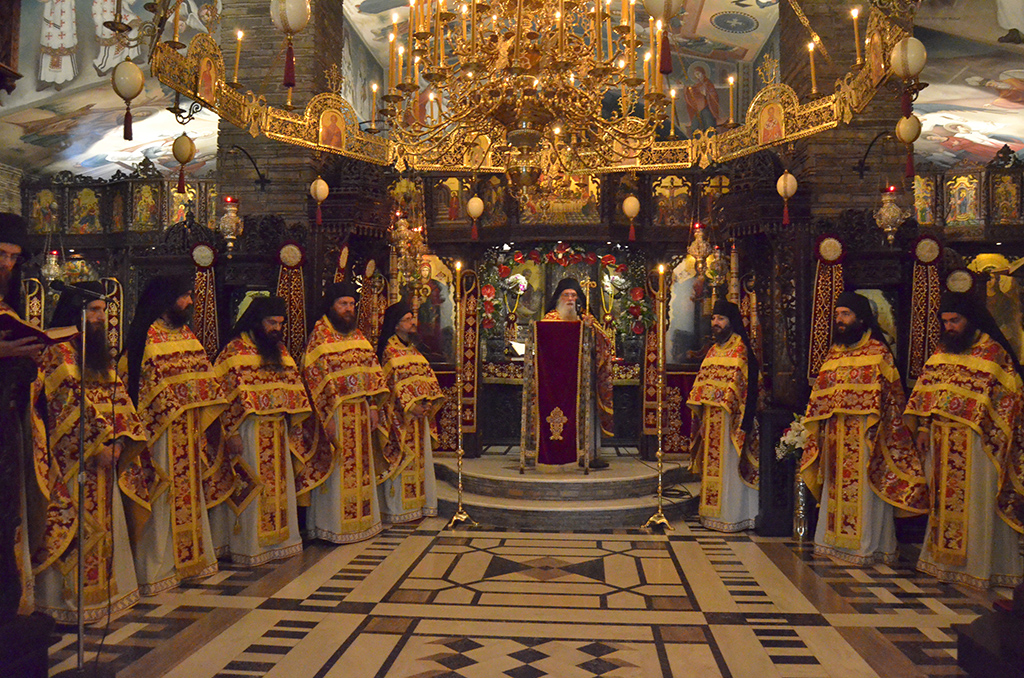
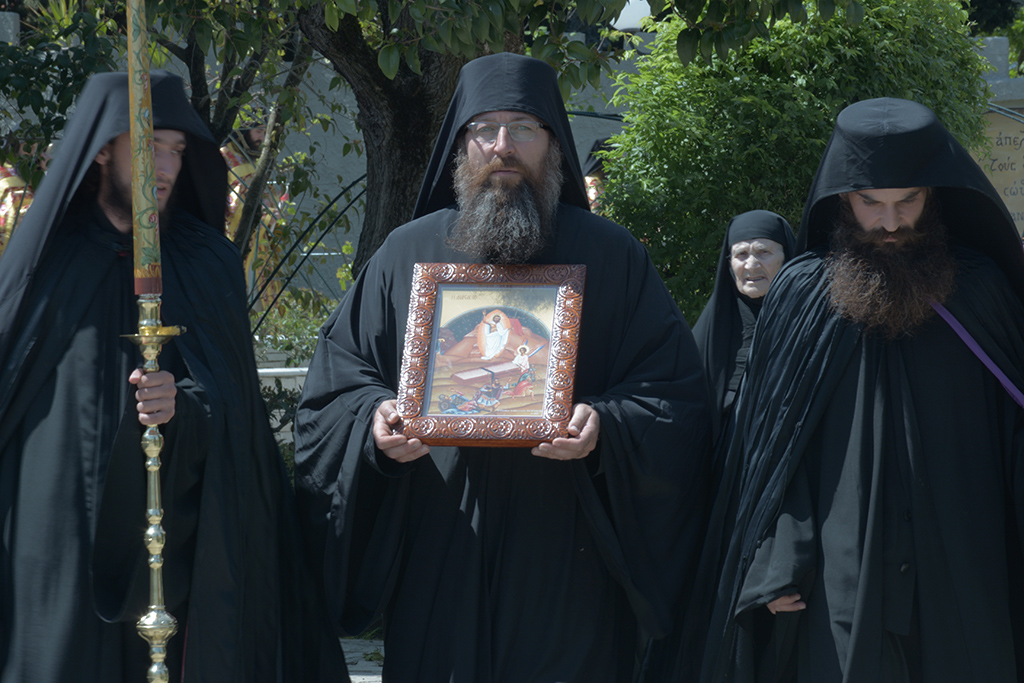
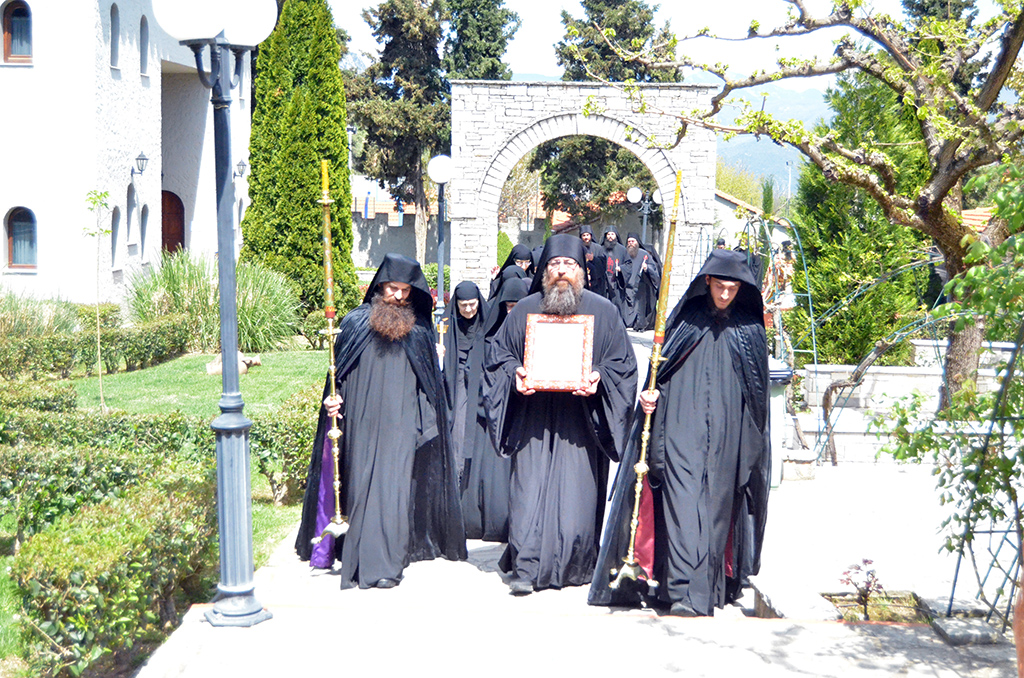
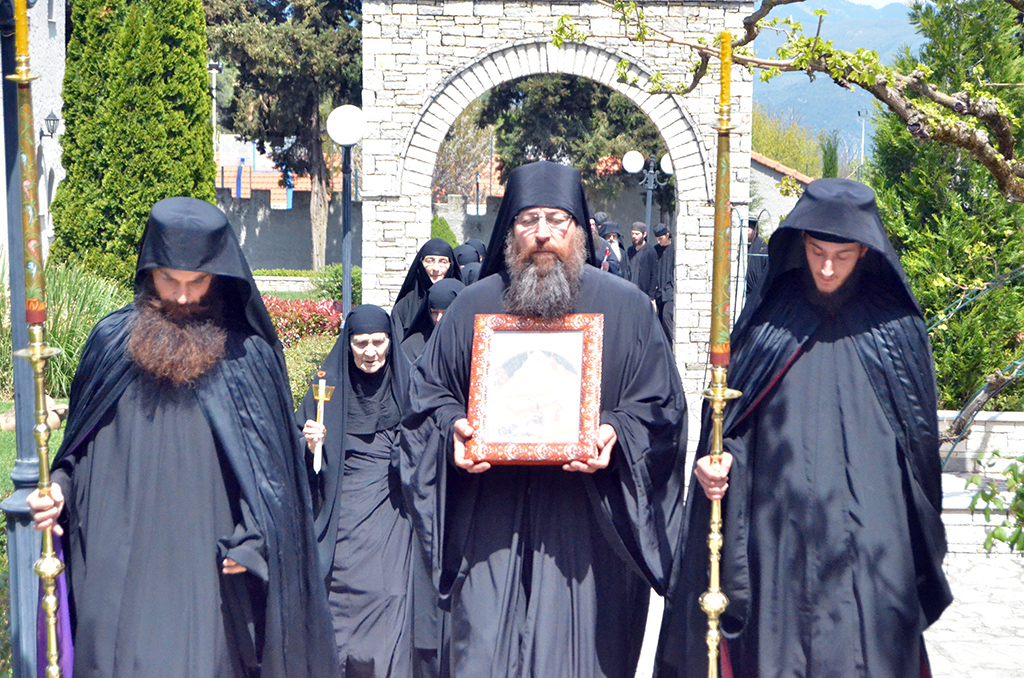
Matins was chanted in Russian style by Fr. Luke Jeffrey and his KhouriyaI also met in the church Fr. Michael Harry and his Khouriya, all four of them ‘converts’ and most humble and compassionate.


fr-luke

Saturday Church Services with Presbyter Luke Jeffrey (Photo from Fr Luke’s Ordination)

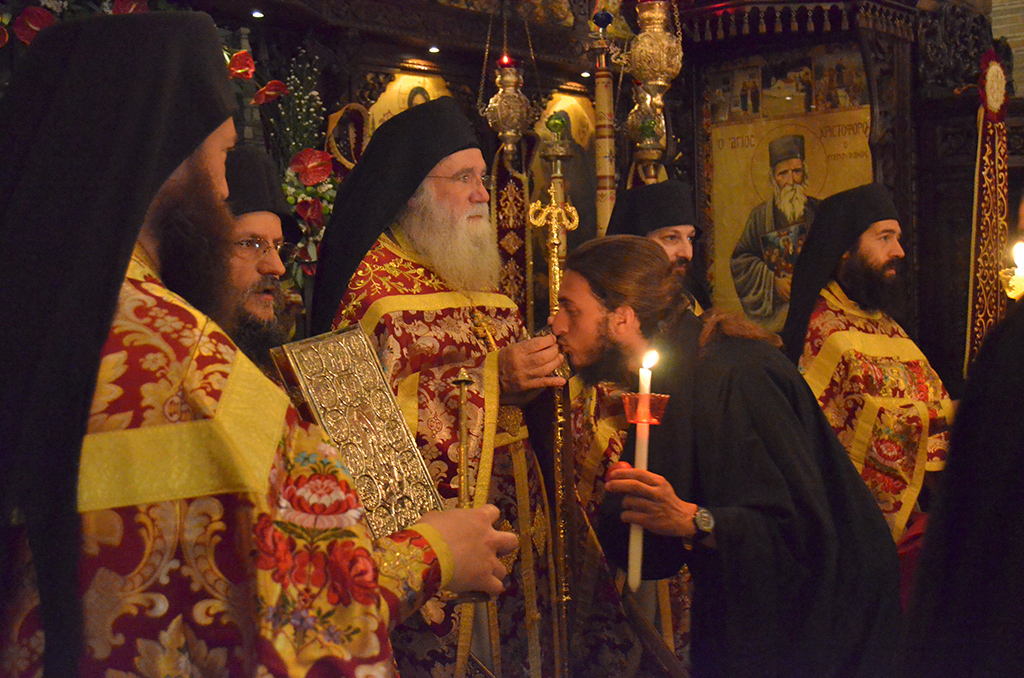
Presbyter Luke  presbytera was very good with the chanting (Russian style) and Fr. Luke was most compassionate,  in encouraging us with his humility, kindness, meekness and gentleness to join him in the prayers. In a style quite unusual for a priest, Fr. Luke, during Matins, kept getting out of the altar to check on how we were doing. Were we dozing off ?  🙂 Were we distracted? Such kind eyes! Or were we paying attention to what was being chanted, pleading to God with fervour and joining our prayers to his to Heaven? For the Uncreated Church and for all mankind.  In truth, I have felt most grateful during these services , and ever since, for Christ’s compassion in instituting the Church and offering to us His priests for the Sacraments. And I realised too how much we must do to help all priests and pray for them. Indeed, Fotini is right. The Church is our Arc, “Κιβωτός”.

church3church2

Coffee and Refreshments followed

church5

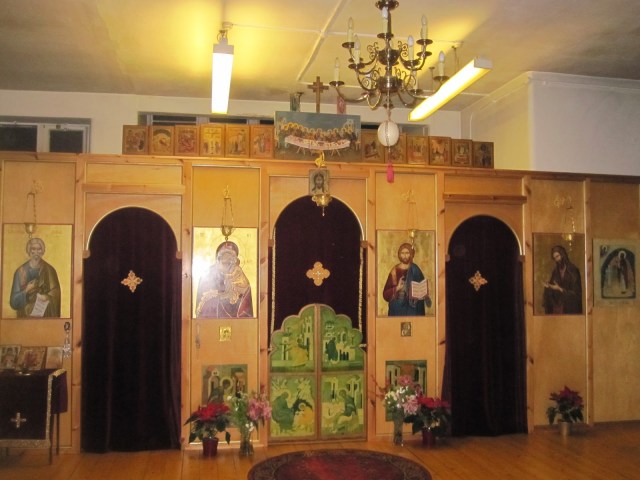
Reminiscent of the early Christian house churches, the sanctuary itself comprised a large room in the front of the house, with dozens of icons covering the walls and a small iconostasis at the eastern end of the room. I will always remember the wonderful people I met while attending the divine services here. Deacon Luke and his very kind Khouriye, both converts to the faith, the English convert Stephen, a very kind student at the University, Mattheus, a Greek physical fitness instructor,  with his English wife and their two pious daughters chanting so beautifully at the kliros throughout the long services, Marian, a Romanian, always ready to offer coffee, tea, biscuits, and kindness and smiles, and so many of the other Romanian, Russian, British, Greek, you name them, parishioners, which have all made lasting impressions on me. One feels so immediately welcome here and wants to return! Such hospitality and love! St. Andrew’s is a pan-orthodox Church based in Edinburgh, a parish of the Archdiocese of Thyateira and Great Britain, which is in turn part of the Œcumenical Patriarchate of Constantinople.


edin64.jpgedin66.jpg

edin60edin61

St. Andrew is an important Saint for both Constantinople, being its patron Saint, and Scotland, being again its patron with his cross the Saltire and her flag: sailtír, flagan tsailtír, bratach na hAlban.

St. Andrew’s have services and Liturgies daily (!), not only on Sundays, or on major feasts. I am not sure if there is any other parish at the UK like them, with the exception of course of Essex monastery. They worship primarily in English, but you will also hear Greek, Slavonic and Romanian. Their Father in Christ is Archimandrite John Maitland Moir (b. 18 June 1924-d. 17 April 2013), who founded the parish out of his home in George Square.

frjohnmm

Father John’s life had elements of  the popularised, practical and unconventional Mere Christianity of C.S. Lewis, to  which he added layers of spirituality and asceticism .… In a world where genuine eccentricity or commitment is scarce, that Orthodox minister who put an eccentric spin on life, left a legacy of dedication. Memory Eternal!

edin51

Maitland Moir established the Chapel of St Andrew in Edinburgh, first in his  living room with some 20 worshippers. This flock grew and in 2003 he sold his  house to buy a former school building but this also became too small.

Funds to  expand further were insufficient. On his deathbed, Maitland Moir gave thanks to God that his dream was  fulfilled. An anonymous benefactor had come forward to complete the purchase of  a £350,000  building for the community.

Alongside a full weekly program of services of worship, St. Andrews parish is blessed with a large and lively multicultural community. Among other activities, you will find here an active student society, a charitable fellowship and community meals.  The three priests of the parish are also in charge of the Archdiocese’s parishes scattered across eastern Scotland, Aberdeen, Dundee,  St. Andrews, the Highlands and Bamburgh in England.

The parish began its life as a chaplaincy mainly for Polish servicemen during World War II, whilst the liturgical language used in the beginning was Slavonic. However, as the years passed, it is evident that the ethnic composition of the parish has become a less important factor, altering towards a presence of the universal Orthodox Church in Scotland. This is, thus, an exception to the rule within the Orthodox Cosmos where ethnic background is a key factor within a community, nevertheless the Orthodox Church in Scotland seems to have transcended the boundaries of national identity.     

Currently English is widely used within the services, on the other hand Greek and Slavonic are retained in order to unite different traditions within Orthodoxy, due to the fact that the community comprises of English, Scottish, Greeks, Russians, Serbians, Romanians and people from other countries. 

Archbishop Grigorios, in a letter towards the community, explains: “The Community in Edinburgh represents, and is an ‘Icon’ of, the life of the Orthodox Church in the Scottish capital. An encouraging characteristic of this life is that it is multi-lingual and multi-cultural, respecting and encouraging the traditions of Orthodox Christians from outside Scotland who have found themselves part of the Scottish Orthodox Community, which itself looks back to the Orthodox heritage, of this part of Britain, and embracing all those Orthodox Christians who seek its protection”.  (Londinoupolis)
study1
About the Orthodox Fellowship of St John the Baptist: The Fellowship brings together members of the several Orthodox Church traditions in the British Isles and Ireland through prayer, discussion and mutual friendship, to deepen our commitment to, and understanding of, the Orthodox Christian Faith. The Fellowship arranges or sponsors a series of annual events, including a summer conference and a youth festival in the spring, and a study weekend in the winter. This year the Fellowship visited Scotland for the first time.
For Highlights I, go here
And here are the Edinburgh sightseeing photos promised at the beginning:

edin71.jpg

Cortosophe Hill

edin80.jpg

The Royal Mile

edin82

Edinburgh Castle, Scotland’s most famous landmark

edin83.jpg

Palace of Holyroodhouse and Holyrood Abbey, the Queen’s official Edinburgh residence and has frequently been at the center of Scottish history

edin84

Holyrood Park: Arthur’s Seat and the Salisbury Crags

edin86

St Giles Cathedral

edin87

Princes Street

edin88

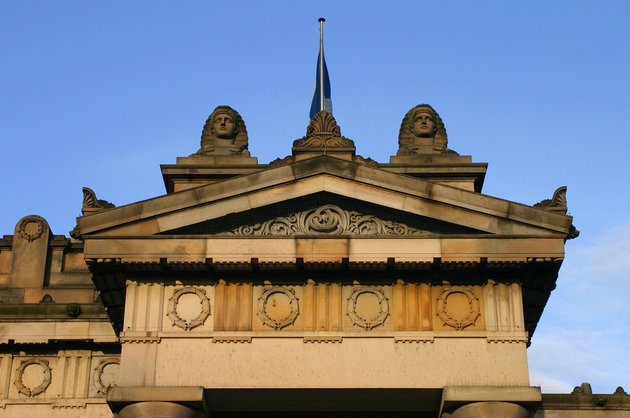
Art City: The National Galleries of Scotland

edin89

Calton Hill and the Scottish National Monument


edin89

National Library of Scotland

edin90Greyfriars Church and Greyfriars Bobby

edin90City Art Centre

edin92.jpgGrassmarket

edin93edin92edin91

edin90edin99edin98edin97edin1001edin100

(*) last 9 by Zoella

Bless the Lord, my soul! What a retreat! How many blessings in store for us! God willing, I shall return here. If it were only Edinburgh, I would certainly not be the first one to fall in love with this city, but my heart was captivated by St. Andrews’ parish. Here is indeed something greater and rarer to find.

(*) Antidoron (from Greek, meaning “instead of the gifts”; in Arabic, qurban) is the remaining bread from a loaf of prosphora after the Lamb has been removed for the Holy Eucharist. In Byzantine practice, it is blessed during the megalynarion to the Theotokos immediately after the epiclesis in the Divine Liturgy and is given by the priest to the faithful after the service. Historically, it was distributed only to those who had not received ‘the Gifts’, Holy Communion so that they would receive a Blessing in place of Holy Communion but this practice has changed over time and all those present at the Divine Liturgy receive Antidoron as a blessing.


Gie her a Haggis


edin10.jpg


“Holiness in the Bible” Study Weekend: Highlights (I)

Orthodox Fellowship of St John the Baptist

Orthodox Community of St Andrew the Apostle in Edinburgh


edin11

Sunday 22/1/2017

*A thought-provoking talk by Dr. Fotini Hamplova on how women can be saved through child-bearing and especially child-rearing, including us all here, spiritual mothers, spiritual fathers and indeed all Orthodox Christians in this call to Holiness through asceticism, the cutting of our will, silence, podvig etc.

img_0634

Fotini: “The Church is our Arc. This is where we are safe.”

img_0633

Fr. Mark (Glasgow) on holiness in the 21st century

Fr. Mark: On Bearing Our Cross to become Holy

How can you bear it?

We cannot. But where else can we go?

The feeling of being nailed on a Cross. 

See this to the end. 

Proceed to a territory beyond our endurance–to Death. 

God will never force us, push us beyond we want to go. 

Danger: illusion of Peace. 

Terrorism of the demons: assailed largely through thoughts, discouraging: very convincing.

The Evil One becomes powerful in our lives to the extent to which we will listen to him.

It takes great humility, courage and faith in order to allow God to smash us to pieces. Because He will in order to save us. If we allow Him, if we surrender to His Will.

img_0632

How lovely to see Fr Michael Harry with his Khouriya,  who are to ‘retire’ after Easter to the Hebrides!

img_0652

And a few more friends

img_0657

 Archimandrite John Maitland Moir (b. 18 June 1924-d. 17 April 2013), the Founding Father of the parish, was also present in our hearts.

edin51

Nice group photo of the Haggises  🙂

img_0650

A haggis lunch accompanied with with excellent Scottish folk music and Robert Burns poetry recitation while ceremoniously cutting the haggis.

The folk music was mesmerising and sounded something like that. Apologies for running out of battery…


And the Haggis ritual looked like that. Again apologies for my battery …


This poem was written by Burns to celebrate his appreciation of the Haggis. As a result Burns and Haggis have been forever linked. As I found out, this particular poem is always the first item on the programme of Burns’ suppers. The haggis is generally carried in on a silver salver at the start of the proceedings. As it is brought to the table a piper plays a suitable, rousing accompaniment. One of the invited artistes then recites the poem before the theatrical cutting of the haggis with the ceremonial knife: “But, if ye wish her gratefu prayer/ Gie her [Scotland] a Haggis”

*

Then, a scenic tour of Edinburgh

img_0654img_0653img_0655

edin30

Arthur’s Seat is one of the Best Places with Scenic Views in Edinburgh.

edin31.jpg

View of Edinburgh from the Rest and Be Thankful, Corstorphine Hill.

edin40.jpg

View from Calton Hill Edinburgh

edin7.jpg

Craiglockhart Hill

IMG_1521

Braid Hill

IMG_1541

Blackford Hill

IMG_1397

Arthur’s Seat

IMG_0987


Yes, I know. A haggis lunch…..then a walk…..Orthodox have stamina 🙂


edin41.jpg

Edinburgh is traditionally said to have been built on seven hills. Walk round the town for an hour or so and you might wonder if they didn’t mean seven …

edin44.jpg

Edinburgh Castle Edinburgh Castle as seen from Princes Street …

edin42.jpg

While spending this long weekend in Edinburgh, I’ve caught a glimpse of the castle almost every day, whether I’m walking to or from the church, shopping, or wandering about town..

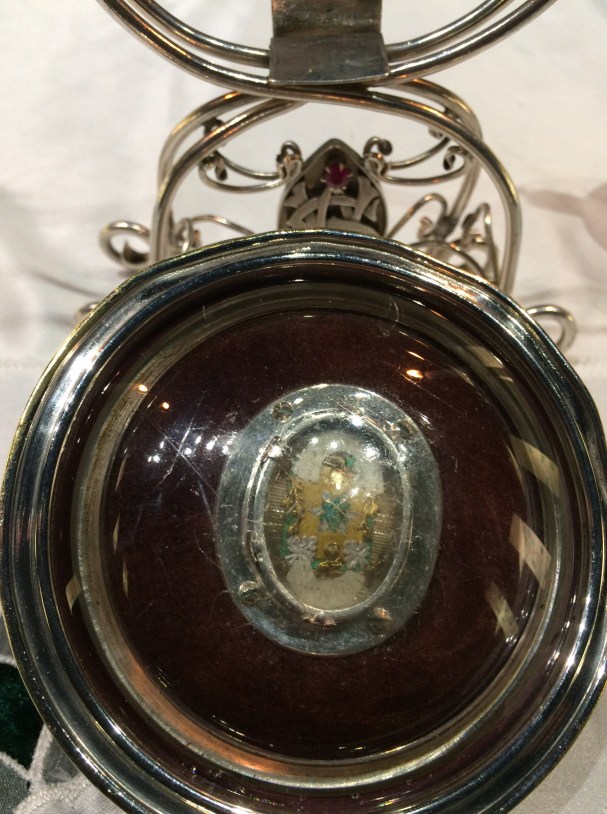
Our Sunday scenic tour culminated to St Mary’s Cathedral, Edinburgh (Roman Catholic), where we venerated the relics of St Andrew the First-called. Here parishioners and visitors for the study weekend joined together as pilgrims.

edin20.jpg

img_0656


It was such a lovely weekend; thank you to all who worked so hard and for all the kindness and fellowship!

Journey of a Young Artist

JonathanPresentation_08

Jonathan Jackson and The Seeds of “The Mystery of Art”


Whoever wants to become a Christian, must first become a poet— Saint Porphyrios
When I was young, they brought me to Babylon
And the night hung over my head
The smoke came into my dreams 
In the valley of dry bones

It was under the skies of Babylon 
Where my soul fell in love with God
My eyes were seared and my blood was bruised
But I was hidden within a song

All around were the sounds of Babylon
But all I heard, were the hymns of heaven

It was under the skies of Babylon 
Where my soul fell in love with her 
I was barely coming clean and she had already seen
A war on her innocence

I spoke of the Christ underneath the clouds 
And woke her from the sleep of death

She took my hand and walked me through the crowd
Why, is anybody’s guess?

All around, was the gold of Babylon
But all I saw, was an angel of heaven

You can shut me up but you cannot quiet
The silence of the Mystic Church
You can shut me up but you cannot quiet
The silence of the Mystic Church


I would like to start with the journey of how this book, “The Mystery of Art” began. It was not an intellectual or abstract search. The questions and explorations on this subject were immediate and crucial for me growing up. I began working as a professional actor at the age of 11 on General Hospital. At The age of 12, by God’s grace I had a profound encounter with Christ. My father would give us cassette tapes of sermons to listen to and one night, I heard a sermon on “The holiness of God and the pride of the human heart.” I don’t know why and I don’t know how these things occur, but I was cut to the heart. I suddenly realized how far away from God I truly was. How prideful and full of selfishness and egoism I was. It scared me to be honest. And yet, paradoxically, in that very moment of feeling the weight of my sinfulness—how my supposed righteousness is like “filthy rags” before the holiness of God, as Isaiah says—a Divine Presence also overwhelmed me. I felt like a great sinner who was also mysteriously loved beyond comprehension.

Around the same time, I read C.S. Lewis’ chapter called “The Great Sin”, which is all about Pride. I read Matthew 25, the Last Judgment and Matthew 5 when Christ says, “You have heard that it was said, ‘You shall not commit adultery.’ But I tell you that anyone who looks at a woman lustfully has already committed adultery with her in his heart.” I knew I could never impress God with my self-righteousness, so I cried out for mercy, I cried out for grace. And the compassions of God washed over me.

This was a turning point in my life. Nothing was the same after this encounter. I began to hear and perceive my own thoughts with great clarity. This was frightening too because I was suddenly aware of all the judgments and horrible thoughts I had about people. But the Holy Spirit was so merciful in this process. He never made me feel condemned. Convicted, yes. But never condemned. He would always whisper, “I’m not showing you this to condemn you, I’m showing you this darkness, so you can be healed.”

I began to think about God all the time. Throughout the following years there were many struggles and trials but the mystery of God became the most beautiful, the most attractive, the most intriguing and important pursuit in my life.

Naturally and organically, I had a desire to incorporate the Holy Spirit into the work I was doing. I had studied a few different acting methods but for the most part, my own personal method was being birthed through experience. Working with Anthony Geary and Genie Francis and other incredible performers like Michelle Pfeiffer and Sir Ben Kingsley. It was very much like Orthodoxy in the sense that I was a sponge, soaking everything in through experience and not through theory.
Within a short period of time after this initial encounter of grace, I was given some very heavy storylines to portray. I was about 15 years old and my character Lucky Spencer finds a young girl in the woods, who has just been raped. It is winter and the poor girl is freezing out in the cold, left for dead. He rescues her and they develop a friendship. He spends months taking care of her and being by her side as she tries to heal from this horrific event.
On a Soap Opera, you are on TV almost every day; especially when your storyline in prominent. In a more direct way than most artistic mediums, you are living the day-to-day story of your character. I was portraying this storyline for months. It was during this time that I first remember bringing God into my preparation as an actor. I began to ask Him, “How could you allow this innocent creature to suffer in this way?” “How can anyone be healed from such a wound?”

JonathanPresentation

They were questions my character could have been asking God and questions most of us have asked before. What it began to do for me, was nudge my work towards something inherently spiritual and although I would not have known it at the time, something sacramental.

Over the following years I portrayed a lot of dark and tragic roles: someone struggling with suicide, a heroine addict, a murderer among others. It was around this time when I began to ask God, “How can I portray these dark and troubled characters dynamically and truthfully, without being consumed by the darkness myself?” There are many tragic stories of young actors who become drug addicts after playing one in a film. The stories of drug overdoses and suicides among young actors and actresses are too many. I instinctively steered away from “Method Acting” and sought a different path, even though I didn’t know exactly what that would be.
It was around this time when I discovered Dostoevsky. It’s amazing to me now, being Orthodox that I wasn’t able to comprehend anything about the Orthodox Church as I read his books. It was like a veil, I suppose. But what I did discover was a kindred soul. Here was someone who was writing about very dark and tragic characters and themes but from a place of beauty—from a place of the Light of Christ. Prince Myshkin, from the “The Idiot”, changed my life. I clung to Dostoevsky in my heart as I approached portraying these dark characters and prayed, “Lord, please help me to portray the darkness of this world from a place of purity and light. Please, help me not to be overcome by the darkness, but to infiltrate the darkness with Your Light. Without you I can do nothing. I am nothing, I have nothing and I can do nothing without You, Lord. Amen.”

This is a snap shot so to speak, of the journey towards writing, “The Mystery Of Art”. These were the seeds, which by God’s grace, grew over time. There were so many important and profound spiritual realities that I wasn’t exposed to at the time, because I had not encountered the Holy Orthodox Church. I was grasping in the dark, looking for answers, feeling my way towards Christ, as best I could, but I always knew that something was missing; something significant and crucial to my relationship with God. There is a beautiful Scripture in the Gospel of John where Christ says,

“And I have other sheep that are not of this fold. I must bring them also, and they will listen to my voice. So there will be one flock, one shepherd.” (John 10:16)

I was one those lambs who was not of this fold. But through the grace of Jesus Christ, the Good Shepherd and your prayers, He found me and brought me home. My journey to the Orthodox Faith took many years and was paved with blood and heartache. I carried all of these artistic questions and experiences with me as my family and I came into the Church for salvation, deliverance and healing.

See also: Jonathan Jackson’s Orthodox Acceptance Speech at the Emmy’s

See photos from his visit to Mount Athos for the first time with his 11 year-old son Caleb (2015), where they stayed  for five days visiting Simonopetra and Xenophontos monasteries, and spent most of his time at Vatopaidi Monastery (Friday till Tuesday) where he met the Abbot, Elder Ephraim, and attended an all-night vigil on Saturday night.

While at Vatopaidi Monastery, Jonathan also gave a testimony of how he converted to Orthodoxy for Pemptousia, which can be seen here.

We Are All One

nativity icon.jpg

In a few hours, I’m flying to Thessaloniki, from where I’ll get the bus to Ouranopolis, the port to Mount Athos. I’ll be away until January 4th, so have a blessed Feast of the Nativity and a happy New Year.

This has been a tough year, in ways that I cannot even begin to express, and I’m only now starting to feel the effects. Tiredness, hopelessness and fear, sadness to the point of despair – all of these have haunted me relentlessly during the last twelve months. To say that 2016 has not been my favourite year would be too kind, even for my standards. To say that 2016 has been even remotely a good year would be beyond insincerity and would approach hypocrisy.

We have achieved many things for the Monastery, and for that I must thank you. I have tried to let you know, to the best of my ability, how much I appreciate your support. All my hard work, all my best intentions, all my sacrifice would amount to nothing without you and your hard work, your best intentions, your sacrifice. Together, we have done incredible things this year, and I trust that, by the grace of God, we shall do even more in 2017. For all of this, I thank you. You are in my prayer always, where ever life takes me.

That being said, the Monastery exists in this world and cannot ignore the world. Monasteries are doors between this fallen world and the Kingdom, calling our fallen nature to its true prototype, encouraging us on the way, guiding us step by step, as we fight to let go of our fallenness and we learn to see ourselves through the eyes of God. This is why monasteries exist, this is their purpose.

And this is where I’ve fallen mostly in 2016. Although I’ve kept far from the political fights that consumed the world, I have allowed their noise to disturb me, I have allowed them to distract me from the things that truly matter. I have kept silence over the outpouring of hatred that drowned the world over the Council, Brexit or the US elections, but I have not succeeded to hold on to the silence in my heart.

As a monastic, I have no responsibility to get involved in these fights. Monastics are dead to the world, and to get involved is a failure towards one’s calling. When people accused the Abbas of the Desert for refusing to get involved and judge various people or causes, they sent their accusers to the cemetery and told them to ask the dead buried there to judge them. As a monastic, my responsibility is to stand among you, silent and dressed in my black vestment, as a reminder that our true Calling, our true Identity and our true Home are somewhere else.

As the world rages consumed with passion for one cause or the other, a monk’s calling is to silently remind those who have the eyes to see that we are all mortal and that the real fight, the real cause, the real passion should be for something entirely different: the salvation of our souls. All else is dust.

It is my responsibility, therefore, to tell you all that no one won in 2016. There are no winners. We have all lost. We have all allowed hatred and doubt and fear to enter our hearts. We have all judged, we have all looked at Christ’s image, our brother, and saw in him the enemy. We have all built walls: some have built walls against those who are different from them, others have built walls against those who build walls. There is no difference between walls: regardless of what motivates them, they are all expressions of a void in our hearts. That empty void where Love should have been.

I’m going to Mount Athos for two weeks with this in mind. I’m not looking for rest, physical or emotional. I’m going to regain my perspective of the world and myself. I need to taste silence to be reminded of the things that matter. I need to touch holiness so I may redirect my steps toward it. I need to see sparkles of the Kingdom, so I may turn my back to this empty noise and start walking towards Life again.

I leave behind 2016 with a void in my heart. I pray, I pray with all my strength that Love Incarnate will return once more and fill it. I pray for me, I pray for you – the same prayer, for we are all One. We are ALL One.

Source: Mull Monastery blog

* Kindly excuse any technical issues; we are migrating the blog back to WordPress

See also The Womb and The Tomb in The Nativity Icon

Nativity Paintings from Around the World

Carpe Diem and Christmas

The Ass and the Ox in the Nativity Icon 

Christ’s Nativity: Living a Kairos Life in a Chronos World

Arabic Christmas Carol

Sing Ye Carols!


Five Reasons to Visit a Monastery

Striving to Live a Christ-centered Life


Five Reasons to Visit a Monastery

Striving to Live a Christ-centered Life: Five Reasons to Visit a Monastery By Matushka Constantina Palmer

Introduction: Journeying by boat to visit their beloved spiritual father, , Constantine Palamas – the father of St. Gregory – suddenly realized he and his family had forgotten to bring food with them for the monastery. While his wife and five children looked on, he raised his voice in prayer and put his hand into the sea; immediately he caught a massive fish. Taking it out of the water, he glorified God for the miracle. Out of his great admiration and respect for the monastic life, Constantine Palamas worked a miracle so that his family would not arrive at the monastery empty-handed. In this way, and in countless others, he instilled in the hearts of his children a firm love for and reverence of monasticism.

This practice of going out into the wilderness to seek a word from a holy monastic is a tradition well established in the Church as early as Christ’s own times. St. John the Forerunner was the first monk, and people sought him out, as St. Andrew of Crete testifies: “The Forerunner of grace dwelt in the desert and all Judea and Samaria ran to hear him.”[1] He, like many of our prophets before him, preached amendment of life. The central difference between him and the prophets, however, was that St. John would become the first and greatest “Father of Monasticism.” Generations of monastics would take his way of life, his asceticism, his bold dedication to discipleship to Christ as the epitome of the monastic life, and they would follow him. “Verily I say unto you, Among them that are born of women there hath not risen a greater than John the Baptist” (Matt 11:11).

The radical lifestyle of St. John changed the world, especially the Christian world, because many who came after him decided to imitate him and live outside the cities solely for Christ’s sake. Thus, slowly the monastic life was established, and those in the world began to look to it as a shining example of the Christian lifestyle. It is an indisputably great and ancient practice of those living in the world to make pilgrimages to monasteries. Below are five of the many reasons one should.

1. Spiritual Direction

Five Reasons to Visit a MonasteryFinding a spiritual guide who has the will and means to guide and direct a believer in his endeavour to live the Gospel precepts in his daily life is not an easy task. It requires prayer and discernment on the part of the seeker, a humble disposition, and an openness to the will of God. This is because once the believer asks a priest or monk to be his spiritual father, he enters into a relationship with that person that cannot easily be dissolved, and which will have everlasting effects on his spiritual life: “A spiritual father… becomes the means of leading the life of men out of hell (by the negative effect of their passions), and into pure Christian life and spiritual freedom.”[2]

Thus, the goal should be to find a spiritual guide who not only preaches Christ, but lives like Christ. As Monk Isaiah wrote to Nun Theodora: “The Holy Spirit is for everyone; but in those who are pure of the passions, who are chaste and live in stillness and silence, He reveals special powers.”[3] This is the primary reason why a person living in the world seeks spiritual direction from those living in monasteries. Not because the Holy Spirit only dwells in those who wear the monastic habit, but because their way of life is far more conducive to acquiring the Holy Spirit. The greatest spiritual guides are those whose manner of life teaches as much or more than their words and advice. If a spiritual guide does not live the commandments of Christ, if he has not experienced temptation, if he does not actively struggle to overcome his passions, then how will he teach others to do likewise? On this point Archmandrite Zacharias of Essex says: “if the word that the spiritual father says is not seasoned with grace, nor proceeds from a heart that is warmed by the love of Christ, it becomes like the work of psychologists or counsellors – a ‘half-blind’ worldly activity. The word of the spiritual father must bear the seal of grace, the seasoning of grace.”[4]

The life of the monk is a macrocosm of the Christian life in the world. And so, it follows that if there are good spiritual fathers in the world, there are great spiritual fathers in the monastery. The reason for this is very simple, as St. Nikodemus states: “monastics, through ascetic struggles and through the monastic way of life, first purified themselves (from the passions and from faults) and then set out to purify others: they were first enlightened and afterwards enlightened others: they were first perfected, and then perfected others, they were, to express it concisely, first made holy and afterwards made others holy…”[5]

For those who have spiritual fathers in the world, they need not forsake them for a priest-monk. They can, however, with the blessing of their spiritual father, seek the counsel of a monastic in certain circumstances that require the guidance of an experienced and specialized “doctor” since, as St. Zosimas says to St. Mary of Egypt: “Grace is recognized not by one’s orders, but by gifts of the Spirit.”

And in fulfilling the instructions of one’s spiritual guide, the layman becomes a candidate for the grace which is for the saints (2 Cor. 8:4). By this, one becomes like a certain youth who, living in the world, “began immediately, with great eagerness, to fulfill the command which the elder had given him… With this work that he did, he was made worthy to lift his mind up to Heaven, where he cried out to the Mother of Christ for compassion; and through her intercessions, he was atoned before God and there came down upon him the Grace of the Holy Spirit….”[6] Ultimately, this is the goal of seeking spiritual direction: to not only be “atoned before God” through a life of repentance, but through the counsels and prayers of one’s spiritual guide – who himself has attained grace – to have the Holy Spirit “come down upon us.”

2. Spiritual Conversation and Action

Five Reasons to Visit a MonasteryOne of the greatest benefits of visiting a monastery is the spiritual conversation and activity pilgrims are able to take part in. At a monastery, spiritual stories and uplifting anecdotes abound. Although many monastics shy away from conversation with pilgrims for a variety of reasons, given the appropriate circumstance a conversation with a monastic can rear a multitude of benefits – not to mention conversations with fellow pilgrims.

Whether they share a story they have heard, wisdom from the Mothers and Fathers of the Church, or even a tale from that monastery, their words inform and enlighten the pilgrim and help refocus his busy mind. Even time relaxing in the world does not refresh the soul the way a spiritual conversation does. This type of conversation, though found more rarely in the world, is often a common occurrence at a monastery.

Furthermore, many monastics, despite not living in the world any longer or dealing with its struggles and temptations, have great wisdom to share. Not only did they also once live in darkness (Matt. 4:16), but they have a wealth of experience from speaking with pilgrims who confide in them. Through prayer and reading, the monastic manages to help the pilgrim approach his problems with a bit more clarity and even a new perspective.

Coupled with this beneficial spiritual conversation is the spiritual activity that takes place in a monastery. Work and prayer are two primary tenets of the monastic life. Work, however, is done in a slightly different spirit than work done in the world. An Abbess at a monastery not far from Thessaloniki has often said work in a monastery is a great deed because it is done solely for the love of God, and the love of His saint, the monastery’s patron. She teaches that to even pick up a piece of garbage in a monastery yields a great heavenly reward because it is done in honour of the saint, to keep his house clean. After helping with work in the monastery, she would tell the pilgrims: “The patron saint wrote down the work you have done, and you will find it presented on the Day of Judgement.”

When a monastic bakes bread, he bakes for the glory of God. When he chants in church, he chants for the glory of God. When he sweeps, he does so for the glory of God. And when a pilgrim partakes of such God-honouring work, he begins to look at his own work in a different light, just as the monastic offers all his work for the glory of God, so too can the pilgrim – both while at the monastery, and when he returns to his work in the world. The Christian home is a microcosm of the coenobitic monastery; when the mother, father, or children clean the house, they too can do so for the glory of God.

Both the monastic and the pilgrim can approach work the way Abba Apollo did: “If someone came to find him about doing a piece of work, he would set out joyfully, saying, ‘I am going to work with Christ today, for the salvation of my soul, for that is the reward he gives.’”[7] The only difference between the monastic’s work in the monastery and the layman’s work in the world is that the monastic knows that he left behind his own success to seek the Kingdom of God; the layman merely needs a reminder now and again. He needs to ask himself which of the following he is and who he desires to glorify: “The man who loves himself seeks his own glory, whereas the man who loves God loves the glory of his Creator.”[8]

3. Humility

 Five Reasons to Visit a MonasteryThe fallen human soul is predisposed toward pride. This is something that occurs with the monastic as much as with the layman. When the Christian keeps his prayer rule faithfully, observes the fasts of the Church, or attends church services regularly, the soul is inclined to become puffed up. The antidote is finding better examples than oneself of Christian dedication to remind the proud soul that she is lacking in virtue.

The layman has the ability to make pilgrimages to monasteries and so finds a helpful means to stay grounded in his spiritual life. Encountering monastics reminds the pilgrim that there are better Christians than himself (not that he cannot also learn this in the parish, he most certainly can, but it is an indisputable fact that one is faced with at a monastery). Hence the famous statement: “Angels are a light for monastics, and monastics are a light for the world.”[9] The monastic is simultaneously humbled and enlightened by reading the lives of the saints, just as the layman is when he compares his life with that of a monastic.

Humility is a virtue that the monastic and layman ought to strive for above all else, for as St. John Cassian says, “Humility of soul helps more than everything else; without it no one can overcome lewdness or any other sin.” And so, the layman makes pilgrimages to monasteries in order to draw the soul away from the distracting world and into an environment of stillness and prayer, where the atmosphere is conducive to taking stock of one’s life alongside that of a dedicated monastic, and to allow the grace of the monastery to help him see his own sinfulness.

The following story, taken from The Wisdom of the Desert Fathers, illustrates this point: There were three friends, all of whom chose different means of work. The first decided to become a peace-maker among men. The second decided to tend to the sick. While the third decided to live in prayer and stillness in the desert. The first two friends found that they were unable to complete the work they set out to do and became disheartened. So they decided to visit their third friend who was living in the stillness of prayer. They confessed their difficulties and asked for guidance. This was the third friend’s response: “After a short silence, he poured some water into a bowl and said to them, ‘Look at the water,’ and it was disturbed. After a little while he said to them again, ‘Look how still the water is now,’ and as they looked into the water, they saw their own faces reflected in it as in a mirror. Then he said to them, ‘It is the same for those who live among men; disturbances prevent them from seeing their faults. But when a man is still, especially in the desert, then he sees his failings.’”

And so it is with the pilgrim from the world. In the stillness of the monastery, he is able to reflect on his failings. Whether it be in comparing his spiritual life with the monastic who left all things behind to live “alone with God alone,” as Elder Porphyrios was wont to say, or simply due to slowing down and reflecting on his faults, the pilgrim returns to the world with greater humility of soul. [15] St. Theodora, Matericon, 85.

4. Imitation

Five Reasons to Visit a MonasteryThe command to imitate Christ is found throughout the Gospels. He is the image of perfect obedience, extreme humility, utter chastity, and a life of poverty. To be sure, if a believer only ever read the Gospels, he would be informed on how to live a proper Christian life. However, because man is weak and in need of examples, the monastic life illustrates the Gospel commandments lived out to their perfection. Thus the layman has before him a pragmatic example of how the teachings of the Lord are upheld and practiced. In turn, he emulates those things in an appropriate and prudent way, just as St. Paul encourages: “what ye learned and received and heard and saw in me, these things be practising; and the God of peace shall be with you” (Phill. 4:9).

There is much to be learned and gained from spiritual books, practical guides, and the wisdom of the desert Fathers and Mothers. However, nothing compares to the spiritual benefit brought about by actually being around someone who shares in the grace of God in a deep and intimate way. For whether or not he has “the words of life,” his prayer, his patience, and his virtue are enough to form and inform the humble-hearted that seek his unique, if silent, wisdom. Abba Dorotheos writes: “It is said that a certain brother asked an elder, ‘What shall I do, father, in order to fear God?’ The elder answered, ‘Go and cling to a man who fears God and from the fact that he fears Him, he will teach you to do likewise.’”[10]

Laymen are called to keep the commandments of the Gospel with as much precision as monastics. The monk is not called to one type of life, and the layman to another. No, they are both called to “be perfect even as my Father in heaven who is perfect” (Matt. 5:48), just as St. John Chrysostom taught: “You greatly delude yourself and err, if you think that one thing is demanded from the layman and another from the monk; since the difference between them is in that whether one is married or not, while in everything else they have the same responsibilities… Because all must rise to the same height; and what has turned the world upside down is that we think only the monk must live rigorously, while the rest are allowed to live a life of indolence.”[11]

The only difference between a Christian living in the world and a monastic living in a monastery is that monasticism “rejects any kind of compromise and seeks the absolute”[12], whereas the layman struggles as best he can in the midst of the distracting world. Both are acceptable and blessed in the eyes of God. Both ways are only successful by the grace of God. The layman should not be disheartened by his struggles in “the darkness of the world” (Eph. 6:12). Rather, he should take courage that he is upheld by the prayers of countless monastics, as Bishop Nikolai of Lavreot has stated: “The life of the faithful is supported by the prayers of the monks. This is elucidated by the very fact that the faithful take refuge in such prayers. Just as Moses stretched out his hands and the Israelites conquered the Amalekites, so the monastics lift up their hands to God and we, the faithful who are struggling in the wilderness of this world, conquer the noetic Amalek.” And more significantly, the layman should take courage that “where sin abounded, grace did much more abound” (Rom. 5:20).
5. Encountering Sacred Place 

Five Reasons to Visit a MonasteryEven if there were no other reason for visiting a monastery, there would remain this one: it is an agios topos, a holy place. “And Moses said, I will go near and see this great sight, why the bush is not consumed. And when the Lord saw that he drew nigh to see, the Lord called him out of the bush, saying, Moses, Moses… loose thy sandals from off thy feet for the place whereon thou standest is holy ground” (Exodus 3: 3-5).

Coupled with the prayers of the monastics, the saints that dwell within the monastery, and the angels that protect it, there are also at least one or more chapels. The presence of a temple of God alone is enough to sanctify a place. And it is in this sanctified place that even without hearing God-inspired words or witnessing miraculous events, the pilgrim is refreshed. His weary and tired body and soul are nourished with more than monastic fare – they are nourished with monastic stillness.

A pilgrim once asked a priest-monk why it was that out of all the monasteries the pilgrim had visited, this one particular well-known monastery was the one in which grace and divine fragrance was the most perceivable. The priest-monk answered that although all monasteries are holy, that that monastery held the typikon to celebrate Divine Liturgy every single day, and confessed people for hours on end, and so as a result it attracted the grace of the Holy Spirit and He dwelt there. As Dr. Constantine Carvanos surmises, “[t]hrough confession at these centers of spirituality, through participation in the moving services of the monks or nuns, and speaking with them, a Christian living in the world is aided by calm refuge from his worldly cares, by being purified, by rediscovering himself, and by tasting of the gifts of the Holy Spirit.”[13]

St. Nikolai Velimirovich records: “When [St. David of Garesja] arrived at a hill from which Jerusalem was visible, [he] began to weep and said, ‘How can I be so bold to walk in the footsteps of the God-man with my sinful feet?’ David then told his disciples that they, being more worthy, should go to worship at the holy places, and he took three stones and began to return.”[14] The saint’s humility was so great that he considered the sight of the Holy Land and even its pebbles to be overflowing with grace. How much more does the grace of a sacred place exceed sight and stones? In this sense the words of St. Theodora hold an even greater significance: “Love stillness. One who is not attached to the vanities of this world is strengthened in soul by stillness, abstinence and silence.”[15] This strength, harnessed by the grace of a sacred place, can then be brought back into the world if treasured and safeguarded through prayer and watchfulness.

Conclusion:

In conclusion, “if you want to know if someone loves Christ, find out if he loves monasticism,” as the saying goes. Visit monasteries, acquire humble-mindedness, and abstain from judging others – both the believer who is too lax and he who is too strict. “Wherefore seeing we also are compassed about with so great a cloud of witnesses, let us lay aside every weight, and the sin which doth so easily beset us, and let us run with patience the race that is set before us, looking unto Jesus the author and finisher of our faith” (Heb. 12:1-2).

All photos that appear in this article belong to Nektarios and are used with permission.


[1] The Great Canon of Repentance, Song 9, [11].

[2] Archimandrite Zacharias, The Enlargement of the Heart, 174.

[3] Monk Isaiah to Honourable Nun Theodora, Matericon, 160.

[4] Archimandrite Zacharias, The Enlargement of the Heart, 174.

[5] St. Nikodemos, Handbooks of Counsel [Greek], 15-16.

[6] St. Symeon the New Theologian, from Dr. Constantine Carvanos’ article A Discourse for those living in the world, Orthodox Info:http://orthodoxinfo.com/praxis/discourselivingworld.aspx.

[7] Abba Apollo, Sayings of the Desert Fathers, 36.

[8] Philokalia, St. Diadochos of Photiki: “On Spiritual Knowledge and Discrimination: One Hundred Texts”, vol. 1, [12], 255.

[9] St. John Climacus, The Ladder of Divine Ascent, op. cit., 128.

[10] Abba Dorotheos, Practical teaching on the Christian life, “On the Fear of God,” [52], 113.

[11] St. John Chrysostom, Pros piston patera (To the faithful father) 3, 14, PG47, 372- 74.

[12] Professor Georgios Mantzarides, Images of Athos by monk Chariton,http://www.stanthonysmonastery.org/monasticism.php

[13] Constantine Carvanos, Discourse on those living in the world, Orthodox Info:http://orthodoxinfo.com/praxis/discourselivingworld.aspx.

[14] St. Nikolai Velimirovitch, Prologue, May 27.

[15] St. Theodora, Matericon, 85.

By Matushka Constantina Palmer

Source: Lessons from a Monastery (wordpress.com)


Our Lady of Kipina


kipina39kipina38kipina36kipina35kipina34kipina33

kipina23kipina32kipina31

kipina37kipina28

kipina19


kipina26


kipina11

kipina13

kipina8

kipina6

kipina4

kipina2kipina1kipina16

kipina21

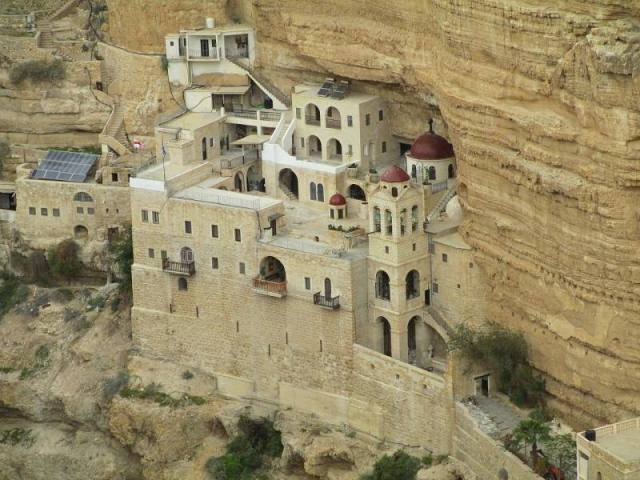
If you go towards the old-world village of Kalarrytes in the Tsoumerka Mountains in Epirus, you come across an impressive fortified monastery built into a rock face: the Holy Monastery of Our Lady of Kipina.


The Holy Monastery of Kipina is built into a large cave in a sheer rock.


According to the founder’s inscription, building began in 1349. But according to Metropolitan Serafeim (Vyzantio) of Arta, a historian, the foundation dates back further in time. Other historical sources date it to 1212.


Access to the Monastery is by a stone path hewn into the rock. In former times, contact could be broken by means of a wooden drawbridge.

The outer gate of the monastery.


Without doubt, the time when the Monastery of Kipina was at its peak was the 18th century. Indeed, it’s recorded that, in 1760, the exceptionally active Abbot Kallinikos funded the construction of a bridge over the nearby River Kalarrytikos, a tempestuous tributary of the Arakhthos.


The Monastery also ran a school and a water-mill. All of this shows both the financial power of the foundation and also the close links with its social setting.


The imposing rock casts its shadow over the steps of visitors, next to the path to the entry.


Still surviving from the old Monastery complex are the church, four cells and a small building which used to serve as a stable.


In the olden days, the drawbridge would be raised at night or at times of danger. Access to the Monastery was thus completed severed, which is why it is one of the few that escaped pillage. The crank handle of the drawbridge has been preserved.


The Monastery is dedicated to the Dormition of the Mother of God. According to tradition, however, it celebrates on the feast of the Life-Receiving Spring (Friday in the week after Easter).


The church is a small, single space, built within the cave.


The rich iconographical decoration of the church was carried out in the 18th century.


At the northern end of the narthex is the opening to the cave, which extends to a depth of 240 metres into the rock.

Today’s Abbesses of Abbesses

Gerondissa Akylina, Porphyria, Sipsa Monastery and St. Georgios Karslidis

Gerondissa Akylina, Gerondissa Porphyria (Sipsa) and Gerondissa Makrina (Portaria)

Friday, November 4, feast day of the Blessed Elder Georgios Karslidis of Pontos, warmed my heart with fond memories of nearly 3 decades of pilgrimages to beautiful, gem monasteries in Northern Greece!

 *

“God cares for everyone. Despair is in effect a lack of faith.”


Gerondissa Akylina, Porphyria, Sipsa Monastery and St. Georgios Karslidis


Taxiarches and the Analipseos Monastery (Sipsa) in Greece is one of the Monasteries in Greece that holds a dear place in my heart. Together with that of St. Paisios in Souroti, they were the first monasteries I started visiting as a University student, before my graduate studies and work at the US. At that time Gerondissa Porphyria, a Living Signpost in my journey on The Way,  had not even become a monastic, and now she is a renowned Abbess, one of the few of her ‘calibre’ in contemporary women’s monasteries.


Gerondissa Akylina, Porphyria, Sipsa Monastery and St. Georgios Karslidis


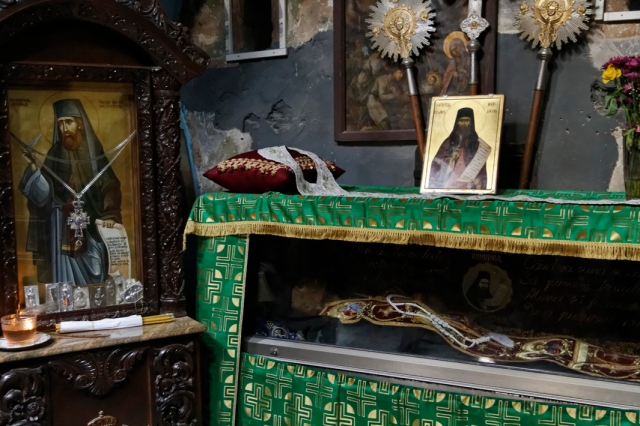
The Blessed Elder Georgios Karslidis of Pontos (1901-1959), latter day saint of the Saintly Orthodox Church in Greece,  glorified by the Patriarchate of Constantinople in 2008, was the first “resident” and founder of the monastery in the year 1930. He is one of few saints known to bear an imprint of the sign of the cross on his skull. There is a flourishing multitudinous sisterhood of nuns here today, who occupy themselves with the Iconography of handheld pictures, gold embroidery,knitting and waxwork.


Gerondissa Akylina, Porphyria, Sipsa Monastery and St. Georgios Karslidis


Gerondissa Akylina, Porphyria, Sipsa Monastery and St. Georgios Karslidis


Gerondissa Akylina, Porphyria, Sipsa Monastery and St. Georgios Karslidis


Gerondissa Akylina, Porphyria, Sipsa Monastery and St. Georgios Karslidis


Gerondissa Akylina, Porphyria, Sipsa Monastery and St. Georgios Karslidis


Gerondissa Akylina, Porphyria, Sipsa Monastery and St. Georgios Karslidis


Gerondissa Akylina, Porphyria, Sipsa Monastery and St. Georgios Karslidis


Gerondissa Akylina, Porphyria, Sipsa Monastery and St. Georgios Karslidis


Gerondissa Akylina, Porphyria, Sipsa Monastery and St. Georgios Karslidis


Gerondissa Akylina, Porphyria, Sipsa Monastery and St. Georgios Karslidis


Gerondissa Akylina, Porphyria, Sipsa Monastery and St. Georgios Karslidis


Gerondissa Akylina, Porphyria, Sipsa Monastery and St. Georgios Karslidis


Gerondissa Akylina, Porphyria, Sipsa Monastery and St. Georgios Karslidis


Gerondissa Akylina, Porphyria, Sipsa Monastery and St. Georgios Karslidis


Gerondissa Akylina, Porphyria, Sipsa Monastery and St. Georgios Karslidis


Gerondissa Akylina, Porphyria, Sipsa Monastery and St. Georgios Karslidis


Gerondissa Akylina, Porphyria, Sipsa Monastery and St. Georgios Karslidis


Gerondissa Akylina was the first Abbess. I had the rare blessing to meet her a number of times during the last years of her life. In the words of our late Elder Iosif Vatopaidinos, Gerondissa Akylina, together with Gerondissa Makrina in Portaria, were ‘Abbesses of Abbesses’:  examples of the monastic life and their monasteries models of coenobia, workshops of virtue and antechambers of Paradise.


Gerondissa Akylina, Porphyria, Sipsa Monastery and St. Georgios Karslidis


Gerondissa Akylina, Porphyria, Sipsa Monastery and St. Georgios Karslidis

Gerondissa Akylina holding the Cross of St. Georgios Karslidis which was found intact after the translation of his relics. He is one of few saints known to bear an imprint of the sign of the cross on his skull.


Gerondissa Akylina, Porphyria, Sipsa Monastery and St. Georgios Karslidis


Gerondissa Porphyria has always been so full of love and humility, always ready to sacrifice her ease,  her rest and sleep, everything for her ‘neighbour! How many times has she consoled me in the trials and tribulations of my life! Always by my side, always! How many times has she offered a shoulder to cry on and precious, practical counsel! Her prayerful presence is intensely, intimately felt even thousands of miles away, here at the UK, and her smile warms my heart. Oh, just look at her smile in the photographs below with a pilgrim at the monastery and imagine the rays of the sun warming your shoulders after a rainy, cold day! How blessed am I to have such a spiritual mother by my side! Over the years I got better acquainted with the friendly and hospitable nuns there and the pilgrims and the faithful who regularly visit this monastery. St. Georgios’ holy presence is immediately felt upon entering the monastery gate, and there is always a queue at his tomb where his spiritual children kneel before their spiritual father, now in Heaven, to ask for his spiritual guidance and to seek comfort in life’s trials and tribulations.


For a closer insight at Elder Georgios Karslidis and his miracles, watch the following interview by Gerontissa Porphyria:


When Demons Speak

 At St. Gerasimos’ Feast

St. Gerasimos of Cephalonia Feast Litany Miracles 


St. Gerasimos the New Ascetic of Kefallonia (+1579) is known as a renowned healer of the mentally ill and a grace-filled exorcist of the demon possessed. They flock to his holy shrine which contains his incorrupt relics to receive healing. His nickname is “Kapsalis” (“the burning one”), after the desolate place of Kapsala on Mount Athos, where the Saint lived as an ascetic.The demons cry out: “Kapsalis, you have burned us.”


An eye-witness: “When the priest was performing the Holy Unction, a demon-possessed woman was screaming in convulsions: ‘Is it not enough that the old priest that stays here doesn’t leave me in peace day or night, and today you with the oil, the two of you will burn me?’ As soon as she was anointed, the demon was so shaken that the woman fell down unconscious but she was freed by the grace of the Saint.”


Another: I happened to be traveling in Kefallonia during the feast of St. Gerasimos. When I arrived at the monastery, loud screams were coming from the demon possessed in the church, saying: “You are burning me, Gerasimos. You are burning me Kapsali.” Everyone understood in the church that there was a spiritual battle going on around them at that moment that they could hear but not see.


The Saint ‘Gets Up’!


A most solemn moment, as the Saint is ‘allowed’ in the vertical position

only during his Feast and Litany.

And His Litany

“As the sun you emerge from Your church Gerasimos, and with heaven’s angels you ascend the heights”.


On Aug 16 the Saint’s relics are carried in an upright position in a procession for 500 metres. The procession starts at the church and proceeds down a wide road lined with poplars as far as a spreading plane tree where there is a well which is said to have been dug by the Saint himself.


Tradition has it that Omala valley exclusively receives His Blessing. Many times it was attempted to remove Him from here, without success. A little further down on the road to Troianata, the location is called “podoria” and it is the place from where He could be moved no further. He would become heavy.


Among the procession, the Saint is in the middle, raised high, untouched by time, in His clerical robes which like His body did not perish in the grave.


“A five-branch plane tree and a deep well you left for us Gerasimos as an eternal sign”


He will rest at the Well that He dug, under the shade of the plane tree – The water in the Well will overflow and the leaves of the plane tree will thrush to greet The Master.


Hours before the litany begins, people struggle to secure a position to lay down anywhere along the procession’s way so that the Saint may pass over them. The Litany  is the peak of hope for miraculous healings.


St. Gerasimos of Cephalonia Feast Litany Miracles


The older church containing the relics of St. Gerasimos is built directly over his cave and pilgrims are welcome to descend the ladder and squeeze through the tiny floor-level entrance that leads into the cave.

St. Gerasimos of Cephalonia Feast Litany Miracles


This August the Lord granted me the special blessing to take part in all this. An indelible pilgrimage for both the profound mourning that was searing my heart and the healing ointment of forgiveness that is still working wonders in my life.


Near-Death and Afterlife Stories in a True Crown Jewel


dryvouno29dryvouno28dryvouno27dryvouno26dryvouno25dryvouno24dryvouno23dryvouno22dryvouno21dryvouno20dryvouno19dryvouno18dryvouno17dryvouno16

Dryovouno Monastery, Near-Death and Afterlife Stories

dryvouno15dryovouno14dryovouno13dryovouno12dryovouno11dryovouno10dryovouno9dryovouno7dryovouno6dryovouno5dryovouno4dryovouno3dryovouno2dryovouno1


Father Stephanos of the Monastery of Transfiguration (Metamorfosi tou Sotiros) in Dryovouno speaks very little, mainly with his eyes.

*

Mother Theologia: “How little do we think of death, although he is so near to us!” commenting on a yet another sudden, unexpected death.

*

Laokratia told us about a dream: “My friend’s late young son, who had suffered a sudden and violent death through a road crush, appeared in his father’s dream in tears, standing before a closed gate, telling him that ‘they’ do not allow him in. His father, a very faithful man, promptly met Elder Iakovos Tsalikis and told him his dream. By the grace of God, the elder, having a pure nous, was deemed worthy to see the souls of people at the time they were leaving the earth and ascending towards heaven. Elder Iakovos asked him if his son was blaspheming God, and the father sadly admitted so. Then, Elder Iakovos promised to pray for his son, and he also advised him to do alms in his son’s name, fast and pray to the Lord so He will grant him rest”. The poor father made a prostration and obeyed the elder, and after 40 days, he saw again his son in his dream, this time radiant with joy, in front of an open gate, thanking him and telling him that ‘they’ had allowed him in!”

*

Sister Gregoria: “I just received a message from a friend who had to undergo a difficult operation and she told me that it all went well but that it was St. Luke Bishop of Simferopol and Crimea, the Blessed Surgeon who operated her! In the operating room she felt that she was dying. She started ascending and watched the surgeon and the nurses trying to revive her unconscious body. Then she met ‘somewhere in the air’ St Luke. To be sure she could not really interpret what was happening to her as it was taking place. Still she understood that he reassured her that he would take over as the surgeon was clearly in an impasse. Then she started moving in the reverse direction, got into her body again and found herself in the hospital, having had the surgery performed, with doctors standing around her, looking at her puzzled. But who was this St Luke she had met? It took her a few hours to find out that her mother, a very devout woman, had placed a little icon of his underneath her pillow, just before the operation started!”

*

Sister Ioanna:”Yesterday at midnight, while I can finishing the writing of an icon and adding the dedication, I realised that although I could write the mother’s name easily, there was no way I could add her late son’s name. I started praying and in the Spirit I ‘saw’ that the mother was in a very good spiritual state, but her son was not at all well and needed our prayers. She felt that God had granted rest to the mother’s soul, but they should do alms in the son’s name and pray to the Lord so He will grant him rest”.

We arrived at the Monastery of the Transfiguration (Metamorfosi tou Sotiros) in Dryovouno on its Feast  day. We were a group of faithful, Mother Theologia and some nuns from the nearby Monastery of the Assumption, Dormition (Koimiseos tis Theotokou) of Mikrokastro. What stunning Beauty confronted us!


This male monastery is located a few kilometers above Dryovouno, at a secluded area. Its foundation goes back to 1592, while the murals were completed in 1652, by painter Nikolaos from Linotopi while the narthex in particular is the work of Argyris Kriminiotis.


Kosmas Aitolos arrived here and, after preaching, treated the monks who had been taken ill due to an epidemic. He fetched water from a nearby spring, blessed it, and gave it to the monks to drink, who were then cured. This water has been considered holy ever since and a chapel devoted to saint Kosmas has been constructed at the spring. St. Kosmas received from God the gift of prophecy.


At wartime, the monastery offered valuable services to the local population. It served as storage for ammunition and as base for various chieftains. This is where Dimitrios Feraios, Kapetan Vardas and Pavlos Melas resorted to.


In 1943 it was set on fire by Italians along with its historic records. Its renovation began in 1996, the prime mover being Archbishop Stefanos Rinos with the personal efforts of monks and believers. The parvis offers a sense of tranquility and a spectacular view to Voio and Kastoria.


It is Your Turn Now!

 Happy New Church Year! New Beginning Wishes from Cephallonia, a Story of Repentance, a Rumi Sufi poem, a robin singing and the little city hermit’s name day  ☺️

kef1

Myrtos Beach

kef5.jpg

kef6

kef7

Monastery of Agios Gerassimos

kef2.jpg

Fiskardo, Kefalonia

kef4.jpg


It Is Your Turn Now!

Transform your inner pearl.

It is your turn now,

You waited, you were patient.

The time has come,

For us to polish you.

We will transform your inner pearl

Into a house of fire.

You’re a gold mine.

Did you know that,

Hidden in the dirt of the earth?

It is your turn now,

To be placed in fire.

Let us cremate your impurities.

By Rumi

alchemist.jpg

A Story of Repentance

We knew virtually nothing…I had come to make my confession for the first time in my life. Shortly beforehand I had become a Christian by the grace of God. I had no deeper knowledge either of Christianity or of the church – who could have taught me? I and my newly-converted girl friend, both in the same position, learned what to do by imitating our old women, who zealously preserved the Orthodox faith and practices. We didn’t know anything. But we had something which in our day should perhaps be treasured more than knowledge: a boundless trust in the church, belief in all its words, in every movement and demand. Only yesterday we had rejected all authority and all norms. Today we understood the deliverance that we had experienced as a miracle. We regarded our church as the indubitable, absolute truth, in minor matters just as much as in its main concern. God has changed us and given us childhood: ‘Unless you become as children, you will not enter into the kingdom of heaven.’

I only knew that it was necessary to go to confession and to communion. I knew that both confession and communion were high sacraments which reconcile us with God and even unite us with him, really unite us with him in all fullness, both physical and spiritual. I was formally baptized by my unbelieving parents as a child. Whether they did that out of tradition or whether someone had persuaded them to do it, I never discovered from their explanations. Now at the age of twenty-six I had decided to renew the grace of baptism.

confession.jpg

Like a hardened crust

I knew that the priest himself – the well-known confessor Father Hermogen – would ask me questions and guide my confession. Then the day before I read a little booklet in order to prepare myself for confession, I discovered that I had transgressed all the commandments of the Old and New Testaments. But quite independently of that it was clear to me that the while of my life was full of sins of the most varied kind, of transgressions and unnatural forms of behavior. They now pursued me and tormented me after my conversion, and lay like a heavy burden on my soul. How could I have not seen earlier how abhorrent and stupid, how boring and sterile sin is? From my childhood my eyes had been blindfolded in some way. I longed to make my confession because I already felt with my innermost being that I would receive liberation, that the new person which I had recently discovered within myself would be completely victorious and drive out the old person. For every moment after my conversion I felt inwardly healed and renewed, but at the same time it was as though I was somehow covered with a crust of sin which had grown around me and had become hard. So I to longed for penance, as if for a wash. And I recalled the marvellous words of the Psalm which I had recently learned by heart: ‘Purge me with hyssop, and I shall be clean: wash me and I shall be whiter than snow.’


confession5

The experience of a miracle

And so my turn came. I went up, and kissed the gospel and the cross. Of course because I felt dismay and apprehension, I was afraid to say that I was confessing for the first time. Father Hermogen began by asking,

‘When did you last fail to go to church? What festivals have you deliberately neglected?’

‘All of them,’ I replied.

Then Father Hermogen knew that he was dealing with a new convert. In recent times new converts have come into the Russian church in large numbers, and they have to be treated in a different way.

He began by asking about the most terrible, the ‘greatest’ sins in my life, and I had to tell him my whole biography: a life based on pride and a quest for praise, on arrogant contempt for other people. I told him about my drunkenness and my sexual excesses, my unhappy marriages, the abortions and my inability to love anyone. I also told him about the next period of my life, my preoccupation with yoga and my desire for ‘self-fulfillment’, for becoming God, without love and without penitence. I spoke for a long time, though I also found it difficult. My shame got in the way and tears took away my breath. At the end I said almost automatically: ‘I want to suffer for all my sins, and be purged at least a little from them. Please give me absolution.’

Father Hermogen listened to me attentively, and hardly interrupted. Then he sighed deeply and said, ‘Yes, they are grave sins.’

I was given absolution by the grace of God: very easily, it seemed to me: for the space of several years I was to say five times a day the prayer ‘Virgin and Mother of God, rejoice’, each time with a deep prostration to the ground.

This absolution was a great support to me through all the following years. Our sins (the life of my newly-converted friend was hardly different from my own) somehow seemed to us to be so enormous that we found it hard to believe that they could disappear so simply, with the wave of a priest’s hand. But we had already had a miraculous experience: from the nothingness of a meaningless existence bordering on desperation we had come into the Father’s house, into the church, which for us was paradise. We knew that with God anything is possible. That helped us to believe that confession did away with sin. And the starets also said, ‘Don’t think about it again. You have confessed and that is enough. If you keep thinking about it you are only sinning all over again.’ (Tatiana Goricheva, a member of the “intelligentsia” and a Soviet-era dissident, Talking About God Is Dangerous)

Repentance and the Orthodox Sacrament of Confession

It Is Your Turn Now! 

*

“It is later than you think! Hasten, therefore, to do the work of God.”

+ Fr. Seraphim Rose, Fr. Seraphim Rose: His Life and Works

*

“When someone makes a decision, he is really diving into a strong current that will carry him to places he had never dreamed of when he first made the decision.” (The Alchemist)

confession2

Happy New Year!

* September 1st is the start of a new liturgical in the Orthodox Church

and

the little city hermit‘s name day 😊