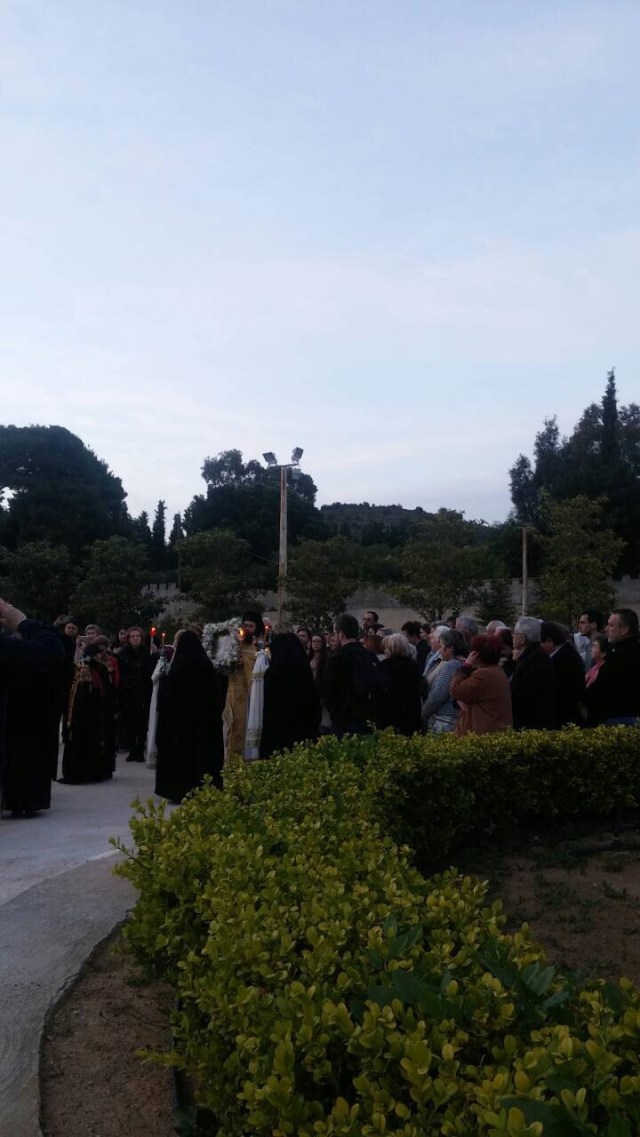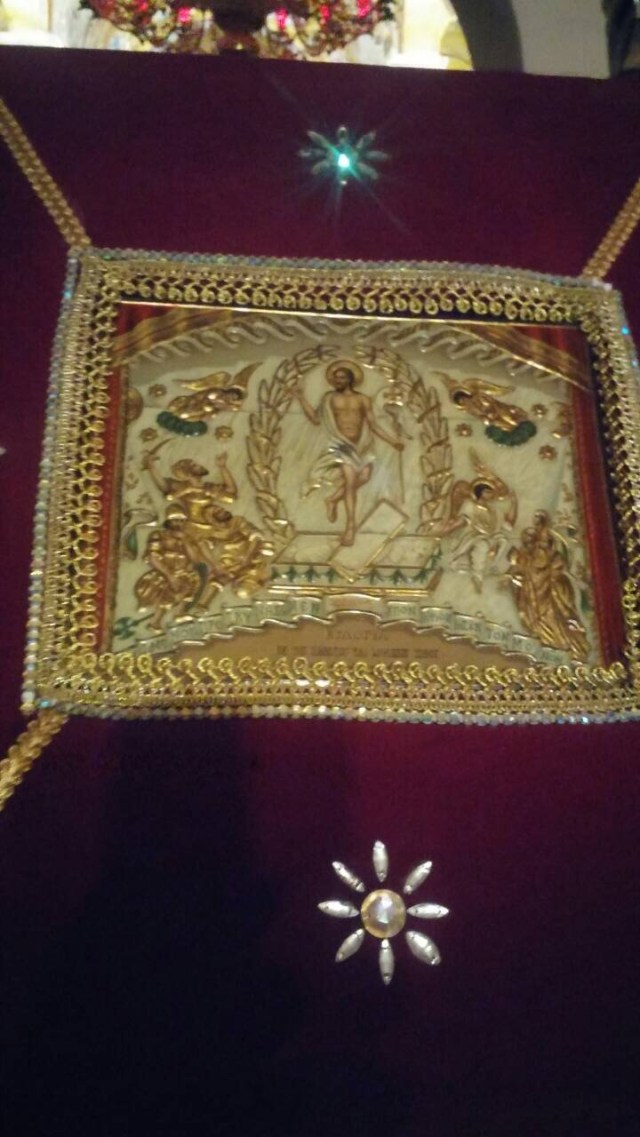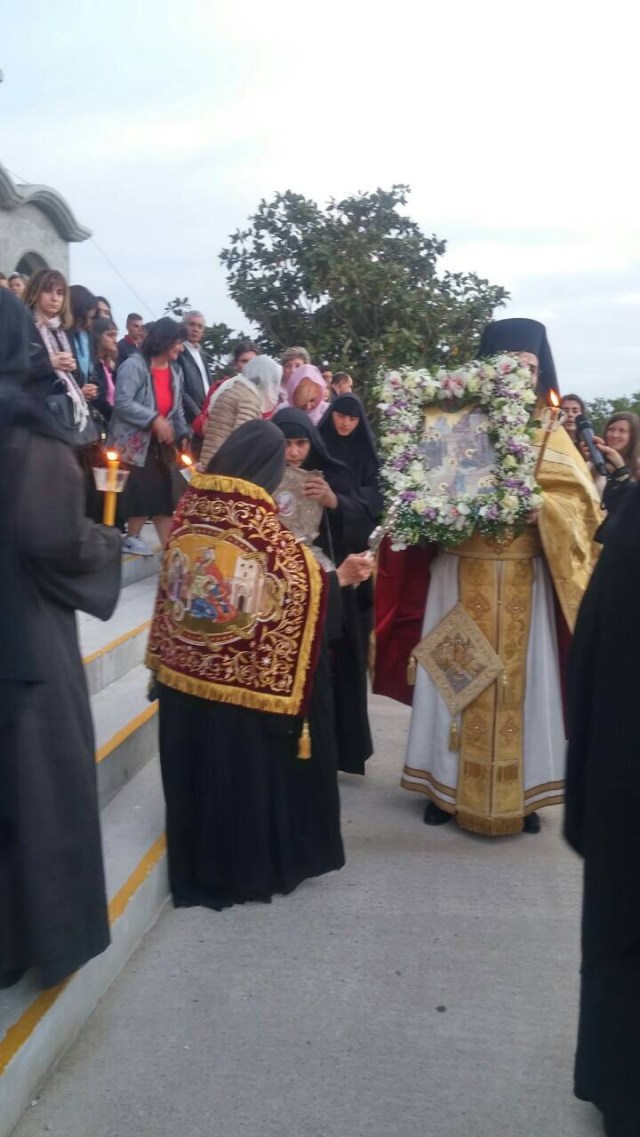
Musings from a Bright Week Pilgrimage (I)

IMG-2230

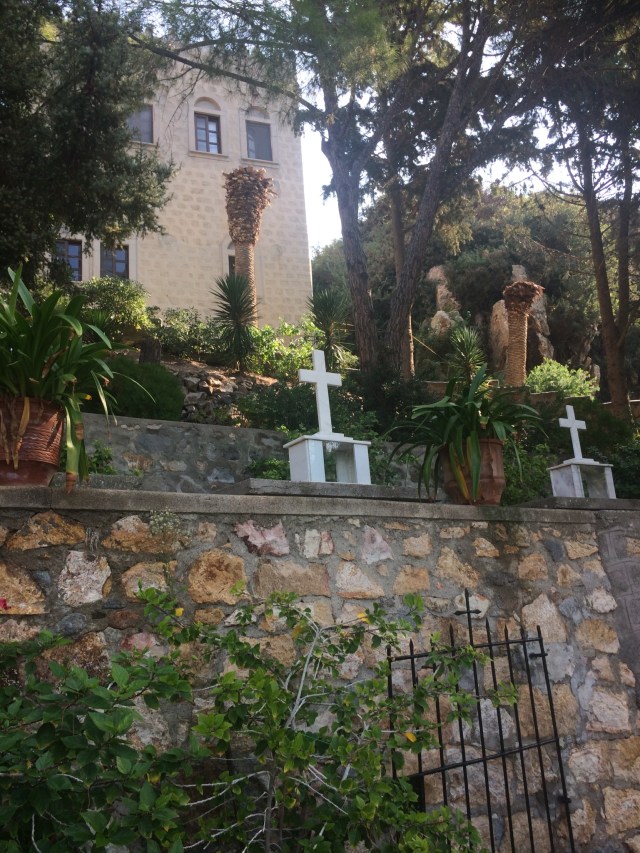
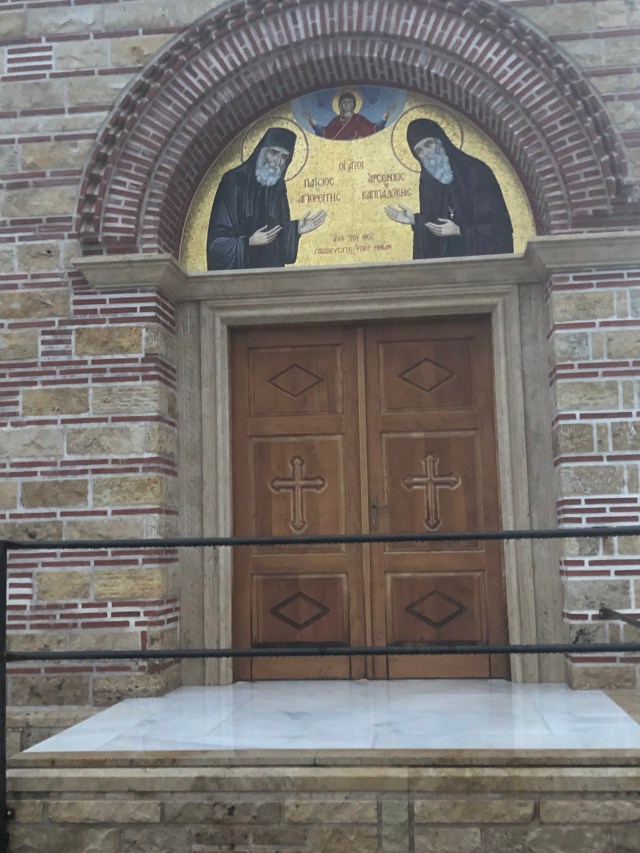
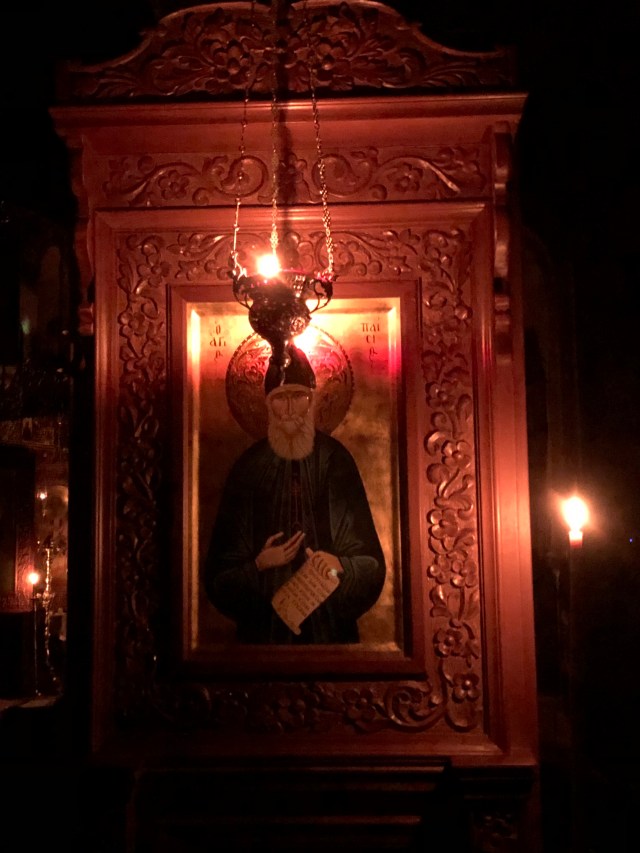
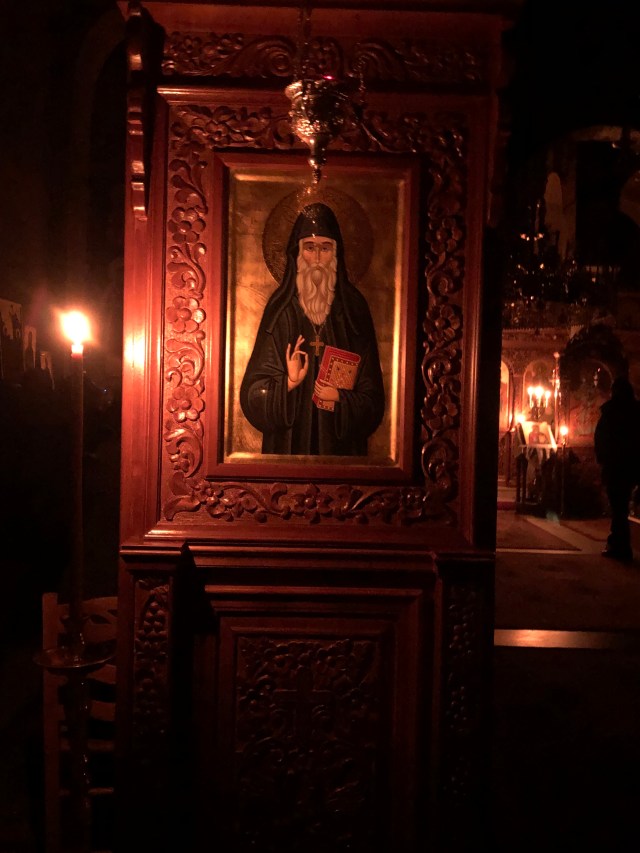
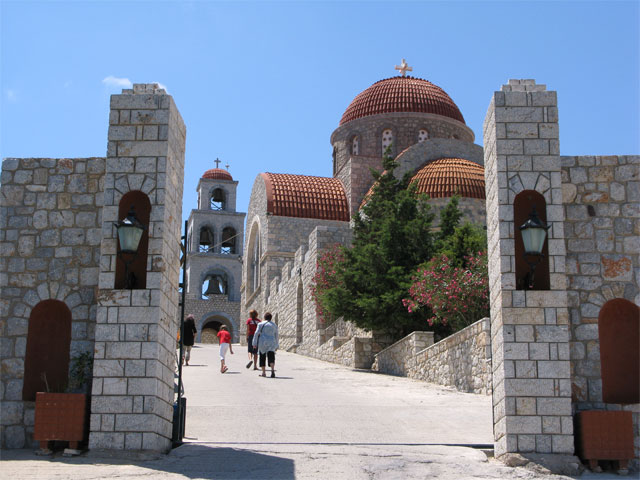
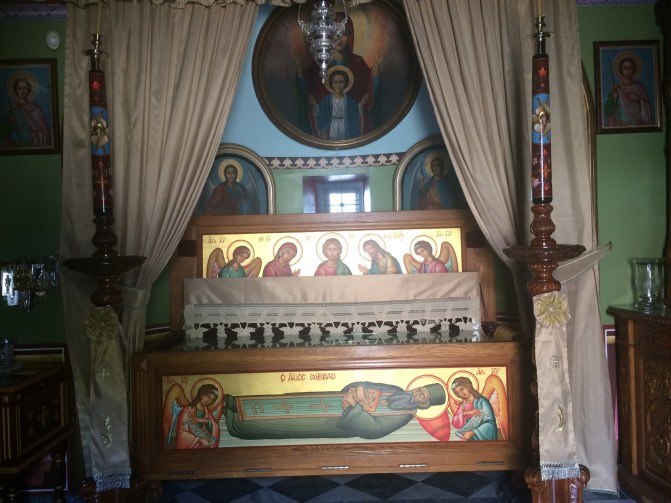
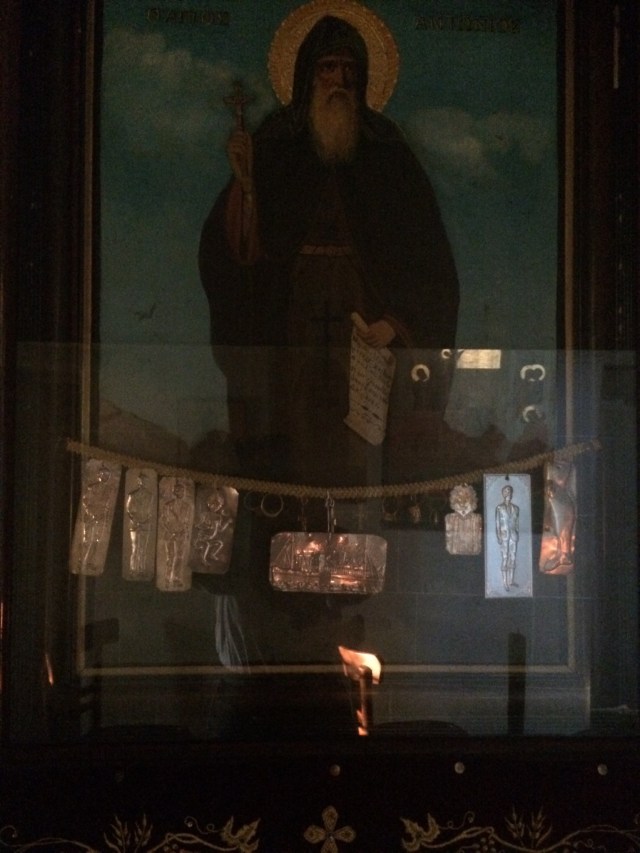
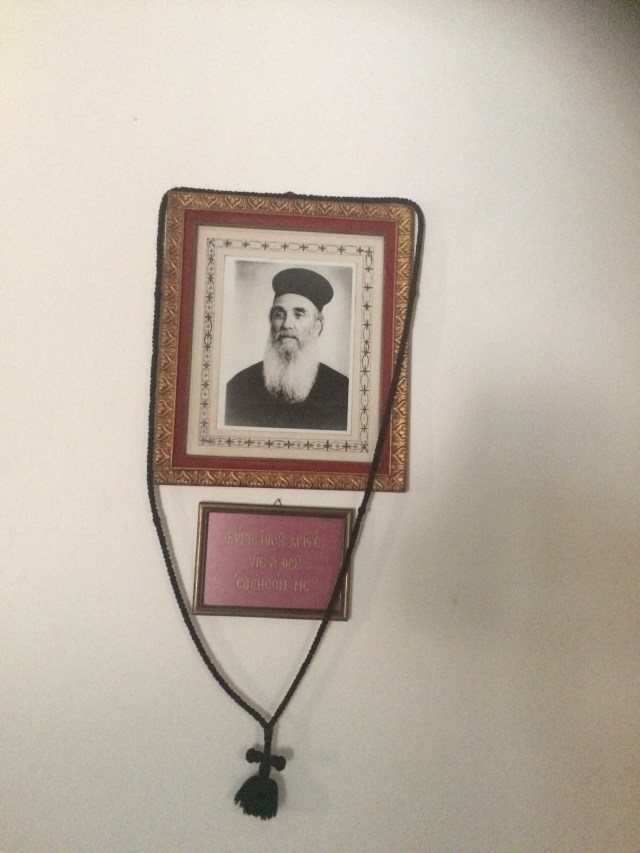
Gerondas Theoklitos, Monastery of St. Arsenios the Cappadocian


Paschal Holy Dances in Attica, Aegina and Euboia

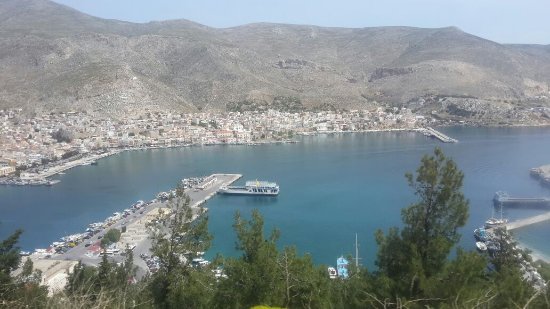
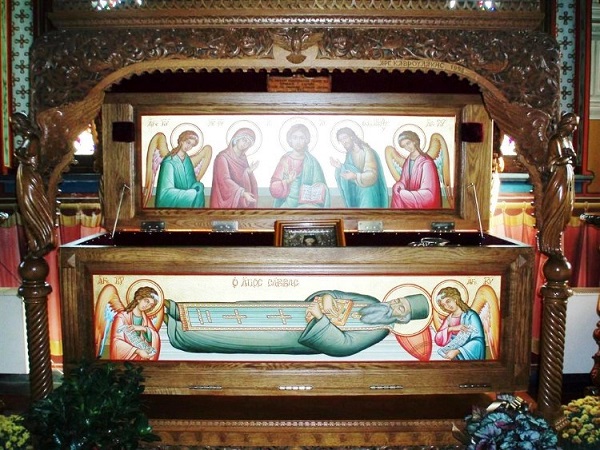
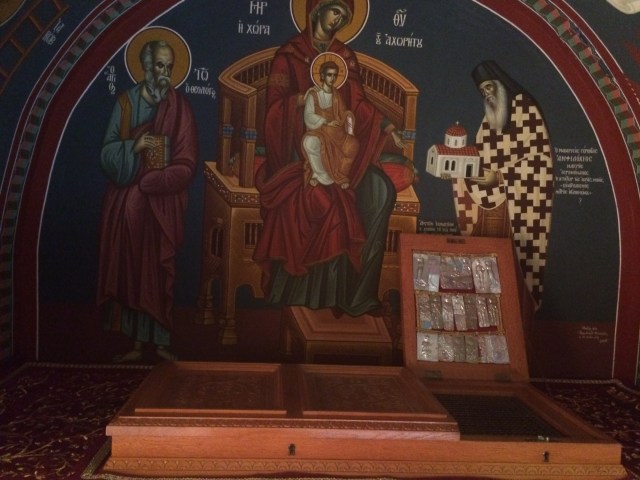
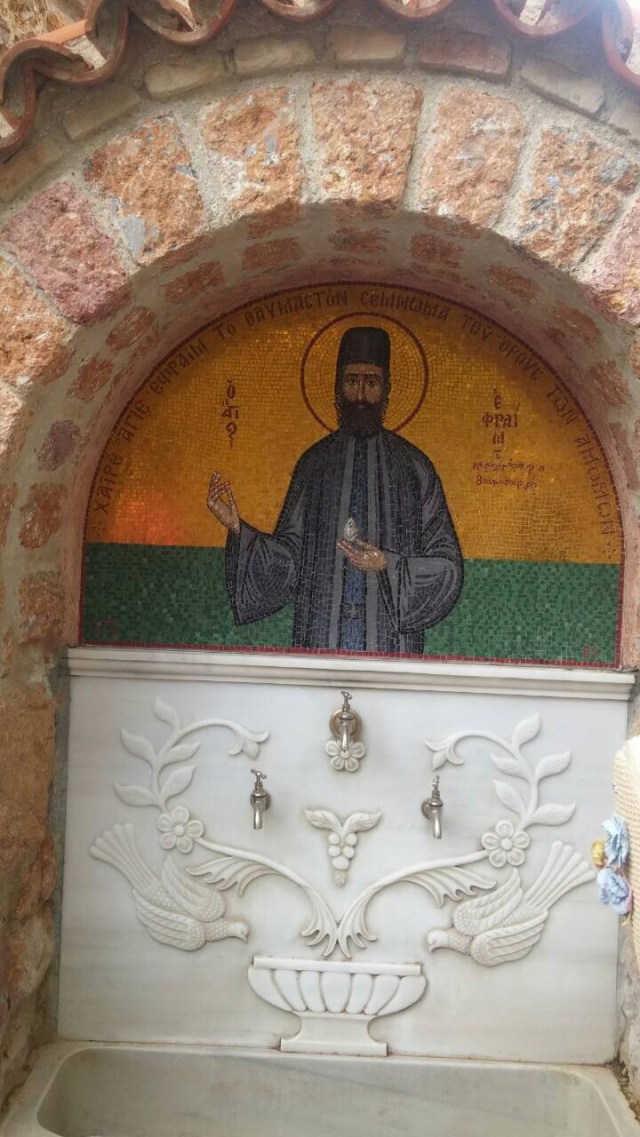
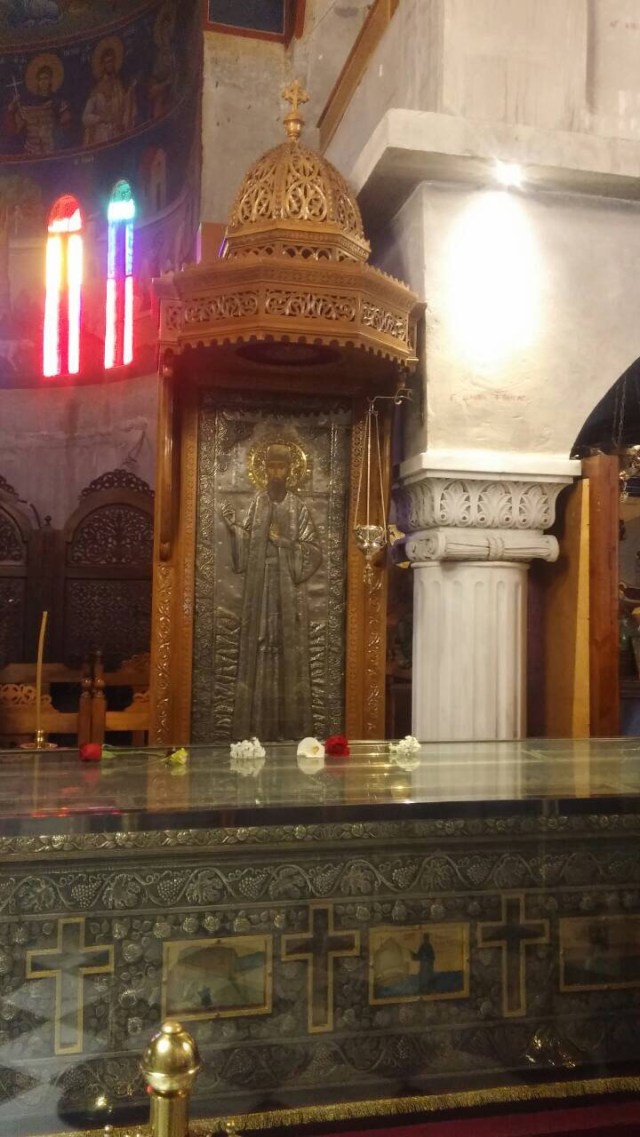
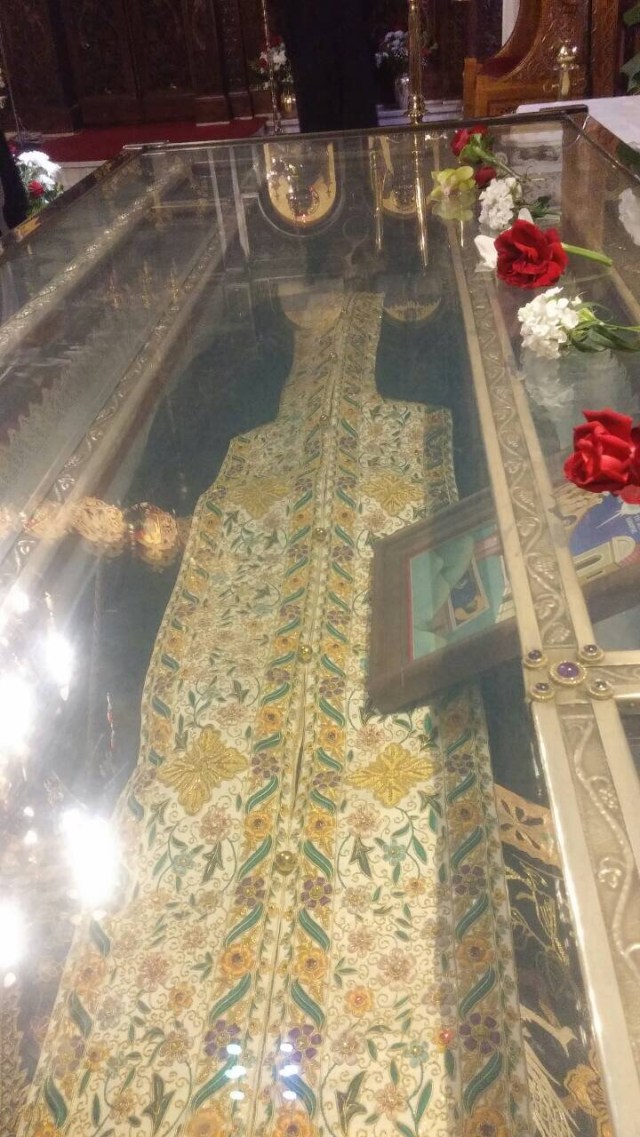
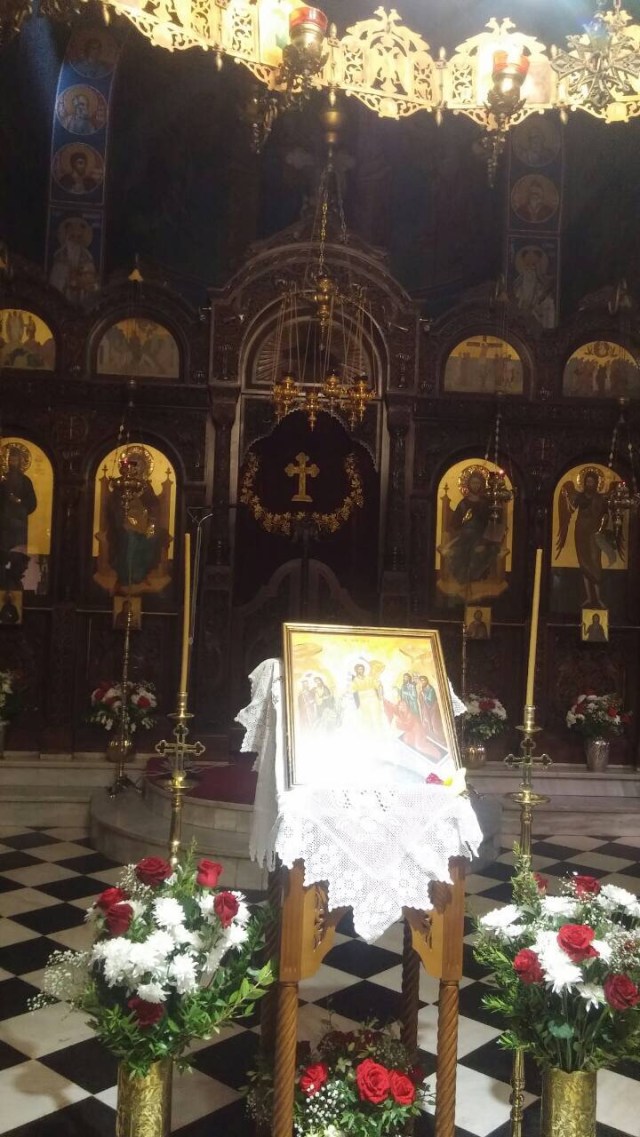
Everybody in our mixed company on the bus was exhausted even before starting out! Doctors, reeling after long shifts, having barely slept for more than 3-4 hours in 3-4 days in a row; parents struggling with noisy, boisterous,excited young children; senior high-school and university students in distress, studying for their final exams … on the bus! … while all were desperately trying to get some sleep… But the most exhausted of us all was our accompanying priest, Hieromonk Synesios, St. Arsenios Monastery, after a rigorous monastic Great Lent and Holy Week, on top of all his other duties. St Arsenios himself, as in all past pilgrimages, was at the front seat of the bus. His relics were reverently carried by all pilgrims at every stop of our pilgrimage. The pilgrimage was brief but packed and hectic, so let me simply offer a few Paschal, mostly ‘leaping/ dancing” vignettes which made the greatest impression to me.


But let me start with the beginning.This Bright [1]Week pilgrimage was appropriately the brightest I have ever participated in! It felt like the fulfilment of St. John’s of Damascus Mystical Pascha captured in his Paschal Canon! To be sure, any trip to Greece in springtime straight from a foggy, misty, rainy England is bound to feel full of light! Especially if to Athens and the islands!


Still, the Light which nearly blinded all of us during this Bright Week pilgrimage must have contained a tiny ray of Christ’s Light [2]! A palpable, tangible Transfiguration Light dancing in all pilgrims’ eyes, on the bus and in all the monasteries we visited. The atmosphere felt so light as if were all to collectively Ascend to Heavens. The sheer exuberance of “Christ is Risen” chanted 99 times every single day during Resurrection Day and All Bright Week made our hearts leap with joy! And our Lord’s greeting “Rejoice!” in all the 11 Resurrectional Matins (Eothina) Gospels reverberated in our hearts. And as we were soon to find out, we were about to meet lots of literally dancing and leaping holy men and women.


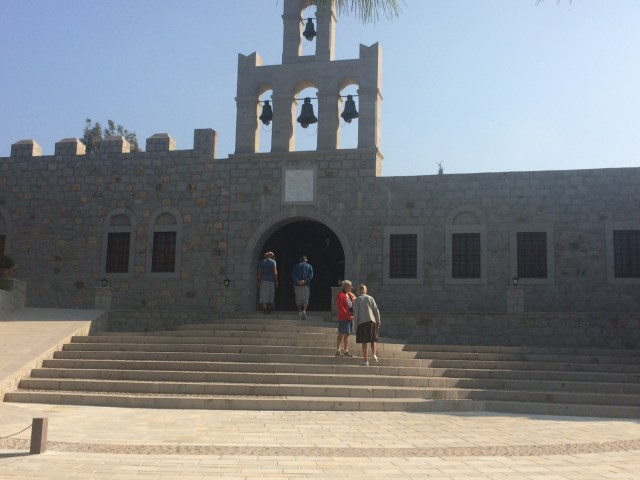
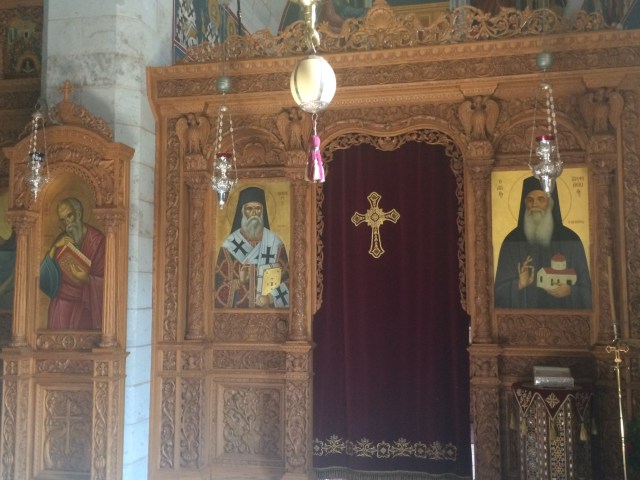
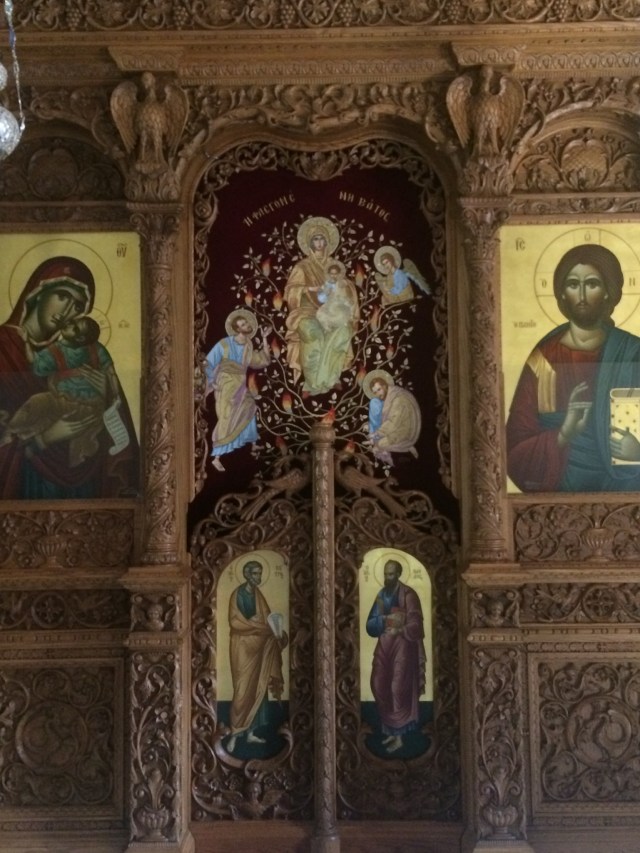
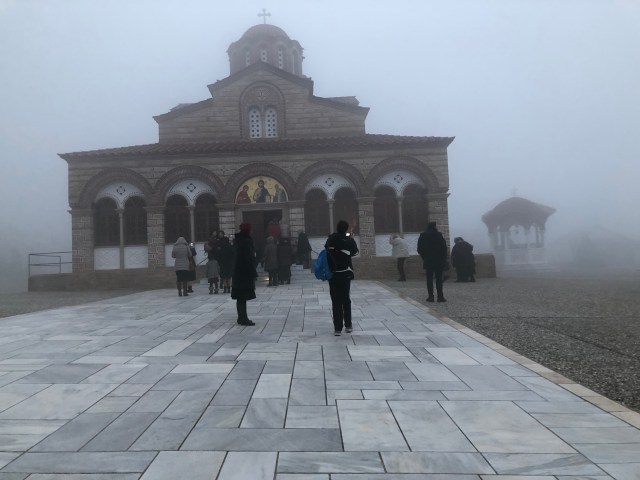
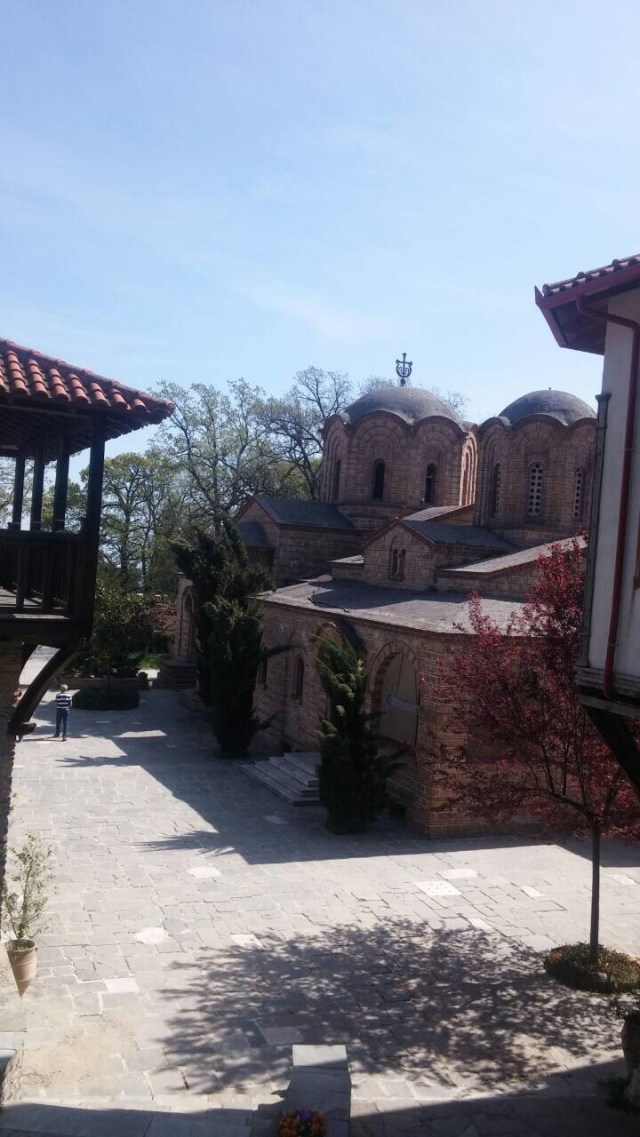
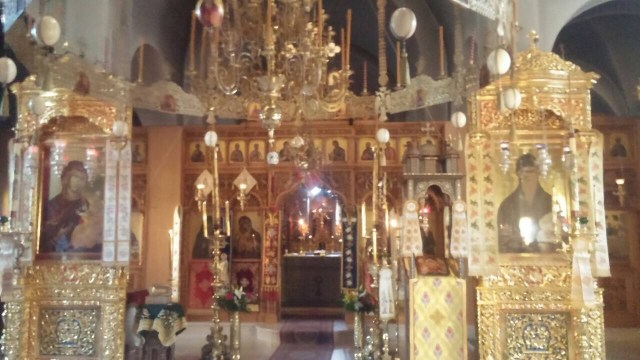
Morning Holy Liturgy at the Holy Monastery of Saint Dionysios of Mount Olympus (3) on Bright Tuesday


IMG-2231

IMG-2234

That was another discovery of that week: how many Paschal verses indeed contain this image of “leaping”:


THE PASCHAL CANON


Ode 4.

David, the forefather of our divine Lord, leapt and dancedbefore the symbolical Ark of the Covenant.


ode 5

“When they who were held by the chains of hell beheld Thy boundless compassion, O Christ, they hastened to the Light with joyful feet, exalting the eternal Pascha.


ode 7

We celebrate the death of death, the destruction of hell, the beginning of eternal life. And leaping for joy, we celebrate the Cause, the only blessed and most glorious God of our fathers.


THE PASCHAL STICHERA IN TONE FIVE

Rejoice, O Jerusalem, and leap for joy, in that thou beholdest Christ the King like a bridegroom come forth from the grave.

IMG-2233IMG-2232IMG-2235

Everybody in our mixed company on the bus was exhausted even before starting out! Doctors, reeling after long shifts, having barely slept for more than 3-4 hours in 3-4 days in a row; parents struggling with noisy, boisterous,excited young children; senior high-school and university students in distress, studying for their final exams … on the bus! … while all were desperately trying to get some sleep… But the most exhausted of us all was our accompanying priest, Hieromonk Synesios, St. Arsenios Monastery, after a rigorous monastic Great Lent and Holy Week, on top of all his other duties. St Arsenios himself, as in all past pilgrimages, was at the front seat of the bus. His relics were reverently carried by all pilgrims at every stop of our pilgrimage. The pilgrimage was brief but packed and hectic, so let me simply offer a few Paschal, mostly “leaping/ dancing” vignettes which made the greatest impression to me:


To Be Continued …


Footnotes

 [1] Bright week begins with the Sunday of Pascha, and comes to a close on Bright Saturday, at Vespers. One may actually argue that Bright week comes to a close before the ninth hour (which precedes vespers), since the royal doors and deacons’ doors, which have been wide open all week, are closed. This is a sad and significant moment. Just like our forefathers Adam and Eve, we cannot remain in paradise in this life, because of our sins. Ours is a life of struggle against our passions, which hold us back from full realization of paradise in this life.
‘How many days are in Bright week?’ There are TWO correct answers! According to the sun’s rising and setting, Bright week is seven days, (Sunday through Saturday) but to the church, liturgically, it is one day – the “eighth day”.

[2]Cf. Lev Gillet’s notes on the theme of light in the Byzantine liturgical year: ‘Come, take light from the Light that has no evening, and glorify Christ, risen from the dead.’ On the Sunday Pascha, the celebrant stands at the royal doors of the iconostasion and holds a lighted candle in his hand. “Once more, the eastern Church represents the Christian mystery in terms of the mystery of light; this Light, whose birth was marked by the star of Bethlehem, has been shining among us with growing intensity; the darkness of Golgotha could not extinguish it. Now it reappears among us, and all the candles which the congregation hold in their hands, and that they now light, proclaim its triumph. In this way, the deeply spiritual meaning of Easter is indicated. The physical Resurrection of Jesus would be without value to us if the divine light did not shine at the same time among us, within us. We cannot worthily celebrate the Resurrection of Christ if, in our soul, the light brought by the Saviour has not completely overcome the darkness of our sins.”[The Uncreated Light] on Easter night triumphs over the darkness; at Pentecost it reaches its full zenith. Pentecost is the ‘midday flame’. (The Year of Grace of the Lord: A Scriptural and Liturgical Commentary on the Calendar of the Orthodox Church, p177, p215 respectively)

[3]: For information and a documentary in Greek about our first stop, the beautiful Holy Patriarchal and Stavropegic Monastery of Saint Dionysios of Olympus, go herehere and here.

Choice

freedom-a-choice-anila-ayilliath

“Freedom, A Choice”,  a painting by Anila Ayilliath


Choice (*)


-Lord, let me come and join you in that land which beckons me, in those fields that I love.

-No, it is in this town that you must meet me.

-Lord, I long for the sun and the wilde flowers over there.

-I only have this black sky and these thorns to give you.

-But Lord, there is only noise and smoke here.

-There is something else as well; there is sin.

-Lord, I would so like to see again the blue water that you knew!

-Here, hearts are sick and souls are dying in darkness.

Lord, I could perhaps stay if you entered into my heart, if you took my hand. But when I see these streets […] my whole being revolts and escapes in thought over there. Must I therefore still stay here, with my sadness and my loneliness?

-My child, is it so difficult to decide? And to walk where I walk?”

(“Sunday Letters”, Lev Gillet, ‘A Monk of the Eastern Church’ by Elisabeth Behr-Sigel, p23)

*

* Dedicated to my spiritual father 

This dedication, initially made on 10/6/2017, holds true of course, only yesterday, when I re-discovered these letters last night, I thought every single iota of these verses was written for me! Piercing my heart … Each time, returning here is becoming increasingly difficult … 

I am Back


IMG-2256

Pantokratoros Monastery in Ntaou Penteli

Virginia: “When will you start writing in Greek? English comes difficult to me. I struggle with your posts. Please consider …”

And Gianna. And Kalliopi. And …

Christ is Risen! 

It seems this blog may soon become bilingual… Maybe I should alternate one blogpost in Greek, one in English? … Once, twice a week? Do you think this is a good idea? On the bus, on our way to Attica, my Greek friends asked me to share on the microphone a few of my experiences here. They gasped at the stories I told them. They did not know. How could they even begin to imagine? 

IMG-2262

St. Nektarios’ the Wonderworker monastery, Agia Triada (The Holy Trinity) in Aegina

I feel I owe this to my Greek and Cypriot brethren who should not be left behind. They need to recover Orthodoxy, expand their horizons and learn about Orthodoxy’s struggles in foreign lands. In so many ways, I have discovered more about Orthodoxy during my brief ‘exile’ in an un-Orthodox country than in a lifetime in an Orthodox one.

Besides, any missionary endeavour and blog require by their very nature more than one tongue. At Pentecost “every man heard them speak in his own language”(Acts 2:6). I still find writing in English a lot harder than in Greek my mother tongue, and there are a lot of texts yet untranslated in English. 

What is your opinion? Do you have any suggestions? I would be so grateful for any help.


IMG-2250

Pantokratoros Monastery in Ntaou Penteli, 179 Martyrs Reliquary

Christ is Risen! 

I am back. I can’t believe a whole month flew by so fast! Thank you for staying in touch through my inbox. So many emails to reply, questions to answer, stories to be told … Please be patient with me, as I am still unpacking. My pilgrimage to Attica, Aegina and Euboia lasted only a few precious days, yet had quite an effect on me. It felt like a landmark and a watershed. More in the posts to follow…


IMG-2292

The Kato Xenia Monastery at Almyros, near Volos – The Wonder Working Belt of Virgin Mary

IMG-2289

Monastery of Transfiguration near Rovies, island of Evia, constructed by Saint David, and served by the recently canonised St. Iakovos Tsalikis. + His grave

A Day to the Prince Islands (II)

photo42

The Monastery of St. George Koudounas

This historic Monastery of Saint George Koudounas, on Prince’s Island outside of Constantinople, was according to tradition built by the Byzantine Emperor Nikephoros Phokas in 963 AD. A miraculous icon of St. George was brought here from the Monastery of Peace, which was founded by Emperor Justin II, in Athens at that time.

The Monastery was later sacked in the Fourth Crusade. Then in 1302 the pirate Giustiniani plundered all the buildings and monasteries of the island. Not wanting their holy icon stolen by the Franks, the monks hid the icon under the earth and place the holy altar above it. The miraculous icon however was lost for many years.

Later, St. George appeared to a shepherd in a dream and told him where to find his icon. When he approached the area, he heard the ringing of bells, and having unearthed the icon, found it decorated with bells. This is the source behind the epithet “Koudouna” which means “bells”. The Monastery was later attached to Hagia Lavra in Kalavryta, and eventually to the Patriarch of Constantinople. The current church was built in 1905.

p25p26p27

p45p46p47

The miracles of the Saint are many, not only towards Christians [Romans], who approached always with great reverence (in olden times there wasn’t a Christian family which had not visited Koudouna at least once a year), but towards everyone without exception, who approach his grace with faith. Thus there is a great mass of people who come from other faiths from throughout Turkey. The pilgrims number about 250,000 a year, the majority being Turks. The great iron gate of the Monastery, as we learn from its engraving in Greek and Turkish, was offered from the Muslim Rasoul Efenti, as a gift of gratitude towards the Saint for the healing of his wife.

On April 23rd, in other words the day when the Saint is honored and the Monastery celebrates, tens of thousands of pilgrims arrive, not only from Constantinople but from other cities, to venerate the Great Martyr and to seek help in their problems. Roughly all of these pilgrims are from other faiths. Many will return later to thank St. George, who heard their prayer and granted their desire, bringing the indispensable oil for his vigil lamp. You hear with passion how he healed this person’s son, how another became a mother after being barren for many years, how a third acquired a house, etc.

The Monastery also celebrates on the feast of Saint Thekla, and on this feast about 10,000 Muslims visit the Monastery seeking the prayer of Saint George.

(For the full history of this Monastery with many pictures, visit this site.)

photo1

Muslim Vows
Some come barefoot up the hill which takes about 30 minutes to climb to the Monastery, others come with offerings of oil, candles, and sugar so that their lives may be sweet. Some do not speak as they climb up to the Monastery until they kiss the icon of St. George. They follow the services with hands lifted in the air holding lit candles. They ask priests for antidron to bring home with them for a blessing. They have great faith and respect for Orthodoxy.
On September 24 I witnessed at 6:00 AM four modern looking Turkish girls approaching the Monastery. I asked them for what purpose they came. They responded: “Faith in the Saint brought us here. It doesn’t matter that we are Muslims. We prayed that he would help us. We have heard so much about the Monastery.”
Oral came from Smyrna in order to venerate the Saint with her vow. She brought three bottles of oil. When I asked why she, as a Muslim woman among the thousands, visit the Orthodox Monastery, she responded: “It is not forbidden by anyone for us to believe in Saint George. Religions have one common agreement, the one and only God. We could be hiding within us a christian.”
Of the many interviews I conducted that day with Muslims, the responses were basically the same.
A different answer was given by Antil however. He said: “Life in Turkey is difficult. The people need something to give them strength. They have turned to religion. They have been bored by everything so they seek help elsewhere. Why not Saint George?”
And one Turkish newspaper reported: “Saint George has distributed hope to the suffering.”
Testimonies of Monks From the Monastery
Hieromonk Ephraim of Xenophontos, who has lived for three years at “Koudouna”, is astonished with the faith of the thousands of Muslims who visit the monastery. “These people live with their heart”, he affirms, “Because faith is the sight and the strength of the heart, for this reason they can and they do experience our Saints.”
Monk Kallinikos of Xenophontos, who serves as a priest, relates: “We are astonished with that which occurs here. Many times we see people who find the Lord with the faith of the Roman centurion.” To our question if the Saint responds to the supplications of the thousands of pilgrims, he replied: “During my three years here, we ourselves are witnesses of miracles, such as the healing of paralytics, mutes, and the giving birth to children.”
We asked the monks at St. George to comment about their stay in Turkey, and they told us: “All of their behavior is perfect. From the highest ruler, to the lowest, they treat us with such respect that many times we wonder which would be better, to live in Christian Greece or Muslim Turkey. We should tell you that we go everywhere with the monastic dress and our experiences have always been positive.
Thus, St. George has become a place of worship for thousands of atheists, Christians, Jews, and especially Muslims, who with every means come to the island and bring their tamata (vows), and place them before the Saint, as they place their hopes in him. And the Saint shows that he does not judge and ‘imparts healing’ to every faithful person.”

p48photo40photo41

IMG-1071

p33

p51p52p53p49

p50

For more:

Eis Tin Polin (1) 

A Day to the Prince Islands (I)


A Day to the Prince Islands (I)

IMG-1064

p41

p42p43p44

Morning transfer to the pier for a private ferry ride to the island of Halki, home of the renowned Halki Patriarchal School of Theology. Halki is one of the Prince Islands which owe their name to the fact that during the Byzantine period the imperial family and disgraced aristocrats were exiled in the monasteries on the islands.

Ιsland of Halki

p11p9

Halki Patriarchal School of Theology

p12p13

Eis Tin Polin (1) 

p14p15

p17p18p19p23p24

St Photios the Great is believed to have founded the monastery in Halki in the late 19th century. In 1844, Patriarch Germanos IV established the Theological School for the purpose of pleasing God with a dwelling for teachers, theologians and theology students. The monastery houses a very impressive and important library.

p28

A carriage (fayton) took us to the top of the hill where the Theological School is situated, since motorized vehicles are forbidden on all the islands. A magnificent view awaited us there.

p53

IMG-1083

IMG-1084

p29p30p31p34p35p37p38p39

image44

Halki Patriarchal School of Theology

image45

Η Παναγία η Παυσολύπη
The Theotokos that Puts an End to our Sorrows

IMG-1067image46


image40

photo30

image42image45IMG-1072image47image48

IMG-1079

photo27photo28photo29photo31

IMG-1085

Eis Tin Polin


polin101

Pilgrimage to Constantinople 

Mosaïques de l'entrée sud-ouest de Sainte-Sophie (Istanbul, Turquie)

The Hidden and the Forbidden City

polin100

Constantinople, the glittering jewel of Asia Minor and the gateway between two continents! It sits astride on the most historic water channel in the world, the Dardanelles. Constantinople has been host to three empires: The Roman, Byzantine and Ottoman. Invaded, besieged and conquered by countless armies, Constantinople today, remains a city of sparkling domes and minarets and beautiful palaces. Our pilgrimage brought us directly to the heart of Orthodoxy and the cradle of the Byzantine civilization. More importantly, thanks to our tour guide, we bore witness to its solemn existence, spiritual strength and religious devotion by visiting the hidden and forbidden City.
polin1

With the grace of God, a total of fifty Orthodox Christians, along with a hieromonk from the Monastery of Saint Arsenios (Vatopedi, Chalkidiki) and the little city hermit 🙂 went on a Pilgrimage to Constantinople during the Twelve Days of Christmas. It was truly a moving and inspirational trip. Below you will find a sample of pictures capturing the trip.

polin201polin202polin204polin2polin3polin5polin6polin7polin8polin9polin10

polin4

Photographs courtesy of Anastasia Avramidou, the artist of our group

The Hidden and Forbidden City to be continued …

“If I should forget thee, O Jerusalem…” (Ps. 136:5)

Jerusalem

Photographs and a famous Saint’s’ story at the doorstep of the Holy Sepulchre Church

The Church of the Lord’s Sepulcher

Inside the Church of the Lord’s Sepulchre, everything — even stones, rocks, marble, columns, walls — everything exudes an exquisite fragrance of Holiness and Sanctity

The Church of the Lord’s Sepulcher—the column where the Holy Fire burned through on Holy Saturday when the Orthodox were shut out of the church.

The column where the Holy Fire burned through on Holy Saturday when the Orthodox were shut out of the church.

The Church of the Lord’s Sepulcher

The Church of the Lord’s Sepulcher. The Annointing Stone.

 The Annointing Stone

The Church of the Lord’s Sepulcher. Mosaic, “Annointing of the Savior”.

Mosaic, “Annointing of the Savior”

The Church of the Lord’s Sepulcher. Golgotha.

Golgotha

The Church of the Lord’s Sepulcher. Dome of the church over the Tomb.

Dome of the church over the Tomb

The Church of the Lord’s Sepulcher. Icons and lampadas over the entrance to the Tomb.

Icons and lampadas over the entrance to the Tomb

The Church of the Lord’s Sepulcher. Orthodox Divine Liturgy in the Tomb.

Orthodox Divine Liturgy in the Tomb

The Church of the Lord’s Sepulcher. The Holy Fire.

The Holy Fire

 Photos: Yanina Alexeyeva Orthodox Christianity

The Church of the Lord’s Sepulcher.

A sobering warning at the doorstep


“At last we arrived in Jerusalem. I spent the days before the festival in the town, living the same kind of life, perhaps even worse. I was not content with the youths I had seduced at sea and who had helped me to get to Jerusalem; many others — citizens of the town and foreigners — I also seduced. The holy day of the Exaltation of the Cross dawned while I was still flying about — hunting for youths. At daybreak I saw that everyone was hurrying to the church, so I ran with the rest. When the hour for the holy elevation approached, I was trying to make my way in with the crowd which was struggling to get through the church doors. I at last squeezed through with great difficulty almost to the entrance of the temple, from which the Lifegiving Tree of the Cross was being shown to the people. But when I trod on the doorstep which everyone passed, I was stopped by some force which prevented my entering. Meanwhile I was brushed aside by the crowd and found myself standing alone in the porch. Thinking that this had happened because of my woman’s weakness, I again began to work my way into the crowd, trying to elbow myself forward. But in vain I struggled. Again my feet trod on the doorstep over which others were entering the church without encountering any obstacle. I alone seemed to remain unaccepted by the church. It was as if there was a detachment of soldiers standing there to oppose my entrance. Once again I was excluded by the same mighty force and again I stood in the porch.

“Having repeated my attempt three or four times, at last I felt exhausted and had no more strength to push and to be pushed, so I went aside and stood in a corner of the porch. And only then with great difficulty it began to dawn on me, and I began to understand the reason why I was prevented from being admitted to see the life-giving Cross. The word of salvation gently touched the eyes of my heart and revealed to me that it was my unclean life which barred the entrance to me. I began to weep and lament and beat my breast, and to sigh from the depths of my heart. And so I stood weeping when I saw above me the icon of the most holy Mother of God. And turning to her my bodily and spiritual eyes I said: `O Lady, Mother of God, who gave birth in the flesh to God the Word, I know, O how well I know, that it is no honor or praise to thee when one so impure and depraved as I look up to thy icon, O ever-virgin, who didst keep thy body and soul in purity. Rightly do I inspire hatred and disgust before thy virginal purity. But I have heard that God Who was born of thee became man on purpose to call sinners to repentance. Then help me, for I have no other help. Order the entrance of the church to be opened to me. Allow me to see the venerable Tree on which He Who was born of thee suffered in the flesh and on which He shed His holy blood for the redemption of sinners and for me, unworthy as I am. Be my faithful witness before thy son that I will never again defile my body by the impurity of fornication, but as soon as I have seen the Tree of the Cross I will renounce the world and its temptations and will go wherever thou wilt lead me.’ Thus I spoke and as if acquiring some hope in firm faith and feeling some confidence in the mercy of the Mother of God, I left the place where I stood praying.

“And I went again and mingled with the crowd that was pushing its way into the temple. And no one seemed to thwart me, no one hindered my entering the church. I was possessed with trembling, and was almost in delirium. Having got as far as the doors which I could not reach before — as if the same force which had hindered me cleared the way for me — I now entered without difficulty and found myself within the holy place. And so it was I saw the Lifegiving Cross. I saw too the Mysteries of God and how the Lord accepts repentance. Throwing myself on the ground, I worshipped that holy earth and kissed it with trembling. Then I came out of the church and went to her who had promised to be my security, to the place where I had sealed my vow. And bending my knees before the Virgin Mother of God, I addressed to her such words as these: `O loving Lady, thou hast shown me thy great love for all men. Glory to God Who receives the repentance of sinners through thee. What more can I recollect or say, I who am so sinful? It is time for me, O Lady, to fulfill my vow, according to thy witness. Now lead me by the hand along the path of repentance!’ And at these words I heard a voice from on high: `If you cross the Jordan you will find glorious rest.’ Hearing this voice and having faith that it was for me, I cried to the Mother of God: `O Lady, Lady, do not forsake me!’ With these words I left the porch of the church and set off on my journey. As I was leaving the church a stranger glanced at me and gave me three coins, saying: `Sister, take these.’ And, taking the money, I bought three loaves and took them with me on my journey, as a blessed gift. I asked the person who sold the bread: `Which is the way to the Jordan?’ I was directed to the city gate which led that way.” (St. Mary of Egypt)


The Rocks Split


golgotha1

Ascending to The Horrendous Golgotha (John 19, 17), i.e. “The Place of the Skull” (“Golgotha” in Hebrew), was by far the most gut wrenching experience at our pilgrimage. Here the mystery of divine economy was accomplished, here the New Testament was sealed with the blood of the Theanthropos (Godman) which cleansed humanity from the evils of sin and death.

Stairway to Calvary in Holy Sepulchre Church

Stairway to Calvary in Holy Sepulchre Church …

*

Like in the prison of Christ, suddenly everything — the raw violence, the injustice and the hubris recorded in the “Twelve Gospel” readings* -– everything, becomes scarily all too real!


33 They came to a place called Golgotha (which means “the place of the skull”). …

From noon until three in the afternoon darkness came over all the land. 46 

44 It was now about noon, and darkness came over the whole land until three in the afternoon, 45 for the sun stopped shining. And the curtain of the temple was torn in two. 46 Jesus called out with a loud voice, “Father, into your hands I commit my spirit.”[c] When he had said this, he breathed his last. (Luke 23, 44-46)

About three in the afternoon Jesus cried out in a loud voice, “Eli, Eli,[a] lema sabachthani?” (which means “My God, my God, why have you forsaken me?”).[b]

50 And when Jesus had cried out again in a loud voice, he gave up his spirit.

51 At that moment the curtain of the temple was torn in two from top to bottom. The earth shook, the rocks split 52 and the tombs broke open. The bodies of many holy people who had died were raised to life. 53 They came out of the tombs after Jesus’ resurrection and[c] went into the holy city and appeared to many people.” (Matthew 33, 45-53)


“Today is hung upon the Tree, He Who did hang the land in the midst of the waters. A Crown of thorns crowns Him Who is King of Angels. He is wrapped about with the purple of mockery Who wrapped the Heavens with clouds. He received buffetings Who freed Adam in Jordan. He was transfixed with nails Who is the Bridegroom of the Church. He was pierced with a spear Who is the Son of the Virgin. We worship Thy Passion, O Christ. Show also unto us thy glorious Resurrection.”

 *

This is the hole through which you can touch the very earth where the Cross actually stood.

golgotha10

calvary12

The queue of the pilgrims never ends here.

calvary13.jpg


Just look at this ancient rock, the Rock of Calvary, literally split in half, exuding the fragrance of Holiness and Sanctity!


golgotha5


“Oh look, my soul, look!

How the rock was split in half

At the sight of the Crucifixion

Of the Invaluable Treasure!”

(Excerpt of a poem by St. John Jacob (the Romanian)


golgotha4


How much more should our hearts be torn and wounded by love if an inanimate material felt the hubris and shuddered and literally split in two at the sight of our Lord on the Cross!     Indeed, we need to continually beseech the Lord for “pardon and remission of our sins and transgressions”, “that we may complete the remaining time of our life in peace and repentance”. 

“Before the end to our life comes, because then we lose the right to pray for ourselves… because the time given to us for our repentance has expired.”


Glory to Thy Forbearance, O Lord!

Lord Jesus Christ forgive us the sinners.


* Service of the HOLY PASSION of our Lord Jesus Christ on Great Holy Thursday Evening


Prison of Christ

prison8

prison3

prison9


Descending to Christ’s prison was one of the most gut wrenching experiences at our pilgrimage. Matched only with The Horrendous Golgotha (John 19, 17). Here we descended, there we ascended up to the place, called “The Place of the Skull” which in Hebrew is called “Golgotha” , where the mystery of divine economy was accomplished and where the New Testament was sealed with the blood of the Theanthropos (Godman) which cleansed humanity from the evils of sin and death.


prison4


Holy Monastery of Praetorion

It is near the Monastery of the lentils and it served as a court at the time of Christ, the Roman Headquarters and the Roman governor Pilatus’ house.  In the courtyard of the Praetorium the ultimate sentence of Christ was passed by Pilate the Roman governor. According to the Holy Gospels, Christ was transferred here after he had been seen by Anna and Caiaphas to be judged (Matt. 27:1-31; John 18:28-40). Here began his martyrdom with the scourging, the scarlet robe, the reed, the mocking and the crown made of thorns (Matthew 27). In the Greek monastery there are ancient caves, one of which is believed to have been used as Christ’s temporary prison. The second one, which is underground, is believed to have been used as prison for Barabbas, the robber. There is also the pool of St. Helen where every Great Friday they have the service of the Great Hours. The present Praetorium was built during the 18th century and belongs to the Greek Orthodox. (The Patriarchate of Jerusalem)


prison10Jesus Christ Prisonprison1


I always visualised Christ as a prisoner like this, and a bit ‘abstract’:

prison11

But no! He must have been like this: 

prison10

Look again, carefully at these two holes, where they must have placed His legs, and the icon above:

Jesus Christ Prison

I was stunned! Suddenly it all be too real! Such violence and injustice and hubris! And those ancient rocks were so full of Life, exuding the fragrance of Holiness and Sanctity!

Glory to Thy Forbearance, O Lord!

Lord Jesus Christ forgive us the sinners.