Today’s Abbesses of Abbesses

Gerondissa Akylina, Porphyria, Sipsa Monastery and St. Georgios Karslidis

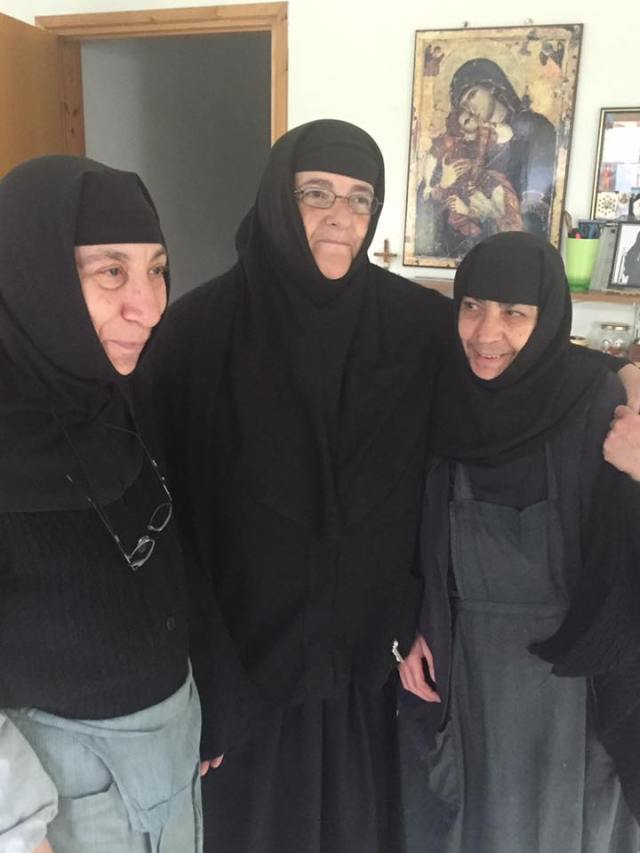
Gerondissa Akylina, Gerondissa Porphyria (Sipsa) and Gerondissa Makrina (Portaria)

Friday, November 4, feast day of the Blessed Elder Georgios Karslidis of Pontos, warmed my heart with fond memories of nearly 3 decades of pilgrimages to beautiful, gem monasteries in Northern Greece!

 *

“God cares for everyone. Despair is in effect a lack of faith.”


Gerondissa Akylina, Porphyria, Sipsa Monastery and St. Georgios Karslidis


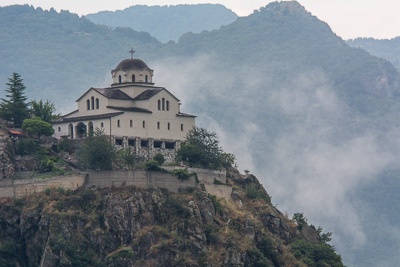
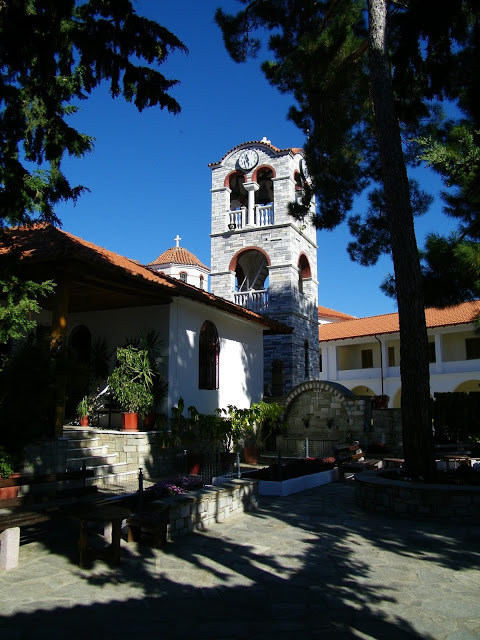
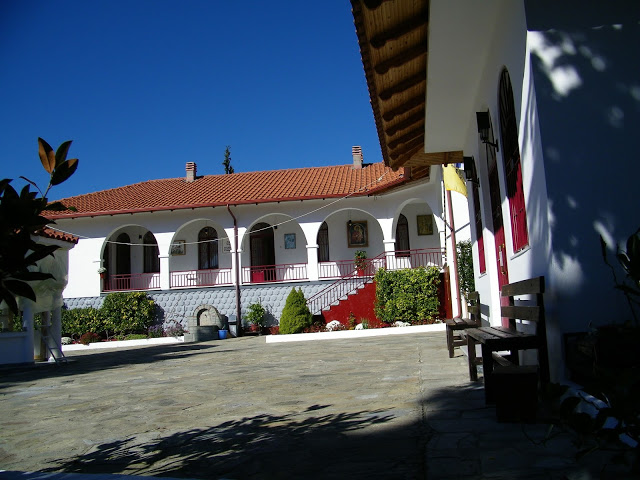
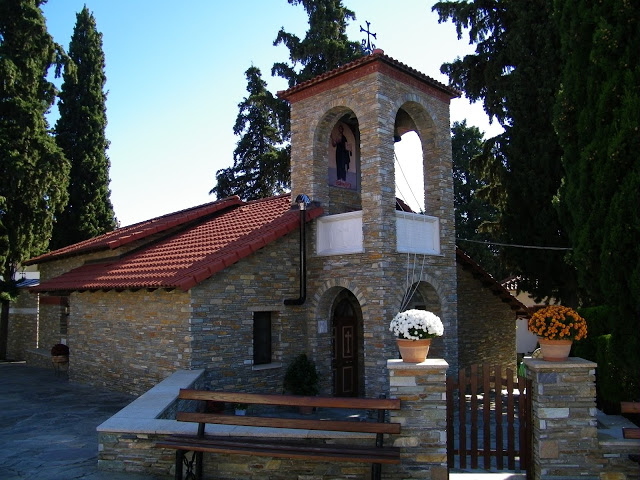
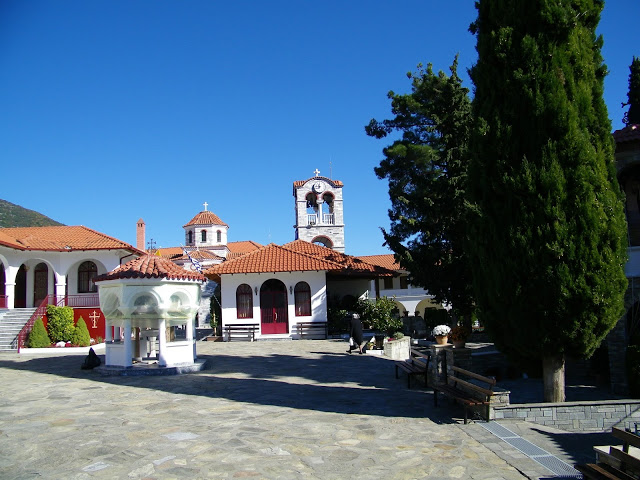
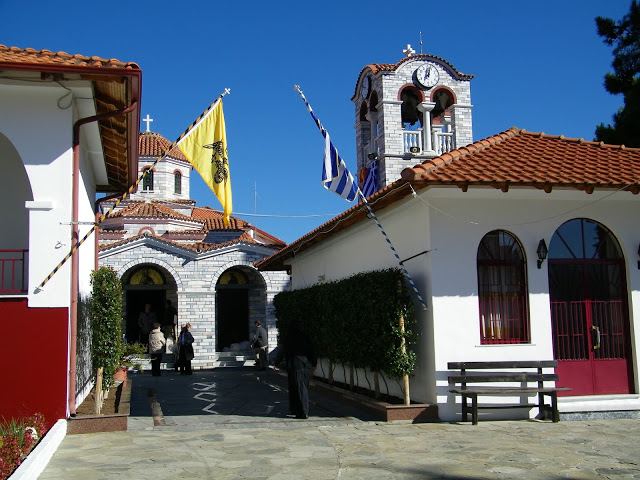
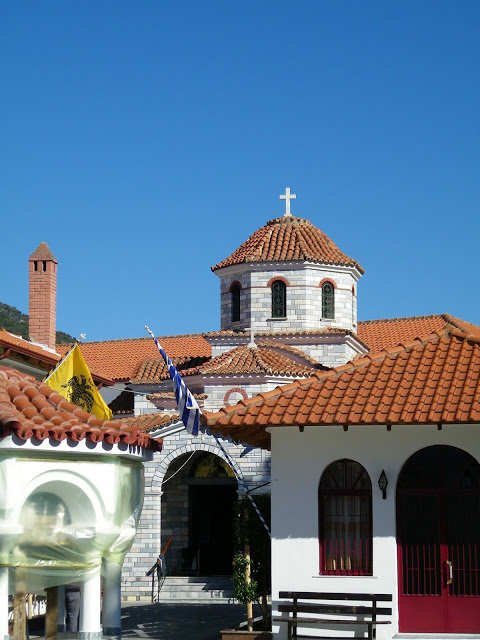
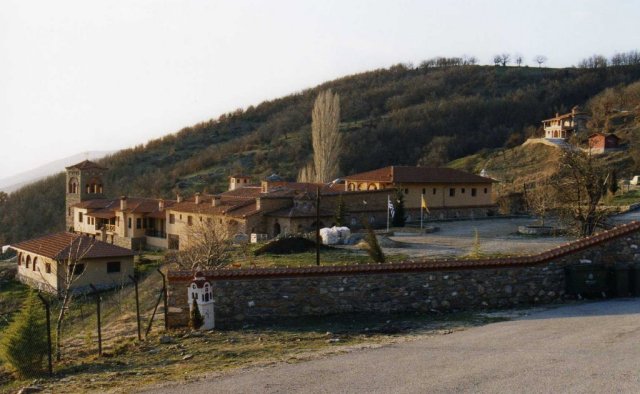
Taxiarches and the Analipseos Monastery (Sipsa) in Greece is one of the Monasteries in Greece that holds a dear place in my heart. Together with that of St. Paisios in Souroti, they were the first monasteries I started visiting as a University student, before my graduate studies and work at the US. At that time Gerondissa Porphyria, a Living Signpost in my journey on The Way,  had not even become a monastic, and now she is a renowned Abbess, one of the few of her ‘calibre’ in contemporary women’s monasteries.


Gerondissa Akylina, Porphyria, Sipsa Monastery and St. Georgios Karslidis


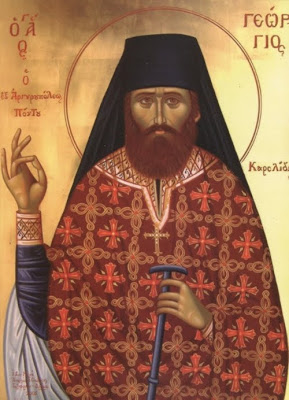
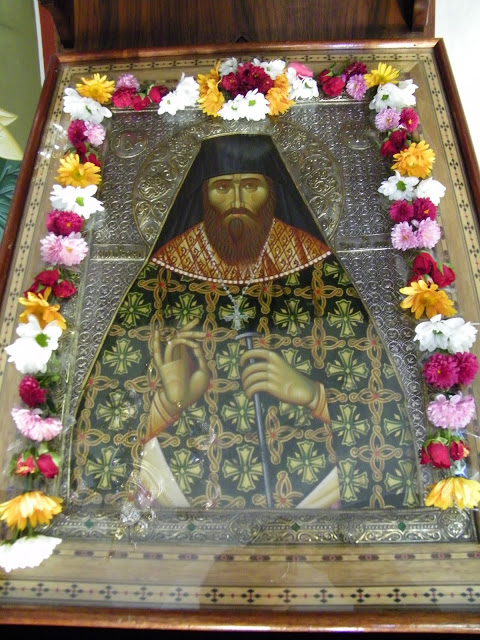
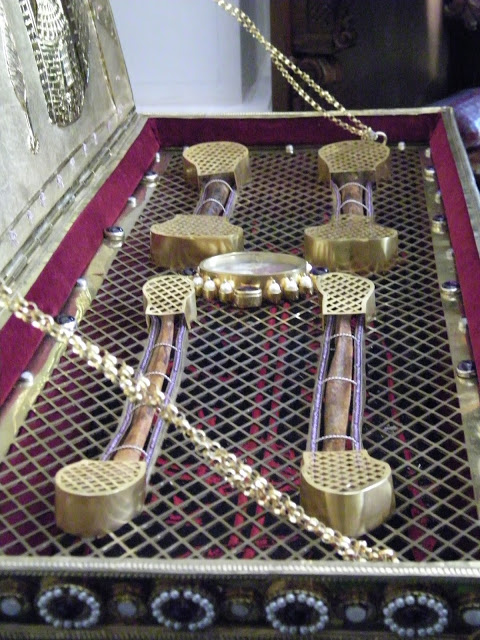
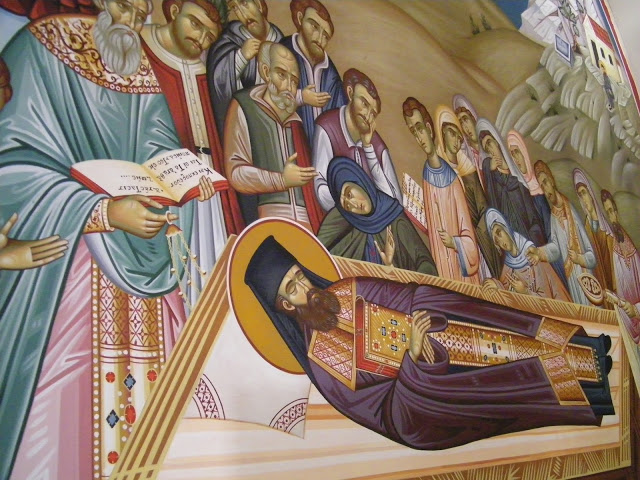
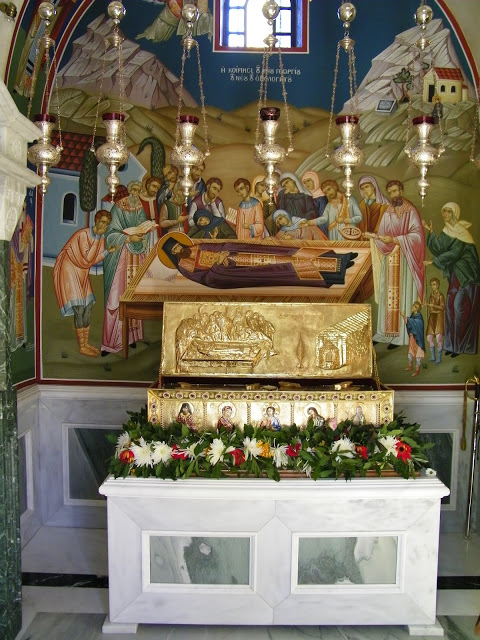
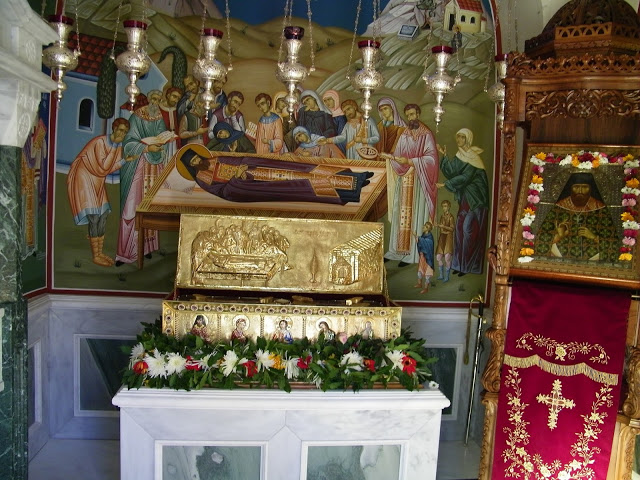
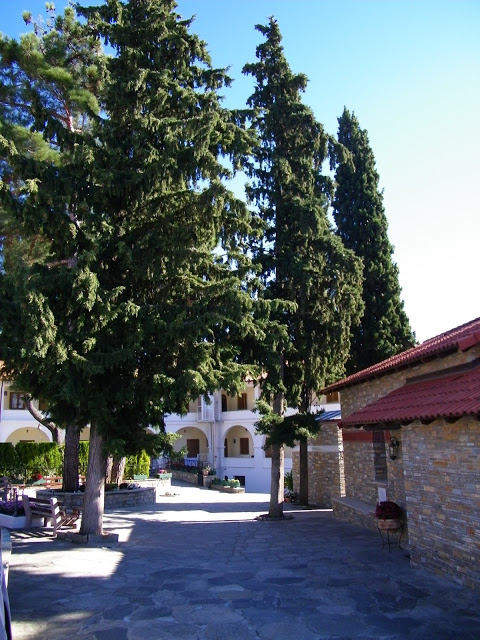
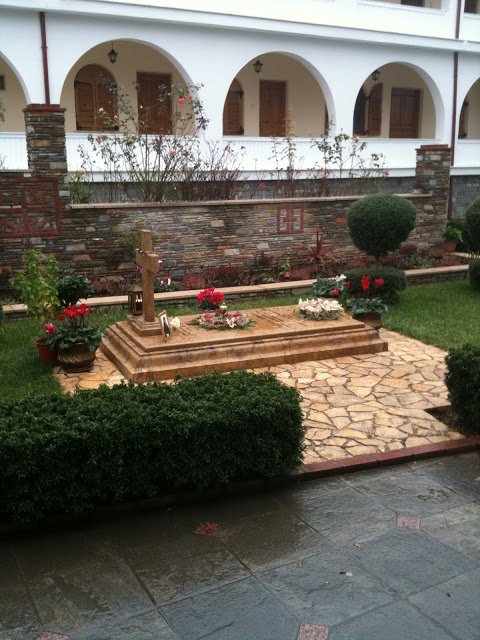
The Blessed Elder Georgios Karslidis of Pontos (1901-1959), latter day saint of the Saintly Orthodox Church in Greece,  glorified by the Patriarchate of Constantinople in 2008, was the first “resident” and founder of the monastery in the year 1930. He is one of few saints known to bear an imprint of the sign of the cross on his skull. There is a flourishing multitudinous sisterhood of nuns here today, who occupy themselves with the Iconography of handheld pictures, gold embroidery,knitting and waxwork.


Gerondissa Akylina, Porphyria, Sipsa Monastery and St. Georgios Karslidis


Gerondissa Akylina, Porphyria, Sipsa Monastery and St. Georgios Karslidis


Gerondissa Akylina, Porphyria, Sipsa Monastery and St. Georgios Karslidis


Gerondissa Akylina, Porphyria, Sipsa Monastery and St. Georgios Karslidis


Gerondissa Akylina, Porphyria, Sipsa Monastery and St. Georgios Karslidis


Gerondissa Akylina, Porphyria, Sipsa Monastery and St. Georgios Karslidis


Gerondissa Akylina, Porphyria, Sipsa Monastery and St. Georgios Karslidis


Gerondissa Akylina, Porphyria, Sipsa Monastery and St. Georgios Karslidis


Gerondissa Akylina, Porphyria, Sipsa Monastery and St. Georgios Karslidis


Gerondissa Akylina, Porphyria, Sipsa Monastery and St. Georgios Karslidis


Gerondissa Akylina, Porphyria, Sipsa Monastery and St. Georgios Karslidis


Gerondissa Akylina, Porphyria, Sipsa Monastery and St. Georgios Karslidis


Gerondissa Akylina, Porphyria, Sipsa Monastery and St. Georgios Karslidis


Gerondissa Akylina, Porphyria, Sipsa Monastery and St. Georgios Karslidis


Gerondissa Akylina, Porphyria, Sipsa Monastery and St. Georgios Karslidis


Gerondissa Akylina, Porphyria, Sipsa Monastery and St. Georgios Karslidis


Gerondissa Akylina, Porphyria, Sipsa Monastery and St. Georgios Karslidis


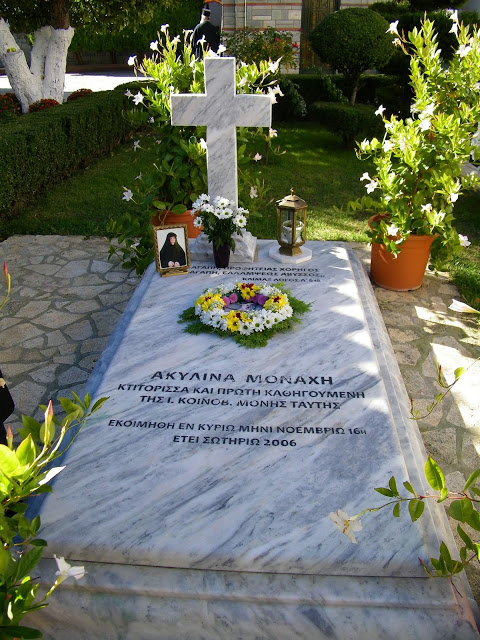
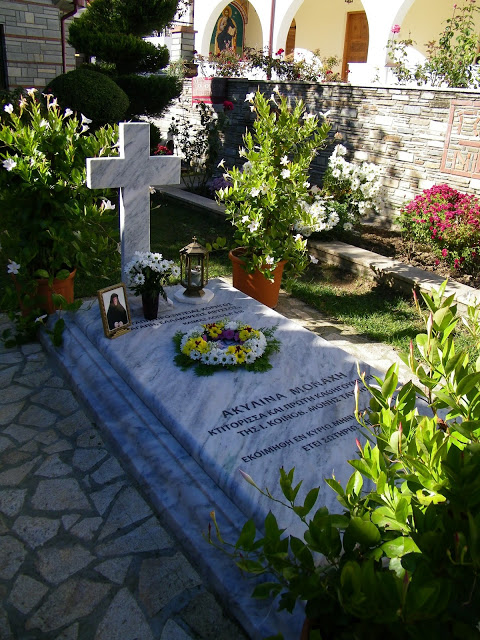
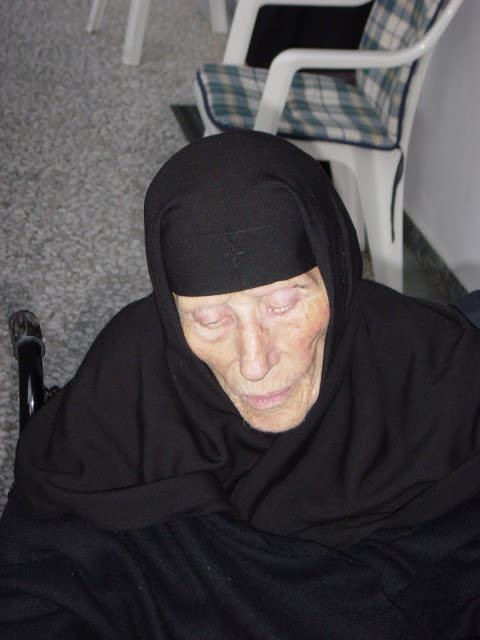
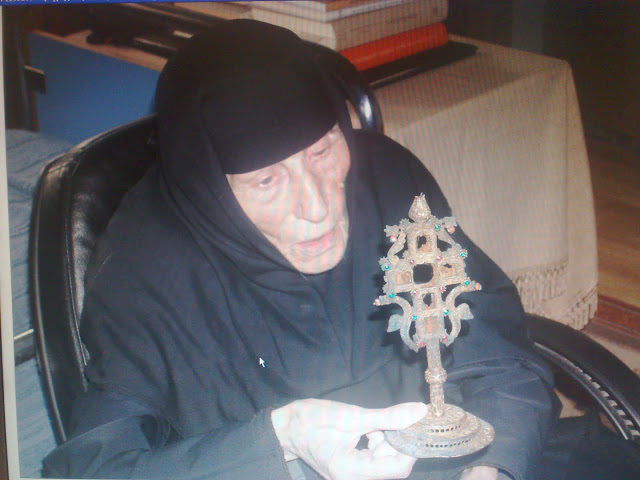
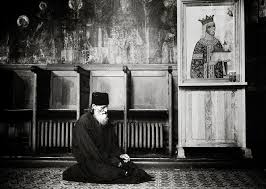
Gerondissa Akylina was the first Abbess. I had the rare blessing to meet her a number of times during the last years of her life. In the words of our late Elder Iosif Vatopaidinos, Gerondissa Akylina, together with Gerondissa Makrina in Portaria, were ‘Abbesses of Abbesses’:  examples of the monastic life and their monasteries models of coenobia, workshops of virtue and antechambers of Paradise.


Gerondissa Akylina, Porphyria, Sipsa Monastery and St. Georgios Karslidis


Gerondissa Akylina, Porphyria, Sipsa Monastery and St. Georgios Karslidis

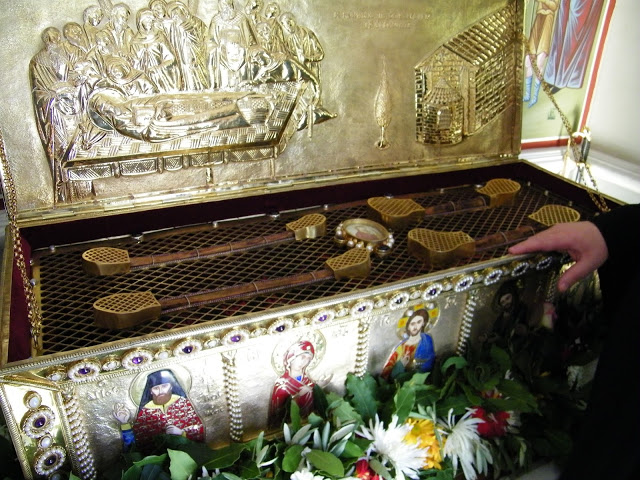
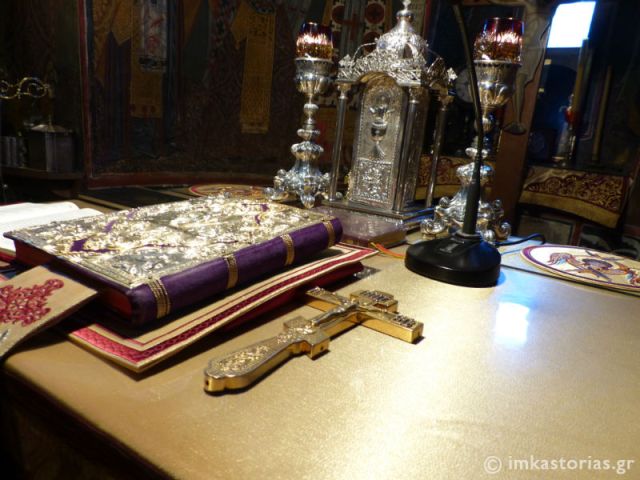
Gerondissa Akylina holding the Cross of St. Georgios Karslidis which was found intact after the translation of his relics. He is one of few saints known to bear an imprint of the sign of the cross on his skull.


Gerondissa Akylina, Porphyria, Sipsa Monastery and St. Georgios Karslidis


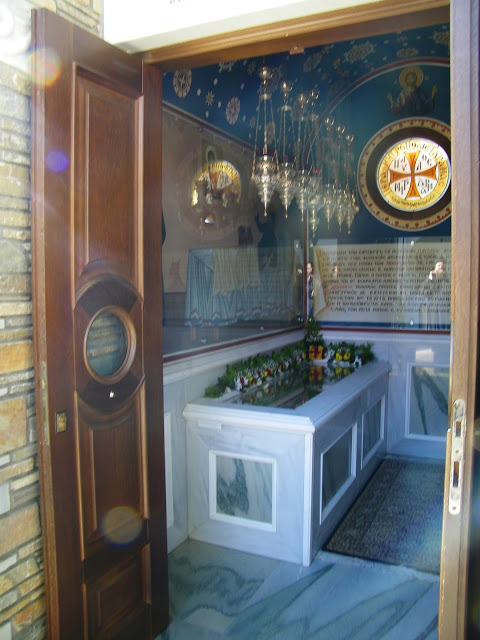
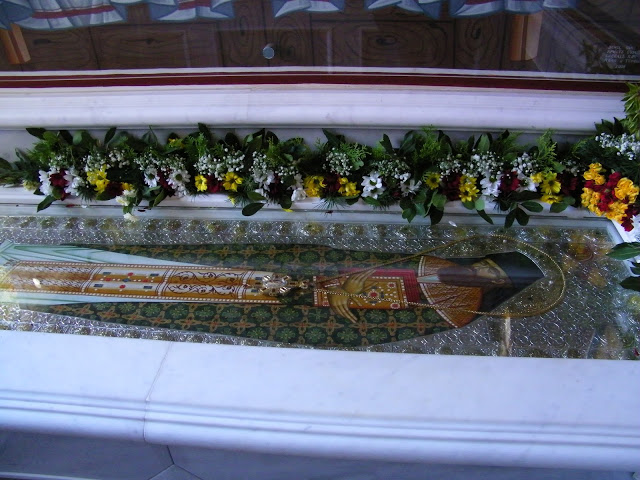
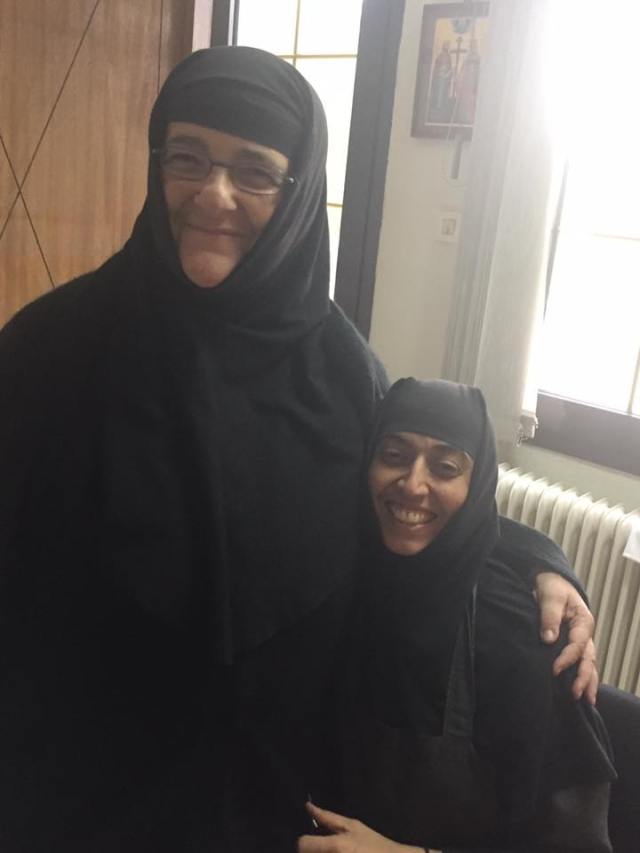
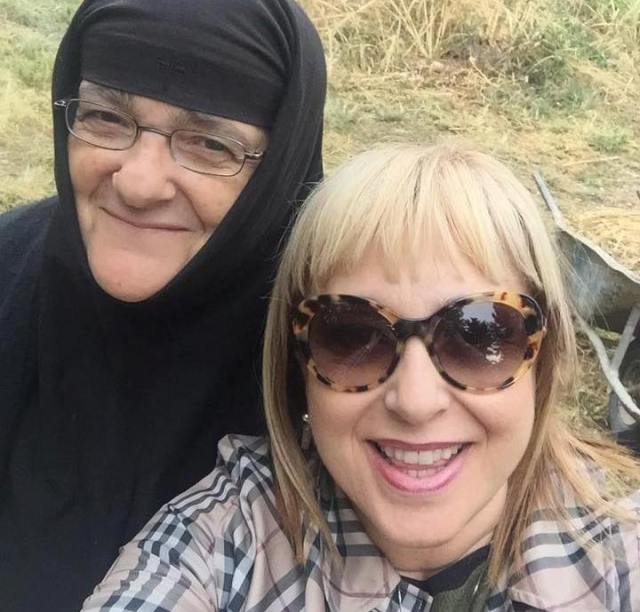
Gerondissa Porphyria has always been so full of love and humility, always ready to sacrifice her ease,  her rest and sleep, everything for her ‘neighbour! How many times has she consoled me in the trials and tribulations of my life! Always by my side, always! How many times has she offered a shoulder to cry on and precious, practical counsel! Her prayerful presence is intensely, intimately felt even thousands of miles away, here at the UK, and her smile warms my heart. Oh, just look at her smile in the photographs below with a pilgrim at the monastery and imagine the rays of the sun warming your shoulders after a rainy, cold day! How blessed am I to have such a spiritual mother by my side! Over the years I got better acquainted with the friendly and hospitable nuns there and the pilgrims and the faithful who regularly visit this monastery. St. Georgios’ holy presence is immediately felt upon entering the monastery gate, and there is always a queue at his tomb where his spiritual children kneel before their spiritual father, now in Heaven, to ask for his spiritual guidance and to seek comfort in life’s trials and tribulations.


For a closer insight at Elder Georgios Karslidis and his miracles, watch the following interview by Gerontissa Porphyria:


Marriage or Monasticism?

Possible Alternatives

In Pursuit of Wholeness and Holiness

Musings On Marriage and Monasticism

A Conversation at a Parish

*

St. Athanasius: “There are two forms of life and states of life. One is the usual life for mankind, married life; the other is the angelic and Apostolic life of which there is no higher, virginity or the monastic state.” (The Law of God)

Aidan: Other than Marriage and Monasticism, both Sacraments blessed with special church Services, is “Mere” Chastity/ Celibacy in the World truly ‘blessed’ by the Orthodox Church?


Alexandra: In a very literal sense, the Church indeed blesses ONLY marriage and monasticism through specific ceremonies. Some Fathers even count monastic tonsure as a sacrament! Of the 8th Day. Obviously, there is something special about being married or being a monastic, a sacramental bond which is not present in single people living in the world.


Peter: Christ and St Paul commended the single life. Is there any Church canon against being single?


Stephen: I have personally known widowed and single priests who have chosen not to become monastics, but live in a chaste life in the world, serving a parish and working in the chaplaincy with the most vulnerable members of society. I have also known of young people who are not called to marriage and live a celibate life in the world much as many early Christians did before there were any monasteries. And I have also met with people who would have liked to become nuns or monks but their lives’ circumstances (eg. care of children after a divorce they did not seek, ailing parents etc.) are not favorable and have had to do the best they can into the world.


Alexandra: But what gives structure and hierarchy in their lives? Who are they obeying to? Who are they cutting their own will from day to day? Isn’t it that for their spiritual health, people need to be channeled into an accountable way of life?


Peter: I think the important thing is not whether you are tonsured as a monk or not. Many people who are tonsured and are formally monks and nuns, in reality are no better than old bachelors and spinsters, for they do not live, feel and think like monks. On the contrary, a person living chastely in the world and serving God under the guidance of a good spiritual father may be a monk or a nun at heart. God judges not the formal status of a person, but his or her inner life.


Parish Priest:  People do not easily fit into a specific mold, and making a Patristic dictum into an ideology would be inadvisable, especially for pastoral reasons. It would be highly irresponsible for a priest to pressure all the single people in his parish to either get married or enter a monastery.


Aidan: But isn’t this celibate life self-centred, obeying their own will and whims? Can these people ever be in good standing with the Church? Monastics are accountable to their Abbot/Abbess. Monastics have obediences and responsibilities to their monastery and their abbot/abbess. Similarly, the cross of the married life is a pretty burdensome one. Husbands and wives have obediences and responsibilities in their families and their parishes.  Where is the cross of obedience for such individuals? Singles has no identifiable obediences or responsibilities beyond themselves. It would seem that such a state would almost certainly result in self-will as a guiding principle.

*

St Theophan the Recluse: “So you made up your mind once and for all to dedicate your life to serving the Lord and not to have anything to do with worldly life. May God graciously accept this sacrifice and bless your good decision! . . . Adapt to that kind of life within yourself, not by a change of outward ways, but of the inward order. Now you may completely refuse all amusements and stay more at home in solitude, engaged in some occupation . . . Implant a little more deeply the conviction that the way of life you have chosen is blessed by God. It was sanctioned by the Savior in the saying about eunuchs for the Kingdom of Heaven’s sake. He gave it preference when he said of Mary . . . that she had chosen the better part . . . You see clear examples of it in the person of many Prophets and Apostles . . . Female and male virgins were a fixture in Christ’s Church even in apostolic times; they have been in the Church ever since and will continue to be in it . . . For this kind of life is not alien to our nature [as Fr David has said], and is favoured by the spirit of belief in Christ.” (From The Spiritual Life)

*

Peter: Speaking from experience unmarried do have responsibilities  and obediences, even as adults we are bound to honour our parents and some have chosen the single life to care for sick parents or grandparents, along with providing all the necessities of life.  If active in faith there will be church responsibilities sometimes much more than the married take on due to the time being available to do things, and obedience to a spiritual father or confessor. So, it seems we have all the ‘benefits’ of living in the world but also many drawbacks for there is no helpmate (which is after all one of the key reasons for marriage: to do ‘it’ together).  The single individual has many responsibilities but they tend to be more nebulous and less organised than those who are married or monastics; this does not mean that they are less, they are just different.  There are those who have reached theosis in the unmarried state, such as St Xenia of Petersburg who lived as a devout widow without ever entering a monastery.


Stephen: The Church has certainly had saints who were unmarried and not monastics and who lived in the world chaste lives, dedicated to God, without entering a monastery. They led lives of service, “giving themselves to the service of their brothers and sisters in hospitals, poor-houses, and hospices.” and making their room as one of a monastic cell. If the Church has declared such people to be saints, surely their glorification is the highest blessing the Church can bestow.


Peter: And other than just labeling them ‘single’ or ‘married’ or ‘monastics’, we should rather ask “why?” Why is he/she married? Why is she/he single? Ask yourself are you fasting for a healthy diet or to control your passions?


Parish Priest: I spoke to a hieromonk about this topic, and he said that while marriage and monasticism were the two common paths to salvation, single people in the world could also live God-pleasing lives. He clarified that the decision to remain unmarried was a matter of individual circumstances and with the blessing of a spiritual father.


Stephen: There is no rule that the single life is not blessed. The person living the single life may not be able to give a vow of not owning property, but could, with the blessing of his or her spiritual father, give a vow of celibacy and of obedience (to the spiritual father).


Aidan: So, it seems that the Church has established two avenues opened by the Spirit of God – namely the marriage and the monasticism. There are also some solitarily trails also engraved by the spirit of God.

*

St Silouan the Athonite: In the last days there will be many with the monastic spirit living in the world as a witness to the Faith, neither married, nor having taken the monastic vows, but single, yet monastics at heart.

*

See also Sanctifying the Single Life and Belonging to Neither and Both


Sanctifying the Single Life


st-john-maximovichNowadays so many people, so many friends and acquaintances of mine, especially middle-aged, are disappointed, drained, left alone with children, empty and lonely (both in and out of relationships), feeling robbed. What are we to do with our lives in order to avoid self-centered ends and the spiritual abyss?  Marriage and monasticism most certainly lead to the most intimate communion with the Creator and fellow creature and fulfill their promises: the soul can still be purified through either of them. They restore the soul’s appetitive drive to its divine orientation. The roads are narrow, their gates straight, but they lead to the deification of the soul. But maybe this path is not open to us — yet? — for a variety of reasons and circumstances. So WHAT  is to be done?


Apparently, there is also a third way.  Jesus Christ teaches that certain people are called by God to the single life.


And I say to you: whoever divorces his wife, except for sexual immorality, and marries another, commits adultery. The disciples said to Him: “If such is the case of a man with his wife, it is expedient not to marry.” But He said to them: “Not all people can receive this saying, but only to those to whom it is given. For there are eunuchs who have been so from birth, and there are eunuchs who have been made so by men, and there are eunuchs who have made themselves eunuchs for the sake of the kingdom of heaven. He who is able to receive this, let him receive it.”  (Mt 19:9-12)


The apostle Paul elaborates on Jesus’ teaching.


It is well for a man not to touch a woman. But because of the temptation to immorality each man should have his own wife and each woman her own husband… I say this by way of concession, not of command. I wish that all were as I myself am. But each has his own special gift from God, one of one kind and one of another.


To the unmarried and the widows I say that it is well for them to remain single as I do. But if they cannot exercise self-control, they should marry. For it is better to marry than to be aflame with passion… And unto the married I command, yet not I, but the Lord, Let not the wife depart from her husband: But and if she depart, let her remain unmarried or be reconciled to her husband: and let not the husband put away his wife. … Only let every one lead the life which the Lord has assigned to him, and in which God has called him. (See 1 Cor. 7)


The single calling

The single life is a calling. It is a way of life which is given by God.  A person, certainly a Christian person, does not choose to be single or to be married. He or she rather discovers the way of life which the Lord provides within the conditions of his or her existence. People really only chose to receive, or to reject, what has been given them. They do not determine it.


There are any number of reasons why a person may be single. They range from the sense of having a positive calling to the celibate life for religious purposes, to the plain fact of being unmarried without one’s own conscious choice, and perhaps even against it, just because this is the way that things have happened to work out. Whatever the reason for one’s being single and however mysterious or ambiguous, willed or unwilled the causes for one’s being in this state, at some point in our adult life each of us must accept the form of life which is ours and consciously offer it to the Lord, freely and voluntarily, for the sake of the love of God and neighbor.


Sanctifying the single life

The single life is sanctified the way every life is sanctified: by perfecting it according to God’s will. The first task of the single person according to God’s teaching as revealed by Jesus Christ and the apostles, martyrs and saints of the Christian Church, is that of maintaining and developing one’s sexual chastity.


The single person who says “yes” to God and to his or her calling to the single life automatically says “no” to all forms of physical, sexual activity with the opposite sex, with one’s own sex and with oneself. This is so because sexual actions other than the conjugal act of married love destroy the wholeness and integrity of one’s being through the dissipation of one’s spiritual and physical energies. No matter how loving, fulfilling and pleasurable they may at first appear to be, sexual commitments without the totally faithful commitment of unending love in marriage – with all of the responsibilities and obligations for inter-personal communion and the pro-creation and protection of human life which this involves – cannot but result in dissatisfaction, disappointment, despondency and despair. this is so because human persons are made in the image and likeness of God who is Love, and as such can find fulfillment and happiness only in ways of living and acting which express and image His own.


A hard saying

The teaching about sexual purity in the single life is a difficult one. When many people hear it they are moved to say what Christ’s disciples said when they heard other of His teachings: Lord, this is a hard word. Who can hear it? Who then can be saved? And the Lord’s answer is always the same. He said that His teaching has to be hard because “the gate is narrow and the way is hard that leads to life, and those who find it are few”, adding as well the fundamental point  that as far as His teaching is concerned, “with human being it is impossible, but with God all things are possible”, particularly to those who believe. (See Jn 6:60; Mt 7:13-14; 17-21; Lk 18:27; 35)


Like all forms of Godly life and behavior, the single life of celibate chastity is a way of the Cross. It is a way of sacrifice and suffering which alone brings joy and happiness to a human being.


Conditions for perfection

For the single life to be perfected according to God’s will, with the preservation of sexual purity as its heart and foundation certain conditions must be fulfilled. First of all there must be firm spiritual discipline for the sake of a lively interior life. The single person must have a rule of prayer which is diligently kept, with the reading and pondering of wholesome and edifying words and images. Great attention must be given to keep oneself free of all thoughts and images which lead to spiritual and physical defilement and disintegration. The “spouse” and “life partner” for the single person in the most direct and specific way must be the Lord himself.


The single person must also have a firm rule of external life and behavior. Capricious and willful actions, things done without order or form, but just as they happen to come up, must be avoided at all costs. Forms of responsibility and accountability to others must be found and fulfilled with conscious obedience. This is especially true for those who do not have such natural obligations as, or example, the care of elderly or infirm parents or relatives, or duties within a religious community.


The single person must also be committed in a formal way, in obedience, to a spiritual father, which can be a priest or a hieromonastic. Some might say that such conditions are necessary for all who are living a human life according to God’s will, whether or not they happen to be single. This is true. But these conditions are particularly necessary for the single person precisely because of their single state in a world which renders them particularly vulnerable to self –centeredness and loneliness on the one hand, and lack of commitment and accountability on the other, with the additional cross of often being misunderstood and taken advantage of by those around them because of their single status.


Christ and the Saints

It is common in the modern world to think that one cannot be fulfilled as a human being in the single state, especially if living a sexually continent and chaste life. The claim is that without sexual activity and intimacy, a human person is diminished and even distorted in his basic humanity. If this is true, then the Christian faith as understood and practiced by the Orthodox, and by millions of other Christians, is wholly false.


The Lord Jesus Christ was single and celibate, yet He was the most perfect human being who ever lived, the Son of God and God Himself in human form. Jesus’ mother Mary, though legally married, remained a virgin her entire life. John the Baptist, whom Jesus called the greatest man ever born of woman, was clearly a chaste celibate according to the Gospels. So was the apostle and evangelist John. So was the apostle Paul who, as we have seen by his own report was single at the time of his conversion and ministry. Indeed, the calendar of Orthodox Church saints is filled with single people who are praised and honored for their chastity and devotion to God and their neighbors. In this perspective it is clearly the Christian conviction that being single is conducive to the highest and most perfect for of fulfillment possible to human beings: the life of sanctity . (Source: St. Luke’s Orthodox Mission)


See also: Marriage of Monasticism? and Belonging to Neither and Both

Belonging to Neither and Both

Belonging to Neither and Both In the Middle Between the World and Monasticism From the Letters of St. Ambrose of Optina

An Elder’s Correspondence to his Spiritual Daughter Caught Between the World and the Monastery (*)

January 3, 1879

In our last letter of December 14, you wrote that you cannot find any books applicable to your situation. You say that all books discuss monasticism, and that you are not a nun but are simply living near a monastery. In response I would say this to you: the Gospel teaching is given to everyone in common, and everyone is obliged to fulfill it. Monasticism stemmed from the desire to live exactly according to the Gospel teaching. This is terribly difficult amidst the noise of the city and the cares of life in the world, which hinder such a precise fulfillment of the Gospel teaching, even though everyone is called to this. Monastics are distinguished from laymen in that the latter are permitted to live in a state of matrimony, while the former choose to remain unmarried. Read more often the Gospel of Matthew, from the beginning of the fifth chapter to the end of the tenth, and try to live according to what is written there. Then your life will be marked by harmony, and you will find peace of soul.

January 11, 1879

Peace to you and God’s blessing, and a strengthening towards good. On January 3 I briefly wrote to you that monastic life by no means differs from the Gospel teaching, and that those living in the world differ from monastics only as concerns their married state. About married people, however, St. John of the Ladder writes that they are like those whose hands and feet are bound with fetters. Although even these can walk the path of righteousness, it is only with difficulty; they often stumble and fall and become sorely wounded as a result. The unmarried–and particularly monastic–state offers greater facility in the fulfillment of the Gospel teaching. It is for this reason that monasticism was established by the Holy Fathers.

You are now in the middle, between the world and monasticism (*). The middle path is everywhere approved, and for you–both on account of your upbringing and your weak constitution–it is in many ways appropriate. Only try to live according to the Gospel commandments. Above all, judge no one about anything, so that you yourself will not be judged …..

In my letters I’ve always had one aim –to dispel your misconceptions about monasticism and spiritual life in general, which you formed while still living in the world. You have perhaps heard it said that even apparently correct theory does not always coincide with practice. One’s own experience, when it follows the experience of spiritual people in the past, is a good instructor, provided we check our life against the Biblical and patristic teaching.

You laid for yourself and your life a rather strange foundation: I wanted so, I thought so, I intended so… You are not the only one; many desire a good spiritual life in the simplest form. Few, however, (they are rare, in fact) fulfill their good desires in actuality; they are those who hold tightly the words of Holy Scripture: “We must through much tribulation enter into the kingdom of God” (Acts 14:22), and who, entreating the help of God, try to bear the griefs and illnesses and various discomforts visited upon them without murmuring, always keeping in remembrance the words of the Lord Himself: If thou wilt enter into life, keep the commandments. (Matt. 19:17)

And the most important of these commandments are: “Judge not and ye shall not be judged; condemn not, and ye shall not be condemned: forgive, and ye shall be forgiven” (Luke 6:17). Besides this, those who want to be saved must bear in mind the words of St. Peter Damascene, that salvation is accomplished between fear and hope…

To live in a simple hut without humbling oneself will not lead to any good. It is better for someone who is weak in soul and body to live in a comfortable cell and to humble himself, blaming and reproaching himself for such comfortable and spacious quarters. Only few, and those possessing a strong constitution, can without harm lead an austere life, and endure cold and hunger and dampness and sleeping on the ground. According to the words of St. John Damascene, those who are weak in body derive more profit from humility and thanksgiving than from physical labors and podvigs to which they are unequal.

You are adversely affected by the harsh words of such people who, in your opinion, should speak differently. St. John Climacus writes that God providentially leaves some flaws even in spiritual people so as to bring them to humility.

If you wish to set yourself on a firm path toward salvation, try above all to pay heed to yourself alone, and leave everyone else to God’s Providence and their own will, and don’t concern yourself with instructing anyone. Not in vain is it said: Each man begetteth himself shame or glory according to his deeds. This will be most beneficial, meat conducive to salvation, and, what’s more, more peaceful.

From the Letters of St. Ambrose of Optina

(*)  *Sigh* It is so me …

See also Marriage or Monasticism? and Sanctifying the Single Life

Near-Death and Afterlife Stories in a True Crown Jewel


dryvouno29dryvouno28dryvouno27dryvouno26dryvouno25dryvouno24dryvouno23dryvouno22dryvouno21dryvouno20dryvouno19dryvouno18dryvouno17dryvouno16

Dryovouno Monastery, Near-Death and Afterlife Stories

dryvouno15dryovouno14dryovouno13dryovouno12dryovouno11dryovouno10dryovouno9dryovouno7dryovouno6dryovouno5dryovouno4dryovouno3dryovouno2dryovouno1


Father Stephanos of the Monastery of Transfiguration (Metamorfosi tou Sotiros) in Dryovouno speaks very little, mainly with his eyes.

*

Mother Theologia: “How little do we think of death, although he is so near to us!” commenting on a yet another sudden, unexpected death.

*

Laokratia told us about a dream: “My friend’s late young son, who had suffered a sudden and violent death through a road crush, appeared in his father’s dream in tears, standing before a closed gate, telling him that ‘they’ do not allow him in. His father, a very faithful man, promptly met Elder Iakovos Tsalikis and told him his dream. By the grace of God, the elder, having a pure nous, was deemed worthy to see the souls of people at the time they were leaving the earth and ascending towards heaven. Elder Iakovos asked him if his son was blaspheming God, and the father sadly admitted so. Then, Elder Iakovos promised to pray for his son, and he also advised him to do alms in his son’s name, fast and pray to the Lord so He will grant him rest”. The poor father made a prostration and obeyed the elder, and after 40 days, he saw again his son in his dream, this time radiant with joy, in front of an open gate, thanking him and telling him that ‘they’ had allowed him in!”

*

Sister Gregoria: “I just received a message from a friend who had to undergo a difficult operation and she told me that it all went well but that it was St. Luke Bishop of Simferopol and Crimea, the Blessed Surgeon who operated her! In the operating room she felt that she was dying. She started ascending and watched the surgeon and the nurses trying to revive her unconscious body. Then she met ‘somewhere in the air’ St Luke. To be sure she could not really interpret what was happening to her as it was taking place. Still she understood that he reassured her that he would take over as the surgeon was clearly in an impasse. Then she started moving in the reverse direction, got into her body again and found herself in the hospital, having had the surgery performed, with doctors standing around her, looking at her puzzled. But who was this St Luke she had met? It took her a few hours to find out that her mother, a very devout woman, had placed a little icon of his underneath her pillow, just before the operation started!”

*

Sister Ioanna:”Yesterday at midnight, while I can finishing the writing of an icon and adding the dedication, I realised that although I could write the mother’s name easily, there was no way I could add her late son’s name. I started praying and in the Spirit I ‘saw’ that the mother was in a very good spiritual state, but her son was not at all well and needed our prayers. She felt that God had granted rest to the mother’s soul, but they should do alms in the son’s name and pray to the Lord so He will grant him rest”.

We arrived at the Monastery of the Transfiguration (Metamorfosi tou Sotiros) in Dryovouno on its Feast  day. We were a group of faithful, Mother Theologia and some nuns from the nearby Monastery of the Assumption, Dormition (Koimiseos tis Theotokou) of Mikrokastro. What stunning Beauty confronted us!


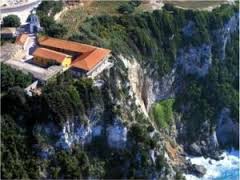
This male monastery is located a few kilometers above Dryovouno, at a secluded area. Its foundation goes back to 1592, while the murals were completed in 1652, by painter Nikolaos from Linotopi while the narthex in particular is the work of Argyris Kriminiotis.


Kosmas Aitolos arrived here and, after preaching, treated the monks who had been taken ill due to an epidemic. He fetched water from a nearby spring, blessed it, and gave it to the monks to drink, who were then cured. This water has been considered holy ever since and a chapel devoted to saint Kosmas has been constructed at the spring. St. Kosmas received from God the gift of prophecy.


At wartime, the monastery offered valuable services to the local population. It served as storage for ammunition and as base for various chieftains. This is where Dimitrios Feraios, Kapetan Vardas and Pavlos Melas resorted to.


In 1943 it was set on fire by Italians along with its historic records. Its renovation began in 1996, the prime mover being Archbishop Stefanos Rinos with the personal efforts of monks and believers. The parvis offers a sense of tranquility and a spectacular view to Voio and Kastoria.


Cephalonia-Ithaka Pilgrimage

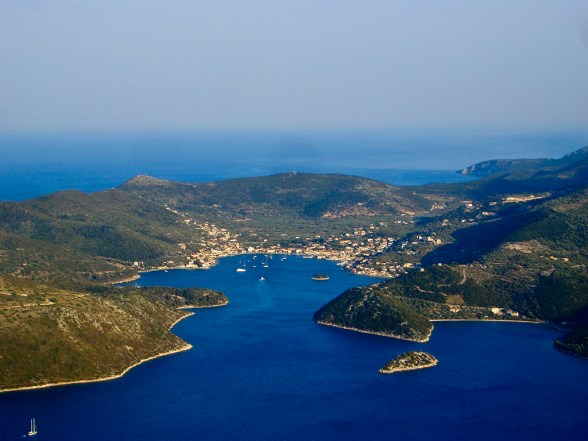
On my way  to this summer’s last pilgrimage: Cephalonia-Ithaca for the Dormition Feast

orthodox-city-hermit-and-cephalonia-ithaka-dormition-fast4

orthodox-city-hermit-and-cephalonia-ithaka-dormition-fast1orthodox-city-hermit-and-cephalonia-ithaka-dormition-fast2orthodox-city-hermit-and-cephalonia-ithaka-dormition-fast3


Apologies for being offline through August 31st.

May our Lady bless us and may the Lord keep us in the palm of His Hand until we meet again!

*

“Sister Begona Miguel of the Huelgas Monastery says:

“San Juan de La Cruz teaches us that silence has its own music; it is silence that enables us to see ourselves and the things around us.

‘I would like to add that there are words that can only be said in silence, odd as that may seem. To compose their symphonies, the great geniuses needed silence – and they managed to transform this silence into divine sounds. Philosophers and scientists need silence.

‘In the monastery, at night, we practice what we call The Great Silence.

‘In the absence of speech we can understand what lies beyond.” (Paulo Coehlo blog, In the Huelgas Monastery)

*

Therefore, it is time for the little city hermit to embark on yet another quest for stillness and silence. This blog takes a vacation, returning by the end of August, where I will start making preparations for my return trip to the UK.

You are always welcome to browse the ARCHIVES on the right.

Enjoy the rest of your summer.

With lots of love and poor prayers

The little city hermit

In Love, For Love, and By Love: Missionary Series IV

Families on Mission Vs. Single Missionaries


Families on Mission Vs. Single Missionaries

RTE: How has it been having your family in the mission field?

FR. LUKE: When my wife and I first went to Albania, many people thought that it was going to be very dangerous and that our children would suffer: “You are going to deprive your children of all the benefits of life in America.” Contrary to that expectation, we feel that our three children who were raised in the mission field were immensely blessed by the experience of learning another culture and language. They always appreciated what they had in America when they went back, but they also appreciated their mission home in Albania, which they thought of as their “real” home.

*

They’ve grown up with a very different world-view. They appreciate things that they would never think twice about if they had grown up in America. During our first years in Albania, we didn’t have running water every day. So, the kids learned to appreciate it. When we had water, we’d say, “Thank God for water. It’s great to have it.” During different periods, for months at a time, the electricity is off about five hours a day; in winter, maybe seven or eight hours. So they got excited when the electricity came on. Or, if we did have electricity, the tension was often so low that we couldn’t do something as simple as watch a video. I remember on one of our visits to the U.S., they wanted to watch a video, and came to my wife saying, “Mommy, if there’s enough tension can we watch television?” They still flip the switch to see if the electricity is working.

Families on Mission Vs. Single Missionaries

Next to our house in Albania we had a very tiny shop, nine by fifteen feet, with all different types of food – this was where we did most of our shopping. Once, when we were about to go back to America, my son Paul asked his mother, “In America, will they have shops as big as Uncle Soorie’s?” We laughed. It was beautiful to see how they were exposed to a different way of life. We lived in Tirana, the capital of Albania, and we were constantly exposed to beggars, poor people who came to our house every day asking for help. It was wonderful for our children to see this, day in and day out. They got used to getting things for the beggars, answering the door and coming and saying, “Oh, so-and-so is here.” We got to know these people by name, we visited their homes. When you live in suburban America you aren’t even exposed to them unless you go downtown. Many of these beggars truly became friends, and our kids loved them. They loved playing with them and saw them as human beings, not as beggars.

Families on Mission Vs. Single Missionaries

Another blessing of raising children in the mission field is community, both the indigenous Albanian community, the wonderful local people that were part of our life, and our co-missionaries who themselves had numerous children. At one time we had fifteen missionary children in the field, and they created such bonds of love and friendship. They weren’t exposed to the busyness, to the constant activities that American children are involved in. Their lives were very simple, and very fulfilled.

*

Neither my wife nor I have any sense of their being deprived, and one of our greatest regrets in leaving Albania after ten and a half years is that we have left at a time when our children are still young, and we are not sure how much they will remember. We often talk about going back into missions when they are a little older so that they not only remember, but can participate more fully. Even though they were young, we tried to get the idea across that they themselves were missionaries, that they needed to be witnesses. To whatever degree they could participate in our different activities, they did.

Families on Mission Vs. Single Missionaries

RTE: Growing up with cultural diversity must not only teach what is universal in human nature, but how to deal with differences early on.

FR. LUKE: Right. We Americans, unfortunately, are quite isolated from the rest of the world. The universal business language is English, so we think we can get anywhere speaking English. Having only Canada to the north and Mexico in the south, we aren’t exposed to many different cultures and languages and this is a great loss for us. It’s so enriching to be around the diversity found in a mission field, and to learn to see beauty in such diversity. One thing I tried to get across to the Kenyans, and later to the Albanians, was, “Sure, in America we have things that are nicer than in Kenya or Albania, but you have many aspects of your culture and life that we Americans can envy. Family connectedness, the support you have for one another, hospitality – how beautiful these things are! Don’t ever lose these aspects of your culture and think, ‘We want to become western, or American, because America is better in everything.’ There are certain things you can adopt from America that are beautiful, but don’t lose the beauty and richness that you have in your own tradition.”

*

Hospitality was something that always left the greatest imprint on me. I could travel to the poorest village in Africa and they would put on a feast. It was their responsibility to show love and hospitality to guests. It is the same in Albania. I don’t know who is more hospitable, the Albanians or the Kenyans, but they would put anyone in the West to total shame. Having almost nothing, they share whatever they have with whoever comes.

Families on Mission Vs. Single Missionaries

RTE: An American seminarian at Holy Cross Seminary told me about a depressed acquaintance who called one night, feeling suicidal. The seminarian invited him to come to the seminary for a few days for a change of scene and to be in a calm atmosphere. He agreed and the seminarian made the arrangements and cleaned an empty dorm room so that he could have his own space. The day his friend moved in, one of the Greek-born seminarians found out what was happening and insisted that the man take his own room, which contained his books and belongings, icons that were prayed in front of, and was a real home. The Greek seminarian slept in the hall on a couch outside the door so he could check on him through the night. The American seminarian said, “You know, I was so pleased that I’d found him his own space where he could have some privacy, where he could put his own things up – but actually what he needed was to be taken into someone else’s home and taken care of. I didn’t get it until I saw it.”

FR. LUKE: Yes, this virtue of hospitality is something missing in our American way of life. As missionaries, my wife and I saw hospitality as one of the greatest ways to express God’s love to the people. We wanted our home to always be open to people. We married right at the beginning of our time in Albania and it is interesting to think that my wife and I slept in our house alone perhaps three months out of the first five years of our marriage. We always had people coming, numerous people staying for months at a time. Our open home was a hallmark of our ministry. Even after the children started coming and we didn’t have as many overnight guests, we always had an open-door policy. There were people at our house every day. One of the difficult counter-cultural adjustments in coming back to America on sabbatical was that although we lived on campus at a seminary, no one came to visit. We lived there for four months and maybe a handful of people came to our house. And even when people came, they’d say, “I’m just here for a minute, I’ve got to run…” They’d stay briefly and then go on with their day.

Single Missionaries

Families on Mission Vs. Single Missionaries

RTE: We’ve been speaking here of missionary families. What opportunities are there for unmarried men and women? And in view of cultural differences, are single women limited as missionaries? What part do they play on a mission team?

FR. LUKE: The mission in Albania offers a good response to this question.

Families on Mission Vs. Single Missionaries

During the years I served there, of the 20-25 missionaries we had at any one time, we had a nice mix – usually about eight monastics, eight married missionaries, and six or seven single missionaries. Of the two dozen missionaries, about half were men and half were women. Also, about eight were clergy, and the rest laity. The unmarried missionaries played an important role in the overall outreach of the Church. In Albania, we had single missionaries who headed up our medical clinic, our elementary school, our post-secondary professional institute, as well as our development and emergency relief office. We also had single missionaries who taught at our seminary, who taught English in a variety of contexts, taught catechism, worked in administration, and who participated in our university ministry, among other things.

Families on Mission Vs. Single Missionaries

The Body of Christ has a need for everyone – men or women, married or unmarried. It is the same for the mission field. In fact, when a missionary team has a variety of members, it makes the overall witness that much more effective. Some people will relate well to a monastic. Others feel more comfortable with a married priest. Some prefer to approach a mother, or a married woman. Still others will listen to a single man or woman. All are part of one body, offering a unified witness. So there are surely opportunities for the monastics, the married, and the unmarried! In some countries, it isn’t appropriate for men to approach women and talk with them in public. Such societies need women missionaries, and this means both married and single women.

*

In the Protestant world of missions, single women really weren’t encouraged, or even allowed, in the mission field until the 1800’s. By the 1900’s, women outnumbered men as missionaries. Today, women far outnumber men, and this includes many single women. Women had to overcome many obstacles and prejudices before being allowed to serve in a variety of capacities, and this may be the same for the modern Orthodox missionary movement.

*

RTE: Do you have any specific counsel for unmarried missionaries?

FR. LUKE: My advice for single men or women is that they must be ready for some additional challenges. The loneliness of a new culture, the challenges of entering a new country, the frustrations of learning a language, and the normal difficulties and disappointments of the mission field can be overwhelming. As a married missionary, you have your spouse to support and comfort you; the monastics may be living in community and have another type of support; but the single missionary can feel the loneliness and frustration in a magnified manner. A single person has to be ready for these added challenges. He or she needs to be a strong person, and also be able to find support in time of need. Their co-missionaries need to be sensitive to this extra burden, and try to reach out to them.

Families on Mission Vs. Single Missionaries

One way to help overcome these additional struggles would be for single missionaries to live in community, either with other missionaries of the same sex, one of the missionary families, or even with an indigenous family. Living with a family of the country can be one of the fastest ways to learn the language, culture, and ways of the host country. Of course, other challenges may arise as cultures clash and one’s privacy may be lost.
 

Work Pray Be Saved

transfiguration orthodox church Work Prayer Salvation


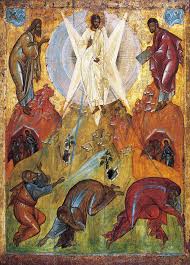
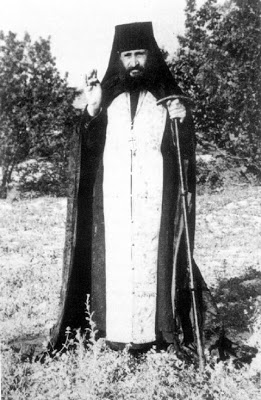
Work Pray Be Saved! Back to Mikrokastro monastery, my spiritual basis in Greece! For the Transfiguration Feast. “Lord, it is good for us to be here. If you wish, I will put up three shelters—one for you, one for Moses and one for Elijah!” I feel so safe, protected and loved here! It is always like this: the Mother of God always comforts me; the peace, stillness and hesychia of the monastery invades me; the fellowship of the nuns warms me; the motherly affection of its Abbess, Mother Theologia’s love nurtures me; the nuns’ combination of discipline, structure, work and prayer ‘stabilises’ me; their wise ‘equation’: Work and Prayer= Salvation!‘ centers’ me, ‘grounds’ me on peace and the Holy Spirit.

orthodox monastic Work Prayer Salvation


Just today, I felt so happy harvesting, curing and storing potatoes after the Matins service and Holy Liturgy in the monastery chapel! It felt so exhilaratingly Van Goghean!

Work Pray Be Saved

van gogh Work Pray Be Saved


Certainly one eats his meal afterwards, roast potatoes😃, with gratitude and thanksgiving.

orthodox monks Work Pray Be Saved

van gogh Work Pray Be Saved

*

Fr Jonathan Hemmings has written a whole chapter on this ‘equation’: Work and Prayer= Salvation! in his book, Fountains in the Desert, which I have found most useful and often turn to for life balance ‘tips’.


When the holy Abba Antony lived in the desert he was beset by accidie (ἀκηδία) and attacked by many sinful thoughts. He said to God, “Lord, I want to be saved but these thoughts do not leave me alone; what shall I do in my affliction? How can I be saved?” A short while afterwards, when he got up to go out, Anthony saw a man like himself sitting at his work, getting up from his work to pray, then sitting down again and plaiting a rope, then getting up again to pray. It was an angel of the Lord sent to correct and reassure him. He heard the angel saying to him, “Do this and you will be saved.” At these words, Antony was filled with joy and courage. He did this, and he was saved.


Our human condition requires dependency upon God and interdependency on others. Correct spiritual examination requires the help and direction of a spiritual father who helps us grow into the image of Christ. Self examination alone without such an external reference point can put us in jeopardy such that we choose the wrong direction, make false judgements, become disappointed, lack faith, and fall into the trap of hopelessness and despair. Here we find ourselves in that spiritual malaise of accidie whereby because of our sense of sinfulness before a Holy God, we become inactive, paralysed and reach a state of torpor.

We ponder on the contradiction “How can we be Christians and have such sinful thoughts?” St Antony addresses this dilemma in the desert where he meets the devil, himself and God

“Lord, I want to be saved but these thoughts do not leave me alone;”

We notice that St Antony wants to be saved, he is aware of his own condition. Like the Prodigal son and Zacchaeus we must first come to our right mind and possess a desire (a zeal) for change. St Antony’s request is simple and succinct:

“What shall I do in my affliction. How can I be saved?”

orthodox monastic Work Prayer Salvation

We must be direct in our prayer to God; vagueness in repentance or in our requests is a form of obfuscation.

These two questions of St Antony remind us of that question the Lawyer posed to Christ before the Parable of the Good Samaritan. Luke 10:25 “What must I do to inherit eternal life?”

Inactivity is not an option for Christians; Christians are verbs not nouns!

Antony sees a man sitting at his work then getting up to pray, returning to his work and again rising to pray. The angel was sent by God to correct and reassure St Antony. Consumed by ourselves we lose focus and the source of our strength-we lose the will to work or pray! Work and Prayer= Salvation! This is an equation for all and not just for monks. Full of self loathing we need not only correction but reassurance. When called upon, the compassion and conviction of the All Holy Spirit assists us by His comfort and strength.

orthodox monastic Work Prayer Salvation

Just as our Lord was ministered to by angels in the wilderness after the Temptations Matthew 4:11

“Then the devil left Him, and behold, angels came and ministered to Him.”

So with St Antony an angel ministers to him instructing him and restoring courage and joy. “ Do this and you will be saved.”

The Fathers teach us that we should not trust too readily in our own thoughts and opinions but take heed to God’s Word Who provides us with the pattern of salvation.

orthodox monastic Work Prayer Salvation

In our modern western culture, Life balance is a much discussed topic today. When mums have to juggle careers with caring and the ever increasing demand for dads to prioritize we need to drink from the fountains of the desert. Without work we become indolent and listless; too much work makes us tired and stressed. Without prayer we become detached from our source of strength and the deeper reality Who created us. Likewise prayer without action is fruitless, as St James says in his epistle:

James 2:17

“Thus also faith by itself, if it does not have works, is dead.”

Prayer will warm and revive us in the love of God; work will warm and energise us in the love for others thus fulfilling the Divine equation for salvation:

Luke 10:

27 So he answered and said, “ ‘You shall love the LORD your God with all your heart, with all your soul, with all your strength, and with all your mind,’ and ‘your neighbour as yourself.’”

 28 And He said to him, “You have answered rightly; do this and you will live.”

orthodox monastic Work Prayer Salvation

Fountains in the Desert

Missionary Musings

missionstatement-gifts

All my previous days have been spent in quietness, stillness and intense studying. I have been reflecting on my Romanian monasteries’ pilgrimage and preparing for the next one to Cephalonia and Ithaca for the Dormition Feast. I have also been corresponding with my English brothers and sisters in Christ, preparing for my return to the UK by the end of the summer.

Central in all my thoughts, studies, activities and endeavours was the Holy SpiritOrthodoxy and Missionary work.

I started studying Archbishop Anastasios’ of Tirana, Durrës and All Albania life and works, and was inspired by his questioning of the establishment’s accepted apathy toward missions. Then, I turned to the Acts of the Apostles and marvelled at the workings of the Holy Spirit and the Apostles’ zeal and love for God and His Church! Next, I  examined various missionaries’ blogs and websites, and I also watched a number of very inspiring videos: Michael Harper‘s talk on the Holy Spirit, part of THE WAY, the outreach programme of the Institute for Orthodox Christian Studies.

Then

and

and

a two-part documentary, where renowned British actor David Suchet undertakes an epic journey spanning the Mediterranean. His inspiration is a charismatic individual whose own travels through this region, two thousand years ago, changed the world forever – Paul the Apostle:

Do you remember how all this got started? By a disturbing comment by a ‘cradle’ Orthodox that all ‘others’ are ‘foreigners’ and ‘strangers’. Now after a week I know that such an attitude cannot be farthest from the Truth. I understand I have so much more to learn yet but I am already convinced that

The love of God is manifested in mission“,

Indifference to mission is a denial of Orthodoxy“; 

“Inertia in the field of mission means, in the last analysis, a negation of Orthodoxy, a backslide into the practical heresy of localism”;

“Mission was not the duty of only the first generation of Christians. It is the duty of Christians of all ages … It is an essential expression of the Orthodox ethos.”;

“Church without mission is a contradiction in terms…. If the Church is indifferent to the apostolic work with which she has been entrusted, she denies herself, contradicts herself and her essence, and is a traitor in the warfare in which she is engaged.”

May the Holy Spirit empower us to be faithful in fulfilling the commandment of Christ to “Go into all the world and make disciples of all Nations, baptizing them in the name of the Father, and of the Son and of the Holy Spirit, teaching them to observe all [things that He has] commanded”,  so that all people may be saved and come to the knowledge of the truth.   “Thy Kingdom come on earth as it is in Heaven”!

*

May we witness to the truth, and by God’s grace and in the power of the Holy Spirit, to reveal Christ’s way of sanctification and eternal salvation to all.

Praying Without Ceasing

“Rejoice always, pray without ceasing, give thanks in all circumstances; for this is the will of God in Christ Jesus for you”(1 Thessalonians 5:16-18)

prayer without ceasing monastery pilgrimage retreat

“Many times the sisters at some of the monasteries I visit will try to commit one or more akathists or supplicatory canons to memory. Here is how they do this:

Some print off the prayers they want to learn and cut them into small sections to keep in their pocket. When they are doing some of the more simpler jobs or tasks around the monastery they take out one piece of paper at a time and lay it in front of them. prayer without ceasing monastery pilgrimage retreatThen they say that section over and over again until they have it committed to memory. Afterward they take out the next piece of paper, adding another stanza or ode and so on until they have memorized the whole thing.

prayer without ceasing monastery pilgrimage retreatOthers will use small prayer books to do they same thing – taking them out to read when they get stumped.

In the monastery there is always work to be done, rarely will a nun find herself idle. But in the world we are constantly waiting in lines at the grocery store, at the mechanic’s shop etc. And so, even if we don’t particularly care to commit a large prayer to memory, we can keep our mind occupied with prayer.

prayer without ceasing monastery pilgrimage retreatI wanted to memorize some prayers, so I took a tip from the sisters and made my own miniature prayer book. I thought writing out the prayers would help. So I that’s what I did. I keep it in my bag so that I have it wherever I go.

When I’m on the bus or waiting for something I pull it out and read an akathist. It only fits two akasthists and a few other favourite prayers but it is very helpful – mostly because it’s size makes reading the prayers in public somewhat discreet.

prayer without ceasing monastery pilgrimage retreatYou don’t have to hand-write a prayer book, you could simply glue photocopies of prayers in a small book, or keep a larger prayer book with you. The point is to offer our attention – our nous – to God, to make an effort to “pray without ceasing”. I haven’t memorized any akathists yet, but I try to tell myself the point is to pray them, not accomplish something arbitrarily so I can feel self-righteous.

prayer without ceasing monastery pilgrimage retreatAnd besides, I love an excuse to try and make something look pretty. Having a notebook filled with prayers and icons and a little calligraphy makes the work worthwhile.”

“Be thankful to God that this desire for the Prayer and this facility in it have been manifested in you. It is a natural consequence which follows constant effort and spiritual achievement…. Now you see with what admirable gifts God in His love for mankind has endowed even the bodily nature of man. You see what feelings can be produced even outside a state of grace in a soul which is sinful and with passions unsubdued, as you yourself have experienced. But how wonderful, how delightful and how consoling a thing it is when God is pleased to grant the gift of self-acting spiritual prayer, and to cleanse the soul from all sensuality! It is a condition which is impossible to describe, and the discovery of this mystery of prayer is a foretaste on earth of the bliss of Heaven. Such happiness is reserved for those who seek after God in the simplicity of a loving heart.” (The Way of the Pilgrim – a word from the pilgrim’s spiritual father)

prayer without ceasing monastery pilgrimage retreat