Elder Ephraim’s Prayer Diary of the Great Lent (II)

elder efraim2

February 29, 1980 [3rd Thursday of Lent]

I feel sinful and dirty. The true awareness of my nothingness greatly helps me to see God.
“Thou shalt gladden him in joy with Thy face” (Ps. 20:6). Oh, that divine face! It has Eros and Beauty from the Glory, from the supremely radiant Light of the Trinity’s effulgence. This is what the transcendent Beauty of God is: a divine electrification and contact with God the Father, His humility and condescension. Oh, how unlimited the humility and simplicity of God is! The humility and condescension of the awesome God astounds and overwhelms me! How filthy and dirty man is! Even though he has so many sins and is so guilty, he feels haughty and behaves egotistically. There is nothing stupider than this.
The angels are celebrating in heaven, dressed in white with inconceivable beauty within the supremely  bright light of God. They are chanting — and what are they chanting! Their hymns are pure bliss. But that which makes them stay in this blessed state is the grace of humility and true self-knowledge.
Unfortunately, I am proud, which is why I lack this joy and grace. Like a helpless creature, like a thirsty deer, I seek, cry out, and long to be watered by the true Fountain —  my God  —  with a divine drink, with the water springing up into eternal life (cf. Jn. 4:14). “When shall I come and appear before the face of my God?” (cf. Ps. 41:2) I weep, seeking my God. When I touch Him, I feel him and weep. But how this is happening, I do not know; one thing I do know, and that is that I feel Him as much as He wants and corresponding to the humility I feel for my dirty self. My God and Father, open the eyes of my blind soul to see my nature, the nothingness of my nothingness, and through it to see You, the most lovely Light, Who gives eternal life to mortal man. Enlighten my darkness, O divine, lovely Light.
 Amen

 *

For the first part of his Lenten Diary, go to Elder Ephraim’s Prayer Diary of the Great Lent (I)

Elder Ephraim’s Prayer Diary of the Great Lent (I)

elder efraim

February 17, 1980

I experienced amazement and divine wonder tonight in my poor prayer. My nous tasted God. “Eye has not seen, nor ear heard, nor have entered into the heart of man the things which God has prepared for those who love Him” (1 Cor. 2:9)

All this is a fruit of the labor of my Holy Elder, who truly toiled inside the caves of Athos with fasts, vigils, weeping, and tears. I, on the other hand, am a miserable, hideous monstrosity; an unmonastic monk; a sluggard eating the labor of my father, Saint Joseph. If God did not have mercy on me through his intercessions, I would be spiritually lost.

The festival in heaven entices me—there in the eternal and immutable blessings, where only silence reigns, since it is the only thing one is able to do. But when shall I behold the face of my lovely Father!!! When shall I be satisfied with His glory? Oh, what beauty! But I am a filthy stench and the demons’ joy.

My God, forgive me, the nothing of nothingness. Only Your mercy saves me from my evil self…

February 18, 1980

The communication of my sinful soul with the supremely radiant God was very wonderful tonight. The heavenly world is a different realm; a different mode of life; a different atmosphere.

My God, what can I, the miserable pauper, say about what You are! You are a stupendous and immense delight. You are impalpable, and yet how are You touched? For when this contact happens, the soul is electrified with divine electricity, and sweet and beautiful tears run and run from my eyes. But in the heart, what happens!

My incomprehensible, inexpressible, and lovely God, what can I, the miserable one say about You! There are no words, there is no man capable or competent to do so. One can only feel reverence, worship, sacredness, and divine love in silent amazement.

Oh, how much I would like to be no longer on earth with the uncertainty of my salvation! Oh, if only I were already in the world of my God, my Father, my worship. There is eternity, certainty, and security.

I weep because I am the greatest sinner in the whole world. I mourn the uncertainty of my salvation. I do not know if I shall be saved. Here is the crux of the matter. Alas! I wonder, shall I reach the calm haven of eternal bliss? I wonder, shall I see the glory of my God?

Have pity on me, O only-begotten Logos of God,

My Jesus Christ

Bathed in the Uncreated Light

Screen Shot 2018-02-28 at 21.08.02.png

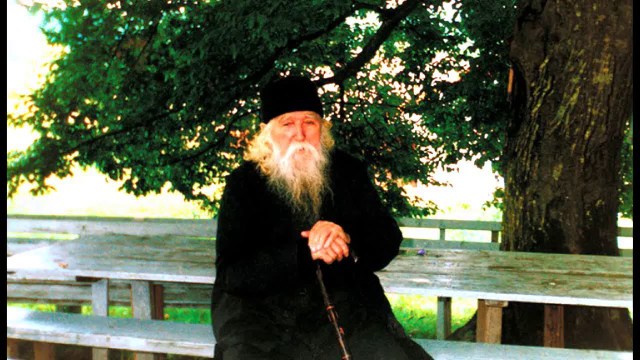
In the video which follows a Georgian Elder appears bathed in the Uncreated Light. Please pay particular attention to how the priest appears quite ordinary in the beginning, and approximately after 3:17, a transfiguration begins to take place. The event is captured by the videocamera but is not witnessed by his congregation. I would be really interested if anybody could offer us a translation in English of what the Elder is saying. Interestingly enough, I have come across two quite different translations so far.


(*) Uncreated Light


Blessed Seraphim Rose on Lenten Temptations

seraphim-rose

Excerpt from Blessed Seraphim’s Rose correspondence:

“First Sunday of Great Lent, 1980

Glory be to God, we passed the first week of Lent well, although the devil seems to attack stronger than ever. Last night at the Vigil we had a fire in church, which, if Br. G had not noticed it when he did, might have destroyed the whole church. Just a few minutes before the fire there had been a strong (and I think beneficial) human confrontation almost on that very spot, and it was obvious to me that the fire was caused by the devil’s envy that I secretly rejoiced, seeing that he attacked our property out of frustration at losing his human prey.  The same day a piece on our main printing press broke, but I think I can fix it from a part on the other press. But how well God preserves us in the midst of such trials!”

He Broke the Fast

metropolitan anthony of sourozh

A Short Story by Metropolitan Anthony of Sourozh

Sometimes it happens like this: a person tries to keep the fast, but then he falls and feels that he has defiled his whole fast, and that there is nothing left from his feat. In fact, it is far from being like this. God looks at this fast from a different viewpoint. I can explain this to you with one example from my personal experience.

When I was a doctor, I was dealing with one poor Russian family. I did not take any money from them because they just had no money. Once, during Great Lent, when I was fasting especially strictly, trying no to violate any church rules, when they invited me for dinner. It turned out that during whole Lent they were saving money to buy a small chicken and treat me. I looked at that chicken and saw the end of my fasting feat in it. Of course, I ate a piece of it. I could not afford to offend them.

I went to my spiritual father and told him about the misfortune that had happened to me. I told him that I was fasting almost perfectly during Lent, but then I ate a piece of chicken during the Holy Week. Fr. Athanasios looked at me and said:

– You know what? If God looked at you and saw that you have no sins and that a small piece of chicken could defile you, He would protect you from that. But God looked at you and saw that there was so much sinfulness in you that no chicken can defile you more than that.

I believe that many people can use this example in order not to blindly follow the church canons, but be honest people first of all. Sure, I ate a piece of chicken: not as something dirty, but as a gift of human’s love. I remember an episode from the book by Fr. Alexander Schmemann, where he wrote that everything what exists in this world is God’s love. Even the food we eat is the Divine love in edible form.

From the book by Metropolitan Anthony of Sourozh, “The Works”

Reblogged from The Catalogue of Good Deeds

Great Lent: Fasting and Temptations

christs-temptation-in-the-wilderness-montreal

Christ’s Temptations in the Wilderness


Entering the second week of Lent, have you noticed temptations increasing … ?

*

“Fasting means I don’t eat, it is voluntary hunger. Therefore, to fast as an Orthodox during Great Lent is to drive ourselves into a marginal situation in which we feel the demands of the body, but the power of the soul masters it.
This marginal situation is expedient to the tempter to betray us with the most powerful temptations. He does not have power over the struggling fasting Christian, but the Christian is lured by the weaknesses of the body, which the tempter believes he can exploit. This happened with Christ.
The Evangelist Matthew writes: “Christ fasted forty days and forty nights and then was hungry. And the tempter came to Him saying….” The tempter came to Christ when He was hungry. Thus, hunger attracts him, but hunger is eventually what defeats him, when, of course, satisfaction is sought in the reasonable food of the soul – the words that proceed from the mouth of God – and not one-dimensionally from the unreasonable nourishment of the body.
gluttony vatopaidi icon

Gluttony, Vatopaidi icon

We must not, therefore, be surprised if during the fasting period of Great Lent diverse temptations occur, whether they relate to our personal, family or social life. At this time the tempter “approaches” Christians. He does this through many “internal” ways, but also with noisy external events, which correspond to internal impassioned thoughts, and tries to make our struggle during Great Lent worthless. But if we are sober, all these things will cause our spiritual maturation, paths for deeper self-knowledge and the knowledge of God.”
Source: Ekklesiastiki Paremvasi, “Η νηστεία και ο πειρασμός”, March 1999.

By Protopresbyter Fr. Thomas Vamvinis

Source: Mystagogy— Transl by John Sanidopoulos.

*

Fasting, Appetite and Hunger
Fr. Alexander Schmemann, in trying to put Christian fasting into perspective, in his book Great Lent: Journey to Pascha, writes:

Ultimately, to fast means only one thing: to be hungry – to go the limit of that human condition which depends entirely on food and, being hungry, to discover that this dependency is not the whole truth about man, that hunger itself is first of all a spiritual state that is in its last reality hunger for God.

Saint Paisios on the Arena of Great Lent

Geron-Paisios-81

St. Paisios: “A layman once went to a monastery in the beginning of Lent and a certain monk there was abrupt and rough to him. However, the poor man had good thoughts and justified him. He later came to me and said:
 
‘I do not blame him, Father. After all, he had just completed the Three Day Fast!’ (1)
 
If this monk had done the Three Day Fast in a spiritual way, he would have had a spiritual sweetness and would have spoken to the layman with kindness. But he pushed himself egotistically to do the Three Day Fast, and so he blamed everybody for everything.”
*

A nun: Elder, what should I reflect on during Great Lent?

St. Paisios: You should reflect on the Passion, the Sacrifice of Christ.
 
During Great Lent, we are given a greater opportunity  to struggle and participate more intensely in the Saving Passion of Christ: 
with our repentance and prostrations;
with the cutting off of our passions;
with a reduction of our food intake.
For the love of Christ.
Another nun: Elder, how can I struggle more with temperance during Lent?
 St. Paisios: Now, during Lent, those in the world take greater care to cultivate temperance, but we monks must always be careful. What is more important, though, is to be careful with the passions of the soul and then the body’s. Because if one prioritizes bodily asceticism over them and does not struggle to eradicate the passions of the soul, he will accomplish  nothing.
 
 *
 
We must make use, as much as we can, of all the opportunities this spiritual arena offers to us, in order to approach closer to the Crucified Christ. Then, we will helped by Him and rejoice spiritually at His Holy Resurrection , since we would have experienced more spiritually Great Lent.
 
Ι pray that God gives you strength during Great Lent, so that you may climb Golgotha and be near Christ there, together with the Theotokos and your patron Saint, John the Theologian, and that you may be granted worthy to participate in the awesome Passion of our Lord. Amen.
*
 

(1) The Three Day Fast (Ιερὸ Τριήμερο)With Clean Monday begins Great Lent in the Orthodox Church and marks the end of feasting. Clean Monday is called as such because Christians are called to cleanse themselves spiritually and bodily. It is also a day of strict fasting with no work. The holy fast has a duration of 40 days in imitation of our Lord’s fast in the desert. Strictly observant Orthodox hold this day (and also Clean Tuesday and Wednesday) as a strict fast day, on which no solid food at all is eaten. Others will eat only in the evening, and then only ‘xerophagy’ (lit. “dry eating”; i.e. eating uncooked foodstuffs such as fruit, nuts, halva, bread and honey, etc). For those who are able and willing, and always with the blessing of their spiritual father, it is encouraged by the Orthodox Church to keep a three day strict fast where neither food or water (if possible) is consumed until Clean Wednesday when one partakes of Holy Communion at the Pre-Sanctified Liturgy. Some of the strictest faithful even go so far as to do this for the entire Clean Week, accepting only Holy Communion during the week. This is an excellent way to mark the beginning of a holy struggle against one’s passions and weaknesses.

*

From the sixth volume of the series ‘Spiritual Counsels of the Elder Paisios of Mount Athos’: About Prayer.
Γέροντος Παϊσίου Αγιορείτου Λόγοι ΣΤ΄ «Περί Προσευχής», εκδόσεις Ιερόν Ησυχαστήριον «Ευαγγελιστής Ιωάννης ο Θεολόγος» Σουρωτή Θεσσαλονίκης 2012, σελ. 199-200. 
Transl. by the little city hermit

Saint Paisios and the Boiled Milk during Great Lent

st paisios1

Have a good Lent everyone!

Kαλή Σαρακοστή!

At Panagouda, the Cell of Elder Paisios.
An instructive story about fasting.
There are two visitors from Thessaloniki. They stand, leaning on the chestnut tree. Both in their fifties, pale and cantankerous. They seem to be from a ‘quasi/pseudo-ecclesiastical’ (1) organisation, because they are looking reproachfully at the Elder, and are making comments to each other quietly.
The children are playing, making noise – at which Paisios turns and says quietly:
“Do not make noise, because beside here, beneath the earth (2), Americans are hidden and we will wake them, and they will come to interrupt our silence.”
The children stop, and instantly become silent, puzzled.
At the opposite end, John is leaning sideways against the rock, atop his sack. He is lighting a cigarette. The two visitors, who appear to be harsh pietists, continue to look at the Elder with disapproval as he is boiling milk and is taking care not to spill it over. One of them can’t stand it anymore and turns to the monk:
“Elder Paisios, we are in the first days of Great Lent, we have a strict fast, and you are boiling milk to drink?”
The Elder is silent. He does not respond. He grabs the pot and lowers it, since the milk is boiled. He then goes into his Cell, brings six small, old china cups, puts them next to each other, and carefully pours the milk into each one. He waits a bit for it to cool off, while everyone looks at him with amazement and silence. The two pietists observe this with disgust, thinking that since there are six visitors and six cups, perhaps the monk will dare to offer even to them milk, during these strict days of the fast.
Elder Paisios takes the full cups one by one, places them on a wooden tray, and carries them seven meters away, where he places them down on the dirt, at the edge of a bush.
He places them there in order, then he comes, sits next to us, and begins to do something with his mouth silently, an eery whistling, while looking towards the bushes. Not a few moments pass, and over there, from the bushes, comes out a viper, very carefully, with five small snakes  – her children. I hold my breath.
The snakes are coming, all of them approaching, one by one, slithering, passing right next to us, and they go slowly to the cups, and begin drinking calmly, slurping their morning milk …
By George Skambardonis 
Πηγή: ΓΙΩΡΓΟΥ ΣΚΑΜΠΑΡΔΩΝΗ, Επί ψύλλου κρεμάμενος (Κέδρος 2003)
(1) For more information about such organisations in Greece and the charges against their “Westernizing” of Orthodox Christianity and their “Pietisticism” go here and/or study Kallistos Ware ‘s (Bishop of Diokleia) analysis in his book The Orthodox Church, here 
(2) A reference in jest to the two hemispheres of the Earth, where Greece is apprarently “upside-down” to the United States, so that when Greek people are awake and at work, Americans are fast asleep, and our noise might wake them up 🙂
st paisios2

The Arrogant Hieromonk Who Invited Disaster

ΧΡΙΣΤΟΣ ΠΕΙΡΑΖΟΜΕΝΟΣ

“A demon-possessed person was taken to a monastery, and the abbot there instructed the fathers to go to the chapel and pray for him with their prayer ropes. In that monastery, they also had as a holy relic the head of Saint Parthenios, Bishop of Lampsakos; this had the demon “cornered” quite a bit. At the same time, the abbot assigned the reading of exorcisms to a certain hieromonk. This monk was pious outwardly, but inside he was secretly arrogant. He was a fighter and a stickler in everything he did. He used to counsel the others, because he was also scholarly. He himself however would not receive help from anyone, because out of respect, they would hesitate to tell him whenever they saw him doing something incorrectly. He had created illusions inside himself that he was the most virtuous one in the monastery, so the evil one grabbed the opportunity that day to harm him. The demon implemented its wickedness and made him think that he was driving it out of the demon-possessed person.

So, as soon as he began to read the exorcisms, the demon began to cry out, “You’re burning me! Why are you sending me away, you cruel one?” – which made him believe that the demon was being burnt by his exorcisms – when it was the praying by the other brethren that was pressuring the demon. So, he replied to the demon, “Come to me.” These words had been uttered by Saint Parthenios to a demon, but he was a saint: Once, when a demon was crying out “I’m burning, I’m burning, where should I go?” the Saint replied “Come to me.” But during that incident, the demon replied to the Saint: “Your name alone burns me, Parthenios!” and immediately departed from the possessed person. Well, that monk attempted to act like Saint Parthenios, but became possessed himself. From that moment on, the demon controlled him for years on end, and he couldn’t find rest anywhere. He was constantly on the move – sometimes outside, in the world, and other times on the Holy Mountain. How that poor soul was tormented! That terrible state had caused weariness to his soul, as well as physical fatigue accompanied by tremors. And you know, even though he used to be a good priest, he could no longer minister. See what the devil can do?'”

A story told by St. Paisios

Ο ΧΡΙΣΤΟΣ ΣΤΟΥΣ ΓΑΔΑΡΗΝΟΥΣ
Source: Daimonologia: Hallowed Entries About Dark Culture & Thought, the Fantastic and the Supernatural, By John Sanidopoulos