The Silent Angel

dobri

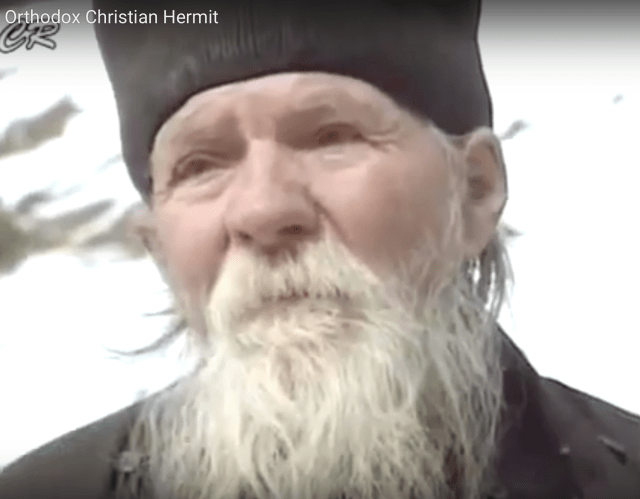
Elder Dobri is the subject of a 2015 documentary, “The Silent Angel,” which features interviews with his family, relatives, and friends, and also with Bulgaria’s last King and former Prime Minister Simeon Saxe-Coburg-Gotha.

An icon of charity, Dobri Dimitrov Dobrev,  was born on July 20, 1914 in the village of Bailovo. His father died in World War I and his mother raised the children. He married in 1940, when Bulgaria was participating in the Second World. A shell fell near him during one of the bombings in Sofia, depriving him of nearly all his hearing. He had four children with his wife, two of whom he outlived.

Over the years, the elder became more and more detached from the material aspects of life, devoting himself entirely to the spiritual life. Around the year 2000, he donated all of his belongings to the Orthodox Church and began living in a small and modest addition to the Sts. Cyril and Methodius Church in his native village. It is also about that time that he began to collect money towards the restoration of churches and monasteries throughout Bulgaria.

He came under the spotlight when it was revealed that for years he had walked more than 12.5 miles to reach Sofia from his home in the village of Bailovo to beg for money and then donate it for charity.

After spending years at the entrance of the Alexander Nevsky Cathedral, with a plastic cup in his hand, he collected about BGN 40,000 ($24,700 today) for the cathedral in Sofia, BGN 10,000 ($12,350 today) for the Sts. Cyril and Methodius Church in Bailovo, and BGN 25,000 ($31,000 today) for the restoration of the Eleshnishki Monastery of the Mother of God located to the east of Sofia, and the local church of the Gorno Kamartsi village.

His spirit of utter selflessness and sacrifice earned him the popular title “The Saint of Bailovo.”

Yesterday, Elder Dobri Dobrev (Grandpa Dobri), reposed in the Lord. He was 103 years old. He reposed at the Monastery of St. George in Kremikovtsi, to the northeast of Sofia.

dobri

+ Dobri Dobrev — Memory Eternal


dobry dobrev


“We are sorry to report that Dobry Dobrev passed away at the age of 103

We regret to announce, at the age of 103, today the beloved of all grandpa good died.
Tomorrow the body of grandpa good will be exposed to a pilgrimage to the church of his native village of Bailovo. His funeral will be on Thursday.”
dobrov2
 dobri

He Invited a Demon to Possess Him

john-climacus-ladder
Once there came to Bishop Parthenios of Lampsakos a man who was possessed by a most malicious demon, and no one knew of it, not even the possessed one himself. The Saint, however, recognized the demonic possession, because he was inspired and enlightened by God. When that man greeted him, the holy one offered no response but kept silent as if he were mute. The demon was angered at the bishop’s conduct. The demon then, with haughtiness and pride, addressed the meek Parthenios in a wrathful tone:
“We have a true desire to see you, and have journeyed a long way to greet you; but you do not even condescend to speak to us at all?”
The Saint replied: “Behold, you have seen me.”
The demon retorted: “I have seen you and been constrained to speak the truth.”
The blessed one answered: “If you know who I am, then depart from the creation of God.”
The demon rejoined: “I have dwelt in this man for a long time, ever since his childhood, and no one has learned of it, save yourself. If you should cast me from this dwelling place, I know not where I shall go!”
The Saint replied: “I will give you a man. You may dwell in him – if you so wish it.”
The demon then departed from the longtime sufferer, but he asked the Saint to keep his promise. The holy one suddenly opened his mouth and declared: “Behold, I am a man, enter into me and dwell!”
And the demon, as if he were consumed by fire, fled crying and shouting aloud: “Woe is me, wretch that I am! If the sight of you alone inflames me, how shall I dare enter into you?”
As the demon said this, he fled. As for the formerly possessed man, he became whole and gave thanks to Saint Parthenios.
+Feast Day – February 7
Source: Daimonologia by Sanidopoulos

A Caress from Eternity

laiko-prokinima-1
On Thursday, February 8, 2018, at 5:30 AM, the renowned elder and spiritual father Nektarios Vitalis, the elder of Saint Athanasius Monastery in Kouvaras, reposed in the Lord. I wrote about his holy life in a previous post. Today I would like to share with you a miracle which took place on the day of his funeral, February 9 at the Monastery of Saint Athanasius, sealing a life full of heavenly visitations. The Youtube video which follows, shows, from 1:38 onwards, how his corpse is not stiff (ie. rigor mortis) but shows signs of flexibility, as if he were only sleeping. Pay attention to how a spiritual child of his fondly kisses and gently caresses his Gerondas’ hand, seeking his final blessing. God is glorified in His Saints!
Father Nektarios’ ‘flexibility’ is the first supernatural event to occur after his demise and has been a great consolation to everyone.
May we have his blessings……!!!
He was known for his simplicity, purity, faith and deep connection with St. Nektarios of Aegina. In 1980, the sacred Elder had an astonishing conversation with St. Nektarios, and during this, he was healed of an incurable illness… A few days later, the general director of the Cancer Hospital “St. Savas” was astonishingly informed him that his cancer had disappeared. In Kamariza the bells rang joyously at the joyous news of the miracle.

Icon of St. Nektarios embracing and healing Fr. Nektarios Vitalis, along with the two women bearing witness to this to the left, and the doctors confirming the miracle to the right. The icon is from the Chapel of Saint Nektarios in Aretaieion Hospital.

Before this, in 1965, he suffered a stroke, and his situation was dire, but Saint Nektarios the Wonderworker granted him healing. As soon as he became well, he moved to Lavro. A short time later, he again saw Saint Nektarios in his sleep, who asked him to build his “house” in Kamariza, Lavro [a famous pilgrimage of the saint, where many miracles have occurred], and who informed him that he would help him.
Excerpt from a short encomium written by Mr. Manolis Melinos, who wrote several books on St. Nektarios, his life and miracles, and spent 30 years together with him:
  
ELDER NEKTARIOS
The sweet, the simple, the father,
The brother, the fellow man,
The consoler, the humble one,
The child among children, the great one among the great, the elder among the elders, in other words, the child-elder, reposed today, February 8th, 2018 at the age of 88. Now he is an intercessor for us at the heavenly Altar, together with St. Nektarios, near the Great High Priest Christ, to Whom he gave everything! 
Manolis Melinos,
Orphaned of a “Father” 
(source)
The Memorial Service and the Burial:


+ Fr. Nektarios Vitalis — Memory Eternal

vitalis

+ February 8, 2017

Fr. Nektarios Vitalis is at long last with our Saviour Christ and his beloved patron Saint, St. Nektarios. May he pray for us! His was a life full of visions, visitations and miracles with his patron saint, even near-death, after-life  experiences! Miracles and signs of Holiness even during his Memorial Service and Funeral!

Καλό Παράδεισο, Γέροντα! Καλή αντάμωση στην Αιωνιότητα!

Greek traditional wish for the departed: “A Blessed Paradise, Gerondas! Until we meet again in Eternity!

Below follow Fr. Nektarios’ recalling of his miraculous healing of cancer by St. Nektarios, a few youtube videos where he tells of St. Nektarios’ visitations to him and his near-death, ‘after-life’ experience, and his final will, testament and tomb.

Miracle of Saint Nektarios: The Healing of Fr. Nektarios Vitalis of Cancer

Fr. Nektarios Vitalis, well-known in Lavrio [a city in Attika, Greece] for his deeds and his sympathy to the poor and those written-off by the world in these difficult times, retells the following incident from when he was dying from cancer. What is said below has been told elsewhere, repeatedly, including in the book I talked to Saint Nektarios (Athens 1997, by the renowned writer Mr. Manolis Melinos).

Fr. Nektarios Vitalis recalls:

“I was suffering from a serious form of cancer. My chest was an open wound that was continuously running blood and pus. I would tear my undershirts from the pain. It was a tragic situation, and I was headed directly to death. So you understand, I had even prepared my grave clothes….

“On the 26th of March 1980, in the morning, I was talking in my office in the basement of the Church with Sofia Bourdoy (the church care-taker [a woman who cleans the church]) and the icon painter Helen Kitraki, when the door suddenly opened and an old, unknown man entered. He had a snow-white beard, was short and was slighty bald. He looked exactly the same as St. Nektarios appears in photographs. He took three candles without paying and lit only two. He venerated all the icons of the church, but passed over the icon of St. Nektarios without venerating it. He did not see me where I was. I had terrible pains when they pulled aside the curtain of the office and went to see the old man. He faced the Beautiful Gate [the Royal Doors in the Holy Iconostasion], crossed his palms and without looking around he asked: ‘Is the Geronta [Elder] here?’

“The church care-taker knowing my disease wanted to protect me…: ‘No, no…he is at home with the flu….’

“He replied: ‘Never mind. Pray, and have a Good Resurrection,’ [the traditional Orthodox greeting during Great Lent in anticipation of Pascha ‘Kali Anastasi’] he said as he left.

“The church care-taker came running to me and said ‘Father Nektarios, the old man who just left resembled St. Nektarios himself! His eyes flew flames. It seems to me that was St. Nektarios and he came to help you….’

“I thanked her thinking that she said this to console me. But deep down something was wrong. I sent her along with the icon painter to find the unknown man and quickly bring him back. I walked into the sanctuary and venerated the Crucified One [the icon of Christ on the Cross in every Holy Altar] crying, and once again asking Christ to heal me. Their footsteps stopped: ‘Father, the Elder has come!’

“I tried to kiss his hand, but out of humilty he did not let me. He bent and kissed my own! I asked him: ‘What is your name?’

“‘Anastasios, my son,’ he said, relating his baptismal name that he had before he become a monk….

“I led him to venerate the holy relics. He took out a pair of glasses with only one arm, and as soon as we saw them we were amazed! They were the same glasses of St. Nektarios that we had in the case with the holy relics. They were given to me by the old Gerontissa [Eldress] Nektaria of the monastery in Aegina.

“‘Belief is everything!’ said the stranger, as he put on his glasses.

“He began with reverence to embrace all the holy relics as the church care-taker showed, except for the relics of St. Nektarios, which he passed over….

“‘Geronta, forgive me,’ I said, ‘but why don’t you venerate the miraculous Saint Nektarios?’

“He turned and looked at me smiling. I asked him: ‘Where are you staying Geronta?’

“He showed me the ceiling, where we were building the new church [dedicated to St. Nektarios], saying: ‘My house is still not ready and I’m worried. My position does not allow me to live here and there….’

“‘Geronta, I must confess, you were told a lie earlier. I have cancer! But I want to get well, to make the Holy Altar, to finish the Church first, and then I can die….’

“‘Do not worry,’ he told me. ‘I’m leaving now. I’m going to Paros [an island in Greece] to venerate St. Arsenios and to visit Fr. Philotheos [Zervakos],’ he added, starting to leave and passing by the big icon without giving it a second thought….

“I stopped him and put my hands to his face.

“‘My Geronta, my Geronta, your face looks exactly like St. Nektarios who is honored here in our church….’

“Then, tears rolled from his eyes. He crossed me and embraced me with his hands. Taking courage I opened my hands to hug him. But when I spread out my hands, and while I was watching I could see him before my face, my arms closed back to my chest! The hairs then stood up on my arms and I crossed myself!

“I said again: ‘O my Geronta, I beg you, I want to live to do my first Liturgy. Help me to live….’

“He left from being close to me and stopped in front of his icon and said: ‘Oh, my child Nektarios, don’t worry. It is a passing trial, and you will be well! The miracle which you are asking for will happen, and it will be told to the whole world. Don’t be afraid….’

“Immediately he left us by walking through a closed door….

“The women ran to catch up to him. They reached him at the bus stop. He went inside and disappeared before the bus left!”

This story is always told by Fr. Nektarios Vitalis, a respected and reliable person, in the presence of witnesses. Fr. Nektarios eventually became well – to the amazement of doctors, radiologists, and forecasters of death. Because above all is Christ, our living God, and our intercessors before God, the Saints, plus our Mother the Panagia!

For “where God wills, the laws of nature are overcome….”

~From Mystagogy: The Weblog of John Sanidopoulos,(http://www.johnsanidopoulos.com/2009/06/miracle-of-saint-nektarios-healing-of.html).


gerontas-nektarios-1gerontas-nektarios-3gerontas-nektarios-4gerontas-nektarios-5gerontas-nektarios-6

gerontas-nektarios-2


Kyra Sarakosti

LENT1

lent5

Last Monday some ladies at our parish baked  our annual Kyra Sarakosti, or Lady Lent, “cookies”.

 ­ ‘LADY LENT’: AN OLD GREEK EASTER TRADITION

An old Greek custom that still survives in modern, Orthodox Christian families throughout Greece with different vari­ ations, is that of Kyra Sarakosti, i.e. Lady Lent. This is a custom associated with the fasting period of Great Lent preceding the Sunday of Pascha; Kyra Sarakosti is used as a calendar that counts the 7 weeks of Lent.

lent2

Kyra Sarakosti, is a small figure, a paper drawing or sometimes baked of bread dough, which features something really unusual, a lady that looks  like  a  nun who has seven legs and her  hands  are folded as if in prayer. Lady Lent’s seven legs, each represent one week of the fasting period, from Clean Monday to the Holy Week. The cross on her forehead is the symbol of her faith. She has her arms folded because indeed she is constantly praying. She has no mouth, not only be­cause she can’t eat, as she is fasting, but also to avoid engaging in any idle talk. Fi­nally, she has no ears, or  they  are  covered with her scarf, so as not to listen to any calumny or judging, especially in this period of rigorous ascetic effort.

lent3

Lady Lent has been used as a “calen­dar” of Lent all over the country. Each week, starting on Saturday after Clean Monday, the faithful would cut  one  leg  off. The last leg would be cut off on Holy Saturday. In some areas, the seventh leg was squeezed inside the bread of Resur­rection, and was considered to bring blessing to whoever found it.


Recipe: Orthodox Mum

A Day to the Prince Islands (II)

photo42

The Monastery of St. George Koudounas

This historic Monastery of Saint George Koudounas, on Prince’s Island outside of Constantinople, was according to tradition built by the Byzantine Emperor Nikephoros Phokas in 963 AD. A miraculous icon of St. George was brought here from the Monastery of Peace, which was founded by Emperor Justin II, in Athens at that time.

The Monastery was later sacked in the Fourth Crusade. Then in 1302 the pirate Giustiniani plundered all the buildings and monasteries of the island. Not wanting their holy icon stolen by the Franks, the monks hid the icon under the earth and place the holy altar above it. The miraculous icon however was lost for many years.

Later, St. George appeared to a shepherd in a dream and told him where to find his icon. When he approached the area, he heard the ringing of bells, and having unearthed the icon, found it decorated with bells. This is the source behind the epithet “Koudouna” which means “bells”. The Monastery was later attached to Hagia Lavra in Kalavryta, and eventually to the Patriarch of Constantinople. The current church was built in 1905.

p25p26p27

p45p46p47

The miracles of the Saint are many, not only towards Christians [Romans], who approached always with great reverence (in olden times there wasn’t a Christian family which had not visited Koudouna at least once a year), but towards everyone without exception, who approach his grace with faith. Thus there is a great mass of people who come from other faiths from throughout Turkey. The pilgrims number about 250,000 a year, the majority being Turks. The great iron gate of the Monastery, as we learn from its engraving in Greek and Turkish, was offered from the Muslim Rasoul Efenti, as a gift of gratitude towards the Saint for the healing of his wife.

On April 23rd, in other words the day when the Saint is honored and the Monastery celebrates, tens of thousands of pilgrims arrive, not only from Constantinople but from other cities, to venerate the Great Martyr and to seek help in their problems. Roughly all of these pilgrims are from other faiths. Many will return later to thank St. George, who heard their prayer and granted their desire, bringing the indispensable oil for his vigil lamp. You hear with passion how he healed this person’s son, how another became a mother after being barren for many years, how a third acquired a house, etc.

The Monastery also celebrates on the feast of Saint Thekla, and on this feast about 10,000 Muslims visit the Monastery seeking the prayer of Saint George.

(For the full history of this Monastery with many pictures, visit this site.)

photo1

Muslim Vows
Some come barefoot up the hill which takes about 30 minutes to climb to the Monastery, others come with offerings of oil, candles, and sugar so that their lives may be sweet. Some do not speak as they climb up to the Monastery until they kiss the icon of St. George. They follow the services with hands lifted in the air holding lit candles. They ask priests for antidron to bring home with them for a blessing. They have great faith and respect for Orthodoxy.
On September 24 I witnessed at 6:00 AM four modern looking Turkish girls approaching the Monastery. I asked them for what purpose they came. They responded: “Faith in the Saint brought us here. It doesn’t matter that we are Muslims. We prayed that he would help us. We have heard so much about the Monastery.”
Oral came from Smyrna in order to venerate the Saint with her vow. She brought three bottles of oil. When I asked why she, as a Muslim woman among the thousands, visit the Orthodox Monastery, she responded: “It is not forbidden by anyone for us to believe in Saint George. Religions have one common agreement, the one and only God. We could be hiding within us a christian.”
Of the many interviews I conducted that day with Muslims, the responses were basically the same.
A different answer was given by Antil however. He said: “Life in Turkey is difficult. The people need something to give them strength. They have turned to religion. They have been bored by everything so they seek help elsewhere. Why not Saint George?”
And one Turkish newspaper reported: “Saint George has distributed hope to the suffering.”
Testimonies of Monks From the Monastery
Hieromonk Ephraim of Xenophontos, who has lived for three years at “Koudouna”, is astonished with the faith of the thousands of Muslims who visit the monastery. “These people live with their heart”, he affirms, “Because faith is the sight and the strength of the heart, for this reason they can and they do experience our Saints.”
Monk Kallinikos of Xenophontos, who serves as a priest, relates: “We are astonished with that which occurs here. Many times we see people who find the Lord with the faith of the Roman centurion.” To our question if the Saint responds to the supplications of the thousands of pilgrims, he replied: “During my three years here, we ourselves are witnesses of miracles, such as the healing of paralytics, mutes, and the giving birth to children.”
We asked the monks at St. George to comment about their stay in Turkey, and they told us: “All of their behavior is perfect. From the highest ruler, to the lowest, they treat us with such respect that many times we wonder which would be better, to live in Christian Greece or Muslim Turkey. We should tell you that we go everywhere with the monastic dress and our experiences have always been positive.
Thus, St. George has become a place of worship for thousands of atheists, Christians, Jews, and especially Muslims, who with every means come to the island and bring their tamata (vows), and place them before the Saint, as they place their hopes in him. And the Saint shows that he does not judge and ‘imparts healing’ to every faithful person.”

p48photo40photo41

IMG-1071

p33

p51p52p53p49

p50

For more:

Eis Tin Polin (1) 

A Day to the Prince Islands (I)


A Day to the Prince Islands (I)

IMG-1064

p41

p42p43p44

Morning transfer to the pier for a private ferry ride to the island of Halki, home of the renowned Halki Patriarchal School of Theology. Halki is one of the Prince Islands which owe their name to the fact that during the Byzantine period the imperial family and disgraced aristocrats were exiled in the monasteries on the islands.

Ιsland of Halki

p11p9

Halki Patriarchal School of Theology

p12p13

Eis Tin Polin (1) 

p14p15

p17p18p19p23p24

St Photios the Great is believed to have founded the monastery in Halki in the late 19th century. In 1844, Patriarch Germanos IV established the Theological School for the purpose of pleasing God with a dwelling for teachers, theologians and theology students. The monastery houses a very impressive and important library.

p28

A carriage (fayton) took us to the top of the hill where the Theological School is situated, since motorized vehicles are forbidden on all the islands. A magnificent view awaited us there.

p53

IMG-1083

IMG-1084

p29p30p31p34p35p37p38p39

image44

Halki Patriarchal School of Theology

image45

Η Παναγία η Παυσολύπη
The Theotokos that Puts an End to our Sorrows

IMG-1067image46


image40

photo30

image42image45IMG-1072image47image48

IMG-1079

photo27photo28photo29photo31

IMG-1085

A Canon to the Paraclete

st maximos3
St. Maximos the Greek (+ 21 January 1556) was imprisoned in Russia, banished to the Monastery of Volokolamsk, where he suffered from hunger, bitter cold and all kinds of torments. There he was bereft of everything, even being deprived of Holy Communion and books, yet prayer alone sustained him. The Lord did not abandon him, but one day an angel appeared to him and said: “Have patience! You will be delivered from eternal torment by the sufferings here below.” To thank God for this heavenly consolation, St. Maximos composed a poetical canon in honor of the Holy Spirit. Deprived of paper and pen, he wrote it on the walls of his cell in charcoal! This canon is sung on the Monday of the Holy Spirit in certain Russian and Serbian monasteries.

st maximos

A Canon to the Divine, Worshipful & All-Holy Spirit, the Paraclete
By Saint Maximos the Greek
In Tone IV
Ode 1
lrmos: He who was slow of speech, having been covered with divine darkness, gave utterance unto the divinely written law; for, having shaken off the mire from his noetic eyes, he beheld the One Who Is and learned the understanding of the Spirit, uttering praise with hymns divine.
Refrain: Glory to Thee, O our God, glory to Thee!
O Master, Who of old didst feed Israel with manna in the desert, fill Thou my soul with the most Holy Spirit, that for such I may continually serve Thee in God-pleasing manner.
Refrain: Glory to Thee, O our God, glory to Thee!
Making bold, with Thine incorporeal ministers I sing to Thee the hymn of the thrice-holy cry, though I am earth and ashes, O true Trinity and allgood Unity.
Refrain: Glory to Thee, O our God, glory to Thee!
Ever assailed in my soul by the storms of destructive passions and spirits, I set my hope of salvation on Thee, the most good Paraclete, in that Thou art God.
Refrain: Glory to Thee, O our God, glory to Thee!
See also “ST MAXIMUS AS A MONK AT THE VATOPEDI MONASTERY” by Archimandrite Ephraim