On the Priest Who Carries Us Until We Find Our Way Home
A Meditation on Priesthood with Father Lev Gillet and Elder Gregorios Papasotiriou, through Memories from My Own Life and Family
“I live for you. I belong to you, because I belong to Jesus Christ. I recognise your right to place your hand on me and to consider me as your servant. Whoever you may be, you who need me in this moment, you are, in the very instant you speak to me, the soul more important to me than any other. You have a right to my entire capacity for devotion and love. I consecrate myself to you”. (Lev Gillet, “Be My Priest,” in Serve the Lord with Gladness: Basic Reflections on the Eucharist and the Priesthood)
*
There are many ways of speaking about priesthood. We can begin with what a priest does: he celebrates the Divine Liturgy, hears confessions, teaches, baptizes, comforts the suffering, visits the sick and accompanies the dying.
Father Lev Gillet begins somewhere deeper.
In Be My Priest, his meditation on priesthood, the priest is understood first in relation to Christ. Christ is the source and model of priesthood, and the priest is called, in Him and through Him, to become what Gillet calls “a priest for all.”
This leads to three movements which seem to contain much of Gillet’s vision:
Belonging to Christ.
Emptying oneself.
Belonging to everyone.
They are not three independent virtues. One leads into the next. The priest belongs to Christ; because he belongs to Christ, his life is no longer something he possesses entirely for himself; and because he has ceased to guard that life as his own possession, Christ can give it to others.
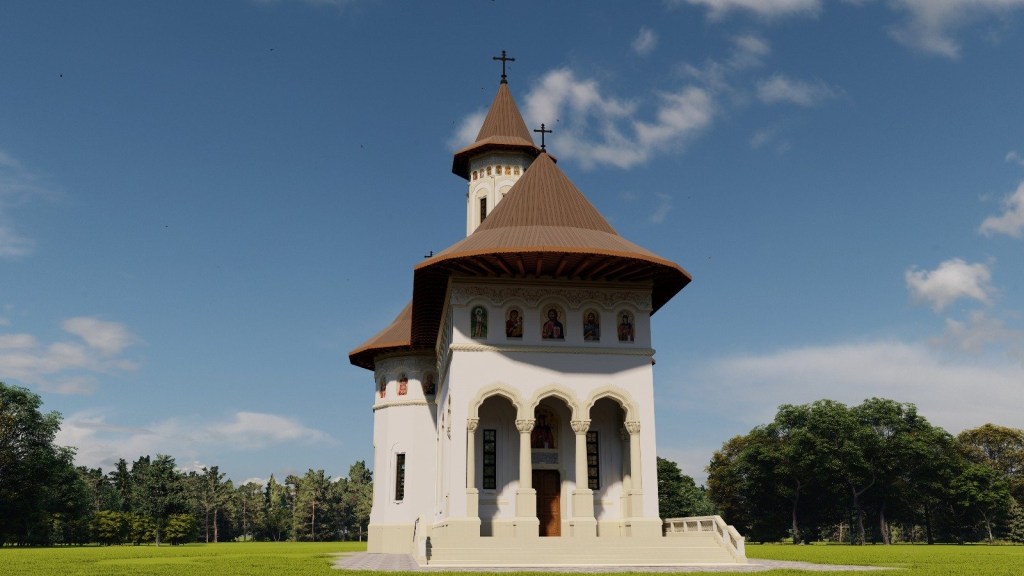
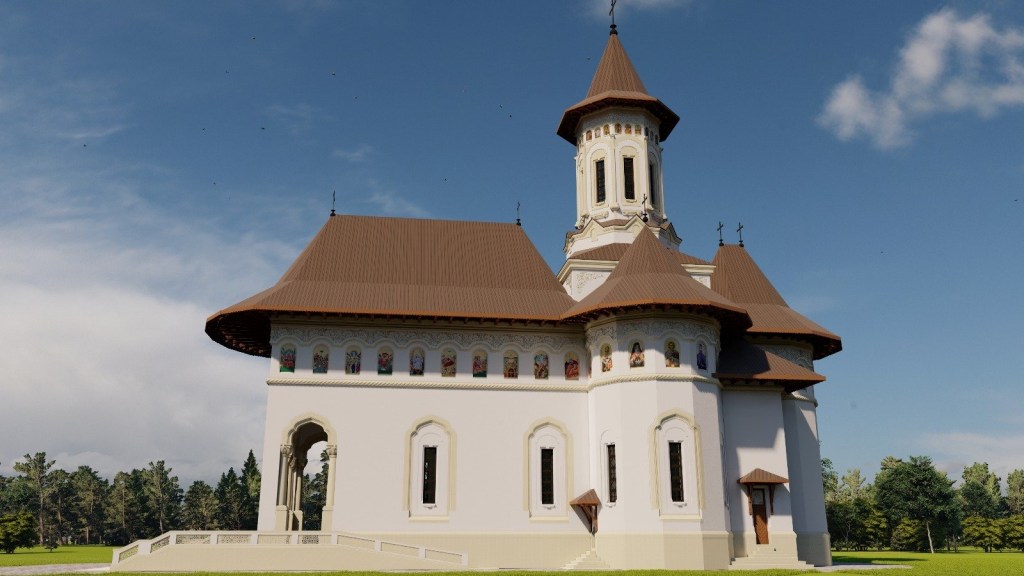
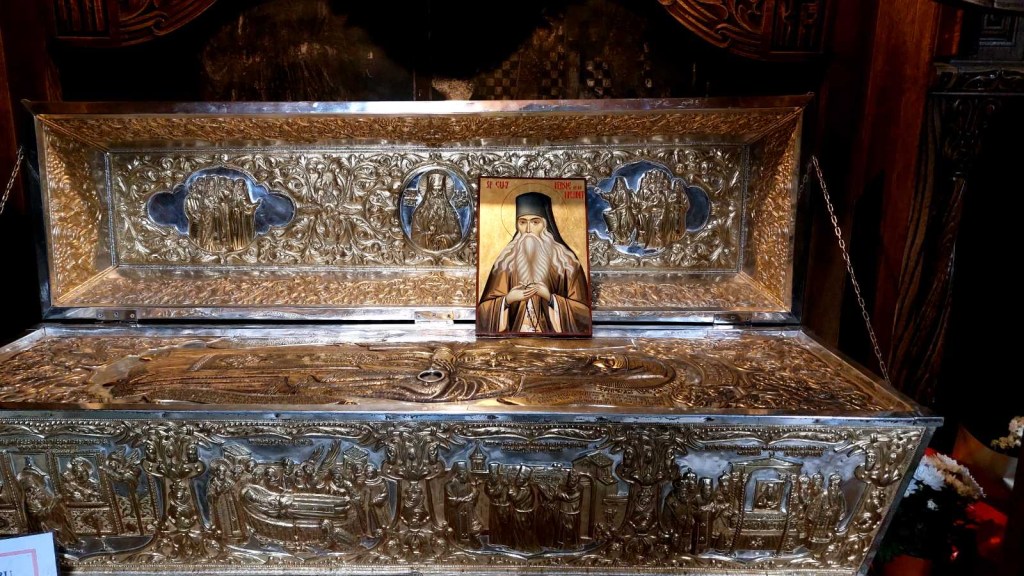
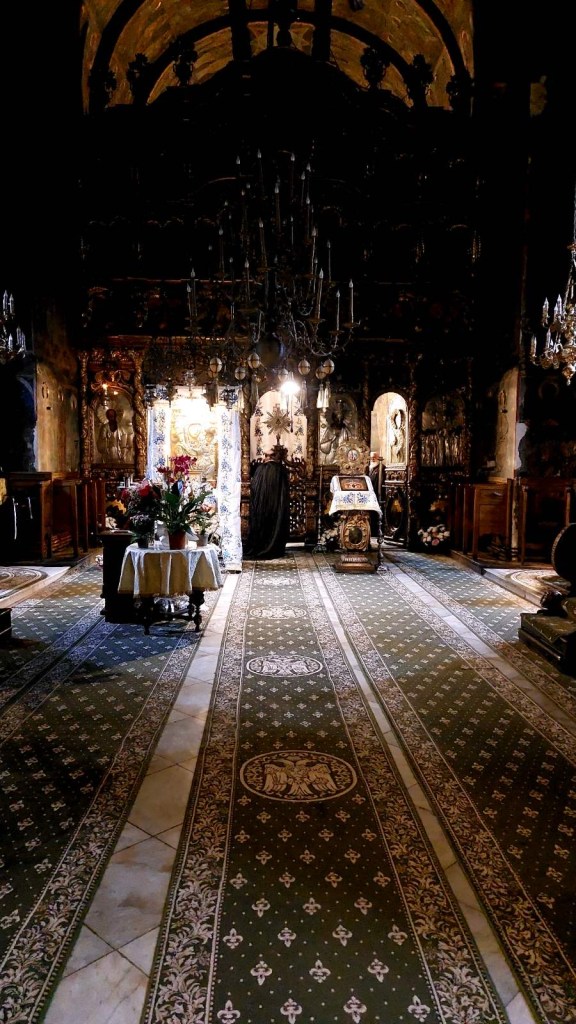
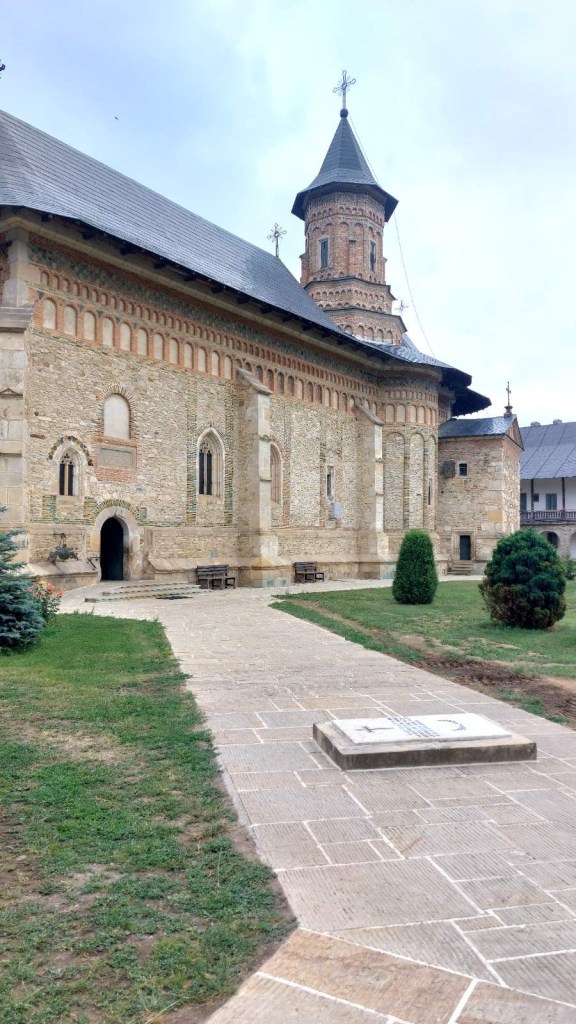
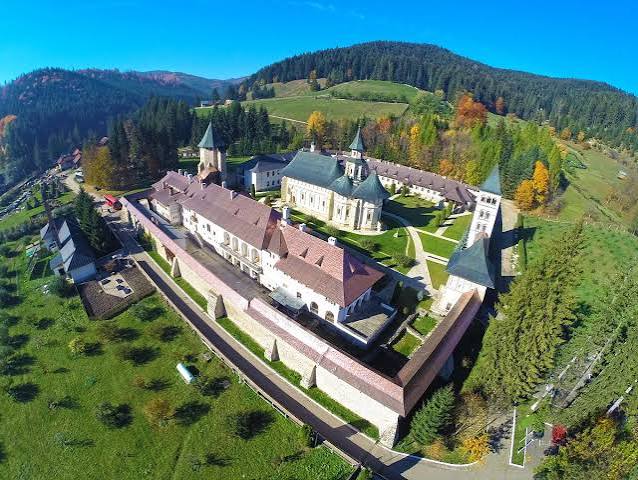
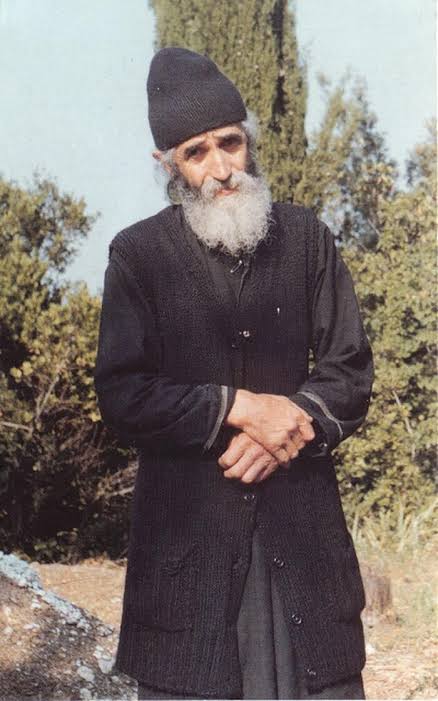
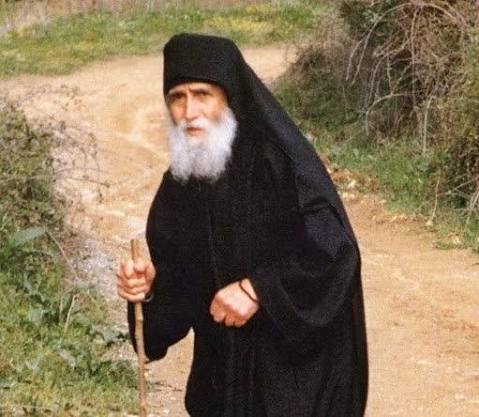
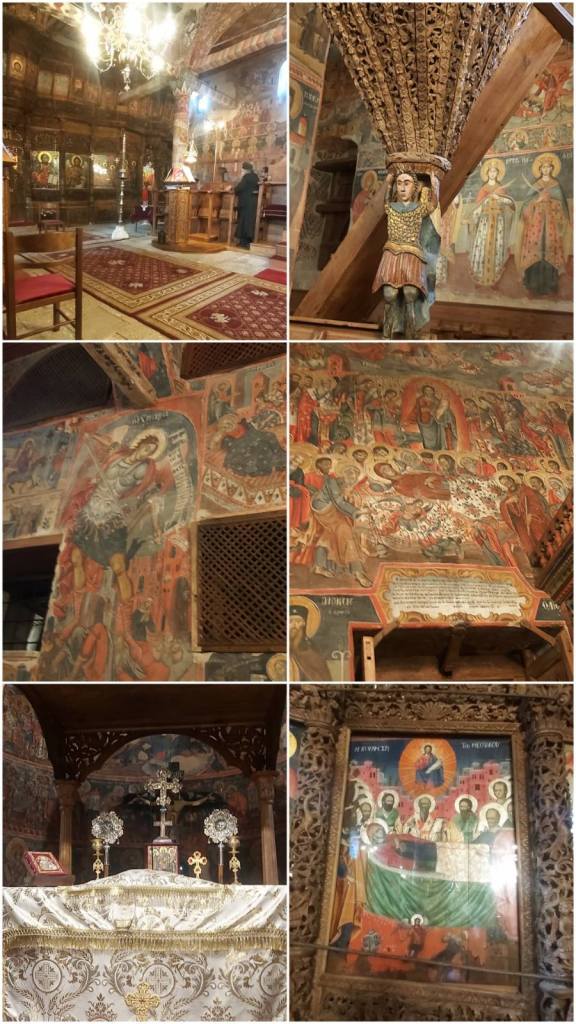
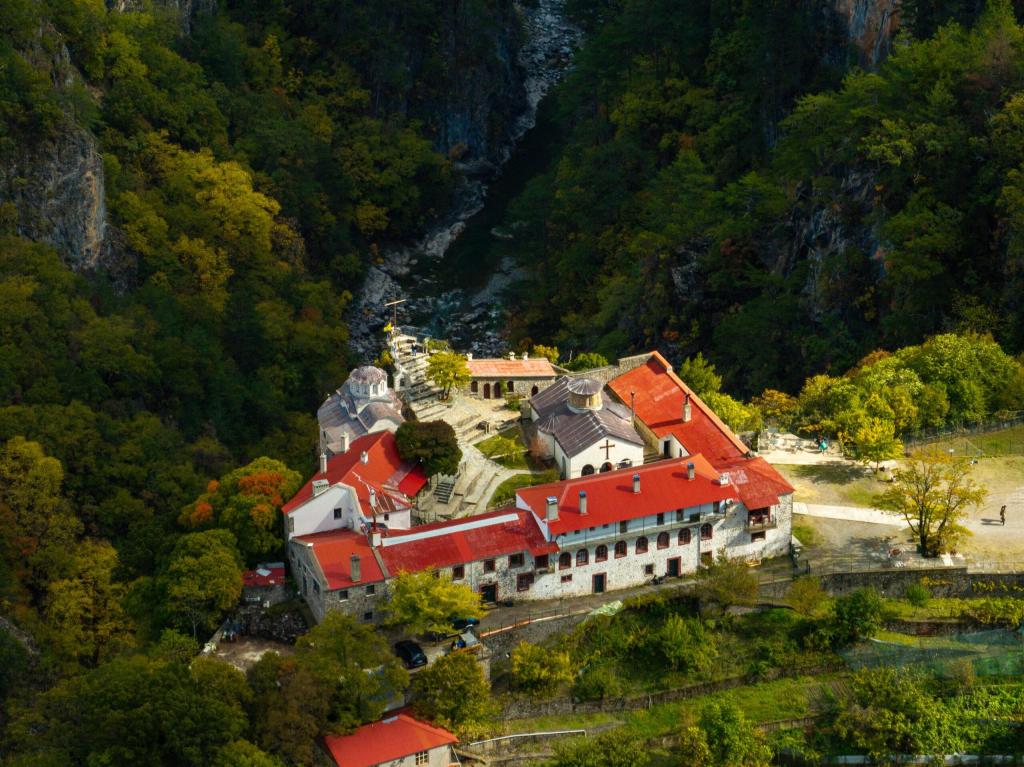
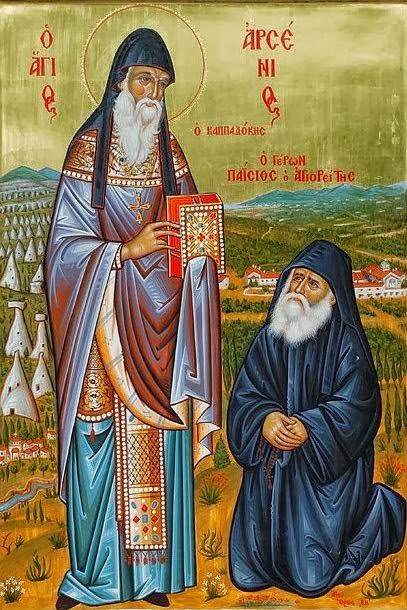
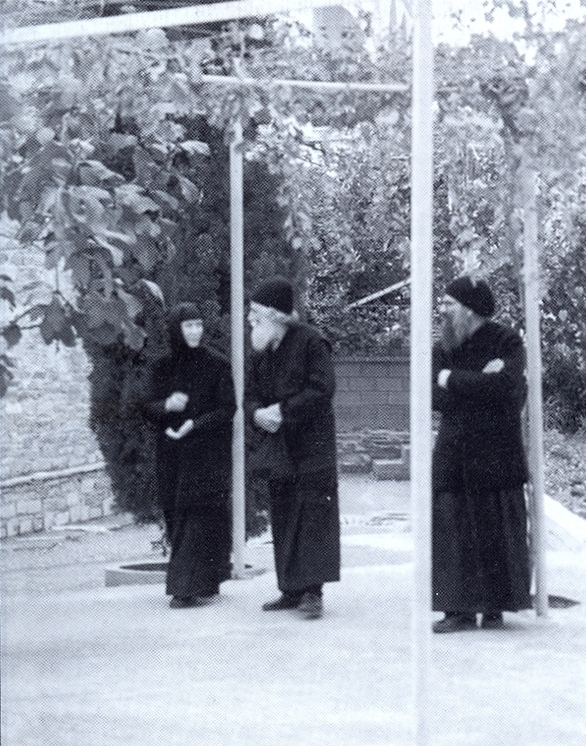
When I read Gillet now, I find myself thinking of someone I knew long before I encountered these words: the late + Elder Gregorios Papasotiriou, my spiritual father in Greece and the spiritual father and confessor of the Holy Monastery of St John the Forerunner at Metamorfosi in Halkidiki.
I do not want to write his biography here. Others knew him longer and can tell much more. I want instead to place some memories of him beside Gillet’s meditation and allow each to illuminate the other.
For I think Elder Gregorios taught me something about Gillet’s priesthood before I knew that Gillet had put it into words.
I. BELONGING TO CHRIST
Whose Are You?
Gillet takes us behind the visible activity of priesthood to a more fundamental question:
Whose are you?
“Before pastoral work, before preaching, before the offering of oneself to other people, there must be what our earlier meditation called “the fundamental surrender: I am Christ’s.”
That sounds simple until it becomes concrete.
For if I am Christ’s, Christ acquires a claim not merely upon my religious activity but upon my plans, my preferences, my future — even upon the good and holy things I might have chosen for myself.
This is where the early life of Elder Gregorios becomes important.
His own desire was for hesychia. From around 1970 he lived in a small cell at the then-ruined dependency of Dionysiou Monastery at Metamorfosi. His inclination was towards prayer, solitude and the hidden life.
There was nothing spiritually inferior in that desire. Quite the contrary.
But his spiritual father was St Paisios.
And St Paisios cut off his will.
Elder Gregorios was not simply to remain in the solitude he loved. He was to go among people. He was to become a priest and spiritual father, to hear confessions, to guide souls and to carry the burdens of others. In time, and under the direction of St Paisios, the monastic community at Metamorfosi grew around him.
He obeyed.
Gillet’s question, “Whose are you?”, therefore becomes very concrete.
If the answer is I am Christ’s, then even my preferred form of holiness cannot finally belong to me.
The issue is no longer simply:
What good thing would I like to offer God?
It becomes:
What does God wish to do with the life I have already given Him?
This is why obedience is so central here. Elder Gregorios did not surrender something sinful. He surrendered something beautiful: the hidden life of prayer he genuinely desired.
And this gives greater depth to Gillet’s understanding of belonging. To belong to Christ is not merely to believe in Him, love Him or work for Him. It is to allow Him to redirect a life.
Elder Gregorios wanted hesychia.
Christ, through obedience, gave him souls.
The life he offered to God was returned to him filled with other people.
II. EMPTYING ONESELF
“A Life of Obscurity and Silence”
The second movement follows naturally from the first.
If the first question is Whose am I?, the second is:
What happens to my life because I am His?
Gillet’s answer is kenosis — self-emptying.
One counsel associated with his meditation is strikingly austere:
“Live a life of obscurity and silence; seeking no awards.”
This is important because self-emptying can itself become romanticized. A person can secretly become attached to the image of himself as sacrificial, holy or indispensable.
Gillet strips that away.
Obscurity means that much of the priest’s real work may never be seen.
Silence means that much of what he carries cannot be spoken about.
And “seeking no awards” means that even the fruits of his labour cannot become his possession.
This is the setting in which I first came to know Elder Gregorios.
Strasbourg
I was in my first year at university.
Outwardly, everything was going extremely well. I was doing very well academically, and there seemed to be a promising future ahead.
Inwardly, things were very different.
I had become strongly influenced by existentialist philosophy. The Christianity I remembered from childhood and school had become something distant rather than a living experience of God and the Church. My actual life was far removed from the life of the Church.
And despite my outward success, I was not happy.
During that first year I travelled to Strasbourg with a university choir for an international choral festival. For about a month we worked on major choral works with choirs from around the world. Between rehearsals and performances there were meals, coffee and long conversations.
Some members of the Greek group began to realise that beneath the surface something was wrong.
Eventually they said to me:
“We don’t think you are well. When we return to Greece, we want you to meet our spiritual father. He will help you find your way.”
I have never forgotten those words.
Something else happened in Strasbourg. I even discovered a beautiful French poem about a soul which wanders away from God and eventually returns to Him!
I kept it.
I did not yet know how closely its story would come to resemble my own.
When we returned to Thessaloniki, I went to the meeting that had been arranged with Elder Gregorios at Metamorfosi.
He had before him a young woman with almost no experience of the spiritual life and very little idea of where she was going.
And he understood that.
He did not try to transform everything at once.
He proceeded with extraordinary tenderness and discernment: gradually, step by step. There was guidance and correction, but also patience. There were messages when we could not meet. Above all, there was prayer.
And there were tears.
People who had known me before Strasbourg and encountered me again during my second year at university could hardly recognise the change.
But much of what produced that change was invisible to me.
This is where Gillet’s “life of obscurity and silence” ceases to be an attractive spiritual phrase.
The spiritual child remembers the conversation.
God knows what happened afterwards.
The spiritual child leaves the monastery.
The spiritual father remains.
He prays.
He remembers the name.
He carries before God a person who may not yet know how to carry herself.
That is a hidden form of kenosis. The priest gives time, attention, prayer and often tears, without being able to guarantee what the other person will eventually do with them.
And in my case, that question would become painfully real.
III. THE FREEDOM TO LEAVE
The Prodigal Daughter
After several years, I reached a point at which Elder Gregorios’s guidance seemed too difficult.
I did not want to obey.
Eventually, I chose my own way.
And he let me go.
This is perhaps one of the most important things I can say about his spiritual fatherhood.
The man who taught us the seriousness of obedience respected my freedom enough to allow me to disobey him.
He did not pursue me in order to force me back. He did not use spiritual authority to overcome my freedom.
He let me leave.
I have often thought since then of the father in the parable of the Prodigal Son.
The father does not believe that the son is making a good choice. He does not bless the departure as though all choices were equally life-giving.
But neither does he imprison his son in the house.
He allows him to go.
This helps us understand something essential in Gillet.
If the priest is becoming “a priest for all,” that does not mean that he possesses all. The person to whom he gives himself remains free.
The earlier meditation expressed the implication starkly: the priest cannot demand a particular outcome, force gratitude, guarantee fidelity or prevent departure. “The gift remains a gift.” …
That is a severe form of self-emptying.
It is one thing to give oneself to someone who responds exactly as one hopes.
It is another to give oneself, to pray and suffer for another person — and then to allow that person to walk away.
Elder Gregorios let me go.
But he did not cease being my spiritual father.
He prayed.
He waited.
I know that he suffered.
And this distinction matters enormously. Respect for my freedom did not mean indifference to what I did with that freedom.
He would not compel my return.
But he would pray for it.
IV. THE RETURN
Eventually came what I can only describe as my own return of the prodigal.
I began to understand that my earlier repentance had not gone as deeply as I had imagined.
This time I was prepared to accept that repentance might hurt.
I returned to Elder Gregorios.
But he did not simply receive me with unqualified reassurance.
He welcomed me, certainly. Yet in a sense he also “played it tough.”
There was love underneath it, but there was gravity too.
He needed me to understand that I could not simply come back because things had become difficult, receive consolation, and then begin the same cycle again.
Something far more serious was involved.
My soul.
And here I began to understand what he meant by obedience.
He was not trying to make me obedient to Elder Gregorios.
He wanted me to become obedient to God.
That distinction changes everything.
The false spiritual father needs the other person’s obedience because it confirms his own authority.
The true spiritual father can allow the person to leave because the person does not belong to him in the first place.
This brings us back to Gillet’s first question:
Whose are you?
The answer is not:
I belong to my spiritual father.
It is:
I am Christ’s.
The task of the spiritual father is therefore not to insert himself permanently between Christ and the soul. It is to help the soul offer itself freely to Christ.
Elder Gregorios could respect my freedom when I left precisely because obedience without freedom would not have been the obedience he was trying to teach me.
And when I returned, he could be demanding for precisely the same reason.
He was not interested in winning me back for himself.
He wanted my return to God to be real.
We do not play with our souls.
The years that followed were difficult. There was suffering. But I accepted it differently because I had begun to understand that repentance was not simply regret for something that had gone wrong. It meant a reorientation of life.
And alongside the suffering there was grace.
There were also experiences which I can only describe as miracles.
The spiritual father had waited.
But the destination of the journey was never the spiritual father.
It was Christ.
V. “I BELONG TO YOU”
We now reach the third movement in Gillet’s meditation.
The priest belongs to Christ. Belonging to Christ empties him of the instinct to preserve his life entirely for himself. Therefore Christ can give him to others.
At this point Gillet becomes startlingly personal:
“I live for you. I belong to you, because I belong to Jesus Christ.”
And then comes an even more daring sentence:
“I consecrate myself to you.”
These words could easily be misunderstood.
“I belong to you” does not mean you belong to me.
That reversal would destroy Gillet’s meaning.
The priest’s belonging moves outward. He gives himself; he does not acquire the other person.
And “I consecrate myself to you” means something stronger than professional availability. Consecration is an offering. The person Christ places before the priest becomes, at that moment, someone for whom his priesthood must be spent.
This helps me understand something Elder Gregorios used to tell us.
He would say that the spiritual father carries the sins of his spiritual children and that he will have to give an account before the Judgement Seat of the Lord for the souls entrusted to him — provided that the spiritual child, on his or her part, lives in obedience.
I did not fully understand the weight of those words when I first heard them.
I understand them better now.
The spiritual father is not merely someone from whom I obtain religious advice.
A soul has been entrusted to him.
Therefore:
I live for you.
I belong to you.
I consecrate myself to you.
Not because you have become mine.
But, in Gillet’s decisive phrase:
“because I belong to Jesus Christ.”
That final clause protects the whole relationship.
The priest belongs to the spiritual child in Christ, and therefore he must never make the spiritual child belong to himself.
VI. DISCERNMENT
This also helps explain another dimension of Elder Gregorios: his discernment.
Sometimes it appeared in very small things.
I remember once travelling to the monastery during a particularly confused and busy period. I had left without my driving licence and was driving a different car. There had been delays and complications.
When I eventually arrived, the Elder was waiting.
There was something almost amused in his manner — certainly a smile — as he challenged me about what I had done.
How could I have come without my driving licence?!
Nobody had told him.
I remember incidents like this with affection because they were not dramatic. His discernment did not always announce itself solemnly. Sometimes it came with humour.
But at other times discernment carried an enormous responsibility.
And the most powerful example I remember concerns my father.
VII. MY FATHER
My father was an excellent doctor and a deeply compassionate man. He genuinely loved his patients.
Yet precisely because he had spent his life so close to illness and suffering, he struggled with questions of faith. He found it difficult to reconcile some of what he had witnessed with belief in God. Like life after death …!
He remained outside the sacramental life of the Church.
After retirement, however, he began searching more seriously. He took up Scripture and studied it systematically, volume after volume.
Still, doubts remained.
Then, as he grew older and his health deteriorated, he began experiencing terrible recurrent nightmares.
Dark figures pursued him.
The episodes became so violent that he would wake suddenly or fall from bed and injure himself. We put mattresses and cushions around the bed to protect him.
Naturally, we looked for medical explanations.
Medication? Polypharmacy? Age? Illness?
My father was not a naturally fearful man. He had been an athlete, a champion and was courageous. Yet the experiences continued.
Nobody understood what was happening.
One day at the monastery I mentioned this to one of the older sisters, + Sister Akylina, may her memory be eternal!
By then Elder Gregorios himself was seriously ill and spent most of his time secluded in his cell. Access to him was limited; only certain sisters would disturb him when something important arose.
The sister listened to me.
Suddenly she became very serious.
“Wait here.”
She went immediately to Elder Gregorios.
A short time later she returned with his message.
The dark figures pursuing my father, the Elder said, were demons.
And then came the part that left me stunned.
My father must confess.
He must receive Holy Communion.
He must return to the sacramental life of the Church.
If he did not, Elder Gregorios warned, what he was now seeing in his dreams he would encounter after death.
I was horrified at the thought of repeating this to my father.
Not because I did not believe the Elder.
Because I knew my father.
He was a highly educated physician, accustomed to scientific reasoning, and capable of questioning far less extraordinary religious claims.
How could I tell him this?
But the sisters insisted.
They would pray.
The Elder would pray.
But I had to deliver the message.
Eventually I found the courage.
I told my father.
And something happened that I had not expected.
He did not argue.
He listened carefully …
And after a few weeks … he obeyed.
He confessed.
He received Holy Communion.
He returned to the sacramental life of the Church.
And he was immediately delivered from what had been tormenting him!
VIII. “I CONSECRATE MYSELF TO YOU”
It is here that Gillet’s words acquire, for me, their greatest weight.
“I consecrate myself to you.”
If we hear this merely as affectionate language, we miss its severity.
Consecrating oneself to another soul means that the priest cannot simply offer what is pleasant.
Sometimes he must comfort.
Sometimes he must remain silent.
Sometimes he must wait for years.
Sometimes he must allow the prodigal to leave.
But if he discerns danger, love may require him to speak.
The message sent to my father was not reassuring. It was frighteningly direct.
Yet if Elder Gregorios truly believed that a soul was in danger, what would love have required?
Silence would have been easier.
But Gillet’s “I consecrate myself to you” leaves little room for the easier response.
The person before the priest — or, in this case, the person whose suffering had been brought to the door of his cell — has become his concern.
This is what makes discernment inseparable from spiritual fatherhood.
To see is not enough.
The priest must accept responsibility for what he sees.
And this returns us to Elder Gregorios’s own conviction that the spiritual father will answer before Christ for the souls entrusted to him.
His warning to my father was therefore not, as I understand it, an exercise of spiritual power.
It was an exercise of spiritual responsibility.
IX. TENDERNESS AND SEVERITY
My own story and my father’s story might at first appear very different.
In my case, Elder Gregorios let me go.
In my father’s case, he sent an uncompromising warning.
But I think the same principle lies beneath both.
Neither of us was coerced.
I was free to leave.
My father was free to reject the message.
Both of us had to choose.
This is why tenderness and severity are not necessarily opposites in a spiritual father.
There is a tenderness that comforts.
There is also a tenderness that refuses to lie.
There is a love that waits at the door for the prodigal.
And there is a love that sees someone approaching danger and cries out.
Gillet’s words help keep these forms of love in their proper order:
“I live for you. I belong to you, because I belong to Jesus Christ.”
Not:
You belong to me.
That distinction is everything.
Elder Gregorios could not force me to return because I belonged to Christ.
He could not force my father to confess because my father belonged to Christ.
But precisely because he himself belonged to Christ, he could pray, wait, warn, correct, suffer — and refuse to treat the salvation of another person as something unimportant.
X. GIVEN TO ALL
Gillet calls the priest, with Christ and through Christ, to become “a priest for all.” The phrase sounds universal, but its meaning is intensely particular.
“Everyone” never arrives all at once.
Everyone arrives as one person at a time.
A confused university student.
A spiritual child who refuses obedience.
A prodigal who eventually comes back.
A man tormented at night.
A nun carrying an urgent message into a cell.
Another confession.
Another family.
Another person asking for prayer.
Another soul.
This is how the universal priesthood of love becomes concrete.
And this is why the movement from belonging to Christ to belonging to everyone requires self-emptying in between.
Without self-emptying, “belonging to everyone” could become influence, popularity or spiritual power.
Gillet means something different.
The priest belongs to everyone precisely because he has ceased to make himself the center.
His task is not to gather people around himself.
It is to give himself to them in such a way that they can belong more completely to Christ.
This, I think, is what Elder Gregorios tried to do with me.
He did not want my obedience to terminate in him.
He wanted it to pass through him towards God.
XI. THE FINAL OBEDIENCE
There is one further dimension of self-emptying.
In youth and strength, sacrifice often takes the form of activity: travelling, standing, serving, hearing confessions, keeping vigil, receiving people, losing sleep.
Old age and illness demand another kind of obedience.
They demand that the person who has spent his life being available accept that he can no longer be available in the same way.
Elder Gregorios became seriously ill.
His world contracted.
The man who had received so many people became increasingly hidden in his cell.
There is something remarkable about this when placed beside Gillet’s counsel:
“Live a life of obscurity and silence; seeking no awards.”
Early in life, Elder Gregorios had desired obscurity.
Obedience brought him out of it and gave him to people.
At the end of life, illness returned him to obscurity.
But he did not cease to belong to people.
My father’s story occurred during precisely this period.
A sister entered the cell.
She carried the suffering of someone who was not even present.
The Elder listened.
He discerned.
He sent a message.
The door closed.
There was no public ministry.
No sermon.
No recognition.
Yet somewhere outside that cell, an old man changed direction and returned to Confession and Holy Communion.
Perhaps this is what “a priest for all” finally looks like.
Not necessarily a man surrounded by crowds.
Sometimes simply an old and sick priest in a cell, still allowing one more soul to make a claim upon his prayer.
XII. A LIFE GIVEN AWAY
Looking back, I see a circle which I could not have seen when I first went to Metamorfosi.
A young Gregorios wanted hesychia.
St Paisios asked him to surrender his preference.
He obeyed.
A young university student returned from Strasbourg, not knowing where she was going.
Someone had told her:
“Our spiritual father will help you find your way.”
He did.
Then she refused his guidance and left.
He respected her freedom.
He prayed.
He waited.
She returned.
And instead of making himself the object of her obedience, he tried to teach her that obedience ultimately belongs to God.
Years later her father, nearing the end of his earthly life, received another difficult message from the same spiritual father.
He too was free.
And he too obeyed.
Now Gillet’s three movements no longer seem to me like three headings.
They describe a single life:
Belonging to Christ.
Emptying oneself.
Belonging to everyone.
And perhaps Gillet’s most extraordinary sentence contains all three:
“I live for you. I belong to you, because I belong to Jesus Christ.” Holy_Cross_Lev_Gillet_Meditatio…
Because I belong to Jesus Christ.
Everything depends upon those words.
Because without them, I belong to you can become possession.
Without them, obedience can become control.
Without them, spiritual fatherhood can become attachment to a personality.
But because the priest belongs first to Christ, he can give himself without possessing.
He can guide and still leave the other person free.
He can allow the prodigal to depart and still wait for the prodigal’s return.
He can welcome without trivializing repentance.
He can warn without making another person’s soul his property.
He can carry another person before God while knowing that the person belongs to God alone.
And eventually he must surrender even the fruits of his priesthood.
The earlier meditation expressed the whole movement very simply:
Christ takes the priest to Himself, empties him of himself, and gives him back to the world. Holy_Cross_Lev_Gillet_Meditatio…
That, I think, is what I witnessed.
Elder Gregorios wanted the hidden life.
He gave that desire to God.
God gave him people.
And over the years, his time, prayer, tears, discernment, strength — and eventually even his weakness — became available to those people.
Not so that they might belong to him.
But so that, through his priesthood, they might rediscover to Whom they had always belonged.
Perhaps that is what a spiritual father finally does.
He carries us for a while.
He waits when we wander.
He calls us back when necessary.
But he never makes himself our destination.
He helps us find our way
Home.
***