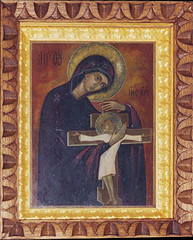
Solitary and Naked Before God

... If we decide responsibly and seriously to make the Gospel truth the standard for our human souls, we will have no doubts about how to act in any particular case of our lives: we should renounce everything we have, take up our cross, and follow Him. The only thing Christ leaves us is the path that leads after Him, and the cross which we bear on our shoulders, imitating His bearing of the cross to Golgotha.

[And that is all]

It can be generally affirmed that Christ calls us to imitate Him. That is the exhaustive meaning of all Christian morality. And however differently various peoples in various ages understand the meaning of this imitation, all ascetic teachings in Christianity finally boil down to it. Desert dwellers imitate Christ’s forty-day sojourn in the desert. Fasters fast because He fasted. Following His example, the prayerful pray, virgins observe purity, and so on. It is not by chance that Thomas Kempis entitled his book The Imitation of Christ; it is a universal precept of Christian morality, the common title, as it were, of all Christian asceticism.

001 603

El Greco – Christ Embraced the Cross (detail) (1587-96)

I will not try to characterize here the different directions this imitation has taken, and its occasional deviations, perhaps, from what determines the path of the Son of Man in the Gospel. There are as many different interpretations as there are people, and deviations are inevitable, because the human soul is sick with sin and deathly weakness.

What matters is something else. What matters is that in all these various paths Christ Himself made legitimate this solitary standing of the human soul before God, this rejection of all the rest – that is, of the whole world: father and mother, as the Gospel precisely puts it, and not only the living who are close to us, but also the recently dead – everything, in short. Naked, solitary, freed of everything, the soul sees only His image before it, takes the cross on its shoulders, following His example, and goes after him to accept its own dawnless night of Gethsemane, its own terrible Golgotha, and through it to bear its faith in the Resurrection into the undeclining joy of Easter.

[And that is all]
cross8

Here it indeed seems that everything is exhausted by the words “God and my soul.” All the rest is what He called me to renounce, and so there is nothing else: God – and my soul – and nothing.

No, not quite nothing. The human soul does not stand empty-handed before God. The fullness is this: God – and my soul – and the cross that it takes up. There is also the cross.

[And that is all]

el greco

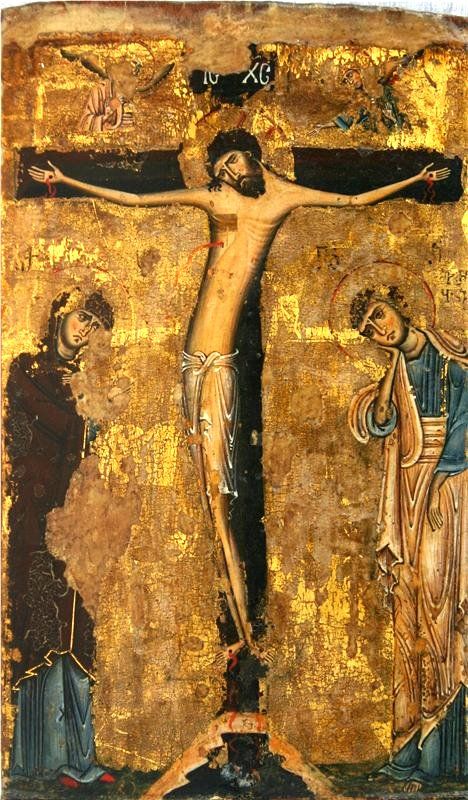
El Greco — Christ Carrying the Cross (1587-96)

The meaning and significance of the cross are inexhaustible. The cross of Christ is the eternal tree of life, the invincible force, the union of heaven and earth, the instrument of a shameful death. But what is the cross in our path of the imitation of Christ? How should our crosses resemble the one cross of the Son of Man? For even on Golgotha there stood not one but three crosses: the cross of the God-man and the crosses of the two thieves. Are these two crosses not symbols, as it were, of all human crosses, and does it not depend on us which one we choose? For us the way of the cross is unavoidable in any case, we can only choose to freely follow either the way of the blaspheming thief and perish, or the way of the one who called upon Christ and be with Him today in paradise. For a certain length of time, the thief who chose perdition shared the destiny of the Son of Man. He was condemned and nailed to a cross in the same way; he suffered torment in the same way. But that does not mean that his cross was the imitation of Christ’s cross, that his path led him in the footsteps of Christ.
cross6

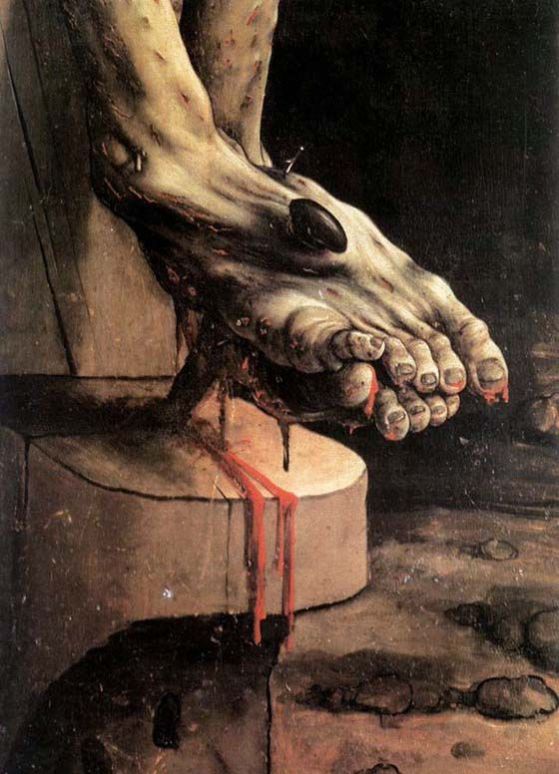
Detail from the Crucifixion from the Isenheim Altarpiece, circa 1512-16

… What is most essential, most determining in the image of the cross is the necessity of freely and voluntarily accepting it and taking it up. Christ freely, voluntarily took upon Himself the sins of the world, and raised them up on the cross, and thereby redeemed them and defeated hell and death. To accept the endeavor and the responsibility voluntarily, to freely crucify your sins – that is the meaning of the cross, when we speak of bearing it on our human paths.  … The free path to Golgotha – that is the true imitation of Christ.

[And that is all]
cross5

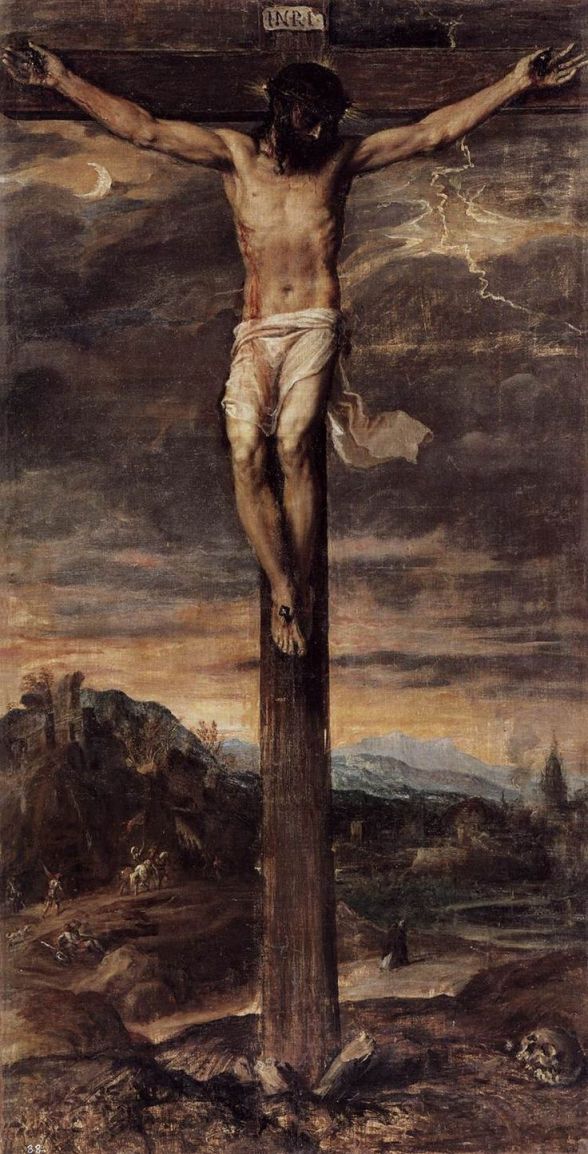
Crucifixion, by Titian, circa 1555

This would seem to exhaust all the possibilities of the Christian soul, and thus the formula “God and my soul” indeed embraces the whole world. All the rest that was renounced on the way appears only as a sort of obstacle adding weight to my cross. And heavy as it may be, whatever human sufferings it may place on my shoulders, it is all the same my cross, which determines my personal way to God, my personal following in the footsteps of Christ. My illness, my grief, my loss of dear ones, my relations to people, to my vocation, to my work – these are details of my path, not ends in themselves, but a sort of grindstone on which my soul is sharpened, certain – perhaps sometimes burdensome – exercises for my soul, the particularities of my personal path.

[And that is all]
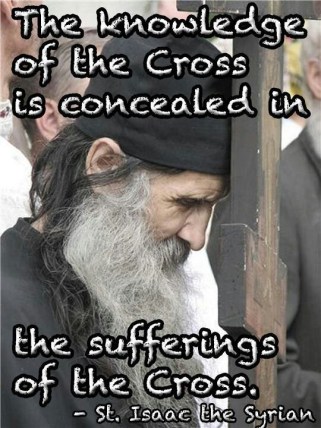
cross1

If that is so, it certainly settles the question. It can only be endlessly varied, depending on the individual particularities of epochs, cultures, and separate persons. But essentially everything is clear. God and my soul, bearing its cross. In this an enormous spiritual freedom, activity, and responsibility are confirmed. And that is all.
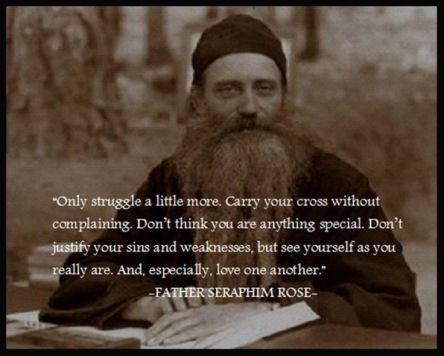
cross2

… There are simply millions of people born into the world, some of whom hear Christ’s call to renounce everything, take up their cross, and follow Him, and, as far as their strength, their faith, their personal endeavor allow, they answer that call. They are saved by it, they meet Christ, as if merging their life with His. …

The cross of Golgotha is the cross of the Son of Man, the crosses of the thieves and our personal crosses are precisely personal, and as an immense forest of these personal crosses we are moving along the paths to the Kingdom of Heaven. And that is all.

*

Taking Up The Cross

By St. Maria Skobtsova  

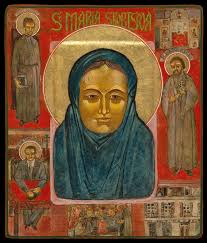
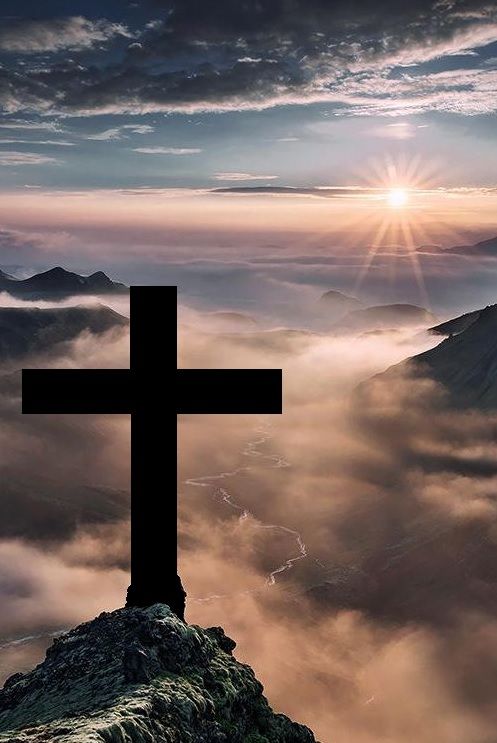
  • The first icon on the left is Cross-bearing Theotokos painted by St. Maria Skobtsova of Paris
cross10

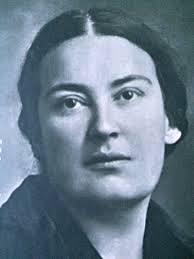
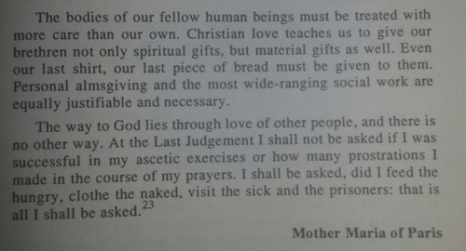
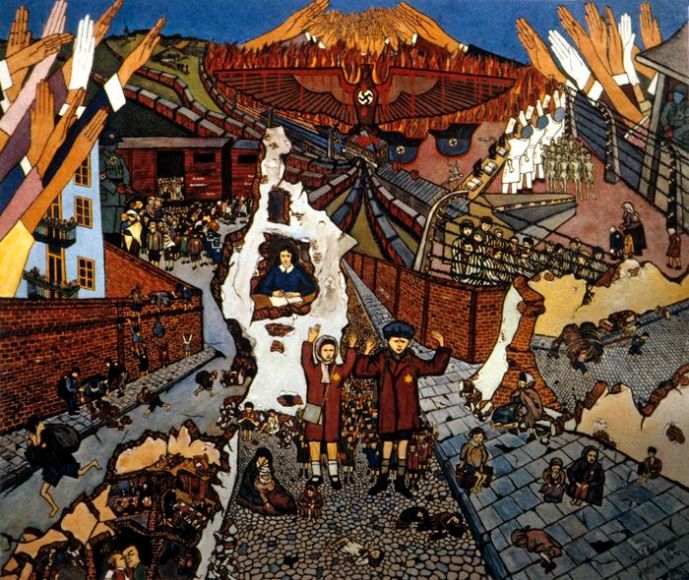
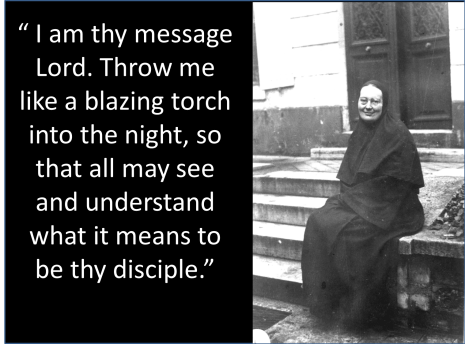
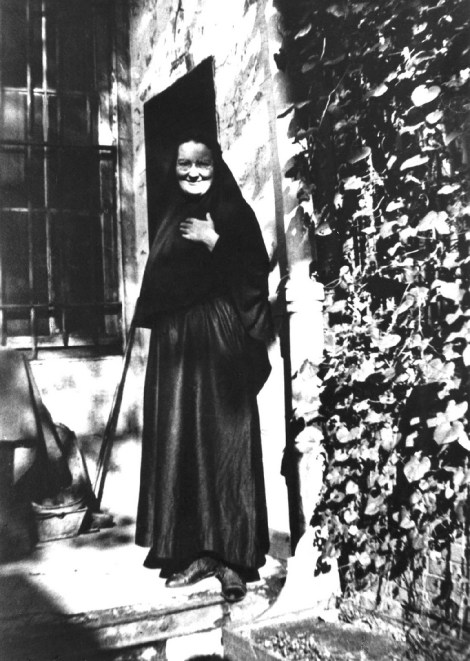
Mother Maria Skobtsova died on Good Friday, 1945, in Ravensbr ck concentration camp near Berlin. Maria’s real life is more incredible than any fiction! The “crime” of this influential painter, poet, social activist, Orthodox nun and Russian refugee was her effort to rescue Jews and others being pursued by the Nazis in her adopted city, Paris, where in 1932 she had founded a house of hospitality. … The essay reprinted here is part of a longer text included in Mother Maria Skobtsova: Essential Writings, translated by Richard Pevear and Larissa Volokhonsky and published by Orbis Books.

Source: https://incommunion.org/2007/10/27/taking-up-the-cross/

For her life, look at: https://orthodoxcityhermit.com/2015/09/23/mother-maria-of-paris-saint-of-the-open-door/

Like a Russian Novel

st maria


A very unlikely nun

For a nun, Maria’s story is more than a little unconventional. At Bishop Anthony Bloom’s first encounter with her, Maria sat at a cafe table with a beer. She was often seen shambling around the Paris market in her tattered habit, cigarette perched on her lip, haggling for deals. And she kept company with the lowest of the low.

“She was a very unusual nun in her behavior and her manners. I was simply staggered when I saw her for the first time in monastic clothes. I was walking along the Boulevard Montparnasse and I saw: in front of a café, on the pavement, there was a table, on the table was a glass of beer and behind the glass was sitting a Russian nun in full monastic robes. I looked at her and decided that I would never go near that woman. I was young then and held extreme views.”

That was her calling. Former-revolutionary, twice-married, twice divorced, cigarette-smoking, poet, painter, theologian, nun and martyr-saint, she knew the meaning of God’s mercy and desired only to share it with as many as she could muster. The number was not small.

maria1

Her backstory is the stuff of Russian novels. Born into a wealthy family in 1891, her father died when she was young, and the shock of the loss drove her to renounce her faith. Mixing with smart and fashionable of St. Petersburg, she published poetry, married a Bolshevik, and distressed over the state of the city’s beleaguered poor. But idealism couldn’t save her marriage, which ended in 1913.

russian1

The following year she moved to her family’s estate on the coast of the Black Sea with her daughter, Gaiana. Headstrong and independent, Maria was politically active and eventually became mayor of the town of Anapa as a single mom! She also rediscovered her faith, which informed her activism. “[T]he Christian,” she said, “is called to social work.”

russian4

The problem for Maria was that she was too conservative for the radicals and too radical for the conservatives. After the start of the Russian Revolution she found herself arrested and tried by the anti-Bolshevik party and only escaped conviction because of a kindly judge, Daniel Skobtsov. The two married within months of her acquittal.

With the Revolution in full swing, life in Anapa became impossible. The family fled, swelling in the sojourn. By the time they settled in Paris in 1923, Yuri and Anastasia had been born.

russian2

And now the obvious question: How did this wife of two men and mother of three children become a nun?

mother6

Not good, but revolutionary

It started when Anastasia succumbed to a wasting illness and died in 1926. The family, already strained, was devastated. Maria and Daniel separated and eventually divorced. But out of the devastation Maria’s calling to help the downtrodden was renewed.

Refugee life was terrible, especially for the Russians. Work was scarce. Despair and alcoholism was rampant. Maria saw herself as uniquely suited to help, to rescue, to comfort these victims and misfits. She would be, she said, “a mother to all.”

jews2

The proposed path was monasticism. Revealing is her conversation with her bishop, Metropolitan Evlogy. “I could never be a good nun,” she protested. “I know,” he said. “But I want you to be a revolutionary nun.”

“[S]he went to the steel foundry in Creusot, where a large number of Russian [refugees] were working. She came there and announced that she was preparing to give a series of lectures on Dostoevsky. She was met with general howling: “We do not need Dostoevsky. We need linen ironed, we need our rooms cleaned, we need our clothes mended — and you bring us Dostoevsky!” And she answered: “Fine, if that is needed, let us leave Dostoevsky alone.” And for several days she cleaned rooms, sewed, mended, ironed, cleaned. When she had finished doing all that, they asked her to talk about Dostoevsky. This made a big impression on me, because she did not say: “I did not come here to iron for you or clean your rooms. Can you not do that yourselves?” She responded immediately and in this way she won the hearts and minds of the people.”

jews4

And so she was. There would be no convent for Maria. Her monastery, as she said, was “the whole world.” Several houses and a chapel were set up to shelter and serve those in need. Maria worked tirelessly, Gaiana and Yuri aiding the effort, Father Lev Gillet serving as the ‘convent’’s chaplain for many years. In addition to painting icons and leading religious discussions, she cooked, counseled, and combed the streets looking for anyone she could help.

maria skobtsova

“[E]ach of us,” she wrote, “is faced with the demand to strain all our forces, not fearing the most difficult endeavor, in ascetic self-restraint, giving our souls for others sacrificially and lovingly, to follow in Christ’s footsteps to our appointed Golgotha.”

Maria’s appointment emerged as World War II began and the Nazis seized control of Paris. The only response was obvious.

jews3

A martyr for our own time

Maria and her associates began working with the French Resistance, hiding Jews, forging records and papers, anything to foul Nazi aims. She was brazen. “If the Germans come looking for the Jews,” she said, “I’ll show them the icon of the Mother of God.”

nazi2

* Two triangles, a star,

The shield of King David, our forefather.

This is election, not offense.

The great path and not an evil.

Once more in a term fulfilled,

Once more roars the trumpet of the end;

And the fate of a great people

Once more is by the prophet proclaimed.

Thou art persecuted again, O Israel,

But what can human malice mean to thee,

who have heard the thunder from Sinai? * 

The Gestapo knew something was afoot, but it took time to foil the plot. When they finally did, the Nazis dragged Maria and her coconspirators—including her son Yuri—off to prison.

mother4

During her two-year confinement in the Ravensbrück concentration camp, she was a beacon, bringing hope to people in utter despair. She led prayers and Bible study, fed people from stores she smuggled away, and radiated hope to any and all.

But while her hope was invincible, her body was not. The trauma of the camp took its toll and she became increasingly frail. “Though she was unable to stand for roll calls, she traded some bread for thread so she could embroider one last icon.” It depicted Mary holding a crucified Christ. Before she could finish, she was taken to the gas chamber where she died on Great and Holy Saturday.

nazi4

MOTHER MARIA OF PARIS: SAINT OF THE OPEN DOOR

*

Sources: http://blogs.ancientfaith.com/joeljmiller/maria-skobtsova/

https://incommunion.org/2004/10/18/saint-of-the-open-door/

http://jimandnancyforest.com/2006/08/mothermaria/

*

*Maria’s own poem reflecting on the symbol Jews were required to wear during WWII*

*

* * If you are interested in more details about Maria’s activism, inspiration, grace, heroism, and hope-filled commitment, so needed in our world today, please visit: https://incommunion.org/2004/10/18/saint-of-the-open-door/

*

For ST. MARIA SKOBTSOVA RESOURCES, on her life and writings, please go to: https://incommunion.org/st-maria-skobtsova-resources/
For Whom the Bell Tolls: Europe Migrant Crisis

an-inspector-calls

Why now is the perfect time for An Inspector Calls

* “The following review does NOT contain spoilers!”

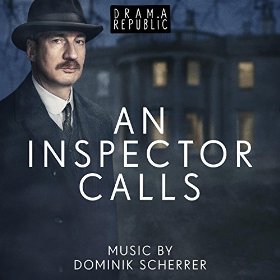
BBC One’s adaptation of JB Priestley’s An Inspector Calls couldn’t have aired at a more apt political moment…

… The BBC’s An Inspector Calls is airing in a week where front pages are dominated by people fleeing war in desperate need of help, and the political conversation is about who should be responsible for these strangers.

J.B. Priestley’s 1945 story about the corrosive nature of class privilege was always a fierce call for compassion. Arriving on BBC One after recent headlines, its message feels white-hot. … Set in 1912, the story tells of the collective role members of a wealthy family played in the suicide of a young working class woman. With its dead body, manor house, dinner party, visiting inspector and would-be aristocratic suspects, it first assumes the shape of a detective drama but quickly reveals itself to be an entirely different beast”

an inspector calls5

An Inspector Calls is available now on BBC iPlayer and previous BBC versions and older films in YouTube.

http://www.bbc.co.uk/iplayer/episode/p02z80kq/an-inspector-calls

Reviews:

http://www.denofgeek.com/tv/an-inspector-calls/36928/why-now-is-the-perfect-time-for-an-inspector-calls

http://www.telegraph.co.uk/culture/tvandradio/tv-and-radio-reviews/11858583/An-Inspector-Calls-BBC-One-review-subtle-as-a-sledgehammer.html

Watch now: Exclusive interviews with the cast of the BBC’s An Inspector Calls

https://www.thestage.co.uk/news/2015/watch-now-exclusive-interviews-cast-bbcs-inspector-calls/
WARNING: Embargoed for publication until 08/09/2015 - Programme Name: An Inspector Calls - TX: 13/09/2015 - Episode: An Inspector Calls (No. n/a) - Picture Shows: Eva (SOPHIE RUNDLE) - (C) BBC/Drama Republic - Photographer: Laurence Cendrowicz

I recommend it wholeheartedly, and I do find its Christian subtext intriguing, my only objection being, in total agreement with Anita Singh, that this part drawing room whodunit, part classic thriller, part socialist manifesto, part twentieth-century morality play, has the subtlety of a sledgehammer!
it_tolls_full_600

no-island

John Donne

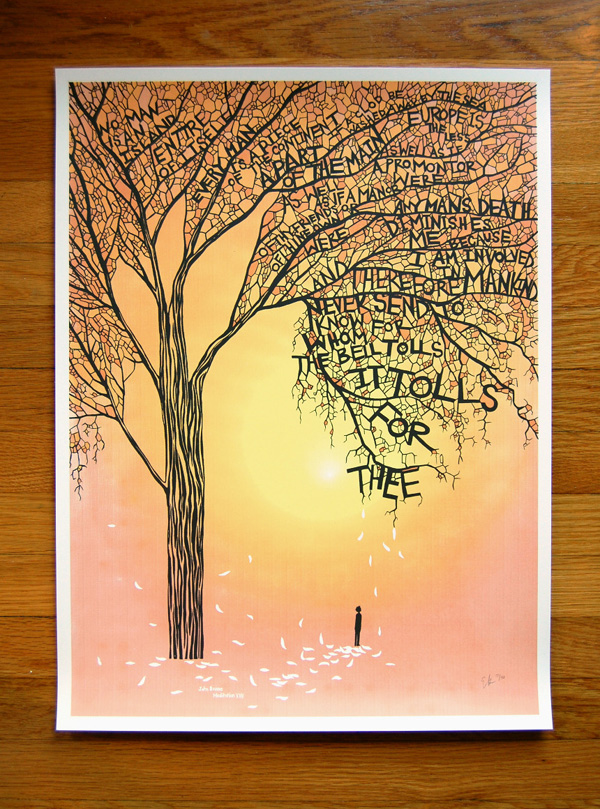
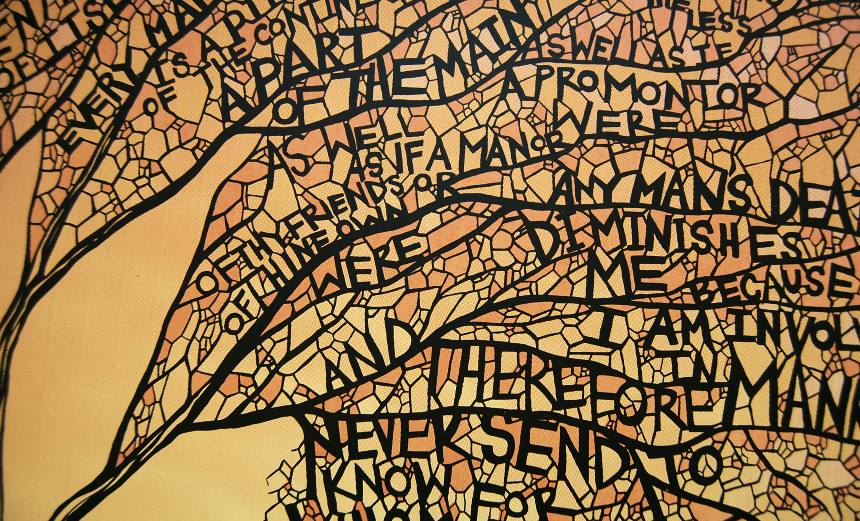
No man is an island,
Entire of itself.
Each is a piece of the continent,
A part of the main.
If a clod be washed away by the sea,
Europe is the less.
As well as if a promontory were.
As well as if a manor of thine own
Or of thine friend’s were.
Each man’s death diminishes me,
For I am involved in mankind.
Therefore, send not to know
For whom the bell tolls,
It tolls for thee.

From Meditation 17

Healing the Wounded Soul

confession1

The Difference between a Spiritual Father and a Psychologist

By Metropolitan of Nafpaktos Hierotheos*

The spiritual Father, ought to perform his task on the basis of the Orthodox Tradition, it is clearly different from the psychologist, who works on the basis of an anthropocentric view of man and his life The psychologist wants to make people psychologically balanced. The spiritual father aims at man’s deification. The psychologist uses the views of whichever school of psychology he represents. The spiritual father uses the eternal word of God, which was revealed to the prophets, Apostles and saints.

The psychologist believes that illness is due primarily to traumatic experiences in the past, or so-called repressed experiences. The spiritual father is well aware that it is not simply a matter of memories of the past or repressed experiences stored up in the subconscious. A specific faculty of the soul is ill, the nous, which is the eye of the soul. The psychologist employs the method of questioning and listening. He tries to assist the person to become aware of his problem and helps him to mature psychologically. The spiritual father, illumined by the grace of God, locates the problem, which is the darkness of the nous or fantasies, and tries to lead the person to theoria of God by means of the Orthodox method of purification and illumination. The psychologist acts on the human level using thoughts and ideas. The spiritual father acts in a theanthropic way, on both the divine and human level. He uses the therapeutic method, but also sends Gods grace into the sick person’s heart through the Sacraments.

The psychologist thinks that everything happens on a human level, He does not acknowledge the existence of the devil and the energy of the uncreated grace of God. The spiritual father knows the difference between the grace of God, the energy of the devil, and spiritual and physical illness. The psychologist confines himself to making the ill person aware of his problem and enabling him to cope with it. The spiritual father guides the person to repentance, which means his complete transformation. He does not simply lead him to a point of rejecting certain states, but guides him towards the transformation of his passions. It is possible to find other significant differences between, a psychologist and a spiritual father, and the difference between anthropocentric and theocentric psychotherapy.

We accept the views of contemporary psychology and psychotherapy in two cases, as a concession. Firstly, in cases of people whose nervous system has been harmed for various reasons, such as physical or psychological problems. Secondly, in the cases of people who, by choice, have nothing to do with the Church and its Sacraments. I think they can be helped by modern psychology and psychotherapy, so as not to deteriorate further. Psychology can act as a pain-killer to comfort them in the dreadful despair in which they are imprisoned.

But, I repeat, man is created in the image of God and he must reach His likeness. This is, I could say, the final aim and secret entelechy of man. As long as this yearning is not satisfied and a person remains far from God, his suffering increases. Inasmuch as his basic destiny on earth, communion with God, is not fulfilled, no matter how much medicine he takes or how much psychoanalysis he undergoes, he will always be homeless and engaged in a tragic search. We want more than psychological balance; we are looking for fullness of life. We do not simply wish to develop religious feelings, but want our lives to be filled.

  • Yesterday a meeting with a young student of mine I really care about left me sleepless. Such anguish and suffering! Such a dead end! Still imprisoned in her psychiatric disorders, still refusing medication, still held captive by her vicious circle psychotherapy sessions, still trusting her therapist as God, still away from the great hospital for sick souls : the Church, still rejecting Christianity.

A Spectral Array of Blues

blue4

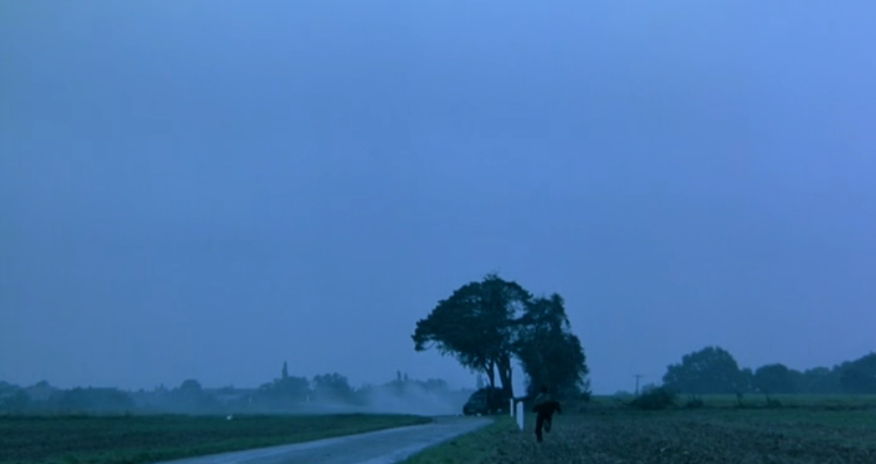
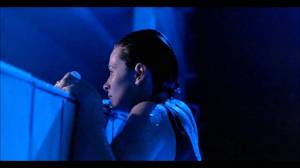
TROIS COULEURS: BLEU (1993) is a stunning film from one of the world’s preeminent directors, a rich, dark film with all the Kieslowski marks: death, silence, depression, and inner torment of the protagonist. Bleu is an impressive, inspired and inspiring anatomy of Loss, Death & Mourning with certain Christian overtones.

Desson Howe notes that “in Krzysztof Kieslowski’s “Blue,” the rehabilitation of a human spirit after painful tragedy is given stunning, aesthetic dimension. A story about a woman (Juliette Binoche) who loses her family (her composer-husband and 5-year-old daughter) in a car crash, this Polish-French production is also a spectral array of blues — cold, heart-chilling and beautiful.

blue5

For the trauma of loss and persistence of memory, watch https://www.youtube.com/watch?v=osu3j7N1fGU

Emotionally, “Blue” is a grim ordeal, as Binoche (still in the hospital recovering from the accident) attempts suicide, then retreats into deep-freeze mourning. But Kieslowski, cinematographer Slawomir Idziak, set designer Claude Lenoir and composer Zbigniew Preisner infuse the harrowing atmosphere with stylistic rhapsody.” (Washington Post, March 04, 1994 )

blue5

More importantly, unlike Michael Rosen’s Sad Book, certain Christian themes throughout the movie offer the hope of redemption. Throughout Kieslowski implies a form of divine intervention or destiny at work, forcing Julie to come to terms with her past, others, and herself and serving as an agent of epiphanic inspiration.

There is also specifically love and forgiveness: Julie for example discovers that her late husband was having an affair. She tracks down Sandrine, Patrice’s mistress, and finds out that she is carrying his child; Julie arranges for her to have her husband’s house and recognition of his paternity for the child. What a ray of hope and redemption for such a “bleak” film, focusing on death and mourning, to end with the ultrasound of a baby, waiting to be born! Life conquers Death because Love is Life, and nothing, nobody can defeat Love, not even Death, the ultimate enemy.

blue3

Then, there is humility, self-effacement and sacrifice. After the crash, in an attempt to blot out the trauma of loss, Julie destroys the score for her late husband’s last commissioned, though unfinished, work—a piece celebrating European unity, following the end of the Cold War. It is strongly suggested that she wrote, or at least co-wrote, her husband’s last work. Throughout there is an implication that she has hidden her own work behind the public face of her husband. In the final sequence she rewrites and completes the score and the Unity of Europe piece is played, while images are seen of all the people Julie has profoundly affected by her actions.

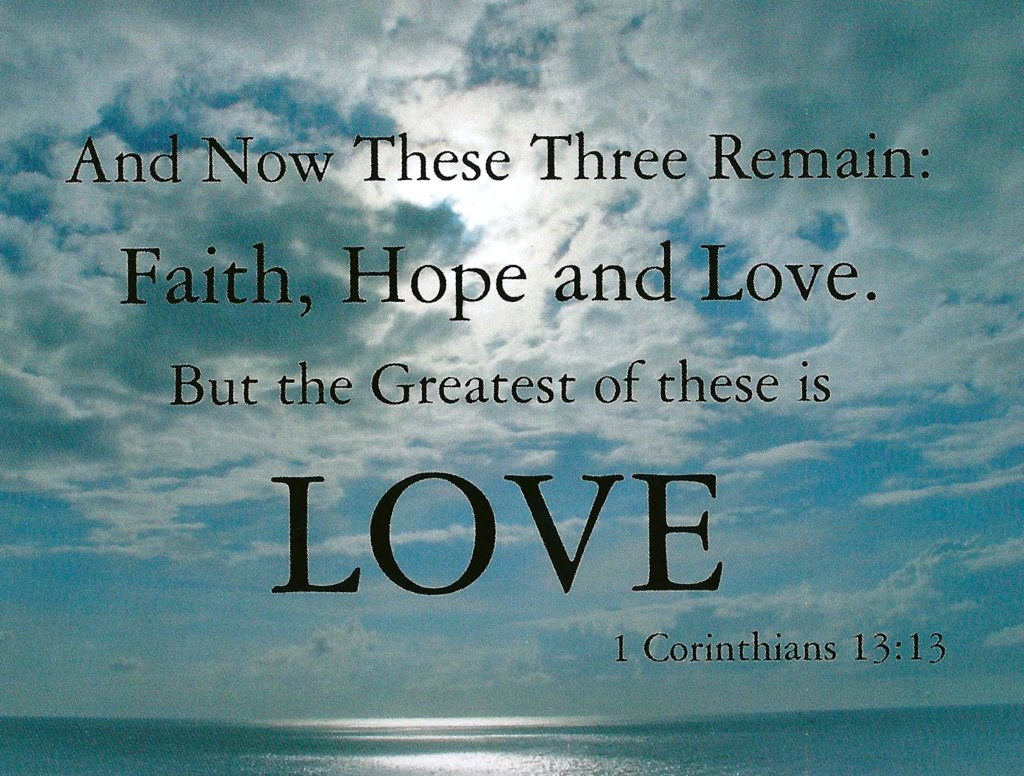
Significantly, this climactic piece which features chorus and a solo soprano is Saint Paul‘s 1 Corinthians 13 epistle in Greek, the hymn of love.

For a profound rendition of the Christian Hymn of Love (1 Cor, 13) , watch Trois Couleurs: ‘Bleu’ finale: https://www.youtube.com/watch?v=jmQ88PWzvR0

bleu1

13 Though I speak with the tongues of men and of angels, and have not charity, I am become as sounding brass, or a tinkling cymbal.

2 And though I have the gift of prophecy, and understand all mysteries, and all knowledge; and though I have all faith, so that I could remove mountains, and have not charity, I am nothing. 

6 Rejoiceth not in iniquity, but rejoiceth in the truth;

7 Beareth all things, believeth all things, hopeth all things, endureth all things.

8 Charity never faileth: but whether there be prophecies, they shall fail; whether there be tongues, they shall cease; whether there be knowledge, it shall vanish away. 

13 And now abideth faith, hope, love, these three; but the greatest of these is love.

love1

So, although there are some scenes, themes and plot developments in Bleu which conflict in my opinion with a Christian outlook, such as the typical French twist with Julie and her husband’s friend becoming lovers, still I find this film so much more comforting, uplifting and inspiring than The Sad Book* and its like, so plenty in modern art!

*See https://orthodoxcityhermit.com/2015/09/17/heartbreaking-anatomies-of-loss-death-mourning-iexemption/

love2

Ashes and Snow — Qadeeshat Lamayouta

ashes5

Qadeeshat Hyeltana

Qadeeshat Lamayouta

Itrahem Alain

ashes1

Holy God

Holy Mighty One

Holy Immortal One

Have Mercy on us

For the stunning, heavenly singing of the Aramaic hymn, listen:

https://www.youtube.com/watch?v=U6tV679wXIU

https://www.youtube.com/watch?v=TwNkBaWxz_Y

ashes4

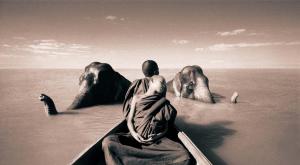
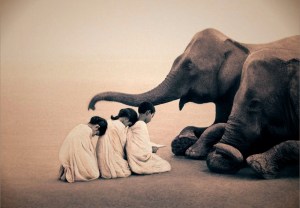
Worshipping God in Aramaic the language of Jesus the Semitic language of Israel, Levant, and Mesopotamia, by Father Seraphim and his choir from Georgia, brought me to mind Gregory Colbert’s Ashes and Snow images, visceral yet dreamlike, returning us to a place we long for but cannot name, reawakening an ancient memory in us of a time when we lived in balance and harmony with Nature and God.

ashes2

Gregory Colbert’s Ashes and Snow is an ongoing project comprised of photographic artworks, a one-hour film and two short film “haikus,” and a novel in letters all presented in a purpose-built temporary structure called the Nomadic Museum.

“Feather to Fire
Fire to Blood
Blood to Bone
Bone to Marrow
Marrow to Ashes
Ashes to Snow.”

ashes3

For the full text, go to: http://www.mycity.rs/Knjizevnost/Ashes-and-Snow-by-Gregory-Colbert.html

For the mesmerising videos watch:

https://www.youtube.com/watch?v=gSX444hQ5Vo&list=PLF8BA0D1D7E544A00&index=1

https://gregorycolbert.com

Jaws of Eternity

pitesti8

Heartbreaking Paintings and Poems from Communist Prisons in Romania — II

DAYS

by

Radu Gyr

Tuesday, Wednesday, Saturday, Monday

Neutral days without form,

Like a great fog

Over the landscape

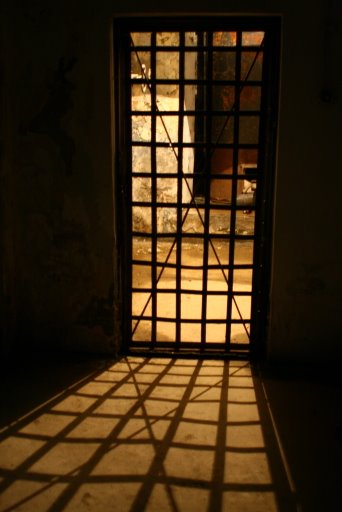
Good morning, prison cell!

Good night, prison bars!

I’d smash you as a mastiff in his fangs

I’d rend you with my teeth, O Cell!

I stand in Time terribly naked

With my soul planted in liquid eternity,

Like an atoll in an ocean

Beaten by torrid winds…

Dungeon, dungeon, mad fortress,

How my hate would set fire to you!

Life, life outside,

How dare you dance in my dreams like a puppet!

Tuesday,Wednesday,Friday – what day is it?

the week is a dead amassment;

My months pass through no calendar,

My island is on no map.

Monday, Wednesday, Thursday – The devil take you!

Stinking days – Stagnant days,

Here in the jaws of eternity

Who shall count your dark hundreds?

pitesti9

HUNGRY

by

Nichifor Crainic


If ever I was a cluster of grapes,

today I am residue left by the press.

Into the fathomless hunger in me

pour some drop of juice.

I feel how my body is melting away,

a soup of amaranth would warm it.

If touched by a blade of grass

in a flash I’d be green.

At least let my phantom arm

pick an apple from a tree.

It will fill my mouth with aroma

and I would truly live.

In the country of sheep folds and bread

I dream of mushroom soup.

Let me shelter with the dogs

near the heaven of a bowl of terci.*

On the depth of my hunger

blind deserts open up.

When the last spoonful is eaten

I drop over my bowl and spoon.

O God, You Who

out of two fishes and five loaves

made mountains of food

and satisfied thousands of poor

Repeat the miracle, O Good One,

and satisfy thousands of mouths.

Listen also to my prayer,

Give me the basket of crumbs.

* terci – a thin gruel often given to dogs


pitesti prison 1

JESUS IN THE NIGHT

by

Radu Gyr

This night Jesus entered my cell.

O how sad, how tall was Christ!

The moon followed Him into my cell

And made Him taller, sadder still.

He sat by me upon my mat;

“Put your hand upon my wounds.”

On His ankle there were scars from sores and rust

As if He too had worn chains once…

His hands were like lilies upon a grave,

His eyes as deep as forests;

His garments whitened by the moon,

Silvering in His hands old wounds.

Sighing, He stretched His weary bones

Upon my lousy mat;

In His sleep He shone forth, but the heavy bars

Lengthened upon Him like rods.

I rose from beneath my gray blanket.

“Lord, from whence come you? Out of which eternity?”

Jesus put His finger to His lips

And signed me to be still.

My cell seemed like a mountain peak;

Rats and roaches swarmed around;

I felt my head fall heavy upon my hand

And I slept, a thousand years…

When I awoke from my heavy trance

The straw smelled of roses;

I was in my cell and there was moonlight

But Jesus was nowhere.

“Where are you, Lord?” I cried between the bars.

Across the moon came drifts of mist…

I touched myself, and found upon my palms

The sign of His nails.


pitesti_prison 2

VISIT 

by

Radu Gyr

The exhausted wind froze

like a bow on a cracked violin.

Last night an angel knocked in my door,

his voice weak, his tread tired.

I don’t know if he came from heaven

or some earthly cross

but he looked at me with wounded eyes,

trembling with cold when I welcomed him.

In his eyes of strange god

it was as if some grave illness battled

and he gazed at me with blood-filled eyes

and all that night he wept upon my breast.

In the morning I found him no more.

vestiges of red footprints faded from my door.

Far away in the sky on a cracked violin

the wind fell like a broken bow.

*

Pitesti Prison — Gulag

Pitesti_prison_yard

Pitesti_prison_plaque

Poems from Communist Prisons by Mother Alexandra

Foreword

Within this booklet are a few poems originally written in Romanian, chosen from a large collection, POEZII DIN INCHISORI, edited by Zahu Pana, published by CUVANTUL ROMANESC, 1982

They were written or rather composed by political prisoners who had no paper on which to write. They were memorized by those who survived, and finally spirited out to the free West. Remarkable in that they are true poetry of the soul, they express various emotions of those unjustly imprisoned by the Communist Party, for the crime of independent thought. None of these poets were criminals. They were philosophers, theologians (lay or clergy), generals, intellectuals of all sorts, factory workmen and tillers of the soil. Women and even children shared the same fate.

Source: https://orthodoxyinottawa.wordpress.com/poems-from-communist-prisons/

And http://www.romanianstudies.org/content/2012/11/poetry-in-translation-cxlvi-sergiu-mandinescu-1926-1964-romania-prison-warder-suflet-de-calau

Faces of Freedom, Lives of Courage

pitesti5

pitesti3

Faces of Freedom, Lives of Courage

By Thomas Sears & Radu Cristea

Faces of Freedom, Lives of Courage is a fragment of communist Romania’s history seen through the unique and shocking experiences of nine individuals. Leontina, a nineteen-year-old student who hides a letter addressed to Radio Free Europe that was thrust into her hands by an acquaintance who was being pursued by the Securitate. This naiveté leads to interrogation, beatings, torture and imprisonment in one of many of Romania’s extermination camps. Razvan, a German professor who, at a great danger to himself, took pictures of the army firing on unarmed, peaceful demonstrators in Cluj Napoca on December 21, 1989. Grigore, a law student after WWII, who was imprisoned by the Securitate in an effort to eliminate “resistance groups,” and beaten and tortured for a year before his official trial, which sentenced him to many years of hard labor. This book provides interviews of those above as well as 6 other individuals whose lives were drastically changed while living under communism and later under the vicious regime of Nicolae and Elena Ceausescu.

http://www.amazon.com/Faces-Freedom-Lives-Courage-Thomas/dp/1625103859

pitesti6

For more information please watch:

(a) the trailer of the book at :https://www.youtube.com/watch?v=gqX9lSy7Kpg

(b) excerpts of the nine individuals’/prisoners’ interviews—unique and shocking experience at: https://www.youtube.com/watch?v=3tTJ88hpG48&index=2&list=PL1H1BhlE_PRnyYShr0KUILeITD474uQHd

(c) Jon R. Kennedy, author, speaker, missionary at large, interview of the authors in Romania at: https://www.youtube.com/watch?v=MLRP_dYDb74

pitesti4

Traced Through Mud

pitesti6

Heartbreaking Paintings and Poems from Communist Prisons in Romania — I

*

Prison Warder

by

Sergiu MANDINESCU

A muffled night

a bottomless abyss

a peacock’s cry

that never goes amiss.

Great panthers watching in the night

and tigers ready for the pounce,

the pythons flawlessly advance

a path so trite.

The shadow’s silence so profound

fills to the brim the darkest mind –

a jungle full of beasts of any kind,

but human soul is nowhere to be found!

pitesti5

Glory

by

Radu Budisteanu

Blessed be suffering

which brings man out of a flat groove –

swift sling hurled at a Goliath,

tree in which knowledge is born.

Blessed be suffering.

Without it, good earth would be clay,

the heart would not catch the murmur of a tear

and sin would not know what contrition is.

Blessed be suffering.

If there were not death, would there be love?

Value is given to all by separation,

fruit in the hidden furrow of the passing rays.

Blessed be suffering,

its breast a resting place, a caress upon the brow,

the strong altar screen of the sense let it be,

archway through which alone desire passes.

Blessed be suffering

fruit of the hidden furrow of a passing ray

soul with large embracing arms

like an all enveloping mantle.


pitesti4

Unwritten Letters

by

Radu Gyr

Our life often lies hidden

in a humble corner of paradise,

in letters which were never sent us

by a hand that never wrote them.

We know not what we’d have the pages say,

what unwritten love song

but the hand which does not write us,

at all times we hold in a dream.

And the phrases that do not come,

in memory’s eye become ever dearer

and that hand which gave me light

as blossom upon my heart I hold.

And thus through the door crack,

we watch with unquenchable longing

for letters that were never sent

by a hand that did not write them.


pitesti3

Birthday wishes

by

Radu Gyr

For your birthday

I don’t know what

To bring you as a gift.

Bruised upon my bones

My skin only do I have.

Since I have pulled in harness,

Since I have sighed in yoke,

All that was plenteous

Has melted away as snow.

The owls hoot,

the darkness deepens;

The nails on my hands

Grow long for retribution…

grow you,too,

My timid voice,

Grow as a djinn,

Grow as a great bird;

Gather in your flight

And bring to the assailant

The crying of orphans,

The suffocating voice of mothers

Drowned in tears, the mourning of the homeless.

Hate of the whole country

Rise up, now!

Master your curses,

Doom this day!

Curse it with fire and brimstone

For the savage beast

That is bore,

Over the horizon to rise

And with his horns

The world to overthrow.

O my mild voice,

Grow strong, little by little,

As a spring grows

In volume, increasing,

As down the mountains it falls.

Become a sickle;upon his brown

Bludgeon the beast!

O my voice, grow! From the forest swell

Out of the felled woods,

Out of the deserted villages,

Out of the dried-up oil-wells,

Grow out of golden grain

That is taken over the foreign roads,

Grow out of the ruins,

Sound from the depths of prison dungeons,

There where rots in chains

All that stands firm in the land

And is about to die…

Out of gaunt and livid beings

Arise, open eagle’s wings;

Soar over the foe –

Dirty bloodsuckers!

Fly over frontiers

Which have not yet been stolen,

Pass cities and villages

Where in the dead of night

Whispered Christian prayers

Can still be heard

Cross as best you can

The endless steppes

And the sad waters;

Over forests and towns

Look for and follow paths

Traced through mud.

Go far!

Fly as the genii in the legends

Until you come to

Imperial courts

Without royal faces,

Barbaric monasteries

Without altars,

Without God.

Rise, O myvoice,

Lift yourself

Upon wings of fire

In heavenly heat,

And fall back as a tunderbolt!

Blast the citadel

of the beast’s den!

Seed of his seed destroy!

In the land and in eternity,

A word of execration

Let his name be!

Let perish in the mold

All which he stole!

His dust and ashes

Let the earth swallow!

May my unbounded hate

Burn up Satan,

Ana’s* brother!

Thunder blast him!

In scum putrify him!

O heaven,

On his birthday,

Satan’s birthday –

Ana’s* brother –

What offering have you

Sent him, John Doe?

*Ana – Ana Pauker , born in Romania, lived in Russia , an intimate friend of Stalin, an all-powerful one in Romania until the postumous fall of Stalin.


Genocide of the Souls

pitesti9

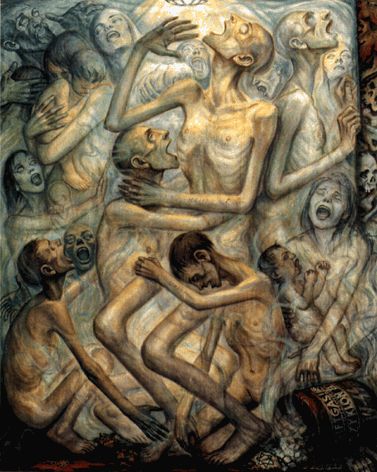
The Genocide of the Souls  — The Pitesti Phenomenon (1949-1951)

“However, what has not yet become universal knowledge is the fact that in the Romanian Gulag Archipelago there was an island of absolute horror, such as existed nowhere else in the entire geography of the communist penitentiary system: Pitesti Prison.” – Virgil Ierunca, Pitesti Phenomenon.

Aleksandr Solzhenitsyn, the 1970 Nobel Prize laureate for literature, refers to the Pitesti experiment as the “most terrible act of barbarism in the contemporary world”.

Historian François Furet, member of the French Academy, regards the Pitesti phenomenon as “one of the most terrible experiments in dehumanisation that our epoch has known”.

pitesti5

pitesti4

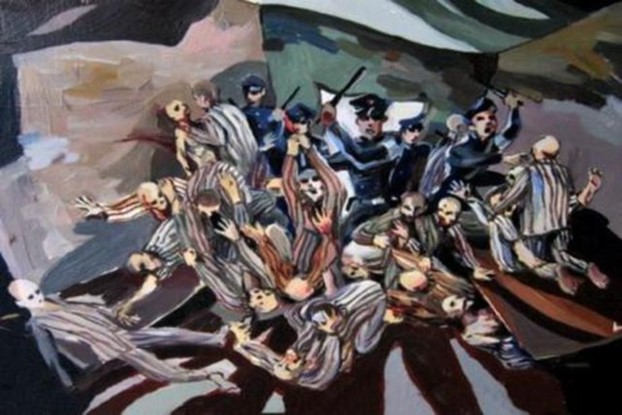
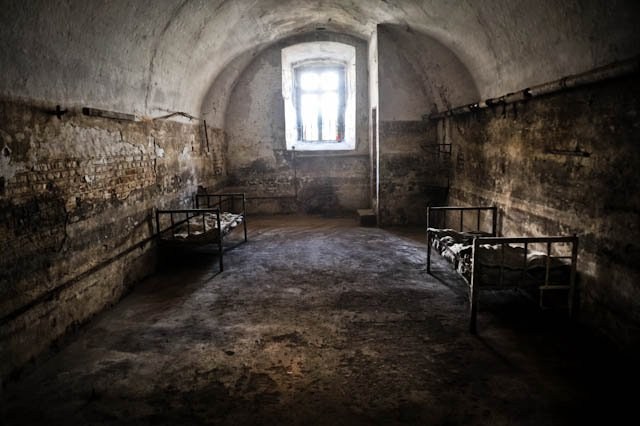
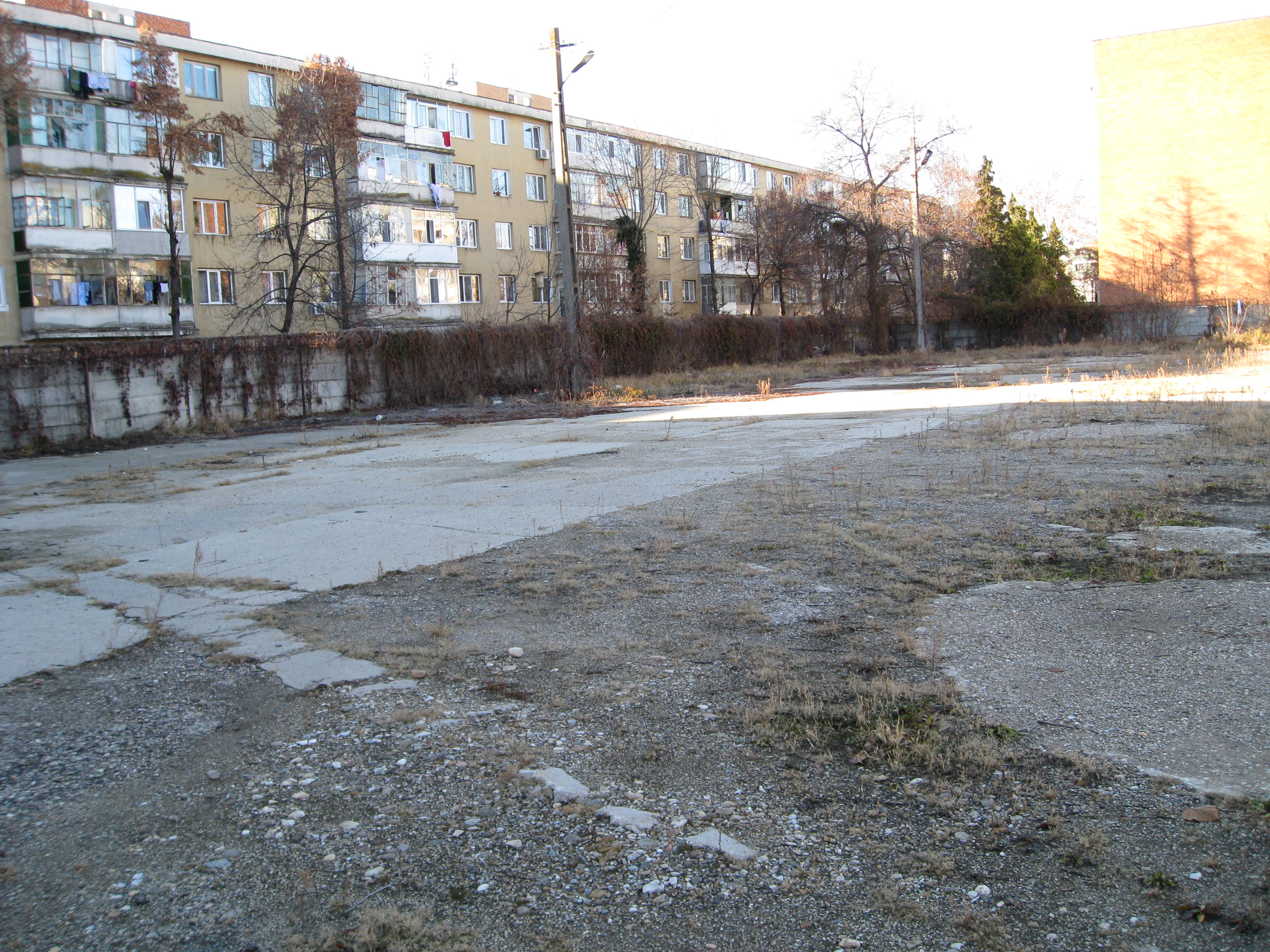
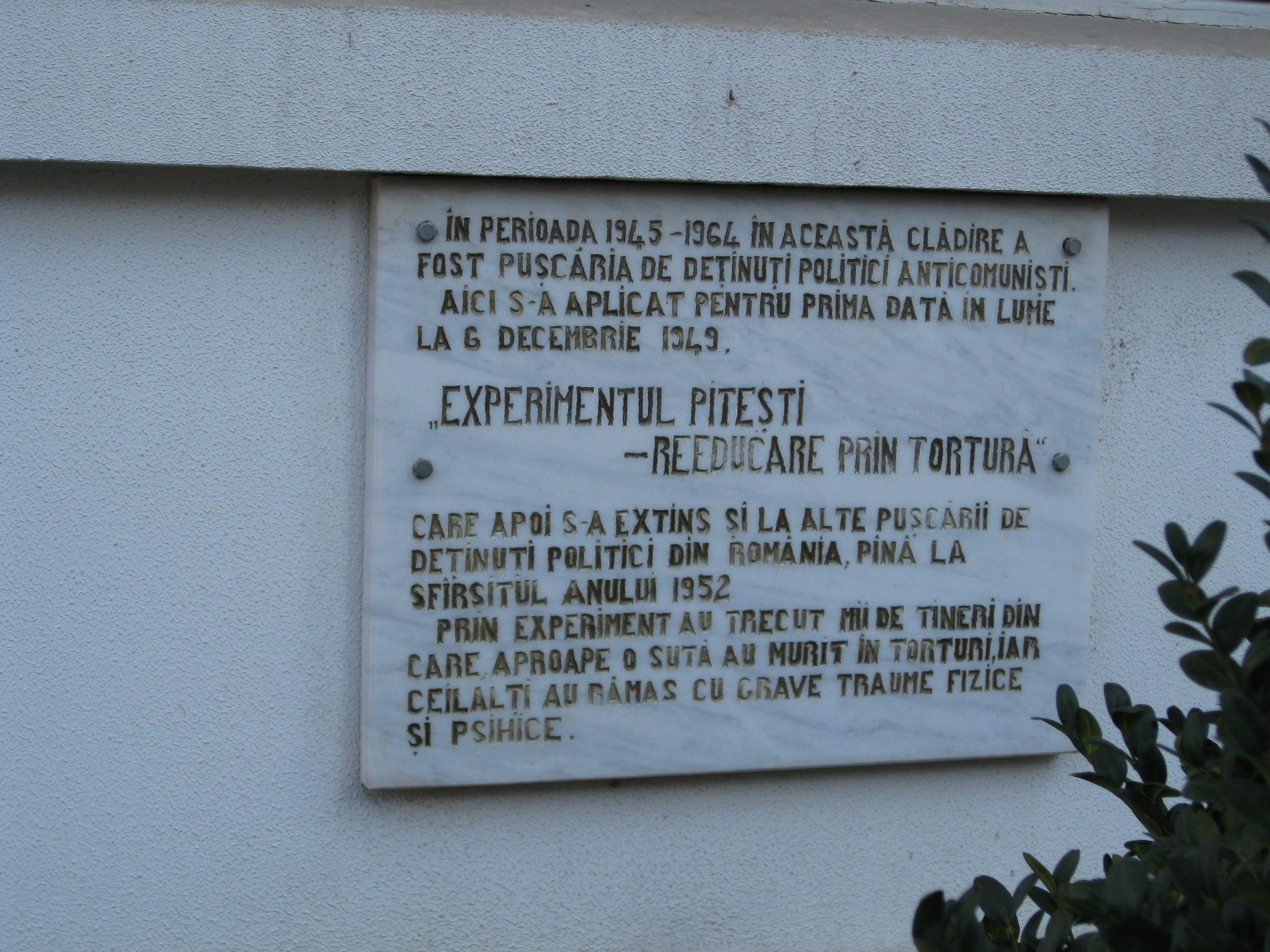
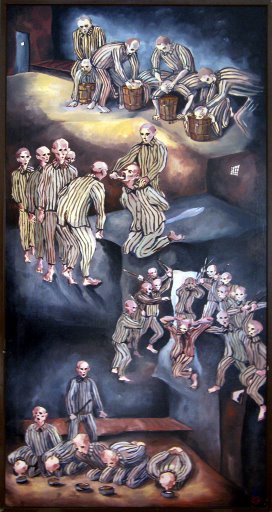
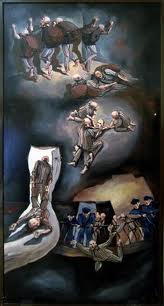
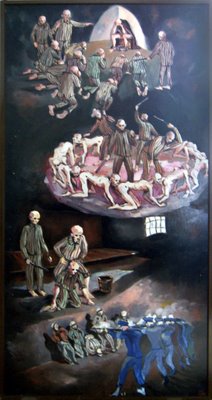
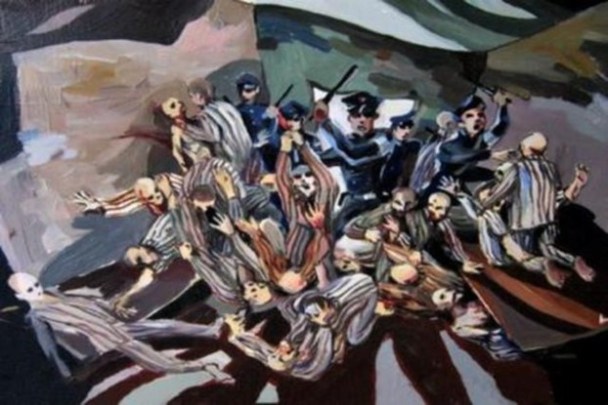
Between 1949 and 1951, the destruction of society”s elite was almost complete: intellectuals, diplomats, priests, officers, magistrates, policemen, and politicians of the “bourgeois-landowner regime” were in prison; the most industrious peasants had been deported to forced labour camps. Collectively and individually, they were all labelled “enemies of the people”. It now remained to annihilate the unpredictable social force of youth. For the latter, the Pitesti experiment was invented (termed “re-education” by the Securitate). The most barbarous methods of psychological torture were applied to “recalcitrant” young prisoners, with the object of making them reciprocally humiliate each other, physically abuse each other and mentally torture each other. Victims were transformed into executioners; prisoners were tortured by their own friends, by their fellows in suffering. The purpose: “re-education” through physical and psychical destruction, the transformation of young people into atheists, into informers on their friends.

For more information, watch an excellent documentary: BEYOND TORTURE — The gulag of Pitesti ROMANIA at https://www.youtube.com/watch?v=9QGUTBXgz3g

pitesti8

“When you said, ‘I still believe in God,’ in five minutes you were full of blood”. – Roman Braga

“Many of us died, many of us became mad, but in some of us the good triumphed”. – George Calciu

These chilling words from two survivors of a brainwashing prison in Pitesti, Romania are sad reminders of the legacy of Stalinist communism. Beyond Torture: The Gulag of Pitesti, Romania documents the persecution of Romanians under the communist regime. Electrical shock, hallucinogenic drugs, near starvation and fatal beatings were daily rituals in the prison of Pitesti, Romania. But this sadistic story goes beyond torture: this was an attempt to totally destroy a people’s culture and faith.

pitesti3

pitesti6

In 1949, Stalinist Soviets began a systematic sweep of Romanian college campuses. Their purpose was to imprison and transform young Romanians into a communistic way of thinking. One prisoner describes this re-education as the most vile tortures imaginable. Orthodox priest Father George Calcui says, “They tried to destroy our souls.”  But he and others survived this gulag, lived to tell their stories and even forgave their captors.

pitesti prison 1

pitesti_prison 2

In this documentary, you’ll meet three survivors from the prison of Pitesti and see shocking paintings that capture the essence of the extreme torture. This documentary also includes an in-depth one-hour interview with Father Roman Braga: prison survivor and spiritual leader. Don’t expect a typical tale of woe. What comes through from the priests being interviewed — most especially Fr. Roman Braga, now in America — is a surprising theme: forgiveness…and even joy.

Outside of Romania, this DVD is the first major historical documentation of the Pitesti experience.

Pitesti_prison_plaque

Pitesti_prison_yard

Also, go to http://www.thegenocideofthesouls.org/public/english/the-pitesti-experiment/

To http://www.mtholyoke.edu/~cama20z/classweb/worldpolitics/thepitestiphenomenon/experience.html

And to http://www.johnsanidopoulos.com/2012/06/documentary-on-romanian-gulag-of.html