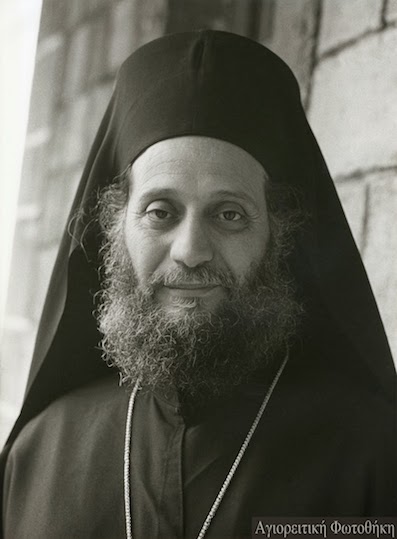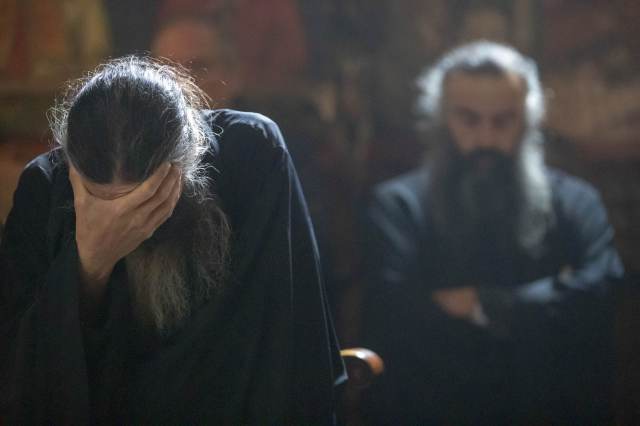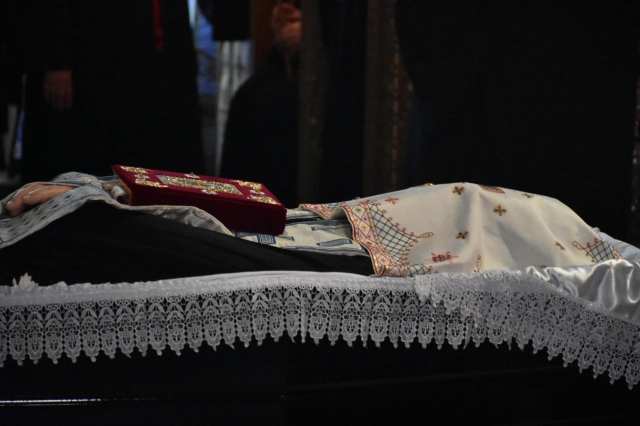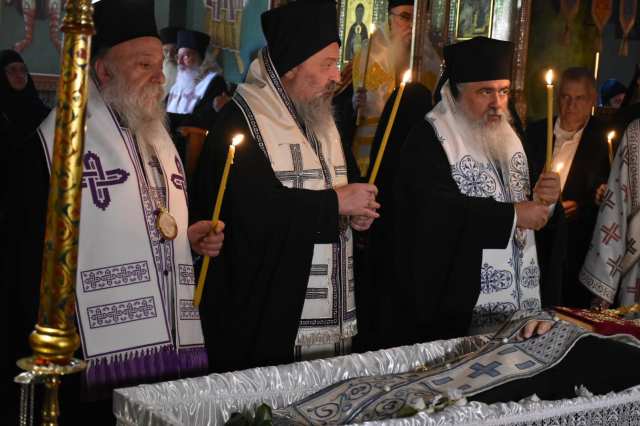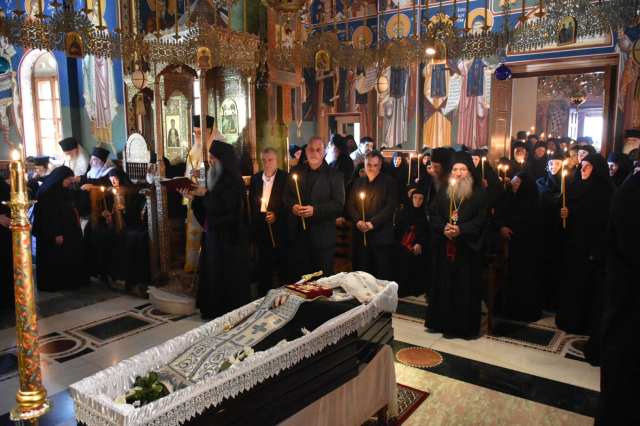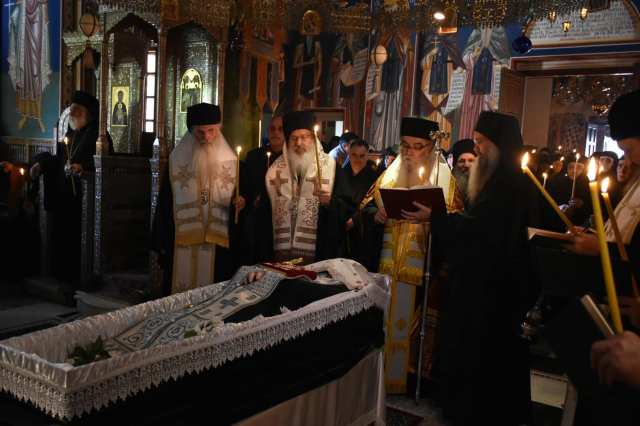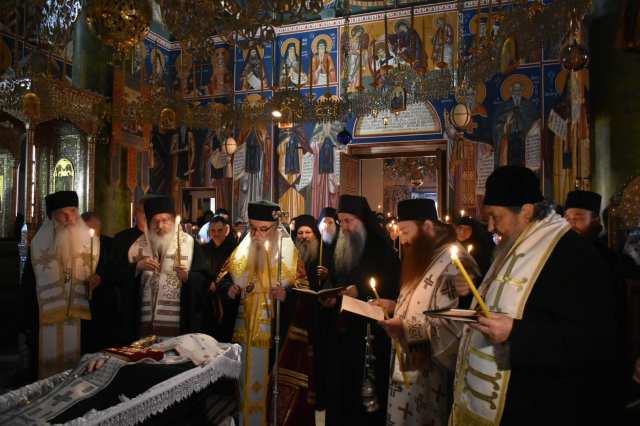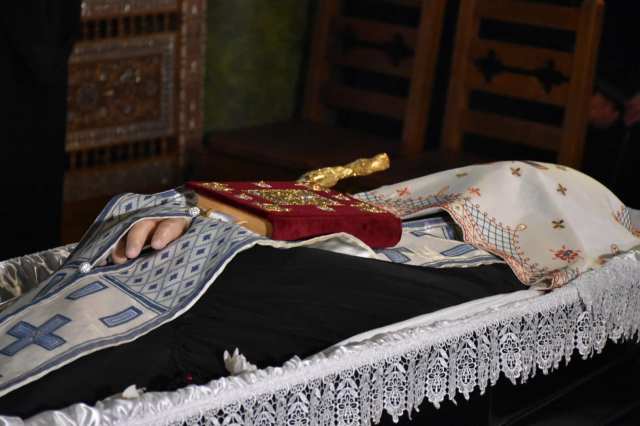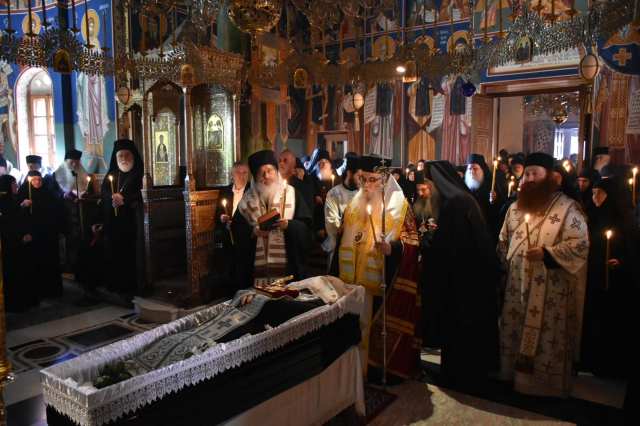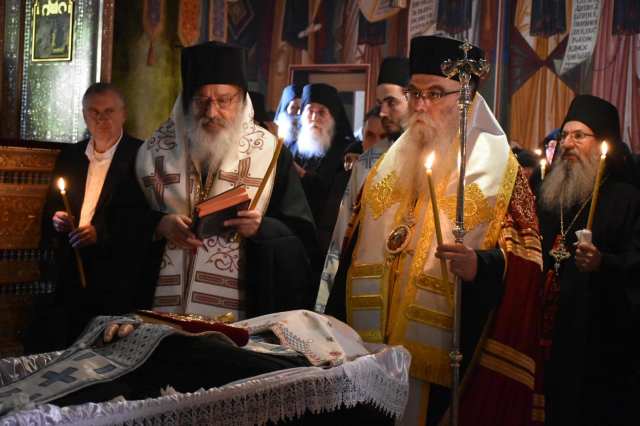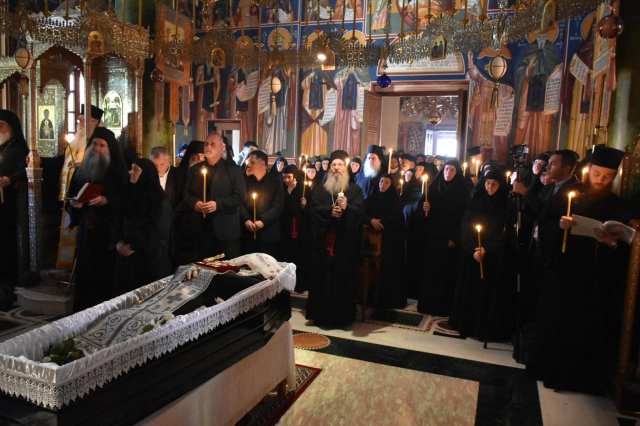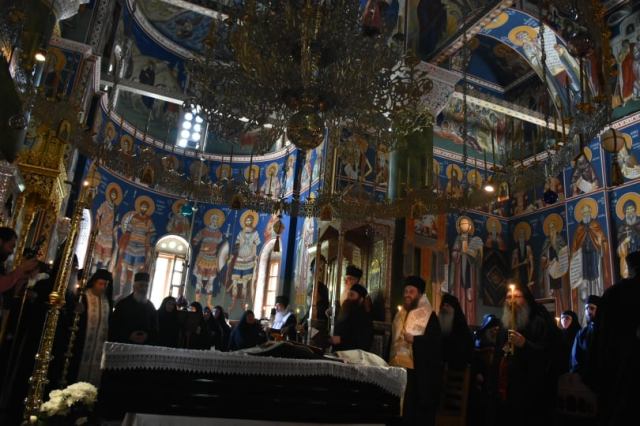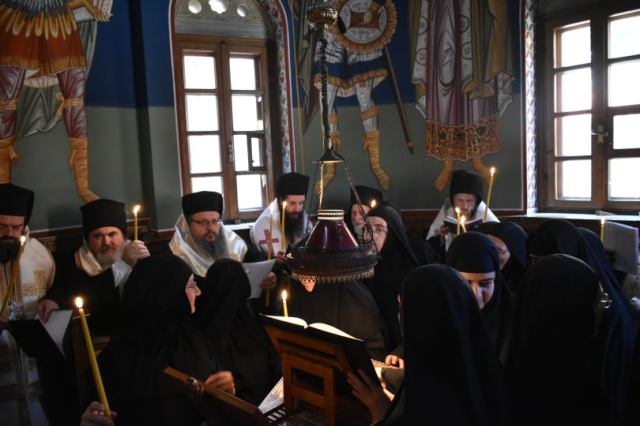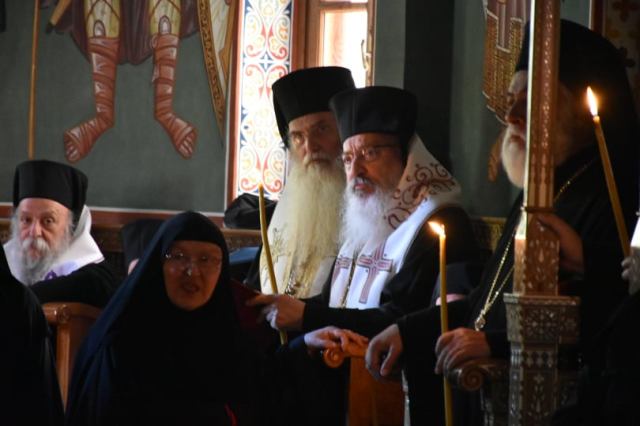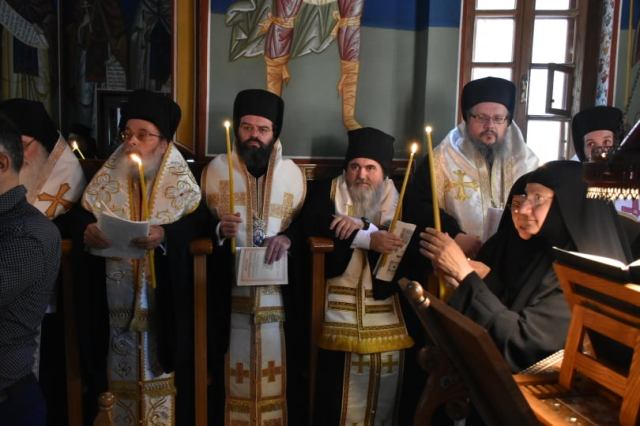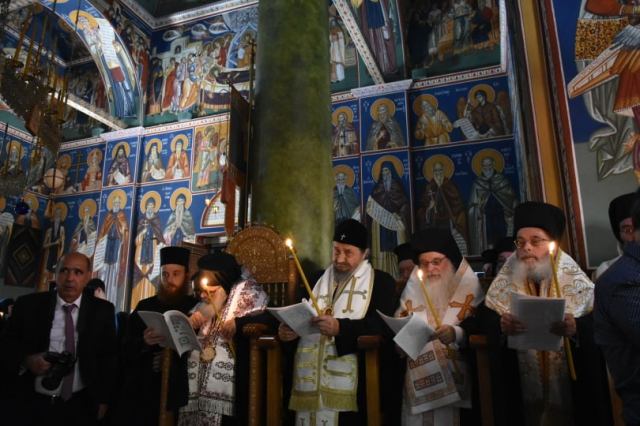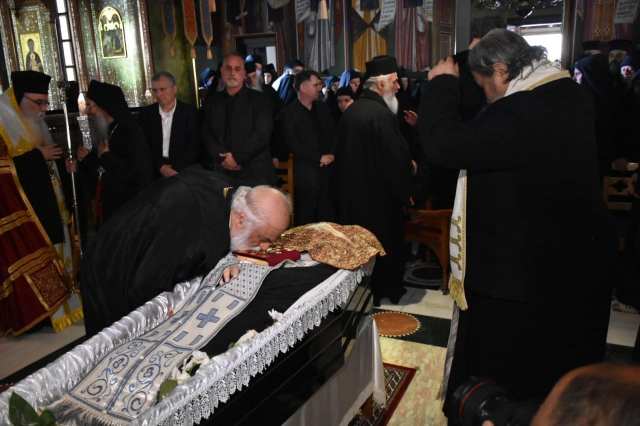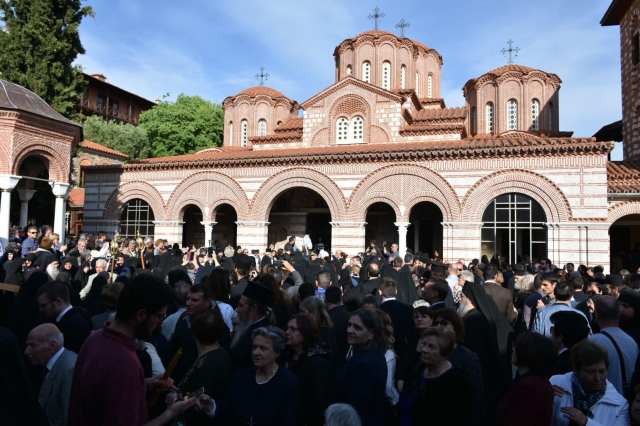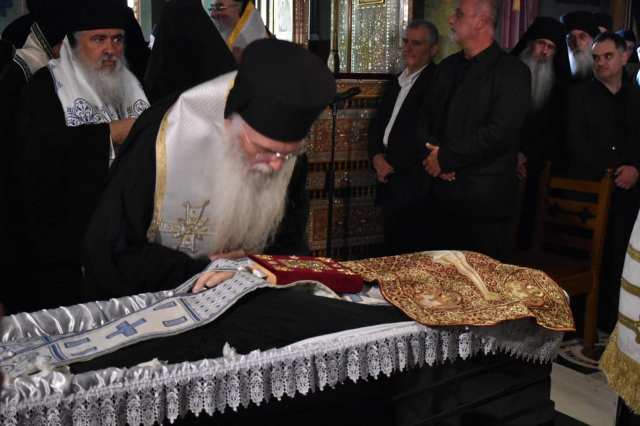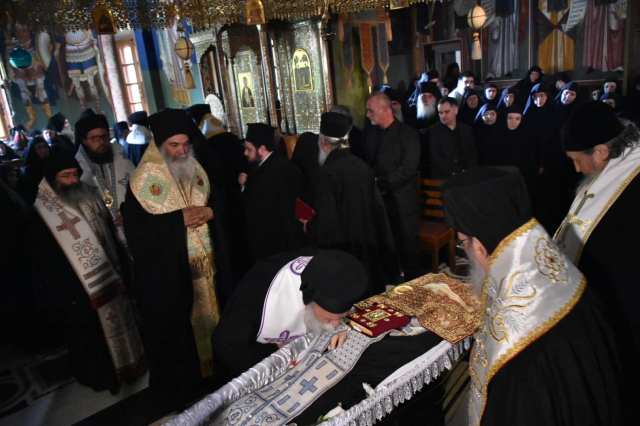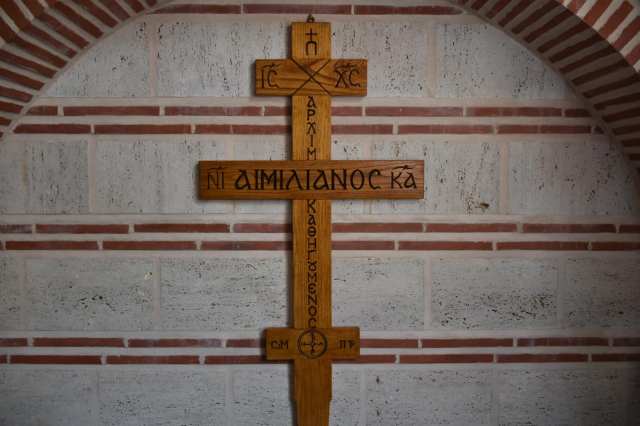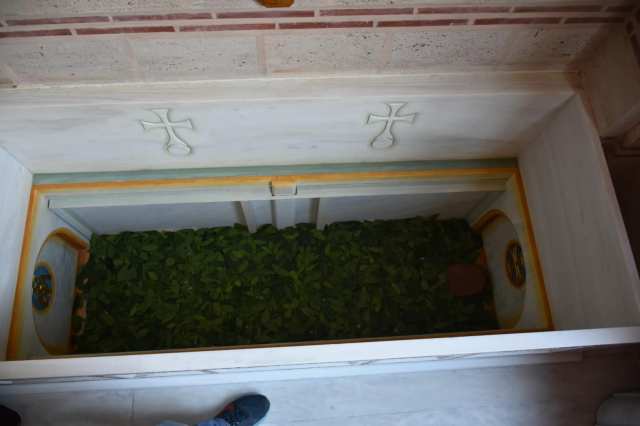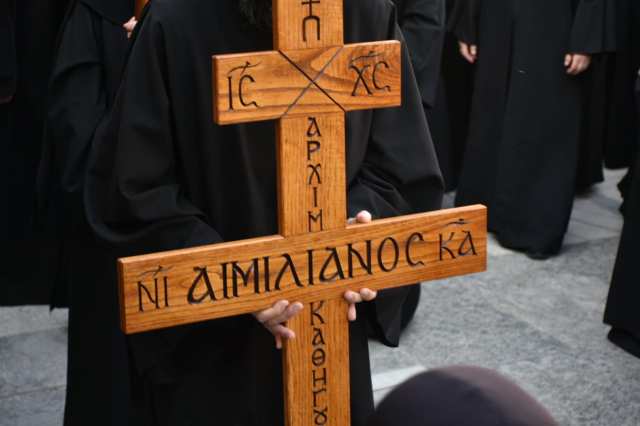
Elder Aimilianos Simonopetritis Has Departed This Life

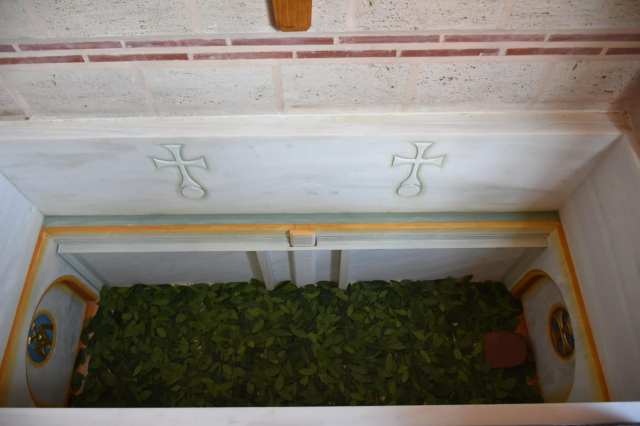
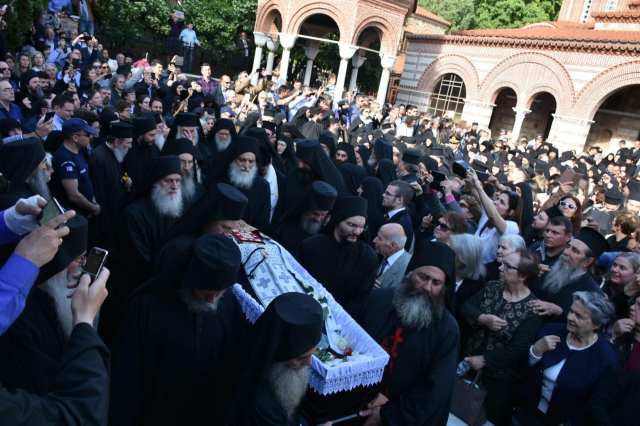
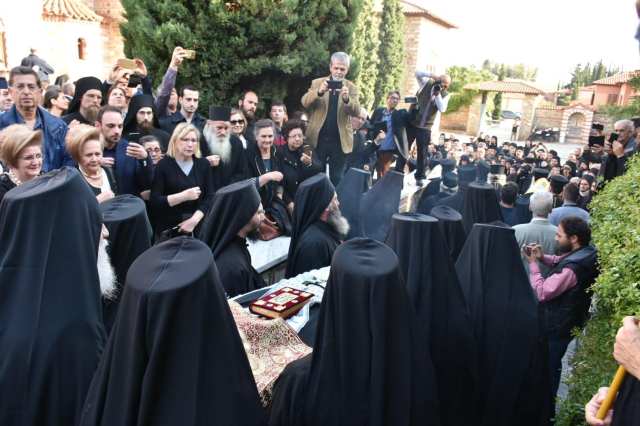
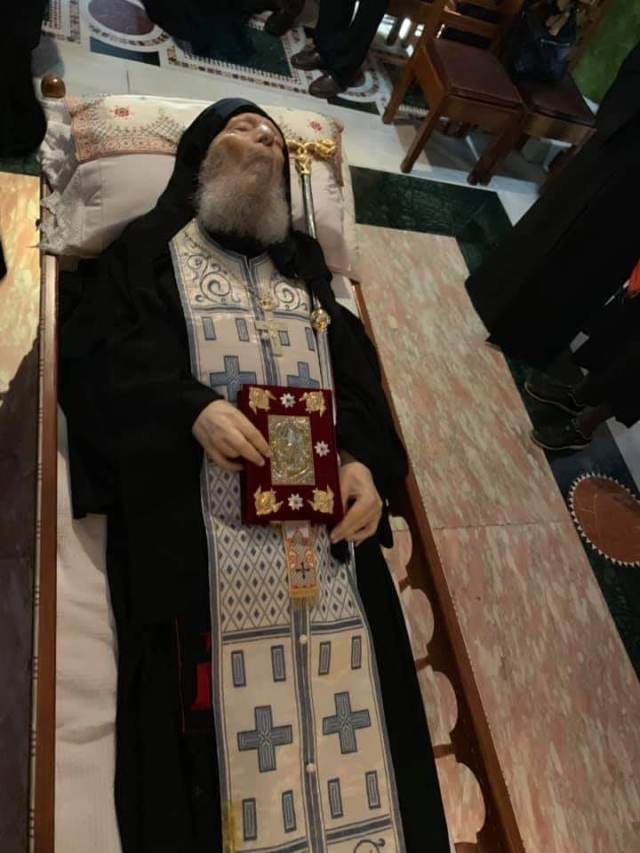
Gerondas Aimilianos

Newly reposed Elder Aimilianos, 23 years of illness. Memory Eternal! Such a special spiritual father! I have known him through his books, homilies and my friends’ testimonies, how he intervened and changed their lives.

aimilianosA

You have made known to me the ways of life; you will fill me with joy with your countenance (Ps. 15, 11)

*

*As for the little city hermit, he has disappeared because he has to undertake a Mission Impossible at his Spiritual Father’s word. Prayers are requested since it does feel like a Mission Impossible.

The Cross and Joy of Motherhood

Theotokos

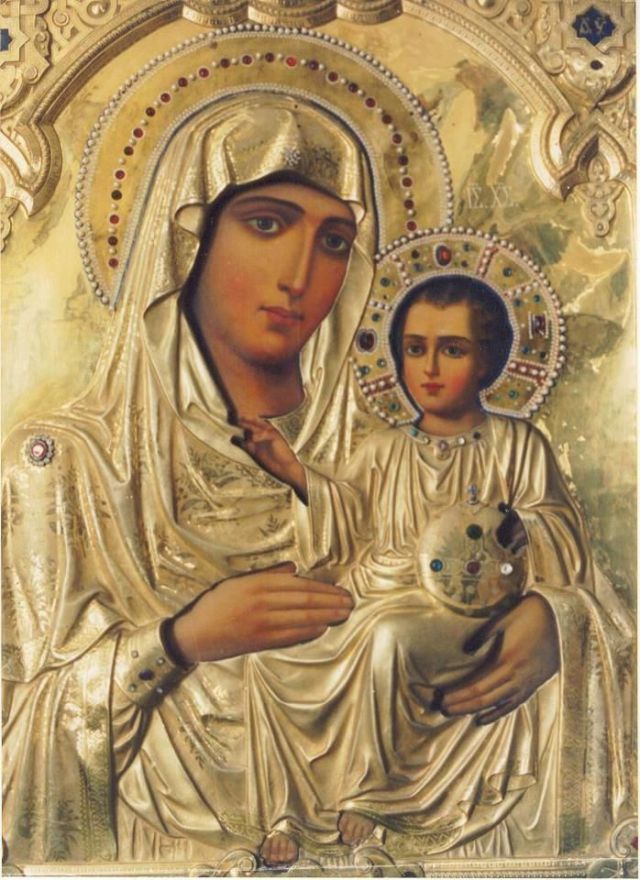
As we journey along the hard yet joyous road of motherhood, the most holy Theo­tokos accompanies each of us, mothers, and inspires us. As mothers, we have been granted the very special gift of ex­periencing in a very small and imperfect measure the feelings that the Mother of God must have gone through and still do as the Mother of us all.

When we read and pray the words of Saint Luke’s Gospel “And behold you will conceive in your womb and bring forth a Son and shall call His name Jesus. He will  be great and will be called the Son of the Highest.” We cannot but share the feeling of wonder and awe of the Theotokos, as she replies “How can this be…?”

Every mother has experienced a shadow of this wonder when she dis­covered or was announced that she car­ries a child in her womb. The mystery of conception is so great that it is with awe we must receive the gift of life within us.  At times, the amazing joy is shadowed by practical considerations and anxieties, just as the Mother of God felt “troubled” since the time and circumstances did not seem propitious in human terms. Ulti­mately, any worries about material con­siderations are subdued by the unspeakable joy of motherhood.

The baby’s first cry, so dear and yet so painful upon the first breath of life marks in some way the pain of separa­tion. After the pangs of labour, the joy of a mother at seeing her baby for the first time also contains a grain of sadness, what was perfect oneness is now two per­sons, mother and child. From that mo­ment onwards, motherhood becomes an exercise of dying to oneself a little each day in order to give more. A mother gives up her own will and desires in order to minister to the needs of her child. Just as Mary follows her Son all the way to the Cross to “minister to him” and has her heart pierced, so does every Christian mother, called to bear the sufferings and to partake in the joys of their child.

Every step towards the independence of a child brings great joy to a mother’s heart. Can we ever forget our child’s baptism and first Holy Communion, their first word or first step, the emotion of the first day at school? And yet with each new step they take towards independence, they need us and want us a little less. The wisdom of love teaches us that letting go is a part of motherhood’s daily cross. We have to view our children as a gift and ourselves as the custodians of these spe­cial gifts, always remembering that all comes from God and belongs to Him. In this light, we can better understand the words of the Gospel: “he who loves son or daughter more than Me, is not worthy of Me” Matthew10:37.

Through all our anxious moment when our children are ill, sad or appear lost, we must remember, that these feel­ings are only a drop in the ocean com­pared to what the Mother of God must have felt caring and protecting the Son of God Himself. Similarly, what must She have felt when she discovered her Son missing while journeying away from Jer­usalem! When she finds Him, just like any mother, she is both relieved and per­turbed saying “Son, why have you done this to us? Your father and I have sought you anxiously?”

“She will be saved in childbearing, if they continue in faith, love, and holiness, with self­control” Timothy 1:15. Mother­hood lived in Christ is indeed a way to holiness and sanctification. As our chil­dren grow, we must diminish in their life, to allow for their own ministry to flour­ish. All four Gospels depict the Mother of Christ standing and watching by Cross as the apostles and Jesus’ followers have run away in fright. We stand with Mary and the Galilean women at the foot of the Cross, bearing our own children’s small crosses and sharing in the suffering of The Most Holy Mother of all.

By Mary and Martha

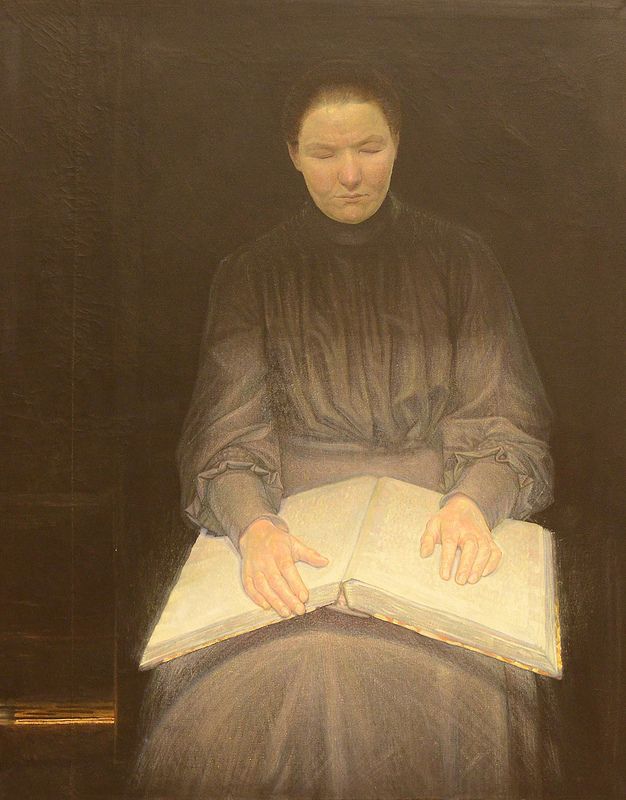
The Blind Aspassia

blind girl reading

The story of an everyday Saint in my hometown!

In a small town in northern Greece, there lived a blind girl named Aspasia. She was orphaned, very poor and abandoned by all. That’s why she grew up without being able to learn letters.

She was about 18-20 years old when a preacher of the metropolitan area passed by and saw her, took her with him and put her in the School for the Blind in Thessaloniki, so she learned reading through the blind system. Then, after learning to read braille well, the New Testament, written in the same scripture, was given to her in braille.

So the girl started reading it by touching it with her fingers. And as she studied it, she both learned what Christ was and what He did for her personally as well as for the whole world. And as she learned, she was so peaceful and so moved. The pain of so much tormenting years passed, softened through the study of the New Testament. And not only this, but filled with joy and peace. Flooded by happiness. “I found the joy” she said. “Now the eyes of my soul opened! And if the eyes of the body are missing, I do not mind. With the eyes of the soul I can see the whole world. ” She saw the light of God in every Divine Liturgy. (We who are “open-minded” are seeing this Light?).

But once she suffered a terrible skin disease that even touched her hands, which were “burned”, so she lost the touch of her fingers. She could no longer read the Holy Bible nor any other sacred book.

Her sorrow and her pain was indescribable. She was crying day and night. She had lost the ability to take power and joy through the Holy Book. But she had a prayer left. Because when she was in Thessaloniki, at the Blind School, a monk from Mount Athos taught her how to say “Lord Jesus Christ, have mercy on me”. So she did a lot of prayer for Jesus Christ to give a good solution. And God answered.

One day she gladly took the Holy Book, the New Testament, and brought it to her mouth, to kiss the letters, which these letters convey to us the wisdom of God, redemption and salvation. And then she discovered something strange: She understood she could read the letters with her lips! And her life was replenished by joy, which was again given to her by the study of the word of God. And through this paradoxical study, praise came, thanksgiving came, the living prayer came.

She was studying and then praying with tears for those who had the same problems with physical disabilities and diseases, and especially prayer for those who were blind of the soul from sin. Through her prayer she saw the throne of God and begged Him and prayed to Him for the poor, the orphans, the unemployed, the homeless, for all the sick. For the good and bad, for the good and the wicked, for the righteous and the unjust, but also for those who continue to offend the world … for the lords and the beginners. All of them are enlightened and all of them can see the true Light, Christ, the Savior of the world!

One day she got sick. She confessed for the last time and communed the Holy Mysteries. And she asked for the New Testament, said to open it to her lips.

Aspasia stretched out her hands and held it firmly, but she died. Her relatives, according to divine providence, opened it to the first chapter of John the Evangelist. And constantly repeating the words “In the beginning was the Word, and the Word was with the God”, she raised her little soul high in the sky, while at the same time flooded her room with an unspoken sweet fragrance.

She is a silent saint!

Source: PROTOPRESVYTEROS STEFANOU K. ANAGNOSTOPOULOU. Piraeus 2011.
PUBLICATION OF ISICHASTIRIO “TO GENETHLIO TIS THEOTOKOU”, SERGOULA DORIDOS 2011

Find Yourself and Find Your Own Way to Serve God

convent fathers.jpg

Words By Convent Fathers


By Fr. Sergius Nezhbort

Sometimes we have to embrace the reality and accept the circumstances of our lives as they are. It doesn’t mean that we have done something wrong. Most likely, we simply have to go through that period in life. You’ve got to spend it with dignity. You must not step back, be scared and run away. You must remain with God. (Sermon after the Divine Liturgy on January 20, 2019)
By Fr. Sergius Faley

As soon as you’ve caught yourself doing something wrong, and you feel that your conscience rebukes you for it, you should repent immediately. You’ll be lucky if you repent before you get to the analogion with the crucifix and the Gospel on it. […]

By Fr.  Alexander Pashkovsky

As soon as a person feels offended, he or she is exposed to the power of pride and therefore is left without God’s shield. That is when it is great to bring your sins to memory and to rebuke yourself. (Sermon after the Divine Liturgy on January 9, 2019)


By Fr. George Glinsky

“We must witness with our life because when we face ordeals, then we shall be able to show ourselves as preachers of the truth of Christ more fully. All extreme situations, let alone persecutions for the faith of Christ, will purify us before God’s face and show who we are and to which extent we are ready to speak about Christ, about God who opens the Heavenly Kingdom for everybody, about God who is Love.” (Sermon after the Divine Liturgy on January 16, 2019)

“The trials that we go through are not only sent to us personally but also to all who are tied to us with invisible bounds of love. I’m talking about the Church of Christ. […]


By Fr. Valery Zakharov


God always treats us the same: with love. His love may be sorrowful or buoyant but it’s love nevertheless. (Sermon before a Confession in the Boarding Home for Children with Special Needs on January 11, 2019)

More words at The Catalog of Good Deeds

Prayer for Difficult Times

eclipse

By Elder Sophrony of Essex

‘In difficult times, when all my efforts have failed to conform the events of my life towards the Gospel teaching, I would pray in the following manner:
“Come and make Yourself one with my will. Your commandments do not fit within my narrow heart, and my finite nous does not comprehend their content. If You are not well pleased to come and dwell within me Yourself, then I will inevitably be led towards the darkness. I know that You do not work through force, so I entreat You: Come and take charge of my house, and wholly renew me. Transform the hellish darkness of my pride into Your humble love. Transfigure with Your Light my corrupted nature, that no passion might be able to remain within me that would prevent Your coming with Your Father (John 14:21-23). Make me a dwelling place of that holy life which You Yourself have allowed me to taste of here in part…Yes, O Lord, I entreat You, do not deprive from me this sign of Your goodness.” ‘

*
Elder Sophronios’ prayer is so ‘Palamite’ ( +St. Gregory Palamas, Archbishop of Thessalonika the Wonderworker)

 “The first two years in his monastic habit, he spent with fasting, vigil, concentration of the mind and unceasing prayer. In his prayers he always evoke as intercessor the Mother of God and in every occasion he would ask for Her help. Once, when he was still and wholly surrendered to the thought of God, he saw in front of him a very venerable elder (St. John the Theologian). Turning at him with a gentle look, the elder said: ”I came my child, sent by the Most Holy and Queen of all to ask you, why every hour, day and night, you cry to God ‘…enlighten my darkness, enlighten my darkness …?” In reply, Gregory said: ”And what else shall I ask, me who am full of passion and sin, but to be shown mercy and be enlighten to see and do the Will of God?” Then the Evangelist told him: ”The Mistress of all – through me, her servant – commands that I should be your helper.” Then Gregory asked him: ”When will the mother of my Lord help me, now or after death?” ”Now and at the future life”, said the Theologian and disappeared, filling the heart of Gregory with unspeakable joy in regard to the promises of the mother of God.”

 The life of Saint Gregory Palamas Archbishop of Thessalonika the Wonderworker by Philotheos, Patriarch of Constantinople


Concerning the Last Judgement

Tending the Garden …

PHOTO-2019-03-04-21-59-14PHOTO-2019-03-04-21-59-19_1

… Of our Hearts

Reflections by two spiritual sisters who started gardening this summer and dedicated their allotments to Sts. Hilda and Melangell

PHOTO-2019-03-04-21-59-19_2PHOTO-2019-03-04-21-59-19


In every fruitful garden, there is a collab­oration between the Creator, Maker of all seeds, plants, soils and the gardener who has a specific role.  Genesis  2:15; “Then the Lord God took the man He formed and put him in the garden to tend and keep it”. Whether the gardener has the wisdom and awareness to understand or not, every little happening in his garden is the fruit of this blessed cooperation, in which all aspects are mystically interconnected giving life and purpose to each other.

Together, we have embarked on vari­ous gardening projects, and as we have learnt about the life of plants, through re­flection on many wonders and failures in nature, a clear parallel emerged between the life of a garden and spiritual life. Be­low, are just a few fruits born from these conversations.

The soil

The journey of growth begins in winter, with the preparation of the soil, which needs to be “made ready” to receive the seed, just as our souls need to be made ready to receive the Lord by weeding out, digging and enriching. It is a most sober­ing reflection that if you weed a patch of land with the greatest care and dig it over making it thus perfect for planting, but delay planting, the land will become overgrown with weeds in the blink of an eye. Similarly, if you ready yourself for the Lord by uprooting all your passions and destroying all evil propensities (if such a thing were possible), but delay in placing Christ therein, in planting the seed of the Holy Spirit, your soil will only become fertile ground for new, over­ grown passions. Secondly, as soon as you stop tending and watering your heavenly garden, it will begin to wither, giving space to weeds. Therefore, it is necessary to watch over the garden of our hearts carefully and to cultivate the good seed of virtue, letting it multiply on the prepared soil.
It is also a matter of wonder that the soil is enriched by adding into it decayed matter, like rotten leaves, discarded cut­ tings, manure. All things dead and rejec­ ted transform into nourishment for the soil. May we find the wisdom and know­ ledge to transform all of our rejected, failed plans and endeavours into a matter which will enrich the soil of our hearts. This reminds me of the first lesson in Physics and its heading: Matter does not appear nor disappear, it only transforms –as Christians we are called to transform by the Holy Spirit. Romans 12:3; “Be transformed by the renewing of your mind”.


The wonder of the seed


Germination is without a doubt the most wondrous stage (and my favourite) in gardening. It is similar to the birth of a child. From an infinitesimal seed, life bursts forth. The miracle of Creation is encompassed in the Parable of the mus­tard seed “which indeed is the least of all seeds: but when it is grown, it is the greatest among herbs” (Matthew 13:31­32). We can only marvel at the fact that every tree was once a tiny seed, which you can hold between two fingers. Every germination is a small miracle because life itself is encased in a tiny, inconspicuous looking ball or speck, in this sense the Lord has made us par­takers and co­-creators of Creation.

If we look at our own lives, we can sometimes pinpoint the moment of germination. The seed of faith was planted in us at different times and in ways spe­cific to each of us: by a friend, a parent, a book or an experience. But often, it lies dormant in the soil of our being, until all elements are right for germination: tem­perature, light, humidity. And then, sud­denly, the tree of faith bursts forth out of the tiny seed. It is sadly too true that some seeds never germinate, but there is always hope. Take the case of the Mathu­ selah palm tree. During an archaeological excavation of a fortress in Masada, some seeds were found. After spending some years in a researcher’s drawer, one of the 2000-year-old seeds of a palm tree was germinated in 2005. This species of palm tree had been extinct in the area for hun­ dreds of years. Life had slept inside the tiny seed for 2000 years! The tree is now over 3 metres tall and produces dates.

Like all new life, germination holds the promise of beauty and perfection. Every time a new plant emerges from the soil, you can picture in your mind’s eye the beauty of its maturity.


The battle for growth


The stage of growth or the journey from newborn to maturity is the hardest part of gardening. It requires immense energy of the gardener to combat all threats to the plant (pests, disease,  competition  from weeds), to water, feed and protect

It is a matter of relentless watchful­ ness. It demands patience (in short sup­ ply in our garden) to watch the plant grow and also wisdom and faith in equal measure. The wisdom to accept the loss of plants to disease and pests, but the faith to carry on tending to the few little plants left. We see thus that gardening is a spiritual school. How many seeds of the Spirit have germinated in our souls only to die, prey to our bad habits, laziness or forgetfulness? Accepting the loss, rather than mourning over it, going to confes­sion and starting germination afresh in faith is an essential lesson for spiritual growth.

Some gardening techniques, which strengthen the plants and give them a better chance to survive are startlingly useful in our spiritual life. It all starts with grading, which involves discarding the seedlings which appear weak or dis­ eased and only leaving the strong,  healthy ones. We sometimes need to choose the best seedlings in our lives, and when they are old enough, we sometimes need to pinch the ends out. This pain in­ inflicted on young plants makes them grow stronger, with healthier roots, so that when the time comes to bring them out­ side into the cold and the wind, they can survive and reach maturity.


Bearing fruit


Finally, most people’s favourite part is when the crop is ready – the fruit of God’s labour through us. We can feast on the fruit of love and patience, gift it to others and give thanks to the Lord for the completion of our endeavours.


By Mary and Martha of gardening

How to Make a Good Confession

sacramentconfession

A parish retreat (homily & QA session) entitled “Orthodox Spirituality” by. Alexey Young (now Hieroschemamonk Ambrose) (video transcript). Fr. Alexey was a spiritual child of Fr. Seraphim Rose,

We often wonder how often we should go to confession. The answer is simple—whenever you have a serious sin on your conscience. Examine your conscience and beg God to show you’re your faults; if you don’t know who you are then you don’t know what Christ came to save you from. This can be a difficult process, but a necessary one. Such study reveals our self-love by which we blind and deceive ourselves.

Our sins offend the Almighty God. He wants to forgive us and share His mercy. We must be satisfied not just with avoiding serious sins, but even the smallest, in an ongoing striving for holiness. Our sins cause ourselves and others unhappiness—why would we want this?!

St. John of Kronstadt says that if you live just one day in obedience to all the commandments then you’ll have a foretaste of Heaven. Once we know and detest our faults we can begin to replace them with virtues, but know that this won’t happen all at once. Be the simple, difficult, weak creature that you are, and start small—to try to stop sinning all at once is actually a manifestation of pride. Start with the baby milk of spiritual struggle before moving on to the strong wine.

How should we examine our conscience? You should do this daily, taking time at night to reflect. You can use the Ten Commandments, the Beatitudes, and so on, as a guide. My spiritual father, Fr. Seraphim Rose, taught me to consider: How have I sinned against God? against my neighbor? and against myself?

Through examining our conscience we begin to discover what is our predominant passion(s)—that sin we fall into most frequently, which tries to master us. This can be the love of ease, love of power, complaining, judgmentalism, and so on. One of the worst things that can happen to us if when someone asks our advice, so we give “learned advice,” but in the end they don’t follow it and we get very upset.

To overcome vice we must practice the opposing virtue. The Ladder of Divine Ascent is a great help in this regard. St. John Climacus analyzed each virtue and vice as a master of psychology, seeing cause-effect relationships in a theocentric framework. Identify your predominant vice, locate its opposite virtue and begin to cultivate it. Simply avoiding vice won’t work because then the passion will simply be replaced with other passions. If we do this we will see that the spiritual life works! We don’t like anyone to point out our faults, but in actuality we need our spiritual father to do this.

We each have our predominant virtue too. Studying and practicing this tends to draw the other virtues along with it. We can overcome vice by practicing the presence of God, by beginning to develop an awareness that at all times we are in the presence of God and He observes us. The icon corner serves this purpose. It is a two-way window to Heaven. Before doing or saying anything, think to yourself: “Would I do this in Church in front of the altar?” If the answer is “no” then don’t do it. Church is the place par excellence where we come into God’s presence and receive Him.

The Theotokos practiced the presence of God more perfectly than anyone else. Her virtues grew and she thus had a powerful influence on other people. People were made better by her mere presence.

The predominant passion is pride; it is the mother of all sins. Its opposite is humility. No soul can have any holiness without some humility, and yet pride will lurk in our darkest recesses our whole life. Adam and Eve fell because they listened to the serpent and thought that they knew better than God. This is pride, and now most of us follow two masters—a little pride and a little humility. Pride is the love of self, the beginning of all sin, and the neglect of the fact that we depend on God for everything.

What separates us from death is so little. Our lives are very fragile, and pride places us in opposition to God because by it we work only for our own glory.

Pride places false regard on the opinion of others, and of ourselves, when the what you think matters more than what God thinks. It is also manifested as desiring a good reputation—to be thought well of, to be honored—and this is a great temptation for priests, with people looking for the latest guide or guru. A priest must do everything to remain humble about what people say. Actually, criticism against a priest is a blessing to keep him humble, which is in turn good for the whole parish. Pride is also seen in being overbearing towards others, insulting or critiquing others, being argumentative, and getting angry easily.

The Holy Fathers give us the antidote for going from vice to virtue. The spiritual life is a science, not an art form. Most of us aren’t so spiritually talented so we need laws and cause and effect in order to learn the spiritual life. St. John Climacus says that the antidote for pride is prayer. Identify where the pride is in your life and ask for strength against it. Human effort can do very little. We must realize that everything depends on God. In prayer we make use of God’s grace, and then we can do almost anything—we can move mountains!

Pride can also be turned into humility by acts of humility, and especially by accepting humiliations. If someone criticizes you, even unfairly, if someone insults you or talks about you behind your back, instead of becoming defensive, accept it! This cheerful bearing of small failures on the part of ourselves and others is bearing one another’s burdens (see Gal. 6:2). It is important to bear the misunderstandings of others without complaint or self-justification. All too often we’re prone to excuse ourselves and urge our opinions on others. When we learn to accept the humiliations that come our way then we’re learning to be humble. As pride is the mother of all sins, humility is the mother of all virtues.

 Another serious vice is avarice, which is the opposite of detachment and denunciation. It is the desire for many goods, for power over people, and so on. This passion is combated by cultivating a spirit of generosity. The Lord’s command to give up your coat is quite literal (Mt. 5:40). St. John Maximovitch would often come back practically naked because he had given his clothes away to the poor and starving. St. John of Kronstadt did the same. You don’t have to give away everything, but we should strive to not possess our possessions with our heart. We can have the spirit of poverty even if we aren’t poor—only buying what is absolutely necessary.

There was a German Lutheran pastor named Richard Wurmbrandt who was a prisoner of Romanian and Russian Communists. When asked how he could manage solitary confinement he answered that he had had practice beforehand. He suggested that Americans with much wealth go into a store where they have no intention of buying anything, and every time they see something they like, they should go up to it, look at it, and say “I don’t need this.” Do this repeatedly and you train yourself to be detached from worldly goods. He realized that who he is isn’t dependent on what he owns, whereas most of us really do define ourselves by what we surround ourselves with.

The Desert Fathers had a Psalter and a vigil lamp and that was it, and they were free and belonged to God.

Cultivate generosity and have a spirit of detachment. You can practice this by not using credit cards. We live in a world where it’s possible with a little imagination and a credit card to create an environment straight out of another time, such as colonial America, Tudor England, and so on. Never before was this possible. There’s something very abnormal about it when you think about it. Let’s just live simply and love and care for one another and use our blessings to care for the Church, for the poor, and so on.

We need a spirit of detachment from people too. You can have affections that are not immoral but simply too strong. Don’t define yourself in terms of other people. The spirit of Christian poverty allows for what is genuinely needed, but don’t go out and get something just because someone else has it. Of course detachment doesn’t mean laziness, dirtiness, slovenliness, chaos, carelessness, or anything less than orderly and clean—this is a form of self-love. Christian poverty isn’t stinginess—this is avarice.

Possession can be a passion that spreads even to things not worth keeping. Avarice regrets that you don’t have what others have. Avarice is stinginess. When you give to a beggar it’s for you. It’s not so much for the beggar—if you’re not willing to give that tells you something about yourself. We cannot rest in our diligence—there is always some way there for avarice or pride to creep in. And the antidote to avarice is prayer.

What shall it profit a man if he gain the whole world and suffer the loss of His soul—put this in a frame in your house!

Regarding lust, we are taught that the clean of heart shall ascend the mountain of the Lord and see God, which refers to modesty and chastity according to our state in life, not just big things like fornication and adultery, although Blessed are the pure in heart for they shall see God is specifically about sexual sins. Our culture is awash in a cesspool of immorality and lust, dominating every aspect of our entertainment, commerce, and so on, but Christ encouraged chastity and celibacy amongst His disciples.

Even seemingly “innocent” things need more discipline, such as too much hugging in churches. For instance, monks and nuns don’t hug—they greet one another with a kiss of peace. I never hugged my spiritual father, Fr. Seraphim, but we loved one another. Of course, hugging is not an awful thing, but what I’m talking about is part of a general looseness of our culture, with looseness of dress, especially in Church, and so on. We see women in church in pants, men in shorts, women with uncovered heads—there was a time when this would never have happened.

If we had tea with the Queen we’d wear our absolute best, but we walk into Church with the Almighty God as if we’ve just come from a picnic. We need to rekindle the higher standard. Men shouldn’t wear short sleeves, or shorts, or pants that are too tight, and you don’t need a tie, which St. John called a noose.

You can combat lust by fasting. St. John of Climacus says in his Ladder of Divine Ascent that gluttony is the mother of many sins, particularly lust. If you struggle with lust you can begin fasting with the lessing of your spiritual father, beyond the fasts of the Church even. If you fast you will find that lustful temptations go away.

We need to learn how to guard our eyes. Monastics know not to look all around—keep your eyes on where you’re going. In photos of the saints we see that often they are not looking directly into the camera; they learned to discipline their eyes so that what comes into the soul via the eyes would not harm them. In the evening prayers we ask for forgiveness if we have seen anyone and been wounded thereby in our hearts. We seek to control our minds too, in disciplining the imagination, day-dreaming, curiosity, and so on.

The antidote for lust is prayer. The spiritual life is a constant battle that will end only at our death. We battle not against flesh and blood, but against the fallen angels (see Eph. 6:12). Examine your conscience, identify your predominant virtue and vice and seek the guidance of a spiritual father. The soul is a garden, though often choke with the weeds of the vices. Our task is to learn how to pull out the weeds one-by-one and plant flowers of virtue.

Question: If you’re on the path but still have passions will you see the Kingdom of Heaven?

Answer: We must make sure that we’re really on the path. We often delude ourselves into thinking we’re on the path when we haven’t actually repented. We don’t have to achieve absolute perfection, but we need some victory that shows our heart.

Question: Surely we can’t give to everyone who asks or we’ll go broke.

Answer: We are called to give but we do need to be discerning. Of course we need to keep some money to provide for our families, to give to charitable organizations, and so on.

Question: What is the difference between self-respect and self-love?

Answer: Some have the special grace to stay in and redeem abusive situations, but this is very rare—it’s almost like martyrdom.

We must be very careful about this, as our culture tells us we’re just a little higher than animals, or even less worthy than animals. We see people saving whales but not babies. Until 150 years ago we believed we were a little lower than the angels, and people tend to live up or down to the image they are given of themselves.

We must work with people very carefully to give them self-respect that isn’t pride. Self-respect comes from being made according to the image of God and knowing that He redeemed us. We should not define ourselves by other people.

Question: How can we safeguard ourselves to keep a healthy balance? Is it a sin to decorate your house and things like that?

Answer: We have the responsibility as good stewards to make a pleasing environment, but we should use common sense about how much money we spend. Of course there are those who have lovely homes but are also very generous. Such questions are on a case-by-case basis.

We have to surround ourselves with beauty—that is a Christian virtue.