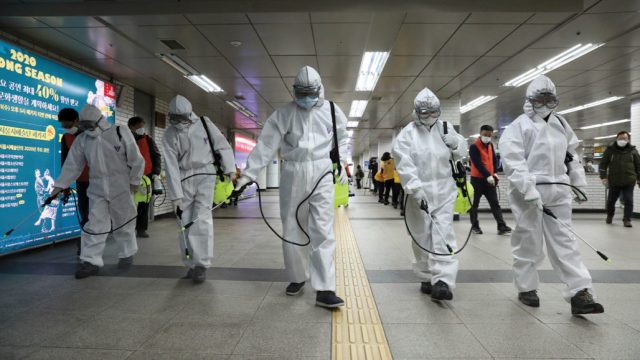
Coronavirus Pandemic Prophecy

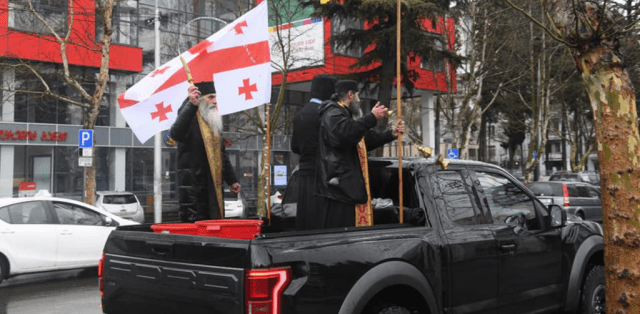
street blessing with Holy Water in Orthodox Georgia

Street blessing with Holy Water in Georgia

Dearest brothers and sisters,

Christ is in our midst!


As all monasteries have closed to the public in Greece and the faithful attend the church services on-line, our spiritual fathers communicate with the faithful primarily via email. Here are Elder Theoklitos’ from Saint Arsenios Monastery in Vatopedi, one of St. Paisios’ closest disciples, last words:

“These days I am reminded of +Elder Gabriel’s [Mount Athos Dionysiou Monastery] prophecy of biological warfare and Revelation in the 1970’s. We visited the monastery then together with another pilgrim, a very well known spiritual father in Greece I do not want to disclose his identity now. While Elder Gabriel was explaining the frescoes in their Trapeza to us, he paused in front of that of the Second Coming, pointed a detail to us and told us: ‘This stands for biological warfare. I will not live to see this, but you will’. These were his exact words. And indeed with the Coronavirus pandemic, this biological warfare has started. 

Now, it is high time to start seriously repenting, stop judging anybody at any cost –a grave sin which separates us from God– forgive and ask for forgiveness from our ‘enemies’, properly confess our sins and be ready to meet Our Lord at any time because no matter what protection we take for ourselves and our loved ones, we cannot really be protected from this, and nobody knows when our time will come, and when the Lord will call us for our trip to eternity. …”

These two points Elder Theoklitos repeated them twice: in both the brief church homily after the Holy Liturgy –which he never does but Fr Synesios always instead– and in the separate homily he offered in the guests’hall at the end of the church services. Probably because not everybody stays for this longer homily, as they are travelling from afar, he made this exception so that everybody would hear this.

Lord have mercy!


To Be Continued …

Conscripted Saints in Coronavirus time

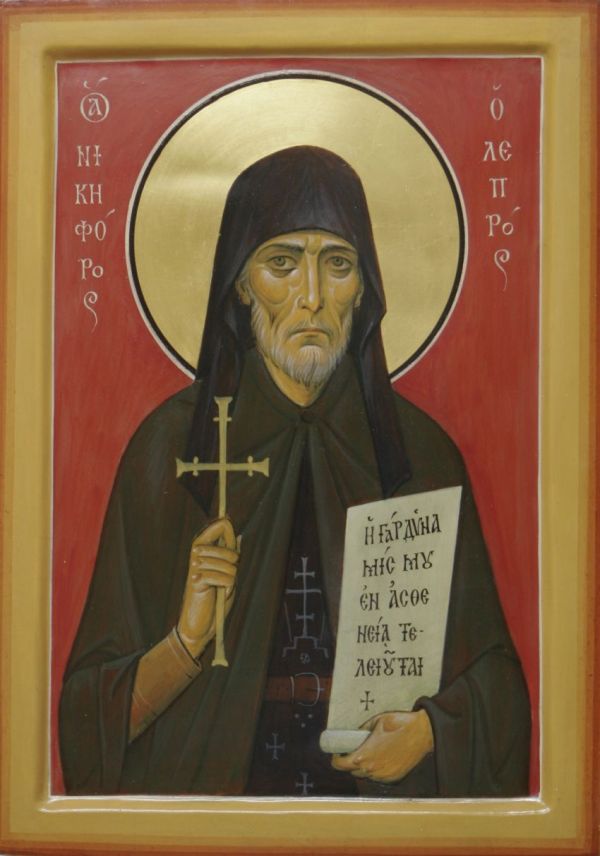
osios-nikiforos-lepros

Nikephoros the Leper and the Pandemic

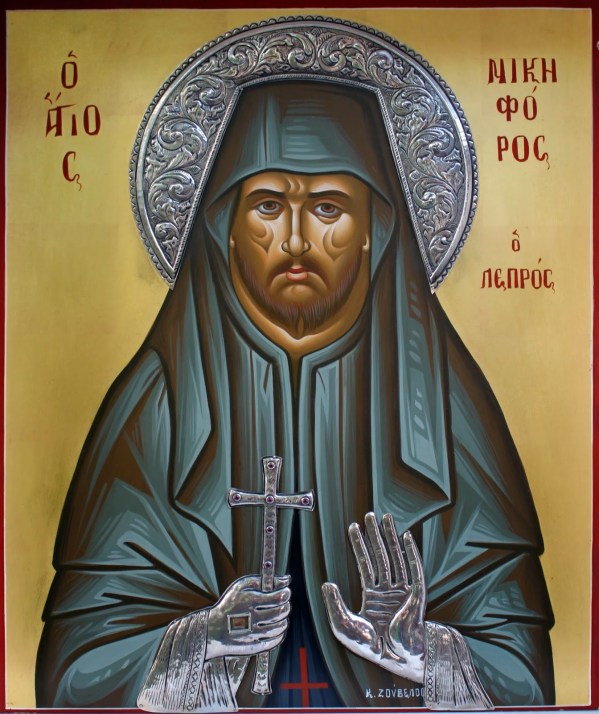
Dearest brothers and sisters,Christ in our midst.Here in Greece and in Cyprus, the faithful are especially praying to Saint Nikephoros the Leper these days. Metropolitan of Morfou Neophytos has revealed in a recent homily that this Saint has appeared to a charismatic elder and informed him that he has received special Grace from God to help in these times of need: the Grace to protect and heal from coronavirus those who ask for his prayers.


Next to God who honoured you, * O Nikiforos, * you do stand with boldness now, * like the tenth leper who returned * in great thanksgiving and gratefulness; * so, as is fitting, we honour your memory. May St. Nikephoros help all mankind. His life and hymn follow below. Your prayers
 

St Nikephoros

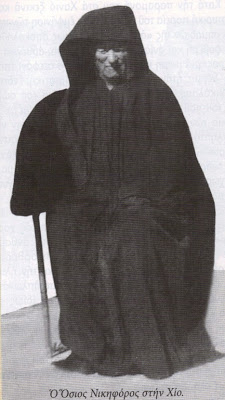
Father Nikephoros (Nicholas Tzanakakis in the world) was born in 1890 in a mountainous village in Khania, in Sikari, Kastanohori to the west of the prefecture with a healthy climate, with beautiful forests, rich waters, gorges and caves. This village has a peculiarity that we do not often encounter: it is divided into eleven neighbourhoods, which have also been named after the families who first settled there. So Saint Nikephoros was born in the neighbourhood of Kostoyianides.

His parents were simple and pious villagers, who died when he was still a young child, leaving him as an orphan. So, at the age of thirteen, he left his home. His grandfather, who had undertaken to raise him, went to Khania to work there in a barbershop in order to learn the job. Then he showed the first signs of Hansen’s disease, i.e. leprosy. The lepers were isolated on the island of Spinalonga because leprosy was a contagious disease and it was treated with fear and dismay.

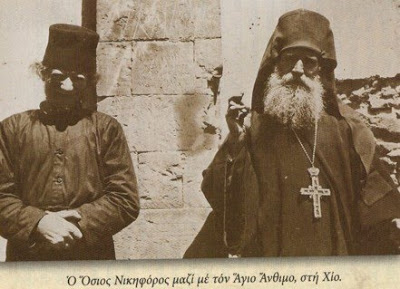
Nicholas was sixteen years old when signs of the disease began to become more conspicuous, so he left on a boat to Egypt in order to avoid being confined to Spinalonga. He remained in Alexandria, working in a barbershop again, but the signs of the disease became more and more apparent, especially on his hands and face. That is why, through the intervention of a cleric, he went to Chios, where there was a church for lepers at that time, and the priest was Father Anthimos Vagianos, later Saint Anthimos (+ February 15).

St. Anthimos and Fr. Nikephoros

Nicholas arrived in Chios in 1914 at the age of twenty-four. In the leper hospital of Chios, which was a complex with many homesteads, there was a chapel of Saint Lazarus, where the wonderworking icon of Panagia Ypakoe1 (Feb. 2) was kept. In this space, the course of virtues was opened for Nicholas. Within two years Saint Anthimos considered him ready for the angelic Schema and tonsured him with the name Nikephoros. The disease progressed and evolved in the absence of suitable drugs, causing many large lesions (a drug was found in 1947).

Father Nikephoros lived with unquestioning, genuine obedience to his Spiritual Father, and with austere fasting, working in the gardens. He also recorded the miracles of Saint Anthimos, which he had witnessed with his own eyes (many of these were related to the deliverance of those possessed by demons).

There was a special spiritual relationship between Saint Anthimos and the monk Nikephoros, who always remained close to him, as Father Theoklitos Dionysiatis writes in his book Saint Anthimos of Chios. Father Nikephoros prayed at night for hours on end making countless metanias, he did not quarrel with anyone, nor injure anyone’s heart, and he was the master chanter of the temple. Because of his illness, however, he slowly lost his sight, and so he chanted the troparia and the Epistles from memory.

The Chios leprosarium was closed in 1957 and the remaining patients, together with Father Nikephoros, were sent to Saint Barbara’s home for lepers in Athens, in Aigaleo. At that time, Father Nikephoros was about 67 years old. His members and his eyes were completely altered and distorted by the disease.

There, Father Eumenios also lived there at the home for lepers. He also suffered from Hansen’s disease, but with the medication he received, he was completely cured. However, he decided to remain in the home for lepers for the rest of his life near his fellow sufferers, caring for them with much love. Thus he submitted to Father Nikephoros, to whom the Lord had given many gifts as a reward for his patience. A crowd of people gathered in the humble cell of the leper Nikephoros, in Saint Barbara in Aigaleo to obtain his prayers. Here are some testimonies of those who met him:

“While he was prostrate with wounds and pains, he did not complain, but he showed great patience.”

“He had the charisma of consoling those who were sad. His eyes were permanently irritated, and he had limited sight. He also had stiffness in his hands and paralysis in his lower limbs. Nonetheless, he endured all of this in the sweetest, meek, smiling, delightful way, and he was also pleasant and lovable.”

“His face, which was eaten away by the marks of his illness, and his wounds, shone. It was a joy for those who saw this destitute and seemingly feeble man saying, May His holy name be glorified.”

Father Nikephoros reposed on January 4, 1964, at the age of 74. After three years, his holy relics were exhumed and found to be fragrant. Father Eumenios and other believers reported many cases where miracles occurred by calling on Saint Nikephoros to intercede with God.

The life of Saint Nikephoros was a brilliant example and model for everyone. He was pleasing to God because he had endured so much. For this reason, we have many testimonies that our saint received from the Holy Spirit the gift of discernment as and a host of other charisms. We should note that most of the miracles are recorded, and today the saint gives generous help to anyone in need. Surely there will be many more miracles which not have not yet been made manifest.

St Nikephoros 2


1 The name of the icon honours the obedience of the Theotokos to God’s will for her to give birth to His Son, so by her obedience people would also obey His will. The Greek word Υπακοή means “obedience.“


To Be Continued


How Can the Coronavirus Pandemic Birth God Within Us?

coronavirus-pandemic

In so many ways… Let us explore here just one, with the help of +Elder Aimilianos of blessed memory, should we eventually catch coronavirus despite our best efforts to protect ourselves and our beloved ones:

“We get sick and we suffer for different reasons, but often it’s because we have sinned, voluntary or involuntary, or because we have wandered away from God. But, if you are sick, don’t be afraid and don’t worry because sickness is a great gift from God. The sick are God’s special children.

The sick are under God’s special protection. They have God’s special blessing. They have God’s love. They are in His embrace, whereas someone who has health might not be.

The sick person, the suffering person, the person with illness is in a privileged place, or a potentially privileged place, with respect to God. Those who have never known sickness, and those who have never known suffering, often have a lack of empathy; and often their heart is narrow and small and restricted, and not able to open up and embrace the suffering of others because they just don’t know it.

The sick, on the other hand, are often the most loving and understanding and compassionate people that you will ever meet, and they are the ones who will have boldness before God in their prayers for others.

So don’t be afraid of your illness. Leave it to God. Do what the doctors tell you. When you take your medication, you receive Christ. It’s not bad, or a sign of a lack of faith, to take your medication. When you take your medication, you are receiving a blessing, you are receiving Christ Himself.

Do what the doctors say, take your medications, go for your tests, but have no anxiety. Sometimes what’s worse than being sick is being afraid of getting sick. Leave it to God. Whatever God gives you is best for you. God never gives you a Cross without first weighing and measuring it very carefully to make sure that the Cross will result in your spiritual growth.

So don’t think it’s random, don’t think it’s chance, don’t think it’s too much. It’s been very carefully weighed and very carefully measured, so that it will result in spiritual growth and spiritual benefit.

As much as the body wastes away, that much is our life in God renewed. God cannot be born within us without birth pangs. And the suffering that we experience, whether it’s emotional suffering or physical suffering, these are the birth pangs, the travail, the suffering in our life that will enable God to be born and to grow within us.

So we should feel pity for the person who has not tasted involuntary pain because that person is not likely to impose upon himself a sufficient amount of voluntary pain. So feel pity for the person who does not know involuntary pain because they’re not going to inflict it on themselves. They’re going to want to stay in their comfortable place, their comfort-zone, and they’re going to resist all kinds of change.

Sickness is a visitation from God, a divine visitation. Sickness humbles us, it teaches us, it reshapes us, it awakens us to reality, it enables us to see what is truly important and of value. It is not a punishment, but a divine visitation for our correction and education.

—Elder Aimilianos of Simonopetra Monastery

From: A lecture entitled, “Blessed are the Pure in Heart: Reflections on the Spiritual Nature of Suffering,” by Father Maximos Constas, Patristic Nectar Publications (2017).


A Window to Heaven

coliva_in_biserica

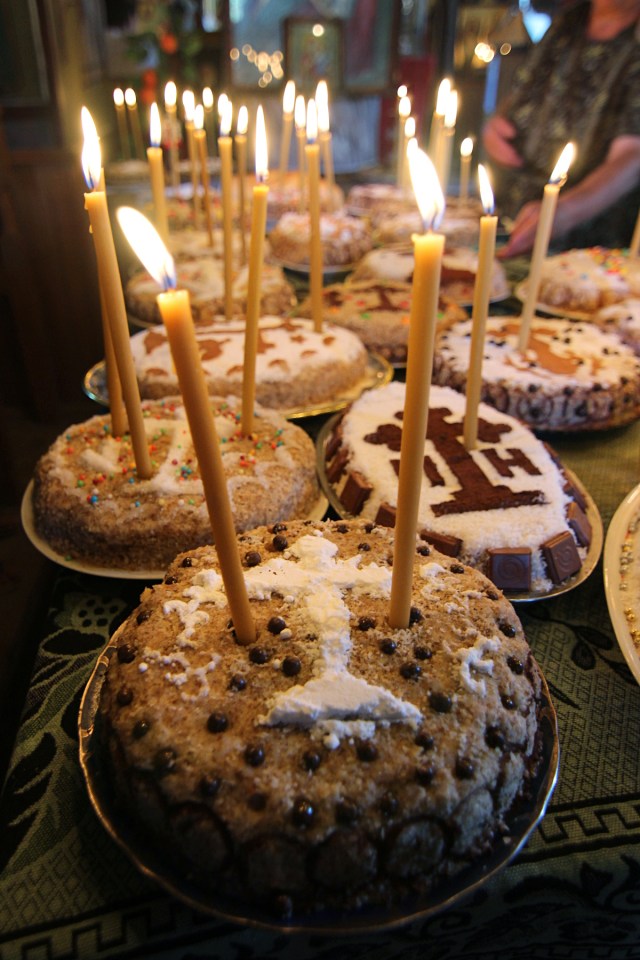
Today,  another blessing and surprise encounter awaited me!  But let me start from the very beginning. Early at dawn, I went Elder Symeon’s monastery for Matins, Holy Liturgy and the Memorial service on Saturday of Meatfare.  The service was one of the longest ones I have ever attended; the priests were reading for hours (!) long lists of names of our departed brothers and sisters. What a consolation and a hope to literally be a member of His Body, which our Mother Church will never forget or give up!

Such Mercy and Love outpoured on us all! We also prayed for all our brothers who,  throughout the ages, because of untimely death in a faraway place, or other adverse circumstances, have died without being deemed worthy of the appointed memorial services. The divine Fathers, being so moved in their love for man, have decreed that a common memorial be made this day for all pious Orthodox Christians who have reposed from all ages past, so that those who did not have particular memorial services may be included in this common one for all. 

I was also very impressed by how some of the faithful ended their lists of fathers, mothers, husbands, wives, children, relatives names with “benefactors, friends, enemies”. Enemies?! Now that was something that I had never heard of before but which I will certainly start adding to my personal diptychs. 

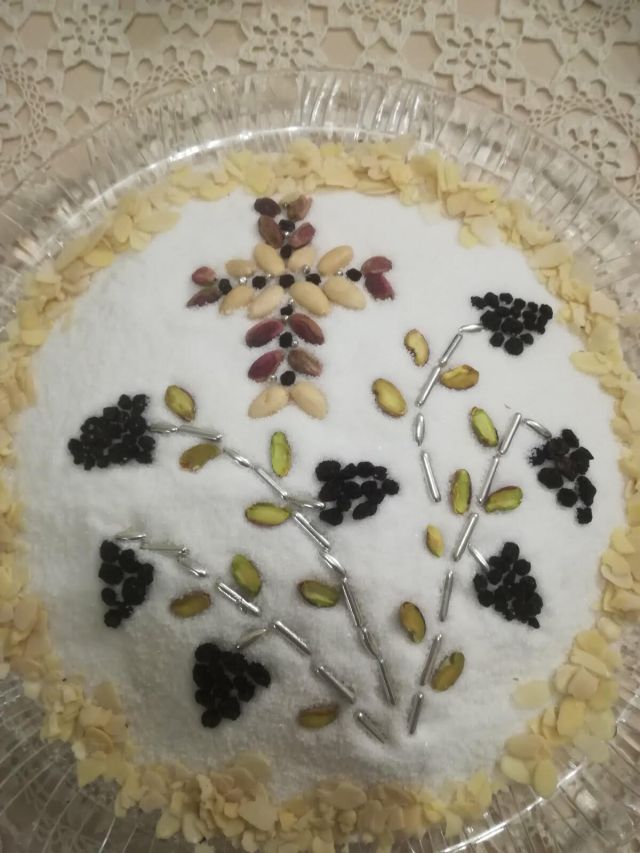
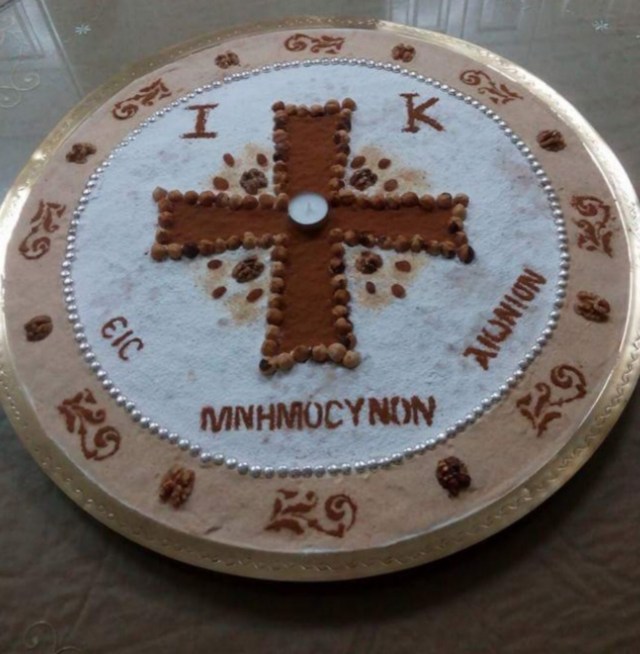
kollyva

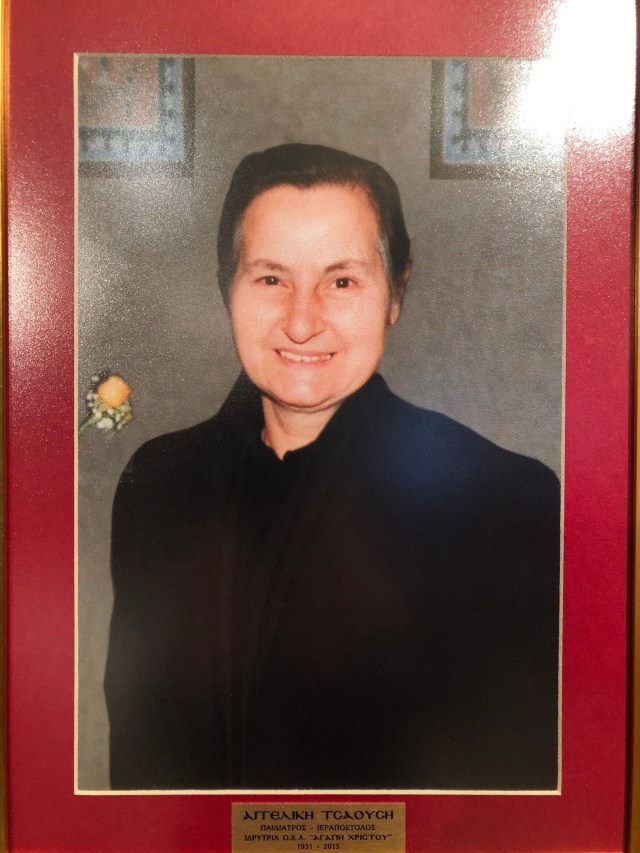
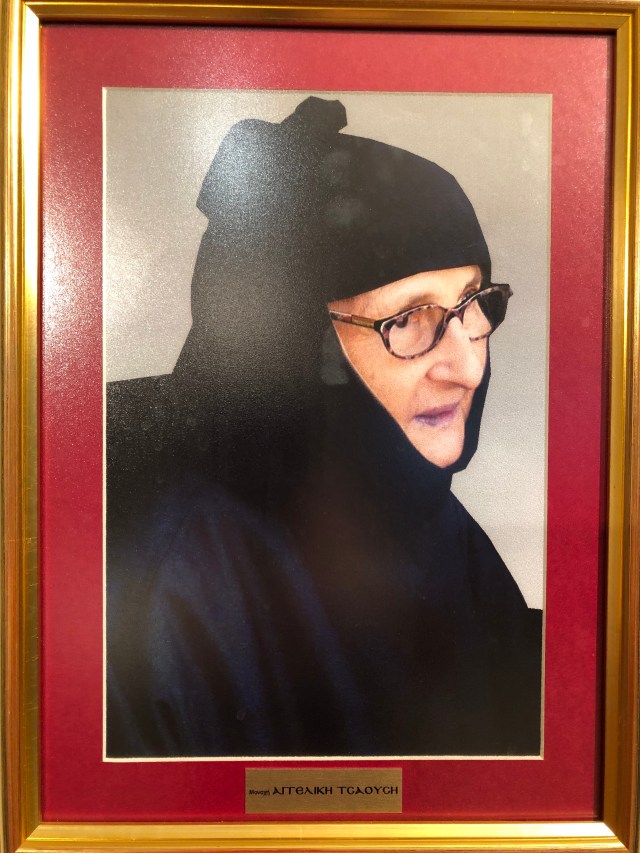
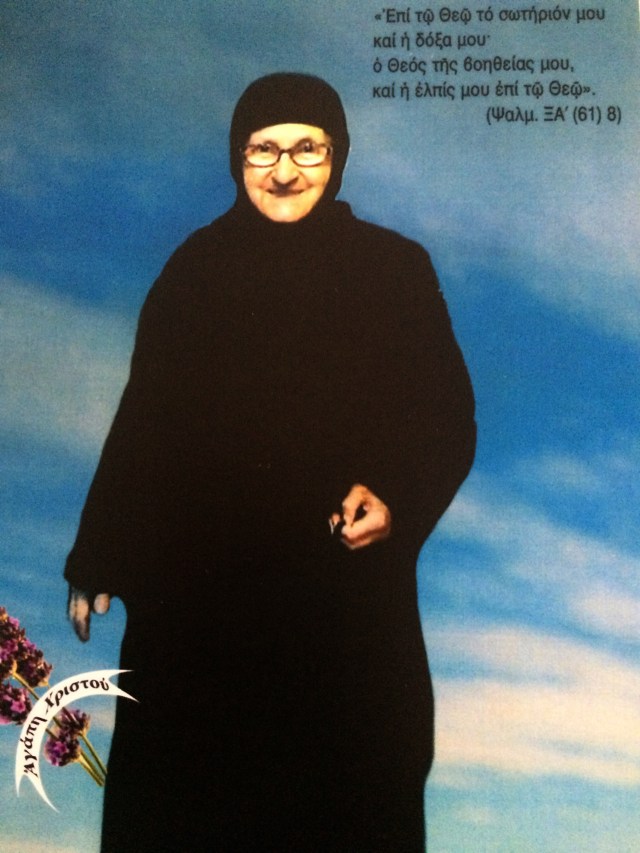
Somehow, in all this, Sister Aggeliki of Blessed Memory warmed my heart.

Fleetingly, another thought crossed my mind, about a good man I was told about the other day who consciously decided not to have an Orthodox burial, but cremation instead. And so it happened. When Elders were asked if we could at least give his name for Forty Day Liturgies or for a Trisagion, we were told “no” because “his wish has to be honoured”. This shadowed side, the darkness into which a stubborn sinner can choose to throw himself … Lord have mercy…

Today, we, the militant church, felt outnumbered by the triumphant and invisible Church. Oh, how soon, we too will cross to ‘the other side’. I am so looking forward to meeting my +Elder Gregorios, +Sister Aggeliki …

“But take heed to yourselves lest your hearts be weighed down with dissipation and drunkenness and cares of life, and that day come upon you suddenly like a snare”. Oh! those cares of life!  May we have “an acceptable defence before His dread Judgment Seat.”

43538

And then, it happened! At the coffee and the kollyva that followed. There, out of the blue, I met Vassiliki, a frail but very bright woman, 91 years old, who immediately impressed me with her radiant smile, joy and generosity of spirit. In just a few minutes, we realised that we had both worked, side by side, together with Sister Aggeliki. That was it. Now nobody could stop Kyria Vassiliki from sharing case upon case, from court to hospitals, with the liveliest details, all her memories with Sister Aggeliki. She kept telling me how special Sister Aggeliki was! As if I did not know!

Blessed Sister Aggeliki, a legend in our town, I never had a doubt that all those orphans and ill children and families in need which you have tirelessly helped and supported will be offering their thanks to God for you on heaven and in earth. But what touches most my heart is how “easily” you “gave up” your novitiate at St. Nektarios’ monastery in Aegina, at your spiritual father’s word, to stand by and support your elderly, ill mother and your mentally-ill sister.

How patiently you bore your Cross, living an unmercenary doctor’s and nun’s life in a city and waiting until the last 6 months of your life to finally receive the great schema! How all these very harsh circumstances at home did not deter you from offering your love and medical services to everybody for free.  How could you, Sister Aggeliki, retain your sense of humour, enthusiasm and joy when such reality was awaiting you back home every day?

Every single day and night at the mercy of your mentally ill sister — such a martyrdom! I have spent lots of mornings and evenings at your home and your poor sister was giving you such a hard time! Anybody else but you would have “committed” her to a mental institution, but not you.  Because you told me that in the midst of such paranoia, your sister loved God and you wanted to take care of her, take her to church, to holy communion and … Sister Aggeliki was also appalled by the shock treatments psychiatrists applied to medical patients back in those decades.

And that martyrdom and Cross was only one of the many you courageously bore, dear Sister Aggeliki. How could you compose spiritual poetry and theatrical plays and oratoria attracting such wide audiences? And all that and so much more.

I have so many questions to ask you, dear Sister. Please help me understand your answers and prayers “across the other side”.

+ Memory Eternal, Sister Aggeliki, pray for us, “τούς ζῶντες τούς περιλειπόμενους”, “all us who are alive [and] remain unto the Coming of the Lord  (1 Thessalonians 4:15). 

IMG_0536IMG_0880

sister aggeliki tsaousi

For more information about Saturday of Souls, here

A Cardiologist in love with Christ

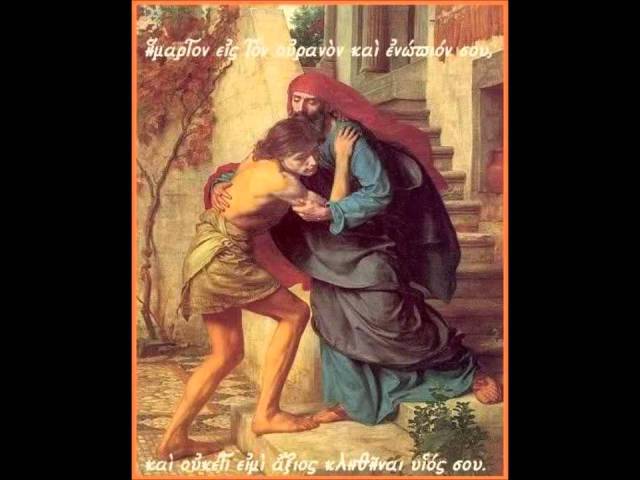
The Prodigal

A true story in a crowded and very busy hospital

Dear brothers and sisters,

Christ is in our midst!

Yesterday, I had an arthroscopic surgery. My right knee had been bothering me for a little while. I hoped it would go away but after an examination, and discussion with the orthopaedic surgeon who did the same thing on the same knee 10 years ago, we decided to have it done, again! Now the only reason why I mention this fact to you is because yesterday, while undergoing pre-operation checks, in just 5 minutes in a crowded and very busy hospital, I had a special blessing, an amazing “chance” encounter in His Providence of a cardiologist and a neighbour (!) in love with Christ.

In just a few minutes, while doing routine checks on my heart, we got to know each other quite well for such an unexpected encounter. Of course, any cardiologist must be intelligent enough, but how on earth did he guess my love for Christ and my life? It all happened so fast and it took just a few questions. When I left his office, on my way for the surgery, I had in my hands a slip of paper signed by a mysterious Youtube pen name: “KIXEM Euharistimenos”. ‘

Euharistimenos’ means ‘pleased’ in Greek; as to ‘KIXEM’, I am clueless, maybe a wanderer in Arabic? This cardiologist told me that he had started composing poetry and music while doing his specialisation as a medical student, and started his own studio to release his stress from exams. A few hours later, after the arthroscopic surgery and safely back home, while lying flat in my sofa and resting my leg, I searched the links in Youtube and came upon this, Wow! I was not prepared for this! 

This is the doctor, this must be his flat together with his amateur studio in our neighbourhood, and he uses another pen name: Seraphim Rose!

_Passito __ Kixem Euharistimenos

This is the kind of music he composes:

Mostly instrumental, but sometimes accompanied with simple lyrics, stunning images of saints and landscapes, and beautiful prayers and poems for Him. Like this one: “Glory to God”


Or this one: 1 Glory to God equals 1000 Kyrie Eleison (St. Paisios’ saying)


A few others of these Youtube compositions have the titles “A Beggar of Joy”, “A Dreamer”, “In Search of an Honest Man”, “A Breath of Life”, The Prodigal”, “Dance of Paradise”, “Thirst for God” etc. The lyrics are all in Greek but you can certainly enjoy his melodies and his beautiful photographs of Saints, churches and monasteries. Well, this cardiologist may not be Bach, but he is certainly very kind and full of His Love. Is not the Creator blessing the robin’s Doxology like the nightingale’s?  Fleetingly, I noticed how he treated his patients in the hospital: with an otherworldly purity of heart, respect, kindness and compassion. I have the feeling that we might meet again somewhere, in God’s Kairos. Has such an encounter ever happened to you recently? 

Your prayers


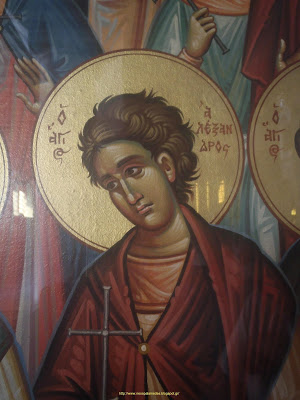
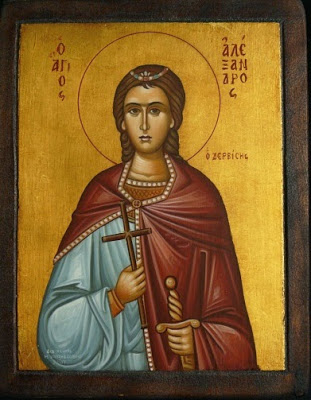
Holy NeoMartyr Alexander the Dervish from Thessaloniki, Laodigitria (+ 1794)

AlexandrosDervisis01

Verses
Give your head O straight-forward Alexander,
And receive a crown from the hand of the Lord.


Alexander was a very handsome, young Orthodox Christian from Thessaloniki who lived in Laodigitria — the church/monastery I presented in my previous blogpost — and was sent to Smyrna by his parents who sought in this way to protect their son from the local Muslims. Unfortunately, however, Alexander did come under the influence of the Muslim faith and accepted Islam. Moreover, he later made a pilgrimage to Mecca and even became a dervish, that is, a member of a Muslim monastic order.
It was not long, however, before his conscience began to trouble him. He found he could not tolerate the position he was in, that is, he could not stand by silently while Orthodox Christians, to whom he still felt related, were persecuted. To lighten the burden of his conscience, he began to feign insanity. While playing the role of a madman, Alexander tirelessly rebuked the Muslims for the injustices they committed against the Christians.
Later, while in Egypt, some Muslims from the island of Crete plotted to murder him because, as time went by, he sounded more and more like a Christian and less like a Muslim. Before their evil plans could be carried out, Alexander left Egypt and returned to Thessaloniki.
Later he went on to the island of Chios where he still dressed as a dervish but began to attend Orthodox services and continued to preach to the Muslims in Chios, beseeching them to act with justice towards the Orthodox.
From Chios, Alexander returned to Smyrna, the city where he had first abandoned his Orthodox Christian faith. The time had now come for him to witness for Jesus Christ. Voluntarily he appeared before the kadi of the city and told him his story. He said:
“Mulla! I was an Orthodox Christian and because of my foolishness, I denied my faith and became a Muslim. Later I realized my former faith was light, which I lost, while your faith, as I have come to know it, is darkness. So I have come before you to confess I have made a mistake by denying the light and accepting the darkness. I was born an Orthodox Christian! I want to die an Orthodox Christian! Behold, you have heard my decision, Mulla, now do to me whatever you wish, for I am ready to endure every torture and to even spill my blood for the love of my Jesus Christ, whom I wrongly denied.”
After these words were spoken, Alexander took off his Muslim head covering and replaced it with a Christian one. Those present in the courtroom could not believe their ears. In fact, they thought they must be listening to a madman.
But one by one, beginning with the mulla, they began in a soft sympathetic voice to tell him he had spoken unheard-of things, and perhaps he was not well and should come to his senses. How could he, a dervish, shame his religion and his integrity in such a manner?
To all of these remonstrances, Alexander responded: “It is true, I was out of my mind, but now frankly I have come to my senses and I confess my iniquity. You say because I am a dervish, how do I say such things? I truly speak the truth, for I have gone to your Mecca, and have examined all of your faith, and I have understood everything about it to be false and abominable.”
The Muslims present responded to Alexander’s declarations by saying he must be drunk, and as such they had him put in prison. On the following day when more Muslims gathered around the mulla, Alexander was questioned again but with the same results. The Muslims felt embarrassed that one of their best, a dervish, could renounce Islam and therefore tried very hard to persuade him to give up the notion of returning to Christianity.
They began to flatter him with soft soothing words, reminding him of his position, his integrity as a dervish, and the thought that it would be a pity for him to sacrifice his youth, his very life. They offered him money, clothes, anything he might wish, but none of this made an impression on Alexander who was determined to witness for Jesus Christ and suffer any and all consequences.
Alexander turned a deaf ear to the threats of physical torture and death as he had previously to the flattery and promises of material rewards. Nothing could persuade him to give up Jesus Christ for the religion preached by Muhammad. And so he responded:
“O how foolish you are to bring up death. I came here for this purpose, to die for the love of my sweetest Jesus Christ. You are trying in vain to change my unwavering decision with your deceiving threats and your insignificant promises. As for myself, I think of dying for my holy faith which I wrongly denied and to die to this false life and to gain the other, the eternal one. I was born an Orthodox Christian and I wish to die an Orthodox Christian. This is what I desire, this is what I thirst for. So you do whatever you wish. I am ready to suffer everything for my Master Jesus Christ.”
Alexander was returned to prison where he stayed until Friday, a Muslim holy day on which it was customary for the important Muslims of the city to gather about the kadi of each city and attend with services at the mosque. On this occasion, Alexander was the topic of their conversation.
When brought before the kadi for the third time, the same flattery, promises and threats were made. To these Alexander replied by simply saying: “I was born an Orthodox Christian, I wish to die an Orthodox Christian. I will not exchange the light for darkness. I worship Father, Son and Holy Spirit, Trinity consubstantial and undivided.” Saying this, he made the sign of the cross.
This was the last straw for the kadi and the Muslims present. Alexander was immediately sentenced to death. He was bound and led to the place of execution accompanied by many Muslims who continued to try to persuade him to change his mind. To their admonitions, Alexander responded, “I am an Orthodox Christian and I die as an Orthodox Christian.”
Many people, Muslims, Orthodox Christians, Westerners and Armenians gathered for the execution. Alexander stood in the centre. The executioner then placed his sword in front of Alexander’s eyes to frighten him. But the Neomartyr remained calm and unaffected.
Alexander was then ordered to kneel, at which point the order came from the mulla for a stay of execution. The stay continued for an hour during which time Alexander prayed. When he gave no sign of changing his mind or of being willing to convert, the execution proceeded and he was beheaded.
Thus Alexander the dervish from Thessaloniki sacrificed his life for the love of Jesus Christ in the city of Smyrna, Asia Minor on May 26, 1794.
From Witnesses For Christ: Orthodox Christian Neomartyrs of the Ottoman Period 1437-1860, by Nomikos Michael Vaporis, pp. 217-219.
Alexandros_Dervish Sant'Alessandro_il_Derviscio
Such close ties between New Martyr Alexander the Dervish and Laodigitria church are quite common in Thessaloniki; in its various historic churches, local neomartyrs (from the Ottoman rule) have received the crown of martyrdom in their yards. Like the Church of Saint Minas and the new martyr Christodoulos from Kassandreia (+27 July, 1777) who was hanged at its central entrance. But again that will be the topic of another blog post. It is no exaggeration that Thessaloniki, throughout the centuries, has proven to be “agiotokos”, a cradle for so many ‘local’ Saints.
*
Apolytikion in Plagal of the First Tone
In lawful contest O Martyr, you were valiant, you were wounded after prevailing against the enemy, and you are seen Alexander as a companion of Martyrs. Therefore as its holy offshoot, Thessaloniki honours you, and with longing, it proclaims to you: Do not cease interceding for the mercy of those who honour you.
Kontakion in the Third Tone
The city of Thessaloniki celebrates today your holy memory, Alexander Neomartyr; you are its own divine offspring and offshoot; you contested in Smyrna with brave resolve for love of the Lord; therefore entreat Him that He may save us all.
Megalynarion
You contested lawfully for Christ, Alexander Martyr, and destroyed the enemy; therefore Thessaloniki reverences your memory, honouring your struggles and your contests.
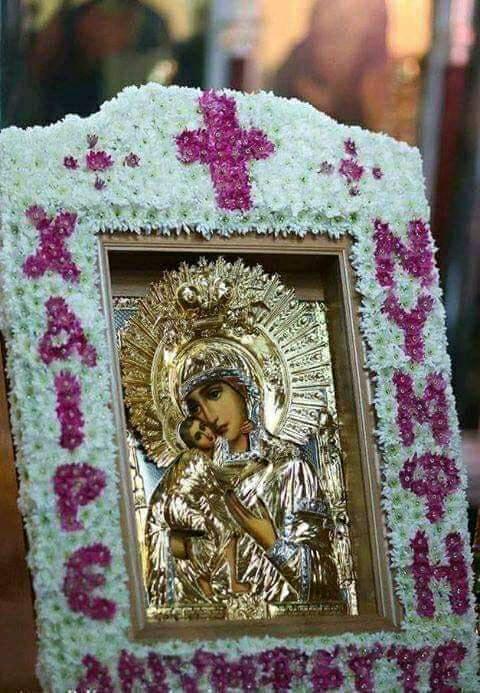
Panagia Laodigitria

panagialaodigitrialagoudiani1

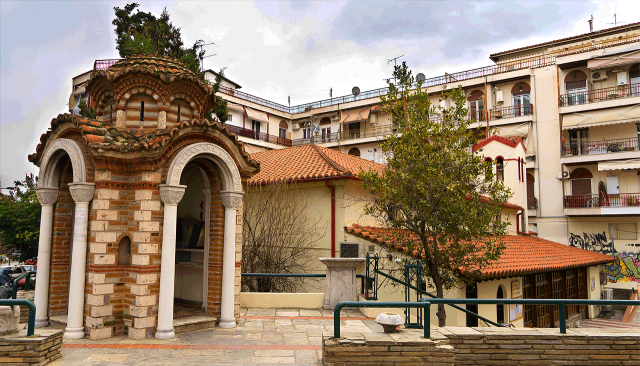
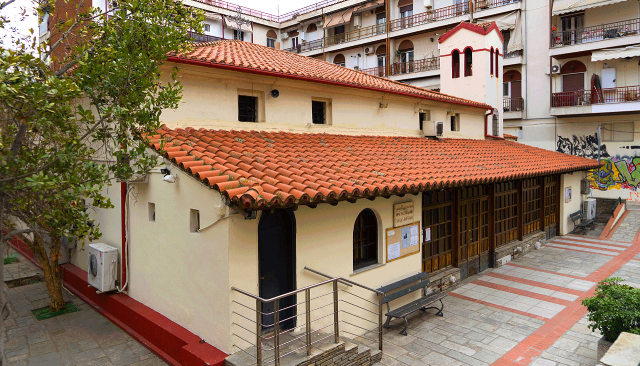
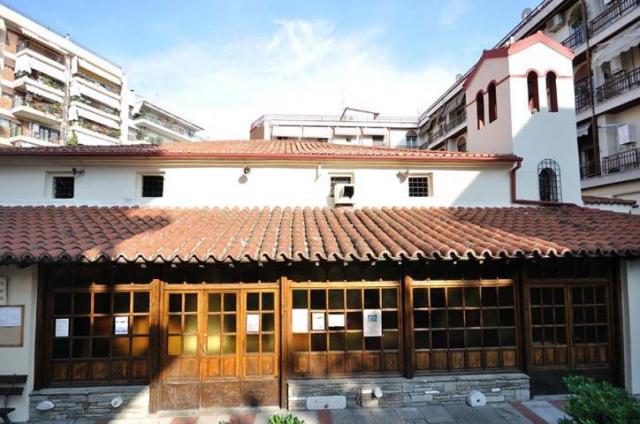
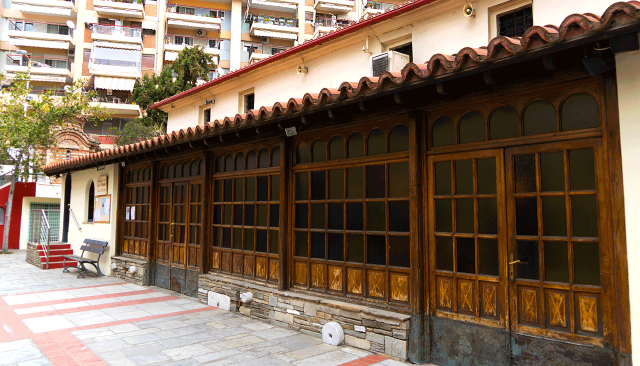
Church of Panagia Laodigitria or Panagia Lagoudiani in Thessaloniki

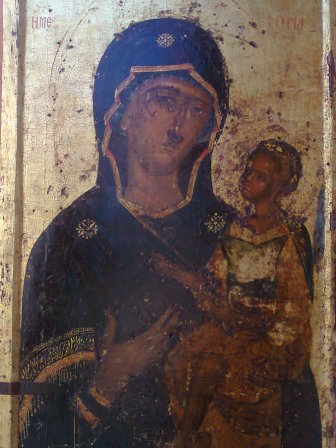
According to a byzantine legend, a miraculous incident occurred in the place where the church of Panagia Lagoudiani [Rabbit place] or Laodigitria [Virgin Mary the People Leader] is built. A hunter looking for rabbit’s hiding place, put his hands in a burrow trying to cage the small animal. However, he drew up from the hole the miraculous icon of Panagia Tricherousa [the “Virgin with Three Hands] or Oglaitissa. During the Ottoman rule, the monastery was called “Tavsan Manastir”, that is “the monastery of the rabbits”.

panagialaodigitrialagoudiani3

After this incident, a women’s monastery was built on this place and the central part of the monastery is today’s church. In the 15th century, it was the catholicon of a nunnery that was a dependency [Metochion] of Vlatadon Monastery (*)  According to another theory, the church took its name after the owner, Lagoudatos [Rabbit Man], who lived in the 14th century. In any case, this historical church is a rare archaeological gem and a monument of the post-Byzantine period  (1453-1800).

PanagiaLaodigitria5

The origins of the name “Laodigitria” is unknown but many researchers agree on byzantine sources of the 12th century when the Metropolitan of Thessaloniki mentioned the following: “…η Πάναγνος Θεομήτωρ η παρ ημιν του οδηγείν επώνυμος” [Virgin Mary, Mother of God, lead us…” Laodigitria Theotokos, the Leader of the people, became together with Saint Demetrius, the woman patron saint of Thessaloniki.

panagialaodigitrialagoudiani2

During the Turkish occupation, the monastery was offering social work, by granting near Monastery’s properties against symbolic price for the sheltering of poor Christian families. This system was called in Turkish “Itzare”, ie. an once-off symbolic “lump” sum and with the payment of instalments of similarly symbolic sums throughout their lifetime, so that the monastery retained the legal [‘bare’] ownership of the monastery’s real property since they beneficiaries were not allowed to sell them. This measure proved valuable for homeless families in hard times since the number of lodgings/houses was more than 20.

In 1802, the church was restored and renovated (Oct 27, 1802) through the sponsorship of the merchant Ioannis Kaftangoglou and became a three-aisled basilica with wooden ceiling and matroneum [gynaeconite; an upstairs gallery on the interior of a church, originally intended to accommodate women (whence the derivation from “matron”)], following the Macedonian ecclesiastic architectural standards of that era. Its most recent ktitor [ie. the founder] was Christos Georgiou-Menexes, from the province of Agiou Phanariou (Agrafa Thessaly) and from the village Megala Vraniana, +Memory Eternal of his parents. 

PanagiaLaodigitria8

The church keeps a significant number of 18th and 19th-century icons, together with a miracle-working icon of the Virgin Mary. In the chapel adjacent to the southern part of the church, is located the holy water fountain, hence another name for this church, that of the Life-Springing Fountain of the Theotokos (Life-Giving Font of the Theotokos) [Ζωοδόχος Πηγή]. The church celebrates on this Feast during Bright Week and also honours Holy NeoMartyr Alexander the Dervish from Thessaloniki, Laodigitria (+ 1794).

*

As of today, the little city hermit will be chanting in this historic church, next to the Wonderworking Theotokos icon, an amazing blessing, honour and privilege. This was the first-ever church I visited as a young teenager, about 14 years old, for Confession, spiritual guidance and holy water, agiasma. + Father Panagiotis of blessed memory was my first priest confessor. So many memories! This church feels so much like home …. This blogpost is also beginning another blog series, that of Paleochristian and Byzantine monuments of Thessaloniki, since lots of fellow pilgrims all over the world are asking me about Thessaloniki’s churches and monasteries.

*. The Monastery of Vlatadon is located on the northern side of Ano Poli of Thessaloniki, close to the castle walls with a magnificent view to the city. This small monastery is built on the site where St Paul is believed to have preached to the Thessalonians, was founded in the mid-14th century and has been in continuous use since then. But more about this byzantine monument at another blogpost.

Blessed Elder Amvrosios Lazaris the Athonite and the Dread Judgment Day

Picture 038

“The Dread Judgment “Day” will last as long as the Six Psalms last, a few minutes.  At this time, while we will be judged, the Angels will chant the Six psalms. …

All the people who will be alive at this moment, they will instantly experience death and then be immediately resurrected. Our bodies will be immaterial, space-less. We will be able to see each other’s body and we will all be 33 years old.

Christ Icon on Iconostasis

Our Lord will hold the Book of Life, the Gospel, open, and immediately, each one of us will go on our own either to the right or to the left, because we will know in our hearts whether we are for Paradise or not.

Christ icon on Bishop's throne

This is exactly why in the Bishop’s throne, the Book in the icon of Christ is open and there is no candle over this icon–this indicates that there will be no Mercy in the Second Coming. While in the Iconostasis, the Book which Christ is holding is closed and there is a candle lit over the icon because there is still Mercy. “

✝️ Blessed Elder Amvrosios Lazaris the Athonite (21/12/1912 – 02/12/2006)  ☦️

geron-amvrosios-071

The Hieromonk Amvrosios (born Spyridon Lazaridis) departed this life on 2 December 2006 (New Calendar), at the age of 92. He was the spiritual father of the Holy Monastery of Our Most Holy Lady Gavriotissa, Dadi, and of thousands of Christians from all over Greece.

During a chat, I [Archimandrite Ephraim, Abbot of the Vatopaidi Monastery] once had with the late Elder, he told me that after his military service, he wanted to go to the Holy Mountain, but he didn’t know how or where to go. Then a young man of about 25 appeared and told him: “I know the place, come with me”. And so he went.

They set off together, went down to the harbour and embarked on a boat. “He gave me bread, as well”, he said, “and we ate together all the days I was with him. He didn’t tell me his name, though, and I didn’t ask. So we arrived at Dafni and from there walked on, further up the Holy Mountain.

When I was with him, I felt very safe. As we went along, he showed me the Monastery of Xiropotamou, where they honour the Forty Martyrs. He asked if I would like to pay my respects and I agreed to do so. We went into the katholiko, the main church of the Monastery, and when I kissed the icon, forty men appeared and surrounded us. The young man turned to me and said: “They’re the Forty Martyrs and they’re happy that you’re going to be a monk”.

From there we continued on our way and reached Karyes, and from there went to the Holy Monastery of Koutloumousi. The young man stopped, pointed out the monastery to me and said: “You’ll stay here, Spyro. You’ll become a monk. You’ll be patient and obedient to the Elder”. And he disappeared.

It would seem that this was an angel of the Lord, Spyridon’s guardian angel. Spyridon remained at this monastery as a novice, and, at the age of 25, became a monk with the name of Hariton.

… Elder Amvrosios was always in communion with the Saints. Once,  “When I was in bed, in pain, I [Elder Amvrosios himself says] could see the chapel of the Holy Unmercenary Doctors opposite, and I asked them to help me. Two doctors appeared in white smocks and they tried to set my leg. ‘Pull, Kosmas’ said one. ‘Hold it here, Damianos’, said the other. In five minutes, the pain had gone and I was well again”. When the brethren in the monastery saw him completely well, they praised God and the Holy Unmercenary Doctors.

ger-amvrosios-kai-ger-porfyrios-oi-agioreites-kai-alloi

The blessed Elders Porfyrios Kavsokalyvitis († 02/12/1991) and Amvrosios the Athonite (†02/12/2006) together with some lay pilgrims on a visit.


Read more about Elder Amvrosios’ life, here

What did Jesus Christ look like?

Saint Paisios the Athonite: How Jesus Christ looked like?

By Saint Paisios the Athonite

It was the evening after the feast of the Finding of the head of St. John the Forerunner, the eve of the feast day of St. Apostle Carp. I felt very inspired that evening. I did not want to sleep at all and I thought, “ Well, let me write something about Fr. Tikhon and send it to the sisters in Souroti”. By 8:30a.m. I wrote about 30 pages. I still did not want to sleep but decided to lie down for a while because my legs were weak.

Sunrise began. By 9a.m. I was still not sleeping. And suddenly I saw that one of the walls of my cell (the one near which my bed stood) just disappeared. I saw Christ – He was in the light, just about 6 meters from me. I saw Him from His side. His hair was bright and His eyes were blue. He did not say a word to me, but only looked – not right at me, but a bit more to the side.

I saw everything with the non-corporal eyes. In such cases, it does not matter whether your corporal eyes are closed or not. I saw that with my spiritual eyes.

When I saw Him, I thought, “ How could they all spit in that Face? How could they – the people without any fear of God – hit that Face? How could they slam the nails into that Body? Oh, God…”

I was struck by that. How pleased I felt at that moment! What a joy I felt! I cannot express that beauty with words. It was the very beauty about which it was said: “You are fairer than the sons of men; Grace is poured upon Your lips” (Psalm 45:2). This is what that beauty was. I have never seen anything like that on any of His images. There was only one – I do not remember where I have seen it – which looked a bit alike.

A person should work in a monastery ever for a thousand years to see this beauty at least for a moment. What great and indescribable things are gifted to people – and how miserable are the things we try to deal with!


After this vision, Saint Paisios the Athonite ordered to the nuns from the monastery of Souroti to make an icon of Christ exactly like he saw Him. The image represents this icon.