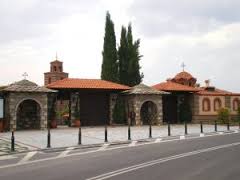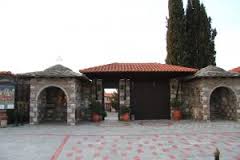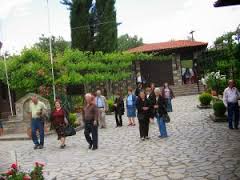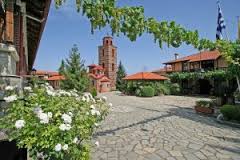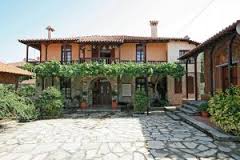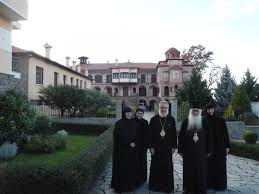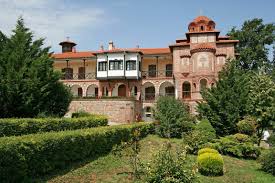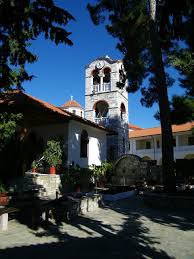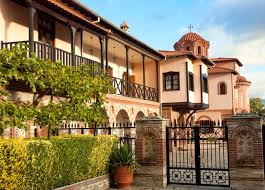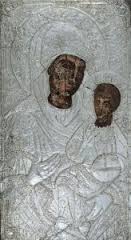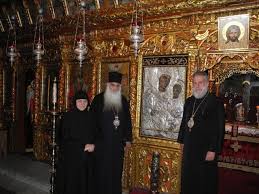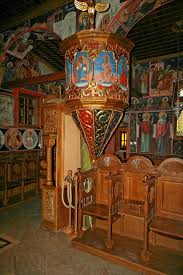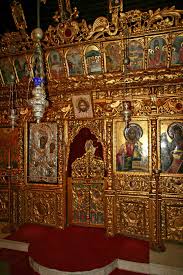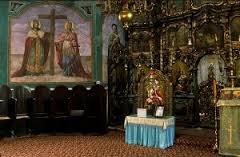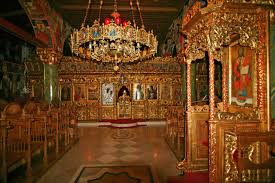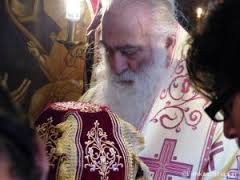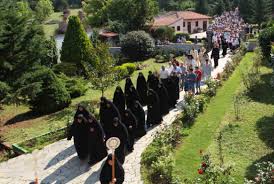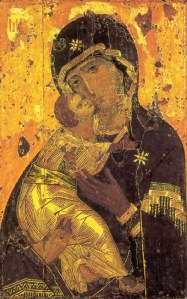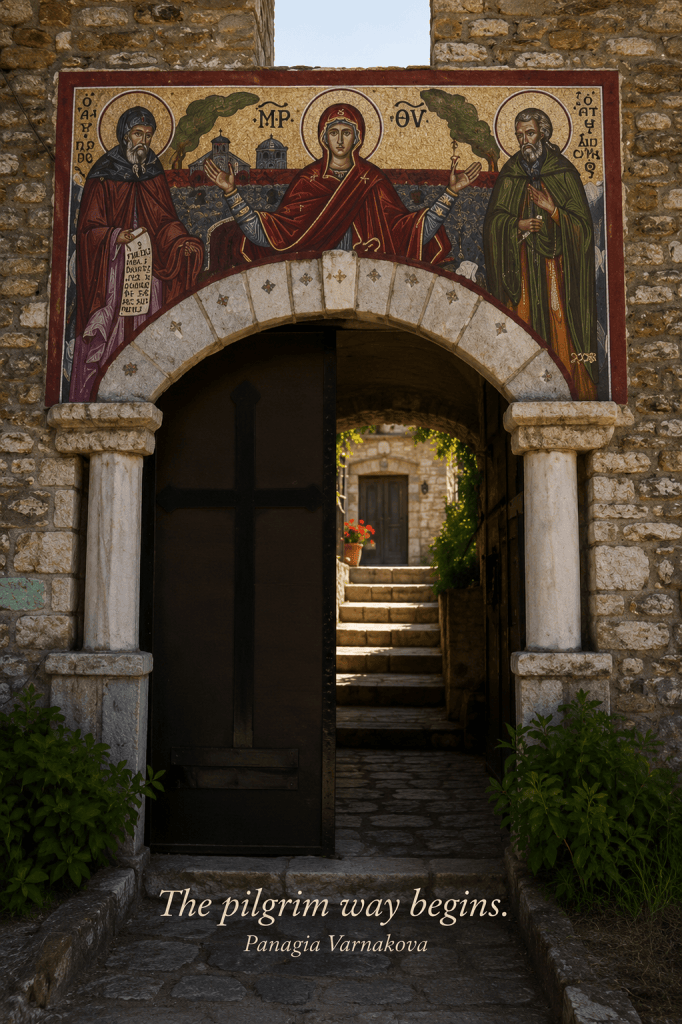
It all began quite unexpectedly. Recently, during Confession, the Abbot of a monastery on Mount Athos told me that God’s will for me now was to leave everything in the hands of the Theotokos and to begin going frequently on pilgrimages — to her shrines and to those of the Saints.
Since then, I have taken part in pilgrimages to Our Lady of Tinos, Saint Porphyrios, Saint Ephraim of Nea Makri, Panagia Malevi, Panagia Varnakova, and many more. I could not have known where that counsel would lead. But pilgrimage followed pilgrimage, and the presence of the Theotokos became increasingly — at times almost overwhelmingly — tangible. She seemed not simply to be waiting at the places toward which we travelled, but somehow to be accompanying the journey itself.
And gradually I began to notice something else: traces of the virtues we contemplate in her icons appearing, in small and very human ways, in the pilgrims travelling beside me.
A pilgrimage is a journey toward holy places, but also a journey among people. Throughout this pilgrimage, the presence of the Theotokos seemed almost
overwhelming — in the monasteries, the icons, the prayers, and somehow in the journey itself. And gradually, something else became apparent: the
mysteries we contemplated in her feasts seemed to find small reflections in the pilgrims walking beside us — in a word, a sacrifice, a hidden act of service, a way
of enduring, believing, or praying.
The four great feasts of the Theotokos themselves seem to trace a spiritual pilgrimage: a beginning, an offering, an indwelling, and a fulfilment — images of our own journey from conversion toward theosis. Along that path, I shall also introduce some of my fellow pilgrims — real people, identified only by their initials — whose lives seemed to offer small, living reflections of that same journey.
I. AWAKENING — THE NATIVITY OF THE THEOTOKOS
A Beginning Before We Know Where It Will Lead
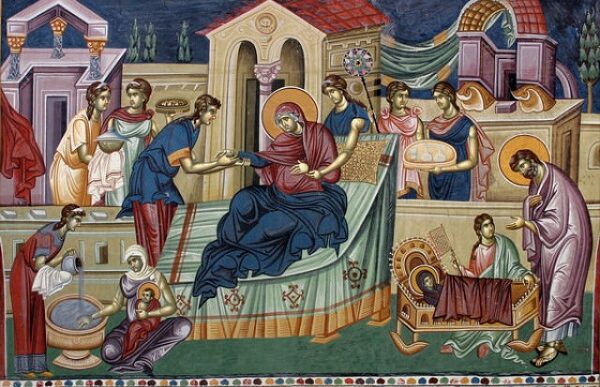
The Nativity of the Theotokos is proclaimed by the Church as “the beginning of our salvation.” Nothing spectacular has apparently happened: a child has been born. Yet within this hidden beginning lies the preparation for the Incarnation.
It is a beautiful image of the first movement of conversion: awakening, turning, beginning again. Conversion rarely begins with spiritual fulfilment. Something enters our life — sometimes joy, sometimes suffering, sometimes simply a new awareness of God — and a road begins whose destination we cannot yet
see.
M. experienced such a beginning in an extraordinarily painful way. After almost forty years of marriage, during which she raised her children and sacrificed her own career, employment, income, financial independence, security, and even the prospect of a pension to work unpaid for her husband, she suddenly found herself, at almost sixty, having to begin her life again. Divorce, loss of property, eviction, legal battles and financial hardship followed. She now lives in a small
social-housing apartment and undertakes seasonal work, including caring for elderly people, at times relying upon friends and her sons for financial help. Yet
she continues to work, to struggle, and above all to glorify God. What appeared to be simply the destruction of one life has gradually become the beginning of another.
P., too, has recently entered an entirely new landscape through widowhood. The loss of the person with whom one has shared one’s life creates a threshold one
would never willingly choose to cross. Yet she continues forward, and her response to loss has not been withdrawal but service.
A. has also recently lost his wife, while continuing to care at home for his son, who has a disability. Although approximately of retirement age, he seems to be
working more than ever, offering himself with remarkable diligence both within the Church and in wider society.
Their circumstances are very different, yet each reminds us of the mystery hidden within the Nativity: God’s new beginnings may appear precisely where we
thought something had ended.
II. CONSECRATION — THE ENTRANCE OF THE THEOTOKOS INTO THE TEMPLE
Entering More Deeply into the Life of God
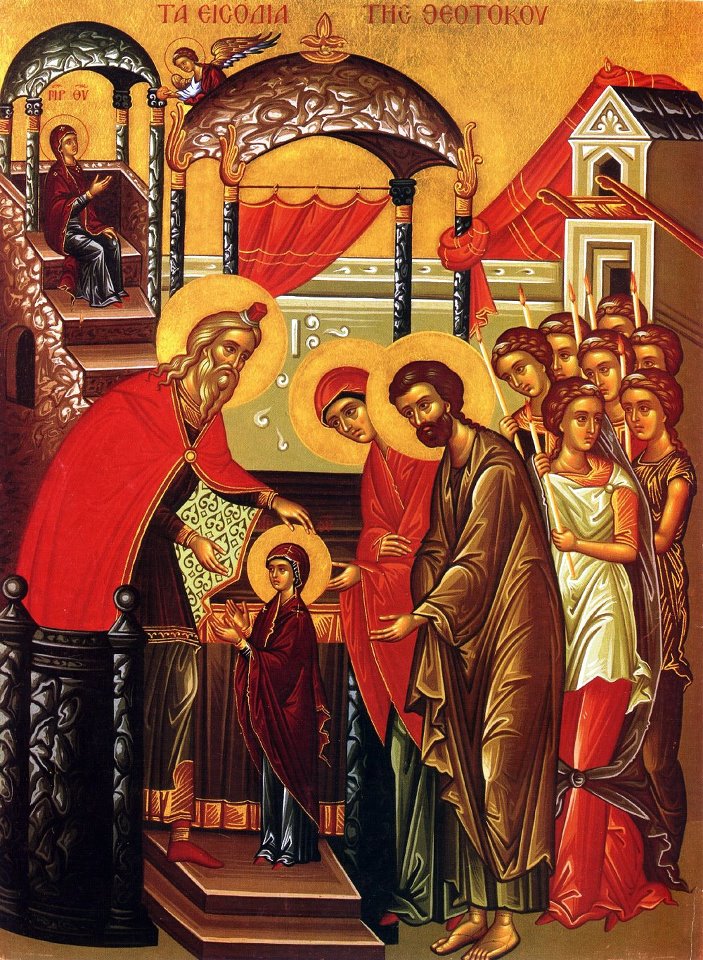
The Entrance of the Theotokos is not described in the canonical Gospels but belongs to the ancient tradition of the Church. The child whose birth announced a new beginning is now brought into the Temple and offered entirely to God. Beginning becomes direction. The young Mary enters the Temple and, according to the tradition of the Church, grows there in prayer, purity and communion with God.
Her Entrance can therefore express the second movement of the spiritual life: not simply turning toward God, but progressively giving one’s life to Him — through purification, obedience, prayer, service and the gradual reorientation of the whole person.
E. embodies something of this wholehearted dedication. Although she still works full-time, she participates tirelessly in one or even two pilgrimages every month, travelling throughout Greece. She readily accepts both the fatigue and the considerable financial cost involved, despite not being a person of considerable financial means. During the COVID period, while working as a nurse, she chose to follow her conscience regarding vaccination despite knowing that her decision would have serious professional consequences, and she was suspended from work. Yet her zeal is anything but disorderly. During the pilgrimage, when an elderly pilgrim suddenly developed high blood pressure and dizziness, E. immediately cared for her. She meticulously recorded names for prayer and arranged votive offerings at each monastery. Her dedication to God continually becomes practical care for others.
G., at eighty years of age (!), offers another form of consecration. A distinguished theologian with a long and eminent academic career, he remains remarkably
precise in his expression of the Orthodox faith. Even at his age, he endured the extraordinary physical hardships of this demanding pilgrimage, just as he continues to participate actively in so much else. His theological precision is not merely accumulated academic knowledge; it is an ecclesial mind cultivated throughout an entire lifetime. His words rightly divide the word of truth without ambiguity or compromise, yet his firmness never becomes harshness. He treats even those of another faith, or those whose beliefs are heretical, with exceptional meekness. Truth, for him, is not simply an idea to be defended but a reality to be lived.
P. and A. reveal yet another form of offering. Both remain quietly at the side of Fr N., assisting in his many ministries: soup kitchens, hospitals, pilgrimages, and
wherever else a need arises. They are precisely the kind of people one might easily fail to notice, because they are usually to be found where there is work to be
done rather than where they might be seen. Like the Myrrh-bearing Women, they do not seek the central place; they are simply present whenever an offering is
needed.
Thus, the Entrance marks a movement beyond the first awakening of conversion. The life that has turned toward God gradually becomes a life offered to God.
ΙII. UNION / THEOSIS — THE ANNUNCIATION
God Dwelling in the Human Person
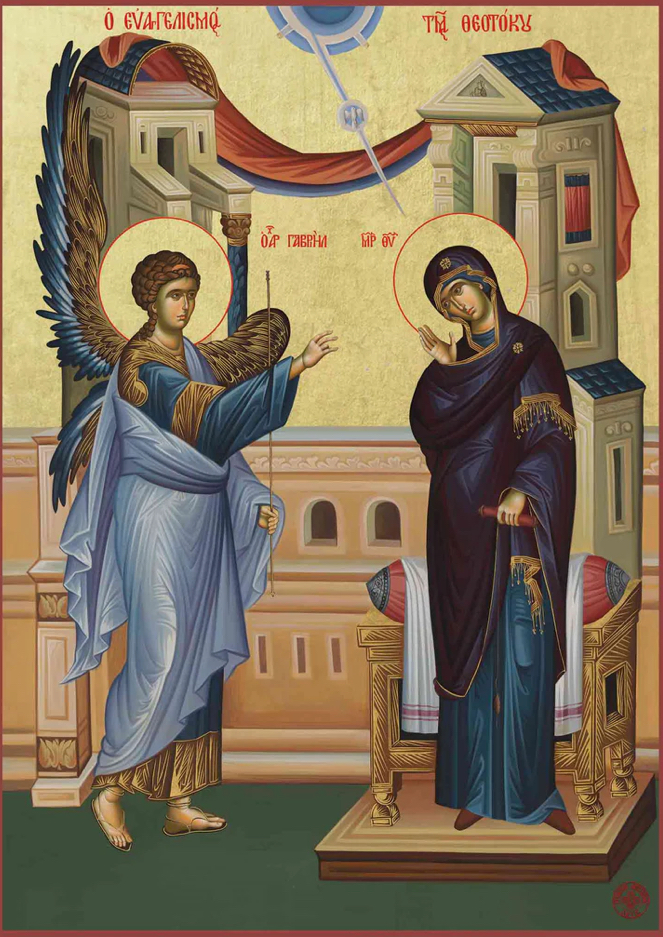
At the Annunciation, everything toward which the previous feasts have been moving reaches an unimaginable point. The Theotokos hears the word of God and freely answers: “Behold the maidservant of the Lord! Let it be to me
according to your word” (Luke 1:38). And God comes to dwell within her. The Annunciation therefore reveals something at the very heart of Theosis. Human freedom is not abolished by divine grace; it opens itself to it. God acts, the human person responds, and communion becomes possible. The Christian life is no longer simply a matter of turning toward God or even offering things to Him.
God Himself increasingly becomes the inner life of the human person.
Something of this mystery could be glimpsed in Fr N. As the priest accompanying more than one hundred pilgrims, he was continually surrounded by questions,
conversations, confessions, practical difficulties and people seeking his attention. Yet amid this almost uninterrupted outward activity, he retained a remarkable inner stillness. And one could actually see something of its source. While speaking, listening, hearing confessions, caring for and guiding the pilgrims, his lips would repeatedly and quietly form the Jesus Prayer. Amid the visible movement of the pilgrimage there was another, almost invisible movement: the continual return of the mind and heart to Christ. Prayer was not something that began when his ministry ended. It seemed to have become the hidden inner rhythm running through everything else. His Hesychia therefore did not depend upon external silence. He carried that inner silence with him into the crowd: the gathering of mind and heart in God while remaining completely present to others.
Among the predominantly older pilgrims, M. and E.-K., two young people in their late twenties, stood out in a very different way. There was also an extraordinary coincidence in encountering them there. M. was the assistant of an electrician team working for a company of ours, while E.-K. had been a student of mine many years ago at the Experimental School of the University of Thessaloniki. Quite unexpectedly, both recognised me after all those years — each coming from an entirely different chapter of my life. What was striking in both was difficult to define: they simply seemed to shine with purity in the way they spoke, carried themselves, looked at others and related to those around them. This is not a claim about their private lives, which we cannot know, but about a visible simplicity, modesty and transparency of behaviour.
They remind us that communion with God does not erase the human person. Grace increasingly makes the person transparent to God.
What was striking in both is difficult to define: they simply seemed to shine with purity in the way they spoke, carried themselves, looked at others and related to those around them. This is not a claim about their private lives, which we cannot know, but about a visible simplicity, modesty and transparency of behaviour. They remind us that communion with God does not erase the human person. Grace increasingly makes the person transparent to God.
III. UNION / THEOSIS — FULFILMENT
THE DORMITION OF THE THEOTOKOS
The Human Person Received into the Life of God
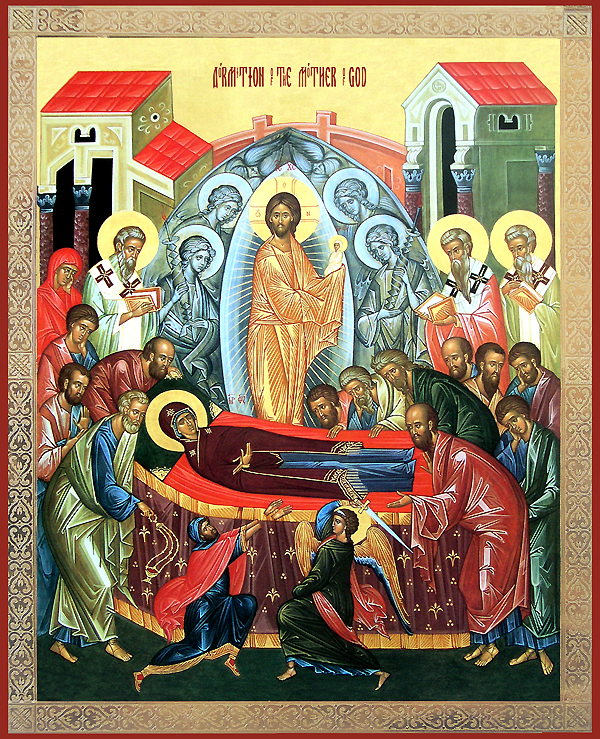
The Dormition brings the journey to its fulfilment. And here the movement of the Annunciation is beautifully reversed. At the Annunciation, the Theotokos receives Christ within herself. At the Dormition, Christ receives the Theotokos into Himself. In the icon, Christ stands beside the body of His Mother and holds her soul, represented as a small swaddled child. She who once held Him as an infant is now held by Him. The journey that began quietly with her Nativity reaches its fulfilment in complete communion with her Son.
Perhaps here all the pilgrims return…
M.’s extraordinary patience through loss, injustice and uncertainty; her obedience to the spiritual guidance of the Athonite Elder Philotheos, Abbot of the Holy Monastery of Karakallou, which helped her carry what might otherwise have become unbearable.
G.’s lifelong fidelity to the truth of the Church, still vigorous at eighty despite hardship and physical exhaustion, combined with a meekness that refuses to turn theological conviction into hostility toward another human being.
E.’s restless divine zeal, expressed not only in pilgrimages but in sacrifice, meticulous care and practical service.
P. and A.‘s almost hidden ministry beside Fr N., quietly appearing wherever another person needs them.
A.‘s self-denial in carrying his own grief and family responsibilities while continuing to carry the burdens of others.
The transparent purity of the two younger pilgrims. And Fr N.’s prayer and hesychia, the Jesus Prayer continuing quietly beneath the noise and demands of a
pilgrimage of more than one hundred people.
None of these is theosis by itself. Nor does the same virtue appear in every Christian in the same way. One person’s road may be patience; another’s theological truth and meekness; another’s service; another’s self-denial; another’s purity; another’s prayer. But the destination is one: communion with God.
None of these pilgrims possesses these qualities perfectly; nor does any particular virtue belong to only one person. The Theotokos remains their incomparable
image and measure. Yet perhaps this was one of the quiet revelations of the pilgrimage. We travelled to monasteries and holy places, stood before her icons, celebrated her feasts and repeatedly encountered her presence. And somehow, that presence seemed almost overwhelming — not only in the churches and shrines, but throughout the journey itself and among the people travelling beside us.
The four feasts seem gradually to trace the pilgrimage of every Christian soul:
At the Nativity, the Theotokos enters the world.
At the Entrance, she enters the Temple.
At the Annunciation, Christ enters the Theotokos.
At the Dormition, the Theotokos enters the life of
Christ.
Beginning. Offering. Indwelling. Fulfilment.
And perhaps the pilgrimage did not really end when we returned home. Her presence, so overwhelming along the way, seems somehow to have accompanied us beyond it, into the very different paths of our ordinary lives. We set out as pilgrims to places sanctified by Her presence; perhaps ever since, She has been accompanying each of us on the personal pilgrimage of our own life. Amen