Thy Nativity O Christ Our God
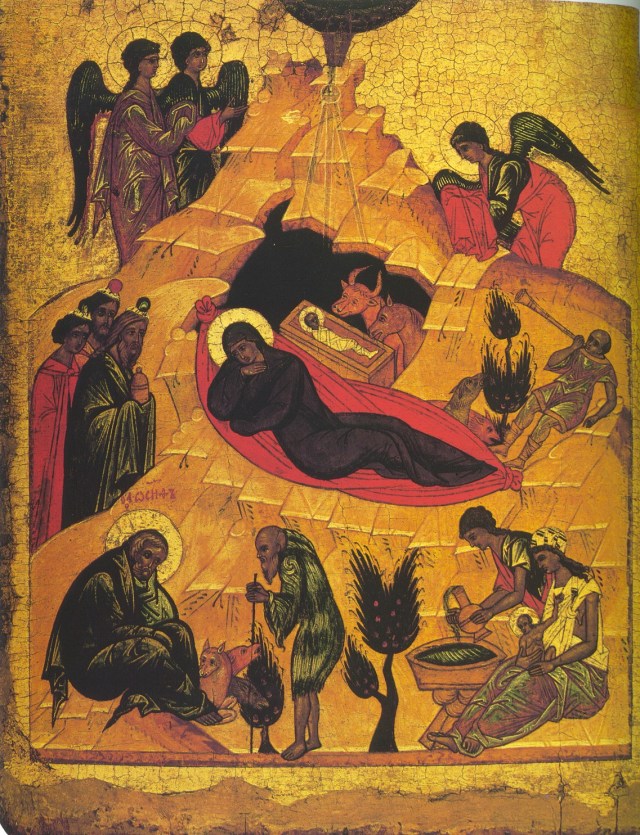

New Year Wishes, some Reflections on the Movement of the Holy Spirit within the ever growing circle of Grace with Divine connections, Divine providence, Divine Love and a Selection of 2015 Orthochristian.com Top Posts

Isn’t this circle of grace, which so often seems to be accidental or co incidental, actually providence and a sign of the Holy Spirit working amongst us?
This is what a New Year always feels to me in the midst of the Twelve Days of Christmas!

Or, this …

One more New Year has arrived and we are offered:
12 more months for spiritual struggles
52 weeks for humility
365 days for patience
526.000 minutes for love and
31.536.000 seconds for prayer …
A Happy and Most Blessed New Year to All of You! With Health, Happiness, lots of Blessings, but also with Spiritual Struggles!!!
(BTW, this is a leap year, so, an extra day of courage (or patience) is required, and we are offered 1440 more minutes for love and 86400 more seconds for prayer, as I was ‘timely’ reminded by a precious friend 😃)
Now let’s have an OrthoChristian look back on 2015!
Here is my selection of some of their top posts. I hope some will be of interest to you. Other than the appalling human tragedy drama unfolding in the Islamic world, the rapid change in legislature in most Western countries to legalize unions that contradict God’s law and personal conversion stories, my most precious post at Orthochristian.com is one featuring an interview with Fr. John Musther Of Cumbria .
Fr. John Musther Of Cumbria interview made such an impression on me that I wanted to meet him in person and the Good Lord ‘arranged’ for me to visit him together with some friends all the way to the UK to his church-home! What a wonderful person and what a most heart-warming smile! (For a few photographs from our visit/ pilgrimage to his chapel and church-home, go to https://orthodoxcityhermit.com/2016/01/07/meeting-fr-john-musther-of-cumbria/)
… We have seen a terrible human tragedy drama unfolding in the Islamic world. A hierarch of a mostly Moslem Central Asian country, Bishop Pitirim of Dushanbe and Tadjikistan had some profound words to say about Europe, Russia, and Islam.
The Folly of Comfortable Christianity

… People talk about their unique “Path to God”—how they came to Orthodoxy. Here are a couple of our favorites:

“God Told Me, You Must Convert to Orthodoxy!”
“You Need to Get Used to Orthodoxy.”
…
And here are some of our favorites from the rubric, “Orthodoxy Around the World”:

The Last Priest of the Peking Mission. A Talk with Archpriest Michael Li
If Jesus Is God, Let My Daughter Be Alive! Notes About Indonesian Orthodoxy

An Interview with Fr. John Musther Of Cumbria. “Christ Won the Battle and Made My Heart Orthodox!”
“The Indian Mission Will Be the Most Fruitful Mission in the World!”
I Believe in the Future of Orthodoxy in Indonesia
Finally, we would like to look back on some of our other favorite articles providing instruction, encouragement, and important information for Christians:
Why are There So Many “Bad” People in the Church?
How St. Xenia Helped a Woman Become an Iconographer
Patient Endurance is the Fruit Of Virtue, and it is Nourished By Prayer
In This Great Service: A Theological and Political Defence of Monarchy
Hidden Fire: Orthodox Perspectives on Yoga
Fr. Seraphim Rose’s Monastery. A Photographic Pilgrimage by Archimandrite Tikhon (Shevkunov)
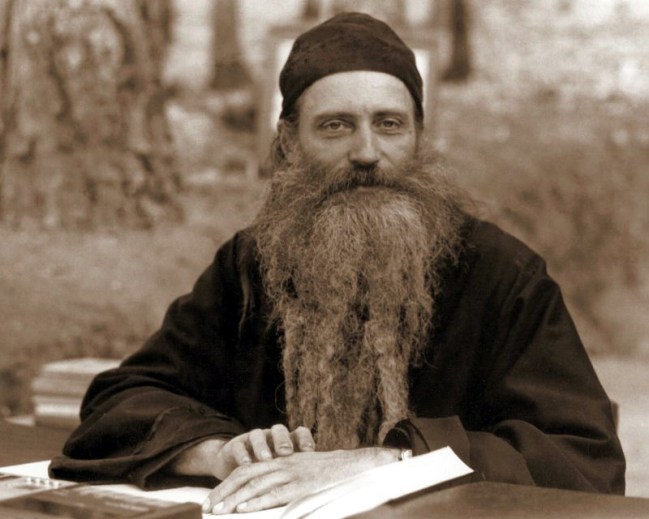
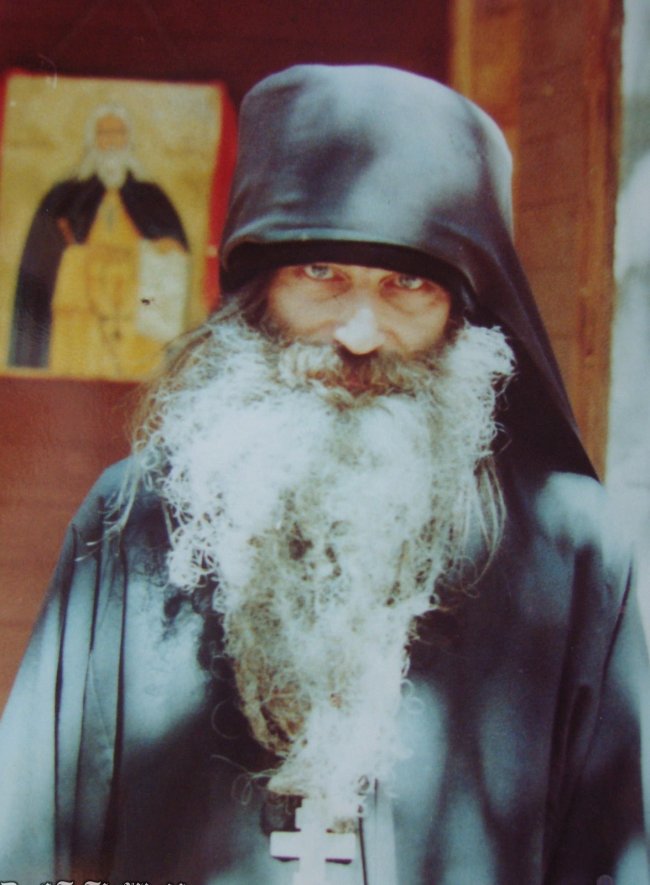
I have been so blessed within just a few months with so many precious ‘blogosphere’ to personal, intimate friendships! In a coming post I intend to dwell on this matter …
31 / 12 / 2015

“Is Christianity in trouble? Is it in danger of becoming extinct? I don’t believe so…” (1)
“The gates of hell shall not prevail against it” (Matthew 16:18)


“And when he had opened the fifth seal, I saw under the altar the souls of them that were slain for the word of God, and for the testimony which they held” (Revelation 6:9)
“And white robes were given unto every one of them; and it was said unto them, that they should rest yet for a little season, until their fellowservants also and their brethren, that should be killed as they were, should be fulfilled.” (Revelation 6:11)



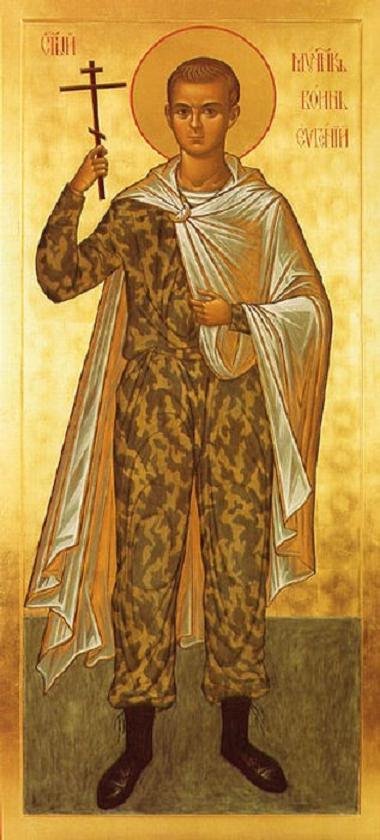
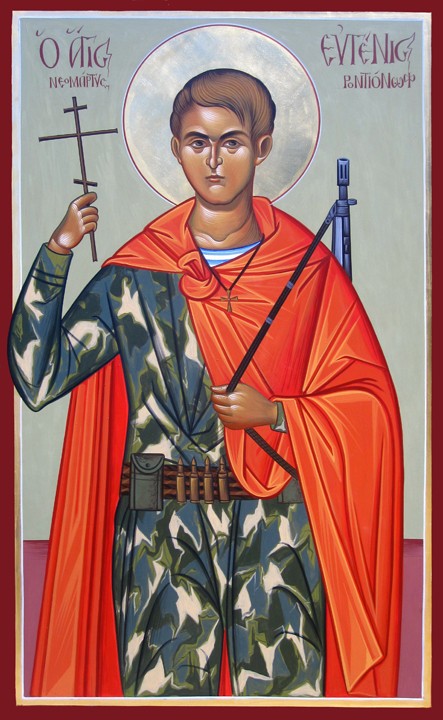
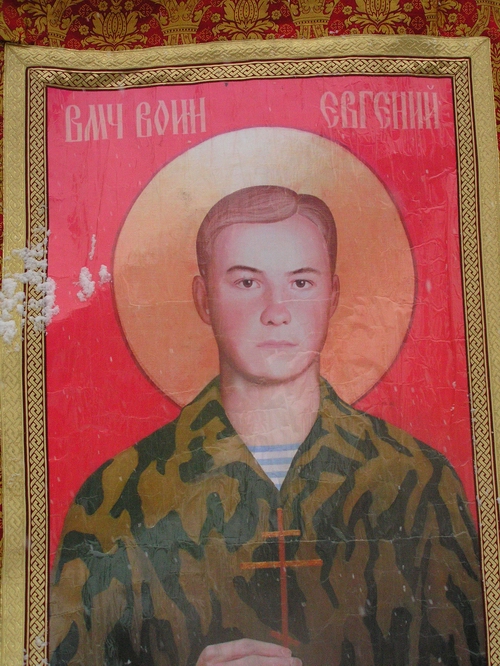
† New Martyr Evgeny Rodionov of Chechnya (May 23) http://facingislam.blogspot.gr/2013/05/new-martyr-evgeny-rodionov-of-chechnya.html

Without specifically mentioning Islam, over a millennium of Muslim persecution of Christians, the genocide against Christians today, or the theological jihad of the tawhidists, His Beatitude Metropolitan Tikhon, in less than 350 words, conveys the depth of the mystery, paradox and irony of the Incarnation:
[The Word of God] sees a world in bondage to the forces of evil and He submits Himself to that evil in order to destroy it forever.
It is because Jesus Christ, the Incarnate Word and Son of God, the Second Person of the Blessed Trinity, voluntarily “submits” (the meaning of the word, “Islam”) Himself to the forces of evil, that His extreme humility, His kenotic sacrifice, destroys that evil forever.
This is why the forces of Islam “rage against the Lord and against His Christ” (cf. Psalm 2), for they know that they have been defeated by Him Who is pure, holy, humble, and meek, Who becomes man and sacrifices Himself to restore all mankind to the Father.
Through His meekness, the proud are humbled.
Through His submission, those who try to force submission from others are overthrown.
Through His forgiveness from the Cross, even His persecutors can be converted and inherit the Kingdom!
We shall have to endure much to enter the Kingdom, but as His Beatitude and Bishop Paul remind us, Christ has already won the victory through His Incarnation, His sufferings, His crucifixion, and His Resurrection. Let us walk as Children of Light, and confess Him faithfully, so that we shall not be ashamed at His Second and Glorious Coming! (2)
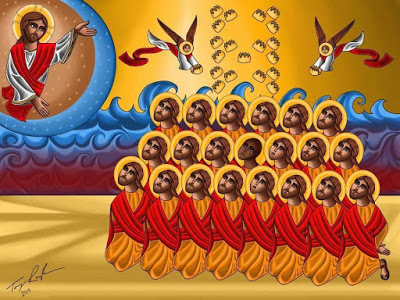
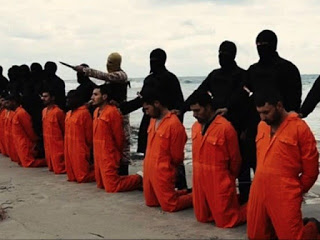
21 Coptic Martyrs of Libya http://facingislam.blogspot.gr/search/label/Coptic%20Martyrs

Christian couple lynched for blasphemy: the police accused of negligence http://facingislam.blogspot.gr/2015/10/pakistani-new-martyrs-shahzad-and-shama.htm
“And war broke out in heaven: Michael and his angels fought with the dragon; and the dragon and his angels fought, but they did not prevail, nor was a place found for them in heaven any longer. So the great dragon was cast out, that serpent of old, called the Devil and Satan, who deceives the whole world; he was cast to the earth, and his angels were cast out with him. Then I heard a loud voice saying in heaven, ‘Now salvation, and strength, and the kingdom of our God, and the power of His Christ have come, for the accuser of our brethren, who accused them before our God day and night, has been cast down. And they overcame him by the blood of the Lamb and by the word of their testimony, and they did not love their lives to the death. Therefore rejoice, O heavens, and you who dwell in them! Woe to the inhabitants of the earth and the sea! For the devil has come down to you, having great wrath, because he knows that he has a short time.’”(Revelation 12:7-12)
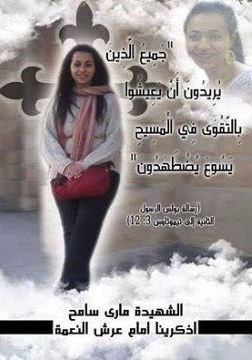
New-Martyr Mary the Copt
Killed by a Muslim Mob who saw the Cross hanging from her rearview mirror.http://facingislam.blogspot.gr/2015/07/new-martyr-mary-copt.html

New Martyr Helen the Accountant
†March 15, 2013
Killed by her Muslim husband for converting to Christ.
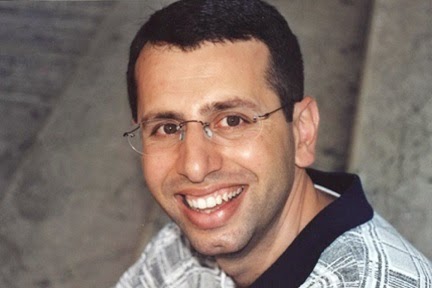
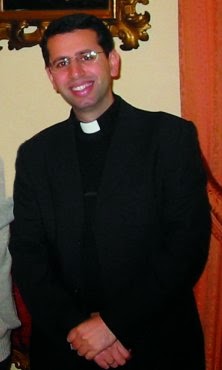
New Martyr Fr. Ragheed Ganni of Iraq,

Amidst wars, violence, refugee crises, terrorism, upheavals and worldwide Christian persecution, Christmas 2015 is so similar in so many respects to the very first Christmas and to the dark, hostile, unfriendly world Christ was born!
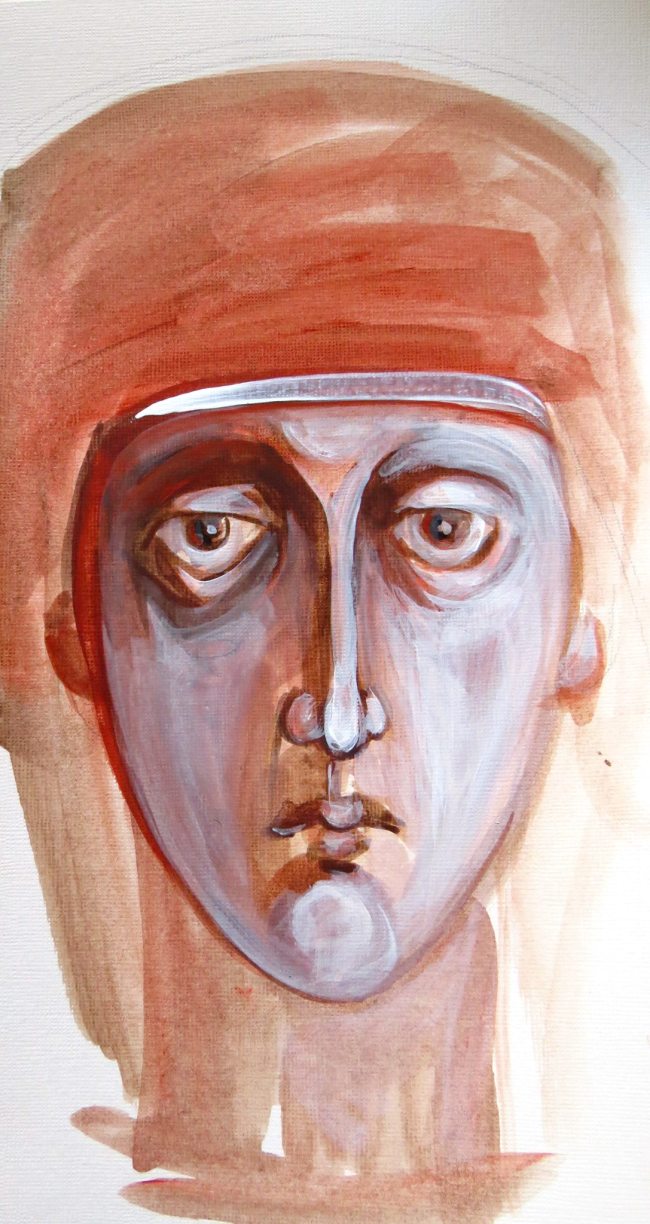
“This has been such a tough year – not only for so many of us, but for the world as a whole. Like never before, I long for Christ to come and turn this dust we are made of into Divine Flesh once again. The Nativity Fast never felt so difficult for me, I went through it with such a heavy heart. Everywhere you look, you see war and terror, bombings, torture, extremism of all sorts.
…
Now, Christmas is almost here. Christ will descend again upon the world, and the world will once again open up to His presence. Deep down, the earth changes. Deep down, we all change. I have never longed for Him as I do now. I have never felt as thirsty for His presence as I am now. The world itself never felt so dry and empty and lost without Him.”(*)

For detailed data on how Christians clearly represent the most persecuted people on earth in the 21st century, go to 2015 World Watch List, Overview
And we are not talking here of a bit of ridicule or silly marginalisation. We are talking about men, women and children being singled out because of their Christian faith or identity and put to an unimaginably cruel death. Or being driven out of home, away from livelihood, deprived of identity and dignity. Or, for women and girls, being forced into sexual slavery and subjected to rape-at-will. … http://www.thetimes.co.uk/tto/opinion/thunderer/article4649135.ece
(*) For Father Seraphim’s moving blog entry in full, go to http://www.mullmonastery.com/monastery-blog/waiting-for-christ/


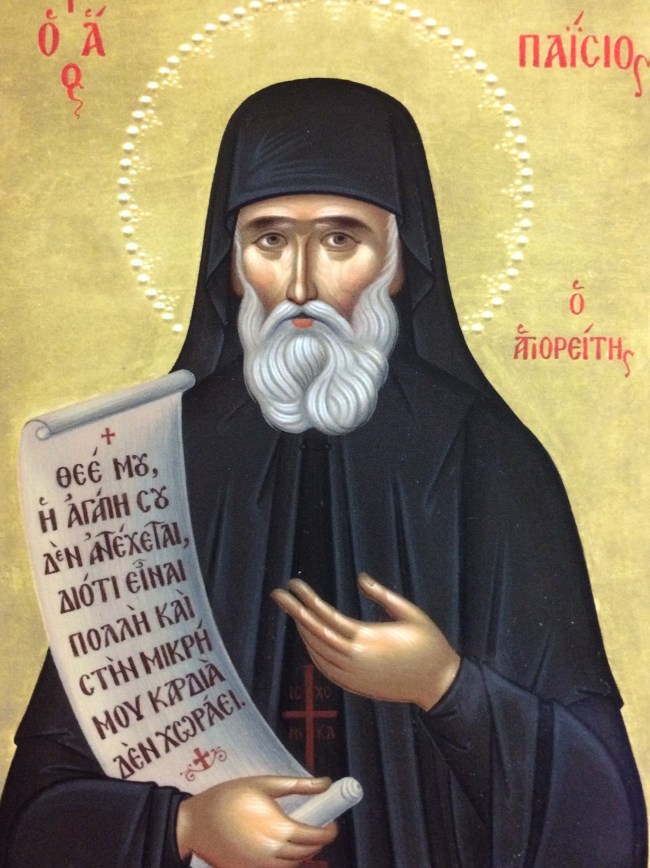
1. Blessed are those who love Christ more than all the worldly things and live far from the world and near God, with heavenly joys upon the earth.
2. Blessed are those who manage to live in obscurity and acquired great virtues but did not acquire even a small name for themselves.
3. Blessed are those who manage to act the fool and, in this way, protected their spiritual wealth
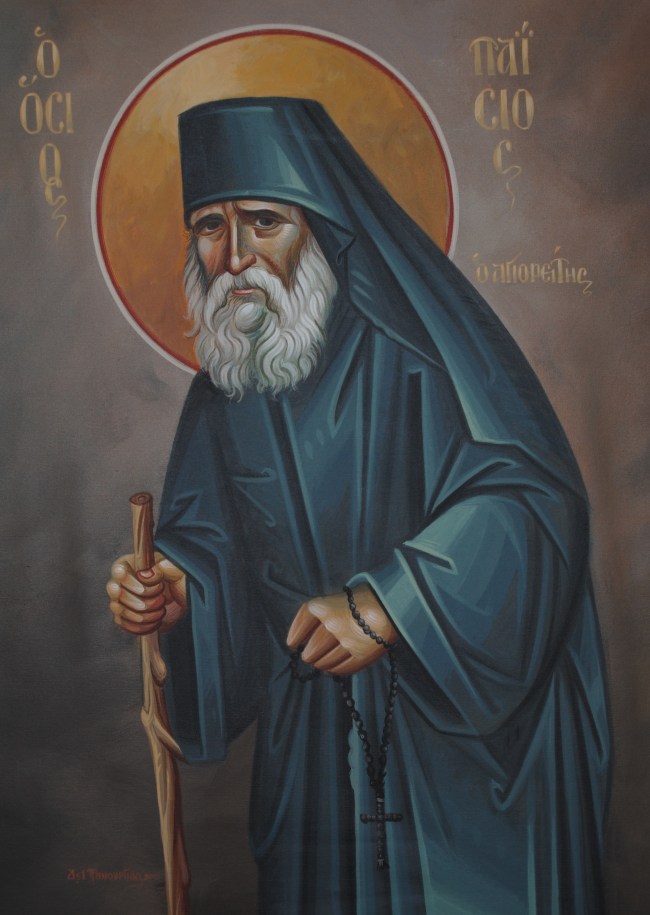

4. Blessed are those who do not preach the Gospel with words, but live it and preach it with their silence, with the Grace of God, which betrays them.
5. Blessed are those who rejoice when unjustly accused, rather than when they are justly praised for their virtuous life. Here are the signs of holiness, not in the dry exertion of bodily asceticism and the great number of struggles, which, when not carried out with humility and the aim to take off the old man, create only illusions.
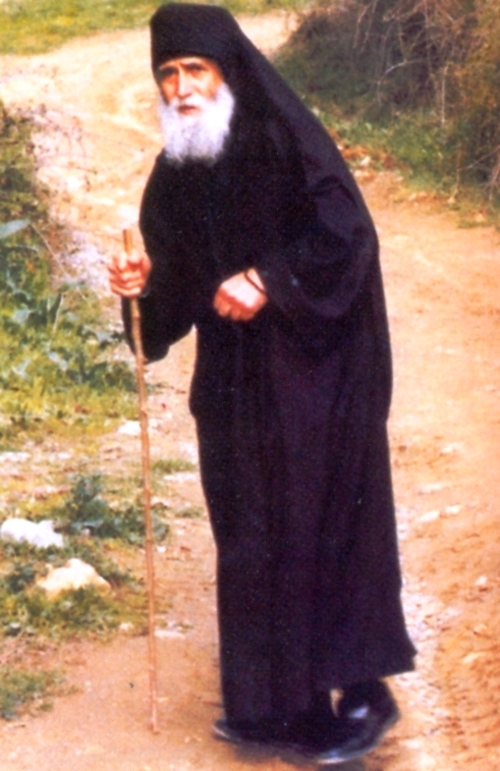
7. Blessed are those who have been born crippled or became so due to their own carelessness, yet do not grumble but glorify God. They will hold the best place in Paradise along with the Confessors and Martyrs, who gave their hands and feet for the love of Christ and now constantly kiss with devoutness the hands and feet of Christ in Paradise.
8. Blessed are those who were born ugly and are despised here on earth, because they are entitled to the most beautiful place in Paradise, provided they glorify God and do not grumble.
9. Blessed are those widows who wear black in this life, even unwillingly, but live a white spiritual life and glorify God without complaining, rather than the miserable ones who wear assorted clothes and live a spotted life.
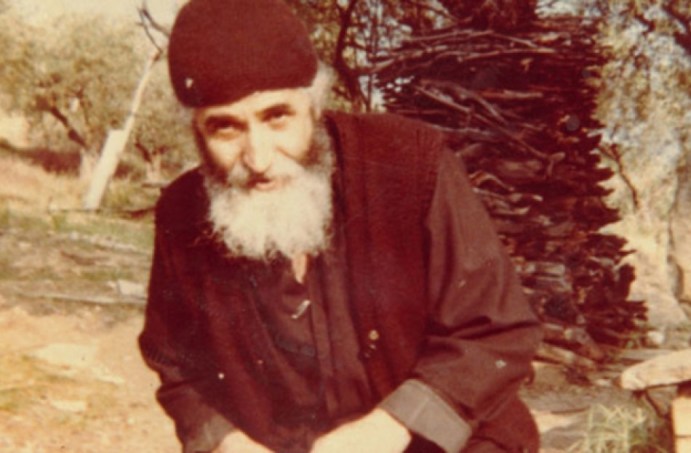
10. Blessed and thrice blessed are the orphans who have been deprived of their parents’ great affection, for they managed to have God as their Father already from this life. At the same time, they have the affection they were deprived of from their parents in God’s savings bank “with interest”.
11. Blessed are those parents who avoid the use of the word “don’t” with their children, instead restraining them from evil through their holy life – a life which children imitate, joyfully following Christ with spiritual bravery.
12. Blessed are those children who have been born “from their mother’s womb”(Mt. 19:12) holy, but even more blessed are those who were born with all the inherited passions of the world, struggled with sweat and uprooted them and inherited the Kingdom of God in the sweat of their face (Cf. Gen. 3:19).
13. Blessed are those children who lived from infancy in a spiritual environment and, thus, tirelessly advanced in the spiritual life.
Thrice blessed, however, are the mistreated ones who were not helped at all (on the contrary, they were pushed towards evil), but as soon as they heard of Christ, their eyes glistened, and with a one hundred and eighty degree turn they suddenly made their soul to shine as well. They departed from the attraction of earth and moved into the spiritual sphere.
14. Fortunate, worldly people say, are the astronauts who are able to spin in the air, orbit the moon or even walk on the moon.
Blessed, however, are the immaterial “Paradise-nauts”, who ascend often to God and travel about Paradise, their place of permanent abode, with the quickest of means and without much fuel, besides one crust of bread.
15. Blessed are those who glorify God for the moon that glimmers that they might walk at night.
More blessed, however, are those who have come to understand that neither the light of the moon is of the moon, nor the spiritual light of their soul of themselves, but both are of God. Whether they can shine like a mirror, a pane of glass or the lid of a tin can, if the rays of the sun do not fall on them, it is impossible for them to shine.

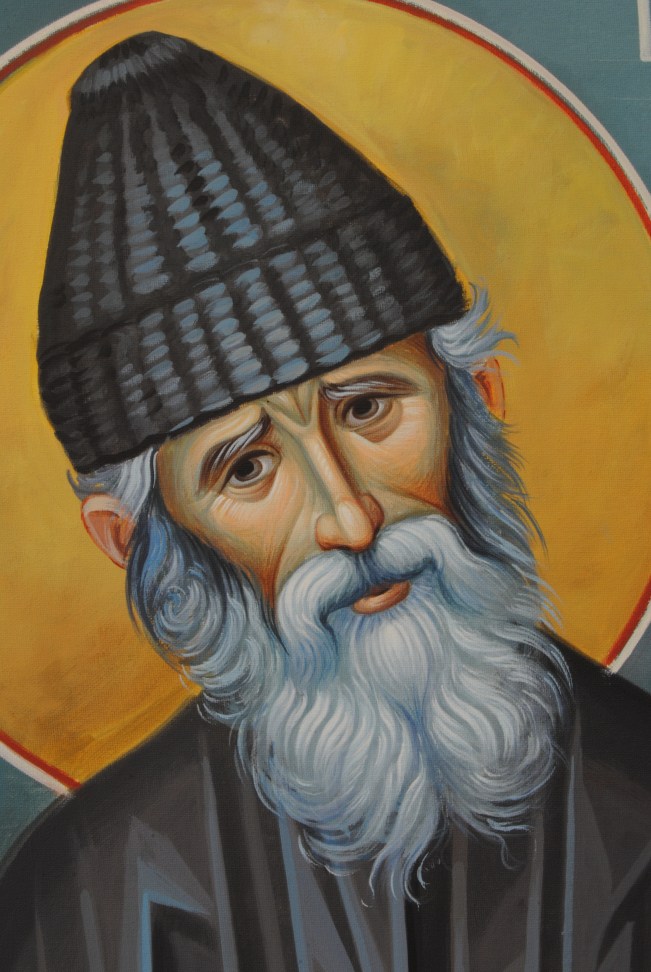
16. Fortunate, worldly people tell us, are those who live in crystal palaces and have all kinds of conveniences.
Blessed, however, are those who have managed to simplify their life and become liberated from the web of this world’s development of numerous conveniences (i.e. many inconveniences), and were released from the frightening stress of our present age.
17. Fortunate, worldly people say, are those who can enjoy the goods of the world.
Blessed, however, are those who give away everything for Christ and are deprived even of every human consolation for Christ. Thus it is that they manage to be found night and day near Christ and His divine consolation, which many times is so much that they say to God: “My God, Thy love cannot be endured, for it is great and cannot be fit within my small heart”.
18. Fortunate, worldly people say, are those who have the greatest jobs and the largest mansions, since they possess all means and live comfortably.
Blessed, however, according to the divine Paul, are those who have but a nest to perch in, a little food and some coverings99• For, in this way, they’ve managed to become estranged from the vain world, using the earth as a footstool, as children of God, and their mind is constantly found close to God, their Good Father.

19. Fortunate are those who become generals and government ministers in their head by way of heavy drinking (even if just for a few hours), with the worldly rejoicing over it.
Blessed, however, are those who have put off the old man and have become incorporeal, managing to be earthly angels with the Holy Spirit. They have found Paradise’s divine faucet and drink from it and are continually inebriated from the heavenly wine.
20. Blessed are those who were born crazy and will be judged as crazy, and, in this way, will enter Paradise without a passport.
Blessed and thrice blessed, however, are the very wise who feign foolishness for the love of Christ and mock all the vanity of the world. This foolishness for Christ’s sake is worth more than all the knowledge and wisdom of the wise of this world.

I beg all the Sisters to pray for God to give me, or rather take from me my little mind, and, in this way, secure Paradise for me by considering me a fool. Or, make me crazy with His love so I go out my self, outside of the earth and its pull, for, otherwise my life as a monk has no meaning. I became externally white as a monk. As I go I become internally black by being a negligent monk, but I justify myself as one unhealthy, when I happen to be so; other times, I excuse myself again for being ill, even though I am well, and so I deserve to be thoroughly thrashed. Pray for me.

May Christ and Panagia be with you,
With love of Christ, Your Brother, Monk Paisios
(“Timiou Stavrou”, December 2, 1972).
“…
Sister Abbess Philothei, Your blessing,
Today, a kind of craziness took hold of me and I took the pencil, as does the madman who writes his outbursts on the wall with charcoal, and I sat down to write my own things on paper like one crazed, and, again, like a lunatic, to send them to you in writing. I am doing this latter craziness out of much love for my Sisters, that they might be edified, even if only a little.
The reason for the initial craziness was five letters, one after the other, from various parts of Greece on a variety of subjects. While the events described were great blessings of God, those who wrote to me had fallen into despair because they dealt with them in a worldly way.
After replying accordingly to their letters, I took the pencil like a madman, as I have said, and wrote this epistle. I believe that even a fifty-cent piece from your journeying brother will be something toward a flint for each one of the Sisters so as to light a little candle in her cell and offer her doxology to our Good God.
I feel great joy when every Sister, with her particular cross carries out the equivalent struggle with philotimo.
It is a small thing to give to Christ a heart equal in size and as luminous as the sun out of gratitude for His great gifts, and especially for the particular honour He showed us monks by conscripting us with personal summons to His Angelic Order.
A great honour also belongs to the parents who were thus made worthy of becoming related to God. Unfortunately, however, most parents do not realize this and, instead of being grateful to God, are infuriated etc., for they see everything in a worldly way, like those people I mentioned earlier, who became the reason for me to take the pencil and write everything that follows. …”

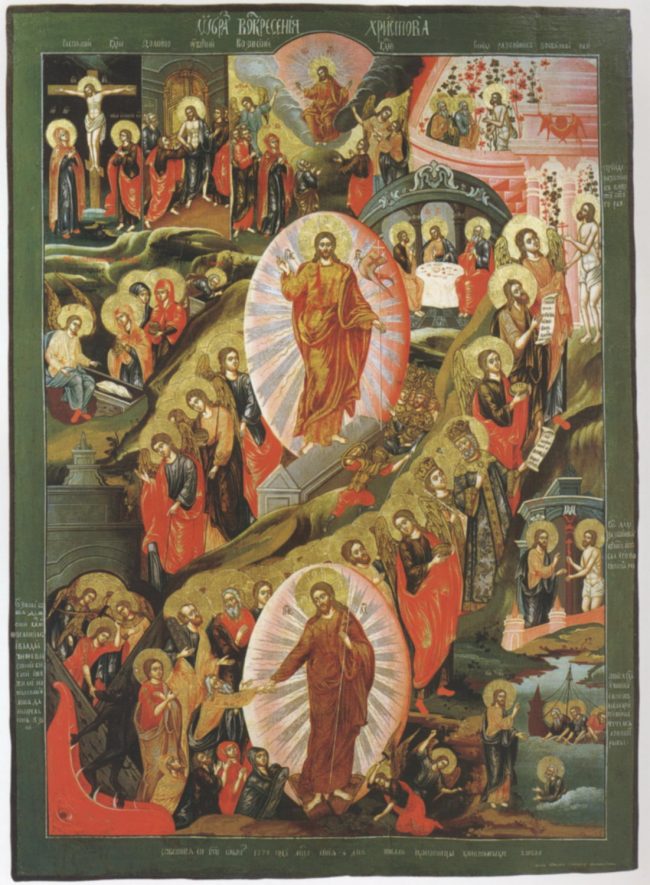
An Orthodox Theology of Time – V / V -Conclusion
Time as Renewal: Growth unto Goodness in Christ. The concept of the liturgical Eighth Day. If time is the change inherent in being created then can we experience our life as other than a growth unto death? Can we experience life as perhaps, a growth unto goodness in Christ in His Church?
Therefore, let not a person be grieved by the fact that his nature is mutable; rather, by always being changed to what is better and by being transformed from glory to glory (2 Cor 3.18), let him so be changed: by daily growth he always becomes better and is always being perfected yet never attains perfection’s goal. For perfection truly consists in never stopping our increase towards the better nor to limit perfection with any boundary (Gregory of Nyssa, On Perfection, p.379)
Decay unto death can be renewed as a growth unto life in Jesus Christ. … Our everlasting God has come down into the broken temporality of time and renewed our memory in the saving event of Jesus Christ, God as Man and Man for God.
Memory needs to be healed not destroyed. Often the greatest difficulties in our lives are the result of being plagued by evil memories, which wound and lacerate us as persons. Indeed, we pray at Great Vespers that God will protect us “from vain thoughts and from evil memories.”An image exists for this ‘weight of memory’ at the end of the Purgatorio when Dante, after confessing to Beatrice, first drinks of the river of Lethe forgetting all the evil and sin of his past life then drinking of the river of Eunöe (‘good remembrance’ or ‘good mind’) and remembering everything but from the perspective of the grace and love of God.
Forgiveness, then, is a process of progressive confession and absolution where we gradually let go of the past (are freed from its chains) by confronting the past and then giving it up in forgiveness (forgetting it without repression) so that we can regain it back from Jesus Christ through His remembrance in love. This healed or forgiven memory is paradise regained, that is, “radical innocence” as Yeats termed the state of learned childlikeness after our dreaming innocence has gone through the fire of experience.
We are given this renewal of our memory, this reality of memory shining forth with the light of the new age of the coming Kingdom of God fulfilled once for all time on the cross (‘It is finished!’/’Behold I make all things new’), in the perpetual rebirth—perpetual Pentecost—of the Church in its praise of God. In praising God, the Church is given the gift of the eternal Memory of the Spirit whereby we remember the life of Christ as our very own thus redeeming all memory under the sign of His cross. Such ‘eternal remembrance’ renews the face of the earth and makes of it, as Schmemann put it, a “liturgical paradise.”
“Today, a sacred Pascha is revealed to us” or “This is the day of resurrection”or yet again “On Mount Tabor, O Lord, Thou hast shown today the glory of Thy divine form unto Thy chosen disciples”.
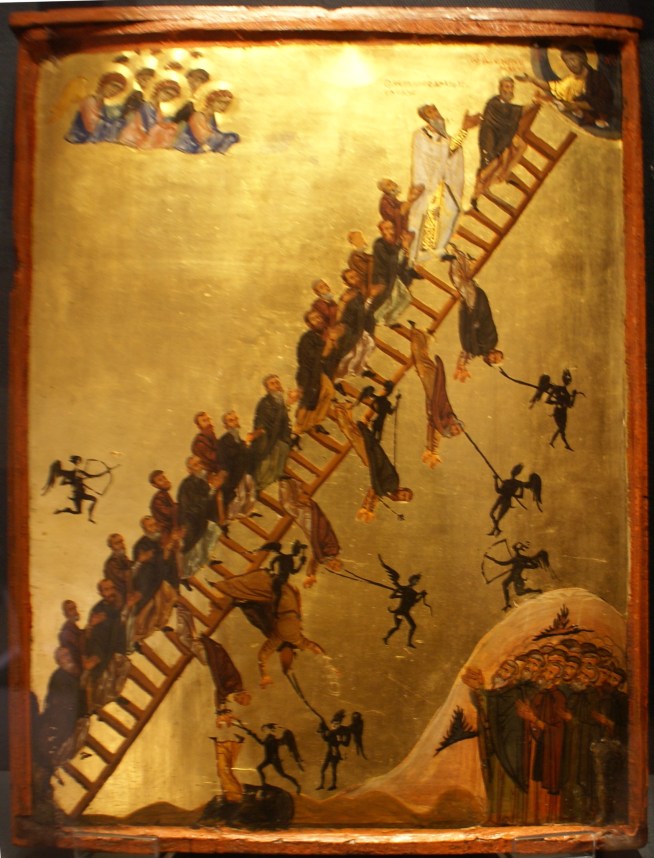
In Christ, as the Lord of Time, is realized the ingathering of all moments in One Moment of what we might call an ‘eternal temporality’ and which Schmemann calls temps immobile, that is, the co-inherence or co-presence of each part of time to each other in the present, in Jesus Christ.
Christ is Himself the Lord of Chronos or time proper because He is the Kyrios Kairou, Lord of the appointed time of our salvation. In Him, our broken mode of temporality, chronos, is renewed and sanctified, ascending with Him to the Father and becoming a spiritual mode of time through its marriage with creaturely eternity (aeon).
But when He returns to us in His Body and Blood in the liturgy, which is both our ascent to God and His descent to us, we see that our new mode of time, eternal temporality, is something radically new to creation, sensible and spiritual at once, as it has partaken of the very mode of God Himself as everlasting Trinity (aidiotes), God before the ages.
Therefore, the central locus of this ingathering of time is our Lord’s anamnesis or His recollection of His own saving actions in the liturgy in which His living memory becomes life everlasting by renewing all time in the new age of His Kingdom. This Kingdom of Jesus Christ is the very same life we will receive at the resurrection on the last day. It has been variously described as the ‘eighth day’ or ‘liturgy without end’ and it is granted as a gracious foretaste to us. It is a sort of liturgical in-breaking of the life to come in our crooked and wounded time.
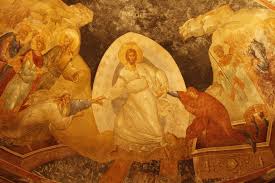
Harrowing of Hades, fresco in the parecclesion of the Chora Church, Istanbul, c. 1315, raising Adam and Eve is depicted as part of the Resurrection icon
It should be noted that when, in Scripture, Christ remembers His own Body and Blood broken and shed for the life of the world, it is prior to the actual sacrifice. In other words, in Christ’s remembrance, memory is not merely retrospective, in that it looks back at a life of sacrifice, but it is also simultaneously prospective in actuating prophetically the sacrifice of the cross before it happens.
Likewise, our Lord as our Great High Priest remembers us and all time before the Father in heaven when at the Anaphora on the Lord’s Day the priest says both retrospectively and prospectively at once: “Remembering this saving commandment and all those things which have come to pass for us: the Cross, the Tomb, the Resurrection on the third day, the Ascension into heaven, the Sitting down at the right hand, and the second and glorious Coming.”
Christ’s memory is eschatological, a remembering of the future life to come. Thus the Christian life is one of memory eternal where we live in the liturgical ingathering of all moments by remembering, with Christ, the saving acts that have accomplished our salvation now and to come. In the Christian life lived as anamnesis, past and future converge in one another in the present moment of our loving memory where we taste of the new age given in our midst.
Eternal memory is not the destruction of the past as past and the future as future but their clarification and illumination in encountering each other in our present consciousness of Jesus Christ who gives us eternal life. To borrow a phrase from Berdyaev, “Immortality is memory made clear and serene.”
Christ, then, as our renewed memory effecting salvation has, as Schmemann put it, “power over time” because He makes time His own as its Lord and does not destroy it but burns away, with healing fire, its wounds, making it itself through contact with Himself insofar as “Eternity is not the negation of time, but time’s absolute wholeness, gathering and restoration.”
Source: Excerpts from http://www.bogoslov.ru/en/text/2668945.html

An Orthodox Theology of Time – IV / V
Time as Woundedness and Time as Decay, Growth unto Death. How do we primarily experience time as fallen beings? Do we experience it as change or, more precisely, mutability, that is, a growth unto death?
“To-morrow, and to-morrow, and to-morrow,/ Creeps in this petty pace from day to day/ To the last syllable of recorded time,/ And all our yesterdays have lighted fools/ The way to dusty death. […] it is a tale/ Told by an idiot, full of sound and fury,/ Signifying nothing.” (Shakespeare, Macbeth, V.v. ll.)
First we experience fallen time as constant change or ceaseless movement in a cycle of death that can be seen cyclically in the seasons, which move in a circle like a snake swallowing its tail. Winter follows Autumn and Spring follows Winter just as death follows old age and old age is not the end, for out of our death comes the birth of our descendants. Thus all of time is a perpetual repetition of death since the moment that things come into existence, changing from non-existence into being, they straightway move back again from existence into non-being.
This experience of fallen time is what Pozzo, in Waiting For Godot, expresses when he cries furiously at Vladimir:
Have you not done tormenting me with your accursed time! It’s abominable! When! When! One day, is that not enough for you, one day he went dumb, one day I went blind, one day we’ll go deaf, one day we were born, one day we shall die, the same day, the same second, is that enough for you? [Calmer] They give birth astride of a grave, the light gleams an instant, then it’s night once more.
Second, we experience fallen time as unending desire. Once we desire something it lacerates our whole being until we possess it and our desire for that thing is then satiated until the thing possessed tempts us into some new perversion and the vicious circle begins all over again. Man’s life, then, is like this vicious circle insofar as he is continually turning around while facing his own self like it was a household idol, as The Great Canon of St. Andrew of Crete puts it: “I am become my own idol, and have injured my soul with passions.” Luther expressed this fallen circularity of time well when he says that homo in se incurvatus or man is turned in on himself.
… St. Gregory of Nyssa has a nice image to convey this hopeless cyclical perpetuum mobile. It is of a man fruitlessly attempting to climb uphill in sand and never making any progress. It is the spiritual life where one’s house is built not on the rock of Christ but on the sand of spiritual illusions:
“He [the passionate man] is like those who toil endlessly as they climb uphill in sand: Even though they take long steps, their footing in the sand always slips downhill, so that, although there is much motion, no progress results from it.”
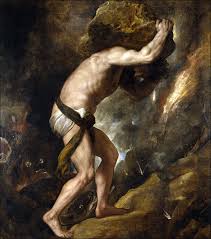
[Also, remember here The Myth of Sisyphus: The gods had condemned Sisyphus to ceaselessly rolling a rock to the top of a mountain, whence the stone would fall back of its own weight. They had thought with some reason that there is no more dreadful punishment than futile and hopeless labor.]
Third, we see time as decay in memory—Schmemann’s “evil time.” In evil time, we remember the past as perpetually lost like a ghost that must relive its own murder. Thus we remember continually and cannot change the death of our spouse, our mother, our child, or worse, a moment of humiliation by our spouse, our mother, by us of our own child. We cannot choose our past, for deliberation is a mark of future action in the present, the choice between what we would like to have happened and what actually happened remains only an undying craving for another world, as T. S. Eliot acknowledged: “What might have been is an abstraction/ Remaining a perpetual possibility/ Only in a world of speculation.”(T. S. Eliot, “Burnt Norton”, I, ll.6-8 in Four Quartets).
Each of these faces of fallen time points to our fundamental need, in time, for time’s renewal in Jesus Christ.
Source: http://www.bogoslov.ru/en/text/2668945.html
To Be Continued
For Part V go to https://orthodoxcityhermit.com/2015/12/18/memory-made-clear-and-serene/

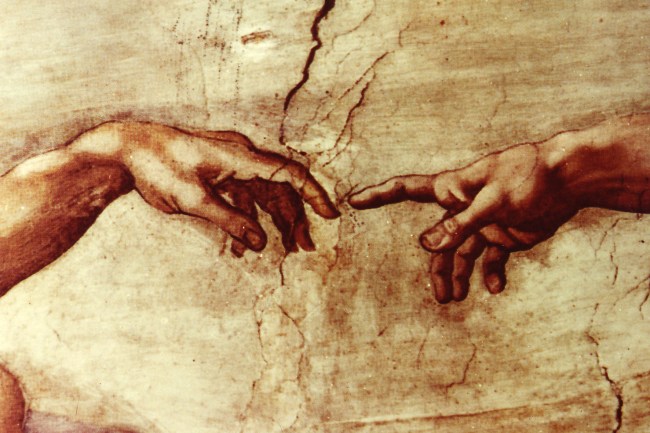
Carpe Diem: Kairos Moments In Our Chronos
An Orthodox Theology of Time – III / V
Everything we do is marked by the steady march of time. Seconds lead to minutes to hours to days to weeks to years to decades to centuries.
The problem for all of us is that the clock is always running the wrong way, and we simply cannot stop its precipitous crawl toward the next tick. We lose moments to the past, out of our reach, never to be regained.
Where did all the years go?
The kids have grown and gone. We’re muddling along in a career, making a living, just existing out of habit more than anything.
Did I miss out on my chance to make a difference?
The Greek language has a couple of words that mean “time.” The first is most familiar—chronos . It means the chronology of days, governed by the carefully calculated earths’ sweep around the sun. God himself ordained this measurement of days on the fourth day of Creation, spinning the heavenly lights “for seasons, and for days and years.”
Boy, do I know about time. The wrinkles etched on my face; the wrinkles etched on my heart are the visual reminders of chronos.
But another word for time is also used in the New Testament—kairos . This speaks more to specific, God-ordained times throughout history, sometimes called the “right time” or “appointed season” (Titus 1:3). Kairos is God’s dimension—one not marked by the past, the present, or the future.
When Jesus came, it was a fulfillment of promises past, a cosmic collision of the sacred and secular. It was an intersection of the holy will of God and the stubborn ways of man.It was a perfect moment. John the Baptist said in Mark 1:15 that “time is fulfilled, and the kingdom of God is at hand.”
This godly kairos pierced its way into creation at just the right time, slicing through chronos with a cry of a baby in a manger.
The cross was another kairos moment. Romans 5:6 says, “For while we were still helpless, at the right time, Christ died for the ungodly.”
Kairos moments then—and now—allow us to get a glimpse of the “other side.” We peek around the corner at eternity. We actually glimpse how God works.
As the omniscient, omnipresent Deity, God is not bound by the confines of space or time. That’s why He flows into our existence when we least expect Him. When we ask for something right away, it might not always come. Or when we don’t ask at all. But he shows up. It can be frustrating, “with the Lord one day is as a thousand years.” It can also be surprising “a thousand years as one day.” (2 Pet 3:8).
We should always live our days looking for those moments, those inexplicable times when His will and his way intersect with our daily walks.
And they can happen anytime! A friend calls you out of the blue to give a good word. A child’s innocent joy pierces a long, hard day of struggle. A coworker takes a moment to lend a hand.
God is always surprising us with his perfect, kairos timing.
Am I ready, waiting, and watching for him to move in my life?
Source: Living a Kairos Life in a Chronos World, By MAY 22, 2009 at http://www.thehighcalling.org/articles/essay/living-kairos-life-chronos-world

Hebrews 3
7 Wherefore (as the Holy Ghost saith, To day if ye will hear his voice,
8 Harden not your hearts, as in the provocation, in the day of temptation in the wilderness
13 But exhort one another daily, while it is called To day
15 While it is said, To day if ye will hear his voice, harden not your hearts, as in the provocation.

To Be Continued
For Part II go to https://orthodoxcityhermit.com/2015/12/18/4441/
For Part IV go to https://orthodoxcityhermit.com/2015/12/18/woundedness-the-sisyphus-myth/

An Orthodox Theology of Time – II / V
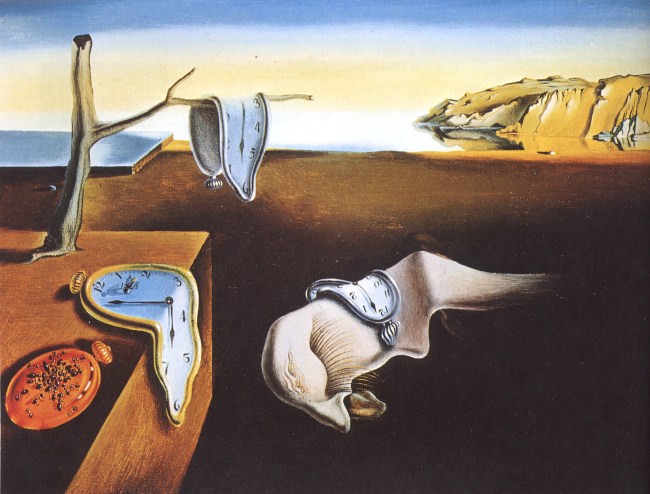
The Persistence of Memory – Salvador Dali
Nature of Time: What is time? What is its relation to God’s mode of being? Time as understood in its relation to the Church as a receptacle of the eternal Kingdom of God.
“What is time? Who can explain this easily and briefly? Who can comprehend this even in thought so as to articulate the answer in words?
Yet what do we speak of, in our familiar everyday conversation, more than of time?
We surely know what we mean when we speak of it.
We also know what is meant when we hear someone else taking about it.
What then is time? Provided that no one asks me, I know.
If I want to explain it to an inquirer, I do not know”
(Augustine’s Confessions,11.14.17, p. 230)
…
Some Fathers, including Sts. Basil the Great and Maximus the Confessor, spoke of three modes of being (i.e. time (chronos), age or creaturely eternity (aeon) and the everlasting or uncreated eternity (aidios, aidiotes) and sometimes … proaionios or the pre-eternal which is ateleutetos or without an end)), not just the two of time and eternity.
…First, everlastingness or everexistingness (aidiotes) is the mode of being only of God, who is utterly beyond the distinction between time and creaturely eternity, being and non-being, since He is the pre-eternal (proaionios) God who is “endless” in the sense of being beyond duration. Everlastingness is essentially a negative or apophatic category emphasizing God’s unknowableness.
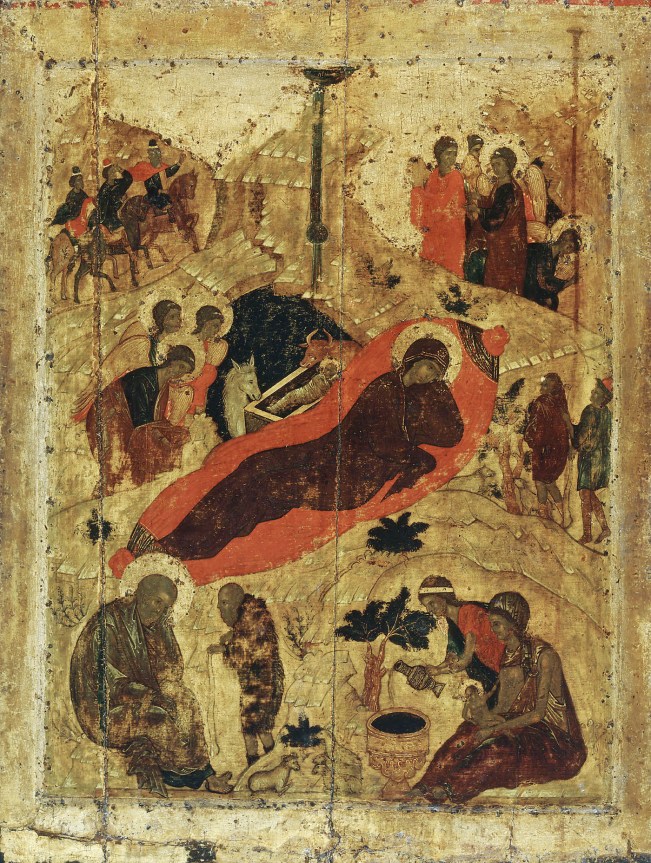
… God is indefinable as the ho pro aionon Theos (Slavonic: prevechnyi Bog) which can be translated as ‘the pre-eternal God’ or ‘God before the ages.’ As the Kontakion of Christmas puts it:
Today the Virgin gives birth to him who is above all being [ton huperousion], and the earth offers the cave to him whom no one can approach; Angels with Shepherds give glory, while Magi journey with a star, for to us there has been born a little child, God before the ages [ho pro aionon Theos].
Second, we have creaturely eternity/age (aion–aionios), which is the creaturely mode of being of the supra-cosmic or spiritual creation of God—angels. [Human beings too. Both Angels and humans are eternal, because although they were created in Time, they do not have an end]. This mode of being is not one that excludes change but it is not bound by the distinctions of our present time’s version of change. The past is not utterly past but it is contained in the present as is the future and the future in the past and the past in the future so that eternity is a sort of perichoretic version of time. This, I would argue, is what Schmemann was getting at when he wrote that points in time can be gathered together and encountered simultaneously:
“In an instant, not only are all such breaths of happiness remembered but they are present and alive—that Holy Saturday in Paris when I was a young man—and many such ‘breaks.’ It seems to me that eternity might be not the stopping of time, but precisely its resurrection and gathering.”
Moreover, there is in the Kingdom of God, which is an eternal Kingdom not of this world, an enduring quality of being where one forever praises God from one moment to the next—a sort of sempiternal or eternal duration—without in any way being trapped in growing old or being trapped in the inexperience of youth. In such eternal duration, the goodness of God is always desired and always held in its fullness at the same time as that goodness continually increases our capacity and desire for it although we never possess this goodness in its fullness.
Time in physical creation, as we now experience it under the weight of sin, is understood as a reality with a strict division between past, present and future where the person in time, who has turned his back on God’s grace in Jesus Christ, is prevented from being present to more than one division at once. Thus when I err under the weight of sin I cannot be present to here and there at once since I am bound to here.
… Christ heals our time (chronos), and indeed the time of the invisible creation (aeon), by making it His time of opportunity for our salvation in Him (kairos).
Time, as Christ’s time, becomes a means to our perfection in Him rather than the ultimate expression of our rejection of God’s grace. Through Him in His Body the Church we come to partake in the mode of being of the invisible creation, creaturely eternity, but this eternity or time of the invisible creation becomes wedded with our sensible time, remade for an embodied being like man, through participating in the everlasting life of God. Time is, therefore, remade and renewed in the Church as the Kingdom of God and we have a foretaste of this renewal in the liturgy.
[Chronos, Kairos and Eternity, or, Agape. Because Eternity is Hypostatical Agape in God]
Source: Excerpts from Gallaher, Brandon ‘s Orthodox Theology of Time at https://www.academia.edu/3561108/Chalice_of_Eternity_An_Orthodox_Theology_of_Time_St_Vladimirs_Theological_Quarterly_57.1_2013_pp.5-35
To Be Continued …
For Part I go to https://orthodoxcityhermit.com/2015/12/18/chalice-of-eternity/
For Part III go to https://orthodoxcityhermit.com/2015/12/18/4497/



 ORTHODOX CHRISTIAN FAITH AND LIFE