The Monk Who Got Married


monk

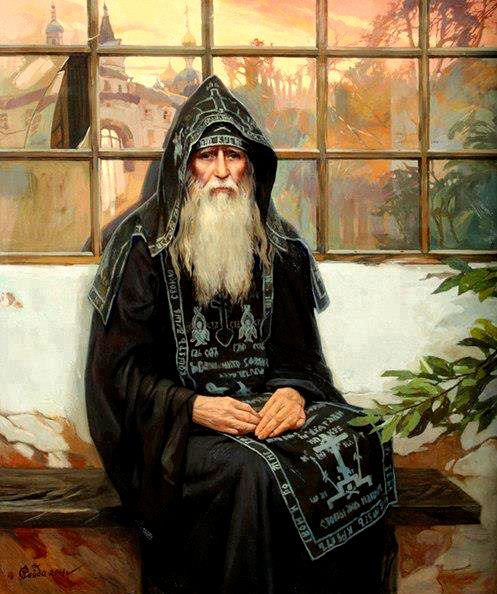
“A monk in a Romanian village got rid of his monastic ‘habit’ (ie. Orthodox monastic clothing), left his monastery and got married. He became a father, many years passed by, and eventually the time of his repose came. His family and relatives washed his body, clothed him, said prayers, made all necessary arrangements at the graveyard and the church, and made an appointment with the local priest to come at their home and read the service of the funeral. When the priest arrived at the appointed time, he found the house empty. Nobody was there. He went upstairs and found the dead person all alone. The priest was wondering what had happened. Suddenly he heard heavy footsteps at the stairway. He turned and saw a huge bear. The bear spoke to him and said: “Why did you come here? So that you will say prayers about him? This man was a monk who renounced his monastic schema. No matter how many prayers you will say about him, this one is mine.” At these words, the bear took the body of the dead man and disappeared! Then the priest’s eyes were opened and he saw all the people in the room, around the dead man, crying over him. The priest was in shock. When he recovered after some time, he asked the people around him to take him back home, and he did not stay to read the funeral service. Back at his home, he told everything to his matushka and asked her permission to go to Mount Athos and become a monk. He lived the rest of his life there with asceticism and profound repentance.”

*

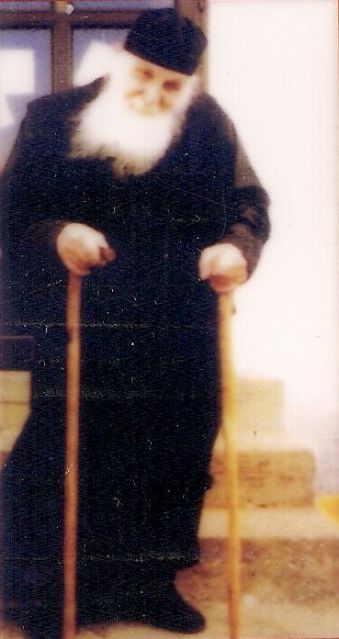
* A true story told by another Romanian Hieromonk, + Papa Methodios Karyotis (Koutloumousianon Kellion Agion Theodoron, Mount Athos) (1905-1979). Papa Methodios met in person the Romanian priest who was called to do the funeral service for “the monk who got married” but could not after the vision he saw at his corpse, and became himself a hieromonk at Mount Athos;  he heard the story from his lips.


Source: From the Ascetic and Hesychastic Tradition of Mount Athos,

A collection of stories by the Monastery of St John the Forerunner, pp134-136.

The author(s) of this book chose out of humility to remain anonymous, but ‘rumour’ has it that  this collection of brief true stories is a joint authorship by St. Paisios of Mount Athos, Elder Euphemios, Karoulia, and Elder Gregorios, the spiritual father of the Monastery of St John the Forerunner, and St. Paisios’ spiritual child and tonsure.

The Rocks Split


golgotha1

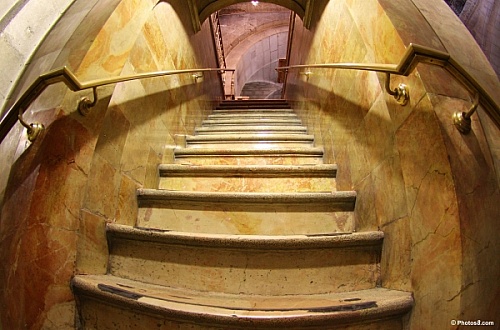
Ascending to The Horrendous Golgotha (John 19, 17), i.e. “The Place of the Skull” (“Golgotha” in Hebrew), was by far the most gut wrenching experience at our pilgrimage. Here the mystery of divine economy was accomplished, here the New Testament was sealed with the blood of the Theanthropos (Godman) which cleansed humanity from the evils of sin and death.

Stairway to Calvary in Holy Sepulchre Church

Stairway to Calvary in Holy Sepulchre Church …

*

Like in the prison of Christ, suddenly everything — the raw violence, the injustice and the hubris recorded in the “Twelve Gospel” readings* -– everything, becomes scarily all too real!


33 They came to a place called Golgotha (which means “the place of the skull”). …

From noon until three in the afternoon darkness came over all the land. 46 

44 It was now about noon, and darkness came over the whole land until three in the afternoon, 45 for the sun stopped shining. And the curtain of the temple was torn in two. 46 Jesus called out with a loud voice, “Father, into your hands I commit my spirit.”[c] When he had said this, he breathed his last. (Luke 23, 44-46)

About three in the afternoon Jesus cried out in a loud voice, “Eli, Eli,[a] lema sabachthani?” (which means “My God, my God, why have you forsaken me?”).[b]

50 And when Jesus had cried out again in a loud voice, he gave up his spirit.

51 At that moment the curtain of the temple was torn in two from top to bottom. The earth shook, the rocks split 52 and the tombs broke open. The bodies of many holy people who had died were raised to life. 53 They came out of the tombs after Jesus’ resurrection and[c] went into the holy city and appeared to many people.” (Matthew 33, 45-53)


“Today is hung upon the Tree, He Who did hang the land in the midst of the waters. A Crown of thorns crowns Him Who is King of Angels. He is wrapped about with the purple of mockery Who wrapped the Heavens with clouds. He received buffetings Who freed Adam in Jordan. He was transfixed with nails Who is the Bridegroom of the Church. He was pierced with a spear Who is the Son of the Virgin. We worship Thy Passion, O Christ. Show also unto us thy glorious Resurrection.”

 *

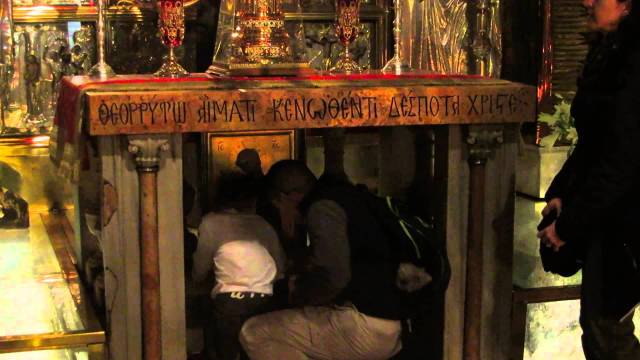
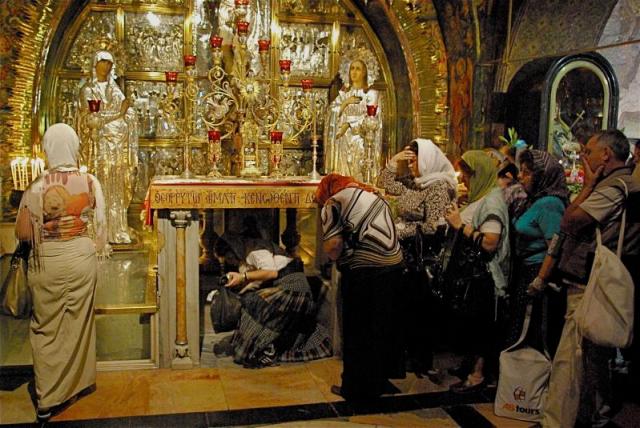
This is the hole through which you can touch the very earth where the Cross actually stood.

golgotha10

calvary12

The queue of the pilgrims never ends here.
calvary13.jpg


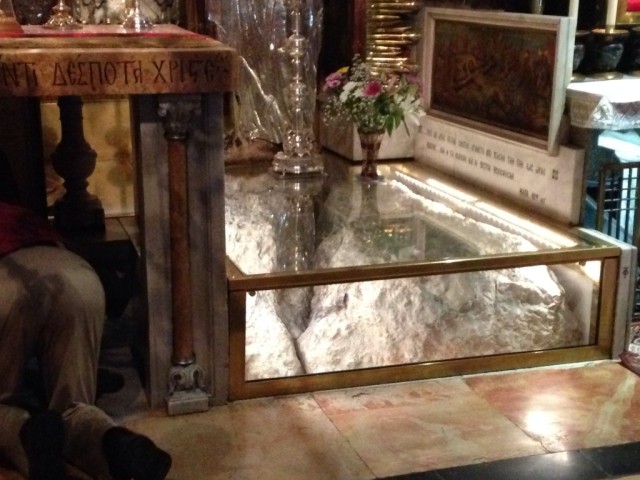
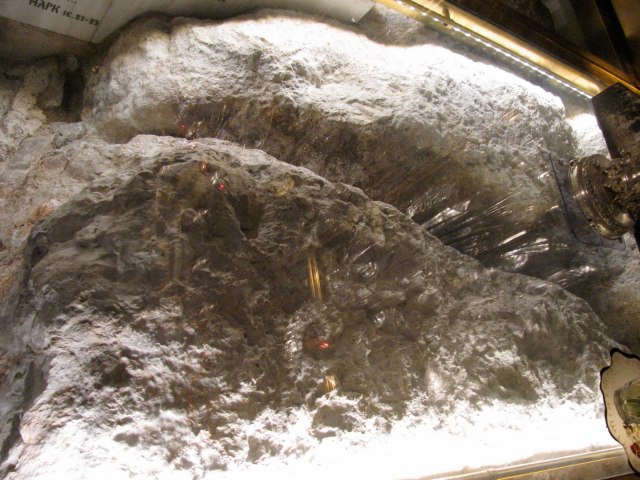
Just look at this ancient rock, the Rock of Calvary, literally split in half, exuding the fragrance of Holiness and Sanctity!


golgotha5


“Oh look, my soul, look!

How the rock was split in half

At the sight of the Crucifixion

Of the Invaluable Treasure!”

(Excerpt of a poem by St. John Jacob (the Romanian)


golgotha4


How much more should our hearts be torn and wounded by love if an inanimate material felt the hubris and shuddered and literally split in two at the sight of our Lord on the Cross!     Indeed, we need to continually beseech the Lord for “pardon and remission of our sins and transgressions”, “that we may complete the remaining time of our life in peace and repentance”. 

“Before the end to our life comes, because then we lose the right to pray for ourselves… because the time given to us for our repentance has expired.”


Glory to Thy Forbearance, O Lord!

Lord Jesus Christ forgive us the sinners.


* Service of the HOLY PASSION of our Lord Jesus Christ on Great Holy Thursday Evening


The Little Orphan

orphan-sos2


The Little Orphan

an autobiographical poem

by St. John Jacob (the Romanian)

Blessed John (Jacob) of Neamts, the New Chozebite

“the child of zero” who “followed the One”*


Resurrection Day!

The bells are ringing!

Old men sit at their verandas,

Others are at their doorsteps.


The young and the children

Go out in their best clothes

To meet their friends at the church

Of the cemetery.


This mystical fragrance

Of the Holy Feast!

They take it in … like incense,

From herbs and flowers.


The Fields are robed

In a beautiful dress

And everything looks now

Renewed on the earth.


Near the Holy Altar

Of the wooden church

A little child offers

Candles and oil.


He kisses the Holy Cross

In front of the fresh tomb

And kneels crying

With sighs.


When the bells are ringing

In a jubilant tone

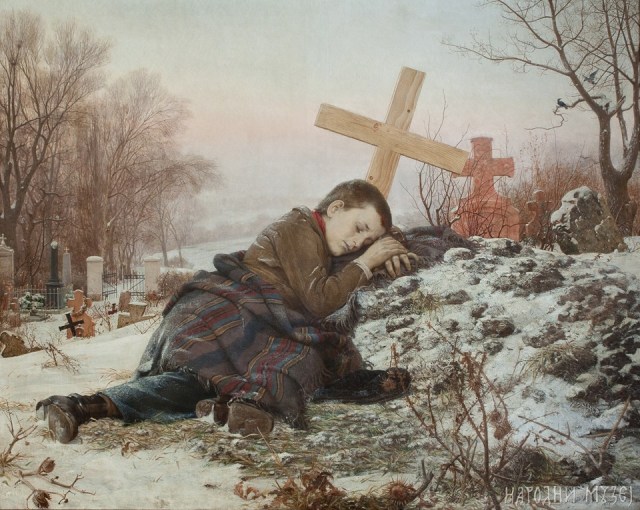
Near the Cross the little orphan

Sheds tears with pain.


Suddenly, while absorbed in his tears

And his deep sighs,

At the ringing of the bells

A sweet voice he hears :


“Cry Not, my child, today

Feel not sad, because, look!

By your side am I

Christ is Risen!”


Was this his mother’s voice

Coming from the tomb

His sadness to dispel

From his broken bosom?


Immediately the orphan

Rises and ecstatically looks up,

Searching to find

Who was speaking to him.


Then, from the Altar most Holy

By the smoked wall

He sees the Risen Christ

Sweetly smiling to him.


His little heart is lit

His face calms

His pain leaves him

And such is his mind:


“If I see here

The Risen Lord

Then my mother too

Is risen with Him.”


Speaking thus to his mind

Humbly he bows

And kissing the tomb

Returns to his ‘home’!


Alone, lonely, he lives

At his earthly lodgings,

His poor father

Died at the war.


Often at nights he sleeps

By the tomb with them.

Crying in the morning he returns

Back to the deserted house.


But the bells ring!

Again at the cemetery

His mother’s voice

Is heard to say:


“Cry not, my child, today

Do not be sad,

Because, lo, I am with you

Christ is Risen!”


Since then our little orphan

Stopped sighing.

And whenever the bells ring

His heart is consoled!


* A Hermit from the Holy Land with complete Incorruptible Relics at the monastery of St. George Choziba! He was a great ascetic and a poet. He called himself “the child of zero” who “followed the One”. After his all night- vigils, he would briefly rest in the verandah of the monastery and write his so moving poetry, sadly not translated yet in English.
* The painting is by the Serbian artist Uroš Predić, Siroče (Orphan), oil on canvas, 1888. National Museum

Memory Eternal!

November 4, 2009

+ Blessed Eusebios Vittis

vittis

Toward the last years of his life, I had the blessing to speak with him in private and pray together. Those piercing, blazing eyes! Elder Eusebios, the mystic, the poet, the Seer of God, as they called him! This Meeting burns still in my heart!  I have also met a number of his spiritual children and know firsthand how much he helped them in all their lives’ trials and tribulations, how Father-like he stood by their side! May we have his blessing!” (Little city hermit)

‘For they shall see God’

*

My offering

By Eusebios Vittis


My offering will be:

For all of Your sheep that do not know You and therefore do not communicate with You, I will communicate.

For all Your sheep, who cry for their transgressions and deviations, small and large, whether in knowledge or in ignorance, I will cry.

For all of Your sheep, who sink in the quicksand of sin, losing their purity, I will lament.

For all Your sheep, who sleep the blissful sleep of negligence and indifference, I will stay awake.

For all Your sheep, who blaspheme You and despise You, because they never truly knew You, I will hymn You and will give You glory.

For all Your sheep, held captive to whatever passion, on bended knee I will beg You to free them from their dreaful bonds.

For all Your sheep, who fall into the hands of wolves, with agony and desperation, I cry out to You:
Lord, Lord, Lord, save them! Resue them!

For all Your sheep, who find themselves in hopeless situations, in isolation, in inability to think and unable to find a saving escape from the labyrinth in which they find tehmselves, I will pray to You.

~Fr. Eusebios Vittis (+2009)

Translation M.T.

*

A Testimony

“I knew Father Eusebios during his time here in Sweden. I first met him in 1964 when he came to Uppsala to study at the university. He soon became involved in helping the Greek immigrants who came to this country in the 1960’s. He assisted his compratiots in many ways, both practically and spiritually.

The lack of Orthodox priests in this country at the time made him decide to become a priest. I took part in his ordination i Stockholm. He then travelled all around the country to serve the various emerging Greek communities.

The lack of understanding from the ruling hierarch at the time forced him to abandon his mission as a parish priest and after a short stay outside Sweden he returned to the country and led his life as a part-time janitor in a retreat house and diocese center belonging to the (Evangelical-Lutheran) Church of Sweden.

He bought an old house in the forest a few kilometers away from his work and turned on of the rooms there to a chapel.

In 1980 I made a radio programme with him. That was just before his departure to Greece and the Holy Mountain. Since then we have been in contact every now and then.

You will find information (in Greek and Swedish) about the Fellowship who preserve his old home here: http://agiosnikolaosrattvik.wordpress.com/”

By torsten kälvemark


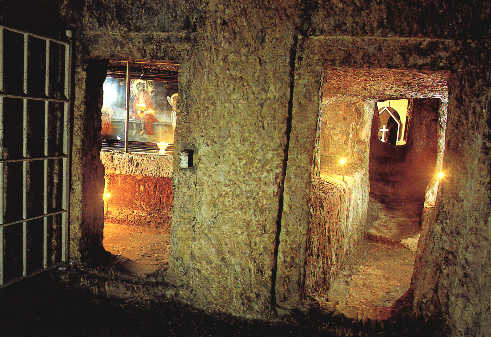
Prison of Christ

prison8

prison3

prison9


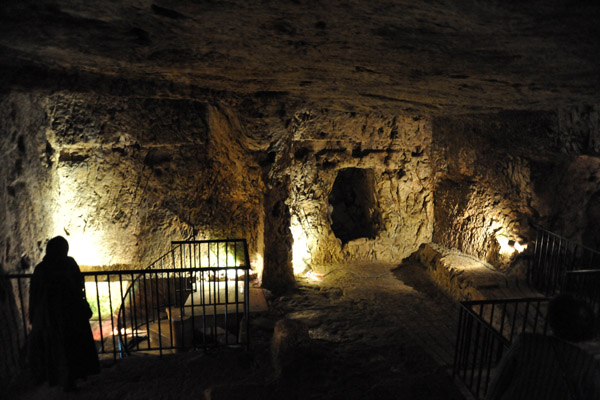
Descending to Christ’s prison was one of the most gut wrenching experiences at our pilgrimage. Matched only with The Horrendous Golgotha (John 19, 17). Here we descended, there we ascended up to the place, called “The Place of the Skull” which in Hebrew is called “Golgotha” , where the mystery of divine economy was accomplished and where the New Testament was sealed with the blood of the Theanthropos (Godman) which cleansed humanity from the evils of sin and death.


prison4


Holy Monastery of Praetorion

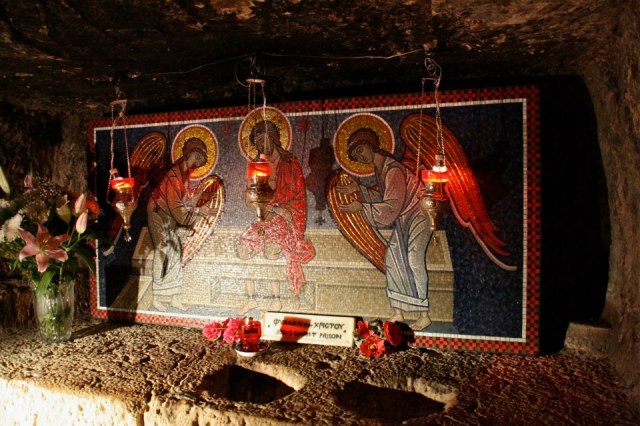
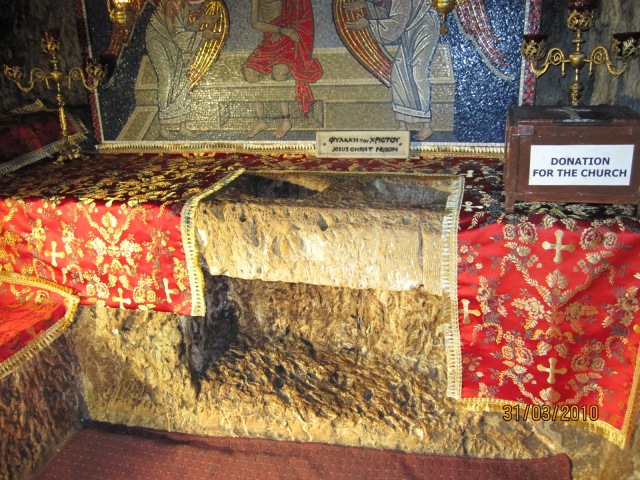
It is near the Monastery of the lentils and it served as a court at the time of Christ, the Roman Headquarters and the Roman governor Pilatus’ house.  In the courtyard of the Praetorium the ultimate sentence of Christ was passed by Pilate the Roman governor. According to the Holy Gospels, Christ was transferred here after he had been seen by Anna and Caiaphas to be judged (Matt. 27:1-31; John 18:28-40). Here began his martyrdom with the scourging, the scarlet robe, the reed, the mocking and the crown made of thorns (Matthew 27). In the Greek monastery there are ancient caves, one of which is believed to have been used as Christ’s temporary prison. The second one, which is underground, is believed to have been used as prison for Barabbas, the robber. There is also the pool of St. Helen where every Great Friday they have the service of the Great Hours. The present Praetorium was built during the 18th century and belongs to the Greek Orthodox. (The Patriarchate of Jerusalem)


prison10Jesus Christ Prisonprison1


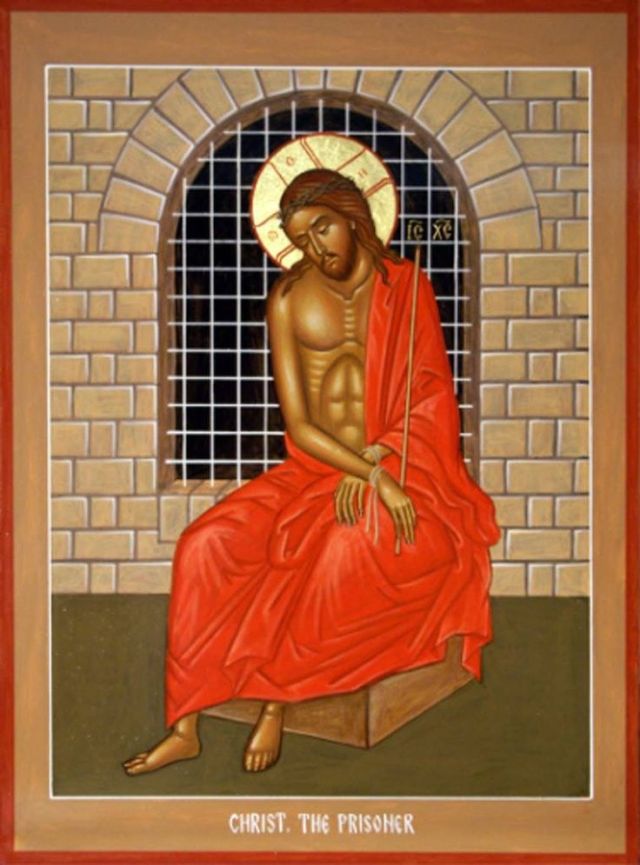
I always visualised Christ as a prisoner like this, and a bit ‘abstract’:

prison11

But no! He must have been like this: 

prison10

Look again, carefully at these two holes, where they must have placed His legs, and the icon above:

Jesus Christ Prison

I was stunned! Suddenly it all be too real! Such violence and injustice and hubris! And those ancient rocks were so full of Life, exuding the fragrance of Holiness and Sanctity!

Glory to Thy Forbearance, O Lord!

Lord Jesus Christ forgive us the sinners.


Monastery of St. George of George of Hozeva

Monastery of St-george-monastery2

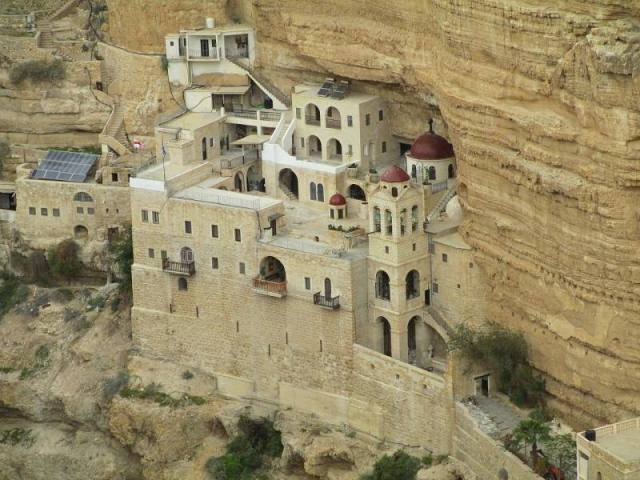
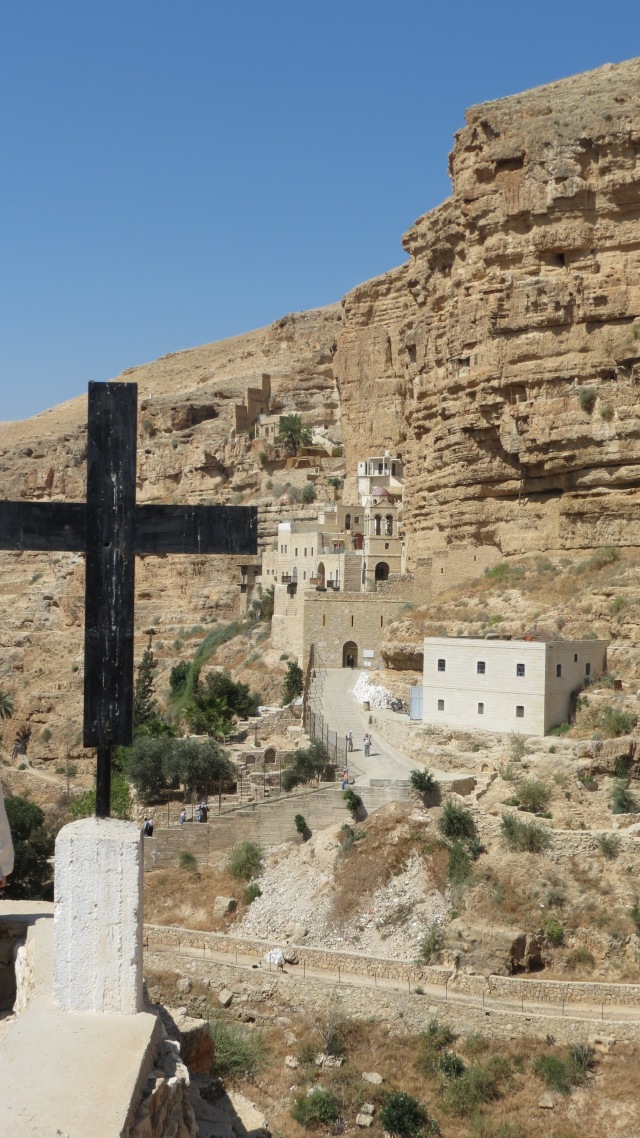
When you first catch a glimpse of the magical St. George’s Monastery (Choziba) in the Judean desert, the Desert Fathers’ Wisdom is brought to life in its uncompromising, breathtaking asceticism. This amazing cliff-hanging monastery, one of the world’s oldest and definitely one of the most inspiring churches in the Holy Land, is a must-see for the desert / archeological fans  / devout Pilgrims.

Monastery-of-St-George

St. George Orthodox Monastery, or Monastery of St. George of Choziba is a monastery located in Wadi Qelt, in the eastern West Bank, in the occupied territories. The sixth-century cliff-hanging complex, with its ancient chapel and gardens, is active and inhabited by Eastern Orthodox monks. It is reached by a pedestrian bridge across Wadi Qelt, which many believe to be Psalm 23’s Valley of the Shadow. The valley parallels the old Roman road to Jericho, the backdrop for the parable of the Good Samaritan (Luke 10:29-37). 

Here’s some beautiful aerial video footage to give you a taste of the area around St. George’s Monastery…


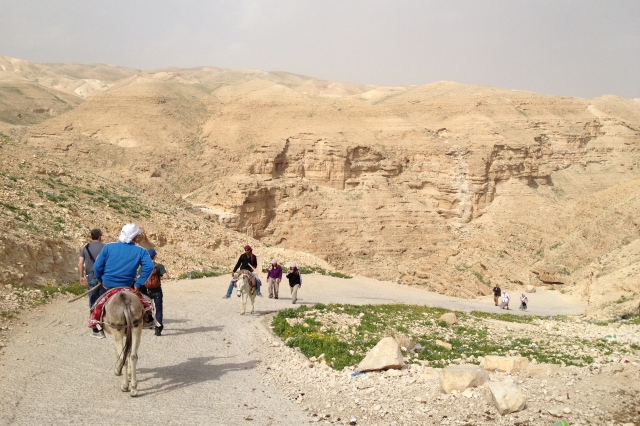
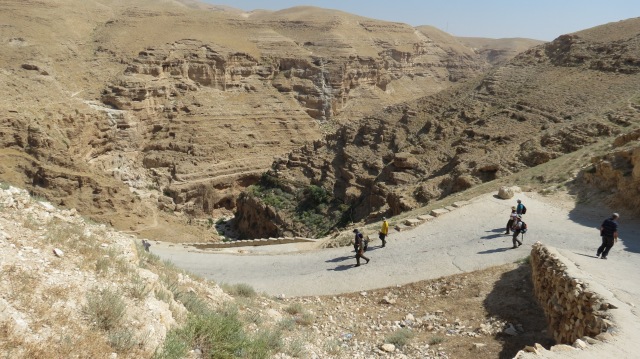
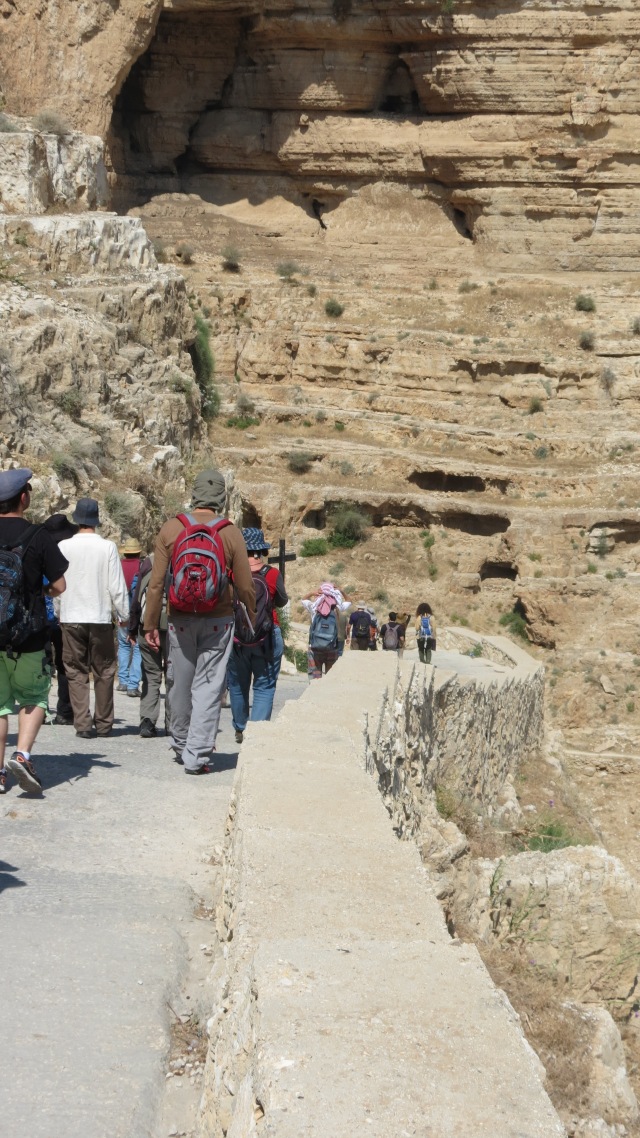
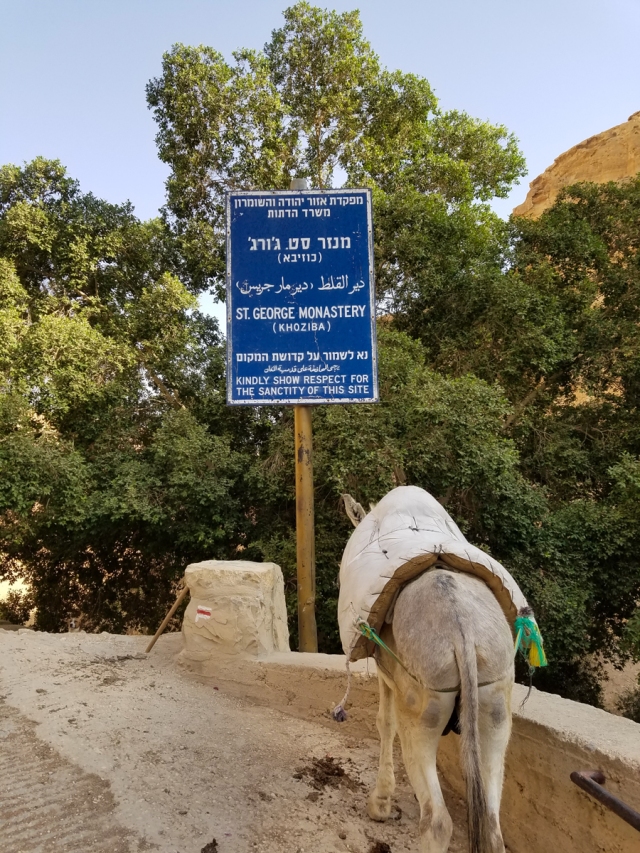
St George’s Monastery can be reached via the main Jerusalem – Dead Sea highway (Road 1). Take a left at Mitzpeh Jericho (or a right if you’re coming from Jericho) and follow the brown signs for Wadi Kelt. You can hike the Wadi all the way to the monastery but it will take lots of hours of arduous trekking in the desert under the blazing sun!  Up and down, for hours, a windy path! Not so easy for seniors or people with disabilities, but there are usually plenty of locals offering their donkeys for the ride (at a cost of course).

Monastery_of_St._George_of_Choziba_13

monastery of saint george 16

Monastery_of_St._George_of_Choziba_12

Monastery_of_St._George_of_Choziba_06

Check out the clip below for a real taste of the walk to St George’s Monastery … When I look at these photographs or watch the videos, I cannot believe I did all this walking!

source

Monastery_of_St._George_of_Choziba_04

St. George’s Monastery was originally started in the fourth century by a few monks who were looking to immerse themselves in the lifestyles and desert stories of  John the Baptist and Jesus. The monks, and perhaps most notably the hermit John of Thebes, eventually settled on the spot around a cave where it is believed the prophet Elijah was fed by ravens (1 Kings 17:5-6). The traditions attached to the monastery include a visit by Elijah en route to the Sinai Peninsula, and St. Joachim, whose wife Anne was infertile, weeping here when an angel announced to him the news of Mary’s conception.


monastery of saint george15

Monastery_of_St._George_of_Choziba_26

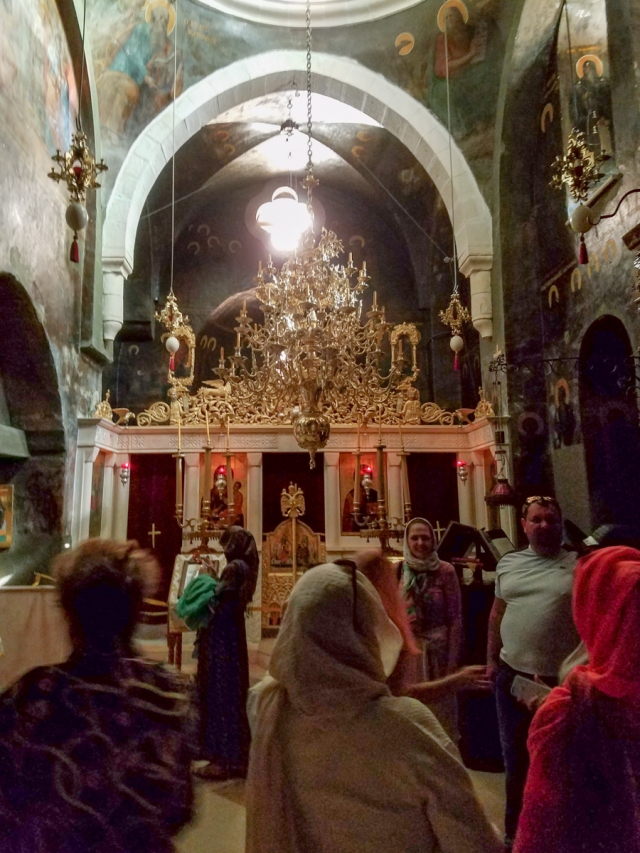
The monastery became an important spiritual centre in the sixth century under Saint George of Choziba. Hermits living in caves in nearby cliffs would meet in the monastery for a weekly mass and communal meal.John of Thebes became a hermit and moved from Egypt to Syria Palaestina. The monastery was named St. George after the most famous monk who lived at the site. Destroyed in 614 A.D. by the Persians, the monastery was more or less abandoned after the Persians swept through the valley and massacred the fourteen monks who dwelt there. The bones and skulls of the martyred monks killed by the Persians in 614 A.D. can still be seen today in the monastery chapel. These 3000 and more martyrs’ relics are so alive that during their Supplication canon every week an exquisite fragrance and raw smell of fresh slaughtered blood are alternately exuded from them!

Monastery_of_St._George_of_Choziba_35

Monastery of Saint George

The Crusaders made some attempts at restoration in 1179. However, it fell into disuse after their expulsion. In 1878, a Greek monk, Kallinikos, settled here and restored the monastery, finishing it in 1901. Father Germanos, born Georgios Tsibouktzakis, who came from Thessaloniki, Greece, to St George’s in 1993 and lived there until he was murdered by Palestinian terrorists in 2001, was for many years the sole occupant of the monastery, he was named Abbot in 2000. Emulating the Wadi Qelt monks of late antiquity, Father Germanos offered hospitality to visitors, improved the stone path used by pilgrims to climb up to the monastery, repaired the aqueducts, and improved the gardens of shade and olive trees.

monastery of saint george 11

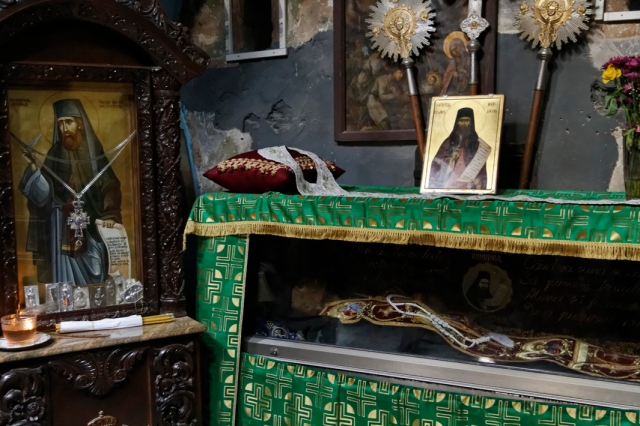
This is probably the most stunning discovery in the monastery: St. John Jacob (the Romanian) – a Hermit from the Holy Land with complete Incorruptible Relics! He was a great ascetic and a poet. He called himself “the child of zero” who “followed the One”. After his all night- vigils, he would briefly rest in the verandah of the monastery and write his so moving poetry, sadly not translated yet in English. In the next days I plan to translate and post here some of his most moving autobiographical poems. This Saint is famous for his miracles, from the discovery of his relics to nowadays.

This discovery was even more stunning for me personally because my spiritual father had introduced him to me the last day before flying from Lancaster to Greece and then to Tel Aviv. He also gave me a tiny piece of a secondary relic of him. What a ‘coincidence’! I knew nothing about him, other than his name, and then a brief google search, and here I found him most alive and incorruptible! 

Greek Orthodox St. George of Koziba Monastery in Wadi QeltMonastery_of_St._George_of_Choziba_27Monastery_of_St._George_of_Choziba_31


Let me close with Archimandrite Konstandinos, a holy Elder, very special in his hospitality and famous for his clairvoyance gifts.

monastery of saint geroge archimandrite 2monastery of saint george archimandrite Konstandinosmonastery of saint george archimandrite

For more photographs, go here

Monastery_of_St._George_of_Choziba_27

Monastery-of-St-George


Holy Land Pilgrimage: Bethlehem

IMG_5274

IMG_5268

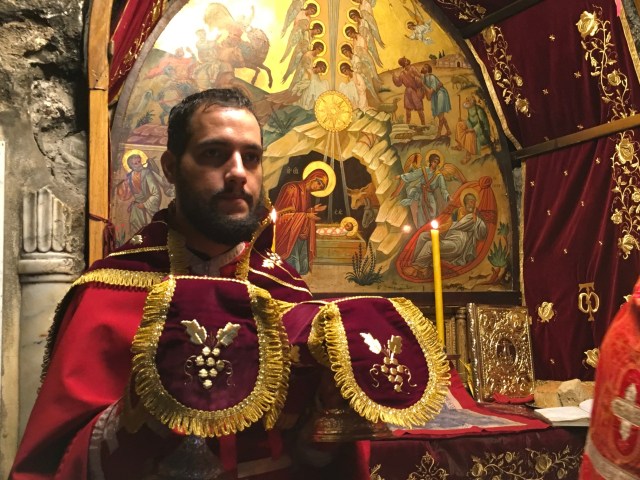
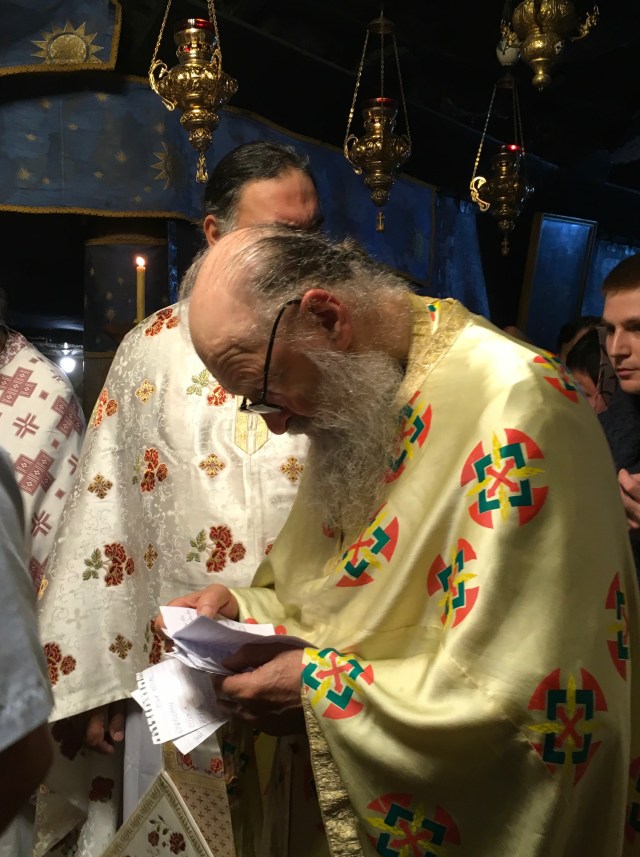
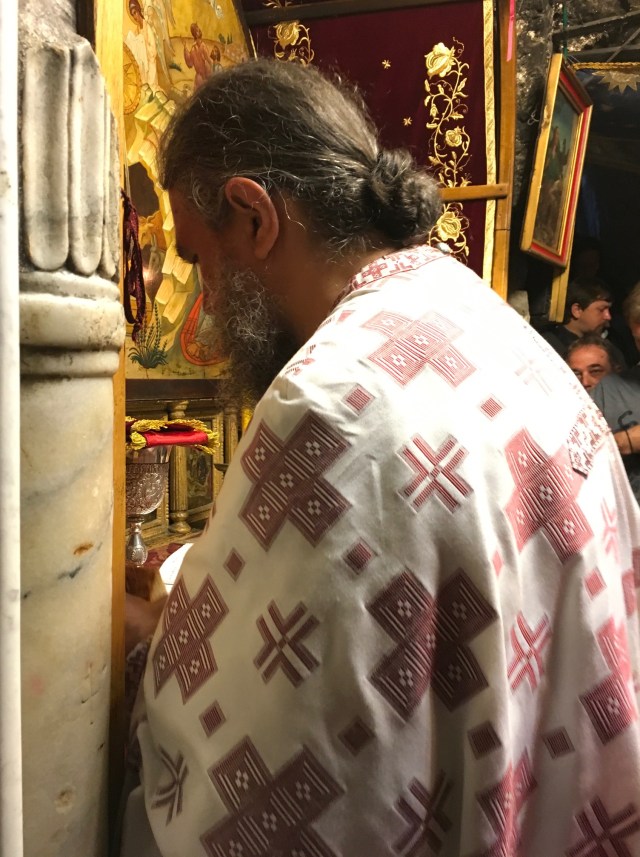
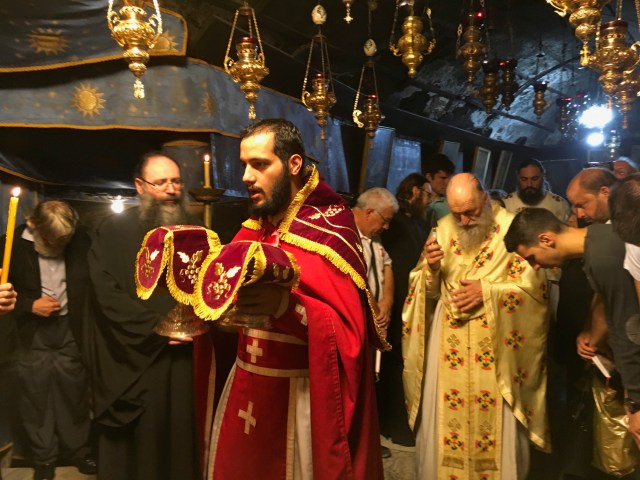
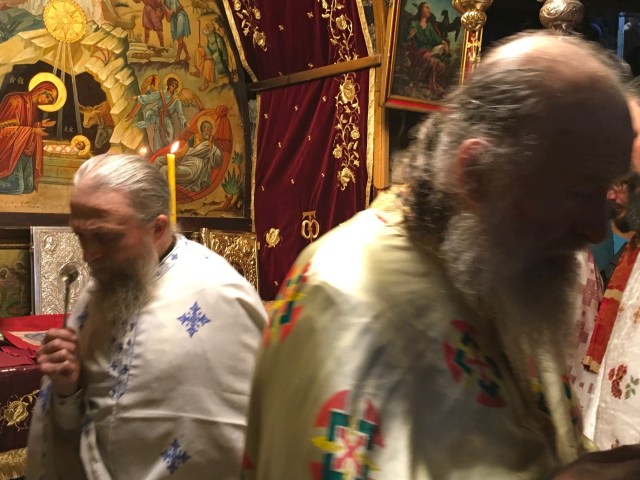
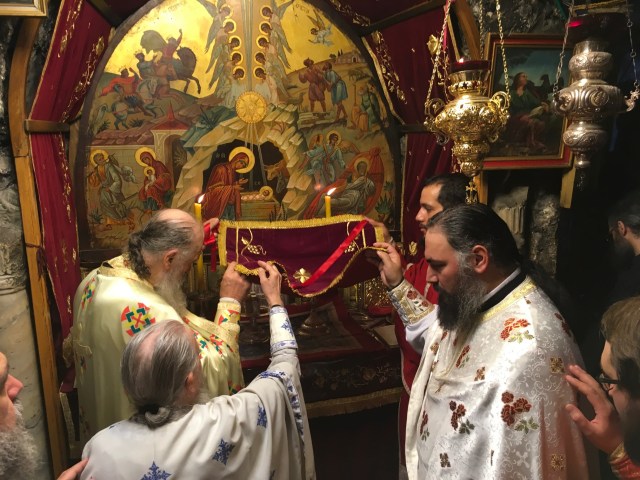
Bethlehem! The birthplace of our Lord and Savior and the cradle of biblical history. Bethlehem (Hebrew: בֵּית לֶחֶםBet Lehem, [bet ˈleχem], “House of Bread”) is located five and half miles from Jerusalem. No town in the world has such a glorious history as Bethlehem. Our Elders together with a number of Holy Land Hieromonks offer a Holy Liturgy at the Church of the Nativity. 

IMG_5260

IMG_5263

IMG_5262

A Greek Orthodox Church, which has been built over the birthplace of Our Lord by the Emperor Justinian and is over 1,500 years old. It is the second oldest Orthodox Church in existence. It was not destroyed by the Persians, as they saw a mosaic of the Magi dressed in Persian wear over the front door. Words cannot communicate what we experienced in venerating and touching the actual ground where Jesus was born. A few feet away is the Holy Manger. 

IMG_5280IMG_5271IMG_5270IMG_5269IMG_5268

IMG_5300

IMG_5299

IMG_5297

IMG_5294

IMG_5293

IMG_5292

Where is Bethlehem?
 
Micah 5:
 
    2 “ But you, Bethlehem Ephrathah, 
      Though you are little among the thousands of Judah, 
      Yet out of you shall come forth to Me 
      The One to be Ruler in Israel, 
      Whose goings forth are from of old, 
      From everlasting.”
“I am the Life” Our Saviour said
 
Where is the house of Living bread?
 
Where does this birth of new life start?
 
The chamber of a loving heart
 
Is Bethlehem.
 St.Athanasius of Alexandria (On the Incarnation, 54): “For He was made man that we might be made God (divine)”
Sunday of the Righteous Forefathers 2009 JAH (Fr. Jonathan Hemmings)

A Holy Beggar

*A personal witness by Maran Ata, a person who had the joy to meet this 

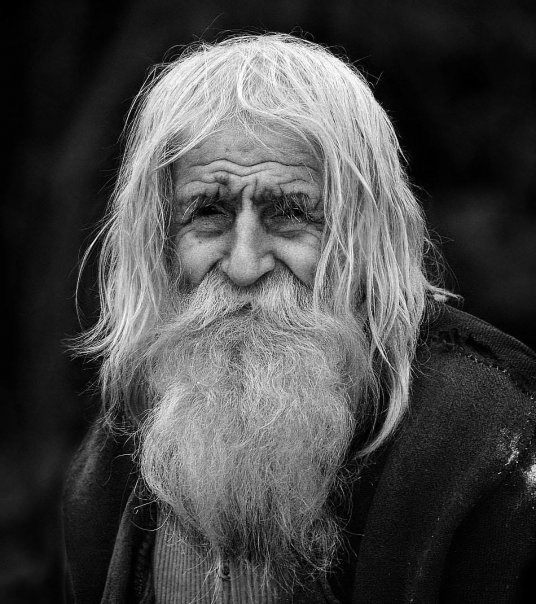
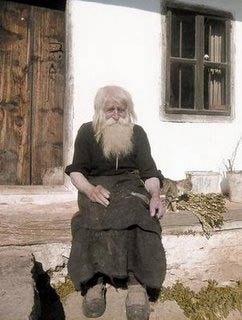
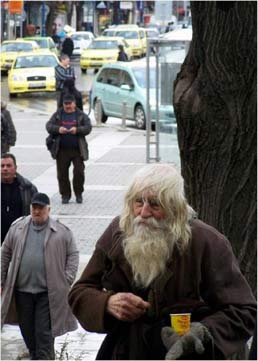
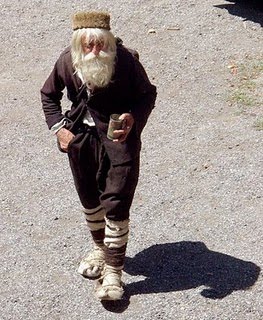
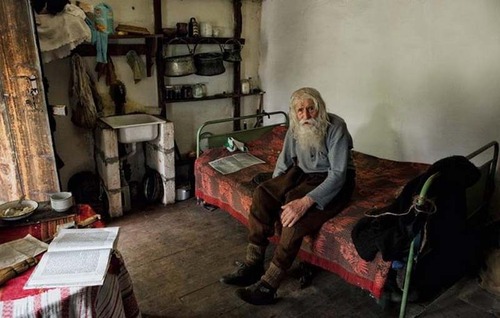
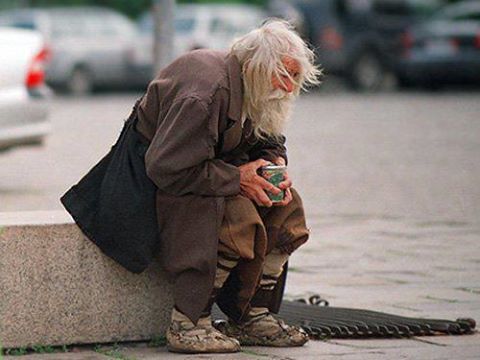
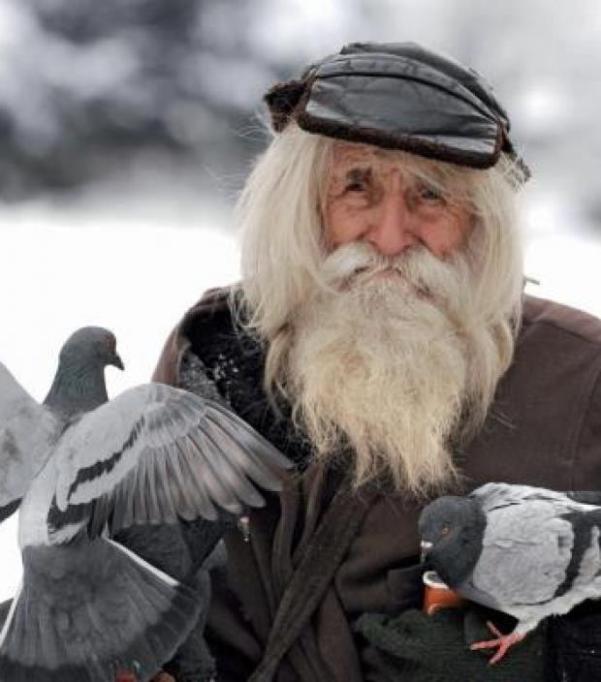
This is one part of the film “Mite” produced by the Pokrov Foundation in the year 2000, showing the Bulgarian Elder Dobri, who is considered a holy man of God.

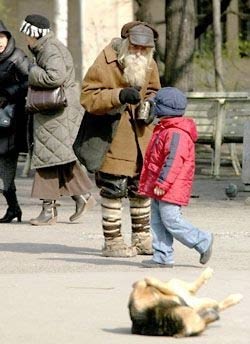
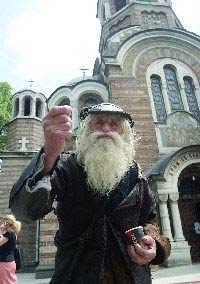
“Four years ago, I had the pleasure to meet him and directly delight in his innocent kindness and simplicity. People from Sofia know him as Elder Dobri Dobrev from the village Baylovo. He is a 96 year old elder who could often be seen standing in front of the church St. Alexander Nevsky or St. Methodius and Cyril and their five disciples with his metal cashbox and begging for money. He gives the collected money for renewing of the monasteries and churches or to poor people.

I met him at the Church of St. Kyriaki, when I was attending the Holy Liturgy which was led by several bishops, in the presence of the graceful relics of St. Stephen Milutin the King. Simply, he entered through the church gate, stood in front of the relics and, as a young boy, made a few deep bows [prostrations]. That was an amazing scene, especially because of the feeling of unworthiness when God crosses our life-path with one of His righteous men.

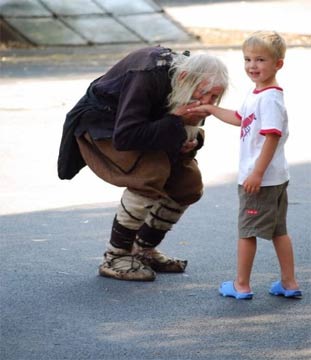
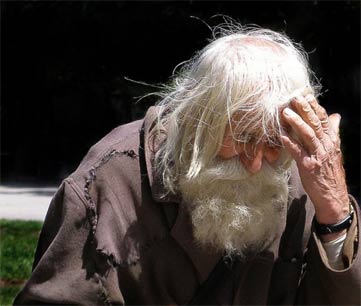
Kind eyes, pleasant smile, humble look… all that makes him bright in the eyes of those who have met him and without hesitation hurry to get a blessing from this sagacious elder. He wears traditional shoes from raw skin and he all the time rushes somewhere, but he never uses modern transport vehicles. Simply, he loves the ascetic walk. He eats whatever the good people give him and he never repines for his condition. His face shines with heavenly light which at one point of the moment makes people unconsciously to understand that he really is like someone out of the Bible.

I hope that I’ll be vouchsafed by God to kiss the elders merciful right hand for third time in my life.” (Maran Ata)

“Man should keep righteousness and the truth. That’s God’s path!”

Source


Source: Mystagogy
dobridobri2dobri3

An Orthodox Pilgrimage to St Cuthbert’s Cave


The Church in The British Isles will only begin to grow when she begins to again venerate her own Saints”  (Saint Arsenios of Paros †1877)

His Eyes a Flame of Fire


pater-Symeon-Kragiopoulos


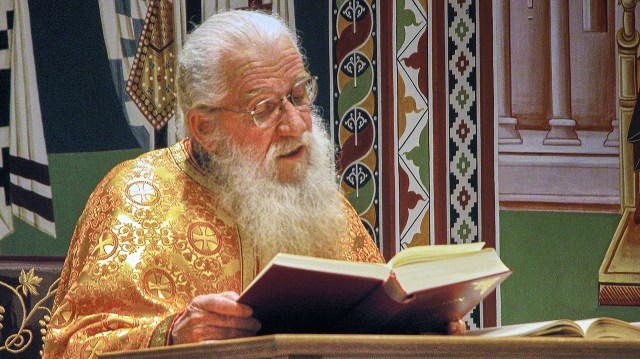
Elder Symeon Kragiopoulos (+30 September, 2015 )

Archimandrite Symeon Kragiopoulos was a lecturer, preacher, and confessor in the Metropolis of Thessaloniki, Greece. His spiritual lectures often drew on his study of psychology. Thirty books have been published in Greece based on his lectures. He founded two monastic communities, Holy Trinity for men and the Nativity of the Theotokos for women.

A Memorial Service was performed in the Church and a Trisagion at the cemetery.

Such gladdening sorrow, bright sorrow as hundreds of his spiritual children prayed with tears for him … to him.

At the homily one Mount Athos Elder described  Elder Symeon as “the eye through which Thessaloniki, and indeed all the world, saw God” + Memory Eternal!

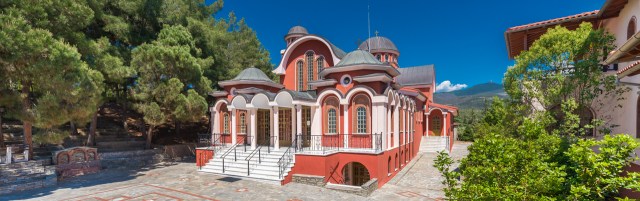
Iera-moni-Agias-Triadas-Panorama


“My heart is torn apart…”


It tears me apart, every time I speak

with a person in pain.

My heart is crushed, in a good sense.

I would have regretted it a thousand times, if I hadn’t been hurt,

if I hadn’t empathised with the pain of this person.

Hurting and empathising in such a way is one thing

but sinking and despairing is totally another.

The latter is no good.

There is no end to suffering in this world.

There is no end to pain.

But in all this suffering, a great mystery is hidden!

Nothing else does to us such great good as pain.

Our very own pain

and the pain of our own people.

All the rest can be accommodated.

But pain, which you can feel on your own body,

nobody can take away from you.

You may even be a king: If pain seizes you,

you’ll have to bear it.

You may be given some pitiful aid

to be comforted, which will barely suffice.

Especially when you are dealing with soul pain.

The miraculous thing is that God

when you least expect it

and while you have little awareness of it,

condescends and doesn’t take pity on you,

but allows you to get hurt and suffer something

which is more than a single pain,

precisely because he wants to grant you His mercy.

 Archimandrite Symeon Kragiopoulos

Holy Hesychasterion “The Nativity of Theotokos” Publications


To read more of Elder Symeon’s God-inspired words check out this link.

*”His head and His hair were white like white wool, like snow; and His eyes were like a flame of fire” (Revelation 1:14)