Dear friends,
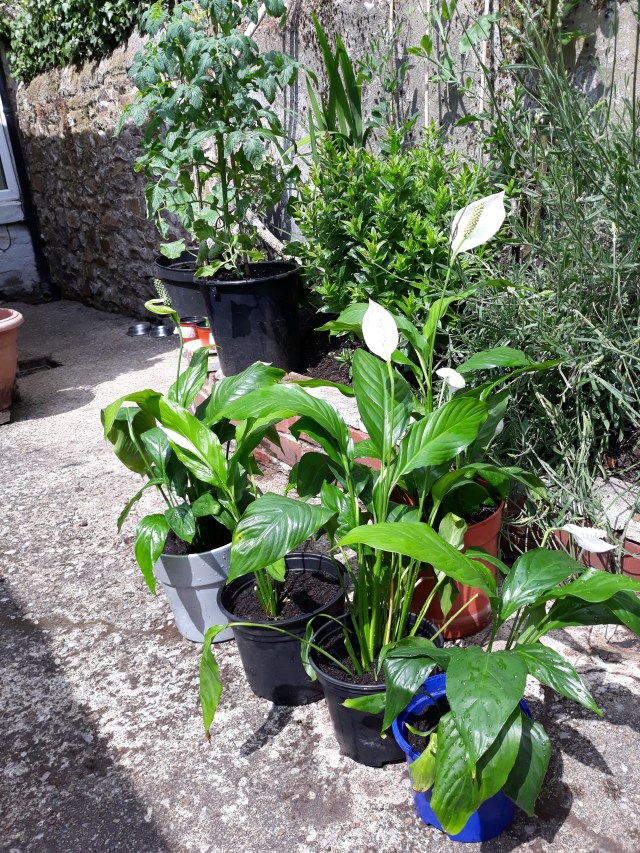
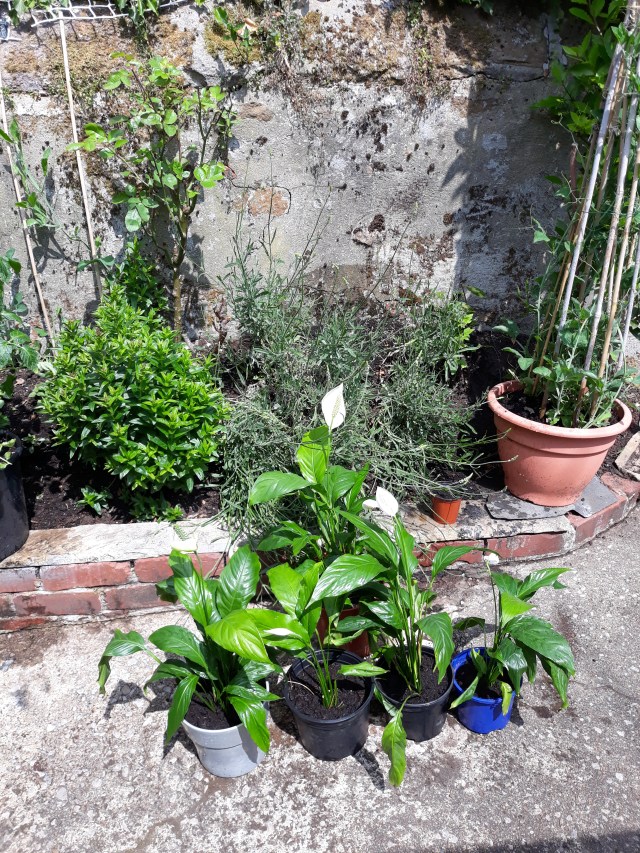
Great news. Irene my peace plant has” given birth” to four little peacemakers.
Εν Χριστώ
Father Pustinnyk
Dear friends,

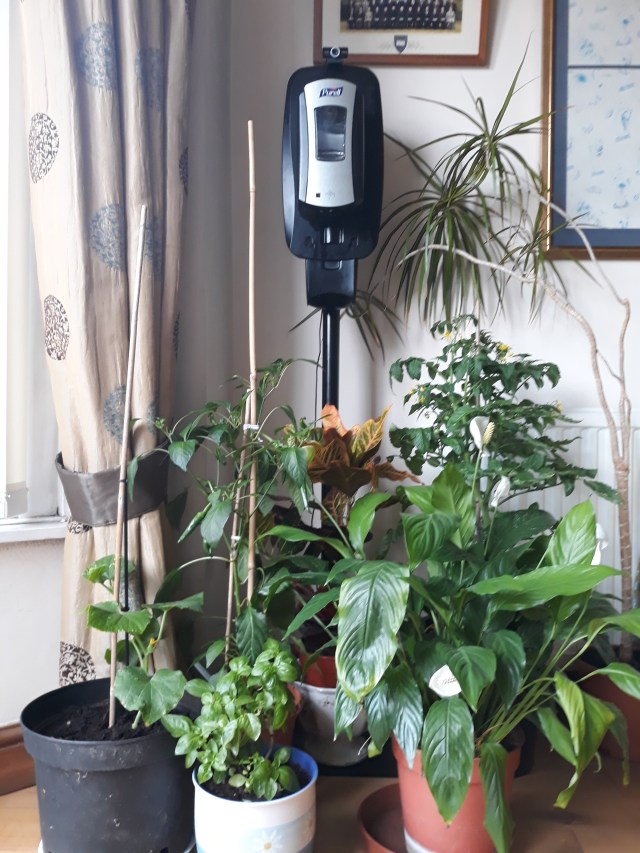
From left to right:
Say cheese-plant!

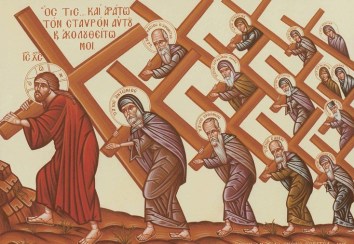
MATTHEW 4:18-23
At that time, as Jesus walked by the Sea of Galilee, he saw two brothers, Simon who is called Peter and Andrew his brother, casting a net into the sea; for they were fishermen. And he said to them, “Follow me, and I will make you fishers of men.” Immediately they left their nets and followed him. And going on from there he saw two other brothers, James the son of Zebedee and John his brother, in the boat with Zebedee their father, mending their nets, and he called them. Immediately they left their boat and their father, and followed him. And he went about all Galilee, teaching in their synagogues and preaching the gospel of the kingdom and healing every disease and every infirmity among the people.
*
In the days before Satnav and Google, on the way to a Church wedding, I was driving my car. The friend in the car in front said: “Follow me, I know the way!”
Well it transpired that he did not know the way and did not know even the correct church where the wedding was taking place. Trying to keep up with him was so difficult, he was overtaking, driving fast, the traffic lights changed and he didn’t wait, and if that was not enough, there were road diversions complicating the journey further. In the end, knowing the priest who was taking the wedding I called him and he gave clear and concise directions to the correct Church. Knowing the way is important, following the right person is critical!
In the Gospel for the second Sunday of St Matthew we read how Christ calls the first disciples. We see how these simple fishermen responded immediately to the call. Such a call was irresistable, courageous on their part and ultimately life changing for them. Christ does not choose the learned scholars and philosophers of His day who are wise in their own eyes but countrymen who knew what hard work involved. They possessed an appetite for common sense, a shrewd judgment, a forthright spirit and sound application to the task. These fishermen, “am ha-aretz”( people of the land) become all wise not because of their intellect but because of their will to follow and accompany Christ in His mission.
Follow me! I recall at University having to learn the Greek verbs for the New Testament. The Greek verb akoloutheo ( to follow) occurs over 80 times in the New Testament. It is one thing to believe in Our Lord Jesus Christ, it is another to follow Him. Someone on interview, was asked what leadership skills they had? The person answered “Well I’m not sure about leading people, but I am a quick learner and a good observer.” Christ invited and called many others to follow Him, some obeyed the call, others like the rich young man could not. He has called us. It is relatively safe to believe in Christ but following Him intrudes on our time, our lifestyle and our will.
The problem today is that not many people know where they are going, so they follow their own inclinations, whims, passions and amusements. Our Lord knew where He was going, to the bosom of the Father and He wanted to take others with Him. He came to lead us to heaven. The world has many would be leaders but their way is confused and compromised by their ideology by materialistic values and by a wong destination. “The road to hell” is is said, “is paved with good intentions”. Hell is full of good meanings, but heaven is full of good works.”Only Christ knows the Way to the Father because He is the Way the Truth and the Life.
Before Peter and Andrew, James and John could become leaders and apostles they first had to be followers and disciples. Christ says to them “I no longer call you servants but friends.” God has called us to follow Him but like the lost sheep we offer wander off and go our own way. Without the will to follow we can become self satisfied, calling ourselves Christians in name only, doing our own thing. We become nouns rather than verbs.
“Not he who says Lord, Lord (noun) will enter the Kingdom of Heaven, but he who does ( verb) the will of my Father in heaven.”
We may not consider ourselves worthy of this calling and we may fall into despair when we fall into sin, both of which are tricks of the evil one. Was Saul the persecutor of the Christians worthy when he was called? Was Simon Peter worthy when he denied knowing Christ? It is through God’s mercy, forgiveness and grace and our repentance, that we are made worthy. God’s love is so all-searching that He chooses the weak, the misfits, the eccentrics, the poor, the outcast to do His will. At an ordination of a priest, the Bishop will cry out “axios” (worthy) and the people are invited to reply “axios”! The priest is not worthy in and of himself, no one is worthy before a Holy God but Christ releases the potential in us and equips us for the ministry He has chosen for us:
11And He Himself gave some to be apostles, some prophets, some evangelists, and some pastors and teachers, 12 for the equipping of the saints for the work of ministry, for the edifying of the body of Christ, 13 till we all come to the unity of the faith and of the knowledge of the Son of God, to a perfect man, to the measure of the stature of the fullness of Christ;
We do not follow Christ by our own power but with the power of the Holy Spirit. The young man I was following in my car to the wedding did not know the way but thanks be to the Father, Christ the Bridegroom is in the driving seat to bring us to the great Wedding Feast.
We are called to be members of the Body of Christ. Whether we are “casting our nets in other directions” or “mending our broken ones”, Christ wants us to follow Him. He will not abandon us because He is the good shepherd Who looks after the lost.
The Invitation
Luke 14:15-18; The Parable of the Great Supper: Now when one of those who sat at the table with Him heard these things, he said to Him, “Blessed is he who shall eat bread in the kingdom of God!” Then He said to him, “A certain man gave a great supper and invited many, and sent his servant at supper time to say to those who were invited, ‘Come, for all things are now ready.’ But they all with one accord began to make excuses.
I rang your door bell but there was no answer.
I rang the Church bell but you decided to stay in bed.
I e-mailed you but there was no response.
I texted you but you were busy.
I put it on Facebook(!) but it just provoked an argument.
I put posters up but you did not like the design.
I advertised in the local press but you only looked at the headlines.
I called you but it went to recorded message.
When you were a baby your God parents brought you to Church to be baptised.
When you were in love your partner brings you to Church to be married
When you die your friends and family will bring you to Church for your funeral.
When are you going to accept the invitation for yourself?
So what is missing from CH_ _CH?
“Christianity, if false, is of no importance and, if true, is of infinite importance. The one thing it cannot be is moderately important.” — C.S. Lewis “God In The Dock”

There is nothing quite like receiving a hand written letter. They have substance and form, they have shape and content. People who write letters take the trouble and the time to choose a card, to buy a stamp, to write in their own hand and post the letter. Sometimes it is interesting to decipher their own idiosyncratic style! I recall a teacher at school who taught all his pupils to write in calligraphic “copper plate” English Roundhand. One always could detect who had been taught by this teacher in their first year at Secondary (High )School! Letters, like teachers leave a lasting legacy for the recipient too.
Cards and letters today are often reserved for Birthdays, Anniversaries, Christmas and Pascha (Easter); but how nice it is to receive a note of thanks or a note of encouragement-it lifts the spirit. I received two such cards last week. Writing thank you is so important because first and foremost we are called to be Eucharistic creatures.Whilst e mails and texts are convenient and efficient, they lack a certain permanency.
Some years ago I knew a dear lady who lived in the Parish where I served as priest. She was born in Holland, her father was French and her mother Polish. She had lived in England for many years. Eccentric in a most delightful way, she was kind and considerate of others always writing copious thank you notes to them. She was a voracious reader of poetry and philosophy; speaking fluently in four languages she would regale visitors with amazing stories from her remarkable life. Bedridden now in old age, she loved the trees and the birds outside her cottage. On one pastoral visit, she said to me, “Father, I would like you to have these letters, you may find them of interest.” She thrust three yellow envelopes into my hand.
On reading them, I discovered they were thank you letters, one such read… thank you O….. (name),for the beautiful flowers which you placed in our room and the delicious cake which you baked for us, signed………….Winston and Clementine Churchill.
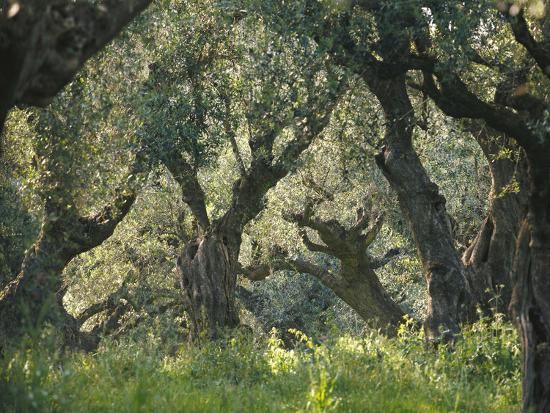
I have spoken about my love of trees before, but today apart from their intrinsic beauty in creation, let us thank God for that which they provide us: protection, physical and spiritual formation, recreation, habitation and education.
Without trees
Without trees, there is no shade.
Without trees, no icons are made.
Without trees, no barbecue for heat.
Without trees, there is no fruit to eat.
Without trees, there is no home for birds.
Without trees, no paper for these words.
My children, I don’t want Paradise without you. Whoever plants a tree, plants hope, peace, and love and has the blessings of God. Consider all people to be greater than yourself, though they may have many weaknesses. Don’t act with hardness, but always think that each person has the same destination as we do. Through the grace of God I consider all people to be saintly and greater than myself.
St Amphilochios of Patmos

The Lord said to his disciples, “Every one who acknowledges me before men, I also will acknowledge before my Father who is in heaven; but whoever denies me before men, I also will deny him before my Father who is in heaven.
The Sunday after Pentecost in the Orthodox Church is dedicated to All Saints. The purpose of the coming of the Holy Spirit at Pentecost is to make saints of us all. The first and most important element in this process of sanctification is acknowledging Christ before others. In the early Church, and at subsequent times of persecution and still to this day to acknowledge Christ may require a costly sacrifice, even martyrdom.
In such a context,”talk is not cheap” and the Holy Apostles knew this when they wanted to share the life giving salvation that they had found and experienced in the Lord Jesus Christ. In the Epistle for the feat Hebrews 11:33-12:2 we read about the price of that confession of faith- “they were stoned, they were sawn in two, they were killed with the sword.”
We must understand that, as Christians, we are engaged in a spiritual battle in the world. Christ Himself said that the world will hate us but that He had overcome the world. We too have to overcome our timidity and fears, our reluctance to speak out for Christ in the world. We are in the world but not of it.
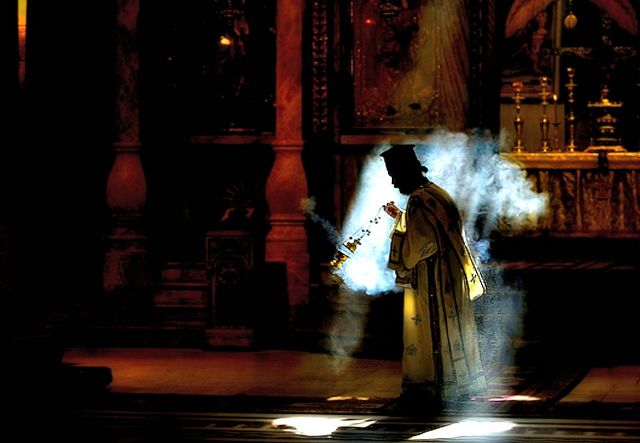
At every service of worship in the Orthodox Church we offer incense to God as a sign of our worship of the One true God Father, Son and Holy Spirit. The action is a powerful symbol of our prayers rising to heaven as the smoke ascends. We read in the Old Testament, the prophet Malachi gives the instruction from God:
Malachi 1:11
From the rising of the sun, even to its going down,
My name shall be great among the Gentiles;
In every place incense shall be offered to My name,
And a pure offering;
For My name shall be great among the nations,”
Says the Lord of hosts.
The priest blesses the incense which he puts on to the burning charcoal to cense the holy gifts at the Proskomedia with this prayer:
“ Blessed is our God, always now and ever, and unto the ages of ages . Incense we offer unto thee, O Christ our God, as a savour of spiritual sweetness which do Thou receive upon Thy most heavenly altar and send down upon us in return, the grace of thine all-Holy Sprit. Amen”
Incense has a long history in the Bible and in the tradition of the Church. God commanded Moses to use it in the Tabernacle and it was used in the Temple at Jerusalem where there was an altar of incense. Frankincense and sweet smelling myrrh was offered to Christ at His nativity. In our churches, the sacred censer has twelve bells symbolising the twelve apostles sounding forth their teaching with the proclamation of the gospel. The lower bowl represents the earth and the upper bowl heaven. The charcoal is lit and gives off fire and heat and fragrant incense is placed on the burning coal. Our offering in worship likewise should be sweet and full of zeal with the warmth of the Holy Spirit. We see at various points in the Holy Liturgy and at other services the priest censing the holy Icons of Christ, His All Holy Mother and the saints as well as the faithful who are made in the image of God. When we come home, we find that our clothes are permeated with the aroma of incense. One of our Parishioners remarked that her husband always knows when she has been to Church!
All this is very beautiful. The aroma and action engages with our senses to elevate our heart towards God, but we should not forget the context of what this meant for early Christians. They were required once a year to appear before a statue of Caesar and put a pinch of incense on burning charcoal and say “Caesar is Lord!”It was seen as an act of political loyalty. But of course many Emperors imagined that they were divine (gods) and the conscience of thousands of Christians would not allow them to do this simple act and say these words, because for them there was only one Lord, Jesus Christ. They were prepared to be killed rather than confess a false god.
Just a pinch of incense but to whom do we offer this?
Last century, St.Gabriel Urgebadze from Georgia was such a confessor. After compulsory service in the army, he became a monk in 1955. He made himself famous by setting fire to a banner of Lenin during a parade in Tbilisi in 1965. He spoke openly to the people: “Glory is not needed to this dead, but glory to Christ, who subdued death and blessed us with an eternal life.”He was arrested, tried, ruled to be psychotic and confined to a mental hospital for seven months. He was treated mercilessly by the authorities who demanded from him confession of an alleged conspiracy in the Church in return for him to escape the death sentence. Despite torture and severe interrogation he would not accede to their political machinations. He put Christ first! He acknowledged Christ.
St Polycarp of Smyrna when he was eighty six years of age was asked to renounce Christ he replied, “Eighty six years have I served Christ and He has done me no wrong. How can I blaspheme my King who served me?” He was burned at the stake. He put Christ first. He acknowledged Christ.
We are strengthened when we acknowledge Christ, when we make a public confession of our faith. The Holy Apostle Paul tells us that if we confess with our lips that Jesus Christ is Lord and believe in our hearts that God raised Him from the dead then we will be saved. Romans 10:9-10. We should tell others how much Christ means to us. At Pentecost we were equipped with all the resources we need to bring others to Christ, we have no excuse. If we acknowledge Him before others then He will acknowledge us before the Father in Heaven.
Let us pray, that through the strengthening and by the power of the Holy Spirit, we may be found worthy to acknowledge and confess Christ.
Let my prayers be set forth before Thee as incense, and the lifting up of my hands as the evening sacrifice; hear Thou me, O Lord.
Joyous Father Pustinnyk

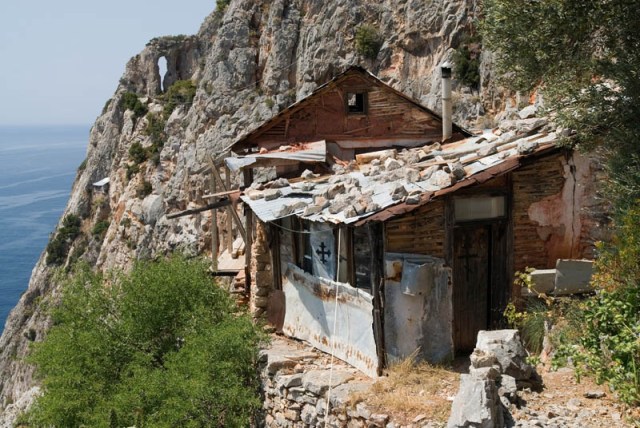
Huts of the hermits at Karoulia (Athos)
A poem, the Desert Fathers, C.S. Lewis reflection and The Invisible Naked Ascetics of Mount Athos
I live in an old stone faced terraced property, built in the 1850’s. Yesterday morning as I was cleaning the bay windows at the front of my house, I thought to myself: “the Victorians knew how to build things to last.” Some would argue that the Victorian period was the golden age of engineering and architecture in Britain. Even though my house is small and the consequence of a vast building programme because of the industrial revolution, it is built on firm foundations.
The Builder
Matthew 21:42
Jesus said to them, “Have you never read in the scriptures:
The stone which the builders rejected
Has become the chief cornerstone,
This was the Lord’s doing, and it is marvelous in our eyes.”
The Builder laid the living stones carefully and correctly;
Having mixed the cement of love, every stone had its special place.
Each was uniquely chosen and equipped
To support its neighbours of the human race.
There were apostolic and prophetic stones in the foundation.
They formed the base and shape of the temple.
Unseen, these sustained the saintly stones;
Rough hewn, finely crafted and simple.
Some builders today construct boxes
For the purpose of separation.
There are others who build Churches
To enable reconciliation.
The Father is building a Palace
No mortgage required and no loan,
for us to live free in His mansions
With Christ as the Chief Cornerstone.
“Imagine yourself as a living house. God comes in to rebuild that house. At first, perhaps, you can understand what He is doing. He is getting the drains right and stopping the leaks in the roof and so on; you knew that those jobs needed doing and so you are not surprised. But presently He starts knocking the house about in a way that hurts abominably and does not seem to make any sense. What on earth is He up to? The explanation is that He is building quite a different house from the one you thought of – throwing out a new wing here, putting on an extra floor there, running up towers, making courtyards. You thought you were being made into a decent little cottage: but He is building a palace. He intends to come and live in it Himself.”
C.S. Lewis Mere Christianity
*
Two old men lived together for many years and they had never fought with one another The first said to the other, “Let us have a fight like other men.” The other replied, ”I do not know how to fight.” The first said to him ”Look ,I will put my brick between us and I will say: it is mine; and you will reply: no, it is mine; and so the fight will begin.” So they put a brick between them and the first said,” This brick is mine,”and the other said,” No it is mine.”And the first replied, ”If it is yours ,take it and go.” So they gave it up without being able to find a cause for an argument.
Saying from The Desert Fathers
The Invisible Naked Ascetics of Mount Athos

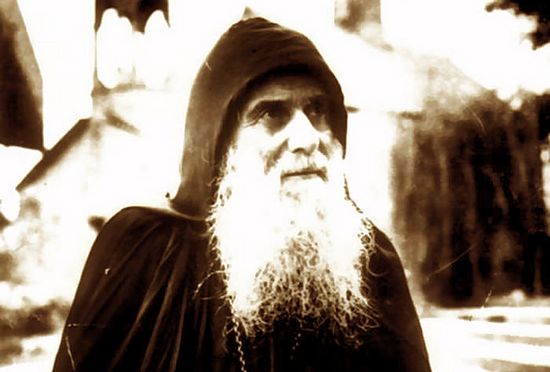
Saint Gabriel
“Euge Agioi”
Some years ago on an excursion to London, I visited an exhibition at the British Museum entitled “Treasures of Heaven.” In it’s own way it was impressive. One could only wonder at the beauty of exquisite craftsmanship, but the collection of precious reliquaries drawn from around the world was a display of ornate but empty vessels.
Later, I felt a similar disquiet visiting the Victoria and Albert Museum in South Kensington at the amount of Church artefacts in a particular part of the museum. It seems that people were visiting and viewing holy items as if they were no longer to be found today within a living community but were things belonging to the past.
One gallery had scenery built in the form of a Church. It was filled with onlookers but empty of prayer and worshippers; they were interested observers, following a commentary with an audio guide.
A short walk from the V&A Museum is the Russian Orthodox Cathedral. As soon as I stepped into the Church-the lingering fragrance of incense charged the air. Entering into this Temple of living tradition one felt immediately the atmosphere of prayer, the peace and presence of Christ, His Mother and the Saints. I was able to venerate the holy Icons. I was no longer in the barren desert of history but was drinking from spiritual and living waters of the eternal present. God is glorified in His saints!
Euge Euge Agioi (Well done Saints!)
Acts 5:15
so that they brought the sick out into the streets and laid them on beds and couches, that at least the shadow of Peter passing by might fall on some of them.
Ephesians 5:30
For we are members of His body, of His flesh and of His bones.
Treasure from Heaven
A key that unlocks,
Bones yet transfigured
In a fragrant box.
Fragments of saints
To strengthen a prayer
Their earthly remains
For the faithful to share.
A transport of motion
From heaven to save
A grace filled devotion
That blesses the grave.
Members of Christ
Invested to be
Holy and precious
“Euge Agioi!”
“True faith is found in one’s heart, not mind. People who have faith in their mind will follow the antichrist. But the one’s who have it in their heart will recognise Him.”

I recall being at the Monastery of Sambata de Sus Monastery in Romania and concelebrating at a Holy Liturgy with seven other priests. Even though I do not speak the language, except for a few words, I understood the whole of the Liturgy and felt a unity in the Holy Spirit; it was as if I was hearing the Holy Eucharist in my own language. I can truly say that experience was not unique, I have felt that same mystical knowledge and full participation of worship in Greece. Our Parish itself is a little Pentecost composed of people from all over the world. The whole experience of worship is permeated with the Holy Spirit’s presence whose gifts and fruits we enjoy.
….. God is love, and he who abides in love abides in God, and God in him.
This is The Holy Spirit’s gift and His language is love.
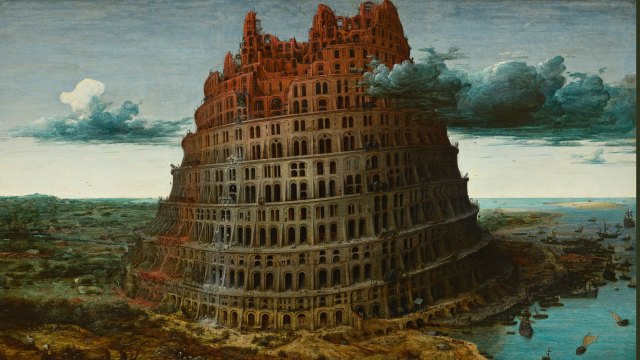
Deconstructing the tower of Babel
Genesis 11
The Tower of Babel
1 Now the whole world had one language and a common speech. 2 As people moved eastward, they found a plain in Shinar and settled there.
3 They said to each other, “Come, let’s make bricks and bake them thoroughly.” They used brick instead of stone, and tar for mortar. 4 Then they said, “Come, let us build ourselves a city, with a tower that reaches to the heavens, so that we may make a name for ourselves; otherwise we will be scattered over the face of the whole earth.”
“Let’s scale the heights and take the lights
of the firmament.
We’ll call the tune and pocket the moon.
Come on! let’s grab the Sun and that being done
We will be called great!
Let’s create another state by
Storming heaven’s gate and gain control.”
From below…the bright “hello”
Led to a sad “goodbye.”
The smile became a rueful sigh.
And people asking why?
And who are you?
What did you say?
That once friendly question where
is met by a beleaguered stare!
From nostalgic then to…. tell us when?
The change from common sense
to non-sense came because of man.
What was his plan?
To build a tower and to steal God’s power!
Much later in an upper room,
Diners seated round a table
Take bread and wine,
And as they are able
De-construct the tower of Babel.
God initiates a conversation
His language: love, for every nation.
And from above that which was lost
Is found, and invested with a Pentecost!
A soldier asked Abba Mios if God accepted repentance. After the old man had taught him many things, he said, “Tell me, my dear, if your cloak is torn, do you throw it away?” He replied, “No, I mend it and use it again.” The old man said to him, “If you are so careful about your cloak, will not God be equally careful about his creature?”

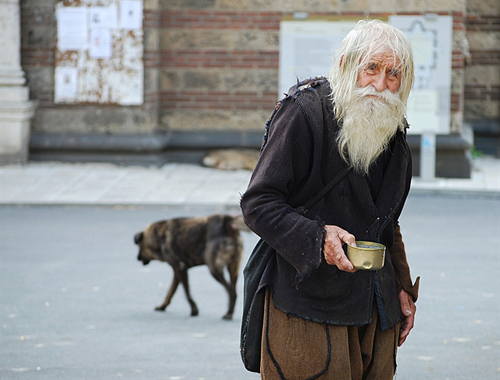
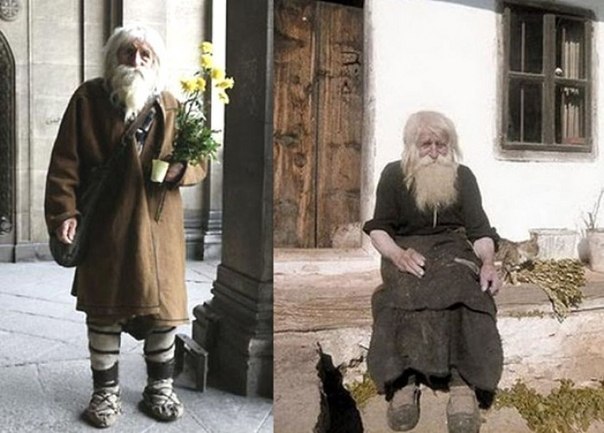
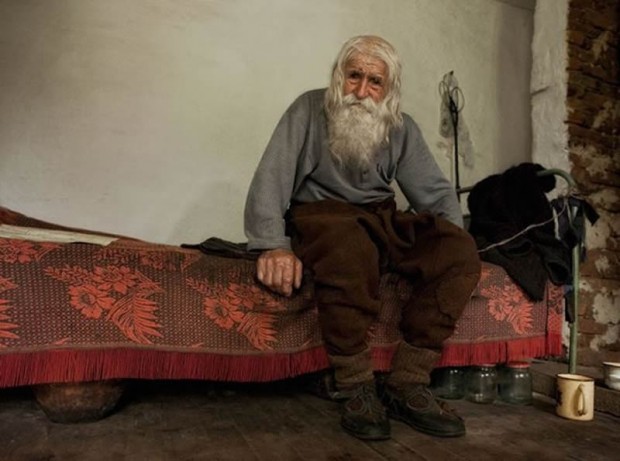
Dobri Dobrev
Amos 8: Swallowing the needy
I remember a holy priest from many years ago when I was a student at University in
the North of England. His Parish was in a very poor part of the city. He had a warm
heart, a generous spirit, a cheerful disposition and showed great concern and pastoral
care for his parishioners. He would light the fires of the elderly on winter mornings.
He would do shopping for the housebound and if needed buy food for the poor. Often,
in place of buying oil for heating the Church, he would give the money to the
homeless and to charities. Not many attended the Church.
I recall one winter morning we were freezing in Church at the morning service: the
boiler had broken, as usual, and our feet were like blocks of ice. Father B. always
advised the small congregation to put on two or three extra layers of clothing. We
were hoping the sermon would not be long- it wasn’t!
As he was starting the homily, suddenly from under his vestments clouds of steam
like incense started to arise! Somehow the hot water bottle that he had secreted around
him, had burst.
After rescuing the good cleric from his sudden and untimely sauna, we dried him with
a towel and he continued to serve at the altar. His rather appropriate sermon text was
from the Prophet Amos5:24:
“Let justice roll down like waters and righteousness like and ever flowing stream.”
Rich men are rarely remembered but those who show compassion, joy, mercy,
righteousness, justice and love, their memory is unto eternity.
4 Hear this, you who swallow up the needy,
And make the poor of the land fail,
5 Saying:
“When will the New Moon be past,
That we may sell grain?
And the Sabbath,
That we may trade wheat?
Making the ephah small and the shekel large,
Falsifying the scales by deceit,
6 That we may buy the poor for silver,
And the needy for a pair of sandals—
Even sell the bad wheat?”
7 The LORD has sworn by the pride of Jacob:
“Surely I will never forget any of their works.
Woe to you who make mammon great and mercy small
Who today eat the apple of financial Fall
Who use the Sabbath to plan and cheat the more
Whose deeds white heat the flaming sword at Eden’s door!
Ah the flaming sword! You see there is no way back;
Not until you renounce excess and recognise the lack
In your brother’s life.
When will the market open so to satisfy our greed?
When again gratify desire and passion feed?
Poor men have no names, the heedless suffer fools to dream
Whilst God places at the East a bar – the Cherubim!
Oh the Cherubim! Whose faces guard four ways,
Affording plutocrats no bliss in all the days
of their little, mortal life.
They will rue the moments when they made mammon great.
When they closed their hearts to love and welcomed hate
They chose the serpent’s wiles over heaven’s gifts, too late
Espy eternal treasures through the guarded gate.
Alas the gates to Paradise! Are to some locked tight
Who choose outer darkness, the world’s whirlwind, an endless appetite
for their future life.
And God still looks at the rich through the needle’s eye
And walks in the garden and calls with a sigh
He sews with this needle those garments of need
And God still loves Adam and all of his seed.
Oh the love of God a garment of light, a consuming fire
Depending upon Whom, what and where lies our consuming desire
In this life.
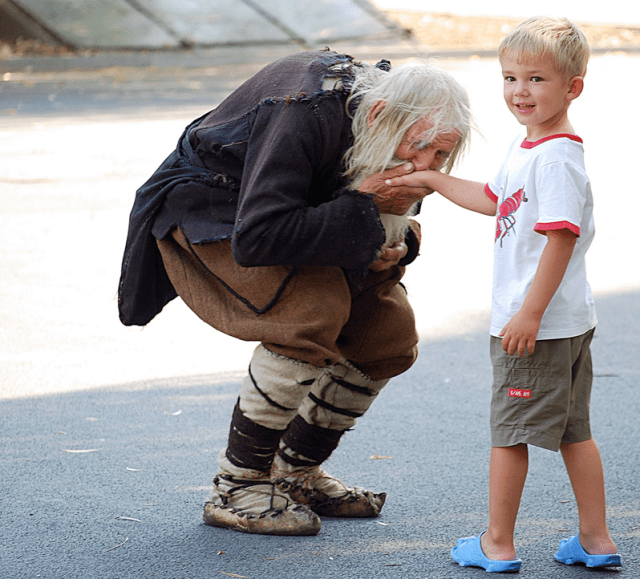
“Wealth … is like a snake; it will twist around the hand and bite unless one knows
how to use it properly.”
Clement of Alexandria, “The Instructor,” 3.6.34
For more about Dobri Dobrev, go here , here, here and here


I grew up in a house where we did not have icons, none that I can remember, and where we did not talk much about God, the Theotokos or saints. My grandmothers taught me to say a few prayers and took me to church on a couple of occasions.
As I grew up, icons started to enter our house, but by then I was a very rebellious teenager so did not make any friends among the saints. When I moved to Lancaster, although I always had faith, I brought no icons with me. In fact, I felt a strange opposition to having traditional icons in my room or in my house later on. A streak of rebellion and ignorance in fact made me hide away in a drawer the icons which I received for my wedding. It is very painful to remember this and the fact I actually damaged one of them by accident. A friend told me then to make sure I keep the icons because when the time was right, I would treasure them.
A few years later, I started feeling guilty about having the icons hidden away and put a cou-ple up in my bedroom. I was still unsure about it, but it started feeling wrong to have them in a drawer. They were just one of Christ and the Theotokos.
Then… the saints started arriving. And I dis-covered that saints are tenacious and come into your home uninvited. If you refuse to welcome them, they will knock again and again. And every time I had a slightly unkind thought about a Saint, they came to befriend me. I am a constantly reluctant and continuously repentant friend of saints as the few stories which follow will tell. I felt that, being such an unworthy and sinful lover of Saints, I had to talk about them, so other people might come to know them a little better and love them a little more and I would like to hear other people’s stories of saints, so my circle of holy friends may grow.
Saint Filofteia
First came Saint Filofteia (or Philothea). I had never heard of her and did not invite her. It was a gift from Father Bogdan when he visited Lancaster about 13 years ago. I myself thought is was an unusual icon to be bringing, but it immediately struck a chord with me because Filofteia was the name of my grandmother who first talked to me about God and Christ and taught me to say a prayer before bed. So many times in my child-hood and growing up, I thought it was a very strange name. It seemed to me at the time old and old fashioned, from a different era and I had often thought that I had never met anyone else by that name and mused on how her parents had come up with it. And how foolish I was, since her name means lover of God in Greek.
As the icon of Saint Filofteia arrived and was temporarily placed in the kitchen, where it still is, overlooking the hub of activity of the house, I started reading about the Saint. Another thing which resonated with me was the fact that her rel-ics are to be found in Romania at the monastery Curtea de Argeş, where my other grandmother always wanted us to go on a trip. Sadly, we never made it because she passed away. But Saint Filofteia makes me remember my two grand-mothers with great affection and gratitude for the seeds of faith they planted when I was a child. But beyond that, as I read about her brief life, I felt such love for the little saint who lived at the be-ginning of the XIII century in Trnovo modern day Bulgaria. She was born in a family of peasants. Filofteia’s mother was a pious woman and taught her to read the Scriptures, fast and pray. She often went to church. Sadly, her mother died when she was only young and her father remarried. Her stepmother disliked the child and her piousness, but Filofteia continued in her Christian upbringing, despite constant beatings and scoldings. She had a very compassionate heart and gave every-thing away to the poor and the hungry. One of her daily duties was to take her father’s lunch to him in the fields where he was working. But on the way, she saw some hungry children and, as was her habit, gave them some of her father’s lunch. Her father saw her and became so angry that in a fit of rage he threw his axe at her and killed her on the spot. She was 12 years old. Immediately repentant, he tried to lift the body but was unable to move it and he was further terrified by the fact it shone with a white light. He ran to the city and came back with the local archbishop and many people. They all marvelled at how the body shone and read prayers and glorified God.
It is not entirely clear when her relics arrived in Romania, but most likely they were taken over the Danube for protection during the Turkish invasion of Bulgaria around 1393. The saint is revered both in Romania and Bulgaria and her feast day is the 7th of December. She is the protectress of abused children and children in general and many are the miracles attributed to her, especially for the sick.
By Alexandra McC.

 ORTHODOX CHRISTIAN FAITH AND LIFE