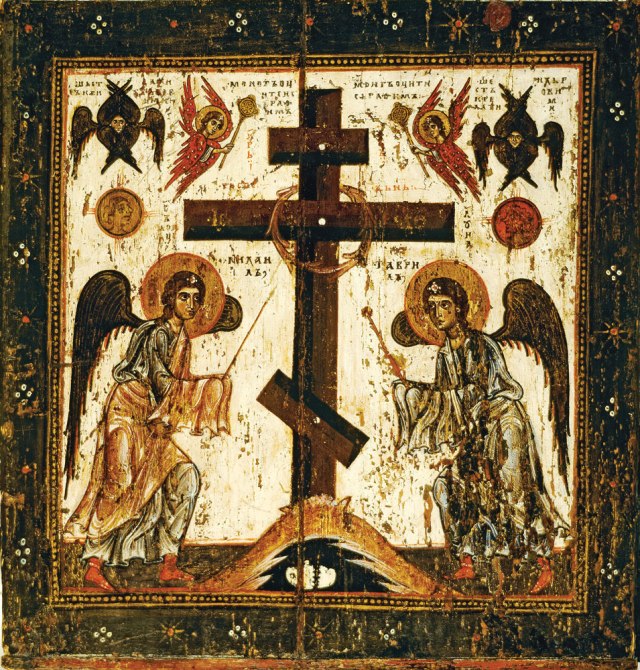
The Cross-Baptism

abbess thaisia

Excerpt from the Autobiography by Abbess Thaisia:

“… I fell asleep.

I saw myself entering a church or chapel (I do not know which) of modest size, from the south side. In the middle, as if facing the altar, there were standing three figures, all of the same size, clothed the sake, and alike in everything. I was at a loss to name them. They looked like human beings, but their heads were surrounded by something like a mist. I could not see them clearly. Besides me and them, nobody else was there. The church was empty. I became curious about these beings. Rather boldly, I began to approach them, first from one side, then from the other, trying to find out who they were. When I drew near to their right, the one standing there asked me, “What convent is this?” I replied, “The Convent of the Entrance into the Temple”. He asked me again, “How long have you lived here?” I answered, “Three years.” Then he said, “You have lived three years in this convent already, and still you do not know its name.” I began to argue, saying that I well knew the name of my convent. “It is the Convent of the Entrance into the Temple.” Then he beckoned me to come nearer, and went on, “If you do not know the name of your convent, I will tell you. It is the Convent of the Cross-Baptism.” At this moment I saw his head. It was like the head of our Saviour, as it is seen in the icons. With His left hand He was holding an enormous wooden Cross, as if He was leaning against it, and with His right Hand He lightly touched my shoulder. Tapping it gently, He said, “I tell you, it is the Convent of the Cross-Baptism. Do you not understand? Then I will explain it to you. Just as a Christian child is baptised through the water and the Spirit, and is not able to become a Christian otherwise, so a child-monk must be baptised through the Cross. Otherwise he cannot become a monk. Do you understand me now?” While He was speaking, I recognised Him as Christ, and full of joy and tender feeling, I exclaimed, “Truly, O my Lord, I do understand that I have to endure everything for the sake of Thy Cross.” I awoke with the same feeling of joy and tender feeling. My shoulder seemed to still feel the gentle tapping of His Hand. I was quite renewed  spiritually, and all my dark mood vanished as though it had never been there at all”

The Sign of the Son of Man

Cross_in_Space

Hubble Telescope image in deepest space

“And then the sign of the Son of Man will appear in the heavens” (St. Matthew 24:30). 

What kind of sign will the sign of the Son of Man be, which once had been shown briefly? That is the cross, more brighter than the sun, which manifested itself over Jerusalem before the coming of an earlier personification of the Antichrist by the name of Julian the Apostate. And in lieu of every homily concerning this miraculous sign, it is worthwhile to quote here the letter of St. Cyril of Jerusalem written to Emperor Constantius, the son of Constantine the Great and predecessor of Julian the Apostate. A portion of his letter reads, “For in these very days of the holy feast of Pentecost on the Nones of May, about the third hour, a gigantic cross formed of light appeared in the sky above holy Golgotha stretching out as far as the holy Mount of Olives. It was not seen by just one or two but was most clearly displayed before the whole population of the city. Nor did it, as one might have supposed, pass away quickly like something imagined but was visible to sight above the earth for some hours, while it sparkled with a light above the sun’s rays. Of a surety, it would have been overcome and hidden by them, had it not exhibited to those who saw it a brilliance more powerful than the sun, so that the whole population of the city made a sudden concerted rush into the Martyry, [the church] seized by a fear that mingled with joy at the heavenly vision. They poured in, young and old, men and women of every age, not only Christians but pagans from elsewhere sojourning in Jerusalem, all of them as with one mouth raised a hymn of praise to the worker of wonders, Christ Jesus our Lord, the Only-begotten Son of God and indeed attested to through experience, came to discern that the honorable [pious] Christian teaching is to be found not only in “persuasive words of wisdom, but with a demonstration of spirit and power” (I Corinthians 2:4), and not only preached by man but, witnessed by God from Heaven. “Announced originally through the Lord, it was confirmed for us by those who had heard. God added His testimony by signs, wonders, and various acts of power” (Hebrews 2:3-4). We consider it our obligation not to remain silent about this Heavenly vision, but through this letter, hasten to inform Your God-glorified and Pious One.” 

O my brethren, everything is possible with God: both, to reveal the created to man and to create the uncreated. But most importantly for us is that He wants to redeem our souls from sin and death and to give us life eternal. Let us pray to Him for this day and night.

O Lord Almighty, To You be glory and thanks always. Amen.

The Prologue from Ohrid: Lives of Saints by Saint Nikolai Velimirovič , March 19


Three Contemporary Miracles of the Holy Cross

holy cross1
1. The Cross of a Prosecutor

In a termination hearing, one of the last big trials, the Prosecutor Liberis Papandreou told me the following, when he noticed a cross around my neck. He also showed me a cross that he wore around his neck and told me the following:

“This cross saved my life. Without this I would have been dead in the Winter of 1943. It was the period when anyone who fell into the hands of the Germans and brought to the torturers, on the road Merlin, did not leave except to go to the cemetery.

During this time I also was arrested. I was accused by a senior official of the Municipality of Piraeus – a German organization – and a Mayor of a Settlement of Piraeus as a General Prosecutor of the Communists, because these two men I had arrested for the abuse of food, which was intended for the hungry. My refusal, in which I denied any “blame”, infuriated my investigators.

For this reason I was brought to be tortured. On the third day of my martyrdom I was lead into a spacious room. This was hell on earth. Inside paraded five giant torturers, each of which exhausted all his powers upon me. Slowly I started to feel that soon I would be dead there.

After the huge torturers, I was taken by the investigator himself. In a furious moment he took me with both hands by the throat and began to squeeze. I felt that I would die of asphyxiation. He used all his power and I was freed from his hands. Immediately I tore my shirt for my chest to breathe. I had not even thought about what I did. At the same time I noticed my torturer become pale. He turned white, more white than the wall of the room. He tried to lift his hands but could not succeed.

He then began to cry… Yes, crying like a frightened baby! He then came near me, leaned on my chest and kissed this here cross! I confess that I could not believe what I saw with my eyes.

After a little while he called out to be brought a glass of water. With this he washed, with his own hands, which now could move, my wounds, and after he sat me on a chair to recover. He then left to return to several colleagues, to whom he recounted the following:

‘Once this man opened his chest, lightning flashed before my eyes from this tiny cross. This flash formed a fiery “nein” [German for “no”]. Now that I’ve recovered, gentlemen, I can say that God is close to the faithful.’

Then he returned to me and said:

‘I would ask you to offer this cross to me to protect me from this unjust crisis. Not from death, because I do not fear it. But I’m not worthy, I do not believe in God like you. Because if I believed…’ and he stopped short the sentence.

So, my beloved one, it saved me from certain death thanks to my faith,” said the Prosecutor Liberis Papandreou.

From Ν. Καπιτσόγλου, “Θαύματα που γίνονται σήμερα”, περιοδ. Κιβωτός, αριθ. 21/ Σεπτέμβριος 1953, σελ. 347.

2. The Cross of Preveli Monastery

This miraculous relic constitutes the “Palladium” of the Monastery and is associated with many miracles especially related with eye diseases. It’s a big silver cross (Dim. 0.56 x 0.25) with wider points at the ends and protruded decorative buttons and tokens in a wire working process. The Baptism of Jesus Christ is shown from one side. The Father on the upper part and the Angels beside the points of the cross. On the other side the crucifixion are the symbols of four Evangelists. A big crystal is attached to the handle of the cross and in the perimeter of the cyclical base the donation inscription appears: “The Fatigue And Hard Work Of Abbot Ephraim, Whom The Lord Saved From Hell Fire”. The cross demonstrates the level of folklore silversmiths in Crete had during the second half of 18th century, when the active and energetic Abbot Ephraim Prevelis lived. The cross is kept in a shrine in the main church of the Monastery.

The Cross was carried in the front line of every battle thus greatly encouraging the fighters. In 1823, in the unequal battle against the Turks at Amourgeles, in Monofatsiou province, the Holy Symbol was lost. The Cross was found at the end of 1823 in the hands of Genoese sailors, who had purchased it in Heraklion. According to the legend, they returned the Cross to the Monastery when their ship simply stopped in the water, in a a quite mysterious way, while sailing in the Libyan Sea near the Monastery of Preveli, and was able to proceed only after the precious relic was given back. In 1941, German officers removed the Cross from the Monastery and attempted to send it to Germany. The airplane though which would transfer the Holy Symbol away could not take off. They put the Cross in another airplane without result, the second airplane could not start. They attributed this event to the Holy Symbol, so a few days after the looting, the Cross was back in its position. It was also September 13th, the eve of the feast of the Exaltation of the Holy Cross, the feast day of the Monastery.

Source

3. The Hodja Who Became A Christian

According to reliable sources, a well-known Hodja of Egypt with his family abandoned Islam and were baptized Christians. As he says, it was because of a miracle.

The former Hodja, now a Christian convert, said that his daughter was suffering from an incurable disease. They went to every hospital and saw many doctors where they lived in Egypt, and even travelled abroad. They would recommend treatment, but did not have much hope. Indeed they would inform the desperate father to take his daughter home since there really was no treatment. The Hodja prayed daily to Allah for help.

A close friend saw the father’s grief, and offered to put a cross on the pillow of his daughter. On hearing this proposal, the father responded: “It is not possible for me to do something like that…, I will not sell my faith.” The idea however began to occupy his thoughts. Without telling anyone, he bought a cross and placed it on the pillow of his daughter. The days passed and his daughter entered a comatose state, losing all consciousness. The whole family and the people of the area served by the former Hodja waited for her death. The desperate father day and night sat next to her, crying. Inside, as he confesses now, there was a hope that something would happen.

One evening as the depressed father held the hand of his daughter, he saw the cross that was on the pillow to emit a bright light which spread all over the bed. Initially he thought that it was a dream or something wrong with his mind because of his sadness. However, the light he saw was obvious. Suddenly he saw his daughter getting up from bed and saying: ‘Dad, I am hungry, bring me something to eat.” The Hodja could not understand what had happened. He went to the kitchen overjoyed. The voices roused his wife and the neighborhood. Soon the house was crowded. He told and re-told what happened. He spoke about the miracle of the cross. He even phoned his friend who had proposed to put the cross on the pillow of the daughter and thanked him.

Neighbors and friends tried to ascribe the miracle to Saint George, who is accepted by Muslims. But he knew the power of the cross. He experienced the miracle. The daughter no longer had anything and physicians aware of the situation did not believe their eyes when they saw that the new tests did not show anything. A few days after the miracle the former Hodja had made a decision. He told his wife he would become a Christian. She initially was against this and thought of the persecution that will follow the entire family by Muslims. “They will kill us” she said. But he was already on his way. He notified her that they leave permanently from Egypt. “We will be baptized and live in another country.” So it happened.

However, the news of his entering the Church of Christ, was widely circulated in the city he served, and to Muslim clergy. Today, the former Hodja and now Christian convert studies theology. For Muslims today, he and his family are outlaws. This is why we cannot publish more data.
 

Source: mystagogy Translations by John Sanidopoulos

Self Examination at the Heart of Lent

st-john-cassian-2

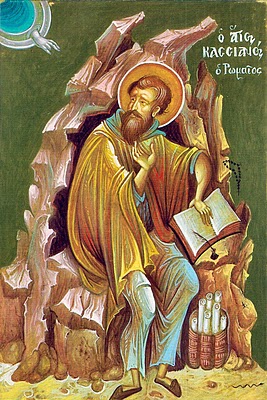
Reflections on the sin of pride by St John Cassian


By the following indications, then, that carnal pride of which we have spoken is made manifest.

First of all, a person’s talking will be loud and his silence bitter;

his joy will be marked by noisy and excessive laughter, his seriousness by irrational sadness;

his replies by rancor, his speech by glibness,

and his words will burst out helter- skelter for a heed-less heart.

He will be devoid of patience, without love,

quick to inflict abuse, slow to accept it,

reluctant to obey except when his desire and will anticipate the matter,

implacable in receiving exhortations, weak in restraining his own will,

very unyielding when submitting to others,

 constantly fighting on behalf of his own opinions

but never acquiescing or giving in to those of others.

And so, having become unreceptive to salutary advice,

he relies on his own judgement in every respect

rather than on that of the elders.” (The Institutes, pp. 271-272)


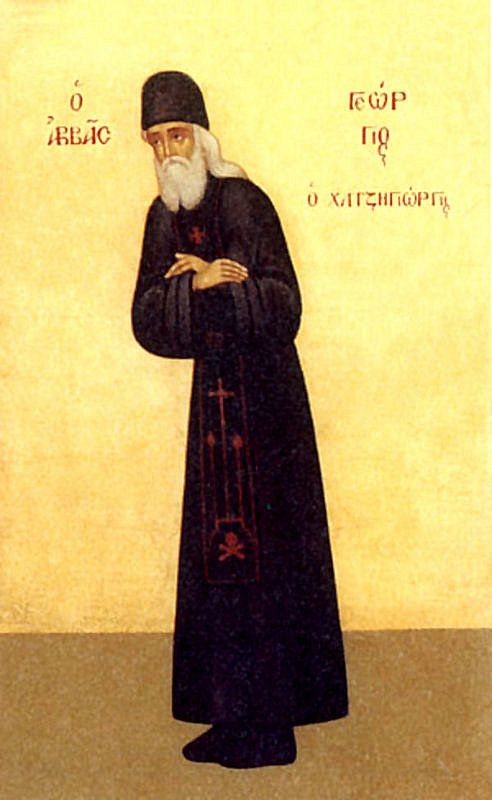
Elder Ephraim’s Prayer Diary of the Great Lent (II)

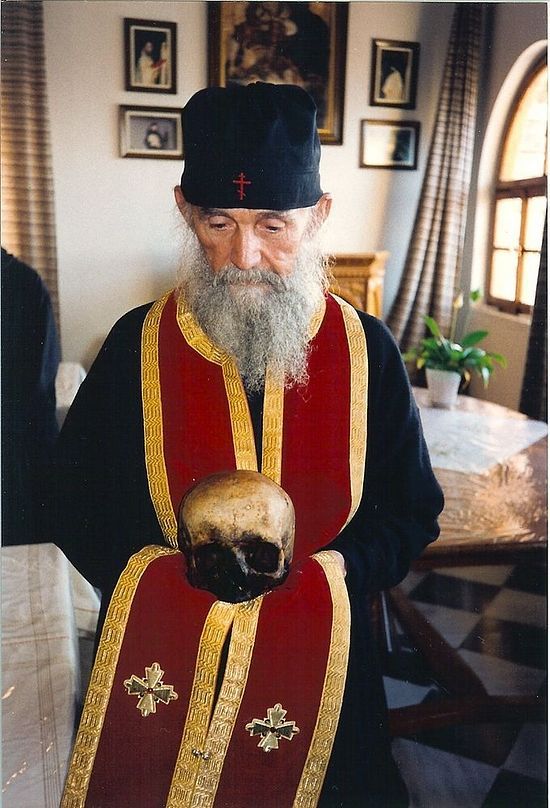
elder efraim2

February 29, 1980 [3rd Thursday of Lent]

I feel sinful and dirty. The true awareness of my nothingness greatly helps me to see God.
“Thou shalt gladden him in joy with Thy face” (Ps. 20:6). Oh, that divine face! It has Eros and Beauty from the Glory, from the supremely radiant Light of the Trinity’s effulgence. This is what the transcendent Beauty of God is: a divine electrification and contact with God the Father, His humility and condescension. Oh, how unlimited the humility and simplicity of God is! The humility and condescension of the awesome God astounds and overwhelms me! How filthy and dirty man is! Even though he has so many sins and is so guilty, he feels haughty and behaves egotistically. There is nothing stupider than this.
The angels are celebrating in heaven, dressed in white with inconceivable beauty within the supremely  bright light of God. They are chanting — and what are they chanting! Their hymns are pure bliss. But that which makes them stay in this blessed state is the grace of humility and true self-knowledge.
Unfortunately, I am proud, which is why I lack this joy and grace. Like a helpless creature, like a thirsty deer, I seek, cry out, and long to be watered by the true Fountain —  my God  —  with a divine drink, with the water springing up into eternal life (cf. Jn. 4:14). “When shall I come and appear before the face of my God?” (cf. Ps. 41:2) I weep, seeking my God. When I touch Him, I feel him and weep. But how this is happening, I do not know; one thing I do know, and that is that I feel Him as much as He wants and corresponding to the humility I feel for my dirty self. My God and Father, open the eyes of my blind soul to see my nature, the nothingness of my nothingness, and through it to see You, the most lovely Light, Who gives eternal life to mortal man. Enlighten my darkness, O divine, lovely Light.
 Amen

 *

For the first part of his Lenten Diary, go to Elder Ephraim’s Prayer Diary of the Great Lent (I)

Elder Ephraim’s Prayer Diary of the Great Lent (I)

elder efraim

February 17, 1980

I experienced amazement and divine wonder tonight in my poor prayer. My nous tasted God. “Eye has not seen, nor ear heard, nor have entered into the heart of man the things which God has prepared for those who love Him” (1 Cor. 2:9)

All this is a fruit of the labor of my Holy Elder, who truly toiled inside the caves of Athos with fasts, vigils, weeping, and tears. I, on the other hand, am a miserable, hideous monstrosity; an unmonastic monk; a sluggard eating the labor of my father, Saint Joseph. If God did not have mercy on me through his intercessions, I would be spiritually lost.

The festival in heaven entices me—there in the eternal and immutable blessings, where only silence reigns, since it is the only thing one is able to do. But when shall I behold the face of my lovely Father!!! When shall I be satisfied with His glory? Oh, what beauty! But I am a filthy stench and the demons’ joy.

My God, forgive me, the nothing of nothingness. Only Your mercy saves me from my evil self…

February 18, 1980

The communication of my sinful soul with the supremely radiant God was very wonderful tonight. The heavenly world is a different realm; a different mode of life; a different atmosphere.

My God, what can I, the miserable pauper, say about what You are! You are a stupendous and immense delight. You are impalpable, and yet how are You touched? For when this contact happens, the soul is electrified with divine electricity, and sweet and beautiful tears run and run from my eyes. But in the heart, what happens!

My incomprehensible, inexpressible, and lovely God, what can I, the miserable one say about You! There are no words, there is no man capable or competent to do so. One can only feel reverence, worship, sacredness, and divine love in silent amazement.

Oh, how much I would like to be no longer on earth with the uncertainty of my salvation! Oh, if only I were already in the world of my God, my Father, my worship. There is eternity, certainty, and security.

I weep because I am the greatest sinner in the whole world. I mourn the uncertainty of my salvation. I do not know if I shall be saved. Here is the crux of the matter. Alas! I wonder, shall I reach the calm haven of eternal bliss? I wonder, shall I see the glory of my God?

Have pity on me, O only-begotten Logos of God,

My Jesus Christ

Bathed in the Uncreated Light

Screen Shot 2018-02-28 at 21.08.02.png

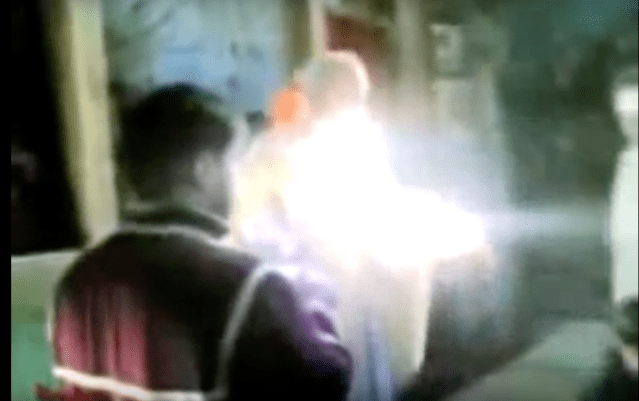
In the video which follows a Georgian Elder appears bathed in the Uncreated Light. Please pay particular attention to how the priest appears quite ordinary in the beginning, and approximately after 3:17, a transfiguration begins to take place. The event is captured by the videocamera but is not witnessed by his congregation. I would be really interested if anybody could offer us a translation in English of what the Elder is saying. Interestingly enough, I have come across two quite different translations so far.


(*) Uncreated Light


Blessed Seraphim Rose on Lenten Temptations

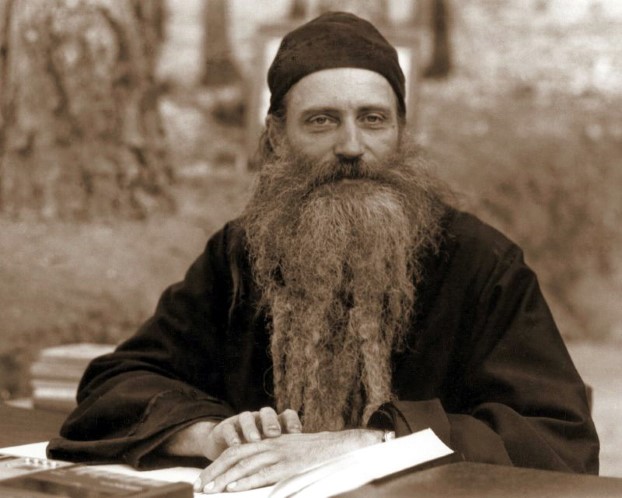
seraphim-rose

Excerpt from Blessed Seraphim’s Rose correspondence:

“First Sunday of Great Lent, 1980

Glory be to God, we passed the first week of Lent well, although the devil seems to attack stronger than ever. Last night at the Vigil we had a fire in church, which, if Br. G had not noticed it when he did, might have destroyed the whole church. Just a few minutes before the fire there had been a strong (and I think beneficial) human confrontation almost on that very spot, and it was obvious to me that the fire was caused by the devil’s envy that I secretly rejoiced, seeing that he attacked our property out of frustration at losing his human prey.  The same day a piece on our main printing press broke, but I think I can fix it from a part on the other press. But how well God preserves us in the midst of such trials!”