Waiting and Watching

 No, NOT this kind of nightmarish waiting, this living death.
But this:
waiting and watching orthodox church
*
Some years ago a close family friend passed away in a nursing home. She spent the last months of her life in what appeared to be a state of semi-consciousness, rocking back and forth in her chair and muttering to herself, “Waiting, waiting…”. We never did learn just what she was waiting for, other than death. She was, though, a fervent and faithful Christian, and her “waiting” seemed very much akin to “watching.”

Her Protestant background gave her little in the way of initiation into “spiritual warfare.” Yet instinctively—by grace—she understood what that struggle was about. She had seldom read writings of the Church Fathers, so she had little in the way of a vocabulary to express the inner meaning of “waiting.” Nevertheless, she seemed fully aware that the word does not imply what we usually think it does: an inactive state of expectation for something to come, something that is not yet present or available. It describes, rather, a pathway that leads toward fulfillment of that expectation. Insofar as it is grounded in “watchfulness,” the act of “waiting” is an inner dynamic of the heart or soul, which offers us immediate experience of the object of our most fervent longing. This our friend understood. And it seemed to transform her days and months of waiting into a true pilgrimage.

Waiting and Watching Old Age Depression Pilgrimage

As it is used in patristic tradition, “watchfulness” implies an inner attentiveness or vigilance. It requires wariness in the face of attacks from both within and without, from our worst inner impulses and from the onslaught of demonic temptations. Accordingly, watchfulness is a key element in spiritual warfare.

The eighth century ascetic writer Hesychios of Sinai composed a remarkable treatise on “watchfulness and holiness,” included in the Philokalia. He begins with this description:

“Watchfulness is a spiritual method which, if sedulously practiced over a long period, completely frees us with God’s help from impassioned thoughts, impassioned words and evil actions. It leads, in so far as this is possible, to a sure knowledge of the inapprehensible God, and helps us to penetrate the divine and hidden mysteries. It enables us to fulfill every divine commandment in the Old and New Testaments and bestows upon us every blessing of the age to come. It is, in the true sense, purity of heart…”.

This is an extraordinary statement that at first reading seems highly improbable. According to Hesychios, watchfulness or spiritual attentiveness can liberate us from destructive thoughts, words and deeds; it makes it possible for us actually to know the unknowable God and the “mysteries” of the spiritual world; it equips us to respond with perfect obedience to all of the biblical commandments; and it conveys to us—in the here and now—“every blessing of the age to come.”

*

We bury our seeds and wait,
Winter blocks the road,
Flowers are taken prisoner underground,
But then green justice tenders a spear (Rumi)

Waiting and Watching

If the personal experience of this holy monk enabled him to make such a remarkable affirmation, it is only by virtue of the key phrase, the key reality: “with God’s help.” If watchfulness, termed also “noetic stillness” or “guarding of the heart,” can lead in this life to such a state of beatitude, it is only because God wages spiritual warfare on our behalf. The rewards of that struggle—freedom from destructive passions, knowledge of God, and every eternal blessing—are not our doing. They are not the result of our own initiative or spiritual power. They are a gift, wholly gratuitous and unmerited. They require on our part only an attitude of repentance, an inner openness to grace, and the desire to share, now and forever, in God’s own holiness.

*

Old men ought to be explorers

Here and there does not matter

We must be still and still moving

Into another intensity

For a further union, a deeper communion

Through the dark cold and empty desolation,

The wave cry, the wind cry, the vast waters

Of the petrel and the porpoise. In my end is my beginning.

( T. S. Eliot, “East Coker,” from *The Four Quartets*)

*

For most of us, whether we are conscious of it or not, life consists essentially in “waiting.” The hyper-activism that characterizes the life of most Western societies today, distracts us enough from what is essential, that we have lost touch with the real meaning and value of being alive. We are “waiting for Godot” rather than for “the one thing needful.” To acquire that “one thing,” however, we need to shift our focus, reacquire a sense of genuine value (and civility), reorganize our priorities, and reject the artificial virtues society inculcates in us: aggressive competition, perfectionism, status, and material gain. We need to discover once again the truth that the wealthiest among us is the monk who has renounced every possession and obtained the “glorious liberty of the children of God.” We need to find peace and happiness not in the marketplace or in accumulating “stuff,” but in assuming the inner struggle of attentiveness, of watchfulness, which alone leads to “every blessing of the age to come.”

Some day we may well find ourselves sitting in a nursing home or some equivalent, rocking back and forth, and waiting. For many people of any age, that is a description of their daily existence, whether at the office, or at home, on the playing field or in the trenches. Their waiting can be filled with boredom or anxiety, or with a gnawing conviction that their personal ambitions are meaningless and their hopes empty and vain. To people like this (and it may be a temptation for all of us) waiting can easily lead to despair.

Waiting with watchfulness, though, can become a pilgrimage. It can take us on an inner journey that leads us through the rough places of passions and temptations and on to every blessing of the world to come. All it requires is an attitude of repentance, an unquenchable thirst for those blessings—and an abundance of help from God.

Fixing Our Eyes On What Is Unseen….

Very timely blog post, by a Missionary in Nepal, for the little city hermit, whose journey of faith has truly led him places he never dreamed of going, led him to do things he would never believed possible, and to be used of Him in ways unimaginable. To his shame, he often gets discouraged …

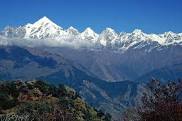
missionary blog faith in God Divine providenceThis morning as I was walking the kids to the bus stop, I caught a brief glimpse of the mountains, but then moments later they were no longer visible. When I got back to the house, I went up on the roof and there they were, just peeking out from above the clouds.

And I realized something.

The mountains are always there. They are.

But most of the time they are invisible to the human eye. Covered with smog and clouds. Yet they are there.

Then I was reminded that isn’t that just like God. He’s always there, but most times we can’t see Him because “life” covers Him up, kind of like the clouds.
Even more so His plans for our lives.

Every now and then He gives us a glimpse of what is next. Just a little view. Then when we can no longer see, He says follow Me…

View original post 374 more words 

Fixing our eyes on what is unseen….

Very timely blog post for a little city hermit whose journey of faith has truly led him places he never dreamed of going, led him to do things he would never believed possible, and to be used of Him in ways unimaginable. To his shame, he often gets discouraged.

mandylynncarpenter's avatarmandylynncarpenter

himalayasThis morning as I was walking the kids to the bus stop, I caught a brief glimpse of the mountains, but then moments later they were no longer visible. When I got back to the house, I went up on the roof and there they were, just peeking out from above the clouds.

And I realized something.

The mountains are always there. They are.

But most of the time they are invisible to the human eye. Covered with smog and clouds. Yet they are there.

Then I was reminded that isn’t that just like God. He’s always there, but most times we can’t see Him because “life” covers Him up, kind of like the clouds.
Even more so His plans for our lives.

Every now and then He gives us a glimpse of what is next. Just a little view. Then when we can no longer see, He says follow…

View original post 375 more words

Sanctifying the Single Life


st-john-maximovichNowadays so many people, so many friends and acquaintances of mine, especially middle-aged, are disappointed, drained, left alone with children, empty and lonely (both in and out of relationships), feeling robbed. What are we to do with our lives in order to avoid self-centered ends and the spiritual abyss?  Marriage and monasticism most certainly lead to the most intimate communion with the Creator and fellow creature and fulfill their promises: the soul can still be purified through either of them. They restore the soul’s appetitive drive to its divine orientation. The roads are narrow, their gates straight, but they lead to the deification of the soul. But maybe this path is not open to us — yet? — for a variety of reasons and circumstances. So WHAT  is to be done?


Apparently, there is also a third way.  Jesus Christ teaches that certain people are called by God to the single life.


And I say to you: whoever divorces his wife, except for sexual immorality, and marries another, commits adultery. The disciples said to Him: “If such is the case of a man with his wife, it is expedient not to marry.” But He said to them: “Not all people can receive this saying, but only to those to whom it is given. For there are eunuchs who have been so from birth, and there are eunuchs who have been made so by men, and there are eunuchs who have made themselves eunuchs for the sake of the kingdom of heaven. He who is able to receive this, let him receive it.”  (Mt 19:9-12)


The apostle Paul elaborates on Jesus’ teaching.


It is well for a man not to touch a woman. But because of the temptation to immorality each man should have his own wife and each woman her own husband… I say this by way of concession, not of command. I wish that all were as I myself am. But each has his own special gift from God, one of one kind and one of another.


To the unmarried and the widows I say that it is well for them to remain single as I do. But if they cannot exercise self-control, they should marry. For it is better to marry than to be aflame with passion… And unto the married I command, yet not I, but the Lord, Let not the wife depart from her husband: But and if she depart, let her remain unmarried or be reconciled to her husband: and let not the husband put away his wife. … Only let every one lead the life which the Lord has assigned to him, and in which God has called him. (See 1 Cor. 7)


The single calling

The single life is a calling. It is a way of life which is given by God.  A person, certainly a Christian person, does not choose to be single or to be married. He or she rather discovers the way of life which the Lord provides within the conditions of his or her existence. People really only chose to receive, or to reject, what has been given them. They do not determine it.
 

There are any number of reasons why a person may be single. They range from the sense of having a positive calling to the celibate life for religious purposes, to the plain fact of being unmarried without one’s own conscious choice, and perhaps even against it, just because this is the way that things have happened to work out. Whatever the reason for one’s being single and however mysterious or ambiguous, willed or unwilled the causes for one’s being in this state, at some point in our adult life each of us must accept the form of life which is ours and consciously offer it to the Lord, freely and voluntarily, for the sake of the love of God and neighbor.


Sanctifying the single life

The single life is sanctified the way every life is sanctified: by perfecting it according to God’s will. The first task of the single person according to God’s teaching as revealed by Jesus Christ and the apostles, martyrs and saints of the Christian Church, is that of maintaining and developing one’s sexual chastity.


The single person who says “yes” to God and to his or her calling to the single life automatically says “no” to all forms of physical, sexual activity with the opposite sex, with one’s own sex and with oneself. This is so because sexual actions other than the conjugal act of married love destroy the wholeness and integrity of one’s being through the dissipation of one’s spiritual and physical energies. No matter how loving, fulfilling and pleasurable they may at first appear to be, sexual commitments without the totally faithful commitment of unending love in marriage – with all of the responsibilities and obligations for inter-personal communion and the pro-creation and protection of human life which this involves – cannot but result in dissatisfaction, disappointment, despondency and despair. this is so because human persons are made in the image and likeness of God who is Love, and as such can find fulfillment and happiness only in ways of living and acting which express and image His own.


A hard saying

The teaching about sexual purity in the single life is a difficult one. When many people hear it they are moved to say what Christ’s disciples said when they heard other of His teachings: Lord, this is a hard word. Who can hear it? Who then can be saved? And the Lord’s answer is always the same. He said that His teaching has to be hard because “the gate is narrow and the way is hard that leads to life, and those who find it are few”, adding as well the fundamental point  that as far as His teaching is concerned, “with human being it is impossible, but with God all things are possible”, particularly to those who believe. (See Jn 6:60; Mt 7:13-14; 17-21; Lk 18:27; 35)


Like all forms of Godly life and behavior, the single life of celibate chastity is a way of the Cross. It is a way of sacrifice and suffering which alone brings joy and happiness to a human being.


Conditions for perfection

For the single life to be perfected according to God’s will, with the preservation of sexual purity as its heart and foundation certain conditions must be fulfilled. First of all there must be firm spiritual discipline for the sake of a lively interior life. The single person must have a rule of prayer which is diligently kept, with the reading and pondering of wholesome and edifying words and images. Great attention must be given to keep oneself free of all thoughts and images which lead to spiritual and physical defilement and disintegration. The “spouse” and “life partner” for the single person in the most direct and specific way must be the Lord himself.


The single person must also have a firm rule of external life and behavior. Capricious and willful actions, things done without order or form, but just as they happen to come up, must be avoided at all costs. Forms of responsibility and accountability to others must be found and fulfilled with conscious obedience. This is especially true for those who do not have such natural obligations as, or example, the care of elderly or infirm parents or relatives, or duties within a religious community.


The single person must also be committed in a formal way, in obedience, to a spiritual father, which can be a priest or a hieromonastic. Some might say that such conditions are necessary for all who are living a human life according to God’s will, whether or not they happen to be single. This is true. But these conditions are particularly necessary for the single person precisely because of their single state in a world which renders them particularly vulnerable to self –centeredness and loneliness on the one hand, and lack of commitment and accountability on the other, with the additional cross of often being misunderstood and taken advantage of by those around them because of their single status.


Christ and the Saints

It is common in the modern world to think that one cannot be fulfilled as a human being in the single state, especially if living a sexually continent and chaste life. The claim is that without sexual activity and intimacy, a human person is diminished and even distorted in his basic humanity. If this is true, then the Christian faith as understood and practiced by the Orthodox, and by millions of other Christians, is wholly false.


The Lord Jesus Christ was single and celibate, yet He was the most perfect human being who ever lived, the Son of God and God Himself in human form. Jesus’ mother Mary, though legally married, remained a virgin her entire life. John the Baptist, whom Jesus called the greatest man ever born of woman, was clearly a chaste celibate according to the Gospels. So was the apostle and evangelist John. So was the apostle Paul who, as we have seen by his own report was single at the time of his conversion and ministry. Indeed, the calendar of Orthodox Church saints is filled with single people who are praised and honored for their chastity and devotion to God and their neighbors. In this perspective it is clearly the Christian conviction that being single is conducive to the highest and most perfect for of fulfillment possible to human beings: the life of sanctity . (Source: St. Luke’s Orthodox Mission)


See also: Marriage of Monasticism? and Belonging to Neither and Both

Belonging to Neither and Both

Belonging to Neither and Both In the Middle Between the World and Monasticism From the Letters of St. Ambrose of Optina

An Elder’s Correspondence to his Spiritual Daughter Caught Between the World and the Monastery (*)

January 3, 1879

In our last letter of December 14, you wrote that you cannot find any books applicable to your situation. You say that all books discuss monasticism, and that you are not a nun but are simply living near a monastery. In response I would say this to you: the Gospel teaching is given to everyone in common, and everyone is obliged to fulfill it. Monasticism stemmed from the desire to live exactly according to the Gospel teaching. This is terribly difficult amidst the noise of the city and the cares of life in the world, which hinder such a precise fulfillment of the Gospel teaching, even though everyone is called to this. Monastics are distinguished from laymen in that the latter are permitted to live in a state of matrimony, while the former choose to remain unmarried. Read more often the Gospel of Matthew, from the beginning of the fifth chapter to the end of the tenth, and try to live according to what is written there. Then your life will be marked by harmony, and you will find peace of soul.

January 11, 1879

Peace to you and God’s blessing, and a strengthening towards good. On January 3 I briefly wrote to you that monastic life by no means differs from the Gospel teaching, and that those living in the world differ from monastics only as concerns their married state. About married people, however, St. John of the Ladder writes that they are like those whose hands and feet are bound with fetters. Although even these can walk the path of righteousness, it is only with difficulty; they often stumble and fall and become sorely wounded as a result. The unmarried–and particularly monastic–state offers greater facility in the fulfillment of the Gospel teaching. It is for this reason that monasticism was established by the Holy Fathers.

You are now in the middle, between the world and monasticism (*). The middle path is everywhere approved, and for you–both on account of your upbringing and your weak constitution–it is in many ways appropriate. Only try to live according to the Gospel commandments. Above all, judge no one about anything, so that you yourself will not be judged …..

In my letters I’ve always had one aim –to dispel your misconceptions about monasticism and spiritual life in general, which you formed while still living in the world. You have perhaps heard it said that even apparently correct theory does not always coincide with practice. One’s own experience, when it follows the experience of spiritual people in the past, is a good instructor, provided we check our life against the Biblical and patristic teaching.

You laid for yourself and your life a rather strange foundation: I wanted so, I thought so, I intended so… You are not the only one; many desire a good spiritual life in the simplest form. Few, however, (they are rare, in fact) fulfill their good desires in actuality; they are those who hold tightly the words of Holy Scripture: “We must through much tribulation enter into the kingdom of God” (Acts 14:22), and who, entreating the help of God, try to bear the griefs and illnesses and various discomforts visited upon them without murmuring, always keeping in remembrance the words of the Lord Himself: If thou wilt enter into life, keep the commandments. (Matt. 19:17)

And the most important of these commandments are: “Judge not and ye shall not be judged; condemn not, and ye shall not be condemned: forgive, and ye shall be forgiven” (Luke 6:17). Besides this, those who want to be saved must bear in mind the words of St. Peter Damascene, that salvation is accomplished between fear and hope…

To live in a simple hut without humbling oneself will not lead to any good. It is better for someone who is weak in soul and body to live in a comfortable cell and to humble himself, blaming and reproaching himself for such comfortable and spacious quarters. Only few, and those possessing a strong constitution, can without harm lead an austere life, and endure cold and hunger and dampness and sleeping on the ground. According to the words of St. John Damascene, those who are weak in body derive more profit from humility and thanksgiving than from physical labors and podvigs to which they are unequal.

You are adversely affected by the harsh words of such people who, in your opinion, should speak differently. St. John Climacus writes that God providentially leaves some flaws even in spiritual people so as to bring them to humility.

If you wish to set yourself on a firm path toward salvation, try above all to pay heed to yourself alone, and leave everyone else to God’s Providence and their own will, and don’t concern yourself with instructing anyone. Not in vain is it said: Each man begetteth himself shame or glory according to his deeds. This will be most beneficial, meat conducive to salvation, and, what’s more, more peaceful.

From the Letters of St. Ambrose of Optina

(*)  *Sigh* It is so me …

See also Marriage or Monasticism? and Sanctifying the Single Life

When Tumultuous Work Raises its Din

When Tumultuous Work Raises its Din


Back in the UK, amidst Autumn Busy-ness, in search of Quiet

*

“Swim, O my nous, in the sweetest tranquility!” (Blessed) Elder Joseph the Hesychast

*

When the heart is hard and parched up,

Come upon me with a shower of mercy.

When grace is lost from life,

Come with a burst of song.

When tumultuous work raises its din on all sides,

Shutting me out from beyond,

Come to me, my lord of silence,

With thy peace and rest.

When my beggarly heart sits crouched,

Shut up in a corner,

Break open the door, my king,

And come with the ceremony of a king.

When desire blinds the mind

With delusion and dust, O thou holy one,

Thou wakeful one, come

With thy light and thy thunder.

(Gitanjali-Song Offerings, 39, by Rabindranath Tagore)

Near-Death and Afterlife Stories in a True Crown Jewel


dryvouno29dryvouno28dryvouno27dryvouno26dryvouno25dryvouno24dryvouno23dryvouno22dryvouno21dryvouno20dryvouno19dryvouno18dryvouno17dryvouno16

Dryovouno Monastery, Near-Death and Afterlife Stories

dryvouno15dryovouno14dryovouno13dryovouno12dryovouno11dryovouno10dryovouno9dryovouno7dryovouno6dryovouno5dryovouno4dryovouno3dryovouno2dryovouno1


Father Stephanos of the Monastery of Transfiguration (Metamorfosi tou Sotiros) in Dryovouno speaks very little, mainly with his eyes.

*

Mother Theologia: “How little do we think of death, although he is so near to us!” commenting on a yet another sudden, unexpected death.

*

Laokratia told us about a dream: “My friend’s late young son, who had suffered a sudden and violent death through a road crush, appeared in his father’s dream in tears, standing before a closed gate, telling him that ‘they’ do not allow him in. His father, a very faithful man, promptly met Elder Iakovos Tsalikis and told him his dream. By the grace of God, the elder, having a pure nous, was deemed worthy to see the souls of people at the time they were leaving the earth and ascending towards heaven. Elder Iakovos asked him if his son was blaspheming God, and the father sadly admitted so. Then, Elder Iakovos promised to pray for his son, and he also advised him to do alms in his son’s name, fast and pray to the Lord so He will grant him rest”. The poor father made a prostration and obeyed the elder, and after 40 days, he saw again his son in his dream, this time radiant with joy, in front of an open gate, thanking him and telling him that ‘they’ had allowed him in!”

*

Sister Gregoria: “I just received a message from a friend who had to undergo a difficult operation and she told me that it all went well but that it was St. Luke Bishop of Simferopol and Crimea, the Blessed Surgeon who operated her! In the operating room she felt that she was dying. She started ascending and watched the surgeon and the nurses trying to revive her unconscious body. Then she met ‘somewhere in the air’ St Luke. To be sure she could not really interpret what was happening to her as it was taking place. Still she understood that he reassured her that he would take over as the surgeon was clearly in an impasse. Then she started moving in the reverse direction, got into her body again and found herself in the hospital, having had the surgery performed, with doctors standing around her, looking at her puzzled. But who was this St Luke she had met? It took her a few hours to find out that her mother, a very devout woman, had placed a little icon of his underneath her pillow, just before the operation started!”

*

Sister Ioanna:”Yesterday at midnight, while I can finishing the writing of an icon and adding the dedication, I realised that although I could write the mother’s name easily, there was no way I could add her late son’s name. I started praying and in the Spirit I ‘saw’ that the mother was in a very good spiritual state, but her son was not at all well and needed our prayers. She felt that God had granted rest to the mother’s soul, but they should do alms in the son’s name and pray to the Lord so He will grant him rest”.

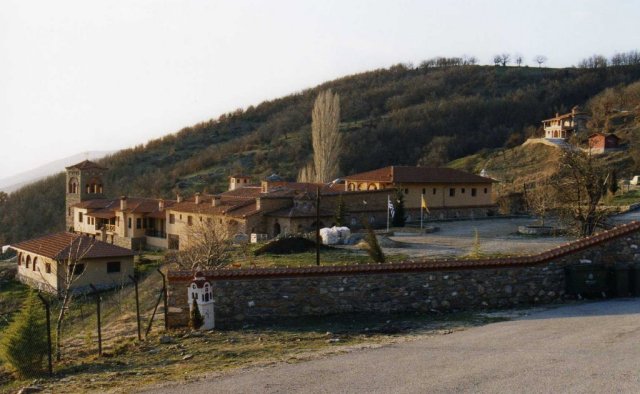
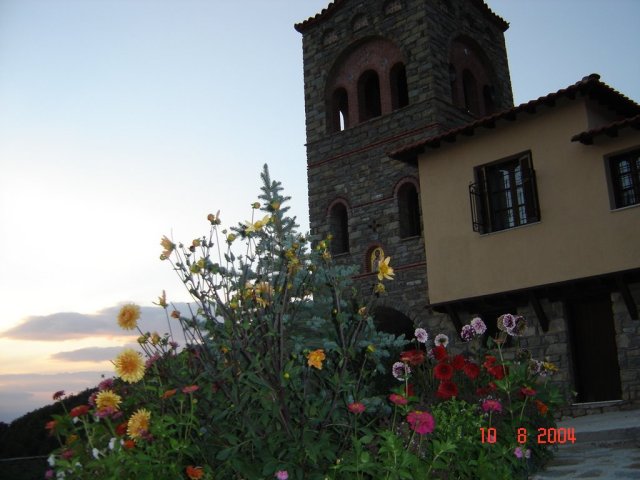
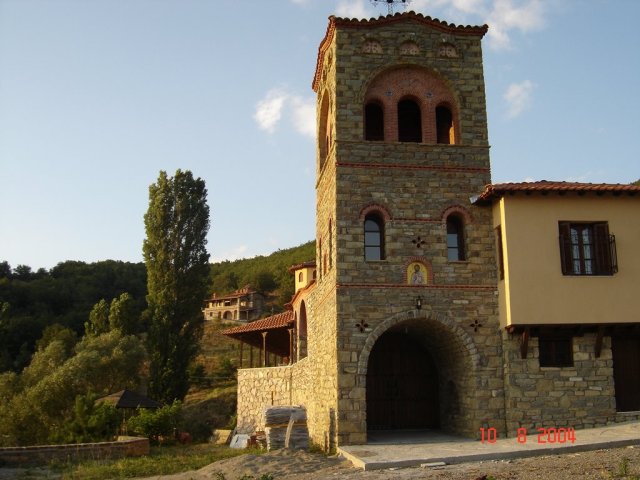
We arrived at the Monastery of the Transfiguration (Metamorfosi tou Sotiros) in Dryovouno on its Feast  day. We were a group of faithful, Mother Theologia and some nuns from the nearby Monastery of the Assumption, Dormition (Koimiseos tis Theotokou) of Mikrokastro. What stunning Beauty confronted us!


This male monastery is located a few kilometers above Dryovouno, at a secluded area. Its foundation goes back to 1592, while the murals were completed in 1652, by painter Nikolaos from Linotopi while the narthex in particular is the work of Argyris Kriminiotis.


Kosmas Aitolos arrived here and, after preaching, treated the monks who had been taken ill due to an epidemic. He fetched water from a nearby spring, blessed it, and gave it to the monks to drink, who were then cured. This water has been considered holy ever since and a chapel devoted to saint Kosmas has been constructed at the spring. St. Kosmas received from God the gift of prophecy.


At wartime, the monastery offered valuable services to the local population. It served as storage for ammunition and as base for various chieftains. This is where Dimitrios Feraios, Kapetan Vardas and Pavlos Melas resorted to.


In 1943 it was set on fire by Italians along with its historic records. Its renovation began in 1996, the prime mover being Archbishop Stefanos Rinos with the personal efforts of monks and believers. The parvis offers a sense of tranquility and a spectacular view to Voio and Kastoria.


It is Your Turn Now!

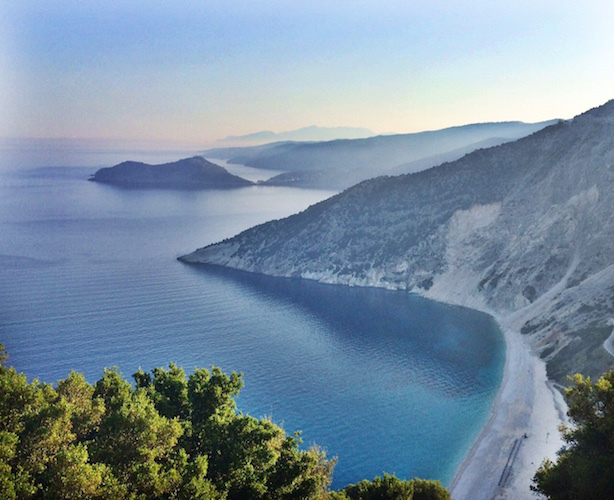
 Happy New Church Year! New Beginning Wishes from Cephallonia, a Story of Repentance, a Rumi Sufi poem, a robin singing and the little city hermit’s name day  ☺️

kef1

Myrtos Beach

kef5.jpg

kef6

kef7

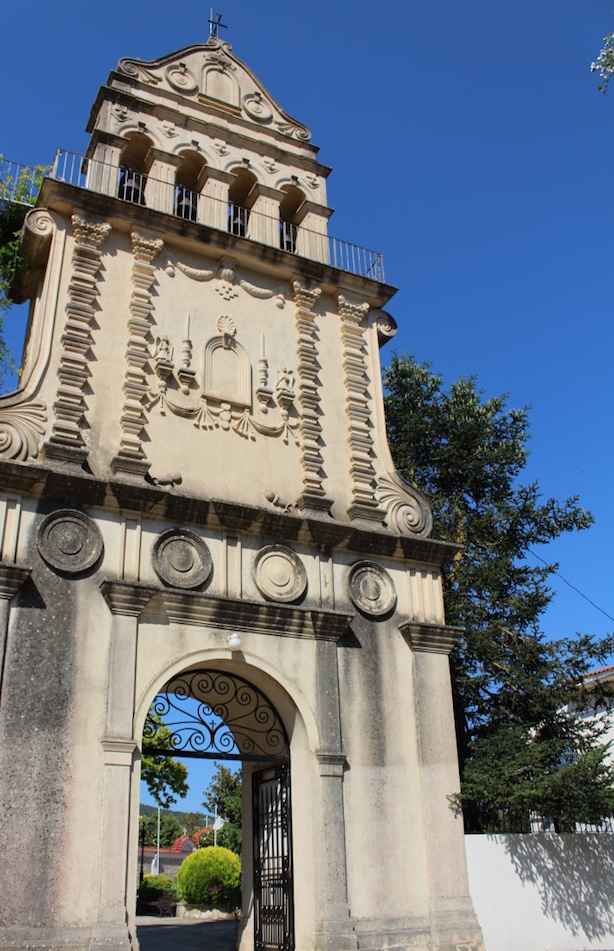
Monastery of Agios Gerassimos

kef2.jpg

Fiskardo, Kefalonia

kef4.jpg


It Is Your Turn Now!

Transform your inner pearl.

It is your turn now,

You waited, you were patient.

The time has come,

For us to polish you.

We will transform your inner pearl

Into a house of fire.

You’re a gold mine.

Did you know that,

Hidden in the dirt of the earth?

It is your turn now,

To be placed in fire.

Let us cremate your impurities.

By Rumi

alchemist.jpg

A Story of Repentance

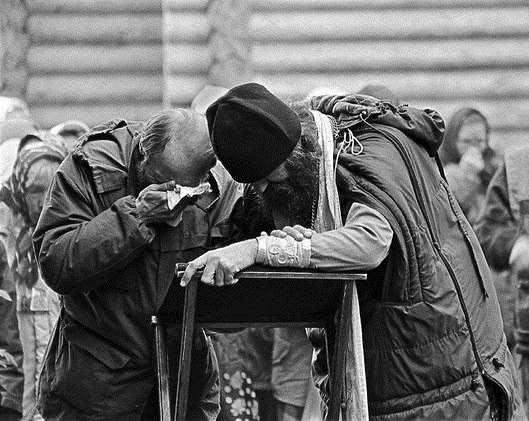
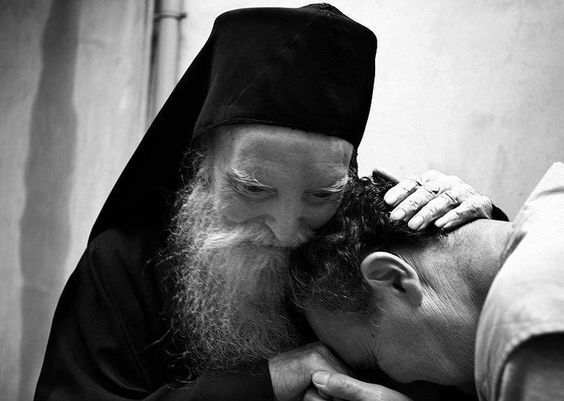
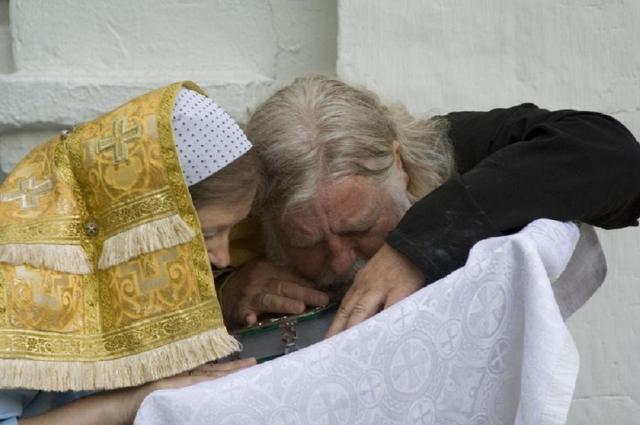
We knew virtually nothing…I had come to make my confession for the first time in my life. Shortly beforehand I had become a Christian by the grace of God. I had no deeper knowledge either of Christianity or of the church – who could have taught me? I and my newly-converted girl friend, both in the same position, learned what to do by imitating our old women, who zealously preserved the Orthodox faith and practices. We didn’t know anything. But we had something which in our day should perhaps be treasured more than knowledge: a boundless trust in the church, belief in all its words, in every movement and demand. Only yesterday we had rejected all authority and all norms. Today we understood the deliverance that we had experienced as a miracle. We regarded our church as the indubitable, absolute truth, in minor matters just as much as in its main concern. God has changed us and given us childhood: ‘Unless you become as children, you will not enter into the kingdom of heaven.’

I only knew that it was necessary to go to confession and to communion. I knew that both confession and communion were high sacraments which reconcile us with God and even unite us with him, really unite us with him in all fullness, both physical and spiritual. I was formally baptized by my unbelieving parents as a child. Whether they did that out of tradition or whether someone had persuaded them to do it, I never discovered from their explanations. Now at the age of twenty-six I had decided to renew the grace of baptism.

confession.jpg

Like a hardened crust

I knew that the priest himself – the well-known confessor Father Hermogen – would ask me questions and guide my confession. Then the day before I read a little booklet in order to prepare myself for confession, I discovered that I had transgressed all the commandments of the Old and New Testaments. But quite independently of that it was clear to me that the while of my life was full of sins of the most varied kind, of transgressions and unnatural forms of behavior. They now pursued me and tormented me after my conversion, and lay like a heavy burden on my soul. How could I have not seen earlier how abhorrent and stupid, how boring and sterile sin is? From my childhood my eyes had been blindfolded in some way. I longed to make my confession because I already felt with my innermost being that I would receive liberation, that the new person which I had recently discovered within myself would be completely victorious and drive out the old person. For every moment after my conversion I felt inwardly healed and renewed, but at the same time it was as though I was somehow covered with a crust of sin which had grown around me and had become hard. So I to longed for penance, as if for a wash. And I recalled the marvellous words of the Psalm which I had recently learned by heart: ‘Purge me with hyssop, and I shall be clean: wash me and I shall be whiter than snow.’


confession5

The experience of a miracle

And so my turn came. I went up, and kissed the gospel and the cross. Of course because I felt dismay and apprehension, I was afraid to say that I was confessing for the first time. Father Hermogen began by asking,

‘When did you last fail to go to church? What festivals have you deliberately neglected?’

‘All of them,’ I replied.

Then Father Hermogen knew that he was dealing with a new convert. In recent times new converts have come into the Russian church in large numbers, and they have to be treated in a different way.

He began by asking about the most terrible, the ‘greatest’ sins in my life, and I had to tell him my whole biography: a life based on pride and a quest for praise, on arrogant contempt for other people. I told him about my drunkenness and my sexual excesses, my unhappy marriages, the abortions and my inability to love anyone. I also told him about the next period of my life, my preoccupation with yoga and my desire for ‘self-fulfillment’, for becoming God, without love and without penitence. I spoke for a long time, though I also found it difficult. My shame got in the way and tears took away my breath. At the end I said almost automatically: ‘I want to suffer for all my sins, and be purged at least a little from them. Please give me absolution.’

Father Hermogen listened to me attentively, and hardly interrupted. Then he sighed deeply and said, ‘Yes, they are grave sins.’

I was given absolution by the grace of God: very easily, it seemed to me: for the space of several years I was to say five times a day the prayer ‘Virgin and Mother of God, rejoice’, each time with a deep prostration to the ground.

This absolution was a great support to me through all the following years. Our sins (the life of my newly-converted friend was hardly different from my own) somehow seemed to us to be so enormous that we found it hard to believe that they could disappear so simply, with the wave of a priest’s hand. But we had already had a miraculous experience: from the nothingness of a meaningless existence bordering on desperation we had come into the Father’s house, into the church, which for us was paradise. We knew that with God anything is possible. That helped us to believe that confession did away with sin. And the starets also said, ‘Don’t think about it again. You have confessed and that is enough. If you keep thinking about it you are only sinning all over again.’ (Tatiana Goricheva, a member of the “intelligentsia” and a Soviet-era dissident, Talking About God Is Dangerous)

Repentance and the Orthodox Sacrament of Confession

It Is Your Turn Now! 

*

“It is later than you think! Hasten, therefore, to do the work of God.”

+ Fr. Seraphim Rose, Fr. Seraphim Rose: His Life and Works

*

“When someone makes a decision, he is really diving into a strong current that will carry him to places he had never dreamed of when he first made the decision.” (The Alchemist)

confession2

Happy New Year!

* September 1st is the start of a new liturgical in the Orthodox Church

and

the little city hermit‘s name day 😊