Audio Homily by St. Porphyrios (with English Subtitles)
+St. Porphyrios, 2 December
May God bless the person who took the prayerful effort to translate this into English. What a wealth of wisdom and divine illumination! May we have his blessing!
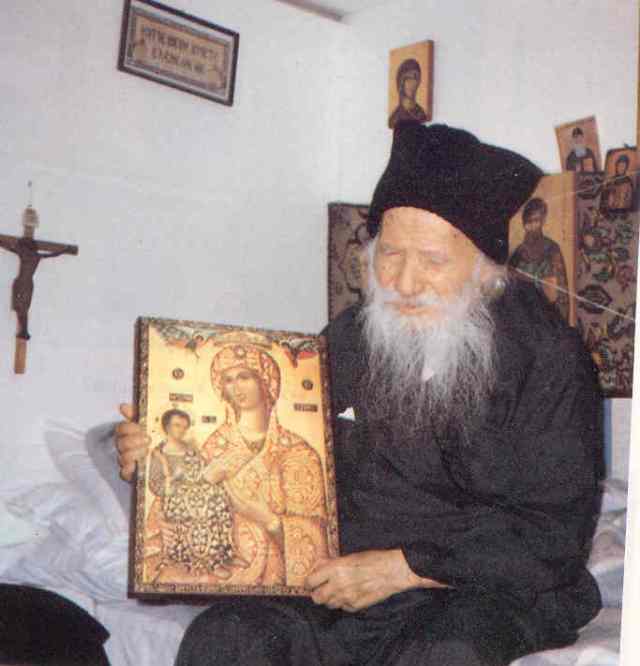
+St. Porphyrios, 2 December
May God bless the person who took the prayerful effort to translate this into English. What a wealth of wisdom and divine illumination! May we have his blessing!


A true story by Elder Aimilianos
“Once, when I was in a hurry to come here to the monastery to speak to you, I took a taxi, so I wouldn’t be late. On the way, I asked the driver:
“Tell me, do you ever get to eat lunch or dinner with your Wife?”
You know what sort of work these drivers have, and how they almost never know when they are going home.
“Every day” he told me, “both lunch and dinner.”
“How do you manage it? What time do you eat?”
“Lunch starts from 10:00 in the morning, and goes till 4:00 in the afternoon, and dinner is from 6:00, often till 2:00 in the morning.”
Do you understand? At 10:00 in the morning, his wife had the meal ready and waited for him, whatever time he arrived so that they could eat together. And in the evening, she waited for him from 6:00, often till 2:00 in the morning. Doesn’t this impress you? This is what martyrdom in life means: a life of love.
Martyrdom in daily life is action done out of love for the other person, making a sacrifice, setting aside one’s own selfish needs for the benefit of another.”
The Church at Prayer, Archimandrite Aimilianos, p 160

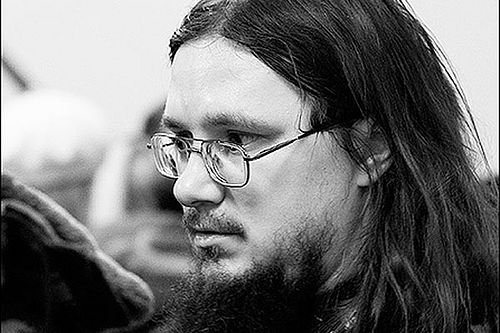
This year marks the eighth anniversary of the martyrdom of the missionary Moscow priest Daniel Sysoev, who was shot in the church he built by a Muslim who was angered by Fr. Daniel’s ability to convert followers of Islam, on the evening of November 19, 2009. He died in the hospital early the following morning.
Matushka Julia, Fr. Daniel’s wife, has agreed to share her memories of her husband. Her words here are a frank monologue, a canvas woven from her personal diary.
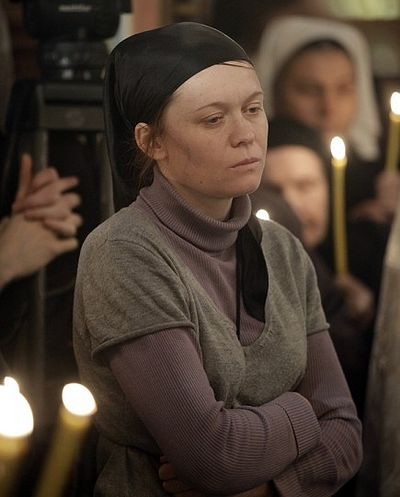
Julia Sysoeva at the funeral of Fr. Daniel. Photo patriarchia.ru
Memories of the events a year ago are very hard. The wounds remain, and my heart feels the pain. I remember that evening almost minute by minute—even what I bought in the store, what I was thinking about, when I got home, my last call to him, and his last words: “About forty minutes.” And forty minutes later, the cold dial tone on the line—he didn’t answer anymore. I called him a few minutes after he was shot. Then that first horrible night: the church, the police perimeter, the interrogation, the scarlet puddle of blood on the floor. His unfinished tea in his office, the open laptop. The sleepless night, sunrise, and further—the real horror. Here are excerpts from my journal—memorials of those sorrowful days.
“A year has passed and I have realized one thing that I was unable to accept and understand—in the ancient Church they congratulated you with martyrdom. I have felt with all my heart how good it is for Fr. Daniel there!—how he has enormous possibilities for work incommensurate with our earthly standards. Then I understood and realized that I will no longer accept condolences. I accept only congratulations. …”
“November 22, 2009
We stopped by the deserted apartment for a couple of hours. The whole night I was at his grave and at the early Liturgy.
I found the leftovers from our last dinner in the fridge. I had made sushi, and for some reason it hadn’t gone bad. Wednesday was the last time we had dinner together. Late, almost 12:00.
He didn’t come to dinner on Thursday. If someone had called me from the church immediately after it happened, I would have reached him alive! He lived—and it’s a miracle—almost an hour after being shot in the neck and right through his head. But no one called me!!! Why? I have more questions than answers. These days are lost time—it is continuous pain and sorrow.
It was a joy, almost like Pascha, when after vesting him in the morgue, they let me see his face. It was a miracle that, despite the perforating wound, the Lord preserved his face unharmed, without any bruising, as if alive.”
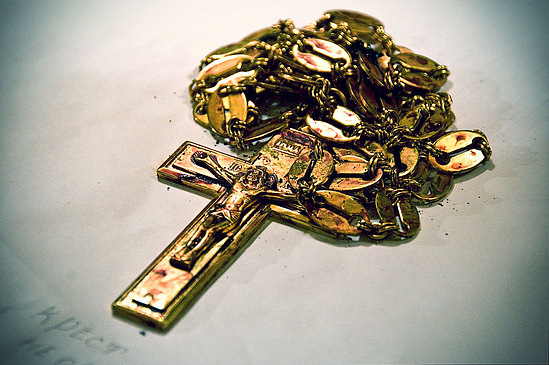
Fr. Daniel’s pectoral cross, washed in his blood
For the rest of the diary, go here
For more articles and interviews about Daniel Sysoev of Blessed Memory, go here
Also, “WHEN THEY KILL ME, DON’T CRY FOR ME, BUT PRAY FOR ME”
Remembrances of Fr. Daniel Sysoev by Archimandrite Melchisedek (Artiukhin)


Flowers sheltered like cenobitic monks in a crevice at the summit of Mt. Athos.
“How can I plead empty-handed?”
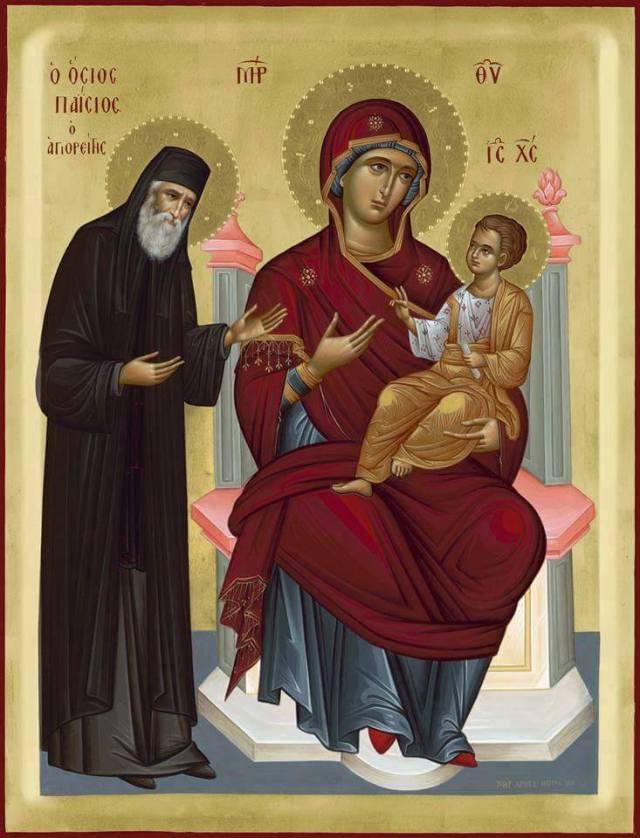
St. Paisos would always cut a few wild flowers outside his hut and take them to the Theotokos icon, whenever he wanted to pray to Her.
Indeed, he urged everybody to always make an offering to Panagia, even a little one, anything within our power
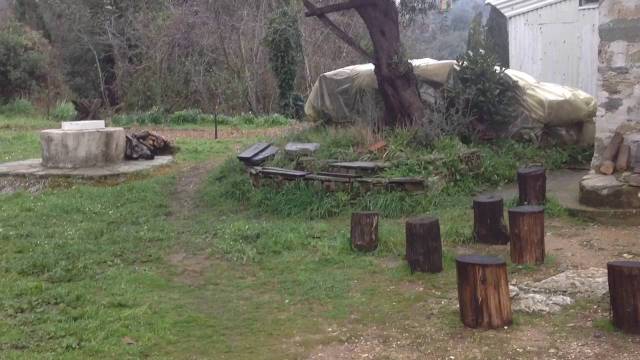
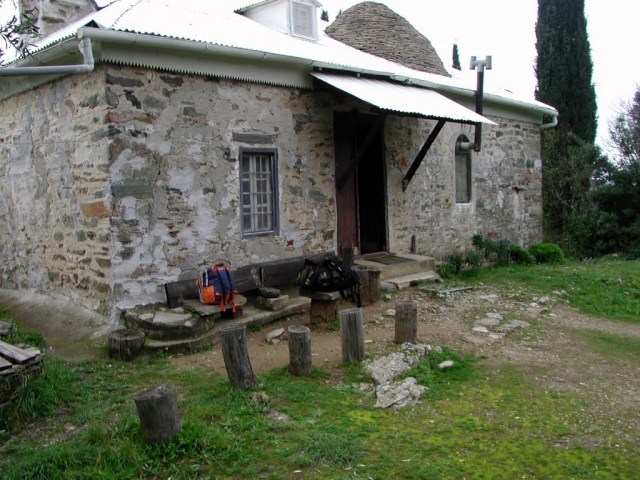
At the hut of St. Paisios

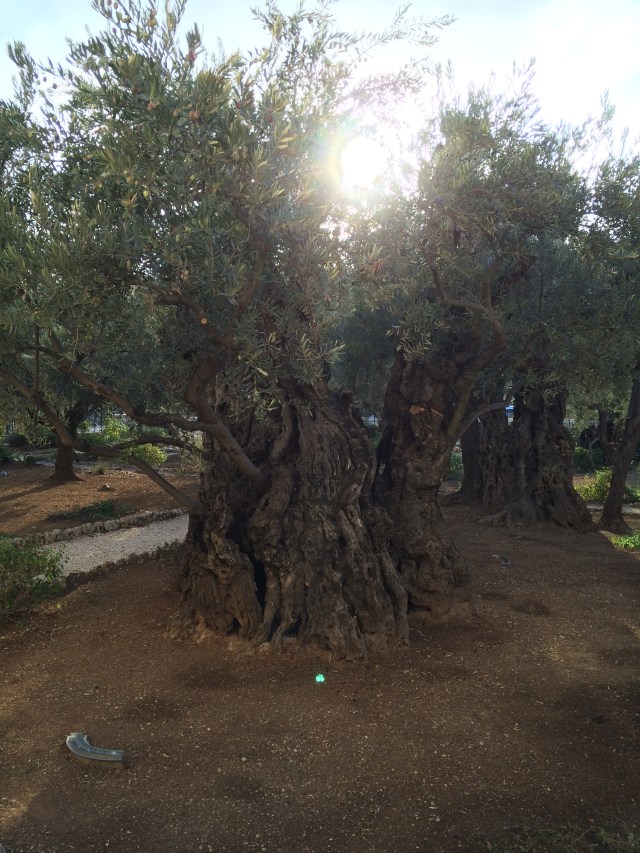
“They went to a place called Gethsemane…”
Jesus was in the garden of Gethsemane on the night of his arrest. This garden was an olive grove and it still exists today. Gethsemane means “oil press” in Aramaic, the language spoken by Jesus.
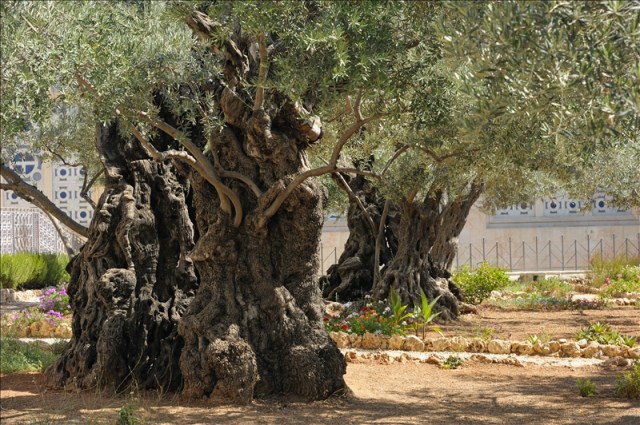
Psalm 52:8 “But as for me, I am like a green olive tree in the house of God; I trust in the lovingkindness of God forever and ever.”
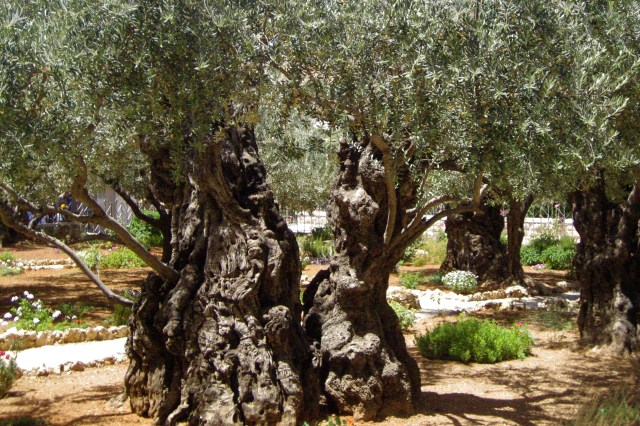
“Do you know that God gave us one more commandment, which is not recorded in Scripture? It is the commandment “love the trees.“ When you plant a tree, you plant hope, you plant peace, you plant love, and you will receive God’s blessing.” – Elder Amphilochius of Patmos
According to Met. Kallistos, the Elder frequently assigned the penance of planting a tree on the island (Patmos) for those who came to him for confession. His ministry raised up forests as well as demolished the sins of many.


“Once a dog was dying from thirst in the desert. A monk went by and gave him the water he was keeping for himself. That moment Heavens opened and a voice was heard: ‘He who saved the dog will have a multitude of his sins forgiven’.”
Blessed Gabriel the Confessor and Fool for Christ
Source: Fr. Charalambos Livios Papadopoulos
Blessed Gabriel was gentle Saint of our times, compassionate for all Creation. In his youth, he had an unusual entertainment; he used to take a small stick in his hands and ran away. Chirping birds sat on it and followed him all the way. This surprised everyone. Vasiko was a soft-hearted child. He did not allow putting a trap for mice, but caught them in a cage alive and afterwards set them free out of the yard. Read about the rest of his life here
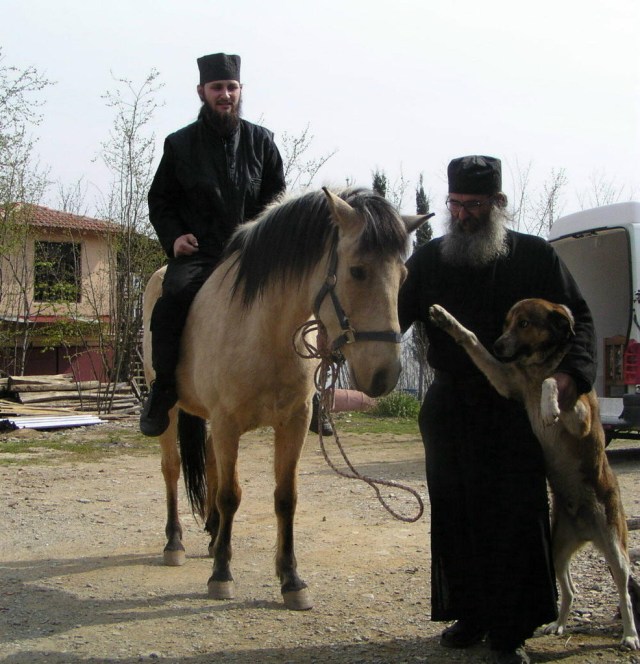
Fr Seraphim replied: “They have something to do with Paradise.”
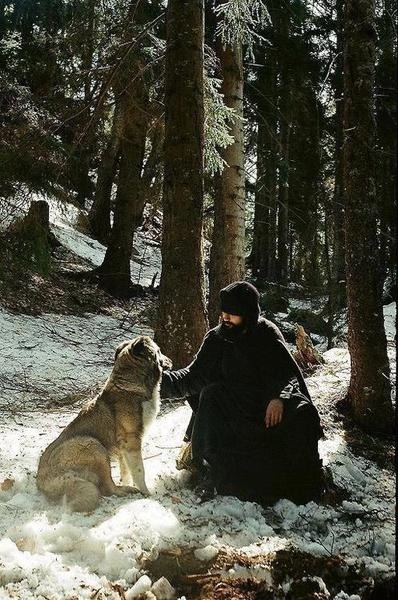
“Abba Xanthios said, ‘A dog is better than I am, for he has love and he does not judge.”
— Sayings of the Desert Fathers
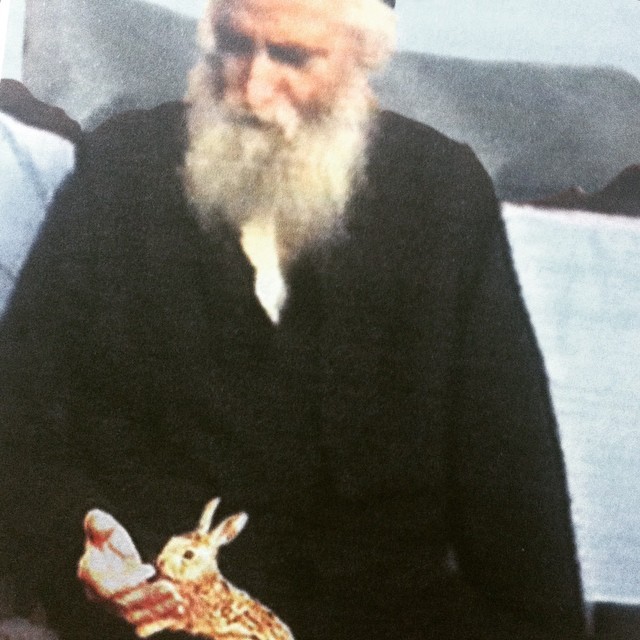
“Geronda, how do animals sense a person’s goodness?”….. “They can instinctively sense if you love them. The animals in Paradise felt the fragrance of Grace and served Adam. Since the transgression, nature groans together with man” St Paisios
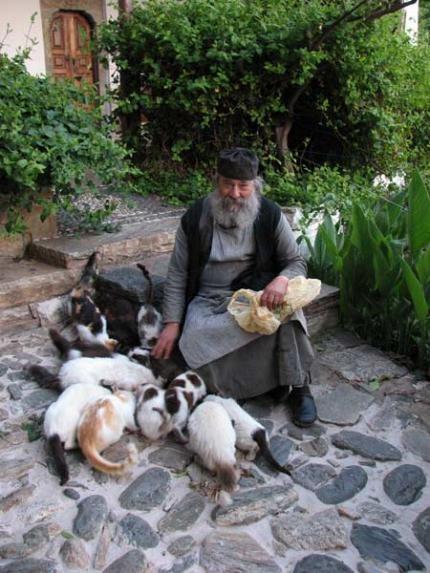
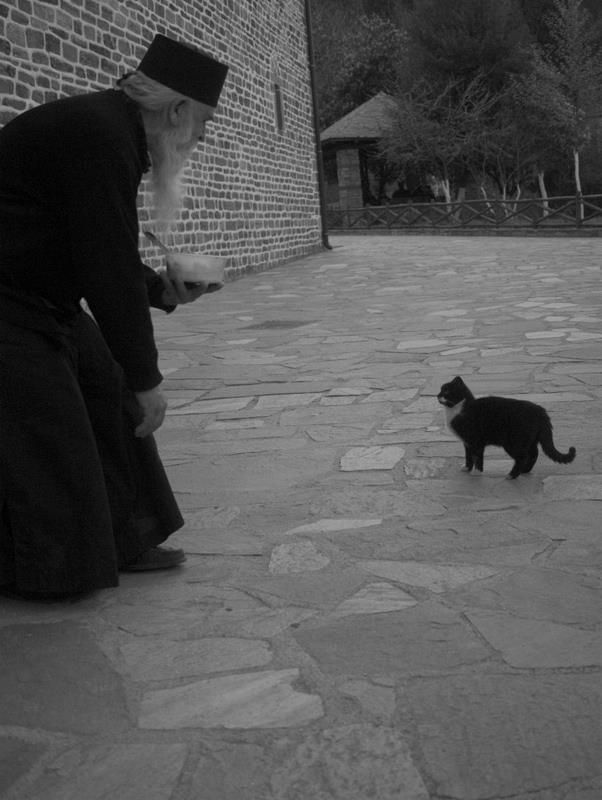
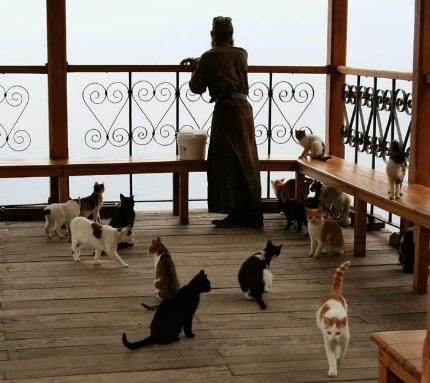
“My mind tells me that even the animals are better than me; so, I humble myself and obey them. Very early this morning, being tired from praying all night and exhausted because of my illness, I lay down to rest. After a while, I heard a kitten meowing outside my cell as if she needed something. I really wanted to rest, but I humbled myself and went against my own will. I obeyed the kitten and replied to her calling. I went to open the door. It had started to rain and I let her in so she wouldn’t get wet. What do you think then? Should I obey the animals or not? My thoughts tell me I should.” – St Paisios
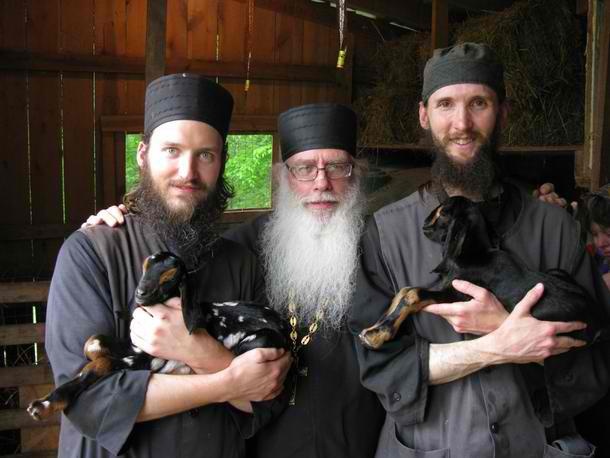
“All these things connected with nature help us greatly in our spiritual life when they are conjoined with the grace of God. When I sense the harmony of nature, I am brought to tears. Why should we be bored with life? Let us live life with the Spirit of God, the Spirit of Truth. The person who has the Spirit of God, who has Divine Wisdom, sees all things with love of God and notices all things. The wisdom of God makes him grasp all things and delight in all things.”- Saint Porphyrios
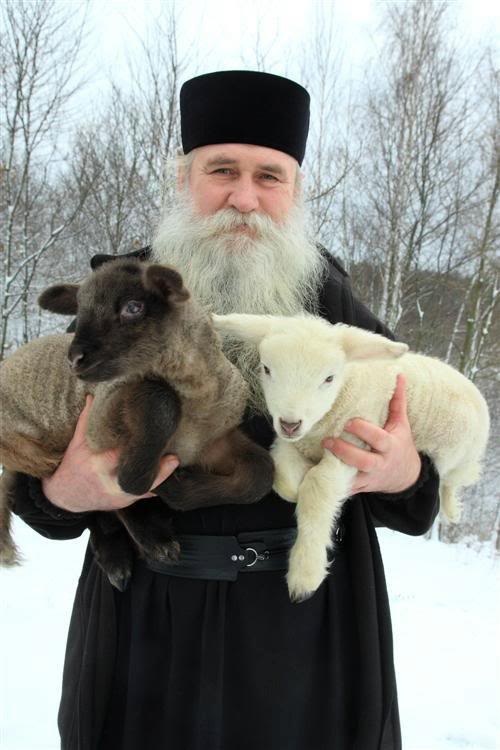
Photos & Selection of the Fathers’ Saying: Orthodoxy and Animals


Photos: Yanina Alexeyeva Orthodox Christianity

“At last we arrived in Jerusalem. I spent the days before the festival in the town, living the same kind of life, perhaps even worse. I was not content with the youths I had seduced at sea and who had helped me to get to Jerusalem; many others — citizens of the town and foreigners — I also seduced. The holy day of the Exaltation of the Cross dawned while I was still flying about — hunting for youths. At daybreak I saw that everyone was hurrying to the church, so I ran with the rest. When the hour for the holy elevation approached, I was trying to make my way in with the crowd which was struggling to get through the church doors. I at last squeezed through with great difficulty almost to the entrance of the temple, from which the Lifegiving Tree of the Cross was being shown to the people. But when I trod on the doorstep which everyone passed, I was stopped by some force which prevented my entering. Meanwhile I was brushed aside by the crowd and found myself standing alone in the porch. Thinking that this had happened because of my woman’s weakness, I again began to work my way into the crowd, trying to elbow myself forward. But in vain I struggled. Again my feet trod on the doorstep over which others were entering the church without encountering any obstacle. I alone seemed to remain unaccepted by the church. It was as if there was a detachment of soldiers standing there to oppose my entrance. Once again I was excluded by the same mighty force and again I stood in the porch.
“Having repeated my attempt three or four times, at last I felt exhausted and had no more strength to push and to be pushed, so I went aside and stood in a corner of the porch. And only then with great difficulty it began to dawn on me, and I began to understand the reason why I was prevented from being admitted to see the life-giving Cross. The word of salvation gently touched the eyes of my heart and revealed to me that it was my unclean life which barred the entrance to me. I began to weep and lament and beat my breast, and to sigh from the depths of my heart. And so I stood weeping when I saw above me the icon of the most holy Mother of God. And turning to her my bodily and spiritual eyes I said: `O Lady, Mother of God, who gave birth in the flesh to God the Word, I know, O how well I know, that it is no honor or praise to thee when one so impure and depraved as I look up to thy icon, O ever-virgin, who didst keep thy body and soul in purity. Rightly do I inspire hatred and disgust before thy virginal purity. But I have heard that God Who was born of thee became man on purpose to call sinners to repentance. Then help me, for I have no other help. Order the entrance of the church to be opened to me. Allow me to see the venerable Tree on which He Who was born of thee suffered in the flesh and on which He shed His holy blood for the redemption of sinners and for me, unworthy as I am. Be my faithful witness before thy son that I will never again defile my body by the impurity of fornication, but as soon as I have seen the Tree of the Cross I will renounce the world and its temptations and will go wherever thou wilt lead me.’ Thus I spoke and as if acquiring some hope in firm faith and feeling some confidence in the mercy of the Mother of God, I left the place where I stood praying.
“And I went again and mingled with the crowd that was pushing its way into the temple. And no one seemed to thwart me, no one hindered my entering the church. I was possessed with trembling, and was almost in delirium. Having got as far as the doors which I could not reach before — as if the same force which had hindered me cleared the way for me — I now entered without difficulty and found myself within the holy place. And so it was I saw the Lifegiving Cross. I saw too the Mysteries of God and how the Lord accepts repentance. Throwing myself on the ground, I worshipped that holy earth and kissed it with trembling. Then I came out of the church and went to her who had promised to be my security, to the place where I had sealed my vow. And bending my knees before the Virgin Mother of God, I addressed to her such words as these: `O loving Lady, thou hast shown me thy great love for all men. Glory to God Who receives the repentance of sinners through thee. What more can I recollect or say, I who am so sinful? It is time for me, O Lady, to fulfill my vow, according to thy witness. Now lead me by the hand along the path of repentance!’ And at these words I heard a voice from on high: `If you cross the Jordan you will find glorious rest.’ Hearing this voice and having faith that it was for me, I cried to the Mother of God: `O Lady, Lady, do not forsake me!’ With these words I left the porch of the church and set off on my journey. As I was leaving the church a stranger glanced at me and gave me three coins, saying: `Sister, take these.’ And, taking the money, I bought three loaves and took them with me on my journey, as a blessed gift. I asked the person who sold the bread: `Which is the way to the Jordan?’ I was directed to the city gate which led that way.” (St. Mary of Egypt)

A businessman went to a priest and said:
—Batushka, what’s going on…? I believe in God, I don’t deceive anyone, I don’t steal, I don’t cheat on my wife… I work honestly… My wife has left me for another man, my business is failing, my car broke down, my daughter has problems in college, my son can’t find work, and so on, and so on… What can I do?
—Give thanks to God… Hang a tablet on your door at home that says “IT WILL NOT ALWAYS BE THIS WAY,” forgive everyone, and let go of resentments.
—That’s it?!
—That’s it.
After a while, they met again:
—Batushka, everything is great! My business has taken off, my wife returned, everything with my kids is even better than expected, and so on, and so on. Glory to God!
—I’m very glad for you! But don’t take the tablet down from your door…

Following a request by the Office of Military Chaplains, part of the General Staff of the Greek Armed Forces, the Holy Permanent Synod of the Church of Greece has declared Saint Paisios the Athonite, my patron Saint and spiritual grandfather, to be the Patron Saint of the Corps of Signals.
Thinking Christians are often troubled by the question: how is it possible that the Church, which blesses the peacemakers (Matth. 5, 9) and has as its Head Him Who was meek and humble of heart (Matth. 11, 29), the Prince of Peace, should assign saints to be protectors of troops.

This thought is reasonable and healthy as regards its starting point. From the very first years of its theological thought the Church condemned murder and war (see Origen, Against Celsus) [1]. Nor did it accept those who fell in time of war as martyrs.
It also knows, however, that, because of human greed and egocentrism, war is, in many cases, an unavoidable evil. In such instances, the position of the Church is to side with the injured party, the one on the defensive, with those who are protecting the great blessing of freedom and their hearths and homes.
The spirit which the Church encourages in such instances isn’t one of hostility or murderous efficiency, but that of self-sacrifice and selflessness. In essence, the spirit of martyrdom.
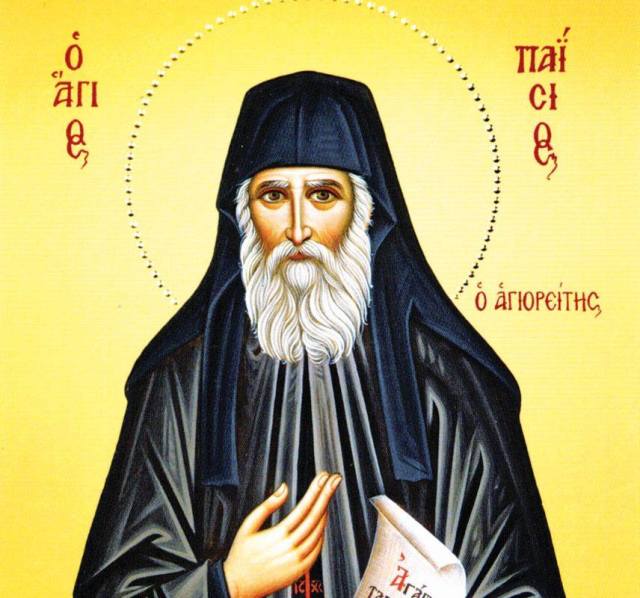
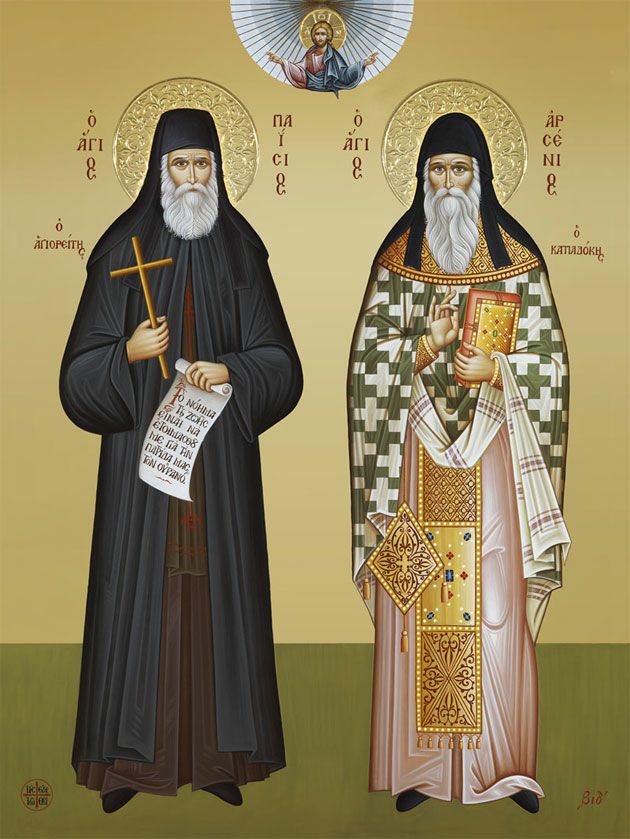
So it is that, in the days of spiritual crisis in which we’re living and which is spreading to all the fields of human activity, the Church has provided the Corps of Signals with a patron who is a martyr of conscience: the Blessed Elder Paisios, who was so kind and comforting to any soul who was suffering or in need. Saint Barbara and Saint George are so many centuries removed from us that it’s difficult for us to have any intimate knowledge of their personality, but Paisios is a Saint of our own times, he’s one of us. He’s someone we listened to, saw, touched. If you read his Life, especially the parts dealing with his military service, you’ll see for yourself his courage, which was accompanied by martyr’s spirit of sacrifice. The Saint was decorated and honoured not for the damage he caused the enemy, but for the spirit of self-sacrifice he showed towards his comrades in arms. He preferred a thousand times over to place himself in danger, if that meant that others would be safe and sound. He condemned stark violence and war crimes, no matter which side committed them and always maintained a spirit of love and fellow-suffering, even towards the enemy.
Another great Elder, a contemporary of Saint Paisios, Elder Sophrony Sakharov wrote that: ‘of all the afflictions of the human race, the worst is war’ [2], because of the hatred that it leaves behind as a demonic deposit, a poison in our hearts and minds. His own elder, Saint Silouan the Athonite made love of one’s enemies an ecclesiological criterion for the authenticity of the Church [3].
With all the above very much in mind, instead of some successful and efficient wartime leader, the Orthodox Church advances a humble saint as an example to follow in times of conflict.
Saint Paisios, heaven’s signalman!
Source: Pemptousia
*
Below follow the Saint’s photographs for those who cannot see the slideshow at the top


Γιατί ο Άγιος Παΐσιος ανακηρύχθηκε προστάτης των Διαβιβάσεων

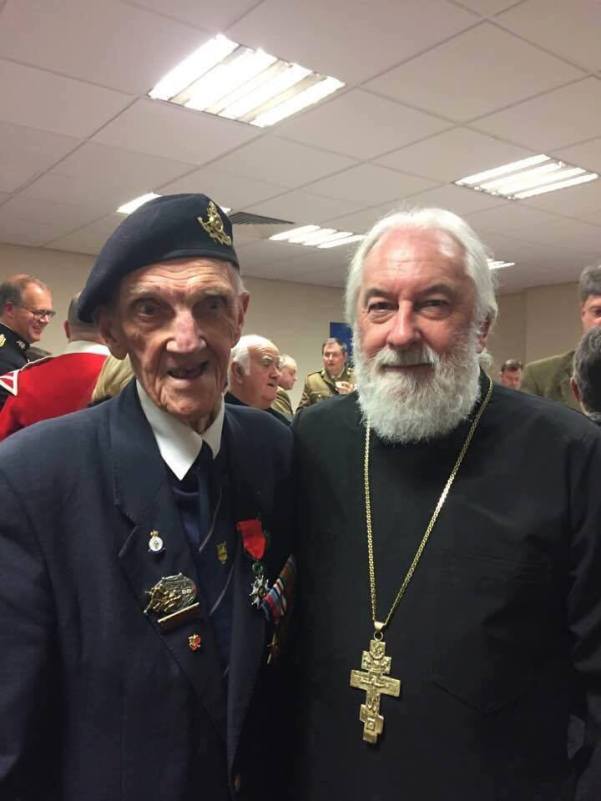
Stanley ( Barnabas) Dickinson
+ Memory Eternal!
Kalo Paradeiso! Kali Synandisi! [Greek wishes on a funeral]
May you enter Paradise! May we meet again there!
October 10, 2017
Acts 11:22-24
22 Then news of these things came to the ears of the church in Jerusalem, and they sent out Barnabas to go as far as Antioch. 23 When he came and had seen the grace of God, he was glad, and encouraged them all that with purpose of heart they should continue with the Lord. 24 For he was a good man, full of the Holy Spirit and of faith. And a great many people were added to the Lord.
“It is with gladdening sorrow that we have composed and dedicated this issue of the Stavronian to our beloved elder Barnabas, founder of the Parish of Holy and Life-Giving Cross and Normandy veteran. Our brother Barnabas peacefully fell asleep in the Lord at 21:40, October 10, three days before his 94th birthday. He was not alone when he passed into God’s keeping. Apart from the angels that attended his repose, members of the Parish, his spiritual family, were there as well as his own family were at his bedside. He was holding my hand when he breathed his last breath. He received Holy Unction the same morning. He even drew energy to make the sign of the cross. We asked him for a word from the Lord and he said “Love”! It was a holy repose with the faithful holding lighted candles. I thank God that he entrusted to me the unworthy priest this holy soul and brave soldier of Christ as an example of the Christian life. As a founder of the Orthodox Community of the Holy Cross he will remain forever inour prayers. May angels take him to his just reward in the Heavenly Kingdom of Our Lord Jesus Christ. May his memory be eternal. Christ is Risen!”
Thanks be to God for bringing Fr Jonathan into my life, and for all things. Lord Jesus Christ, Son of God, have mercy on me a sinner.”
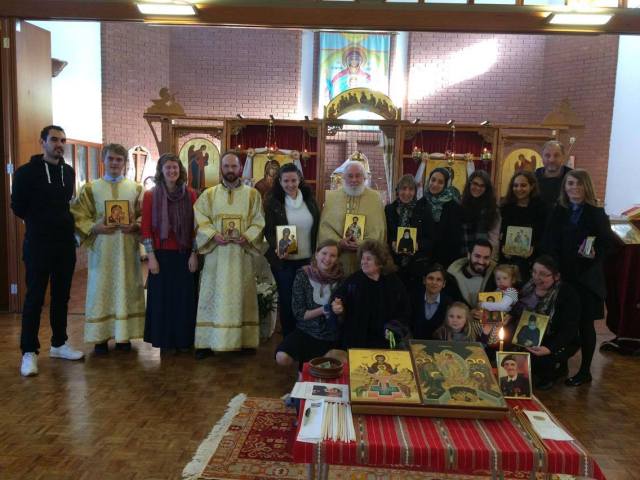
To find out more about Barnabas, a most dear father to this poor little city hermit, please have a look at the November Stavronian which this month is dedicated to our beloved elder and co founder of the Church of the Holy Cross, Stanley ( Barnabas) Dickinson at
http://www.orthodox-lancaster.org.uk/newsletter


 ORTHODOX CHRISTIAN FAITH AND LIFE