He Invited a Demon to Possess Him


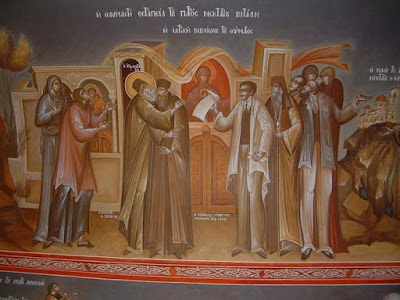
Icon of St. Nektarios embracing and healing Fr. Nektarios Vitalis, along with the two women bearing witness to this to the left, and the doctors confirming the miracle to the right. The icon is from the Chapel of Saint Nektarios in Aretaieion Hospital.

+ February 8, 2017
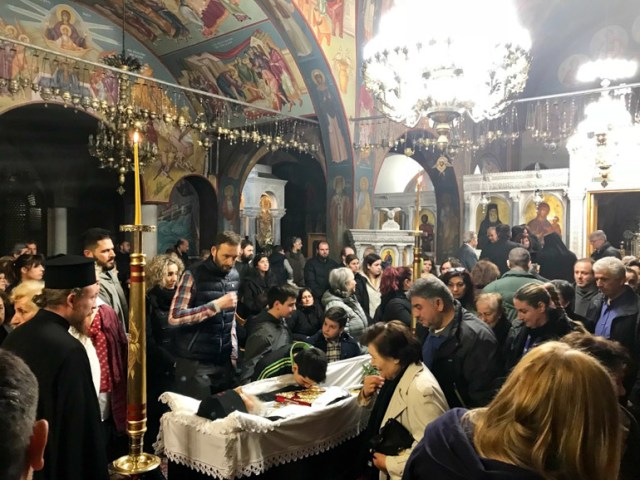
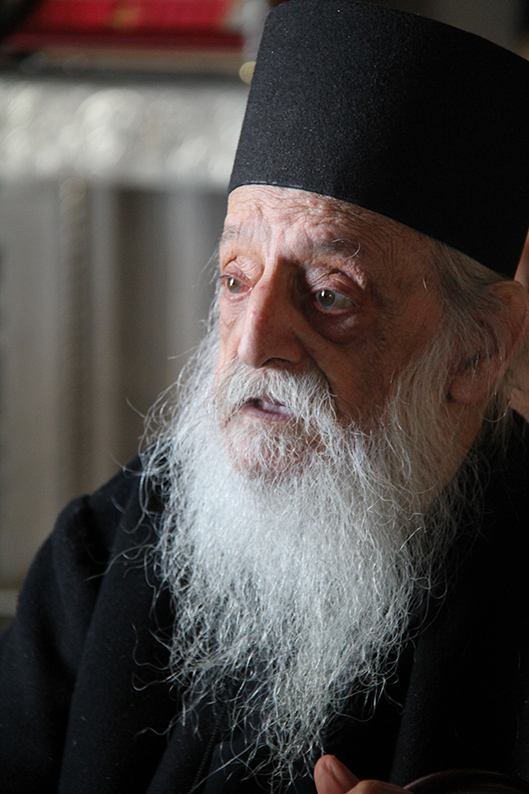
Fr. Nektarios Vitalis is at long last with our Saviour Christ and his beloved patron Saint, St. Nektarios. May he pray for us! His was a life full of visions, visitations and miracles with his patron saint, even near-death, after-life experiences! Miracles and signs of Holiness even during his Memorial Service and Funeral!
Καλό Παράδεισο, Γέροντα! Καλή αντάμωση στην Αιωνιότητα!
Greek traditional wish for the departed: “A Blessed Paradise, Gerondas! Until we meet again in Eternity!
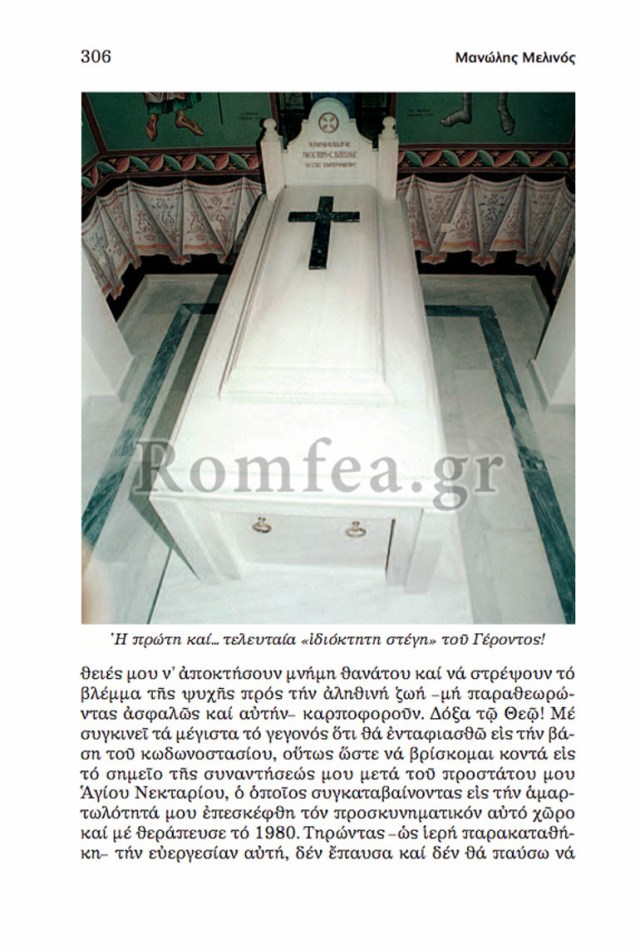
Below follow Fr. Nektarios’ recalling of his miraculous healing of cancer by St. Nektarios, a few youtube videos where he tells of St. Nektarios’ visitations to him and his near-death, ‘after-life’ experience, and his final will, testament and tomb.
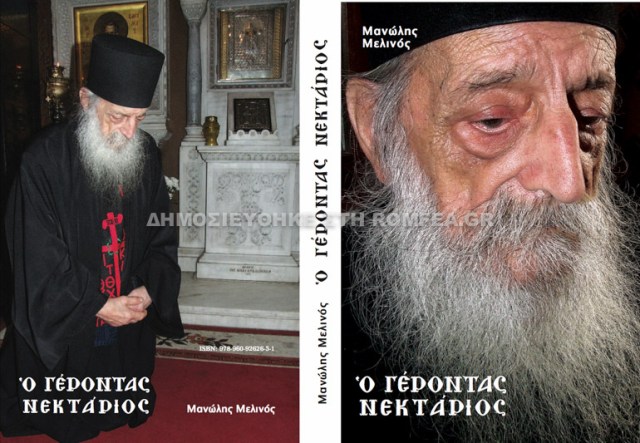
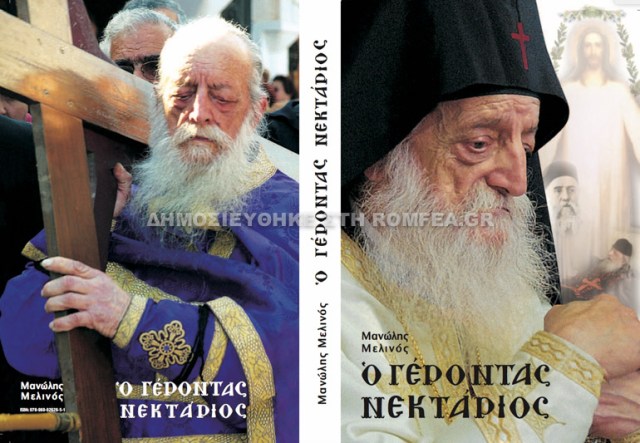
Fr. Nektarios Vitalis, well-known in Lavrio [a city in Attika, Greece] for his deeds and his sympathy to the poor and those written-off by the world in these difficult times, retells the following incident from when he was dying from cancer. What is said below has been told elsewhere, repeatedly, including in the book I talked to Saint Nektarios (Athens 1997, by the renowned writer Mr. Manolis Melinos).
Fr. Nektarios Vitalis recalls:
“I was suffering from a serious form of cancer. My chest was an open wound that was continuously running blood and pus. I would tear my undershirts from the pain. It was a tragic situation, and I was headed directly to death. So you understand, I had even prepared my grave clothes….
“On the 26th of March 1980, in the morning, I was talking in my office in the basement of the Church with Sofia Bourdoy (the church care-taker [a woman who cleans the church]) and the icon painter Helen Kitraki, when the door suddenly opened and an old, unknown man entered. He had a snow-white beard, was short and was slighty bald. He looked exactly the same as St. Nektarios appears in photographs. He took three candles without paying and lit only two. He venerated all the icons of the church, but passed over the icon of St. Nektarios without venerating it. He did not see me where I was. I had terrible pains when they pulled aside the curtain of the office and went to see the old man. He faced the Beautiful Gate [the Royal Doors in the Holy Iconostasion], crossed his palms and without looking around he asked: ‘Is the Geronta [Elder] here?’
“The church care-taker knowing my disease wanted to protect me…: ‘No, no…he is at home with the flu….’
“He replied: ‘Never mind. Pray, and have a Good Resurrection,’ [the traditional Orthodox greeting during Great Lent in anticipation of Pascha ‘Kali Anastasi’] he said as he left.
“The church care-taker came running to me and said ‘Father Nektarios, the old man who just left resembled St. Nektarios himself! His eyes flew flames. It seems to me that was St. Nektarios and he came to help you….’
“I thanked her thinking that she said this to console me. But deep down something was wrong. I sent her along with the icon painter to find the unknown man and quickly bring him back. I walked into the sanctuary and venerated the Crucified One [the icon of Christ on the Cross in every Holy Altar] crying, and once again asking Christ to heal me. Their footsteps stopped: ‘Father, the Elder has come!’
“I tried to kiss his hand, but out of humilty he did not let me. He bent and kissed my own! I asked him: ‘What is your name?’
“‘Anastasios, my son,’ he said, relating his baptismal name that he had before he become a monk….
“I led him to venerate the holy relics. He took out a pair of glasses with only one arm, and as soon as we saw them we were amazed! They were the same glasses of St. Nektarios that we had in the case with the holy relics. They were given to me by the old Gerontissa [Eldress] Nektaria of the monastery in Aegina.
“‘Belief is everything!’ said the stranger, as he put on his glasses.
“He began with reverence to embrace all the holy relics as the church care-taker showed, except for the relics of St. Nektarios, which he passed over….
“‘Geronta, forgive me,’ I said, ‘but why don’t you venerate the miraculous Saint Nektarios?’
“He turned and looked at me smiling. I asked him: ‘Where are you staying Geronta?’
“He showed me the ceiling, where we were building the new church [dedicated to St. Nektarios], saying: ‘My house is still not ready and I’m worried. My position does not allow me to live here and there….’
“‘Geronta, I must confess, you were told a lie earlier. I have cancer! But I want to get well, to make the Holy Altar, to finish the Church first, and then I can die….’
“‘Do not worry,’ he told me. ‘I’m leaving now. I’m going to Paros [an island in Greece] to venerate St. Arsenios and to visit Fr. Philotheos [Zervakos],’ he added, starting to leave and passing by the big icon without giving it a second thought….
“I stopped him and put my hands to his face.
“‘My Geronta, my Geronta, your face looks exactly like St. Nektarios who is honored here in our church….’
“Then, tears rolled from his eyes. He crossed me and embraced me with his hands. Taking courage I opened my hands to hug him. But when I spread out my hands, and while I was watching I could see him before my face, my arms closed back to my chest! The hairs then stood up on my arms and I crossed myself!
“I said again: ‘O my Geronta, I beg you, I want to live to do my first Liturgy. Help me to live….’
“He left from being close to me and stopped in front of his icon and said: ‘Oh, my child Nektarios, don’t worry. It is a passing trial, and you will be well! The miracle which you are asking for will happen, and it will be told to the whole world. Don’t be afraid….’
“Immediately he left us by walking through a closed door….
“The women ran to catch up to him. They reached him at the bus stop. He went inside and disappeared before the bus left!”
This story is always told by Fr. Nektarios Vitalis, a respected and reliable person, in the presence of witnesses. Fr. Nektarios eventually became well – to the amazement of doctors, radiologists, and forecasters of death. Because above all is Christ, our living God, and our intercessors before God, the Saints, plus our Mother the Panagia!
For “where God wills, the laws of nature are overcome….”
~From Mystagogy: The Weblog of John Sanidopoulos,(http://www.johnsanidopoulos.com/2009/06/miracle-of-saint-nektarios-healing-of.html).


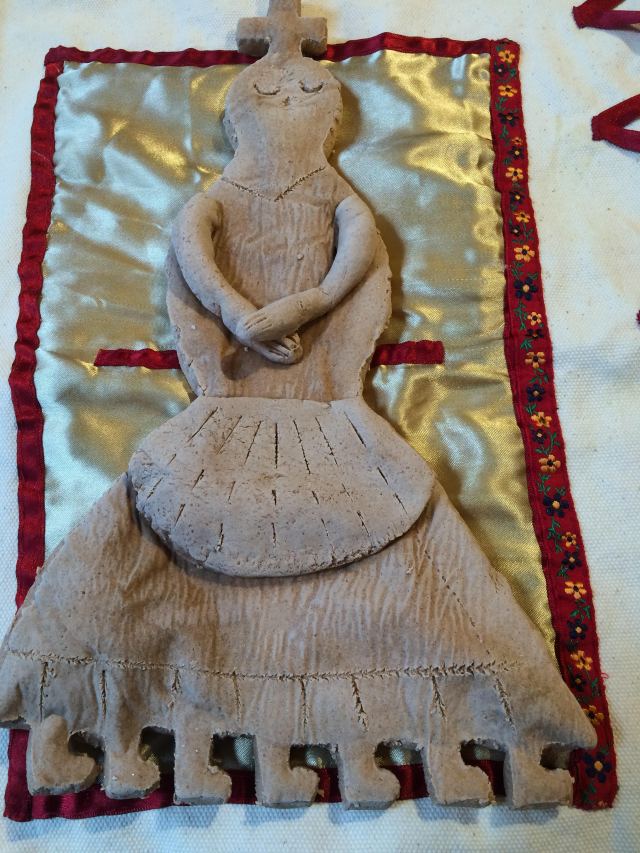
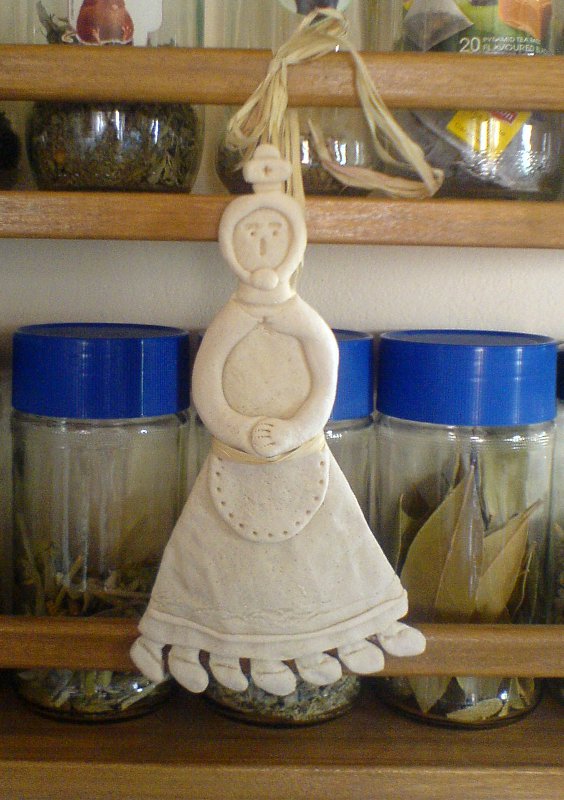
Last Monday some ladies at our parish baked our annual Kyra Sarakosti, or Lady Lent, “cookies”.
An old Greek custom that still survives in modern, Orthodox Christian families throughout Greece with different vari ations, is that of Kyra Sarakosti, i.e. Lady Lent. This is a custom associated with the fasting period of Great Lent preceding the Sunday of Pascha; Kyra Sarakosti is used as a calendar that counts the 7 weeks of Lent.

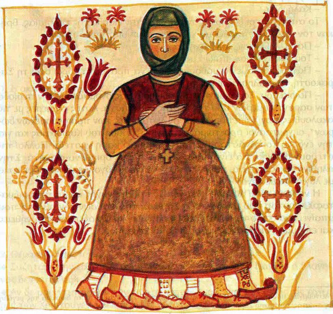
Kyra Sarakosti, is a small figure, a paper drawing or sometimes baked of bread dough, which features something really unusual, a lady that looks like a nun who has seven legs and her hands are folded as if in prayer. Lady Lent’s seven legs, each represent one week of the fasting period, from Clean Monday to the Holy Week. The cross on her forehead is the symbol of her faith. She has her arms folded because indeed she is constantly praying. She has no mouth, not only because she can’t eat, as she is fasting, but also to avoid engaging in any idle talk. Finally, she has no ears, or they are covered with her scarf, so as not to listen to any calumny or judging, especially in this period of rigorous ascetic effort.

Lady Lent has been used as a “calendar” of Lent all over the country. Each week, starting on Saturday after Clean Monday, the faithful would cut one leg off. The last leg would be cut off on Holy Saturday. In some areas, the seventh leg was squeezed inside the bread of Resurrection, and was considered to bring blessing to whoever found it.
Recipe: Orthodox Mum

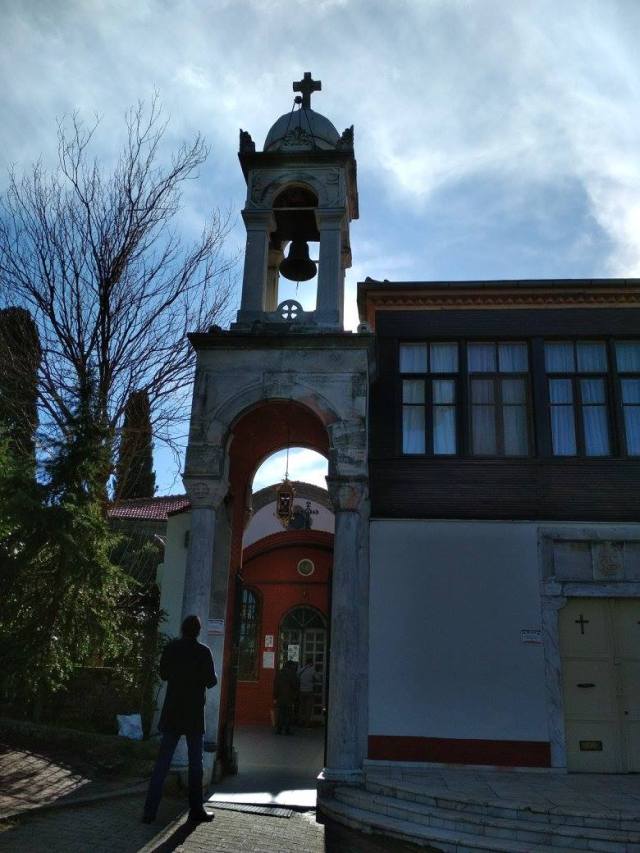
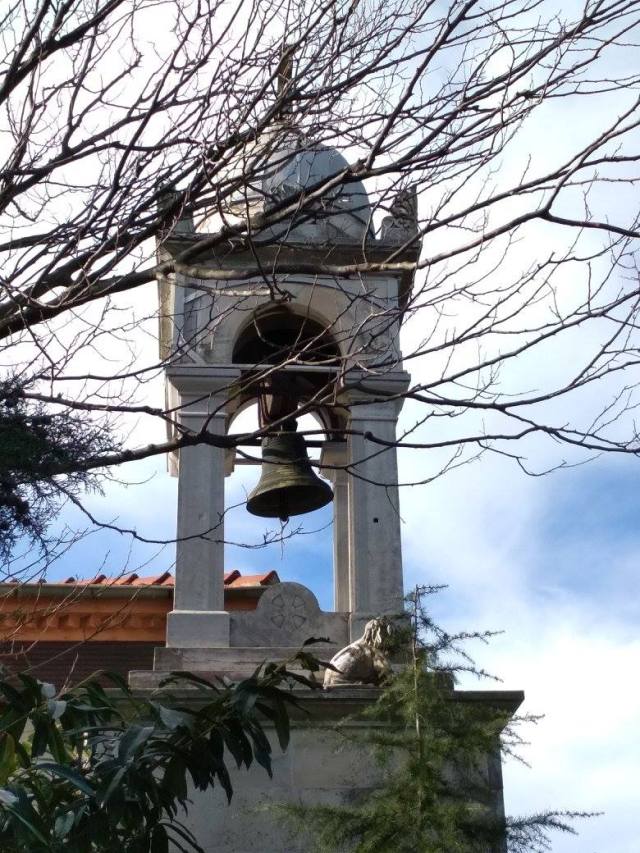
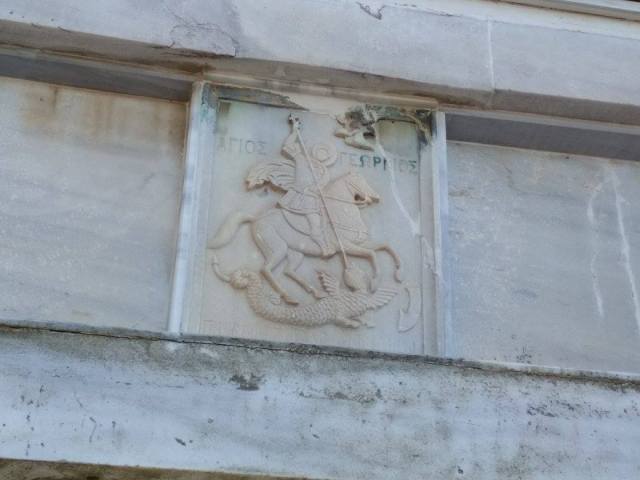
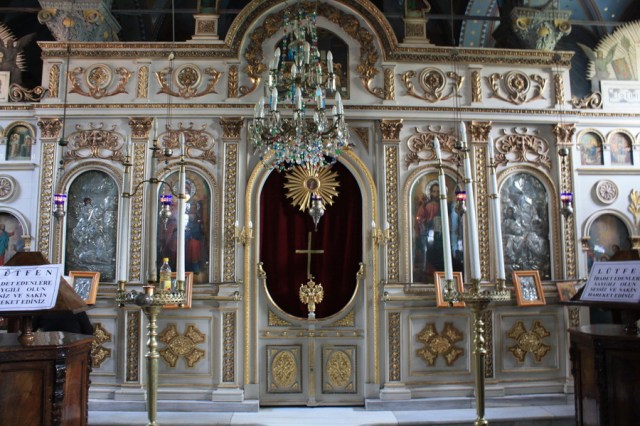
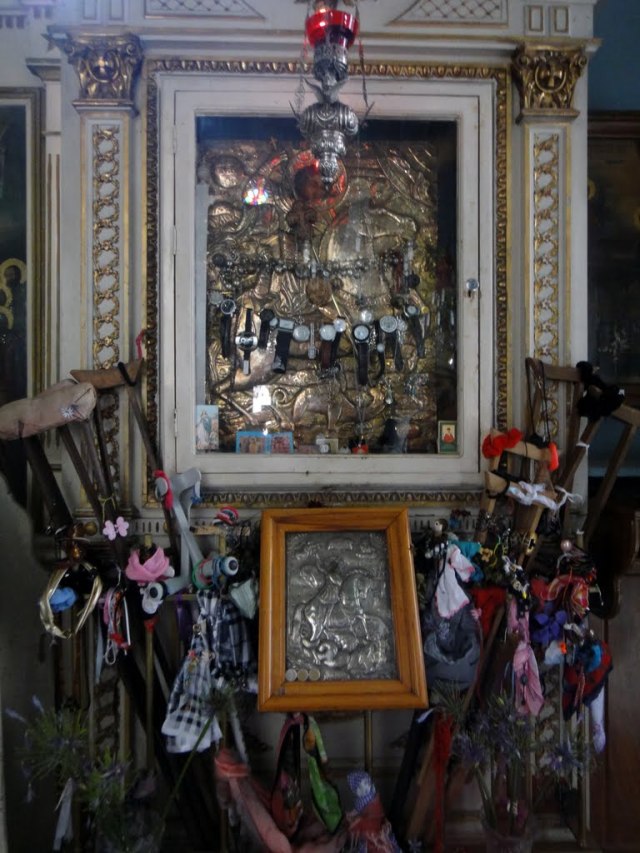
This historic Monastery of Saint George Koudounas, on Prince’s Island outside of Constantinople, was according to tradition built by the Byzantine Emperor Nikephoros Phokas in 963 AD. A miraculous icon of St. George was brought here from the Monastery of Peace, which was founded by Emperor Justin II, in Athens at that time.
The Monastery was later sacked in the Fourth Crusade. Then in 1302 the pirate Giustiniani plundered all the buildings and monasteries of the island. Not wanting their holy icon stolen by the Franks, the monks hid the icon under the earth and place the holy altar above it. The miraculous icon however was lost for many years.
Later, St. George appeared to a shepherd in a dream and told him where to find his icon. When he approached the area, he heard the ringing of bells, and having unearthed the icon, found it decorated with bells. This is the source behind the epithet “Koudouna” which means “bells”. The Monastery was later attached to Hagia Lavra in Kalavryta, and eventually to the Patriarch of Constantinople. The current church was built in 1905.


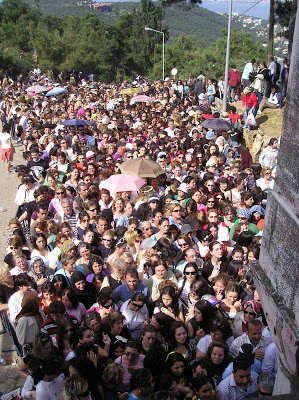
The miracles of the Saint are many, not only towards Christians [Romans], who approached always with great reverence (in olden times there wasn’t a Christian family which had not visited Koudouna at least once a year), but towards everyone without exception, who approach his grace with faith. Thus there is a great mass of people who come from other faiths from throughout Turkey. The pilgrims number about 250,000 a year, the majority being Turks. The great iron gate of the Monastery, as we learn from its engraving in Greek and Turkish, was offered from the Muslim Rasoul Efenti, as a gift of gratitude towards the Saint for the healing of his wife.
On April 23rd, in other words the day when the Saint is honored and the Monastery celebrates, tens of thousands of pilgrims arrive, not only from Constantinople but from other cities, to venerate the Great Martyr and to seek help in their problems. Roughly all of these pilgrims are from other faiths. Many will return later to thank St. George, who heard their prayer and granted their desire, bringing the indispensable oil for his vigil lamp. You hear with passion how he healed this person’s son, how another became a mother after being barren for many years, how a third acquired a house, etc.
The Monastery also celebrates on the feast of Saint Thekla, and on this feast about 10,000 Muslims visit the Monastery seeking the prayer of Saint George.
(For the full history of this Monastery with many pictures, visit this site.)


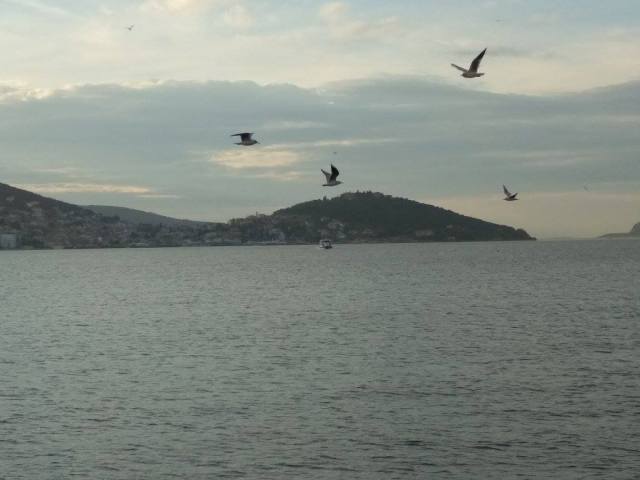
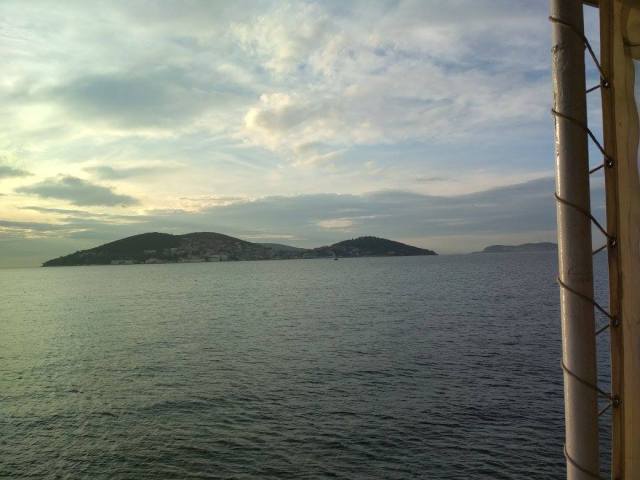
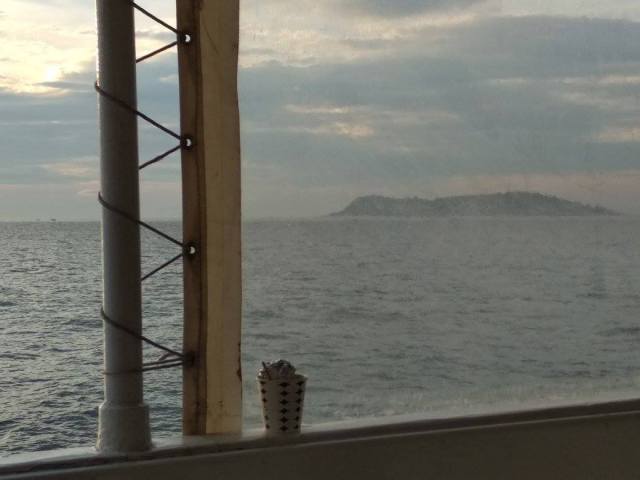
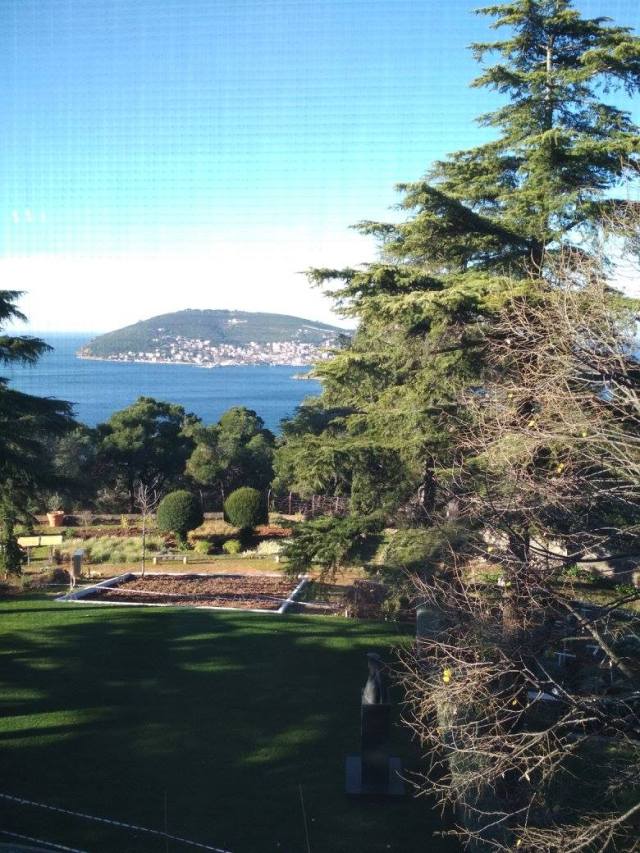
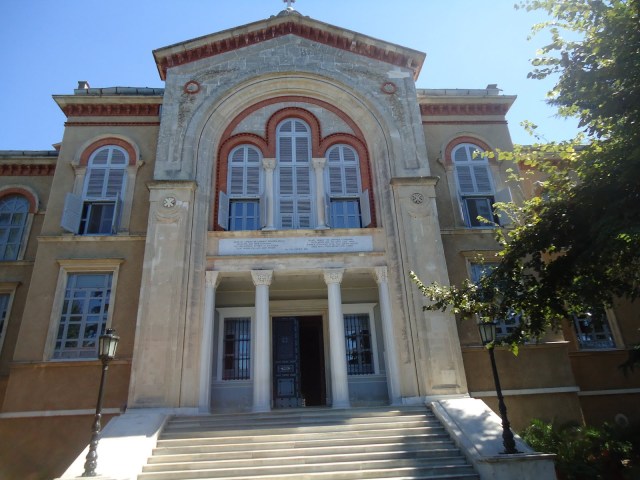
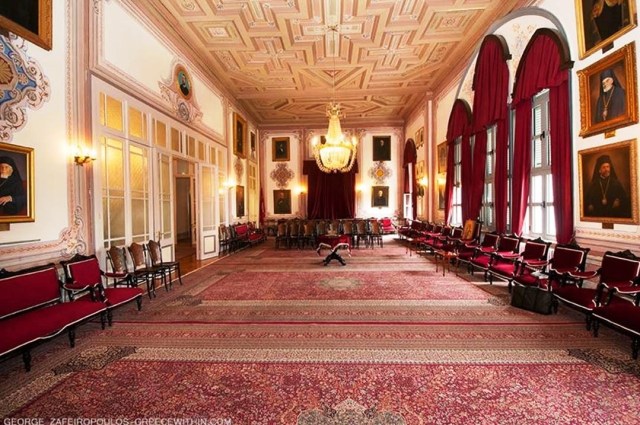
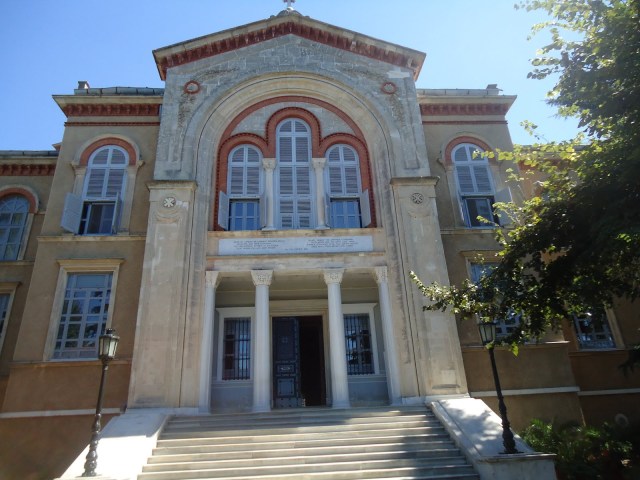
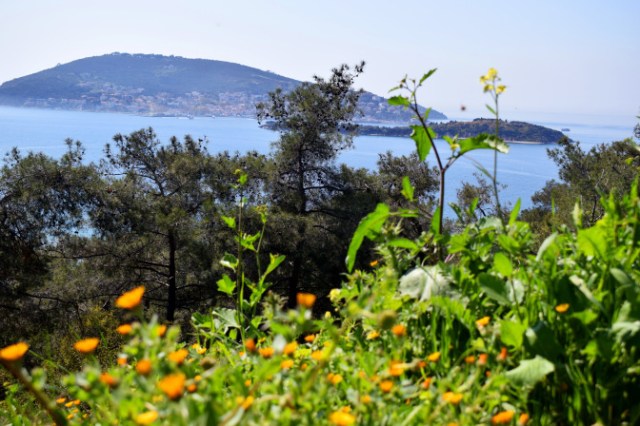
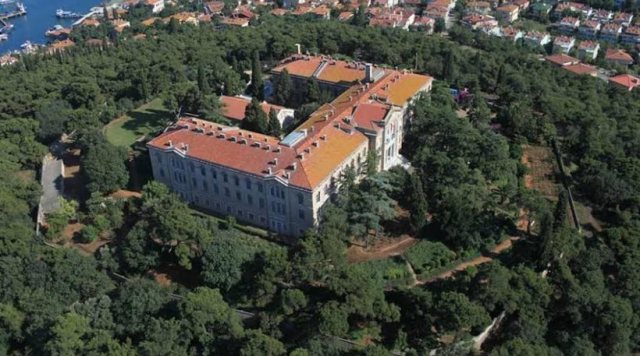
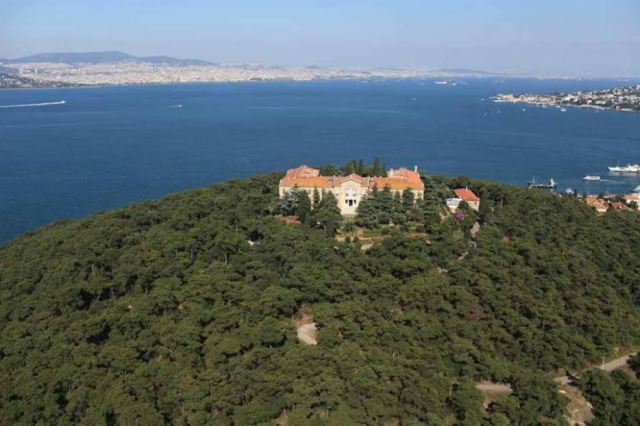
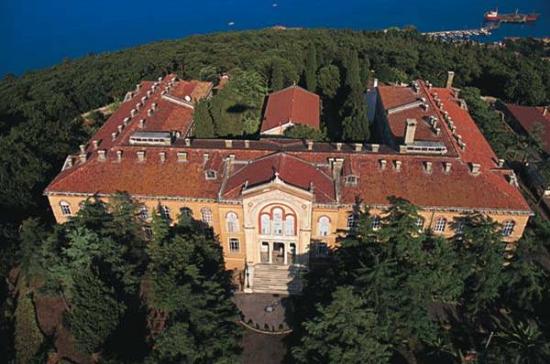
Morning transfer to the pier for a private ferry ride to the island of Halki, home of the renowned Halki Patriarchal School of Theology. Halki is one of the Prince Islands which owe their name to the fact that during the Byzantine period the imperial family and disgraced aristocrats were exiled in the monasteries on the islands.


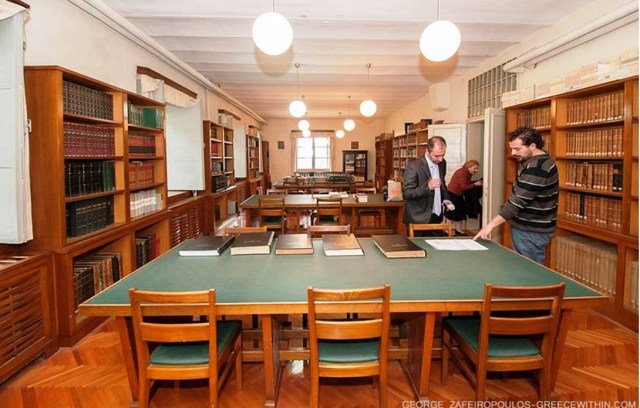
St Photios the Great is believed to have founded the monastery in Halki in the late 19th century. In 1844, Patriarch Germanos IV established the Theological School for the purpose of pleasing God with a dwelling for teachers, theologians and theology students. The monastery houses a very impressive and important library.

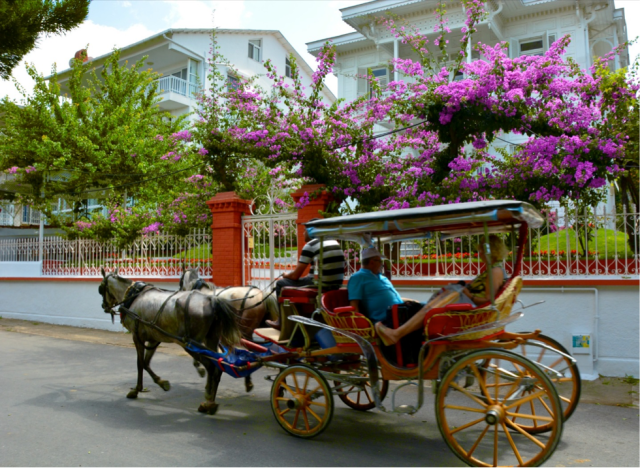
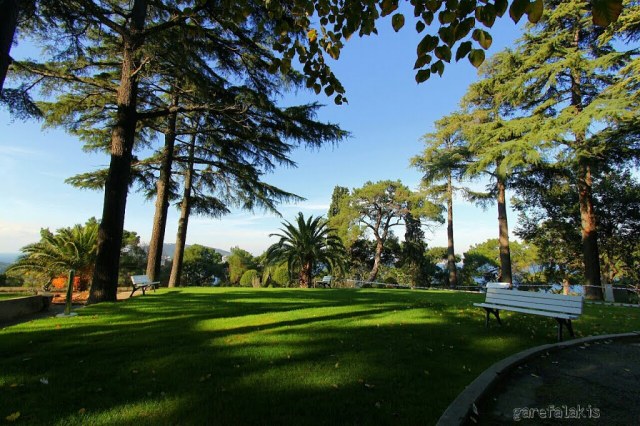
A carriage (fayton) took us to the top of the hill where the Theological School is situated, since motorized vehicles are forbidden on all the islands. A magnificent view awaited us there.


Now & ever…:With thine invincible and divine power ever repel from my soul the destructive assaults made against me by mine invisible enemies, O Virgin, and grant me spiritual weaponry and a strategy [to use] against them.


During its historic past, the spiritual activity of the Holy Monastery of Vatopaidi [one of the twenty monasteries on the Holy Mountain of Athos—Trans.] has proved to be twofold. On the one hand, the monastery has lived in hesychia (silence, stillness) and freedom from cares, which are the preconditions for deification; and, on the other hand, it has sent forth its deified and sanctified children as missionaries, so that they might offer a good witness to the Orthodox Athonite Tradition for the strengthening of the people of God—something not extraneous to the life of the Church throughout the ages. We can say that the monastery became very distinguished in this field, such that it undertook missionary work not only within Greece, but also in other Orthodox nations.
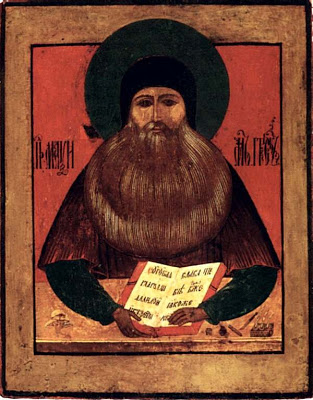
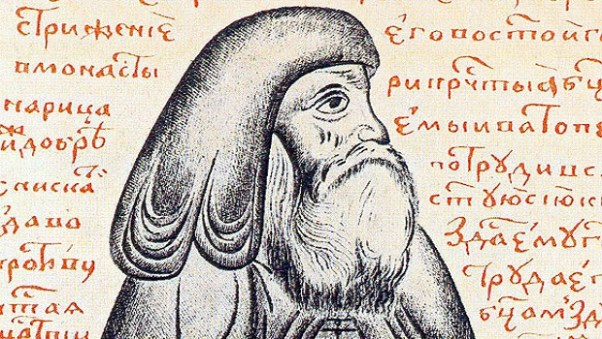
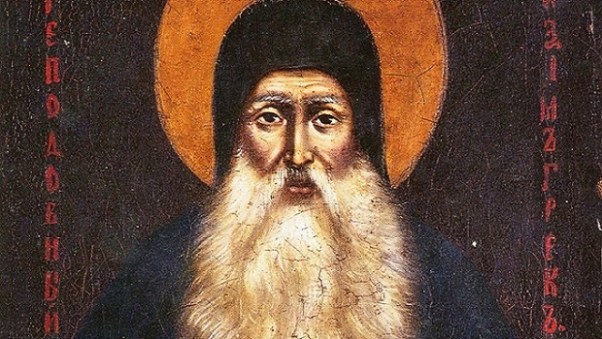
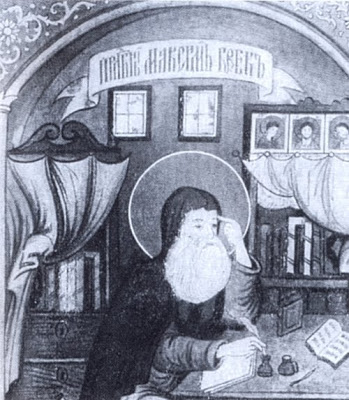
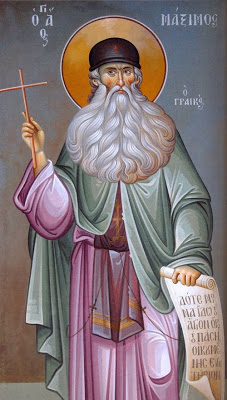
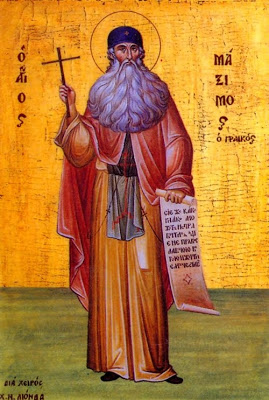
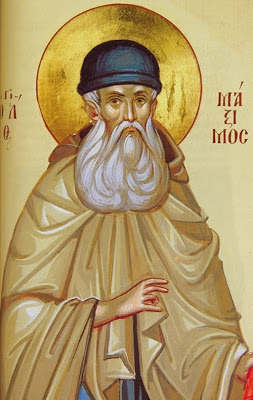
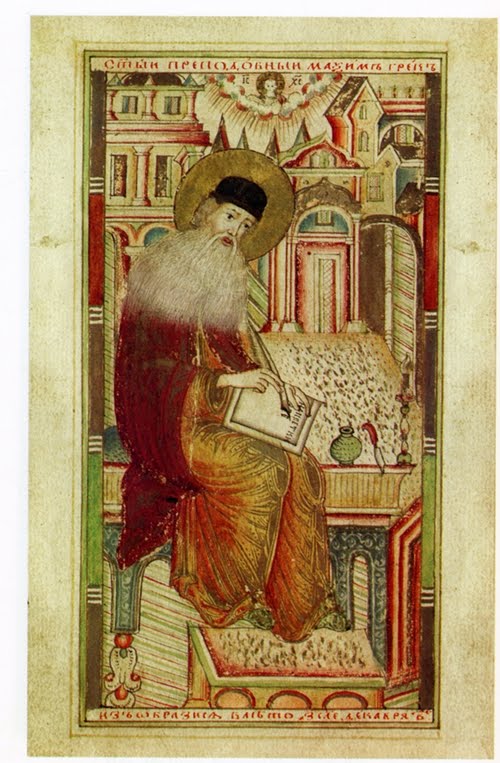
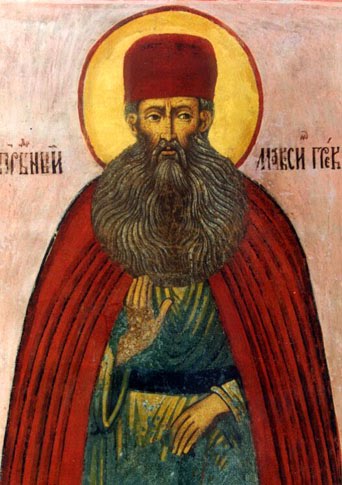
St. Maximos of Vatopaidi—better known as St. Maximos the Greek—was one of the most learned monks of his time, distinguishing himself as a theologian, philosopher, author, and poet during the first half of the sixteenth century, and became known as the “enlightener and reformer of the Russian nation.”
He was born in the city of Arta [northwestern Greece] in 1470 to a wealthy, illustrious, and pious family, and was named Michael Triboles. His parents gave him his basic education at the schools of Arta and Kerkyra (Corfu). At twenty years of age, he went to Italy, where he pursued higher studies for some fifteen years at the universities of Venice, Padua, Ferrara, Florence, and Milan. One of the more distinguished biographers of St. Maximos, E. Golubinsky, maintains that, had the Saint ultimately remained in Italy, he would have become one of the most eminent university professors of his age.
St. Maximos, however, gave himself over to an intense search for an authentic way of Christian life, having seen for himself the nakedness of humankind bereft of God’s Grace while living in Italy, where Renaissance humanism was then flourishing. At the same time, moralism had turned the world to the senseless passions of hypocrisy, avarice, inhumanity, and dissoluteness. Thus, upon hearing about the monastic republic of the Holy Mountain and yearning to achieve the highest human calling—that of deification—and having discerned the vanity of every earthly glory and wisdom, he decided to dedicate his life to the Lord as a monk in this glorious cradle of Eastern Orthodox Tradition, eventually settling in the Holy Monastery of Vatopaidi.

His departure for the Holy Mountain
At the Monastery of Vatopaidi, he lived in asceticism for approximately ten years. He exercised himself in the basic virtues of obedience and abstinence, thereby essentially avoiding all human passions, since he cut off his every will, desire, greed, and pride. His insatiable yearning for the acquisition of virtues and his enviable diligence in exercising himself therein rendered him a vessel of the loftiest virtues of humility, nonacquisitiveness, and love. By means, again, of these virtues, he constantly sacrificed himself for his fellow ascetics and fellow men. Simultaneously, he united his soul with God through unceasing prayer, becoming an abode of the Holy Spirit.
The monastery’s rich library also nourished the Saint spiritually; he found great delight in studying its books. From the library’s rare manuscripts, he garnered the wisdom of his predecessors in the Orthodox monastic tradition. At the same time, the example of the monastery’s other learned Fathers became a luminous guiding light in the Angelic, monastic life.
The monastery’s Fathers soon discerned the cultivation of his soul, so rich in virtues and spiritual gifts. They thus entrusted him with necessary work outside of the monastery, which the holy Father used as opportunities to strengthen our suffering Orthodox people, who were assailed by illiteracy, the bonds of the Turkish Yoke, and the heresies of the West.
In 1515, Grand Prince Vasily Ivanovich [of Russia] asked the Ecumenical Patriarchate and the Protos of the Holy Mountain for an experienced, learned, and virtuous monk, who could translate Church texts into the Slavonic language and correct erroneous translations and copies of Holy Scriptures and Patristic texts.
Monk Sabbas of Vatopaidi was initially chosen, but he refused on account of his advanced age. The lot thus fell to the eminent Monk Maximos.

His mission in Russia
St. Maximos left the Holy Mountain in 1516. Representing the Russian people, Metropolitan Varlaam of Moscow and Grand Prince Vasily Ivanovich welcomed the Athonite monk and those with him.
Unfortunately, at that time the Russian nation was being scourged by new ideologies, which had slipped even into Orthodox ecclesiastical books, perhaps not fortuitously.
St. Maximos began his work of writing, translating, correcting, and exegesis. At the same time, his genuine Orthodox way of life soon came to attract the Grand Prince and the Metropolitan, as well as the Russian people and numerous eminent and distinguished people, who recognized in him a sagacious monk with the ability to resolve, by the power of God and his wise teachings and counsels, the multifarious problems pertaining to people of all social classes and walks of life. Thus, he began his advisory work chiefly before the Russian ruler and the Metropolitan, who directed matters relating to the State and the Church, respectively.
We should also note that St. Maximos was the first to initiate the Russian people into ancient Greek philosophy and literature, thanks to his many years of profound studies at Western universities. Moreover, he was the first to introduce the art of printing into Russia, owing to his close ties with the renowned Italian typographer and savant, Aldus Manutius.
Generally speaking, St. Maximos the Enlightener and Equal-to -the-Apostles acted resourcefully and wisely, taking care to educate a multitude of people, who subsequently continued his colossal work of enlightening Russia in Orthodox Christianity, for the salvation of the people and the glory and joy of the Church of Christ.
These cultural activities of the Saint underscore his manifold acts of beneficence, showing him forth not only as a missionary worker, but also as a civilizer of the Russian people, who at that time were in a state of illiteracy and ignorance.
St. Maximos’ missionary activities lasted eight years. He bore a heavy cross, however, with his work on behalf of the Faith; or rather, the Devil, the enemy of the truth, attempted to destroy St. Maximos’ work, though the Evil One ultimately failed in this regard, since the “grain of wheat fell on good ground and sprang up, and bore fruit a hundredfold” (cf. St. Luke 8:8).

Conflict with the political and ecclesiastical leadership
More specifically, owing to irregularities on the part of certain political and ecclesiastical figures—due, in large part, to ignorance—the Athonite Father was compelled to expostulate with and censure certain individuals, on the basis of the principles of the Gospel and in accordance with the ecclesiastical capacity afforded him by the Russian Church and the country’s royalty.
Unfortunately, however, not only did things not improve, but St. Maximos was now additionally confronted with the enmity of those he had censured, among them the Grand Prince and the new Metropolitan of Russia, Daniel, who disregarded the Saint’s sincere concern for their salvation and for the right direction of the Russian Church.
Thenceforth the Saint was to bear a heavy cross of imprisonments and tribulations unto death. Precisely these tribulations perfected St. Maximos spiritually, however, such that today the equal-to-the-apostles, confessor, martyr, and ascetic is regarded as one of the foremost illustrious children of the Holy Monastery of Vatopaidi, and of our Orthodox Church in general. It is he who, by Divine calling, accumulated all of the charisms; and all of the aforementioned appellations befit him to such an extent that not one of them can be deemed an exaggeration.
St. Maximos censured representatives of the Church for living in a manner unbecoming to the clergy and monasticism, as well as for inappropriate behavior towards the people. At the same time, he also reprimanded political representatives for similar matters, just as St. John the Forerunner—who was put to death in prison for censuring the King for committing adultery—had done. Thus, St. Maximos became a confessor by upholding moral standards with strictness and by rebuking those who did not live morally, regardless of their office or rank.
He did not become conceited by the honors shown to him by the Grand Prince, nor by the fact that he was the foremost royal counsellor and ate with the Grand Prince at the same table for eight whole years, as if he were himself a prince. None of these things made him forget that he was a monk—and an Athonite monk at that—who had been called by Divine behest to correct the morals of the Russian people. Nor did he take into account that he would lose favor with the Grand Prince and representatives of the Church, along with the honors they showed him, by censuring them.

His imprisonment
He was condemned, as an alleged heretic, to life imprisonment in fetters and deprived of partaking of the Holy Mysteries. Placed in solitary confinement, he was forbidden to have any communication with the faithful. He suffered all of these things, as we said above, because he had censured his accusers for immoral behavior, using Christian morals as his basis. Likewise, he was prohibited from carrying on correspondence or reading books. The final prohibition was a martyrdom in itself for the learned monk-philosopher, since his spiritual nourishment and delight were derived from the study and writing of books.
Metropolitan Daniel, who was primarily responsible for St. Maximos’ ordeals, placed in his prison cell two cruel and inhuman guards, who tormented him without mercy for six continuous years. As St. Maximos later wrote to Metropolitan Makarios of Moscow: “Imprisoned, I was kept in bonds, dying from the cold, smoke, and hunger.”
His biographer, Kurbsky, writes that:
“He suffered much from the burdensome bonds and the long confinement in a frightful prison, …being exceedingly beleaguered and mercilessly tortured, both physically and mentally, by intolerable ordeals for six years in iron fetters. …As a result of these tortures, St. Maximos would often fall completely unconscious, almost to the point of death. At one point, wishing to alleviate his affliction, he wrote a Canon to the Holy Spirit on the prison wall with a piece of charcoal, since he was not permitted paper on which to write. Under these conditions, he never grumbled or condemned anyone! At the end of his earthly life, St. Maximos would write a letter in which he prayed with regard to Metropolitan Daniel, who was the primary cause of his myriads of tortures: ‘May God not lay this sin to his charge’!”
During his first imprisonment in the Monastery of Volokolamsk, and, following that, during his second transfer to the Monastery of Otroch, he was confined to a damp and dark, subterranean prison, deprived of light and heating, and of every human consolation to which even the vilest of malefactors is entitled.
Who is capable of describing his martyrdom, and especially his deprivation of the Divine Eucharist? Only one who has come to know the love of our sweetest Jesus could describe such a martyrdom.
Despite the Saint’s protests over this harsh and unjust epitimion (penance), and despite his pleas at least to be permitted to partake of the Divine Mysteries—saying, with deep pain: “I ask that you vouchsafe me to partake of the All-Immaculate and Live-giving Mysteries of Christ, which I have been denied for seventeen years now. …Grant me, I beseech you, this favor…, save this lost soul….” “…I seek mercy and benevolence….” “…I ask for mercy; show me mercy, that you might also be vouchsafed the same Grace”—unfortunately, the clergy of iniquity did not pay him heed. They confined him without permitting him Holy Communion for eighteen full years.
Moreover, as we said above, his martyrdom was heightened by the tremendous pain caused by being enchained for six years at the prison of Volokolamsk, and then again during the first eight years of confinement in the prison of the Monastery of Otroch. In total, he spent fourteen years in iron bonds (1525-1539), and was imprisoned for a total of twenty-six years.

Dealing with his tribulations
Saint Maximos suffered all of his ordeals with patience and without resentment. Never did he reproach those who had caused him to undergo such great sufferings, nor did he ever depart from the bounds of spiritual nobility and meekness. This he achieved through humility. Emulating other holy Fathers, while protesting against his condemnation as a heretic and a blasphemer, he nevertheless accepted his trials as if they had been permitted by God on account of his sins.
Thus, he wrote to Metropolitan Daniel: “But I tell you in this regard that you have [unjustly] condemned me for heresy and prohibited me from partaking of the Divine Mysteries. As for my other many and innumerable sins, I am not able to open my mouth. I must not despair, however, but rather hope in God’s immeasurable mercy….” And elsewhere: “The Just Judge, Who desires that all men be saved, Who has permitted me to undergo these afflictions on account of my many great sins, and not for heresy or blasphemy…”
The Saint’s patience was also due to Divine strengthening, in accordance with the Psalm: “According to the multitude of my sorrows in my heart, Thy comforts have given gladness to my soul.”
The consolations of the Holy Spirit were such that not only they equiponderated the Saint’s sorrows, his pains from the tortures, and his tears, but additionally they caused Divine love to overflow in his heart, becoming his “bread day and night.”
The venerable Father was also vouchsafed a vision of a Holy Angel, who descended into the prison and offered him the Body and Blood of our Lord Jesus. Following this miracle and his Divine vision and succor, in Divine exaltation he composed and wrote with charcoal on the prison wall the aforementioned Ode to the Holy Spirit, which begins: “O, the manna by which Thou once didst feed Israel in the desert…,” followed by “with Thy Bodiless Ministers, I also chant to Thee…” which imply the vision of the Angel who transmitted to him the Body and Blood of our Lord.
As for the further Divine succor granted to him, who could know or tell of it? God guided him, through this hard path, towards perfection. We also see this from the exhortation by the Holy Angel, who appeared to him and said: “Maximos, be patient in these sufferings, that you might escape the sufferings of eternal chastisement.”
Thus, St. Maximos, by Divine revelation, became completely aware that he was fulfilling the Will of God when he was forlorn and reckoned an abomination by all, a stranger in a foreign land. In a state of extreme humility of spirit, he put into his heart that he was the lowest person on earth, humbled with Divine knowledge that the Lord had permitted his sufferings; for through the path of extreme humility He wished to guide him to spiritual perfection.
Living in seclusion and silence, he prayed unceasingly, with wordless groanings of the heart, noetically calling from the depths of his heart upon the Name of his sweetest Bridegroom, Jesus Christ.
Thus, through his martyrdom and through bearing the Cross of the Lord with knowledge, the Saint became perfected in Christ, completely dispassionate, a pleasant psaltery and sonorous cittern of the Holy Spirit, and a dwelling-place of the Holy Trinity!
St. Maximos was among the few monastic Saints who conducted their spiritual struggles devoid of a guide and human solidarity— without a spiritual Father or Elder to comfort and strengthen him as he bore his cross, and even without the solidarity of like-minded brothers, according to the saying: “A brother helped by a brother is as a strong and fortified city.”
He was faced with “external battles,” “imprisoned, kept in bonds, dying from the cold, smoke, and hunger,” but also with “internal fears,” lest he repine against God over the multitude of his tribulations or transgress God’s commandments by becoming angry with those who had done him injustice, revile them, or bear them resentment.
At the same time, a whole mob of other passions raged against him. The battle was gigantic, and the conditions under which the Saint struggled were not only incomprehensible, but even inconceivable to us. He conquered, however, with the alliance of the Lord, Who loved him and Who had given Himself over unto death for the sake of all.
His sentence is mitigated
Saint Maximos saved the entire Russian Church from prejudices, superstitions, and heretical beliefs that held sway at that time in Russia.
While imprisoned in the Monastery of Otroch (1531-1551), he was given relative freedom of communication by Metropolitan Akaky of Tver (following a sign from God), so that this light might not remain “under a bushel” (cf. St. Matthew 5:15).
Thus, while bound in chains for years in a dark, damp, subterranean prison, he tirelessly continued to write, translating sacred texts into Slavonic and composing, among many other things, anti-heretical works, for the sake of protecting and enlightening the Russian people. In addition, with fatherly affection, he once again began preaching, comforting the Christians who hastened to his prison cell to hear his advice and seek his prayers.
Several years after the imprisonment of Metropolitan Daniel, Metropolitan Makary of All Russia released the Saint from his unjust punishment of excommunication, which had lasted eighteen years (1525-1543).
From time to time, he would fervently beseech to be liberated, so as to return to his beloved monastery on Mt. Athos, but never received a response. When Tsar Ivan the Terrible ascended the royal throne, the Greek monk repeated his appeal, but again without positive results. Likewise, Patriarch Dionysios of Constantinople (in 1545), Patriarch Germanos of Jerusalem, the Patriarch of Alexandria (on September 4, 1545), and the Monastery of Vatopaidi all sent requests to the Tsar to release St. Maximos.
In one of his own letters to the Tsar, St. Maximos wrote:
“Please deign, by the Name of the Lord, to show mercy to me, the wretch. Grant me to see the Holy Mountain, where prayer is sent up for the whole world. Restore me to the holy Fathers and to my brethren, who pray on your behalf. Yield in a Christian manner to their entreaties and tears. Do not wish to appear disobedient to the OEcumenical Patriarch, who is entreating you on my behalf.”
And elsewhere:
“Judge for yourself, I beg you, if I am worthy of hatred for all that I rightly corrected, and if I was justly slandered by certain ones as a heretic and denied communion with the faithful and of the Divine Gifts for so many years…. If, then, I speak rightly and credibly, show me, the wretch, your goodness and mercy, as a pious and unbiased judge, and acquit me of the unjust slanders and these ordeals, which I have been suffering for many years now…. Grant me, I implore your reverence, to return to the Holy Mountain, where I toiled in many and various ways both spiritually and bodily in hope of salvation, that I might lay down my bones there in peace.”
And elsewhere:
“Return me, most devout Tsar, to the venerable monastery of the Theotokos of Vatopaidi. Spiritually gladden its holy monks, your servants and fervent intercessors. Do not desire to grieve them.”
It is worth noting that in each of his letters the Saint pleaded to be returned to the Holy Mountain, repeating the phrase: “that I might lay down my bones there in peace.”
Yet his martyrdom continued. His return was deemed dangerous by the Tsar and Church leaders of the time, since the Saint knew all of the negative aspects of the political and ecclesiastical life of Russia, and they were afraid that he would hold them up to public opinion and reveal the ill will they had shown him.
His Sentence Is Lifted
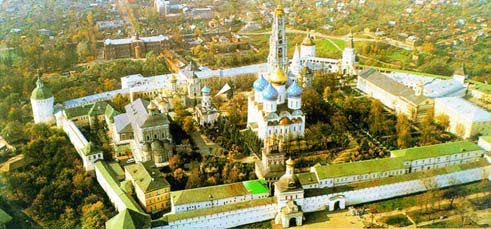
In 1551, the new Tsar, examining the entire affair with his dignitaries, who insisted on the Saint’s vindication, ordered that he be moved to the renowned Lavra of St. Sergey, thereby ending his sentence of imprisonment, which had lasted twenty-six consecutive years, without, however, permitting him to return to his homeland and his monastery of repentance, for the aforementioned reasons.
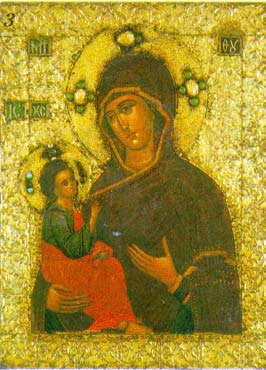
St. Maximos, by now elderly and exhausted from the manifold hardships of his life imprisonment, gave over his soul to the hands of our Lord, to be relieved of his toils and pains, on January 21, 1556, the very day on which the Church commemorates his Patron Saint, Maximos the Confessor, a most special blessing granted by our Lord. On this day as well, his brothers at the Monastery of Vatopaidi had the custom of celebrating the Feast of the Panagia Paramythia (“of Consolation”).

St. Maximos the Confessor
He was around eighty-six years old when he reposed in 1556, and had served the Russian Church and its pious faithful until his last breath for a total of thirty-eight years, twenty-six of which he had spent in prison.
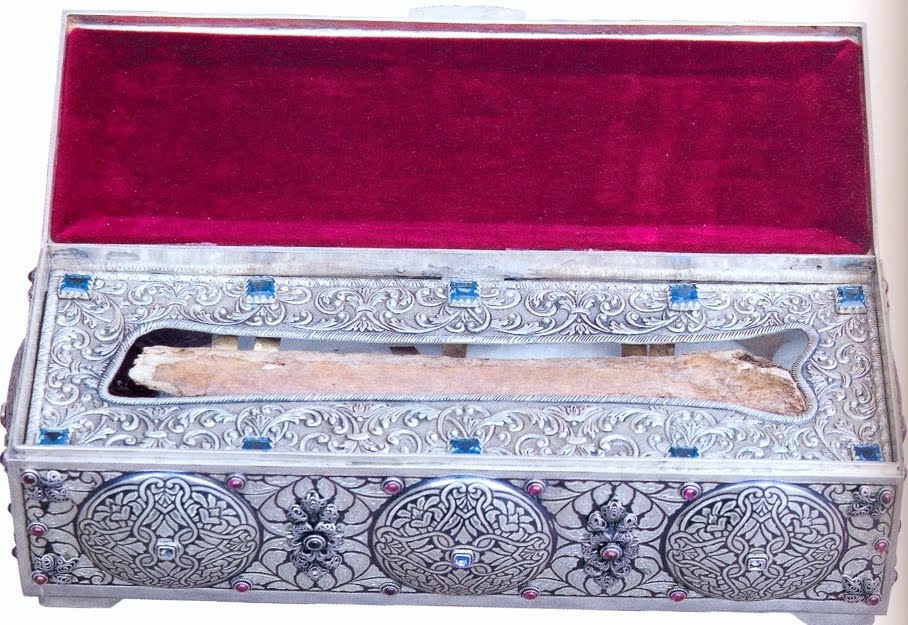
The Ecumenical Patriarch of Constantinople proclaimed the sanctity of Maximos the Greek in 1988. Following that, during the celebration that same year of the millennium of Orthodoxy [in Russia] in Moscow, he was glorified by the Russian Church. The Translation of his Relics took place on June 21, 1996 (Old Style), in the Church of the Holy Lavra of St. Sergey, where St. Maximos lived during the last five years of his life.
A portion of his Relics were handed over to the Monastery of Vatopaidi, the monastery of his repentance, on July 8, 1997 (Old Style), in the Church of the Panagia of Kazan by Patriarch Alexey of Moscow and All Russia. The celebration of the Translation of his Relics to the Monastery of Vatopaidi took place on July 14, 1997 (Old Style).
* * *
The example of St. Maximos should give us courage. The discipline of the Lord through ordeals did not destroy him; rather, with faith, prayer, and virtue, he drew upon Divine strength and remained patient throughout indescribable temptations. We recount the lives of the Saints in order to follow their examples, to gain strength, and to approach God with orthopraxia, by Church attendance, confession, and partaking of the Divine Mysteries. Every one of us will bear, according to his strength, the Cross of his Resurrection. Knowledge of the path towards our Divine Transfiguration is necessary, and in particular for the Greek nation, which led so many other nations to knowledge of God by means of its wise Saints, who are equals to the Apostles.
We pray that our All-Good Triune God, who “worketh hitherto,” might ever send forth worthy and holy workers, like the great and tireless Saint Maximos, to His vineyard, for the salvation of all. We also pray that God, through the intercessions of this our holy Father, grant His Grace for the preservation of unity of Faith and bonds of love in our One, Holy, Catholic and Apostolic Church of Christ.
Source: Pemptousia, No. 20 (April-July 2006), pp. 114-121.
«Διά τους λόγους των χειλέων σου εγώ εφύλαξα οδούς σκληράς» (Ψαλμός ιστ’, 4). Ο Κύριος όμως δεν τον εγκατέλειψε. Tου έστειλε Άγγελο ο οποίος τον στερέωσε στην υπομονή λέγοντάς του: «Ω καλόγερε, με αυτά τα πρόσκαιρα βάσανα θα λυτρωθείς από τα αιώνια»
«Οι θλίψεις και οι βαριές δυστυχίες στέλνονται σε εμάς, είτε εξαιτίας των πολλών αμαρτιών, που προηγουμένως επιτρέψαμε στον εαυτό μας να διαπράξει, είτε προς πρόληψη μελλοντικών αμαρτημάτων τα οποία θα διαπράτταμε. Ας παύσουμε λοιπόν, να εξοργίζουμε τον Ύψιστο με την ανυπακοή μας και την παράβαση των θείων εντολών Του. Ας αγαπήσουμε κάθε αρετή, τα ορθά ήθη και την ελεημοσύνη στους ενδεείς κατευθύνοντας τις καρδιές μας πάντα προς τον ουρανό, απ᾿ όπου περιμένουμε και τον Σωτήρα μας, τον Κύριό μας Ιησού Χριστό, στον οποίο ανήκει η δόξα και η δύναμη εις αιώνα του αιώνος. Αμήν». (Λόγος ΙΘ΄ Αγίου Μαξίμου).
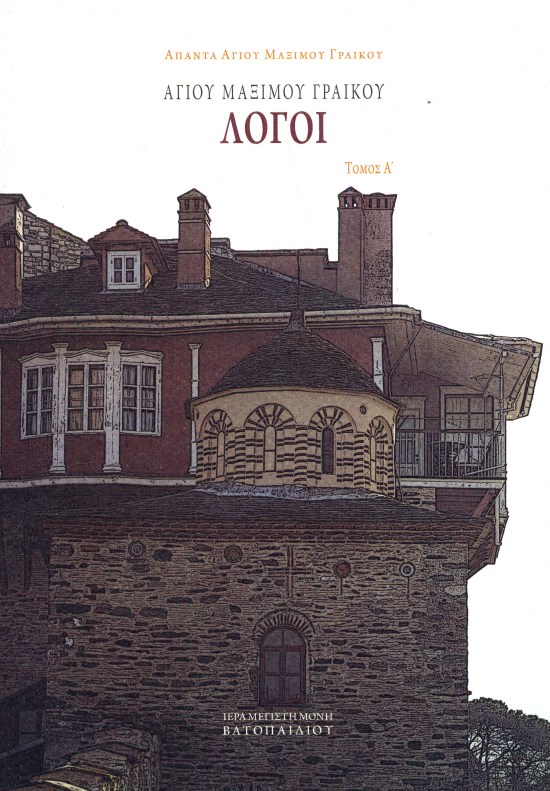
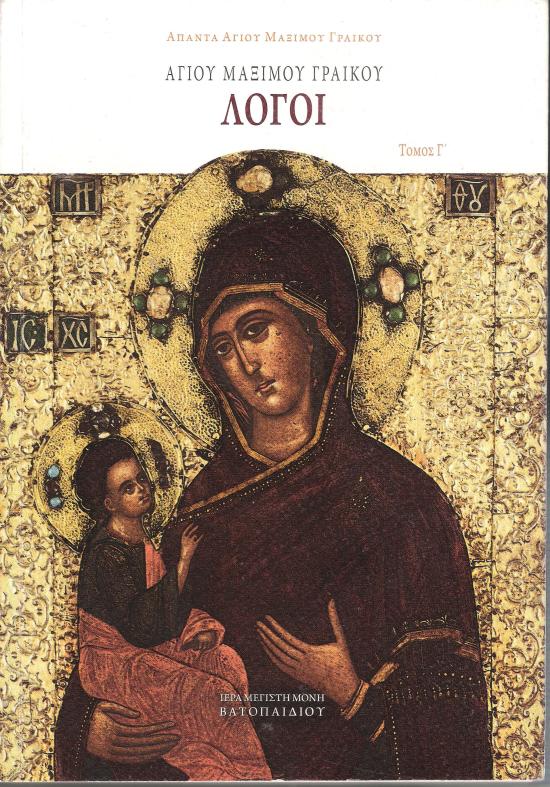
ΑΓΙΟΥ ΜΑΞΙΜΟΥ ΓΡΑΙΚΟΥ ΛΟΓΟΙ (3 τόμοι) Μονή Βατοπεδίου


ὁδὸς ἄνω κάτω μία καὶ ὡυτή
Herakleitos I. p. 89 Fr. 60.
“the way upward and the way downward is one and the same”
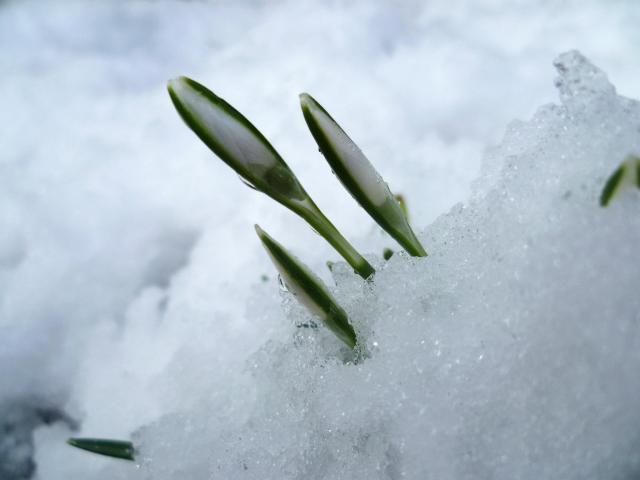
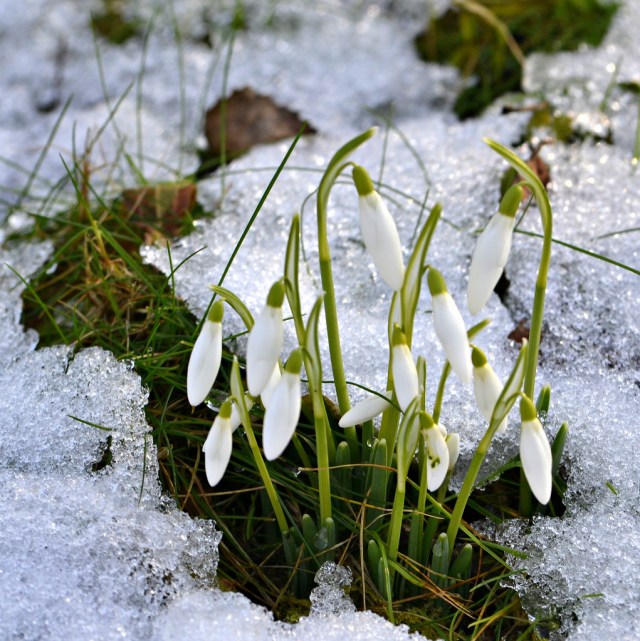
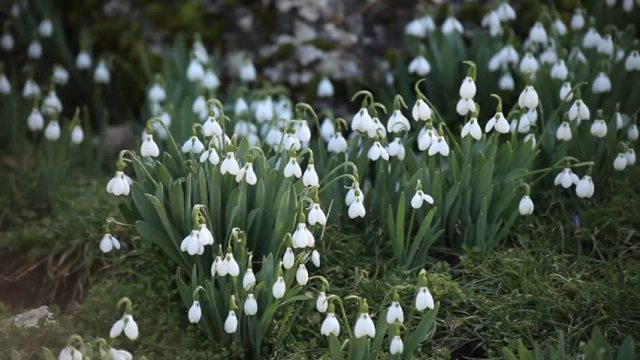
I like this time of the year, February- the cusp of spring- the stirring from hibernation, the orientation of the earth tilting on its axis towards a warmer inclination. The cold, frozen earth in the Northern Hemisphere which has lain dormant over the winter, starts to come alive. The snowdrops are sending up their green shoots once again; peeping through the surface, these bold, hardy flowers, with heads bowed in humility are drawn by the sun. They are the front line of nature’s offspring in the march towards life, silent heralds and signalmen of the resurrection to come. The stretching of their sensitive, sinuous roots ever downward and the upward struggle of their shoots ever upward require equal grace filled effort. The breaking open of the bulb, the flourishing of the epiderm, the nodding of the head before the movement of the wind ( the spirit), and finally, the full glory of this tiny flower stands before the Creator of the Cosmos.

The Liturgical cycle is a movement in God’s time, in which we glance brief moments of eternity. Our inclination and disposition towards God, our prostrations and metanias, are the means to spiritual growth. We must put down roots of stability and at the same time reach with our arms towards the heavens. We flourish at the presence of Christ; we say “yes” to the guidance of the Holy Spirit; and at the last we are embraced as sons and daughters of Light in the arms of our heavenly Father.
The great fast of winter leads to the feasts of the Nativity and beyond to Theophany and the great fast of Lent leads to the Cross of Pascha and beyond to the Resurrection. The cold heart is indeed called, broken, drawn and imperiously captured by the warmth and light of our loving God. We are God’s little flowers. Renewed in vigour and faith from sensing the power from above, the season and the time, we become again brave Christians who break out of stricken conformity, that dark place we inhabit, into the beautiful freedom of Christ’s Kingdom.

Ecclesiastes 3:1
To every thing there is a season, and a time to every purpose under the heaven.
By Father Jonathan Hemmings