… and the Cross!
This has made my day today! I don’t know which is more amazing, the ants making the cross, or the grass making the crown?!
… and the Cross!
This has made my day today! I don’t know which is more amazing, the ants making the cross, or the grass making the crown?!


This Saint was the spiritual father of my spiritual mother, Sister Aggeliki of Blessed Memory! So now on both sides, on all sides indeed, my spiritual grandparents have been proclaimed Saints!!! Glory to God! Holy one of God intercede for us!
Hymns in honor of the newly-glorified elder and Simandron at the Holy Monastery of Saint John the Theologian – Patmos – Sanctification of Saint Amphilochios Makris:
https://www.youtube.com/watch?v=3eWawehie6A&feature=youtu.be
The hymns had already been composed in 1986 by Hieromonk Antipas of the Athonite Cell of St. Anna under Iveron Monastery. These are the hymns that have been chanted on Patmos in his honor.
A translation from the Greek has been provided by the Mystagogy Resource Center:

Apolytikion (Troparion)
Tone 5. The Co-beginningless Word
Let us all praise Amphilochios, the new star of the Church of Christ, truly the ornament of the island of Patmos, the beauty of monastics and lover of piety, the lamp of prudence; he intercedes to the Lord that He may have mercy on our souls.
Kontakion
Tone 3. The Virgin Today
In the last days father, you have shown to be a boast of the Church, shining with the virtues; wherefore we cry out to you with reverence, deliver us all from dangers, Amphilochios, the divine glory and pride of Patmos.
Megalynarion (Magnification)
Rejoice the beauty of Priests, rejoice the revered ornament of Venerables, rejoice the glory and boast of Greece and of all Orthodox, O Amphilochios.
*
More about this Saint to follow. I also have news to share shortly. Thank you for your prayers!


… As if ever, our anger is a good one …
*
“Do you think, my child, that I don’t know how to speak out? I know but I think of the result.” (St Nicholas Planas on restraining anger)
*
May I ask for your prayers as I am really struggling to juggle all my new obediences, jobs and job applications because of Brexit?


“…But now, and at least since the late 1990s (when she said the headscarf appeared in her world), the challenge for Orthodox women is to build a healthy counter-culture in which to live and raise their children. If they choose to make the wearing of a veil when in church one component of that counter-culture, who is Kelaidis or anyone else (including me) to say otherwise? The words “a woman’s choice” can and have been horribly misused, but surely here is one instance where a woman’s choice ought to be respected.
Kelaidis is quite right about one thing: “modesty is not a line you draw on your knee [i.e. a dress’ hemline], but a line you draw on your heart”. Women can be modest and pious without wearing a veil in church, as many women at my own little church can attest. But a veil is now not only—or even primarily—a tool for modesty, Kelaidis’ assertion that “Modesty was always the goal of the veil” notwithstanding. Now it is a choice that some women make to express their respect for a sacred space and their desire to be different from the secular world around them. Of course women can do this without wearing a veil. But some women choose to do this through the wearing of a veil. And surely they should be allowed to do this without being blamed or scolded in the pages of Public Orthodoxy?
I cannot help but wondering if the main target and source of anger in Kelaidis’ piece is not the presence of the veil among Orthodox convert women, but the fact that these convert women choose to wear the veil as an expression of their choice to be counter-cultural and to reject the secularism around them—a secularism that Public Orthodoxy seems to so often embrace. The goal is still assimilation to contemporary culture, even now that our culture has become diseased.”
To read the whole article Fr. Lawrence Farley, go to Headscarves, Modesty, and Scolding Modern Orthodox Women, a brilliant, bold critique to Katherine Kelaidis’ HEADSCARVES, MODESTY, AND MODERN ORTHODOXY
Also, read a moving personal testimony by Elisabet: On Account of the Angels: Why I Cover My Head
Thoughts?


The wondrous icon of the Holy Archangel Michael, Mantamados, Mytilene (Lesvos). “Where your grace casts its shade, Archangel, there the devil’s power is chased away; for the fallen Morning Star cannot endure in your light.” May he intercede for us all and protect us! The Sunday of the Holy Myrrhbearers is one of the major feasts of the Holy Archangel Michael the Taxiarch, Mantamados, Mytilene (Lesvos). This is because that church was consecrated on this day. Thousands of pilgrims flock to celebrate this feast, seek the intercessions of the great Taxiarch, and thank him for his prayer and his protection.
Days of travelling, days of mourning (+ my father-in-law, Pericles), days of new beginnings, new home and new job, arduous, exhausting days, yet such hope and inspiration in Mama Stavritsa’s faith and courage!

“There are two accounts surrounding the date of this icon, one having to do with the Ottoman Turkish occupation and destruction of 1462, and the other with Saracen pirates during the 9th and 10th centuries during which the entire island was invaded.In either case, the story of the creation of the icon shares the theme that the target of the raids was the monastery of the Taxiarchis. The pirates threatened the monks with death if they would not reveal the whereabouts of the hidden villagers. The monks refused and the invaders slaughtered all of the monks except for one novice-monk [1]
As the pirates where leaving, the novice climbed to the roof of the monastery to be sure that the pirates had left. However, the pirates noticed him from afar and returned to kill him as well. It is at this point in the story that the Archangel Michael makes his appearance in front of the Saracens with his own sword drawn forcing them to retreat in terror[2]. Thanks to this miracle from the Archangel the monk survived and descending to the courtyard buried the bodies of his fellow brotherhood.
The monk still in deep respect and reverence for having witnessed the Archangel Michael in all his fury, gathered up the earth that was red by the blood of the martyred monks and shaped it into the icon-sculpture of the Archangel as it is today; while it was still vivid in his memory. According to legend, the monk did not have enough of this dirt-blood mix and so the head of the Archangel has turned out disproportionately larger to the rest of his body.
This icon, is now kept within the interior of the church. Many islanders claim to have had personal experiences of miracles being granted for them by Mantamados. This is evident by the numerous cabinets full of tagmata (gifts) to the Archangel housed inside the church. To this day, pilgrims to this church have mixed emotions regarding this icon. At times, the expression on the icon can appear severe, sad, or happy, according to the message that the Archangel wants to convey to that pilgrim or the faithful. This is the tradition of the much-celebrated icon of Mantamados.”


The Precious and Life-Saving Cross (Sts Isidoros, Likavittos). One miracle of many happening every day, captured and sent from a friend in Greece, Lagadas, northern Greece, Church of St Paraskeva. A paralytic, wheelchair-bound woman is getting to her feet after a blessing from a local priest and is walking! During the Holy Liturgy which was held to commemorate the blessing of the Holy Cross. Photographs depict the woman receiving a blessing from Father Dimitrios before she stands on her two feet.
For more photographs and videos which capture more miracles, please go to the Facebook page of the Orthodox City Hermit as I cannot upload them here. Miles of queues of the faithful for the last 7 days. For more photos, go here
*
Sent from friends in Greece.
*
Busy, nearly exhausted, still in the process of moving, unpacking, deep cleaning of my new flat and making preparations for my new job post. Wishing you all a Blessed Feast of the Apostles Peter and Paul!


It is incorrect to say that depression is not an illness or that alcoholism is not an illness or that same-sex attraction is not an illness. The standard definition of an illness is any condition which upsets the homeostasis of a system. There are spiritual illnesses and physical illnesses. I suppose one could even say that there are mental illnesses, although their crossover into spiritual illnesses is profound.
Calling something a mental illness will not give one license to say that we are not spiritually responsible for it and for the things that we do because of it. This is the way of the world nowadays. A person says I have depression and therefore since it’s an illness I’m not responsible for it. A person might say I’m same-sex attracted and I was born this way, and since the world teaches me that I should act on my impulses I am not responsible for them and they must not be sins. This is wrongheaded thinking.
It is always good to think humbly about ourselves and blame ourselves. The world doesn’t understand this, but the Orthodox church, with our wonderful ascetic theology, does understand this. Our prayers make this very clear, and ignorance regarding them is a terrible spiritual problem for many Orthodox Christians.
Any Christian who has great problems, weaknesses or sins must improve his prayer and struggle, or else all other solutions will be ineffective or less effective, or even harmful. Look to yourself if you are depressed, or have SSA, or an addiction. Could you pray even a little bit more? Confess more? Fast at least a little bit more? Struggle to be on time to liturgy, come to the evening service at least sometimes? Read the prayers in the prayer book, and try to learn from them? Pray for a person who has harmed you? Quantity is not important, but EFFORT is. It is almost always true that we can make more effort. Something is always better than nothing.
Blaming ourselves does not mean that we have a terrible poor self-concept about ourselves. Blaming ourselves means taking responsibility for all of our actions and thoughts, and AT THE SAME TIME, with a warm hope in God, Whom we know will help us, because He loves us and is merciful.
Sin is anything that is not like God except for the blameless passions. The blameless passions are things like the need for sleep or food. We have those needs because we are in the flesh. In the next life, we will be in the flesh but not have those needs. All of those needs are signs that we are not yet perfected.
Depression is certainly an illness, and it certainly can be treated with medications in some cases. It is always an incomplete treatment and even a dangerous treatment to only use medications and not also to pray, and struggle to follow the commandments, and understand that our spiritual actions are part of our healing. Our healing for anything is through God because of His love for us.
It is a significant mistake to consider the depression is only a biological illness and not also a spiritual one. When one calls something a mental illness generally what they mean is that there is some biological reason for the illness and that morally the person is completely blameless. Sometimes they believe there is only a biological reason for the illness. The former is often true, but the latter is never true.
Nothing we do should be done without the spirit. That includes taking medicine or getting medical treatment. We are composite creatures with a body and a soul. When we are ill , the body and soul both need attention.
Priest Seraphim Holland
Seraphim@orthodox.net


St. Cuthbert, an early Celtic Saint, used to pray standing in the sea. When he stepped out, the sea otters would dry his feet with their fur.
“The one thing that sets the Saints apart from the rest of us is their struggle to remain entirely obedient to Christ. There is no bargaining in their mind, no negotiating Christ’s teaching, no diluting His words to the point where they lose the strength to open for us the path of salvation.
Most of us receive the word of God with caution, and we immediately start turning it on all sides until we reach a compromise that works for us. Most of us fear the word of God. All we truly want is something that looks like His word enough to make us feel good about ourselves, enough to make us have the appearance of Christians, but not to the extent that we could lose control over our lives.
One can go through life either in obedience to Christ or in obedience to one’s own will. The challenges and choices of this world are simple and clear if we obey Christ’s word – we need to love, we need to forgive, we need to help. Ultimately, we need to allow the world to crucify us for His name and become true followers of the Crucified One. These are His words, and this is the way of the Saints.
Things only seem complicated when our brain gets in the way. Things only seen unclear when we begin negotiating Christ’s word, looking for a human version of it which does not lead to the Cross. Unfortunately, we always succeed. Unfortunately, we have the frightening ability to reduce Christ’s teaching to something that excludes the Cross. The danger, though, is that without the Cross there can be no Resurrection either.
The Saints are not like that. The Saints do not build an idol of their earthly lives. They have no vision of a perfect life here, no vision of a perfect self in this world. They remain faithful to Christ and His word, and allow nothing of this world to come between them and their God.
Look at St Cuthbert. Look at his faith, the faith of a young man who spent his nights into the cold waters of the North Sea, so he may control his mind and his body in prayer. Look at his obedience to his true calling – a hermit at heart, he left everything behind to be obedient to Christ. A man alone on his island, but carrying the world and its Creator in his heart.
Through his prayers, may we also be given the faith to obey Christ’s naked word, not our own tamed version of it.” (Fr. Seraphim Aldea, Mull Monastery Blog)

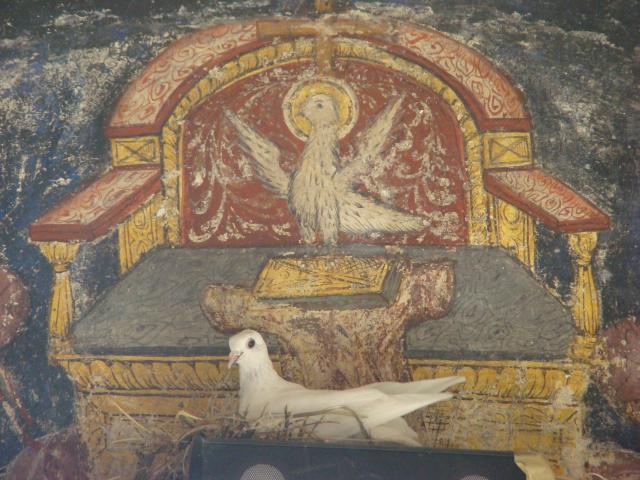
Fresco of the Throne of Preparation (Bucovina)
Pentecost blessings, T.S. Eliot malaise and a little city hermit’s new beginnings, and I Have a Question!
*
“For last year’s words belong to last year’s language
And next year’s words await another voice.
And to make an end is to make a beginning.”
(“Little Gidding” ― T.S. Eliot)
*
Trying to learn to use words, and every attempt
Is a wholly new start, and a different kind of failure
Because one has only learnt to get the better of words
For the thing one no longer has to say, or the way in which
One is no longer disposed to say it. And so each venture
Is a new beginning, a raid on the inarticulate
With shabby equipment always deteriorating
In the general mess of imprecision of feeling (…)
+ Monday of the Holy Spirit
Dear Friends in Christ
May the Holy Spirit give you the fruits of His grace this Pentecost!
Galatians 5:22-23
22 But the fruit of the Spirit is love, joy, peace, forbearance, kindness, goodness, faithfulness, 23 gentleness and self-control. Against such things there is no law.
*
I can’t believe May flew by so fast! Little did I know when I wrote on May 1st that my Bight Week pilgrimage “felt like a landmark and a watershed” that so many things in my life would change at such a dizzying speed! Thank you for staying in touch through my inbox. So many emails to reply, questions to answer, stories to be told … I honestly feel surprised and deeply humbled by your love and encouragement. Please be patient with me, as I am simultaneously moving on to new ministries, a new home and a new job!!!. More in the posts to follow…
I need your help in another matter too. Please send me your questions–preferably practical questions that impact you personally in a real way but more theoretical ones too–ideas, topics etc about WHAT you would like me to blog about. Would you be more interested in …
a.Saint’s lives, homilies, holy men’s lives and teachings yet untranslated into English?
b.Vignettes, stories and photos from pilgrimages and Orthodoxy all over the world?
c. Conversion stories, especially from Protestantism to Orthodoxy?
d. ‘Missionary’ vignettes from my life and ministry here?
e. Differences between ‘American’, ‘British’ , ‘Greek’, Russian’, ‘African’ Orthodoxy, if I am allowed to make use of such terms and offer some poor reflections based on first-hand experience?
f. Witnessing in a multicultural and secular country?
g. Differences between a ‘Cradle’ Orthodox person and a ‘Convert’? (Although I personally shun such labels for various reasons)
h. “Questions and Answers”, ‘Erotapokriseis’ ‘literature’? I have received numerous questions over the years, which I have primarily answered in private, but maybe I should make these public. (Anonymously of course) (If one person has a question, most likely many more have the same question.) Witnessing in a multicultural and secular country?
i. … ???
All of the above? None of the above? Please respond at either the Comment section below or at my email – anastasioskefalas1961@gmail.com. Your suggestions to my previous question–whether this blog should become bilingual etc– have been such a great help! Thank you ever so much for your love and encouragement! I really need to decide where to lay emphasis on.

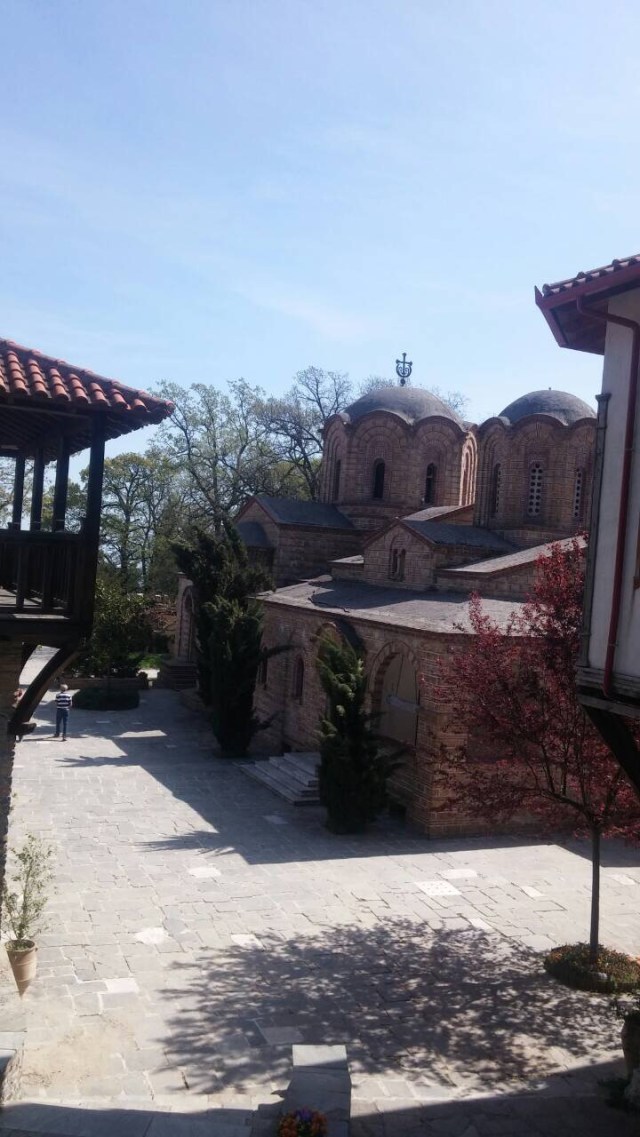
Paschal Holy Dances in Attica, Aegina and Euboia

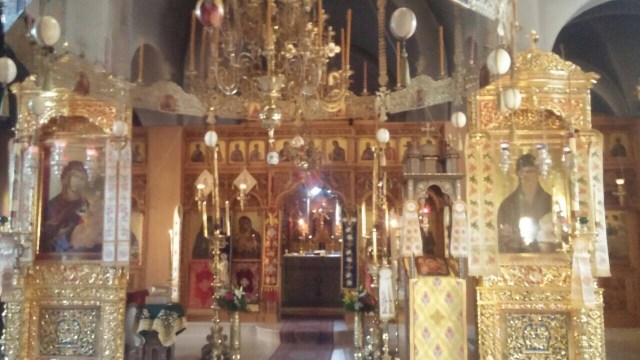
Bright Tuesday
Morning Holy Liturgy at the Holy Patriarchal and Stavropegic Monastery of Saint Dionysios of Olympus: I can literally feel the 179 Martyrs presence on me, as Father Jonathan had insisted that I carry them during this pilgrimage on their Feast Day[1]. Of course, the truth is the other way round: it is always the Saints who are carrying us. Archimandrite Theoklitos had offered a tiny fragment of the 179 Martyrs’ relics to our Holy Cross parish, which is displayed for veneration in the Holy Liturgy, and will later in the day return to ‘their own’ monastery to be ‘reunited’ with their brethren on their feast day.

Holy Monastery of Saint Ephraim of Nea Makri, the Wonderworker and Newly-Revealed: A strange spectacle is awaiting us at the monastery gates: a leaping and dancing Resurrectional priest, a modern Saint Seraphim of Sarov figure, who greets all who enter the monastery with a kiss, and the words of the Paschal greeting: “Christ is Risen!” He is literally leaping with joy and greeting all pilgrims in a ‘dance routine’!!!
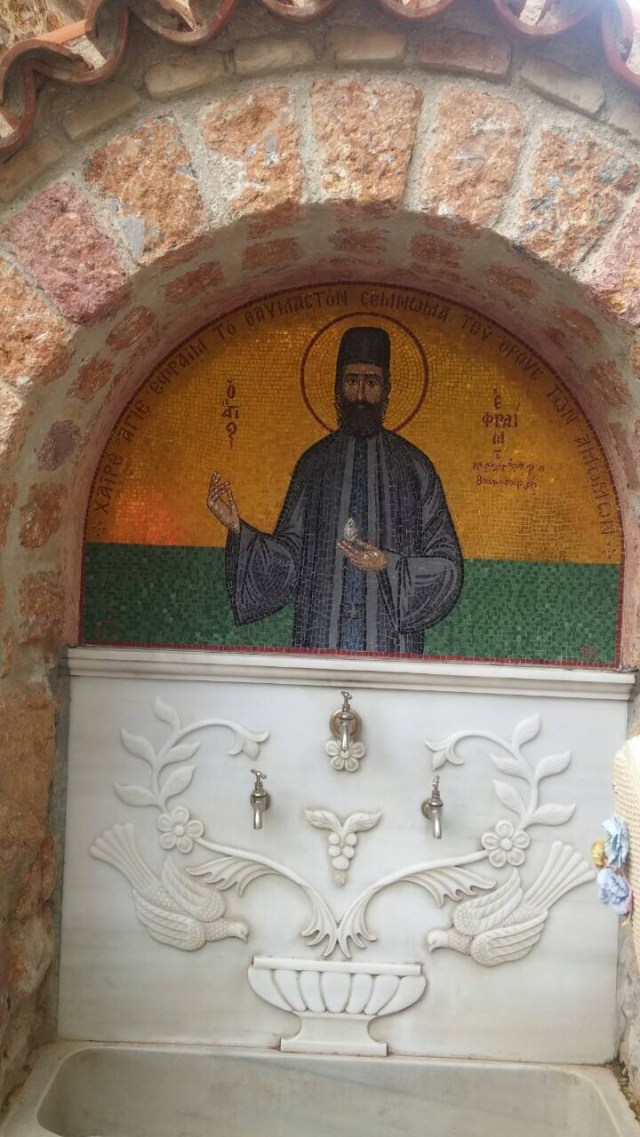
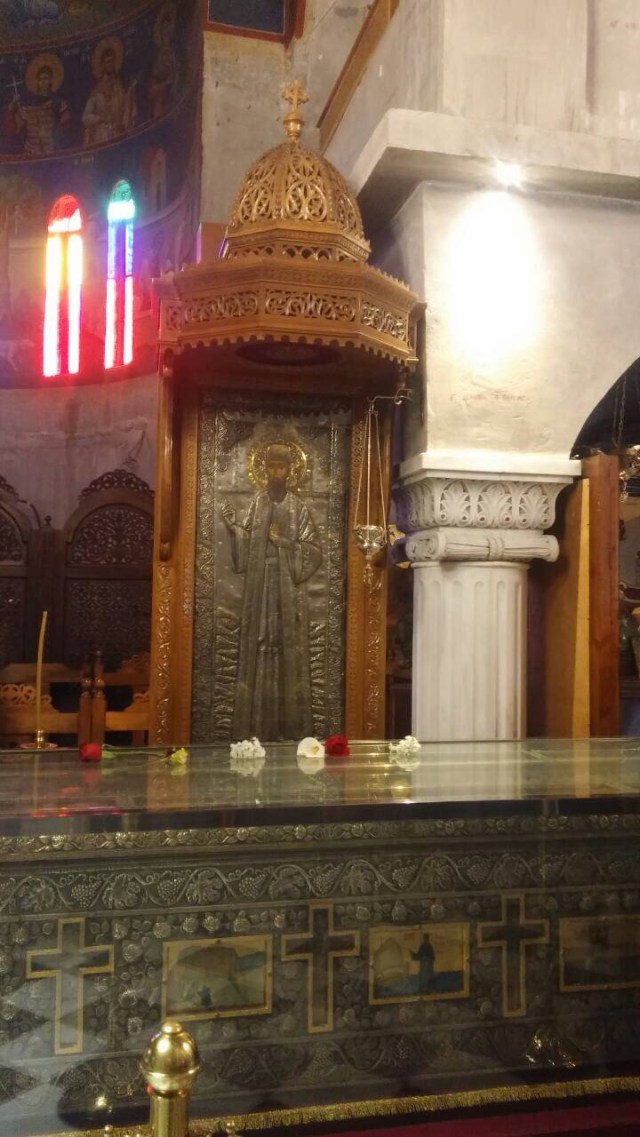

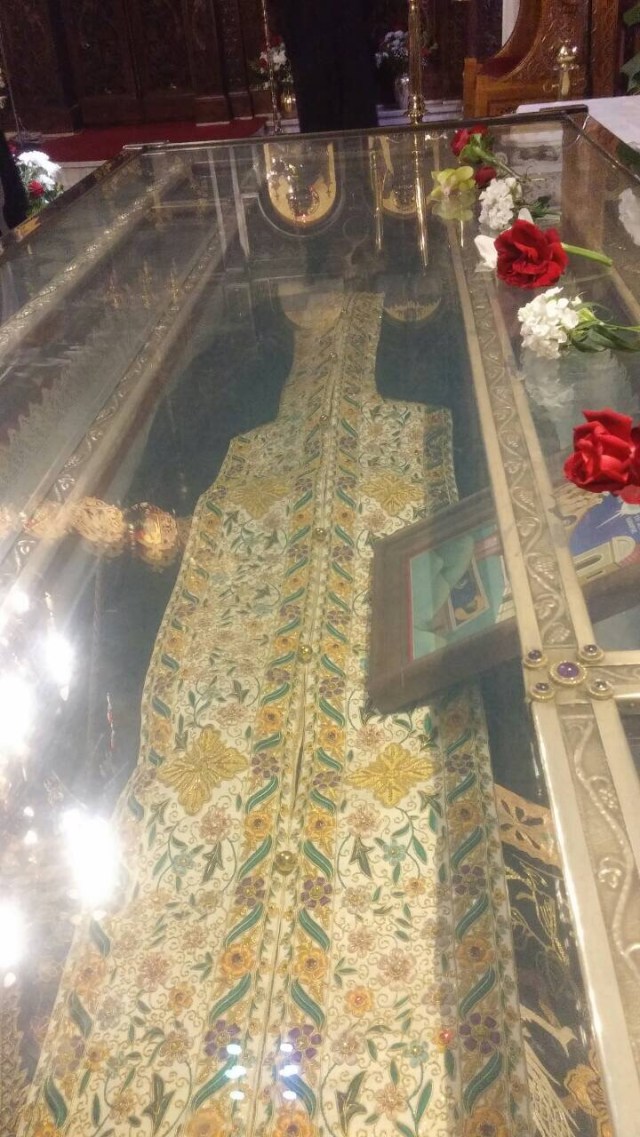
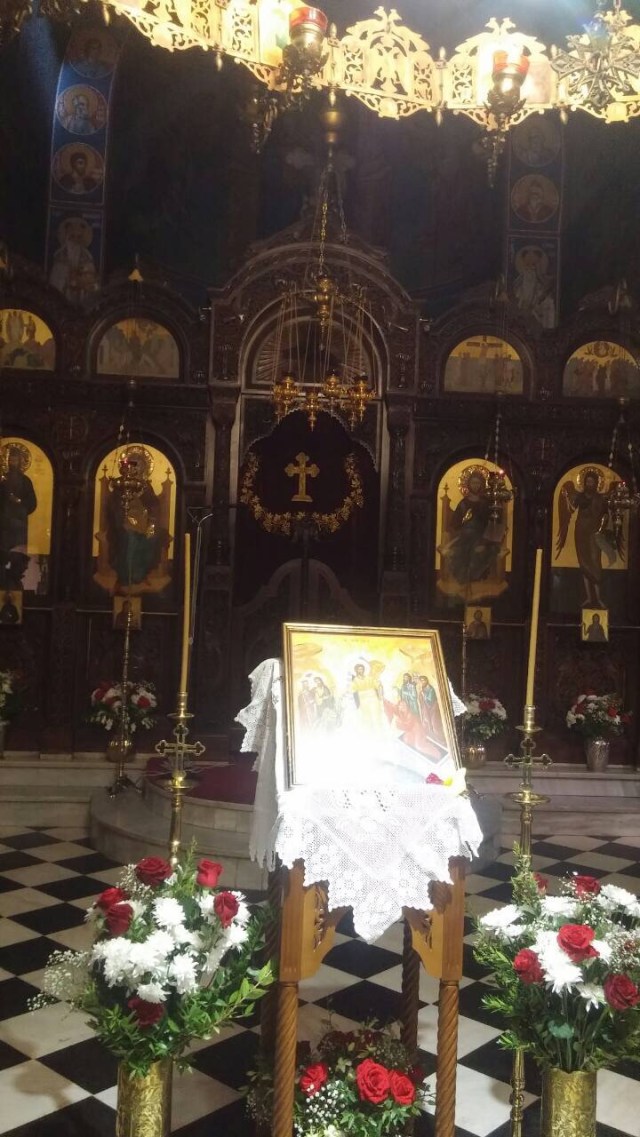


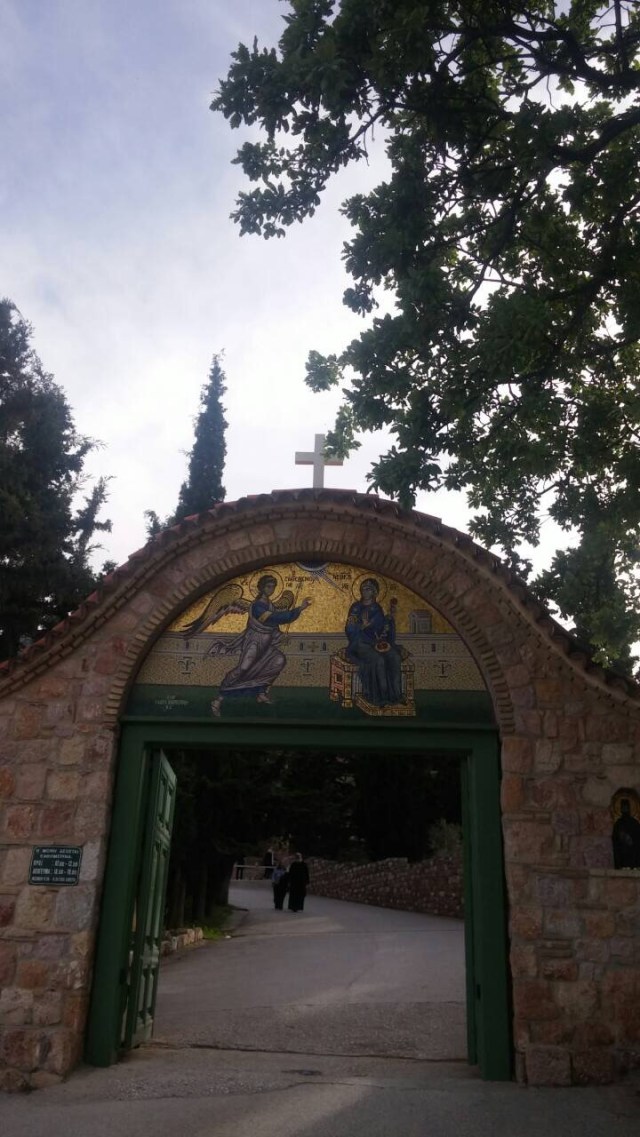
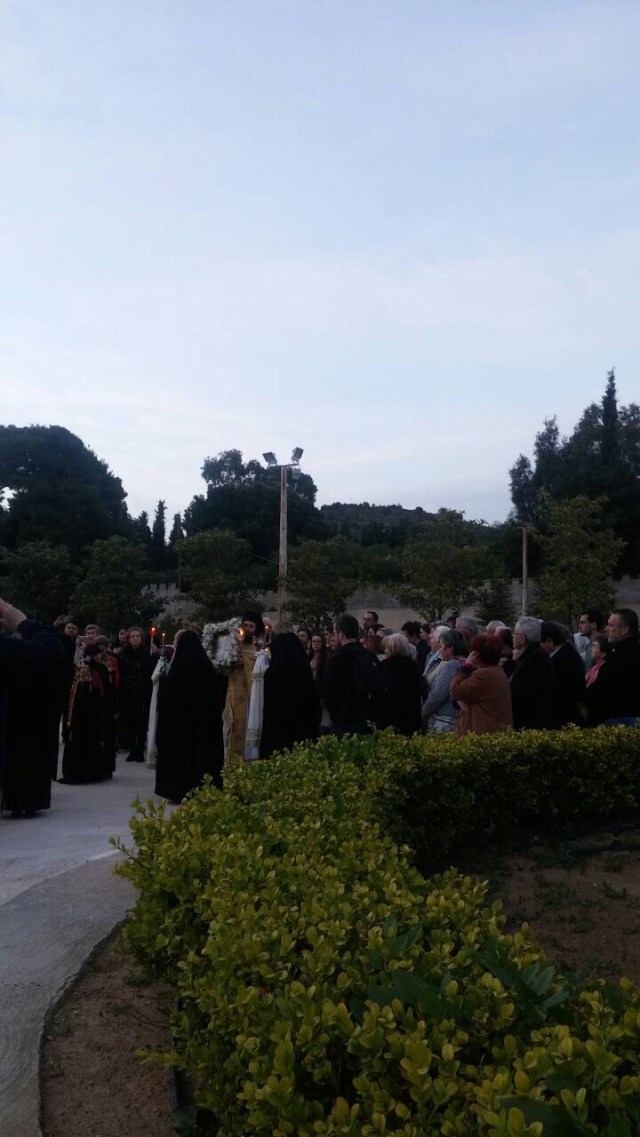
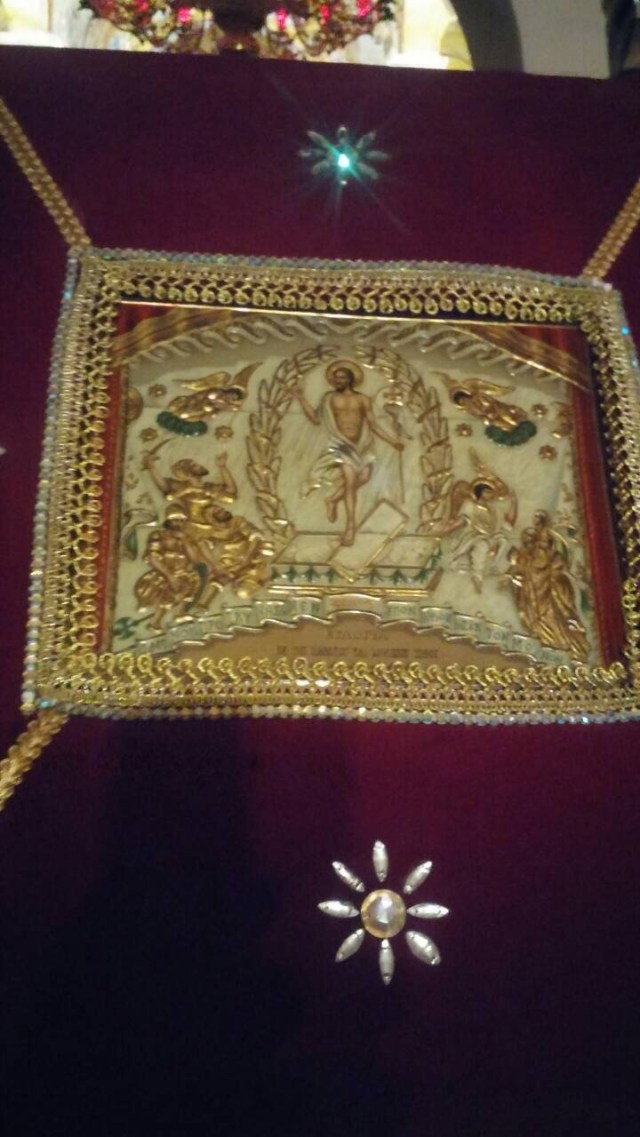
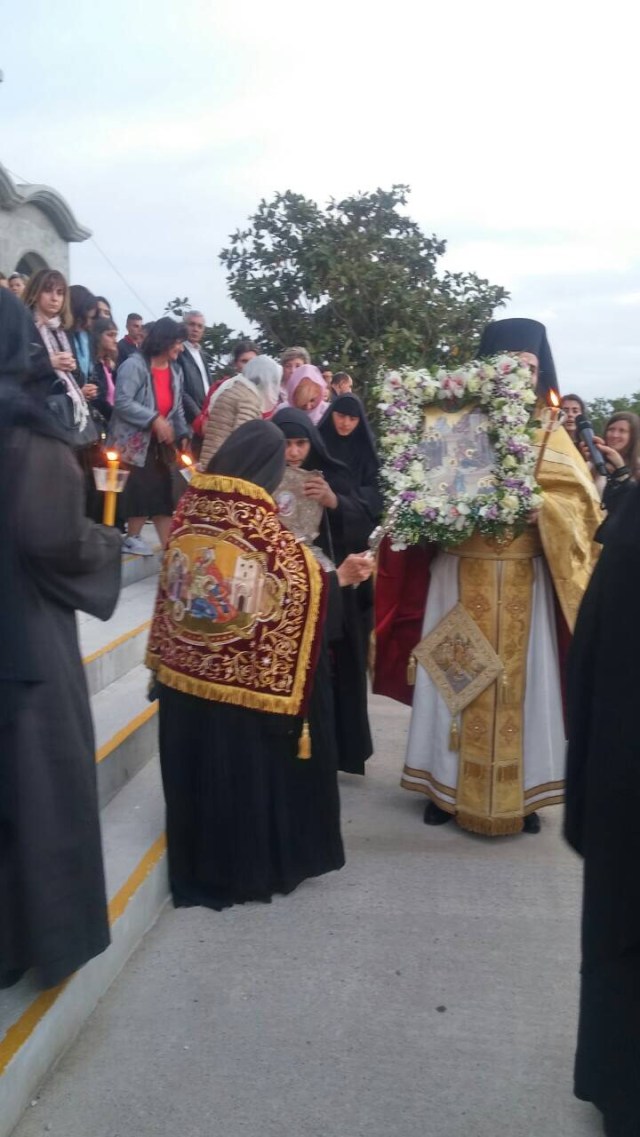
Pantokratoros Monastery in Ntaou Penteli: Vespers and a Holy Procession of the 179 Martyrs. During the Procession, Abbess Styliani’s face is lit and transfigured in ecstasy. Together with all the nuns, she too is dancing the Resurrection dance. She is also blessing all pilgrims with a large pectoral Cross.



*
NOTES
[1]The 179 Holy Martyrs were massacred by pirates into the katholikon, on Pascha 1680, during the midnight service, after the final “Christ is Risen!” was joyfully chanted by the fathers following the Divine Liturgy. Similarly, Saints Raphael, Nikolaos and Eirini were tortured from Holy Thursday until Bright Tuesday when they were eventually martyred on April 9, 1463. St Efraim of Nea Makri was himself too martyred by the Turks on Tuesday May 5, 1426.
*
Musings from a Bright Week Pilgrimage (I)