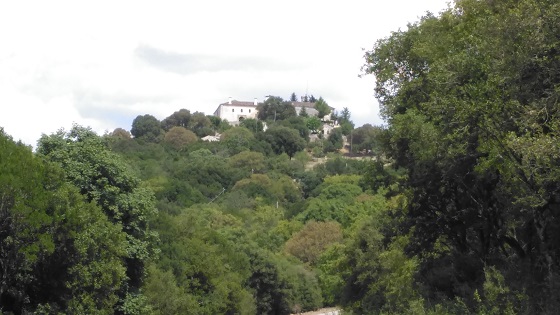
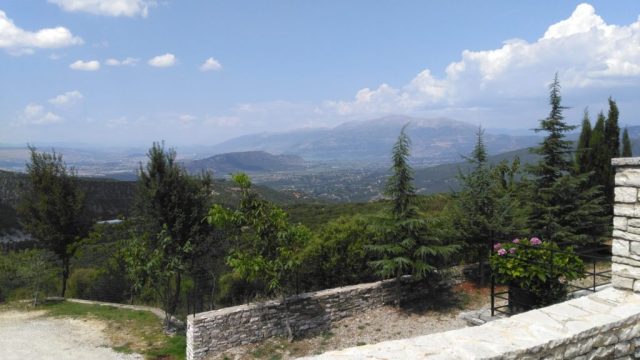
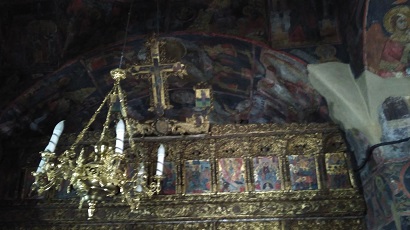
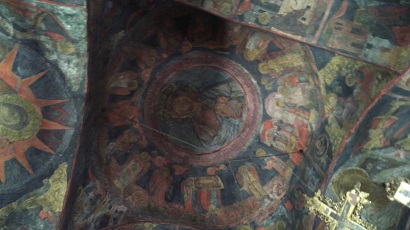
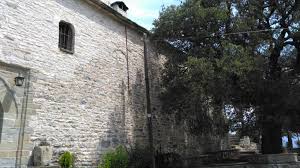
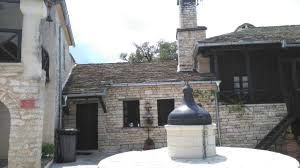
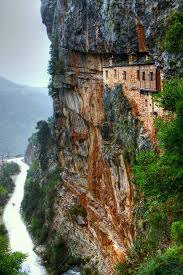
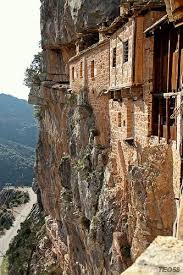
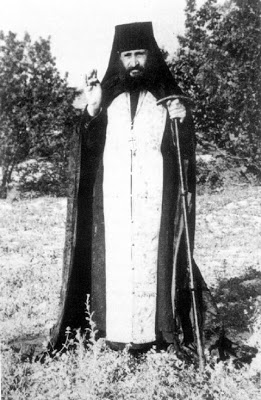
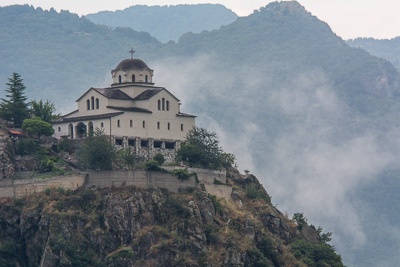
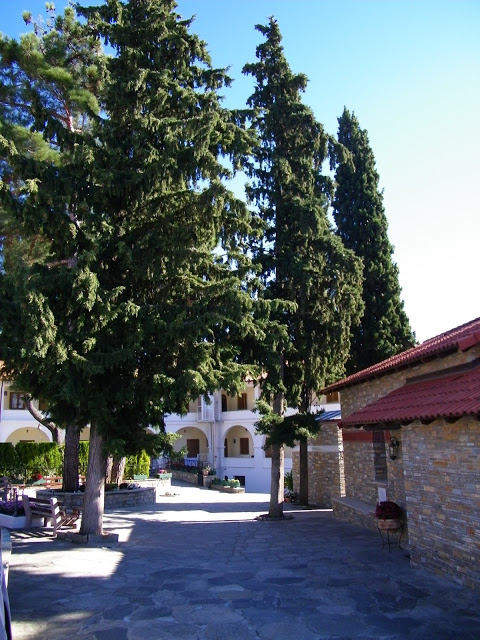
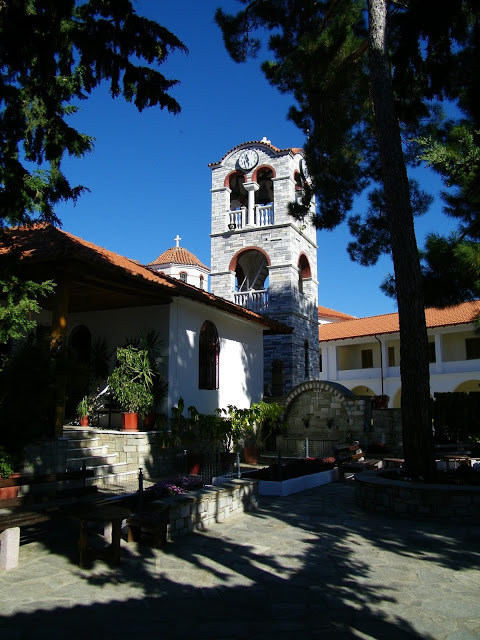
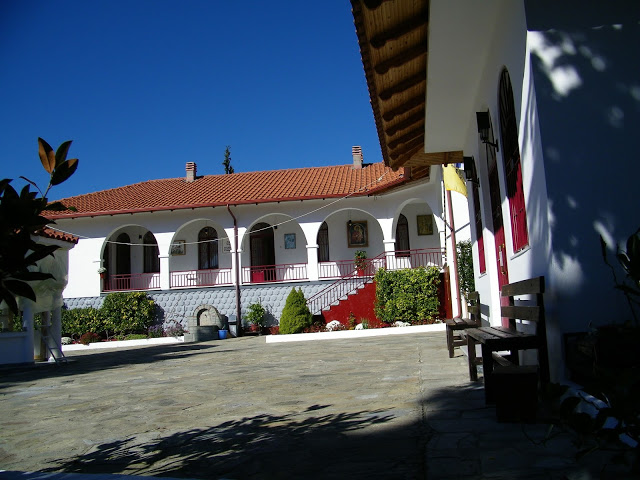
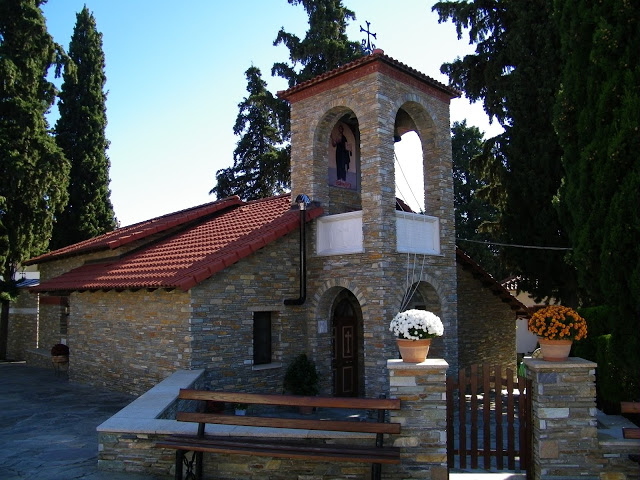
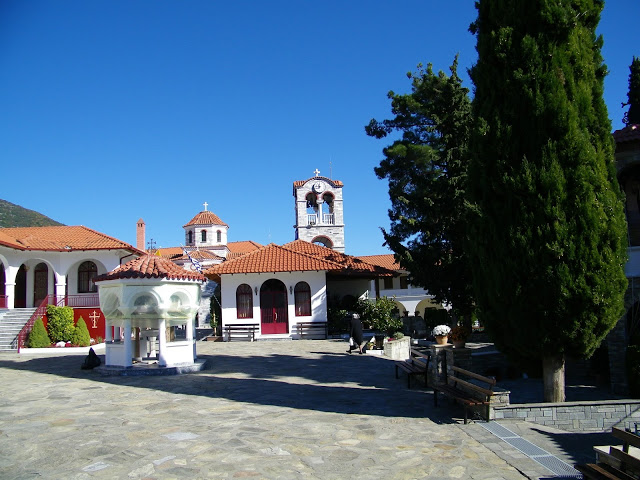
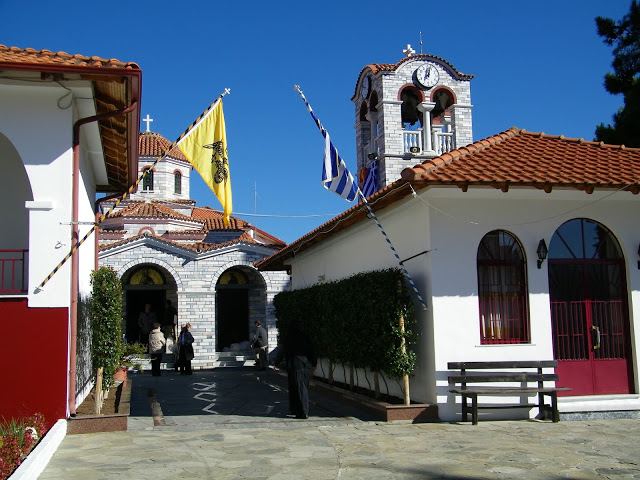
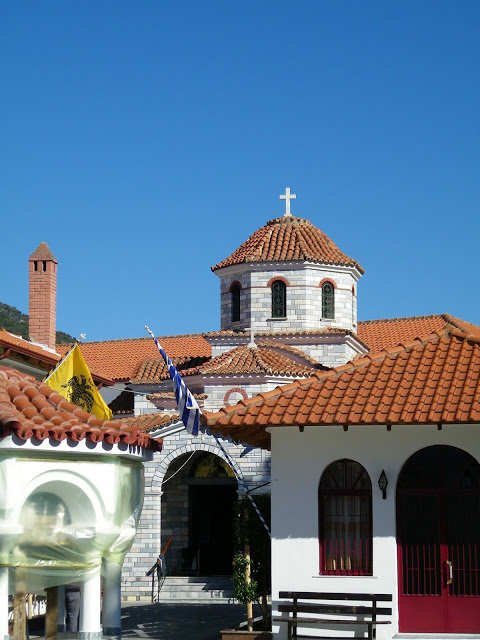
The Monastery of the Archangel Michael on the Greek island of Thassos is a podvoriye of Philotheou Monastery on Mt. Athos. Gerontissa[1]Theophano, the mother of Elder Ephraim of Philotheou and Arizona, spent the final years of her life there and departed to the Lord on February 27, 1986. She became a novice to her own son! The gerontissa of the monastery, Abbess Ephraima, blessed us to record stories of Gerontissa Theophano, as well as recollections about her from sisters of the monastery.
In the Monastery of Archangel Michael and generally in Elder Ephraim’s spiritual family everyone calls Gerontissa Theophano “Grandma.” “Grandpa” is Elder Joseph the Hesychast, the spiritual father of Archimandrite Ephraim, and “Grandma”—Gerontissa Theophano. About how this common woman, spending the large part of her life in the world and having raised three sons, one of whom became an Athonite abbot and great elder, ascended to such spiritual heights, we will try to speak in this article.
We hope that the example of this Orthodox Christian, having combined within herself the virtues of motherhood and monasticism, would inspire our God-loving readers, both laity and nuns, to try to imitate her measure of strength in podvigs and prayerful labor. We also hope that readers of this article will come to love Mother Theophano, and begin to turn to her for prayerful help and beseech her intercession and teaching, undoubtingly believing that she has found boldness before the Lord God, Whom she so loved and Whom she sincerely served with her whole heart until her final breath.

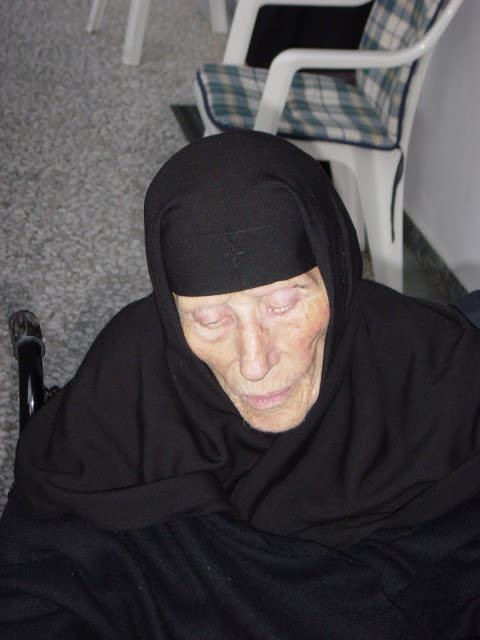
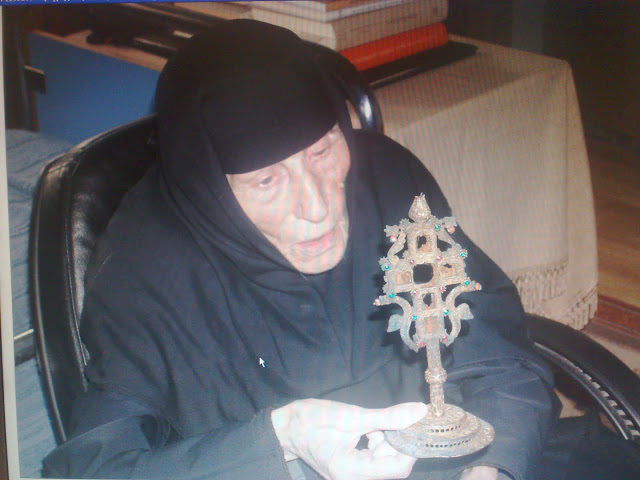
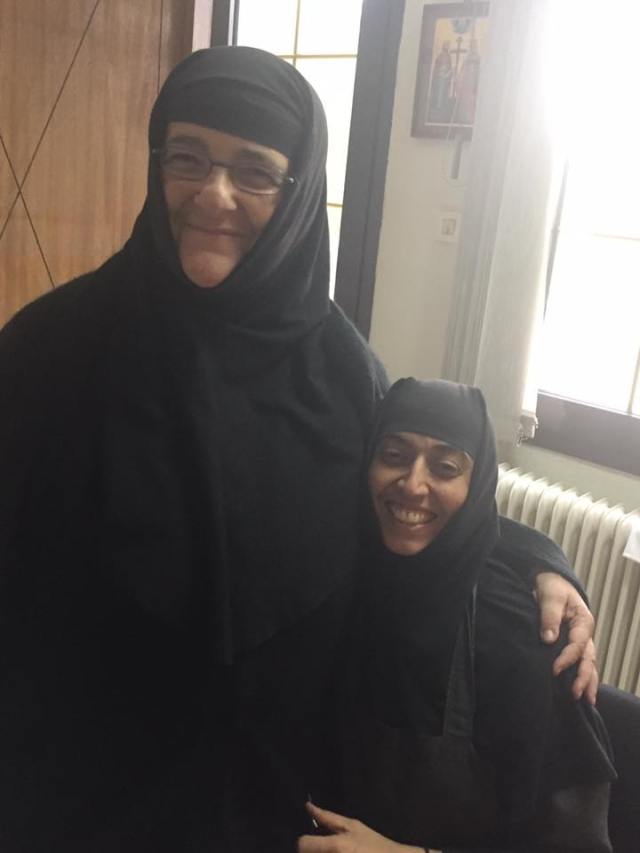
Gerontissas Theophano (left), and Macrina
A Novice of her own Son
Person of prayer
Gerontissa Theophano (in the world Victoria Moraitis) had true maternal love for people. Her character was strict, but with love. She was severe first with herself and only then with others, with those whose souls were given to her to care for by the Lord, for her children and the young novices. Gerontissa was a person of prayer, and moreover was quite merciful and gracious, despite her severity.
She was always a faithful woman, regularly going to church, but in early childhood she lived without any special podvigs and had no elder who could direct her in the spiritual life. She loved to visit new places and go on various trips. But after a fire in her house, and after a miracle associated with this fire, she turned to Christ with her whole heart. Soon afterwards the Lord sent her a spiritual father.
“All together we’re not worth one Victoria”
As is known from Elder Ephraim’s book My Elder Joseph the Hesychast, Fr. Ephraim (Karaiannis), a disciple of Elder Joseph who had left the Holy Mountain and settled in the city of Volos, became her family’s spiritual father. He became the spiritual father of the community of which Victoria and her friends were members. Some of them got married and others chose the monastic path in life. Victoria stood out among them; she was so modest and God-loving, and had such a gift of prayer, vigil, and philanthropic works that her spiritual father Elder Ephraim said of her: “All together we’re not worth one Victoria.”
Podvig in the world
Victoria’s husband, Dmitry Moraitis, was also a believer. He went to church but didn’t have the same zeal for God that his wife had. However, he never put up any obstacles in her spiritual life and podvigs. For example, Victoria constantly labored in fasting, both during and outside the Church fasts. Preparing to receive the Holy Mysteries of Christ, she, according to pious Greek tradition, kept the so-called “triimeron”—a complete three-day fast, eating absolutely nothing for three days. At the same time she had to do all of the necessary housework, and raise her children. After three full days of abstention she communed of the Holy Mysteries of Christ and would eat a little food that day, to begin again the next day preparing for Communion, and, accordingly, to begin a new three-day fast.
At night she often awoke and arose to pray, locking herself in the kitchen. She prayed on bended knee, with tears and many prostrations. Her son John, the future Elder Ephraim, would say to her: “Mama, when you finish praying, wake me up and we’ll pray a little together.” Thus, from childhood, thanks to his mother, he loved nighttime prayer. When he was small it was hard for him to pray for a long time, but he tried to arise and pray at least a little bit, as much as he was able.
As I already said, Gerontissa Theophano’s husband allowed her everything connected with fasting and the spiritual life, but himself did not seek to emulate her in her podvigs. He was a so-called “moderate Christian.” He had his own work—a small carpenter’s workshop, where he worked with his sons, from an early age teaching them his craft and dreaming of leaving them his workshop as an inheritance. In the end this work was inherited by Elder Ephraim’s older brother Nicholas. He works there to this day, now together with his sons and grandsons.
In wartime

Elder Ephraim’s family
Dmitry and Victoria had four children. First they had a daughter, Elena, born in 1924. Victoria was an orphan, and before marriage she had to clean the neighbors’ houses to feed herself. So from eleven years old she was out in society. One of the women she worked for was especially kind to her, took care of her, and even helped her get married. When Victoria had a daughter, she named her after this woman, Elena. Elenitsa, as they called her at home, died in early childhood. Then three sons were born to Victoria: Nicholas (1926), John (the future Elder Ephraim, 1928) and Christos (1930).During the Second World War Greece was occupied. A famine began in Volos and other cities. They had to collect and gather grass to survive. Additionally, the peaceful inhabitants were constantly in danger from the occupiers, but Victoria’s prayer saved her family and children in these difficult years. More than once the future elder and his brothers avoided death literally by a miracle.
In these years, to help his parents somehow feed the family, John and his brothers would haggle for every little thing at the city market: bagels, quinine, buttons, matches… One of these days, when John and Nicholas had just gone off to trade, the market was surrounded by Germans who seized everyone there, saying that everyone would be immediately shot. Just a few minutes before, Nicholas had briefly left the market for some necessity, and therefore he wasn’t captured, but John was among those whom the Germans took to be shot.
At that last moment the residents convinced the Germans to release at least the women and children. John was about fifteen years old, but he was short and thin from hunger and of weak health, looking younger than his age. In Greece in those years the young boys wore short pants, like shorts, in winter or summer. The elder was a head shorter than the boys his age and at fifteen still wore these short pants. In those years clothes were generally worn for a long time, literally to tatters. It saved him: thanks to his children’s clothes, small stature and thinness he passed for a child, and at the last moment they released him together with the women and other children, and the Germans shot all the boys and men that day.
Another time at the same market the soldiers captured and beat the elder’s older brother Nicholas half to death, for no reason.
They often saw people hanged in those days. In those years they lived in an atmosphere of constant fear and terror. Only faith and prayer supported Victoria and her family. When the bombing began, all their neighbors fled to the bomb shelter or hid in basements, but Victoria stood on her knees before her icons and prayed. So strong was her faith.
A Novice of her own Son
Notice from the Lord
From the very beginning Victoria knew that one of her children would become a monk. She received two notices from the Lord about it. Here’s the story about how I learned about these notifications. When I spoke with Gerontissa Ephraimia and the sisters of the Monastery of the Archangel Michael they couldn’t exactly remember what kind of notice it was.
Then Gerontissa Ephraimia concluded: “There is only one way to find out how it was: we have to talk with someone that Gerontissa Theophano personally told about this event, with some person who knew her well in her lifetime.” Then I mentally asked Gerontissa Theophano and Elder Ephraim to send me such a person, because I didn’t want to write something not corresponding to truth.
On the last day of my stay in Greece, when I was at one of the elder’s monasteries, the Monastery of the Ascension of the Lord in the village of Proti in the district of Serros, a group of pilgrims from the city of Volos came there—the birthplace of the elder and Mother Theophano. Among the pilgrims was Elena Ksenia; learning that I came from Arizona, she spoke with me and said she had been a spiritual child of Elder Ephraim since she was twelve (she is now sixty-five). Immediately after that she began to tell me, of her own initiative, the story of this vision, for which my own narration would not be good enough. I recorded the story in her words:
“Gerontissa Theophano, whom I met in Portaria, once told my mother about how the Lord had sent her two signs about Elder Ephraim. They were like visions between dreams and reality. The first time she saw three crowns flying to heaven. Two of them were laurel crowns, and one was golden and this crown flew in the direction of the Holy Mountain. She was pregnant then and didn’t know then how many children she would still have.
When her third child was born, the future Elder Ephraim, in the first forty days after birth, one day, also between sleep and waking, she heard a voice: ‘Victoria, come forth, look at your son, an elder, who came from the Holy Mountain.’ She thought in amazement: ‘How can it be? I just bore this child! When did he manage to become a monk?’ But still she went outside and saw the elder: her newborn child a few days from birth, but in the form and image of a hieromonk, in full abbatial vestments, decorated with flowers and gold.”
“Not halfway, but completely and exactly as demanded”

Elder Ephraim in youth
A Novice of her own Son
Knowing that John should become a monk, Victoria was especially exacting towards him. But she was a loving, albeit strict mother. The elder’s brother Nicholas notes that she always demanded that the children precisely carry out her instructions: “Not halfway, but completely and exactly as demanded.”In 1947, Elder Ephraim left for Athos. His father didn’t want to let him leave the house and didn’t bless him to become a monk: he needed a helper at the carpentry workshop, where there was always a lot of work. Then John’s mother helped him secretly leave. She went against her husband’s will in this case, because she knew that the will of God was that her son become a monk.
When John turned nineteen and the family’s confessor, Fr. Ephraim, blessed him to go to Athos, his mother helped her son prepare in secret everything he needed for the trip. His father, knowing his son’s strong desire to leave for Athos, strictly controlled him and required him to be report in on where he was and when he would return. At that time there were catechism courses at their parish, something like a school for youth, which John regularly visited. His father didn’t allow him to go to these lessons, which his spiritual father, Fr. Ephraim, held. On the day he left for Athos his mother advised him to write a note to his father that he had gone to the catechism class and would return later. In his talks the elder would say that even this corresponded to reality: for how many catechetical lessons did he have to endure on Athos in the beginning?
John left a note, grabbed the things he had prepared and headed on foot for the port, to the pier to get on the boat to Athos. His father, returning from work, asked Victoria where their son was. She showed him the note and, having read it, he calmed down. However, later, when the hour had passed when John usually returned from the lessons, his father got worked up and began to interrogate his wife. In the end she was obliged to reveal the whole truth. Then his father, angrily shot back: “This will not be,” grabbed a bike and dashed for the pier, hoping to catch up with his son and bring him back home. Along the way he fell off the bike and hurt himself pretty badly, such that he was in no condition to continue his pursuit. He had to return home with nothing. In his conversations the elder concluded that, obviously, it was the will of God that he got on the boat that day and sailed for Mt. Athos.
Accepting the monastic tonsure
He wrote his mother just one letter from Athos, in which he wrote: “Here, mama, we don’t wash ourselves with water. We wash ourselves with tears.” Then there was no news from him for many years. As we know, the first time the elder left Mt. Athos, according to the last will of Elder Joseph, after his death, was to visit his hometown of Volos, and take upon himself the spiritual direction of the sisterhood which at that time lived in one house in the village of Stagiares in the Pelion region. It was then that he met his mother again, and, as we know, she didn’t even recognize him—so much had the elder changed over the years, spent in ascetic labors.
In 1962, with the blessing of Elder Ephraim, the sisterhood from Volos bought a small plot in the village of Portaria on the mountain in Upper Volos to build a monastery there. There was no monastery there before that. The miraculous icon of the Mother of God which had been in the house in Stagiares before that was immediately transferred here.
After transferring the icon to the new place they began to work on building repairs, and the beautification of the territory, and in 1963 the sisterhood relocated to Portaria. Soon Elder Ephraim celebrated the first tonsure in the newly-constructed monastery—over his own mother Victoria, who was named in tonsure Theophano, and her friend who was named Matrona. Elder Ephraim named his mother in honor of the blessed queen Theophano († 893/894), the wife of Leo the Wise. The elder greatly reveres her and therefore named his mother in her honor, and after her many of the elder’s abbesses and nuns also received this name.
The first and best novice
After her tonsure, Gerontissa Theophano did not stay in Portaria, but returned home for some time. By this time her husband, Elder Ephraim’s father, had already died, but her youngest son, Christos, was not yet married. Gerontissa lived at home with her youngest son until he got married, and then finally relocated to Portaria, to the monastery.
Soon after the tonsure of his mother, Elder Ephraim tonsured Maria who he named Macrina—she became the abbess of the monastery in Portaria. Gerontissa Theophano was her sponsor in the tonsure, and therefore Matushka Macrina considered her her gerontissa and spiritual mother. For many years in Portaria they shared one cell and continued in joint prayerful podvigs, as they had done in the world, in Victoria’s home, locking themselves at night in the kitchen, to spend hours kneeling in collective prayer. They were great women of prayer. The locals bear witness: they saw how two pillars of fire would rise from the monastery at night to Heaven—the prayers of Gerontissas Theophano and Macrina.
Thus Gerontissa Theophano became the first and best novice of her own son. As the nuns say, she had true obedience and unceasing prayer, and therefore she had a lot of temptations.
Gerontissa was always the first to church
Gerontissa Theophano lived in Portaria until 1983. By that time her health had worsened, and the climate in Portaria did not suit her. Then, because of her sickness, Elder Ephraim decided to transfer her to the newly-opened Monastery of the Archangel Michael on the island of Thassos.

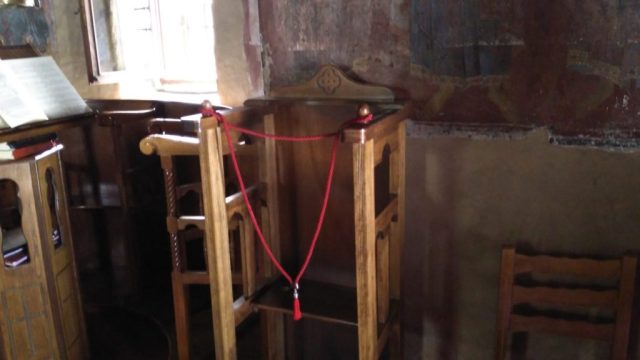
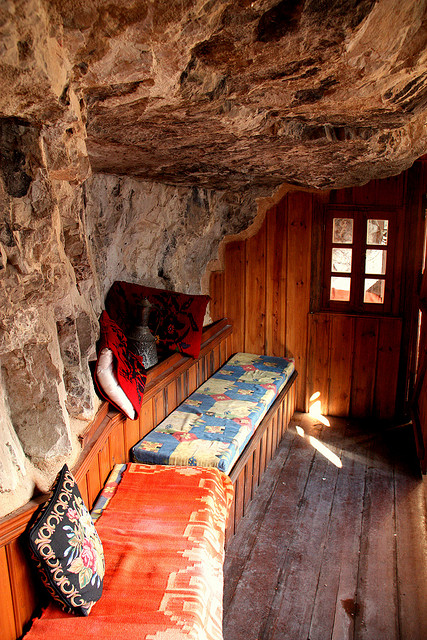
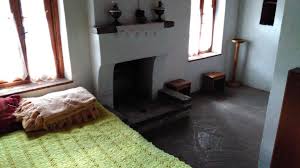
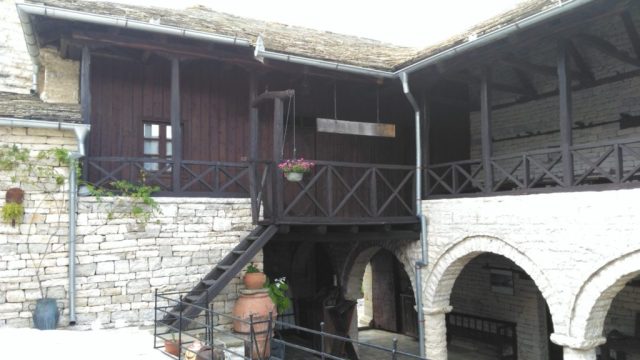
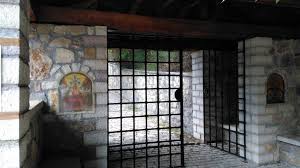
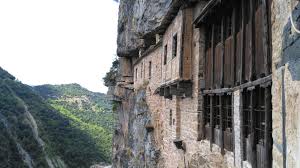
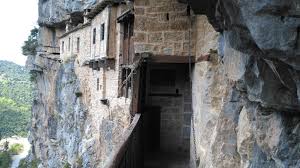
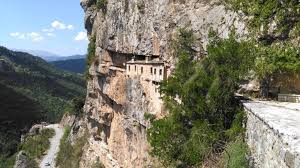
The Monastery of the Archangel Michael
During the final period of Gerontissa Theophano’s life in the monastery on Thassos, the sisters said that she was always the first to church. She always stood during the services, never sitting anywhere. In Greek churches, in addition to stasidi along the wall, usually there are rows of chairs, usually in the back but sometimes in the front of the church, and the faithful periodically sit down to rest, because services in monasteries are very long.
Gerontissa Theophano always prayed standing with her prayer rope, never letting go of her prayer rope. Because of her unceasing prayer she endured much from demons who heard and saw firsthand. She told the sisters that only had she just entered her cell to rest before the night services, and lied down upon her bed, when demons came to her, not allowing her to sleep. They called her: “Hey, old woman! old woman!” and pulled her from every side, tossing her blanket, and she saw them. Once they pestered her so much that she absolutely could not fall asleep in the evening. They finally left her not long before the beginning of the service, and matushka dozed off. Then came the pounding on the semantron[2], gathering the sisters for the service. Seeing that she hadn’t come to the church, Sister Isidora went to her cell to wake her. She began to knock on the door of her cell, and Matushka Theophano thought it was the demons again harassing her, and answered from behind the door: “Go away, stop hitting me!” Later she said the devil beat her all night, not letting her sleep.
The final test
When gerontissa turned 92 (Decemebr 20, 1983) she had a stroke and became paralyzed. Until the very last day before her illness she independently took care of herself and helped in the kitchen, making food for the sisters and teaching them how to make prosphora and various other household things. She was a great homemaker, and whatever she undertook turned out well. Moreover, she was very hard-working, never stopping for rest, all the time either praying or working.
The first Lent after her stroke everyone thought she would die. Elder Ephraim came to Thassos from the Holy Mountain and spent forty days—the whole of Great Lent—with his mother. He saw a great number of demons all around her, who gave her soul no rest. He began to fervently pray and beseech the Lord to deliver his mama from the demonic powers. By his prayers, Gerontissa received relief from her illness, came to and remained lucid until her blessed repose which occurred two years later. In one of his recorded talks, Elder Ephraim talks about his mother’s blessed repose.
Elder Ephraim’s story about the blessed repose of Gerontissa Theophano

Elder Ephraim at the grave of his mother
“The climate on the island of Thassos suited her better than in Portaria, so I moved her there. She gradually drew near to the end of her life. Two years before her death, at the age of 92, she was paralyzed. From that time she didn’t completely raise herself from her bed. But, glory to God, as the Gospel says: And every one that hath forsaken houses, or brethren, or sisters, or father, or mother, or wife, or children, or lands, for my name’s sake, shall receive an hundredfold, and shall inherit everlasting life (Mt. 19:29).
This is what happened with my mother: during her illness she was surrounded by caring daughters—the sisters of the monastery who took care of her with great zeal. And where in the world will you find such love now?! Her nurse, one of the sisters of the monastery, so loved my mother that there are no words! She was so nice, so kind, and even slept together with her, head to head…
When a crisis came during my mama’ illness, something happened which happens very rarely, but when it happens it’s only with spiritual people for the sake of testing them and for gaining experience. It happened one night. Mama was as if dead already several days—she didn’t eat, didn’t drink, and didn’t open her eyes. She didn’t drink a single drop of water. She was dehydrated, with closed eyes—how dying people usually look…
When she was in such a state I was there with her, together with the nun-nurses and Gerontissa. It was dark, lampadas were burning. The night before, at about the same time, her eyes opened at some point. She opened her eyes and looked around, as if she was expecting something to happen or that already happened, with some kind of uneasiness, as if listening to something, or seeing something or someone. This was the first time after being unconscious for so many days that she showed some attention to the world around her. Lying, because she was unable to move, with open eyes, she looked all around, to the right, left, up, and down. And as the moments flowed by, her face more strongly revealed a state of terrible agony and terrible fear—a whole river of fear. I saw such fear reflected on her face as when some killer is drawing near with a knife, ready to cut you.
I began to cover her with the sign of the Cross, repeating aloud the Jesus Prayer to calm her. I understood that what was happening was a demonic temptation. After a while the danger passed, and the invisible powers departed. Mama calmed down, and she was still conscious. Then I asked her: ‘Mama, what happened? What’s with you’—‘Oh… so many, they are so many!’ And from that moment mama began to pray: ‘O Mother of God, save me! O Mother of God, save me!’ Day and night! From that point her mouth never stopped. Day and night she besought salvation from the Mother of God.
It is striking that she had no thoughts, only prayer—sick people usually easily succumb to thoughts. By her way of life—constant podvigs and labors—mama acquired exceptional patience, and this patience helped her maintain prayer this whole time. I asked her: ‘What happened?’—‘The Mother of God helps me!’ And again the prayer continued: ‘O Mother of God, save me! O Mother of God, save me!’
After some time, when the torment was over, she completely calmed down and shut her eyes. The next day at the exact same time her eyes again opened. The same fear and agony was again displayed on her face. The exact same scenario happened again. It was all quite excruciating.
Then I wondered: why does the devil have authority over this holy soul? I, of course, understood that this temptation was allowed so she could obtain a crown, that through this ordeal she could acquire boldness before God. And at some point, when she was in such a state, I said to myself: ‘It’s not fitting that this should continue. It’s time to end this.’ I went to my cell, got on my knees and began to pray: ‘O Lord, I beg Thee, do one of two things. Either take her right now, that she could have peace already, because she is worthy of peace, or banish the devil away from this holy soul. She has already labored for Thee so much, and now her time for rest has arrived.’ This is how I prayed.
When her eyes opened again the next day at the same time, she was calm. ‘Mama, how are you?’—‘They left…’ The trial was over. From that very moment began the blessed final period of her blessed life. Days passed in this blessed state. Her appearance gradually changed, she became more and more beautiful. Of course, this beauty was not physical, but spiritual. I wanted to photograph her. The grace in her was clearly apparent. Thus she gradually drew nearer to death.”
“I saw how her soul ascended unhindered to Heaven”
“The following year, after Nativity, in Christmastide, I went to the monastery to see her again,” continues Elder Ephraim’s narration. “She spoke and understood what was happening, and unceasingly repeated the prayer. In the final moments of her life her face was transfigured, blessedness shining upon it. She turned to the right, revealing her widely shining eyes and glanced off to the side as if she saw something there. In that moment I felt such Paschal joy in my soul, such resurrection, as if I had suddenly gathered the grace of ten Paschal nights.
It was the first time I felt this in my life. Of course, when my elder Joseph departed to the Lord there was something special then too, but here it happened with my own relative. I felt such happiness at that moment, and also felt and saw … I don’t know, in what manner it happened, but I saw how her soul ascended unhindered to Heaven.
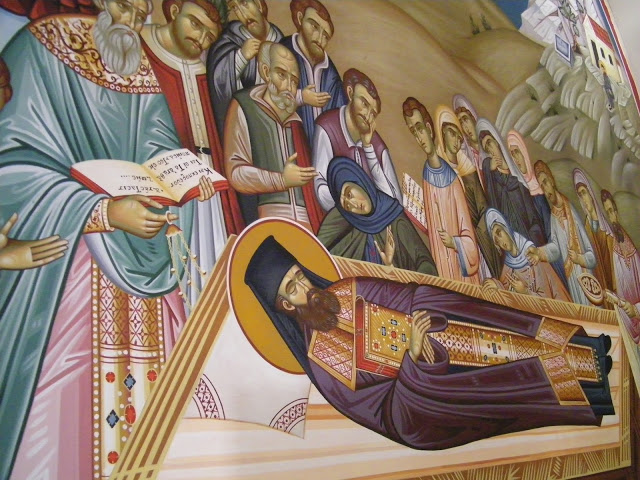
When the doctor arrived he couldn’t believe that she had already died—she looked so alive. Her body was warm and soft, like the body of someone living. ‘Lord, have mercy! I can’t believe it!’ the doctor exclaimed. It was incorruption. I told the doctor that Christ said: death is but a dream, and every person will awaken on the day of the Second Coming at the sound of the archangel’s trump.
When the doctor left, we sewed her up in a monastic habit, with three crosses sewed on top. Meanwhile I continued to feel such strong Paschal joy, that I wanted to go out on the street and sing ‘Christ is Risen!’ She was so beautiful after death. She was 95, but she looked like she was 15. It was the result of her whole life, all her labors; it was a reward for all her labors.”
Her relics were found to be “very beautiful”

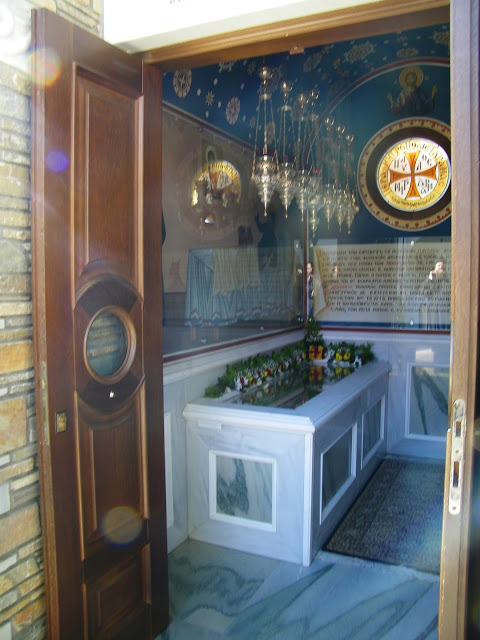
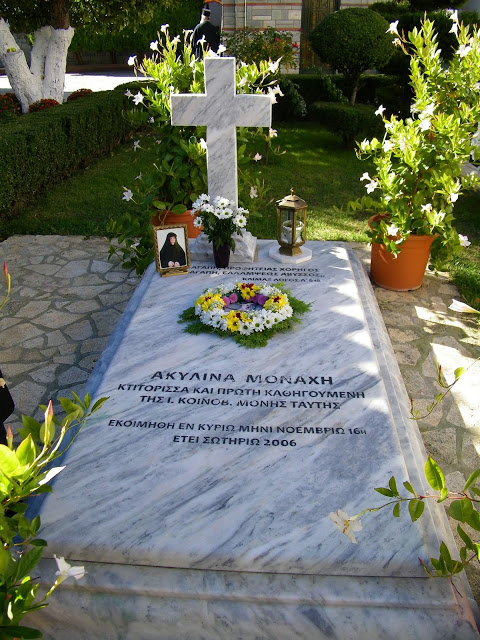
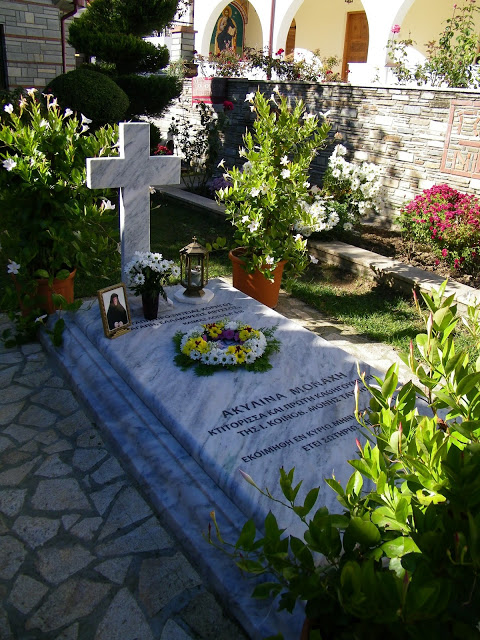
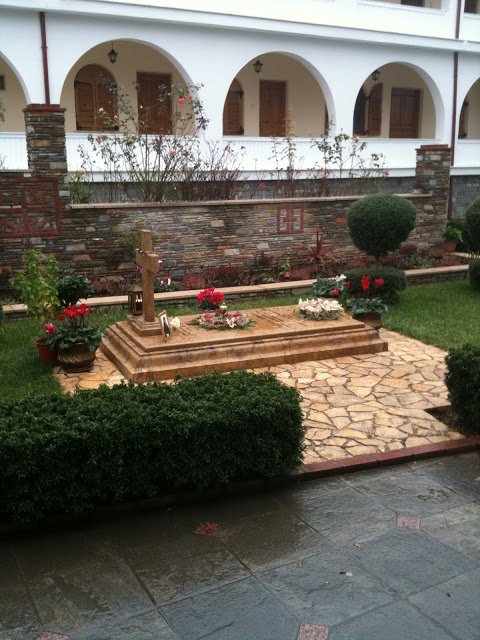
Gerontissa Theophano’s grave at the cemetery. There is no cross on it because her relics have already been removed.
The sisters of the monastery told me that when Gerontissa Theophano’s coffin was carried to the monastery cemetery, sheep came and doves flew over. The sheep managed to get themselves out of their pen, ran to the grave, all bleating at the same time, and turned around and ran back to their pen. Then from somewhere above their appeared a flock of doves which flew over the grave and disappeared into the heights.
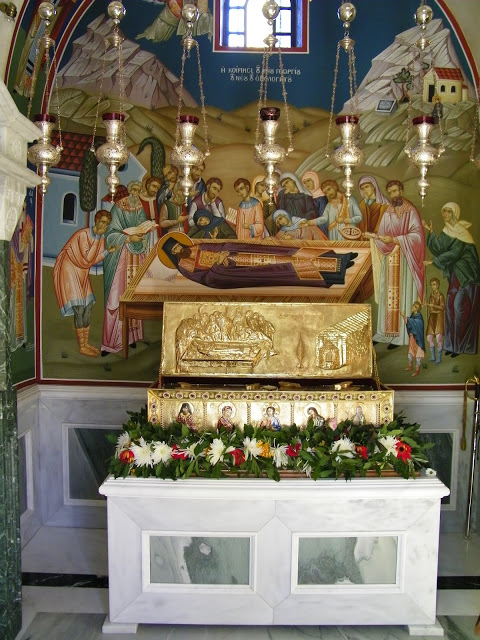
Her relics were found to be “very beautiful.” In Greece the tradition still exists of taking bones around the third year after death and placing them in an ossuary—not only on Athos but in other monasteries and even among the laity in regular cemeteries. By the color and smell of the relics you can hypothesize about the postmortem state of the soul of the departed. For example, there are cases when the body does not dissolve, or the relics emit a foul odor—then it is considered that things are bad for the soul of the departed and it stands in need of prayerful help. Family members begin to order forty-day prayers for the dead and distribute alms for the repose of the soul. There are particular signs by which you can know that the soul of the departed found grace from the Lord: an amber color to the relics and a sweet fragrance emanating from them. It even happens that the relics of some Orthodox acquire incorruptibility.

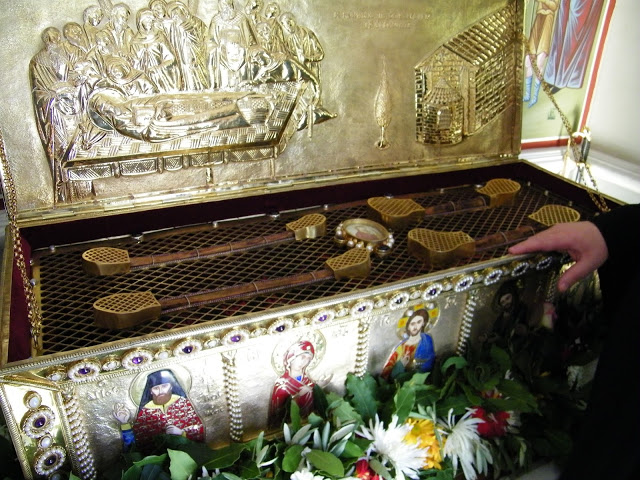
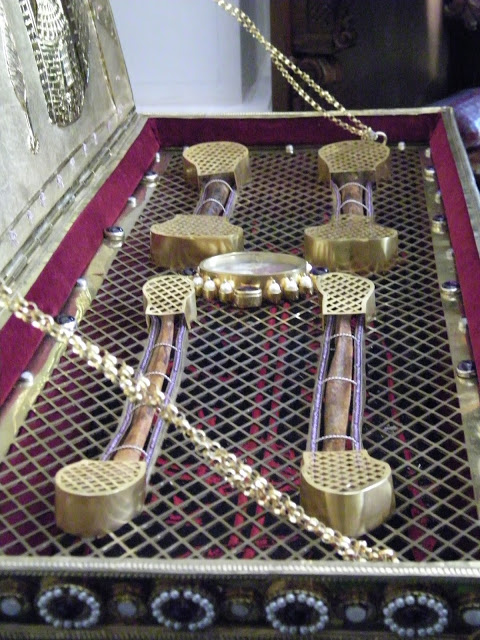
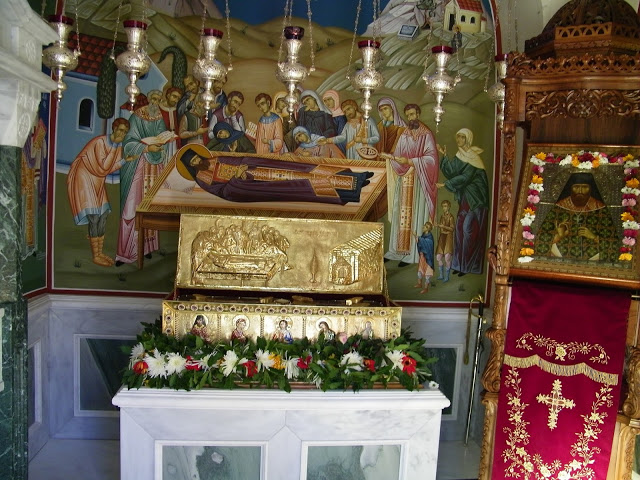
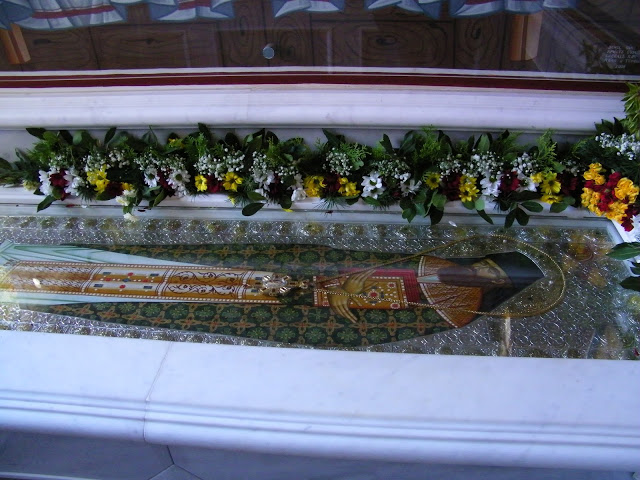
So, when they opened Gerontissa Theophano’s grave, her relics were fragrant and had the most amber color, by which it could be determined that her soul found salvation. A reliquary was made for her head which is now kept in the Monastery of the Archangel Michael on the island of Thassos.
Through the prayer of holy fathers, O Lord Jesus Christ, our God, have mercy on us!

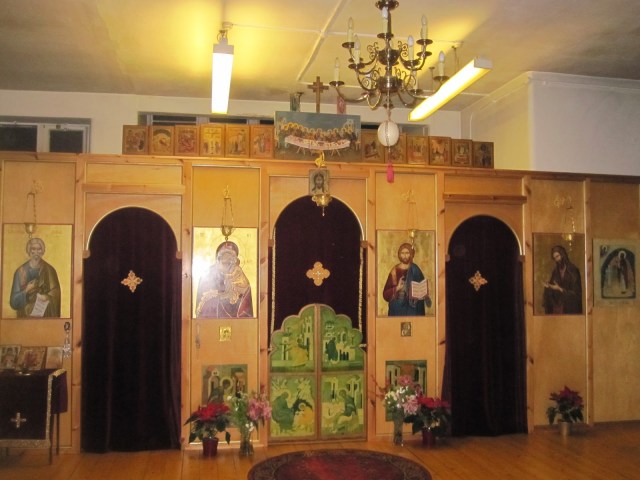


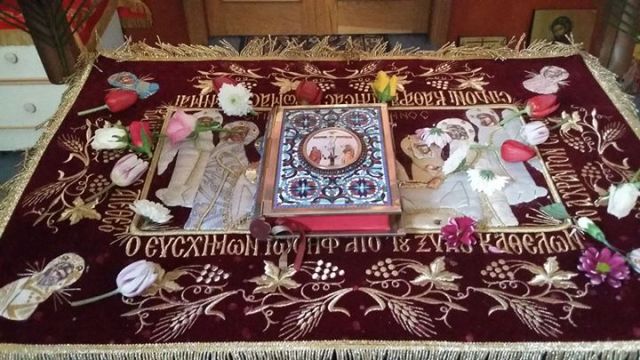




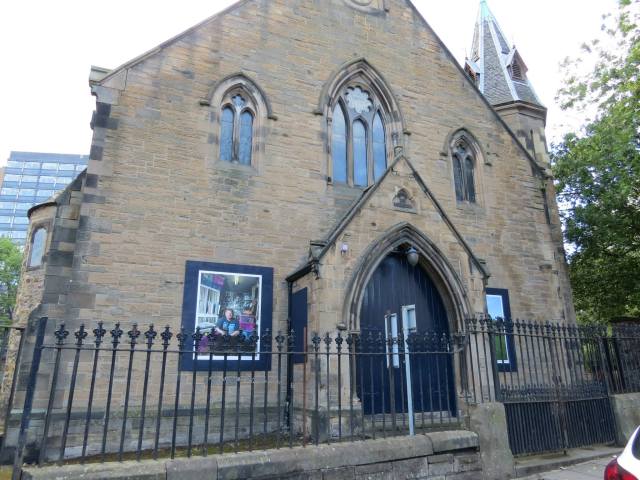
 Greyfriars Church and Greyfriars Bobby
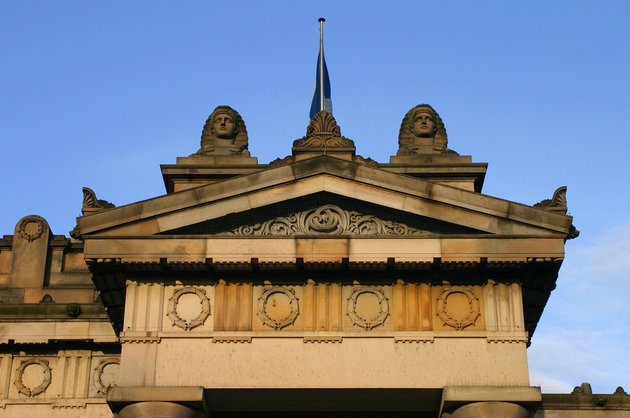
 City Art Centre
 Grassmarket




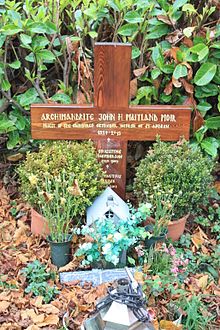
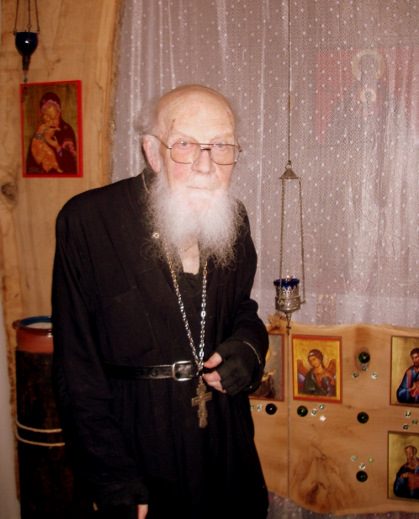
 Archimandrite John Maitland Moir (1924 – 2013)
 A man of profound holiness and bedazzling eccentricity, of boundless compassion and canny wisdom, utterly selfless and stubbornly self-willed, serenely prayerful and fiercely self-disciplined, Father John will surely earn a place as a unique and outstanding figure in the ecclesiastical annals of Scotland. He was born in 1924 in the village of Currie where his father was the local doctor; his fondness for his mother was always mingled with quiet pride in the fact that she was a member of the lesser aristocracy. The privileged but somewhat severe upbringing of an only child in this household together with a chronic weakness in his knees kept him apart from the hurly-burly of boyhood and directed him from an early age to more spiritual and intellectual pursuits. After his schooling at Edinburgh Academy, he went on to study Classics at Edinburgh University during the war years, his never robust health precluding any active military service. After the war, and a short spell as Classics Master at Cargilfield School in Perthshire, he moved to Oxford to continue classical studies at Christ Church and theological studies at Cuddesdon Theological College.
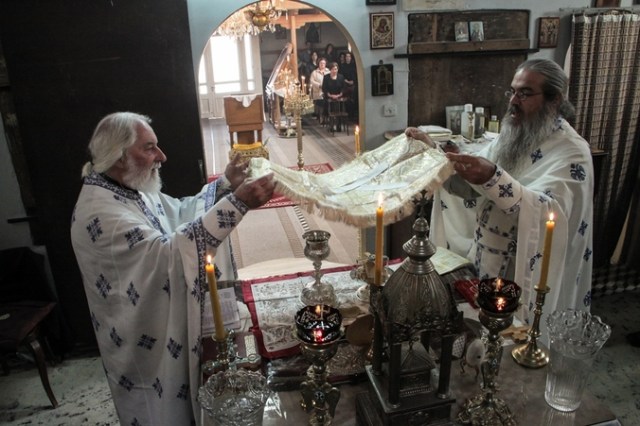
 In 1981, he resigned from his position in the Diocese of Moray and travelled to Mount Athos where he was received into the Orthodox Church at the Monastery of Simonopetra. He returned to Britain to serve now as an Orthodox Priest in the Greek Orthodox Archdiocese of Thyateira and Great Britain with utter devotion for a further full thirty years.
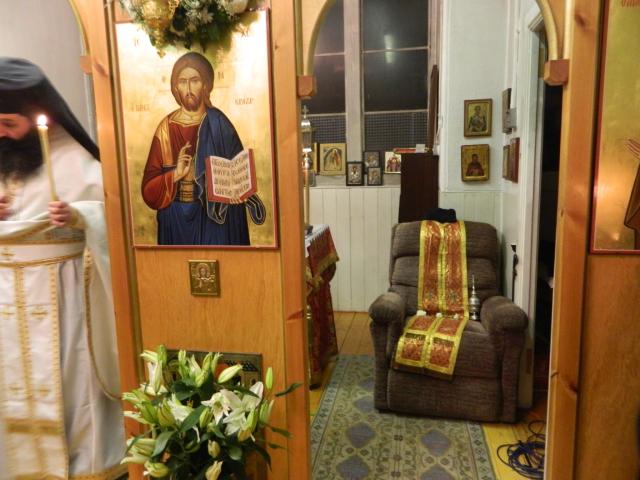
 Father John subjected himself to an almost unbelievably austere ascetic regime of fasting and prayer, while at the same making himself available to everyone who sought his assistance, spiritual or material, at all times of day and night. His care for the down-and-out in Edinburgh provoked admiration and no little concern in many parishioners who would come to the Church, which was also his home, only to find him calmly serving coffee with aristocratic gentility to a bevy of homeless alcoholics or to find a tramp asleep on his sofa. He was tireless in his efforts to help the victims of torture and persecuted Christians throughout the world. Few days would pass without him writing a letter of support for someone in prison or in mortal danger. He had inherited a comfortable fortune, he died penniless, having dispersed all his worldly assets to the deserving and undeserving in equal measure.