Censers of Flesh and Bones

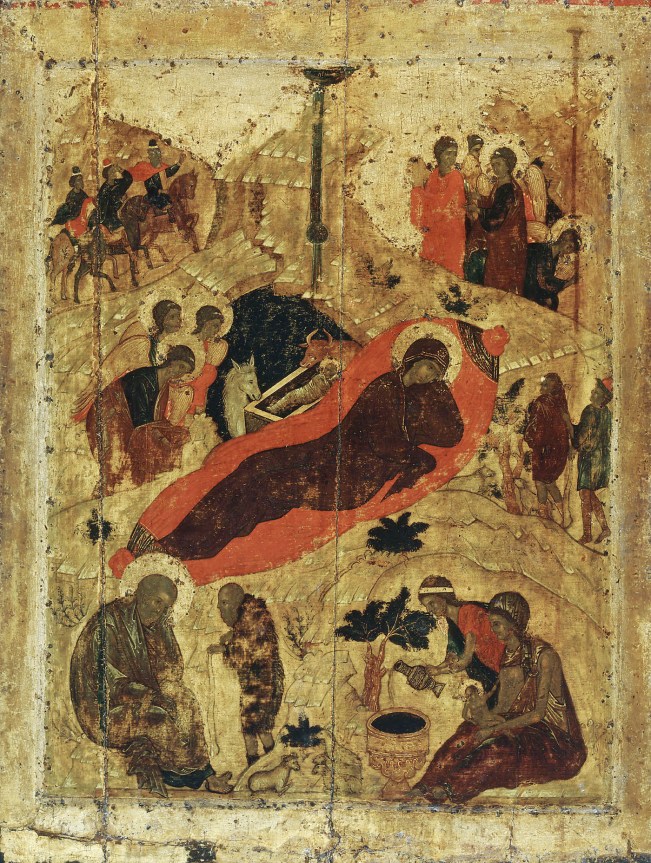
nativity1.jpeg

I behold a strange, most glorious mystery: heaven- the cave, the cherubic throne-the Virgin, the manger-the place where Christ lay. The uncontained God whom we magnify in song”.

In a manger of love our Jesus was born, and in a cave he chose to visit our humanity.

By his descending, the Lord experienced all our weaknesses except for the sin. He did not chose the scepters or the sofas of the rich in order to preach the salvation, but the womb of a Virgin. He put us on so that we could put Him on. He dwelt in a cave so we may become citizens of Heavens. Jesus came looking for the humanity that was wounded with Adam and strayed with Eve. His incarnation reminds us of dispensation. It is the stamp of the divine love that looks for censed souls, like Mary’s, that spread  Creator’s scent worldwide. This is the case of Virgin Mary, the censor that spread the light of God for the mankind.

Let us put ourselves, just once, and see how this girl fulfilled the will of God, and how She became an example for us in all our troubles, even 2000 years after the coming of our Lord.

Mary was not one of those earthly “mighties”. But She was a mighty in Her prayer. She was not of a high class, but a girl of a humble love Who obeyed God’s order. She did not complain thinking about Her reputation, and She was not ashamed of getting pregnant of the Holy Spirit. Mary, the Galilaean, did not complain of the distress that happened in those days, which  looks like the distress that takes place nowadays. On the Contrary, She was armored with God. She was not ashamed of Her Son’s Cross, but She accompanied Him to the Golgotha, and She cried, just like us, over the tyranny of the falsehood.

Mary is one of many, who see the nails of falsehood being beaten in truth’s body just like those nails which were beaten in Jesus’s hands. But Mary did not deny Her God the way how some of us do today seeing how darkness overwhelming the light. She did not ask: where is God? Cannot He watch the sorrow of my heart? But, She said: God is the strength of my heart. Surely, Mary is a human, just like us. And surely, we may cry just like Her. But the strength and the uniqueness of this Virgin is the fact that She did not let the sorrow to overcome the hope. She was not afraid of putting her hope in God. And we are called upon to behave the same way in these difficult days in which we pass as humans, community, country and the whole East.

We are called upon nowadays to be united, and to follow the example of Virgin Mary and all the disciples. Their unity was mixed with an undoubted hope in God Who had victory over death. They buried fear because of their unity and love. And we are called upon, as much as possible, to bury our afflictions by keeping the unity of souls and hearts regardless of the geographical distances. Antioch is those hearts that are tied to Jesus. Before these bounds egoism, races, cracks and disputed melt out in order to make Jesus shine on the front.

We, as the Christians of the East, are called upon to contemplate in Jesus Who did not incarnate in days better than ours. Because of His love we put on His name first in Antioch, and with the power of His Cross our ancestors lived on this land. We are on it and we come from it. We were born from its womb and we will be buried in it. We are staying here, and we will carry our cross following the example of our Lord. And to those who abduct our people and bishops we say: We are a part of this East. In it we live together with our brothers from all religions. We won’t spare an effort to remain in this land defending our history and existence.

We pray today for the peace in Syria, and for stability in Lebanon. We pray for the suffering East, for the bleeding Palestine. We pray for the homeless, for the displaced, for the lost, for the abducted and for the martyr. We pray to Virgin Mary to send peace to the souls, because it is the seed of peace on earth. We pray to protect all Her abducted children, amongst them the two bishops of Aleppo Youhanna Ibraheem and Boulos Yazigi. We pray to Her to be with our people everywhere bestowing humanity the mercy of the Child of peace and the father of mercies.

Oh Jesus, Who descended to us as a Child. Come and fill us with the abundance of your mercy, keep our children and parents. Come and stay in the cave of our souls and trim our thoughts with Your holy light. Oh Jesus, whose presence filled us with peace, bless our life. Calm with the power of Your silence every disorder, fear and turbulence. Teach us to chant together: “Glory to God in the highest, and on earth peace, good will toward men”.

 
free-decorative-line-divider-clip-art-582650
Appropriately, the most soul moving Christmas messages this year have been issued from the parts of our planet where Christians are most prosecuted!


Memory Made Clear and Serene

time13

An Orthodox Theology of Time – V / V -Conclusion

Time as Renewal: Growth unto Goodness in Christ. The concept of the liturgical Eighth Day. If time is the change inherent in being created then can we experience our life as other than a growth unto death? Can we experience life as perhaps, a growth unto goodness in Christ in His Church?


Therefore, let not a person be grieved by the fact that his nature is mutable; rather, by always being changed to what is better and by being transformed from glory to glory (2 Cor 3.18), let him so be changed: by daily growth he always becomes better and is always being perfected yet never attains perfection’s goal. For perfection truly consists in never stopping our increase towards the better nor to limit perfection with any boundary (Gregory of Nyssa, On Perfection, p.379)

Decay unto death can be renewed as a growth unto life in Jesus Christ. … Our everlasting God has come down into the broken temporality of time and renewed our memory in the saving event of Jesus Christ, God as Man and Man for God.

Memory needs to be healed not destroyed. Often the greatest difficulties in our lives are the result of being plagued by evil memories, which wound and lacerate us as persons. Indeed, we pray at Great Vespers that God will protect us “from vain thoughts and from evil memories.”An image exists for this ‘weight of memory’ at the end of the Purgatorio when Dante, after confessing to Beatrice, first drinks of the river of Lethe forgetting all the evil and sin of his past life then drinking of the river of Eunöe (‘good remembrance’ or ‘good mind’) and remembering everything but from the perspective of the grace and love of God.

Forgiveness, then, is a process of progressive confession and absolution where we gradually let go of the past (are freed from its chains) by confronting the past and then giving it up in forgiveness (forgetting it without repression) so that we can regain it back from Jesus Christ through His remembrance in love. This healed or forgiven memory is paradise regained, that is, “radical innocence” as Yeats termed the state of learned childlikeness after our dreaming innocence has gone through the fire of experience.

We are given this renewal of our memory, this reality of memory shining forth with the light of the new age of the coming Kingdom of God fulfilled once for all time on the cross (‘It is finished!’/’Behold I make all things new’), in the perpetual rebirth—perpetual Pentecost—of the Church in its praise of God. In praising God, the Church is given the gift of the eternal Memory of the Spirit whereby we remember the life of Christ as our very own thus redeeming all memory under the sign of His cross. Such ‘eternal remembrance’ renews the face of the earth and makes of it, as Schmemann put it, a “liturgical paradise.”


“Today, a sacred Pascha is revealed to us” or “This is the day of resurrection”or yet again “On Mount Tabor, O Lord, Thou hast shown today the glory of Thy divine form unto Thy chosen disciples”.

SONY DSC

In Christ, as the Lord of Time, is realized the ingathering of all moments in One Moment of what we might call an ‘eternal temporality’ and which Schmemann calls temps immobile, that is, the co-inherence or co-presence of each part of time to each other in the present, in Jesus Christ.

Christ is Himself the Lord of Chronos or time proper because He is the Kyrios Kairou, Lord of the appointed time of our salvation. In Him, our broken mode of temporality, chronos, is renewed and sanctified, ascending with Him to the Father and becoming a spiritual mode of time through its marriage with creaturely eternity (aeon).

But when He returns to us in His Body and Blood in the liturgy, which is both our ascent to God and His descent to us, we see that our new mode of time, eternal temporality, is something radically new to creation, sensible and spiritual at once, as it has partaken of the very mode of God Himself as everlasting Trinity (aidiotes), God before the ages.

Therefore, the central locus of this ingathering of time is our Lord’s anamnesis or His recollection of His own saving actions in the liturgy in which His living memory becomes life everlasting by renewing all time in the new age of His Kingdom. This Kingdom of Jesus Christ is the very same life we will receive at the resurrection on the last day. It has been variously described as the ‘eighth day’ or ‘liturgy without end’ and it is granted as a gracious foretaste to us. It is a sort of liturgical in-breaking of the life to come in our crooked and wounded time.

time19

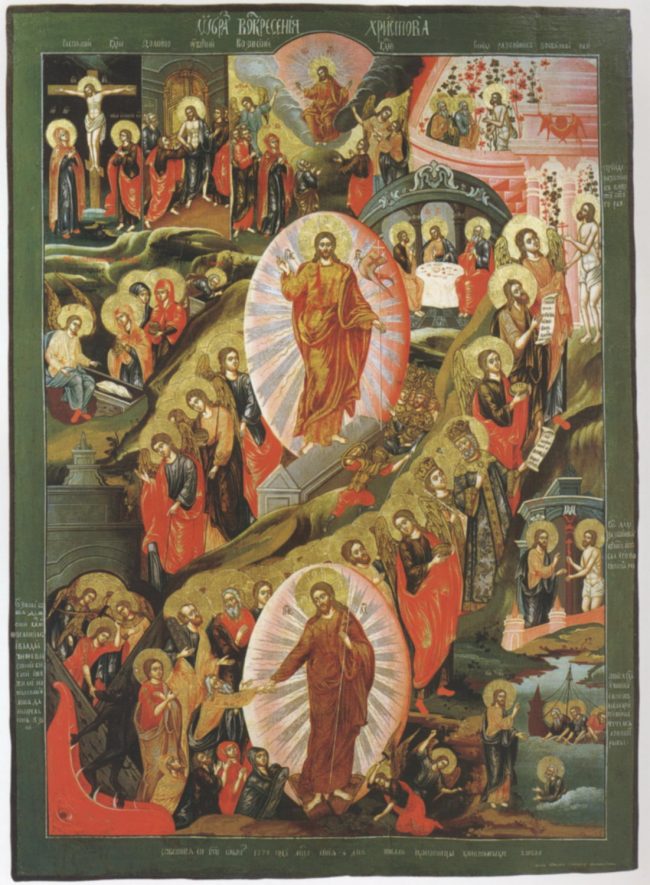
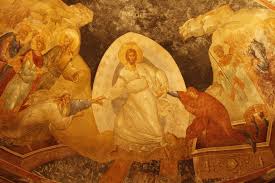
Harrowing of Hades, fresco in the parecclesion of the Chora Church, Istanbul, c. 1315, raising Adam and Eve is depicted as part of the Resurrection icon

It should be noted that when, in Scripture, Christ remembers His own Body and Blood broken and shed for the life of the world, it is prior to the actual sacrifice. In other words, in Christ’s remembrance, memory is not merely retrospective, in that it looks back at a life of sacrifice, but it is also simultaneously prospective in actuating prophetically the sacrifice of the cross before it happens. 

Likewise, our Lord as our Great High Priest remembers us and all time before the Father in heaven when at the Anaphora on the Lord’s Day the priest says both retrospectively and prospectively at once: “Remembering this saving commandment and all those things which have come to pass for us: the Cross, the Tomb, the Resurrection on the third day, the Ascension into heaven, the Sitting down at the right hand, and the second and glorious Coming.”

Christ’s memory is eschatological, a remembering of the future life to come. Thus the Christian life is one of memory eternal where we live in the liturgical ingathering of all moments by remembering, with Christ, the saving acts that have accomplished our salvation now and to come. In the Christian life lived as anamnesis, past and future converge in one another in the present moment of our loving memory where we taste of the new age given in our midst.

Eternal memory is not the destruction of the past as past and the future as future but their clarification and illumination in encountering each other in our present consciousness of Jesus Christ who gives us eternal life. To borrow a phrase from Berdyaev, “Immortality is memory made clear and serene.”

Christ, then, as our renewed memory effecting salvation has, as Schmemann put it, “power over time” because He makes time His own as its Lord and does not destroy it but burns away, with healing fire, its wounds, making it itself through contact with Himself insofar as “Eternity is not the negation of time, but time’s absolute wholeness, gathering and restoration.”

Source: Excerpts from http://www.bogoslov.ru/en/text/2668945.html

The Sisyphus Myth


time5

An Orthodox Theology of Time – IV / V

Time as Woundedness and Time as Decay, Growth unto Death.  How do we primarily experience time as fallen beings? Do we experience it as change or, more precisely, mutability, that is, a growth unto death? 


“To-morrow, and to-morrow, and to-morrow,/ Creeps in this petty pace from day to day/ To the last syllable of recorded time,/ And all our yesterdays have lighted fools/ The way to dusty death. […] it is a tale/ Told by an idiot, full of sound and fury,/ Signifying nothing.” (Shakespeare, Macbeth, V.v. ll.)


First we experience fallen time as constant change or ceaseless movement in a cycle of death that can be seen cyclically in the seasons, which move in a circle like a snake swallowing its tail. Winter follows Autumn and Spring follows Winter just as death follows old age and old age is not the end, for out of our death comes the birth of our descendants. Thus all of time is a perpetual repetition of death since the moment that things come into existence, changing from non-existence into being, they straightway move back again from existence into non-being.

This experience of fallen time is what Pozzo, in Waiting For Godot, expresses when he cries furiously at Vladimir:

Have you not done tormenting me with your accursed time! It’s abominable! When! When! One day, is that not enough for you, one day he went dumb, one day I went blind, one day we’ll go deaf, one day we were born, one day we shall die, the same day, the same second, is that enough for you? [Calmer] They give birth astride of a grave, the light gleams an instant, then it’s night once more.


Second, we experience fallen time as unending desire. Once we desire something it lacerates our whole being until we possess it and our desire for that thing is then satiated until the thing possessed tempts us into some new perversion and the vicious circle begins all over again. Man’s life, then, is like this vicious circle insofar as he is continually turning around while facing his own self like it was a household idol, as The Great Canon of St. Andrew of Crete puts it: “I am become my own idol, and have injured my soul with passions.” Luther expressed this fallen circularity of time well when he says that homo in se incurvatus or man is turned in on himself.


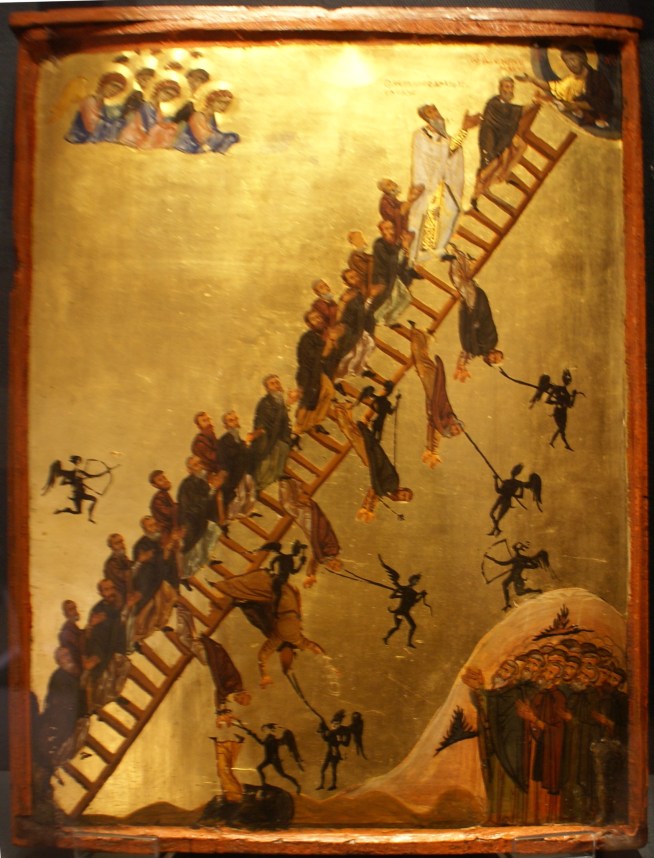
… St. Gregory of Nyssa  has a nice image to convey this hopeless cyclical perpetuum mobile. It is of a man fruitlessly attempting to climb uphill in sand and never making any progress. It is the spiritual life where one’s house is built not on the rock of Christ but on the sand of spiritual illusions:

“He [the passionate man] is like those who toil endlessly as they climb uphill in sand: Even though they take long steps, their footing in the sand always slips downhill, so that, although there is much motion, no progress results from it.” 

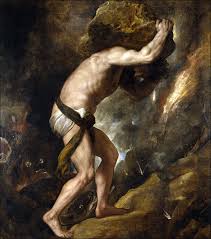
[Also, remember here The Myth of Sisyphus: The gods had condemned Sisyphus to ceaselessly rolling a rock to the top of a mountain, whence the stone would fall back of its own weight. They had thought with some reason that there is no more dreadful punishment than futile and hopeless labor.]

Third, we see time as decay in memory—Schmemann’s “evil time.” In evil time, we remember the past as perpetually lost like a ghost that must relive its own murder.  Thus we remember continually and cannot change the death of our spouse, our mother, our child, or worse, a moment of humiliation by our spouse, our mother, by us of our own child. We cannot choose our past, for deliberation is a mark of future action in the present, the choice between what we would like to have happened and what actually happened remains only an undying craving for another world, as T. S. Eliot acknowledged: “What might have been is an abstraction/ Remaining a perpetual possibility/ Only in a world of speculation.”(T. S. Eliot, “Burnt Norton”, I, ll.6-8 in Four Quartets).

Each of these faces of fallen time points to our fundamental need, in time, for time’s renewal in Jesus Christ.

Source: http://www.bogoslov.ru/en/text/2668945.html

To Be Continued

For Part V go to https://orthodoxcityhermit.com/2015/12/18/memory-made-clear-and-serene/

Carpe Diem and Christmas


time4.jpg

Carpe Diem:  Kairos Moments In Our Chronos

An Orthodox Theology of Time – III / V

Everything we do is marked by the steady march of time. Seconds lead to minutes to hours to days to weeks to years to decades to centuries.

The problem for all of us is that the clock is always running the wrong way, and we simply cannot stop its precipitous crawl toward the next tick. We lose moments to the past, out of our reach, never to be regained.

Where did all the years go?

The kids have grown and gone. We’re muddling along in a career, making a living, just existing out of habit more than anything.

Did I miss out on my chance to make a difference?

The Greek language has a couple of words that mean “time.” The first is most familiarchronos . It means the chronology of days, governed by the carefully calculated earths’ sweep around the sun. God himself ordained this measurement of days on the fourth day of Creation, spinning the heavenly lights “for seasons, and for days and years.”

Boy, do I know about time. The wrinkles etched on my face; the wrinkles etched on my heart are the visual reminders of chronos.

But another word for time is also used in the New Testament—kairos . This speaks more to specific, God-ordained times throughout history, sometimes called the “right time” or “appointed season” (Titus 1:3).  Kairos is God’s dimension—one not marked by the past, the present, or the future.

When Jesus came, it was a fulfillment of promises past, a cosmic collision of the sacred and secular. It was an intersection of the holy will of God and the stubborn ways of man.It was a perfect moment.  John the Baptist said in Mark 1:15 that “time is fulfilled, and the kingdom of God is at hand.” 

This godly kairos pierced its way into creation at just the right time, slicing through chronos with a cry of a baby in a manger.

The cross was another kairos moment. Romans 5:6 says, “For while we were still helpless, at the right time, Christ died for the ungodly.”

Kairos moments then—and now—allow us to get a glimpse of the “other side.” We peek around the corner at eternity. We actually glimpse how God works.

As the omniscient, omnipresent Deity, God is not bound by the confines of space or time. That’s why He flows into our existence when we least expect Him. When we ask for something right away, it might not always come. Or when we don’t ask at all. But he shows up. It can be frustrating, “with the Lord one day is as a thousand years.”  It can also be surprising “a thousand years as one day.” (2 Pet 3:8).

We should always live our days looking for those moments, those inexplicable times when His will and his way intersect with our daily walks.

And they can happen anytime! A friend calls you out of the blue to give a good word. A child’s innocent joy pierces a long, hard day of struggle. A coworker takes a moment to lend a hand.

God is always surprising us with his perfect, kairos timing.
Am I ready, waiting, and watching for him to move in my life?

Source: Living a Kairos Life in a Chronos World, By DAVID RUPERT MAY 22, 2009 at http://www.thehighcalling.org/articles/essay/living-kairos-life-chronos-world

 free-decorative-line-divider-clip-art-582650

Hebrews 3

Wherefore (as the Holy Ghost saith, To day if ye will hear his voice,

Harden not your hearts, as in the provocation, in the day of temptation in the wilderness

13 But exhort one another daily, while it is called To day

15 While it is said, To day if ye will hear his voice, harden not your hearts, as in the provocation.

 free-decorative-line-divider-clip-art-582650

To Be Continued

For Part II go to https://orthodoxcityhermit.com/2015/12/18/4441/

For Part IV go to https://orthodoxcityhermit.com/2015/12/18/woundedness-the-sisyphus-myth/

Christ(mas) Healing of Chronos, Kairos, and Aeon

An Orthodox Theology of Time – II / V


time2.jpeg

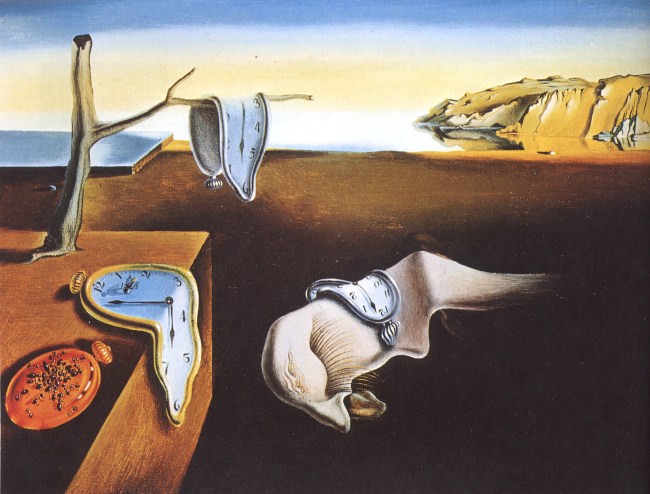
The Persistence of Memory – Salvador Dali

Nature of Time: What is time? What is its relation to God’s mode of being? Time as understood in its relation to the Church as a receptacle of the eternal Kingdom of God.


“What is time? Who can explain this easily and briefly? Who can comprehend this even in thought so as to articulate the answer in words?

Yet what do we speak of, in our familiar everyday conversation, more than of time?

We surely know what we mean when we speak of it.

We also know what is meant when we hear someone else taking about it.

What then is time? Provided that no one asks me, I know.

If I want to explain it to an inquirer, I do not know”


(Augustine’s Confessions,11.14.17, p. 230)

Some Fathers, including Sts. Basil the Great and Maximus the Confessor, spoke of three modes of being (i.e. time (chronos), age or creaturely eternity (aeon) and the everlasting or uncreated eternity (aidios, aidiotes) and sometimes … proaionios or the pre-eternal which is ateleutetos or without an end)), not just the two of time and eternity.


…First, everlastingness or everexistingness (aidiotes)  is the mode of being only of God, who is utterly beyond the distinction between time and creaturely eternity, being and non-being, since He is the pre-eternal (proaionios) God who is “endless” in the sense of being beyond duration. Everlastingness is essentially a negative or apophatic category emphasizing God’s unknowableness.


God is indefinable as the ho pro aionon Theos (Slavonic: prevechnyi Bog) which can be translated as ‘the pre-eternal God’ or ‘God before the ages.’ As the Kontakion of Christmas puts it:


Today the Virgin gives birth to him who is above all being [ton huperousion], and the earth offers the cave to him whom no one can approach; Angels with Shepherds give glory, while Magi journey with a star, for to us there has been born a little child, God before the ages [ho pro aionon Theos].


Second, we have creaturely eternity/age (aion–aionios), which is the creaturely mode of being of the supra-cosmic or spiritual creation of God—angels. [Human beings too. Both Angels and humans are eternal, because although they were created in Time, they do not have an end]. This mode of being is not one that excludes change but it is not bound by the distinctions of our present time’s version of change. The past is not utterly past but it is contained in the present as is the future and the future in the past and the past in the future so that eternity is a sort of perichoretic version of time. This, I would argue, is what Schmemann was getting at when he wrote that points in time can be gathered together and encountered simultaneously:

“In an instant, not only are all such breaths of happiness remembered but they are present and alive—that Holy Saturday in Paris when I was a young man—and many such ‘breaks.’ It seems to me that eternity might be not the stopping of time, but precisely its resurrection and gathering.”


Moreover, there is in the Kingdom of God, which is an eternal Kingdom not of this world, an enduring quality of being where one forever praises God from one moment to the next—a sort of sempiternal or eternal duration—without in any way being trapped in growing old or being trapped in the inexperience of youth. In such eternal duration, the goodness of God is always desired and always held in its fullness at the same time as that goodness continually increases our capacity and desire for it although we never possess this goodness in its fullness.


Time in physical creation, as we now experience it under the weight of sin, is understood as a reality with a strict division between past, present and future where the person in time, who has turned his back on God’s grace in Jesus Christ, is prevented from being present to more than one division at once. Thus when I err under the weight of sin I cannot be present to here and there at once since I am bound to here.


… Christ heals our time (chronos), and indeed the time of the invisible creation (aeon), by making it His time of opportunity for our salvation in Him (kairos).


Time, as Christ’s time, becomes a means to our perfection in Him rather than the ultimate expression of our rejection of God’s grace. Through Him in His Body the Church we come to partake in the mode of being of the invisible creation, creaturely eternity, but this eternity or time of the invisible creation becomes wedded with our sensible time, remade for an embodied being like man, through participating in the everlasting life of God. Time is, therefore, remade and renewed in the Church as the Kingdom of God and we have a foretaste of this renewal in the liturgy.

[Chronos, Kairos and Eternity, or, Agape. Because Eternity is Hypostatical Agape in God]


Source: Excerpts from Gallaher, Brandon ‘s Orthodox Theology of Time at https://www.academia.edu/3561108/Chalice_of_Eternity_An_Orthodox_Theology_of_Time_St_Vladimirs_Theological_Quarterly_57.1_2013_pp.5-35

To Be Continued …

For Part I go to https://orthodoxcityhermit.com/2015/12/18/chalice-of-eternity/

For Part III go to https://orthodoxcityhermit.com/2015/12/18/4497/

Chalice of Eternity

chalice


Time, or the Art of Deception: 1990 
Time stands still in this surrealist composition.The water and the metronome are suspended as if Time had just stopped – yet might start again, a moment later.

An Orthodox Theology of Time -I / V

“This morning during Matins I had a ‘jolt of happiness, of fullness of life, and at the same time the thought: I will have to die! But in such a fleeting breath of happiness, time usually ‘gathers’ itself. In an instant, not only are all such breaths of happiness remembered but they are present and alive—that Holy Saturday in Paris when I was a young man—and many such ‘breaks.’ It seems to me that eternity might be not the stopping of time, but precisely its resurrection and gathering. The fragmentation of time, its division, is the fall of eternity. Maybe the words of Christ are about time when He said: ‘…not to destroy anything but will raise it all on the last day.’ The thirst for solitude, peace, freedom, is thirst for the liberation of time from cumbersome dead bodies, from hustle; thirst for the transformation of time into what it should be—the receptacle, the chalice of eternity. Liturgy is the conversion of time, its filling with eternity. There are two irreconcilable types of spirituality: one that strives to liberate man from time (Buddhism, Hinduism, Nirvana, etc.); the other that strives to liberate time. In genuine eternity, all is alive. The limit and the fullness: the whole of time, the whole of life is in each moment. But there is also the perpetual problem: What about the evil moments? Evil time? The terrible fear before dying of the drowning man, of the man falling from the tenth floor about to be crushed on the pavement? What about the tears of an abused child?

(The Journals of Father Alexander Schmemann 1973-1983, p.78)

To Be Continued

For Part II go to https://orthodoxcityhermit.com/2015/12/18/4441/ 

I Shall Not Live In Vain

“Songs of Earth & Sky” Bill Douglas’ Album
Based on poems by Emily Dickinson and William Blake

“The words are a beautiful expression of compassion by Emily Dickinson (first verse) and William Blake (second verse).”

I Shall Not Live In Vain

If I can stop one heart from breaking,
I shall not live in vain.
If I can ease one life the aching,
Or cool one pain,
Or help one fainting robin
Unto his nest again –
I shall not live in vain.

Love seeketh not
Itself to please,
Nor for itself hath any care;
But for another gives its ease,
And builds a Heaven in Hell’s despair**

If I can stop one heart from breaking
I shall not live in vain
If I can ease one life the aching
Or cool one pain
Or help one fainting robin
Unto his nest again
I shall not live in vain


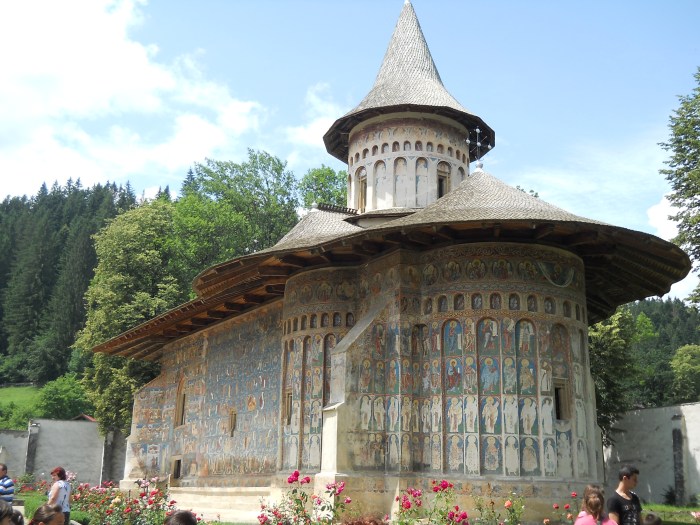
Voronet Sistine Chapel

voronet1voronet2voronet4


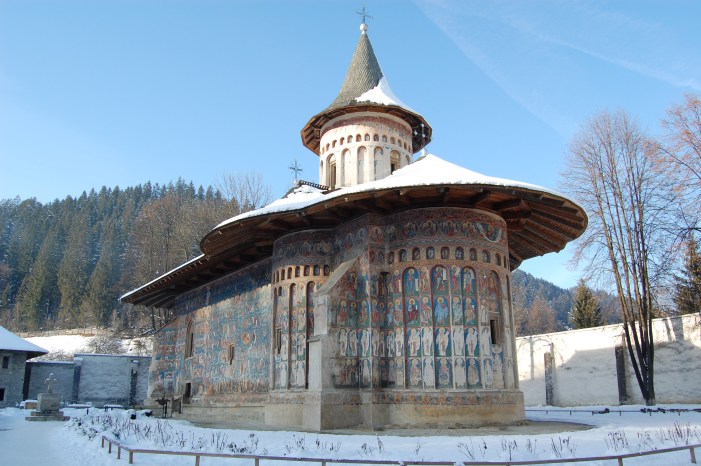
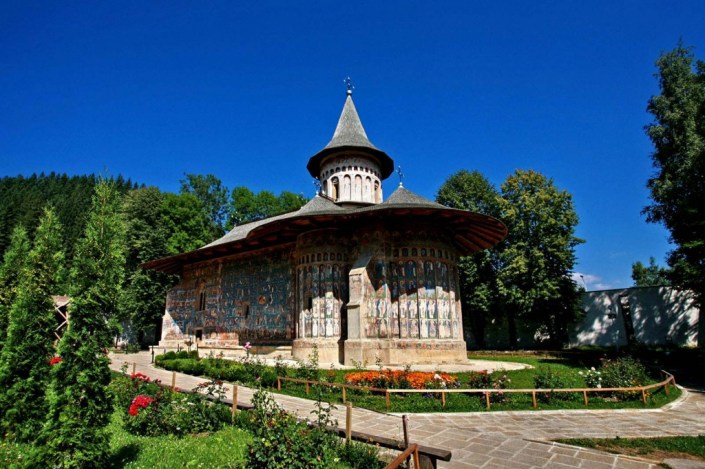
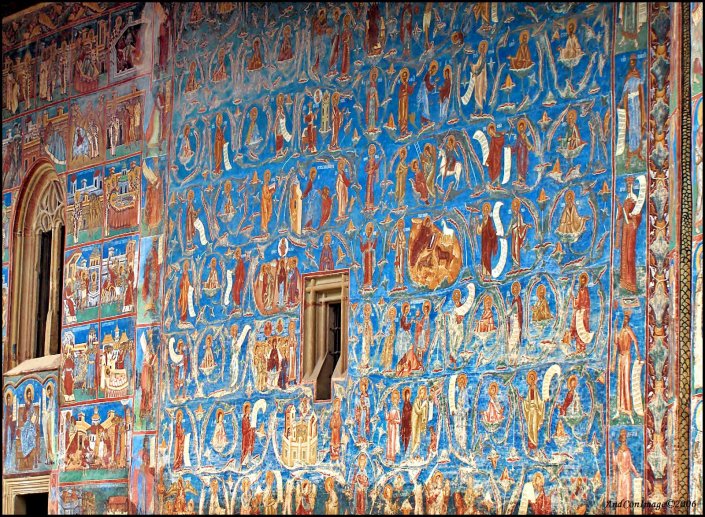
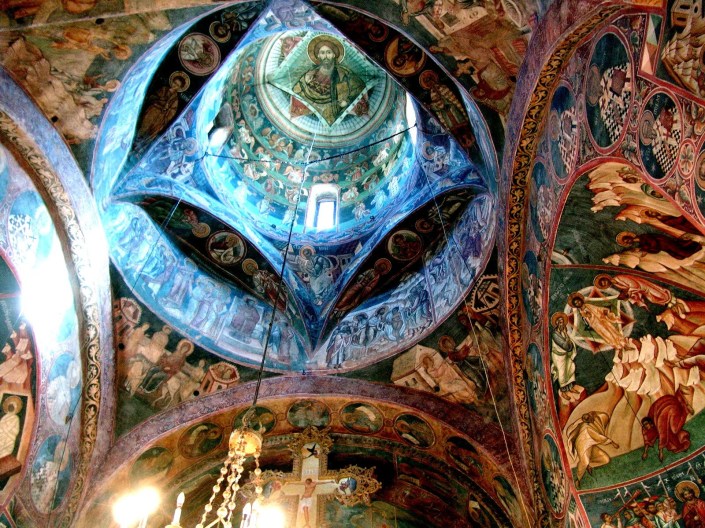
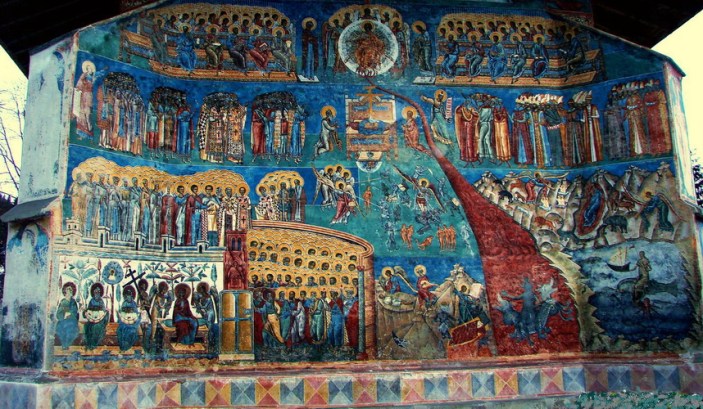
Tucked in the small village of Voroneț, Romania, you can find the great Romanian Orthodox Voroneț Monastery, one of a string of “painted monasteries” in Romania, Moldova, and Ukraine, built mostly in the 15th and 16th centuries. Voroneț Monastery specifically was built in 1488 over a period of 3 months and 3 weeks (!), and is dedicated to St. George. The monastery was abandoned around 1775 due to political instability, and a monastic community didn’t return until more than two hundred years later in 1991. The building is famous for its beautiful frescoes and icons, both inside and out, which is how it got its nickname as the “Sistine Chapel of the East.”

Voronet-blue1voronet-blue4voronet-blue12voronet-blue9voronet-blue6voronet-blue5voronet-blue7

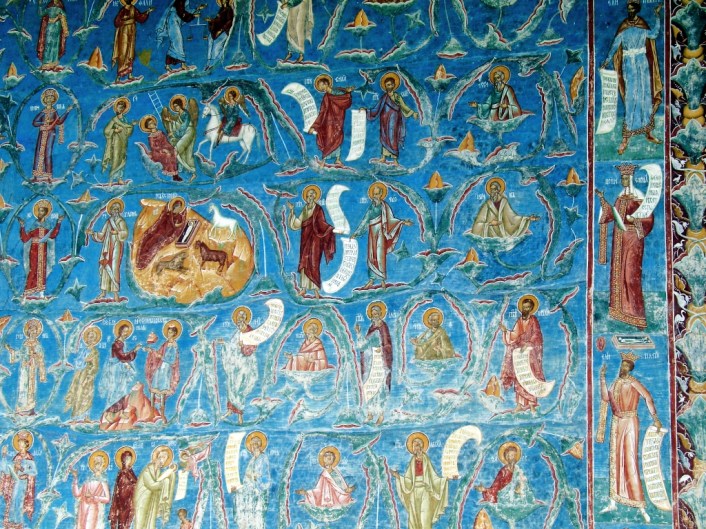
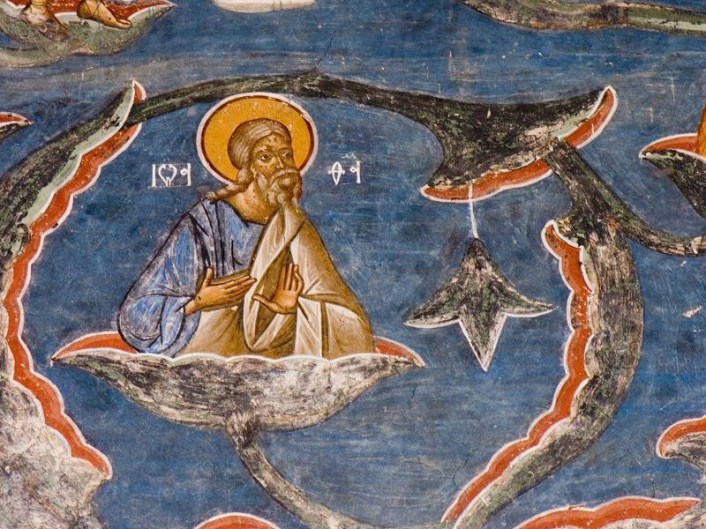
The frescoes at Voroneț feature an intense shade of blue known in Romania as “Voroneț blue”. “The exterior walls — including a representation of the Last Judgment on the west wall — were painted in 1547 with a background of vivid cerulean blue. This blue is so vibrant that art historians refer to Voroneț blue the same way they do Titian red. Monastery of Voronet has been declared World Heritage by UNESCO.  Below are some great photos of the beautiful sacred building. Enjoy!

voronet-blue2Remus Pereni, Flickrglobetrotter_rodrigo, Flickrglobetrotter_rodrigo, FlickrJoergsam, Wikipediaglobetrotter_rodrigo, Flickrglobetrotter_rodrigo, FlickrAdam Jones Adam63, WikipediaIone.pomana, WikipediaGroundhopping Merseburg, FlickrSîmbotin, WikipediaGroundhopping Merseburg, Flickr

Watch “Monastery Voroneţ” documentary at https://www.youtube.com/watch?v=l1buejr72eY

voronet-blue10Groundhopping Merseburg, FlickrGroundhopping Merseburg, Flickr

Source: “The Sistine Chapel of the East”: Romania’s Beautiful Voroneț Monastery http://www.churchpop.com/2015/10/06/the-sistine-chapel-of-the-east-romanias-monastery/


Photis Kontoglou: A Greek Dostoevsky

papadiamandis7

And  a Charles Dickens too

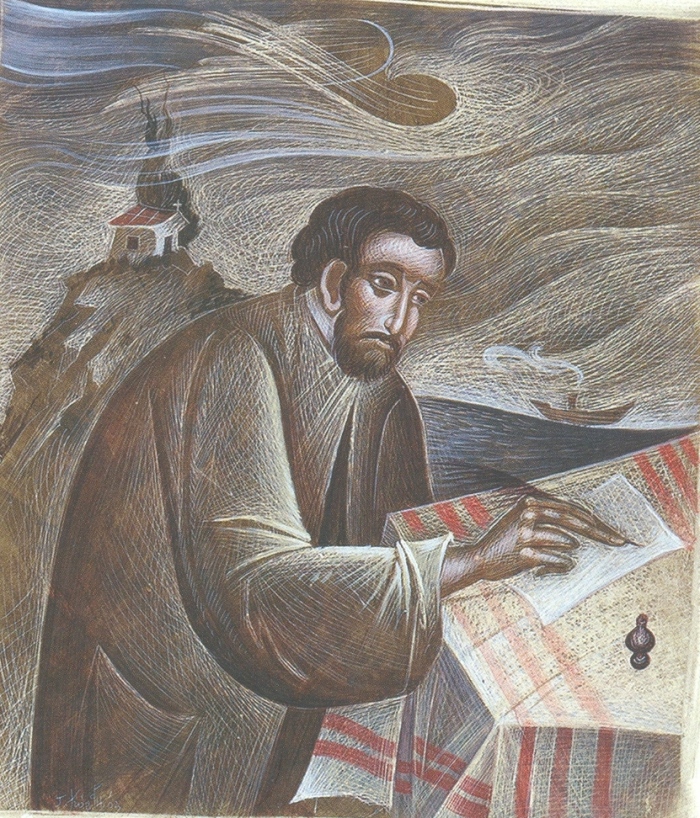
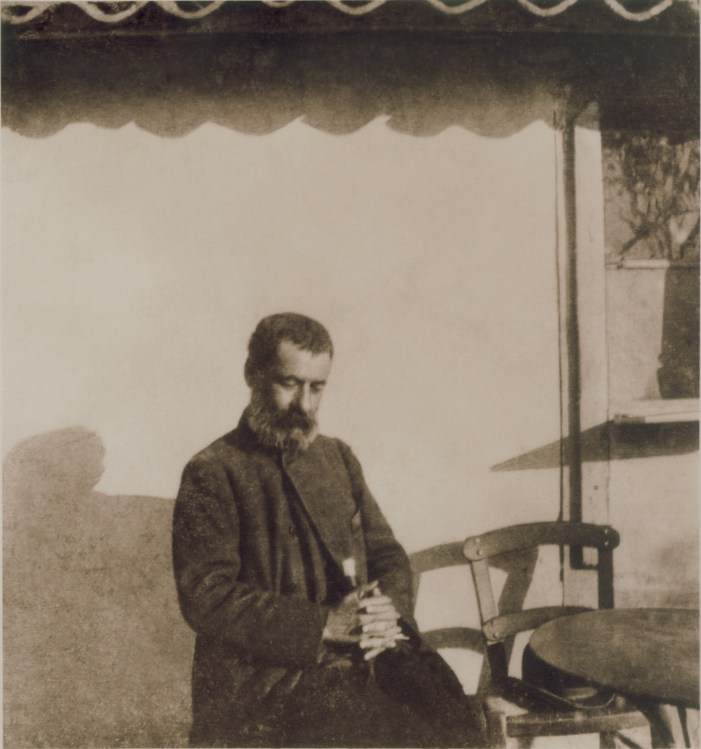
Alexandros Papadiamandis was not a bishop. He was not priest. He was not a monk. He was a simple yet genuinely Orthodox layman who observed those who seized upon the great opportunity and those who failed to do so. His observations, in turn, became the heart of his fictional, but not fictitious, writings. As a layman and as an artist, he had the freedom to explore the great opportunity from every angle and the boldness to point out the obstacles to that opportunity, which are created when the misguided misunderstand the eucharistic and liturgical aspect of ecclesial life that makes that opportunity possible and act on that misunderstanding. … Papadiamandis’s profound understanding of what liturgy is and what liturgy can do enables Papadiamandis to initiate others through his writings into the mystery of this great opportunity. …

[For those in a hurry, you may skip the brief analysis, and go straight to his short story link at the bottom of the page]

papadiamandis90

… Papadiamandis opens another window by letting us see how the liturgy flowers, in all its manifestations, under the right conditions such as those that were present on his native island of Skiathos, and how it withers when fallen human interests deprive it of its proper soil and care. What makes this vision of Papadiamandis so compelling is that he does not merely offer us another philosophy of the liturgy or a new ideology for conservative or liberal reform. Instead, he offers us human examples taken from the experience of day-to-day life in Christ. His priests and lay folk are people with whom we can identify and to whom we can turn for guidance as we enter the same struggle to offer God the worship He is due.

Non-Orthodox readers might well be mystified by the importance of hymnography, architecture, iconography, and ecclesiastical music as sources of life and wisdom for Papadiamandis. They may be tempted to view Papadiamandis as a mystic or, even worse, as a religious fanatic.Such a view would greatly diminish the value of Papadiamandis’s observations and could not be further from the truth. Papadiamandis was a normal, healthy Orthodox Christian. He was a realist and, one could say, an empiricist. By experience, he knew the transfiguring power of the ecclesiastical arts in the Orthodox Church, and the wisdom he gained therefrom entered his fiction in a most natural way.

papadiamandis8

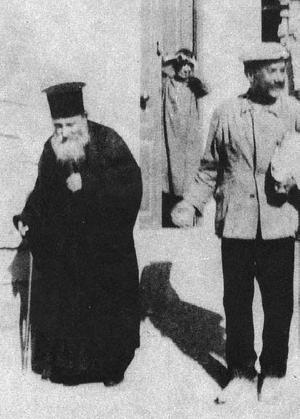
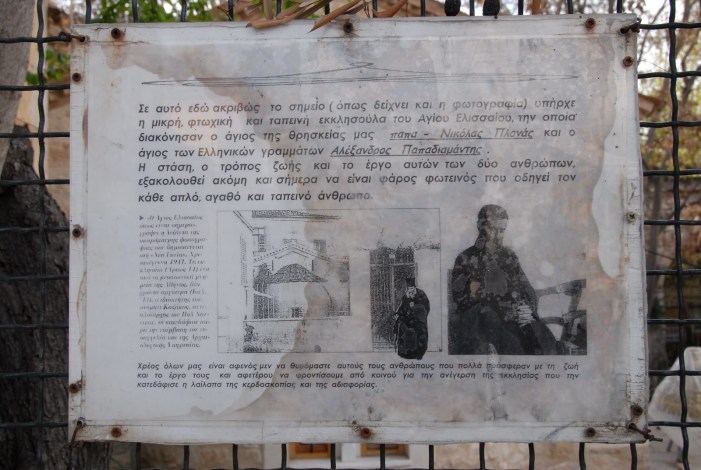
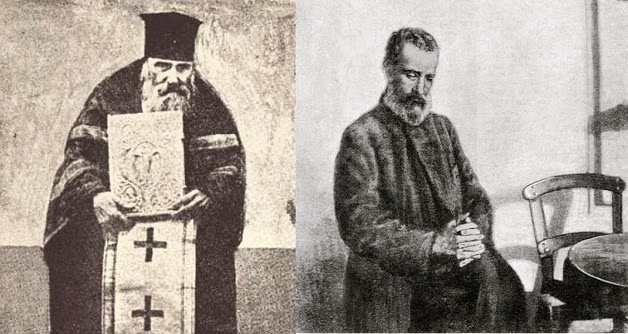
St. Nikolaos Planas and Papadiamandis

…  Art is used to instruct the believer in a concrete Orthodox Christian approach to life in its manifold dimensions. The modern term for this ancient teaching technique would be the “multimedia experience,” with visual, musical, linguistic, and even olfactory dimensions. Each sense receives impressions that direct the entire soul to glorify God and repent for its own estrangement from the divine beauty that envelopes the soul during divine worship. Art is used not merely to educate the mind but, more importantly, to shape the heart and redirect its desires and ambitions.

In other words, the liturgical arts are the time-tested tools that the Church uses to heal the faithful and direct them to Christ. In Orthodoxy, the arts are not intended to provide religious entertainment for the senses but to purify them. The theological essence of Orthodoxy is quite precise, and the forms that protect the essence are necessarily precise as well. Those who attained to union with Christ either produced the liturgical arts or affirmed the fact that their use helps lead others to that same union. These artistic creations are the precious fruits of life in the Holy Spirit that lead those willing to be led to the spiritual life of Paradise. They have the purpose not only of opening the heavenly world of God’s glory to the believer, but also of opening up the believer’s own inner world so that he can see his passions and deceitful desires and, by God’s grace, defeat them.

planas7

One hymn in the veritable sea of liturgical texts has the faithful chant (and thus confess), “many times when I am chanting hymns I am also committing sins; for while my mouth utters songs of praise, my soul is pondering unseemly things.”Even the modern psychologist would agree that this brutal honesty about our fallenness and recognition of our hypocrisy is the first step to overcoming them both.

Another aspect of Papadiamandis’s vision that may seem strange in the West is the absolute centrality of the Church as experience. The liturgical life consists of more than a Protestant Sunday worship service or even a Roman Catholic daily mass. It is the oxygen that infuses the atmosphere of the believer’s entire life, enabling him to breathe. The texts from the divine services are what help him make basic decisions in his daily dealings with others. The liturgical life gives meaning to the most basic aspect of created life – time, the coming of day in Matins and the coming of night at Vespers. Simultaneously, it takes the believer beyond time in the Divine Liturgy to the uncreated reality of the glory of the Holy Trinity. Each day in the liturgical cycle is a unique gift of God, a unique opportunity to approach Him in thanksgiving and repentance. This is also reflected by the central icon of the Saint whose memory is celebrated on any particular day as well as by the liturgical texts that change with the hour, the day, and the season.

papadiamandis5

In the Orthodox Church, worship is a source of joyful sadness that clears the mind and heart with a sober optimism. It is also a real struggle of body and soul. This athletic aspect of Orthodox liturgical life may also perplex the non-Orthodox reader. Although the importance of pilgrimage is a common theme in the religious texts of Western Christendom, the importance of vigils, which are also associated with pilgrimage, may not be so readily apparent. Vigils enable the believer to give his entire self over to the liturgical life of the Church for an extended period of time. The night hours during which visibility is lessened, enable the believer to focus on turning inward. By devoting these hours of darkness to prayer, although they are the customary time for sleep, the believer offers a small sacrifice to God. In spite of the real struggles a vigil requires, the believer who turns to God for such an extended period of time does not feel as though he is offering God anything of particular significance, but that he is the fortunate recipient of mercy from God. The many blessed hours at prayer humble the soul, soften it, make it less selfish, and thus open it up to the grace of the Holy Spirit. There is nothing gloomy about these vigils. They are illumined by another light and quite naturally become a source of great joy; for, through such vigils, man can find his true self by finding the God of his heart.

kollyvades1

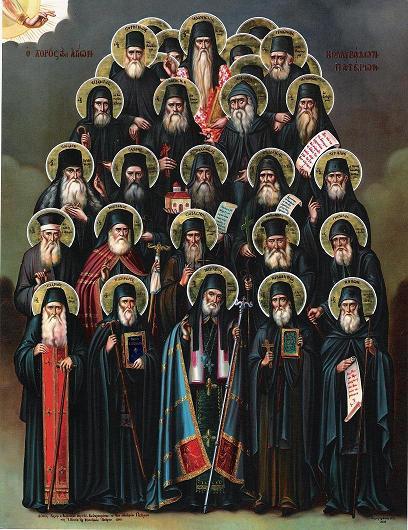
Kollyvades Fathers

… What makes Papadiamandis’s treatment of religious themes unique, apart from the use of the modern novel and short story as a medium, is that his vision is formed by the truly praiseworthy, though much-maligned, Kollyvades fathers. These modern fathers, devoted to the tradition of the Philokalia, refused to separate liturgical practice from dogma and spiritual endeavor for the sake of secondary expediencies of convenience or practicality. They understood that the true goal of liturgy, dogma, and spiritual endeavor is union with Christ. All the details in the rich tapestry of Orthodoxy must serve that goal, or they fray into an incoherent tangled mass of strands leading nowhere at all. The Kollyvades fathers were Papadiamandis’s teachers, and by experience he knew the benefits of following their guidance. …

For Papadiamandis, the way the divine services are conducted and the texts and actions called for by these services form a unity. In particular, humility rather than ostentation is the guide for how the priest should serve, how the chanters should chant, and how the Church should be adorned. This humility is not a forced posturing but the natural outcome of serving the Eucharist with awareness that Christ is the One offering and being offered. … the point of Papadiamandis’s narratives is that the downtrodden, wounded, and despised can be transfigured into the glorious people of God through the Church’s divine worship.

… Humility in liturgical celebrations enables the priest to be shepherded with his flock by Christ, the One True Shepherd. Humility enables the priest to console the suffering. Humility encourages the priest to be dedicated to the divine services and to celebrate them with the fear of God and precision [akriveia]. This precision and fear of God in serving the services as the typicon and sacred canons prescribe, in turn, sanctify the priest, crowning him with the wisdom and understanding needed to be a good physician to the souls under his care.

… A long-hidden literary treasure of Orthodox Greece, the early twentieth-century writer Alexandros Papadiamandis has often been called “the Greek Dostoevsky.” Like his Russian counterpart, Papadiamandis gave a realistic view of contemporary lives nourished with the rich springs of Orthodox spirituality. However, Alexandros Papadiamandis may not only be considered a “Dostoevsky of Modern Greece”, but one can argue, he is a “Charles Dickens of Modern Greece” as well.

“The main difference between the two great writers is, apart from the fact that Dicken’s childhood was much more painful than Papadiamandis’, that while Dickens got married, had a big family, made a fortune out of his writing, won high praise by his contemporaries on both sides of the Atlantic and enjoyed publicity, Papadiamandis remained a single, lonely, poor man, despised by most of his peers and avoided being in the public eye at all costs.” (*)

“The closest parallel to Papadiamandis’s short stories and novels is found in large sections of Fyodor Dostoevsky’s The Brothers Karamazov, which are likewise saturated with Orthodox teaching taken, in many instances, from texts read during the liturgical services. … Like Dostoevsky, Papadiamandis looked deep into the human soul and found that its beauty and nobility depend not on the power of its intellect, or on the intensity of its desire, but on its genuine relationship with God.”.

*

To read the full article “Greece’s Dostoevsky: The Theological Vision of Alexandros Papadiamandis, A Unique Witness to a Unique Opportunity”, The Foreword by Hieromonk Alexis (Trader), The Sacred Monastery of Karakallou, The Holy Mountain of Athos, go to: http://orthodoxinfo.com/phronema/greeces-dostoevsky-the-theological-vision-of-alexandros-papadiamandis.aspx

*

For more insights, read Dr. Andrew Herman Middleton’s interview of Dr. Anestis Keselopoulos, professor of Ethics, Pastoral Theology and Orthodox Spiritual Life at the Aristotle University of Thessaloniki, and author of Greece’s Dostoevsky: The Theological Vision of Alexandros Papadiamandis at http://www.roadtoemmaus.net/back_issue_articles/RTE_34/Greeces_Dostoevsky.pdf

*

(*) Mystagogy, The Weblog of John Sanidopouloshttp://www.johnsanidopoulos.com/2009/12/gleaner-christmas-story-by.html

*

Alexandros Papadiamantis’ work is seminal in Modern Greek literature. … It is a body of work, however, that is virtually impossible to translate, as the magic of his language is founded on the Greek diglossia: elaborately crafted, high Katharevousa for the narrative, interspersed with authentic local dialect for the dialogue, and with all dialectical elements used in the narrative formulated in strict Katharevousa, and therefore in forms that had never actually existed. 

Unfortunately not many of his stories are online, but I found one titled “A Village Easter”, Memories of Childhood at http://www.roadtoemmaus.net/back_issue_articles/RTE_34/A_Village_Easter.pdf

A Greek Dostoevsky (I)

papadiamandis41

.. and Charles Dickens

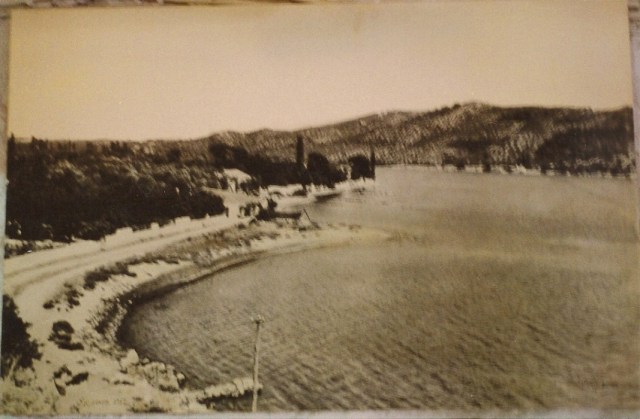
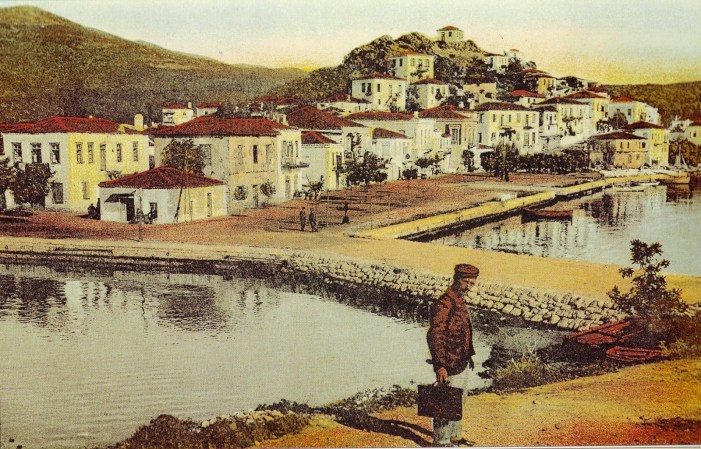
One of the greatest figures in modern Greek literature, Alexandros Papadiamandis was born on the Greek island of Skiathos on March 4, 1851, “the second Sunday of Lent and the feast day of Gregory Palamas, while they were singing the triadiká in church” (as we are informed by his fellow countryman Papa-George Rigas, distinguished scholar of folk traditions and specialist of the liturgical typicon).

[For those in a hurry, you may skip the short biography, and go straight to his short story link at the bottom of the page]
papadiamandis21

While this first intimation of God’s favor appeared during Papadiamandis’s birth, the second took place during his Baptism:

“He was baptized on the Monday of Bright Week and named Alexandros. Something unusual happened while the priest, Papa-Nicholas, performed the Baptism; as he poured the oil in the baptismal font, the oil immediately made the form of the cross on the water. Papa-Nicholas interpreted this strange phenomenon, saying, “This child will be great.”
papadiamandis22

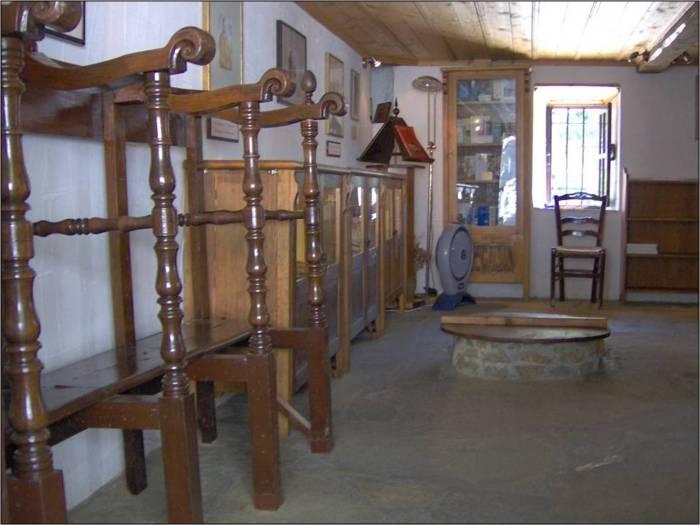
His father was the pious priest Adamantios Emmanuel. Papadiamandis writes that he was “a beneficent guide in all ecclesiastical questions and a sublime adornment of ecclesiastical celebrations” in the church of the Three Hierarchs and in the country chapels of Skiathos.
papadiamandis40

From an early age, Alexandros followed his father around the island helping him, sometimes in the altar and sometimes at the lectern as chanter. With his exceptional sensitivity, Alexandros treasured his experiences of sharing this liturgical service with his father. His heart was filled with and his nous was instructed by images from the priestly life and the Church’s services. He was so influenced by them that most of the scenes he chose to paint as a child were taken from the life of the Church. Reflecting on this time, he writes in his autobiographical memoir, “When I was young I would paint Saints, or I would write [hymnographical] verse.”

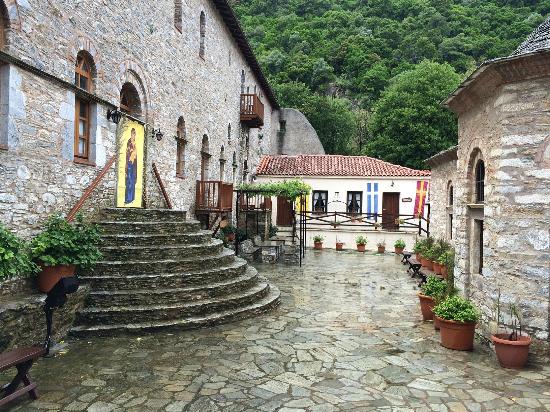
From his childhood years, Alexandros had the opportunity to live the tradition of the Kollyvádes fathers (those Greek Orthodox Athonite elders involved in the eighteenth century movement that inspired spiritual renewal and a return to more traditional liturgical and spiritual practices). This tradition had been preserved on Skiathos through the presence of a monastery built by the Kollyvádes, the Monastery of the Annunciation. Although the monastery was in decline during Papadiamandis’s later years, the diligently preserved kollyvadian tradition remained alive in the inhabitants of the island. He would later write, “In this small monastery [of the Panagia of Kounistras in Skiathos] at the end of the eighteenth and beginning of the nineteenth century, six of my relatives were priest-monks.” Papadiamandis gives an account of the monastery’s spiritual life and foundation on Skiathos:

Papa-Gregory…the ascetic, descended from the heights of Athos(7) together with his elder, Papa-Niphon, and thirty other monks. They sailed to the island of Gregory’s birth [Skiathos], and there, in the gorge of Angallianous, they built a beautiful, awe-inspiring monastery—patriarchal, Stavropegic, and coenobitic—with an exquisite, very fine church, built with great care. It was so beautiful that during those years, at the beginning of the nineteenth century, it was famous and enjoyed great respect among the monasteries of Athos. These ascetics…were the so- called Kollyvádes, who were under persecution on the Holy Mountain, as they insisted on precisionx (regarding frequent communion), and on many other things.
papadiamandis12

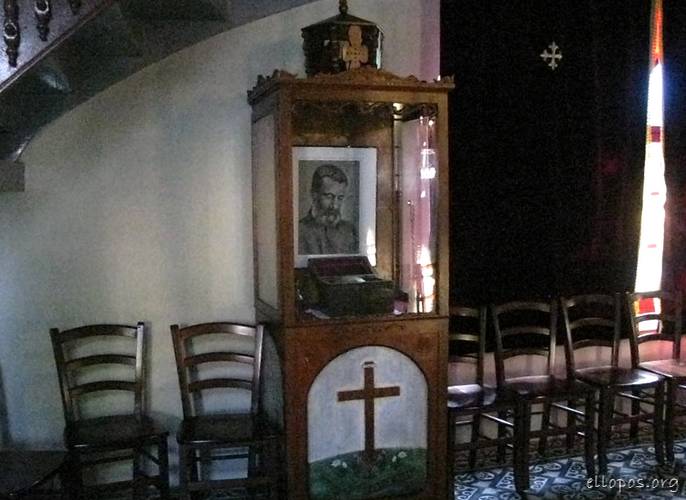
The renowned Elder Dionysios was a distinguished spiritual father and learned priest-monk who lived on Skiathos, whose roots were in the kollyvadian tradition. Papadiamandis knew him personally and did not hide his admiration for him. He was “the inspired spiritual father in the small monastery of the Prophet Elijah.” Papadiamandis had such monks and monasteries in mind when he wrote, “the rule of prayer should be complete, following all the old typicons, with the vigils and pre-dawn Matins, with all the appointed verses and readings from the Psalter.”
papadiamandis14

Papadiamandis was initiated into this kollyvadian—the genuine Orthodox—tradition, in his own home by his father, Papa-Adamantios, and by the broader world of the Church in Skiathos. In an unsigned obituary for his father, he wrote that

Papa-Adamantios, like all of the older priests of the island, was taught how to celebrate the Mysteries(12) by those venerable Kollyvádes (http://orthodoxwiki.org/Kollyvades_Movement), who, at the end of the last century, established the Monastery of the Annunciation…which became a seedbed of humble priests for our island, priests who were lovers of the divine services. Simple and virtuous, they enjoyed the love and respect of the inhabitants, having no affectations or hypocrisy, and displaying no vanity as they lived their lives as priests.
kollyvades1

Seeds of spiritual struggle that had been planted in Papadiamandis during his childhood and adolescence at home and in the wider environment of Skiathos were brought to fruition when he went on a pilgrimage to the Holy Mountain for a few months at the age of twenty-one. In one of his stories, we read about some of the events of his visit, mainly at the Skete of Xenophontos, and we perceive how the charm of the Holy Mountain was an inspiration for him. While there, he met many ascetics and hesychasts and became familiar with the liturgical life of the monks. He was enthralled by the vigils of the monastics and recorded in his heart not only the strict typicon and the Byzantine melodies but also the spirit that governed it all. In this way, Athos and its traditions affected the path his life took and enriched it with unforgettable memories.
papadiamandis8

Given his rich spiritual upbringing, experiences, and heritage, it is only natural that Papadiamandis would choose to spend his life within this rich Orthodox tradition, preserving the Orthodox liturgical ethos through his writings and life. The critics of his age believed that there was little value in a detailed description of “how a village priest went to celebrate the liturgy in a country chapel for a little community of peasants or shepherds, who and how many took part in the festival, and what their customs were like.” Papadiamandis, however, did not regard the celebrations as mere holidays, but himself lived the events and the life of the Church as the center and foundation of all events and all life.
planas4

Papadiamandis moved within this ecclesiastical environment and within the wider Greek tradition. He lived both aspects of this tradition, Ancient and Byzantine, in a diachronic unity, which spanned the ages. He had utter integrity, both as a person and as a Greek, within whose Hellenism was Byzantium and in whose love for Byzantium might be discerned Hellenism. In his texts, Ancient Greece resembles a flower that, wilting from its desire for the truth, then bears great fruit in the warmth of the Sun of Righteousness [Christ]. When history is viewed as a progression toward the discovery of the fullness of the truth of Orthodoxy, tradition truly lives, and history is kept from being fragmented. Other important figures in modern Greek literature such as Photios Kontoglou and, even more so, Nikos Gabriel Pentzikis would act from this perspective later on, with both their pens and their brushes. Together with our author, they are regarded as solid links in this tradition.

God favored Papadiamandis with many gifts, and he struggled to use them in a way that would bear the most God-pleasing fruit. The reverent and liturgical ethos expressed through Papadiamandis’s writings and life bear witness to the successful cultivation of his gifts.
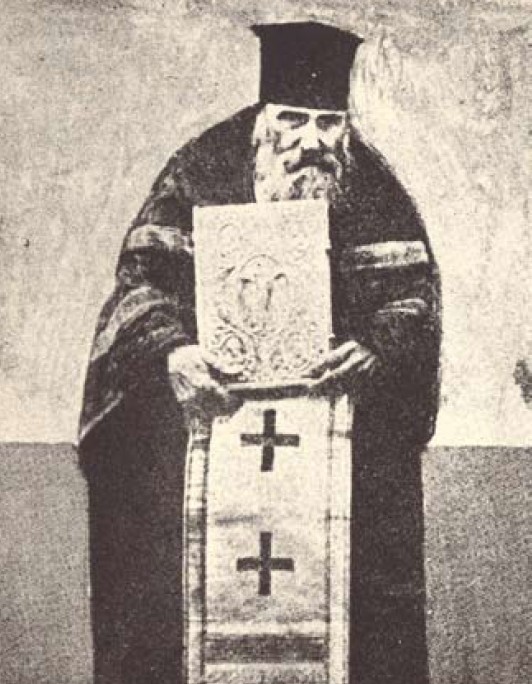
planas2

Papa-Nicholaos Planas

“It was in 1887 that he found what could be described as his spiritual bolt-hole in the turbulent and often harsh world of the metropolis: the small church of the Prophet Elisha, set in the courtyard of a private house in the old part of the city, under the rock of the Acropolis. There Papa-Nicholaos Planas, a simple priest born in the same year as Papadiamandis, a man of prayer and of great spiritual gifts, would regularly hold vigil services, gathering people from all walks of life into the crucible of the little church. Papa-Nicholaos was canonized in 1992.
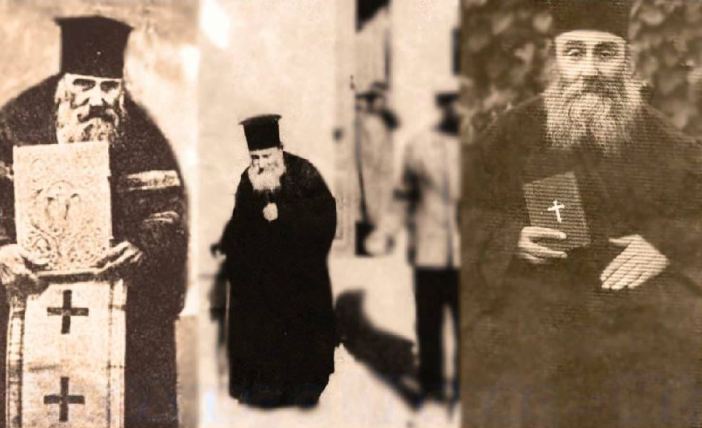
planas5

planas1

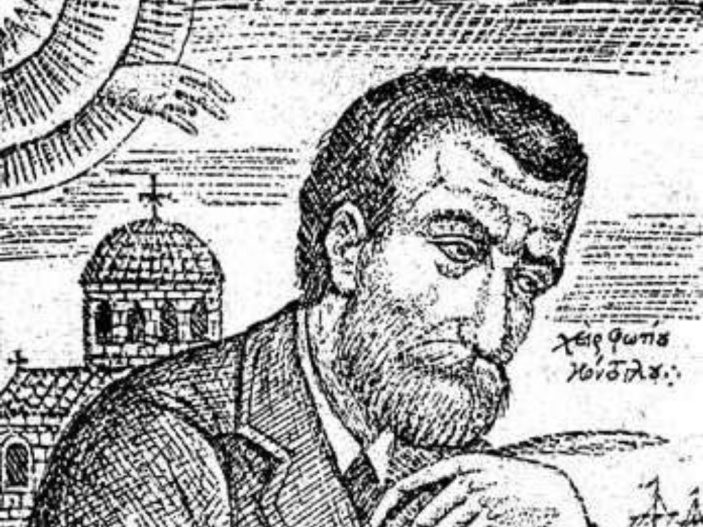
Papadiamandis never married. He was a shy and retiring man, as the few extant photographs of him testify, a man seemingly not of this world despite his acute observations of it. He also had to provide for his unmarried sisters at home. But despite his introspective nature he had a small circle of close friends, including Pavlos Nirvanas and Yannis Vlachoyannis, well-known Athenian men of letters who on various occasions undertook the role of literary agents and helped him during hard times.” (http://deniseharveypublisher.gr/people/alexandros-papadiamandis)
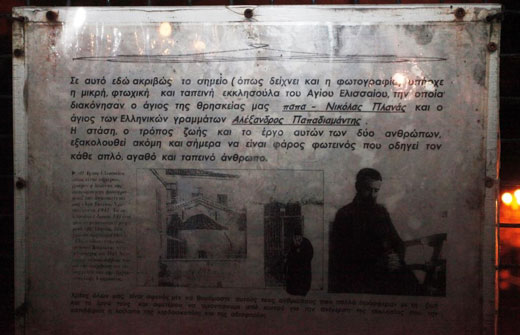
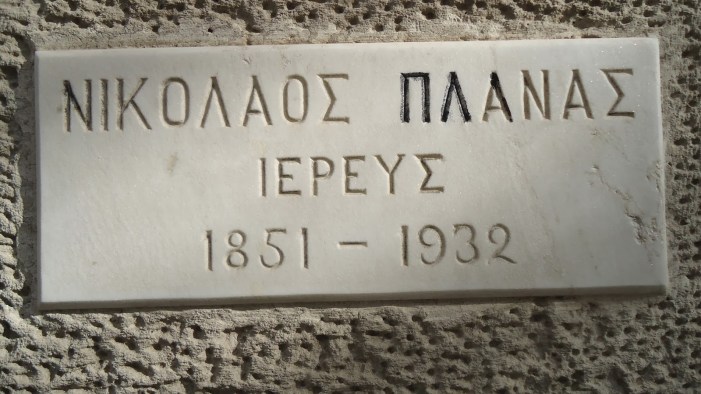
planas7planas8planas9

Papadiamantis’ longest works were the serialized novels “The Gypsy Girl,” “The Emigrant,” and “Merchants of Nations.” These were adventures set around the Mediterranean, with rich plots involving captivity, war, pirates, the plague, etc. However, the author is best remembered for his scores of short stories. Written in his own version of the then official language of Greece, “katharevousa” (a “purist” written language heavily influenced by ancient Greek), Papadiamantis’ stories are little gems. They provide lucid and lyrical portraits of country life in Skiathos, or urban life in the poorer neighborhoods of Athens, with frequent flashes of deep psychological insight.

Papadiamantis’ deep Christian faith, complete with the mystical feeling associated with the Orthodox Christian liturgy, suffuses many stories. Most of his work is tinged with melancholy, and resonates with empathy with people’s suffering, regardless of whether they are saints or sinners, innocent or conflicted.

His work is seminal in Modern Greek literature. … It is a body of work, however, that is virtually impossible to translate, as the magic of his language is founded on the Greek diglossia: elaborately crafted, high Katharevousa for the narrative, interspersed with authentic local dialect for the dialogue, and with all dialectical elements used in the narrative formulated in strict Katharevousa, and therefore in forms that had never actually existed.
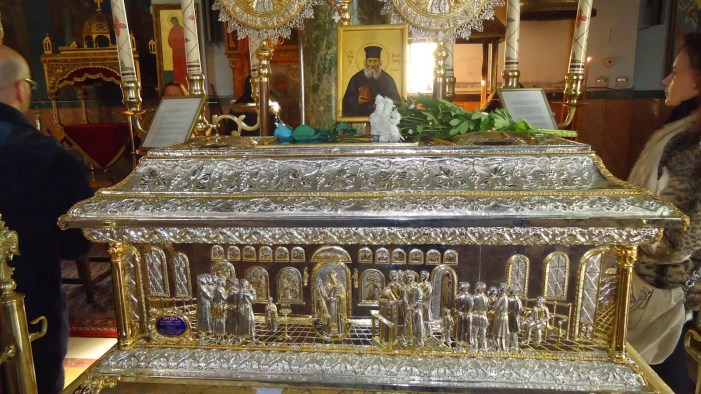
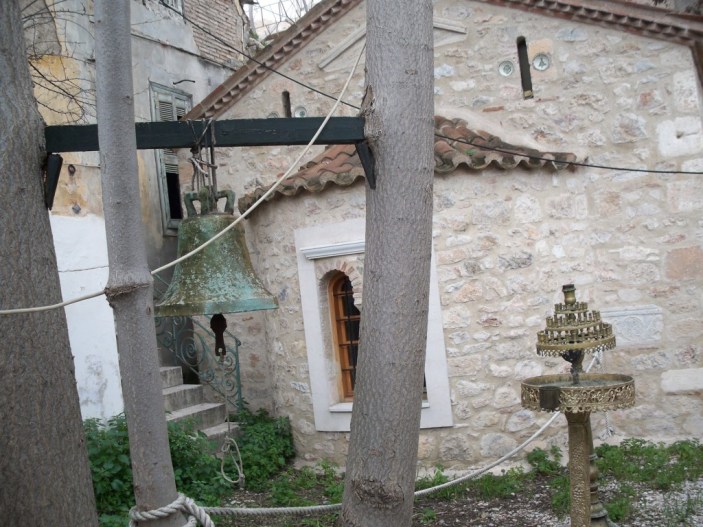
planas10

planas6

Papadiamandis desire to glorify God is shown even more in the way he ended his life and in his attitude toward death. In a prayer he offered at the end of a poem entitled, “To the Little Panagia in the Turret,” he beseeches her, “comfort me, as well, my Panagia, before / I depart and will be no more.” In a letter written by Papa-George Rigas, we learn about the last moments of Papadiamandis’s life on earth:

His repose took place as follows: He became ill on the 29th of November 1910. On the third day of his illness, he fainted. When he revived, he asked, “What happened to me?” “It’s nothing, a small fainting spell,” his three brothers who were at his side told him. “I haven’t fainted,” Alexandros said, “in so many years; doesn’t it seem that it’s a prelude to my repose? Get the priest immediately and don’t delay.”… Soon after, having been called [by his brothers], the priest and the doctor arrived at the same time. Papadiamandis was, above all things…a pious Christian. So, as soon as he saw the doctor, he asked him, “What are you doing here?” “I came to see you,” the doctor told him. “Keep quiet,” the sick man told him. “I will first follow the ecclesiastical path [and call upon the help of God], and then you can come later.”…

He had control of his faculties until the end and wanted to write a story. Until the end, his mind was dedicated to God. On his own, a few hours before his repose, he called for the priest to come so he could partake of Holy Communion. “Perhaps later on I won’t be able to swallow!” he explained. It was the eve of his repose and, as irony would have it, it was the day they told him that he would receive the medal of the Cross of the Savior. On the eve of his repose, the second of January, he said, “Light a candle [and] bring me an [ecclesiastical] book.” The candle was lit. The book was about to be brought. However, Papadiamandis wearily said, “Don’t worry about the book; tonight I will sing whatever I remember by heart.” And he began to chant in a trembling voice, “Thy Hand Touching” [a troparion from the Hours of the eve of Theophany].
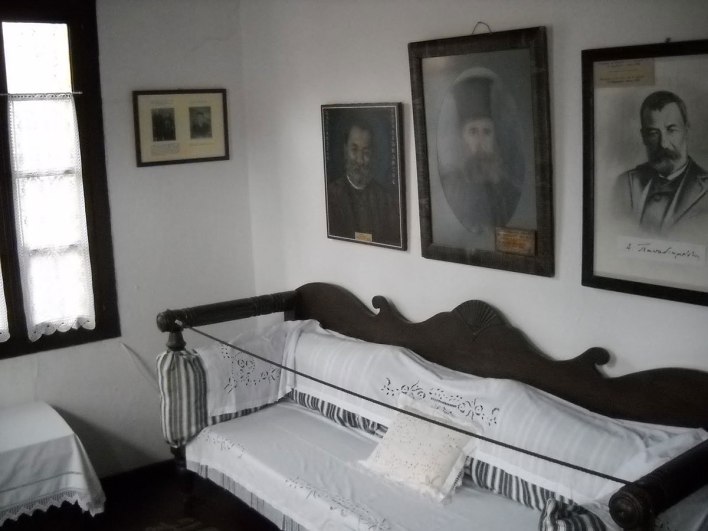
papadiamandis3

Papadiamandis sang this final hymn and, as day broke between the second and third of January of his sixtieth year, he wearily fell asleep. After passing through the furnace of pain and trials and tasting many of the bitter dregs of life while faithfully living the liturgical life of the Church, he now stretched out his strong wings to fly to the upper chapel of the angels, toward which he had oriented his whole life. It snowed on the following day and, like Uncle Yiannios in the story, “Love in the Snow,” Papadiamandis lay down his worn-out body, presenting himself, his life, and his work before the Judge, the Ancient of Days, the Thrice-Holy. This was, finally, the only judgment with which he was concerned as he passed through life. Though his life and struggle in this world have ended, his work will continue to give witness to his devotion to the liturgical tradition of the Orthodox Church for generations to come.

*

A Short Biography of Alexandros Papadiamandis, From the First Chapter of A. Keselopoulos, Greece’s Dostoevsky: The Theological Vision of Alexandros Papadiamandis (2011)

*

Unfortunately not many of his stories are online, but I found one titled “The Gleaner: A Christian Story” from 1889 at http://deniseharveypublisher.gr/assets/0000/0372/PAPADIAMANTHS_-_The_Gleaner.pdf