Therefore Go, Οὖν

light2

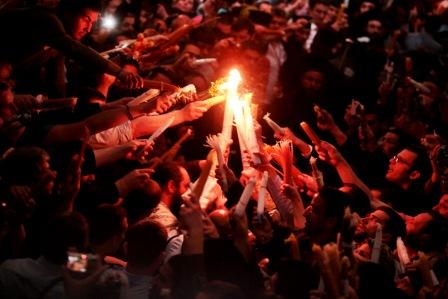
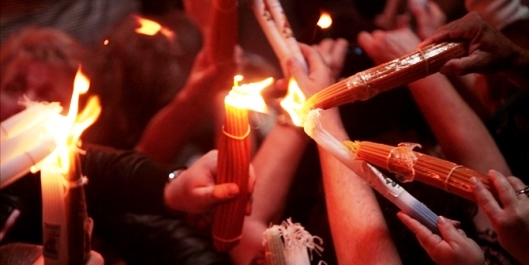
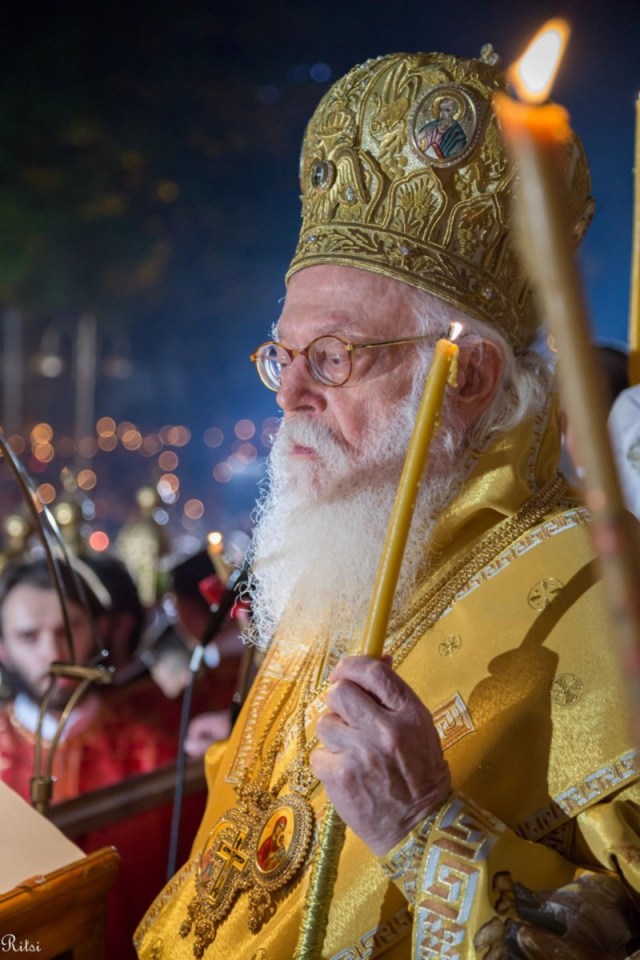
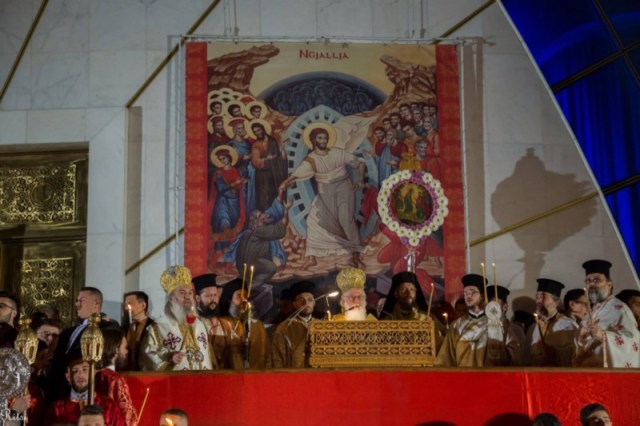
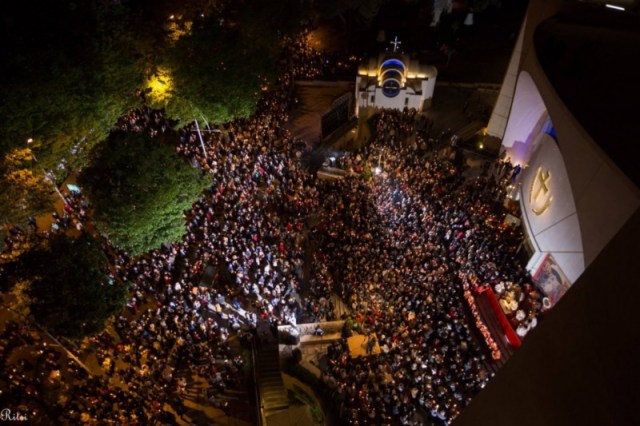
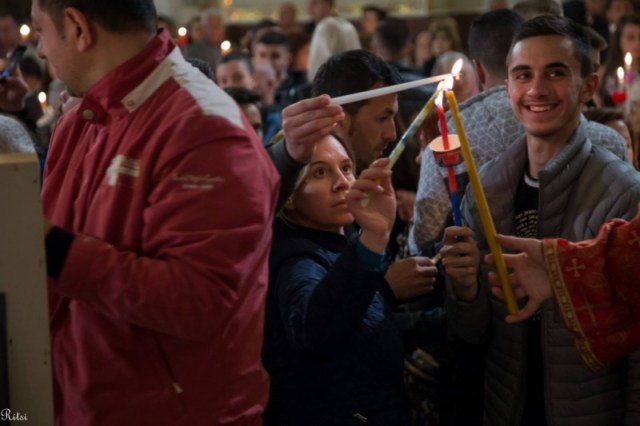
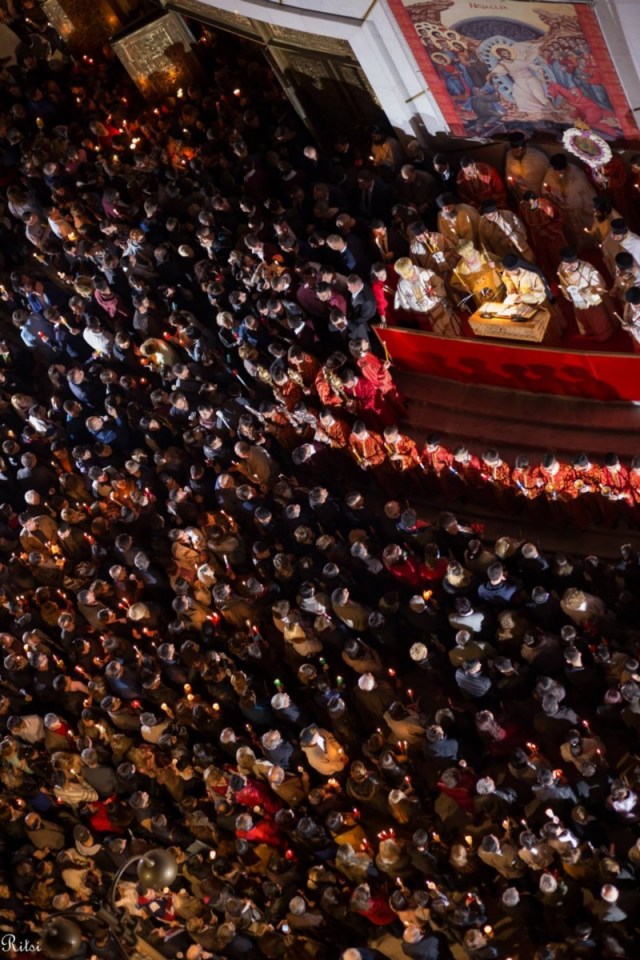
“Our Easter joy is offered in order to be shared with others. … A pious custom among Orthodox Christians is to share with others the light of Christ the moment their candle is lit. This sharing of Christ’s Light highlights the duty of the faithful to evangelise, to spread the Evangelion (Ευ-Αγγέλιον), the Good News of our Lord’s Resurrection, like the Apostles. Our resurrected Lord said: “All authority in heaven and on earth has been given to me.”  And He added:  “Therefore go and make disciples of all nations” (Matthew 28:18-19). Πορευθέντες οὖν.

So, there is one consequence, one “therefore”, one “οὖν”: Don’t limit yourselves to your own personal salvation and joy; you have a holy responsibility to spread this Evangelion to all those who ignore this Truth. This Hope must not be kept hidden, must not be confined to only one community. This Hope is for all peoples, for the renewal of all mankind.” (Archbishop Anastasios of Albania, Easter Message 2017)

light1

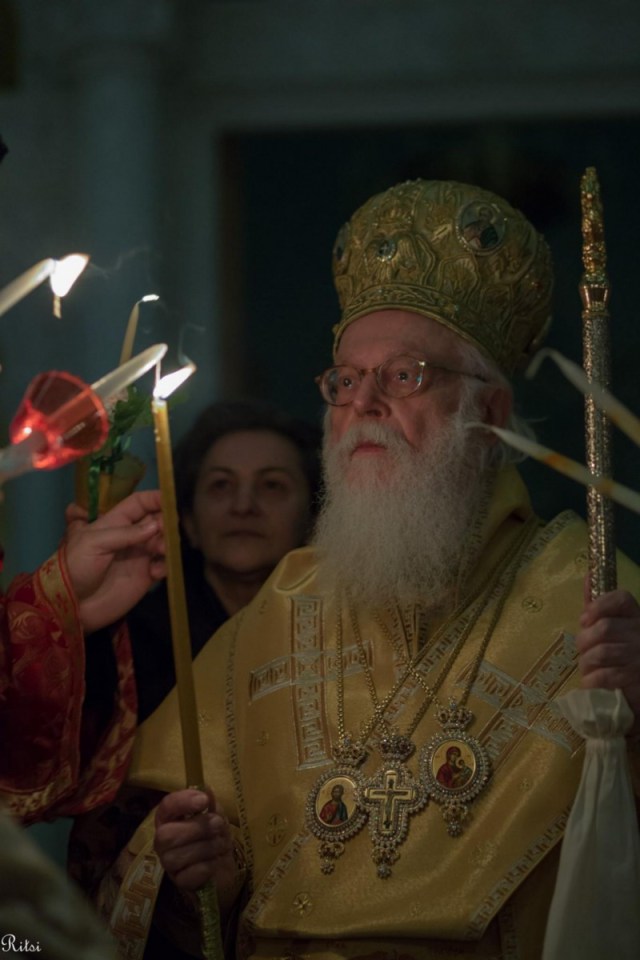
“A Candle Before the Icon”: Archbishop Anastasios

a1a2

“As a young person I had been moved by stories of Father Damian, a Catholic priest who served lepers in Hawaii, and also Albert Schweitzer. I asked myself whatever happened to our missionary tradition in the Orthodox Church? Where were the Orthodox missionaries? What are we doing to share our faith with others? What are we doing to reach all those people who have never heard the Gospel? I realized that indifference to missions is a denial of Orthodoxy and a denial of Christ. How had it happened that a Church called to baptize the nations was so indifferent to the nations? Saint Paul brought the Gospel to Greeks. Who were we bringing it to?”

It was a pivotal question that would shape the rest of his life.

a3

Indifference to missions is a denial of Orthodoxy and a denial of Christ.

a4a5

‘Krishti u ngjall, Zoti eshte me ne, lavdi Zotit!’ — ‘Christ is risen, God is with us, Glory to God!’

a6a7a8

While his official title is Archbishop of Tirana and All Albania, Anastasios has occasionally been called the Archbishop of Tirana and All Atheists. It isn’t a title he objects to. “I am everyone’s archbishop. For us each person is a brother or sister. The Church is not just for itself. It is for all the people. As we say at the altar during each Liturgy, it is done ‘on behalf of all and for all. Also we pray ‘for those who hate us and for those who love us.’ Thus we cannot have enemies. How could we? If others want to see us as enemies, it is their choice, but we do not consider others as enemies. We refuse to punish those who punished us. Always remember that at the Last Judgment we are judged for loving Him, or failing to love Him, in the least person. The message is clear. Our salvation depends upon respect for the other, respect for otherness. This is the deep meaning of the Parable of the Good Samaritan — we see not how someone is my neighbor but how someone becomes a neighbor. It is a process. We also see in the parable how we are rescued by the other. What is the theological understanding of the other? It is trying to see how the radiation of the Son of God occurs in this or that place, in this or that culture. This is much more than mere diplomacy. We must keep our authenticity as Christians while seeing how the rays of the Son of Righteousness pass through another person, another culture. Only then can we bring something special.”

a9a10a12

People look at the difficulties of life here and say to me, ‘How can you stand it? It is so ugly!’ But for me it is so beautiful! It is God’s blessing to be here — not the blessing I imagined but the one I received. …

a13

“People sometimes ask me about my expectations, but I don’t know about the future! You can only do your job with love and humility. I am not the savior of Albania, only a candle in front of the icon of the Saviour.”

For more insights into Archbishop Anastasios legacy go to “A Candle Before the Icon: Archbishop Anastasios”, from Jim Forest’s book Resurrection of the Church of Albania, WCC Publications

Fixing Our Eyes On What Is Unseen….

Very timely blog post, by a Missionary in Nepal, for the little city hermit, whose journey of faith has truly led him places he never dreamed of going, led him to do things he would never believed possible, and to be used of Him in ways unimaginable. To his shame, he often gets discouraged …

missionary blog faith in God Divine providenceThis morning as I was walking the kids to the bus stop, I caught a brief glimpse of the mountains, but then moments later they were no longer visible. When I got back to the house, I went up on the roof and there they were, just peeking out from above the clouds.

And I realized something.

The mountains are always there. They are.

But most of the time they are invisible to the human eye. Covered with smog and clouds. Yet they are there.

Then I was reminded that isn’t that just like God. He’s always there, but most times we can’t see Him because “life” covers Him up, kind of like the clouds.

Even more so His plans for our lives.

Every now and then He gives us a glimpse of what is next. Just a little view. Then when we can no longer see, He says follow Me…

View original post 374 more words 

In Love, For Love, and By Love: Missionary Series IV

Families on Mission Vs. Single Missionaries


Families on Mission Vs. Single Missionaries

RTE: How has it been having your family in the mission field?

FR. LUKE: When my wife and I first went to Albania, many people thought that it was going to be very dangerous and that our children would suffer: “You are going to deprive your children of all the benefits of life in America.” Contrary to that expectation, we feel that our three children who were raised in the mission field were immensely blessed by the experience of learning another culture and language. They always appreciated what they had in America when they went back, but they also appreciated their mission home in Albania, which they thought of as their “real” home.

*

They’ve grown up with a very different world-view. They appreciate things that they would never think twice about if they had grown up in America. During our first years in Albania, we didn’t have running water every day. So, the kids learned to appreciate it. When we had water, we’d say, “Thank God for water. It’s great to have it.” During different periods, for months at a time, the electricity is off about five hours a day; in winter, maybe seven or eight hours. So they got excited when the electricity came on. Or, if we did have electricity, the tension was often so low that we couldn’t do something as simple as watch a video. I remember on one of our visits to the U.S., they wanted to watch a video, and came to my wife saying, “Mommy, if there’s enough tension can we watch television?” They still flip the switch to see if the electricity is working.

Families on Mission Vs. Single Missionaries

Next to our house in Albania we had a very tiny shop, nine by fifteen feet, with all different types of food – this was where we did most of our shopping. Once, when we were about to go back to America, my son Paul asked his mother, “In America, will they have shops as big as Uncle Soorie’s?” We laughed. It was beautiful to see how they were exposed to a different way of life. We lived in Tirana, the capital of Albania, and we were constantly exposed to beggars, poor people who came to our house every day asking for help. It was wonderful for our children to see this, day in and day out. They got used to getting things for the beggars, answering the door and coming and saying, “Oh, so-and-so is here.” We got to know these people by name, we visited their homes. When you live in suburban America you aren’t even exposed to them unless you go downtown. Many of these beggars truly became friends, and our kids loved them. They loved playing with them and saw them as human beings, not as beggars.

Families on Mission Vs. Single Missionaries

Another blessing of raising children in the mission field is community, both the indigenous Albanian community, the wonderful local people that were part of our life, and our co-missionaries who themselves had numerous children. At one time we had fifteen missionary children in the field, and they created such bonds of love and friendship. They weren’t exposed to the busyness, to the constant activities that American children are involved in. Their lives were very simple, and very fulfilled.

*

Neither my wife nor I have any sense of their being deprived, and one of our greatest regrets in leaving Albania after ten and a half years is that we have left at a time when our children are still young, and we are not sure how much they will remember. We often talk about going back into missions when they are a little older so that they not only remember, but can participate more fully. Even though they were young, we tried to get the idea across that they themselves were missionaries, that they needed to be witnesses. To whatever degree they could participate in our different activities, they did.

Families on Mission Vs. Single Missionaries

RTE: Growing up with cultural diversity must not only teach what is universal in human nature, but how to deal with differences early on.

FR. LUKE: Right. We Americans, unfortunately, are quite isolated from the rest of the world. The universal business language is English, so we think we can get anywhere speaking English. Having only Canada to the north and Mexico in the south, we aren’t exposed to many different cultures and languages and this is a great loss for us. It’s so enriching to be around the diversity found in a mission field, and to learn to see beauty in such diversity. One thing I tried to get across to the Kenyans, and later to the Albanians, was, “Sure, in America we have things that are nicer than in Kenya or Albania, but you have many aspects of your culture and life that we Americans can envy. Family connectedness, the support you have for one another, hospitality – how beautiful these things are! Don’t ever lose these aspects of your culture and think, ‘We want to become western, or American, because America is better in everything.’ There are certain things you can adopt from America that are beautiful, but don’t lose the beauty and richness that you have in your own tradition.”

*

Hospitality was something that always left the greatest imprint on me. I could travel to the poorest village in Africa and they would put on a feast. It was their responsibility to show love and hospitality to guests. It is the same in Albania. I don’t know who is more hospitable, the Albanians or the Kenyans, but they would put anyone in the West to total shame. Having almost nothing, they share whatever they have with whoever comes.

Families on Mission Vs. Single Missionaries

RTE: An American seminarian at Holy Cross Seminary told me about a depressed acquaintance who called one night, feeling suicidal. The seminarian invited him to come to the seminary for a few days for a change of scene and to be in a calm atmosphere. He agreed and the seminarian made the arrangements and cleaned an empty dorm room so that he could have his own space. The day his friend moved in, one of the Greek-born seminarians found out what was happening and insisted that the man take his own room, which contained his books and belongings, icons that were prayed in front of, and was a real home. The Greek seminarian slept in the hall on a couch outside the door so he could check on him through the night. The American seminarian said, “You know, I was so pleased that I’d found him his own space where he could have some privacy, where he could put his own things up – but actually what he needed was to be taken into someone else’s home and taken care of. I didn’t get it until I saw it.”

FR. LUKE: Yes, this virtue of hospitality is something missing in our American way of life. As missionaries, my wife and I saw hospitality as one of the greatest ways to express God’s love to the people. We wanted our home to always be open to people. We married right at the beginning of our time in Albania and it is interesting to think that my wife and I slept in our house alone perhaps three months out of the first five years of our marriage. We always had people coming, numerous people staying for months at a time. Our open home was a hallmark of our ministry. Even after the children started coming and we didn’t have as many overnight guests, we always had an open-door policy. There were people at our house every day. One of the difficult counter-cultural adjustments in coming back to America on sabbatical was that although we lived on campus at a seminary, no one came to visit. We lived there for four months and maybe a handful of people came to our house. And even when people came, they’d say, “I’m just here for a minute, I’ve got to run…” They’d stay briefly and then go on with their day.

Single Missionaries

Families on Mission Vs. Single Missionaries

RTE: We’ve been speaking here of missionary families. What opportunities are there for unmarried men and women? And in view of cultural differences, are single women limited as missionaries? What part do they play on a mission team?

FR. LUKE: The mission in Albania offers a good response to this question.

Families on Mission Vs. Single Missionaries

During the years I served there, of the 20-25 missionaries we had at any one time, we had a nice mix – usually about eight monastics, eight married missionaries, and six or seven single missionaries. Of the two dozen missionaries, about half were men and half were women. Also, about eight were clergy, and the rest laity. The unmarried missionaries played an important role in the overall outreach of the Church. In Albania, we had single missionaries who headed up our medical clinic, our elementary school, our post-secondary professional institute, as well as our development and emergency relief office. We also had single missionaries who taught at our seminary, who taught English in a variety of contexts, taught catechism, worked in administration, and who participated in our university ministry, among other things.

Families on Mission Vs. Single Missionaries

The Body of Christ has a need for everyone – men or women, married or unmarried. It is the same for the mission field. In fact, when a missionary team has a variety of members, it makes the overall witness that much more effective. Some people will relate well to a monastic. Others feel more comfortable with a married priest. Some prefer to approach a mother, or a married woman. Still others will listen to a single man or woman. All are part of one body, offering a unified witness. So there are surely opportunities for the monastics, the married, and the unmarried! In some countries, it isn’t appropriate for men to approach women and talk with them in public. Such societies need women missionaries, and this means both married and single women.

*

In the Protestant world of missions, single women really weren’t encouraged, or even allowed, in the mission field until the 1800’s. By the 1900’s, women outnumbered men as missionaries. Today, women far outnumber men, and this includes many single women. Women had to overcome many obstacles and prejudices before being allowed to serve in a variety of capacities, and this may be the same for the modern Orthodox missionary movement.

*

RTE: Do you have any specific counsel for unmarried missionaries?

FR. LUKE: My advice for single men or women is that they must be ready for some additional challenges. The loneliness of a new culture, the challenges of entering a new country, the frustrations of learning a language, and the normal difficulties and disappointments of the mission field can be overwhelming. As a married missionary, you have your spouse to support and comfort you; the monastics may be living in community and have another type of support; but the single missionary can feel the loneliness and frustration in a magnified manner. A single person has to be ready for these added challenges. He or she needs to be a strong person, and also be able to find support in time of need. Their co-missionaries need to be sensitive to this extra burden, and try to reach out to them.

Families on Mission Vs. Single Missionaries

One way to help overcome these additional struggles would be for single missionaries to live in community, either with other missionaries of the same sex, one of the missionary families, or even with an indigenous family. Living with a family of the country can be one of the fastest ways to learn the language, culture, and ways of the host country. Of course, other challenges may arise as cultures clash and one’s privacy may be lost.


In Love, For Love, By Love: Missionary Series III

How can I become a long-term missionary?

Archbishop Anastasios of Albania Orthodoxy missionary work

Long and Short-Term Missions

RTE: Can you tell us what it takes to be a long-term missionary? You’ve spoken of the beginning stages, how about later?

FR. LUKE: Archbishop Anastasios has good advice for people thinking of going into the mission field: “It’s always better to say you are going for one year and stay for ten, than to say, ‘I am going for ten years,’ and after the initial enthusiasm fades away, you realize you can’t handle it.” There is wisdom in this: go step-by-stepand God will give you grace and strength.

Archbishop Anastasios of Albania Orthodoxy missionary work

The goal of missions is to establish an authentic Eucharistic worshipping community in the people’s own language and culture

In my early 20’s, when I attended Pennsylvania State University, I contemplated entering the Peace Corps. When I learned more about it though, I was afraid, because I wasn’t sure I could handle the two-year commitment to leave my country and live in an impoverished third-world village. I turned down the opportunity, but God in His own way took me step-by step. He didn’t reveal to me, “In the future you will spend ten years in Albania.” No. First, I went on a short-term mission team for one month to Kenya. The following year I returned for a six-month commitment, and these six months turned into a year of service. After returning to Africa three times over the next four years, I began looking at Albania as a place where I could serve as a long-term missionary. I suggested to my wife, “Let’s make a three year commitment, and then see.” God took us through those three years and gave us the strength we needed. Those three years turned into five years, seven years, a decade. We might have been frightened, had we known at the beginning that we would serve in Albania for ten years, but God took us by the hand and led us.

Archbishop Anastasios of Albania Orthodoxy missionary work

Don’t frighten yourself by thinking, “How can I become a missionary and live in another culture for so many years?” Just go, make the sign of the cross, and start working. Be open and willing to stay for longer, but tell yourself, “I am going for one year or for two years, and see how it works.” But keep praying, “Lord, if You give me the grace, I will stay as long as You want me here.”

Archbishop Anastasios of Albania Orthodoxy missionary work

RTE: You mentioned the short-term mission teams of two or three weeks. I imagine that it’s helpful for people in a foreign country to feel that others appreciate them enough to come, but what are the real benefits of this short-term experience?

FR. LUKE: One has to be very clear about the purpose of missions. The goal of missions is to establish an authentic Eucharistic worshipping community in the people’s own language and culture. If one is going to serve in a place that isn’t yet Christian, this will take many years and involve great effort, sacrifice, and struggle. To achieve anything, the missionary must commit himself to living among the people long-term and learning the language and culture.

With the ease of travel and technology, a new phenomenon has arisen in the past thirty years in the mission field – “short-term mission teams” – which send people for a week or two, or a month, to a certain area. They often have a specific project: to build a church, run a catechetical program, etc.

Orhtodoxy missionary work

There is value in these short-term projects, and the first and greatest value is for those who are going. It exposes them to a different culture, a different people. For westerners it is often the first time they’ve seen a third-world country up close, with of all its poverty and hardship. It’s an eye-opening experience. For many, this initial experience is an exciting adventure, and although these short-termers go with the intention of offering something, they receive much more than they can offer, and usually return to their home country full of enthusiasm. They often become ambassadors for the missionary movement; they speak in churches and their enthusiasm is contagious. It’s great for them and for the church that sent them.

But what did they really offer for the week, or month, or two months they were in the mission field? They offered something. Perhaps they built a building – but I’m sure the indigenous people could have built the building themselves if they’d had the money. Perhaps they created some nice friendships, and that’s important to encourage people, but they have to realize that what they offered was very limited.

It is not going to transform, convert, and change people’s lives. At best it is going to complement the work that’s already being done by the long-term missionaries and the local Christians who live there. Some churches are now sending many short-term teams; you can get the people, they’re enthusiastic, it motivates people back home. But people are still afraid to go into long-term mission and this “short-term” trend can create a great danger for the future.

Short-term teams are not the goal of missions, but they can support the overall effort, and short-termers need to be challenged as to where they are going to take this experience when they return home. In any group of twenty short-term missionaries who go somewhere for a month, my goal would be that at least one or two of them seriously consider long-term mission work.

Orthodoxy missionary work

For others, hopefully, this incredible experience will help to transform them into more serious Christians. Lord willing, they will use this experience as a stepping stone in their own spiritual journey. Perhaps they won’t become long-term missionaries, but they will be more dedicated Christians in whatever they do. Hopefully, the majority of people who go will at least understand missions in a new way, and even if they never become long-term missionaries, they will become supporters and partners of those in long-term missions.

There are two results we don’t want from short-term missions. First, we don’t want these participants to think that they are missionaries who have fulfilled their responsibility in missions. They are not missionaries, but members of a missions team. They now have a responsibility to use the experience they’ve received for the glory of God and to spread the spirit of missions in the Church.

The second danger is that we don’t want short-term participants to return home and, after an initial month of excitement, put the experience away as a great adventure and go on with their life as they lived it before. We would consider both of these results as a failure in our short-term strategy.

Orthodoxy missionary work

I have participated on five short-term mission teams, four times as a leader. I have also received five short-term teams while being a long-term missionary. So I’ve been exposed to this concept of missions from a variety of angles. These short-term experiences radically changed the direction of my life, so I’m very grateful for the experience. They exposed me to the reality of missions work and led me to longer stays in Africa. Such trips filled me with enthusiasm and zeal for missions, and led me to eventually study theology at Holy Cross Greek Orthodox School of Theology, as well as to study missiology at Fuller Seminary’s School of World Missions.

orthodoxy missionary work

When I was a long-term missionary receiving missions teams, I did all the prep work for the teams, and it took a month out of my schedule each time to accommodate them. In certain cases it was worth it. Some teams did great and really complemented the ministries we were already doing. But to be honest, other teams were very demanding and in the end, the benefit that they offered was minimal. In those instances, it became a very time-consuming project that didn’t have a lot of value for our overall mission. Short-termers need to be aware of this, and when they go, to be humble about it.

RTE: I imagine they are more like pilgrims than missionaries, guests of Orthodox missions who may be able to help out in a small way.

FR. LUKE: Yes, I always tell the short-termers that they shouldn’t call themselves missionaries. They aren’t missionaries. They should think of themselves as visitors to a mission field. Some don’t like to hear this. They would like to think, “I’m following the path of the great missionaries; I’m a missionary now.” That’s quite naive.

Orthodoxy missionary work

To Be Continued …

Go here for Part I

Go here for Part II

Missionary Musings

missionstatement-gifts

All my previous days have been spent in quietness, stillness and intense studying. I have been reflecting on my Romanian monasteries’ pilgrimage and preparing for the next one to Cephalonia and Ithaca for the Dormition Feast. I have also been corresponding with my English brothers and sisters in Christ, preparing for my return to the UK by the end of the summer.

Central in all my thoughts, studies, activities and endeavours was the Holy SpiritOrthodoxy and Missionary work.

I started studying Archbishop Anastasios’ of Tirana, Durrës and All Albania life and works, and was inspired by his questioning of the establishment’s accepted apathy toward missions. Then, I turned to the Acts of the Apostles and marvelled at the workings of the Holy Spirit and the Apostles’ zeal and love for God and His Church! Next, I  examined various missionaries’ blogs and websites, and I also watched a number of very inspiring videos: Michael Harper‘s talk on the Holy Spirit, part of THE WAY, the outreach programme of the Institute for Orthodox Christian Studies.

Then

and

http://www.youtube.com/watch?v=RTtiZgvmwdA

and

a two-part documentary, where renowned British actor David Suchet undertakes an epic journey spanning the Mediterranean. His inspiration is a charismatic individual whose own travels through this region, two thousand years ago, changed the world forever – Paul the Apostle:

http://www.youtube.com/watch?v=EgHOriTk2OQ

Do you remember how all this got started? By a disturbing comment by a ‘cradle’ Orthodox that all ‘others’ are ‘foreigners’ and ‘strangers’. Now after a week I know that such an attitude cannot be farthest from the Truth. I understand I have so much more to learn yet but I am already convinced that

The love of God is manifested in mission“,

Indifference to mission is a denial of Orthodoxy“; 

“Inertia in the field of mission means, in the last analysis, a negation of Orthodoxy, a backslide into the practical heresy of localism”;

“Mission was not the duty of only the first generation of Christians. It is the duty of Christians of all ages … It is an essential expression of the Orthodox ethos.”;

“Church without mission is a contradiction in terms…. If the Church is indifferent to the apostolic work with which she has been entrusted, she denies herself, contradicts herself and her essence, and is a traitor in the warfare in which she is engaged.”

May the Holy Spirit empower us to be faithful in fulfilling the commandment of Christ to “Go into all the world and make disciples of all Nations, baptizing them in the name of the Father, and of the Son and of the Holy Spirit, teaching them to observe all [things that He has] commanded”,  so that all people may be saved and come to the knowledge of the truth.   “Thy Kingdom come on earth as it is in Heaven”!

*

May we witness to the truth, and by God’s grace and in the power of the Holy Spirit, to reveal Christ’s way of sanctification and eternal salvation to all.

How Romanians React to Foreigners

from-romania-with-love-1-728

Suzana Monastery Retreat  II, or An Anthropological ‘Field Trip’ Insights,  and Communism Jokes 😃

Doamne Ajuta! I am obviously not the only pilgrim at Suzana Monastery, but I am the only pilgrim who is NOT Romanian. I am immediately spotted and ‘targeted’ , especially by a group of Romanian students who belong to an Orthodox youth organization and do volunteer work at the monastery in the summer. They are here to help with the housekeeping, farming and agriculture. And with chanting.

How to ‘annoy’ a Romanian (1)

Mistake Bucharest for Budapest.

Never ask a Romanian if he lives in Budapest. That’s the capital sin, the perfect way to end a potentially interesting conversation. Yes, Budapest is a capital city, and there’s a big chance you’ll nail it with this guess — but only if you’re speaking to a Hungarian! We’re so tired of hearing, “Good evening, Budapest!” every time an international act has a concert in Bucharest. Metallica did it, Lenny Kravitz did it. And many others. But they had bodyguards. You, on the other hand, will be alone in front of an outburst of anger.

*

The Romanian hospitality, warmth, enthusiasm and curiosity about anything Greek, or foreign for that matter, AND Orthodox CANNOT be exaggerated! This group of students at Suzana Monastery instantly become my ready interpreters and eager translators, my willing tutors for Romanian chanting and they are so full of questions about my job, my studies, my travels, my pilgrimages, my adopted country UK, my home country Greece and its Saints, especially St. Paisios, about everything, to the point of collapse!

*

I may be on a pilgrimage in Romanian monasteries, but St Paisios’ the Athonite, my patron Saint‘s, presence is strongly felt all over Romania. Plenty of icons of his and books with his services and spiritual counsels in all monasteries and churches I have been so far! Esp. on the 12th of July the faithful all over in Romania were holding Vigils and praying Akathists and Supplication canons, asking for his prayers. Wherever I go, the moment Romanians realise that I am Greek and my home town is near Souroti, they start asking for my telephone number and email, so that I can make arrangements and help them go and venerate his tomb. 

How to ‘annoy’ a Romanian (2)

Ask us about vampires.

In 1897, the Irish writer Bram Stoker published a Gothic novel entitled Dracula. His story made Transylvania more famous than any tourism promotion campaign ever could. By using some historical facts, he linked Vlad Tepes, the Voivode of Wallachia, to his main character, Count Dracula, the vampire. Unfortunately, that means foolish tourists now come to Transylvania expecting to see garlic hanging by doors or people walking around with wooden stakes in their pockets. Transylvania is a peaceful, hilly area with many traditional houses and fortified churches. The real threat back then wasn’t exsanguination, but impalement — the Voivode Vlad’s favorite method of execution. And that isn’t fiction.

Their energy is indomitable, even when our conversation lasts for hours while standing after very long services outside the church at dusk until midnight and …! Their effusion is so contagious and there is no end to the exchange of telephone numbers, emails and addresses for the planning of future pilgrimages in Romania and Greece and exchange of Saints! These ‘buzzing bees’ with bright eyes and brighter smiles are to follow me everywhere from now on (when they are not busy with their obediences) yet their ‘buzzying’ mysteriously does not interfere with the silence that invades me. It surely has to do with their kindness, love and purity in Christ.


If you have never experienced the intensity of Romanians’ love and hospitality, you may think I exaggerate. To give you just another example, while waiting for the bus to Bucharest from Thessaloniki, I sat at a nearby café and took out my Byzantine chanting textbook to practice! Yes, one has to be very careful with these diatonic genus and Greek:  A    Β     Γ   Δ     Ε Ζ     Η, Greek:       Πα Βου Γα Δι Κε Ζω Νη, English:     Pa Vou Ga Di Ke Zo Ni, [Re Mi   Fa Sol La Si   Do], [D   E     F   G   A   B   C ]

Can you imagine a Romanian in love with you, if that is their normal ??!!

Suddenly a Romanian interrupts me and ‘blurts’ out how excited she is for meeting me, and that she is returning back to Bucharest together with 4 Romanian musicologists, who were on a Byzantine chanting conference in Thasos, and pretty soon I am surrounded by 4 (even) more effusive, enthusiastic Romanians, reciting to me Homer in ancient Greek, hugging me and chanting Ti Ipermaho / Τῆ Ὺπερμάχῳ/ To Thee the Champion Leader, in Greek again with stunning voices right in the middle of the street (!) with tears in their eyes. What a people! Can you imagine a Romanian in love with you, if that is their normal ??!!

How to ‘annoy’ a Romanian (3)

Leave food on your plate.

Mark my words: If invited to a Romanian’s home for lunch or dinner, fast for a day or two before the visit. We are known for being a welcoming nation, and one of our favorite ways of showing it is through food. Here are a few appetizers so you don’t starve before the first course is ready. Some eggplant salad, salted roe, homemade smoked bacon with onions, and stuffed boiled eggs with mayo. Come on, try them all! Do you like the smell of our meatball soup? Here comes the clay pot full of sarmale, next to a steaming polenta and a jar of cream. You have to taste this! It’s our traditional course. You’ve finished everything? Don’t worry, there’s plenty more! The pork roast seasoned with garlic is almost ready.

*

Doamne Ajuta! Nothing best encapsulates the warmth of the Romanian heart, the warmth of their love, politeness, gentleness and hospitality, other than this greeting of theirs, ready to be offered at any time of the day, and on any occasion. So, rather than wishing someone ‘Good Morning’, or a ‘Safe Journey’, lay people and priests bless each other continuously, “Doamne Ajuta”, for surely where He is present, the journey or the job is bound to be blessed too. Such fresh and pure, innocent, child-like faith, feels refreshingly ‘simple’ compared to the Russian anguish, sinfulness and repentance.

*

Such warmth and hospitality, even when very poor, even when they want to share with you, their ‘raw’ cottage cheese, natural sour cream and bizarre non-homogenized boiled water-milk concoction straight from the monastery’s cows (!), their mamaliga, their beans puree and their boiled cabbage. (Can you imagine, again the Romanians’ soaring child-like enthusiasm when steaks or ice-cream show up in a surprise at our monastic (!) dinner?) Here, at a monastery, we have to boil water at the wood stove so that we can have hot water to wash the dishes. No hot bath to be sure. We have to sleep under kilimia, rough peasants’ rugs, becoming prey to very hungry fleas. And still, the poorer you are, the eager to share, and especially the more hospitable especially when it comes to basic human needs, such as sleep, company, food.

How to ‘annoy’ a Romanian (4)

Confuse Romanians with Gypsies.

The official name of the Gypsy ethnic group is Romani, and even though Wikipedia states they are “not to be confused with Romanians, an unrelated ethnic group and nation,” misplaced associations are still often made. There are Gypsies all over the world — one million in the United States, 800,000 in Brazil, and many others in Europe, including Romania. They originated in India and left sometime between the sixth and eleventh centuries. Confusing Romanians with Romanis only makes you sound ignorant.


All Romanians I have encountered so far, be it at the UK, be it in Romania or in Greece, anywhere, are true cosmopolitans, intelligentsia and artists, men and women of culture and refinement, often very poor but with a wealth of education, so eager to contribute to the whole world community of Arts and Sciences, so enthusiastic to learn and to connect, curious yet so courteous, well-mannered and pious (in the good sense of the world).

*

Sometimes this poverty of theirs may surface in a certain ‘ugliness’, dirtiness, slovenliness, chaos, and carelessness in their kitchens, bedrooms, living rooms and common areas. We have to surround ourselves with beauty—that is a Christian virtue., but not one that I have encountered in Romania, with the exception of their churches and monasteries. Yet one feels so privileged, honoured and blessed to just be with them! Romanian homes are often less than orderly and clean according to a western European standard, their appearance follows a pretty weird and slovenly fashion (if one may call such an ‘invention’ fashion), completely lacking any finesse and style, but just a look at their bright smiles and sparkling eyes and a companionship with their fascinating personalities ‘compensates’ immensely. Who cares about clothes and looks, when in company of such kind and refined people, refined in all tastes that truly matter, refined in spirit and soul and heart, in the company ultimately of true aristocrats? Besides, none of us would have been any the better, after such an aggressive Communist regime and persecution, followed by a ruthless dictatorship, just in recent times.

How to ‘annoy’ a Romanian (5)

Tell us a breeze can’t make you sick.

We Romanians are so convinced that a cool breeze or draft of air can make you sick that we even have an expression for it: Te trage curentul. (“You’ll be pulled by the draft.”) Take the bus on a hot summer day, and you’ll probably see the windows open on only one side of the vehicle, or not at all. Craving a breath of fresh air, you move your hand in the direction of the window. But even before you touch the handle, you’ll hear a panicked voice say, “Are you trying to get us all sick?” To anyone else, this doesn’t make sense, but the logic behind this Romanian belief goes like this: The current of cool air will make your ears hurt and your nose run. Don’t even try to argue about this. You’ll only make yourself hotter.

*

Romanians laugh a lot , especially at the face of danger, and can always appreciate a good joke. Like when I peppered sugar on my steak! Yet, I am not the only one in trouble with a foreign language. The residing priest told us that while at the States, he was invited at Arizona monasteries, and he made a homily there how Jesus was carried by a monkey (!), not donkey 😃

“Humor was a way of rebellion and survival at the same time; an escape of the mind and soul, a way of coping with all those absurd and restrictions imposed by a communist regime who did not care about its own people. Humor was a way of standing up or fighting back, a form of active resistance against a criminal regime; at that time the political jokes served as a catalyst of the constant state of discontent Romanians felt towards the things they did not agree or even hated… towards what was happening with our country. ”

Like:

Have you noticed that at every petrol station there is now a doctor and a policeman on duty? The doctor gives the first aid to those who faint when they see the price, and the policeman interrogates the ones who fill up about where they got the money from. 

A patient is hospitalized at the Insane Asylum. ‘Why are you here?’, another patient asks. ‘I wanted to cross the Romanian boarder’, says the first. ‘But for something like this they do not send you to an asylum!’, replies the other. ‘Yes, but I wanted to escape to Soviet Union!’

A citizen said the chief of the Communist Party is an idiot. For saying this, the citizen was sentenced to spend 25 years and 3 months in prison. Everybody was wondering why 25 years and 3 months. In the end, they old find out the answer: 3 months for insulting a citizen of the Socialist Republic of Romania; 25 years for revealing a state secret.  


For those who lived in Romanian during communism time, this system is very different from anything you could read in the some idealistic books. Some of the quotes show extremely well how people really felt about such an oppressing system:

Is communism a science? No, if it were a science, they would have   tested it on animals first.

An old gypsy man on his dying bad. Instead of sending after the priest, he asks for the local chief of communist party. ‘I would like to join the Party’, says the dying man. ‘Why would you do this?’, asks the communist. ‘You lived your whole life free as the wind and now you want to join the Party?’. ‘Well, you see, if somebody has to die, I would be much happier if that guy were a communist’, answers back the dying man. 

*

Last but not least, Romanians are not just ‘special’, but unique! (in their own opinion of course) Stereotypes, ethnophyleticism, ethnic superiority/ inferiority complexes and xenophobia deeply vex my spirit.Sadly, even here, in a monastery, I have to ‘defend’ English people and ‘their’ Orthodoxy from some Romanians. I do not know how good an ‘ambassador’ I am, but I am trying my best. And all of Romanians I have encountered think that St Philothei, the Righteous Martyr of Athens (sic!) is Romanian! Not that Greeks are any better. We consider St Efraim the Syrian (sic!) to be Greek! Of course!

How to ‘annoy’ a Romanian (6)

Refuse homemade beverages.

Romania has one of the oldest winemaking traditions in the world. The country once had so many vineyards it’s believed Dionysus, the god of wine, was born in southeast Romania in a region then called Thracia. As proud successors of the Thracians, Romanians practice winemaking as a popular hobby, so you’ll probably be offered some garage-made wine. Or tuica, a strong fruity beverage. Even if you have reason for concern, do not ask about hygienic conditions or quality control. We take great pride in everything made with our own hands, so turning it down would be a serious insult. Take a sip, two, three, and worry not. We all drink homemade alcohol, and no one has died of it. So far.

Go here for Part I

Go here for Part III

To Be Continued …

Sources for the jokes: How to piss off a Romanian   and Romanian Communist jokes
Archbishop Anastasios, the Science Lover who Became an Apostle of Peace

Archbishop Anastasios, the science lover who became an apostle of peace

Global Christian Forum


Renowned for his friendly, peaceful attitude and his inspiring speeches, nothing seems impossible for this man. He has struggled and faced a multitude of difficulties including severe illness and persecution, and he was asked to take up a new position at age 62. He committed to a country whose language and culture were unknown to him, arriving in the only officially declared atheist state, asked to rebuild the church.

In Tirana, Albania, 24 years later, he hosted the Global Christian Forum (GCF) consultation from 1-5 November. There, 150 high-level leaders and representatives of various church traditions from more than 60 countries gathered to listen and learn, and to stand in solidarity with churches and Christians experiencing discrimination and persecution in the world today.“It’s the fruit of our work together in Albania,” said Archbishop Anastasios of Tirana, Durrës and All Albania.

Archbishop Anastasios granted an interview to the World Council of Churches (WCC) news. This conversation took place in the archbishop’s residence in Tirana.

“I keep the window to remind me that life can end in a second.  We must not waste a single day.”

An apostle of peace and reconciliation, since meeting him in 1997, he is one of my greatest role models. I know, I’m merely one of many who share this. We meet in his residence office the day after his 86th birthday.  He extends a warm greeting, offering Greek coffee and cakes.  The welcoming room has warm colours, flowers and icons. It tells Archbishop Anastasios’s life story, one sometimes reflecting hazard. A double-glazed pane stopped a bullet that is suspended while it was in full flight toward him. It was fired by a sniper during the 1997 political upheaval that pushed predominantly Muslim Albania into chaos, nearly claiming the archbishop’s life. “I keep the window,” Archbishop Anastasios notes, “to remind me that life can end in a second. We must not waste a single day.”

Few men use their days like Archbishop Anastasios. Frail but energetic, he has spent the last 24 years overcoming immense obstacles to achieve a near-miracle in one of Europe’s poorest countries.

From Greece to Africa and Albania

Born into a religious family in Pireus, Greece on 4 November 1929, as a boy he was interested in science, but his view changed after four years of Nazi occupation of Greece. That brought fear, destruction, and the horrors of the Second World War.  He realized that the only way to make sense of the suffering was to work for eternal peace; the kind that can only come from Jesus Christ. He has dedicated his life and career to fulfilling Christ’s mandate.

His official title is Archbishop of Tirana, Durres and All Albania, but Anastasios has sometimes been called the Archbishop of Tirana and All. It isn’t a title he objects to. “I am everyone’s archbishop. For us, each person is a brother or sister. The church is not just for itself. It is for all the people.”

During the 1990s, around 160,000 people perished in the Balkan Peninsula violence. Although the conflicts largely hinged on ethnic differences, religion played a critical role in the three-sided war that embroiled Orthodox Christians, Roman Catholics, and Muslims. The archbishop discovered soon after arriving in Albania in 1992, his role was not merely to lead the Orthodox Church in Albania. “You must bear in mind that Albania had very little experience of being an independent country and even less of freedom.” During the communist era, from 1945 to 1990, Albania, just north of Greece, became the only country in the world to prohibit all religious practice. Just the act of crossing oneself could land one in prison. Every church, mosque and synagogue was destroyed or converted to secular use as Albanians, who now number 3 million, were isolated from the rest of the world.

The archbishop recalls, “The Albanian State was created in 1912-1913. Then there were 25 years of trying to build up that state in Europe’s poorest country. In such a setting it is necessary to think in larger terms, about social development as a whole, to think not in terms of decades but centuries….We must think what it means to be free.”

If you have faith, stay and struggle

After communism collapsed, in 1991 the Ecumenical Patriarch of Constantinople, the spiritual leader of Orthodox Christians, decided to send Archbishop Anastasios to Albania to report on the country’s religious situation. He found 1,600 destroyed churches and only 22 elderly priests still alive of the 440 who served Albania before communism. Albanians were, however, desperate for religious freedom and many gathered for services in fields where nothing remained of their former churches except broken bells.

He saw the despair in Albanians’ faces. “I thought, who’s going to help these people? Who is going to give them hope?’ I said to myself, ‘If you have faith, stay and struggle. If you don’t, go home.’” So he stayed. Over the next decade, Archbishop Anastasios fought to overcome centuries of ethnic and religious hostility, to establish a new church throughout the nation.

Archbishop Anastasios underline “About 150 new churches (both large and small) have been erected, 60 churches and monasteries, designated as cultural monuments, have been renovated and restored, and 160 churches have been repaired. More than 70 buildings have been purchased, built and reconstructed to make preschools, schools, youth centres, health centers, metropolitan sees, hospitality homes, workshops, soup kitchens, etc. Altogether there have been more than 460 building projects”.

All kinds of education are crucial for the archbishop. “Education is far more than books to read and facts to memorize. The goal must be to help shape people who are not only capable intellectually or skilled in certain specializations, but motivated by respect and love rather than greed and fear,” he observes.

“God did not give us a spirit of fear but of power. Those who fear God fear nothing else.”

Women and men at the seminary

Educational work to prepare men and women for service in the church became a key concern.

“We are struggling with the problem of the shortage of priests. The young generation was raised in an atheistic climate, and after that came the capitalist dream, which made many decide to go to other countries. The scent of money is very powerful. Gradually some people realize money does not bring happiness, that happiness can only come from something deeper.

“As you will have noticed, there are not only men but also women at the seminary; perhaps a third of the enrollment. It used to be the vocation of women was mainly in the home, but now they have a public life and the church must use their gifts. Women exercise another form of church service. There are many women who have graduated from the seminary and who are playing an important role in the activities of the church in Albania, diaconal works of mercy, teachers, administration, mission activity, and so forth. We would have achieved much less without them.”

The Church should be present

The archbishop emphasized that the church should be present in all areas of life. He introduced new health care, educational and developmental programmes, social and relief efforts, cultural and environmental projects along with other necessities of civilization.

He says, “In each area of life we must implant a spiritual dimension. Culture is more than technology! Most of all it is respect for the dignity of people. Culture requires respect for God’s creation. Where it exists, there is beauty.”

A first priority for the archbishop is children and young people. “We have opened many kindergartens, nurseries and schools. My only regret is that we cannot help more young people. We do what we can with the staff and space we can afford.”

When Anastasios was ordained, he went to Africa.  “In the evening of the day I was ordained a priest in May 1964, I flew to Uganda, which I had thought about so often and with such longing. I had thought that Africa would be my home for the remainder of my life. But malaria ended that dream…..It was my first experience of being close to death. I remember the phrase that formed in my thoughts when I thought I would die: ‘My Lord, you know that I tried to love you.’ Then I slept and the next day I felt well!  There was a second attack when I went to Geneva to attend a mission conference. Fortunately doctors there were able to identify the illness and knew how to treat it. When I was well enough to leave the hospital they said I must forget about returning to Africa.”

The Archbishop returned to his studies, but did not forget Africa. With a scholarship, he pursued post-graduate studies in Germany at the University of Hamburg, from 1965-1969. He specialized in the History of Religion, but also studied ethnology, missiology, and African studies. His dissertation was, “The Spirits Mbandwa and the Frame of their Cult: A Research on the African Religion of Western Uganda.”

Local and global ecumenical movement

In 1969, the WCC called Anastasios to accept a position in the Commission of World Mission and Evangelism as the “Secretary for Research and Relation with the Orthodox Churches.” He later became the first Orthodox moderator of the Commission for Mission and Evangelism (1984-91), presiding over the San Antonio World Mission Conference (1989).

Then in January 1991, the Ecumenical Patriarchate decided to re-establish the Church of Albania. Two months after his 61st birthday, Anastasios received a phone call from the Patriarchate of Constantinople asking if he would go to Albania to see if anything was left of the Orthodox Church. It not originally intended as a permanent assignment, only to see if and how the local church could be revived.

He says, “Only later was I asked by authorities of the Patriarchate if I would be willing to accept election as Archbishop of Albania. After a period of reflection and prayer, I was open, on three conditions. The first was that it must be clear that this was the wish of the Orthodox in Albania. Second, that this was the desire of the Ecumenical Patriarchate. Third, that the Albanian authorities would accept this decision. Otherwise the situation of the church would only be more difficult. My answer was much less than yes! I was like Jonah, looking for a path of escape! But inside my prayer was, ‘Your will be done.’”

He explained, “The Orthodox people were indeed pressing me to stay. How could I refuse them? How could I say I had a different plan for the rest of my life? They were praying for me every day. Remaining in Albania would mean putting aside all the ideas I had about what I would be doing with the remainder of my life. I had in mind a peaceful retirement in Greece, giving lectures at the university and writing books.”

“It has been important for me not only to learn Albanian but to take care that whenever I say something I say it not just in a way that can be understood but say it well”.

One of Albania’s most serious investors and job creators

Language skills, education and church buildings are important for the archbishop:  “Church building often involves more than just a structure for worship. When we build or restore a church or monastery, often we also have to rebuild the road.”

“With all our construction projects, the church has become a significant factor in the economic development of Albania. We are one of Albania’s most serious investors and job creators.”

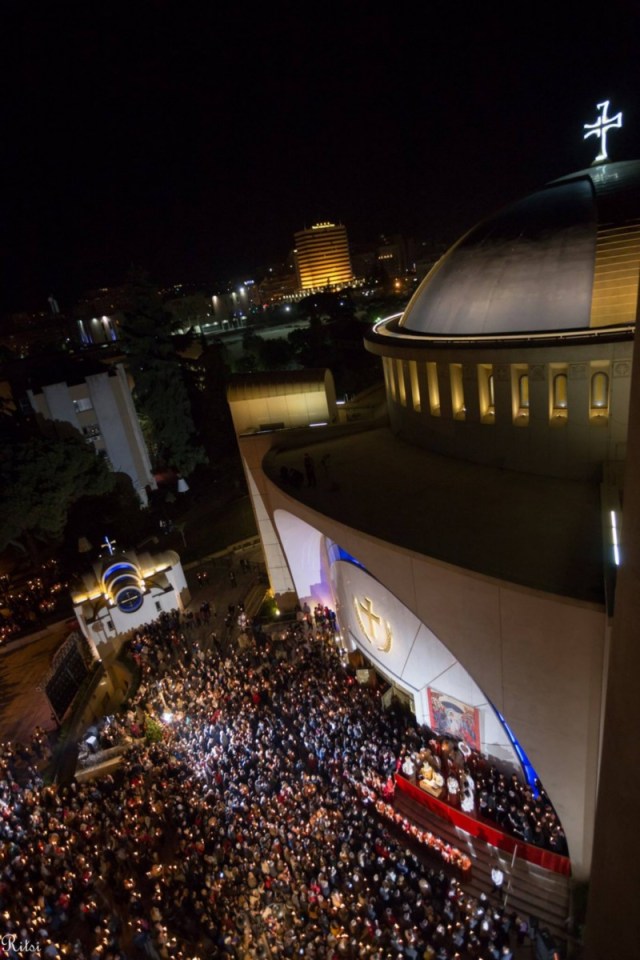
Anastasios’s most ambitious project, which he views as the capstone of his mission in Albania, was to rebuild an Orthodox cathedral in Tirana to replace one demolished by the communist government. The name he chose for the cathedral embodies what he has accomplished for the Orthodox Church in Albania and the Albanian people – resurrection.

Ecumenical vision beyond a Balkan

The Archbishop also talks of his ecumenical vision “Beyond a Balkan, European perspective, we are trying to respectfully and lovingly embrace the whole church and the entire world that Christ himself has raised, redeemed and enlightened by His cross and resurrection. The ecumenical vision offers a special power, endurance and perspective for every local and concrete situation. Besides this, the emphasis on the ecumenicity and catholicity of the church, and the gaze on the incarnate word of God in the Holy Spirit, offers to the Orthodox thought and conscience an open horizon with boundless majesty.”

Interfaith dialogue, he pointed out, is not simply exchanges of words. “It helped being in the World Council of Churches’ committee for dialogue with other religions, but what we did was academic. Here you learn that often the best dialogue is in silence; it is love without arguments.”

We could keep talking for hours but more media wait outside. The archbishop concludes with a smile: “You can only do your job with love and humility! I feel I’m still like a student or like a missionary for justice and peace!

Archbishop Dr Anastasios(born Anastasios Yannoulatos, Greek: Αναστάσιος Γιαννουλάτος, Albanian: Anastas Janullatos, 4 November 1929) is Archbishop of Tirana, Durrës and All Albania and as such the primate and Head of the Holy Synod of the Autocephalous Orthodox Church of Albania, is professor emeritus of the National University of Athens and honorary member of the Academy of Athens. He has served as primate of Albania since 1992. In this capacity, he reconstructed the Orthodox Autocephalous Church of Albania from ruins and initiated important contributions in healthcare, development work, emergency relief, culture, ecology and peace-making. From 1984-1991, Anastasios was moderator of the WCC’s Commission on World Mission and Evangelism;  from 2004- 2013 President of the World Council of Churches, from 1981 to 1990, he was the acting archbishop of East Africa, where he organized and developed the Orthodox Mission in East Africa; and from 1983-1986, dean of the Theological School at the University of Athens. Honorary President of the World Conference of Religions for Peace.

23 December 2015

By Marianne Ejdersten* 

Read also

In Love, For Love, By Love: Missionary Series II

archbishop anastasios yannoulatos orthodox missions city hermit

archbishop anastasios yannoulatos orthodox missions city hermit


II. Adapting to a New Culture — The Three Stages in a Missionary’s Life — Different Types of Missionaries

Adapting to a New Culture

FR. LUKE: Different people have different ideas of what mission is about. Some think that it is a romantic adventure, and it’s true that there is excitement and adventure to mission, especially in the initial stages. Once one enters the mission field and begins to live the daily life, trying to proclaim the gospel among people who aren’t always open or interested, the romanticism quickly disappears. This is a stage of frustration that many missionaries experience. The missionary has to work through this, but once he does, he is ready to begin serious missionary work. He understands that an authentic mission requires a commitment that is greater than any frustration or obstacle, a commitment that demands time, effort, and sacrificeIn Love, For Love, By Love

archbishop anastasios yannoulatos orthodox missions city hermit

A Commitment that Demands Time, Effort, and Sacrifice

During our first years in Albania, the Church faced a major crisis. The government was trying to kick the archbishop out of the country and we were afraid that the foundation he had built for the Church’s work might be destroyed. When I voiced my worries, the archbishop said, “Fr. Luke, you have to remember something. Albania, under the worst form of communism and as the only totally atheistic state in the world, was a stronghold of Satan for almost fifty years. Now that democracy has come, don’t think that Satan is simply going to lie down and let the gospel be proclaimed. We are not fighting against flesh and blood, but against the principalities and powers of darkness, and this means that it’s going to be hard, that there is going to be suffering, that there are going to be casualties. We have to be ready for this.” If you want to follow the Christian life, it’s the same thing. Missionary life is a life of the Cross, a life of sacrifice, of humble service, and of not always being appreciated. The archbishop told me that the missionary must be ready to be crucified by the very people he is trying to help. We can’t be devastated when this happens.

archbishop anastasios yannoulatos orthodox missions city hermit

Missionary life is a life of the Cross, a life of sacrifice, of humble service, and of not always being appreciated

archbishop anastasios yannoulatos orthodox missions city hermit

The missionary must be ready to be crucified by the very people he is trying to help

RTE: I imagine that the initial period of missionary enthusiasm is very similar to what new Christians go through. I remember once wishing aloud that a warmly enthusiastic new convert would come down to earth, but a Russian friend said, “Oh no. This is his spiritual childhood. Don’t deprive him of it. He will never be so innocently happy in his Christian life again. He will discover the difficulties and troubles of our earthly Church soon enough, but for now God has given him this heavenly joy. It will come to a natural end at the right time, and then he will struggle.” I think she was right. But once the struggle begins, how do you help new missionaries adapt?

archbishop anastasios yannoulatos orthodox missions city hermit

The Three Stages in a Missionary’s Life

The Initial Excitement of Entering a New Culture

FR. LUKE: There is a typical pattern that missionaries go through. As I said, in the initial excitement of entering a new culture, seeing new people and new ways of doing things, there is warm enthusiasm, “Ah, these people are wonderful….” For example, on my own first short-term trip to Africa, I lived in a village for a month. I saw Kenyans walking an hour to church, and then sitting in church for four hours with no desire to leave quickly. To an outsider they seem so joyful and faithful that you generalize and say, “These people are just wonderful.” After you’ve been in the culture a little longer, however, you start to see the other side: “OK, some of these people are faithful, pious Christians … but there are also people hanging around to get something material from the church, who aren’t so honest or sincere.”

archbishop anastasios yannoulatos orthodox missions city hermit

The Disillusionment by the Fifth or Sixth Month in the Mission

Usually by the fifth or sixth month in the mission field the pendulum starts to swing back and the missionary begins to see things with a negative eye. This is the most dangerous time. I’ve seen missionaries so disillusioned that they leave the mission field – or perhaps they don’t leave, but they allow their disillusionment to darken their entire experience. They view everything and everyone from a negative perspectiveIf this happens, it’s a tragedy, and it’s better for the missionary to leave than to offer such a distorted view of the gospel.

archbishop anastasios yannoulatos orthodox missions city hermit

The Third Stage in which the Missionary Sees Both Good and Bad Within the ‘New’ Culture

It is important to prepare missionaries for these two stages, and there is still another phase which any good missionary will eventually reach. In this third stage, the missionary sees both good and bad within the culture. In any culture, including our own, we realize that there are faithful, pious people, as well as con-artists and those who are insincere. There are also good people who are weak, and who may fall into temptation. This is the reality.

archbishop anastasios yannoulatos orthodox missions city hermit

RTE: Of life on earth.

When You Become a Missionary You Become a Person Without a Home

FR. LUKE: Exactly, of everywhere. We can’t go on mission expecting to find people open and ready to embrace the gospel. It is important to challenge the cross-cultural worker to adapt as soon as possible, but not to go native, not to give up his old culture in trying to blindly embrace the new. This is dangerous. When you become a missionary you become a person without a home. Although you have left your own culture, you will never fully adapt to the new. The indigenous people will never truly see you as one of themselves, no matter how hard you try. You become a third culture person.

archbishop anastasios yannoulatos orthodox missions city hermit

You Become a Third Culture Person

Another common mistake in the history of western Christians has been for the missionary to create a western compound, a small western society in the midst of a new culture. When you leave that compound in the morning you enter the local culture, but when you come back at night, everything is like it is at home. This should not be the goal. We must strive to live among the people, close to the people.

archbishop anastasios yannoulatos orthodox missions city hermit

Pulling Indigenous People Out of Their Cultural Setting or Leaving Neophyte Christians in Their Villages?

RTE: St. Macarius of Altai found that if he left the new Altai Christians in their villages, they would inevitably be drawn back into unchristian practices. The pull of society was just too great. So he created new Christian villages within the society, and asked the Christians he baptized to live there. The Spanish missionaries in California did the same thing. What do you think of this?

archbishop anastasios yannoulatos orthodox missions city hermit

FR. LUKE: There are pros and cons to these different methods. There is validity to pulling people out of their culture and trying to create a village of new believers, and something positive in trying to avoid temptations which may be too strong for a neophyte Christian. A danger in pulling indigenous people out of their cultural setting is that they may also lose their connection with the people they left behind.

RTE: Also, I imagine that they would become dependent on the missionary who is the inspiration for the village.

archbishop anastasios yannoulatos orthodox missions city hermit

FR. LUKE: Yes, and to some degree they may be tempted to adopt the missionary’s cultural baggage, whether western or whatever, and then it is hard for them to be salt for their own society. Along the same line of thought, another danger that missionary agencies have realized for centuries is that if you take the indigenous Christian out of his home setting and send him to the missionary country for training or for seminary, after he has lived in another culture for four or five years, he adapts to that culture and can’t really fit into his own again. His own people will see him as a foreigner if he goes back – and many don’t return at all.

archbishop anastasios yannoulatos orthodox missions city hermit

Different Types of Missionaries: the Outreaching, the Itinerary and the Silent Witness

RTE: We are speaking of missionaries going into a new culture, but there are other types of missionaries as well – like the Greek St. Cosmas of Aitoliawho didn’t settle in any one place but traveled throughout Greece and modern-day Albania, preaching to both Christians and Moslems.

Another is St. Symeon the Stylite, who didn’t go anywhere. People came to him on his pillar from as far south as the Arabian peninsula – not only for spiritual help but for prayers for failed crops, for drastic weather. Arab tribes came to have him adjudicate their differences, and westerners came also, from Paris, Rome, and Britain.

st symeon stylites archbishop anastasios yannoulatos orthodox missions city hermit

st symeon stylites archbishop anastasios yannoulatos orthodox missions city hermit


In our Orthodox tradition we have the outward-reaching evangelical missionary efforts of St. Paul, Sts. Cyril and Methodius, and St. Innocent of Alaska, but then we also have the example of monastics who settled in an area to cultivate their spiritual life, reached a high level of sanctity, and eventually shone forth and attracted people with a centrifugal force.

RTE: Like the candle in front of the icon – so bright that everyone came to see what it was.


st symeon stylites archbishop anastasios yannoulatos orthodox missions city hermit


LUKE: Yes. And both are necessary. One of the great dangers in our Church is that I sometimes hear people say, “This ideal of a holy man settling in an area and attracting people to himself – this is true Orthodoxy. This is our only form of mission.” This is totally inaccurate. Yes, one can certainly see the silent witnesses through the centuries, but simultaneously, we had missionaries consciously reaching out, crossing cultures, going to other places. From the fourth century on, we have numerous examples of monks not only going into the desert to retreat from society, but also settling close to pagan villages and purposefully joining other monastics in organized bands to proclaim the gospel.


mission4


Go here for Part I

To Be Continued …

Source: Everything in Love: The Making of a Missionary