New Beginnings

inbucovina.jpg

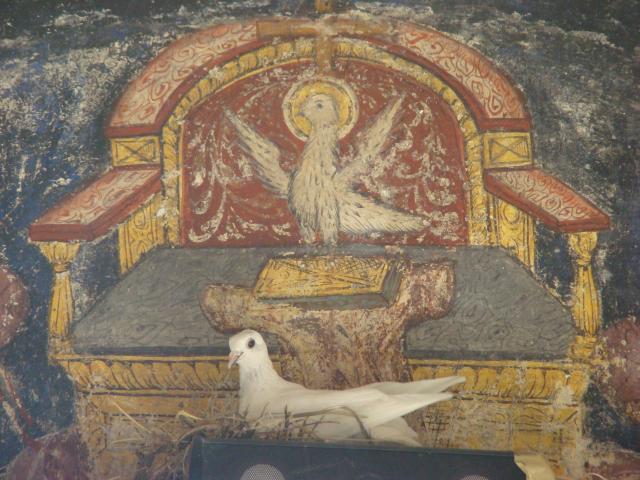
Fresco of the Throne of Preparation (Bucovina)

Pentecost blessings, T.S. Eliot malaise and a little city hermit’s new beginnings, and I Have a Question!
*

“For last year’s words belong to last year’s language
And next year’s words await another voice.
And to make an end is to make a beginning.”

(“Little Gidding” ― T.S. Eliot)

*

Trying to learn to use words, and every attempt
Is a wholly new start, and a different kind of failure
Because one has only learnt to get the better of words
For the thing one no longer has to say, or the way in which
One is no longer disposed to say it. And so each venture
Is a new beginning, a raid on the inarticulate
With shabby equipment always deteriorating
In the general mess of imprecision of feeling (…)
(“East Coker,” from *The Four Quartets* East Coker —T. S. Eliot)
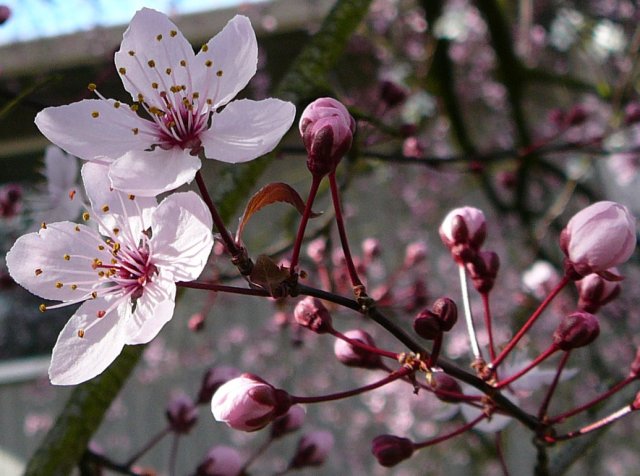
cherry_tree_flower_blossom_2_by_enchantedgal_stock


+ Monday of the Holy Spirit

Dear Friends in Christ
May the Holy Spirit give you the fruits of His grace this Pentecost!

Galatians 5:22-23
22 But the fruit of the Spirit is love, joy, peace, forbearance, kindness, goodness, faithfulness, 23 gentleness and self-control. Against such things there is no law.

*

I can’t believe May flew by so fast! Little did I know when I wrote on May 1st that my Bight Week pilgrimage “felt like a landmark and a watershed” that so many things in my life would change at such a dizzying speed! Thank you for staying in touch through my inbox. So many emails to reply, questions to answer, stories to be told … I honestly feel surprised and deeply humbled by your love and encouragement. Please be patient with me, as I am simultaneously moving on to new ministries, a new home and a new job!!!. More in the posts to follow…

I need your help in another matter too. Please send me your questions–preferably practical questions that impact you personally in a real way but more theoretical ones too–ideas, topics etc about WHAT you would like me to blog about. Would you be more interested in …

a.Saint’s lives, homilies, holy men’s lives and teachings yet untranslated into English?

b.Vignettes, stories and photos from pilgrimages and Orthodoxy all over the world?

c. Conversion stories, especially from Protestantism to Orthodoxy?

d. ‘Missionary’ vignettes from my life and ministry here?

e. Differences between ‘American’, ‘British’ , ‘Greek’, Russian’, ‘African’ Orthodoxy, if I am allowed to make use of such terms and offer some poor reflections based on first-hand experience?

f. Witnessing in a multicultural and secular country?

g. Differences between a ‘Cradle’ Orthodox person and a ‘Convert’? (Although I personally shun such labels for various reasons)

h. “Questions and Answers”, ‘Erotapokriseis’ ‘literature’? I have received numerous questions over the years, which I have primarily answered in private, but maybe I should make these public. (Anonymously of course) (If one person has a question, most likely many more have the same question.) Witnessing in a multicultural and secular country?

i. … ???

All of the above? None of the above? Please respond at either the Comment section below or at my email – anastasioskefalas1961@gmail.com. Your suggestions to my previous question–whether this blog should become bilingual etc– have been such a great help! Thank you ever so much for your love and encouragement! I really need to decide where to lay emphasis on.


Musings from a Bright Week Pilgrimage (II)

IMG-2232

Paschal Holy Dances in Attica, Aegina and Euboia

IMG-2233IMG-2234

Bright Tuesday

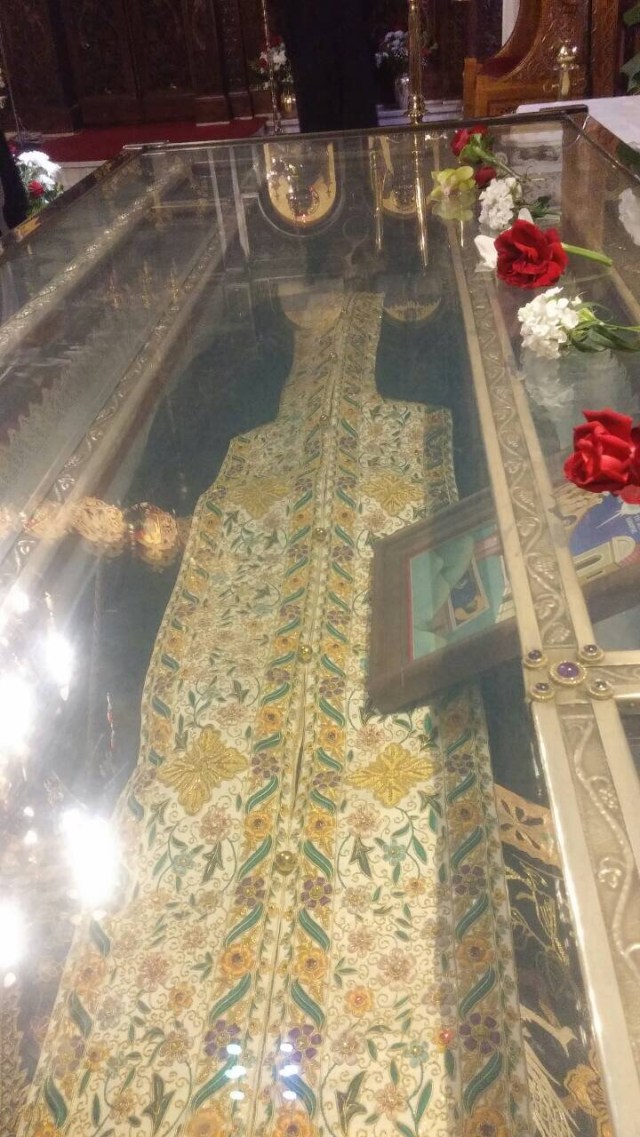
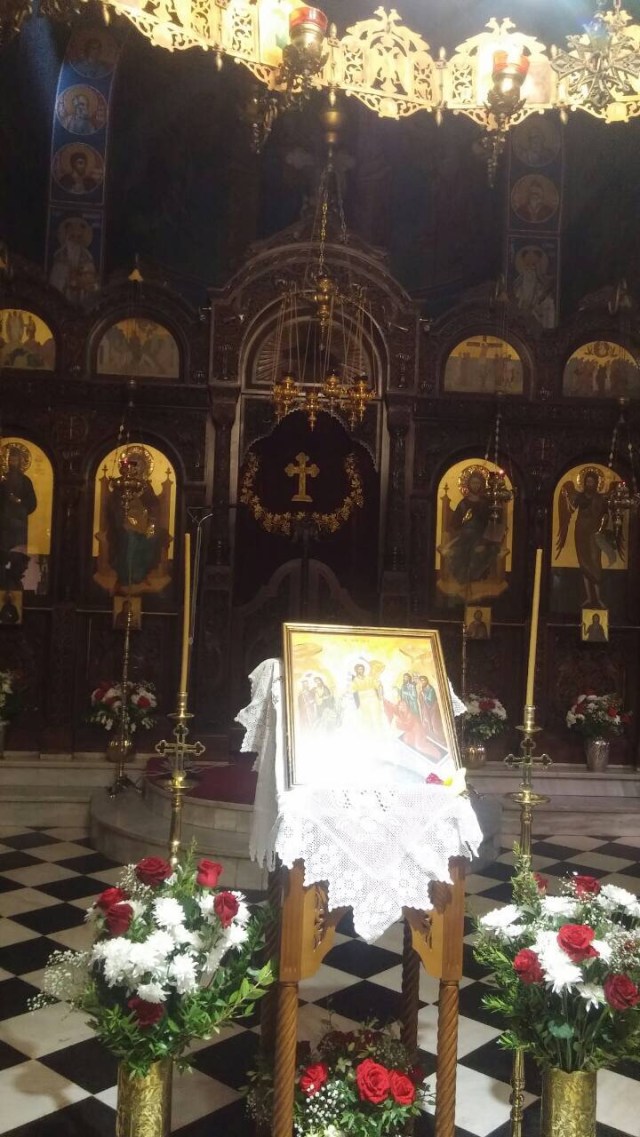
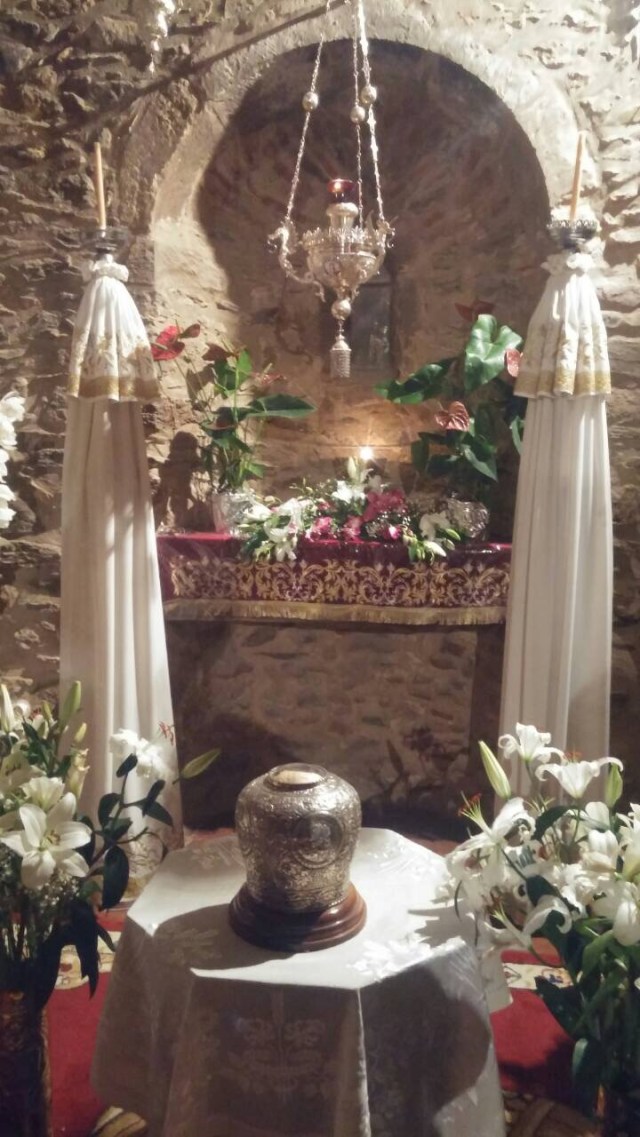
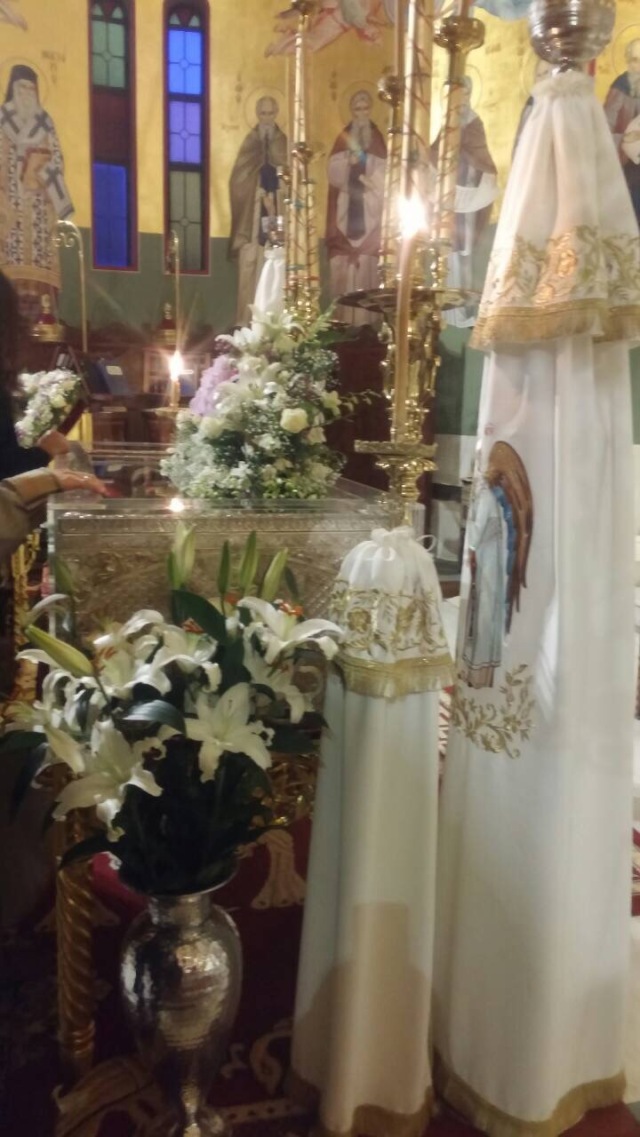
Morning Holy Liturgy at the Holy Patriarchal and Stavropegic Monastery of Saint Dionysios of Olympus: I can literally feel the 179 Martyrs presence on me, as Father Jonathan had insisted that I carry them during this pilgrimage on their Feast Day[1]. Of course, the truth is the other way round: it is always the Saints who are carrying us. Archimandrite Theoklitos had offered a tiny fragment of the 179 Martyrs’ relics to our Holy Cross parish, which is displayed for veneration in the Holy Liturgy, and will later in the day return to ‘their own’ monastery to be ‘reunited’ with their brethren on their feast day.

IMG-2235

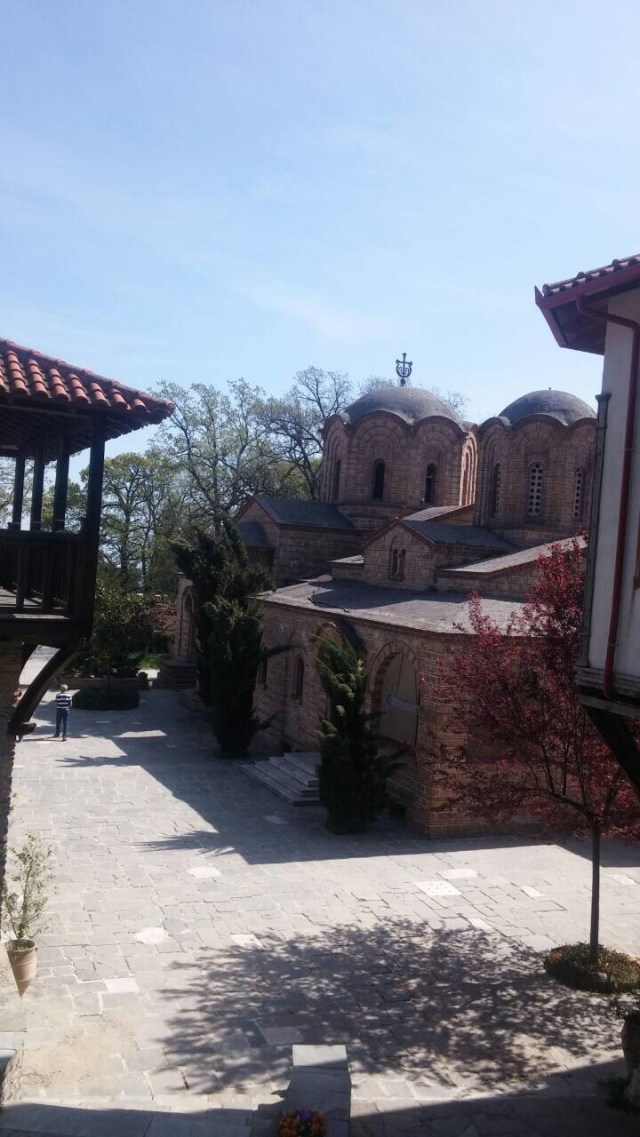
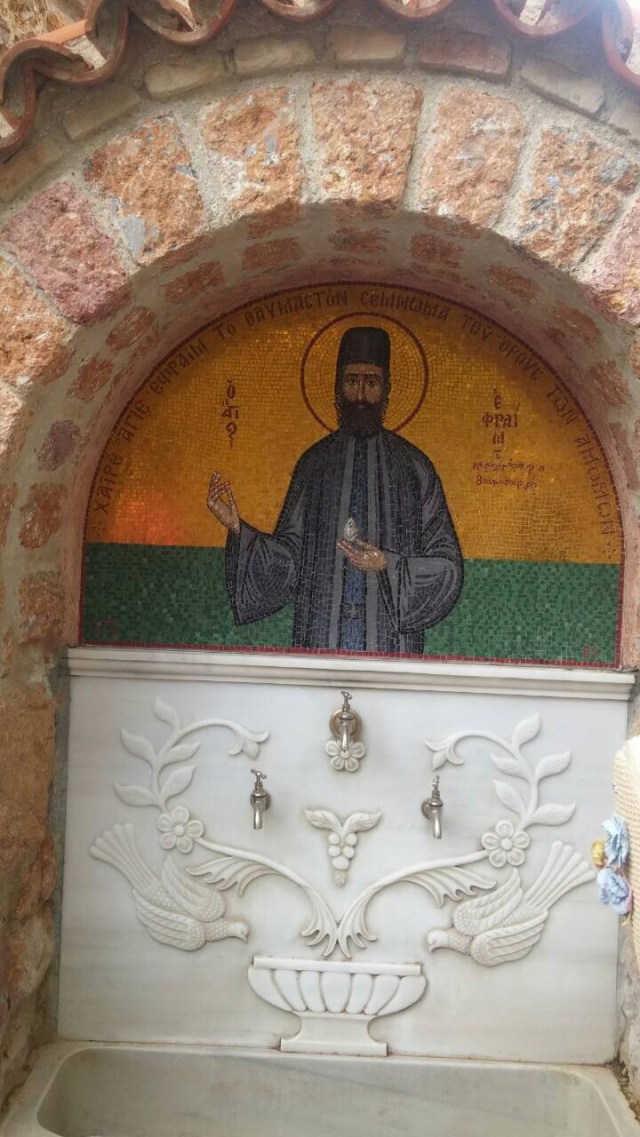
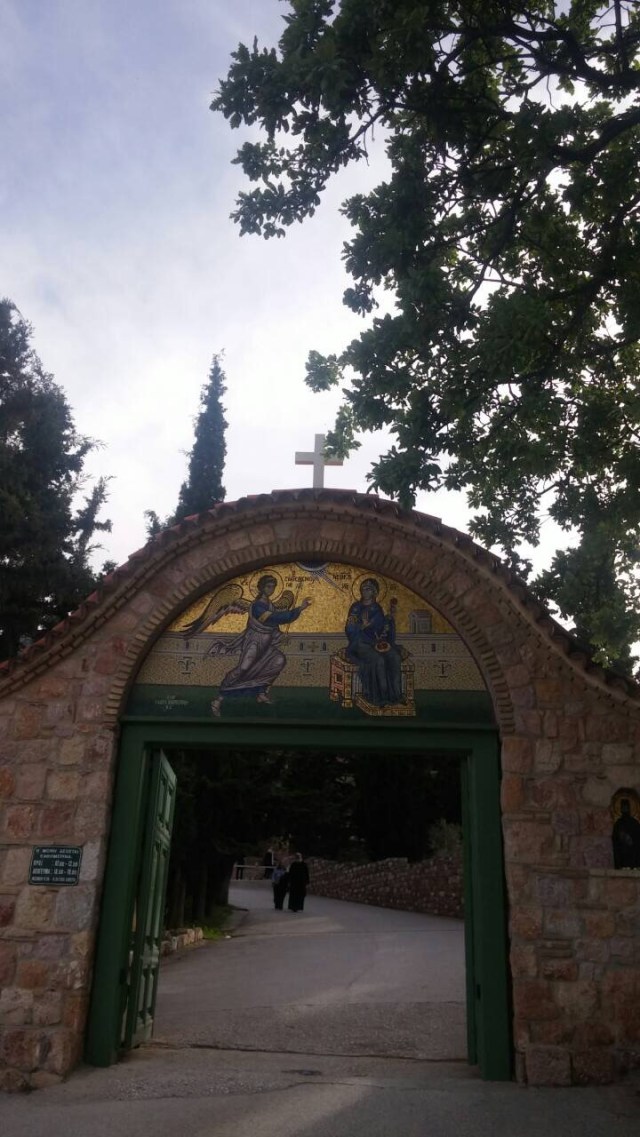
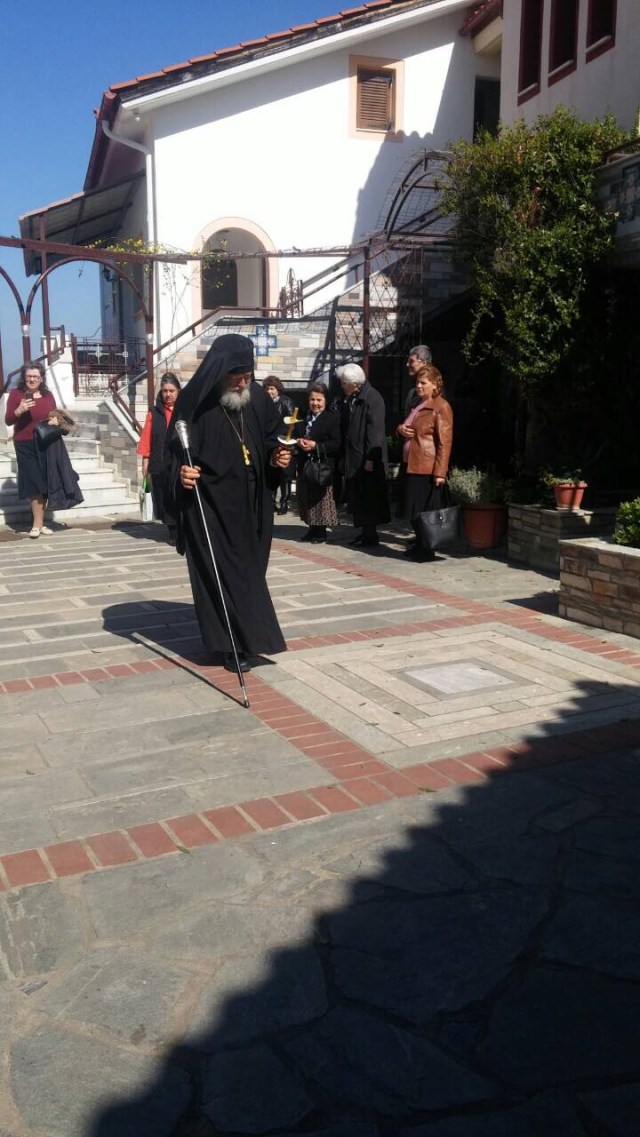
Holy Monastery of Saint Ephraim of Nea Makri, the Wonderworker and Newly-Revealed: A strange spectacle is awaiting us at the monastery gates: a leaping and dancing Resurrectional priest, a modern Saint Seraphim of Sarov figure, who greets all who enter the monastery with a kiss, and the words of the Paschal greeting: “Christ is Risen!” He is literally leaping with joy and greeting all pilgrims in a ‘dance routine’!!!

IMG-2240IMG-2241IMG-2242IMG-2243IMG-2244IMG-2245IMG-2246IMG-2247IMG-2248


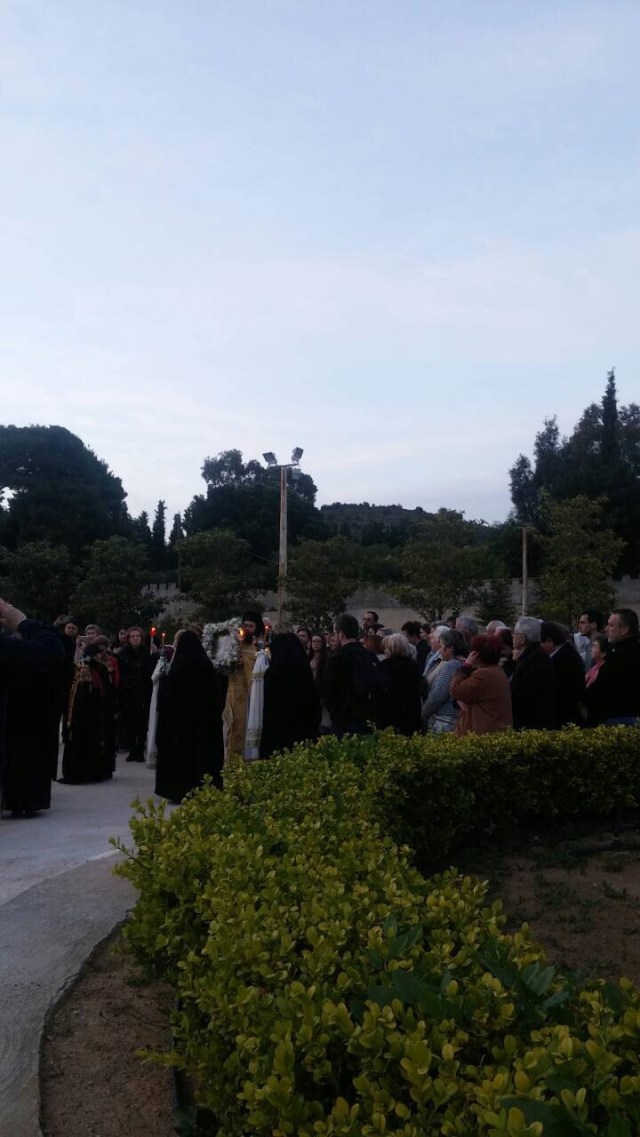
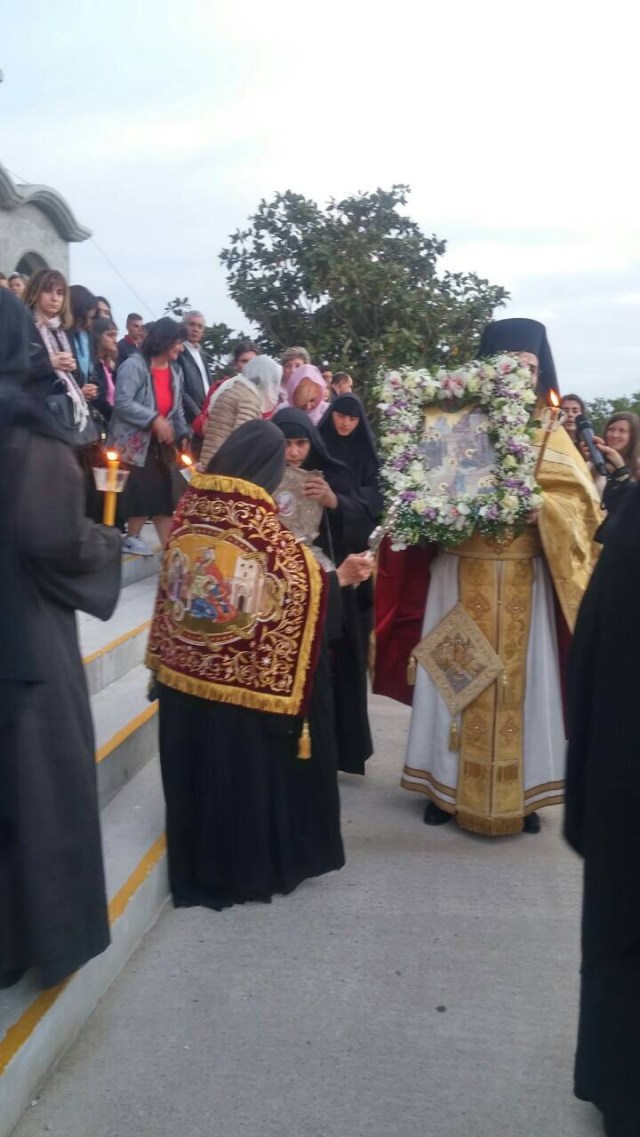
Pantokratoros Monastery in Ntaou Penteli: Vespers and a Holy Procession of the 179 Martyrs. During the Procession, Abbess Styliani’s face is lit and transfigured in ecstasy. Together with all the nuns, she too is dancing the Resurrection dance. She is also blessing all pilgrims with a large pectoral Cross.

IMG-2250IMG-2251IMG-2252IMG-2253IMG-2254IMG-2255IMG-2256IMG-2257IMG-2258IMG-2259
*

NOTES

[1]The 179 Holy Martyrs were massacred by pirates into the katholikon, on Pascha 1680, during the midnight service, after the final “Christ is Risen!” was joyfully chanted by the fathers following the Divine Liturgy. Similarly, Saints Raphael, Nikolaos and Eirini were tortured from Holy Thursday until Bright Tuesday when they were eventually martyred on April 9, 1463. St Efraim of Nea Makri was himself too martyred by the Turks on Tuesday May 5, 1426.


*

Musings from a Bright Week Pilgrimage (I)


Musings from a Bright Week Pilgrimage (I)

IMG-2230

Gerondas Theoklitos, Monastery of St. Arsenios the Cappadocian


Paschal Holy Dances in Attica, Aegina and Euboia

Everybody in our mixed company on the bus was exhausted even before starting out! Doctors, reeling after long shifts, having barely slept for more than 3-4 hours in 3-4 days in a row; parents struggling with noisy, boisterous,excited young children; senior high-school and university students in distress, studying for their final exams … on the bus! … while all were desperately trying to get some sleep… But the most exhausted of us all was our accompanying priest, Hieromonk Synesios, St. Arsenios Monastery, after a rigorous monastic Great Lent and Holy Week, on top of all his other duties. St Arsenios himself, as in all past pilgrimages, was at the front seat of the bus. His relics were reverently carried by all pilgrims at every stop of our pilgrimage. The pilgrimage was brief but packed and hectic, so let me simply offer a few Paschal, mostly ‘leaping/ dancing” vignettes which made the greatest impression to me.


But let me start with the beginning.This Bright [1]Week pilgrimage was appropriately the brightest I have ever participated in! It felt like the fulfilment of St. John’s of Damascus Mystical Pascha captured in his Paschal Canon! To be sure, any trip to Greece in springtime straight from a foggy, misty, rainy England is bound to feel full of light! Especially if to Athens and the islands!


Still, the Light which nearly blinded all of us during this Bright Week pilgrimage must have contained a tiny ray of Christ’s Light [2]! A palpable, tangible Transfiguration Light dancing in all pilgrims’ eyes, on the bus and in all the monasteries we visited. The atmosphere felt so light as if were all to collectively Ascend to Heavens. The sheer exuberance of “Christ is Risen” chanted 99 times every single day during Resurrection Day and All Bright Week made our hearts leap with joy! And our Lord’s greeting “Rejoice!” in all the 11 Resurrectional Matins (Eothina) Gospels reverberated in our hearts. And as we were soon to find out, we were about to meet lots of literally dancing and leaping holy men and women.


Morning Holy Liturgy at the Holy Monastery of Saint Dionysios of Mount Olympus (3) on Bright Tuesday


IMG-2231

IMG-2234

That was another discovery of that week: how many Paschal verses indeed contain this image of “leaping”:


THE PASCHAL CANON


Ode 4.

David, the forefather of our divine Lord, leapt and dancedbefore the symbolical Ark of the Covenant.


ode 5

“When they who were held by the chains of hell beheld Thy boundless compassion, O Christ, they hastened to the Light with joyful feet, exalting the eternal Pascha.


ode 7

We celebrate the death of death, the destruction of hell, the beginning of eternal life. And leaping for joy, we celebrate the Cause, the only blessed and most glorious God of our fathers.


THE PASCHAL STICHERA IN TONE FIVE

Rejoice, O Jerusalem, and leap for joy, in that thou beholdest Christ the King like a bridegroom come forth from the grave.

IMG-2233IMG-2232IMG-2235

Everybody in our mixed company on the bus was exhausted even before starting out! Doctors, reeling after long shifts, having barely slept for more than 3-4 hours in 3-4 days in a row; parents struggling with noisy, boisterous,excited young children; senior high-school and university students in distress, studying for their final exams … on the bus! … while all were desperately trying to get some sleep… But the most exhausted of us all was our accompanying priest, Hieromonk Synesios, St. Arsenios Monastery, after a rigorous monastic Great Lent and Holy Week, on top of all his other duties. St Arsenios himself, as in all past pilgrimages, was at the front seat of the bus. His relics were reverently carried by all pilgrims at every stop of our pilgrimage. The pilgrimage was brief but packed and hectic, so let me simply offer a few Paschal, mostly “leaping/ dancing” vignettes which made the greatest impression to me:


To Be Continued …


Footnotes

 [1] Bright week begins with the Sunday of Pascha, and comes to a close on Bright Saturday, at Vespers. One may actually argue that Bright week comes to a close before the ninth hour (which precedes vespers), since the royal doors and deacons’ doors, which have been wide open all week, are closed. This is a sad and significant moment. Just like our forefathers Adam and Eve, we cannot remain in paradise in this life, because of our sins. Ours is a life of struggle against our passions, which hold us back from full realization of paradise in this life.
‘How many days are in Bright week?’ There are TWO correct answers! According to the sun’s rising and setting, Bright week is seven days, (Sunday through Saturday) but to the church, liturgically, it is one day – the “eighth day”.

[2]Cf. Lev Gillet’s notes on the theme of light in the Byzantine liturgical year: ‘Come, take light from the Light that has no evening, and glorify Christ, risen from the dead.’ On the Sunday Pascha, the celebrant stands at the royal doors of the iconostasion and holds a lighted candle in his hand. “Once more, the eastern Church represents the Christian mystery in terms of the mystery of light; this Light, whose birth was marked by the star of Bethlehem, has been shining among us with growing intensity; the darkness of Golgotha could not extinguish it. Now it reappears among us, and all the candles which the congregation hold in their hands, and that they now light, proclaim its triumph. In this way, the deeply spiritual meaning of Easter is indicated. The physical Resurrection of Jesus would be without value to us if the divine light did not shine at the same time among us, within us. We cannot worthily celebrate the Resurrection of Christ if, in our soul, the light brought by the Saviour has not completely overcome the darkness of our sins.”[The Uncreated Light] on Easter night triumphs over the darkness; at Pentecost it reaches its full zenith. Pentecost is the ‘midday flame’. (The Year of Grace of the Lord: A Scriptural and Liturgical Commentary on the Calendar of the Orthodox Church, p177, p215 respectively)

[3]: For information and a documentary in Greek about our first stop, the beautiful Holy Patriarchal and Stavropegic Monastery of Saint Dionysios of Olympus, go herehere and here.

I am Back


IMG-2256

Pantokratoros Monastery in Ntaou Penteli

Virginia: “When will you start writing in Greek? English comes difficult to me. I struggle with your posts. Please consider …”

And Gianna. And Kalliopi. And …

Christ is Risen! 

It seems this blog may soon become bilingual… Maybe I should alternate one blogpost in Greek, one in English? … Once, twice a week? Do you think this is a good idea? On the bus, on our way to Attica, my Greek friends asked me to share on the microphone a few of my experiences here. They gasped at the stories I told them. They did not know. How could they even begin to imagine? 

IMG-2262

St. Nektarios’ the Wonderworker monastery, Agia Triada (The Holy Trinity) in Aegina

I feel I owe this to my Greek and Cypriot brethren who should not be left behind. They need to recover Orthodoxy, expand their horizons and learn about Orthodoxy’s struggles in foreign lands. In so many ways, I have discovered more about Orthodoxy during my brief ‘exile’ in an un-Orthodox country than in a lifetime in an Orthodox one.

Besides, any missionary endeavour and blog require by their very nature more than one tongue. At Pentecost “every man heard them speak in his own language”(Acts 2:6). I still find writing in English a lot harder than in Greek my mother tongue, and there are a lot of texts yet untranslated in English. 

What is your opinion? Do you have any suggestions? I would be so grateful for any help.


IMG-2250

Pantokratoros Monastery in Ntaou Penteli, 179 Martyrs Reliquary

Christ is Risen! 

I am back. I can’t believe a whole month flew by so fast! Thank you for staying in touch through my inbox. So many emails to reply, questions to answer, stories to be told … Please be patient with me, as I am still unpacking. My pilgrimage to Attica, Aegina and Euboia lasted only a few precious days, yet had quite an effect on me. It felt like a landmark and a watershed. More in the posts to follow…


IMG-2292

The Kato Xenia Monastery at Almyros, near Volos – The Wonder Working Belt of Virgin Mary

IMG-2289

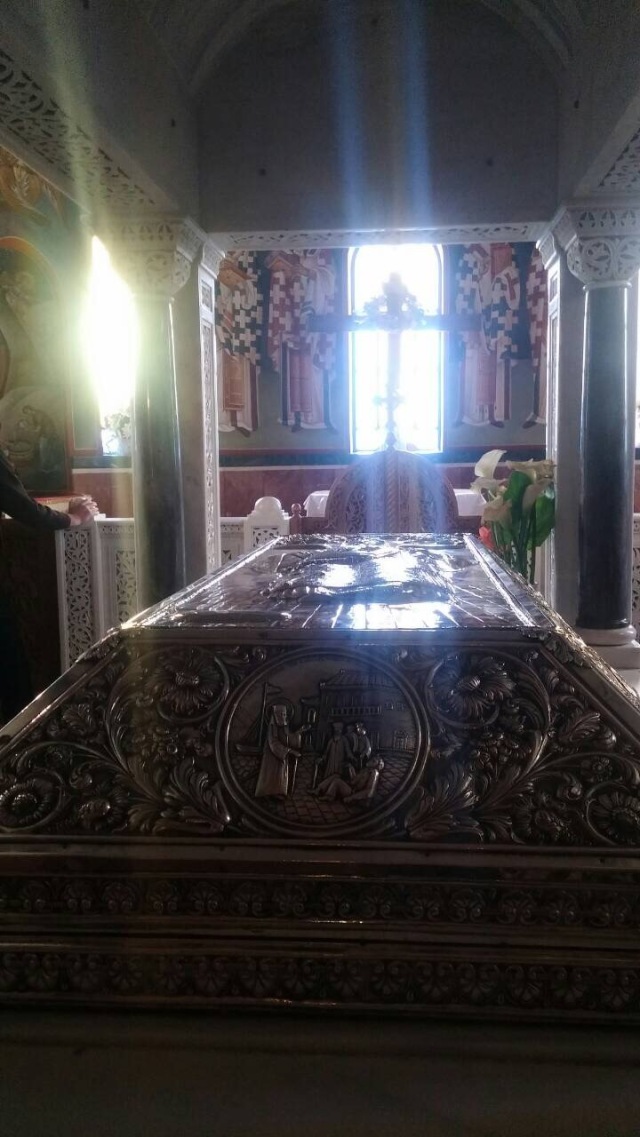
Monastery of Transfiguration near Rovies, island of Evia, constructed by Saint David, and served by the recently canonised St. Iakovos Tsalikis. + His grave

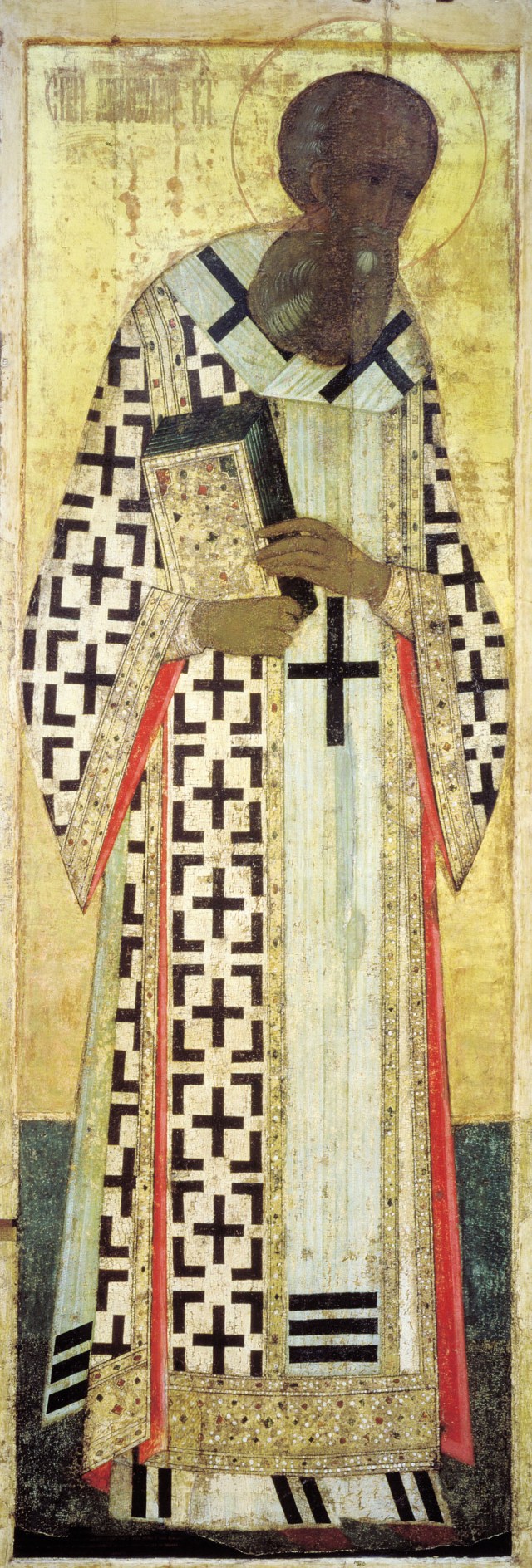
St Gregory the Theologian in Spiritual Warfare

gregory-the-theologian-1408.jpeg

Gregory the Theologian, 1408 – Andrei Rublev

Flee swiftly from my heart, all-crafty one.
Flee from my members and from my life.
Deceiver, serpent, and fire, Belial, sin,
death, abyss, dragon, night, snare, and frenzy,
chaos, manslayer, and ferocious beast!
Thou didst entice into perdition those
first-formed folk, my foreparents, offering them
at the same time the taste of sin and death.
Christ, the Ruler of all commandeth thee to
flee into the billows, to fall upon the rocks,
or to enter the herd of swine, O baleful one,
as once He bade that presumptuous Legion.
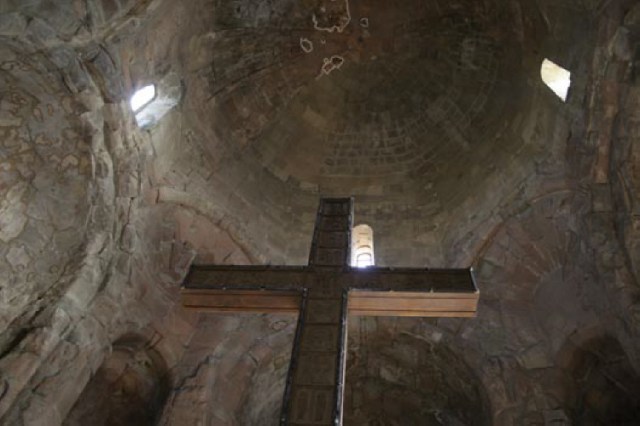
Nay, yield forthwith, lest I smite thee with the Cross,
whereat all things tremble;
Oh, flee!
I bear the Cross upon me, in all my members.
I bear the Cross whene’er I journey, whene’er I sleep.
I hold the Cross in my heart. The Cross is my glory.
O mischievous one, wilt thou never cease from
dogging me with traps and laying snares for me?
Wilt thou not dash thyself upon the precipices?
Seest thou not Sodom? Oh, wilt thou not speedily
assail the shameless herds of ungodly heretics,
who, having so recklessly sundered the Almighty
Godhead, have witlessly destroyed and abolished It?
But comest thou against my hoariness? Comest thou
against my lowly heart? Thou ever blackenest me,
O foe, with darksome thoughts, pernicious thoughts.
Thou hast no fear of God, nor of His Priests.
This mind of mine, most evil one, was verily
a mighty and loud-voiced herald of the Trinity.
And now it beholdeth its end, whither it goeth in haste.
Confuse me not, O slimy one, that I might, as pristine,
meet the pure lights of Heaven, that they might
shine like lightning flashes upon my life.
Lo, receive me; lo, I stretch forth my hands.
Farewell, O world! Farewell, thou who bringest woes upon me!
Pity be shown to all that shall live after me.


The Cross

cross2

Fourth in her ‘series’ of Cross-related visions, Abbess Thaisia sees a Cross. This is not a dream like the others before, but a vision while awake. Always these visions take place in the midst of heavy trials and tribulations, when she begins to lose heart and starts to languish:


“Once, during the period of labours and sorrows when I was beginning to put the community in good order, I was sitting in my study, all alone. All the doors were closed. Everyone had gone to bed, and I was preparing to do the same–yet I continued to sit there–I don’t know why. I was putting off going to sleep. I was not praying, nor was I thinking of anything special. There was something heavy on my heart, something very heavy, and there was silence in my heart and soul. Suddenly, in the middle of my cell, I saw a large wooden cross standing on the floor, so large that it almost reached the ceiling. (Evidently this was not a dream, for I was awake–I was just sitting, conscious of everything around me.) At the place where the horizontal and vertical beams met, there was something like a bloody, red, oblong fastening. seeing the cross, I did not become afraid; I crossed myself, and involuntarily thought, ‘How large it is! How will I be able to carry it?’ Then I heard these words, as if coming from the cross itself: ‘You will lift it and carry it, for My strength is made perfect in weakness!’ 

I considered that this was sent either to strengthen me in my sorrowful life, or to warn me of still greater sorrows to come. Although I felt some sadness, I accepted this with equanimity. I was ready to endure any suffering for the good of the community, and, through it, for the glorifying of the Name of God.”

*

For Abbess Thaisia’ first vision, go to The Cross-Baptism

For her second vision, go to The Fool-For-Christ and the Cross

Finally, for her third vision, go to Martyrdom Before the Crucifix

Martyrdom Before the Crucifix

cross2

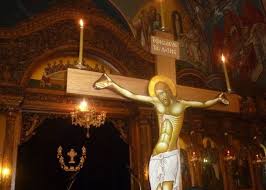
Third in her ‘series’ of Cross-related visions, Abbess Thaisia sees a Crucifix. Always these visions take place in the midst of heavy trials and tribulations, when she begins to lose heart and starts to languish… Here, the Holy Hierach St. Nicholas visits her to sternly admonish her. Below follows another except from her Autobiography:

“Then once I had a dream. I was walking along a road in an open field. I had to turn right, but there was no path in that direction; there were only beds of planting vegetables, very long ones. They looked as they do in autumn after the vegetables have been harvested, and the furrows between the beds were dirty and wet. I stopped and considered how to turn right. To go along the furrows would mean getting dirty and wet, but to walk across the beds would be a muddy, sticky business. Suddenly, I saw an old bishop coming in my direction with a staff in his hand. I thought, ‘I’ll wait and see, and whichever way he goes I will go too.’ Coming close to me, he said: ‘Come with me, I will show you the way.’ Leaning on his staff with his left hand, he took me with his right hand and led me along a bed, saying: ‘Although it’s muddy and you will often get stuck, the path is high; look how much dirt and water there is along the low path.’ We walked together for a long time. He continued preaching, and I talked to him without fear, although I recognised him as St. Nicholas. Finally we came to some church or chapel (I don’t remember which), and went in. Inside was a large Crucifix, and on the right, hanging on the wall, was an icon of St. Parasceva. I began to prostrate myself before the Crucifix. As soon as I touched the floor with my head, the holy man struck me on the neck with such force that I thought he would chop my head off. I had hardly recovered when another blow followed, and then another, and so on to five. ‘Why is he beating me?’ I asked myself. ‘Does he really want to chop my head off? But why would he want to do that?’ ‘Don’t argue, don’t act wise,’ he answered my thought. ‘If I struck you, it was because I had to. You have forgotten that one must obey without arguing. You don’t have to show off your  knowledge.’ I stood up, and the holy hierarch looked at me, smiling kindly. He pointed at the icon of martyr Parasceva, saying: ‘Here she is, the bride of Christ. She allowed her head to be cut off as an offering to her Bridegroom; whereas you are unable to suffer even a little, and you keep on philosophising while you still don’t possess spiritual wisdom. Humble yourself; endure, and you will be saved.’ “
*

For her first Vision-Encounter with our Lord’s Cross, go to The Cross-Baptism

For her second Vision-Encounter with our Lord’s Cross, go to The Fool-for-Christ and the Cross

The Fool-for-Christ and the Cross

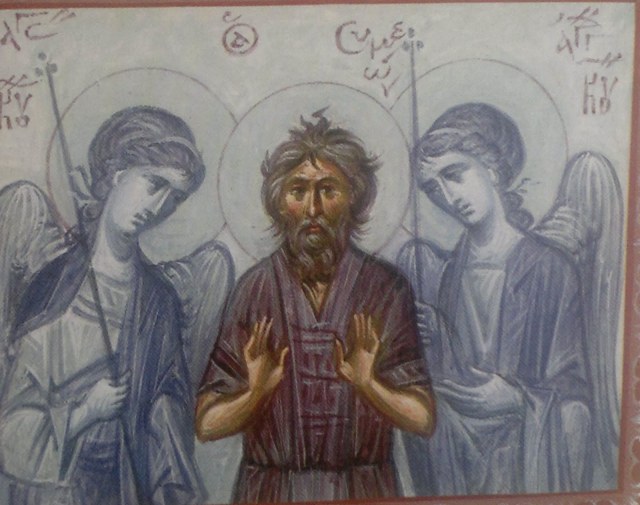
St symeon full for Christ

This is the second of many such visions Abbess Thaisia had. Predominantly with the Cross. Another excerpt from her Autobiography:

“I dreamt that I was walking along a road together with some other sisters. We were in an open place, passing by many fields, and we were walking two by two, in full monastic dress. All of a sudden, I saw two men crossing the field and coming towards us from the side. One of them looked like a monk; he was clad in a mantia and had a kamilavka on his head, the veil of which covered his face. He was holding a cross in his hands, like one who has just made his vows. The other one who was walking alongside the monk looked like a beggar. He wore a ripped shirt, and his hair was all disheveled. He was like a Fool-for-Christ; he kept leaping and jumping, and at the same time he was eating a piece of white bread that he was holding. Coming near to us, he seemed to tease us with his piece of bread, and he kept on leaping, looking at us with a smile. The monk was walking with his eyes lowered, and seemed to be completely immersed in his inner thoughts. I fixed my attention on them. When I looked around, my companions had all disappeared somewhere. I was standing alone in the middle of the road. Meanwhile, the two men came near and began walking by my side. The Fool-for-Christ looked at me intently, at first in silence, and then he said: “‘What are you thinking about? Crry your cross, like brother John is doing. Look at me, how I am leaping, carefree and gay, while I eat my piece of bread. You leap, too! Keep leaping along your way! Do people laugh at you? So what? Keep leaping, like Symeon the Fool-for-Christ! Keep leaping! Here is the church now, quite near!’ With these words, he indeed went leaping through the doors of a church we had inadvertently drawn near to. John followed him silently. I woke up. This is how I came to explain this dream: there is no need to seek salvation through complicated and tortuous ways. Instead, with a simple heart, one must walk along the path shown by Divine providence, not paying any attention to other people’s jeers and gossip, just carrying one’s monastic cross.”

For her first vision of our Saviour’s Cross, go to The Cross-Baptism. In my opinion, both of her visions are quite relevant for non-monastics too. Don’t you think so?


The Cross-Baptism

abbess thaisia

Excerpt from the Autobiography by Abbess Thaisia:

“… I fell asleep.

I saw myself entering a church or chapel (I do not know which) of modest size, from the south side. In the middle, as if facing the altar, there were standing three figures, all of the same size, clothed the sake, and alike in everything. I was at a loss to name them. They looked like human beings, but their heads were surrounded by something like a mist. I could not see them clearly. Besides me and them, nobody else was there. The church was empty. I became curious about these beings. Rather boldly, I began to approach them, first from one side, then from the other, trying to find out who they were. When I drew near to their right, the one standing there asked me, “What convent is this?” I replied, “The Convent of the Entrance into the Temple”. He asked me again, “How long have you lived here?” I answered, “Three years.” Then he said, “You have lived three years in this convent already, and still you do not know its name.” I began to argue, saying that I well knew the name of my convent. “It is the Convent of the Entrance into the Temple.” Then he beckoned me to come nearer, and went on, “If you do not know the name of your convent, I will tell you. It is the Convent of the Cross-Baptism.” At this moment I saw his head. It was like the head of our Saviour, as it is seen in the icons. With His left hand He was holding an enormous wooden Cross, as if He was leaning against it, and with His right Hand He lightly touched my shoulder. Tapping it gently, He said, “I tell you, it is the Convent of the Cross-Baptism. Do you not understand? Then I will explain it to you. Just as a Christian child is baptised through the water and the Spirit, and is not able to become a Christian otherwise, so a child-monk must be baptised through the Cross. Otherwise he cannot become a monk. Do you understand me now?” While He was speaking, I recognised Him as Christ, and full of joy and tender feeling, I exclaimed, “Truly, O my Lord, I do understand that I have to endure everything for the sake of Thy Cross.” I awoke with the same feeling of joy and tender feeling. My shoulder seemed to still feel the gentle tapping of His Hand. I was quite renewed  spiritually, and all my dark mood vanished as though it had never been there at all”

Elder Ephraim’s Prayer Diary of the Great Lent (II)

elder efraim2

February 29, 1980 [3rd Thursday of Lent]

I feel sinful and dirty. The true awareness of my nothingness greatly helps me to see God.
“Thou shalt gladden him in joy with Thy face” (Ps. 20:6). Oh, that divine face! It has Eros and Beauty from the Glory, from the supremely radiant Light of the Trinity’s effulgence. This is what the transcendent Beauty of God is: a divine electrification and contact with God the Father, His humility and condescension. Oh, how unlimited the humility and simplicity of God is! The humility and condescension of the awesome God astounds and overwhelms me! How filthy and dirty man is! Even though he has so many sins and is so guilty, he feels haughty and behaves egotistically. There is nothing stupider than this.
The angels are celebrating in heaven, dressed in white with inconceivable beauty within the supremely  bright light of God. They are chanting — and what are they chanting! Their hymns are pure bliss. But that which makes them stay in this blessed state is the grace of humility and true self-knowledge.
Unfortunately, I am proud, which is why I lack this joy and grace. Like a helpless creature, like a thirsty deer, I seek, cry out, and long to be watered by the true Fountain —  my God  —  with a divine drink, with the water springing up into eternal life (cf. Jn. 4:14). “When shall I come and appear before the face of my God?” (cf. Ps. 41:2) I weep, seeking my God. When I touch Him, I feel him and weep. But how this is happening, I do not know; one thing I do know, and that is that I feel Him as much as He wants and corresponding to the humility I feel for my dirty self. My God and Father, open the eyes of my blind soul to see my nature, the nothingness of my nothingness, and through it to see You, the most lovely Light, Who gives eternal life to mortal man. Enlighten my darkness, O divine, lovely Light.
 Amen

 *

For the first part of his Lenten Diary, go to Elder Ephraim’s Prayer Diary of the Great Lent (I)