The tradition of faith in Great Britain goes back to the Apostolic era!
by Tudor Petcu
A Romanian writer, Tudor is a graduate of the Faculty of Philosophy, University of Bucharest, Romania. He has published a number of articles related to philosophy and theology in different cultural and academic journals. His work focuses on the evolution of Orthodox spirituality in Western societies as well and he is going to publish a book of interviews with Westerners converted to Orthodoxy. In this article, he interviews Fr. Jonathan Hemmings, Orthodox theologian, who is the priest of the Holy Life-Giving Cross Orthodox Church in Lancaster, UK, talks about faith and love in Christ.
1.) Before discussing your conversion to Orthodoxy, I would appreciate it a lot if you could talk about your main spiritual experiences and journies untill you have discovered the Orthodox Church.
First of all, we need to be sure of what we mean when we use the term convert or “conversion.” We all need to be converted – both those who come from different traditions and confessions and those from traditionally Orthodox countries who are referred to as “cradle Orthodox”. Christianity is not a Philosophy, it is a relationship with the All Holy Trinity. We are converted to Christ and we are received into the (Orthodox) Church through Baptism and/or Chrismation. Sometimes this happens in the other order of events. Those who are Baptised Orthodox as babies need to employ the gift of the Holy Spirit given to them; those who are called to the Orthodox Christian faith are prompted by the same All Holy Spirit. As Metropolitan Kallistos said
“We Orthodox know where the Holy Spirit is but we cannot say where He is not.”
As scripture says
“the Holy Spirit moves where He wills.”
One has to experience the Orthodox Church either through her Liturgy or through the “living signposts of the faith” whom God sets before us if we are open to the Truth. By “ living signposts” I mean men and women who possess grace and in whom we see the light of Christ. Christianity in the west tends to be analytical and logical, Eastern Christianity is synthetic and mystical and engages the whole of our being.
You shall love the Lord your God with all your mind with all your strength, with all your heart and with all your soul.
The fact that we do metanoias (reverences or bows) shows that even prayer is a physical as well as a mental process. I have always believed in God, from a little child. I cannot remember a time when I did not believe in God. I had the right Christ, I just needed the right Church. Of course all this was a preparation for me to discover or rather recover the Orthodox faith.
2.) How would you characterise your own spiritual road to Orthodoxy? According to this question, would it be correct to say that Orthodoxy is able to heal the wounded souls?
I am like the Prodigal son in the parable who returns to his father. The Orthodox faith according to tradition was brought to Britain by St Joseph of Arimathea. An early Archbishop of Canterbury was Greek- St Theodore of Tarsus. St Constantine the Great was made Augustus Emperor here in York when he was in charge of the sixth Legion. So I did not choose to find something “foreign”; I returned to the Church which was established here in Britain.
The Orthodox Church is Universal as we proclaim on the Sunday of Orthodoxy. The Church is the hospital for souls. As Blessed Augustine said
“Our hearts are restless until they find their rest in God”
Restlessness of the spirit is a characteristic of this age. So I have not discovered something new, I have recovered something authentic and original.
3.) Considering all what you have experienced over the years from the spiritual point of view, why is Orthodoxy so precious and meaningful to you?
Well, I believe Orthodoxy is not only original, unchanged and authentic but it is the teaching and preaching of Christ’s Apostles (Kerygma and Paradosi). Tradition is not simply historical, it is vital and dynamic. The Orthodox way fulfils the needs of the whole person and makes the broken person whole. It is precious because it is the
“pearl of great price.”
Once you find it, then you must share this treasure with others and not keep it to yourself.
4.) Do you think that Orthodoxy could be considered a burning bush?
4. I have a stone from Mount Sinai which contains the image of the bush which Moses saw burning and yet which was not consumed. If you want to forge metal, you must first heat it and out it into the fire and then you can shape it to the tool you require. When we are put into the fire of God, the same happens. It is so God can shape us into the person that He has called us to be. When we are alive in God then we become all flame. We are standing on holy ground, so when we approach God we must do so with awe before the majestic power of God.
5.) Now, I would like you to tell me what does the Orthodox monasticism mean for you and what impressed you most in your monastic pilgrimage, if I can call it like that?
5. Orthodox Monasteries are “LightHouses” for souls. They are often remote and inaccessible because the quietness for the soul requires asceticism . They are full of angels because the angelic life is lived there. When we say in the Lord’s Prayer
“Thy kingdom come on earth as it is in heaven”
then this is what monks are doing. The very walls of the Churches are filled with prayer and so one can feel tangibly the peace of God. It is this peace which passes all understanding that one experiences. Again I say that Orthodoxy is Life in the sense that we experience it, we live it. I have been to many Orthodox Monasteries in Romania. The most memorable moments are when I met Pr Ioanichie Balan in Sihastria Monastery and when I served the Holy Liturgy with Pr. Teofil Paraian( the blind Staretz) at Sambata de Sus. These were moments when the veil between heaven and earth was very thin.
6.) What would be the difference between you as a heterodox and you as an Orthodox?
I am complete. When Our Lord died on the Cross he said in St John’s Gospel
“It is finished”
but this also means
“It is completed”
that is, the work of salvation. In this sense “conversion” is an extension of what I once was. As C. S. Lewis (much respected by Orthodox) once put it
“Imagine yourself as a living house. God comes in to rebuild that house. At first, perhaps, you can understand what He is doing. He is getting the drains right and stopping the leaks in the roof and so on; you knew that those jobs needed doing and so you are not surprised. But presently He starts knocking the house about in a way that hurts abominably and does not seem to make any sense. What on earth is He up to? The explanation is that He is building quite a different house from the one you thought of – throwing out a new wing here, putting on an extra floor there, running up towers, making courtyards. You thought you were being made into a decent little cottage: but He is building a palace. He intends to come and live in it Himself.”
C.S. Lewis, Mere Christianity
As I have said before, I have always loved God but the depths of Orthodoxy provide me with the resources that nourish my soul.
7.) I remember some words which impressed me much while I was discussing with a Swiss writer converted to Orthodoxy. He was saying that he was born to hate but through Orthodoxy reborn to love. How would you characterise these words as a convert to Orthodoxy?
We were all born to love. Christ summarised the Commandments as Loving God and Loving your neighbour. Orthodox Christianity can be summarised in these words. But love is a verb… we must put into action those things which we believe. I am sure the prisons in Romania are full of criminals who would call themselves Orthodox and who have been baptised as such, but sin found a place in their hearts. Glory to God he is merciful and loves mankind! And so we must live out our life in peace and repentance. Being Romanian does not make you Orthodox anymore than being Greek, Russian, Serb or British. There was no ethnic identity in the Garden of Eden before Adam and Eve’s transgressions. May the love of God embrace us all.
This interview is one of many that will be published in the book “The rediscovery of Orthodox heritage of the West” by Tudor Petcu, containing interviews with different Westerners converted to Orthodoxy. It will be published in two volumes and the first one will appear by the end of this year.
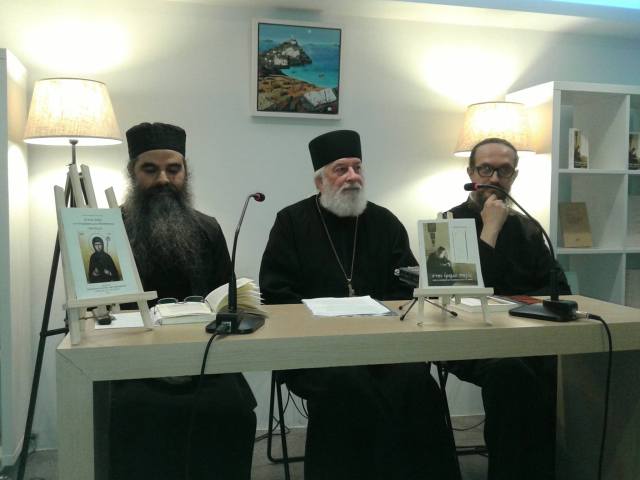
This event has been a most humbling experience! The ethos of the two panel speakers, Hieromonk Chrysostomos of Koutloumousiou Monastery, Mount Athos, and Fr. Bogdan-Konstantin Georgeskou, and that of the author himself, Fr. Jonathan Hemmings, permeated all the events. Such love and humility, especially in the face of various trials and tribulations, the least being an airline strike (!) impacting with its last-minute flight cancellations our speakers’ trips, felt like a rare blessing in “the apostasy of our times”. Fr. Seraphim’s Rose warning “Do not be deceived !” “It is later that you think, hasten therefore to do the work of God” is a favourite motto of Father Jonathan, his spiritual grandchild.
The book presentation proved to be a Panorthodox Synaxis, truly ecumenical! So many Greek, Romanian and English Orthodox friends turned up. En Plo Bookstore was packed out! The occasion provided everybody with the grace of fellowship.
Hieromonk Chrysostomos, the first panelist, summed it all aptly in the opening sentence of his presentation: “I have not come here to introduce or recommend the book, which needs no such thing, as this is evident to anyone who begins to read it, but I have come here, all the way from Mount Athos, to meet its author!”
Because “cradle Orthodox” have so much to learn from “Orthodox converts“! (One of the ‘ironies’ of this event was that in the many conversations which followed with priests, academic theologians and lay people, Father Jonathan, himself a ‘convert‘, had to repeatedly ‘defend’ Orthodoxy from ‘cradle Orthodox‘ faithful, from their disillusionment, doubts, and confusion about ‘their’ faith).
A vignette of the occasion which was indelibly marked in my heart was the author himself, in front of the audience in the packed room, all quiet during Hieromonk Chrysostomos’ presentation, deeply immersed in prayer, bending in humility his head, radiant, otherworldly, silent, and yet so eloquent, so full of the Holy Spirit amidst all this noise and praise in the crowded building. And I write ‘building’, because both floors were packed, and people were also waiting outside the book store too!
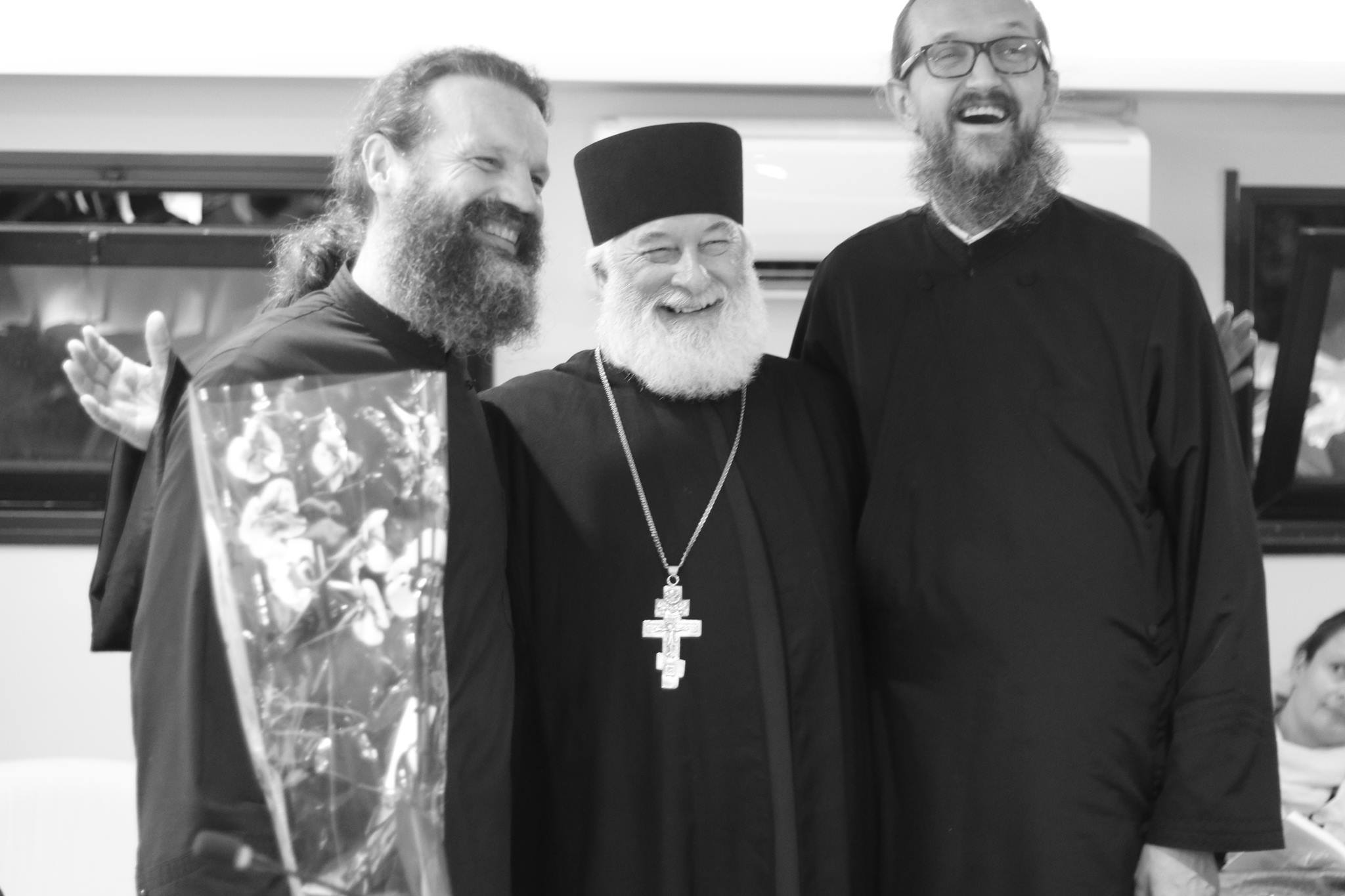
The long queue of the author’s spiritual children at the end of the book launch, their love and gratitude was such a heartwarming experience on its own! “And they shall come from the east, and from the west, and from the north, and from the south, and shall sit down in the kingdom of God.” (Luke 13:29) So many memories, of his life and ministry, of his works and his deeds, of love, which will continue in them and in their families. Father Jonathan was himself visibly moved to be with his spiritual children and dearest supporters of the ‘crucified’ Community of the Holy and Life Giving Cross in Lancaster, England and meet new friends in Christ and make further ‘connections’ in the Holy Spirit with those who are part of Christ’s extended family.
The two panel speakers’ presentations were outstanding, and the author impressed the audience with his profound humility, his love for everybody, his wise words, the purity of ‘his’ Orthodoxy, his poetry and his knowledge of the Greek language:
“It is with a profound sense of thanksgiving that in humility I thank you for publishing “Fountains in the Desert.” It is the product of a long lived admiration for those who found the desert to be a treasury of blessings. I have simply woven my own experiences into this mystical landscape. Any worth in it springs from the overflowing love of God for me, a prodigal, and to those whose zeal, patience, kindness and loving example have been spiritual signposts of the faith for my own journey through the desert.
Such salvation is experienced when one is thirsty for the Truth and the saints who Christ sends, provide the living water from which one drinks deeply of the sparkling fresh fountains of our Orthodox Christian faith. I wish to recognise in particular the heaven endowed, grace-filled influences of His Eminence Metropolitan Antony of Sourozh, Archimandrite Barnabas of New Mills, Archimandrite David of Walsingham, Archpriest Michael Harper and Hieroschemamonk Ambrose ( formerly Fr.Alexey Young) the spiritual son of Blessed Seraphim Rose, who chrismated me .
The Apostle Paul writes to the Christians at Ephesus:
Ephesians 5:2
“Walk in the way of love just as Christ loved us and gave Himself up for us as a fragrant offering and sacrifice to God.”
When we drink deeply from these sparkling springs and living waters of Orthodoxy, there is an inevitable outpouring of love to sustain us in our journey and an inexpressible joy to share this life giving water with others who thirst after truth. This is the life of the Church, to share the Gospel.
…
Luke 13:29
29 And they shall come from the east, and from the west, and from the north, and from the south, and shall sit down in the kingdom of God.
…
So we have much to do- because for to those who have been given much, much is expected. We rejoice with those returning to the Orthodox Church. We weep with those who find themselves exiled from their lands. We are warmed by the fact that so many of our parishes are microcosms of Pentecost with faithful being welcomed from all over the world regardless of nationality. We thank God that we witness strength of faith and growth in His Church and we ask empowerment for the apostolic mission set before us to bring God’s love to a hungry and thirsty world.
The glory of God is revealed in joy. The mercy of God is experienced in suffering. The grace of God is discovered in fellowship. The power of God is realised in miracles. The love of God is manifested in mission. Our dialogue is with heaven, even in the deserts of our cities where we encounter ourselves, the evil one and God. Christ only speaks one language and that is the language of love for His creation. May His love give voice to our faith.” (excerpts from the author’s presentation)
*
Fr. Jonathan‘s interview following the booklaunch has been videotaped by pemptousia.com and will appear shortly.
*
The Orthodox Christian Parish of the Holy and Life Giving Cross at Lancaster (United Kingdom) belongs to the Antiochian Orthodox Christian Archdiocese of the British Isles and Ireland, is a relatively small parish led by Fr. Jonathan, but with faithful from more than half a dozen nationalities, a ‘crucified’ parish, literally ‘on the move’ for over 20 years. After 20 years of using borrowed premises (a quite typical situation for ‘convert’ Orthodox parishes at the UK), they are renting a former Anglican church St Martin’s of Tours Church from Friday to Sunday evening, in order to serve the needs of the Orthodox Christians in the Lancaster area. To this end, they are making an appeal to raise funds to cover the rent and other needs of the Church on a permanent basis. Apart from your much needed prayers, you can find information on how to contribute to their fund raiser here. The proceedings from this Greek translation of the book or the English original will be likewise used to cover basic needs of the Church. The Holy and Life Giving Cross at Lancaster is a lively parish which enjoys Christian fellowship, having meals together and taking part in pilgrimages to Orthodox monasteries, churches, ancient Christian sites and other worship places (photos), produce a newsletter each month with their news and spiritual food for thought, and is engaged in a number of holy tasks.
10 Jesus answered and said to her, “If you knew the gift of God, and who it is who says to you, ‘Give Me a drink,’ you would have asked Him, and He would have given you living water.”
John 7:38
38 He who believes in Me, as the Scripture has said, out of his heart will flow rivers of living water.”
John 19:34
34 But one of the soldiers with a spear pierced his side, and forthwith came there out blood and water.
*
Listen!
A person’s response to God’s offer of salvation is a matter of engaging the will, faith and action.
Without the will there is no movement,
Without faith there is no direction,
Without action there is no reward.
To discover Living Water requires us knowing:
Whose open Hand provides this blessing and treasure
What is it’s measure
and
Where to find it flowing?
We must start by digging for water in the caverns of the heart.
If the ground is rocky, we must dig in silence with the sharp adze of patience.
Listen carefully!
Do your hear something?
If our ground is hard, we must soften it with mercy and repentance:
For the soil of pride can only be removed through meek dependence
On God.
Listen!
Do you hear the drip of water on stone?
We must not simply remove the weeds which are the fruits of the passions,
we must excavate each day with persistence
since familiar habits possess a stubborn resistance;
whereas the humus of humility is the place to locate compassion.
In this way, we may even lead in order to serve.
Leading the way to build a viaduct for the King of Glory
Order our service to others by constructing a conduit for Christ.
Dig therefore with wisdom,
Dig with discernment,
Dig with love,
Whilst guarding the heart at all times with diligence.
Listen!
Do you hear water flowing?
Because at the time appointed,
At the opportune moment,
We who are disjointed
are healed and
Sealed with the Holy Spirit.
God opens the flood gates of our hearts
With His own master key of humility,
To become a channel of His grace.
Just listen to that sound!
The sound of Living waters;
an ocean wave, a mighty river in flood, a cascading waterfall
a fountain of benediction;
heard by earth’s sons and daughters
To become for all a Life- Giving spring, welling up to Eternity.
Work hard then each day and dig!
Listen, work, dig deep
head bowed with sweat and tears,
extinguishing fears of death, awakening life from sleep,
exchanging salt waters for sweet
to greet Living waters.
Many rich and powerful men would pay dearly to see the Lord or His Most Pure Mother, but God does not appear in riches, but in the humble heart… Every one of the poorest men can be humbled and come to know God. It needs neither money nor reputation to come to know God, but only humility.
The little city hermit is struggling to translate this poem in Greek while travelling to Athens 🚊✈️ for the book launch of Father Jonathan’s Hemmings Fountains in the Desert [Stin Erimo Piges] by En Plo Publications. For sample chapters of the book, read “Work Pray be Saved” and “Spirit-Borne“
Work Pray Be Saved! Back to Mikrokastro monastery, my spiritual basis in Greece! For the Transfiguration Feast. “Lord, it is good for us to be here. If you wish, I will put up three shelters—one for you, one for Moses and one for Elijah!” I feel so safe, protected and loved here! It is always like this: the Mother of God always comforts me; the peace, stillness and hesychia of the monastery invades me; the fellowship of the nuns warms me; the motherly affection of its Abbess, Mother Theologia’s love nurtures me; the nuns’ combination of discipline, structure, work and prayer ‘stabilises’ me; their wise ‘equation’: Work and Prayer= Salvation!‘ centers’ me, ‘grounds’ me on peace and the Holy Spirit.
Just today, I felt so happy harvesting, curing and storing potatoes after the Matins service and Holy Liturgy in the monastery chapel! It felt so exhilaratingly Van Goghean!
Certainly one eats his meal afterwards, roast potatoes😃, with gratitude and thanksgiving.
*
Fr Jonathan Hemmings has written a whole chapter on this ‘equation’: Work and Prayer= Salvation! in his book, Fountains in the Desert, which I have found most useful and often turn to for life balance ‘tips’.
When the holy Abba Antony lived in the desert he was beset by accidie (ἀκηδία) and attacked by many sinful thoughts. He said to God, “Lord, I want to be saved but these thoughts do not leave me alone; what shall I do in my affliction? How can I be saved?” A short while afterwards, when he got up to go out, Anthony saw a man like himself sitting at his work, getting up from his work to pray, then sitting down again and plaiting a rope, then getting up again to pray. It was an angel of the Lord sent to correct and reassure him. He heard the angel saying to him, “Do this and you will be saved.” At these words, Antony was filled with joy and courage. He did this, and he was saved.
Our human condition requires dependency upon God and interdependency on others. Correct spiritual examination requires the help and direction of a spiritual father who helps us grow into the image of Christ. Self examination alone without such an external reference point can put us in jeopardy such that we choose the wrong direction, make false judgements, become disappointed, lack faith, and fall into the trap of hopelessness and despair. Here we find ourselves in that spiritual malaise of accidie whereby because of our sense of sinfulness before a Holy God, we become inactive, paralysed and reach a state of torpor.
We ponder on the contradiction “How can we be Christians and have such sinful thoughts?” St Antony addresses this dilemma in the desert where he meets the devil, himself and God
“Lord, I want to be saved but these thoughts do not leave me alone;”
We notice that St Antony wants to be saved, he is aware of his own condition. Like the Prodigal son and Zacchaeus we must first come to our right mind and possess a desire (a zeal) for change. St Antony’s request is simple and succinct:
“What shall I do in my affliction. How can I be saved?”
We must be direct in our prayer to God; vagueness in repentance or in our requests is a form of obfuscation.
These two questions of St Antony remind us of that question the Lawyer posed to Christ before the Parable of the Good Samaritan. Luke 10:25 “What must I do to inherit eternal life?”
Inactivity is not an option for Christians; Christians are verbs not nouns!
Antony sees a man sitting at his work then getting up to pray, returning to his work and again rising to pray. The angel was sent by God to correct and reassure St Antony. Consumed by ourselves we lose focus and the source of our strength-we lose the will to work or pray! Work and Prayer= Salvation! This is an equation for all and not just for monks. Full of self loathing we need not only correction but reassurance. When called upon, the compassion and conviction of the All Holy Spirit assists us by His comfort and strength.
Just as our Lord was ministered to by angels in the wilderness after the Temptations Matthew 4:11
“Then the devil left Him, and behold, angels came and ministered to Him.”
So with St Antony an angel ministers to him instructing him and restoring courage and joy. “ Do this and you will be saved.”
The Fathers teach us that we should not trust too readily in our own thoughts and opinions but take heed to God’s Word Who provides us with the pattern of salvation.
In our modern western culture, Life balance is a much discussed topic today. When mums have to juggle careers with caring and the ever increasing demand for dads to prioritize we need to drink from the fountains of the desert. Without work we become indolent and listless; too much work makes us tired and stressed. Without prayer we become detached from our source of strength and the deeper reality Who created us. Likewise prayer without action is fruitless, as St James says in his epistle:
James 2:17
“Thus also faith by itself, if it does not have works, is dead.”
Prayer will warm and revive us in the love of God; work will warm and energise us in the love for others thus fulfilling the Divine equation for salvation:
Luke 10:
27 So he answered and said, “ ‘You shall love the LORD your God with all your heart, with all your soul, with all your strength, and with all your mind,’ and ‘your neighbour as yourself.’”
28 And He said to him, “You have answered rightly; do this and you will live.”
Visited by God is the extraordinary spiritual journey of an extraordinary Spiritual man – Michael Harper. I think that I would not be missing the mark to say that Michael Harper was the leader of the Charismatic renewal in England and many other parts of the Globe. Beginning as an Anglican chaplain under John Stott at All Souls Church, Langham Place, London, his journey finally culminated in his introducing an authentically British Orthodoxy as Dean of a new Antiochian Orthodox Deanery with English-speaking parishes all over the country.
His journey was a long and often ‘very difficult’ and testing one. In some ways I can liken it to the journey of St. Paul in that he depended solely on the Holy Spirit to lead him and lead him the Holy Spirit did! It all began in 1962 when Michael was visited by God while studying St Paul’s two prayers in his Epistle to the Ephesians. He ‘saw’ the Church as God saw her – broken by divisions and untended wounds.
It was almost from that very moment that Michael’s God-given mission for unity in the Church began. But there were many in the Anglican Church who opposed this renewal and together with Pentecostalism the movement was dismissed as over-emotionalism and therefore unacceptable. Inevitable disputes and arguments occurred but this did not deter Michael. On the contrary his detractors spurred him on! He continued to go wherever in the world there were people hungry for the power to live what they believed.
One might come to the conclusion that Michael’s journey as leader of the Charismatic renewal movement would result in a very broad liberality but when the Church of England’s General Synod of 1975 passed the motion allowing women into the priesthood, Michael felt more than just stirrings of discontent. Jeanne Harper describes Michael’s anguish which led to a most difficult and painful decision – to leave the Church of England – whom he called his foster mother, so faithfully had she cared for him and led him to his real mother, Orthodoxy.
Jeanne describes how he was led by the Holy Spirit to the Orthodox Church and in 2000 Michael founded the English-speaking Antiochan Orthodox Parish of St. Botolph’s near Liverpool Street, London. At the same time Michael was appointed as a director of the Institute for Orthodox Christian Studies Cambridge. And in 2005 he was elevated to Archpriest.
The silken thread of a spider is spun from behind him as he moves forward to spin his web. The spider cannot see his work until he looks back and then the pattern of his web with all its links is revealed. Looking back over the web of Michael Harper’s life one thing is clear – from the very beginning Michael’s journey had a pattern and this pattern was a pure reflection of God’s will in his life. Once this was achieved Michael was taken in 2010 and lives in constant joy and prayer along with the saints in glory.
Jeanne Harper shares this God given Spirit filled journey of her husband with the reader and in so doing cannot fail to make us all yearn for the presence of the Holy Spirit to touch and lead all our lives.
* Last but not least, the concluding chapter “The British Antiochian Orthodox Deanery Mission” is written by Fr. Jonathan Hemmings, one of the priests of the Deanery, whose parishes are strategically spread over England and are to be found in Ireland, north and south. The Dean who succeeded Father Michael, is Father Gregory Hallam, whose vibrant parish is in Manchester. Fr. Jonathan Hemmings ministers in Lancaster at the Orthodox Church of the Holy and Life Giving Cross, worshipping at St Martin of Tours, Westgate. He writes the following chapter on the story of the Deanery and its missionary vision.
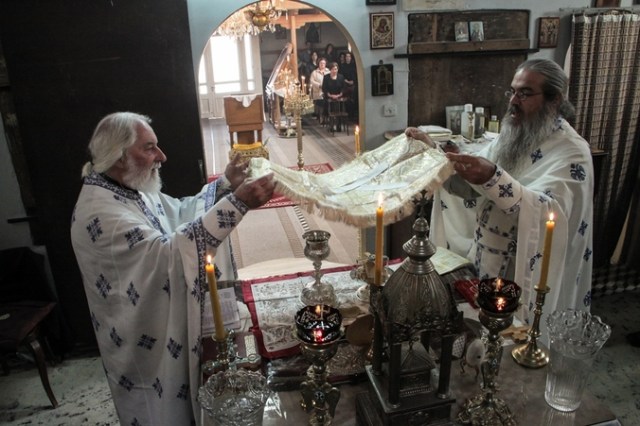
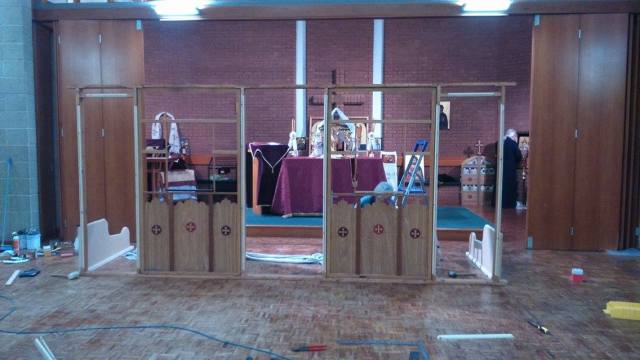
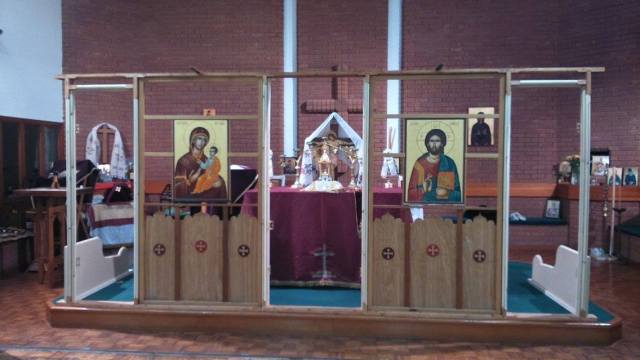
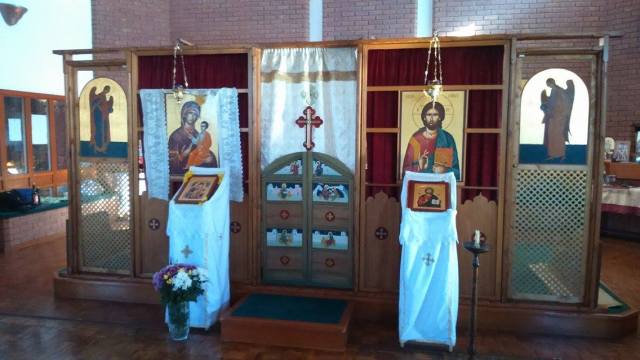
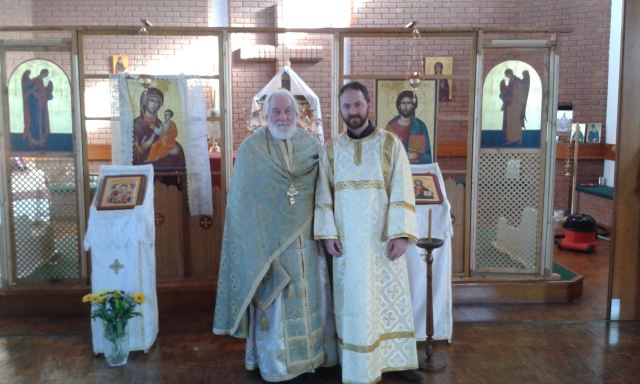
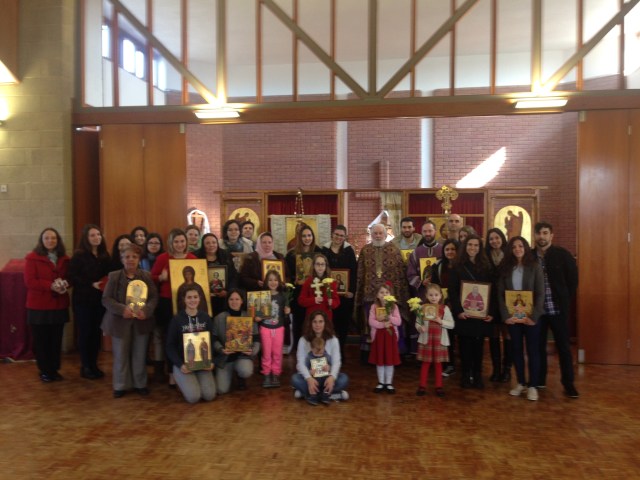
During my last visit at the UK I had the blessing to witness the opening of a new Temple at the St Martin of Tours’ Church, Braddon Close, Westgate, Lancashire for the Holy Cross Parish. Before my arrival on 9th March, the faithful had already set up the Church of St Martin , installed the Iconostasis, and it was beginning to look very much like an Orthodox Church already.
Have a look at more photos of the making of the iconostasis (a combined effort of an Englishman’s carpentry and Antiochian iconography!) 😃
Glory to Thee o Lord, Glory to Thee! I have come to intimately know this warm Stavronian community with faithful from more than half a dozen nationalities (!) for two years and they have ever since become a part of my heart. They helped me so much during a time in need then, in Lancaster that I feel there is no way I can ever repay their prayerful support and practical help at that time.
Fr. Jonathan Hemmings and Server Trevor Wearing
This Parish serves the liturgical and pastoral needs of Orthodox Christians studying and teaching at Lancaster University, from Greece and Cyprus and in more recent years from Romania and Russia. Yet far from it, this parish is not ‘too ethnic’ at all, but inter-national and ecumenical in the correct sense of the world; one may also encounter British people who have converted to Orthodoxy. A genuine “one holy, catholic and apostolic Church”, dedicated to the Life-Giving Cross, and from what I have witnessed there during my brief stay and from all subsequent long visits, I have come to the conclusion that this dedication, like all dedications or patron, has an intimate relationship with the Community and those belonging to it. Their dedication and service to the Holy and Life Giving Cross is hard, narrow and steep but it is a glorious path.
Back in 2014, this was the nearest church I could go during my stay at Lancaster University, so I began attending church services there. Everything was so different from our ordinary churches in Greece! To begin with, for each and every Holy Liturgy we have had to “build”, furnish and dismantle the “Church” (!) to give it some semblance of Orthodox character and creedal symbolism.” For 20 (!) years!!! Quite an extraordinary experience for a Greek who can choose which parish to go every Sunday, since there are plenty in every neighbourhood. And yet, somehow, this ‘fragile’, “weak thing of the world to confound the things which are mighty”; this ‘base thing of the world, and thing which is despised’ , yet God hath chosen, yea, and this ‘thing which is not’, to bring to nought things that are” (cf. 1 Cor. 1:27-28), this church which could be ‘contained’ in just three pieces of luggage, was more powerful, holy and alive than all others I have been to here in Greece!
I vividly remember the awe I have repeatedly experienced there during the Sacraments of the Holy Unction and Baptisms where plain olive oil acquired through prayers a heavenly fragrance and was literally transformed! Or, icons during services began streaming myrrh (ie. a sweet-smelling oily substance). Or, the icons and secondary relics that I was offered as a present started to produce a sweet-smelling fragrance in my hotel room. But this was not the only surprise that the Lord had at store for me.
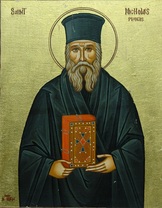
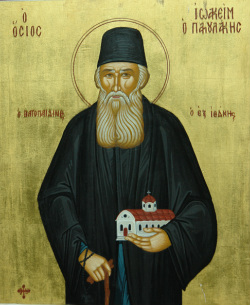
For the whole autumn semester, I regularly attended Services there, read their newsletter each month with their news and spiritual food for thought, studied their translations such as St. Lioba’s or St. Joachim’s life and enjoyed their book publications, most notably Fountains in the Desert, based on the sayings of St Antony. I also got acquainted to Celtic Saints and Celtic Orthodoxy— so Constantine the Great was not (only) a Greek Saint but was acclaimed as emperor by the army at Eboracum (Modern-day York) 😃?! — and venerated the icons and holy relics of St. Nicholas Planas and St. Joachim of Ithaca that this parish is blessed to have. Can you imagine this? Venerating for the first time Greek Saints’ relics in Great Britain ?!
Fr. Jonathan (left) embracing the aer with Fr. Theodosios (right) during the Holy Liturgy in the Church of St. Nicholas in Ithaka, Greece.
Most importantly, these months I and enjoyed their fellowship, having meals together and taking part in pilgrimages to Orthodox monasteries, churches, ancient Christian sites and other worship places (photos). To get a taste of their fellowship, listen to the Holy Cross choir chant the Orthodox Psalm (135) “O Give thanks unto the Lord”, while looking at their photos, most of which come from our pilgrimage to St. Herbert’s Island, Derwentwater, UK. St. Herbert is an important Orthodox Saint in the area.
To my immense surprise my brief stay there served as the catalyst for the re-discovery of the Orthodox faith, a mystical Baptism for which I am infinitely grateful to them. While there, I have been most impressed by the spirit of prayer and the presence of God at the celebration of the Divine Liturgy at the University chapel and the spirit of ecumenical fellowship. Isn’t it an irony that the Holy Spirit chose to lead me ‘back’ to my cradle faith through a convert spiritual father ?! By the end of my stay there I knew my heart had chosen ‘them’ as my spiritual family, and everything had changed from ‘their’ to ‘our’. Thanks be to God I had discovered my spiritual oasis-retreat- fountain in the desert-home-pearl of great value! The Holy and Life-Giving Cross parish has become a ‘thin’ place for me! I had become a Stavronian myself! 😊
Last Easter, I felt that I had to celebrate Easter at Lancaster and what a Holy week we all had then! Our pilgrimage too during Bright Week to meet Fr. John Musther Of Cumbria at his church-homewas an unforgettable experience!
“The Church in The British Isles will only begin to grow when she begins to again venerate her own Saints” (Saint Arsenios of Paros †1877)
And now, at long last, after 20 ‘crucified’ years, of using borrowed premises and enduring numerous hardships and trials, the Orthodox Community of the Holy and Life Giving Cross , has finally found a building for a Temple that will serve the needs of the Orthodox Christians in the Lancaster area.
Sunday of the Orthodoxy and St. Cuthbert’s Day’, one of England’s most beloved Wonderworking saints once greatly venerated here — Sancte Cutbertus ora pro nobis!
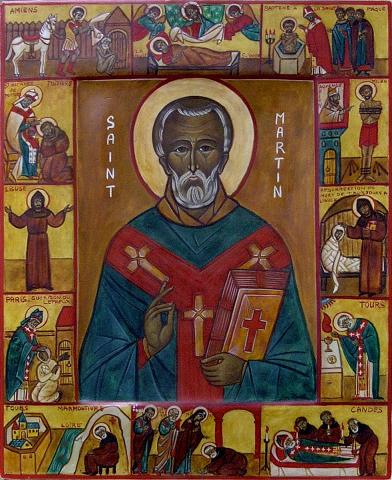
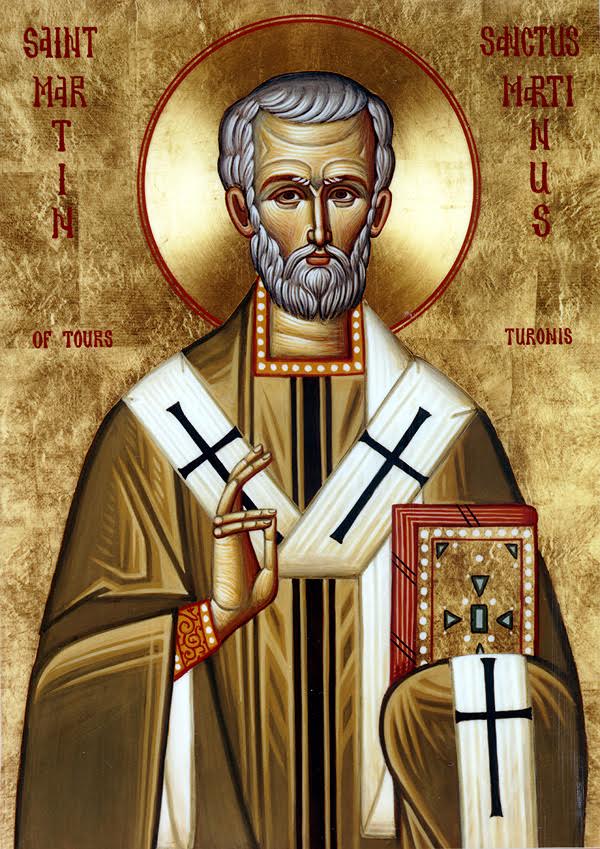
This new Temple seems to be a blessing from Father Jonathan’s spiritual grandfather, Blessed Seraphim Rose, who had a special love for the Celtic Saints, and St. Martin of Tours in particular.
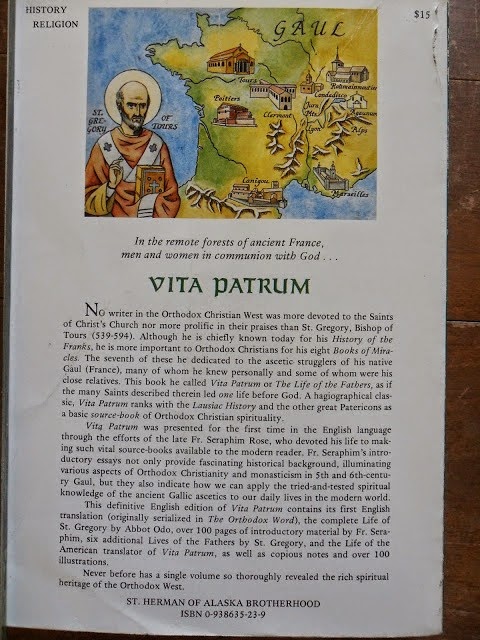
Cf. The prologue to Vita Patrum written by him:
“And then, even as the news of the phenomenon of Egyptian monasticism was still spreading through the West, the West produced its own ascetic miracle: St. Martin of Tours. Even before his death in 397, his manuscript Life was being circulated in Gaul, Spain, Italy, and elsewhere in the West, revealing him as a monastic Father and wonderworker in no way inferior to the desert Fathers in the East.”
Another spiritual ‘coincidence’ seems to be at stake. While reading St. Martin’s vita a certain incident attracts our attention,
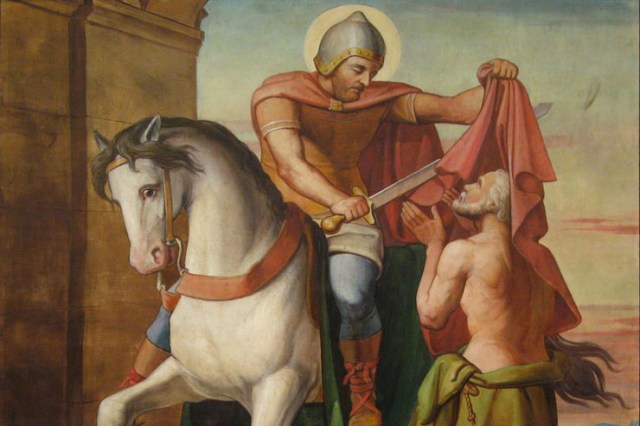
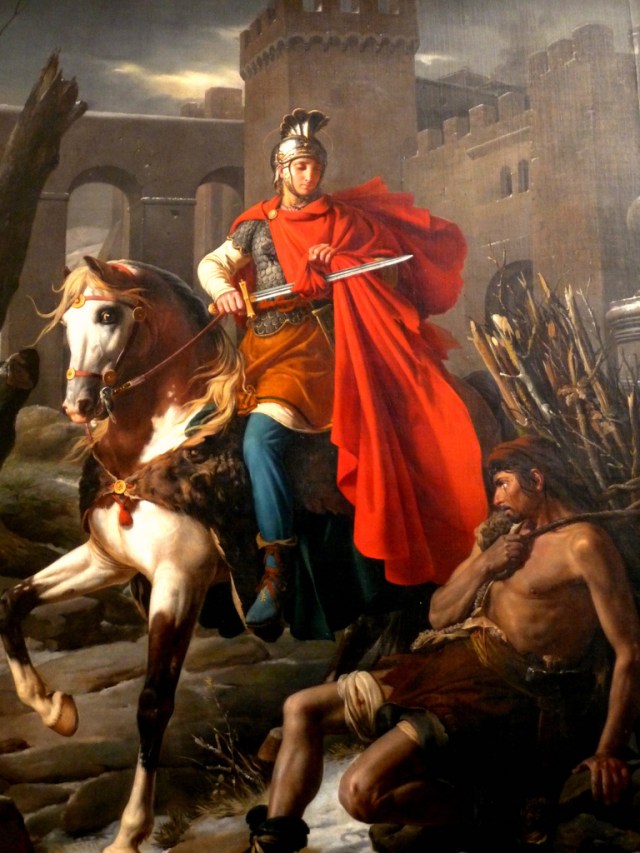
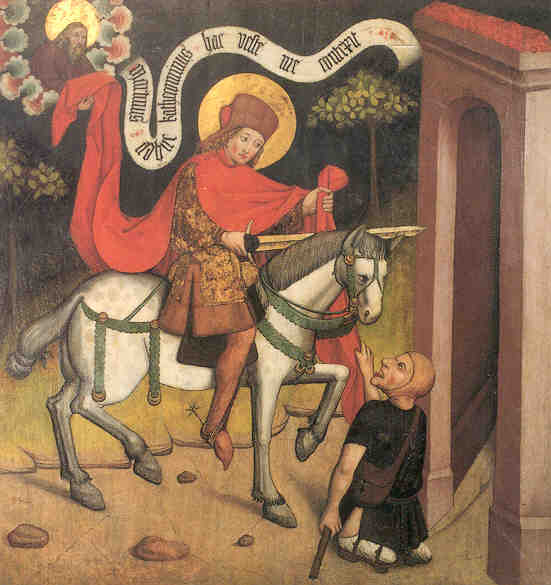
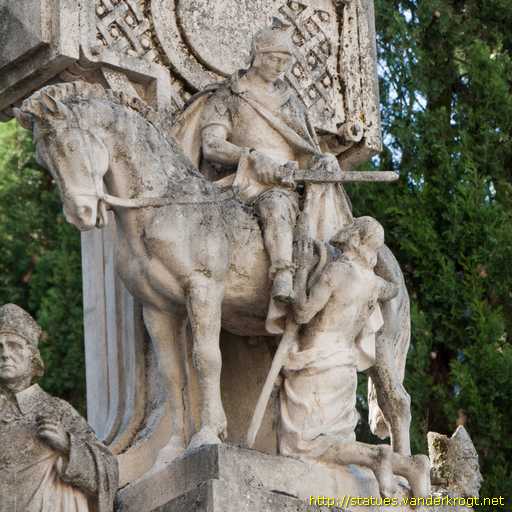
ACCORDINGLY, at a certain period, when he had nothing except his arms and his simple military dress, in the middle of winter, a winter which had shown itself more severe than ordinary, so that the extreme cold was proving fatal to many, he happened to meet at the gate of the city of Amiens[8] a poor man destitute of clothing. He was entreating those that passed by to have compassion upon him, but all passed the wretched man without notice, when Martin, that man full of God, recognized that a being to whom others showed no pity, was, in that respect, left to him. Yet, what should he do? He had nothing except the cloak in which he was clad, for he had already parted with the rest of his garments for similar purposes. Taking, therefore, his sword with which he was girt, he divided his cloak into two equal parts, and gave one part to the poor man, while he again clothed himself with the remainder. Upon this, some of the by-standers laughed, because he was now an unsightly object, and stood out as but partly dressed. Many, however, who were of sounder understanding, groaned deeply because they themselves had done nothing similar. They especially felt this, because, being possessed of more than Martin, they could have clothed the poor man without reducing themselves to nakedness. In the following night, when Martin had resigned himself to sleep, he had a vision of Christ arrayed in that part of his cloak with which he had clothed the poor man. He contemplated the Lord with the greatest attention, and was told to own as his the robe which he had given. Ere long, he heard Jesus saying with a clear voice to the multitude of angels standing round — “Martin, who is still but a catechumen, clothed[9] me with this robe.” The Lord, truly mindful of his own words (who had said when on earth — “Inasmuch[10] as ye have done these things to one of the least of these, ye have done them unto me”), declared that he himself had been clothed in that poor man; and to confirm the testimony he bore to so good a deed, he condescended to show him himself in that very dress which the poor man had received.
Your mercy toward the poor man without clothes gained you, O Martin,
The vision of Christ, who said to the angels
‘Martin has clothed Me with this garment.
Have mercy on us who are poor
And who have no good works to clothe ourselves,
And pray to the Lord of the Universe
That He have mercy on our souls. (St. Martin of Tours Troparion, Tone 4)
“The Charity of St. Martin”
Likewise, this Holy Cross community have been given the use of the residence for half week, for Fridays, Saturdays and Sundays! 😃
In a sense, Divine Providence and the Communion of Saints is brought into our (sic!) acquisition of the Church!
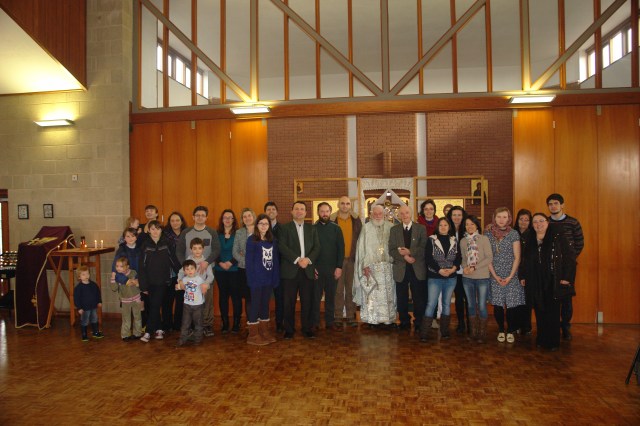
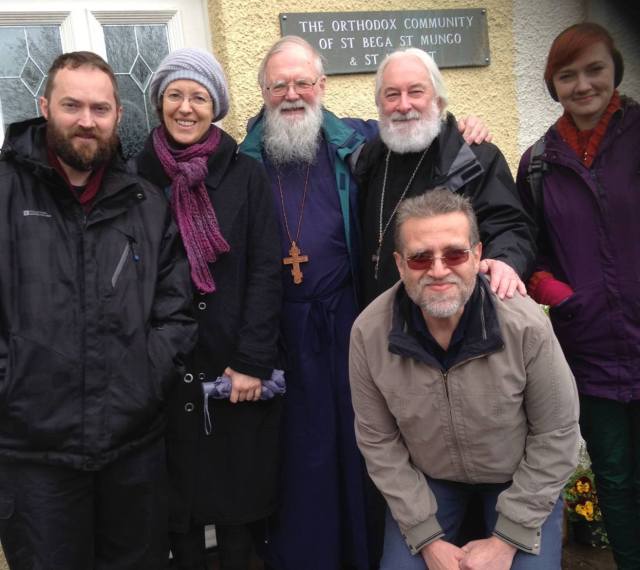
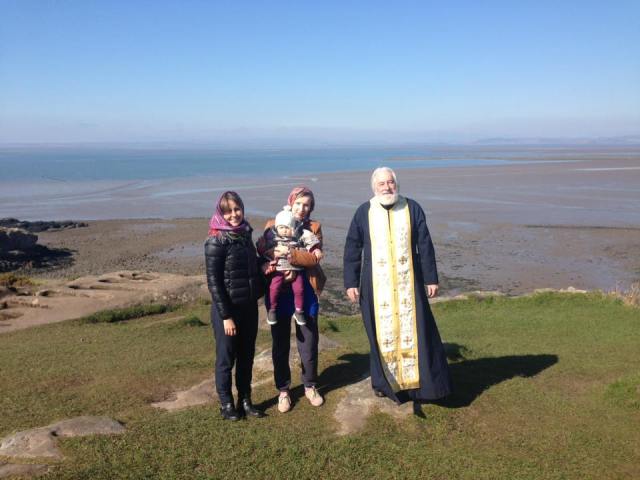
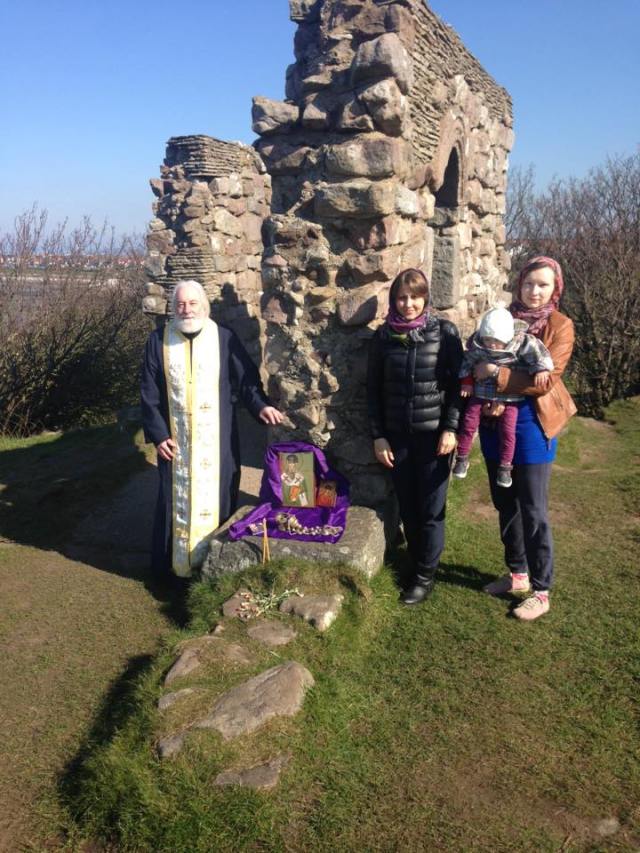
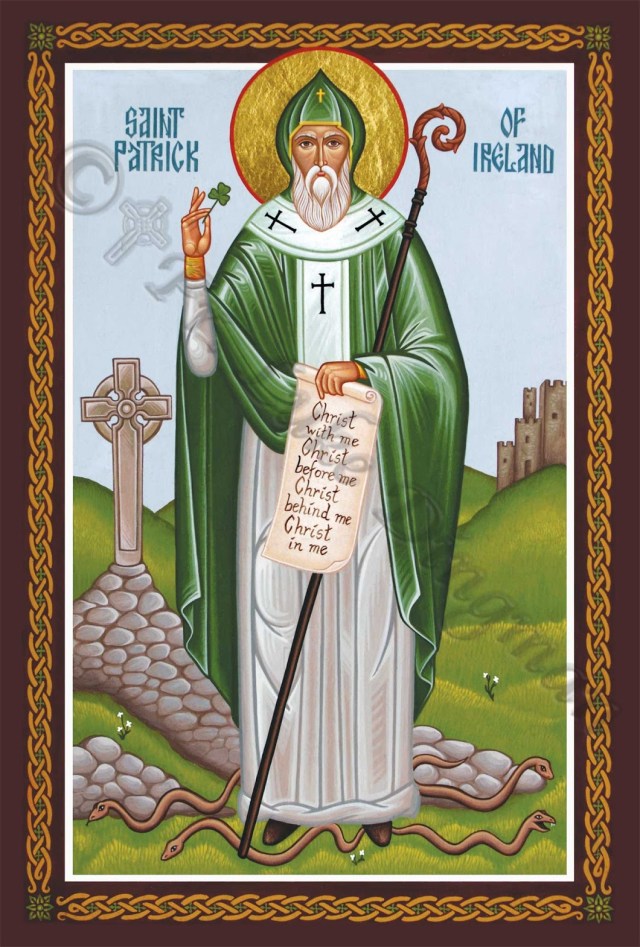
On St. Patrick’s Day, Father Jonathan Hemmings and five Stavronians made a pilgrimage to Heysham to St Patrick’s Chapel and Monastery at Heysham. Have a look at this lovely photo with the Faithful. Not only five though! Plus a host of angels and some onlookers- a group of five young people totally unrelated to the Stavronian community or the Orthodox Church asked if they could have a photo taken with the Icon of St Patrick!
Heysham is where the great Saint Patrick crossed to Ireland to spread Christianity there. Father Jonathan is chanting St. Patrick’s Lorica (The Breastplate) ! Events like this are really important so that we reconnect with Britian’s Orthodox past. This pilgrimage brings tears to my eyes as I remember a pilgrimage, together with Father Jonathan, which took place 2 years ago. Such fond memories to treasure!
“We are doubly blessed to receive at Great and Holy Week a hand crafted Icon, a comb and a prayer rope that belonged to St Paisios and Reliquary for containing these holy relics. We will also have on loan for Holy Week a piece of his clothing from another Monastery in Greece. Those from other Orthodox Parishes who wish to come to venerate these secondary holy relics of St Paisios should contact Jonathan so that we may offer appropriate hospitality.”
“We are blessed to welcome again the Byzantine St Anysia Choir from Thessalonika for Pascha who came last year to embellish our worship with their beautiful singing.
On Being Spirit-Born(e), the Cost of Discipleship — Grace is free but it is not cheap! — and Two Questions
Acts of the Apostles 19:1-8
In those days, while Apollos was at Corinth, Paul passed through the upper country and came to Ephesus. There he found some disciples. And he said to them, “Did you receive the Holy Spirit when you believed?” And they said, “No, we have never even heard that there is a Holy Spirit.” And he said, “Into what then were you baptized?” They said, “Into John’s baptism.” And Paul said, “John baptized with the baptism of repentance, telling the people to believe in the one who was to come after him, that is, Jesus.” On hearing this, they were baptized in the name of the Lord Jesus. And when Paul had laid his hands upon them, the Holy Spirit came on them; and they spoke with tongues and prophesied.
Some say of Saint Antony that he was “Spirit-borne”, that is, carried along by the Holy Spirit, but he would never speak of this to men. Such men see what is happening in the world, as well as knowing what is going to happen. (Desert Fathers or Gerontikon, Sayings Of Anthony of Egypt, XXX)
The presence of the All Holy Spirit in and behind the Acts of the Apostles and within the life of the Early Church is all pervasive and an impelling force. It is apparent that Christians in the Apostolic era were Spirit-borne and full of power to heal the sick and preach the Gospel within the living tradition. St. Paul in his missionary travels encounters at Ephesus some disciples of John the Baptist (Chapter 19:2) who had never heard of the Holy Spirit. He asks them directly: “Did you receive the Holy Spirit when you believed?” They answered: “We have not so much as heard whether there is a Holy Spirit!”
Archpriest Michael Harper of blessed memory observes: “Why is that somewhat brusque question Paul’s first remark to them? There can surely be only one answer. They did not look as if they had! (received the Holy Spirit) Something was missing that ought to have been there, something that men were beginning to look for as a distinctive mark of those who had had the characteristic vitalising experience of becoming Christians.” (Revd. Fr. Jonathan Hemmings, Fountains in the Desert, 85-6)
Why would St. Anthony never speak of this Spirit-borne quality among men?
Why today these miraculous gifts seem less evident in the Church?
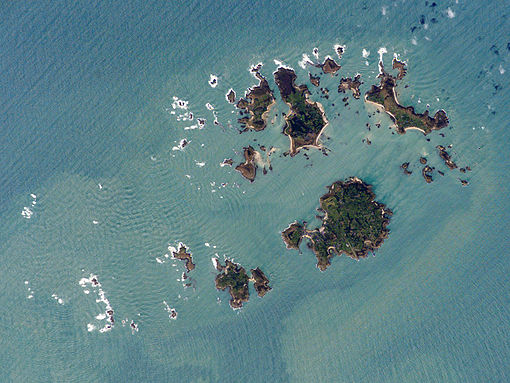
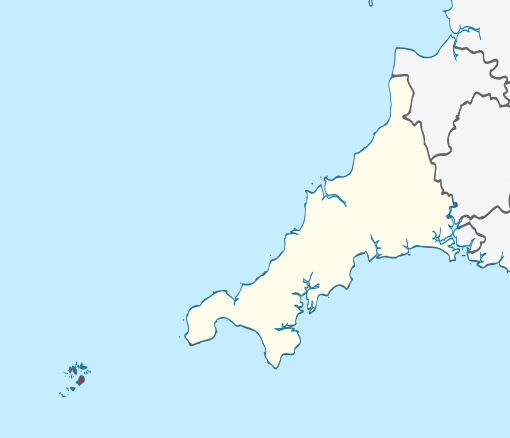
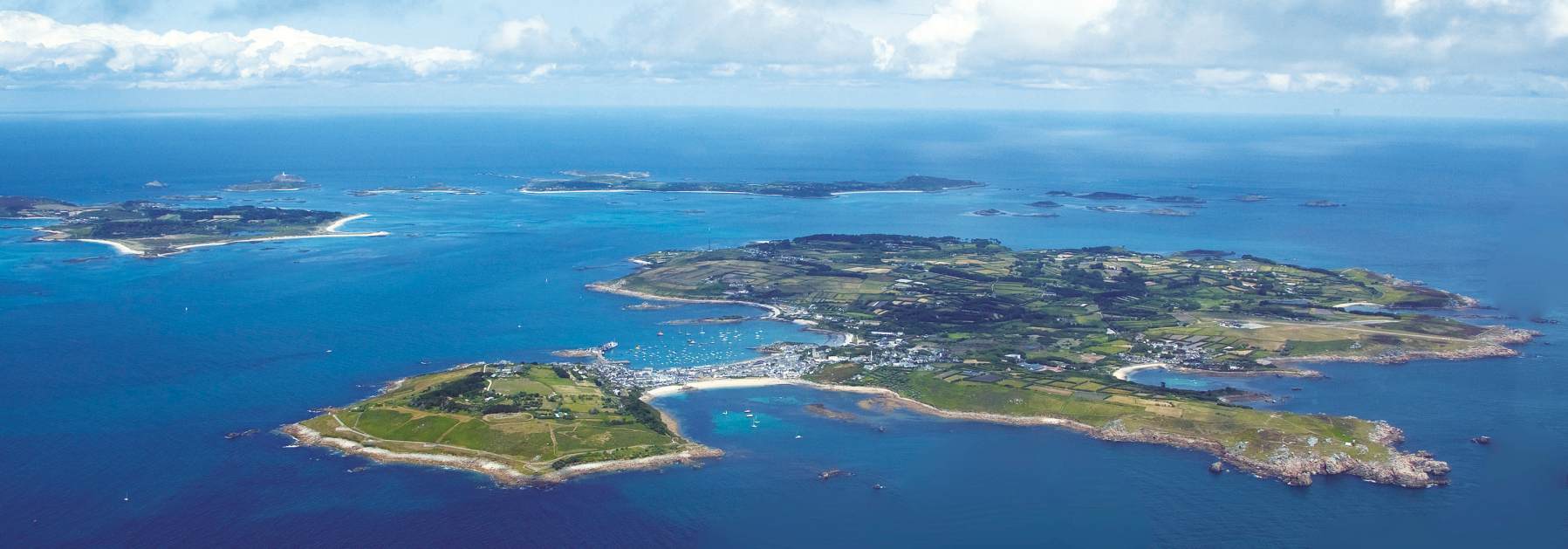
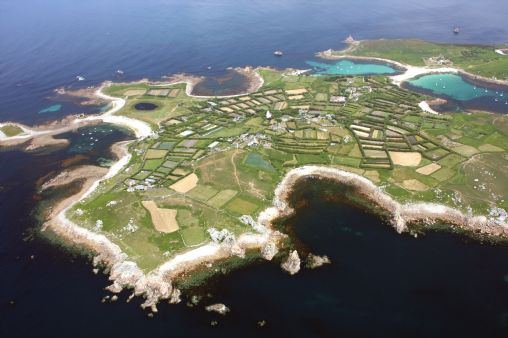
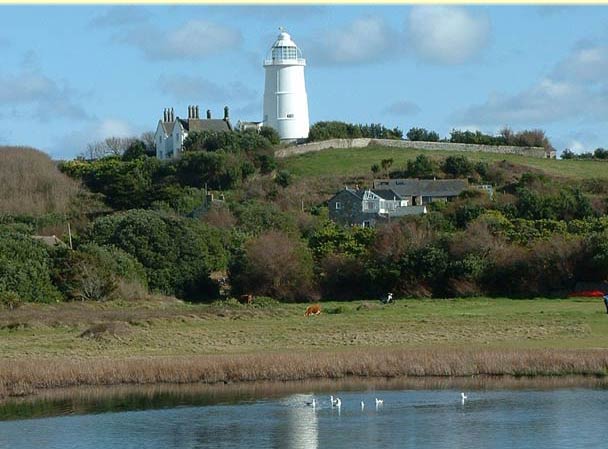
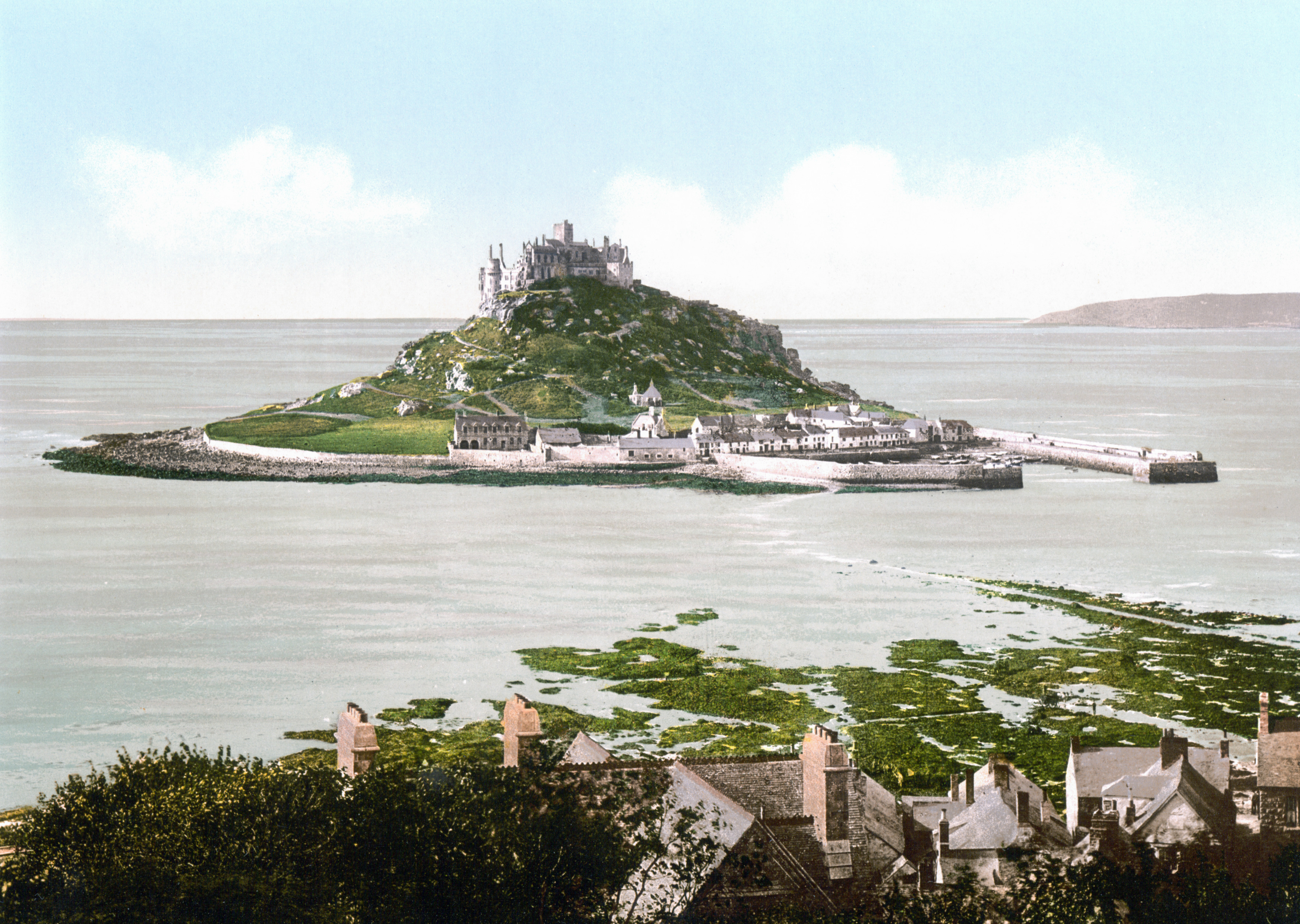
To continue our pilgrimage to the Celtic sacred sites and pilgrim routes of England, our next stop is Scilly –pronounced “silly”–Islands! Yet another look at Christian faith from a Celtic perspective. Have you been there? The Isles of Scilly (/ˈsɪli/; Cornish: Syllan or Enesek Syllan) (Introduction of the “c” may be to prevent references to “silly” men or saints!) are an archipelago off the southwestern tip of the Cornish peninsula of Great Britain, comprising 5 Major, inhabited islands,St Mary’s, Tresco, St Martin’s, Bryher, St Agnesand 140 others.
“For since in the wisdom of God the world through its wisdom did not know him, God was pleased through the foolishness of what was preached to save those who believe.” (1 Corinthians 1:21)
*
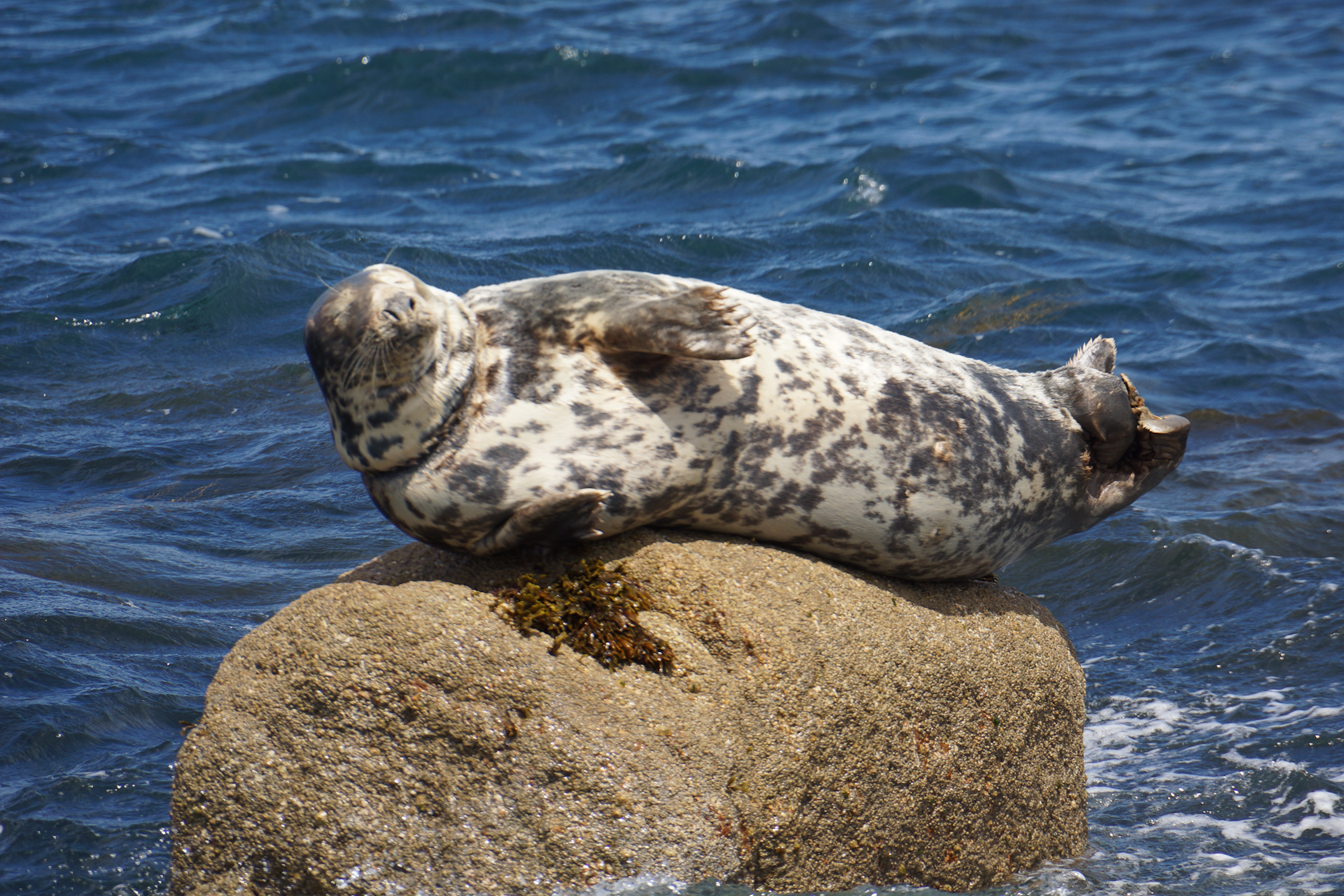
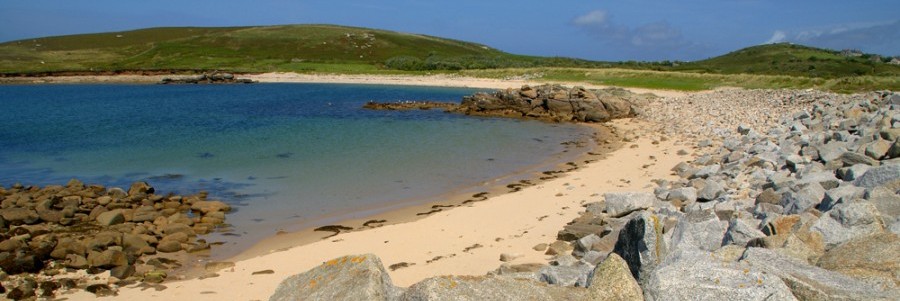
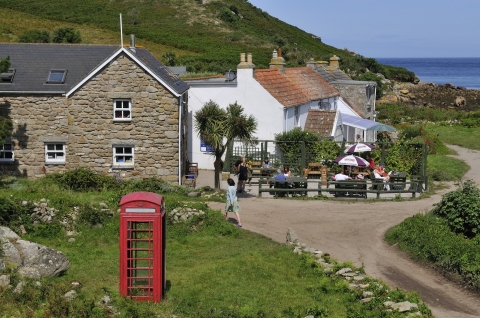
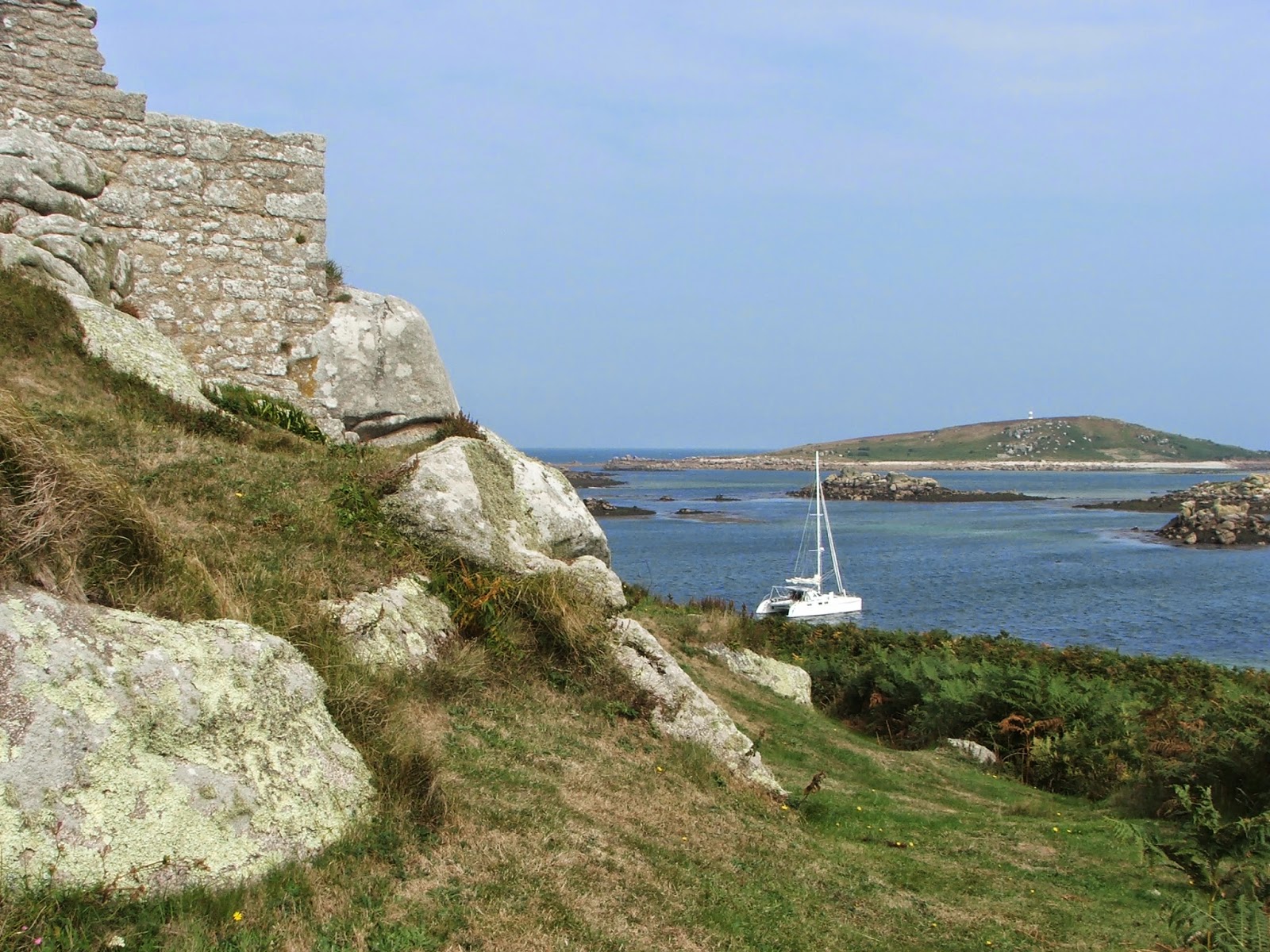
Forty miles south west off the Cornish coast are the beautiful Scilly Islands. Bathed by clear water, graced by an equitable and temperate climate, surrounded by wildlife in sea and air, seals, puffins and dolphins, they have a flora unique to the British Isles. The very names of some of these Islands, St.Mary, St.Agnes, St.Martin, St.Helen, suggest a link between faith and culture. Look a little deeper and one finds an important vein of Celtic Orthodox spirituality etched, sometimes quite literally into the very granite of the rocks that form the base of life in these offshore outposts of faith and spiritual powerhouses of prayer.
*
St. Mary’s
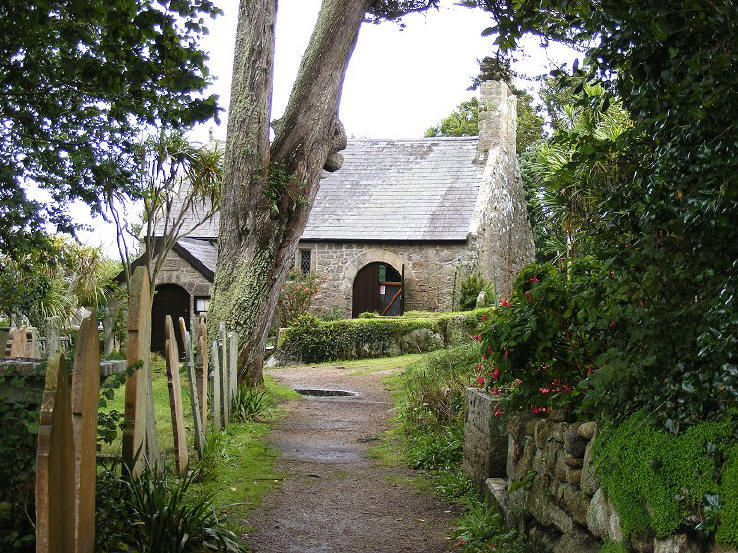
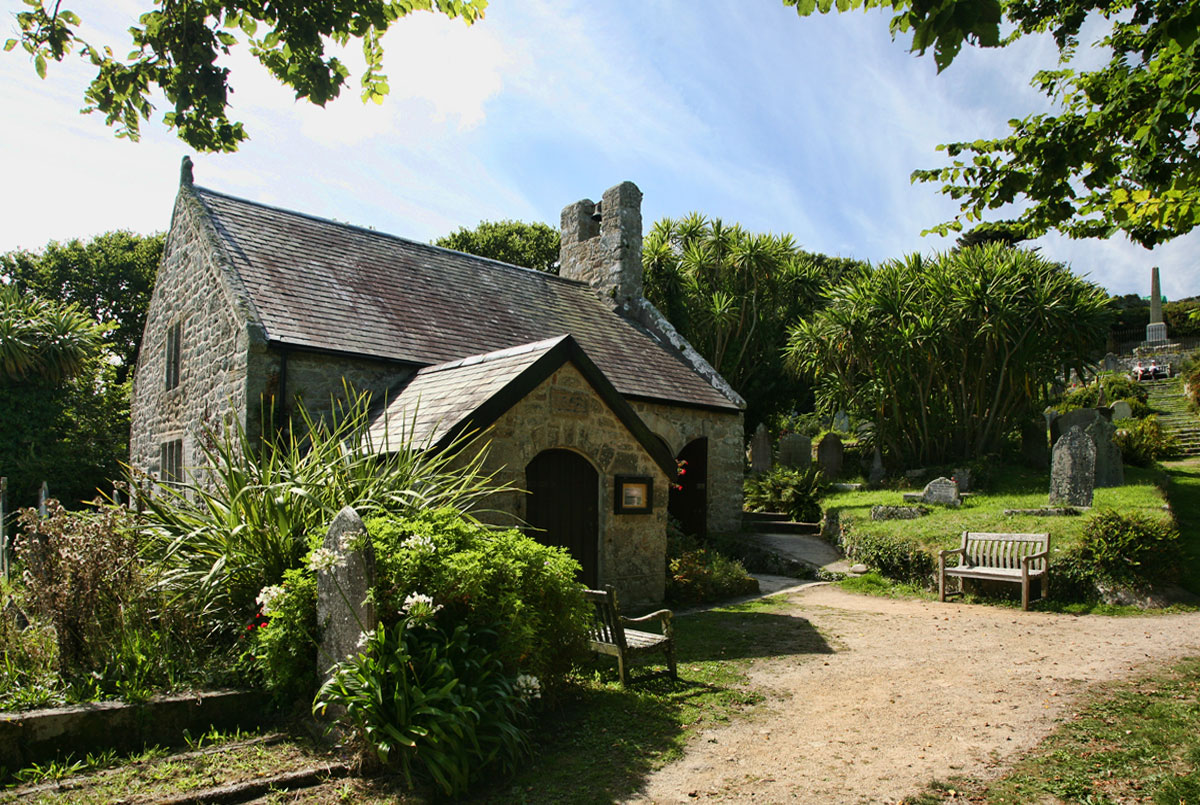
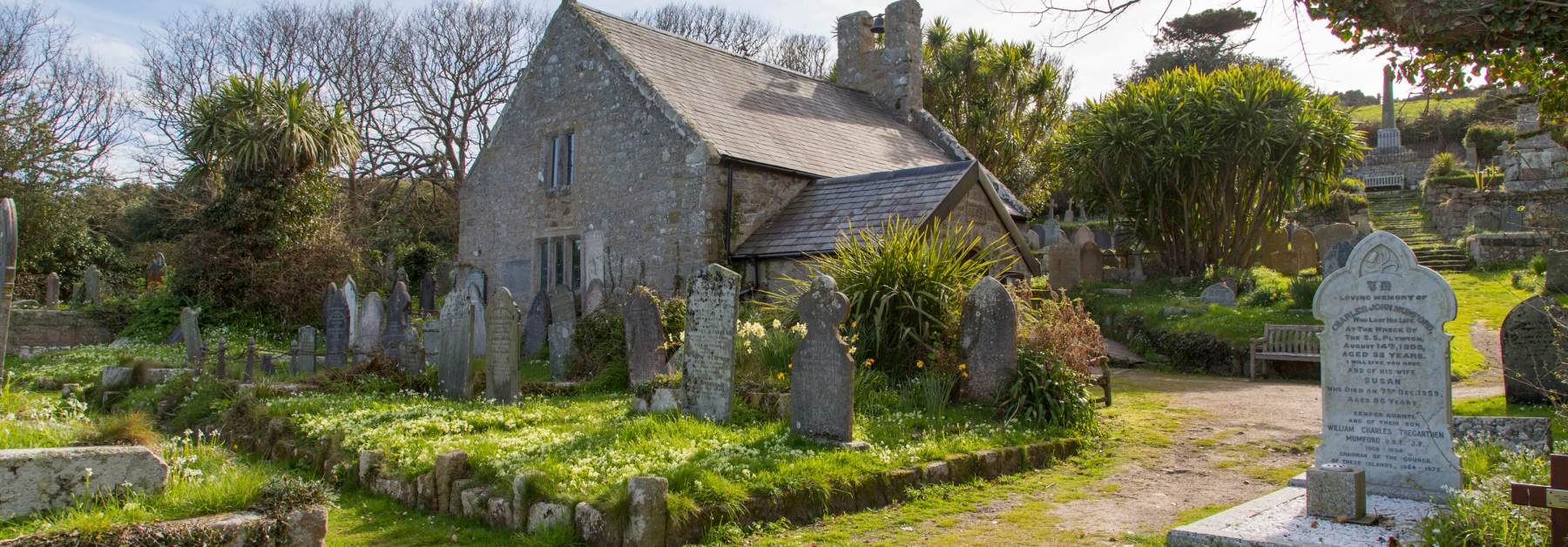
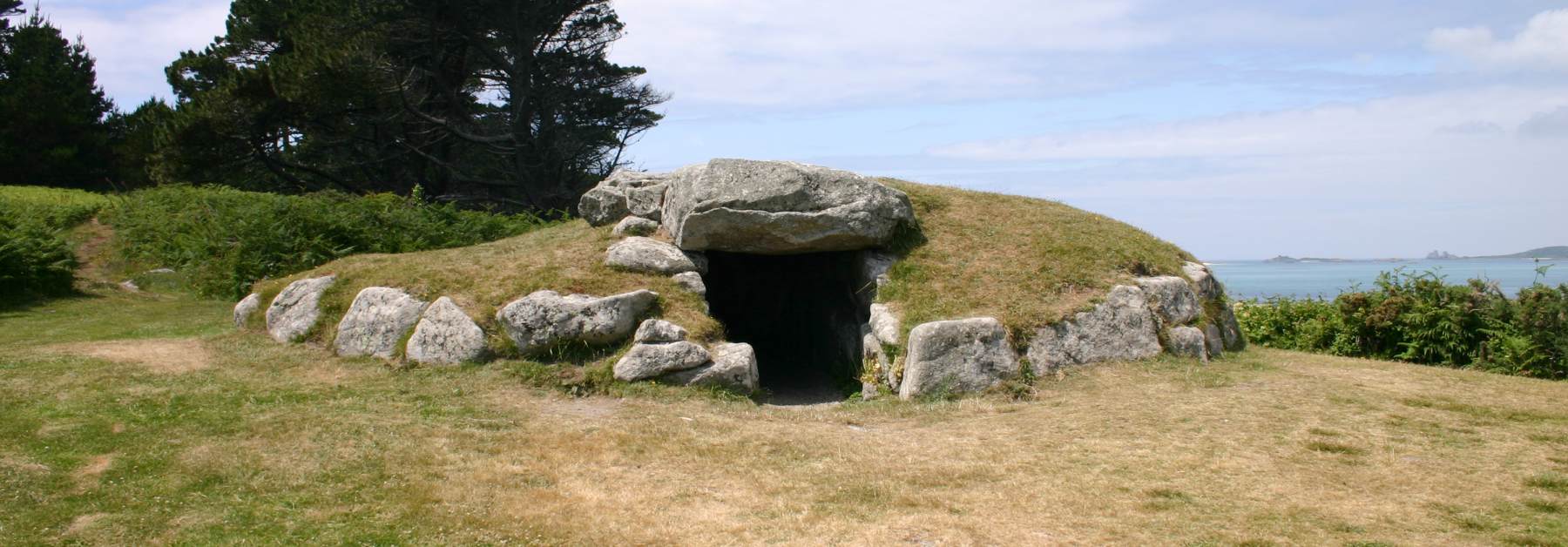
The largest of the Islands, it was known at first as Ennor, the origin of which is obscure, it seems that the name of the island was taken from the dedication of the Church in the Old Town to Our Lady in mediaeval times. As “Star of the Sea” (Steren an Mor) the intercessions of the Mother of God are still sought for those who sail in these shipwreck strewn islands where the hazards of shallow tides and hazardous rocks still persist and catch the unwary voyager. [ For a list of shipwrecks of the Isles of Scilly go to http://list of shipwrecks of the Isles of Scilly] There is a little valley in the middle of the island known as Holy Vale.
Bants Carn, St Mary’s
Scilly St Mary’s Bant burial chamber entrance
*
St. Agnes
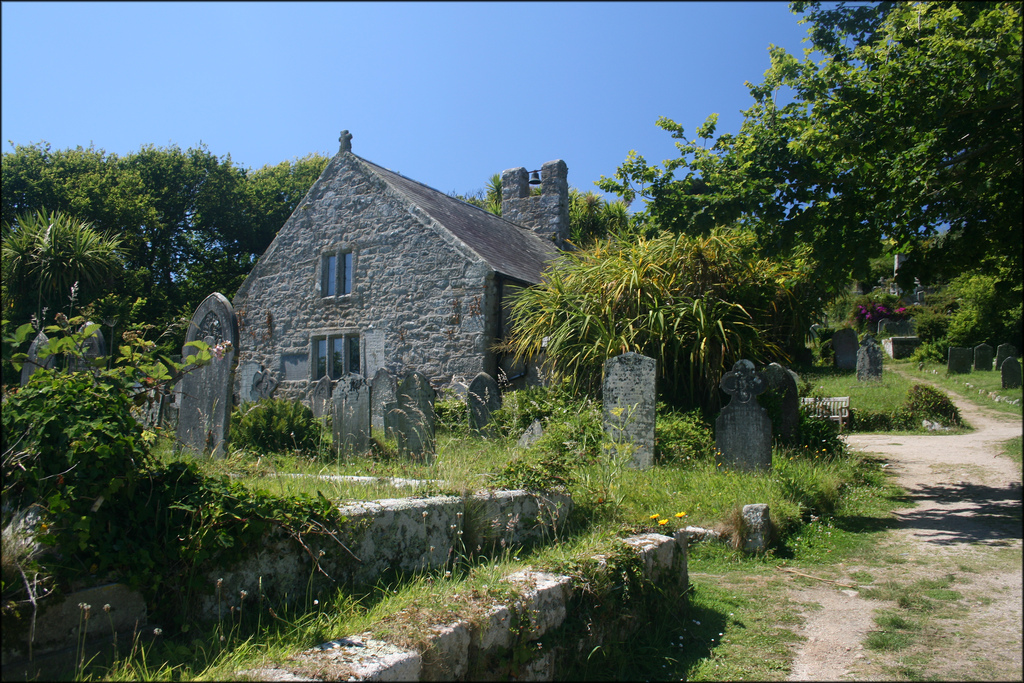
The southernmost Island is that of St. Agnes. Named after the Roman Saint we find during Norman times the replacing of celtic saints with popular western saints. However, to the south east of the Island is the crescent- shaped St. Warna’s Cove which marks the spot where this Irish celtic nun landed and made her dwelling-place after sailing single handed from Ireland. It is remarkable to ponder on the courage and fearless spiritual enterprise of the Celtic Christians who used the Irish Sea much as we today would use the M6 motorway. St. Warna is the patron saint of the Scilly Island of St Agnes and prays for the salvation of those subject to wrecks. It may be noted that it is said that some of the more pagan element wanted shipwrecks in order to plunder the cargo in past times. At St. Warna’s Cove there is a holy well near to the shore where the saint lived in her hermitage and prayed. Nearby there is a large standing granite stone with an impressive and distinctive Cross emblazoned on its face made by the weathering of the wind!
Porth Conger, St Agnes
St Agnes, isles of Scilly and The Bar of sand which connects it to Gugh
Views taken on or on the way to St Agnes
Summer Sky – St Agnes, Scilly Isles
Troy Town Maze, St. Agnes, Isles of Scilly
Gugh. Gugh, St. Agnes, Isles of Scilly
On the island of St Agnes, St Warna is the patron saint of shipwrecks
*
St. Martin’s
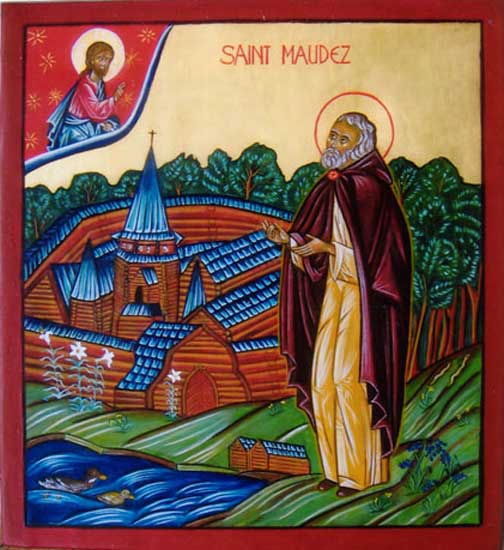
The Island was originally called Mauded which is similar to the Breton name for the Cornish St. Mawes who has a small town named after him near Falmouth where he lived for a time after sailing from south Wales. In the Roman Calendar his feast day is November 18th. According to tradition he was a 6th Century Welsh hermit and Abbot, also called Maudetus or Maudez. He lived as a solitary and then went to an island off the coast of Brittany, France, where he is revered as St.Maudez. He is believed to have founded other monasteries and churches in Cornwall and Brittany. There is a tradition that Saint Mawgan ( a place near Newquay, Cornwall which has a holy well), if he is to be identified as the same, was at one time Bishop of the Scilly Islands. The transition to a completely different saint, St. Martin seems to be a “latinization” of the name, again from the time of Norman occupation.
Offshore and inshore islands, St Martin’s, The Isles of Scilly
*
Bryher Isles
Bryher is the smallest inhabited island in the Isles of Scilly. It’s famous for the spectacular Hell Bay with it’s pounding waves crashing over the rocks on.
*
Tresco
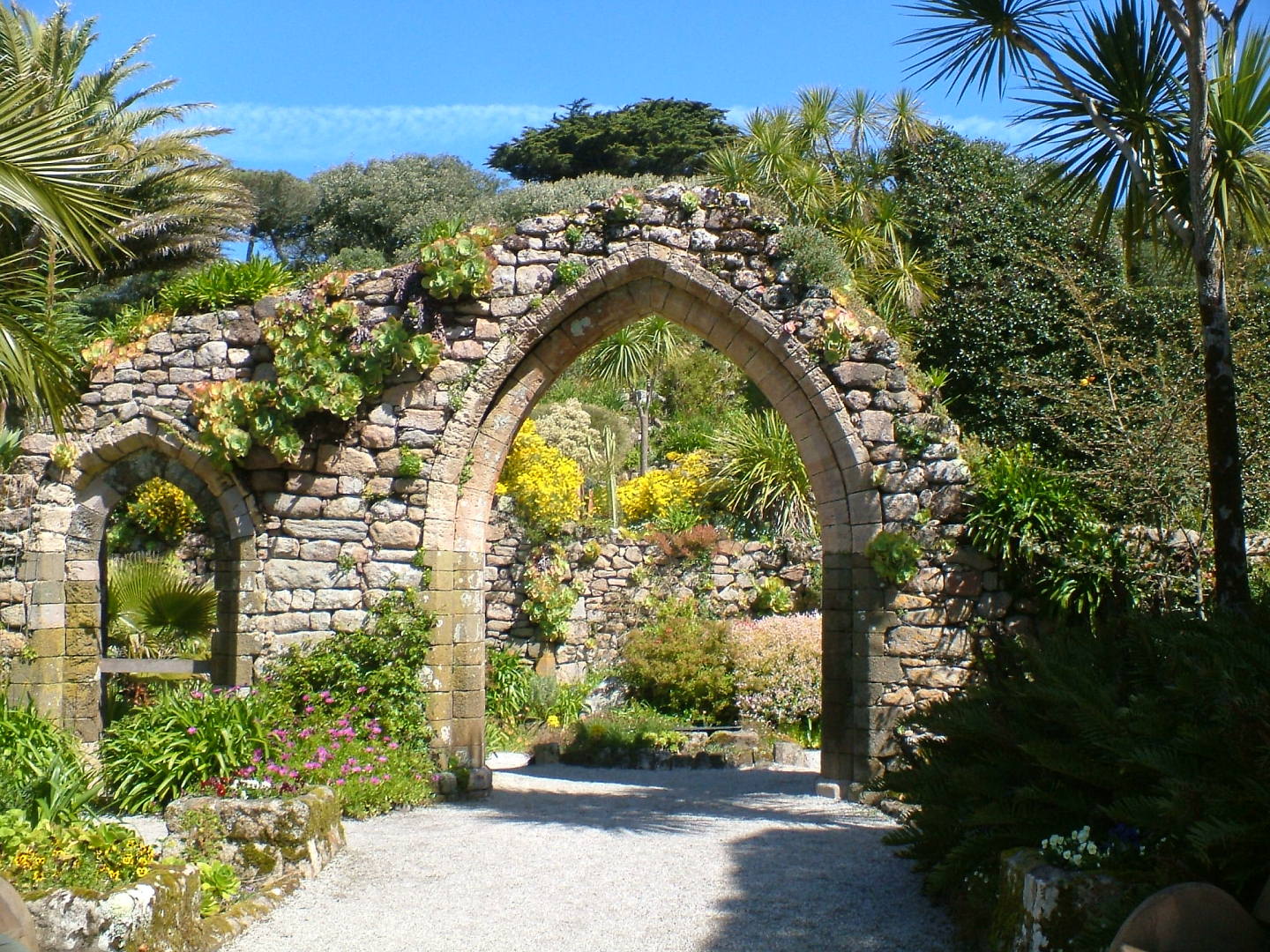
The name of the Island was at one time St. Nicholas the patron saint of sea farers which seems most appropriate. This beautiful island boasts a Benedictine Priory established in 1114, the remains of which can still be seen today within the gardens of Tresco. It was probably established from the Abbey at Tavistock in Devon which was also dedicated to St. Nicholas.
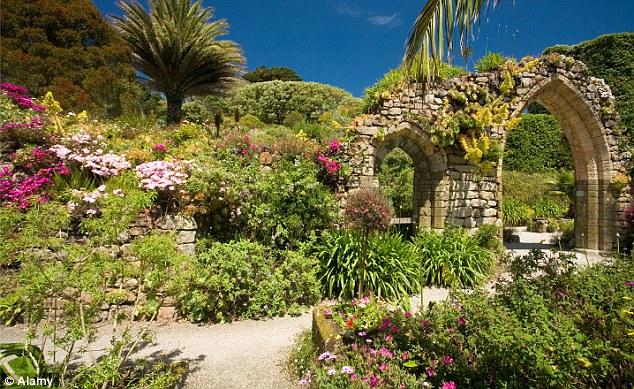
The arch from the wall of the mediaeval monastery in Tresco Abbey Gardens
Abbey Gardens Tresco
Tresco Abbey Gardens, Scilly Isles, UK
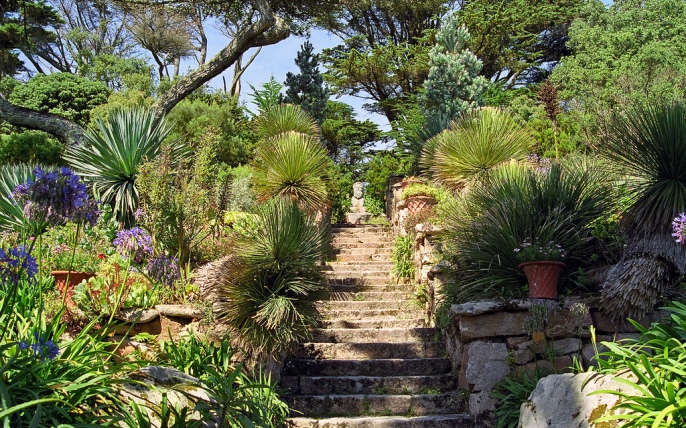
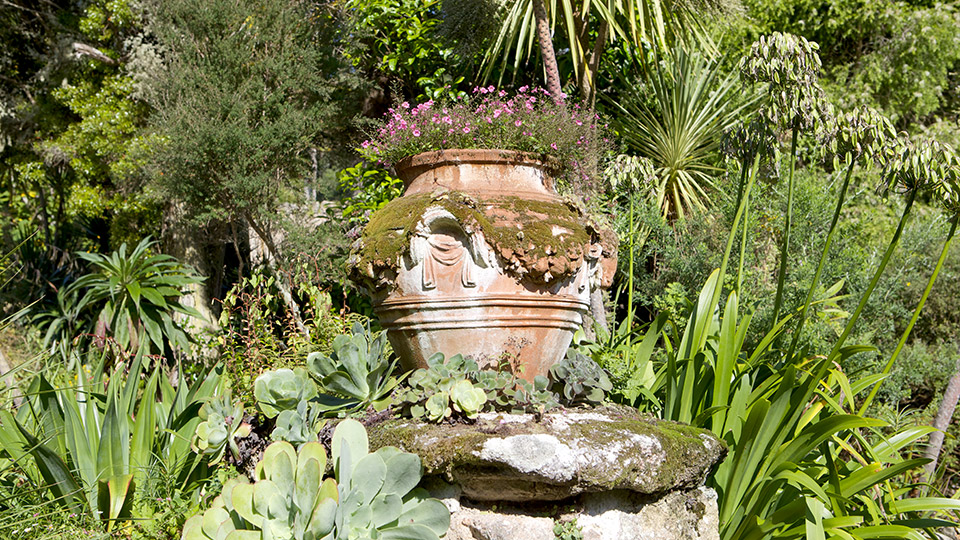
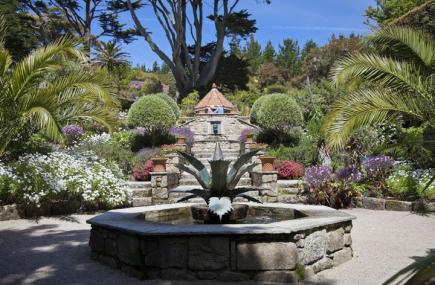
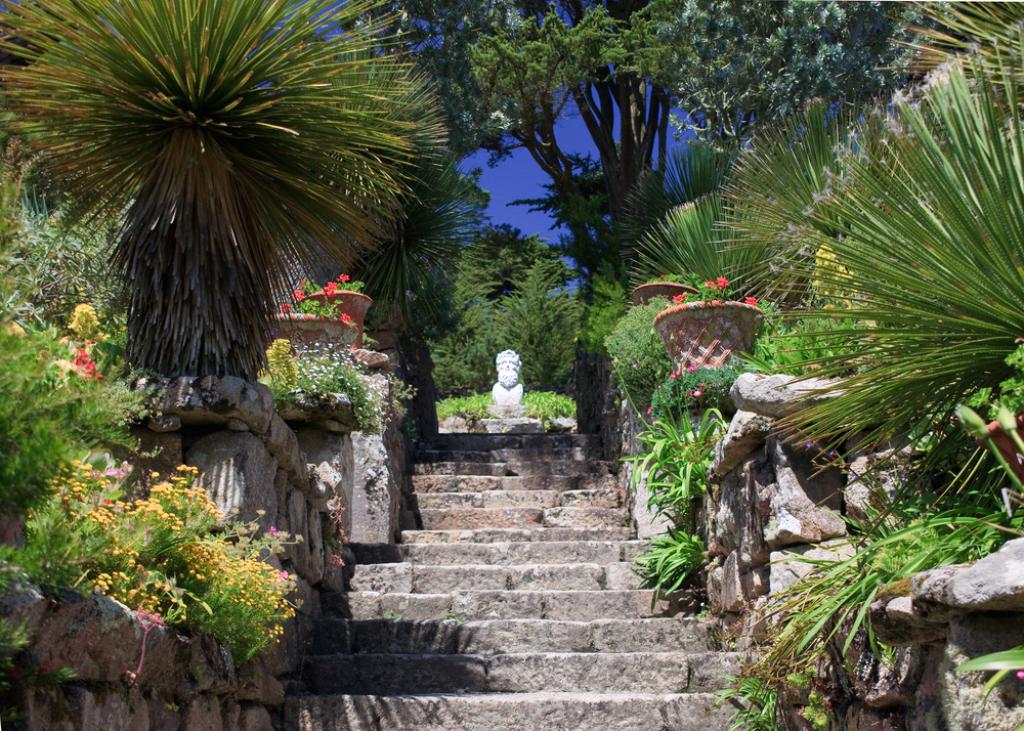
Looking at the plants in this garden it is difficult to believe that Tresco Abbey Gardens is situated in the British Isles. Containing sub-tropical plants from Australia, South Africa and South America including Echiums, Agaves, Aloes, Proteas, Aeoniums, Strelitzias and palm trees, this garden looks as though it should be situated in the Mediterranean! However, it is located in England, on the small island of Tresco in the Scilly Isles … With a stunning background of white sandy beaches and vivid turquoise sea, Tresco Abbey Gardens is an outstanding historic garden set amid the romantic ruins of a 16th century priory. The gardens were started by Augustus Smith, who moved to the island in 1834. The garden has subsequently been developed by four succeeding generations of the family from Augustus Smith. The gardens have many delightful features, often seen at their best in the warmth of the afternoon sun, ranging from the Abbey arch, the Neptune steps, the shell house and a number of tastefully placed sculptures (including one to the earth goddess Gaia), all bordered by fantastic foliage of varying shapes, textures, sizes and hues. Surrounded by sea and in the warmth of the Gulf Stream the climate is exceptionally mild and totally frost free in most years. With south facing terraces, these gardens have often been referred to as Kew gardens without the roof, because in mainland UK, you would only find these plants in a botanical garden glass house.
Tresco Abbey Gardens
King Charles’ Castle is a ruined coastal artillery fort near the north extremity of the island that dates back to the sixteenth century
Samson
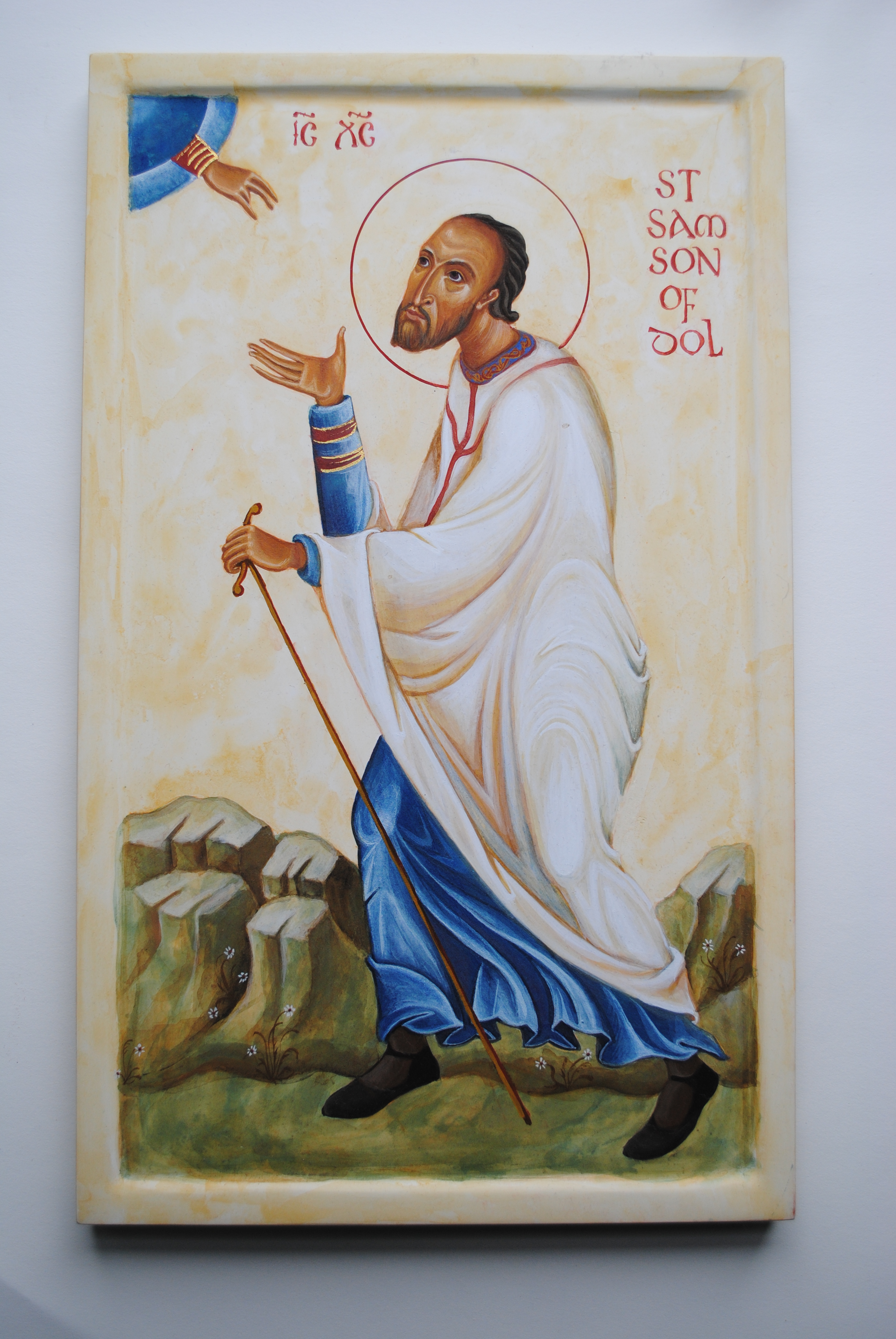
The island is connected with the welsh saint St. Samson of Dol who travelled to Cornwall, Brittany and the Channel Isles. Samson was educated by St. Illtud at the Abbey of Llanilltud Fawr (Llantwit Major) in Glamorganshire; where he was ordained a deacon and then a priest. Samson of Dol found it necessary by the Will of God to remove himself to the monastery on Ynys Byr (Caldey Island). He eventually became Abbot there and considerably established a strong community. Later in his life he chose the life of a hermit near the River Severn but, being made a Bishop, he turned to missionary work in Cernow (Cornwall) and came to the Scillies where one of the islands is named after him. He died on 28th July AD 565 and was buried in Dol Cathedral in Brittany. His ‘Life’ which survives, was written the following century. In the AD 930s, King Aethelstan acquired a number of his relics – including an arm and his crozier – which were proudly displayed in Milton Abbey (Dorset) until the time of the Reformation. The Island of Samson was inhabited until quite recently.
Old Cottage on South Hill, Samson
Tean
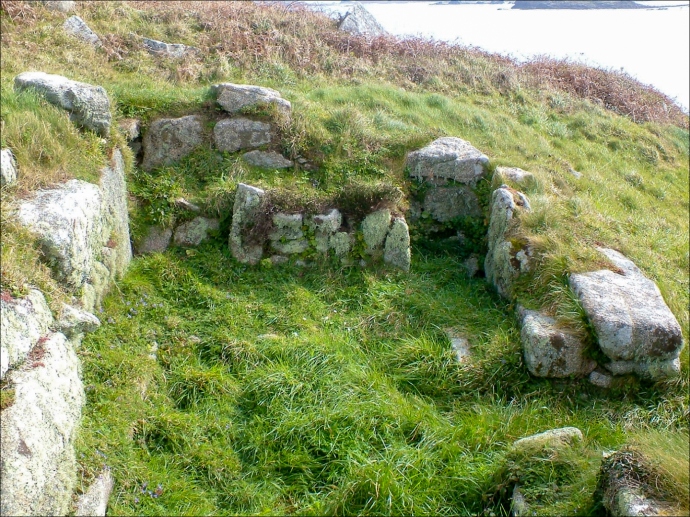
This little northern island was also inhabited until recently. The name Tean derives from the name Theona. There are ruins of her dwelling place still where once as a hermit she prayed and gave glory to the Holy and Life Giving Trinity and also remains of some celtic graves of the 6th century nearby. Recent excavations have unearthed some interesting Romano-British finds. These include an older ‘toothless’ woman whose head lies under the altar of the later built chapel, she may in fact be St.Theona, after whom the island is named.
Tean, Isles of Scilly. View from the Great Hill – geograph.org
Hedge Rock and Tean, Isles of Scilly
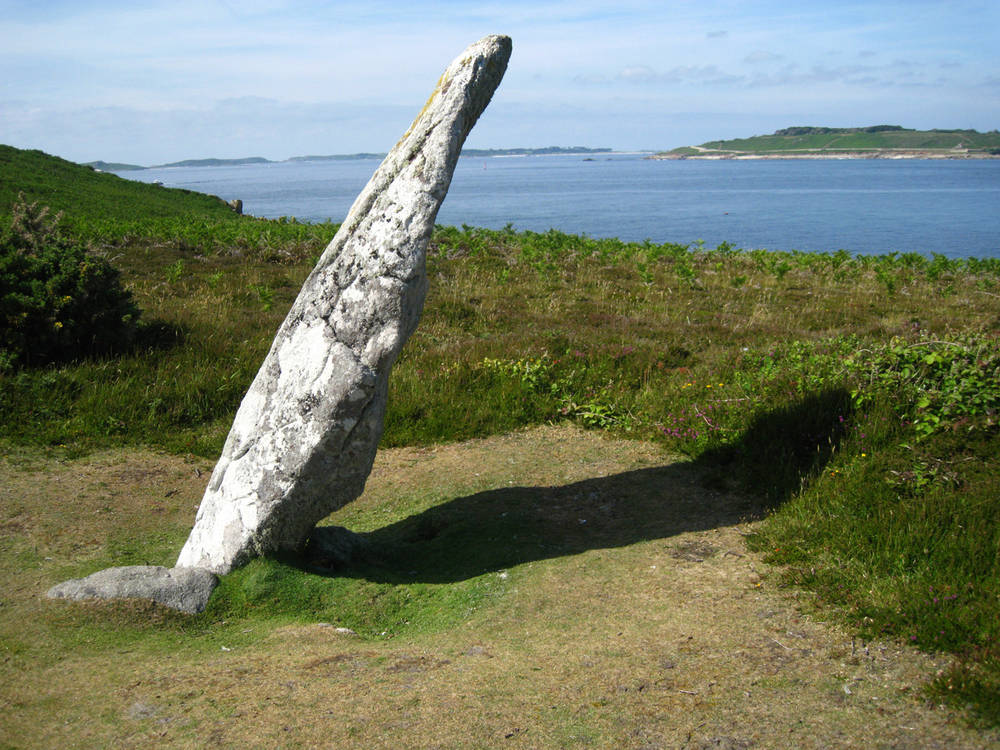
Old Man, Tean, Isles of Scilly
*
St. Helen’s
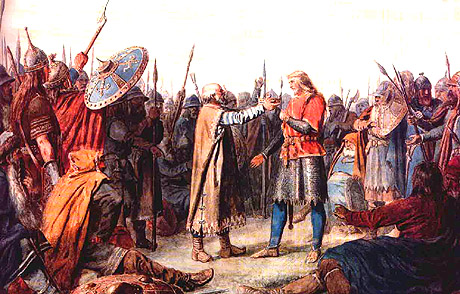
We know that this island was called St. Helen, the Blessed mother of Holy Constantine the Great, from 16th century maps but it is associated with another ancient saint, that of Elidius or St. Lide as he is also known. On the uninhabited island of St. Helen’s are the remains of St. Elidius’ Hermitage which contains an 8th century Christian monastic chapel which was active until the 11th. century. This holy place is still honoured today with local people making a Pilgrimage to the site on 1st August. There is an interesting connection between the Scilly Islands and the Christian mission to Norway. In 980 Olaf Tryggvason came to the Scilly Islands. Snori Sturluson recounts in his “Saga” that this notorious marauding Viking met Saint Elidius and heard of “the God of the Christians.” He was converted to Christianity and agreed to be baptized and all those with him. He took the faith with him returning to Norway and Iceland with “three priests and other learned men.” As King of Norway he began the process of evangelism which was continued by his successor Saint Olaf.
Olaf Tryggvason, who visited the islands in 986. It is said an encounter with a cleric here, at St. Helen’s, led him to Christianise Norway
St. Helen
St. Helen’s Viewed From The Block House. Tresco
On the uninhabited island of St. Helen’s are the remains of St. Elidius’ Hermitage which contains an 8th century Christian chapel
St. Helen’s Pool
Early mediaeval chapel on St Helen’s
Well known for its pest house, in which sailors infected with plague would be quarantined, St Helen’s is a prominent landmark on the Scilly coastline
Church of St Elid on the island of St Helen’s
*
Sailing into history
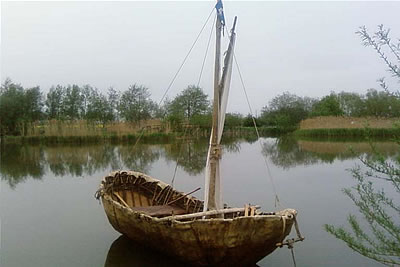
What strikes me about these saints is their adventurous and persistent spirit in Christ-their sheer delight and desire to bring Christ to every part of these Islands however small, blessing this part of God’s vineyard by their work, prayers and holiness of life. Whilst on St.Mary’s I learned from the curator of the Museum, that in August 2000, on June 28th a Breton vessel named Saint Efflam (founder of a monastery in Brittany, France. He was the son of a British prince) from an enterprise called Odysee Celtique (Celtic Odyssey) sailed into St. Mary’s harbour re-enacting ancient celtic monastic voyages-it was a Breton vessel and a reconstruction of a traditional curragh.
Curragh
The boat was constructed from a frame of hazel poles over which was stretched tar-covered canvas imitating the ox skins which would have been used originally. Whilst at sea the crew slept on the open boat and had few concessions to modern facilities during the voyage. As Amanda Martin says in her article in Scilly 2000 in “The Voyage of the Sant Efflam” such an experience was not for the faint hearted. “The whole feat requires a tremendous physical effort not to be undertaken lightly.”
These living saints give inspiration to us today by their energy and boldness for the gospel’s sake. In Christ we should imitate their humility, simplicity and calling.
*
A prayer
*
My boat is small
The ocean vast
Lord fill my sail
Maintain my mast
Christ my captain
Spirit’s power
Save me Lord
In danger’s hour.
Amen
*
These “fools for Christ” saved many because they preached Christ crucified and many believed and so they put the Christ in Scilly. Perhaps we, in this our time of God’s good grace need to make a similar Scilly Pilgrimage!







































 ORTHODOX CHRISTIAN FAITH AND LIFE