Who am I in this crowd?

palm sunday

In the Name of the Father, the Son and the Holy Ghost.

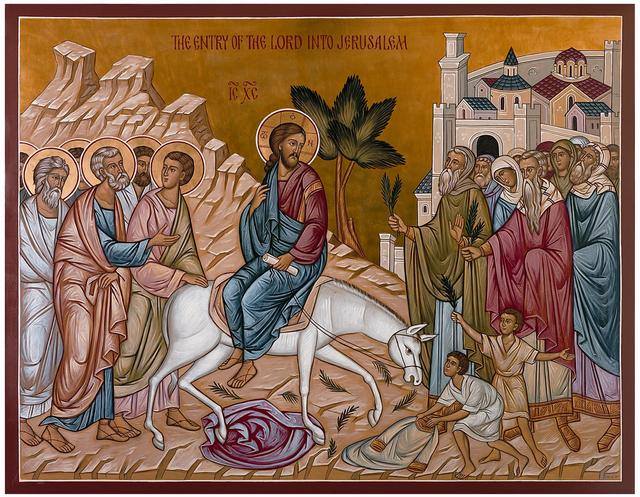
Today Christ enters the path not only of His sufferings but of that dreadful loneliness which enshrouds Him during all the days of Passion week. The loneliness begins with a misunderstanding; the people expect that the Lord’s entry into Jerusalem will be the triumphant procession of a political leader, of a leader who will free his people from oppression, from slavery, from what they consider godlessness – because all paganism or idol-worship is a denial of the living God. The loneliness will develop further into the dreadful loneliness of not being understood even by His disciples. At the Last Supper when the Saviour talks to them for the last time, they will be in constant doubt as to the meaning of His words. And later when He goes into the Garden of Gethsemane before the fearful death that is facing Him, His closest disciples, Peter, John and James – whom He chose to go with Him, fall asleep, depressed, tired, hopeless. The culmination of this loneliness will be Christ’s cry on the cross, “My God, My God, why hast Thou forsaken me?” Abandoned by men, rejected by the people of Israel He encounters the extreme of forsakenness and dies without God, without men, alone, with only His love for God and His love for mankind, dying for its sake and for God’s glory.

The beginning of Christ’s Passion is today’s triumphal procession. The people expected a king, a leader – and they found the Saviour of their souls. Nothing embitters a person so much as a lost, a disappointed hope; and that explains why people who could receive Him like that, who witnessed the raising of Lazarus, who saw Christ’s miracles and heard His teaching, admired every word, who were ready to become His disciples as long as He brought victory, broke away from Him, turned their backs on Him and a few days later shouted, “Crucify Him, crucify Him.” And Christ spent all those days in loneliness, knowing what was in store for Him, abandoned by every one except the Mother of God, who stood silently by, as She had done throughout her life, participating in His tragic ascent to the Cross; She who had accepted the Annunciation, the Good Tidings, but who also accepted in silence Simeon’s prophecy that a sword would pierce her heart.

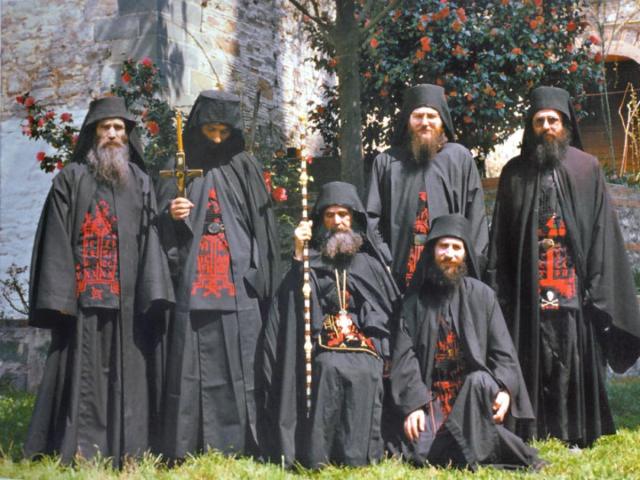
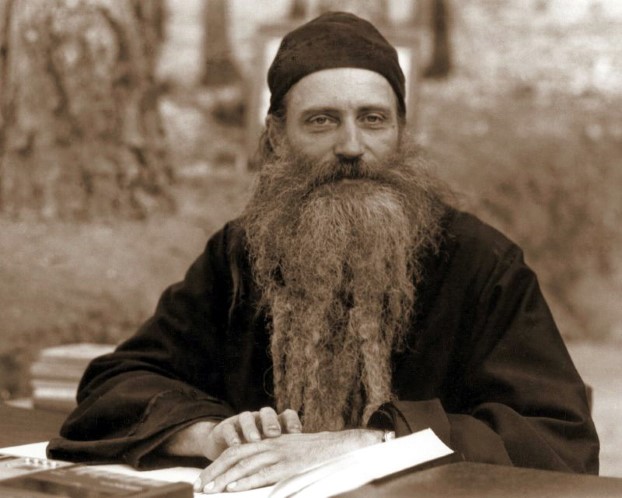
During the coming days we shall be not just remembering, but be present at Christ’s Passion. We shall be part of the crowd surrounding Christ and the disciples and the Mother of God. As we hear the Gospel readings, as we listen to the prayers of the Church, as one image after another of these days of the Passion passes before our eyes, let each one of us ask himself the question, “Where do I stand, who am I in this crowd? A Pharisee? A Scribe? A traitor, a coward? Who? Or do I stand among the Apostles?” But they too were overcome by fear. Peter denied Him thrice, Judas betrayed Him, John, James and Peter went to sleep just when Christ most needed human love and support; the other disciples fled; no one remained except John and the Mother of God, those who were bound to Him by the kind of love which fears nothing and is ready to share in everything.

Once more let us ask ourselves who we are and where we stand, what our position in this crowd is. Do we stand with hope, or despair, or what? And if we stand with indifference, we too are part of that terrifying crowd that surrounded Christ, shuffling, listening, and then going away; as we shall go away from church. The Crucifix will be standing here on Thursday and we shall be reading the Gospel about the Cross, the Crucifixion and death – and then what will happen? The Cross will remain standing, but we shall go away for a rest, go home to have supper, to sleep, to prepare for the fatigues of the next day. And during this time Christ is on the Cross, Christ is in the tomb. How awful it is that, like the disciples in their day, we are not able to spend one night, one hour with Him. Let us think about this, and if we are incapable of doing anything, let us at least realise who we are and where we stand, and at the final hour turn to Christ with the cry, the appeal of the thief, Remember me, Lord, in Thy Kingdom! Amen.

Metropolitan Anthony of Sourozh
THE LORD’S ENTRY INTO JERUSALEM
1980, 30 March

A Great Lent Story

geron-paisios5

A real story where the disciple thought he knew better than his spiritual father …


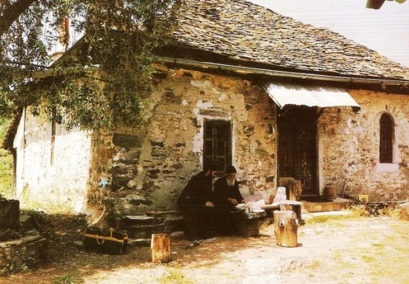
‘It was a day in Great Lent that the Elder saw from afar a burglar breaking into his cell.

This burglar was the same one like last year …

The Elder hid in the barn until the burglar completed his task.

When the Elder’s disciple later found out, he was furious and scolded his Elder:

– “Why did you not call me to catch him? This is the same burglar who broke into us last year and remains unrepentant!”

– “Who knows, my child”, answered the Elder. “Maybe he will repent this year …”

-“And if he repeats this again?”, the disciple burst out.

-“Then, my child, I must run, open the door and give him everything, so that he will not fall into temptation for a third time …”

The disciple knelt, kissed his spiritual father’s hand, and left in tears…’


St Gregory the Theologian in Spiritual Warfare

gregory-the-theologian-1408.jpeg

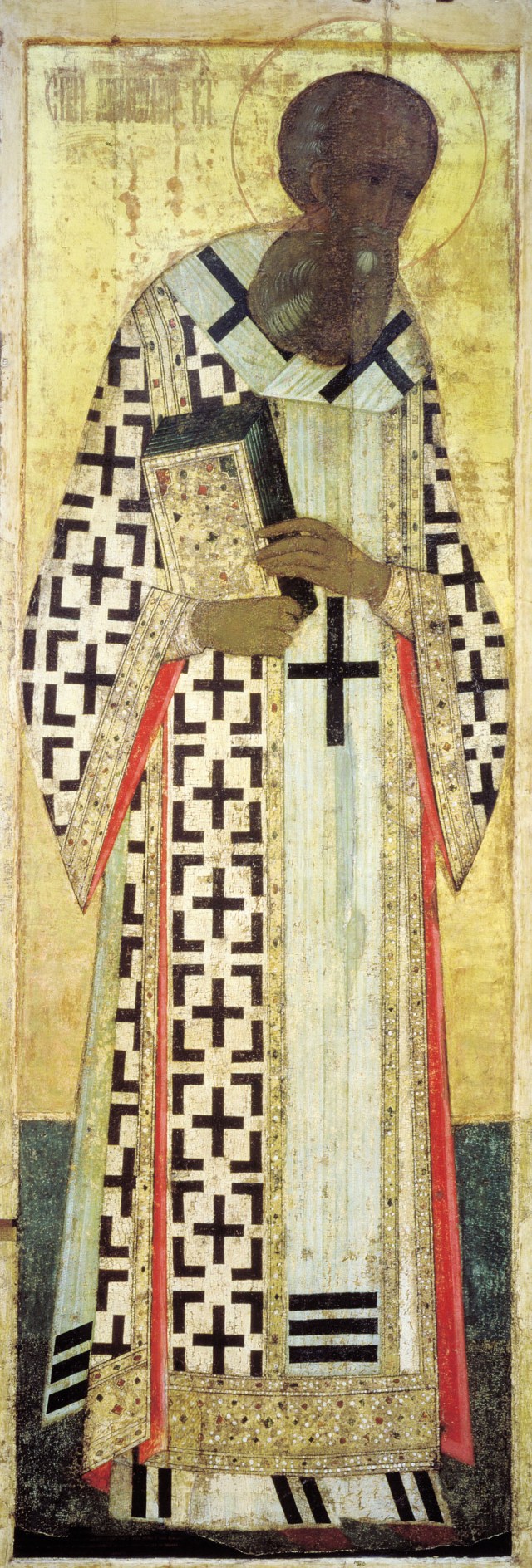
Gregory the Theologian, 1408 – Andrei Rublev

Flee swiftly from my heart, all-crafty one.
Flee from my members and from my life.
Deceiver, serpent, and fire, Belial, sin,
death, abyss, dragon, night, snare, and frenzy,
chaos, manslayer, and ferocious beast!
Thou didst entice into perdition those
first-formed folk, my foreparents, offering them
at the same time the taste of sin and death.
Christ, the Ruler of all commandeth thee to
flee into the billows, to fall upon the rocks,
or to enter the herd of swine, O baleful one,
as once He bade that presumptuous Legion.
Nay, yield forthwith, lest I smite thee with the Cross,
whereat all things tremble;
Oh, flee!
I bear the Cross upon me, in all my members.
I bear the Cross whene’er I journey, whene’er I sleep.
I hold the Cross in my heart. The Cross is my glory.
O mischievous one, wilt thou never cease from
dogging me with traps and laying snares for me?
Wilt thou not dash thyself upon the precipices?
Seest thou not Sodom? Oh, wilt thou not speedily
assail the shameless herds of ungodly heretics,
who, having so recklessly sundered the Almighty
Godhead, have witlessly destroyed and abolished It?
But comest thou against my hoariness? Comest thou
against my lowly heart? Thou ever blackenest me,
O foe, with darksome thoughts, pernicious thoughts.
Thou hast no fear of God, nor of His Priests.
This mind of mine, most evil one, was verily
a mighty and loud-voiced herald of the Trinity.
And now it beholdeth its end, whither it goeth in haste.
Confuse me not, O slimy one, that I might, as pristine,
meet the pure lights of Heaven, that they might
shine like lightning flashes upon my life.
Lo, receive me; lo, I stretch forth my hands.
Farewell, O world! Farewell, thou who bringest woes upon me!
Pity be shown to all that shall live after me.


Self Examination at the Heart of Lent

st-john-cassian-2

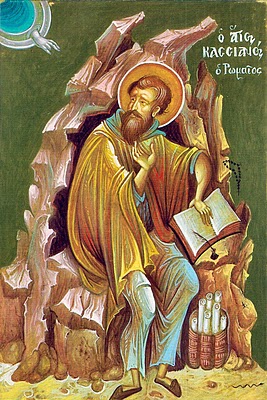
Reflections on the sin of pride by St John Cassian


By the following indications, then, that carnal pride of which we have spoken is made manifest.

First of all, a person’s talking will be loud and his silence bitter;

his joy will be marked by noisy and excessive laughter, his seriousness by irrational sadness;

his replies by rancor, his speech by glibness,

and his words will burst out helter- skelter for a heed-less heart.

He will be devoid of patience, without love,

quick to inflict abuse, slow to accept it,

reluctant to obey except when his desire and will anticipate the matter,

implacable in receiving exhortations, weak in restraining his own will,

very unyielding when submitting to others,

 constantly fighting on behalf of his own opinions

but never acquiescing or giving in to those of others.

And so, having become unreceptive to salutary advice,

he relies on his own judgement in every respect

rather than on that of the elders.” (The Institutes, pp. 271-272)


Elder Ephraim’s Prayer Diary of the Great Lent (II)

elder efraim2

February 29, 1980 [3rd Thursday of Lent]

I feel sinful and dirty. The true awareness of my nothingness greatly helps me to see God.
“Thou shalt gladden him in joy with Thy face” (Ps. 20:6). Oh, that divine face! It has Eros and Beauty from the Glory, from the supremely radiant Light of the Trinity’s effulgence. This is what the transcendent Beauty of God is: a divine electrification and contact with God the Father, His humility and condescension. Oh, how unlimited the humility and simplicity of God is! The humility and condescension of the awesome God astounds and overwhelms me! How filthy and dirty man is! Even though he has so many sins and is so guilty, he feels haughty and behaves egotistically. There is nothing stupider than this.
The angels are celebrating in heaven, dressed in white with inconceivable beauty within the supremely  bright light of God. They are chanting — and what are they chanting! Their hymns are pure bliss. But that which makes them stay in this blessed state is the grace of humility and true self-knowledge.
Unfortunately, I am proud, which is why I lack this joy and grace. Like a helpless creature, like a thirsty deer, I seek, cry out, and long to be watered by the true Fountain —  my God  —  with a divine drink, with the water springing up into eternal life (cf. Jn. 4:14). “When shall I come and appear before the face of my God?” (cf. Ps. 41:2) I weep, seeking my God. When I touch Him, I feel him and weep. But how this is happening, I do not know; one thing I do know, and that is that I feel Him as much as He wants and corresponding to the humility I feel for my dirty self. My God and Father, open the eyes of my blind soul to see my nature, the nothingness of my nothingness, and through it to see You, the most lovely Light, Who gives eternal life to mortal man. Enlighten my darkness, O divine, lovely Light.
 Amen

 *

For the first part of his Lenten Diary, go to Elder Ephraim’s Prayer Diary of the Great Lent (I)

Elder Ephraim’s Prayer Diary of the Great Lent (I)

elder efraim

February 17, 1980

I experienced amazement and divine wonder tonight in my poor prayer. My nous tasted God. “Eye has not seen, nor ear heard, nor have entered into the heart of man the things which God has prepared for those who love Him” (1 Cor. 2:9)

All this is a fruit of the labor of my Holy Elder, who truly toiled inside the caves of Athos with fasts, vigils, weeping, and tears. I, on the other hand, am a miserable, hideous monstrosity; an unmonastic monk; a sluggard eating the labor of my father, Saint Joseph. If God did not have mercy on me through his intercessions, I would be spiritually lost.

The festival in heaven entices me—there in the eternal and immutable blessings, where only silence reigns, since it is the only thing one is able to do. But when shall I behold the face of my lovely Father!!! When shall I be satisfied with His glory? Oh, what beauty! But I am a filthy stench and the demons’ joy.

My God, forgive me, the nothing of nothingness. Only Your mercy saves me from my evil self…

February 18, 1980

The communication of my sinful soul with the supremely radiant God was very wonderful tonight. The heavenly world is a different realm; a different mode of life; a different atmosphere.

My God, what can I, the miserable pauper, say about what You are! You are a stupendous and immense delight. You are impalpable, and yet how are You touched? For when this contact happens, the soul is electrified with divine electricity, and sweet and beautiful tears run and run from my eyes. But in the heart, what happens!

My incomprehensible, inexpressible, and lovely God, what can I, the miserable one say about You! There are no words, there is no man capable or competent to do so. One can only feel reverence, worship, sacredness, and divine love in silent amazement.

Oh, how much I would like to be no longer on earth with the uncertainty of my salvation! Oh, if only I were already in the world of my God, my Father, my worship. There is eternity, certainty, and security.

I weep because I am the greatest sinner in the whole world. I mourn the uncertainty of my salvation. I do not know if I shall be saved. Here is the crux of the matter. Alas! I wonder, shall I reach the calm haven of eternal bliss? I wonder, shall I see the glory of my God?

Have pity on me, O only-begotten Logos of God,

My Jesus Christ

Blessed Seraphim Rose on Lenten Temptations

seraphim-rose

Excerpt from Blessed Seraphim’s Rose correspondence:

“First Sunday of Great Lent, 1980

Glory be to God, we passed the first week of Lent well, although the devil seems to attack stronger than ever. Last night at the Vigil we had a fire in church, which, if Br. G had not noticed it when he did, might have destroyed the whole church. Just a few minutes before the fire there had been a strong (and I think beneficial) human confrontation almost on that very spot, and it was obvious to me that the fire was caused by the devil’s envy that I secretly rejoiced, seeing that he attacked our property out of frustration at losing his human prey.  The same day a piece on our main printing press broke, but I think I can fix it from a part on the other press. But how well God preserves us in the midst of such trials!”

He Broke the Fast

metropolitan anthony of sourozh

A Short Story by Metropolitan Anthony of Sourozh

Sometimes it happens like this: a person tries to keep the fast, but then he falls and feels that he has defiled his whole fast, and that there is nothing left from his feat. In fact, it is far from being like this. God looks at this fast from a different viewpoint. I can explain this to you with one example from my personal experience.
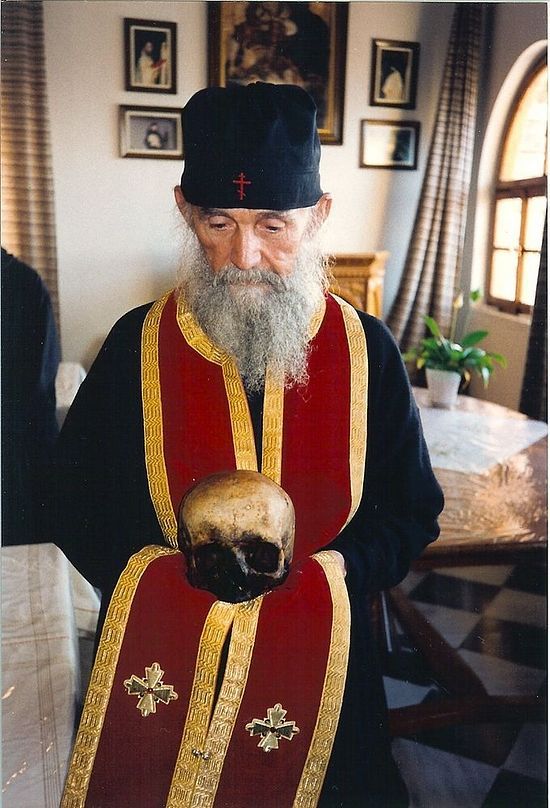
When I was a doctor, I was dealing with one poor Russian family. I did not take any money from them because they just had no money. Once, during Great Lent, when I was fasting especially strictly, trying no to violate any church rules, when they invited me for dinner. It turned out that during whole Lent they were saving money to buy a small chicken and treat me. I looked at that chicken and saw the end of my fasting feat in it. Of course, I ate a piece of it. I could not afford to offend them.

I went to my spiritual father and told him about the misfortune that had happened to me. I told him that I was fasting almost perfectly during Lent, but then I ate a piece of chicken during the Holy Week. Fr. Athanasios looked at me and said:

– You know what? If God looked at you and saw that you have no sins and that a small piece of chicken could defile you, He would protect you from that. But God looked at you and saw that there was so much sinfulness in you that no chicken can defile you more than that.

I believe that many people can use this example in order not to blindly follow the church canons, but be honest people first of all. Sure, I ate a piece of chicken: not as something dirty, but as a gift of human’s love. I remember an episode from the book by Fr. Alexander Schmemann, where he wrote that everything what exists in this world is God’s love. Even the food we eat is the Divine love in edible form.

From the book by Metropolitan Anthony of Sourozh, “The Works”

Reblogged from The Catalogue of Good Deeds

Great Lent: Fasting and Temptations

christs-temptation-in-the-wilderness-montreal

Christ’s Temptations in the Wilderness


Entering the second week of Lent, have you noticed temptations increasing … ?

*

“Fasting means I don’t eat, it is voluntary hunger. Therefore, to fast as an Orthodox during Great Lent is to drive ourselves into a marginal situation in which we feel the demands of the body, but the power of the soul masters it.
This marginal situation is expedient to the tempter to betray us with the most powerful temptations. He does not have power over the struggling fasting Christian, but the Christian is lured by the weaknesses of the body, which the tempter believes he can exploit. This happened with Christ.
The Evangelist Matthew writes: “Christ fasted forty days and forty nights and then was hungry. And the tempter came to Him saying….” The tempter came to Christ when He was hungry. Thus, hunger attracts him, but hunger is eventually what defeats him, when, of course, satisfaction is sought in the reasonable food of the soul – the words that proceed from the mouth of God – and not one-dimensionally from the unreasonable nourishment of the body.
gluttony vatopaidi icon

Gluttony, Vatopaidi icon

We must not, therefore, be surprised if during the fasting period of Great Lent diverse temptations occur, whether they relate to our personal, family or social life. At this time the tempter “approaches” Christians. He does this through many “internal” ways, but also with noisy external events, which correspond to internal impassioned thoughts, and tries to make our struggle during Great Lent worthless. But if we are sober, all these things will cause our spiritual maturation, paths for deeper self-knowledge and the knowledge of God.”
Source: Ekklesiastiki Paremvasi, “Η νηστεία και ο πειρασμός”, March 1999.

By Protopresbyter Fr. Thomas Vamvinis

Source: Mystagogy— Transl by John Sanidopoulos.

*

Fasting, Appetite and Hunger
Fr. Alexander Schmemann, in trying to put Christian fasting into perspective, in his book Great Lent: Journey to Pascha, writes:

Ultimately, to fast means only one thing: to be hungry – to go the limit of that human condition which depends entirely on food and, being hungry, to discover that this dependency is not the whole truth about man, that hunger itself is first of all a spiritual state that is in its last reality hunger for God.

Saint Paisios on the Arena of Great Lent

Geron-Paisios-81

St. Paisios: “A layman once went to a monastery in the beginning of Lent and a certain monk there was abrupt and rough to him. However, the poor man had good thoughts and justified him. He later came to me and said:
 
‘I do not blame him, Father. After all, he had just completed the Three Day Fast!’ (1)
 
If this monk had done the Three Day Fast in a spiritual way, he would have had a spiritual sweetness and would have spoken to the layman with kindness. But he pushed himself egotistically to do the Three Day Fast, and so he blamed everybody for everything.”
*

A nun: Elder, what should I reflect on during Great Lent?

St. Paisios: You should reflect on the Passion, the Sacrifice of Christ.
 
During Great Lent, we are given a greater opportunity  to struggle and participate more intensely in the Saving Passion of Christ: 
with our repentance and prostrations;
with the cutting off of our passions;
with a reduction of our food intake.
For the love of Christ.
Another nun: Elder, how can I struggle more with temperance during Lent?
 St. Paisios: Now, during Lent, those in the world take greater care to cultivate temperance, but we monks must always be careful. What is more important, though, is to be careful with the passions of the soul and then the body’s. Because if one prioritizes bodily asceticism over them and does not struggle to eradicate the passions of the soul, he will accomplish  nothing.
 
 *
 
We must make use, as much as we can, of all the opportunities this spiritual arena offers to us, in order to approach closer to the Crucified Christ. Then, we will helped by Him and rejoice spiritually at His Holy Resurrection , since we would have experienced more spiritually Great Lent.
 
Ι pray that God gives you strength during Great Lent, so that you may climb Golgotha and be near Christ there, together with the Theotokos and your patron Saint, John the Theologian, and that you may be granted worthy to participate in the awesome Passion of our Lord. Amen.
*
 

(1) The Three Day Fast (Ιερὸ Τριήμερο)With Clean Monday begins Great Lent in the Orthodox Church and marks the end of feasting. Clean Monday is called as such because Christians are called to cleanse themselves spiritually and bodily. It is also a day of strict fasting with no work. The holy fast has a duration of 40 days in imitation of our Lord’s fast in the desert. Strictly observant Orthodox hold this day (and also Clean Tuesday and Wednesday) as a strict fast day, on which no solid food at all is eaten. Others will eat only in the evening, and then only ‘xerophagy’ (lit. “dry eating”; i.e. eating uncooked foodstuffs such as fruit, nuts, halva, bread and honey, etc). For those who are able and willing, and always with the blessing of their spiritual father, it is encouraged by the Orthodox Church to keep a three day strict fast where neither food or water (if possible) is consumed until Clean Wednesday when one partakes of Holy Communion at the Pre-Sanctified Liturgy. Some of the strictest faithful even go so far as to do this for the entire Clean Week, accepting only Holy Communion during the week. This is an excellent way to mark the beginning of a holy struggle against one’s passions and weaknesses.

*

From the sixth volume of the series ‘Spiritual Counsels of the Elder Paisios of Mount Athos’: About Prayer.
Γέροντος Παϊσίου Αγιορείτου Λόγοι ΣΤ΄ «Περί Προσευχής», εκδόσεις Ιερόν Ησυχαστήριον «Ευαγγελιστής Ιωάννης ο Θεολόγος» Σουρωτή Θεσσαλονίκης 2012, σελ. 199-200. 
Transl. by the little city hermit