Leap of Faith (I)

leap-of-faith

My Journey to Eastern Orthodoxy: Part One

Protesting Protestantism

“Do you believe that Jesus Christ was the only begotten Son of God, who died for your sins, was buried and rose again on the third day?” The Reverend’s voice echoed against the tile baptistery. The water was cold.

“Yes,” my meek reply.

“I baptize you in the name of the Father, the son, and the Holy Spirit.”

The Reverend’s voice disappeared as I sank beneath a sea of pain. The water entered my nostrils and I gagged. I choked. Coughed. Gasped for air.

Washed in the water of life. Surrendered to the eternal. Dead and buried with Christ. Yes, I did believe, but…

So many questions yet unanswered. So many deeds undone. At eight my heart had only just begun to lust for the Tree of Knowledge. Duality. Good and evil. An unfulfilled yearning pounded deep within me. My sins had been forgiven and I had only just begun to sin.

I emerged from the water of life, coughing and spitting. The water hid the tears of one who sought surcease of sorrow. Raging hatred. Rebellious angels tormented me as they revealed the evil that yet remained within my soul – that part of me which would remain apart and alone.

Thus I was baptized into the First Christian Church (Disciples of Christ), a mainline Protestant denomination. Although the Disciples of Christ movement was started by a couple of dissenting Presbyterian ministers in the early 1800s, the church claimed to be based on first century New Testament faith and practice. I attended Sunday school, memorized Bible stories, and sang in the choir, but as I grew into my teen years, I began to feel like something was missing.

Although I appreciated the basic message of believing in God and being good, I felt like I was just skimming the surface of Christianity. Where was the power and mystical experience described in the New Testament? Protesting against my Protestant upbringing, I experimented with all kinds of self-help programs, occult practices, and other religions including Buddhism, Hinduism and New Age spirituality. I meditated, chanted, practiced self-hypnosis, yoga, and Tai Chi. I read the Bhagavad Gita, the Tao Te Ching, The Lotus Sutra, Autobiography of a Yogi, and countless other spiritual texts.

Like the Prodigal Son, I eventually found myself lost in a moral and spiritual wasteland, desperately alone in the darkness. I was like a dead dog lying on the road of life when the light of grace shined down upon me and turned my heart toward Christ. I picked up the Bible and read it from cover to cover several times, recognizing that the resurrected Lord Jesus Christ was real and ever present. Glimpsing the light of grace, I experienced a deep healing and recovery, which led to turning my life around. But without clear guidance, my spiritual life meandered through various denominations and ways of worship, including Assembly of God, Calvary Chapel, Reformed, and “nondenominational” evangelical mega churches.

As a Protestant I had been taught that original Christianity had disappeared or been corrupted soon after the time of the Apostles. The “true church” did not reappear until the time of the Reformation in the 1500’s. Subsequent movements claimed to have the most correct interpretation of the scriptures as they argued over pre-tribulation raptures, pre-millennialism, predestination, and other controversies.

As I bounced between various denominations, I judged the sexual and financial scandals that plagued the televangelists and mega-church leaders, while justifying my own moral failings. Doomsday prophets cashed in on end-times hysteria with ever-changing dates for Christ’s return. As preachers fell and prophecies failed, my faith wavered. What happened to the church?

Although my confidence in organized religion was diminished, I still believed in God and Christ. But how could I connect to the one supreme God with so many contradictory paths leading in opposite directions? Enough was enough.
I was done with all these churches and their false teachers. I began to refer to denominations as “demons-in-nations” and I finally gave up man-made religious organizations altogether.

I became “spiritual but not religious,” which meant that I would just pick and choose whatever beliefs “resonated” with me at the time. Free from any sectarian dogmas, I began practicing silent prayer and meditation, reading the Bible on my own and studying 17th century Christian mystics, especially George Fox and the early Quaker writings. Perhaps I had finally found the true path, I thought, as I sat alone in silent stillness, waiting on the Lord. But how would I know that the inner guidance and insights I received were any more than delusions or vain imaginations? After five years of silent waiting, praying, and seeking the inward light, I realized I was still wandering in the wilderness alone.

I continued reading the work of more spiritual teachers like Eckhart Tolle, Krishnamurti, Vernon Howard, and George Gurdjieff. Much of what they said sounded true, but who could I really trust? My skepticism skirted toward the brink of atheism as my desperation sank into despair. What if the whole universe was just a random chaos of matter in motion? How could I restore my waning faith? I prayed for a sign from on high.

Celebrating our seventh wedding anniversary on Memorial Day in 2016, my wife and I leaped out of an airplane at 18,000 feet over Monterey Bay, California. Tumbling head over heels toward the earth, falling, floating, fearless motion blended into stillness as I let go of every thought and feeling, melting into the ever-present moment. Trusting in a safe landing on solid ground took a great leap of faith.

I didn’t know that I was about to take another leap, a leap of faith, that would make skydiving look easy.

By Robert Hammond


Journey of a Young Artist

JonathanPresentation_08

Jonathan Jackson and The Seeds of “The Mystery of Art”


Whoever wants to become a Christian, must first become a poet— Saint Porphyrios
When I was young, they brought me to Babylon
And the night hung over my head
The smoke came into my dreams 
In the valley of dry bones

It was under the skies of Babylon 
Where my soul fell in love with God
My eyes were seared and my blood was bruised
But I was hidden within a song

All around were the sounds of Babylon
But all I heard, were the hymns of heaven

It was under the skies of Babylon 
Where my soul fell in love with her 
I was barely coming clean and she had already seen
A war on her innocence

I spoke of the Christ underneath the clouds 
And woke her from the sleep of death

She took my hand and walked me through the crowd
Why, is anybody’s guess?

All around, was the gold of Babylon
But all I saw, was an angel of heaven

You can shut me up but you cannot quiet
The silence of the Mystic Church
You can shut me up but you cannot quiet
The silence of the Mystic Church


I would like to start with the journey of how this book, “The Mystery of Art” began. It was not an intellectual or abstract search. The questions and explorations on this subject were immediate and crucial for me growing up. I began working as a professional actor at the age of 11 on General Hospital. At The age of 12, by God’s grace I had a profound encounter with Christ. My father would give us cassette tapes of sermons to listen to and one night, I heard a sermon on “The holiness of God and the pride of the human heart.” I don’t know why and I don’t know how these things occur, but I was cut to the heart. I suddenly realized how far away from God I truly was. How prideful and full of selfishness and egoism I was. It scared me to be honest. And yet, paradoxically, in that very moment of feeling the weight of my sinfulness—how my supposed righteousness is like “filthy rags” before the holiness of God, as Isaiah says—a Divine Presence also overwhelmed me. I felt like a great sinner who was also mysteriously loved beyond comprehension.

Around the same time, I read C.S. Lewis’ chapter called “The Great Sin”, which is all about Pride. I read Matthew 25, the Last Judgment and Matthew 5 when Christ says, “You have heard that it was said, ‘You shall not commit adultery.’ But I tell you that anyone who looks at a woman lustfully has already committed adultery with her in his heart.” I knew I could never impress God with my self-righteousness, so I cried out for mercy, I cried out for grace. And the compassions of God washed over me.

This was a turning point in my life. Nothing was the same after this encounter. I began to hear and perceive my own thoughts with great clarity. This was frightening too because I was suddenly aware of all the judgments and horrible thoughts I had about people. But the Holy Spirit was so merciful in this process. He never made me feel condemned. Convicted, yes. But never condemned. He would always whisper, “I’m not showing you this to condemn you, I’m showing you this darkness, so you can be healed.”

I began to think about God all the time. Throughout the following years there were many struggles and trials but the mystery of God became the most beautiful, the most attractive, the most intriguing and important pursuit in my life.

Naturally and organically, I had a desire to incorporate the Holy Spirit into the work I was doing. I had studied a few different acting methods but for the most part, my own personal method was being birthed through experience. Working with Anthony Geary and Genie Francis and other incredible performers like Michelle Pfeiffer and Sir Ben Kingsley. It was very much like Orthodoxy in the sense that I was a sponge, soaking everything in through experience and not through theory.

Within a short period of time after this initial encounter of grace, I was given some very heavy storylines to portray. I was about 15 years old and my character Lucky Spencer finds a young girl in the woods, who has just been raped. It is winter and the poor girl is freezing out in the cold, left for dead. He rescues her and they develop a friendship. He spends months taking care of her and being by her side as she tries to heal from this horrific event.

On a Soap Opera, you are on TV almost every day; especially when your storyline in prominent. In a more direct way than most artistic mediums, you are living the day-to-day story of your character. I was portraying this storyline for months. It was during this time that I first remember bringing God into my preparation as an actor. I began to ask Him, “How could you allow this innocent creature to suffer in this way?” “How can anyone be healed from such a wound?”

JonathanPresentation

They were questions my character could have been asking God and questions most of us have asked before. What it began to do for me, was nudge my work towards something inherently spiritual and although I would not have known it at the time, something sacramental.

Over the following years I portrayed a lot of dark and tragic roles: someone struggling with suicide, a heroine addict, a murderer among others. It was around this time when I began to ask God, “How can I portray these dark and troubled characters dynamically and truthfully, without being consumed by the darkness myself?” There are many tragic stories of young actors who become drug addicts after playing one in a film. The stories of drug overdoses and suicides among young actors and actresses are too many. I instinctively steered away from “Method Acting” and sought a different path, even though I didn’t know exactly what that would be.

It was around this time when I discovered Dostoevsky. It’s amazing to me now, being Orthodox that I wasn’t able to comprehend anything about the Orthodox Church as I read his books. It was like a veil, I suppose. But what I did discover was a kindred soul. Here was someone who was writing about very dark and tragic characters and themes but from a place of beauty—from a place of the Light of Christ. Prince Myshkin, from the “The Idiot”, changed my life. I clung to Dostoevsky in my heart as I approached portraying these dark characters and prayed, “Lord, please help me to portray the darkness of this world from a place of purity and light. Please, help me not to be overcome by the darkness, but to infiltrate the darkness with Your Light. Without you I can do nothing. I am nothing, I have nothing and I can do nothing without You, Lord. Amen.”

This is a snap shot so to speak, of the journey towards writing, “The Mystery Of Art”. These were the seeds, which by God’s grace, grew over time. There were so many important and profound spiritual realities that I wasn’t exposed to at the time, because I had not encountered the Holy Orthodox Church. I was grasping in the dark, looking for answers, feeling my way towards Christ, as best I could, but I always knew that something was missing; something significant and crucial to my relationship with God. There is a beautiful Scripture in the Gospel of John where Christ says,

“And I have other sheep that are not of this fold. I must bring them also, and they will listen to my voice. So there will be one flock, one shepherd.” (John 10:16)

I was one those lambs who was not of this fold. But through the grace of Jesus Christ, the Good Shepherd and your prayers, He found me and brought me home. My journey to the Orthodox Faith took many years and was paved with blood and heartache. I carried all of these artistic questions and experiences with me as my family and I came into the Church for salvation, deliverance and healing.

See also: Jonathan Jackson’s Orthodox Acceptance Speech at the Emmy’s

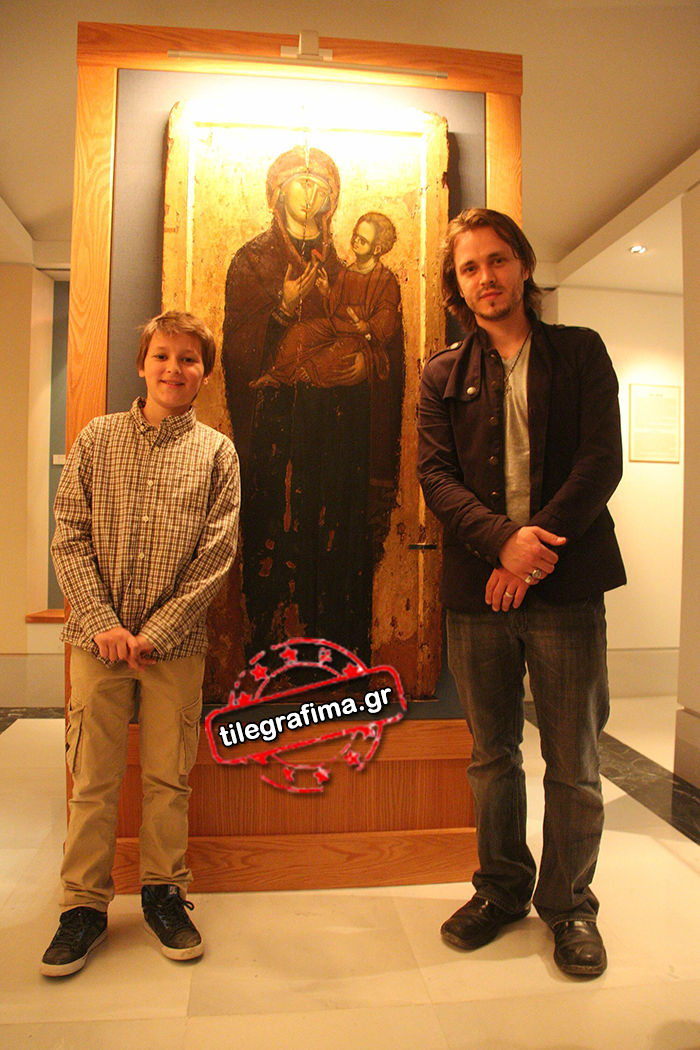
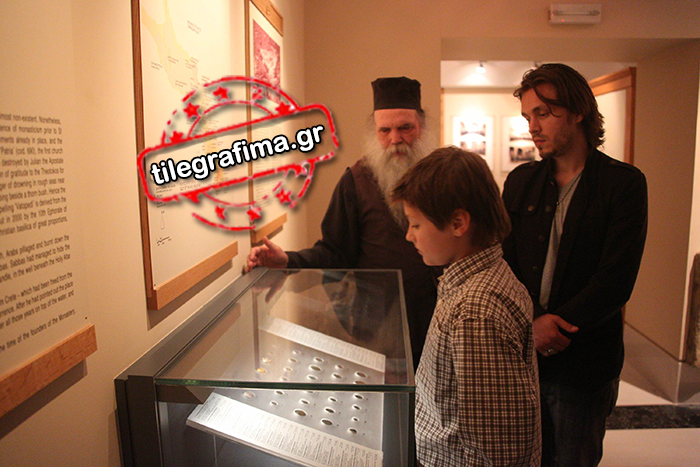
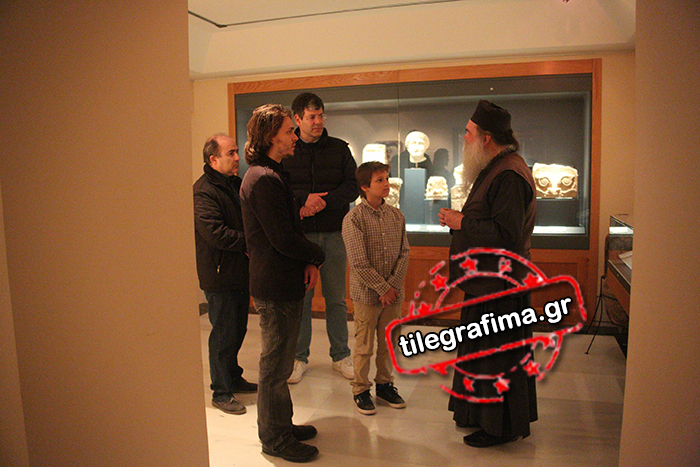
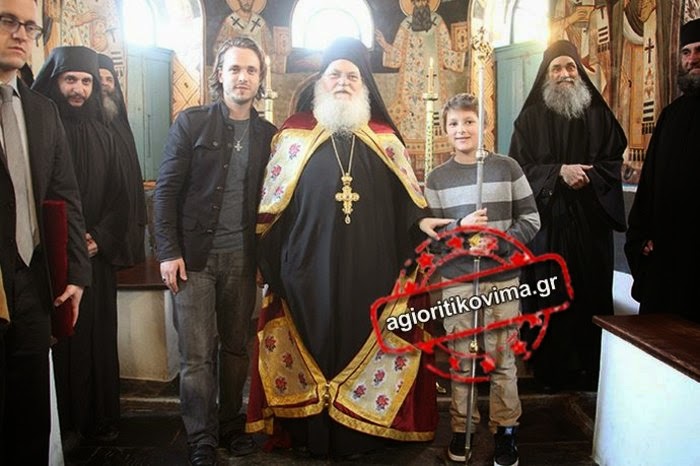
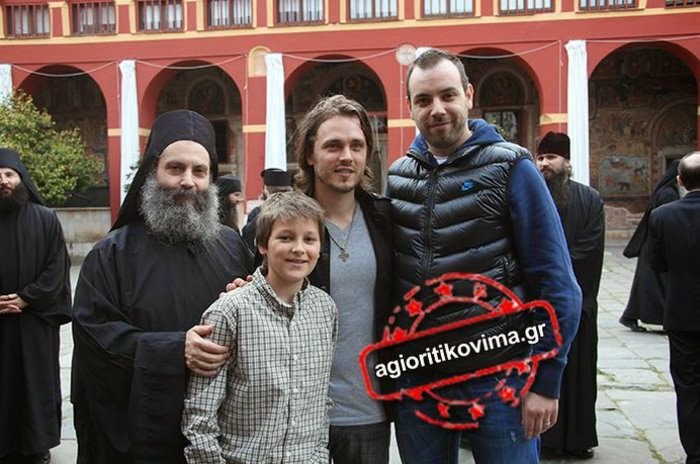
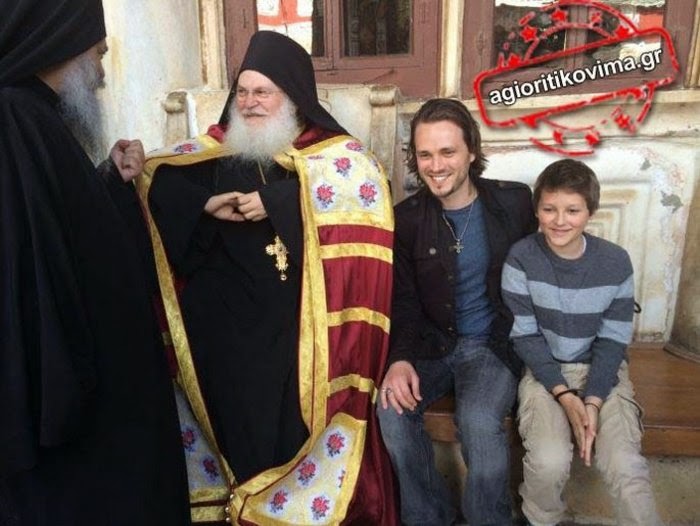
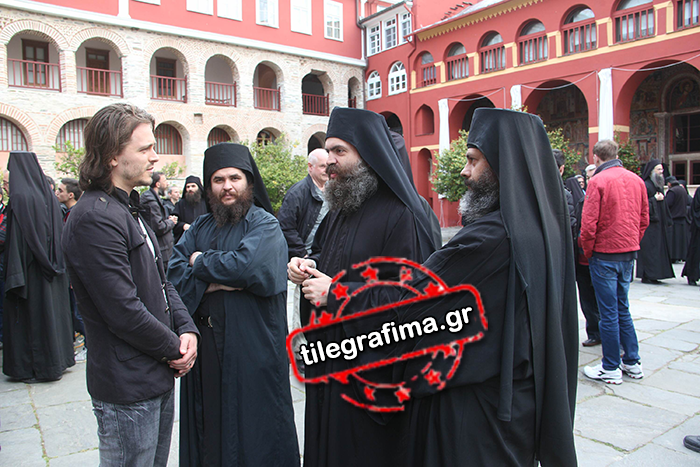
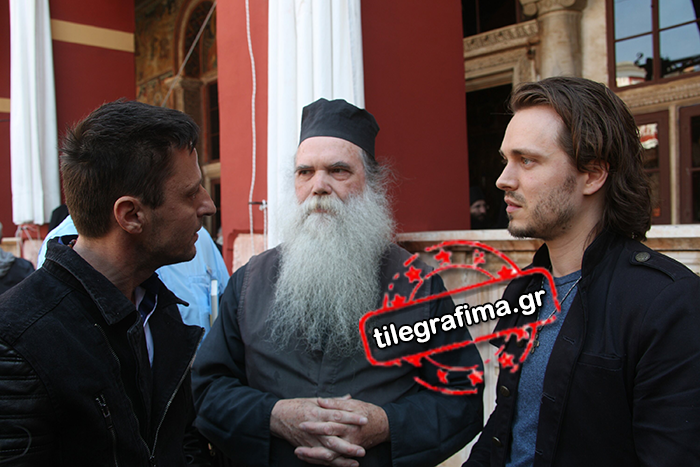
See photos from his visit to Mount Athos for the first time with his 11 year-old son Caleb (2015), where they stayed  for five days visiting Simonopetra and Xenophontos monasteries, and spent most of his time at Vatopaidi Monastery (Friday till Tuesday) where he met the Abbot, Elder Ephraim, and attended an all-night vigil on Saturday night.

While at Vatopaidi Monastery, Jonathan also gave a testimony of how he converted to Orthodoxy for Pemptousia, which can be seen here.

A Conversation About God

With Actor Jonathan Jackson & Dr. Norris Chumley

While Jonathan’s views about Art in his book The Mystery of Art: Becoming an Artist in the Image of God are quite controversial, as two opposing book reviews below indicate(*), the narrative of his conversion and finding the true Church in “A Conversation About God” is captivating.

Watch a fascinating conversation about God, Conversion and Art, with Actor Jonathan Jackson and Dr. Norris Chumley:

Orthodox Christian Network


(*) Moses Benjamin Cabe (Ben Cabe) is praising Jackson’s views here, while  Richard Barrett (Orthodox Arts Journal) urges caution in

The problem of art in Anglophone Orthodoxy: a review essay” .

As for me, I am undecided yet and still studying the matter. Jackson invokes Dostoyevski‘s  quotation “Beauty will save the world.” and quotes Elder Porphyrios’ words in Wounded by Love“Whoever wants to become a Christian must first become a poet.”, both  central in my life and this blog.

Indeed, you do not have to be a Christian to create true art.  In fact, it may be that you have to become an artist before you are able to truly become a Christian. Jackson adds  that, when someone is drawn to the beauty of a certain piece of music or painting, he is really being drawn to Christ.  Far removed from Christ is anyone who does not, and cannot, appreciate beauty.  “It is an incredible thing to discover that Christianity is an experience of saying yes to what is truly beautiful. …  From the beginning, the pure and ancient faith of Christ, which is still alive today, proclaims that God is beautiful!”

While Jackson is surely right in all this, there are other claims he makes in this book which may be problematic and will hopefully be addressed in future blog posts, when this whole matter is clearer in my mind…

My Conversion To Orthodoxy

fr-jonathan

Fr. Jonathan Hemmings (Orthodox Christian Parish of the Holy and Life-Giving Cross at Lancaster) talks about his conversion to Orthodoxy, his meeting Metropolitan Anthony of Sourouzh, the Most Reverend Metropolitan Kallistos Ware, and other Living Signposts God of the Faith, and his last book, Fountains in the Desert.


For a more detailed testimony of Fr. Jonathan’s Conversion go to Finding the Faith of Joseph of Arimathea

Source

Finding the Faith of Joseph of Arimathea

icon7

An Interview with Fr. Jonathan Hemmings

The tradition of faith in Great Britain goes back to the Apostolic era!

by Tudor Petcu

A Romanian writer, Tudor is a graduate of the Faculty of Philosophy, University of Bucharest, Romania. He has published a number of articles related to philosophy and theology in different cultural and academic journals. His work focuses on the evolution of Orthodox spirituality in Western societies as well and he is going to publish a book of interviews with Westerners converted to Orthodoxy. In this article, he interviews Fr. Jonathan Hemmings, Orthodox theologian, who is the priest of the Holy Life-Giving Cross Orthodox Church in Lancaster, UK, talks about faith and love in Christ.

1.) Before discussing your conversion to Orthodoxy, I would appreciate it a lot if you could talk about your main spiritual experiences and journies untill you have discovered the Orthodox Church.

First of all, we need to be sure of what we mean when we use the term convert or “conversion.” We all need to be converted – both those who come from different traditions and confessions and those from traditionally Orthodox countries who are referred to as “cradle Orthodox”. Christianity is not a Philosophy, it is a relationship with the All Holy Trinity. We are converted to Christ and we are received into the (Orthodox) Church through Baptism and/or Chrismation. Sometimes this happens in the other order of events. Those who are Baptised Orthodox as babies need to employ the gift of the Holy Spirit given to them; those who are called to the Orthodox Christian faith are prompted by the same All Holy Spirit. As Metropolitan Kallistos said

“We Orthodox know where the Holy Spirit is but we cannot say where He is not.”

As scripture says

“the Holy Spirit moves where He wills.”

One has to experience the Orthodox Church either through her Liturgy or through the “living signposts of the faith” whom God sets before us if we are open to the Truth. By “ living signposts” I mean men and women who possess grace and in whom we see the light of Christ. Christianity in the west tends to be analytical and logical, Eastern Christianity is synthetic and mystical and engages the whole of our being.

You shall love the Lord your God with all your mind with all your strength, with all your heart and with all your soul.

The fact that we do metanoias (reverences or bows) shows that even prayer is a physical as well as a mental process. I have always believed in God, from a little child. I cannot remember a time when I did not believe in God. I had the right Christ, I just needed the right Church. Of course all this was a preparation for me to discover or rather recover the Orthodox faith.

2.) How would you characterise your own spiritual road to Orthodoxy? According to this question, would it be correct to say that Orthodoxy is able to heal the wounded souls?

I am like the Prodigal son in the parable who returns to his father. The Orthodox faith according to tradition was brought to Britain by St Joseph of Arimathea. An early Archbishop of Canterbury was Greek- St Theodore of Tarsus.  St Constantine the Great was made Augustus Emperor here in York when he was in charge of the sixth Legion. So I did not choose to find something “foreign”; I returned to the Church which was established here in Britain.

The Orthodox Church is Universal as we proclaim on the Sunday of Orthodoxy. The Church is the hospital for souls. As Blessed Augustine said

“Our hearts are restless until they find their rest in God”

Restlessness of the spirit is a characteristic of this age. So I have not discovered something new, I have recovered something authentic and original.

3.) Considering all what you have experienced over the years from the spiritual point of view, why is Orthodoxy so precious and meaningful to you?

Well, I believe Orthodoxy is not only original, unchanged and authentic but it is the teaching and preaching of Christ’s Apostles (Kerygma and Paradosi). Tradition is not simply historical, it is vital and dynamic. The Orthodox way fulfils the needs of the whole person and makes the broken person whole. It is precious because it is the

“pearl of great price.”

Once you find it, then you must share this treasure with others and not keep it to yourself.

4.) Do you think that Orthodoxy could be considered a burning bush?

4. I have a stone from Mount Sinai which contains the image of the bush which Moses saw burning and yet which was not consumed. If you want to forge metal, you must first heat it and out it into the fire and then you can shape it to the tool you require. When we are put into the fire of God, the same happens. It is so God can shape us into the person that He has called us to be. When we are alive in God then we become all flame. We are standing on holy ground, so when we approach God we must do so with awe before the majestic power of God.

5.) Now, I would like you to tell me what does the Orthodox monasticism mean for you and what impressed you most in your monastic pilgrimage, if I can call it like that?

5. Orthodox Monasteries are “LightHouses” for souls. They are often remote and inaccessible because the quietness for the soul requires asceticism . They are full of angels because the angelic life is lived there. When we say in the Lord’s Prayer

“Thy kingdom come on earth as it is in heaven”

then this is what monks are doing. The very walls of the Churches are filled with prayer and so one can feel tangibly the peace of God. It is this peace which passes all understanding that one experiences. Again I say that Orthodoxy is Life in the sense that we experience it, we live it. I have been to many Orthodox Monasteries in Romania. The most memorable moments are when I met Pr Ioanichie Balan in Sihastria Monastery and when I served the Holy Liturgy with Pr. Teofil Paraian( the blind Staretz) at Sambata de Sus. These were moments when the veil between heaven and earth was very thin.

6.) What would be the difference between you as a heterodox and you as an Orthodox?

I am complete. When Our Lord died on the Cross he said in St John’s Gospel

“It is finished”

but this also means

“It is completed”

that is, the work of salvation. In this sense “conversion” is an extension of what I once was. As C. S. Lewis (much respected by Orthodox) once put it

“Imagine yourself as a living house. God comes in to rebuild that house. At first, perhaps, you can understand what He is doing. He is getting the drains right and stopping the leaks in the roof and so on; you knew that those jobs needed doing and so you are not surprised. But presently He starts knocking the house about in a way that hurts abominably and does not seem to make any sense. What on earth is He up to? The explanation is that He is building quite a different house from the one you thought of – throwing out a new wing here, putting on an extra floor there, running up towers, making courtyards. You thought you were being made into a decent little cottage: but He is building a palace. He intends to come and live in it Himself.”

C.S. Lewis, Mere Christianity

As I have said before, I have always loved God but the depths of Orthodoxy provide me with the resources that nourish my soul.

7.) I remember some words which impressed me much while I was discussing with a Swiss writer converted to Orthodoxy. He was saying that he was born to hate but through Orthodoxy reborn to love. How would you characterise these words as a convert to Orthodoxy?

We were all born to love. Christ summarised the Commandments as Loving God and Loving your neighbour. Orthodox Christianity can be summarised in these words. But love is a verb… we must put into action those things which we believe. I am sure the prisons in Romania are full of criminals who would call themselves Orthodox and who have been baptised as such, but sin found a place in their hearts. Glory to God he is merciful and loves mankind! And so we must live out our life in peace and repentance. Being Romanian does not make you Orthodox anymore than being Greek, Russian, Serb or British. There was no ethnic identity in the Garden of Eden before Adam and Eve’s transgressions. May the love of God embrace us all.

This interview is one of many that will be published in the book “The rediscovery of Orthodox heritage of the West” by Tudor Petcu, containing interviews with different Westerners converted to Orthodoxy. It will be published in two volumes and the first one will appear by the end of this year.

Journey to Orthodoxy

Give Me This Stranger


child7


Give Me This Stranger” Dedicated to my brothers and sisters in Christ all over the world, “to all mankind”. Especially dedicated to the suffering, persecuted Church and to my Orthodox ‘convert’ brothers and sisters in Christ. I was so deeply disturbed, hurt and offended last Sunday when I heard them being characterised as ‘foreigners’ and ‘strangers’  amidst ‘cradle’ Orthodox circles.


“And Jesus said unto him, Foxes have holes, and birds of the air have nests; but the Son of man hath not where to lay his head.” (Luke 9:58)


“As the sun hid its very rays at the Savior’s death, and the curtain of the temple was rent in twain, Joseph of everlasting memory approached Pilate, beseeching him in this manner:”

child8

Give me this stranger

Give me this stranger, who from infancy has been  as a stranger, a sojourner in the world.”

The Diaspora and Mission


I often hear the word “diaspora” “dispersed” to describe those Orthodox Christians worshipping outside their homelands or canonically defined jurisdictions. Originally used in connection with the Jewish people who were forced into exile outside Israel Deuteronomy 28:25, it has come to be used for those Orthodox Christians falling outside their traditional cultural nascent homelands and living in countries where multiple jurisdictions appertain as in the USA, Australia or Western Europe. Assignment of the “disapora” according to the interpretation of Canon 28 of the Fourth Ecumenical Council was granted to New Rome- Constantinople to take pastoral oversight over the “Barbarian” lands.


The reposed Metropolitan Philip of North America of thrice memory said: “I believe that Canon 28, historically, is a contextual canon and not a dogmatic one; it gave the city of Constantinople certain rights as the New Rome for secular, political reasons because it was the seat of the emperor.”

child2


Give me this stranger, whon His own race has hated and delivered unto death as a stranger.”


If we look to the Apostolic age we see in the Acts of the Apostles that it was the Patriarchate of Antioch that established mission to the “Gentiles” through St Paul the Apostle. All three of his missionary journeys were launched from Antioch. It was His Beatitude Patriarch Ignatios IVth who saw that the manner of living the catholicity of the Church is in full freedom in the Holy Spirit and not in blind adherence to the letter of the canons; because, “the canons were made for the Church and not the Church for the canons.” With spiritual courage, he maintained that “nothing prevents the modification of old and obsolete canons. We must search diligently for the realization of the Church in her present and given historical context, otherwise we die and we become nothing more than a museum filled with mummies.”

child4

Give me this stranger, who in a strange manner is a stranger to death.”


I am not part of any “diaspora,” I am an Orthodox Priest born in the United Kingdom and I am an adopted son of Antioch. There are many Orthodox Christians whose parents were from different jurisdictions who were born here and are baptised into the Orthodox Church which may or may not be part of their “national” jurisdiction. Practically all of our Parishes in Britain and Ireland are Pan-Orthodox in their demography. Glory to God!

The Church as we say in the Creed is One, Holy, Catholic and Apostolic.

child1

Give me this stranger, who has received the poor as guests.”

Those who do not see mission as important are not true Orthodox Christians. Complacency and self regard emanate from empty vessels, veiling themselves with the masks of actors and national flags. Whilst less common the “older brother” syndrome sadly still persists in some circles towards so called “converts.” The Parable of the Prodigal son ( who he was guilty of many sins-Luke 15:11-32) is also a Parable about the Older son whose character is painted as pompous, aloof, resentful, self righteous, grudging, sullen, angry, complaining and jealous. One can do all the right things but with the wrong spirit.

child9.jpg

Give me this stranger, whom the jews from envy estranged from the world.”


From the very beginning the Church was One– she expressed herself at a local level but the faith and doctrine she proclaimed as being held in unity. We hold the faith as Holy– as those called to imitate Christ and to separate ourselves from sin, not from one another on the basis of ethnic identity.


The Church is Catholic that is “universal”; a proclamation which we make on the Sunday of Orthodoxy:-

This is the Faith of the Apostles, this is the Faith of the Fathers, this is the Faith of the Orthodox, this is the Faith which has established the Universe.

child10

Give me this stranger, that I may hide him in a tomb, for as a stranger He has no place to lay His head.”


And the Church is Apostolic based on the teaching, preaching and tradition of the Apostles and by nature “sent out” to preach the Saving Gospel to all nations. From the very beginning, the Church was apostolic and evangelistic in her calling and command. Ethnic pride is simply a form of pharisaism and the very anithesis of Our Lord’s last command:

Matthew 28:19-20

Go therefore and make disciples of all the nations, baptizing them in the name of the Father and of the Son and of the Holy Spirit, teaching them to observe all things that I have commanded you; and lo, I am with you always, even to the end of the age. Amen.


Certainly there are those waiting to hear the word of salvation, but there is no such thing as “ the diaspora”- quite the opposite-only those called and gathered( the ekklesia– the total body of believers belonging to the Lord who are called out from the world) into the Kingdom of God.

Luke 13:29


29 And they shall come from the east, and from the west, and from the north, and from the south, and shall sit down in the kingdom of God.


Give me this stranger, whose Mother seeing His dead body cries out:

“O my Son and my God, I am sorely wounded within me and my heart is rent,

seeing Thee as one dead: but in Thy Resurrection

I take courage and magnify Thee”.


So we have much to do- because for to those who have been given much, much is expected. We rejoice with those returning to the Orthodox Church. We weep with those who find themselves exiled from their lands. We are warmed by the fact that so many of our parishes are microcosms of Pentecost with faithful being welcomed from all over the world regardless of nationality. We thank God that we witness strength of faith and growth in His Church and we ask empowerment for the apostolic mission set before us to bring God’s love to a hungry world.


The glory of God is revealed in joy. The mercy of God is experienced in suffering. The grace of God is discovered in fellowship. The power of God is realised in miracles. The love of God is manifested in mission.


The Diaspora and Mission by father Jonathan Hemmings


“Thus entreating Pilate with these words, noble Joseph receives the body of the Savior: and wrapping it with fear in a linen with myrrh, he places in a tomb Him Who bestows upon all eternal life and great mercy.”


* After the procession with the Epitaphion on Holy Friday night,  the choir sings the “Give me this stranger” hymn.


*Unfortunately so much ‘wordplay’ in the original hymn with the key word/ root “ξένος” (ie. a stranger) is lost in the translation! In ancient Greek “ξένος” & “ξενίζω”  ξενίζω and ξενίζομαι < αρχαία ελληνική ξενίζω (φιλοξενώ) < may alternatively mean “a stranger” as a noun: ξένος, or “surprise conventional people by doing something weird, paradoxical, unconventional” as a verb: παραξενεύω, εκπλήσσω, “behave like a stranger”: φαίνομαι ή φέρομαι σαν ξένος or “offer hospitality usually to a stranger”: αρχαία ελληνική ξενίζω (φιλοξενώ)


http://www.youtube.com/watch?v=sI0KT-xSvlI

The Comforter

Fascinating homily in its breadth and depth! Like all by Metropolitan Anthony of Sourozh. In it you may meditate on Nature, God’s Creation, God’s Energia in His CreationThe Little Prince by Saint-Exupery, three-fold etymology of ‘Paraklitos’, Conversion, Betrayal and Apostasy narratives, Faith and Loss of Faith, C. S. Lewis, the difference between Art and Mankind, a beautiful statues and human ‘wreckage’, Father Sergei Bulgakov’s theology, a bold, ‘heretical’, ‘syncretistic’ worship during a World Council of Churches meeting, and so much more. Enjoy!

‘The Comforter’: Our Support and Strength for Mission

I feel more than slightly apprehensive, giving this talk in the background of a very theological theme. And so, you will forgive me, if my theological statements are untheological and if the rest is very different from what you may expect.

First of all, may I make a totally non-theological statement about the Holy Spirit? When we speak of the Trinity, for people as primitive as I am, we can imagine that the old image, given centuries ago, still holds, and we can develop it on one point. Speaking of the Trinity, trying to understand the relation there is between the Father, the Son and the Holy Spirit, some writers have said that we can compare God to the sun in the sky. In its mystery, the sun is unknowable as such. No one of us will ever be able to participate in the nature of the sun, but it becomes accessible to us in its light and warmth. The light is something which we perceive with our senses, by sight, and which reveals to us everything that surrounds us. We do not see the light as such, but it is in the light that things are revealed to us. The warmth of the sun is the way in which He pervades us, and in which we can become participants — to whatever degree is accessible to us — in the life of God.

Christ the Word is an objective revelation of God. The Spirit reaches us only within our experience, in the way in which the warmth of the sun pervades us and we become aware of it, and through it of something which is of God. This is a non-theological introduction to the subject.

As an illustration of this, I would like to give you an example of a contemporary of mine, who had discovered his faith in God through an encounter with Christ. But he puzzled and puzzled about the Holy Spirit. He did not understand. One day, he found himself on a bus. It was in Paris, around the theatre of the Odeon, and he was saying to himself or to God: ‘But what does the Holy Spirit do to us? How can I know that I have had some sort of contact with the Spirit of God?’ And of a sudden he felt he was, unexpectedly to himself, filled with a love of the creation and of the human beings that were surrounding him, in a way in which he had never known he could. And he realised that, at that moment, the Holy Spirit had come to him and made him partake, to the extent to which he could, in his immaturity perhaps, in Love Divine. At that moment, he knew something about the Holy Spirit: that the Holy Spirit was communicating Himself to him by communicating to him something which could not be invented or forced, even out of his human experience.

The Holy Spirit comes to us quietly; at times unexpectedly, at times as the result of a long longing. Some of you may have read a book called The Little Prince by Saint-Exupery. There is a passage in which the Little Prince meets a little fox. Both the Little Prince and the little fox are attracted to one another, but both are desperately shy. The little fox comes and sits down at a certain distance, but whenever the boy makes a movement towards it, it runs away. Then one day the little fox says to him something like: You know, we both long to come to one another, but we are shy and afraid. So when I come, don’t make the slightest move. Look askance, so that I may imagine that you have not noticed my presence. And, not being afraid of being watched, I will come a little nearer than the day before, but don’t turn to me, because I will be afraid and run away. And then, another thing,’ he said, ‘I long to come close to you. And so, let us fix a time when you will come, because then — oh, a good hour before the time — I will know that you will be coming. I’ll come myself and wait. And I shall be filled with this expectation of the moment when you will appear. And then you will sit down and, as I said, pay no attention to me, and allow me to come nearer, and nearer, and nearer.’ This image of the little fox is something that, to me, resembles very much the way in which we relate to the Holy Spirit. Christ comes to us, proclaiming the truth. He is the Truth; He is the One who Is. He is a revelation, an unveiling. The Holy Spirit, in this sense, is not a revelation. He is the one who makes the revelation possible, by making us commune with what is the essence of this revelation: the closeness and the knowledge of God.

If we turn to what we hear in the Gospel about the Holy Spirit, I would like to attract your attention to one passage — to a word rather than a passage — that we repeat time and time again in our prayer: the Comforter. ‘Comforter” is the English translation of the word. When we look at the various languages into which it has been translated from the original, I think we can see a variety of facets in the event. First of all, the Holy Spirit, whom the Lord Jesus Christ sends us, is the one who consoles us for our loss of Christ. I am speaking of the loss of Christ, because each of us believes in Christ, each of us has had an experience of His closeness, His presence. Each of us has had, through His teaching, an experience which He conveys to us in word and in person. But, with the Crucifixion, the death of Christ and the Resurrection and Ascension, He is not present as He was present to His disciples, and He is not present in the way in which He will be present to us when all things will be fulfilled. You remember, probably, the words of Saint Paul, when he says: As long as I am in the flesh, I am separated from Christ. And yet — Christ is my life. And we are all, to a lesser degree than Paul was, of course, in the same kind of situation. On the one hand, Christ is our life; on the other hand, we are still separated from Him. We all long to be with Him, but we cannot go beyond a certain point of closeness. And Saint Paul points it out, when he says that, as long as he lives in the flesh, he is separated from Christ, and he longs for death to come. Not as an end of his earthly life, but as the moment when a veil will be torn apart and, as he puts it, he will know as he is known. He will see face to face what he can see yet only as shadows and images mirrored.

823-600x459

The Holy Spirit reveals Himself to us as our Consoler. In the sense that Christ has promised to send Him to us, He comes to us. He gives us an incipient participation in a closeness of communion with Christ, and through Christ, in Christ, with the Father. So that this is our first experience. His closeness to us consoles us for the fact that we long to meet Christ face to face, to commune with the Father in a way unutterable to us.

But the word goes beyond this. He is not only the one who comforts us; He is the one who gives us strength; strength to live in this orphaned situation in which, on the one hand, we belong to God wholeheartedly, sincerely, heroically at times, and on the other hand live in a world that has fallen away from God and in which we have a function to fulfil. He is the one who gives us strength to live in the world which at times denies everything we long for, which stands between us and our fulfilment by temptation, by beguilement.

At the same time, there is a third meaning in the word. He is not only the Consoler. He is not only the one who gives us strength to face life, in the faith and yet in the partial absence of Christ. He gives us the exulting joy of being with Christ already in this world, because, although our communion with Christ is imperfect, although it is not all-embracing, although we do not know Him as He knows us, we do know Him. And this is a miracle that we could not appreciate if we were born, as it were, in a believing family and if we had been given our faith together with our birth. But those of us who were unbelievers, the millions who believed not and have discovered, know the exulting joy of this discovery of God in Christ and through Him, of the fatherhood of God’s own Father. So that, in the Holy Spirit, we have consolation because we are orphans. We are sent into the world to conquer it for God. And in the process, at moments, we are given a sense of incredible closeness, and we can be astounded and rejoice in the way in which the young man whom I mentioned in the beginning rejoiced, having been filled, in an unutterable manner, with a love he did not know could exist; not only for humanity, not only for every concrete human person, but for the whole of creation.

We are told by Christ that He will send the Spirit to us, who will lead us into all truth. ‘All truth’ is not an intellectual situation. It is not the knowledge of the mind; it is an experiential knowledge. The truth (in Russian istina) is what is: I am He who is. And the knowledge of the truth can only be possessed in communion with Him who is. In a strange way, we have lost through the centuries this certainty that this is what the truth is. It is God Himself; it is the absolute Reality. Pavel Florensky, speaking of the truth, says: ‘Istina — eto Estina’ — the Truth is what is!’ ‘I AM’. And strangely enough, because we have moved knowledge of the truth from this existential experience onto an intellectual level, we feel that we must fight for the truth and defend it, forgetting that the Truth cannot be destroyed by any created power. The Greek word aletheia means ‘what cannot be washed away’, annihilated, even by the waters of the River of Oblivion. Nothing can do it!

If we continue to dwell on words, we could remember that the words verity, veritas, Wahrheit, derive from a Latin word meaning ‘to defend’, not ‘to be defended’. The Truth can defend us against everything, and it does not need us to defend it. This is a very important point with regard to our mission in the world, because it means that we are sent to proclaim it and reveal it, but not to defend it in argument. We cannot defend the Truth by argument. We can present another facet of things, which people can accept or not, but we cannot always defend it in the way it should be defended. I remember when I was young and began to do youth work, my father saying to me: ‘Proclaim the truth and be to people a vision of it, however dim, but do not try to convert anyone by argument, because, if you prove to be more intelligent, more well-read than another person, you will be able to defeat the other person, but you will not have changed his life. And I remember an occasion, a case in the comparatively recent history of the Russian Church in Stalin’s time. A young man called Evgraff Doulouman, who was a student at university, was looking for digs. He found a room in the house of the local parish priest. The priest was mature, ageing, with a deep and tragic experience of life: of the beginning of the Revolution and of the persecution that followed. The young man was full of his atheistic convictions, and he decided to convert the priest to what he believed to be the truth, and they engaged in conversation and discussion. The priest was an old and wise man. He did not argue point by point, but unfolded before the young man the truth as he knew it. The young man was not mature enough to go through the experience that was offered him, and he made it into an intellectual world-outlook that defeated, completely annihilated, his atheistic vision. Having been dialectically defeated, he embraced the Christian faith, asked for baptism, went to study theology in Zagorsk, was brilliant as a student, was ordained deacon and priest and was sent to Samara, I think, to a parish. It was expected that he would be a brilliant missionary, taking into account the way he had moved from refined, deep atheism into a powerful sense of Christianity. When he was in the parish, this young man discovered — in the celebration of the Liturgy, in the sacraments, in his pastoral work — that he could present the Christian truth in words, but he did not believe it all in his inner self. After a while, he renounced the Church and became an active agent of atheist propaganda. I give you this example to underline the fact that it is not in the refinement of argument in debate that one conveys one’s faith.

In the course of the whole history of Christianity, you meet people who are filled with the Holy Spirit, and whose life, whose person, whose words, in their simplicity reached others, hit them at the very core of their being and brought to life a knowledge of the divine that had been dormant. It has been for many as though the knowledge of God was like Lazarus: dead, lying in his grave, who suddenly heard a voice saying: ‘Lazarus, come out!’ And the knowledge of God, an experience that was conveyed by having heard God speak to him, made all the difference. And so, when we speak of the Holy Spirit as being the Spirit of truth, it is not the spirit of formal theological discourse or of any formal thing divorced from the inner experience. Unless it is sustained by this inner experience, it may be a convincing argument but it will not be a power that can transfigure the life of another person.

We are sent into the world to proclaim Christ, but we are not sent into the world to argue about Him. In 1943, C. S. Lewis gave a series of addresses on the English wireless, and in one of them he asks: “What is the difference between the believer that has become alive in God and any other human?’ And he says: The difference can be compared to that which there is between a statue and a living person. A statue may be of supreme beauty, but it is nothing but stone or wood. It can be looked at and admired. It can send us a message of beauty, but not of communion. This beauty will be communion with something earthly, created, but not beyond. Something must happen that will make it of the ‘beyond’. A human being may be infinitely less beautiful than a statue, but it is alive.’ And C. S. Lewis says: “When someone meets one of those statues that have become a living person, he should stop and say: “Look, this statue has come to life!” ‘ This is a challenge to each of us, because we may be satisfactory statues, but are we the kind of people whom others meet, look at and discover that there is life there and not only a shape?

It is very important for us to realise that our message to the world is not a world-outlook. It is a revelation of the presence of the Holy Spirit and of Christ. The Church is a mysterious Body, because the Church is the presence, in the midst of the fallen world, of the fullness of the divine Presence. The first member of the Church is He whom Saint Paul calls the Man Jesus Christ. He is one of us, as well as being, if I may put it that way, one of Them. He is not only One of the Trinity; He is one of humanity. Looking at Him, we can see what it means to be both totally man, human, and totally and perfectly divine. Since the Ascension and the Feast of Pentecost, the Holy Spirit has indwelt the Church totally, filled it with His presence. In the Spirit and in Christ, the whole Trinity is present in the Church. Are we Christians, Orthodox Christians, aware of this? Or is the Church a human body that looks Godward, that believes in God, that has evolved a very elaborate theology, but whose members are not limbs of Christ — as Father Sergei Bulgakov puts it: ‘an extension of the Incarnation’? Are we ‘an extension of the Incarnation’? Does anyone, meeting us, stop a minute and say: ‘In this person, there is something I have never met before. Here is a human shape, but there is something beyond it.’

I think I have mentioned a personal example which I will dare mention again. I came once to the church that became my parish for years in Paris. I aimed at being present at the Vigil, but for one reason or another I was late. The service was over. It had taken place in an underground garage, that led to ground level up a wooden staircase. I entered, and saw that everything was over. Only, there was a man coming up the stairs. It was a monk, in monastic garb, and when I looked at him I felt that I had never in my life met such total inwardness, such serenity, such peace and depth. I did not know who he was. I came up to him and said: ‘I do not know who you are, but would you become my spiritual father?’ This is a sort of central experience I had of a person in whom I saw something I had never seen to that extent: this total inwardness in the abiding presence of God, the Spirit at work, and the Incarnation in him. Years later, I received a little note from him, saying: ‘I have experienced the mystery of contemplative silence. I can now die.’ And three days later, he died. This, to me, was an example of what a Christian can be. He was not ‘impressive’ in any respect. He was not a man of superior education or of an outward holiness, but in him I could see the Incarnation and the presence of the Spirit.

When we look around, do you realise the kind of world in which we live? Bishop Basil must have talked to you about the presence of the Holy Spirit in the created world. At the moment of creation, the Holy Spirit was hovering over the newly-created world. This newly-created world, in translation, is called ‘chaos’. When we think of chaos nowadays, we think of destruction, the chaos that followed the bombing of Dresden. But chaos is something much more essential and deeper. Chaos is the sum-total of all the existing possibilities that have not yet found a shape and blossomed out. The Holy Spirit was breathing over the chaos, over all the possibilities of a world that had been called into being and had no shape yet. By breathing over this chaos, the Holy Spirit was bringing to life all its possibilities, and everything that was hidden as the possible began to emerge as reality, as you can see in the beginning of Genesis. But God did not force the shapes. He initiated the possibility for the creation to become itself more and more; to expand in depth, and in width, and in every respect

Things changed with the Fall. But what had been given first was never taken away; the created world is still that world which God created. If it is distorted, it is not because it has turned away from God, but because its guide, man, has turned away from God, has lost his way and has proved incapable of helping this chaos to become the perfect cosmos: beauty in form, in line and life, so that the world in which we live is the world which, in itself, is pure of stain except for the distortion that we have created in it. When we look at the surrounding world, we must be aware that everything that is monstrous, frightening, ugly and distorted in it is our doing. To apply to the generality a phrase that was spoken in a particular situation, one of the Fathers says: “We must remember that what we call the sins of the flesh are the sins that the spirit inflicts on the flesh. The flesh is pure.’ We make it a victim of sin. Our body says: ‘I am hungry.’ Our imagination says: ‘I want to delight in such-and-such foods.’ The natural situation of the created world is that of a victim of the human fall, of our being separated from God, of our being unable to restore, even in a small patch of land, the purity, the wholeness and the harmony that belong to it by right. This we must remember. With what veneration must we look at the cosmos and everything that is the material world around us, and what broken-heartedness we must feel when we see it distorted, broken, ugly and monstrous at times.

Again, when we turn to God, to God’s revelation and the creation of man — the Lord God breathed His own breath into man: that is the original human, the anthropos, the chelovek, and man, the total man, has remained filled with the Spirit of God. We must remember this: it is not our Christian, our Orthodox, privilege to be such. All human beings are such. Sinful, yes, but basically such. And so, when we look round at all human beings, we have no right to see good in some and evil in others. We must see victims of the human fall in one and the victory of Christ in the Spirit in the other. The saints are examples of this victory. To them, to the extent to which it is possible in a world which has not yet come to the parousia, to its end in Christ’s victory, we find, incipiently or still-surviving, true humanity. And this we must remember when we deal with whomever we deal with. Some people are ‘evil’, yes. But why are they? Have we given them newness of life by being a revelation of Christ and a gift of the Holy Spirit? It is easy, perhaps, at times to be compassionate to a person in error, but how easily do we condemn the error from the height of what we imagine to be the truth as we know it!

I have paid some attention, in the course of the last seventy years or so, to the beliefs of men, to the religions of the world. What strikes me more and more is that, however different they are from the faith of Christianity, they are all a distortion of the truth; not a straight lie against it, except for some who have chosen to be servants of Satan and not servants of Christ.

I would like to keep you a little longer than I intended: my forty-five minutes are just over. If you will allow me ten more minutes, I will let you free.

437

Many years ago, I had a conversation with Vladimir Lossky about oriental religions. He was absolutely in denial of any knowledge, any true knowledge of God, in them. I did not dare argue with a theologian of such magnitude, but what courage could not achieve, I thought cunning might. As we lived across the street from one another, I went home and copied eight passages from the Upanishads, the most ancient Indian writings, went back to Lossky and said: “Vladimir Nikolayevich, I have been reading the Fathers, and I always take down the passages that strike me particularly. I always put down the name of the author, but alas, with these eight quotations I cannot find the author’s name. Could you identify them for me?’ He looked and said: ‘Oh, yes!’, and within a minute and a half he had put eight names of the greatest Fathers of the Church under the quotations from the Upanishads. And then cunning revealed itself in false humility, and I said to him: ‘I’m afraid I have deceived you. These are from the Upanishads.’ He looked at me and said: ‘Really? Then I must read them.’ And that was the beginning of a change of mind in him with regard to the statements of other religions.

Many years ago, in 1961, I was part of the first Russian delegation to the World Council of Churches in Delhi. Among a number of us, there was a man called Father Ioann Wendland, who later became a bishop in America and in Germany. He had been a secret priest in Siberia while doing geological research during the Stalin period. We decided to go to a pagan place of worship, to see and to try to understand. We arrived there. At the door, we had to take our shoes off, which we obligingly did, and we were about to leave them there when the warden came up to us and said: ‘Oh no, sir, you do not leave your shoes here. They are new and good, and would be stolen. I’ll put them in my office.’ So our shoes went into the office and we went into the place of worship. It was a round place of worship, divided into ten or twelve sections, and in each of them there was what we would call a pagan denomination, worshipping in its own way. We sat one after the other in the ten or twelve compartments, at the back, using our rosaries and praying the Jesus Prayer, trying to commune with God and seeing if we could commune with the people there. We both came out of it with the certainty that, whatever they called their god — whether it was the god-elephant or the god-monkey or another — they were praying to the only one God there is. And we had communed in prayer with them all, in spite of the fact that, on the surface, they had been praying pagan prayers to idols. That also made me think.

I will end your torment with one more thing. What I have said should make us much more understanding and attentive in our attitude to unbelievers. Not those who are empty of belief but those who are actively godless. I will give you one example, which some of you must have heard from me, because I always repeat myself. The example is this: I was coming down the steps of the Hotel Ukrainia a number of years ago. I was wearing my cassock, as I always do. A young man came up to me and said: ‘I am an officer in the Soviet Army. You are, I presume, a believer, dressed as you are.’ I said: Yes.’ Well, I am an unbeliever. Bezbozhnik (I am godless).’ I said: That’s your loss.’ He said: ‘And why should I turn to God? What have I got in common with Him?’ I said: ‘Do you believe in anything at all?’ Yes,’ he said, ‘I believe in man and in humanity.’ I said: ‘In that, you and God share the same faith. Start at that point.’ And, I think, more often than we do, we should be aware that there is no-one who lives without a faith, without believing in something. And more often than not, we may discover that God believes in the same. Only better, deeper, more perfectly, but that this person who fears that there is nothing between God and him has something in common with Him. At this point, we may remember the passage of the Gospel in which Christ says to Nicodemus: The Spirit blows where It chooses, and no-one knows where It comes from and where It goes.

We must be infinitely reverent when we look at the world that surrounds us, which we have distorted and which suffers like a martyr under the result of human sin, and remains pure, so pure that God could become man and put on flesh; a flesh He inherited not only from the personal saintliness of the Mother of God but from the fact that she was the heir of all the saintliness of thousands of years of human life in history. We must remember that all humans are possessed of this breath of life which is God’s breath and God’s life, however distorted it may be. We must remember, as I have said, that the Spirit blows where It chooses. Without this precondition of the way in which the world, mankind, relates to God, no-one — no one of us and no-one in the world — could discover God. It is the Spirit that reaches us and that kindles in us life eternal. So, when we speak of being sent into the world, we must remember that we are unworthy messengers of a message that may be received by the created world around us, and by the humankind around us, better than we are capable of proclaiming it.

How often it happens that words of truth are said that do not reach the congregation that is there, but reach someone who by accident, or by an act of divine Providence, has entered the church. We must remember this. And go into the world, not to proclaim a theoretical theology of the mind but to grow into the life of Christ, to open ourselves to the action of the Holy Spirit, to believe that the Holy Spirit is active in the created world which is dear to God. Dear to God, because the Body of Christ belongs to this created world through the Incarnation, and to mankind — to everyone.

‘Violent’ Spirit — Viaia Pnoi

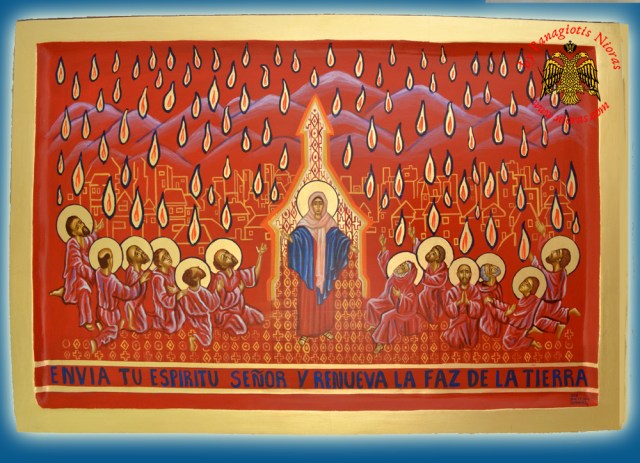
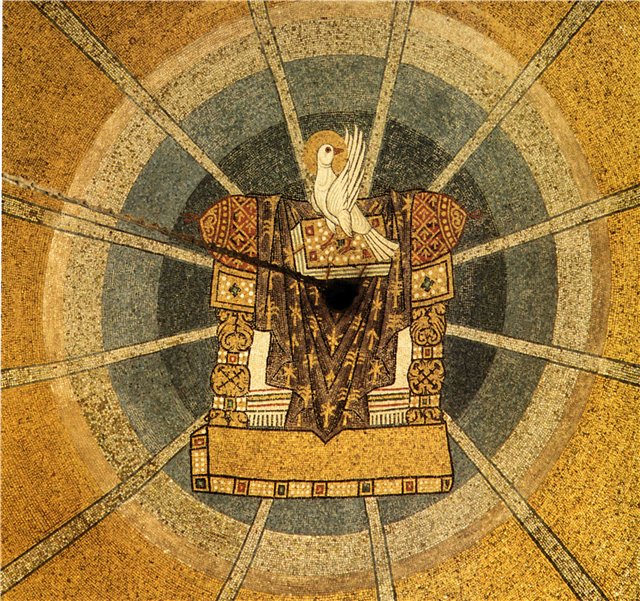
It has been such a  hectic week with me returning hastily back ‘home’ due to the sudden deterioration of my Father’s condition! A glorious week too, full of the honouring of the Holy Spirit in so many church services, the climax of the Orthodox liturgical cycle: Pentecost and the Descent of the Holy Spirit!


Giver of life: come, and abide in us


holy-spirit3


Then Father Seraphim took me very firmly by the shoulders and said “my son, we are both at this moment in the Spirit of God. Why don’t you look at me?”
“I cannot look, Father” I replied – “because your eyes are flashing like lightning – your face has become brighter than the sun, and it hurts my eyes to look at you.”

“Don’t be afraid” he said, “at this very moment you yourself have become as bright as I am. You yourself are now in the fullness of the Spirit of God; otherwise you would not be able to see me as you do.”

Then – bending his head toward me, he whispered softly in my ear: “thank the Lord God for his infinite goodness toward us… But why, my son, do you not look me in the eyes? Just look and do not be afraid; the Lord is with us.” (St Seraphim of Sarov and his encounter with Nicholas Motovilov)

holy-spirit2

Let us bow mystically to the Comforter and listen attentively to a fascinating testimony by a fascinating ‘convert’: Father Michael Harper. Crystalline Orthodox insights, such as probably only ‘converts’, or at least, they more often than ‘cradle’ Orthodox, may provide. 


And from the days of John the Baptist until now the kingdom of heaven suffereth violence, and the violent take it by force. (Matthew 11:12)

And suddenly there came a sound from heaven as of a rushing mighty wind (ie. “Kathaper feromenis Viaias [Violent] Pnois”), and it filled all the house where they were sitting. (Acts 2:2)

“Kathaper feromenis Viaias Pnois” — Violent is truly the proper translation of the original Greek word, not just ‘mighty’!


“Most will agree that the Church which through the centuries has most fully honoured the Holy Spirit, and brought Him most fully into its worship, life and ministry has been the Orthodox. Let us look briefly at five areas where this is clear:

First, there has been the strong emphasis in the whole life of the Church on the Trinity, which sees the Father, the Son and the Holy Spirit as co- equal. The Church has also condemned the insertion by the Western Church of the filioque clause into the Nicene-Constantinople Creed, which weakens the co-equalness of the Persons of the Trinity.

Secondly, the Orthodox Church has always emphasised the Incarnation and thus the work of the Holy Spirit in the conception of Christ in the womb of the Theotokos, the God-bearer.

Thirdly, the Orthodox Church has been the only Church to continue the practice of Christian baptism as the three-fold immersion of the candidate in water, followed immediately by chrismation symbolising the reception of the Holy Spirit and followed then by the candidate receiving their first communion. Again the Holy Spirit is active in the whole Baptism process.

Fourthly, in the Orthodox Eucharist (of St John Chrysostom), which is seen by the Orthodox as the heart of the Church, the service is interspersed with many references to the Holy Spirit. It begins, for example, with a prayer to the Holy Spirit which is unique in liturgical practices:

O heavenly King, Comforter, the Spirit of Truth, who art everywhere present and fillest all things, Treasury of good things and Giver of life: come, and abide in us, and cleanse us from every stain, and save our souls, O good One.


http://pemptousia.com/video/fr-michael-harper-the-holy-spirit


In the Russian tradition the following words are spoken by the Priest just before the Epiclesis: “O Lord, who at the third hour didst send down upon thine apostles thy Holy Spirit: take not the same from us, O good One, but renew him in us who pray unto Thee.”

Then follows the important epiclesis prayer which the Priest says, “send down thy Holy Spirit upon us and upon these gifts spread forth.” Notice it is a prayer for the Holy Spirit to come upon the people as well as the bread and the wine. Earlier in the service, if there is more than one Priest at the service, a dialogue takes place:

Pray for me, brother(s) and concelebrant(s)
May the Holy Spirit descend upon thee and the power of the Most High overshadow thee
May the same Spirit serve with us all the days of our life.

In another place the Priest prays that “the power of the Holy Spirit” will enable him.

holy spirit1.jpg

Fifthly,… For the rest of the article, go here

For an interview with Father Michael Harper, go here

The Pending, the Proselyte and the Prescient

Three Vignettes 


The Antiochian Orthodox Christian Archdiocese of the British Isles and Ireland held its first Archdiocesan Conference with our own resident Metropolitan, Sayedna Silouan at the Hayes Conference Centre, Swanwick, Derbyshire from Monday 23rd May to Wednesday 25th May 2016. This conference ‘welcomed’ me to the UK, initiated me to the Glory of Orthodoxy in Great Britain and drafted me to the (Antiochian) English Orthodox Church. Amidst its brilliant theological talks, its moving church services, and its heart-warming communion with my brothers and sisters in Christ, three pairs of eyes, three vignettes haunt my memory.

Ezekiel 1 :16—28

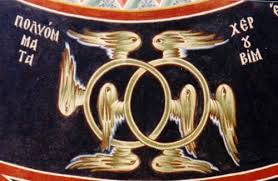
“The appearance of the wheels and their work was like unto the colour of a beryl: and they four had one likeness: and their appearance and their work was as it were a wheel in the middle of a wheel. When they went, they went upon their four sides: and they turned not when they went. As for their rings, they were so high that they were dreadful; and their rings were full of eyes round about them four. …. And when they went, I heard the noise of their wings, like the noise of great waters, as the voice of the Almighty … Above the vault over their heads was what looked like a throne of lapis lazuli, and high above on the throne was a figure like that of a man. … As the appearance of the bow that is in the cloud in the day of rain, so was the appearance of the brightness round about. This was the appearance of the likeness of the glory of the LORD. And when I saw it, I fell upon my face, and I heard a voice of one that spake.”


cherubim1

The Pending

1 Kings 19:11

“And he said, Go forth, and stand upon the mount before the LORD. And, behold, the LORD passed by, and a great and strong wind rent the mountains, and brake in pieces the rocks before the LORD; but the LORD was not in the wind”

His eyes were the most vibrant, fiery, scorching eyes I had ever encountered. Yet, full of Love! Our Bishop is a very young and most intense man. He took me aside and began to ask the most probing questions, piercing holes to my heart. It felt like Confession rather than conversation. I was fast reduced to tears.

‘Why are you crying?’ ‘Out of joy!’ ‘Why?’ ‘For being with you!’ How else could it be before such blazing purity?

He did not mince his words. ‘All this is a Cross to me.’ ‘Why, Sayedna?’ (It is not that I did not know that being a bishop is a cross. If a novice needs the patience of a wagon, the hegumen needs a whole train! I remember reading this in a book once.) ‘Why? What would you rather do?’ ‘I would rather be in a monastery. Any monastery. Any where. In Syria. In Greece. Any where. As long as I were in a monastery.’

(This fast became  a refrain in many conversations during the conference. So many people here would rather be in a monastery but were called by the Lord to work for Him in the world. Frustrating yes, exhausting yes- sacrificial most certainly, but could they do anything else in order to follow Jesus? No! )

‘I have come here out of love.’ ‘So many people here, Sayedna, want to go to a monastery.’ ‘Would you like that too?’ ‘Yes, but we are still young and we must work for Him’. Such prescience, such bright sorrow in his eyes!

Suddenly, out of the blue, a middle-aged Anglican kneels before him and asks for his blessing! The year he had spent during his Cambridge studies in Balamand (!), Syria, Lebanon and Turkey “was the happiest in his life!”

‘Come home!’ another ‘convert’ invites him. ‘But I am a Westerner. How can it be?’ ‘So am I.’ the other replies. ‘Why stay at the Church of England if your heart is Orthodox? Come home!’ And: ‘Why do you make further schisms rather than return back to the original faith, the source?’

He, too, is fast reduced to tears and kneels, unable to utter a word. It is not the questions themselves but the ‘authority’ and holiness of the person who is asking them. These eyes! The ‘Reluctant’, Doubting Anglican may not be ready (yet) to make the leap of faith! But a hole in his heart has been made!

The Proselyte

1 Kings 19:12

“And after the wind an earthquake; but the LORD was not in the earthquake”

She was a newly-baptised Muslim Convert. She kept telling everyone that she was only twenty days old! And indeed her eyes were the kindest, purest and brightest ones I had encountered for a very long time. ‘Please pray for us. The Holy Spirit is so near you these days!’

She is hearkening back to that “memory of the glory that I had when I was entirely with You and entirely in You, before time and temporal illusions.

When I, too, was a harmonious trinity in holy unity, just as You are from eternity to eternity.

When the soul within me was also in friendship with consciousness and life.

When my soul also was a virginal womb, and my consciousness was wisdom in virginity, and my life was spiritual power and holiness.

When I, too, was all light, and when there was no darkness within me.

When I, too, was bliss and peace, and when there were no torments of imbalance within me.

When I also knew You, even as You know me, and when I was not mingled with darkness.

When I, too, had no boundaries, no neighbors, no partitions between “me” and “you.” (St. Nikolai Velimirovich, Memories – Prayers By the Lake XXX)

Such purity and newness of Life, Light and Harmony reflected in her eyes! Indeed, “the eye is the lamp of the body; so then if your eye is clear, your whole body will be full of light.” (Matthew 6:22)

She was so eager to learn and yet she was teaching all of us! Her parents had not been told of her baptism, and there was no way she was going back to her homeland.

‘How were you drawn to the Faith?’ ‘Christ Himself appeared in person twice to me and called me, but I was not ready to take that step then. I did not have the guts. Yet in the end, I just could not ignore His calling! I had to become an Orthodox, even if that meant that I would be irreparably separated from my family and relatives and become a stranger in my own country and an exile.’

‘How are you feeling?’ ‘I am in Heaven’. (Radiant Smile) As if it did not show …

The Prescient Priest

1 Kings 19:13

“And after the earthquake a fire; but the LORD was not in the fire. And after the fire a still small voice. When Elijah heard it, he pulled his cloak over his face and went out and stood at the mouth of the cave. …”

He was a ‘convert’ too. His eyes were by far the most playful I had ever encountered! ‘Clean’ and fresh like an ocean breeze, magical, charming, fairylike, sprightly, with elfin grace, conjuring deep, green forests and starry nights! Who said that holiness is forbidding and austere? This priest is the most humble and welcoming I have ever received a blessing. You feel like an innocent small child in his presence. Still, he is so otherwordly, light and free! Literally floating!

At a break between talks, I whisper to a friend of mine: ‘Let us go and get his blessing! He is such a holy man, so special and close to God!’ She readily agrees. Before however a move is made or a look is exchanged, something most unexpected happens. He could not have listened! He is far away, across the hall! And yet, the moment my words are uttered, he suddenly fixes his eyes meaningfully on me, smiles mischievously with elfin delight, apparently most ‘proud’ at his practical joke, and starts to make a funny pantomime, as if he is ‘escaping’ from us!

Wait a minute! This cannot be happening! I run to his side and ask him: ‘How on earth, pappouli, did you hear? Or know what we were planning to do? You can’t have possibly heard us at such a distance!’ ‘Of course, I can’, he answers smiling even more elfishly. ‘I am so proud and conceited that I am always eavesdropping, eager to listen to other people’s praises!’

He is not telling the truth, of course. And his blessing is a small miracle that seals my participation at this conference. Ever since, I feel his prayers, and bless the Lord for allowing me to “see through a glass, darkly; but then face to face”, for catching a glimpse of Orthodoxy in Great Britain through the eyes of the prescient priest!


The Bottomless Pool

Falling, falling. Gusts of wind whistling down the shaft, past your ears. A shooting sound, so shrill that it shakes the earlobes. Falling … fast. You cannot see the crack in the limestone wall, where groundwater seeps into joints and faults of the rock. You cannot hear the drip in the pool below, that incessant plop, plop from the porticoes above. You cannot see the spongy fungus, clinging to the greenish ledge, where at best a shaft of sunlight shimmers on the rising water levels. All that you see is black upon black: ebony layer on sable dark deepening into the shaft. Your finger dislodges a pebble. It falls. No sound. Why should it not bounce off the slick walls? Ricochet, stone to stone, then drop distantly into the water below? But no, no sounds at all. You are falling into a depth without a bottom. Reach out and scrape the sides of the shaft. Nothing! As if the shaft were opening wider, wider, into an immeasurable, inconceivable space. ‘It makes no sense!’ your lips call out into … The space cannot hear. Wring your hands, cool and slick as a salamander’s back. Open your eyes. A Light shines upward from the bottomless depth. A pure, silvery-white, such as no sun that ever shone on earth. You yearn to close your eyes. Crouch low like a cricket, as pale as a salamander in a cave, a blind bat clinging to its portico ledge above. You yearn for legs immobile, unable to send you plunging into the abyss.

A familiar dream. Consulting your handbook over a fried egg on toast, you read: ‘You will undergo a great struggle, then rise to honour and health’. But this time, it is no dream.

For thirty-eight years, this nightmare has haunted you. Falling, always falling off a familiar precipice bove the unfamiliar pool. Wet stones line the waters below, slick with greenish white fungus from the little sunlight that ever enters. Paralysed, you lie on a kind of porch with a roof overhead. You long for the water that could make limbs bend, joints untwist in the light. But should you actually enter, fall into the pool, nothing shall be the same again. Why did you dream it again last night? Saturday night used to be so simple. A pint or two in the pub. A round of darts, a pack of Walkers crisps. A whinge about that old Romanian hag in the headscarf, selling The Big Issue in front of Tesco. What is this country coming to? Used to be: fry-up on a Sunday, then the eleven o’clock sing-along. A practical talk by Canon Smythe-Sudbury about the effects of acid rain on late spring hydrangeas. Gone is my gloomy Sabbath, you muse. No organs, no pews, no plaque of Thou shalt not’s – only wailing Byzantine chant, swishing of silks, and a lot of obscure words about an ‘ineffable, inconceivable, incomprehensible’ God. What on earth possessed you to plunge into this particular pool? Give me back my little green hymnal, you moan. My four-part harmonies, wafting on soft rains. Puritan-pale faces, awaiting to-do lists of do’s and don’ts.

A Gospel as practical as the portico at the shallow end, far, far away from the depths.

For years, perhaps decades, you long to join the ancient, apostolic Church. To sense the incense wafting over, to receive the fiery coal of God’s own Body on your tongue. To kiss a tattered volume of Saint John Chrysostom and call him your kin. Guard well your limbs. Paralysed by Protestant prattle and Latin lies – for three, thirty, thirty-eight years – muscles atrophy. Eyes grow faint, in unfamiliar sunlight. Safer to stay on the porticoes by the pool. Once you plunge deep … nothing, nothing at all will ever be the same. An Anglican craft, set adrift on an Orthodox ocean, shatters on rocks that it cannot see. A blind salamander, its eyes hurt by acid rays, withdraws into the sweet, soft shadows of the cave. Paralysed legs need never strain, if they choose never to walk.

The Physician never forces you to rise. Instead, he asks: ‘Do you want to be healed?’

For thirty-eight years, this dream has haunted you. Gently, always gently lowered into the pool when the water is troubled. Wet stones line the dark shaft that they call Beth hesdá,  house of mercy, slick with a greenish-white fungus from the little sunlight that ever enters. Paralysed, you lie on a kind of porch with a roof overhead. A stench of urine, dried faeces clings to your pallet. You long for the healing water that could unbend your limbs, untwist your joints. Forcing your elbows, you inch closer to the edge. You dip your hand in, when from nowhere, a blind man staggers in front of you. Should they not call it Beth zathá, the house of shame? ‘Let me not be put to shame, O my God’, you pray. In the pale shafts of afternoon light, you see his Image. His voice asks: ‘Do you want to be healed?‘No one’, you bark bitterly, ‘no one helps. No one cares’. Breathe in a sweetly bitter sweat, that old familiar stench of living death on the porticoes. Your paralysis is yours. Who takes it from you? But the Physician reads your heart better than you. ‘Rise’, he commands you. ‘Rise and walk’. With every agonising step, every twist of an unused muscle, you leave behind everything that you once were. You fall into a depth without a bottom.

In the light rising, you see the Son. ‘Sin no more’, he says. That is, ‘never look back’.

Beloved in Christ: you are free to stay paralysed, as long as you like. Skim the surface of the pool, from the quiet comfort of a familiar stench. No one thrusts you into the waters of Bethzatha, troubled from … below. Once you plunge deep, however, nothing is the same. Puritan-pale faces, enamored of a gloomy Sabbath, offer you a ‘practical’ gospel: do this, don’t do that. Salvation simply guaranteed. Only Christianity is not faith in do’s and don’ts. It is faith in Christ – and Christ is a depth without bottom.

It is not the five porticoes of the Law. It is the bottomless pool of Mercy.

Shout out ‘Christ is risen!’ with all your soul, you fall into the abyss. You leave behind the soft crumbly limestone walls; the half-hearted, man-made faith of the practical; the sullen, sanctimonious naysayers who protest that a corpse bound to a pallet rises on a Sabbath. You leave behind ‘religion’: that pale, pitiful mockery. Groundless and unstable, as a gust of wind. If Christ is risen, no faith is real but falling, falling – into the hands of the living God.

A fall that does not kill you … but brings you to Life.

THE BOTTOMLESS POOL (John 5.1b-15)

By Father Alexander Tefft