Wednesday 10th June.
“Now the enemy’s philosophy is nothing more nor less than one confirmed attempt to evade this very obvious truth. He aims at a contradiction.
The good of one’s self is to be the good of another. This impossibility he calls love. He is not content even himself to be a sheer arithmetical unity.
He claims to be three as well as one, in order that this nonsense about love may find a foothold in his own nature.” C. S. Lewis, The Screwtape Letters.
Loving others is that impossible contradiction that we live as Christians. It requires on our part effort, time, perseverance and patience. These four virtues, cultivated by a little hope, will bring forth fruit.
Today the tenth is the feast of St. John Maximovich, who planted the seed of love in the New World, and indeed also in the eastern world, of which his fruit can be seen today in the USA and in the UK, and in many parts where he was present.
The growth of Orthodoxy is witnessed amongst our young people. It was on this day in 1993 that we, Pilgrims to Orthodoxy, met Patriarch Ignatius IV of thrice-blessed memory. We met him in Paris with these virtues and with equal hope, and he greeted us with “Welcome home.”
Home is more than a place. It is a people. It is being among others in that “arithmetical nonsense” where three are one, and one is three.
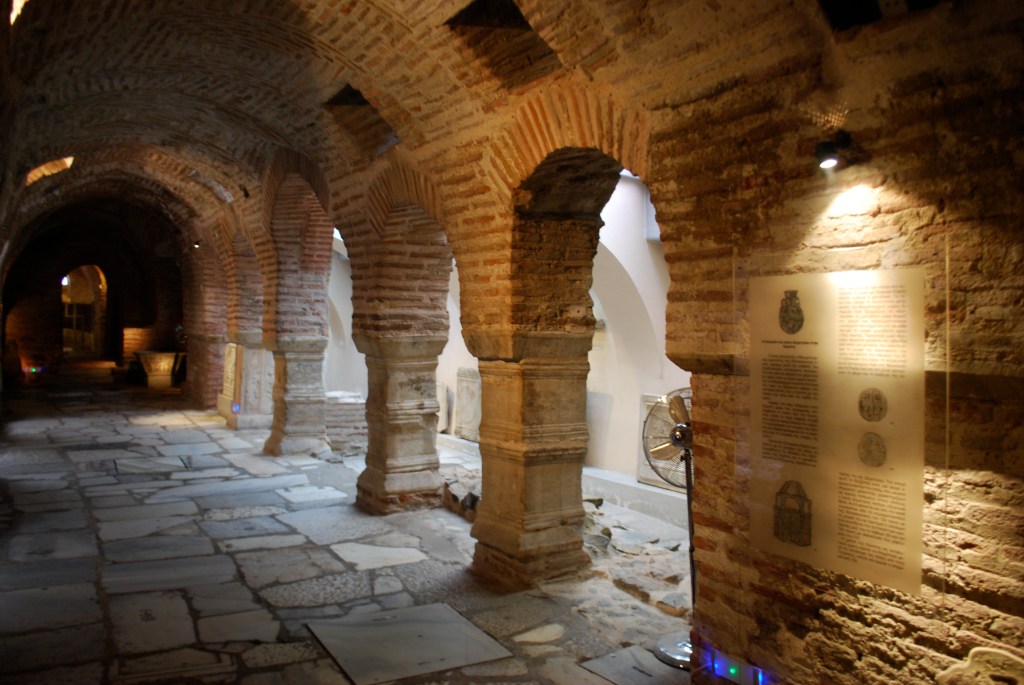
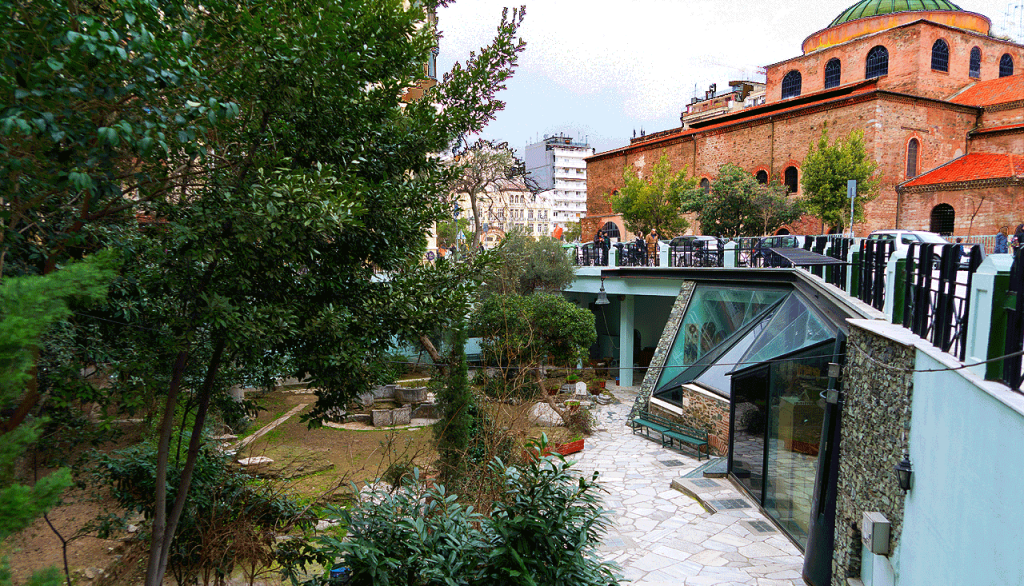
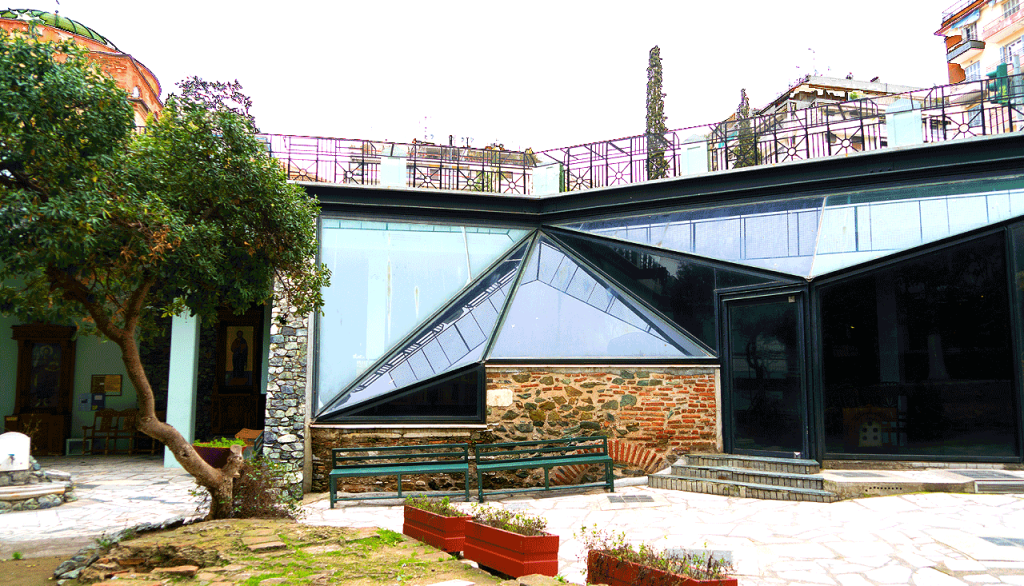
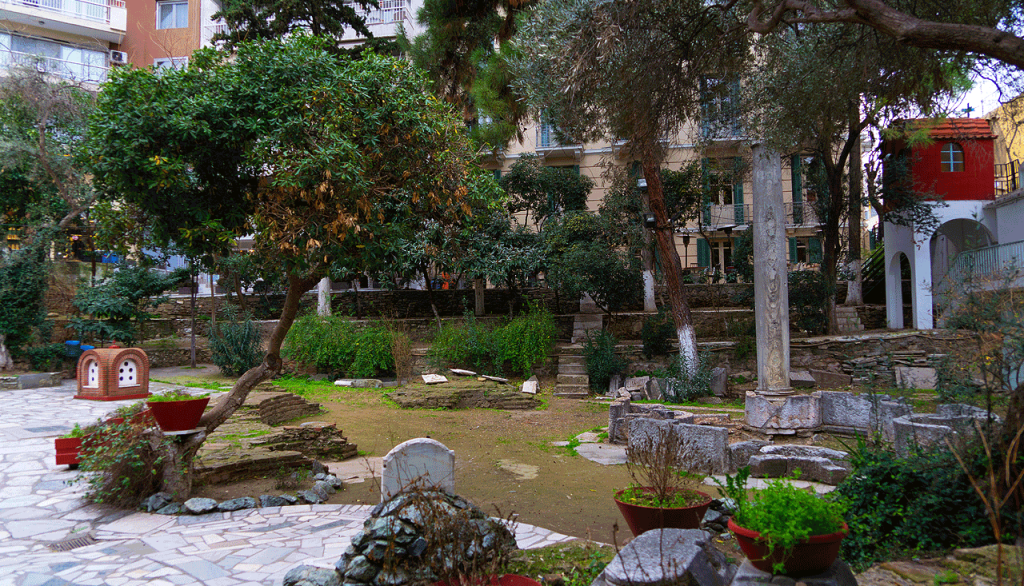
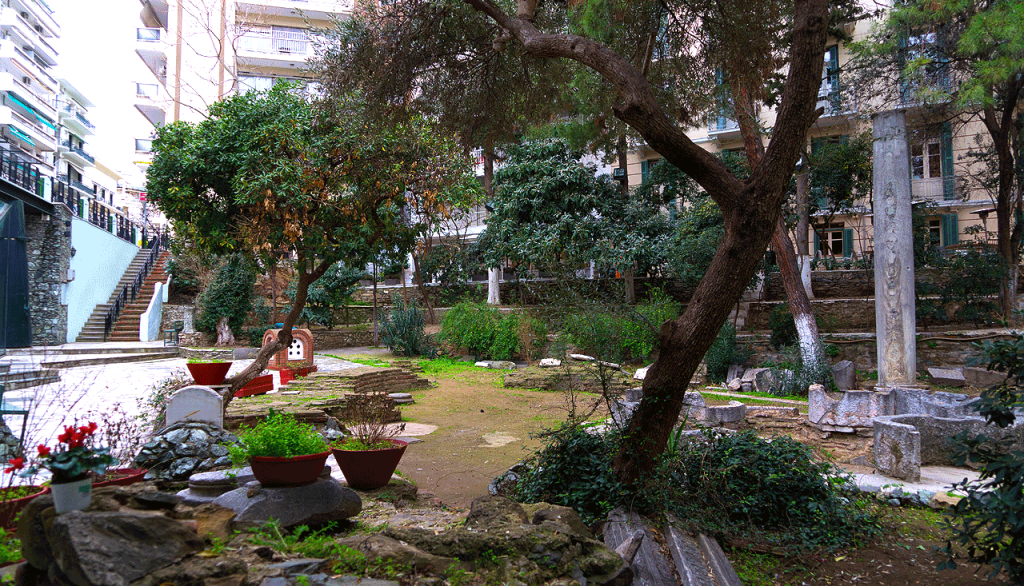
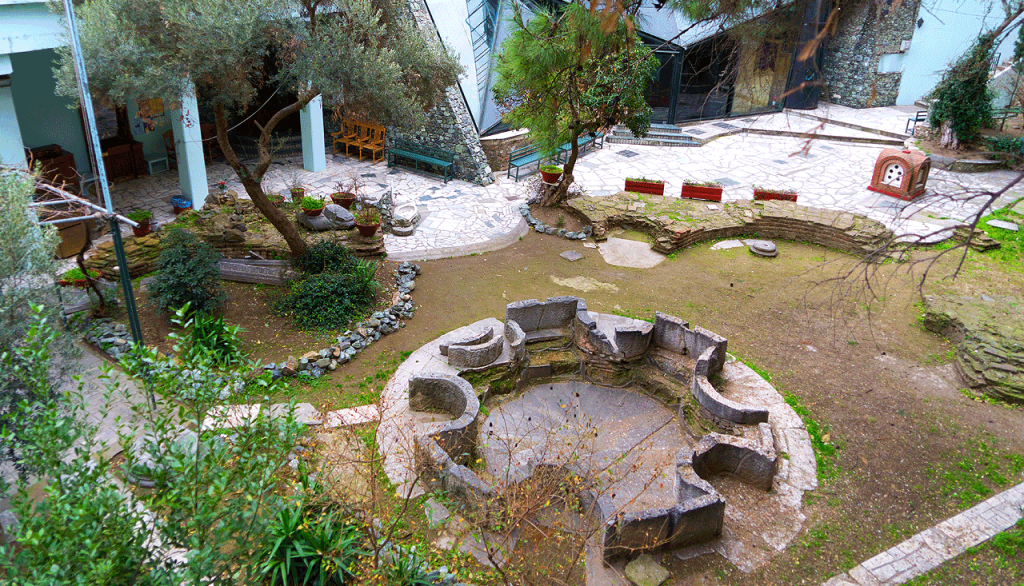
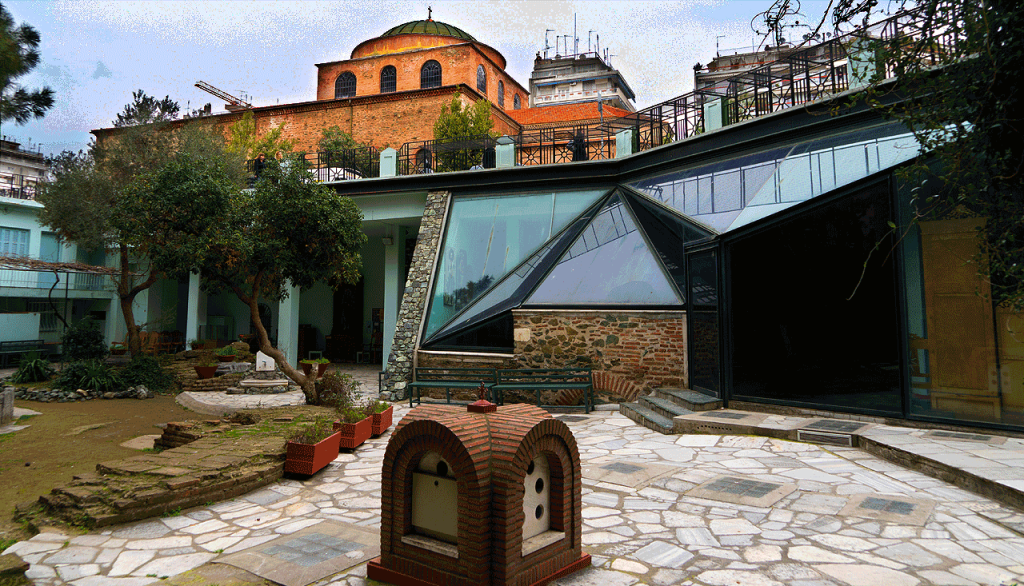
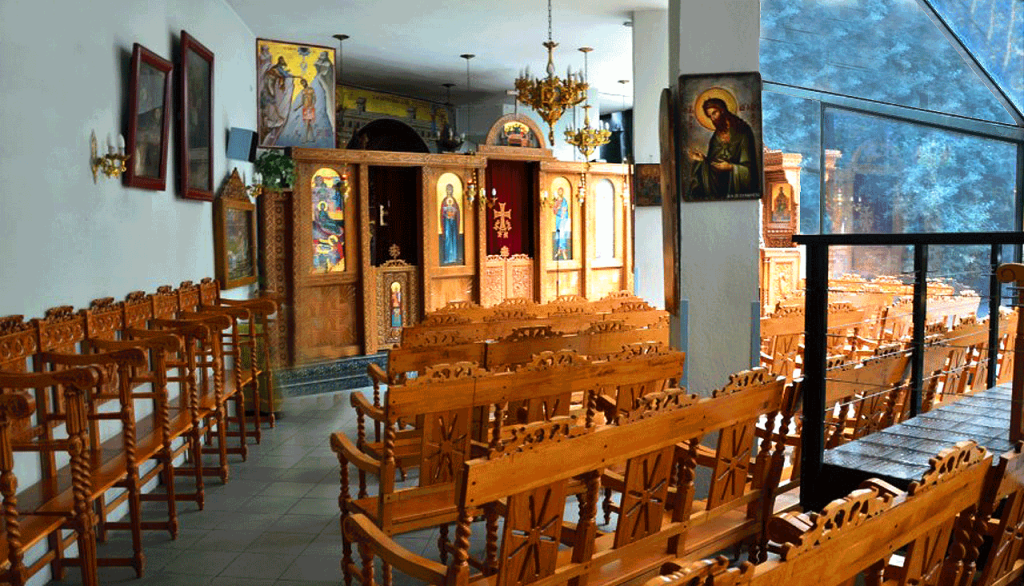
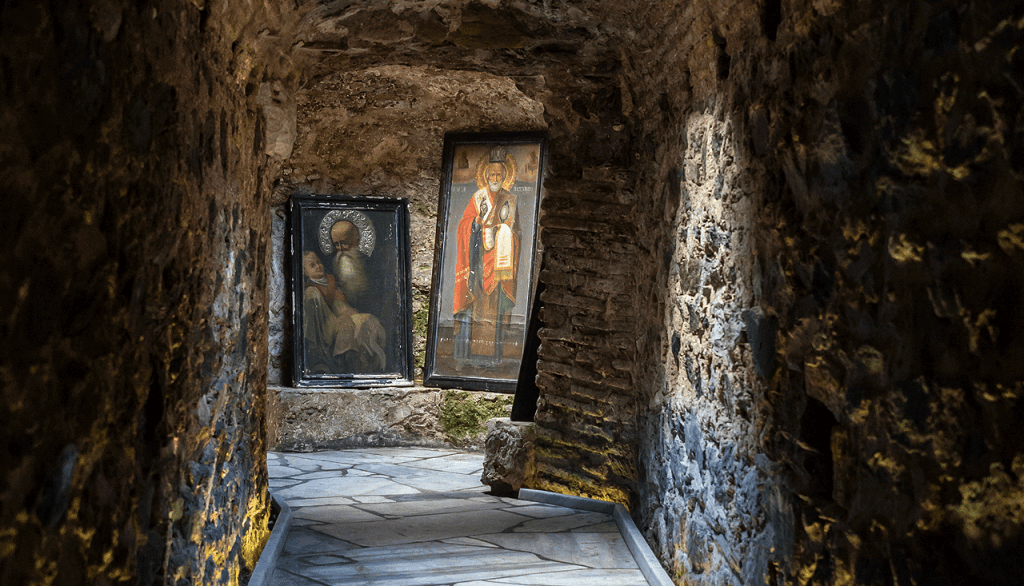
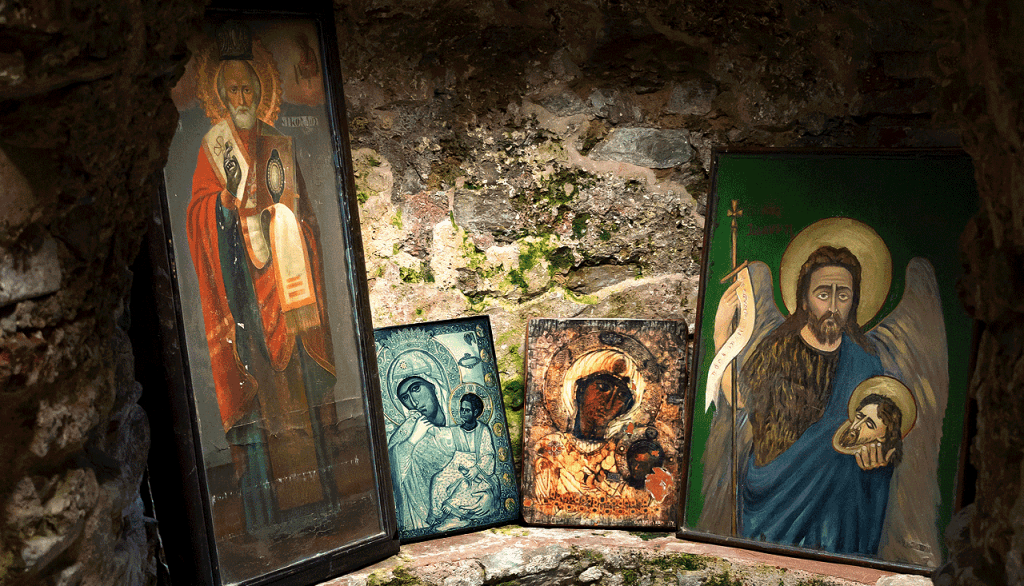
The resolute and formidable cost of being a Christian, in the early days of the Byzantine Empire, was evidenced today in the Catacombs (1) and the Baptistry of St. John the Baptist, which we visited today, next to Hagia Sophia Church. Burials, liturgies and prayers were carried on side by side in these underground chambers. These Catacombs were connected to one another, to other catacombs of St Demetrius and Hagia Sophia. There was no separation, not even in death.
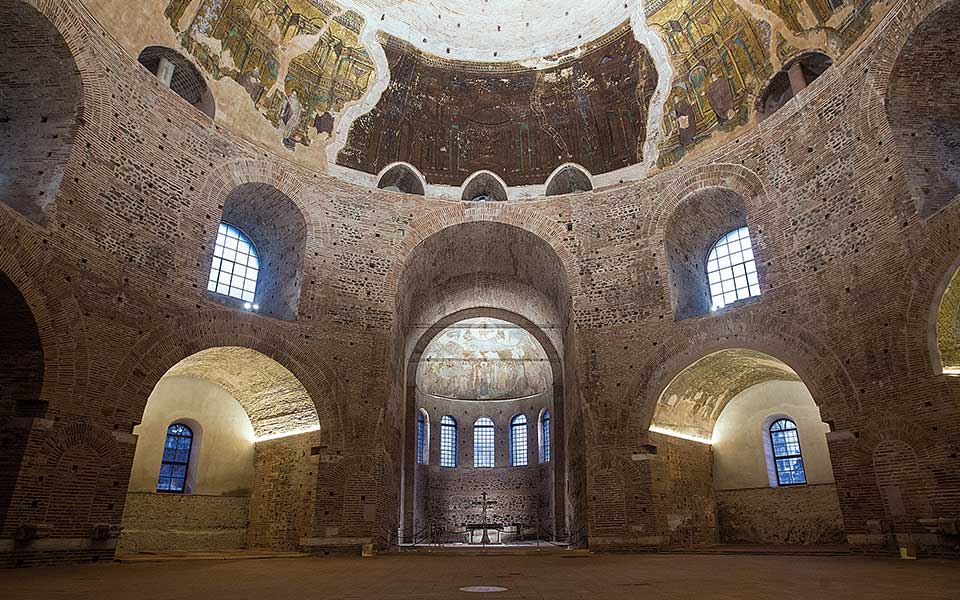
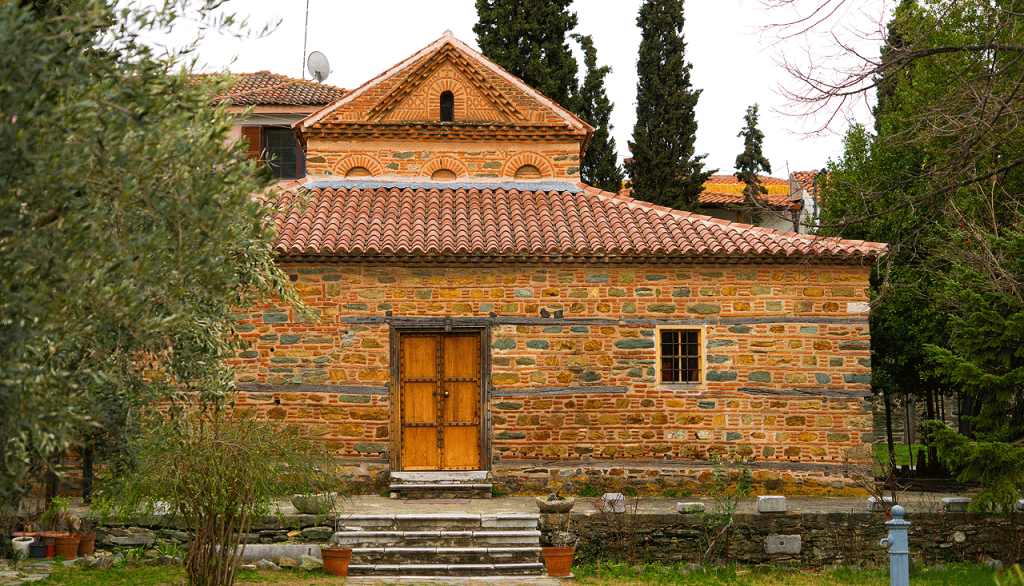
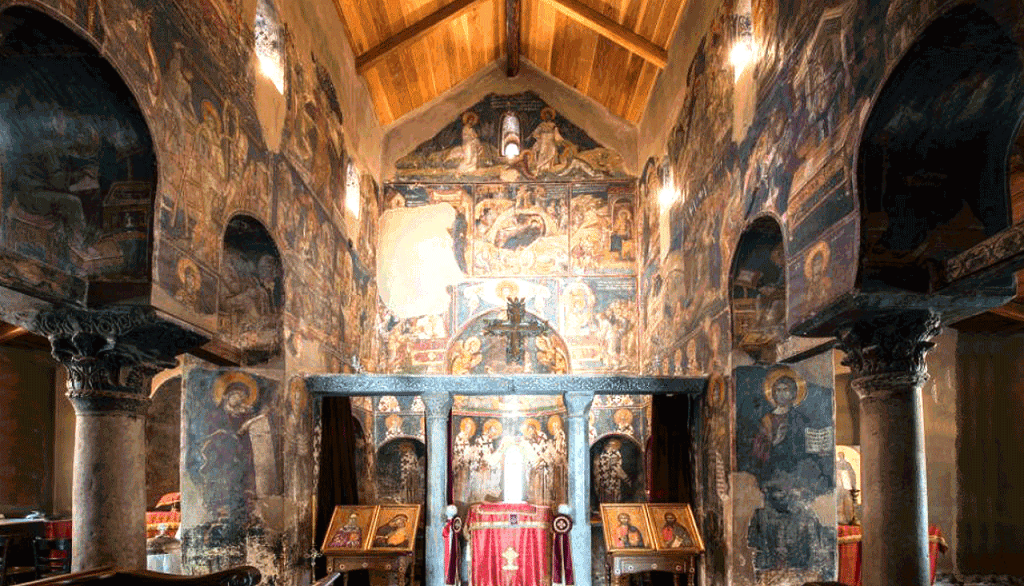
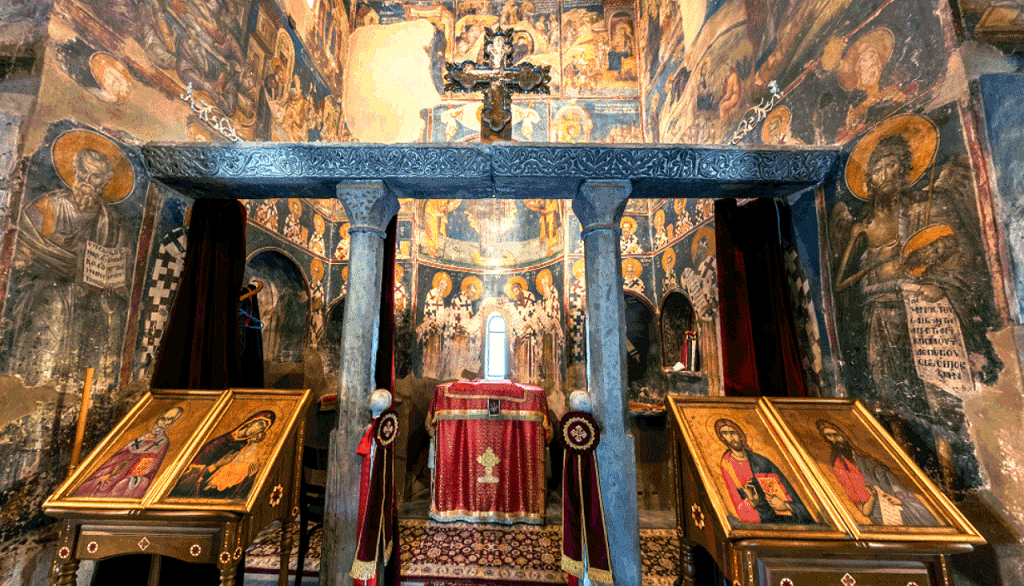
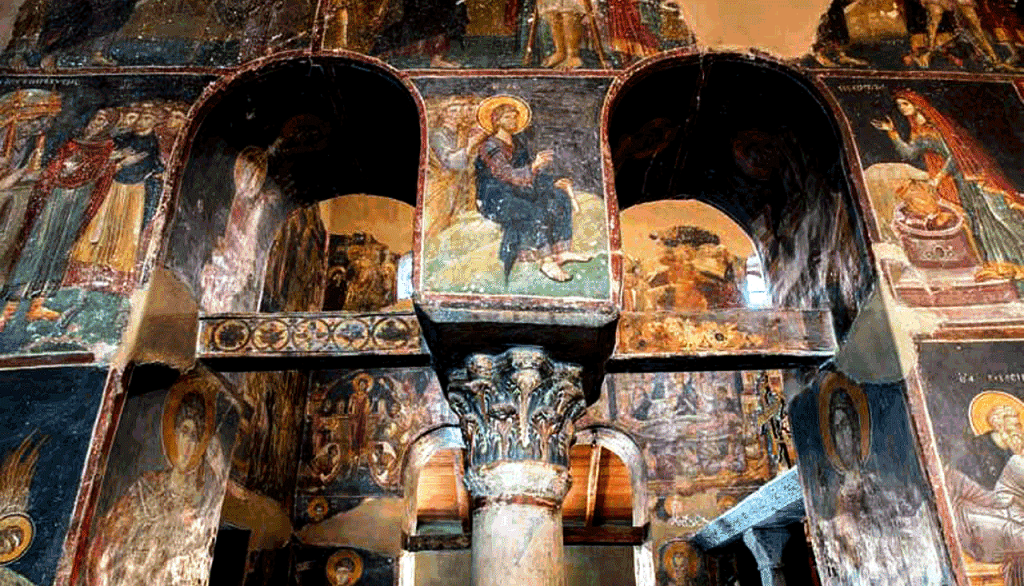
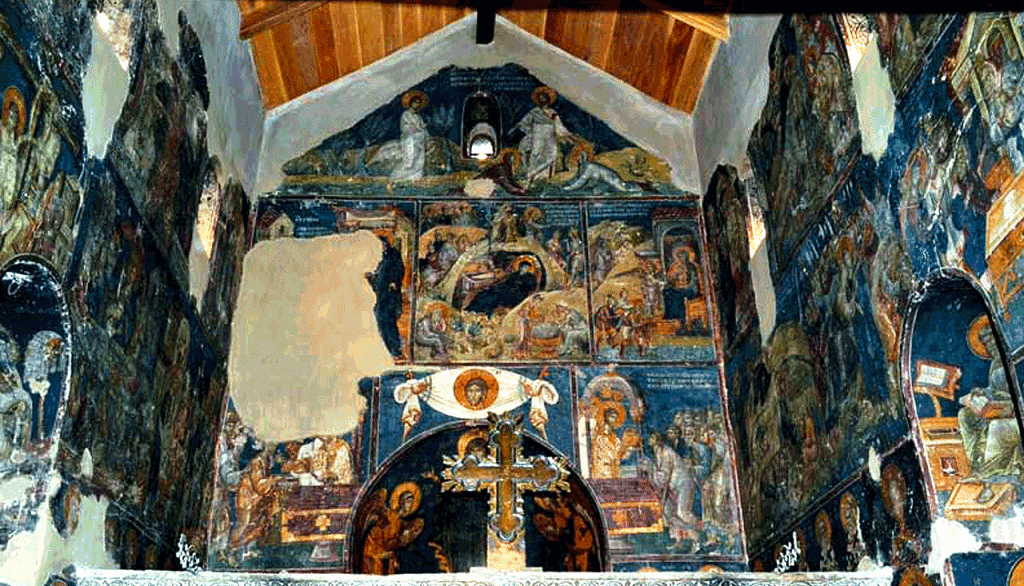
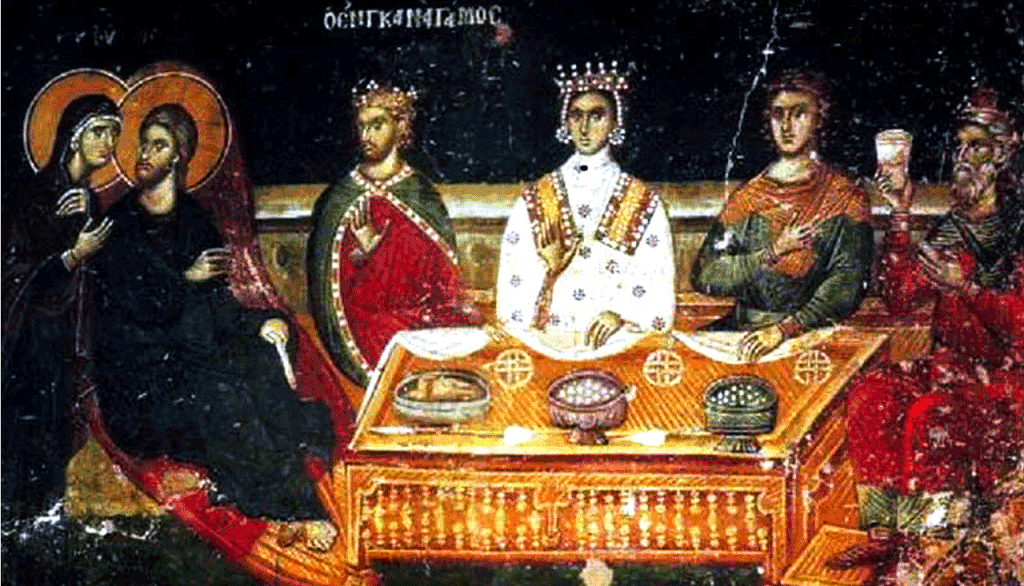
Earlier on in the day, we visited the churches of St. Nicholas Orphanos (2) and St. Elias, both early 14th-century Byzantine churches with the most beautiful ancient frescoes. At St. Nicholas’s church, there was a constant stream of visitors. Listening to the accents, we heard English, Romanian and German, and like us, they were leaving names of their loved ones to be remembered at the Holy Liturgy.
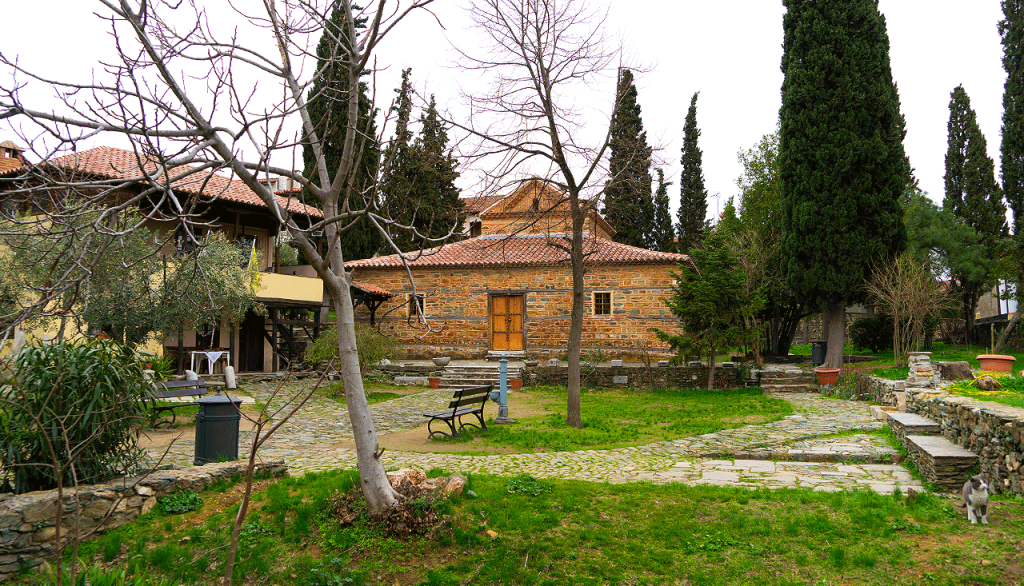
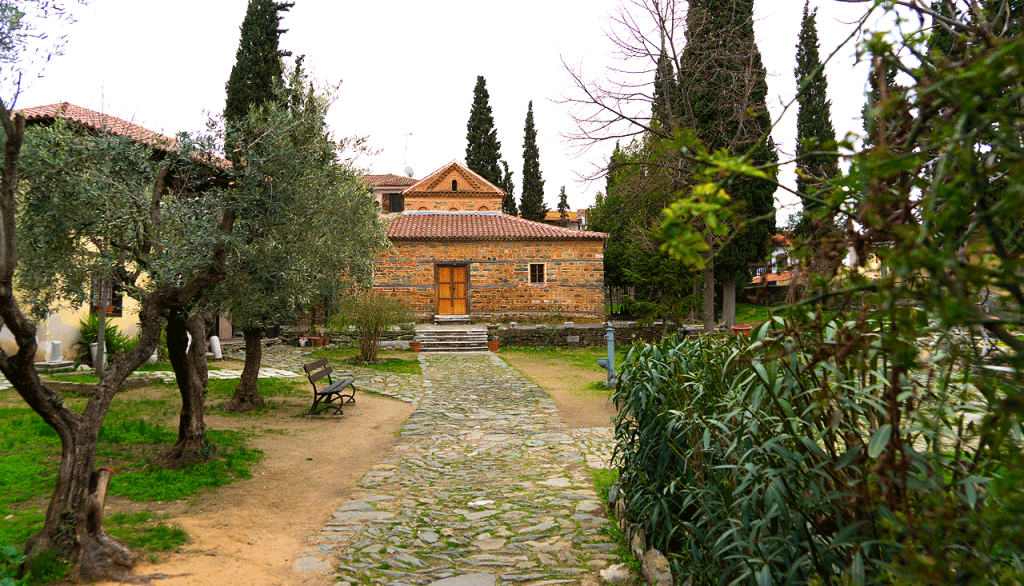
We also met F., an elderly lady who looked after the St. Nikolaos Orphanos gardens. She asked for a blessing and also that we may remember her son, N.
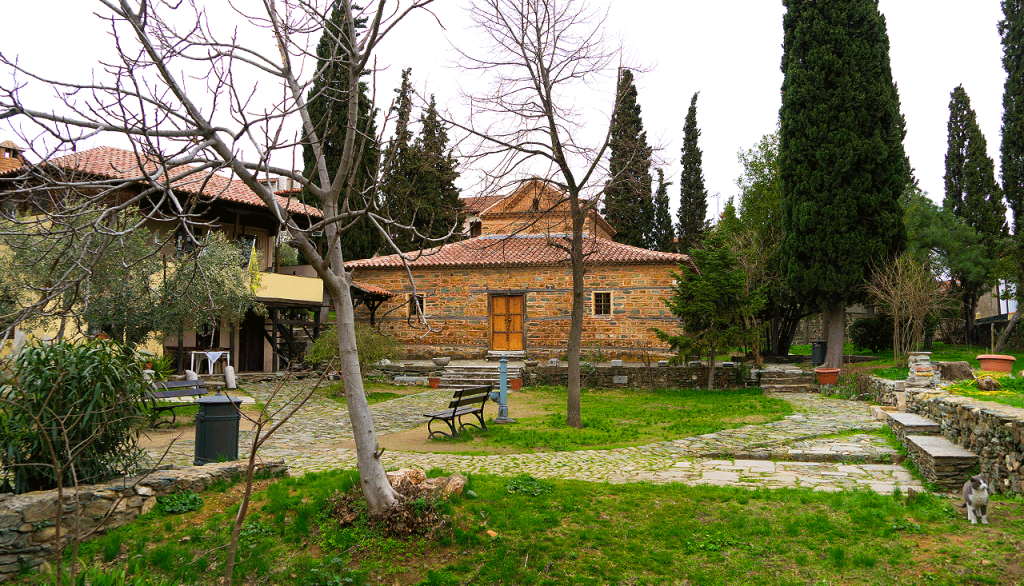
At St. Elias’s church (3), the parish priest gave us gifts. May he be blessed.
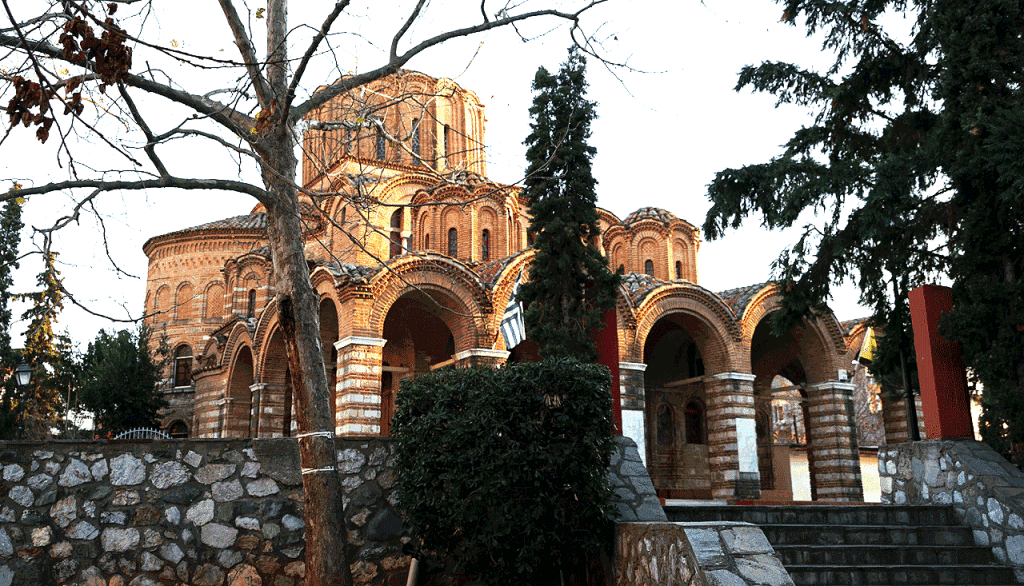
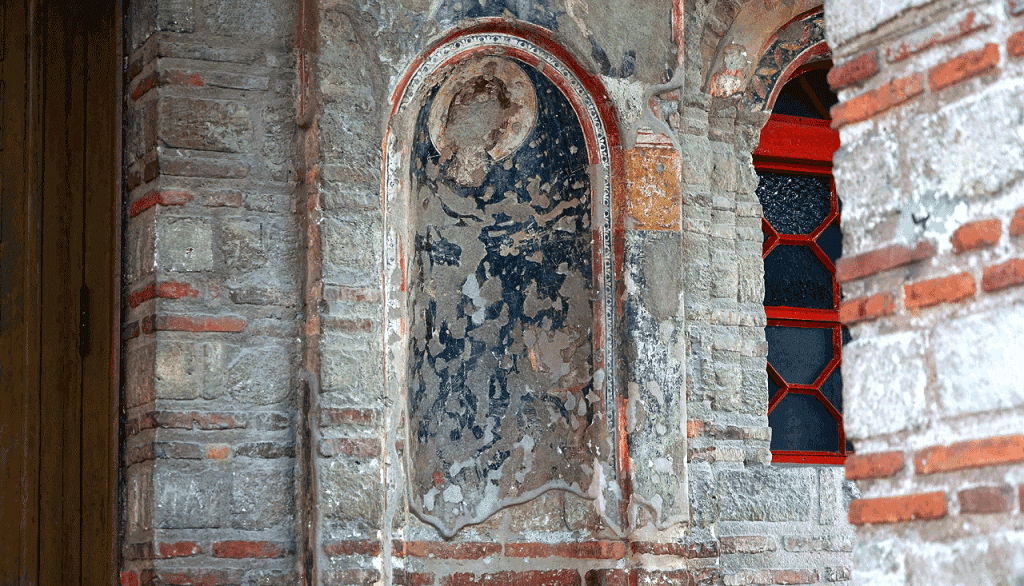
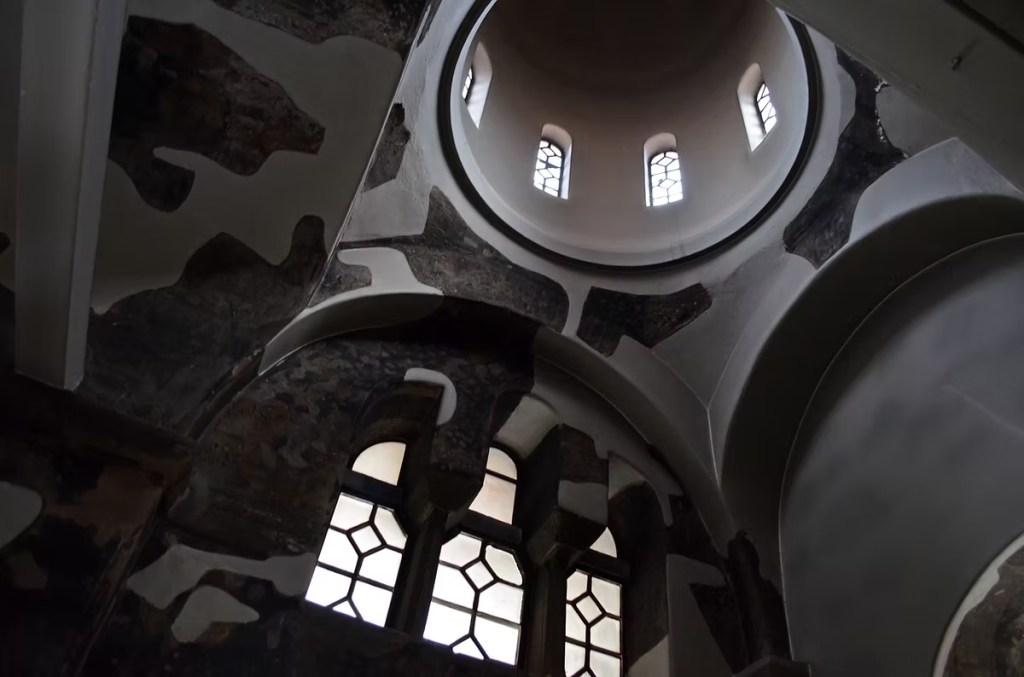
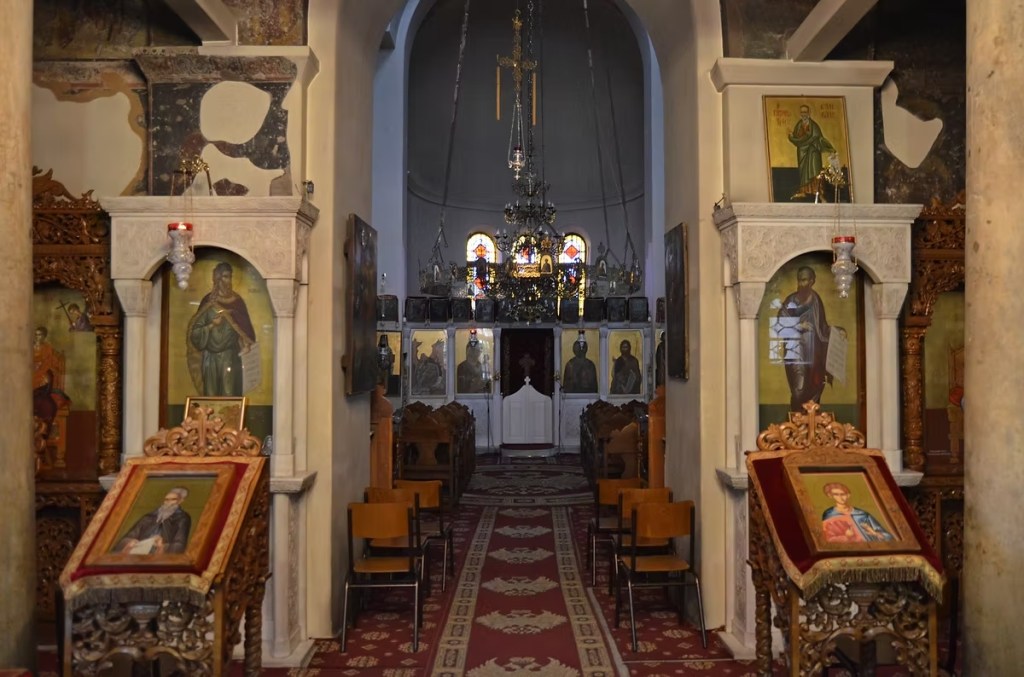
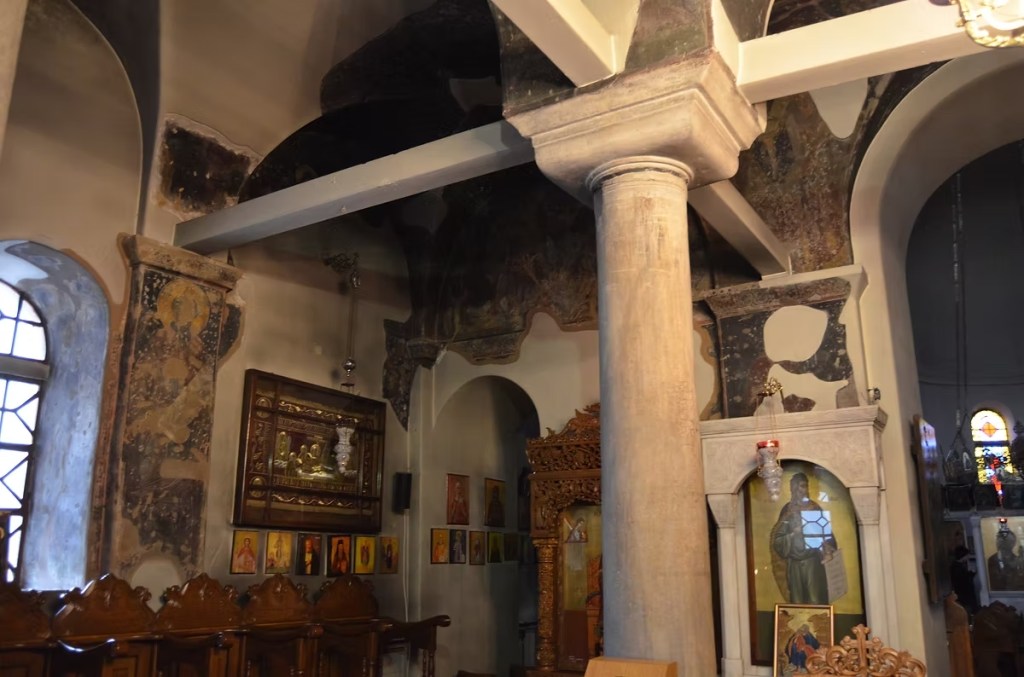
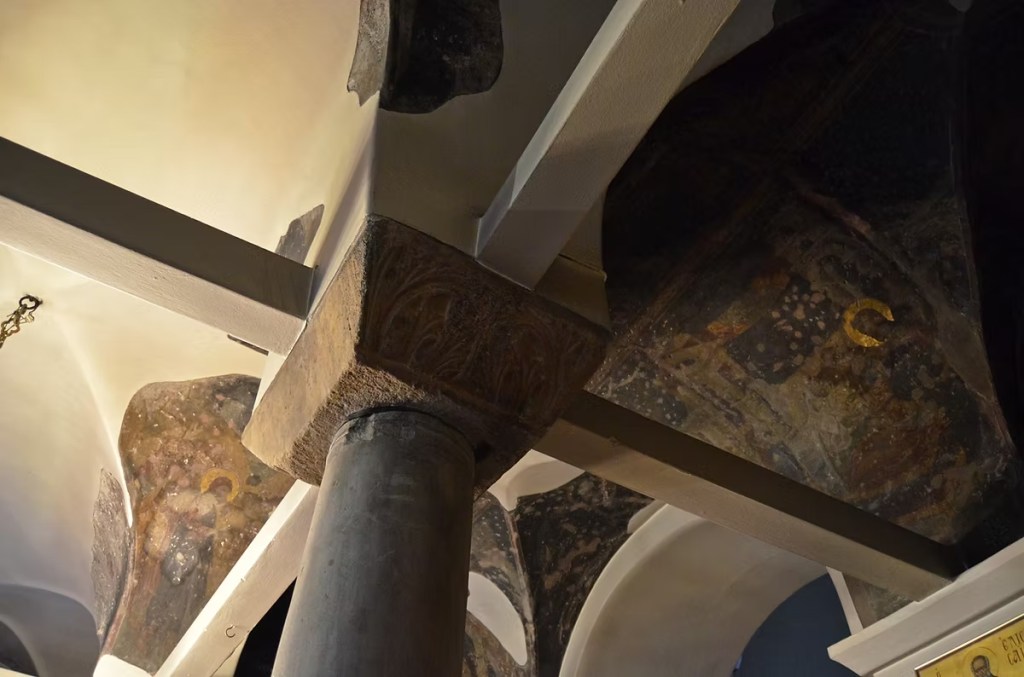
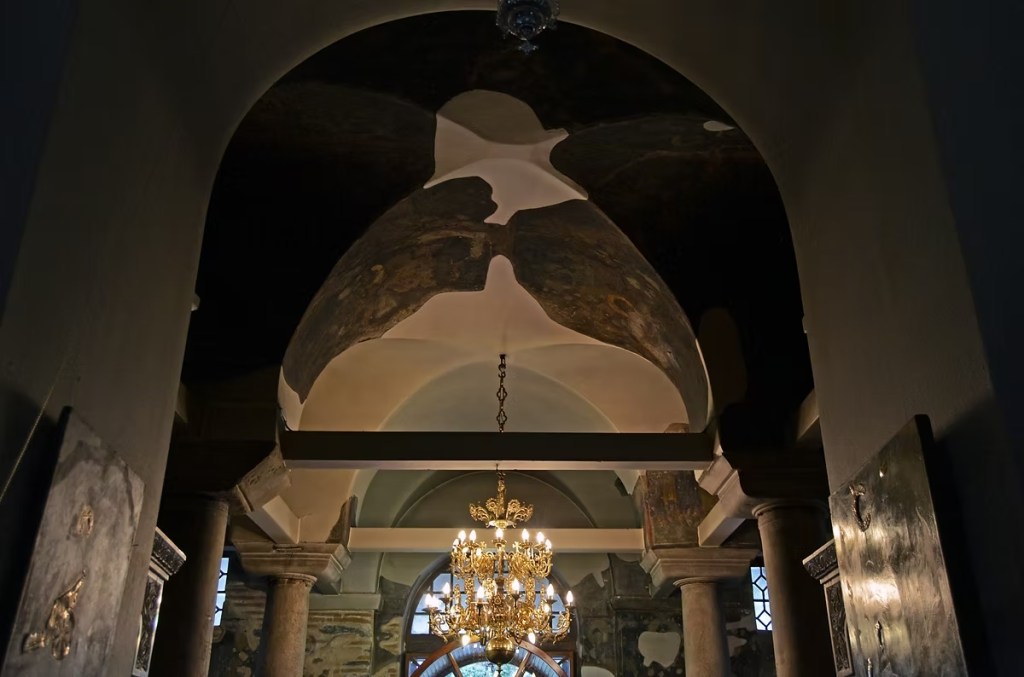
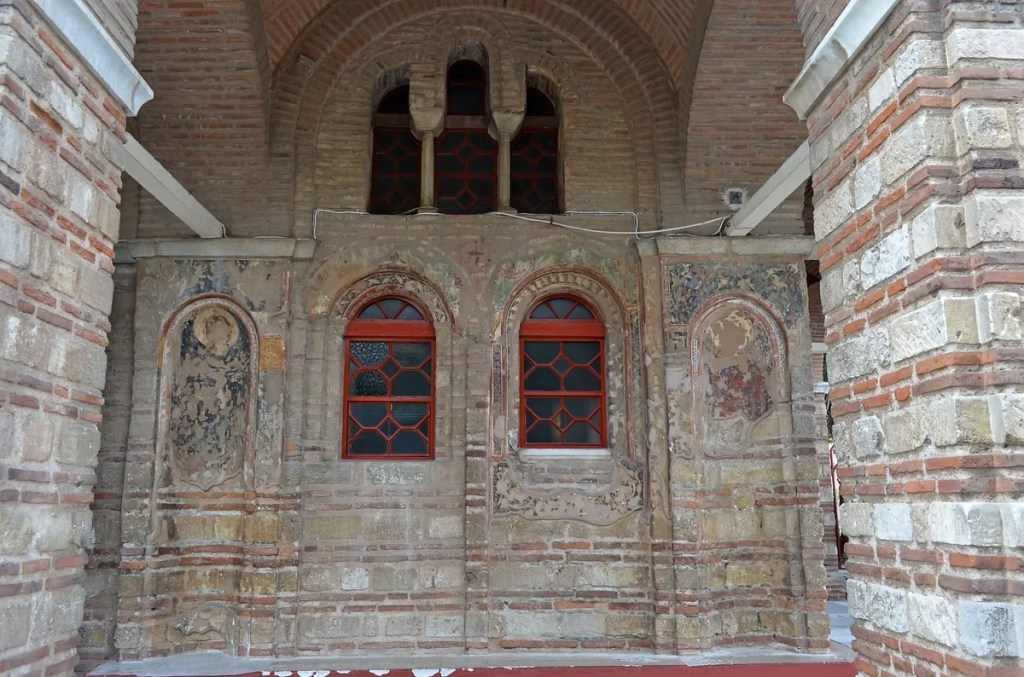
Our Lord is recorded as saying to the Pharisees that if his followers are silenced, even the stones will cry out, and indeed, they do.
Walking in the midday heat, in a rason*, carrying a bag, takes its toll on the body, especially when you have age on your side. But it was a price well worth the experience of visiting prayer-soaked places of worship.
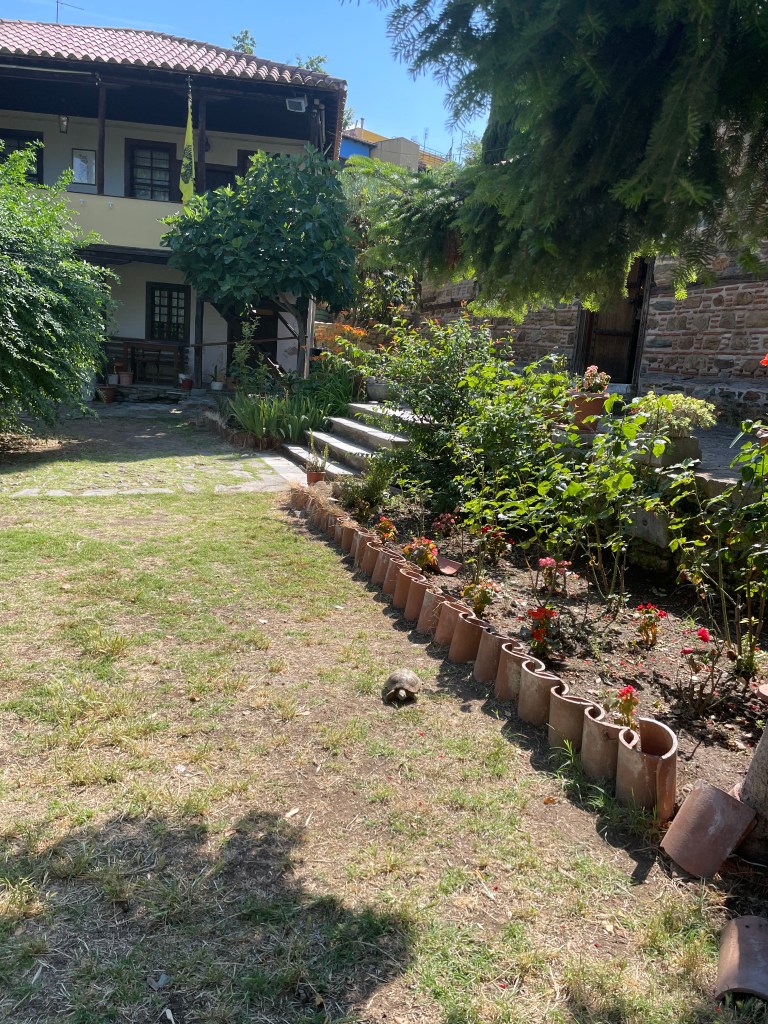
A living metaphor for my morning travels was the lovely tortoise we saw in the grounds of St. Nicholas’s church. Slow and resolute in her circumambulation of the church, carrying her home wherever she went. We saw her and followed her until it was time to make our own way back home.
*
(1) Catacombs of St. John the Baptist
The Catacombs of St. John the Baptist are located south of the Church of Hagia Sophia, underneath the street. Entering the gardens of the catacombs, one can see the ruins of the nymphaeum, a spring dedicated to the nymphs, as well as the thermal baths dating from Roman times. The nymphaeum was converted into a holy water spring during the Christian times, and an underground worship place was built there, in honour of St. John the Baptist.
This Catacomb belongs to the greater secret communication system of Thessaloniki, which has not been fully explored yet! Actually, it consists of numerous catacombs and tunnels, used by the first Christians to practice their worship. One can reach them through the Temple of Saint John the Baptist, hence the name. There are also remnants of the early Christian church.
(2) Church of Agios Nikolaos Orfanos
The church of Agios Nikolaos Orphanos is located at the district of Ano Poli Thessaloniki, near the eastern walls, between the streets Apostolou Pavlou and Irodotou. It used to be the catholicon of a Monastery, from which a small part of the entrance of the propylon.
We encounter the name Agios Nikolaos Orphanos in two patriarchal documents, in 1635 and 1638, of the Monastery Vlatadon, which was its metochi already from the period of the Turkish Occupation, and to historical sources of 1745.
The origin of the name has intrigued a lot of researchers. For some the name Agios Nikolaos Orphanos is related to the name of the founder of the church which belonged to the family of Orphanos. But it is also related to Saint Nicholas, who showed great care for widows and orphans (Orfanos meaning orphan).
The present day view accepts as the founder of the church the Serbian king Milutin, who had developed intense building activity in Thessaloniki. To this view lead us wall paintings in the church with Agios Georgios Gorgos and Clement of Ochrid, saints that were specially honored in Serbia. The close relations of Milutin with Thessaloniki is due to the fact that he was married to the Byzantine princess Simonis, daughter of empress Irene Palaiologina, who lived in the city.
Nowadays, the church has the form of an oblong, wooden-roofed hall, which is surrounded on three sides with a portico. The portico on the east ends in two chapels.
At the interior of the church the marble screen dates from the period the church was founded, while the capitals date from the Early Christian period.
The church’s excellent wall paintings, frescoes, are true masterpieces and are the best preserved compared with the ones in other churches of Thessaloniki. They date from 1310-1320. Among them, apart the ones dealing with the life of Christ, of particular interest are the themes of Akathist Hymn and the lives of Agios Nikolaos and Agios Gerasimos Ioardanitis.
(3) Church of Prophet Elijah (Profitis Elias)
The church of Prophet Elijah, at some point the catholicon of a monastery, is at a close distance from the basilica of Agios Dimitrios and is one of the most important examples of church architecture from the Palaeologan period (1261-1453) in Thessaloniki.
Its dedication to Prophet Elijah is a more recent one and is because of a corruption of the Turkish name of the mosque Serayli Camii or because the church is built on a hill, where they usually build churches dedicated to the Prophet. According to the most prevalent view the church was initially dedicated to Christ, as it is evident by the numerous Christological scenes that are depicted at the narthex. It is possible that it is identified with the well-known in the sources Monastery of Akapniou.
Its architectural type, four-columned, cross-in-square church with semi-circular conches on the northern and southern side (side choirs), is unique in Thessaloniki. This type is called Athonite triconch. Easy and west of the choirs, four compartments are added. The two eastern ones are the sacristies, and the two western chapels. These are roofed by domes of smaller dimensions than the huge central one. On the west there is the so-called “liti”, that is spacious narthex, necessary for the funational needs of the catholicons of the monasteries. In the years 1956-1961 there were restoration works at the dome, the portico, the chapels and some Turkish additions were removed.
At the interior some wall paintings of the 14th century (1360-1370) still survive, where scenes from the Life of Christ dominate, as well as isolated saints.
* The rasson (also spelled rason, exorasson, or ryassa) is the voluminous, wide-sleeved outer cassock worn by priests, deacons, and monks in the Eastern Orthodox and Eastern Catholic churches.


Beautiful photos that bring back memories of a year ago ❤
I didn’t know that these churches were connected underground!
LikeLiked by 1 person
Dearest sister, ongoing
archaeological research excavations. Multiple cities beneath Thessaloníki. Your prayers
LikeLiked by 1 person