Remove The Sandals From Your Feet

land1

Hurt not the earth, neither the sea, nor the trees.

— Revelation 7:3

trees50

The saints embrace the whole world with their love.

— St. Silouan the Athonite

On the Holy Mountain of Athos, the monks sometimes put up beside the forest paths special signposts, offering encouragement or warning to the pilgrim as he passes. One such notice used to give me particular pleasure. Its message was brief and clear: “Love the trees.”
tree63

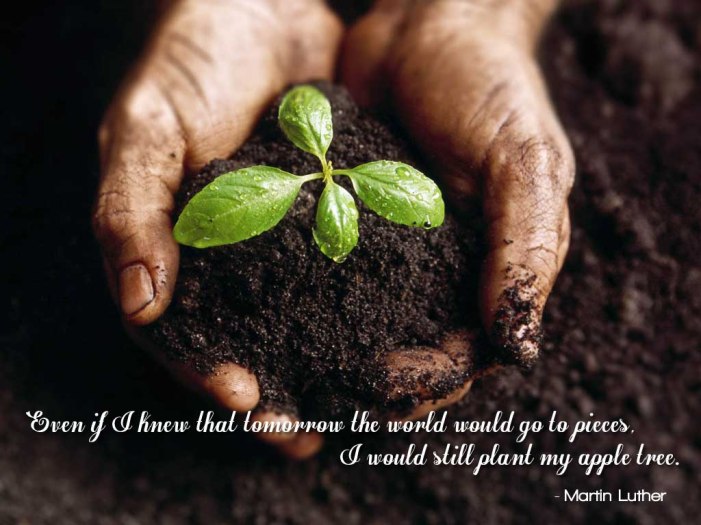
Fr. Amphilochios, the geronta or “elder” on the island of Patmos when I first stayed there, would have been in full agreement. “Do you know,” he said, “that God gave us one more commandment, which is not recorded in Scripture? It is the commandment “love the trees.” Whoever does not love trees, so he believed, does not love God. “When you plant a tree,” he insisted, “you plant hope, you plant peace, you plant love, and you will receive God’s blessing.” An ecologist long before ecology had become fashionable, when hearing confessions of the local farmers he used to assign to them a penance, the task of planting a tree. During the long summer drought, he himself went round the island watering the young trees. …
tree11

Fr. Amphilochios was by no means the first spiritual teacher in the modern Greek tradition to recognize the importance of trees. Two centuries earlier, the Athonite monk St. Kosmas the Aetolian, martyred in 1779, used to plant trees as he traveled around Greece on his missionary journeys, and in one of his “prophecies” he stated, “People will remain poor, because they have no love for trees.” We can see that prophecy fulfilled today in all too many parts of the world. …
tree13

“Love the trees.” Why should we do so? Is there indeed a connection between love of trees and love of God? How far is it true that a failure to reverence and honor our natural environment — animals, trees, earth, fire, air, and water — is also, in an immediate and soul-destroying way, a failure to reverence and honor the living God?

tree12

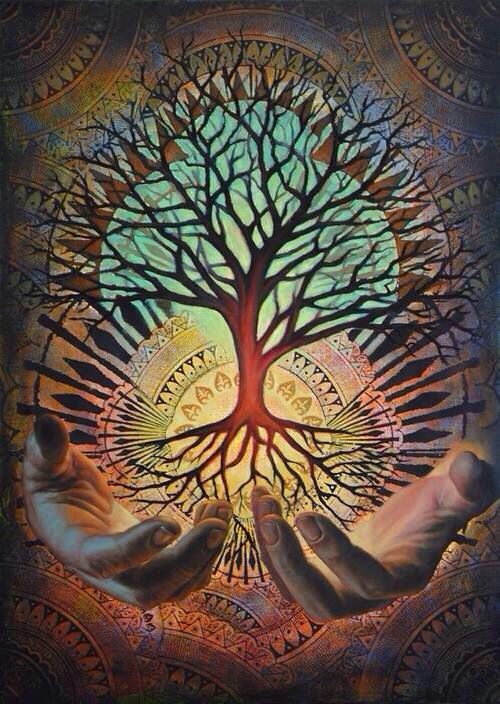
Let us begin with two visions of a tree. Edward Carpenter, in Pagan and Christian Creeds [records] a partial vision of a tree. “It was a beech, standing somewhat isolated, and still leafless in quite early Spring. Suddenly, I was aware of its skyward-reaching arms and up-turned finger-tips, as if some vivid life (or electricity) was streaming through them far into the spaces of heaven, and of its roots plunged in the earth and drawing the same energies from below. The day was quite still and there was no movement in the branches, but in that moment the tree was no longer a separate or separable organism, but a vast being ramifying far into space, sharing and uniting the life of Earth and Sky, and full of amazement.”

tree1              tree2

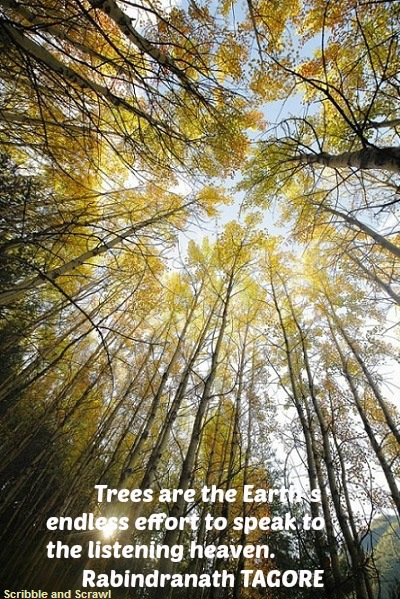
… Two things above all are noteworthy in Edward Carpenter’s “partial vision.” First, the tree is alive, vibrant with what he calls “energies” or “electricity”; it is “full of most amazing activity.” Second, the tree is cosmic in its dimensions: it is not “a separate or separable organism” but is “vast” and all-embracing in its scope, “ramifying far into space … uniting the life of Earth and Sky.” Here is a vision of joyful wonder, inspired by an underlying sense of mystery. The tree has become a symbol pointing beyond itself, a sacrament that embodies some deep secret at the heart of the universe. The same sense of wonder and mystery — of the symbolic and sacramental character of the world — is strikingly manifest in Peaks and Llamas , the master-work of that spiritual mountaineer, Marco Pallis.
tree61

Yet there are at the same time certain limitations in Carpenter’s tree-vision. The mystery to which the tree points is not spelt out by him in specifically personal terms. He makes no attempt to ascend through the creation to the Creator. …

tree100

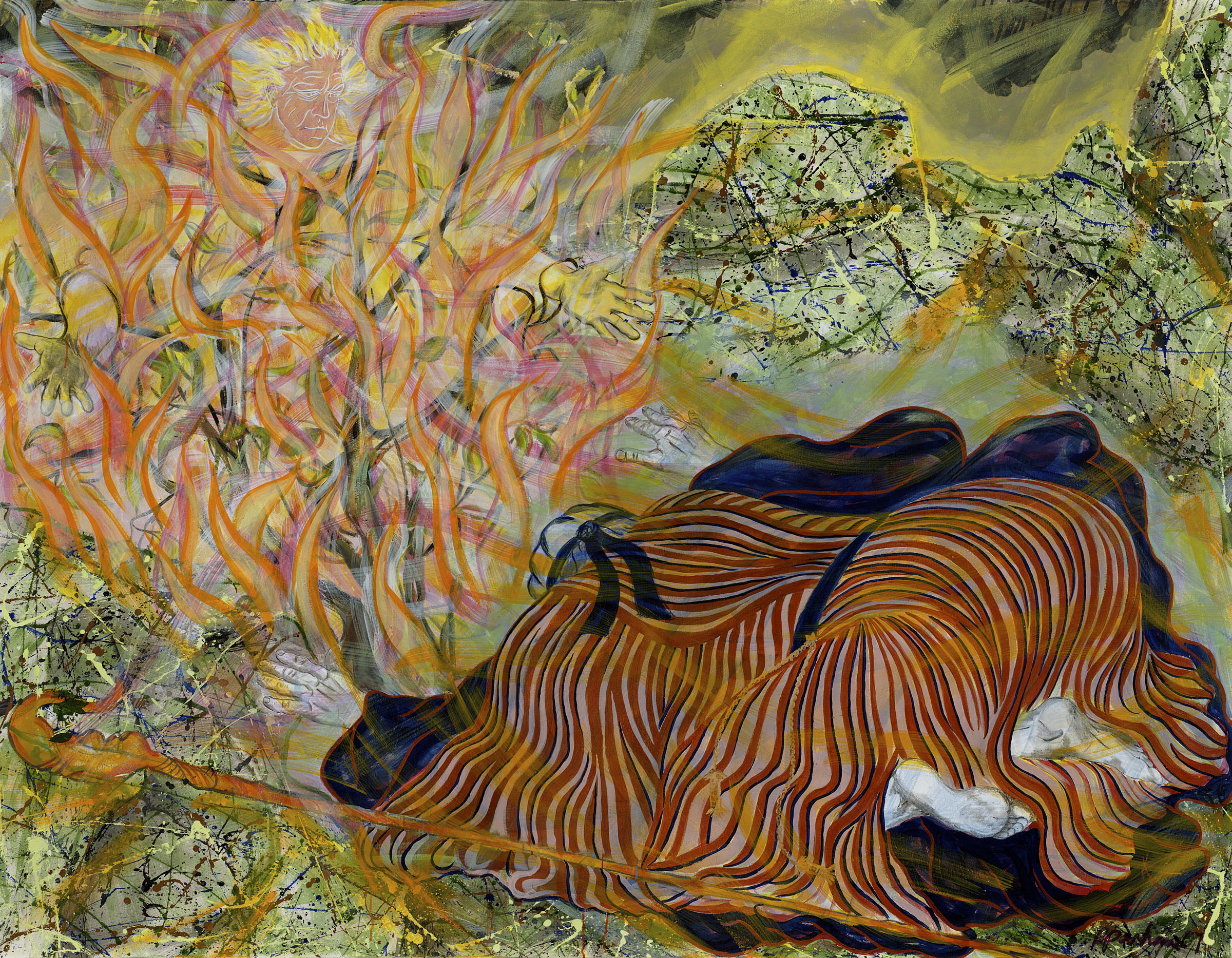
Let us turn to a second tree-vision, which is by contrast explicitly personal and theophanic: “Moses was keeping the flock of his father-in-law Jethro, the priest of Midian; he led his flock beyond the wilderness, and came to Horeb, the mountain of God. There the angel of the Lord appeared to him in a flame of fire out of a bush; he looked, and the bush was blazing, yet it was not consumed. Then Moses said, “I must turn aside and look at this great sight, and see why the bush is not burned up.” When the Lord saw that he had turned aside to see, God called to him out of the bush, “Moses, Moses!” And he said, “Here I am.” Then He said, “Come no closer! Remove the sandals from your feet, for the place on which you are standing is holy ground.” He said further, “I am the God of your Father, the God of Abraham, the God of Isaac, and the God of Jacob.” And Moses hid his face, for he was afraid to look at God.”  (Ex 3:1-6)
tree68

Comparing the experience of Moses with that of Carpenter, we observe three things: in the first place, the vision described in Exodus reaches out beyond the realm of the impersonal. The burning bush at Horeb acts as the locus of an interpersonal encounter, of a meeting face-to-face, of a dialogue between two subjects. God calls out to Moses by name, “Moses, Moses!” and Moses responds, “Here I am.” “Through the creation to the Creator”: in and through the tree he beholds, Moses enters into communion with the living God.

land2

In the second place, God does not only appear to Moses but also issues a practical command to him: “Remove the sandals from your feet.” According to Greek Fathers such as St. Gregory of Nyssa, sandals or shoes — being made from the skins of dead animals — are something lifeless, inert, dead and earthly, and so they symbolize the heaviness, weariness, and mortality that assail our human nature as a result of the Fall.
tree99

“Remove your sandals,” then, may be understood to signify: Strip off from yourself the deadness of familiarity and boredom; free yourself from the lifelessness of the trivial, the mechanical, the repetitive; wake up, open your eyes, cleanse the doors of your perception, look and see! And what, in the third place, happens to us when in this manner we strip off the dead skins of boredom and triviality? At once we realize the truth of God’s next words to Moses: “The place on which you are standing is holy ground.” Set free from spiritual deadness, awakening from sleep, opening our eyes both outwardly and inwardly, we look upon the world around us in a different way.
tree6

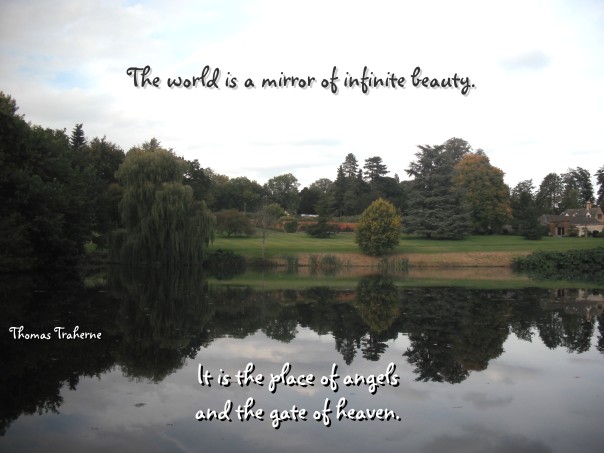
So we enter the dimensions of sacred space and sacred time. We discern the great within the small, the extraordinary within the ordinary, “a world in a grain of sand … and eternity in an hour,” to quote Blake once more. This place where I am, this tree, this animal, this person to whom I am speaking, this moment of time through which I am living: each is holy, each is unique and unrepeatable, and each is therefore infinite in value.

tree8

Combining Edward Carpenter’s living tree, uniting earth and heaven and the burning bush of Moses, we can see emerging a precise and distinctive conception of the universe. Nature is sacred. The world is a sacrament of the divine presence, a means of communion with God. The environment consists not in dead matter but in living relationship. The entire cosmos is one vast burning bush, permeated by the fire of divine power and glory. …

*

For more Orthodox ecology of Transfiguration, theophanic transparency, pellucid double vision and Zen ‘haeccitas’, read the full article THROUGH CREATION TO THE CREATOR by Bishop Kallistos of Diokleia

 at http://incommunion.org/2004/12/11/through-creation-to-the-creator/

His Body a Prayer a Crossbeam

mull seamus1

  heamus2


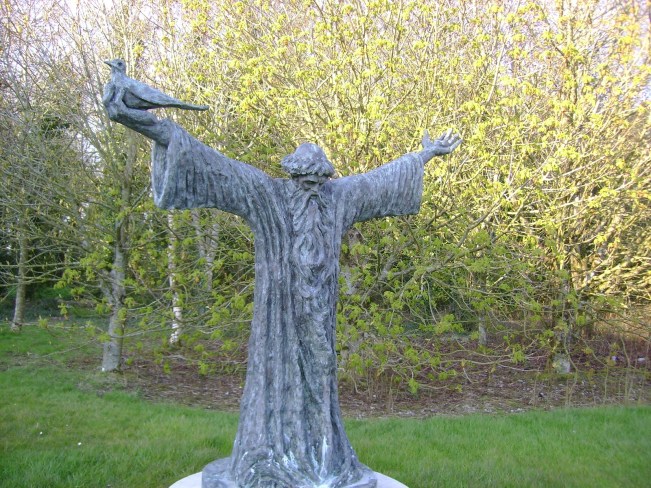
St Kevin and the Blackbird (1996)

By Seamus Heaney

And then there was St Kevin and the blackbird.
The saint is kneeling, arms stretched out, inside
His cell, but the cell is narrow, so

*

One turned-up palm is out the window, stiff
As a crossbeam, when a blackbird lands
And lays in it and settles down to nest.

*

Kevin feels the warm eggs, the small breast, the tucked
Neat head and claws and, finding himself linked
Into the network of eternal life,

*

Is moved to pity: now he must hold his hand
Like a branch out in the sun and rain for weeks
Until the young are hatched and fledged and flown.

*

And since the whole thing’s imagined anyhow,
Imagine being Kevin. Which is he?
Self-forgetful or in agony all the time

*

From the neck on out down through his hurting forearms?
Are his fingers sleeping? Does he still feel his knees?
Or has the shut-eyed blank of underearth

*

Crept up through him? Is there distance in his head?
Alone and mirrored clear in love’s deep river,
‘To labour and not to seek reward,’ he prays,

*

A prayer his body makes entirely
For he has forgotten self, forgotten bird
And on the riverbank forgotten the river’s name.

*
The Spirit Level (1996)

st kevin1

seamus3

seamus6

seamus7


*

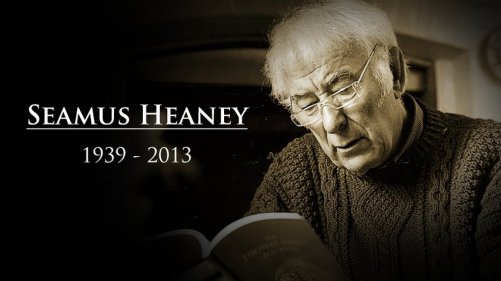
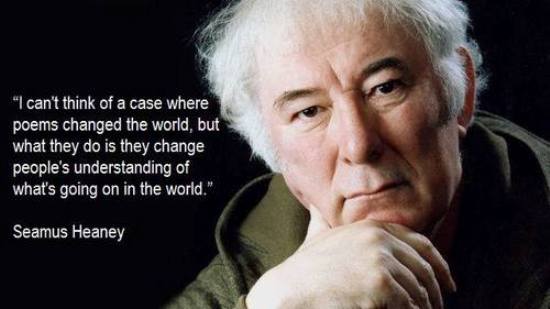
The Irish poet’s and Nobel Laureate’s, Seamus Heaney’s, extract from his Nobel prize speech, drawing a parallel between his labour as a poet in modern society and Saint Kevin’s labour of love, “to labour and not to seek reward”:

“Which is why for years I was bowed to the desk like some monk bowed over his prie-dieu … Then finally and happily, and not in obedience to the dolorous circumstances of my native place but in despite of them, I straightened up.  … I shall try to represent the import of that changed orientation with a story out of Ireland.
*
This is a story about another monk holding himself up valiantly in the posture of endurance. It is said that once upon a time St. Kevin was kneeling with his arms stretched out in the form of a cross in Glendalough, a monastic site not too far from where we lived in Co. Wicklow, a place which to this day is one of the most wooded and watery retreats in the whole of the country. Anyhow, as Kevin knelt and prayed, a blackbird mistook his outstretched hand for some kind of roost and swooped down upon it, laid a clutch of eggs in it and proceeded to nest in it as if it were the branch of a tree. Then, overcome with pity and constrained by his faith to love the life in all creatures great and small, Kevin stayed immobile for hours and days and nights and weeks, holding out his hand until the eggs hatched and the fledglings grew wings, true to life if subversive of common sense, at the intersection of natural process and the glimpsed ideal, at one and the same time a signpost and a reminder. Manifesting that order of poetry where we can at last grow up to that which we stored up as we grew.” (1)

seamus5

st kevin3

st kevin5

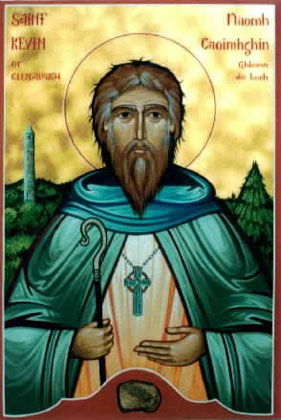
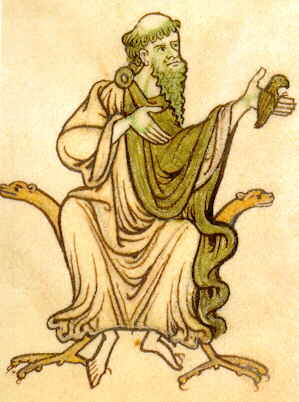
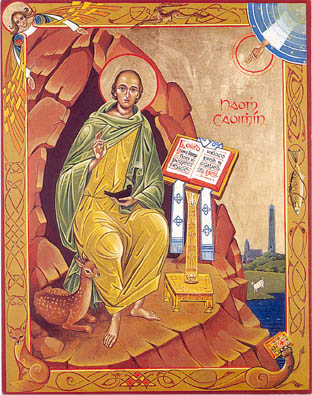
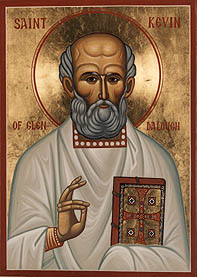
St Kevin of Glendalough, Wonder-worker of Ireland (also Coemgen, Caoimhghin, Coemgenus, and Kavin) is a Celtic saint, venerated in the Roman Catholic Church, the Eastern Orthodox Church and the Anglican Communion. He was the abbot of Glendalough Monastery. He was born in 498, and fell asleep in the Lord in 618 at the age of 120 years. His feast day is celebrated on June 3. The icons suggest St. Kevin’s preference for the life of solitude, penance and prayer of a hermit, and also his affinity with nature and his love for animals and birds.

st kevin2

The well known story of the black bird in his hand is a verbal image of his reverence for creation, while the fawn at St. Kevin’s feet is a symbol of his own gentle peaceful nature. … The deer recalls the providence of God who through a doe provided milk for a child Kevin had fostered, and at the same time reminds us of the deer in the psalms, who is the image of the soul that yearns for God – the living water. … The salmon again emphasizes for us the care of the Creator who provided for the monks of the nearby monastery, a salmon sufficient for their daily meal. It also recalls that the fish (ICTHUS) is an ancient symbol of the incarnation of Christ. … The cow highlights God’s providence, since it is recorded that a white cow brought milk each day to feed the infant Kevin.  … There is also the otter that rescued Kevin’s breviary from the lake and retrieved it undamaged and brought him fish also brought fish for his monastery. (2)

st kevin4

Sources:

(1) Excerpt from Seamus Heaney’s Nobel Lecture. For the full text go to  http://www.nobelprize.org/nobel_prizes/literature/laureates/1995/heaney-lecture.html

(2) http://www.glendaloughhermitage.ie/hermitage/st-kevins-parish-church/icon-of-st-kevin-caoimhin/ and http://orthodoxwiki.org/Kevin_of_Glendalough

Beauty Spirit Matter: The Theology of An Icon

richyoungruler In-Depth Insights Into The ‘Writing’ of An Icon

“… This spring, I received an email from an American client which left me both intrigued and slightly anxious. Would I like to paint a new icon depicting Christ’s interaction with the Rich Young Ruler described in each of the Synoptic Gospels? Yes, of course!

*

… I had heard this story before of course – it is the moment when Christ says “it is easier for a camel to pass through the eye of a needle than for a rich man to enter Heaven”. Like many Christians I was both baffled by the imagery but also struck by a few words in the sentence before, when we hear “Christ looked at the young man and warmed to him”. Does this mean that before this moment, Christ had not felt warmth – or love – for this rich young person? What changed for Christ in that moment that it is marked in the gospel? My client was very clear that THIS was the moment to be shown in the icon – that second when we are told how Christ felt agape for this person who had approached him with such an important question.  In our correspondence, he said “The wealthy need a savior too, and they know it. Their spiritual position is precarious even if not their social and logistical position.”

*

image1

Initially I drew the figure of Jesus sitting – traditionally he would sit and the crowd would gather and sit around his feet. However, my client suggested both should be standing – this was a dynamic interaction between Christ and the Young Ruler, rather than a more simple ‘teaching’ scene. As we are told in the Gospel of St Mark:

As He was setting out on a journey, a man ran up to Him and knelt before Him, and asked Him, “Good Teacher, what shall I do to inherit eternal life?” And Jesus said to him, “Why do you call me good? No one is good except God alone. You know the commandments, ‘Do not murder, Do not commit adultery, Do not steal, Do not bear false witness, Do not defraud, Honor your father and mother.’” And he said to Him, “Teacher, I have kept all these things from my youth up.”  Looking at him, Jesus felt a love for him and said to him, “One thing you lack: go and sell all you possess and give to the poor, and you will have treasure in heaven; and come, follow Me.”  But at these words he was saddened, and he went away grieving, for he was one who owned much property.

*

And Jesus, looking around, said to His disciples, “How hard it will be for those who are wealthy to enter the kingdom of God!” The disciples were amazed at His words. But Jesus answered again and said to them, “Children, how hard it is to enter the kingdom of God!  It is easier for a camel to go through the eye of a needle than for a rich man to enter the kingdom of God.” They were even more astonished and said to Him, “Then who can be saved?” Looking at them, Jesus said, “With man it is impossible, but not with God; for all things are possible with God.”

*

Christ is ever so slightly taller, as He is mature in body and of course His Divine Nature. He is clothed traditionally, with the red robe of His human nature adorned by the blue outer garment of His Divinity. He is shown with a clear, compassionate expression – with His right hand He blesses and I chose that His left hand should be open, extending towards this young man who has come seeking His teaching on life and how to be saved. It is not a begging, not a pleading – it is an open, loving invitation to the young man (and all of us). “Here, take my hand, and I will lead you into Paradise”. He is shown not quite standing, not quite moving – Christ was about to leave at the end of a long time answering, telling parables, teaching. Yet He hesitates, having heard the direct question and honest response of this wealthy young man.

image3

image5

The Young Ruler is, obviously, dressed very differently. My client and I discussed at length how we could show his material prosperity and how that should be illustrated. Garish colours? Gold and jewels? Furs even? It was very tempting to have some real ‘fun’ with this ensemble, to communicate just how extravagant his wealthy behaviour had become. And yet there is nothing intrinsically wrong with his wealth – it is a fact of his life, like brown hair or a straight nose. I felt that although he was rich, he was not intrinsically ‘bad’ or even tasteless  …

image4

I sat down and gazed at the form of the young man. I had spent hours drawing him, over and over, until I got the combination of supplication, enquiry and so on, combined with the transformed nature of the icon as right as I could. I knew that I wanted him to be bright. Yet as I sat there, I knew that, underneath the almost turquoise terre verte I wanted for his robe, there must also be a deep layer of azurite – the same as Christ’s robe. Here was a young man who wants to be saved, who wants to be with Christ – and yet he already is with Christ, and he already partakes of that Divinity in his person by virtue of being human and therefore already formed in God’s likeness and image. I had to find a way to show that all humanity, whether rich or poor, is a part of God’s likeness and that his wealth was no bar to this – if only he (and we) can recognise it.

*

This led to a slightly different choice for his cloak – the inner red, which grabs our attention here, and on his delicately shod feet is a genuine (and poisonous) vermillion. This is the most intense colour I ever use and it certainly grabs attention. Who other than a very rich person would travel with such impractical, highly decorative garments? His shoes illustrate that he does not have to walk for miles; he rides a fine horse or is perhaps carried on a litter. His cloak is sewn with pearls and yet they would not help protect him from weather; this is all about displaying status, like designer labels in our day perhaps. His hem and crown are both gold, as is the decorative panel on his cloak. However, you might be wondering why I didn’t use real gold, as there is lots of gold leaf on the background of the panel.

image6

Gold, in an icon, is not used to depict the metal gold on this earth (or not solely that). In this instance, the gold in background is a 23 ½ carat gold leaf, double layered over a red clay base. As simply put as possible, the gold is the presence of the unseen God “in whom we live and move and have our being”. He is closer to us than our own breath and yet cannot be seen with eyes. This gold is a reminder of that presence and part of the ‘transfigured reality’ that icons show us.

*

When gold is used on a garment, it is not to show itself but the light of divinity transforming material, fabric, garments, just as Christ’s robes were transfigured on Mt Tabor; the Light of God transforms the very matter around us as far as we are able to see it. So the lines of gold on the robe of the Virgin Mary, the lines of gold on the robe of an infant Christ etc., all are signs of the indwelling of God possible within His good creation when it is transmuted by His presence and in the fullness of its potential reality.

The crown, hem and cloak are therefore painted with a bright Italian yellow ochre to illustrate the decorative nature of his garments but not their essence. They are finely figured in the Byzantine style of the 12th-13th centuries and, I hope, communicate how wealthy this person would have been to wear such finery.

image7

…. Behind Christ, there is in the distance a waterfall – He is the life-giving water which not only quenches all who thirst but is so essential for life in the hot, desert country where this icon will live. Around Christ’s feet, there are a few native plants from the Colorado region as well – Columbine, blanket flower and a reference to Christ as the vine.

*

There is also an element of ‘sacred geometry’ involved. Between the figures, one can see the shape of a chalice. There is a Communion taking place between Christ and this rich young ruler, similar to the Eucharist celebrated daily in churches throughout the world. A similar chalice shape exists in the Rublev Holy Trinity, which I was studying at the time.

*

I was sad to complete this icon. I am always reluctant to let them go, having been blessed by spending so many hours in prayer with them and getting to know the Saints or the passage of the Gospel in this case. But I am more delighted than I can say to know that it is going to be shared with so many who wish to bring the Gospel and good news of Christ’s love to more in the community and that it will be so well cared for, and prayed with. I should perhaps say I feel sad, but also immensely blessed.”

For the complete article “A New Icon Composition: Christ and the Rich Young Ruler” by Katherine Sanders • October 9, 2015 • Orthodox Arts Journal go to http://www.orthodoxartsjournal.org/a-new-icon-composition-christ-and-the-rich-young-ruler/

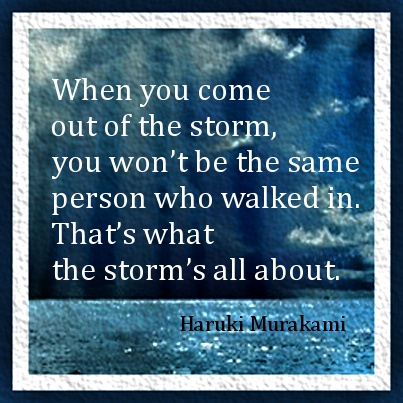
In the Eye of the Storm

ocean

Silver Helix (1)

*

“Hell is empty and all the devils are here.” 

― William Shakespeare, The Tempest

storm1

*

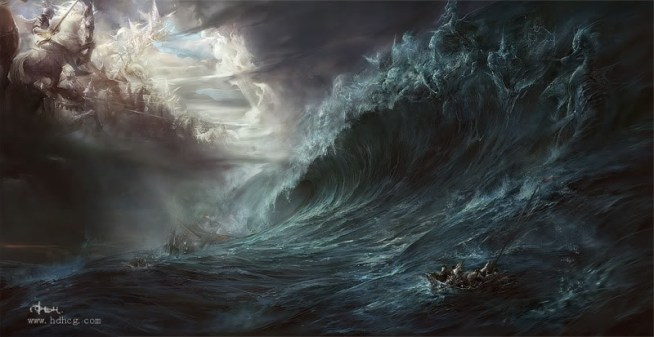
There was once a wave in the ocean, rolling along, enjoying the warmth of the sun and the swiftness of the breeze.

It smiled at everything around it as it made its way toward the shore.

But then, it suddenly noticed that the waves in front of it, one by one, were striking against the cliff face, being savagely broken to pieces.

‘Oh God!’ it cried. ‘My end will be just like theirs. Soon I, too, will crash and disappear!’

Just then another wave passing by saw the first wave’s panic and asked:

‘Why are you so anxious? Look how beautiful the weather is, see the sun, feel the breeze…’

The first wave replied:

‘Don’t you see? See how violently those waves before us strike against the cliff, look at the terrible way they disappear. We’ll soon become nothing just like them.’

‘Oh, but you don’t understand,’ the second wave said.

‘You’re not a wave. You’re a part of the ocean.’ (2)

*

storm0

*

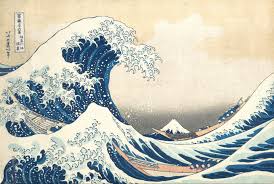
Katsushika Hokusai’s Under the Wave off Kanagawa, also called The Great Wave has became one of the most famous works of art in the world—and debatably the most iconic work of Japanese art. The Great Wave is part of the legendary series Thirty-six Views of Mount Fuji. (3) “The preeminence of The Great Wave —said to have inspired both Debussy’s La Mer and Rilke’s Der Berg—can be attributed, in addition to its sheer graphic beauty, to the compelling force of the contrast between the wave and the mountain. The turbulent wave seems to tower above the viewer, whereas the tiny stable pyramid of Mount Fuji—Japan’s sacred, national symbol of Beauty, Spirituality and Immortality–sits in the distance. The eternal mountain is envisioned in a single moment frozen in time.

*

Hokusai characteristically cast a traditional theme in a novel interpretation. In the traditional meisho-e (scene of a famous place), Mount Fuji was always the focus of the composition. Hokusai inventively inverted this formula and positioned a small Mount Fuji within the midst of a thundering seascape. Foundering among the great waves are three boats thought to be barges conveying fish from the southern islands of Edo.” Nonetheless, “Hokusai has arranged the composition to frame Mount Fuji. The curves of the wave and hull of one boat dip down just low enough to allow the base of Mount Fuji to be visible, and the white top of the great wave creates a diagonal line that leads the viewers eye directly to the peak of the mountain top.”(4)

*

To the Japanese eye, accustomed to reading from right to left—the great claw of a wave appears almost to tumble into the viewer’s face, the surging breakers may seem to swamp the boaters, even Mount Fuji appears fragile, about to be engulfed by the uncontrollable energy of the water, and still  the humans in their tiny boats “doomed” to perish in the sea do not look panicked! On the contrary, they look like hanging to their rows in full discipline. It looks like they are experienced and know how to cope with such a situation. (5)


storm2


Jennifer Rundlett, a fellow blogger, sees “through” its art “the many trials of life and how overwhelming we often find them, being so focused battling our problems, and trying not to be consumed by them”, whereas “the wave is pointing our eye to [Mount Fugi] the focal point or meaning….that beauty and immortality is in how we ride out these storms.” (6)

*

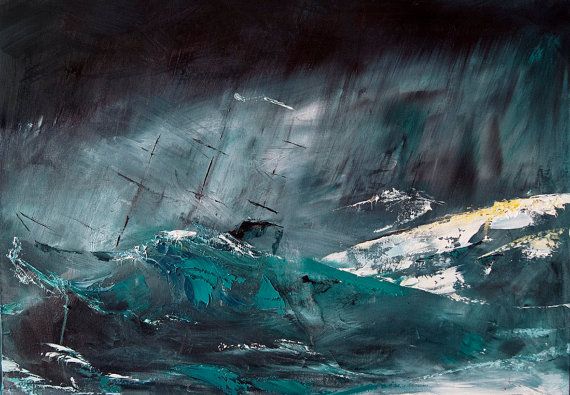
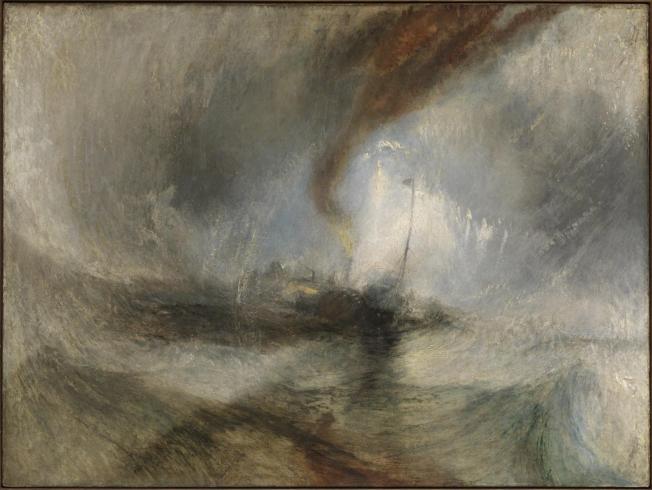
This Japanese painting brought to my mind an English Romanticist, William Turner’s famous seas, stormy skies, sinking ships and tempests studies, with a very different theme to Hokusai’s.

storm5

*

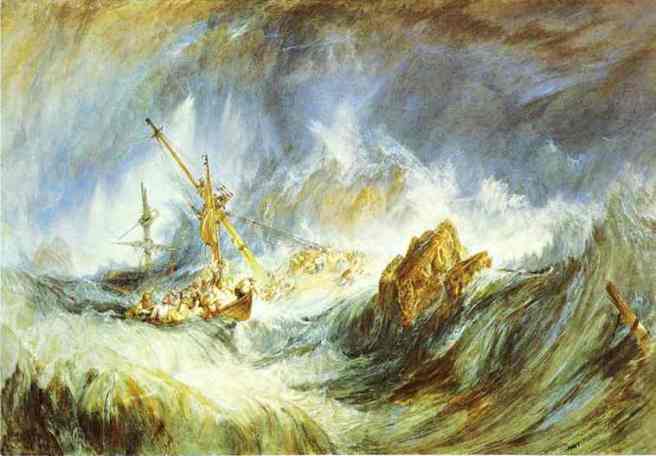
The power of the storm versus man’s inabilities was a main theme in Turner’s work. Dreadful catastrophe was a common theme in English romantic art period and Turner specifically painted themes of shipwreck a number of times throughout his life, exploring the effects of an elemental vortex. The romantics had taken a liking to natural phenomena and shipwreck became a popular subject. 19th century Britain specifically was very familiar with shipwreck as it was a period of great English shipping.  … The craftsmanship of these ships did not deter the fact that the man made vessel was still at the mercy of the wind.

*

storm3

*

Let us have a good look at Turner’s most famous storm painting: The Snow Storm – Steam-Boat off a Harbour’s Mouth (1842), http://www.tate.org.uk/art/work/N00530 Snow Storm – Steam-Boat off a Harbour’s Mouth shows a ship off the English coast struggling to persevere through a storm.  The steam-boat resides in the center of the vortex.   Turner’s untamed brushwork creates a swirling composition of chaotic colors and lighting. The swirling storm creates a composition that leaves the eye to circle around the canvas repeatedly. The black of the wind and the waves of the sea create a circle around the doomed ship. Through the windy peephole, the viewer can see the helpless ship at the mercy of nature’s violent motion. One can imagine the ship swaying to and fro as its crew desperately tries to take control of the sail and stay afloat. In this context the vessel can be interpreted as a symbol of mankind’s futile efforts to combat the forces of nature. 

*

Snow Storm - Steam-Boat off a Harbour's Mouth exhibited 1842 Joseph Mallord William Turner 1775-1851 Accepted by the nation as part of the Turner Bequest 1856 http://www.tate.org.uk/art/work/N00530

*

In Snow Storm – Steam-Boat off a Harbour’s Mouth Turner uses a muted color palette. Pale blues and deep browns cover the canvas in swirling motions. Though the palette is predominately neutral, which usually creates a calming tone, the swirling motions and lighting create the chaotic effect Turner was going for. He wanted to simulate the true nature of a storm at sea. The bright white of the sail draws the eye directly to the ship, even amidst the swarming colors around it. Turner creates a pocket of light amidst a dark and shadowy canvas to illuminate the ship. Since he lights the ship in such a way, all focus is immediately drawn to the ship. The shadowing swirling winds only emphasize the ship more. The focus is relentlessly on the plight of the ship. This painting clearly invokes fear in a man or keeps him in his place as the weaker.  Here the emphasis is on the raw, merciless force of Nature and Man’s frailty and helplessness. (7)

*

It is famously said that Turner conceived this image while lashed to the mast of a ship during an actual storm at sea to get a better account of the wind and ocean and what the ship must’ve felt like in the midst of it. This seems to be nothing more than fiction, but the story has endured as a way of demonstrating Turner’s full-blooded engagement with the world around him, and is stunningly dramatized in the famous Mast scene of the mesmerising, highly maginative and richly detailed 19th century period biopic Mr Turner (2014) https://www.youtube.com/watch?v=lYN6HwLSvyg

*

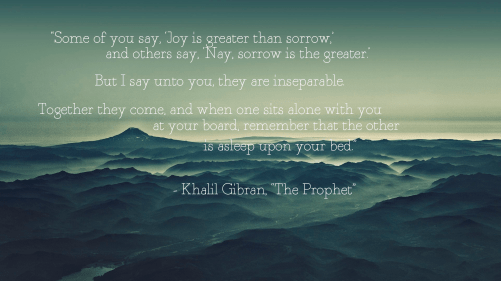
Khalil Gibran  makes ample use of the “storm/sea/wave” imagery in “The Prophet” and explains how we all are “travellers” and “navigators” in the sea of life, our “pain being the breaking of the shell that encloses [our] understanding”. (8)

*

storm10

*

For an auditory raw, rough storm experience, let us not forget Aretha Franklin’s duet with Joe Ligon in the old time gospel  “I’ve Been In The Storm Too Long ” https://www.youtube.com/watch?v=YUujg0BTIjk&list=PLkGwJ-k-JlPEDnwXWd5RDpNmjbUa0fi6y

“I’ve been in the storm… too long, Lord too long
mmmmm… I’ve been in the storm… too Long, Lord too long
Lord, please let me…have a little more time, I need a little more time to pray
Oooh…I’ve been in the storm too long…”

storm7

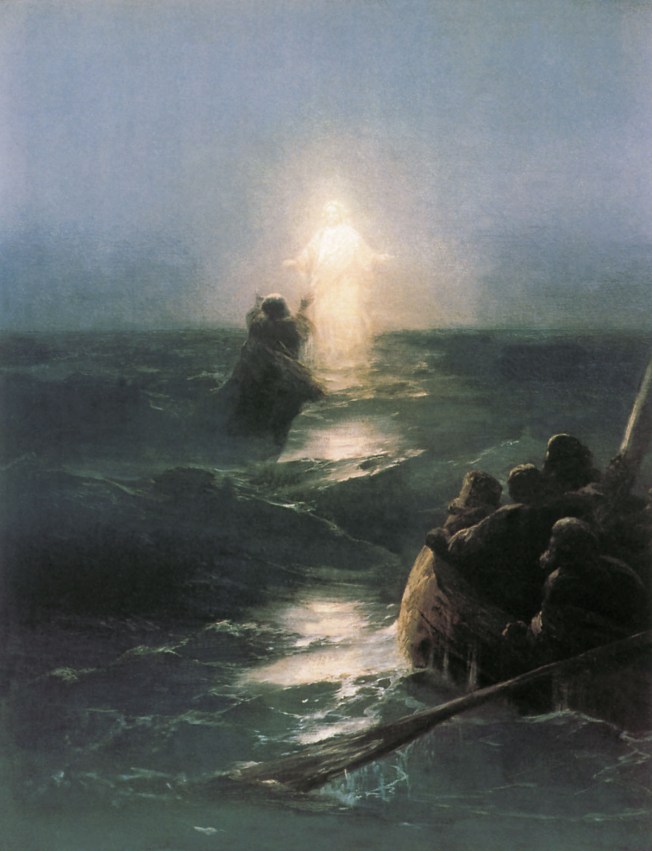
Jesus walks on water, by Ivan Aivazovsky (1888)

*

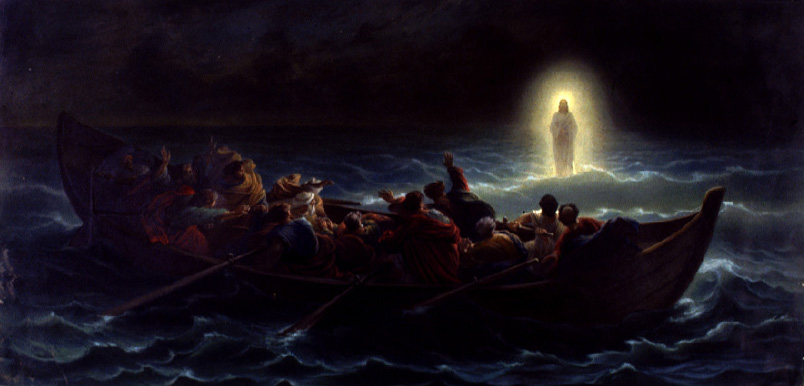
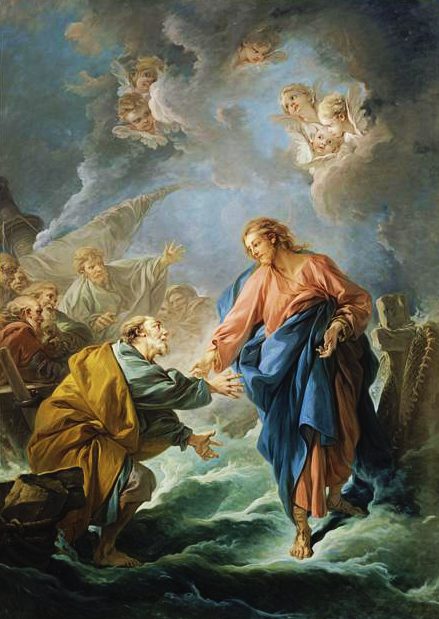
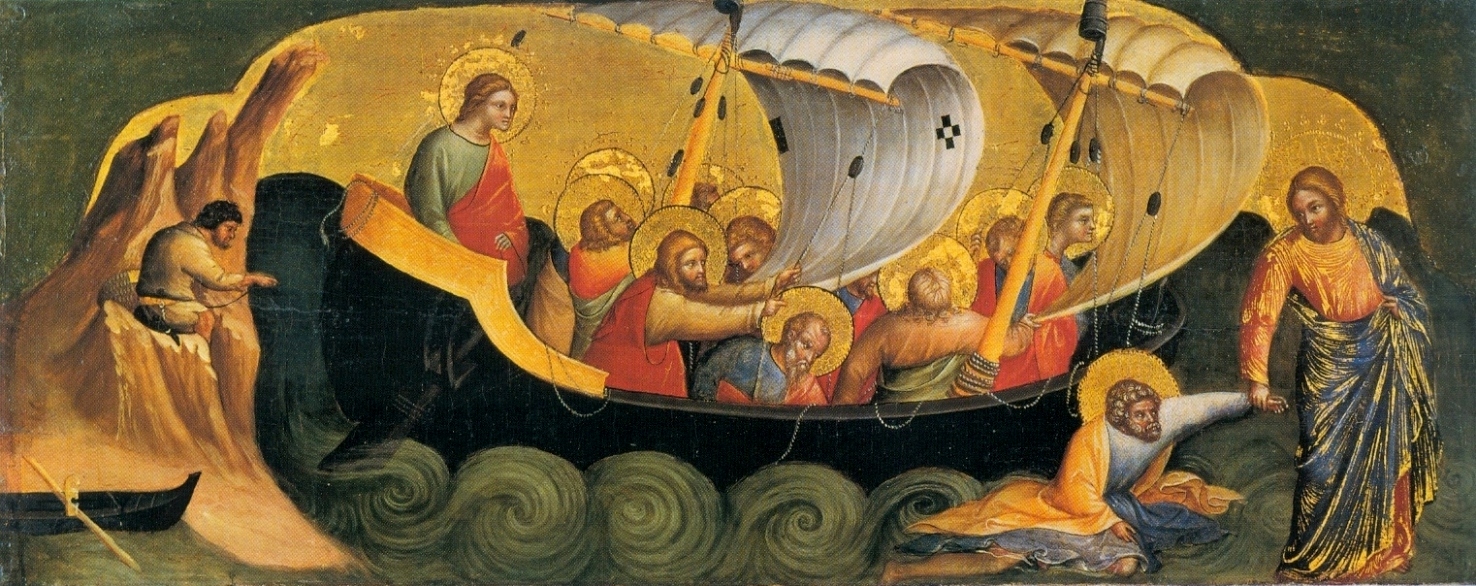
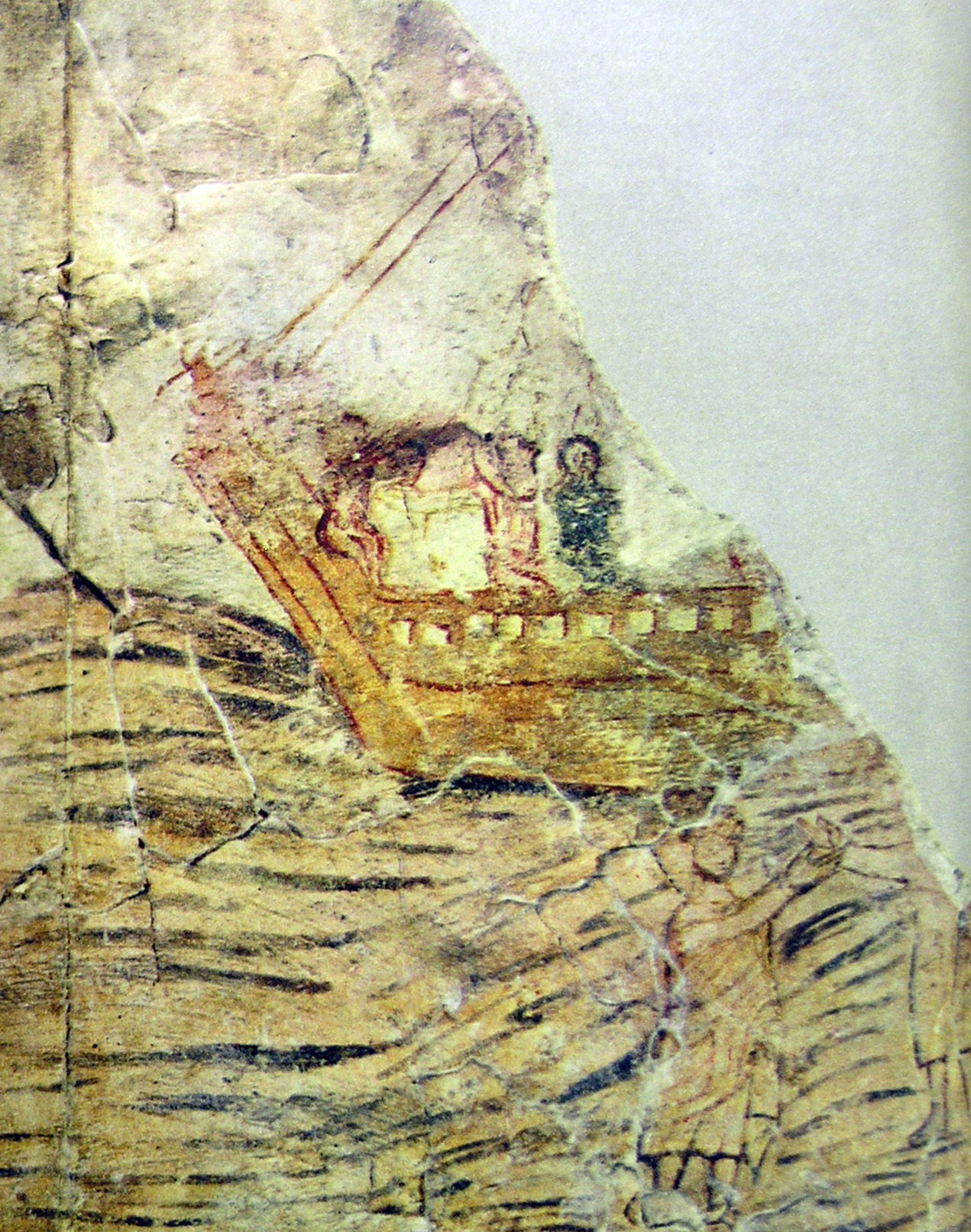
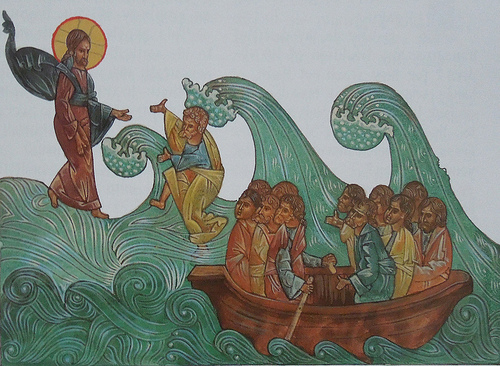
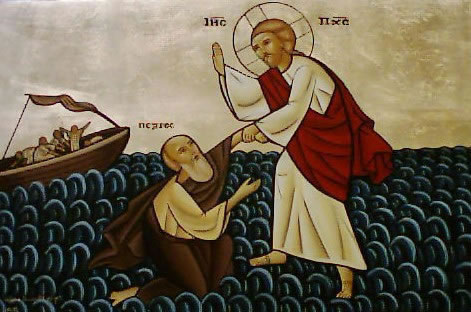
Yet, whether competent or helpless, I personally want to bring God in all these “storms”. So that I can walk on the water, towards Him, and when I see “the wind boisterous, … [am] afraid; and beginning to sink”, I can cry “saying, Lord, save me.” And He immediately will stretch forth His hand, and catch me, and say unto me, ‘O thou of little faith, wherefore didst thou doubt?’ (Matthew 14:29-31, KJB) And He will still the storm–within and without my mind–to a whisper and hush the waves of the ‘sea’  (Psalm 107:29) and (Mark 4:39).


*

storm1

Christ walking on the sea, by Amédée Varint

storm9

François Boucher Cathédrale Saint-Louis (1766) Versailles

storm20

Walking on water, by Veneziano, 1370.

OLYMPUS DIGITAL CAMERA

storm40

storm50

*

Sources:

  1. “I Capture The Majestic Power Of Ocean Waves”, amazing collection of underwater vortex and wave photographs at http://www.boredpanda.com/moments-in-the-ocean-images-created-from-water-light/
  2. “The missing rose” by Serdar Ozkan, cf. Paulo Coehlo’s blog http://paulocoelhoblog.com/2014/03/21/30-sec-read-you-are-not-a-wave/
  3. For the full collection, go to http://Source: https://en.wikipedia.org/wiki/Thirty-six_Views_of_Mount_Fuji
  4. The Metropolitan Museum of Art at http://www.metmuseum.org/toah/works-of-art/JP1847 For more analysis, watch Thompson, curator of the Hokusai exhibition at the Museum of Fine Arts, Boston, delving into the story behind this world famous print  at https://www.youtube.com/watch?v=dbPHPfVw6zQ
  5. https://www.khanacademy.org/humanities/art-asia/art-japan/edo-period/a/hokusai-under-the-wave-off-kanagawa-the-great-wave and http://www.artic.edu/aic/collections/artwork/24645 and http://www.artelino.com/articles/the-great-wave.asp
  6. For more details, go to her inspirational blog site, dedicated to sharing with insights of God’s love through meditations using art and music, at https://jrundlett.wordpress.com/2014/03/09/new-perspectives-god-given-problems/
  7. http://www.artble.com/artists/joseph_mallord_william_turner/paintings/snow_storm_-_steam-boat_off_a_harbour’s_mouth
  8.  Lebanese-American artist, poet (1883 – 1931), chiefly known in the English-speaking world for his 1923 book The Prophet, an early example of inspirational fiction, including a series of philosophical essays written in poetic English prose, and the third best-selling poet of all time, behind Shakespeare and Lao-Tzu or Lao-Tze.

New Martyrs. New Mob. New Hollow Men.

HollowMen

“One of the women looked up and seemed to be almost smiling as she said, ‘Jesus!'” (1)

*

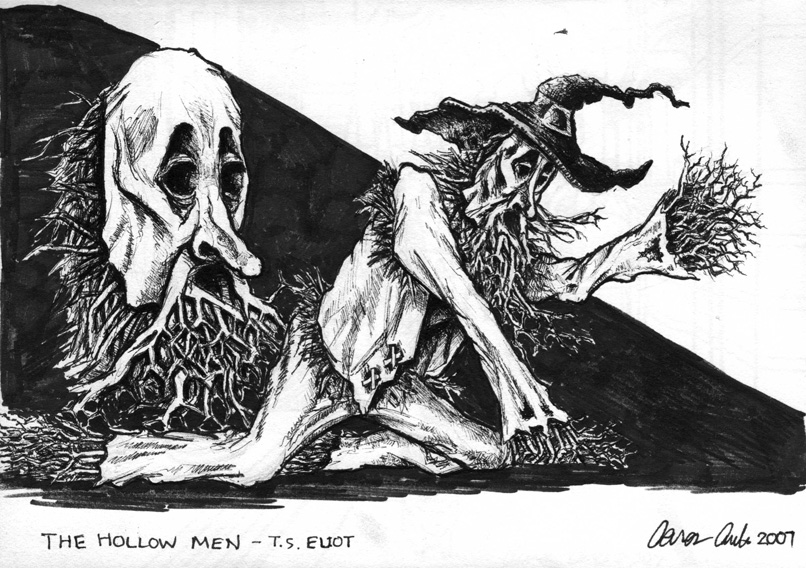
They are the “new martyrs” and sadly, we are the “new mob”, “we are the hollow men”.

*

“I’ve learnt something important from the horrors of the last few weeks. As I pray for the Christians in Mosul, it becomes clear to me that I need their prayers more than they need mine. … I thank God for the humbling gift of allowing me to witness these new martyrs walking on their way to salvation before my very eyes. … We are witnessing the birth of holiness; we are part of a miracle.” (2)

*

The Hollow Men by T. S. Eliot

*

We are the hollow men

… Alas!

Our dried voices, when

We whisper together

Are quiet and meaningless

As …

rats’ feet over broken glass

In our dry cellar…

*

This is the way the world ends
 (3)

Not with a bang but a whimper.

*

Watch Marlon Brando legendary reading of “The Hollow Men” in Francis Ford Coppola’s and Stanley Kubrick’s groundbreaking classic Apocalypse Now (1979) at https://www.youtube.com/watch?v=IPeHO1r8paU and also listen to T. S. Eliot himself reading it in his own unforgettable manner at https://www.youtube.com/watch?v=5fu8awT5Jzs

*

(1) http://www.christiantoday.com/article/isis.executes.12.christiansincluding.boy.and.2.women.who.were.raped.in.public.and.beheadedfor.refusing.to.renounce.jesus/66532.htm

(2) For the full article “NEW MARTYRS. NEW MOB” go to Father Seraphim’s last year blog entry at http://www.mullmonastery.com/uncategorized/new-martyrs-new-mob/, ” still timely, with the ever-rising wave of genocidal persecution of Christians by Muslims.

Thin Places

   grand4

  • Thin Places: “Thin Places,” comes from a Celtic Christian concept. The Celts believed that physical locations existed in which God’s presence was more accessible than elsewhere, places where heaven and earth seemed to touch, where the line between holy and human met for a moment, “the places in the world where the walls are weak”, “those rare locales where the distance between heaven and Earth collapses”, as Eric Weiner puts it in his spirituality travelogue, Man Seeks GodFor such a ‘thin place’ for me visit my blog post on the Holy and Life-Givng Cross Orthodox parish at Lancaster.

grand2

grand3

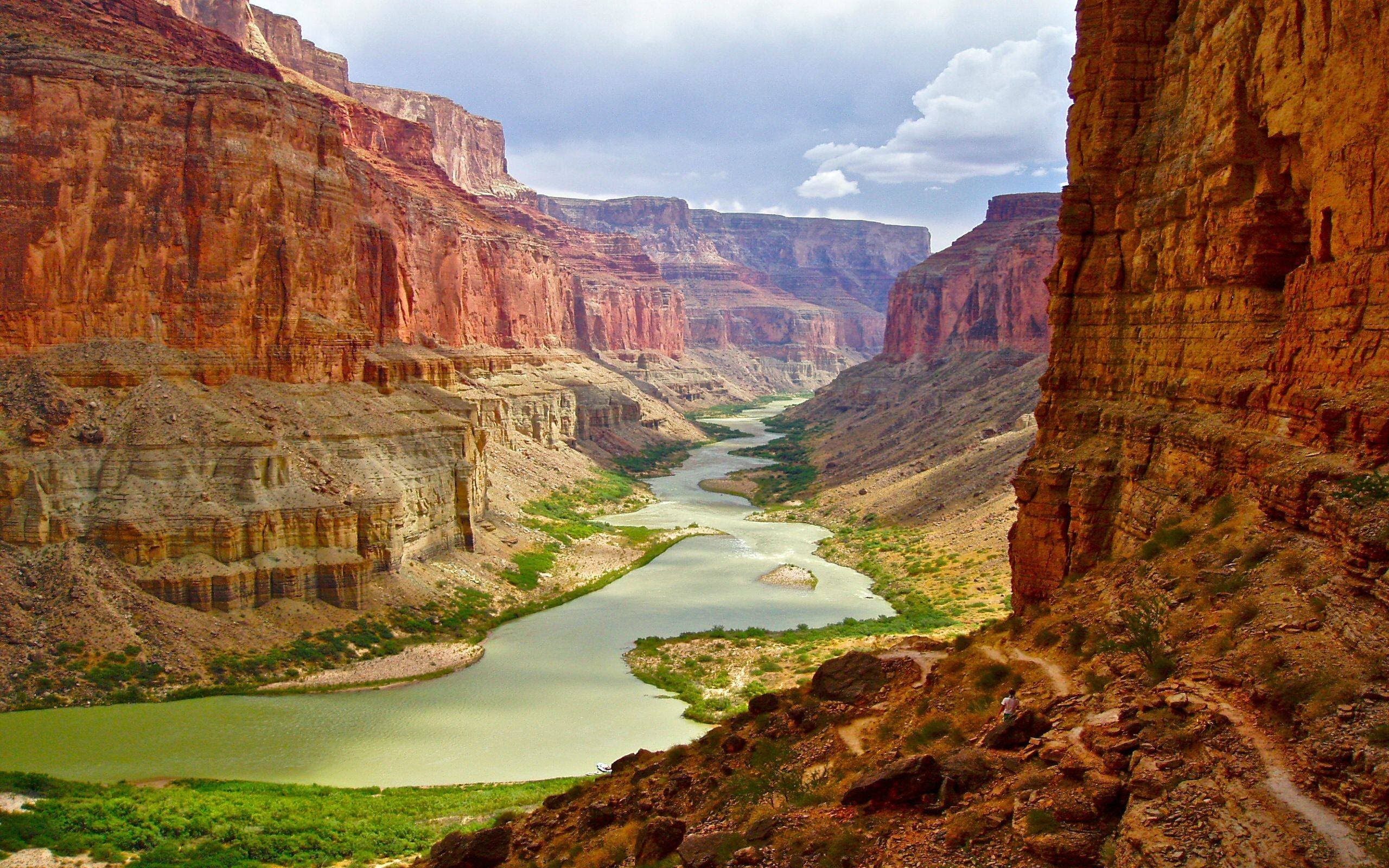
“This is a difficult post for me to write … I have always believed that Art and Nature are two vital ways to make our  prayer come to life, two ways to lead us ‘into’ knowing God.  And yet, I feel God has offered me such a rare gift at the end of a very tough year that I need to give myself time to allow it to sink in before I fully understand what I was given. … I was on a day-tour of the Grand Canyon.

IMG_1859
The sense of unmanageable Beauty one has before the wilderness of the Grand Canyon is just that: a true revelation of God, a true revelation of the correct relationship we are to have with Him. When I was there, facing this extraordinary demonstration of what authentic creativity is, all I felt was silence: a thick blanket of silence that covered my heart, my brain, my body… Before God’s presence, one goes numb, afraid to even breathe, afraid to approach it or draw near in any way. My eye-sight is not worthy to touch such beauty, my voice is not real, authentic enough to even whisper a prayer; all of one’s senses go silent, paralysed before such overwhelming power.

grand5

And yet, my heart continued to pray in a different way. Deep down, my being seems to hide a different kind of worship, a different kind of relating to Christ. I don’t know when and how I learnt it; it just exists, the way instincts simply exist. Before such beauty, one discovers how different we are from what we’ve learnt to think we are – we are so much deeper, so much more beautiful, so much more able to worship and truly pray. It’s as if we were created with a set of spiritual senses and abilities, which we later – for some painful reason – fail to recognise in ourselves and fail to develop. We waste so much of our own being, we are so removed, so distant from our real selves… We learn to adapt to this world, and we end up replacing our spiritual senses with material ones.

grand6

Then, in moments like these, we find ourselves face to face with His presence, and a sort of engine just starts working again in our hearts – all by itself, with no input, no doing of our own.

grand1

I was simply present; I was in awe at the presence of my true self as much as I rejoiced in God’s presence. There was nothing but silence in me; yet, this silence was as alive, as ‘eloquent’ in its worship as the most grace-filled moments I’ve been blessed with the Holy Altar.”

IMG_1935

Church Vertigo

Church-of-St-Vincent-Ferrer

Richard Silver (previously) has a unique way of looking at architecture, building composite photographs from several images that seamlessly reveal a structure’s interior. His new series captures the insides of New York churches … These images are composed of 6-10 shots, forming a vertical panorama so cohesive that it might give you vertigo.

Although Silver has been to hundreds of churches during his career and many years of travel, it’s only recently that he figured out how to capture the expansive inner beauty of their architecture. “Finding the perfect location in the center aisle then shooting vertically from the pew to the back of the church gives the perspective that only architecture of this style can portray,” says Silver.

church-2
Church of St. Stephen / Church of St. Paul the Apostle

Silver was born and raised in New York and has visited 75 countries in his life, including 13 last year alone. His previous careers involved computer science, real estate, and a stint on Wall Street, but he embraced photography full-time in 2011. You can see more of his vertical church series on his Flickr page here.

Calvary-Episcopal-Church
Calvary Episcopal Church

church-4
Serbian Orthodox Cathedral of St. Sava / Church of the Village

Church-of-St.-Francis-Xavier
Church of St. Francis Xavier

church-6
Vincent St. de Paul / Most Holy Redeemer Church

St-Monica's-Church
St. Monica’s Church

Source: “Vertical Panoramic Photographs of New York Churches by Richard Silver” Colossal http://www.thisiscolossal.com/2015/09/vertical-panoramic-churches/

Temet Nosce

know-thyself

Legion

Lord, hear my voice, my present voice I mean,
Not that which may be speaking an hour hence
(For I am Legion) in an opposite sense,
And not by show of hands decide between
The multiple factions which my state has seen
Or will see. Condescend to the pretence
That what speaks now is I; in its defence
Dissolve my parliament and intervene.
*
Thou wilt not, though we asked it, quite recall
Free will once given. Yet to this moment’s choice
Give unfair weight. Hold me to this. Oh strain
A point – use legal fictions; for if all
My quarrelling selves must bear an equal voice,
Farewell, thou has created me in vain.

*

“And He asked him, What is thy name? And he answered, saying, My name is Legion: for we are many.” Mark 5:9 (KJB)

*

*

As the Ruin Falls

All this is flashy rhetoric about loving you.
I never had a selfless thought since I was born.
I am mercenary and self-seeking through and through:
I want God, you, all friends, merely to serve my turn.
*
Peace, re-assurance, pleasure, are the goals I seek,
I cannot crawl one inch outside my proper skin:
I talk of love –a scholar’s parrot may talk Greek–
But, self-imprisoned, always end where I begin.
*
Only that now you have taught me (but how late) my lack.
I see the chasm. And everything you are was making
My heart into a bridge by which I might get back
From exile, and grow man. And now the bridge is breaking.
*
For this I bless you as the ruin falls. The pains
You give me are more precious than all other gains.

*

“Selfishness cries to Thee: My Father! But Love cries: Our Father!” — St. Nikolai Velimirovic

Draganescu Sistine Chapel

boca12

boca9   

   boca4 

 boca16

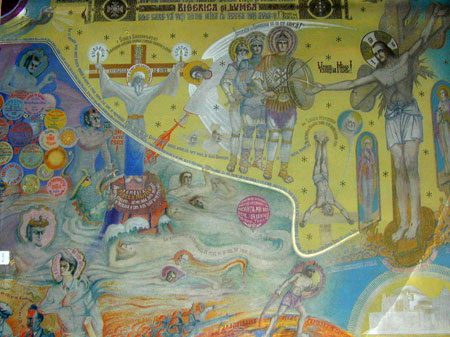
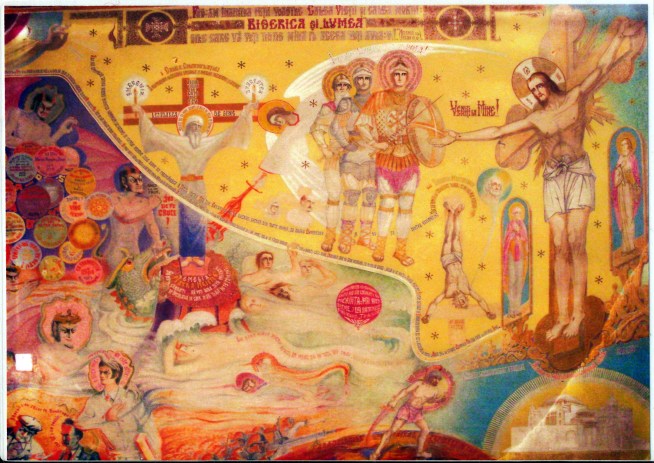
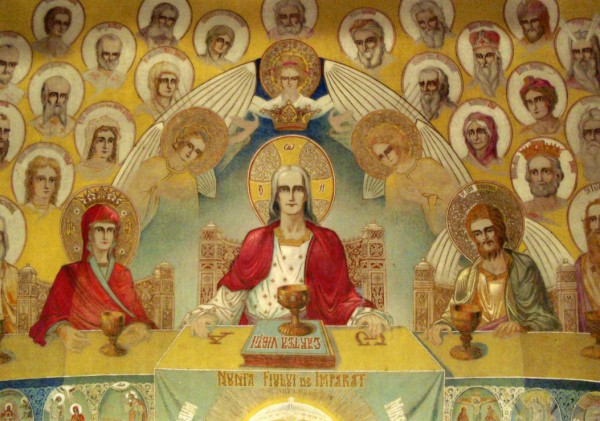
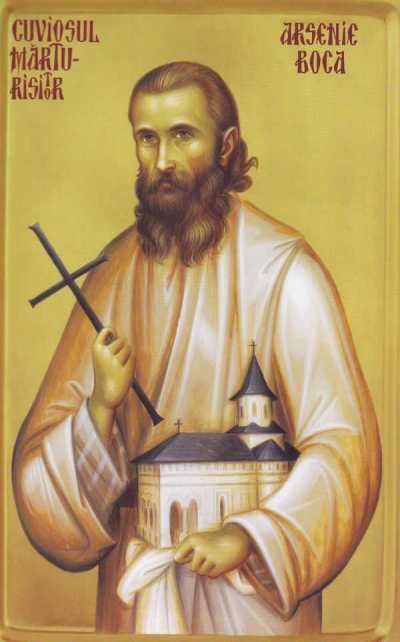
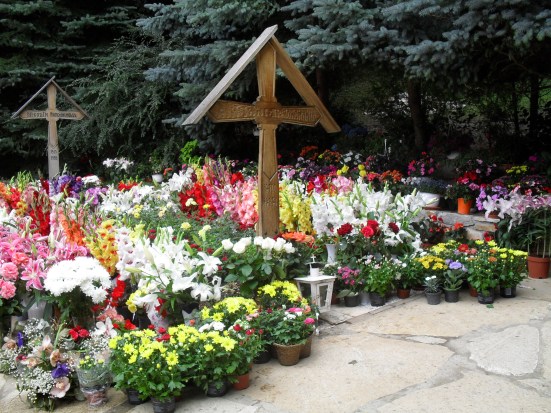
The Romanian Orthodox Church is considering a Romanian monk persecuted by the communists and known as the “saint of Transylvania” for sainthood. … Boca, who became a monk in 1940, was harassed by the Securitate secret police, detained and did forced labor on the Black Sea Canal, a notorious labor camp where tens of thousands of political prisoners worked in the 1950s. In 1959, he was banned from leading worship and the Prislop monastery, where he is now buried, was converted into a retirement home. He was forced to retire from the church in 1968 and spent 15 years painting religious images and icons in the small church of Draganescu in southern Romania. The church’s interiors are now considered among the most beautiful in the country. Elder Arsenie Boca reposed in the Lord in early 1989, a month before Romania’s anti-communist revolt, aged 79. Though he is not yet canonized, Elder Arsenie’s grave, located in Prislop Monastery, is visited by tens of thousands of pilgrims every year, where many miracles occur. One miracle which everyone can see is that the flowers over his grave never die or wither , neither in the hot summer or the frigid winter.

st arsenie boca 

 arsenie3

For his amazing life, the  documentary “Fr. Arsenie Boca – Man of God” is a MUST.  “His colleagues at the Theological Academy of Sibiu named him ‘The Saint’, he is considered a founding father of the Romanian Philokalia by father Dumitru Staniloaie, who thought of him as an unparalleled phenomenon of Romanian monasticism.

*
Sought after and followed by thousands of believers eager to quench their spiritual thirst from his inexhaustible spring of serenity; legendary for his prophesying and healing gifts, painter of souls and painter of churches, man of culture, philosopher of sciences and religion, father Arsenie Boca was, just like Saint Basil as depicted by him in his essential work The Path of the Kingdom.

*

A disciple calmly walking across the stormy seas, an unmoving pillar against the troubled waves, a man among people, providing guidance and strength with otherworldly serenity, unflinching in the belief that God alone is ruler of our world. An unequaled personality, a magnet for thousands of people in all walks of life, and also a target for suspicion for the authorities of his day, who failed to understand the source of his exceptional power to gather people around him.” 

*

As one person interviewed in this documentary says: “Fr. Arsenie made Christ transparent to us.” He still does. His presence in the midst of us after his passing is a reminder of the proximity of Heaven. This film is an opportunity to (re)discover it for ourselves. https://www.youtube.com/watch?v=ptbTap5NHqw

 boca8  

 boca27

  boca15      

*

The Sistine Chapel of the Romanians: the Draganescu Church

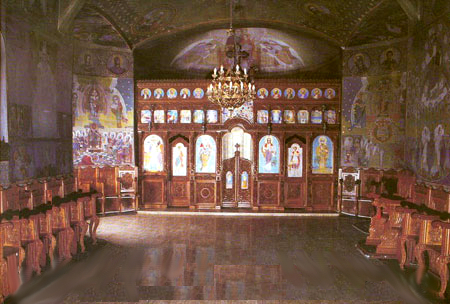
Father Arsenie Boca lived in Draganescu for 20 years and in 1968 he began painting the parish church, a work that took him more than 15 years. As he wasn’t allowed to celebrate service, some of the priests who visited the church over the years claim that Arsenie Boca has actually painted the sermons he delivered at Sambata de Sus.

*

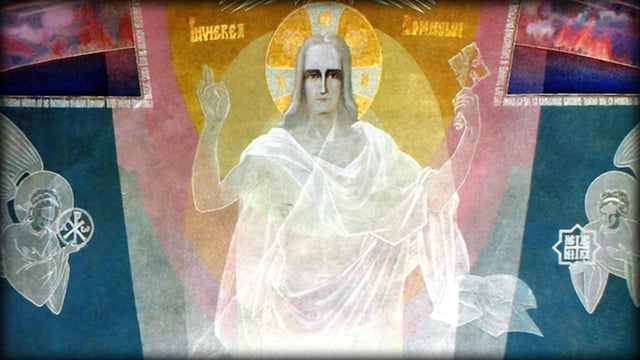
Rainbow colors reverberating in frescoes, light flowing from Christ’s Resurrection, Heaven trickling down through the painting brush, that’s the way the murals painted by Orthodoxy beacon Arsenie Boca at the “St. Nicholas” Church of the Draganescu town – Giurgiu County can be translated and rendered into metaphor. …

 boca6 

 boca7

boca22 

 boca13

Prophetic Artist in Shackles

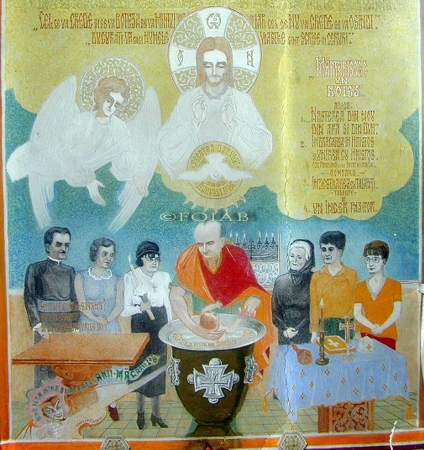
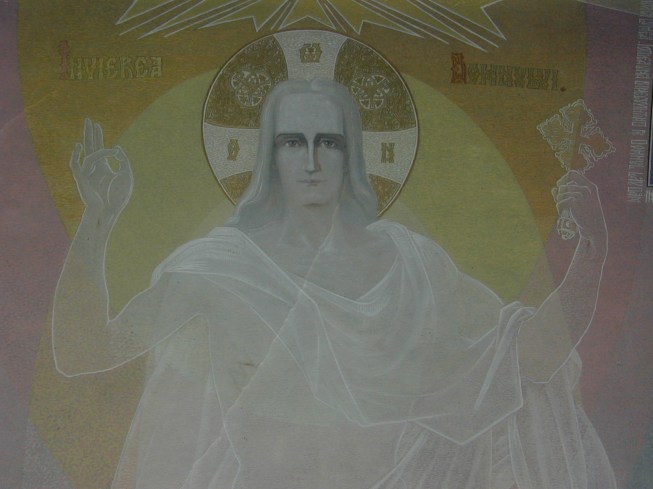
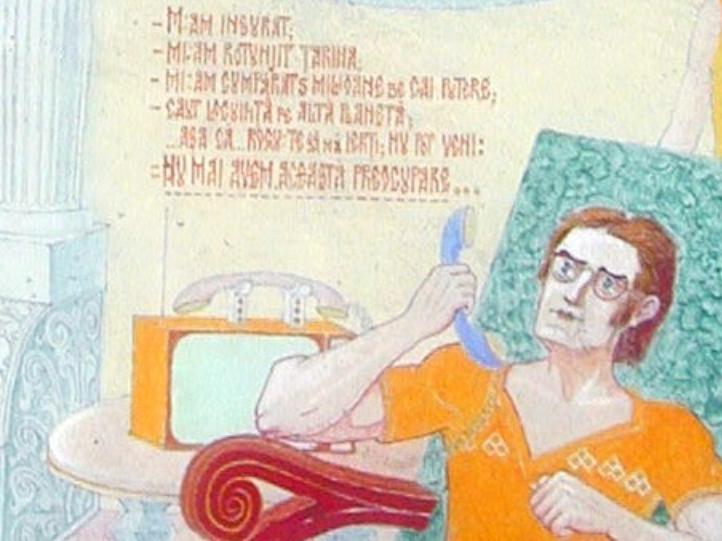
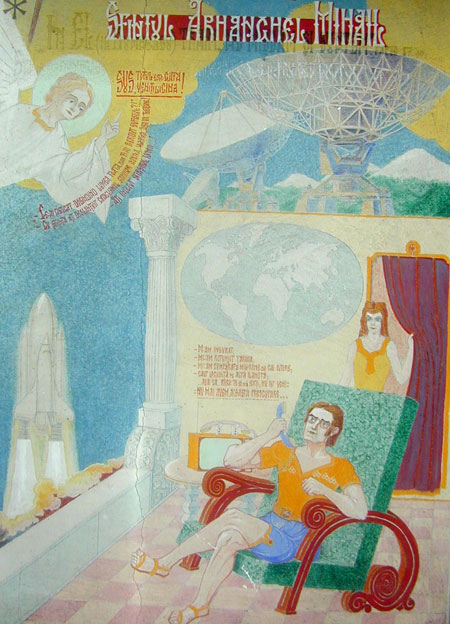
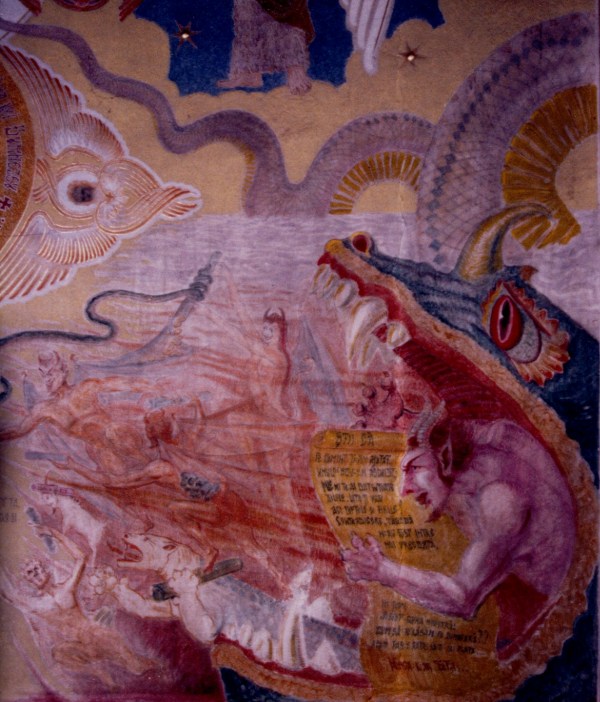
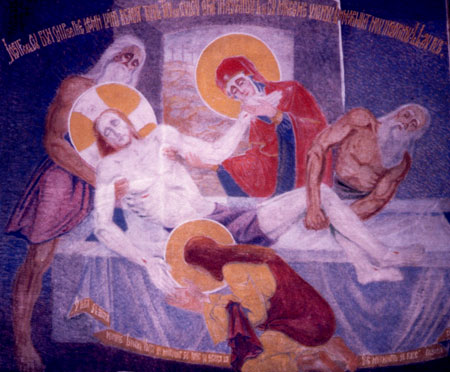
His frescoes are diaphanous, and the images are accompanied by metaphors referring to people’s weaknesses and sins, by aphorisms, quotations from the Holy Scripture, sometimes by teachings of the Father and biblical scenes: the Resurrection, a picture of hell, the Group of the Righteous. The paintings are said to have a visionary, prophetic content, as it is known that Father Arsenie Boca had the gift of spiritual far-sight: one of the scenes, two tall buildings engulfed in flames, is said to allude to the 9/11 attack on the Twin Towers, not to mention those where items like a cell phone, a space shuttle, satellite dishes, all unusual things in that period, appear.

boca14

boca2

For his paintings, the art documentary “Picturi ale pr. Arsenie Boca pe biserica din Drăgănescu” at https://vimeo.com/82791105 is a MUST. Also, go to http://www.themidlandhostel.com/the-sistine-chapel-of-the-romanians-the-draganescu-church/ and http://www.agerpres.ro/engleza-destinatie-romania/2014/11/22/destination-romania-the-draganescu-church-swathed-in-father-arsenie-boca-s-prophetic-paintings-18-04-37 and watch a short art film “Father Arsenie Boca, one of Romania greatest Saint”  at https://www.youtube.com/watch?v=5r6ZX8M8vwY

boca23

boca11   

 boca5

Morning prayer by Arsenie Boca
Lord Jesus Christ, help me let go of myself today, as I can create great problems from small and insignificant issues, and this way, caring for myself, I will lose You.

*
Lord Jesus Christ, help me so that the prayer of Your Holy name will wander (work) through my mind more than lightning on the sky, so that I stay clear of even the shadow of bad thoughts as, look, I am sinning every minute.
*
Lord, coming secretly amongst people, have mercy upon us, because we stumble as we are walking in the dark. Our temptations are closing the eyes of our mind, forgetfulness has become like a wall amongst us, turning our hearts to stone and all together have made the prison cell in which we keep You crippled, starving and naked, wasting our days.
*

Lord, coming secretly amongst people, have mercy upon us and set fire to this prison cell, light up the love in our hearts, burn the thorns of our temptations and make our souls bright.

*

Lord, coming secretly amongst people, have mercy upon us, come and live within us, together with the Father and the Holy Spirit. The Holy Spirit prays through us with unspoken sighs, when word and mind don’t have the power.

*
Lord, coming secretly amongst people, have mercy upon us, because we don’t realise how imperfect we are and how close You are to our souls; and how distant we become through our sins. Shine Your light over us, so that we see light through Your eyes and live eternally through Your life. Our light and joy, praise be to You!

Amen!

 *

Bending in the Archer’s Hand

Poetry, Theology, Videos: Orthodox Worship, Conception and the Personhood of the Unborn 

gibran-arrow

Your children are not your children.
They are the sons and daughters of Life’s longing for itself.
They come through you but not from you,
And though they are with you yet they belong not to you.

You may give them your love but not your thoughts,
For they have their own thoughts.
You may house their bodies but not their souls,
For their souls dwell in the house of tomorrow,
which you cannot visit, not even in your dreams.
You may strive to be like them,
but seek not to make them like you.
For life goes not backward nor tarries with yesterday.

You are the bows from which your children
as living arrows are sent forth.
The archer sees the mark upon the path of the infinite,
and He bends you with His might
that His arrows may go swift and far.
Let your bending in the archer’s hand be for gladness;
For even as He loves the arrow that flies,
so He loves also the bow that is stable.

Kahlil Gibran – The Prophet

*

“Before I formed you in the womb I knew you” Jeremiah 1:5

“Your eyes saw my unformed substance” Psalm 139:16

*

Orthodox Worship, Conception and the Personhood of the Unborn 

“If we turn to the Festal cycle, the consciousness of the personhood of the unborn is strikingly manifest especially in three important Feasts: The first is the Feast of the Conception of John the Baptist (September 23) in which we sing: “Rejoice, O barren one, who had not given birth; for behold you have clearly conceived the one who was about to illuminate the whole universe, blighted by blindness. Shout in joy, O Zacharias, crying in favor; truly the one to be born is a prophet of the High!” John the Baptist existed as a human being and a part of God’s plan of salvation from the moment of his conception.

The second is the Conception of the Theotokos (December 9). Here the vesperal hymn proclaims: “Behold the promises of the Prophets are realized for the  Holy Mountain is planted in the womb, the Divine Ladder is set up, the great Throne of the King is ready, the place for the passage of the Lord is prepared . . .” It is notable that both Elizabeth and Anna were advanced in years and barren. Thus they were considered “cursed” in the Jewish tradition where children were a sign of God’s blessing. (Consider that mind-set with our own of today and how God’s Plan is being affected by the hundreds of millions who will never participate in it.)

*

The quintessential Feast illustrating the Church’s belief of the importance of human beings from the moment of conception is the Annunciation (March 25) which is so important that a Divine Liturgy must be served even when it falls on Great and Holy Friday! The Annunciation Troparion makes a most profound statement:

“Today is the beginning of our salvation, the revelation of the eternal mystery! The Son of God becomes the Son of the Virgin as Gabriel announces the coming of grace…” 

*

  This is a far cry from the “pro-choice” rhetoric of “Who knows when life begins?” or the degradation of the unborn by calling him a “blob of tissue” and a “product of conception.”

*

Can any Christian seriously propose that Jesus Christ was ever a “blob” or an appendage of the Theotokos’s body?

*

At the Great Compline the hymnography makes this astonishing claim: “…O marvel! God has come among men; He who cannot be contained in a womb; the timeless One enters time…For God empties Himself, takes flesh, and is fashioned as a creature, when the angel tells the pure Virgin of her conception…” This is not sung at the feast of our Lord’s Nativity but at His conception!!! Such concepts as “viability” and “quickening” are utterly withoutmeaning and irrelevant.

 *


Scripture and the Unborn 

In the New Testament, consciousness of the personhood of the unborn is clearly manifested. The same word – brephos – is used for the child in the womb as out of the womb unlike modern medical and scientific distinctions of “zygote,” “embryo,” “fetus“ etc. used to differentiate among the stages of pre-natal life. The Latin word “fetus” simply means “little one” and was never intended as a means of denying humanity to the child dwelling in his mother’s womb. A similar pattern of language occurs in the Old Testament as in the book of Job 3:16 in which he refers to: “Infants [gohlal] which never saw the light.” 

*

In Luke 1:41 we find another astonishing image of the scriptural consciousness of the personhood of the unborn: “And when Elizabeth heard the greeting of Mary, the babe leaped in her womb” Here, the unborn John the Baptist recognizes and rejoices at the unborn Messiah – a “fetus” greeting a “fetus.” This is not just a “literary device” as some would insist. It illustrates the narrator’s consciousness of the already existing personality – and Divine calling – of an unborn human being. We do celebrate the birth of John the Baptist, the Theotokos, and the Lord Jesus Himself, but we also celebrate their conception – their entry into time and the physical world – the “fulness of time” as it is called by St. Paul.

*

A more profound point to this all is that these feasts, especially the Annunciation, point to the Incarnation. By Jesus Christ taking on our humanity from the moment of conception, existing in the pre-natal condition in the womb of the Theotokos, experiencing birth, living through infancy to adulthood, and finally physical death, God sanctified every moment of human existence – from conception to death.

*

There is more to this – God also completely identifies with us in our fallen suffering nature, and by dying for us on the cross, He expresses His solidarity with us: whether we are a zygote, embryo, fetus, infant, child, adolescent, adult, or elderly: human existence is a continuum from conception, and – yes – beyond death to life eternal in the Lord! Read the rest of the article at “Abortion: An Orthodox Christian Perspective on the Sanctity of Human Life” by Rev. Deacon John Protopapas at https://orthodoxword.wordpress.com/2011/01/29/abortion-an-orthodox-christian-perspective-on-the-sanctity-of-human-life/

*

“Science Does TOO Know When “Human Life” Begins”. Read more at http://www.nationalreview.com/human-exceptionalism

*

Watch a disturbing undercover investigative video by Live Action, “What is Human?”, which  probes America’s late-term abortion industry, and reveals chilling admissions from abortionists on the humanity of children in the womb, at https://www.lifesitenews.com/pulse/this-viral-video-is-changing-countless-minds-about-abortion

*
Watch a very disturbing undercover video which catches planned parenthood selling “uterine contents” (ie. one unborn baby plus placenta and amniotic fluid –> aborted baby body parts), while casually sipping wine and eating salad at a ‘business’ lunch: http://www.pravoslavie.ru/english/80682.htm

*

Watch a new, shocking video: Planned Parenthood abortionist–between sips- jokes about harvesting baby’s brains, getting ‘intact’ head at https://www.lifesitenews.com/news/tearing-off-a-babys-head-intact-is-something-to-strive-for-planned-parentho 

*

“Hooverized” is a California High School Expression for an abortion

As for “Reproductive Justice”,  there is absolutely nothing ‘just’ about abortion!

Check more Pro-Choice Euphemisms at http://gerardnadal.com/2010/05/31/how-many-pro-choice-euphemisms-can-you-list/

orthodoxword's avatarOrthodoxWord

Abortion: An Orthodox Christian Perspective on the Sanctity of Human Life 


Reflection:

Each human being is unique creation of God. Each one of us has never been before and will never be again – throughout all eternity each human being who is, has, and will be conceived is unique.


By Rev. Deacon John Protopapas, Executive Director,Orthodox Christians for Life 


Overview

  The Orthodox Church regards abortion as premeditated murder. As such, She strongly opposes it because God demands the protection of all innocent human life, including that of the unborn child. The humanity (personhood) of that child exists from conception, a scientific fact that has always been recognized and unquestioned in Orthodox theology from the very beginning. Indeed, conception and not birth is the moment of the union of soul and body.

  The Early Church – of which the Orthodox Church is a…

View original post 4,528 more words