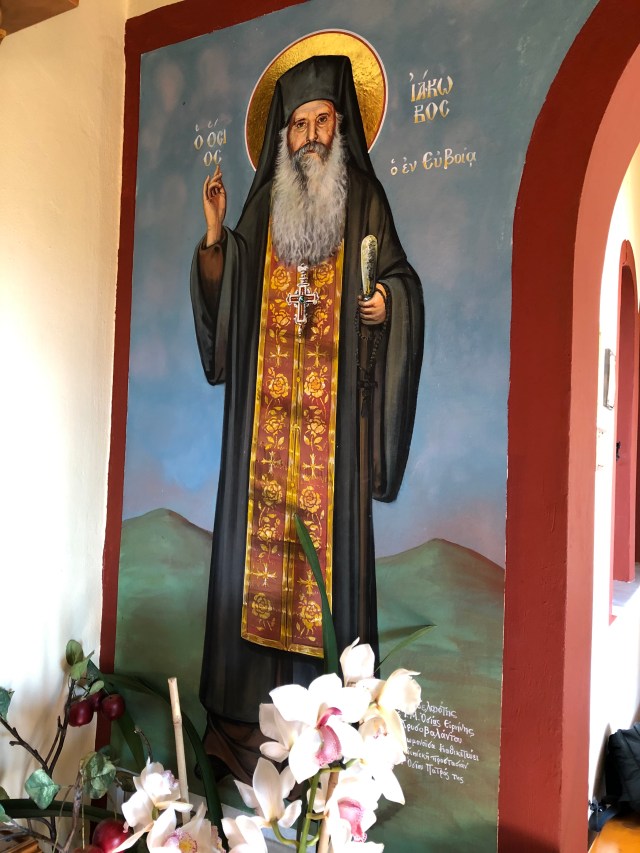
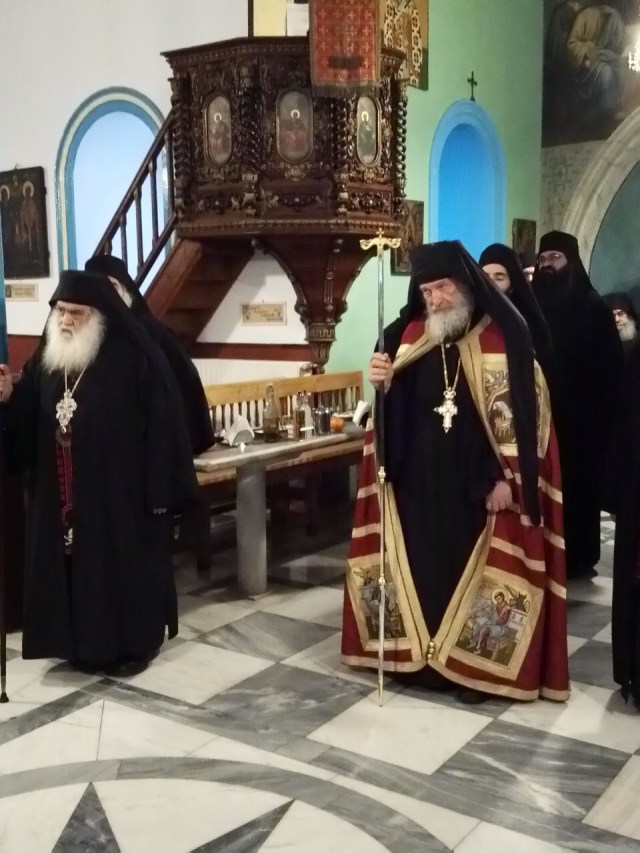
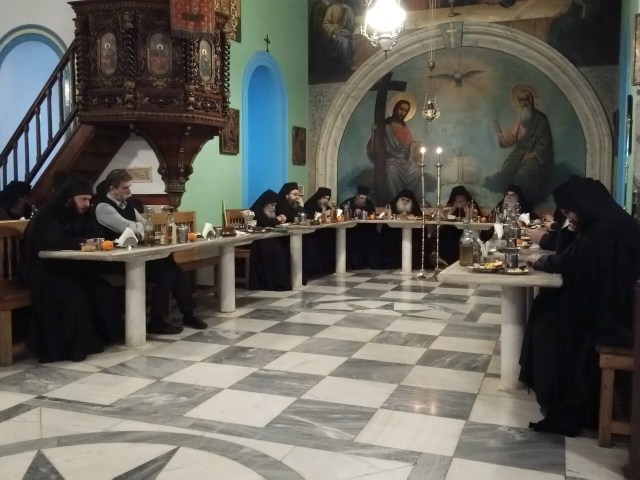
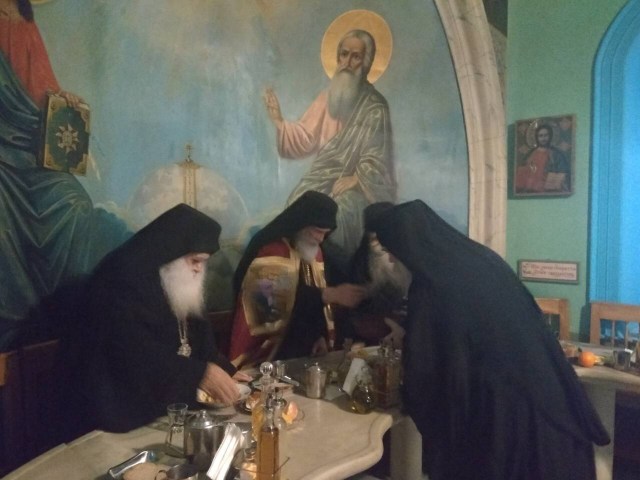
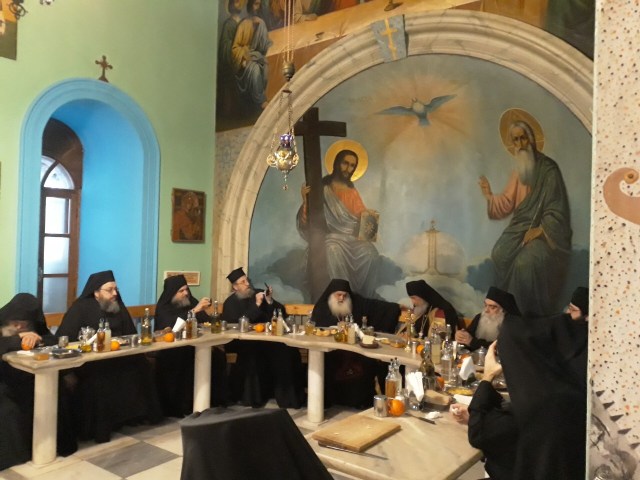
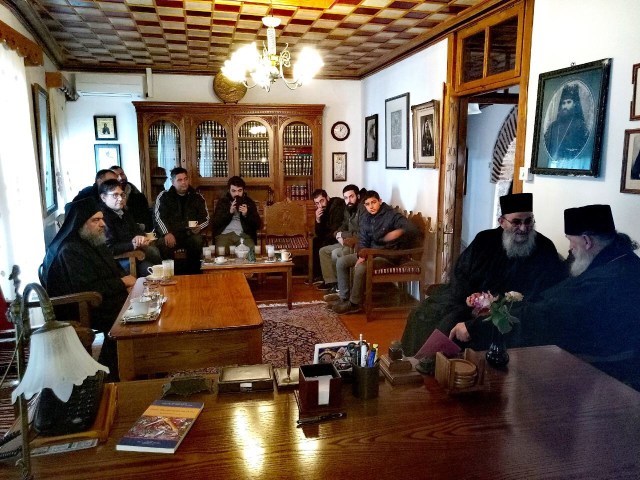
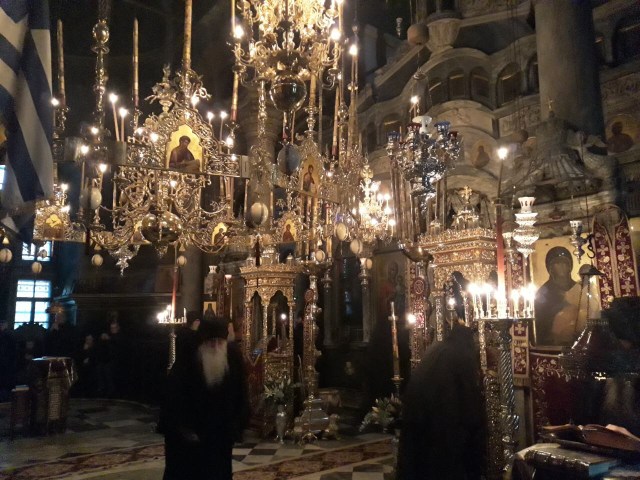
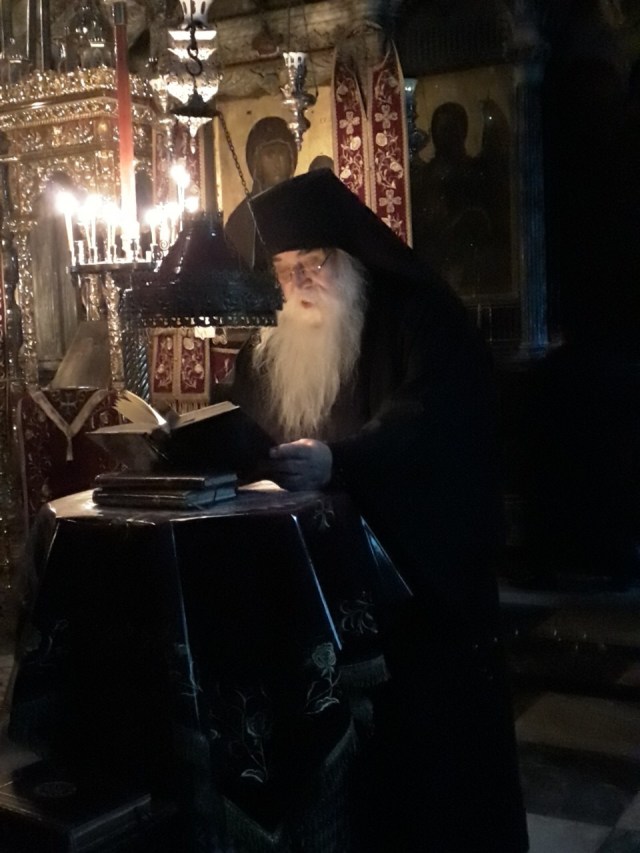
Elder Iakovos – Holy Monastery of St. David Euboea (Documentary)

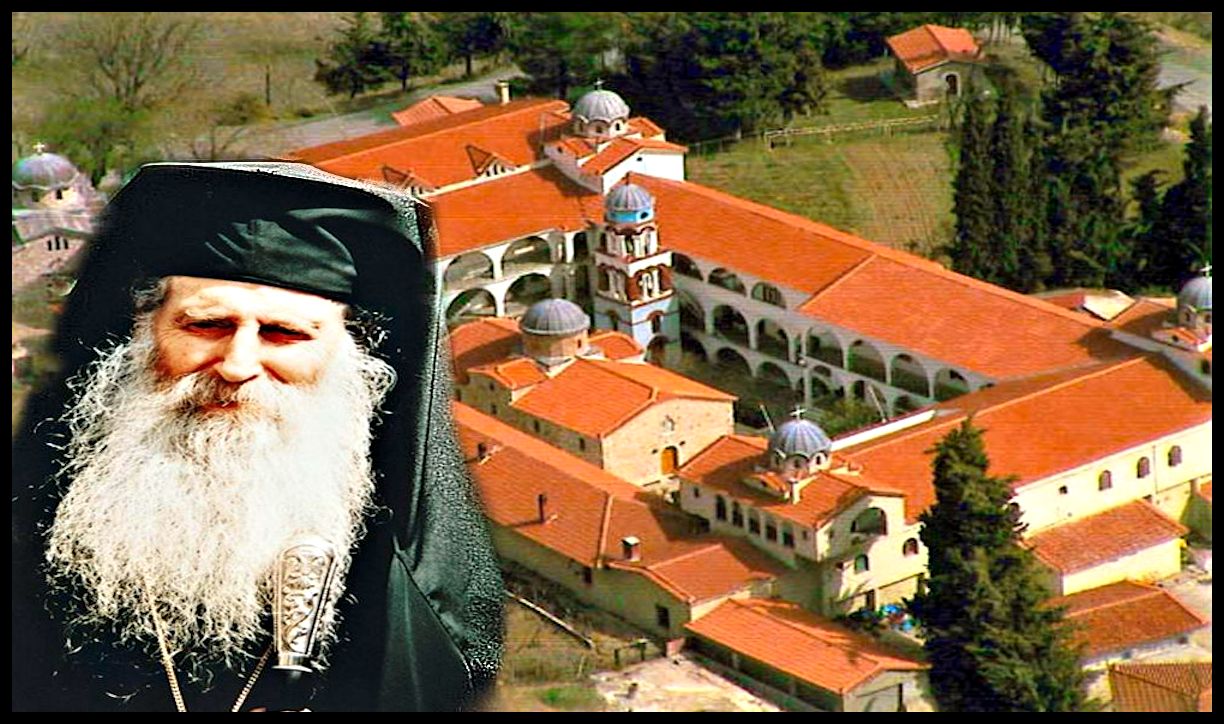
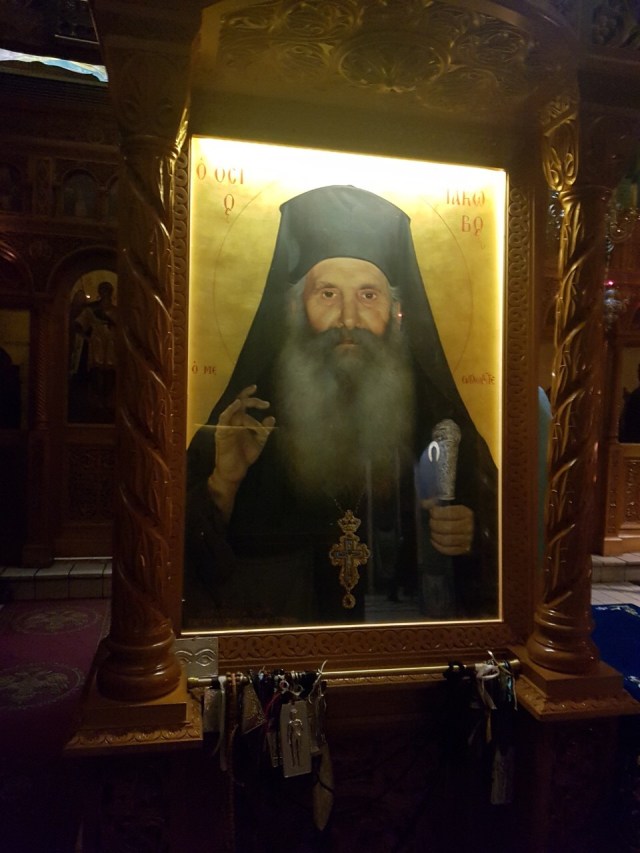
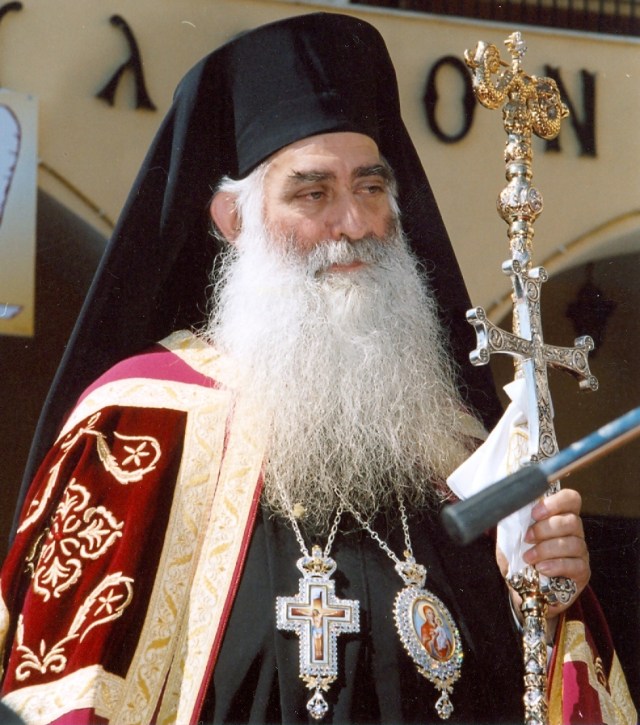
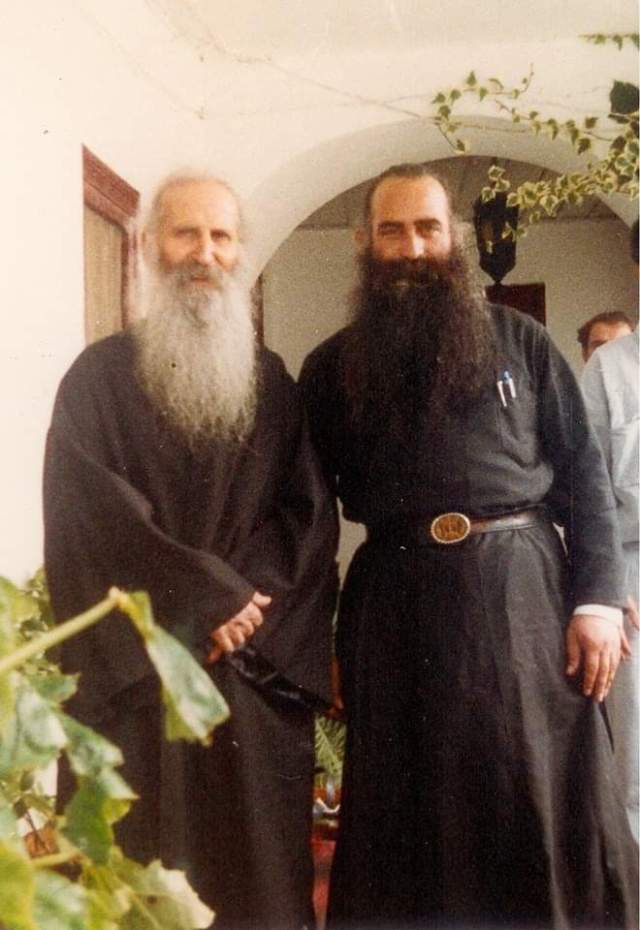
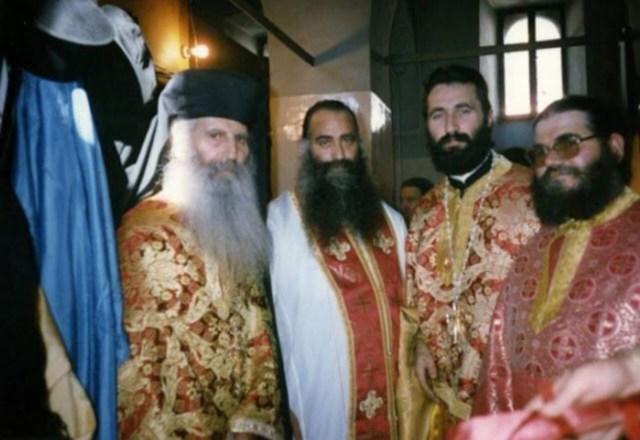
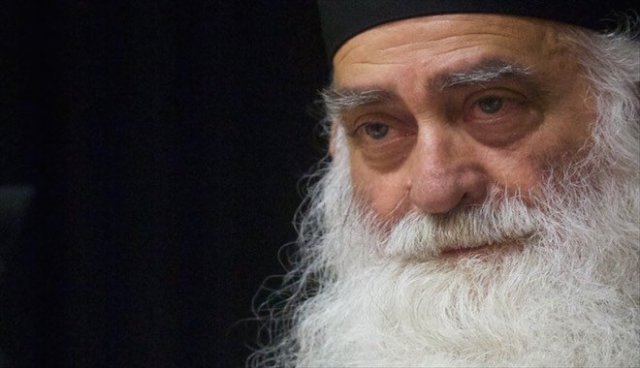
Very important documentary about the sacred and blessed life of Elder Iakovos, the Abbot of the Holy Monastery of St. David in Euboea Island in Greece. 

Elder Iakovos (Tsalikis) of Evia canonized by Constantinople,
 November 27, 2017
According to exclusive information from the Greek-language Orthodox site Romfea, the Holy Synod of the Ecumenical Patriarchate resolved today to officially number the blessed Elder Iakovos (Tsalikis) of Evia among the saints of God.(Original Greek-English Subtitles)


By Dr. Haralambos M. Bousias,
Great Hymnographer of the Church of Alexandria

The venerable Elder Iakovos Tsalikis, the admirable Abbot of the Monastery of the Venerable David in Evia, was a long-range star who shined in our days with the rays of his simplicity, his goodness, his equal-to-the-angels state and his numerous wonders.

Elder Iakavos was the personification of love, a living embodiment of “the new life in Christ”, a projector of virtue and a mirror of humility and temperance.

He embodied and experienced the testament of grace and delighted all those who approached him, since he was entirely the “fragrance of Christ” (2 Cor. 2:15). With his sweet words he gave them rest and conveyed to them the good things of the Holy Spirit, “joy, peace and gentleness” (Gal. 5:22), with which he was gifted, affirming the Gospel phrase: “Out of the abundance of the heart the tongue speaks” (Matt. 12:34).

Elder Iakovos was a spiritual figure of the Monastery of the Venerable David, sent by the philanthropic Lord to the modern lawless Israel and admonished them with the example of his simple yet venerable life and the grace of his words which were always “seasoned with salt” (Gal. 4:6). The Elder was not very educated, but he was overshadowed, like the fishermen of Galilee, with the grace of the All-Holy Spirit, making wise the unwise and moving the lips of those chosen by God to spiritually guide the people to salvation.

Elder Iakovos was born on November 5, 1920 to pious parents, his mother Theodora being from Livisi in Asia Minor and his father Stavros from Rhodes. In early 1922 Turkish cetes captured his father and led him deep into Anatolia.

After the catastrophe of our blessed Asia Minor, which was allowed by God for our sins and apostasy, the family of the Elder followed the hard road of exile. Their ship transferred them over to Itea and from there they settled in Amfissa.

There it pleased the Lord, in 1925, for his father to find them and together as a family they moved to Farakla in Evia.

At the age of seven the young divinely-illumined Iakovos memorized the Divine Liturgy even though he was illiterate. In 1927 he attended elementary school and was distinguished for his performance and his obvious love for the Church and sacred writings.

The appearance of Saint Paraskevi to the young Iakovos and the revelation of his brilliant ecclesiastical future stimulated the faith and piety of the young student.

Often the purity of his life led him to pray for his suffering countrymen, whom he would heal by reading prayers that were irrelevant to their situation, but he did it with much devotion showing to all that the “grace of God was on him” (Lk. 2:40).

In 1933 he completed elementary school, but the financial difficulties of his family did not allow him to continue his studies. So he followed his father in his manual work.

Impressed by his melodious chanting the Metropolitan of Halkidos consecrated him a Reader.

What impressed everyone was his ascetic life, his prayerful disposition, his love for work, his lack of sleep, and his strict observance of the fasts.

In this voluntary personal deprivation he came to add the involuntary suffering of the whole family and that of all the hapless refugees from the dispossession.

In July of 1942 the mother of the Elder died, foretelling his future as a priest. He joined the army in 1947, where he remained undaunted by the derision of his colleagues, who jokingly called him “Father Iakovos”.

However, he received admiration from his commander, who was among the few that sensed the future bright spiritual path of the young refugee.

After being released from the army in 1949, Iakovos, at the age of 29, was orphaned also of a father. His focus was on his sister, without, however, neglecting the thoughts of his childhood desire to enter the monastic state.

After his sister married, in November of 1952 he went to the Monastery of the Venerable David near Rovies, fulfilling his desire of completely dedicating his life to God. At the age of 32 Iakovos was tonsured a Monk, and on December 19, 1952 he was ordained a Priest in Halkida by Metropolitan Gregory.

He then continued his ascetic life in the Monastery, with concerted prayer in the cave of the Venerable David, with divine visions and miracles, which increased over time.

He achieved high measures in virtue and suffered many attacks from good-hating demons, who hated his equal-to-the-angels life.

He often saw and spoke with Venerable David and Saint John the Russian, while he was also made worthy of the gifts of foresight and insight.

Often during the Divine Liturgy he would see Angels serving him in the Sacred Altar, Cherubim and Seraphim encircling him covering their faces with their six wings, revering the slain Lamb, the God-man Jesus, on the Holy Paten, broken but not divided, forever eaten yet never consumed.

In August of 1963 in a wondrous way he satiated with three kilos of noodles 75 laborers with generous servings with half a pot of leftovers.

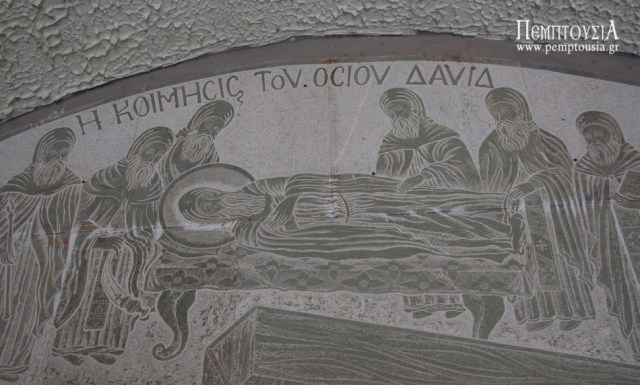
On the 25th of June in 1975 he became the Abbot of the Monastery and held this rudder firmly until his venerable repose on the 21st of November in 1991.

Due to his hermit and ascetic life, however, the health of the Elder was shaken, the veins of his legs rotted, and he had to undergo surgeries for his hernia, his appendix, his prostrate and his heart, even being placed within him a pacemaker.

From 1990 onwards his strength began to leave him. In September of 1991 he was hospitalized at the General State Hospital of Athens for a small infarction.

When he returned to the Monastery he suffered from inflammation, which, unfortunately, turned into pneumonia. He sensed his end.

The morning of November 21, 1991 he followed the Service for the Entrance of our Theotokos, he chanted and he communed of the Immaculate Mysteries.

After confessing some of the faithful he took a walk around the Monastery. In the afternoon he confessed a spiritual daughter of his and waited for the return of his novice Iakovos from Limni, who that day was ordained a Deacon by the Metropolitan of Halkidos.

As soon as the fathers arrived the Elder tried to get up, but became dizzy. His breathing became heavy, his pulse weakened and from his lips came a soft blow.

The Elder took the road to enter the Kingdom of Heaven. The people who were informed of his funeral were few.

The phones, however, took fire and from one person to another the sad news spread.

The next day thousands of people flocked to the Monastery, clergy of all ranks and spiritual children of the Elder from all over Greece, who came to give their last embrace.

The courtyard of the Monastery was crowded. The funeral service was chanted outdoors and after his sacred body was processed around the Katholikon. During the procession many of the faithful saw the Elder get up from his coffin to bless the crowd.

Once the sacred body descended into the grave, with one voice the thousands of faithful with resurrection hymns and resurrection bells joyfully cried out: “Saint! Saint!”

Since then Elder Iakovos, with his dozens of posthumous miracles, has been classified in the souls of the faithful as a Saint, by those who await with longing his formal canonization by the Mother Church.

Translated By John Sanidopoulos

Source: Orthognosia

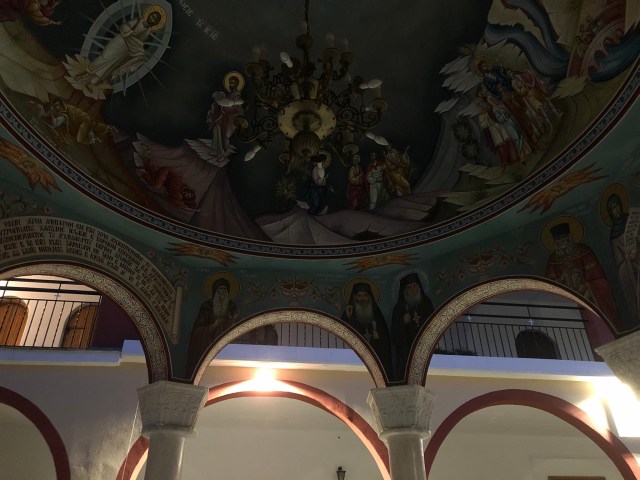
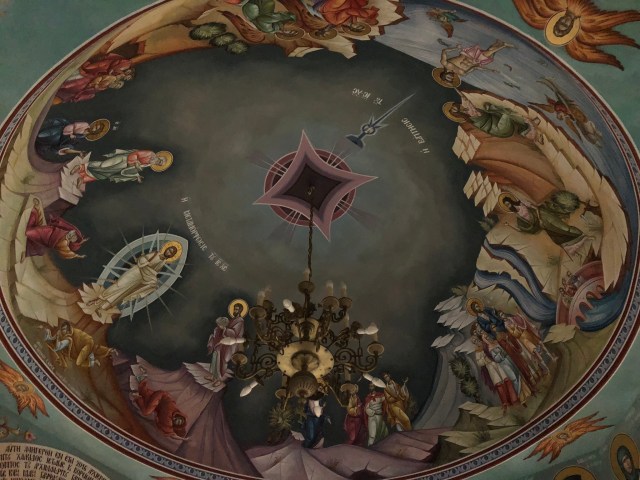
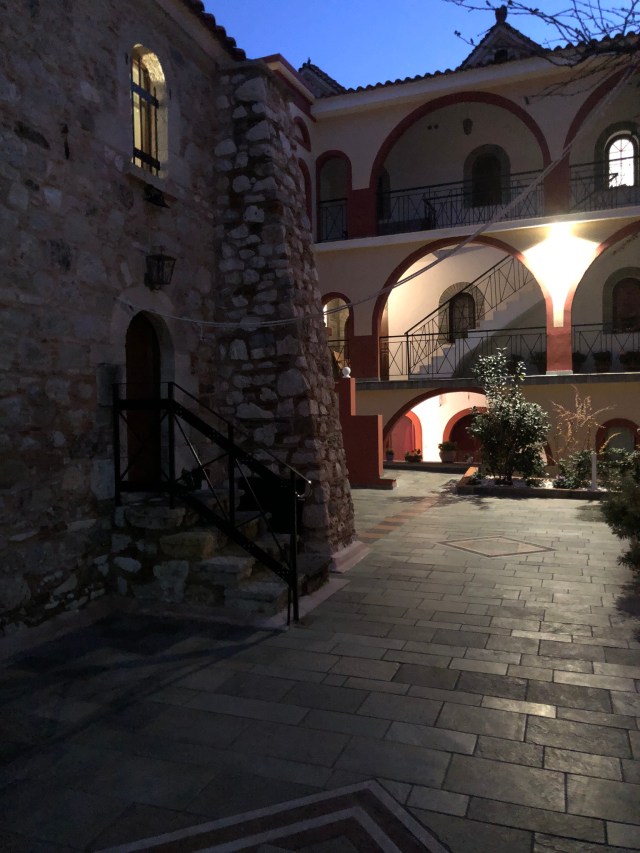
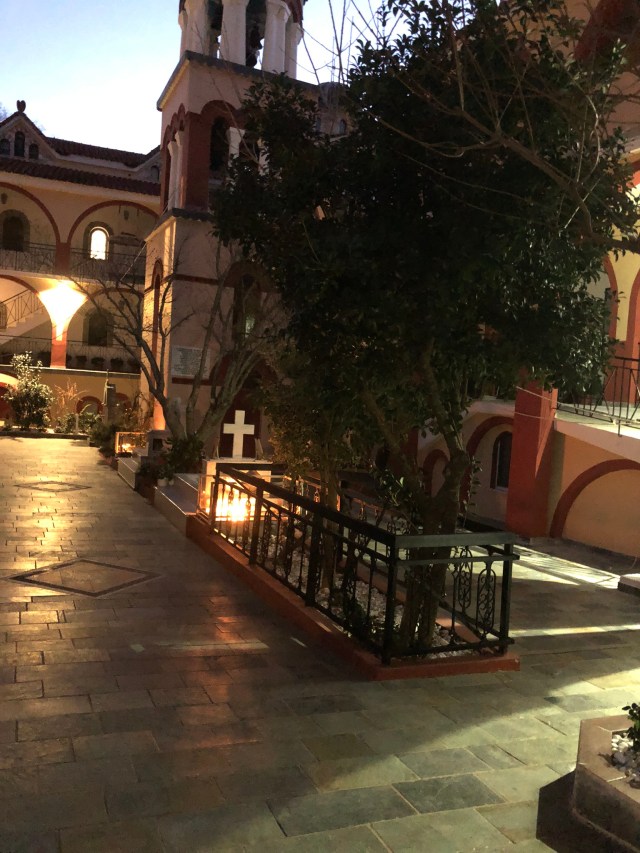
Monastery of Saint David the Elder (II)

img_0127

A Vigil 

img_0126

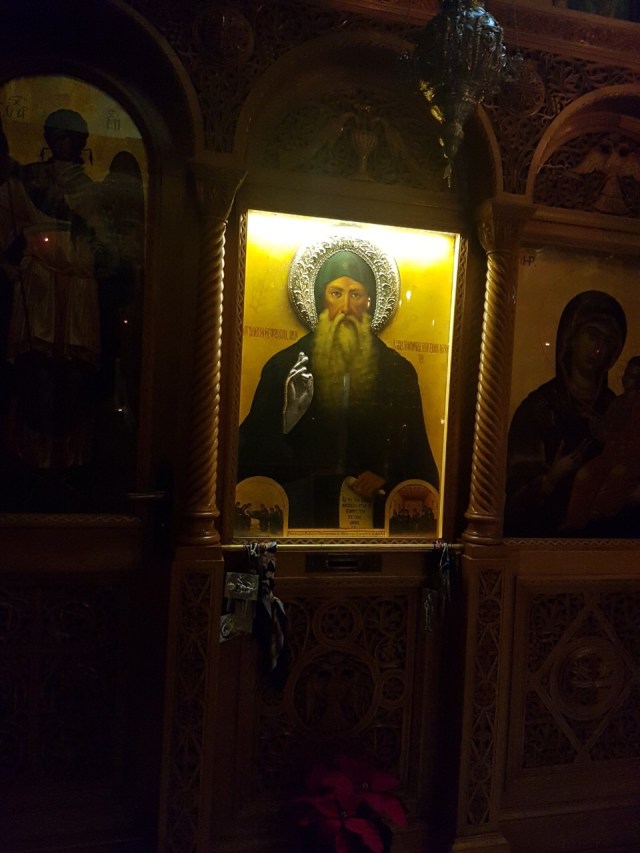
Elder Iakovos Tsalikis was one of the most important and saintly personalities of our day, a great and holy Elder. He was a vessel of grace, a living incarnation of the Gospel, a dwelling-place of the Holy Spirit and a true friend of God. From early childhood his aim was sanctification, and he enjoyed praying and would go to different chapels, light the icon-lamps and pray to the saints. In one chapel in his village, he was repeatedly able to speak to Saint Paraskevi. He submitted to God’s call, which came to him when he was still a small child, denied himself and took up the Cross of Christ until his last breath. In 1951, he went to the Monastery of Saint David the Elder, where he was received in a miraculous manner by the saint himself.

He was tonsured in November 1952. As a monk he submitted without complaint and did nothing without the blessing of the abbot. He would often walk four to five hours to meet his Elder, whose obedience was as parish-priest in the small town of Limni. The violence he did to himself was his main characteristic. He didn’t give in to himself easily. He lived through unbelievable trials and temptations. The great poverty of the monastery, his freezing cell with broken blinds and cold wind and snow coming in through the gaps, the lack of the bare essentials, even of winter clothing and shoes, made his whole body shiver and he was often ill. He bore the brunt of the spiritual, invisible and also perceptible war waged by Satan, who was defeated by Iakovos’ obedience, prayer, meekness and humility. He fought his enemies with the weapons given to us by our Holy Church: fasting, vigils and prayer.

img_0077

 His asceticism was astonishing. He ate like a bird, according to his biographer. He slept on the ground, for two hours in twenty-four. The whole night was devoted to prayer. Regarding his struggle, he used to say: ‘I do nothing. Whatever I do, it’s God doing it. Saint David brings me up to the mark for it’.

His humility, which was legendary and inspiring, was his main characteristic. The demons which were in the possessed people who went to the monastery cursed him and said: ‘We want to destroy you, to neutralize you, to exterminate you, but we can’t because of your humility’. He always highlighted his lack of education, his inadequacies and his humbleness. It was typical of him that, when he spoke, every now and again he’d say: ‘Forgive me’. He was forever asking people’s forgiveness, which was a sign of his humble outlook. Once, when he was invited to visit the Monastery of Saint George Armas, where the abbot was the late Fr. George Kapsanis, he replied: ‘Fathers, I’m a dead dog. What will I do if I come to see you? Pollute the air?’ He always had the sense that he was a mere nothing.

And when he became abbot he always said that he wasn’t responsible for what happened in the monastery: ‘Saint David’s the abbot here’, he maintained. When he served with other priests, he went to the corner of the altar, leaving them to lead the service. When they told him: ‘This isn’t right, you’re the abbot of the monastery’, he’d reply: ‘Son, Saint David’s the abbot here’.


img_0124

Although he didn’t seek office, he agreed to be ordained to the diaconate by Grigorios, the late Bishop of Halkida, on 18 December 1952. The next day he became a priest. In his address after the ordination, the bishop said: ‘And you, son, will be sanctified. Continue, with God’s power, and the Church will declare you [a saint]’. His words were prophetic. He was made abbot on 27 June, 1975, by Metropolitan Chrysostomos of Halkida, a post he held until his death.

As abbot he behaved towards the fathers and the visitors to the monastery with a surfeit of love and understanding and great discernment. His hospitality was proverbial. Typical of him was the discernment with which he approached people. He saw each person as an image of Christ and always had a good word to say to them. His comforting words, which went straight to the hearts of his listeners, became the starting-point of their repentance and spiritual life in the Church. The Elder had the gift, which he concealed, of insight and far-sight. He recognized the problem or the sin of each person and corrected them with discretion. Illumined by the Holy Spirit he would tell each person, in a few words, exactly what they needed. Saint Porfyrios said of the late Elder Iakovos: ‘Mark my words. He’s one of the most far-sighted people of our time, but he hides it to avoid being praised’.

In a letter to the Holy Monastery of Saint David, the Ecumenical Patriarch, Vartholomaios, wrote: ‘Concerning the late Elder, with his lambent personality, the same is true of him as that which Saint John Chrysostom wrote about Saint Meletios of Antioch: Not only when he taught or shone, but the mere sight of him was enough to bring the whole teaching of virtue into the souls of those looking at him’.

img_0123

He lived for the Divine Liturgy, which he celebrated every day, with fear and trembling, dedicated and, literally, elevated. Young children and those with pure hearts saw him walking above the floor, or being served by holy angels. As he himself told a few people, he served together with Cherubim, Seraphim and the Saints. During the Preparation, he saw Angels of the Lord taking the portions of those being remembered and placing them before the throne of Christ, as prayers. When, because of health problems he felt weak, he would pray before the start of the Divine Liturgy and say: ‘Lord, as a man I can’t, but help me to celebrate’. After that, he said, he celebrated ‘as if he had wings’.

One of the characteristic aspects of his life was his relationship with the saints. He lived with them, talked to them and saw them. He had an impressive confidence towards them, particularly Saint David and Saint John the Russian, whom he literally considered his friends. ‘I whisper something in the ear of the Saint and he gets me a direct line to the Lord’. When he was about to have an operation at the hospital in Halkida, he prayed with faith: ‘Saint David, won’t you go by Prokopi and fetch Saint John, so you can come here and support me for the operation? I feel the need of your presence and support’. Ten minutes later the Saints appeared and, when he saw them, the Elder raised himself in bed and said to them: ‘Thank you for heeding my request and coming here to find me’.

img_0125

One of his best known virtues was charity. Time and again he gave to everybody, depending on their needs. He could tell which of the visitors to the monastery were in financial difficulties. He’d ask to speak to them in private, give them money and ask them not to tell anyone. He never wanted his charitable acts to become known.

Another gift he had was that, through the prayers of Saint David, he was able to expel demons. He would read the prayers of the Church, make the sign of the Cross with the precious skull of the saint over the people who were suffering and the latter were often cleansed.

He was a wonderful spiritual guide, and through his counsel thousands of people returned to the path of Christ. He loved his children more than himself. It was during confession that you really appreciated his sanctity. He never offended or saddened anyone. He was justly known as ‘Elder Iakovos the sweet’.

img_0071img_0072

He suffered a number of painful illnesses. One of his sayings was, ‘Lucifer’s been given permission to torment my body’. And ‘God’s given His consent for my flesh, which I’ve worn for seventy-odd years, to be tormented for one reason alone: that I may be humbled’. The last of the trials of his health was a heart condition which was the result of some temptation he’d undergone.

He always had the remembrance of death and of the coming judgement. Indeed, he foresaw his death. He asked an Athonite hierodeacon whom he had confessed on the morning of November 21, the last day of his earthly life, to remain at the monastery until the afternoon, in order to dress him. While he was confessing, he stood up and said: ‘Get up, son. The Mother of God, Saint David, Saint John the Russian and Saint Iakovos have just come into the cell’. ‘What are they here for, Elder?’ ‘To take me, son’. At that very moment, his knees gave way and he collapsed. As he’d foretold, he departed ‘like a little bird’. With a breath like that of a bird, he departed this world on the day of the Entry of the Mother of God. He made his own entry into the kingdom of God. It was 4:17 in the afternoon.

His body remained supple and warm, and the shout which escaped the lips of thousands of people: ‘Saint! You’re a saint’, bore witness to the feelings of the faithful concerning the late Elder Iakovos. Now, after his blessed demise, he intercedes for everyone at the throne of God, with special and exceptional confidence. Hundreds of the faithful can confirm that he’s been a benefactor to them.

img_0078

img_0074

img_0080

img_0079

img_0076

img_0073

Source: Pemptousia, “The Elder of love, forgiveness and discernment” by  Alexandros Christodoulou

For more information about the monastery and St. David, go here 

Monastery of Saint David the Elder (I)

evia4

Evia pilgrimage . Our next stop was the Monastery of Saint David the Elder.

evia1.jpg

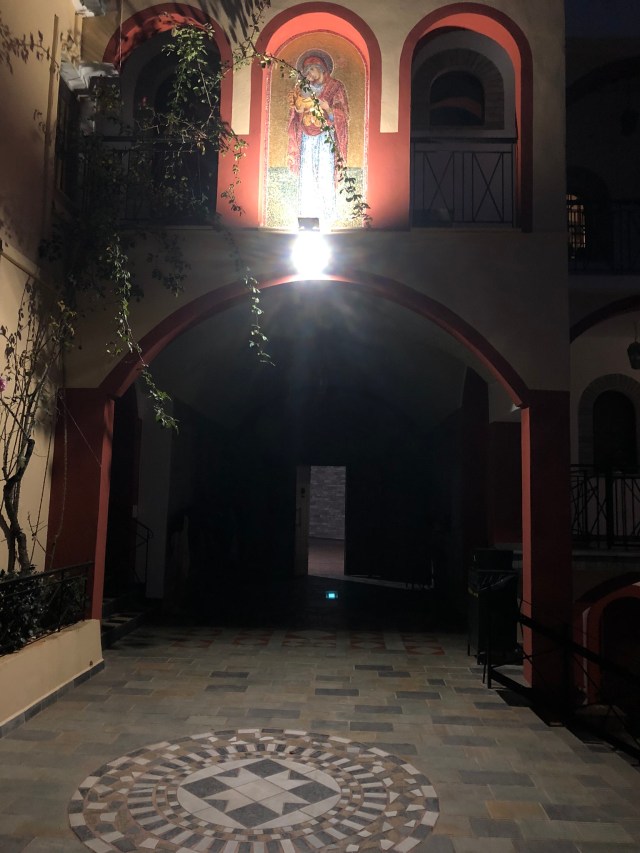
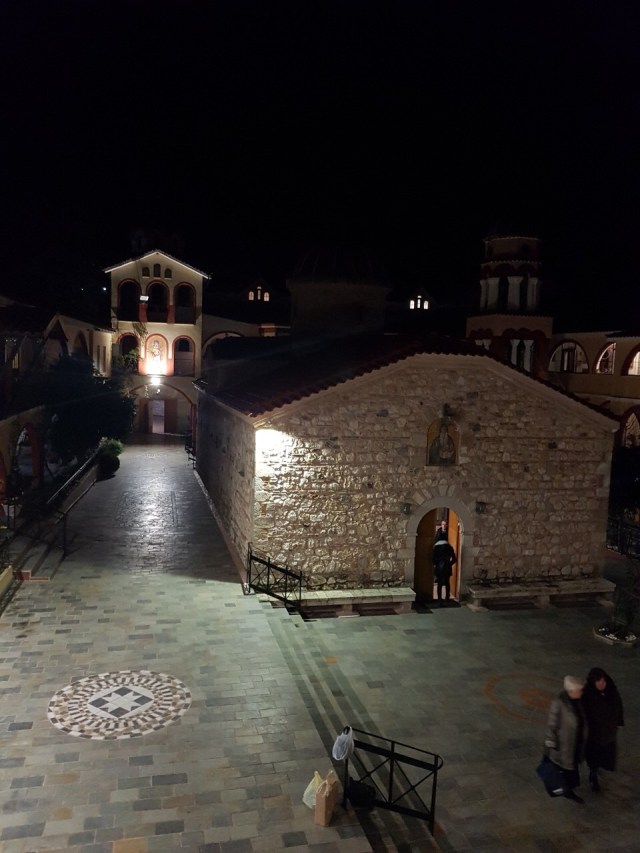
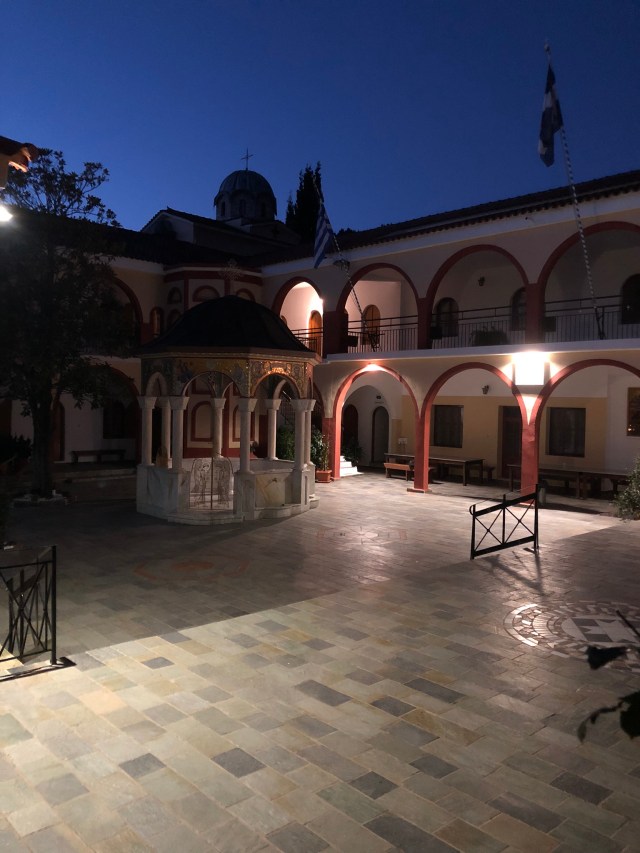
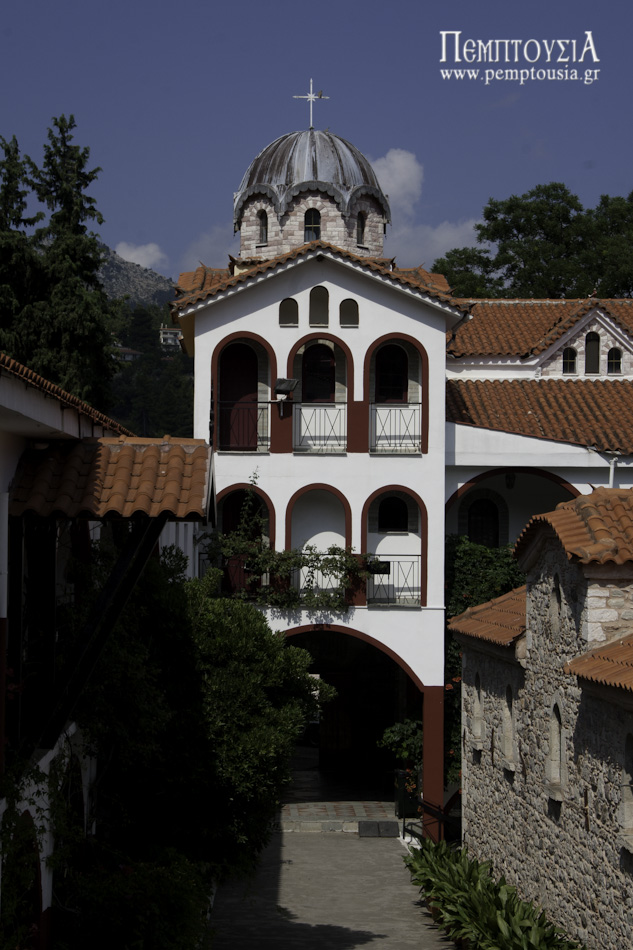
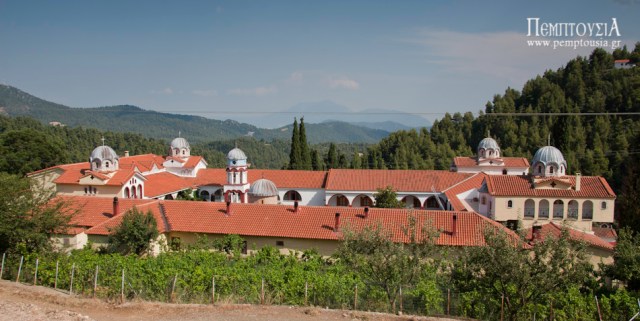
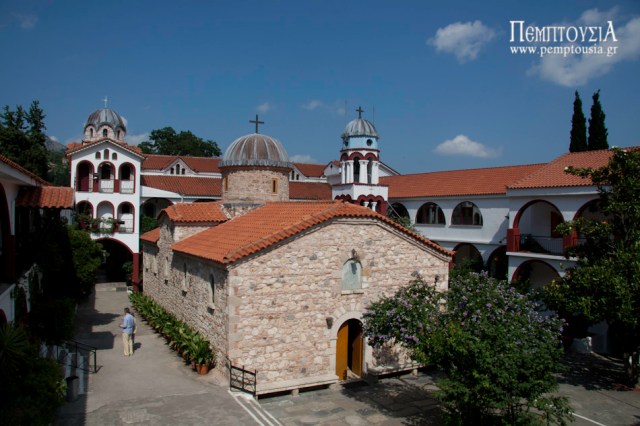
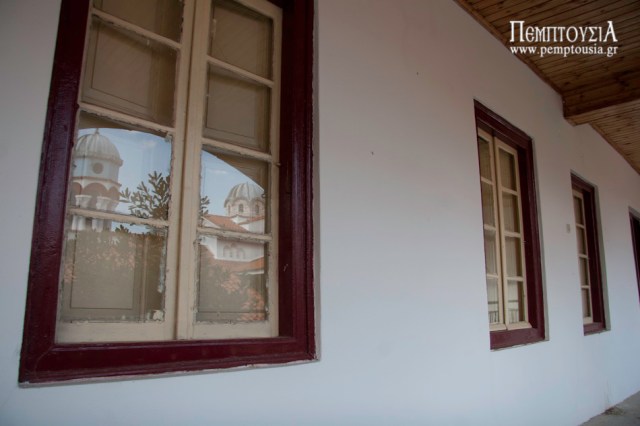
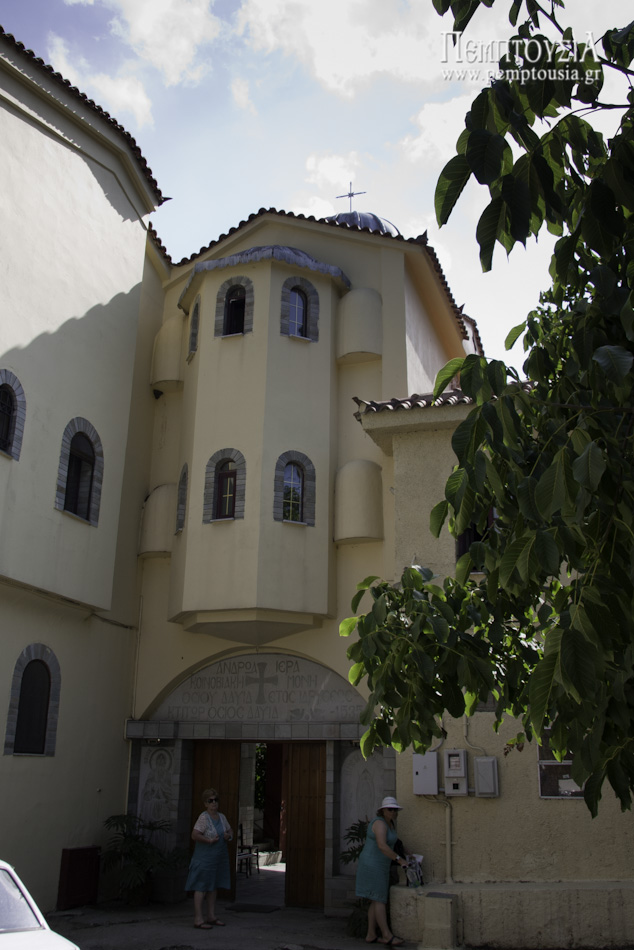
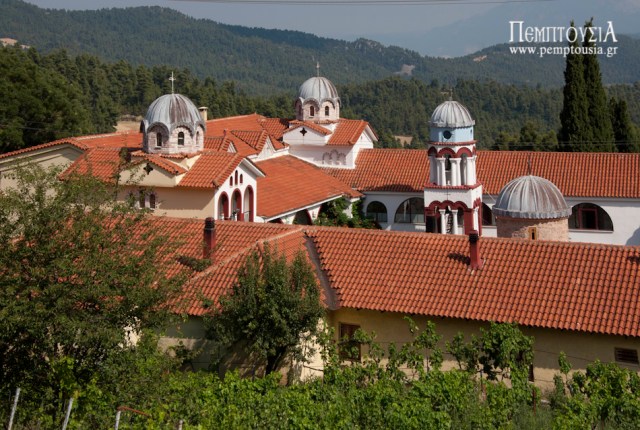
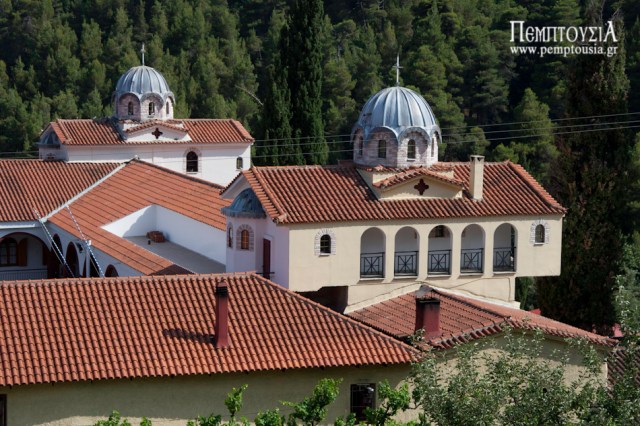
In northern Evia, on the slopes of Mount Kavalaris, at a height of 927 meters above sea-level and at a distance of about 30 kilometers from Aidipsos, lies the Holy Monastery of Saint David.

evia2.jpg

The monastery was founded and built in about 1540, thanks to Saint David.

evia3

It was built in 1520 by the young (at that time) ascetic David, using contributions from rich monks and Christians of Greece, Moldovlachia and Russia. During the Turkish domination the Monastery became a shelter for the miserable inhabitants of the area and «hidden school» for slaveries. In 1824 Turks butchered all the Monks and burnt the Monastery.

After the Greek War of Independence, a new monastery was founded. In 1870 the Katholikon of the monastery that is dedicated to the Transfiguration of Jesus and to the holy founder Venerable David, was destroyed by an earthquake. It was rebuilt in 1877 by Anthimos Aggelis who was Abbot at that time. The largest estate of the Monastery was expropriated in 1933.

evia5

evia6.jpg

The Main Church is where the relics of Saint David are kept, as well as his censer, his stole (of Russian provenance) and other valuable treasures.

evia6evia7

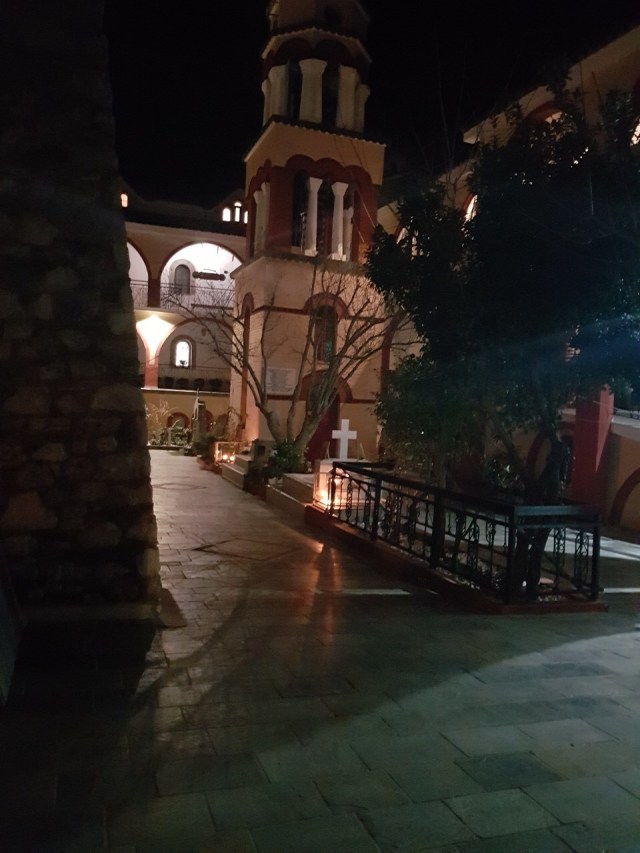
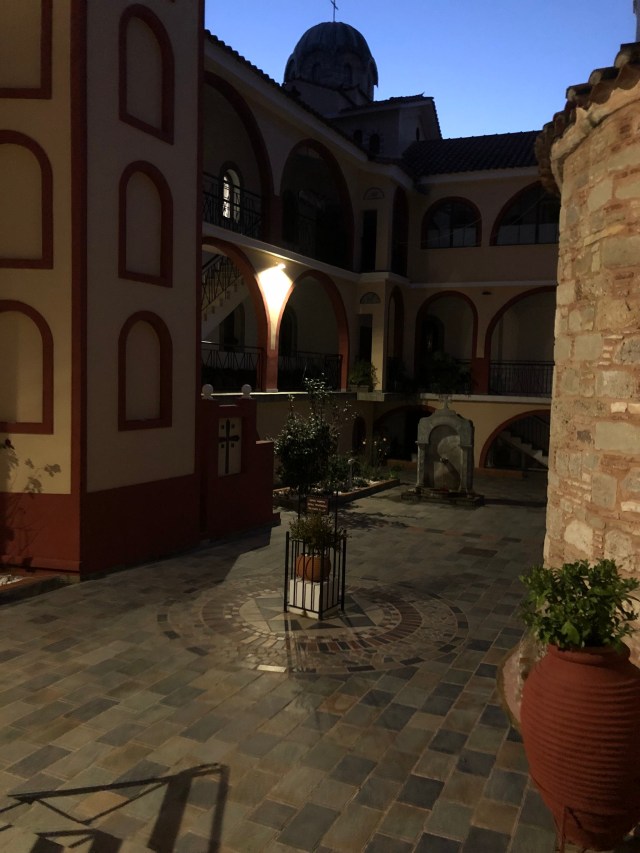
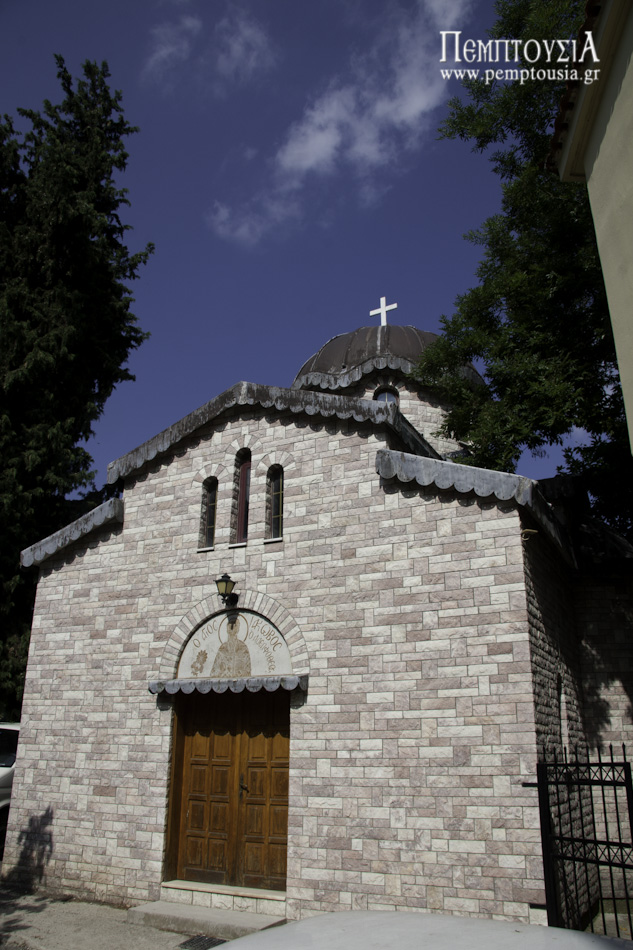
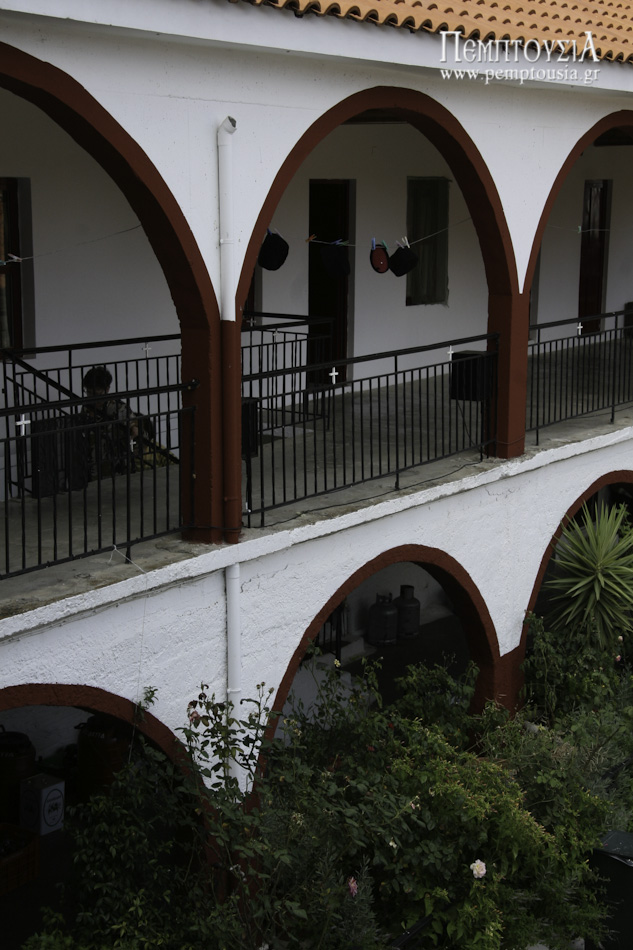
In 1951, in the priorship of Archimandrite Nikodemos Thomas, the Monastery was restored from the beginning and many new chapels (Saint Archangel Michael, Holy martyr Polycarpus, Saint Varvara, Saint George and Assumption of the Virgin, Venerable Eiriny Chrysovalantou, Saint Nectarios, Saint Vasil and Saint Demetrios) were built. A new building contains large guest rooms which can offer hospitality to over one hundred worshippers. Only one part of the east aisle of the old building of the Monastery is preserved. Of particular interest is the chapel of Saint Charalampos, that firstly was the cell of Saint David, where he stayed every Saturday. The Byzantine chapel (catacomb) of Saints Anargyros is found undamaged under it. It is decorated with marvelous wall paintings of the 18th century.

evia8evia9evia10evia11evia12

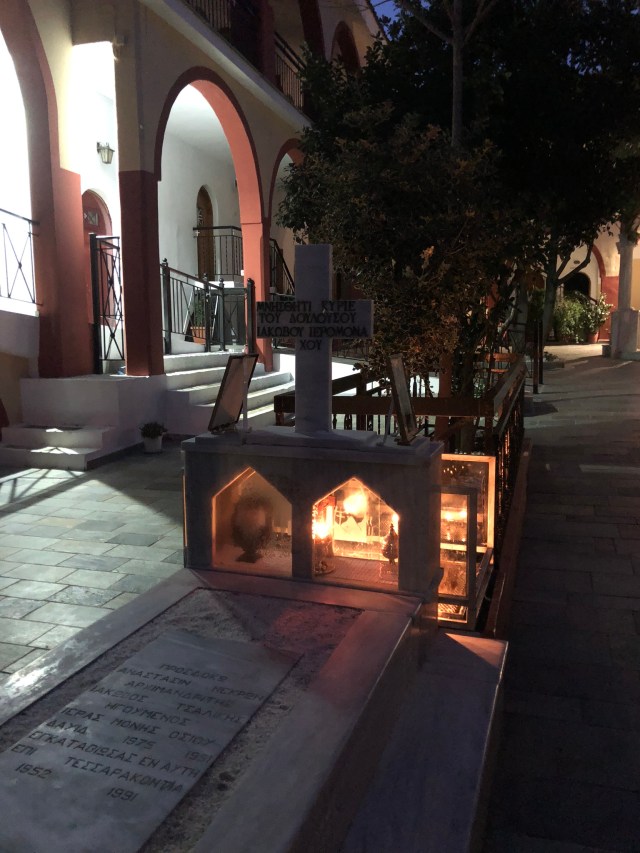
The Igumen from 1975 to 1991 was Elder Iakovos (Tsalikis), who was formally glorified as a saint on November 27, 2017 by the Sacred and Holy Synod of the Ecumenical Patriarchate, following the approval and recommendation of the Church of Greece.The feast day of Venerable Iakovos of Euboea The New Ascetic was set on November 22 each year. His glorification was liturgically celebrated on Sunday June 3, 2018, at St. David Monastery, headed by His All-Holiness Ecumenical Patriarch Bartholomew, with the concelebration of 30 Orthodox bishops from the Greek and Cypriot Orthodox Churches and the Ecumenical Patriarchate.

evia13evia14evia15evia16

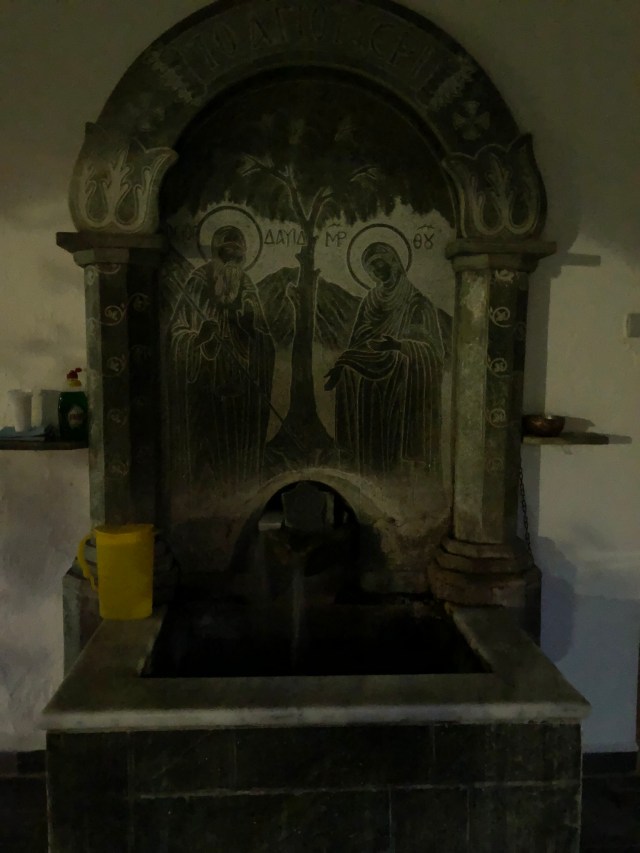
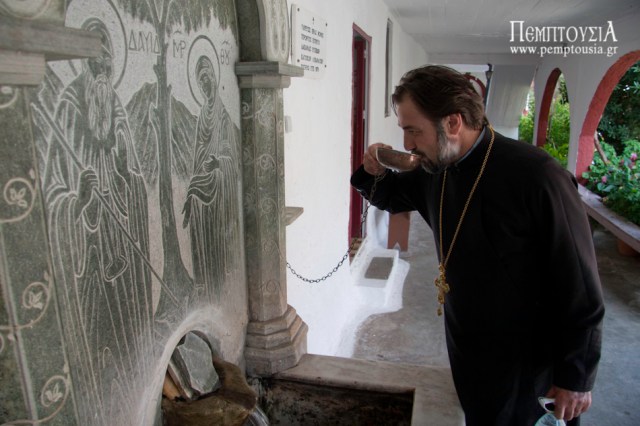
The agionery (holy water) is found about 1 km north of the Monastery. According to tradition, Saint David struck the rock with his stick and it gushed curative holy water.

To the south of the Monastery, about twenty minutes on foot, near a ravine, the pilgrim finds a cave. It, according to tradition, was the room of the training (Asceterion) of Saint David, who lived on scanty bread all the week.

evia17evia18evia19

It is worth mentioning the Reliquary of the Monastery, where, besides the relics of Saint David, relics of many Saints (Protomartyr Stefanos, Cyprianus, Justin, Tryfon, Charalampus, Panteleymon, Therapon, Anargyron Cyrus and John) are kept. These have been carried by David from the Ecumenical Patriarchate in the patriarchy of Jeremia II the Grand (Tranos). In the end, Venerable David’s Russian stole and a Russian censer, his staff, old icons and three woodcut-crosses are saved in the Museum of the Monastery. One of the three crosses is from the era of Palaiologoi.

evia20.jpg

The monastery celebrates: the Transfiguration of the Lord (6/8) Saint David (1/11) the Holy Unmercenary Doctors (1/7), Saint Haralambos (10/2), the Dormition of the Mother of God (15/8) and Saint George (23/4).

evia21.jpg


Photos: Pemptousia

Saint Irene Chrysovalantou monastery in Northern Evia

ευβοια1
Euboia pilgrimage . Our first stop is the Monastery of Saint Irene Chrysovalantou, a Metochion of the Monastery of Saint George in Ilia, which in 1990 split off and formed another Sisterhood under the Abbess Chrysovalanti. It is built above the Camp of the Metropolis that draws over 800 children a year, between the coastal villages of Rovia and Ilia, and it stands with the serene Gulf of Evia in front of it and Mount Valantion behind it.
Besides the Church of Saint Irene, the Monastery has two other chapels: Saint Onouphrios the Ascetic who celebrates on June 12th, and Saint Job the Much-Suffering who celebrates on May 6th.
img_1559ευβοια2
The chapels are decorated with wonderful Byzantine frescoes. In the grove of the Monastery is the renovated old Church of the Archangel Michael, a former Monastery of Ilia, which is celebrated on November 8th. The Holy Archangel is considered the patron saint of the region, and it has taken its name from him (Taxiarchis Ilion).
img_3771
A large central Church of Saint Irene does not yet exist, because the small numbered Sisterhood (1 Abbess and 2 Nuns) does not have the financial ability to complete the unfinished Monastery.


It is worth noting that this Monastery is the first dedicated to Saint Irene Chrysovalantou that follows the New (Revised Julian) Calendar.


img_9040
The views are stunning!
img_4416
img_4813
The monastery is renowned for its hospitality and Abbess Chrysovalanti.
img_0216
St. Iakovos Tsalikis presence is made felt in all Euboia, after his recent glorification.
img_2831img_7412img_2413


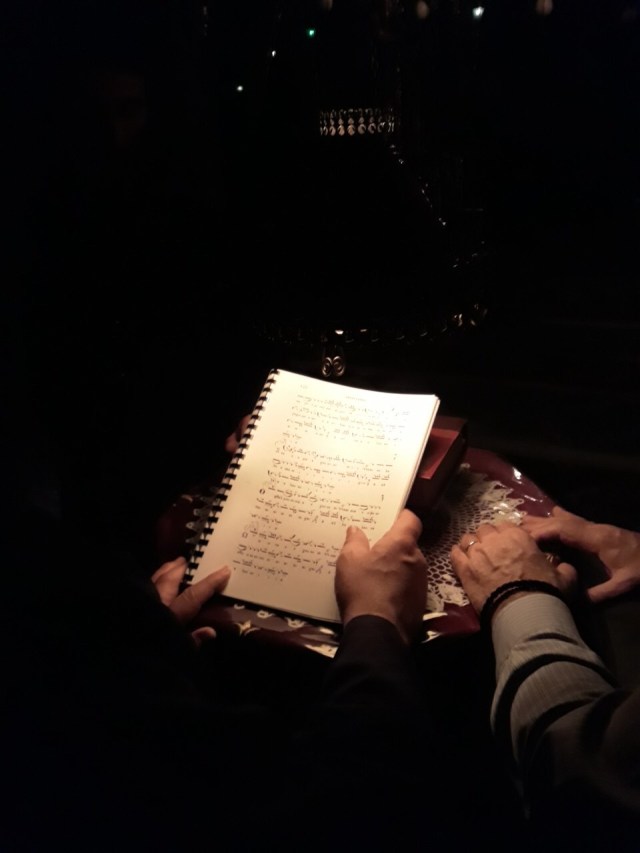
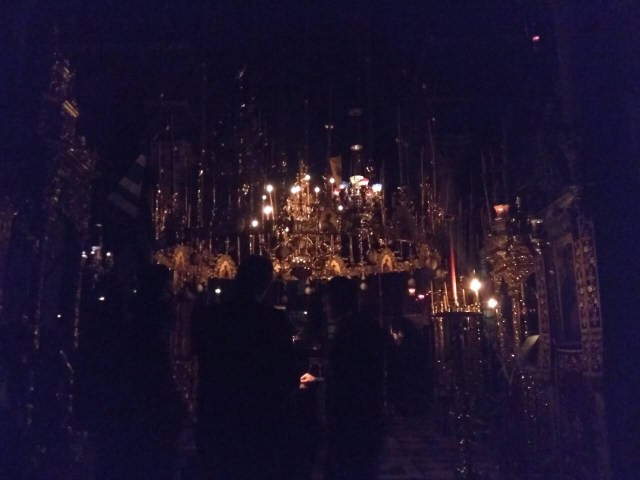
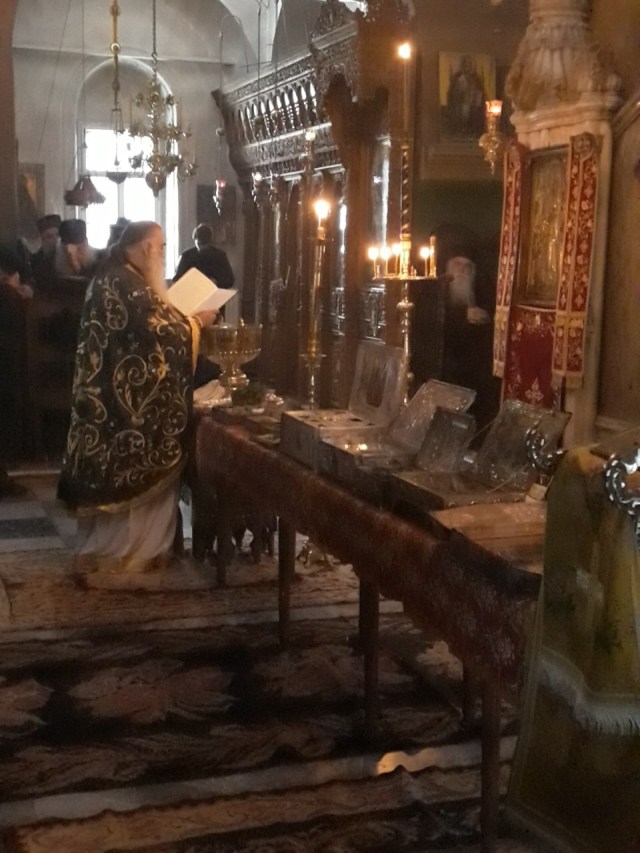
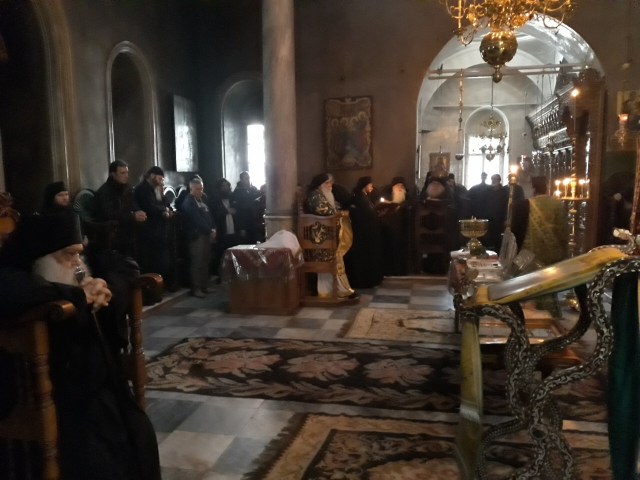
Theophany Vigil at Mount Athos Monastery Agiou Pavlou


img_4074

img_4066

img_4085

img_4047

img_4038

img_4083

img_4039

img_4041

img_4042

img_4043

img_4057

img_4044

img_4045

img_4046

img_4048

img_4049

img_4050

img_4052

img_4053

img_4058

img_4063

img_4070

img_4078

img_4079

img_4080

img_4081

img_4082

img_4086img_4087


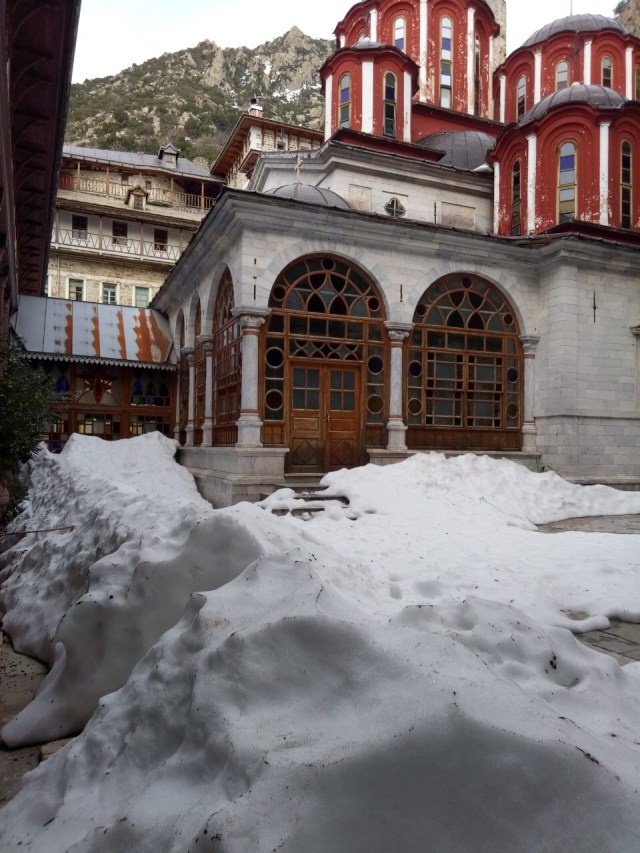
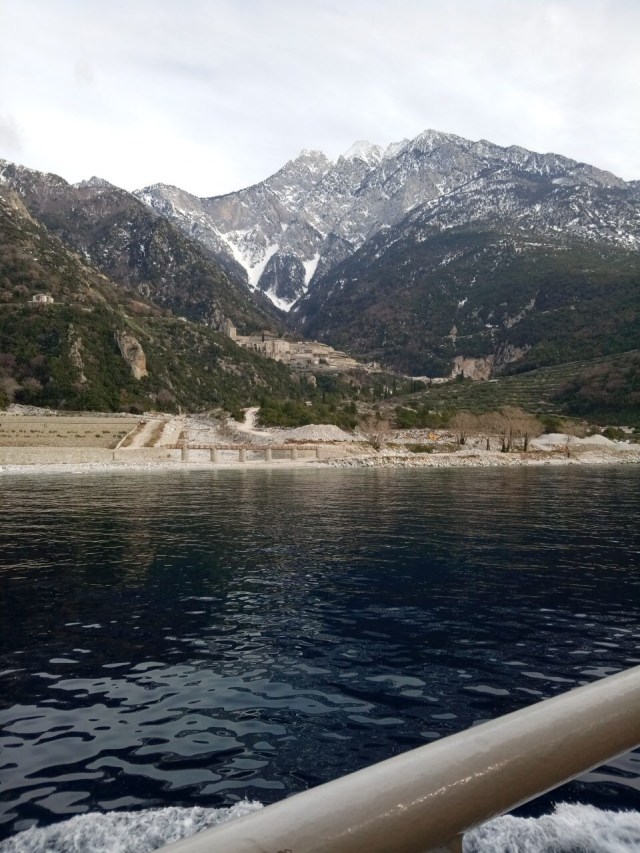
Monastery Agiou Pavlou is situated in the west foot of Athos, 20 min from the sea and is dedicated in the Presentation of Christ to the temple.

The monastery was destroyed many times by various causes, and its buildings belong to different periods. The Katholicon was built shortly before the mid 10th c. The monastery has 12 chapels, the most important of which is that of St George, with frescoes of the Cretan School (1555).

The monastery also possesses the Nea Skete and the Skete of St Demetrius. The monastery is mentioned for the first time, in the mid 10th c., mostly its founder Pavlos Xeropotaminos, and then in 1259. After the Catalan raids, it is degraded into a kellion, only to become a monastery again in the 3rd quarter of the 14th c. In the 15th c. it is financially supported by Serbians rulers and after the fall of Byzantium, by rulers of eastern Europe.
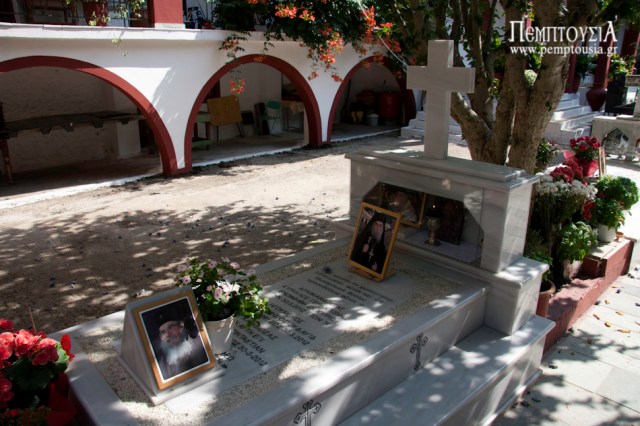
Among the monastery’s possessions, are counted portable icons, heirlooms, holy relics and liturgical vessels. The library contains 494 manuscripts and about 12,500 books. The monastery is inhabited by a brotherhood of 30 monks.

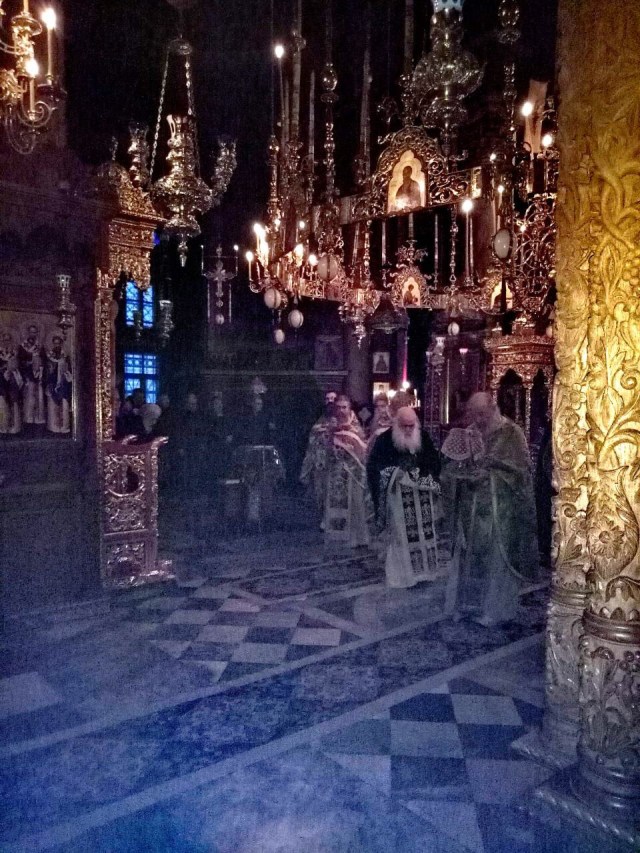
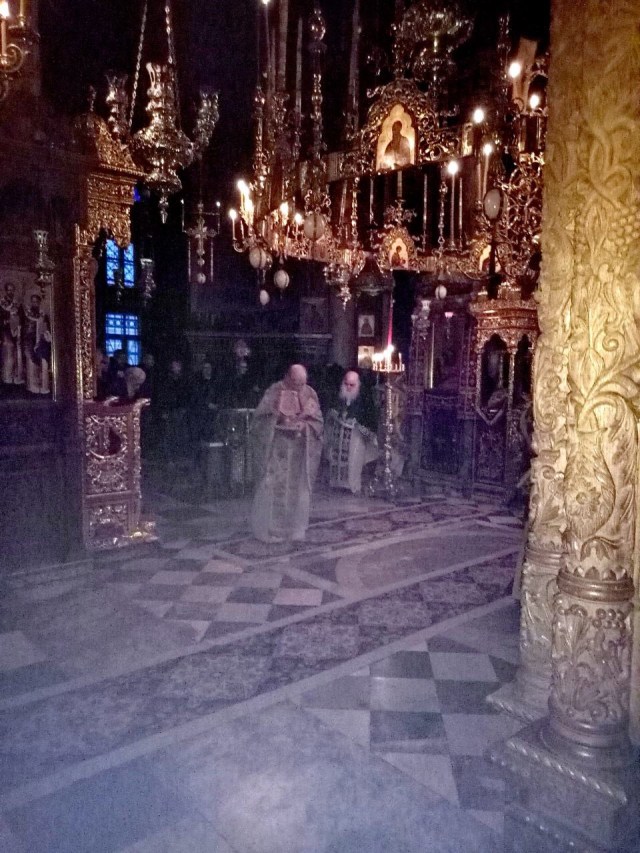
Photos sent  from St. Arsenios’ Monastery (Vatopedi, Chalkidiki) pilgrims; Gerondas Theoklitos is presiding at the Church services.
Metropolitan Pavlos of Siatista (+2019) A Hierarch of Fire

pavlos1pavlos2

IMG-0285.JPG

St. Iakovos of Evia and Metropolitan Pavlos
Suddenly on Sunday 13/1, Metropolitan Pavlos of Siatista, reposed in the Lord. He was a very beloved and respected hierarch of the Church of Greece and a spiritual child of St. Iakovos of Evia. His words, example and advice carry great weight and his talks are filled with true love and wisdom. Below are a brief biography and a wonderful recent talk of his with English subtitles. May he have a blessed Paradise, and may we have his blessing!’

metropolitan pavlos2

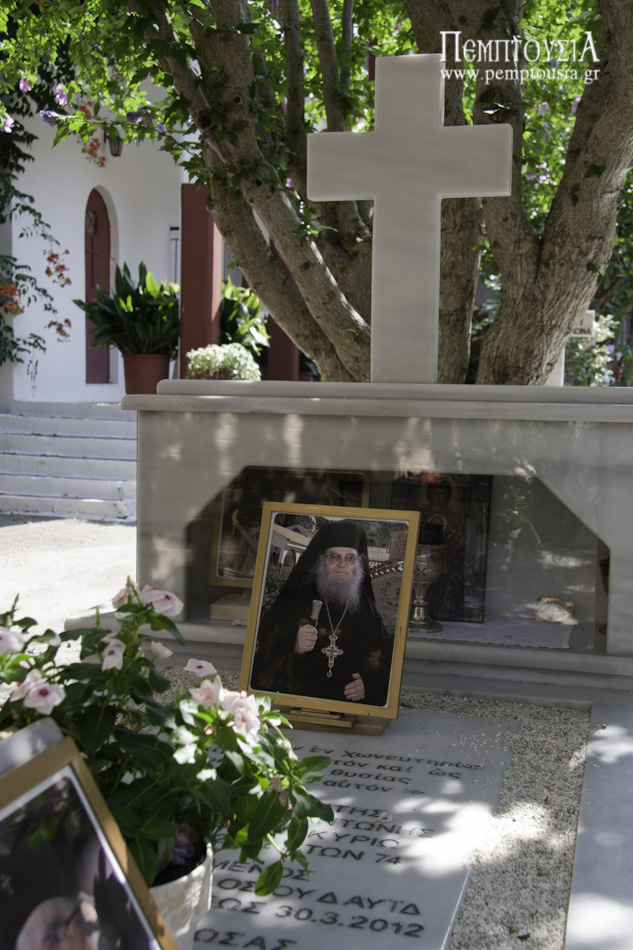
His last night he spent in the Monastery of St. David of Evia and St. Iakovos  [my recent pilgrimage] which he loved so much, and until noon of his last day he was near there in Rovies, serving his final Divine Liturgy on Sunday January 13th next to the Precious Skull of St. David.
(source)’

I had the blessing to attend Vigils with this hierarch at Mikrokastro Monastery and I remember his fiery eyes and voice. Even now, three days after his repose, his holy presence is still palpably felt to all. We feel he is alive in our Resurrected Lord. We experience a gladdening sorrow burning our hearts. *”His head and His hair were white like white wool, like snow; and His eyes were like a flame of fire” (Revelation 1:14) May he pray for all of us. +Memory Eternal!


The video which follows is very important as it reveals Metropolitan Pavlos’ intimate spiritual relationship with Elder Iakovos and relates lots of miracles which he experienced first-hand.
For Metropolitan Pavlos’ life, go here.

God and the Harlot

Did God desire a harlot? Yes, He did: a harlot. I mean by that our own nature. Did God desire a harlot? If a man desires a harlot, he’s condemned, yet God desired one, in order to make her a virgin. So the desire of a man is perdition for the woman, but that of God works for her salvation.

And this mighty and great One desired a harlot. Why? To become her bridegroom.

What did He do? He didn’t send one of His servants, He didn’t send an angel to the harlot, nor an archangel nor the cherubim or the seraphim. He Himself came, because He was in love with her…

He desired a harlot, so what did He do? Since she couldn’t ascend to the heights, He came down to the depths. He wasn’t ashamed to come to a harlot. He came to her hovel. He saw she was drunk. And how did He come? Not in His obvious divinity, but in the same condition that she was in, not in will but in nature, in case she was terrified at the sight of Him and wanted to escape. He came to the harlot and became a human person. And how did that happen? He gestated in a womb for a while and became like any other person. Dispensation, not divinity; the form of a servant, not of the Master; my flesh, not His Essence. He found her [i.e. our human nature, as elsewhere] sorely wounded, bestial, possessed by demons. She [We] saw Him and wanted to flee.

Then He said: ‘Don’t be afraid, I’m a doctor, not a judge. I came into the world not to judge the world but to save it’ [Jn. 12, 47]. And immediately, He called upon the Magi. What a new and strange wonder! The Magi immediately became the first-fruits. He Who holds the world in His hand lies in a manger; He Who cares for all things is wrapped in swaddling-clothes. There lies the temple [of the human body] and within it dwells God. The Magi come and immediately worship Him. The tax-collector comes and becomes an Evangelist, the harlot comes and becomes a virgin, the Canaanite woman comes and is shown mercy. This is typical of people in love: they don’t seek responsibility for sins, but rather they forgive mistakes and lapses. And what did He do? He took her and made her His wife. And what gift did He give her? A ring. What ring? The Holy Spirit. As Saint Paul says: ‘But it is God who establishes us with you in Christ and has anointed us, by putting his seal on us and giving us the pledge [troth] of the Spirit in our hearts’ [II. Cor. 1, 21-2]. He gave her the Spirit.

Then He said, ‘Didn’t I place you in Paradise?’ ‘Yes, you did’. ‘And how did you fall from there?’ ‘The devil came and took me’. ‘You were planted in Paradise and he had you cast out. Well, I’m planting you within Myself and will hold you. How? He will not dare come to Me. I will not take you to heaven, but, even more than that, I Who am the Lord of heaven will hold you. The shepherd has you and the wolf won’t come again. Or, rather, I’ll allow him to come’. He bears our own nature, the devil comes and is defeated. ‘I have planted you within me’. This is why He says ‘I am the root and you’re the vine’. ‘But I’m sinful and filthy’ she said. ‘Don’t let that bother you. I’m a doctor. I know my own vessel and how it became distorted. It was clay before and was distorted. I’ll remake it in the water of renewal and fire it in the kiln’.

Pay careful attention here. Look what He does. He came to take the harlot but she- and I emphasize this- was wallowing in filth. This is so that you can see the love of the Bridegroom.

Before, she’d been the daughter of demons, a child of the Earth, unworthy of the Earth. Now she became a child of the King, because that’s what He Who loved her wanted. Love doesn’t examine the means. Love doesn’t see ugliness. That’s why it’s called love, because often it loves what’s ugly. This is what Christ did. He saw an ugly woman (because I can’t say she was beautiful), fell in love with her and renewed her, without blemish or wrinkle. Imagine, a Groom Who makes His ugly bride beautiful!

(St. John Chrysostom, Excerpts from his Second Homily to Eutropios)


Blessing of the Waters in Greece

fota1fota2

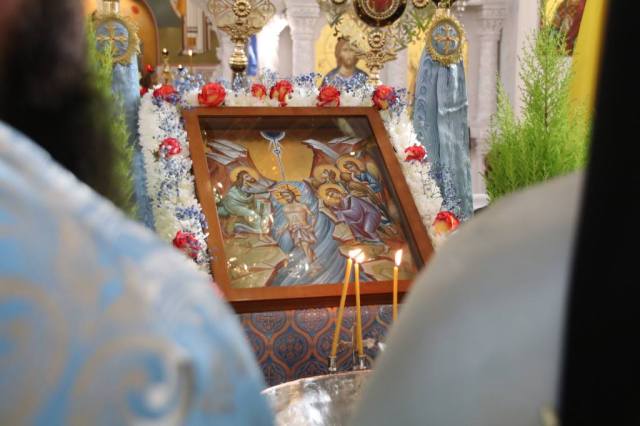
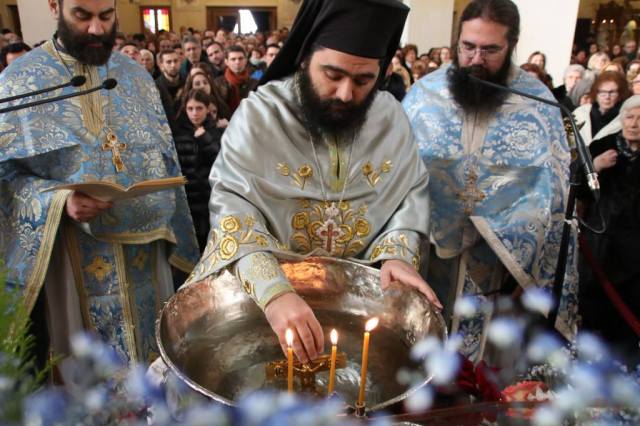
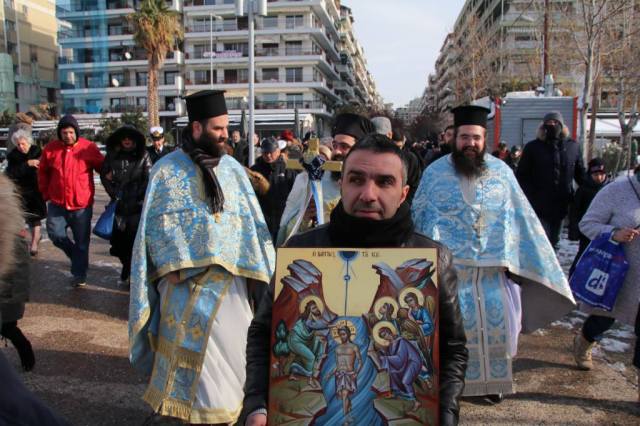
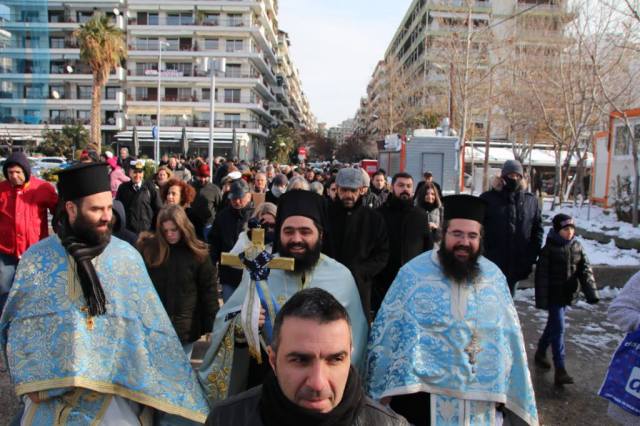
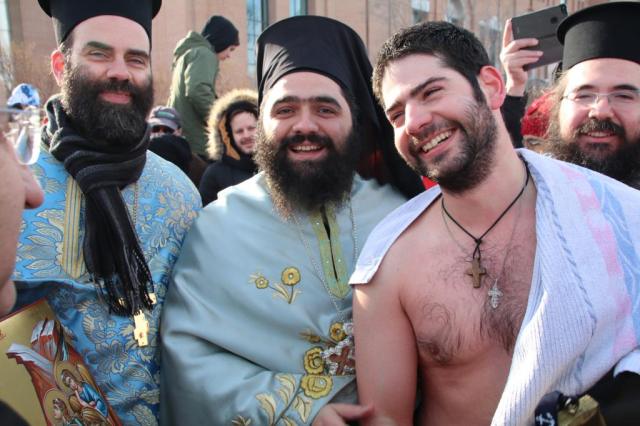
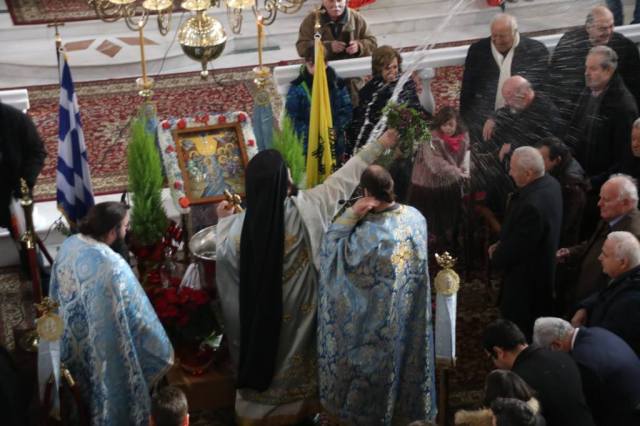
Greetings and prayers from the parish of St. Photios, Thessaloniki. One of our priests got very excited with the blessing of the Holy Water :-), and a brave young man defied the snow, braved freezing water and swam in the Thermaikos Gulf for the Holy Cross!​

fota3fota4fota5fota6fota7fota8fota9fota10fota11fota12fota13fota14fota15

fotia1fotia3fotia5fotia2fotia4

Day trip to the Monastery of Saint John the Forerunner at Serres (II)

timios26.jpg

The courtyard behind the main church

Photo Gallery (II) – Monastery of Saint John the Forerunner – Serres, Greece

timios27.jpg

The bell tower

In the bottom of a ravine on Mt. Menikion, 8 kilometres north of Serres lies the Monastery of Timios Prodromos (Venerable Forerunner). Since 1270 when the monastery was founded by Saint Ioannikios from Serres and later taken over by his nephew Saint John, this holy monastery has offered tremendous help in the spiritual and ethnic struggles of Hellenism.

A University school operated within the monastery for 300 years where many people graduated as doctors, teachers, priests, etc. The first Patriarch after the fall of Constantinople, Gennadius Scholarius, lived as a monk in the monastery and remained there until his death. His grave is found in the Mesonyktiko of the monastery’s church.

A great deal of the monstery’s destruction was caused by the Bulgarians during their raids in 1917 and in 1941. Most of the monks were killed, and the consecrated vessels and a vast array of manuscripts and books were stolen. Recently the stolen treasures were found in Sofia, Bulgaria, but have yet to be returned to the monastery. After the second raid and the killing of its monks, the monastery was left in ruins. However, with God’s help, the monastery became a convent in 1986. From then onwards, the new sisterhood has continued the Orthodox tradition passed on by the Fathers of the monastery, not only in the restoration of the ruined buildings but even more, in offering the pious people who visit, all the spiritual aid they yearn for.


timios28.jpg

The bell tower

timios29.jpg

A smaller church

timios30.jpg

Another small church

timios31.jpg

In front of a kelli, ie cell

timios32.jpg

Old doors

timios33.jpg

Unrestored area

timios34.jpg

Area under restoration

timios35.jpg

timios36timios37

timios38

The museum of the monastery is rich, in spite of the pillage of 1917

timios39.jpg

Ecclesiastical items from the museum

timios40.jpg

timios41.jpg

Old kitchenware

timios42

timios43

Bells and cowbells

timios44.jpg

Old chests and irons

timios45.jpg

Bakery tools

timios46.jpg

The main entrance of the monastery


*


timios47.jpg

For Day Trip, Part I, go here


Day trip to the Monastery of Saint John the Forerunner at Serres (I)

timios1.jpg

The Monastery of Saint John the Forerunner is 7 miles away from the city of Serres, in Northern Greece. The monastery was founded by Saint Ioannikios, an athonite monk, at the end of the 13th Century.

A photo gallery of a day of blessed fellowship at the Timios Prodromos Monastery together with friends, which were spiritual children of + Elder Eusebios Vittis . Memory Eternal +

*

To all my New Calendar friends: Happy Synaxis of St John the Baptist.
To all my Old Calendar friends: Merry Christmas. с праздником. 
timios2.jpg

The Serbian armies partially destroyed the monastery in 1345.

timios3.jpg

Saint Gennadius Scholarius, Patriarch of Constantinople, retired here between 1457 and 1462. The school of the Monastery was famous and the library was so rich in manuscripts that the monastery was called “of the Grammarians”.

timios4.jpg

In 1917, the Bulgarian Army pillaged the monastery, stealing over 200 manuscripts, 1800 old printed books and other treasures, now found in museums all over Europe.

timios5.jpg

After the Second World War, the monastery became deserted. It got repopulated by nuns in 1986. In 2010, part of it burned to the ground. The reconstruction work still continues to day.

timios6.jpg

Pavilion with old fountain with holy water, now serving as flowerpot

timios7.jpg

Old inscription

timios8.jpg

Old relief

timios9.jpg

There are many springs redirected to the monastery courtyard

timios10

Twelve kilometres northeast of Serres, to the west of a deep ravine Mountain Menikiou, is located the Monastery of St. John the Baptist, one of the historical monasteries and most beautiful monasteries in Macedonia, Greece and one of the major centres of Orthodox monasticism in the Balkans. The natural beauty surrounding the monastery is just breathtaking. The Holy Monastery of Timios Prodromos of Serres is a pilgrimage of stunning beauty.

The establishment of the Monastery in 1270 and its long history testifies the culture, tradition and the rich spirituality of Byzantium, and is an astonishing monument of Byzantine art.

The monastery was built in 1270 AC by Ioannikios, who served as bishop os Ezeve (Dafni). Afterwards, his nephew, Joakim Metropolite of Zihni, during the year 1300 surrounded the nunnery with high, solid walls and endowed it with royal donations (monastery dependency and land).

In 1345 AC the land belonging to the nunnery was almost destroyed by the invasion of the Serbs. Only due to Helen wife of the Serbian Krali Stefanos Dousan, the area wasn’t destroyed.

timios11

timios12.jpg

The main church (the katholikon) is devoted to Saint John the Forerunner

During the Turkish domination, the nunnery had the great honour of welcoming the first Patriarch Gennadios Scholarios after the fall of Constantinople. According to history, Gennadios was Patriarch for three years, from 1453 to 1457 and then he resigned and came to the Nunnery. In 1462 he was invited to the Patriarchal throne for the second time, which lasted only for one year. In 1464 he returned to the Patriarchal throne for the third time, but he was replaced by Joasaph the 1st, not having even completed one year and as a result, he returned to the Nunnery, where he died in 1472. According to tradition, Gennadios grave was in the middle part of the Catholic church of the Nunnery, close to the graves of the founders. The removal of his relics took place in May of 1854 and now are placed in a box. Close to the tomb there is a marble sign, engraved with an honourable epigram by the poet Helias Tantalidis, which was sent by the Patriarchate of Constantinople, at the time of the removal of the wise Patriarch’s relics.

The nunnery has been the centre of a constant painting movement. There are icons of the 14th century, some of the most interesting in our country and also beautiful wall paintings from the year 1630. There is also an incredible icon screen made out of walnut wood and very artistically engraved in 1804.

In the square ancient tower of the nunnery, that was converted into a library, there were 100 hand-written volumes in vellum, 200 hand-written volumes in paper, 1500 volumes of different kinds of books, 4 golden bulls of Byzantine emperors, in vellum, 5 patriarchal sigils, 4 old codes and many other religious articles that were stolen by the Bulgarians during 1913 and 1917.

Since the early years of its establishment enjoyed the favour of the Byzantine emperors. With donations and the grants acquired considerable wealth and quickly developed into an essential monastic centre.

timios13.jpg

The narthex of the katholikon

timios14.jpg

The narthex of the katholikon. Carved detail.

timios15.jpg

The narthex

timios16.jpg

Postbyzantine fresco from the narthex: The Life giving Spring

timios17.jpg

Postbyzantine fresco: The Last Judgement

The main temple is stone built, and there are many Byzantine frescoes. The iconostasis is carved and dates back to 1804. In the cathedral, magnificent frescoes are preserved belonging to different chronological phases and in various stylistic trends from the 14th century onwards — a living museum of Byzantine and post-Byzantine art.

The Cathedral is a monument of Byzantine hagiography, whose frescoes are attributed to Macedonian hagiographer M. Panselinos. Along with the surviving pictures, heirlooms, manuscripts and other objects of miniaturisation, they all give a complete picture of the artistic and intellectual radiation experienced by the monastery since its inception to date.

The operation of a Greek school since 1825 and a Seminary from 1869 confirmed the name rightly won as a “Monastery of Literature”.

timios18.jpg

The entrance to the nave

timios19.jpg

Inside the main church

timios20.jpg

Jesus Christ the Saviour, icon fom the iconostasis

timios21.jpg

Mother of God, icon fom the iconostasis

timios22.jpg

Fresco from the main church

timios23.jpg

Christ before Pontius Pilate, fresco from the main church

timios24.jpg

The Burial of Christ, fresco from the main church

The age of the monastery, the permanent residence of thirty nuns and the large turnout of believers led to the need for reconstruction of the new Catholic, built in the architectural standards of the Byzantine monasteries.

Since 1986, there have been nuns in the Monastery,  mostly university graduates who chose poverty, chastity and obedience over careers, relationships and motherhood, who came from the Monastery of Panagia Odigitria of Volos and are under the obedience of Elder Efraim of Arizona. The life of nuns is dedicated to worship, reading, and working in the monastery. In addition to their attendance at church, the sisters spent several hours in private prayer and meditation. Often people struggle with the idea of a young woman, even a college graduate, entering religious life: “It seems so different to be readily accepted by others. For several years my parents didn’t recognise it… However, it was a conscious choice through internal need” (Νun Iosephia).

The monastic community is engaged with various daily work and chores: cooking, raising the necessary supplies of vegetables and fruits, producing wine, oil and honey, embroidery, iconography and so many others.

The fraternity under the guidance of Αbbess Fevronia makes every effort to reconstitute the complex with remarkable results. The old distillery of Monastery wine now forms a small cosy museum. On December 13, 2010, the monastery was hit by a fire that destroyed the hospice, the old showroom, the guest room and other buildings. The 30 nuns are trying hard to reconstruct the building complex of the Monastery which was ruined in 1986. Since then, the monastic community in cooperation with the Authority of Byzantine Antiquities in Kavala has undertaken the work of conservation and restoration of the monastery.

timios25.jpg

Saints Archangels Michael and Gabriel, old tempera on wood

A Brief History of the Timios Prodromos Monastery

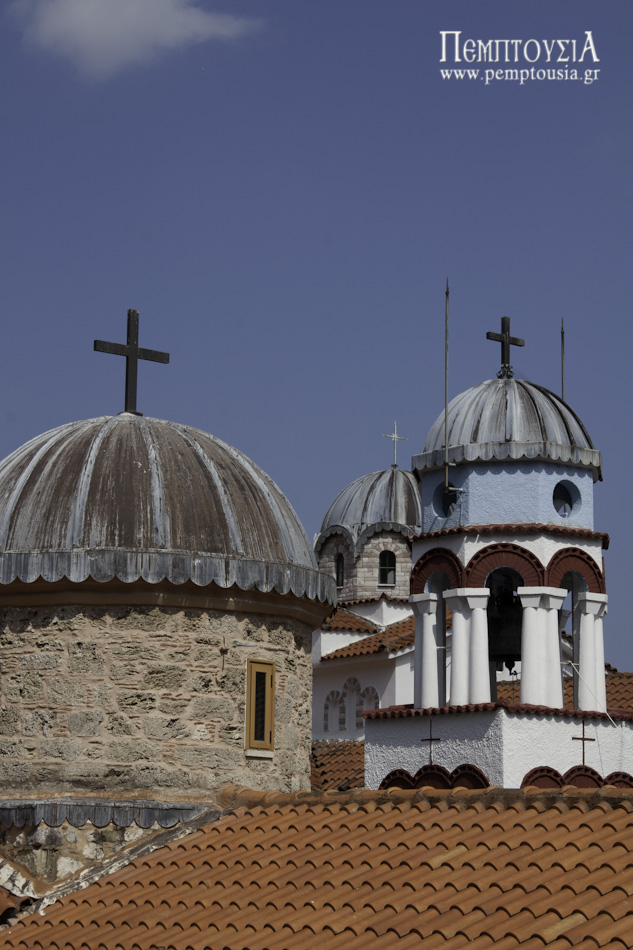
The katholicon (main church) was built in the 14th century and belongs to the single-aisled domed type with lite, narthex, exonarthex and an oblong roofed portico on the south side (Makrynariki)

On the north side are two chapels and the belfry. The rest of the buildings are organized around the katholicon: cells, abbot’s quarters, school, refectory, library, hostel. The wall paintings of the katholicon were executed in 1300-1333 and were continued in several periods, by various artists.

The monastery was founded in 1275-1278 by Monk Ioannikios from Serres and a few years later it was renovated by his nephew, Ioakeim, bishop of Zichne. It soon developed to an important monastic centre with great financial prosperity, because it was favoured by the Byzantine emperors. Patriarch George Scholarios (Gennadios) died here and was buried in the katholicon.

As the spiritual centre of Hellenism in eastern Macedonia, during the Balkan wars the monastery of Timios Prodromos (Saint John the Baptist) provoked the fury of the Bulgarians, who took pains to strip it of its historic treasures. Greek historical documents and in particular the monastic library were carried off to Sofia in their entirety in 1912. The quest for these invaluable sources of Macedonian history has since occupied, as it continues to occupy, much scholarly research.

The monastery, still functioning today, acquired its final form with the addition of many buildings during the Turkish occupation.

In the years between 1972 and 1986 the roofs of several buildings were repaired. Since 1986 restoration has been carried out at the cells of the east wing and at the north wing.

This is the most important monastery of Serres (Serrhai).