I am but earth and ash — two documentaries

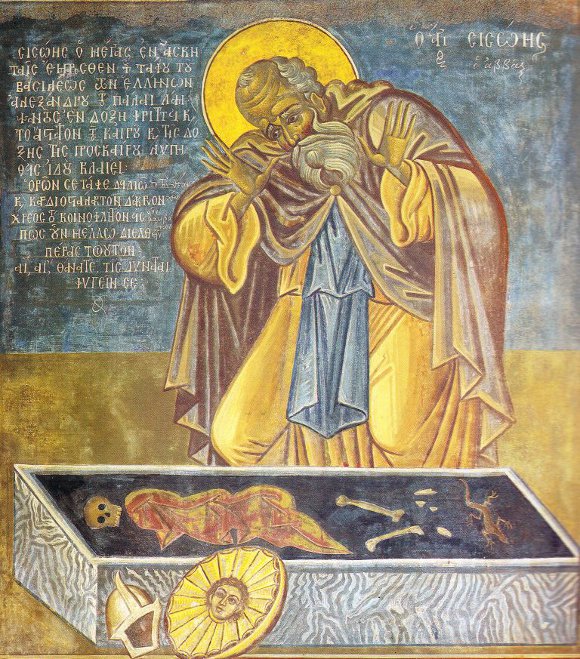
The “Astonishment of Sisoes” (*)

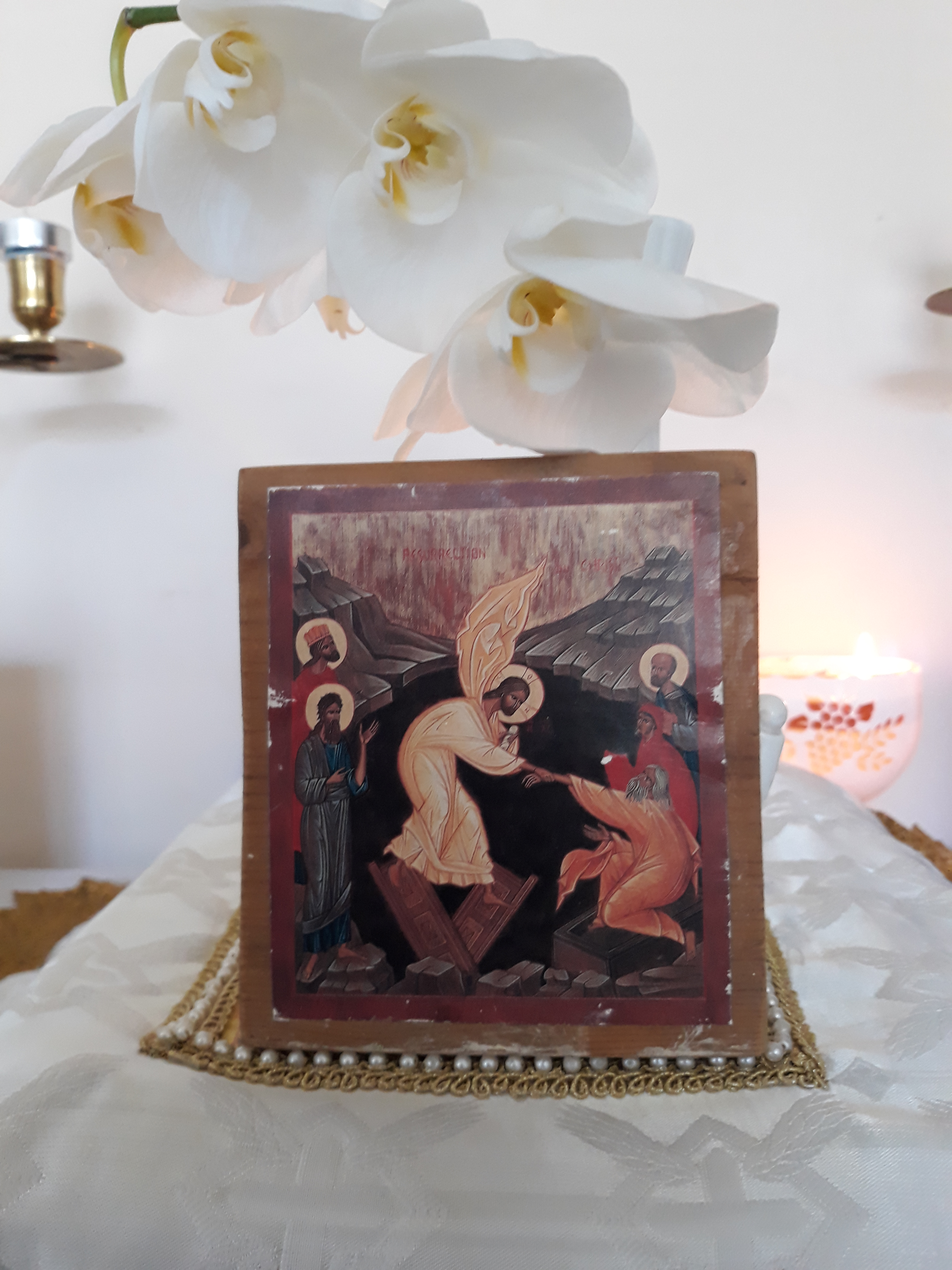
At the recommendation of my spiritual father, I have been watching two exceptional documentaries on monastic life: Athos – Mount Athos Monks’ Republic Documentary and The Good Struggle: Life In A Secluded Orthodox Monastery. Interestingly enough, I found all their insights pertinent not only to monastics, but to laymen too. What truly struck a chord in my heart was their emphasis on the transience and ‘futility’ of our ‘ordinary’ lives, and a remarkable miracle entitled “Christ is Risen”, the first documentary records.

Athos, the first documentary is exceptional partly because for the first time, a filmmaker was given access to all forms of monastic life on the holy mountain (ie. cenobitic monasteries, sketes and monastic cells).

The Good Struggle, the second documentary, is about a monastic community thriving within the confines of a Greek Orthodox Christian monastery, high up in the mountains of Lebanon. The documentary offers rare insight to their almost silent way of life.

What I found most moving in both documentaries is the “school of philosophy” in the Gerondes’ own words: the insights into the monks’ burial place, their bones eventually stored in a separate charnel house, within the consecrated grounds of the cemetery (20:06–21:28 and 1:25:38—1:28:10 — first documentary), or under the church (23:35–24:36 –second documentary).

“So we can always pray for them and join them. This is due to the church’s belief that those who depart are not removed from us, but we are always connected through prayer. We don’t see them but they are connected to us through prayer. They pray for us and we pray for them. We always visit them to encourage ourselves that death is not a calamity but a meeting with the Lord Jesus Christ. We honour and greet them because they have done the good struggle and God has accepted them in His Kingdom.”

So moving and at the same time so sobering forour [vain] affection for earthly things”! “And once again I looked with attention on the tombs, and I saw the bones therein which of flesh were naked; and I said, … Where is the pleasure in life which is unmixed with sorrow? … All things are weaker than shadow, all more illusive than dreams; comes one fell stroke, and Death in turn, prevails over all these vanities. All is dust, all is ashes, all is shadow. … Like a blossom that wastes away, and like a dream that passes and is gone, so is every mortal into dust resolved… ” (St. John of Damascus, Orthodox Funeral Service Troparia)

*

Christ is Risen! He is Risen Indeed!

*

(*) “Sisoes, the great ascetic, before the tomb of Alexander, king of the Greeks, who was once covered in glory. Astonished, he mourns for the vicissitudes of Time and the transience of glory, and tearfully declaims thus:The mere sight of your tomb, dismays me and causes my heart to shed tears, as I contemplate the debt we, all men, owe. How can I possibly stand it? Oh Death! Who can evade you?’

A Misty, Mystic Monastery

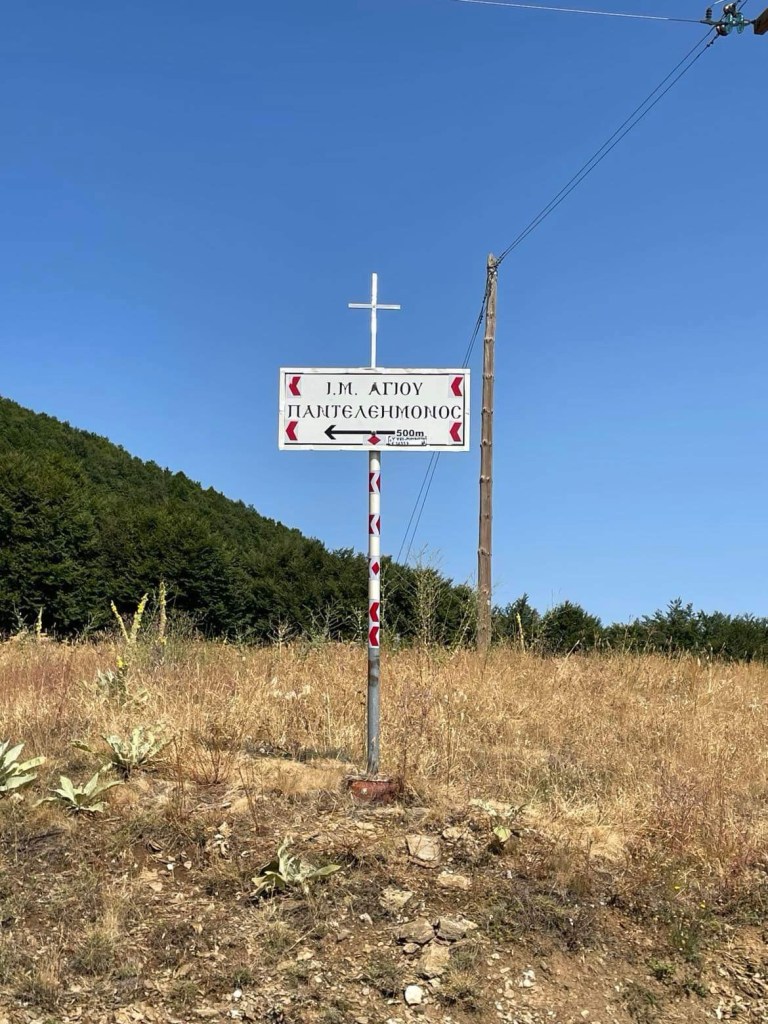
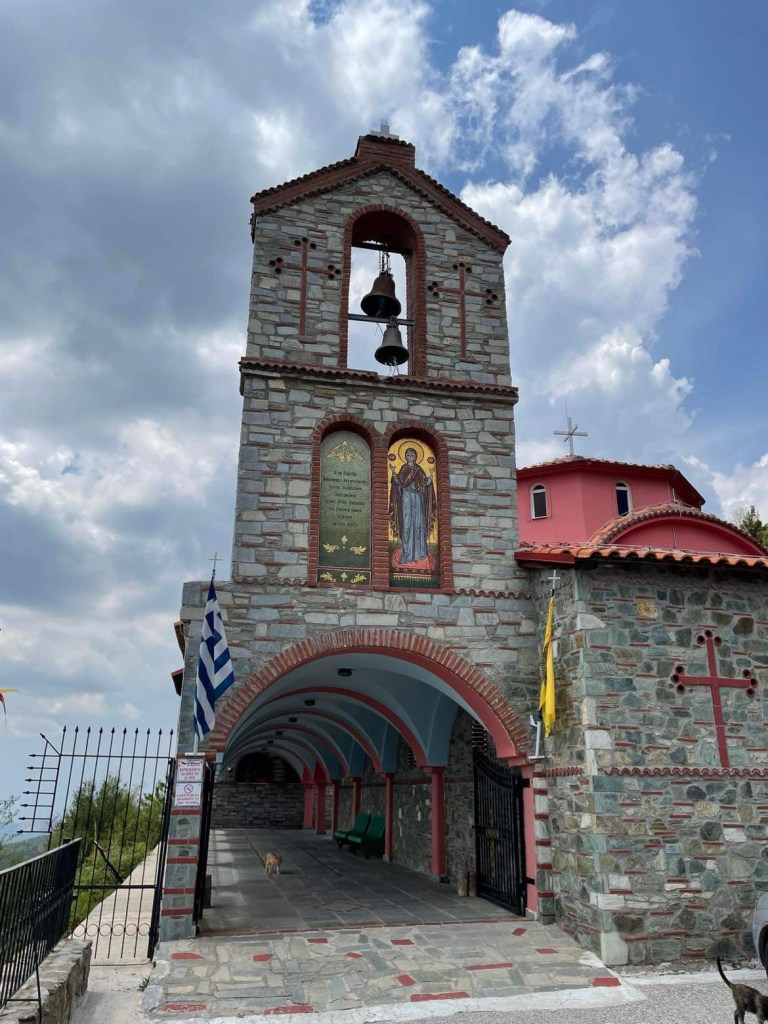
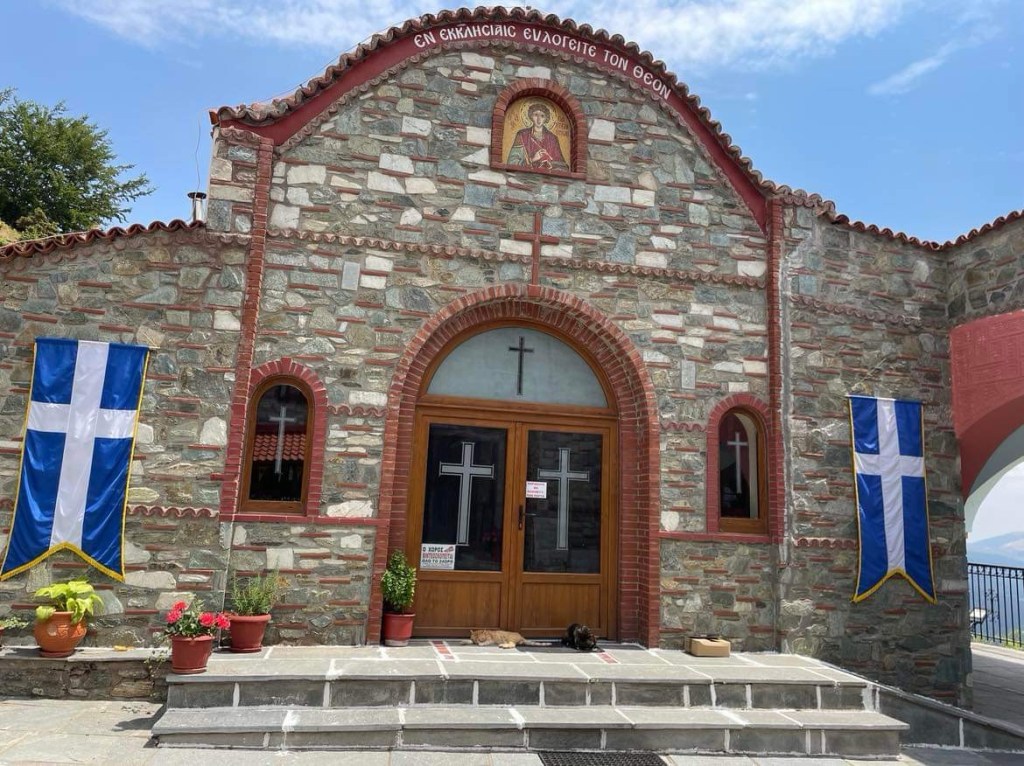
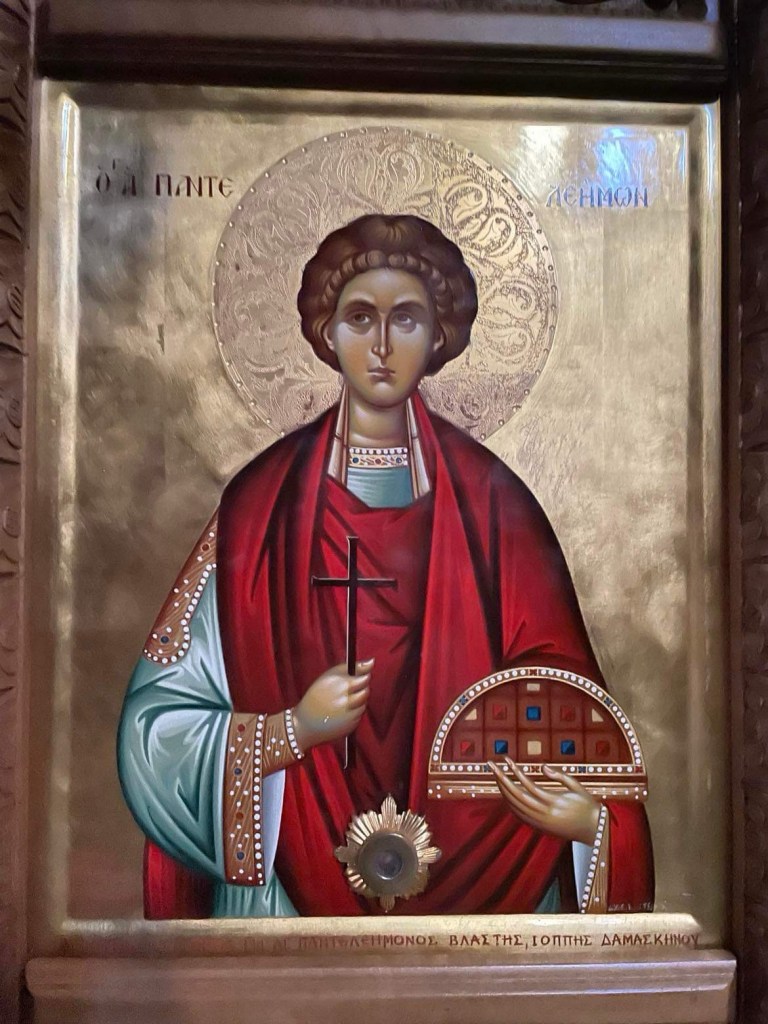
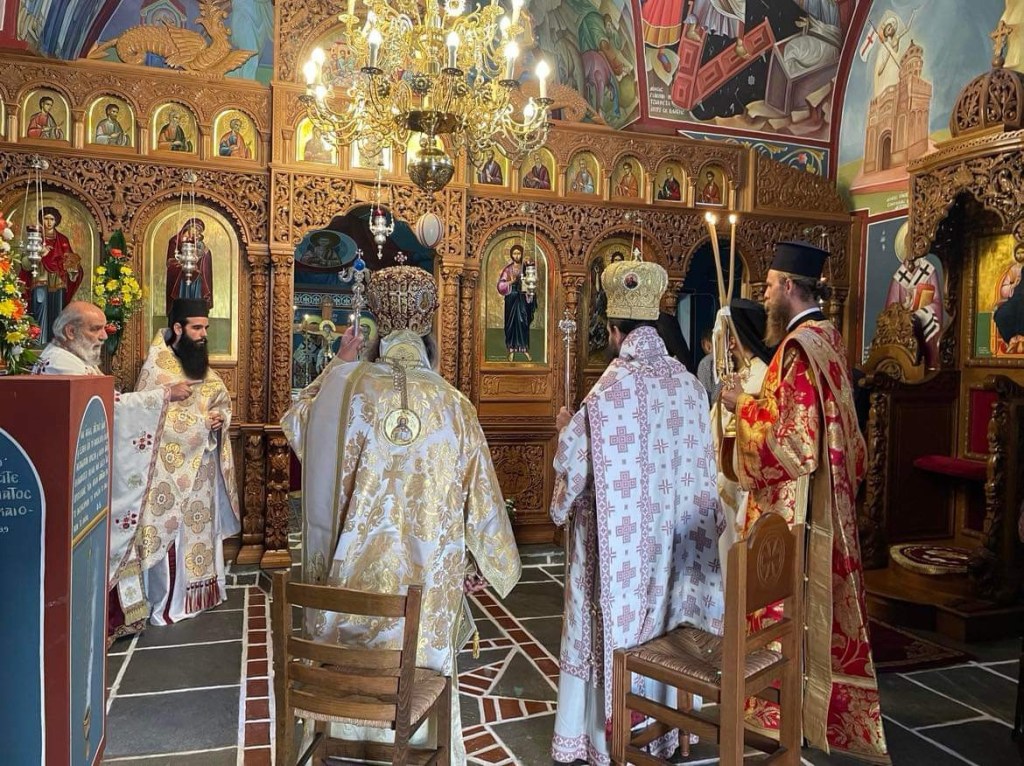
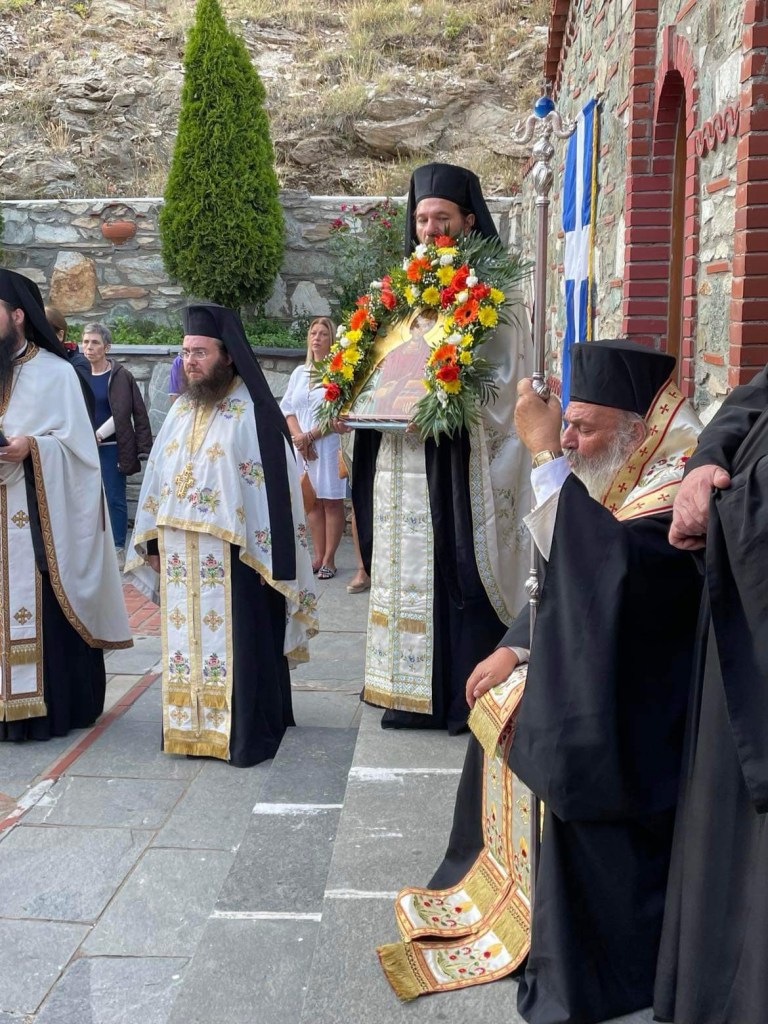
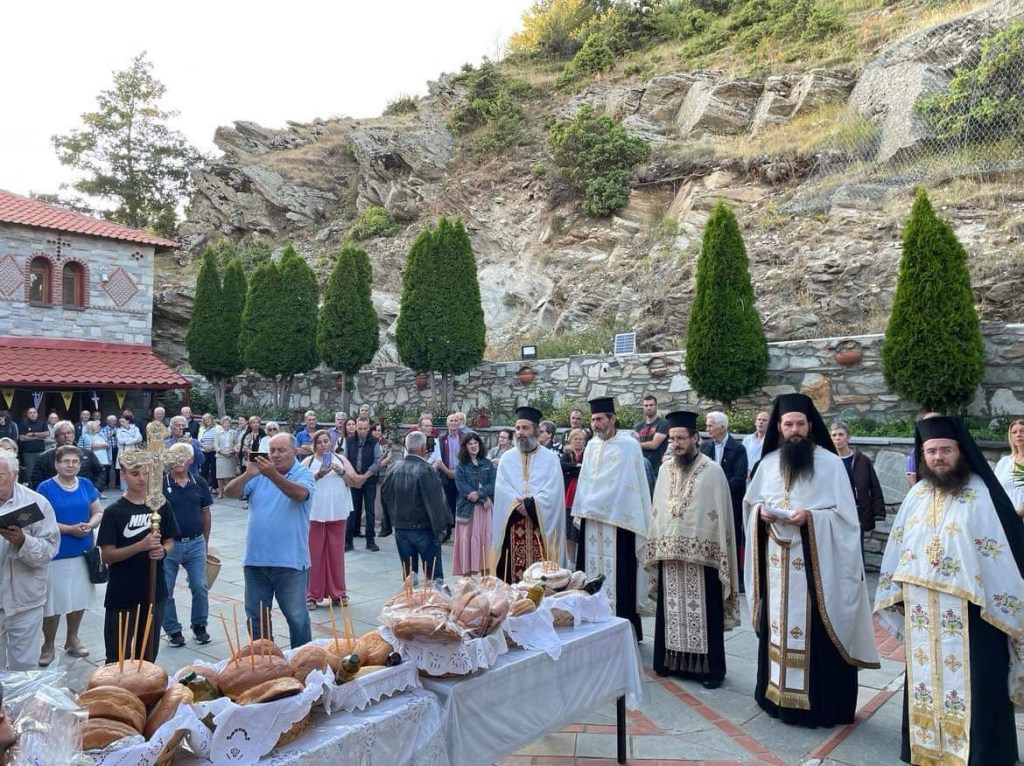
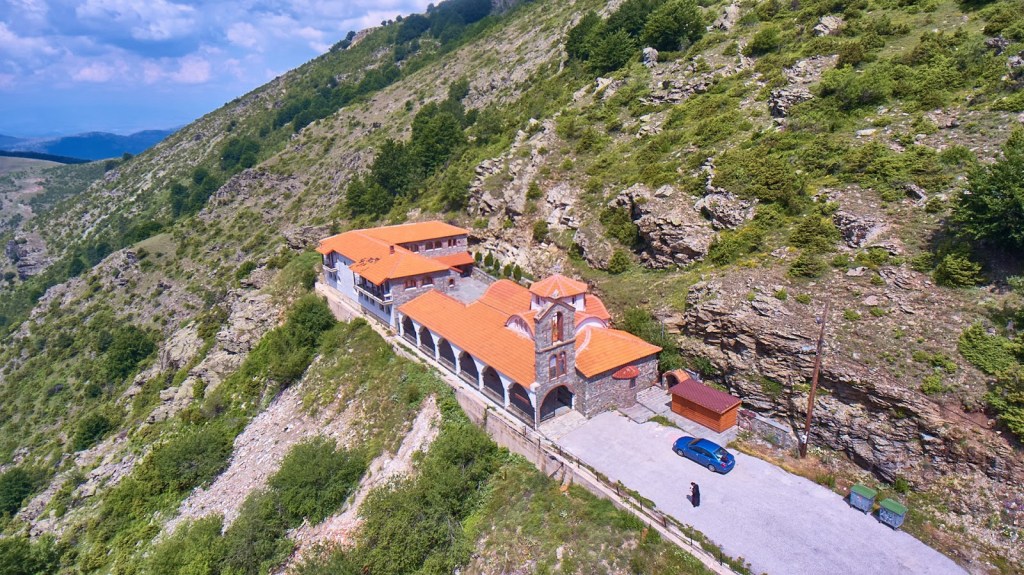
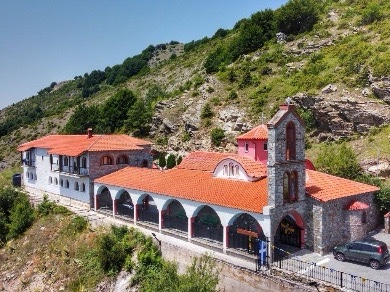
Last week, on the eve of St Panteleimon’s Feast, I arrived at his monastery at the suburbs of Vlasti, and 33km away from the bustling heart of Kozani, to help the monastic synodeia there for the Feast.

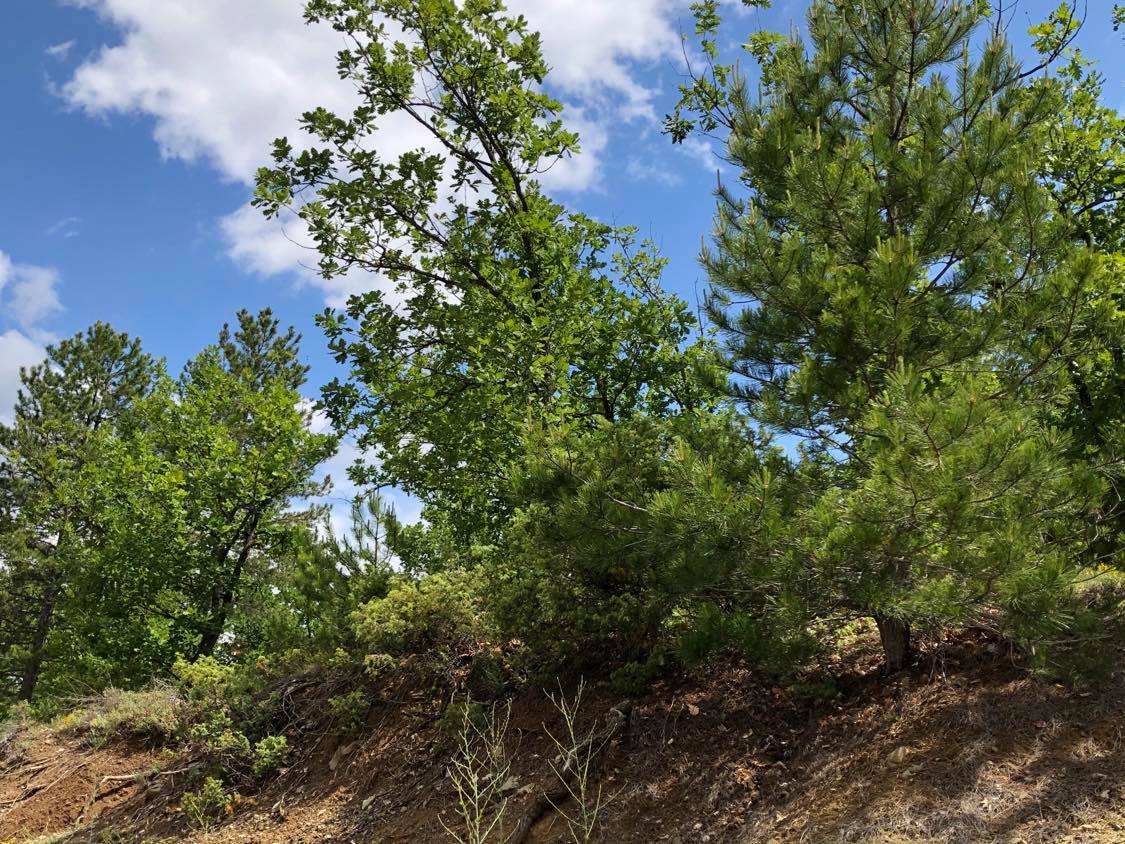
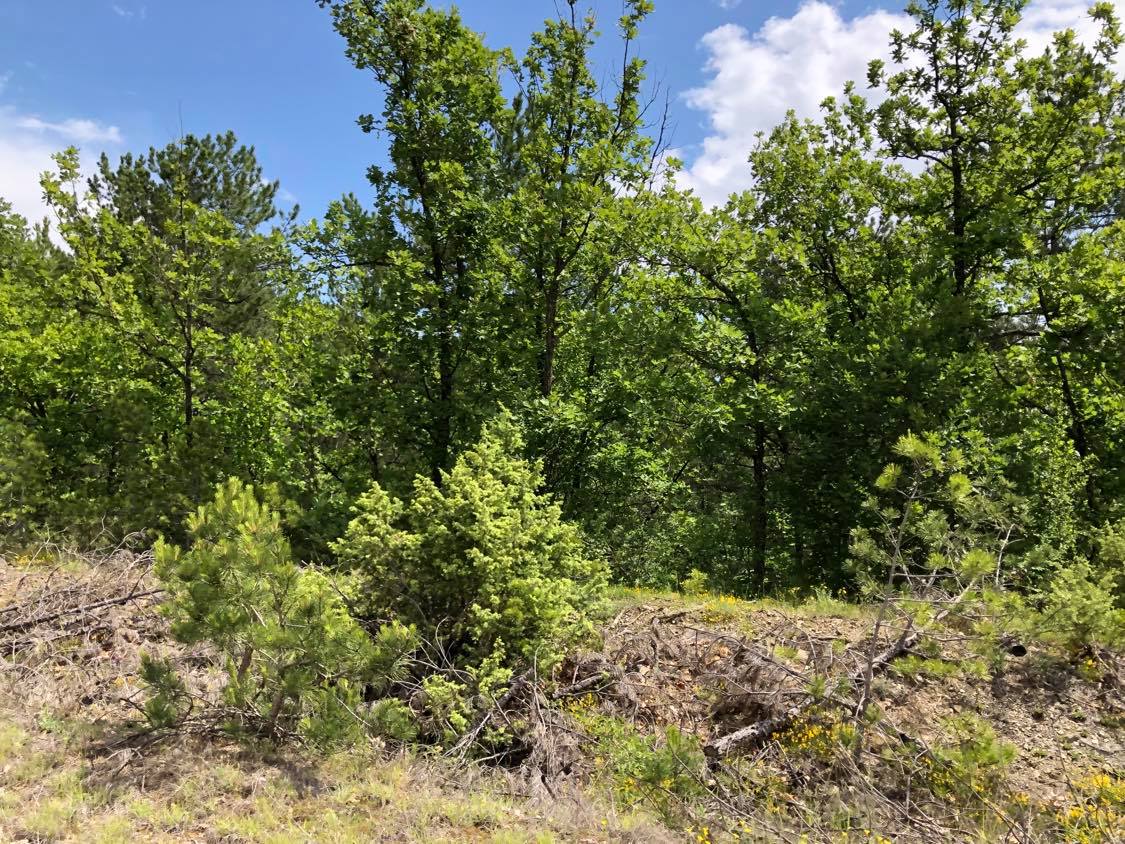
This was my first time there and the surrounding landscape scenery at 1650 m altitude was stunning. The landscape altered among numerous fields with sparse cedar, lammergeyer, oak and pine forests. At the higher positions, sheer rocks and alpine fields add a particular mountainous character. St Panteleimon’s misty and mystic monastery dates back to the 15th century and is almost permanently capped by gray clouds and fog. It is by far the monastery at the highest altitude all over Greece, Mount Athos included.

For stunning views of this mystic and misty monastery and the surrounding landscape, go to this YouTube link:

https://youtu.be/33sjBZ1Uty4?si=dwtg5uAWG4PQ0cEQ

Except for the incomparable beauty, this area is also known for its ecological characteristics, as it constitutes a biotope of bears and other predatory birds such as the war eagles, haggard eagles, snake eagles and the bullfinches. Vegetation is also lush, with a great variety of wild flowers and herbs. This travel/ pilgrimage destination indeed beckons not only pilgrims, but travelers seeking tranquility and untouched beauty.

For video excerpts of the church services these two days (Vespers and Matins- Holy Liturgy), go the following YouTube link:

https://youtu.be/M67AiZ3W9bk?si=Ko-VVexrZQrVKet_

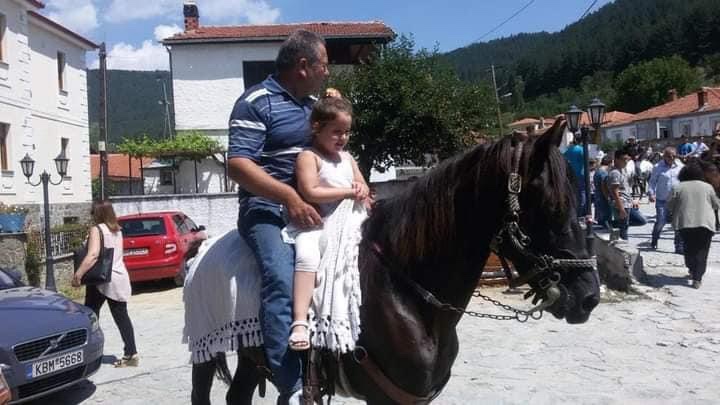
Though I normally share with you church services highlights, everyday Saints stories and elders’ spiritual encounters from my pilgrimages, this time I would like to introduce to you two local customs during the Feast, which I have encountered only in this area: the Horse Riders’ Tama (votive offering) to St Panteleimon and the Tranos Choros (Grand / Magnificent Dance).
The Horse Riders Tama to St Panteleimon

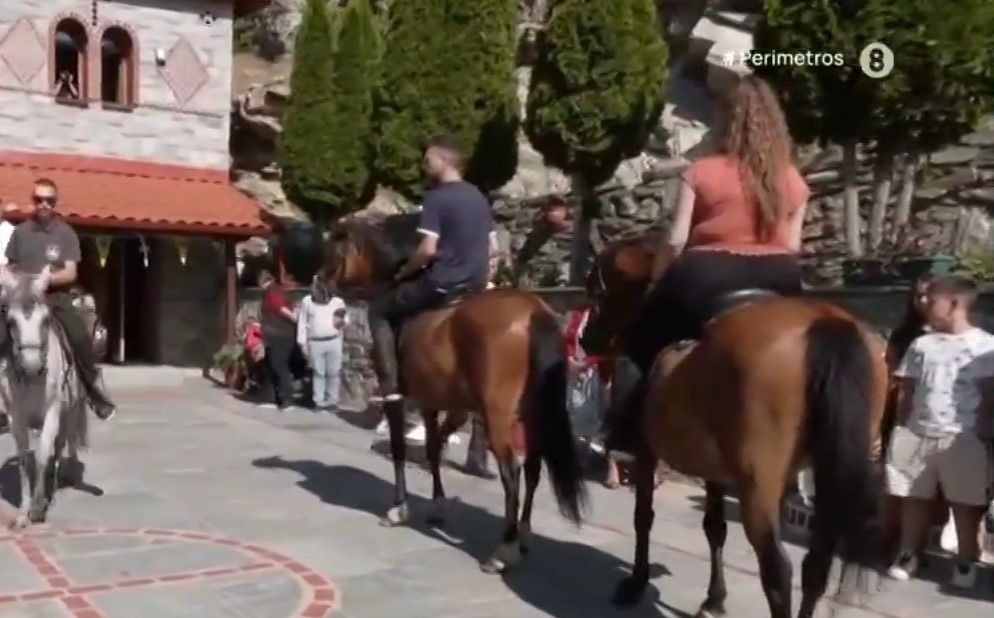
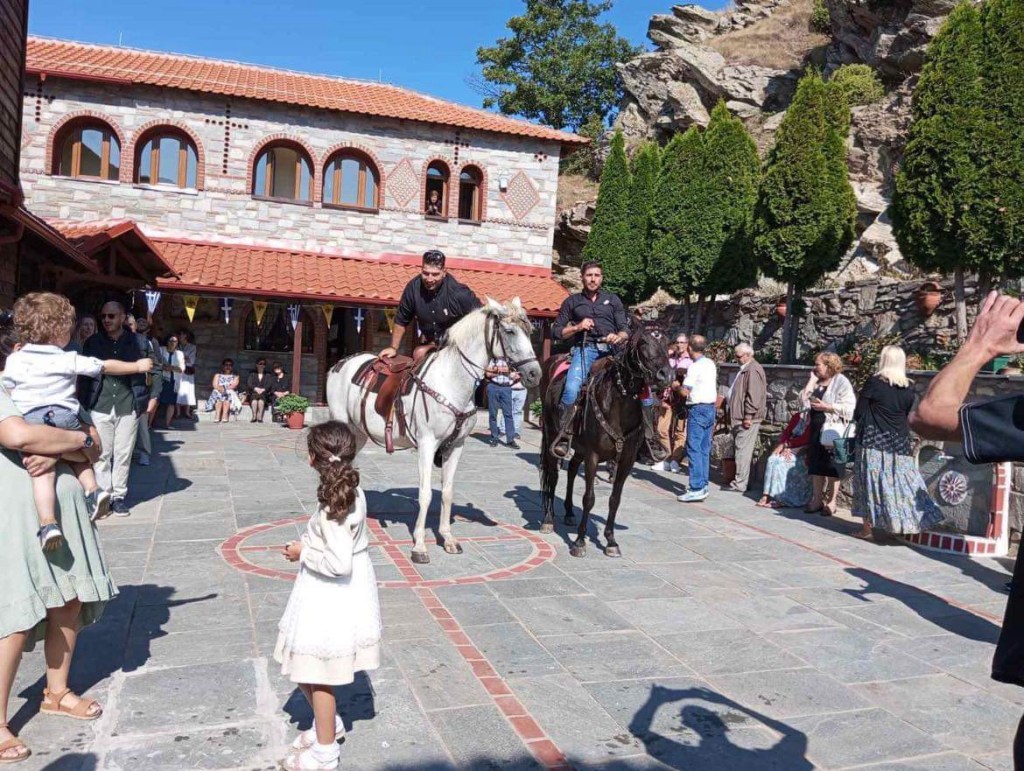
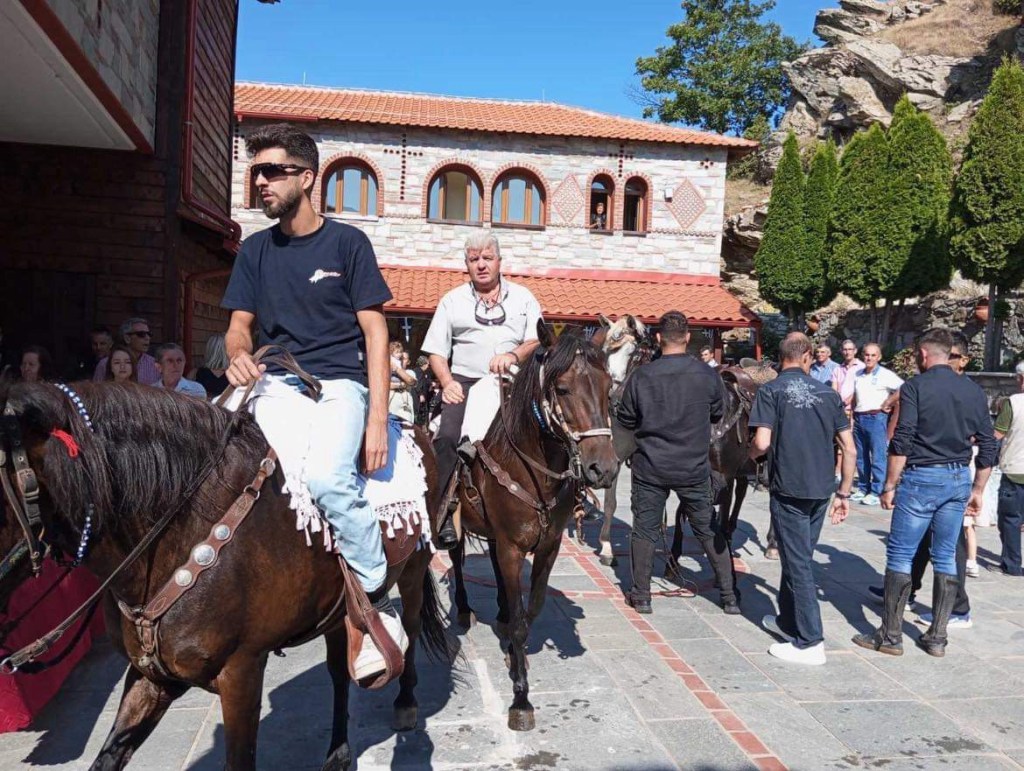
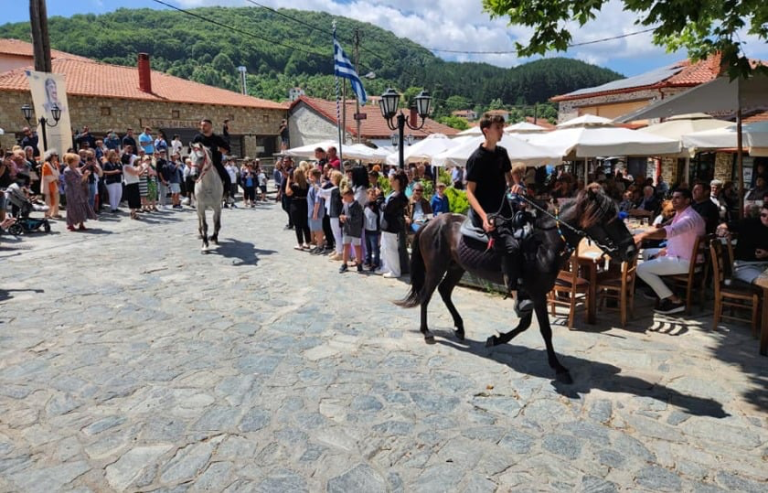
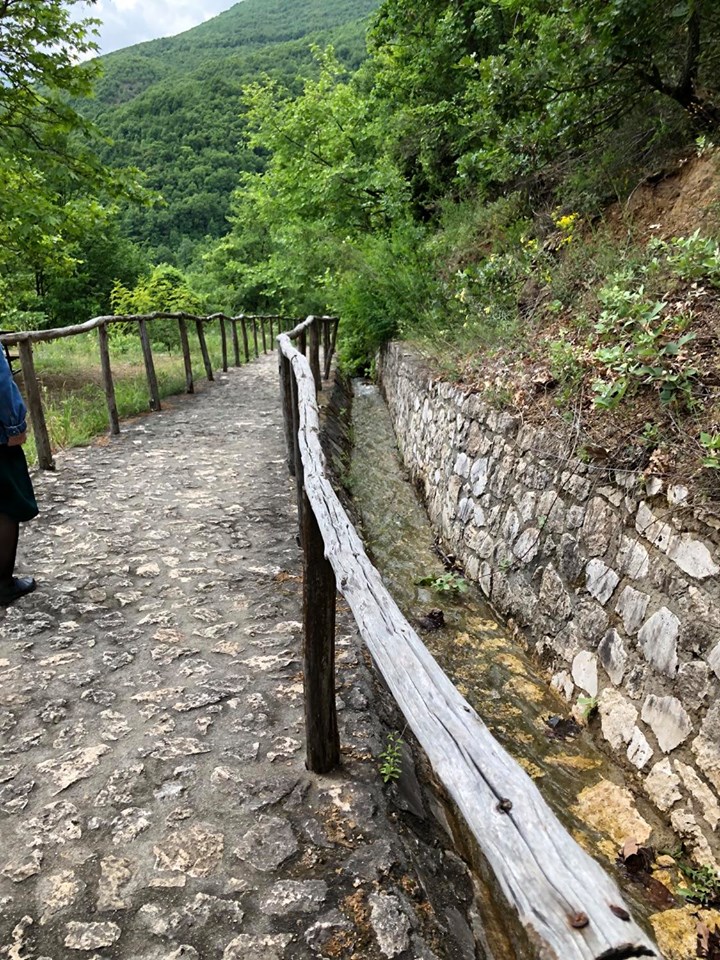
On the Feast day, the inhabitants of the nearest village Vlasti, as well as friends and relatives all over the world, who come specifically for St Panteleimon’s and later Panagia’s Feast on August 15, prepare their horses (some may borrow), and climb up to the monastery of Agios Panteleimon on Mount Muriki, so that they can attend church and honour the Saint.

After the Divine Liturgy, the horse riders descend from the beautiful, meandering paths of the mountain, to the center of Vlasti, a nearby picturesque village, just 4 km away from the monastery, nested in the mids of alpine landscape and lushy fields, and sitting at an elevation of 1200m. Background music accompanies them all the way unto the monastery and back to the village feast.

Again, for video excerpts of the horse riders’ tama, and the village feast visit the following two YouTube links:

https://youtu.be/fvWVa5p3WqE?si=8s_Cua_sGHX5q8hT

https://youtu.be/XDf5ESyQhpk?si=SaSdyhfSe-wxU9iO

The Tranos Choros (Tranls. Grand / Magnificent Dance)

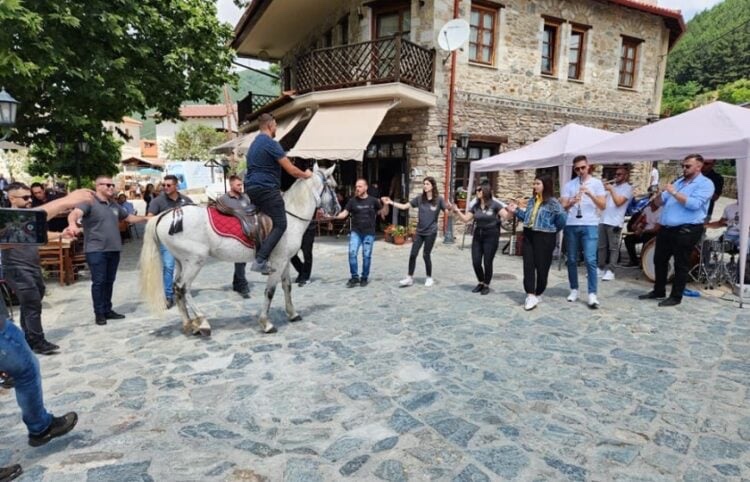
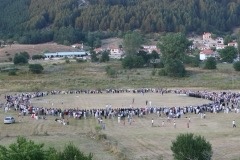
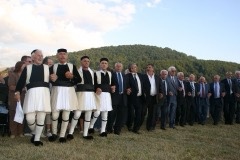
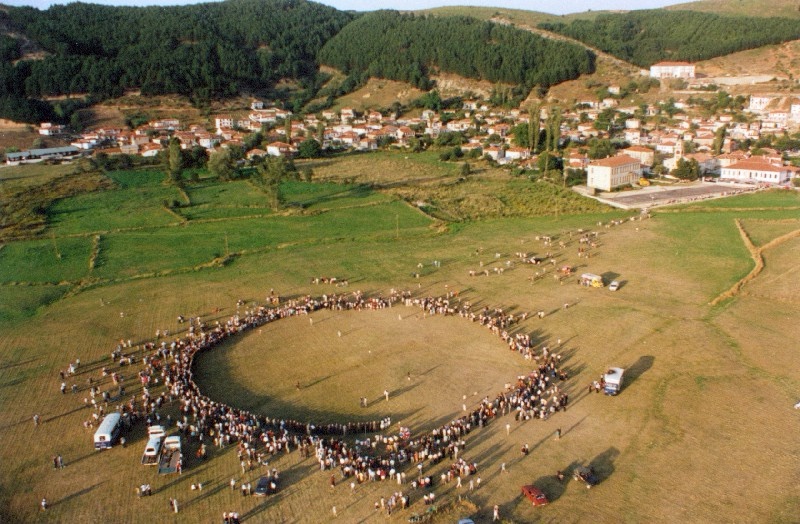
This dance is a traditional community event based on the dual elements of «song – dance» (a capella, ie. vocals and dance without the accompaniment of musical instruments). It bears a ritual character, passed on from one generation to the next. The term Tranos denotes the universal participation of the local community in its performance and its great importance to the community.

The dance is performed not only by permanent residents of the community, but also by Vlatsiotes all over the world, who, although are no longer inhabitants in their land of origin, make a point of returning to visit every summer during these feasts, with the aim of reconnecting with their village and reconfirming their group identity.

The Tranos Choros (Grand/ Magnificent Dance) is danced annually in Vlasti in the afternoon of July 27, day of the feast of Saint Panteleimon, as well as on the two days of the feast of the Dormition of our Lady Theotokos, on August 15 and 16.

The Tranos dance in Vlasti has its own rules. These rules define what time the dancers gather, their hierarchical position in the circle, the dance pattern, the order of songs, the specific dance motifs.

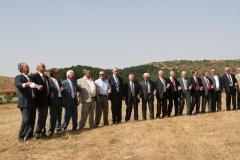
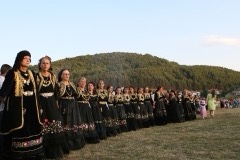
Hierarchy, based on gender and age, is a characteristic of its structure. The men lead the dance, positioned in order of seniority, those wearing traditional dress first . Age is again the criterion for each woman’s position in the dance circle. In the case of women of the same age, the criterion is their wedding date. Traditionally, the leading dancer is the eldest, an expert on both songs and rhythm.

The dance begins at the moment when the leading dancer crosses his left foot over the right. It is a particularly symbolic move, with the leading dancer raising his left leg and holding it above the right for the dance to begin. For the Tranos dance, this move has the same role as the raising of the conductor’s baton in a symphony orchestra. The movement is accompanied by a simultaneous move of the hand holding the kerchief and the rendering of the first verse of the song.

The lead dancer is joined in song by most of the men. The lyrics are repeated by the women’s semi-chorus and the men who are last in line. This ritual dance in the minds and hearts of the locals evokes people long departed. “This place has existed and will always exist. To paraphrase the poet George Seferis, «as the pines retain the form of the wind, even when the wind has gone and is no longer there»”

Watch this communal, ritual dancing in the following two YouTube videos:

https://youtu.be/Cl6WbI5brVw?si=cSt6-UyMcdMWUjy0

https://youtu.be/uLNkx5FSeUk?si=2lmqaKg8SgLzDG3e

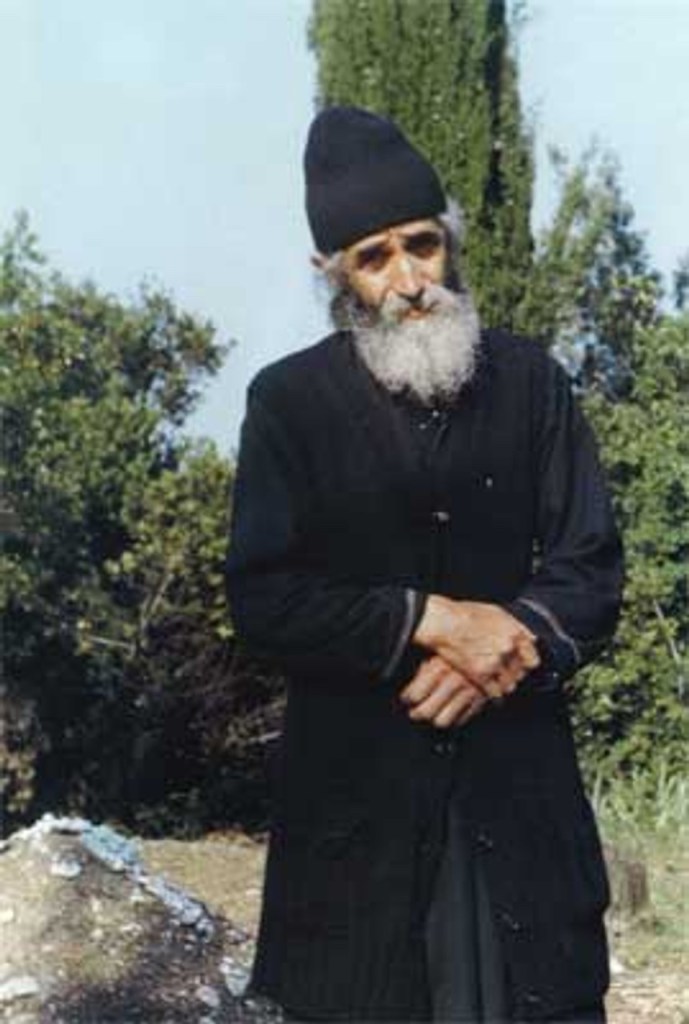
Saint Paisios the Athonite

A photographic tribute, worldwide first screening of the day of his canonization and an adaptation of Agni Parthene Despoina for St Paisios

https://youtu.be/IQhNrRF89HM?si=bGIsNDsIqjM20OMD

Worldwide first screening of the day of his canonization

https://youtu.be/rhFb44bRQdg?si=y2TdvN2Z50ecdHZK

An adaptation of Agni Parthene Despoina for St Paisios

https://youtu.be/U4-aACI6vbY?si=ywyEkuVKidxHsEsZ

Doxastikon of the Stichera in the Plagal of the Second Tone

You traveled the path of the ascetics well, towards the working of virtues, O God-bearer Paisios, and you drove out the man of the flesh from your heart, while your nous meditated on unceasing prayer, andtheoria of the Uncreated Light. Therefore, having partaken of the gifts of your graces, we hymn you, O Venerable One, and we say with joy: Rejoice, the offspring of Farasa, the pride of Athos, the pillar of Konitsa, the teacher of Monastics, the dweller of Sinai. Rejoice, you who were adorned with the garment of dispassion, and therefore became a guide to the youth, the lifting-up of the fallen, and the return of the deluded. Rejoice, O example for Monastics, the type for laymen, and the rest and refreshment for the faithful Orthodox. And now, O Godly-adorned Elder, ceaselessly entreat Christ God on behalf of us, who celebrate your sacred memory.

Selected hymns to Saint Paisios the Athonite

The Coronavirus Diary of a Joyous Pustinik — 46

SONY DSC

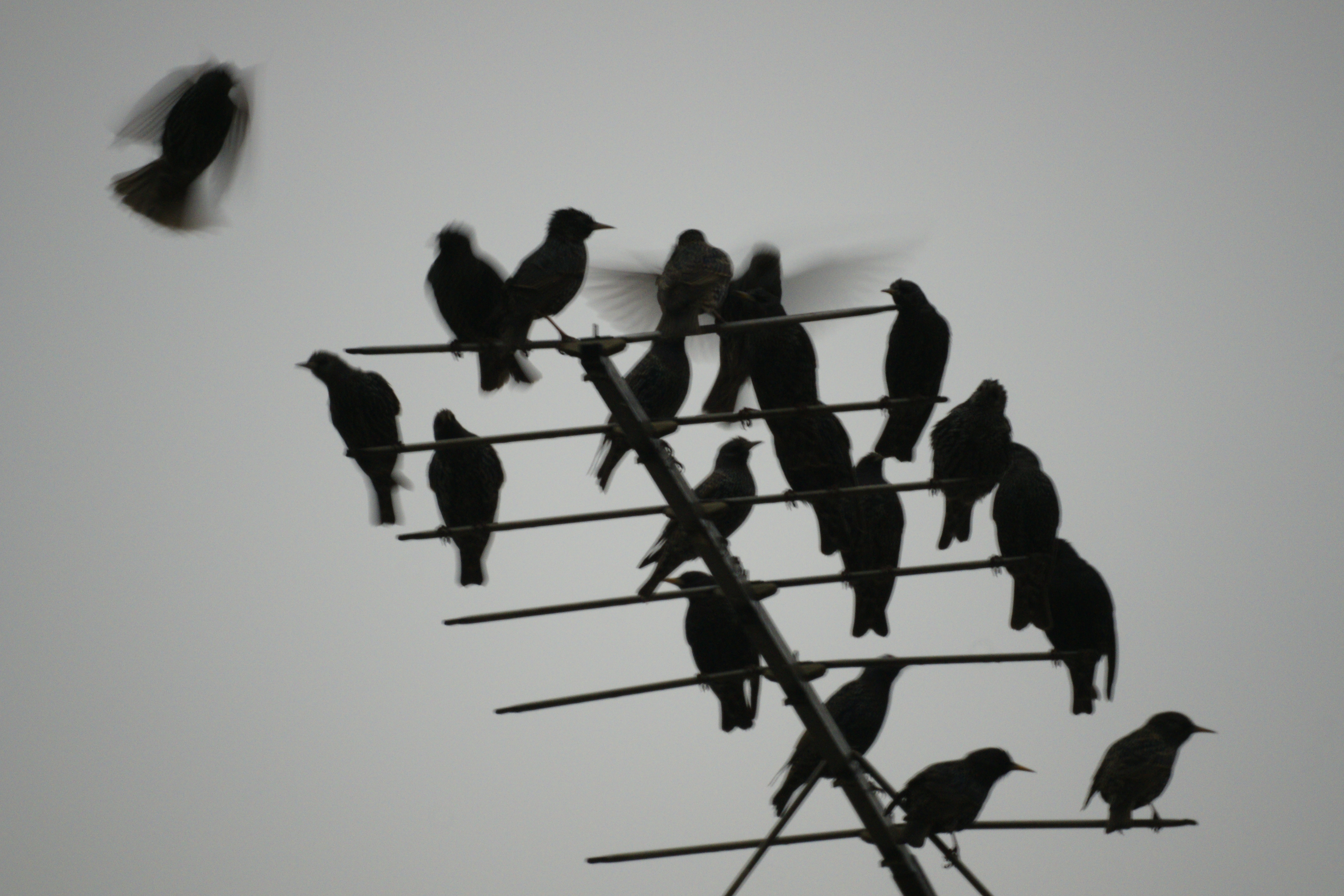
The Birds’ Symphony by George Tsintsifas

Symphonia

Yesterday, I heard two familiar pieces of music on the radio. It took me back to when I studied music at school. There, as part of preparations for our examinations we followed the music scores of Bach’s Brandenburg Concert #3 and Schubert’s Fifth Symphony whilst listening to vinyl L. P. recordings of these works. It was both a duty and joy to follow and listen under the observations and instructions of a good teacher. Over and over again, our small group of pupils would listen to the recordings until we became so familiar that we knew them off by heart for the exam to follow. Some years later, I was pleased to hear these works played in concert by a live Orchestra. That initial schoolboy learning process was transposed into wonder as I witnessed each member of the Philharmonic playing their part under the conductor for the audience’s delight. 

In an Orchestra, breath and hands on musical instruments bring sound to notes, as breath gives voice to words in praise of God and hands bring mercy and kindness to others. Just as music is the fuel to stir emotions, Christian love is the engine to move faith and hope into action. Our Christian life too, often starts with listening and following the scores (the Bible/the Liturgy/the Church Fathers), paying attention to the Teacher and Conductor of our life (Christ), and then working together (in fellowship)for the benefit and joy of others(evangelism). 


 Theme: Working together in Harmony

Luke 15:25
“Now his older son was in the field. And as he came and drew near to the house, he heard music and dancing.


When one desert father told another of his plans to “ shut himself into his cell and refuse the face of men, that he might perfect himself,” the second monk replied, “ Unless thou first amend thy life going to and fro amongst men, thou shall not avail to amend it dwelling alone.”


Many arrived and adjusted themselves to a listening mode in the auditorium.

The orchestra entered, settled themselves, tuned up and looked intently for the Conductor’s command.

Sound and silence became a dialogue.

Both the ones who played and those who listened melded into a dynamic organism;

 a heartbeat giving life to a body.

The union of loving strings buzzed as bees in a hive,

To shrive the withered minds and weary limbs,

 And having worked the nectar and shared the pollen from the hours of practice and rehearsal,

Produced the honey for those seated to taste.

 The audience feasted on the abundant sweet notes

 And were swept along and above to a higher form;

 from their mundane routine to another dimension.

They were moved, transported to the land

Of awe filled tears,

Where harmony is the currency,

Where sunshine sparkles

and dances on the ears.

 Beads of infinity permeate the throng in this communion song;

Inspiring first emotion, then empathy, followed by wonder and finally joy.

Such joy as can never be captured but glimpsed-only glimpsed,

In a gilded moment, felt in the heart,

digested in that part 

of the mind which is forever a child’s laugh or first remembered summer.

As food is energy to the body so is music nourishment for the soul.

Such provision was encouraged by a ministering angel’s smile, sent

In order for us to repent from worldly guile.


We are drawn into that scented circle, inexorably and imperiously drawn

By that mysterious sound that claims and wraps our tender frame.

“But why so little music in the Gospels?”

“Hosannas” with palms endorse a King 

And older Psalms, of course, to sing!

But where is the chorus for our dreams? 

Only for the Prodigal it seems!

Was music not given by God to grace the mind of all,

 make glad the heart, to heed the call?

Is there not harmony at the centre of the Universe?

Or is it that our lives in Christ should rehearse

 for heaven;

 reverse the ego’s trend and blend to be

 a sounding board with others in that greater symphony.

Epilogue

A Harmony with Thee

Glory be,

 Viva Vivaldi,

 Not I but we, 

Was blind now see, 

Oh Mystery,

Oi Agioi kai Angeloi,

 In unity 

with The Holy Trinity. 


A tree is known by its fruit; a man by his deeds. A good deed is never lost; he who sows courtesy reaps friendship, and he who plants kindness gathers love.


Saint Basil the Great

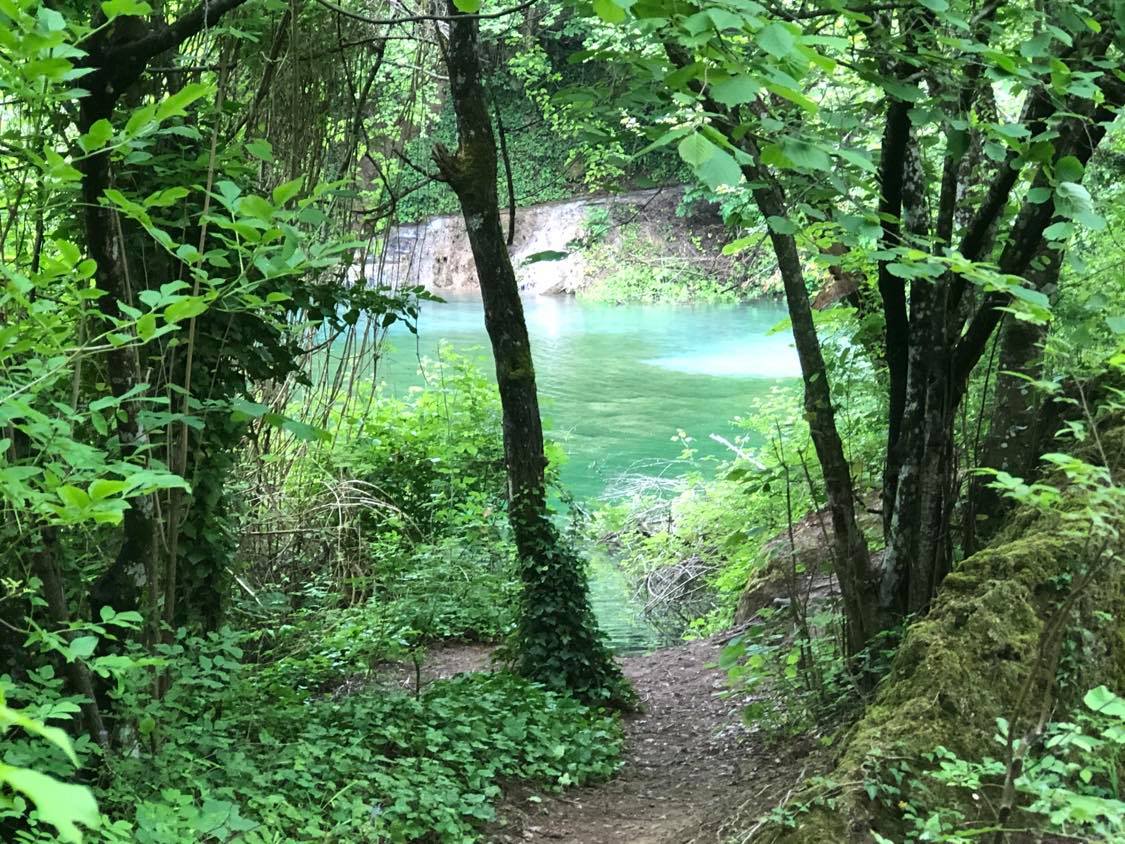
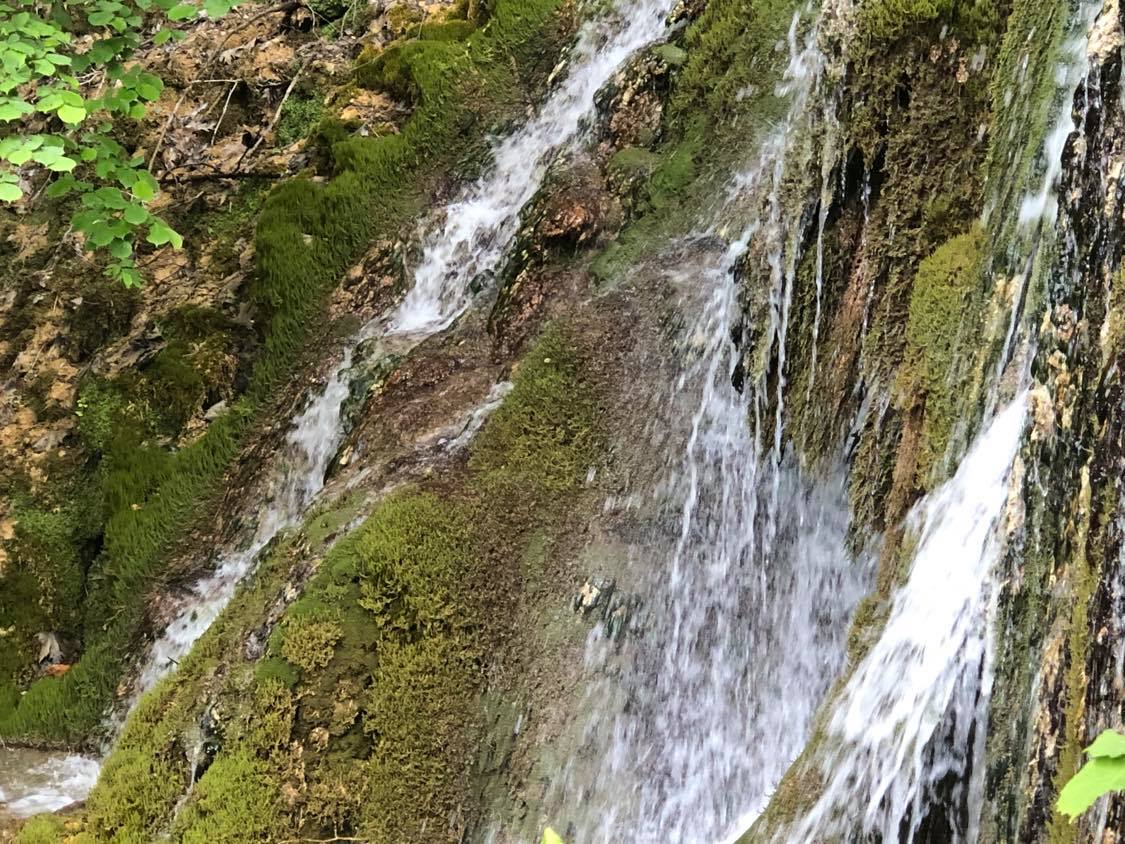
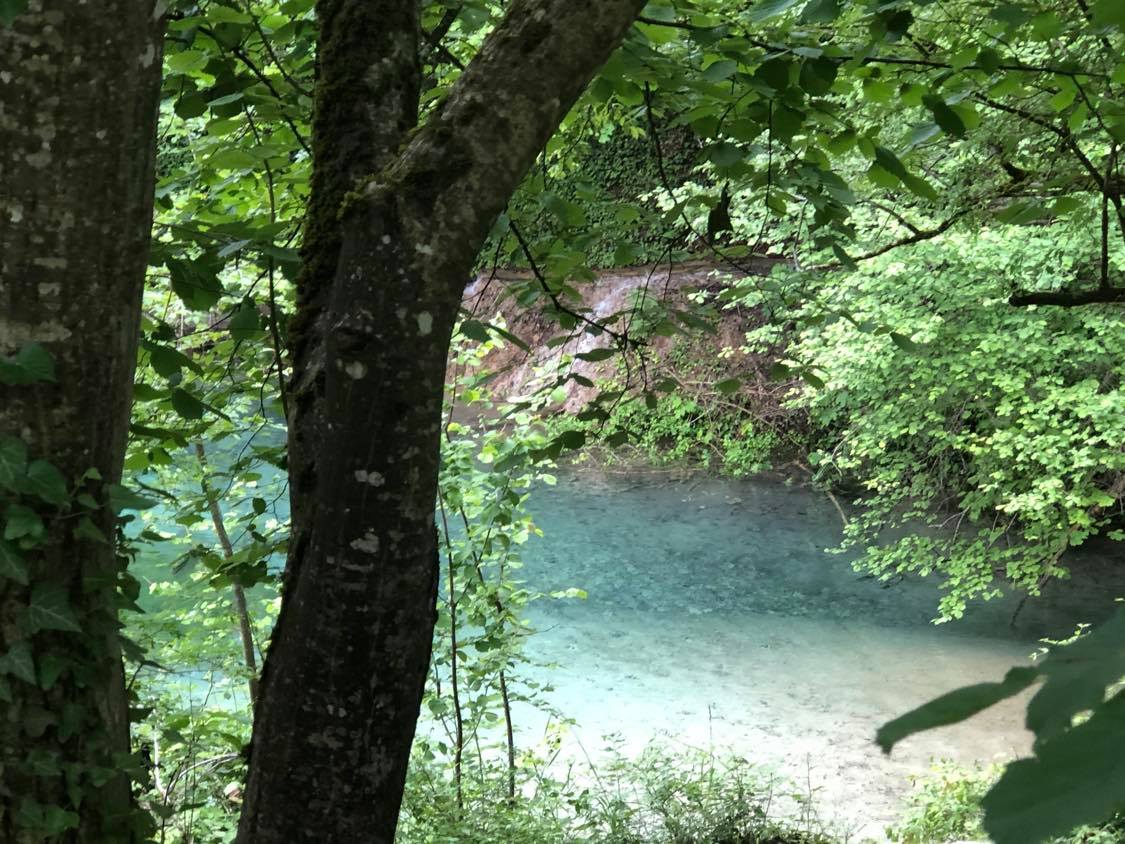
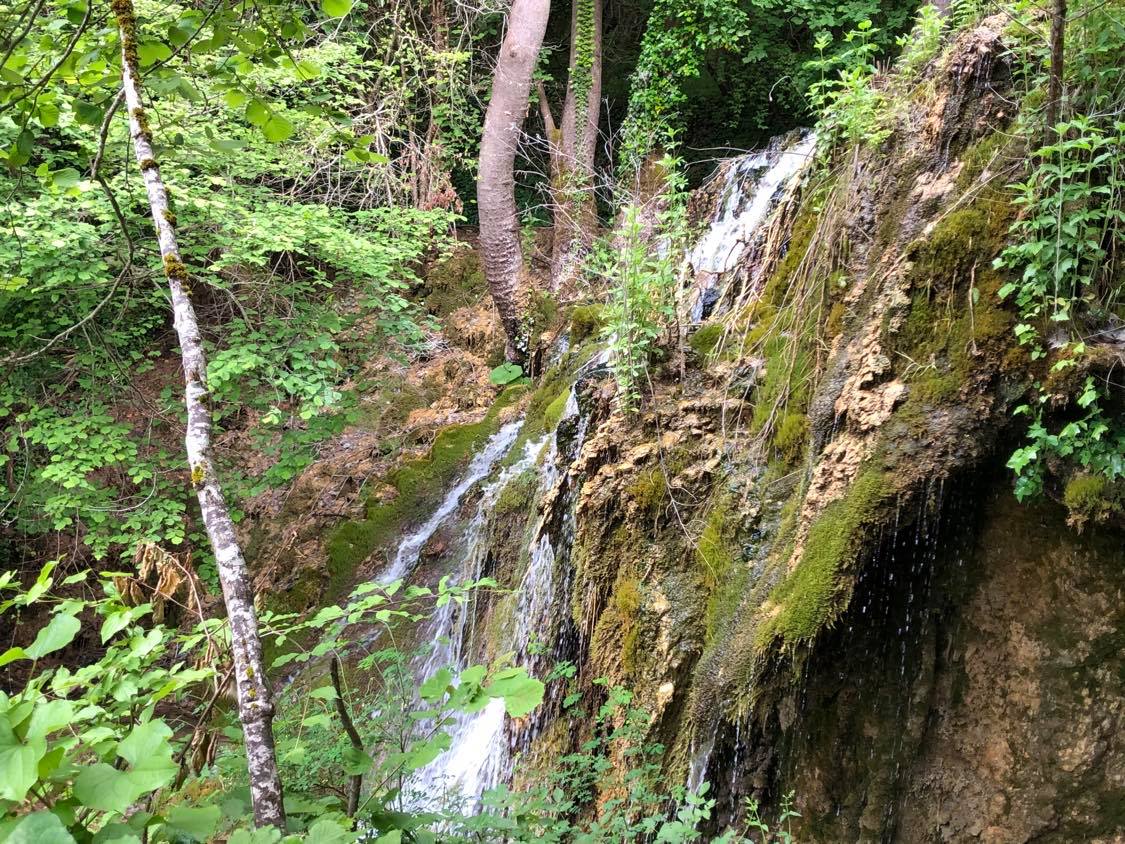
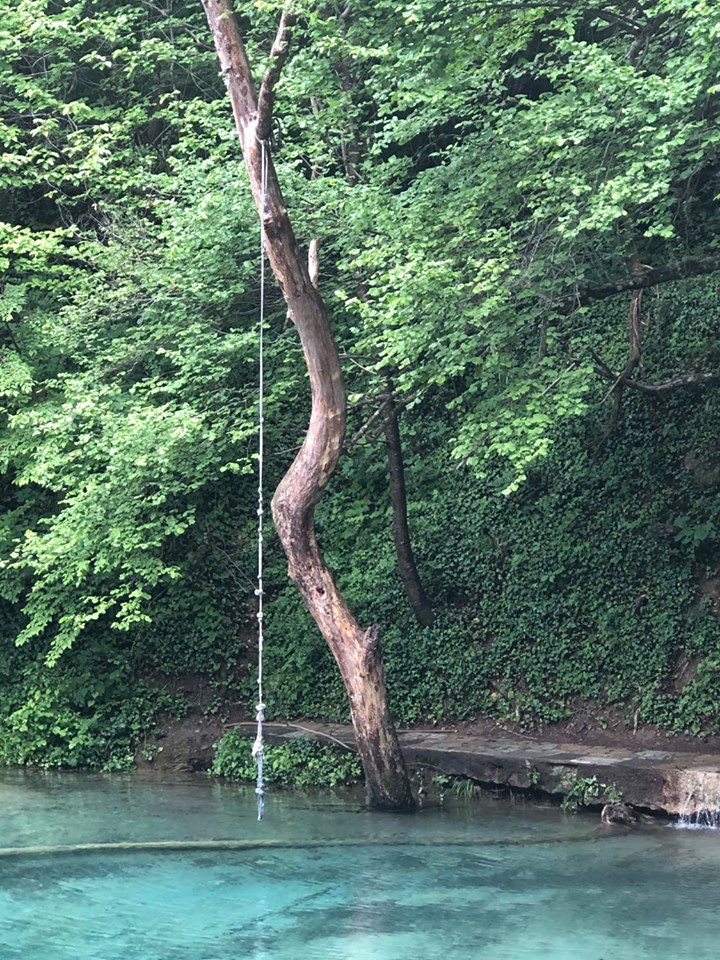
“Emerald Lake” – Skra Waterfalls

skra37

skra31

skra41

A Photo/ Video Blog


skra1skra2skra3skra5skra6skra7skra8skra9skra10skra11skra12skra13skra14skra15skra16skra18skra19skra20skra21skra22skra23skra24skra25skra26skra27skra28skra29skra30skra33skra34skra35skra36skra38skra39skra42skra43skra47

https://www.youtube.com/watch?v=hblrCVzmb-Y


Memories of Greek historical moments are mixed with the rare beauty of nature and the turquoise waters of an ancient lake.

These are the emotions one feels and the images that one sees as a visitor of Skra, the waterfalls and the famous “emerald lake”.

Skra is only 4 km away from the borders with FYROM and it spreads on the Northeast slopes of Paiko at an altitude of 520m. Its previous name was Lioumnitsa, while the current one is due to the proximal top Skra di Legken that during the First World War was the place of the homonymous battle field (Skra – Ravine). The battle was a decisive one for the course of the Greek State and the First World War.

With its characteristic proud old plane tree in the center of the village, Skra is considered to be a place of celebration in honor of the homonym battle, while every year on 17th of May a memorial ceremony for the officers and the soldiers of that battles belonging to the so called Greek Division of Crete and Archipelago is held at the Monument to those who died in 1918.

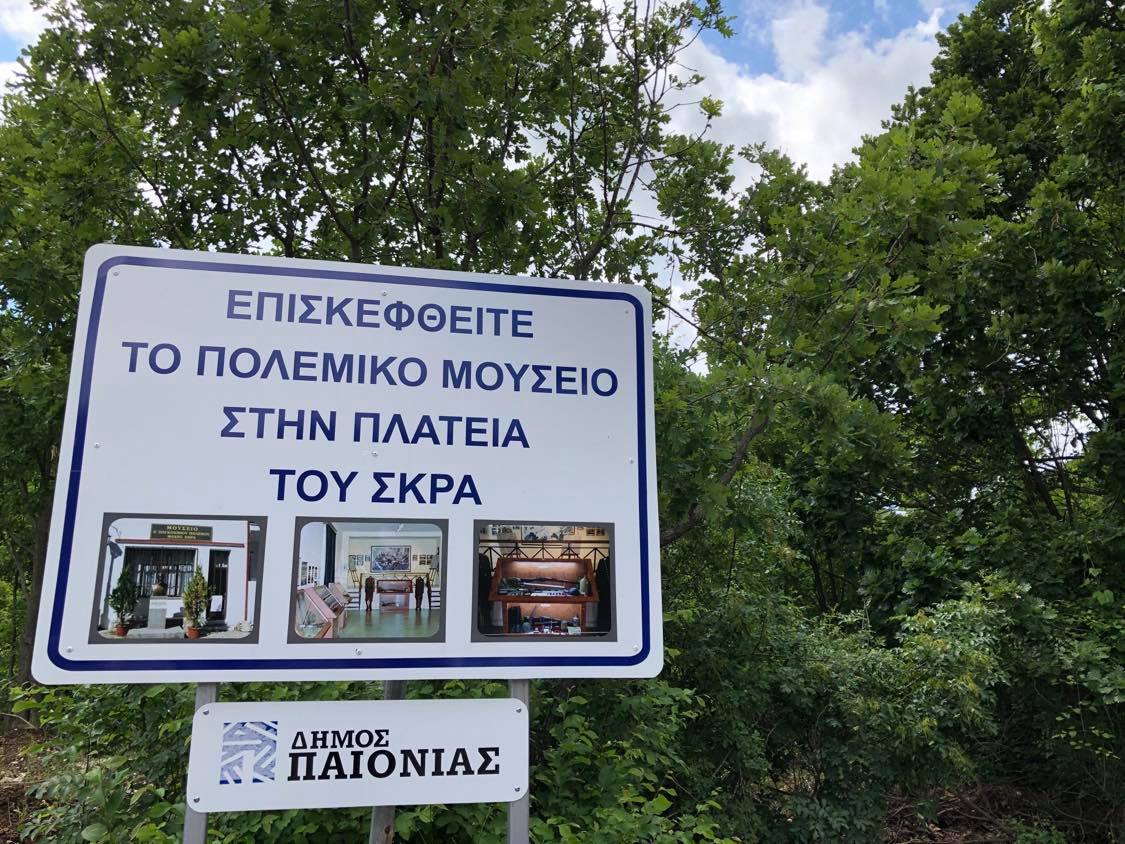
Since May 2002, the Museum of the First World War- Skra Battle has been operating in Skra, housed in a specially constructed area. The Museum exhibition presents relics, photos and historic documents from the Macedonian battles of the First World War, as well as from the victorious Skra battle. The well known victorious battle took place on May 17, 1918.

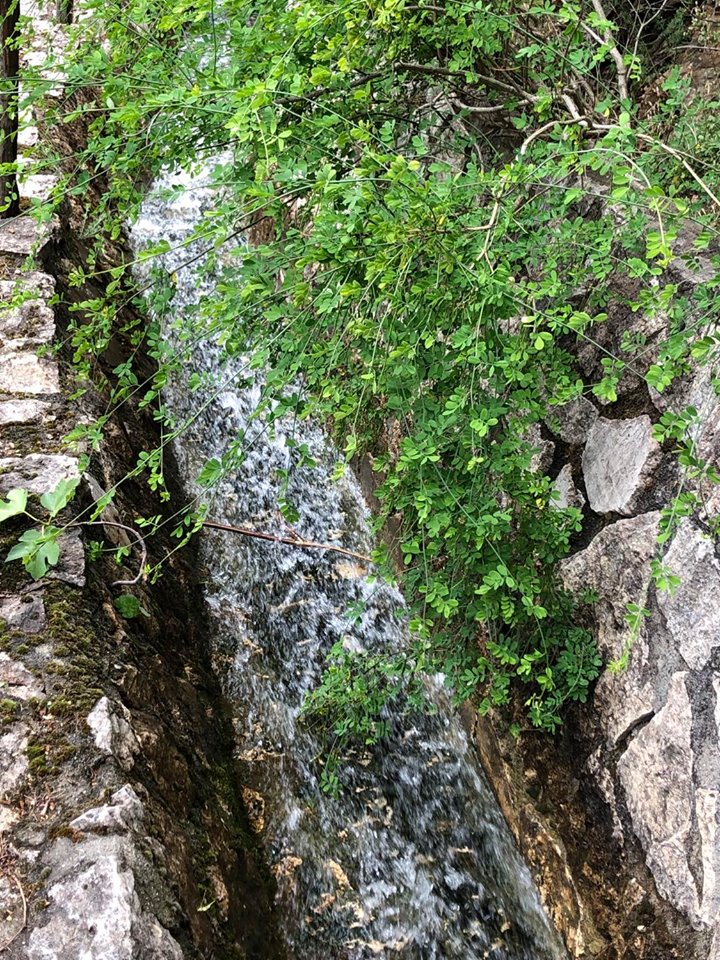
Near this settlement, the visitor faces a small miracle of nature. Through a wonderful path one can reach an area with rich vegetation, where one meets the first waterfall of Skra, at the root of which there is a small cave with stalactites. A little further on the path, the visitor is stunned by the beauty of the small “Blue Lake” or “Emerald Lake”, which owes its aquamarine emerald color of the water to the calcified and fossilized organisms of its bottom. Continuing on the path, the vegetation thickens and the ground is steeper. Here, one can see the second waterfall of Skra that falls with thunder over the rocks creating a stunning natural landscape.

skra40

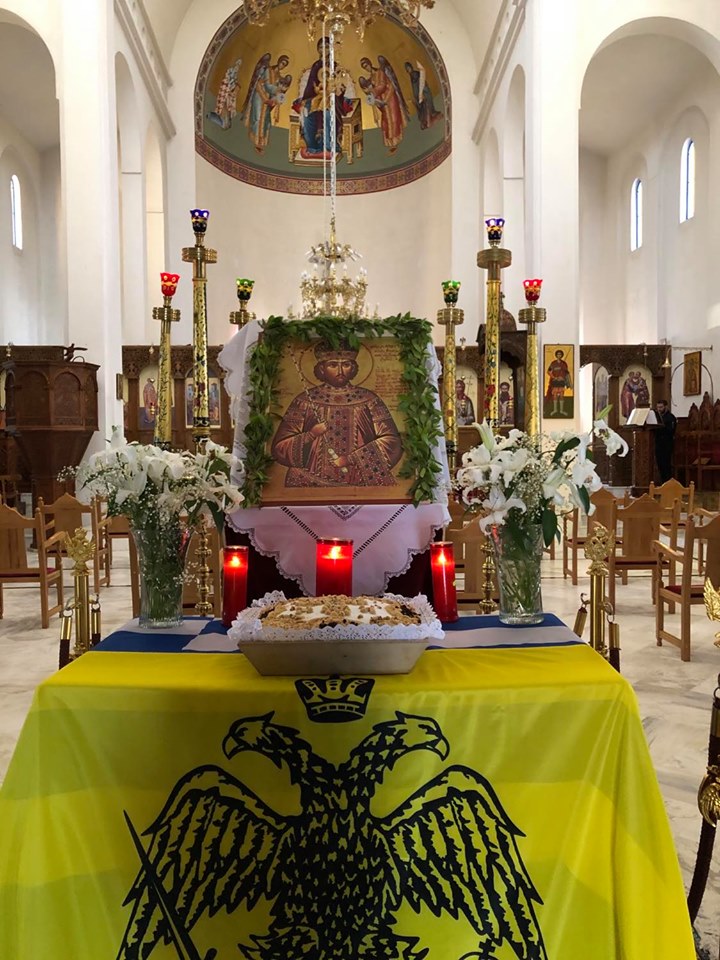
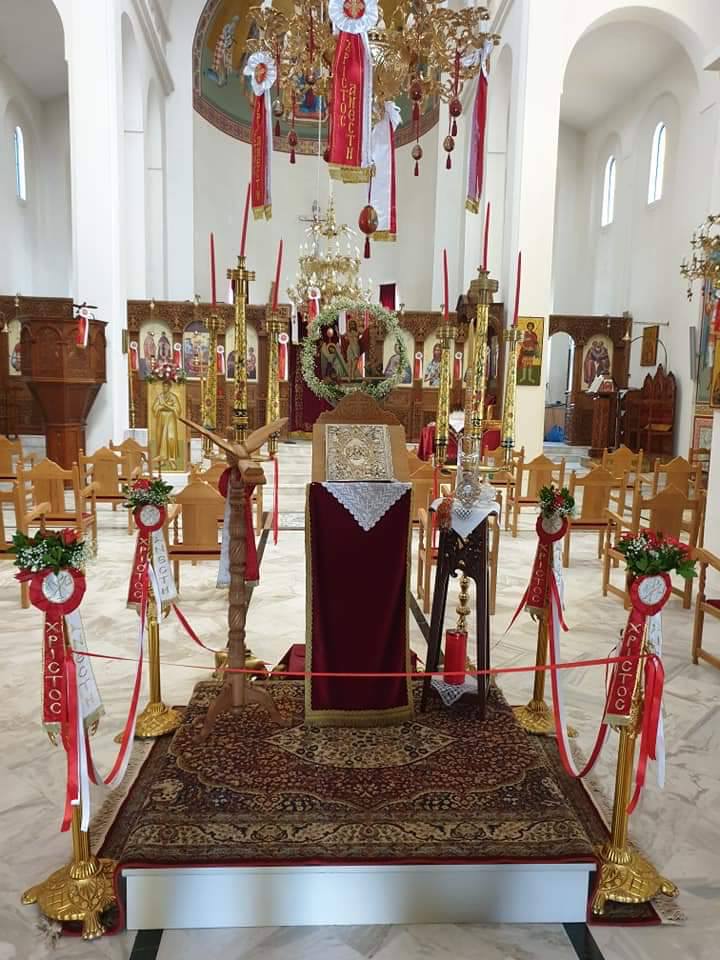
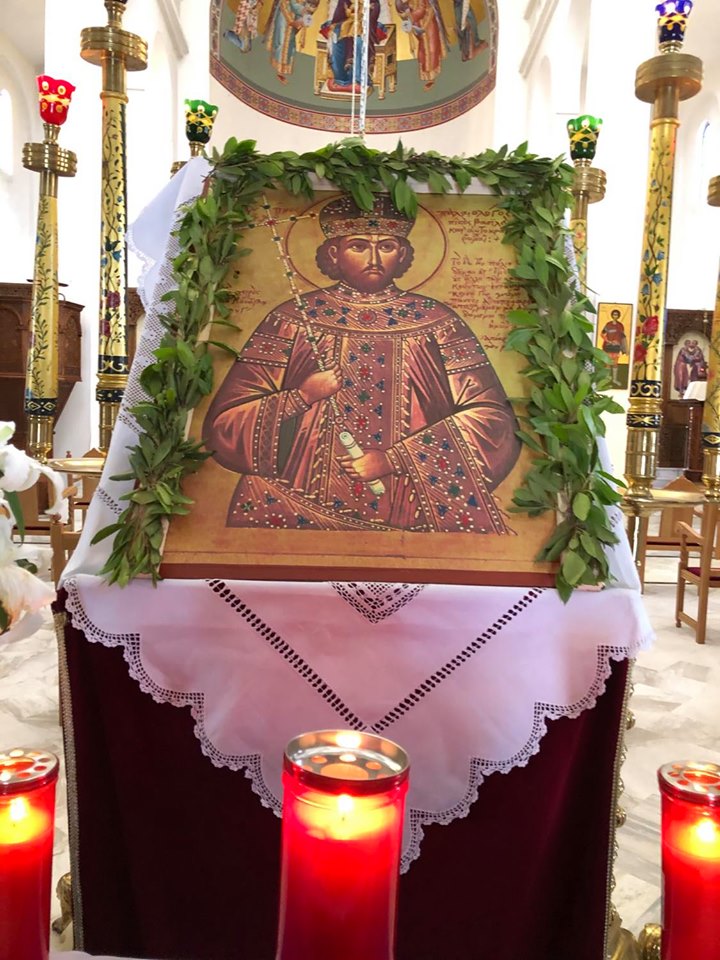
Memorial Service for the Fall of Constantinople

Constantine_XI_Palaiologos

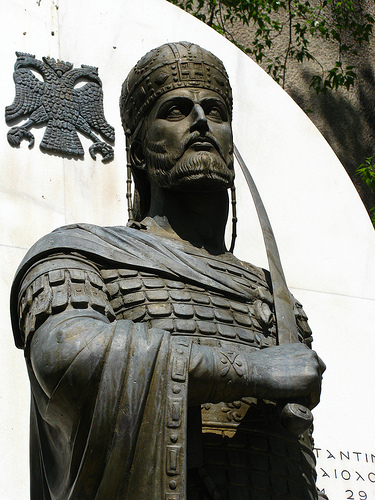
Constantine XI Palaiologos (Gr: Κωνσταντίνος ΙΑ’ Δραγάσης Παλαιολόγος, also Dragases ), was the last reigning emperor of the Palaiologos Dynasty as well as the last of the Roman Emperors. Born in 1404 AD in Mystras, he ruled from 1449 until his death on May 29, 1453, at the Fall of Constantinople.

perivolaki1perivolaki2perivolaki3perivolaki6

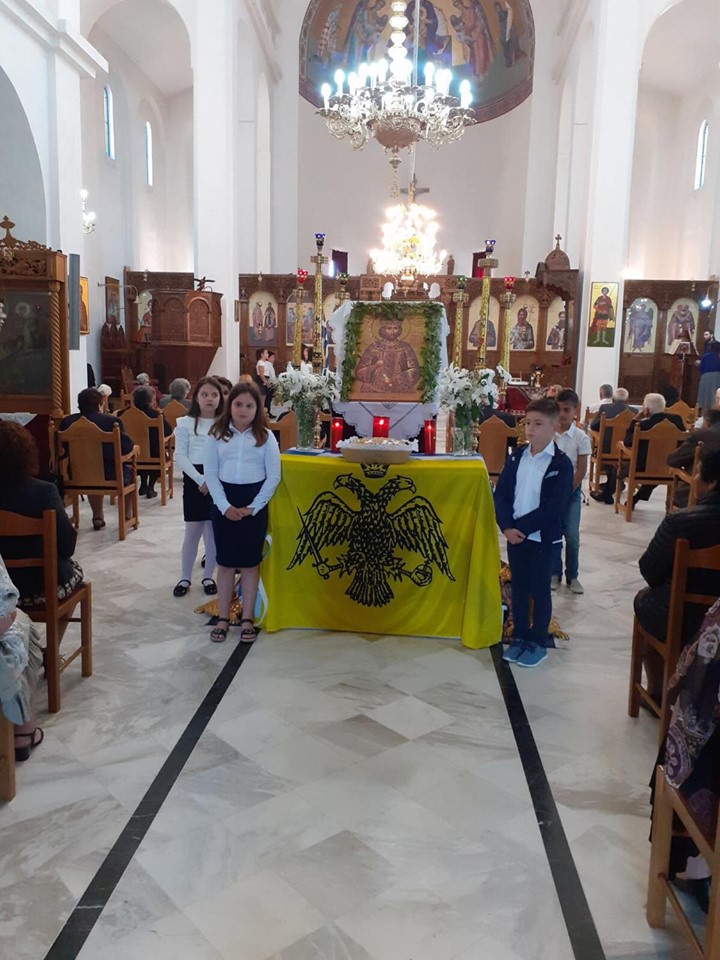
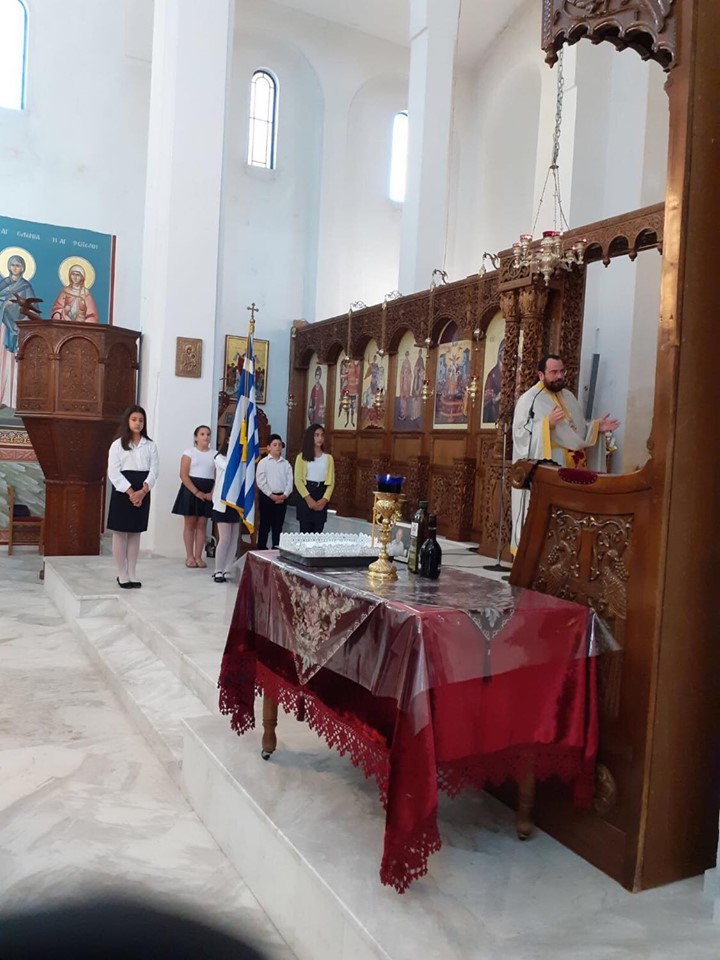
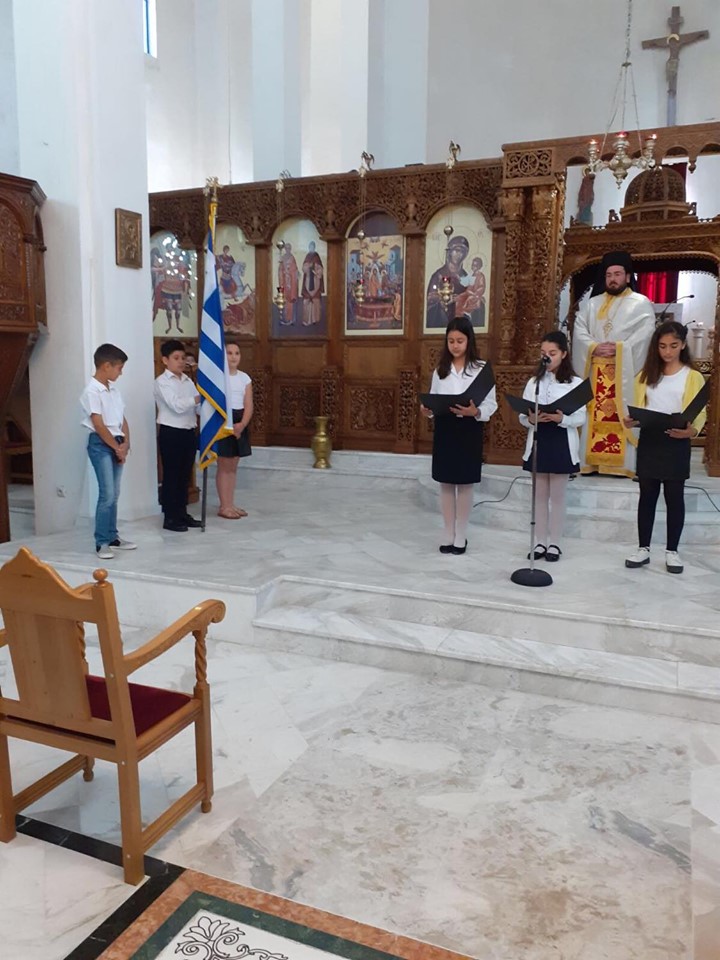
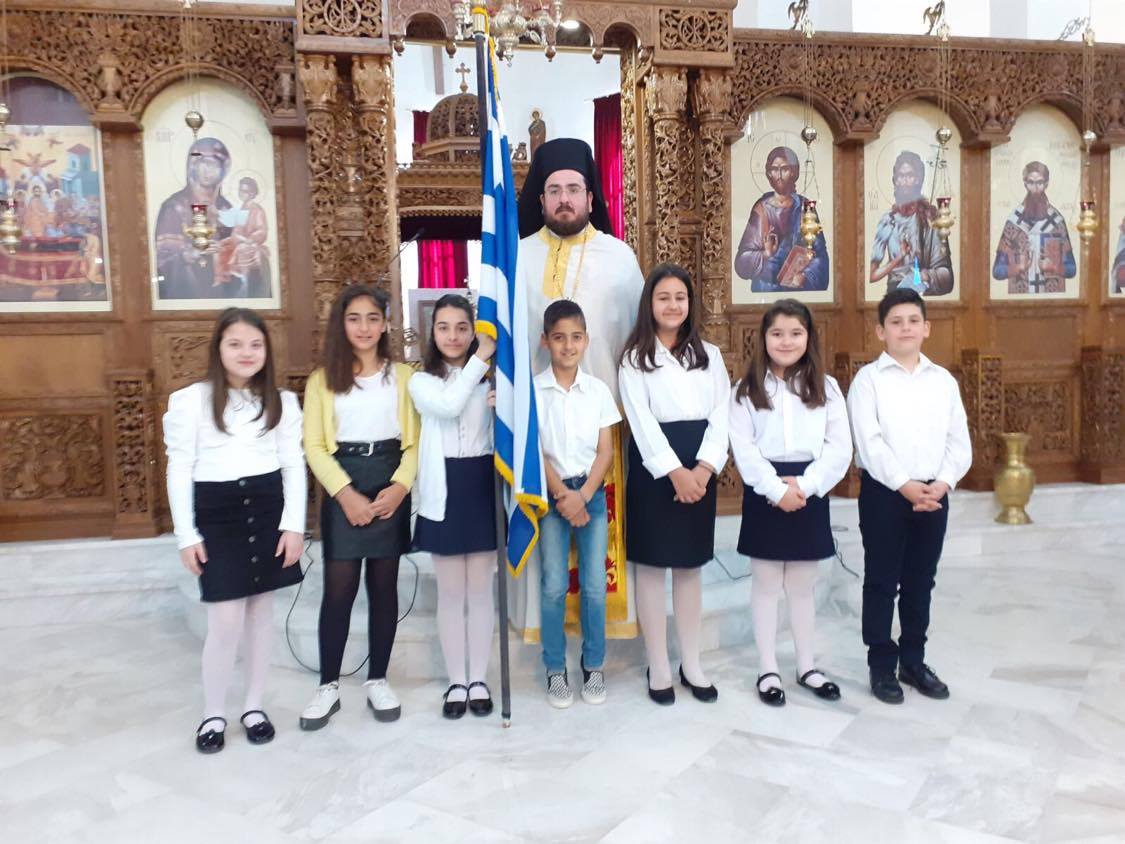
The Feast by the Sunday School at Perivolaki

perivolaki11perivolaki14perivolaki17perivolaki18

Constantine was the son of Emperor Manuel II. He was trained as a soldier and in 1441 conquered the Morea Peninsula of Greece. It had long been under the Frankish principality of ‘Achaia’ Constantine was crowned Emperor January 6, 1449 AD succeeding his brother. A little less than five years later in 1453 AD he was killed during the final assaults by the Turkish Sultan, Mehmed II on Constantinople. Constantine, with some 8,000 Greeks, Venetians, and Genoese, had faced 150,000 Turkish besiegers under the Sultan, and after almost two months of heroic defense, directed by the emperor, the city and the empire fell. Constantine died fighting with the last of his men. Going back to Augustus and the ancient Roman Empire, he was the 138th and last Roman Emperor.

Orthodox in general do not consider Constantine XI a saint, though there are some who incorrectly, personally consider him so because of their love of the Byzantine (Roman) Empire. However, the last Emperor has never been recognized as a Saint due to his heretical beliefs and his compromising of the Faith in order to gain material aid from Latin lands. When the Empire was in need, he sought Latin military aid by reaffirming the heretical statements of the Council of Florence. And it is said that he defiled the Church of Agia Sophia the day/night before the Fall with a blended Divine Liturgy and Latin mass. In attempting to preserve an earthly Empire, he lost a Heavenly Kingdom. In contrast, there is Tzar Lazar of Serbia, who gave up an earthly Kingdom for the Heavenly. The Faith is always more important than earthly possessions. May our Compassionate Lord forgive him and all his transgresions. (Orthodoxwiki)

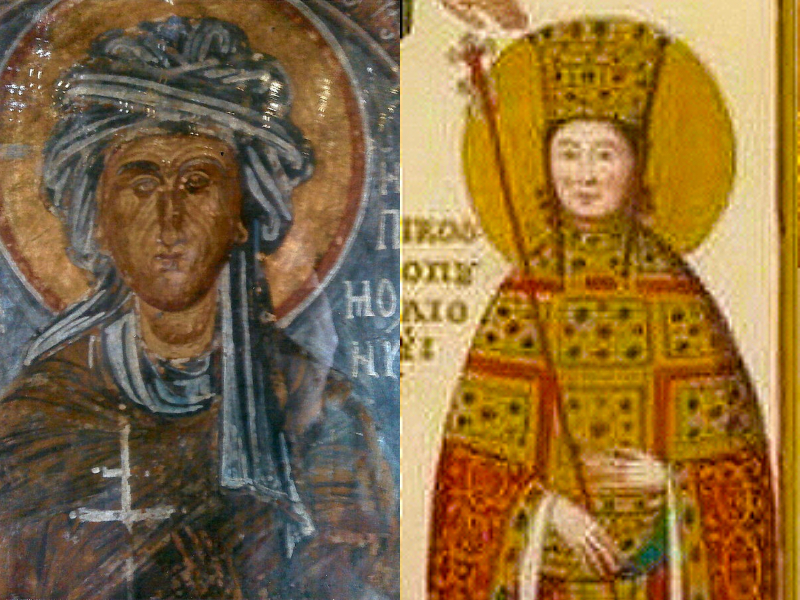
St. Ipomoni, Born as Helena Dragaš. Before becoming a nun and assuming the name Ipomoni, Helena was the mother of Constantine XI Palaiologos. She lived a monastic life for over 25 years, after entering into the habit after the death of her husband. She died 1450AD and is commemorated by the church May 29. The relics of her skull and her icon are found at the Monastery of St. Patapios, Loutraki of Korinthos, Greece.

agia ypomoniupomoni2

A Holy Warning

Elder Parthenios

Elder Parthenios of the Monastery of Saint Pavlos: Αn orthodox message from the Holy Mountain

“Christ is Risen! Truly He is Risen!

The abbot of the Holy Monastery of Saint Pavlos, father Parthenios, speaks to you. I am in the monastery of Saint Pavlos since 1954 till now, with the help of our God, Virgin Mary and all of saints. Till now, we are blessed of God and we all celebrated the Holy Easter, with all of our happiness and love, the Risen of our Lord. This year it was the only year, since I came in the Mount Athos (Holy Mount), that we celebrated alone. Because all of the previous years we had with us more that 100-150-200 visitors, only in our Monastery. Together all the Monasteries of the Holy Mount had approximately 5,000 visitors, who have come every year, to honor the Holy Easter, the Risen of our Lord!

It was hard for me, that this was the year that we glory alone the God. Because of the measures they took, they left us alone with only few workers who are regular here. I am telling you that, with a lot of father’s love, I am in pain, in grief. Because all the faithful men who used to come here with us, were our consolation, to praise all together to the most important event, the Easter. All together we were chanting the pray of “Christ is Risen”, full of joy. Perhaps, God allowed this temptation to be penetrated, for our sins. Maybe He wants to activate us, cause the people got away from the Lord’s path and doing nonsense.

Our Churchs, all over the country, in Athens, in Thessaloniki and other where were like a cemetery. All the people were isolated in their houses; even the churches have closed their gates. What happened? What happened?

Unfortunately, our politicians trying to do their best. These are human measures, we cannot blame them. On the other hand, I am sending them a message. These measures are not enough. I am begging our politicians and our ecclesiastical authority, to shout at people to open the churches for the public, to go out on the roads, to take with them the holy icons and go for a litany, in order to beg our almighty God to obviate that temptation. The governors of this time cannot save us. Only the powerful God, He is the one who can save us. Open the doors of the churches, take the people outdoors, get the icons out, and get down on your knees, like the Ninevites did, to beg the God, His omnipotence, to quash this temptation. Otherwise, I don’t know where we will end up.

Please, do not be delusional, only God can save us, only our Lady Virgin, only the Saint Apostles and all the Saints together. Also can save us our pray and faith to God. “What did save the world?” “Our faith”!

Let all these thoughts of lukewarm and oligopolies, behind. We are Christians and I refer to the politicians who prepare to seal up/chip the people, but this will be their biggest scandal, because they not do justice to Christians. We, the Christians, strongly believe in His Almighty, we are baptized; we are anointed by the Holy Oil in the sealing of God. “Seal donation of the Holy Spirit, amen.”

Anyone who is not baptized, has the freedom to be sealed by the government, it is their decision. But do not force us, the Christians. Whatever you want to do against us, the God will be the Victor!

The God says: “Just as someone will confess in front of other people that he believes me, so I will do for him too, in front of my Father who live in the sky.” “Just as someone denies that he loves me, in front of the people, so I will do for him too.” Do not believe what the Zionists and Masons, the devils say; they do not believe in anything. On the other hand, we strongly believe in the real God. Whatever it takes, we confess Jesus Christ the Crucified we lean on Him our hopes, in his All-powers, nowhere else.

Many happy returns! Christ is Risen! Truly He is Risen!

Our Lord has beaten the world. He says: “Don’t be afraid! I have been beaten the world for you!” That is our confession and our faith! Thank you so much!

https://www.youtube.com/watch?v=MaqcJAzM45A

Source: Enomeni Romiosini

The Coronavirus Diary of a Joyous Pustynnik — 13

20200418_15054020200418_20170220200420_093236

Holy Week Highlights — a photoblog. Christ is Risen!

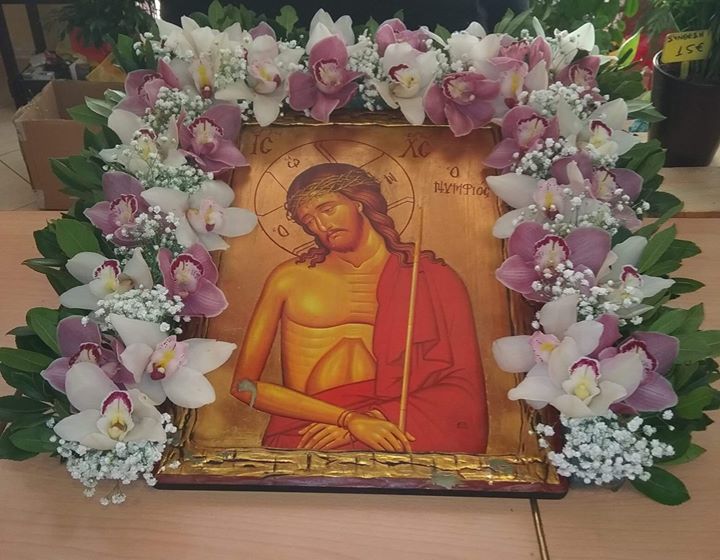
Nymfiosholy unction

20200415_103003

The Saints are delighted with the flowers! I eventually found the card. Thank you dearest sisters. I am overwhelmed, and all the saints in my icon corner are smiling.

Bleeding Crucifix today, on Holy Thursday, now in Athens, in Holy Andreas Chapel, Nursing Home Care

IMG_729220200417_162601

Greek style! A flying priest! Go to https://ellada.press/vinteo-o-iptamenos-iereas-tis-chiou-edose-pali-resital-telos-sunelifthi/

And Cypriot style 🙂 Holy Saturday Vespers — How to make holy noise — Cypriot style 🙂
Please watch from 1:14:28 up to 1:17, and later, and pay attention to all details His Eminence Metropolitan Morfou

20200418_123740 (1)

20200420_132051 (1)

This is one of the first Icons I “made.” It is a simple print stuck on to a piece of wood. I found it in my attic at the bottom of a cardboard box. 

20200420_130559


A Cardiologist in love with Christ

The Prodigal

A true story in a crowded and very busy hospital

Dear brothers and sisters,

Christ is in our midst!

Yesterday, I had an arthroscopic surgery. My right knee had been bothering me for a little while. I hoped it would go away but after an examination, and discussion with the orthopaedic surgeon who did the same thing on the same knee 10 years ago, we decided to have it done, again! Now the only reason why I mention this fact to you is because yesterday, while undergoing pre-operation checks, in just 5 minutes in a crowded and very busy hospital, I had a special blessing, an amazing “chance” encounter in His Providence of a cardiologist and a neighbour (!) in love with Christ.

In just a few minutes, while doing routine checks on my heart, we got to know each other quite well for such an unexpected encounter. Of course, any cardiologist must be intelligent enough, but how on earth did he guess my love for Christ and my life? It all happened so fast and it took just a few questions. When I left his office, on my way for the surgery, I had in my hands a slip of paper signed by a mysterious Youtube pen name: “KIXEM Euharistimenos”. ‘

Euharistimenos’ means ‘pleased’ in Greek; as to ‘KIXEM’, I am clueless, maybe a wanderer in Arabic? This cardiologist told me that he had started composing poetry and music while doing his specialisation as a medical student, and started his own studio to release his stress from exams. A few hours later, after the arthroscopic surgery and safely back home, while lying flat in my sofa and resting my leg, I searched the links in Youtube and came upon this, Wow! I was not prepared for this! 

This is the doctor, this must be his flat together with his amateur studio in our neighbourhood, and he uses another pen name: Seraphim Rose!

_Passito __ Kixem Euharistimenos

This is the kind of music he composes:

Mostly instrumental, but sometimes accompanied with simple lyrics, stunning images of saints and landscapes, and beautiful prayers and poems for Him. Like this one: “Glory to God”


Or this one: 1 Glory to God equals 1000 Kyrie Eleison (St. Paisios’ saying)


A few others of these Youtube compositions have the titles “A Beggar of Joy”, “A Dreamer”, “In Search of an Honest Man”, “A Breath of Life”, The Prodigal”, “Dance of Paradise”, “Thirst for God” etc. The lyrics are all in Greek but you can certainly enjoy his melodies and his beautiful photographs of Saints, churches and monasteries. Well, this cardiologist may not be Bach, but he is certainly very kind and full of His Love. Is not the Creator blessing the robin’s Doxology like the nightingale’s?  Fleetingly, I noticed how he treated his patients in the hospital: with an otherworldly purity of heart, respect, kindness and compassion. I have the feeling that we might meet again somewhere, in God’s Kairos. Has such an encounter ever happened to you recently? 

Your prayers


Kananga


Another recommendation by another friend. The everyday life of the Orthodox Christian community of Kananga, in Democratic Republic of Congo, a war-ridden country with thousands of victims and one of the most dangerous places in the world. Faith and hope in one of the most dangerous places of the world. 8.6 IMDB