Monastery of St. George of George of Hozeva

Monastery of St-george-monastery2

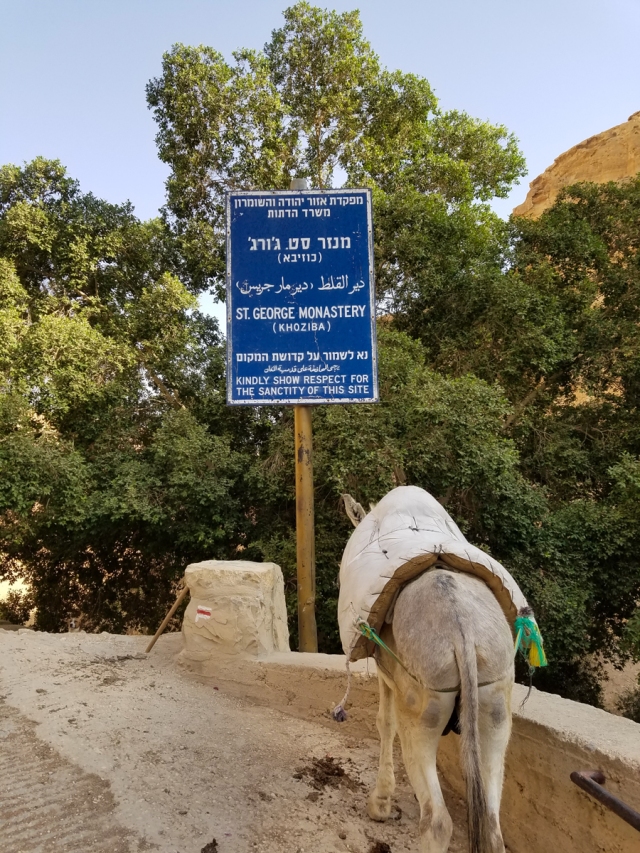
When you first catch a glimpse of the magical St. George’s Monastery (Choziba) in the Judean desert, the Desert Fathers’ Wisdom is brought to life in its uncompromising, breathtaking asceticism. This amazing cliff-hanging monastery, one of the world’s oldest and definitely one of the most inspiring churches in the Holy Land, is a must-see for the desert / archeological fans  / devout Pilgrims.
Monastery-of-St-George

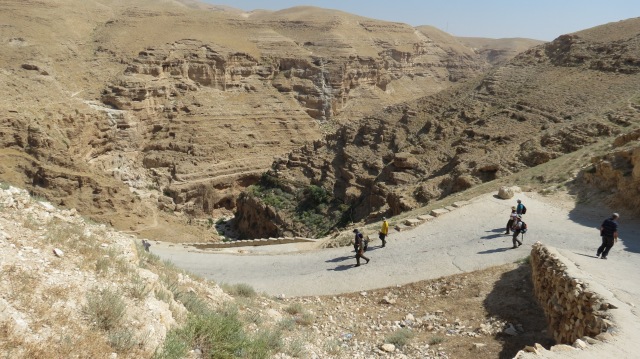
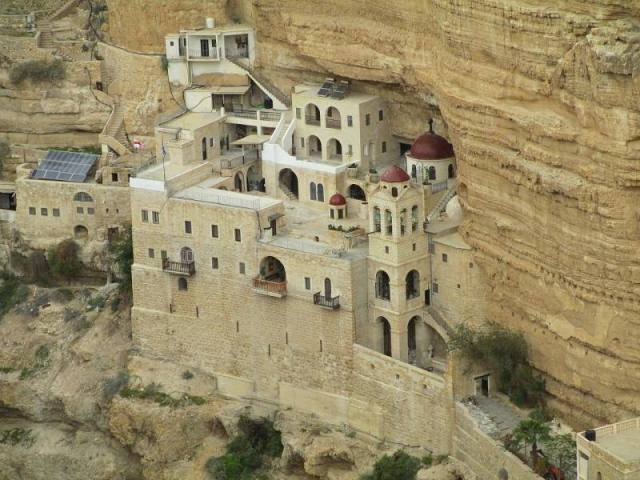
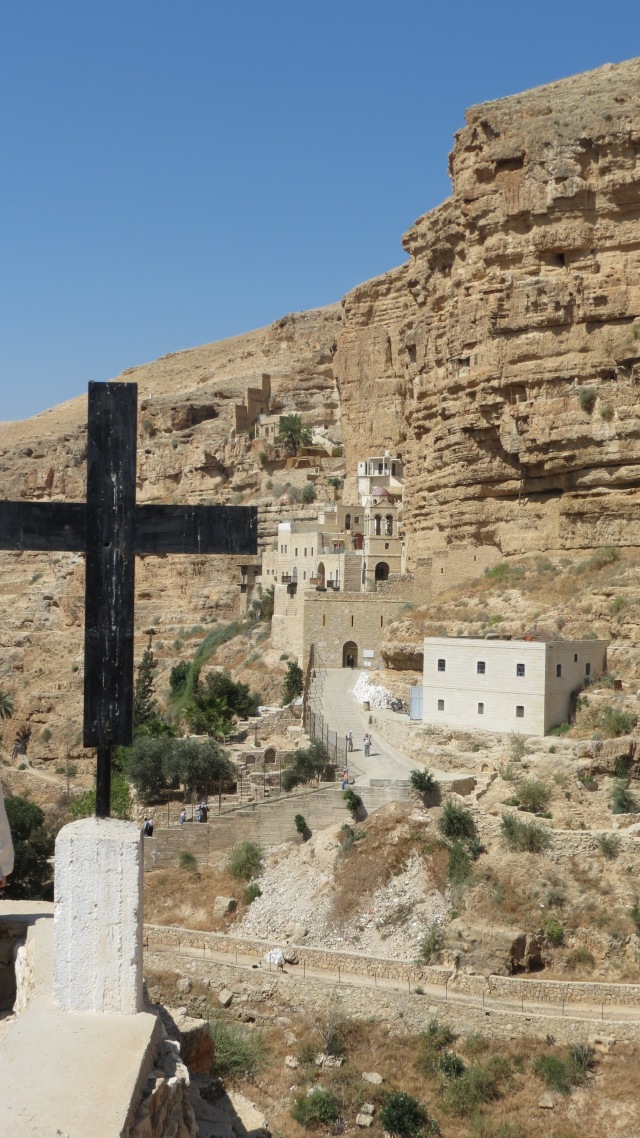
St. George Orthodox Monastery, or Monastery of St. George of Choziba is a monastery located in Wadi Qelt, in the eastern West Bank, in the occupied territories. The sixth-century cliff-hanging complex, with its ancient chapel and gardens, is active and inhabited by Eastern Orthodox monks. It is reached by a pedestrian bridge across Wadi Qelt, which many believe to be Psalm 23’s Valley of the Shadow. The valley parallels the old Roman road to Jericho, the backdrop for the parable of the Good Samaritan (Luke 10:29-37). 

Here’s some beautiful aerial video footage to give you a taste of the area around St. George’s Monastery…


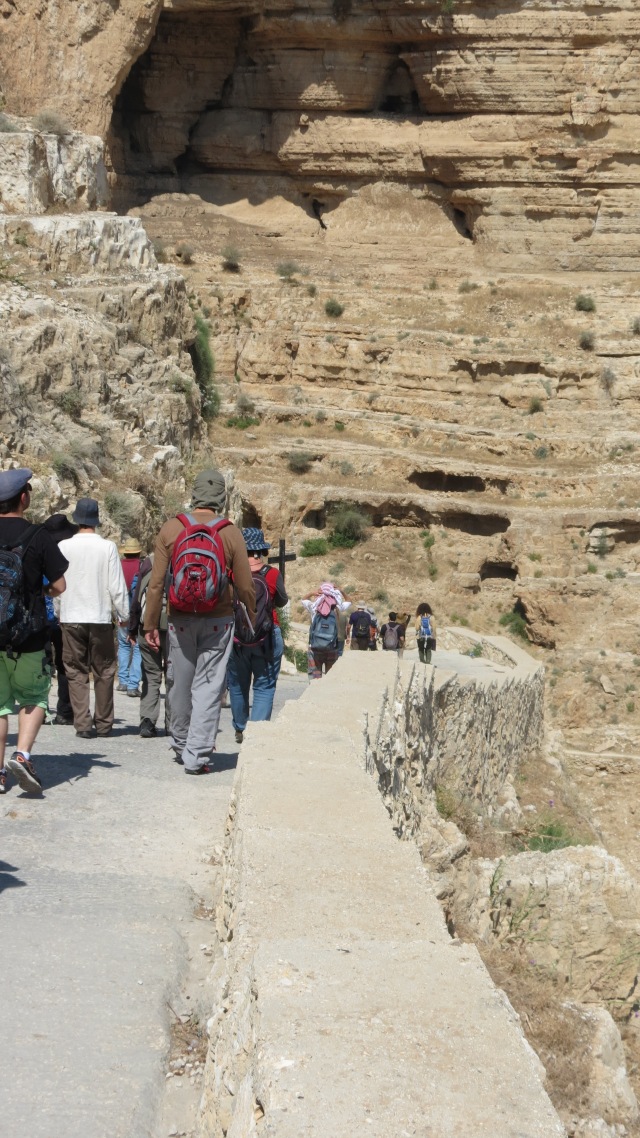
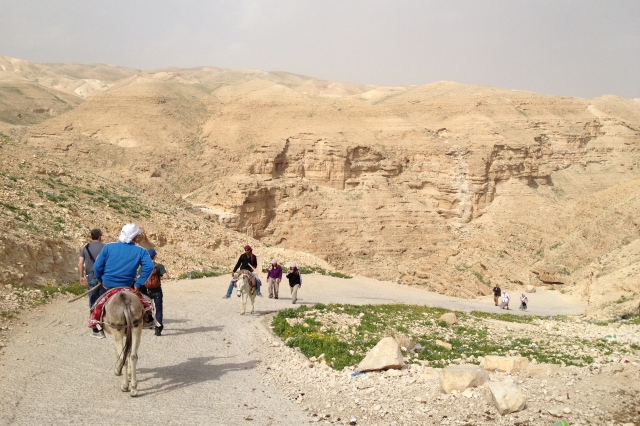
St George’s Monastery can be reached via the main Jerusalem – Dead Sea highway (Road 1). Take a left at Mitzpeh Jericho (or a right if you’re coming from Jericho) and follow the brown signs for Wadi Kelt. You can hike the Wadi all the way to the monastery but it will take lots of hours of arduous trekking in the desert under the blazing sun!  Up and down, for hours, a windy path! Not so easy for seniors or people with disabilities, but there are usually plenty of locals offering their donkeys for the ride (at a cost of course).

Monastery_of_St._George_of_Choziba_13

monastery of saint george 16

Monastery_of_St._George_of_Choziba_12

Monastery_of_St._George_of_Choziba_06

Check out the clip below for a real taste of the walk to St George’s Monastery … When I look at these photographs or watch the videos, I cannot believe I did all this walking!
source

Monastery_of_St._George_of_Choziba_04

St. George’s Monastery was originally started in the fourth century by a few monks who were looking to immerse themselves in the lifestyles and desert stories of  John the Baptist and Jesus. The monks, and perhaps most notably the hermit John of Thebes, eventually settled on the spot around a cave where it is believed the prophet Elijah was fed by ravens (1 Kings 17:5-6). The traditions attached to the monastery include a visit by Elijah en route to the Sinai Peninsula, and St. Joachim, whose wife Anne was infertile, weeping here when an angel announced to him the news of Mary’s conception.
 

monastery of saint george15

Monastery_of_St._George_of_Choziba_26

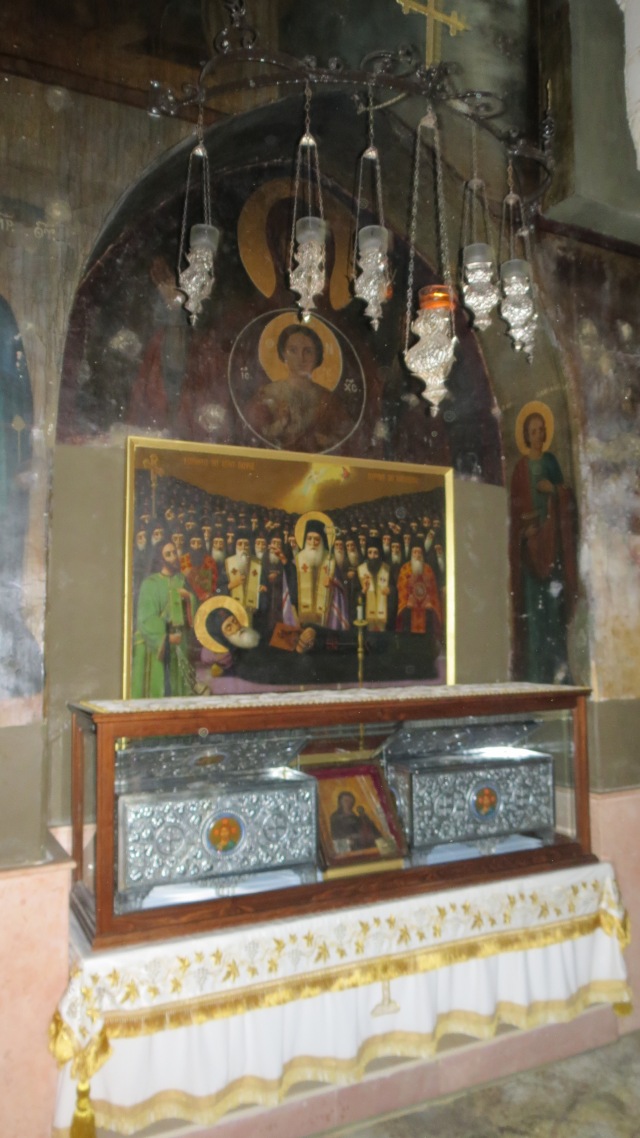
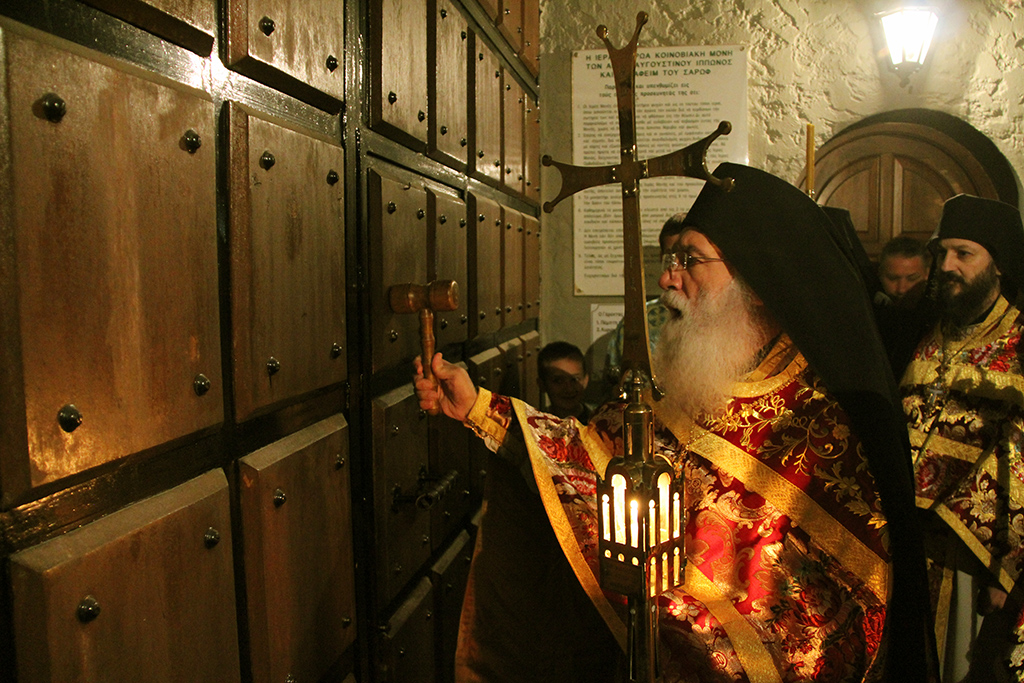
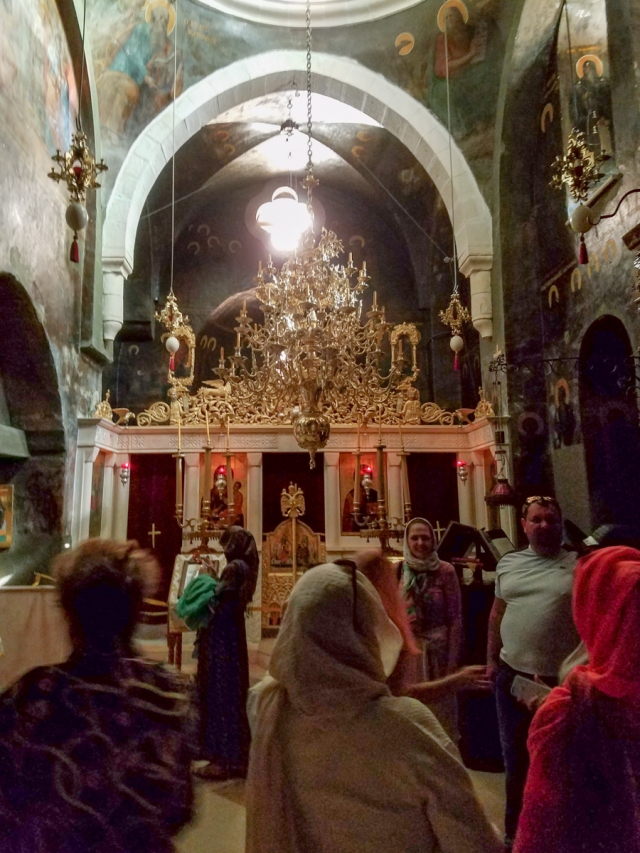
The monastery became an important spiritual centre in the sixth century under Saint George of Choziba. Hermits living in caves in nearby cliffs would meet in the monastery for a weekly mass and communal meal.John of Thebes became a hermit and moved from Egypt to Syria Palaestina. The monastery was named St. George after the most famous monk who lived at the site. Destroyed in 614 A.D. by the Persians, the monastery was more or less abandoned after the Persians swept through the valley and massacred the fourteen monks who dwelt there. The bones and skulls of the martyred monks killed by the Persians in 614 A.D. can still be seen today in the monastery chapel. These 3000 and more martyrs’ relics are so alive that during their Supplication canon every week an exquisite fragrance and raw smell of fresh slaughtered blood are alternately exuded from them!

Monastery_of_St._George_of_Choziba_35

Monastery of Saint George

The Crusaders made some attempts at restoration in 1179. However, it fell into disuse after their expulsion. In 1878, a Greek monk, Kallinikos, settled here and restored the monastery, finishing it in 1901. Father Germanos, born Georgios Tsibouktzakis, who came from Thessaloniki, Greece, to St George’s in 1993 and lived there until he was murdered by Palestinian terrorists in 2001, was for many years the sole occupant of the monastery, he was named Abbot in 2000. Emulating the Wadi Qelt monks of late antiquity, Father Germanos offered hospitality to visitors, improved the stone path used by pilgrims to climb up to the monastery, repaired the aqueducts, and improved the gardens of shade and olive trees.
monastery of saint george 11

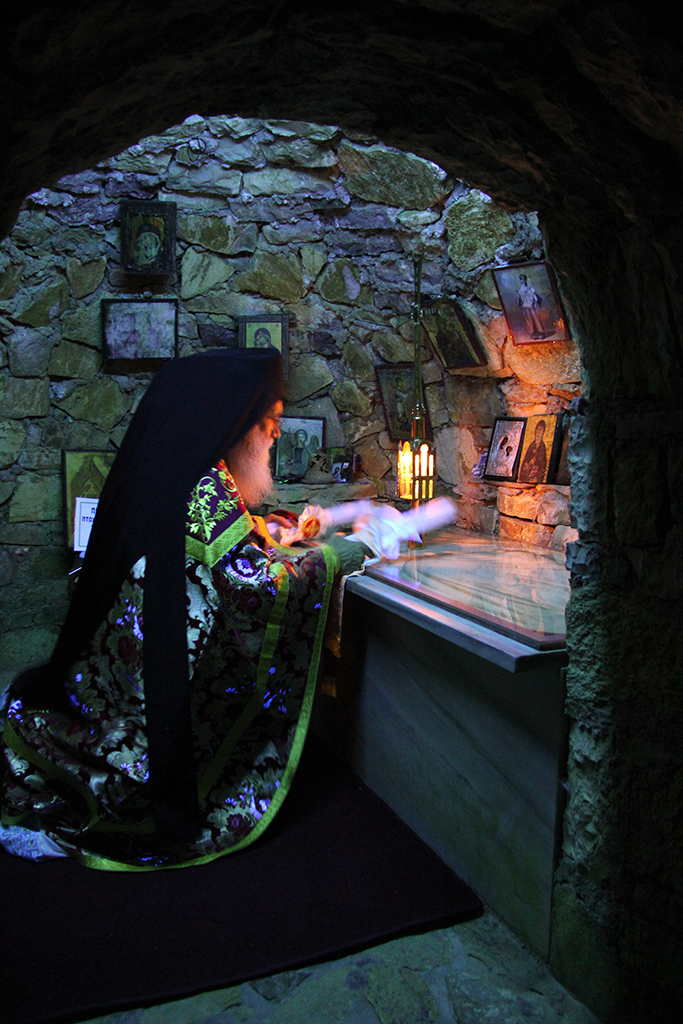
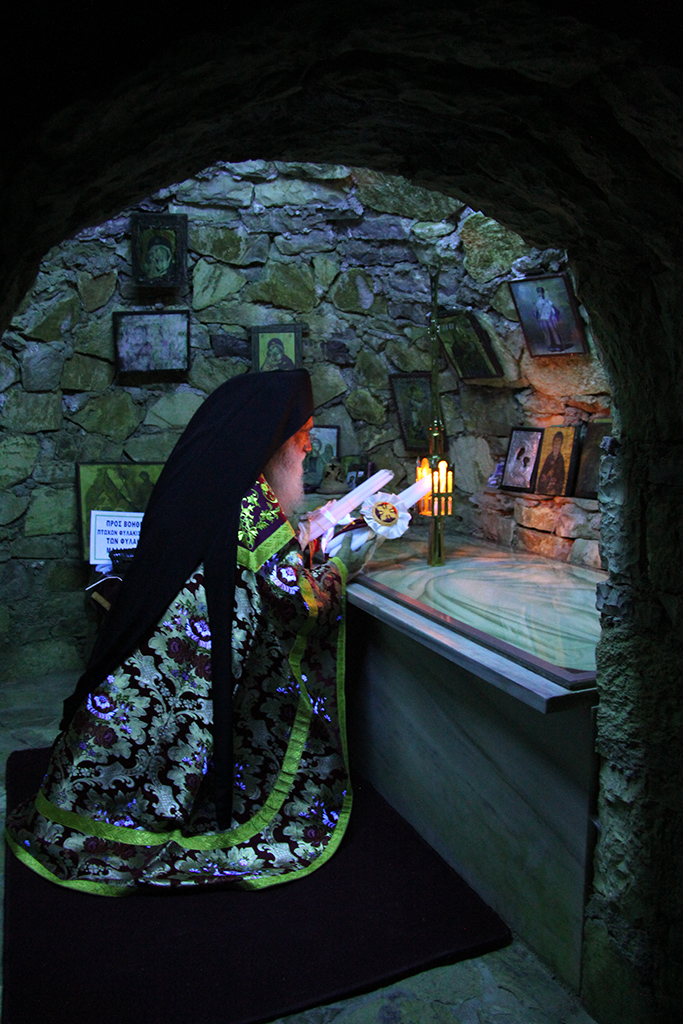
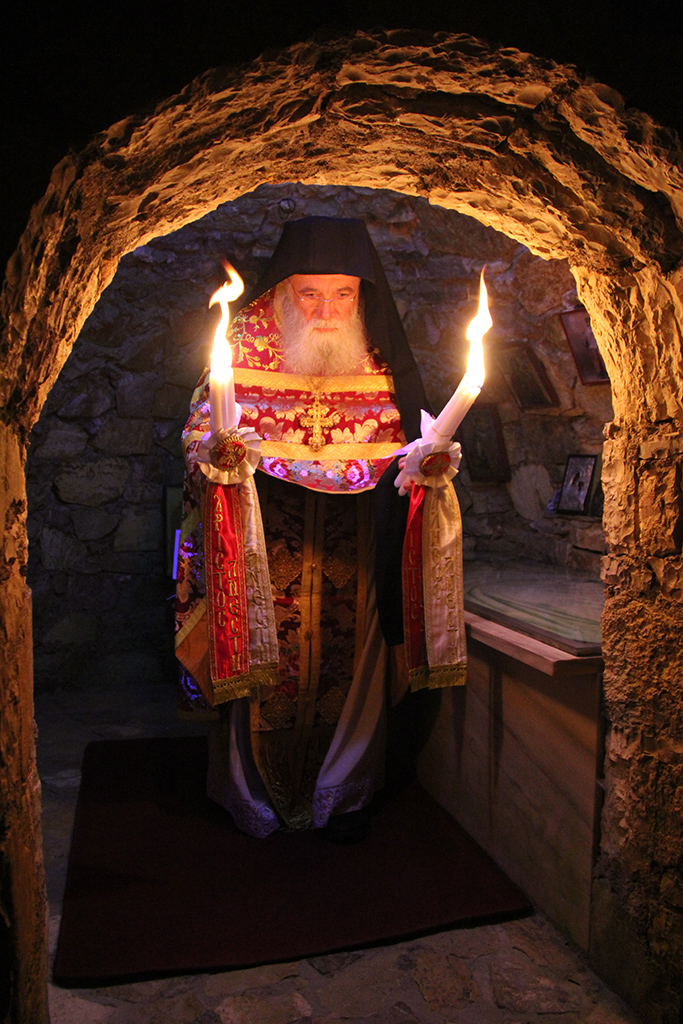
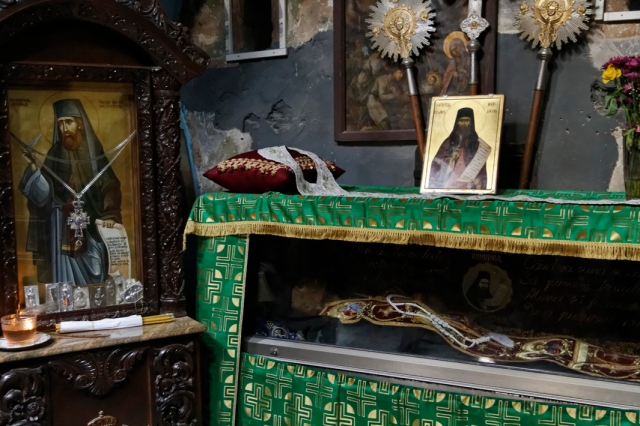
This is probably the most stunning discovery in the monastery: St. John Jacob (the Romanian) – a Hermit from the Holy Land with complete Incorruptible Relics! He was a great ascetic and a poet. He called himself “the child of zero” who “followed the One”. After his all night- vigils, he would briefly rest in the verandah of the monastery and write his so moving poetry, sadly not translated yet in English. In the next days I plan to translate and post here some of his most moving autobiographical poems. This Saint is famous for his miracles, from the discovery of his relics to nowadays.

This discovery was even more stunning for me personally because my spiritual father had introduced him to me the last day before flying from Lancaster to Greece and then to Tel Aviv. He also gave me a tiny piece of a secondary relic of him. What a ‘coincidence’! I knew nothing about him, other than his name, and then a brief google search, and here I found him most alive and incorruptible! 
Greek Orthodox St. George of Koziba Monastery in Wadi QeltMonastery_of_St._George_of_Choziba_27Monastery_of_St._George_of_Choziba_31


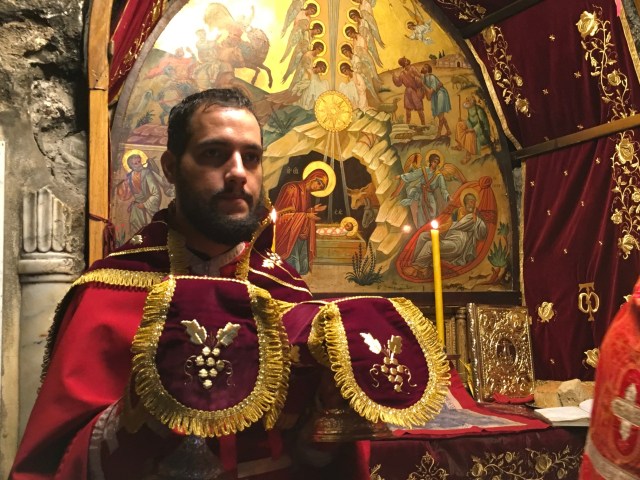
Let me close with Archimandrite Konstandinos, a holy Elder, very special in his hospitality and famous for his clairvoyance gifts.

monastery of saint geroge archimandrite 2monastery of saint george archimandrite Konstandinosmonastery of saint george archimandrite

For more photographs, go here
Monastery_of_St._George_of_Choziba_27

Monastery-of-St-George


Holy Land Pilgrimage: Bethlehem

IMG_5274

IMG_5268

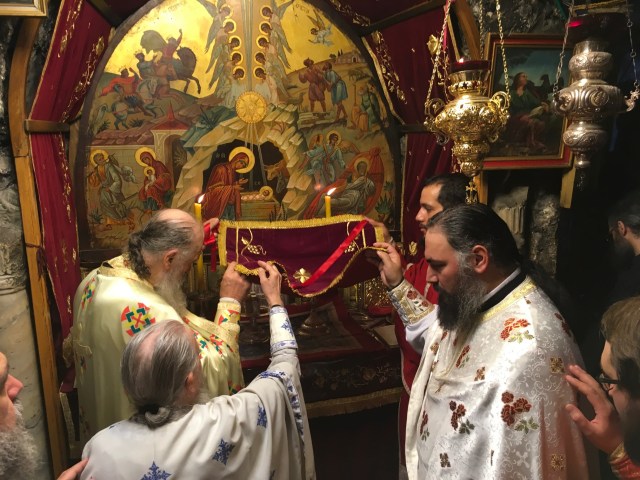
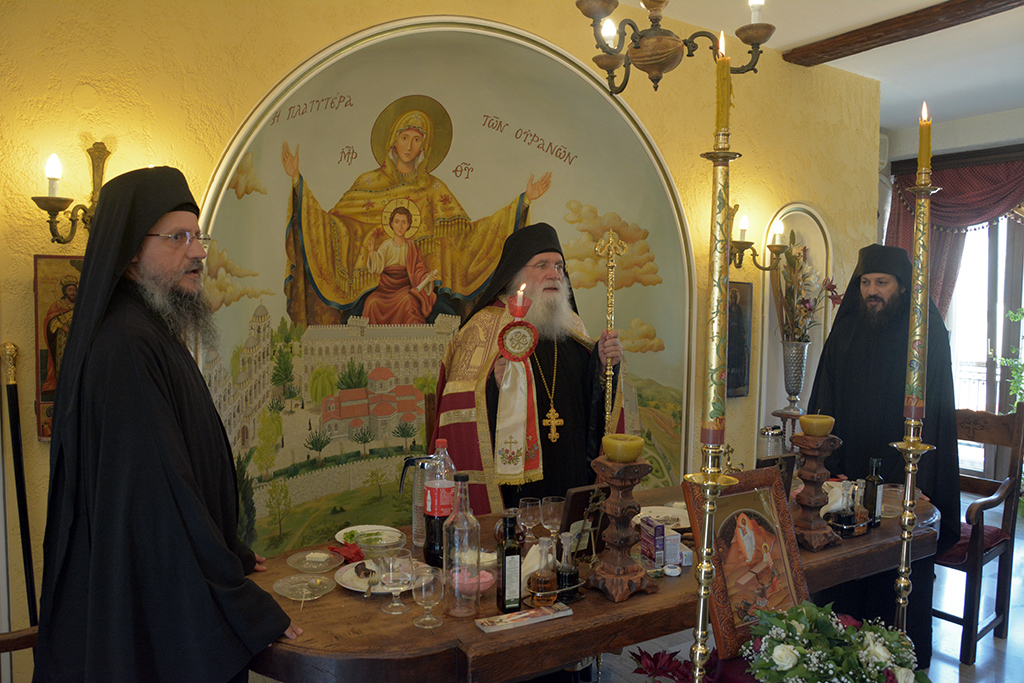
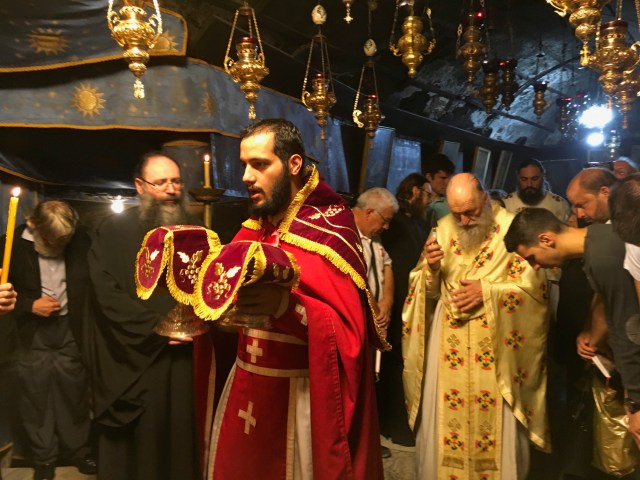
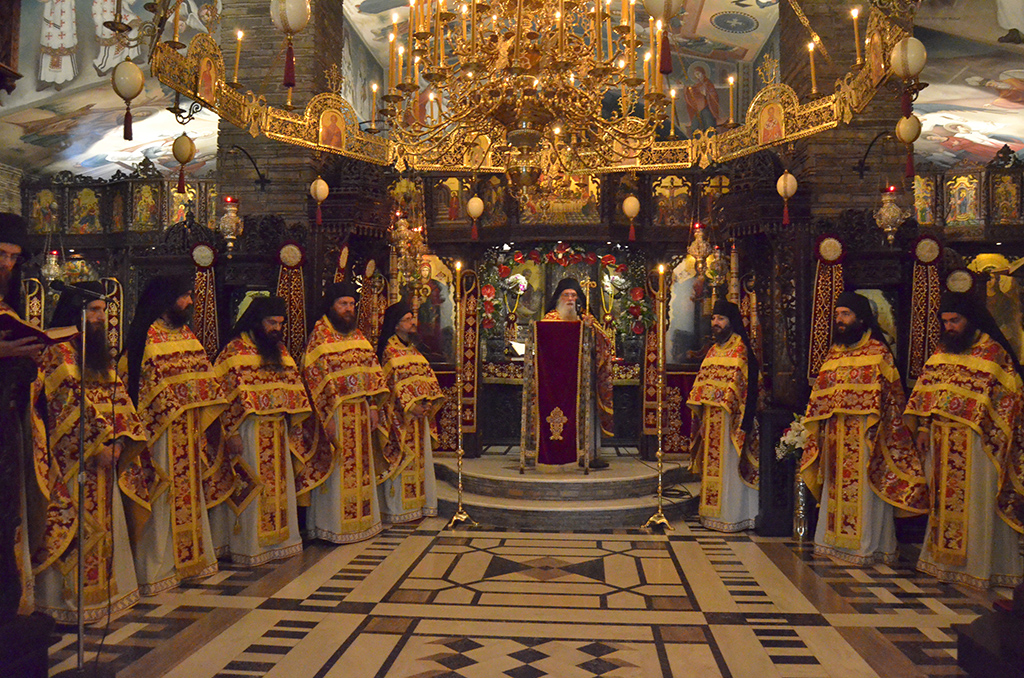
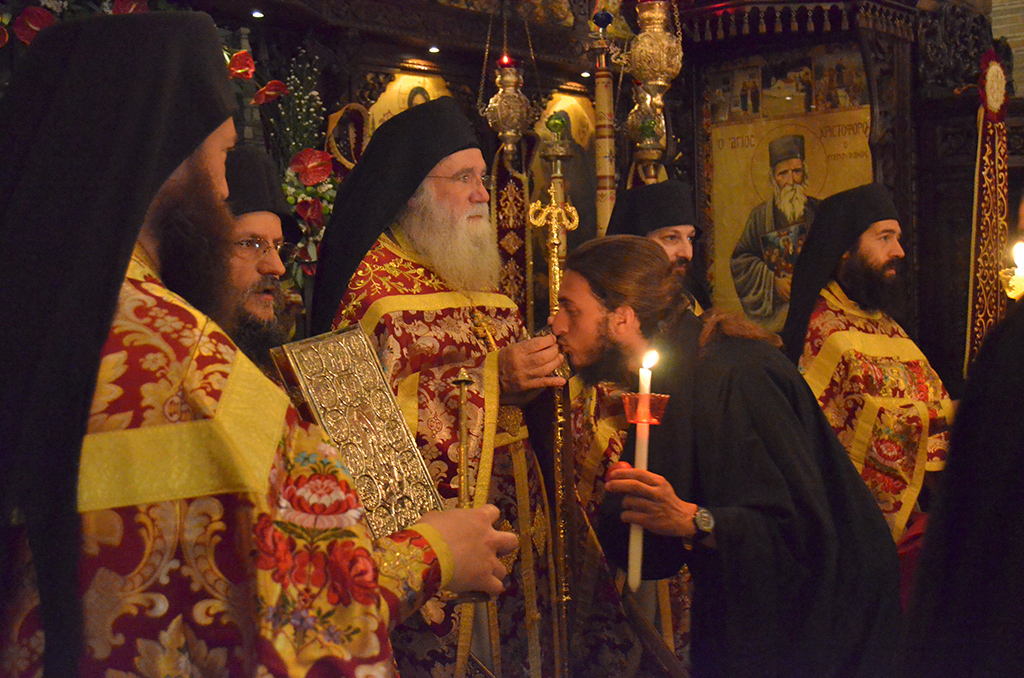
Bethlehem! The birthplace of our Lord and Savior and the cradle of biblical history. Bethlehem (Hebrew: בֵּית לֶחֶםBet Lehem, [bet ˈleχem], “House of Bread”) is located five and half miles from Jerusalem. No town in the world has such a glorious history as Bethlehem. Our Elders together with a number of Holy Land Hieromonks offer a Holy Liturgy at the Church of the Nativity. 

IMG_5260

IMG_5263

IMG_5262

A Greek Orthodox Church, which has been built over the birthplace of Our Lord by the Emperor Justinian and is over 1,500 years old. It is the second oldest Orthodox Church in existence. It was not destroyed by the Persians, as they saw a mosaic of the Magi dressed in Persian wear over the front door. Words cannot communicate what we experienced in venerating and touching the actual ground where Jesus was born. A few feet away is the Holy Manger. 

IMG_5280IMG_5271IMG_5270IMG_5269IMG_5268

IMG_5300

IMG_5299

IMG_5297

IMG_5294

IMG_5293

IMG_5292

Where is Bethlehem?
 
Micah 5:
 
    2 “ But you, Bethlehem Ephrathah, 
      Though you are little among the thousands of Judah, 
      Yet out of you shall come forth to Me 
      The One to be Ruler in Israel, 
      Whose goings forth are from of old, 
      From everlasting.”
“I am the Life” Our Saviour said
 
Where is the house of Living bread?
 
Where does this birth of new life start?
 
The chamber of a loving heart
 
Is Bethlehem.
 St.Athanasius of Alexandria (On the Incarnation, 54): “For He was made man that we might be made God (divine)”
Sunday of the Righteous Forefathers 2009 JAH (Fr. Jonathan Hemmings)

A Spiritual Father’s Blessing


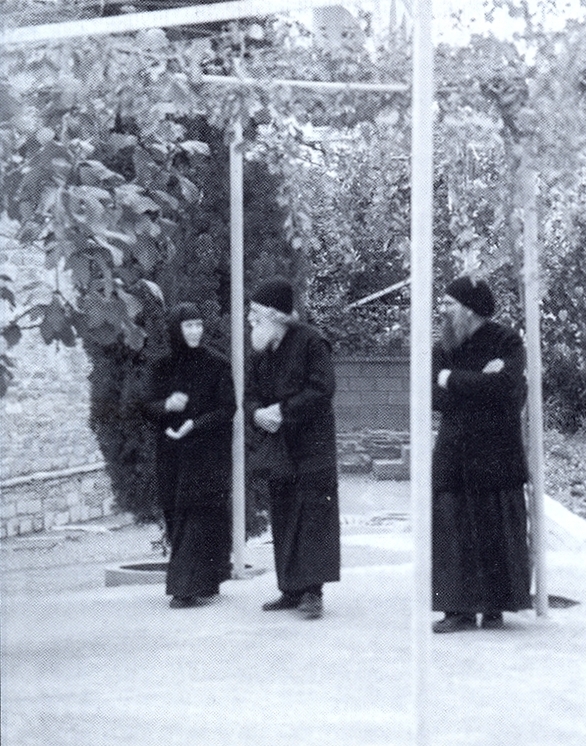
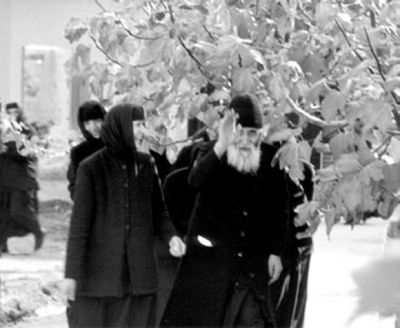
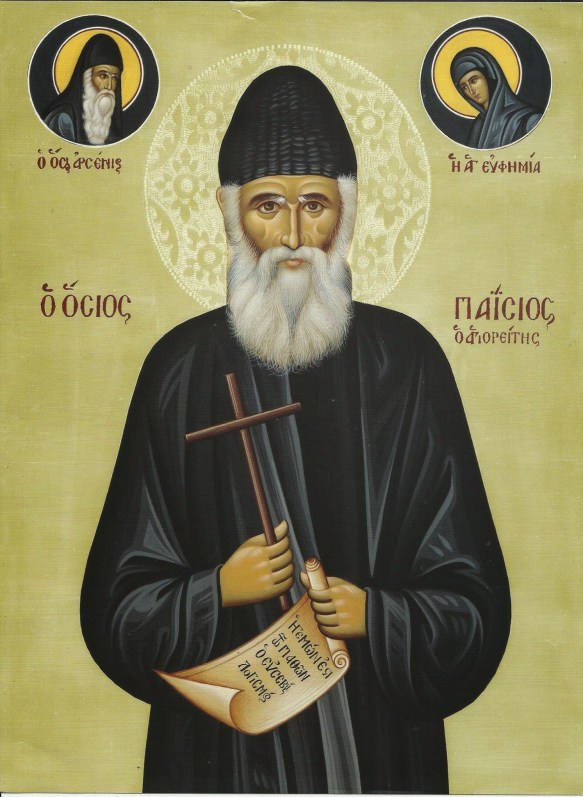
o-gerontas-paisios-me-ton-geronta-grigorio-kai-tin-gerontissa-efimia-tis-metamorfosisst paisios

Back to Greece  

Holy Monastery of the Honorable Forerunner,

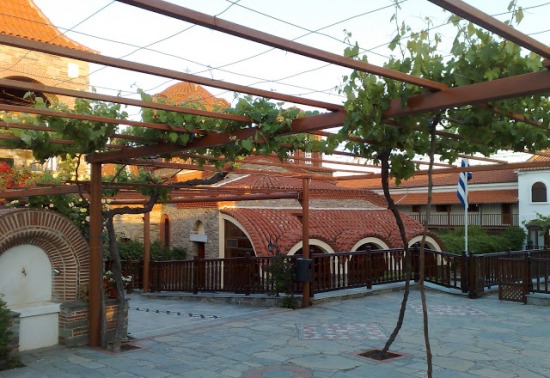
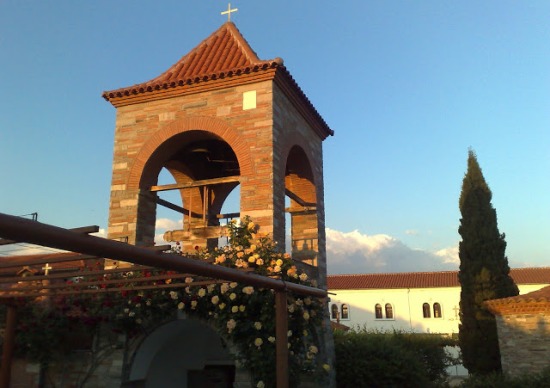
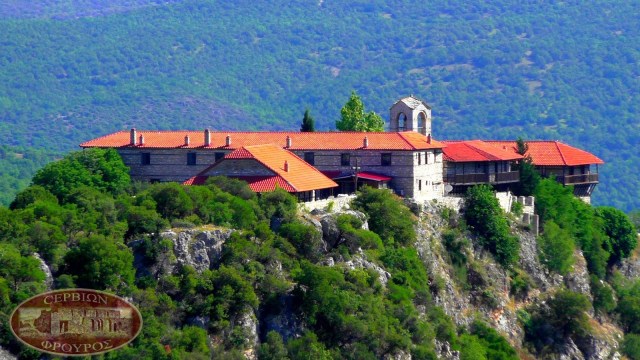
Metamorfosis Village, Chalkidiki

monk-in-sun

Before the little city hermit’s  Pilgrimage to Holy Land
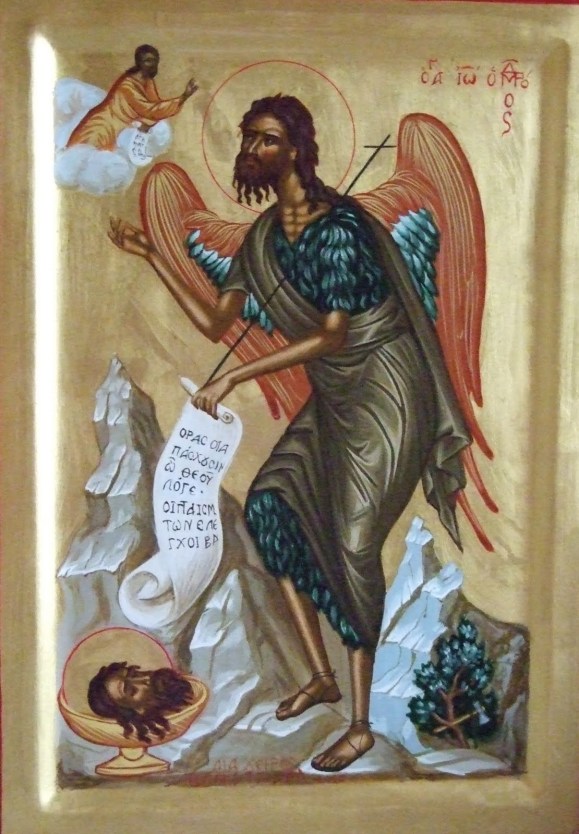
st john the forerunner

ΟΣΙΟΣ-ΠΑΪΣΙΟΣ.jpg

To receive the blessing (ευλογία) of 

St. John the Forerunner

St. Paisios the Athonite

Gerondas Gregorios’, St. Paisios’ tonsure

Gerondissa Eythymia

and + Sister Episteme

Memory Eternal!
22/09/2017

monastiriaB_isixastirio_prodromou_xalkidiki1

monastiriaB_isixastirio_metamorfosi_xalkidiki2


Holy Monastery of Zavorda of Saint Nikanor

Za1.jpg


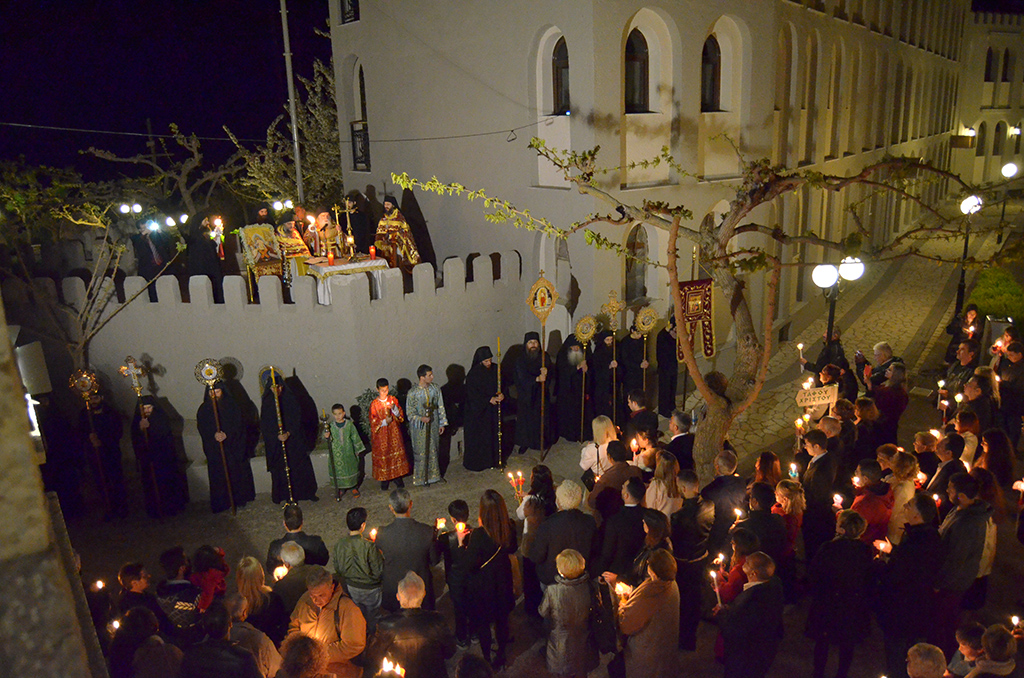
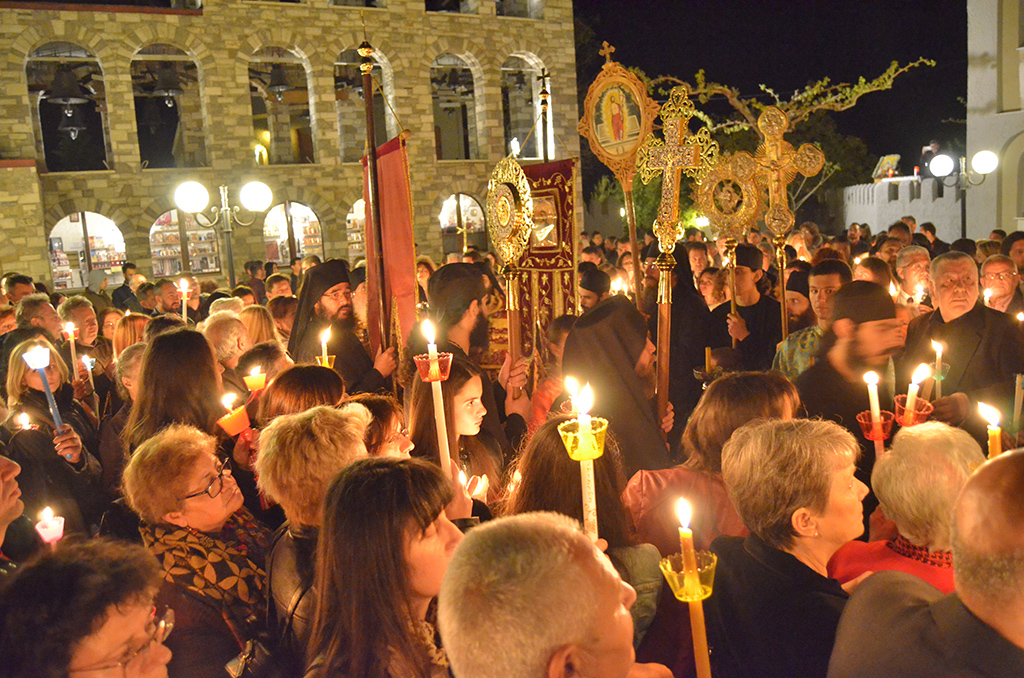
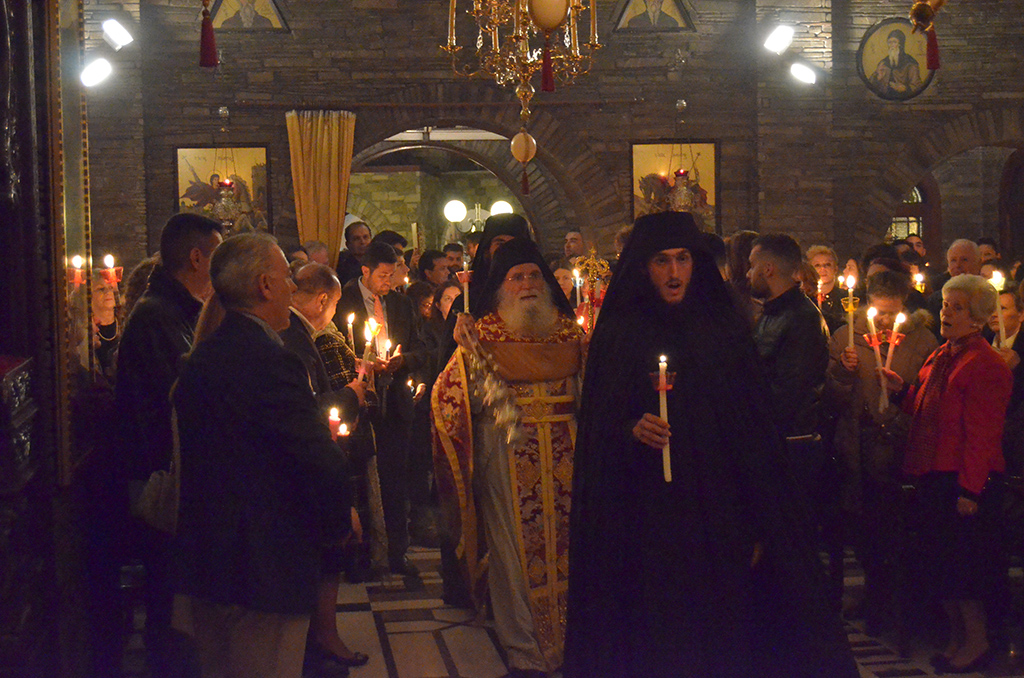
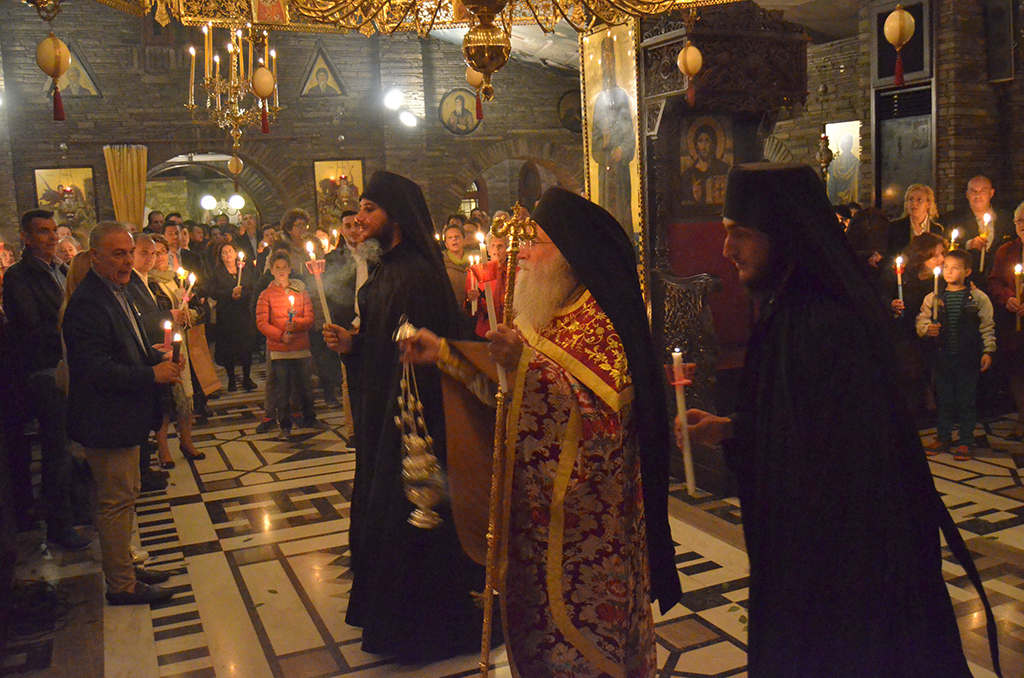
It is the Day of Resurrection! Let us be radiant, O people! Pascha! The Lord’s Pascha! For Christ our God has brought us from death to life, and from earth unto heaven, as we sing triumphant hymns!


Holy Monastery of Zavorda of Saint Nikanor

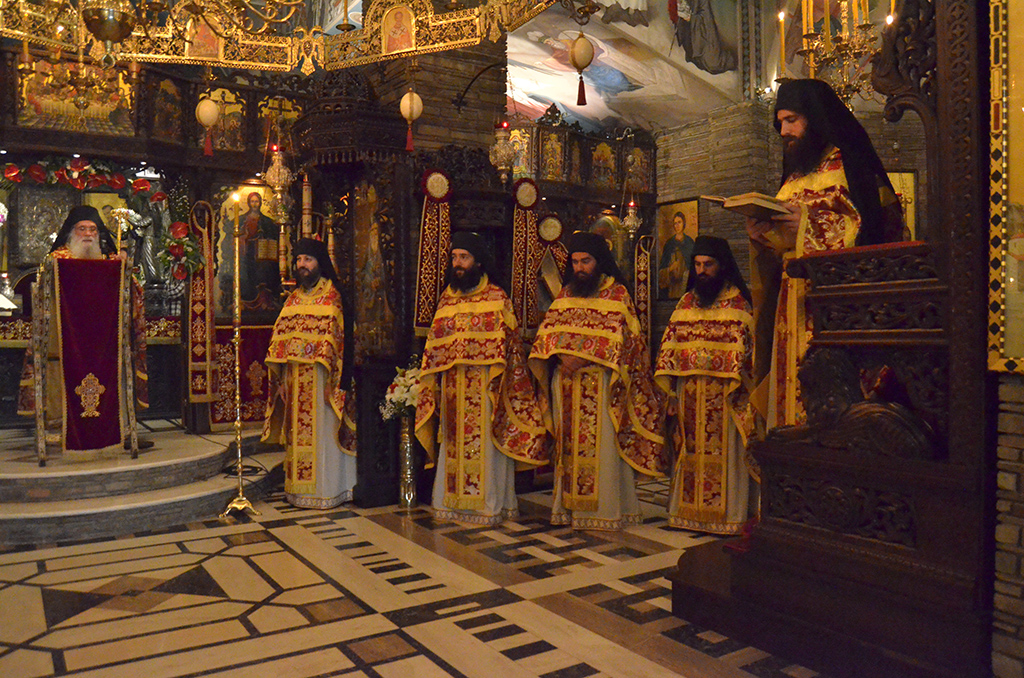
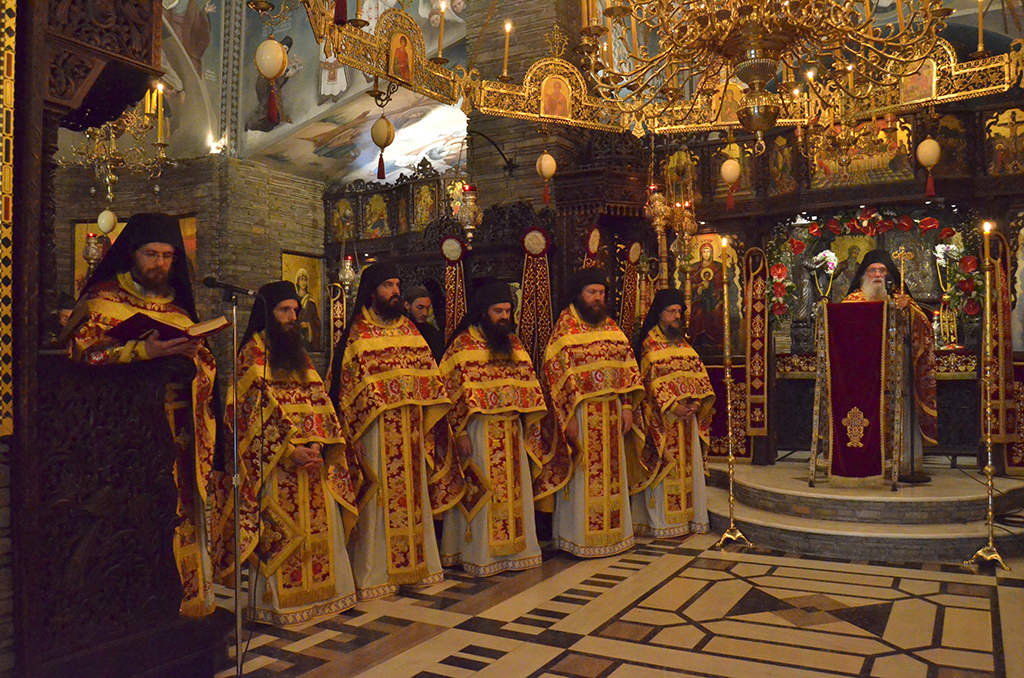
After about 80 years the Holy Monastery of Zavorda of Saint Nikanor seems that it will once again revive its old and religious and historical splendor.
 
It has been reported that 8 hieromonks, until now, have immediately expressed their interest to continue their asceticism in the historic Monastery in Grevena.
 
In this case they will re-establish the avaton, which prohibits females from entering the Monastery.
 
The avaton of Zavorda Monastery was abolished in the year 2000 by the late Metropolitan Sergios of Grevena, and from that time no hieromonks lived there in asceticism.
 
Zavorda Monastery was founded in 1534-1535 by Saint Nikanor and dedicated to the Transfiguration of Christ. It is famous for its icons of exceptional artistic quality and hosts the grave of Saint Nikanor.
 

zaborda-2

zaborda-3

zaborda-4

zaborda-5

zaborda-6

zaborda-7

zaborda-8

zaborda-9

zaborda-10

zaborda-11

zaborda-12

zaborda-13

zaborda-14

zaborda-15

zaborda-16

zaborda-17

zaborda-18

zaborda-19

zaborda-20

zaborda-21

zaborda-1

The Angel cried to her who is full of grace: Rejoice, pure Virgin! And again I say, Rejoice! Thy Son has risen on the third day from the grave. Shine, shine, O New Jerusalem, for the glory of the Lord has risen upon thee. Now dance for joy and be glad, O Zion! And thou, pure Mother of God, rejoice in the rising of Him Whom thou didst bear.

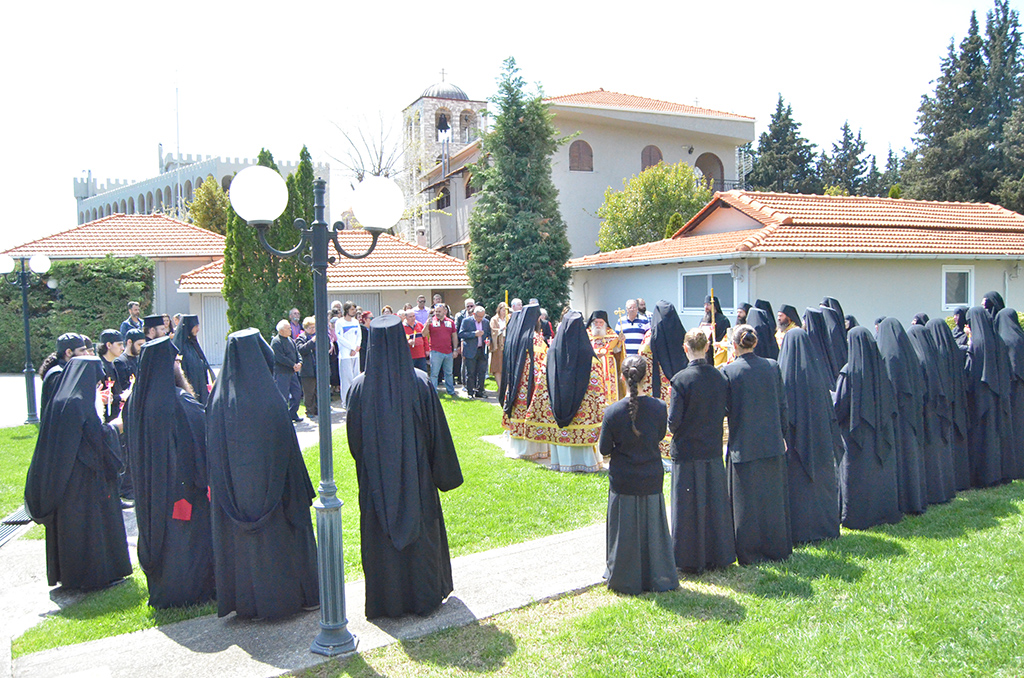
Monastic Tonsure

ΚΟΥΡΑ ΔΥΟ ΝΕΩΝ ΜΟΝΑΧΩΝ ΣΤΗΝ Ι. ΜΟΝΗ ΑΓ. ΝΙΚΑΝΟΡΟΣ ΖΑΒΟΡΔΑΣ

20170301_12393120170301_12511020170301_13135420170301_13181220170301_13200220170301_13242220170301_13270920170301_13281220170301_13355920170301_13373520170301_13531220170301_143749


*The Paschal Canon was composed by the great Saint and Father of our Church, Saint John Damascene and is described as the most glorious of all hymns in the Orthodox Church; it has been called the Queen of canons because it exclaims the richness of Orthodox theology surrounding this great and holy feast.


Christ is Risen!


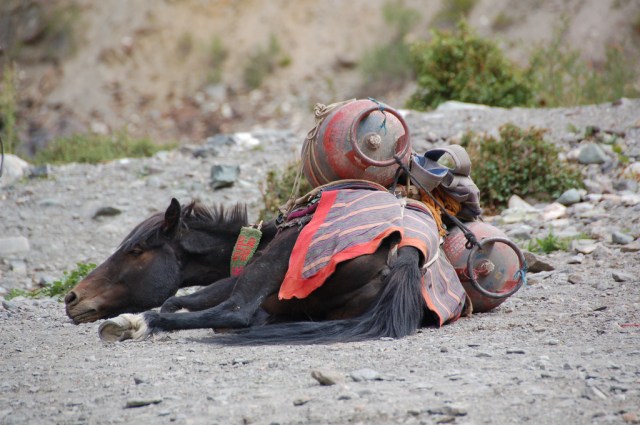
Father Ilarion and the Suffering Horse

horse1.jpg

Screen Shot 2017-03-23 at 22.07.40

Screen Shot 2017-03-23 at 22.11.55.png

Screen Shot 2017-03-23 at 22.08.14

Screen Shot 2017-03-23 at 22.12.36.png

Source: Father Arseny: A Cloud of Witnesses

The sequel to Father Arseny 1893-1973: Priest, Prisoner, Spiritual Father

“There are many times when we read the words “the best book I have ever read”….well, this book is certainly the benchmark by which you can measure all the others you will read. If you are spiritually hungry and thirsting for that one drop of spiritual water….then read this. It will open your heart. The words in this book will feed your soul. If you are reading this because you are undecided…..then why don’t you ask your heart to make the decision for you? I did…..!”

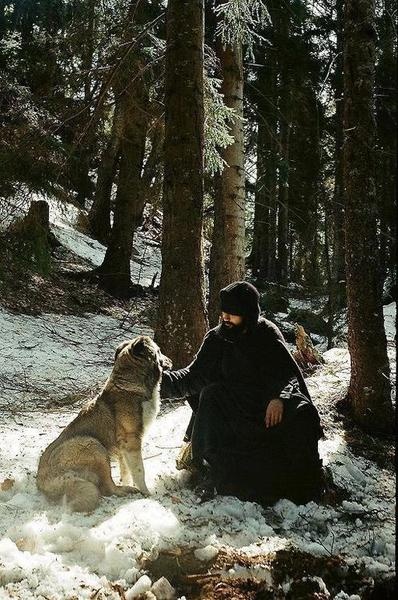
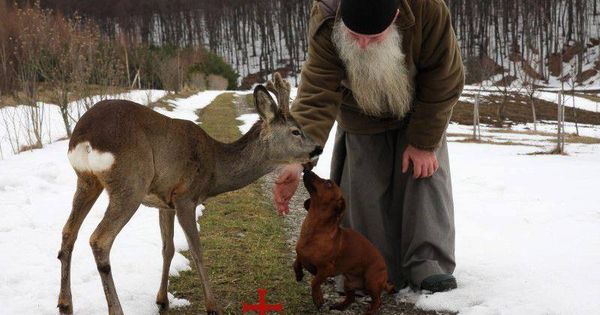
Orthodoxy and Animals

animal1animal2animal3animal4animal5animal6animal8animal7animal9

animal10animal11animal12animal13animal14animal15animal16animal18

Submerged Beauty


split26

Unless we look at a person and see the beauty there is in this person, we can contribute nothing to him.

One does not help a person by discerning what is wrong, what is ugly, what is distorted.

Christ looked at everyone he met, at the prostitute, at the thief, and saw the beauty hidden there.

Perhaps it was distorted, perhaps damaged, but it was beauty none the less, and what he did was to call out this beauty.


Based on Metropolitan Anthony of Sourozh


Gie her a Haggis


edin10.jpg


“Holiness in the Bible” Study Weekend: Highlights (I)

Orthodox Fellowship of St John the Baptist

Orthodox Community of St Andrew the Apostle in Edinburgh


edin11

Sunday 22/1/2017

*A thought-provoking talk by Dr. Fotini Hamplova on how women can be saved through child-bearing and especially child-rearing, including us all here, spiritual mothers, spiritual fathers and indeed all Orthodox Christians in this call to Holiness through asceticism, the cutting of our will, silence, podvig etc.

img_0634

Fotini: “The Church is our Arc. This is where we are safe.”

img_0633

Fr. Mark (Glasgow) on holiness in the 21st century

Fr. Mark: On Bearing Our Cross to become Holy

How can you bear it?

We cannot. But where else can we go?

The feeling of being nailed on a Cross. 

See this to the end. 

Proceed to a territory beyond our endurance–to Death. 

God will never force us, push us beyond we want to go. 

Danger: illusion of Peace. 

Terrorism of the demons: assailed largely through thoughts, discouraging: very convincing.

The Evil One becomes powerful in our lives to the extent to which we will listen to him.

It takes great humility, courage and faith in order to allow God to smash us to pieces. Because He will in order to save us. If we allow Him, if we surrender to His Will.

img_0632

How lovely to see Fr Michael Harry with his Khouriya,  who are to ‘retire’ after Easter to the Hebrides!

img_0652

And a few more friends

img_0657

 Archimandrite John Maitland Moir (b. 18 June 1924-d. 17 April 2013), the Founding Father of the parish, was also present in our hearts.

edin51

Nice group photo of the Haggises  🙂

img_0650

A haggis lunch accompanied with with excellent Scottish folk music and Robert Burns poetry recitation while ceremoniously cutting the haggis.

The folk music was mesmerising and sounded something like that. Apologies for running out of battery…


And the Haggis ritual looked like that. Again apologies for my battery …


This poem was written by Burns to celebrate his appreciation of the Haggis. As a result Burns and Haggis have been forever linked. As I found out, this particular poem is always the first item on the programme of Burns’ suppers. The haggis is generally carried in on a silver salver at the start of the proceedings. As it is brought to the table a piper plays a suitable, rousing accompaniment. One of the invited artistes then recites the poem before the theatrical cutting of the haggis with the ceremonial knife: “But, if ye wish her gratefu prayer/ Gie her [Scotland] a Haggis”

*

Then, a scenic tour of Edinburgh

img_0654img_0653img_0655

edin30

Arthur’s Seat is one of the Best Places with Scenic Views in Edinburgh.

edin31.jpg

View of Edinburgh from the Rest and Be Thankful, Corstorphine Hill.

edin40.jpg

View from Calton Hill Edinburgh

edin7.jpg

Craiglockhart Hill

IMG_1521

Braid Hill

IMG_1541

Blackford Hill

IMG_1397

Arthur’s Seat

IMG_0987


Yes, I know. A haggis lunch…..then a walk…..Orthodox have stamina 🙂


edin41.jpg

Edinburgh is traditionally said to have been built on seven hills. Walk round the town for an hour or so and you might wonder if they didn’t mean seven …

edin44.jpg

Edinburgh Castle Edinburgh Castle as seen from Princes Street …

edin42.jpg

While spending this long weekend in Edinburgh, I’ve caught a glimpse of the castle almost every day, whether I’m walking to or from the church, shopping, or wandering about town..

Our Sunday scenic tour culminated to St Mary’s Cathedral, Edinburgh (Roman Catholic), where we venerated the relics of St Andrew the First-called. Here parishioners and visitors for the study weekend joined together as pilgrims.

edin20.jpg

img_0656


It was such a lovely weekend; thank you to all who worked so hard and for all the kindness and fellowship!

Journey of a Young Artist

JonathanPresentation_08

Jonathan Jackson and The Seeds of “The Mystery of Art”


Whoever wants to become a Christian, must first become a poet— Saint Porphyrios
When I was young, they brought me to Babylon
And the night hung over my head
The smoke came into my dreams 
In the valley of dry bones

It was under the skies of Babylon 
Where my soul fell in love with God
My eyes were seared and my blood was bruised
But I was hidden within a song

All around were the sounds of Babylon
But all I heard, were the hymns of heaven

It was under the skies of Babylon 
Where my soul fell in love with her 
I was barely coming clean and she had already seen
A war on her innocence

I spoke of the Christ underneath the clouds 
And woke her from the sleep of death

She took my hand and walked me through the crowd
Why, is anybody’s guess?

All around, was the gold of Babylon
But all I saw, was an angel of heaven

You can shut me up but you cannot quiet
The silence of the Mystic Church
You can shut me up but you cannot quiet
The silence of the Mystic Church


I would like to start with the journey of how this book, “The Mystery of Art” began. It was not an intellectual or abstract search. The questions and explorations on this subject were immediate and crucial for me growing up. I began working as a professional actor at the age of 11 on General Hospital. At The age of 12, by God’s grace I had a profound encounter with Christ. My father would give us cassette tapes of sermons to listen to and one night, I heard a sermon on “The holiness of God and the pride of the human heart.” I don’t know why and I don’t know how these things occur, but I was cut to the heart. I suddenly realized how far away from God I truly was. How prideful and full of selfishness and egoism I was. It scared me to be honest. And yet, paradoxically, in that very moment of feeling the weight of my sinfulness—how my supposed righteousness is like “filthy rags” before the holiness of God, as Isaiah says—a Divine Presence also overwhelmed me. I felt like a great sinner who was also mysteriously loved beyond comprehension.

Around the same time, I read C.S. Lewis’ chapter called “The Great Sin”, which is all about Pride. I read Matthew 25, the Last Judgment and Matthew 5 when Christ says, “You have heard that it was said, ‘You shall not commit adultery.’ But I tell you that anyone who looks at a woman lustfully has already committed adultery with her in his heart.” I knew I could never impress God with my self-righteousness, so I cried out for mercy, I cried out for grace. And the compassions of God washed over me.

This was a turning point in my life. Nothing was the same after this encounter. I began to hear and perceive my own thoughts with great clarity. This was frightening too because I was suddenly aware of all the judgments and horrible thoughts I had about people. But the Holy Spirit was so merciful in this process. He never made me feel condemned. Convicted, yes. But never condemned. He would always whisper, “I’m not showing you this to condemn you, I’m showing you this darkness, so you can be healed.”

I began to think about God all the time. Throughout the following years there were many struggles and trials but the mystery of God became the most beautiful, the most attractive, the most intriguing and important pursuit in my life.

Naturally and organically, I had a desire to incorporate the Holy Spirit into the work I was doing. I had studied a few different acting methods but for the most part, my own personal method was being birthed through experience. Working with Anthony Geary and Genie Francis and other incredible performers like Michelle Pfeiffer and Sir Ben Kingsley. It was very much like Orthodoxy in the sense that I was a sponge, soaking everything in through experience and not through theory.

Within a short period of time after this initial encounter of grace, I was given some very heavy storylines to portray. I was about 15 years old and my character Lucky Spencer finds a young girl in the woods, who has just been raped. It is winter and the poor girl is freezing out in the cold, left for dead. He rescues her and they develop a friendship. He spends months taking care of her and being by her side as she tries to heal from this horrific event.

On a Soap Opera, you are on TV almost every day; especially when your storyline in prominent. In a more direct way than most artistic mediums, you are living the day-to-day story of your character. I was portraying this storyline for months. It was during this time that I first remember bringing God into my preparation as an actor. I began to ask Him, “How could you allow this innocent creature to suffer in this way?” “How can anyone be healed from such a wound?”

JonathanPresentation

They were questions my character could have been asking God and questions most of us have asked before. What it began to do for me, was nudge my work towards something inherently spiritual and although I would not have known it at the time, something sacramental.

Over the following years I portrayed a lot of dark and tragic roles: someone struggling with suicide, a heroine addict, a murderer among others. It was around this time when I began to ask God, “How can I portray these dark and troubled characters dynamically and truthfully, without being consumed by the darkness myself?” There are many tragic stories of young actors who become drug addicts after playing one in a film. The stories of drug overdoses and suicides among young actors and actresses are too many. I instinctively steered away from “Method Acting” and sought a different path, even though I didn’t know exactly what that would be.

It was around this time when I discovered Dostoevsky. It’s amazing to me now, being Orthodox that I wasn’t able to comprehend anything about the Orthodox Church as I read his books. It was like a veil, I suppose. But what I did discover was a kindred soul. Here was someone who was writing about very dark and tragic characters and themes but from a place of beauty—from a place of the Light of Christ. Prince Myshkin, from the “The Idiot”, changed my life. I clung to Dostoevsky in my heart as I approached portraying these dark characters and prayed, “Lord, please help me to portray the darkness of this world from a place of purity and light. Please, help me not to be overcome by the darkness, but to infiltrate the darkness with Your Light. Without you I can do nothing. I am nothing, I have nothing and I can do nothing without You, Lord. Amen.”

This is a snap shot so to speak, of the journey towards writing, “The Mystery Of Art”. These were the seeds, which by God’s grace, grew over time. There were so many important and profound spiritual realities that I wasn’t exposed to at the time, because I had not encountered the Holy Orthodox Church. I was grasping in the dark, looking for answers, feeling my way towards Christ, as best I could, but I always knew that something was missing; something significant and crucial to my relationship with God. There is a beautiful Scripture in the Gospel of John where Christ says,

“And I have other sheep that are not of this fold. I must bring them also, and they will listen to my voice. So there will be one flock, one shepherd.” (John 10:16)

I was one those lambs who was not of this fold. But through the grace of Jesus Christ, the Good Shepherd and your prayers, He found me and brought me home. My journey to the Orthodox Faith took many years and was paved with blood and heartache. I carried all of these artistic questions and experiences with me as my family and I came into the Church for salvation, deliverance and healing.

See also: Jonathan Jackson’s Orthodox Acceptance Speech at the Emmy’s

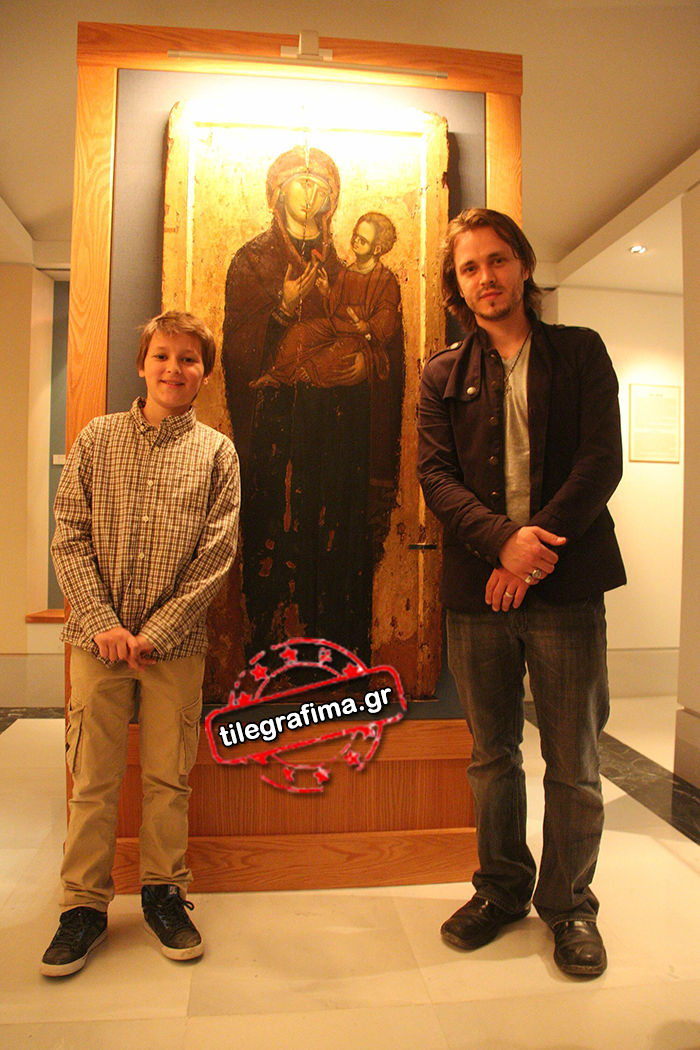
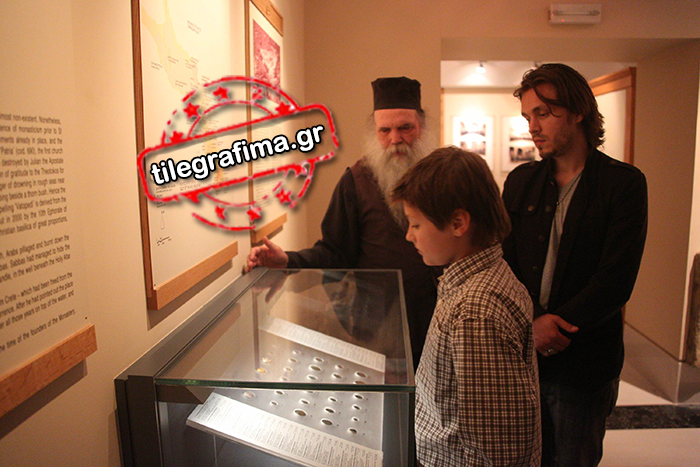
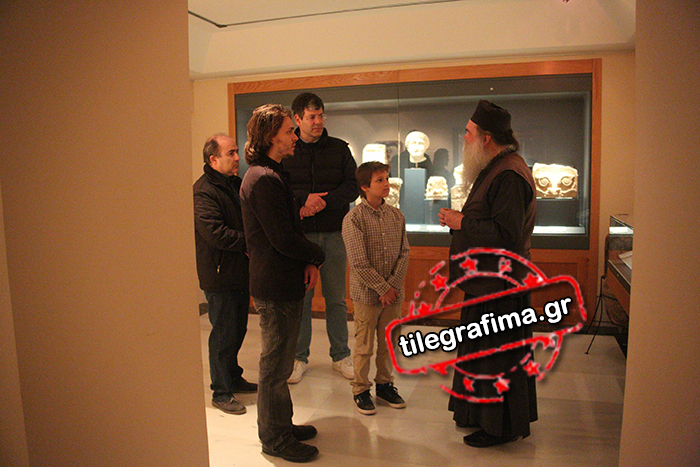
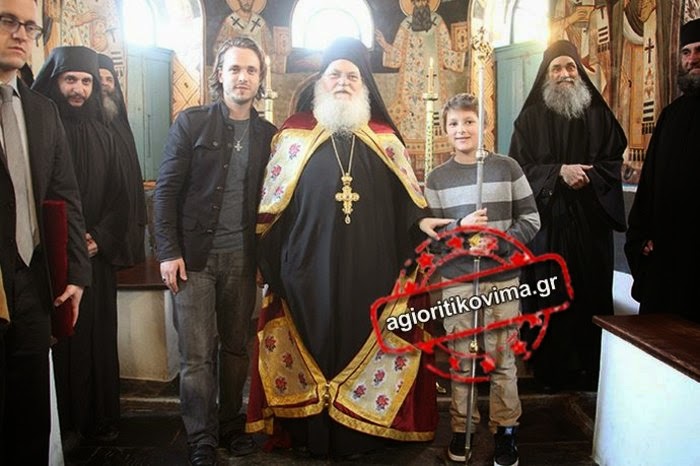
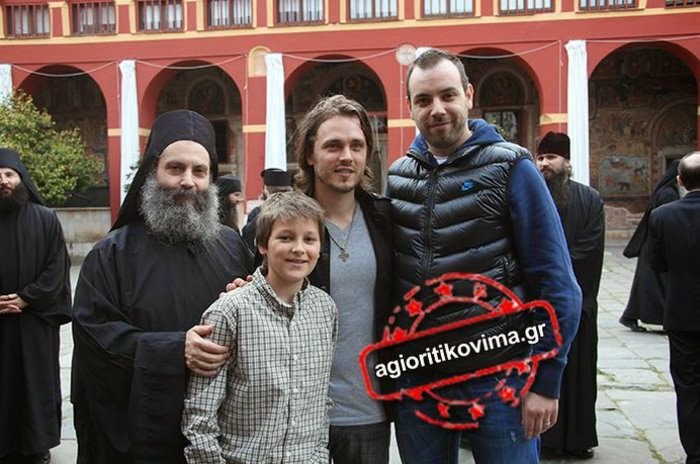
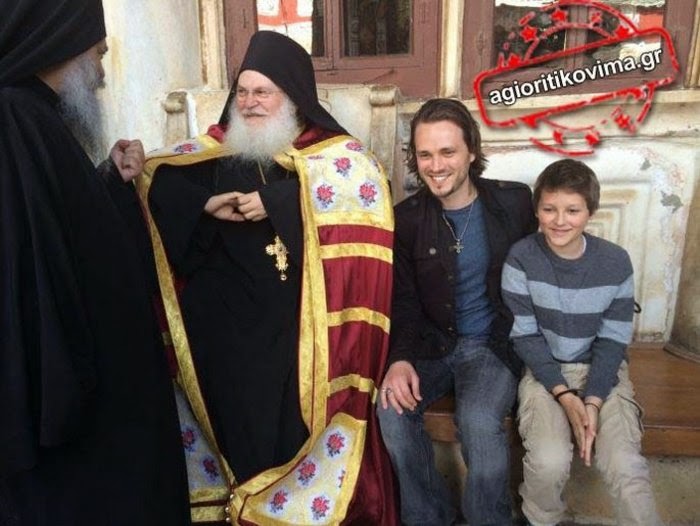
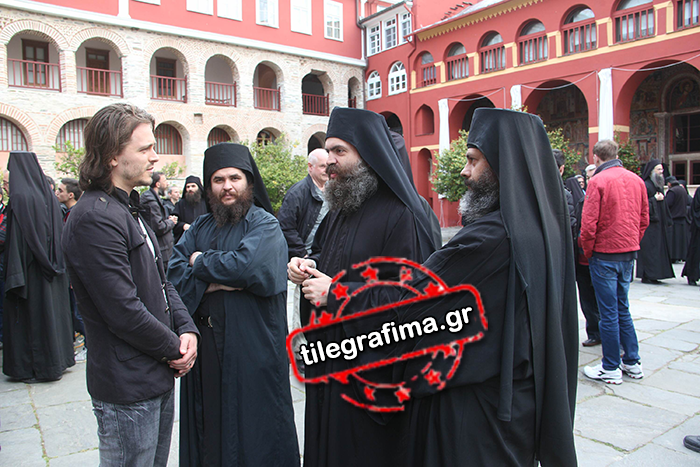
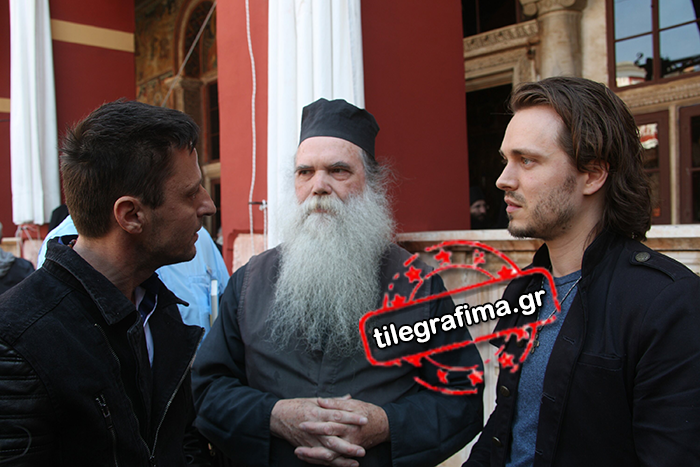
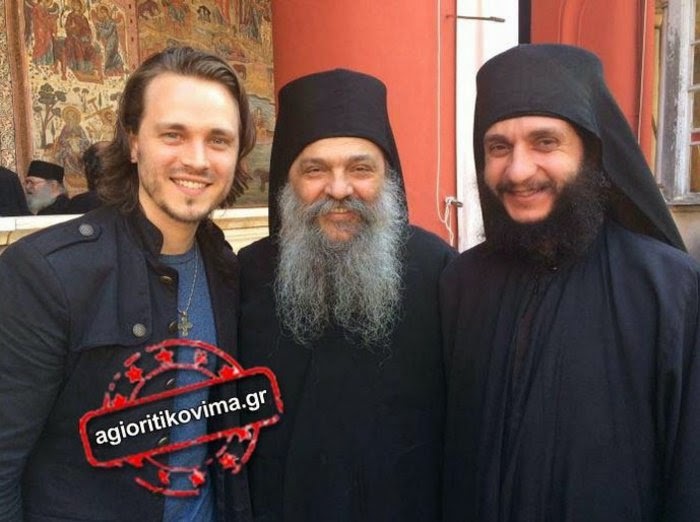
See photos from his visit to Mount Athos for the first time with his 11 year-old son Caleb (2015), where they stayed  for five days visiting Simonopetra and Xenophontos monasteries, and spent most of his time at Vatopaidi Monastery (Friday till Tuesday) where he met the Abbot, Elder Ephraim, and attended an all-night vigil on Saturday night.

While at Vatopaidi Monastery, Jonathan also gave a testimony of how he converted to Orthodoxy for Pemptousia, which can be seen here.

Our Lady of Kipina


kipina39kipina38kipina36kipina35kipina34kipina33

kipina23kipina32kipina31

kipina37kipina28

kipina19


kipina26


kipina11

kipina13

kipina8

kipina6

kipina4

kipina2kipina1kipina16

kipina21

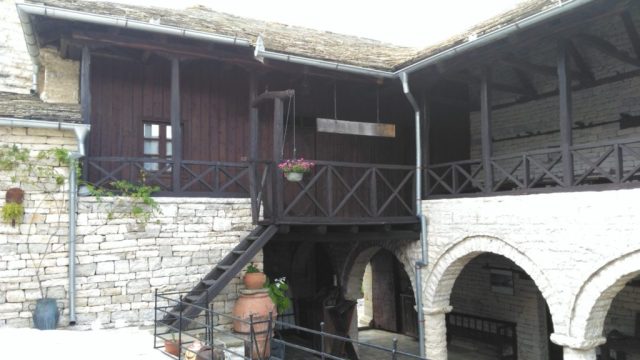
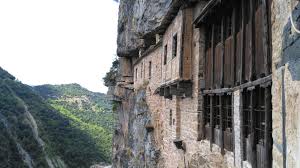
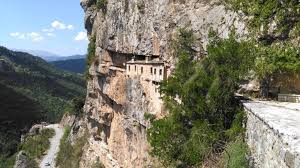
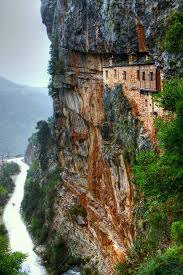
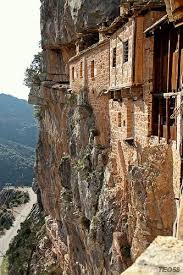
If you go towards the old-world village of Kalarrytes in the Tsoumerka Mountains in Epirus, you come across an impressive fortified monastery built into a rock face: the Holy Monastery of Our Lady of Kipina.


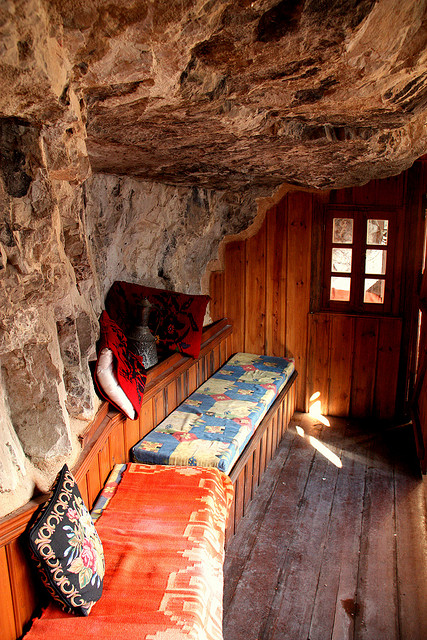
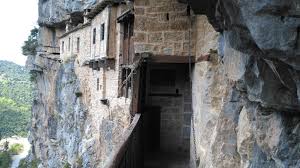
The Holy Monastery of Kipina is built into a large cave in a sheer rock.


According to the founder’s inscription, building began in 1349. But according to Metropolitan Serafeim (Vyzantio) of Arta, a historian, the foundation dates back further in time. Other historical sources date it to 1212.


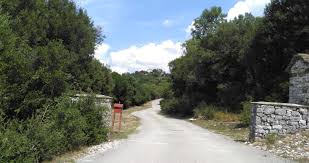
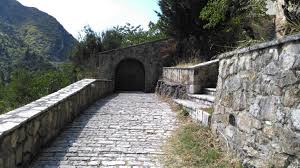
Access to the Monastery is by a stone path hewn into the rock. In former times, contact could be broken by means of a wooden drawbridge.

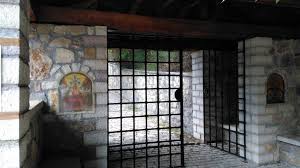
The outer gate of the monastery.


Without doubt, the time when the Monastery of Kipina was at its peak was the 18th century. Indeed, it’s recorded that, in 1760, the exceptionally active Abbot Kallinikos funded the construction of a bridge over the nearby River Kalarrytikos, a tempestuous tributary of the Arakhthos.


The Monastery also ran a school and a water-mill. All of this shows both the financial power of the foundation and also the close links with its social setting.


The imposing rock casts its shadow over the steps of visitors, next to the path to the entry.


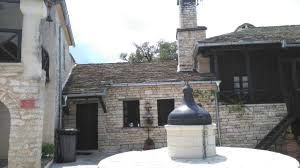
Still surviving from the old Monastery complex are the church, four cells and a small building which used to serve as a stable.


In the olden days, the drawbridge would be raised at night or at times of danger. Access to the Monastery was thus completed severed, which is why it is one of the few that escaped pillage. The crank handle of the drawbridge has been preserved.


The Monastery is dedicated to the Dormition of the Mother of God. According to tradition, however, it celebrates on the feast of the Life-Receiving Spring (Friday in the week after Easter).


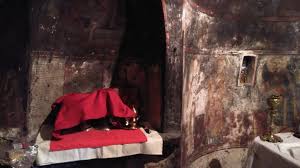
The church is a small, single space, built within the cave.


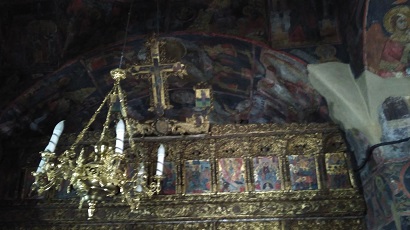
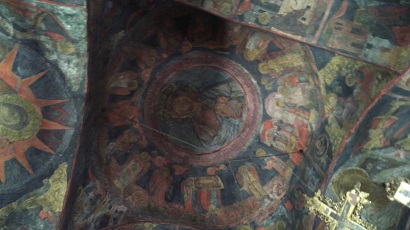
The rich iconographical decoration of the church was carried out in the 18th century.


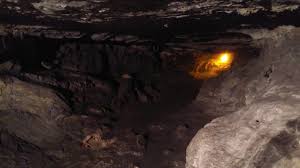
At the northern end of the narthex is the opening to the cave, which extends to a depth of 240 metres into the rock.