Journey of a Young Artist

JonathanPresentation_08

Jonathan Jackson and The Seeds of “The Mystery of Art”


Whoever wants to become a Christian, must first become a poet— Saint Porphyrios
When I was young, they brought me to Babylon
And the night hung over my head
The smoke came into my dreams 
In the valley of dry bones

It was under the skies of Babylon 
Where my soul fell in love with God
My eyes were seared and my blood was bruised
But I was hidden within a song

All around were the sounds of Babylon
But all I heard, were the hymns of heaven

It was under the skies of Babylon 
Where my soul fell in love with her 
I was barely coming clean and she had already seen
A war on her innocence

I spoke of the Christ underneath the clouds 
And woke her from the sleep of death

She took my hand and walked me through the crowd
Why, is anybody’s guess?

All around, was the gold of Babylon
But all I saw, was an angel of heaven

You can shut me up but you cannot quiet
The silence of the Mystic Church
You can shut me up but you cannot quiet
The silence of the Mystic Church


I would like to start with the journey of how this book, “The Mystery of Art” began. It was not an intellectual or abstract search. The questions and explorations on this subject were immediate and crucial for me growing up. I began working as a professional actor at the age of 11 on General Hospital. At The age of 12, by God’s grace I had a profound encounter with Christ. My father would give us cassette tapes of sermons to listen to and one night, I heard a sermon on “The holiness of God and the pride of the human heart.” I don’t know why and I don’t know how these things occur, but I was cut to the heart. I suddenly realized how far away from God I truly was. How prideful and full of selfishness and egoism I was. It scared me to be honest. And yet, paradoxically, in that very moment of feeling the weight of my sinfulness—how my supposed righteousness is like “filthy rags” before the holiness of God, as Isaiah says—a Divine Presence also overwhelmed me. I felt like a great sinner who was also mysteriously loved beyond comprehension.

Around the same time, I read C.S. Lewis’ chapter called “The Great Sin”, which is all about Pride. I read Matthew 25, the Last Judgment and Matthew 5 when Christ says, “You have heard that it was said, ‘You shall not commit adultery.’ But I tell you that anyone who looks at a woman lustfully has already committed adultery with her in his heart.” I knew I could never impress God with my self-righteousness, so I cried out for mercy, I cried out for grace. And the compassions of God washed over me.

This was a turning point in my life. Nothing was the same after this encounter. I began to hear and perceive my own thoughts with great clarity. This was frightening too because I was suddenly aware of all the judgments and horrible thoughts I had about people. But the Holy Spirit was so merciful in this process. He never made me feel condemned. Convicted, yes. But never condemned. He would always whisper, “I’m not showing you this to condemn you, I’m showing you this darkness, so you can be healed.”

I began to think about God all the time. Throughout the following years there were many struggles and trials but the mystery of God became the most beautiful, the most attractive, the most intriguing and important pursuit in my life.

Naturally and organically, I had a desire to incorporate the Holy Spirit into the work I was doing. I had studied a few different acting methods but for the most part, my own personal method was being birthed through experience. Working with Anthony Geary and Genie Francis and other incredible performers like Michelle Pfeiffer and Sir Ben Kingsley. It was very much like Orthodoxy in the sense that I was a sponge, soaking everything in through experience and not through theory.

Within a short period of time after this initial encounter of grace, I was given some very heavy storylines to portray. I was about 15 years old and my character Lucky Spencer finds a young girl in the woods, who has just been raped. It is winter and the poor girl is freezing out in the cold, left for dead. He rescues her and they develop a friendship. He spends months taking care of her and being by her side as she tries to heal from this horrific event.

On a Soap Opera, you are on TV almost every day; especially when your storyline in prominent. In a more direct way than most artistic mediums, you are living the day-to-day story of your character. I was portraying this storyline for months. It was during this time that I first remember bringing God into my preparation as an actor. I began to ask Him, “How could you allow this innocent creature to suffer in this way?” “How can anyone be healed from such a wound?”

JonathanPresentation

They were questions my character could have been asking God and questions most of us have asked before. What it began to do for me, was nudge my work towards something inherently spiritual and although I would not have known it at the time, something sacramental.

Over the following years I portrayed a lot of dark and tragic roles: someone struggling with suicide, a heroine addict, a murderer among others. It was around this time when I began to ask God, “How can I portray these dark and troubled characters dynamically and truthfully, without being consumed by the darkness myself?” There are many tragic stories of young actors who become drug addicts after playing one in a film. The stories of drug overdoses and suicides among young actors and actresses are too many. I instinctively steered away from “Method Acting” and sought a different path, even though I didn’t know exactly what that would be.

It was around this time when I discovered Dostoevsky. It’s amazing to me now, being Orthodox that I wasn’t able to comprehend anything about the Orthodox Church as I read his books. It was like a veil, I suppose. But what I did discover was a kindred soul. Here was someone who was writing about very dark and tragic characters and themes but from a place of beauty—from a place of the Light of Christ. Prince Myshkin, from the “The Idiot”, changed my life. I clung to Dostoevsky in my heart as I approached portraying these dark characters and prayed, “Lord, please help me to portray the darkness of this world from a place of purity and light. Please, help me not to be overcome by the darkness, but to infiltrate the darkness with Your Light. Without you I can do nothing. I am nothing, I have nothing and I can do nothing without You, Lord. Amen.”

This is a snap shot so to speak, of the journey towards writing, “The Mystery Of Art”. These were the seeds, which by God’s grace, grew over time. There were so many important and profound spiritual realities that I wasn’t exposed to at the time, because I had not encountered the Holy Orthodox Church. I was grasping in the dark, looking for answers, feeling my way towards Christ, as best I could, but I always knew that something was missing; something significant and crucial to my relationship with God. There is a beautiful Scripture in the Gospel of John where Christ says,

“And I have other sheep that are not of this fold. I must bring them also, and they will listen to my voice. So there will be one flock, one shepherd.” (John 10:16)

I was one those lambs who was not of this fold. But through the grace of Jesus Christ, the Good Shepherd and your prayers, He found me and brought me home. My journey to the Orthodox Faith took many years and was paved with blood and heartache. I carried all of these artistic questions and experiences with me as my family and I came into the Church for salvation, deliverance and healing.

See also: Jonathan Jackson’s Orthodox Acceptance Speech at the Emmy’s

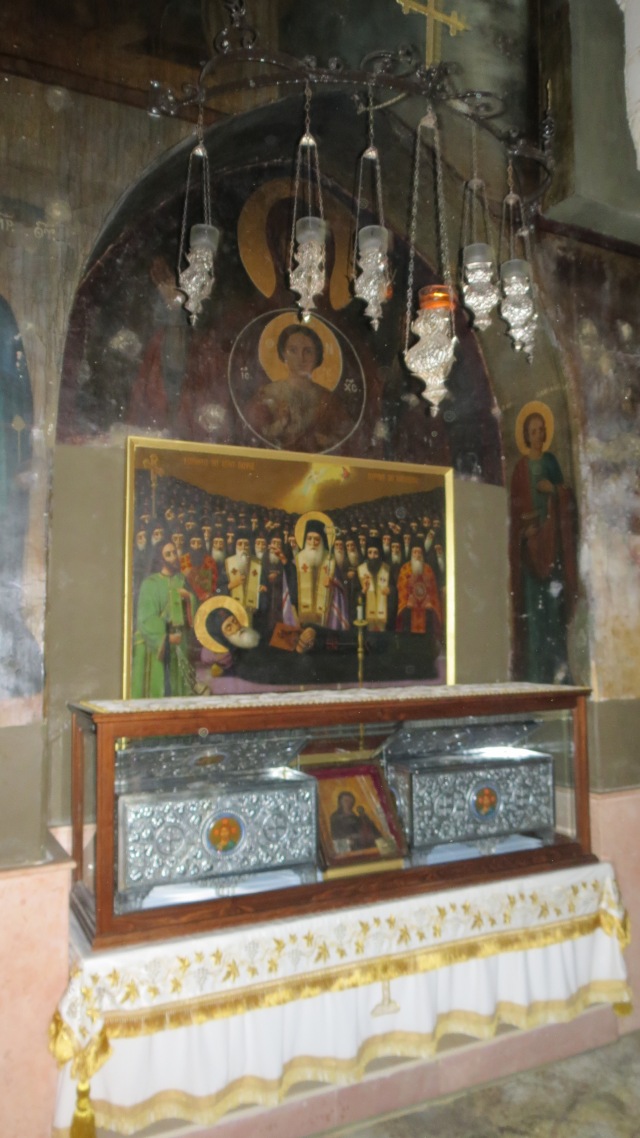
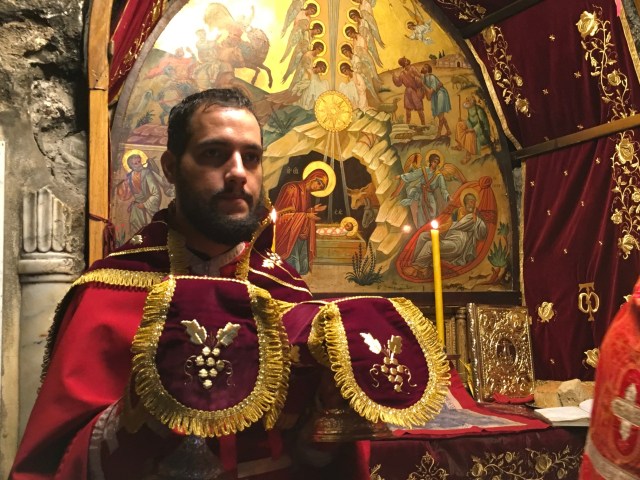
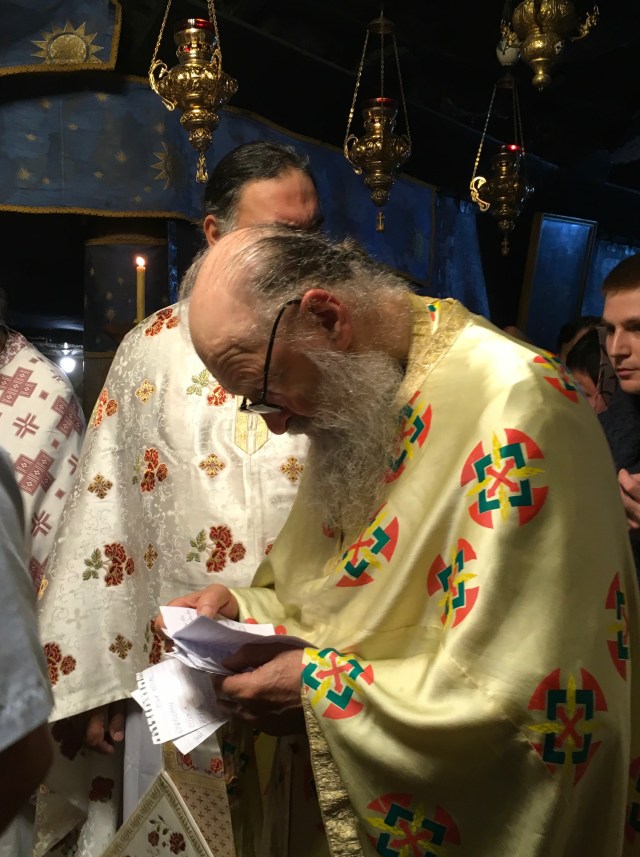
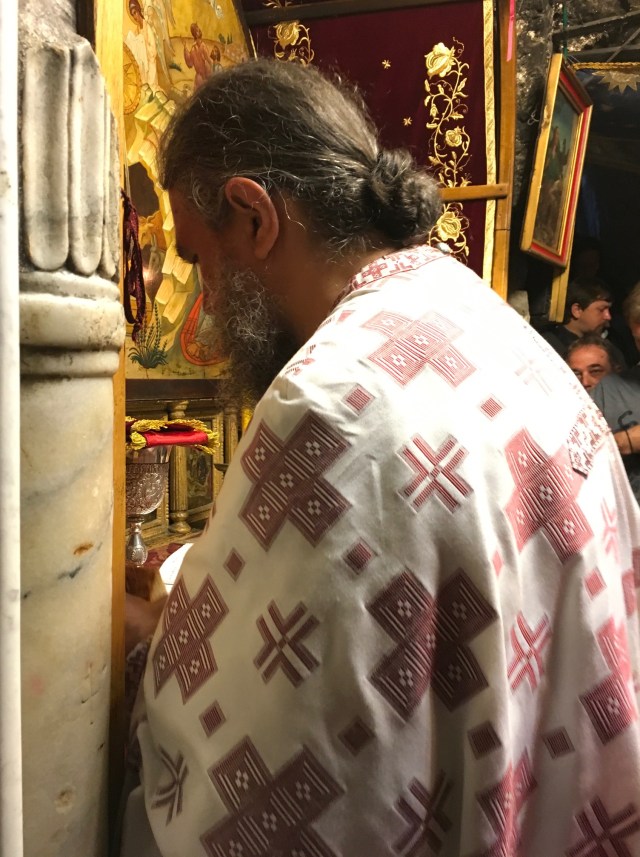
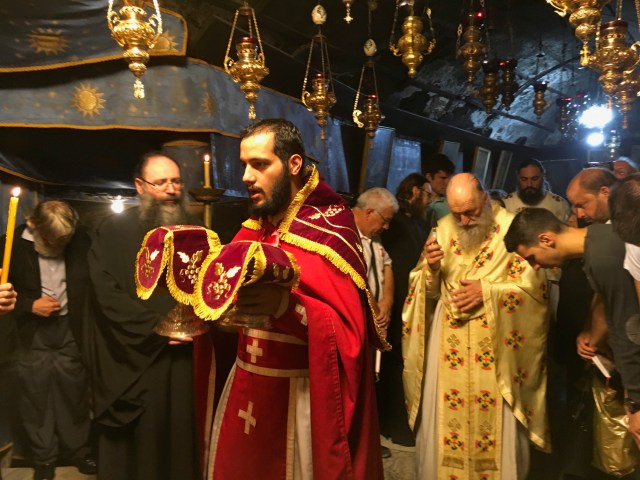
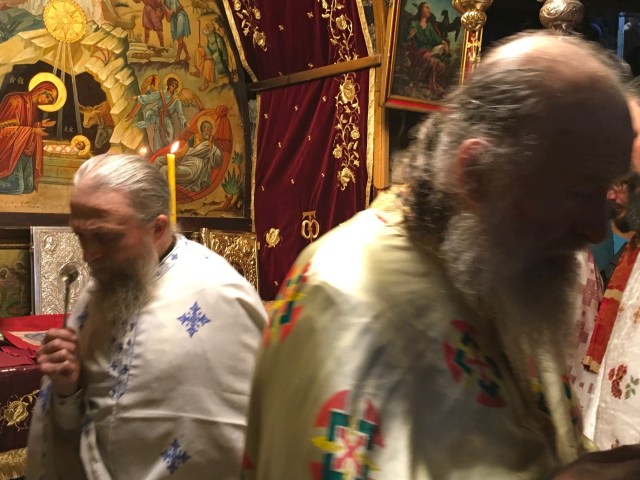
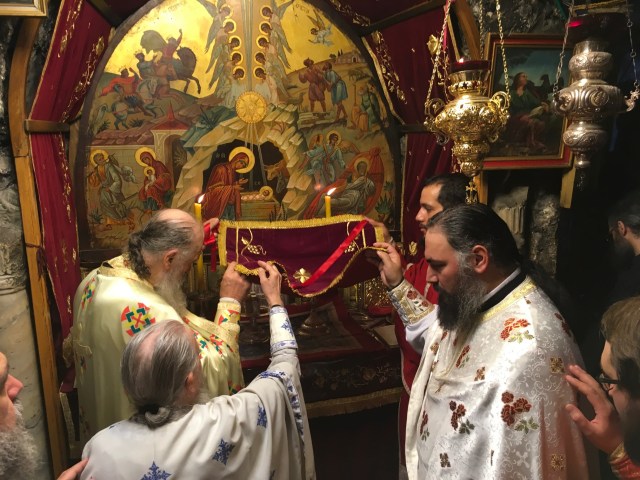
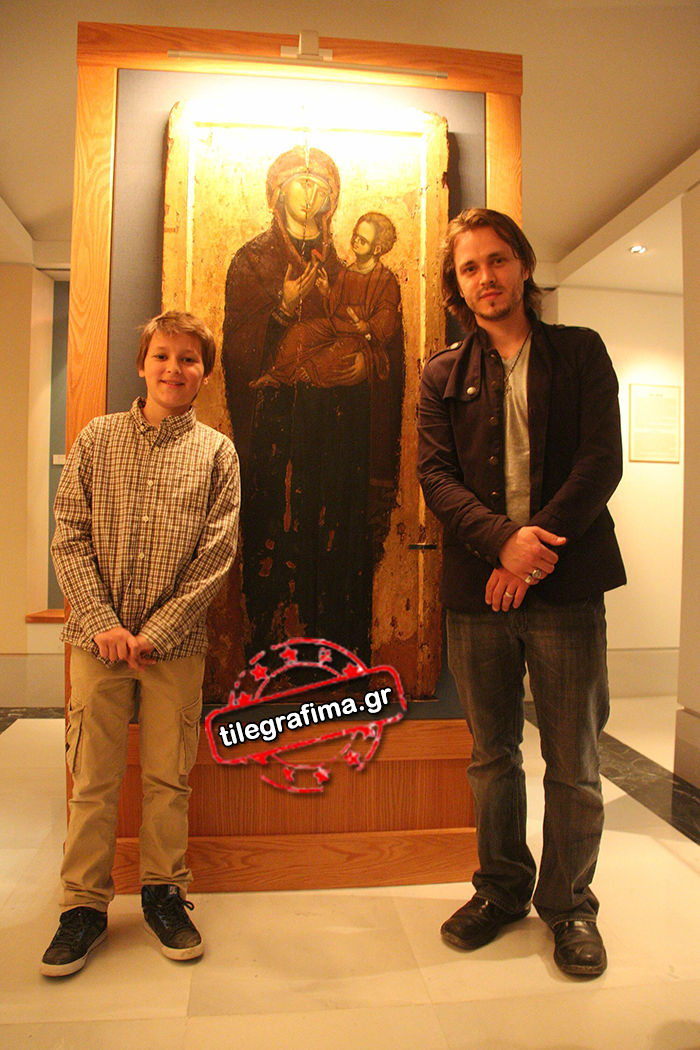
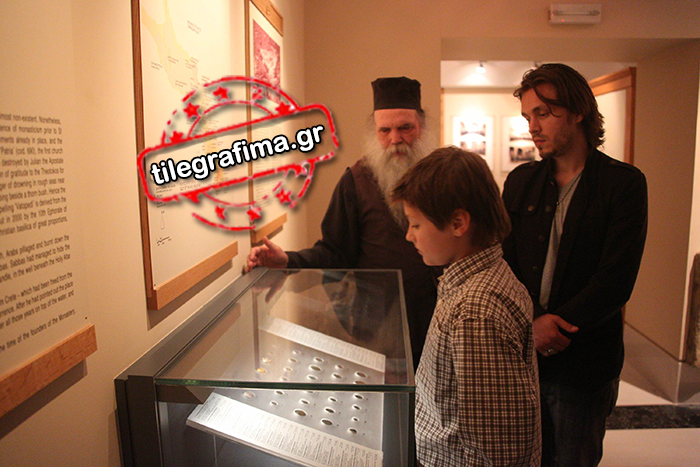
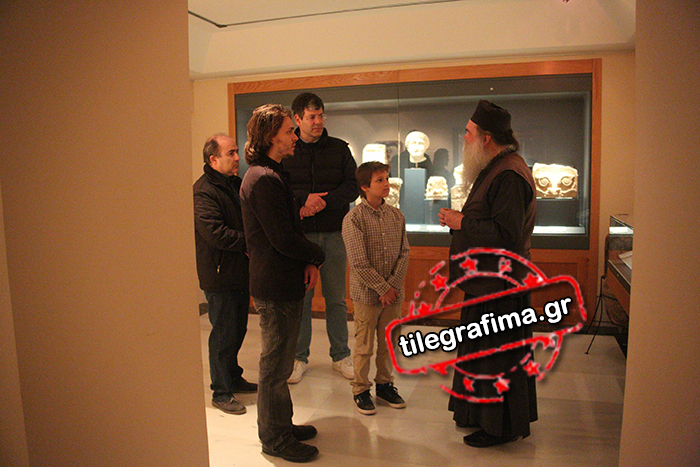
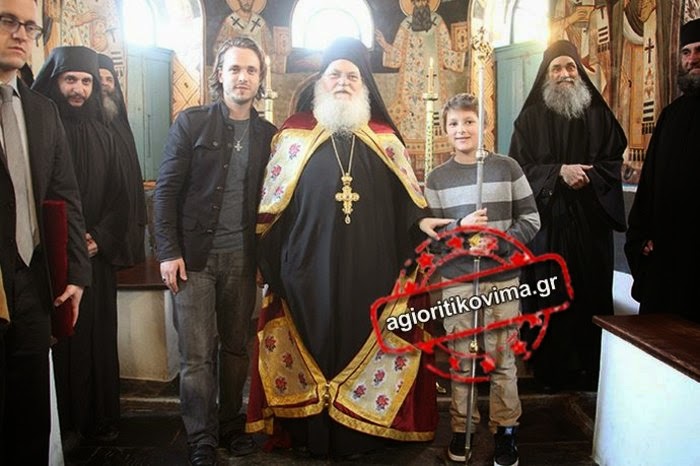
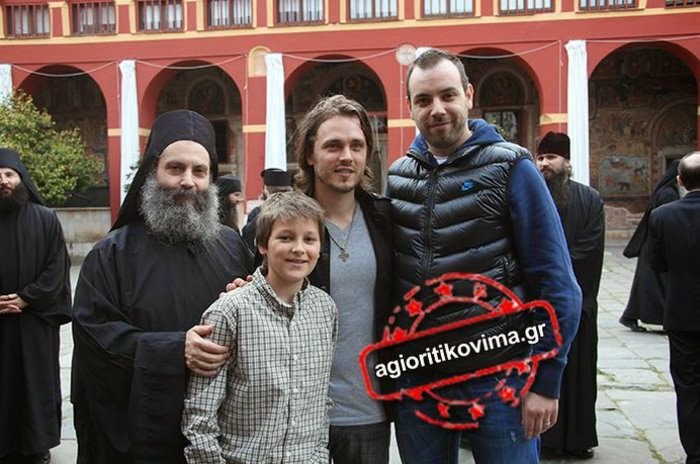
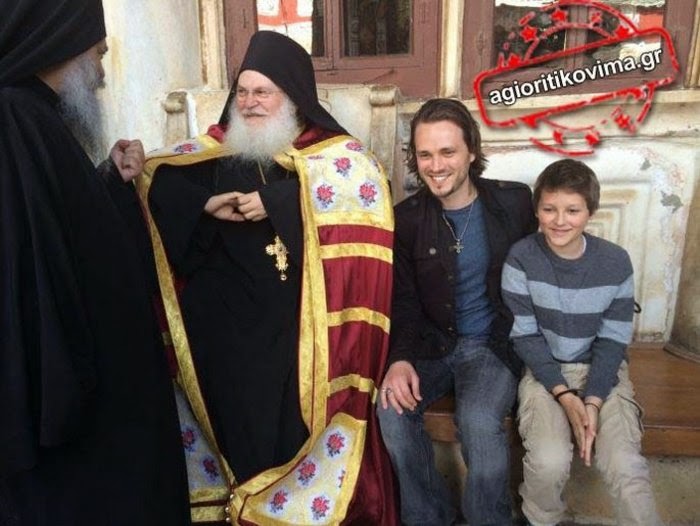
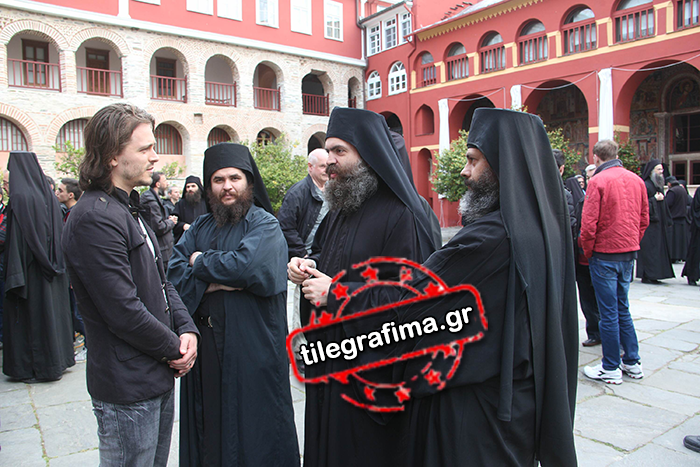
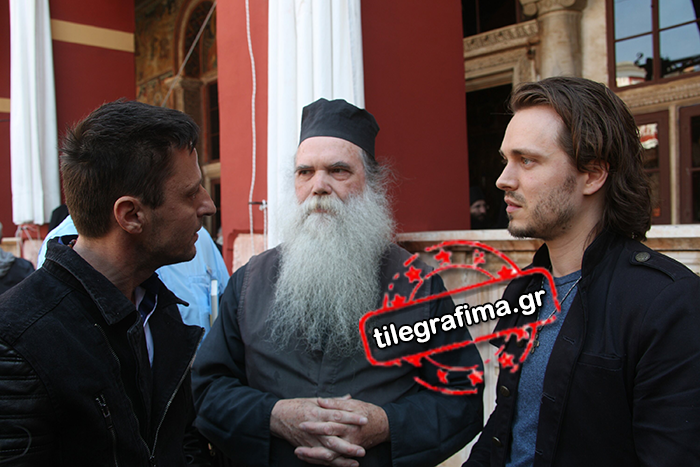
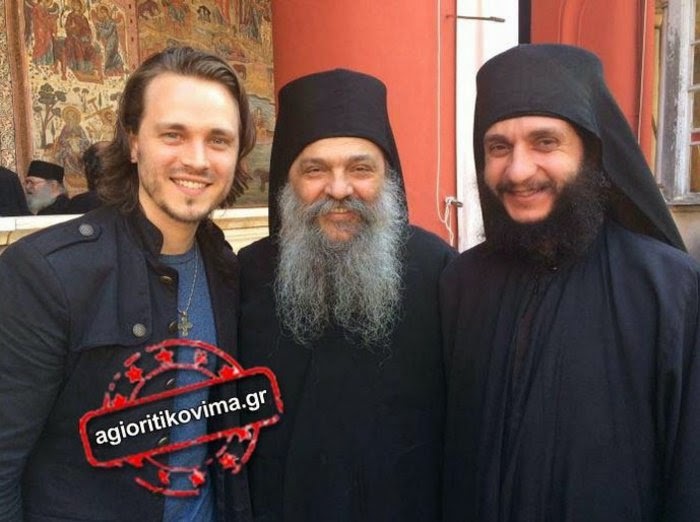
See photos from his visit to Mount Athos for the first time with his 11 year-old son Caleb (2015), where they stayed  for five days visiting Simonopetra and Xenophontos monasteries, and spent most of his time at Vatopaidi Monastery (Friday till Tuesday) where he met the Abbot, Elder Ephraim, and attended an all-night vigil on Saturday night.

While at Vatopaidi Monastery, Jonathan also gave a testimony of how he converted to Orthodoxy for Pemptousia, which can be seen here.

Our Lady of Kipina


kipina39kipina38kipina36kipina35kipina34kipina33

kipina23kipina32kipina31

kipina37kipina28

kipina19


kipina26


kipina11

kipina13

kipina8

kipina6

kipina4

kipina2kipina1kipina16

kipina21

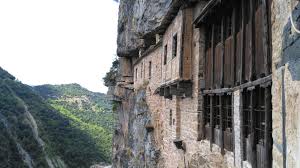
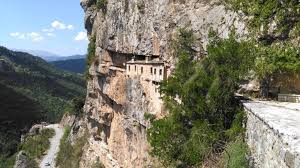
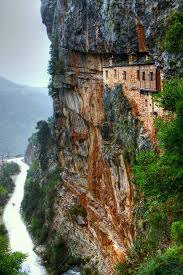
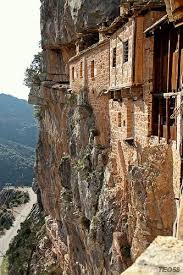
If you go towards the old-world village of Kalarrytes in the Tsoumerka Mountains in Epirus, you come across an impressive fortified monastery built into a rock face: the Holy Monastery of Our Lady of Kipina.


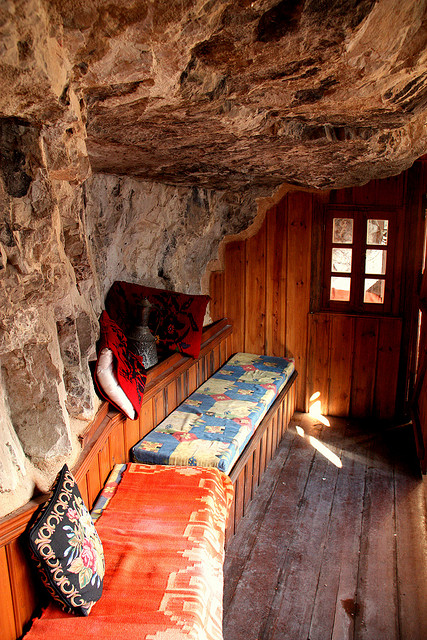
The Holy Monastery of Kipina is built into a large cave in a sheer rock.


According to the founder’s inscription, building began in 1349. But according to Metropolitan Serafeim (Vyzantio) of Arta, a historian, the foundation dates back further in time. Other historical sources date it to 1212.


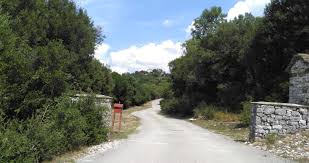
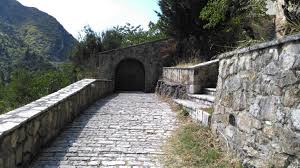
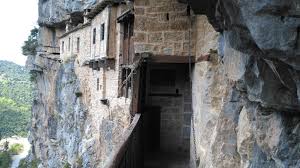
Access to the Monastery is by a stone path hewn into the rock. In former times, contact could be broken by means of a wooden drawbridge.

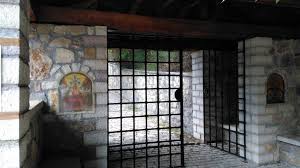
The outer gate of the monastery.


Without doubt, the time when the Monastery of Kipina was at its peak was the 18th century. Indeed, it’s recorded that, in 1760, the exceptionally active Abbot Kallinikos funded the construction of a bridge over the nearby River Kalarrytikos, a tempestuous tributary of the Arakhthos.


The Monastery also ran a school and a water-mill. All of this shows both the financial power of the foundation and also the close links with its social setting.


The imposing rock casts its shadow over the steps of visitors, next to the path to the entry.


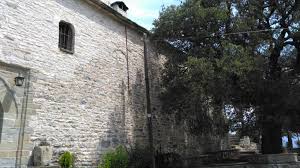
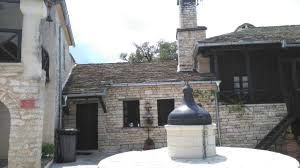
Still surviving from the old Monastery complex are the church, four cells and a small building which used to serve as a stable.


In the olden days, the drawbridge would be raised at night or at times of danger. Access to the Monastery was thus completed severed, which is why it is one of the few that escaped pillage. The crank handle of the drawbridge has been preserved.


The Monastery is dedicated to the Dormition of the Mother of God. According to tradition, however, it celebrates on the feast of the Life-Receiving Spring (Friday in the week after Easter).


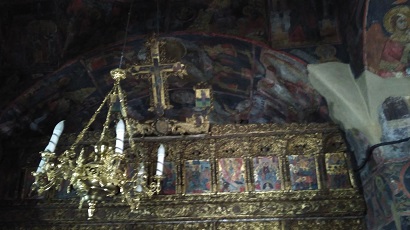
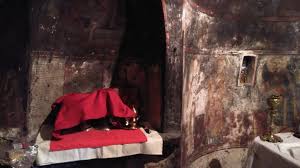
The church is a small, single space, built within the cave.


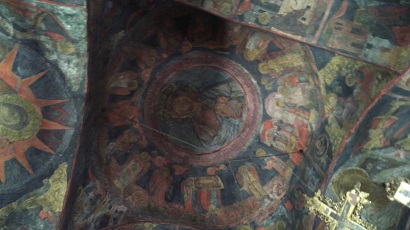
The rich iconographical decoration of the church was carried out in the 18th century.


At the northern end of the narthex is the opening to the cave, which extends to a depth of 240 metres into the rock.

Today’s Abbesses of Abbesses

Gerondissa Akylina, Porphyria, Sipsa Monastery and St. Georgios Karslidis

Gerondissa Akylina, Gerondissa Porphyria (Sipsa) and Gerondissa Makrina (Portaria)

Friday, November 4, feast day of the Blessed Elder Georgios Karslidis of Pontos, warmed my heart with fond memories of nearly 3 decades of pilgrimages to beautiful, gem monasteries in Northern Greece!

 *

“God cares for everyone. Despair is in effect a lack of faith.”


Gerondissa Akylina, Porphyria, Sipsa Monastery and St. Georgios Karslidis


Taxiarches and the Analipseos Monastery (Sipsa) in Greece is one of the Monasteries in Greece that holds a dear place in my heart. Together with that of St. Paisios in Souroti, they were the first monasteries I started visiting as a University student, before my graduate studies and work at the US. At that time Gerondissa Porphyria, a Living Signpost in my journey on The Way,  had not even become a monastic, and now she is a renowned Abbess, one of the few of her ‘calibre’ in contemporary women’s monasteries.


Gerondissa Akylina, Porphyria, Sipsa Monastery and St. Georgios Karslidis


The Blessed Elder Georgios Karslidis of Pontos (1901-1959), latter day saint of the Saintly Orthodox Church in Greece,  glorified by the Patriarchate of Constantinople in 2008, was the first “resident” and founder of the monastery in the year 1930. He is one of few saints known to bear an imprint of the sign of the cross on his skull. There is a flourishing multitudinous sisterhood of nuns here today, who occupy themselves with the Iconography of handheld pictures, gold embroidery,knitting and waxwork.


Gerondissa Akylina, Porphyria, Sipsa Monastery and St. Georgios Karslidis


Gerondissa Akylina, Porphyria, Sipsa Monastery and St. Georgios Karslidis


Gerondissa Akylina, Porphyria, Sipsa Monastery and St. Georgios Karslidis


Gerondissa Akylina, Porphyria, Sipsa Monastery and St. Georgios Karslidis


Gerondissa Akylina, Porphyria, Sipsa Monastery and St. Georgios Karslidis


Gerondissa Akylina, Porphyria, Sipsa Monastery and St. Georgios Karslidis


Gerondissa Akylina, Porphyria, Sipsa Monastery and St. Georgios Karslidis


Gerondissa Akylina, Porphyria, Sipsa Monastery and St. Georgios Karslidis


Gerondissa Akylina, Porphyria, Sipsa Monastery and St. Georgios Karslidis


Gerondissa Akylina, Porphyria, Sipsa Monastery and St. Georgios Karslidis


Gerondissa Akylina, Porphyria, Sipsa Monastery and St. Georgios Karslidis


Gerondissa Akylina, Porphyria, Sipsa Monastery and St. Georgios Karslidis


Gerondissa Akylina, Porphyria, Sipsa Monastery and St. Georgios Karslidis


Gerondissa Akylina, Porphyria, Sipsa Monastery and St. Georgios Karslidis


Gerondissa Akylina, Porphyria, Sipsa Monastery and St. Georgios Karslidis


Gerondissa Akylina, Porphyria, Sipsa Monastery and St. Georgios Karslidis


Gerondissa Akylina, Porphyria, Sipsa Monastery and St. Georgios Karslidis


Gerondissa Akylina was the first Abbess. I had the rare blessing to meet her a number of times during the last years of her life. In the words of our late Elder Iosif Vatopaidinos, Gerondissa Akylina, together with Gerondissa Makrina in Portaria, were ‘Abbesses of Abbesses’:  examples of the monastic life and their monasteries models of coenobia, workshops of virtue and antechambers of Paradise.


Gerondissa Akylina, Porphyria, Sipsa Monastery and St. Georgios Karslidis


Gerondissa Akylina, Porphyria, Sipsa Monastery and St. Georgios Karslidis

Gerondissa Akylina holding the Cross of St. Georgios Karslidis which was found intact after the translation of his relics. He is one of few saints known to bear an imprint of the sign of the cross on his skull.


Gerondissa Akylina, Porphyria, Sipsa Monastery and St. Georgios Karslidis


Gerondissa Porphyria has always been so full of love and humility, always ready to sacrifice her ease,  her rest and sleep, everything for her ‘neighbour! How many times has she consoled me in the trials and tribulations of my life! Always by my side, always! How many times has she offered a shoulder to cry on and precious, practical counsel! Her prayerful presence is intensely, intimately felt even thousands of miles away, here at the UK, and her smile warms my heart. Oh, just look at her smile in the photographs below with a pilgrim at the monastery and imagine the rays of the sun warming your shoulders after a rainy, cold day! How blessed am I to have such a spiritual mother by my side! Over the years I got better acquainted with the friendly and hospitable nuns there and the pilgrims and the faithful who regularly visit this monastery. St. Georgios’ holy presence is immediately felt upon entering the monastery gate, and there is always a queue at his tomb where his spiritual children kneel before their spiritual father, now in Heaven, to ask for his spiritual guidance and to seek comfort in life’s trials and tribulations.


For a closer insight at Elder Georgios Karslidis and his miracles, watch the following interview by Gerontissa Porphyria:


Ravages of Time

Destruction Of Monuments Of Eastern Christianity: A Photo Contest

The Interparliamentary Assembly on Orthodoxy announced the results of their second annual photo contest dedicated to the “Destruction of Monuments of Eastern Christianity.”

The contest, dedicated to the enduring spiritual and cultural monuments of the Eastern Christian Tradition, was organized at the proposal of the IAO’s Committee of Culture and in collaboration with the website OrthoPhoto.net, sharing beautiful photos from around the Orthodox world for twelve years.

Ravages of Time, Nature and Man

The international jury voted on photos divided into three categories:

  1. Abandoned monuments left to the ravages of time due to compulsive or voluntary discontinued usage
  2. Monuments that are accessible and in use, although damaged by weather or other sorts of pollutants and other natural elements
  3. Monuments that have suffered man-made damage and destruction.

Photos were judged on artistic value, as well as information about the monument, including its importance, location, and accessibility. Three prizes were awarded in each of the three categories. The winning photographs are:

Abandoned monuments left to the ravages of time due to compulsive or voluntary discontinued usage

First prize: The Church of the Nativity of the Theotokos in the village of Stepantsikovo in the Yaroslavl region of Russia, by Nikolay Spiridonov

Winning photograph:

Supplementary photographs:

The church made of bricks, with two altars, with a St. Nicholas’ chapel. The cost for its erection was covered by the parishioners on the spot of the old wooden church (seventeenth century). It is square-shaped, with five cupolas, two series of windows, an altar and a multi-level bell-tower. During the Soviet era, it was closed down and used as a storehouse. Currently, it is abandoned and destroyed. Up until 1764, the village was an estate owned by the monastery of Saints Boris and Gleb of Rostov.

Second prize: The Churches of St. Demetrios and St. George of the Castle on Aegina, Greece, by Nikolaos Mourtzis

Winning photograph:

Supplementary photographs:

At the top of Paleochora hill on Aegina, the so-called ‘small Mystras’, is a castle built by the Venetians in 1654 and two large interconnected churches, the Twin Basilicas with two altars-entrances, of Saint Demetrios and Saint Georgios of the Castle, one for the Latin Catholics and one for the Greek Catholics. For pedestrians visiting the place, the view is fantastic; the area of Souvala and Aegina (the town) can be seen from there. The signs of abandonment are visible, although occasional efforts have been made to save them.

Third prize: The Church of St. Mary of Sinti in Paphos, Cyprus, by Tomasz Mościcki

Winning photography:

The Panayia tou Sindi Monastery was built in the sixteenth century. Only the main church has remained. The rest of the monastery is almost completely dilapidated.

* * *

Monuments that are accessible and in use, although damaged by weather or other sorts of pollutants and other natural elements

First prize: The Ampouchala cloister in the Karelia region, on the northern slope of the Trialeti Range in Georgia, by Vakhtang Beridze

Winning photograph:

Supplementary photographs:

Abukhalo Skete is mentioned in the “History of the Kingdom of Georgia” by Vakhushti Bagration. The monastic compound is located in the Kareli district, on the northern side of Trialeti Mountain, and dates back to the seventeenth-eighteenth centuries.

The skete consists of several caves of different sizes carved into the rock and is inhabited by monks, as it used to be in the past.

Second prize: The Church of St. John the Baptist in Goles, Bulgaria, by Vyacheslav Popov

Winning photograph:

Goles is a village in western Bulgaria, in the Godech municipality of Sofia. Goles village is located in a mountainous area to the south of Vidlic Mountain. The church of St. John the Baptist that is currently operational was built in 1896-1900 and needs repair. There are a few votive offering-crosses in the village, dedicated to Saint Nicholas, Saint Elias, Saints Peter and Paul, and Saint George. Above the village of Goles, the monastery of Saint Nicholas is being renovated. We do not know the exact date of its erection.

Third prize: The Armenian Monastery of Agios Stefanos, 15 km northwest of the city of Tzolga, Iran, by Mohammad Nourmohammadian

Winning photograph:

Supplementary photographs:

The St. Stefanos Monastery is an Armenian monastery about 15 km northwest of Tzolga city in the East Azarbaijan Province of northwest Iran. The first monastery was built in the seventh century and completed in the tenth century. However, St. Bartholomew first founded a church on the site around 62 AD. It was partly destroyed during the wars between the Seljuks and the Byzantine Empire in the eleventh and twelfth centuries.

* * *

Monuments that have suffered man-made damage and destruction.

First prize: The Church of the Holy Protection in Bouzi village in Chelyabinsk, Russia, by Anzhela Usmanova

Winning photograph:

Supplementary photograph:

The church of the Holy Protection of the Mother of God in Bouzi village, to the north of the Chelyabinsk region, was built in the eighteenth-nineteenth centuries. It has three altars. Close to the church lies the abandoned building of the former school, a ground-floor building made of red bricks. It now houses the monks’ cells and a church. Currently, the population of the village is not more than one thousand. The church is on a hill and is visible from far away. The Sinara River flows under the mountain. The Resurrection was celebrated there in April 2014, after a break of 80 years.

Second prize: Church of the Archangel Michael in Ammochostos, Cyprus, by Constantinos Charalambous

Winning photograph:

Supplementary photographs:

The church of the upper parish of Lefkoniko was dedicated to the Archangel Michael. It was built in the early nineteenth century and had an imposing appearance, with an excellent wood-carved iconostasis and numerous Byzantine icons. The grandiose wall painting of the Archangel Michael was dominant in the interior of the church. All the official ceremonies and rituals of the community would take place here.

After the Turkish invasion in Cyprus, the church of the Archangel Michael in Lefkoniko village of the Famagusta province had the same fortune as several hundreds of other sacred monuments and sites of Christian pilgrimage in the occupied part of Cyprus: desecration and abandonment for forty-two years.

Third prize (tie): The Church of St. Petka in Kik, in Gospić Croatia, by Mirko Celic

Winning photograph:

Supplementary photographs:

Kik village is located halfway between Gospić and Gračac, Lika, Croatia. It is a part of the village Ploče. There is very little information about Saint Petka church in Kik, but it is known that it was moved in 1809 from the neighbouring village of Raduč since the latter got a bigger church dedicated to Saint Elijah the Prophet. The Kik church used to be the filial church of the cathedral church, dedicated to the Descent of the Holy Spirit, in the village of Ploče. During WW II Croat Nazis destroyed the church documents about the parish so the most important information about its history is lost. After the end of the war, the communists – the former parishioners, blew up the Ploča church, and used its stones to build community stables. They also burned down the Kik church, which remains devastated until today. In 1995, during the war operation “Storm”, the Croats banished all the remaining Orthodox Serbs from the area, and there is nobody to reconstruct these two monuments. Time and the weather continue to damage the remains of the Kik church.

Third prize (tie): Vrontama Monastery in Laconia Peloponnese, Greece, by Ioannis Gekas

Winning photograph:

Supplementary photographs:

At Vrontamas in the Evrotas Municipality of Laconia, around seven kilometers from the “Kleisoura” settlement, at an inaccessible site of the gorge in the middle of which Evrotas flows, there is a cave that some monks had chosen in the Byzantine years to dedicate themselves to God. They established a monastery with a narthex, a main church, a small chapel, cells, rainwater tanks, ovens, and the essentials for an austere life. The church is dedicated to the Virgin Mary and the great martyr Nikita, while the interior is dedicated to St. Nicholas. The wall paintings date back to the twelfth or fourteenth century (the bust-length Christ extending His hands in blessing), and those in the chapel are from the post-Byzantine era. Due to the unreachable location of the monastery, the sacredness of the place and the need for protection from the Supreme Power, the inhabitants of Vrontamas, in September 1825, sought refuge there to escape the fury of the enemy and defend themselves with safety. Ibrahim’s troops were tightly besieging the Christians, but the narrow space and the fortification of the castle brought only casualties to the besiegers. The furious raiders opened up holes at a weak point of the rock, placed explosives and blew up the monastery. The death was torturous, as the infidels brought in huge quantities of dry grasses and branches from the valley and placed them in the opening of the roof. Using torches, they started a fire at the top of the mountain, causing a strong explosion that was lethal for those entrapped.

The Altar and The Portico (I)

EPSON DSC pictureaidan28

altar

Aidan Hart: Embracing a Eucharistic Lifestyle

Liturgical “vs.” Secular Beauty in Life And Art


Excerpts (I) from a masterpiece of a talk, given by the renowned iconographer Aidan Hart at Sacred And Secular In Life And Art seminar in Oxford University,  a workshop dedicated to the memory of Philip Sherrard. (Oxford, 14-17 July, 2016).

Analysis of Works of Liturgical and Secular Art — Beauty seen in the light of Orthodoxy’s ‘aesthetics’. Liturgical art exists to help us live our whole lives liturgically. Vignettes from house architecture and decoration, furniture design, hospitality, music etc. to express love for God’s creation in daily life and to live life gently upon His earth, aiming towards a Eucharistic vision of Life: wholeness, harmony, unity.  Culture as the Liturgy of Preparation “Beauty is truth, truth beauty—that is all Ye know on earth, and all ye need to know.” (Ode on a Grecian Urn, By John Keats). Indeed, Beauty will save the world (Dostoyevski). Needless to point out, both this Eucharistic vision of Life and the importance of Beauty/Truth in Art and Life have been central concerns of this little city hermit’s blog and his journey on the Way.

 *

… In my reflections I would like to regard the term secular not in its pejorative sense, as the bad world outside the Church, but rather in its earlier sense as the larger world in whose midst the Church is planted to transfigure that world.

In considering our subject of sacred and secular we may have the image of a splendid garden city expanding into a wild jungle, rather than a fortress sealed off against siege from the world. This city does indeed have walls to keep bad things out, but it also has gates, and from its heart flows a River that brings life wherever it flows, as the prophet Ezekiel tells us in his vision (Ezekiel 47).


Eden within the forest

St Cadmon’s hymn of creation. Aidan Hart, calligraphy Clive Tolley.. Vellum.aidan1.jpg

God creating Adam. Palermo, Sicily. 12th C. Mosaic.aidan2.jpg

God creating Adam. Palermo, Sicily. 12th C. Mosaic.

The sacred as source

The Tent of Meeting.aidan3.jpg

The Tent of Meeting.

Metropolitan Kallistos Ware has said that one is Priest (Christ);

some are priests (the clergy); all are priests (the priesthood of the laity).

Philip and Denise Sherrard’s Chapel of the Life Giving Spring, Evia, Greece. Aidan Hart. Fresco.aidan10.jpgaidan9.jpgLion, below fresco of St Mary of Egypt. Chapel of the Life Giving Spring, Evia, Greece. Aidan Hart. Frescoaidan8.jpg

Hare, below icon of St Melangell of Wales. Chapel of the Life Giving Spring, Evia, Greece. Aidan Hart. Fresco.

aidan7.jpg

aidan6.jpg

Chapel of the Life Giving Spring, Evia, Greece. Aidan Hart. Frescoaidan5.jpg

aidan4.jpg


…And so it is that I believe liturgical art exists to help us live our whole lives liturgically. A church temple, as St Maximus the Confessor affirmed, is an image of the whole world. This splendid earth was created by God to be our temple within which to worship Him.


… I experienced this “coming together” of heaven and earth personally when I was frescoing Denise Sherrard’s chapel at her home in Evia, the chapel of the Life Giving Spring that she and Philip had built. We wanted to reflect Philip’s affirmation that the material world is an integral part of the spiritual life,[2] so I painted a tree between each standing saint. Some of the saints are also accompanied by a creature associated with their lives: St Melangell with a hare; St Mary of Egypt with the lion which dug her grave; bees with St John the Baptist who ate honey while in the wilderness, and so on.


I modelled the frescoed trees on the trees that grew outside the chapel. As I worked many hours each day in the chapel the awareness grew that the world is indeed created to be a temple, designed to inspire us to praise and love its Creator. The vision of paradisiacal trees that began inside that small chapel’s walls continued when I continued my life outside. The sacred transformed the secular, paradise extended into the ‘jungle’.


… Importantly, this sense of continuum was supported by Denise’s attempt to express love for God’s creation in her daily life and to live life gently upon His earth. The food we ate was prepared with love, much of it grown in Denise’s own garden. Even the wine was homemade.  The chapel itself had been made of local stone.

Immersion in the paradise of church worship affects the way we design our day-to-day lives outside the services. The architecture of our houses, our furniture design, our hospitality, our music – all aspects of life – can take their inspiration from the Liturgy. The Liturgy is like our tuning fork, helping to keep our daily lives in harmony with heaven’s.

*

Heaven’s music

… Having this inner music we will create a culture that will not only function well but will delight the eye and bring forth the logos or character of each raw material.

…In fact, in these and in the carved wooden columns outside one can see the inspiration for the sculptures fashioned by the father of modern abstract sculpture, Constantine Brancusi.

…This relates to what St Maximus the Confessor wrote some fourteen centuries earlier:

Do not stop short of the outward appearance which visible things present to the senses but seek with your intellect to contemplate their inner essences (logoi), seeing them as images of spiritual realities…

… Once when his friend Petre Pandrea was praising his sculpture, Brancusi replied that all he had done was to set up a branch office of Tismana Orthodox Monastery in Paris.  He saw his sculptures as an extension of the worship and ascetical life of that monastery. The sacred informed the secular.

aidan11.jpg

Rumanian grave posts, 10th c.

aidan12.jpg

‘Endless Columns’, in Brancusi’s studio, Paris.

aidan13.jpg

Tismana Orthodox Monastery, Rumania.

aidan14.jpg

Culture as the Liturgy of Preparation

As we shall explore a little later, this transformative process also works the other way: the art of life lived outside the temple walls should act as a portico, preparing us for entrance to the inner sanctum.

Our daily life can be an extended beginning to the first part of the Holy Liturgy, the Service of Preparation.

aidan16.jpg

The New Jerusalem, on vellum, by Aidan Hart

aidan17.jpg

… Every aspect of our daily living can be seen as this same transformative process, culminating in the Holy Liturgy’s deification of the bread and wine. This is suggested by the etymology of the word culture, which stems from the Latin word colere, which means to inhabit, care for, till, worship. Culture then becomes cult, an act of worship. Culture is both tilling and working and worship.

Any failings in our modern culture are ultimately due to our failure to continue work into worship, to carry the cultivation of the land into the cult of the liturgy.

*

Sant’Apollinare in Classe apse (c. 534 AD). The Transfiguration; Paradise; the Second Coming; The New Jerusalem; Our Priestly roleaidan20.jpg

Sant’Apollinare in Classe

Creation transfigured. Sant’Apollinare in Classeaidan19.jpgaidan18.jpg

Portico and Nave

aidan21

In most of our churches today we have a rather rude transition from exterior to interior. But in most early churches it was not so. Most had a portico, a place colonnaded around, roofless yet walled.


… Walking along the busy street you would spy this little paradise courtyard and be drawn towards its coolness and stillness. Once within this portico, through the open doors of the church you would eventually see hints of some glittering mosaics or wall paintings, and pins of light from oil lamps. So you would be drawn further in.

aidan23

aidan22

Portico with fountain, St Clement’s, Rome — Portico garden, St Cecilia’s, Rome.


…Once inside this exonarthex you would perhaps see images of the six days of creation, or the prophets, or, as in Iviron monastery,  the Psalms of Lauds illustrated, where all creation is praising God.

Aidan Hart Liturgical Art "vs." Secular Art Beauty as Truth and Truth Beauty

Exo-narthex, Iviron, Athos, with depictions of Psalms 158-150, all creation praising God

You might also see images of the day of judgement, reminding you that repentance and purification is needed to stand the glory of God’s light which can be experienced further inside.

aidan25aidan24

Narthex, with glimpse through to nave St Nicholas Anapafsas, Meteora.

After looking around these scenes you would see yet another door, and enter the narthex, where you would see perhaps frescoes of standing ascetics.

Eventually you would be drawn even further, into the nave. In this broad yet intimate place you find yourself surrounded by angels, saints, scenes in the life of Christ.

aidan28aidan27


…. But this journey began with the portico. Portico or threshold beauty draws us like the fragrance of a rose towards the rose. This threshold art and culture participates both in the hubbub of daily life and in the liturgical life of the Church. Culture should cultivate the soul in preparation for the seed of God’s word. …

Excerpts from Orthodox Arts Journal

Living Waters


desert3


Isaiah 43:19

19 Behold, I will do a new thing,

Now it shall spring forth;

Shall you not know it?

I will even make a road in the wilderness

And rivers in the desert.


John 4:10

10 Jesus answered and said to her, “If you knew the gift of God, and who it is who says to you, ‘Give Me a drink,’ you would have asked Him, and He would have given you living water.”


John 7:38

38 He who believes in Me, as the Scripture has said, out of his heart will flow rivers of living water.”


John 19:34

34 But one of the soldiers with a spear pierced his side, and forthwith came there out blood and water.

*

Listen!


A person’s response to God’s offer of salvation is a matter of engaging the will, faith and action.

Without the will there is no movement,

Without faith there is no direction,

Without action there is no reward.


To discover Living Water requires us knowing:

Whose open Hand provides this blessing and treasure

What is it’s measure

and

Where to find it flowing?


We must start by digging for water in the caverns of the heart.

If the ground is rocky, we must dig in silence with the sharp adze of patience.


Listen carefully!

Do your hear something?


If our ground is hard, we must soften it with mercy and repentance:

For the soil of pride can only be removed through meek dependence

On God.


Listen!

Do you hear the drip of water on stone?


We must not simply remove the weeds which are the fruits of the passions,

we must excavate each day with persistence

since familiar habits possess a stubborn resistance;

whereas the humus of humility is the place to locate compassion.


In this way, we may even lead in order to serve.

Leading the way to build a viaduct for the King of Glory

Order our service to others by constructing a conduit for Christ.


Dig therefore with wisdom,

Dig with discernment,

Dig with love,

Whilst guarding the heart at all times with diligence.


Listen!

Do you hear water flowing?


Because at the time appointed,

At the opportune moment,

We who are disjointed

are healed and

Sealed with the Holy Spirit.


God opens the flood gates of our hearts

With His own master key of humility,

To become a channel of His grace.


Just listen to that sound!


The sound of Living waters;

an ocean wave, a mighty river in flood, a cascading waterfall

a fountain of benediction;

heard by earth’s sons and daughters

To become for all a Life- Giving spring, welling up to Eternity.


Work hard then each day and dig!

Listen, work, dig deep

head bowed with sweat and tears,

extinguishing fears of death, awakening life from sleep,

exchanging salt waters for sweet

to greet Living waters.


Many rich and powerful men would pay dearly to see the Lord or His Most Pure Mother, but God does not appear in riches, but in the humble heart… Every one of the poorest men can be humbled and come to know God. It needs neither money nor reputation to come to know God, but only humility.

(St. Silouan the Athonite, Writings, I.11,21)


By Fr. Jonathan Hemmings


desert9


Near-Death and Afterlife Stories in a True Crown Jewel


dryvouno29dryvouno28dryvouno27dryvouno26dryvouno25dryvouno24dryvouno23dryvouno22dryvouno21dryvouno20dryvouno19dryvouno18dryvouno17dryvouno16

Dryovouno Monastery, Near-Death and Afterlife Stories

dryvouno15dryovouno14dryovouno13dryovouno12dryovouno11dryovouno10dryovouno9dryovouno7dryovouno6dryovouno5dryovouno4dryovouno3dryovouno2dryovouno1


Father Stephanos of the Monastery of Transfiguration (Metamorfosi tou Sotiros) in Dryovouno speaks very little, mainly with his eyes.

*

Mother Theologia: “How little do we think of death, although he is so near to us!” commenting on a yet another sudden, unexpected death.

*

Laokratia told us about a dream: “My friend’s late young son, who had suffered a sudden and violent death through a road crush, appeared in his father’s dream in tears, standing before a closed gate, telling him that ‘they’ do not allow him in. His father, a very faithful man, promptly met Elder Iakovos Tsalikis and told him his dream. By the grace of God, the elder, having a pure nous, was deemed worthy to see the souls of people at the time they were leaving the earth and ascending towards heaven. Elder Iakovos asked him if his son was blaspheming God, and the father sadly admitted so. Then, Elder Iakovos promised to pray for his son, and he also advised him to do alms in his son’s name, fast and pray to the Lord so He will grant him rest”. The poor father made a prostration and obeyed the elder, and after 40 days, he saw again his son in his dream, this time radiant with joy, in front of an open gate, thanking him and telling him that ‘they’ had allowed him in!”

*

Sister Gregoria: “I just received a message from a friend who had to undergo a difficult operation and she told me that it all went well but that it was St. Luke Bishop of Simferopol and Crimea, the Blessed Surgeon who operated her! In the operating room she felt that she was dying. She started ascending and watched the surgeon and the nurses trying to revive her unconscious body. Then she met ‘somewhere in the air’ St Luke. To be sure she could not really interpret what was happening to her as it was taking place. Still she understood that he reassured her that he would take over as the surgeon was clearly in an impasse. Then she started moving in the reverse direction, got into her body again and found herself in the hospital, having had the surgery performed, with doctors standing around her, looking at her puzzled. But who was this St Luke she had met? It took her a few hours to find out that her mother, a very devout woman, had placed a little icon of his underneath her pillow, just before the operation started!”

*

Sister Ioanna:”Yesterday at midnight, while I can finishing the writing of an icon and adding the dedication, I realised that although I could write the mother’s name easily, there was no way I could add her late son’s name. I started praying and in the Spirit I ‘saw’ that the mother was in a very good spiritual state, but her son was not at all well and needed our prayers. She felt that God had granted rest to the mother’s soul, but they should do alms in the son’s name and pray to the Lord so He will grant him rest”.

We arrived at the Monastery of the Transfiguration (Metamorfosi tou Sotiros) in Dryovouno on its Feast  day. We were a group of faithful, Mother Theologia and some nuns from the nearby Monastery of the Assumption, Dormition (Koimiseos tis Theotokou) of Mikrokastro. What stunning Beauty confronted us!


This male monastery is located a few kilometers above Dryovouno, at a secluded area. Its foundation goes back to 1592, while the murals were completed in 1652, by painter Nikolaos from Linotopi while the narthex in particular is the work of Argyris Kriminiotis.


Kosmas Aitolos arrived here and, after preaching, treated the monks who had been taken ill due to an epidemic. He fetched water from a nearby spring, blessed it, and gave it to the monks to drink, who were then cured. This water has been considered holy ever since and a chapel devoted to saint Kosmas has been constructed at the spring. St. Kosmas received from God the gift of prophecy.
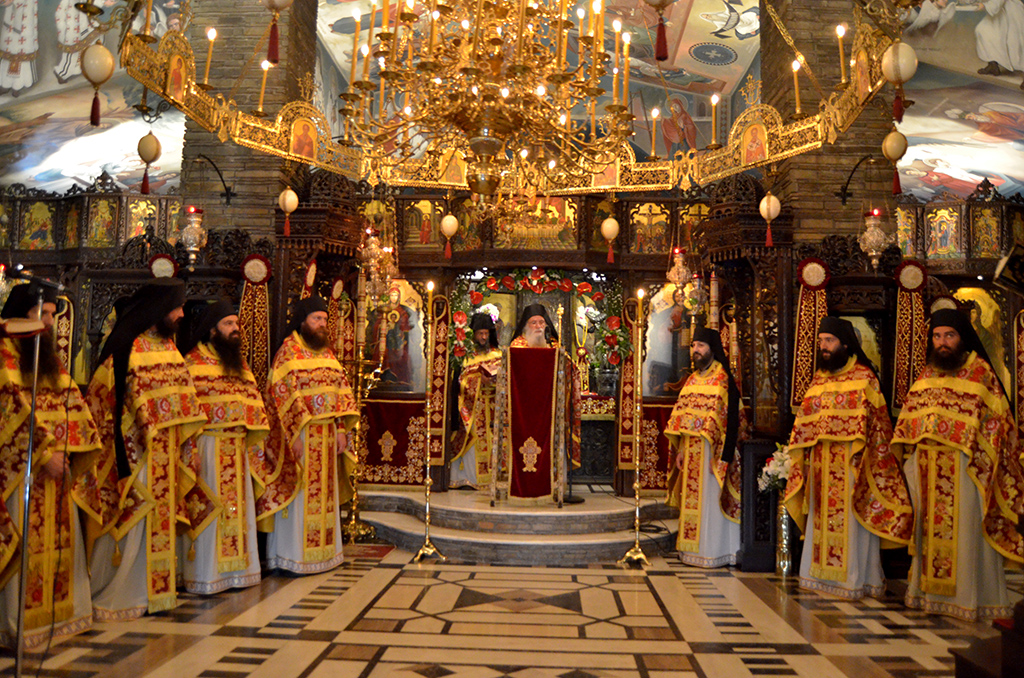
 

At wartime, the monastery offered valuable services to the local population. It served as storage for ammunition and as base for various chieftains. This is where Dimitrios Feraios, Kapetan Vardas and Pavlos Melas resorted to.
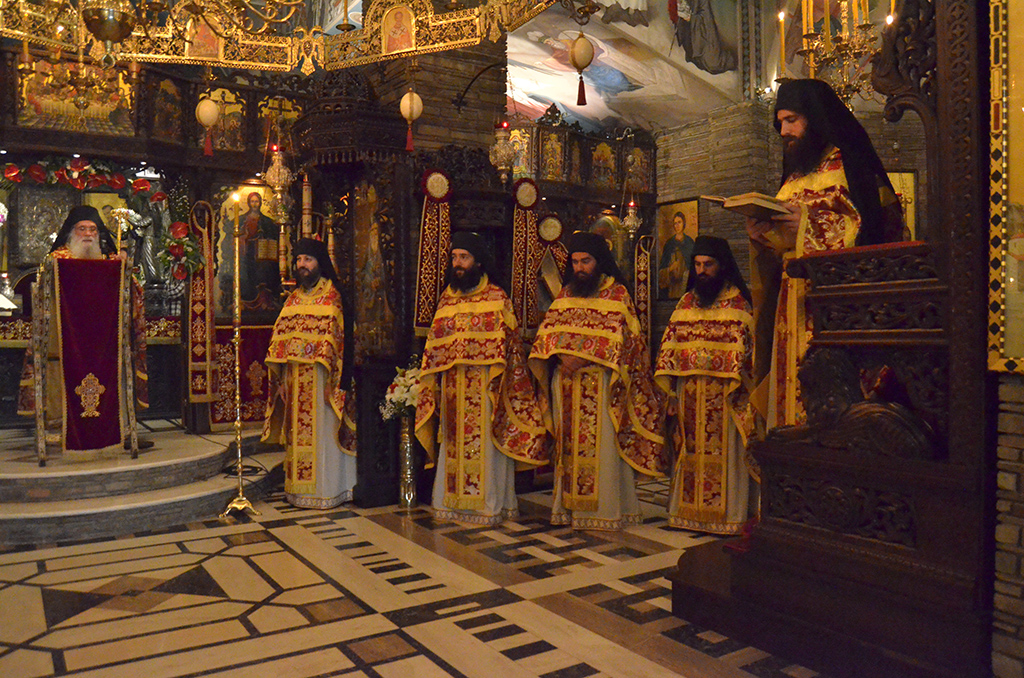
 

In 1943 it was set on fire by Italians along with its historic records. Its renovation began in 1996, the prime mover being Archbishop Stefanos Rinos with the personal efforts of monks and believers. The parvis offers a sense of tranquility and a spectacular view to Voio and Kastoria.


It is Your Turn Now!

 Happy New Church Year! New Beginning Wishes from Cephallonia, a Story of Repentance, a Rumi Sufi poem, a robin singing and the little city hermit’s name day  ☺️

kef1

Myrtos Beach

kef5.jpg

kef6

kef7

Monastery of Agios Gerassimos

kef2.jpg

Fiskardo, Kefalonia

kef4.jpg


It Is Your Turn Now!

Transform your inner pearl.

It is your turn now,

You waited, you were patient.
The time has come,

For us to polish you.

We will transform your inner pearl

Into a house of fire.

You’re a gold mine.
Did you know that,

Hidden in the dirt of the earth?
It is your turn now,

To be placed in fire.

Let us cremate your impurities.

By Rumi

alchemist.jpg

A Story of Repentance

We knew virtually nothing…I had come to make my confession for the first time in my life. Shortly beforehand I had become a Christian by the grace of God. I had no deeper knowledge either of Christianity or of the church – who could have taught me? I and my newly-converted girl friend, both in the same position, learned what to do by imitating our old women, who zealously preserved the Orthodox faith and practices. We didn’t know anything. But we had something which in our day should perhaps be treasured more than knowledge: a boundless trust in the church, belief in all its words, in every movement and demand. Only yesterday we had rejected all authority and all norms. Today we understood the deliverance that we had experienced as a miracle. We regarded our church as the indubitable, absolute truth, in minor matters just as much as in its main concern. God has changed us and given us childhood: ‘Unless you become as children, you will not enter into the kingdom of heaven.’

I only knew that it was necessary to go to confession and to communion. I knew that both confession and communion were high sacraments which reconcile us with God and even unite us with him, really unite us with him in all fullness, both physical and spiritual. I was formally baptized by my unbelieving parents as a child. Whether they did that out of tradition or whether someone had persuaded them to do it, I never discovered from their explanations. Now at the age of twenty-six I had decided to renew the grace of baptism.

confession.jpg

Like a hardened crust

I knew that the priest himself – the well-known confessor Father Hermogen – would ask me questions and guide my confession. Then the day before I read a little booklet in order to prepare myself for confession, I discovered that I had transgressed all the commandments of the Old and New Testaments. But quite independently of that it was clear to me that the while of my life was full of sins of the most varied kind, of transgressions and unnatural forms of behavior. They now pursued me and tormented me after my conversion, and lay like a heavy burden on my soul. How could I have not seen earlier how abhorrent and stupid, how boring and sterile sin is? From my childhood my eyes had been blindfolded in some way. I longed to make my confession because I already felt with my innermost being that I would receive liberation, that the new person which I had recently discovered within myself would be completely victorious and drive out the old person. For every moment after my conversion I felt inwardly healed and renewed, but at the same time it was as though I was somehow covered with a crust of sin which had grown around me and had become hard. So I to longed for penance, as if for a wash. And I recalled the marvellous words of the Psalm which I had recently learned by heart: ‘Purge me with hyssop, and I shall be clean: wash me and I shall be whiter than snow.’


confession5

The experience of a miracle

And so my turn came. I went up, and kissed the gospel and the cross. Of course because I felt dismay and apprehension, I was afraid to say that I was confessing for the first time. Father Hermogen began by asking,

‘When did you last fail to go to church? What festivals have you deliberately neglected?’

‘All of them,’ I replied.

Then Father Hermogen knew that he was dealing with a new convert. In recent times new converts have come into the Russian church in large numbers, and they have to be treated in a different way.

He began by asking about the most terrible, the ‘greatest’ sins in my life, and I had to tell him my whole biography: a life based on pride and a quest for praise, on arrogant contempt for other people. I told him about my drunkenness and my sexual excesses, my unhappy marriages, the abortions and my inability to love anyone. I also told him about the next period of my life, my preoccupation with yoga and my desire for ‘self-fulfillment’, for becoming God, without love and without penitence. I spoke for a long time, though I also found it difficult. My shame got in the way and tears took away my breath. At the end I said almost automatically: ‘I want to suffer for all my sins, and be purged at least a little from them. Please give me absolution.’

Father Hermogen listened to me attentively, and hardly interrupted. Then he sighed deeply and said, ‘Yes, they are grave sins.’

I was given absolution by the grace of God: very easily, it seemed to me: for the space of several years I was to say five times a day the prayer ‘Virgin and Mother of God, rejoice’, each time with a deep prostration to the ground.

This absolution was a great support to me through all the following years. Our sins (the life of my newly-converted friend was hardly different from my own) somehow seemed to us to be so enormous that we found it hard to believe that they could disappear so simply, with the wave of a priest’s hand. But we had already had a miraculous experience: from the nothingness of a meaningless existence bordering on desperation we had come into the Father’s house, into the church, which for us was paradise. We knew that with God anything is possible. That helped us to believe that confession did away with sin. And the starets also said, ‘Don’t think about it again. You have confessed and that is enough. If you keep thinking about it you are only sinning all over again.’ (Tatiana Goricheva, a member of the “intelligentsia” and a Soviet-era dissident, Talking About God Is Dangerous)

Repentance and the Orthodox Sacrament of Confession

It Is Your Turn Now! 

*

“It is later than you think! Hasten, therefore, to do the work of God.”

+ Fr. Seraphim Rose, Fr. Seraphim Rose: His Life and Works

*

“When someone makes a decision, he is really diving into a strong current that will carry him to places he had never dreamed of when he first made the decision.” (The Alchemist)

confession2

Happy New Year!

* September 1st is the start of a new liturgical in the Orthodox Church

and

the little city hermit‘s name day 😊 


Suzana Monastery Retreat I


SONY DSC


Part A: How the little city hermit became a bird, a fountain, a tree and a pearl!


Deep peace of Christ, silence, hesychia, these are the words that come to my mind when I remember Suzana monastery and my three-day retreat there this summer. Also, self-emptying, kenosis. But above all, silence!


Only through poetry can such silence be conveyed, so I will paraphrase a favourite poet of mine, Rumi, to convey to you what I experienced here.


I had begged the Wise One to tell me
 the secret of my existence, my calling in this world.
 Gently, gently, He whispered at Suzana monastery “Be quiet,
the secret cannot be spoken,
 It is wrapped in silence.”


I ground myself, strip myself down, to this overpowering Silence. I feel spiraling into a void of silence where a hundred voices thundered messages I longed to hear.


At its unfathomable bottom I encounter a vast fullness, the Spark of LIFE and LOVE, a secret passage to the WAY which wandering talk blocks, a dimension where HE was waiting for me, for my soul to shake.


I was carrying so much baggage while seeking the signs of the Way.


But at Suzana* monastery, I am ‘forced’ to stop, open up, surrender to this thundering silence, be invaded by ‘It’, and 
stay there until I Saw, until I looked at this blinding Light 
with infinite eyes.


This overpowering Silence kidnaps me to the core of Life. There is a sacredness in it. Silence is indeed the language of God, and all else is poor translation.


This is exactly what I experience when I am trying to write a poem, how I feel especially when I finish a poem. A great silence overcomes me and I wonder why I ever thought to use language.

suzana6

Silence is indeed the sea, and speech is like the river. The sea is seeking you: don’t seek or walk into the river. Don’t turn your head away from the signs offered by the sea. Listen to the ocean.


The sound of Waters and the sound of Silence is a motif in Suzana monastery. At least for me. Everywhere the sound of waters reaches you, so overwhelmingly that I often feel the need to stay in my ‘cell’ and not even venture out.


Just listening to that sound was so overwhelming! The very moment I set my foot on this monastery, the sound of Living waters immobilized me, an ocean wave, a mighty river in flood, a cascading waterfall, a fountain of benediction, a Life- Giving spring, welling up to Eternity.


Isaiah 43:19

19 Behold, I will do a new thing,
Now it shall spring forth;
Shall you not know it?
I will even make a road in the wilderness
And rivers in the desert.


John 7:38

38 He who believes in Me, as the Scripture has said, out of his heart will flow rivers of living water.”


Kenosis is also another state I suffered there:

“And they shall build the old wastes,

they shall raise up the former desolations,

and they shall repair the waste cities,

the desolations of many generations.” (Isaiah 61:4)


I needed so desperately such ‘Decluttering’ in my life, a Relentless Focus, a Subtraction, Becoming ‘poor’, an Unburdening, a Curtail, a Reduction and Emptying, Until my rebellious bones sore.


suzana1

This silence, this moment, every moment, this silence brought all what I needed. I sat quietly, and listened for a voice which told me ‘Be more silent.’ ‘Die’ and be quiet. Maybe quietness is the surest sign that you’ve ‘died’. My old life was such a frantic running from silence. Suzana monastery moved me, even for a little, outside the tangle of fear-thinking.


In the end, I became a pearl!


“And since I have wandered in thee, pearl,

I will gather up my mind

And by having contemplated thee,

Would become like thee,

In that thou art all gathered up into thyself;

And as thou in all times art one,

One let me become by thee!” (St Ephraim, The Pearl)


This very old, poor, secluded, fairy-tale monastery, surrounded by forests, mountains and springs, and steeped in holiness, is most certainly God’s special Providence for my tired, exhausted self.


I feels like coiling in a virginal womb, unwinding time, beholding


“The memory of the glory that I had when I was entirely with You and entirely in You, before time and temporal illusions.


When I, too, was a harmonious trinity in holy unity, just as You are from eternity to eternity.


When the soul within me was also in friendship with consciousness and life.


When my soul also was a virginal womb, and my consciousness was wisdom in virginity, and my life was spiritual power and holiness.


When I, too, was all light, and when there was no darkness within me.


When I, too, was bliss and peace, and when there were no torments of imbalance within me.


When I also knew You, even as You know me, and when I was not mingled with darkness.


When I, too, had no boundaries, no neighbors, no partitions between “me” and “you.” (St. Nikolai Velimirovich, Memories – Prayers By the Lake XXX)


Even the very fact that I cannot not speak Romanian, just barely understand it, is an added blessing, an extra ‘precaution’, a ‘just in case’ … Speaking all too often impoverishes, drenches us. As St. Seraphim of Sarov wisely urges us, “Keep away from the spilling of speech”.


Hesychia, Deep peace of Christ wrapped me in green leaves like a tree;

I breathed like a tree in the quiet light!


* Suzana Monastery is a Romanian monastery about 5.5 to 6 hours away from Rasca monastery in Bucovine, North Moldavia, where Fr. Seraphim Aldea was tonsured as a monk in 2005. After my retreat here I have a slightly better, more ‘intimate’ understanding of ‘Romanian’ Orthodoxy and Fr. Seraphim’s calling to found the first Orthodox monastery, Mull monastery, in the Hebrides in over a millennium. In a sense only a Romanian hieromonk would be really equipped, spiritually, emotionally, as well as intellectually, to undertake such a huge task! Glory to God for everything!


Continue to Part II

Romanian Monasteries Pilgrimage —Suzana Monastery

My next stop:  Suzana Monastery. The Suzana Orthodoxe Convent, hidden in a forest of beeches on the road of Valeni-Cheia gladdens the hearts of those who visit by the tranquillity that reigns here. This monastery now has 62 nuns who share in community prayer and work. I am invited to stay 3 days here. Lets see now how I can survive in a place where no one speaks English and I understand (little) their native language but cannot speak it!

IMG_0759IMG_0670IMG_0642IMG_0551IMG_0529IMG_0472

The Suzana Monastery of nuns took refuge along the Teleajenului stream, some 40 km from Valenii de Munte, at the highest point of the foot of Bobul Mare. The waters of the Teleajenul, Stanca and Iepurasul come together at this monastery in the form of a cross and run off together as a single stream. From above, the settlement looks like a tiny village, a cluster of houses stuck together, as if they were afraid of flying away in a storm. The houses are attractive and well kept.


A few stories with some elderly nuns

AT THE MONASTERY, EVERYTHING HAS A PURPOSE…”Leave us be, says an elderly nun, as we have no time for posing in magazines. We have a lot of work.” She then disappears into the abbey to announce the arrival of some…guests. Out comes the Mother Superior …”Please, do come into the living room and have a syrup drink.” A homemade syrup made of caramelized sugar is brought in with glasses of water.

“Our monastery is not very well-off,” says the Mother Superior. “We work hard, there are few young nuns and quite a number of very old nuns who need our constant care like young children …”

Someone knocks on the door. A nun curtseys and kisses Mother Superior’s hand. Snatches of words, choked by timidity: “Mother Superior…the bell…blessed.”


The girls come to the monastery from places you cannot even imagine, from all over the country. They come from Sighetul Marmatiei, from Moldova. But they do not all stay here, some cannot get used to life in a monastery. First they must learn about order. The monastery has its own rules, its own system, and none can do as she pleases. And then these girls have to be taught some skill, to be useful, and they learn to weave carpets”.

HOW LADY ARSICU SURVIVED THE STORM. Suzana Arsicu, the monastery’s founder, raised a church of beams. The wealthy woman was from Sacele, in Ardeal, and this was her way of thanking God for having saved her from a storm. She was the monastery’s first Mother Superior.


The church, whose Patron Saint was St. Nicholas (Dec 6), lasted one century and was replaced by another. At that point the church council decided to change its patron to the Mother of God whose anniversary is celebrated in summer, on the 15th of August, and the monastery can be more easily reached during that season than during the winter religious festival with the snows. On the eve of the dedication, however, the sky got covered with clouds, the streams overflowed from their beds and flooded the valleys. The torrent took everyone who came for the feast by surprise, washing away all their bags, their habits, their books and their holy paraphernalia. They all escaped unharmed, and instead of holding a dedication they held a mass, to thank God for having averted the danger. They then decided that they would not change the patron Saint for the church, and celebrate on December 6, the anniversary of St. Nicholas.


Today’s church was raised between 1880-1882, during the time of a Mother Superior named Natalia Perlea. She kept the same patron, and no one has ever thought again of changing him. The monastery has another tiny church, Paraclisul, built during the time of Mother Superior Tomaida Perlea.

THIS IS MY HOME. The story of a nun: “This cannot really be called a community life, as we have little work in the field where we might meet. It is more of a solitary life. Each nun receives a house for which she is responsible. Some have novices, and when these become nuns in their own right, they take over the house. There are two or three nuns to every house. There is enough space.


The monastery courtyard is wide open, but the buildings are stuck together in such ways that the space is compact, built to last. This house and that one over there are the settlement’s oldest, dating back to around 1860. That over there is a guesthouse. It does not have a lot of rooms. From time to time officials come here and then can be befittingly received. The nuns put people up in their homes. All of them rent out rooms. But if there were some sort of organized tourism it would be difficult to keep the visitors and the monastery’s daily routine apart. There would be people coming and going in the courtyard, in the church. If we had a guesthouse separate from the monastery, things would be different.

The green house is mine. This house in which I have received you is the abbey, as the inscription shows above the door, but the green one is mine.”


NOTHING IS POSSIBLE WITHOUT HARD WORK. “I came to the monastery in 1940. Now I am 79 years old. In 1990, I offered to step down. I told them: “Perhaps you want a younger nun.” But what would a younger nun do with such a burden on her shoulders? It is a great responsibility.

The nuns earn a little money from their icons and candles…The money does not go far, as everything is expensive these days. The church walls were painted, and look how they are peeling . A company from Bucharest did the job, but they did not scrape off the old paint.

Other than that, there are some hayfields that are in the care of the people. Half belongs to them and half to the monastery. We grow potatoes as nothing else grows around here because of the weather. It rains, it is chilly…And the fruit does not last long here because of the rain.” Two nuns put aside the forks with which they were gathering grass and begin talking. The man with the scythe watches them silently.

“We used to have seven cows, but now we have five. There is a lot of work, but everything requires toil. Now we bring everything we need to the monastery by car, but for a long time we even carted things on our backs.

The work would be impossible without the help of people of means, who make contributions.” These people of means paid some workers whom the Mother Superior met at a dinner at the Archbishop’s. “Now we have some craftsmen building paths, and only when this work is finished can we send for someone to cut the grass, which has grown very long.

PEOPLE WANT TO COME STAY WITH US. The oil painting in the church is the work of Master Petre Nicolau, an apprentice of Gheorghe Tattarescu. The monastery also owns a collection of icons painted on wood and glass, numerous old books and other religious objects. The icons are finished with gilded silver.
An 18-year-old nun leads a group of children around the man-made miracles. There is not enough light, and the nun who serves as guide and is wellgrounded in modern civilization explains that the neon bulb is 60 watt while tha starter is only 20. “They need to be the the same to light properly.”
The children have written their comments in the 48-page guest book at the entrance: “This monastery is truly special,” “I visited this beautiful monastery,” “I enjoyed this visit so much as I saw very old and special things”. Mother Superior Singlitichia Marin mentions, “We must get another guest book, a real one.
For the time being the monastery has no priest. There is a priest who comes to hold services, but he is not employed permanently. He is a young priest, too young. A priest who serves at a monastery of nuns should be older. One will eventually be hired, as the need becomes evident. This is another problem that requires resourcefulness.”
On major holidays we hold services from 7:30 p.m. to around midnight. People come from town, from Valeni, even from Ploiesti, to get married or to baptize their children. At first we were criticized, and were asked why we allow people from outside the parish to come here. I replied: “What should I do? Turn them away at the gates of the monastery? The church cannot do this. You do something to encourage them to come to you, so that they no longer want to come here.” After that no one said anything anymore.”
INSIGHT, Summer 2001

Part A

For more photographs, go here