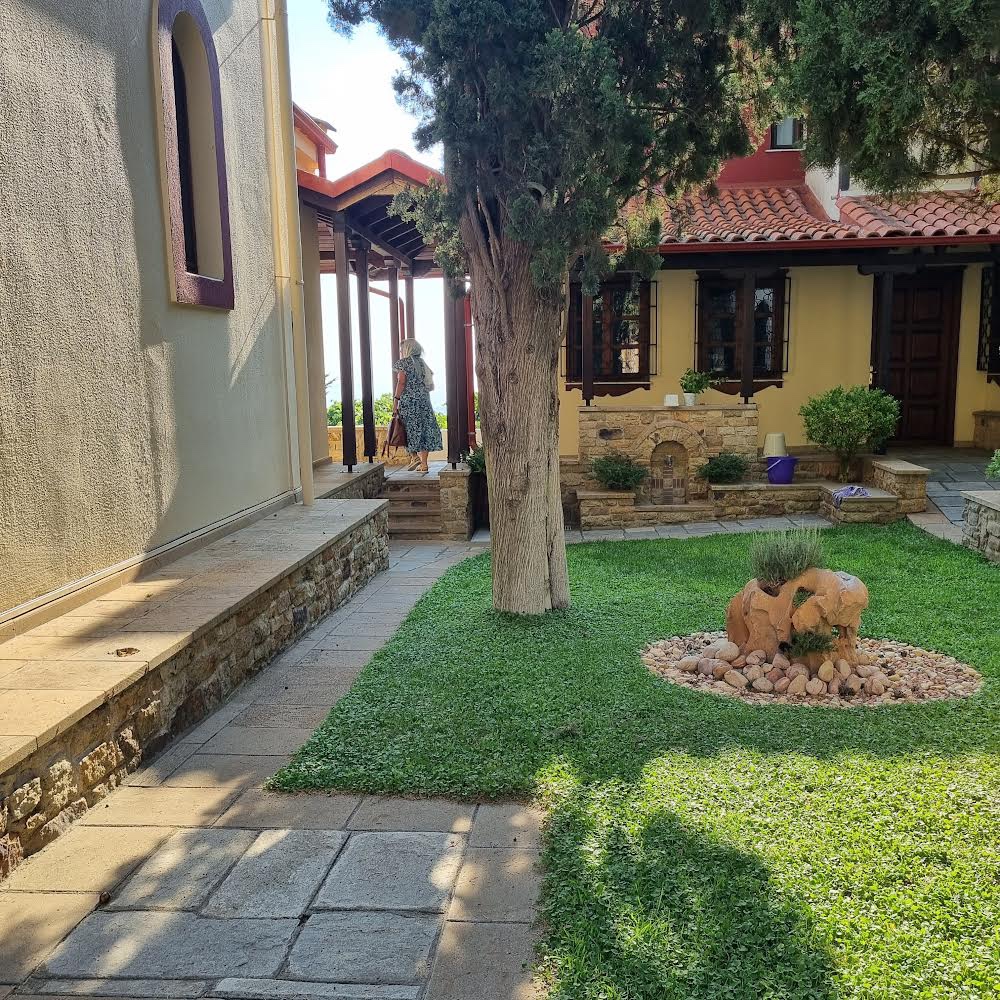
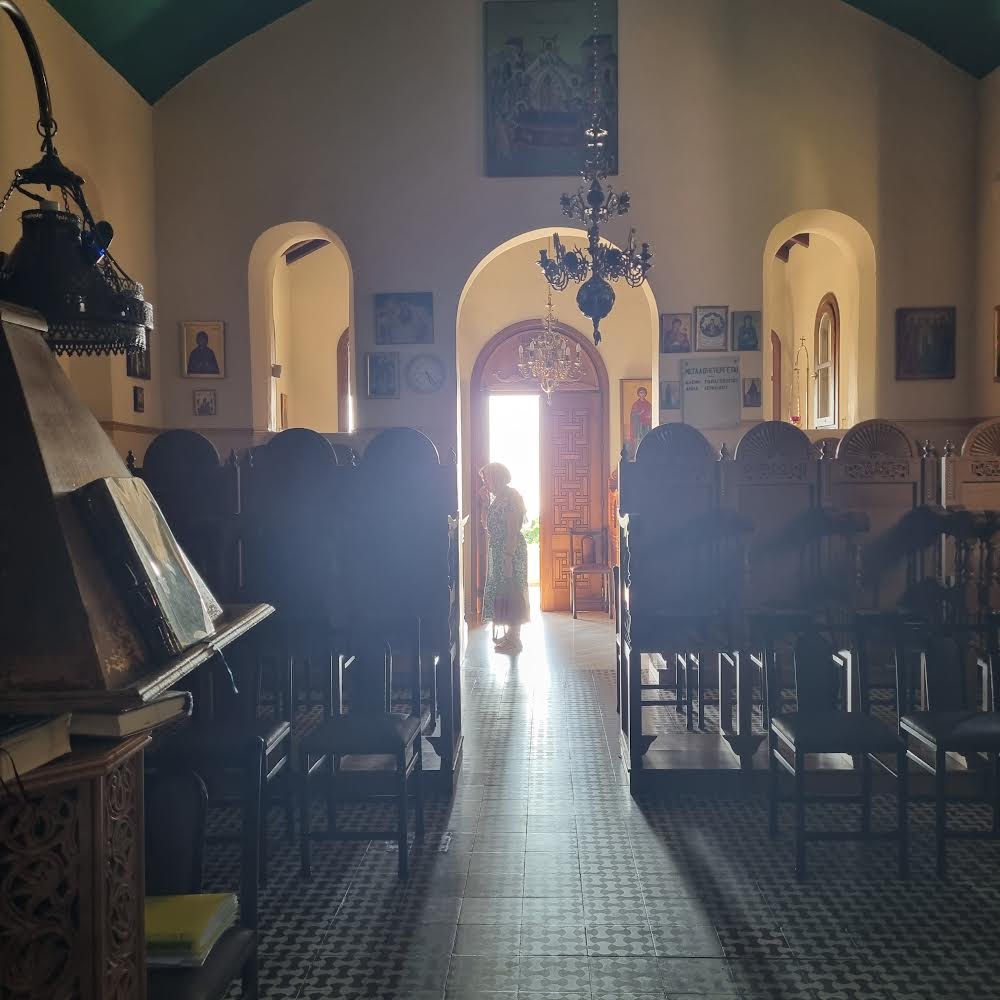
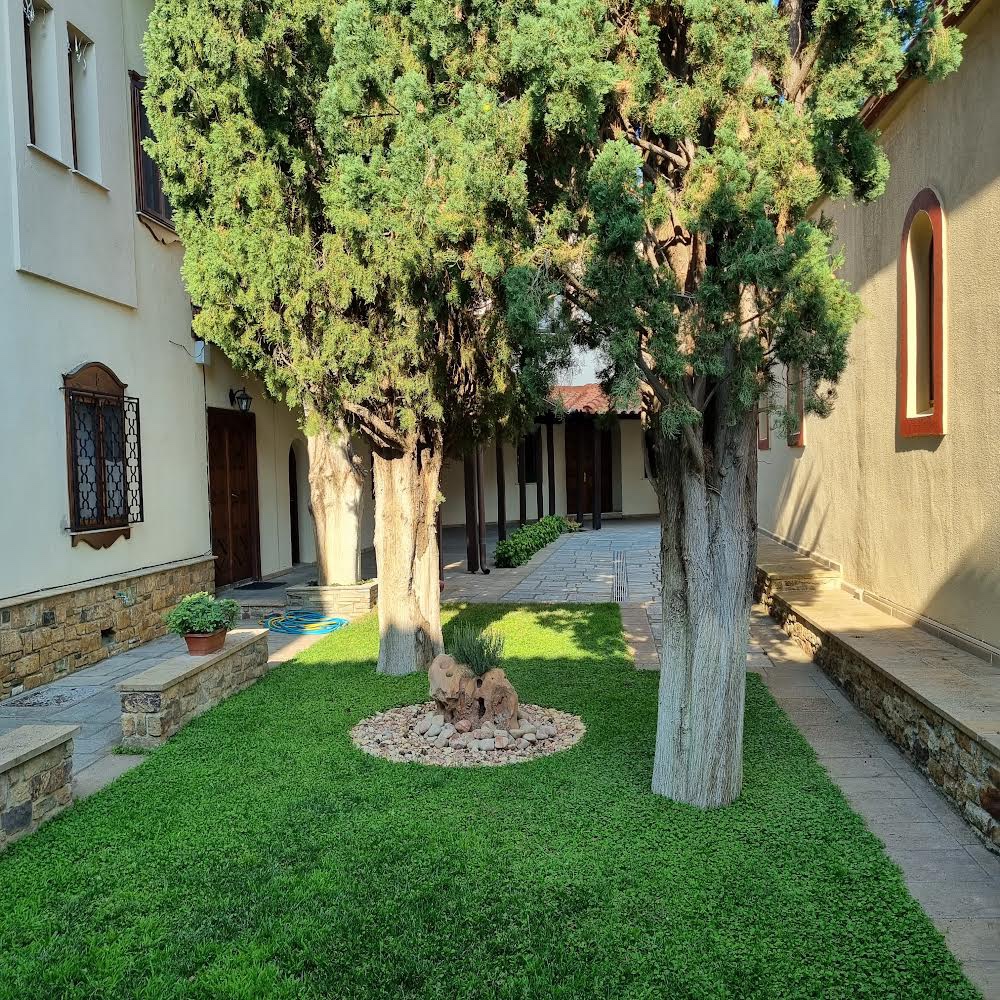
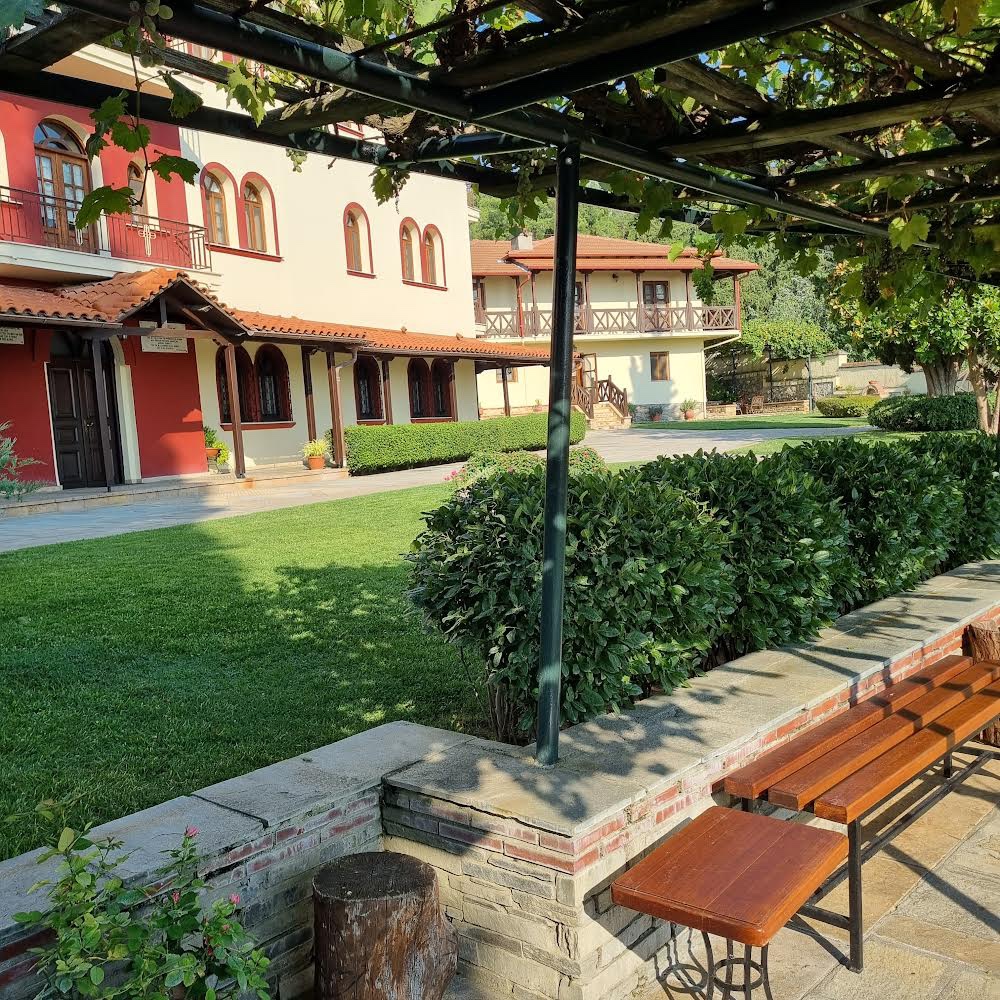
Panorama Monastery Dormition of the TheotokosOn our way back from St. Arsenios Monastery
Some years ago I learned that numbers are not important. The number of people attending Church is not an accurate indicator of either faith or success; however one measures success? Geronda Theoklitos of St Arsenios monastery confirmed this independently of my thoughts when he said ” look after your small flock.” ” God looks at the heart not on the outward appearence” as the prophet Samuel said to Jesse, the father of David. I have passed through security and passport control. The flight is delayed. Time to pray. We pray that God will keep us all in his love. “Wherefore, O you who fear the Lord, praise Him in the places where ye now are. Change of place does not effect any drawing nearer unto God, but wherever you may be, God will come to you, if the chambers of your soul be found of such a sort that He can dwell in you and walk in you.” St Gregory of Nyssa 8
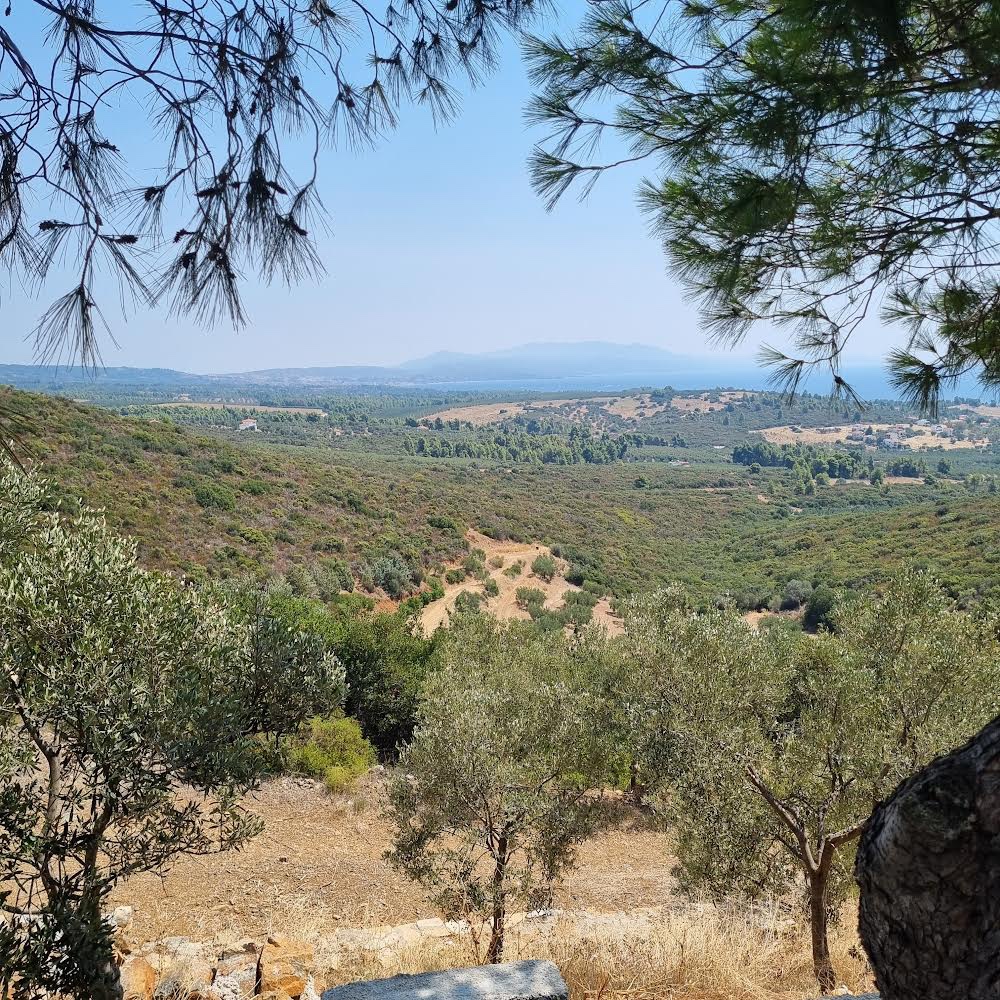
overlooking the sea from the Monastery of St Arsenios in the mountains
Monasteries are places of healing and light. The Monastery of St Arsenios is one such place.
N.b.This is as close as I came to Agion Oros in the distance!
Another little miracle enabled us to meet Theologos and Vaiga with children again . We were joined by a priest from Germany Fr Victor with his Presbytera and children. The usual courtesies were extended to us, loukoumi, coffee and biscuits along with the necessary water!
Geronda Theoklitos joined us and he afforded us a great deal of his precious time even though he had many confessions to hear.. It was a true blessing to meet him.God it seems bends time in order for those who seek Him to receive His grace . Time is not really measured in monasteries. Of course there are set times for worship and work but one does not sense time passing.
I told Geronda of the mutual ministry we have at our parish and he quoted a greek proverb “Το ‘να χέρι νίβει τ’ άλλο και τα δυο το πρόσωπο” which when translated goes something like : ” The one hand washes the other hand and both wash the face “. I suppose we have similar saying” many hands make light work.”Washing the feet is an act of service and humility, but washing the face brings cleansing and refreshment.He gave another word:St Anthimos of Chios: “ εκείνο το ´γιατί κι εκείνο το ´εγώ´ που έχομεν, αυτά μας απομακρύνουν απο τον Θεό και μας χωρίζουν απο αυτόν» — «this “why” and this “I” which we have, these distance us from God and separate us from Him.”
The proximity of hospitality and holiness is palpable in Orthodox monasteries. Faith ,food and fellowship are inseparable. For some visitors monasteries are places not only of refreshment but of healing where quiet can replenish the soul and regenerate the spirit. It is most important for Orthodox Christians to renew their spiritual batteries. Such peace was abundant at Panorama monastery. Sister S shared the typicon and structures of monasticism and we glimpsed the evening service before heading back to Thessaloniki. I think words alone cannot convey the experience of visiting monasteries. For those who truly seek God then they are places where His energies are to be found…in abundance!
– “The orthodox monastics are like the lighthouse. The lighthouse has to be always on the rocks by the sea. Do you want them to go and live into the city and be added to the other street lights? They can not become a lantern and be placed into the city’s roadside. The orthodox monastic is like a remote lighthouse, that stands high on the rocks, directing the ships of this world with their flashes, and upon the open seas the ships are orientated in order to reach their destination, which is God.” Saint Paisios of Mount Athos from the book: Spiritual Awakening
I had never thought one can really “bend”, transcend Time until I spent last week together with my little Abouna. Together, we drove hundreds of miles, visited a number of Holy monasteries, met Gerondas, received holy words, but most importantly, for me at least, we transcended Time into Kairos, ie. made a Leap unto God’s Saving Time, God’s Providence for our salvation.
How many dimensions exist in reality? And which dimension were we travelling together with Abouna?! Which dimension is Love? Fifth? This ‘travelling’ has probably been one the most liberating, healing experiences ever in my life, especially since I was so stressed, worked out and nearly burnt out in my obediences the last twelve months. Though the truth is that I was really stressed, worked out and burnt out by my own mind.
“Time is relative; its only worth depends upon what we do as it is passing.” as Einstein wisely pointed out to us. And “ there are only two ways to live your life. One is as though nothing is a miracle. The other is as though everything is a miracle”. And: “God does not play dice with the universe.” Or with our lives. How true all these! And all this I experienced first-hand during these four days together with Abouna.
God is indeed the master of time and circumstance: “And He changes the times and the seasons; He removes kings and raises up kings; He gives wisdom to the wise And knowledge to those who have understanding.” Daniel 2:21
“The Lord gave us chronos time, calendar time, that we may turn it into kairos time, salvation time, time filled with opportunities for us to respond to God’s gracious invitation to the Kingdom”. ~Fr. Anthony Coniaris
Little did I understand those quotes and how literally they are to be taken before I became Abouna’s chauffeur, guide, interpreter and secretary for four days and a witness to how God scandalously intervenes in our lives and plans and provides the precise timing, reversals, cancelations and interruptions so that we meet the “right” people in the “right” place! I became a witness to all these miracles, but also to Abouna’s ease at this “normal”, swimming, flying, floating in Kairos.
***God has a way of surprising us and altering our plans.The visit to St Dimitrios shrine was full of such delightful God- intervening surprises.***
Indeed, a plethora of details is to follow, but let it suffice for the time being to say that this 4 days’ intensive course into Abouna’s daily time ‘management’ have drastically changed my experience of Time, and hopefully this ‘meta-noia’ will last. The list of my obediences after his visit is the same, or even longer, but I somehow have “more” Time, and I certainly have more Joy and Gratitude and Thanksgiving.
Time and stress seem to have loosened their grip on me. “Therefore do not worry about tomorrow, for tomorrow will worry about its own things. Sufficient for the day is its own trouble.” (Matthew 6:34) I have also, immediately—in obedience— started taking two half days off for hesychia and have resumed my Byzantine chanting lessons which I had sadly given up before summer because “I had no time …”. And I feel that this is only the beginning in this so post-quantum, and yet so ancient, and so St Porfyrios, and indeed all the saints’ experience of flying in Kairos:
“Poor people… We live, we read books […] and yet we remain in a relaxed state, recklessly living without Christ. Christ is different. When He comes to a person, entering his soul, the soul changes. A soul [that knows Christ] lives everywhere: on the stars, in the spiritual world, in the Universe. Life without Christ is not real life. … Christ is the new life. Christ is everything. He is joy. He is life. He is the light, the true light, allowing a person to rejoice, to fly, to see everything and everyone. … Love Christ and prefer nothing to His love. He is the source of life, He is everything. Everything most beautiful is in Christ.”
Glory to God for all things! Vignettes from our 4 days together to follow soon …
Creation is groaning … Another young wild horse of Petala found dead yesterday, after losing habitat
Abouna’s Feedback on my Reflection
*** God it seems bends time in order for those who seek Him to receive His grace . Time is not really measured in monasteries. Of course there are set times for worship and work but one does not sense time passing.***
***
“May it be blessed
I think this is a most clearly distilled profile of our time with Christ. I don’t think it is in any way an alternative diary but a complementary (with an e) account of our joint experience. I too found this to be so true.
Indeed in my first day’s diary I think I mention so many blessings in such a short time. I find St Porphyrios words so poignant for they dispense our lived experience in Christ in such a lyrical way.
The people that we met were so lovely. The Christian soul is often seen in the eyes. I wrote to Theologos and said when I met his family heart spoke to heart and spirit to spirit.
William Blake in his poem “Eternity” wrote
“He who binds to himself a joy Does the winged life destroy; But he who kisses the joy as it flies Lives in eternity’s sun rise.”
The dark grey skies of Manchester belie the future sun 3 hours to the east. We pass through dark days physically and mentally as human beings and often assume ” that is how it is.” Yet how much more we appreciate the sun when our usual weather is rain, and how much more we appreciate the rain when we have unremitting heat.The” wings” of the iconostasis were repaired yesterday by two of the faithful. Great! “Ready for take off!”one of the faithful e mailed me to say. Me too….as we are called to board the flight.
The sun comes out as we climb the steps into the aeroplane. I pray the Jesus prayer for all the passengers and crew 33 rows x6 plus pilot,copilot and 4 crew…you do the maths. Then I say prayers for all the faithful. Descending onto terra firma one is hit with the wall of heat 34c. It was a great joy to see two other English Orthodox priests fr S and fr D as we pass through customs. Fancy that! Three Othodox priests all bound for Thessaloniki and all three English men, not a Greek priest in sight. God has a sense of humour. K. is there to meet me at the airport,a great joy. The years and distance slip away.
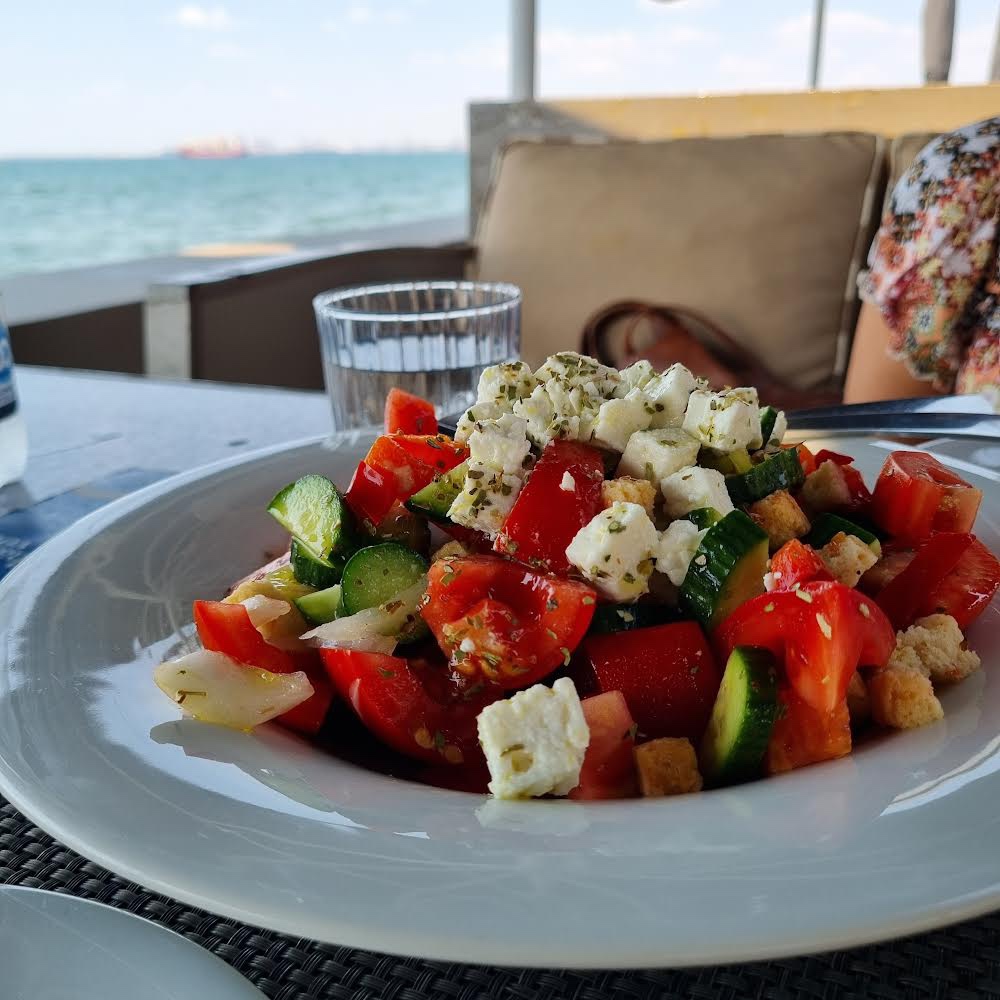
We drive to the city centre and go for a refreshing Greek Salad at a local Taverna by the sea. My room at the hotel is rather too spacious and although a siesta beckons (I have been awake since 2.30 this morning) I am not really tired, plus I have a very important appointment with St Dimitrios at 6.00 p.m. Greek time 4.00 p.m. British time. To be continued…
Glory to God through your prayers I have returned home.The title of my diary was set really by one of our parishioners when , before I left , he wished me a :”blessed pilgrimage.” At first I thought this a little odd, a good holiday, yes, which means holy day, but pilgrimage? It is not as though I was going to Jerusalem ( well not until October). I understand the spiritual element of the word but looking up the Latin origin “peregrinus” it means “a foreigner.” The Romanian word is the same for pilgrim.
In the book of Leviticus we read: “When a stranger resides with you in your land, you shall not wrong him. The stranger who resides with you shall be to you as one of your citizens; you shall love him as yourself, for you were strangers in the land of Egypt.”
Our Lord, His most holy Mother and Joseph were also foreigners in Egypt when Christ was a child. Our Lord met with the Samaritan woman, the Syrian phoenician woman and commended the one grateful leper of the ten who were healed , “has no one returned to thank God except this foreigner?” Our Lord Jesus Christ said “love your neighbour as yourself “echoing the words of the Old testament law and when asked who is my neighbour , he used the example of a Samaritan, a foreigner.
Luke 13:29 And they shall come from the east and from the west, and from the north and from the south, and shall sit down in the Kingdom of God.
There are no boundaries in God’s kingdom and no foreigners.
I recall being at the Monastery of Sambata de Sus Monastery in Romania and concelebrating at a Holy Liturgy with seven other priests. Even though I do not speak the language, except for a few words, I understood the whole of the Liturgy and felt a unity in the Holy Spirit; it was as if I was hearing the Holy Eucharist in my own language. I can truly say that experience was not unique, I have felt that same mystical knowledge and full participation of worship in Greece. Our Parish itself is a little Pentecost composed of people from all over the world. The whole experience of worship is permeated with the Holy Spirit’s presence whose gifts and fruits we enjoy.
1 John 4:16
….. God is love, and he who abides in love abides in God, and God in him.
This is The Holy Spirit’s gift and His language is love.
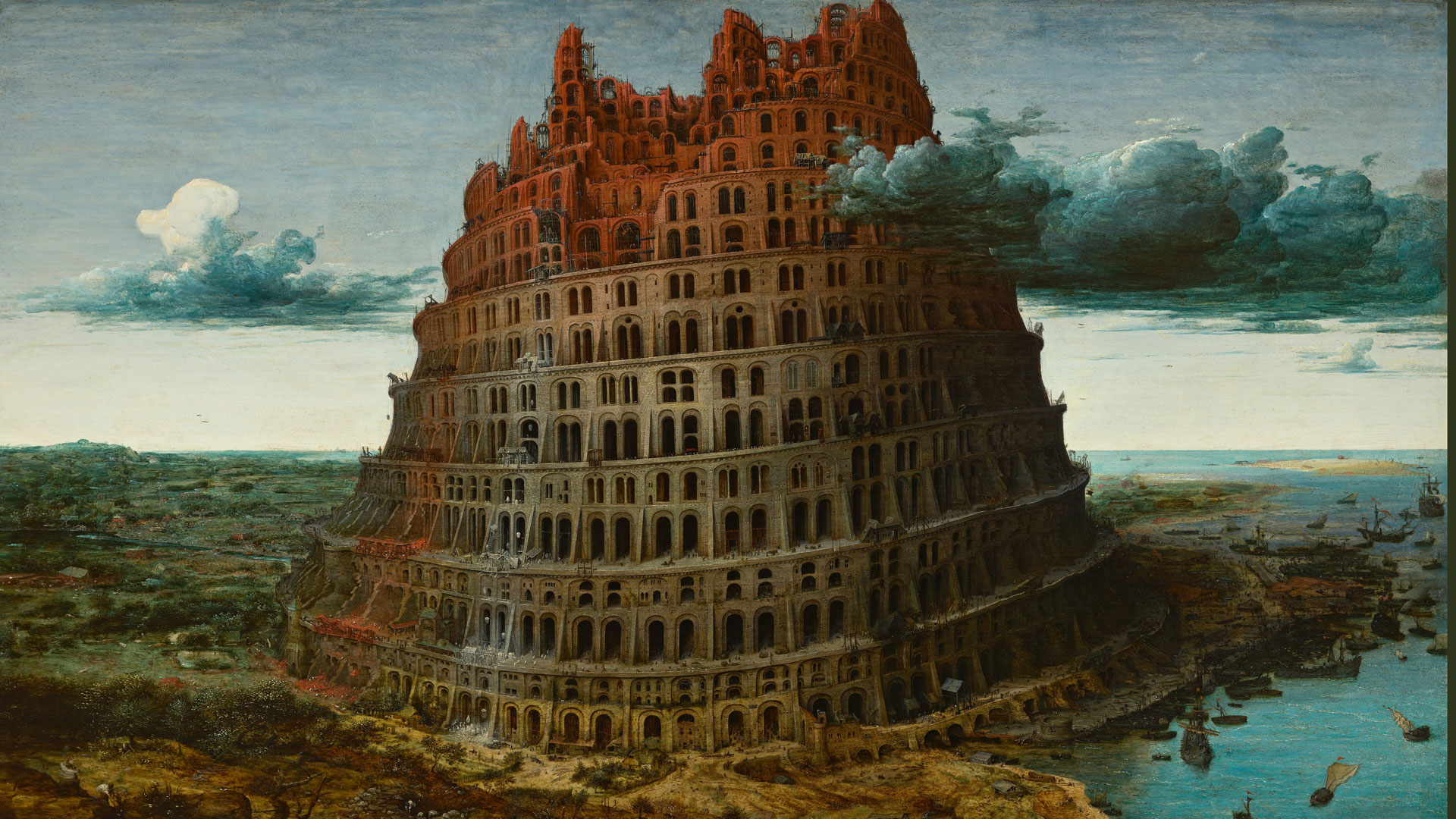
Deconstructing the tower of Babel
Genesis 11
The Tower of Babel
1 Now the whole world had one language and a common speech. 2 As people moved eastward, they found a plain in Shinar and settled there.
3 They said to each other, “Come, let’s make bricks and bake them thoroughly.” They used brick instead of stone, and tar for mortar. 4 Then they said, “Come, let us build ourselves a city, with a tower that reaches to the heavens, so that we may make a name for ourselves; otherwise we will be scattered over the face of the whole earth.”
“Let’s scale the heights and take the lights
of the firmament.
We’ll call the tune and pocket the moon.
Come on! let’s grab the Sun and that being done
We will be called great!
Let’s create another state by
Storming heaven’s gate and gain control.”
From below…the bright “hello”
Led to a sad “goodbye.”
The smile became a rueful sigh.
And people asking why?
And who are you?
What did you say?
That once friendly question where
is met by a beleaguered stare!
From nostalgic then to…. tell us when?
The change from common sense
to non-sense came because of man.
What was his plan?
To build a tower and to steal God’s power!
Much later in an upper room,
Diners seated round a table
Take bread and wine,
And as they are able
De-construct the tower of Babel.
God initiates a conversation
His language: love, for every nation.
And from above that which was lost
Is found, and invested with a Pentecost!
A soldier asked Abba Mios if God accepted repentance. After the old man had taught him many things, he said, “Tell me, my dear, if your cloak is torn, do you throw it away?” He replied, “No, I mend it and use it again.” The old man said to him, “If you are so careful about your cloak, will not God be equally careful about his creature?”
I remember a holy priest from many years ago when I was a student at University in the North of England. His Parish was in a very poor part of the city. He had a warm heart, a generous spirit, a cheerful disposition and showed great concern and pastoral care for his parishioners. He would light the fires of the elderly on winter mornings. He would do shopping for the housebound and if needed buy food for the poor. Often, in place of buying oil for heating the Church, he would give the money to the homeless and to charities. Not many attended the Church.
I recall one winter morning we were freezing in Church at the morning service: the boiler had broken, as usual, and our feet were like blocks of ice. Father B. always advised the small congregation to put on two or three extra layers of clothing. We were hoping the sermon would not be long- it wasn’t! As he was starting the homily, suddenly from under his vestments clouds of steam like incense started to arise! Somehow the hot water bottle that he had secreted around him, had burst. After rescuing the good cleric from his sudden and untimely sauna, we dried him with a towel and he continued to serve at the altar. His rather appropriate sermon text was from the Prophet Amos5:24:
“Let justice roll down like waters and righteousness like and ever flowing stream.” Rich men are rarely remembered but those who show compassion, joy, mercy, righteousness, justice and love, their memory is unto eternity. 4 Hear this, you who swallow up the needy, And make the poor of the land fail, 5 Saying: “When will the New Moon be past, That we may sell grain? And the Sabbath, That we may trade wheat? Making the ephah small and the shekel large, Falsifying the scales by deceit, 6 That we may buy the poor for silver, And the needy for a pair of sandals— Even sell the bad wheat?” 7 The LORD has sworn by the pride of Jacob: “Surely I will never forget any of their works.
Woe to you who make mammon great and mercy small Who today eat the apple of financial Fall Who use the Sabbath to plan and cheat the more Whose deeds white heat the flaming sword at Eden’s door!
Ah the flaming sword! You see there is no way back; Not until you renounce excess and recognise the lack In your brother’s life. When will the market open so to satisfy our greed? When again gratify desire and passion feed? Poor men have no names, the heedless suffer fools to dream Whilst God places at the East a bar – the Cherubim! Oh the Cherubim! Whose faces guard four ways, Affording plutocrats no bliss in all the days of their little, mortal life. They will rue the moments when they made mammon great. When they closed their hearts to love and welcomed hate They chose the serpent’s wiles over heaven’s gifts, too late Espy eternal treasures through the guarded gate. Alas the gates to Paradise! Are to some locked tight Who choose outer darkness, the world’s whirlwind, an endless appetite for their future life.
And God still looks at the rich through the needle’s eye And walks in the garden and calls with a sigh He sews with this needle those garments of need And God still loves Adam and all of his seed.
Oh the love of God a garment of light, a consuming fire Depending upon Whom, what and where lies our consuming desire In this life.
“Wealth … is like a snake; it will twist around the hand and bite unless one knows how to use it properly.” Clement of Alexandria, “The Instructor,” 3.6.34
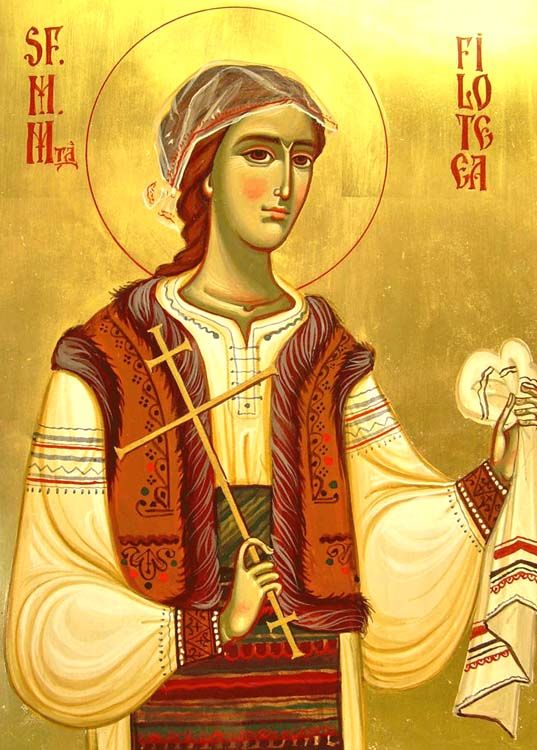
I grew up in a house where we did not have icons, none that I can remember, and where we did not talk much about God, the Theotokos or saints. My grandmothers taught me to say a few prayers and took me to church on a couple of occasions. As I grew up, icons started to enter our house, but by then I was a very rebellious teenager so did not make any friends among the saints. When I moved to Lancaster, although I always had faith, I brought no icons with me. In fact, I felt a strange opposition to having traditional icons in my room or in my house later on. A streak of rebellion and ignorance in fact made me hide away in a drawer the icons which I received for my wedding. It is very painful to remember this and the fact I actually damaged one of them by accident. A friend told me then to make sure I keep the icons because when the time was right, I would treasure them. A few years later, I started feeling guilty about having the icons hidden away and put a cou-ple up in my bedroom. I was still unsure about it, but it started feeling wrong to have them in a drawer. They were just one of Christ and the Theotokos. Then… the saints started arriving. And I dis-covered that saints are tenacious and come into your home uninvited. If you refuse to welcome them, they will knock again and again. And every time I had a slightly unkind thought about a Saint, they came to befriend me. I am a constantly reluctant and continuously repentant friend of saints as the few stories which follow will tell. I felt that, being such an unworthy and sinful lover of Saints, I had to talk about them, so other people might come to know them a little better and love them a little more and I would like to hear other people’s stories of saints, so my circle of holy friends may grow. Saint Filofteia First came Saint Filofteia (or Philothea). I had never heard of her and did not invite her. It was a gift from Father Bogdan when he visited Lancaster about 13 years ago. I myself thought is was an unusual icon to be bringing, but it immediately struck a chord with me because Filofteia was the name of my grandmother who first talked to me about God and Christ and taught me to say a prayer before bed. So many times in my child-hood and growing up, I thought it was a very strange name. It seemed to me at the time old and old fashioned, from a different era and I had often thought that I had never met anyone else by that name and mused on how her parents had come up with it. And how foolish I was, since her name means lover of God in Greek. As the icon of Saint Filofteia arrived and was temporarily placed in the kitchen, where it still is, overlooking the hub of activity of the house, I started reading about the Saint. Another thing which resonated with me was the fact that her rel-ics are to be found in Romania at the monastery Curtea de Argeş, where my other grandmother always wanted us to go on a trip. Sadly, we never made it because she passed away. But Saint Filofteia makes me remember my two grand-mothers with great affection and gratitude for the seeds of faith they planted when I was a child. But beyond that, as I read about her brief life, I felt such love for the little saint who lived at the be-ginning of the XIII century in Trnovo modern day Bulgaria. She was born in a family of peasants. Filofteia’s mother was a pious woman and taught her to read the Scriptures, fast and pray. She often went to church. Sadly, her mother died when she was only young and her father remarried. Her stepmother disliked the child and her piousness, but Filofteia continued in her Christian upbringing, despite constant beatings and scoldings. She had a very compassionate heart and gave every-thing away to the poor and the hungry. One of her daily duties was to take her father’s lunch to him in the fields where he was working. But on the way, she saw some hungry children and, as was her habit, gave them some of her father’s lunch. Her father saw her and became so angry that in a fit of rage he threw his axe at her and killed her on the spot. She was 12 years old. Immediately repentant, he tried to lift the body but was unable to move it and he was further terrified by the fact it shone with a white light. He ran to the city and came back with the local archbishop and many people. They all marvelled at how the body shone and read prayers and glorified God. It is not entirely clear when her relics arrived in Romania, but most likely they were taken over the Danube for protection during the Turkish invasion of Bulgaria around 1393. The saint is revered both in Romania and Bulgaria and her feast day is the 7th of December. She is the protectress of abused children and children in general and many are the miracles attributed to her, especially for the sick.
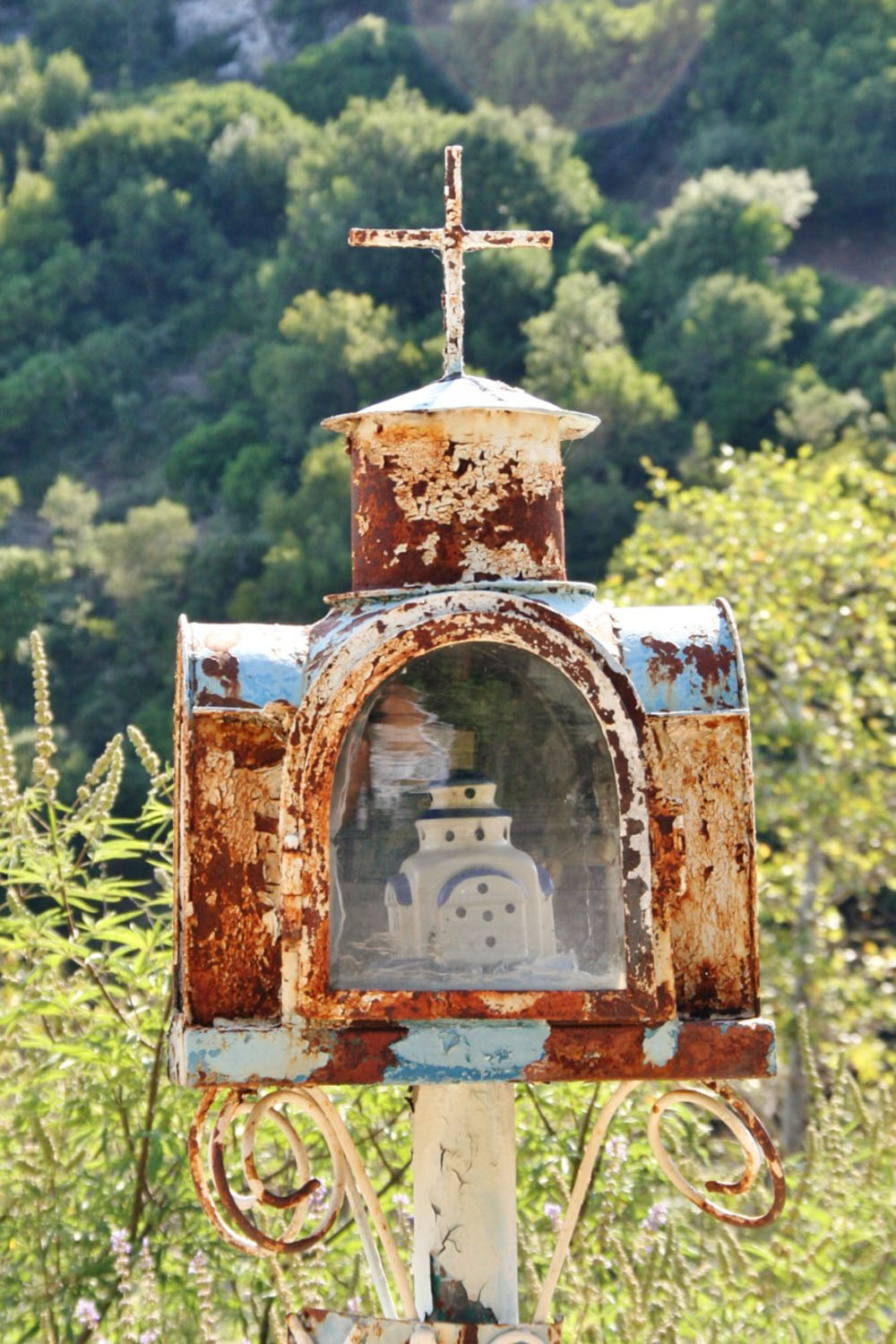
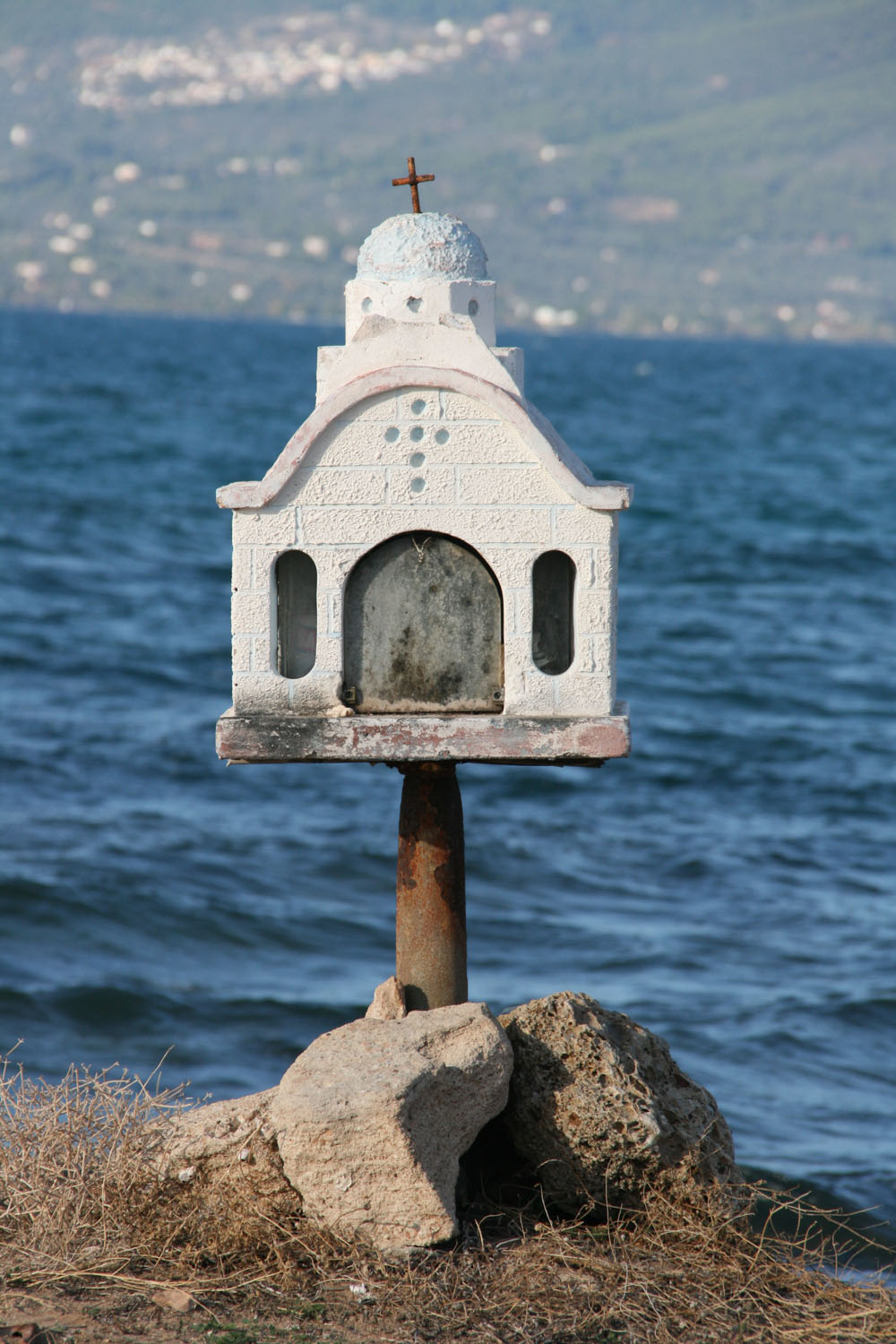
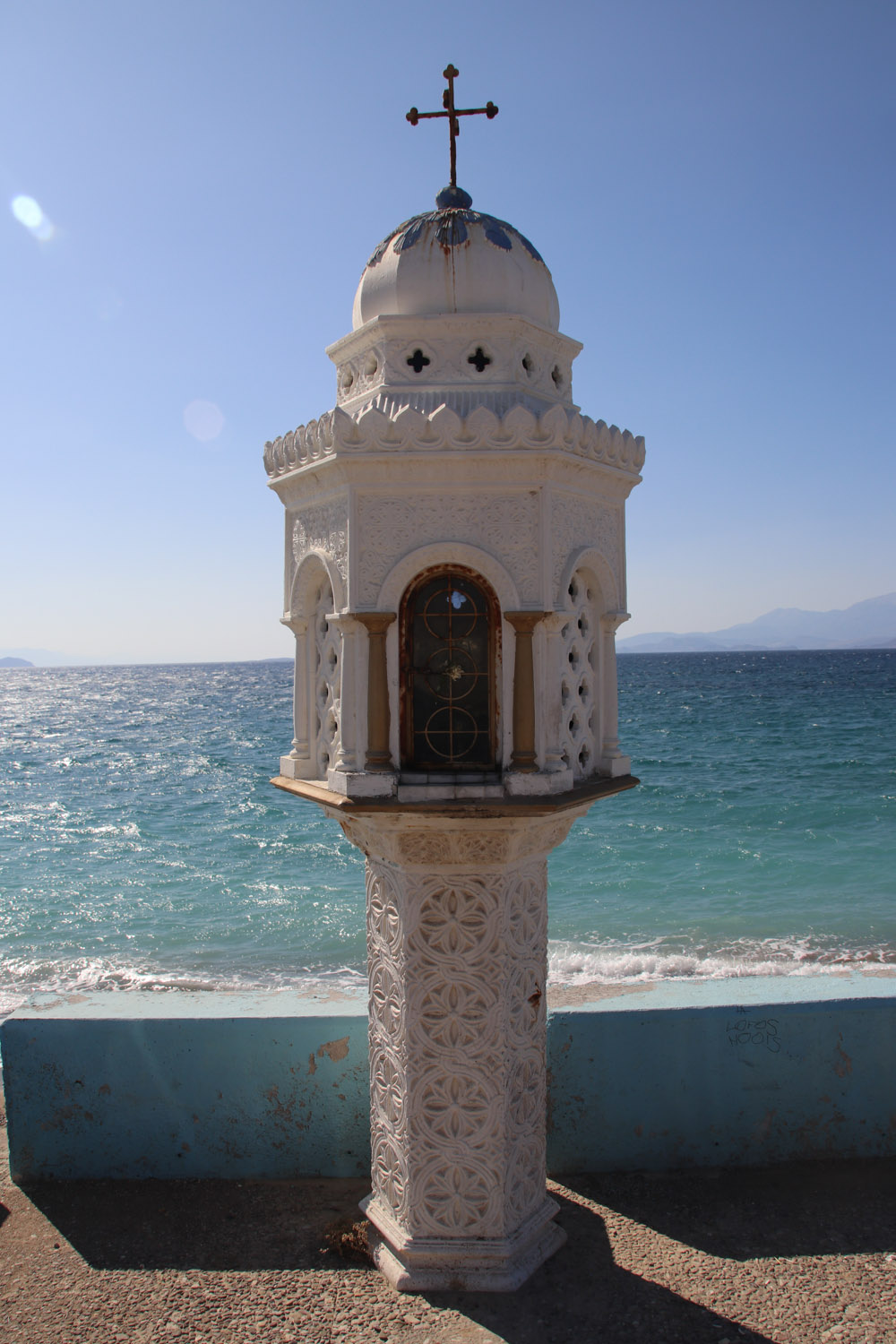
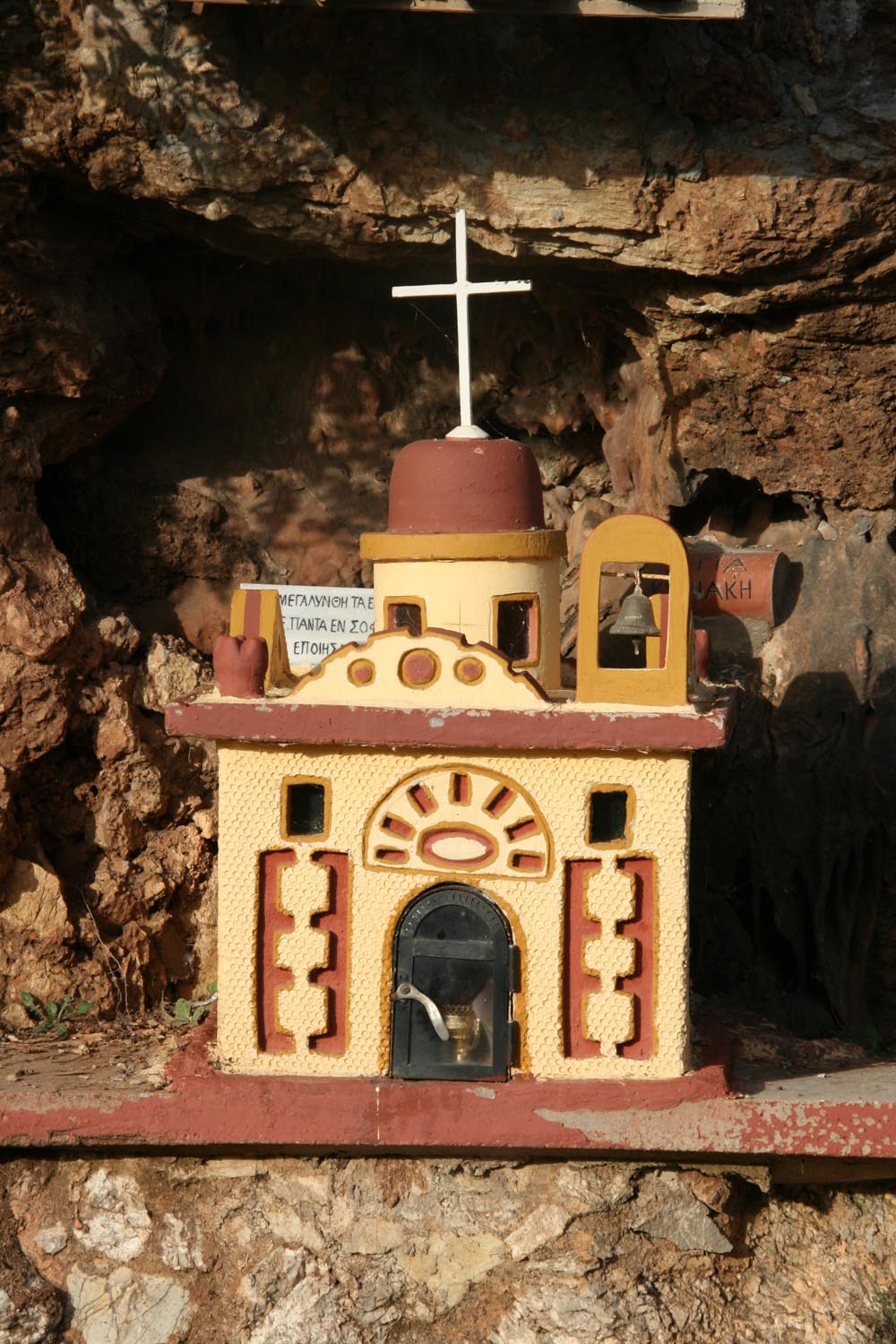
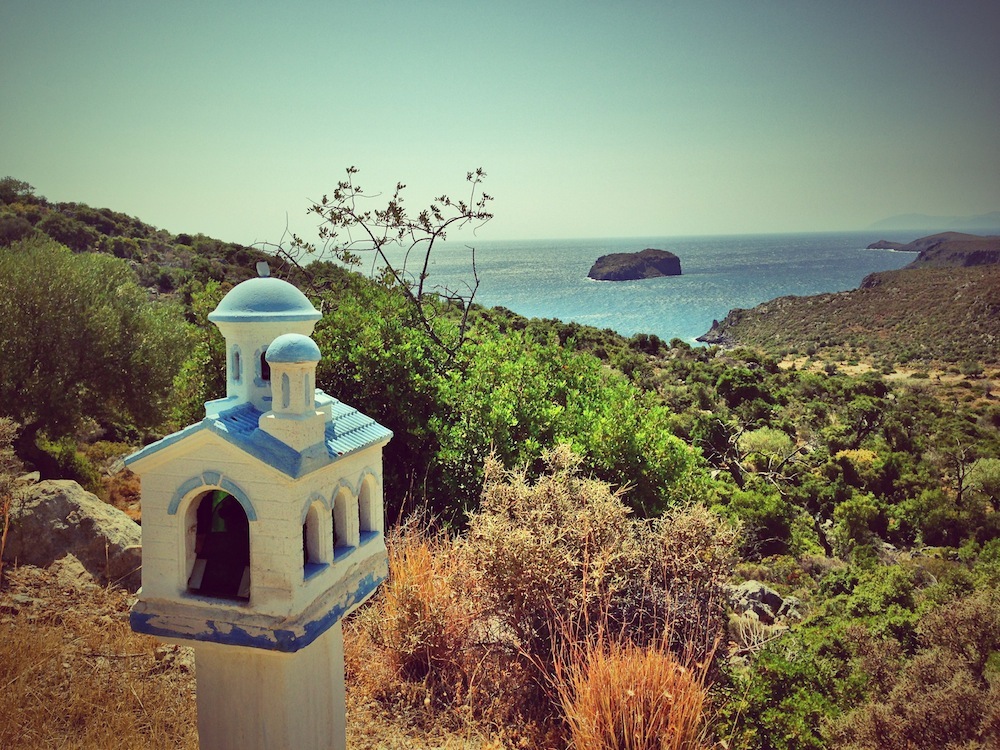
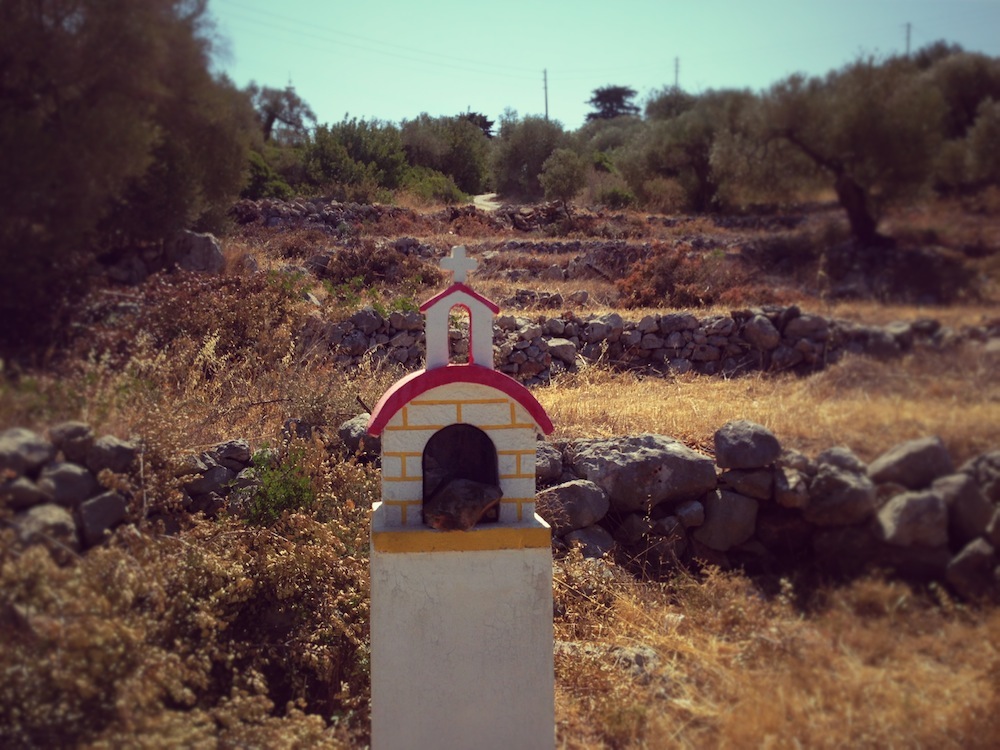
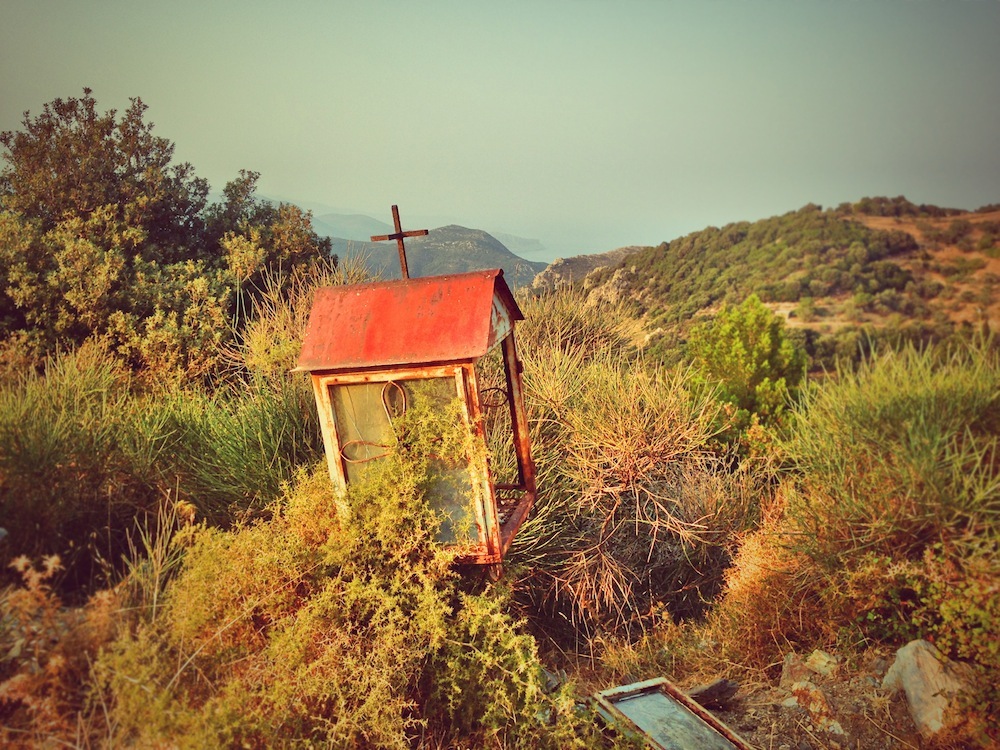
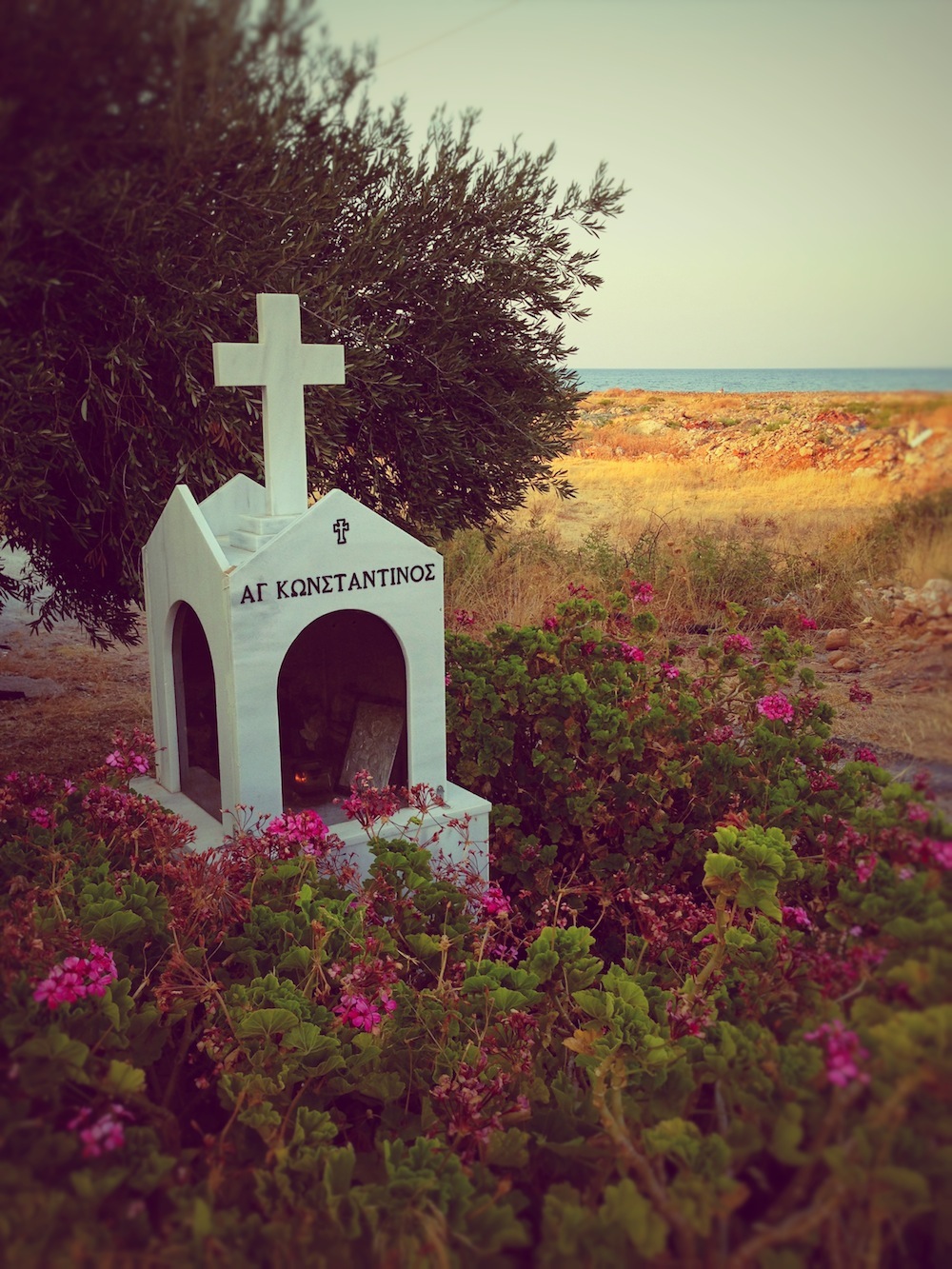
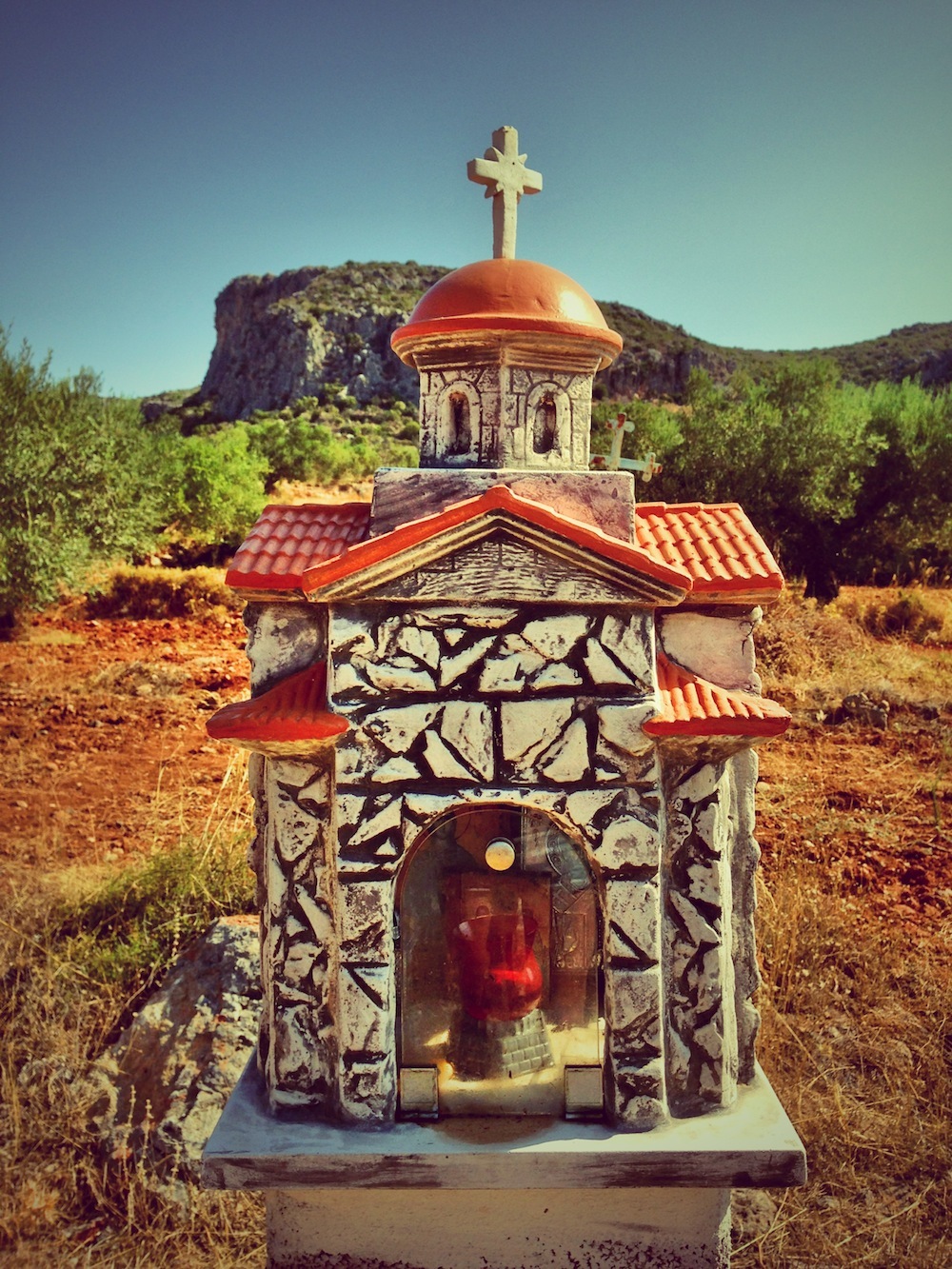
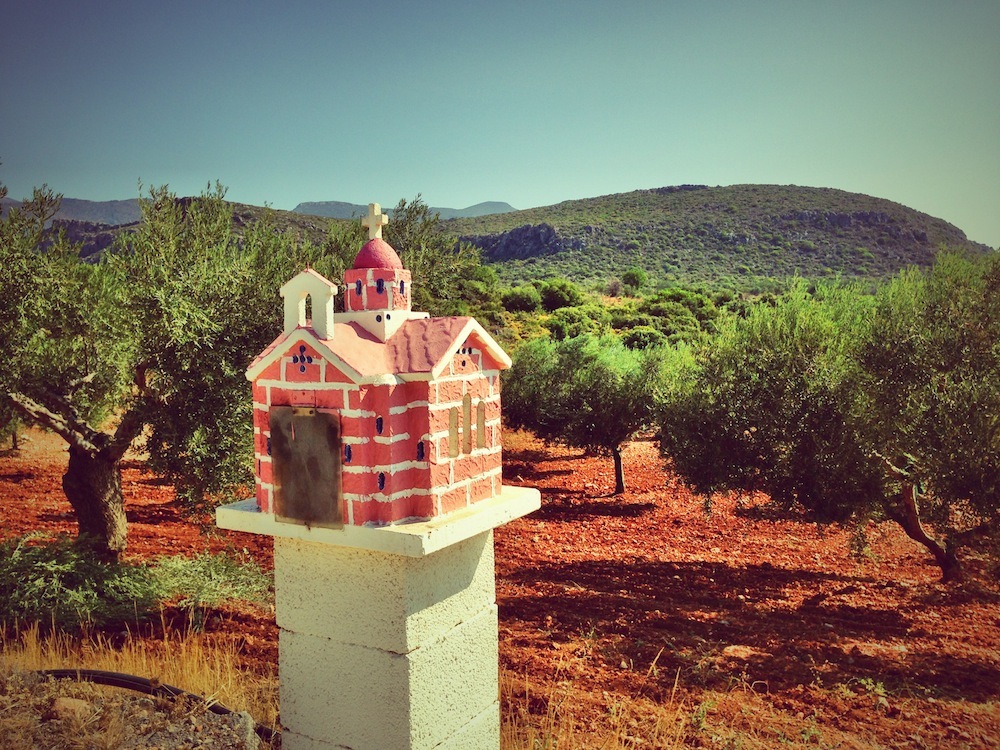
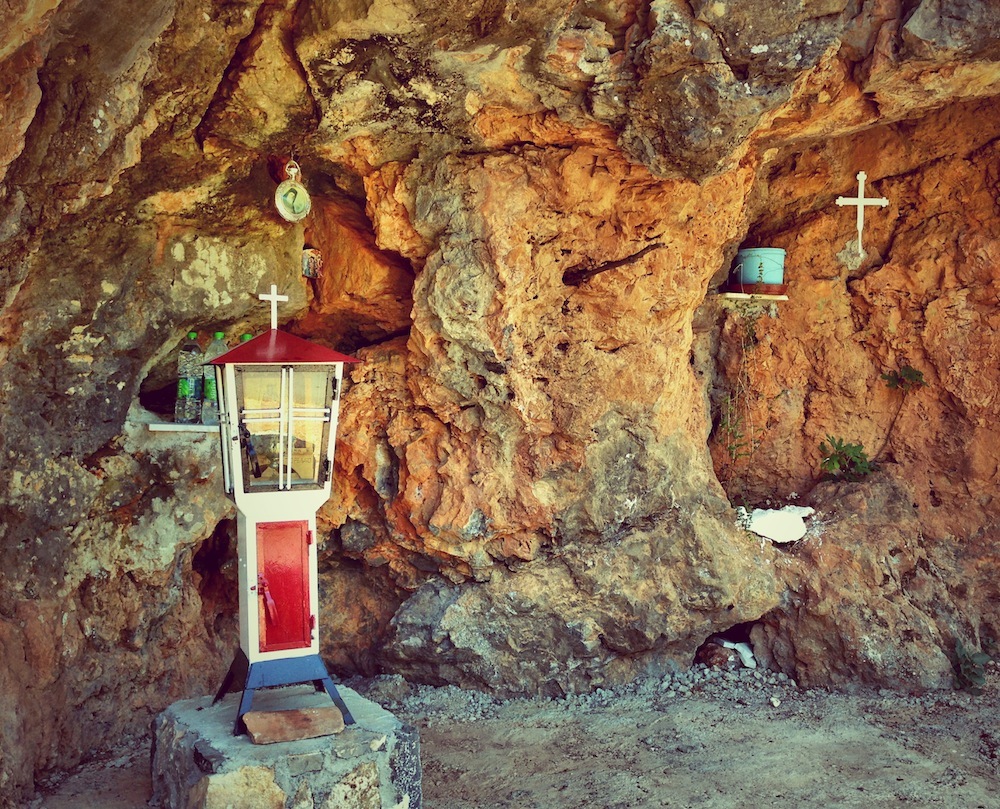
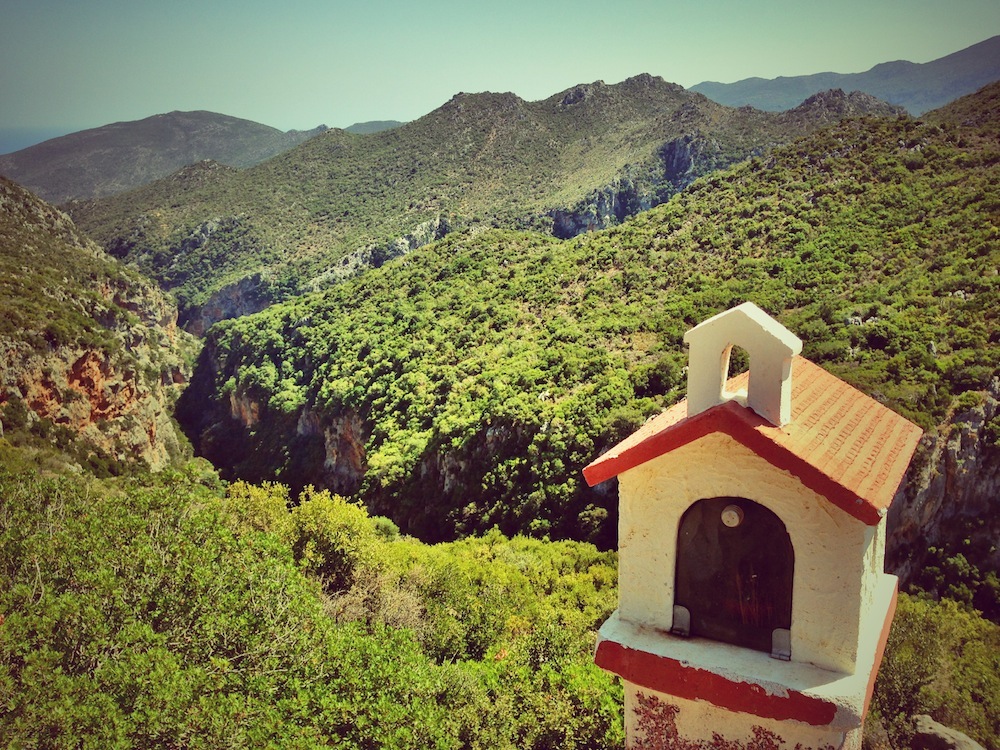
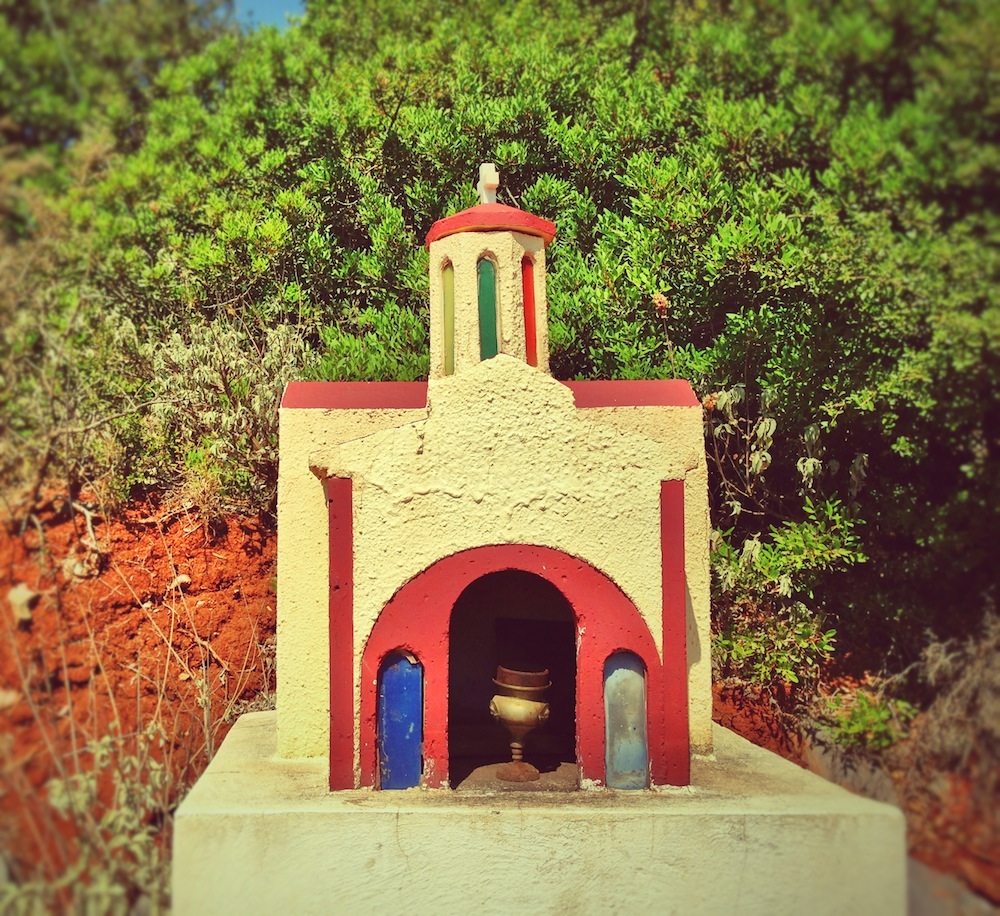
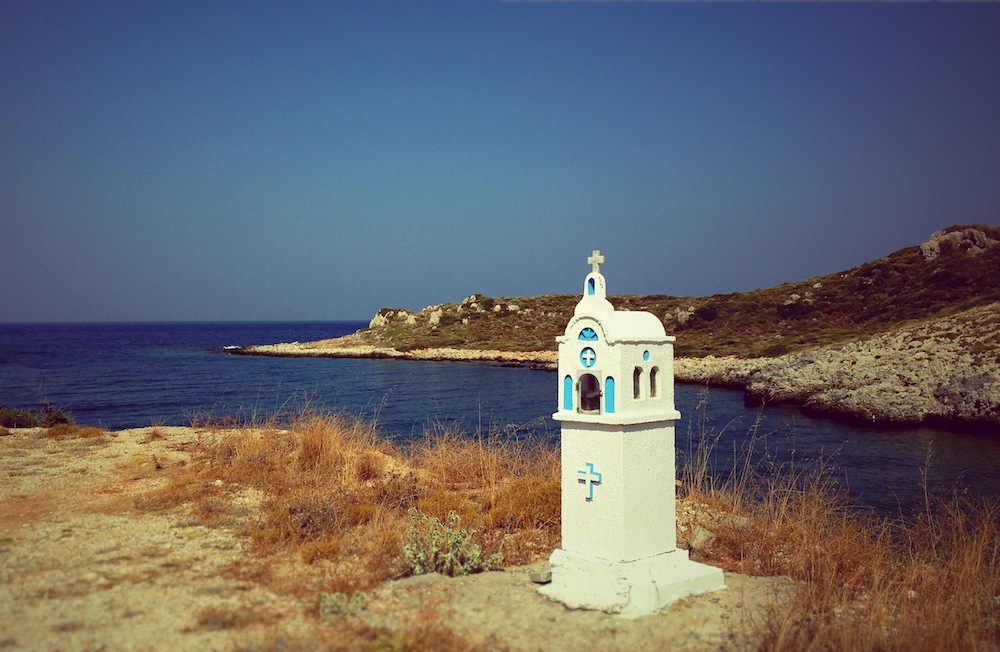
The small roadside shrines scattered here and there, along the curvy roads in Greece, are an important part of the Greek culture.
History and Traditions of Kandylakia
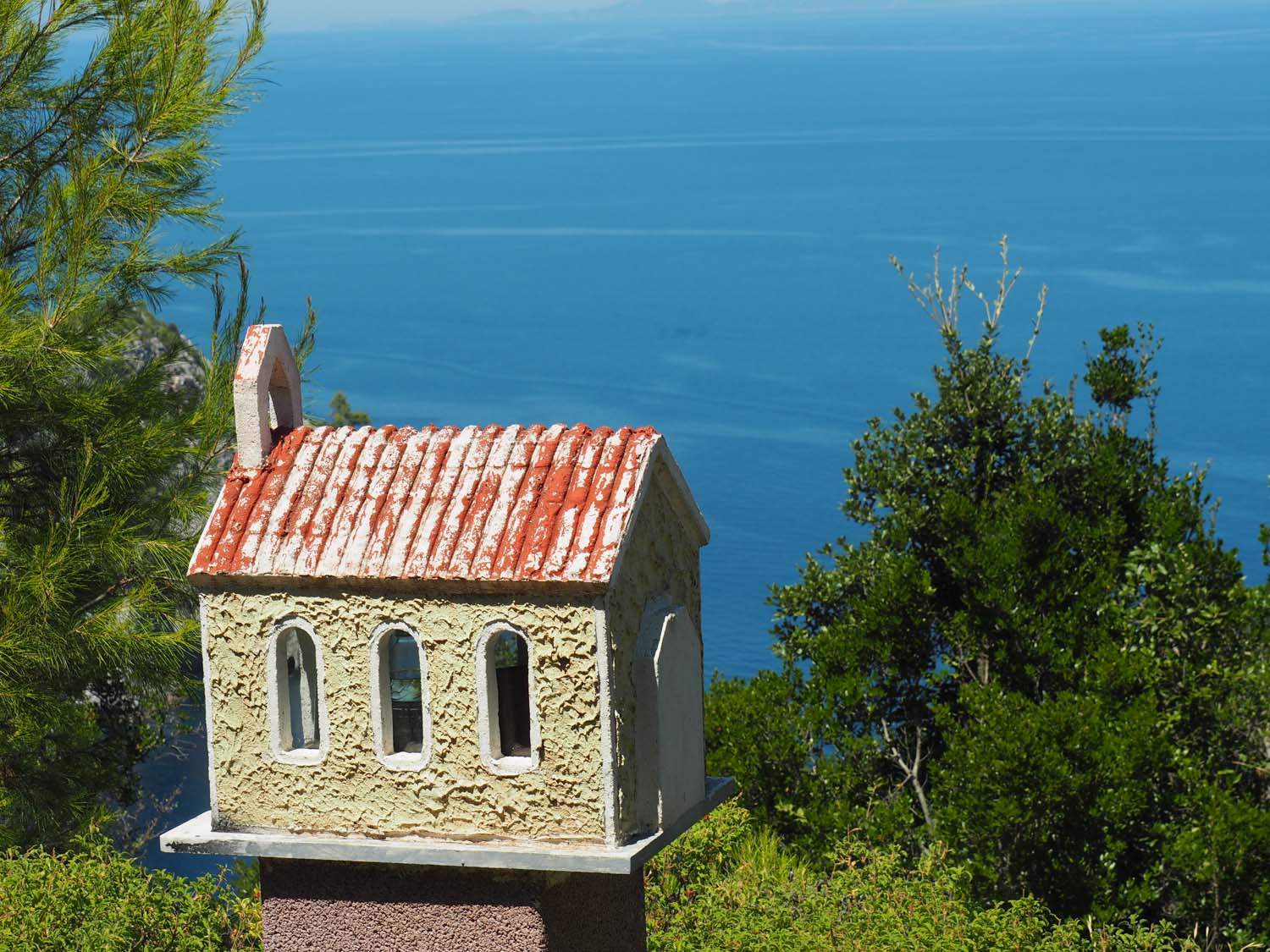
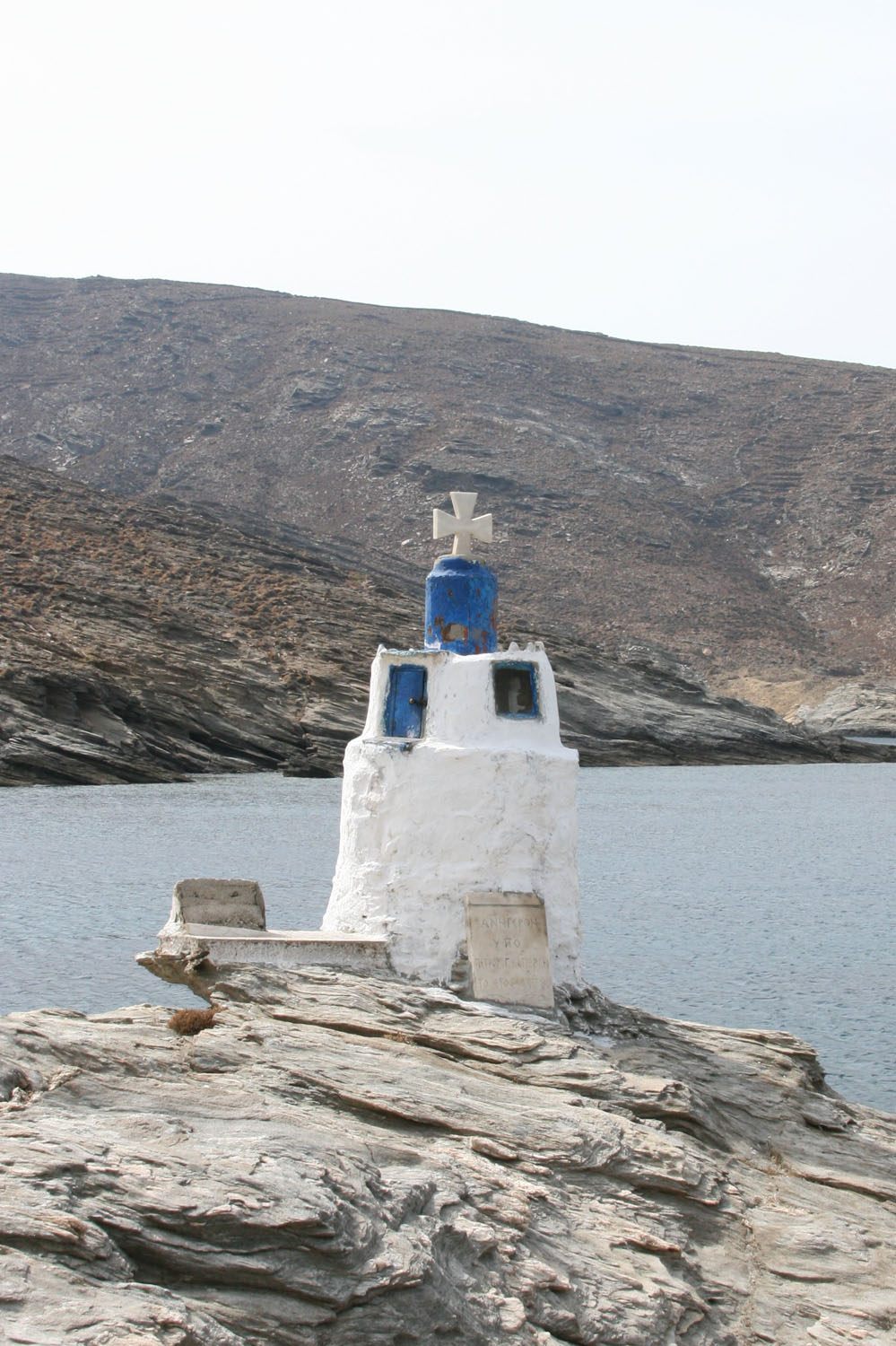
During any trip to Greece, travellers come across, photograph and wonder about these shrines. Known as kandylakia the roadside shrinesare usually made of wood, stone, metal or concrete. Clearly visible on the edges of the narrow winding mountainous roads, they commemorate the lives both lost and saved.
Over the years, in the farthest mountainous villages that can only be reached through narrow dark roads — many tales of frightening rides have been recounted over and over again. The challenging terrain marked with these shrines gives the traveler a sense of caution and an opportunity of spiritual reflection.
Some of these shrines are as old as the roads, built in the middle of nowhere with a flame of a candle burning inside.
Kandylakia are emblems of an old tradition which is greatly valued in most of the households and very much preserved until this day.
Unique characteristics of the roadside shrines
Although road accidents are mostly the reason for placing these shrines –a driver soon learns to assess the danger of a particular turn simply by calculating the number of Kandylakia, 3, 4 or 5 !!!! –on numerous occasions they are placed as a promise and a gesture of thankfulness. They celebrate miracles and those who survived dedicate a kandylaki to their patron saint. Another reason for these shrines is a way to indicate that there is a monastery or church in vicinity especially in less populated areas where the church might be completely out of sight.
Some churches which are located far away from the villages are now being locked up to protect them from theft. In such cases, small proskynitaria are erected in front of the church to allow the worshippers to light a candle and to say their prayers.
If you admire them closely, you will notice that every shrine has an icon of a saint. Sometimes, there is even more than one kandyli which is a floating wick oil lamp, flowers and personal items. It is a custom that every anniversary relatives and loved ones pay a visit to the shrine which draws upon the ecclesiastical tradition. This tradition represents the Greeks outlook on religion, family ties, remembrance of family history, culture and finally fate. These unique roadside shrines are there to remind us to appreciate every second and every opportunity to be alive.
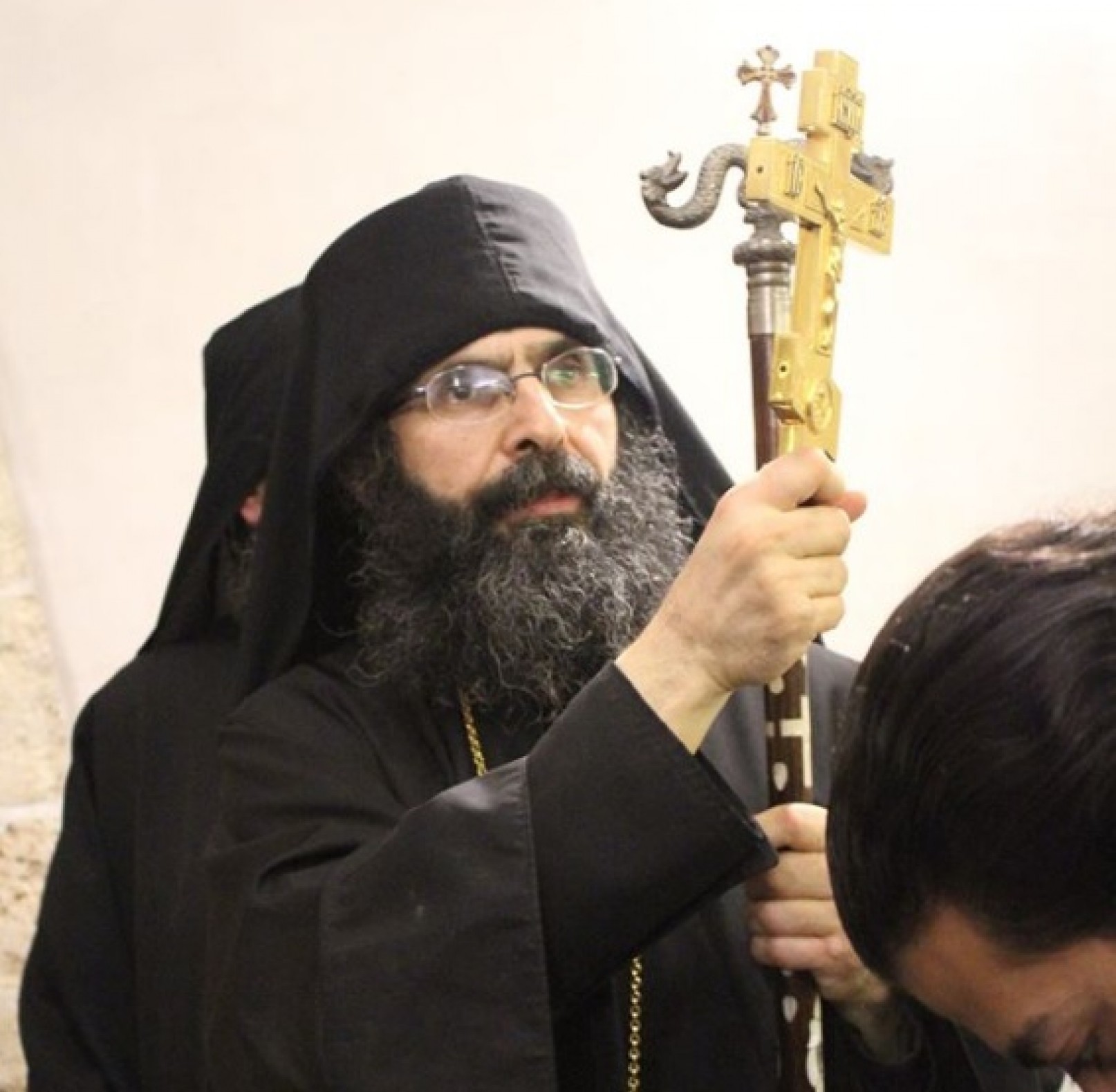
Archimandrite Gregorios Estephan, Abbot of Holy Dormition of the Theotokos Monastery, Bkeftine, Lebanon
A most poignant, sobering and timely warning. Your prayers and your thoughts.
A few excerpts:
We ask with honesty, was there no other way or a dispensational solution, taking into account all the health measures, to face this pandemic, without closing the Churches and surrendering to a collective spiritual suicide?
…
Going to Church during pandemics, temptations, hardships and persecutions does not mean that we are tempting God as if we are inviting something to befall us, but rather, by this, we are saying to Him that we walk with Him in Faith, revealing that what we need the most is to be with Him during these very afflictions, united with Him in His Body and Blood, in order to confront this pandemic and the dangers of disease, as well as all of the other catastrophes awaiting us. When Christians, during major persecutions and communism, risked their lives to go into the catacombs and gather around the Lord’s table, it was an expression of their loving Christ more than themselves, an expression of their knowledge that true life exists within this Eucharistic table, and not in their bodies.
…
Today also, if we do not stand up to this current pandemic by prayer, supplication and repentance, and more importantly, by holding Divine Liturgies, and receiving the Body and Blood of Christ which frees us from eternal death, what should we confront it with? By running away and isolating oneself?
…
The Church faced the consequences of sin through such firm Faith and by strengthening piety in the souls of her members. … Christians, in prisons and mines during exile, perceived in depth their great need to partake of the Body and Blood of Christ, so their priests used to celebrate the Divine offering on the breasts of the faithful; the breast of the faithful became an altar for God.
…
We are in a time when we need the Body and Blood of Christ, more than at any other time, in order to be nourished and to receive the strength to resist every evil and disease. Although we know that, by God’s permission, we can fall sick due to this pandemic, but the faithful who becomes ill and continues his struggle in the Church and his participation in its Mysteries, is like a soldier in the battle arena resisting all evil, not by his own strength, but by the power of the salvific gift of Redemption. Does the one who partakes of the Body and Blood of Christ, knowing that it is the true food for eternal life, think of bodily death anymore? The death of such person therefore resembles the death of Martyrs.
…
Why is everyone silent in front of all these evils and perversions that are afflicting the Church of Christ and disorienting its mission of the salvation of mankind? Do those speaking with such an unlawful enthusiasm in support of the Church closures have such a zeal for the purity of the Orthodox Faith? Would they be as zealous in applying the Church Canons as they are to submit to the laws of the nations?
…
The end of the world will come, not when the antichrist becomes strong, but when the Church becomes weak (Archbishop Sergei Baranov).
If the strength of the Church exists in her Mysteries, and especially in the Mystery of the Eucharist, then her weakness, rather her death, is found in the interruption of these Liturgies.
…
We must also consider that since the Church has surrendered so easily because of this pandemic, even unto the closing of her doors, what is she going to do when the Antichrist comes? Do any of us ask this question?
The interruption of these Liturgies, although temporary, is nothing but a sign among the signs of the end of times. Concerning the latter days, Saint Ephraim the Syrian (of the fourth century) reveals that: “the Churches will pathetically weep for the holy services will cease to take place in them and there will no more be Eucharistic oblations”[9]. The Church of Christ which is ever strong and victorious over Satan, sin and death, and concerning which the Lord promised that the gates of Hades shall not prevail over her, is submitting that simply? Does not this reveal its weakness and the fragility of its earthly journey?
For the complete article by Archimandrite Gregorios Estephan, Abbot of Holy Dormition of the Theotokos Monastery, Bkeftine, Lebanon, go to Orthodox Ethos, a website by Father Peter Heers I wholeheartedly recommend for all its podcasts, interviews and articles