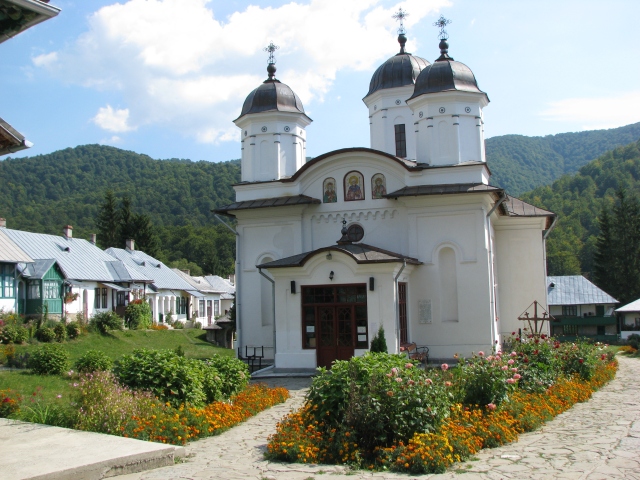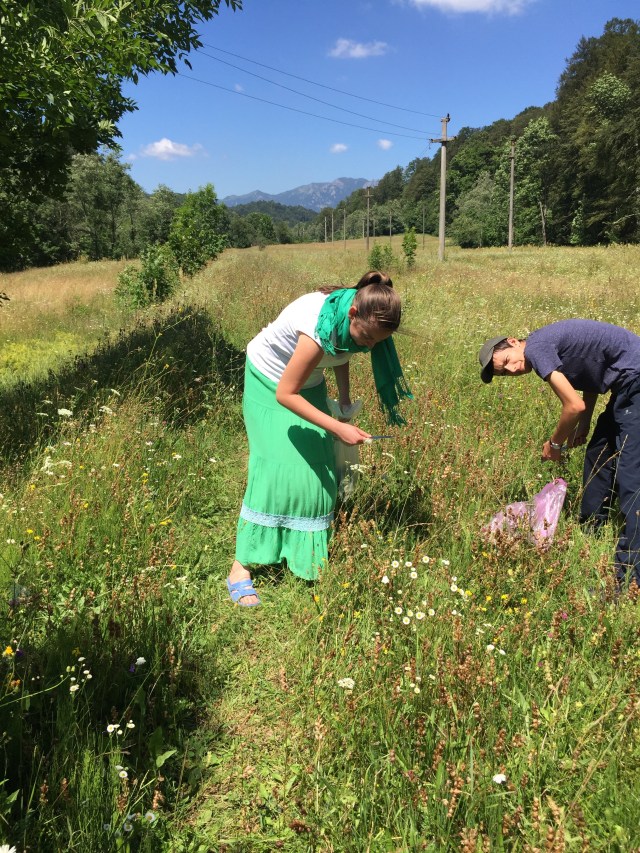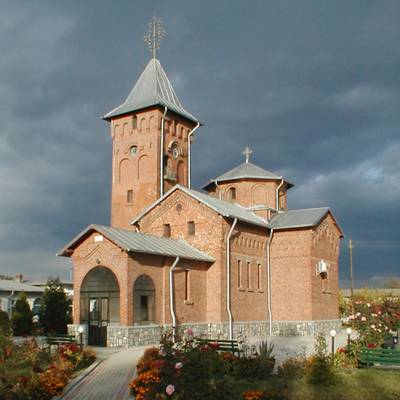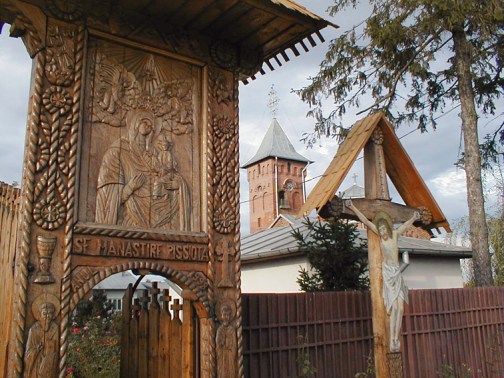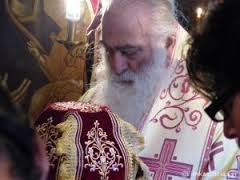
Cephalonia-Ithaka Pilgrimage

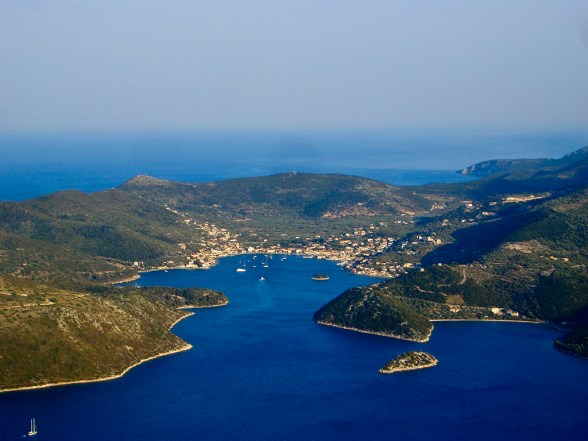
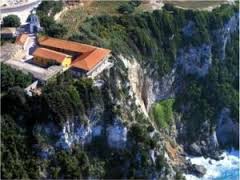
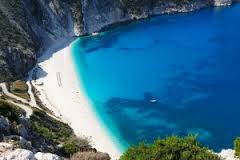
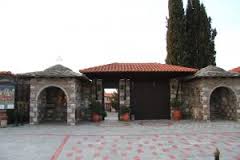
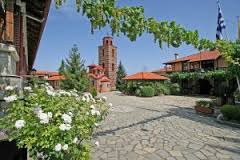
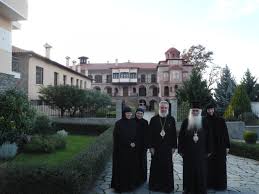
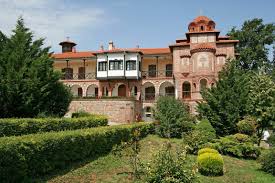
On my way  to this summer’s last pilgrimage: Cephalonia-Ithaca for the Dormition Feast

orthodox-city-hermit-and-cephalonia-ithaka-dormition-fast4

orthodox-city-hermit-and-cephalonia-ithaka-dormition-fast1orthodox-city-hermit-and-cephalonia-ithaka-dormition-fast2orthodox-city-hermit-and-cephalonia-ithaka-dormition-fast3


Apologies for being offline through August 31st.

May our Lady bless us and may the Lord keep us in the palm of His Hand until we meet again!

*

“Sister Begona Miguel of the Huelgas Monastery says:

“San Juan de La Cruz teaches us that silence has its own music; it is silence that enables us to see ourselves and the things around us.

‘I would like to add that there are words that can only be said in silence, odd as that may seem. To compose their symphonies, the great geniuses needed silence – and they managed to transform this silence into divine sounds. Philosophers and scientists need silence.

‘In the monastery, at night, we practice what we call The Great Silence.

‘In the absence of speech we can understand what lies beyond.” (Paulo Coehlo blog, In the Huelgas Monastery)

*

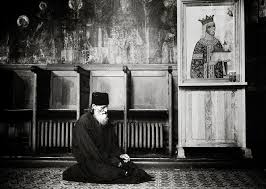
Therefore, it is time for the little city hermit to embark on yet another quest for stillness and silence. This blog takes a vacation, returning by the end of August, where I will start making preparations for my return trip to the UK.

You are always welcome to browse the ARCHIVES on the right.

Enjoy the rest of your summer.

With lots of love and poor prayers

The little city hermit

In Love, For Love, and By Love: Missionary Series IV

Families on Mission Vs. Single Missionaries


Families on Mission Vs. Single Missionaries

RTE: How has it been having your family in the mission field?

FR. LUKE: When my wife and I first went to Albania, many people thought that it was going to be very dangerous and that our children would suffer: “You are going to deprive your children of all the benefits of life in America.” Contrary to that expectation, we feel that our three children who were raised in the mission field were immensely blessed by the experience of learning another culture and language. They always appreciated what they had in America when they went back, but they also appreciated their mission home in Albania, which they thought of as their “real” home.

*

They’ve grown up with a very different world-view. They appreciate things that they would never think twice about if they had grown up in America. During our first years in Albania, we didn’t have running water every day. So, the kids learned to appreciate it. When we had water, we’d say, “Thank God for water. It’s great to have it.” During different periods, for months at a time, the electricity is off about five hours a day; in winter, maybe seven or eight hours. So they got excited when the electricity came on. Or, if we did have electricity, the tension was often so low that we couldn’t do something as simple as watch a video. I remember on one of our visits to the U.S., they wanted to watch a video, and came to my wife saying, “Mommy, if there’s enough tension can we watch television?” They still flip the switch to see if the electricity is working.

Families on Mission Vs. Single Missionaries

Next to our house in Albania we had a very tiny shop, nine by fifteen feet, with all different types of food – this was where we did most of our shopping. Once, when we were about to go back to America, my son Paul asked his mother, “In America, will they have shops as big as Uncle Soorie’s?” We laughed. It was beautiful to see how they were exposed to a different way of life. We lived in Tirana, the capital of Albania, and we were constantly exposed to beggars, poor people who came to our house every day asking for help. It was wonderful for our children to see this, day in and day out. They got used to getting things for the beggars, answering the door and coming and saying, “Oh, so-and-so is here.” We got to know these people by name, we visited their homes. When you live in suburban America you aren’t even exposed to them unless you go downtown. Many of these beggars truly became friends, and our kids loved them. They loved playing with them and saw them as human beings, not as beggars.

Families on Mission Vs. Single Missionaries

Another blessing of raising children in the mission field is community, both the indigenous Albanian community, the wonderful local people that were part of our life, and our co-missionaries who themselves had numerous children. At one time we had fifteen missionary children in the field, and they created such bonds of love and friendship. They weren’t exposed to the busyness, to the constant activities that American children are involved in. Their lives were very simple, and very fulfilled.

*

Neither my wife nor I have any sense of their being deprived, and one of our greatest regrets in leaving Albania after ten and a half years is that we have left at a time when our children are still young, and we are not sure how much they will remember. We often talk about going back into missions when they are a little older so that they not only remember, but can participate more fully. Even though they were young, we tried to get the idea across that they themselves were missionaries, that they needed to be witnesses. To whatever degree they could participate in our different activities, they did.

Families on Mission Vs. Single Missionaries

RTE: Growing up with cultural diversity must not only teach what is universal in human nature, but how to deal with differences early on.

FR. LUKE: Right. We Americans, unfortunately, are quite isolated from the rest of the world. The universal business language is English, so we think we can get anywhere speaking English. Having only Canada to the north and Mexico in the south, we aren’t exposed to many different cultures and languages and this is a great loss for us. It’s so enriching to be around the diversity found in a mission field, and to learn to see beauty in such diversity. One thing I tried to get across to the Kenyans, and later to the Albanians, was, “Sure, in America we have things that are nicer than in Kenya or Albania, but you have many aspects of your culture and life that we Americans can envy. Family connectedness, the support you have for one another, hospitality – how beautiful these things are! Don’t ever lose these aspects of your culture and think, ‘We want to become western, or American, because America is better in everything.’ There are certain things you can adopt from America that are beautiful, but don’t lose the beauty and richness that you have in your own tradition.”

*

Hospitality was something that always left the greatest imprint on me. I could travel to the poorest village in Africa and they would put on a feast. It was their responsibility to show love and hospitality to guests. It is the same in Albania. I don’t know who is more hospitable, the Albanians or the Kenyans, but they would put anyone in the West to total shame. Having almost nothing, they share whatever they have with whoever comes.

Families on Mission Vs. Single Missionaries

RTE: An American seminarian at Holy Cross Seminary told me about a depressed acquaintance who called one night, feeling suicidal. The seminarian invited him to come to the seminary for a few days for a change of scene and to be in a calm atmosphere. He agreed and the seminarian made the arrangements and cleaned an empty dorm room so that he could have his own space. The day his friend moved in, one of the Greek-born seminarians found out what was happening and insisted that the man take his own room, which contained his books and belongings, icons that were prayed in front of, and was a real home. The Greek seminarian slept in the hall on a couch outside the door so he could check on him through the night. The American seminarian said, “You know, I was so pleased that I’d found him his own space where he could have some privacy, where he could put his own things up – but actually what he needed was to be taken into someone else’s home and taken care of. I didn’t get it until I saw it.”

FR. LUKE: Yes, this virtue of hospitality is something missing in our American way of life. As missionaries, my wife and I saw hospitality as one of the greatest ways to express God’s love to the people. We wanted our home to always be open to people. We married right at the beginning of our time in Albania and it is interesting to think that my wife and I slept in our house alone perhaps three months out of the first five years of our marriage. We always had people coming, numerous people staying for months at a time. Our open home was a hallmark of our ministry. Even after the children started coming and we didn’t have as many overnight guests, we always had an open-door policy. There were people at our house every day. One of the difficult counter-cultural adjustments in coming back to America on sabbatical was that although we lived on campus at a seminary, no one came to visit. We lived there for four months and maybe a handful of people came to our house. And even when people came, they’d say, “I’m just here for a minute, I’ve got to run…” They’d stay briefly and then go on with their day.

Single Missionaries

Families on Mission Vs. Single Missionaries

RTE: We’ve been speaking here of missionary families. What opportunities are there for unmarried men and women? And in view of cultural differences, are single women limited as missionaries? What part do they play on a mission team?

FR. LUKE: The mission in Albania offers a good response to this question.

Families on Mission Vs. Single Missionaries

During the years I served there, of the 20-25 missionaries we had at any one time, we had a nice mix – usually about eight monastics, eight married missionaries, and six or seven single missionaries. Of the two dozen missionaries, about half were men and half were women. Also, about eight were clergy, and the rest laity. The unmarried missionaries played an important role in the overall outreach of the Church. In Albania, we had single missionaries who headed up our medical clinic, our elementary school, our post-secondary professional institute, as well as our development and emergency relief office. We also had single missionaries who taught at our seminary, who taught English in a variety of contexts, taught catechism, worked in administration, and who participated in our university ministry, among other things.

Families on Mission Vs. Single Missionaries

The Body of Christ has a need for everyone – men or women, married or unmarried. It is the same for the mission field. In fact, when a missionary team has a variety of members, it makes the overall witness that much more effective. Some people will relate well to a monastic. Others feel more comfortable with a married priest. Some prefer to approach a mother, or a married woman. Still others will listen to a single man or woman. All are part of one body, offering a unified witness. So there are surely opportunities for the monastics, the married, and the unmarried! In some countries, it isn’t appropriate for men to approach women and talk with them in public. Such societies need women missionaries, and this means both married and single women.

*

In the Protestant world of missions, single women really weren’t encouraged, or even allowed, in the mission field until the 1800’s. By the 1900’s, women outnumbered men as missionaries. Today, women far outnumber men, and this includes many single women. Women had to overcome many obstacles and prejudices before being allowed to serve in a variety of capacities, and this may be the same for the modern Orthodox missionary movement.

*

RTE: Do you have any specific counsel for unmarried missionaries?

FR. LUKE: My advice for single men or women is that they must be ready for some additional challenges. The loneliness of a new culture, the challenges of entering a new country, the frustrations of learning a language, and the normal difficulties and disappointments of the mission field can be overwhelming. As a married missionary, you have your spouse to support and comfort you; the monastics may be living in community and have another type of support; but the single missionary can feel the loneliness and frustration in a magnified manner. A single person has to be ready for these added challenges. He or she needs to be a strong person, and also be able to find support in time of need. Their co-missionaries need to be sensitive to this extra burden, and try to reach out to them.

Families on Mission Vs. Single Missionaries

One way to help overcome these additional struggles would be for single missionaries to live in community, either with other missionaries of the same sex, one of the missionary families, or even with an indigenous family. Living with a family of the country can be one of the fastest ways to learn the language, culture, and ways of the host country. Of course, other challenges may arise as cultures clash and one’s privacy may be lost.


Work Pray Be Saved

transfiguration orthodox church Work Prayer Salvation


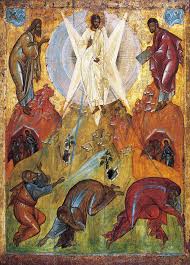
Work Pray Be Saved! Back to Mikrokastro monastery, my spiritual basis in Greece! For the Transfiguration Feast. “Lord, it is good for us to be here. If you wish, I will put up three shelters—one for you, one for Moses and one for Elijah!” I feel so safe, protected and loved here! It is always like this: the Mother of God always comforts me; the peace, stillness and hesychia of the monastery invades me; the fellowship of the nuns warms me; the motherly affection of its Abbess, Mother Theologia’s love nurtures me; the nuns’ combination of discipline, structure, work and prayer ‘stabilises’ me; their wise ‘equation’: Work and Prayer= Salvation!‘ centers’ me, ‘grounds’ me on peace and the Holy Spirit.

orthodox monastic Work Prayer Salvation


Just today, I felt so happy harvesting, curing and storing potatoes after the Matins service and Holy Liturgy in the monastery chapel! It felt so exhilaratingly Van Goghean!

Work Pray Be Saved

van gogh Work Pray Be Saved


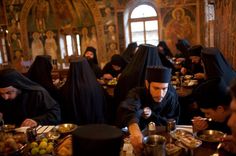
Certainly one eats his meal afterwards, roast potatoes😃, with gratitude and thanksgiving.

orthodox monks Work Pray Be Saved

van gogh Work Pray Be Saved

*

Fr Jonathan Hemmings has written a whole chapter on this ‘equation’: Work and Prayer= Salvation! in his book, Fountains in the Desert, which I have found most useful and often turn to for life balance ‘tips’.


When the holy Abba Antony lived in the desert he was beset by accidie (ἀκηδία) and attacked by many sinful thoughts. He said to God, “Lord, I want to be saved but these thoughts do not leave me alone; what shall I do in my affliction? How can I be saved?” A short while afterwards, when he got up to go out, Anthony saw a man like himself sitting at his work, getting up from his work to pray, then sitting down again and plaiting a rope, then getting up again to pray. It was an angel of the Lord sent to correct and reassure him. He heard the angel saying to him, “Do this and you will be saved.” At these words, Antony was filled with joy and courage. He did this, and he was saved.


Our human condition requires dependency upon God and interdependency on others. Correct spiritual examination requires the help and direction of a spiritual father who helps us grow into the image of Christ. Self examination alone without such an external reference point can put us in jeopardy such that we choose the wrong direction, make false judgements, become disappointed, lack faith, and fall into the trap of hopelessness and despair. Here we find ourselves in that spiritual malaise of accidie whereby because of our sense of sinfulness before a Holy God, we become inactive, paralysed and reach a state of torpor.

We ponder on the contradiction “How can we be Christians and have such sinful thoughts?” St Antony addresses this dilemma in the desert where he meets the devil, himself and God

“Lord, I want to be saved but these thoughts do not leave me alone;”

We notice that St Antony wants to be saved, he is aware of his own condition. Like the Prodigal son and Zacchaeus we must first come to our right mind and possess a desire (a zeal) for change. St Antony’s request is simple and succinct:

“What shall I do in my affliction. How can I be saved?”

orthodox monastic Work Prayer Salvation

We must be direct in our prayer to God; vagueness in repentance or in our requests is a form of obfuscation.

These two questions of St Antony remind us of that question the Lawyer posed to Christ before the Parable of the Good Samaritan. Luke 10:25 “What must I do to inherit eternal life?”

Inactivity is not an option for Christians; Christians are verbs not nouns!

Antony sees a man sitting at his work then getting up to pray, returning to his work and again rising to pray. The angel was sent by God to correct and reassure St Antony. Consumed by ourselves we lose focus and the source of our strength-we lose the will to work or pray! Work and Prayer= Salvation! This is an equation for all and not just for monks. Full of self loathing we need not only correction but reassurance. When called upon, the compassion and conviction of the All Holy Spirit assists us by His comfort and strength.

orthodox monastic Work Prayer Salvation

Just as our Lord was ministered to by angels in the wilderness after the Temptations Matthew 4:11

“Then the devil left Him, and behold, angels came and ministered to Him.”

So with St Antony an angel ministers to him instructing him and restoring courage and joy. “ Do this and you will be saved.”

The Fathers teach us that we should not trust too readily in our own thoughts and opinions but take heed to God’s Word Who provides us with the pattern of salvation.

orthodox monastic Work Prayer Salvation

In our modern western culture, Life balance is a much discussed topic today. When mums have to juggle careers with caring and the ever increasing demand for dads to prioritize we need to drink from the fountains of the desert. Without work we become indolent and listless; too much work makes us tired and stressed. Without prayer we become detached from our source of strength and the deeper reality Who created us. Likewise prayer without action is fruitless, as St James says in his epistle:

James 2:17

“Thus also faith by itself, if it does not have works, is dead.”

Prayer will warm and revive us in the love of God; work will warm and energise us in the love for others thus fulfilling the Divine equation for salvation:

Luke 10:

27 So he answered and said, “ ‘You shall love the LORD your God with all your heart, with all your soul, with all your strength, and with all your mind,’ and ‘your neighbour as yourself.’”

 28 And He said to him, “You have answered rightly; do this and you will live.”

orthodox monastic Work Prayer Salvation

Fountains in the Desert

Missionary Musings

missionstatement-gifts

All my previous days have been spent in quietness, stillness and intense studying. I have been reflecting on my Romanian monasteries’ pilgrimage and preparing for the next one to Cephalonia and Ithaca for the Dormition Feast. I have also been corresponding with my English brothers and sisters in Christ, preparing for my return to the UK by the end of the summer.

Central in all my thoughts, studies, activities and endeavours was the Holy SpiritOrthodoxy and Missionary work.

I started studying Archbishop Anastasios’ of Tirana, Durrës and All Albania life and works, and was inspired by his questioning of the establishment’s accepted apathy toward missions. Then, I turned to the Acts of the Apostles and marvelled at the workings of the Holy Spirit and the Apostles’ zeal and love for God and His Church! Next, I  examined various missionaries’ blogs and websites, and I also watched a number of very inspiring videos: Michael Harper‘s talk on the Holy Spirit, part of THE WAY, the outreach programme of the Institute for Orthodox Christian Studies.

Then

and

and

a two-part documentary, where renowned British actor David Suchet undertakes an epic journey spanning the Mediterranean. His inspiration is a charismatic individual whose own travels through this region, two thousand years ago, changed the world forever – Paul the Apostle:

Do you remember how all this got started? By a disturbing comment by a ‘cradle’ Orthodox that all ‘others’ are ‘foreigners’ and ‘strangers’. Now after a week I know that such an attitude cannot be farthest from the Truth. I understand I have so much more to learn yet but I am already convinced that

The love of God is manifested in mission“,

Indifference to mission is a denial of Orthodoxy“; 

“Inertia in the field of mission means, in the last analysis, a negation of Orthodoxy, a backslide into the practical heresy of localism”;

“Mission was not the duty of only the first generation of Christians. It is the duty of Christians of all ages … It is an essential expression of the Orthodox ethos.”;

“Church without mission is a contradiction in terms…. If the Church is indifferent to the apostolic work with which she has been entrusted, she denies herself, contradicts herself and her essence, and is a traitor in the warfare in which she is engaged.”

May the Holy Spirit empower us to be faithful in fulfilling the commandment of Christ to “Go into all the world and make disciples of all Nations, baptizing them in the name of the Father, and of the Son and of the Holy Spirit, teaching them to observe all [things that He has] commanded”,  so that all people may be saved and come to the knowledge of the truth.   “Thy Kingdom come on earth as it is in Heaven”!

*

May we witness to the truth, and by God’s grace and in the power of the Holy Spirit, to reveal Christ’s way of sanctification and eternal salvation to all.

Praying Without Ceasing

“Rejoice always, pray without ceasing, give thanks in all circumstances; for this is the will of God in Christ Jesus for you”(1 Thessalonians 5:16-18)

prayer without ceasing monastery pilgrimage retreat

“Many times the sisters at some of the monasteries I visit will try to commit one or more akathists or supplicatory canons to memory. Here is how they do this:

Some print off the prayers they want to learn and cut them into small sections to keep in their pocket. When they are doing some of the more simpler jobs or tasks around the monastery they take out one piece of paper at a time and lay it in front of them. prayer without ceasing monastery pilgrimage retreatThen they say that section over and over again until they have it committed to memory. Afterward they take out the next piece of paper, adding another stanza or ode and so on until they have memorized the whole thing.

prayer without ceasing monastery pilgrimage retreatOthers will use small prayer books to do they same thing – taking them out to read when they get stumped.

In the monastery there is always work to be done, rarely will a nun find herself idle. But in the world we are constantly waiting in lines at the grocery store, at the mechanic’s shop etc. And so, even if we don’t particularly care to commit a large prayer to memory, we can keep our mind occupied with prayer.

prayer without ceasing monastery pilgrimage retreatI wanted to memorize some prayers, so I took a tip from the sisters and made my own miniature prayer book. I thought writing out the prayers would help. So I that’s what I did. I keep it in my bag so that I have it wherever I go.

When I’m on the bus or waiting for something I pull it out and read an akathist. It only fits two akasthists and a few other favourite prayers but it is very helpful – mostly because it’s size makes reading the prayers in public somewhat discreet.

prayer without ceasing monastery pilgrimage retreatYou don’t have to hand-write a prayer book, you could simply glue photocopies of prayers in a small book, or keep a larger prayer book with you. The point is to offer our attention – our nous – to God, to make an effort to “pray without ceasing”. I haven’t memorized any akathists yet, but I try to tell myself the point is to pray them, not accomplish something arbitrarily so I can feel self-righteous.

prayer without ceasing monastery pilgrimage retreatAnd besides, I love an excuse to try and make something look pretty. Having a notebook filled with prayers and icons and a little calligraphy makes the work worthwhile.”

“Be thankful to God that this desire for the Prayer and this facility in it have been manifested in you. It is a natural consequence which follows constant effort and spiritual achievement…. Now you see with what admirable gifts God in His love for mankind has endowed even the bodily nature of man. You see what feelings can be produced even outside a state of grace in a soul which is sinful and with passions unsubdued, as you yourself have experienced. But how wonderful, how delightful and how consoling a thing it is when God is pleased to grant the gift of self-acting spiritual prayer, and to cleanse the soul from all sensuality! It is a condition which is impossible to describe, and the discovery of this mystery of prayer is a foretaste on earth of the bliss of Heaven. Such happiness is reserved for those who seek after God in the simplicity of a loving heart.” (The Way of the Pilgrim – a word from the pilgrim’s spiritual father)

prayer without ceasing monastery pilgrimage retreat

How Romanians React to Foreigners

from-romania-with-love-1-728

Suzana Monastery Retreat  II, or An Anthropological ‘Field Trip’ Insights,  and Communism Jokes 😃

Doamne Ajuta! I am obviously not the only pilgrim at Suzana Monastery, but I am the only pilgrim who is NOT Romanian. I am immediately spotted and ‘targeted’ , especially by a group of Romanian students who belong to an Orthodox youth organization and do volunteer work at the monastery in the summer. They are here to help with the housekeeping, farming and agriculture. And with chanting.

How to ‘annoy’ a Romanian (1)

Mistake Bucharest for Budapest.

Never ask a Romanian if he lives in Budapest. That’s the capital sin, the perfect way to end a potentially interesting conversation. Yes, Budapest is a capital city, and there’s a big chance you’ll nail it with this guess — but only if you’re speaking to a Hungarian! We’re so tired of hearing, “Good evening, Budapest!” every time an international act has a concert in Bucharest. Metallica did it, Lenny Kravitz did it. And many others. But they had bodyguards. You, on the other hand, will be alone in front of an outburst of anger.

*

The Romanian hospitality, warmth, enthusiasm and curiosity about anything Greek, or foreign for that matter, AND Orthodox CANNOT be exaggerated! This group of students at Suzana Monastery instantly become my ready interpreters and eager translators, my willing tutors for Romanian chanting and they are so full of questions about my job, my studies, my travels, my pilgrimages, my adopted country UK, my home country Greece and its Saints, especially St. Paisios, about everything, to the point of collapse!

*

I may be on a pilgrimage in Romanian monasteries, but St Paisios’ the Athonite, my patron Saint‘s, presence is strongly felt all over Romania. Plenty of icons of his and books with his services and spiritual counsels in all monasteries and churches I have been so far! Esp. on the 12th of July the faithful all over in Romania were holding Vigils and praying Akathists and Supplication canons, asking for his prayers. Wherever I go, the moment Romanians realise that I am Greek and my home town is near Souroti, they start asking for my telephone number and email, so that I can make arrangements and help them go and venerate his tomb. 

How to ‘annoy’ a Romanian (2)

Ask us about vampires.

In 1897, the Irish writer Bram Stoker published a Gothic novel entitled Dracula. His story made Transylvania more famous than any tourism promotion campaign ever could. By using some historical facts, he linked Vlad Tepes, the Voivode of Wallachia, to his main character, Count Dracula, the vampire. Unfortunately, that means foolish tourists now come to Transylvania expecting to see garlic hanging by doors or people walking around with wooden stakes in their pockets. Transylvania is a peaceful, hilly area with many traditional houses and fortified churches. The real threat back then wasn’t exsanguination, but impalement — the Voivode Vlad’s favorite method of execution. And that isn’t fiction.

Their energy is indomitable, even when our conversation lasts for hours while standing after very long services outside the church at dusk until midnight and …! Their effusion is so contagious and there is no end to the exchange of telephone numbers, emails and addresses for the planning of future pilgrimages in Romania and Greece and exchange of Saints! These ‘buzzing bees’ with bright eyes and brighter smiles are to follow me everywhere from now on (when they are not busy with their obediences) yet their ‘buzzying’ mysteriously does not interfere with the silence that invades me. It surely has to do with their kindness, love and purity in Christ.


If you have never experienced the intensity of Romanians’ love and hospitality, you may think I exaggerate. To give you just another example, while waiting for the bus to Bucharest from Thessaloniki, I sat at a nearby café and took out my Byzantine chanting textbook to practice! Yes, one has to be very careful with these diatonic genus and Greek:  A    Β     Γ   Δ     Ε Ζ     Η, Greek:       Πα Βου Γα Δι Κε Ζω Νη, English:     Pa Vou Ga Di Ke Zo Ni, [Re Mi   Fa Sol La Si   Do], [D   E     F   G   A   B   C ]

Can you imagine a Romanian in love with you, if that is their normal ??!!

Suddenly a Romanian interrupts me and ‘blurts’ out how excited she is for meeting me, and that she is returning back to Bucharest together with 4 Romanian musicologists, who were on a Byzantine chanting conference in Thasos, and pretty soon I am surrounded by 4 (even) more effusive, enthusiastic Romanians, reciting to me Homer in ancient Greek, hugging me and chanting Ti Ipermaho / Τῆ Ὺπερμάχῳ/ To Thee the Champion Leader, in Greek again with stunning voices right in the middle of the street (!) with tears in their eyes. What a people! Can you imagine a Romanian in love with you, if that is their normal ??!!

How to ‘annoy’ a Romanian (3)

Leave food on your plate.

Mark my words: If invited to a Romanian’s home for lunch or dinner, fast for a day or two before the visit. We are known for being a welcoming nation, and one of our favorite ways of showing it is through food. Here are a few appetizers so you don’t starve before the first course is ready. Some eggplant salad, salted roe, homemade smoked bacon with onions, and stuffed boiled eggs with mayo. Come on, try them all! Do you like the smell of our meatball soup? Here comes the clay pot full of sarmale, next to a steaming polenta and a jar of cream. You have to taste this! It’s our traditional course. You’ve finished everything? Don’t worry, there’s plenty more! The pork roast seasoned with garlic is almost ready.

*

Doamne Ajuta! Nothing best encapsulates the warmth of the Romanian heart, the warmth of their love, politeness, gentleness and hospitality, other than this greeting of theirs, ready to be offered at any time of the day, and on any occasion. So, rather than wishing someone ‘Good Morning’, or a ‘Safe Journey’, lay people and priests bless each other continuously, “Doamne Ajuta”, for surely where He is present, the journey or the job is bound to be blessed too. Such fresh and pure, innocent, child-like faith, feels refreshingly ‘simple’ compared to the Russian anguish, sinfulness and repentance.

*

Such warmth and hospitality, even when very poor, even when they want to share with you, their ‘raw’ cottage cheese, natural sour cream and bizarre non-homogenized boiled water-milk concoction straight from the monastery’s cows (!), their mamaliga, their beans puree and their boiled cabbage. (Can you imagine, again the Romanians’ soaring child-like enthusiasm when steaks or ice-cream show up in a surprise at our monastic (!) dinner?) Here, at a monastery, we have to boil water at the wood stove so that we can have hot water to wash the dishes. No hot bath to be sure. We have to sleep under kilimia, rough peasants’ rugs, becoming prey to very hungry fleas. And still, the poorer you are, the eager to share, and especially the more hospitable especially when it comes to basic human needs, such as sleep, company, food.

How to ‘annoy’ a Romanian (4)

Confuse Romanians with Gypsies.

The official name of the Gypsy ethnic group is Romani, and even though Wikipedia states they are “not to be confused with Romanians, an unrelated ethnic group and nation,” misplaced associations are still often made. There are Gypsies all over the world — one million in the United States, 800,000 in Brazil, and many others in Europe, including Romania. They originated in India and left sometime between the sixth and eleventh centuries. Confusing Romanians with Romanis only makes you sound ignorant.


All Romanians I have encountered so far, be it at the UK, be it in Romania or in Greece, anywhere, are true cosmopolitans, intelligentsia and artists, men and women of culture and refinement, often very poor but with a wealth of education, so eager to contribute to the whole world community of Arts and Sciences, so enthusiastic to learn and to connect, curious yet so courteous, well-mannered and pious (in the good sense of the world).

*

Sometimes this poverty of theirs may surface in a certain ‘ugliness’, dirtiness, slovenliness, chaos, and carelessness in their kitchens, bedrooms, living rooms and common areas. We have to surround ourselves with beauty—that is a Christian virtue., but not one that I have encountered in Romania, with the exception of their churches and monasteries. Yet one feels so privileged, honoured and blessed to just be with them! Romanian homes are often less than orderly and clean according to a western European standard, their appearance follows a pretty weird and slovenly fashion (if one may call such an ‘invention’ fashion), completely lacking any finesse and style, but just a look at their bright smiles and sparkling eyes and a companionship with their fascinating personalities ‘compensates’ immensely. Who cares about clothes and looks, when in company of such kind and refined people, refined in all tastes that truly matter, refined in spirit and soul and heart, in the company ultimately of true aristocrats? Besides, none of us would have been any the better, after such an aggressive Communist regime and persecution, followed by a ruthless dictatorship, just in recent times.

How to ‘annoy’ a Romanian (5)

Tell us a breeze can’t make you sick.

We Romanians are so convinced that a cool breeze or draft of air can make you sick that we even have an expression for it: Te trage curentul. (“You’ll be pulled by the draft.”) Take the bus on a hot summer day, and you’ll probably see the windows open on only one side of the vehicle, or not at all. Craving a breath of fresh air, you move your hand in the direction of the window. But even before you touch the handle, you’ll hear a panicked voice say, “Are you trying to get us all sick?” To anyone else, this doesn’t make sense, but the logic behind this Romanian belief goes like this: The current of cool air will make your ears hurt and your nose run. Don’t even try to argue about this. You’ll only make yourself hotter.

*

Romanians laugh a lot , especially at the face of danger, and can always appreciate a good joke. Like when I peppered sugar on my steak! Yet, I am not the only one in trouble with a foreign language. The residing priest told us that while at the States, he was invited at Arizona monasteries, and he made a homily there how Jesus was carried by a monkey (!), not donkey 😃

“Humor was a way of rebellion and survival at the same time; an escape of the mind and soul, a way of coping with all those absurd and restrictions imposed by a communist regime who did not care about its own people. Humor was a way of standing up or fighting back, a form of active resistance against a criminal regime; at that time the political jokes served as a catalyst of the constant state of discontent Romanians felt towards the things they did not agree or even hated… towards what was happening with our country. ”

Like:

Have you noticed that at every petrol station there is now a doctor and a policeman on duty? The doctor gives the first aid to those who faint when they see the price, and the policeman interrogates the ones who fill up about where they got the money from. 

A patient is hospitalized at the Insane Asylum. ‘Why are you here?’, another patient asks. ‘I wanted to cross the Romanian boarder’, says the first. ‘But for something like this they do not send you to an asylum!’, replies the other. ‘Yes, but I wanted to escape to Soviet Union!’

A citizen said the chief of the Communist Party is an idiot. For saying this, the citizen was sentenced to spend 25 years and 3 months in prison. Everybody was wondering why 25 years and 3 months. In the end, they old find out the answer: 3 months for insulting a citizen of the Socialist Republic of Romania; 25 years for revealing a state secret.  


For those who lived in Romanian during communism time, this system is very different from anything you could read in the some idealistic books. Some of the quotes show extremely well how people really felt about such an oppressing system:

Is communism a science? No, if it were a science, they would have   tested it on animals first.

An old gypsy man on his dying bad. Instead of sending after the priest, he asks for the local chief of communist party. ‘I would like to join the Party’, says the dying man. ‘Why would you do this?’, asks the communist. ‘You lived your whole life free as the wind and now you want to join the Party?’. ‘Well, you see, if somebody has to die, I would be much happier if that guy were a communist’, answers back the dying man. 

*

Last but not least, Romanians are not just ‘special’, but unique! (in their own opinion of course) Stereotypes, ethnophyleticism, ethnic superiority/ inferiority complexes and xenophobia deeply vex my spirit.Sadly, even here, in a monastery, I have to ‘defend’ English people and ‘their’ Orthodoxy from some Romanians. I do not know how good an ‘ambassador’ I am, but I am trying my best. And all of Romanians I have encountered think that St Philothei, the Righteous Martyr of Athens (sic!) is Romanian! Not that Greeks are any better. We consider St Efraim the Syrian (sic!) to be Greek! Of course!

How to ‘annoy’ a Romanian (6)

Refuse homemade beverages.

Romania has one of the oldest winemaking traditions in the world. The country once had so many vineyards it’s believed Dionysus, the god of wine, was born in southeast Romania in a region then called Thracia. As proud successors of the Thracians, Romanians practice winemaking as a popular hobby, so you’ll probably be offered some garage-made wine. Or tuica, a strong fruity beverage. Even if you have reason for concern, do not ask about hygienic conditions or quality control. We take great pride in everything made with our own hands, so turning it down would be a serious insult. Take a sip, two, three, and worry not. We all drink homemade alcohol, and no one has died of it. So far.

Go here for Part I

Go here for Part III

To Be Continued …

Sources for the jokes: How to piss off a Romanian   and Romanian Communist jokes

Suzana Monastery Retreat I


SONY DSC


Part A: How the little city hermit became a bird, a fountain, a tree and a pearl!


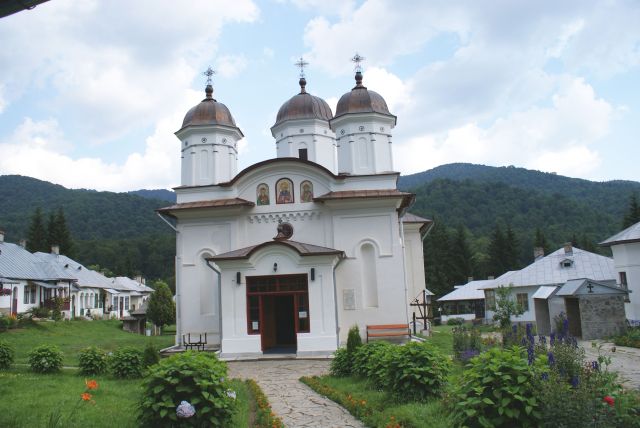
Deep peace of Christ, silence, hesychia, these are the words that come to my mind when I remember Suzana monastery and my three-day retreat there this summer. Also, self-emptying, kenosis. But above all, silence!


Only through poetry can such silence be conveyed, so I will paraphrase a favourite poet of mine, Rumi, to convey to you what I experienced here.


I had begged the Wise One to tell me
 the secret of my existence, my calling in this world.
 Gently, gently, He whispered at Suzana monastery “Be quiet,
the secret cannot be spoken,
 It is wrapped in silence.”


I ground myself, strip myself down, to this overpowering Silence. I feel spiraling into a void of silence where a hundred voices thundered messages I longed to hear.
 

At its unfathomable bottom I encounter a vast fullness, the Spark of LIFE and LOVE, a secret passage to the WAY which wandering talk blocks, a dimension where HE was waiting for me, for my soul to shake.


I was carrying so much baggage while seeking the signs of the Way.


But at Suzana* monastery, I am ‘forced’ to stop, open up, surrender to this thundering silence, be invaded by ‘It’, and 
stay there until I Saw, until I looked at this blinding Light 
with infinite eyes.


This overpowering Silence kidnaps me to the core of Life. There is a sacredness in it. Silence is indeed the language of God, and all else is poor translation.


This is exactly what I experience when I am trying to write a poem, how I feel especially when I finish a poem. A great silence overcomes me and I wonder why I ever thought to use language.

suzana6

Silence is indeed the sea, and speech is like the river. The sea is seeking you: don’t seek or walk into the river. Don’t turn your head away from the signs offered by the sea. Listen to the ocean.


The sound of Waters and the sound of Silence is a motif in Suzana monastery. At least for me. Everywhere the sound of waters reaches you, so overwhelmingly that I often feel the need to stay in my ‘cell’ and not even venture out.


Just listening to that sound was so overwhelming! The very moment I set my foot on this monastery, the sound of Living waters immobilized me, an ocean wave, a mighty river in flood, a cascading waterfall, a fountain of benediction, a Life- Giving spring, welling up to Eternity.


Isaiah 43:19

19 Behold, I will do a new thing,
Now it shall spring forth;
Shall you not know it?
I will even make a road in the wilderness
And rivers in the desert.


John 7:38

38 He who believes in Me, as the Scripture has said, out of his heart will flow rivers of living water.”


Kenosis is also another state I suffered there:

“And they shall build the old wastes,

they shall raise up the former desolations,

and they shall repair the waste cities,

the desolations of many generations.” (Isaiah 61:4)


I needed so desperately such ‘Decluttering’ in my life, a Relentless Focus, a Subtraction, Becoming ‘poor’, an Unburdening, a Curtail, a Reduction and Emptying, Until my rebellious bones sore.


suzana1

This silence, this moment, every moment, this silence brought all what I needed. I sat quietly, and listened for a voice which told me ‘Be more silent.’ ‘Die’ and be quiet. Maybe quietness is the surest sign that you’ve ‘died’. My old life was such a frantic running from silence. Suzana monastery moved me, even for a little, outside the tangle of fear-thinking.


In the end, I became a pearl!


“And since I have wandered in thee, pearl,

I will gather up my mind

And by having contemplated thee,

Would become like thee,

In that thou art all gathered up into thyself;

And as thou in all times art one,

One let me become by thee!” (St Ephraim, The Pearl)


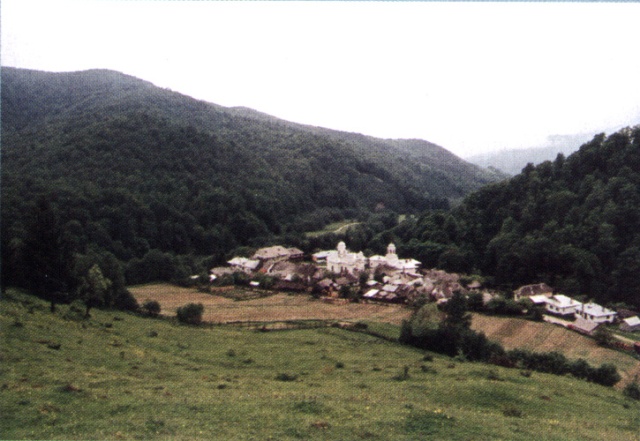
This very old, poor, secluded, fairy-tale monastery, surrounded by forests, mountains and springs, and steeped in holiness, is most certainly God’s special Providence for my tired, exhausted self.


I feels like coiling in a virginal womb, unwinding time, beholding


“The memory of the glory that I had when I was entirely with You and entirely in You, before time and temporal illusions.


When I, too, was a harmonious trinity in holy unity, just as You are from eternity to eternity.


When the soul within me was also in friendship with consciousness and life.


When my soul also was a virginal womb, and my consciousness was wisdom in virginity, and my life was spiritual power and holiness.


When I, too, was all light, and when there was no darkness within me.


When I, too, was bliss and peace, and when there were no torments of imbalance within me.


When I also knew You, even as You know me, and when I was not mingled with darkness.


When I, too, had no boundaries, no neighbors, no partitions between “me” and “you.” (St. Nikolai Velimirovich, Memories – Prayers By the Lake XXX)


Even the very fact that I cannot not speak Romanian, just barely understand it, is an added blessing, an extra ‘precaution’, a ‘just in case’ … Speaking all too often impoverishes, drenches us. As St. Seraphim of Sarov wisely urges us, “Keep away from the spilling of speech”.


Hesychia, Deep peace of Christ wrapped me in green leaves like a tree;

I breathed like a tree in the quiet light!


* Suzana Monastery is a Romanian monastery about 5.5 to 6 hours away from Rasca monastery in Bucovine, North Moldavia, where Fr. Seraphim Aldea was tonsured as a monk in 2005. After my retreat here I have a slightly better, more ‘intimate’ understanding of ‘Romanian’ Orthodoxy and Fr. Seraphim’s calling to found the first Orthodox monastery, Mull monastery, in the Hebrides in over a millennium. In a sense only a Romanian hieromonk would be really equipped, spiritually, emotionally, as well as intellectually, to undertake such a huge task! Glory to God for everything!


Continue to Part II

Romanian Monasteries Pilgrimage —Suzana Monastery

My next stop:  Suzana Monastery. The Suzana Orthodoxe Convent, hidden in a forest of beeches on the road of Valeni-Cheia gladdens the hearts of those who visit by the tranquillity that reigns here. This monastery now has 62 nuns who share in community prayer and work. I am invited to stay 3 days here. Lets see now how I can survive in a place where no one speaks English and I understand (little) their native language but cannot speak it!

IMG_0759IMG_0670IMG_0642IMG_0551IMG_0529IMG_0472

The Suzana Monastery of nuns took refuge along the Teleajenului stream, some 40 km from Valenii de Munte, at the highest point of the foot of Bobul Mare. The waters of the Teleajenul, Stanca and Iepurasul come together at this monastery in the form of a cross and run off together as a single stream. From above, the settlement looks like a tiny village, a cluster of houses stuck together, as if they were afraid of flying away in a storm. The houses are attractive and well kept.


A few stories with some elderly nuns

AT THE MONASTERY, EVERYTHING HAS A PURPOSE…”Leave us be, says an elderly nun, as we have no time for posing in magazines. We have a lot of work.” She then disappears into the abbey to announce the arrival of some…guests. Out comes the Mother Superior …”Please, do come into the living room and have a syrup drink.” A homemade syrup made of caramelized sugar is brought in with glasses of water.

“Our monastery is not very well-off,” says the Mother Superior. “We work hard, there are few young nuns and quite a number of very old nuns who need our constant care like young children …”

Someone knocks on the door. A nun curtseys and kisses Mother Superior’s hand. Snatches of words, choked by timidity: “Mother Superior…the bell…blessed.”


The girls come to the monastery from places you cannot even imagine, from all over the country. They come from Sighetul Marmatiei, from Moldova. But they do not all stay here, some cannot get used to life in a monastery. First they must learn about order. The monastery has its own rules, its own system, and none can do as she pleases. And then these girls have to be taught some skill, to be useful, and they learn to weave carpets”.

HOW LADY ARSICU SURVIVED THE STORM. Suzana Arsicu, the monastery’s founder, raised a church of beams. The wealthy woman was from Sacele, in Ardeal, and this was her way of thanking God for having saved her from a storm. She was the monastery’s first Mother Superior.


The church, whose Patron Saint was St. Nicholas (Dec 6), lasted one century and was replaced by another. At that point the church council decided to change its patron to the Mother of God whose anniversary is celebrated in summer, on the 15th of August, and the monastery can be more easily reached during that season than during the winter religious festival with the snows. On the eve of the dedication, however, the sky got covered with clouds, the streams overflowed from their beds and flooded the valleys. The torrent took everyone who came for the feast by surprise, washing away all their bags, their habits, their books and their holy paraphernalia. They all escaped unharmed, and instead of holding a dedication they held a mass, to thank God for having averted the danger. They then decided that they would not change the patron Saint for the church, and celebrate on December 6, the anniversary of St. Nicholas.


Today’s church was raised between 1880-1882, during the time of a Mother Superior named Natalia Perlea. She kept the same patron, and no one has ever thought again of changing him. The monastery has another tiny church, Paraclisul, built during the time of Mother Superior Tomaida Perlea.

THIS IS MY HOME. The story of a nun: “This cannot really be called a community life, as we have little work in the field where we might meet. It is more of a solitary life. Each nun receives a house for which she is responsible. Some have novices, and when these become nuns in their own right, they take over the house. There are two or three nuns to every house. There is enough space.


The monastery courtyard is wide open, but the buildings are stuck together in such ways that the space is compact, built to last. This house and that one over there are the settlement’s oldest, dating back to around 1860. That over there is a guesthouse. It does not have a lot of rooms. From time to time officials come here and then can be befittingly received. The nuns put people up in their homes. All of them rent out rooms. But if there were some sort of organized tourism it would be difficult to keep the visitors and the monastery’s daily routine apart. There would be people coming and going in the courtyard, in the church. If we had a guesthouse separate from the monastery, things would be different.

The green house is mine. This house in which I have received you is the abbey, as the inscription shows above the door, but the green one is mine.”


NOTHING IS POSSIBLE WITHOUT HARD WORK. “I came to the monastery in 1940. Now I am 79 years old. In 1990, I offered to step down. I told them: “Perhaps you want a younger nun.” But what would a younger nun do with such a burden on her shoulders? It is a great responsibility.

The nuns earn a little money from their icons and candles…The money does not go far, as everything is expensive these days. The church walls were painted, and look how they are peeling . A company from Bucharest did the job, but they did not scrape off the old paint.

Other than that, there are some hayfields that are in the care of the people. Half belongs to them and half to the monastery. We grow potatoes as nothing else grows around here because of the weather. It rains, it is chilly…And the fruit does not last long here because of the rain.” Two nuns put aside the forks with which they were gathering grass and begin talking. The man with the scythe watches them silently.

“We used to have seven cows, but now we have five. There is a lot of work, but everything requires toil. Now we bring everything we need to the monastery by car, but for a long time we even carted things on our backs.

The work would be impossible without the help of people of means, who make contributions.” These people of means paid some workers whom the Mother Superior met at a dinner at the Archbishop’s. “Now we have some craftsmen building paths, and only when this work is finished can we send for someone to cut the grass, which has grown very long.

PEOPLE WANT TO COME STAY WITH US. The oil painting in the church is the work of Master Petre Nicolau, an apprentice of Gheorghe Tattarescu. The monastery also owns a collection of icons painted on wood and glass, numerous old books and other religious objects. The icons are finished with gilded silver.
An 18-year-old nun leads a group of children around the man-made miracles. There is not enough light, and the nun who serves as guide and is wellgrounded in modern civilization explains that the neon bulb is 60 watt while tha starter is only 20. “They need to be the the same to light properly.”
The children have written their comments in the 48-page guest book at the entrance: “This monastery is truly special,” “I visited this beautiful monastery,” “I enjoyed this visit so much as I saw very old and special things”. Mother Superior Singlitichia Marin mentions, “We must get another guest book, a real one.
For the time being the monastery has no priest. There is a priest who comes to hold services, but he is not employed permanently. He is a young priest, too young. A priest who serves at a monastery of nuns should be older. One will eventually be hired, as the need becomes evident. This is another problem that requires resourcefulness.”
On major holidays we hold services from 7:30 p.m. to around midnight. People come from town, from Valeni, even from Ploiesti, to get married or to baptize their children. At first we were criticized, and were asked why we allow people from outside the parish to come here. I replied: “What should I do? Turn them away at the gates of the monastery? The church cannot do this. You do something to encourage them to come to you, so that they no longer want to come here.” After that no one said anything anymore.”
INSIGHT, Summer 2001

Part A

For more photographs, go here

Romanian Monasteries Pilgrimage — Mânăstirea Pissiota

Most hospitable next stop: Mânăstirea Pissiota!

Romanian Monasteries Pilgrimage Mânăstirea Pissiota Orthodox city hermit pilgrimage

Romanian Monasteries Pilgrimage Mânăstirea Pissiota Orthodox city hermit pilgrimage

Romanian Monasteries Pilgrimage Mânăstirea Pissiota Orthodox city hermit pilgrimage

The monastery of Pissiota, located in Poienarii Burchi, was built between 1928 and 1929 by Nicolae Pissiota (1860-1940), a great man of culture, and his wife, Zoe Pissiota (1868-1940), on the estate bought from the family of General Gheorghe Angelescu (1850-1923), an important name in the 1877 war.

Romanian Monasteries Pilgrimage Mânăstirea Pissiota Orthodox city hermit pilgrimage

The first record of the village of Poienarii Burchi dates back to 21st September 1594, on the former „Poeana” estate of Lady Stanca, the wife of Michael the Brave. The village was dedicated by Lady Stanca to the Simonopetra monastery of Mount Athos, in 1594. The original document is kept at the Archives of the State in Bucharest.

Romanian Monasteries Pilgrimage Mânăstirea Pissiota Orthodox city hermit pilgrimage

The engineer Nicolae Pissiota, of Macedonian origin, born in Greece and settled in Walachia, had a huge fortune that allowed him to build this place of worship. The church was designed by the architect Ioan Giurgea – a harmonious combination between Italian Renaissance style and the Byzantine elements that are specific to Romanian churches.

Romanian Monasteries Pilgrimage Mânăstirea Pissiota Orthodox city hermit pilgrimage

Romanian Monasteries Pilgrimage Mânăstirea Pissiota Orthodox city hermit pilgrimage

Romanian Monasteries Pilgrimage Mânăstirea Pissiota Orthodox city hermit pilgrimage

Famous names were called to decorate the church: Costin Petrescu (1877-1954), the one that painted the interior frescoes of the Romanian Athenaeum, or the Cathedral of Alba Iulia, and his apprentice, Gheorghe Eftimiu.

The portraits of the patrons and of the Patriarchs Miron Cristea and Justinian Marina were done by the painter Vasile Rudeanu (in 1956). The iconostasis is carved in rosewood and cherry wood, brought from Greece, creating a balance between sensitivity and detail, influenced by Italian art.

The furniture was carved of oak wood, with ethnic motifs, by the sculptor Anghel Dima, in 1928, the author of Mihai Eminescu’s sculpture in front of the Romanian Athenaeum. The floor is made of red Carrara marble; underneath the church lie the marble crypts where the patrons and their families are buried. Inside the church there are icons and silver icon lights, in Brancoveanu style, as well as triodyons, Pentecostarians and hymn books.

Romanian Monasteries Pilgrimage Mânăstirea Pissiota Orthodox city hermit pilgrimage miraculous icon

Romanian Monasteries Pilgrimage Mânăstirea Pissiota Orthodox city hermit pilgrimage

Romanian Monasteries Pilgrimage Mânăstirea Pissiota Orthodox city hermit pilgrimage

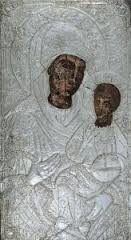
The defining religious element in the Holy Monastery of Pissiota is the Icon of the Holy Virgin with the Child – miracle-working icon. The icon is painted on oak wood, against a background of Byzantine brocade, signed by the famous painter Gheorghe Eftimiu, the apprentice of the great Costin Petrescu.

For two decades after the opening, between 1928 and 1948, the monastery was a monk monastery. In 1948, the Patriarch Justinian Marina transformed it into a monastery of nuns, and this is how it remained until 1962, when it was discontinued. In 1993, after 31 years in ruin, the monastery resumed its community life.

Currently, the monastery is inhabited by 23 nuns and a priest; prayer is in harmony with work, as there are tailoring workshops where priestly vestments and clothes are made, allowing people to add the little money they have for the restoration of the monastery.

Abbess Monahia Ioana Irina Calin


Pilgrimage to Mikrokastro Mother of God Monastery

This post has been long due, since Mikrokastro Mother of God Monastery has been my refuge and retreat since 2014, ever since I discovered it, or better ever since our Holy Lady revealed herself to me there.  A most  holy place, a ‘thin’ place I keep returning, especially when badly in need of spiritual nourishment, in times of trials, adversity, tribulations and temptations. This is a place where the Mother of God comforts all her children, a place where its peace invades you and the fellowship of the nuns warms you.


a1a2a4a5a8

a11a15a16a17

Part A: A brief history of the Monastery of the Mikrokastro Mother Of God


The Holy Monastery is dedicated to the Assumption of the Mother of God. According to historians, the main church of the monastery is estimated to have been founded 200-250 years ago. The iconography in the church was completed in 1797 (about 200 years ago), as is shown by the inscription that still exists on the west wall of the church.

a7


The history of this place started with a small chapel in the nearby village of Mikrokastro, but its propitious geographical position as a passing place on the journey from Kozani to Kastoria helped the site become a place of worship. This was mainly due to the presence of the Holy Icon of the Eleoussa Mother of God on the icon screen; it is not known when or under what historical and religious circumstances this Icons was found here.


The miracle-working power of the Icon contributed to the place quickly becoming the most important place of worship in Western Macedonia. According to the inscription mentioned above, the church’s frescoes were painted by iconographers from Kopessovo in Epirus, who, despite Western influence, tried to remain loyal to the Byzantine tradition following the standards of the Konstantinos Palaiologos era. The more popular manner of the depictions does not diminish the sweetness of the facial expression or the comforting feeling instilled in the souls of the faithful.

a9a10a12a13a14

a19


The icon screen of the convent is one of the most beautiful in the region and was made by skilled craftsmen either from the local area or Epirus. The miracle-working Icon of the Mother of God found in and belonging to the monastery dates back to either the 12th or the 13th century according to modern methods of dating holy icons.


The plenty votive offerings to the Mother of God helped the property of the Monastery to increase, and this property was taken care of by workmen inhabiting the area. In 1820 this place of worship was characterized as a Holy Monastery for reasons of prestige because of the presence of the Holy Icon, since it never had a monastic brotherhood. It only had an Abbot appointed by the Bishop of Siatista and an administration Committee.


This Holy place played an important religious and national role supporting the nation’s struggle for independence in 1821, offering hospitality and a hiding place to revolutionaries of the independence struggle, maintaining an ammunition store, paying the salary of the village teacher, and strengthening the inhabitants’ faith so that they could resist the pressure of Islamic proselytism.


The monastery participated in the historic events of 1878, offering moral and material support, in the Macedonian struggle during the years 1904-1908, in the war of liberation in 1912, in the relief of the victims of the Asia Minor disaster, in the epic struggle of 1940-1941 and its climax, i.e. the historic Fardikampos battle in March 1943. The monastery “offered soul, blood and money” offering the sacrifice even of its priest.


After the war, the bishop of Sisani and Siatista, Iakovos Kleomvrotos, (later to become Bishop of Mytilini), a powerful personality of the clergy, realised that the Holy Monastery was a more suitable place for spiritual and social activity than mountainous Siatista.


In 1952 he founded a School of Agriculture here for the farmers’ sons of the area, which, after functioning for two years, closed and was given to the Swiss Red Cross with a view to founding a hospital for local children suffering from glandular problems. In this building a primary school was also set up. In this way, hundreds of local children were helped.


Other buildings at the same location include the boarding school of the School of Housekeeping, which was used as a guest house and later as a home for the elderly. In addition, another building was erected in which his successor – Bishop Polykarpos – founded an orphanage.


Bishop Antonios was elected in 1974, and he showed great interest in the restoration and peopling of the monasteries in the region. In 1981 the position of the Abbot fell vacant and Father Stephanos Renos took over. With the moral, spiritual and material support of the Bishop as well as the contribution of the faithful and well-known donors, Father Stephanos Renos did great renovation work and added new buildings, a guest house and chapels.


In 1993, by a presidential decree, the Holy Monastery was turned into a monastery for women, and some time later the first monastics entered the monastery.


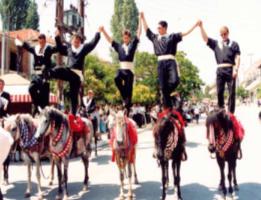
Two noticeable customs have been preserved since the years of Turkish domination. The first is the custom of Horseriding. On the 15th August, a religious festival day, the young men from Siatista armed and riding ornate horses came to the festival to venerate the Mother of God and under the unsuspicious eyes of the Turks the leaders of the struggle talked about the issues concerning the revolution, and the hope of freedom for the enslaved Greeks was strengthened. This custom has been preserved until today and has been incorporated in the whole festive religious atmosphere.

a18


eleousa Mother of god orthodox city hermit pilgrimage retreat mikrokastro horse ridingeleousa Mother of god orthodox city hermit pilgrimage retreat mikrokastro horse riding

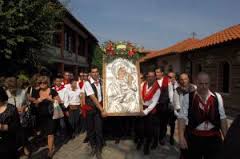
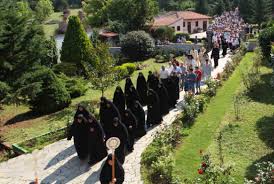
The second custom is the carrying in procession of the icon of the Mother of God That is, apart from extraordinary events such as insect epidemics, droughts and illnesses, during which the inhabitants of the area carried the icon in procession around the area to ward off evil, the inhabitants of Siatista have been taking the same icon in procession regularly for centuries now. In all weathers and accompanied by many people of all ages, they cover a three-hour distance on foot holding the icon in their hands until they arrive in their town, where the icon is solemnly received and taken to the cathedral and a prayer is chanted. After this, the Icon is taken to every house and flat. This event witnesses the fact that neither the Mother of God’s grace nor the people’s faith have diminished.

a3

icon procession mikrokastro eleousa Mmother of god orthodox city hermit pilgrimage retreat mikrokastro


The grace of the Mother of God has gathered peace-loving and pious women who have offered themselves to life-long service in the monastery, vowing to find salvation through the basic virtues of monastic life: obedience, chastity, lack of property, prayer, charity, and at the same time trying to achieve the moral elevation of local inhabitants.

The small sisterhood has devoted itself to a struggle for inner order, the restoration of buildings, the organization of worship, tree-planting on the land belonging to the convent, hospitality and spiritual outreach to visitors. The sisterhood sows with patience, cultivates the seeds of the virtues referred to in the Gospel with assiduity, re-baptizes the faithful in the genuine spiritual concepts of the Orthodox Church and the Holy Fathers, interprets the Gospel, comforts the sad and turns the beautiful stone-built monastery into a safe harbour, where people struggling in life can find shelter and relief.


Contact Information:

Mikrokastro, Siatista, Greece

Tel no: +30 24650 71307

To be continued …

Part B: Lessons from the Monastery and Miracles at Mikrokastro Mother Of God to follow soon