Sometimes it happens like this: a person tries to keep the fast, but then he falls and feels that he has defiled his whole fast, and that there is nothing left from his feat. In fact, it is far from being like this. God looks at this fast from a different viewpoint. I can explain this to you with one example from my personal experience.
When I was a doctor, I was dealing with one poor Russian family. I did not take any money from them because they just had no money. Once, during Great Lent, when I was fasting especially strictly, trying no to violate any church rules, when they invited me for dinner. It turned out that during whole Lent they were saving money to buy a small chicken and treat me. I looked at that chicken and saw the end of my fasting feat in it. Of course, I ate a piece of it. I could not afford to offend them.
I went to my spiritual father and told him about the misfortune that had happened to me. I told him that I was fasting almost perfectly during Lent, but then I ate a piece of chicken during the Holy Week. Fr. Athanasios looked at me and said:
– You know what? If God looked at you and saw that you have no sins and that a small piece of chicken could defile you, He would protect you from that. But God looked at you and saw that there was so much sinfulness in you that no chicken can defile you more than that.
I believe that many people can use this example in order not to blindly follow the church canons, but be honest people first of all. Sure, I ate a piece of chicken: not as something dirty, but as a gift of human’s love. I remember an episode from the book by Fr. Alexander Schmemann, where he wrote that everything what exists in this world is God’s love. Even the food we eat is the Divine love in edible form.
From the book by Metropolitan Anthony of Sourozh, “The Works”
Entering the second week of Lent, have you noticed temptations increasing … ?
*
“Fasting means I don’t eat, it is voluntary hunger. Therefore, to fast as an Orthodox during Great Lent is to drive ourselves into a marginal situation in which we feel the demands of the body, but the power of the soul masters it.
This marginal situation is expedient to the tempter to betray us with the most powerful temptations. He does not have power over the struggling fasting Christian, but the Christian is lured by the weaknesses of the body, which the tempter believes he can exploit. This happened with Christ.
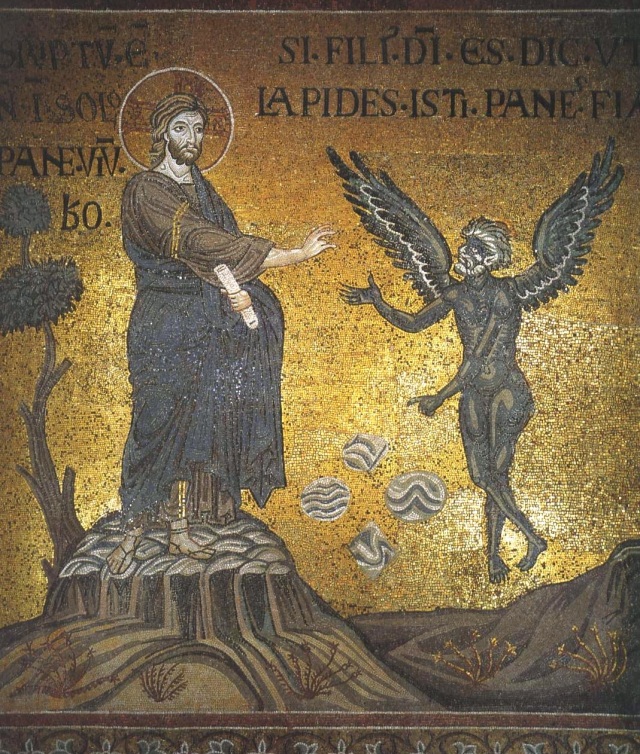
The Evangelist Matthew writes: “Christ fasted forty days and forty nights and then was hungry. And the tempter came to Him saying….” The tempter came to Christ when He was hungry. Thus, hunger attracts him, but hunger is eventually what defeats him, when, of course, satisfaction is sought in the reasonable food of the soul – the words that proceed from the mouth of God – and not one-dimensionally from the unreasonable nourishment of the body.
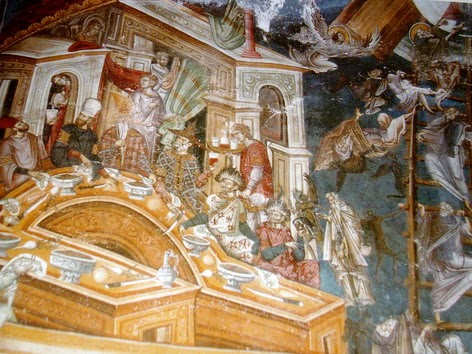
Gluttony, Vatopaidi icon
We must not, therefore, be surprised if during the fasting period of Great Lent diverse temptations occur, whether they relate to our personal, family or social life. At this time the tempter “approaches” Christians. He does this through many “internal” ways, but also with noisy external events, which correspond to internal impassioned thoughts, and tries to make our struggle during Great Lent worthless. But if we are sober, all these things will cause our spiritual maturation, paths for deeper self-knowledge and the knowledge of God.”
Source: Ekklesiastiki Paremvasi, “Η νηστεία και ο πειρασμός”, March 1999.
Fr. Alexander Schmemann, in trying to put Christian fasting into perspective, in his book Great Lent: Journey to Pascha, writes:
Ultimately, to fast means only one thing: to be hungry – to go the limit of that human condition which depends entirely on food and, being hungry, to discover that this dependency is not the whole truth about man, that hunger itself is first of all a spiritual state that is in its last reality hunger for God.
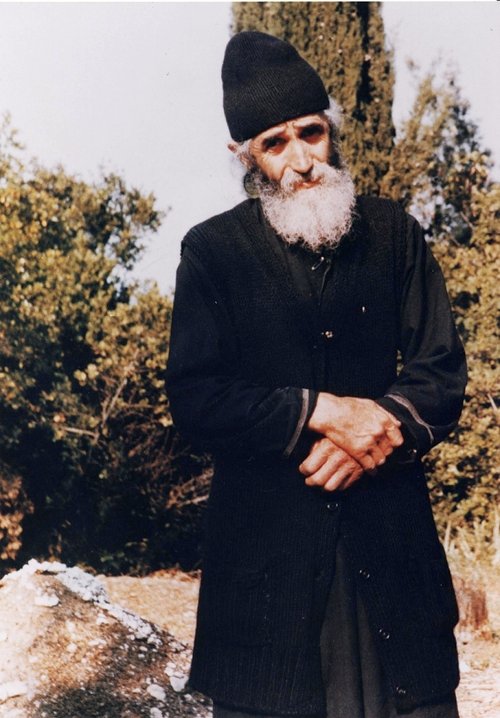
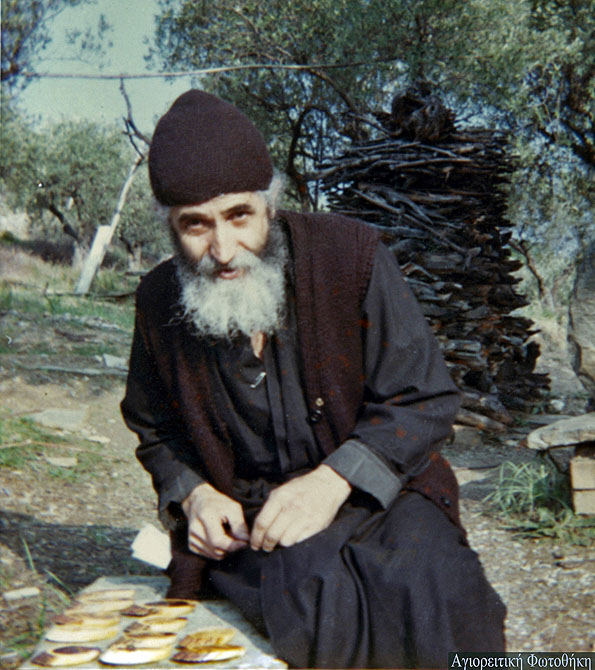
St. Paisios: “A layman once went to a monastery in the beginning of Lent and a certain monk there was abrupt and rough to him. However, the poor man had good thoughts and justified him. He later came to me and said:
‘I do not blame him, Father. After all, he had just completed the Three Day Fast!’ (1)
If this monk had done the Three Day Fast in a spiritual way, he would have had a spiritual sweetness and would have spoken to the layman with kindness. But he pushed himself egotistically to do the Three Day Fast, and so he blamed everybody for everything.”
*
A nun: Elder, what should I reflect on during Great Lent?
St. Paisios: You should reflect on the Passion, the Sacrifice of Christ.
During Great Lent, we are given a greater opportunity to struggle and participate more intensely in the Saving Passion of Christ:
with our repentance and prostrations;
with the cutting off of our passions;
with a reduction of our food intake.
For the love of Christ.
Another nun: Elder, how can I struggle more with temperance during Lent?
St. Paisios: Now, during Lent, those in the world take greater care to cultivate temperance, but we monks must always be careful. What is more important, though, is to be careful with the passions of the soul and then the body’s. Because if one prioritizes bodily asceticism over them and does not struggle to eradicate the passions of the soul, he will accomplish nothing.
*
We must make use, as much as we can, of all the opportunities this spiritual arena offers to us, in order to approach closer to the Crucified Christ. Then, we will helped by Him and rejoice spiritually at His Holy Resurrection , since we would have experienced more spiritually Great Lent.
Ι pray that God gives you strength during Great Lent, so that you may climb Golgotha and be near Christ there, together with the Theotokos and your patron Saint, John the Theologian, and that you may be granted worthy to participate in the awesome Passion of our Lord. Amen.
*
(1) The Three Day Fast (Ιερὸ Τριήμερο)With Clean Monday begins Great Lent in the Orthodox Church and marks the end of feasting. Clean Monday is called as such because Christians are called to cleanse themselves spiritually and bodily. It is also a day of strict fasting with no work. The holy fast has a duration of 40 days in imitation of our Lord’s fast in the desert. Strictly observant Orthodox hold this day (and also Clean Tuesday and Wednesday) as a strict fast day, on which no solid food at all is eaten. Others will eat only in the evening, and then only ‘xerophagy’ (lit. “dry eating”; i.e. eating uncooked foodstuffs such as fruit, nuts, halva, bread and honey, etc). For those who are able and willing, and always with the blessing of their spiritual father, it is encouraged by the Orthodox Church to keep a three day strict fast where neither food or water (if possible) is consumed until Clean Wednesday when one partakes of Holy Communion at the Pre-Sanctified Liturgy. Some of the strictest faithful even go so far as to do this for the entire Clean Week, accepting only Holy Communion during the week. This is an excellent way to mark the beginning of a holy struggle against one’s passions and weaknesses.
*
From the sixth volume of the series ‘Spiritual Counsels of the Elder Paisios of Mount Athos’: About Prayer.
Γέροντος Παϊσίου Αγιορείτου Λόγοι ΣΤ΄ «Περί Προσευχής», εκδόσεις Ιερόν Ησυχαστήριον «Ευαγγελιστής Ιωάννης ο Θεολόγος» Σουρωτή Θεσσαλονίκης 2012, σελ. 199-200.
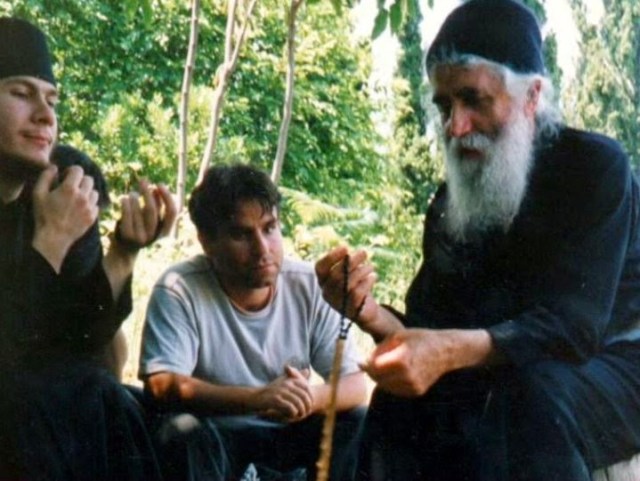
There are two visitors from Thessaloniki. They stand, leaning on the chestnut tree. Both in their fifties, pale and cantankerous. They seem to be from a ‘quasi/pseudo-ecclesiastical’ (1) organisation, because they are looking reproachfully at the Elder, and are making comments to each other quietly.
The children are playing, making noise – at which Paisios turns and says quietly:
“Do not make noise, because beside here, beneath the earth (2), Americans are hidden and we will wake them, and they will come to interrupt our silence.”
The children stop, and instantly become silent, puzzled.
At the opposite end, John is leaning sideways against the rock, atop his sack. He is lighting a cigarette. The two visitors, who appear to be harsh pietists, continue to look at the Elder with disapproval as he is boiling milk and is taking care not to spill it over. One of them can’t stand it anymore and turns to the monk:
“Elder Paisios, we are in the first days of Great Lent, we have a strict fast, and you are boiling milk to drink?”
The Elder is silent. He does not respond. He grabs the pot and lowers it, since the milk is boiled. He then goes into his Cell, brings six small, old china cups, puts them next to each other, and carefully pours the milk into each one. He waits a bit for it to cool off, while everyone looks at him with amazement and silence. The two pietists observe this with disgust, thinking that since there are six visitors and six cups, perhaps the monk will dare to offer even to them milk, during these strict days of the fast.
Elder Paisios takes the full cups one by one, places them on a wooden tray, and carries them seven meters away, where he places them down on the dirt, at the edge of a bush.
He places them there in order, then he comes, sits next to us, and begins to do something with his mouth silently, an eery whistling, while looking towards the bushes. Not a few moments pass, and over there, from the bushes, comes out a viper, very carefully, with five small snakes – her children. I hold my breath.
The snakes are coming, all of them approaching, one by one, slithering, passing right next to us, and they go slowly to the cups, and begin drinking calmly, slurping their morning milk …
By George Skambardonis
Πηγή: ΓΙΩΡΓΟΥ ΣΚΑΜΠΑΡΔΩΝΗ, Επί ψύλλου κρεμάμενος (Κέδρος 2003)
(1) For more information about such organisations in Greece and the charges against their “Westernizing” of Orthodox Christianity and their “Pietisticism” go here and/or study Kallistos Ware ‘s (Bishop of Diokleia) analysis in his book The Orthodox Church, here
(2) A reference in jest to the two hemispheres of the Earth, where Greece is apprarently “upside-down” to the United States, so that when Greek people are awake and at work, Americans are fast asleep, and our noise might wake them up 🙂
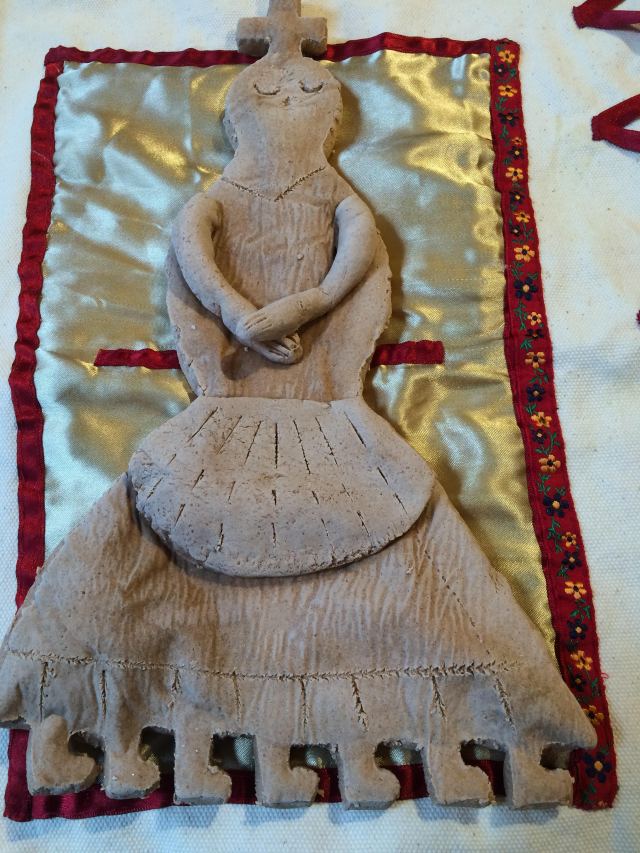
Last Monday some ladies at our parish baked our annual Kyra Sarakosti, or Lady Lent, “cookies”.
‘LADY LENT’: AN OLD GREEK EASTER TRADITION
An old Greek custom that still survives in modern, Orthodox Christian families throughout Greece with different vari ations, is that of Kyra Sarakosti, i.e. Lady Lent. This is a custom associated with the fasting period of Great Lent preceding the Sunday of Pascha; Kyra Sarakosti is used as a calendar that counts the 7 weeks of Lent.
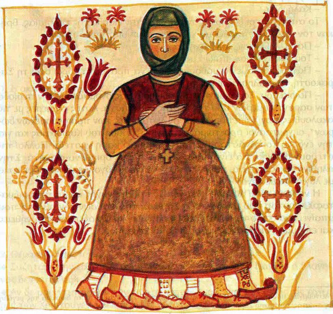
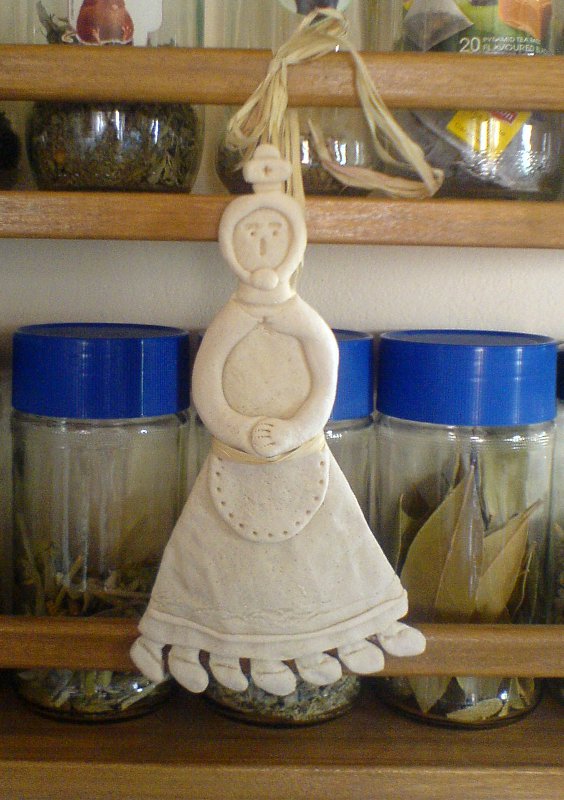
Kyra Sarakosti, is a small figure, a paper drawing or sometimes baked of bread dough, which features something really unusual, a lady that looks like a nun who has seven legs and her hands are folded as if in prayer. Lady Lent’s seven legs, each represent one week of the fasting period, from Clean Monday to the Holy Week. The cross on her forehead is the symbol of her faith. She has her arms folded because indeed she is constantly praying. She has no mouth, not only because she can’t eat, as she is fasting, but also to avoid engaging in any idle talk. Finally, she has no ears, or they are covered with her scarf, so as not to listen to any calumny or judging, especially in this period of rigorous ascetic effort.
Lady Lent has been used as a “calendar” of Lent all over the country. Each week, starting on Saturday after Clean Monday, the faithful would cut one leg off. The last leg would be cut off on Holy Saturday. In some areas, the seventh leg was squeezed inside the bread of Resurrection, and was considered to bring blessing to whoever found it.
“This New Year is yet one more plain covered with snow, unspoiled, pure … Let us tread responsibly on this expanse of whiteness still unspoiled. So much depends on the way in which we tread it. Will there be a road cutting through the plain following the will of God? Or wandering steps that will only soil the whiteness of the snow? “(Metropolitan Anthony of Sourozh)
2018 indeed feels like untrodden snow yet. may our steps be blessed 2018 – απάτητο χιόνι– ας είναι ευλογημένα τα βήματά μας
A New Year’s Eve Tale by Photios Kontoglou with audio and video links
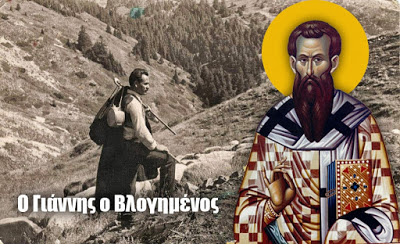
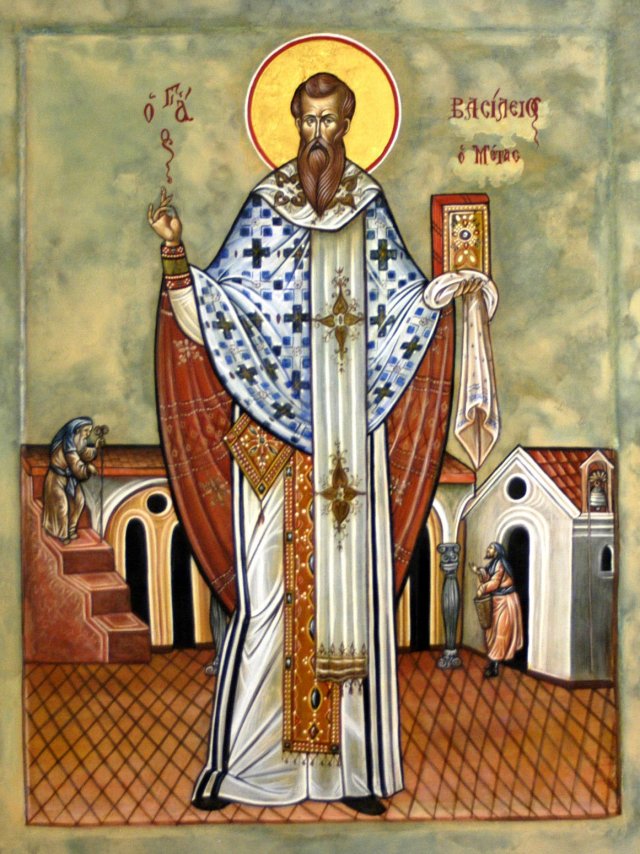
The Nativity Feast having passed, St. Basil took his staff and traversed all of the towns, in order to see who would celebrate his Feast Day with purity of heart. He passed through regions of every sort and through villages of prominence, yet regardless of where he knocked, no door opened to him, since they took him for a beggar.
On the eve of the New Year, he came upon a certain hamlet, which was the poorest of the poor villages in all of Greece. There, he beheld in front of him a small knoll, below which there was secreted away a sheepfold. St. Basil went into the pen and, knocking on the door of the hut with his staff, called out: “Have mercy on me, a poor man, for the sake of your deceased relatives, for even Christ lived as a beggar on this earth.” Awakening, the dogs lunged at him.
But as they drew near him and sniffed him, they became gentle, wagged their tails, and lay down at his feet, whimpering imploringly and with joy. Thereupon, a shepherd, a young man of twenty-five or so, with a curly black beard, opened the door and stepped out: John Barbákos—a demure and rugged man, a sheepman. Before taking a good look at who was knocking, he had already said, “Enter, come inside. Good day, Happy New Year!”
John’s flock was sparse and he was poor; yet, he was blessed. Anyone who happened to pass by their hut they cared for as though he were a brother. And it is thus that St. Basil found lodging in their home. On that night, he was awaited, in all of the cities and villages of the known world, by rulers, Hierarchs, and officials; but he went to none of these. Instead, he went to lodge in the hut of John the Blessed.
“Elder, I am greatly joyful. I wish to have you read to us the writings [i.e., hymns] about St. Basil. I am an illiterate man, but I like all of the writings of our religion [ie. Church]. In fact, I have a small book from an Hagiorite [ie. from Mount Athos] Abbot, and whenever someone who can read and write happens to pass by, I get him to read out of the booklet, since we have no Church near us.”
In the East, it was dimly dawning. St Basil rose and stood, facing eastward, making his Cross. “Blessed is our God, always, now and ever, and unto the ages of ages.” John the Blessed went and stood behind him, and his wife, having nursed their baby, also went to stand near him, with her arms crossed [over her chest]. St. Basil said the whole of Matins and the entire Liturgy, and blessed the household. As they sat at the table, having eaten and finished their food, the wife brought the Vasilopita [a sweet bread or cake baked in honor of St. Basil on the New Year] and placed it on the serving table. Then St. Basil took a knife and with it traced the sign of the Cross on the Vasilopeta, saying, “In the name of the Father and of the Son and of the Holy Spirit.” He cut a first piece, saying, “for Christ,” a second, afterwards, saying, “for the Panagia,” and then “for the master of the house, John the blessed.” John exclaimed, “Elder, you forgot St. Basil!” The Saint replied, “Yes, indeed,” and thus said, “And for the servant of God, Basil.” After this, he resumed: “…and for the master of the house,” “for the mistress of the house,” “for the child,” “for the farmhand,” “for the animals,” and “for the poor.” Thereupon, John the Blessed said, “Elder, why did you not cut a piece for your reverendship?” And the Saint said, “But I did, O blessed one!” But John, the Blessed one, did not understand.
Then John the Blessed said: “I wonder if you can tell me, Elder, since you know many things, to what palaces did St. Basil go this evening? And the rulers and the monarchs—what sins do they have? We poor people are the sinners, since our poverty leads us into sin.” “O Lord my God,”, said St. Basil with tears, “ I have seen that Thy servant John the simple is worthy and that it is meet that Thou shouldest enter into his shelter. He is a babe, and it is to babes that Thy Mysteries are revealed.” And again John the Blessed, understood nothing….
“I feel the need to write this, despite it not being in the ‘Christmas spirit’ of the world these days. …
I write this thinking about very specific (and, unfortunately, very many) people I know who are carrying heavy crosses on their shoulders, alone and in silence. I write this thinking of you, who are alone on hospital beds; you, who are trapped in your homes caring for your elderly parents; you, who have lost a loved one and feel the pain slowly suffocating you as Christmas draws closer; you, who look at your loved ones as they are stolen away by debilitating diseases, dementia or Alzheimer’s; you, who are abandoned by all in prisons; you, who are abandoned by all because you have lost one too many battles with alcohol or drugs; you, who could never recover from abuse, and for whom no one cared enough to really listen to you and help you get up and start again.
Christmas belongs to you, not to the world – have no doubt in your heart about that. Christmas is not about making merry with wine and gifts, putting our feet up and relaxing. Christmas is not ‘time off’, but the otherworldly joy of a Saviour who comes precisely for you. For you, who suffer. For you, who are alone. You are the reason for the Feast. Your pain is the reason for Christ’s Incarnation. Christ does not come to put His feet up and rest for a week – He comes precisely to start His Work of Salvation, His Ministry in the world.
…
Do not worry, and have no doubt. Christ is not of this world, and He comes precisely to transform (that is, to change) this world. Christ does hear. Christ does see. Christ does not even need you to reach out and beg for help, for He reaches out first and He begs you first to give Him your pain. Christ begs us to pile all our filth, all our sins, all our suffering on His Divine shoulders.
Christ does not come into the world at Christmas expecting to rest, but to act. Christ does not come to be pampered, but to start His journey to the Cross. The gifts He wants from you and I are precisely our sins, our loneliness, and our pain. He wants to take it all away from us, for He alone is Love.
…
I just want you, the ones burdened with pain, to know that you are not alone for Christmas. In the silence of your loneliness, in the emptiness of your homes, in the abandonment of all people, in the stories you are not allowed to tell and the images of pain you are not allowed to share – in all of it, you have Christ within you. At Christmas, the world will have Christmas trees, rich dinners and gifts, but you will have Christ as the Divine Guest of your heart. You will have the Source of Life in the cave of your being. I am in awe of you, I bless you, and I ask for your prayers that miraculous night.”
*
For the complete post by Hieromonk Seraphim Aldea visit his Mull Monastery blog
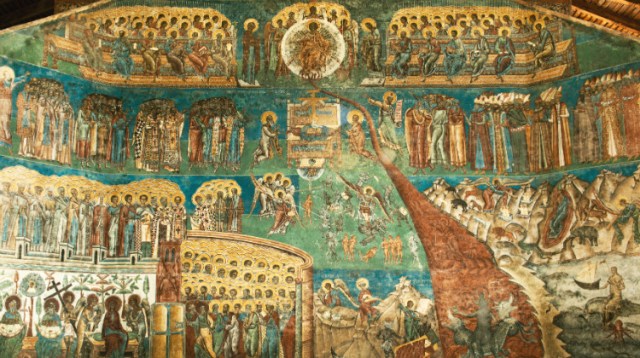
The cycle of prayers assaulting Hades reaches a climax on the day of Pentecost. On the evening of that Sunday, the faithful gather for Vespers. During that service, they kneel for the first time since Pascha. And in that kneeling, the Church teaches them the boldness of prayer, the cry of human hearts for God’s solace and relief. Three lengthy prayers are offered, the third of which completes and fulfills the prayers that began so many weeks before in the Soul Saturdays:
Priest: … O Thou Who didst descend into Hades, and demolish the eternal bars, revealing an ascent to those who were in the lower abode; Who with the lure of divine wisdom didst entice the dragon, the head of subtle evil, and with Thy boundless power bound him in abysmal hell, in inextinguishable fire, and extreme darkness. … Who also, on this all-perfect and saving feast, dost deign to receive oblations and supplications for those bound in Hades, and grantest unto us the great hope that rest and comfort will be sent down from Thee to the departed from the grief that binds them. (edited for length)















 ORTHODOX CHRISTIAN FAITH AND LIFE