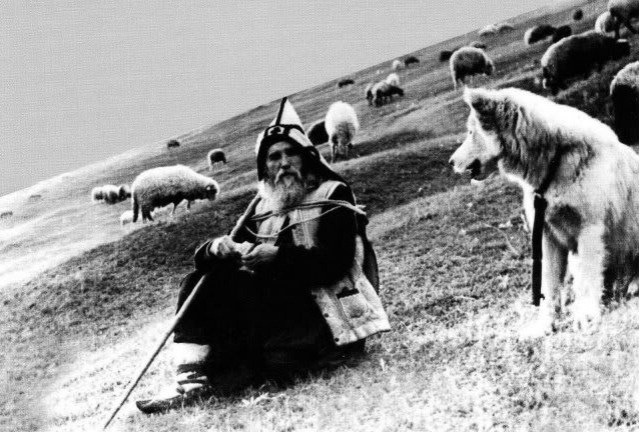
Two interview excerpts with English and Arabic subtitles
Two interview excerpts with English and Arabic subtitles

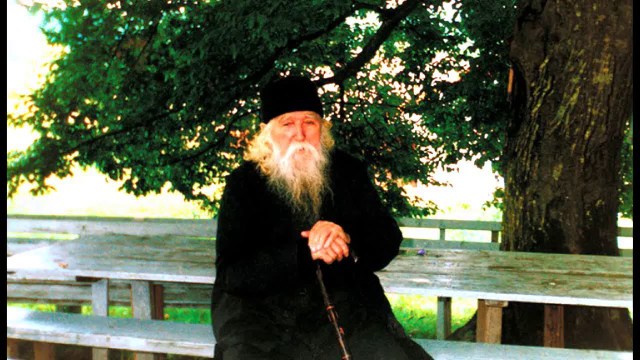
By Elder Cleopa (Ilie) (1912-1998) of Sihastria Monastery in Romania
The Holy Fathers say (this is how Fr. Cleopa began to express concisely his spiritual experience to us, inherited from the Holy Fathers and personally experienced by him, as every one of his words clearly confirms) that on the path of salvation one is tempted by the devil from eight sides: from the front, from behind, from the left, from the right, from above, from below, from inside, and from the outside.
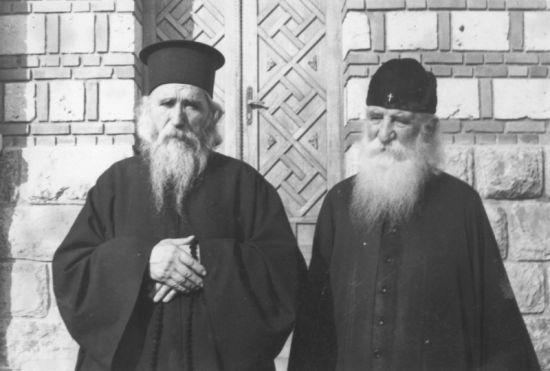
1. One is tempted from behind when one continuously remembers the sins and evil deeds one has committed in the past, recalling them anew in one’s mind, reshuffling them, engaging them, despairing because of them, and contemplating them sensually. Such a remembrance of how we have sinned in the past is a demonic temptation.
2. One is normally tempted from the front through fear at the thought of what the future holds: of what will happen to us or to the world; of how much longer we will live; of whether we will have anything to eat; of whether there will be a war or any other kind of serious and frightful event to come; and, in general, by making all kinds of guesses, predictions, prophecies, and everything else that induces fear of the future in us.
3. One is tempted by the devil from the left through the call to commit obvious sins and to behave and act in ways that are known to be sinful and evil, but which people do nonetheless. This temptation is a direct call to sin openly and consciously.
4. There are two ways in which the devil tempts from the right. The first is when one performs good deeds and actions, but with a bad or malicious intent and purpose. For example, if one does good or acts well out of vainglory, to receive praise, to obtain a position, to acquire fame, or in order to attain some benefit for oneself – it follows that one is doing such good out of vanity, avarice, and greed. The performance of good deeds for bad purposes is sinful and vain. The Holy Fathers liken such a performance of good deeds (such as fasting and almsgiving) to a body without a soul, inasmuch as the purpose for which a deed is accomplished is its soul, while the deed itself is its body. Therefore, the performance of good deeds with an ungodly purpose is essentially a temptation coming from the right, that is, coming under the guise of good. The second demonic temptation from the right comes through various apparitions and visions, when one receives visions of the devil in the form of God or an Angel of God. The Holy Fathers call trusting these specters from the devil, or accepting these demonic phenomena, delusion or deception [prelest].
5. Further, the devil tempts one from below when one is capable of performing good deeds or holy virtues but is too lazy to do so; or when one knows that one should make greater efforts and labors in ascetic struggles (in virtues and good deeds), and is capable of doing so, but does not do so out of laziness or because one is looking for excuses for one’s laziness. One thereby spiritually rejects these virtues by doing much less than one could in fact do.
6. Temptations from above (Elder Cleopa, in order better to explain this to us, demonstrated with his hands the direction from which one or another temptation came; he then briefly repeated what the direction of the temptation he had just described was) also come about in two ways. The first is when one takes upon oneself ascetic struggles that exceed one’s strength, thereby recklessly straining oneself. This happens, for instance, when one is sick but imposes a fast on oneself that is beyond one’s strength; or generally when one overdoes any ascetic struggle that is beyond one’s spiritual and physical capacity. Such obstinacy lacks humility and is unreasonably presumptuous.
Another temptation from above is when one strives to learn the mysteries of Holy Scripture (and of God’s mysteries in general), but does not do so according to one’s spiritual maturity. That is, when one wants to penetrate the mysteries of God in Holy Scripture (or in the saints, the world, and life in general) in order later to explain and teach these mysteries to other people when one is not spiritually mature enough to do so. The Holy Fathers say that such a person wants to chew through a bone with baby teeth. St. Gregory of Nyssa speaks about this in his work, The Life of Moses. He says that it was for this reason that God commanded the Israelites, who were imperfect, to eat only the meat (which is like milk for the teeth) from the Passover lamb – and, moreover, with bitter herbs – and not to break into pieces or to eat the bones, but rather to burn them in fire (cf. Exodus 12: 8, 10, 46). This means that we, too, should interpret only those mysteries in Holy Scripture (and in our faith in God generally) that correspond to our spiritual maturity and to eat (absorb) them with bitter herbs, that is, with everything that life brings us (suffering, grief); we should not bite into the mysteries of Holy Scripture, Divine knowledge, and God’s Providence, like so many hard bones, with our baby teeth; they are susceptible to fire only, that is, they become clear only in ripe spiritual maturity and in experienced souls that have been tested by grace-filled Divine fire.
7. One is tempted from within by that which one has in one’s heart and by that which proceeds from the heart. The Lord Jesus Christ clearly stated that it is from within, from one’s heart, that sinful and impure thoughts, desires, and lusts proceed (cf. Matthew 15:19) and tempt one. Temptations come not only from the devil, but also humanly, from the evil intentions and skills, lusts, evil desires, and inner love of sin that proceed from an unclean heart.
8. Finally, the eighth door to demonic temptation is opened from the outside, through external things and occasions, that is, through everything that enters from outside through one’s senses, which are the soul’s windows. These external things are not evil in and of themselves, but by means of them one’s feelings can be tempted and induced to evil and sin.
These, then, are the eight means by which everyone is tempted, regardless of whether one is in the world or in seclusion.
(Having completed listing all eight means by which one is tempted, Elder Cleopa briefly repeated them and then added the ways and means with which to combat each of these temptations.)
Against each of these temptations – from behind, from the front, from the left, from the right, from above, from below, from inside, and from the outside – one must fight by means of watchfulness (the Elder used precisely this Slavonic word [trezvenie]), that is, attentiveness, carefulness, and wakefulness of soul and body; wakefulness and vigilance of spirit; sobriety and discernment; attention to one’s thoughts and actions; or, in a word: judgment. On the other hand, by means of constant prayer that invokes the name of the Lord Jesus Christ, that is, through unceasing prayer. (Here Fr. Petronius added in Greek: “Prosochi kai prosefchi” – that is, as the Holy Fathers put it, “by attention and prayer.”)
In other words (the Elder added), the Holy Fathers said that the battle against all temptations and passions consists in the following: guarding all one’s mind, soul, and body from temptation – this is our ascetic struggle, from our human point of view; from the Divine side, one must continuously and prayerfully call upon the help of the All-Merciful Lord Jesus Christ – and this is that unceasing and primary prayer of the hesychasts called the Jesus Prayer: “Lord Jesus Christ, have mercy on me, a sinner!”



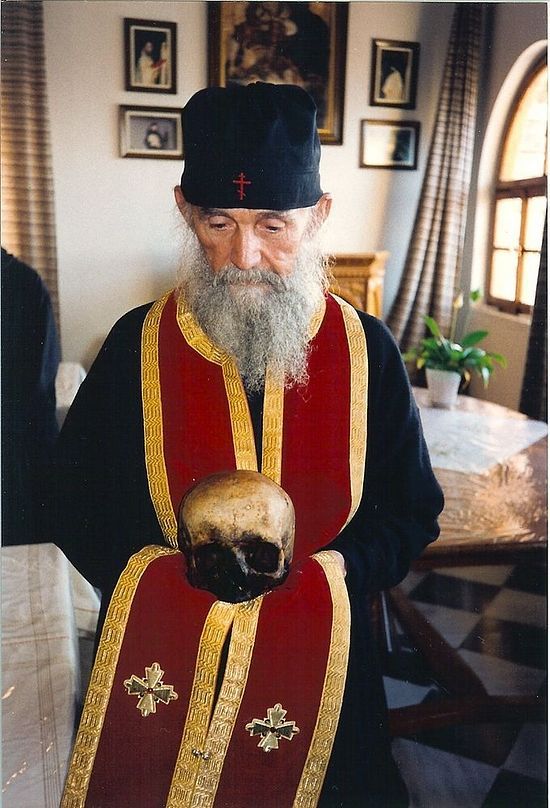
February 17, 1980
I experienced amazement and divine wonder tonight in my poor prayer. My nous tasted God. “Eye has not seen, nor ear heard, nor have entered into the heart of man the things which God has prepared for those who love Him” (1 Cor. 2:9)
All this is a fruit of the labor of my Holy Elder, who truly toiled inside the caves of Athos with fasts, vigils, weeping, and tears. I, on the other hand, am a miserable, hideous monstrosity; an unmonastic monk; a sluggard eating the labor of my father, Saint Joseph. If God did not have mercy on me through his intercessions, I would be spiritually lost.
The festival in heaven entices me—there in the eternal and immutable blessings, where only silence reigns, since it is the only thing one is able to do. But when shall I behold the face of my lovely Father!!! When shall I be satisfied with His glory? Oh, what beauty! But I am a filthy stench and the demons’ joy.
My God, forgive me, the nothing of nothingness. Only Your mercy saves me from my evil self…
February 18, 1980
The communication of my sinful soul with the supremely radiant God was very wonderful tonight. The heavenly world is a different realm; a different mode of life; a different atmosphere.
My God, what can I, the miserable pauper, say about what You are! You are a stupendous and immense delight. You are impalpable, and yet how are You touched? For when this contact happens, the soul is electrified with divine electricity, and sweet and beautiful tears run and run from my eyes. But in the heart, what happens!
My incomprehensible, inexpressible, and lovely God, what can I, the miserable one say about You! There are no words, there is no man capable or competent to do so. One can only feel reverence, worship, sacredness, and divine love in silent amazement.
Oh, how much I would like to be no longer on earth with the uncertainty of my salvation! Oh, if only I were already in the world of my God, my Father, my worship. There is eternity, certainty, and security.
I weep because I am the greatest sinner in the whole world. I mourn the uncertainty of my salvation. I do not know if I shall be saved. Here is the crux of the matter. Alas! I wonder, shall I reach the calm haven of eternal bliss? I wonder, shall I see the glory of my God?
Have pity on me, O only-begotten Logos of God,
My Jesus Christ


Sometimes it happens like this: a person tries to keep the fast, but then he falls and feels that he has defiled his whole fast, and that there is nothing left from his feat. In fact, it is far from being like this. God looks at this fast from a different viewpoint. I can explain this to you with one example from my personal experience.
When I was a doctor, I was dealing with one poor Russian family. I did not take any money from them because they just had no money. Once, during Great Lent, when I was fasting especially strictly, trying no to violate any church rules, when they invited me for dinner. It turned out that during whole Lent they were saving money to buy a small chicken and treat me. I looked at that chicken and saw the end of my fasting feat in it. Of course, I ate a piece of it. I could not afford to offend them.
I went to my spiritual father and told him about the misfortune that had happened to me. I told him that I was fasting almost perfectly during Lent, but then I ate a piece of chicken during the Holy Week. Fr. Athanasios looked at me and said:
– You know what? If God looked at you and saw that you have no sins and that a small piece of chicken could defile you, He would protect you from that. But God looked at you and saw that there was so much sinfulness in you that no chicken can defile you more than that.
I believe that many people can use this example in order not to blindly follow the church canons, but be honest people first of all. Sure, I ate a piece of chicken: not as something dirty, but as a gift of human’s love. I remember an episode from the book by Fr. Alexander Schmemann, where he wrote that everything what exists in this world is God’s love. Even the food we eat is the Divine love in edible form.
From the book by Metropolitan Anthony of Sourozh, “The Works”
Reblogged from The Catalogue of Good Deeds


A true story by Elder Aimilianos
“Once, when I was in a hurry to come here to the monastery to speak to you, I took a taxi, so I wouldn’t be late. On the way, I asked the driver:
“Tell me, do you ever get to eat lunch or dinner with your Wife?”
You know what sort of work these drivers have, and how they almost never know when they are going home.
“Every day” he told me, “both lunch and dinner.”
“How do you manage it? What time do you eat?”
“Lunch starts from 10:00 in the morning, and goes till 4:00 in the afternoon, and dinner is from 6:00, often till 2:00 in the morning.”
Do you understand? At 10:00 in the morning, his wife had the meal ready and waited for him, whatever time he arrived so that they could eat together. And in the evening, she waited for him from 6:00, often till 2:00 in the morning. Doesn’t this impress you? This is what martyrdom in life means: a life of love.
Martyrdom in daily life is action done out of love for the other person, making a sacrifice, setting aside one’s own selfish needs for the benefit of another.”
The Church at Prayer, Archimandrite Aimilianos, p 160

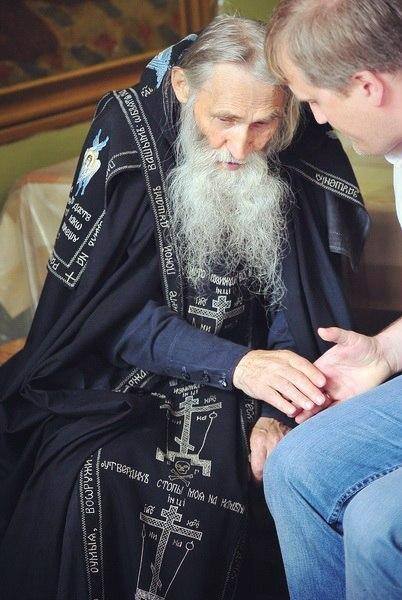
A businessman went to a priest and said:
—Batushka, what’s going on…? I believe in God, I don’t deceive anyone, I don’t steal, I don’t cheat on my wife… I work honestly… My wife has left me for another man, my business is failing, my car broke down, my daughter has problems in college, my son can’t find work, and so on, and so on… What can I do?
—Give thanks to God… Hang a tablet on your door at home that says “IT WILL NOT ALWAYS BE THIS WAY,” forgive everyone, and let go of resentments.
—That’s it?!
—That’s it.
After a while, they met again:
—Batushka, everything is great! My business has taken off, my wife returned, everything with my kids is even better than expected, and so on, and so on. Glory to God!
—I’m very glad for you! But don’t take the tablet down from your door…

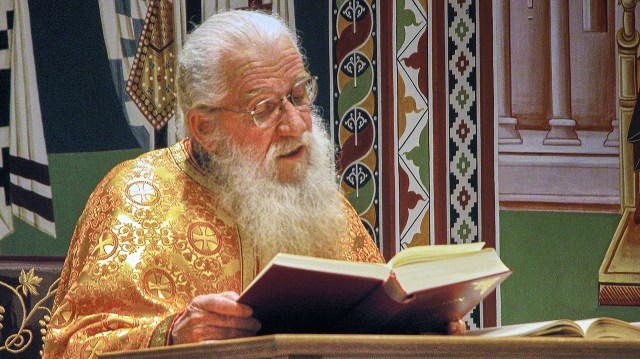
Elder Symeon Kragiopoulos (+30 September, 2015 )
Archimandrite Symeon Kragiopoulos was a lecturer, preacher, and confessor in the Metropolis of Thessaloniki, Greece. His spiritual lectures often drew on his study of psychology. Thirty books have been published in Greece based on his lectures. He founded two monastic communities, Holy Trinity for men and the Nativity of the Theotokos for women.
A Memorial Service was performed in the Church and a Trisagion at the cemetery.
Such gladdening sorrow, bright sorrow as hundreds of his spiritual children prayed with tears for him … to him.
At the homily one Mount Athos Elder described Elder Symeon as “the eye through which Thessaloniki, and indeed all the world, saw God” + Memory Eternal!

“My heart is torn apart…”
It tears me apart, every time I speak
with a person in pain.
My heart is crushed, in a good sense.
I would have regretted it a thousand times, if I hadn’t been hurt,
if I hadn’t empathised with the pain of this person.
Hurting and empathising in such a way is one thing
but sinking and despairing is totally another.
The latter is no good.
∞
There is no end to suffering in this world.
There is no end to pain.
But in all this suffering, a great mystery is hidden!
Nothing else does to us such great good as pain.
Our very own pain
and the pain of our own people.
All the rest can be accommodated.
But pain, which you can feel on your own body,
nobody can take away from you.
You may even be a king: If pain seizes you,
you’ll have to bear it.
You may be given some pitiful aid
to be comforted, which will barely suffice.
Especially when you are dealing with soul pain.
∞
The miraculous thing is that God
when you least expect it
and while you have little awareness of it,
condescends and doesn’t take pity on you,
but allows you to get hurt and suffer something
which is more than a single pain,
precisely because he wants to grant you His mercy.
Archimandrite Symeon Kragiopoulos
Holy Hesychasterion “The Nativity of Theotokos” Publications
To read more of Elder Symeon’s God-inspired words check out this link.
*”His head and His hair were white like white wool, like snow; and His eyes were like a flame of fire” (Revelation 1:14)

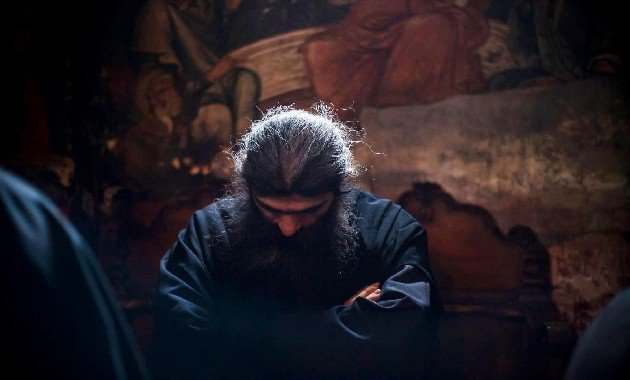
“Leave this problem that you have to me, son. I’ll deal with it. You pray, stay calm, have peace within you and be careful how you live. Everything will turn out in accordance with Christ’s will.”
Archimandrite Symeon Krayiopoulos


Impossibility of Aloneness
I’m an Orthodox Christian living in Homer, Alaska and experienced Jesus Christ in the Himalayas, in India.
I listen to the heartbeat of rain outside…
Cold, Alaskan fog blowing in off the bay, emerald hills now that autumn is here and summer chased away into the mountains. But a milky white fog spreads over the bay like a silken ghost. I used to visit Trappist monasteries, back when I was Catholic, at the beginning of high school, and searching for a relationship of love. I read plenty of philosophy then to know that knowing isn’t enough, that having a realization in the mind is entirely different from experiencing a revelation of the heart.
I spent two birthdays in the Himalayas…
Traveling along gravel roads that drop deep into icy gulches where the Ganges river rages below not yet packed with the filth and mud and newspapers of villages, not yet carrying remainders of Indians in her current, I found Christ found me. It’s a difficult and strangely compelling atmosphere to confront oneself, – – India, – – sandwiched with black corpses, white snow, pagan fires and virulent animals.
I took a bus north from Delhi. It was crowded, tight and cramped, flies buzzed between my face and the windows smeared with brown slime. It’s so polluted in Delhi, so much coffee-colored smoke, so much steam that you really can’t see the sun. You saw it, a rising orange-reddish ball burning over the horizon fifteen minutes in the morning, but then fifteen minutes slouching back down again, an exhausted head over the mountains.
I grew up Catholic but turned to Buddhism when introduced to a self-hypnosis class at my Catholic high school, experimenting with meditation and ‘mindfulness.’ I experienced serious symptoms of manic depression then, partially because I’d consciously turned away from the Judeo-Christian God, and also because life at home was very, very difficult for me. I grew anxious and got into extremely self-destructive habits, and so Buddhism seemed a perfect door to address – or not address – my turning from God and family, and focusing my energy toward dissolving into a Void, a dissolving bubble on an endless and personless river, Tathāgatagarbha. The element that got me is to dissolve my desire, and abandon my selfhood, in order to avoid suffering. But desire doesn’t seem so bad, especially when it is for love, which requires more than one person, and thereby voids any notion of abandoning self, – – and to love, to truly love, is to give, which may require sacrifice, and suffering – –
So Tibetan Buddhism kept coming up, because the meditation helped calm my anxieties and depression, and because the culture proved highly engaging, what with all her colorful flags, her skulls, and metaphysical explanations of things, – – but what is left, when ‘I’ disappear, and there is no one else for whom a relationship of the heart can exist? Not to mention, what did the experiences of the Gospels, the Cloud of Witnesses, the Holy Church, amount to? I knew nothing of Orthodoxy when I reached into the closet of Buddhism, but in light of it, now, what does it all add up to?

Mindfulness worked as far as cleansing the window, the mind, is concerned, which is important, but then many of its doctrines, – and I explored countless doctrines, – really stop here. Clear sky. But what it did not do, and could not, really, is orient me toward the sun, and the warmth of the sun, and the sunlight – – all religions seem to contain some seed of truth, but fail in witnessing to the Triadic God…and all my destructive habits, and relationships, and every mantra, and yoga, all of which I’ve had my fill…this is how Christ brought me to Him.
Back to the story, I’m in Delhi, on a bus. And after an hour or two of sitting in that cramped, stuffy and urine-soured air you hear the front breaks release, the bus finally stretching her arthritic joints and creak slowly forward. She rolls, head first, toward the busy main road. For fifteen minutes we cough and pop down the road, away from my filthy, but greatly lovable refuge of Manju Ka Tilla, a sort of Tibetan refugee camp criss-crossed with telephone wire, wet and narrow alleyways packed with dogs and diapered babies, and polio. Cobblestone streets and bakeries, copper trinkets and arms, this is the first place on earth I met leprosy, and her sister polio. The beginning of my spiritual warfare.
I usually saw them together, these two, – polio and leprosy – crowding in around a barrel of fiery rags, in the crayon-black darkness hands like chewed-up bread, teeth pencil yellow and cracked. I see a boy attacked by a skinny, vicious-looking dog with long, wet fur and crazy eyes – it looks like a red and yellow fox, – – a tangle of fur and blood and whimper. The taxi cab drivers, waiting on their afternoon customers near the stinking, feathered dumpsters launch after the monster in a terrible raid of madness and darkness. They chase the thing down with bricks loosened from neighboring grocery store steps leaving the boy warm and wet with his own blood, a hound’s tooth broken off inside his leg.
Here is suffering, and personhood, and sacrifice…
He looks young but his face shows no signs of innocence. His dark eyes follow me as I run a few feet away to pick up a bottle of water, then return. We look at each other. His long, dangling arms and fingers started rubbing the area of skin that have broken open and gush a strange, purple fluid.
Wet, mossy feet and the bitter odor of trash hang in the air. Cows streaked with vomit pick through spoiled food and milk cartons nearby at the dumpsters. He waits for a doctor but one never arrives. I don’t know what else to do. The boy looks through me, limping into an alley and disappearing in the terrible darkness.
I will live here a total of five and a half months. I will have arrived here practicing Buddhism and Hinduism for eleven years, and leave Christian…
I thought maybe I’d join a Buddhist monastery, or be discovered by wise sage in the mountains, spend the rest of my life in the Himalayas experiencing exotic mystery and enlightenment. I read dozens of sutras by various Buddhas, had an underlined and well-worn copy of the Bhagavad-Gita and Upanishads, and was reading all the California guys, Bhagavan Das, Ram Das, Krishna Das, and even met most of them, all the 60s ‘hippy’ idols who dropped acid and flew to India to go ‘find the guru.’ I read Be Here Now and did the whole drug scene, but despite all the colorful statues and marijuana and tantra, no matter how ‘empty’ I became, there wasn’t enough and I sensed…how can I say this…something was wrong.
I worked as a wilderness guide for at-risk youth in the sage deserts of Idaho. Teaching primitive skills, meditation and mantra, and working with psychologists to develop methods of emotional and behavioral therapy – – I was chased by a wolf, I killed a rattlesnake. And while out there, – this is in the middle of my life before Christ, – – toward the end of it, actually, – – I began experiencing strange things – not only while traveling through India, but before that, and not only me, but my girlfriend. We saw, and everyone involved with this recipe of mantra, meditation, yoga, – and a lot of it sober, – – we saw shadows and demons, experienced trembling and ungodly anxiety and fear. So I knew something was strange, something was going on. It is not all opinion, all belief, for if I have freewill, and exist outside the body, – and I had plenty experiences where I knew I was more than my body, – – and this is one of the things that helped me dismiss and eventually leave the bag of eastern religions, – in addition to God’s grace, – – that if I am more than my body, and I have free will, and can choose to either accept or reject love, then others can too, and this brought up the issue of good versus evil, of right and wrong.
Was what I was doing, right? Who was I following? Are these things, these deities, just archetypes, and if not, if they are ‘real,’ are they ‘good?’ It like jumping into an ocean and realizing there are many different things floating around in there, harmless creatures, some of them beautiful, and some, in fact, that will attack you, that are poisonous, and the astral life, the spiritual life, is like that. Very quickly, once I got to India, I understood this. And was scared.
The boy with the watermelon disease, his head swollen on a piece of cloth outside my guest room door, a cloud of black flies wriggling over an empty ribcage and hollow eyes, a human Jack-O-lantern, his mother’s long brown arm rung with silver jewelry begging for rupees.
So why did I leave a supportive and beautiful girlfriend behind in Oregon to experience this? I was beginning to mend my relationship with my parents, gain more confidence, and had read Way of the Pilgrim a number of months before, but it was with all my California stuff, and I never saw any relation to that and Orthodoxy, never once asked, where is a church that deepens one’s relationship with the living, loving, Truth? Where truth is a Person, as I’d later read from Father Seraphim Rose?
I’d head up to the mouth of the Ganges River, to Gangotri, – – into a mountain. On my 28th birthday, I listened to the heartbeat of the wind on the cliffs, on the water, and experience not a realization of the mind, though that did happen, sure enough, but only once the heart was struck by a sort of cherubim’s sword in my heart, experiencing a revelation occurring in meeting the living God, Jesus Christ, and myself peeling away from itself.
What can I say?

Everything I’d learned, practiced, experienced for all of eleven years poured out from my head, in one ear and out the other, replaced by their approximate Christian terms, fulfilled, actually, and I knew reincarnation is impossible through the resurrection, because I am a self, a soul, and I knew karma is impossible because it operates independently of ‘God’ and there is Divine Intervention, I’ve witnessed it, and experienced it. In the cave, a joyous ache in my heart, and in the cave, no more aloneness, no more aloofness. In the Himalayas, and I mean immediately, like I was zapped, I really met Christ, and was dumb for a moment, and in Eternity I saw in my heart the Person of God as Christ, and I could never, ever be alone. Maybe I’d FEEL alone, sure, (doubtful) but I ought to remember, the impossibility of aloneness. Maybe that should be the title of this letter.
So what happened after? I picked up a Bible and read the thing in a guest house back in Dharamsala, over 12 hours away, and then I’d return to America, after the shaking bus trips and gargantuan ceremonies of burning bodies and yellow and black gods and goddesses, and and I’d fall into the lap of the Orthodox Church, in Eugene, and, I’m only skimming over it now, due to time constraints, and I’d visit St Anthony’s Monastery, in Arizona, and all the monasteries and churches in between, long enough to fill a book, and pray to St Herman who could, by his intercessions, bring me straight to Spruce Island, and to where, kneeling before his relics, find home. In Homer. There is more, but I’ll write later. So much has happened to my heart. Forgive me for rambling, and going on. May the Father of Lights enlighten us, and have mercy on us. Amen.
“It is one thing to believe in God, and another to know Him.” + St Silouan
By Magnus
Printed in Issue 24
Editors Note: Joseph Magnus now lives in Port Townsend, Washington. He is a writer of children’s books and helps the Father Lazarus Moore Foundation. To visit his blog and read more of his poetry, short stories, and other writings, visit here: Servant of Prayer

 ORTHODOX CHRISTIAN FAITH AND LIFE