Doxastikon of the Stichera in the Plagal of the Second Tone
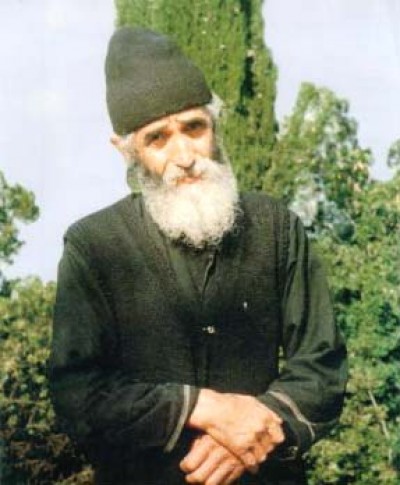
You traveled the path of the ascetics well, towards the working of virtues, O God-bearer Paisios, and you drove out the man of the flesh from your heart, while your nous meditated on unceasing prayer, andtheoria of the Uncreated Light. Therefore, having partaken of the gifts of your graces, we hymn you, O Venerable One, and we say with joy: Rejoice, the offspring of Farasa, the pride of Athos, the pillar of Konitsa, the teacher of Monastics, the dweller of Sinai. Rejoice, you who were adorned with the garment of dispassion, and therefore became a guide to the youth, the lifting-up of the fallen, and the return of the deluded. Rejoice, O example for Monastics, the type for laymen, and the rest and refreshment for the faithful Orthodox. And now, O Godly-adorned Elder, ceaselessly entreat Christ God on behalf of us, who celebrate your sacred memory.
It all started most unusual. As I was walking in the street, at about 16:00, under the sizzling sun, on my way back to St Porfyrios after an obedience , I saw an old priest, nearly 80 years old waiting, all alone, at the bus stop. I stopped to get his blessing and inquire if he needed any help because this was not the right time for anyone to be all alone in the streets, under the scorching sun, esp. if you are 80+. But this priest was not your ‘ordinary’ elderly priest!
It turned out that Father Methodios was the parish priest at Thessaloniki St Gregory Palamas cathedral, and he was very excited about something and most eager to share his news with me! His tama to St Paisios —to build him a church—would be brought to fruition in just a few days, this Saturday evening before Pentecost, near Sarakina, a small, nearby town, 45’ drive from Thessaloniki. The main church will be consecrated to St Paisios, and the two chapels to St Gregory Palamas and St Porfyrios! Further on, he explained to me how he had offered the donation of 7.5 acres and how the monastery of the Assumption in Panorama had undertaken all the work. In the end, Father Methodios invited me to the the laying of the Foundation Stone for the construction of the Holy Church of Saint Paisios, gave me his private mobile number, supplied all necessary names and references, monastery ones included, offered ample navigation guidance for the trip to the ‘unknown’ he was inviting me, and kept repeating that I should come, that St Paisios had arranged our meeting at the bus stop!
He also described to me most vividly an overnight stay by St Paisios at his house! One evening, late in the night, his doorbell rang and the priest’s sister went to open the door. She returned pale and was utterly dumbfounded! When Father Methodios asked her who was at the door, all she could whisper was “A Saint!”. So Father Methodios went to the door and to his surprise saw St Paisios! ‘Father, how come you are here?’ And St Paisios smiled and told him: ‘Haven’t we been discussing about this visit and overnight stay all this time? Well, now is the time!’ And so he spent the night at his house.
What an amazing experience, a most exciting opportunity! How can one refuse such an opportunity? To tell you the truth, I was a little concerned that I have to drive on your own in these thickets, but how could I refuse? And deep in my heart, I felt that St Paisios would be with me. —And St Porphyrios.
I felt joy even at the prospect! It was such a joy to meet such an old, blessed priest, full of joy, radiating the Holy Spirit under the heat! I felt such joy that such priests still exist 🙏 Glory to God! If only you saw his eyes! These days I had been studying in detail the making of St Porfyrios monastery in Milesi, all the Saint’s work, toil, prayers, the volunteers, all the people who helped in every possible way. And while contemplating all this, I met this priest! Amazing!
So, if St Paisios and St Porfyrios would be travelling with me then it felt safe! Anyway, out of precaution, I also started making inquiries to the Monastery about the precise location —no gps it turned out, I am afraid,only vague road signs, cranes,oh dear…— trying also to find somebody else willing to join in the escapade. It turned out that nearly everybody was planning to be away this long weekend of the Monday of the Holy Spirit (nearly national holiday). Nearly.
Eventually, the Saints and my spiritual father’s prayers have provided me a travel companion for Saturday’s holy expedition. A fellow chanter had another obedience nearby so arrangement were sorted out really fast. And another chanter too, a blessed three tied cord, God will not despise? “And if one prevail against him, two shall withstand him; and a threestrand cord is not quickly broken.” Ecclesiastes 4:12. Glory to God for all things.
Of course it was still a mystery where and what precisely this church was. But Mysteries are revealed not understood!🙂 My spiritual Father assured me that Our Lord said I am the Way the Truth and the Life. Without the way there is no going, without the truth there is no knowing, without the life there is no living. He was assured that the Way would find a way for me. He keeps encouraging me these days to be open to the Holy Spirit and be led by Him.
The ancient saints travelled many miles to many places. I wish I could do some of this traveling together with him. But maybe at hisspiritual stage, it is only conducted in Spirit? The thoughts are spiritual for a spiritual father who travels with his spiritual children, whether in this life or the next.
Part Two:
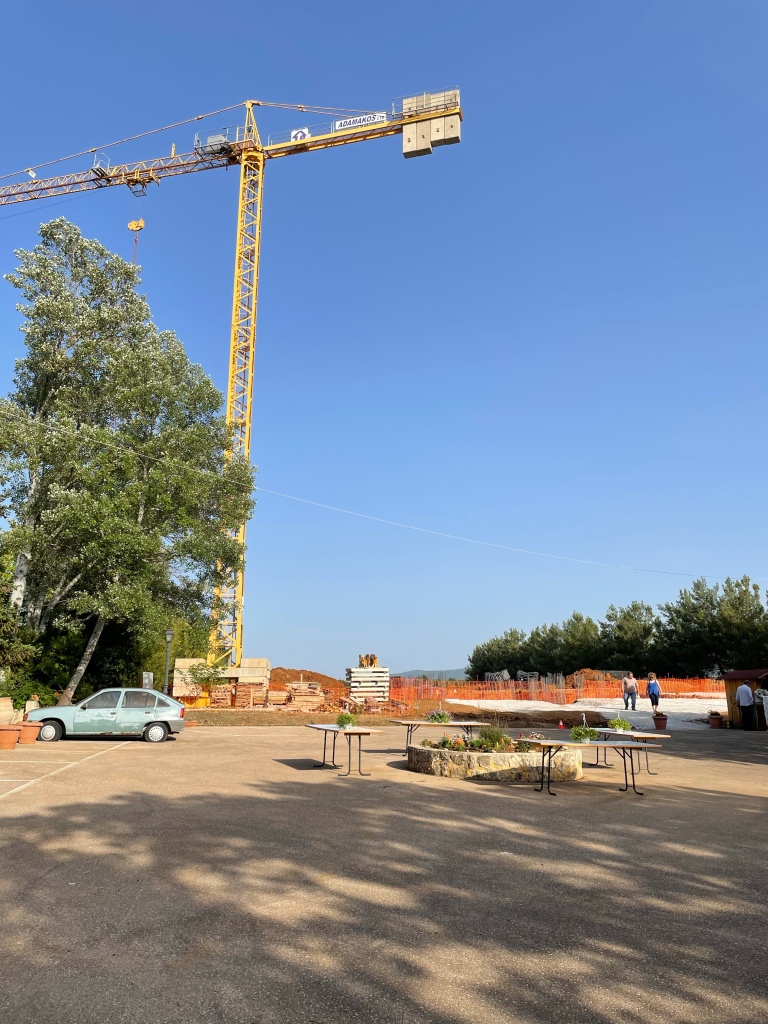
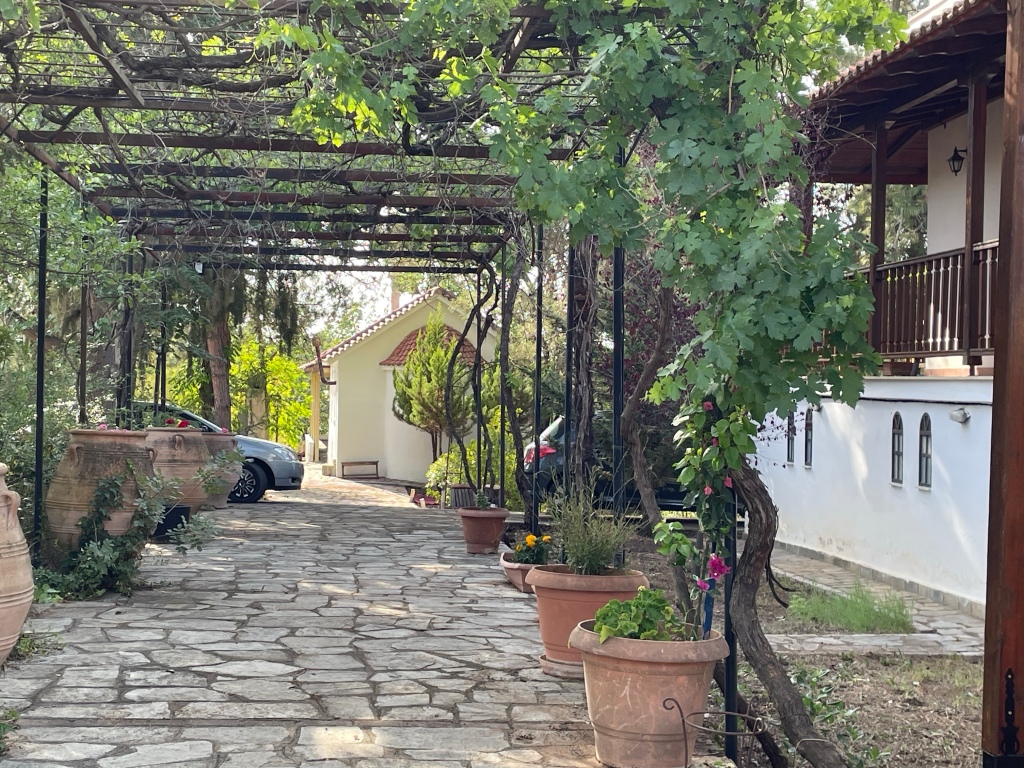
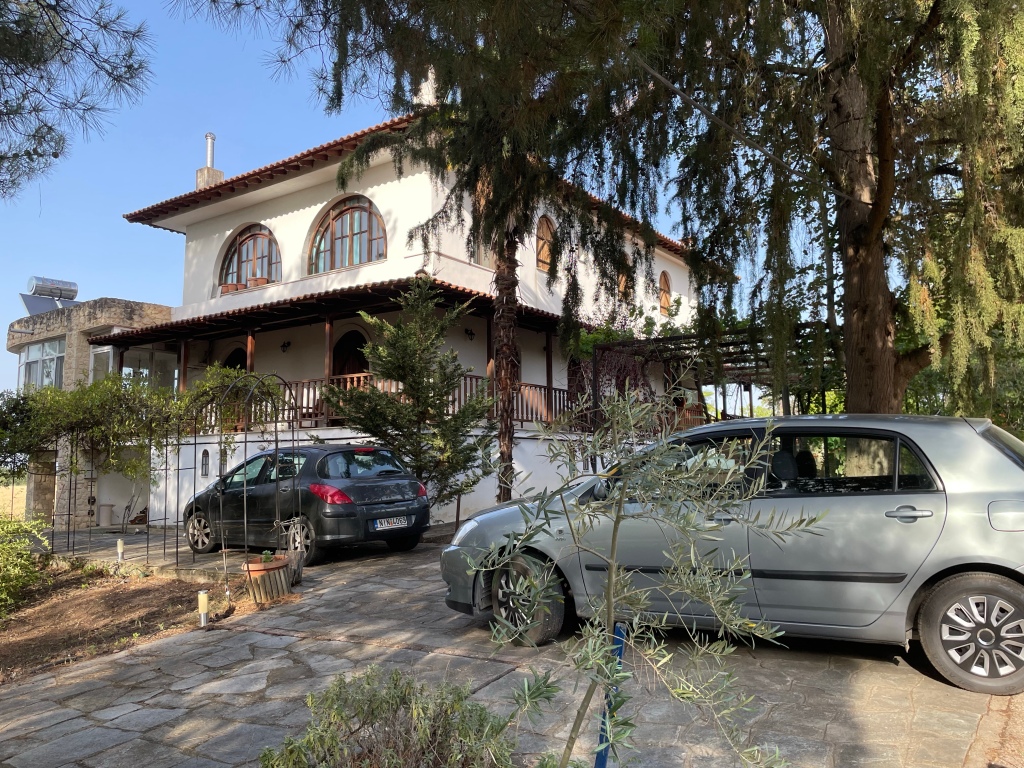
Well, it was not a wilderness we ended up, after climbing up and down Hortiatis mountain and traversing small villages. We arrived at a pretty ‘civilised’ place, a spiritual centre and a small church in a 7.5 acres land, dedicated to The Mother of God of the Life-giving Spring or Life-giving Font (Greek: Ζωοδόχος Πηγή, translit. Zōodóchos Pēgḗ, part of Father Methodios’ family inheritance. Here, Father Methodios would gather his spiritual children for years for spiritual retreats. Here, he also retreated in hesychia to pray. At its centre, this new church to St Paisios will be erected, a metochion to Panorama Monastery of the Dormition of Our Lady.
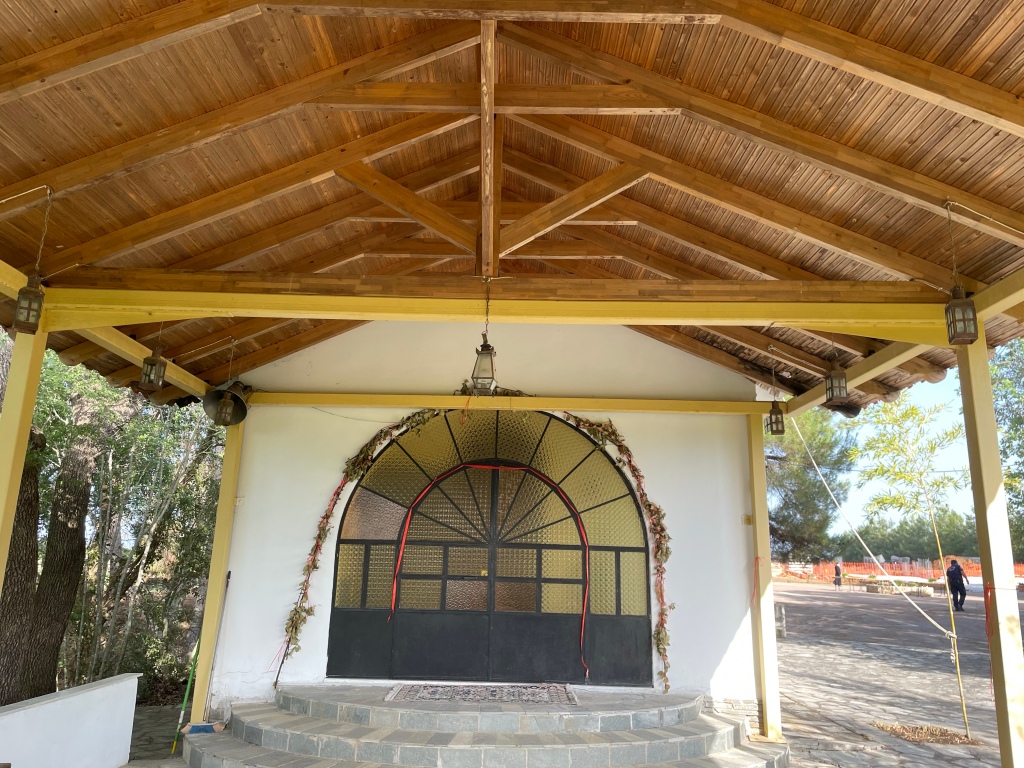
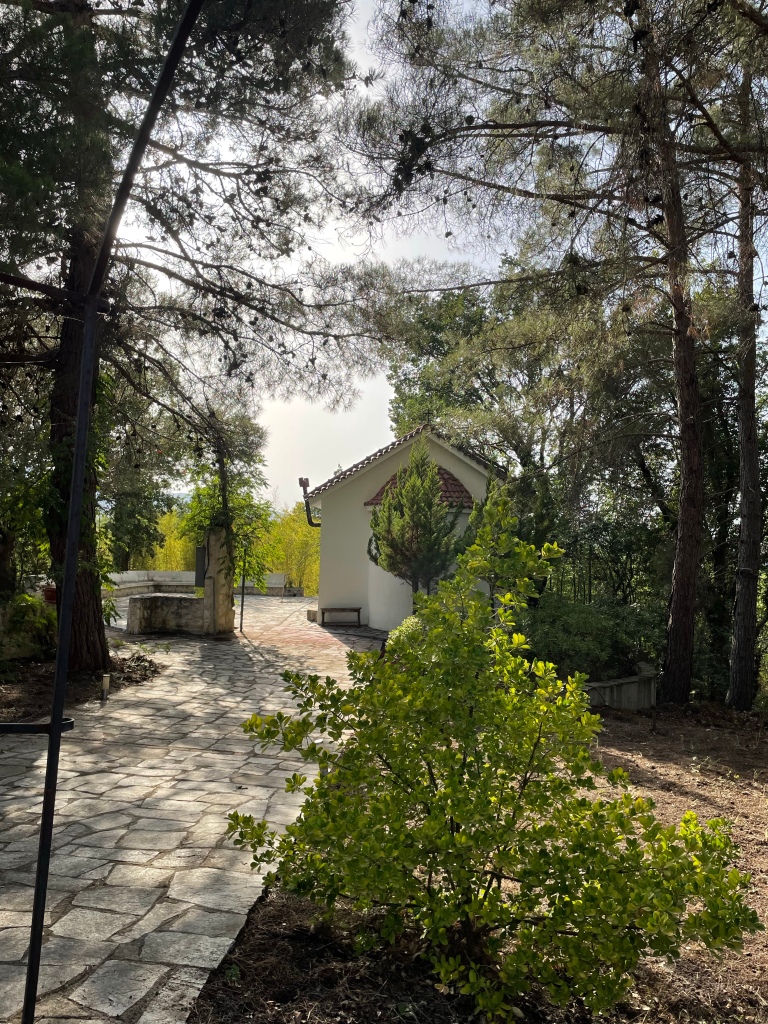
This is the original chapel of The Mother of God of the Life-giving Spring and the spiritual centre.
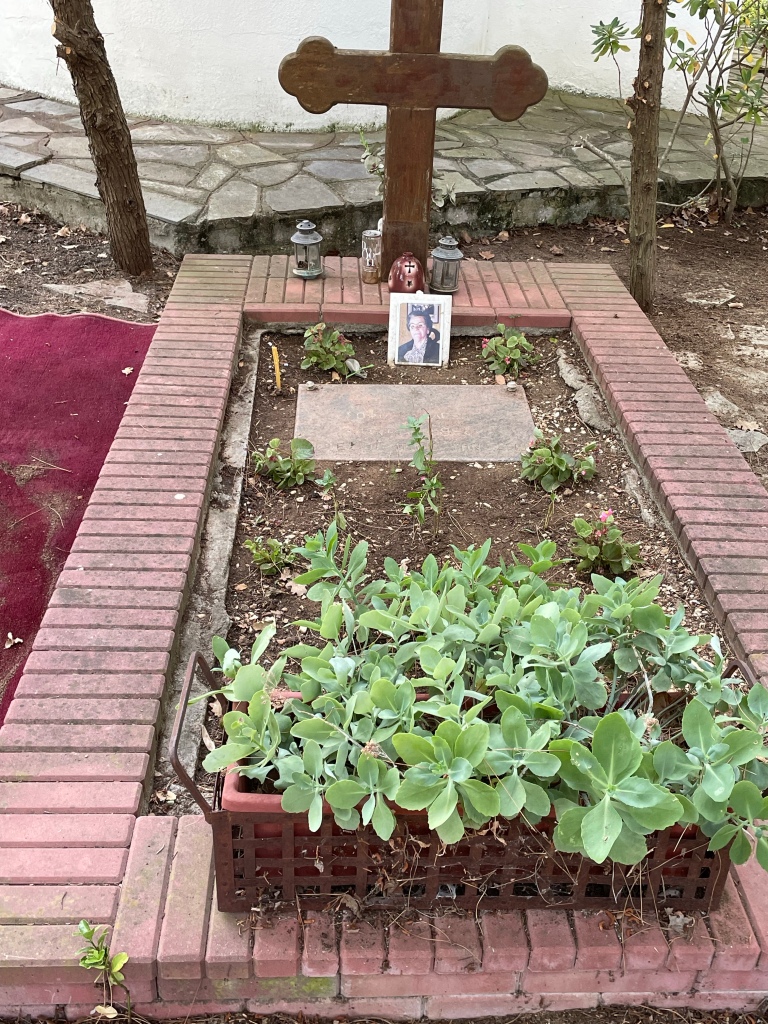
Father Methodios’ mother grave, behind the Theotokos chapel
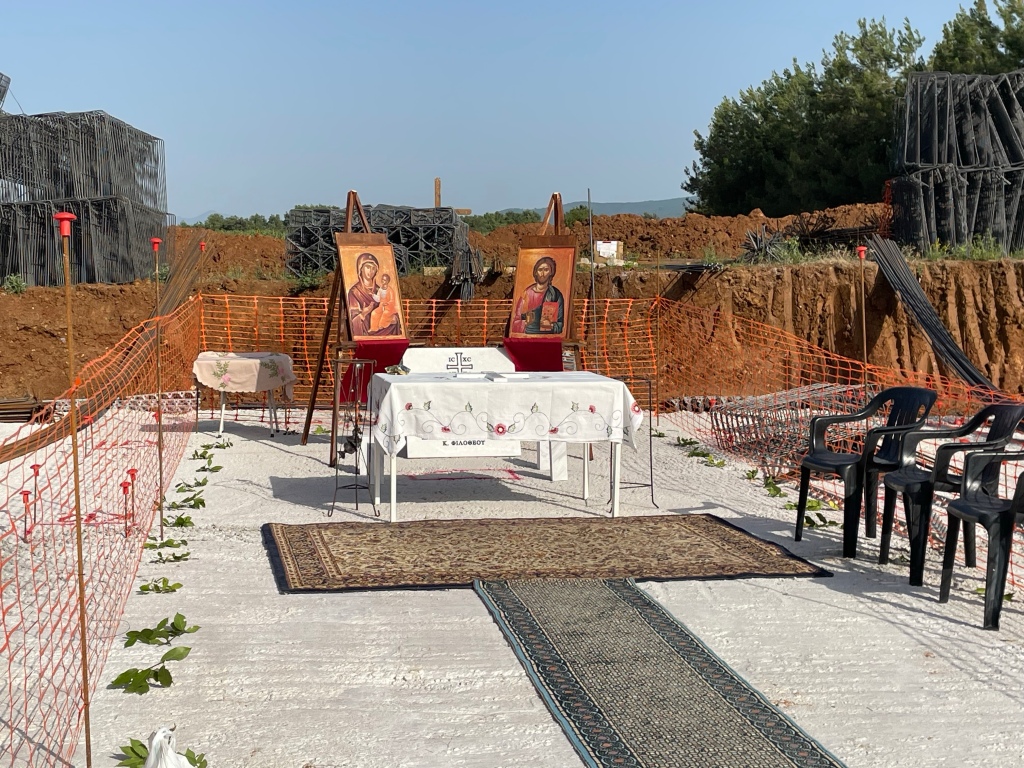
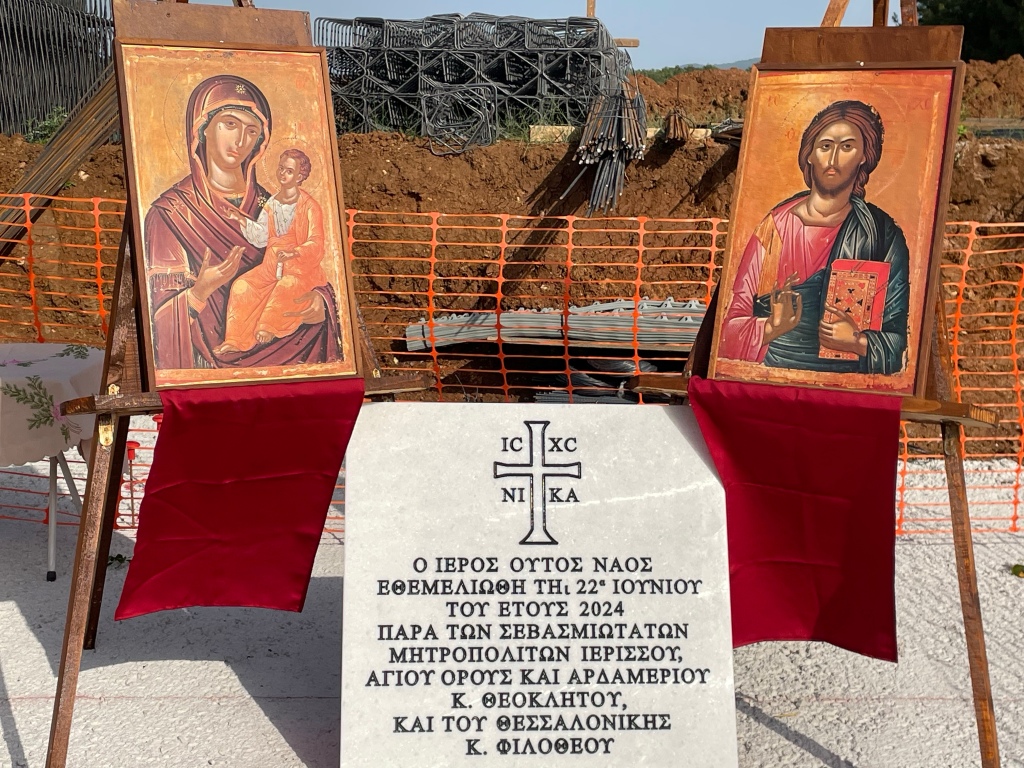
Why a Cross on the Foundation stone?
“As is well known, the Passion of the Lord culminates in His Crucifixion. On the Cross, the God-man Jesus Christ, being “The King of Glory”, gave the hardest and most terrible battle in human History, defeating the Devil and Sin. With His Holy Blood that was shed on the Cross, He strengthened and secured His Church. That is why we placed the plaque with the engraved Holy Cross on the foundations of the Church, because the Cross is, first of all, the foundation of our faith. And every Orthodox church has not only in its foundations, but also internally, externally and on its roof (in the dome) the sign of the Cross to bear witness to the victory of Christ to all those who may be inside or outside the Church.
Secondly, the Cross is the symbol of Sacrifice. Christ on His Cross gave the unique and unparalleled example of the supreme sacrifice for the human race, in order to teach us that, His earthly Church and Her members must always follow the path of sacrifice for the salvation of the world. This is the role of the Church and her children.
Thirdly, the meaning of the Cross is joy. “Behold, through the Cross joy has come to the world”, we recite every Sunday morning, but also every day for forty days after Easter. As the Apostle Paul writes, “if we die on the cross with Christ” (Gal. 2:20); if we live our personal crucifixion, daily crucifying “our sinful self with its passions and desires” (Gal. 5:24), then surely true joy will come to us, which, according to the promise of Christ, “no one will be able to take away from us.” (Jn 16:22)
Fourthly, the Cross is hope. Through the Cross, the secured and unwavering hope is born. If we rely on the Cross of Christ, we will never bend under the weight of trials and tribulations in our lives. (Source)
We arrived early and the place was rather empty, other than Father Methodios and some workers. All around us, Nature was enchanting.
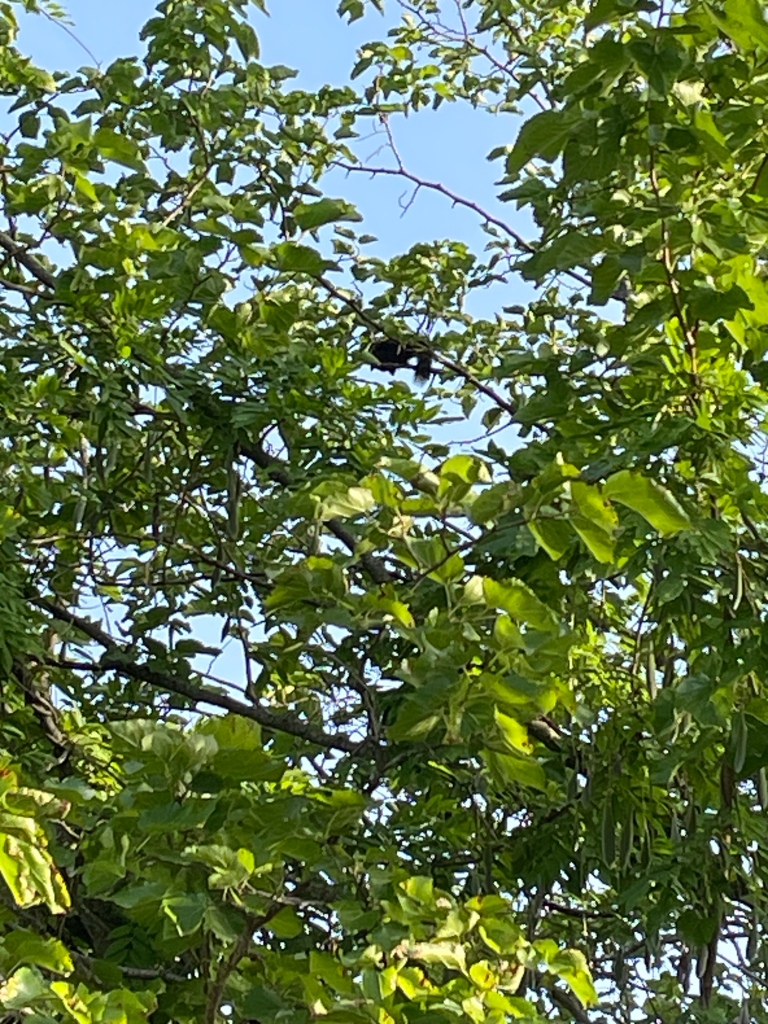
Can you spot the squirrel?🐿️
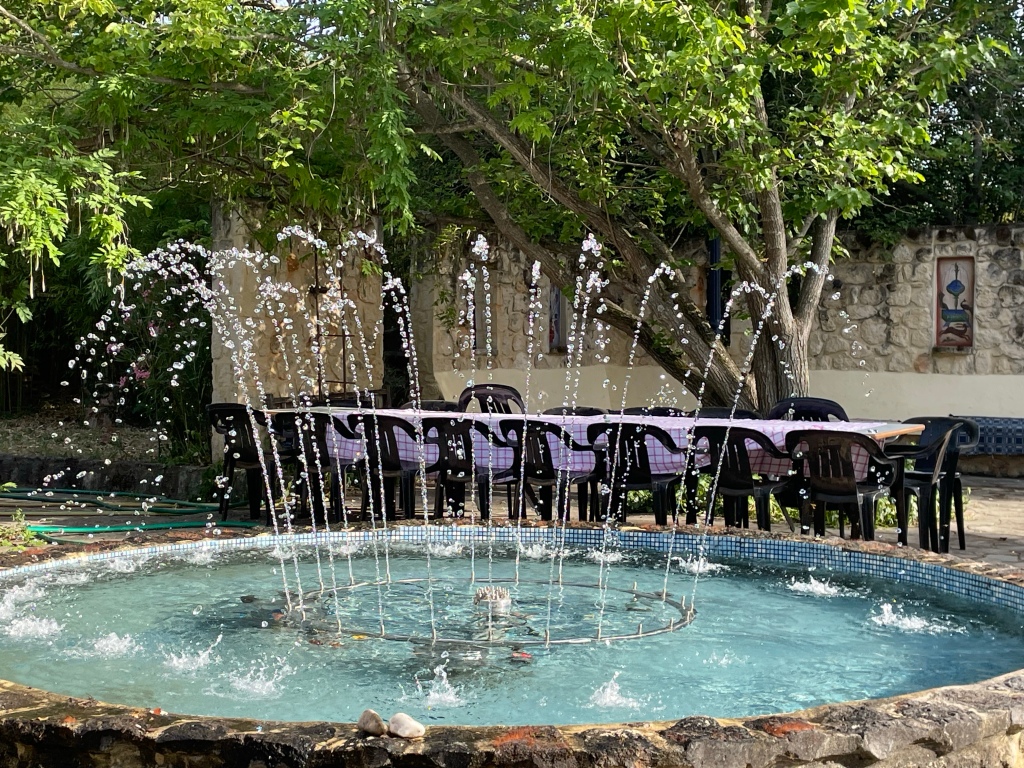
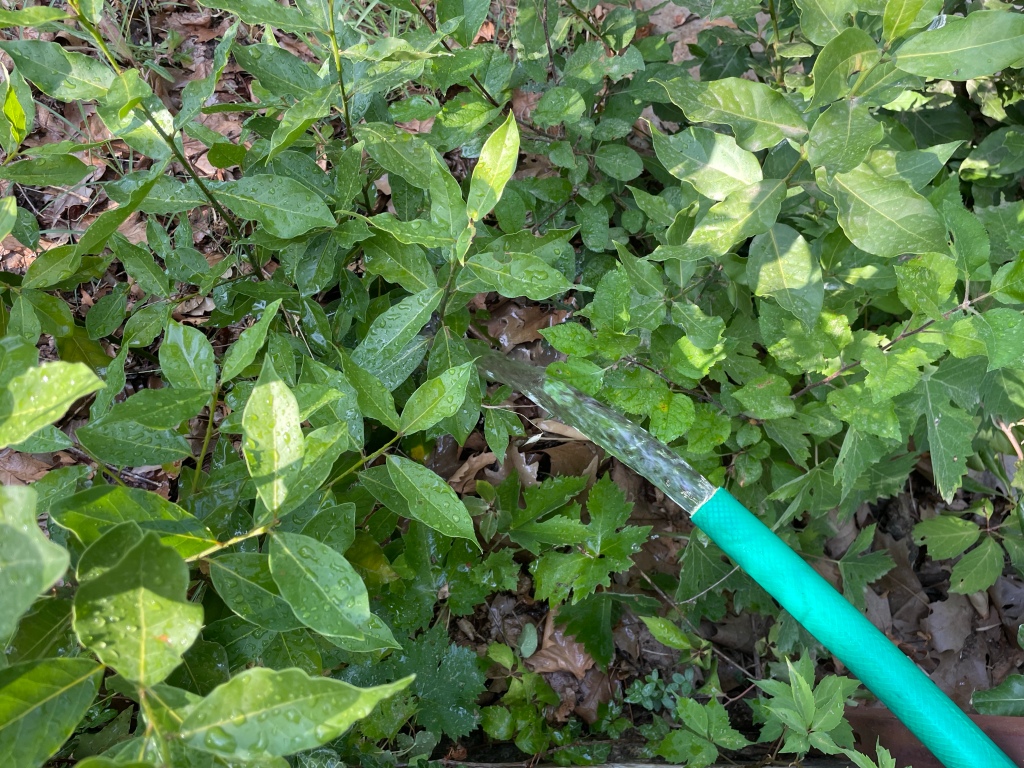
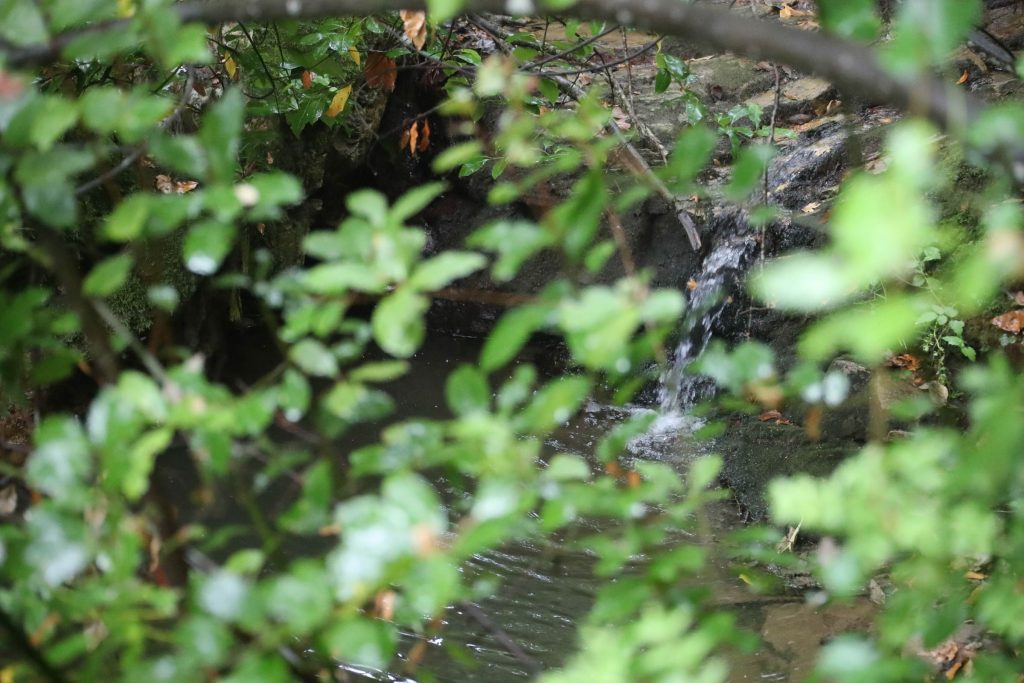
Lots of water and a miracle with water when the original church of the Theotokos was founded.
Everybody is drinking from this abundant, fruit of prayer, holy water, gushing out!
“On the last and greatest day of the feast, Jesus stood and said in a loud voice, ‘If anyone is thirsty, let him come to me and drink. Whoever believes in me, as the Scripture has said, streams of living water will flow from within him.’ By this he meant the Spirit, whom those who believed in him were later to receive. Up to that time the Spirit had not been given, since Jesus had not yet been glorified.” (John 7:37-39)
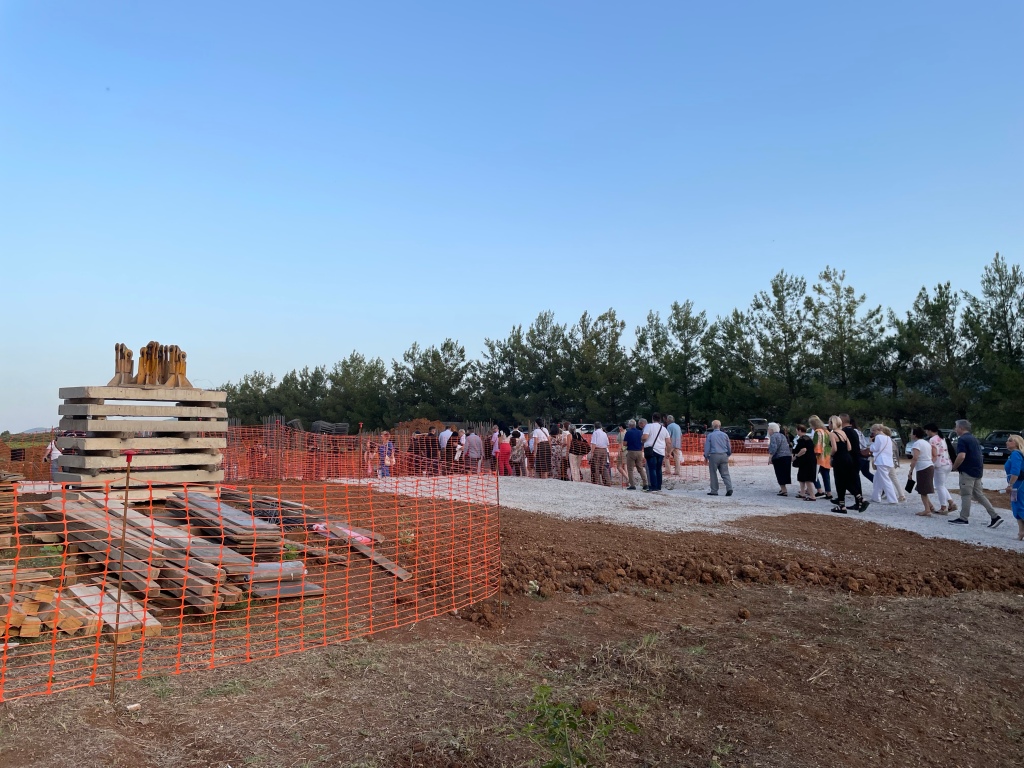
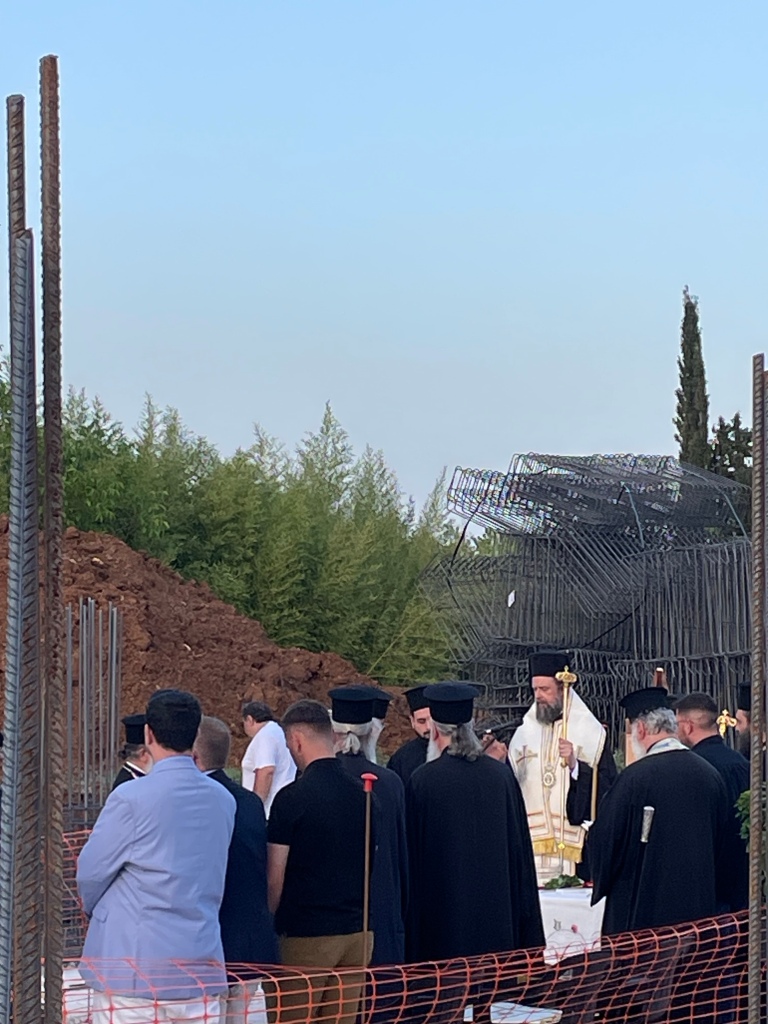
Gradually, more people started arriving, and the place was crowded, Bishops arrived and the ceremony started.
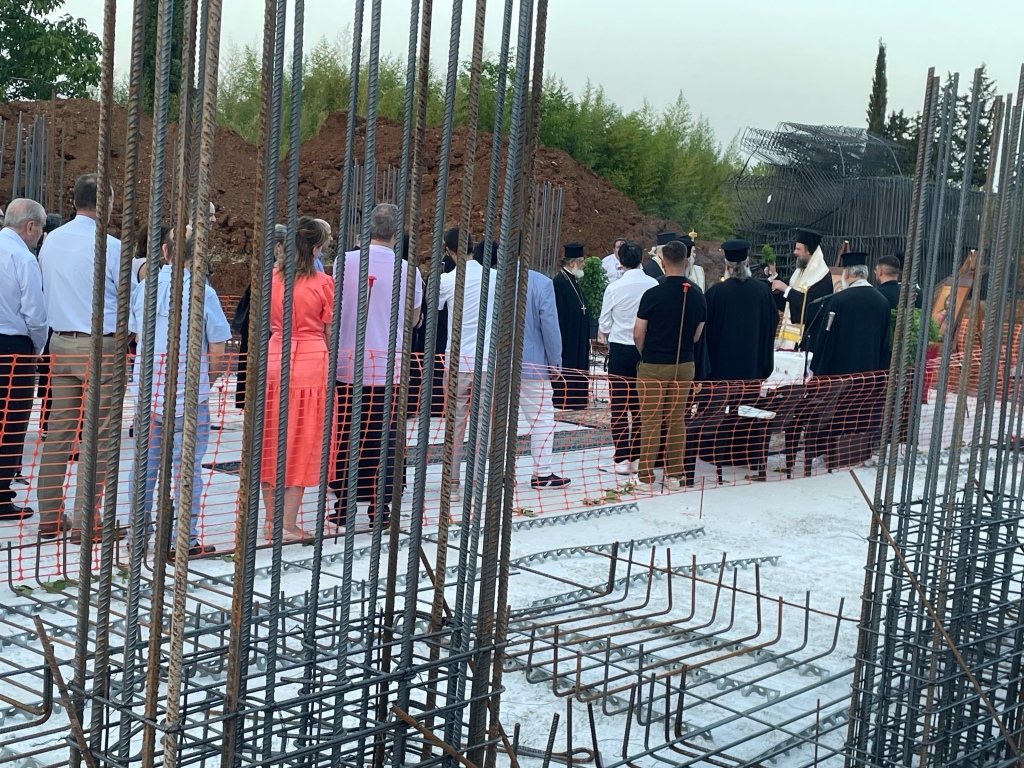
Bishop Philotheos from Thessaloniki laid the Foundation stone, blessed us all sprinkling holy water to us and the new church’s four corners. We all chanted together the Apolytikion of St Paisios, St Gregory Palamas and St Porfyrios, the two chapels. This is the first church to be dedicated to Saint Paisios and St Porfyrios! The bishop used St Paisios’ holy cross with a piece of the True Cross of Christ, a gift to Father Methodios 52 years ago! Saint Paisios also prayed and blessed his calling to become a hieromonk. Amidst lots of chanting and prayer, Father Methodios thanked us all in tears and told us that he had been praying about this for the last 40 years of his life!
“Lord, now lettest Thou Thy servant depart in peace according to Thy word, for mine eyes have seen Thy salvation: which Thou hast prepared before the face of all people. A light for revelation to the Gentiles, and to be the glory of Thy people Israel (Lk 1.29–32)
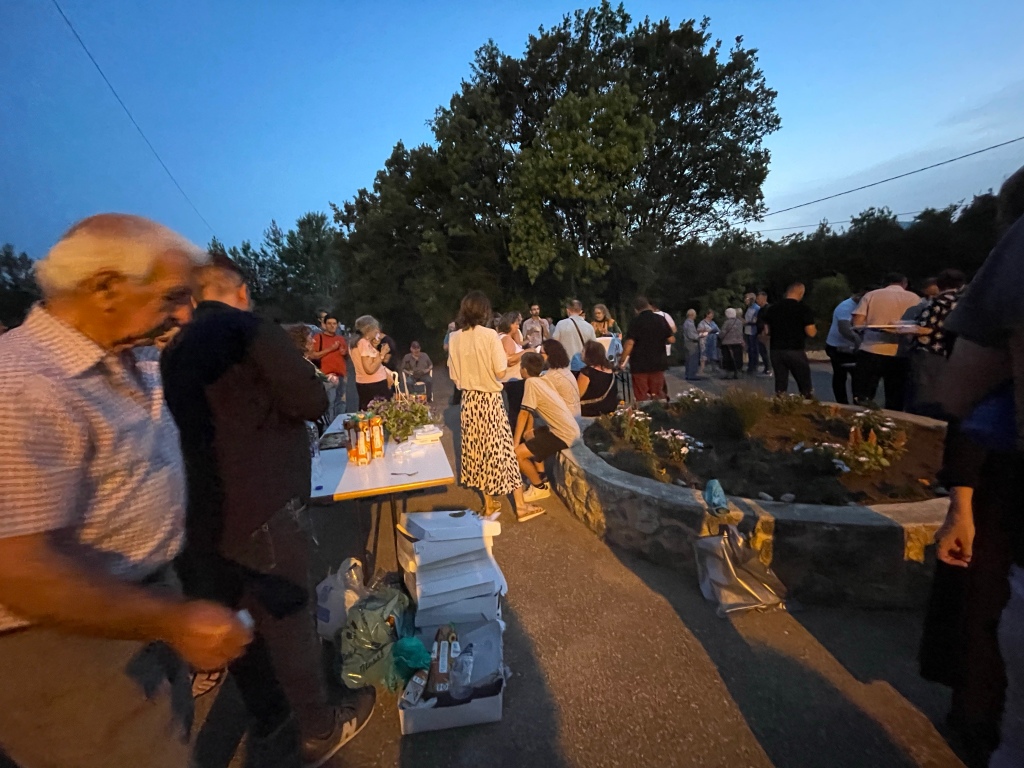
Then, a traditional Greek bouffet followed, lots of brothers and sisters all over the region and Thessaloniki to greet.
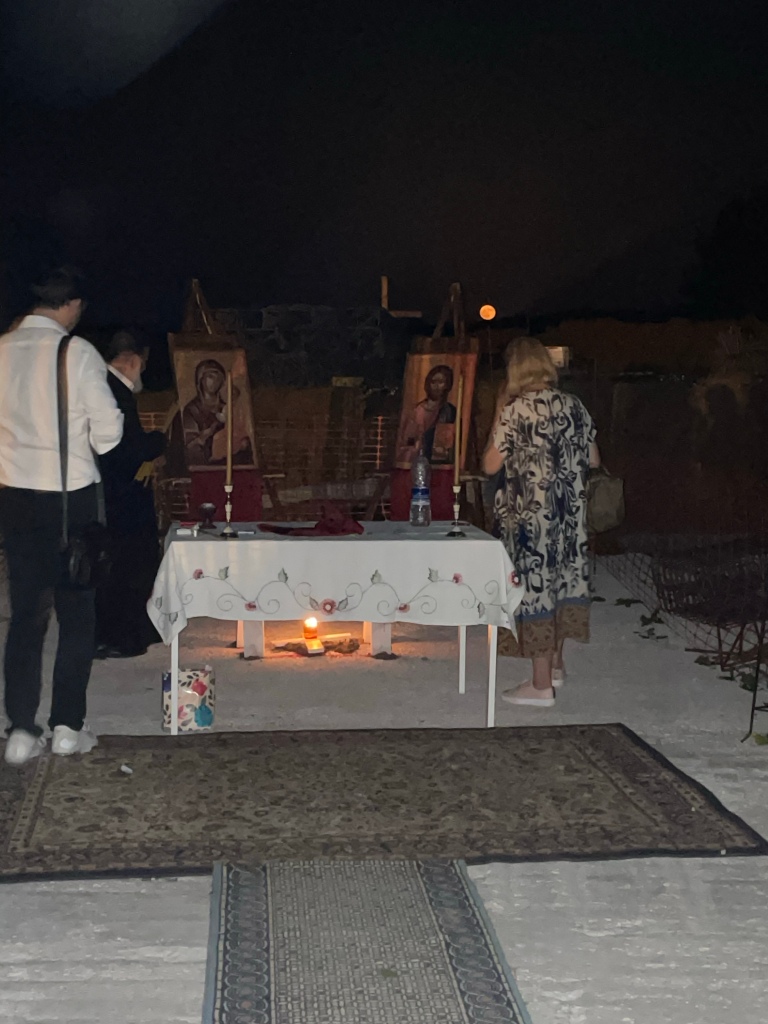
Night arrived amidst joyful fellowship, we helped clean up and tidy the place, and left, full of joy, nearly midnight! What an experience! May God soon bless us to perform the Consecration of our Holy Church, so that the glorious and majestic name of God always be glorified in it.
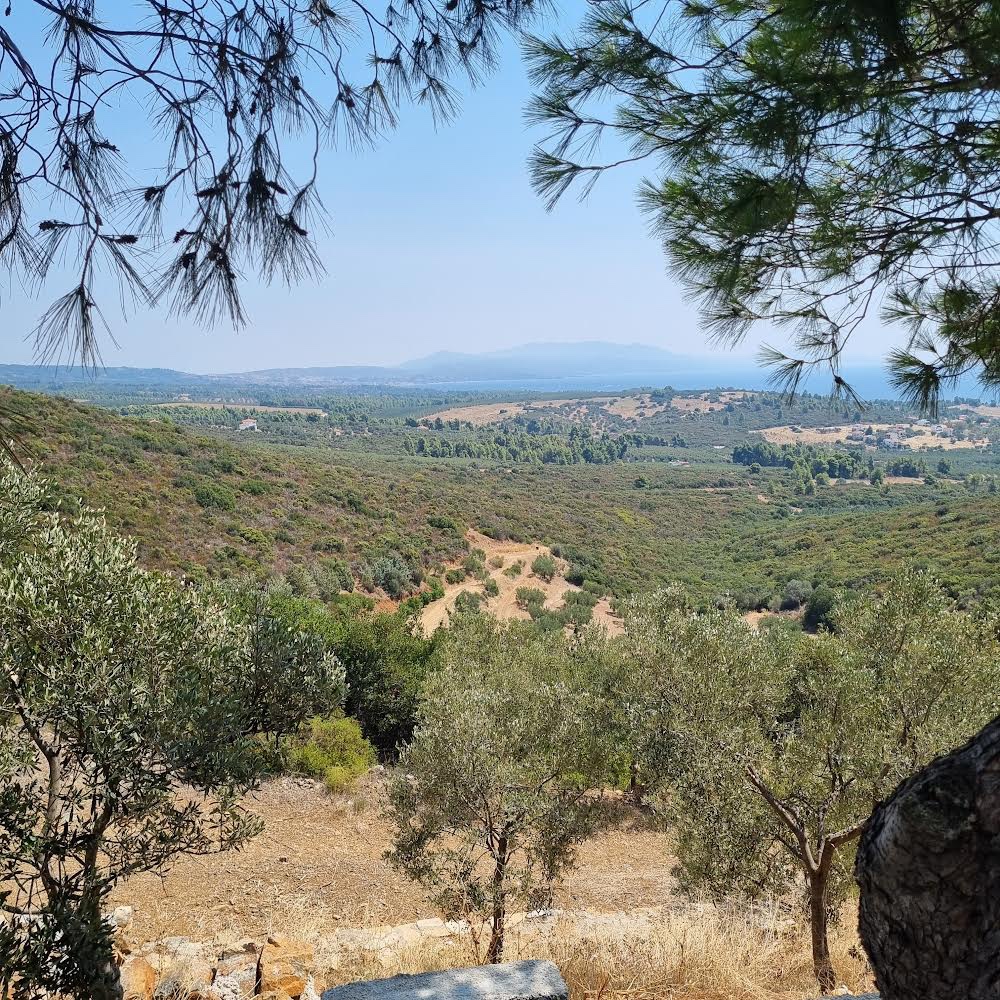
overlooking the sea from the Monastery of St Arsenios in the mountains
Monasteries are places of healing and light. The Monastery of St Arsenios is one such place.
N.b.This is as close as I came to Agion Oros in the distance!
Another little miracle enabled us to meet Theologos and Vaiga with children again . We were joined by a priest from Germany Fr Victor with his Presbytera and children. The usual courtesies were extended to us, loukoumi, coffee and biscuits along with the necessary water!
Geronda Theoklitos joined us and he afforded us a great deal of his precious time even though he had many confessions to hear.. It was a true blessing to meet him.God it seems bends time in order for those who seek Him to receive His grace . Time is not really measured in monasteries. Of course there are set times for worship and work but one does not sense time passing.
I told Geronda of the mutual ministry we have at our parish and he quoted a greek proverb “Το ‘να χέρι νίβει τ’ άλλο και τα δυο το πρόσωπο” which when translated goes something like : ” The one hand washes the other hand and both wash the face “. I suppose we have similar saying” many hands make light work.”Washing the feet is an act of service and humility, but washing the face brings cleansing and refreshment.He gave another word:St Anthimos of Chios: “ εκείνο το ´γιατί κι εκείνο το ´εγώ´ που έχομεν, αυτά μας απομακρύνουν απο τον Θεό και μας χωρίζουν απο αυτόν» — «this “why” and this “I” which we have, these distance us from God and separate us from Him.”
The proximity of hospitality and holiness is palpable in Orthodox monasteries. Faith ,food and fellowship are inseparable. For some visitors monasteries are places not only of refreshment but of healing where quiet can replenish the soul and regenerate the spirit. It is most important for Orthodox Christians to renew their spiritual batteries. Such peace was abundant at Panorama monastery. Sister S shared the typicon and structures of monasticism and we glimpsed the evening service before heading back to Thessaloniki. I think words alone cannot convey the experience of visiting monasteries. For those who truly seek God then they are places where His energies are to be found…in abundance!
– “The orthodox monastics are like the lighthouse. The lighthouse has to be always on the rocks by the sea. Do you want them to go and live into the city and be added to the other street lights? They can not become a lantern and be placed into the city’s roadside. The orthodox monastic is like a remote lighthouse, that stands high on the rocks, directing the ships of this world with their flashes, and upon the open seas the ships are orientated in order to reach their destination, which is God.” Saint Paisios of Mount Athos from the book: Spiritual Awakening
Monastery of St John the Forerunner at Metamorfosi
The drive from Thessaloniki to Halkidiki was furnished by olive trees but to remind us of the fragile nature of our planet there was the faint smell of smoke in the air. (*) As St Paul says in Romans 8″ creation is groaning “. Our first visit on the itinerary was the Monastery of St John the Forerunner at Metamorfosi. Although it has a strict typikon we were allowed to sing a glorious trilogy of apolytikia and Kyries. We were joined by Baia and Theologos.
… and four of their ten children.. Konstantinos overheard my English tones and introduced me to his wife Marina and mother Gabriela who lives in London. A most interesting exchange of spiritual experiences ensued. Gabriela studied at Lancaster university at the same time as I was studying by Post Graduate certificate of education at St Martin’s college now University of Cumbria ( Lancaster campus)and having been brought up in the middle east she is looking forward to Dmitry’s ordination to the diaconate in September in Arabic. Two priests joined us with their families for monastic hospitality “metrio cafes parakalo ” the most delicious cake, loukoumi and much needed water. It was after all 37c.
On to Ormilia monastery where Marta and Alexandra have stayed. We venerated the tomb of the founder Geronda Emilianos. K. said she wanted me to meet a nun who spoke better English than me ” if that’s possible” K. added with playful wit, ” This is Mother P. I was not at all offended or diminished by K. words, especially when I learned that mother P was born and brought up five miles from where I was born.
Ormylia monastery, Holy Convent of the Annunciation
We were in the company of people from Cyprus who had connections with our parish, a Belgian priest and a Serbian priest whose Metropolitan and Professor respectively sit on the same International Commission as me.Lunch time beckoned it was 4.00 after all. A wonderful local cafe near K’s beach house where we were joined by Nikos. We made the short journey to K’s beach house where we met the Romanian family who were staying there. You can’t get much closer to the sea! If you rolled over in bed you would be splashing in the gentle waves!
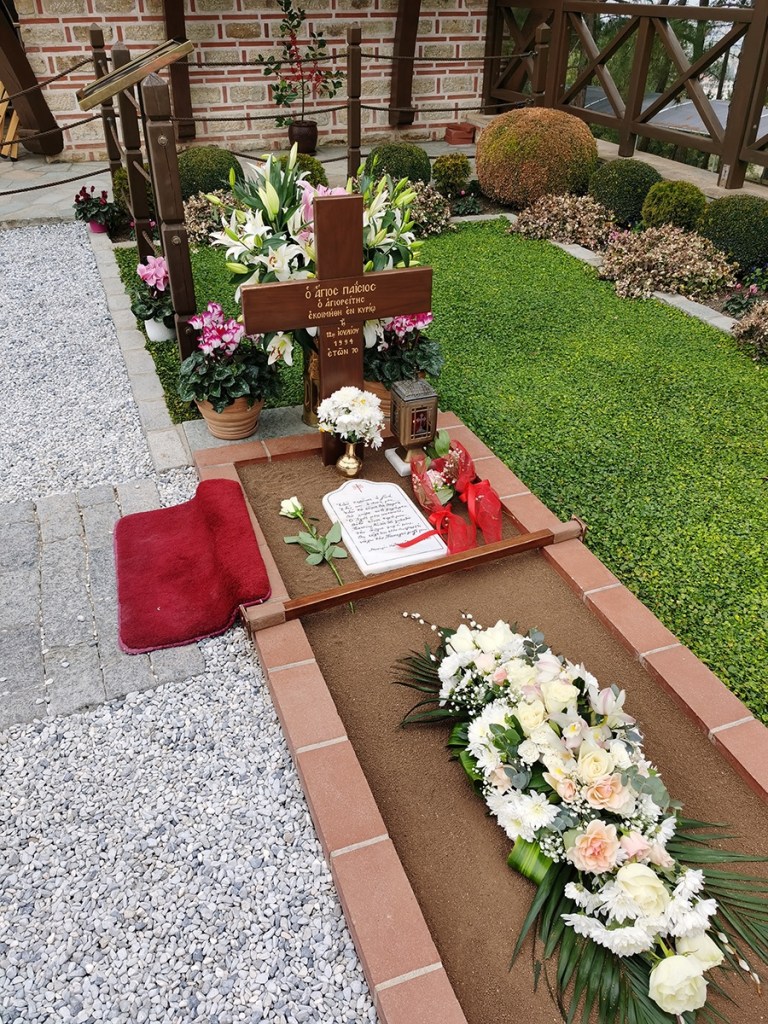
On to St Paisios Monastery where we met friends of Sayedna. We joined the queue to venerate the tomb of St Paisios. A little boy repeatedly took the blessing from priests in the queue. The light of joy shone in the eyes of the faithful, reflecting the Light of Christ. Everyone we met today, those wearing the angelic habit and those who were faithful Pilgrims were happy. God is glorified in his saints.
St. Paisios’ tombSt. Paisios poem above his tomb
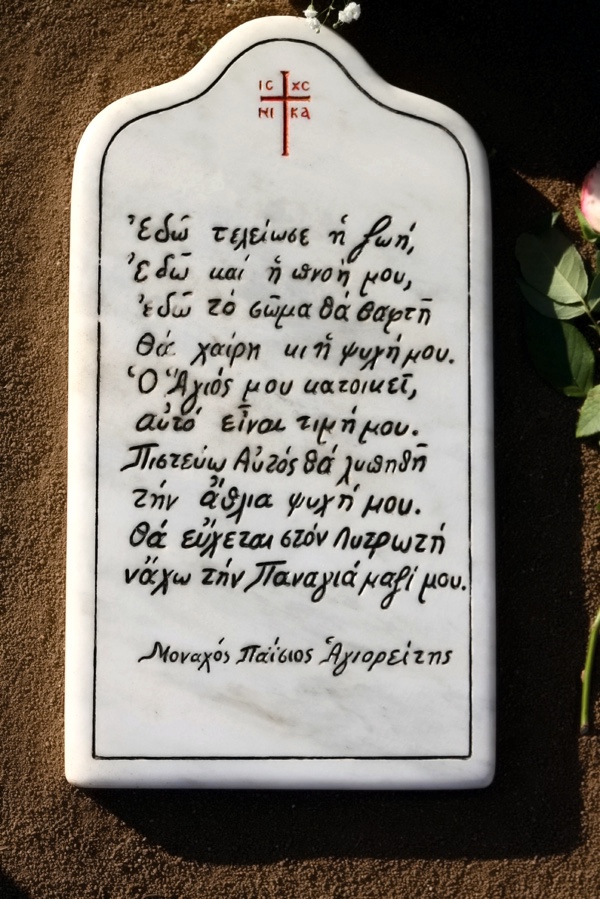
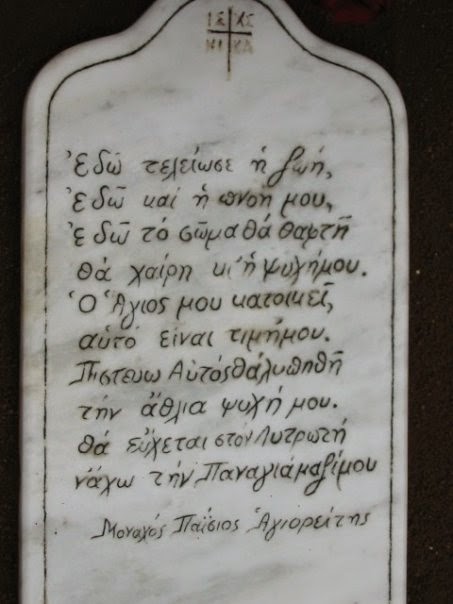
Above his tomb, inside the monastery yard, on a marble plaque is found a humble poem written by himself:
“Here life has come to an end
Here my breath has stopped. Here the body will be buried, And my soul will rejoice. My Saint dwells here, [St. Arsenios of Cappadochia] And that is my honour. I believe he will pity
My miserable soul
He will pray to the Saviour
To have the Virgin Mary with me.”
“God wants us, above all, to be happy and to enjoy inner peace. God is not a tyrant who pesters and intimidates us, but instead he wants us to be free.”St. Paisios
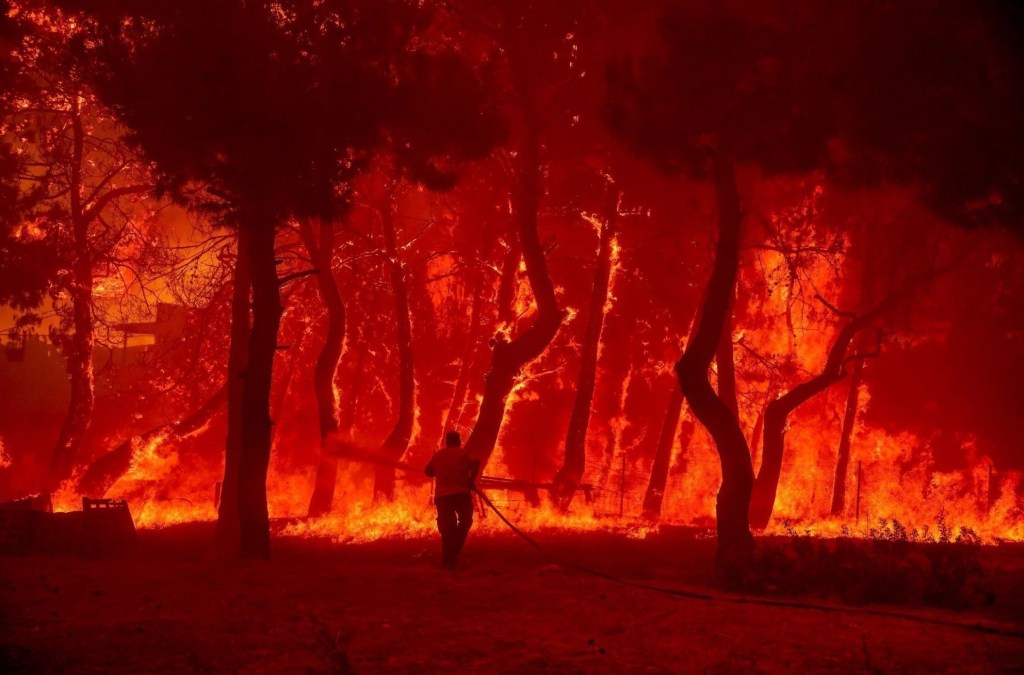
(*) Due to fires raging all over Greece at the time of this pilgrimage
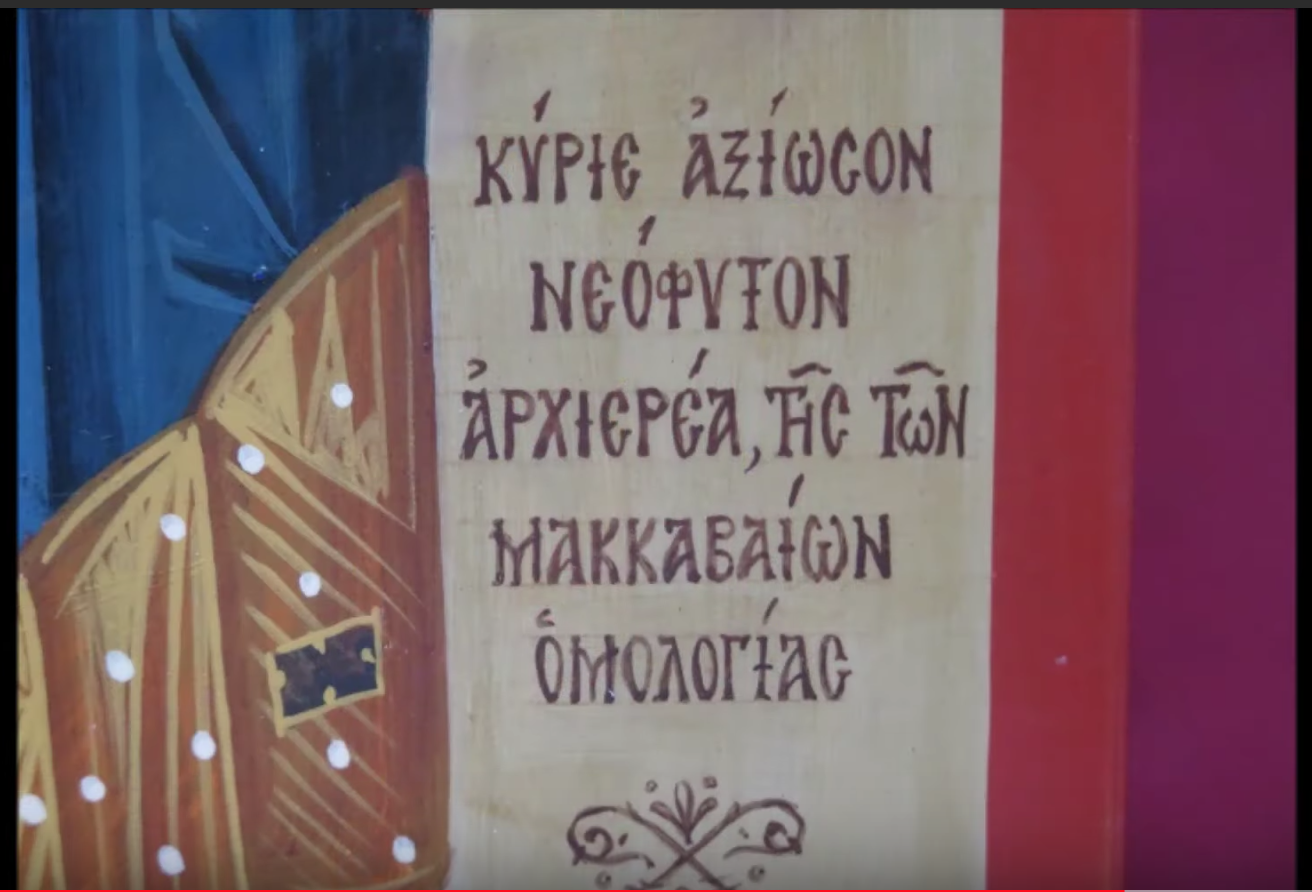
Moving on — at the request of this blog’s followers — to the second part of the Metropolitan Neofytos’ of Morfou trilogy, an outline of the sacred personality and life of Saint Paisios of Mount Athos as he experienced him. The first part was St. Porphyrios, my previous post, and the third one will be St. Iakovos Tsalikis, all recently canonised modern Greek Saints he was blessed to meet early in his life. It is such a pity that so few of this Metropolitan’s homilies have English subtitles because at every one of them so many “secrets” and holy mysteries of these recently canonised, modern saints are revealed! Metropolitan Neofytos had complained to God in his youth that he had lost his father too young, and our Lord has “punished” him with 7 Fathers, 3 of which have already been canonised, and the remaining four are all due. Oh, he fathomless, bottomless Love of Our Lord and the Wisdom of His Providence!
Currently, Metropolitan Morfou is under fire and faces persecution and prosecution by both church and state officials, as St. Paisios had prophetically warned him and blessed him to become worthy of the Seven Holy Maccabees’ bold Confession of Faith and Martyrdom, together with that of their mother Solomonia and their teacher Eleazar.
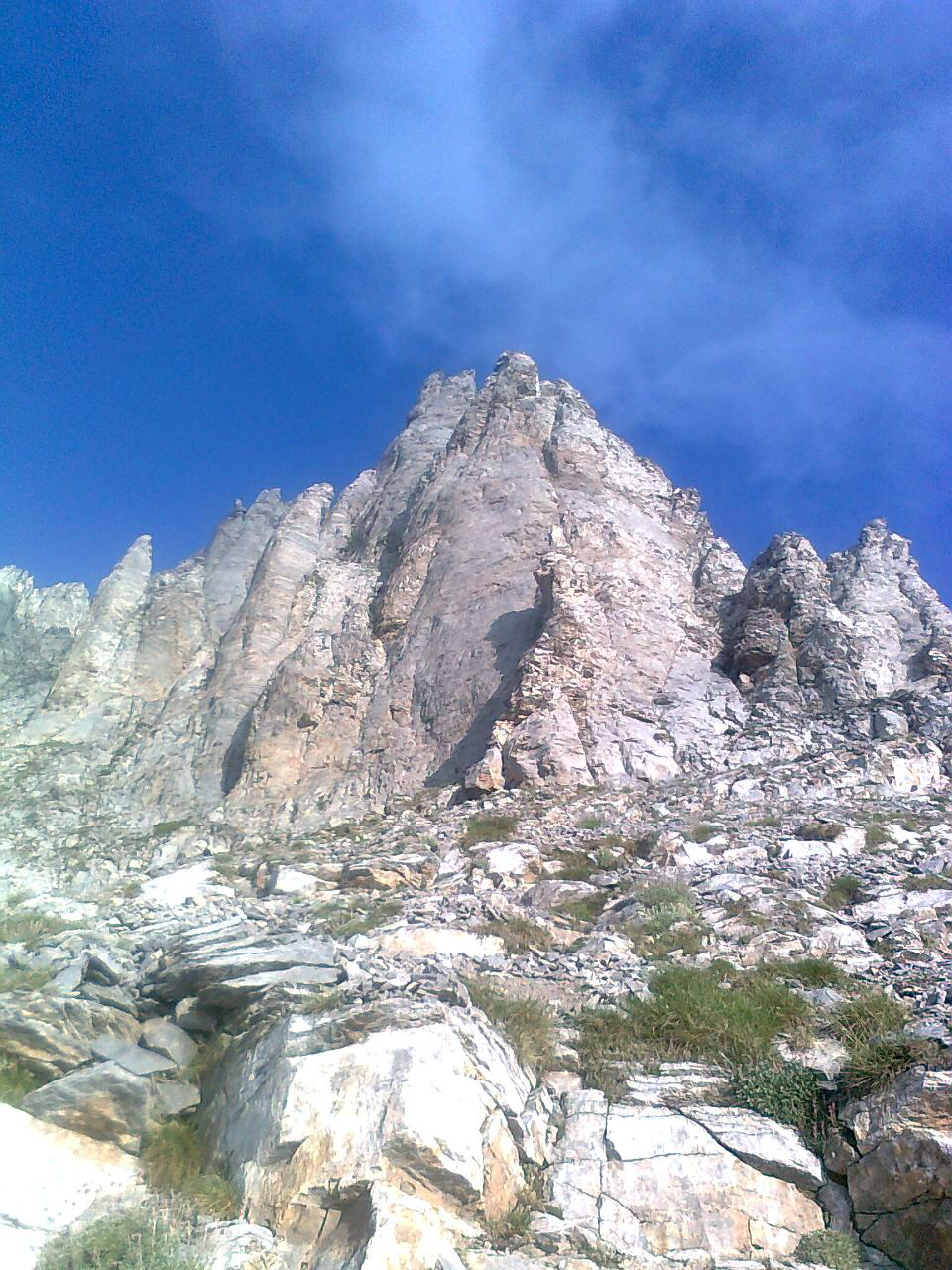
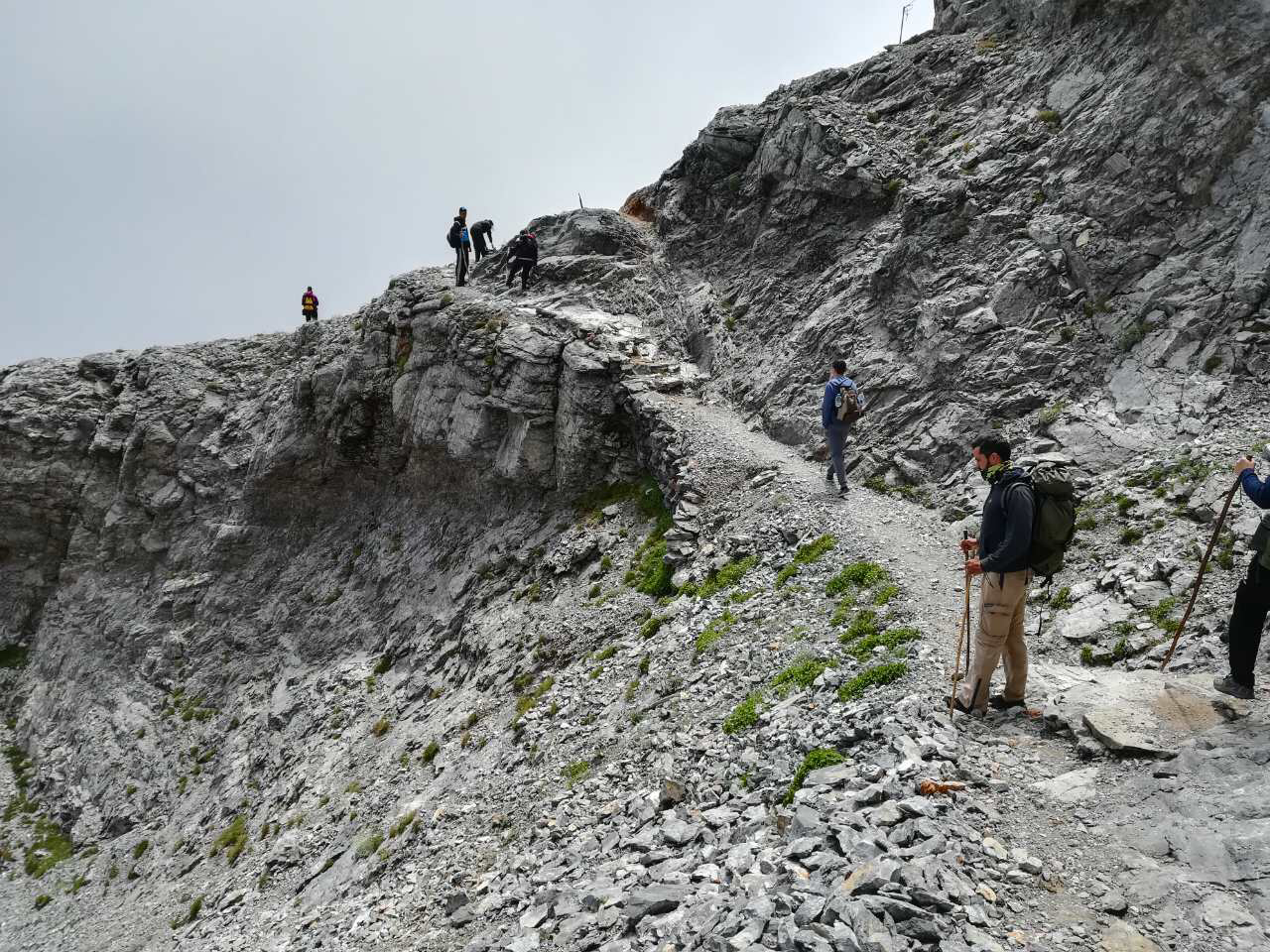
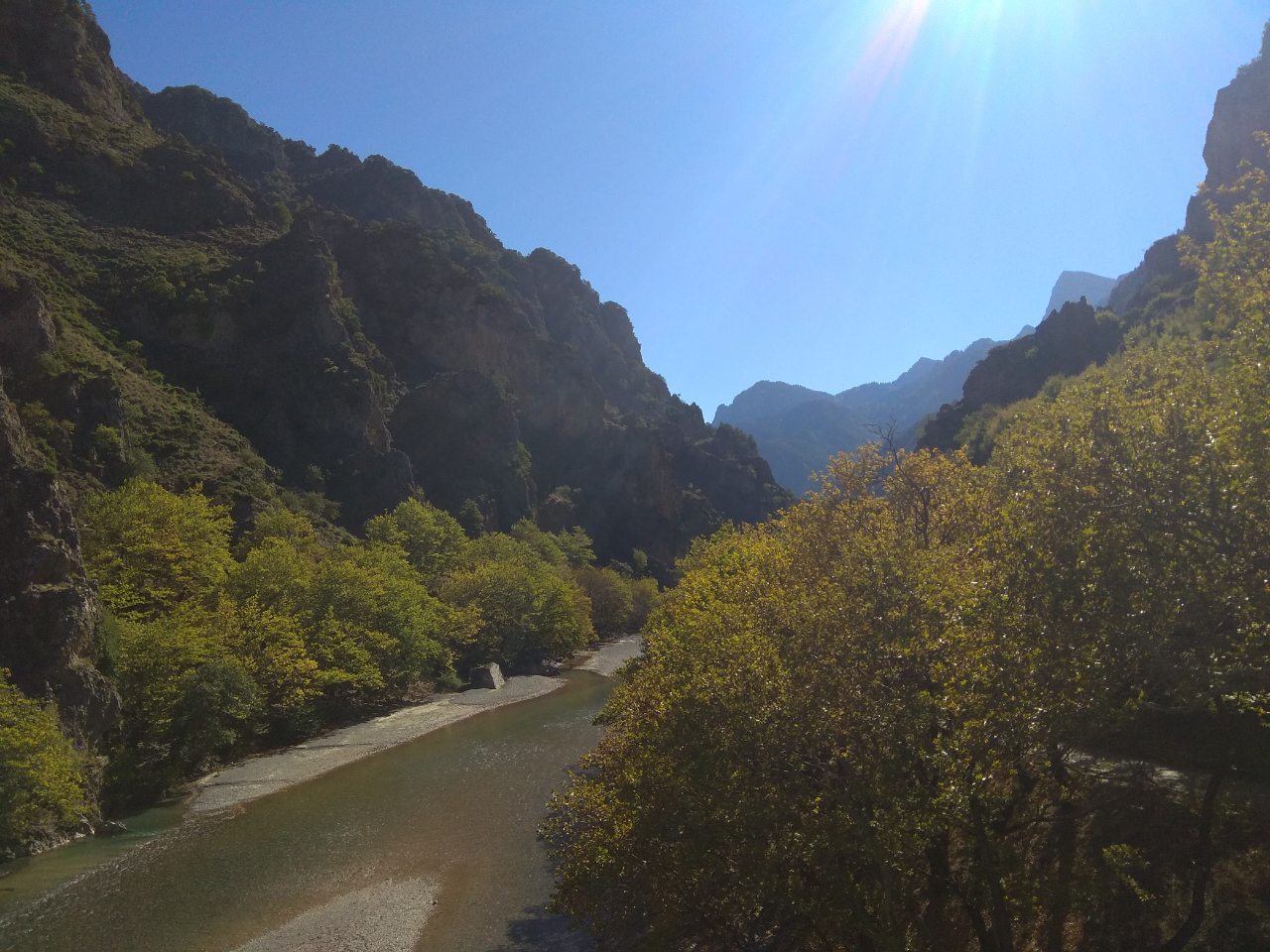
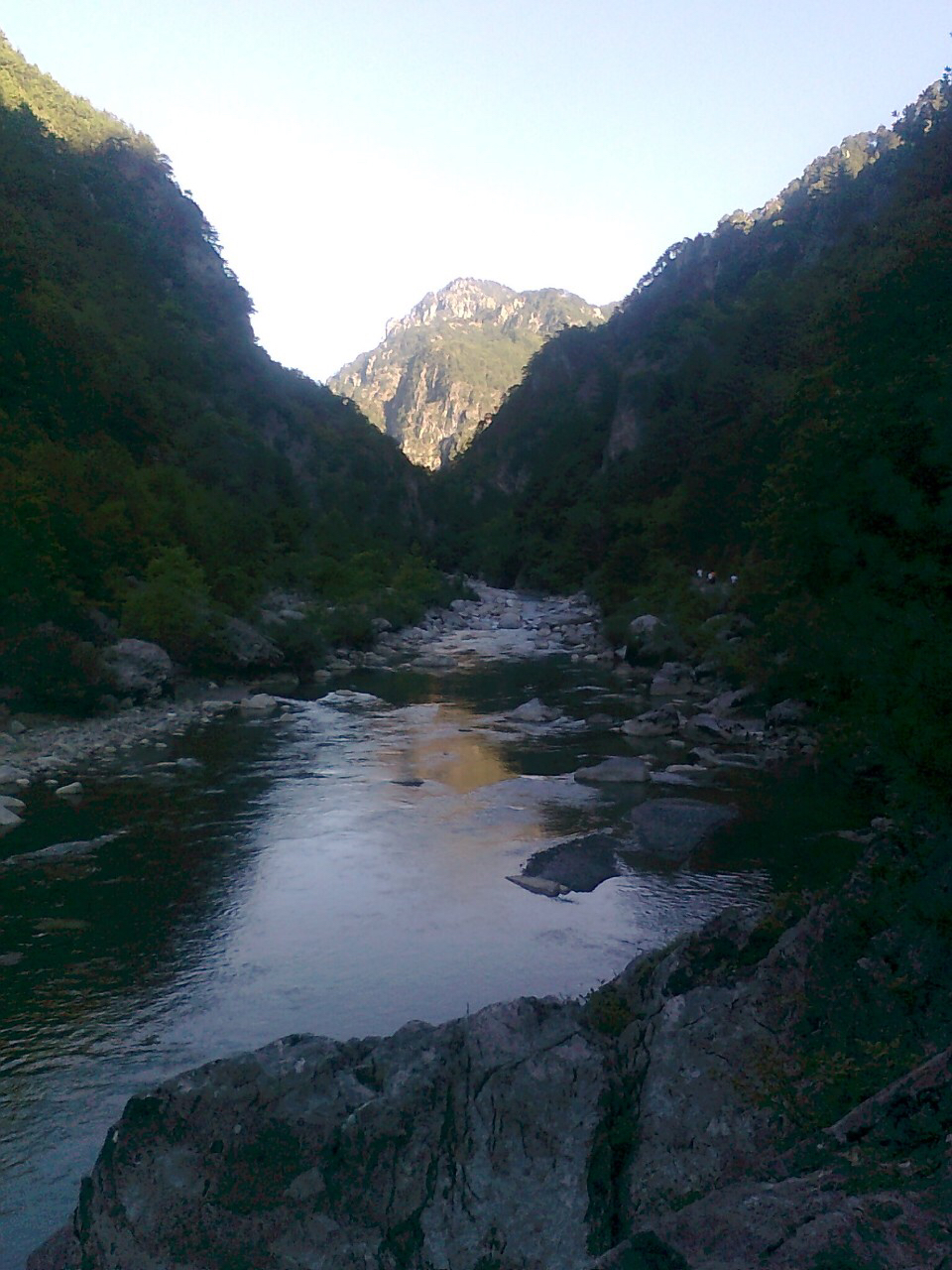
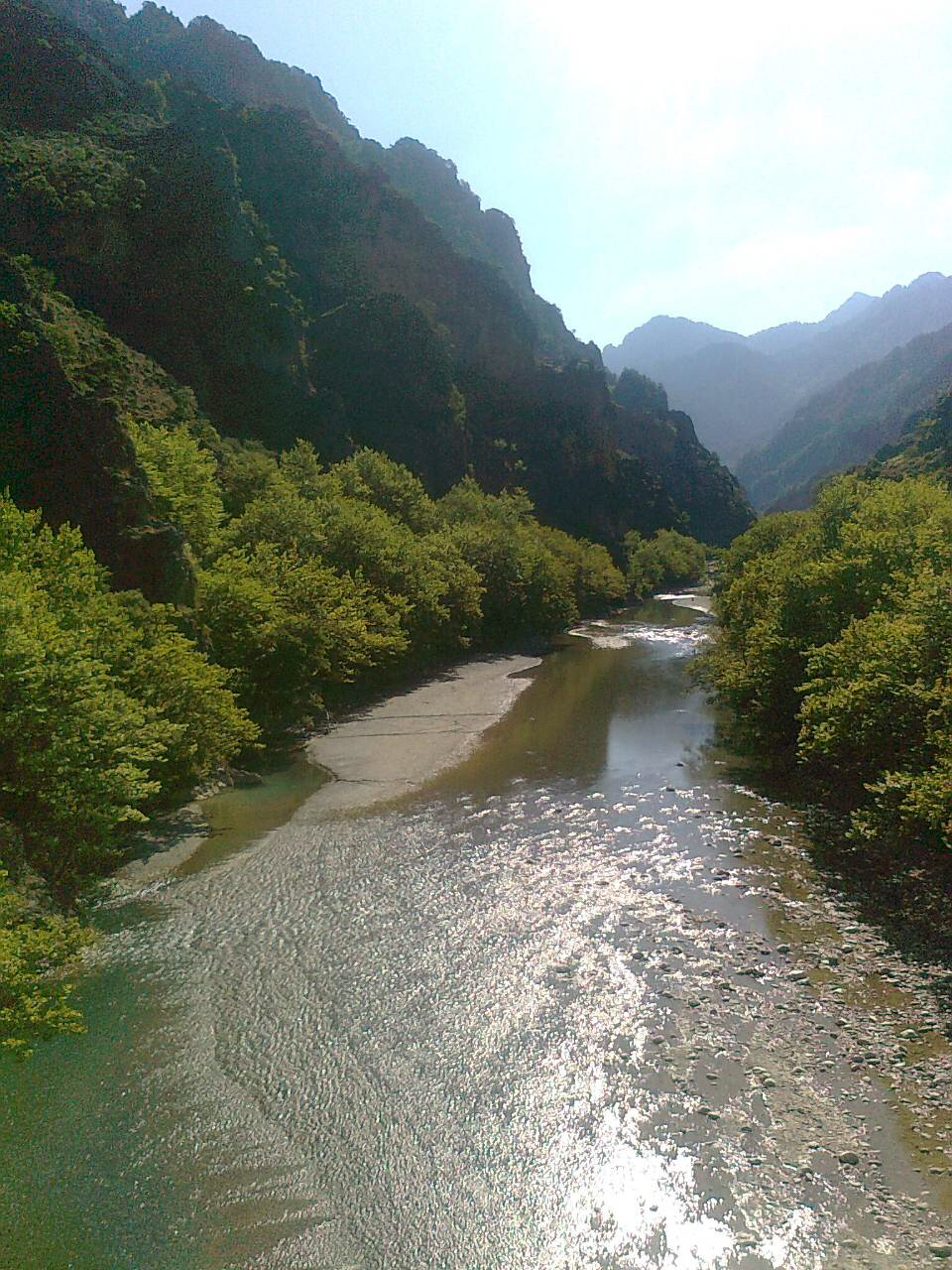
+Memory Eternal, Elias! May you feast in Paradise with your beloved Saints, St. Paisios and the prophet Elias! (Elias, a family acquaintance, precious friend and father of 4 lost his life at 39, about a month ago; he fell in a gorge on these mountains during a mountain trekking/pilgrimage .)
My heart beats faster in Greece. Right now, I am there in spirit. Together with the Saint of my heart, Saint Paisios, my spiritual grandfather. God is glorified in His Saints!
*
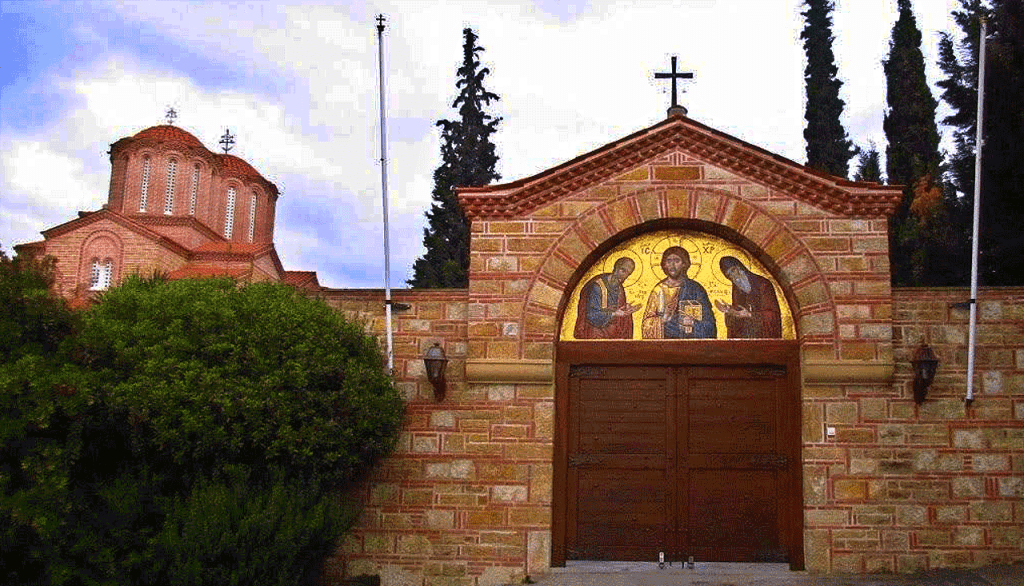
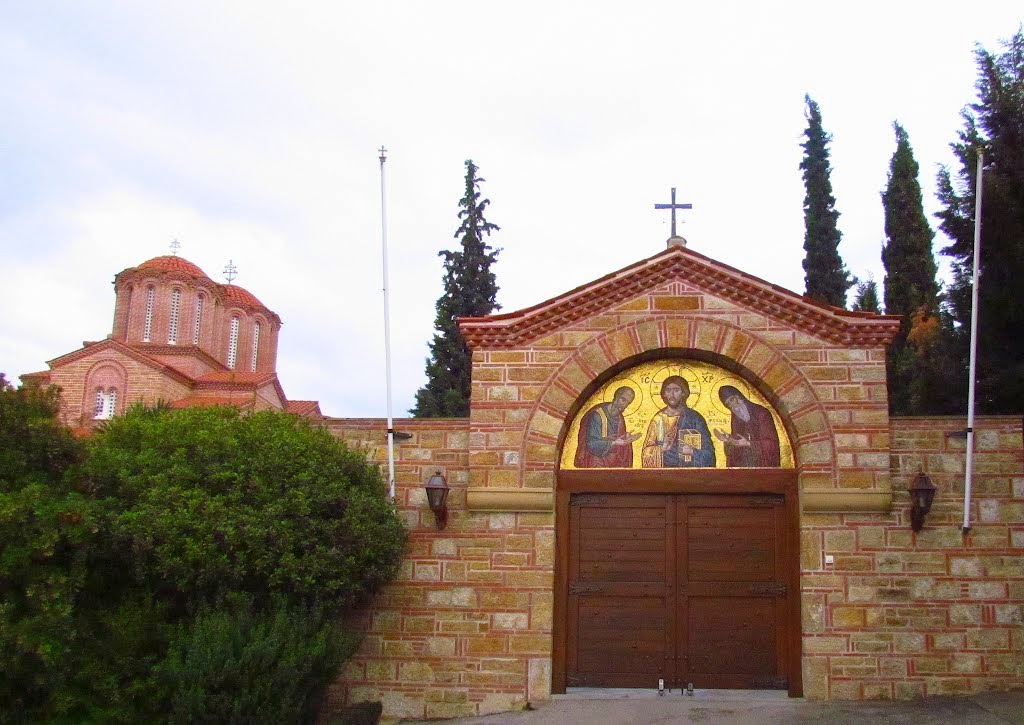
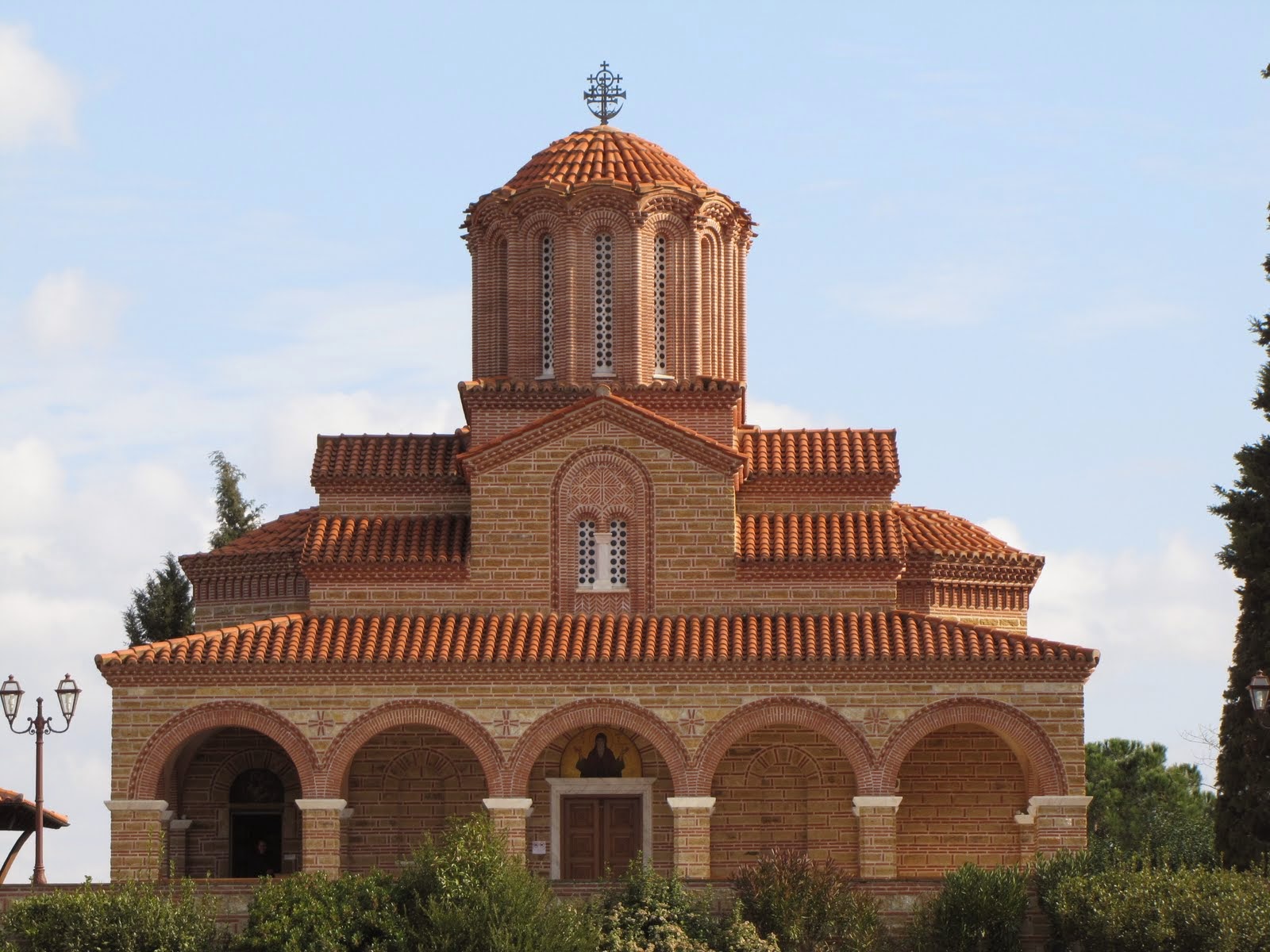
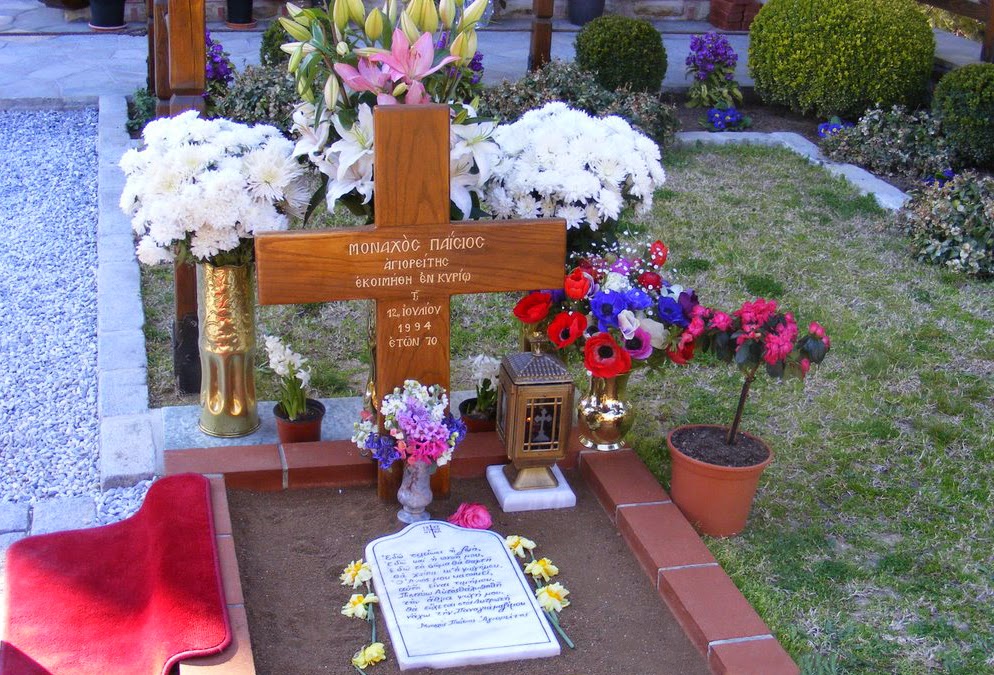
The Holy Monastery of St. John the Theologian, Souroti, Thessaloniki Souroti is found around 28 kilometers from Thessaloniki, not far from the central road which links the city with the capital of Chalkidiki, Polygyros.The Holy Monastery is dedicated to St. John the Theologian and to St. Arsenios of Cappadocia. In the Monastery are the Relics of St. Arsenios of Cappadocia, which are found in the Katholikon, along with the grave of St. Paisios of the Holy Mountain, who reposed on July 12th 1994, and was buried next to the church of St. Arsenios.
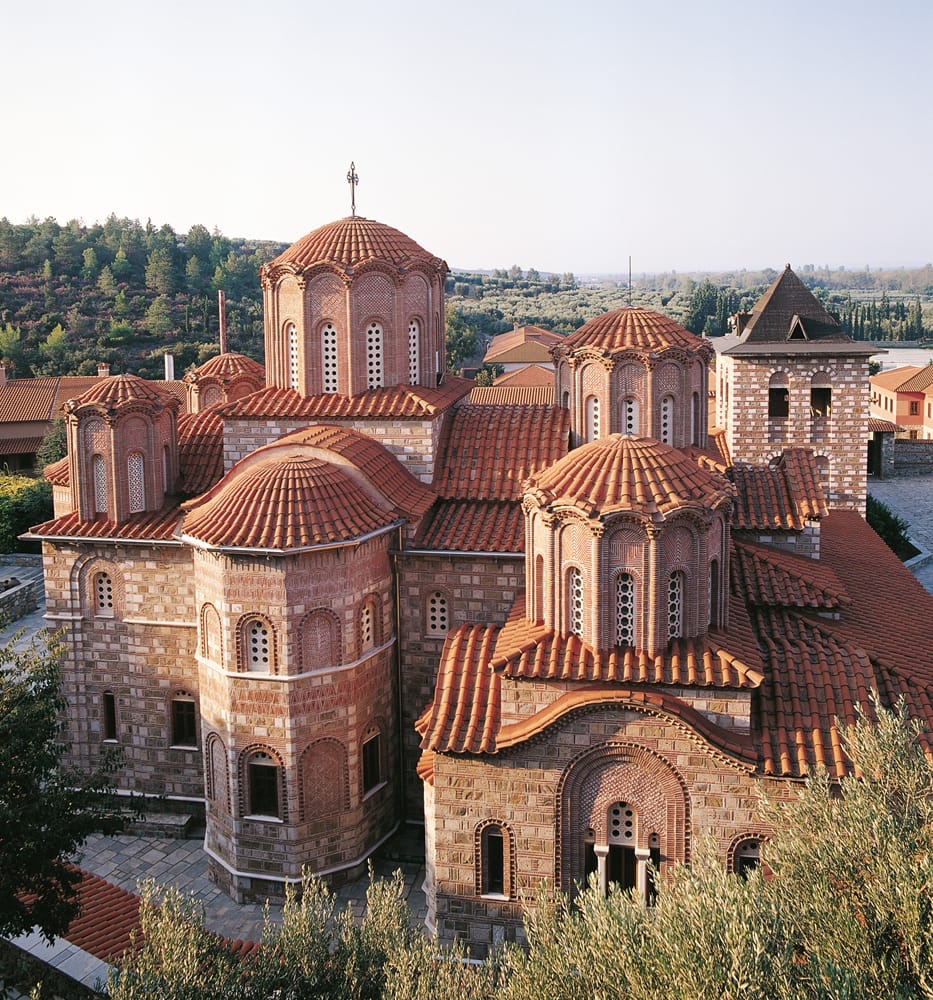
The beautiful church of St. Arsenios of Cappadocia, in Souroti Monastery
Every year, from July 11th-12th, the anniversary of the repose of the Saint, the Holy Hesychasterion serves a vigil service, with thousands of the faithful taking part. For example, on the anniversary of St. Paisios’ repose in 2014 (and before he was canonized a Saint), an estimated 120,000 people came to venerate his grave. Many miracles occur through the Saint’s intercessions and through the soil from his grave, which pilgrims often take as a blessing.
The humble yet wonderworking grave of St. Paisios of the Holy Mountain, behind the church of St. Arsenios, Souroti Monastery
St. Paisios’ acquaintance with the Monastery Once, the Elder sick and was in great need of blood for his surgery. He had no relatives by his side (as he himself wished) and a group of novice nuns donated as much blood as he needed. He was very grateful for their support. Wishing to express his deep gratitude, he used to say that their kind support resembled a woolen sweater embracing his bare flesh; he wished to take it off and offer it to them in return, as an expression of his heartfelt gratitude.
The grave stone of St. Paisios, engraved with beautiful and humble poem written by him. In English, it reads:
“Here life has ended,
Here and my breath (has ended),
Here the body will be buried,
And my soul will be happy.
My Saint lives, that is my honour.
I believe that he will pity my miserable soul.
He will pray to the Saviour
To have the Virgin Mary with me.”
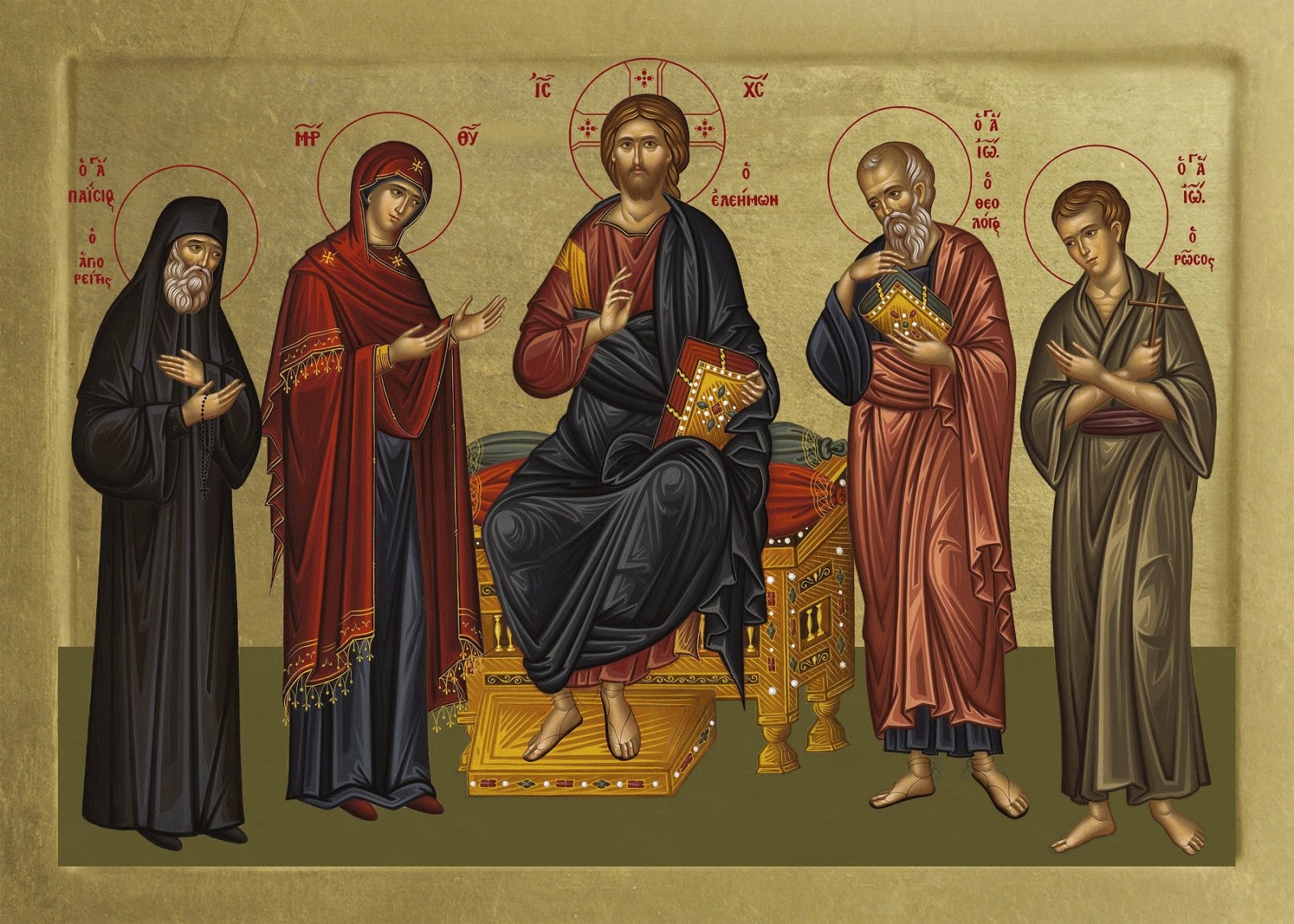
The Great Deisis: Christ, entreated by the Theotokos, St. John the Theologian, St. John the Russian and St. Paisios the Athonite
He sympathized with the nuns who were facing insuperable problems in their effort to build their convent. So, he personally took the initiative to find a suitable area for its construction. He offered his assistance in every way he could; along with the building’s foundations, he also laid its spiritual foundations by giving instructions for the proper functioning of the convent. Thus, the Elder established a strong relationship with the Convent of St. John the Theologian and remained by its side until his death.
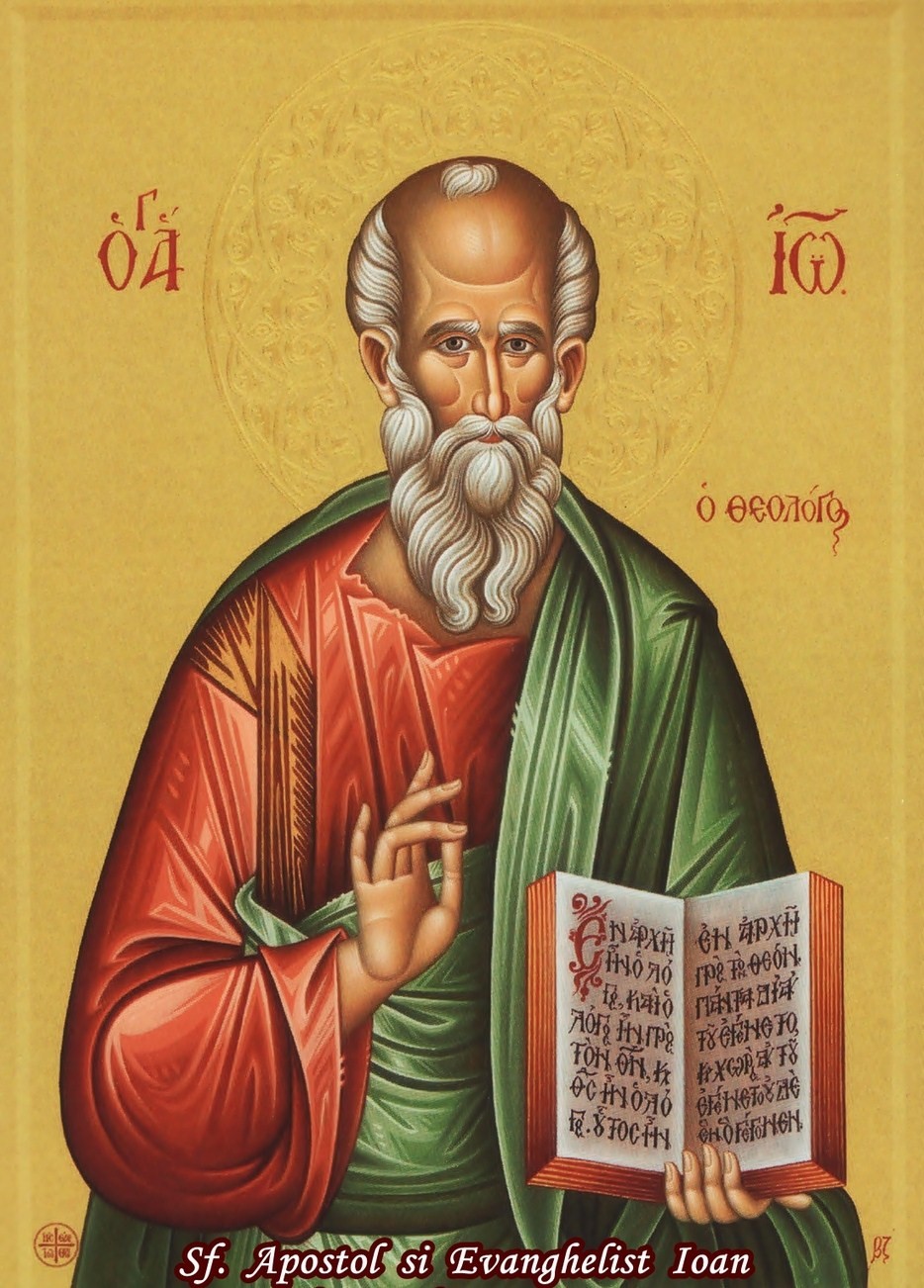
St. John the Theologian
For more on St. Paisios’ role in the founding of the Monastery, and on his relationship with Fr. Polycarp, see here.
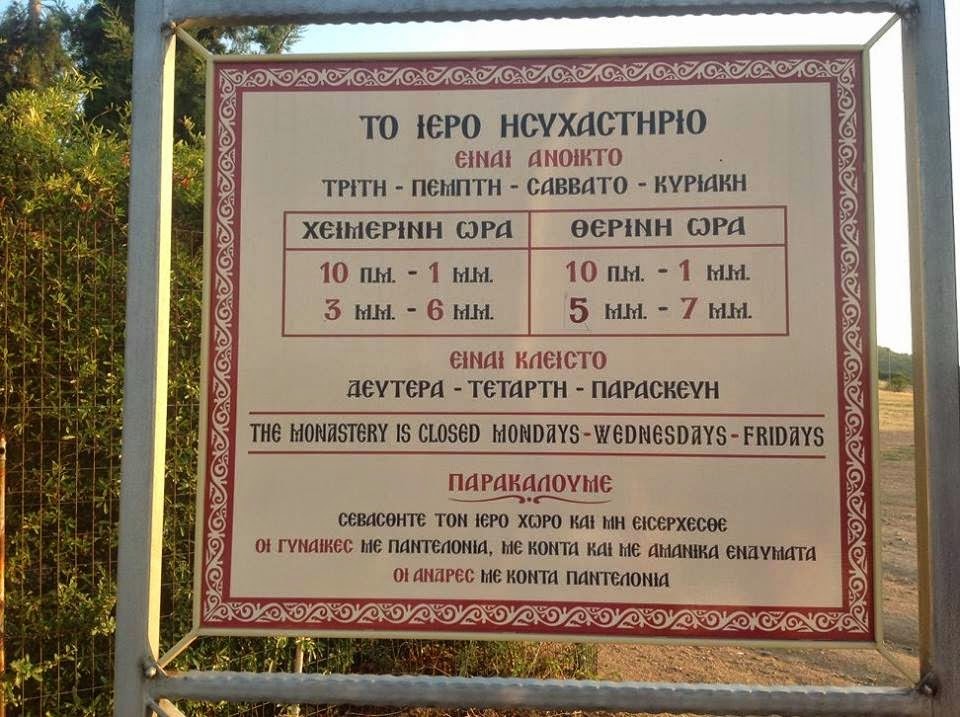
Hours of Visitation at the Monastery (source)
Please note that the Monastery is closed to pilgrims Mondays, Wednesdays and Fridays, while the schedule for the rest of the days is according to the following hours:
Winter hours:
Daily 10 am-1 pm and 3 pm-6 pm
Summer hours:
Daily 10 am – 1 pm και 5 pm – 7 pm
Tel: (+30)2396041320 and (+30)2396041315
Please contact the Monastery with additional questions or for the most up-to-date info.
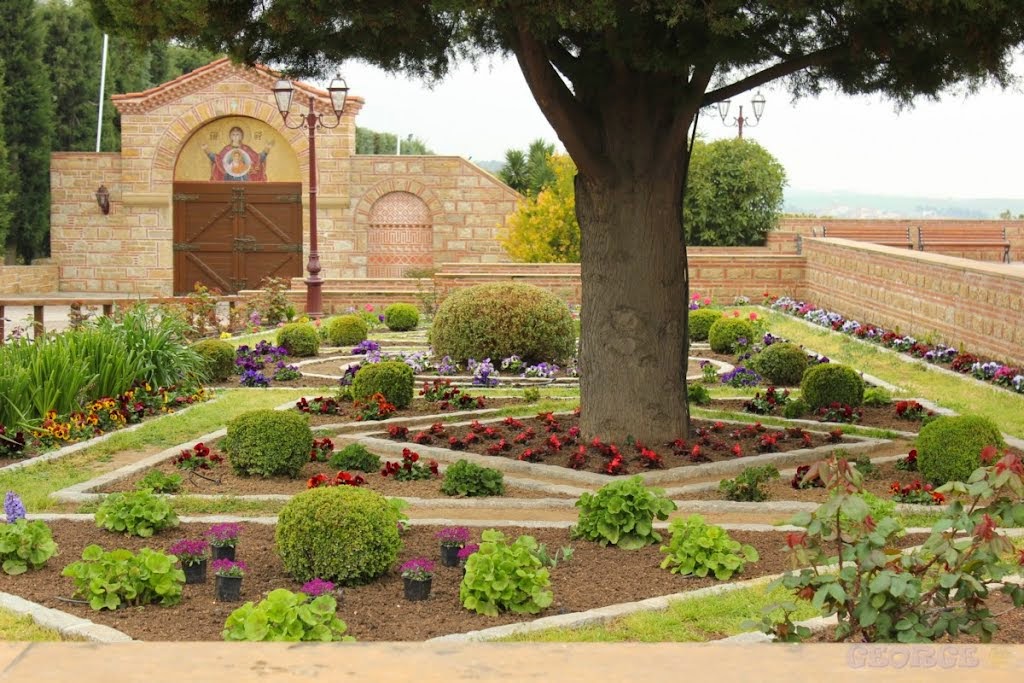
Beautiful gardens, planted with prayer, at Souroti Monastery
Through the prayers of our Holy Fathers, Lord Jesus Christ our God, have mercy on us and save us! Amen!
There are many causes which generate trials and sorrows in our life. Besides that, their combinations can be quite complex, so we are in a labyrinth of factors.
However we can distinguish four big categories of influence which will help us to avoid and protect ourselves from unwanted happenings in our life.
Sorrows Because of our Sins. When we sin, because the sin is an existential distortion, spiritual law will try to re-establish the equilibrium. If we will try by ourselves, through repentance, confession, and asking for forgiveness to fix our mistake, then sorrow will not come. Otherwise, it will happen after a certain time when it will be clear that we didn’t have an analogous repentance.
Blocking Trials. We make a plan and begin to follow it. However, we cannot see too much in advance. God, which knows everything, sees that in front of us is a deep tar pit, a trap which will harm us badly. That’s why He will allow a blocking trial to happen in order to close our path towards the trap. That’s why the Holy Fathers say, “When God closes a door, don’t break the doorknob”. You will repent of it after.
Advancing Sorrows. Someone can advance spiritually but (s)he cannot or (s)he doesn’t want and/or (s)he doesn’t know how to advance. In such cases, God gives us a trial, a sorrow, in which we will gain virtues like prayer, patience, humility, and other qualities upon which we will advance spiritually.
Trials for Example. Everyone is a sinner but there are times in which we don’t do such sins in order to trigger the spiritual law in a big degree. Even then, God might put us in a trial in order to be an example to follow, a light for others. We have here the classical example of Job in the Old Testament period. In the New Testament period, there is, firstly, the example of our Lord Jesus Christ and, after Him, a lot of saints.
Based on Elder Joseph of Vatopaidi, Saint Paisios the Athonite
Minimalism has always attracted me but will by necessity become central to my lifestyle from now on, if I am to survive what is to come… The word from my spiritual father was unequivocal this time. Life as I have known it will change drastically in the months to come: the little city hermit will constantly be on the move. Little did I know back to four years ago how prophetic this would be: “My Lifestyle – Suitcases,Lover of the Theotokos, Pilgrim, Traveller and a Little City Hermit. Belonging to Neither and Both.”
*
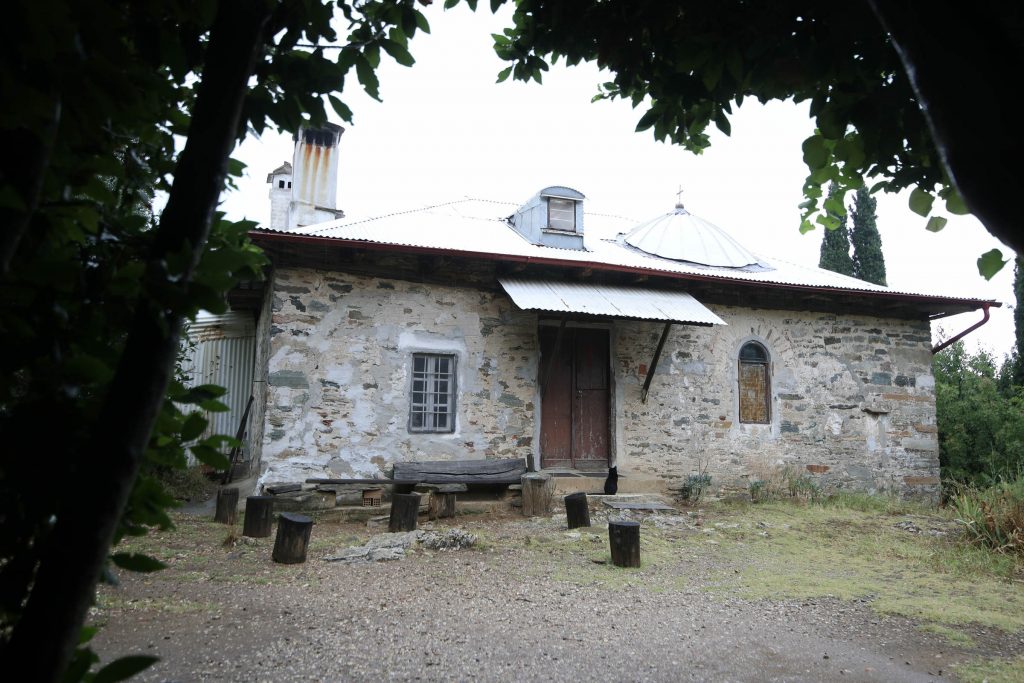
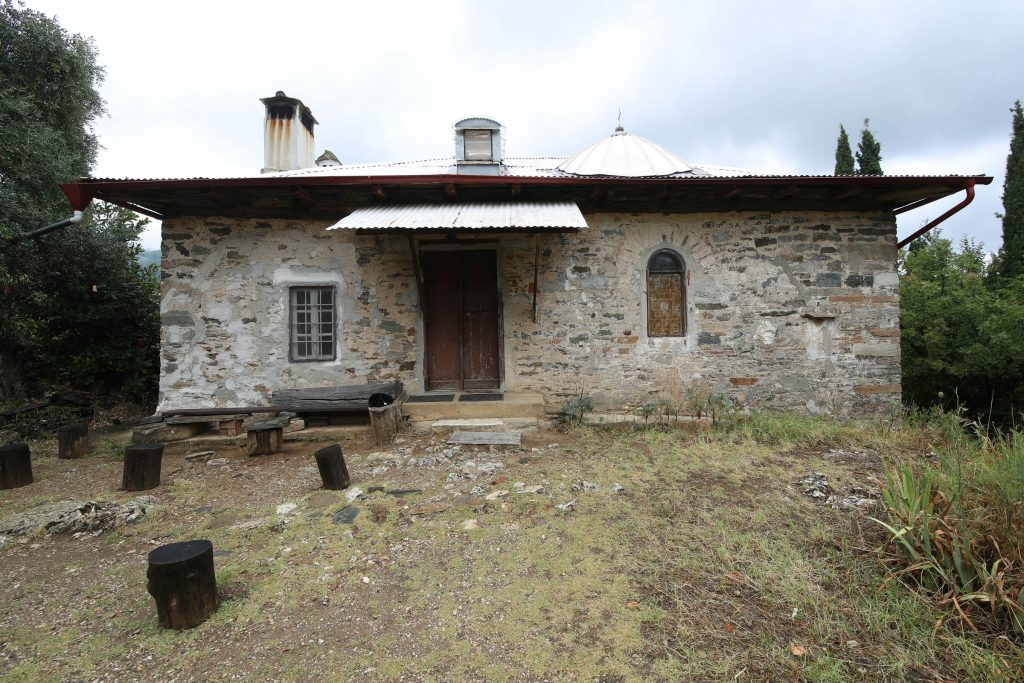
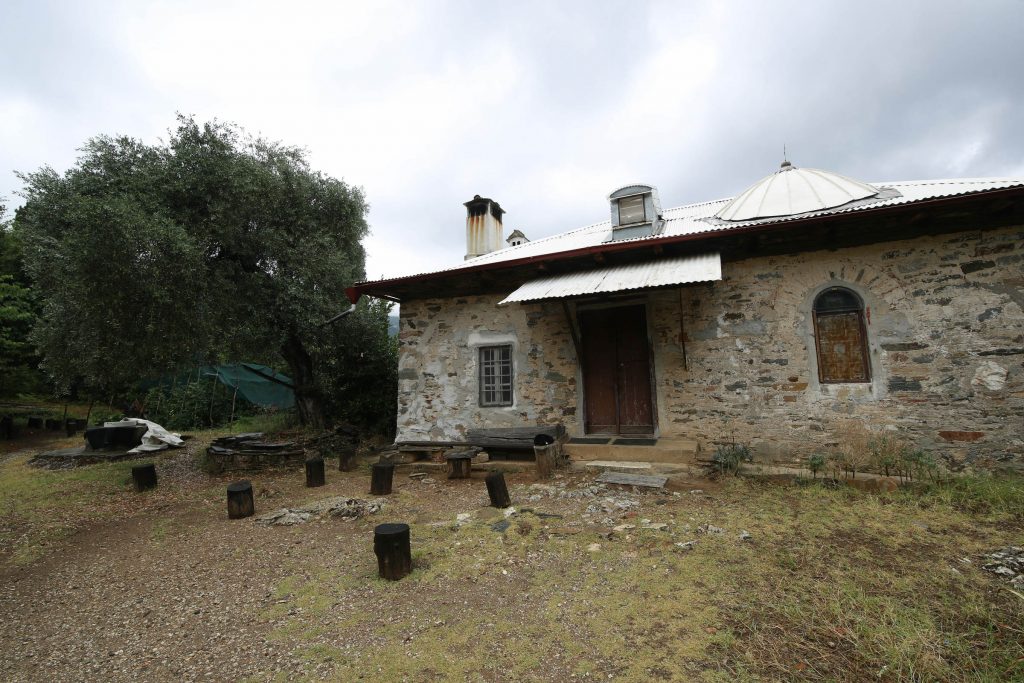
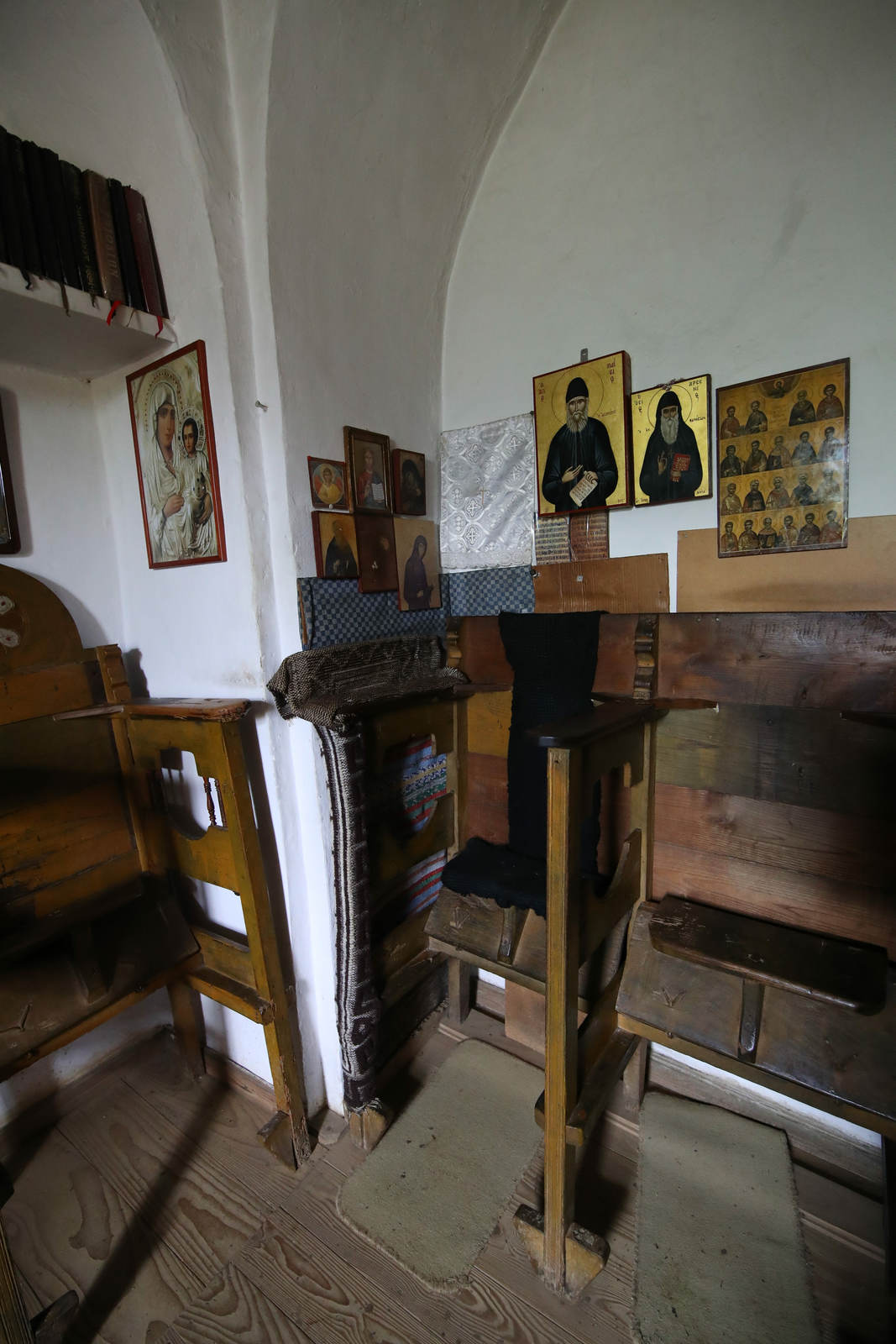
“Since I am a leader, I often visit different places, in luxurious salons and houses, and then I remember the cell of elder Paisios, in which there was nothing.
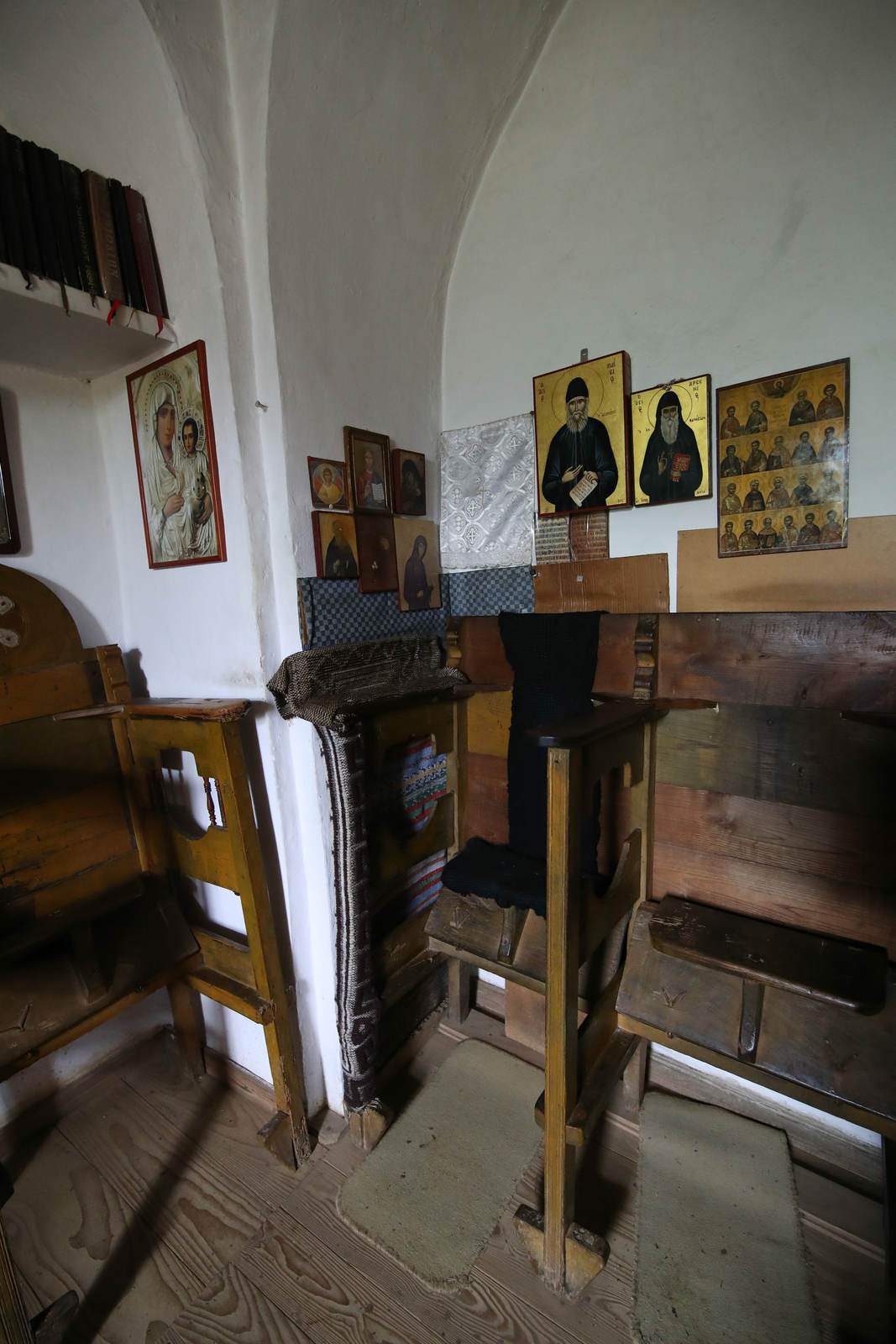
Do you know what this “nothing” means? Absolutely nothing, in the truest sense of the word. Some boxes and old blankets that he had found and attached were his “sofas.” He said about them:
– I specially ordered these sofas from France, from Louis! – so he told us laughingly.
At first, when we went to him, since I was young, he said to me:
– For you, pop, I have a special chair, you sit there because it is special, and I hold it for official guests!
And what do you think it was? The box was covered with a blanket, and another blanket was nailed to the wall so that you would not be cold when you lean against it.
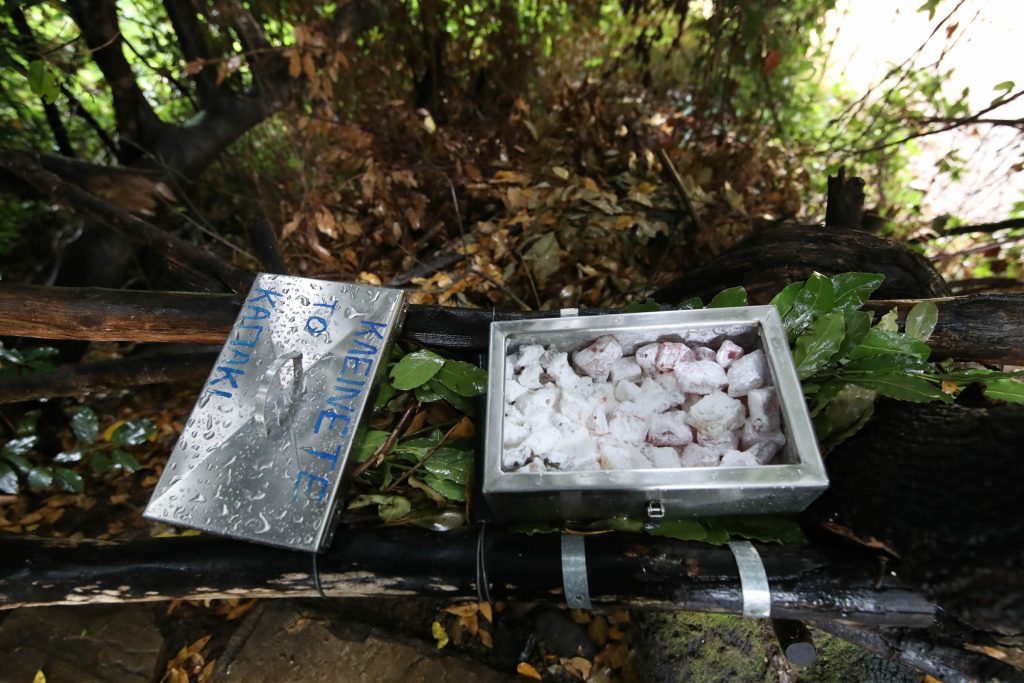
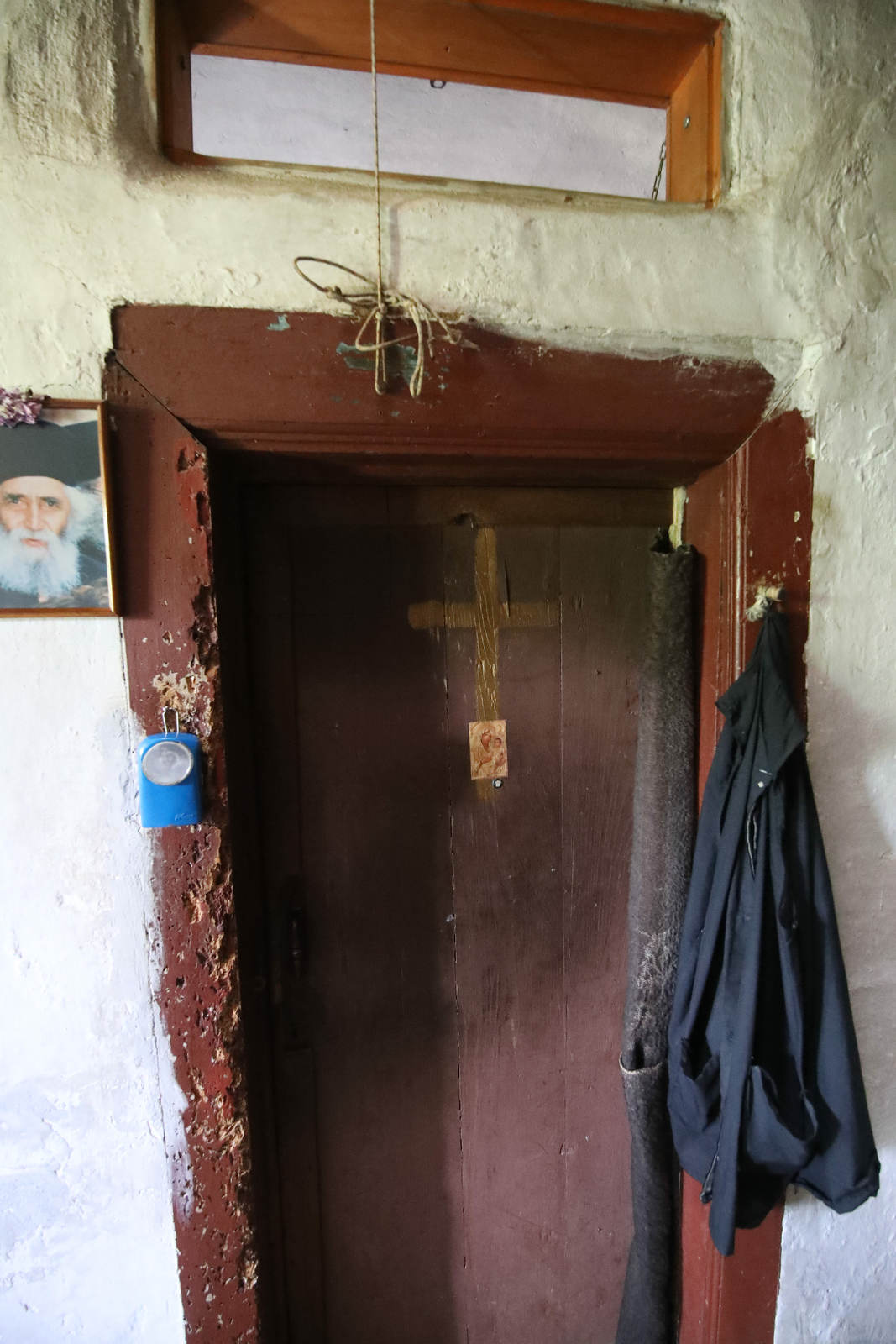
He had nothing, the icons were paper, inserted in cellophane, there was a stool instead of a table; The old man put a board on his knees and wrote on it. Poverty. He didn’t have anything, not because he couldn’t, but because he didn’t want it. If he wanted, he would be rich, a millionaire – if he wanted, but he did not want it. All his goodness was placed in one chest, where there was a little bean, simple rice and what was sometimes worn from monasteries: some dried fruit or Turkish delight, which he treated visitors to. No pans, nothing, that is, those things that for us are self-evident, were a luxury for him.
Once the old man prepared tea for one person – what do you think? In a canned food can. Remember, grandmothers once did that? He put a few pieces of grass into it and brewed tea, and then, when he poured it into another can, all the tea leaves fell out. The man went and bought him a sieve, and he said to him:
– But, my child, why did you bring it? Do we wish luxury now?
– Geronda, one tea strainer – is it a luxury? So that tea leaves do not get into tea … What is this luxurious?
And he answered:
– Why did you bring it? Now I will have to wash it, I will need a nail to hang it, a hammer to nail it, I will have to take care of it … Why do I need all this stuff? You take this your strainer, I do not need it, I do not want it.
Such simple things were a luxury to him. But I confess to you that I would exchange all the salons in the world for this cell, infinitely poor, modest, which, however, was full of God, even the dust in it – everything in it was filled with God.
I was told what some people from America had done: they went and took a rag, about which the elder wiped his shoes, before entering the cell, cut it into many pieces and distributed them to people, and they faithfully and reverently kept this rag , with which he wiped his feet, and miracles were performed. So you say to yourself: this is what God’s man means! Even the dust from his feet will be honored.
So who succeeded now? Whether the one who lived in the palaces and the memory of him perished, and it is unknown whether even children remember him — or this extremely poor, uneducated ascetic in the middle of the mountains, who, however, was filled with blessing from God with happiness, optimism, the former like a source from which happiness and joy exuded? And we all walked, like all suffering people, drank and were saturated with this water, flowing from this poor man, who often had nothing to eat.
I remember once, when I went to Thessaloniki, I bought some dry milk for the old man, because he had problems with his stomach, and brought him to him.
– What is it?
– Geronda, for your stomach! A little water and a spoonful of powder – and it turns out milk!
– Well, leave it over there!
After a year or two, I had to do something there and found a bag of milk in the same corner. He did not even open it, did not touch it. The way I bought it, so it was.
“Geronda blessed, did you leave it there?”
And he answered me:
– If I wanted it, I would have bought it myself! I did not ask you to bring it to me!
“I don’t have it, not because I can’t, but because I don’t want it, I decided that my life would be like that. If I wanted to, I could live differently. ”
This, naturally, I am not saying so that we imitate him, because, probably, in the world where we live, we don’t need and we can’t even do such things because of our obligations. But let our heart be free, wise, and we need to learn what matters in our lives: for ultimately only God matters.
You say: “I did not succeed in one thing, did not succeed in the other, did not become what I wanted.” Why do you want this? All this is transient, vain. Achieve what has value. Have you attained God? Do you have God in your heart? Do you have the expectation of the kingdom of God? That is what has value. And everything else – for a short time.
Well, add everything else, and what happened? Those who have should be as not having. You will not be with this for long, you will lose it, you will not have it all your life. Even the most expensive things, even they will not be with you in the hour of your difficulty. God is here Who will be with you always, you need Him, you need Christ. We will look for Him.”











 ORTHODOX CHRISTIAN FAITH AND LIFE