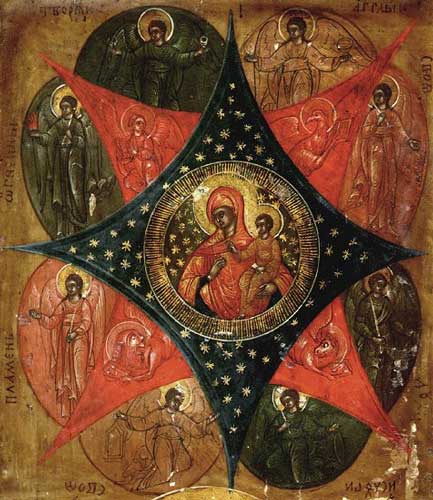
Love Without Limits

burning bush13

“Whoever you are, whatever you may be, says the Lord of Love, my hand is resting upon you at this very moment. By this gesture, I am letting you know that I love you and that I call you for my own.

I have never ceased loving you, speaking to you, or calling you. Sometimes it was in silence and solitude. Sometimes it was there, where others were gathered in my name.
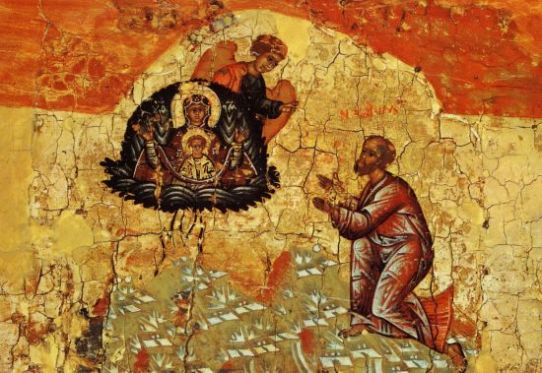
burning bush6

Often you did not hear this call, because you were not listening. At other times you perceived it, but in a way that was vague and confused. Occasionally you were at the point of responding with acceptance. And sometimes you gave me that response without any lasting commitment. You were deeply moved to hear me. You recoiled from the decision to follow me.

Never thereafter did you finally submit, totally and exclusively, to the calling of Love.

Yet now, once again, I come to you. I want to speak to you once more. I want you wholly for myself. Let me repeat: Love desires you, totally and exclusively.
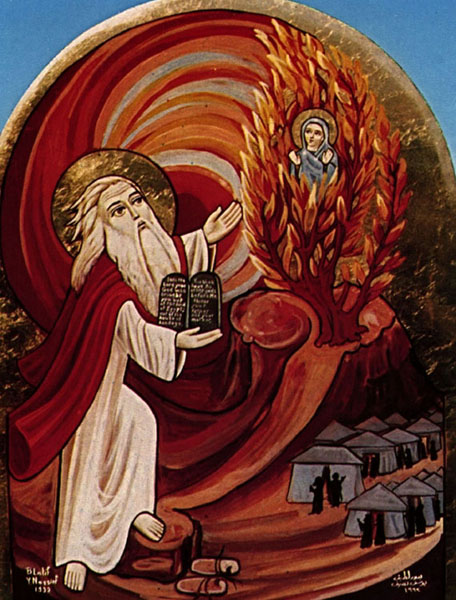
burning bush3

I will speak to you in secret, confidentially, intimately. I will place my mouth close to your ear. Hear, then, what my lips want to speak to you in hushed tones—what they want to murmur to you.

I am your Lord, the Lord of Love. Do you want to enter into the life of Love?

This is not an invitation to some realm of tepid tenderness. It is a calling to enter into the burning flame of Love. There alone is true conversion: conversion to incandescent Love.
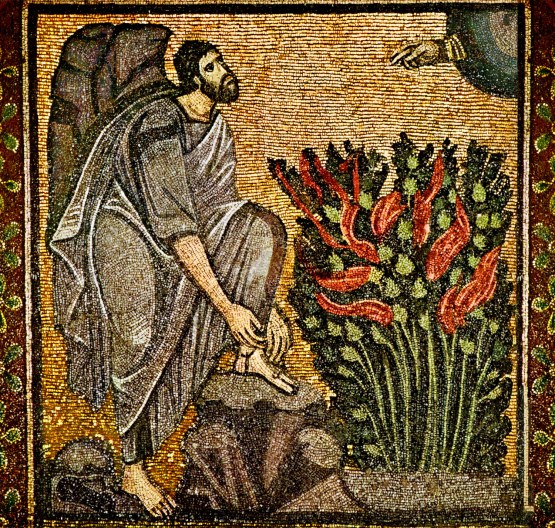
burning bush9

Do you wish to become someone other than you have been, someone other than you are? Do you wish to be someone who lives for others, and first of all for that Other and with that Other who calls all things into being? Do you wish to be a brother to all, a brother to the entire world?

Then hear what my Love speaks to you.

My child, you have never known who you really are. You do not yet know yourself. I mean, you have never really known yourself to be the object of my Love. As a result, you have never known who you are in me, or all the potential within yourself.
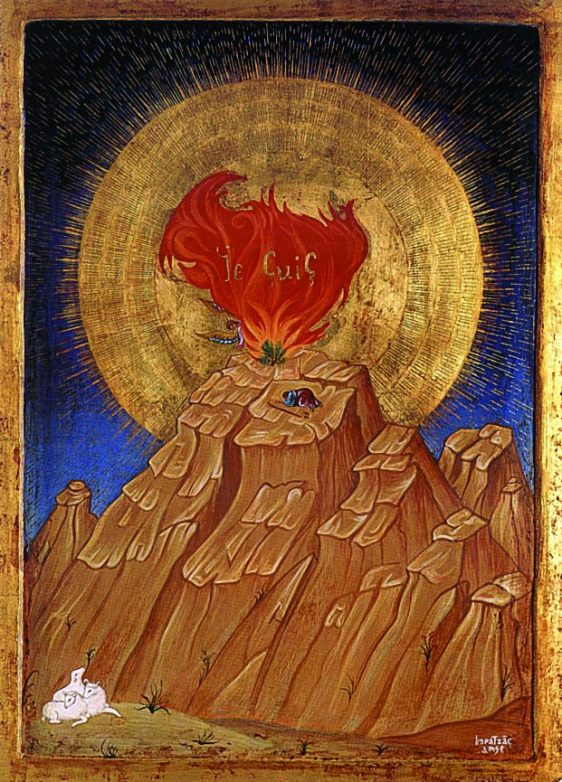
burning bush8

Awake from this sleep and its bad dreams! In certain moments of truth, you see nothing in yourself but failures and defeats, set-backs, corruption, and perhaps even crimes. But none of that is really of you. It is not your true “me,” the most profound expression of your true self.

Beneath and behind all that, deeper than all your sin, transgressions and lacks, my eyes are upon you. I see you, and I love you. It is you that I love. It’s not the evil you do—the evil that we can neither ignore nor deny nor lessen (is black actually white?). But underneath it all, at a greater depth, I see something else that is still very much alive.

The masks you wear, the disguises you adopt might well hide you from the eyes of others—and even from your own eyes. But they cannot hide you from me. I pursue you even there where no one has ever pursued you before.
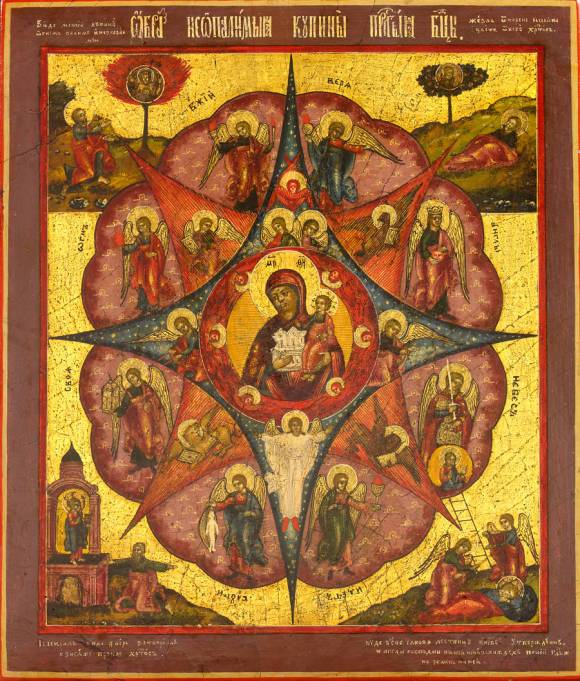
burning bush11

Your deceptive expression, your feverish quest for excitement, your hard and avaricious heart—all of that I separate from you. I cut it away and cast it far off from you.

Hear me. No one truly understands you. But I understand you. I can speak about you such wonderful, marvelous things! I can say these things about you. Not about the “you” that the powers of darkness have so often led astray, but about the “you” who is as I desire you to be, the “you” who dwells in my thoughts as the object of my love. I can say these things about the “you” who can still be what I want you to be, and to be so visibly.
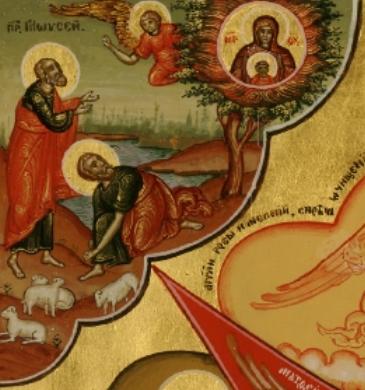
burning bush10

Become visibly, then, what you already are in my mind. Be the ultimate reality of yourself. Realize all the potential I have placed within you.

No man or woman is capable of realizing any inner beauty that is not equally present within you. There is no divine gift toward which you cannot aspire. Indeed, you will receive all those gifts together, if you truly love, with me and in me.

Whatever you may have done in the past, I will set you free, I will loose your bonds. And if I loose your bonds, who can prevent you from rising up and walking?
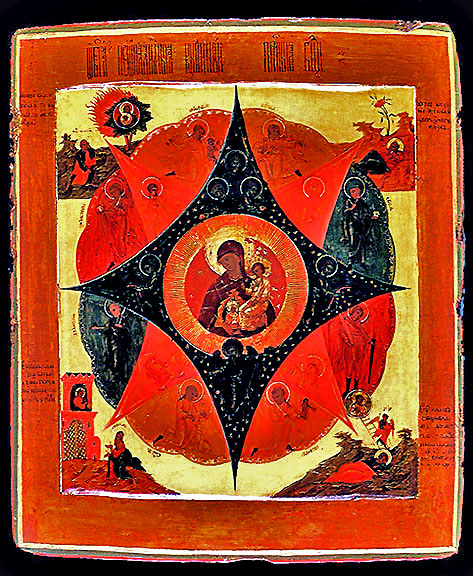
burning bush12

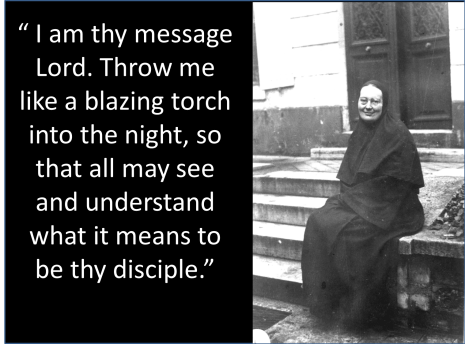
Love Without Limits (orig. Amour Sans Limites), 1971

By A Monk of the Eastern Church

Archimandrite Lev Gillet, who signed many of his books “A Monk of the Eastern Church,” was one of the great Orthodox spiritual guides of the last century. It is difficult to render Fr Lev’s lyrical French into English, but we hope that these efforts will provide readers with something of the spiritual richness and profound theological insight that characterized this humble monk, who was truly a modern Father of the Church.
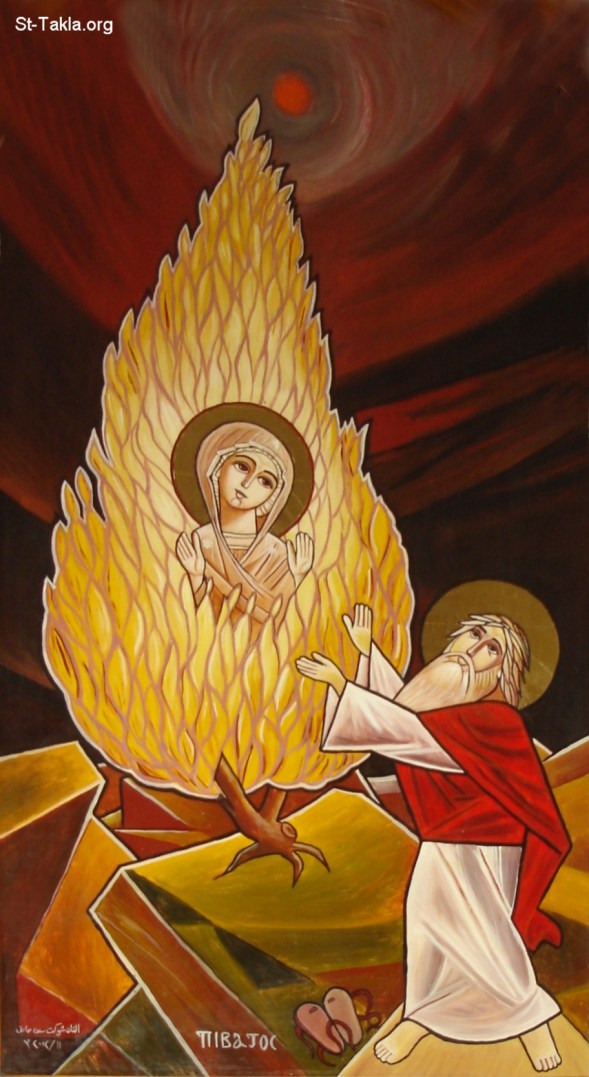
burning bush2

Source: http://oca.org/reflections/archimandrite-lev-gillet/love-without-limits

Romanian Matrix

4_Elena Murariu, +ÿtefan cel Mare SONY DSC


Toma Chituc and Mihai Coman, two iconographers in the Romanian icon renewal.

I. Iconography, a recovered artistic language 

It would have been impossible to imagine a public conversation on icons and their veneration a quarter of a century ago in communist Romania. (…) However, in the last 25 years that have elapsed since the anti-communist revolutions in Eastern Europe, changes have been impressive. (…) In the aftermath of the atheist regime, religious life has revived in all its dimensions: art, liturgy, parish life and monastic communities. There are new parish churches, new monasteries, new canonized saints as well as new Christian martyrs of the communist persecution receiving a large popular veneration and waiting to be canonized. In this context, the icon has become a common presence in homes and offices.
Ioan Popa working on his icon of the

The most remarkable aspect of this revival is that the abundant iconographic demand and the high number of skilled iconographers gave rise to a competitive ambiance that led to an obvious advance in the quality of iconography and, subsequently, to a new iconographic movement.

598567_4005944750189_366075064_n

Our interest focuses on these latter artists who have reached an advanced aptitude of mastering the painting of icons and frescos. Socially, they are also the most visible category, knowing how to promote their creation, how to set up events and integrate their art in the larger cultural and artistic phenomenon. Their personalities are complex: in addition to working in the studio or on the scaffold, they organize symposia, open exhibitions and workshops, invite colleagues from the country and abroad, some of them teach religious art and, generally, they bring iconography to the public attention. One may observe that, over the past five to ten years, the phenomenon has become more alive and has configured a group of iconographers and church painters who are not only talented artists but also curators, theorists and project managers. Furthermore, one of the most significant aspects is that a few artistic values have been gradually assumed by the most valuable iconographers:

1. A thorough education in classical art. ( …)

2. A personal spiritual life. All of them assume, with the Orthodox tradition, that a spiritual dimension is a necessary ingredient to painting an icon. Painting an icon is not a mere artistic activity but a facet of the larger spiritual growth, both personal and part of the community in which the iconographer lives. Painting an icon, therefore, becomes a way of expressing their creativity, a spiritual search in a direct continuity with their ancestral Orthodox legacy and a way of life to which they dedicate themselves entirely. Thus, they strive to understand the icon in a theological manner, as a sacred image, and to address it from a spiritual angle. There are a few cases in which the artists even chose the monastic life; and icon painting became their main obedience in the monastery.

3. They do not imitate but innovate within the canons of tradition. (…)

II. Some iconographers and their work

Gregore Popescu. He is the oldest among the Romanian church painters and has the largest artistic oeuvre.

1_Grigore Popescu_ansamblu altar

SONY DSC

SONY DSC

Elena Murariu represents the middle generation. She worked as a fresco specialist who restored different mural assemblies of the fourteenth to eighteenth centuries and subsequently commenced painting her own icons.

4_Elena Murariu, +ÿtefan cel Mare

Elena Murariu, Holy Brancovan (Brâncoveanu) Martyrs

Gabriel Toma Chituc. Also primarily educated as a classical painter, Chituc is an original and gifted iconographer with a special artistic expressivity. In the last decade, he has become a prolific iconographer striving to find the mystery of the authentic icon inspired by the Holy Spirit.

6_Gabriel Chituc_Nasterea

7_Gabriel Chituc_Bunavestire

OLYMPUS DIGITAL CAMERA

OLYMPUS DIGITAL CAMERA

Ioan Popa. Although he is only 38, Popa has already painted in the fresco technique two churches in Bucharest and Alba Iulia, the church of a monastery in the Apuseni Mountains as well as baptisteries and small chapels in Southern Italy, Cyprus and Mount Athos.

10_Ioan Popa, capela Spital G. Alexandrescu

11_SS Redentore Church, Manfredonia, Italiy,

12_Ioan Popa, ST. GEORGE

SONY DSC

14_Perete sudic, Alba Iulia

15_Bis. Alba Iulia, detaliu

Mihai Coman. He teaches church painting techniques at the Faculty of Theology in Bucharest and studied restoration in Romania. However, in what regards his skills of painting icons and frescos, Coman affirms that he “learned the technique on Mount Athos and understood the icon with the professor and painter Georgios Kordis,” whose doctoral student he is in Greece.

16_Mihai Coman_Cina cea de taina

17_Mihai Coman_Gabriel Chituc_Schitul Brazi

18_Mihai Coman_Acoperamantul

Deacon Nicolae Bălan. After his studies in iconography at the Faculty of Theology in the Department of monumental art, he attended the Faculty of Fine Arts in order to improve his drawing and composition techniques. Bălan is a gifted draftsman and he painted the metropolitan chapel from Limours (France) and St. Trinity Church in Alba Iulia.

19_Balan Nicolae, biserica memorial¦ Alba Iulia

21_Balan Nicolae, cruce altar

20_Balan Nicolae, detaliu bolt¦ Alba Iulia

To these iconographers should be added many others, all of special talent and abundant production. We will mention here a few of them for a few particular reasons. First, some have composed new iconographic themes, like Răzvan Gâscă with his St. Maximus the Confessor with scenes from his life, painted to mark the presence of the relics of St. Maximus the Confessor to Iaşi in 2010.

22_Razvan Gasca_Sf Maxim M

Likewise, Marius Ghinescu for his St. Pachomius at St. Dimitry of Rostov, which represents a moment in the life of Venerable Pachomius of Gledin (1674-1724), a Romanian hermit and bishop who spent his last years at the Pecerska Lavra in Kiev.

23_Marius Ghinescu_Sf Pahomie +Öi Sf Dimitrie al Rostovului

Others should be mentioned for the original manner in which they reconceived certain classical themes, for example Daniela Toma Musat, St. M. George.

24_DANIELA Musat Toma_Sf. Gheorghe

Finally, we should mention some who are talented artist monks able to innovate within the canon, such as Mother Olga, St. Joachim and Anna, Monk Haralambie, The Venerable Founders of Monastery Vatopedi, and Monk Iacob, Mandylion.

25_Monahia Olga_Ioachim si Ana

26_Pr Haralambie_Sf Vatopedini

26_pr Iacov_mandylion

28_BOGDAN VERDES

29_Gabriel Chituc_MD Slava Mc Brancoveni

30_Ioan Popa_Iisus Vita de vie

31_Daniel Codrescu_Deisis cu Sf. Brancoveni

32_Elena Murariu_Sfintii Brancoveni

The last example belongs to Sorin Dumitrescu, a talented metaphysical painter of the old generation converted into an inspired and charismatic theoretician of the icon as well as an original iconographer in spite of the smaller number of icons he has realised. While in his early career as an iconographer he filtered Palaeologan tradition in a personal manner, he searches his present sources of inspiration in the times which preceded iconoclastic controversy.

33_Sorin-Dumitrescu_Modelul-iconic-al-muceniciei--Brancovenilor

With this we close our short excursion into contemporary Romanian iconography. The diversity of artists, styles, techniques, media and sources of inspiration unveils a fascinating artistic and spiritual phenomenon. It will be worth seeing in which direction Romanian iconography will evolve in the future.

*

By 

Source: http://www.orthodoxartsjournal.org/the-new-romanian-masters-innovative-iconography-in-the-matrix-of-tradition/

Solitary and Naked Before God

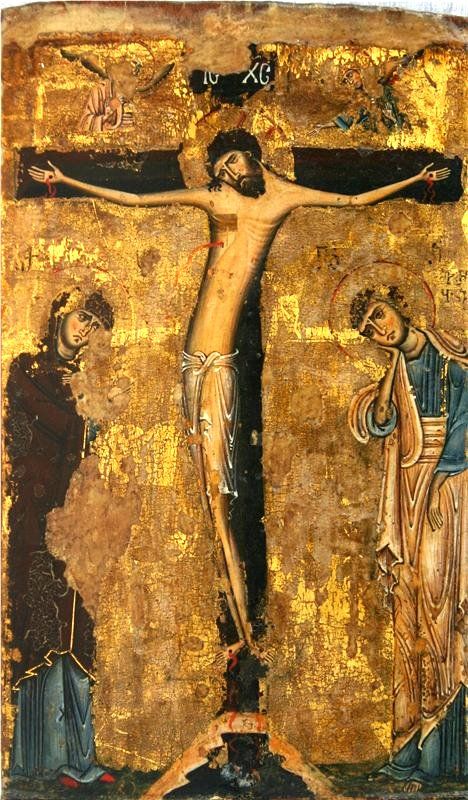
... If we decide responsibly and seriously to make the Gospel truth the standard for our human souls, we will have no doubts about how to act in any particular case of our lives: we should renounce everything we have, take up our cross, and follow Him. The only thing Christ leaves us is the path that leads after Him, and the cross which we bear on our shoulders, imitating His bearing of the cross to Golgotha.

[And that is all]

It can be generally affirmed that Christ calls us to imitate Him. That is the exhaustive meaning of all Christian morality. And however differently various peoples in various ages understand the meaning of this imitation, all ascetic teachings in Christianity finally boil down to it. Desert dwellers imitate Christ’s forty-day sojourn in the desert. Fasters fast because He fasted. Following His example, the prayerful pray, virgins observe purity, and so on. It is not by chance that Thomas Kempis entitled his book The Imitation of Christ; it is a universal precept of Christian morality, the common title, as it were, of all Christian asceticism.

001 603

El Greco – Christ Embraced the Cross (detail) (1587-96)

I will not try to characterize here the different directions this imitation has taken, and its occasional deviations, perhaps, from what determines the path of the Son of Man in the Gospel. There are as many different interpretations as there are people, and deviations are inevitable, because the human soul is sick with sin and deathly weakness.
What matters is something else. What matters is that in all these various paths Christ Himself made legitimate this solitary standing of the human soul before God, this rejection of all the rest – that is, of the whole world: father and mother, as the Gospel precisely puts it, and not only the living who are close to us, but also the recently dead – everything, in short. Naked, solitary, freed of everything, the soul sees only His image before it, takes the cross on its shoulders, following His example, and goes after him to accept its own dawnless night of Gethsemane, its own terrible Golgotha, and through it to bear its faith in the Resurrection into the undeclining joy of Easter.
[And that is all]

cross8

Here it indeed seems that everything is exhausted by the words “God and my soul.” All the rest is what He called me to renounce, and so there is nothing else: God – and my soul – and nothing.

No, not quite nothing. The human soul does not stand empty-handed before God. The fullness is this: God – and my soul – and the cross that it takes up. There is also the cross.

[And that is all]

el greco

El Greco — Christ Carrying the Cross (1587-96)

The meaning and significance of the cross are inexhaustible. The cross of Christ is the eternal tree of life, the invincible force, the union of heaven and earth, the instrument of a shameful death. But what is the cross in our path of the imitation of Christ? How should our crosses resemble the one cross of the Son of Man? For even on Golgotha there stood not one but three crosses: the cross of the God-man and the crosses of the two thieves. Are these two crosses not symbols, as it were, of all human crosses, and does it not depend on us which one we choose? For us the way of the cross is unavoidable in any case, we can only choose to freely follow either the way of the blaspheming thief and perish, or the way of the one who called upon Christ and be with Him today in paradise. For a certain length of time, the thief who chose perdition shared the destiny of the Son of Man. He was condemned and nailed to a cross in the same way; he suffered torment in the same way. But that does not mean that his cross was the imitation of Christ’s cross, that his path led him in the footsteps of Christ.

cross6

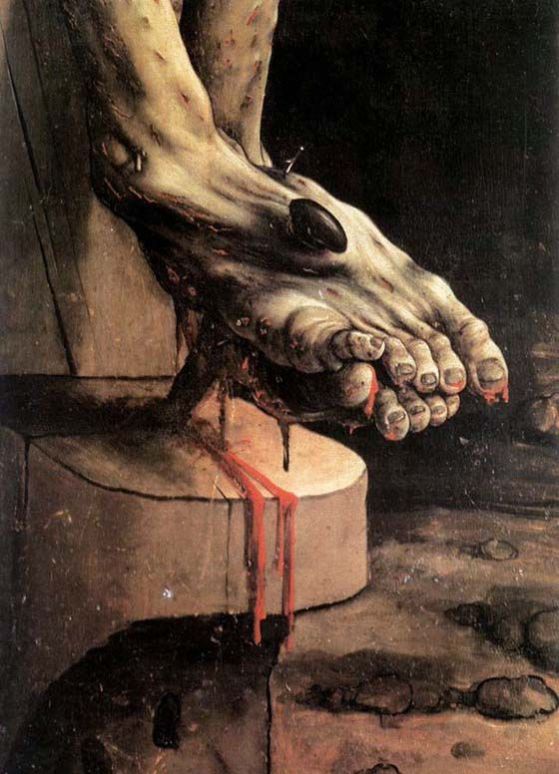
Detail from the Crucifixion from the Isenheim Altarpiece, circa 1512-16

… What is most essential, most determining in the image of the cross is the necessity of freely and voluntarily accepting it and taking it up. Christ freely, voluntarily took upon Himself the sins of the world, and raised them up on the cross, and thereby redeemed them and defeated hell and death. To accept the endeavor and the responsibility voluntarily, to freely crucify your sins – that is the meaning of the cross, when we speak of bearing it on our human paths.  … The free path to Golgotha – that is the true imitation of Christ.

[And that is all]

cross5

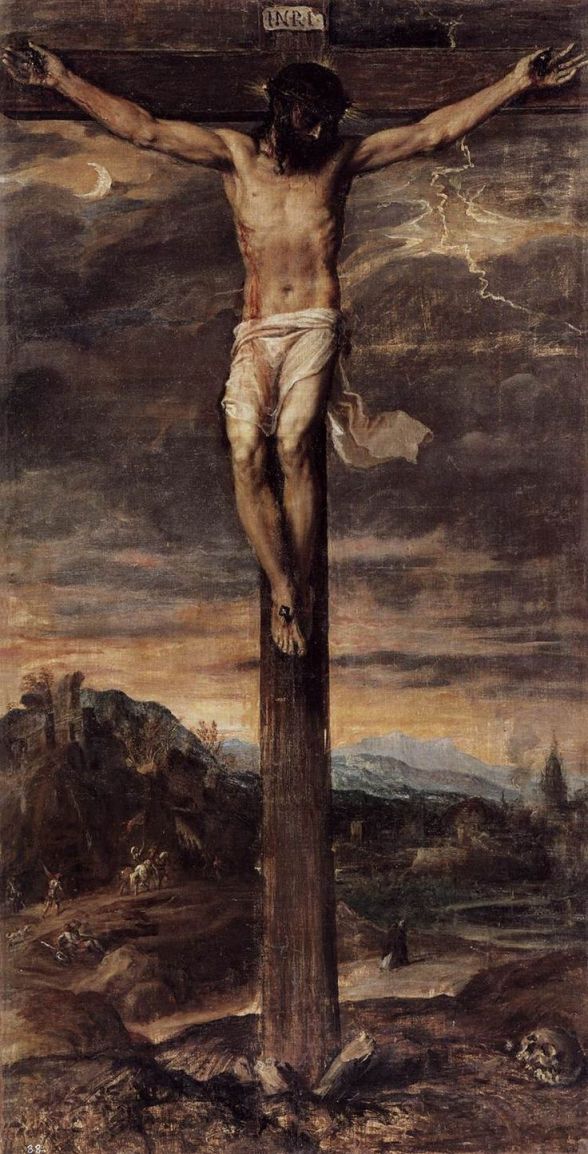
Crucifixion, by Titian, circa 1555

This would seem to exhaust all the possibilities of the Christian soul, and thus the formula “God and my soul” indeed embraces the whole world. All the rest that was renounced on the way appears only as a sort of obstacle adding weight to my cross. And heavy as it may be, whatever human sufferings it may place on my shoulders, it is all the same my cross, which determines my personal way to God, my personal following in the footsteps of Christ. My illness, my grief, my loss of dear ones, my relations to people, to my vocation, to my work – these are details of my path, not ends in themselves, but a sort of grindstone on which my soul is sharpened, certain – perhaps sometimes burdensome – exercises for my soul, the particularities of my personal path.

[And that is all]

cross1

If that is so, it certainly settles the question. It can only be endlessly varied, depending on the individual particularities of epochs, cultures, and separate persons. But essentially everything is clear. God and my soul, bearing its cross. In this an enormous spiritual freedom, activity, and responsibility are confirmed. And that is all.

cross2

… There are simply millions of people born into the world, some of whom hear Christ’s call to renounce everything, take up their cross, and follow Him, and, as far as their strength, their faith, their personal endeavor allow, they answer that call. They are saved by it, they meet Christ, as if merging their life with His. …

The cross of Golgotha is the cross of the Son of Man, the crosses of the thieves and our personal crosses are precisely personal, and as an immense forest of these personal crosses we are moving along the paths to the Kingdom of Heaven. And that is all.

*

Taking Up The Cross

By St. Maria Skobtsova  

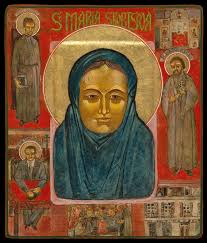
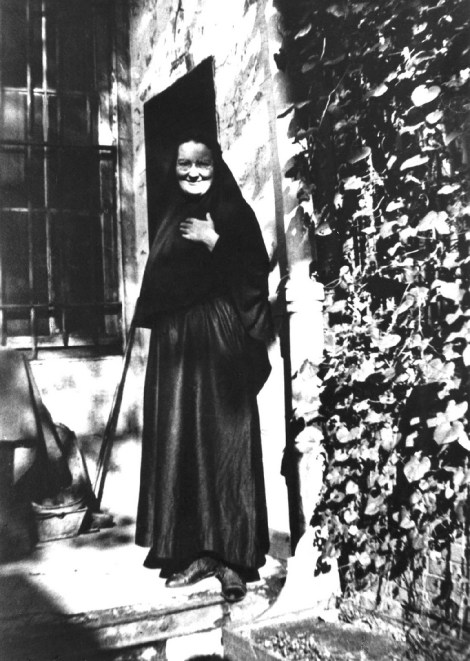
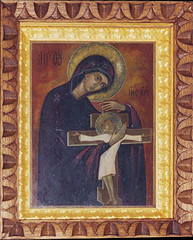
  • The first icon on the left is Cross-bearing Theotokos painted by St. Maria Skobtsova of Paris

cross10

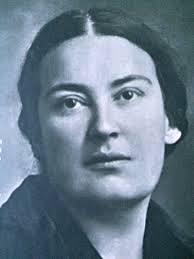
Mother Maria Skobtsova died on Good Friday, 1945, in Ravensbr ck concentration camp near Berlin. Maria’s real life is more incredible than any fiction! The “crime” of this influential painter, poet, social activist, Orthodox nun and Russian refugee was her effort to rescue Jews and others being pursued by the Nazis in her adopted city, Paris, where in 1932 she had founded a house of hospitality. … The essay reprinted here is part of a longer text included in Mother Maria Skobtsova: Essential Writings, translated by Richard Pevear and Larissa Volokhonsky and published by Orbis Books.

Source: https://incommunion.org/2007/10/27/taking-up-the-cross/

For her life, look at: https://orthodoxcityhermit.com/2015/09/23/mother-maria-of-paris-saint-of-the-open-door/

Like a Russian Novel

st maria


A very unlikely nun

For a nun, Maria’s story is more than a little unconventional. At Bishop Anthony Bloom’s first encounter with her, Maria sat at a cafe table with a beer. She was often seen shambling around the Paris market in her tattered habit, cigarette perched on her lip, haggling for deals. And she kept company with the lowest of the low.

“She was a very unusual nun in her behavior and her manners. I was simply staggered when I saw her for the first time in monastic clothes. I was walking along the Boulevard Montparnasse and I saw: in front of a café, on the pavement, there was a table, on the table was a glass of beer and behind the glass was sitting a Russian nun in full monastic robes. I looked at her and decided that I would never go near that woman. I was young then and held extreme views.”

That was her calling. Former-revolutionary, twice-married, twice divorced, cigarette-smoking, poet, painter, theologian, nun and martyr-saint, she knew the meaning of God’s mercy and desired only to share it with as many as she could muster. The number was not small.

maria1

Her backstory is the stuff of Russian novels. Born into a wealthy family in 1891, her father died when she was young, and the shock of the loss drove her to renounce her faith. Mixing with smart and fashionable of St. Petersburg, she published poetry, married a Bolshevik, and distressed over the state of the city’s beleaguered poor. But idealism couldn’t save her marriage, which ended in 1913.

russian1

The following year she moved to her family’s estate on the coast of the Black Sea with her daughter, Gaiana. Headstrong and independent, Maria was politically active and eventually became mayor of the town of Anapa as a single mom! She also rediscovered her faith, which informed her activism. “[T]he Christian,” she said, “is called to social work.”

russian4

The problem for Maria was that she was too conservative for the radicals and too radical for the conservatives. After the start of the Russian Revolution she found herself arrested and tried by the anti-Bolshevik party and only escaped conviction because of a kindly judge, Daniel Skobtsov. The two married within months of her acquittal.

With the Revolution in full swing, life in Anapa became impossible. The family fled, swelling in the sojourn. By the time they settled in Paris in 1923, Yuri and Anastasia had been born.

russian2

And now the obvious question: How did this wife of two men and mother of three children become a nun?

mother6

Not good, but revolutionary

It started when Anastasia succumbed to a wasting illness and died in 1926. The family, already strained, was devastated. Maria and Daniel separated and eventually divorced. But out of the devastation Maria’s calling to help the downtrodden was renewed.

Refugee life was terrible, especially for the Russians. Work was scarce. Despair and alcoholism was rampant. Maria saw herself as uniquely suited to help, to rescue, to comfort these victims and misfits. She would be, she said, “a mother to all.”

jews2

The proposed path was monasticism. Revealing is her conversation with her bishop, Metropolitan Evlogy. “I could never be a good nun,” she protested. “I know,” he said. “But I want you to be a revolutionary nun.”

“[S]he went to the steel foundry in Creusot, where a large number of Russian [refugees] were working. She came there and announced that she was preparing to give a series of lectures on Dostoevsky. She was met with general howling: “We do not need Dostoevsky. We need linen ironed, we need our rooms cleaned, we need our clothes mended — and you bring us Dostoevsky!” And she answered: “Fine, if that is needed, let us leave Dostoevsky alone.” And for several days she cleaned rooms, sewed, mended, ironed, cleaned. When she had finished doing all that, they asked her to talk about Dostoevsky. This made a big impression on me, because she did not say: “I did not come here to iron for you or clean your rooms. Can you not do that yourselves?” She responded immediately and in this way she won the hearts and minds of the people.”

jews4

And so she was. There would be no convent for Maria. Her monastery, as she said, was “the whole world.” Several houses and a chapel were set up to shelter and serve those in need. Maria worked tirelessly, Gaiana and Yuri aiding the effort, Father Lev Gillet serving as the ‘convent’’s chaplain for many years. In addition to painting icons and leading religious discussions, she cooked, counseled, and combed the streets looking for anyone she could help.

maria skobtsova

“[E]ach of us,” she wrote, “is faced with the demand to strain all our forces, not fearing the most difficult endeavor, in ascetic self-restraint, giving our souls for others sacrificially and lovingly, to follow in Christ’s footsteps to our appointed Golgotha.”

Maria’s appointment emerged as World War II began and the Nazis seized control of Paris. The only response was obvious.

jews3

A martyr for our own time

Maria and her associates began working with the French Resistance, hiding Jews, forging records and papers, anything to foul Nazi aims. She was brazen. “If the Germans come looking for the Jews,” she said, “I’ll show them the icon of the Mother of God.”

nazi2

* Two triangles, a star,

The shield of King David, our forefather.

This is election, not offense.

The great path and not an evil.

Once more in a term fulfilled,

Once more roars the trumpet of the end;

And the fate of a great people

Once more is by the prophet proclaimed.

Thou art persecuted again, O Israel,

But what can human malice mean to thee,

who have heard the thunder from Sinai? * 

The Gestapo knew something was afoot, but it took time to foil the plot. When they finally did, the Nazis dragged Maria and her coconspirators—including her son Yuri—off to prison.

mother4

During her two-year confinement in the Ravensbrück concentration camp, she was a beacon, bringing hope to people in utter despair. She led prayers and Bible study, fed people from stores she smuggled away, and radiated hope to any and all.

But while her hope was invincible, her body was not. The trauma of the camp took its toll and she became increasingly frail. “Though she was unable to stand for roll calls, she traded some bread for thread so she could embroider one last icon.” It depicted Mary holding a crucified Christ. Before she could finish, she was taken to the gas chamber where she died on Great and Holy Saturday.

nazi4

MOTHER MARIA OF PARIS: SAINT OF THE OPEN DOOR

*

Sources: http://blogs.ancientfaith.com/joeljmiller/maria-skobtsova/

https://incommunion.org/2004/10/18/saint-of-the-open-door/

http://jimandnancyforest.com/2006/08/mothermaria/

*

*Maria’s own poem reflecting on the symbol Jews were required to wear during WWII*

*

* * If you are interested in more details about Maria’s activism, inspiration, grace, heroism, and hope-filled commitment, so needed in our world today, please visit: https://incommunion.org/2004/10/18/saint-of-the-open-door/

*

For ST. MARIA SKOBTSOVA RESOURCES, on her life and writings, please go to: https://incommunion.org/st-maria-skobtsova-resources/

Guinness Record Church in Russia

The temple of St. Andrew the Apostle. Guinness Record Church in Russia

*The temple of St. Andrew the Apostle. In the morning mist*

Away from the hustle of big cities, on the water surface of the Vuoksa, stands the temple of St. Andrew the Apostle. The temple is mentioned in Guinness Book of Records as the world’s only church built on a tiny island, the foundation of which serves the monolithic rock protruding from the water. It was built in 2000, by Andrei Rotinov, an architect (passed away by now), according to ancient canons. Nothing like this has been ever built. There is no mass pilgrimage, no pompous ceremonies (though services are held on schedule), and other things like that. This place is more for solitude with nature, to reflect on the events of your life, meditation and quiet conversation with God in a relaxed atmosphere. Around the picturesque banks of the Vuoksa, with rocks protruding from the water, and singing birds … idyll or peace.

Guinness Record Church in Russia

* The church at the dawn*

An example for the architectural solution was the oldest church of the Ascension in Kolomna. While in the world, there are other “Churches on the water,” among which the church in Volgograd, Kondopoga, Church of the Assumption in Slovenia and surprisingly similar to Priozersky temple church in the town of Kalyazin on the Volga, but St. Andrew the Apostle church on the island Vuoksa surprises all.

Guinness Record Church in Russia

*The lonely church against misty background*

The temple is named after one of the twelve disciples of Jesus Christ – according to church tradition, it was in these places people were baptized in the local waters. Andrew is the patron saint of sailors, so every ship is bound to have Andrew’s flag, and possibly surrounded by water from all sides church refers to this fact. The area of ​​the island is only 100 square meters. To get here is possible by boat or ferry, but in the near future will be built a bridge, way to the dock and the pool for baptizing.

Guinness Record Church in Russia

*The Church in the winter landscape*

The site is located near the village of Vasilevo of Priozersk District, in the suburb of St. Petersburg. From St. Petersburg the trip takes about 2 hours.

The temple of St. Andrew the Apostle

The temple of St. Andrew the Apostle

Winter landscape

Winter landscape

Panoramic view of the church at sunset

Panoramic view of the church at sunset

Guinness Record Church in Russia

The temple of St. Andrew the Apostle. Photographer Michael Vorobyev

Guinness Record Church in Russia

The temple of St. Andrew the Apostle. Photographer Michael Vorobyev

Guinness Record Church in Russia

The temple of St. Andrew the Apostle. Photographer Michael Vorobyev

Guinness Record Church in Russia

The temple of St. Andrew the Apostle. Photographer Michael Vorobyev

Photographer Michael Vorobyev

The temple of St. Andrew the Apostle. Photographer Michael Vorobyev

Pink sunset, panoramic view of the church

Pink sunset, panoramic view of the church

Absolute beauty

Absolute beauty

Autumn landscape

Autumn landscape

Beautiful sunrise

Beautiful sunrise

Beautiful sunset

Beautiful sunset

Church on the rocks

Church on the rocks

Covered with snow church

Covered with snow church

Frozen with ice river

Frozen with ice river

The sign with the name of the Church

The sign with the name of the Church

Wooden architecture, detail

Wooden architecture, detail

Wooden church, detail

Wooden church, detail

Inside the church

Inside the church

Guinness Record Church in Russia

Celestial Cadences

arvo part

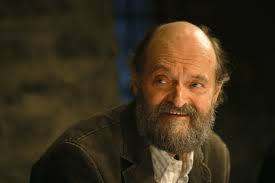
Mystical, monk-like, reclusive — those are a few words often used to describe Arvo Pärt. His music gets labeled as timeless, spiritual and meditative. The Estonian composer, born 80 years ago today, is perhaps all of these things … and maybe none of them.

Recently, Pärt allowed a film crew follow him for a year. The result is a new documentary by Günter Atteln called The Lost Paradise, an excerpt of which the producers at Accentus Music are sharing prior to its fall release. The excerpt here finds the composer at his piano, at a rehearsal of his music with his wife and musing about a healthy kind of pain in art.

Whether you are an Arvo Pärt first-timer or a fanatic, here’s a short list of things to know about this singularly fascinating artist.

Arvo-Part-Piano

He may be the most performed living composer

If you accept Bachtrack, the online database tabulating classical music events worldwide, Pärt is popular. For the fourth consecutive year he’s been named the world’s most-performed contemporary composer. Why? It may have to do with the amount of appealing vocal music he’s written. And when you consider that there are an estimated 42.6 million adults and children who sing in choirs in the U.S. alone, that can lead to many Pärt performances. Also, his slow-moving music seems to soothe an increasingly frenzied world.

His reputation as a recluse is not quite true

While he likes his private moments for composing and his walks in the Estonian forests, Pärt let these documentary filmmakers trail him for an entire year. He’s also been an eager participant in recording sessions and rehearsals of his music. And, on a more personal note, when the composer visited Washington, D.C. last year, he didn’t hesitate to invite me to his hotel for an interview.

quote1

His music, since the mid-1970s, is inspired by bells

Pärt found his current compositional voice after a period of struggle and silence. In 1968, he turned away from the complex, atonal music he was writing and nearly stopped composing for eight years. He returned with something completely different— music based on triads of notes, the simplest building blocks of Western music. The result was music of slow, spacious grace, with hints of Gregorian chant. He called his new style “tintinnabuli,” a reference to the ringing of bells.

His music isn’t always meditative and spiritual

Pärt sometimes gets labeled, along with John Tavener and Henryk Górecki, as a part of the “God Squad,” the so-called “holy minimalists” whose music is simply too simple for some tastes. But Pärt’s music wasn’t always ethereal and slow-paced. His early works were in a neo-classical style, and then came a period of atonal and serial worksthat was followed in 1971 by the compelling Symphony No. 3, a bridge between Pärt’s old and new styles.

quote-a-need-to-concentrate-on-each-sound-so-that-every-blade-of-grass-would-be-as-important-arvo-part-110-92-51

He’s often called mystic, but that’s not how he sees himself 

True, Pärt is a devout Eastern Orthodox Christian who writes a lot of spiritual music. And when he talks, his deep thoughts tend to come out as maxims for living a meaningful life. When asked about the silence in his music he told me: “Silence is like fertile soil, which, as it were, awaits our creative act, our seed.” Still, he doesn’t see himself as any kind of prophet. “A mystic!?” he said. “Well, that is the last thing I want to be.”

Source:http://www.npr.org/sections/deceptivecadence/2015/09/11/439247120/get-to-know-one-of-the-most-performed-living-composers

For a glimpse into this rare person, who strikes at my core each time, a true rarity in this world, a composer who captures people always because he radiates with light and no one can resist that,  watch the following mini-documentaries at:
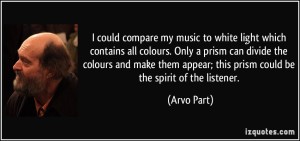
quote-i-could-compare-my-music-to-white-light-which-contains-all-colours-only-a-prism-can-divide-the-arvo-part-142066
For a taste of his celestial music, listen to
 
Or Silencio, a meditative collection of 20th-century works for string orchestra, including works by Arvo Pärt, Philip Glass, and Vladimir Martynov, https://www.youtube.com/watch?v=O_GnWMH5MAQ
Or watch the mesmerising Homemade music video for Salve Regina https://www.youtube.com/watch?v=f1CNNf9iU9Y
quote-silence-is-the-pause-in-me-when-i-am-near-to-god-arvo-part-73-34-28
 

For Whom the Bell Tolls: Europe Migrant Crisis

an-inspector-calls

Why now is the perfect time for An Inspector Calls

* “The following review does NOT contain spoilers!”

BBC One’s adaptation of JB Priestley’s An Inspector Calls couldn’t have aired at a more apt political moment…

… The BBC’s An Inspector Calls is airing in a week where front pages are dominated by people fleeing war in desperate need of help, and the political conversation is about who should be responsible for these strangers.

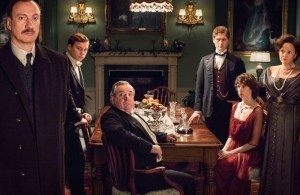
J.B. Priestley’s 1945 story about the corrosive nature of class privilege was always a fierce call for compassion. Arriving on BBC One after recent headlines, its message feels white-hot. … Set in 1912, the story tells of the collective role members of a wealthy family played in the suicide of a young working class woman. With its dead body, manor house, dinner party, visiting inspector and would-be aristocratic suspects, it first assumes the shape of a detective drama but quickly reveals itself to be an entirely different beast”

an inspector calls5

An Inspector Calls is available now on BBC iPlayer and previous BBC versions and older films in YouTube.

http://www.bbc.co.uk/iplayer/episode/p02z80kq/an-inspector-calls

Reviews:

http://www.denofgeek.com/tv/an-inspector-calls/36928/why-now-is-the-perfect-time-for-an-inspector-calls

http://www.telegraph.co.uk/culture/tvandradio/tv-and-radio-reviews/11858583/An-Inspector-Calls-BBC-One-review-subtle-as-a-sledgehammer.html

Watch now: Exclusive interviews with the cast of the BBC’s An Inspector Calls

https://www.thestage.co.uk/news/2015/watch-now-exclusive-interviews-cast-bbcs-inspector-calls/
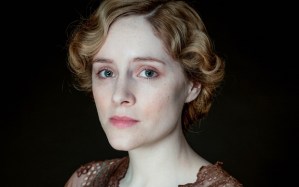
WARNING: Embargoed for publication until 08/09/2015 - Programme Name: An Inspector Calls - TX: 13/09/2015 - Episode: An Inspector Calls (No. n/a) - Picture Shows: Eva (SOPHIE RUNDLE) - (C) BBC/Drama Republic - Photographer: Laurence Cendrowicz

I recommend it wholeheartedly, and I do find its Christian subtext intriguing, my only objection being, in total agreement with Anita Singh, that this part drawing room whodunit, part classic thriller, part socialist manifesto, part twentieth-century morality play, has the subtlety of a sledgehammer!
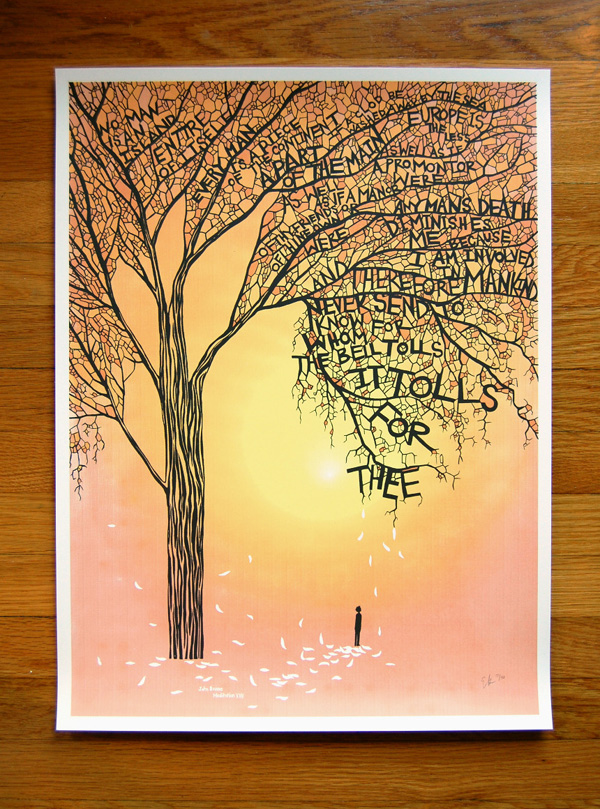
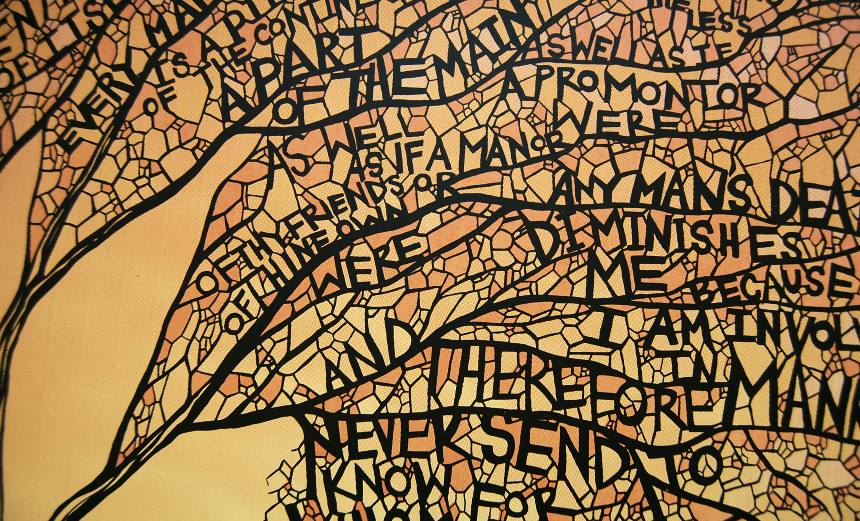
it_tolls_full_600

no-island

John Donne

No man is an island,
Entire of itself.
Each is a piece of the continent,
A part of the main.
If a clod be washed away by the sea,
Europe is the less.
As well as if a promontory were.
As well as if a manor of thine own
Or of thine friend’s were.
Each man’s death diminishes me,
For I am involved in mankind.
Therefore, send not to know
For whom the bell tolls,
It tolls for thee.

From Meditation 17

Cosmic Dawn

 cosmic_dawn_by_harrietta

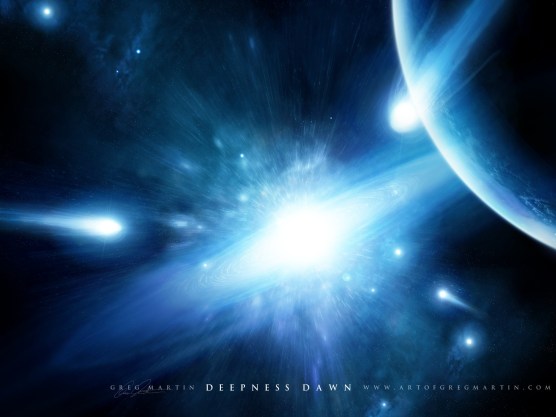
Cosmic Dawn: The Real Moment of Creation

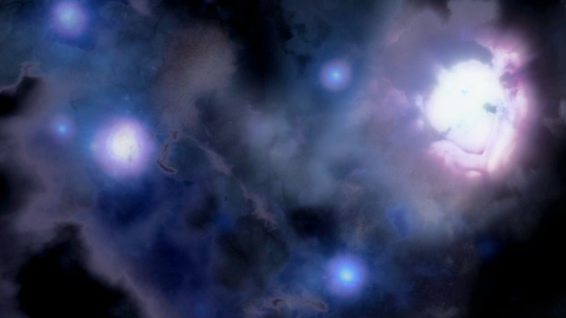
Horizon reveals the real moment of creation – the Cosmic Dawn, the moment of first light. This is the scientific version of the story of Genesis.

Re-Creation

Beyond all things was God the Word

From the void of eternity

Time and space in creation heard

The Voice speaking infinitely.

cosmic dawn

Spirit of God on the waters

Divine Word of life in the night

“Creatio ex nihilo”

Father said “Let there be light!”

cosmic2

You divided light from darkness

You split the first atom to say

How we should separate evil

And distinguish the night from day.

CosmicTrinityDivineStarCosmicDawnWEB

Lord, you brought chaos to order

Your great Wisdom cushioned the deep

Recording a holy cosmos

Awakening formless sleep.

cosmic3

You placed the orbits and quasars

Winding the clock into time

The coherence behind the laser

The reason within the rhyme.

From ground-based telescopes, this cosmic object - the glowing remains of a dying, sun-like star - resembles the head and thorax of a garden-variety ant. This NASA/ESA Hubble Space Telescope image, released on February 1, 2001, of the so-called

You bring pure joy out of sadness

You still bring life out of breath

Sanity in human madness

Gladdening sorrowing death.

cosmic4

The real hub in revolution

The one who planted the Tree

Adam and Eve-lution

The One who caused things to be.

sunrise cosmic 1920x1080 wallpaper_www.knowledgehi.com_61

The Great Mover pushed the button

Silence before seraphim sang

Infinite God formed the finite

The Big One made the Big Bang.

*

By Father Jonathan Hemmings

Healing the Wounded Soul

confession1

The Difference between a Spiritual Father and a Psychologist

By Metropolitan of Nafpaktos Hierotheos*

The spiritual Father, ought to perform his task on the basis of the Orthodox Tradition, it is clearly different from the psychologist, who works on the basis of an anthropocentric view of man and his life The psychologist wants to make people psychologically balanced. The spiritual father aims at man’s deification. The psychologist uses the views of whichever school of psychology he represents. The spiritual father uses the eternal word of God, which was revealed to the prophets, Apostles and saints.

The psychologist believes that illness is due primarily to traumatic experiences in the past, or so-called repressed experiences. The spiritual father is well aware that it is not simply a matter of memories of the past or repressed experiences stored up in the subconscious. A specific faculty of the soul is ill, the nous, which is the eye of the soul. The psychologist employs the method of questioning and listening. He tries to assist the person to become aware of his problem and helps him to mature psychologically. The spiritual father, illumined by the grace of God, locates the problem, which is the darkness of the nous or fantasies, and tries to lead the person to theoria of God by means of the Orthodox method of purification and illumination. The psychologist acts on the human level using thoughts and ideas. The spiritual father acts in a theanthropic way, on both the divine and human level. He uses the therapeutic method, but also sends Gods grace into the sick person’s heart through the Sacraments.

The psychologist thinks that everything happens on a human level, He does not acknowledge the existence of the devil and the energy of the uncreated grace of God. The spiritual father knows the difference between the grace of God, the energy of the devil, and spiritual and physical illness. The psychologist confines himself to making the ill person aware of his problem and enabling him to cope with it. The spiritual father guides the person to repentance, which means his complete transformation. He does not simply lead him to a point of rejecting certain states, but guides him towards the transformation of his passions. It is possible to find other significant differences between, a psychologist and a spiritual father, and the difference between anthropocentric and theocentric psychotherapy.

We accept the views of contemporary psychology and psychotherapy in two cases, as a concession. Firstly, in cases of people whose nervous system has been harmed for various reasons, such as physical or psychological problems. Secondly, in the cases of people who, by choice, have nothing to do with the Church and its Sacraments. I think they can be helped by modern psychology and psychotherapy, so as not to deteriorate further. Psychology can act as a pain-killer to comfort them in the dreadful despair in which they are imprisoned.

But, I repeat, man is created in the image of God and he must reach His likeness. This is, I could say, the final aim and secret entelechy of man. As long as this yearning is not satisfied and a person remains far from God, his suffering increases. Inasmuch as his basic destiny on earth, communion with God, is not fulfilled, no matter how much medicine he takes or how much psychoanalysis he undergoes, he will always be homeless and engaged in a tragic search. We want more than psychological balance; we are looking for fullness of life. We do not simply wish to develop religious feelings, but want our lives to be filled.

  • Yesterday a meeting with a young student of mine I really care about left me sleepless. Such anguish and suffering! Such a dead end! Still imprisoned in her psychiatric disorders, still refusing medication, still held captive by her vicious circle psychotherapy sessions, still trusting her therapist as God, still away from the great hospital for sick souls : the Church, still rejecting Christianity.

That Sleep of Death

Death scenes from Le Jeune Homme et la Mort ballet & Henry Purcell’s opera, Dido and Aeneas

death10

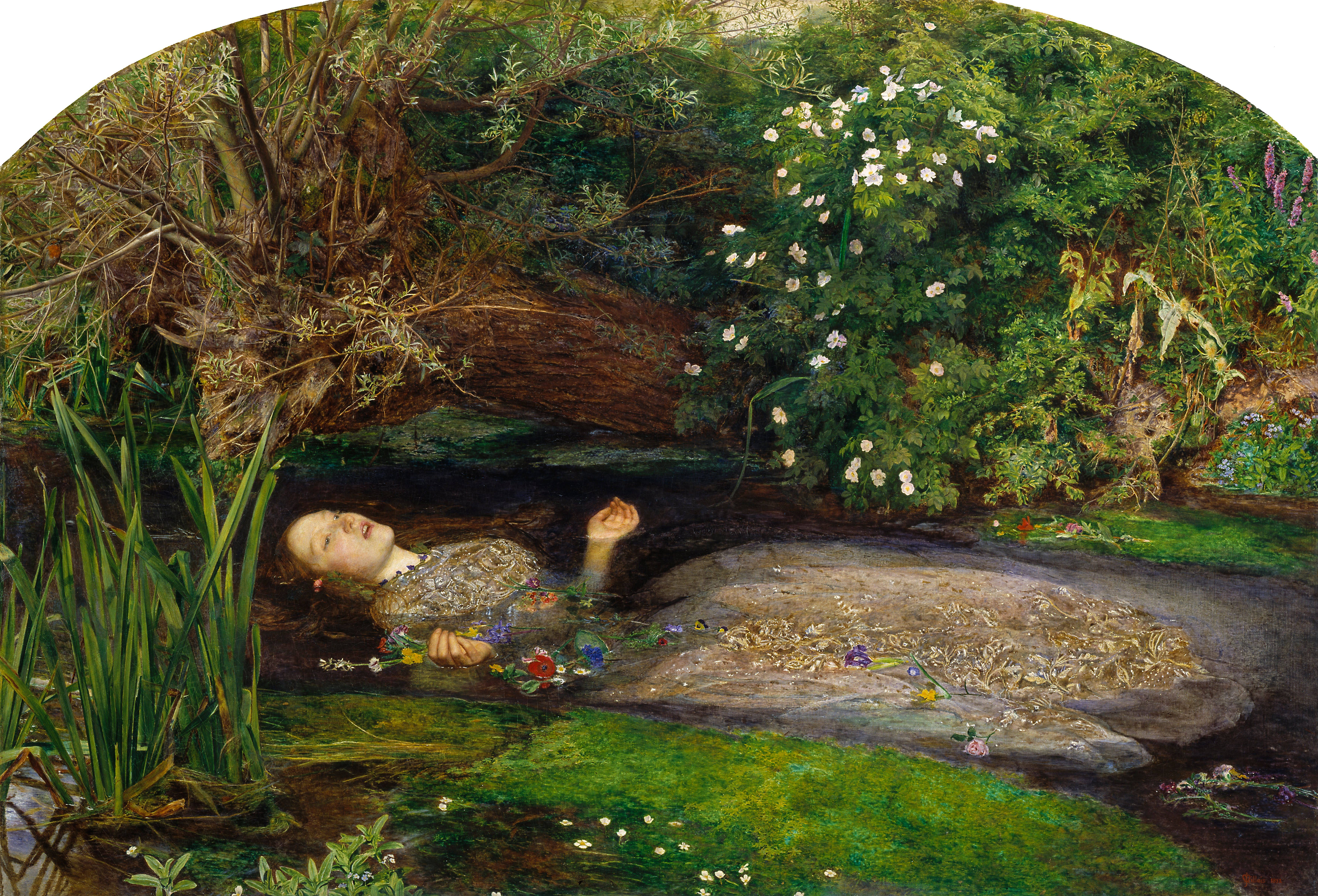
Both the anonymous young man and Dido, Queen of Carthage, are heartbroken and about to kill themselves. Yet how “ugly” and merciless and “cold” (very Cocteau-esque) is Le Jeune Homme et la Mort for all the exquisite beauty of J.S. Bach’s Passacaglia and Fugue in C Minor and Baryshnikov’s and Noureyev’s mesmerising performances.

ophelia

https://www.youtube.com/watch?v=6ptNz8rBk7Y (Noureyev)

https://www.youtube.com/watch?v=Er0-aAdC2n4 (Baryshnikov)

* That must have been incredibly hard for Baryshnikov to do – his mother hung herself when he was a small child, and he discovered her hanging from the rafters in their home.

ballet4

Compared to the supremely forgiving and uplifting Dido’s Lament, sung with pure clarity‪ and charity, at Henry Purcell’s opera – Dido and Aeneas:

dido1

“When I am laid, am laid in earth,

May my wrongs create No trouble,

No trouble in thy breast”

* quietly sobs *
Hauntingly Beautiful! True heart breaker! A most precious friend of mine asked me once to forgive him in the exact words of Dido, although there was nothing to forgive, and I promised him to play this song on his funeral, for all the world to know what a most gentle, kind, noble and selfless love he had for everyone. Ever since I cannot listen to this without remembering him and welling up ..

Is it possible to hear this masterpiece by without sobbing? I think emphatically not. Dido’s Lament from Purcell‘s opera Dido and Aeneas is arguably the saddest piece of music ever written. But how exactly does Purcell manipulate our emotions to make sure we well up each and every time we hear it?

Legendary harpsichordist and conductor Trevor Pinnock, explains why  it breaks our heart every single time and exactly how Purcell reduces us to tears every time.

http://www.classicfm.com/composers/purcell/guides/trevor-pinnock-didos-lament/#iKWe3zIsJVq33irX.97

For opera connoisseurs, the great Jessye Norman’s rendition is in my opinion classic for its great depth and superb diction, https://www.youtube.com/watch?v=_R7BYSgz8xY

Elin Manahan Thomas‘ is more ethereal and crystalline

https://www.youtube.com/watch?v=uGQq3HcOB0Y

and Xenia Meijer‘s quite beautiful and moving

https://www.youtube.com/watch?v=ivlUMWUJ-1w (Opera)

death30

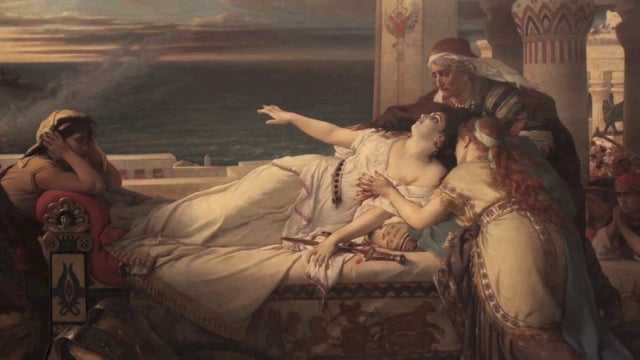
For more classic paintings on the theme of Love and Death, go to https://vimeo.com/89692541, which features a recording of the famous Aria, arranged for classical guitar and illustrated by several paintings of Heinrich Füger, Nathaniel Dance-Holland and Joseph Turner.

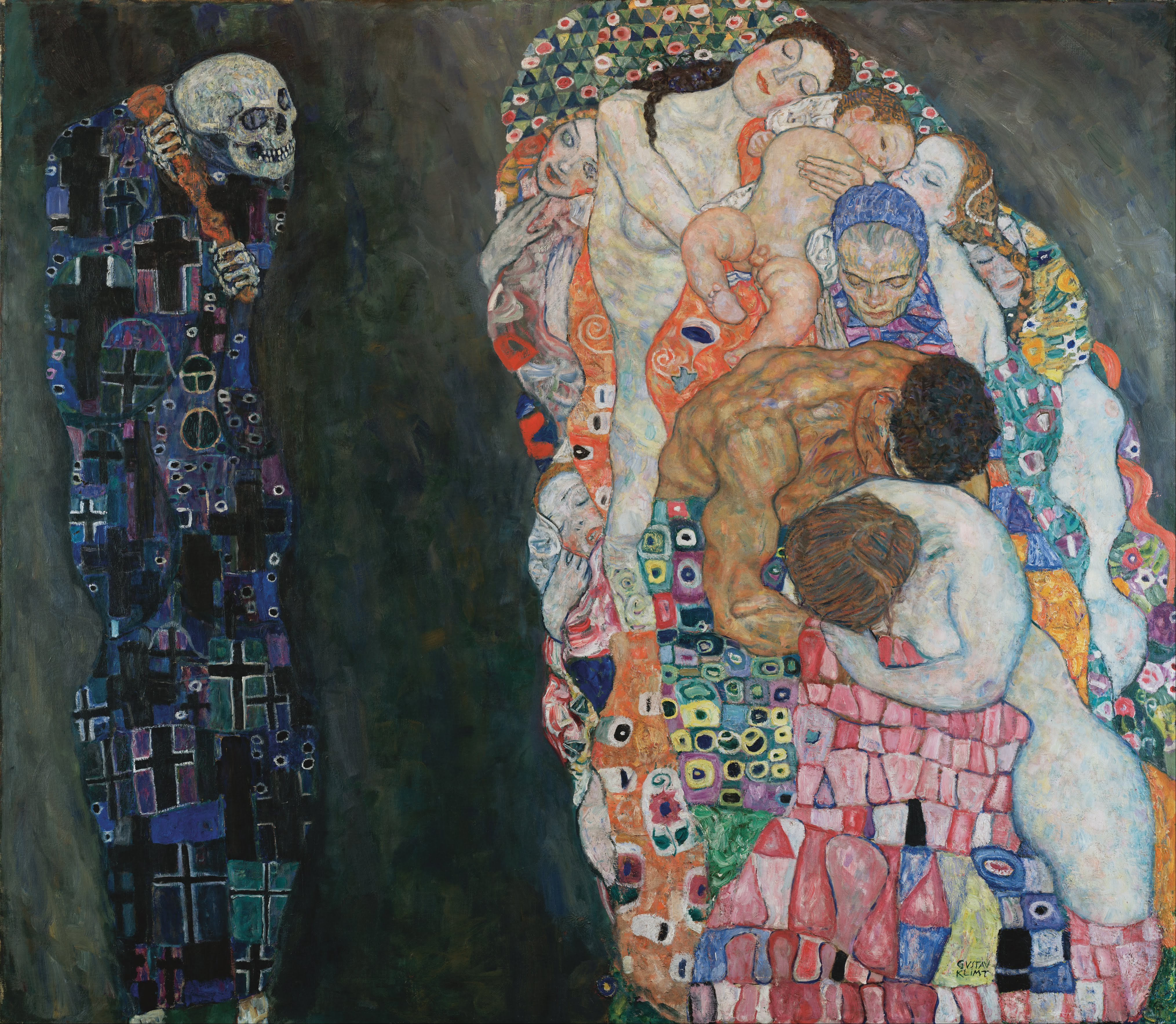
  • That Sleep of Death

Aye, there’s the rub,
For in that sleep of death, what dreams may come,
When we have shuffled off this mortal coil,
Must give us pause.

From Shakespeare, Hamlet: Act 3, Scene 1, Hamlet’s Famous Soliloquy: “To Be or Nor to Be”