Sometimes it happens like this: a person tries to keep the fast, but then he falls and feels that he has defiled his whole fast, and that there is nothing left from his feat. In fact, it is far from being like this. God looks at this fast from a different viewpoint. I can explain this to you with one example from my personal experience.
When I was a doctor, I was dealing with one poor Russian family. I did not take any money from them because they just had no money. Once, during Great Lent, when I was fasting especially strictly, trying no to violate any church rules, when they invited me for dinner. It turned out that during whole Lent they were saving money to buy a small chicken and treat me. I looked at that chicken and saw the end of my fasting feat in it. Of course, I ate a piece of it. I could not afford to offend them.
I went to my spiritual father and told him about the misfortune that had happened to me. I told him that I was fasting almost perfectly during Lent, but then I ate a piece of chicken during the Holy Week. Fr. Athanasios looked at me and said:
– You know what? If God looked at you and saw that you have no sins and that a small piece of chicken could defile you, He would protect you from that. But God looked at you and saw that there was so much sinfulness in you that no chicken can defile you more than that.
I believe that many people can use this example in order not to blindly follow the church canons, but be honest people first of all. Sure, I ate a piece of chicken: not as something dirty, but as a gift of human’s love. I remember an episode from the book by Fr. Alexander Schmemann, where he wrote that everything what exists in this world is God’s love. Even the food we eat is the Divine love in edible form.
From the book by Metropolitan Anthony of Sourozh, “The Works”
Entering the second week of Lent, have you noticed temptations increasing … ?
*
“Fasting means I don’t eat, it is voluntary hunger. Therefore, to fast as an Orthodox during Great Lent is to drive ourselves into a marginal situation in which we feel the demands of the body, but the power of the soul masters it.
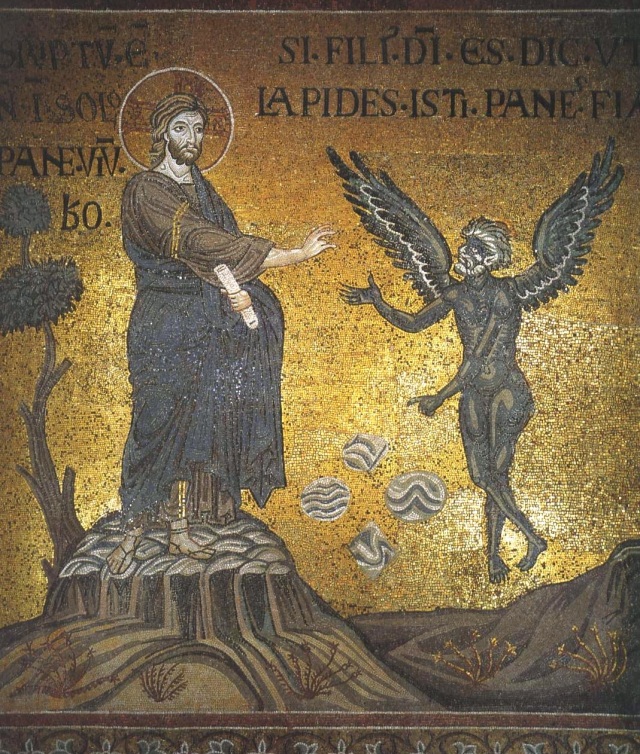
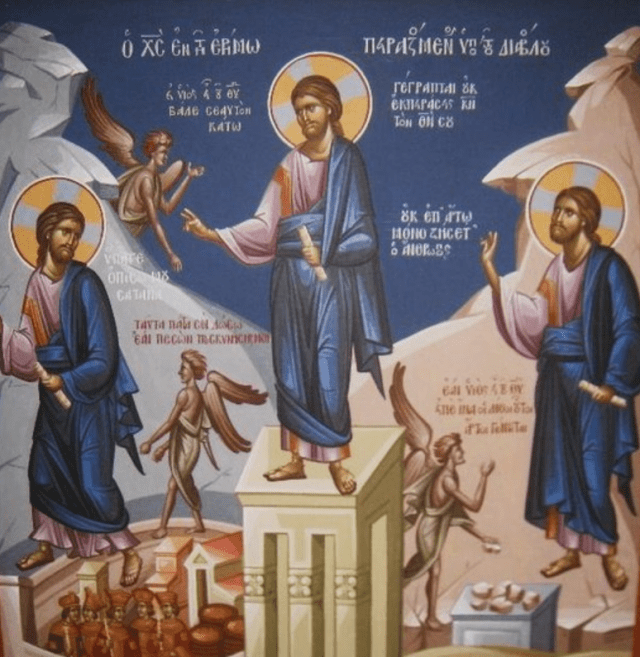
This marginal situation is expedient to the tempter to betray us with the most powerful temptations. He does not have power over the struggling fasting Christian, but the Christian is lured by the weaknesses of the body, which the tempter believes he can exploit. This happened with Christ.
The Evangelist Matthew writes: “Christ fasted forty days and forty nights and then was hungry. And the tempter came to Him saying….” The tempter came to Christ when He was hungry. Thus, hunger attracts him, but hunger is eventually what defeats him, when, of course, satisfaction is sought in the reasonable food of the soul – the words that proceed from the mouth of God – and not one-dimensionally from the unreasonable nourishment of the body.
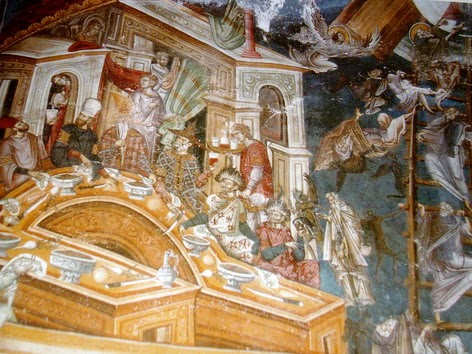
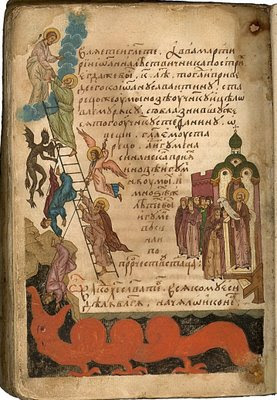
Gluttony, Vatopaidi icon
We must not, therefore, be surprised if during the fasting period of Great Lent diverse temptations occur, whether they relate to our personal, family or social life. At this time the tempter “approaches” Christians. He does this through many “internal” ways, but also with noisy external events, which correspond to internal impassioned thoughts, and tries to make our struggle during Great Lent worthless. But if we are sober, all these things will cause our spiritual maturation, paths for deeper self-knowledge and the knowledge of God.”
Source: Ekklesiastiki Paremvasi, “Η νηστεία και ο πειρασμός”, March 1999.
Fr. Alexander Schmemann, in trying to put Christian fasting into perspective, in his book Great Lent: Journey to Pascha, writes:
Ultimately, to fast means only one thing: to be hungry – to go the limit of that human condition which depends entirely on food and, being hungry, to discover that this dependency is not the whole truth about man, that hunger itself is first of all a spiritual state that is in its last reality hunger for God.
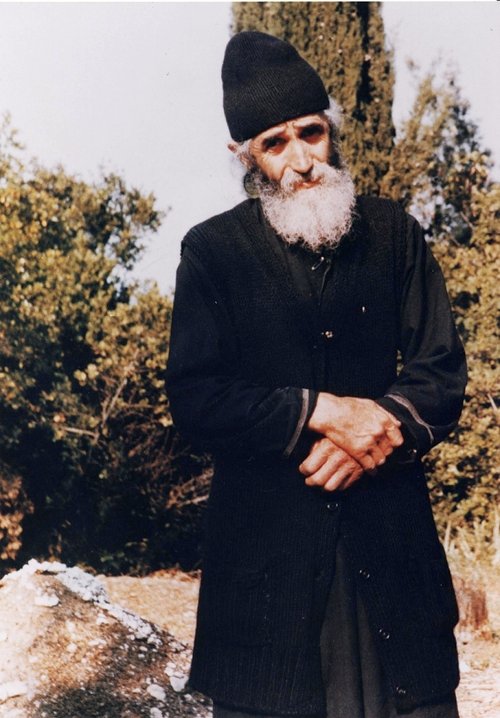
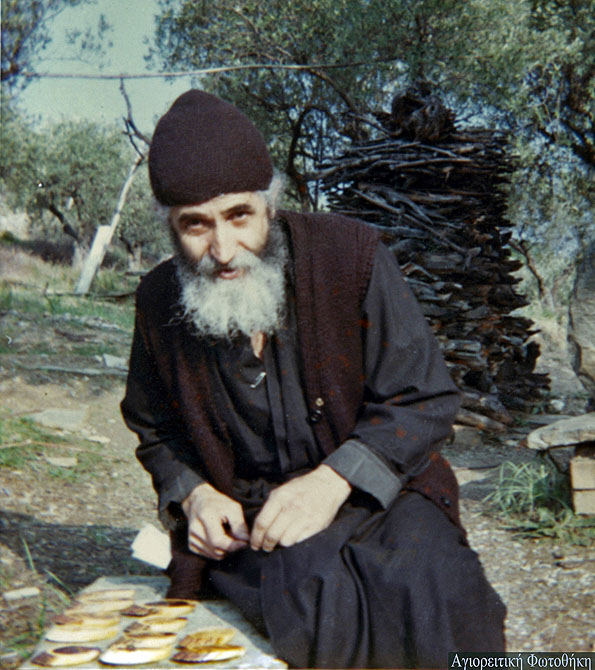
St. Paisios: “A layman once went to a monastery in the beginning of Lent and a certain monk there was abrupt and rough to him. However, the poor man had good thoughts and justified him. He later came to me and said:
‘I do not blame him, Father. After all, he had just completed the Three Day Fast!’ (1)
If this monk had done the Three Day Fast in a spiritual way, he would have had a spiritual sweetness and would have spoken to the layman with kindness. But he pushed himself egotistically to do the Three Day Fast, and so he blamed everybody for everything.”
*
A nun: Elder, what should I reflect on during Great Lent?
St. Paisios: You should reflect on the Passion, the Sacrifice of Christ.
During Great Lent, we are given a greater opportunity to struggle and participate more intensely in the Saving Passion of Christ:
with our repentance and prostrations;
with the cutting off of our passions;
with a reduction of our food intake.
For the love of Christ.
Another nun: Elder, how can I struggle more with temperance during Lent?
St. Paisios: Now, during Lent, those in the world take greater care to cultivate temperance, but we monks must always be careful. What is more important, though, is to be careful with the passions of the soul and then the body’s. Because if one prioritizes bodily asceticism over them and does not struggle to eradicate the passions of the soul, he will accomplish nothing.
*
We must make use, as much as we can, of all the opportunities this spiritual arena offers to us, in order to approach closer to the Crucified Christ. Then, we will helped by Him and rejoice spiritually at His Holy Resurrection , since we would have experienced more spiritually Great Lent.
Ι pray that God gives you strength during Great Lent, so that you may climb Golgotha and be near Christ there, together with the Theotokos and your patron Saint, John the Theologian, and that you may be granted worthy to participate in the awesome Passion of our Lord. Amen.
*
(1) The Three Day Fast (Ιερὸ Τριήμερο)With Clean Monday begins Great Lent in the Orthodox Church and marks the end of feasting. Clean Monday is called as such because Christians are called to cleanse themselves spiritually and bodily. It is also a day of strict fasting with no work. The holy fast has a duration of 40 days in imitation of our Lord’s fast in the desert. Strictly observant Orthodox hold this day (and also Clean Tuesday and Wednesday) as a strict fast day, on which no solid food at all is eaten. Others will eat only in the evening, and then only ‘xerophagy’ (lit. “dry eating”; i.e. eating uncooked foodstuffs such as fruit, nuts, halva, bread and honey, etc). For those who are able and willing, and always with the blessing of their spiritual father, it is encouraged by the Orthodox Church to keep a three day strict fast where neither food or water (if possible) is consumed until Clean Wednesday when one partakes of Holy Communion at the Pre-Sanctified Liturgy. Some of the strictest faithful even go so far as to do this for the entire Clean Week, accepting only Holy Communion during the week. This is an excellent way to mark the beginning of a holy struggle against one’s passions and weaknesses.
*
From the sixth volume of the series ‘Spiritual Counsels of the Elder Paisios of Mount Athos’: About Prayer.
Γέροντος Παϊσίου Αγιορείτου Λόγοι ΣΤ΄ «Περί Προσευχής», εκδόσεις Ιερόν Ησυχαστήριον «Ευαγγελιστής Ιωάννης ο Θεολόγος» Σουρωτή Θεσσαλονίκης 2012, σελ. 199-200.
There are two visitors from Thessaloniki. They stand, leaning on the chestnut tree. Both in their fifties, pale and cantankerous. They seem to be from a ‘quasi/pseudo-ecclesiastical’ (1) organisation, because they are looking reproachfully at the Elder, and are making comments to each other quietly.
The children are playing, making noise – at which Paisios turns and says quietly:
“Do not make noise, because beside here, beneath the earth (2), Americans are hidden and we will wake them, and they will come to interrupt our silence.”
The children stop, and instantly become silent, puzzled.
At the opposite end, John is leaning sideways against the rock, atop his sack. He is lighting a cigarette. The two visitors, who appear to be harsh pietists, continue to look at the Elder with disapproval as he is boiling milk and is taking care not to spill it over. One of them can’t stand it anymore and turns to the monk:
“Elder Paisios, we are in the first days of Great Lent, we have a strict fast, and you are boiling milk to drink?”
The Elder is silent. He does not respond. He grabs the pot and lowers it, since the milk is boiled. He then goes into his Cell, brings six small, old china cups, puts them next to each other, and carefully pours the milk into each one. He waits a bit for it to cool off, while everyone looks at him with amazement and silence. The two pietists observe this with disgust, thinking that since there are six visitors and six cups, perhaps the monk will dare to offer even to them milk, during these strict days of the fast.
Elder Paisios takes the full cups one by one, places them on a wooden tray, and carries them seven meters away, where he places them down on the dirt, at the edge of a bush.
He places them there in order, then he comes, sits next to us, and begins to do something with his mouth silently, an eery whistling, while looking towards the bushes. Not a few moments pass, and over there, from the bushes, comes out a viper, very carefully, with five small snakes – her children. I hold my breath.
The snakes are coming, all of them approaching, one by one, slithering, passing right next to us, and they go slowly to the cups, and begin drinking calmly, slurping their morning milk …
By George Skambardonis
Πηγή: ΓΙΩΡΓΟΥ ΣΚΑΜΠΑΡΔΩΝΗ, Επί ψύλλου κρεμάμενος (Κέδρος 2003)
(1) For more information about such organisations in Greece and the charges against their “Westernizing” of Orthodox Christianity and their “Pietisticism” go here and/or study Kallistos Ware ‘s (Bishop of Diokleia) analysis in his book The Orthodox Church, here
(2) A reference in jest to the two hemispheres of the Earth, where Greece is apprarently “upside-down” to the United States, so that when Greek people are awake and at work, Americans are fast asleep, and our noise might wake them up 🙂
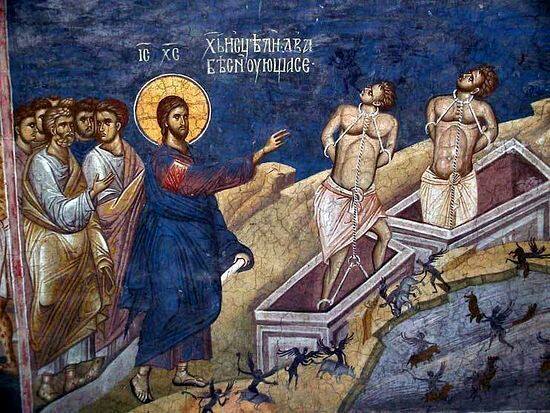
“A demon-possessed person was taken to a monastery, and the abbot there instructed the fathers to go to the chapel and pray for him with their prayer ropes. In that monastery, they also had as a holy relic the head of Saint Parthenios, Bishop of Lampsakos; this had the demon “cornered” quite a bit. At the same time, the abbot assigned the reading of exorcisms to a certain hieromonk. This monk was pious outwardly, but inside he was secretly arrogant. He was a fighter and a stickler in everything he did. He used to counsel the others, because he was also scholarly. He himself however would not receive help from anyone, because out of respect, they would hesitate to tell him whenever they saw him doing something incorrectly. He had created illusions inside himself that he was the most virtuous one in the monastery, so the evil one grabbed the opportunity that day to harm him. The demon implemented its wickedness and made him think that he was driving it out of the demon-possessed person.
So, as soon as he began to read the exorcisms, the demon began to cry out, “You’re burning me! Why are you sending me away, you cruel one?” – which made him believe that the demon was being burnt by his exorcisms – when it was the praying by the other brethren that was pressuring the demon. So, he replied to the demon, “Come to me.” These words had been uttered by Saint Parthenios to a demon, but he was a saint: Once, when a demon was crying out “I’m burning, I’m burning, where should I go?” the Saint replied “Come to me.” But during that incident, the demon replied to the Saint: “Your name alone burns me, Parthenios!” and immediately departed from the possessed person. Well, that monk attempted to act like Saint Parthenios, but became possessed himself. From that moment on, the demon controlled him for years on end, and he couldn’t find rest anywhere. He was constantly on the move – sometimes outside, in the world, and other times on the Holy Mountain. How that poor soul was tormented! That terrible state had caused weariness to his soul, as well as physical fatigue accompanied by tremors. And you know, even though he used to be a good priest, he could no longer minister. See what the devil can do?'”
A story told by St. Paisios
Source: Daimonologia: Hallowed Entries About Dark Culture & Thought, the Fantastic and the Supernatural, By John Sanidopoulos
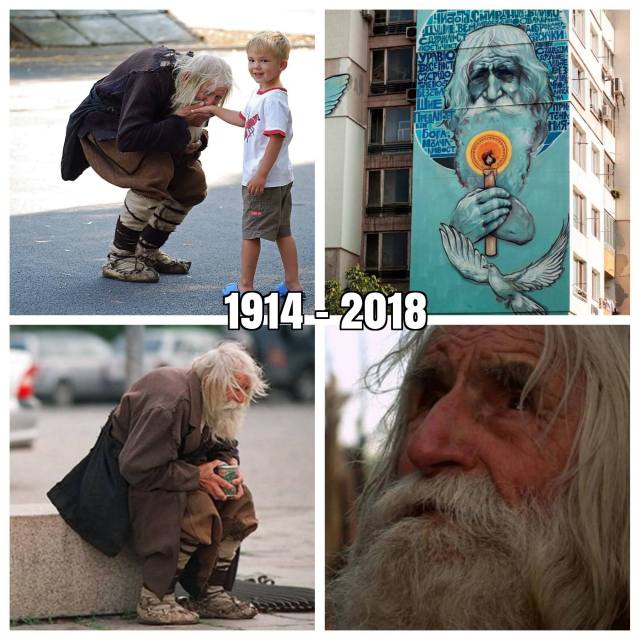
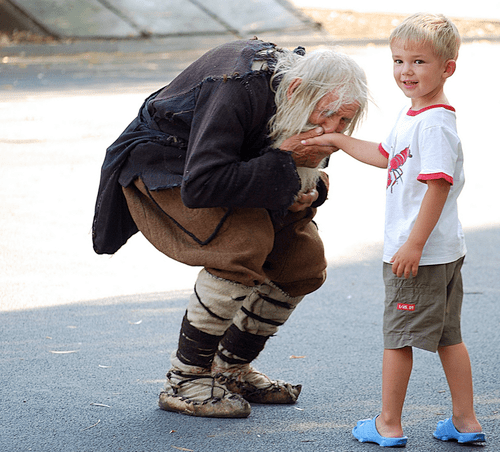
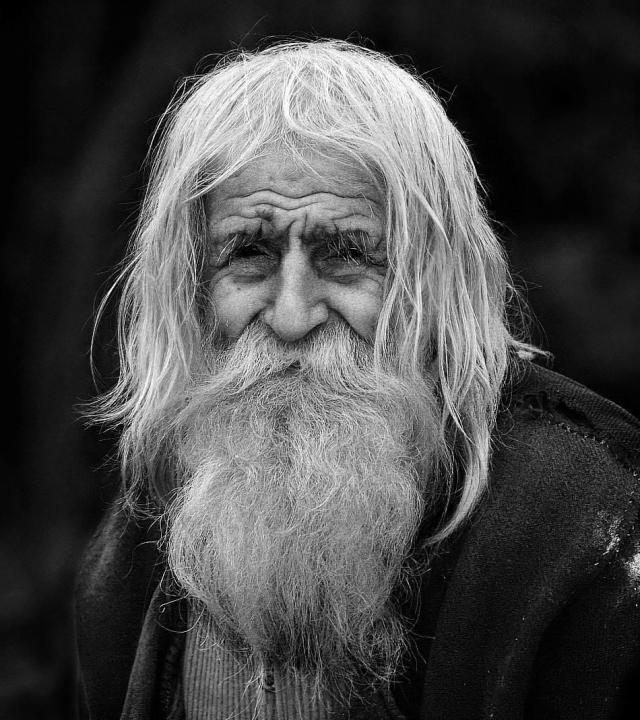
Elder Dobri is the subject of a 2015 documentary, “The Silent Angel,” which features interviews with his family, relatives, and friends, and also with Bulgaria’s last King and former Prime Minister Simeon Saxe-Coburg-Gotha.
An icon of charity, Dobri Dimitrov Dobrev, was born on July 20, 1914 in the village of Bailovo. His father died in World War I and his mother raised the children. He married in 1940, when Bulgaria was participating in the Second World. A shell fell near him during one of the bombings in Sofia, depriving him of nearly all his hearing. He had four children with his wife, two of whom he outlived.
Over the years, the elder became more and more detached from the material aspects of life, devoting himself entirely to the spiritual life. Around the year 2000, he donated all of his belongings to the Orthodox Church and began living in a small and modest addition to the Sts. Cyril and Methodius Church in his native village. It is also about that time that he began to collect money towards the restoration of churches and monasteries throughout Bulgaria.
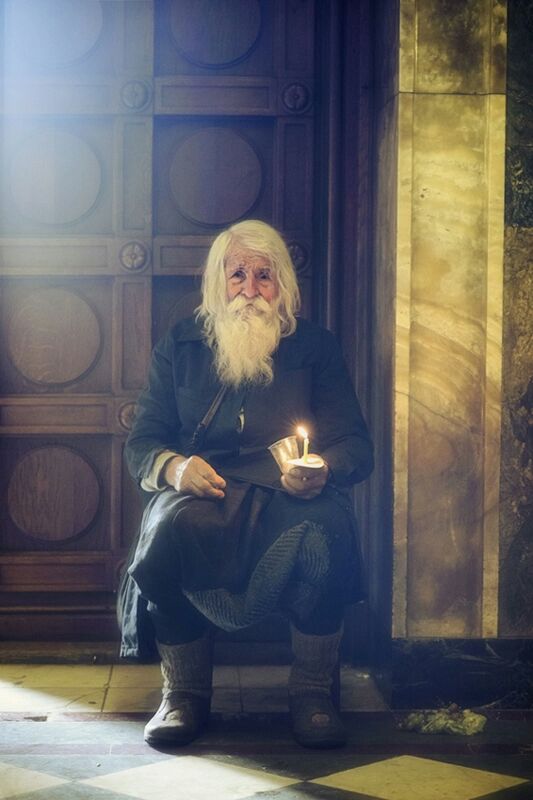
He came under the spotlight when it was revealed that for years he had walked more than 12.5 miles to reach Sofia from his home in the village of Bailovo to beg for money and then donate it for charity.
After spending years at the entrance of the Alexander Nevsky Cathedral, with a plastic cup in his hand, he collected about BGN 40,000 ($24,700 today) for the cathedral in Sofia, BGN 10,000 ($12,350 today) for the Sts. Cyril and Methodius Church in Bailovo, and BGN 25,000 ($31,000 today) for the restoration of the Eleshnishki Monastery of the Mother of God located to the east of Sofia, and the local church of the Gorno Kamartsi village.
His spirit of utter selflessness and sacrifice earned him the popular title “The Saint of Bailovo.”
Yesterday, Elder Dobri Dobrev (Grandpa Dobri), reposed in the Lord. He was 103 years old. He reposed at the Monastery of St. George in Kremikovtsi, to the northeast of Sofia.
“We are sorry to report that Dobry Dobrev passed away at the age of 103
We regret to announce, at the age of 103, today the beloved of all grandpa good died. Tomorrow the body of grandpa good will be exposed to a pilgrimage to the church of his native village of Bailovo. His funeral will be on Thursday.”
Once there came to Bishop Parthenios of Lampsakos a man who was possessed by a most malicious demon, and no one knew of it, not even the possessed one himself. The Saint, however, recognized the demonic possession, because he was inspired and enlightened by God. When that man greeted him, the holy one offered no response but kept silent as if he were mute. The demon was angered at the bishop’s conduct. The demon then, with haughtiness and pride, addressed the meek Parthenios in a wrathful tone:
“We have a true desire to see you, and have journeyed a long way to greet you; but you do not even condescend to speak to us at all?”
The Saint replied: “Behold, you have seen me.”
The demon retorted: “I have seen you and been constrained to speak the truth.”
The blessed one answered: “If you know who I am, then depart from the creation of God.”
The demon rejoined: “I have dwelt in this man for a long time, ever since his childhood, and no one has learned of it, save yourself. If you should cast me from this dwelling place, I know not where I shall go!”
The Saint replied: “I will give you a man. You may dwell in him – if you so wish it.”
The demon then departed from the longtime sufferer, but he asked the Saint to keep his promise. The holy one suddenly opened his mouth and declared: “Behold, I am a man, enter into me and dwell!”
And the demon, as if he were consumed by fire, fled crying and shouting aloud: “Woe is me, wretch that I am! If the sight of you alone inflames me, how shall I dare enter into you?”
As the demon said this, he fled. As for the formerly possessed man, he became whole and gave thanks to Saint Parthenios.
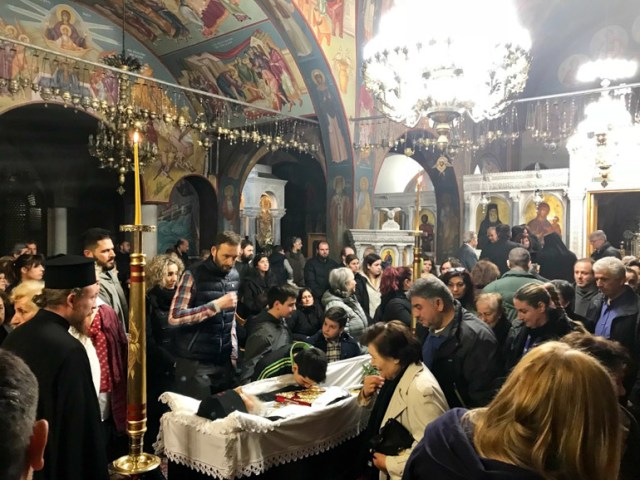
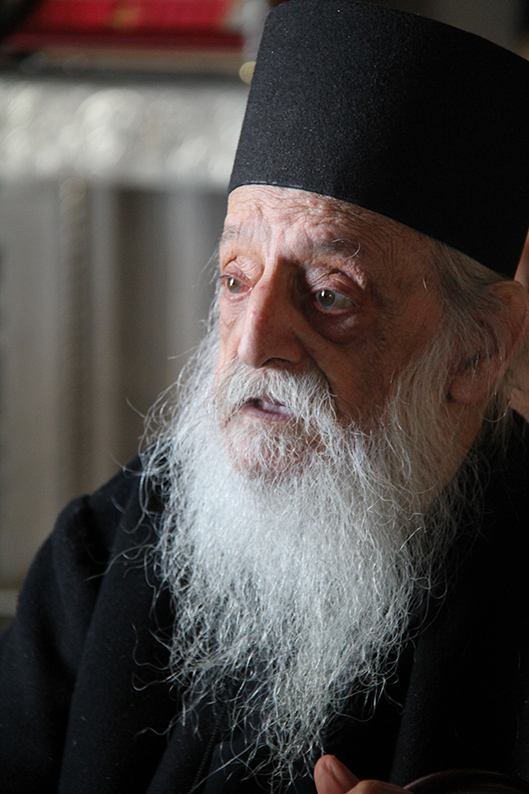
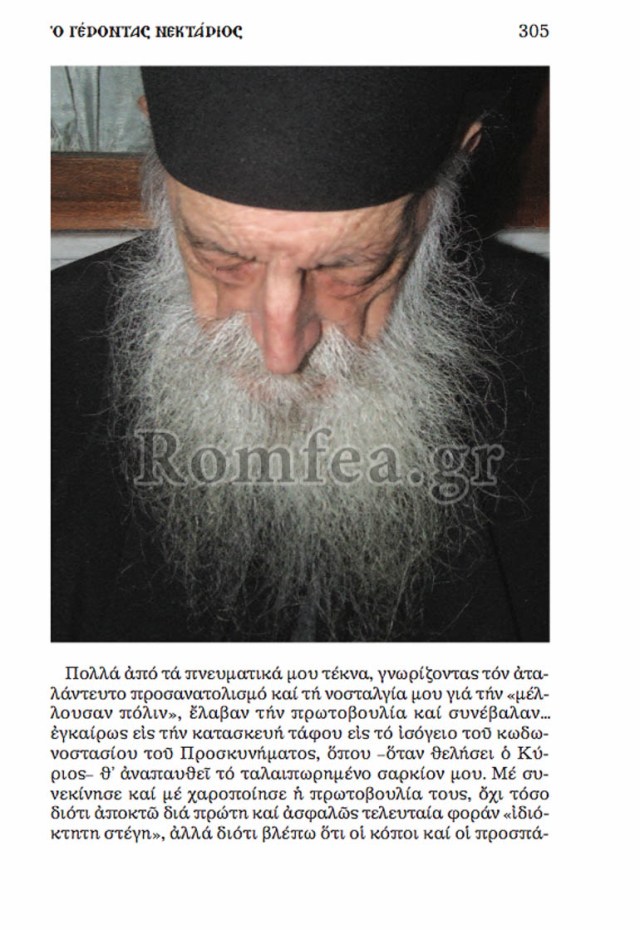
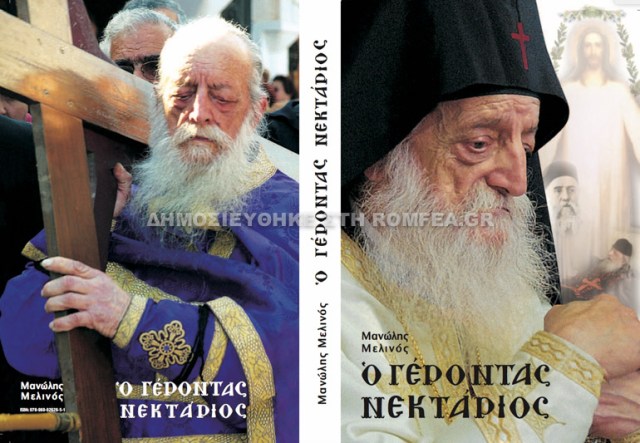
On Thursday, February 8, 2018, at 5:30 AM, the renowned elder and spiritual father Nektarios Vitalis, the elder of Saint Athanasius Monastery in Kouvaras, reposed in the Lord. I wrote about his holy life in a previous post. Today I would like to share with you a miracle which took place on the day of his funeral, February 9 at the Monastery of Saint Athanasius, sealing a life full of heavenly visitations. The Youtube video which follows, shows, from 1:38onwards, how his corpse is not stiff (ie. rigor mortis) but shows signs of flexibility, as if he were only sleeping. Pay attention to how a spiritual child of his fondly kisses and gently caresses his Gerondas’ hand, seeking his final blessing. God is glorified in His Saints!
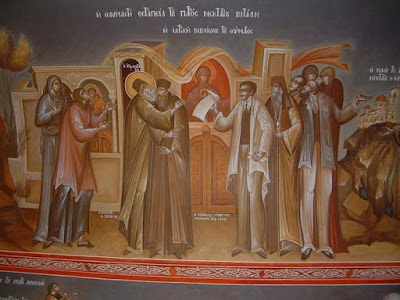
Icon of St. Nektarios embracing and healing Fr. Nektarios Vitalis, along with the two women bearing witness to this to the left, and the doctors confirming the miracle to the right. The icon is from the Chapel of Saint Nektarios in Aretaieion Hospital.
Before this, in 1965, he suffered a stroke, and his situation was dire, but Saint Nektarios the Wonderworker granted him healing. As soon as he became well, he moved to Lavro. A short time later, he again saw Saint Nektarios in his sleep, who asked him to build his “house” in Kamariza, Lavro [a famous pilgrimage of the saint, where many miracles have occurred], and who informed him that he would help him.
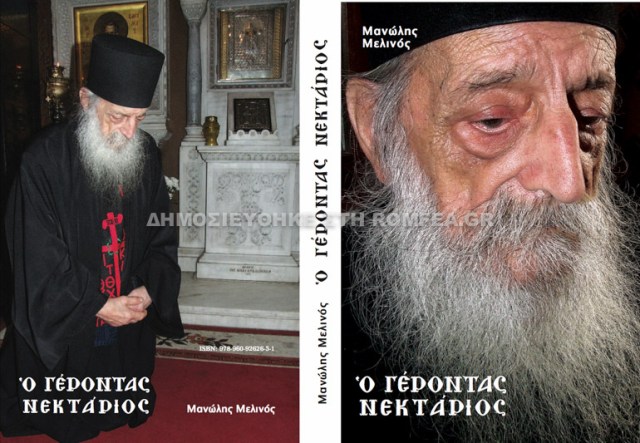
Excerpt from a short encomium written by Mr. Manolis Melinos, who wrote several books on St. Nektarios, his life and miracles, and spent 30 years together with him: ELDER NEKTARIOS The sweet, the simple, the father, The brother, the fellow man, The consoler, the humble one, The child among children, the great one among the great, the elder among the elders, in other words, the child-elder, reposed today, February 8th, 2018 at the age of 88. Now he is an intercessor for us at the heavenly Altar, together with St. Nektarios, near the Great High Priest Christ, to Whom he gave everything!
Fr. Nektarios Vitalis is at long last with our Saviour Christ and his beloved patron Saint, St. Nektarios. May he pray for us! His was a life full of visions, visitations and miracles with his patron saint, even near-death, after-life experiences! Miracles and signs of Holiness even during his Memorial Service and Funeral!
Καλό Παράδεισο, Γέροντα! Καλή αντάμωση στην Αιωνιότητα!
Greek traditional wish for the departed: “A Blessed Paradise, Gerondas! Until we meet again in Eternity!
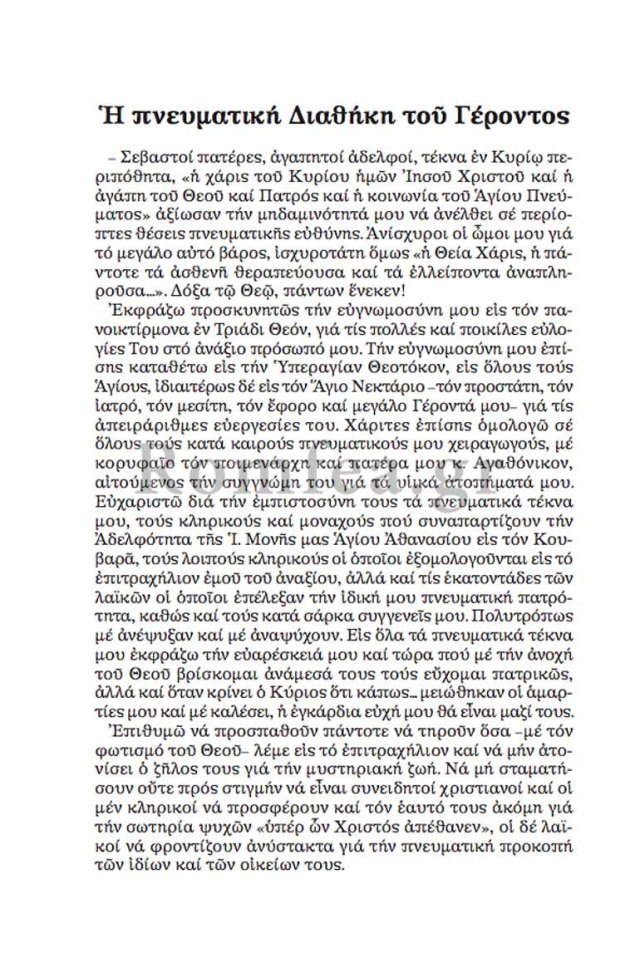
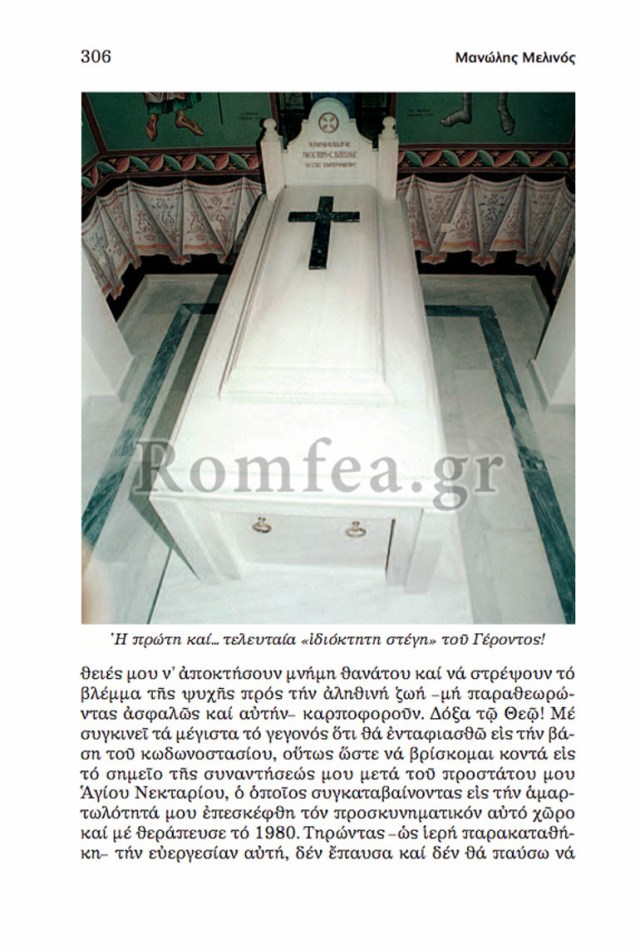
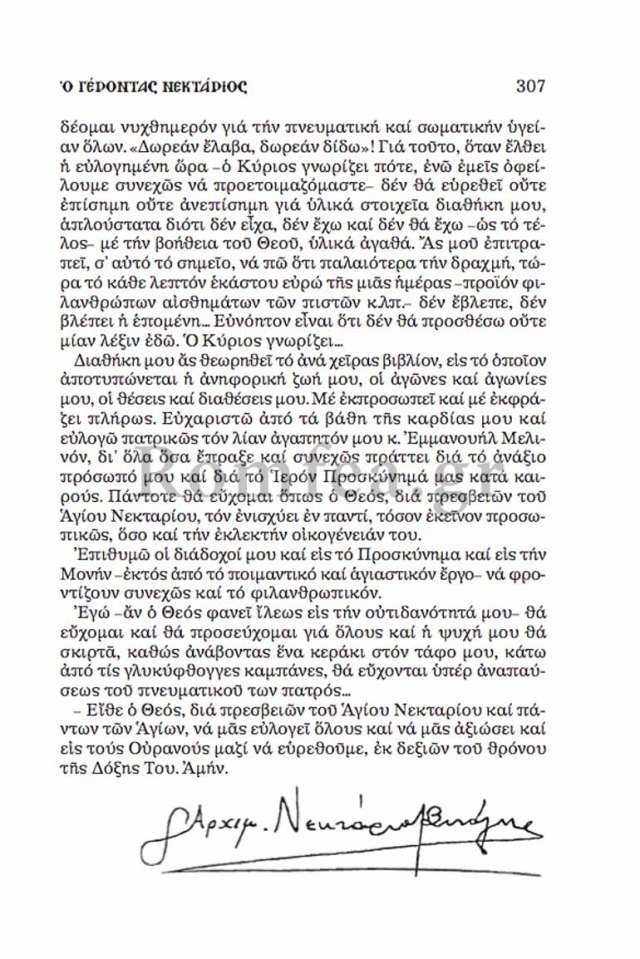
Below follow Fr. Nektarios’ recalling of his miraculous healing of cancer by St. Nektarios, a few youtube videos where he tells of St. Nektarios’ visitations to him and his near-death, ‘after-life’ experience, and his final will, testament and tomb.
Miracle of Saint Nektarios: The Healing of Fr. Nektarios Vitalis of Cancer
Fr. Nektarios Vitalis, well-known in Lavrio [a city in Attika, Greece] for his deeds and his sympathy to the poor and those written-off by the world in these difficult times, retells the following incident from when he was dying from cancer. What is said below has been told elsewhere, repeatedly, including in the book I talked to Saint Nektarios (Athens 1997, by the renowned writer Mr. Manolis Melinos).
Fr. Nektarios Vitalis recalls:
“I was suffering from a serious form of cancer. My chest was an open wound that was continuously running blood and pus. I would tear my undershirts from the pain. It was a tragic situation, and I was headed directly to death. So you understand, I had even prepared my grave clothes….
“On the 26th of March 1980, in the morning, I was talking in my office in the basement of the Church with Sofia Bourdoy (the church care-taker [a woman who cleans the church]) and the icon painter Helen Kitraki, when the door suddenly opened and an old, unknown man entered. He had a snow-white beard, was short and was slighty bald. He looked exactly the same as St. Nektarios appears in photographs. He took three candles without paying and lit only two. He venerated all the icons of the church, but passed over the icon of St. Nektarios without venerating it. He did not see me where I was. I had terrible pains when they pulled aside the curtain of the office and went to see the old man. He faced the Beautiful Gate [the Royal Doors in the Holy Iconostasion], crossed his palms and without looking around he asked: ‘Is the Geronta [Elder] here?’
“The church care-taker knowing my disease wanted to protect me…: ‘No, no…he is at home with the flu….’
“He replied: ‘Never mind. Pray, and have a Good Resurrection,’ [the traditional Orthodox greeting during Great Lent in anticipation of Pascha ‘Kali Anastasi’] he said as he left.
“The church care-taker came running to me and said ‘Father Nektarios, the old man who just left resembled St. Nektarios himself! His eyes flew flames. It seems to me that was St. Nektarios and he came to help you….’
“I thanked her thinking that she said this to console me. But deep down something was wrong. I sent her along with the icon painter to find the unknown man and quickly bring him back. I walked into the sanctuary and venerated the Crucified One [the icon of Christ on the Cross in every Holy Altar] crying, and once again asking Christ to heal me. Their footsteps stopped: ‘Father, the Elder has come!’
“I tried to kiss his hand, but out of humilty he did not let me. He bent and kissed my own! I asked him: ‘What is your name?’
“‘Anastasios, my son,’ he said, relating his baptismal name that he had before he become a monk….
“I led him to venerate the holy relics. He took out a pair of glasses with only one arm, and as soon as we saw them we were amazed! They were the same glasses of St. Nektarios that we had in the case with the holy relics. They were given to me by the old Gerontissa [Eldress] Nektaria of the monastery in Aegina.
“‘Belief is everything!’ said the stranger, as he put on his glasses.
“He began with reverence to embrace all the holy relics as the church care-taker showed, except for the relics of St. Nektarios, which he passed over….
“‘Geronta, forgive me,’ I said, ‘but why don’t you venerate the miraculous Saint Nektarios?’
“He turned and looked at me smiling. I asked him: ‘Where are you staying Geronta?’
“He showed me the ceiling, where we were building the new church [dedicated to St. Nektarios], saying: ‘My house is still not ready and I’m worried. My position does not allow me to live here and there….’
“‘Geronta, I must confess, you were told a lie earlier. I have cancer! But I want to get well, to make the Holy Altar, to finish the Church first, and then I can die….’
“‘Do not worry,’ he told me. ‘I’m leaving now. I’m going to Paros [an island in Greece] to venerate St. Arsenios and to visit Fr. Philotheos [Zervakos],’ he added, starting to leave and passing by the big icon without giving it a second thought….
“I stopped him and put my hands to his face.
“‘My Geronta, my Geronta, your face looks exactly like St. Nektarios who is honored here in our church….’
“Then, tears rolled from his eyes. He crossed me and embraced me with his hands. Taking courage I opened my hands to hug him. But when I spread out my hands, and while I was watching I could see him before my face, my arms closed back to my chest! The hairs then stood up on my arms and I crossed myself!
“I said again: ‘O my Geronta, I beg you, I want to live to do my first Liturgy. Help me to live….’
“He left from being close to me and stopped in front of his icon and said: ‘Oh, my child Nektarios, don’t worry. It is a passing trial, and you will be well! The miracle which you are asking for will happen, and it will be told to the whole world. Don’t be afraid….’
“Immediately he left us by walking through a closed door….
“The women ran to catch up to him. They reached him at the bus stop. He went inside and disappeared before the bus left!”
This story is always told by Fr. Nektarios Vitalis, a respected and reliable person, in the presence of witnesses. Fr. Nektarios eventually became well – to the amazement of doctors, radiologists, and forecasters of death. Because above all is Christ, our living God, and our intercessors before God, the Saints, plus our Mother the Panagia!
For “where God wills, the laws of nature are overcome….”











 ORTHODOX CHRISTIAN FAITH AND LIFE