With a Sling and With a Stone

david1

THIMBLERIG’S ARK is a blog which records one writer’s journey through faith, art, and life which I personally find very inspiring and highly rewarding. This film review is fresh, honest and constructive. “Should Christians Support Christian Content?” he asks in another blog entry, only to conclude, and rightly so in my opinion, that discernment should be applied. Bad art is simply not art, no matter if someone wants to call it “Christian” art. And I can’t agree more with another aside of his: ‘“Finally, brethren, whatever things are true, whatever things are noble, whatever things are just, whatever things are pure, whatever things are lovely, whatever things are of good report, if there is any virtue and if there is anything praiseworthy—meditate on these things.” (Phil 4:8) I don’t see “Christian” anywhere in that list, so that doesn’t seem to be an automatic criterion for what I dwell on.’ This specific quotation from the Epistle of Paul and Timothy to the Philippians and the interpretation provided above are a central preoccupation of my blog too.

david3

thimblerigsark's avatarThimblerig's Ark

77f61c95b36c14adbf4e1ee31fa3b82f

2014 saw the release of some major Bible-themed movies, movies backed by serious Hollywood studios, movies involving household name actors, directors with impressive filmographies, and budgets in the hundreds of millions.

Financially, the movies did respectfully, but they failed to make any sort of connection with the elusive “faith-based” audience – the audience willing to come out in droves for movies like God’s Not Dead or the films of the Kendrick Brothers.

The cry went out from faithful filmgoers everywhere, complaints that the films were not biblically accurate, that too many liberties had been taken, that our sacred stories should never have been entrusted into the hands of nonbelievers, and that one of us needed to do a Bible story properly, to show the world just how amazing our stories can be.

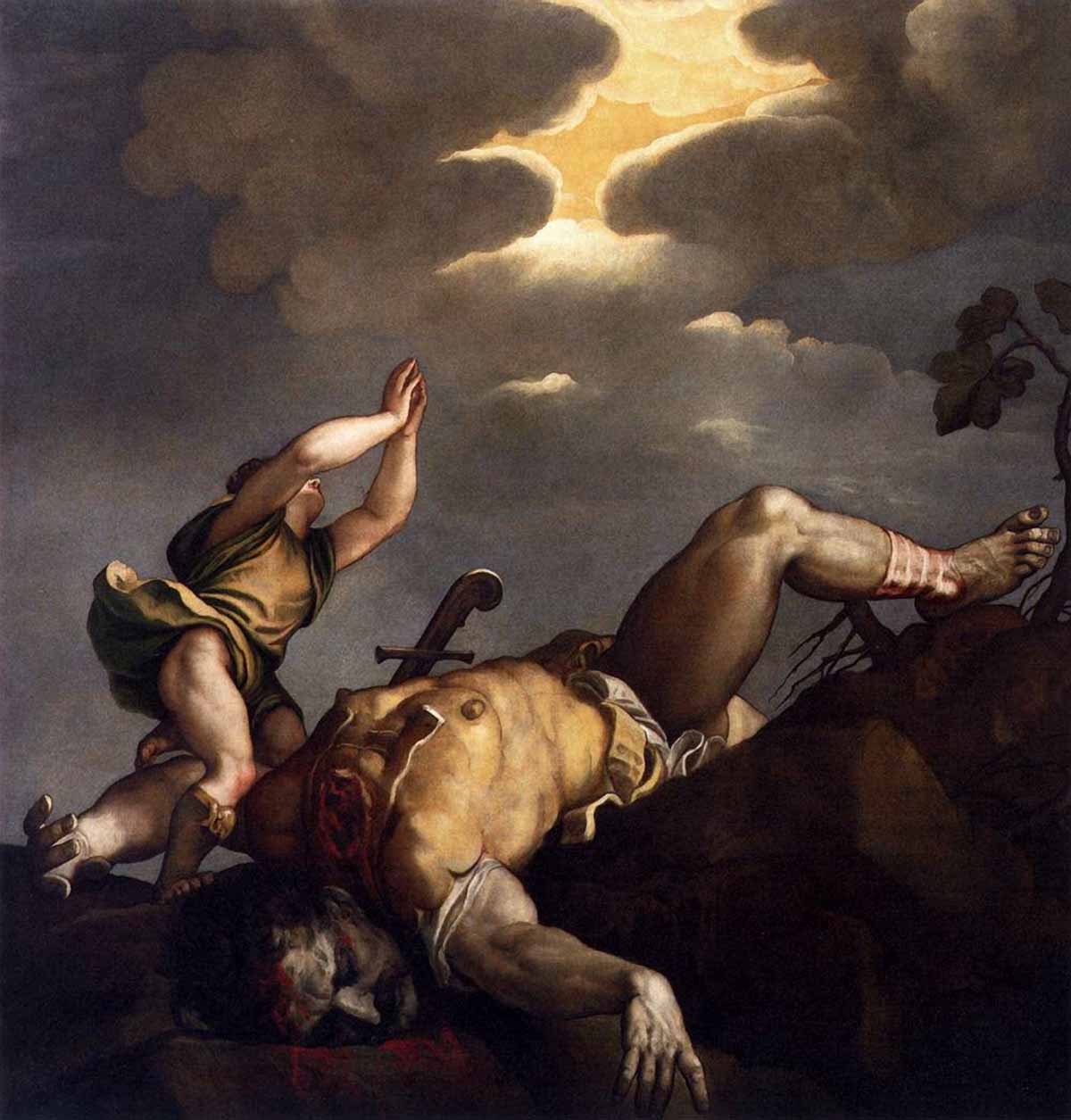
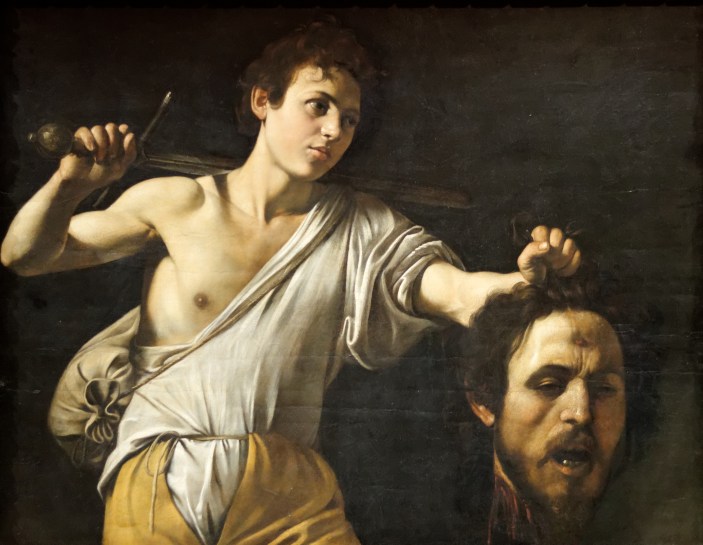
Veteran director Tim Chey answered that call, purportedly raising over 50 million dollars so that he could make a movie version of…

View original post 3,404 more words

In the Eye of the Storm

ocean

Silver Helix (1)

*

“Hell is empty and all the devils are here.” 

― William Shakespeare, The Tempest
storm1

*

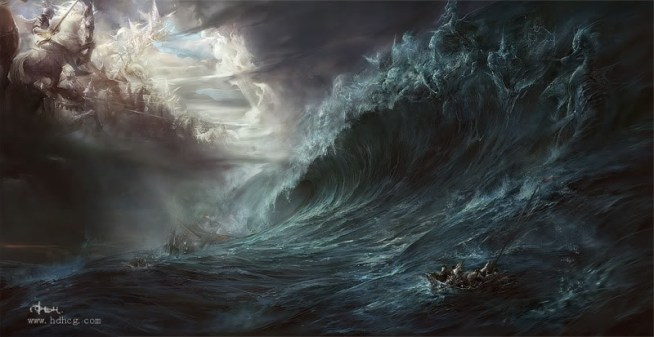
There was once a wave in the ocean, rolling along, enjoying the warmth of the sun and the swiftness of the breeze.

It smiled at everything around it as it made its way toward the shore.

But then, it suddenly noticed that the waves in front of it, one by one, were striking against the cliff face, being savagely broken to pieces.

‘Oh God!’ it cried. ‘My end will be just like theirs. Soon I, too, will crash and disappear!’

Just then another wave passing by saw the first wave’s panic and asked:

‘Why are you so anxious? Look how beautiful the weather is, see the sun, feel the breeze…’

The first wave replied:

‘Don’t you see? See how violently those waves before us strike against the cliff, look at the terrible way they disappear. We’ll soon become nothing just like them.’

‘Oh, but you don’t understand,’ the second wave said.

‘You’re not a wave. You’re a part of the ocean.’ (2)

*
storm0

*

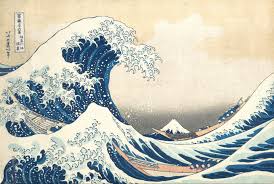
Katsushika Hokusai’s Under the Wave off Kanagawa, also called The Great Wave has became one of the most famous works of art in the world—and debatably the most iconic work of Japanese art. The Great Wave is part of the legendary series Thirty-six Views of Mount Fuji. (3) “The preeminence of The Great Wave —said to have inspired both Debussy’s La Mer and Rilke’s Der Berg—can be attributed, in addition to its sheer graphic beauty, to the compelling force of the contrast between the wave and the mountain. The turbulent wave seems to tower above the viewer, whereas the tiny stable pyramid of Mount Fuji—Japan’s sacred, national symbol of Beauty, Spirituality and Immortality–sits in the distance. The eternal mountain is envisioned in a single moment frozen in time.

*

Hokusai characteristically cast a traditional theme in a novel interpretation. In the traditional meisho-e (scene of a famous place), Mount Fuji was always the focus of the composition. Hokusai inventively inverted this formula and positioned a small Mount Fuji within the midst of a thundering seascape. Foundering among the great waves are three boats thought to be barges conveying fish from the southern islands of Edo.” Nonetheless, “Hokusai has arranged the composition to frame Mount Fuji. The curves of the wave and hull of one boat dip down just low enough to allow the base of Mount Fuji to be visible, and the white top of the great wave creates a diagonal line that leads the viewers eye directly to the peak of the mountain top.”(4)

*

To the Japanese eye, accustomed to reading from right to left—the great claw of a wave appears almost to tumble into the viewer’s face, the surging breakers may seem to swamp the boaters, even Mount Fuji appears fragile, about to be engulfed by the uncontrollable energy of the water, and still  the humans in their tiny boats “doomed” to perish in the sea do not look panicked! On the contrary, they look like hanging to their rows in full discipline. It looks like they are experienced and know how to cope with such a situation. (5)

 

storm2


Jennifer Rundlett, a fellow blogger, sees “through” its art “the many trials of life and how overwhelming we often find them, being so focused battling our problems, and trying not to be consumed by them”, whereas “the wave is pointing our eye to [Mount Fugi] the focal point or meaning….that beauty and immortality is in how we ride out these storms.” (6)

*

This Japanese painting brought to my mind an English Romanticist, William Turner’s famous seas, stormy skies, sinking ships and tempests studies, with a very different theme to Hokusai’s.
storm5

*

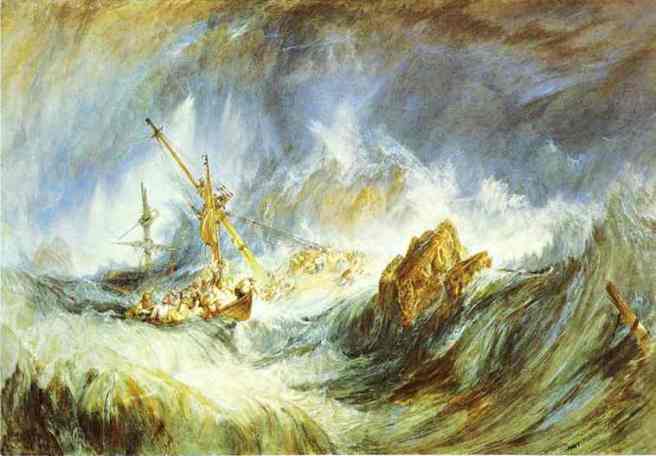
The power of the storm versus man’s inabilities was a main theme in Turner’s work. Dreadful catastrophe was a common theme in English romantic art period and Turner specifically painted themes of shipwreck a number of times throughout his life, exploring the effects of an elemental vortex. The romantics had taken a liking to natural phenomena and shipwreck became a popular subject. 19th century Britain specifically was very familiar with shipwreck as it was a period of great English shipping.  … The craftsmanship of these ships did not deter the fact that the man made vessel was still at the mercy of the wind.

*
storm3

*

Let us have a good look at Turner’s most famous storm painting: The Snow Storm – Steam-Boat off a Harbour’s Mouth (1842), http://www.tate.org.uk/art/work/N00530 Snow Storm – Steam-Boat off a Harbour’s Mouth shows a ship off the English coast struggling to persevere through a storm.  The steam-boat resides in the center of the vortex.   Turner’s untamed brushwork creates a swirling composition of chaotic colors and lighting. The swirling storm creates a composition that leaves the eye to circle around the canvas repeatedly. The black of the wind and the waves of the sea create a circle around the doomed ship. Through the windy peephole, the viewer can see the helpless ship at the mercy of nature’s violent motion. One can imagine the ship swaying to and fro as its crew desperately tries to take control of the sail and stay afloat. In this context the vessel can be interpreted as a symbol of mankind’s futile efforts to combat the forces of nature. 

*
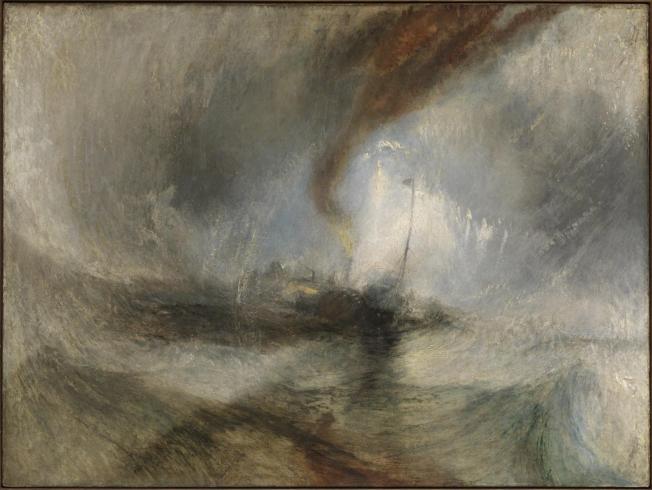
Snow Storm - Steam-Boat off a Harbour's Mouth exhibited 1842 Joseph Mallord William Turner 1775-1851 Accepted by the nation as part of the Turner Bequest 1856 http://www.tate.org.uk/art/work/N00530

*

In Snow Storm – Steam-Boat off a Harbour’s Mouth Turner uses a muted color palette. Pale blues and deep browns cover the canvas in swirling motions. Though the palette is predominately neutral, which usually creates a calming tone, the swirling motions and lighting create the chaotic effect Turner was going for. He wanted to simulate the true nature of a storm at sea. The bright white of the sail draws the eye directly to the ship, even amidst the swarming colors around it. Turner creates a pocket of light amidst a dark and shadowy canvas to illuminate the ship. Since he lights the ship in such a way, all focus is immediately drawn to the ship. The shadowing swirling winds only emphasize the ship more. The focus is relentlessly on the plight of the ship. This painting clearly invokes fear in a man or keeps him in his place as the weaker.  Here the emphasis is on the raw, merciless force of Nature and Man’s frailty and helplessness. (7)

*

It is famously said that Turner conceived this image while lashed to the mast of a ship during an actual storm at sea to get a better account of the wind and ocean and what the ship must’ve felt like in the midst of it. This seems to be nothing more than fiction, but the story has endured as a way of demonstrating Turner’s full-blooded engagement with the world around him, and is stunningly dramatized in the famous Mast scene of the mesmerising, highly maginative and richly detailed 19th century period biopic Mr Turner (2014) https://www.youtube.com/watch?v=lYN6HwLSvyg

*

Khalil Gibran  makes ample use of the “storm/sea/wave” imagery in “The Prophet” and explains how we all are “travellers” and “navigators” in the sea of life, our “pain being the breaking of the shell that encloses [our] understanding”. (8)

*

storm10

*

For an auditory raw, rough storm experience, let us not forget Aretha Franklin’s duet with Joe Ligon in the old time gospel  “I’ve Been In The Storm Too Long ” https://www.youtube.com/watch?v=YUujg0BTIjk&list=PLkGwJ-k-JlPEDnwXWd5RDpNmjbUa0fi6y

“I’ve been in the storm… too long, Lord too long
mmmmm… I’ve been in the storm… too Long, Lord too long
Lord, please let me…have a little more time, I need a little more time to pray
Oooh…I’ve been in the storm too long…”
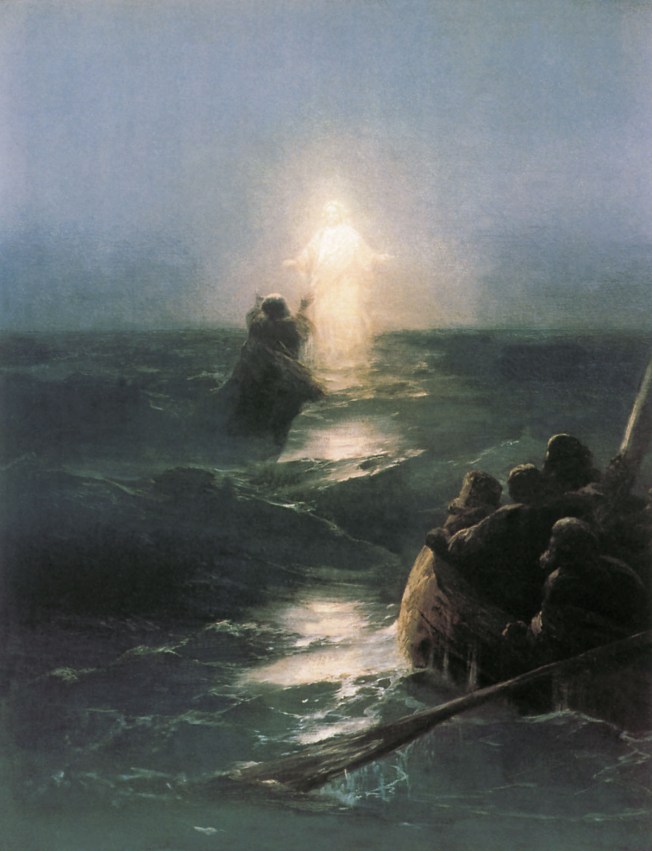
storm7

Jesus walks on water, by Ivan Aivazovsky (1888)

*

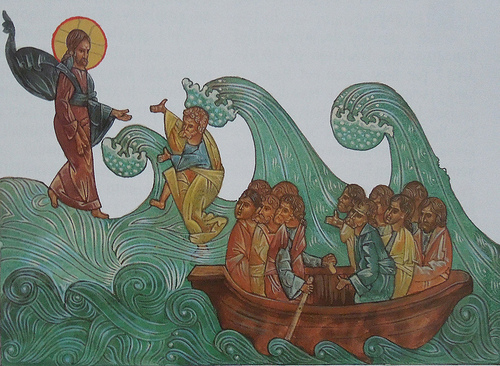
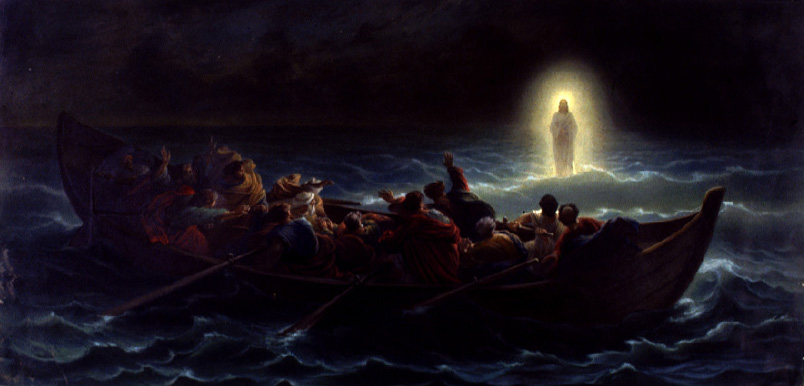
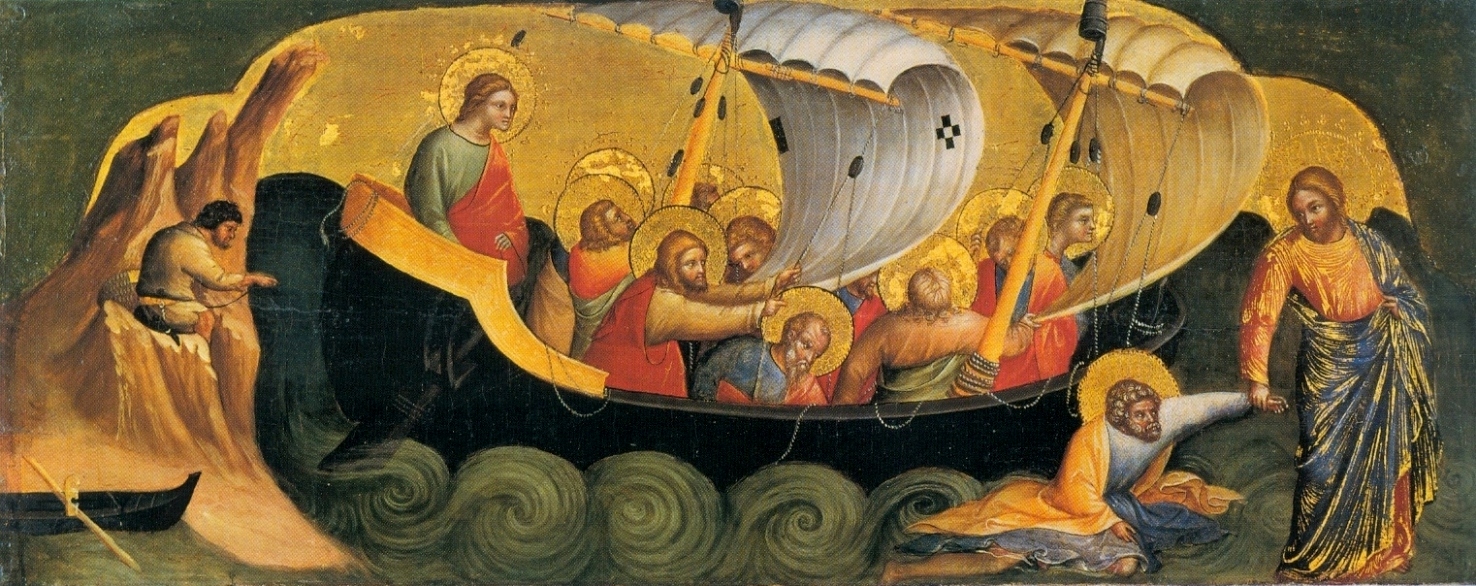
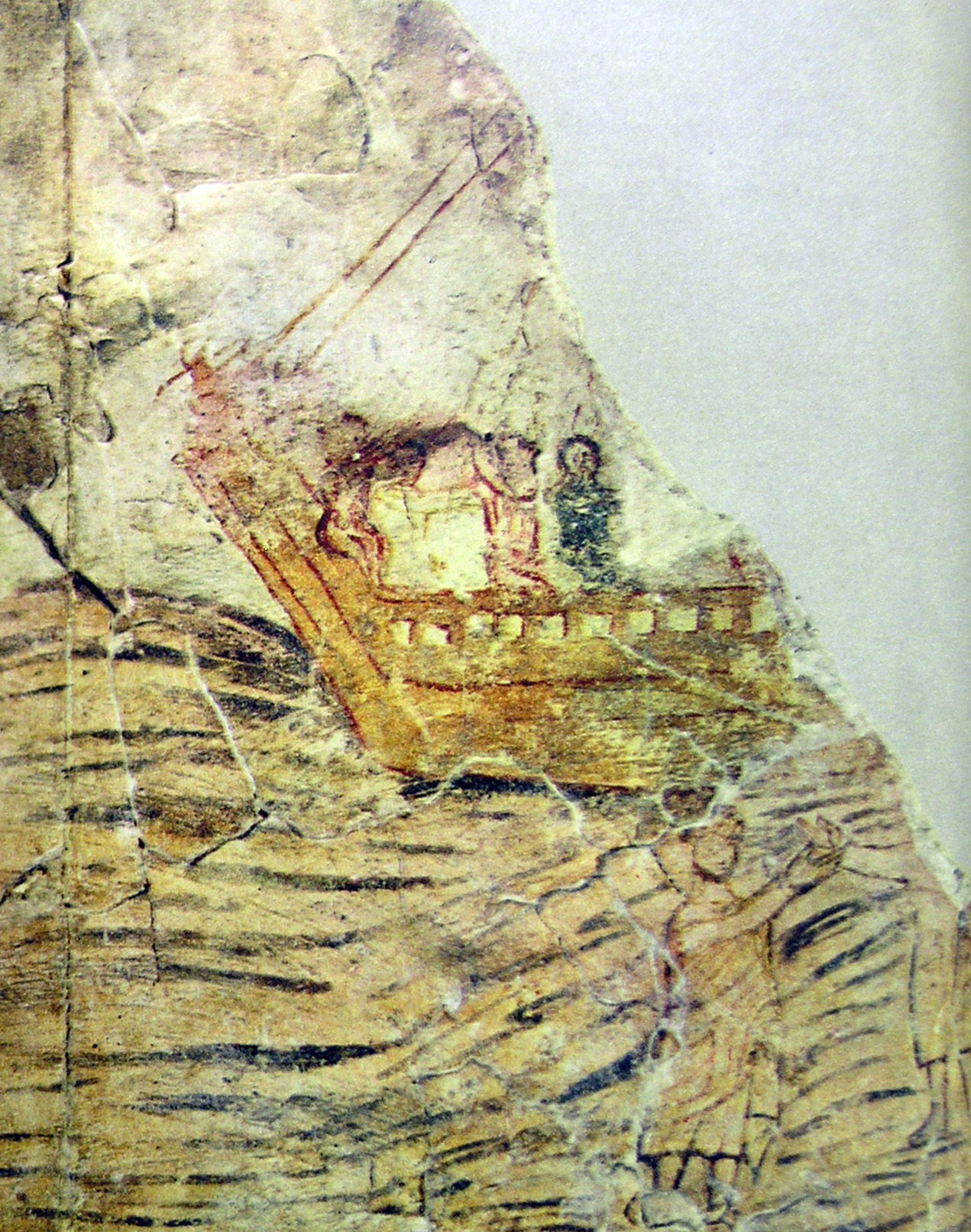
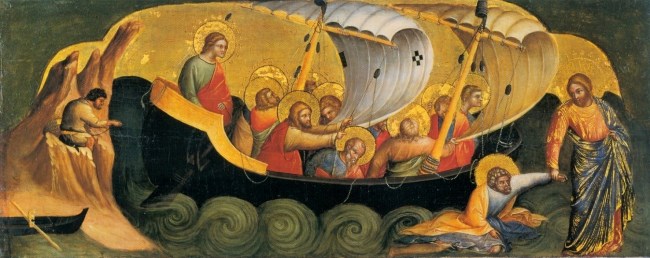
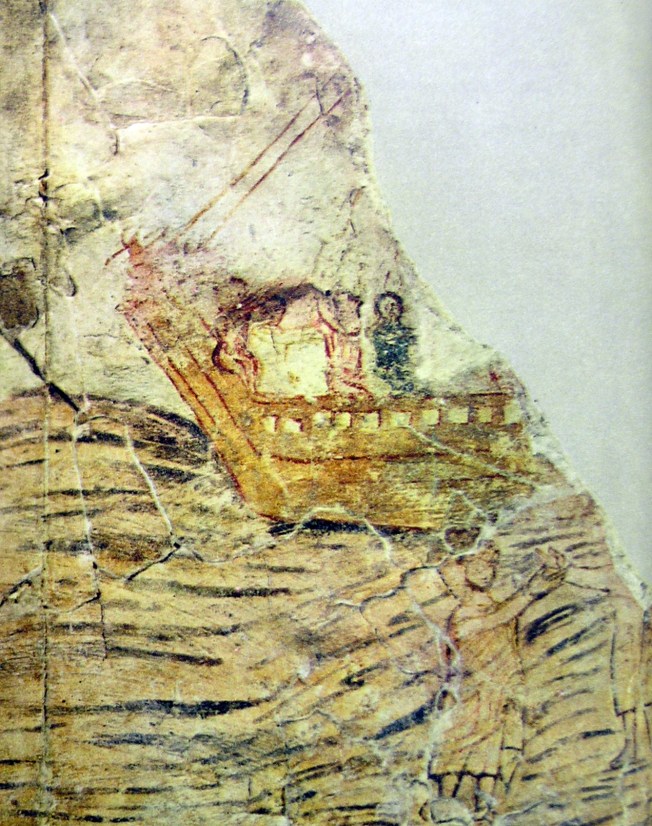
Yet, whether competent or helpless, I personally want to bring God in all these “storms”. So that I can walk on the water, towards Him, and when I see “the wind boisterous, … [am] afraid; and beginning to sink”, I can cry “saying, Lord, save me.” And He immediately will stretch forth His hand, and catch me, and say unto me, ‘O thou of little faith, wherefore didst thou doubt?’ (Matthew 14:29-31, KJB) And He will still the storm–within and without my mind–to a whisper and hush the waves of the ‘sea’  (Psalm 107:29) and (Mark 4:39).


*
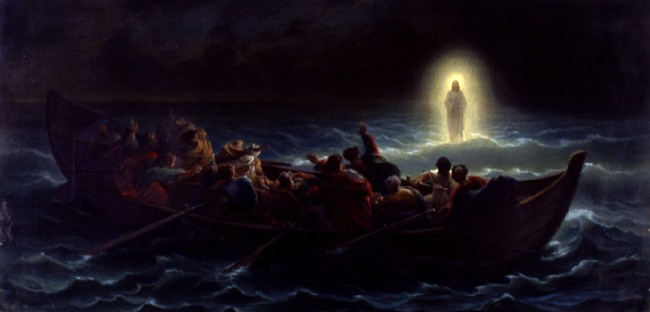
storm1

Christ walking on the sea, by Amédée Varint
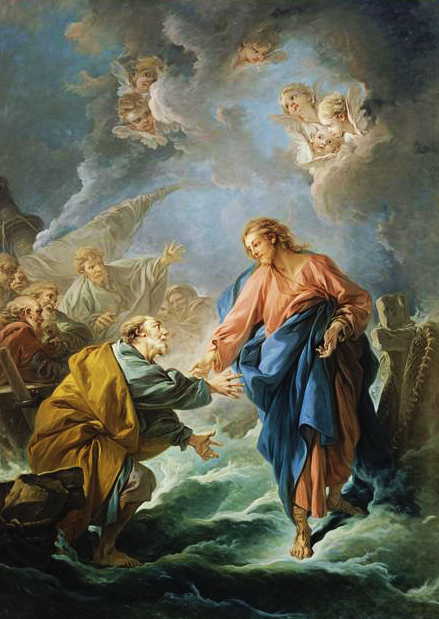
storm9

François Boucher Cathédrale Saint-Louis (1766) Versailles
storm20

Walking on water, by Veneziano, 1370.
OLYMPUS DIGITAL CAMERA

storm40

storm50

*

Sources:

  1. “I Capture The Majestic Power Of Ocean Waves”, amazing collection of underwater vortex and wave photographs at http://www.boredpanda.com/moments-in-the-ocean-images-created-from-water-light/
  2. “The missing rose” by Serdar Ozkan, cf. Paulo Coehlo’s blog http://paulocoelhoblog.com/2014/03/21/30-sec-read-you-are-not-a-wave/
  3. For the full collection, go to http://Source: https://en.wikipedia.org/wiki/Thirty-six_Views_of_Mount_Fuji
  4. The Metropolitan Museum of Art at http://www.metmuseum.org/toah/works-of-art/JP1847 For more analysis, watch Thompson, curator of the Hokusai exhibition at the Museum of Fine Arts, Boston, delving into the story behind this world famous print  at https://www.youtube.com/watch?v=dbPHPfVw6zQ
  5. https://www.khanacademy.org/humanities/art-asia/art-japan/edo-period/a/hokusai-under-the-wave-off-kanagawa-the-great-wave and http://www.artic.edu/aic/collections/artwork/24645 and http://www.artelino.com/articles/the-great-wave.asp
  6. For more details, go to her inspirational blog site, dedicated to sharing with insights of God’s love through meditations using art and music, at https://jrundlett.wordpress.com/2014/03/09/new-perspectives-god-given-problems/
  7. http://www.artble.com/artists/joseph_mallord_william_turner/paintings/snow_storm_-_steam-boat_off_a_harbour’s_mouth
  8.  Lebanese-American artist, poet (1883 – 1931), chiefly known in the English-speaking world for his 1923 book The Prophet, an early example of inspirational fiction, including a series of philosophical essays written in poetic English prose, and the third best-selling poet of all time, behind Shakespeare and Lao-Tzu or Lao-Tze.
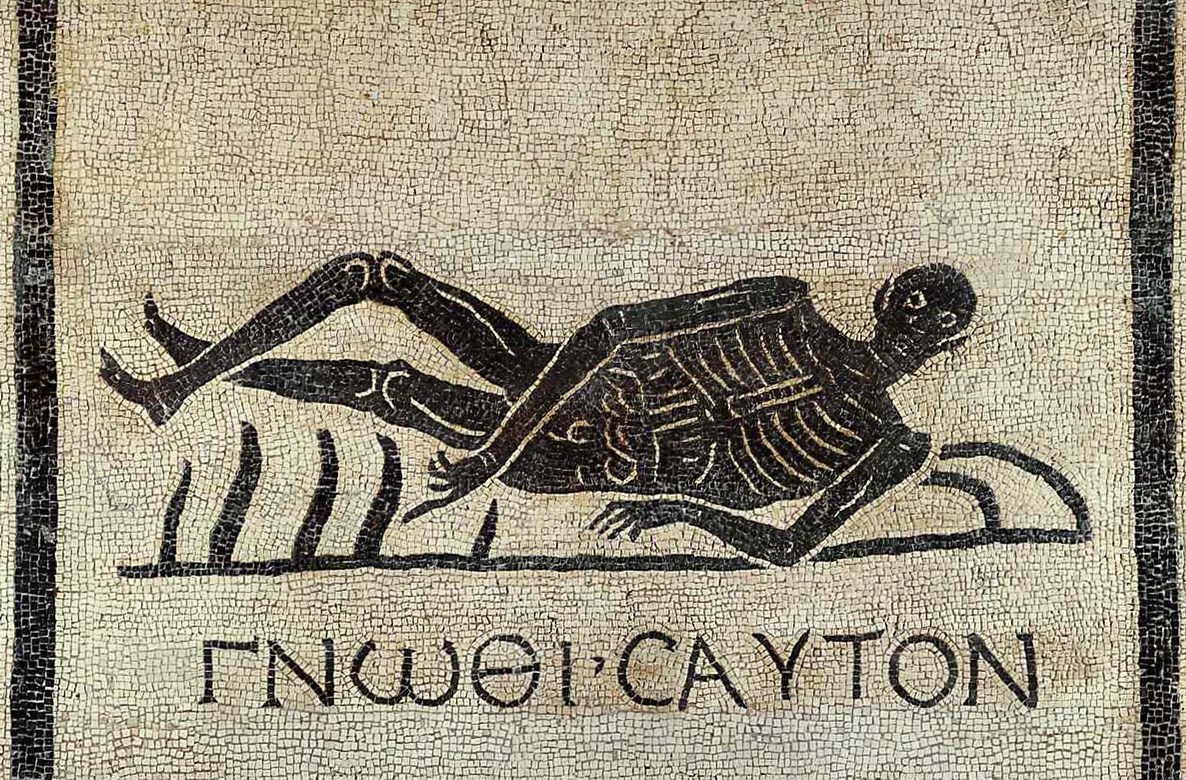
Temet Nosce

know-thyself

Legion

Lord, hear my voice, my present voice I mean,
Not that which may be speaking an hour hence
(For I am Legion) in an opposite sense,
And not by show of hands decide between
The multiple factions which my state has seen
Or will see. Condescend to the pretence
That what speaks now is I; in its defence
Dissolve my parliament and intervene.
*
Thou wilt not, though we asked it, quite recall
Free will once given. Yet to this moment’s choice
Give unfair weight. Hold me to this. Oh strain
A point – use legal fictions; for if all
My quarrelling selves must bear an equal voice,
Farewell, thou has created me in vain.

*

“And He asked him, What is thy name? And he answered, saying, My name is Legion: for we are many.” Mark 5:9 (KJB)

*

*

As the Ruin Falls

All this is flashy rhetoric about loving you.
I never had a selfless thought since I was born.
I am mercenary and self-seeking through and through:
I want God, you, all friends, merely to serve my turn.
*
Peace, re-assurance, pleasure, are the goals I seek,
I cannot crawl one inch outside my proper skin:
I talk of love –a scholar’s parrot may talk Greek–
But, self-imprisoned, always end where I begin.
*
Only that now you have taught me (but how late) my lack.
I see the chasm. And everything you are was making
My heart into a bridge by which I might get back
From exile, and grow man. And now the bridge is breaking.
*
For this I bless you as the ruin falls. The pains
You give me are more precious than all other gains.

*

“Selfishness cries to Thee: My Father! But Love cries: Our Father!” — St. Nikolai Velimirovic

O Isaiah, Dance for Joy

    wedding1
O Isaiah, dance for joy, for the Virgin is with child.
Composer: John Tavener

Meant to convey a series of verbal and musical impressions of a village wedding in Greece, Tavener’s music is set to a mix of texts from Angelos Sikelianos’ poem” Village Wedding” interspersed with many repetitions of the line “O Isaiah, dance for joy, for the Virgin is with child” taken from the Orthodox wedding service.

Text, by Angelos Sikelianos, translated from Greek by Philip Sherrard and Edmund Keeley

Wedding-1

To my beloved, who breaks my heart.
O Isaiah, dance for joy, for the Virgin is with child.

Do you listen within your veil, silent, God-quickened heart?
O Isaiah, dance for joy, for the Virgin is with child.

O depth and stillness of virginity! Follow your man.
O Isaiah, dance for joy, for the Virgin is with child.

Wedding-4

Let them throw white rice like a spring shower.
O Isaiah, dance for joy, for the Virgin is with child.

Like a spring cloud, let her now tenderly spread her bridal veil.
O Isaiah, dance for joy, for the Virgin is with child.

O the peace of the bridal dawn.
O Isaiah, dance for joy, for the Virgin is with child.

Wedding-2
And he listens, and he listens.
O Isaiah, dance for joy, for the Virgin is with child.And, as in front of a fount of crystal water,
Let the girls pass in front of the bride,
Observing her look from the corner of their eyes,
As though balancing pitchers on their heads.
O Isaiah, dance for joy, for the Virgin is with child.O, like Leto giving birth to Apollo,
Do you listen within your veil?
O Isaiah, dance for joy, for the Virgin is with child.

Wedding-3
When standing, her hands slight and pale,
(Let them throw white rice…)
O Isaiah, dance for joy, for the Virgin is with child.She clasped the ethereal palm tree on Delos,
Like a spring cloud.
O Isaiah, dance for joy, for the Virgin is with child.May you her mystical image…
O the peace of the bridal dawn.
O Isaiah, dance for joy, for the Virgin is with child.

Held by your husband’s strong heart,
And he listens.
O Isaiah, dance for joy, for the Virgin is with child.

Bring into the world with a single cry your child,
As the poet brings forth his creation.
O Isaiah, dance for joy, for the Virgin is with child.

wedding6

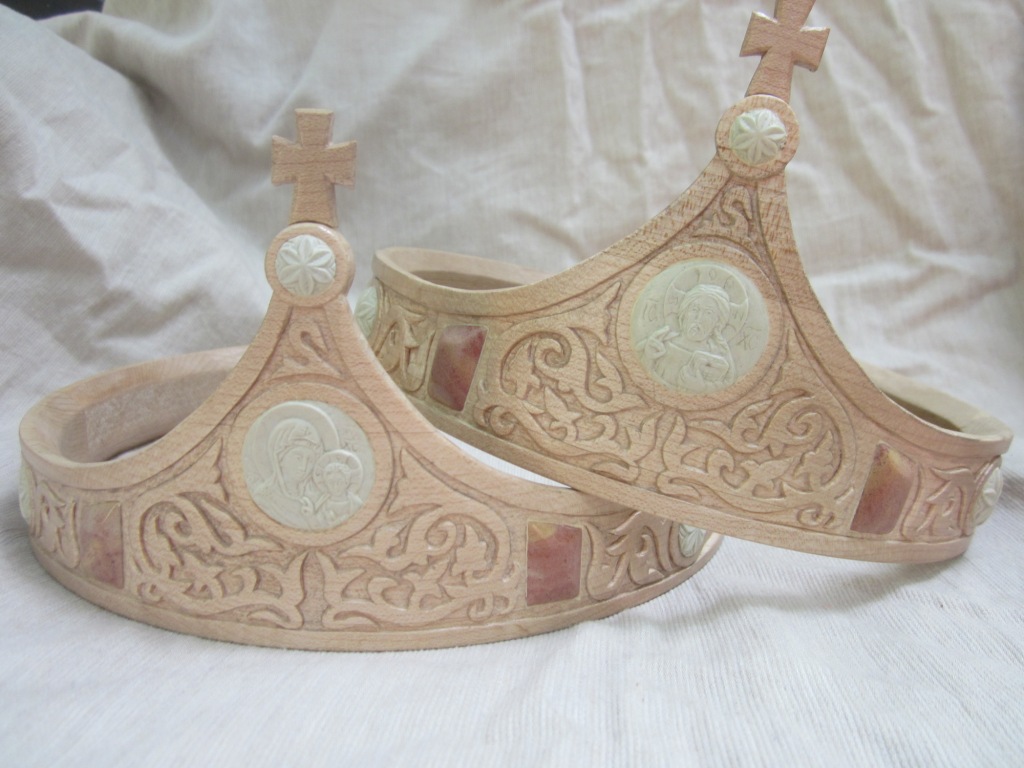
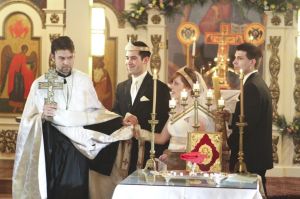
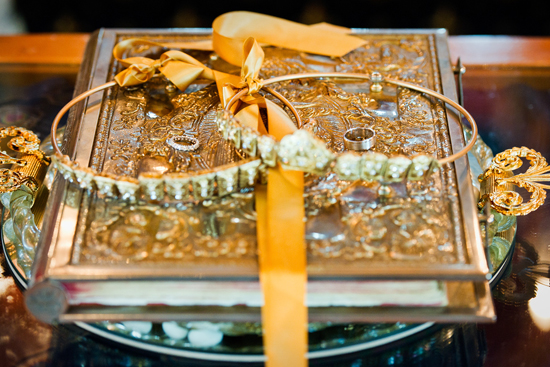
*The Dance of Isaiah is one of the integral parts of the Wedding/Crowning Service (Sacrament of Holy Matrimony) in the Orthodox Church (Byzantine Rite) and involves a the triple procession around a center table. The priest, holding the Gospel or Blessing Cross and the clasped hands of the groom and bride, and followed by the best man (or woman) who holds the newlyweds’ crowns above their heads, and the bridesmaids holding the lit white candles, walk three counterclockwise turns around the table in a celebratory “dance”. Each of the three turns is accompanied by each of the three hymns, which return once more to the theme of martyrdom and union with Christ. These are the hymns that, since ancient times, the Church has used to emphasize God’s blessings, and the same ones sung at ordinations to ecclesiastical orders. They signify that this couple has been set apart from the mundane world to live a life in Christ:

wedding7

Rejoice, O Isaiah! The Virgin is with child,

And shall bear a son Emmanuel,

Who is both God and Man,

And Orient is His Name,

Whom magnifying we call, the Virgin blessed.

O Holy Martyrs,

who fought the good fight and have received your crowns,

Entreat ye the Lord,

That He will have mercy on our souls.

Glory to Thee, O Christ God.

The Apostles boast,

The Martyrs Joy,

whose preaching was the Consubstantial Trinity.

*

To watch how the celebrant actually leads the marriage couple and the witnesses around the wedding table three times at the Orthodox Wedding/Crowning Service (Byzantine Rite), while chanting this religious hymn,  go to: https://www.youtube.com/watch?v=wyTQnV5W24A

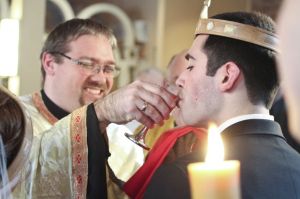
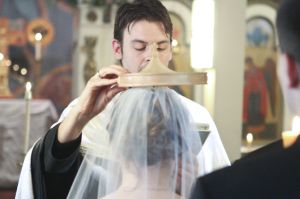
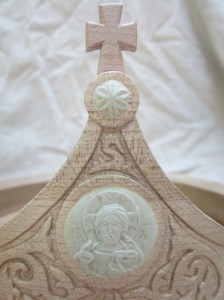
Wedding Photographs: Wedding with Carved Crowns
Source: Orthodox Arts Journal

Love Without Limits

burning bush13

“Whoever you are, whatever you may be, says the Lord of Love, my hand is resting upon you at this very moment. By this gesture, I am letting you know that I love you and that I call you for my own.

I have never ceased loving you, speaking to you, or calling you. Sometimes it was in silence and solitude. Sometimes it was there, where others were gathered in my name.

burning bush6

Often you did not hear this call, because you were not listening. At other times you perceived it, but in a way that was vague and confused. Occasionally you were at the point of responding with acceptance. And sometimes you gave me that response without any lasting commitment. You were deeply moved to hear me. You recoiled from the decision to follow me.

Never thereafter did you finally submit, totally and exclusively, to the calling of Love.

Yet now, once again, I come to you. I want to speak to you once more. I want you wholly for myself. Let me repeat: Love desires you, totally and exclusively.

burning bush3

I will speak to you in secret, confidentially, intimately. I will place my mouth close to your ear. Hear, then, what my lips want to speak to you in hushed tones—what they want to murmur to you.

I am your Lord, the Lord of Love. Do you want to enter into the life of Love?

This is not an invitation to some realm of tepid tenderness. It is a calling to enter into the burning flame of Love. There alone is true conversion: conversion to incandescent Love.

burning bush9

Do you wish to become someone other than you have been, someone other than you are? Do you wish to be someone who lives for others, and first of all for that Other and with that Other who calls all things into being? Do you wish to be a brother to all, a brother to the entire world?

Then hear what my Love speaks to you.

My child, you have never known who you really are. You do not yet know yourself. I mean, you have never really known yourself to be the object of my Love. As a result, you have never known who you are in me, or all the potential within yourself.

burning bush8

Awake from this sleep and its bad dreams! In certain moments of truth, you see nothing in yourself but failures and defeats, set-backs, corruption, and perhaps even crimes. But none of that is really of you. It is not your true “me,” the most profound expression of your true self.

Beneath and behind all that, deeper than all your sin, transgressions and lacks, my eyes are upon you. I see you, and I love you. It is you that I love. It’s not the evil you do—the evil that we can neither ignore nor deny nor lessen (is black actually white?). But underneath it all, at a greater depth, I see something else that is still very much alive.

The masks you wear, the disguises you adopt might well hide you from the eyes of others—and even from your own eyes. But they cannot hide you from me. I pursue you even there where no one has ever pursued you before.

burning bush11

Your deceptive expression, your feverish quest for excitement, your hard and avaricious heart—all of that I separate from you. I cut it away and cast it far off from you.

Hear me. No one truly understands you. But I understand you. I can speak about you such wonderful, marvelous things! I can say these things about you. Not about the “you” that the powers of darkness have so often led astray, but about the “you” who is as I desire you to be, the “you” who dwells in my thoughts as the object of my love. I can say these things about the “you” who can still be what I want you to be, and to be so visibly.

burning bush10

Become visibly, then, what you already are in my mind. Be the ultimate reality of yourself. Realize all the potential I have placed within you.

No man or woman is capable of realizing any inner beauty that is not equally present within you. There is no divine gift toward which you cannot aspire. Indeed, you will receive all those gifts together, if you truly love, with me and in me.

Whatever you may have done in the past, I will set you free, I will loose your bonds. And if I loose your bonds, who can prevent you from rising up and walking?

burning bush12

Love Without Limits (orig. Amour Sans Limites), 1971

By A Monk of the Eastern Church

Archimandrite Lev Gillet, who signed many of his books “A Monk of the Eastern Church,” was one of the great Orthodox spiritual guides of the last century. It is difficult to render Fr Lev’s lyrical French into English, but we hope that these efforts will provide readers with something of the spiritual richness and profound theological insight that characterized this humble monk, who was truly a modern Father of the Church.

burning bush2

Source: http://oca.org/reflections/archimandrite-lev-gillet/love-without-limits

Winged Life

blake1

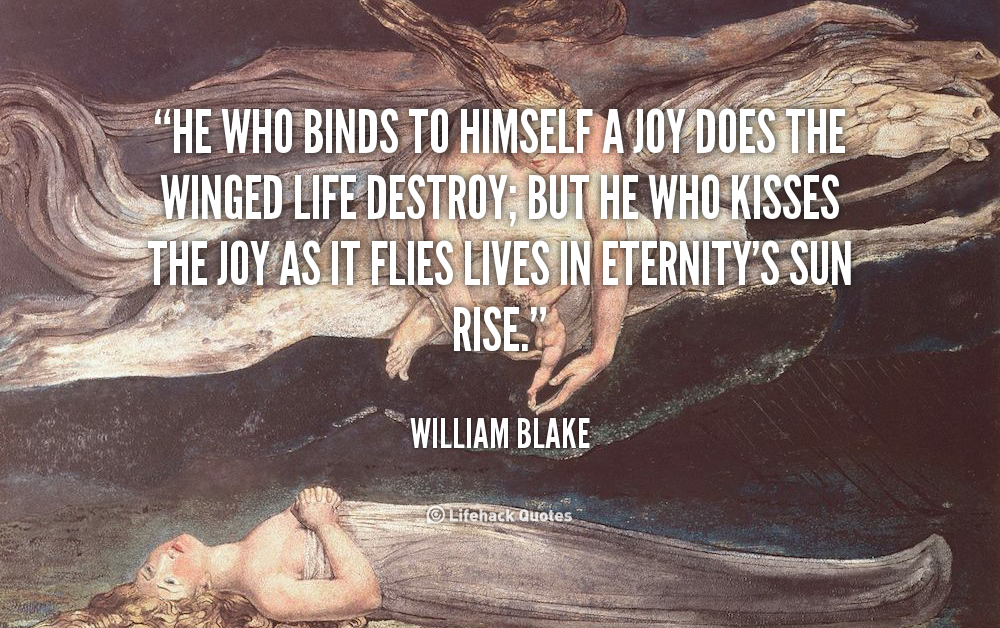
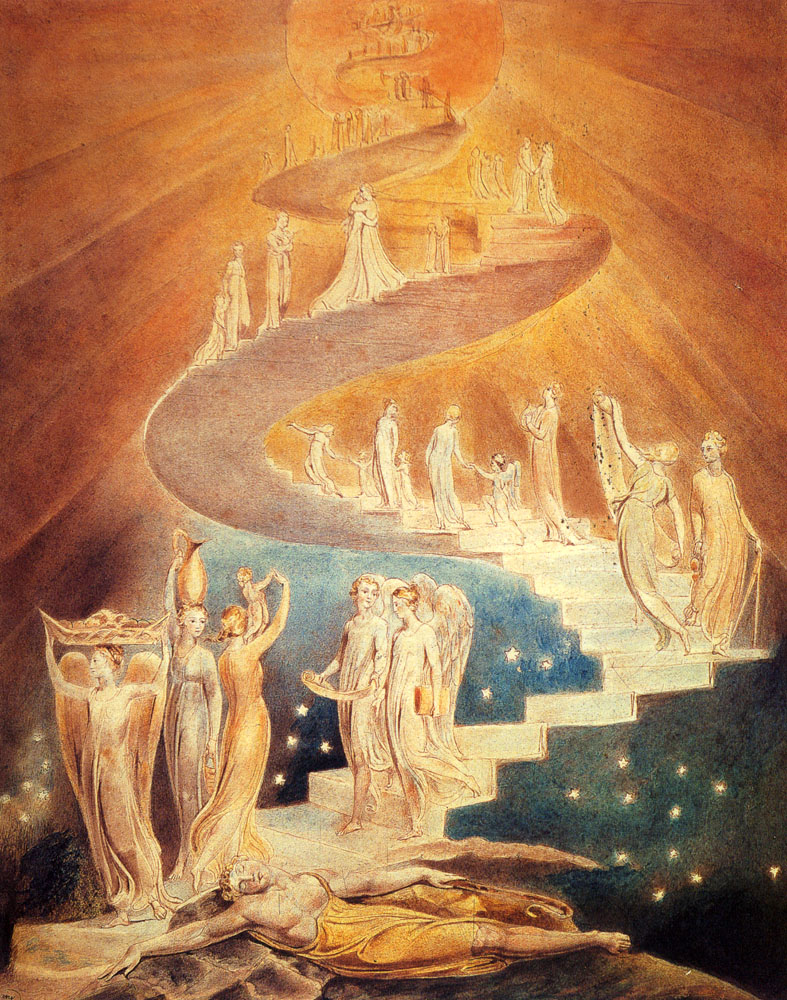
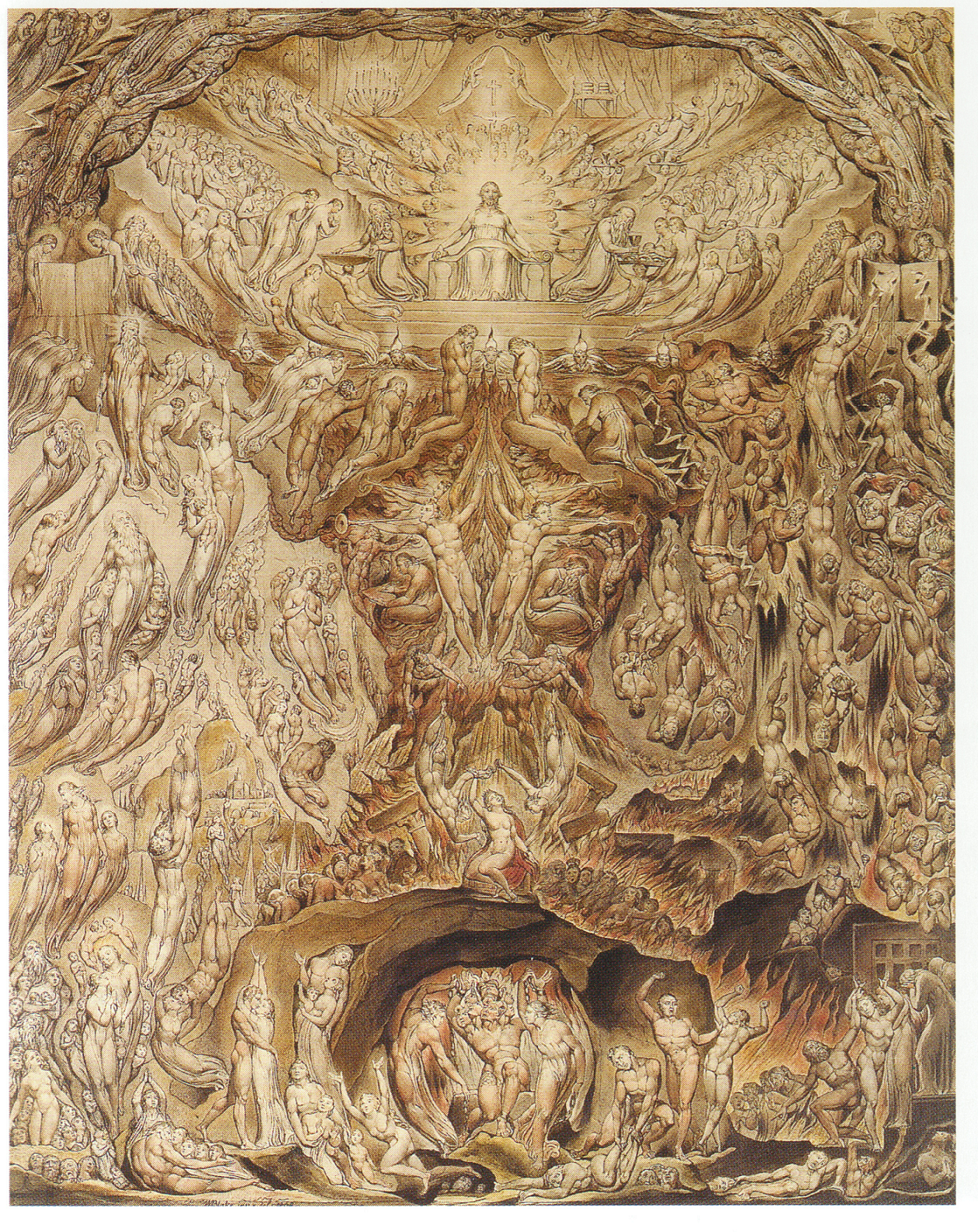
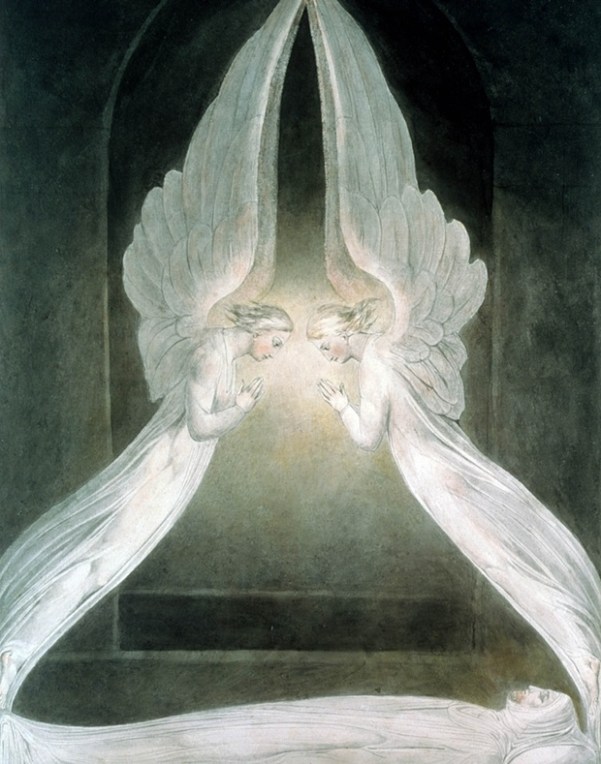
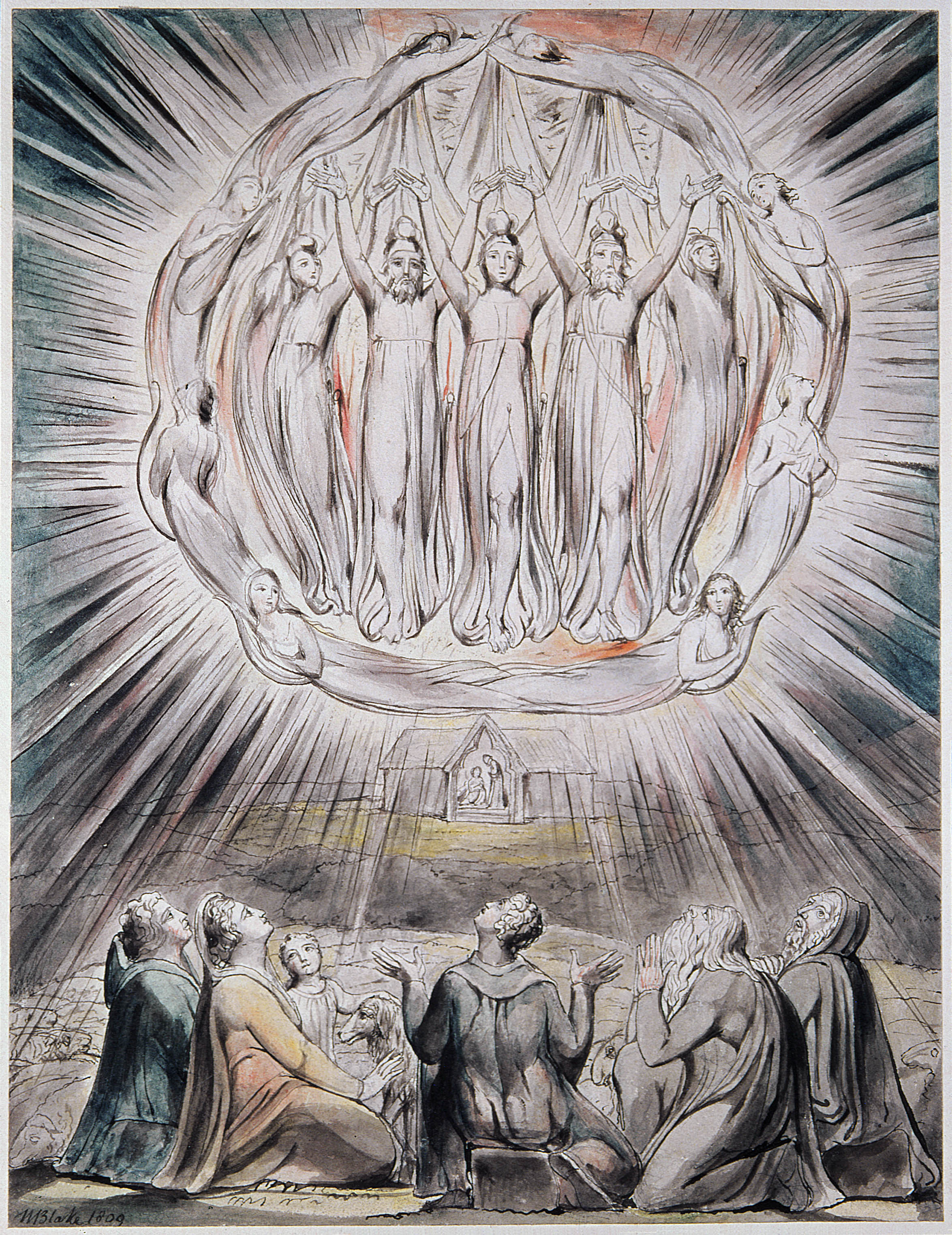
Winged Life: William Blake’s Mystic Visions & Stunning Paintings

William Blake’s paintings are especially stunning when you see them close up.

blake4

blake2

blake9

blake5

blake8

blake7

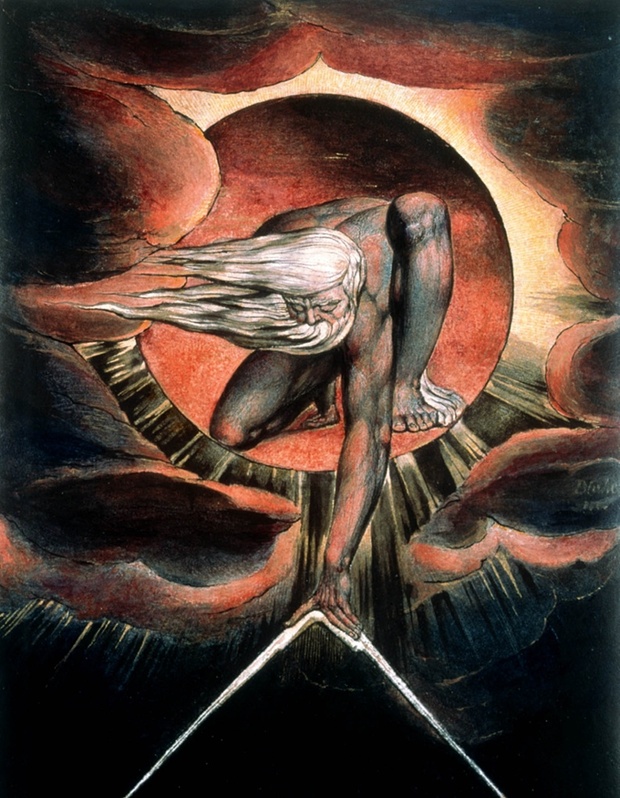
William Blake (1757–1827), one of the greatest poets in the English language, also ranks among the most original visual artists of the Romantic era. For Blake, the Bible was the greatest work of poetry ever written, and comprised the basis of true art.

For a slideshow of 47 paintings by William Blake, go to:

http://www.bbc.co.uk/arts/yourpaintings/artists/william-blake

For William Blake’s Complete Works, go to his archive at http://www.blakearchive.org/blake/indexworks.htm


William Blake’s Visions

From a young age, William Blake claimed to have seen visions. The first may have occurred as early as the age of four when, according to one anecdote, the young artist “saw God” when God “put his head to the window”. .. At the age of eight or ten in Peckham Rye, London, Blake claimed to have seen “a tree filled with angels, bright angelic wings bespangling every bough like stars.” On another occasion, Blake watched haymakers at work, and thought he saw angelic figures walking among them. As a young apprentice, he was sent to copy images from the Gothic churches in London. Blake experienced visions in the Westminster Abbey, he saw Christ and his Apostles and a great procession of monks and priests and heard their chant.

Blake claimed to experience visions throughout his life. They were often associated with beautiful religious themes and imagery, and may have inspired him further with spiritual works and pursuits. Certainly, religious concepts and imagery figure centrally in Blake’s works. God and Christianity constituted the intellectual centre of his writings, from which he drew inspiration. Blake believed he was personally instructed and encouraged by Archangels to create his artistic works, which he claimed were actively read and enjoyed by the same Archangels.

In a letter of condolence to William Hayley, dated 6 May 1800, four days after the death of Hayley’s son, Blake wrote:

I know that our deceased friends are more really with us than when they were apparent to our mortal part. Thirteen years ago I lost a brother, and with his spirit I converse daily and hourly in the spirit, and see him in my remembrance, in the region of my imagination. I hear his advice, and even now write from his dictate.

In a letter to John Flaxman, dated 21 September 1800, Blake wrote:

[The town of] Felpham is a sweet place for Study, because it is more spiritual than London. Heaven opens here on all sides her golden Gates; her windows are not obstructed by vapours; voices of Celestial inhabitants are more distinctly heard, & their forms more distinctly seen; & my Cottage is also a Shadow of their houses. My Wife & Sister are both well, courting Neptune for an embrace… I am more famed in Heaven for my works than I could well conceive. In my Brain are studies & Chambers filled with books & pictures of old, which I wrote & painted in ages of Eternity before my mortal life; & those works are the delight & Study of Archangels.